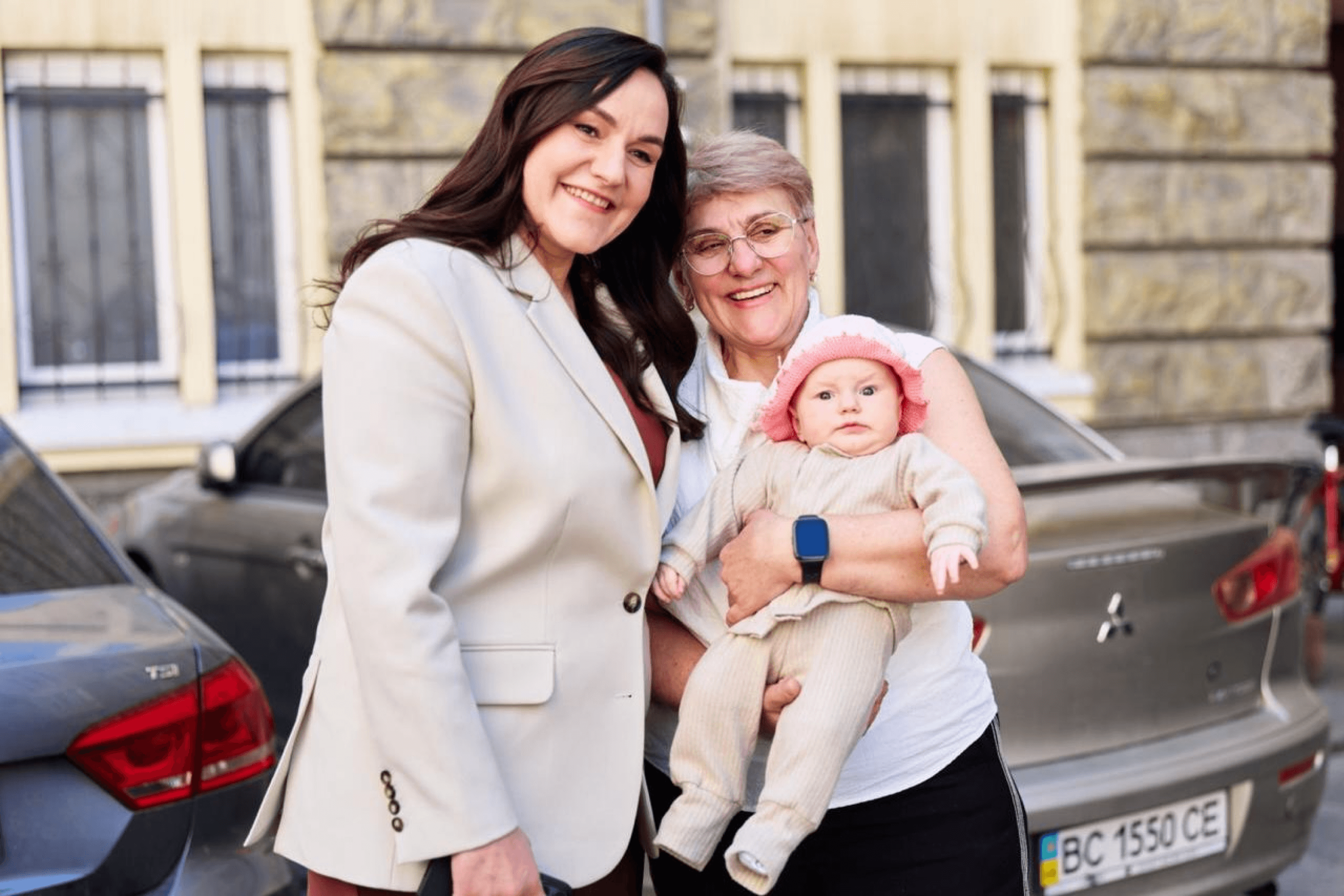
Tetyana Berezhna is 37; she joined the Ukrainian government in June 2022—taking on the position of Deputy Minister of Economy. Berezhna’s background was fitting—she was educated at the Kyiv-Mohyla Academy, the Aspen Institute Kyiv, and the London School of Economics and Political Science.
In the autumn of 2025, Berezhna was appointed Deputy Prime Minister for Humanitarian Policy and the Minister of Culture. In the conditions of war and a shortage of money, the ministry is trying to keep Ukraine in the focus of the international community. And also to resolve internal issues: evacuating museum heritage, returning what Russia has appropriated, and searching for donors for the further restoration of Ukrainian cultural sites. Yellow Blue Editor-in-Chief Yuliana Skibitska spoke with Berezhna about how she does it.
You recently returned from the biennale. What are your impressions?
We need to be very loud to drown out [Russia’s] final, yet loud wails. I think we did a good job with this now. Our work carried very deep meanings—inaccessible to anyone but Ukraine. We visited many different pavilions; they also talk about important social issues, but no one had the kind of depth we did.
The Deer has several meanings. It’s both a reference to the Budapest Memorandum and the suspended state of the sculpture—the exact same state we are all in. But what struck a chord with me the most was its proudly lifted head. Despite how many countries it has traversed, what hardships it experienced along its way, it still holds itself proudly and with dignity. Just like us.
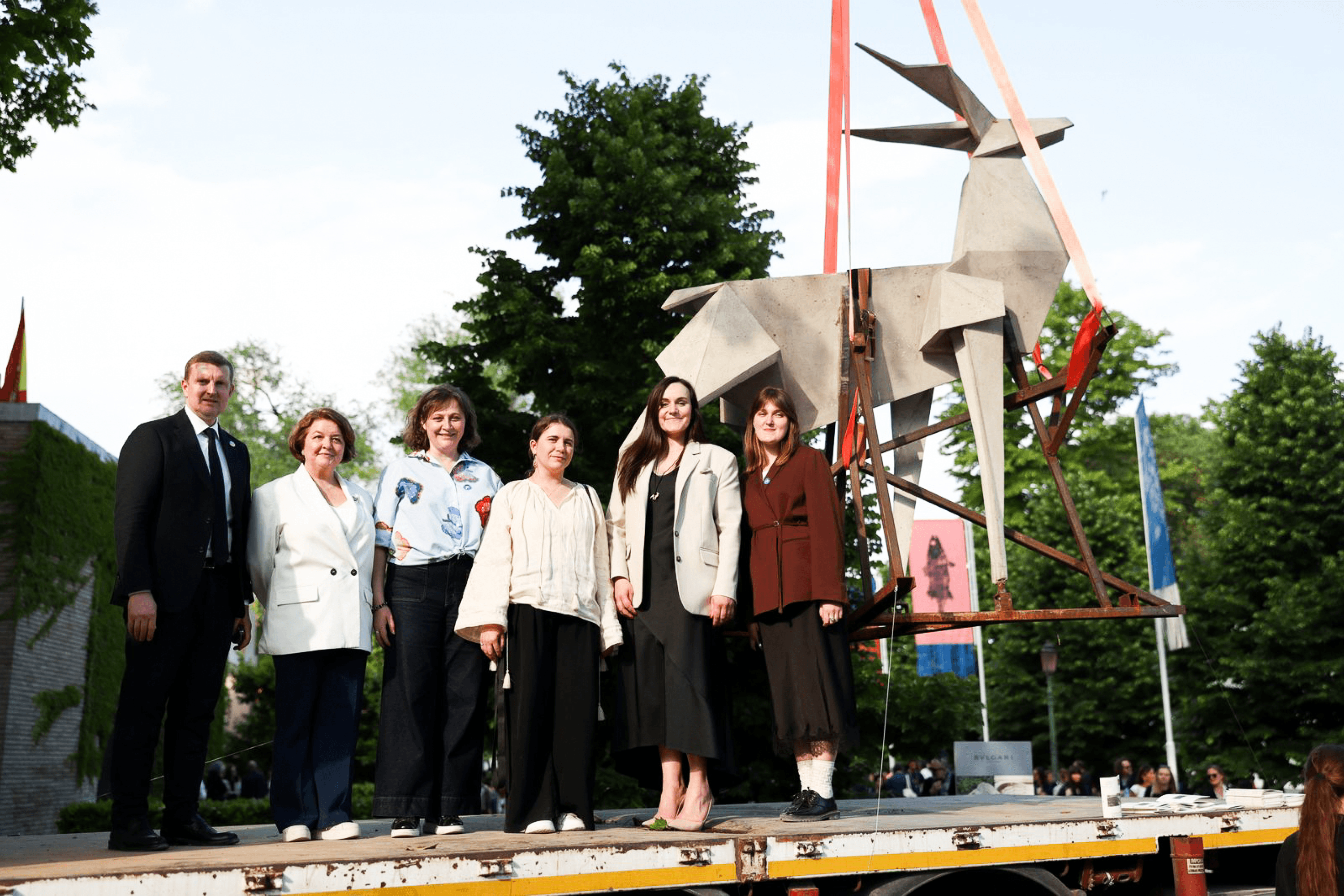
An origami-style deer sculpture created by Ukrainian artist Zhanna Kadyrova. Photo: Anton Tkachenko / Ministry of Culture / YB 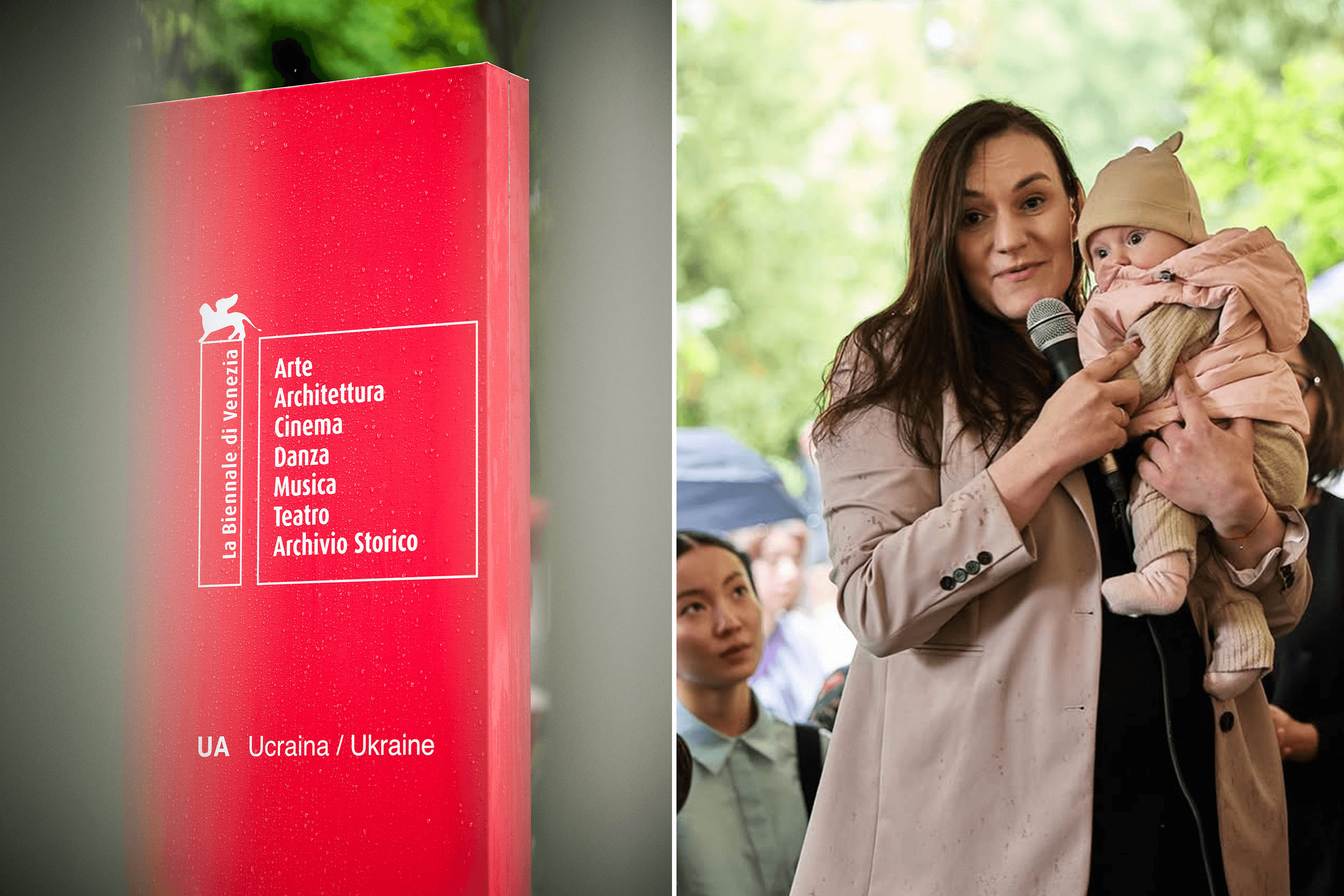
Tetiana Berezhna and her daughter Osaka during the opening of the “Security Guarantees” project at the Biennale. Photo: tetyana__b / Instagram / YB 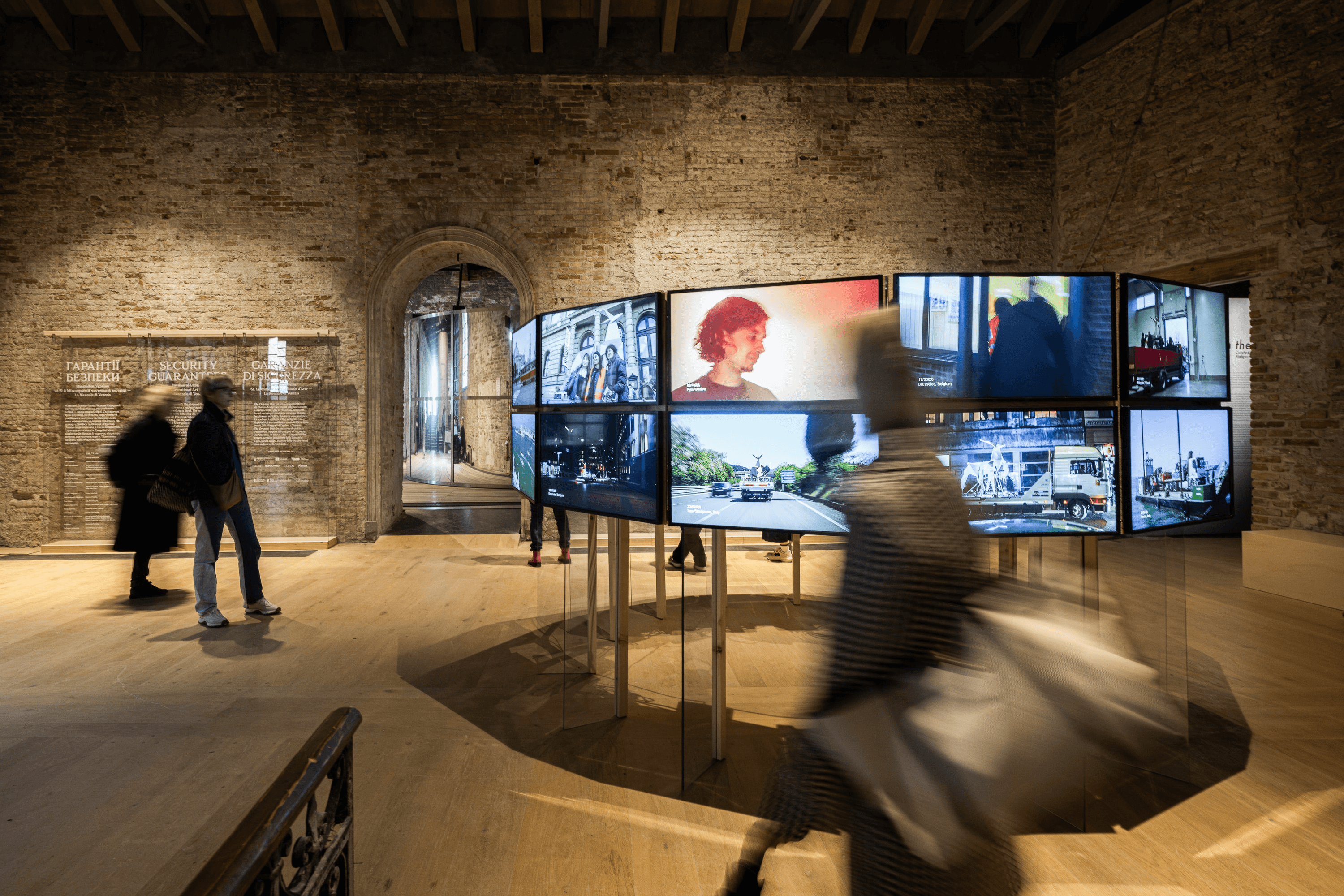
Photo: Valentyna Rostovikova for Ukrainian Pavilion / YB 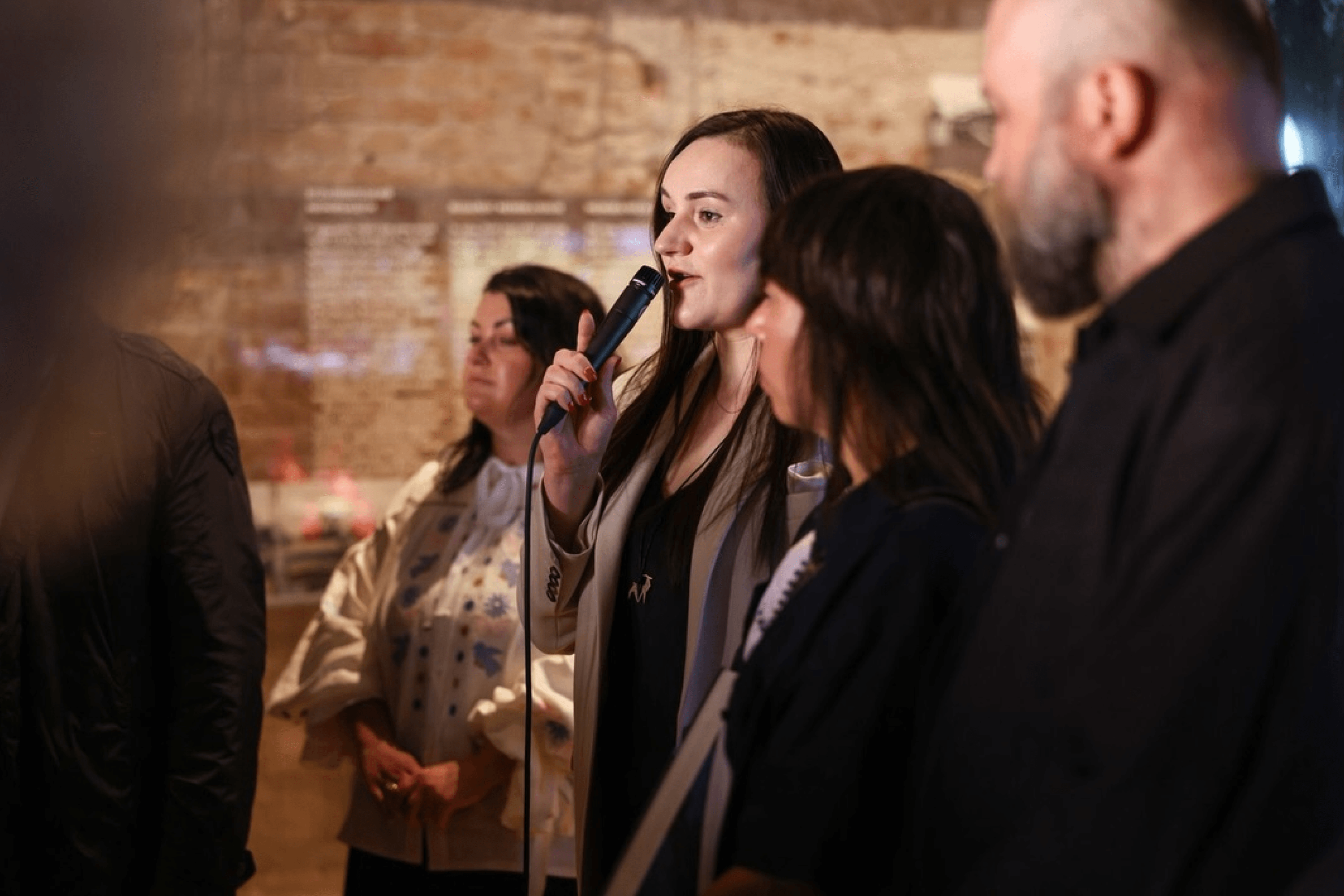
Photo: tetyana__b / Instagram / YB
During the biennale, near our Deer, a journalist approached me and asked if it was going to be lowered. I said, “No, it will not be lowered,” and she replied, “That is so symbolic.” Do you think foreigners were able to read all those meanings that were embedded in the work?
We worked well with the team of curators, with Zhanna [Kadyrova], and with the Ministry of Culture team to explain these meanings. Naturally, they were conveniently laid out in the section of the national pavilion located in the Arsenale. During the biennale, I alone gave over 30 interviews, and Zhanna, I think, gave even more. And every single time, I talked about the Deer. For instance, there was a meeting with the royal family of the Netherlands. They had very little time, two or three minutes, but I told them: “Look, this is our Deer. What does it mean? And why do we need effective security guarantees?”.
How easy was it to agree on having our Deer stand in the Giardini, and right at the entrance at that?
Not easy. It took dozens of phone calls with the leadership of the biennale. Initially, there were ideas to place it not at the entrance to the Giardini, but on the promenade [nearby] where people walk. But it would have been difficult to guard the sculpture there. In the end, we still managed to convince [the biennale administration] to have the Deer stand at the entrance to the Giardini.
How did these negotiations go, considering that it was the biennale administration itself that allowed Russia’s participation? How did you manage to maintain a balance?
Good question. We had to secure the best possible location for the Deer. Here, we handled it with ultimate composure and professionalism, getting what we wanted. I had many conversations about Russia’s presence at the biennale, even at the highest level—for instance, with the Italian Minister of Culture Alessandro Giuli. He supported us completely. But the biennale itself has a different stance. We spoke quite emotionally with [the president of the biennale Pietrangelo] Buttafuoco—not even now, but before the film festival held in Venice last year. Russia was allowed to participate right at the time when the Russians shelled the center of Kyiv. I remember we had a very emotional talk with Buttafuoco back then. But it is clear that his decisions are influenced by many different factors that we might not even be aware of.
What do you expect in two years, at the next biennale?
Next year, we, as the Ministry of Culture, will make ultimate efforts to select a top-tier pavilion for the 2028 biennale. I would really love for it to be associated with meanings of victory. But we understand that the future is uncertain.
There were a lot of different conversations after this biennale. You surely know the story that the Russian pavilion was built with the money of Bohdan Khanenko, a Ukrainian philanthropist. Of course, ideally, it would be good to restore justice and ensure that Russia is not the sole heir to everything created during imperial times and the Soviet Union period. So that the pavilion would not automatically be Russian, but would be transferred to Ukraine as a former USSR republic. But this is a complex legal issue, and I’m not sure we will manage to achieve justice in it. On the other hand—why doesn’t Ukraine have its own pavilion?
That is the first question that occurred to me. Because honestly, the location in the Arsenale isn’t very convenient.
Absolutely. Therefore, if some modern-day Khanenko is reading this interview, they should let us know if they have a desire to become a patron for a pavilion that we could build.
There were many protests at the biennale, but they often coupled Russia and Israel together. In private conversations, members of the Ukrainian team told me they expected questions like, “Why doesn’t Ukraine protest against Israel’s participation if it opposes Russia’s?”. To what extent did you actually encounter this topic?
During my time at the biennale, I never once had to express a position regarding the Israeli issue. What is happening in Ukraine and the affairs of Israel and Palestine are two completely different wars. Under no circumstances should they be equated; each has its own context, and I believe generalizations here are definitely inappropriate.
When you were appointed to the position, the Prime Minister Yuliia Svyrydenko set the following tasks for you: to ensure adequate funding for Ukrainian culture, conduct an audit, step up dialogue with donors, and find additional resources. What stage are they at now?
When the new government was being appointed in general, and me as the Minister of Culture, active work was underway on the draft Law on the State Budget [for 2026]. Funding for the Ministry of Culture increased by 40 percent compared to last year. This is a very great show of trust in us. The targeted lion’s share of this budget goes to the “Tysyachovesna” [Thousand Springs] program, which my colleagues and I are currently actively implementing. This budget also grew because we increased funding for cultural institutions, which ensures their autonomy. Right from the beginning of our term, we immediately allowed them to provide a much broader range of paid services. Meaning, cultural institutions can earn money. Why shouldn’t a theater open a high-quality coffee shop or make beautiful, expensive merch? And use these funds to increase salaries for their employees, for new productions. Go right ahead, you are independent, you are capable.
The budgets of the Ministry of Culture cannot under any circumstances be compared to the budgets of the Ministry of Education, the Ministry of Health, or the Ministry of Veterans Affairs. But we understand that money can come not only from the state budget, which is why we are actively working on the Law of Ukraine on Philanthropy. We hope that during this plenary week it will be put on the agenda and the MPs will approve it in the first reading.
Next is the Ukrainian Cultural Heritage Fund, which we established last autumn. Already, we have attracted nearly €5 million into this fund.
Do you have systematic interaction with people who allocate their own funds in other countries? Like, for example, in Toronto, where there is a Ukrainian film festival funded by a local businessman of Ukrainian descent.
There is constant interaction. And we want to make it even more systematic. We are learning how to work with patrons ourselves, and we are likewise teaching our cultural institutions to do so—we even recently launched relevant training at the Kyiv School of Economics. Philanthropy is not an outstretched hand; it’s a partnership. We don’t just ask for money, we also offer something in return. Visibility, involvement in important state affairs, and so on.
Meaning, we work with both Ukrainian businesses and international organizations. Our very major partner in various endeavors is the Partnership Fund for a Resilient Ukraine. This is a fund financed by the governments of eight countries, with the United Kingdom being the main donor. Together with this fund, we are setting up a coordination center for the return of stolen cultural heritage. We are teaching communities how to build and rebuild structures in their municipalities so that it is aesthetic, proper, and beautiful. We also work very closely with UNESCO, which helps restore damaged cultural infrastructure objects.
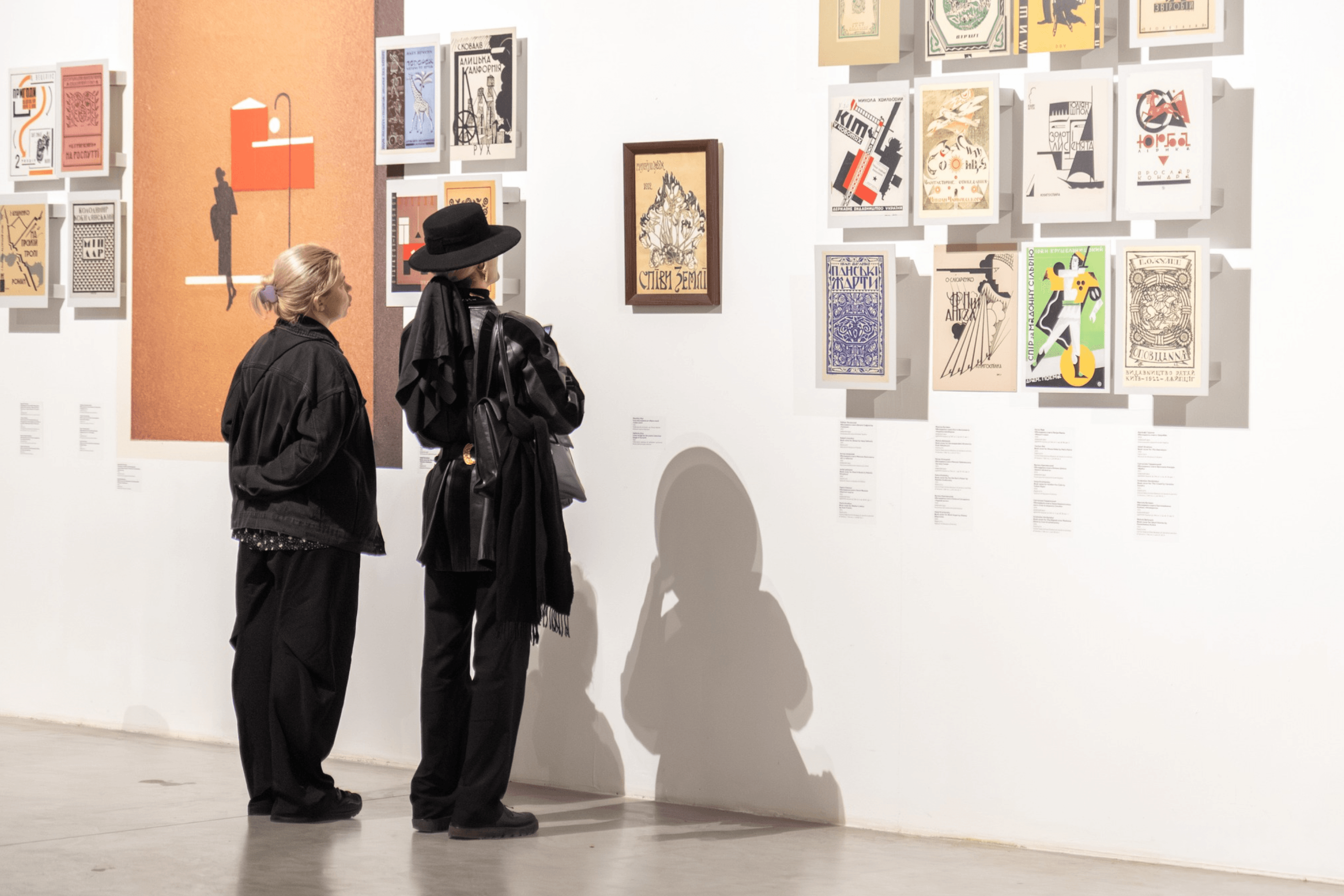
Announcement of the exhibition “Illustroteka. Ukrainian Illustration in the Dialogue of the Twenties” at Mystetskyi Arsenal within the framework of the “Partnership for a Strong Ukraine” program. Photo: Партнерство за сильну Україну / Facebook / YB 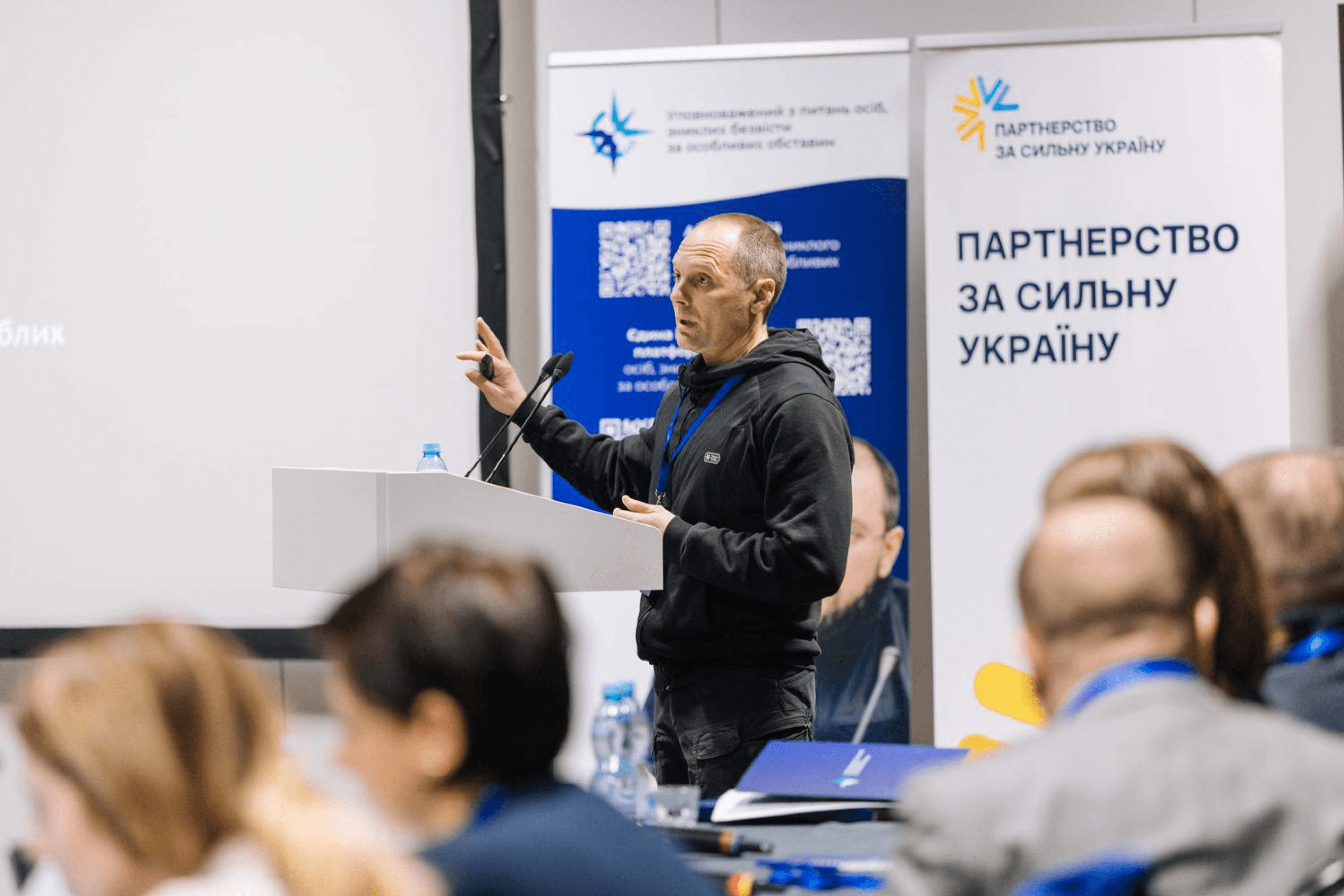
Announcement of a practical conference on the search and identification of missing persons, organized within the framework of the “Partnership for a Strong Ukraine” program. Photo: Партнерство за сильну Україну / Facebook / YB 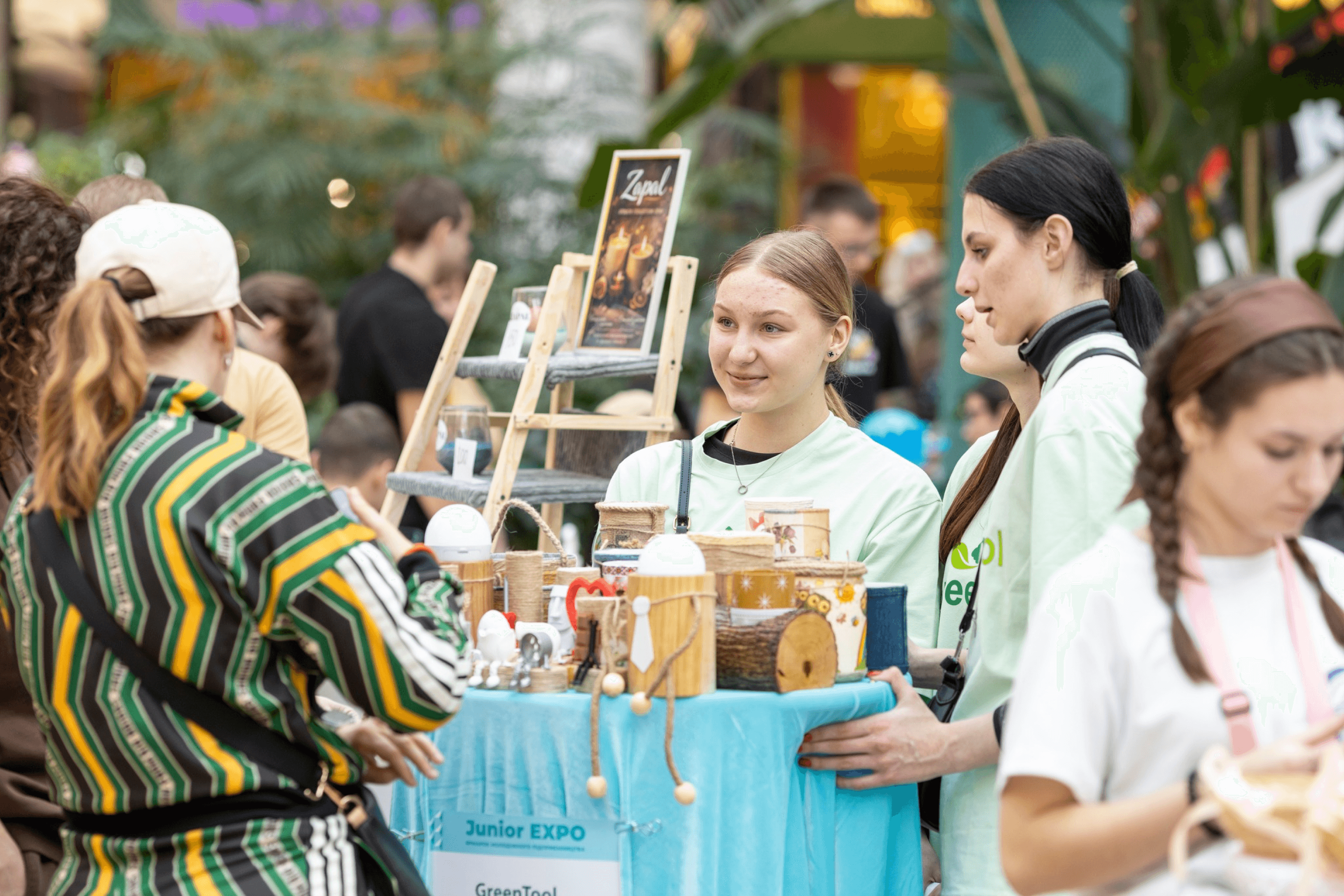
Announcement of the Junior EXPO 2026 event in Kyiv, organized by Junior Achievement Ukraine with the support of the “Partnership for a Strong Ukraine” program. Photo: Партнерство за сильну Україну / Facebook / YB 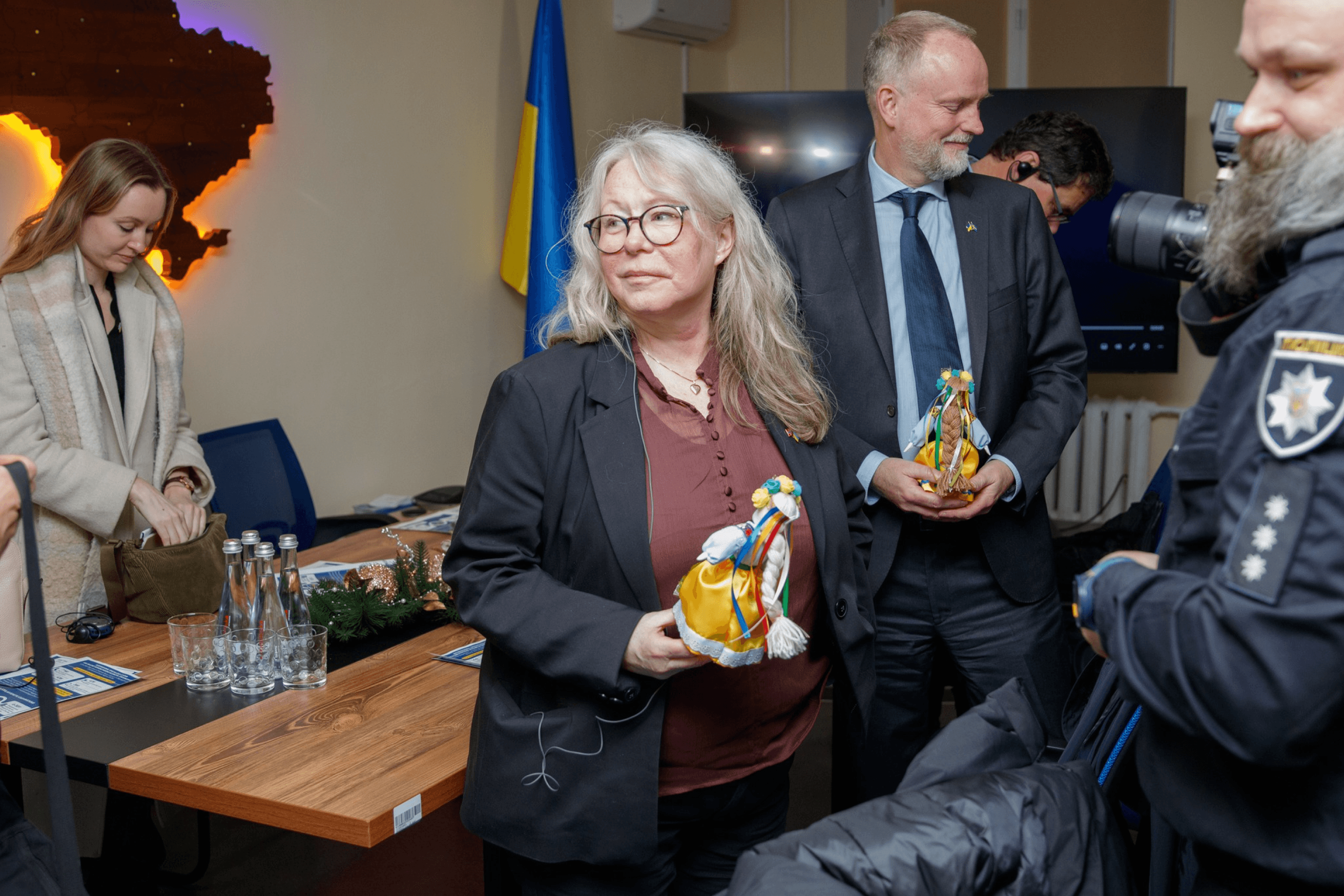
A publication by the “Partnership for a Strong Ukraine” program about support for centers searching for people missing as a result of the war. Photo: Партнерство за сильну Україну / Facebook / YB 
A publication by the “Partnership for a Strong Ukraine” program about the development of an accessible urban environment in Dnipro. Photo: Партнерство за сильну Україну / Facebook / YB 
A publication by the “Partnership for a Strong Ukraine” program about supporting cultural initiatives and community recovery during the war. Photo: Партнерство за сильну Україну / Facebook / YB
If we imagine an ideal scenario, what, in your opinion, should be the share of state money in the funding of the Ministry of Culture, and what should be the share of private initiatives?
That is a very good question, and I even have examples of how this can function. We visited cultural institutions in Denmark during one of my business trips, and I asked the director of a museum we visited: “What is your share of state funding, and what is your independent earnings, revenue?”. And he said it was 50/50. In Ukraine, cultural institutions attract, on average, less than 10 percent. The rest is state funding.
In 2022–2023, there was a lot of news about world museums finally stopping labeling many Ukrainian artists as Russian. It feels as though this has now waned.
You know, I very often get flak, relatively speaking, about plaques in world museums stating that [Kazimir] Malevich is a Russian artist. We try to react to this responsively.
One of the main tasks is to prevent Russia from expropriating and appropriating occupied or stolen cultural heritage. In the occupied territories alone, there are about two million exhibits. We are digitizing all registers of museum ledger books to understand the full scale of this. We are very grateful to those museum directors who managed to evacuate the most valuable items before the occupation. Naturally, they couldn’t take the museum exhibits with them, but they at least took the documentation describing exactly what was in the museum.
We work with Interpol, with the Partnership Fund for a Resilient Ukraine, and other partners to establish a return procedure. These are complex matters, but we understand that even after World War II, many things are still not where they should be, and more than half a century has already passed.
And what about the evacuation [of exhibits from the front line]? Perhaps I am wrong, but my own feeling is that at the beginning of the invasion there was a certain amount of chaos, largely due to the fact that people did not expect a major war. What is the situation now?
Unpredictability is very often linked to the fact that people do not know how to act; they have no rules. The first thing we did was pass a resolution by the Cabinet of Ministers that establishes evacuation rules. Where to evacuate from, in what situations, who is responsible, whose order to wait for, and when not to wait for an order. But despite everything, during the full-scale invasion, about 700,000 objects were still successfully evacuated.
After we passed the resolution, places must be provided where objects can be evacuated. This is a difficult task because a certain temperature and climate control are required. Of course, we would wish for the situation on the front line to be such that museums wouldn’t fall into the zone of the resolution’s action—which is 50 km from the line of contact. But we are ready for anything.
Then let’s look at a specific example. Zaporizhzhia is about 30 km from the front line. Is an evacuation taking place there?
Zaporizhzhia and the Dnipropetrovsk region are our most difficult areas. It is hard for people to give away museum collections that they have been building for years. The more I communicate with representatives of cultural institutions in the regions, the more I realize that these people keep going on with immense patriotism and enthusiasm. Therefore, a balance must be maintained.
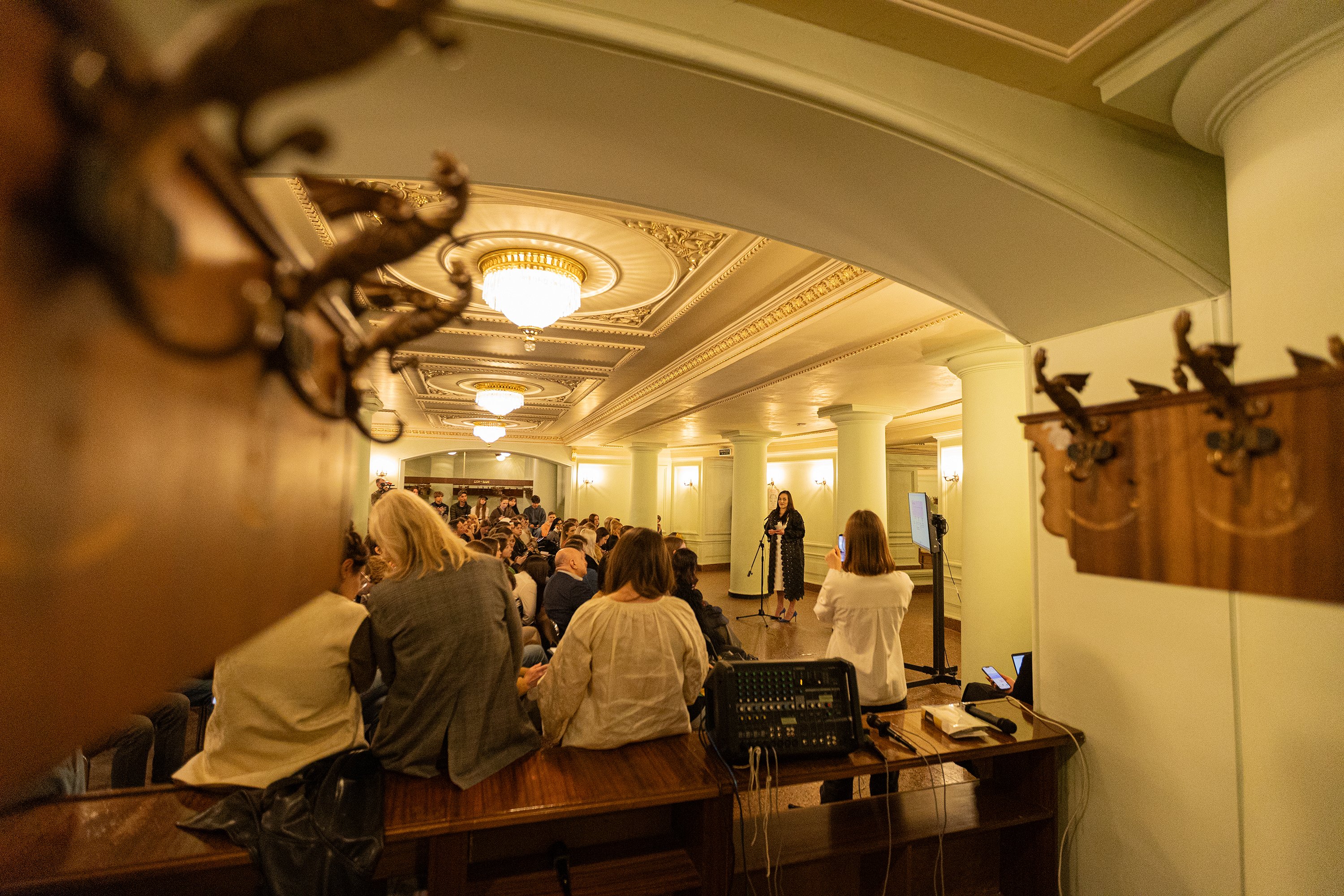
Presentation of the “Tysyachovesna” project at the National Opera of Ukraine. Photo: Julia Weber / YB 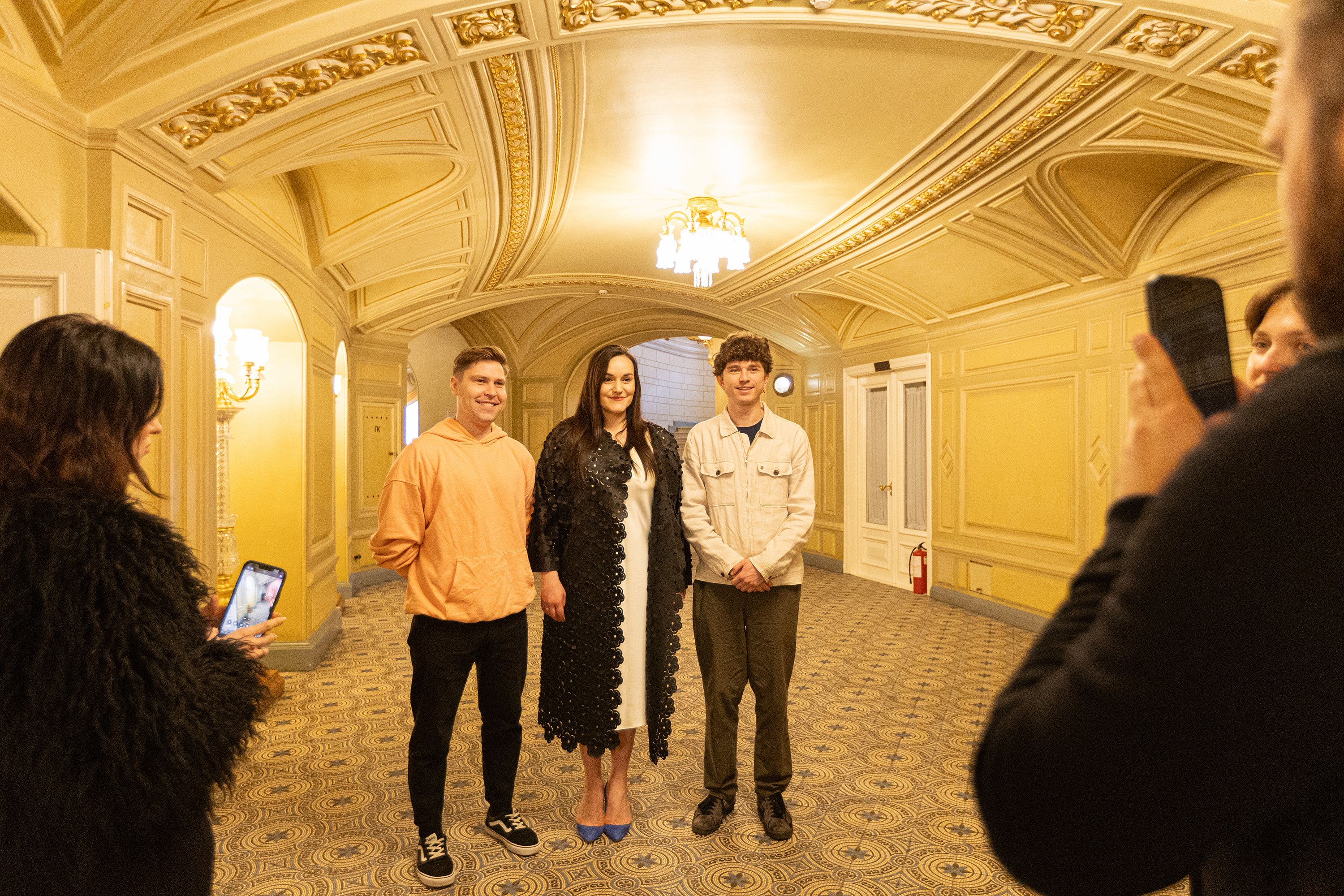
Photo: Julia Weber / YB 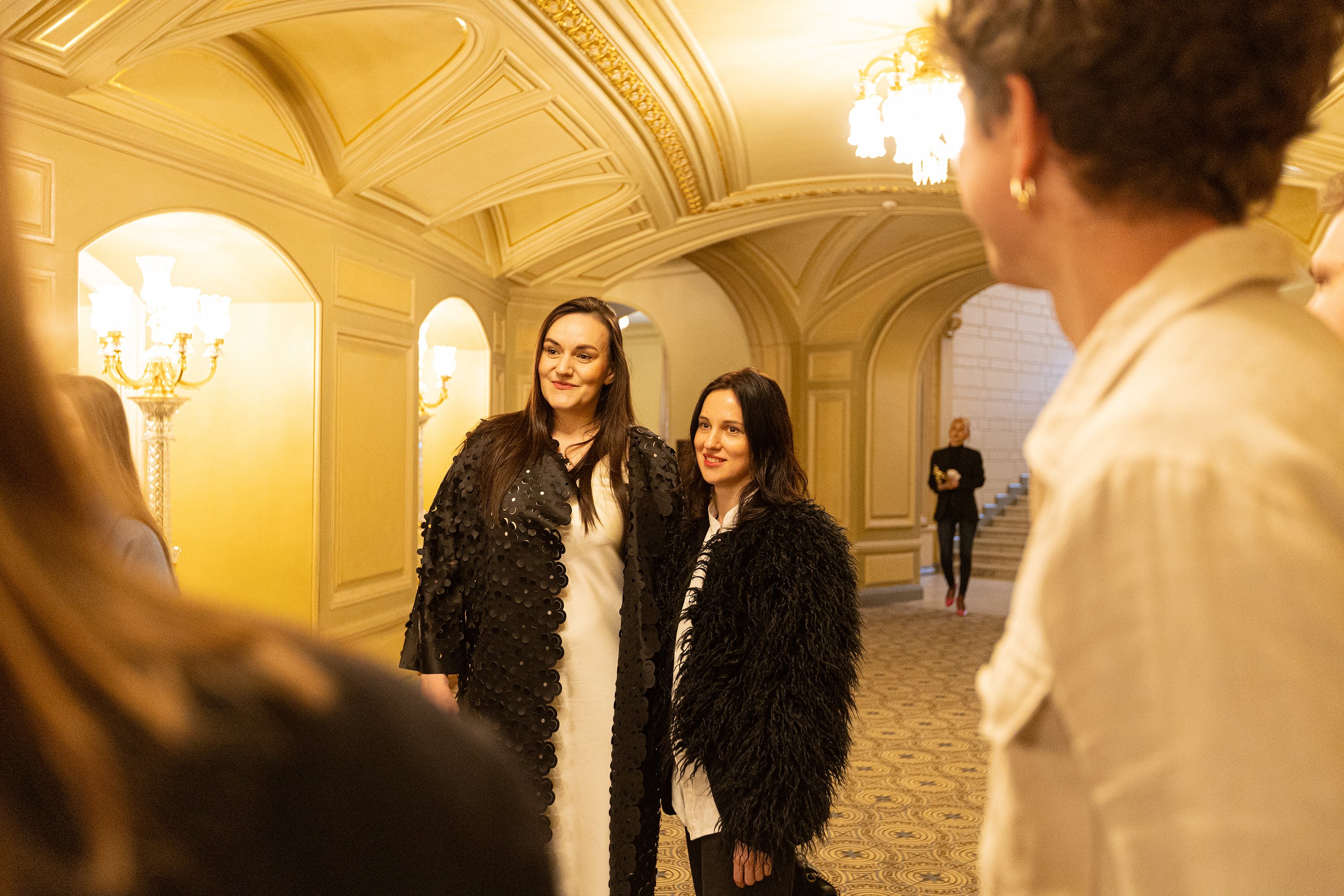
Photo: Julia Weber / YB 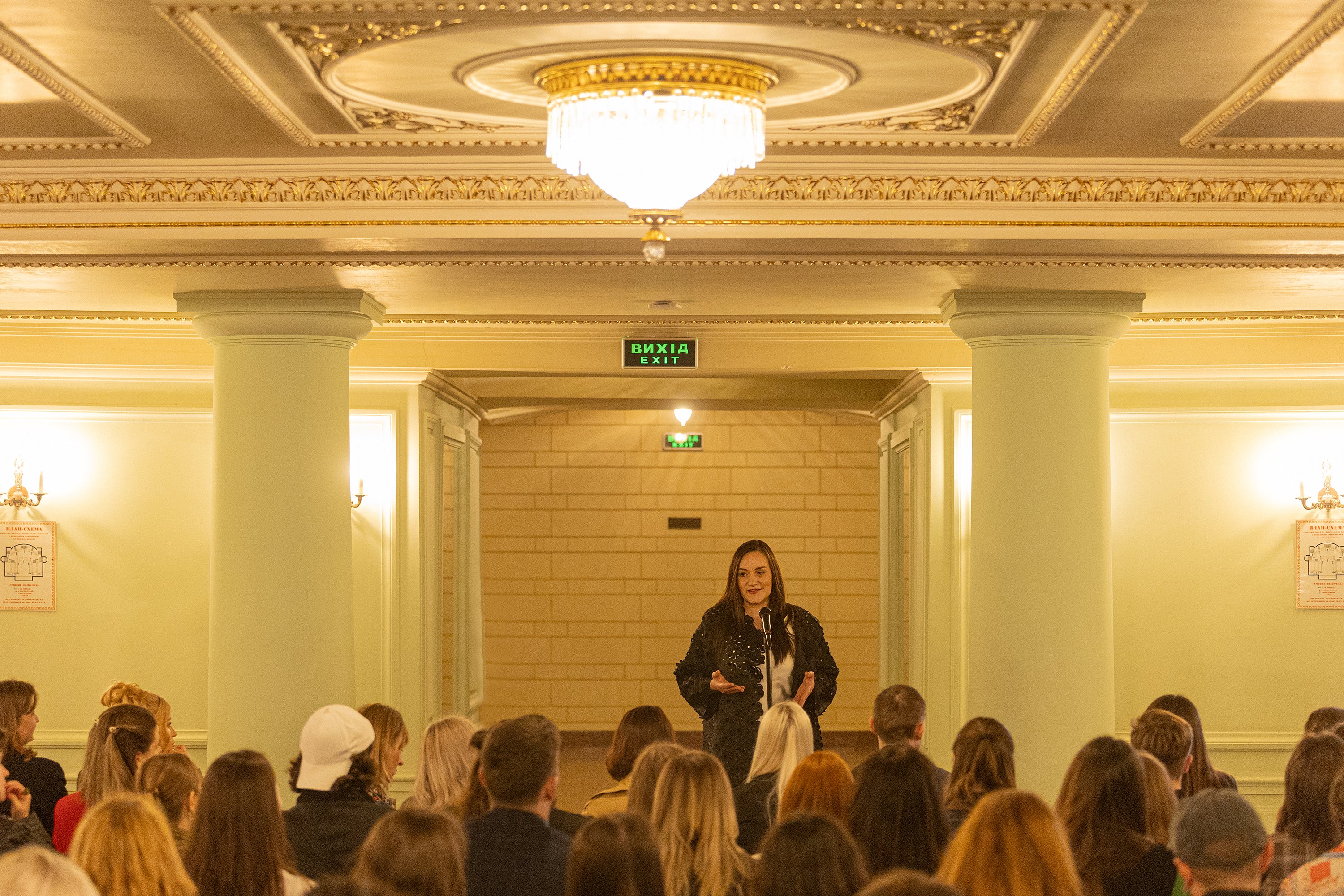
Photo: Julia Weber / YB
You said at the very beginning that we, as Ukrainians, still have a great deal to do so that our voice sounds louder than the Russian one. And how can you evaluate our information policy overall? From the perspective of a person living in Ukraine, everything looks rather bleak—the Russians are winning Oscars, returning to the biennale.
Last year, Russia invested $1.4 billion into the creation of cultural products, including foreign ones. For this year, it’s $2.5 billion. Behind all their victories and successes lie, first of all, a massive desire to normalize the war, and secondly—huge amounts of money. There are hundreds of events like the biennale that Russia is trying to return to. We are working on how to make cultural products as competitive as possible abroad. This is a systematic effort to establish distribution channels. Abroad, Ukrainian products are consumed primarily by our diaspora. That is understandable, but it’s not enough. Therefore, our major task is to reach out specifically to local residents.
And how?
If we are talking about cultural events organized by Ukrainians abroad, then approximately 15 percent of visitors are locals. We are working to ensure that this percentage increases. If it were 50/50, that would be wonderful.
We made a piece on Richard Nelson, an American director who staged a play about Les Kurbas at the Theater on Podil. Later, he took it to the USA, and there were many American audience members who were deeply moved by the story. What needs to be done to have more stories like this? How do we make content competitive under conditions where Ukraine will probably never have as much money as Russia?
The simple answer is that the content must be of high quality.
But that is subjective.
Subjective, yes. But still, we can clearly distinguish high-quality content from low-quality one. Meaning, you can make “The Witch of Konotop”, which resonates abroad, or you can make something that will be of interest to no one. If Ukrainian citizens abroad are reading this, they need to understand that this is a task not only for the state or artists. This is also a task for every Ukrainian, who can be an ambassador of our culture. If you know that a Ukrainian ensemble is coming to your city, take your four or five native friends by the hand and buy them tickets. Let them learn something new about Ukraine. If every person in emigration takes this up, imagine how powerful cultural diplomacy through the hands of Ukrainian citizens would be.
At the biennale, did you try to convey to other people what they ought to know about Ukraine?
I had a great many meetings with foreign delegations. Every time we spoke with them, I invited them in every possible way to come to Ukraine and look at our country. What is also very interesting, the Minister of Culture of Belgium suggested that we teach them how to properly evacuate cultural heritage in times of crisis. This is a great honor, because usually we are the ones asking someone to give us something or teach us something.
In one of your recent statements, you said that about 70 percent of Ukrainians consume Russian-language content. Do I understand correctly that you meant content created in Ukraine, but in the Russian language?
Yes. Of course, there is also a share of actual Russian content in it. But Ukrainians watch it not because they prefer the Russian language or because they are ideological supporters of Russia. Rather, it is because there is so much of it.
Are you a proponent of strict bans or competition through higher-quality Ukrainian content?
The first step is to create a high-quality Ukrainian alternative. The second step is, of course, a ban where it is possible and where legislation allows it.
And my final question. At the biennale, you were with your six-month-old daughter, Osaka. As far as I know, you take your daughter to such events very often. How do you manage it all?
I have the support of a team. My mother, Osaka’s grandmother, also came with me [to the biennale]. She helped me with my daughter, but it seems to me that if Osaka could already speak, she would say that she really likes it all. Up until the day of giving birth, I was always in perpetual motion, busy with affairs. Generally, I think that a woman’s professional life does not end after childbirth; it continues, taking on new shades. Osaka helped me a lot, including in matters of international diplomacy. She built bridges to the hearts of our foreign colleagues, and she handled this very well. And, as a mother, I am grateful to her for that.