
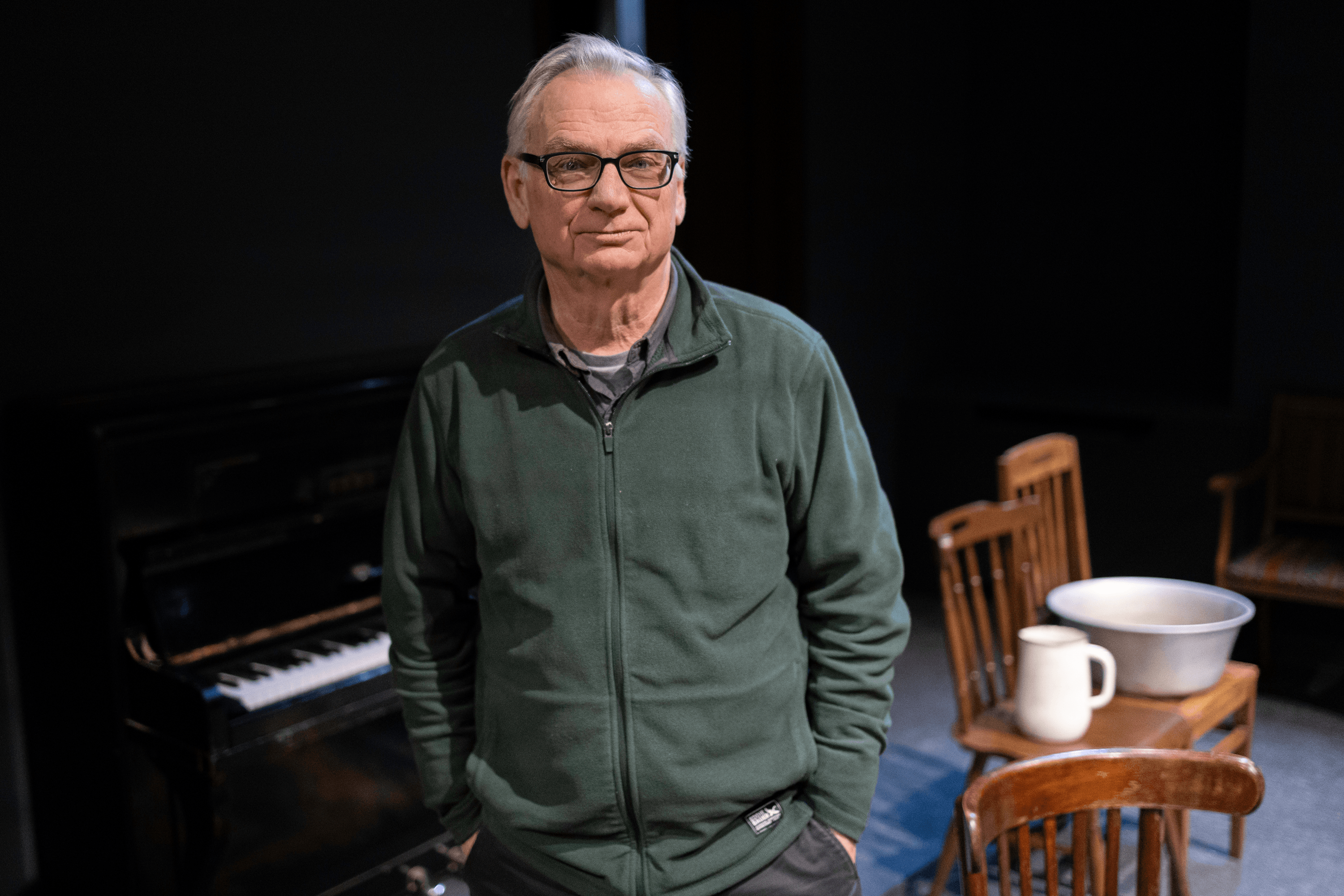
Richard Nelson is a prominent American director and playwright whose works have been staged not only across most major US theaters but also worldwide. He first arrived in Ukraine in 2024 to produce his earlier play, “Conversations in Tusculum”.
Nelson later returned to present a new production, “When the Hurlyburly’s Done”, which explores the legacy of Les Kurbas’s theater troupe. After winning over Ukrainian audiences, Nelson returned to the United States to showcase his latest work at The Public Theater in New York.
Yellow Blue journalist Artem Moskalenko attended a rehearsal and tells the story of Richard Nelson’s journey in Ukrainian theater.
Rehearsal
January 2026. For the first time in many years, Kyiv is gripped by severe frosts, with temperatures plunging to minus 25 degrees Celsius. Throughout the winter, Russia has exploited this, constantly shelling energy infrastructure. As a result, the city often sits without power and, in some areas, without heating.
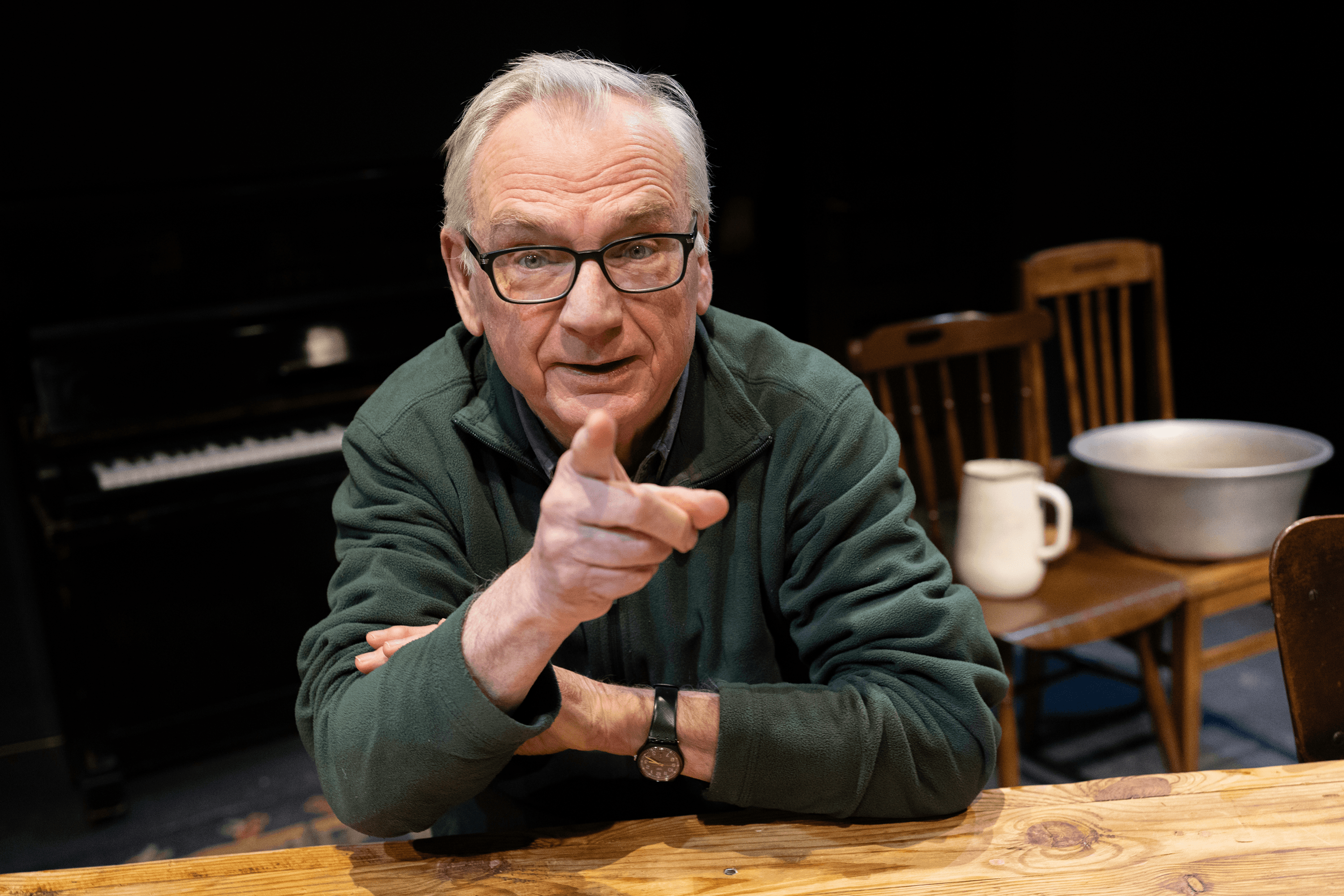
Inside the Theater on Podil, it is chilly, but every lamp is lit—the diesel generator is running. In the center of the room stands a table and about a dozen chairs. A short man with gray hair and a lined face periodically moves them from place to place. This is the American director and playwright Richard Nelson. He has worked in professional theater for the last half-century. A significant portion of Nelson’s career is tied to The Public Theater in New York, where he has staged about a dozen productions. His works have also been performed worldwide—from Berlin’s Schaubühne and Paris’s Théâtre du Soleil to stages in Hong Kong and Australia.
But right now, Nelson is working in Kyiv. He is preparing the production “When the Hurlyburly’s Done”. It was last performed four months ago in the United States during a tour, but the Ukrainian audience hasn’t seen it in over six months.
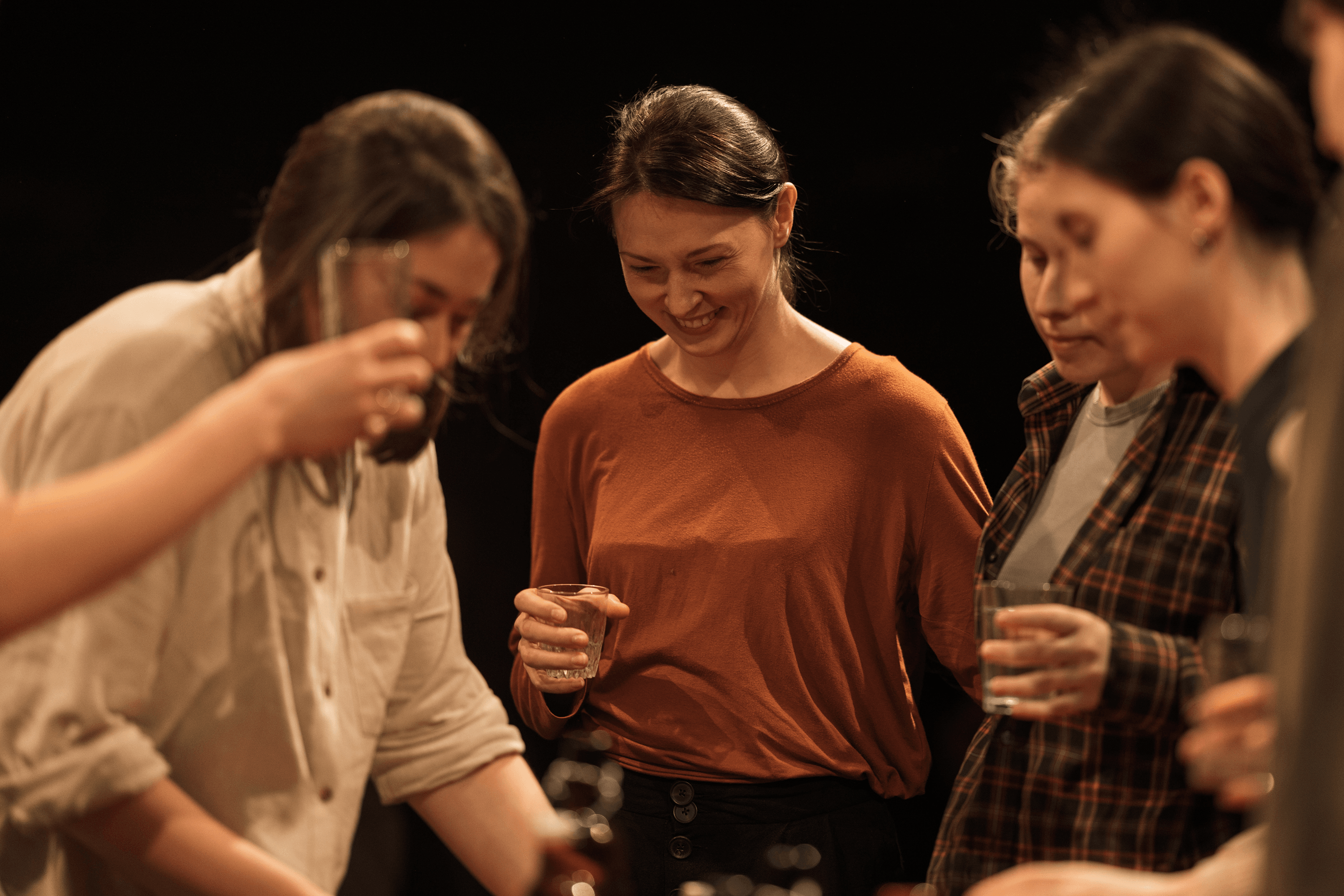
Scenes from the play “When the Hurlyburly’s Done.” Photo: theatreonpodil.com / YB 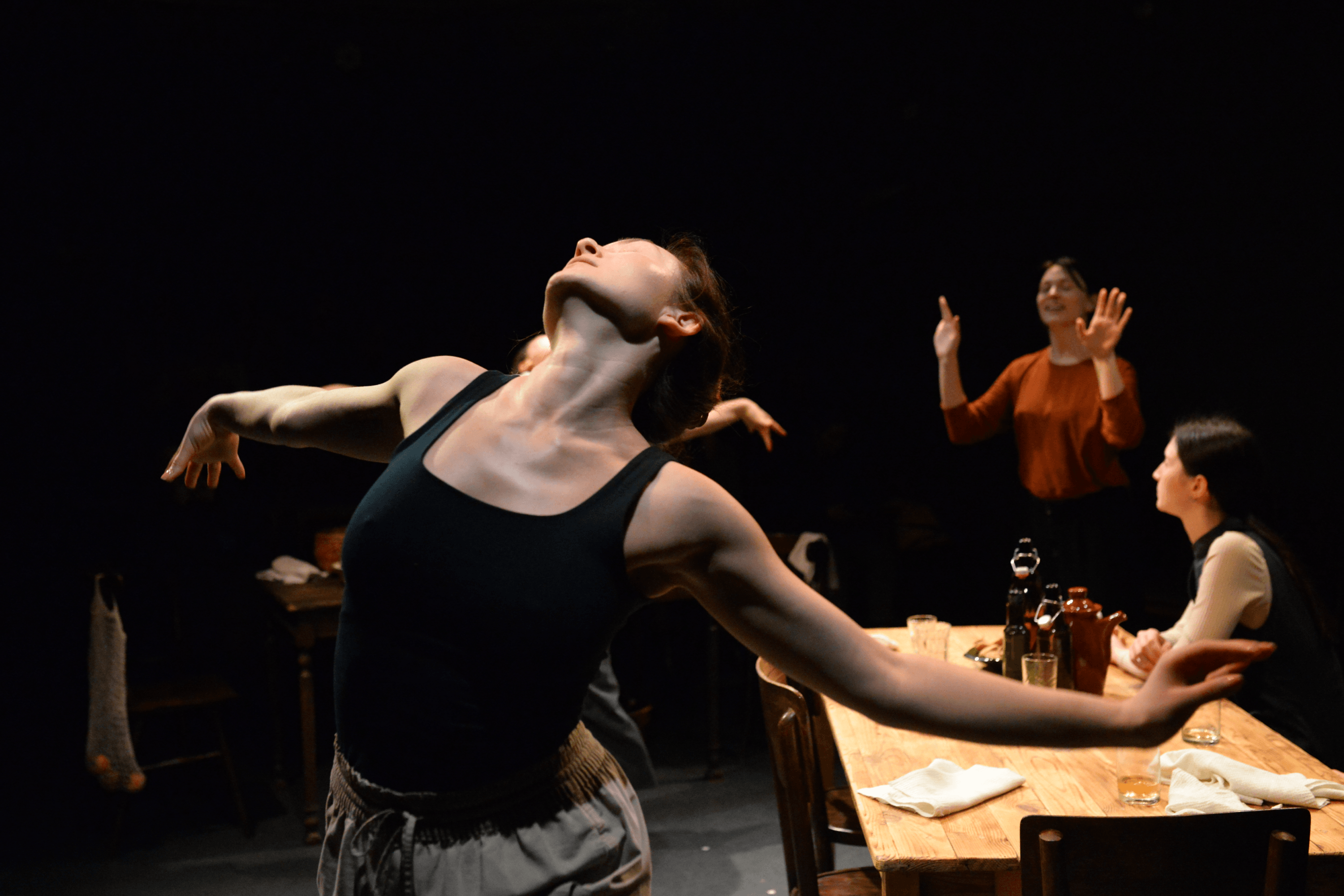
Photo: theatreonpodil.com / YB 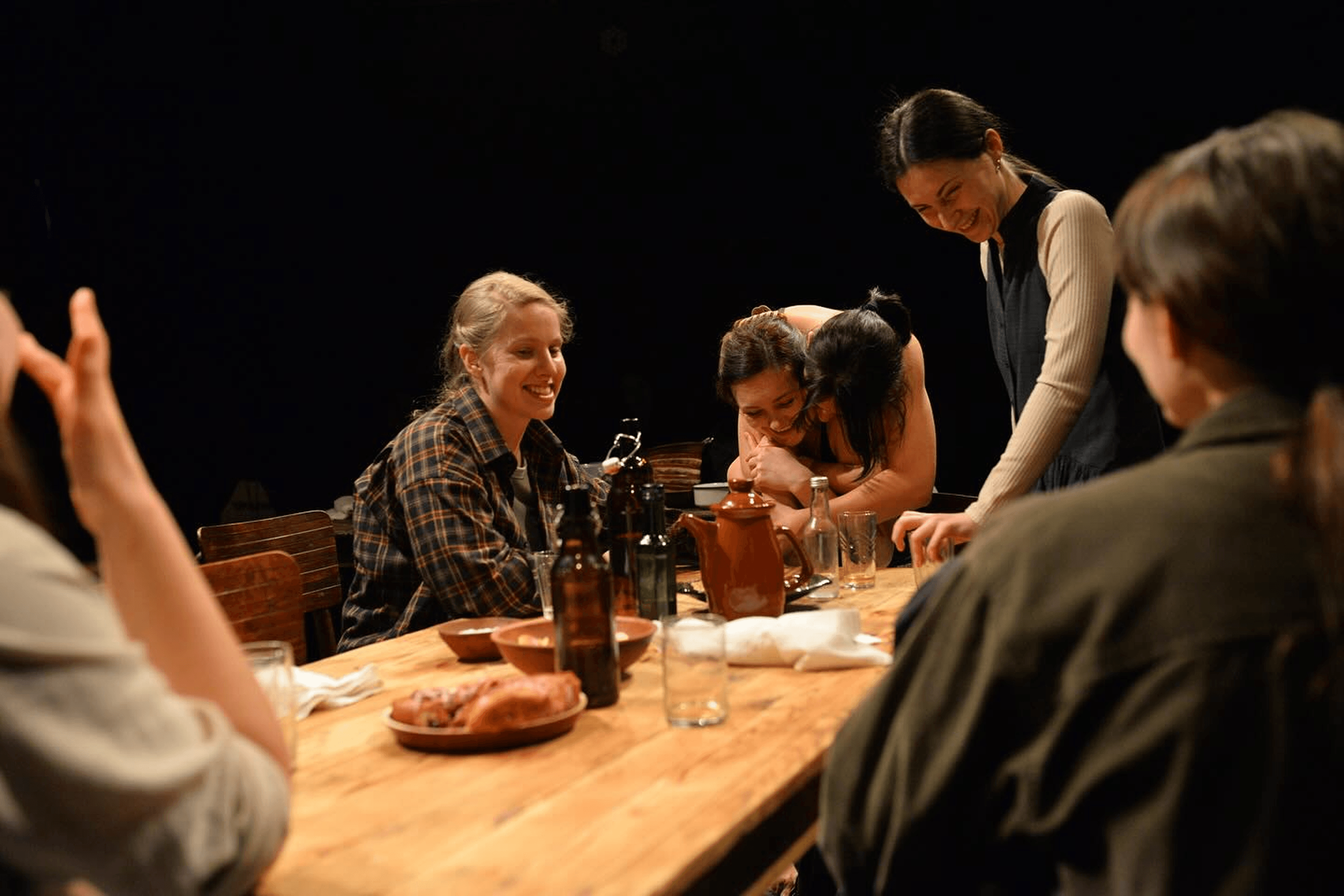
Photo: Театр на Подолі / Facebook / YB 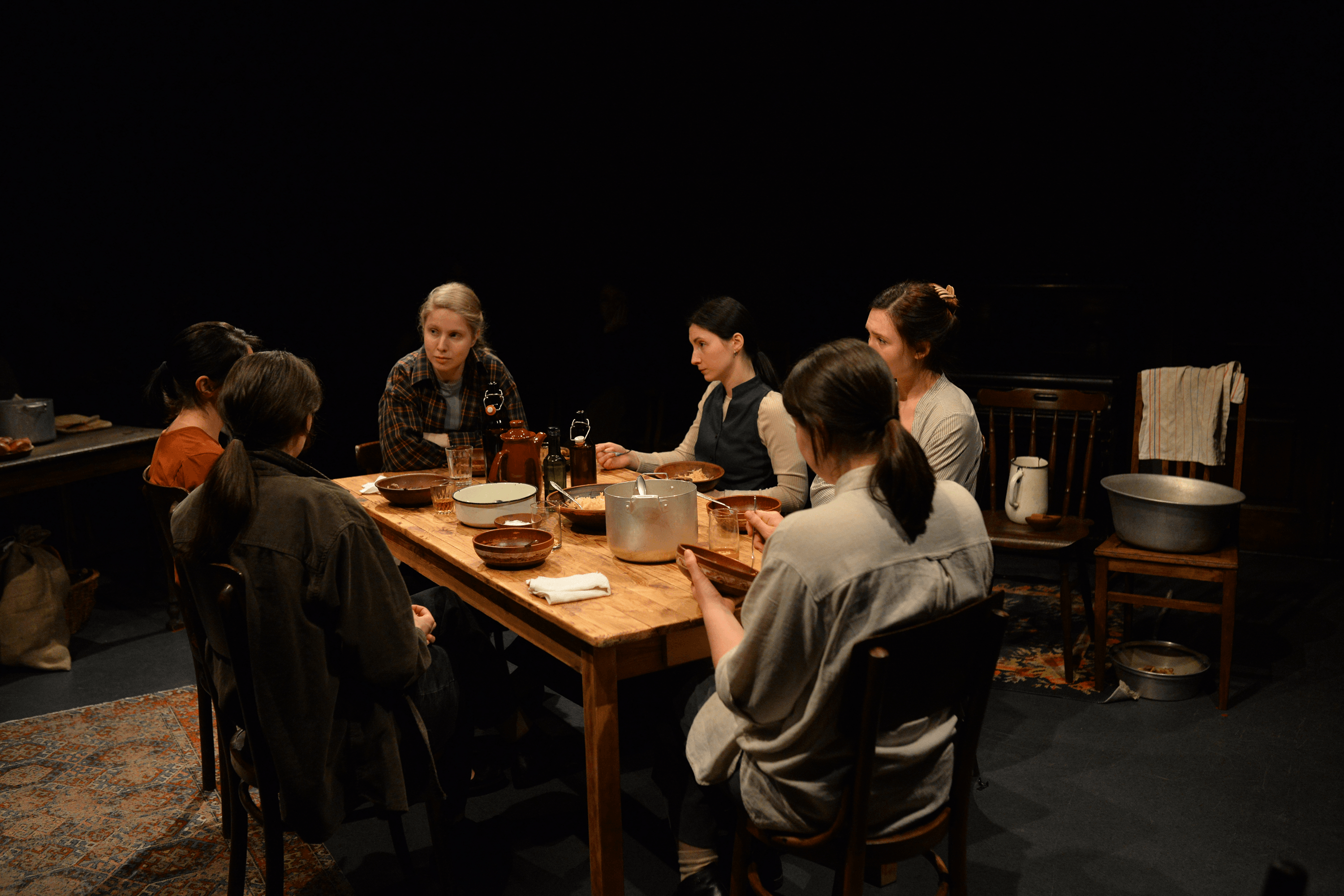
Photo: theatreonpodil.com / YB 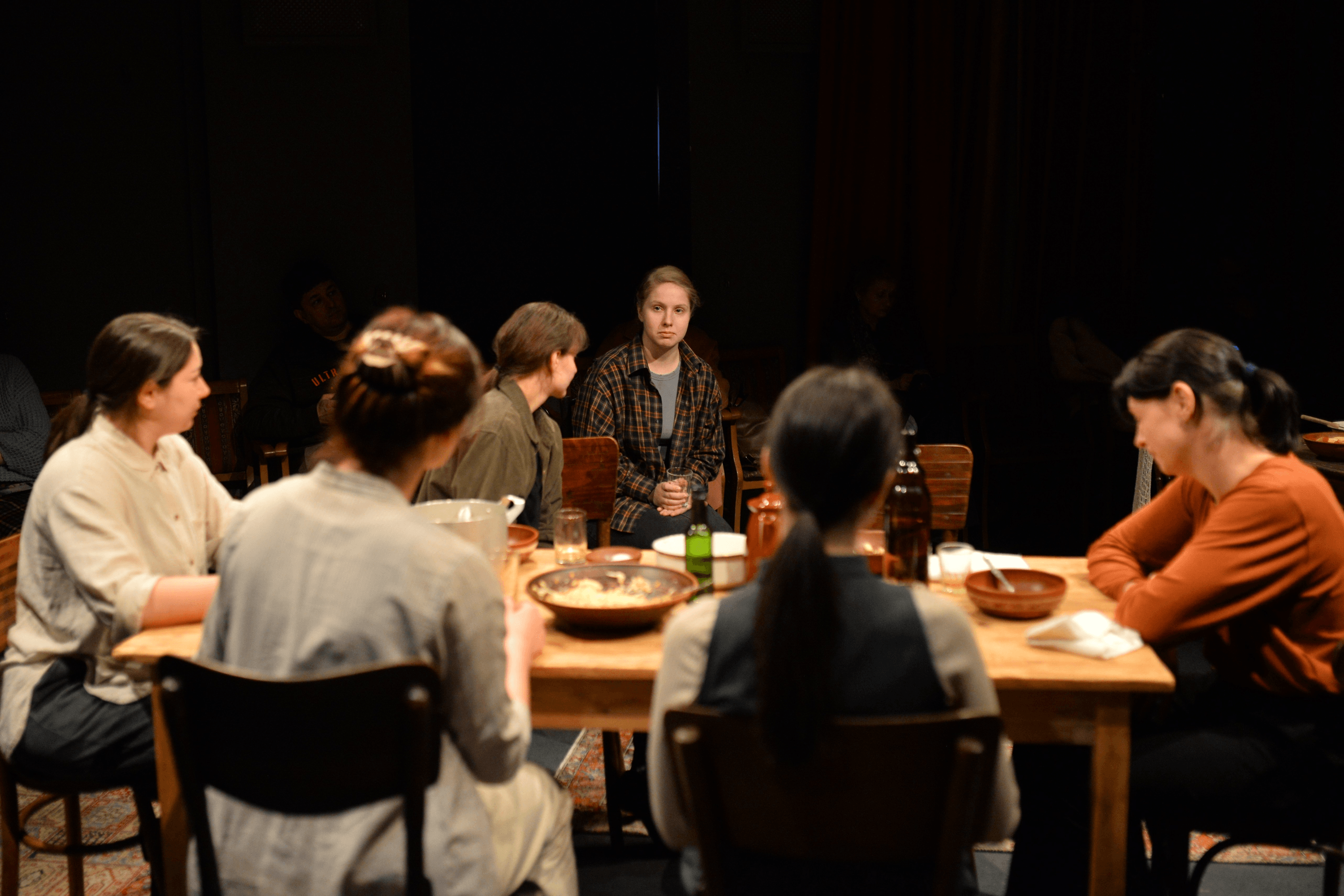
Photo: theatreonpodil.com / YB 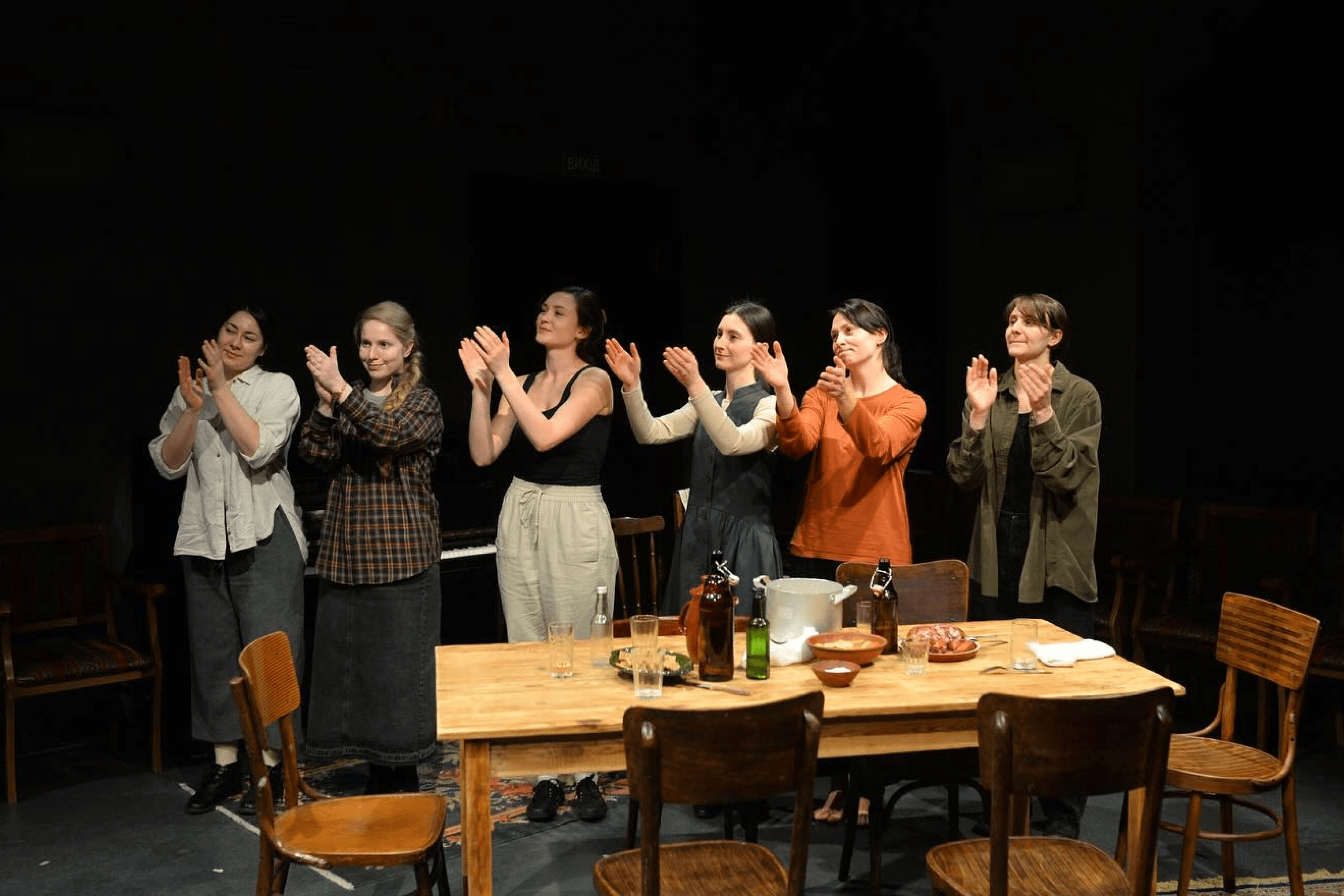
Photo: Театр на Подолі / Facebook / YB
The play is set in September 1920, when 32-year-old Les Kurbas evacuates his theater troupe from war-torn Kyiv to the countryside. There, the actors perform in exchange for food. While Kurbas and most of the troupe are away at a ceremony welcoming their arrival, six young women—four actresses, a pianist, and a dancer—remain behind with the children. On stage, they prepare actual food—frying potatoes and kneading dough—while simultaneously discussing their fears, conflicts, and hopes.
Nelson pays little attention to the lines themselves during this rehearsal. The actresses reviewed the script last time, so today his task is to build the atmosphere surrounding their actions. When the rehearsal ends, Nelson looks satisfied. He claps his hands and smiles, then gathers the actresses around the table.
He tells them about a post he stumbled upon from a girl on Threads. Sitting in a cold apartment without heating or light, she had intended to check the power outage schedule but instead found herself buying a ticket for their performance in March. Now, she wrote, her goal is simply “to live until March.”
“This is why we do all of this,” Nelson says.
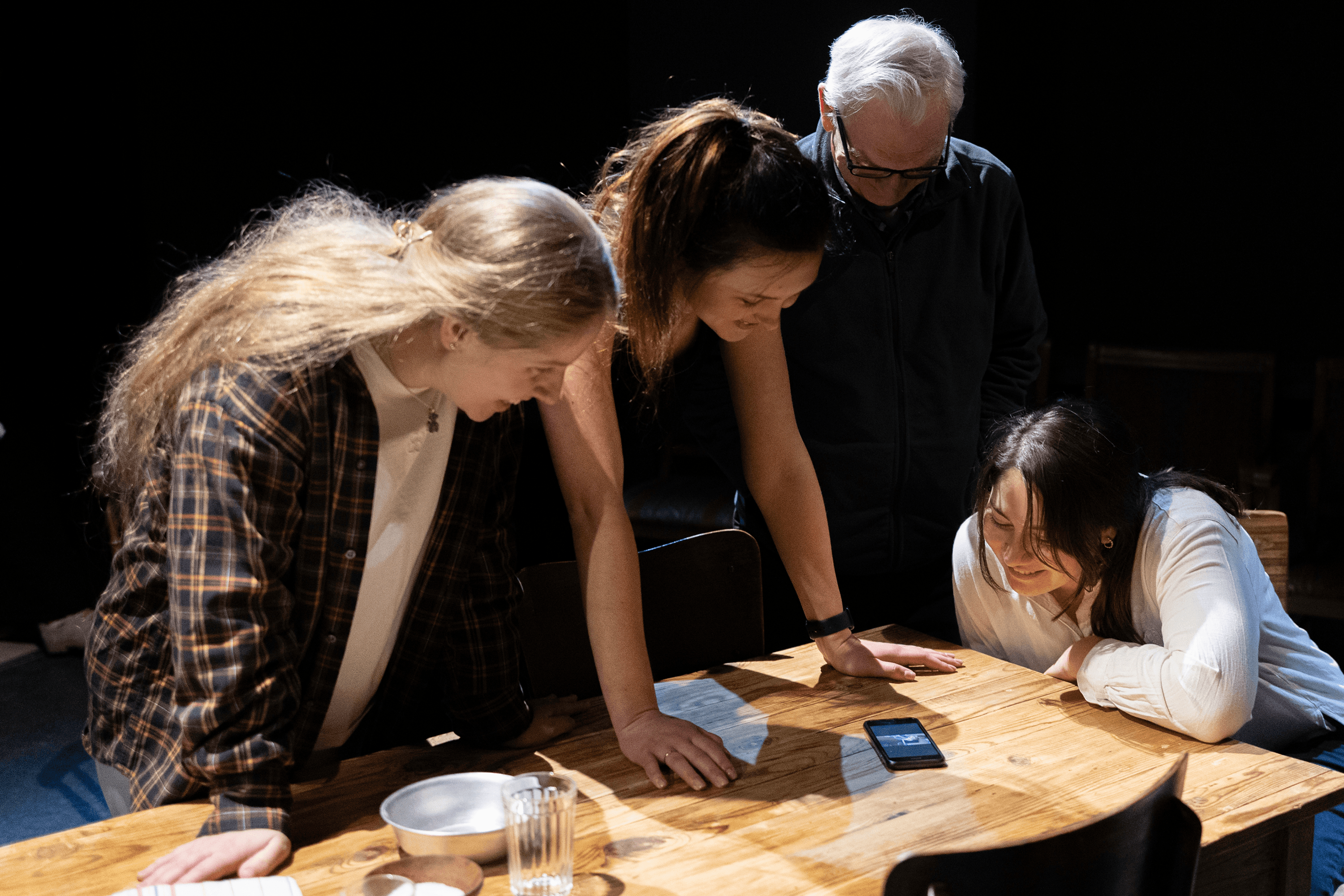
Richard Nelson with the actors during a rehearsal of “When the Hurlyburly’s Done” at Theatre on Podil. Photo: YB 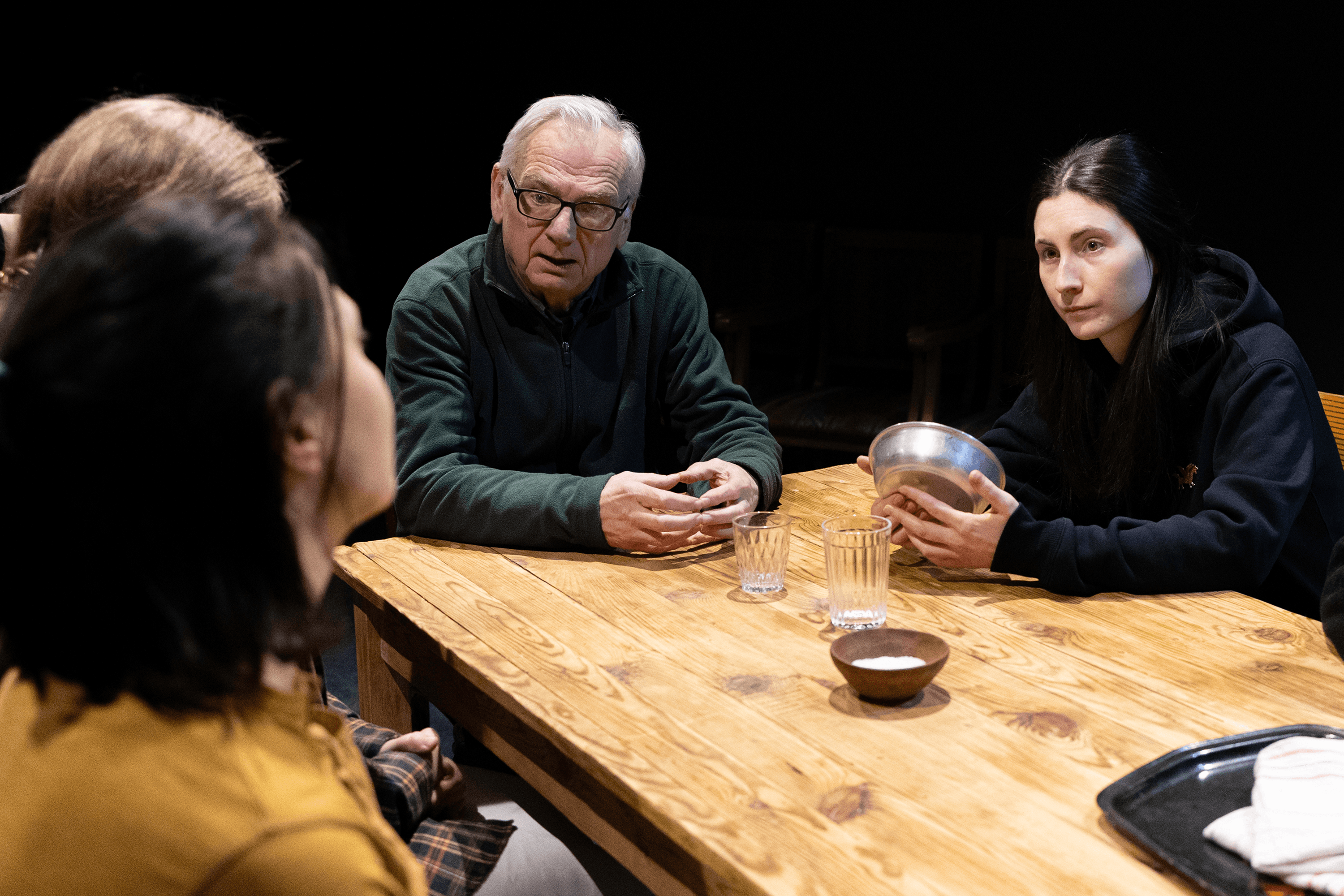
Photo: YB 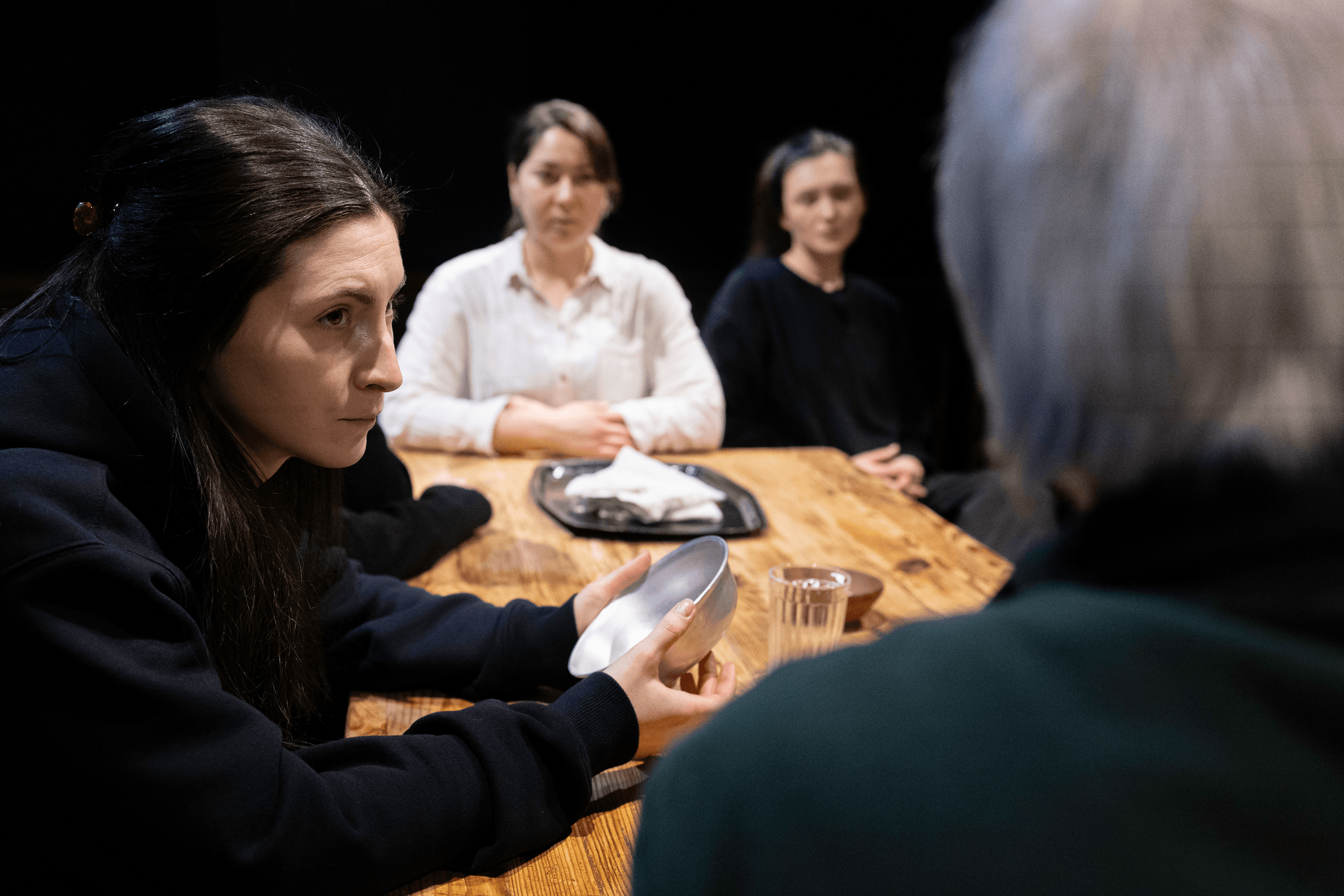
Photo: YB 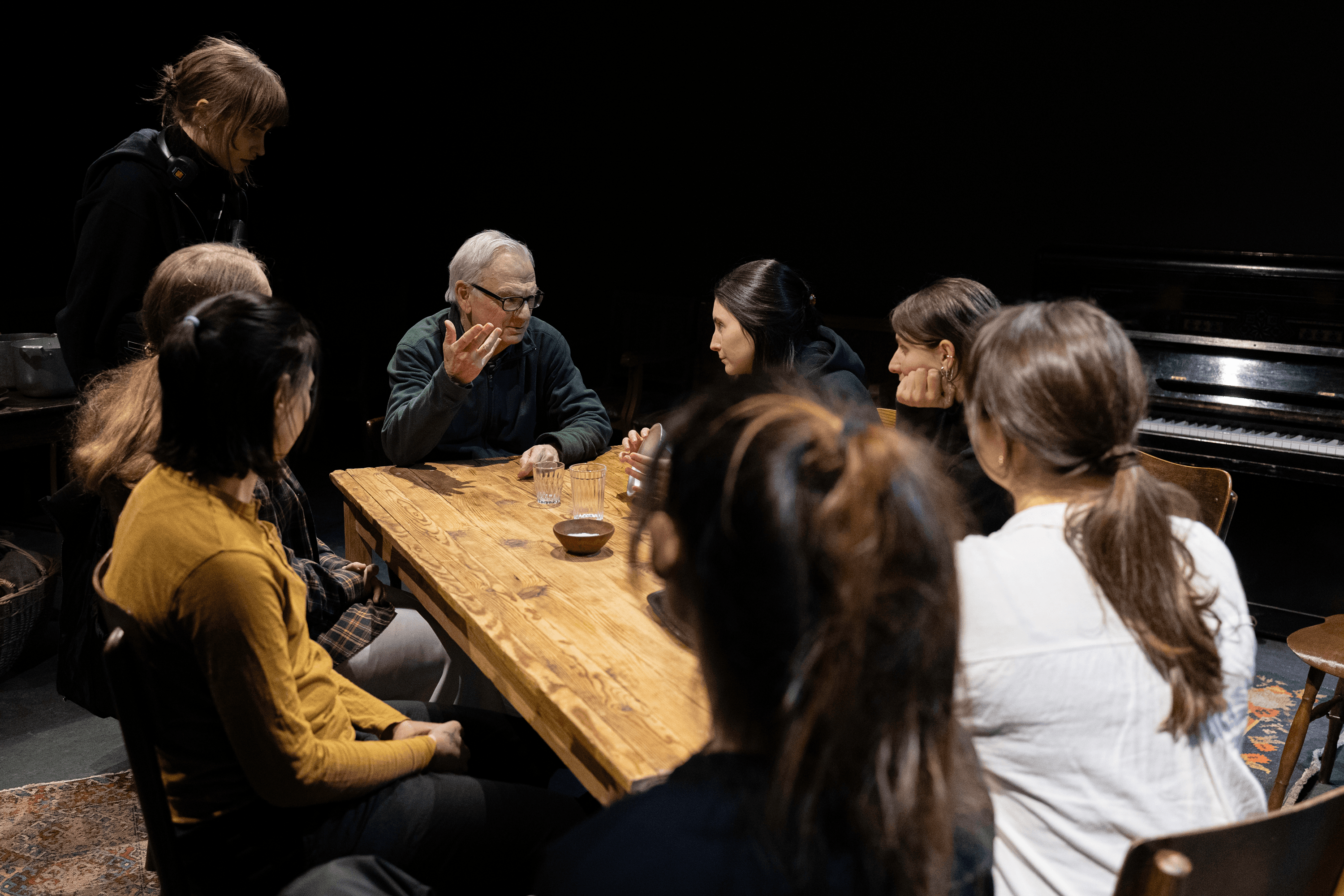
Photo: YB 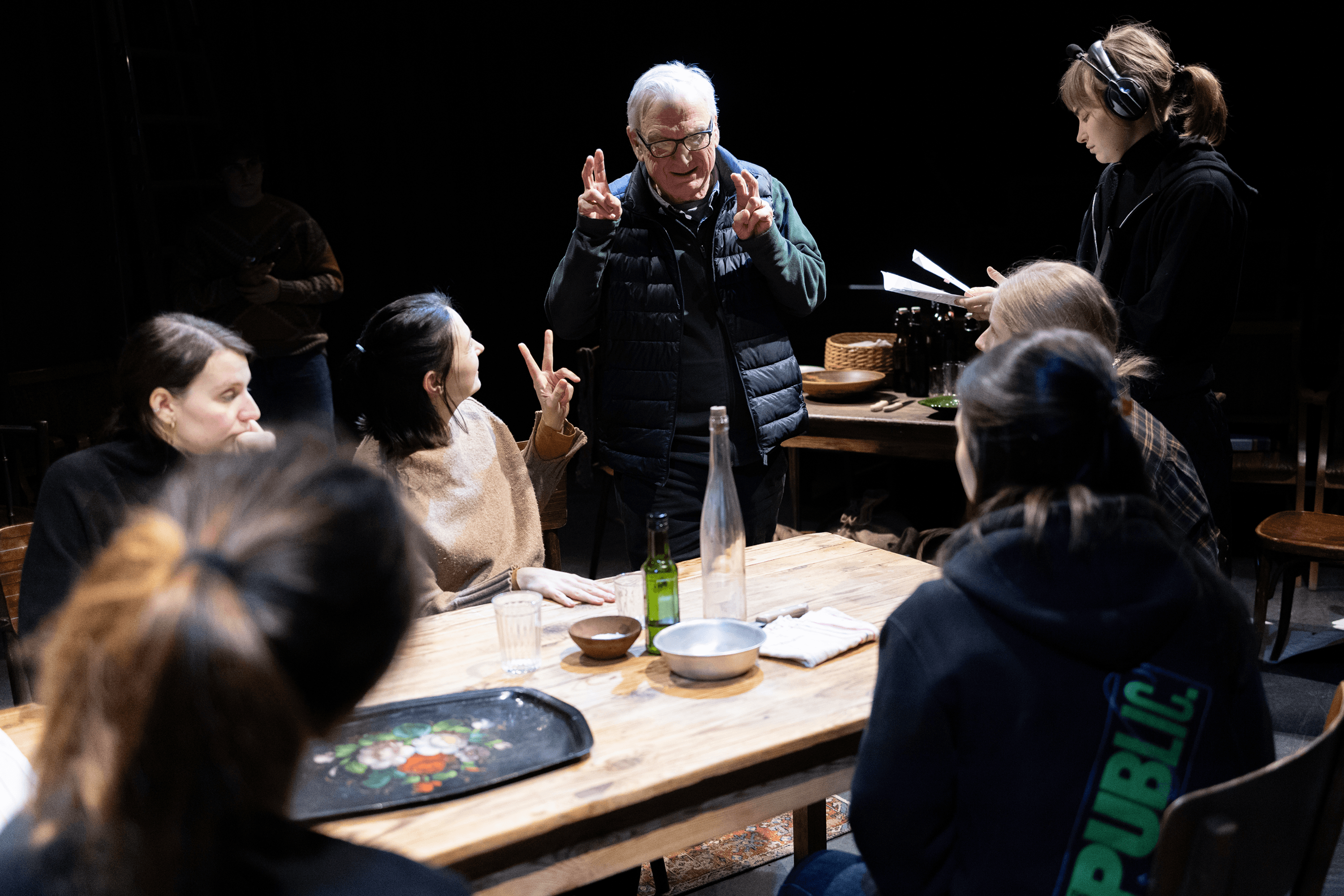
Photo: YB 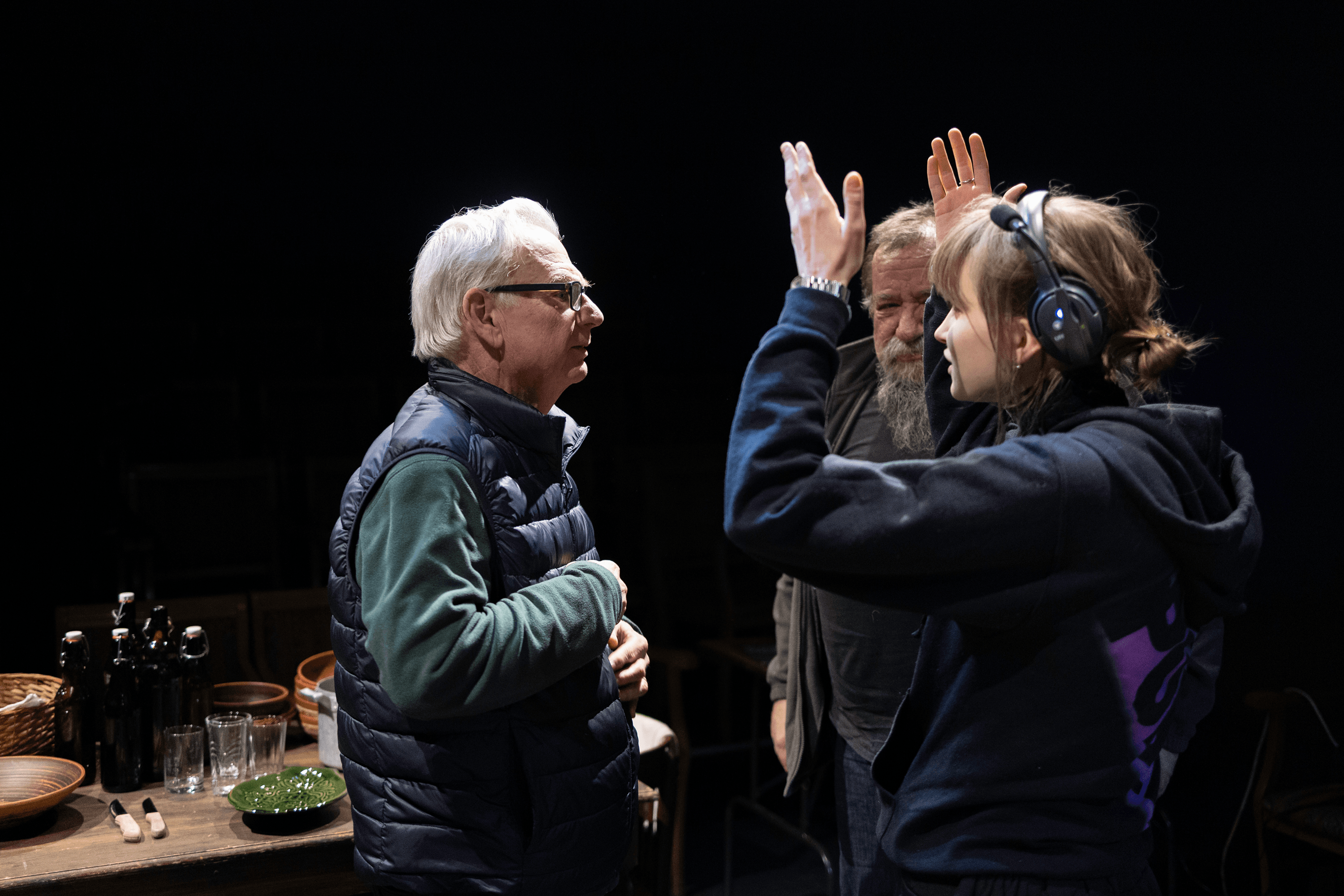
Photo: YB
The long road to Ukraine
Nelson’s path to the Theater on Podil and to Ukraine itself was long, tangled, and somewhat accidental. During the COVID-19 pandemic, he agreed to write a play for a theater in Saint Petersburg, but he and the director failed to align on their creative vision. Later, a theater in Moscow took interest in the text, and a first reading was even held there on February 22, 2022. “And then boom—the war started. Any interest in working in Russia vanished,” Nelson recalls.
A Russian acquaintance of Nelson’s urged him to restage the play “Conversations in Tusculum”, which had premiered in New York back in 2008. The play depicts the events leading up to the assassination of Julius Caesar. Brutus, whom the Emperor pardoned after Pompey’s defeat, feels humiliated. In the summer of 45 BC, in Tusculum, he discusses the decline of the Republic with Cassius and Cicero—a Republic they believe is vanishing because of a war started by its leader. The play explores the growing resentment toward a leader and the internal world of future conspirators.
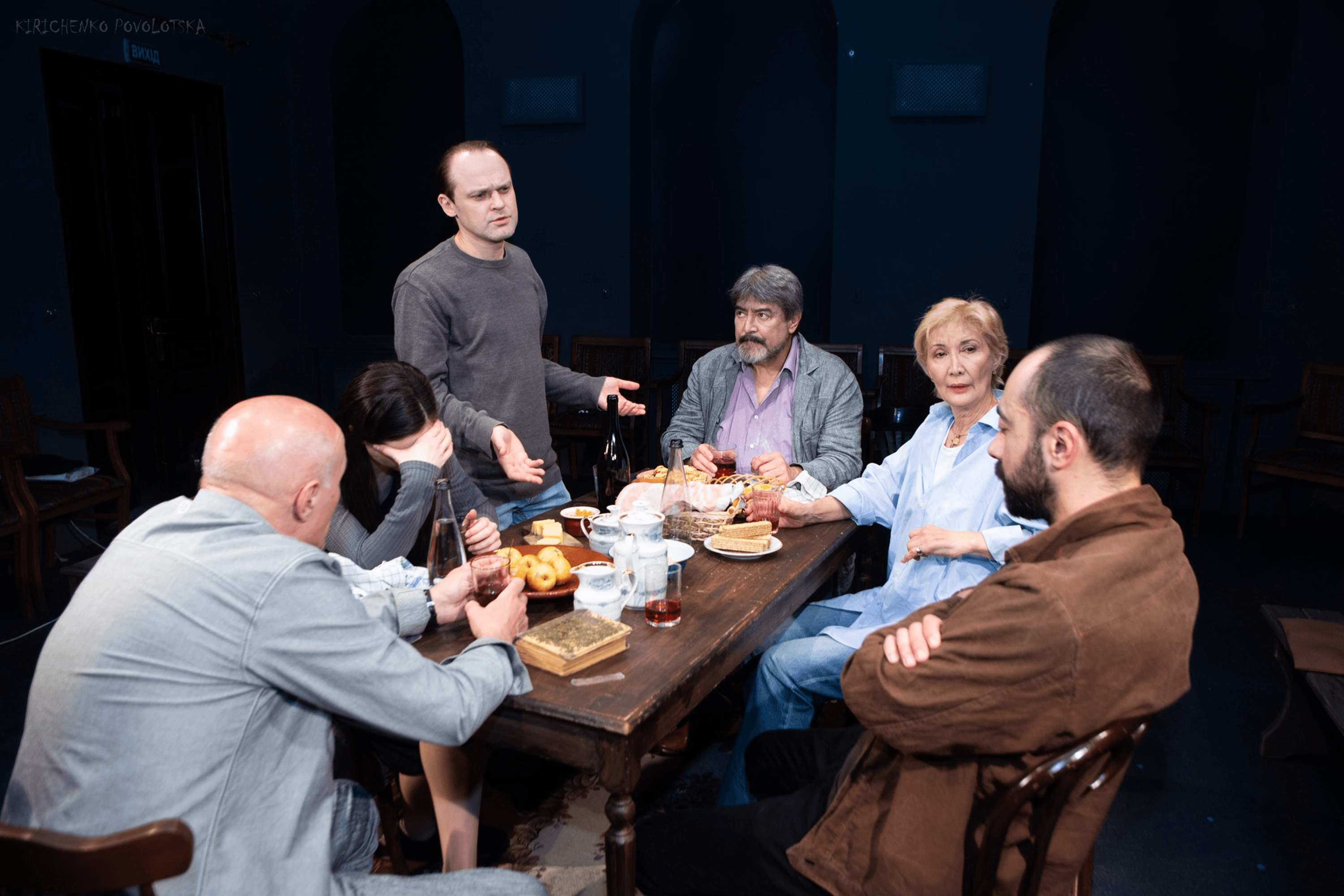
Scenes from the play “Conversations in Tusculum” at Theatre on Podil. Photo: Dmytro Gelevera / Facebook / YB 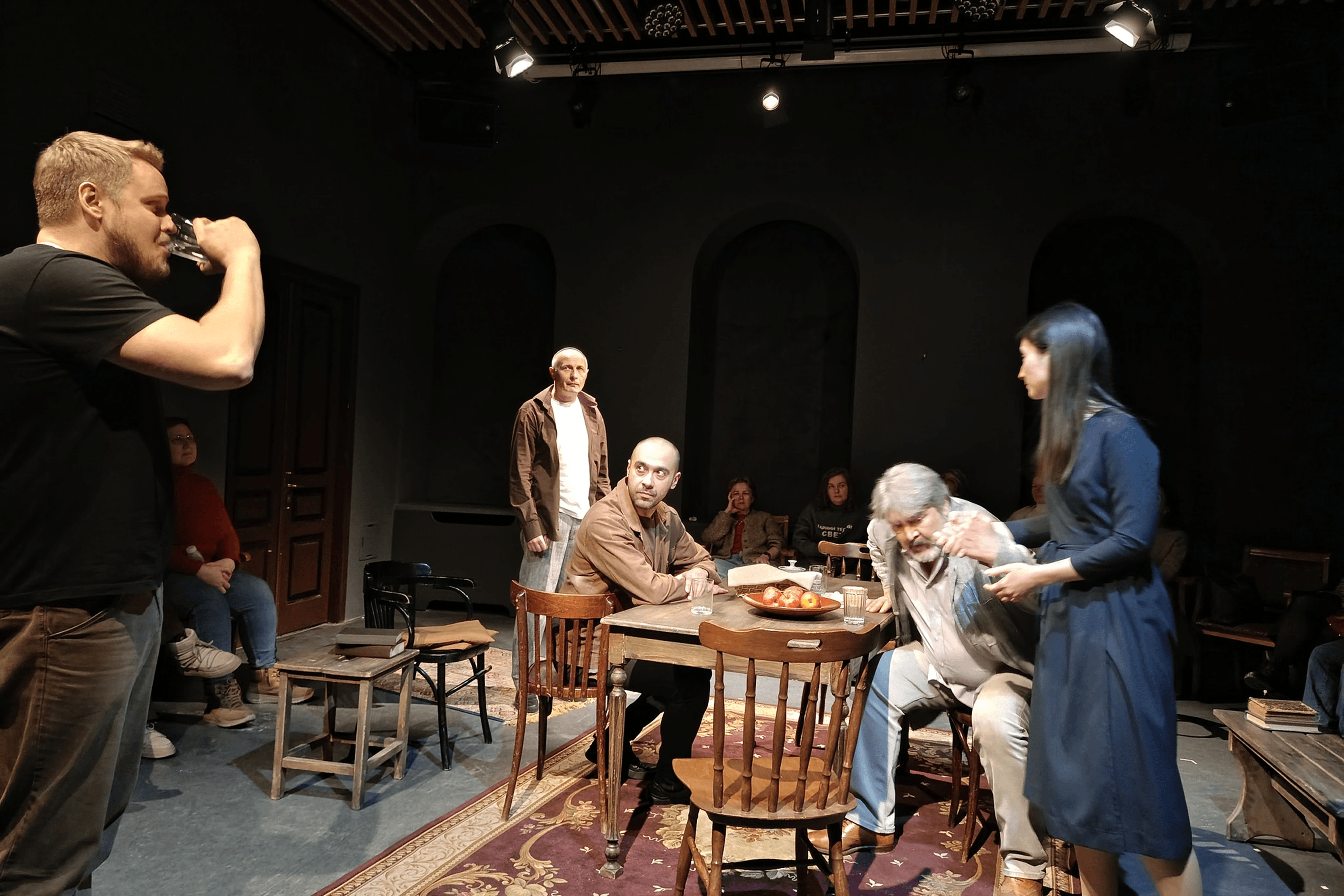
Photo: Театр на Подолі / Facebook / YB 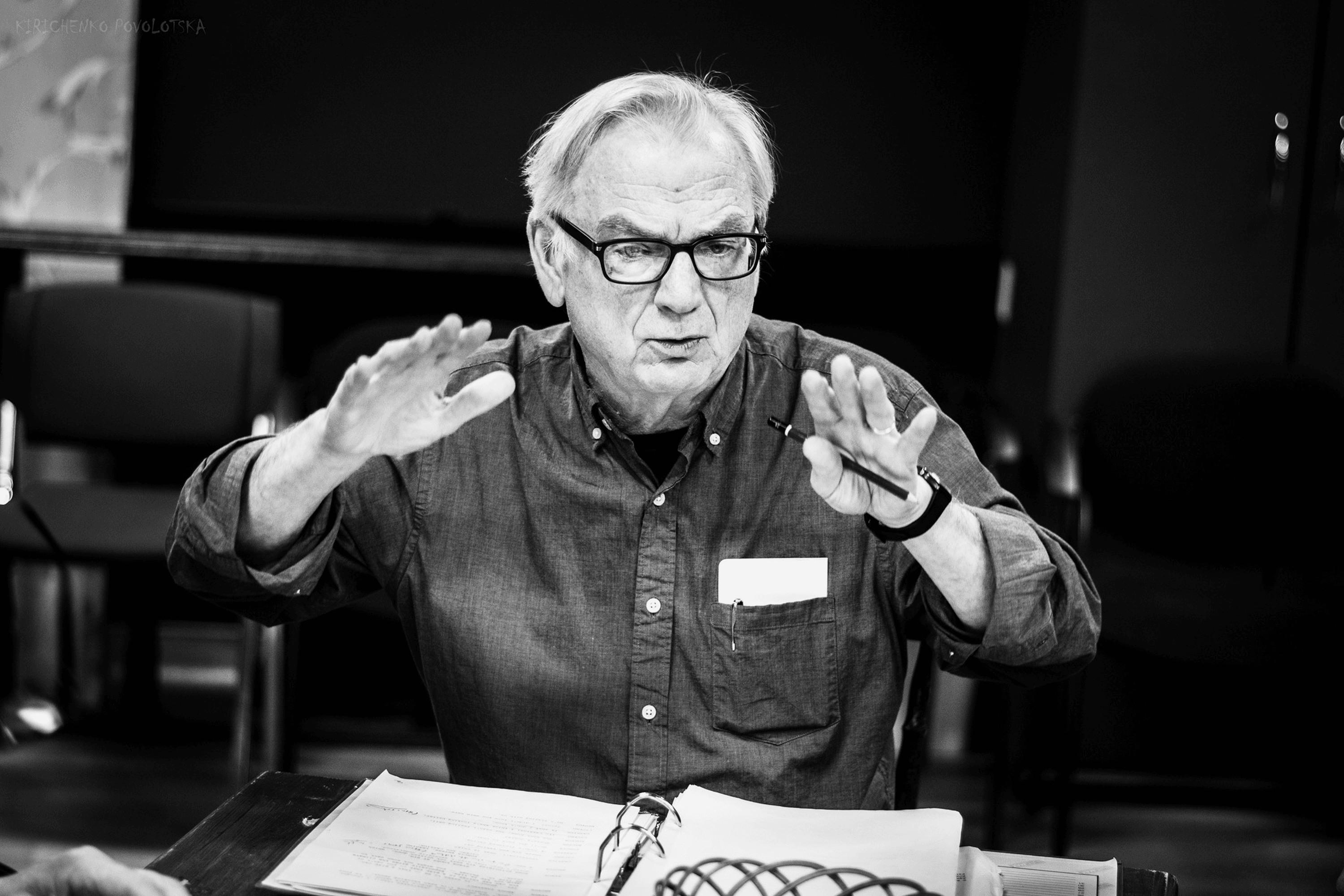
Річард Нельсон на репетиції вистави «Тускульські бесіди». Photo: Lenka Kirichenko-Povolotska / Театр на Подолі / Facebook / YB 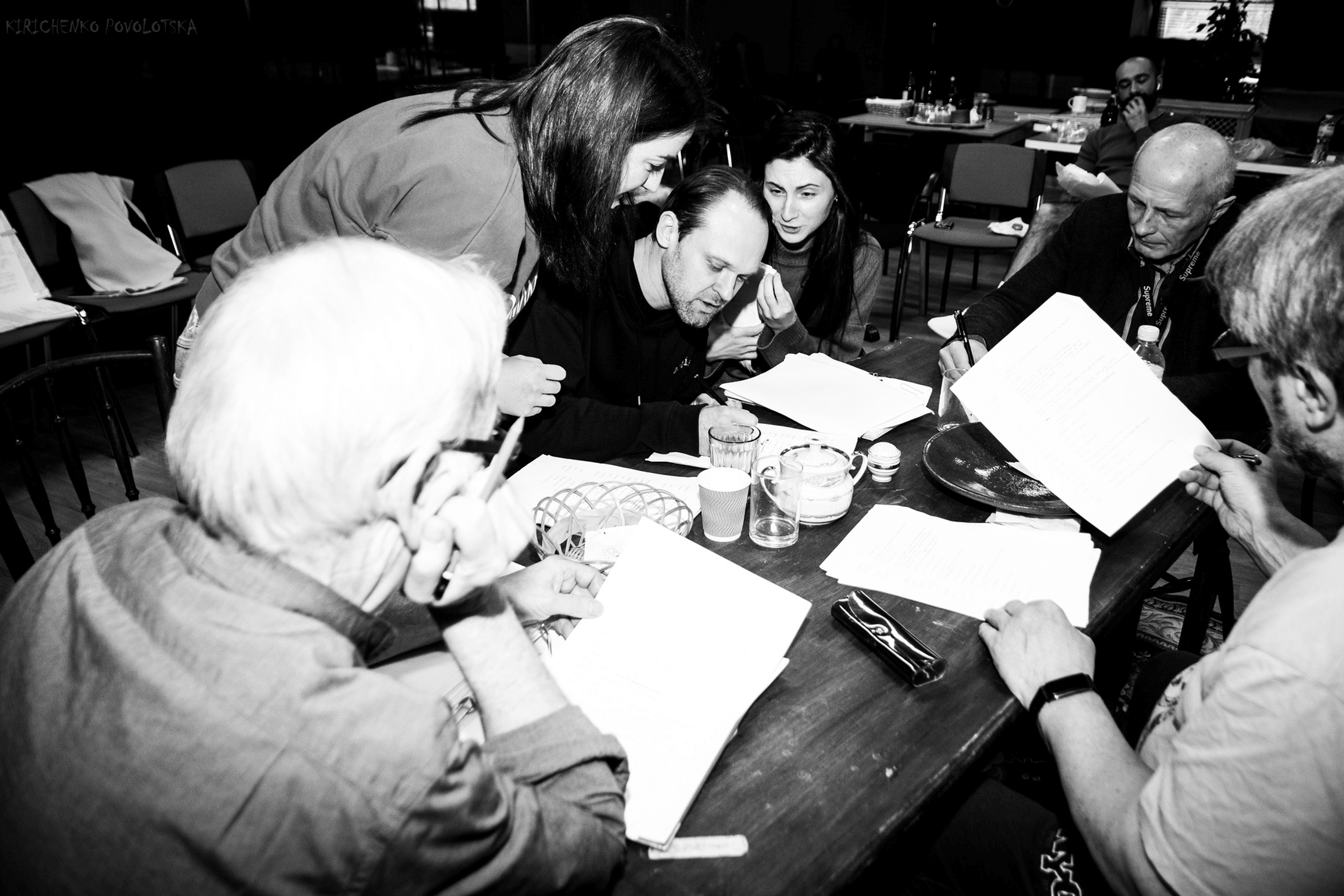
Photo: Lenka Kirichenko-Povolotska / Театр на Подолі / Facebook / YB 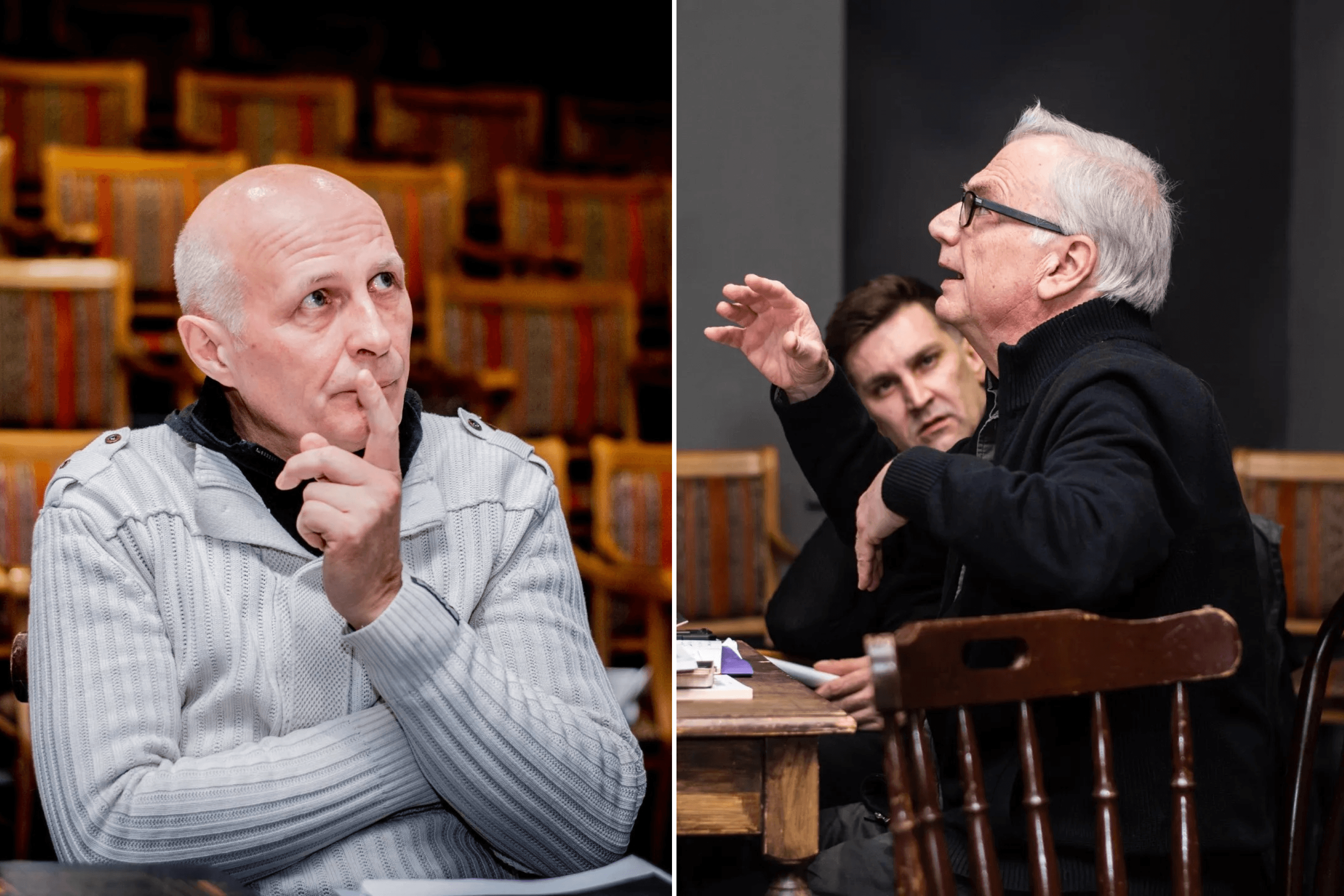
Photo: Театр на Подолі / Facebook / YB 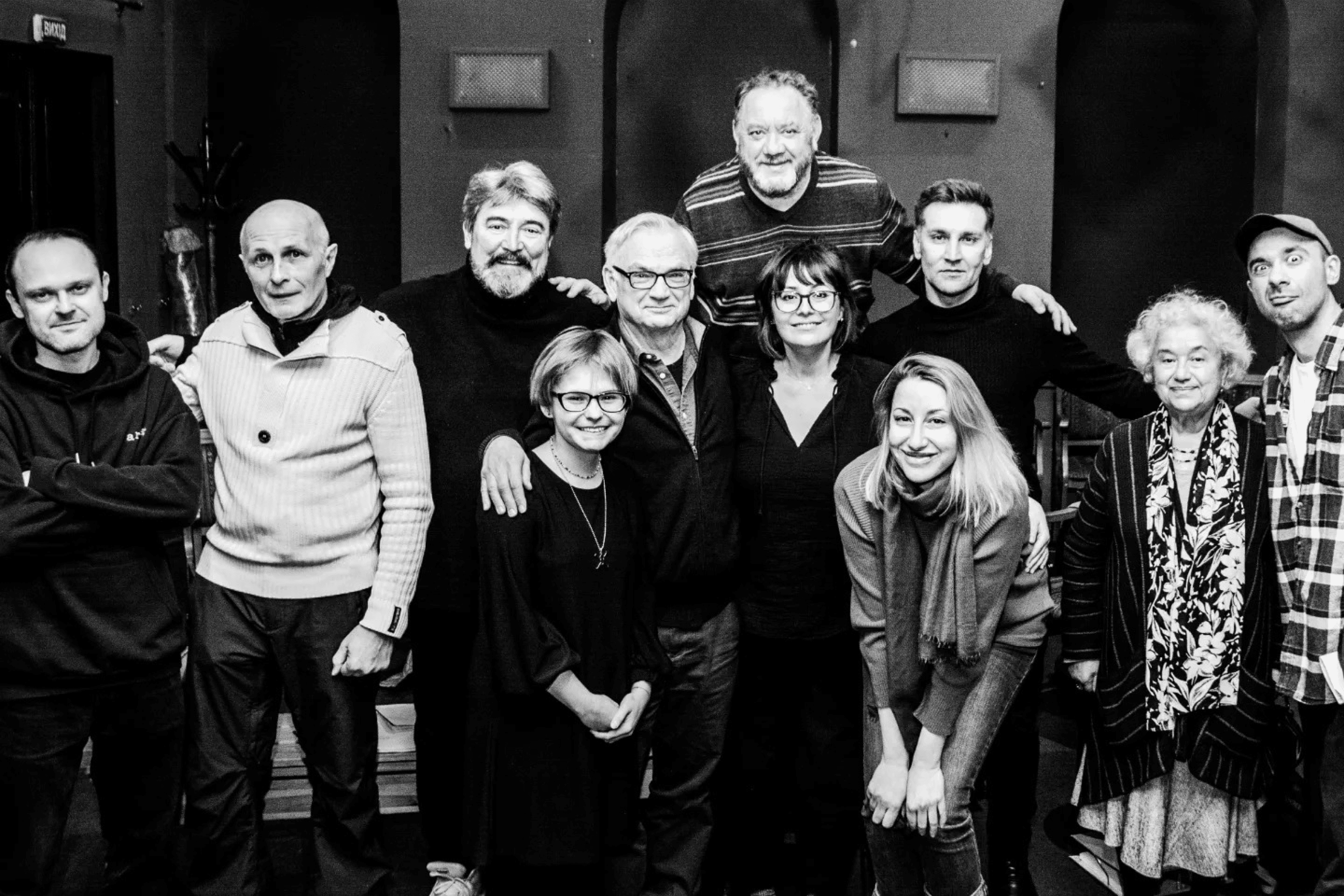
Photo: Театр на Подолі / Facebook / YB
“When the full-scale invasion began, I decided this was the play I wanted to stage right now,” Nelson says. “It’s an old play, written long before the events of 2022, but it is actually about Putin and what he is doing. I wanted to stage it in Russian, to be understood by Russians, but definitely not in Russia.”
The director reached out to Russian-speaking theaters in Latvia, Lithuania, Estonia, Georgia, and Israel. There was interest from everywhere. An old friend began working on the translation, and the play was nearly ready for production—and that was when the text fell into the hands of a Ukrainian actor living in Paris. He convinced Nelson that the play should be staged in Ukraine and found a theater ready to take it on: Kyiv’s Theater on Podil. This was one of Kyiv’s first modern theaters, founded in 1987 by director Vitaliy Malakhov. In 2016, the theater was completely rebuilt in a contemporary architectural style. Although some locals protested, believing the new building distorted the historical look of the Podil neighborhood, architects consider it one of the city’s finest artistic spaces.

The new building of Theatre on Podil in Kyiv. Photo: theatreonpodil.com / YB 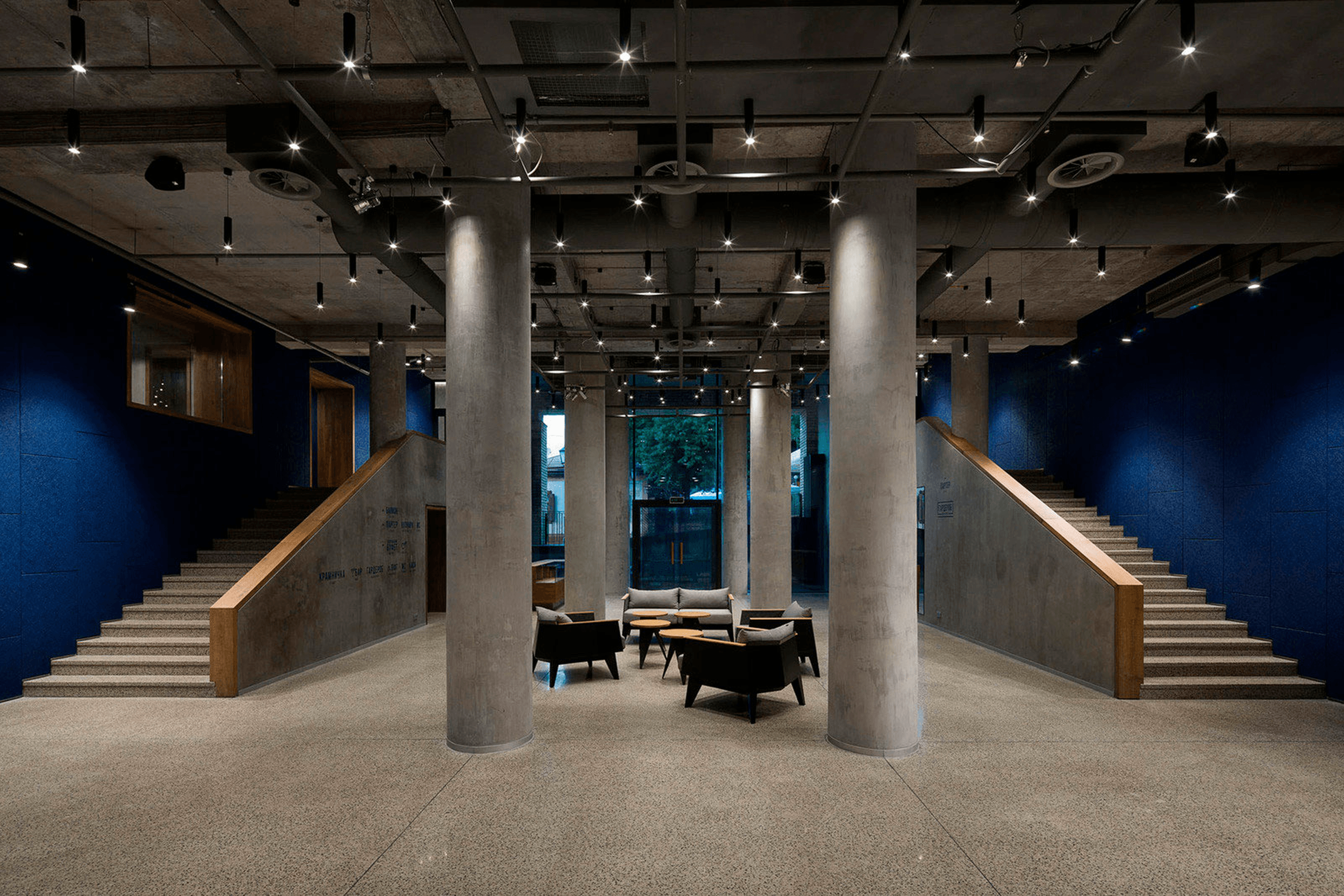
Photo: theatreonpodil.com / YB 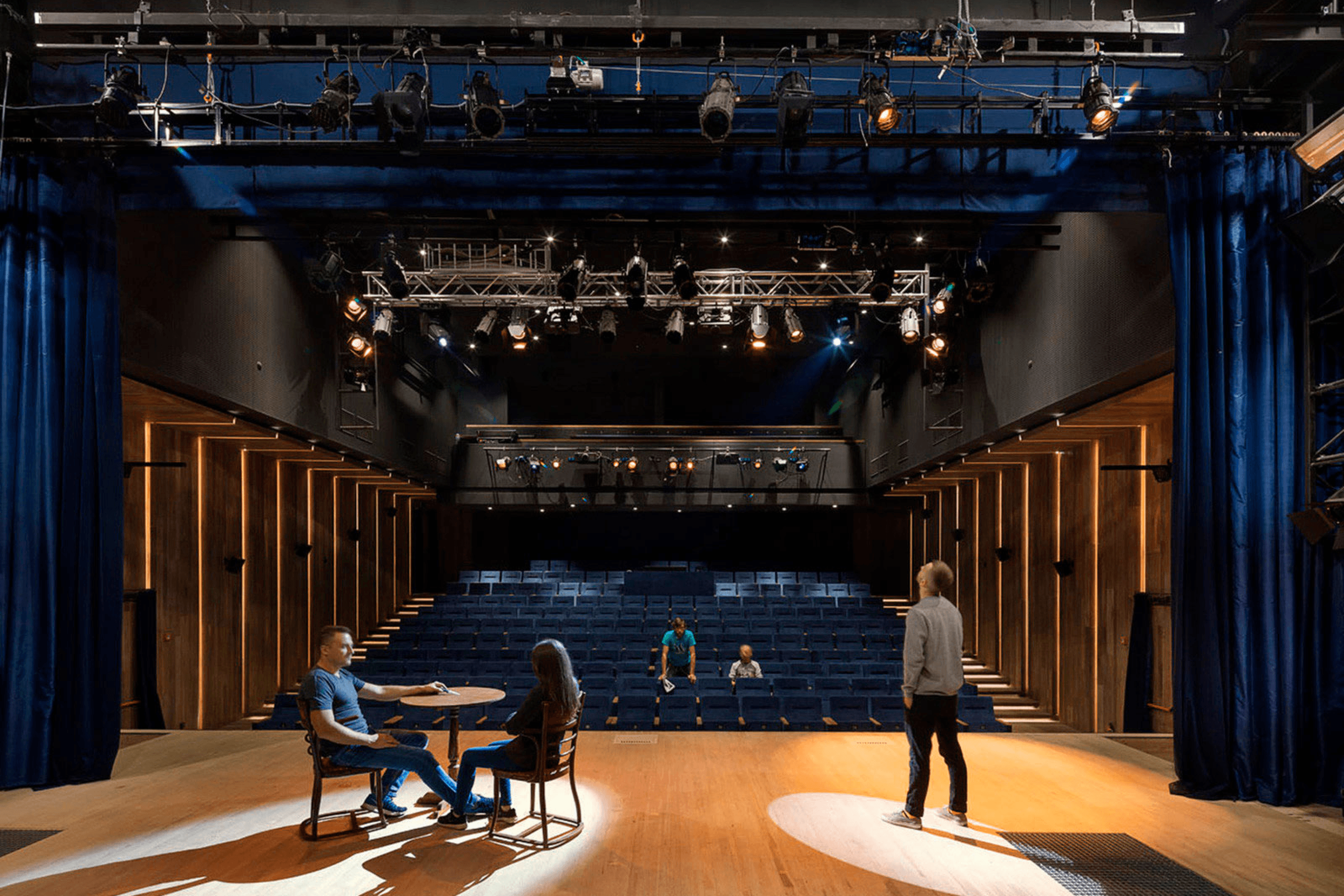
Photo: theatreonpodil.com / YB 
Photo: theatreonpodil.com / YB
At first, Nelson thought he would simply send the translation, the theater would stage it on its own, and he might visit for a few days for the premiere. However, the theater’s director, Bohdan Beniuk, invited him to come to Kyiv and direct the play personally. Nelson agreed. “For me, it was a great honor to share my play with people who suffer from war every day,” the director says.
And so, in March 2024, Richard arrived in Ukraine for the first time. “To be honest, I knew very little about Ukraine when I first came here,” Nelson admits. “I had never been here before; I didn’t know what to expect. Before the first trip, I decided to read many books, but in reality, I still knew almost nothing about Ukrainian culture.”
Nelson wanted to learn more and more. First, he watched several performances at the Theater on Podil. Oksana Prybish, the head of its literary and dramatic department, took him to many museums. In particular, he was most eager to visit the Museum of Theatre, Music and Cinema Arts of Ukraine. Due to the war, however, most exhibitions were closed. One of the few he was able to see was dedicated to Les Kurbas. Nelson stayed in Ukraine for two and a half months, staged “Conversations in Tusculum”, and returned to the United States.
“Speak and think”
Back in the States, the director realized he wanted to work in Ukraine again, but this time by writing a new play specifically for a Ukrainian theater. As he searched for a theme, the figure of Les Kurbas wouldn’t leave his mind. Kurbas is a pivotal figure in Ukrainian history. He introduced groundbreaking staging methods, blended drama with cinema, and experimented with light, space, and physical playing—essentially creating modern Ukrainian theater. In 1922, Kurbas founded the innovative Berezil theater in Kyiv, which quickly became one of the country’s leading stages.
“Theater is my life’s work, and I thought I knew everything about its history. But the name Les Kurbas was a revelation to me. I asked myself: ‘How did this happen? Why don’t I know this name? ’ So I became more and more interested in him and his work,” Nelson says.
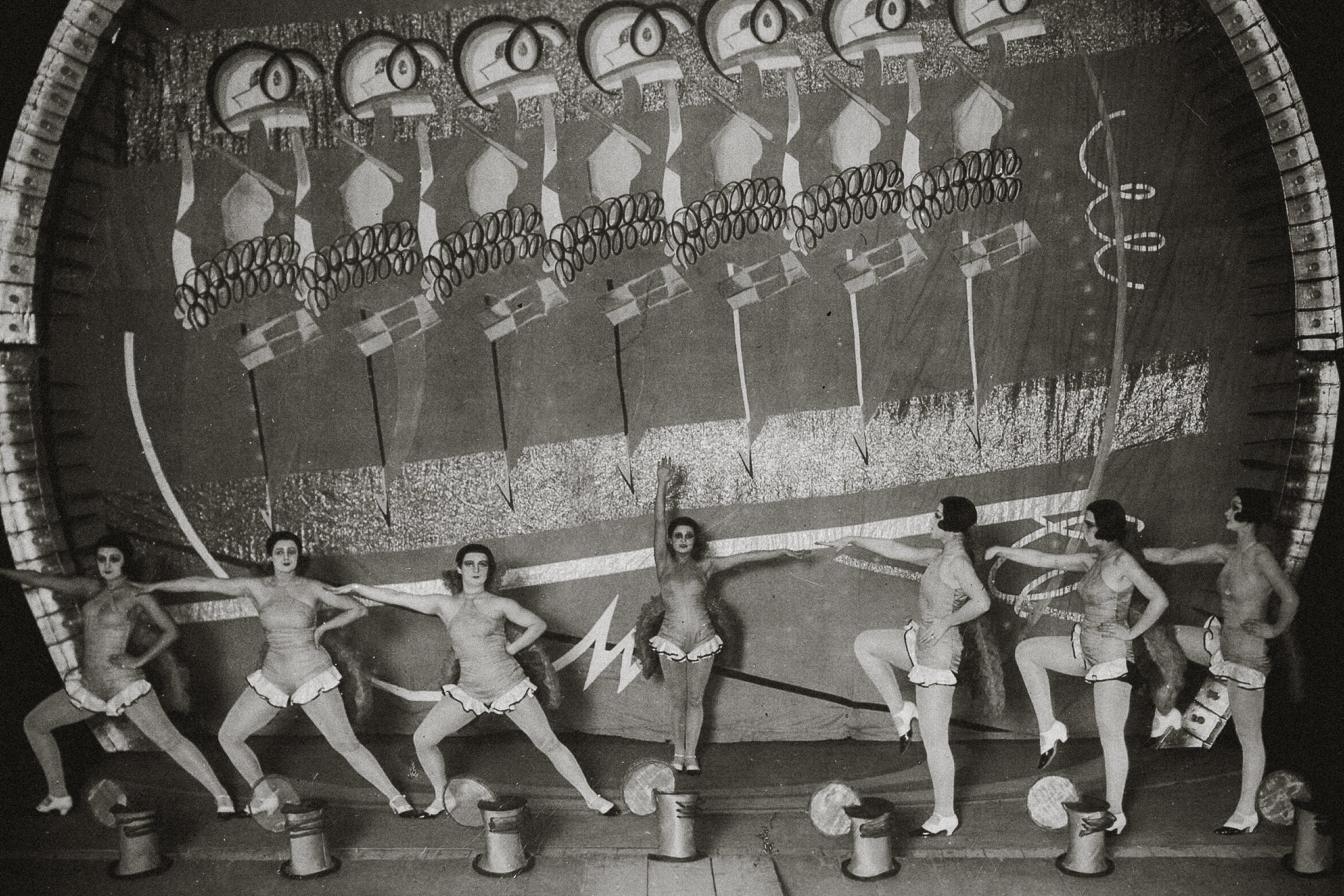
A scene from the play “Hello on Wave 477!” at the Berezil Theatre. 1929. Photo: openkurbas.org / YB 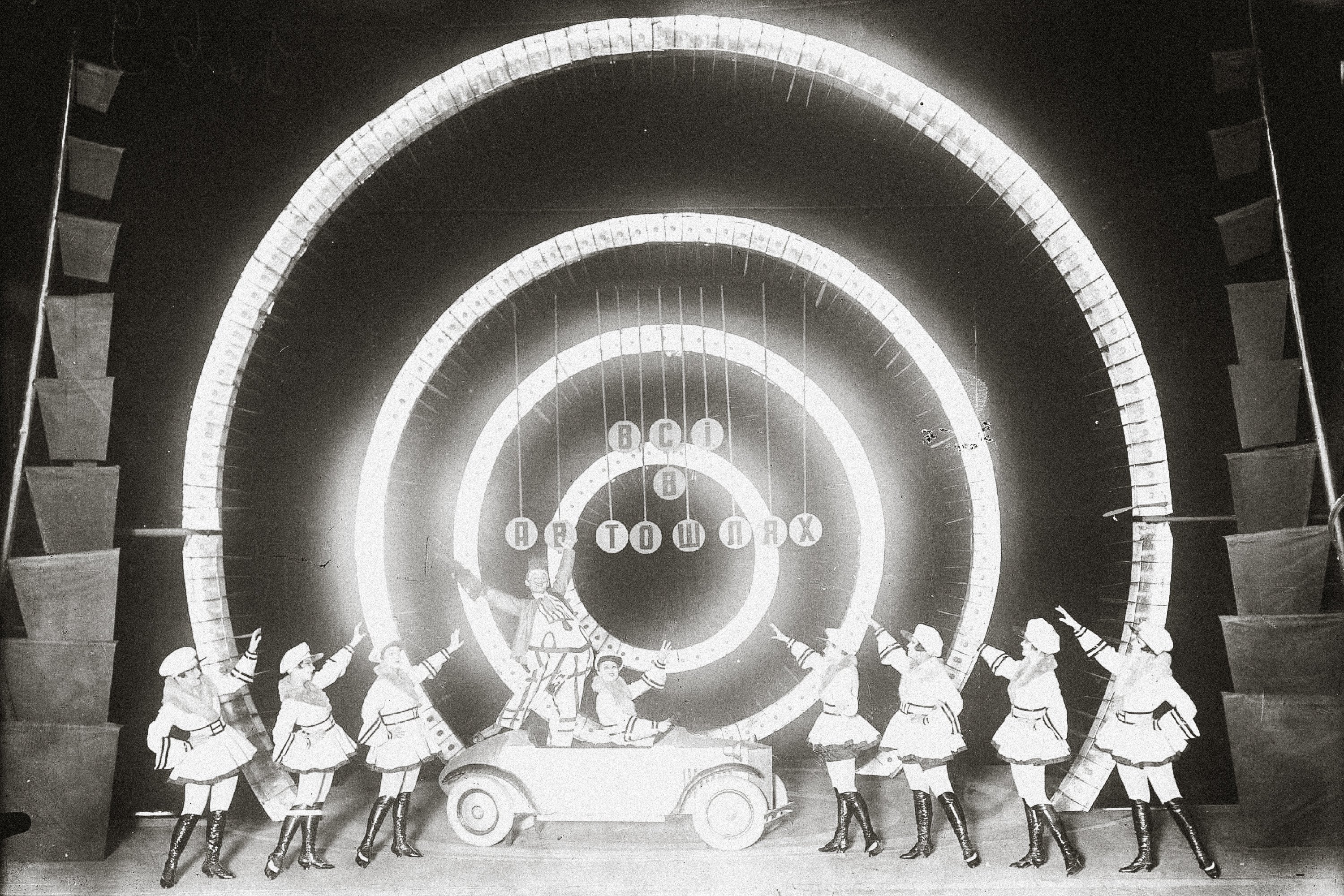
The Berezil Theatre in Kyiv. 1929. Photo: openkurbas.org / YB 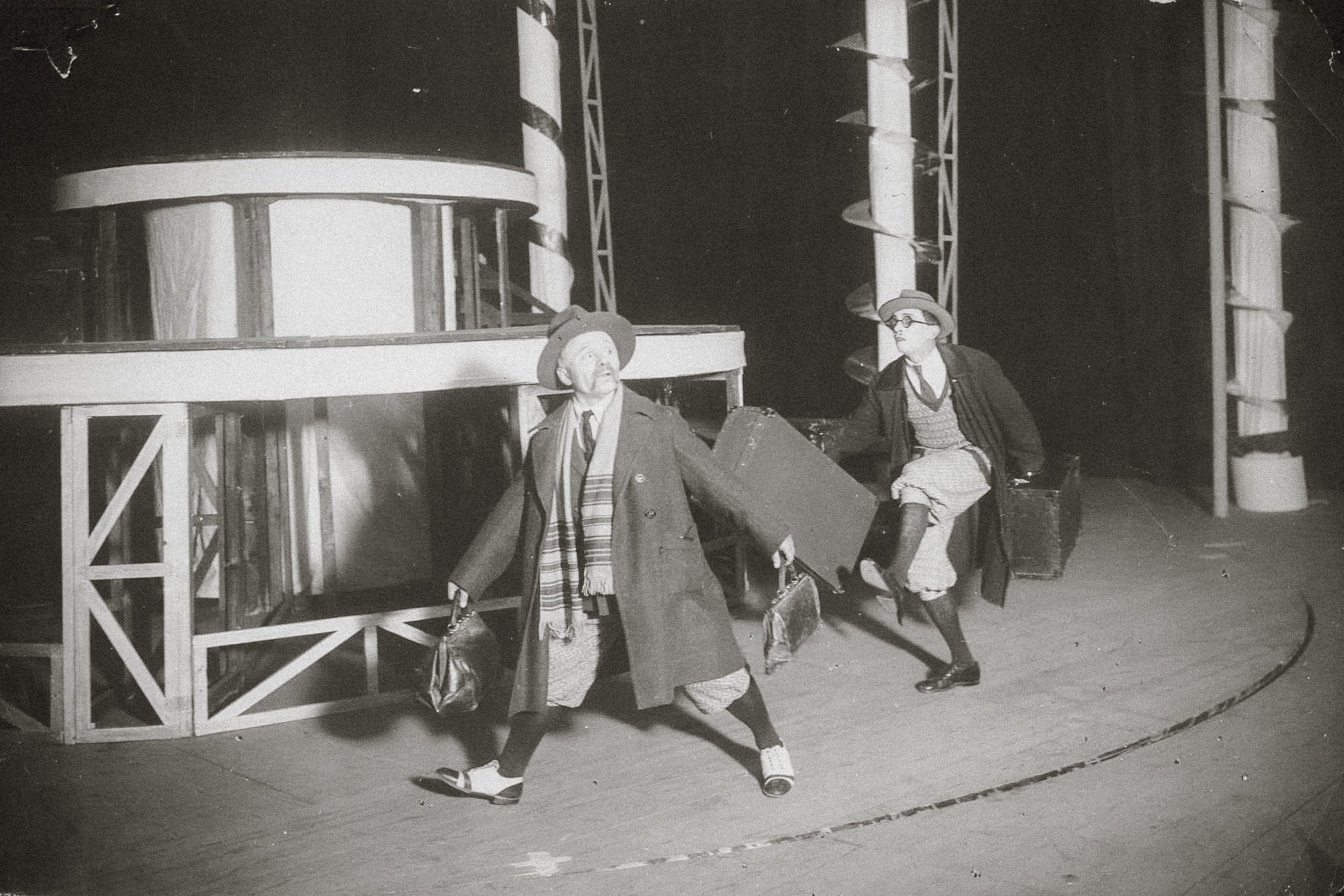
A scene from the play “October Review” at the Berezil Theatre. 1927. Photo: openkurbas.org / YB 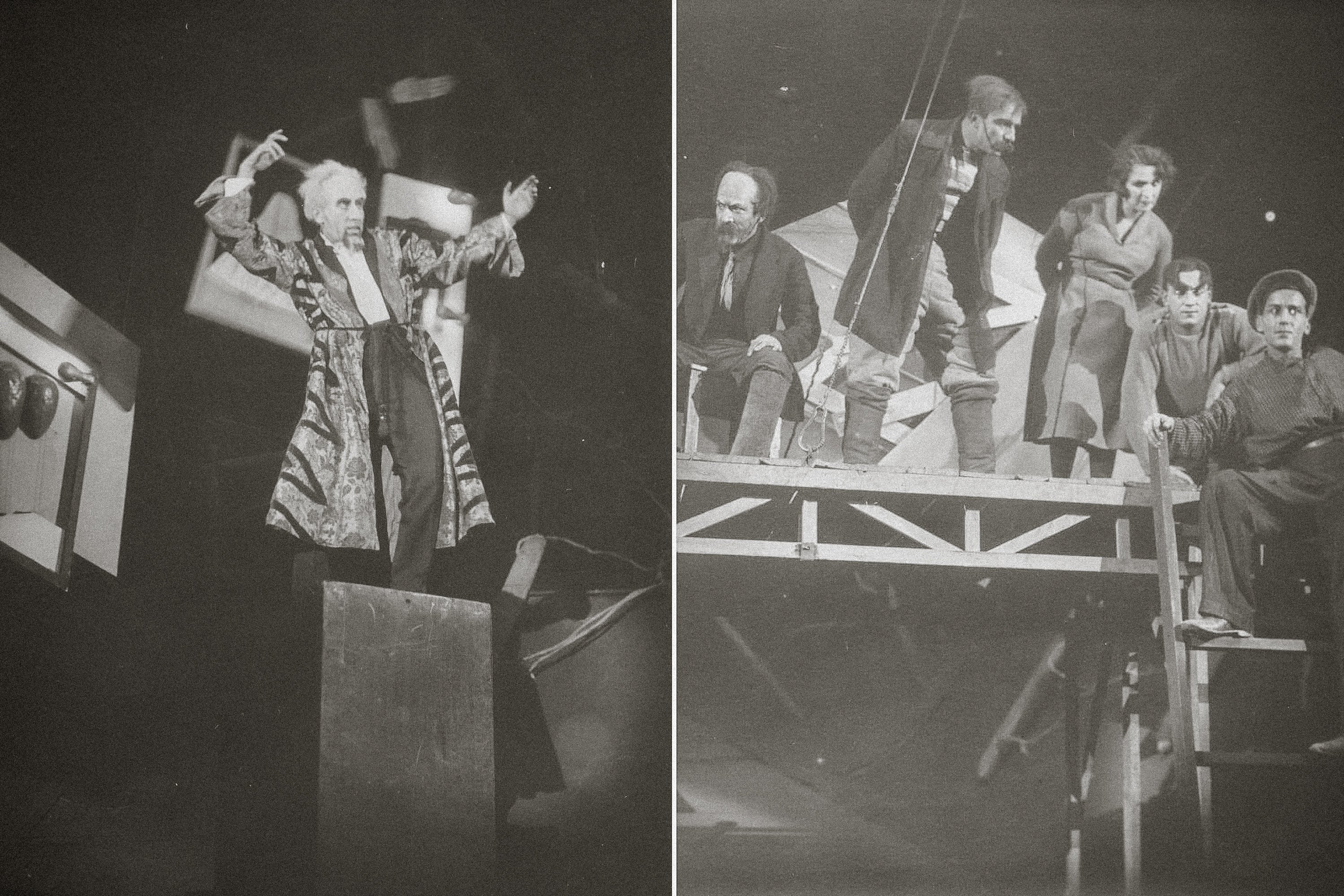
A scene from the play “Unknown Soldiers” at the Berezil Theatre. 1931. Photo: openkurbas.org / YB 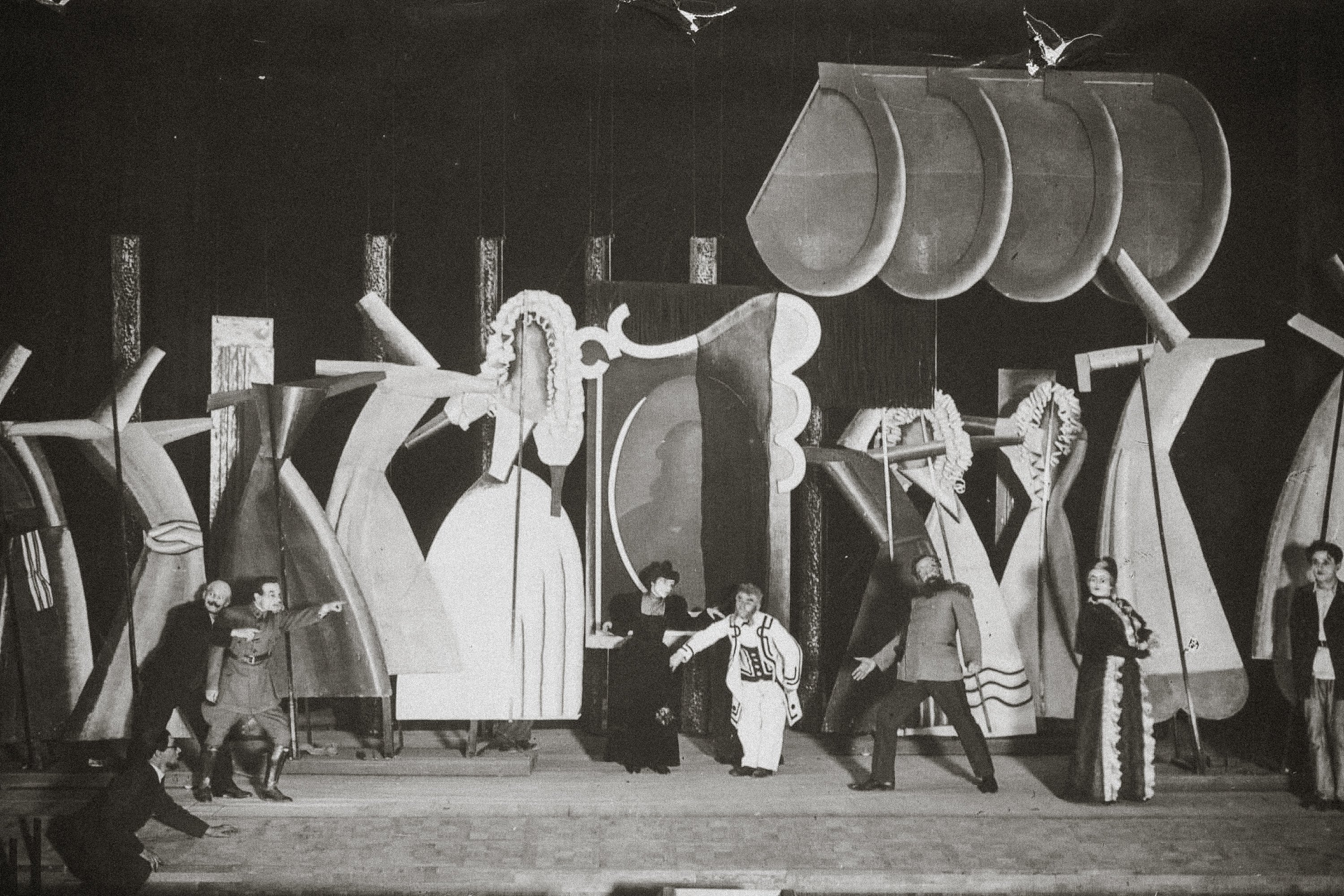
A scene from the play “Mr. Ralko’s Testament” at the Berezil Theatre. 1930. Photo: openkurbas.org / YB 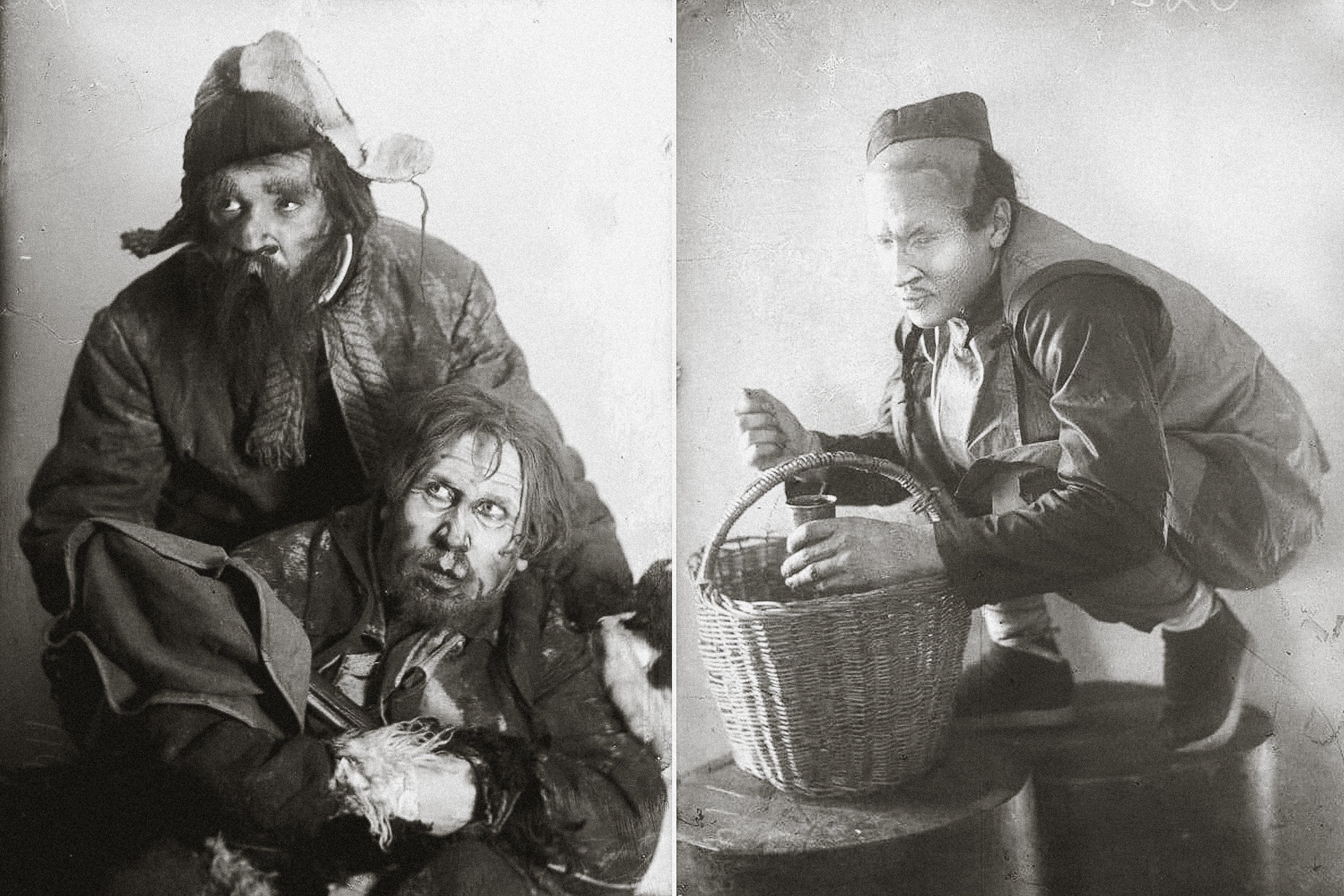
Scenes from the play “Armored Train 14-69” at the Berezil Theatre. 1928. Photo: openkurbas.org / YB
He realized then that Kurbas would be the heart of his next production. The director wanted to learn everything possible about his predecessor. English-language sources on the life and work of Kurbas were scarce. Friends from Ukraine sent articles, documents, and various publications, which Nelson read using online translators. He studied everything he could get his hands on.
Nelson speaks of Kurbas with admiration, calling him a towering figure of his time. According to Nelson, Kurbas was a humanist director deeply interested in the complexity of characters—a quality the American director recognizes in himself. On the other hand, Kurbas was a bold experimentalist who integrated film and stage, which was radically new for that era.
Initially, Nelson thought about writing a play about Kurbas himself, but he soon realized there was almost no reliable information about him as a person. In 1933, Kurbas was arrested for “counter-revolutionary activities”—a victim of Stalinist repressions against the Ukrainian intelligentsia and cultural figures. He spent the next four years in prisons. In 1937, Kurbas was sentenced to death and executed on November 3 at Sandarmokh.
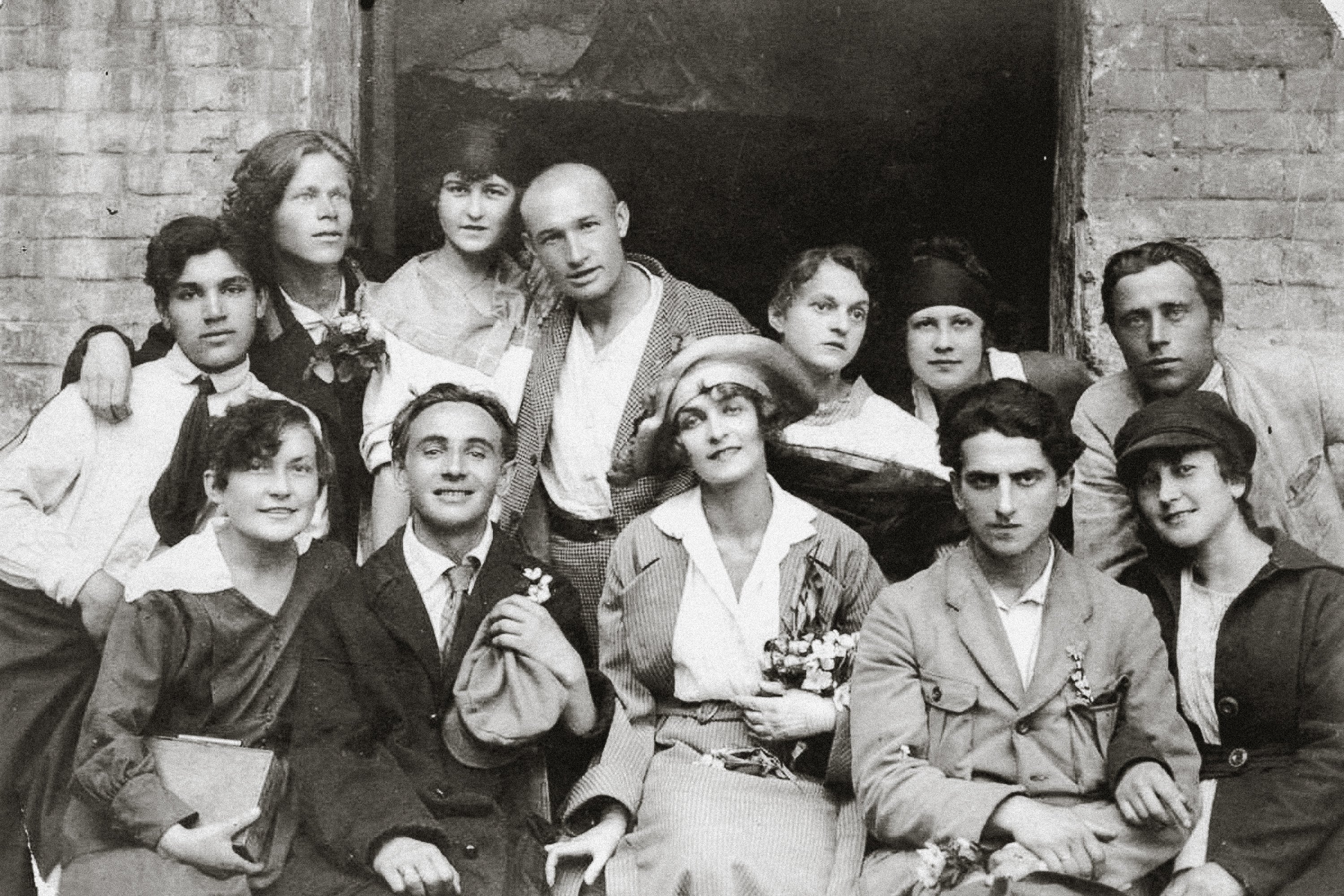
After his murder, Kurbas’s name was effectively erased from history. It wasn’t until the late 1950s that people who knew and valued him were allowed to speak of him again, but only within the permitted Soviet discourse—as a “good communist.” Nelson understood that this lens distorted reality. That’s why he felt he wasn’t ready to bring the figure of Kurbas directly onto the stage; he lacked the confidence that he could do it “honestly and accurately.”
Instead, there was a wealth of material about Kurbas’s ideas, productions, and influence. Nelson recalled that one of the exhibits he saw in Kyiv was a poster for “Macbeth”—the first production of Shakespeare in Ukrainian, which took place in 1920. With that, Nelson began writing the play “When the Hurlyburly’s Done”.
On January 1, 2025, Richard returned to Ukraine with a finished script and began the production—once again at the Theater on Podil. For most of the actresses, working with a director who didn’t speak their language was a new experience. However, both the director and the actresses agree that language was not a major obstacle. While an interpreter usually assisted Nelson, over time they learned to understand each other even without one.
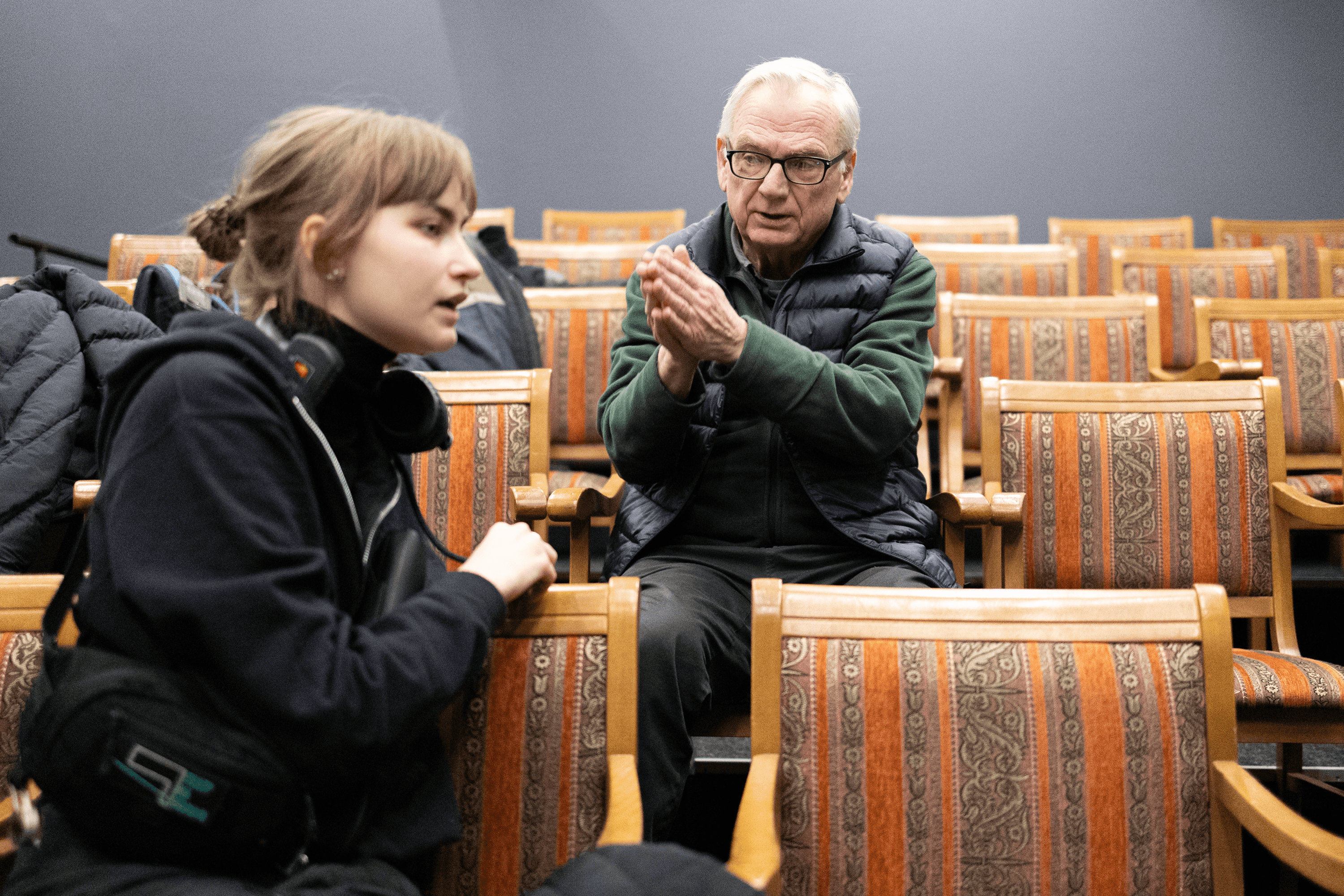
Richard Nelson with the actors during a rehearsal of “When the Hurlyburly’s Done” at Theatre on Podil. Photo: YB 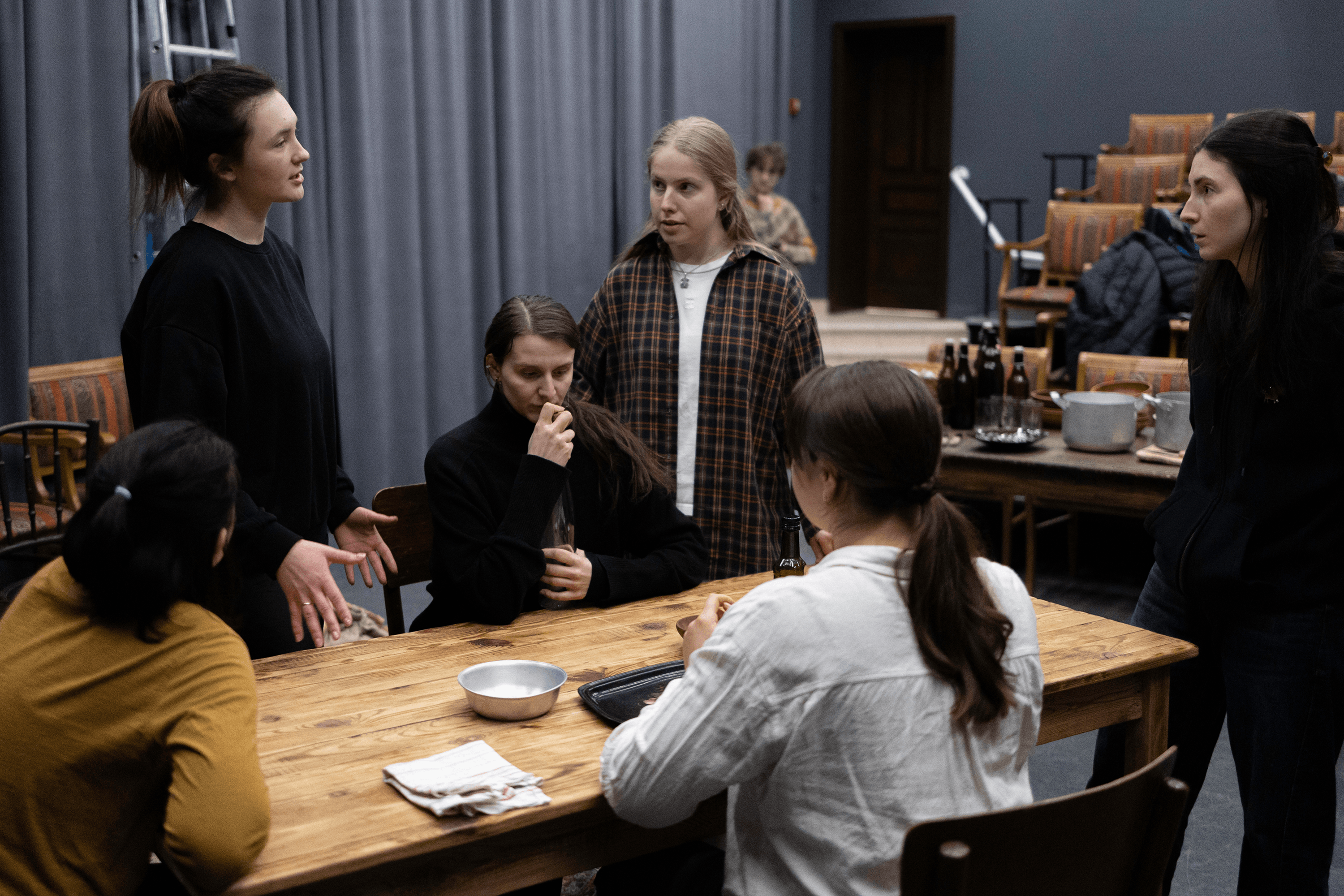
Photo: YB 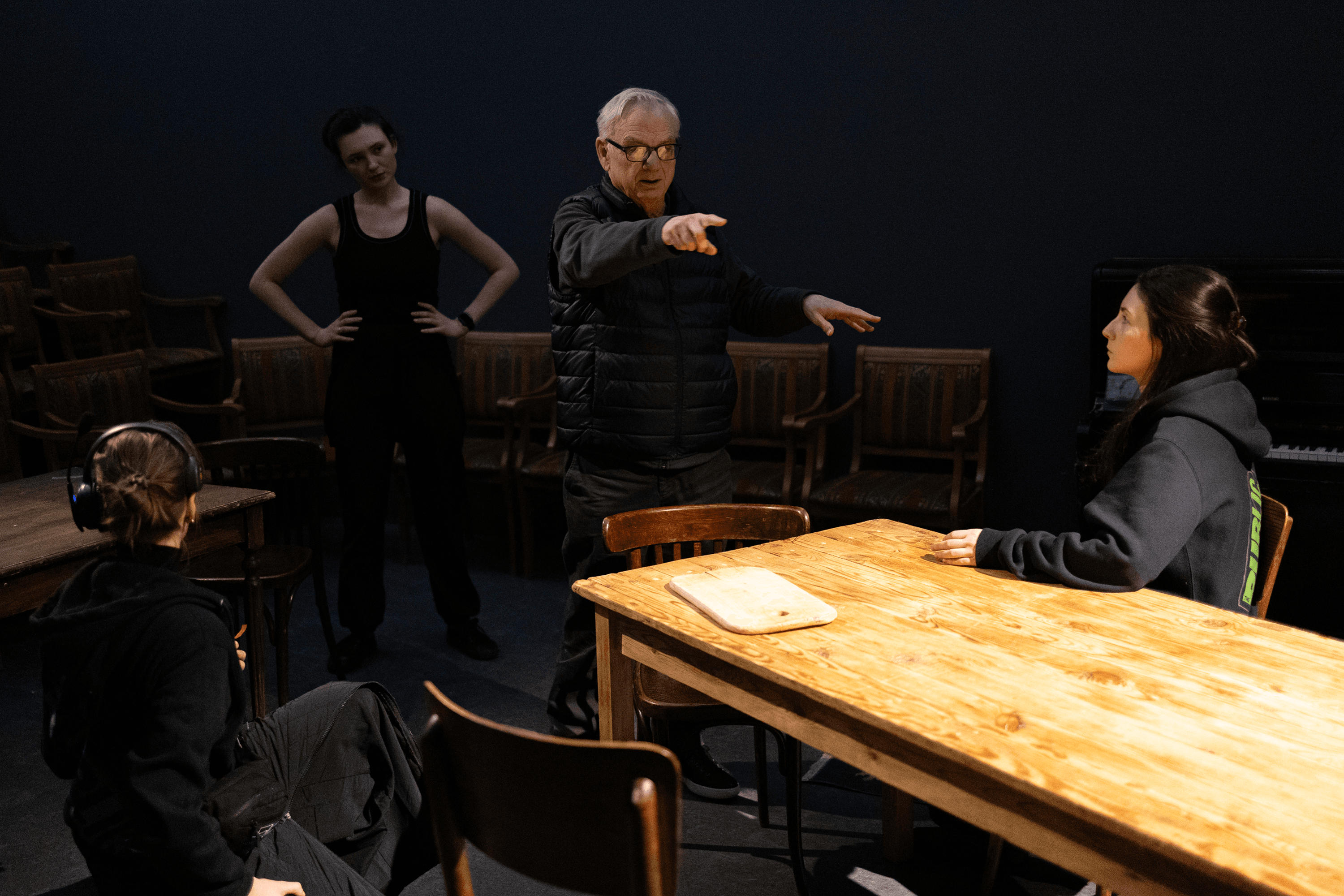
Photo: YB 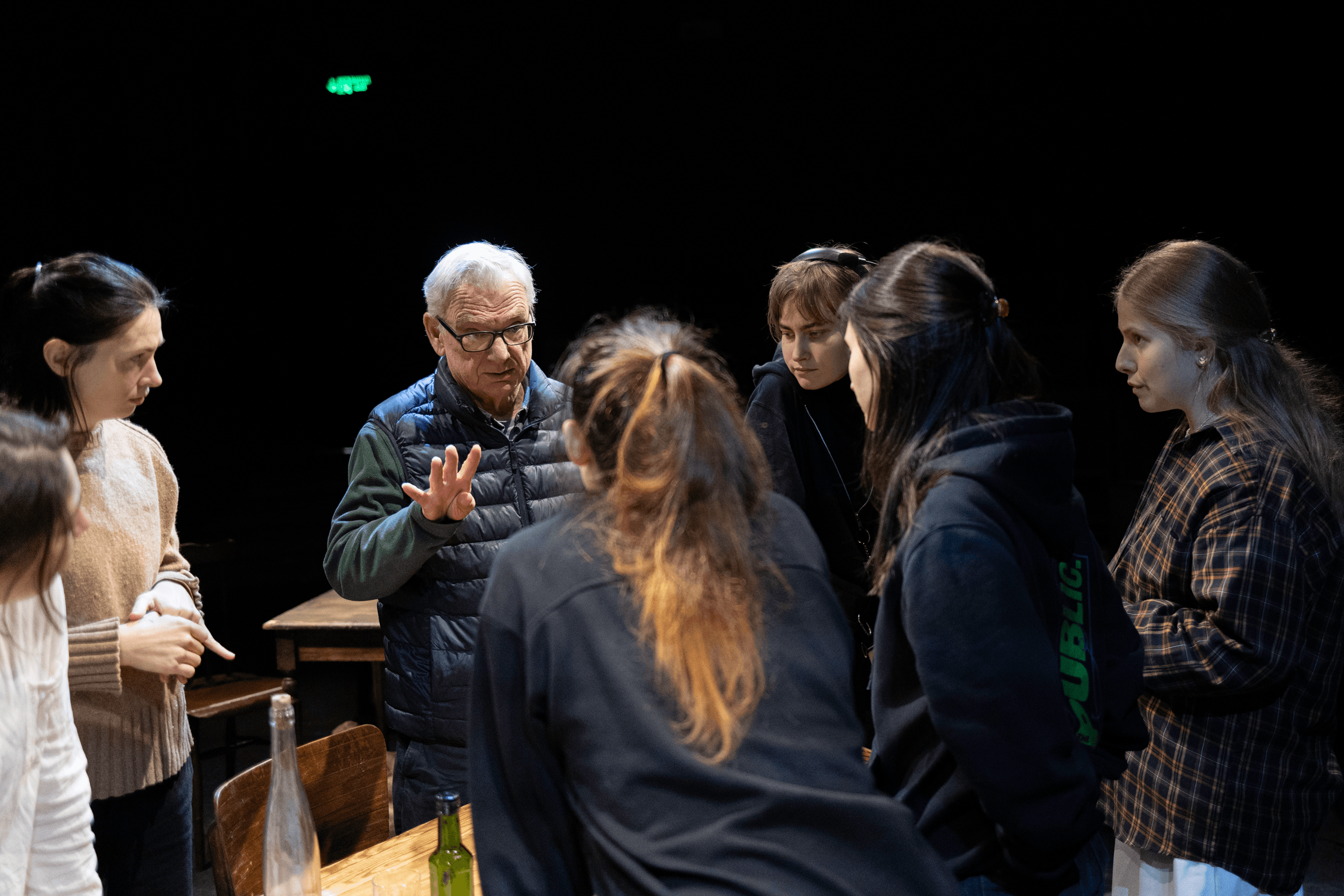
Photo: YB 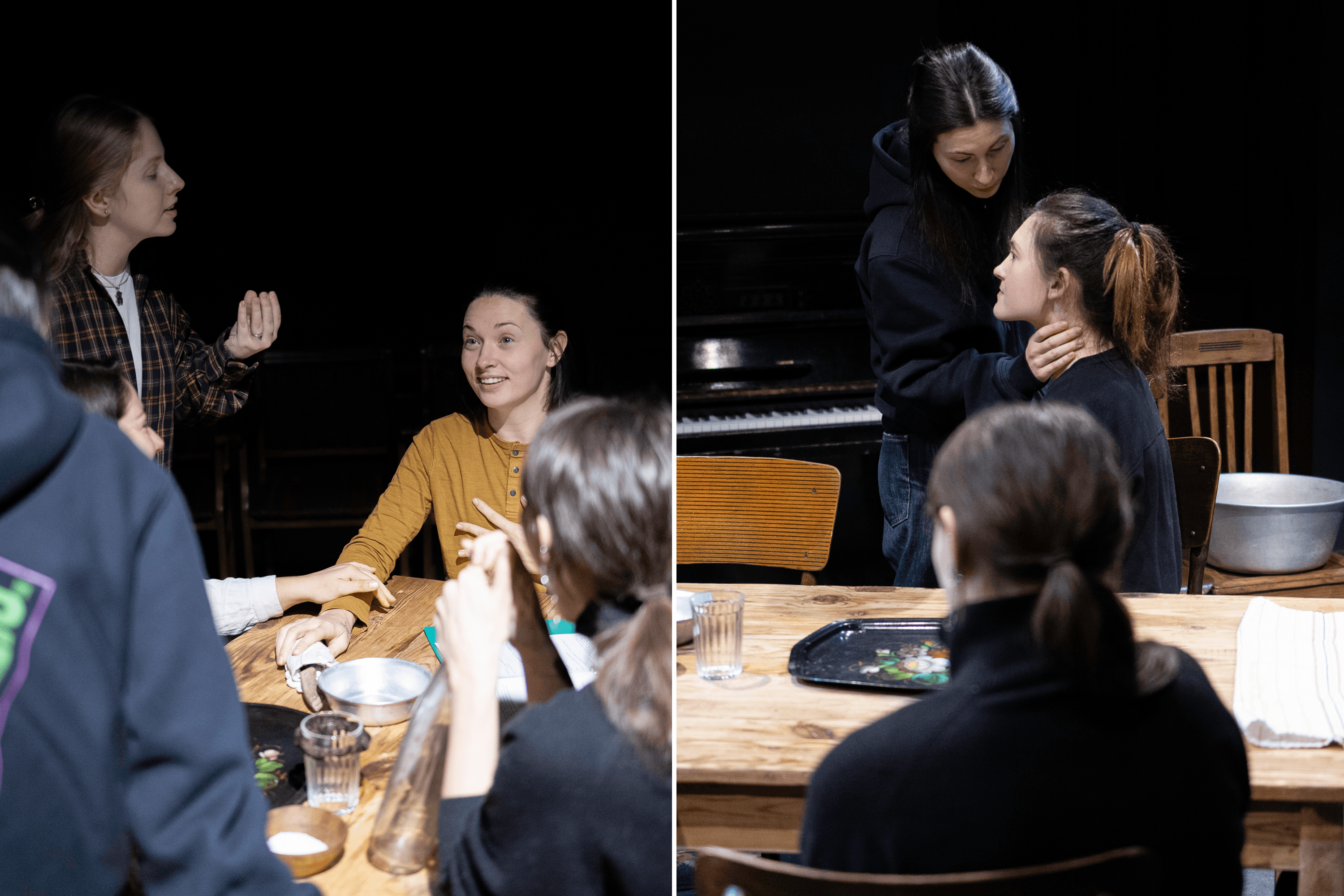
Photo: YB 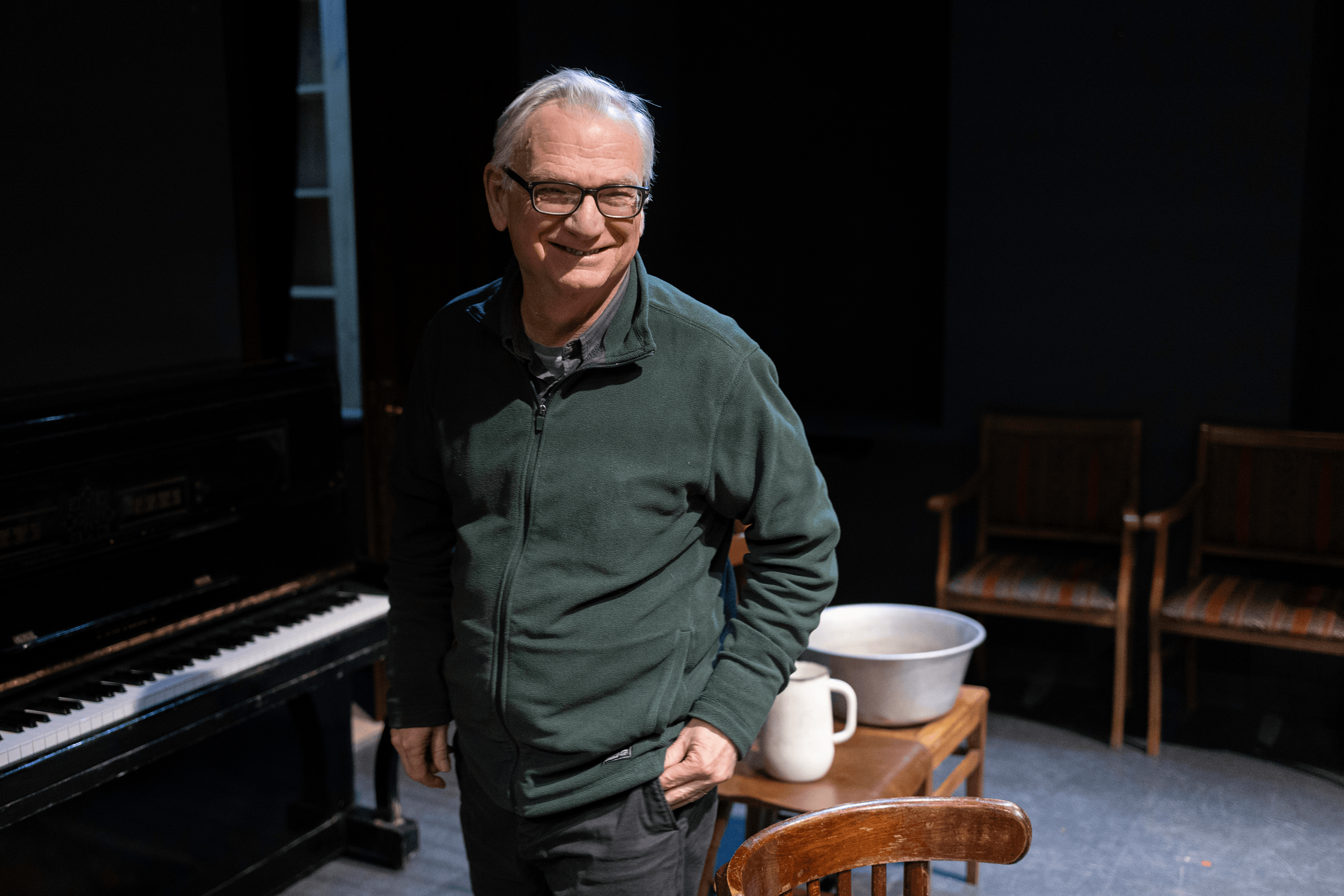
Photo: YB
A more significant hurdle turned out to be the difference between the Ukrainian and American schools of theater. In Ukraine, actors are often taught to listen first, pause, and only then respond. Nelson, however, constantly repeated: “Think and speak, think and speak.” This meant that everything should happen like a live conversation, where lines can be born simultaneously. He aimed to capture this natural chaos on stage. It took the actresses several months to master this technique, and on March 7, 2025, the play premiered to great success.
“I felt great satisfaction when I saw the reaction of the Ukrainian audience,” Nelson recalls. “I managed to strike a deep chord. When I first arrived in Ukraine, I noticed that out of ten people passing me on the street, eight were women. I later realized that about 80 percent of my social circle here consists of women. I thought then that their stories could intertwine with the stories of the characters I was researching from 1920.”
The director recalls how, in a letter to Bohdan Beniuk, he explained the concept of the future play: “It is about six young women staging a play in the middle of a war, to be played by six young women staging this play in the middle of a war.” He wanted to show how, “by speaking with history, we are speaking about ourselves today.”
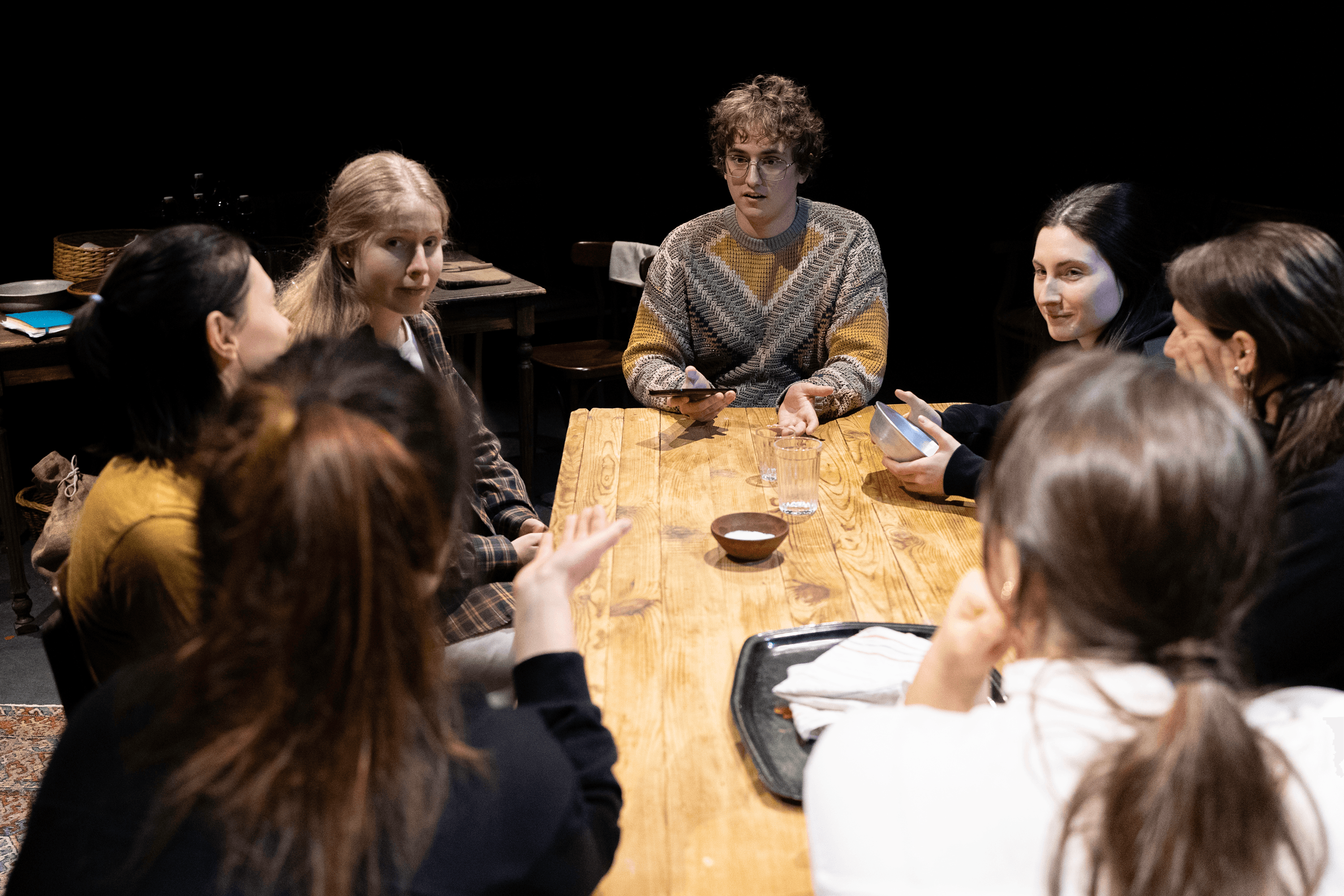
Photo: YB 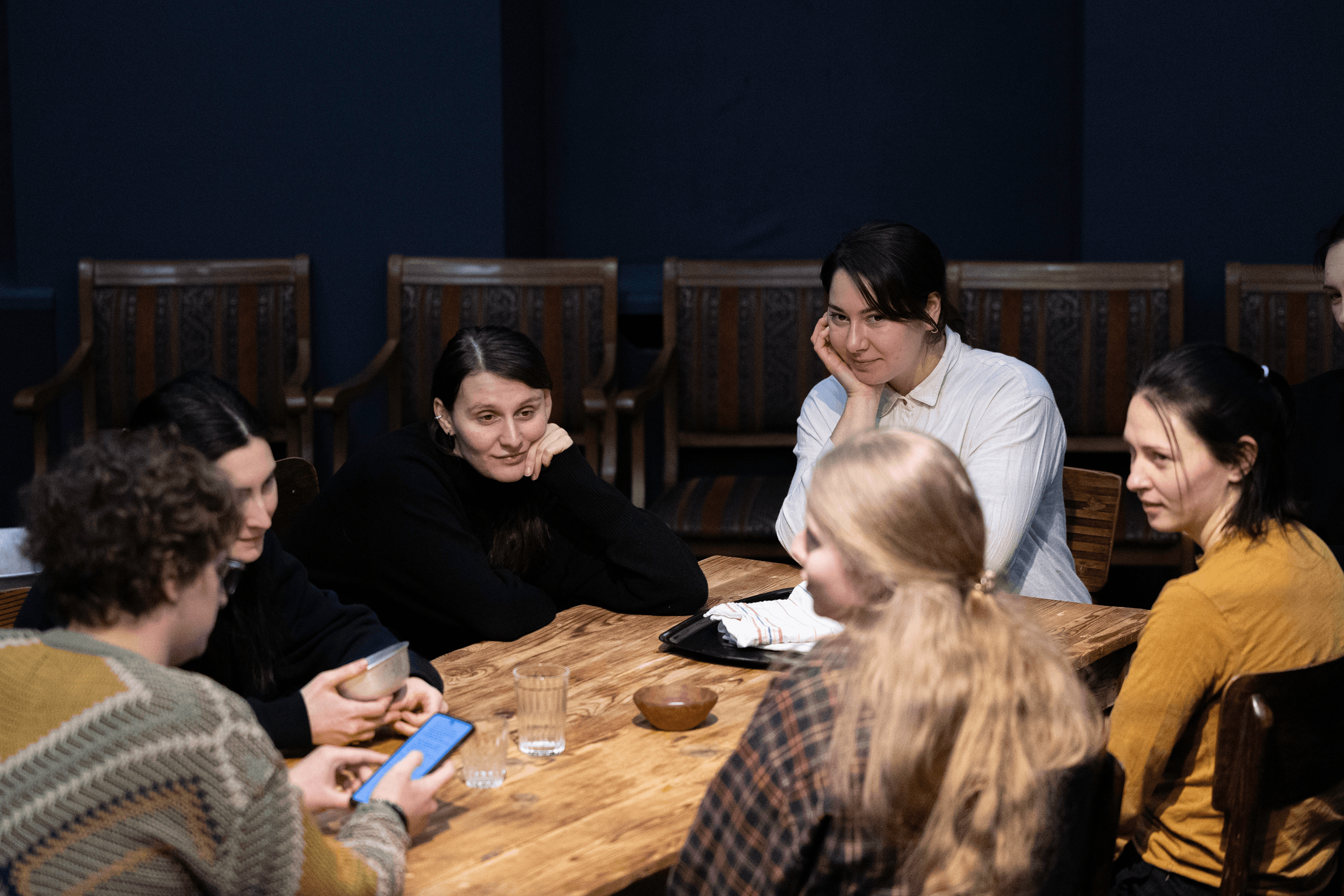
Photo: YB 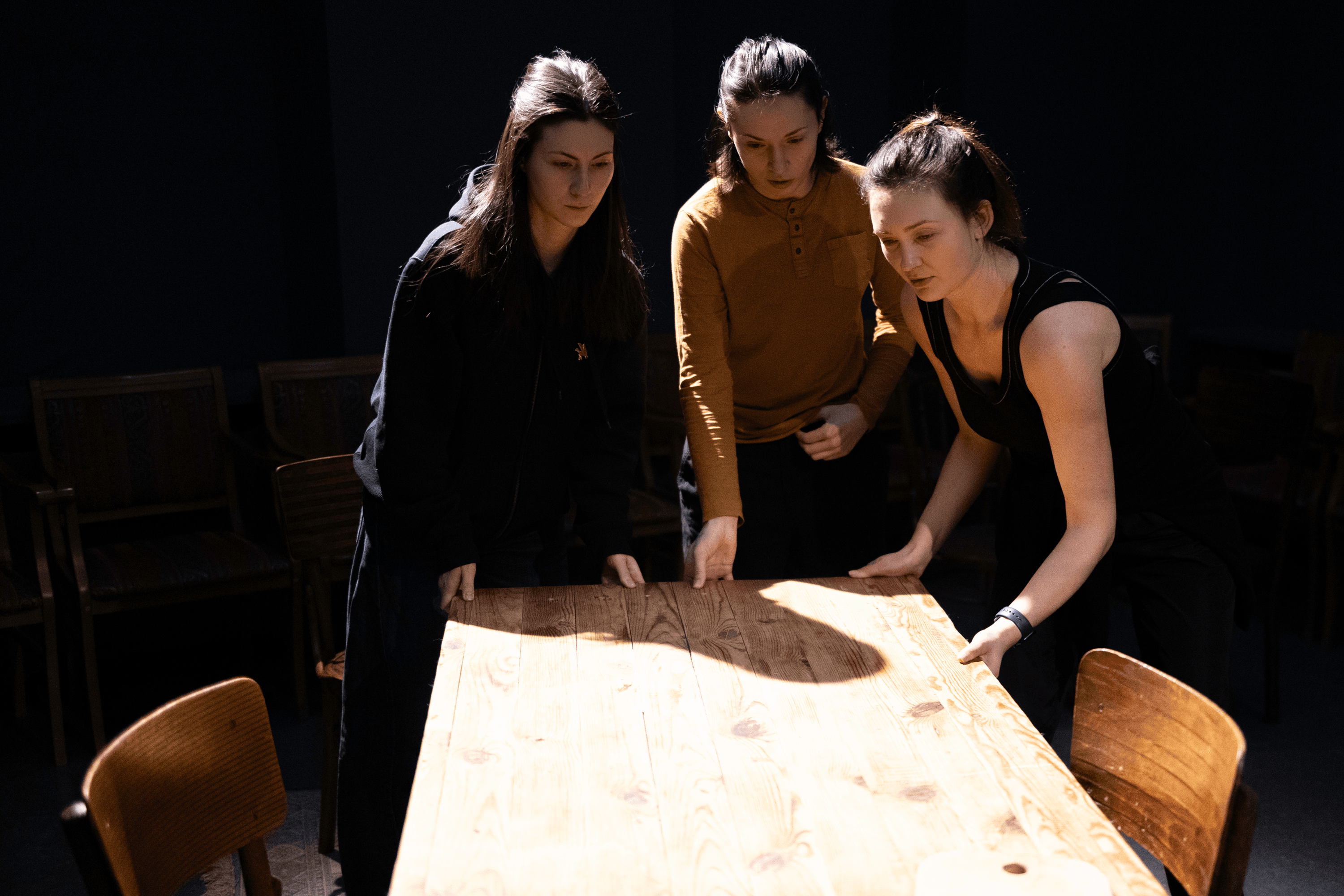
Photo: YB 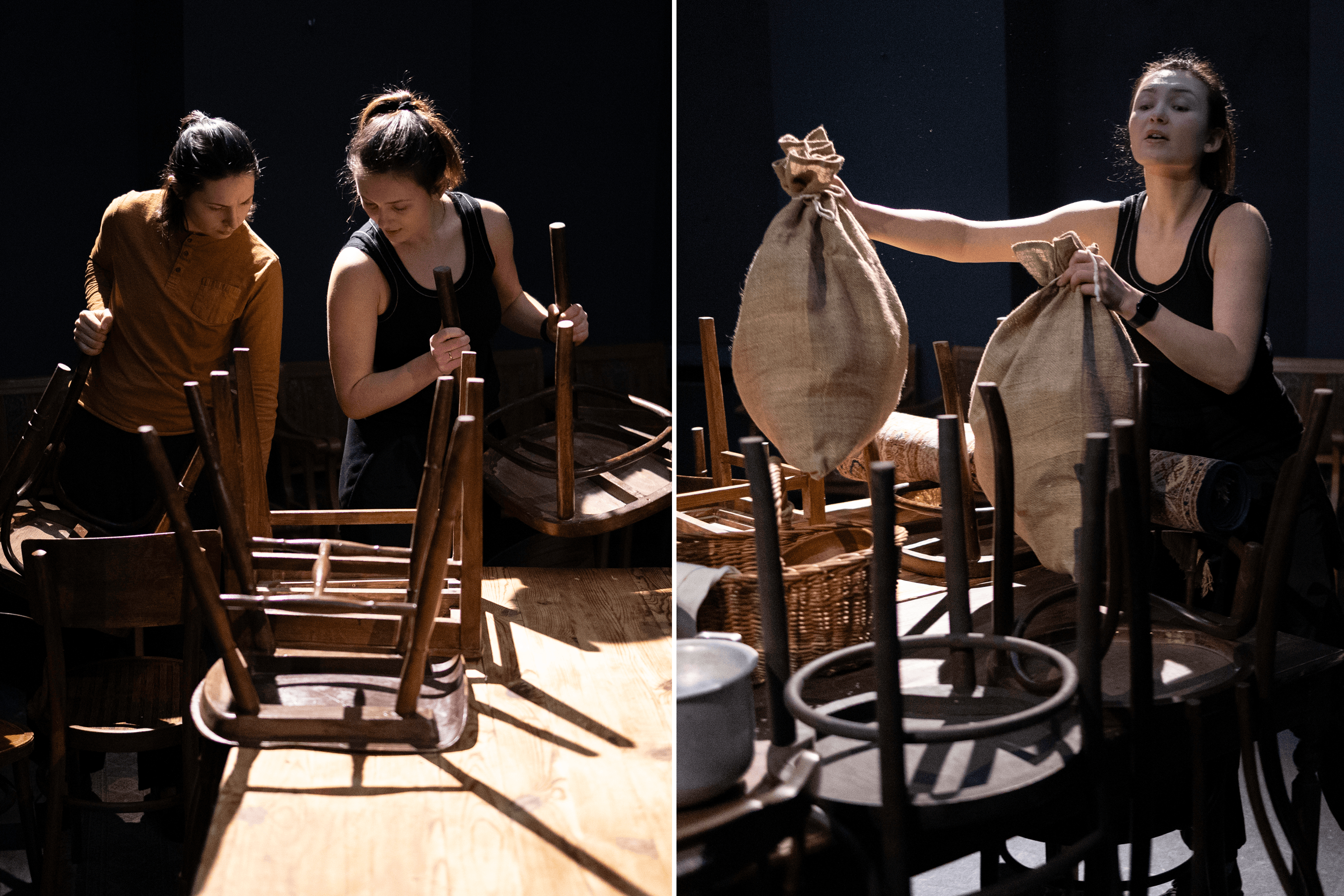
Photo: YB 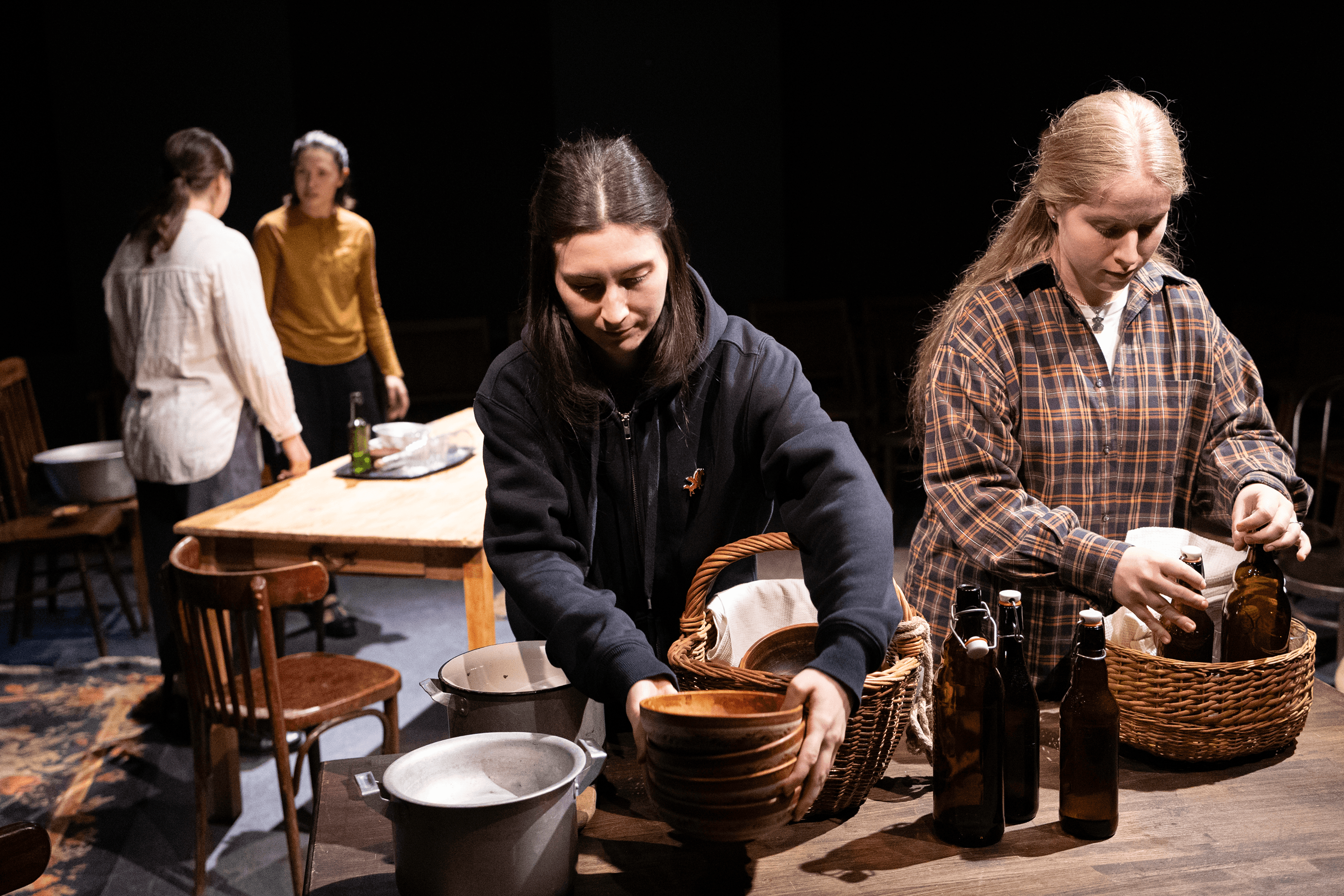
Photo: YB 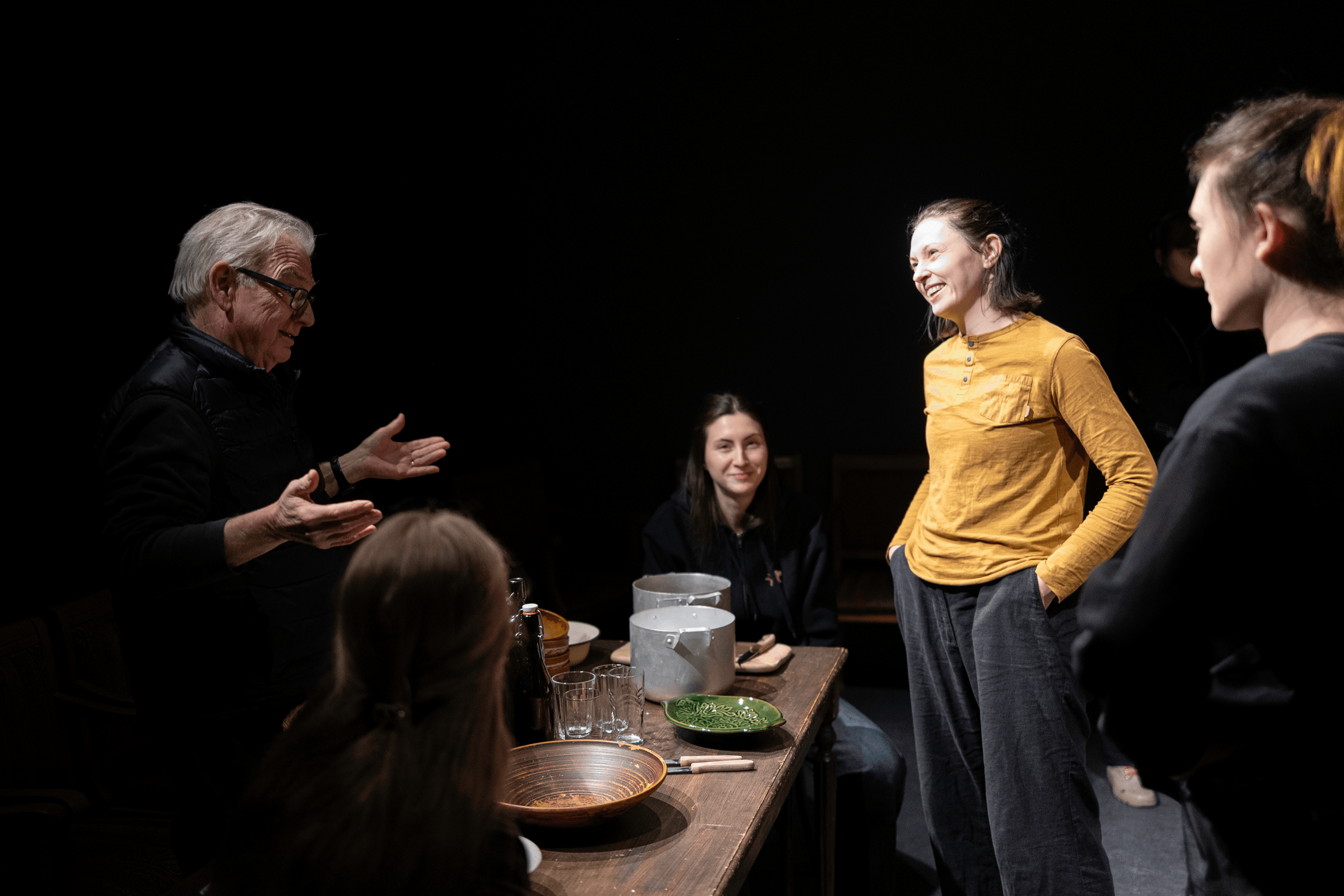
Photo: YB
From Podil to Manhattan
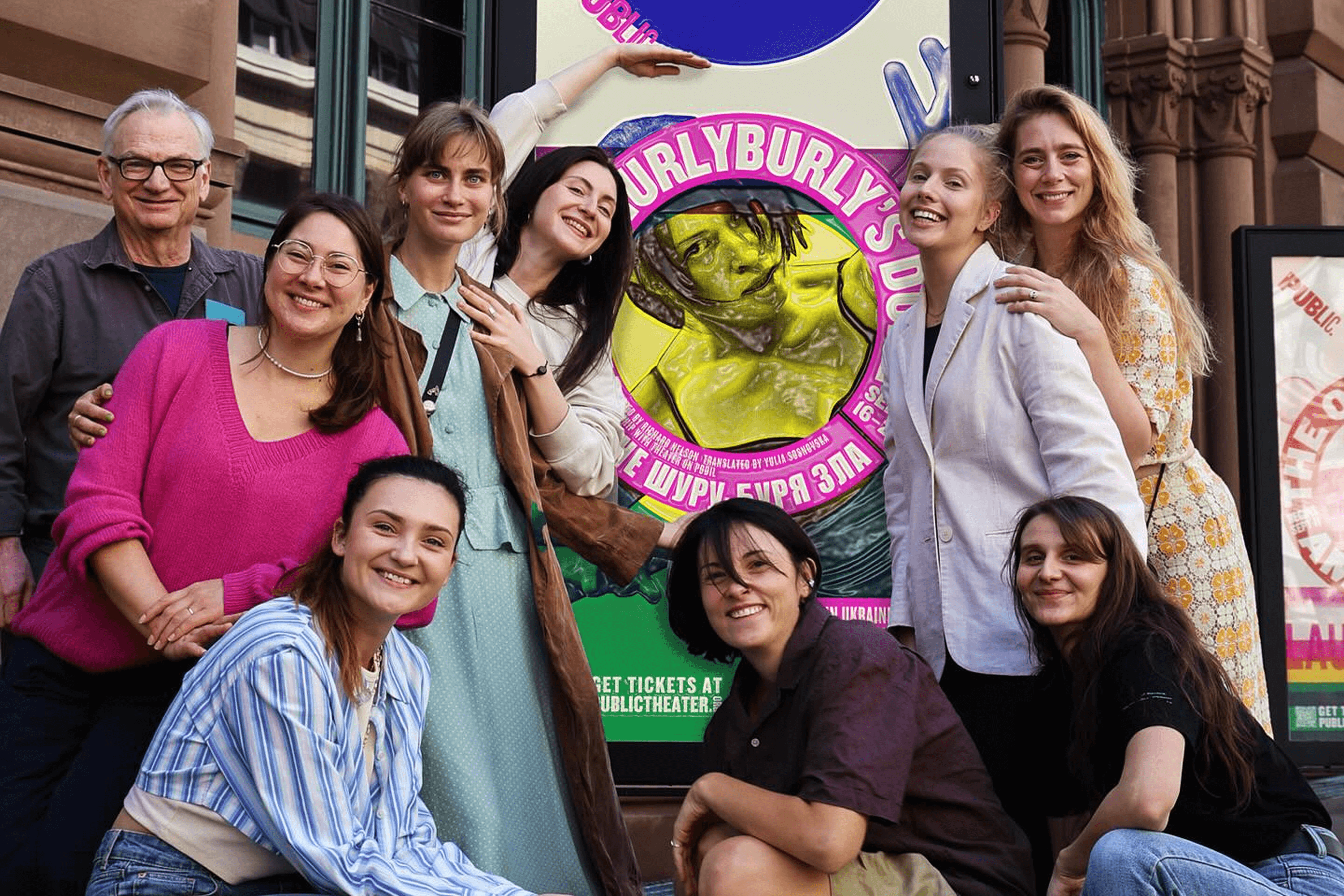
The idea of taking this production on tour emerged even before the Ukrainian premiere. At first, the actresses asked half-jokingly, “What if we took the play to America?” Richard encouraged the sentiment, though at the time, it felt like mere jokes or dreams. Eventually, however, the conversation took on a very real shape. Richard invited his friend, Oscar Eustis, the artistic director of The Public Theater in New York, to one of the premieres. Eustis traveled to Kyiv specifically to see the production. He promised to help organize a trip to the US, and so, in September 2025, the troupe set off for a tour at The Public Theater.
“Even though people in America aren’t familiar with Les Kurbas, they were still intrigued and interested in our play,” Nelson says. “The Public Theater is a very respected institution, perhaps one of the most important theaters in the US. I’ve worked there a lot, so people know my work, and I was certain the audience would come.”
The primary audience in New York consisted of Americans. The play was performed in Ukrainian. Initially, the actresses were worried about how the audience would perceive a performance with subtitles on screens—whether they would be able to read and follow the action simultaneously. However, these fears proved groundless; the audience even laughed without any delay.
The American audience had no trouble understanding the context, either. Although the play tells of events from the 20th century, the story resonates deeply with the present. Richard Nelson’s play is primarily about the human experience—about doubt, the search for answers, the need for support, and the impact of political and social circumstances on the individual. These are things people in America experience as well.
“With this tour, I didn’t want so much to show Ukraine to America, but rather the opposite—to show Ukrainians how Americans feel about them. To show that we support Ukraine in this difficult moment,” Richard Nelson says. He adds: “On the morning of their first day after arriving, the two youngest actresses went to a cafe for breakfast. Two men sitting nearby heard them speaking and asked where they were from. ‘From Ukraine,’ they replied. They talked for a bit, and the men left. When the girls finished their breakfast and asked for the check, they were told: ‘It’s already been paid for.’”
Yet, he understands that in Ukraine, this story is perceived as a part of one’s own life and context. For Americans, it was an introduction to a reality that seems almost unbelievable.
“That’s all”
“That’s all,” Nelson says. It is the signal that the rehearsal is over. For him, it is the last one. Next, Nelson will focus on working on a new play, “More Beauty Than Longing”. It is the story of the Kosach family, centering on Lesya Ukrainka, her mother Olena Pchilka, two sisters, a sister-in-law, and a brother-in-law.
To write this play, Nelson read about three thousand pages of her letters, which he translated himself using online translators. After the premiere, the director doesn’t plan to stay in Ukraine for long. In June, a premiere of a production based on his new play will take place in London, though he’s not directing it personally, and next November, he will stage a production in one of New York’s theaters.
“After all, I live in the US. So it’s time for me to go home,” Nelson says.
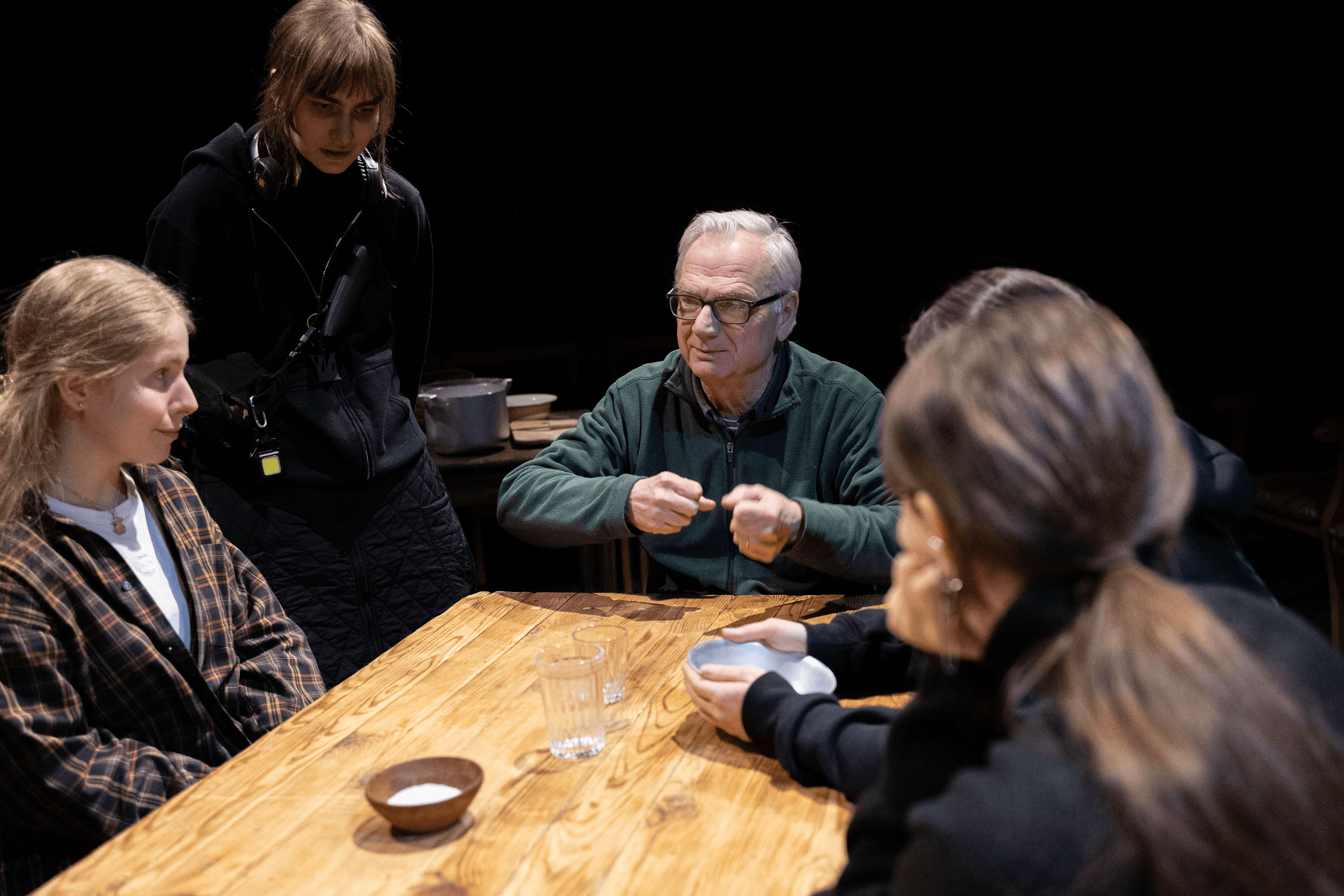
Photo: YB 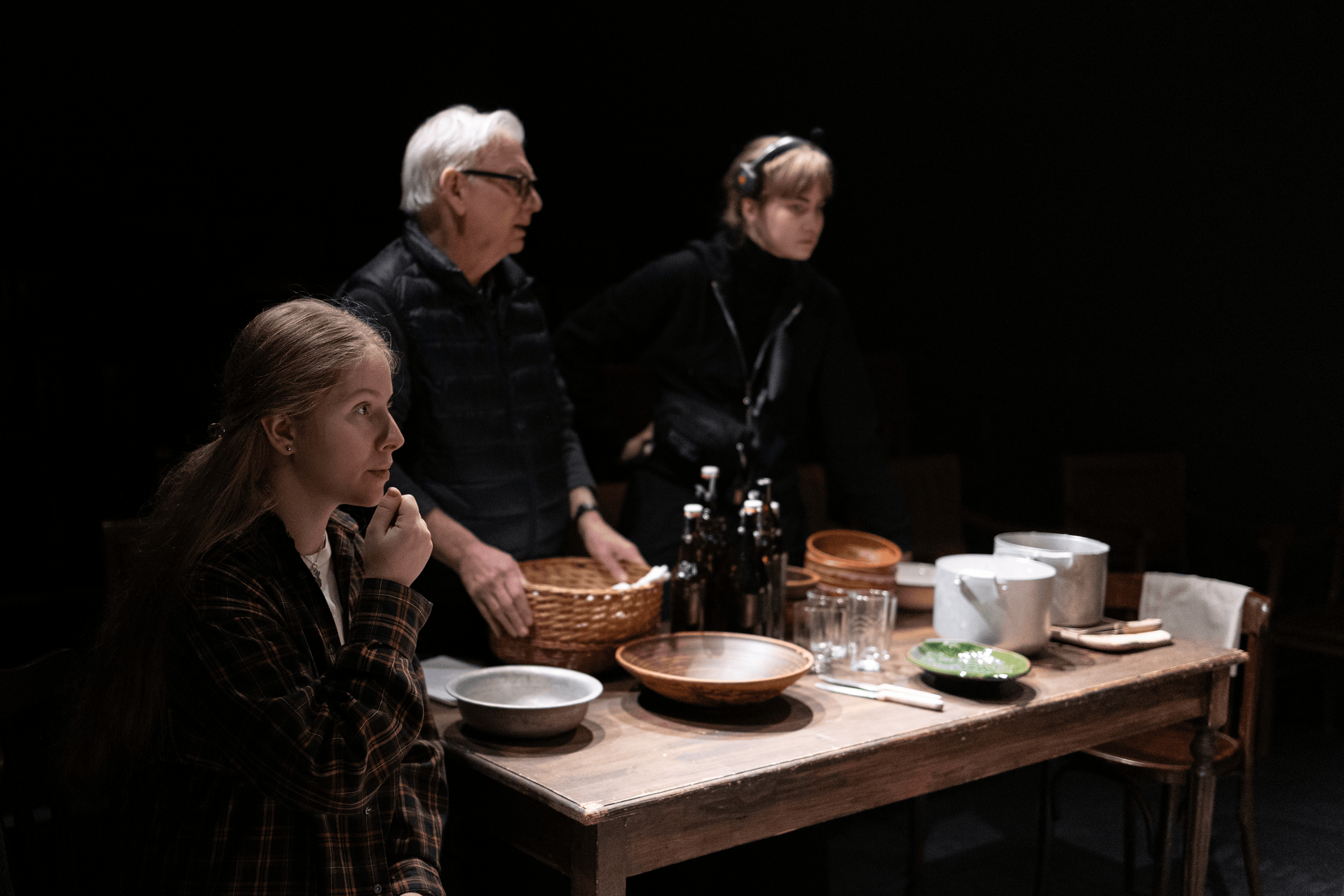
Photo: YB 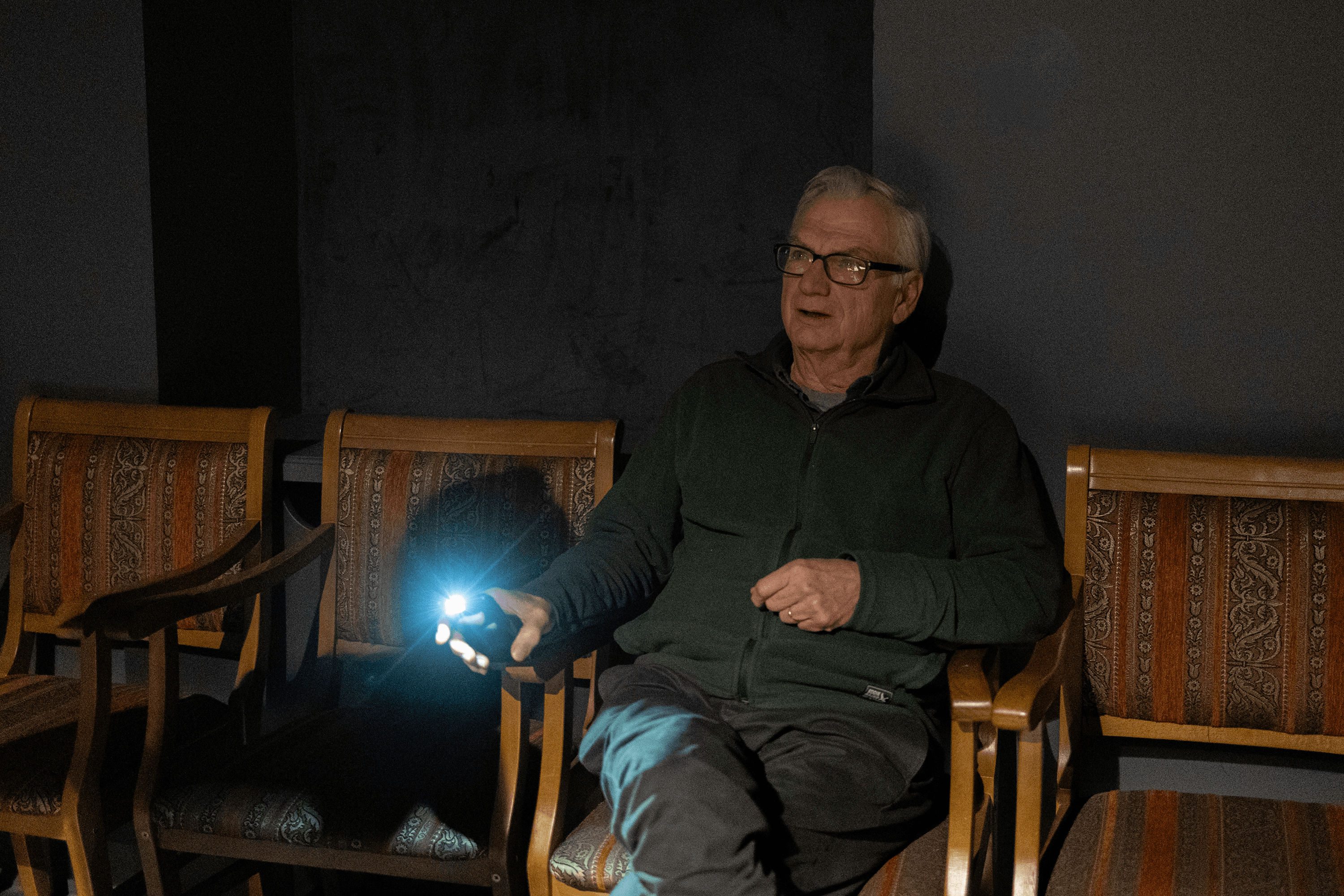
Photo: YB 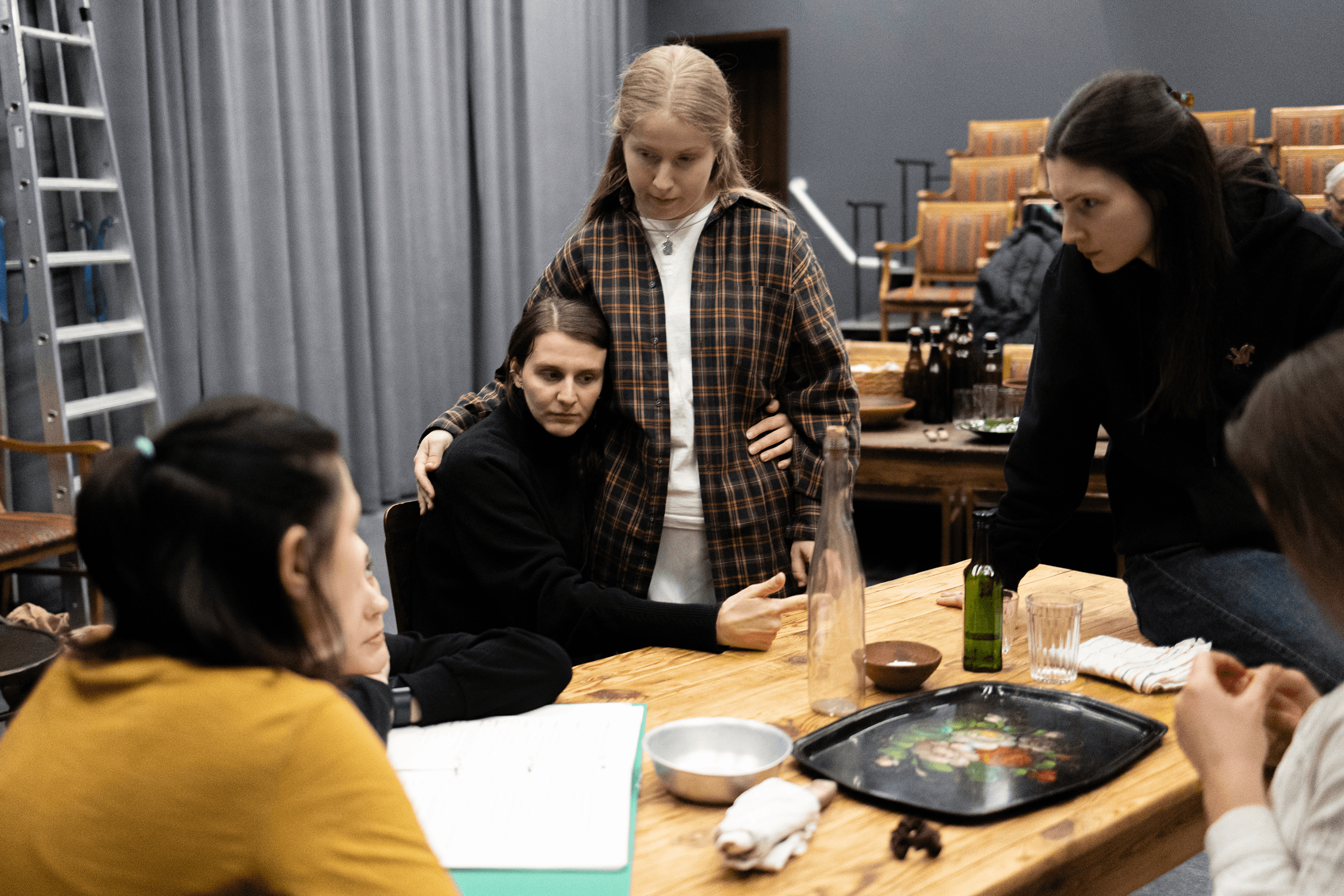
Photo: YB 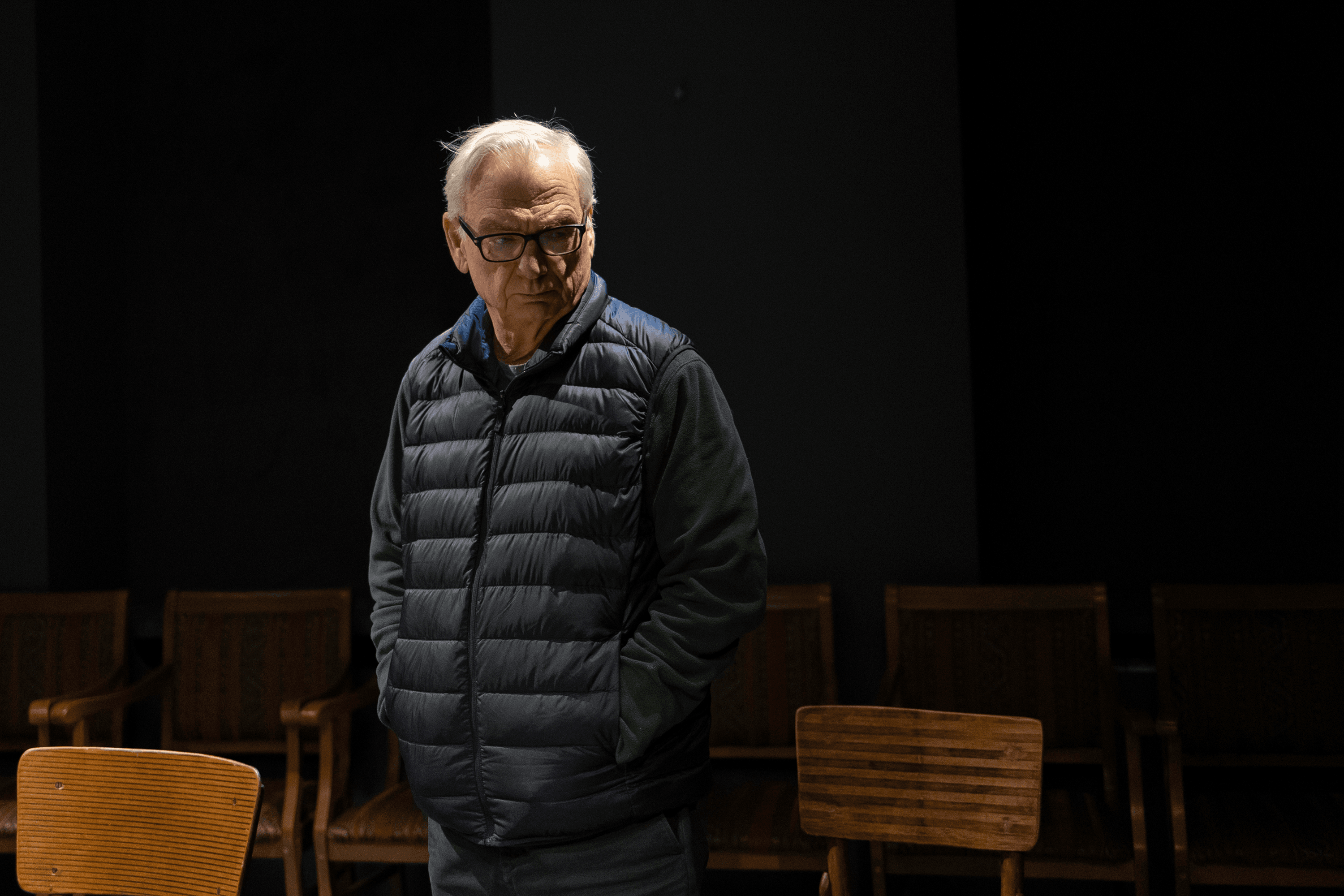
Photo: YB 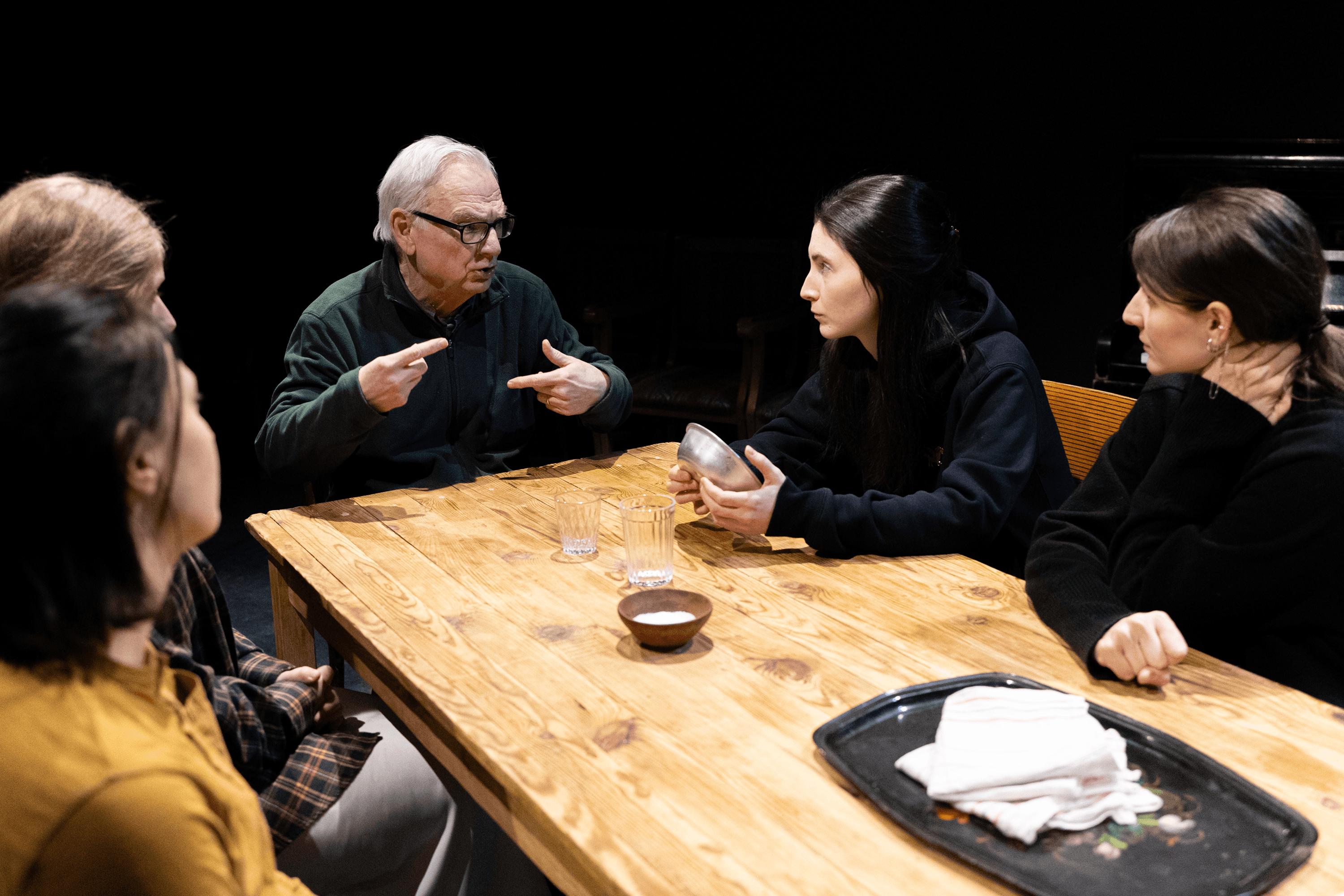
Photo: YB


