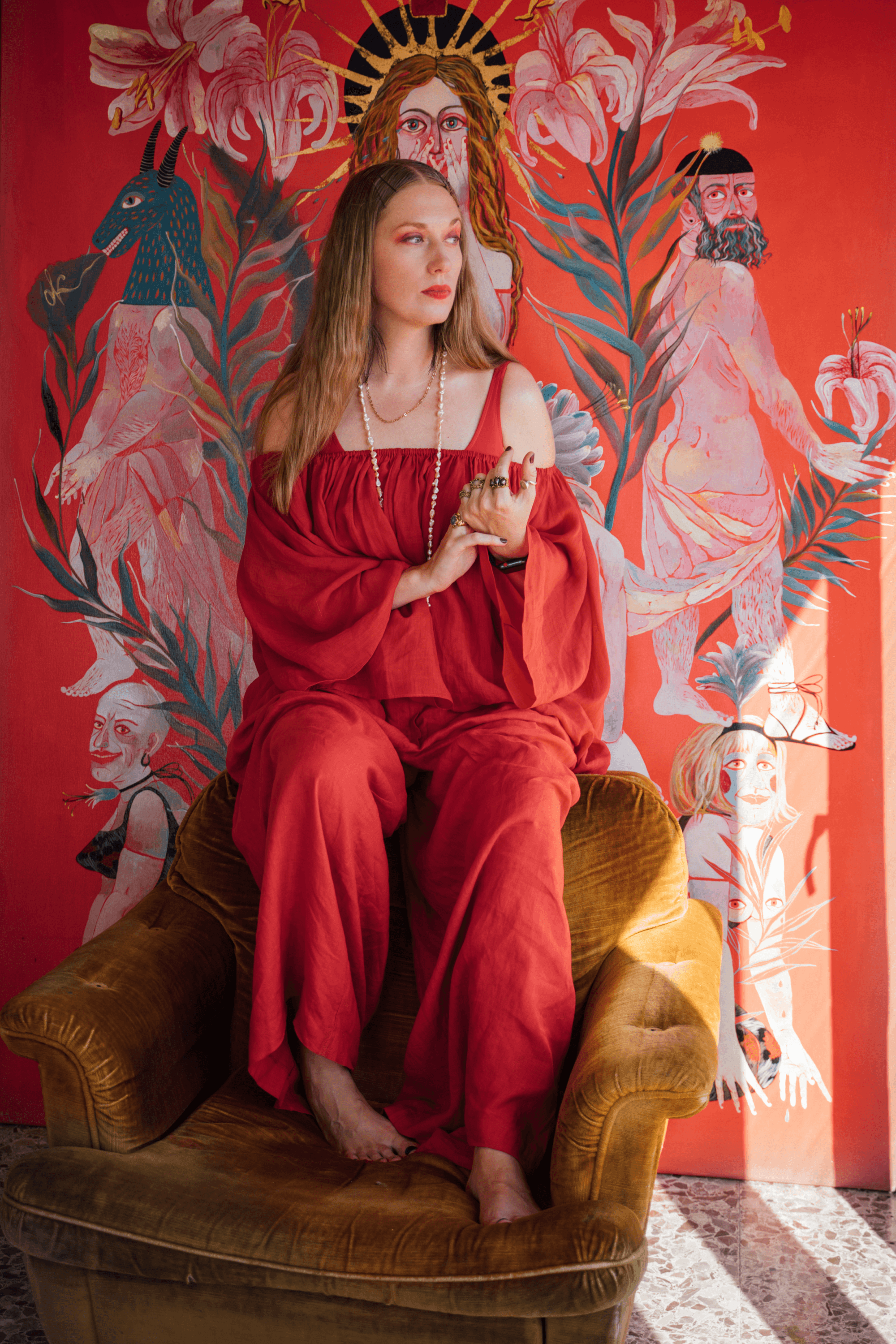
A vintage hat, narrow glasses, a black dress, and long lace gloves—41-year-old Ukrainian artist Nina Murashkina looks as though she has stepped out of a scene from an old European film. She is one of the most successful contemporary Ukrainian artists. In 2023, she received the prestigious European A-FAD Award; today, she collaborates with three galleries in Barcelona, New York, and Vienna, and the prices for her works reach $35,000.
But this story is not just about Murashkina’s success. It’s about a woman whose life is built on contrasts—and on the drive to always remain true to herself.
1
In the spring of 2017, the then-already-renowned Ukrainian artist Nina Murashkina arrived in Sant Cugat Sesgarrigues for the first time. Xavier Escala, a Spanish sculptor and Nina’s partner, lived in this small Catalan town of a thousand residents. She came for a visit and, ultimately, stayed for good.
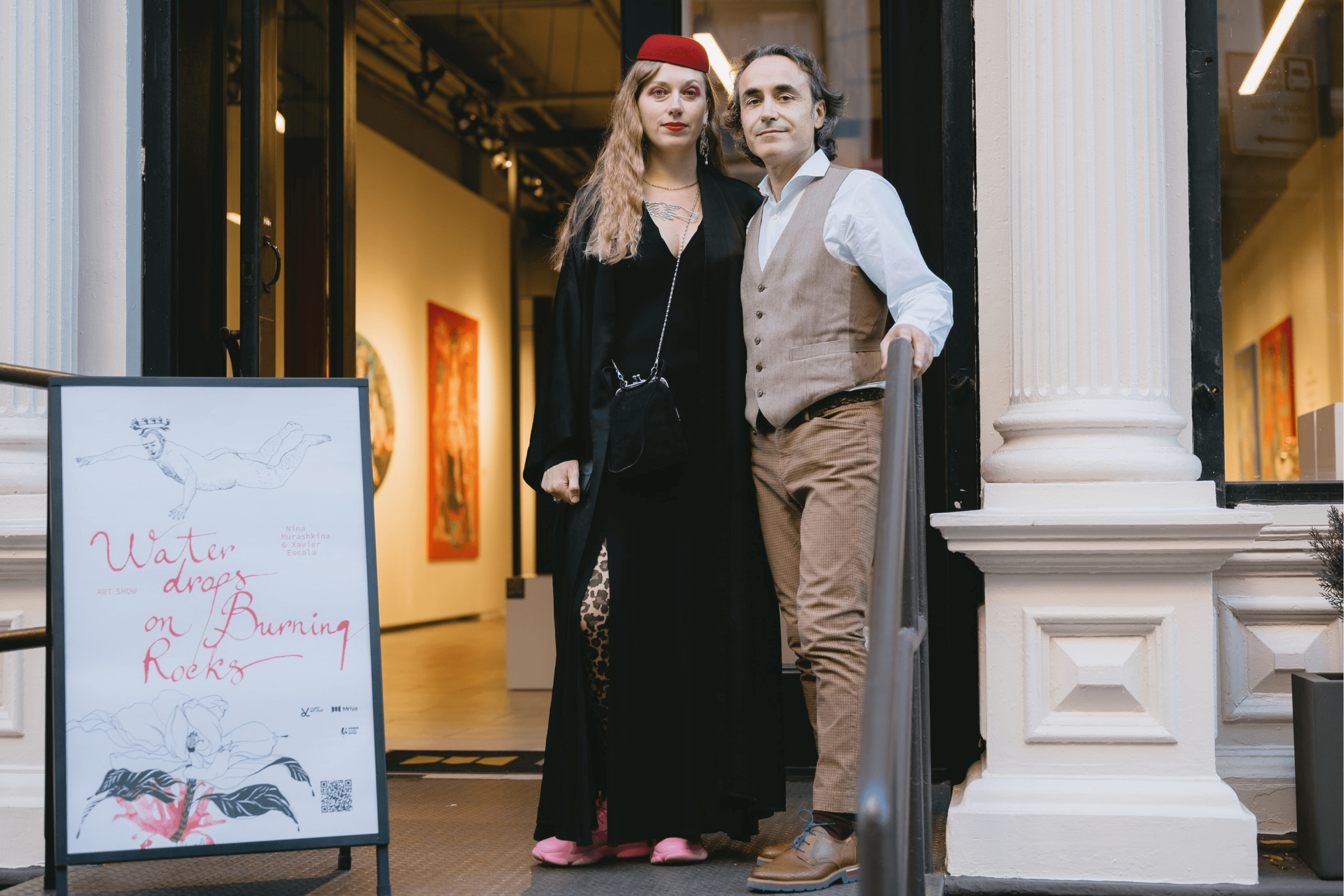
Nina Murashkina and Xavier Escala presented the exhibition Water Drops on Burning Rocks at RUKH ART HUB Mriya Gallery in New York. October 2024. Photo: Dinara Khairova / ninamurashkina.com / YB 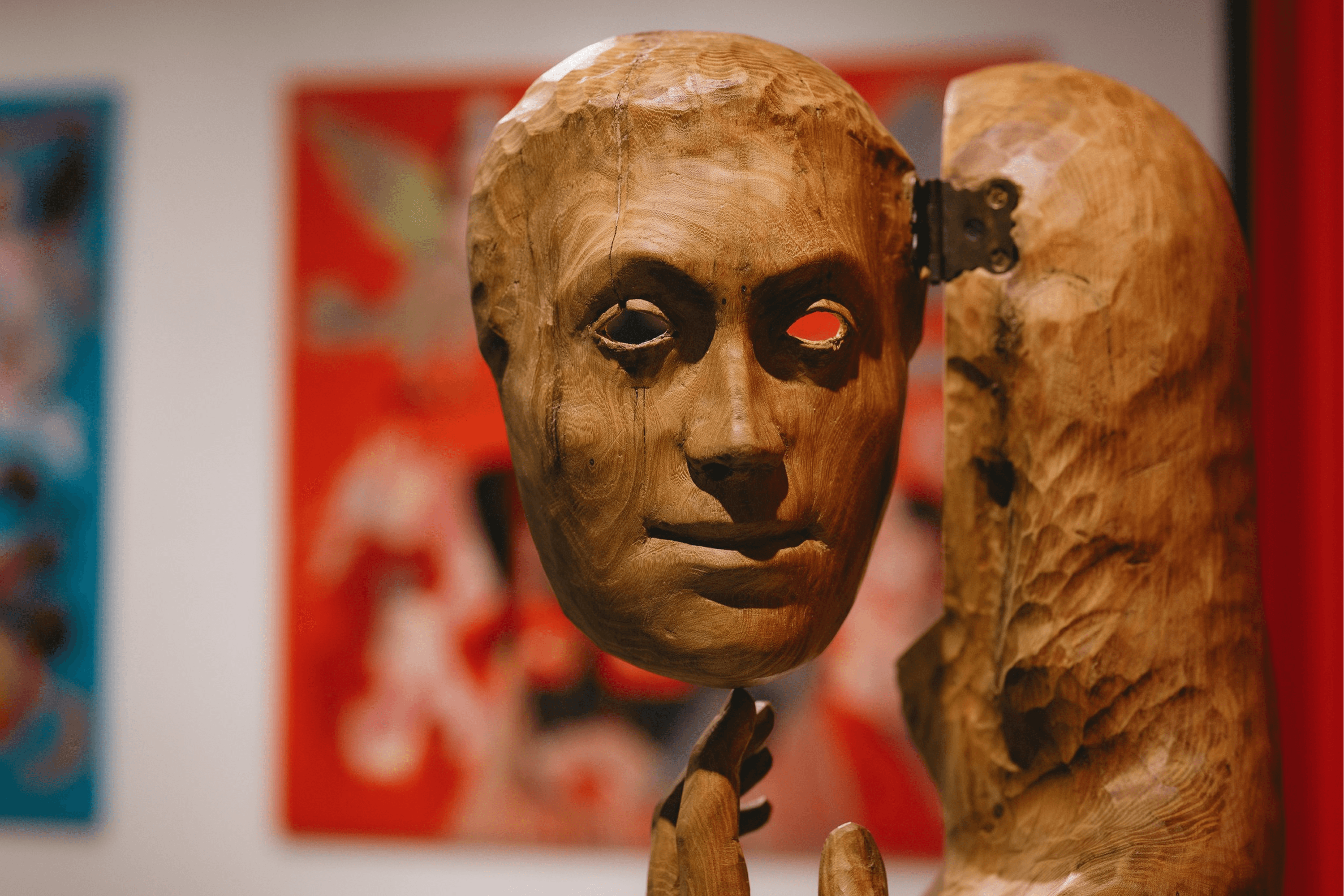
Photo: Dinara Khairova / ninamurashkina.com / YB 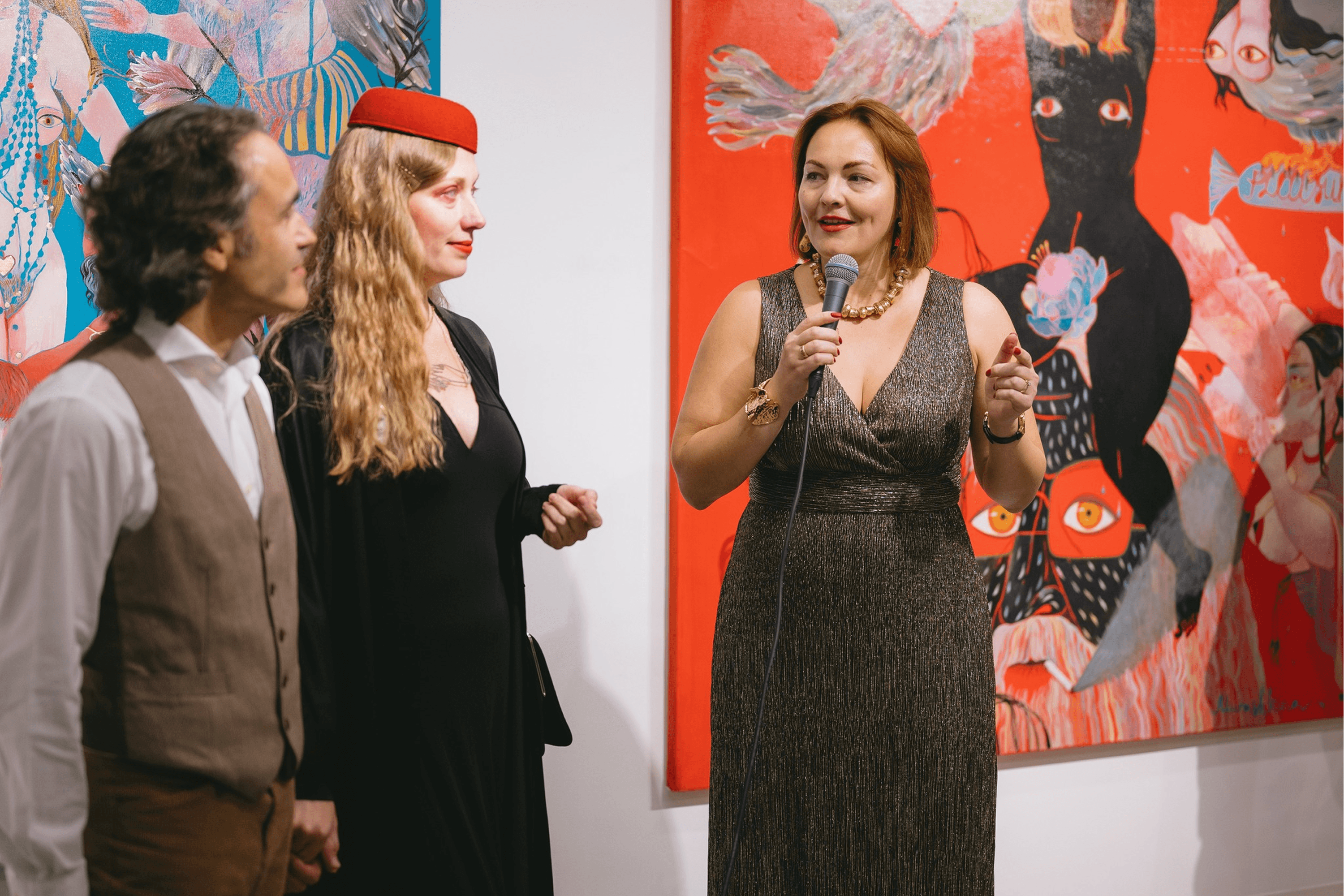
Photo: Dinara Khairova / ninamurashkina.com / YB 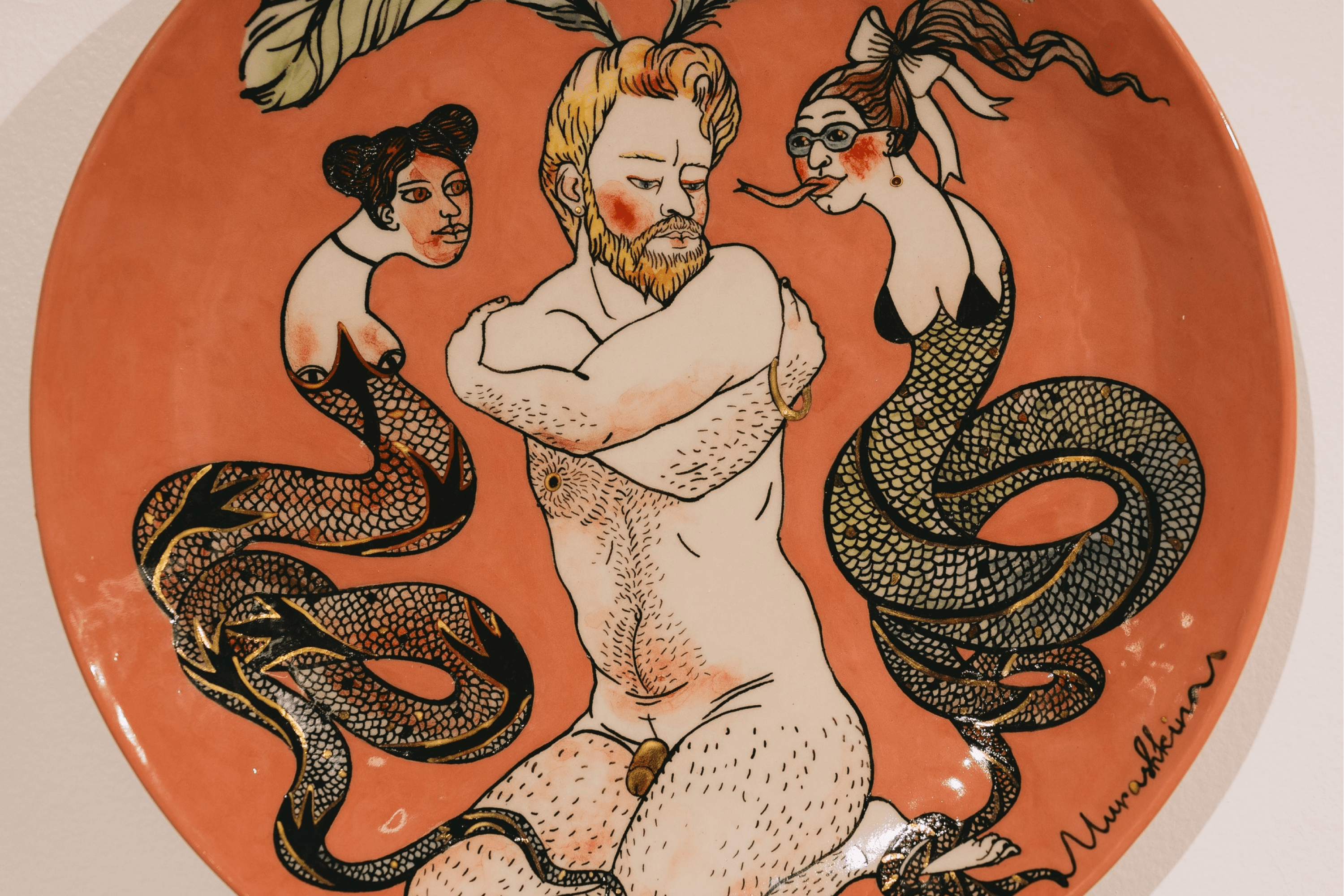
Photo: Dinara Khairova / ninamurashkina.com / YB 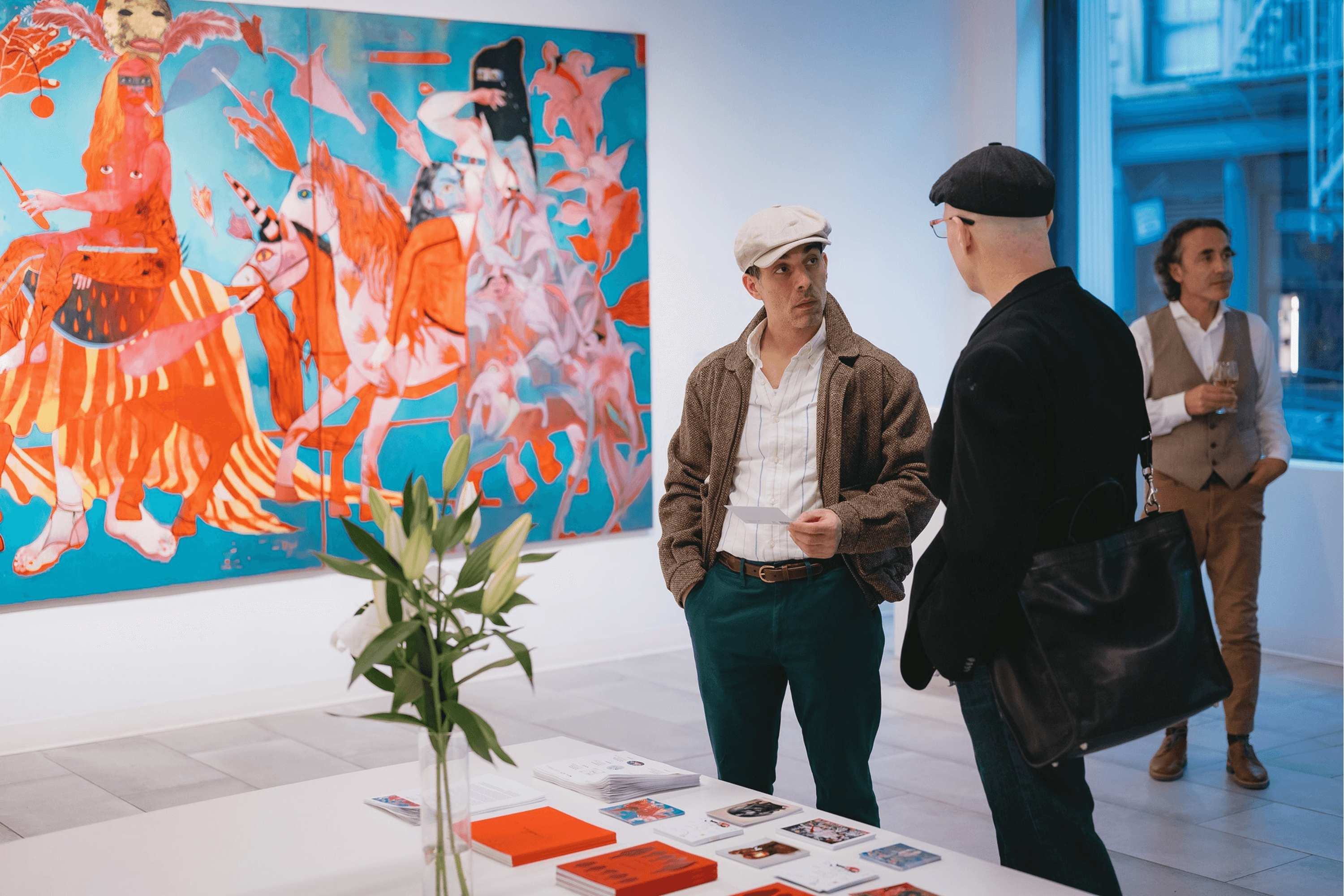
Photo: Dinara Khairova / ninamurashkina.com / YB
Xavier is short and slender with black curly hair. Murashkina is a tall, slim blonde. Her look is as compositionally precise as her painting: bold makeup—untypical for women in the Spanish provinces—a long black vest, a skirt, and a translucent blouse with voluminous sleeves. A pillbox hat, genuine pearls, and four rings at once (one of her own design). Murashkina resembles a John Galliano model. To a compliment about her beauty, Nina quips: “I simply love to dress up. When my parents punished me as a child, they would lock the wardrobe with my dresses. I was left with only a blue wool tracksuit. That was the absolute worst! Now, no one will ever lock my wardrobe again.”
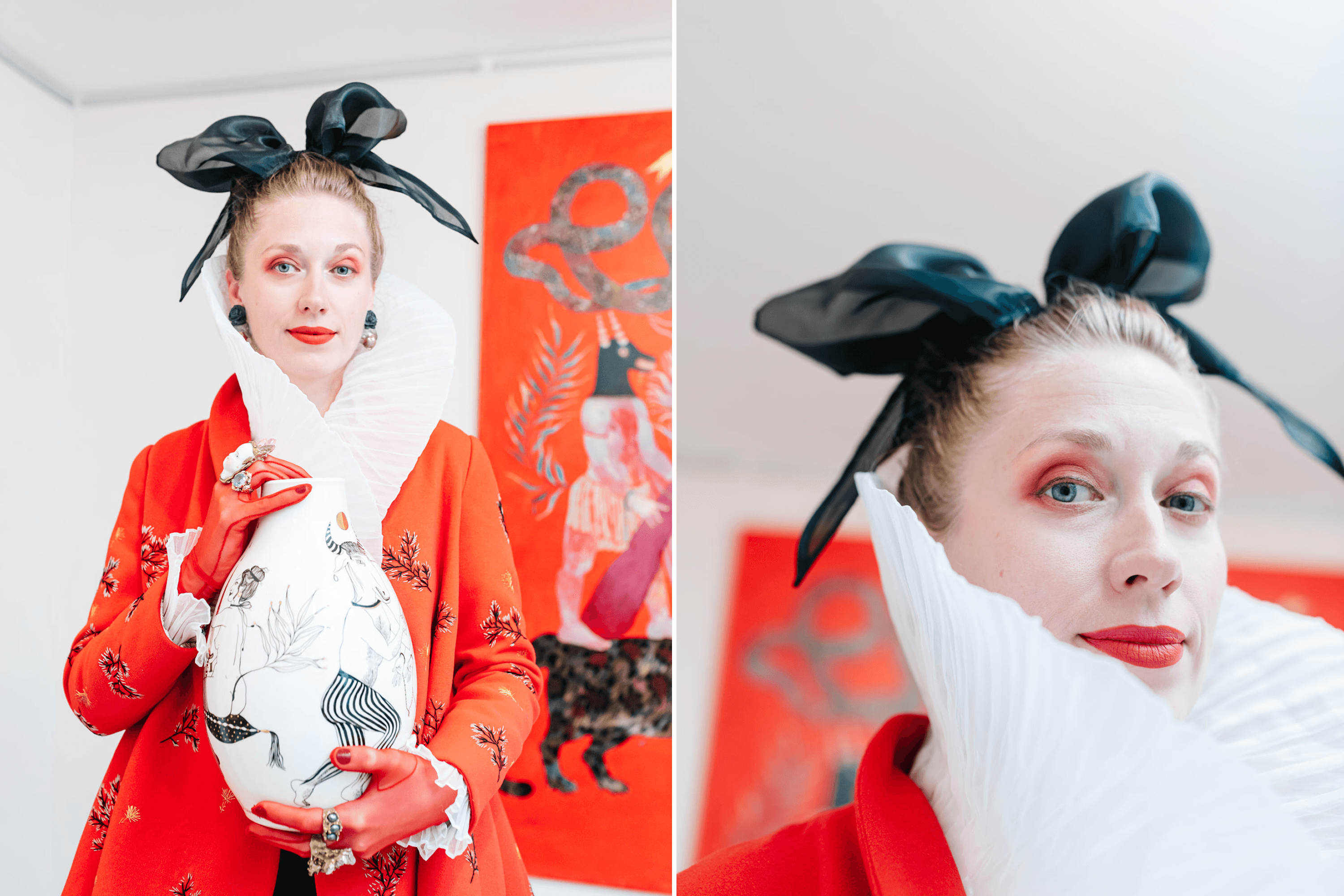
Nina Murashkina opened the exhibition Allegory of Innocence at Triptych Art Gallery in Kyiv. September 2021. Photo: Photos provided by Nina Murashkina / YB 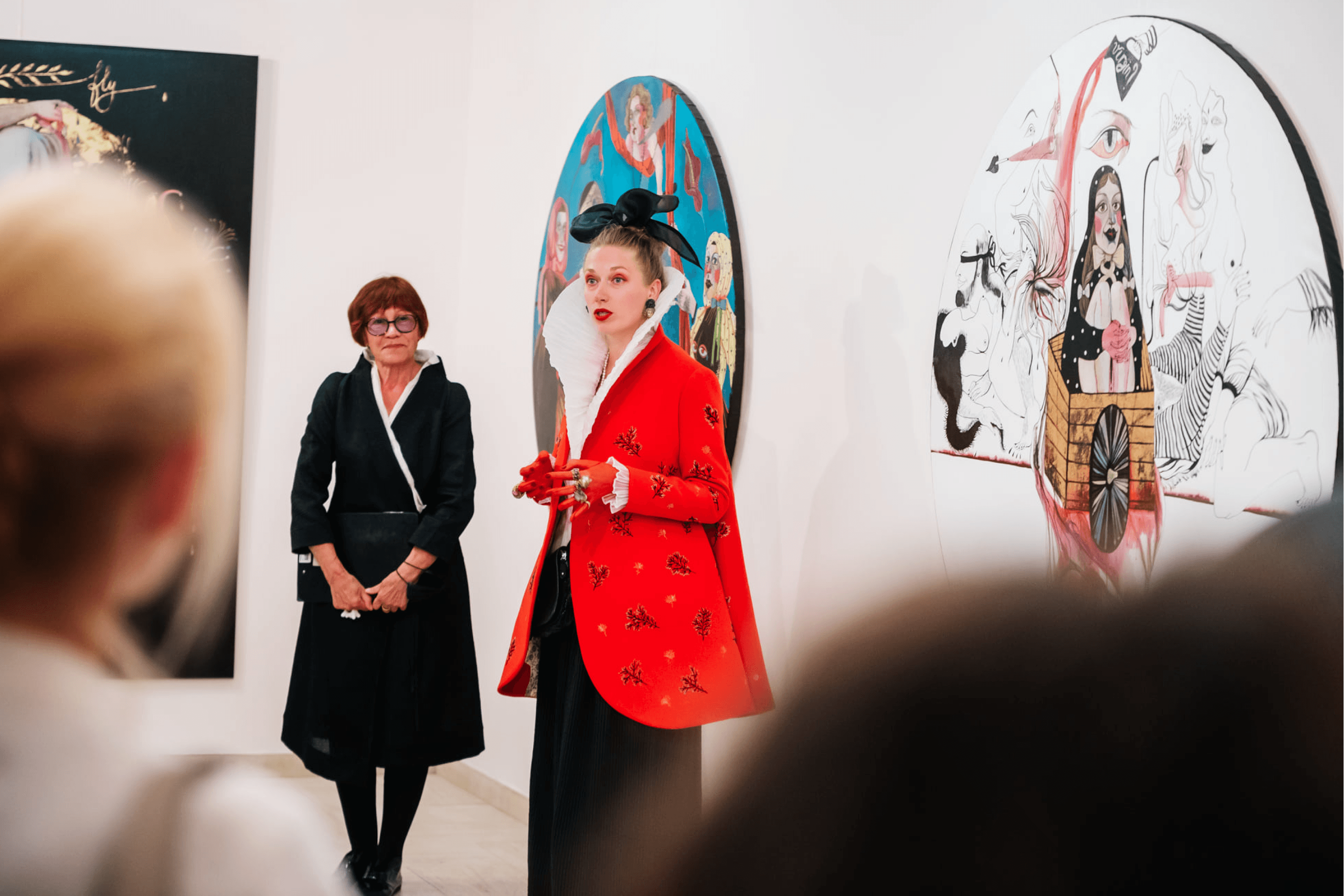
Photo: Photos provided by Nina Murashkina / YB 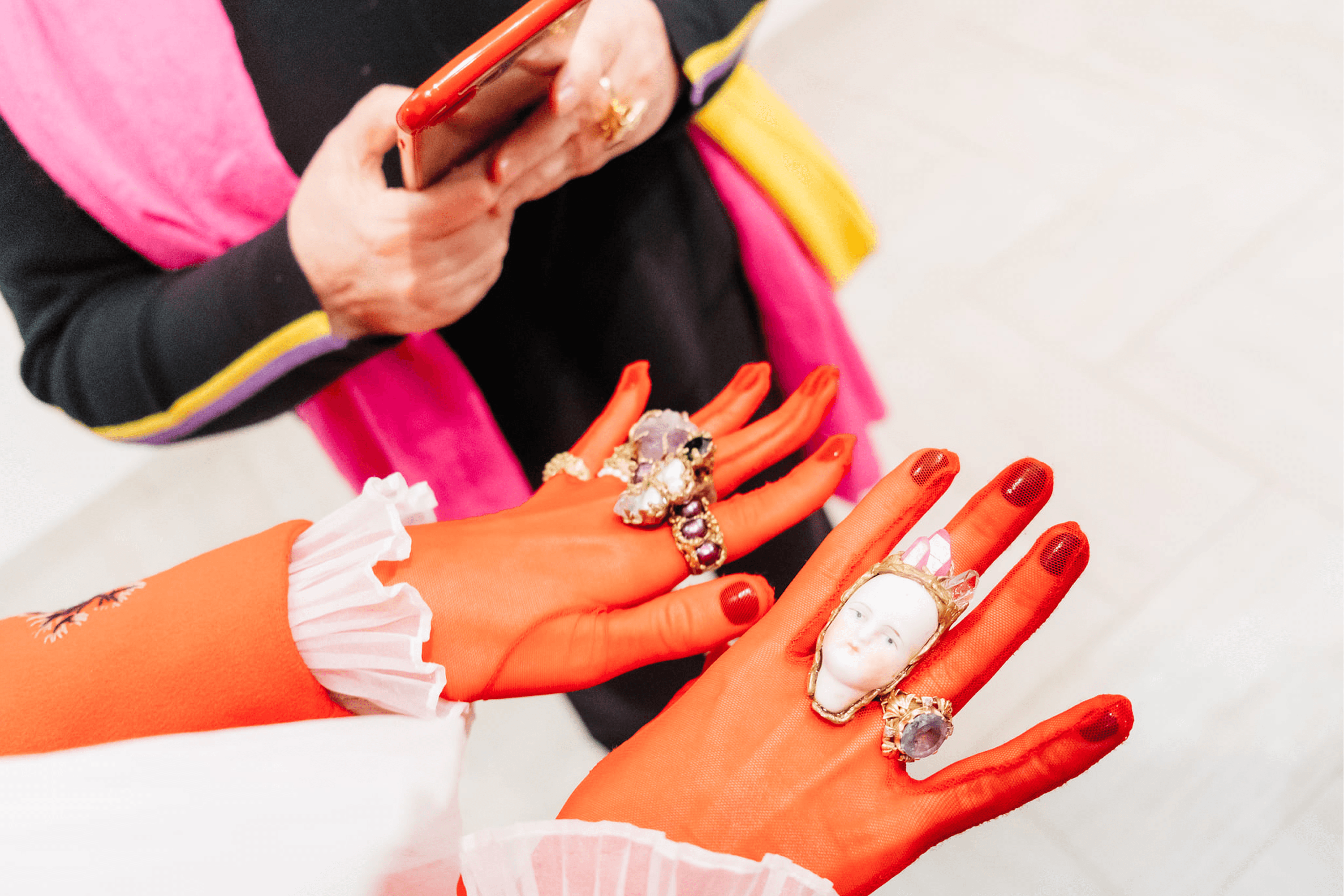
Photo: Photos provided by Nina Murashkina / YB 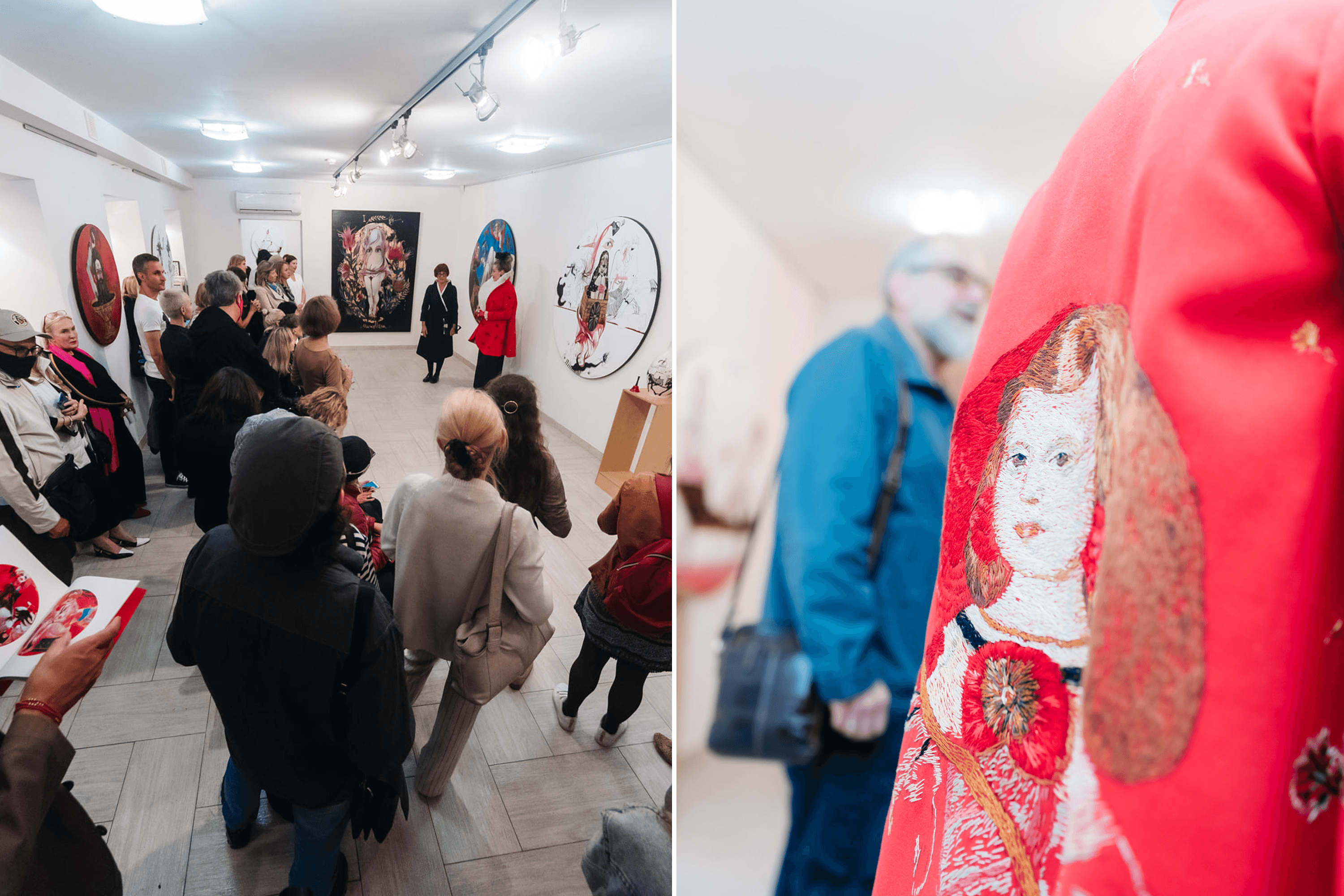
Photo: Photos provided by Nina Murashkina / YB 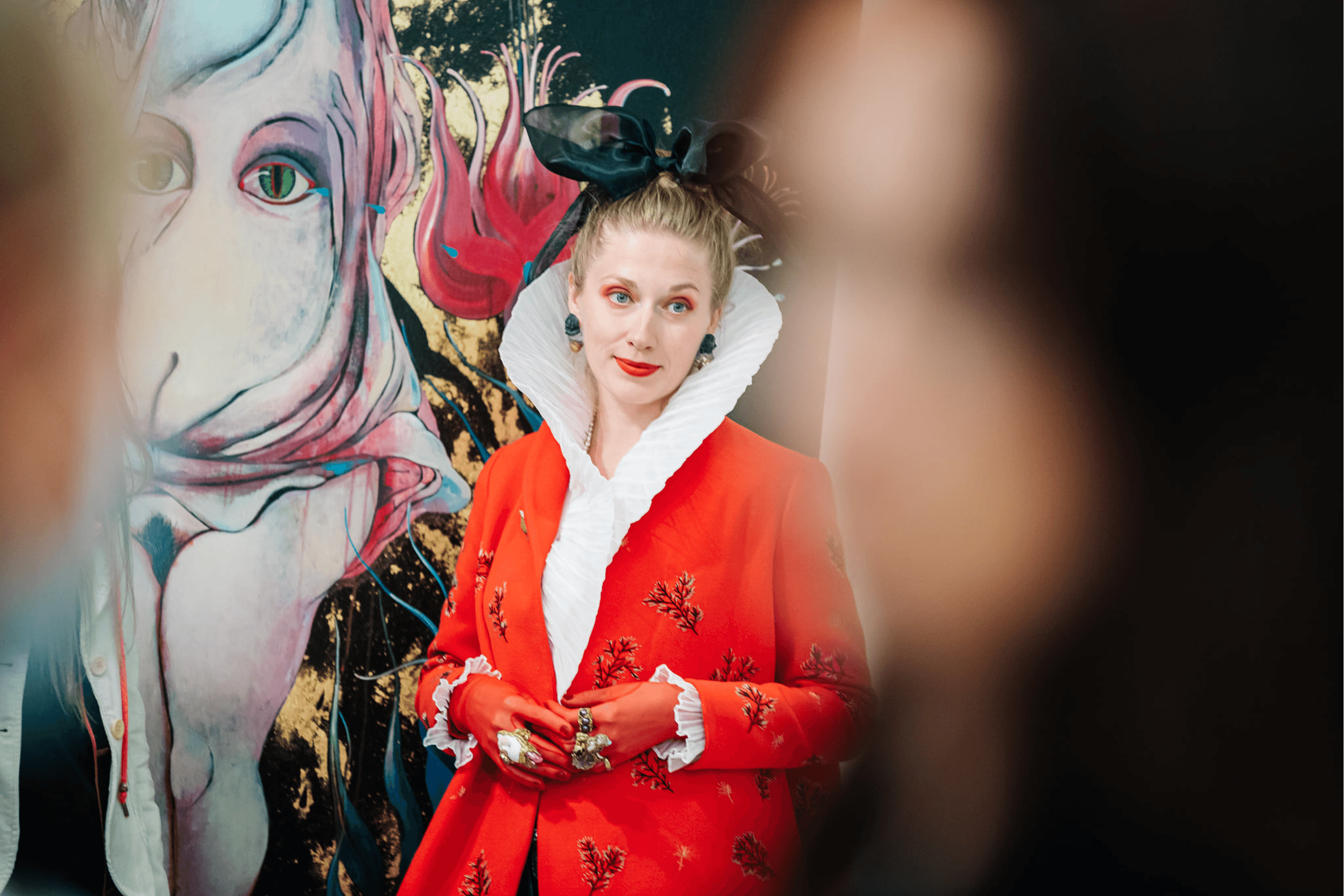
Photo: Photos provided by Nina Murashkina / YB 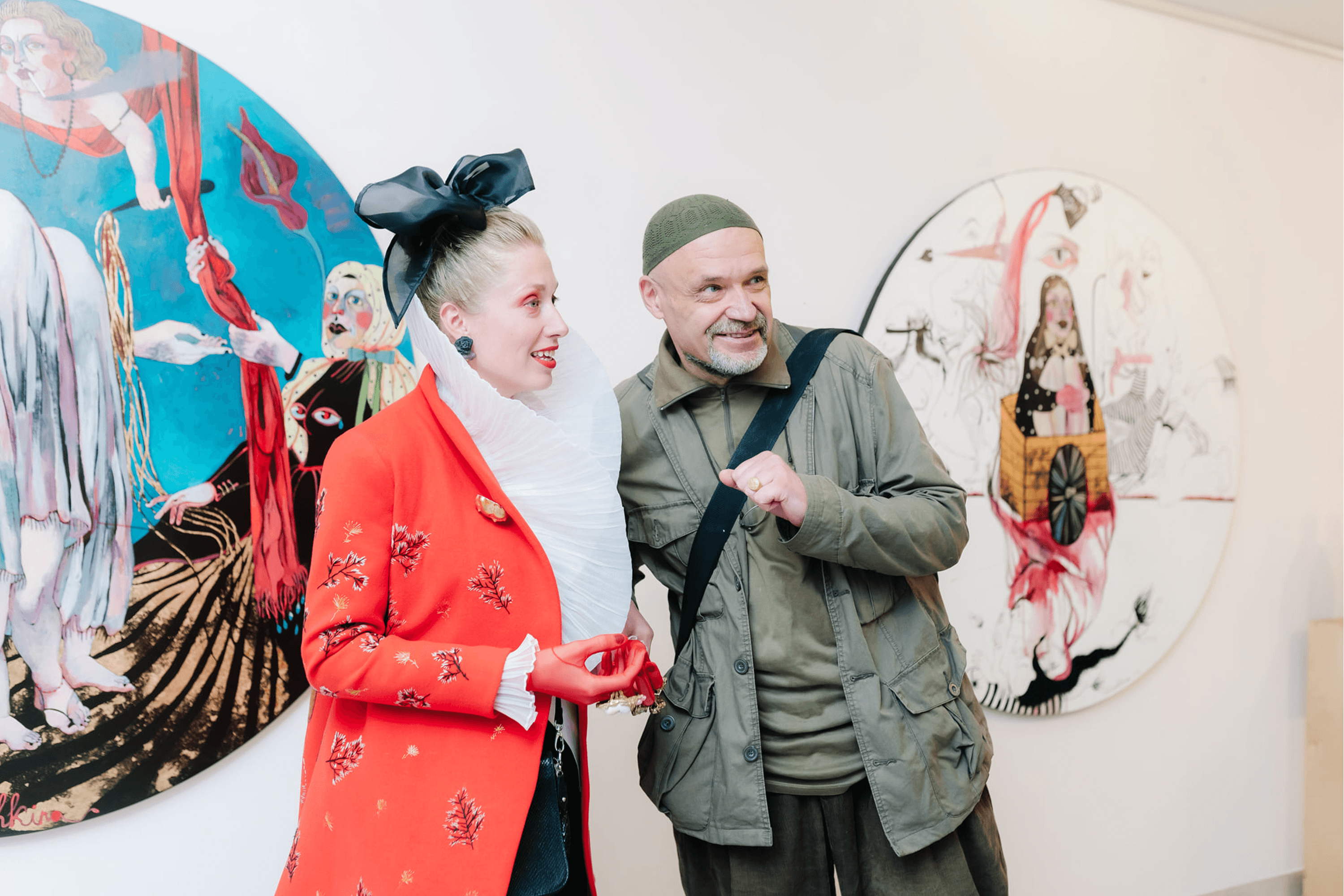
Photo: Photos provided by Nina Murashkina / YB
Sant Cugat Sesgarrigues is not on any tourist routes. It’s inhabited mostly by the elderly, whose lives revolve around winemaking, the church, and private farms. Young people visit from Barcelona on weekends to enjoy the silence and drink water from local healing springs. The infrastructure consists of a single bakery that serves coffee with cognac in the morning. There was once a grocery store, but it closed due to a lack of customers; people now order delivery or drive to the neighboring city of Vilafranca, 15 minutes away. “It might seem too quiet, or even boring to you,” Nina says pensively, “but to work, I need to feel like I’m at the edge of the world.”
The house where Nina and Xavier live was built in the 1970s and has preserved its authenticity ever since. A rug that Xavier bought as soon as Nina moved in holds a special place in the living room. The room is filled with houseplants, featuring a sofa in the corner and a massive bookshelf. There is no television; the couple works a lot and only watches TV when traveling. On a small table, there is a white tablecloth and vintage tableware. Nearby is a fireplace that heats the home in winter. Nina’s studio is on the top floor. It is spacious and bright, with a large terrace overlooking the vineyards and mountains. It used to be her husband’s childhood playroom. The studio is pristine—no romanticized “artistic chaos.” Pigments are numbered, and tools are neatly organized. A large mirror hangs on every wall. When asked if they are for checking her hair, Nina explains: “This is how I see where the form falls through.”
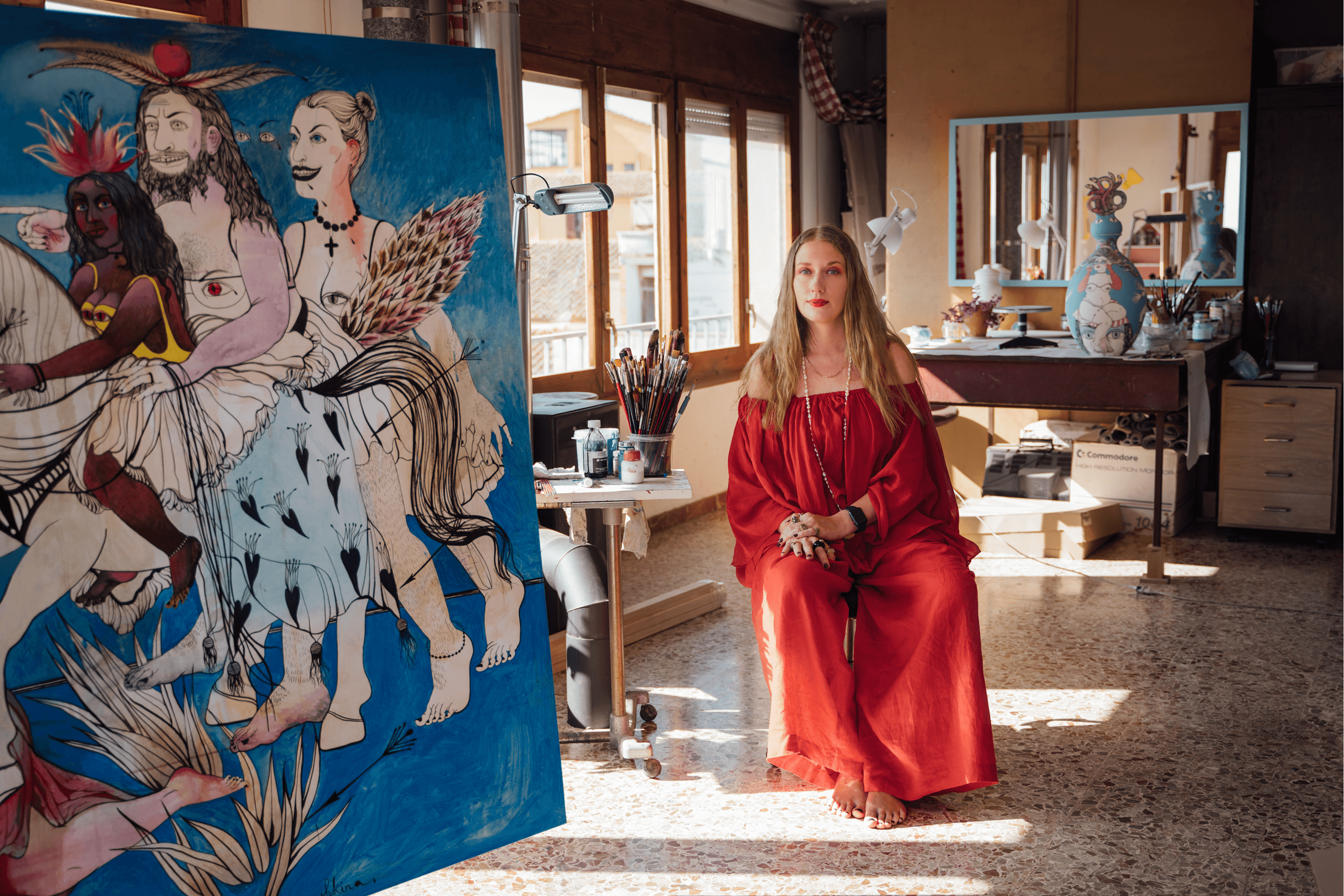
Nina Murashkina’s studio. Photo: Iryna Kalamurza / YB 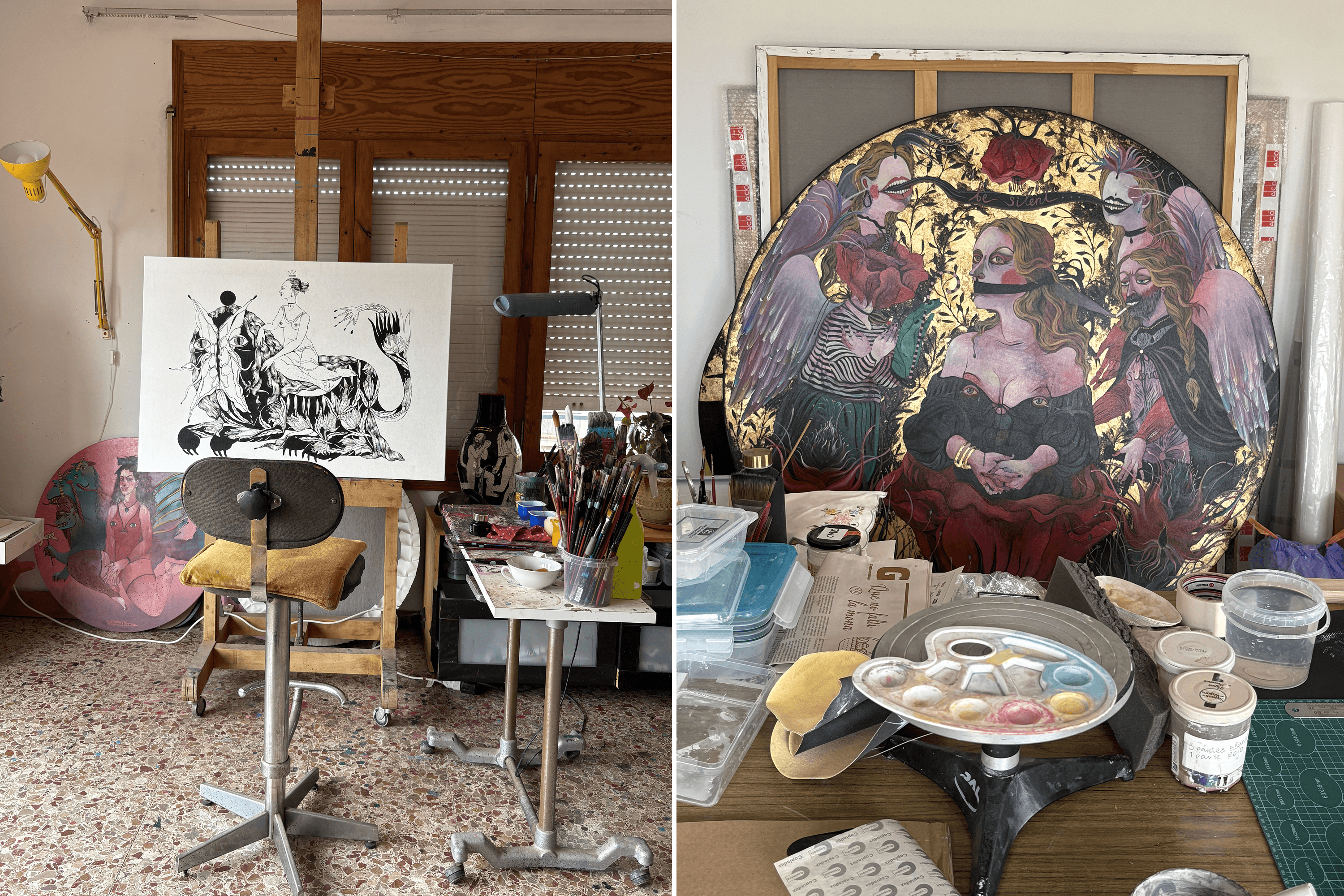
Photo: Photos provided by Nina Murashkina / YB 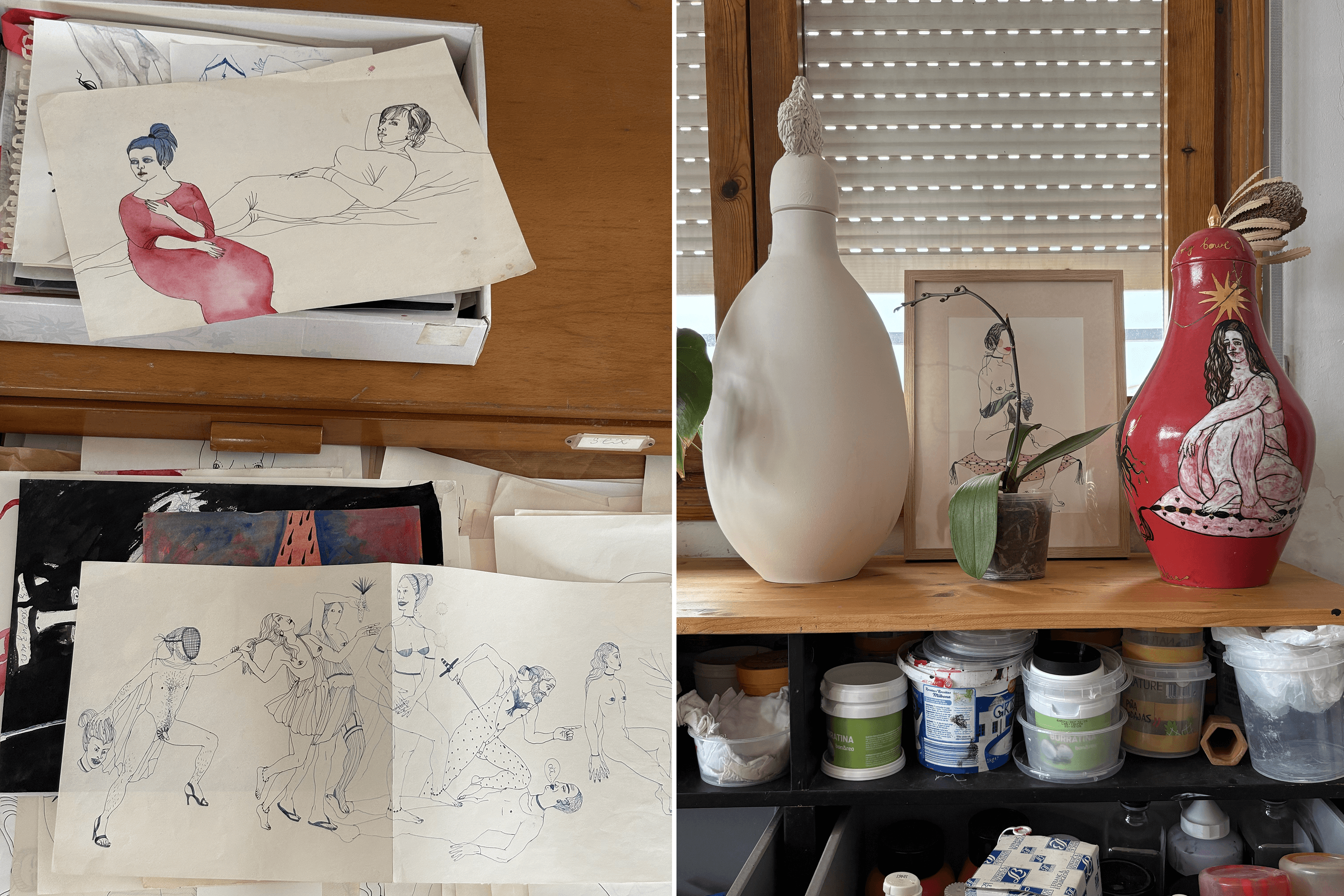
Photo: Photos provided by Nina Murashkina / YB 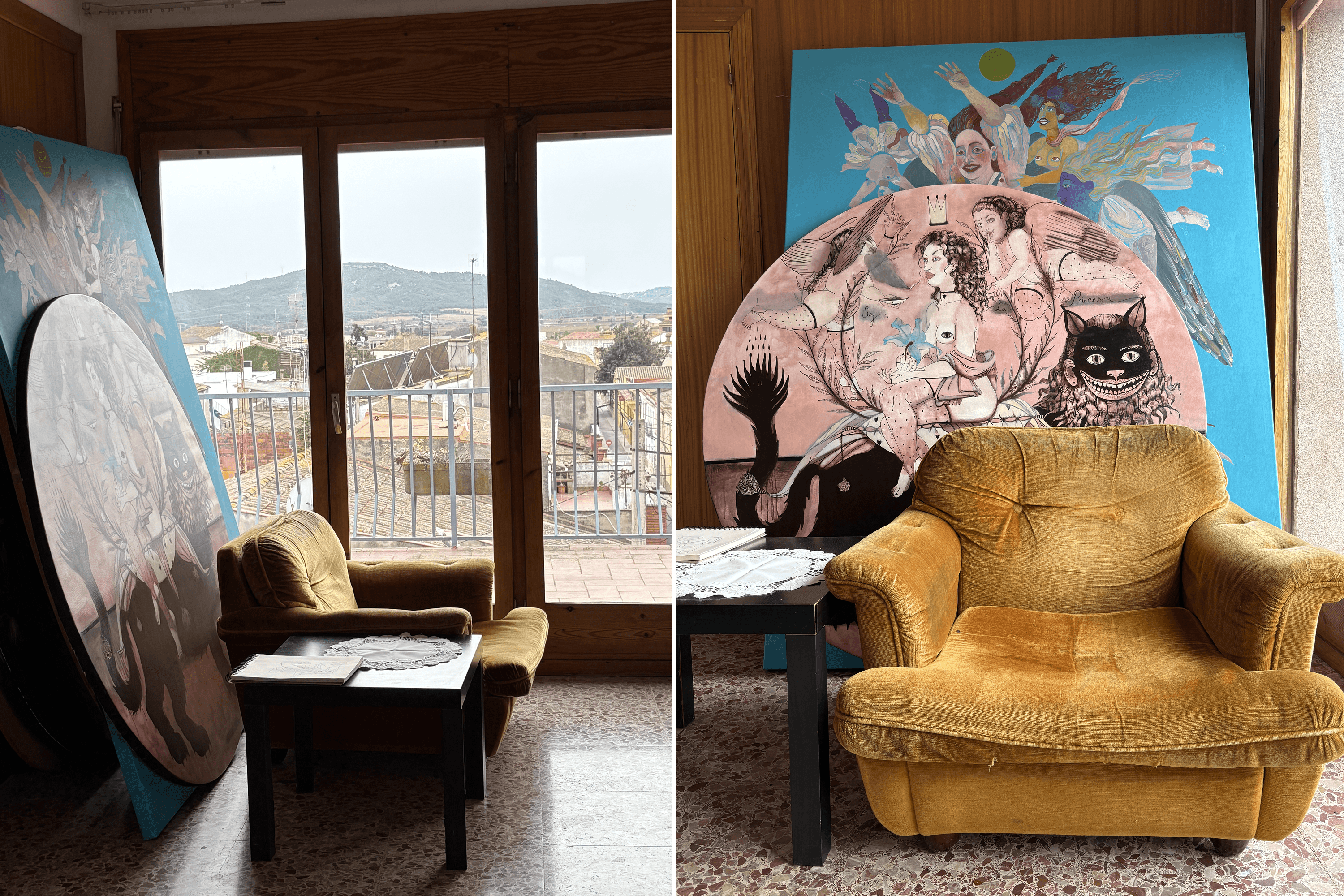
Photo: Photos provided by Nina Murashkina / YB 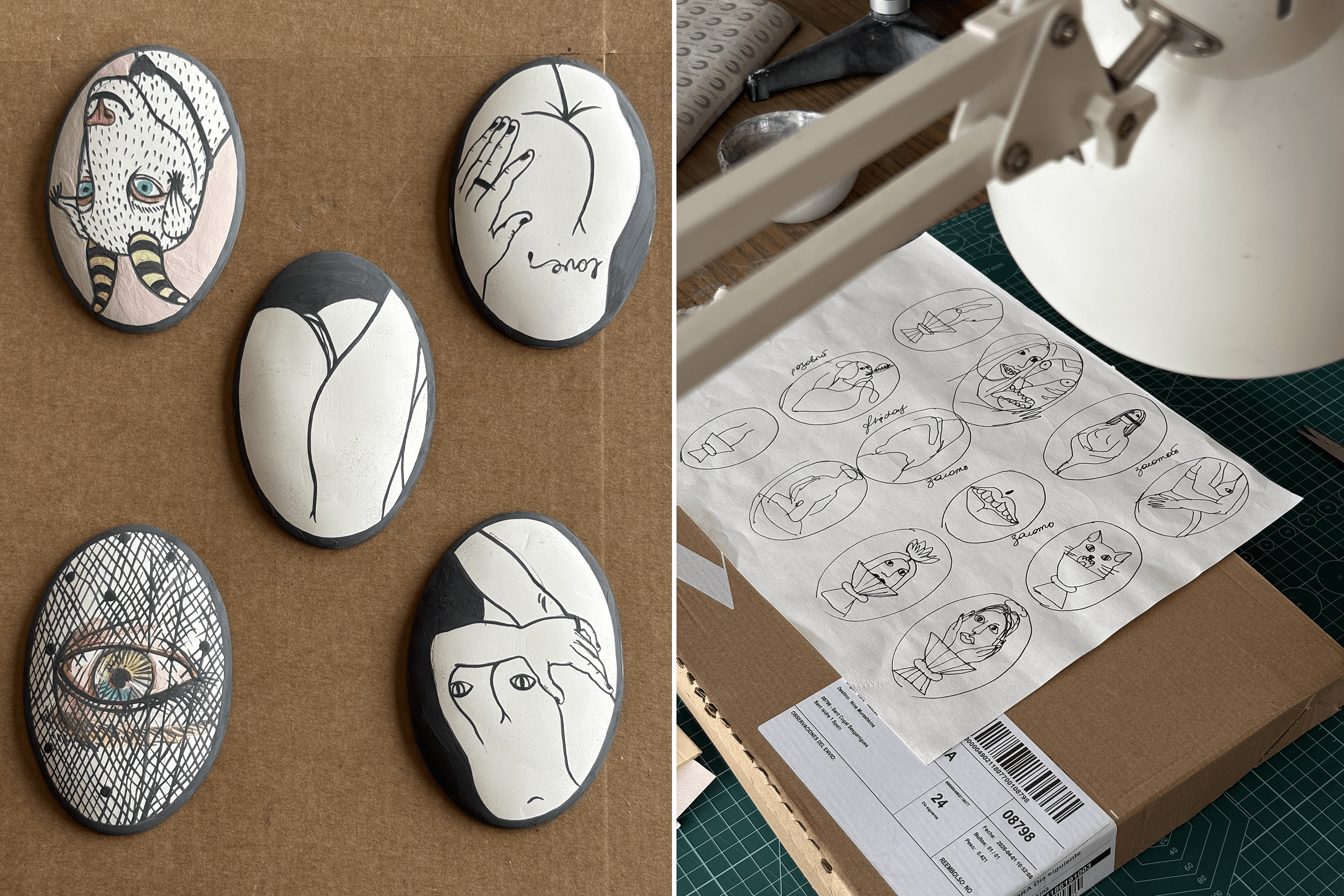
Photo: Photos provided by Nina Murashkina / YB 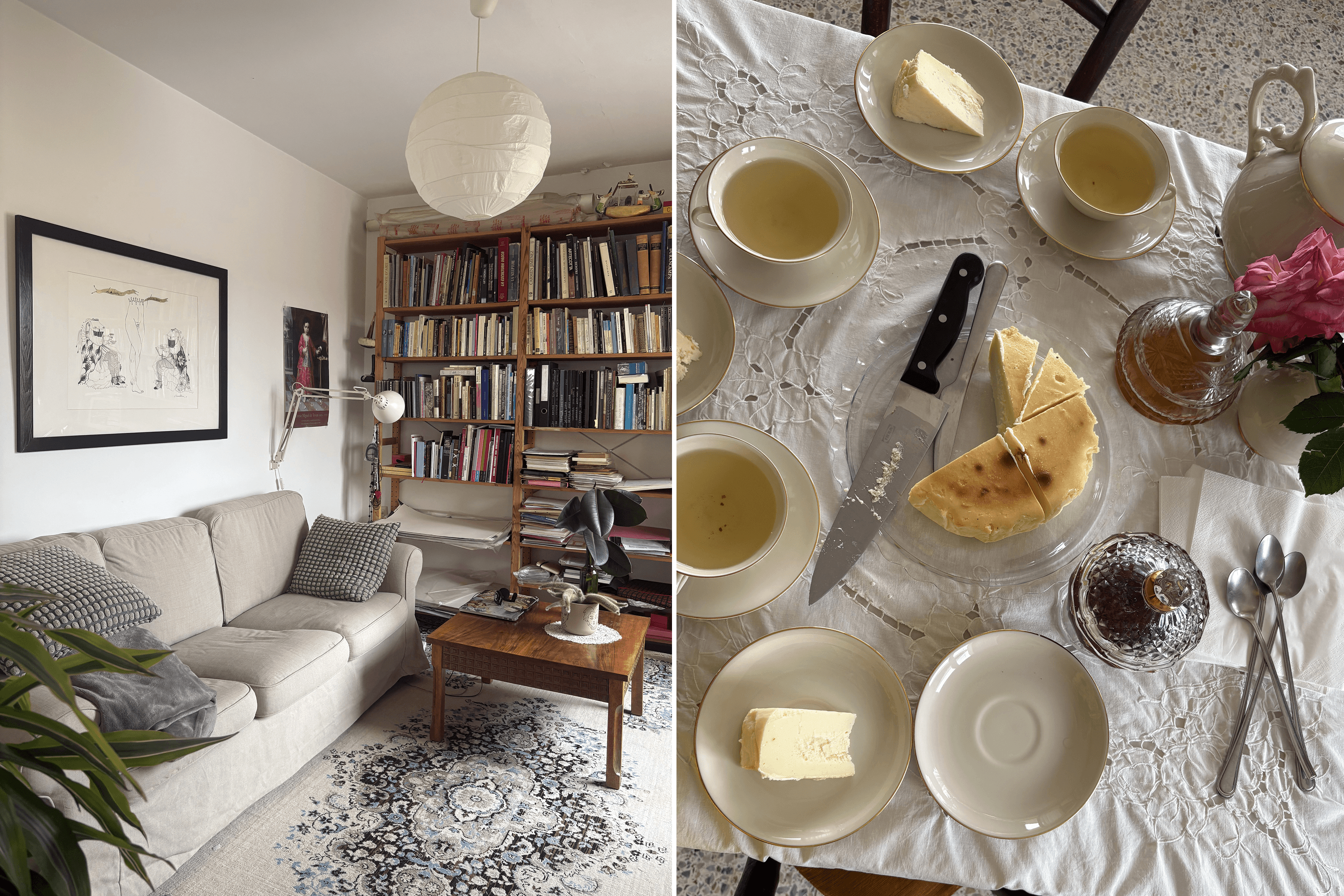
Будинок, де мешкають Ніна з Чав'єром. Photo: Photos provided by Nina Murashkina / YB
In Spain, the light and the color palette of Murashkina’s work have changed—becoming softer and warmer. “I myself have become more 'pink, ' so to speak,” Nina says, referring to both her skin and her inner state. She recalls her teenage years, pasting advertisements in the harsh Donetsk of the nineties: “Winter, snow, bus stops. I’m walking with a pile of these papers. I felt like I was annoying even myself. The glue was peeling the skin off my fingers; I felt unattractive and useless. That was the first time I clearly realized: there is art, and everything else is just like 'pasting advertisements.'”
2
Nina Murashkina was born in 1985 in Donetsk, an industrial mining city where slag heaps, metal, and concrete coexisted with crime, vibrant clothing, and ostentatious wealth. Nina’s father worked in the engineering department of a design institute, and her mother worked in an architectural office. Yet both were creative: in her spare time, her mother sewed clothes, while her father played in a rock band at the Donetsk City Palace of Culture. “I saw him under the spotlights, among fans reaching out to him,” Nina recalls. “In everyday life, my father stuttered and spoke little, but on stage, he was confident and open. That was when I, a modest and quiet girl, finally decided that I wanted to be a star too.”
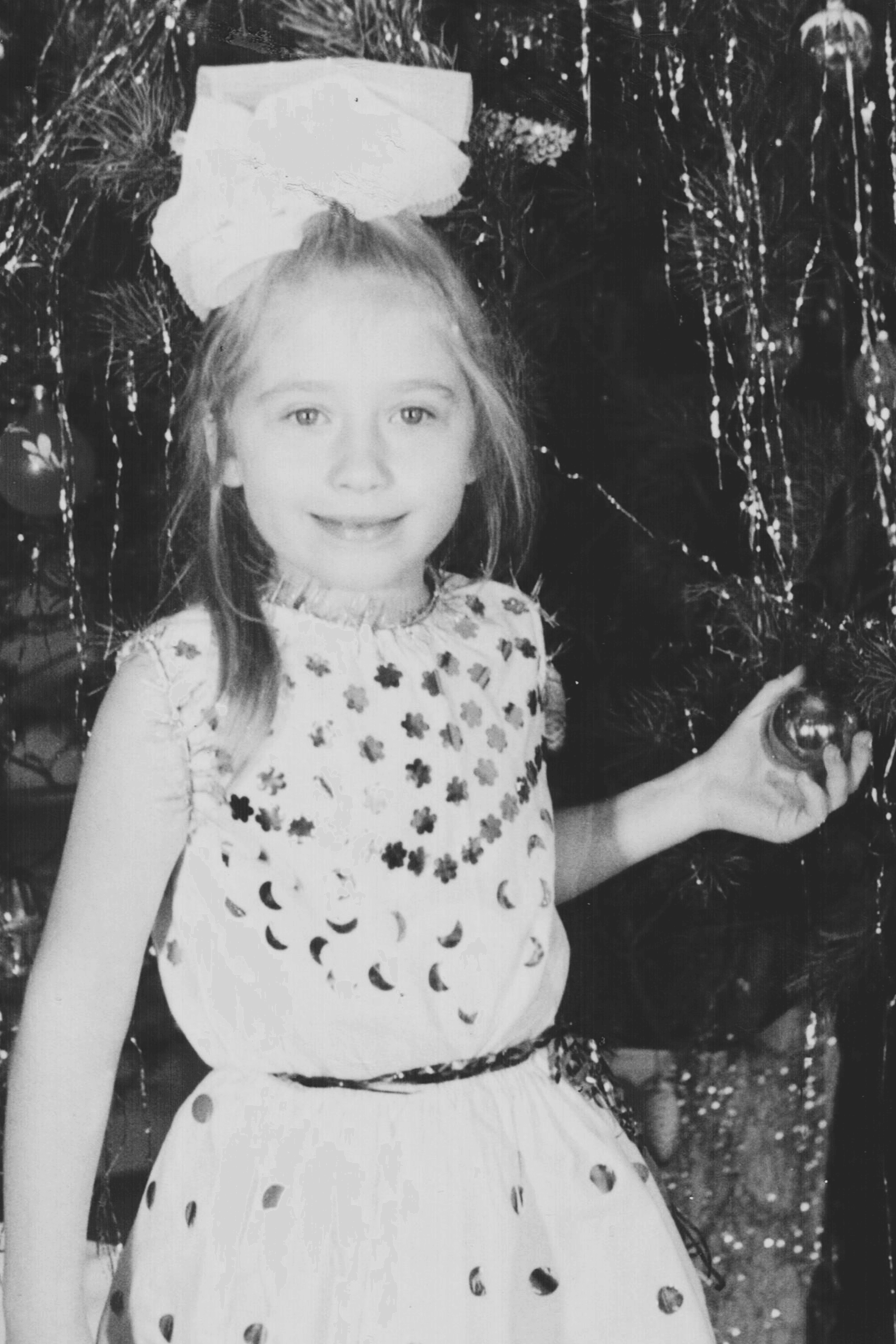
Nina recalls Donetsk with nostalgia but also notes that the city was very dangerous at the time. Her parents shielded her from the streets—she spent her time drawing, reading complex books with a dictionary, spending Saturdays with her father at the Donetsk Circus with live music in the foyer, and trying on the clothes her mother made. “Despite the kitsch, everything was very beautiful,” Nina says, describing the Donetsk of her childhood. “Roses. Romani people. Gold teeth. Swirling dust. You’d put on patent leather shoes, and half an hour later, they’d turn into velvet.” Over time, this “Donetsk visual and behavioral code"—marked by vibrance, nerve, and exaggeration—began to manifest in Murashkina’s work. Red became her favorite color, dating back to her first composition where she painted every figure red.
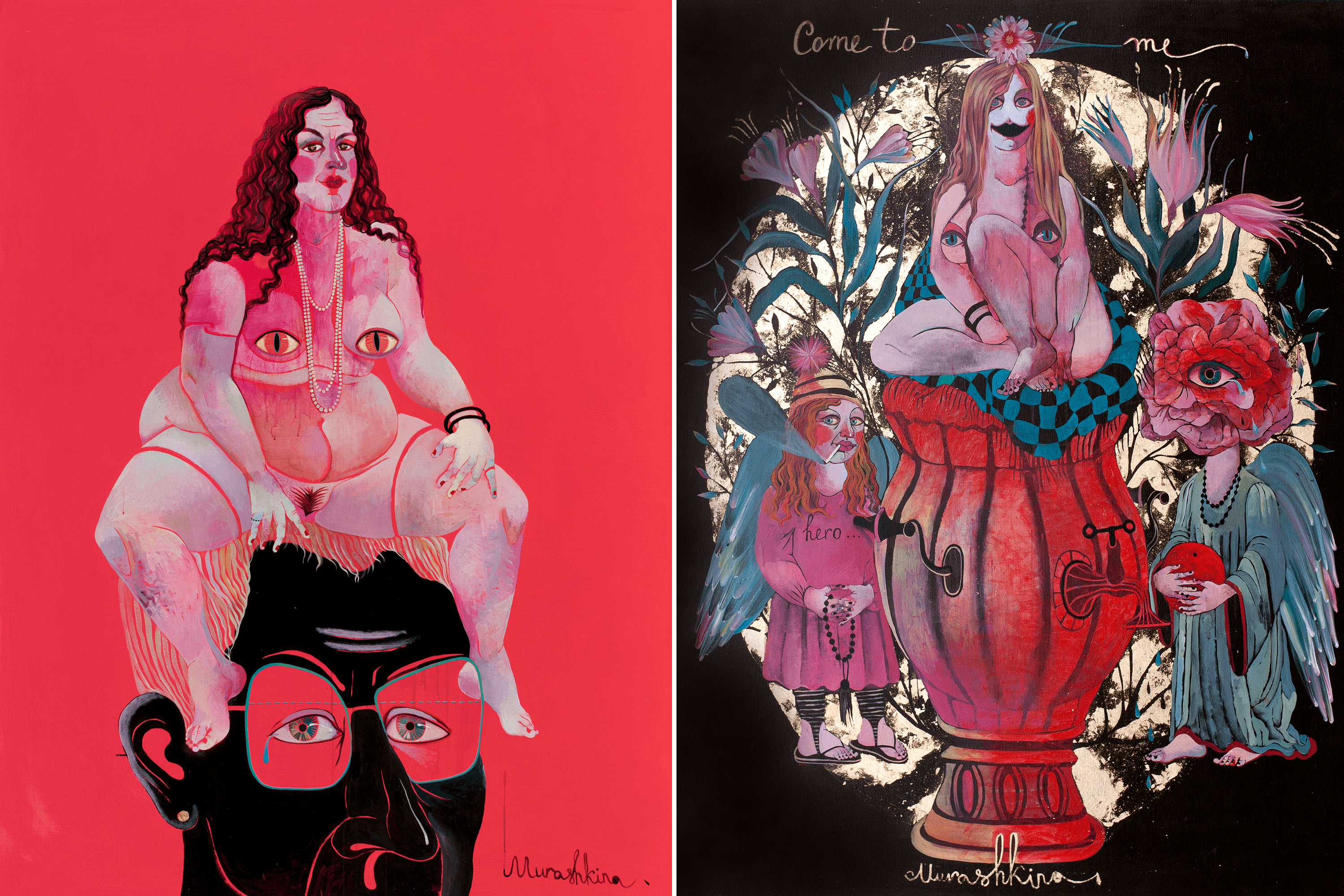
Some paintings by Nina Murashkina: Big Woman; Come to Me. Photo: Photos provided by Nina Murashkina / YB 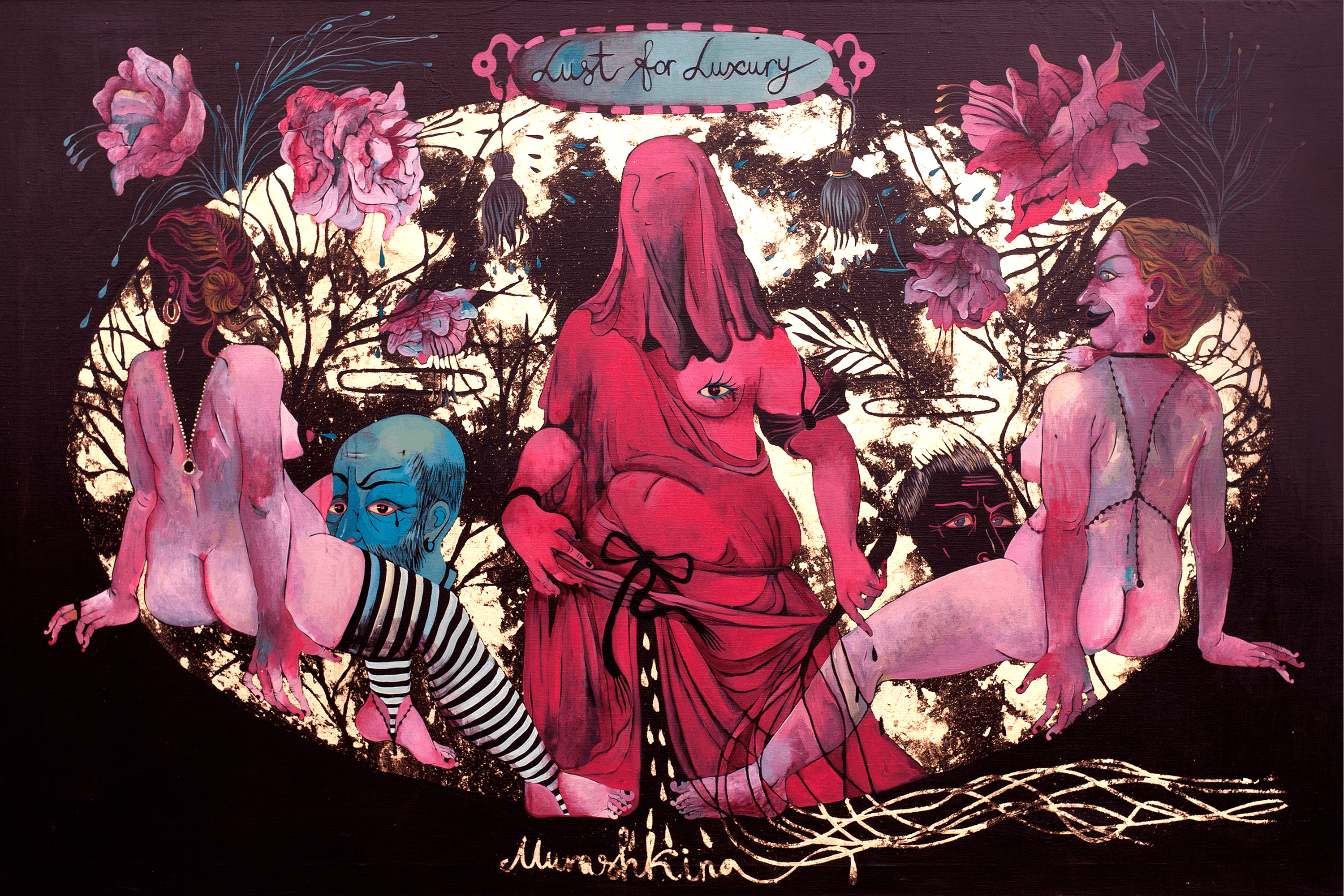
Lust for Luxury. Photo: Photos provided by Nina Murashkina / YB 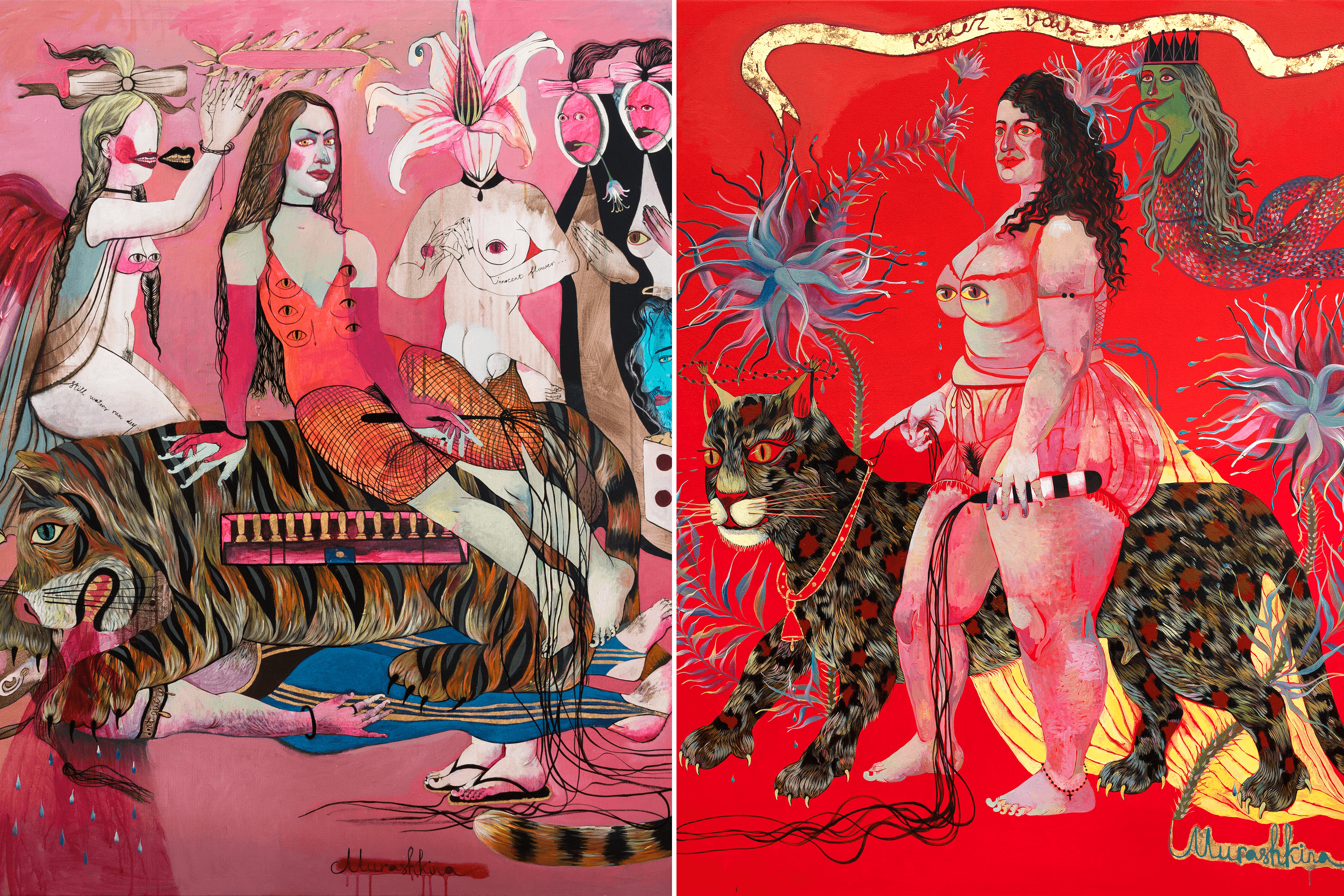
Steel Waters Run Deep; Rendez Vous. Photo: Photos provided by Nina Murashkina / YB 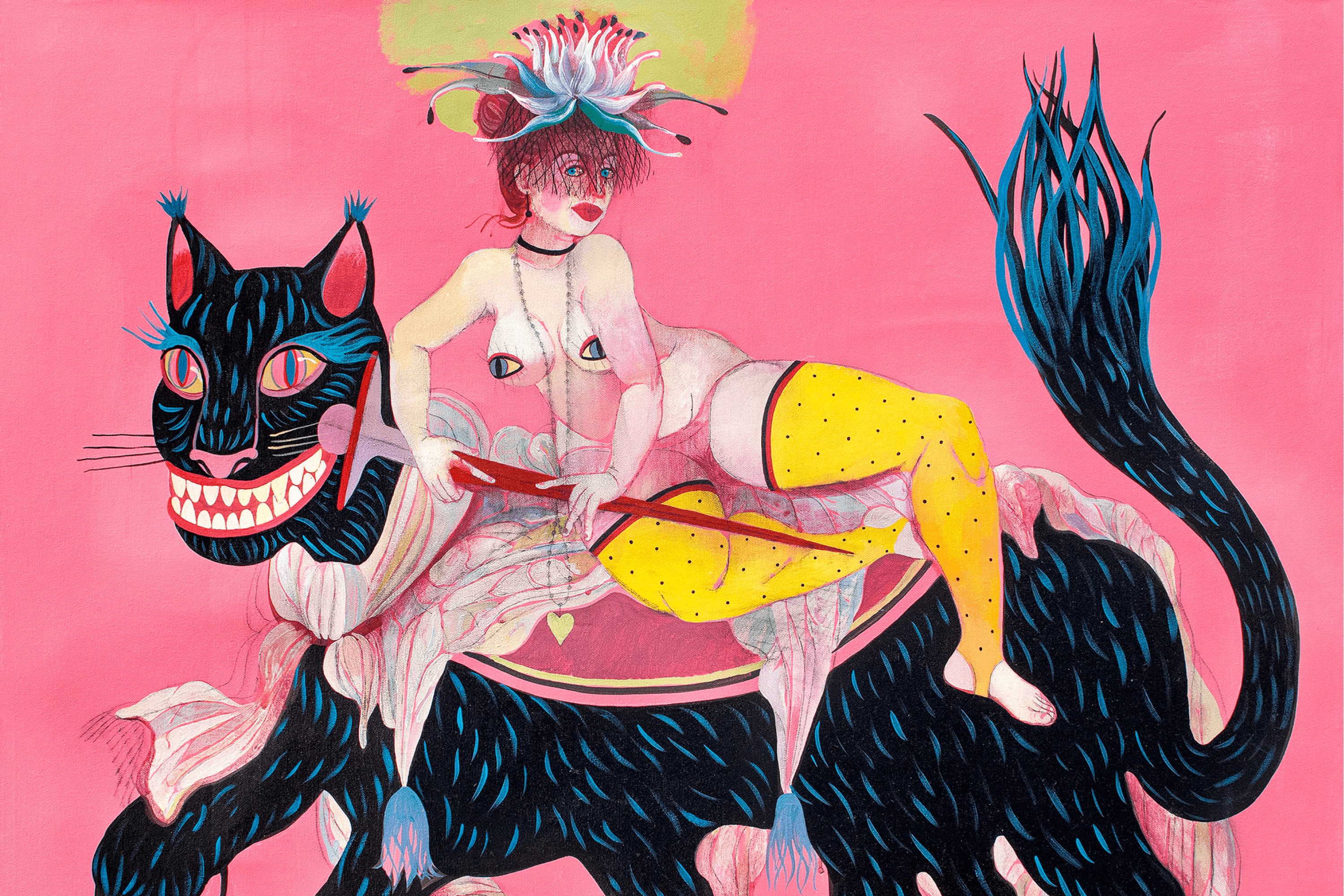
My own Beast. Photo: Photos provided by Nina Murashkina / YB 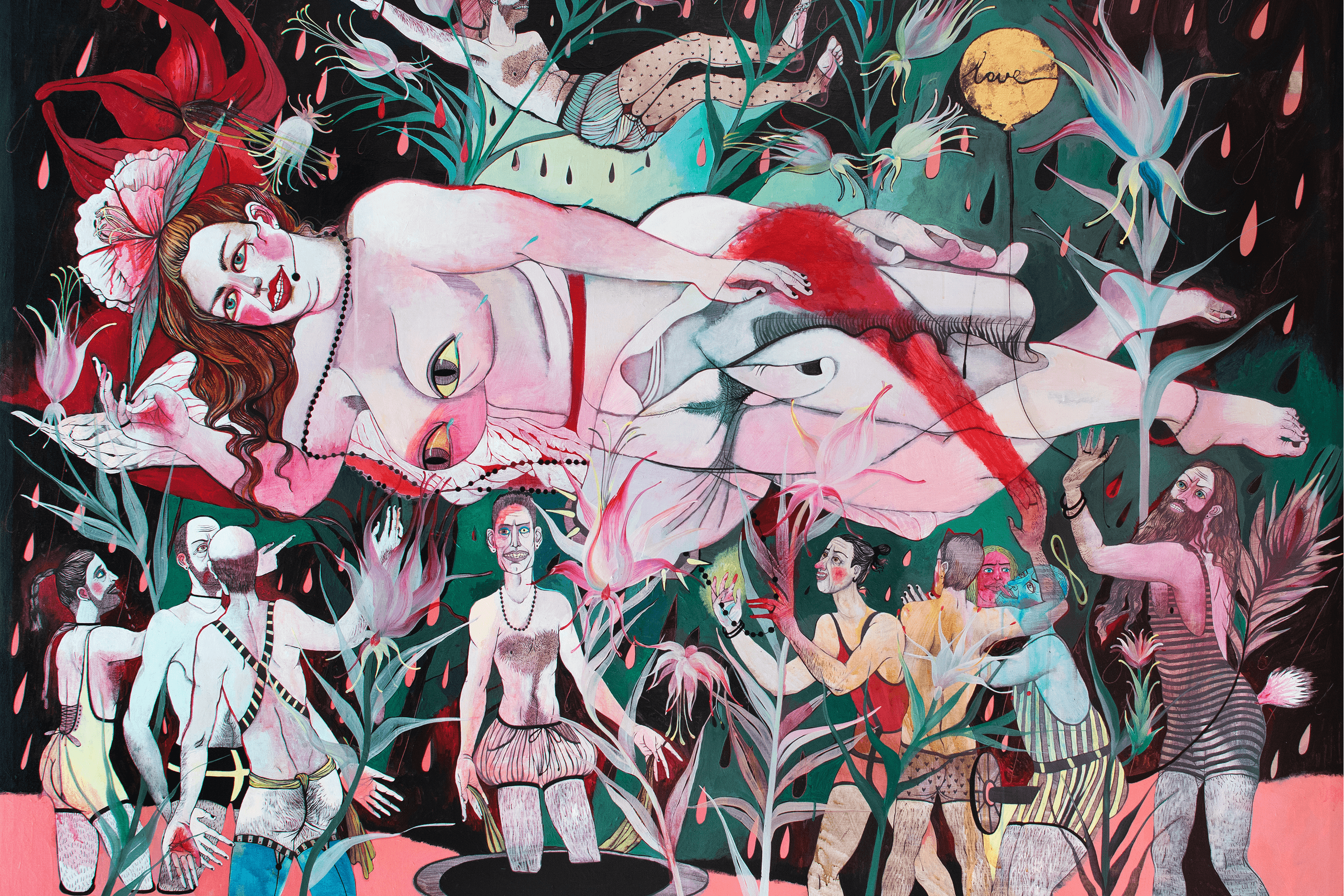
Snow White XL. Photo: Photos provided by Nina Murashkina / YB 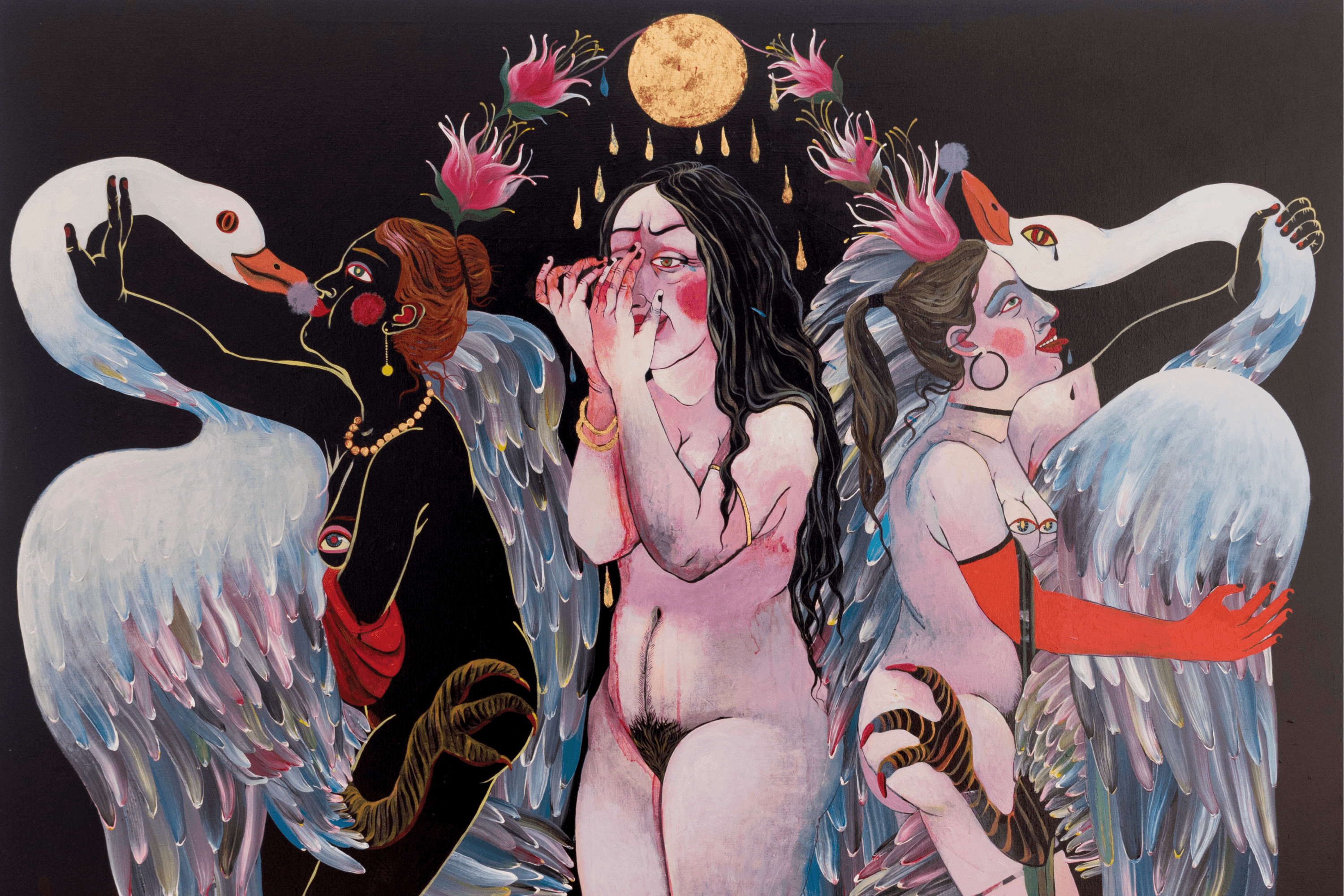
New Leda. Photo: Photos provided by Nina Murashkina / YB
At 16, Nina enrolled in the Donetsk Art College to study graphic design. Her parents chose the profession for practical reasons—design was a way to make a living. Initially, Nina worked as an illustrator for publishing houses and drew hair-style sketches for salons. Later, an art teacher suggested she take a side job at a church. Nina started working as an assistant to an icon painter. Now, she had to attend services, work wearing a headscarf, and refrain from wearing makeup.
The reality Nina witnessed in the church differed sharply from what was preached. Church artists drank, some parishioners made inappropriate advances and suspicious suggestions, and the priests didn’t follow the commandments at all. “I remember going to communion and the priest smelling of sausage, even though he was supposed to be fasting,” the artist recalls. Furthermore, Murashkina couldn’t focus on the liturgy—she was too busy observing how the light fell and studying people’s faces—so she eventually left. However, this experience didn’t go to waste; it is evident in her work through gilded details and the almost iconographic placement of figures.
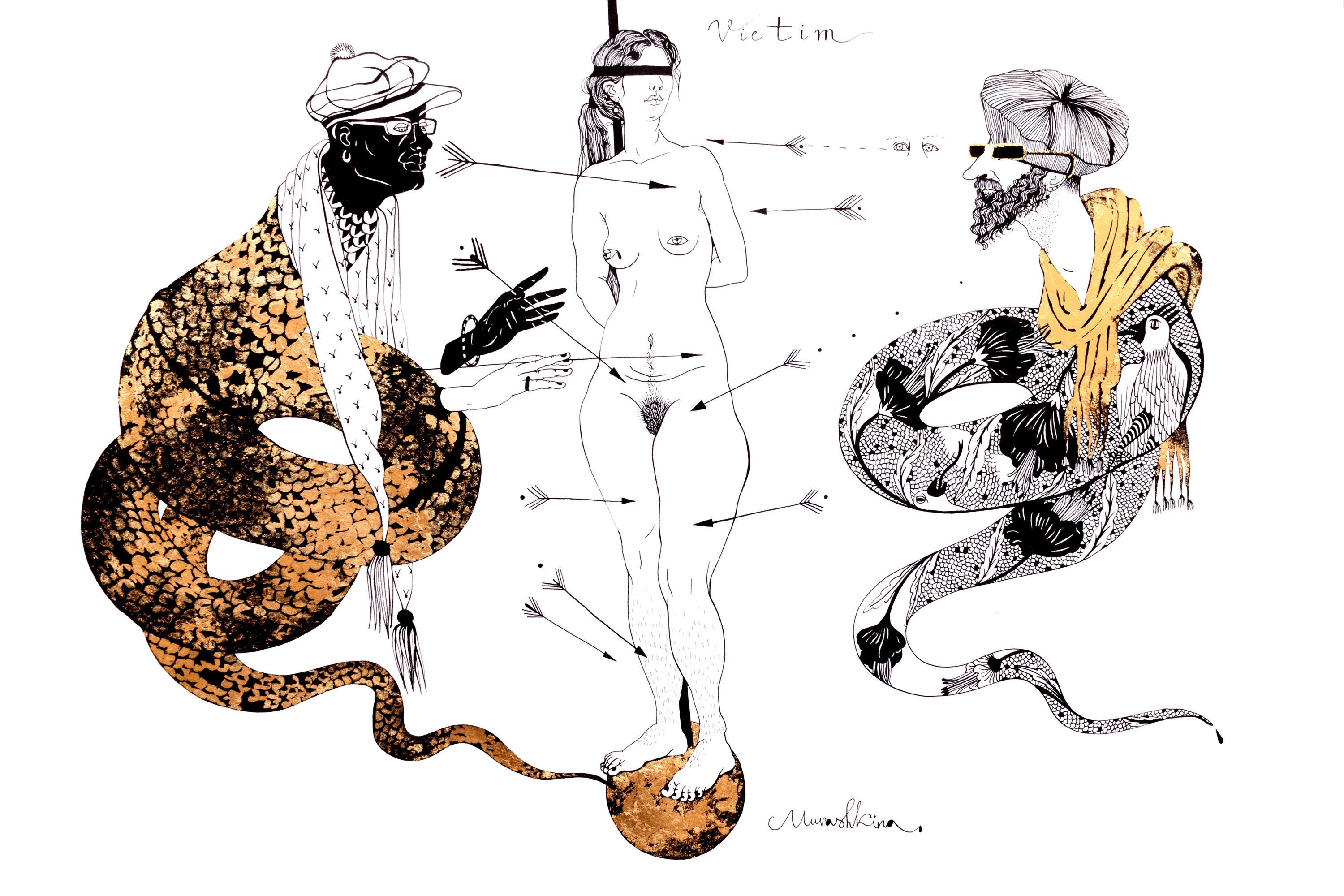
Graphic artworks by Nina Murashkina. Victim. Photo: Photos provided by Nina Murashkina / YB 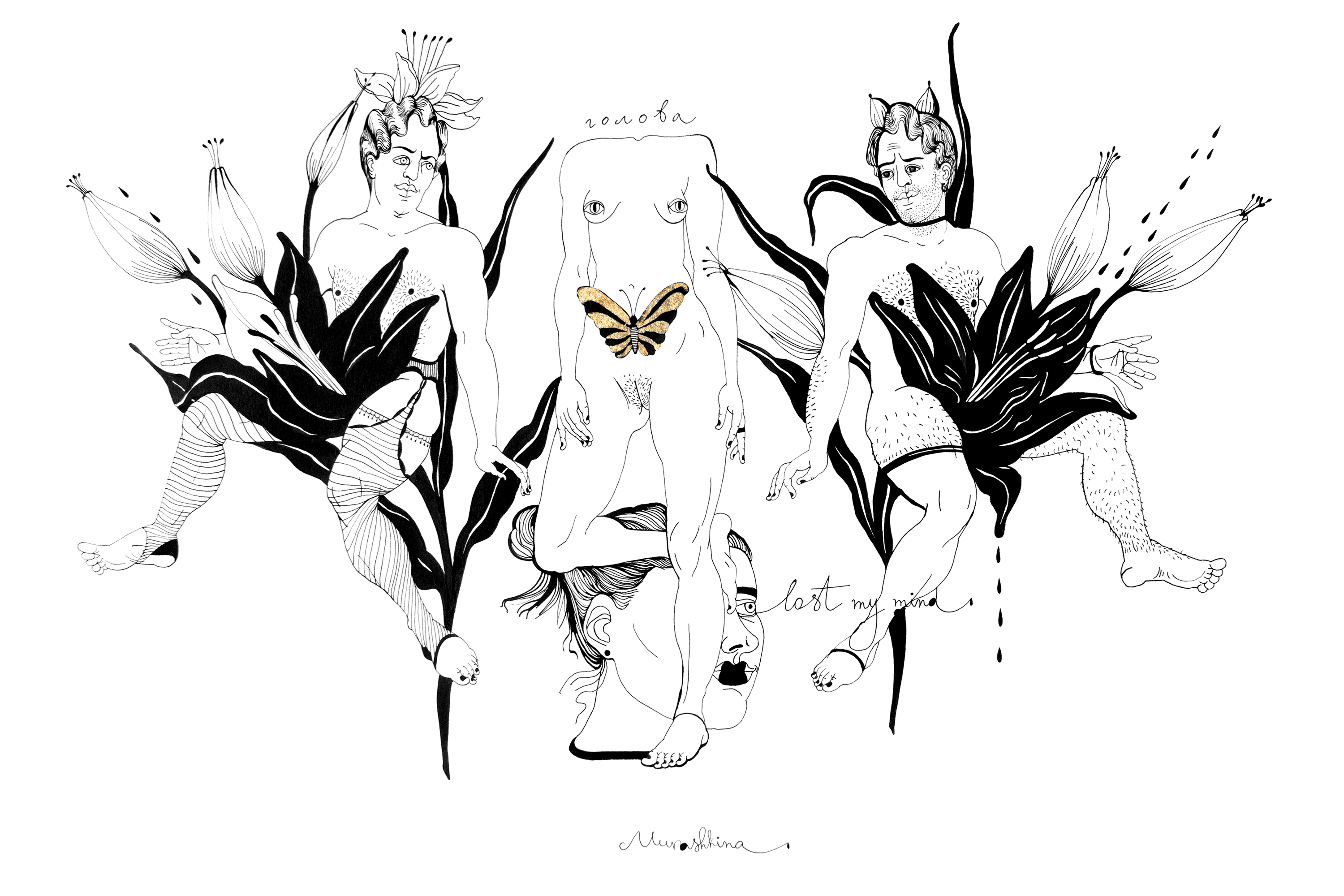
Lost My Mind. Photo: Photos provided by Nina Murashkina / YB 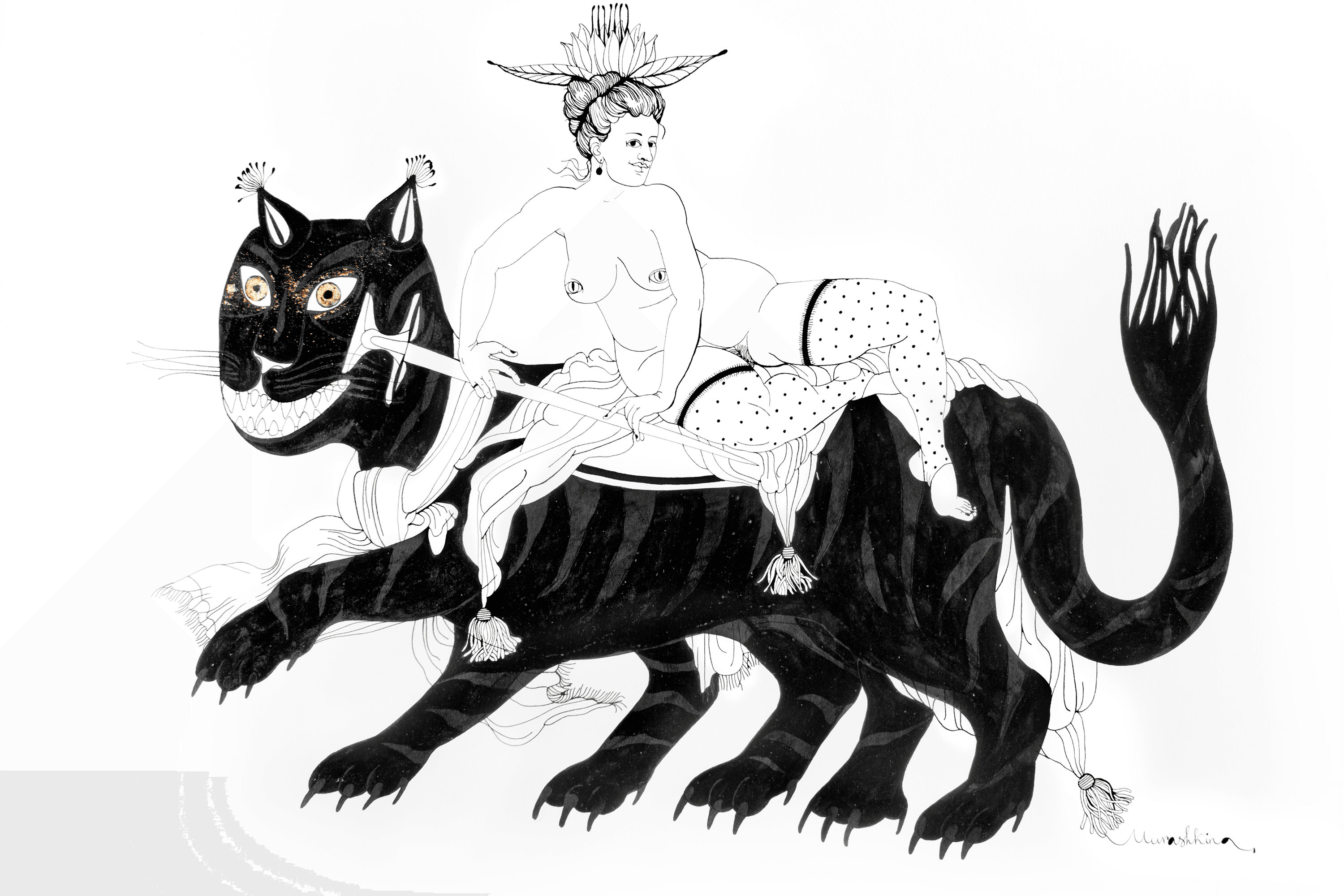
My Beast. Photo: Photos provided by Nina Murashkina / YB 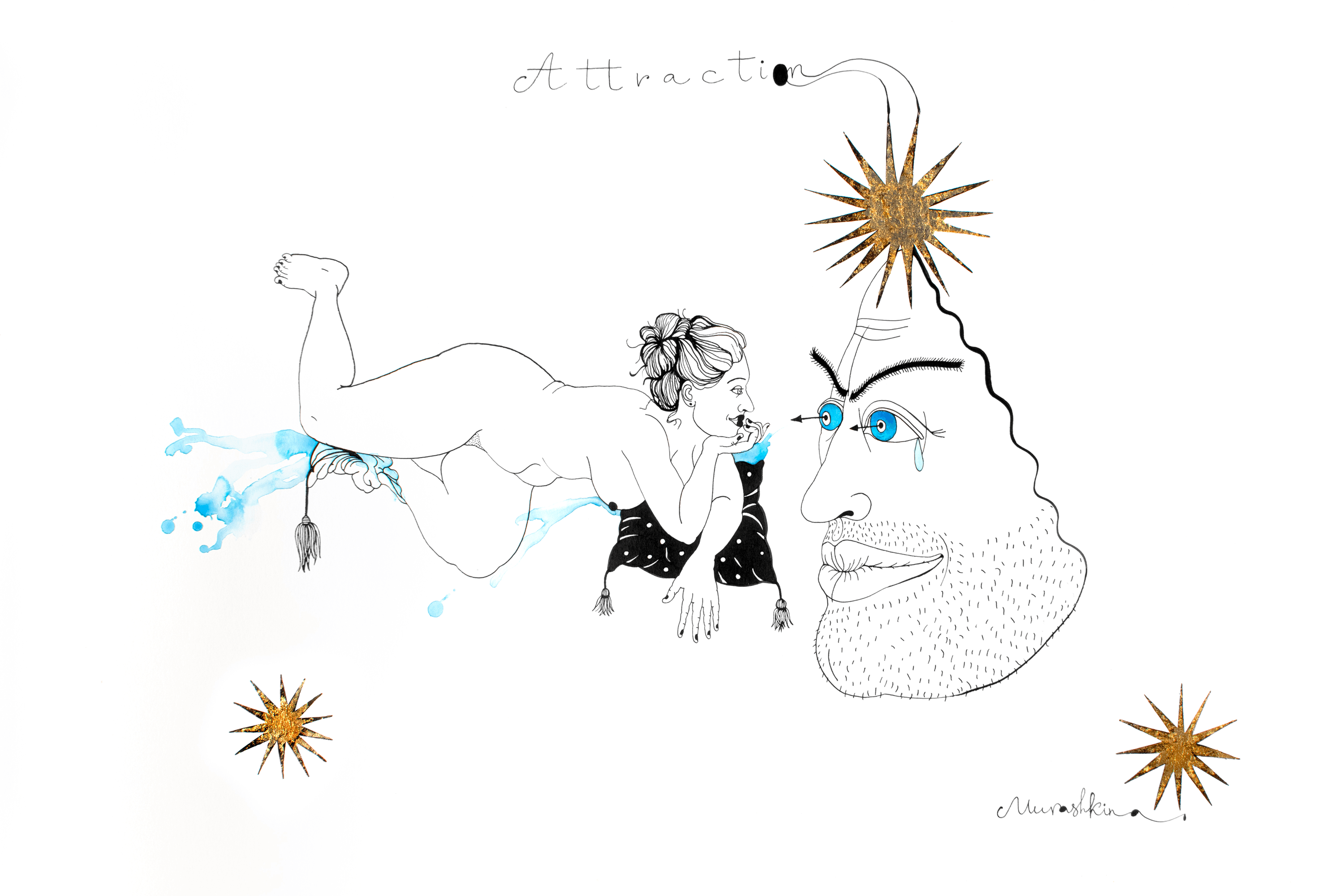
Attraction. Photo: Photos provided by Nina Murashkina / YB 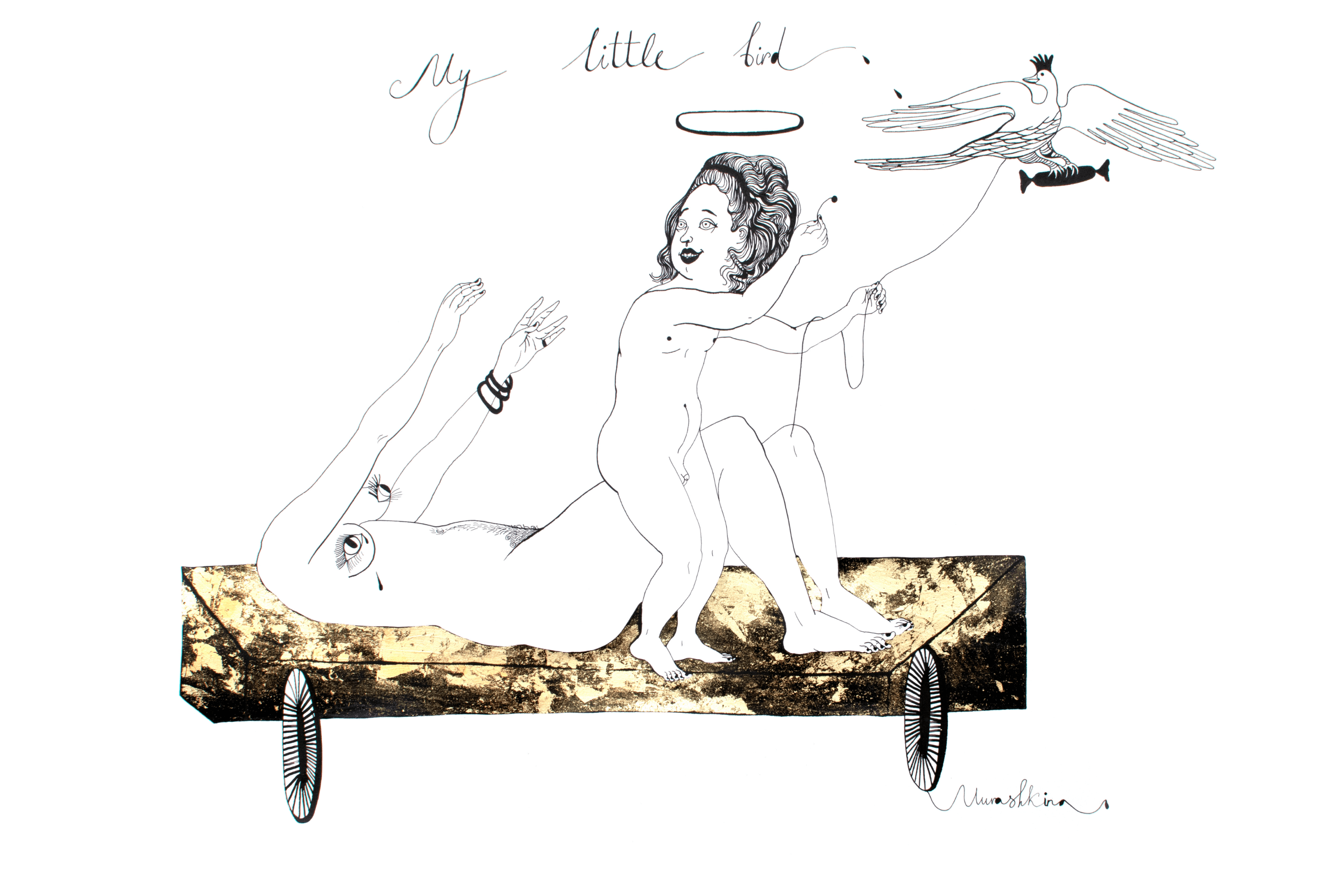
Little Bird. Photo: Photos provided by Nina Murashkina / YB 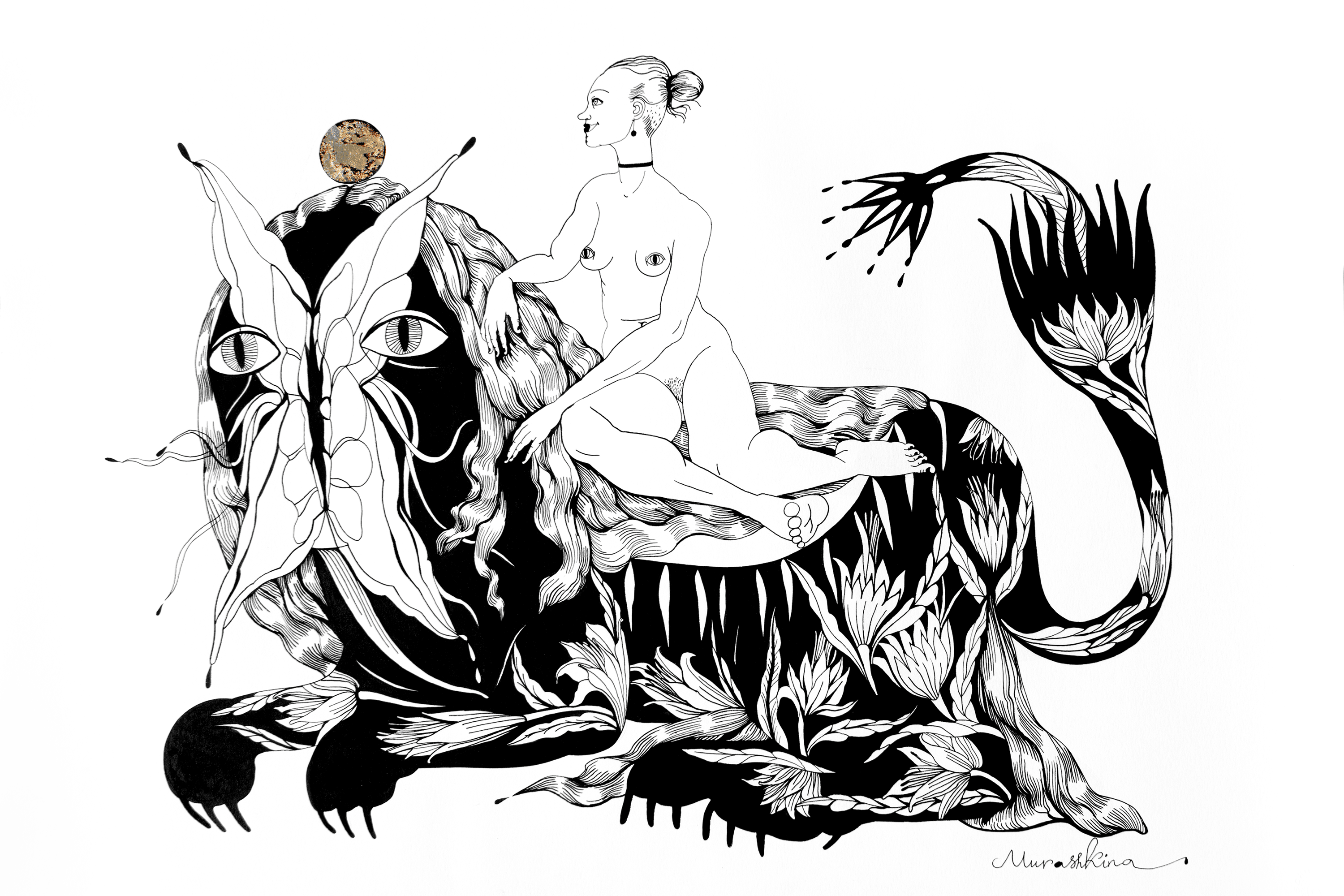
My own Beast. Photo: Photos provided by Nina Murashkina / YB
Murashkina moved to Kharkiv and enrolled in the Kharkiv Academy of Design and Arts, choosing the Faculty of Monumental Painting and the class of Viktor Gontarov—a Ukrainian monumentalist whose students were known for being the most interesting and argumentative. Nina was no exception—she clashed with teachers over her feminist and provocative artistic language. They repeatedly tried to expel her, demanding she revise her compositions into something more “decent,” without her signature interpretation of form and content.
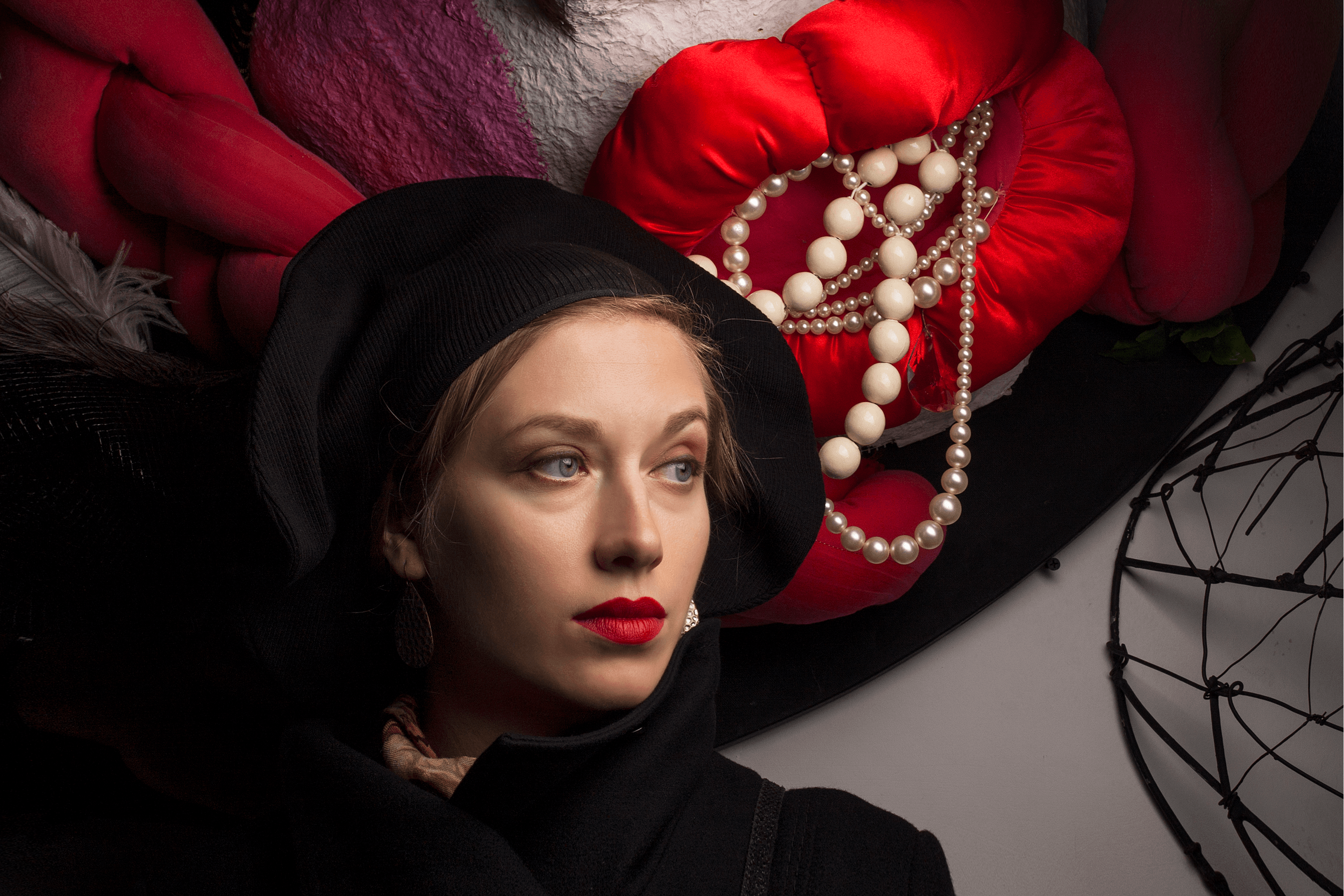
Nina Murashkina’s exhibition On the Top in Kharkiv. Photo: Photos provided by Nina Murashkina / YB 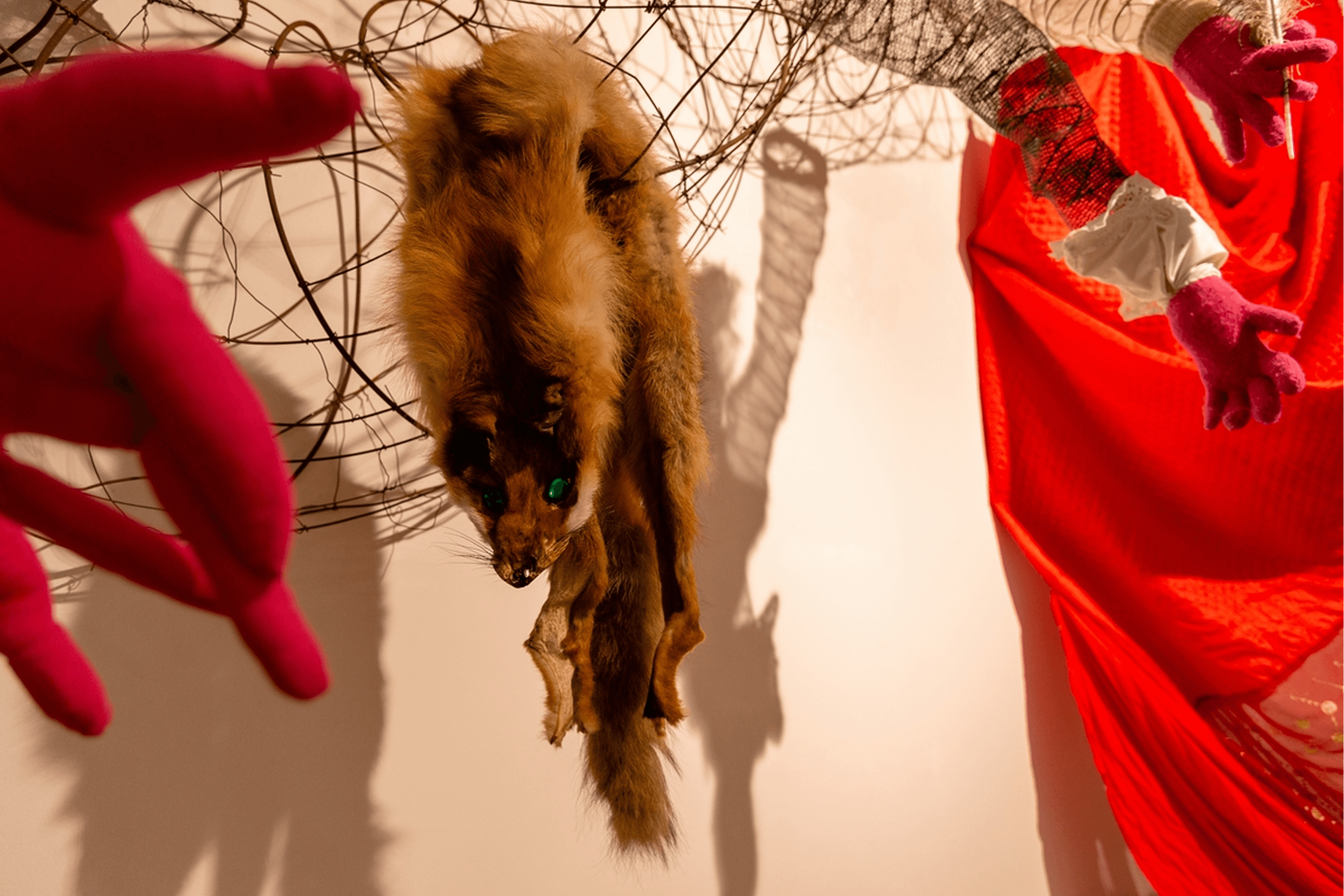
Photo: Photos provided by Nina Murashkina / YB 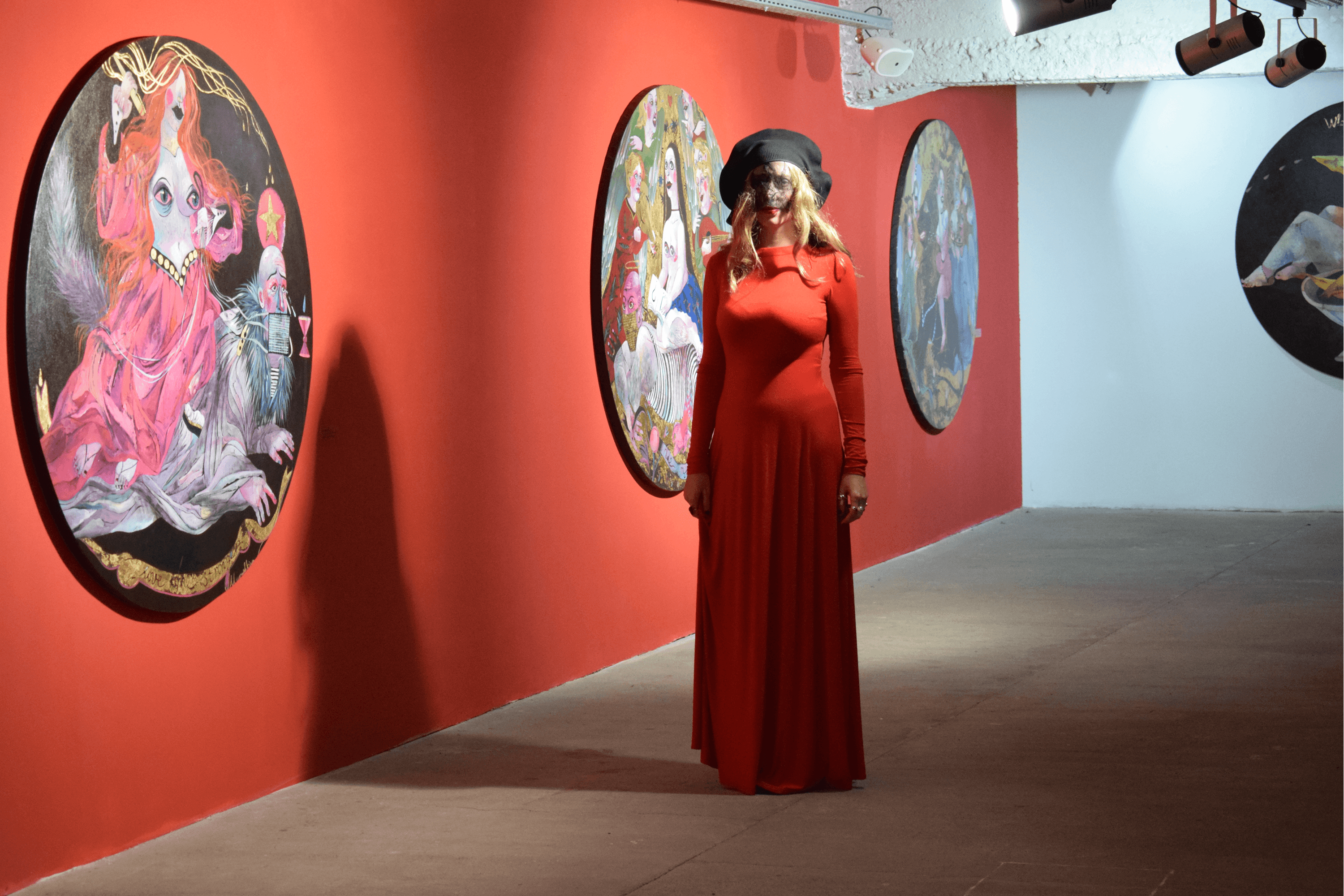
Photo: Photos provided by Nina Murashkina / YB 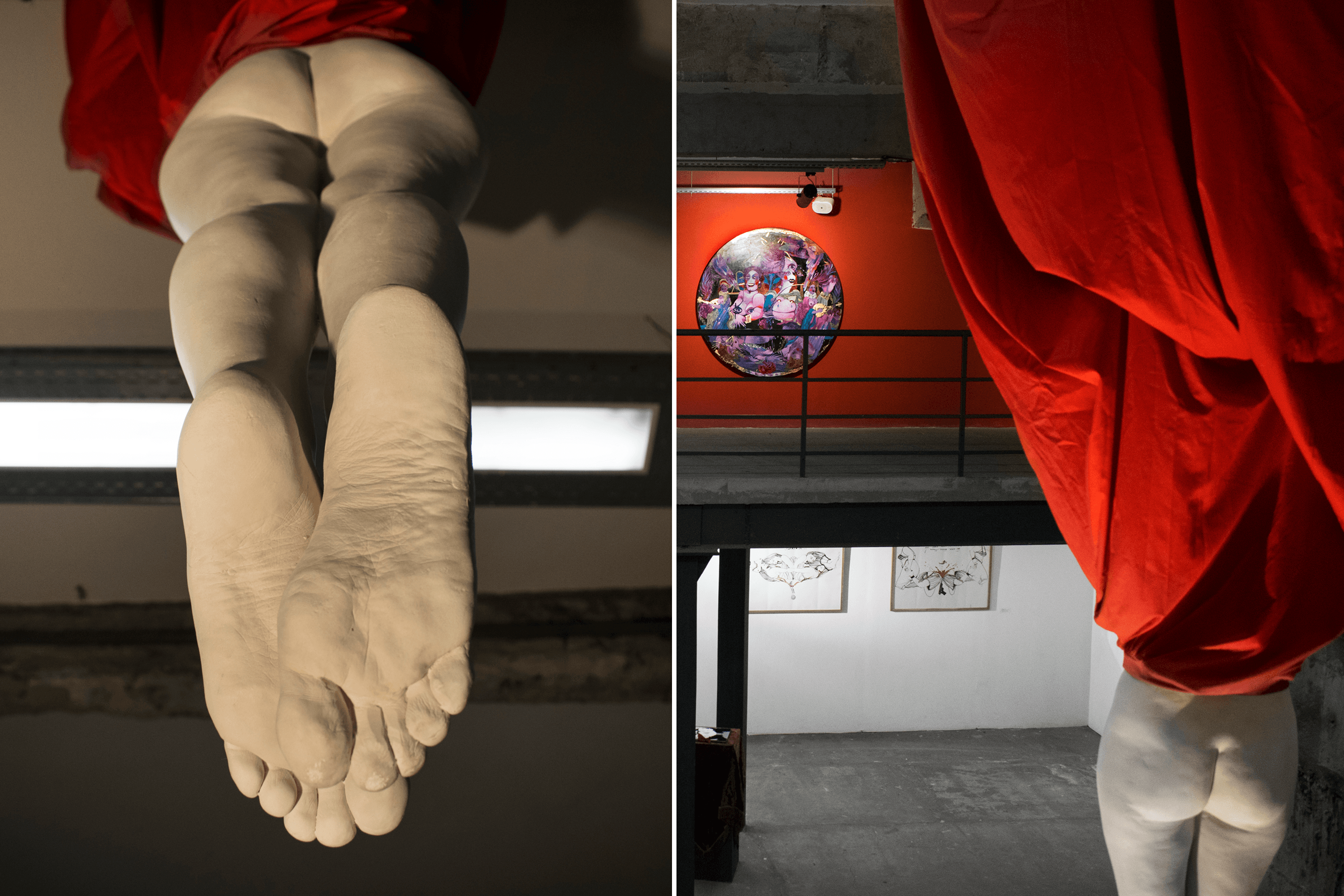
Photo: Photos provided by Nina Murashkina / YB 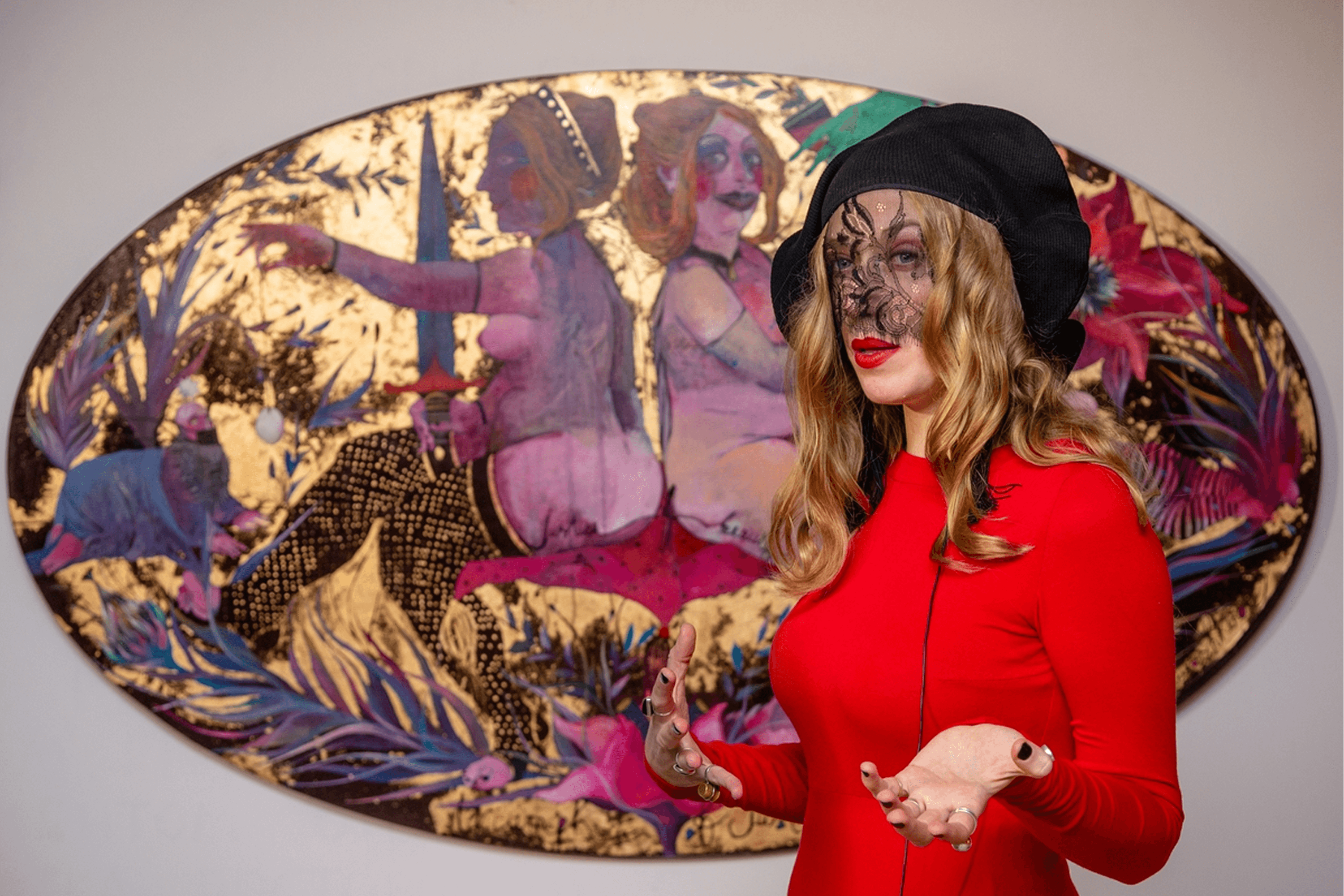
Photo: Photos provided by Nina Murashkina / YB 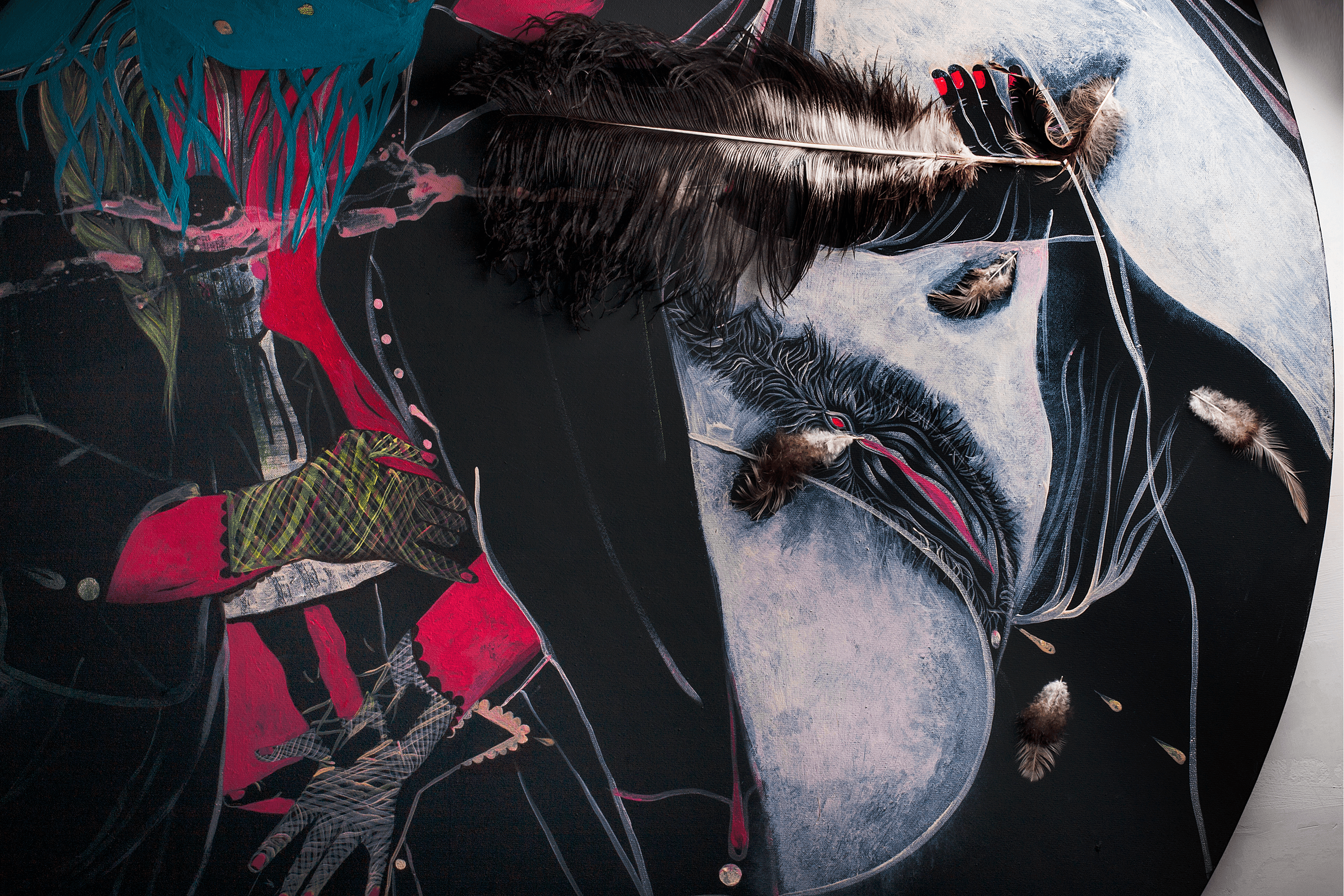
Photo: Photos provided by Nina Murashkina / YB
During this time, Nina fell deeply in love for the first time and got married, but the marriage ended quickly due to her husband’s numerous infidelities. She recalls that he shared himself with both men and women, and she gradually began to lose herself. Nina describes her painting from that period as “infernal”: the imagery was harsher, the subjects more melancholic, and the colors darker. Kharkiv was becoming too cramped and lonely for her. Nina began traveling to Kyiv on weekends, arriving on the cheapest night train at three in the morning, waiting for the city to wake up, and visiting galleries with a portfolio that, at the time, interested almost no one. Ultimately, Nina decided to leave Kharkiv for good—a city where she no longer saw opportunities and which held too many personal memories.
3
In 2009, Murashkina moved to Kyiv for good. At the time, the art community was insular, relying heavily on personal connections, which made it nearly impossible for outsiders to break in. Nina sought every opportunity to be noticed. Lacking the funds for a cargo taxi, she asked some friends to carry her series “Women Eating Pasta” to GogolFest at Mystetskyi Arsenal. One piece, depicting a kneeling woman with a sign reading “Mister, Marry Me,” caused a sensation. Two major market players immediately offered to collaborate: art manager Antin Mukharsky and gallerist Pavlo Gudimov. Mukharsky provided materials and purchased Nina’s works for resale. Gudimov signed a contract with Murashkina that covered her meals, art supplies, and rent in Kyiv’s central part.
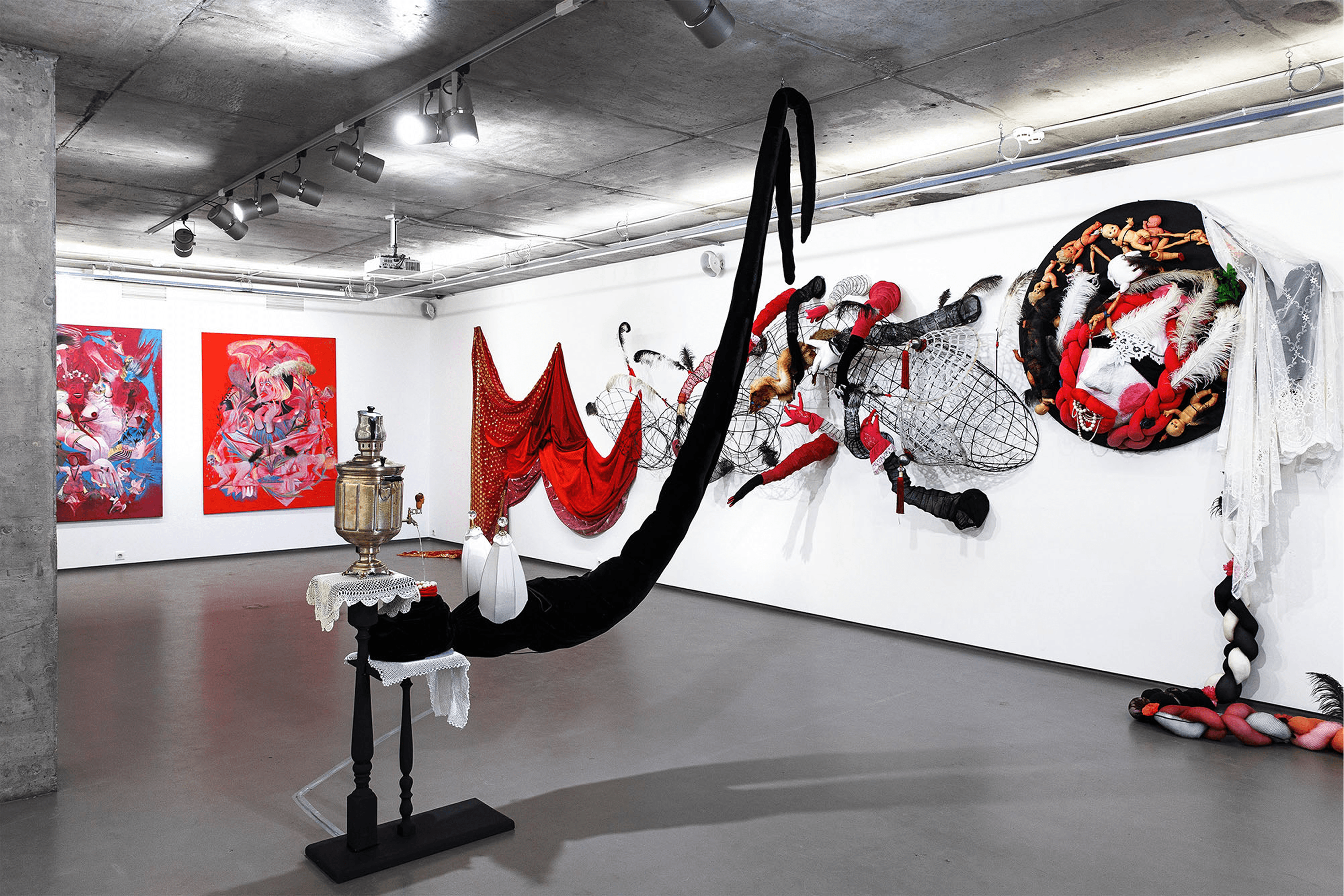
Nina Murashkina’s exhibition Insatiable in Kyiv. 2015. Photo: Photos provided by Nina Murashkina / YB 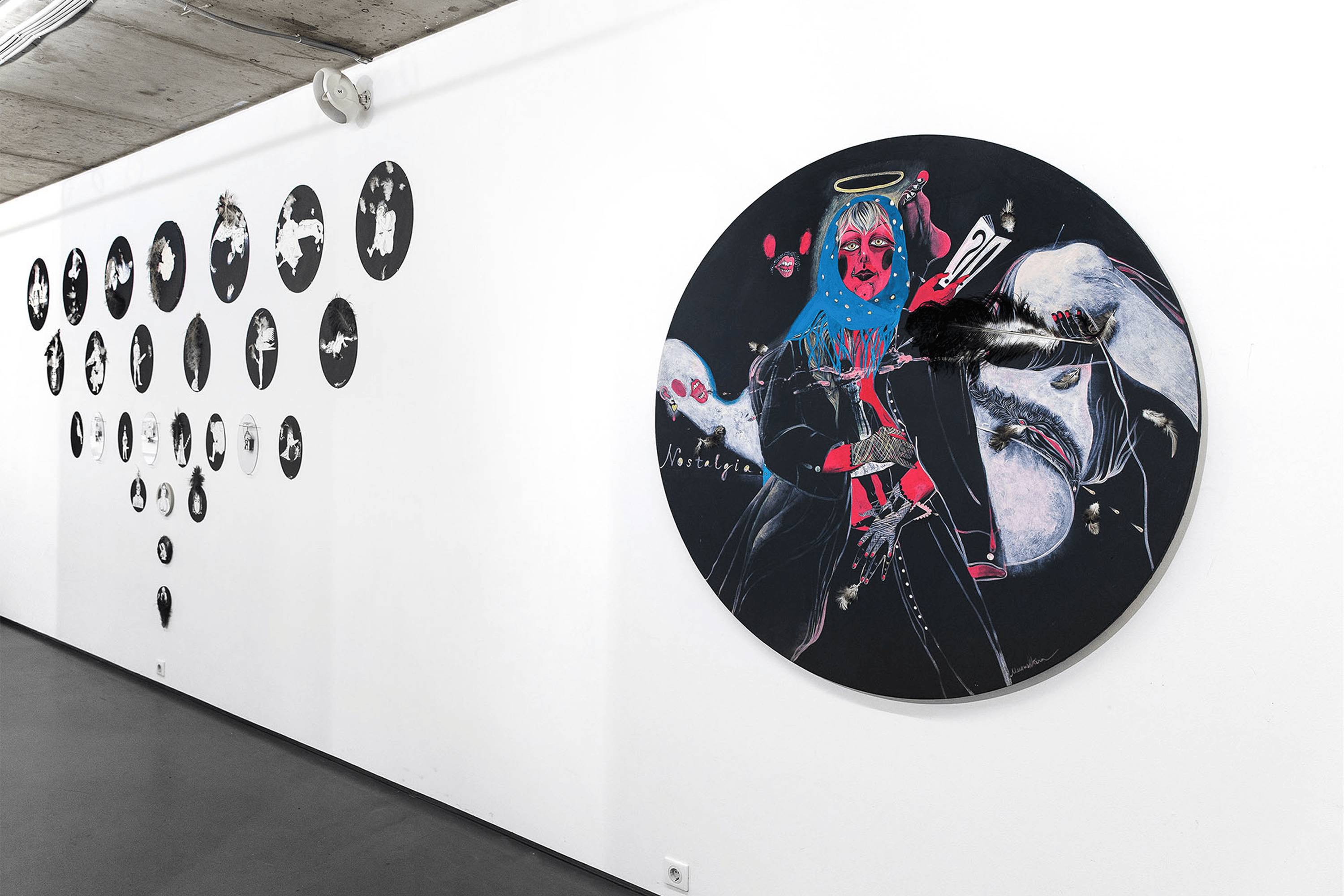
Photo: Photos provided by Nina Murashkina / YB 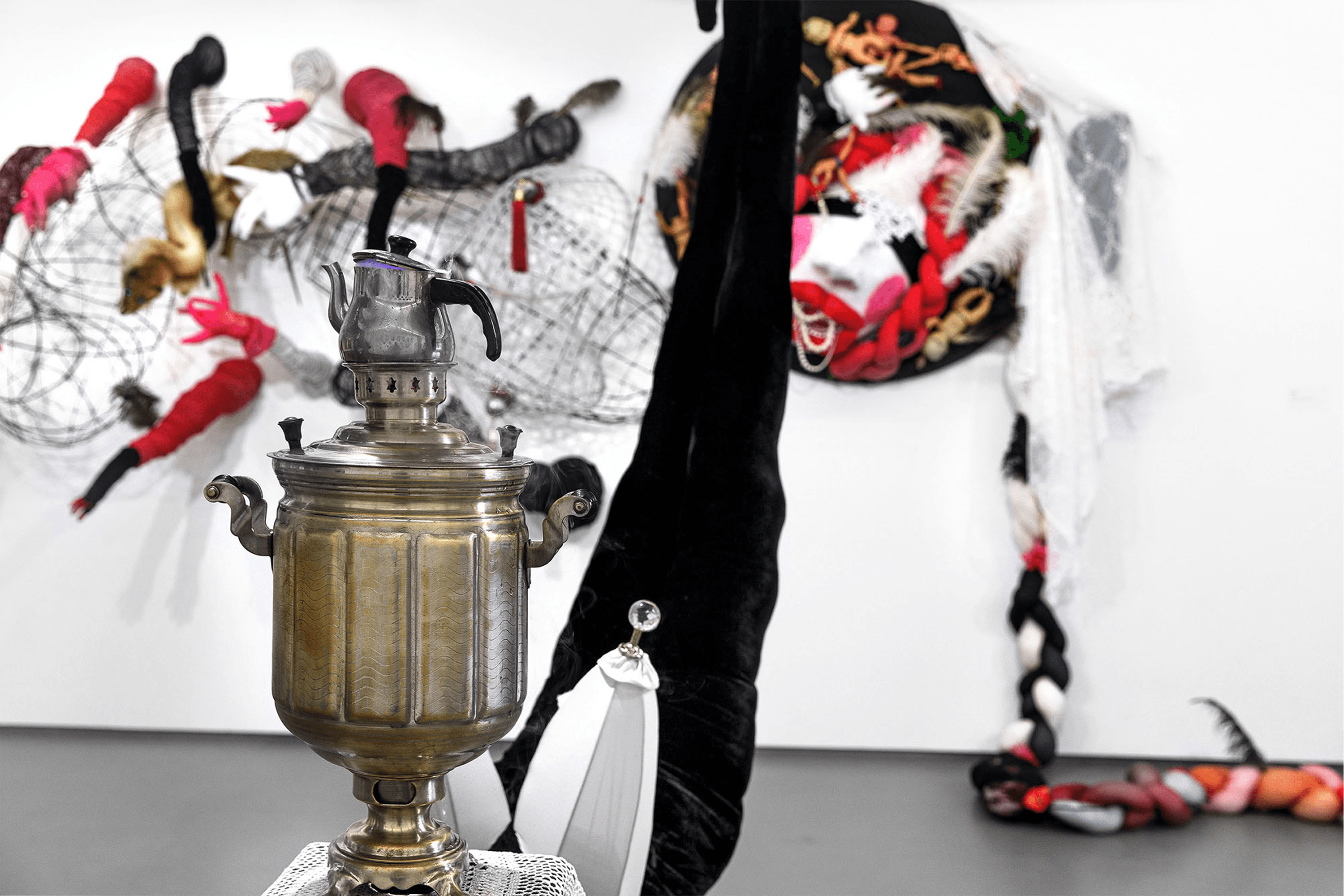
Photo: Photos provided by Nina Murashkina / YB 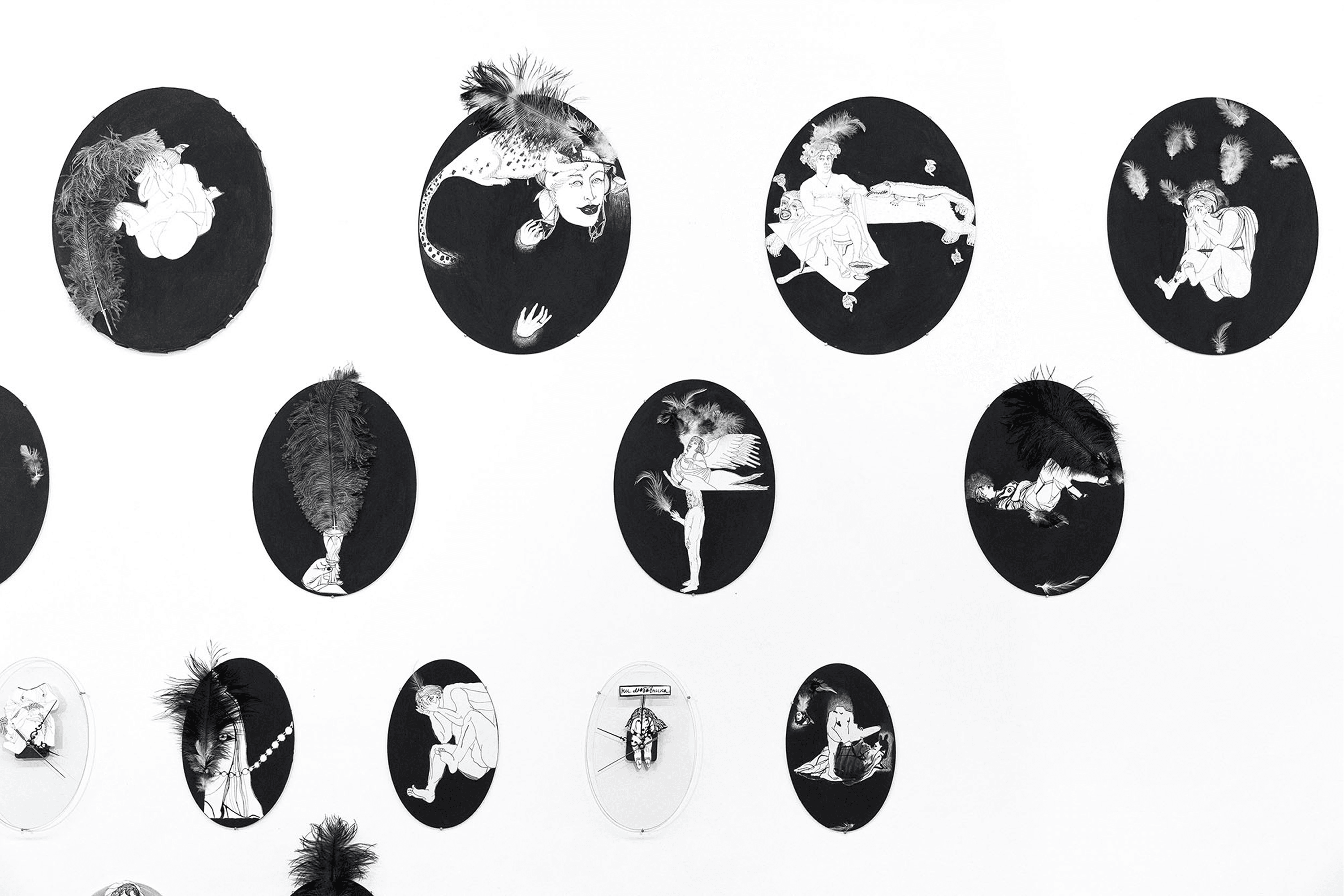
Photo: Photos provided by Nina Murashkina / YB 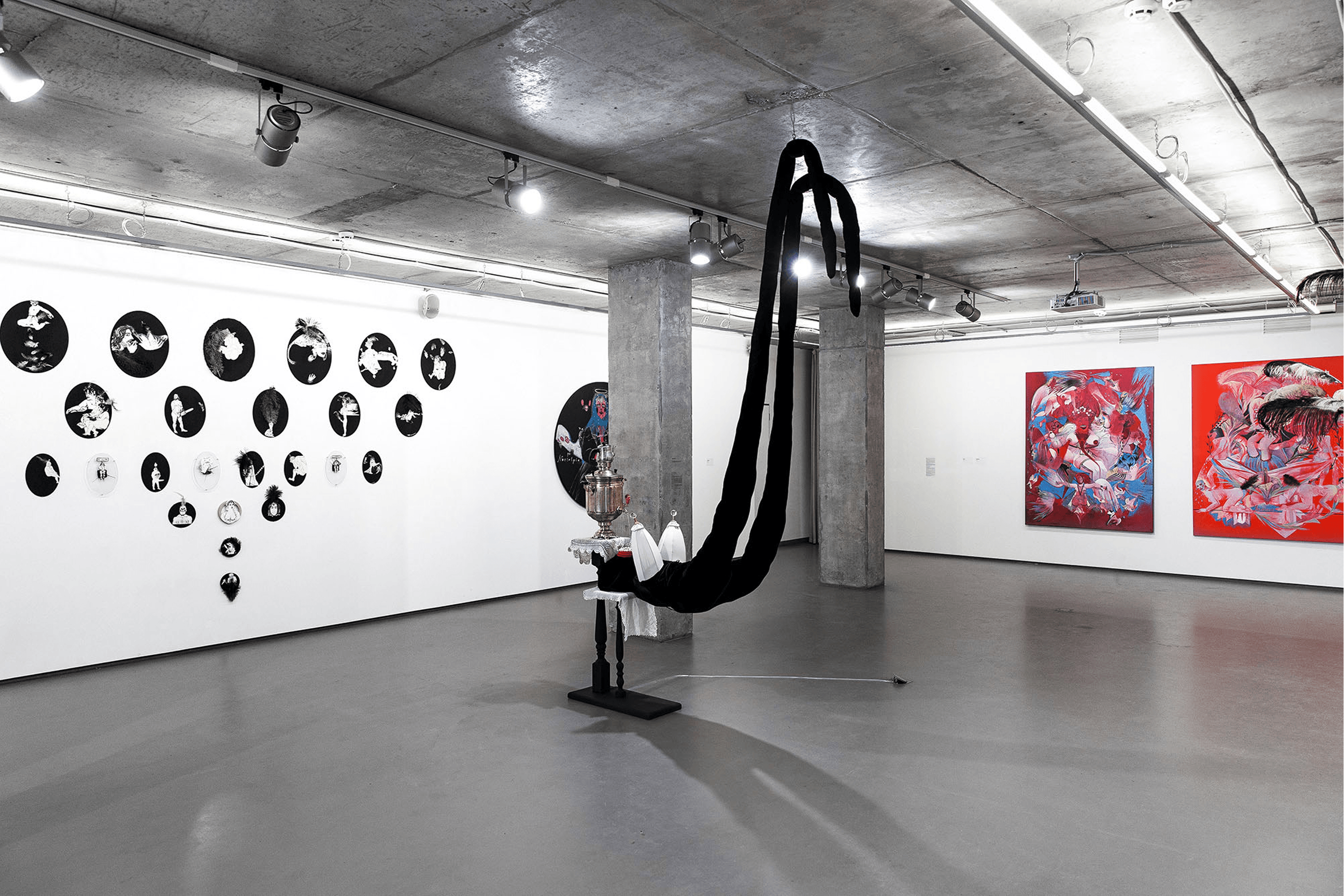
Photo: Photos provided by Nina Murashkina / YB 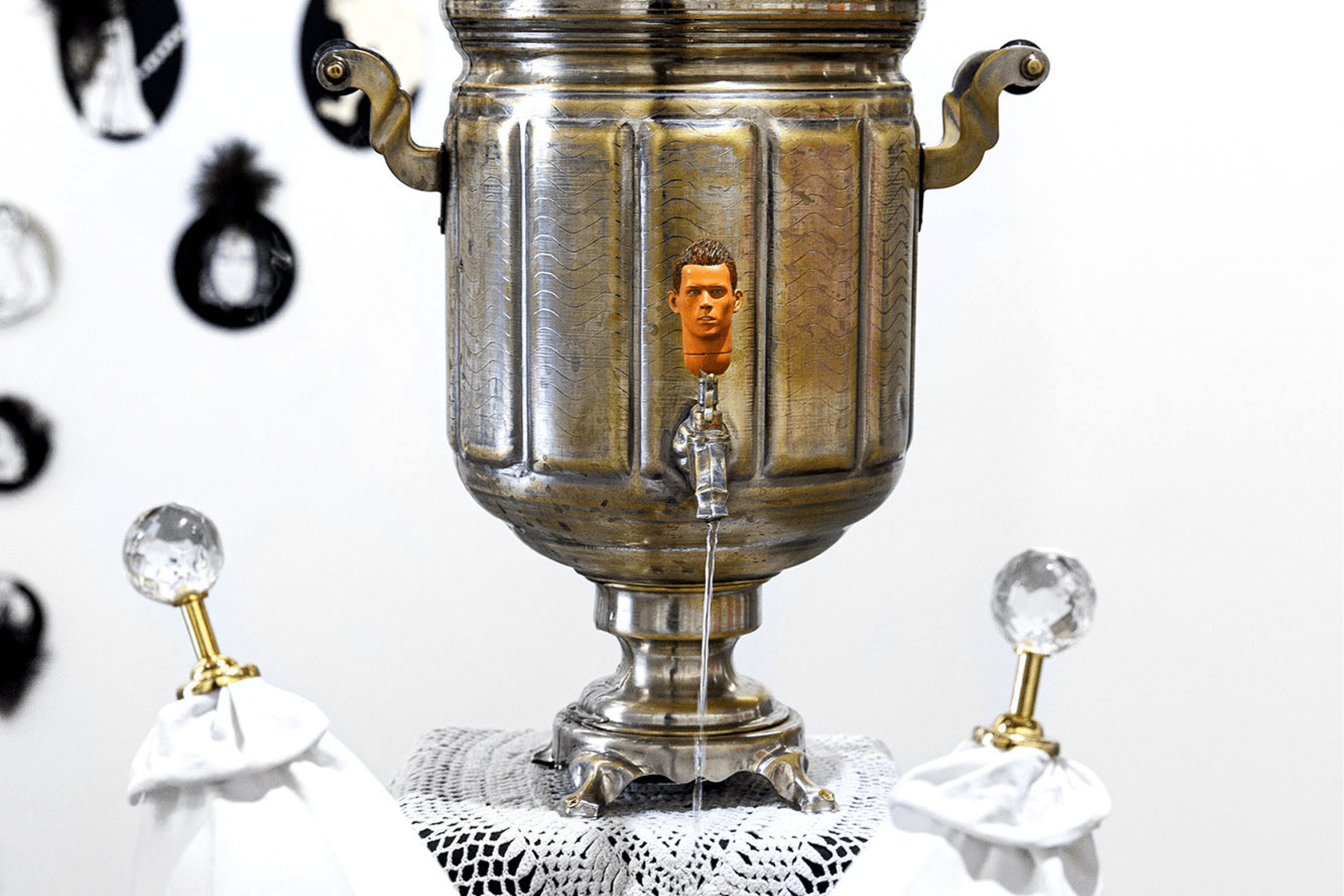
Photo: Photos provided by Nina Murashkina / YB
In 2011, Gudimov proposed that Nina hold a solo exhibition performing nude. Murashkina refused: “I realized that my art does not need reinforcement through the body as an object.” She continued working with Gudimov but began to exercise tighter control over the context in which her art was displayed. Kyiv artists were often hostile toward her and did not hide it. However, Nina remained confident that there was nothing “wrong” with her art. This confidence was bolstered by a Gaude Polonia residency in Krakow and a warm relationship with Serhii Yakutovych, one of Ukraine’s most prominent contemporary graphic artists. He, Nina says, passed on to her a “special sense of theater and cinema.” She enrolled in the Kyiv National Academy of Arts, specializing in “Theater and Cinema Scenography,” later working as a production designer in theaters in Chernivtsi and Kyiv, and as a storyboard artist for a crime series on the STB channel. As always, Nina later channeled all this experience into her art.
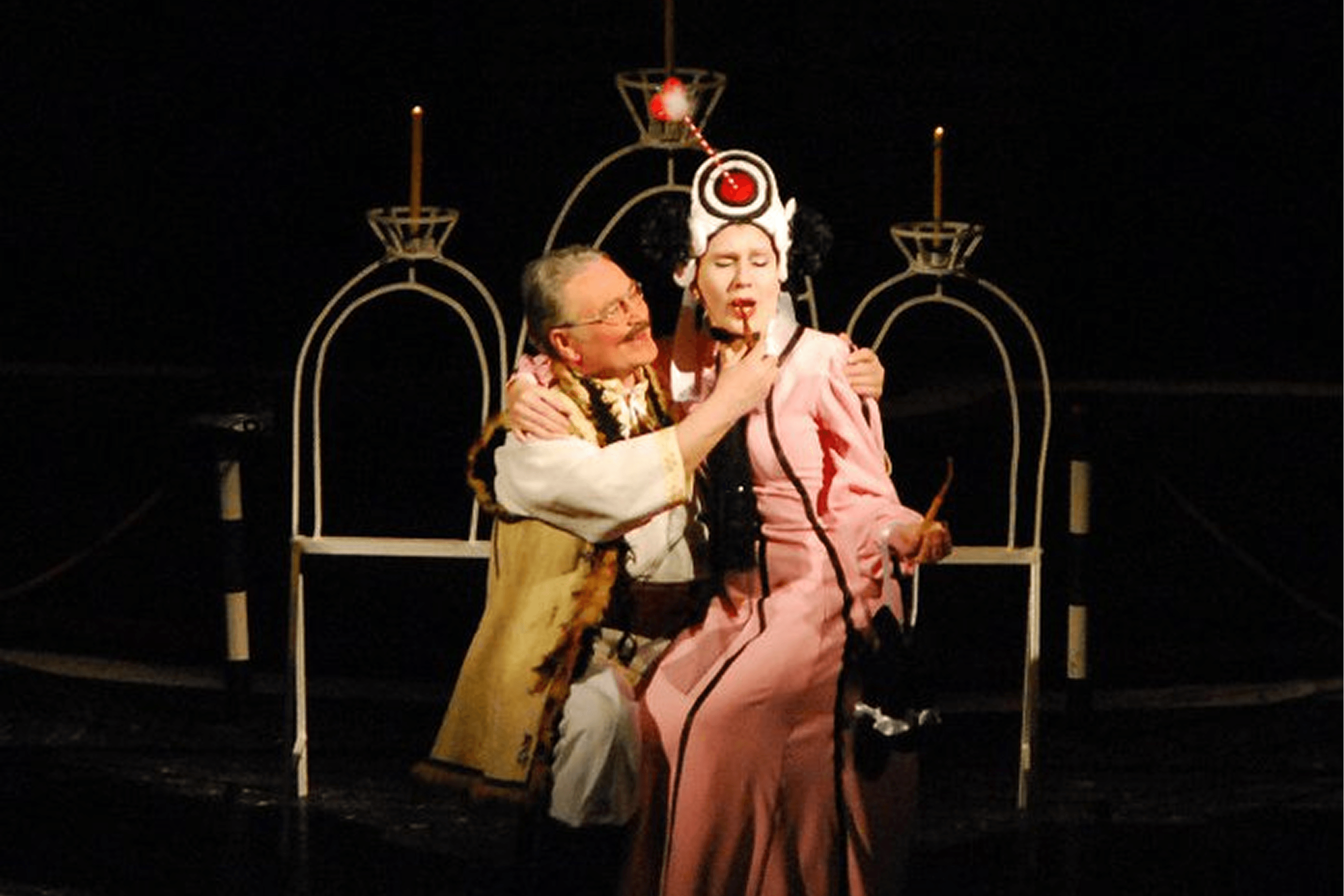
Nina Murashkina worked as a production designer at the Kyiv Poetry Theatre “Mushlia.” 2010. Photo: Nina Murashkina / Facebook / YB 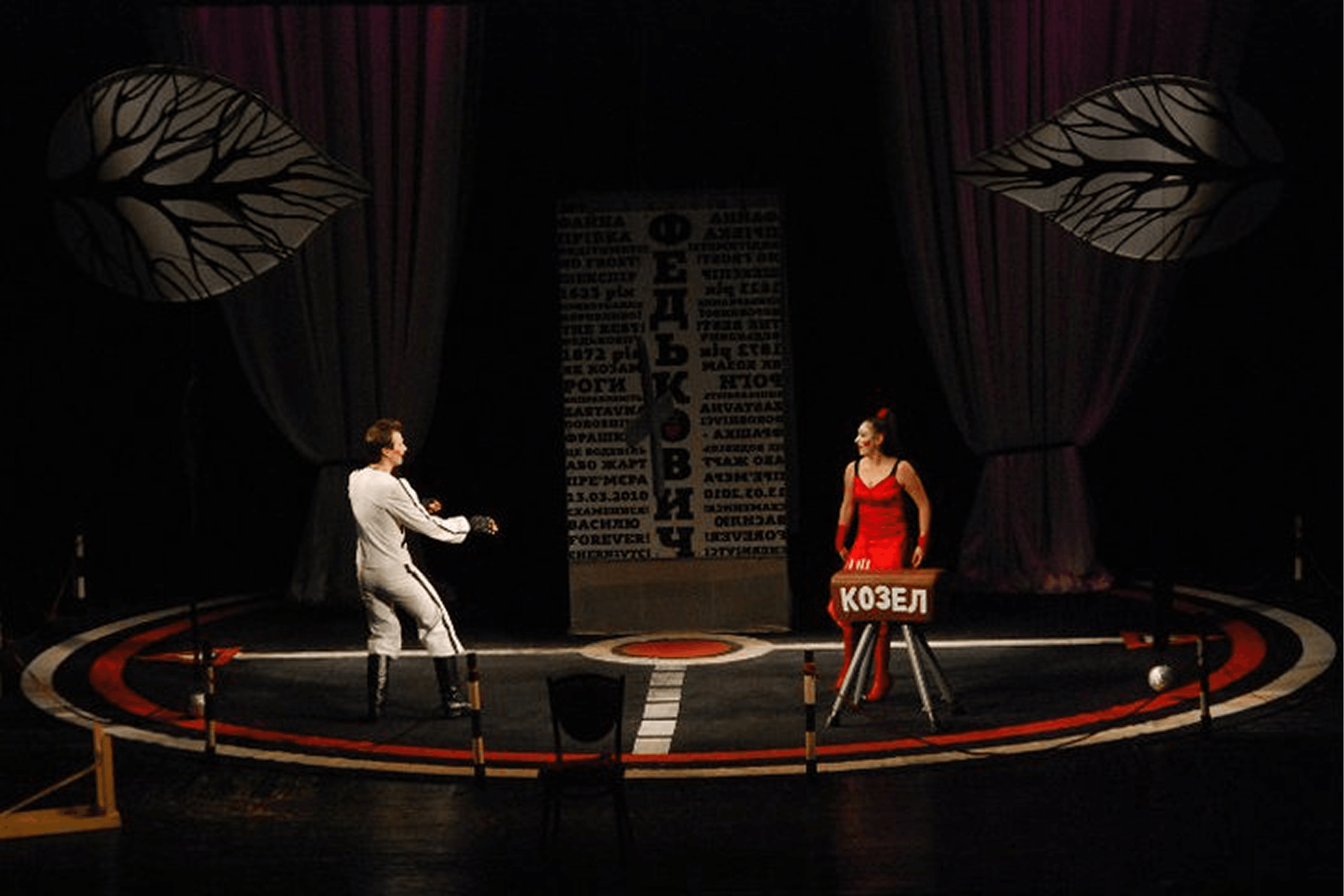
Photo: Nina Murashkina / Facebook / YB 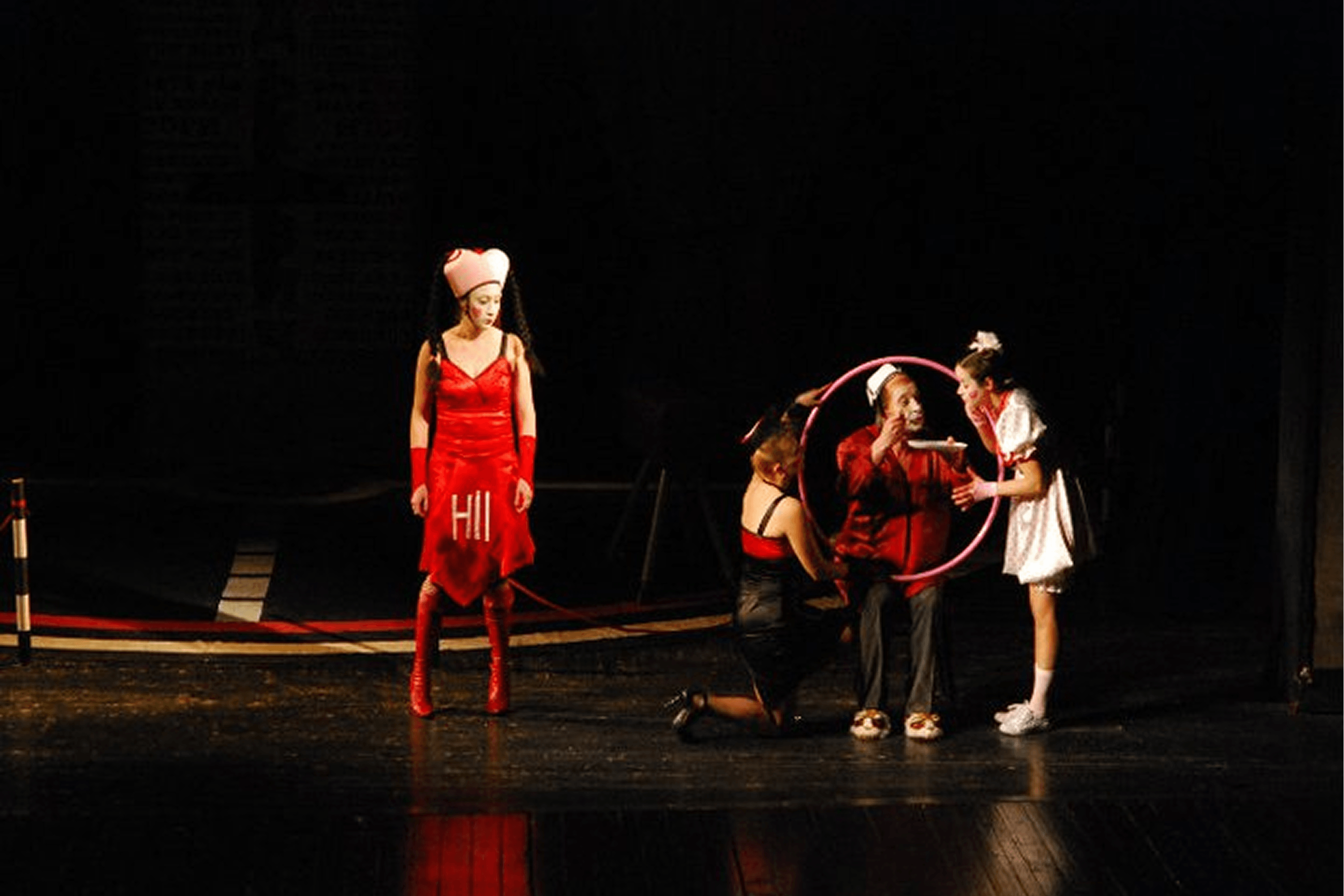
Photo: Nina Murashkina / Facebook / YB 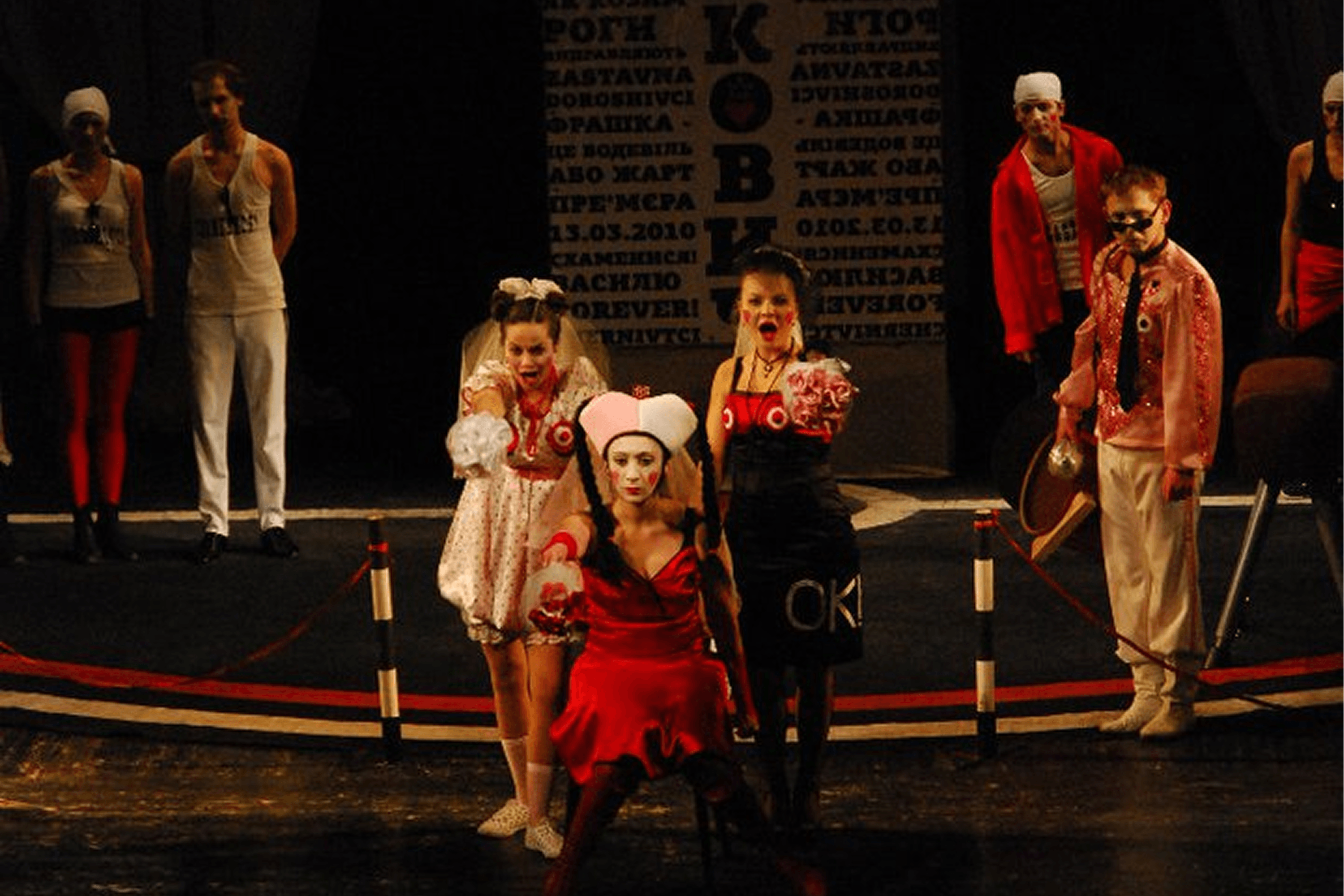
Photo: Nina Murashkina / Facebook / YB
At the end of 2012, Murashkina received a major commission for a mural in a collector’s home. With the fee and her parents' savings, she bought a house in the Kyiv suburbs. The first two years seemed idyllic; Nina was exhausted by the frantic pace of the capital and yearned for peace. However, for a village—even one near Kyiv—Nina proved to be too flamboyant and sensual. Local men would help with household chores only to hint at a more intimate continuation of the evening. Others would knock on her door at night, break her fences, or peer through her windows. When Nina walked through the village in her extravagant outfits, someone might walk up and simply knock the hat off her head. Over time, Murashkina became increasingly isolated, eventually stopping answering calls and refusing to open the door.
Following her divorce, Nina’s personal life was fraught with bad luck. Men often perceived her as a character from her own paintings. “Guys expected a whip and leather clothes in the closet. But that’s not who I am,” Murashkina says. Women reacted to her presence with suspicion, as if her vibrant femininity posed a threat to their marriages. Yet Murashkina refused to change her style: “If I don’t wear all this beauty, I’ll simply disappear and stand silently in a corner.”
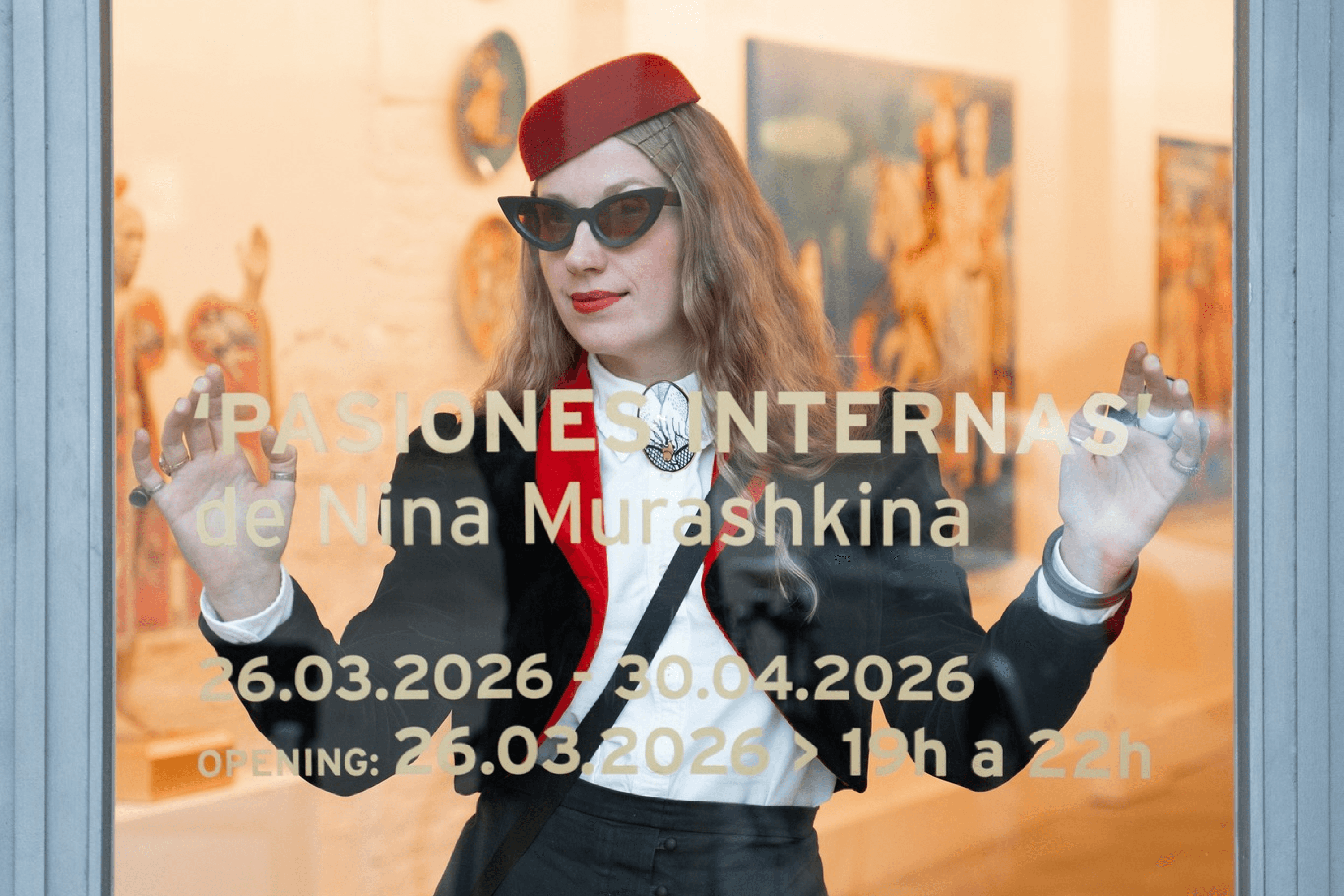
Various looks of Nina Murashkina. Photo: Nina Murashkina / Facebook / YB 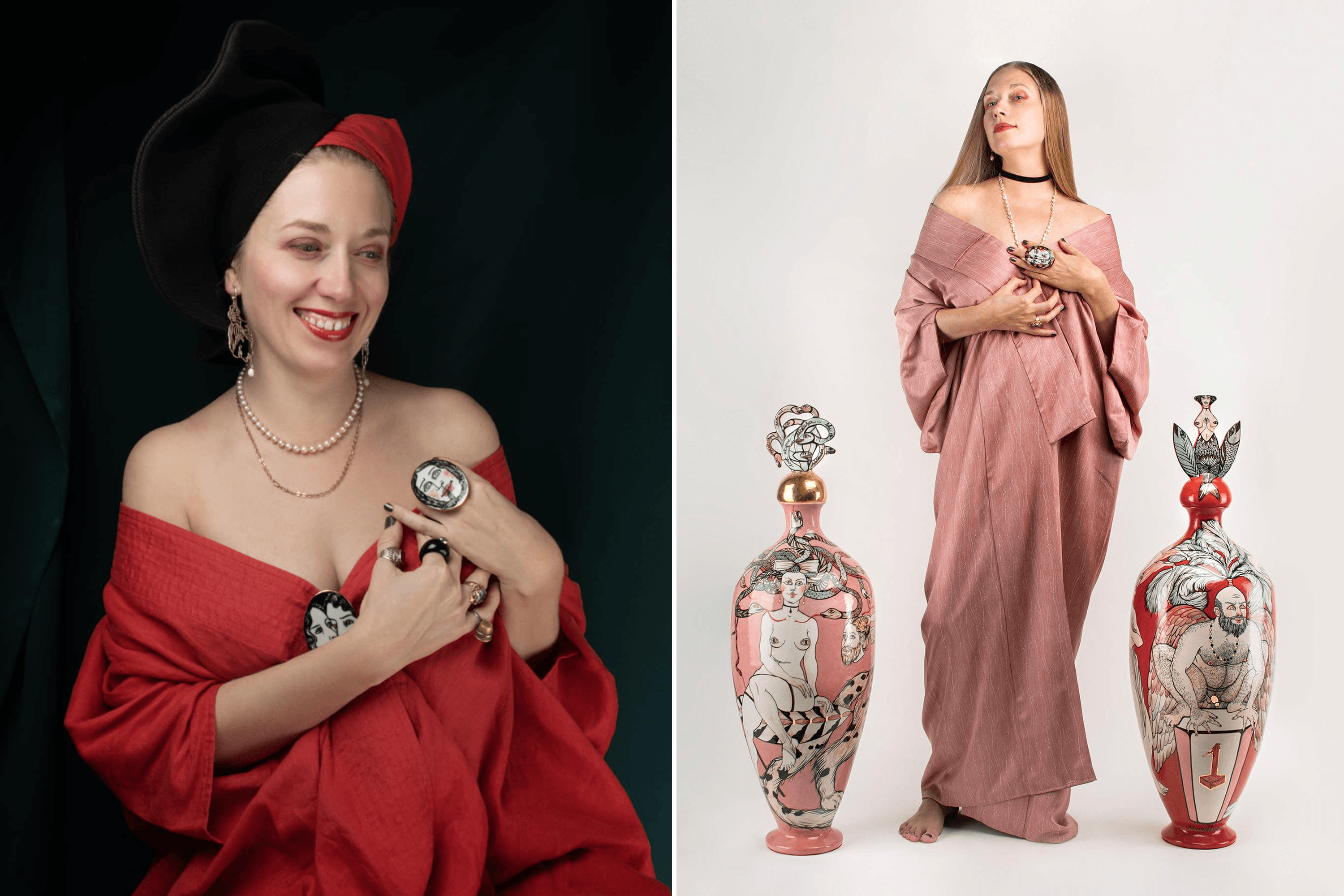
Photo: Nina Murashkina / Facebook / YB 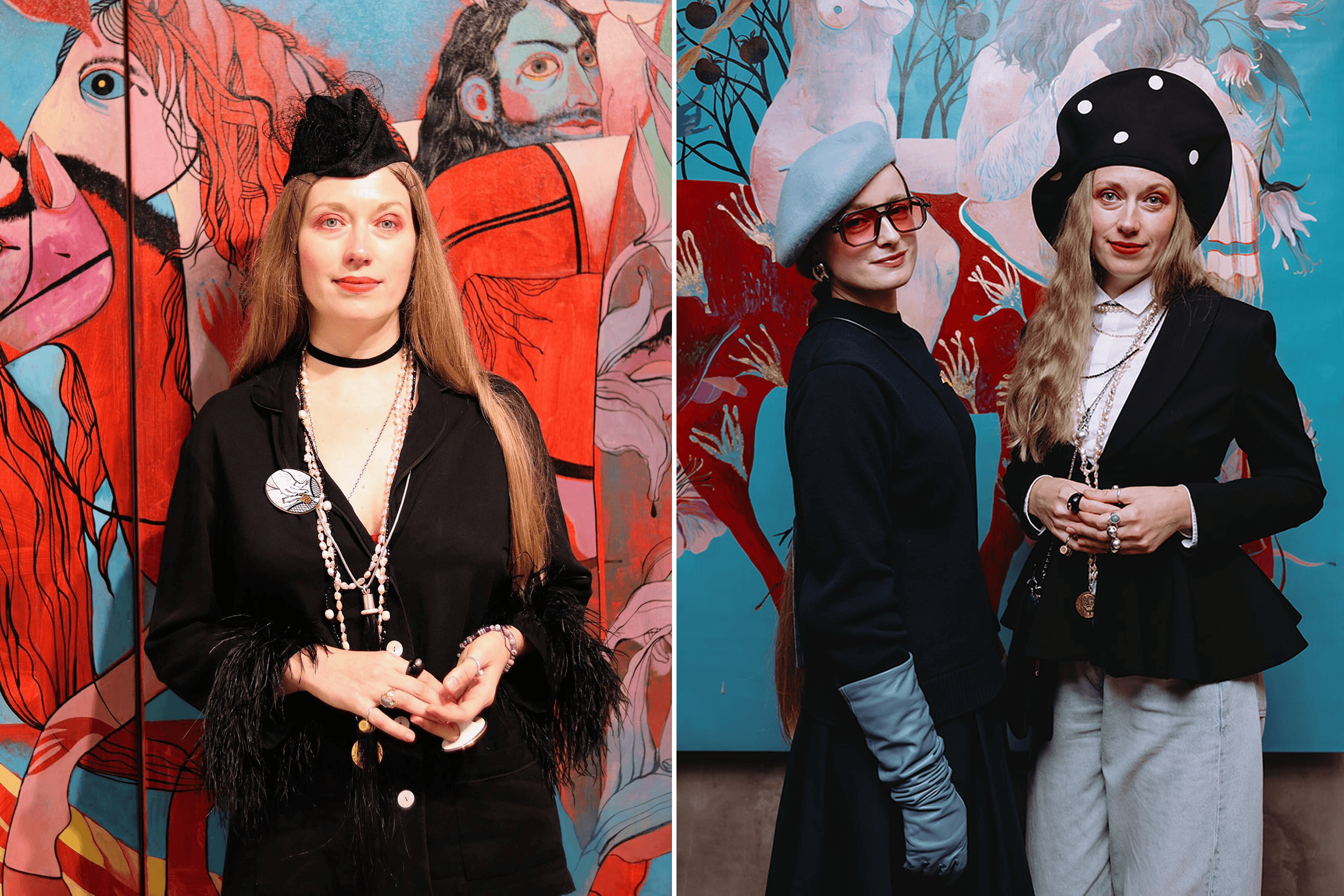
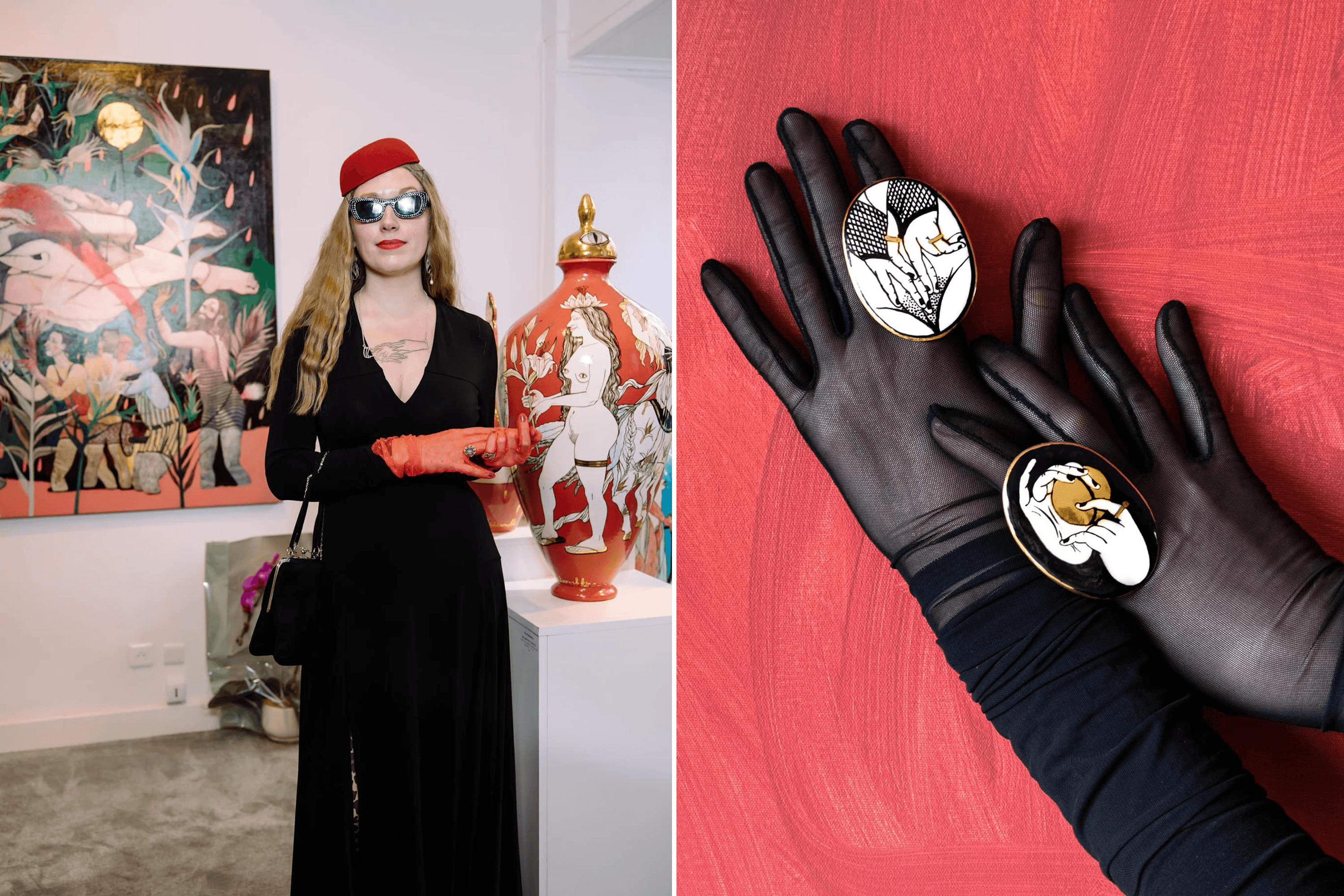
Photo: Nina Murashkina / Facebook / YB 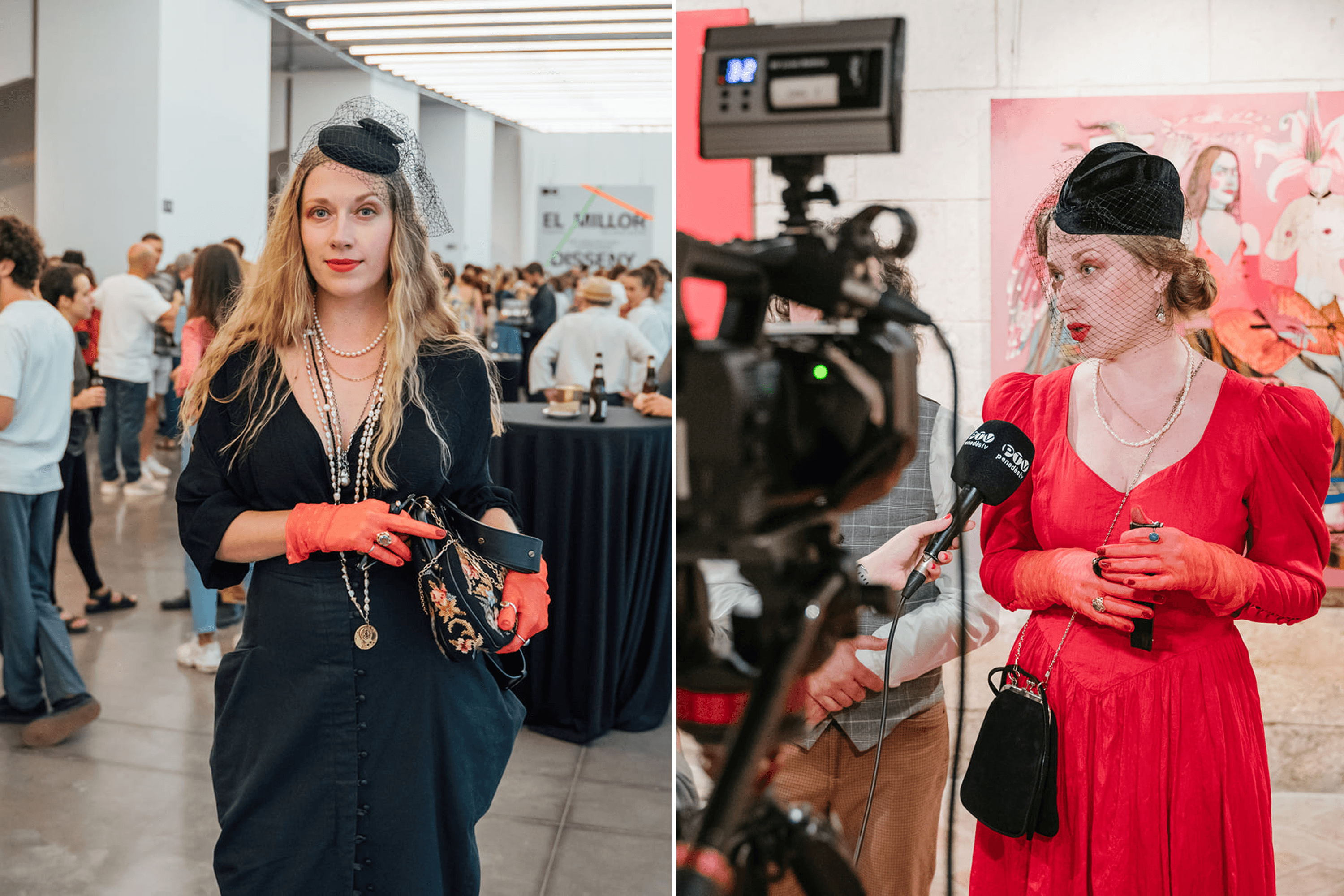
Photo: Nina Murashkina / Facebook / YB 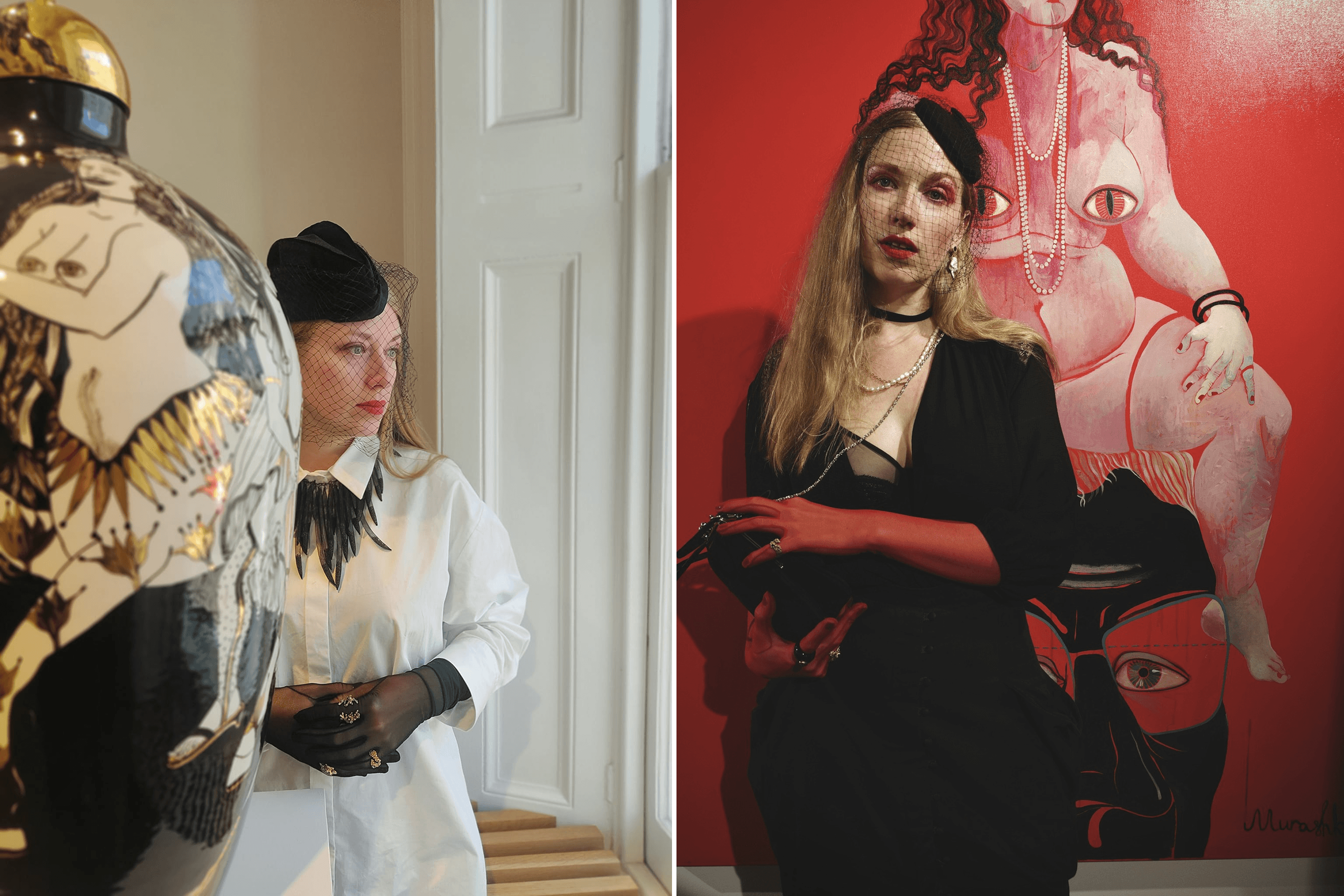
Photo: Nina Murashkina / Facebook / YB
On the eve of the war in the Donbas region, Nina met Xavier at a sculpture and painting symposium. They had a brief romance before each returned to their own lives. Nina wrote him long, handwritten letters, leaving lipstick prints on the paper. As it turned out, he was writing too, but never sent the letters because he felt they weren’t “perfect” enough.
In 2016, they met again in Kyiv, rekindled their relationship, and created a joint project called “Rusalka” (Mermaid), in which Nina served as the model. Since then, the couple discovered the potential of working together, and eventually, Nina moved to Spain.
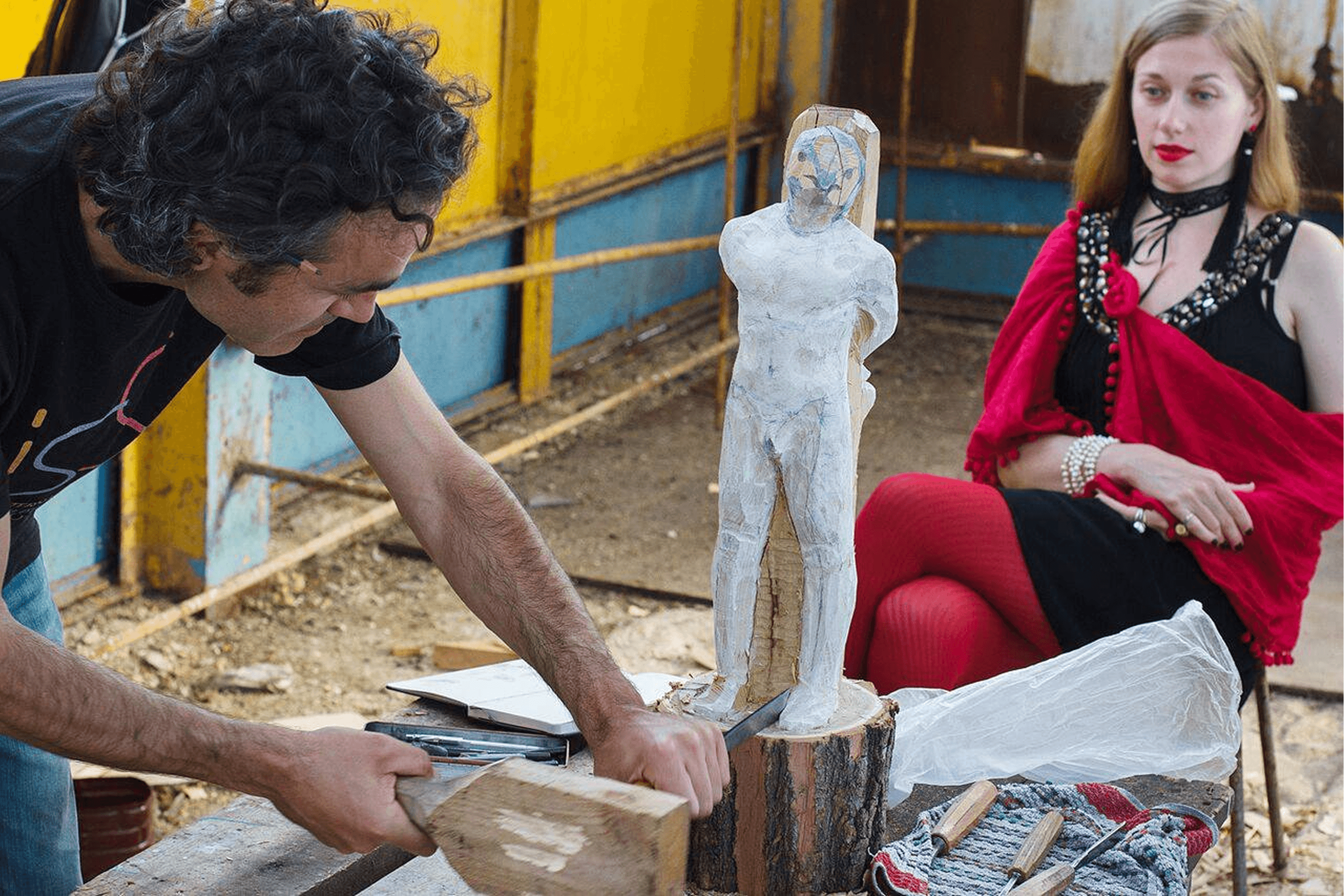
Nina Murashkina and Xavier Escala working together. 2017–2018. Photo: Nina Murashkina / Facebook / YB 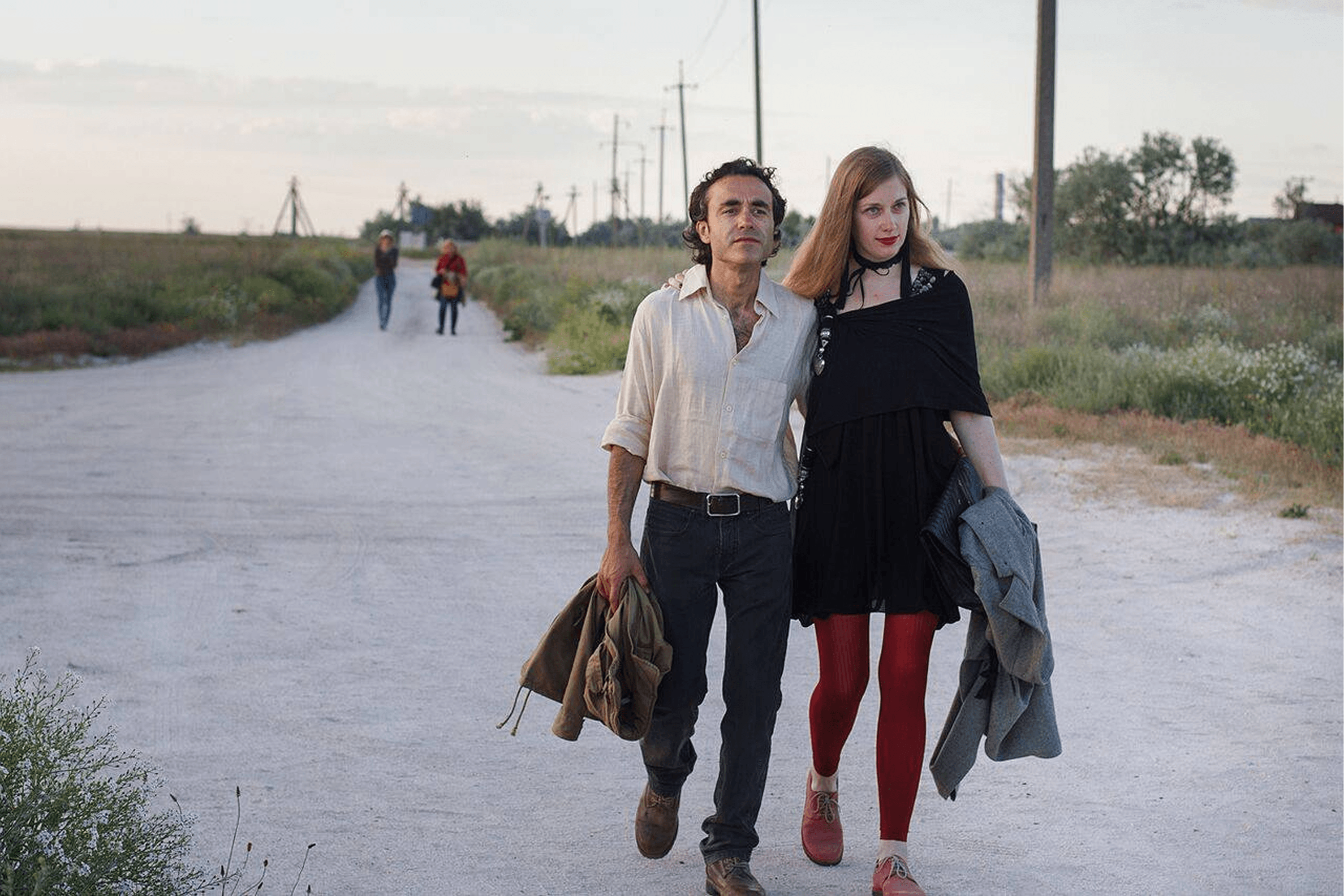
Photo: Nina Murashkina / Facebook / YB 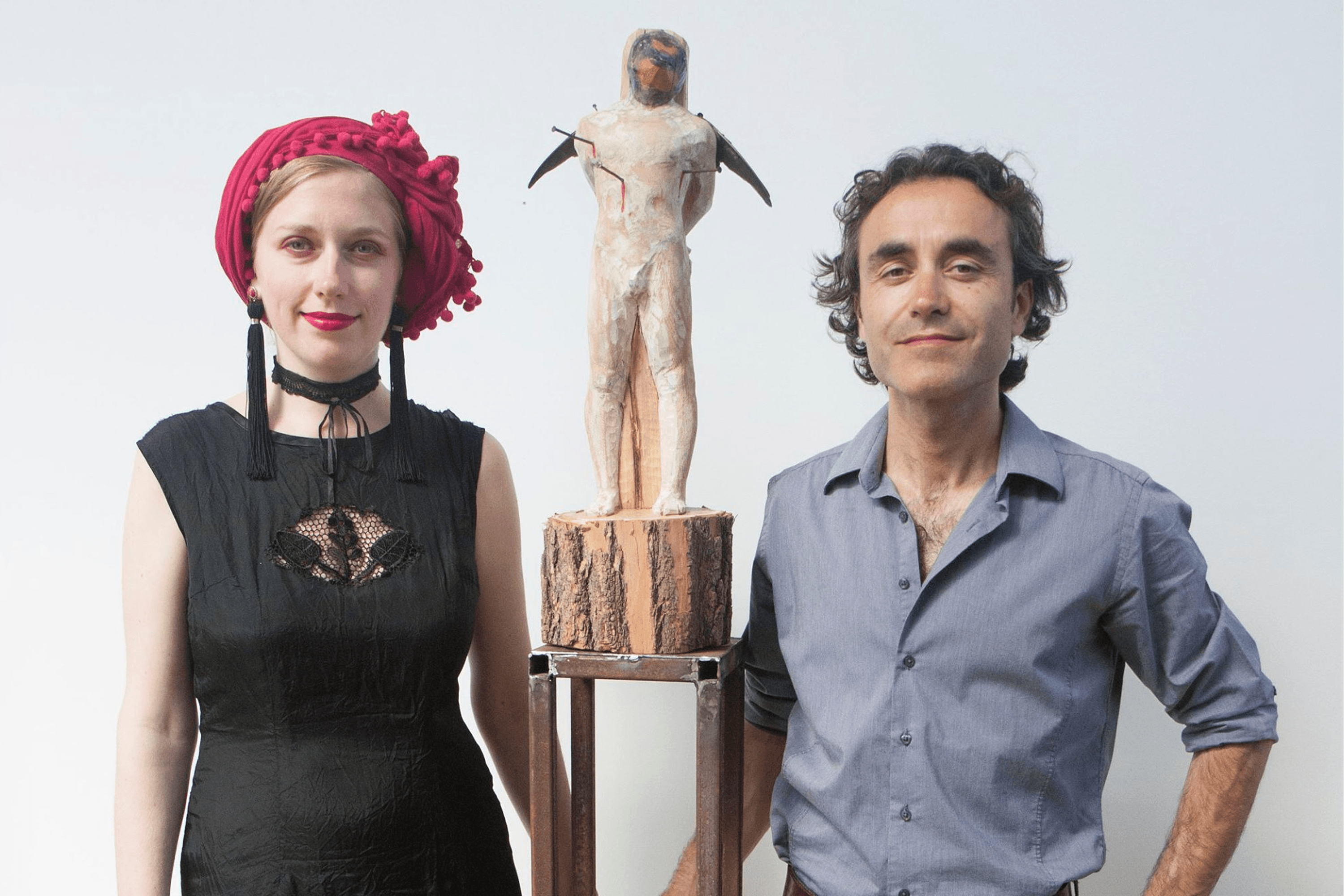
Photo: Nina Murashkina / Facebook / YB 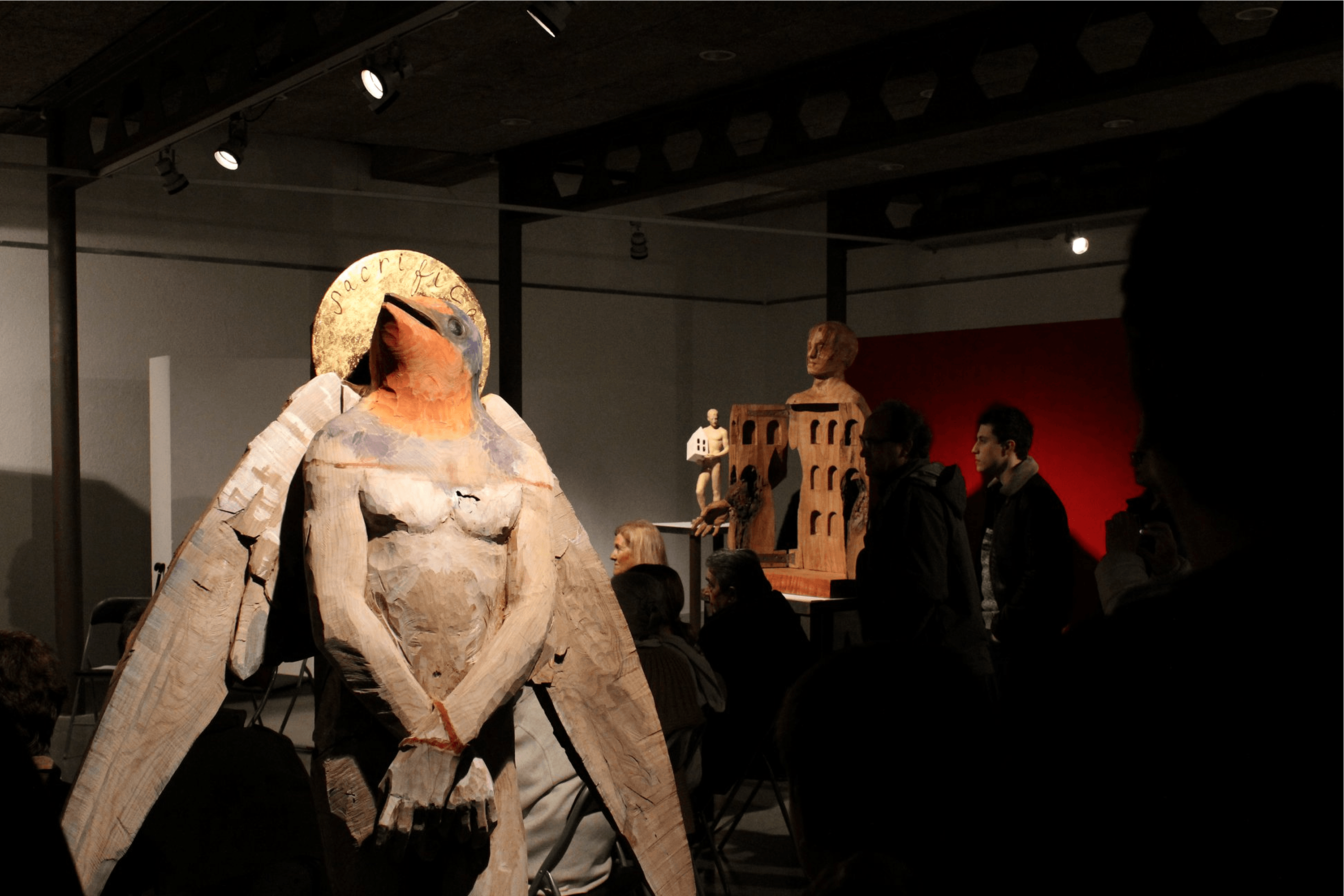
Photo: Nina Murashkina / Facebook / YB 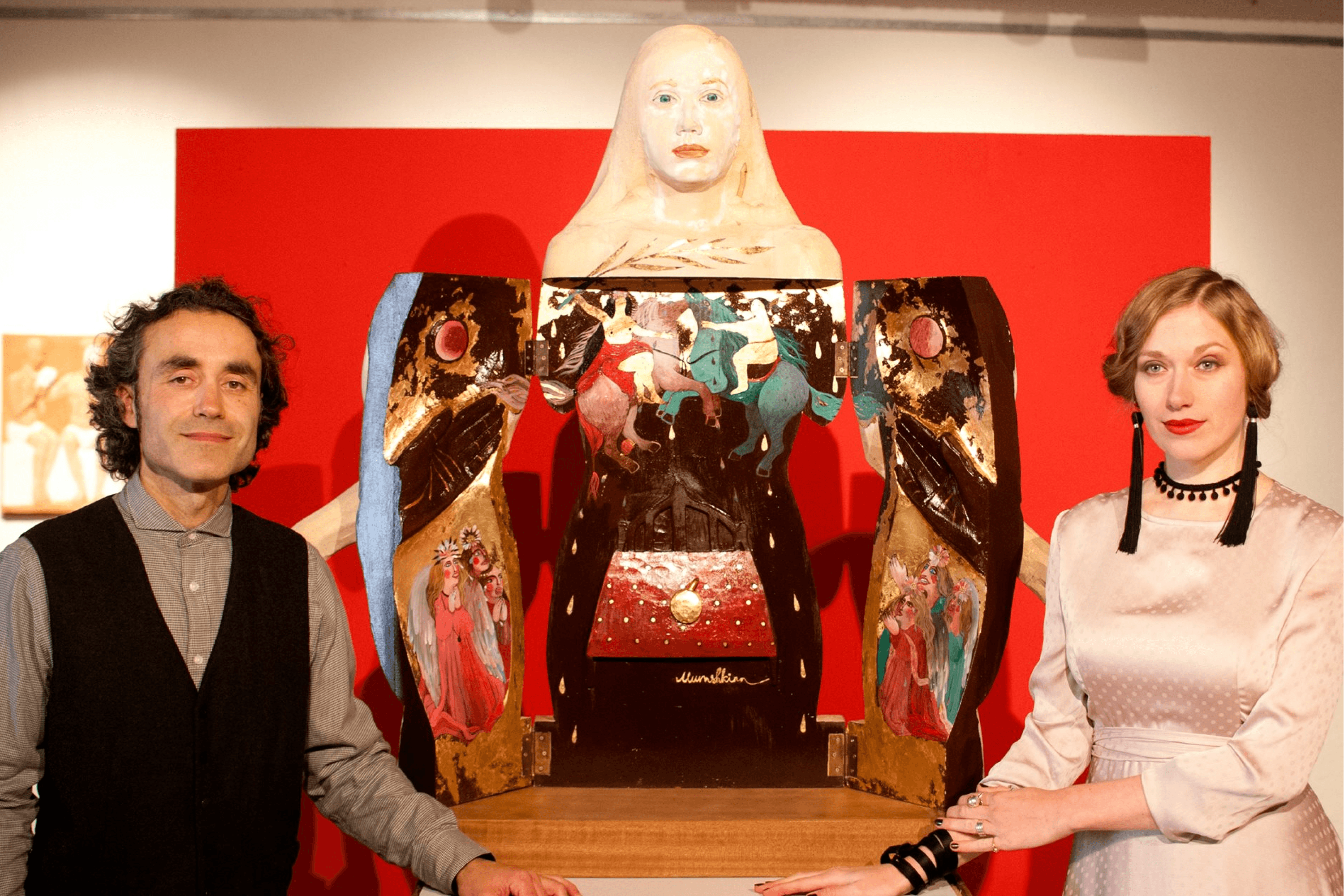
Photo: Nina Murashkina / Facebook / YB 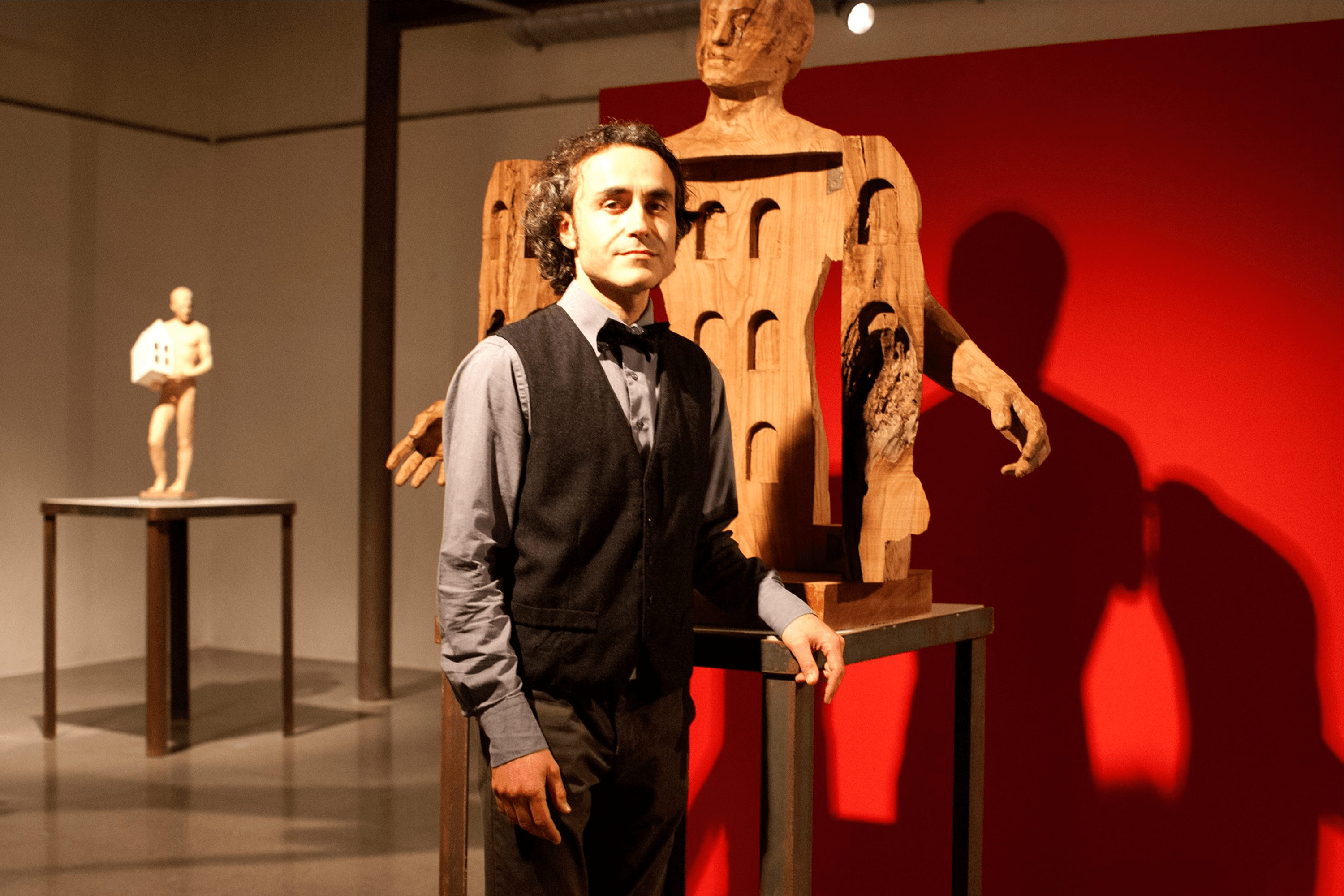
Photo: Nina Murashkina / Facebook / YB
4
Murashkina compares her new daily life in Catalonia to her grandmother’s habit of rationing candies for her TV shows throughout the week. “Life with Xavier is not about greed; it’s about the distribution of hard candies,” she jokes. This embodies the Catalan logic of thrift: a mindful attitude toward resources, the habit of calculating ahead, and avoiding waste. They are a study in contrasts—Xavier is an introvert, quiet and calm, while Nina is a whirlwind of emotions. Yet, Xavier became the most significant man in Murashkina’s life. She says she met, for the first time, “a person with a face without a shadow of corruption.” Xavier helped Nina settle into the Spanish context, showing her museums and explaining local processes. Murashkina believes that to be heard in Spain, one must deeply understand local visual codes, traditions, and historical narratives, and then layer one’s own experience onto them. It was Xavier who helped her cultivate this visual literacy.
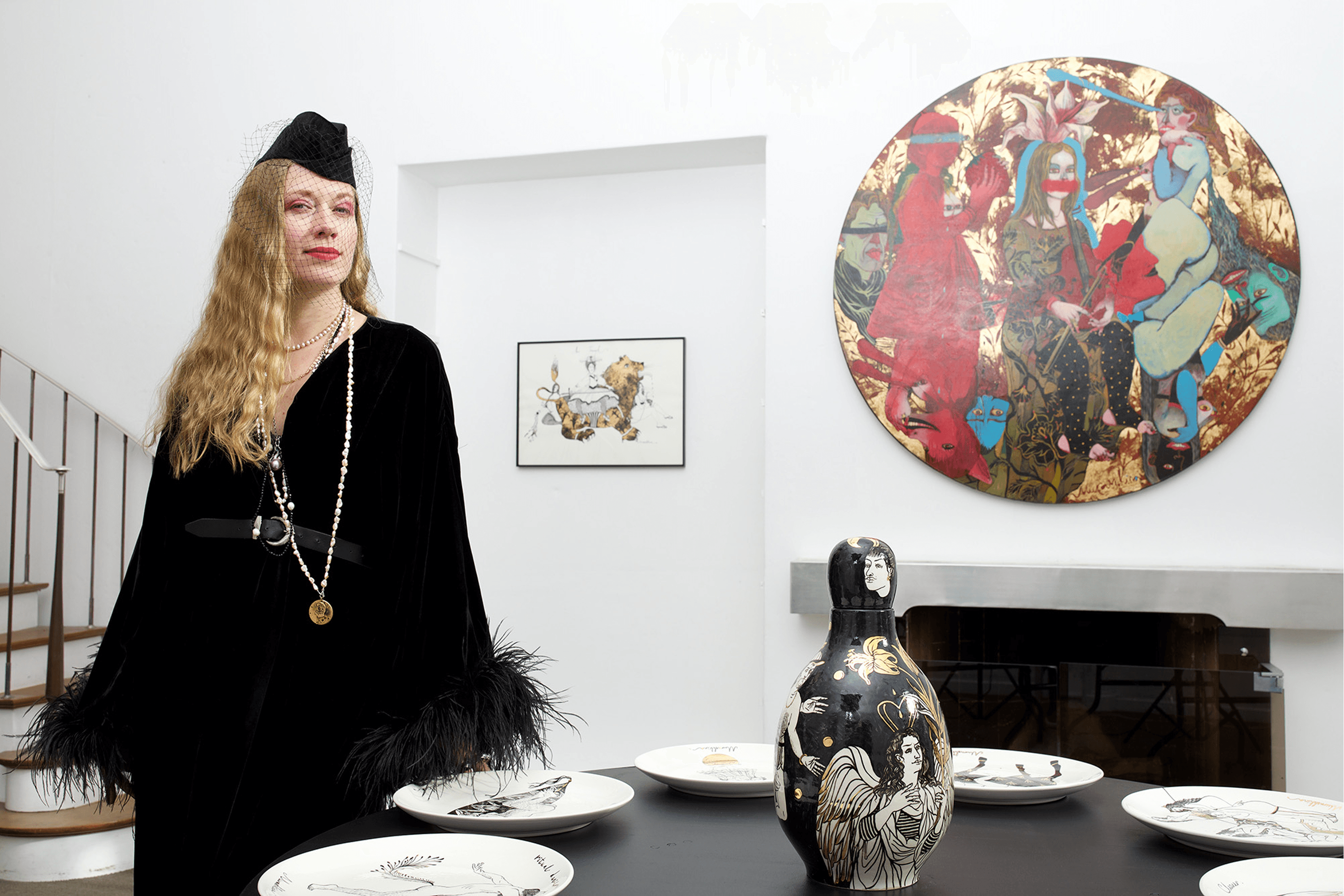
Nina Murashkina presented the solo exhibition Your Sweet Lies at the Centre Culturel d’Ukraine en France in Paris. October 2023. Photo: Photos provided by Nina Murashkina / YB 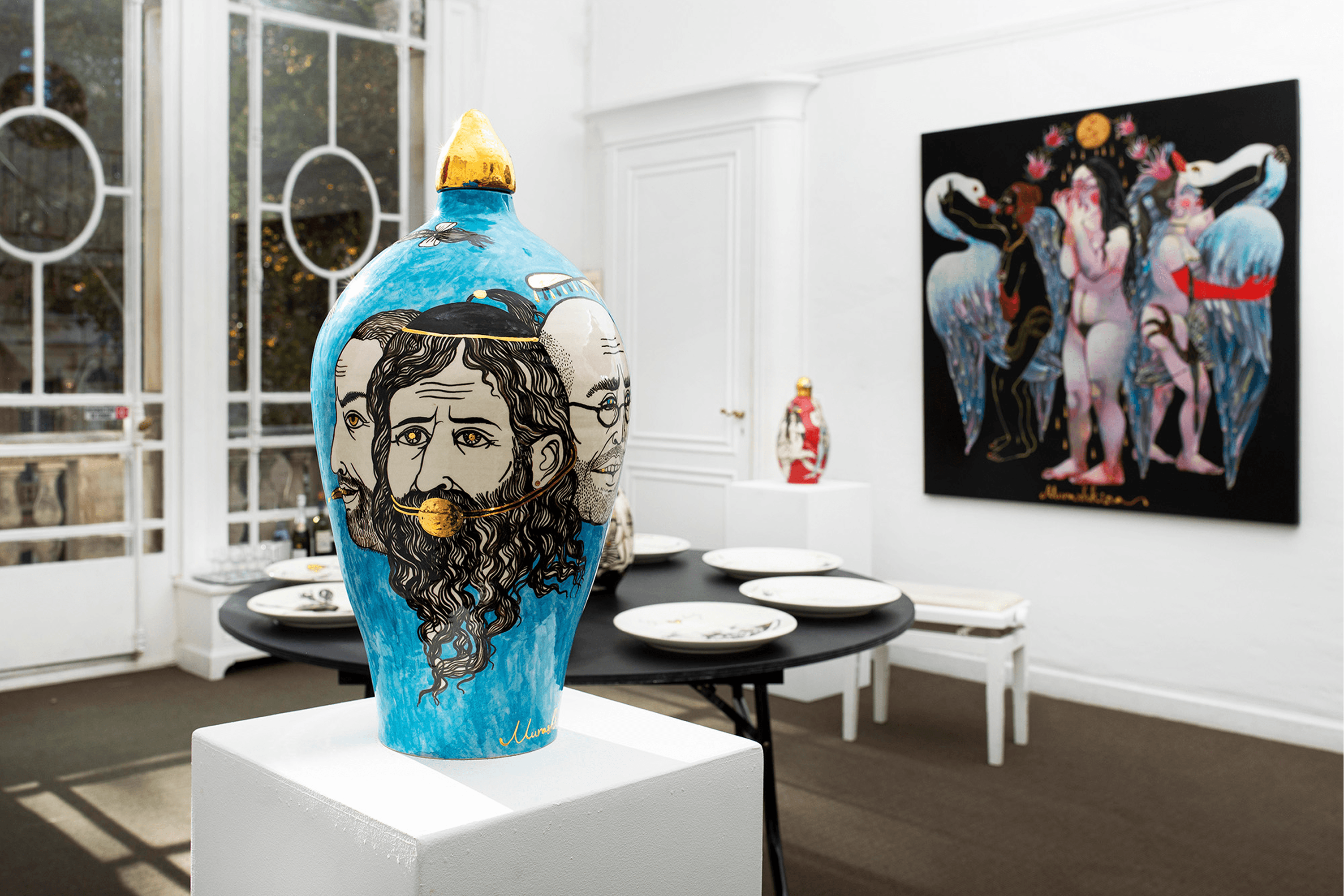
Photo: Photos provided by Nina Murashkina / YB 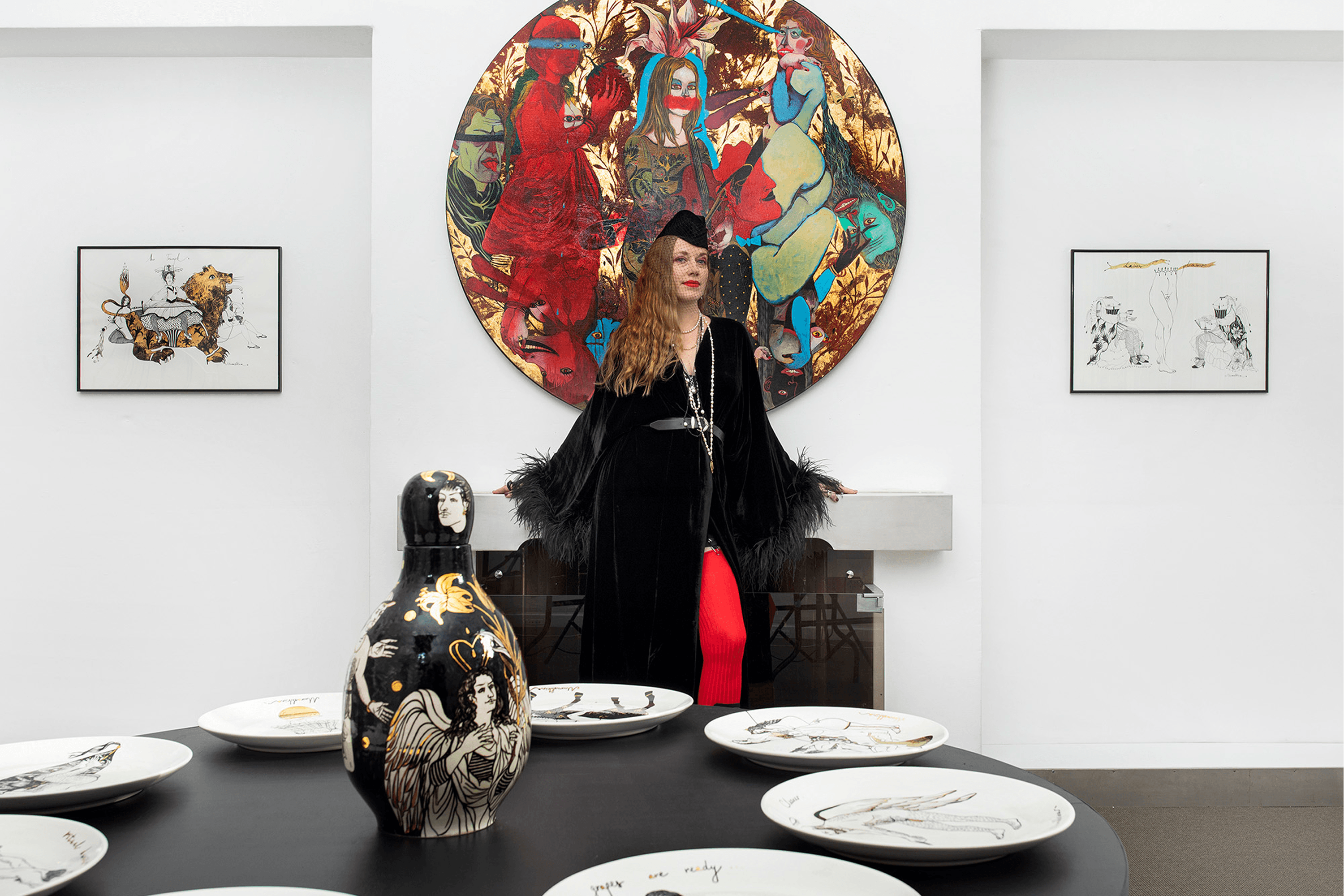
Photo: Photos provided by Nina Murashkina / YB 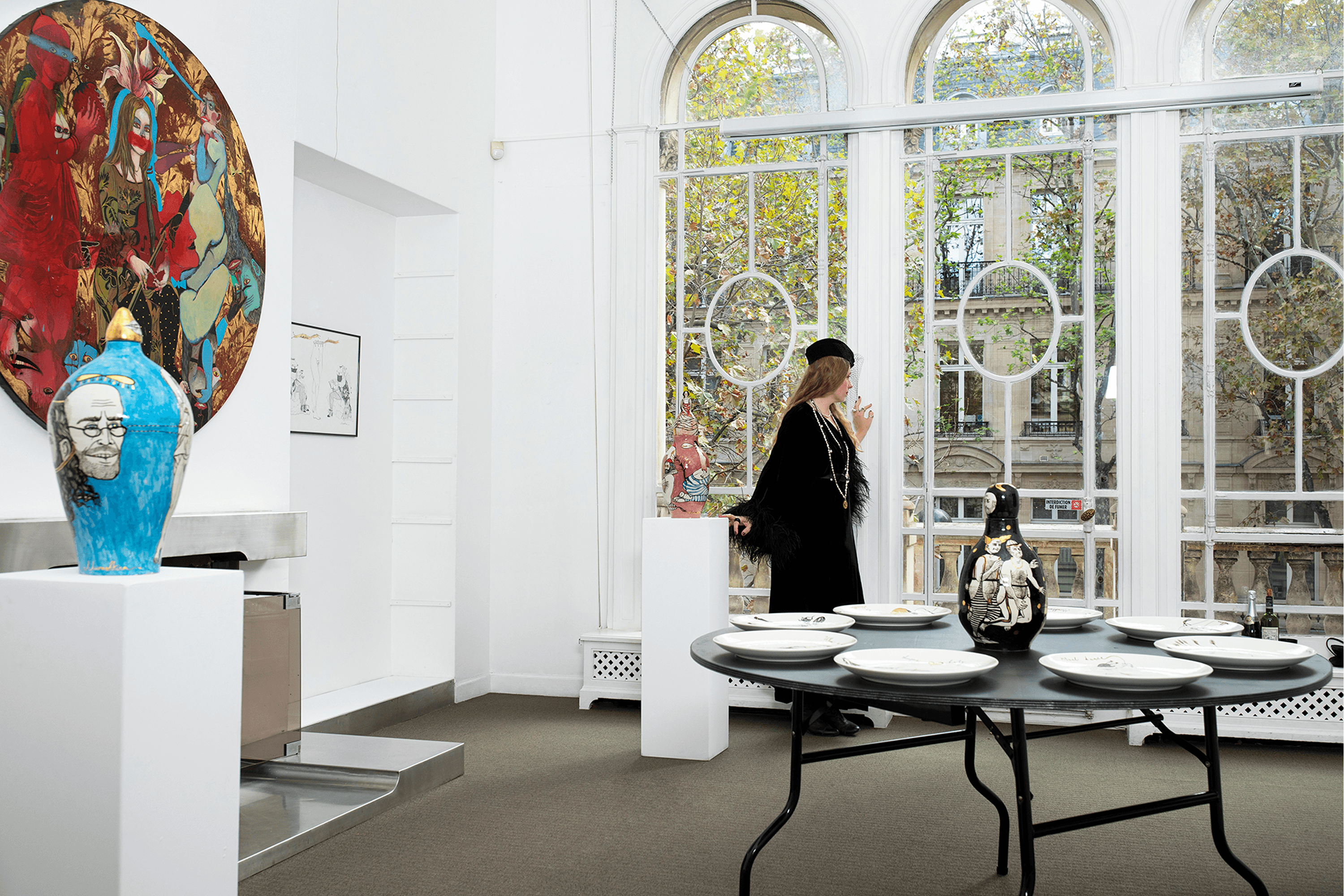
Photo: Photos provided by Nina Murashkina / YB 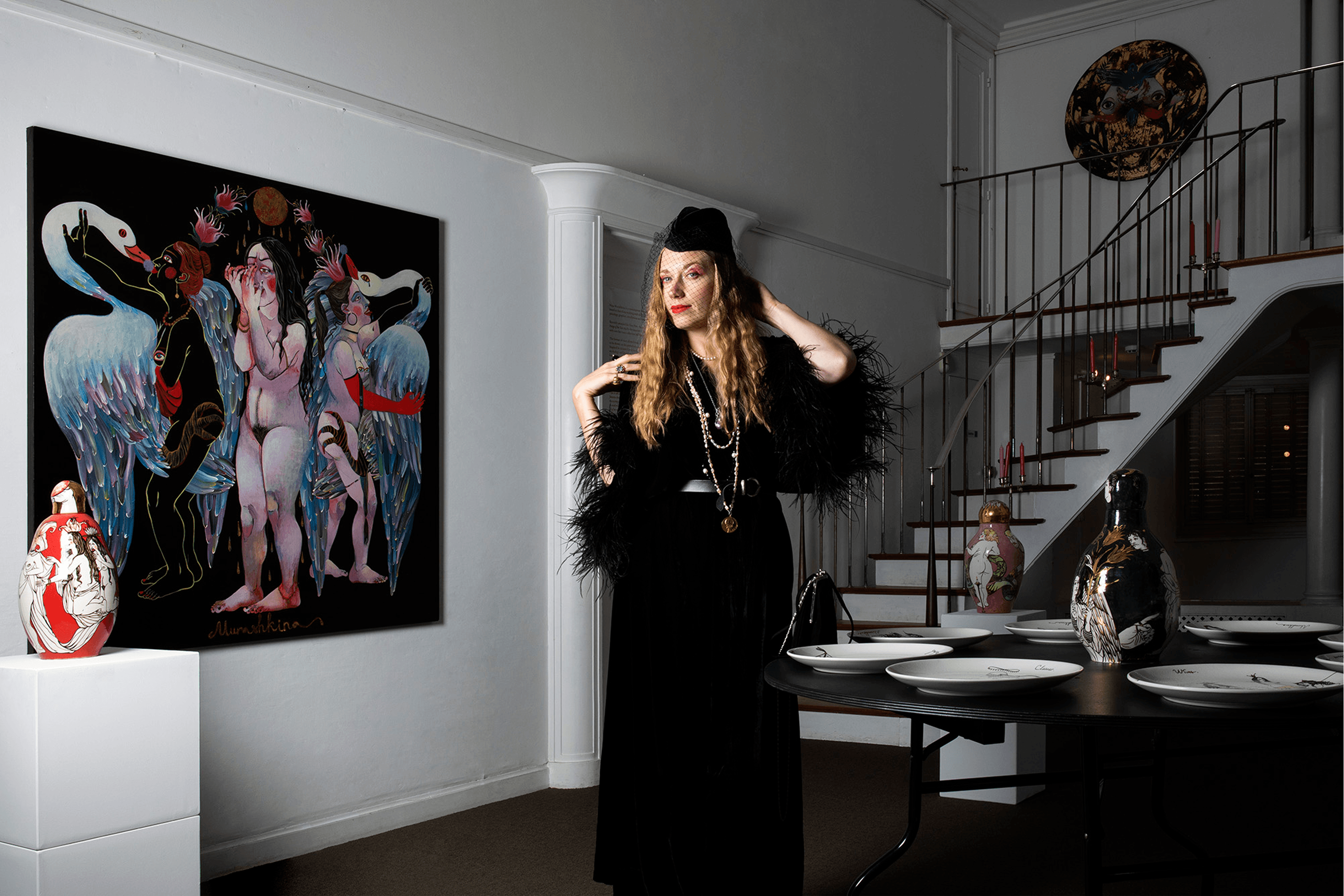
Photo: Photos provided by Nina Murashkina / YB 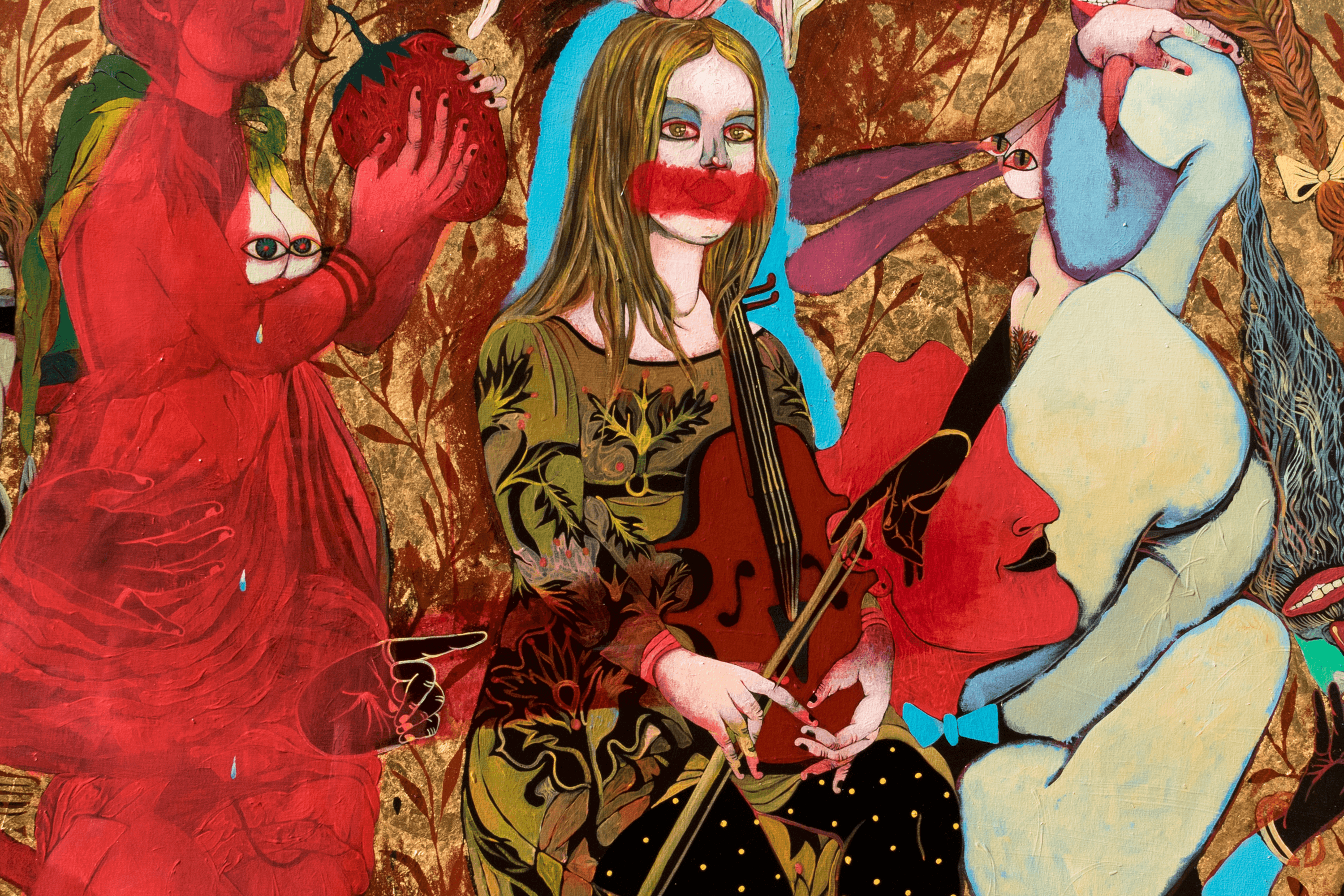
Photo: Photos provided by Nina Murashkina / YB
The couple often visited Kyiv. Just before Russia’s full-scale invasion of Ukraine, Xavier and Nina were in the capital preparing an exhibition. Xavier followed the news constantly; it was he who insisted on leaving a month before February 24, 2022.
For Nina, the start of the full-scale war was a painful confirmation of a long-standing premonition. Since 2014, anxiety, danger, harsh male figures, and the figure of a mourner had appeared in her works. After 2022, she curated an exhibition of Ukrainian artists in Barcelona and took part in charity auctions. However, Nina consciously refuses to work with the theme of war.
“People told me: since you work with the nude body, you should depict raped bodies. I don’t work with violent themes related to war, death, or aggression—there are plenty of authors in the world today working on that,” Murashkina explains. “To do it with genuine talent, one must fully immerse themselves in that death, but how to emerge from it afterward is a major question.”
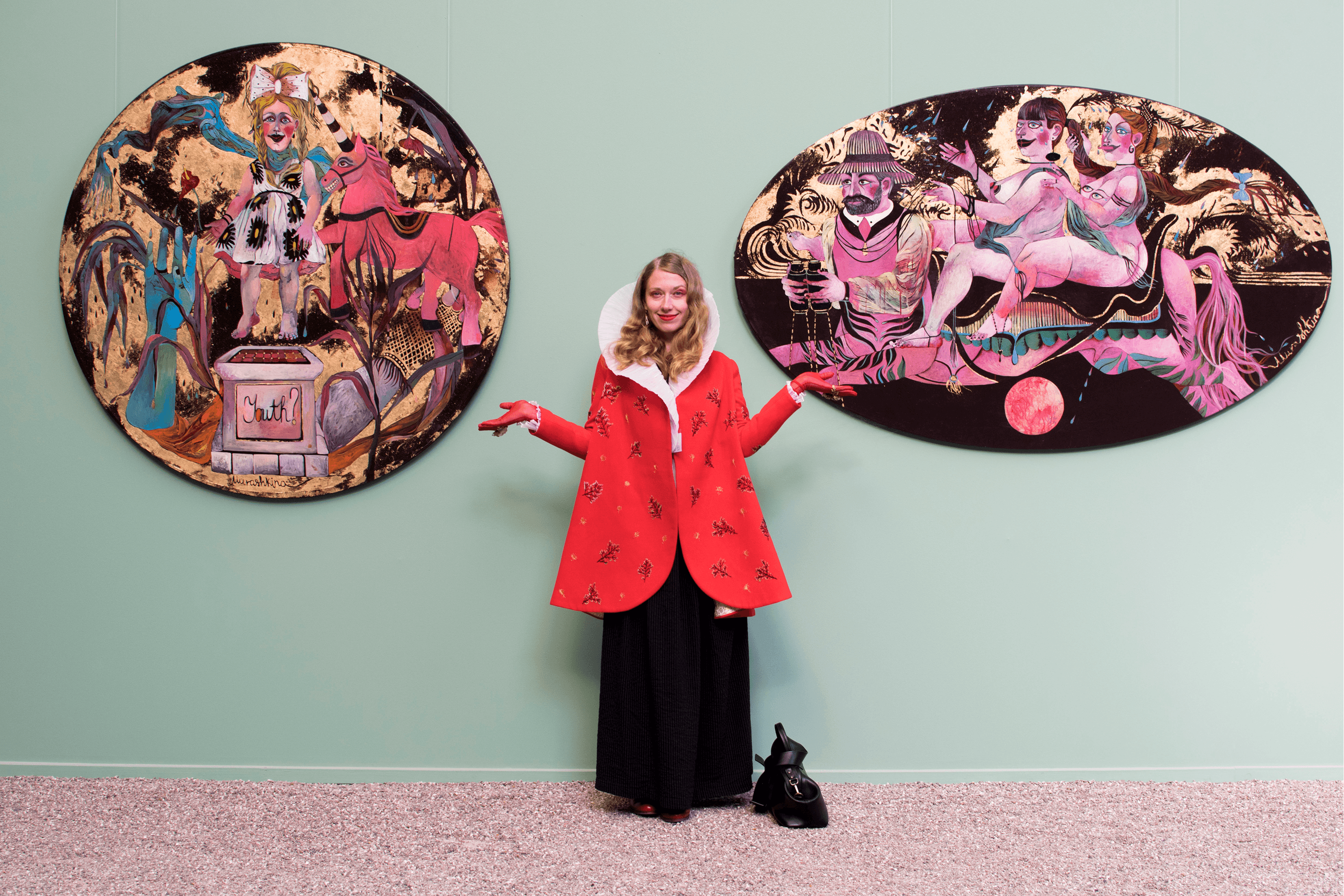
Nina Murashkina’s exhibition at NordArt in Germany. 2019–2024. Photo: Photos provided by Nina Murashkina / YB 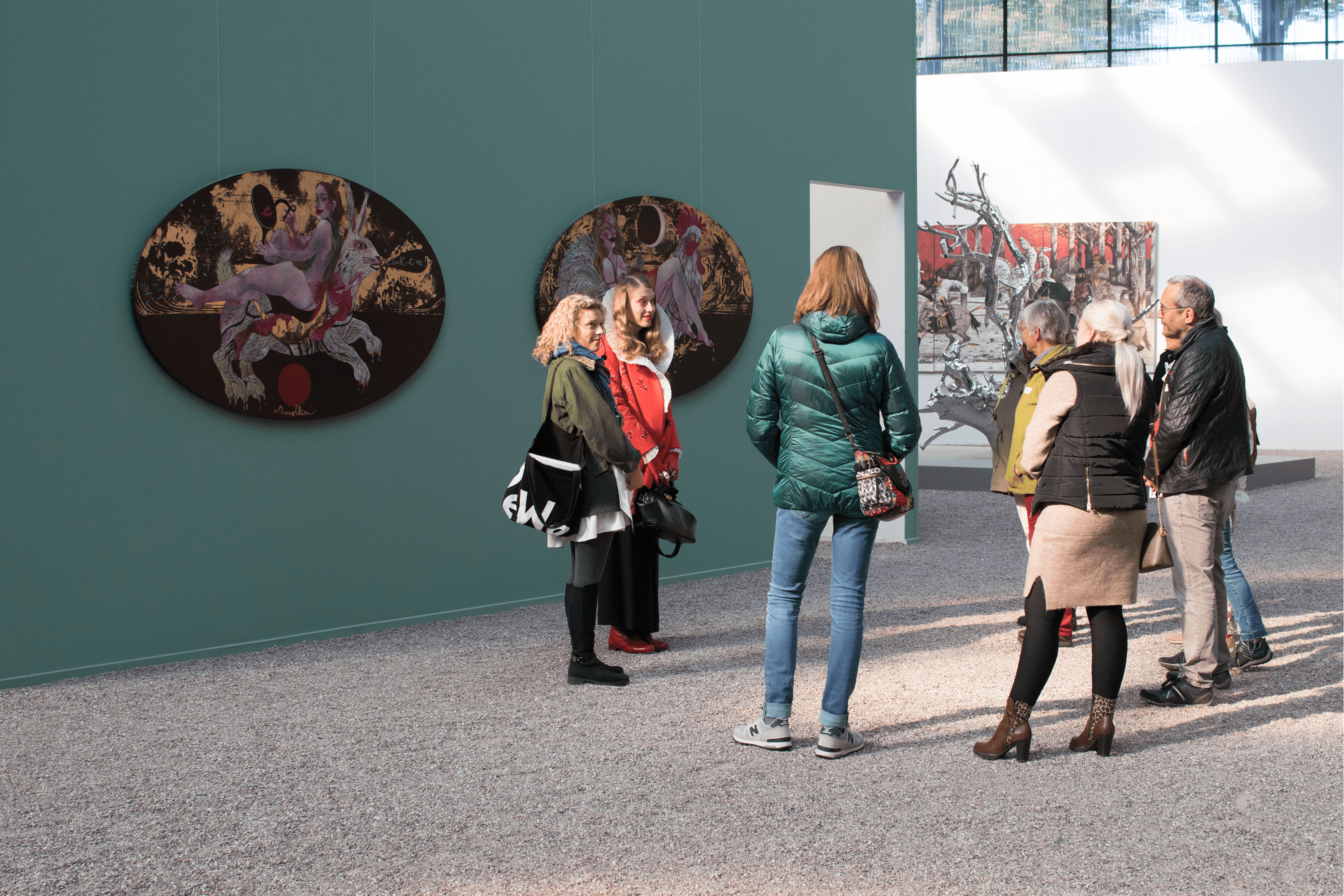
Photo: Photos provided by Nina Murashkina / YB 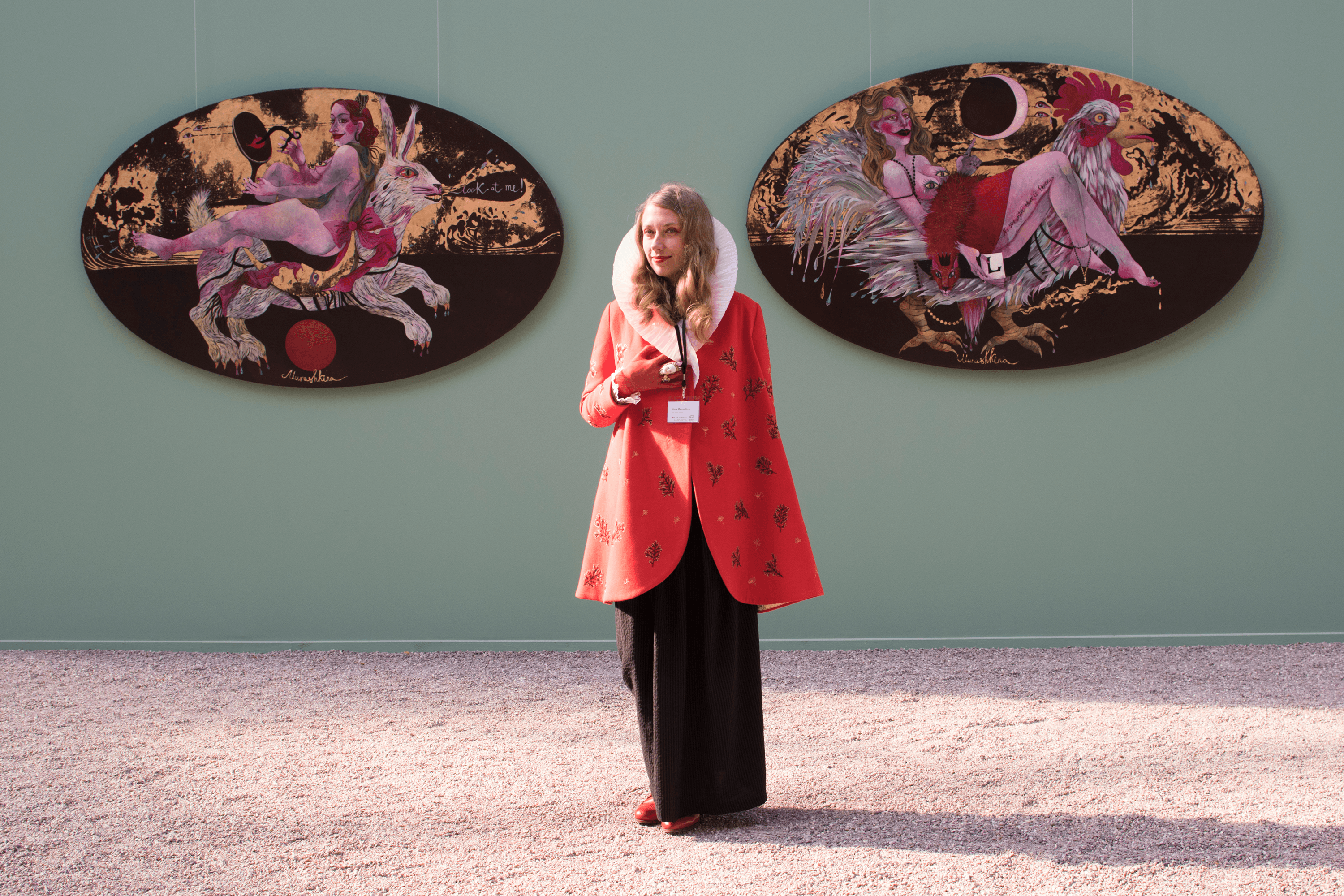
Photo: Photos provided by Nina Murashkina / YB 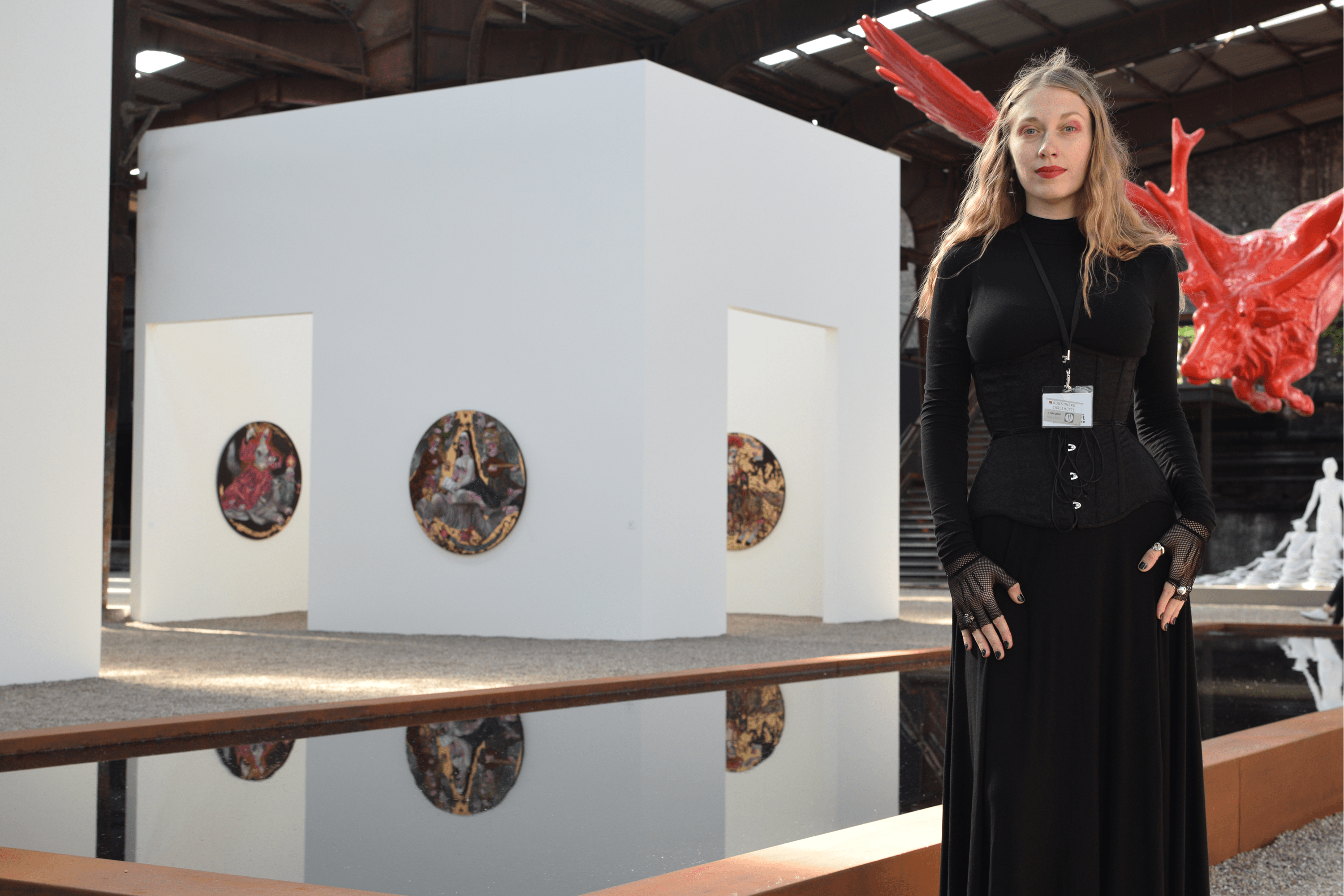
Photo: Photos provided by Nina Murashkina / YB
Nina adds that she chooses the “side of light”: “One of my favorite sculptors, Aristide Maillol, created during wartime but consciously avoided violent subjects. His sensual female forms, the grace of his imagery—it’s a breath of beauty and love. For me, that is what matters most: that the viewer leaves the exhibition with a desire to live.”
5
Recognition finally came to Murashkina in Spain. In 2023, she received the A-FAD Award for her series of ceramic vases, “Still Waters Run Deep”.
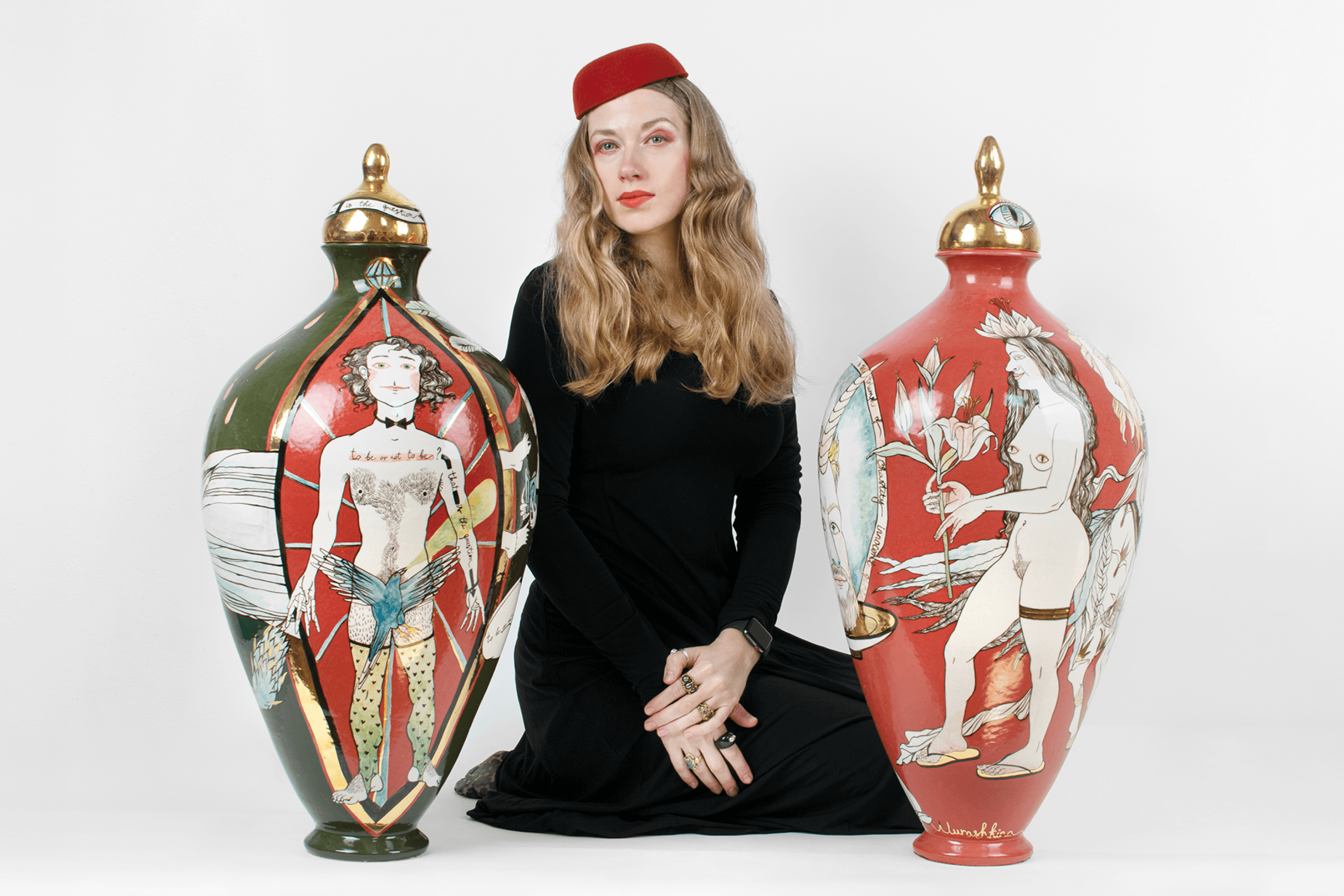
Various ceramic pieces by Nina Murashkina. Photo: Photos provided by Nina Murashkina / YB 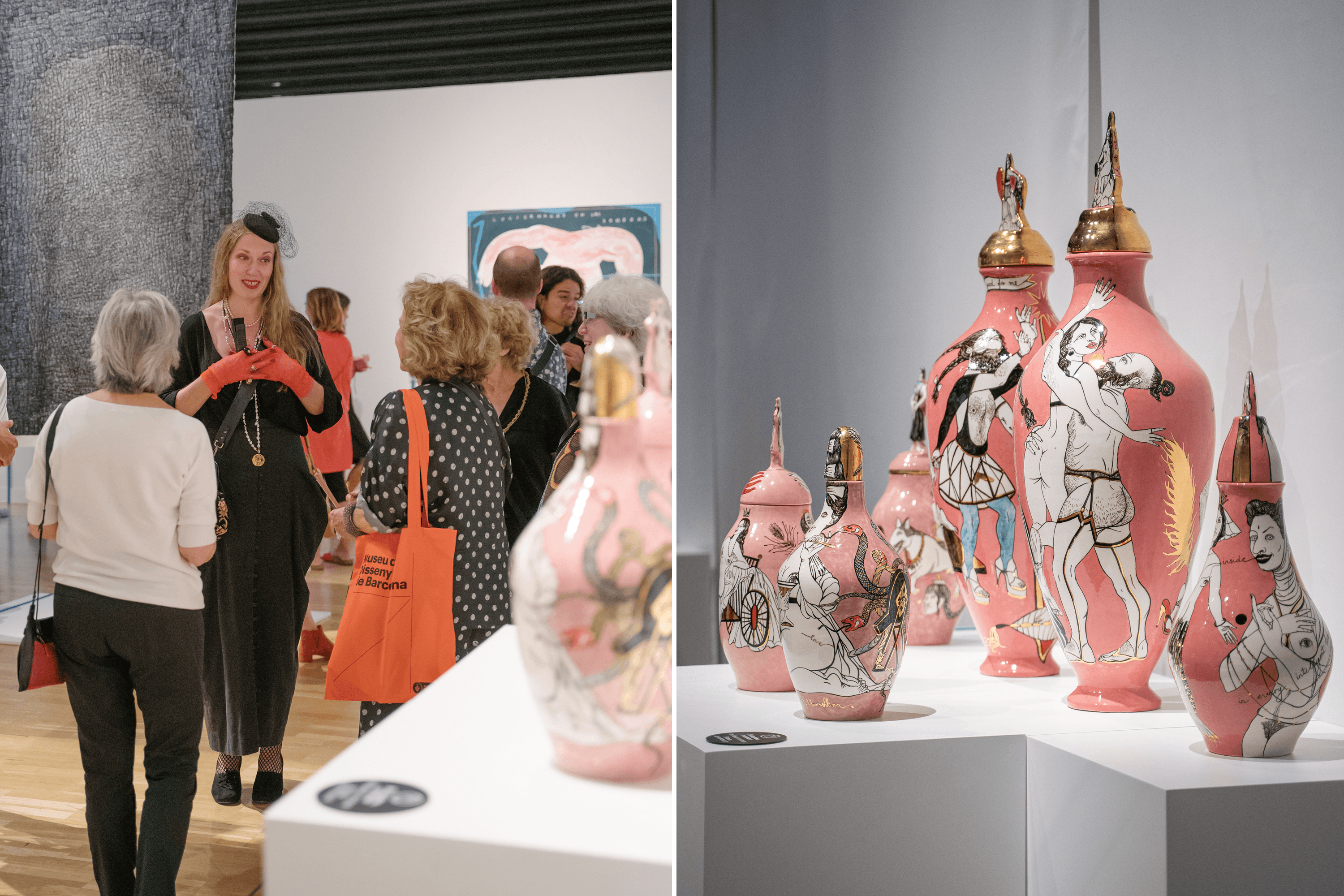
Photo: Photos provided by Nina Murashkina / YB 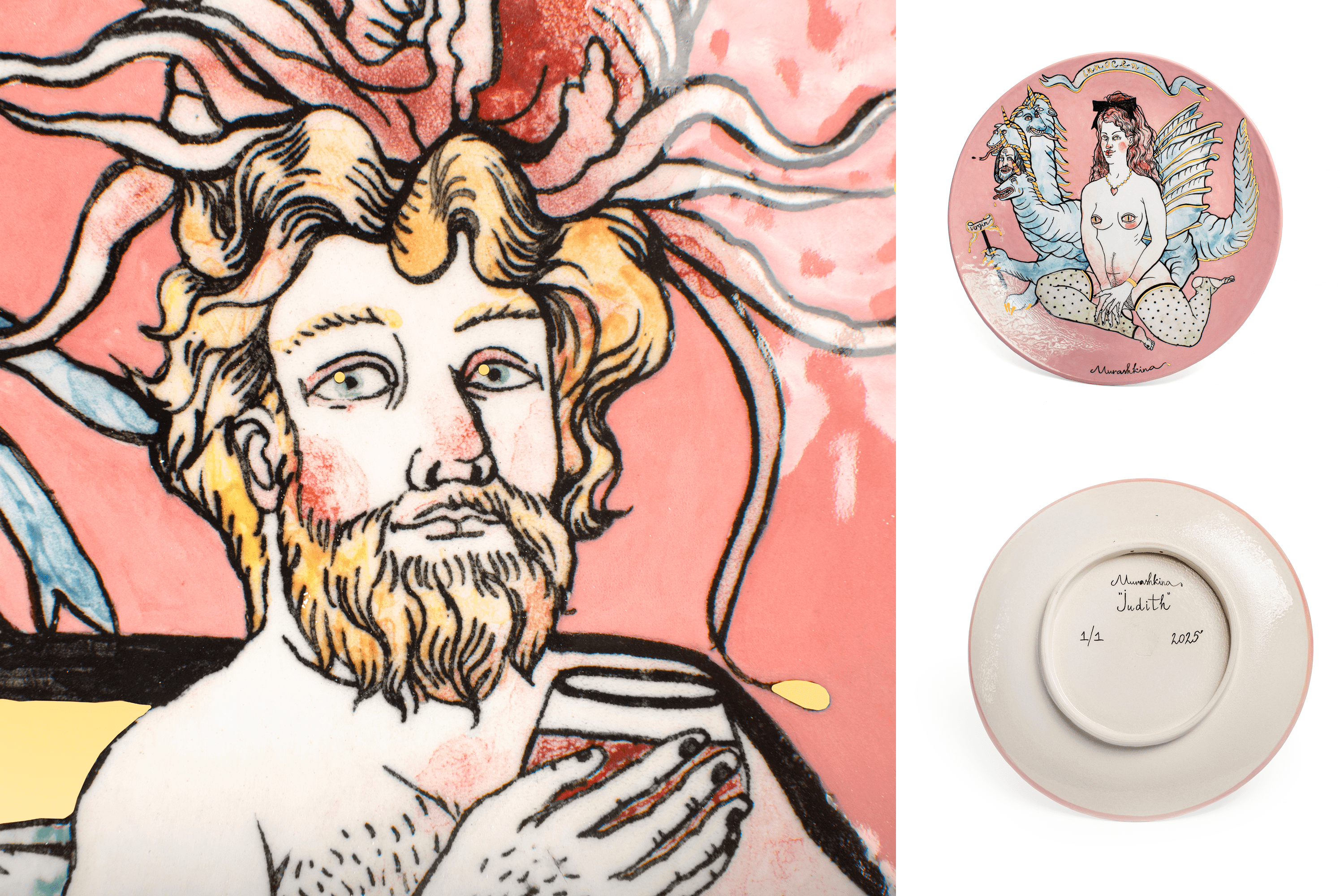
Photo: Photos provided by Nina Murashkina / YB 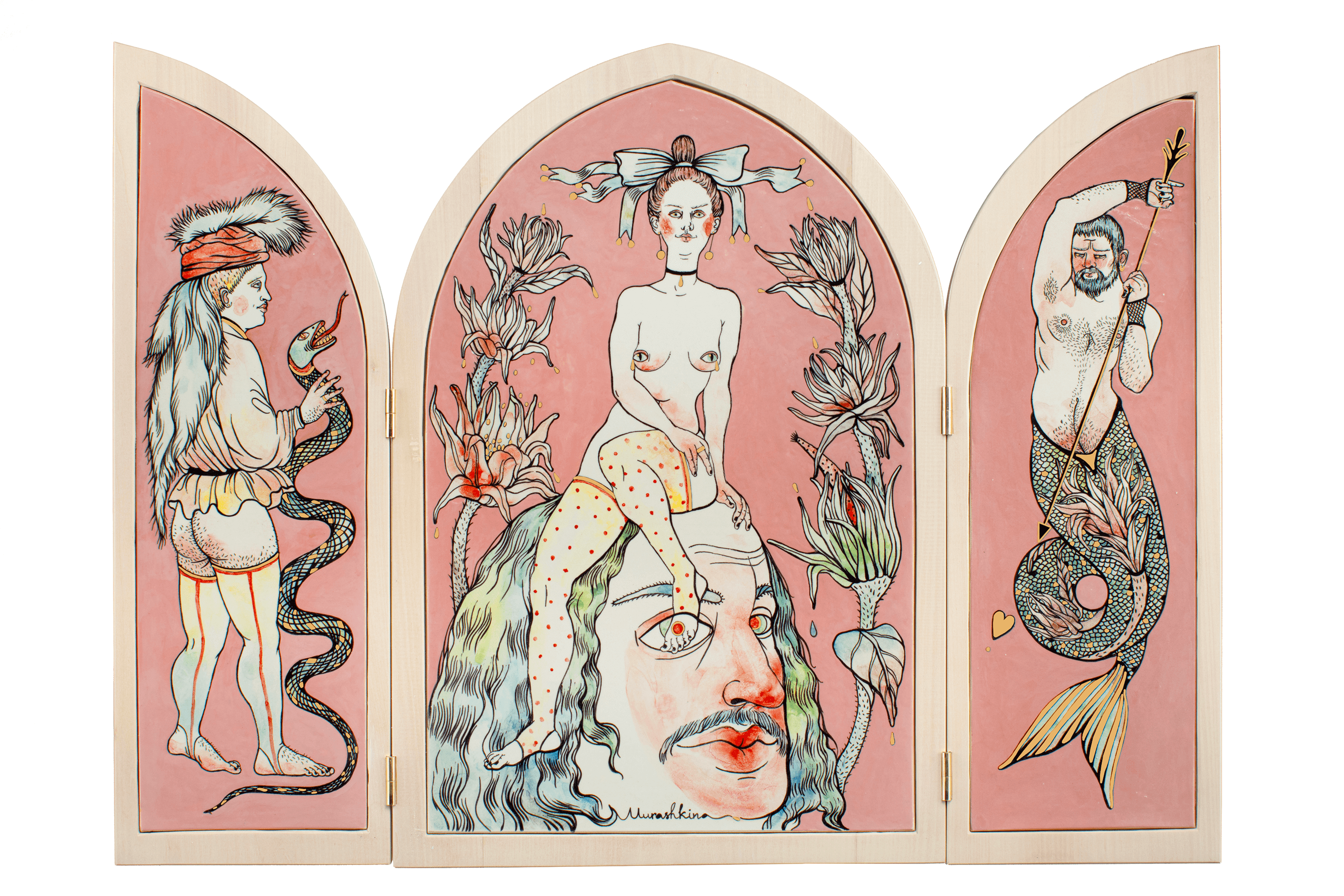
Photo: Photos provided by Nina Murashkina / YB 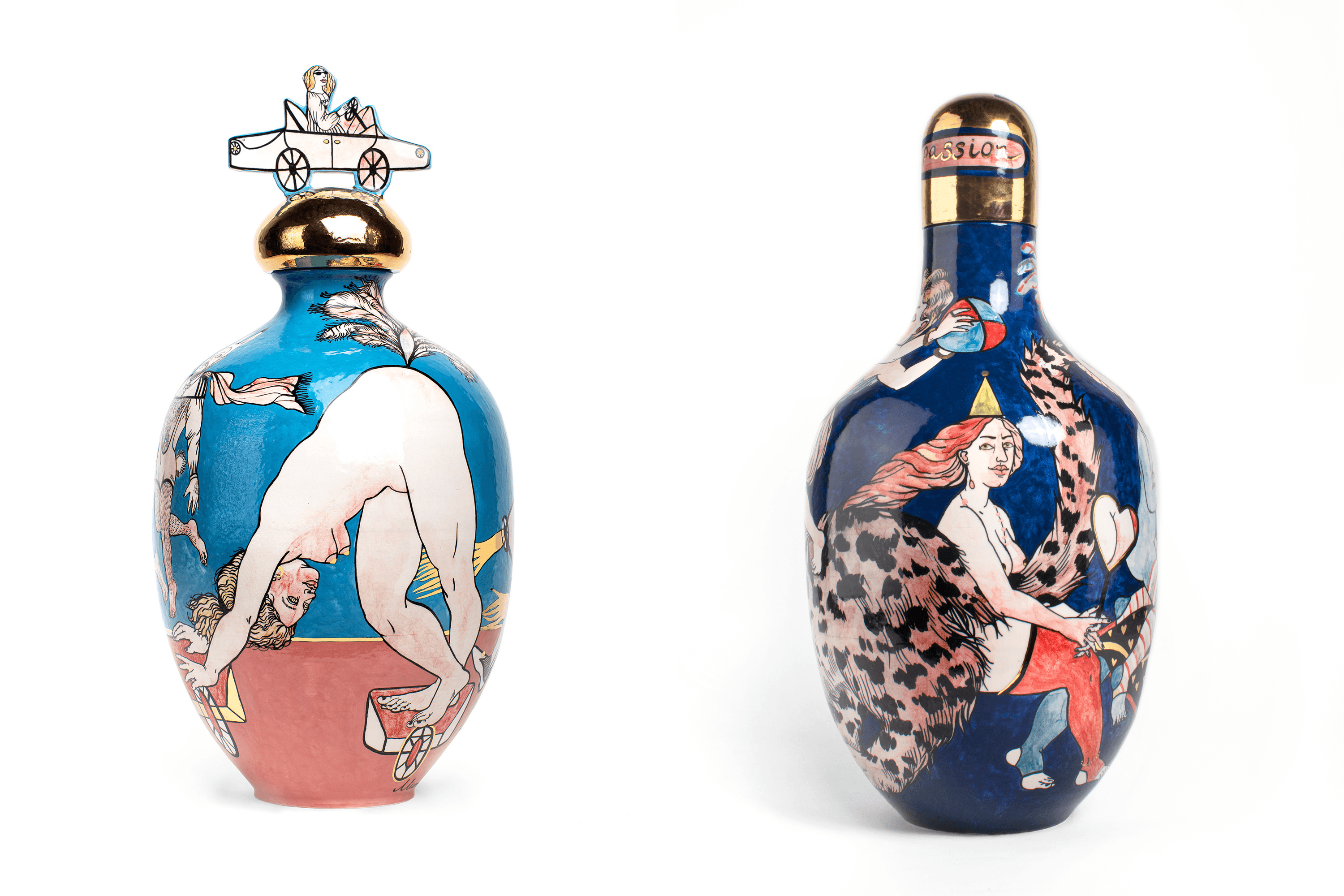
Photo: Photos provided by Nina Murashkina / YB 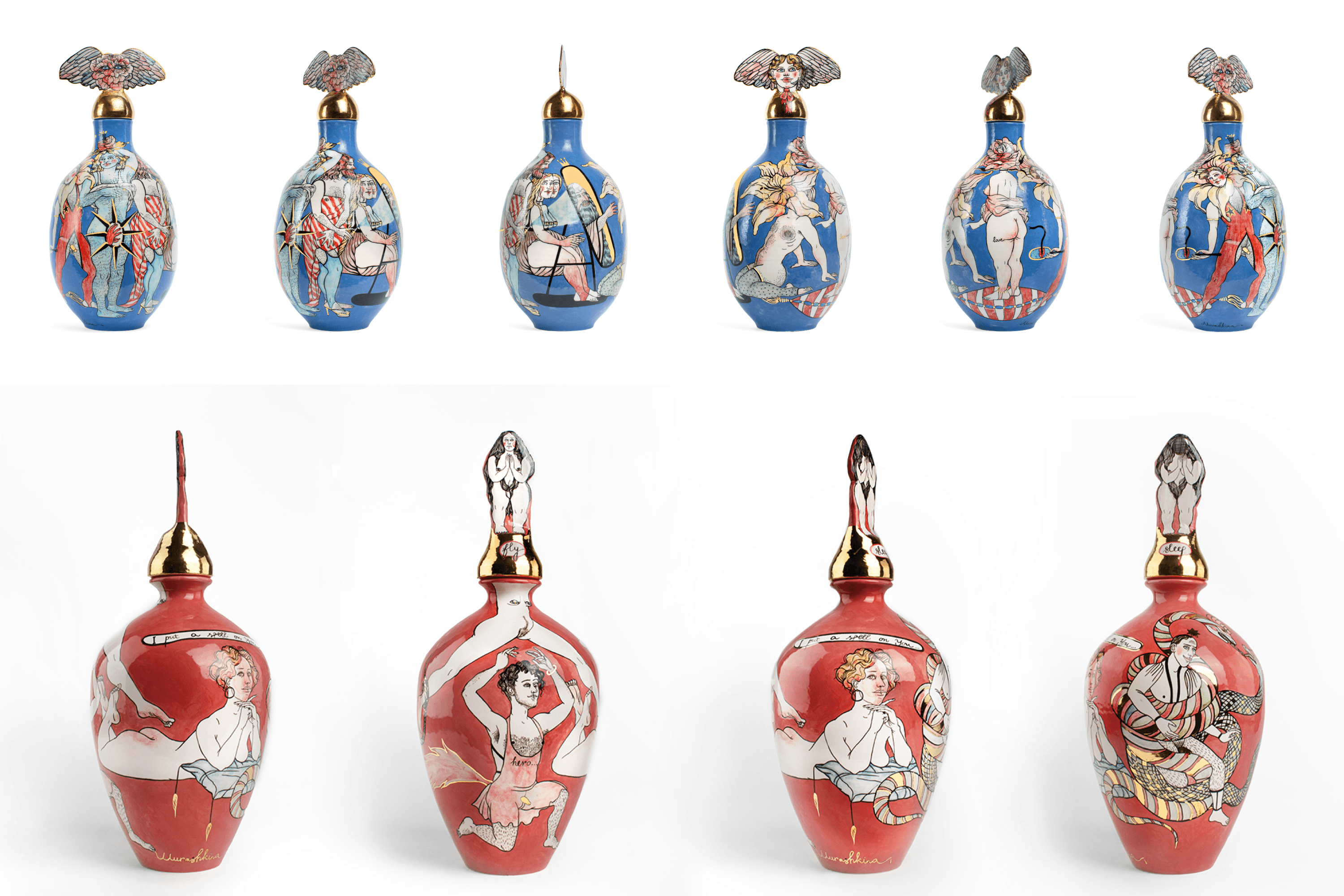
Photo: Photos provided by Nina Murashkina / YB
This prize is awarded by FAD, one of Barcelona’s oldest design institutions. “Prizes are important to me. I’m like a polished copper kettle then—I shine,” Nina smiles. Murashkina doesn’t separate money, recognition, and freedom. To her, they form a single coordinate system in which it’s impossible to work if even one element is missing. She says she consciously studies the art market: how an artist’s visibility is built, which visual languages work, and what collectors are buying. Yet, she remains true to herself: “I don’t change my themes or visual language for the market. I understand the rules of the game better now, but I consciously reserve the right not to lose myself.”
In Murashkina’s chest of sketches, some drawings date back to the early 2000s. Images return to her in various forms; some are reused. Nina shows a sketch for a ceramic piece about Tinder: a figure covering themselves in shame and a metaphorical “queue” of connections—both past and potential. The sketches already carry emotional accents and are simply transferred onto paintings, graphics, or ceramics.
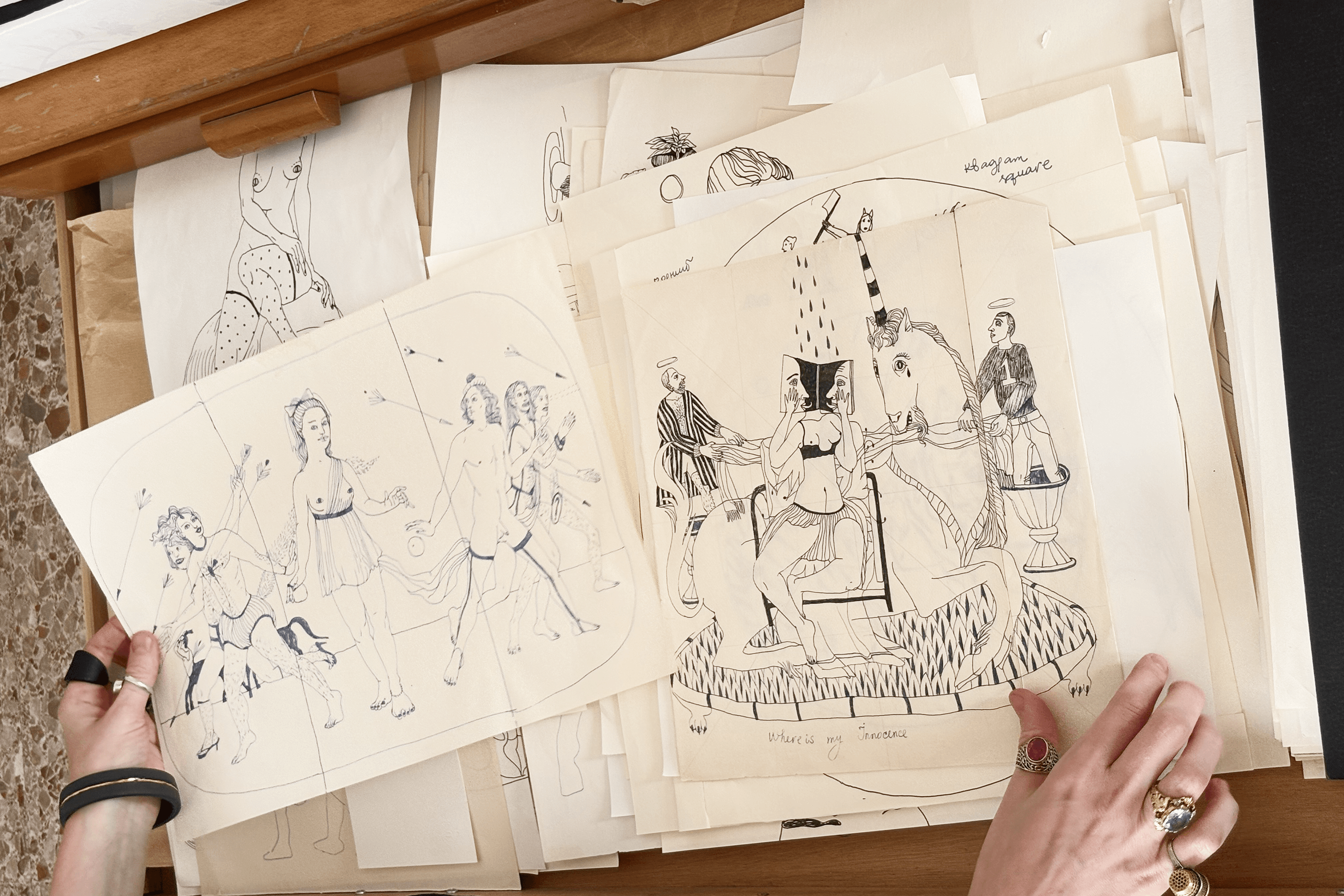
Sketches by Nina Murashkina. Photo: Photos provided by Nina Murashkina / YB 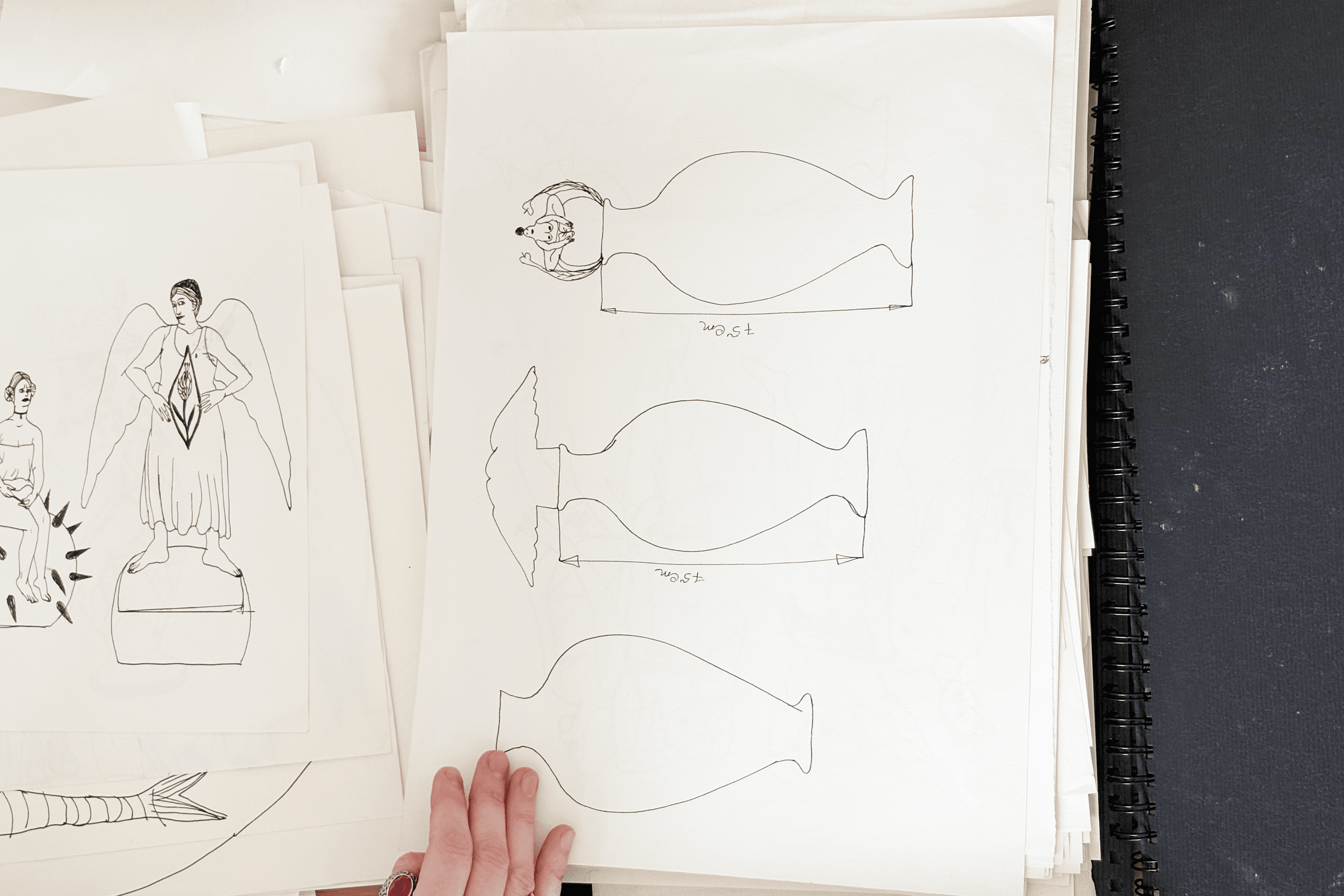
Photo: Photos provided by Nina Murashkina / YB
Nina finds models everywhere: at the pool, in a bar, on the street, or at the beach. She attends life drawing studios in various cities; her favorite art space is the Cercle Artístic de Sant Lluc in Barcelona, where Picasso and Miró once drew. Nina also dreams of expanding her practice into sculpture, a pursuit in which her husband assists her.
At the end of March 2026, Murashkina opened a solo exhibition titled “Passions Raging Within” at the Barcelona gallery La Plataforma. One of the exhibits is a self-portrait, “Pissing Woman.” Nina calls it her own version of Picasso’s famous painting of the same name and says that through this work, she explores themes of freedom, sexuality, and femininity. Freedom is her greatest dream. “The freedom to do great things without looking back. The freedom to remain yourself,” says Murashkina. This is her core principle, carried through her entire body of work—the freedom to be oneself. “Your works are almost uncomfortable, but it’s impossible to look away because you recognize yourself in them,” visitors told Nina at the exhibition.
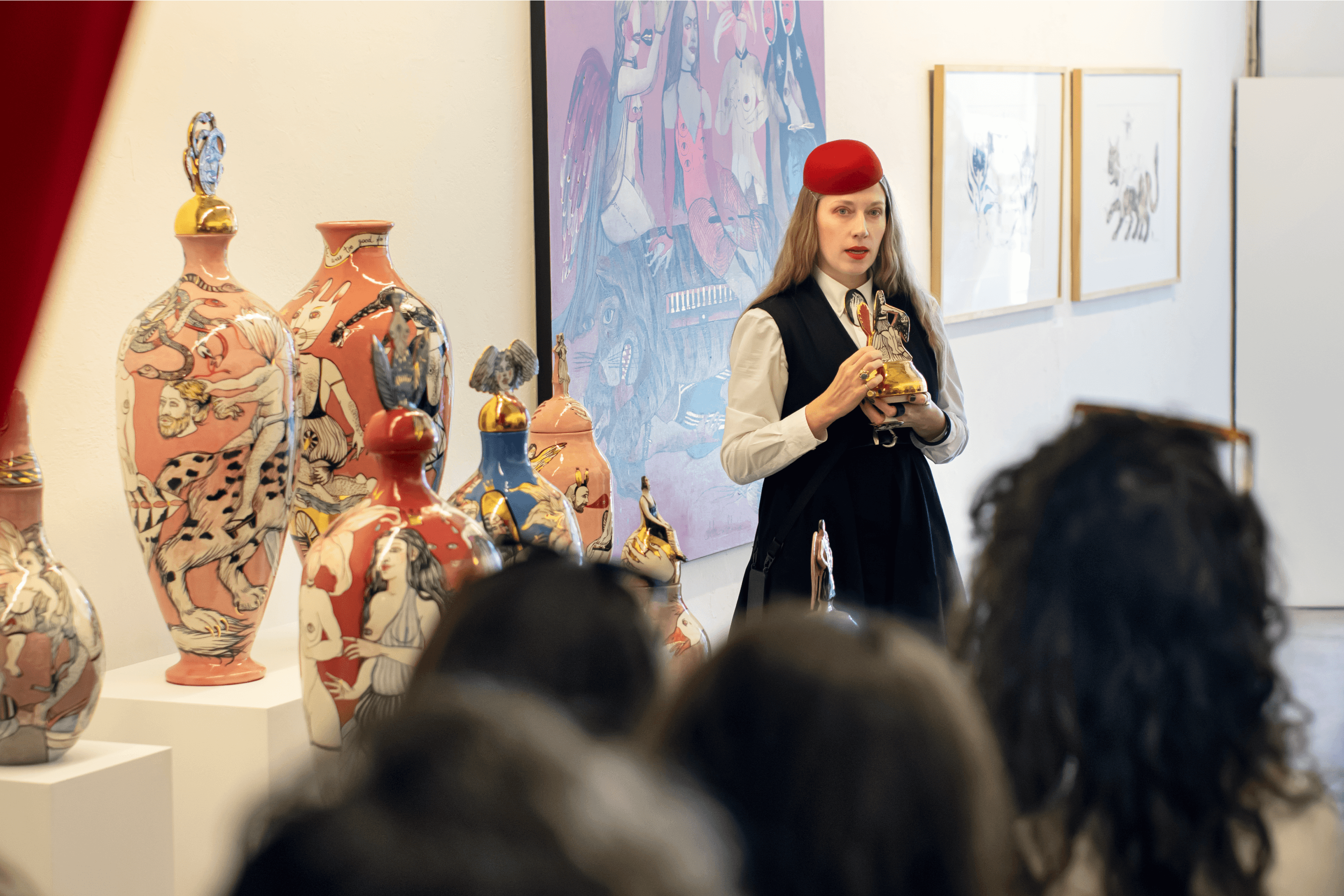
Nina Murashkina’s exhibition Pasiones Internas. Photo: Iryna Kalamurza / YB 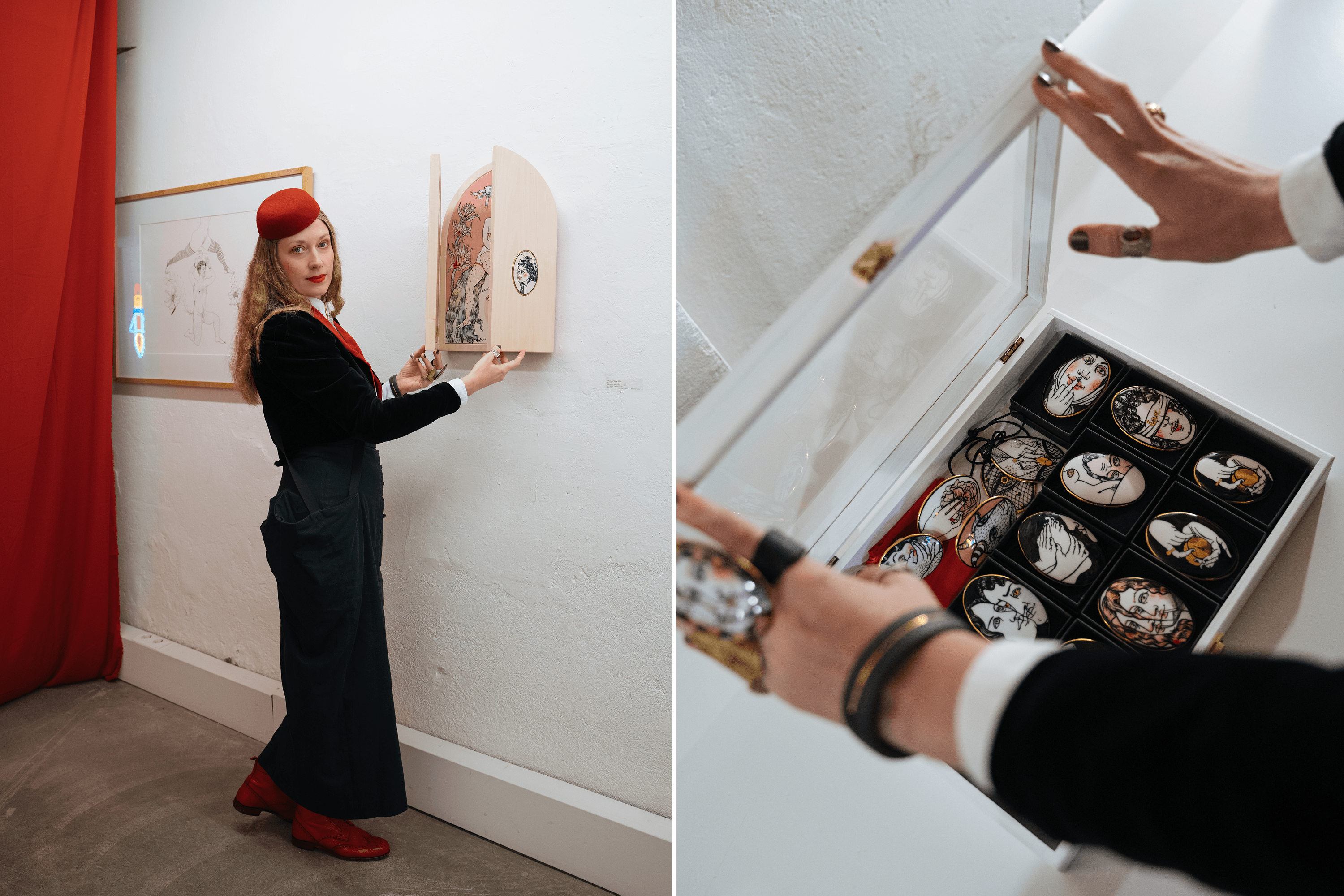
Photo: Iryna Kalamurza / YB 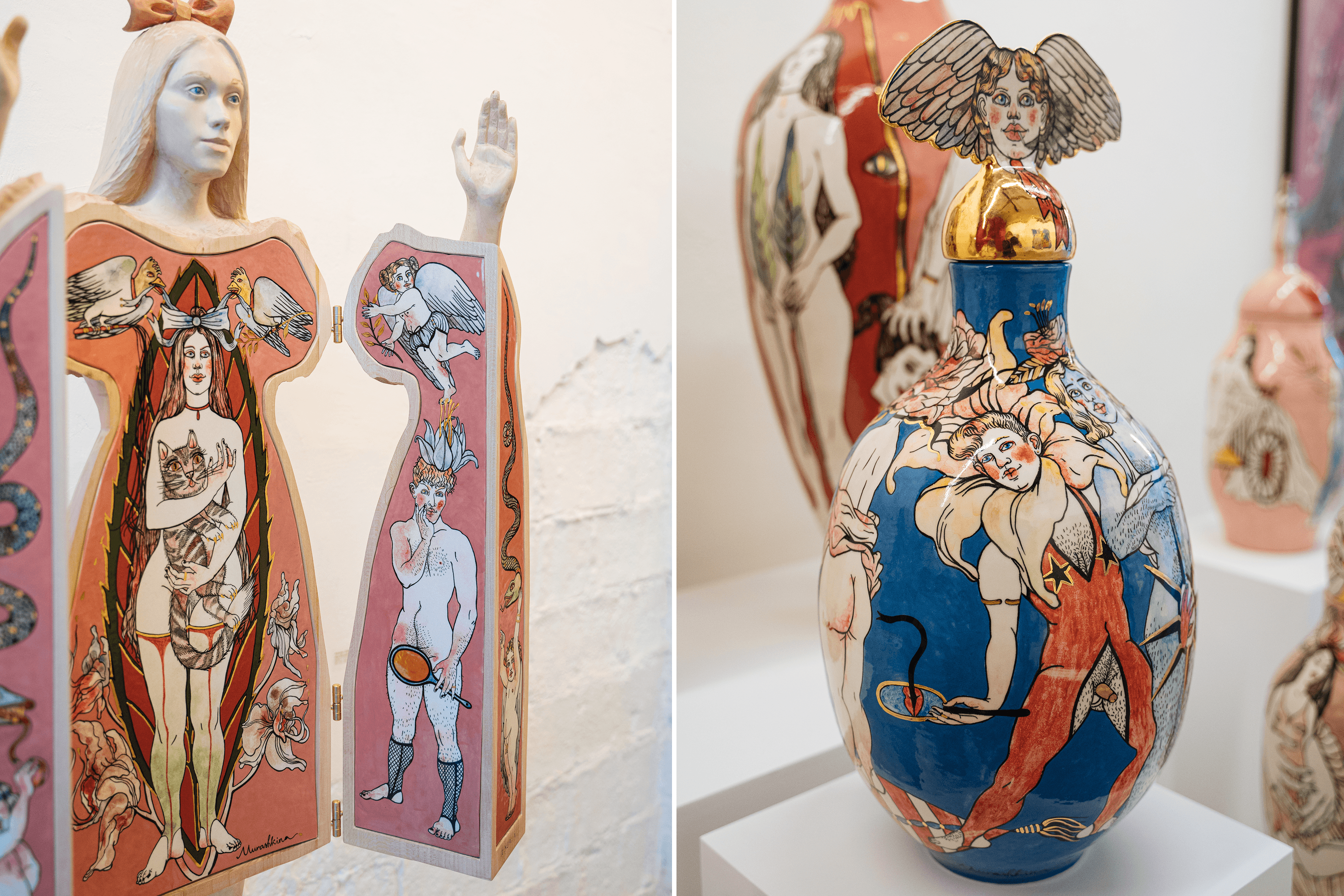
Photo: Iryna Kalamurza / YB 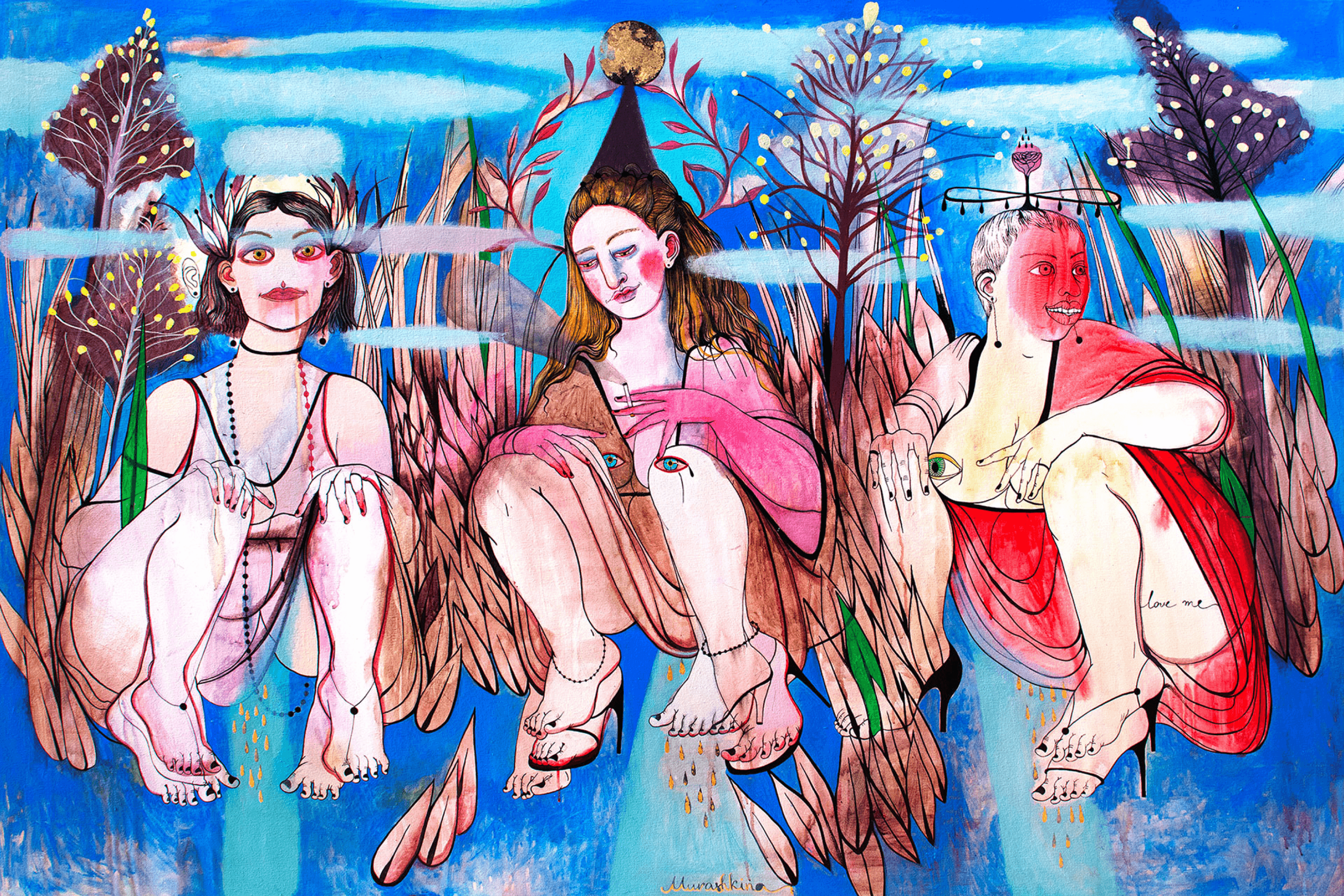
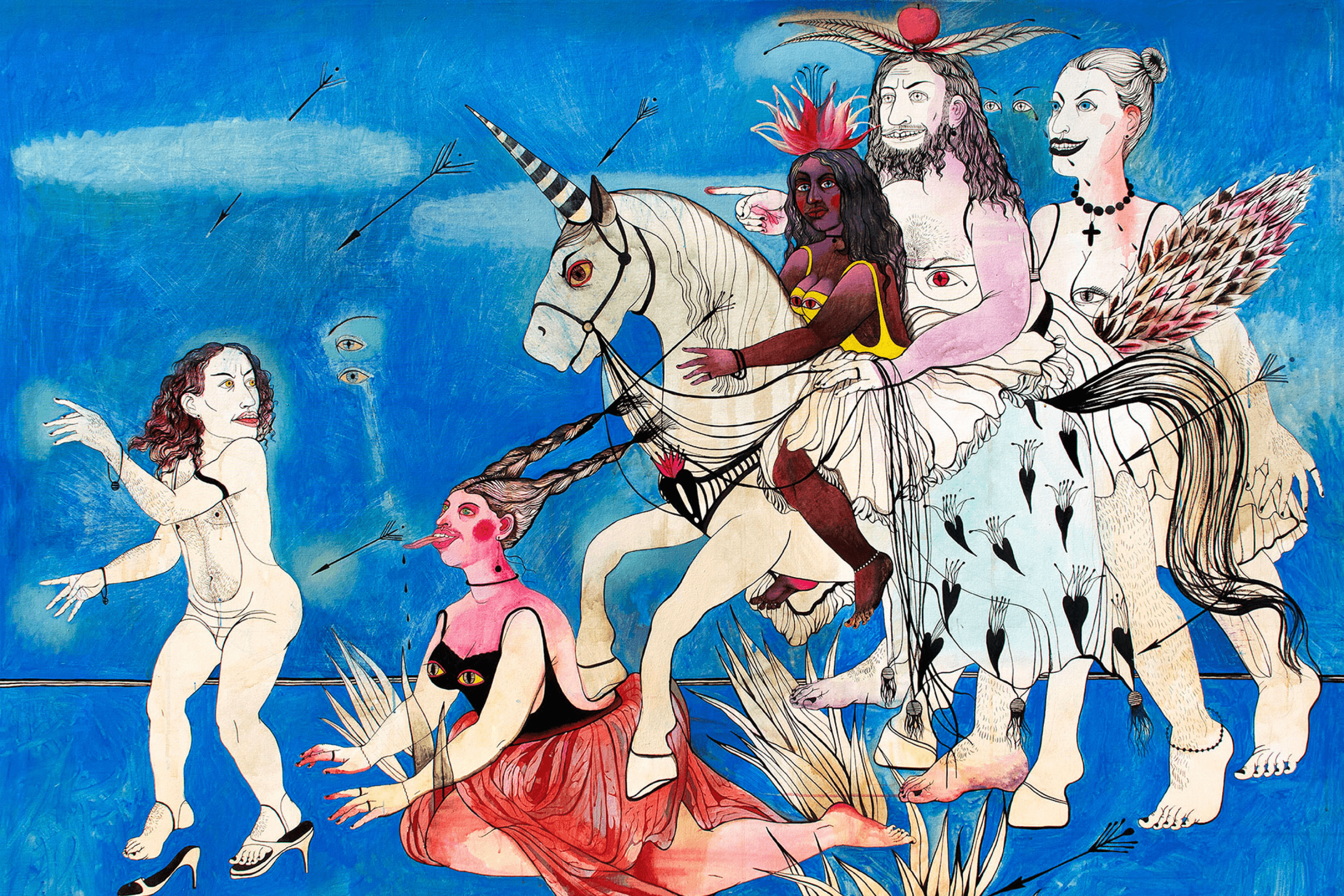
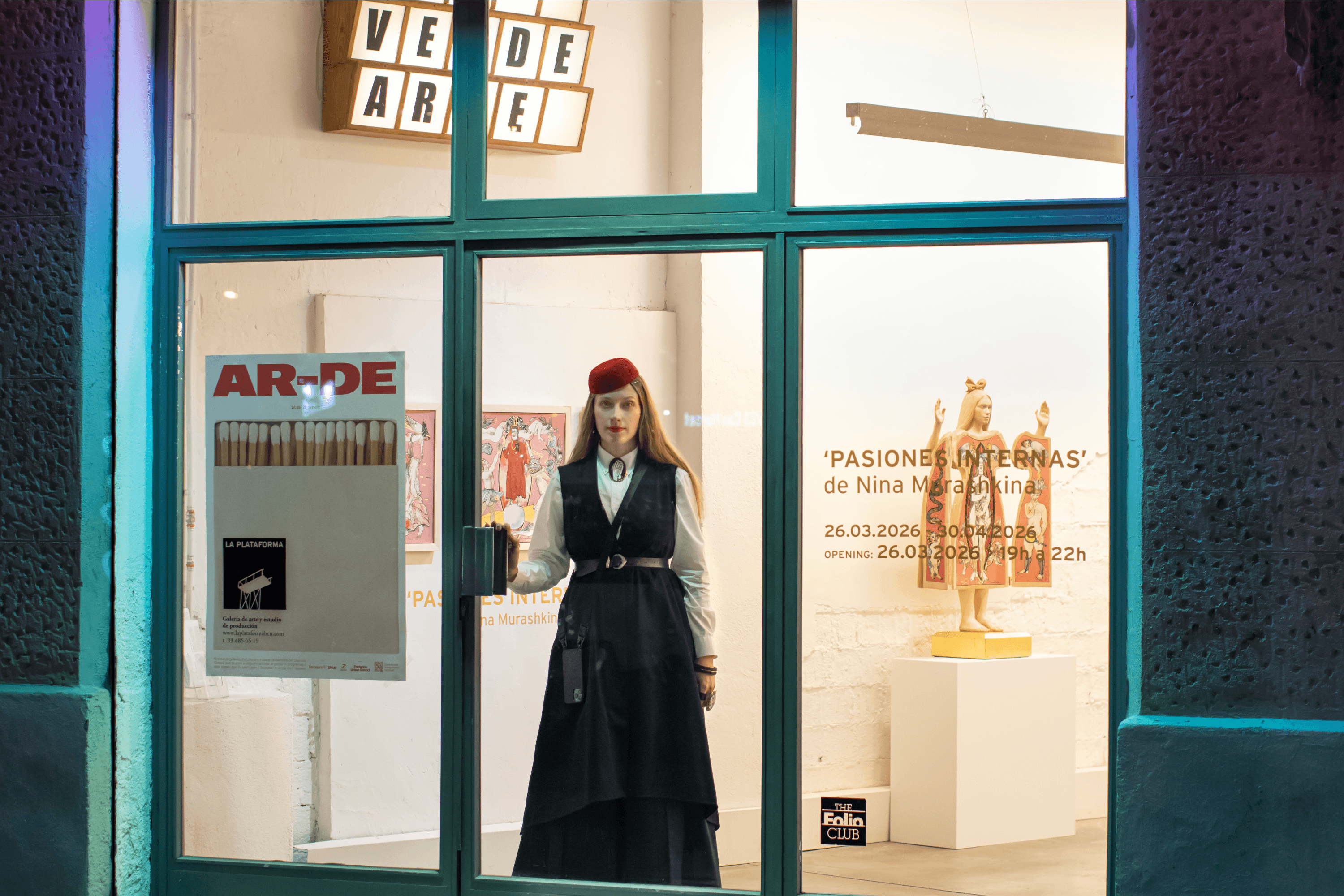
Photo: Iryna Kalamurza / YB
“I was formed by a sense of constant contrast,” Murashkina says of herself. “Between love and control in the family, between the beauty and cruelty of Donetsk, between the religious idea of purity and real human nature, between femininity as freedom and femininity as the expectations of others. I have always lived within these contradictions, and that is precisely where my work is born.”