
Speeding down a Donetsk highway as fast as frontline conditions permit, a flatbed truck carries a massive concrete deer. Amidst the camouflaged military convoys, it stands out like a ghost. This is Leonid Marushchak evacuating a sculpture from Pokrovsk—a task that has become his daily routine. Since the start of Russia’s full-scale invasion, he has rescued millions of Ukrainian artifacts, some plucked literally from the battlefield. Yellow Blue journalist Sofia Korotunenko explores the mechanics of his mission and why the driving force behind it all is a profound love for art.
1
August 30, 2024, Pokrovsk. Russian troops are entrenched just ten kilometers away, pounding the city daily. Even now, following the thunderous roar of an aerial bomb, a plume of thick black smoke towers over the rooftops. Ukrainian art historian Leonid Marushchak and sculptor Zhanna Kadyrova hardly flinch. In Yuvileinyi Park on the city’s edge, they watch intently as workers drill into the legs of “Origami"—a concrete sculpture—to pry it from its pedestal. The three-meter-tall white deer, designed to mimic folded paper, was created by Zhanna in 2019. Their only true fear is that the Russians will reduce it to rubble.
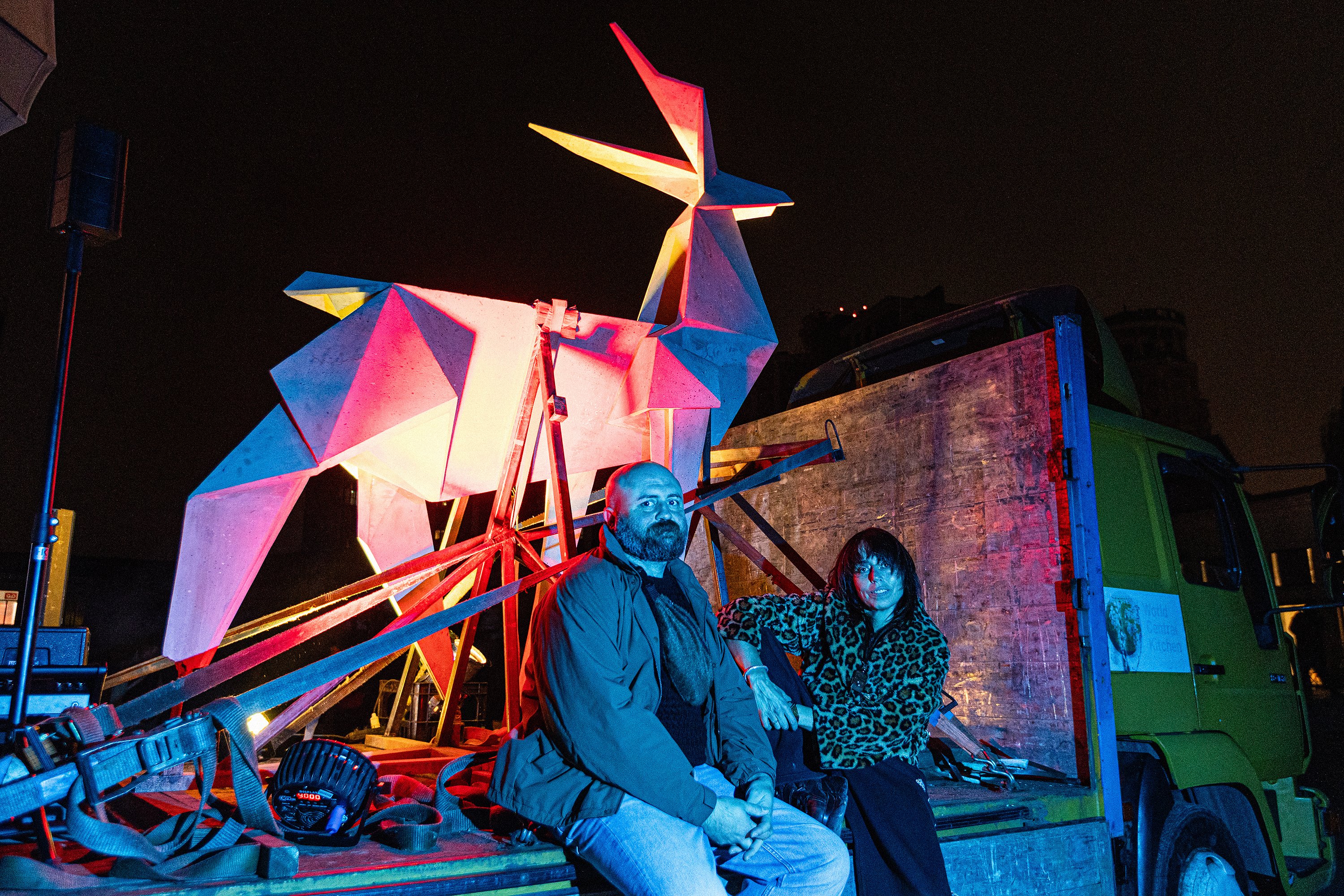
Leonid Marushchak and Zhanna Kadyrova at the farewell to Origami in Kyiv. After that, the sculpture was shown in Yasinia, Ivano-Frankivsk and Lviv. In 2026, Origami will also tour Europe and be presented in Warsaw, Vienna, Prague, Berlin, Brussels and Paris. Photo: Julia Weber / YB 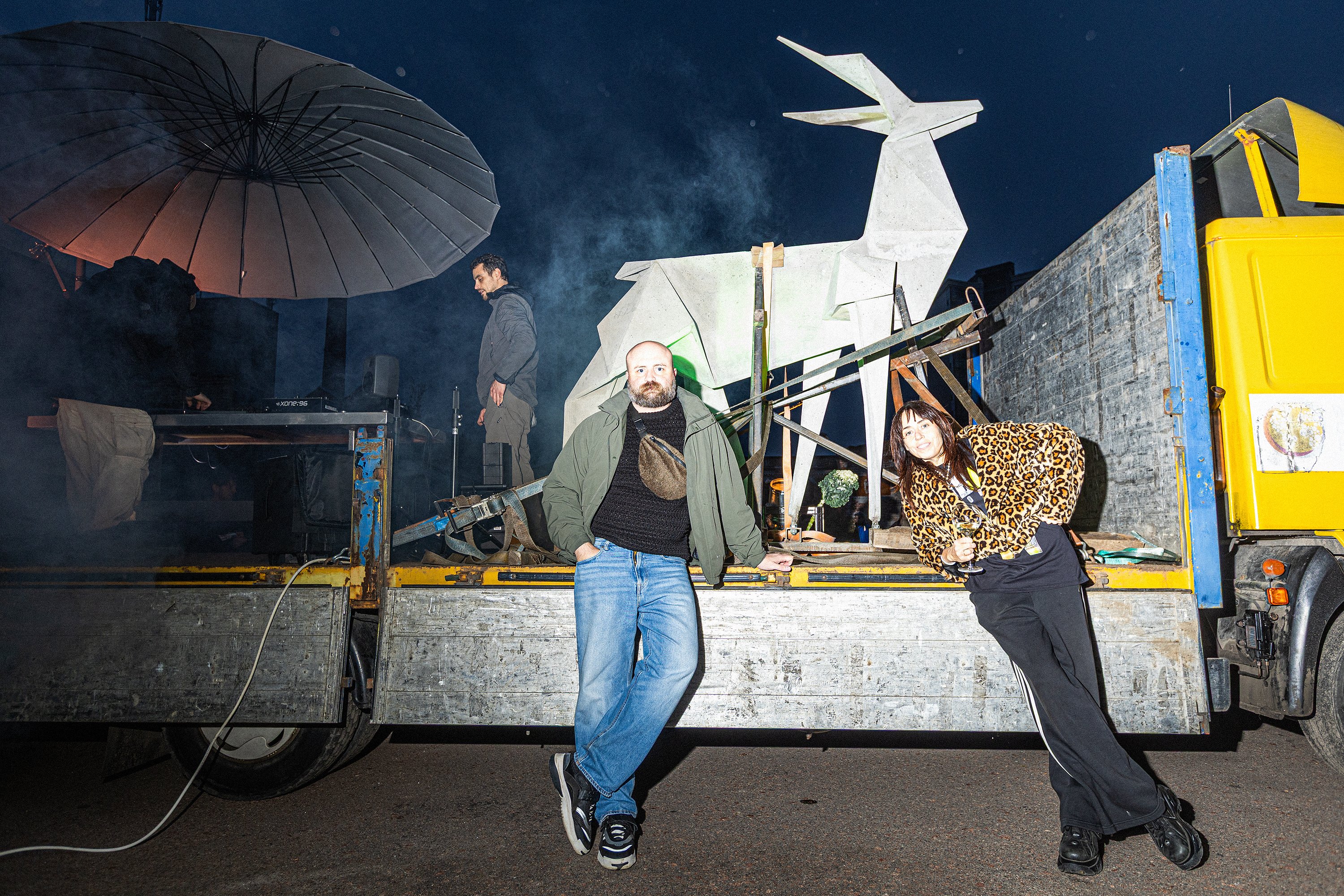
Photo: Julia Weber / YB 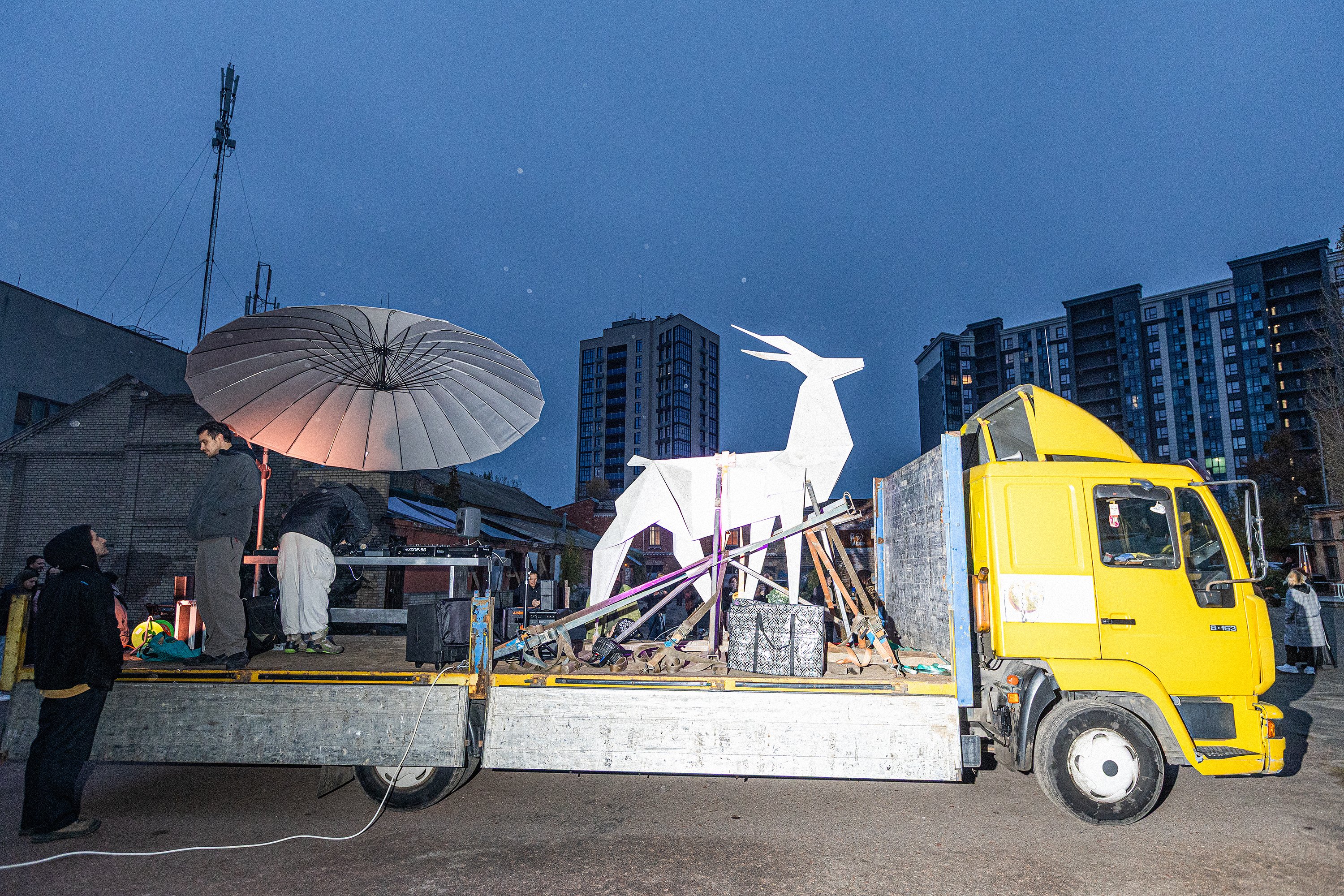
Photo: Julia Weber / YB 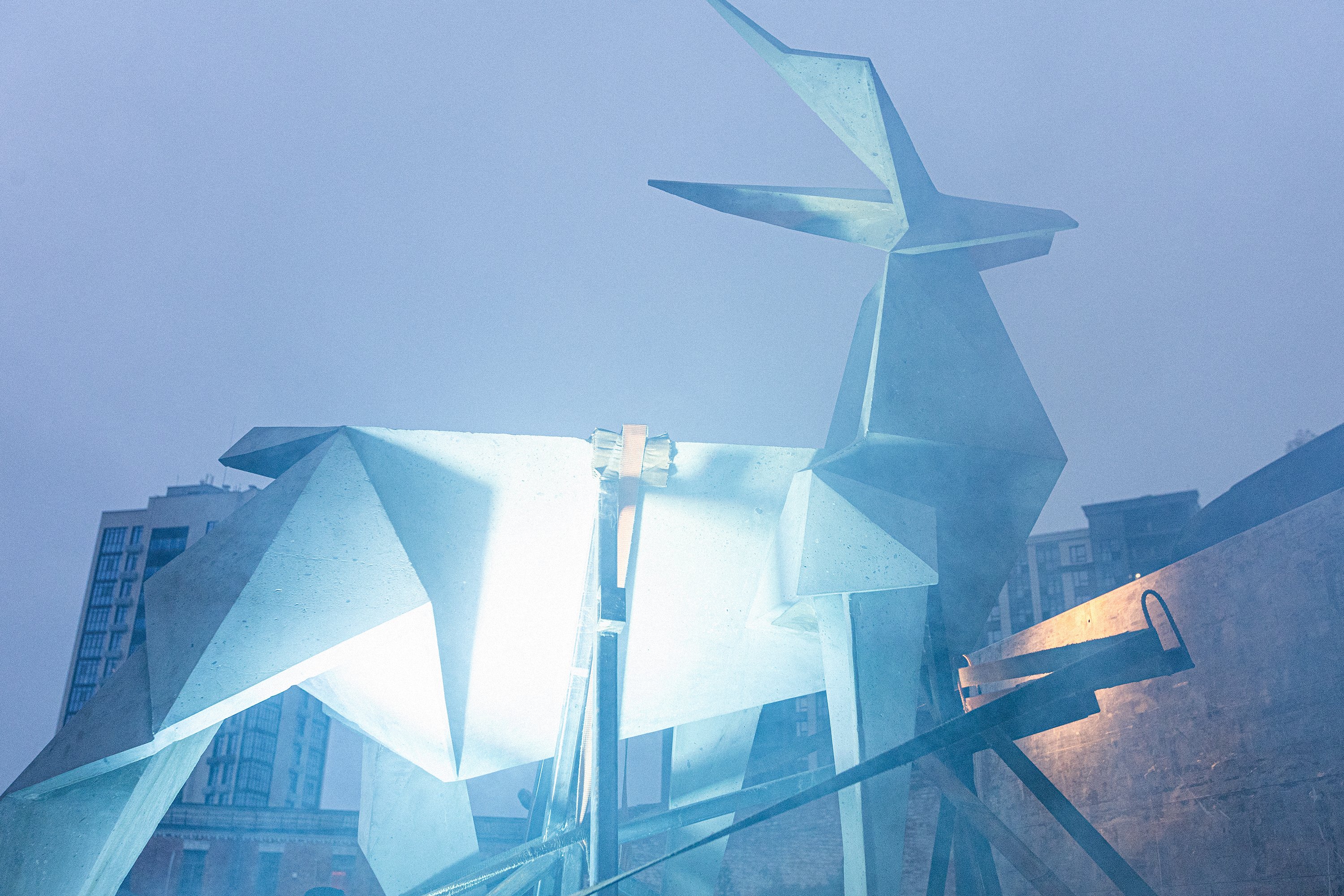
Photo: Julia Weber / YB
Dark green camouflaged vehicles line the square; men in uniform watch the dismantling. Across the street, a building stands with its windows blown out, now blinded by OSB panels. Workers loop industrial straps around the deer’s legs and hoist it toward the truck’s crane. As the 700-kilogram sculpture is lowered, the tension is electric—Leonid paces, barking instructions, while Zhanna presses her palms to her face, pleading with the workers to be gentle. Since the deer can no longer stand on its severed legs, metal beams are welded to them. It looks as if the creature has suddenly decided to go skiing.
The sculpture is bound for the heart of Venice, where it will hang from a crane during the Biennale. It is the centerpiece of the Ukrainian pavilion, curated by Leonid. The exhibition centers on the Budapest Memorandum—the 1994 agreement where Ukraine traded the world’s third-largest nuclear arsenal for security guarantees that ultimately failed to hold back Russian aggression. “Origami” was chosen for a reason: in 2019, it was installed on the very spot where a monument to a Soviet jet once stood.
2
Leonid’s obsession with history and art took root in 1990s Vinnytsia, back when he was just a schoolboy. In those days, the regional archives were the only gateway to the past, but they were strictly off-limits to anyone under fifteen.
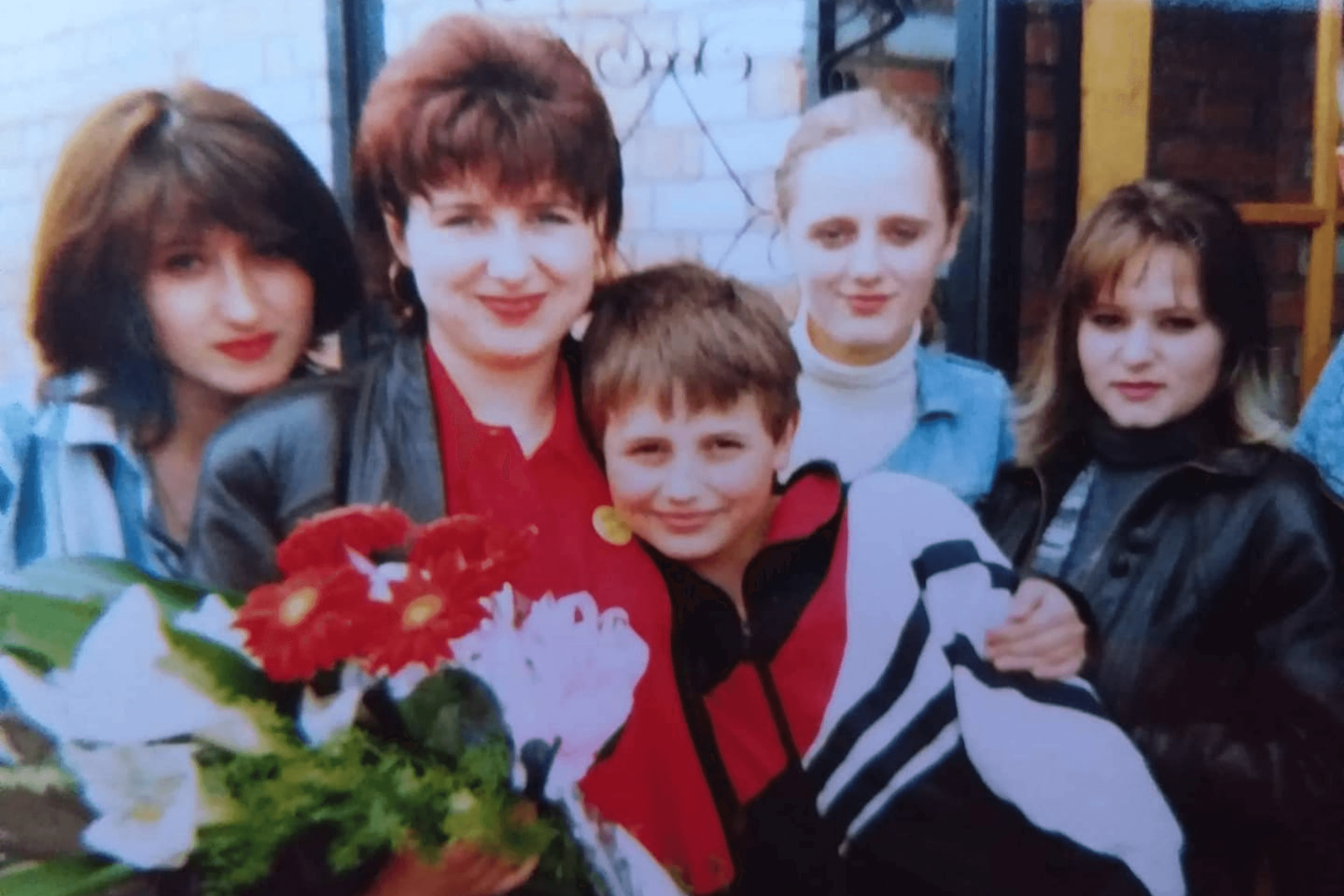
Undeterred, Leonid convinced his history teacher to forge a pass, allowing him to slip inside by posing as a university student. This early subversion led him to the history department of Vinnytsia Pedagogical University. “I enrolled out of a kind of naive optimism, thinking I could just waltz into any museum or archive. I quickly learned it wasn’t that simple,” he jokes. “To finally gain real access, I had to choose 'Treasures of the Vinnytsia Regional Art Museum' as my fourth-year thesis topic.”
After graduating, Leonid moved to Kyiv and built a career in PR, where he met his wife, Marta.
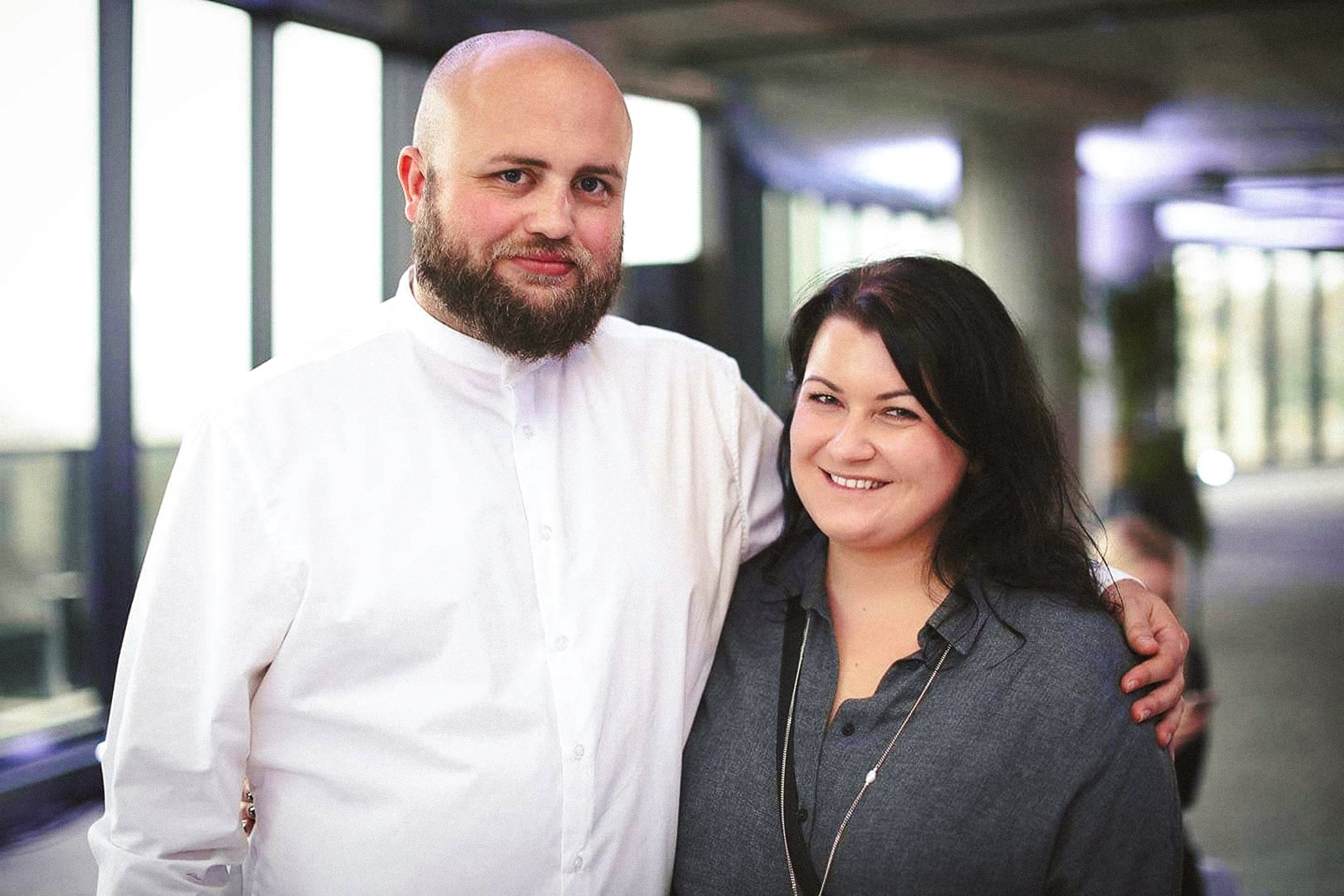
But the 2013 Revolution of Dignity changed everything. He realized he could no longer stomach a corporate job that left him unfulfilled; he wanted to reshape the country and dedicate himself to his true calling: researching the legacy of Ukrainian artists. Alongside a collective of like-minded creators and activists, he co-founded the “DE NE DE” initiative. They crisscrossed the country, documenting museum collections in forgotten villages, monitoring the process of decommunization, and bridging the gap between local history and contemporary art.
In 2016, “DE NE DE” launched a flagship project to breathe life into stagnant museums in eastern Ukraine. The spark came from a frustrating encounter in Sloviansk: the museum staff there were so defensive that they closed their doors early just to keep the activists out. This gave birth to the project’s defiant title: “The Museum is Open for Renovation.” What started as a local effort soon swept across the south in 2017 and eventually reached every corner of Ukraine during the pandemic. By the time the full-scale war began, Leonid was in constant contact with nearly 200 museums.
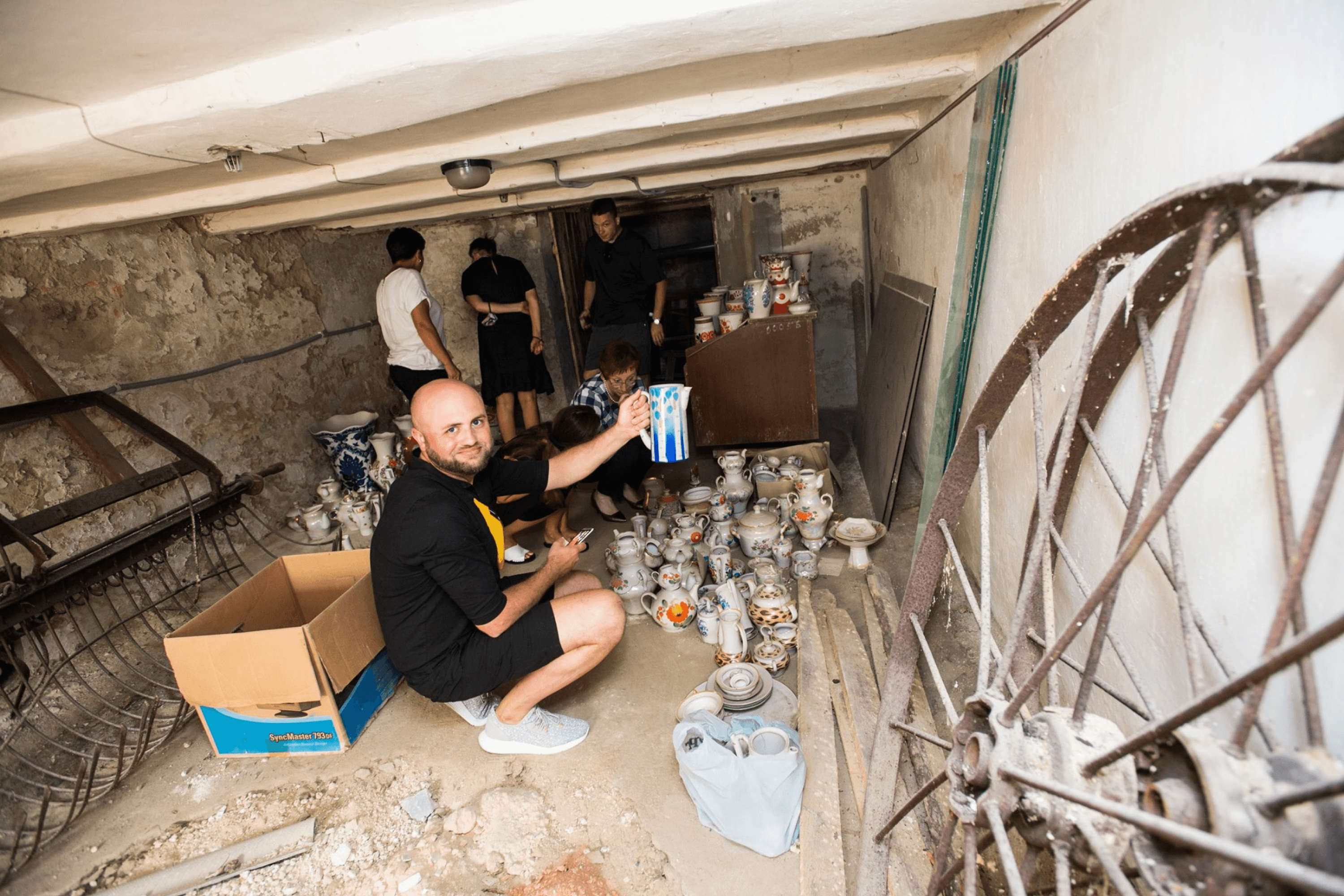
Leonid Marushchak and the team of “The Museum is Open for Renovation” work with various museums. Photo: “The Museum is Open for Renovation” / Facebook / YB 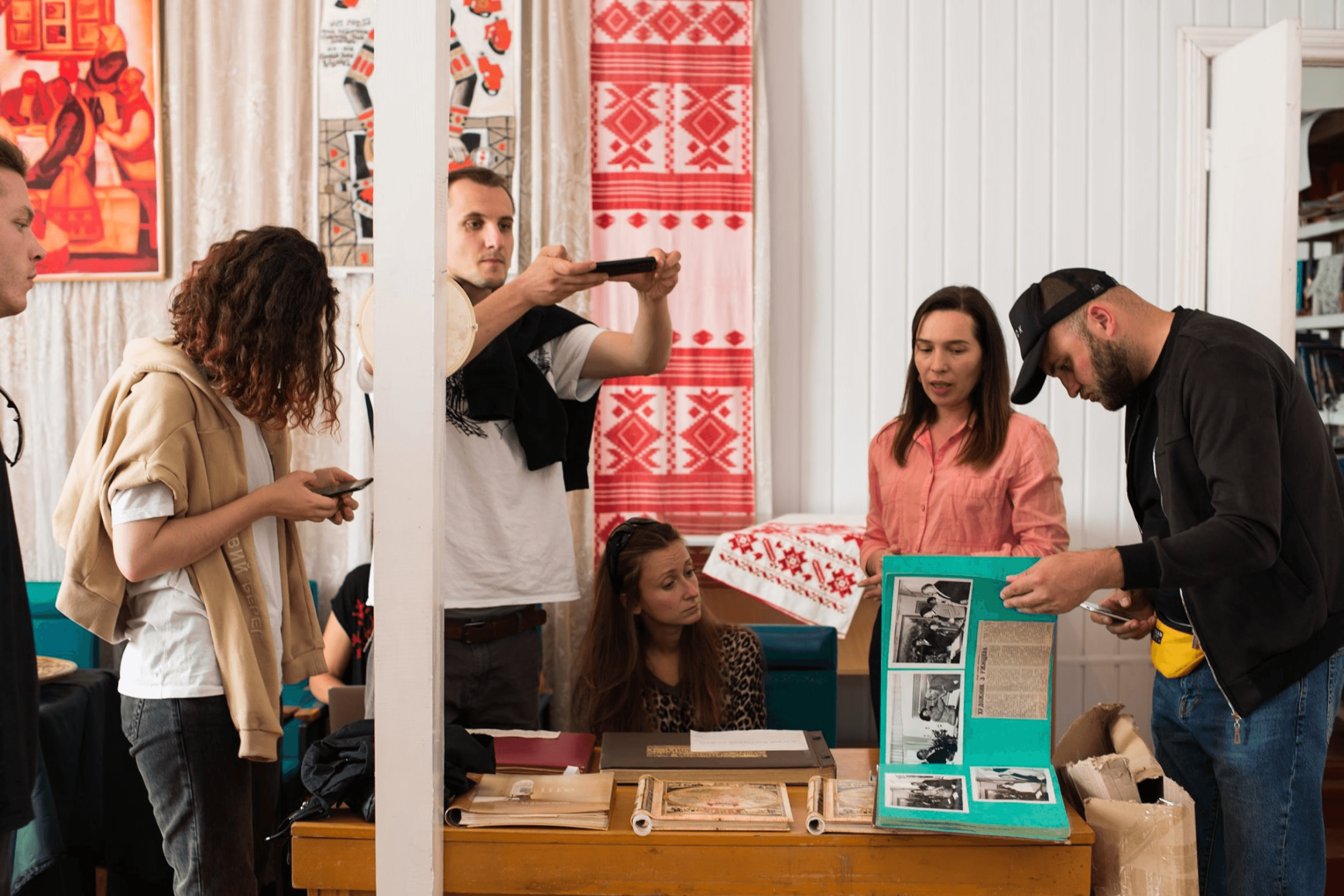
Photo: “The Museum is Open for Renovation” / Facebook / YB 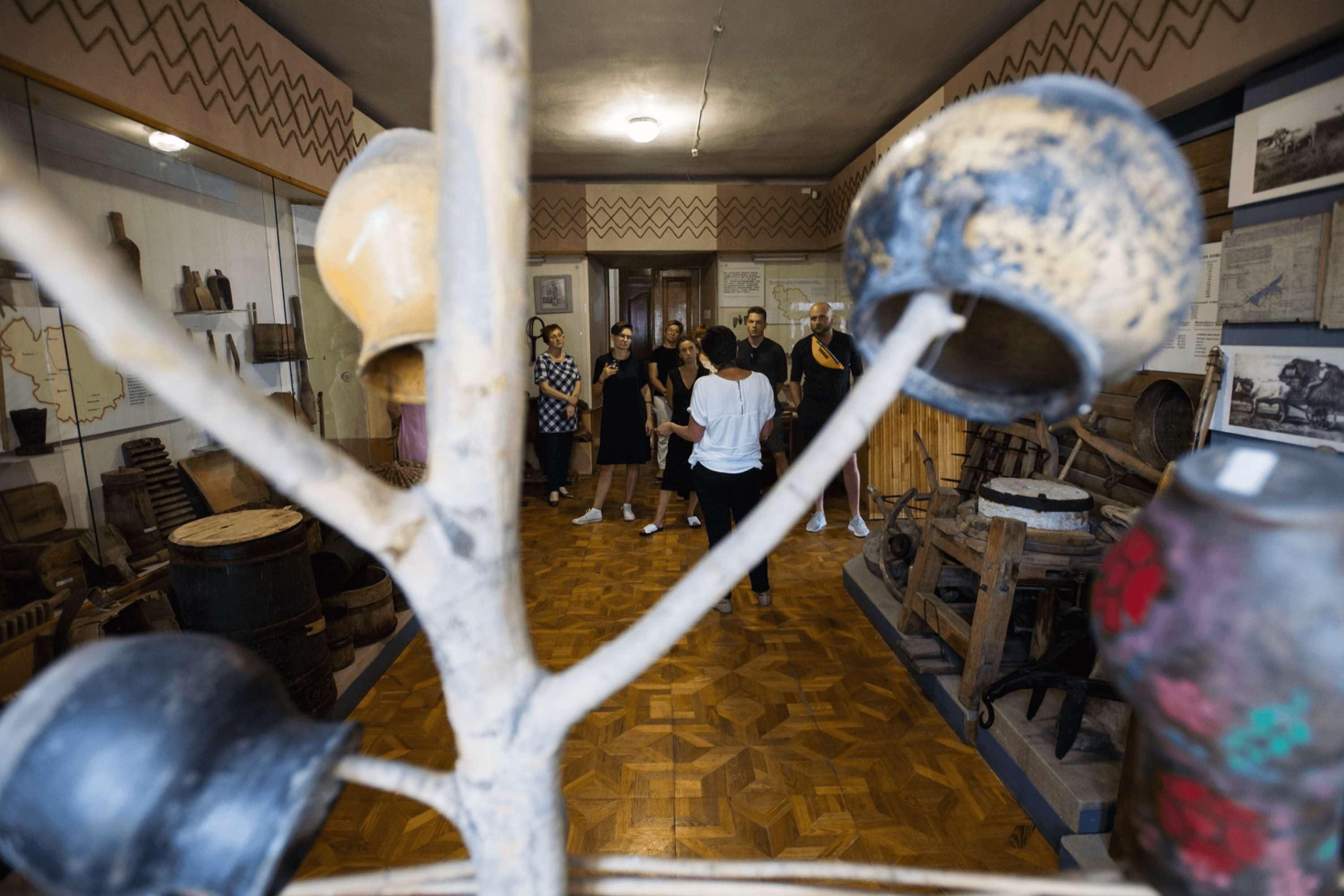
Photo: “The Museum is Open for Renovation” / Facebook / YB 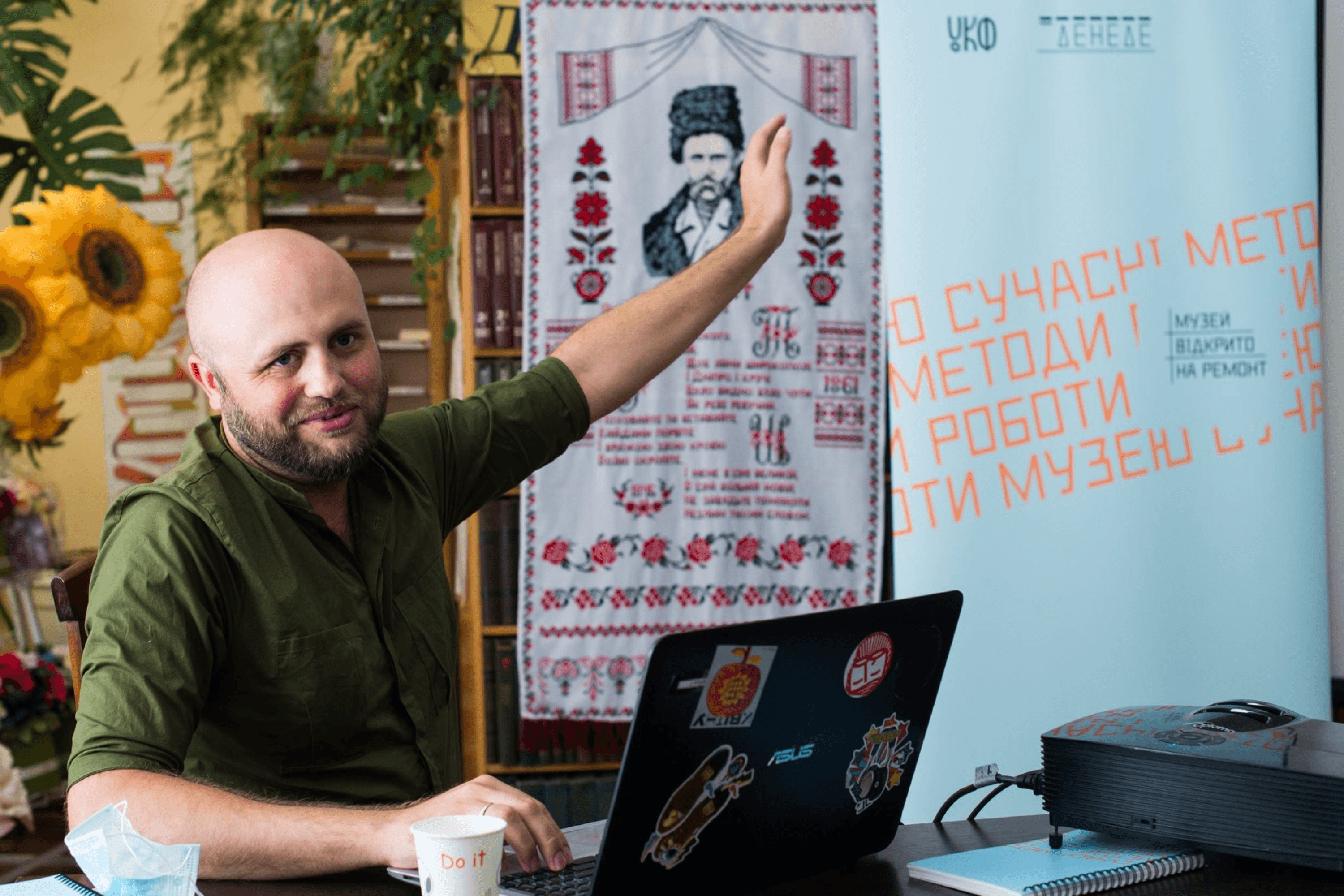
Photo: “The Museum is Open for Renovation” / Facebook / YB 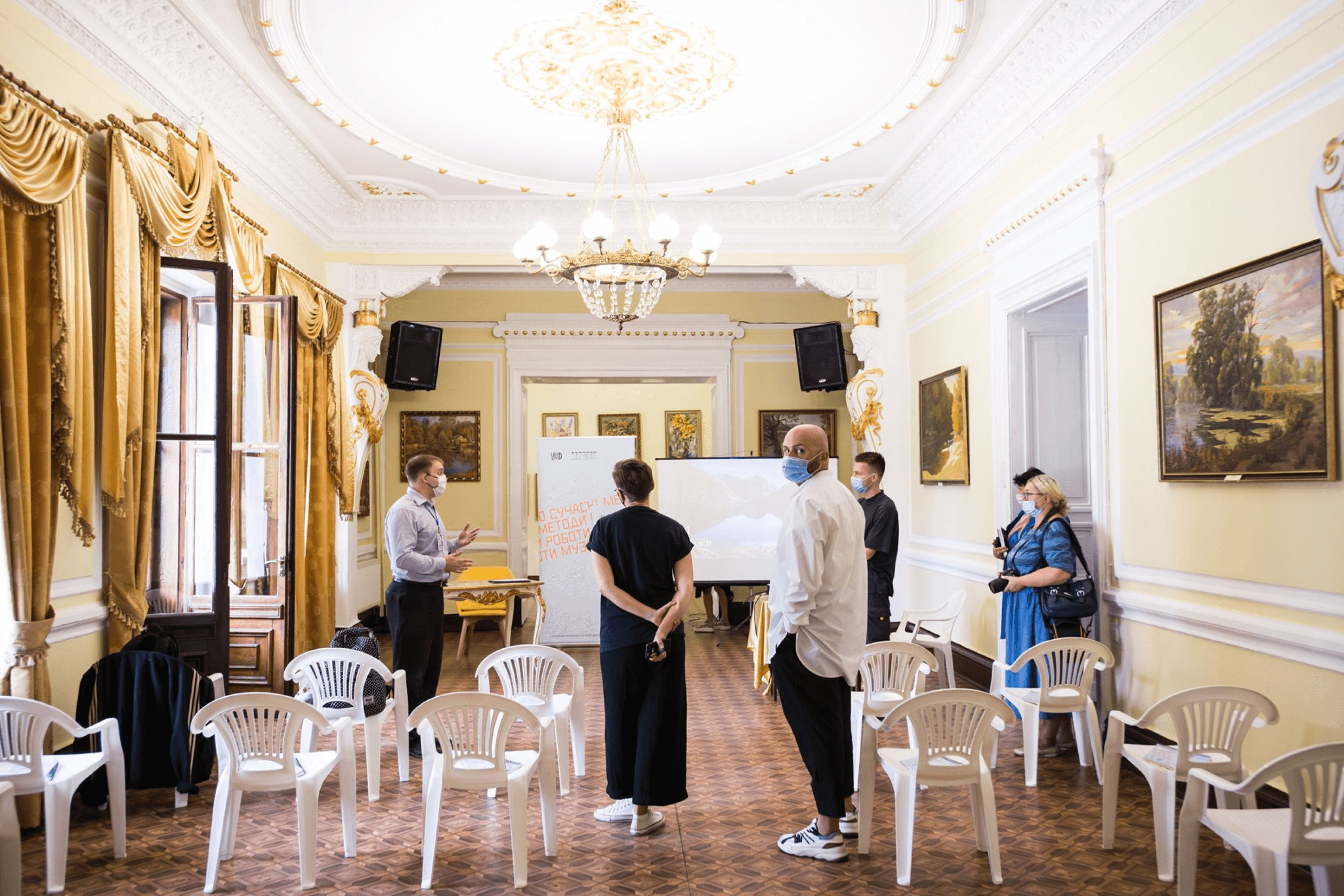
Photo: “The Museum is Open for Renovation” / Facebook / YB
Of all his endeavors, Leonid speaks of the Novoaidar museum with a haunting affection. There, his team had curated a vivid exhibition of local Ukrainian folk costumes. Leonid had even donated his personal collection of wax wedding wreaths, delicate relics from the late 19th to mid-20th centuries. The display was so striking it immediately drew the ire of the Russian soldiers who occupied the town in March 2022. In the first days of the occupation, they replaced the exhibition with Russian traditional costumes ordered from the Hermitage.
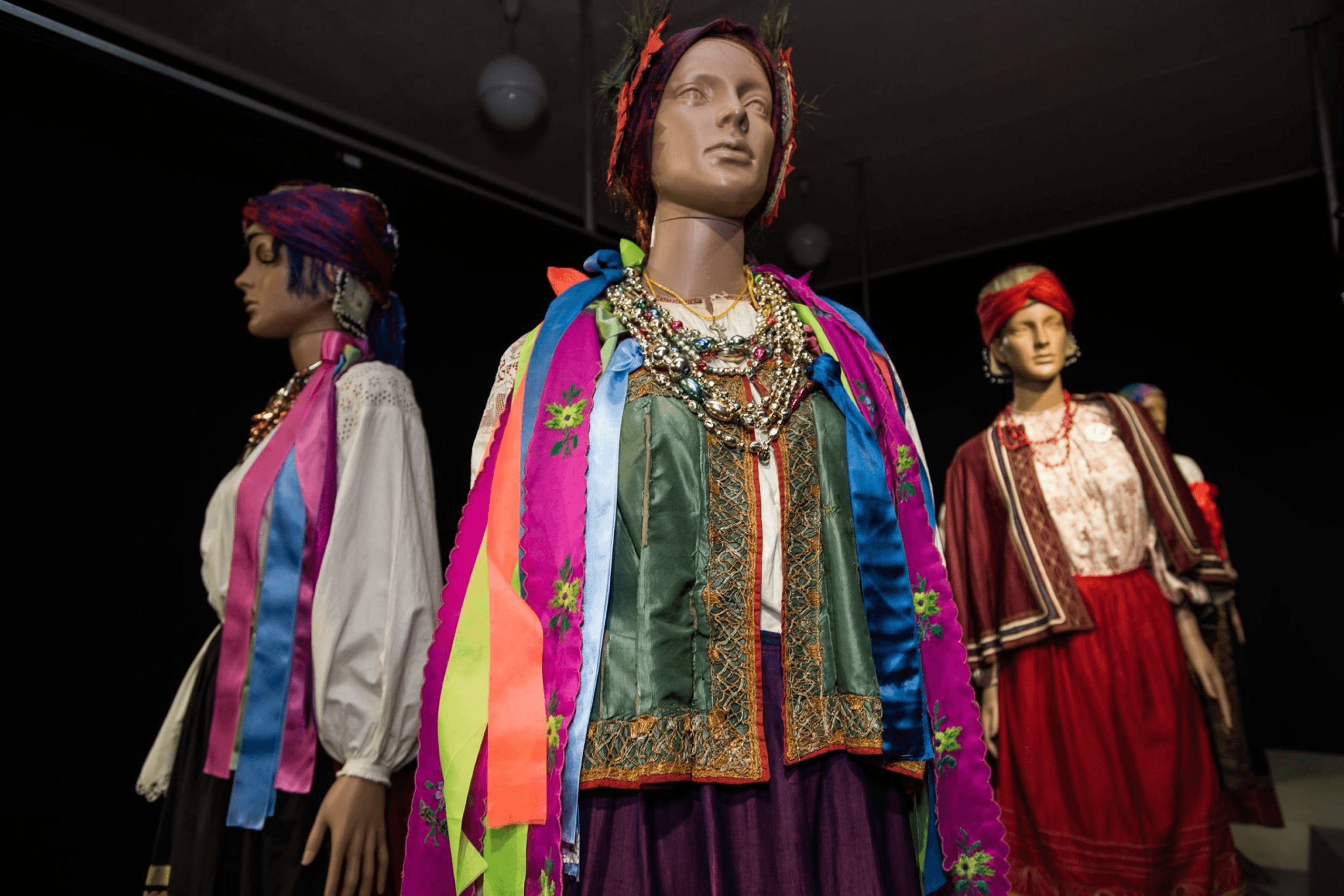
An exhibition of traditional Ukrainian costumes from the Novoaidar region, created with the participation of activists from "DE NE DE". Photo: “The Museum is Open for Renovation” / Facebook / YB 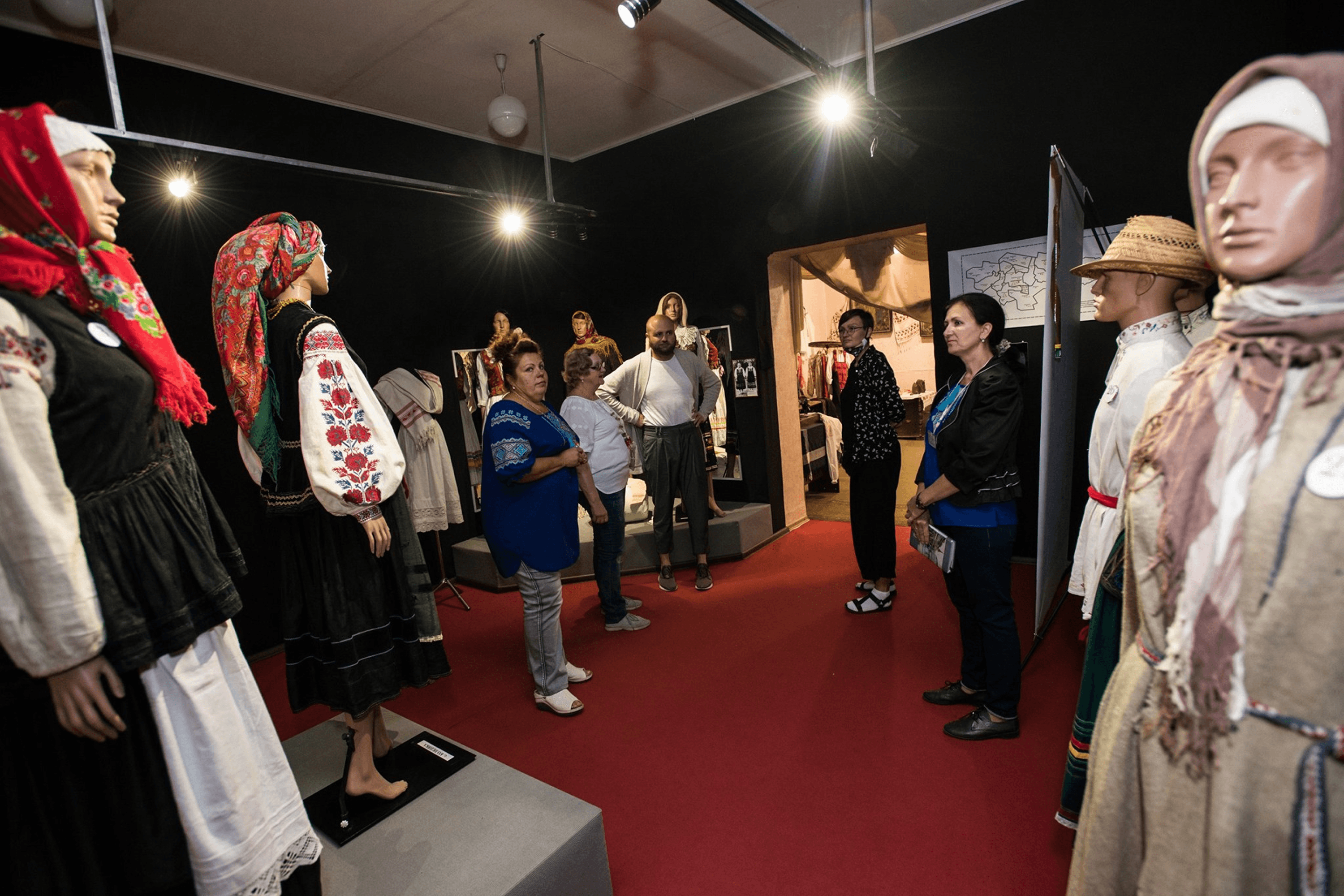
Photo: “The Museum is Open for Renovation” / Facebook / YB
Yet, it was “DE NE DE” that led Leonid to his most significant discovery: Olena Zaretska, the granddaughter of the legendary “Sixtiers” Alla Horska and Viktor Zaretskyi. They first met at the “Vitryak” (Windmill) restaurant, home to the only surviving mosaic by the iconic couple in Kyiv. Not long before, the owner had unceremoniously hidden the masterpiece behind a wall of drywall to make room for the restaurant’s signage. Leonid discovered the erasure while surveying the city’s monumental art and successfully negotiated with the owner to unveil the work once more.
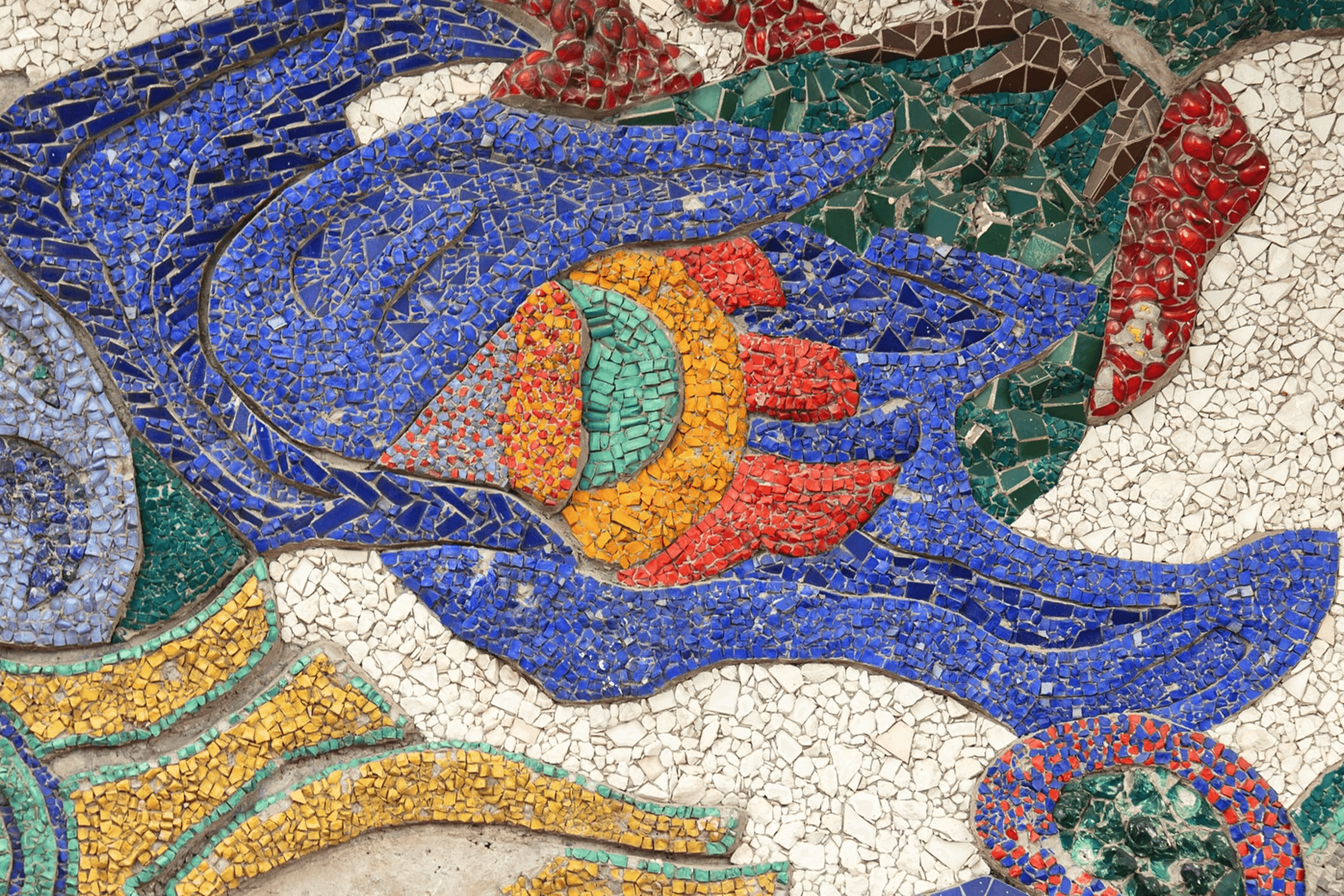
Fragments of a mosaic by Alla Horska and Viktor Zaretskyi at the restaurant “Vitryak” (Windmill). Photo: Olena Borysova / Instagram / YB 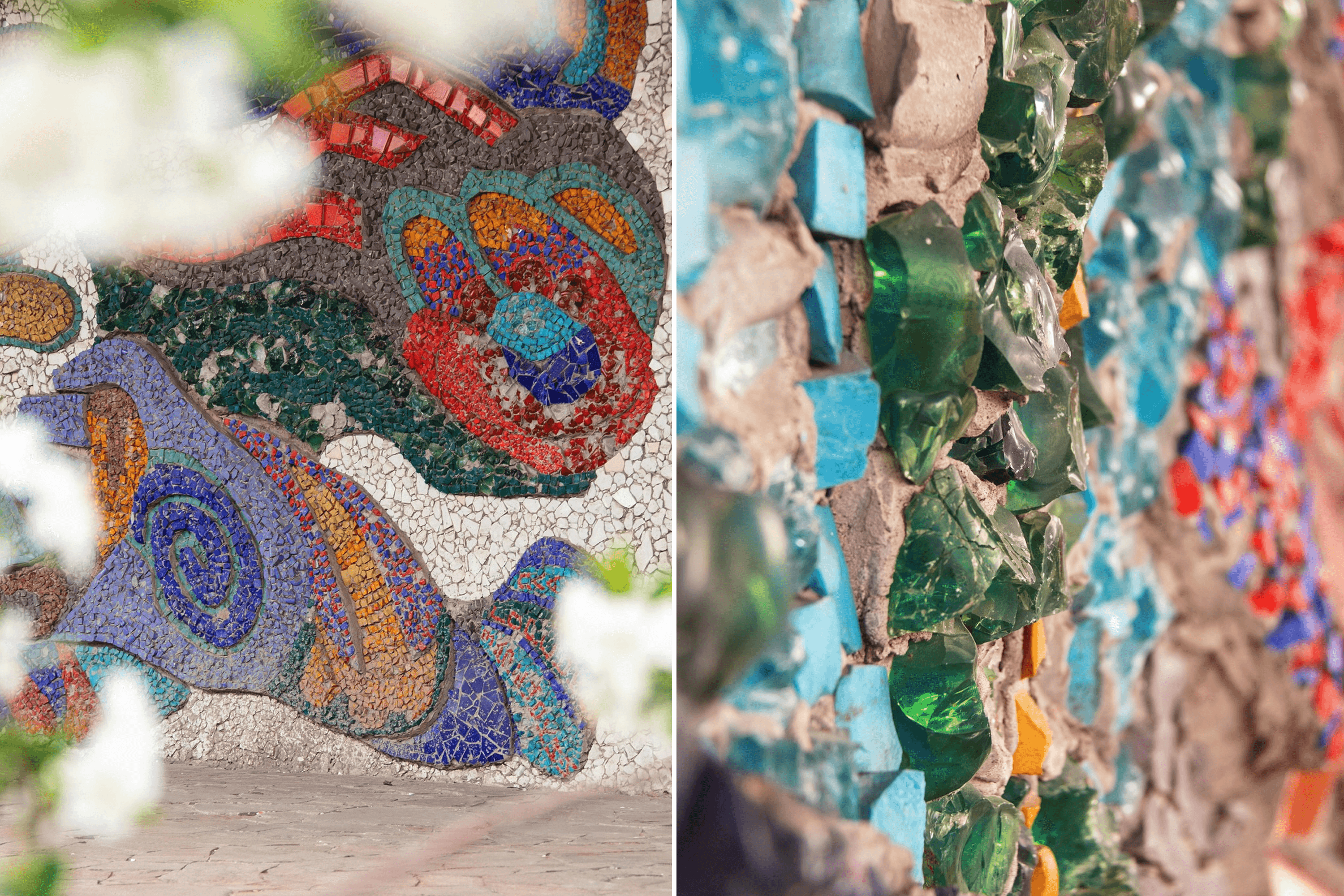
Photo: Olena Borysova / Instagram / YB 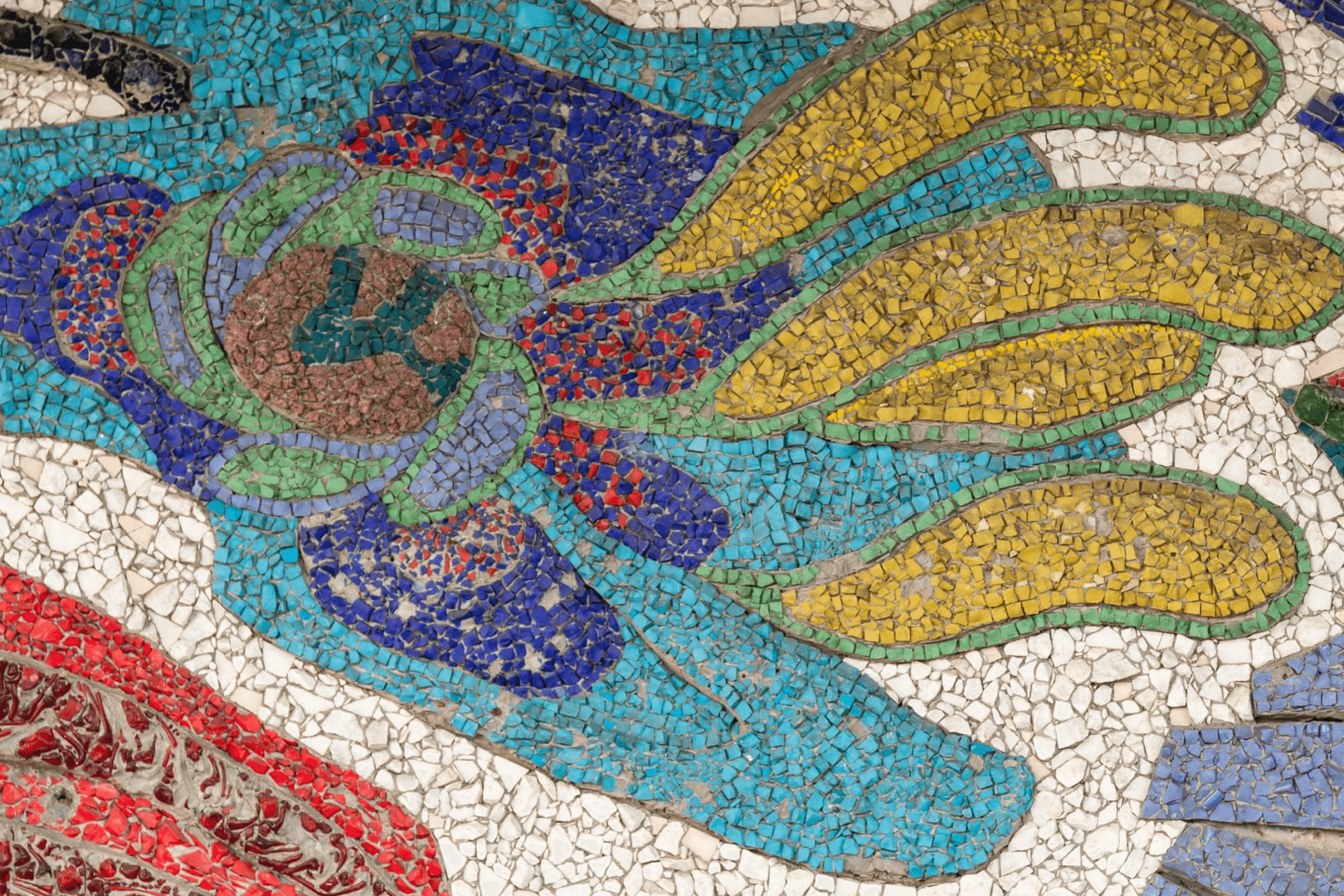
Photo: Olena Borysova / Instagram / YB 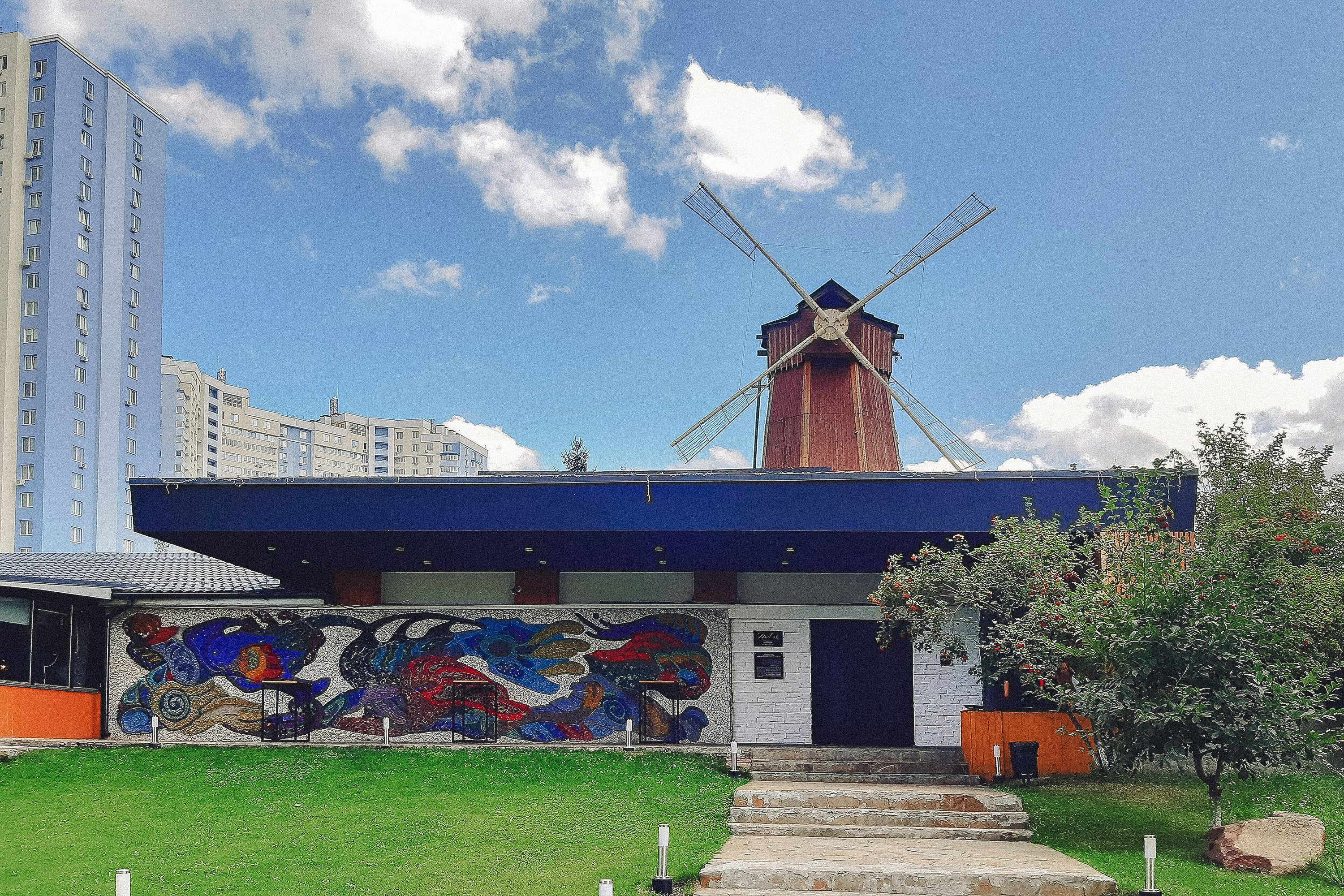
A recent photo of the "Vitryak" restaurant after the mosaic was unveiled. Photo: Kyiv is my favorite city / Facebook / YB 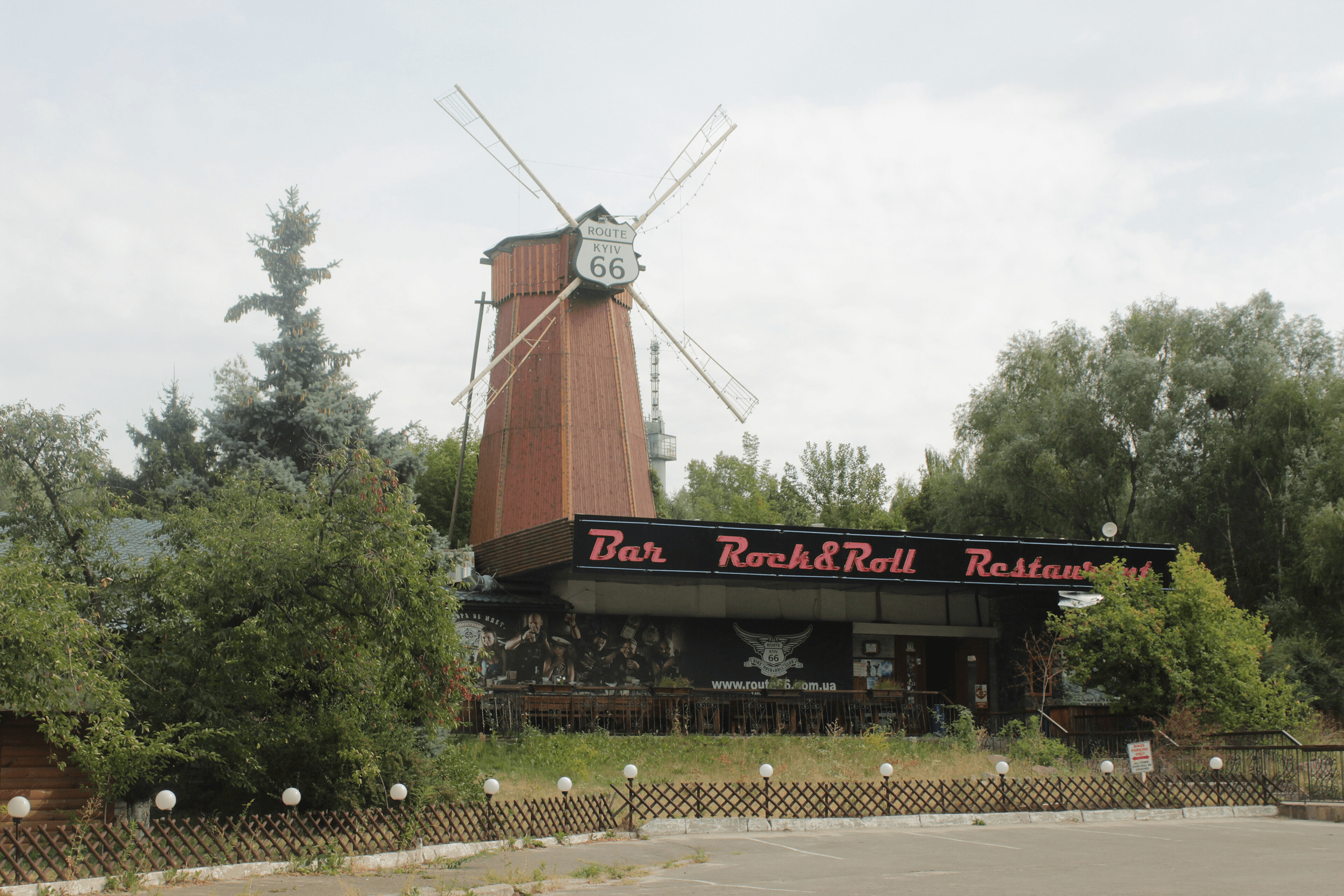
The restaurant, with a poster obscuring the mosaic. Photo: Kyiv is my favorite city / Facebook / YB 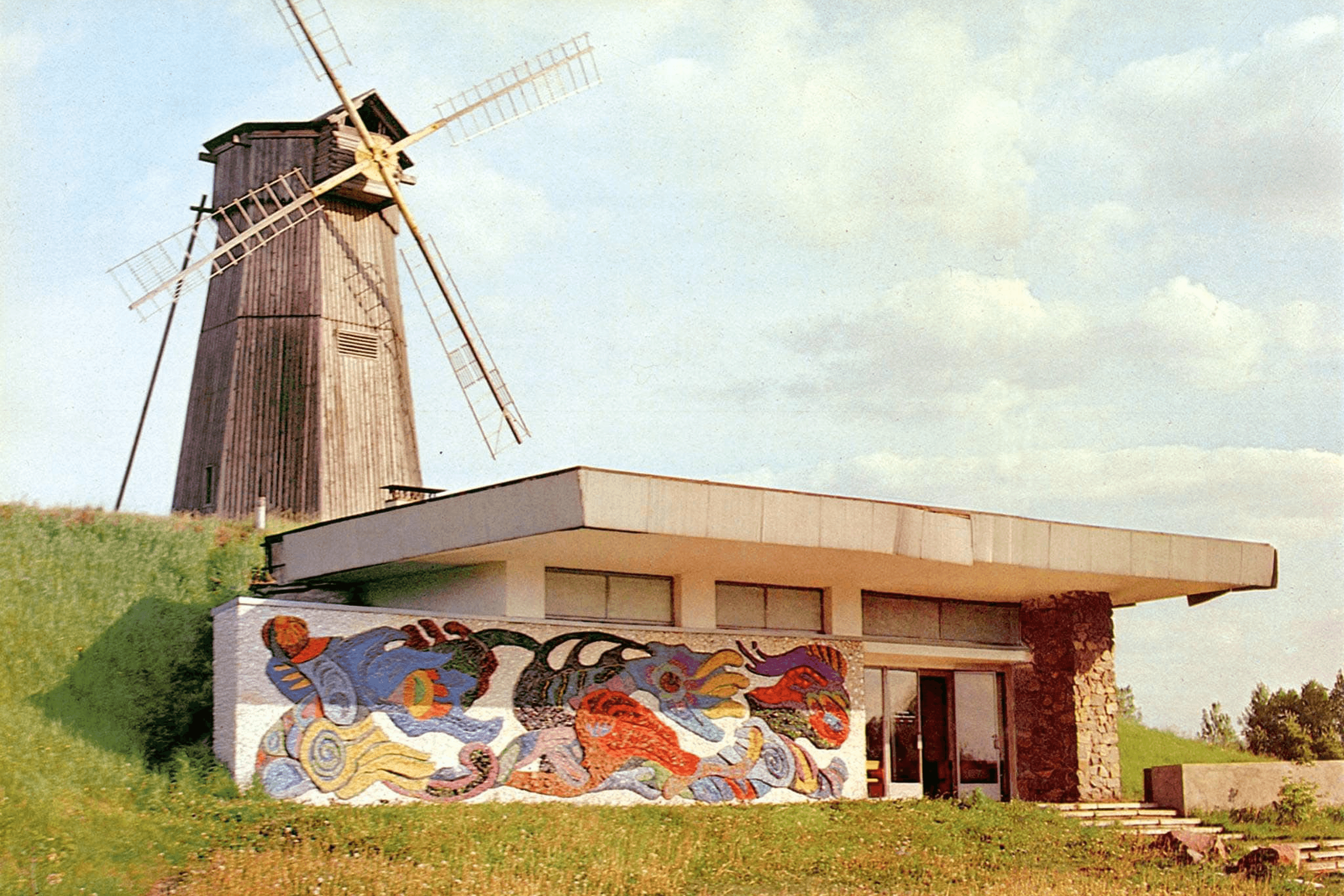
"Vitryak" was built in 1967. Photo: Kyiv is my favorite city / Facebook / YB
It was during these efforts that Olena revealed the existence of a massive family archive—a hidden trove of sketches, paintings, and personal letters. Her father, Oleksii, had kept it shielded for decades; it was only after his death that the doors were finally opened.
“Cracking open that archive was like unearthing Tutankhamun’s tomb,” Leonid says, gesturing widely to convey the magnitude of the find. “Those materials brought absolute clarity to things I could previously only guess at regarding Horska and Zaretskyi’s work.”
Leonid is a devotee of 20th-century monumental art—a realm where Horska and Zaretskyi stood as titans. The archive proved to be a goldmine for Ukrainian cultural history. For one, it decoded the abstract mosaic at “Vitryak,” revealing it as a depiction of a young woman caught in a dance between two competing suitors. It also shed light on the couple’s intimate circle, including their deep-seated friendship with the world-renowned artist Maria Prymachenko, famous for her vibrant paintings of “wonder beasts.”
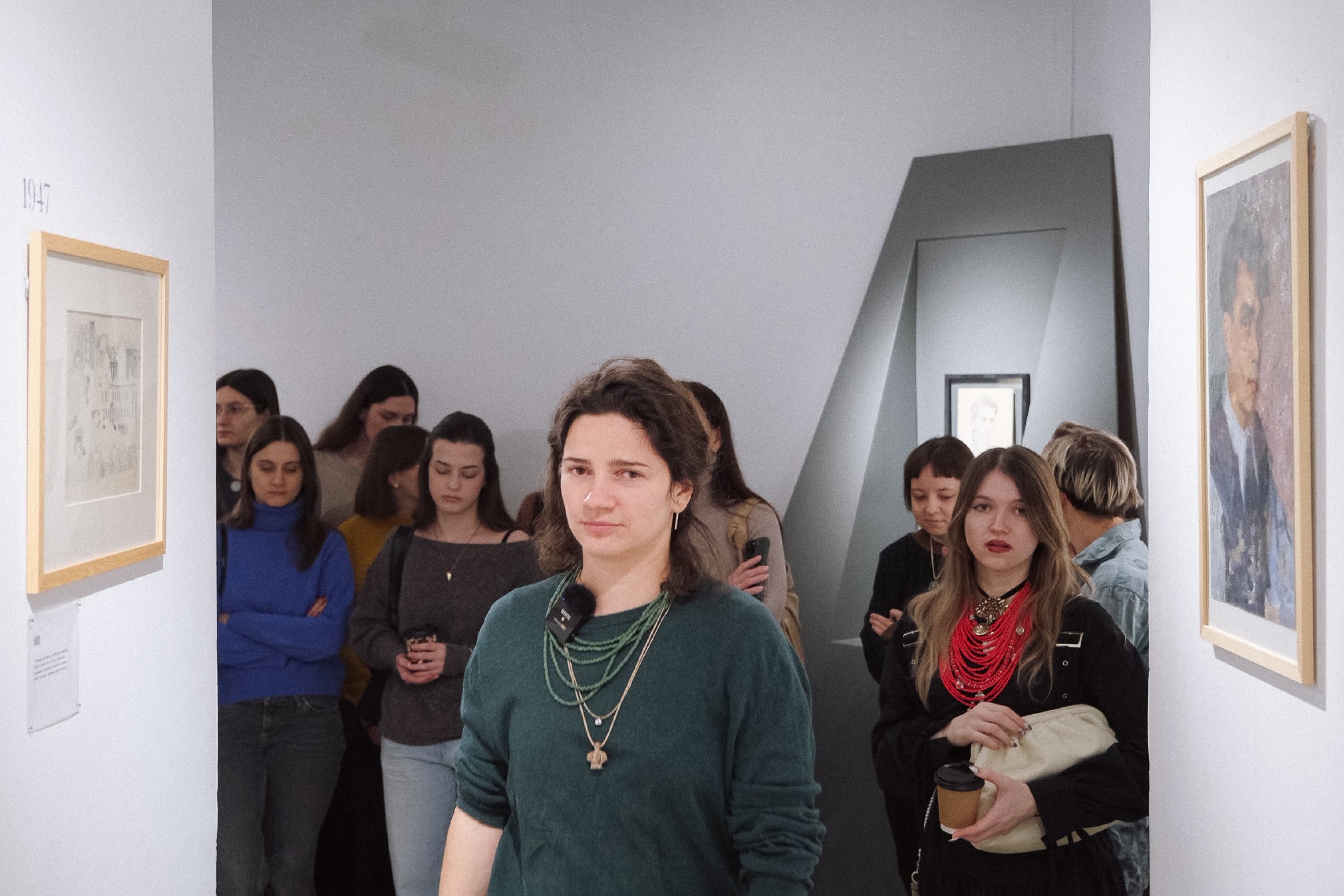
Leonid Marushchak and Olena Zaretska organized the exhibition “Zaretskyi’s Garden.” Photo: Lviv Art Center / Facebook / YB 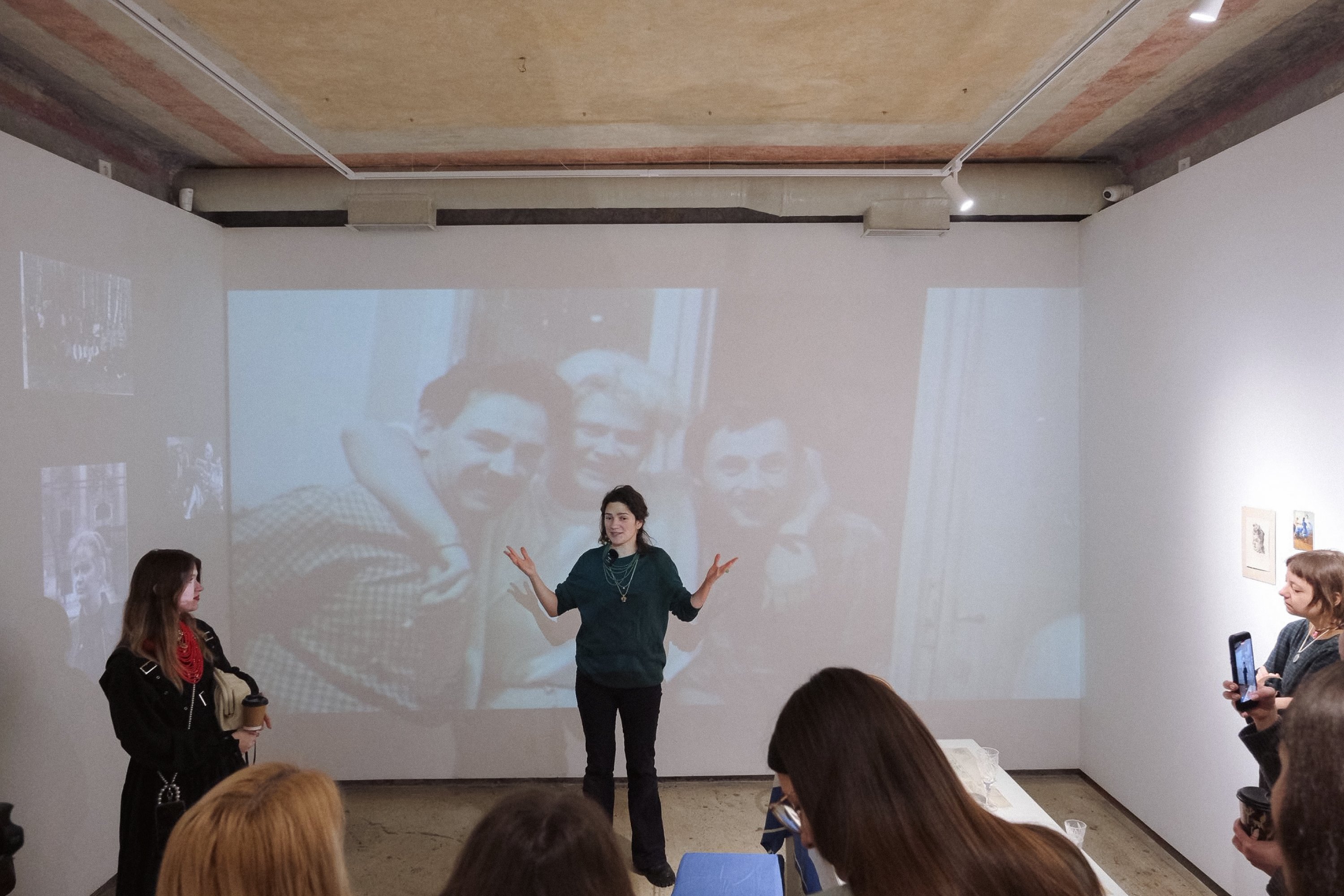
Olena Zaretska leading a tour of "Zaretskyi's Garden" shortly before the exhibition's closing. Photo: Lviv Art Center / Facebook / YB 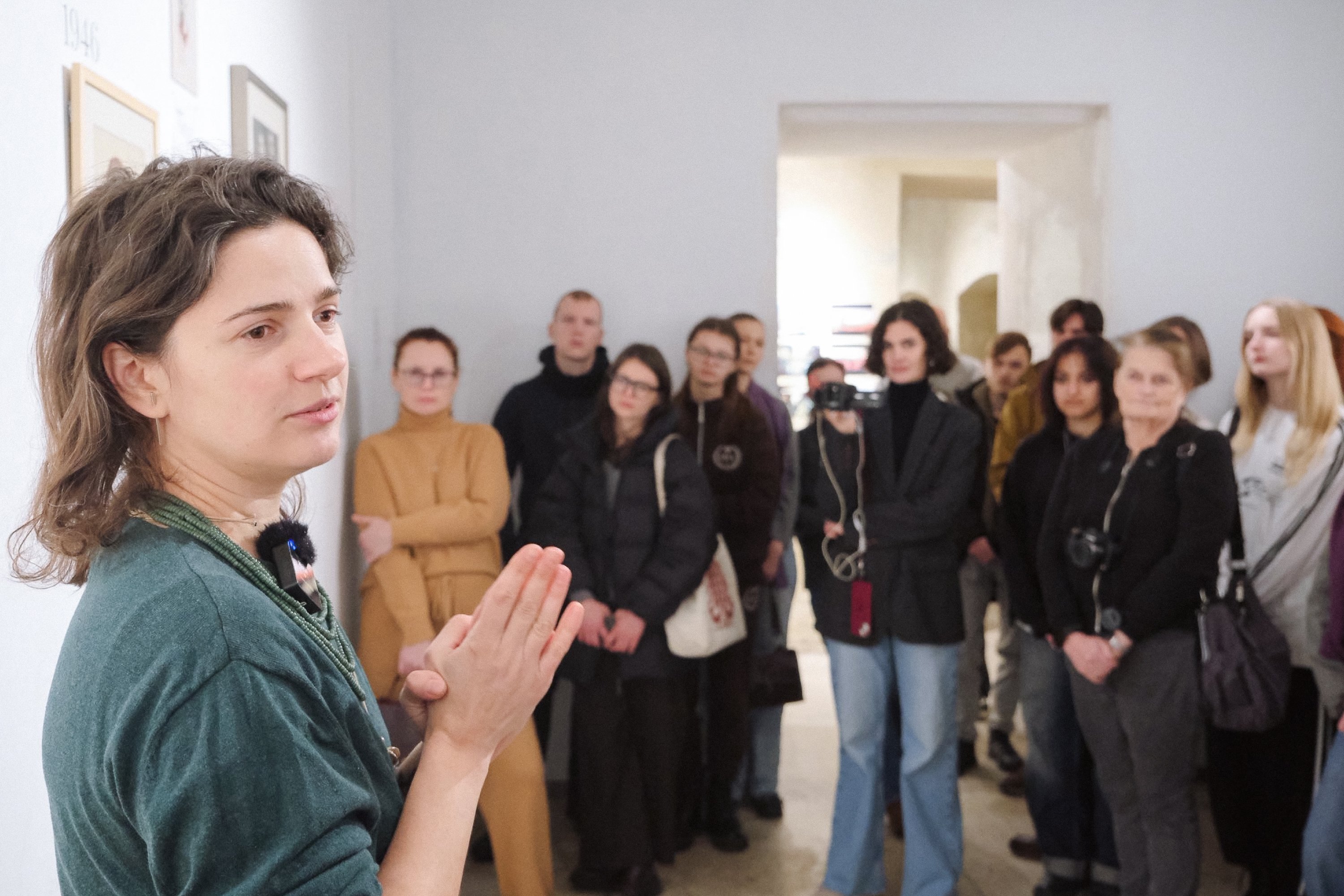
Photo: Lviv Art Center / Facebook / YB 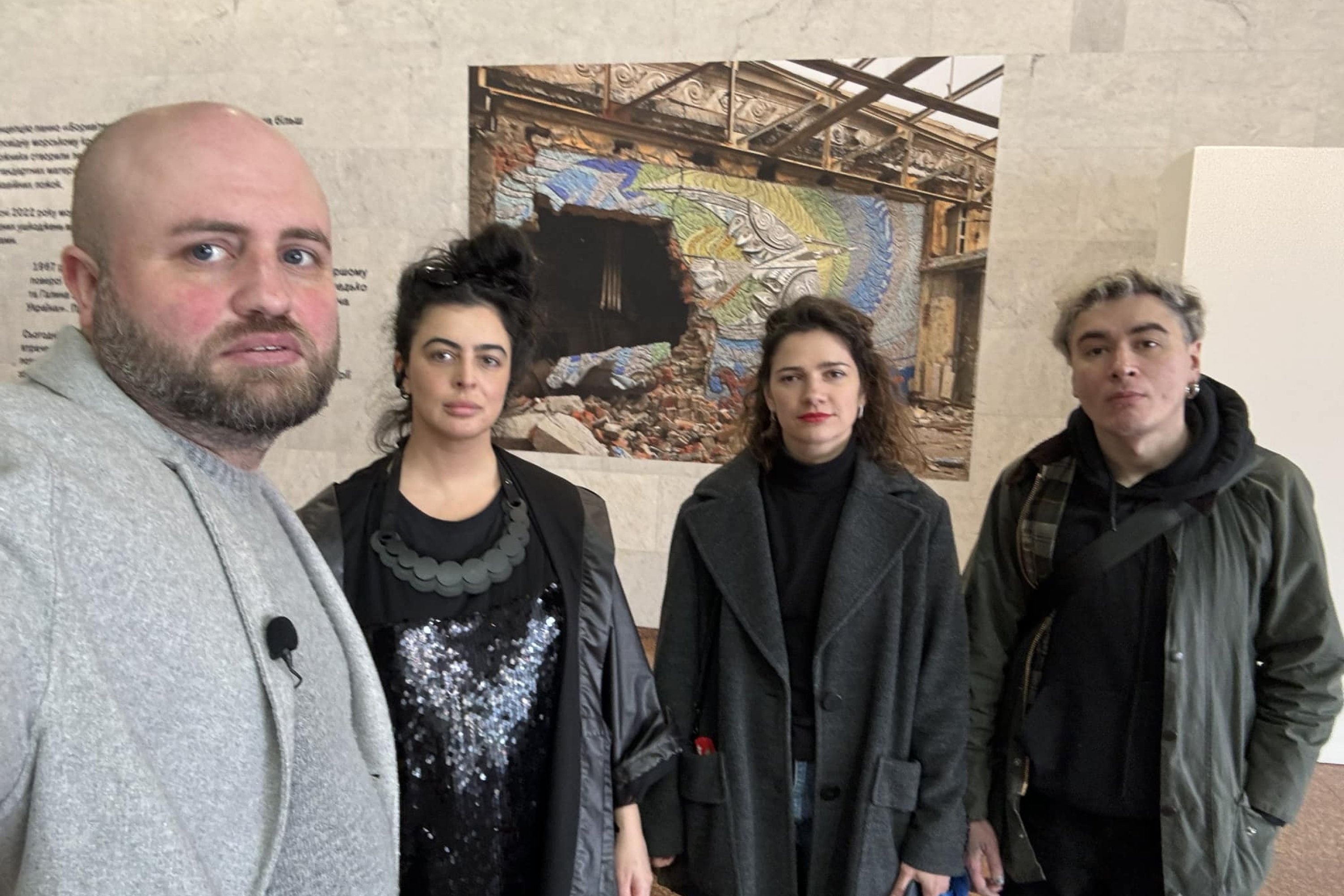
Photo: Leonid Marushchak / Facebook / YB
3
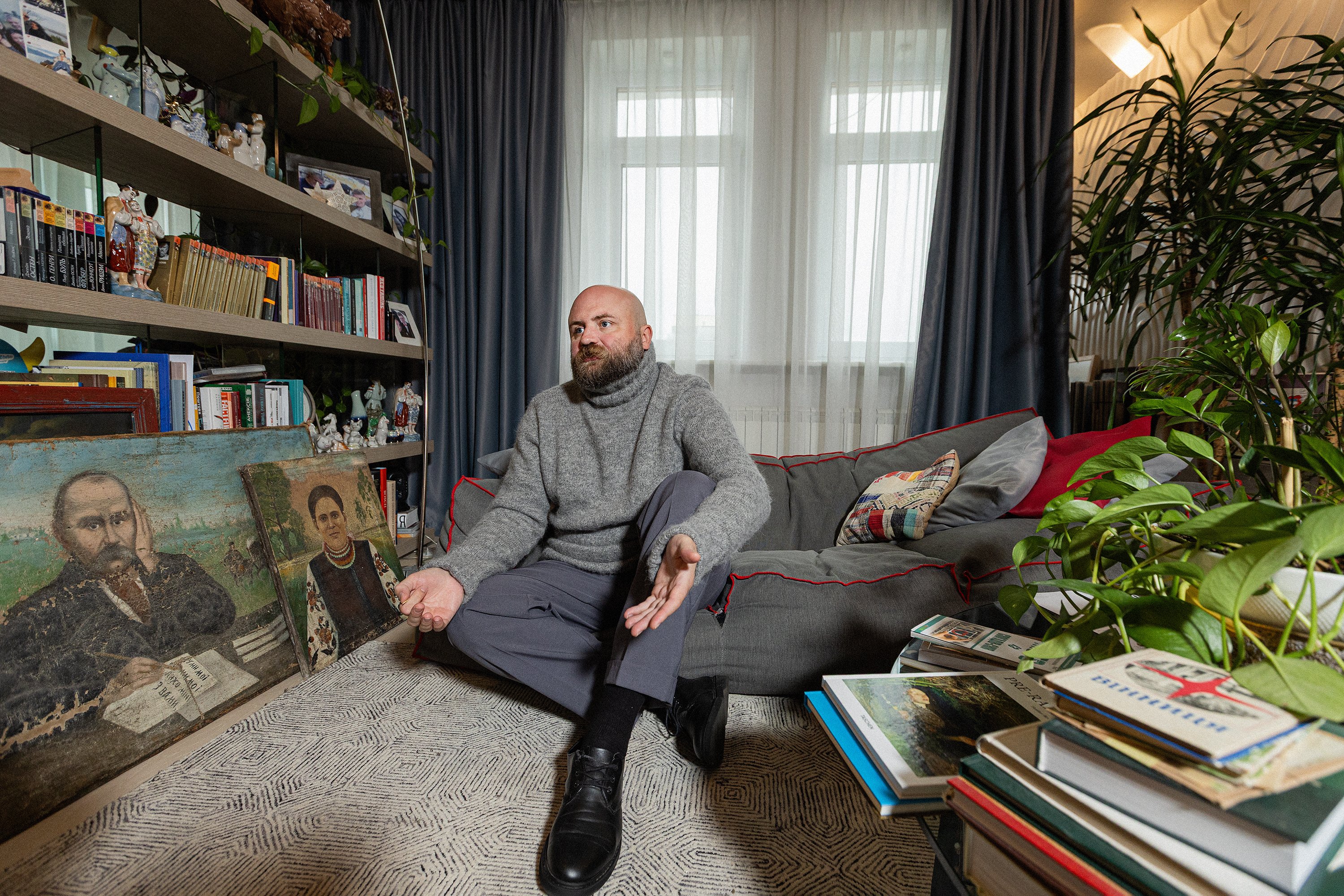
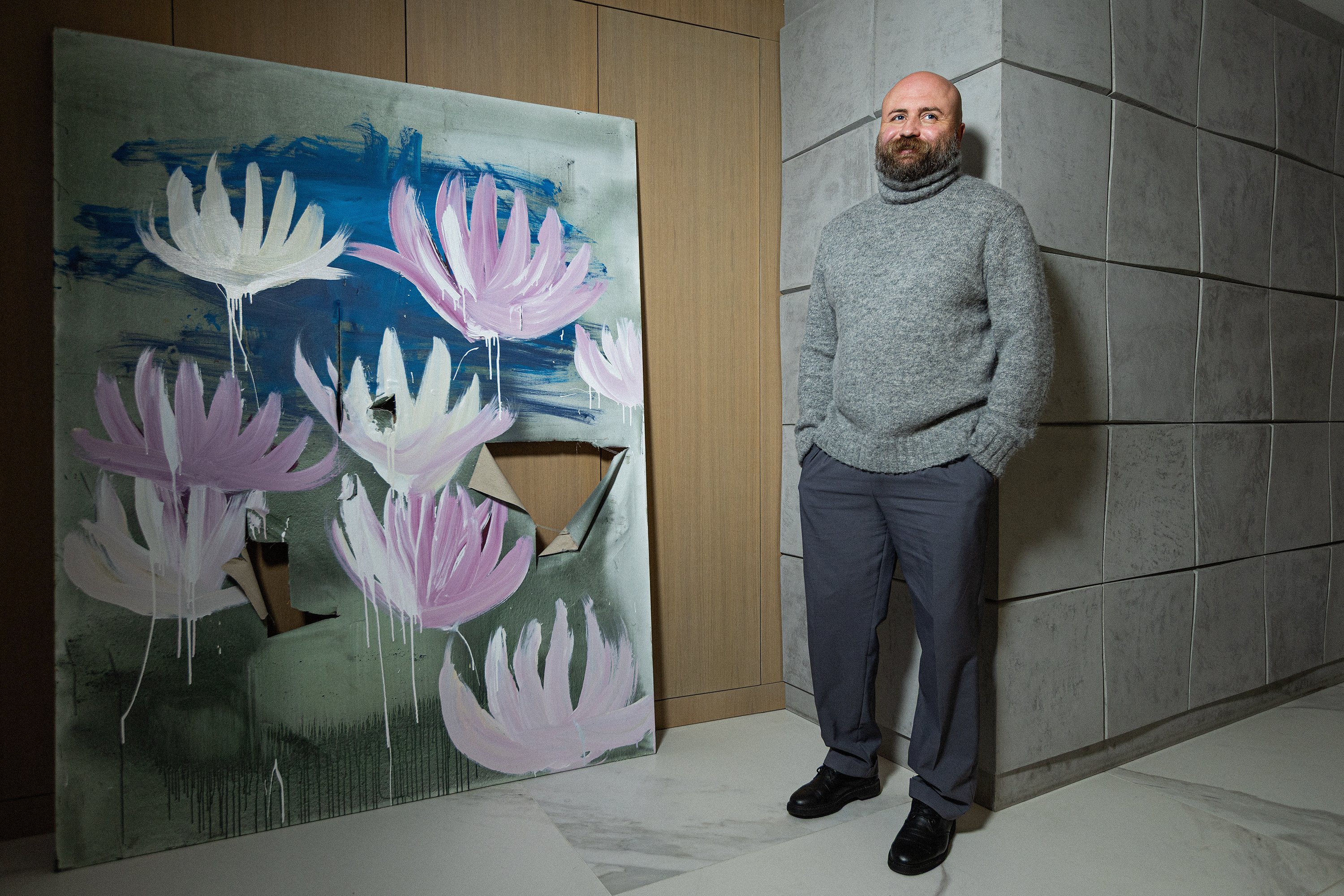
Leonid lives in Podil, a historic neighborhood that served as Kyiv’s cultural heart throughout the 19th and early 20th centuries. His apartment feels like a curated gallery too. In the hallway, a massive abstract canvas, nearly reaching the ceiling, leans against the wall. Inside the living room, every flat surface is teeming with history: Mamay figurines, ceramic vases, and an eclectic array of paintings.
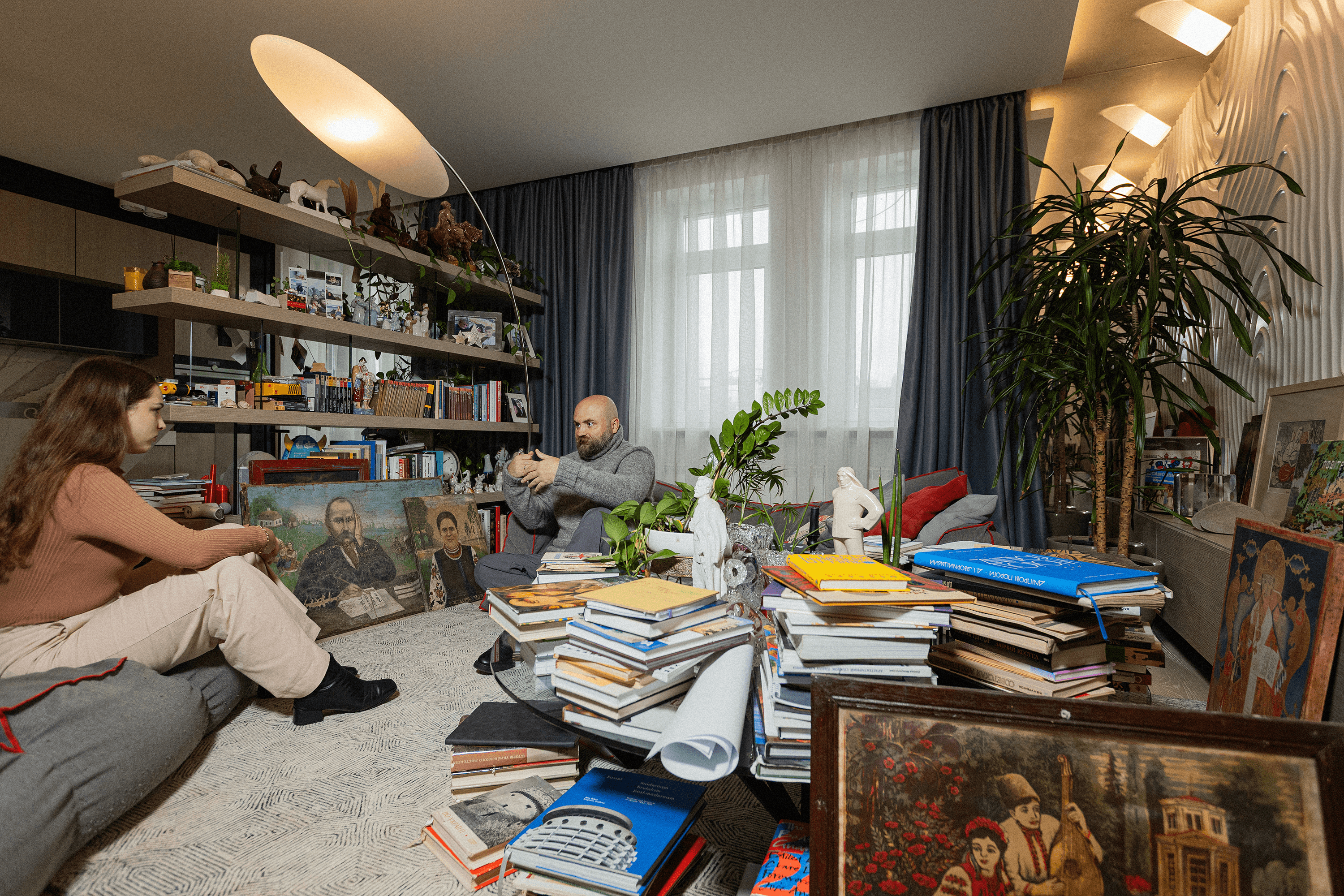
The living room of Leonid Marushchak’s apartment. Photo: Julia Weber / YB 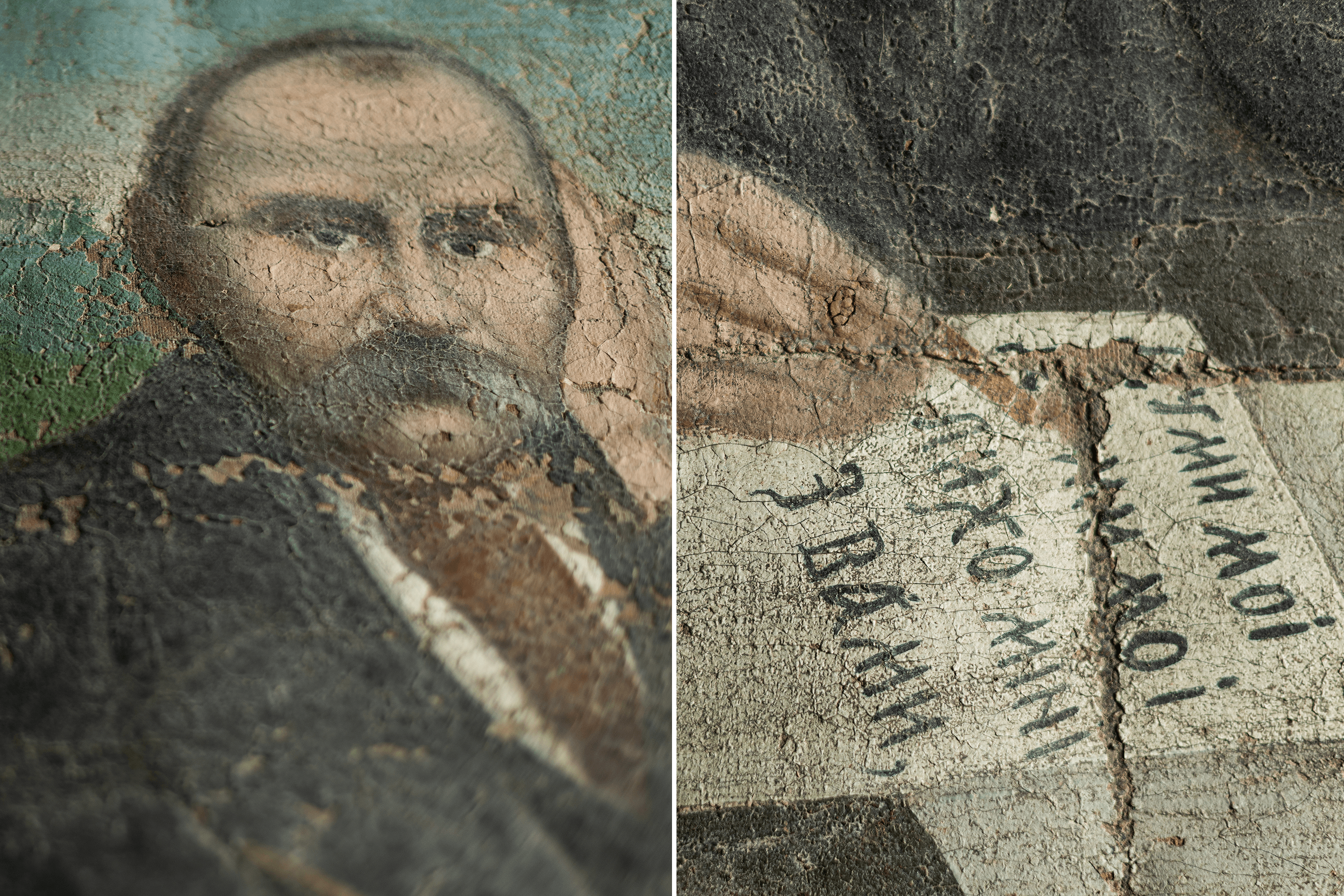
A portrait of Ukrainian writer Taras Shevchenko from Leonid’s private collection. Photo: Julia Weber / YB 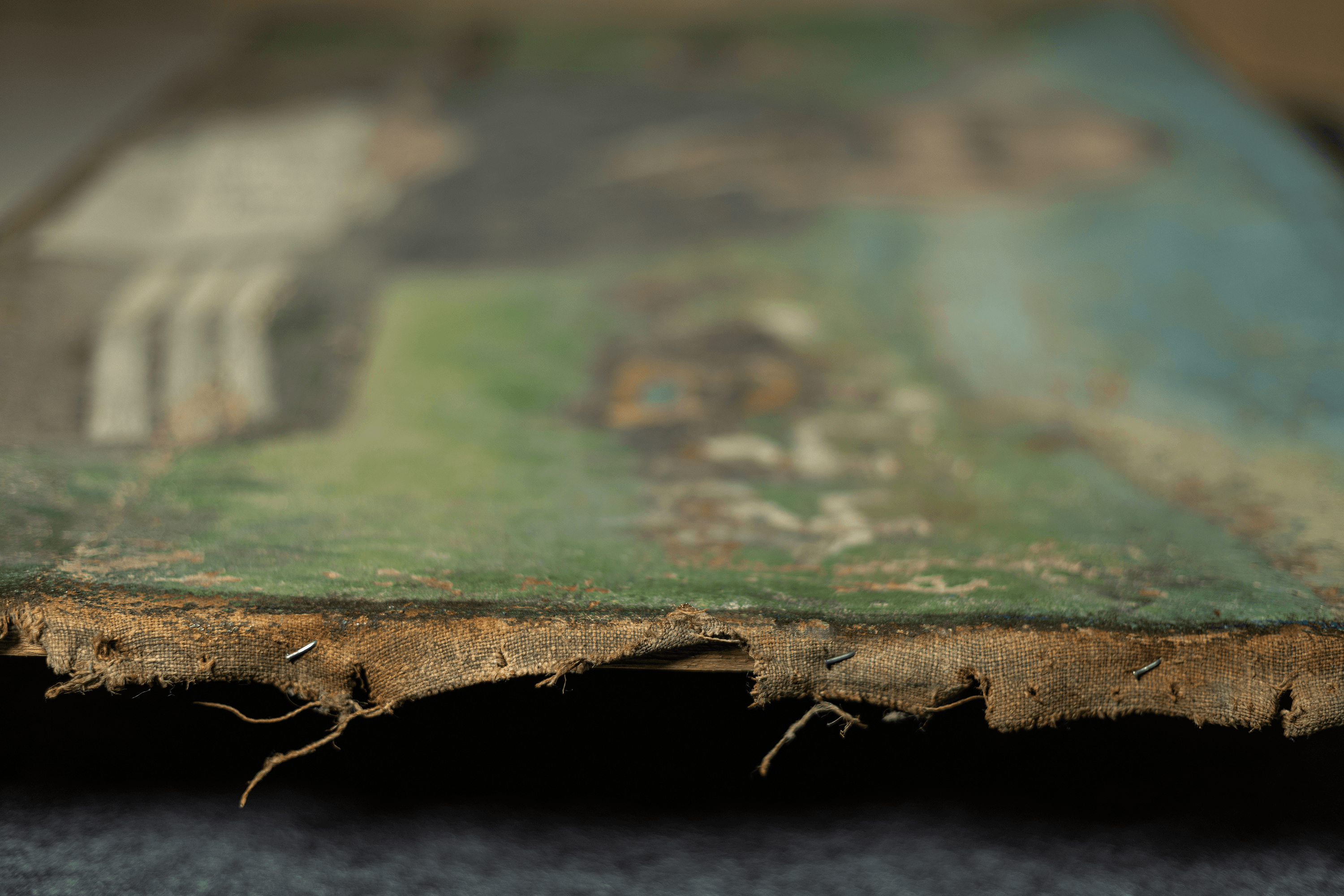
Photo: Julia Weber / YB 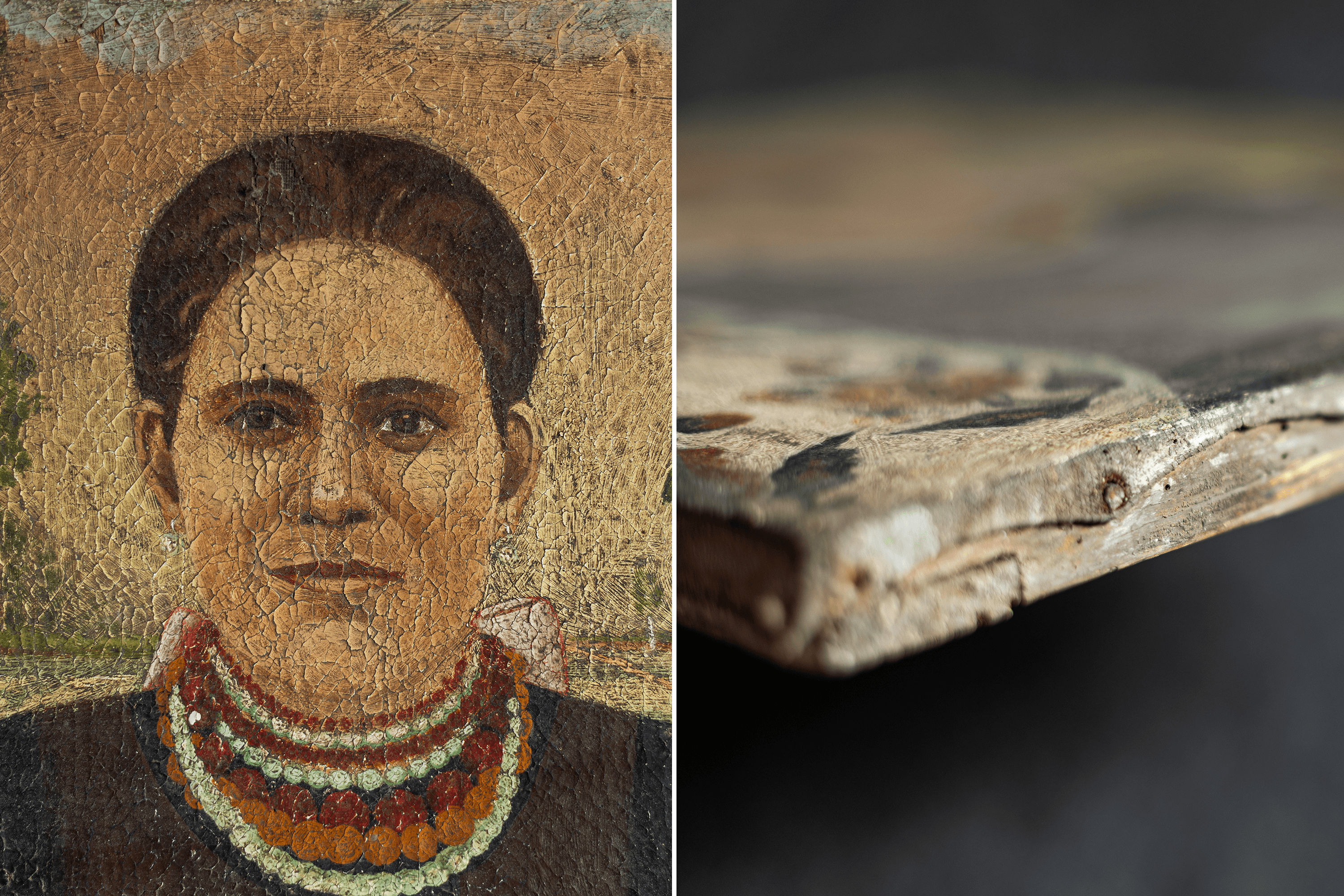
Photo: Julia Weber / YB 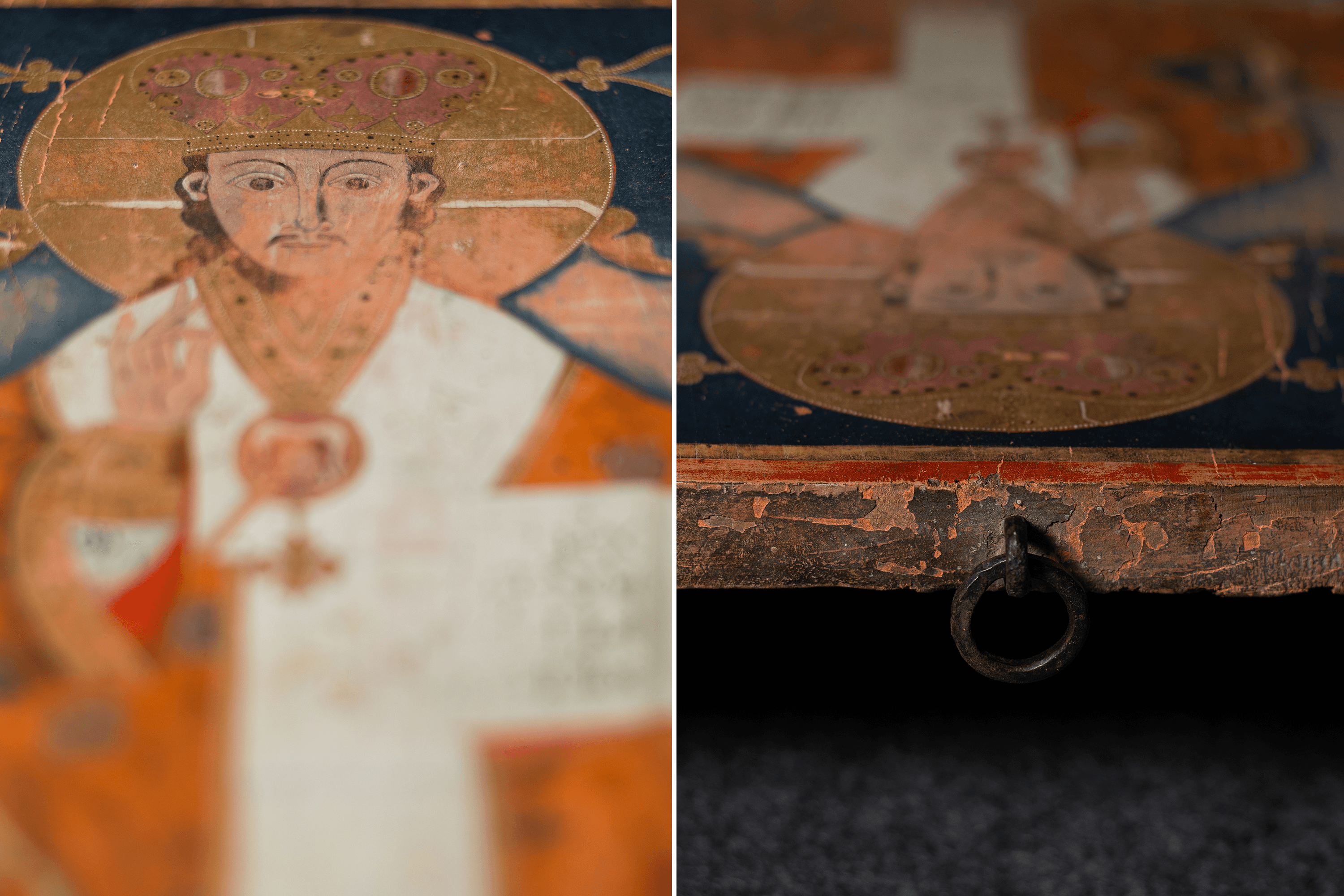
Photo: Julia Weber / YB 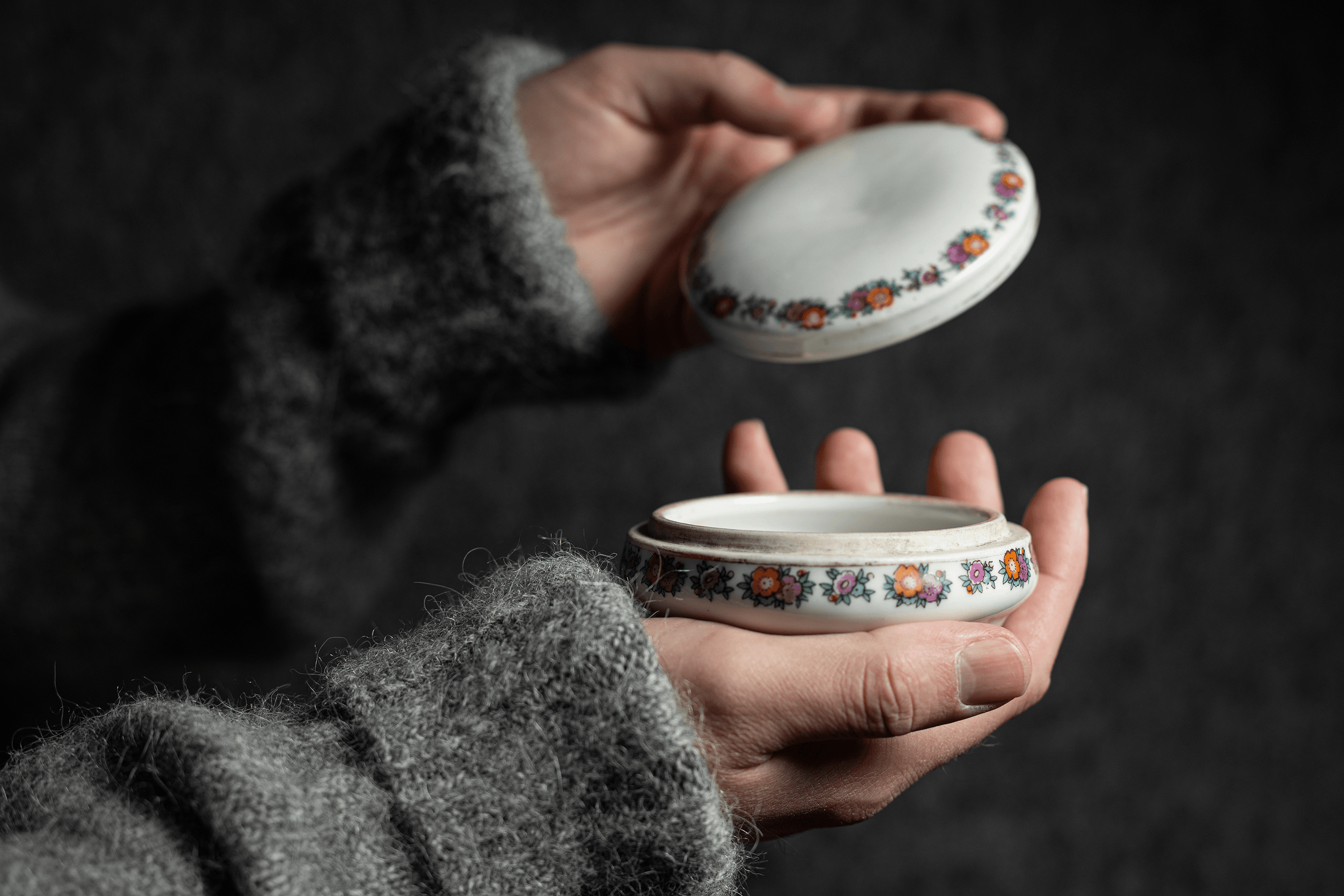
A porcelain box used by Bakhmut museum staff to hide the key to the exhibit storage. Leonid Marushchak later discovered it buried beneath a spruce tree in the museum courtyard. Photo: Julia Weber / YB
Among them hangs a self-portrait of Alla Horska, set in a wooden frame hand-carved by Viktor Zaretskyi.
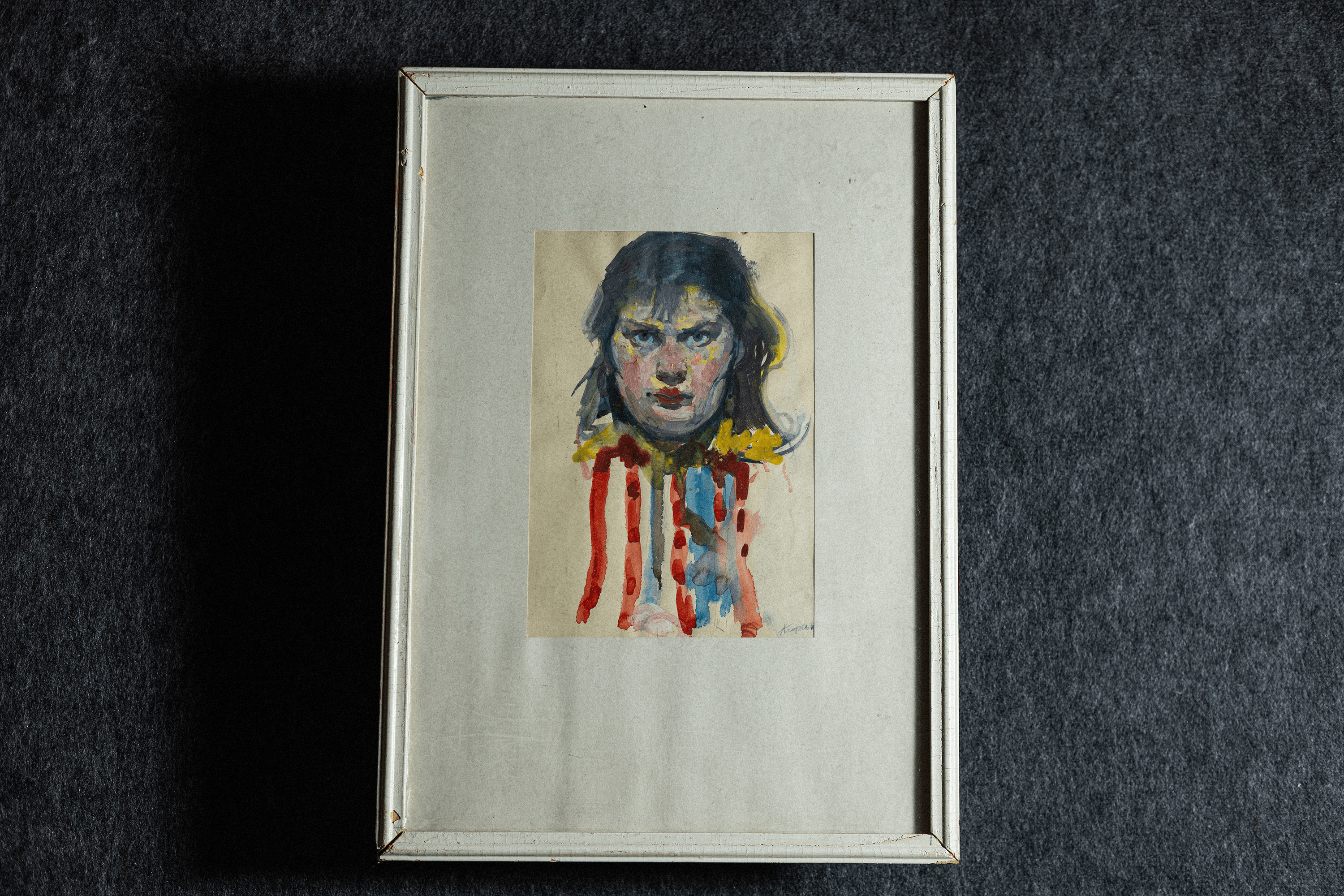
A self-portrait by Alla Horska, gifted to Leonid by Olena Zaretska; the wooden frame was made by artist Viktor Zaretskyi. Photo: Julia Weber / YB 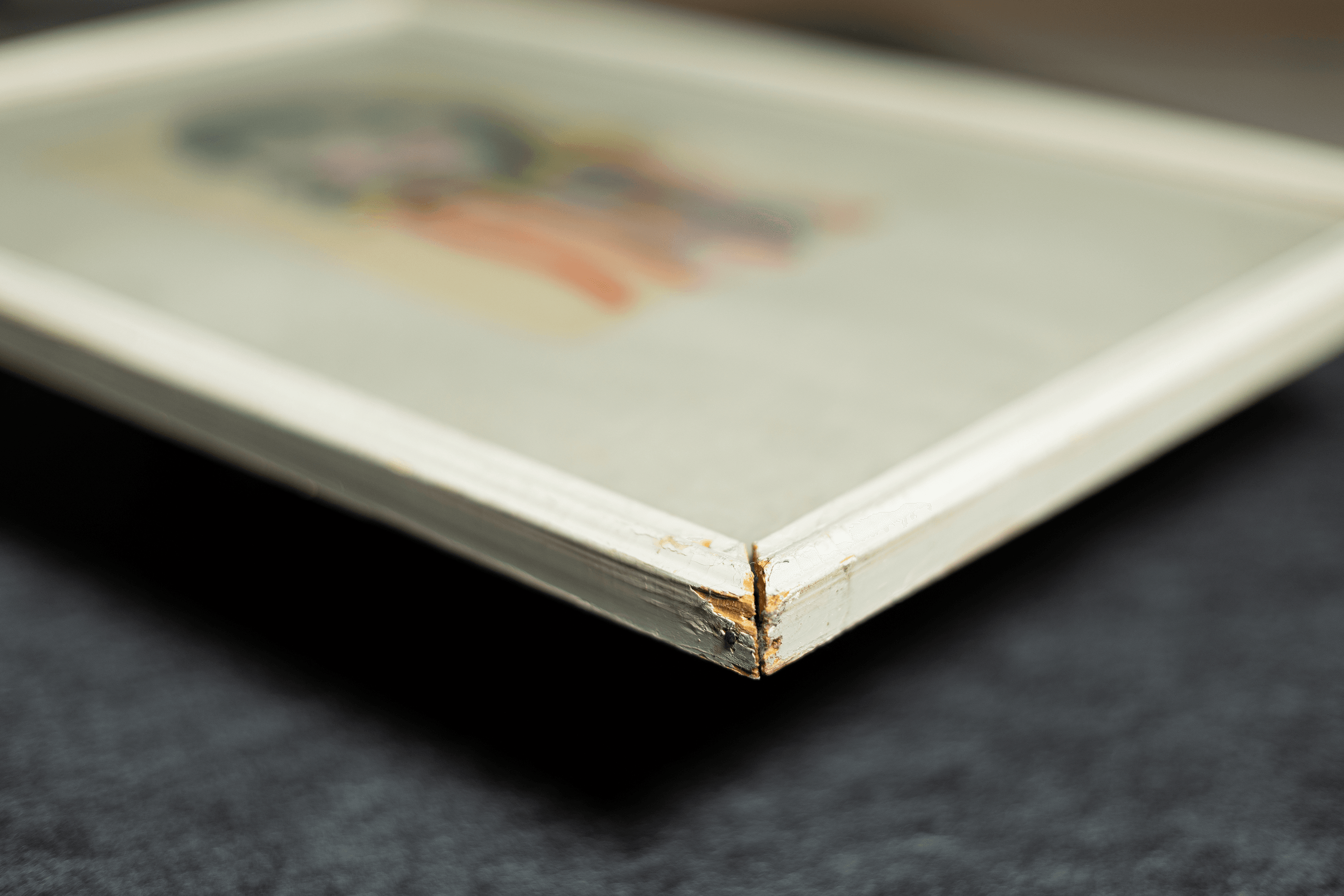
Photo: Julia Weber / YB 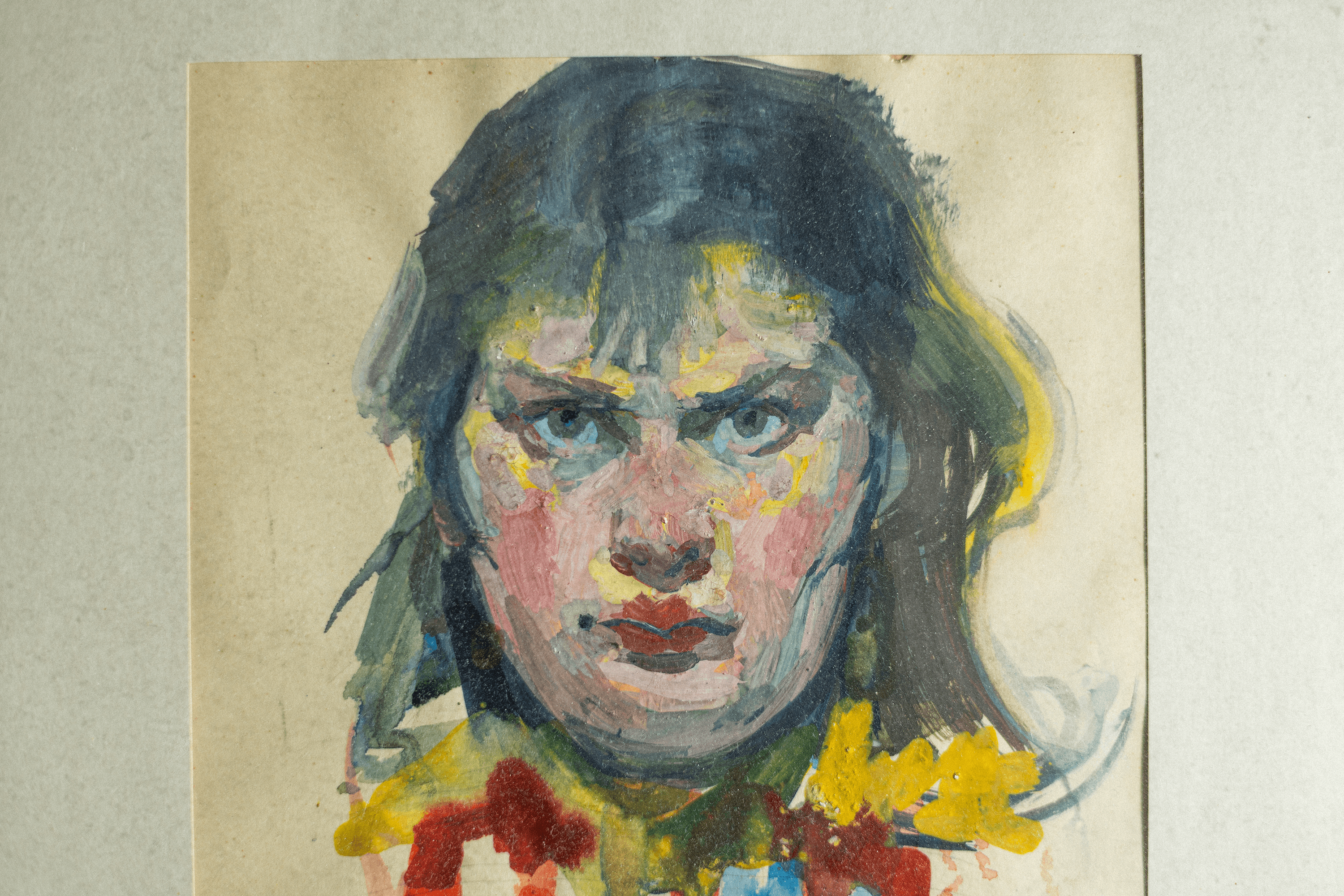
Photo: Julia Weber / YB 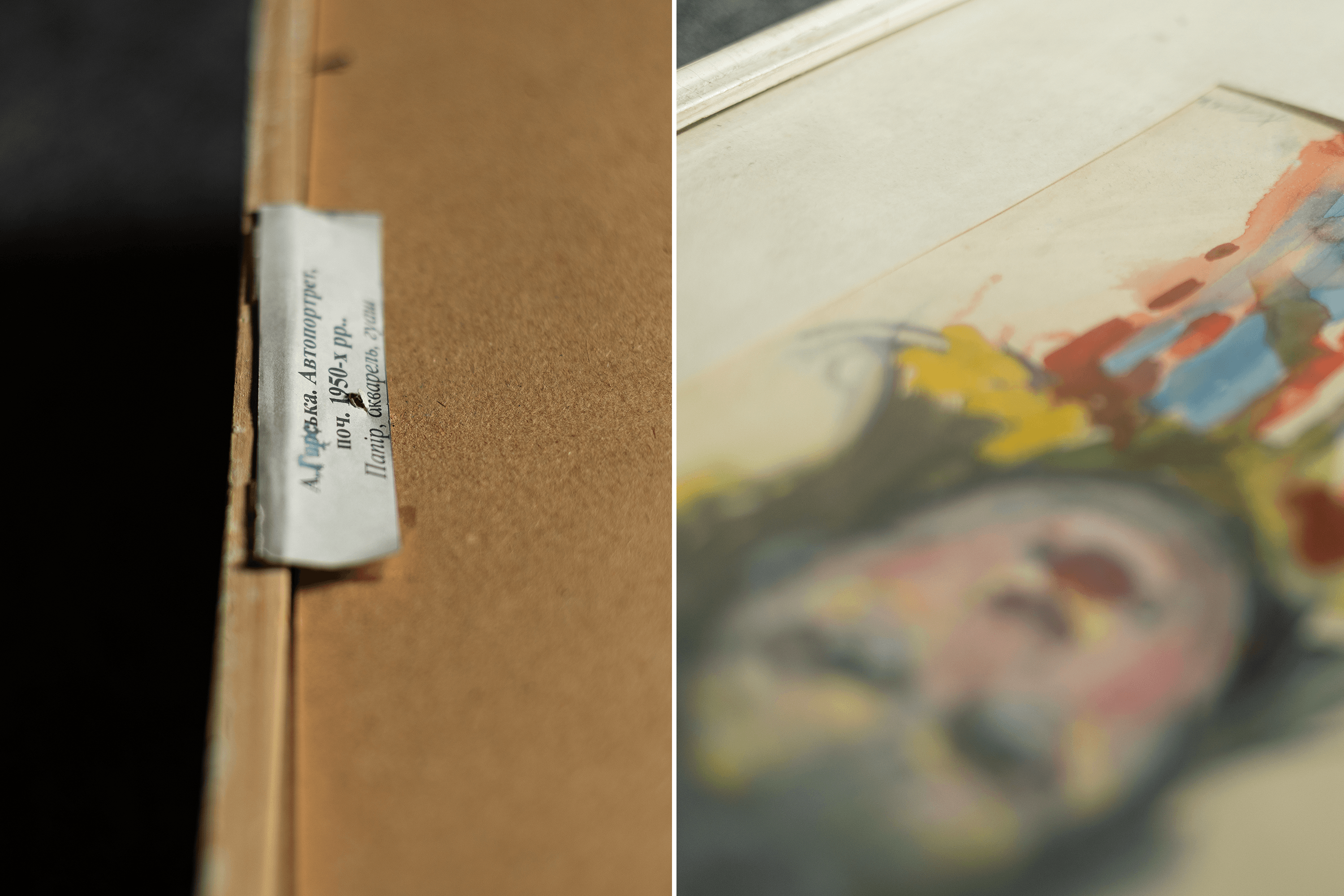
Photo: Julia Weber / YB
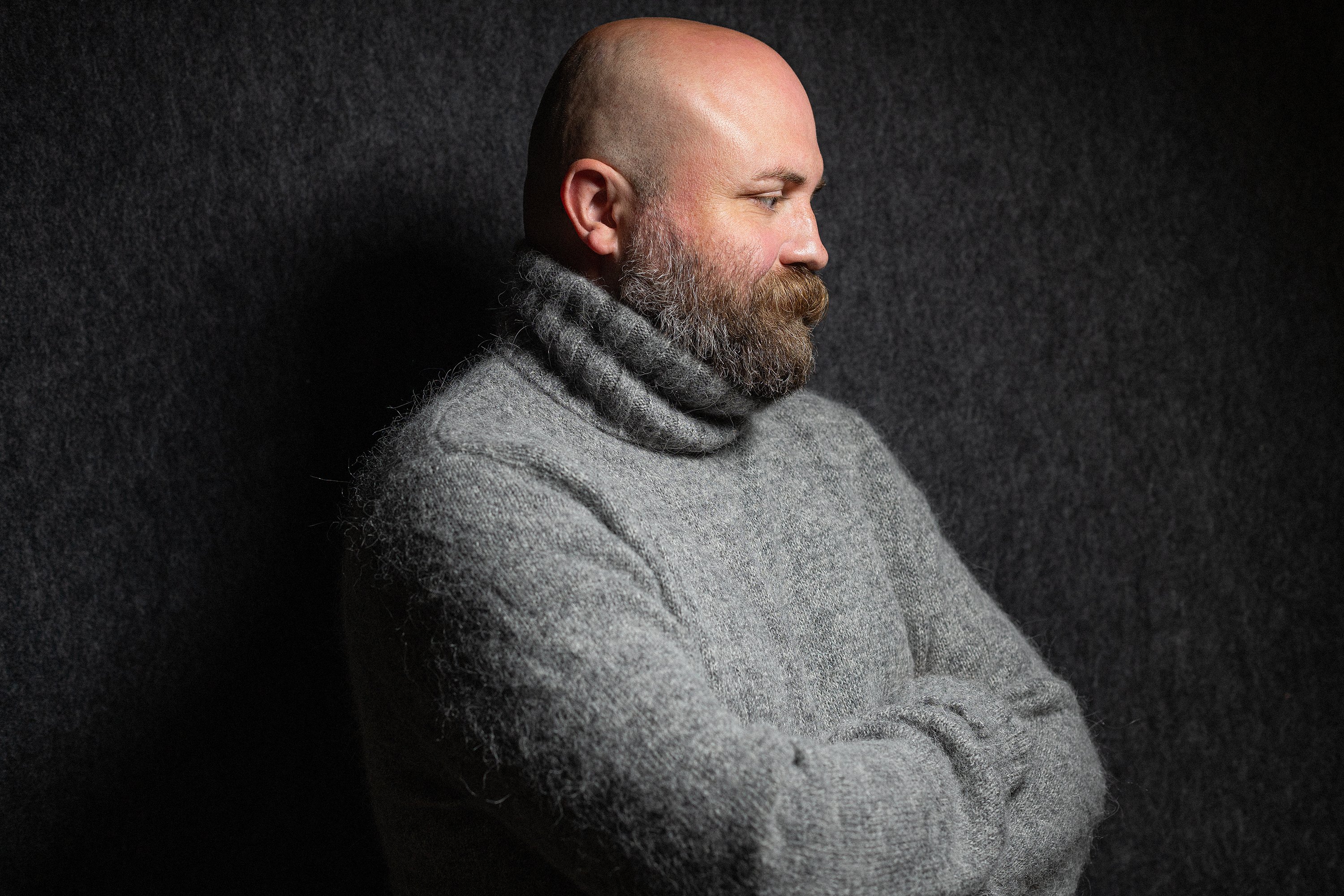
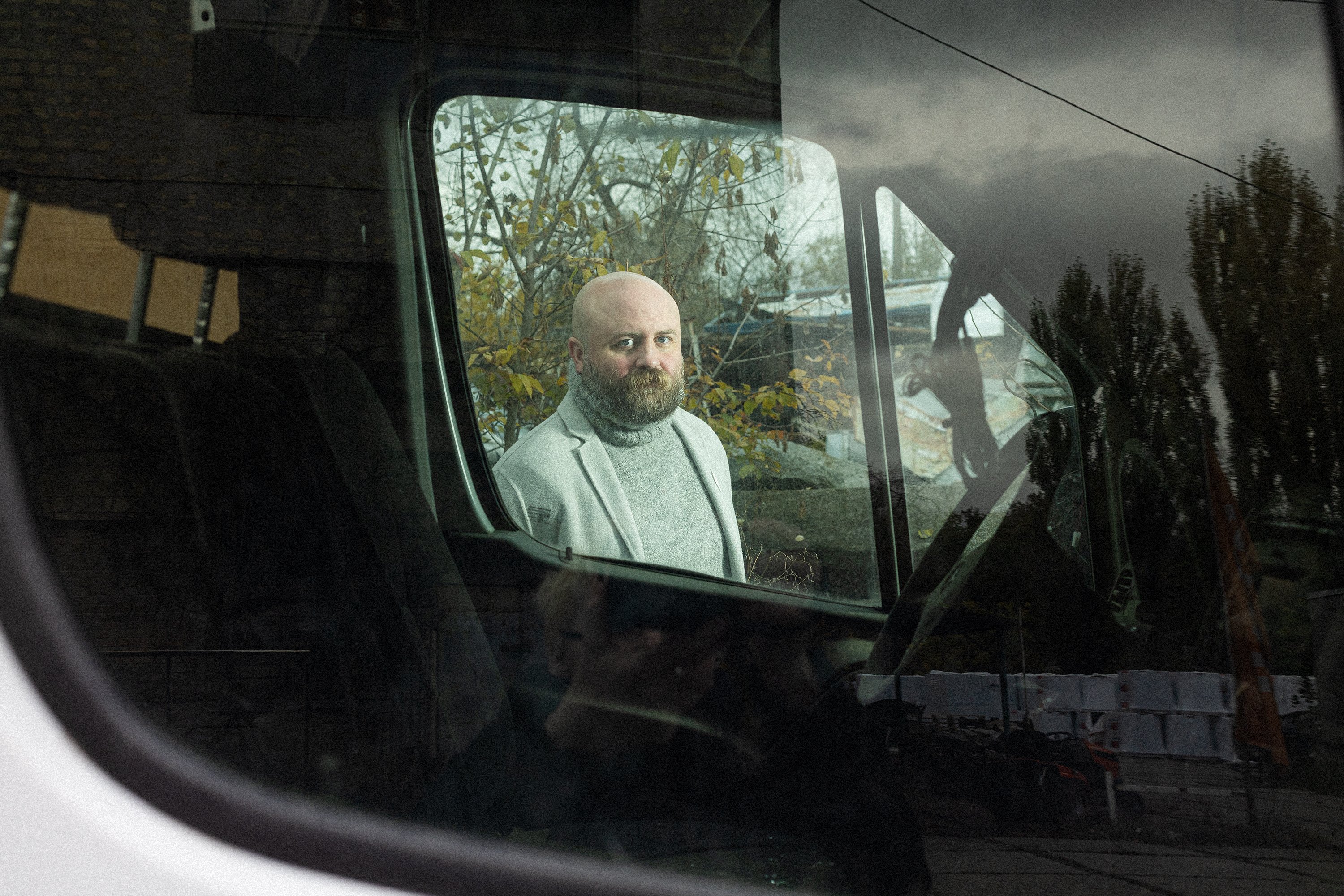
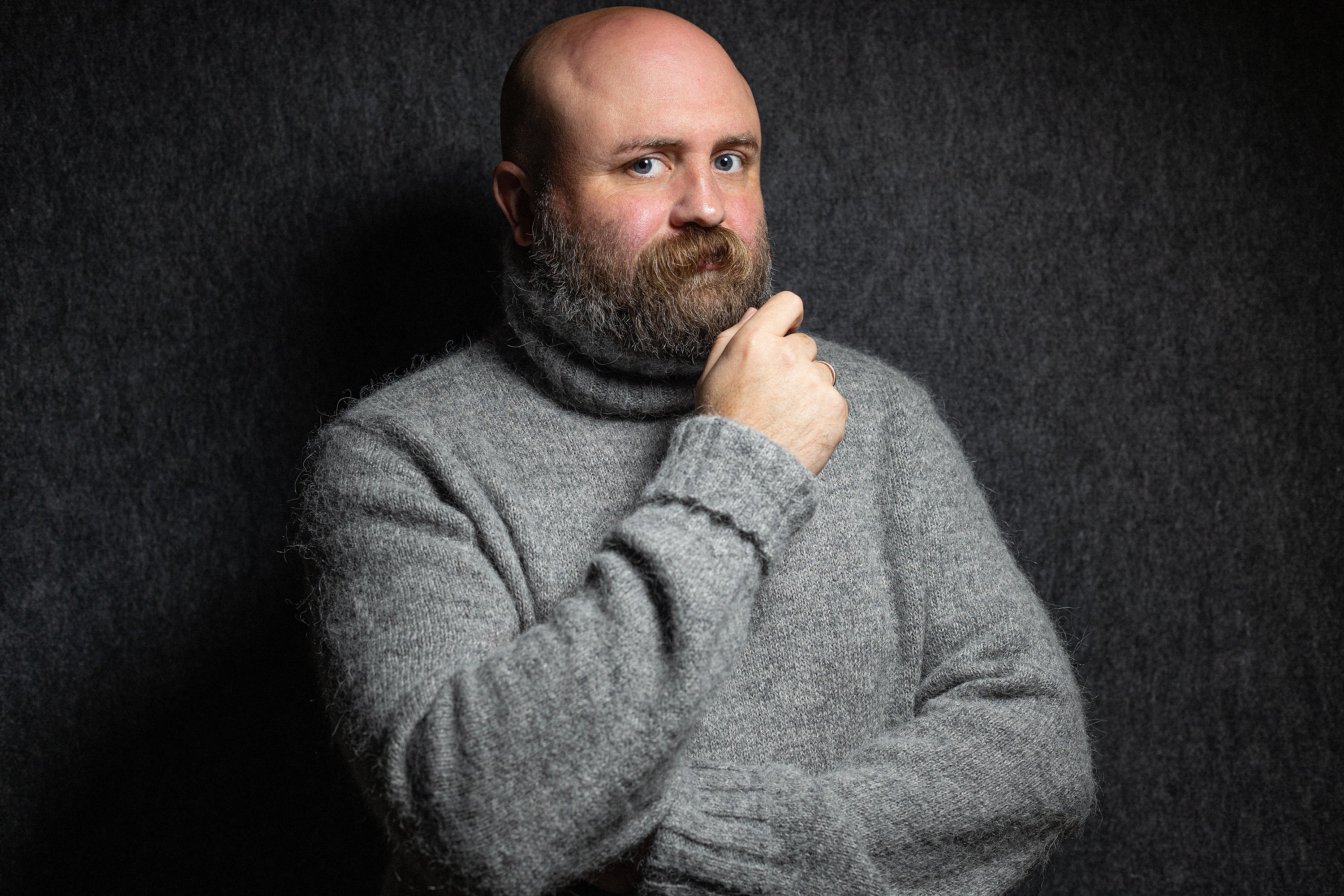
At 39, Marushchak cuts a formidable figure—sturdily built, with a shaved head, a long beard, and thick brows that often knit together as he speaks. To a stranger, he might appear stern, but in reality, he is warm and quick-witted, especially when holding court on Ukrainian art or the vast collection he and his wife, Marta, have spent years assembling.
In the first days of Russia’s full-scale invasion in Ukraine, this vibrant apartment stood silent. As columns of Russian tanks bore down on Kyiv, Marushchak moved with clinical precision to save what mattered most. He evacuated his wife and cat to the west of Ukraine, then ferried the family collection and the Horska-Zaretskyi archive to a secure, undisclosed location. “Tomorrow a strike could hit and, damn it, your entire subject of research would just vanish,” Leonid says, his face beginning to flush a deep red—a tell-tale sign that surfaces every time his anger bubbles up. “This is work I’ve poured years of my life into.”
While Leonid secured his home, the east and south were falling. Caught off guard by the speed of the Russian advance, museum curators were forced to choose between their collections and their families. They chose their families. Left behind in the galleries, the exhibits became spoils of war. Russian forces hauled away artifacts by the truckload: the most famous pieces were paraded in Russian galleries as “trophies,” while others vanished into the black market. In Kherson alone, some ten thousand items were plundered; in Mariupol, more than two thousand.
For Leonid, the loss is personal. He grieves most for the museums he helped revitalize through the “Museum is Open for Renovation” project. The Lysychansk Museum is a particularly painful memory. Its director, Nina Bondar, had been one of the project’s earliest partners, working for six years to weave contemporary art into the museum’s traditional fabric.
Leonid recalls the “Move East” project by Vova Vorotniov—an artist who walked thousands of kilometers to carry a single lump of coal from Chervonohrad in the west to Lysychansk in the east.
At Leonid’s request, artist Mykhailo Alekseienko donated his works and family artifacts to the museum; his family had been persecuted by the Soviet government.
The tragedy of Lysychansk was exacerbated by bureaucracy. On the eve of the invasion, a new director had taken over. When the tanks rolled in, she fled abroad, leaving the remaining staff paralyzed by a fear of taking responsibility for the evacuation. Activists pleaded with them to release at least the contemporary pieces. “It reached the point of absurdity,” Leonid says indignantly. “I was literally screaming: ‘Just give me Misha Alekseienko’s grandmother’s fur coat! ’”
Ultimately, he broke through the wall of hesitation. In the spring of 2022, Leonid managed to crate and evacuate part of the museum collection. He ran out of time for the rest; Russia occupied the city that July. “I tore myself apart over the works I’d sent east just before the invasion,” he says. “But there were other museums not yet under the boot of occupation. Knowing Russia’s appetite, I knew the only option was to go and save whatever could still be reached.”
4
Leonid has been on the move since the first days of the invasion, shuttling museum collections to secure, Ministry-approved vaults. In those frantic early months of February and March, he made do with his family’s cramped Mini Cooper. By April 2022, however, volunteers had provided him with a large white van—a vehicle that would become his primary tool of rescue. Today, that van is a hollowed-out carcass in a Kyiv warehouse. Its windshield is shattered, the cabin doors are buckled, a jagged hole pierces the cargo roof, and its side panels are warped and twisted. It was the target of a Russian drone strike in late 2023, while Leonid was mid-evacuation at a museum in the Kherson region.
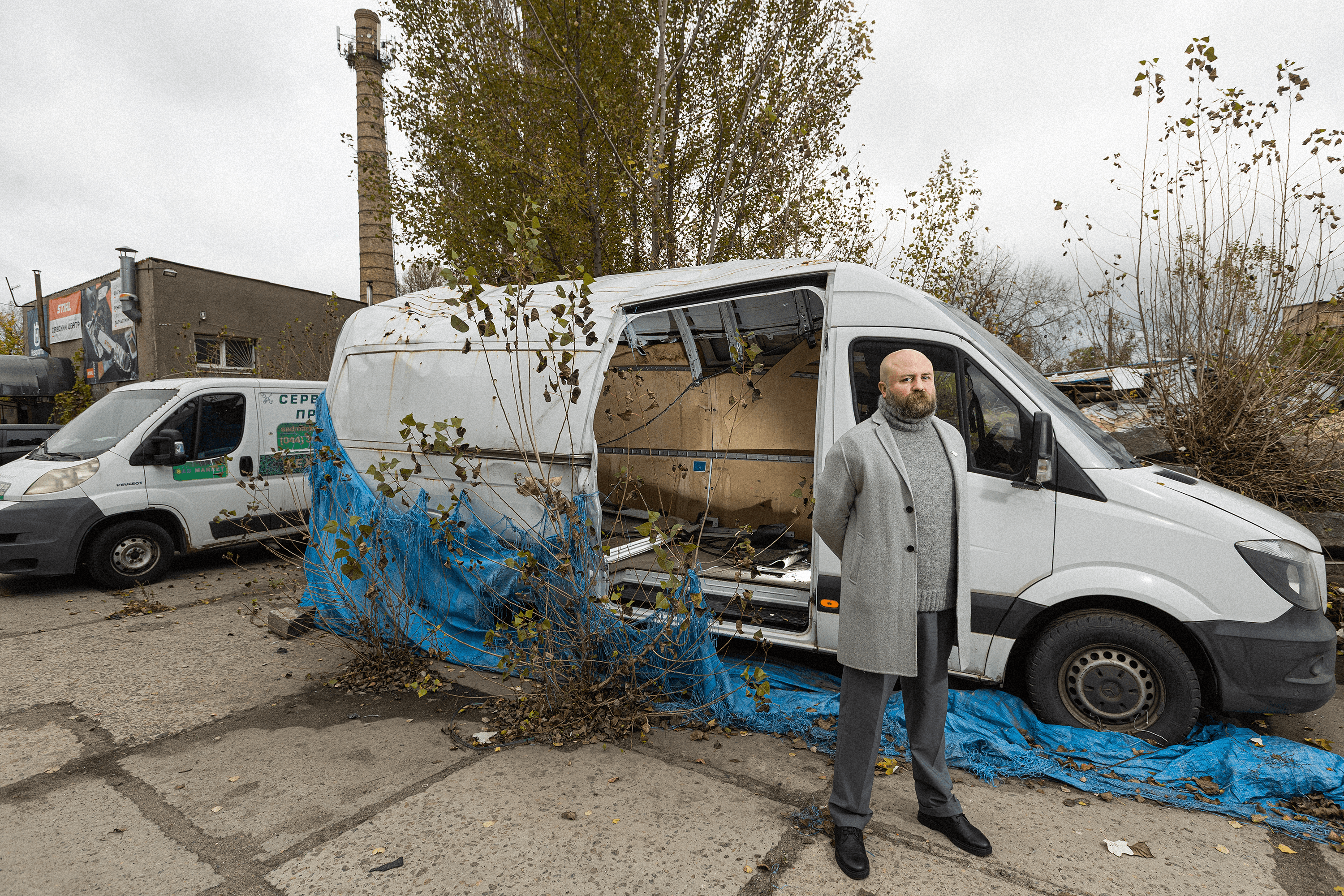
Leonid Marushchak’s van, used to evacuate hundreds of thousands of museum artifacts in 2022–2023. It was destroyed by a Russian drone strike during a mission in the Kherson region. Photo: Julia Weber / YB 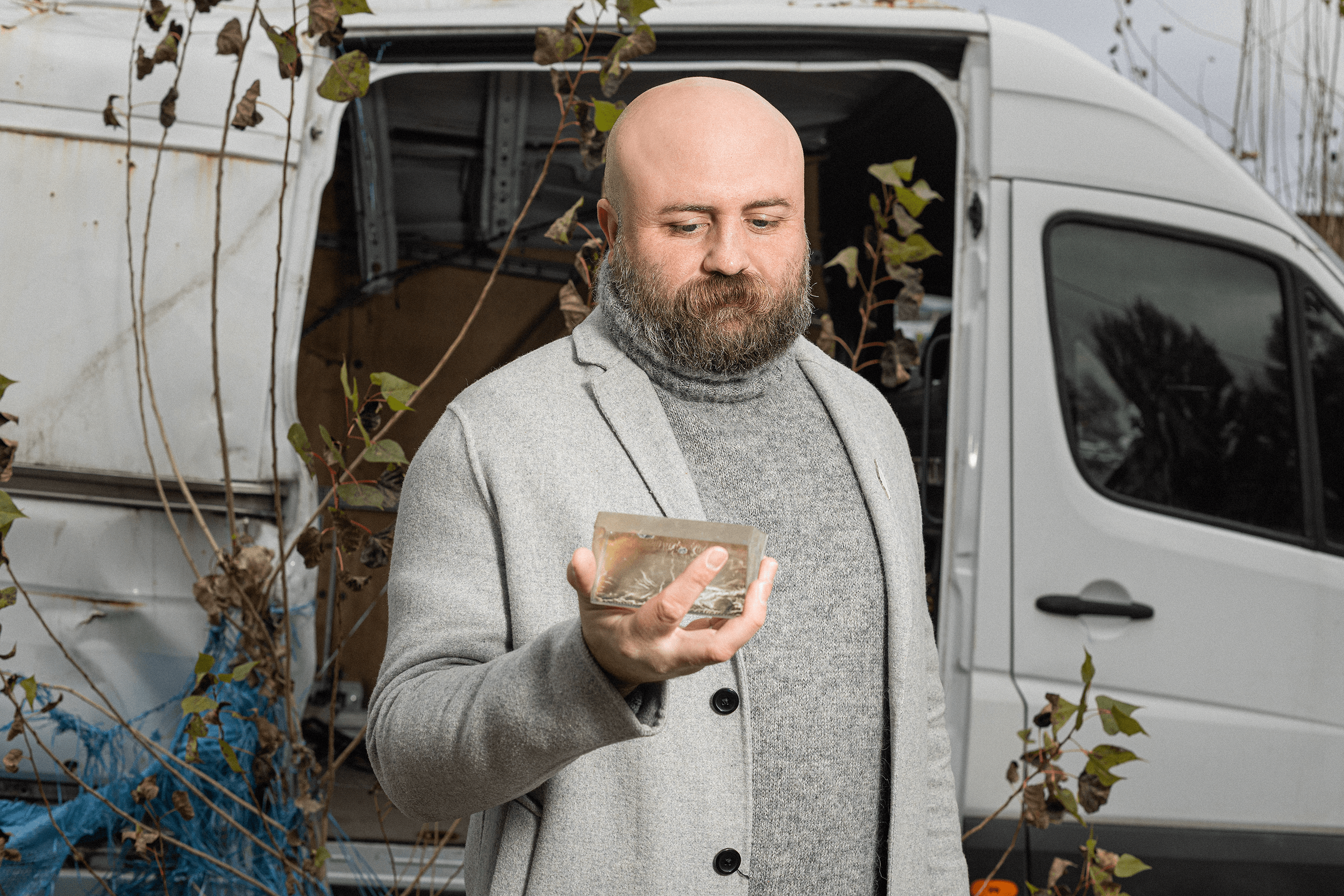
Leonid holds a tank viewing lens, part of its optical system. He found it in a village in the Kherson region. Photo: Julia Weber / YB 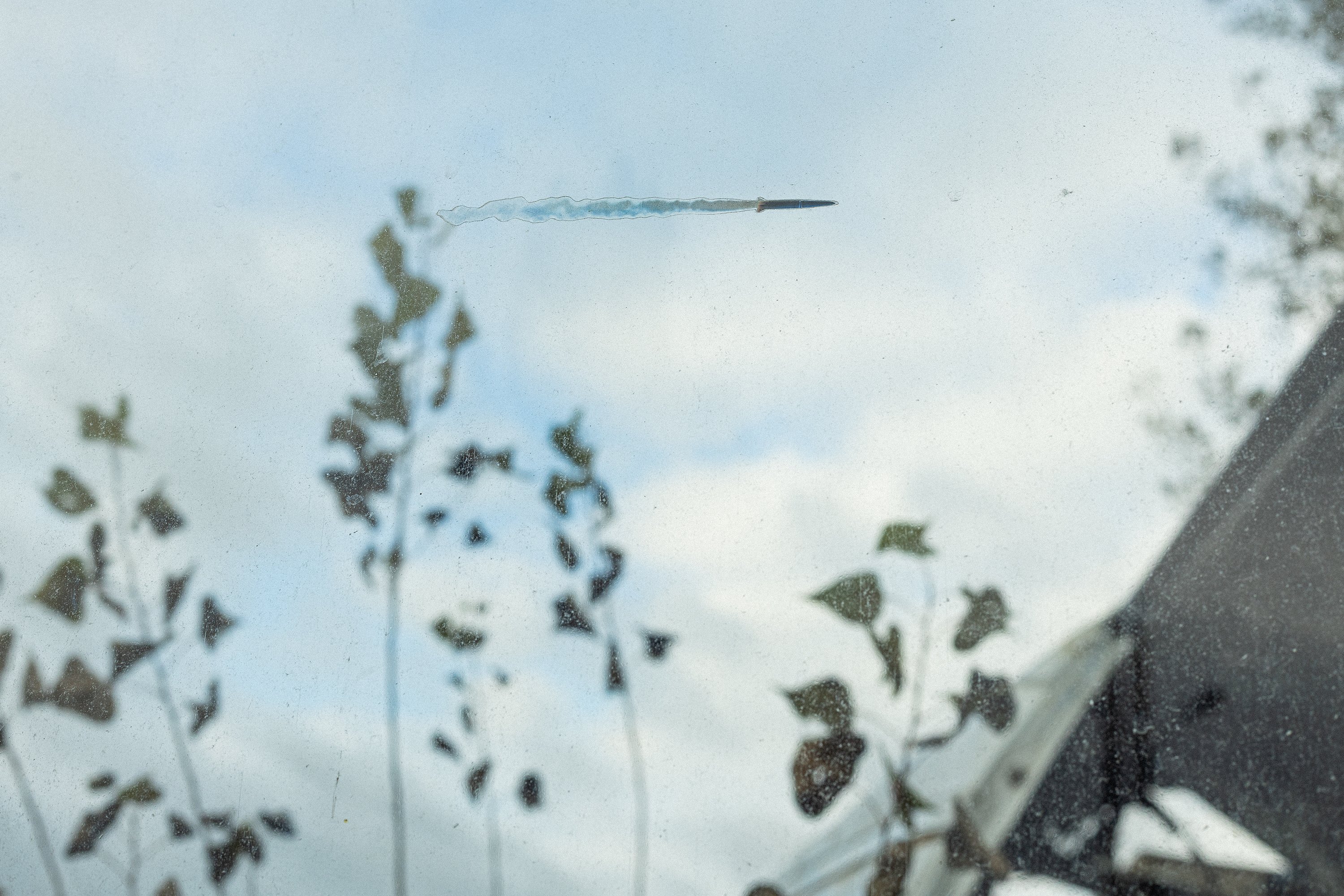
A rocket sticker on the window of Leonid’s van, part of Zhanna Kadyrova’s street art project "Russian Rocket", created in 2022 to remind people in Europe about Russia’s war against Ukraine. Photo: Julia Weber / YB 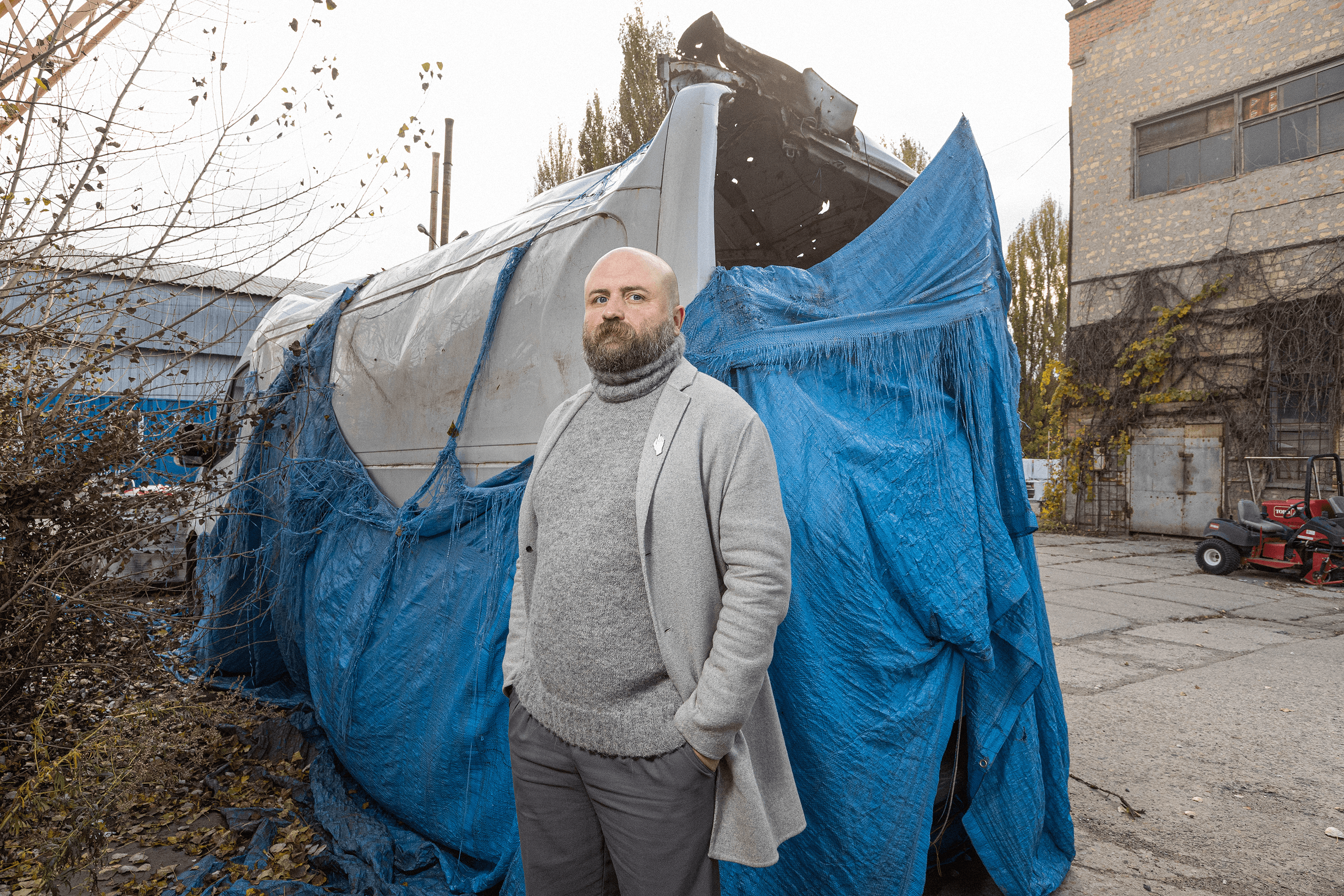
Photo: Julia Weber / YB 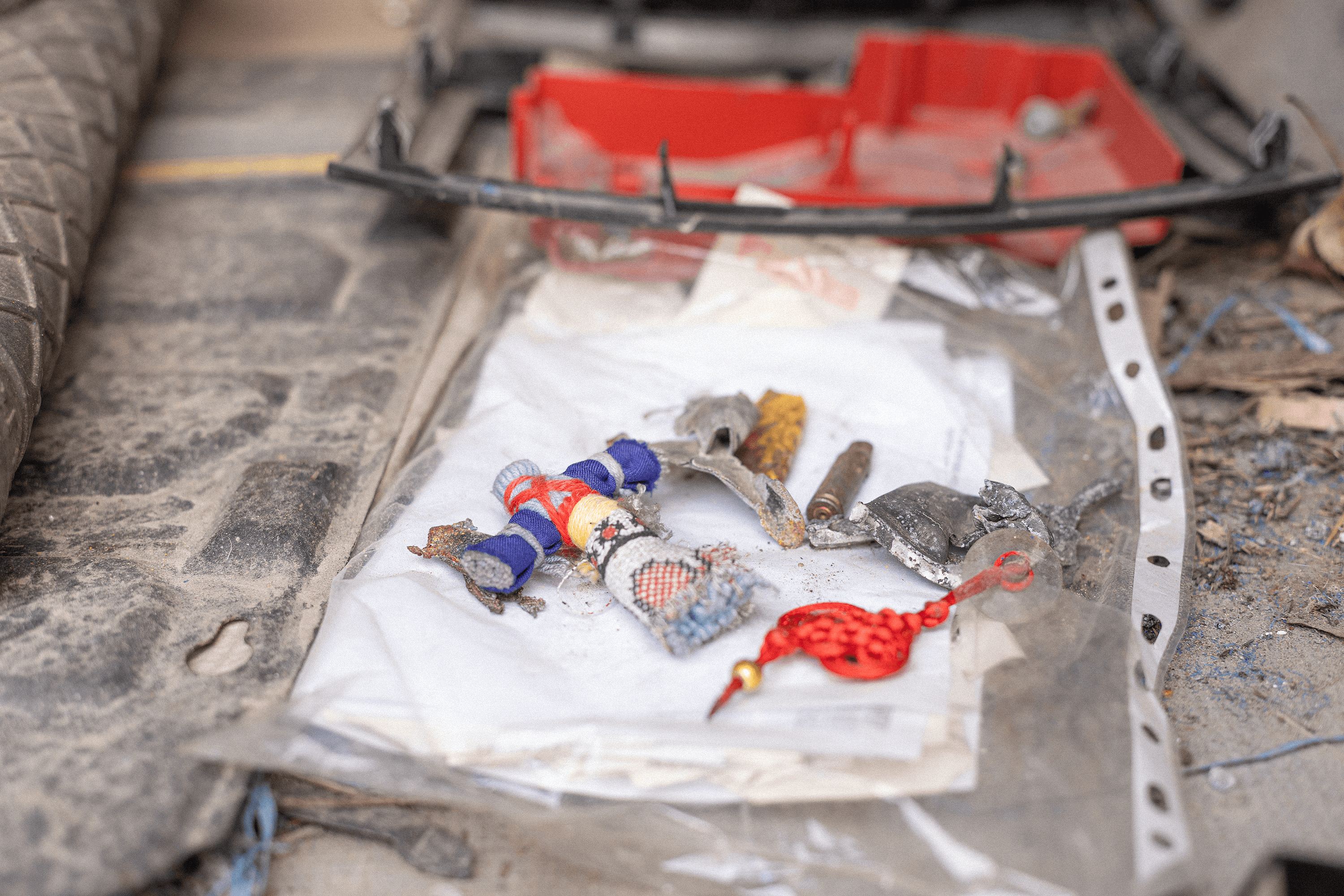
In the van, Leonid keeps items from his journeys—a traditional motanka doll, shell casings, and fragments of the drone that destroyed the vehicle. Photo: Julia Weber / YB 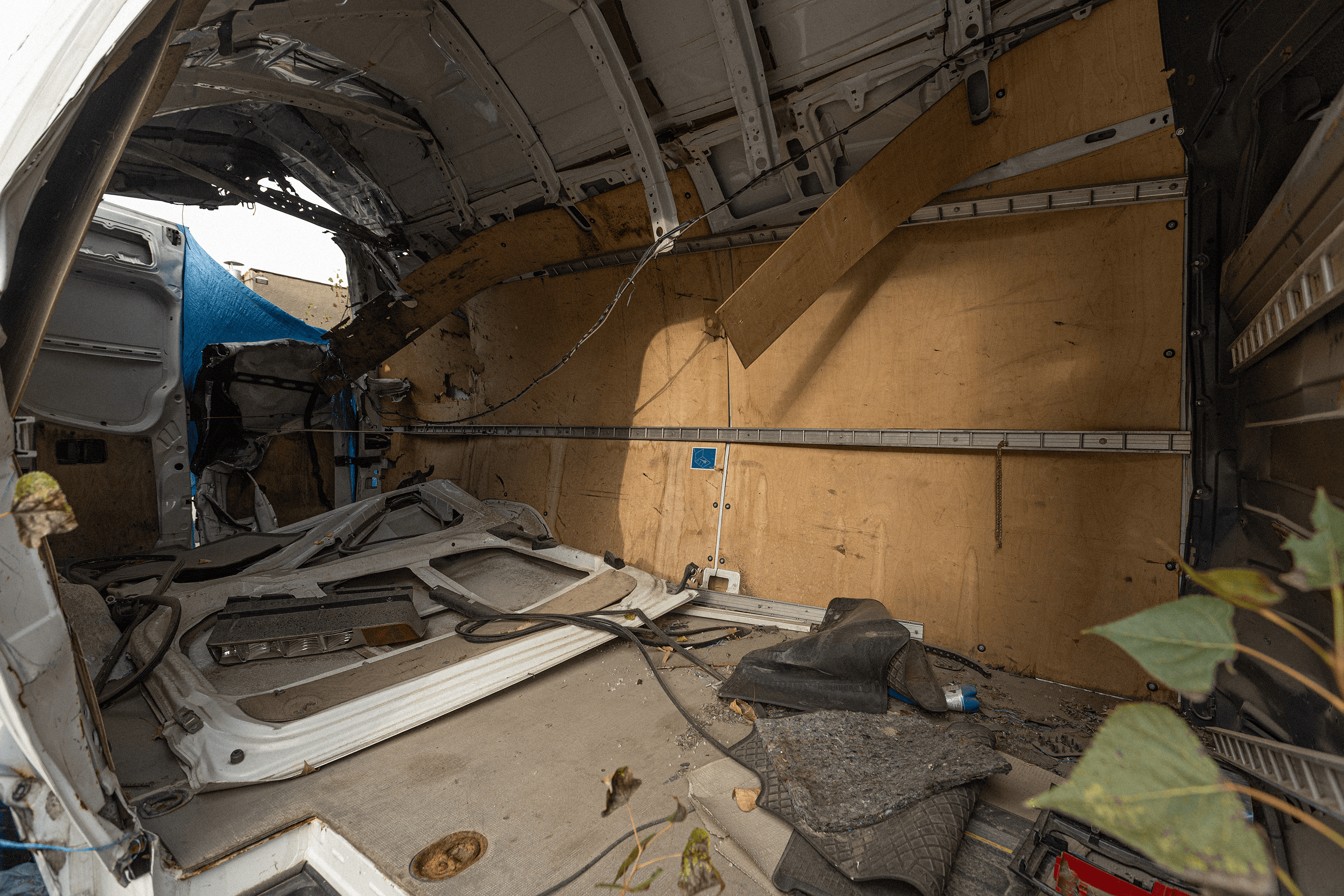
Photo: Julia Weber / YB
Leonid recounts the van’s many “adventures” with a grim sort of humor, though his anxiety remains visible. “One of our first runs in it was early April 2022. We were driving toward Toretsk when, out of nowhere, our soldiers shot down a Russian jet right in front of us,” he recalls, a nervous laugh escaping him. “Debris is falling near us as well, and Rita, our driver, panicked—she let go of the wheel and covered her ears. The van was careening wildly on its own. I was screaming at her, ‘Damn it, where are we going? We need to go right! ’” Since Leonid doesn’t drive, he is always at the mercy of his volunteer drivers.
The most harrowing mission for the white van took place in Bakhmut. To save the city’s entire collection, Leonid had to make 27 separate trips into the maw of the battle. His first arrival was in December 2022, just as Russian forces were tightening their grip around the city. Bakhmut was being pulverized by aerial bombs and white phosphorus—incendiary munitions banned by international law. With almost the entire museum staff gone, only the head of the funds remained. Too terrified to leave her home, she had buried the key to the museum’s storage in a porcelain box beneath a fir tree on the grounds. She drew Leonid a map to find it.
When Leonid and the driver, Rita, pulled up to the museum, people ran out of the building and hid in the courtyard. They were looters. He had to retreat to the police station and return with an armed escort. The search for the key proved futile; once he finally unburied the box with his bare hands, he found the key had oxidized into a useless, rusted relic. Ultimately, he gained entry through a basement door the looters had already forced open. Inside, amidst the artifacts, he found a pistol abandoned by the plunderers in their haste.
Speed was a matter of survival. Leonid crated hundreds of smaller items while police officers helped heave them into the van. While he was registering the list of removed works at the police station, an artillery bombardment began, and he had to wait it out in a shelter. “You can’t just leave these things. A direct hit and they’re gone forever,” Leonid says, explaining his compulsion to return to Bakhmut despite the escalating risk. “Or people who need these things more than the museum workers or the Ministry of Culture—looters will always find time to haul away the most valuable items.”
Leonid collected the last exhibit from Bakhmut in the spring of 2023, while Russian troops held the city under siege. Shortly before, a missile had hit a nearby recruitment office; the explosion caused the museum’s walls and ceiling to collapse, but standing among the rubble was a statue that had miraculously survived. It was a large stone figure from the 13th–14th centuries, resembling a lion. It is rounded in shape, relatively small in size and weighs several hundred kilograms. Due to the danger, Leonid didn’t come with volunteers but with military acquaintances dressed in civilian clothes. They were moved by the stories of destroyed artifacts and decided to help. Involving the military is dangerous, even if they aren’t in uniform—there is a higher risk that the Russians will spot the burly men and attack them with drones or artillery.
As Leonid stood over the statue, calculating how to move a heavy object, a firefight erupted just outside between Ukrainian troops and a Russian sabotage unit. “They were screaming at me, ‘Lyonya, we have to go! We’re going to get killed! ’” Leonid remembers. “But I was desperately looking for any excuse to hunker down inside the ruined museum just so I could finally get my lion out.”
The shattered building offered no real cover, and they were forced to retreat. A dejected Leonid was eventually comforted by the soldiers, who agreed to make one last attempt during a lull in the Russian offensive. It took four powerful men to hoist the heavy lion into the van; the effort was so great that one of them ended up throwing out his back.
“When I get truly angry, I go blind and mute. I just act,” Leonid explains. “I couldn’t sleep without that lion. I couldn’t bear to erase years of my life and leave it behind, knowing what the Russians would do to it.” To this day, he frequently visits the secret storage site, just to lay eyes on the stone lion and ensure it is still whole.
5
Over four years of full-scale war, the cultural landscape of Ukraine has been decimated: more than 1,600 monuments and nearly 2,500 cultural spaces and buildings have been damaged or destroyed. A portion of world history has been erased forever—like ancient Greek artifacts from the Pryazovia region, a unique ethnographic cradle on the shores of the Sea of Azov. In Mariupol, the Arkhip Kuindzhi Art Museum was reduced to ashes, taking with it original masterpieces by world-renowned painters like Ivan Aivazovsky. Furthermore, the Russians destroyed two mosaics by Horska and Zaretskyi in the city—"Boryviter” (Windhover) and “The Tree of Life.”
According to Ukraine’s Ministry of Culture, Russia has plundered more than 1,700,000 artifacts from occupied territories; approximately 2,300 of them have been identified in the collections of Russian museums and galleries. The Ukrainian Prosecutor’s Office has described this as the most systematic and large-scale art heist since the Second World War, drawing parallels to the Nazi looting of Europe. Today, many of these works are resurfacing on the black market. However, international cooperation is bearing fruit: the Dutch Interpol recently flagged several hundred works by the celebrated Mariupol medallic artist Yukhym Kharabet as they were being illegally trafficked.
It was possible to return the Scythian Gold from the Netherlands—a collection of 565 ancient artifacts from the 7th–3rd centuries BCE, which were found in Scythian burial mounds on the territory of Ukraine. This collection was stored in Crimea, and at the beginning of 2014, it was sent to Amsterdam for an exhibition. Shortly thereafter, Russia annexed Crimea, and when the exhibition ended, Dutch museum officials did not know whether to send the artifacts to territories controlled by Ukraine or return them to museum workers in Crimea who were supported by Russia. Ultimately, the Amsterdam court sided with Ukraine, and in 2023, the treasures returned to Kyiv.
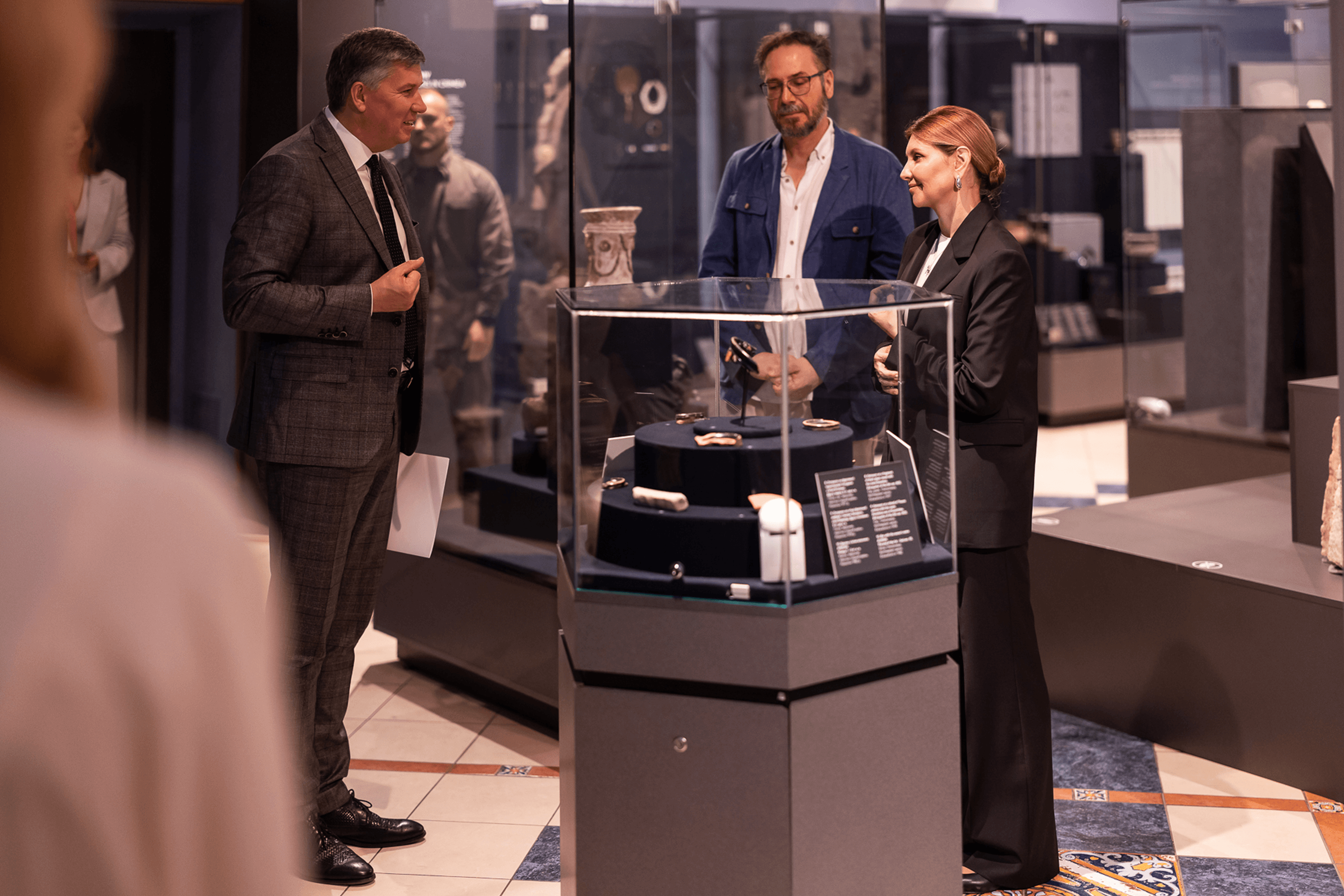
The exhibition “Treasures of Crimea. Return” at the Treasury of the National Museum of the History of Ukraine in Kyiv. Photo: Olena Zelenska / Facebook / YB 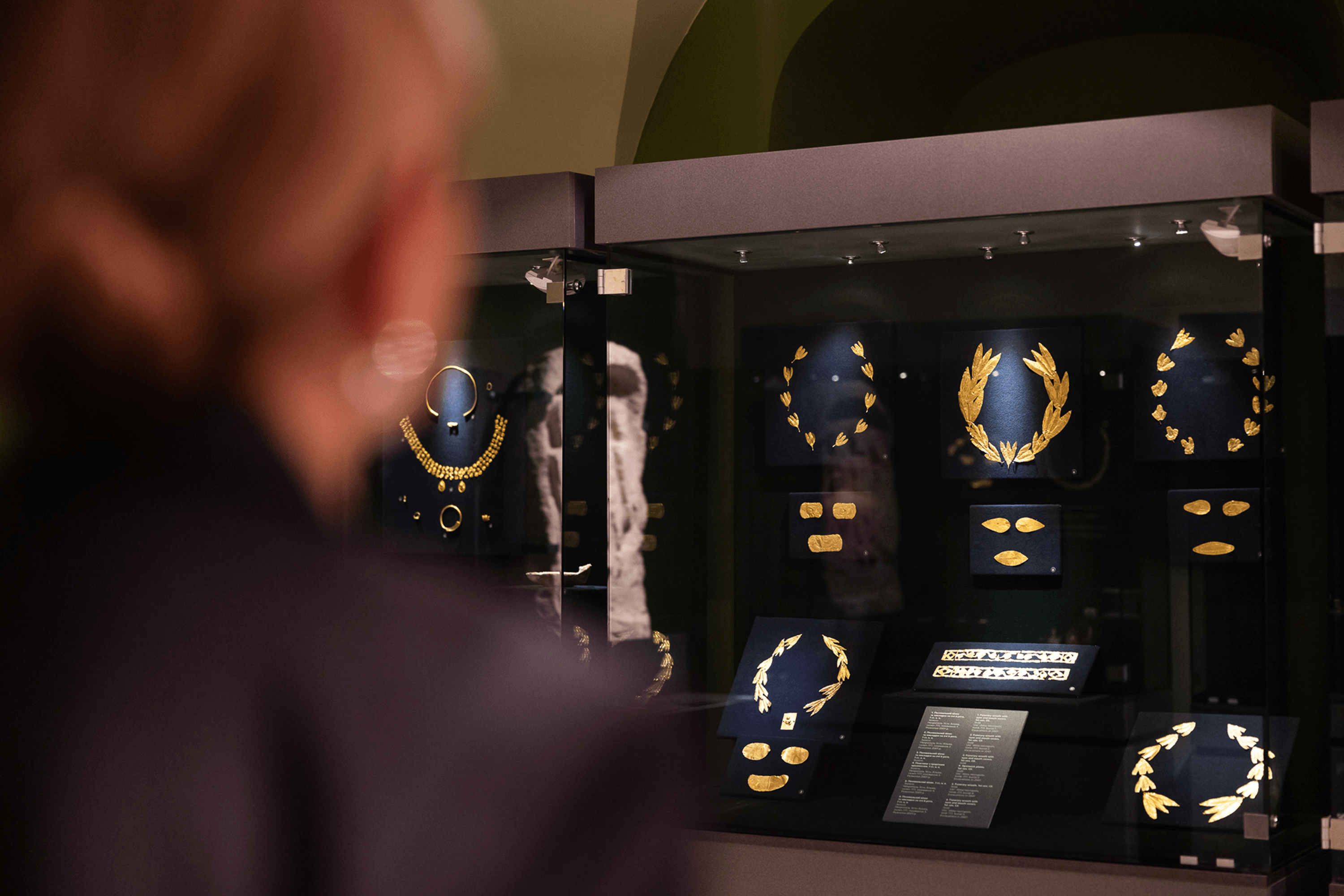
Photo: Olena Zelenska / Facebook / YB 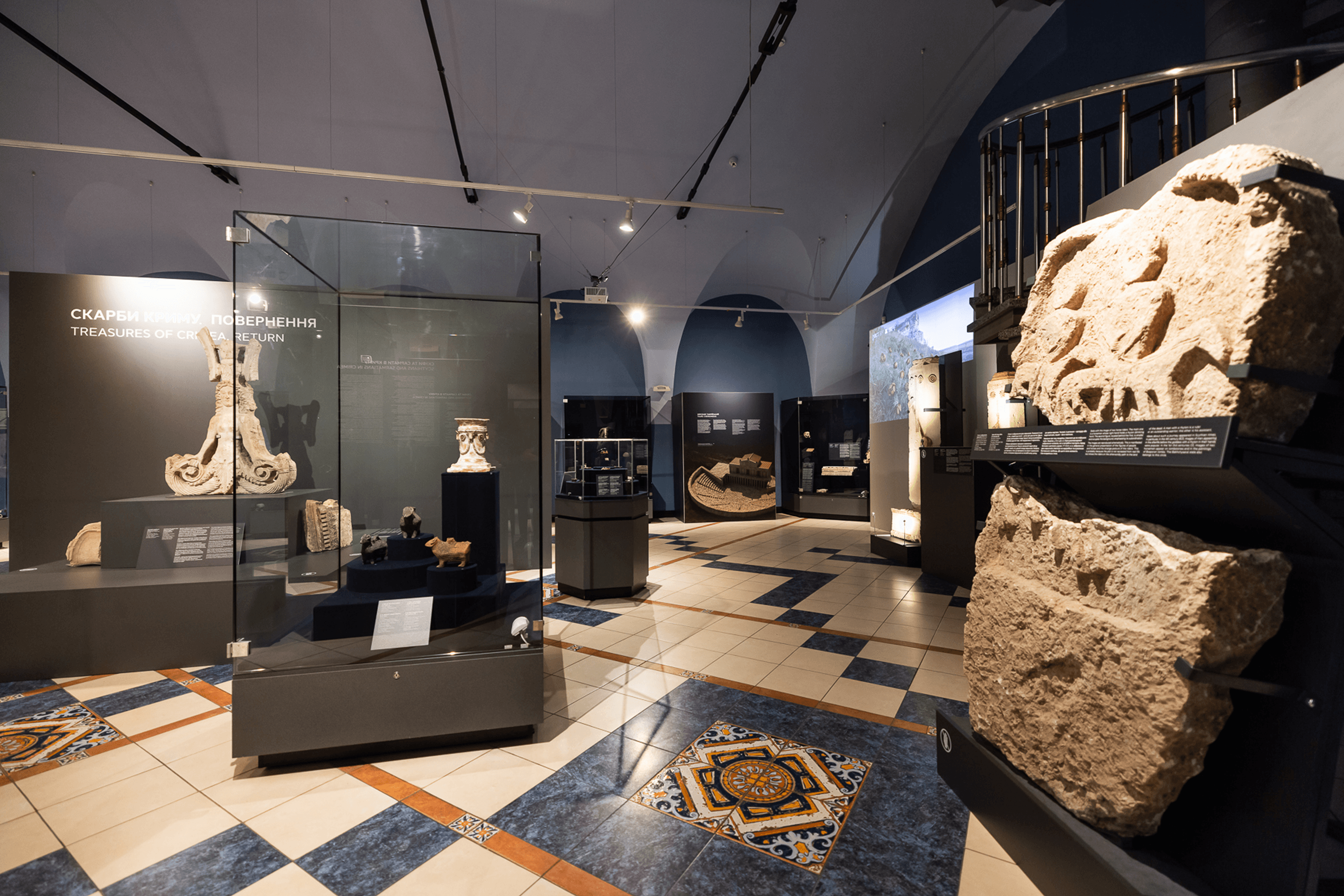
Photo: Olena Zelenska / Facebook / YB 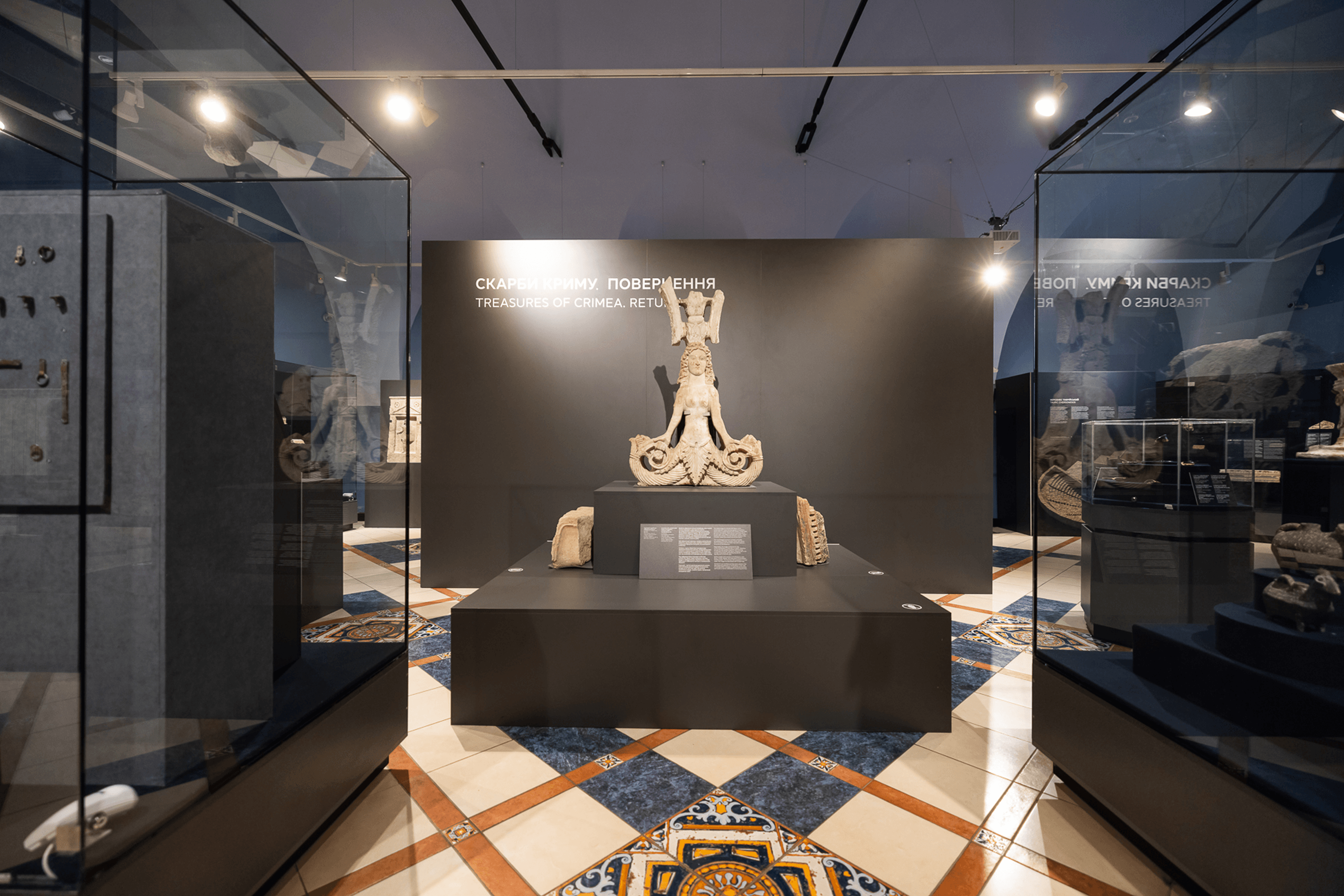
Photo: Olena Zelenska / Facebook / YB 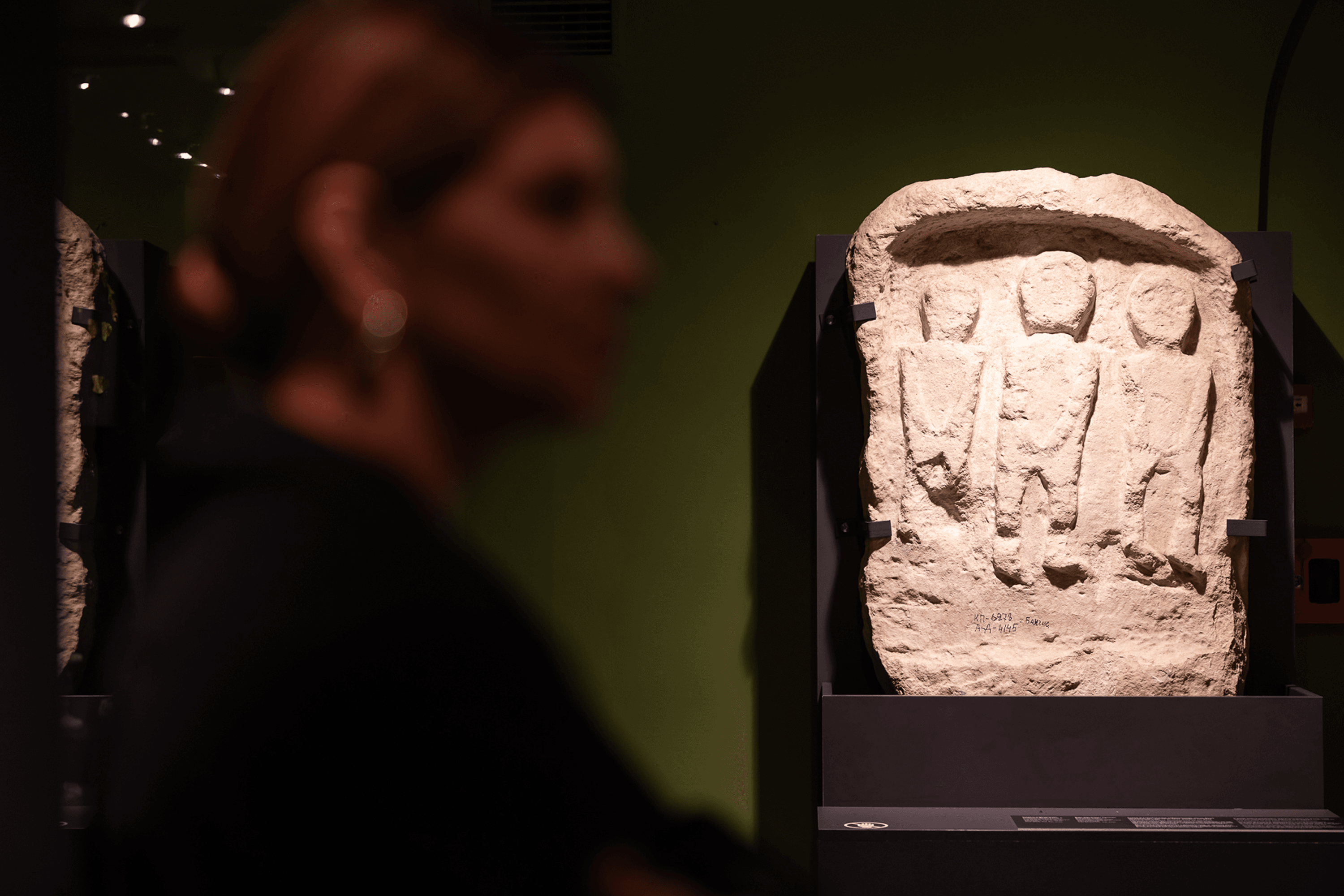
Photo: Olena Zelenska / Facebook / YB 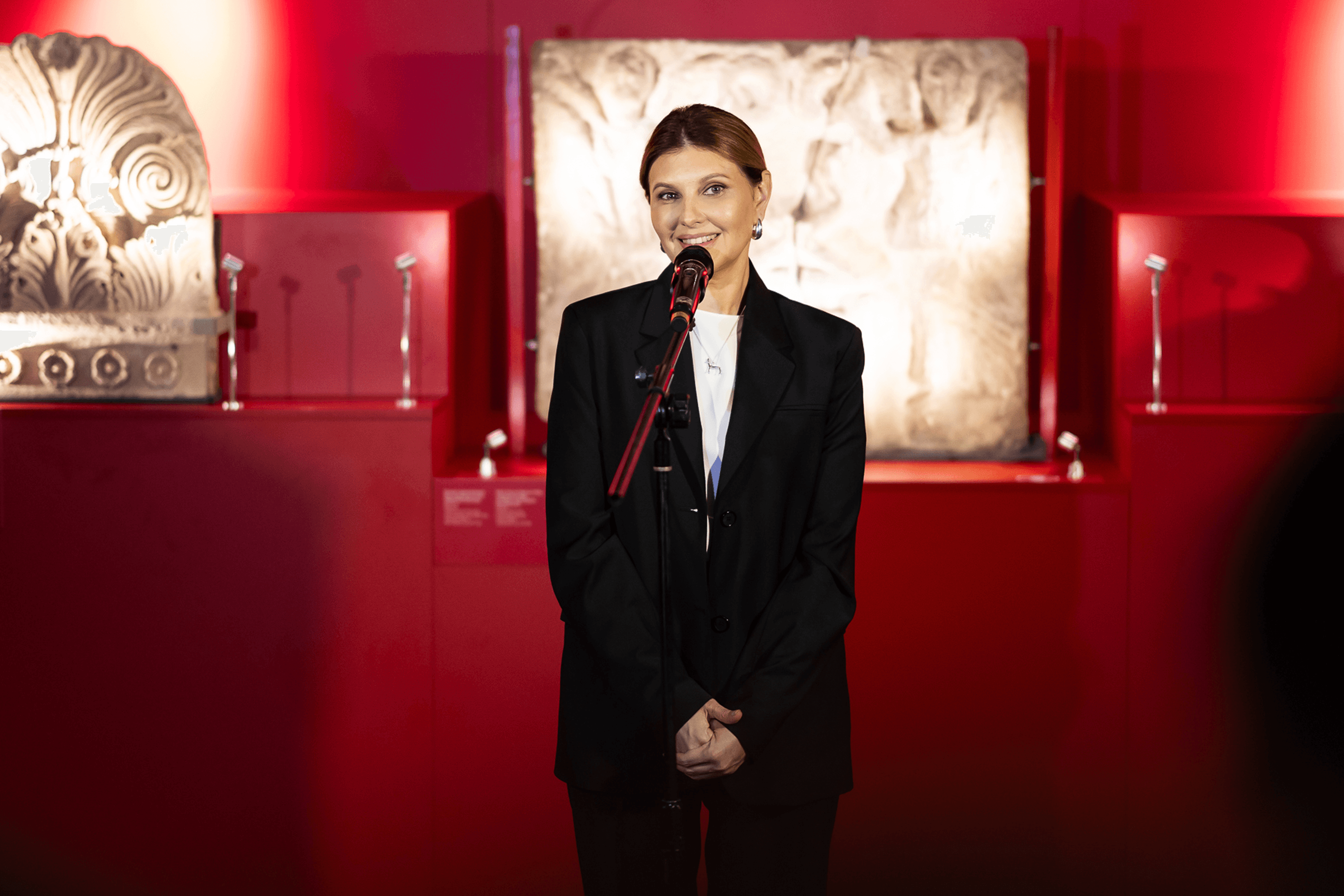
Photo: Olena Zelenska / Facebook / YB
Some of the works saved from the Russians and looters are being exhibited in museums around the world. Paintings by the prominent self-taught artists Maria Prymachenko and Kateryna Bilokur are kept in the Swiss Open Art Museum, while paintings by Kazimir Malevich, Oleksandra Ekster, Sonia Delaunay, and other leading Ukrainian modernists have traveled through the museums of Europe.
In 2026, Ukraine is participating in the Venice Biennale—a global forum where artists present their works and can speak out about world events. The Ukrainian exhibition, “Security Guarantees,” is led by Leonid, art historian Ksenia Malykh, and the Minister of Culture, Tetiana Berezhna. The latter says that people are beginning to grow indifferent to our war. “Therefore, so that it does not become just an ordinary part of their reality for them, we must use every opportunity to convey the truth,” Berezhna believes.
6
In four years of full-scale war, Leonid has evacuated over two million exhibits from six of Ukraine’s frontline regions. The haul includes ancient stone statues, expansive canvases by Ivan Aivazovsky, Arkhip Kuindzhi, and Tetiana Yablonska, and bulky personal belongings of the artists themselves. There are also smaller artifacts—documents, ceramics, and sketches on small canvases or scraps of paper.
Many of the museums whose collections Leonid managed to secure have since been ravaged by shelling. The Kherson Regional Museum stands with a punctured roof, scarred walls, and shattered windows; in October 2025, a third of the structure collapsed following yet another artillery strike. Such an impact could have obliterated thousands of artifacts and the Polovtsian Babas—stone figures from the 9th to 13th centuries that had been kept in the museum courtyard.
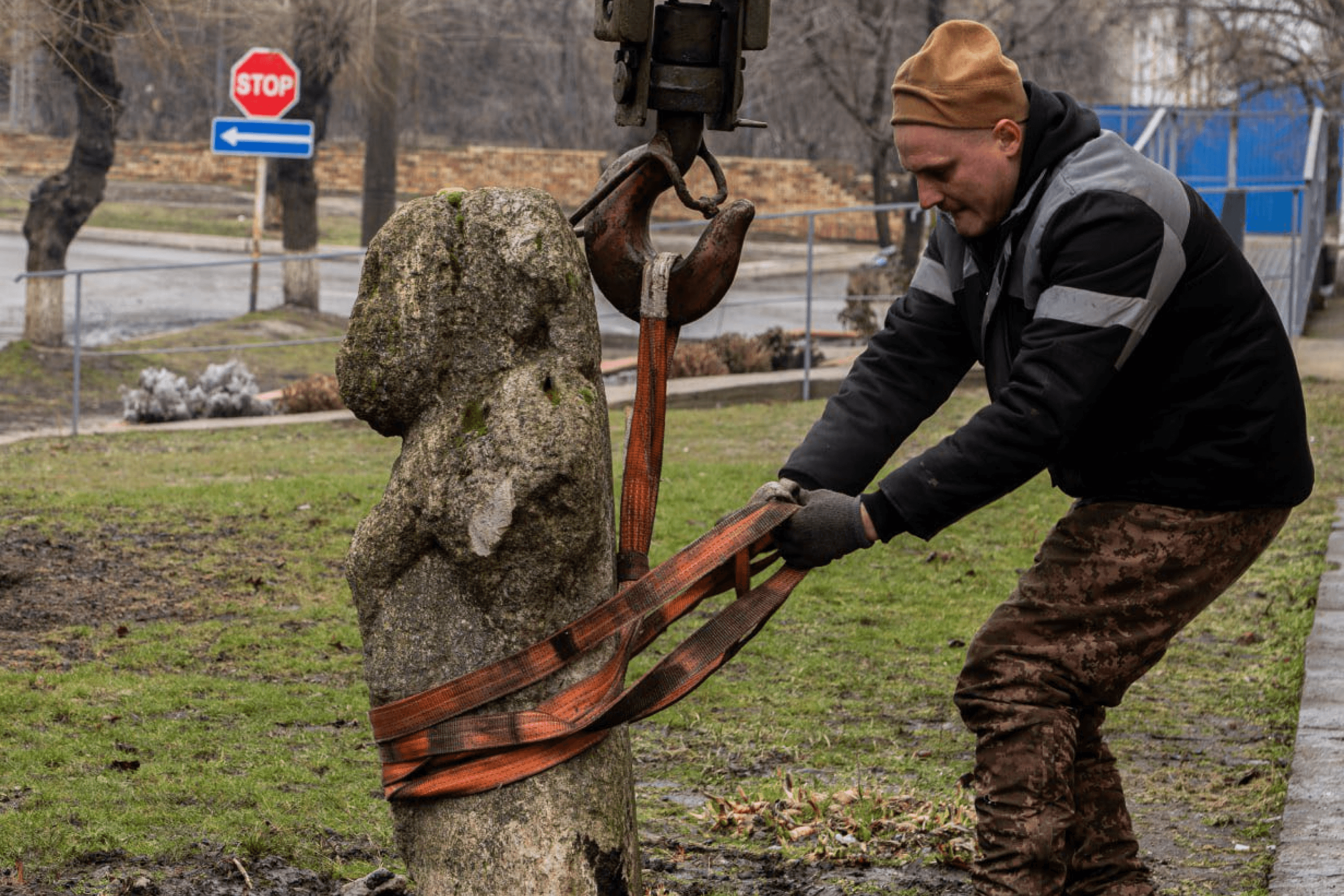
Polovtsian stone statues from the 11th–13th centuries, evacuated from Vasylkivka in the Synelnykove district during Operation “Sicheslavtsi.” Photo: 25th Separate Airborne Sicheslav Brigade / Facebook / YB 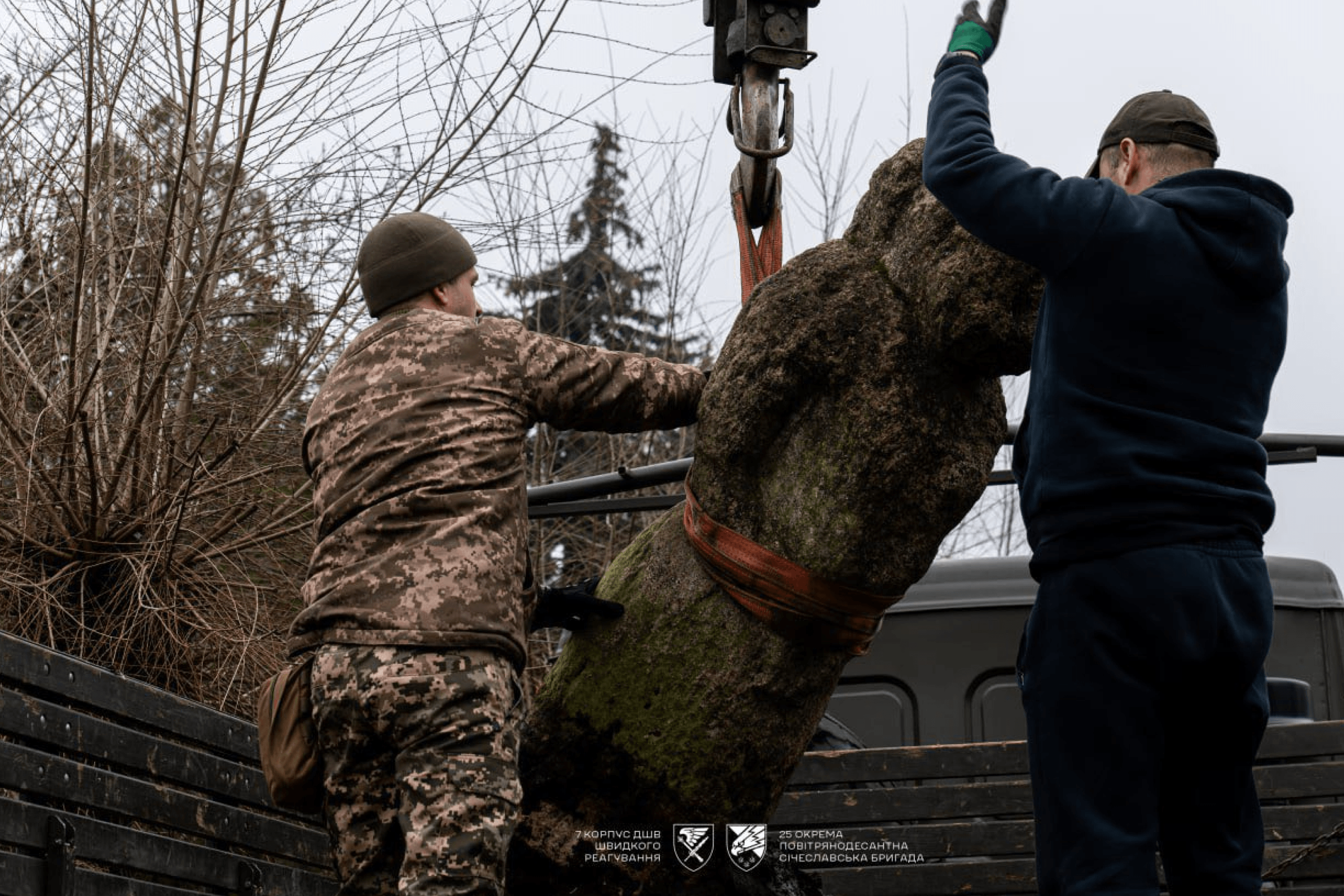
Photo: 25th Separate Airborne Sicheslav Brigade / Facebook / YB 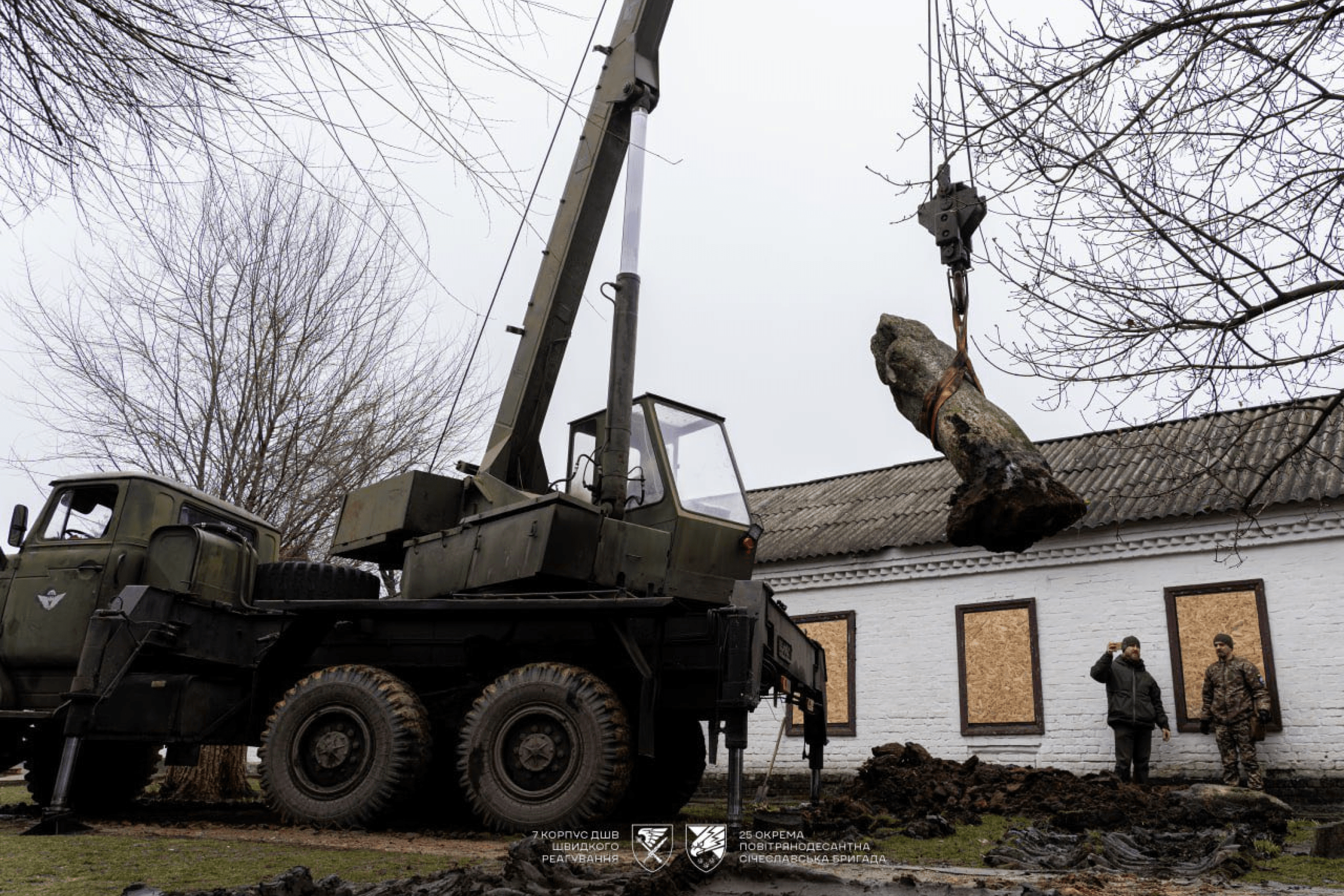
Photo: 25th Separate Airborne Sicheslav Brigade / Facebook / YB 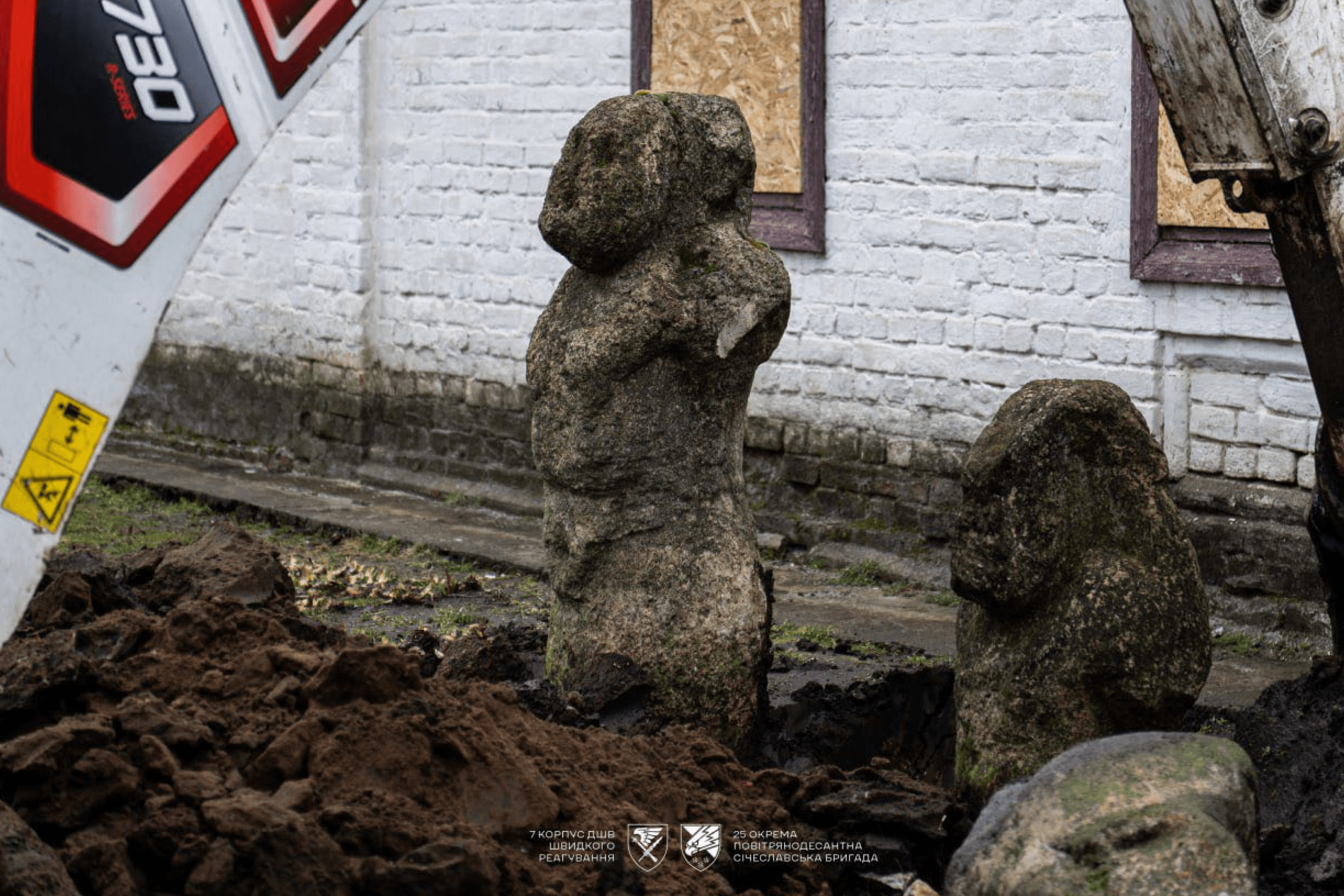
Photo: 25th Separate Airborne Sicheslav Brigade / Facebook / YB 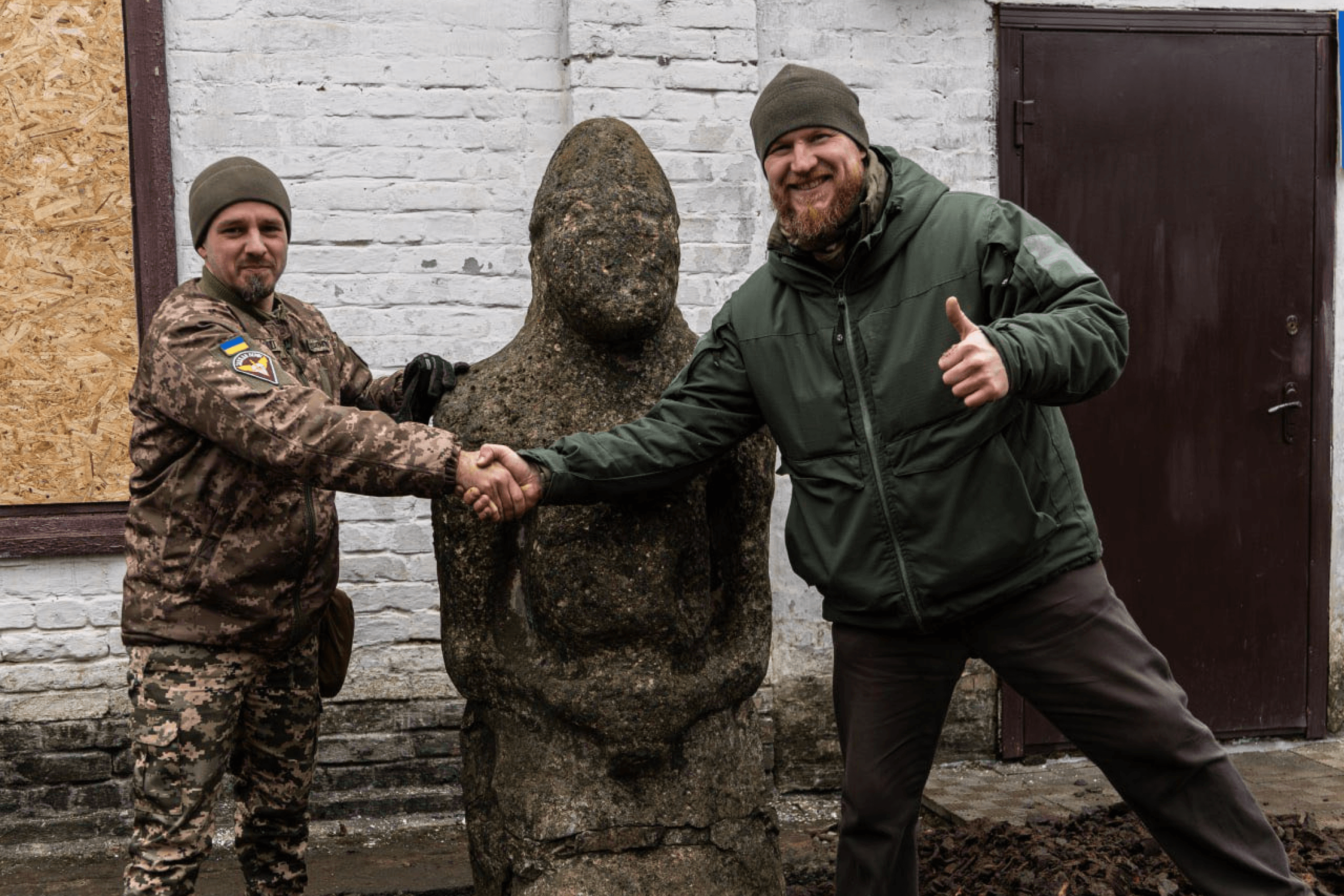
Photo: 25th Separate Airborne Sicheslav Brigade / Facebook / YB
Most of the costs for Leonid’s missions, including the evacuation of “Origami,” are covered by his wife, Marta, who has been the family’s sole breadwinner since 2022. She works in management, spearheading reforms for private firms and state institutions like the customs service. She also hunts for sponsors for the Ukrainian pavilion at the Venice Biennale. “One morning I woke up and found myself already involved in all his projects,” Marta says with a smile. The Marushchaks speak of one another with a tenderness and warmth that is unmistakable.
In 2026, Leonid’s work will take him to the fringes of the Dnipropetrovsk region, where Russian forces are attempting to gain a foothold.
“It has become harder now. I am frustrated by the inertia of the museums and the state—everyone is involved, yet the evacuation process is barely moving. There is still so much that needs saving. I have to keep going; I won’t let myself tire of this,” Leonid says.
Among his most urgent projects is the rescue of Polovtsian Babas from Pavlohrad and a space-themed stained-glass window by the monumentalist Ivan-Valentyn Zadorozhnyi. The window has already been partially damaged by a blast wave from Russian shelling, and looters have already stripped away its lower section.
“I’ve had to come to terms with Lyonya’s trips because you cannot keep a person in captivity,” Marta explains. “Of course, I worry deeply, but I support him completely. When someone burns so brightly for their cause, their soul must be at peace.”A painting by contemporary Ukrainian artist Roma Mykhailov in Leonid’s hallway. The damage on the image of gas burners is part of the artist’s concept.


