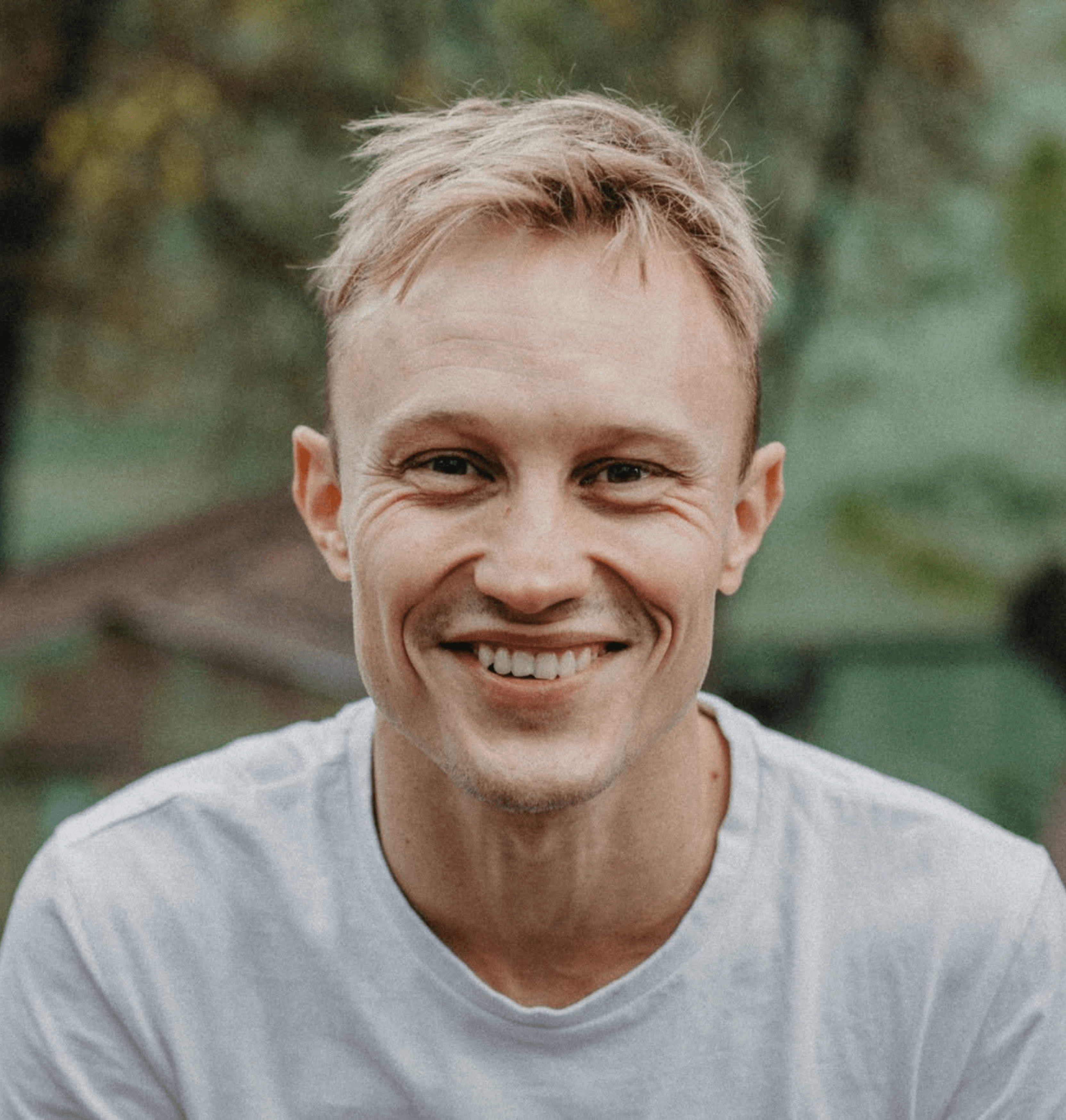
Black-and-white silhouettes, battered high-rises, trenches, drones, and people quietly living amidst the war. The illustrations of Sergiy Maidukov are easily recognizable: with just a few strokes, he creates imagery that often conveys more about the war than photographs do.
This 46-year-old artist from Donetsk is one of the most renowned Ukrainian illustrators in the world. His works are regularly published by The New Yorker, The New York Times, Financial Times, Bloomberg, The Washington Post, and The Guardian.
Yellow Blue journalist Roksana Rublevska spoke with Sergiy about how global media depict Ukraine, where editorial censorship begins, and what an artist’s responsibility looks like during war.
- In 2022, Sergiy received the Erich Maria Remarque Peace Prize for his documentary illustration column in the German newspaper Die Zeit, but declined to attend the ceremony due to the presence of Russian writer Lyudmila Ulitskaya.
- In 2025, he became the first Ukrainian to create a cover for The New Yorker—however, due to a shift in editorial plans, it was never published.
Before the full-scale war, you were already known as a strong editorial illustrator. Has the nature of your cooperation with the media changed after 2022?
Yes. Partly, it’s a natural process: publication art directors change—and with them, the circle of illustrators they work with. But the war changed other things as well. If I previously received assignments on social, economic, or cultural topics, now almost all requests pertain to the Russo-Ukrainian War.
On the one hand, this is a great responsibility. I have the opportunity to speak with an international audience about Ukraine and, through my works, promote narratives that are important to us. On the other hand, it has narrowed my professional repertoire. For global media today, I’m primarily an illustrator of war.
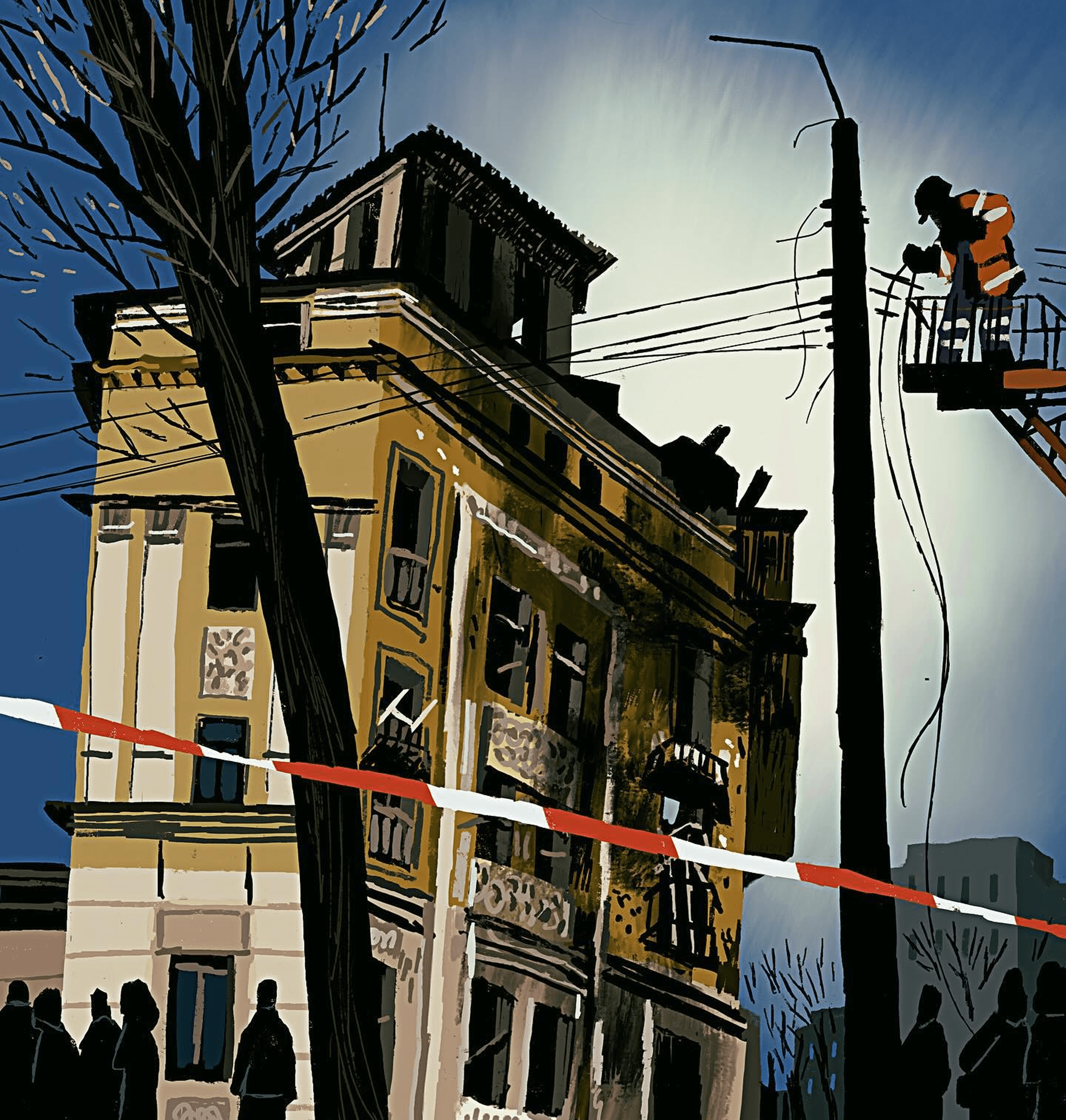
An illustration by Sergiy Maidukov depicting the aftermath of a Russian missile attack on Kyiv, created for ZEIT Magazin. April 2024. Photo: Sergiy Maidukov / Instagram 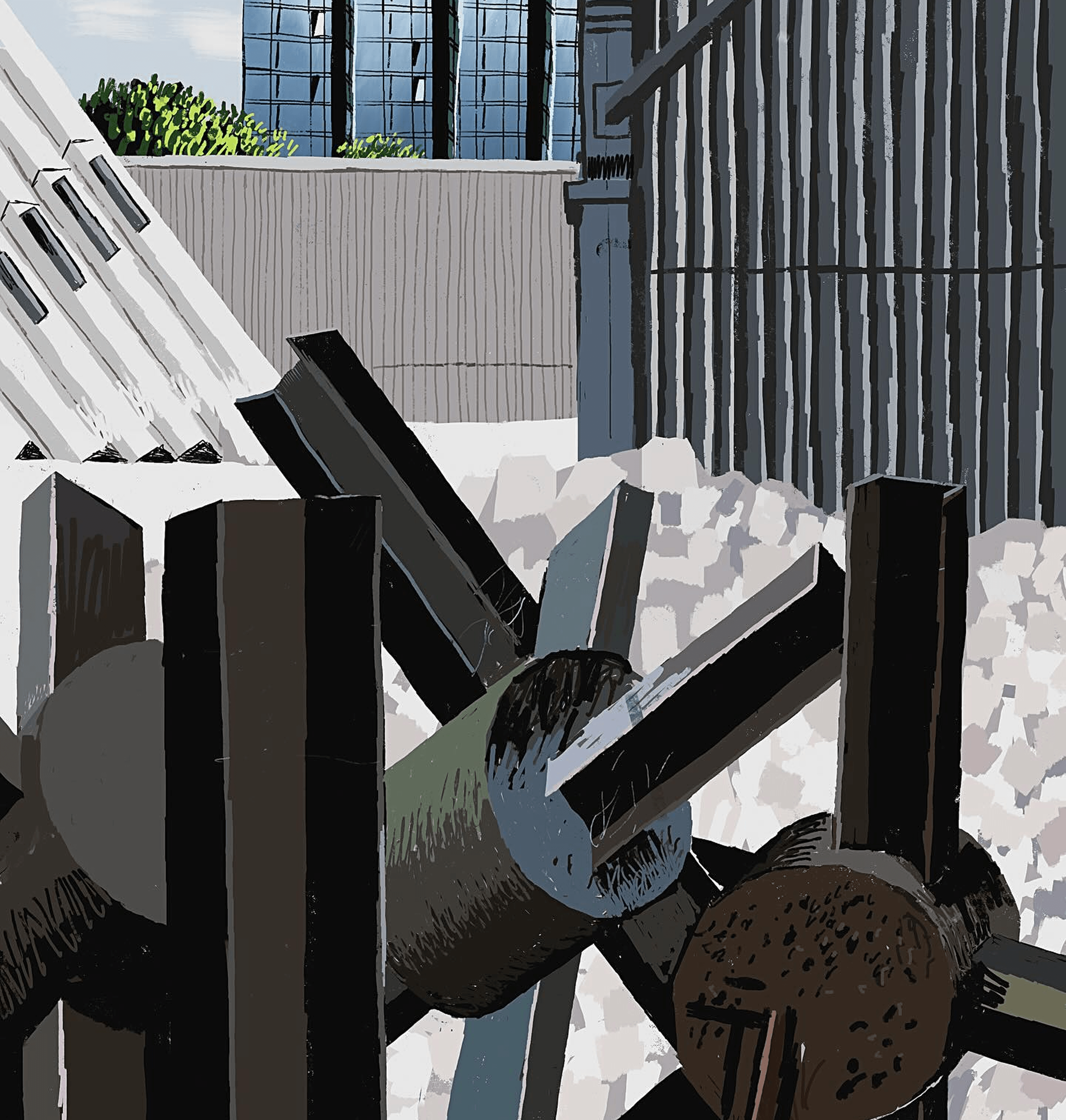
An illustration by Sergiy Maidukov depicting Czech hedgehogs as a symbol of the Russian–Ukrainian war, created for ZEIT magazine. June 2024. Photo: Sergiy Maidukov / Instagram 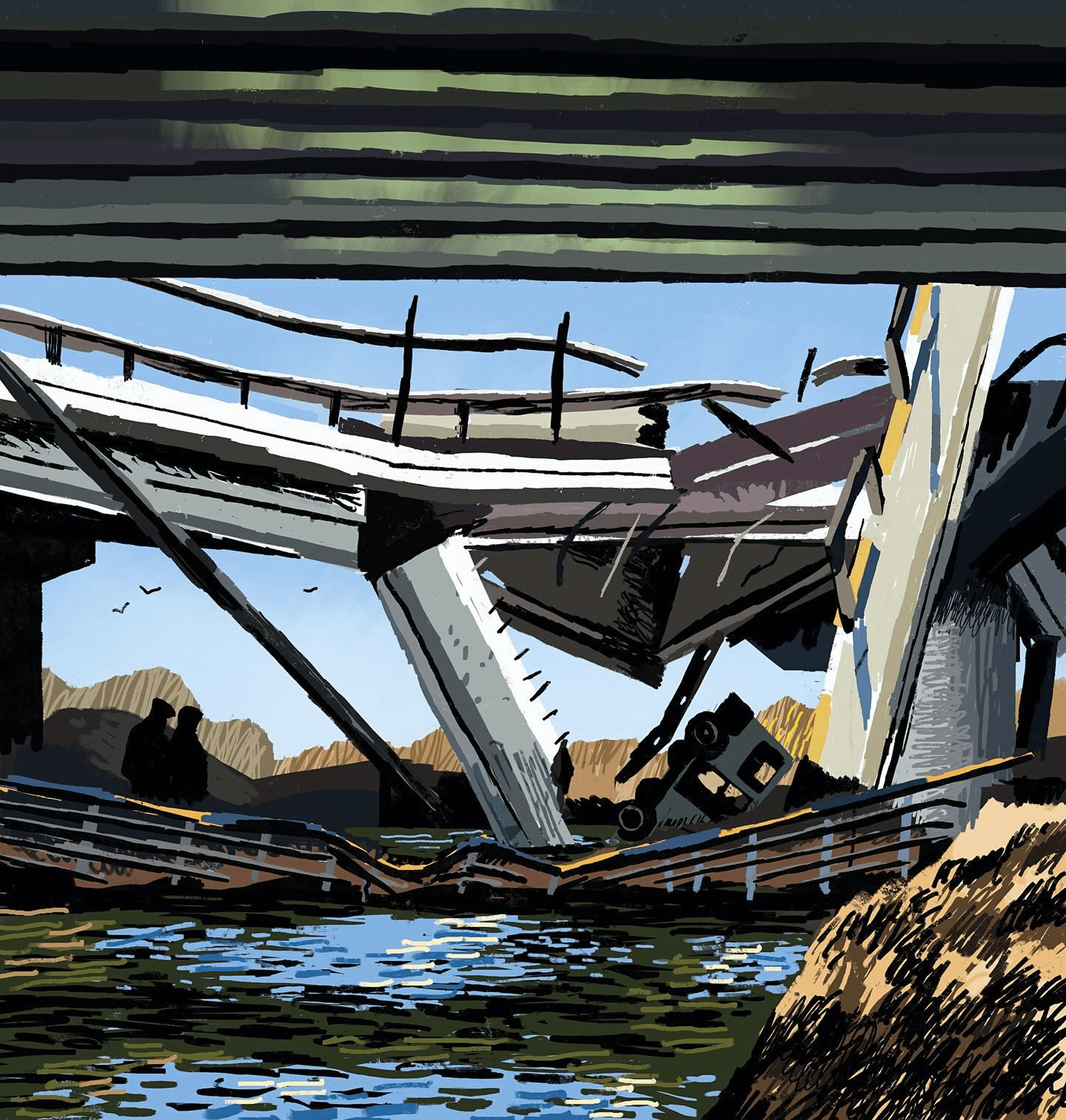
An illustration by Sergiy Maidukov depicting the destroyed bridge in Irpin, created for ZEIT Magazin. March 2024. Photo: Sergiy Maidukov / Instagram 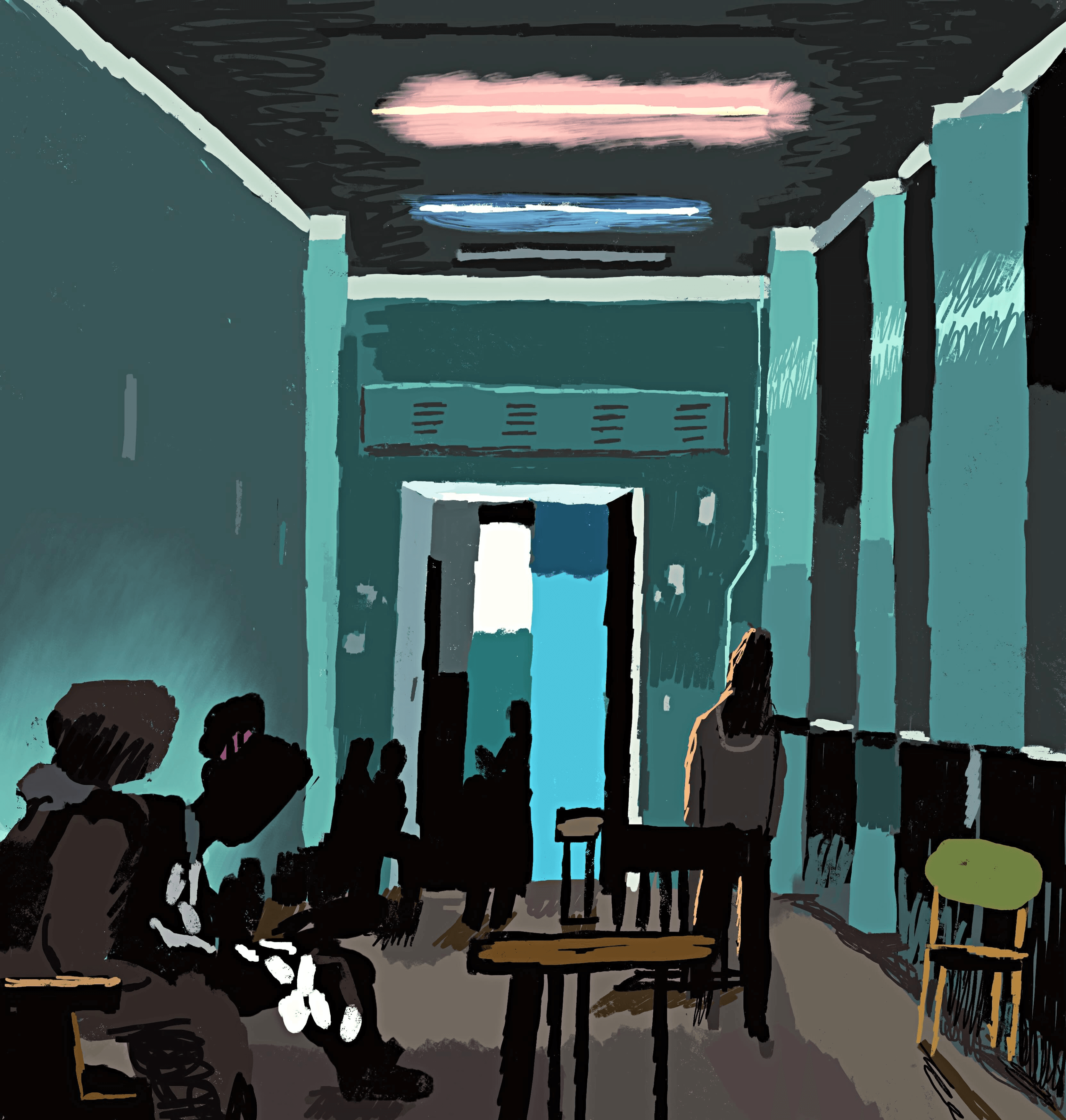
An illustration by Sergiy Maidukov depicting a shelter in a Lviv school during a Russian drone attack. May 2025. Photo: Sergiy Maidukov / Instagram 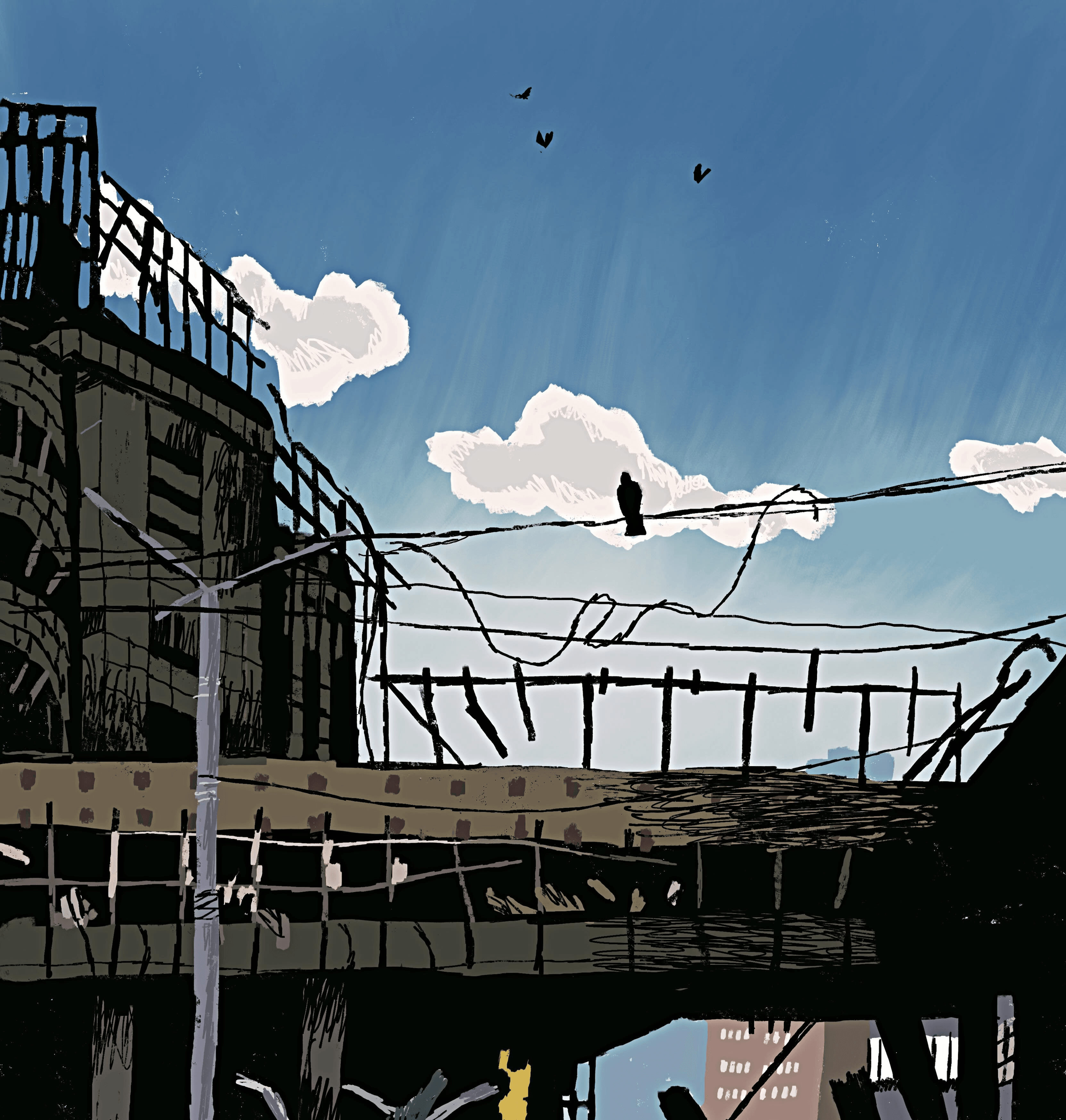
An illustration by Sergiy Maidukov depicting the aftermath of a Russian attack on Lutsk. May 2025. Photo: Sergiy Maidukov / Instagram
Why don’t editorial offices want to return to your works on other topics?
I still don’t have my own website—only Instagram. Therefore, to some extent, I’m a hostage to its chronology: art directors primarily see what I am publishing now, and those are mostly works about the war. A friend of mine, a German illustrator, once said: “The good news and the bad news at the same time is that it’s enough to do one thing for two weeks for people to start associating you with it.” We live in a digital world with a very short memory: you are, first and foremost, your latest works.
Even though the Western audience has grown tired of the war, Russia’s war against Ukraine is still a very important topic. That’s why I’m glad that international media turn specifically to Ukrainian artists.
And yet, in global media, our war is often illustrated by, for example, American or Spanish artists. How do you feel about this? Can a person who isn’t living through this experience tell its story visually with accuracy?
Yes, I’ve seen this more than once, and to be honest, it surprises me. Such works can be technically flawless. I understand very well how they are created: the artist reads the text, notes down key imagery, proposes several sketches, and executes the final illustration. Yesterday they worked on a piece about climate change, the day before yesterday on Scottish traditions, and today on the war in Ukraine. For them, it’s just another editorial assignment.
A Ukrainian illustrator also brings their own experience, associations, and emotions. It is precisely these that give birth to metaphors that are impossible for a person who is merely observing the war from afar.
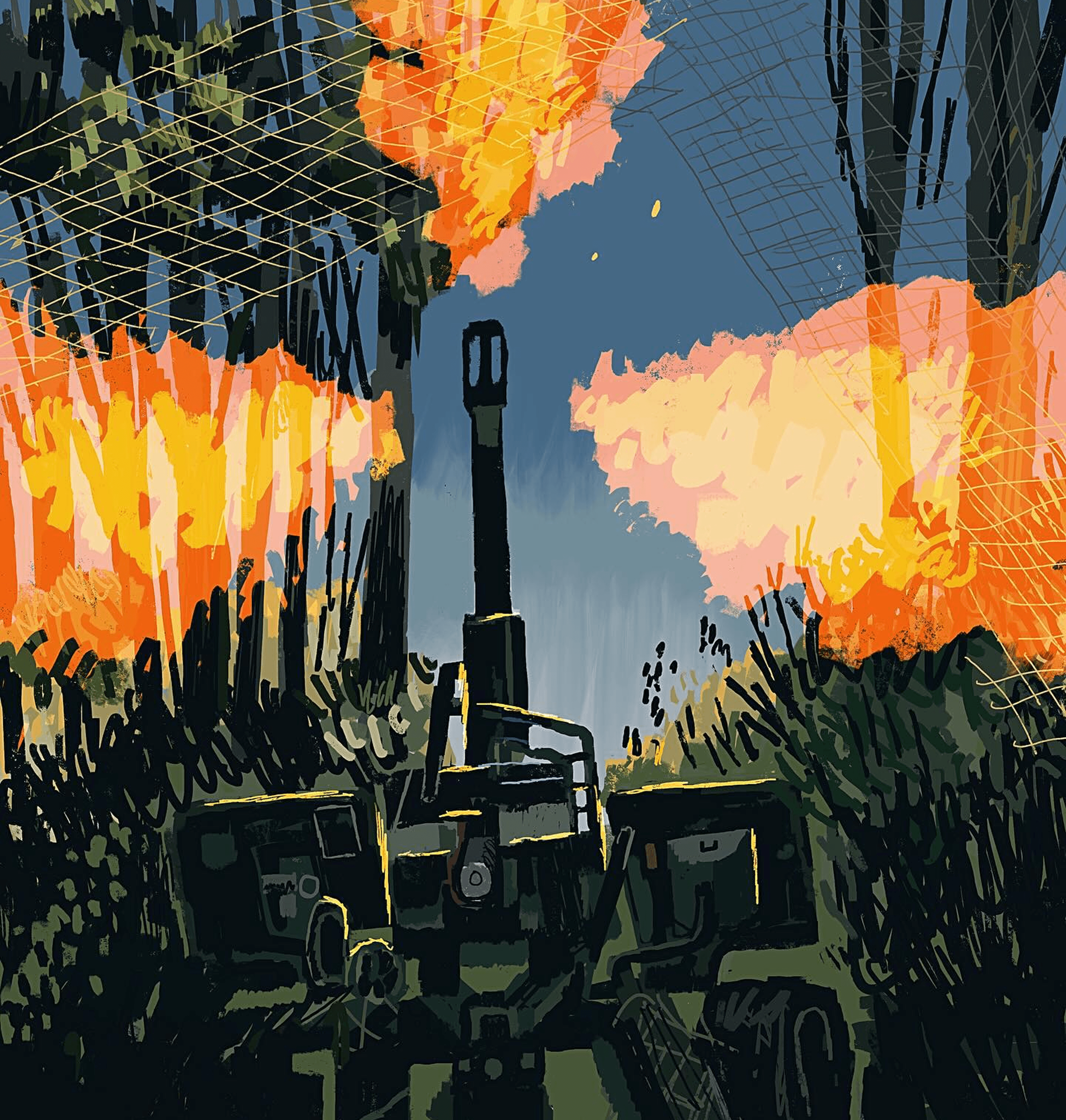
An illustration by Sergiy Maidukov depicting the aftermath of a Russian attack on Lutsk. November 2024. Photo: Sergiy Maidukov / Instagram 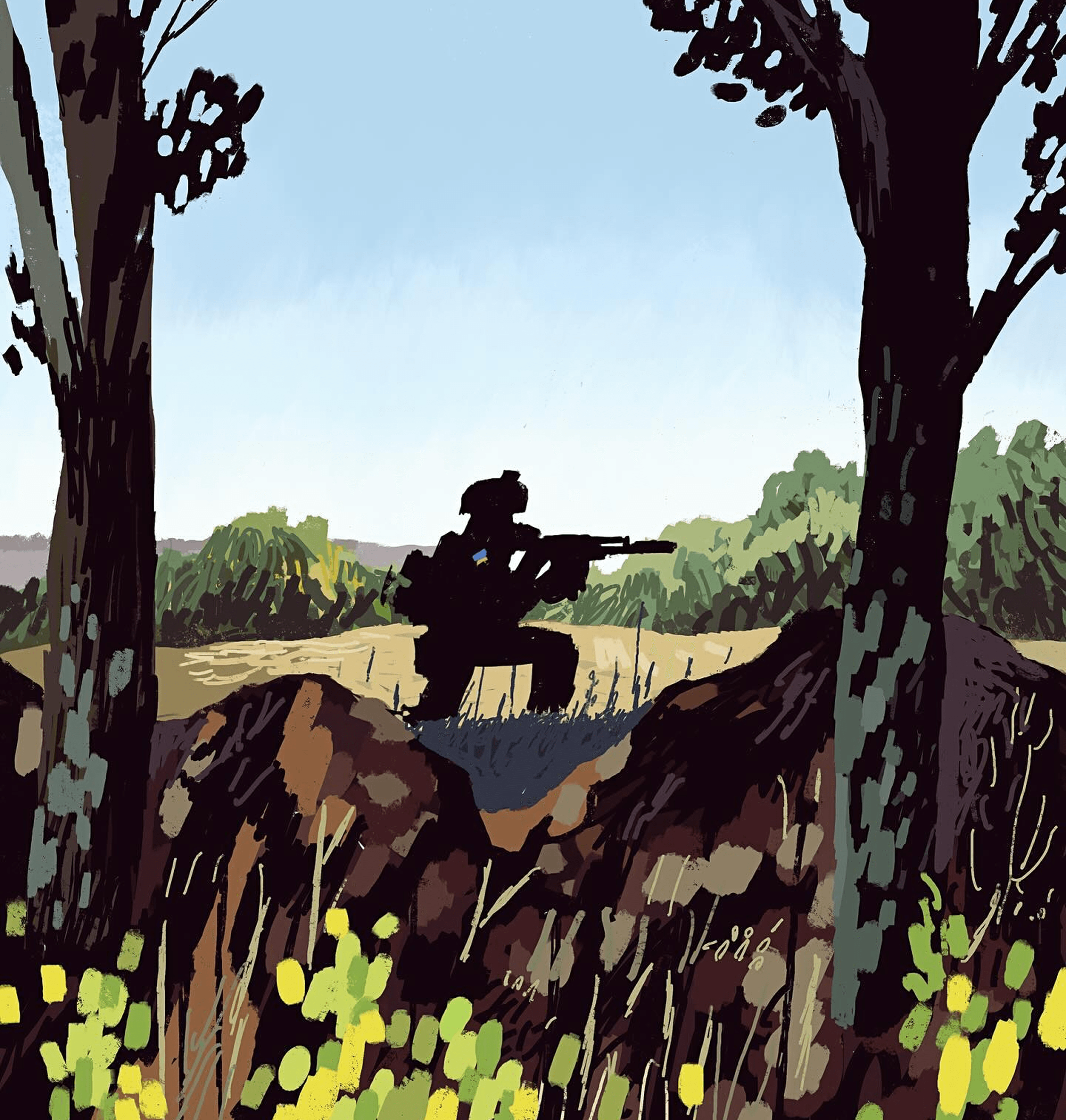
An illustration by Sergiy Maidukov depicting a combat medic from an assault unit during training in Kharkiv Oblast. November 2024. Photo: Sergiy Maidukov / Instagram 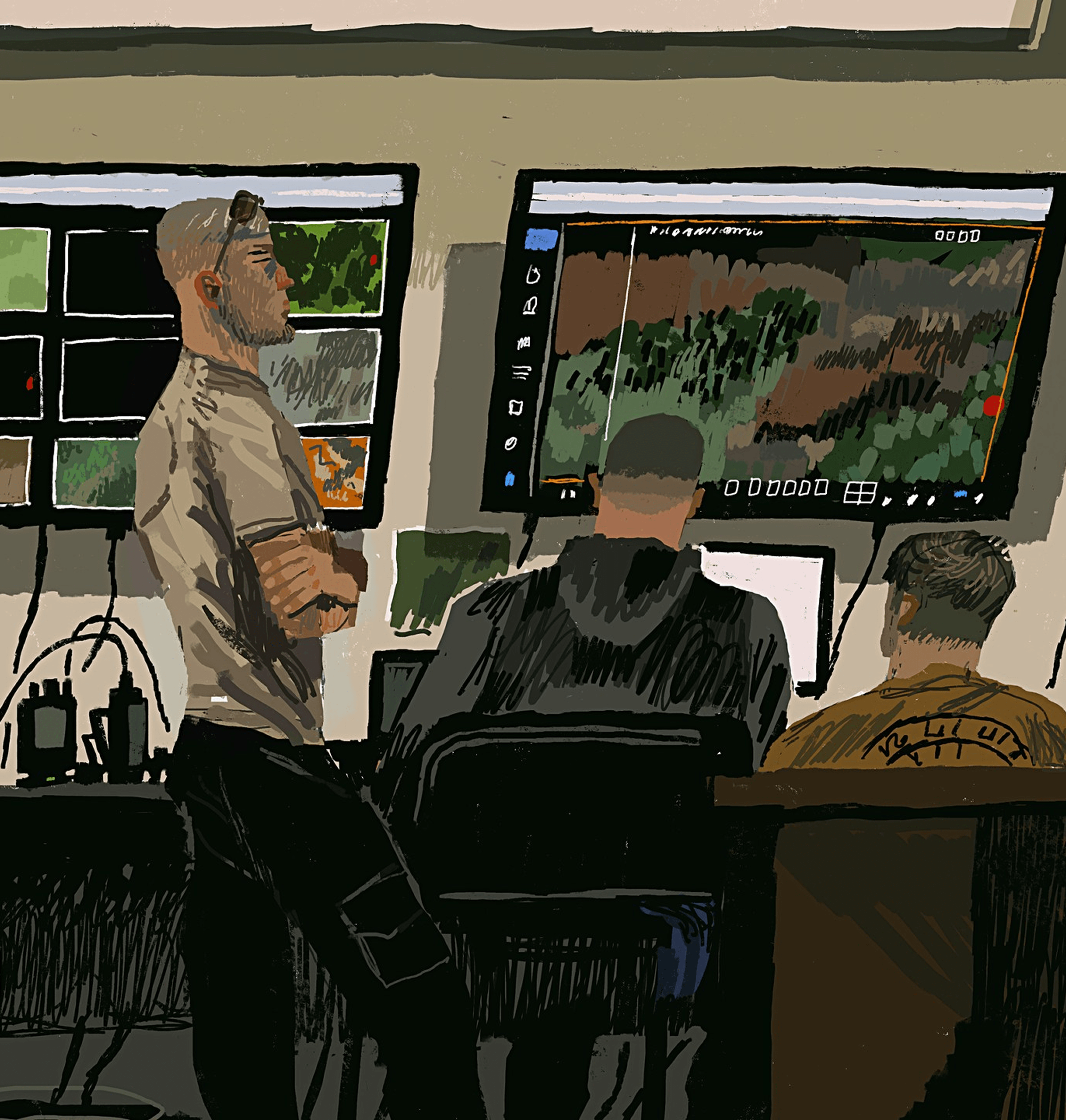
An illustration by Sergiy Maidukov depicting drone operators during a reconnaissance mission in Kharkiv Oblast. October 2024. Photo: Sergiy Maidukov / Instagram 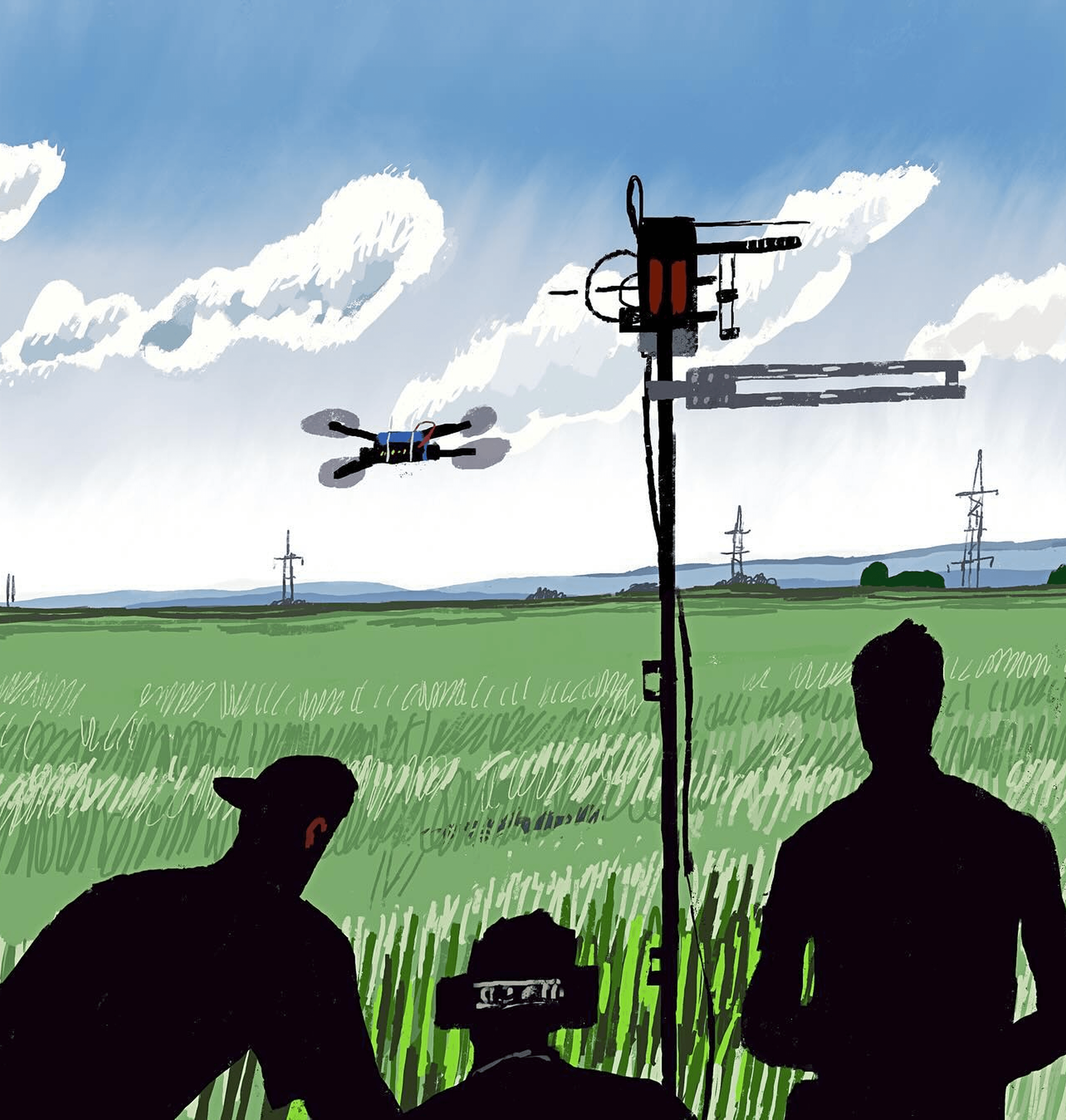
An illustration by Sergiy Maidukov depicting drone operators during a reconnaissance mission in Kharkiv Oblast. October 2024. Photo: Sergiy Maidukov / Instagram 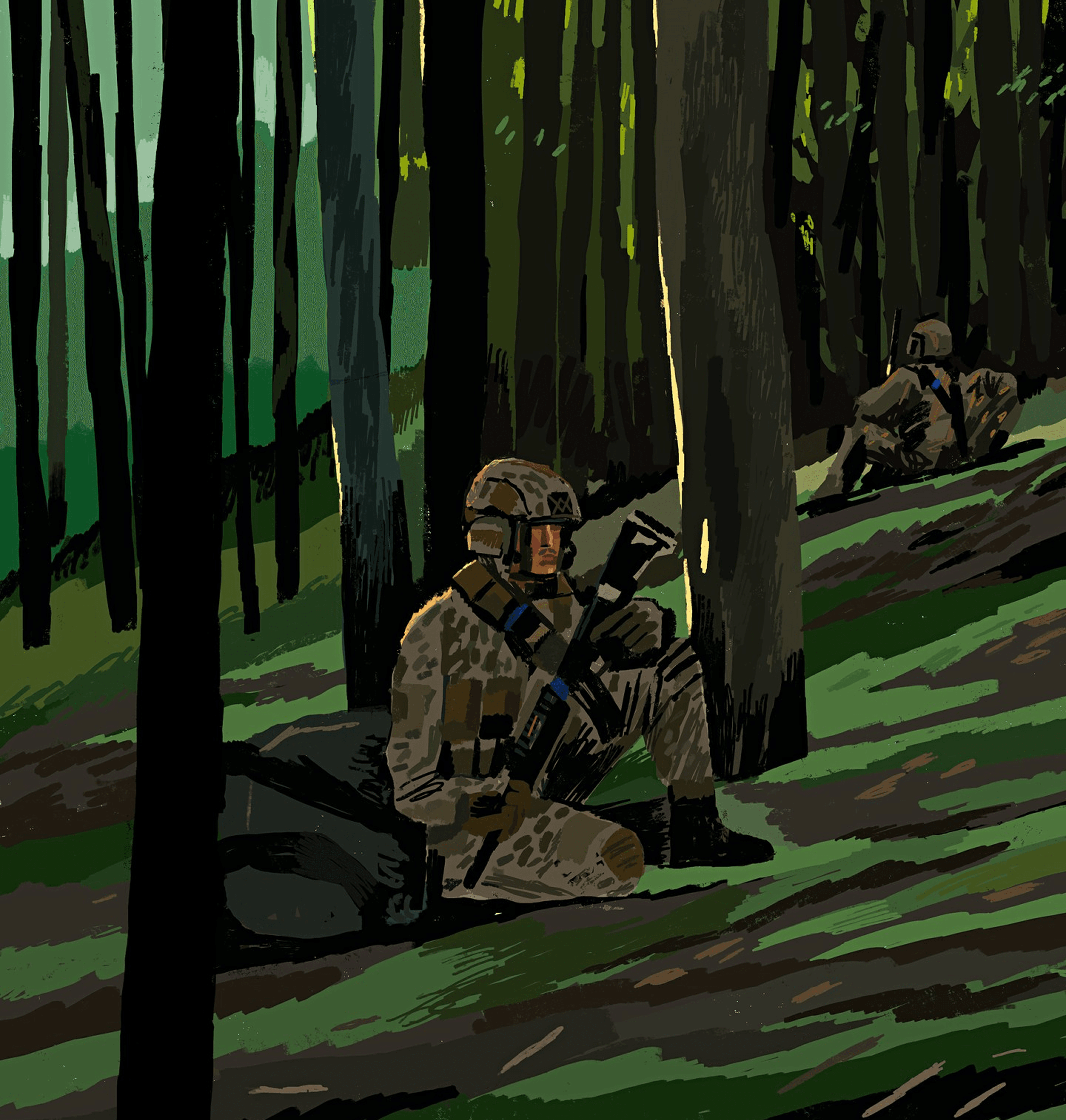
An illustration by Sergiy Maidukov depicting Special Operations Forces soldiers during a training exercise. August 2023. Photo: Sergiy Maidukov / Instagram
To what extent do editorial offices trust the artist? Where is the boundary between the author’s voice and editorial policy?
I have two completely opposite examples—both from The Guardian. On February 24, 2022, their art director, with whom we had long collaborated, wrote to me. The email said something like: “We stand with Ukraine, we support democracy, and we want to give you the space to express yourself. We need a cover for the issue. Show what you consider necessary.” It was a case of absolute creative freedom. I proposed several ideas, and the editors chose one of them without any edits. On the cover was the Ukrainian flag interpreted as a landscape: a yellow wheat field, a blue sky, and between them, black plumes of smoke from explosions. It was an illustration for a piece on the war as a threat to all of Western civilization.
But there was also a completely different experience. Recently, I worked with The Guardian on a piece about political refugees from Iran, Pakistan, and Bangladesh who are persecuted by their countries' intelligence services even after fleeing to Great Britain. I drew a surveillance scene, but when the illustration was almost finished, the art director asked to make the pursuers completely shadowed so they couldn’t be identified. He explained that the editors didn’t want to depict people of color in a negative light due to current racial tensions in Britain. To me, this was strange, since the illustration merely reflected the facts from the article. I told him directly that I considered such a decision to be a form of self-censorship.
So a logical question arises: has there ever been an instance where the editors of a global media outlet tried to influence how you should portray Ukraine?
Almost never. However, there was an incident with The Economist. I did an illustration for their piece on the decolonization of Odesa and the debate surrounding the Pushkin monument. The article was authored by Arkady Ostrovsky—an editor at The Economist, a well-known journalist of Russian origin who has long lived and worked in Great Britain and specializes in the post-Soviet countries. When I was sent the short working brief, it contained neither the author’s name nor the full text of the article. At first, the editorial team liked my illustration. But I asked them to send the full text of the article, because it’s important for me to understand exactly what my work will be illustrating. When I saw Ostrovsky’s byline and realized what he was writing about, I decided not to hand over the illustration. As I see it, the piece promoted Russian propaganda. Ostrovsky described Odesa as a cosmopolitan city built by Italians, Jews, Greeks, the French, and Russians, but didn’t mention Ukrainians at all. He described supporters of decolonization as aggressive radicals, and opponents as the sole voice of common sense.
For me, this was manipulative framing. I wrote a long email to the editorial team explaining why I considered such an approach unacceptable, and refused to hand over the illustration.
And how did the editorial team react?
They handled it professionally. They paid me compensation for the work done, but didn’t use the illustration. After that, The Economist never reached out to me again.
I’d like to step away from editorial teams and talk about your own artistic language. In an interview with Ukrainska Pravda, you said that an illustration should initiate a dialogue. Yet when looking at your works, they read almost instantly and quite unambiguously. Where then is the room for dialogue here?
That’s a very interesting question. Dialogue doesn’t necessarily mean ambiguity. It can arise through different shades of interpretation. Recently, I did a cover for the book “Ukrainian Lessons” by Charlotte Higgins, the longtime chief culture writer for The Guardian. On the cover, there is a damaged house and a fountain. One reader will see in this a story about a destroyed city; another, a story about life enduring. And here (shows the cover) is the cover of the Japanese edition of “The Forest Song”. There’s only a willow tree, rain, and a pink background. But someone will see a story about love, someone else about loss and sorrow.
However, in your illustrations about the war, you are as direct as possible.
Yes, and I agree with that. My attitude toward the war itself is direct. I have no ambivalence here. We live in a situation where clear categories of good and evil exist for me, so it would be strange to artificially create ambiguity.
The only thing an artist can do is find a new poetic form. You don’t necessarily have to show suffering through blood or ruins. Sometimes a geometric shape, empty space, or the light of a flashlight can convey it.
That symbolism is precisely what I want to ask about. Where is the line of what’s acceptable for international media? Are there unspoken limitations? For example, could an editorial team say: “Draw a shelling, but without missiles, without blood, without victims”?
I haven’t particularly felt direct censorship regarding the war in Ukraine, but a boundary regarding the level of visual brutality in international media really does exist. I had sketches featuring dead Russian soldiers. When I sent them to The Guardian, the editorial team refused to publish them. They wrote that it was too graphic for their audience and asked me to find a more metaphorical way to express myself.
However, to find these metaphors, you are constantly working with the real war. How often do you travel to the frontline areas to do your sketches?
Until 2024, I regularly traveled almost to the very frontline. I was in Bakhmut when the Russians were already on the outskirts of the city, in the Serebryansky forest, where their positions were nearly 800 meters away, in Novopokrovka, and in Lyptsi in the Kharkiv region. I got on such trips thanks to military acquaintances who helped me reach places where civilians are usually not allowed.
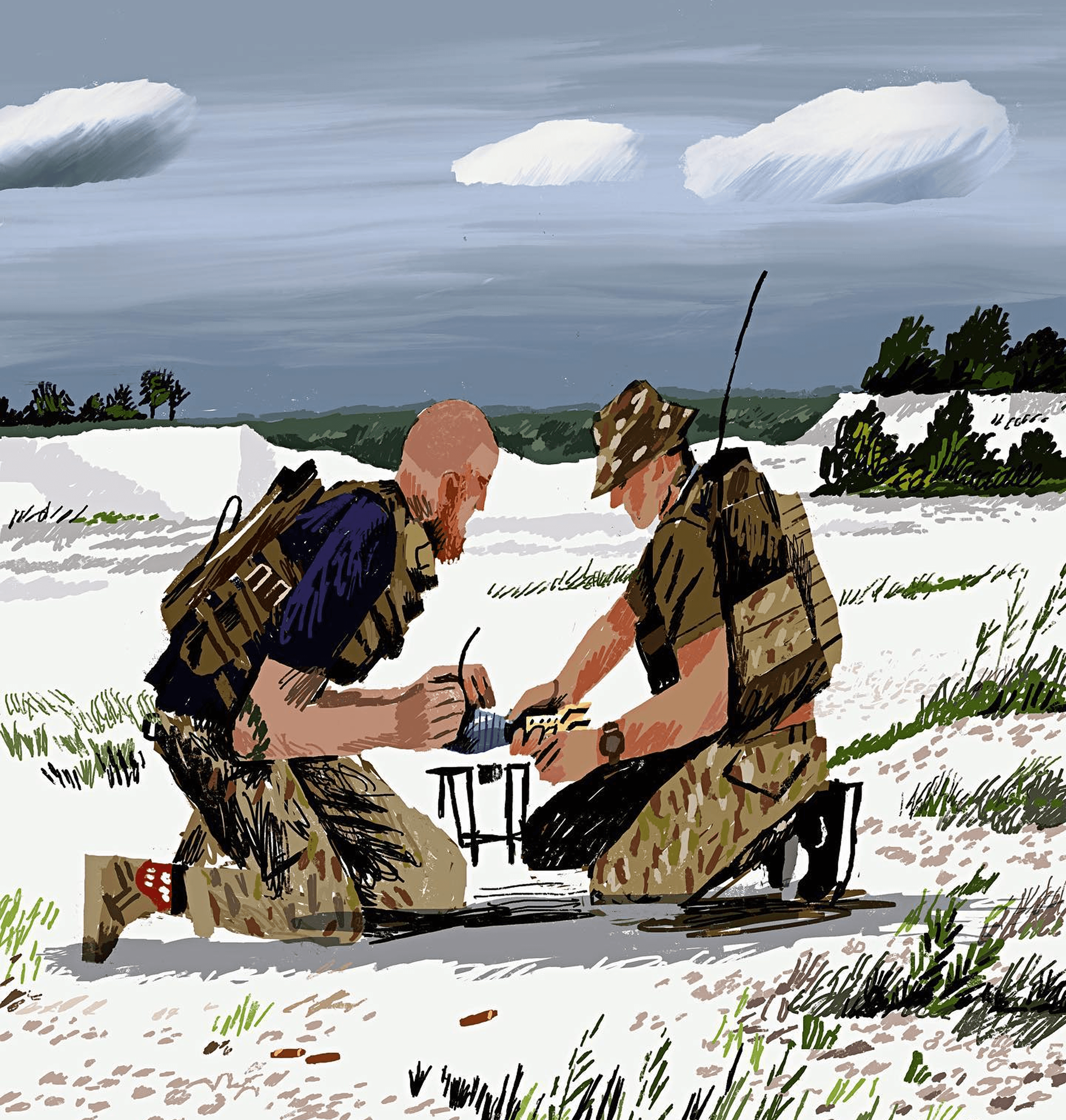
An illustration by Sergiy Maidukov depicting military drone training in the Donbas. July 2023. Photo: Sergiy Maidukov / Instagram 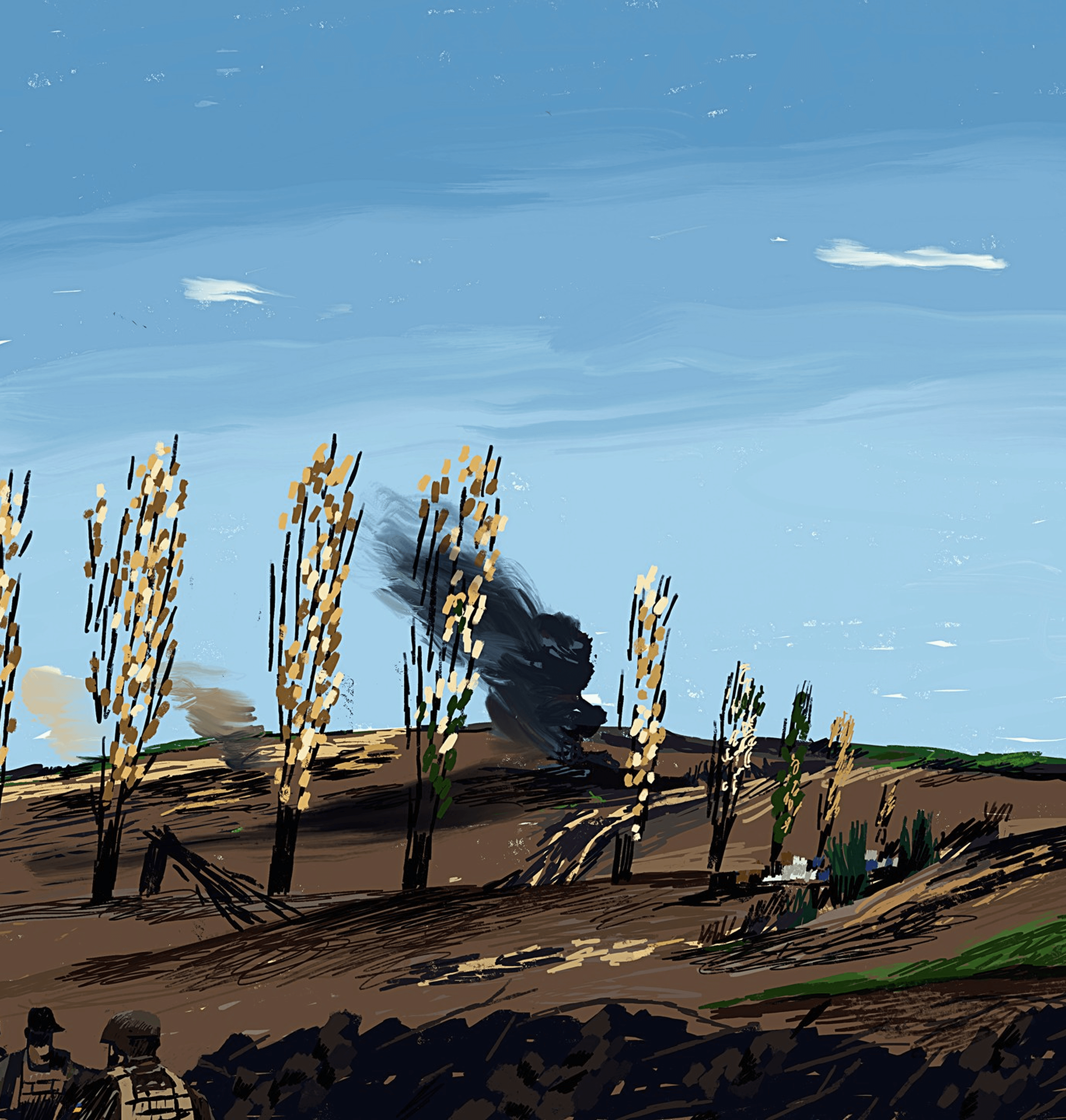
An illustration by Sergiy Maidukov depicting the landscape near Bakhmut, created for ZEIT Magazin. September 2022. Photo: Sergiy Maidukov / Instagram 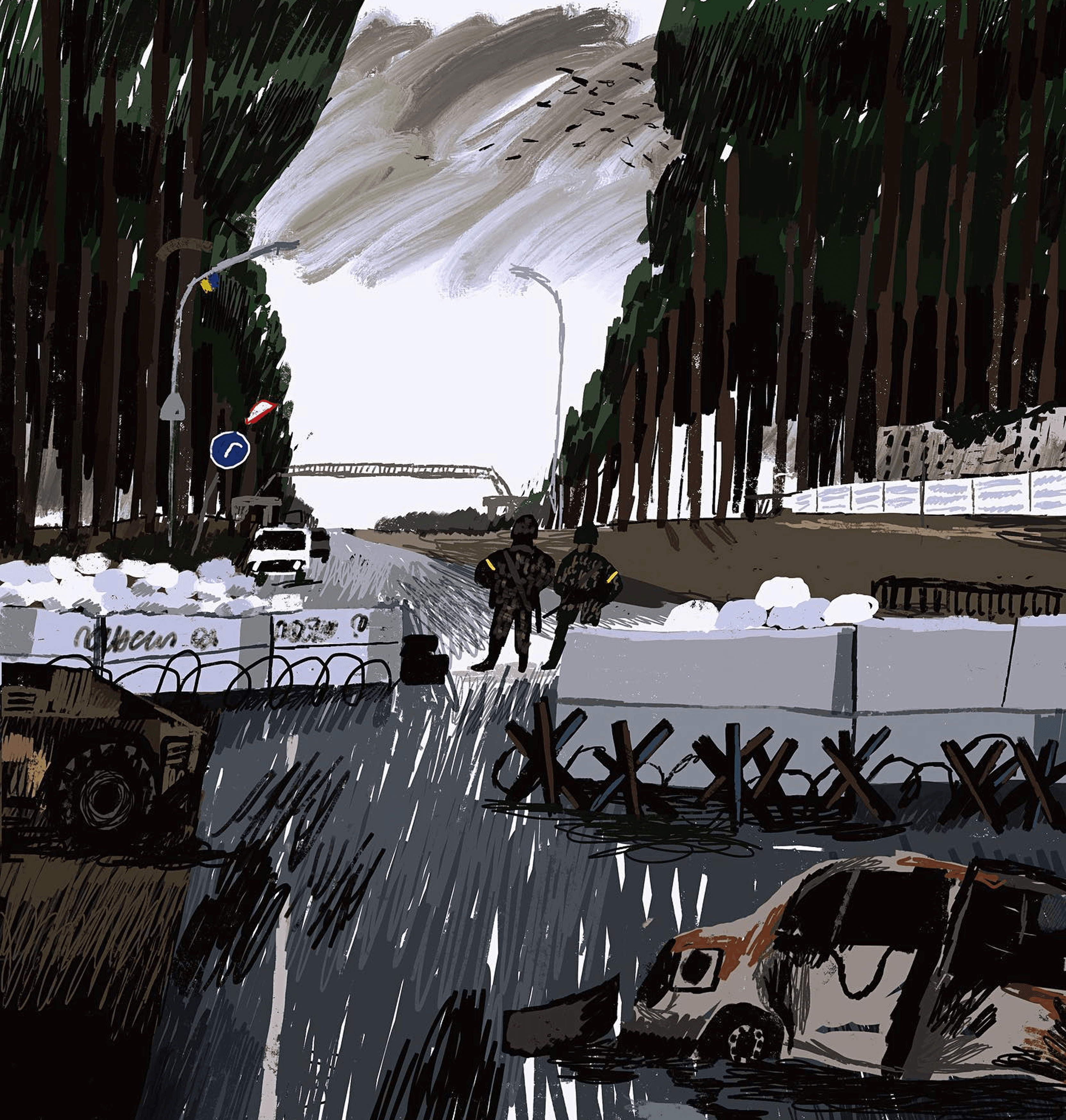
An illustration by Sergiy Maidukov depicting a barricaded road to Brovary following the start of Russia’s full-scale invasion. March 2022. Photo: Sergiy Maidukov / Instagram 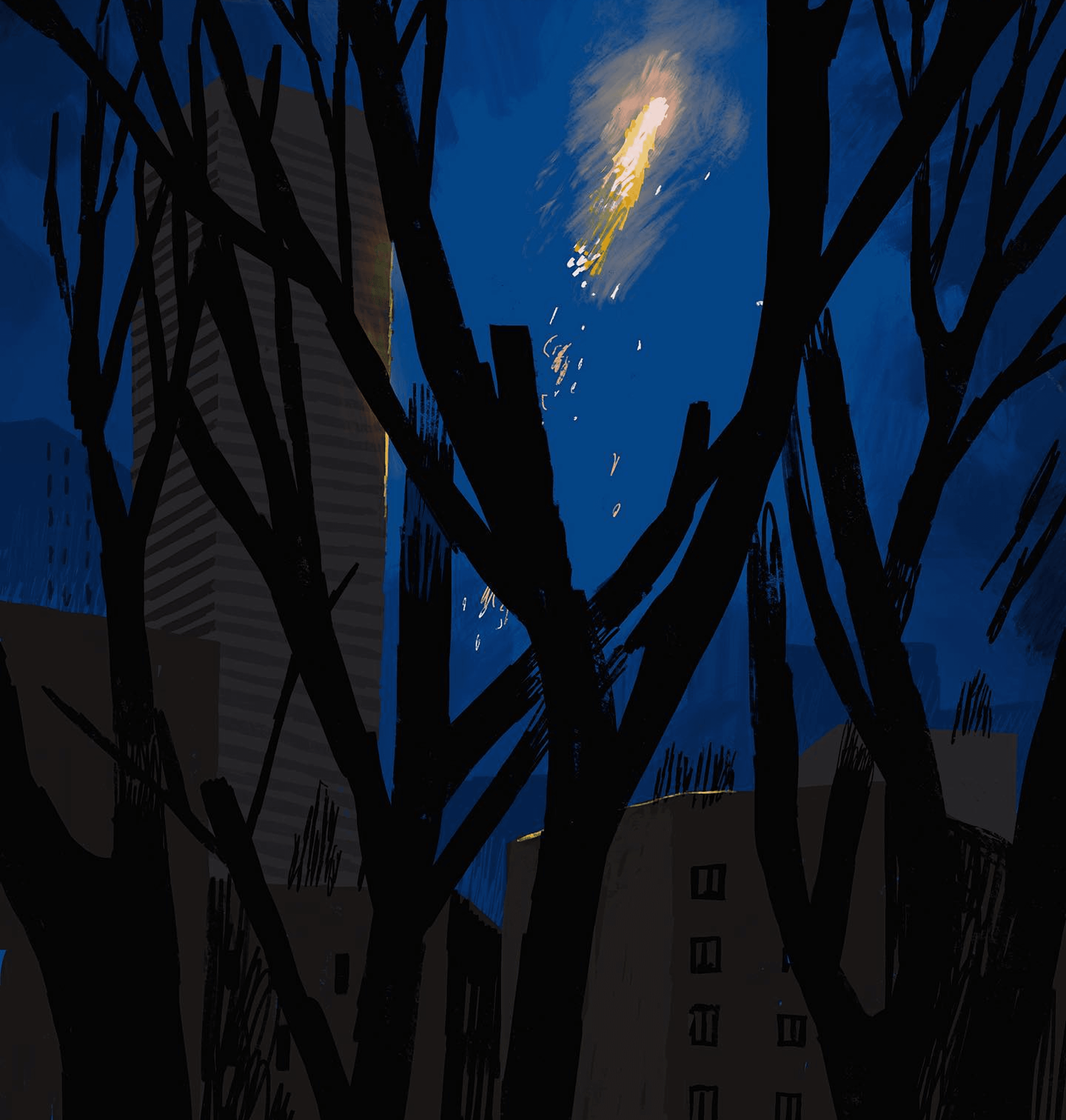
An illustration by Sergiy Maidukov depicting a Russian missile attack on Kyiv, drawn from the window of his apartment. May 2022. Photo: Sergiy Maidukov / Instagram 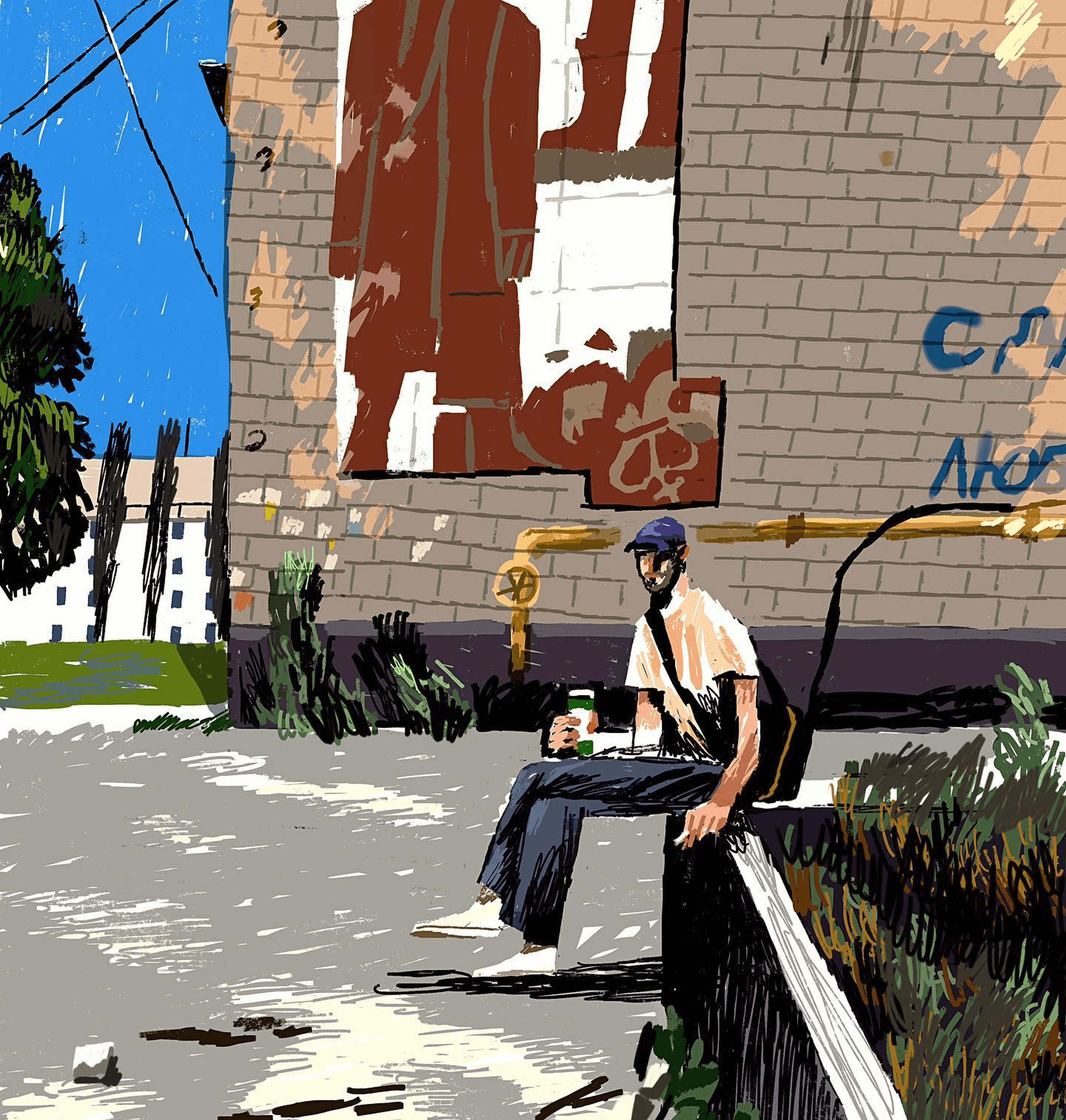
An illustration by Sergiy Maidukov depicting Bakhmut, created after his trip to the city in August 2022. September 2022. Photo: Sergiy Maidukov / Instagram
Now, due to the constant threat of drones, it’s impossible to stay in one place for long. While before I could work on a drawing right at the position for an hour or even more, now it is deadly dangerous.
Therefore, my approach has changed as well. Today, the main thing is to manage to catch the perspective, light, colors, atmosphere, and sense of space. The technical details can be added later with the help of a photograph. Although, 95 percent of my works I still finished right on location.
Are there topics you fundamentally refrain from touching? Or, on the contrary, those you aren’t yet ready to illustrate?
I don’t think there are topics I consciously don’t want to touch. Rather, there are topics in which I don’t feel competent enough. For instance, American domestic politics. I’m not interested in making an illustration just because I can find a nice metaphor. I want to deeply understand the context.
There is also another challenge. In the US, several poetic literary magazines are published that I would be very interested to work for. But that requires a completely different visual language—more multilayered and complex. For now, it seems to me that my portfolio isn’t deep enough for such publications, and I still need to keep working.
What about ethical limitations? Have Ukrainian political forces, for example, approached you with offers to collaborate?
That happened once, I think in 2017. I was offered to make a political illustration for BYuT, but I refused immediately. I decided long ago that I wouldn’t collaborate with political forces. Because at that moment, the artist ceases to be independent and becomes a tool of a political campaign. And that permanently affects how your works will be perceived.
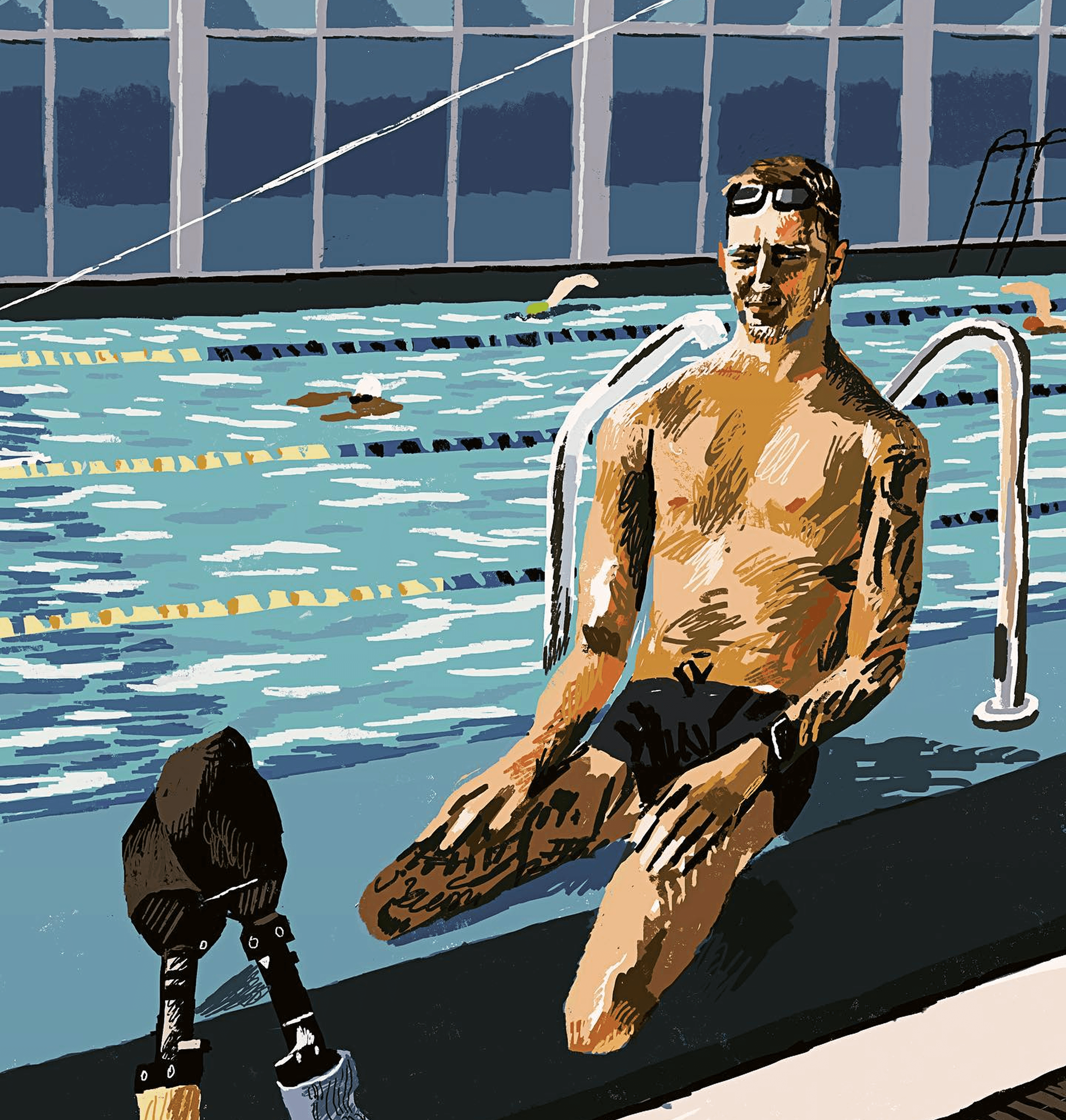
An illustration by Sergiy Maidukov depicting veteran Oleksandr, callsign “Teren,” as he prepares for an international sports competition for veterans. September 2023. Photo: Sergiy Maidukov / Instagram 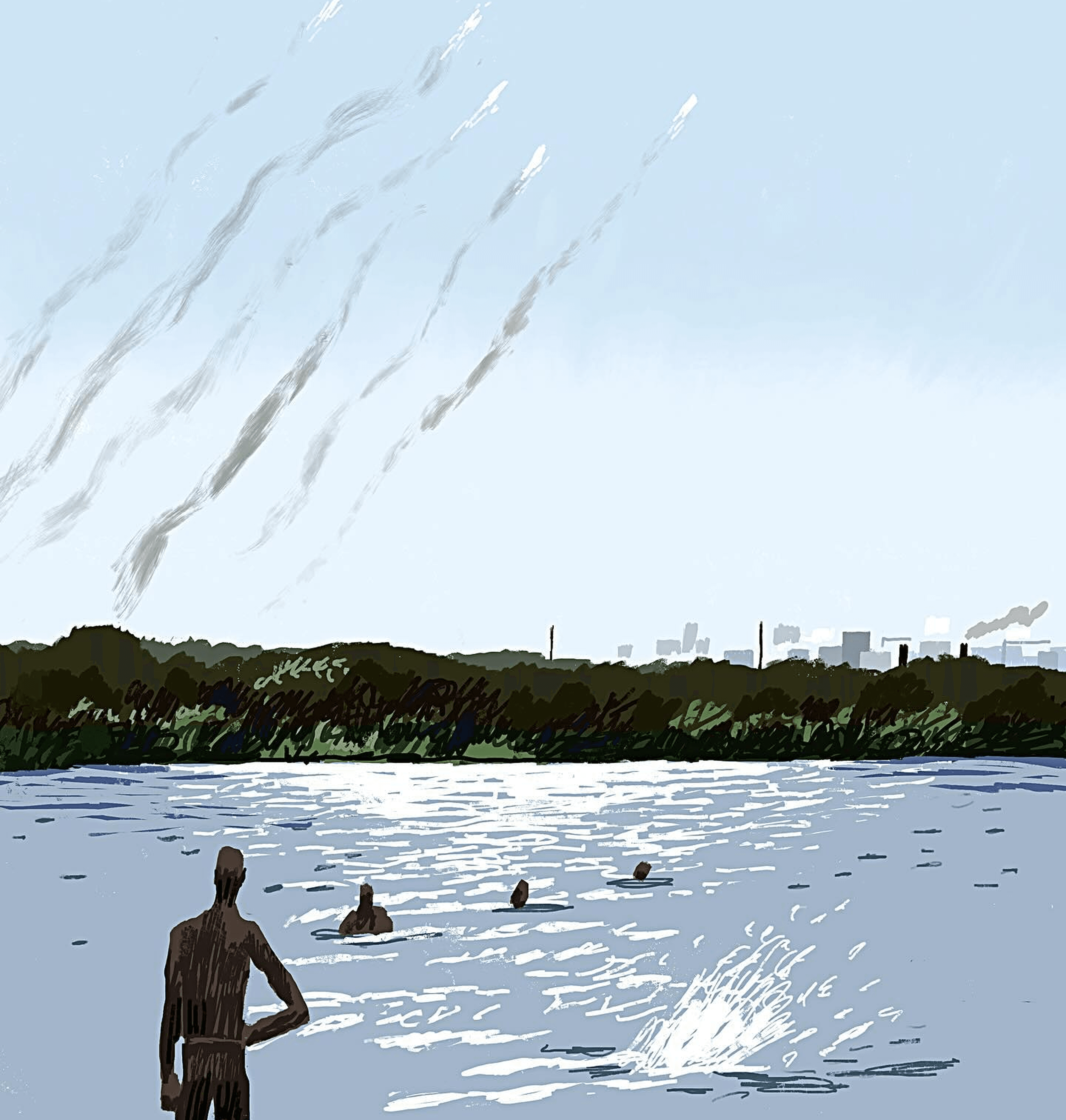
An illustration by Sergiy Maidukov, whose location of creation the artist has chosen not to disclose. July 2024. Photo: Sergiy Maidukov / Instagram 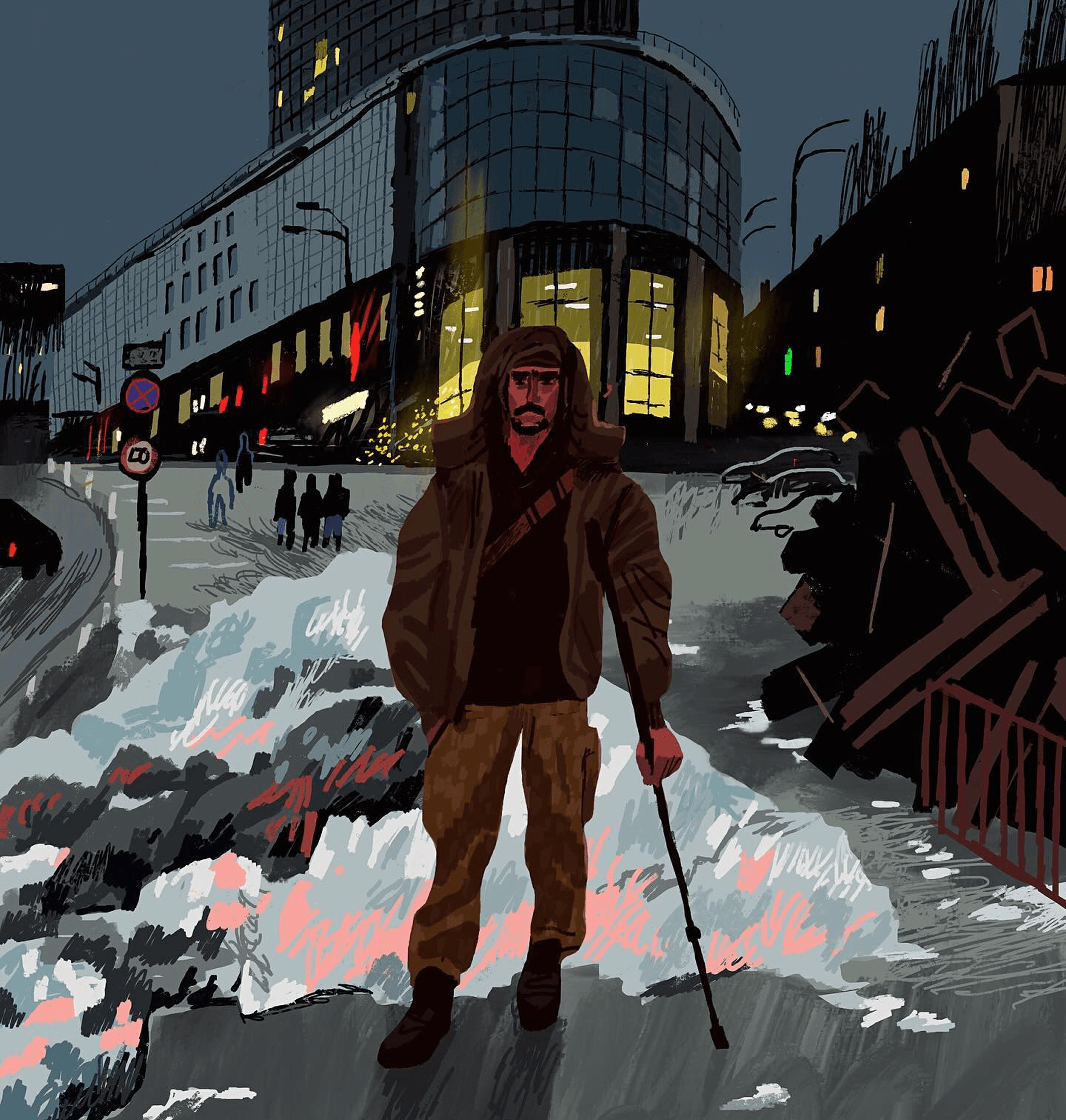
An illustration by Sergiy Maidukov depicting Serhii, a wounded Ukrainian soldier who lost part of his foot and a finger after a munition was dropped from a Russian drone. January 2024. Photo: Sergiy Maidukov / Instagram 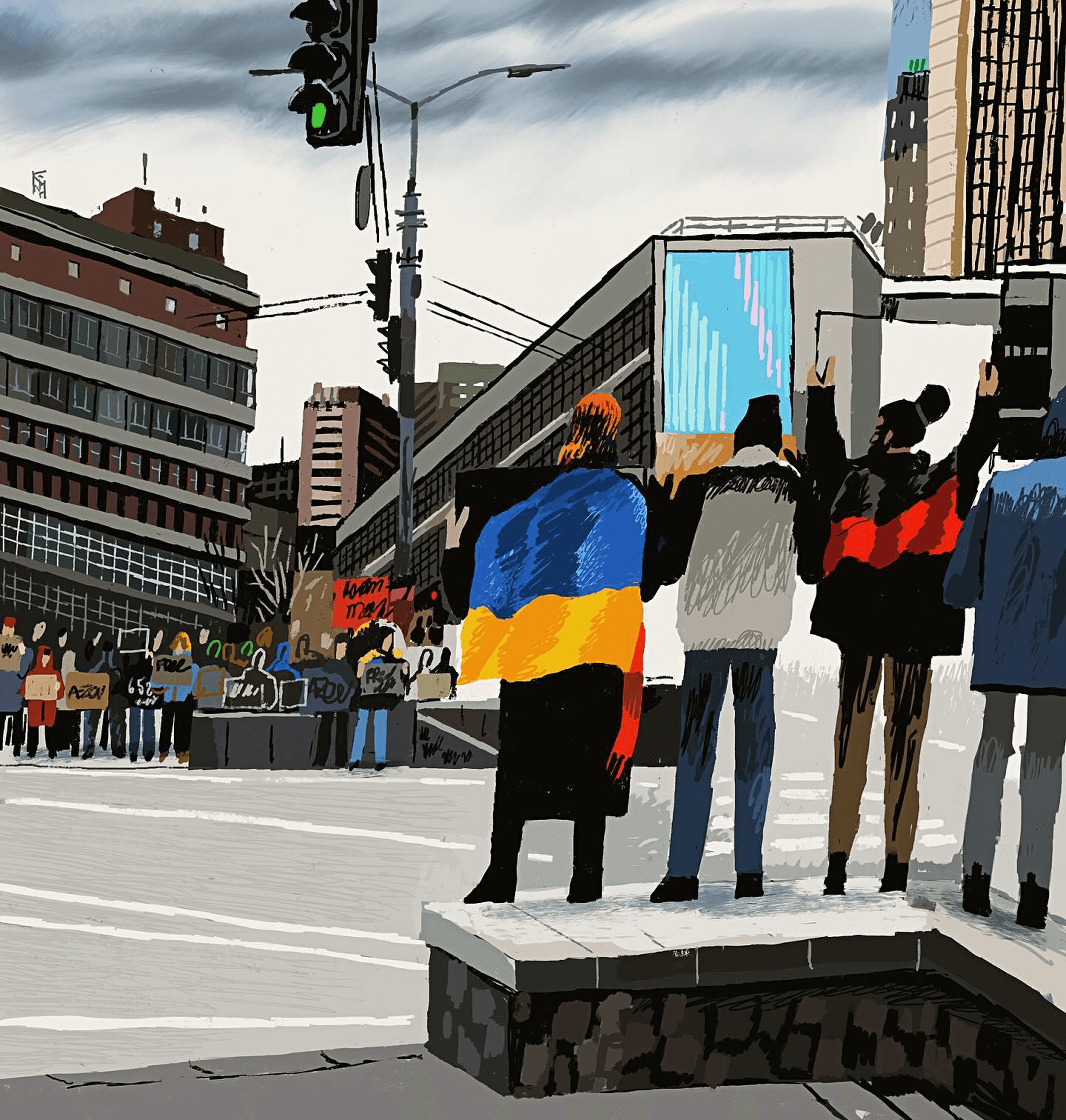
An illustration by Sergiy Maidukov depicting a rally in Kyiv’s Lviv Square in support of the defenders of Azovstal. March 2024. Photo: Sergiy Maidukov / Instagram 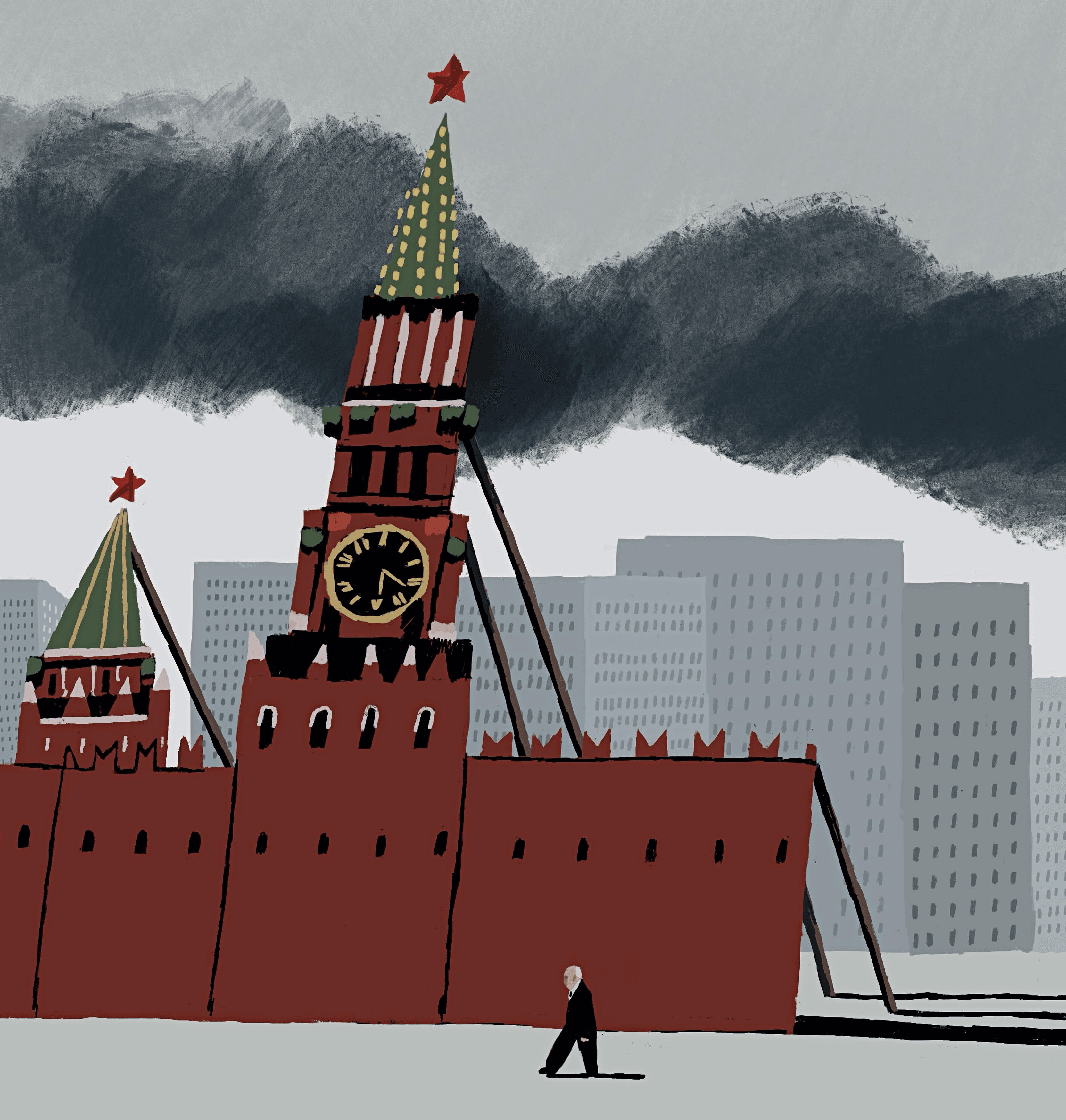
An illustration by Sergiy Maidukov depicting the Moscow Kremlin, created for The New York Times. May 2025. Photo: Sergiy Maidukov / Instagram
When you draw politicians during moments of crisis, doesn’t the illustration become part of the media scandal itself? How do you define the boundary for yourself when it’s time to speak out?
Yes, that’s a very valid point. However, I don’t consider myself someone who can instantly evaluate the internal political situation correctly. So I try not to react impulsively. Before supporting any initiative, I consult with people whose opinion I trust. For me, it’s important to understand that this is a genuine social demand, not someone’s political technology.
During war, I tend to believe that many internal issues should be raised by journalists, law enforcement, and the courts. But when people take to the streets, for me it means that the problem has moved beyond a political discussion, and it’s time to join in.
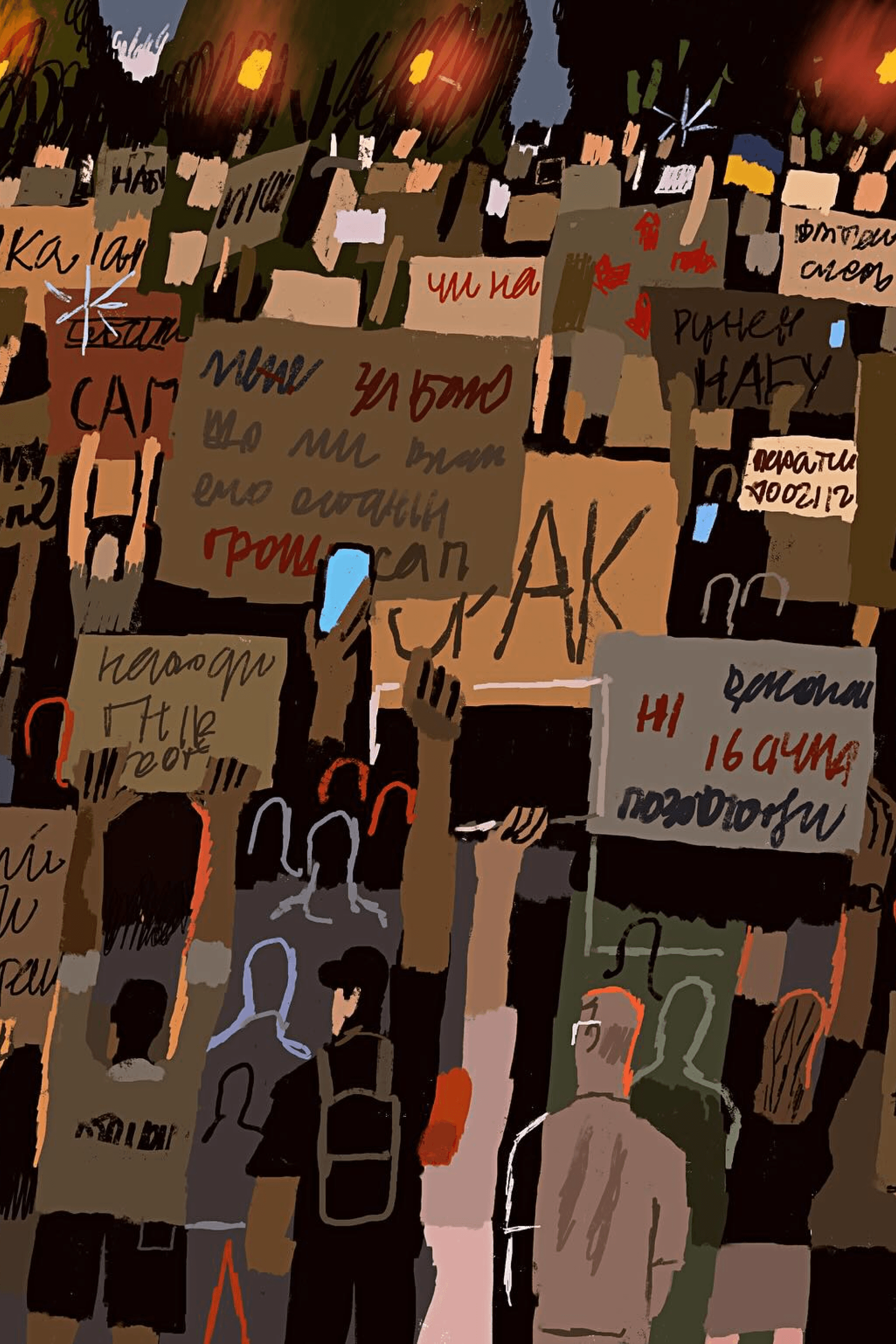
Over the course of the full-scale war, I remember only two moments when I could no longer stand aside. The first was the struggle for the Dovzhenko Center. I was at that rally in August 2022, drew there, and that work was published in Die Zeit along with my text about the inadmissibility of pressure on an independent cultural institution. The second was the Cardboard Maidan. I participated in it, drew there, and those documentary works were published in Ukrainian and foreign media. For me, that was no longer just a political story, but a societal one.
Speaking of documentarity, I can’t help but ask about your art book KYIV. You worked on it from 2018 to 2021 and effectively recorded the last months of peaceful Ukrainian capital. When the full-scale invasion began, did you realize that you had preserved a city that no longer exists in that form? And that it’s now not just an artistic project, but a document?
Thank you. To be honest, I’d never even looked at it from that angle, but you’re right. And that’s probably the most interesting part. When I was working on the book, I simply wanted to capture the Kyiv that I love. I didn’t have the feeling that I was documenting a world that was about to disappear.
The war indeed drew a very clear line between “before” and “after.” And this really gave the book a new dimension that I couldn’t have foreseen. It also acquired a political connotation, because Kyiv turned into a symbol of Ukrainian resistance. It’s no longer possible to look at it without remembering February 2022, the offensive, the “Kyiv in three days”. And the book, too, is read differently now, even though not a single one of its drawings has changed.
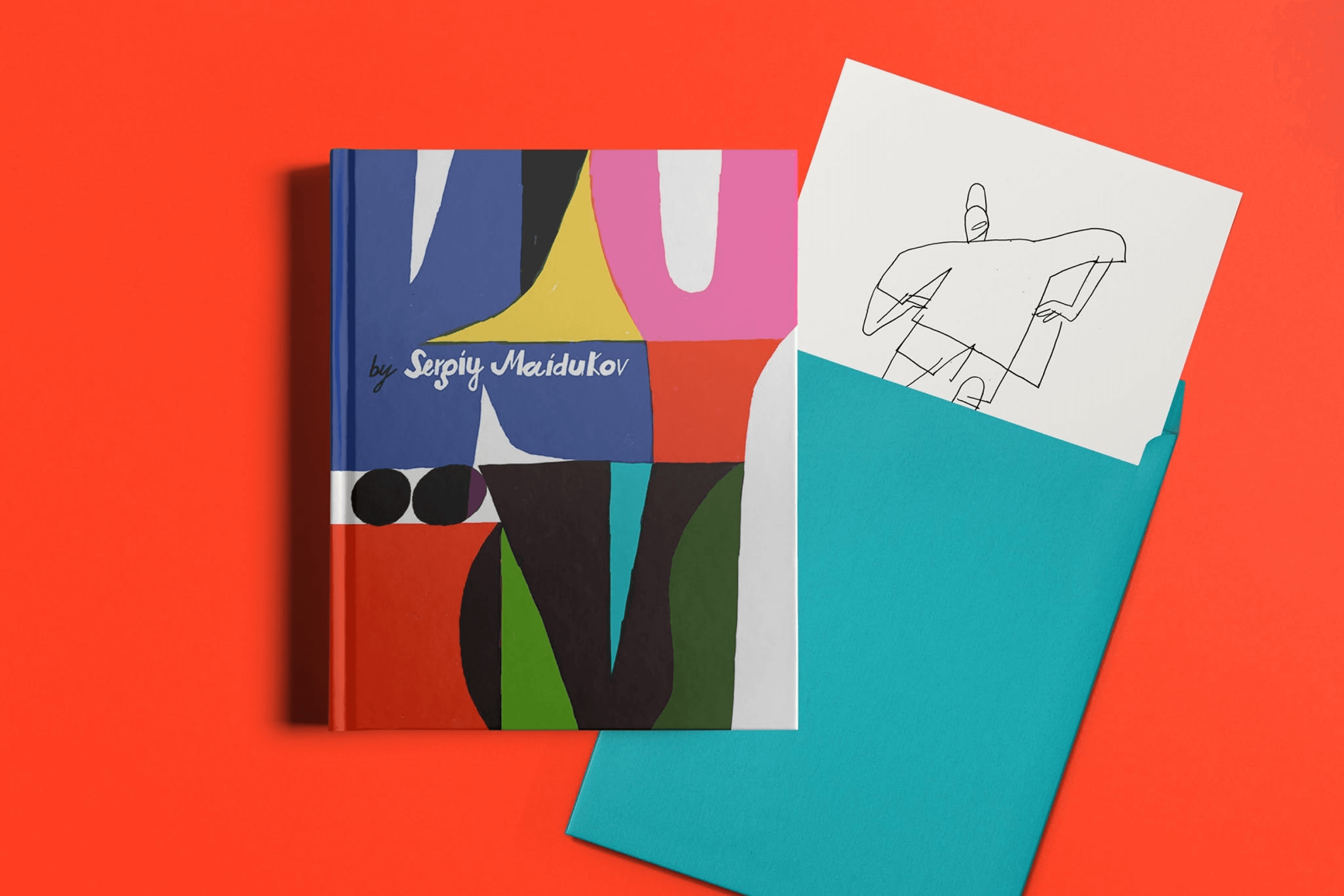
Sergiy Maidukov’s artist book about Kyiv, published by IST Publishing. May 2021. Photo: Sergiy Maidukov / Facebook 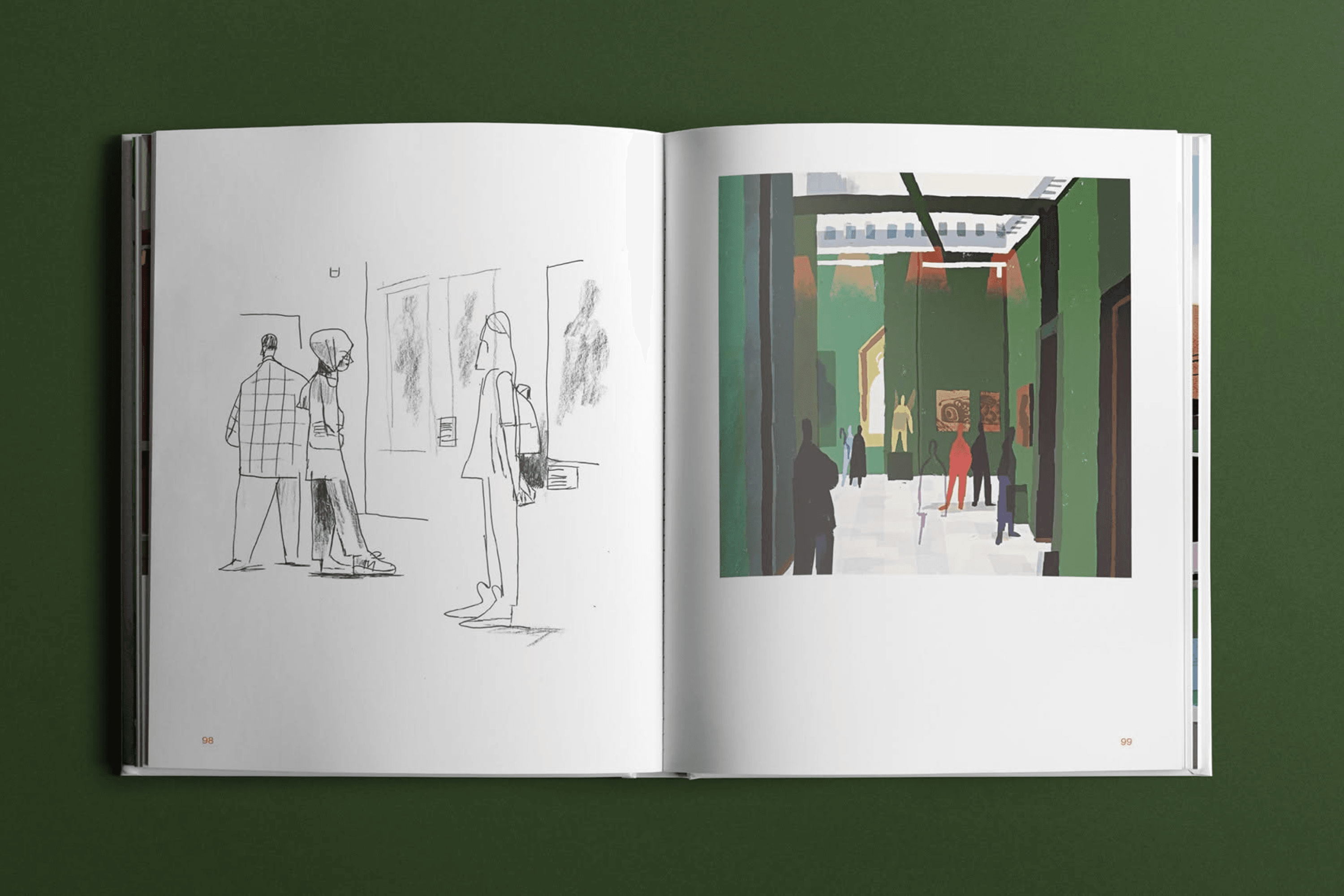
Photo: Sergiy Maidukov / Facebook 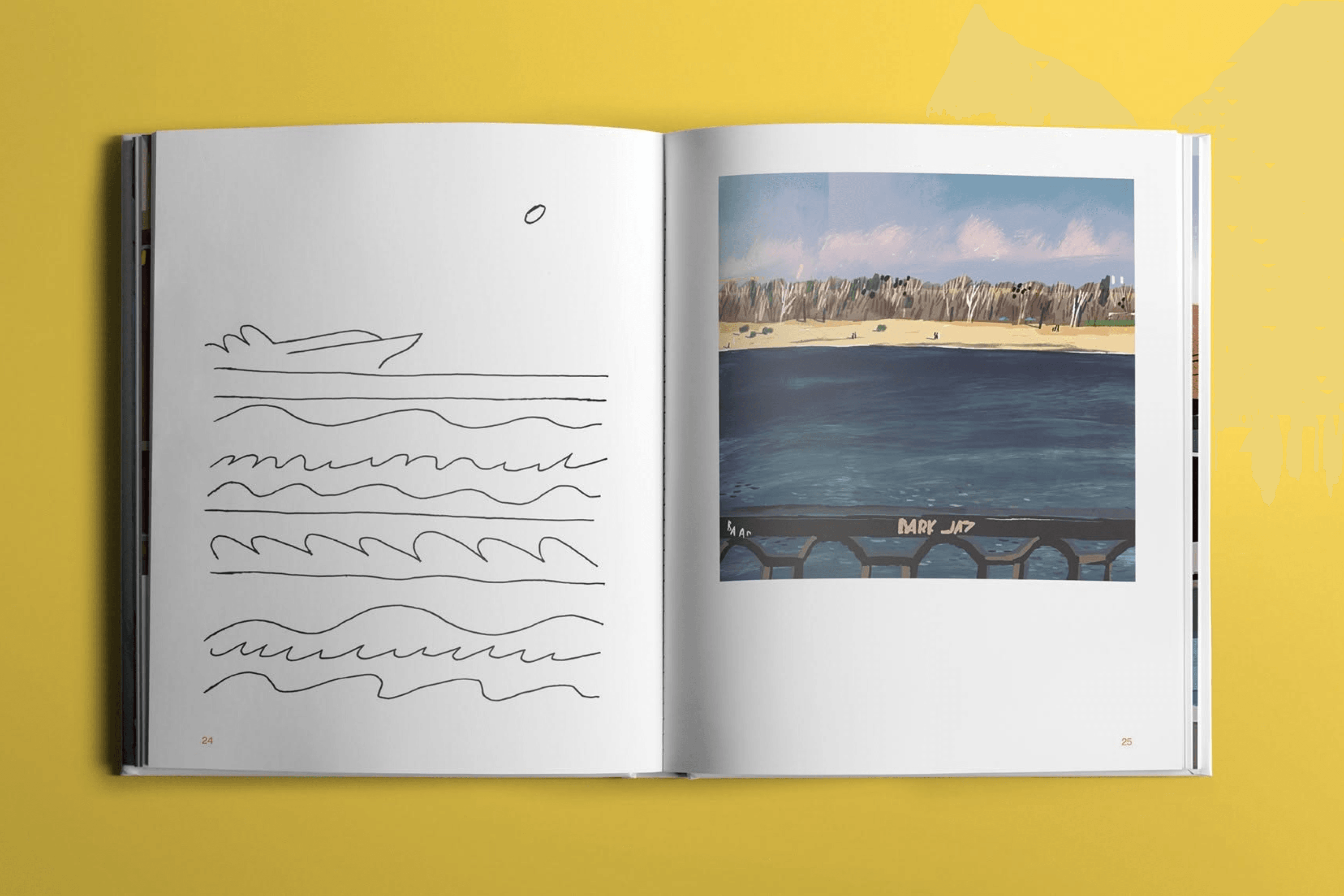
Photo: Sergiy Maidukov / Facebook 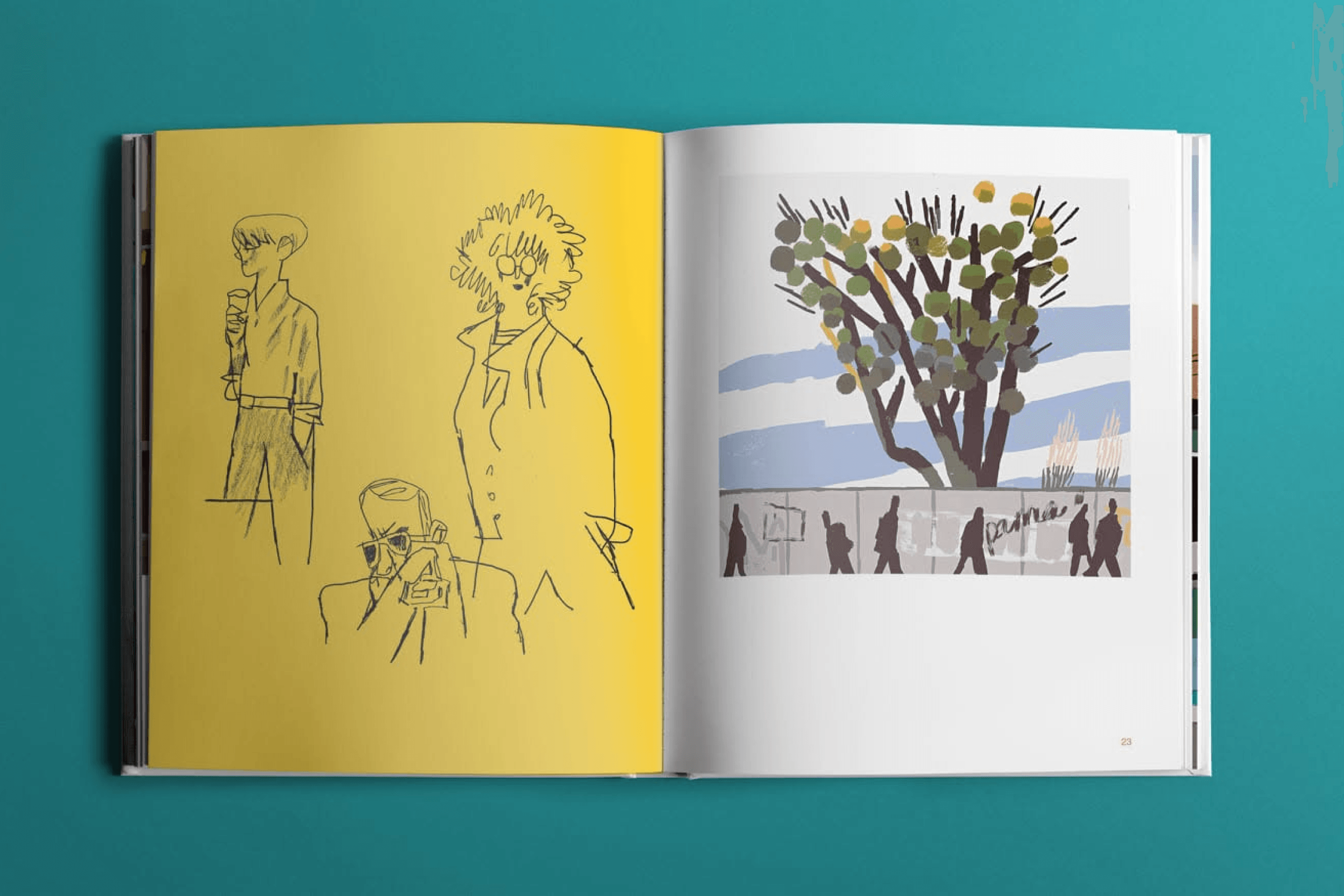
Photo: Sergiy Maidukov / Facebook 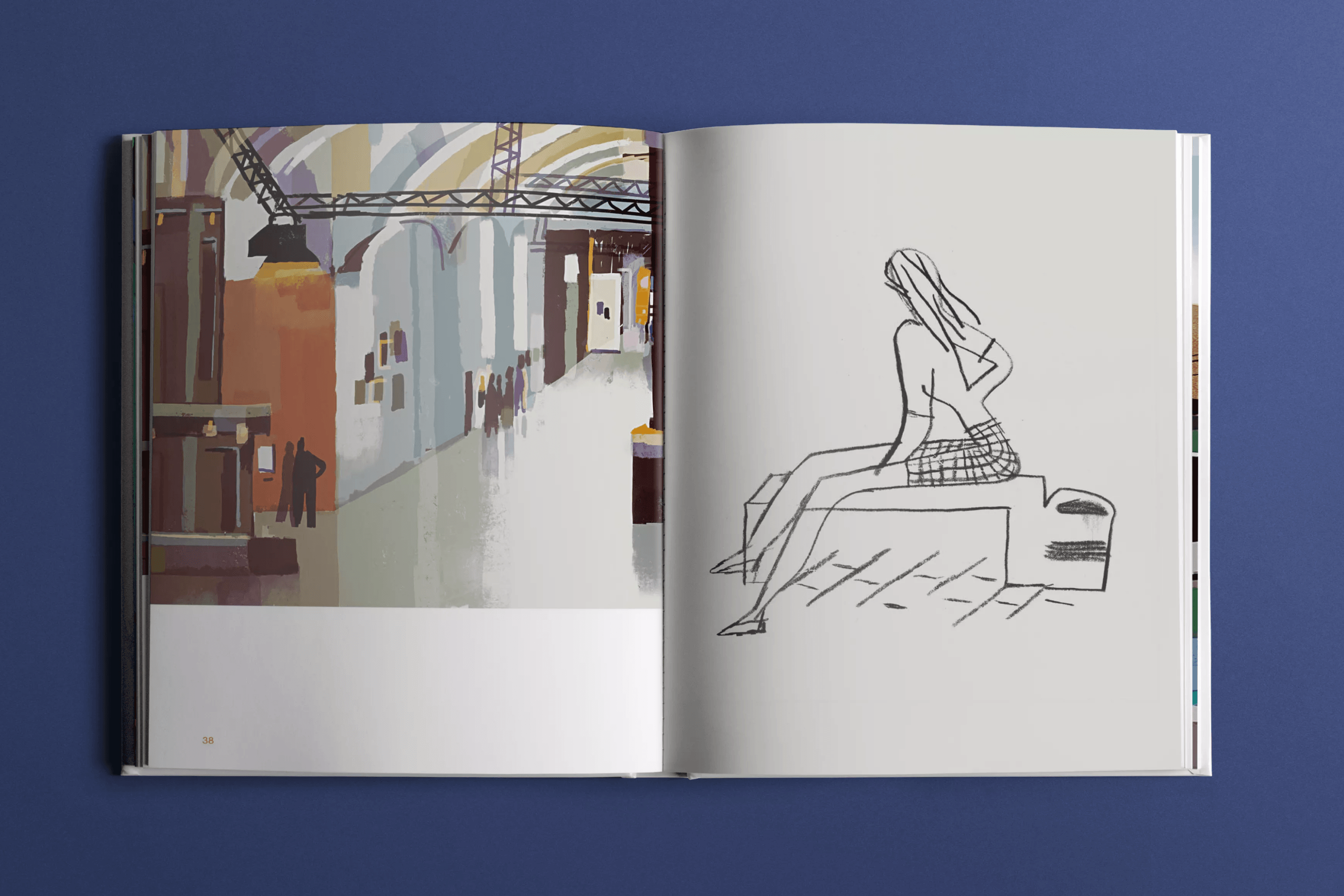
Photo: Sergiy Maidukov / Facebook
Where is the line for you between artistic interpretation and documentation? Can you allow yourself fictional elements in an illustration?
It depends on who I’m working for. I recall a story with the German newspaper Die Zeit. In May 2022, I was making an illustration about the dismantling of the People’s Friendship Monument in Kyiv. Protective structures were already standing at the site, and a little boy was running around them. He was such a vivid symbol of new life that I wanted to reinforce this image: I “took off” his vest and made his pants bright red so that he would look like a small flame against the backdrop of the vanished Soviet monument. But I mentioned this to the editorial team, and they reacted very strictly.
They explained to me: readers of Die Zeit expect that everything they see in the publication corresponds to reality. If an artist changes even the color of a character’s clothing, it’s no longer a document, but an interpretation.
Now, if I draw for myself or my social media, I can afford poetic license, add symbols, or even fictional characters. But when I work for the media, a different rule applies to me: maximum documentary accuracy.
How were you offered to write a regular column for Die Zeit, given that this is an unprecedented experience for a Ukrainian artist? And did you feel that you became not only an illustrator, but also a commentator on the war?
In early March 2022, the editorial director of Die Zeit wrote to me and invited me for a video interview. During the conversation, he suggested that I write a regular column. Prior to that, it had never combined text with illustration, but specifically for me, the editorial team decided to change the format. I was to tell the story of life in Ukraine every week using the language of both text and drawing.
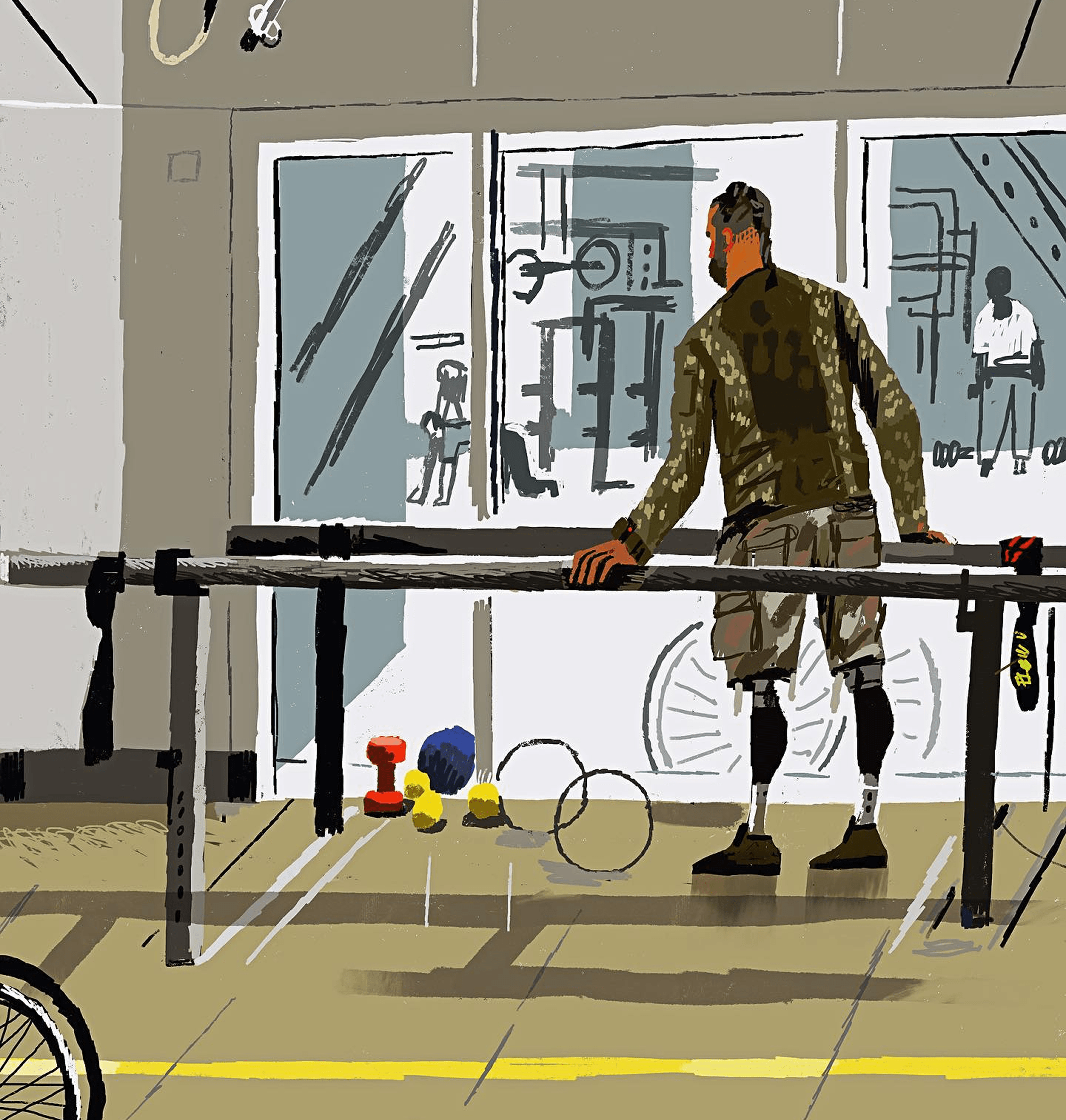
An illustration by Sergiy Maidukov depicting the Superhumans rehabilitation center, where a Ukrainian soldier is learning to walk with prosthetic limbs. Created for ZEIT Magazin. October 2023. Photo: Sergiy Maidukov / Instagram 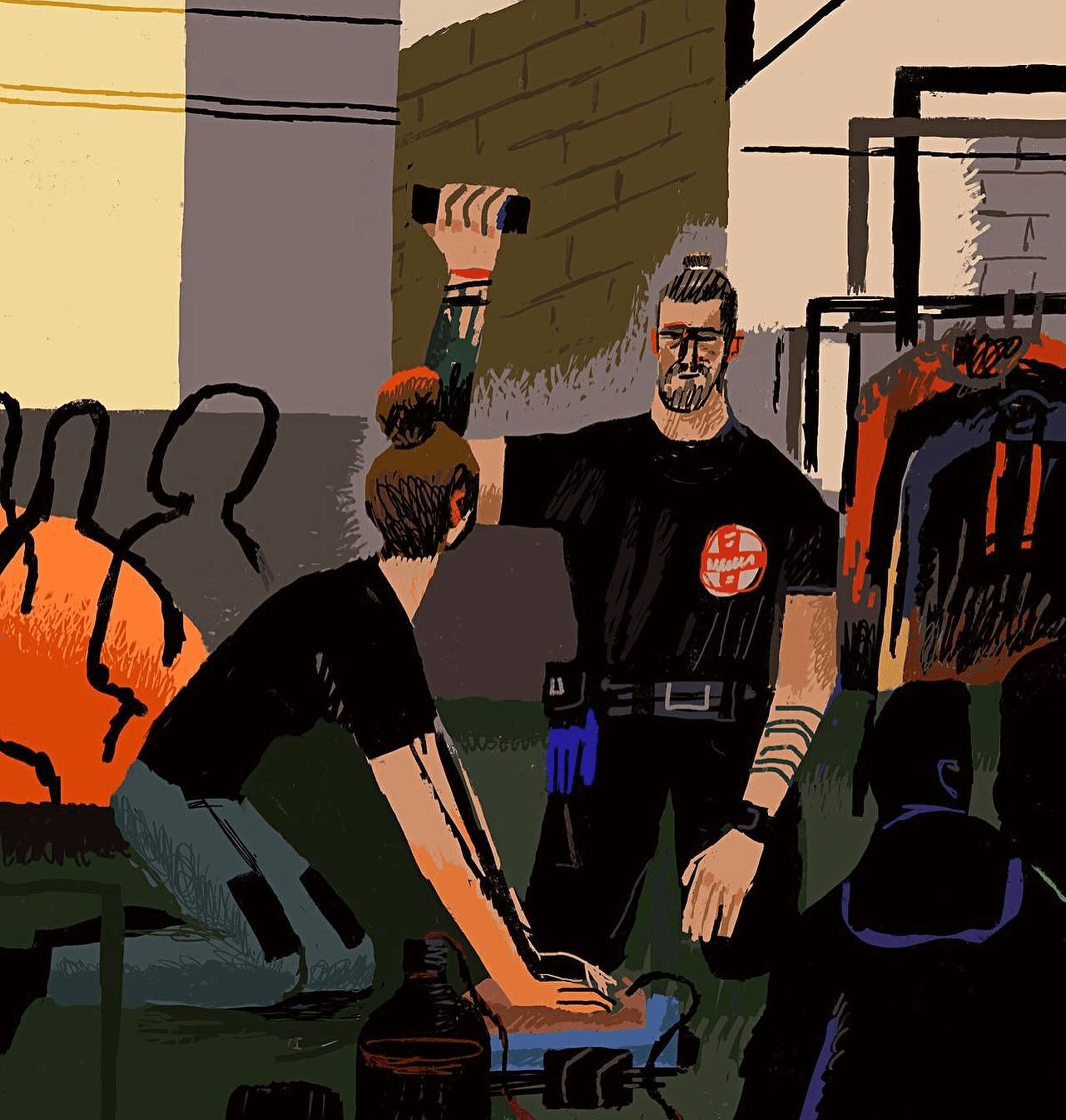
An illustration by Sergiy Maidukov depicting tactical medicine training and instruction in controlling life-threatening bleeding. Created for ZEIT Magazin. February 2024. Photo: Sergiy Maidukov / Instagram 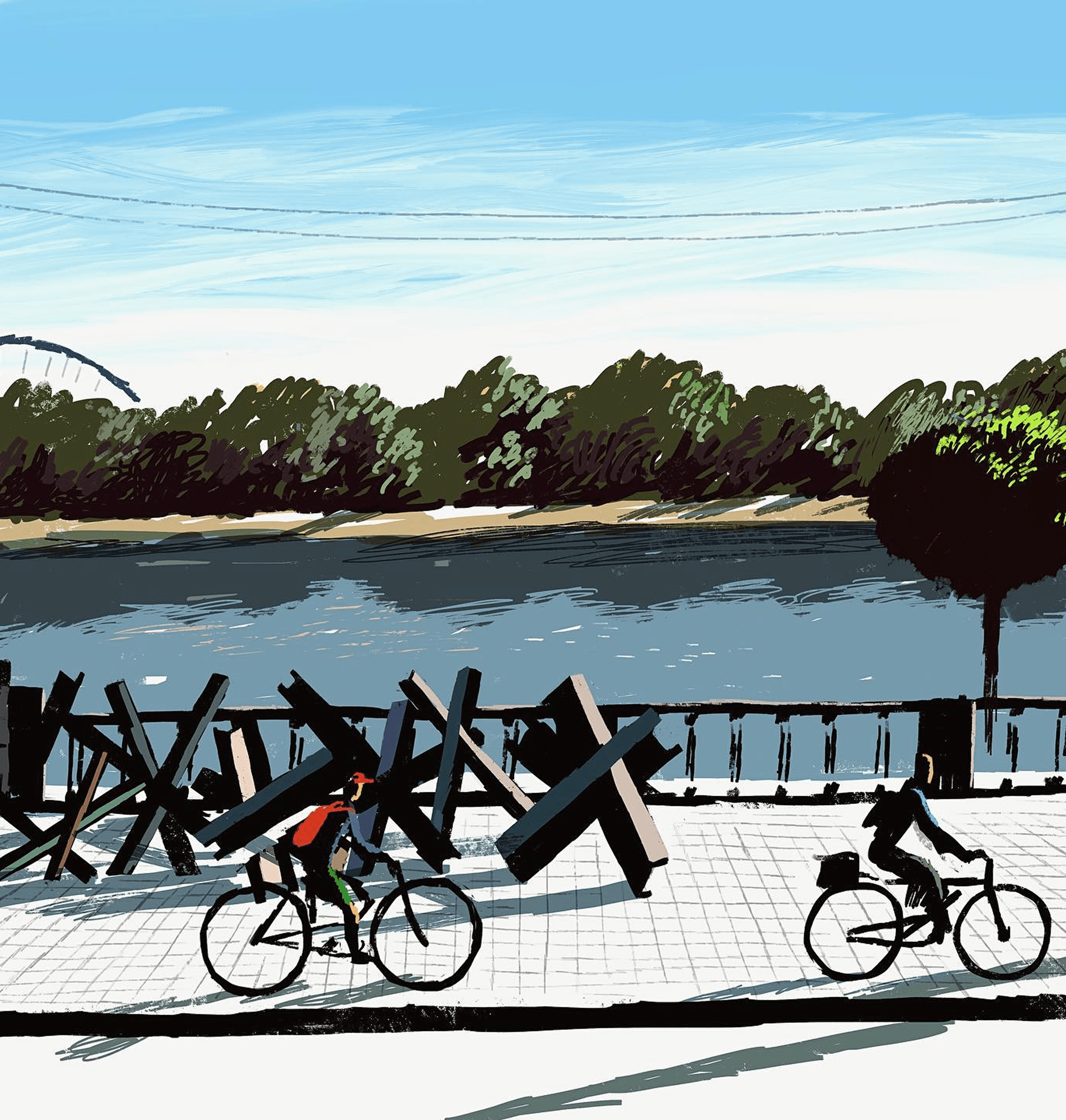
An illustration by Sergiy Maidukov depicting the Kyiv riverfront in early June 2022. Created for ZEIT Magazin. June 2022. Photo: Sergiy Maidukov / Instagram 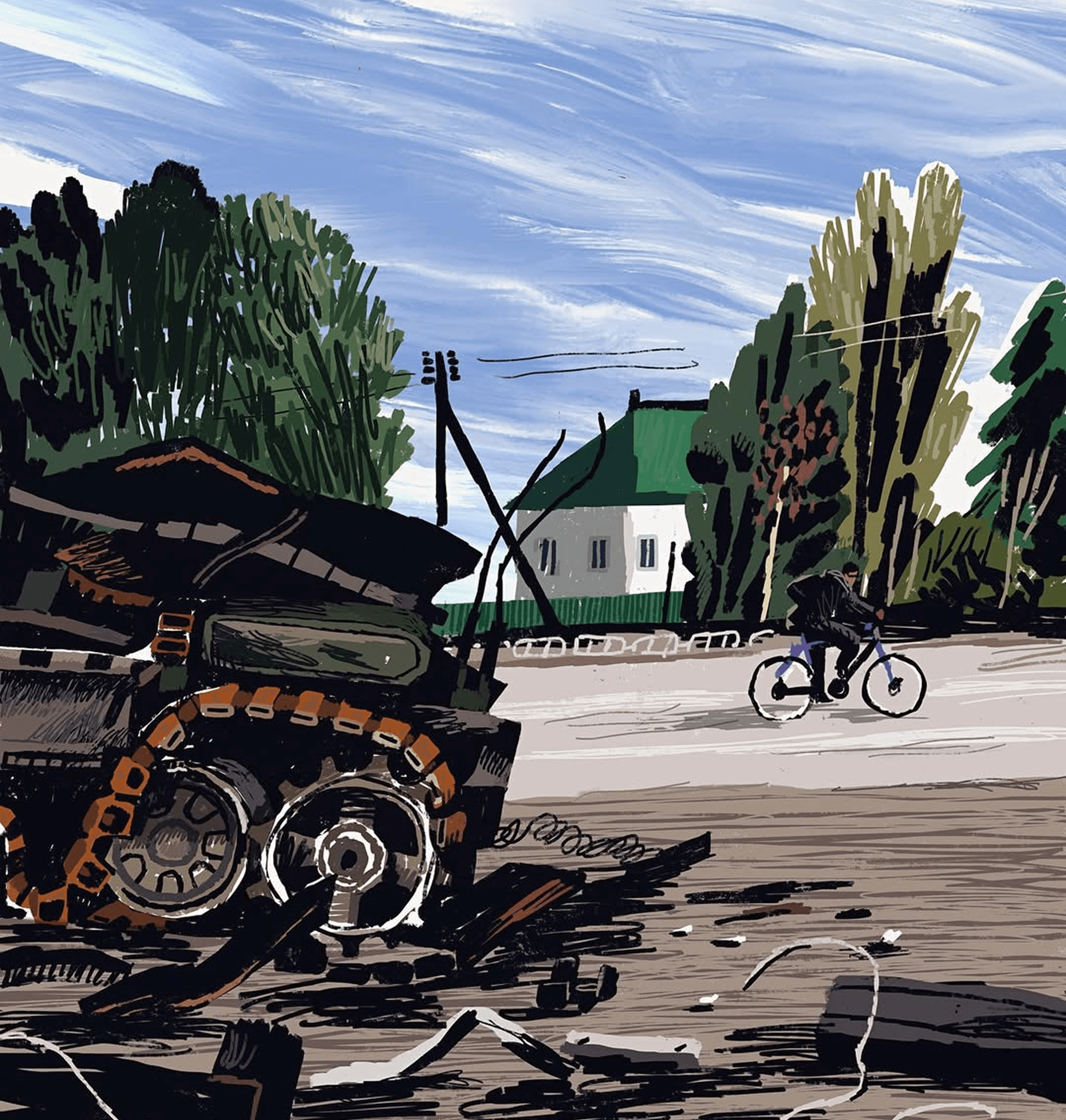
An illustration by Sergiy Maidukov depicting Izium after the city’s liberation. Created for ZEIT Magazin. October 2022. Photo: Sergiy Maidukov / Instagram 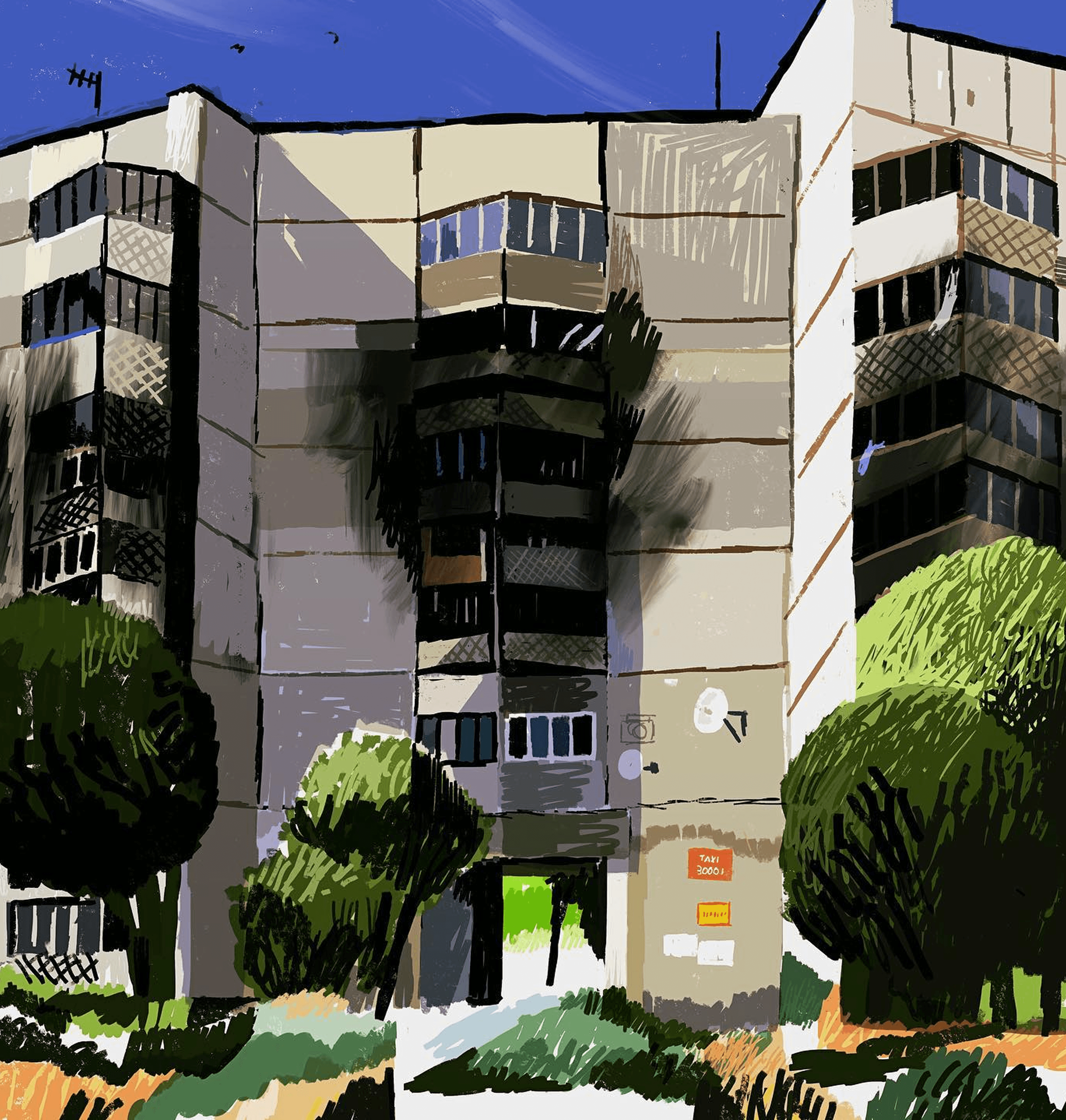
An illustration by Sergiy Maidukov depicting an apartment building in Kharkiv’s Saltivka district damaged by Russian shelling. Created for ZEIT Magazin. July 2022. Photo: Sergiy Maidukov / Instagram
Of course, I agreed. I didn’t realize right away that this was no longer just illustration, but effectively journalism. Probably only when I received the Erich Maria Remarque Peace Prize. That was when I understood: these columns are read by tens of thousands of people, and my words and drawings have become part of the international conversation about Ukraine.
Did the editors of Die Zeit interfere with your texts?
Generally, no. I wrote in English, the editors translated the texts into German, and then sent me the English translation of the already edited versions. If I saw that important nuances were lost during translation, we always discussed it. But it must be said that sometimes the editors softened my wording regarding Russia and didn’t allow capitalization choices like writing the name of the terrorist country in lowercase. I didn’t always agree with this, but I understood their logic: they wanted to maintain a tone that wouldn’t alienate their readers. I remember once using the name of the “Azov” Regiment in a text, but the editors replaced it with the official name: 12th Special Forces Brigade of the National Guard of Ukraine.
Why?
They explained to me that the name “Azov” is very triggering for the German audience. Due to their own historical memory and years of Russian propaganda, it evokes associations that the editors wanted to avoid. I don’t share such an approach, but I understand why they made that decision.
Since 2022, you’ve also begun working with other public forms of visual culture. For example, on the design of a €5 Latvian collector coin dedicated to Ukraine. How does working on a state symbol differ for you from working for the media?
An illustration lives for a few days, while a coin lives for decades. It’s a completely different sense of responsibility. Newspapers are a relatively young phenomenon, whereas humanity has been creating coins for thousands of years. They survive entire eras. So when you work on a coin, you realize that you are creating an object that might outlive you.
How did it happen that you were entrusted with creating it in the first place? You aren’t a citizen of Latvia.
It was an open competition. The Bank of Latvia decided to release a collector coin in support of Ukraine. Its theme was “Associated Responsibility"—the responsibility of Europe to support Ukraine, and the responsibility of Ukraine to be part of the European community. Six Ukrainian artists took part in the competition, among them Roman Minin and Mykyta Kadan. My sketch bearing the inscription “Воля” (“Freedom”) was chosen as the winner.
The competition was organized by the National Bank of Latvia together with a creative agency and their Ministry of Foreign Affairs, but it was the agency that had the decisive say during the selection process and worked directly with me. I think that’s why the process was very professional.
In 2023, you also designed a Ukrainian commemorative coin for the NBU, “Country of Superheroes. Thank You, Energy Workers!”, which sparked a lot of criticism among collectors. Why did that happen?
I was accused of making it too obscure and claiming that it broke from the general aesthetic of Ukrainian commemorative coins. I understand this reaction well, because I used to be a collector myself and I know how important visual continuity within a series is to collectors. But I consciously made no attempt to mimic it.
To me, a modern coin is almost a poster. I was thinking in terms of modern graphic design, not classical numismatics. Besides, that was precisely what was expected of me. The clients explicitly said: “We want to move away from the traditional coin aesthetic.” That gave me a free hand.
And today, considering the backlash, you wouldn’t change anything?
No. I’m genuinely proud of this work. I believe it turned out exactly as it should have been.
How do you define the place of an artist during a war, and your own in particular?
At the beginning of the full-scale invasion, I, like many others, thought about joining the army. I reached out to the Territorial Defense Forces, called and wrote to the Podil District Administration, and went to the Right Sector at the Kyiv City State Administration. But everywhere I heard the same thing: “You have no military experience; focus on where you can be useful.” I knew that mobilization takes place in waves. I belonged to the fourth wave and understood: if my turn comes, I will go serve. But almost immediately, I became in high demand by state institutions and leading foreign media as a specialist in my field.
During the war, I’ve invested approximately €37,000 into the needs of the Armed Forces of Ukraine. Together with friends, we bought and repaired vehicles for the military. In addition, thanks to the international audience on my social media, I managed to raise another €130,000 or so for vehicles, medicine, optics, equipment, prosthetics, and other AFU needs. Military acquaintances, by the way, tell me that I have my own weapon as well—an information weapon, as my illustrations tell the story of the war in leading global publications.
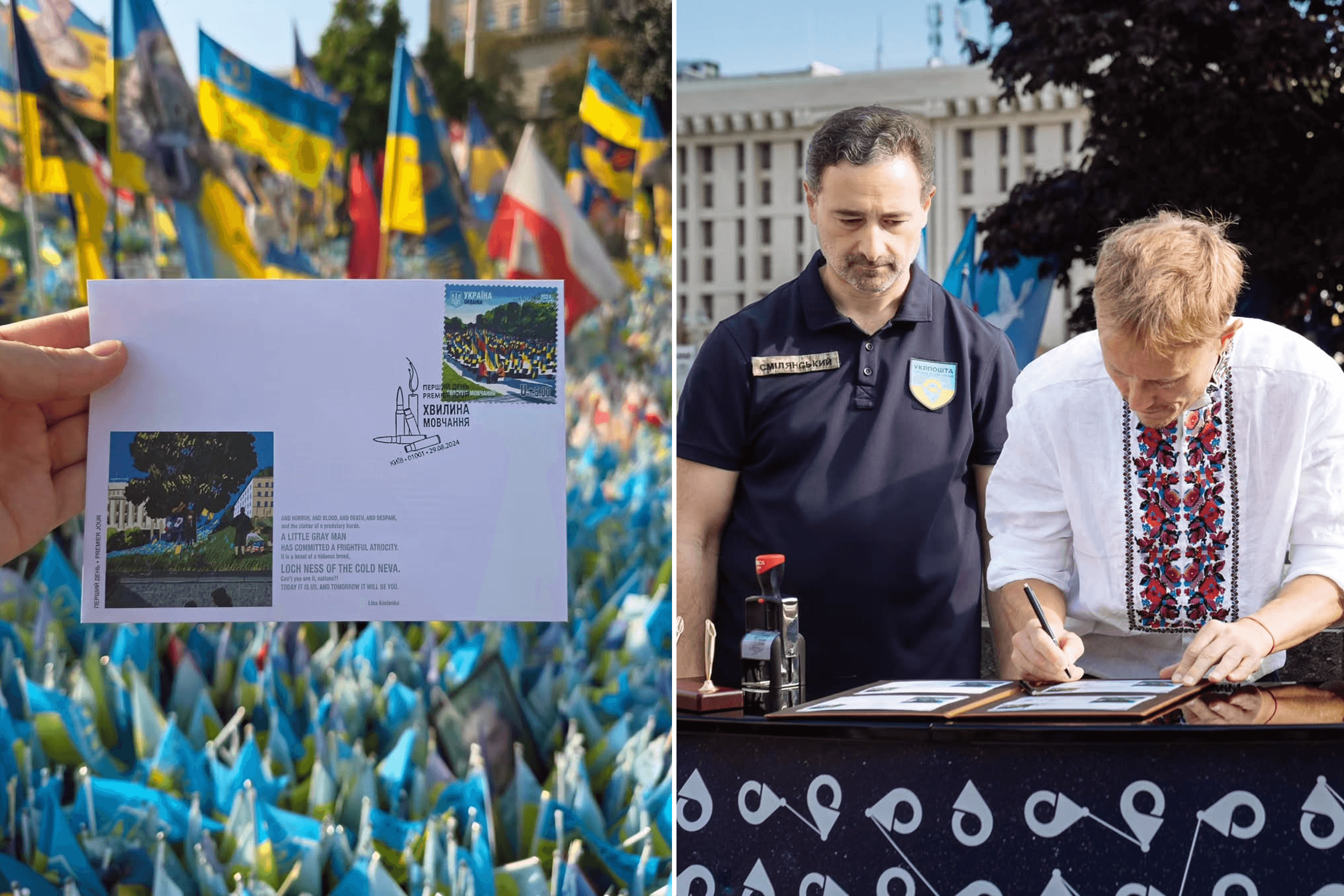
A charitable stamp issue, Minute of Silence, by Ukrposhta, featuring illustrations by Sergiy Maidukov. Proceeds from stamp sales were donated to the Armed Forces of Ukraine’s humanitarian project On the Shield. August 2024. Photo: Sergiy Maidukov / Instagram 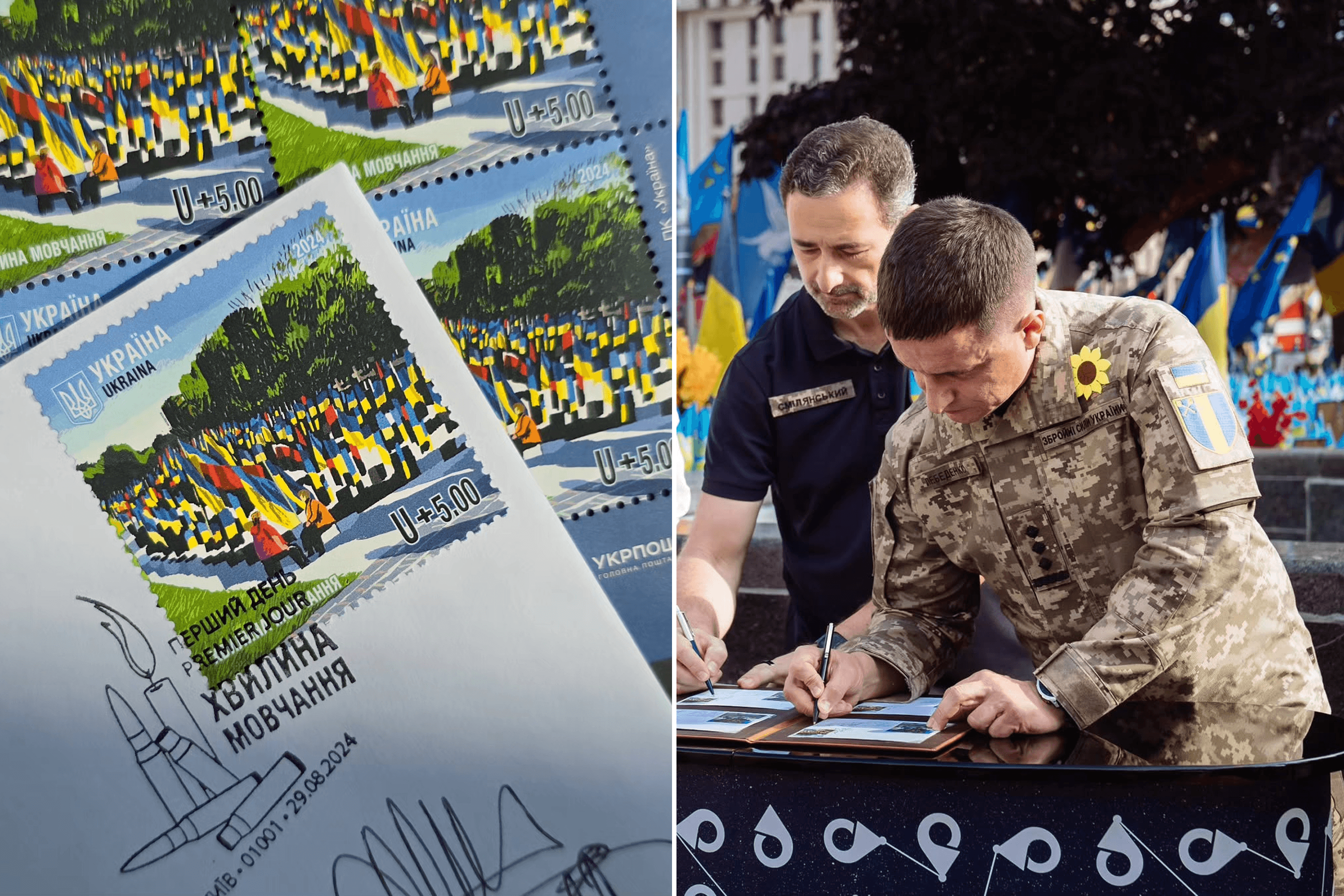
Photo: Sergiy Maidukov / Instagram 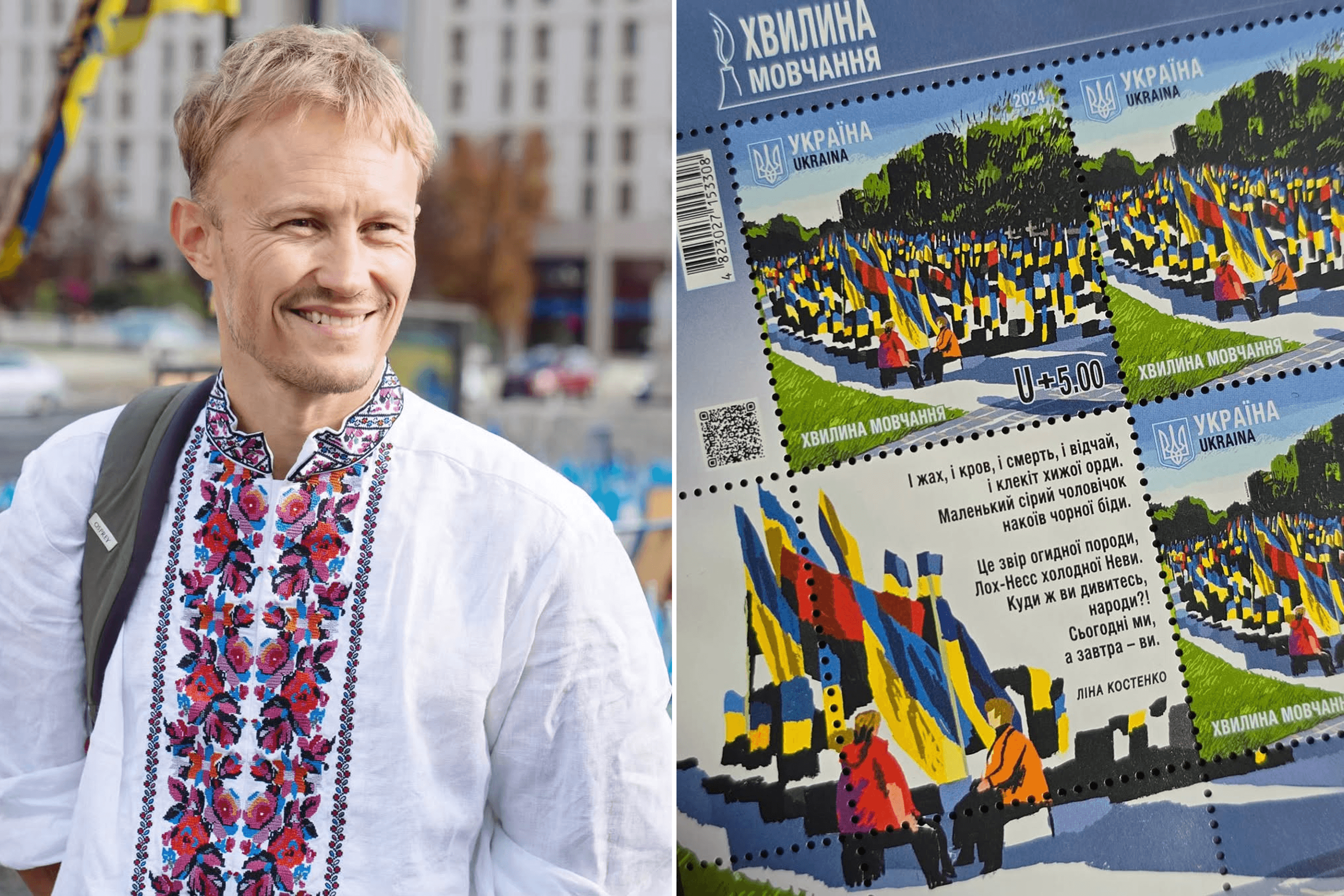
Photo: Sergiy Maidukov / Instagram
Lately, another way to be useful has opened up for me. I started teaching drawing at a secondary school in Lviv. Twice a week, I work with third-, fourth-, fifth-, sixth-, and seventh-grade students. It isn’t easy: such work takes a lot of energy and time, and completely restructures my schedule, since I live between two cities. But it seems to me that educating children today is also part of the responsibility for the country’s future.
And finally: what helps you stay strong and keep moving forward when you run out of energy?
I run middle distances, and I can compare the war to a race. If during a run you start thinking about what breakfast you’ll have after the finish line, you immediately lose your rhythm: your heart rate spikes, your pace drops, and it gets harder. At such moments, you need to think only about the next step.
I realized that I shouldn’t live in expectation. I stopped thinking: “Once it’s over, real life will begin.” No. This is my life. I live and work in war. Yes, it’s very painful when I hear about people killed by Russia. I cry when I read about dead children. But if we talk about the duration of the war itself, it became psychologically easier for me precisely when I stopped waiting for its end as a specific date on the calendar.
The only thing I truly want is to live to see the moment when Russia is held accountable for its crimes. And to achieve that, one simply needs to keep running and not allow oneself to stop.