
Artist Lesia Khomenko is one of the key figures in contemporary Ukrainian art and a co-founder of the R.E.P. group, which emerged in response to a new political reality and became the most influential collective practice in Ukraine in the 2000s.
Khomenko’s work has been political from the very beginning. Long before the full-scale invasion, she was already exploring violence, historical memory, war, and weapons. After the outbreak of the big war, she first moved to Miami and later to New York, where she continues to develop projects in collaboration with Fridman Gallery and Voloshyn Gallery.
Yellow Blue journalist Roksana Rublevska spoke with Lesia about R.E.P., her experience teaching, war as image and memory, the transformation of Ukrainian art, and its place within the global art world.
On the beginning of her journey
I grew up in a family of Kyiv’s artistic intelligentsia, where art was simply a way of life. My parents belonged to the generation of dissidents. The KGB kept them under surveillance, yet even in those circumstances they lived quite freely. They debated ideas and spoke exclusively in Ukrainian. My grandfather, the artist Stepan Repin, was especially supportive of my desire to draw. No one in my family ever imagined that I would end up in a “normal” job.
I graduated from the National Academy of Fine Arts and Architecture in Kyiv in 2004, but I felt that education alone was not enough. At the time, a circle of young artists was taking shape. Like me, they were searching for their own language and learning from one another while trying to understand what contemporary Ukrainian art could become. There was almost no institutional support then, but there was a strong sense that we had to act.
On the R.E.P. art group
In 2004, artist Nikita Kadan brought together works by young artists and created a “dialogue” between them and the collection of the Ivan Honchar Museum. I exhibited my Dacha’s Madonnas series there, the same series that had once been harshly criticized at the academy.
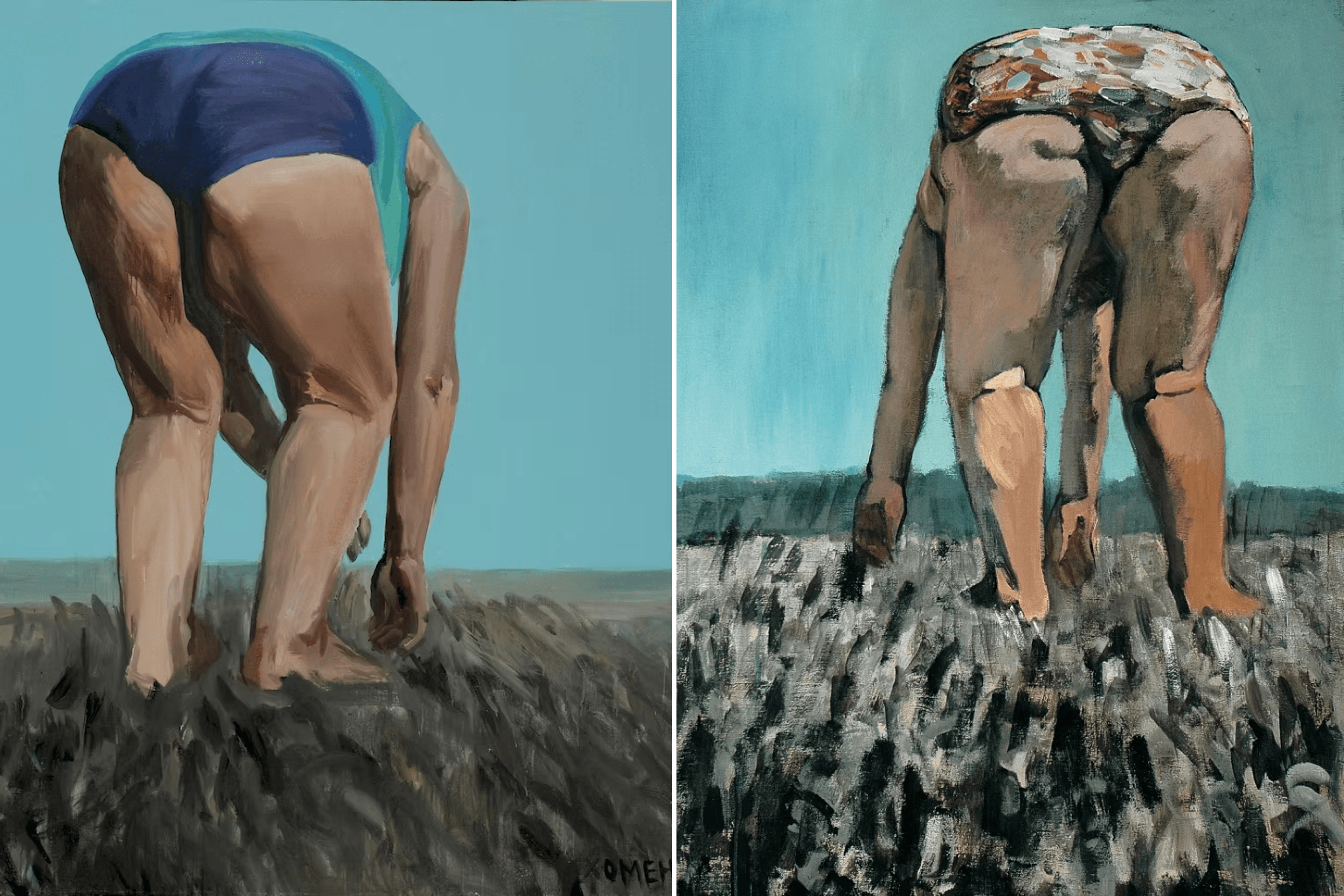
Works from Ukrainian artist Lesia Khomenko’s Dacha Madonnas series. 2004. Photo: lesiakhomenko.com 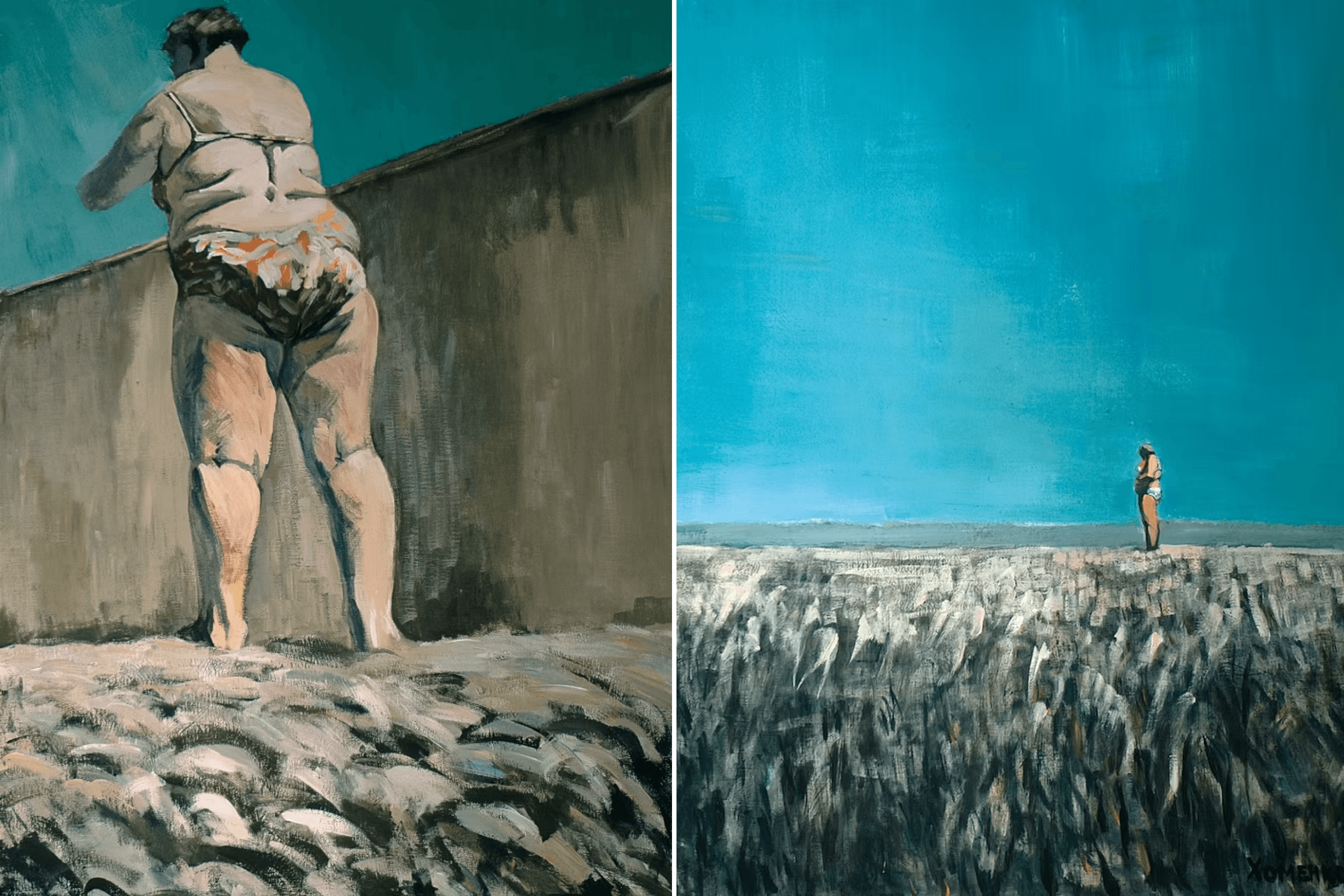
Photo: lesiakhomenko.com 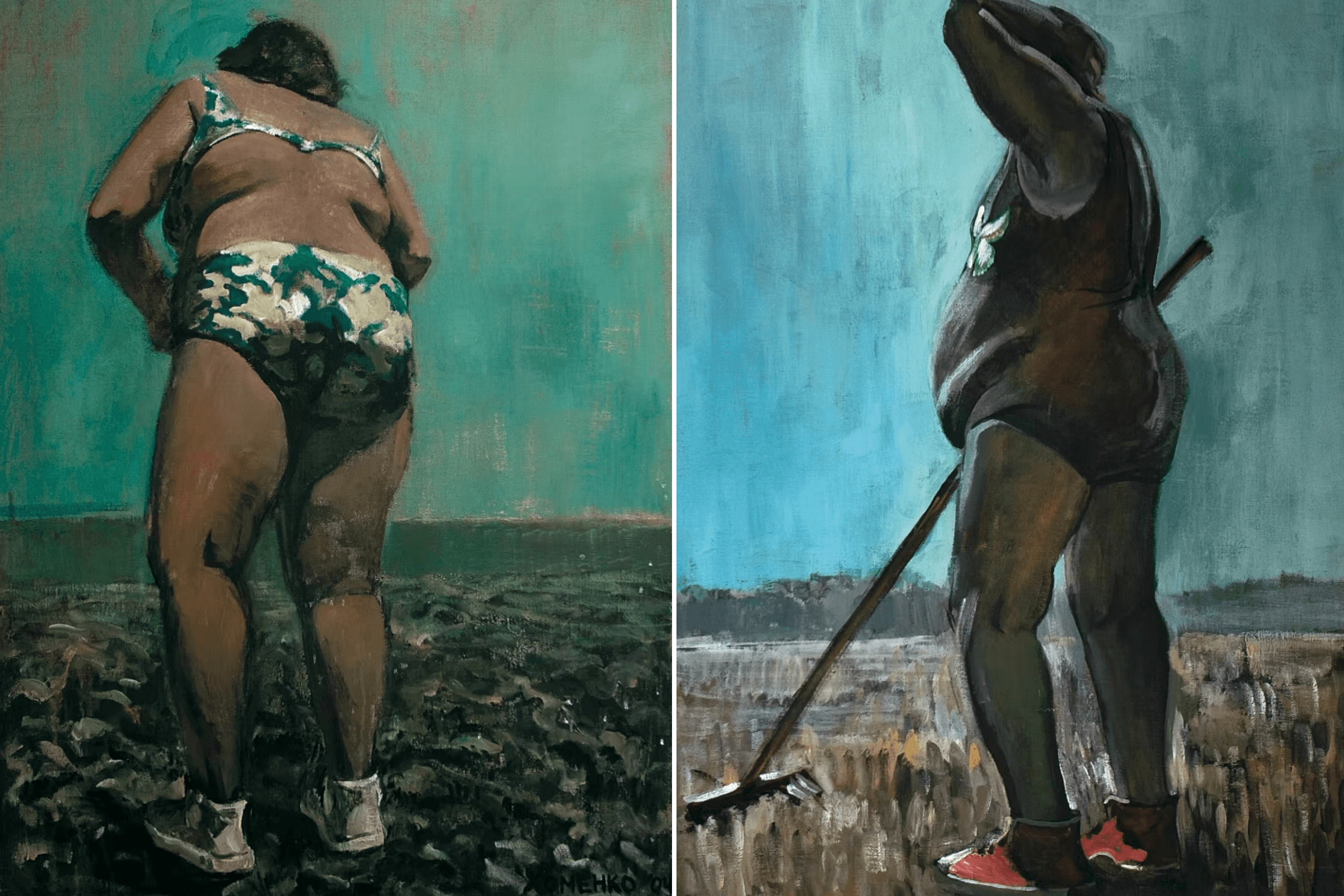
Photo: lesiakhomenko.com
The Orange Revolution began at the same time, and protesters were sleeping inside the museum. The exhibition never had the chance to fully open, but it was there that the circle of artists who would later form the R.E.P. group first came together. Watching the revolution unfold, we simply responded to what was happening around us. We were not interested in political campaigning. We were trying to make sense of change through artistic means.
Within R.E.P., we went far beyond the group’s boundaries. We created public interventions, installations, films, educational programs, and curatorial projects. We wanted to speak directly to viewers without galleries acting as intermediaries. One of the most telling examples was the R.E.P. Party project. During the parliamentary elections, we set up a campaign tent and promoted absurd slogans: members of parliament should wear miniskirts, and asphalt should glow at night. Behind that irony was a very serious conversation about cultural policy. We drew attention to the fact that culture was almost entirely absent from political programs, or reduced to kitschy folklore. It was both an artistic gesture and a political action.
Formally, the R.E.P. group has never ceased to exist. After 2014, however, it became clear that each of us had developed into an independent artist with our own path. We stopped producing new collaborative projects, but the group’s archive continues to exist in museums and in our studios in Kyiv.
On confronting historical myth
I began working with the subject of war long before 2014, when the Russians unleashed the war. Around 2009, I became interested in the Second World War, not as a historical event, but as a system of images and myths. At the time, my painting practice focused on criticizing the emerging patriotic style through artistic irony.
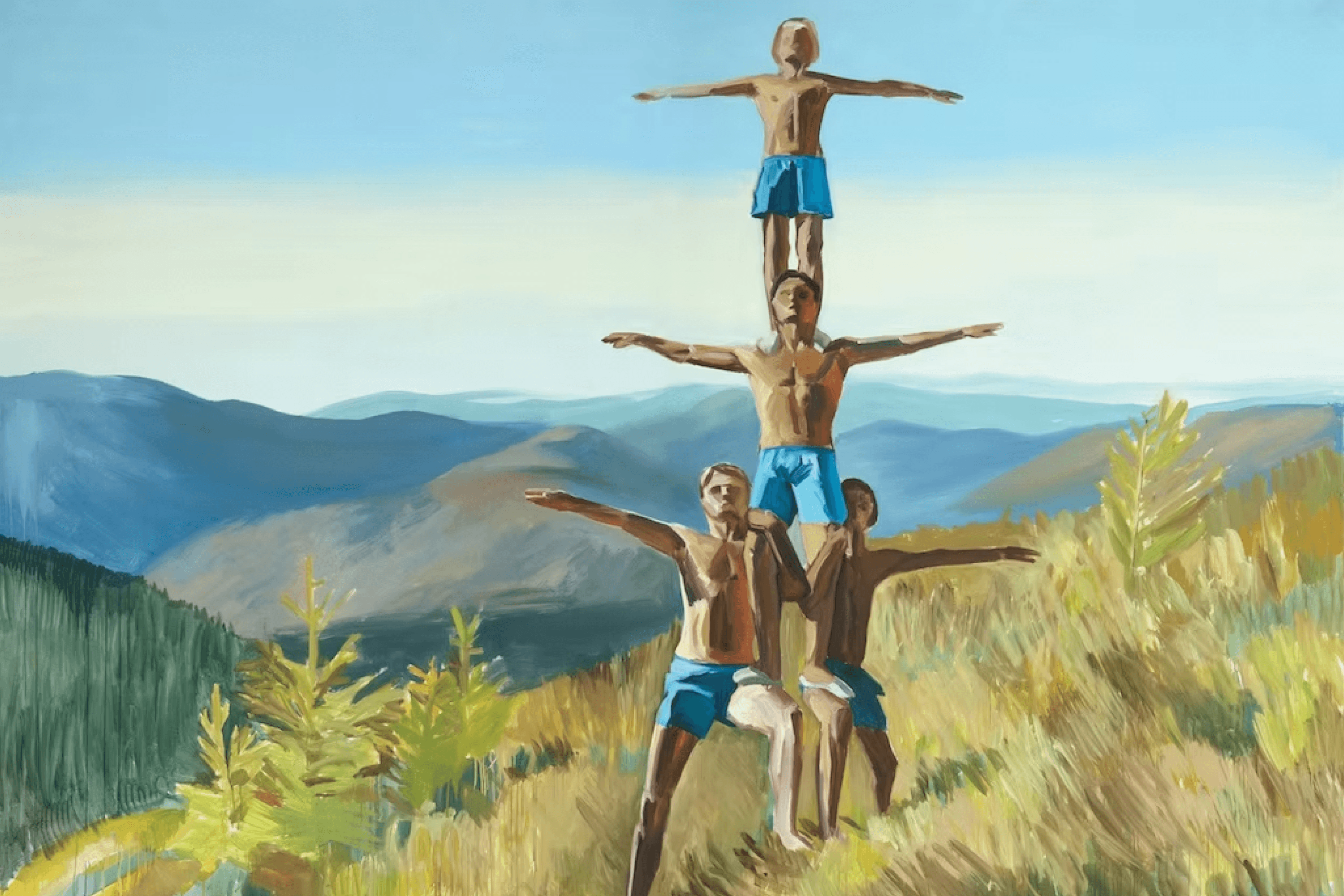
A painting from Lesia Khomenko’s Wonderland series, exploring the transformation of the Carpathian landscape. 2008–2010. Photo: lesiakhomenko.com 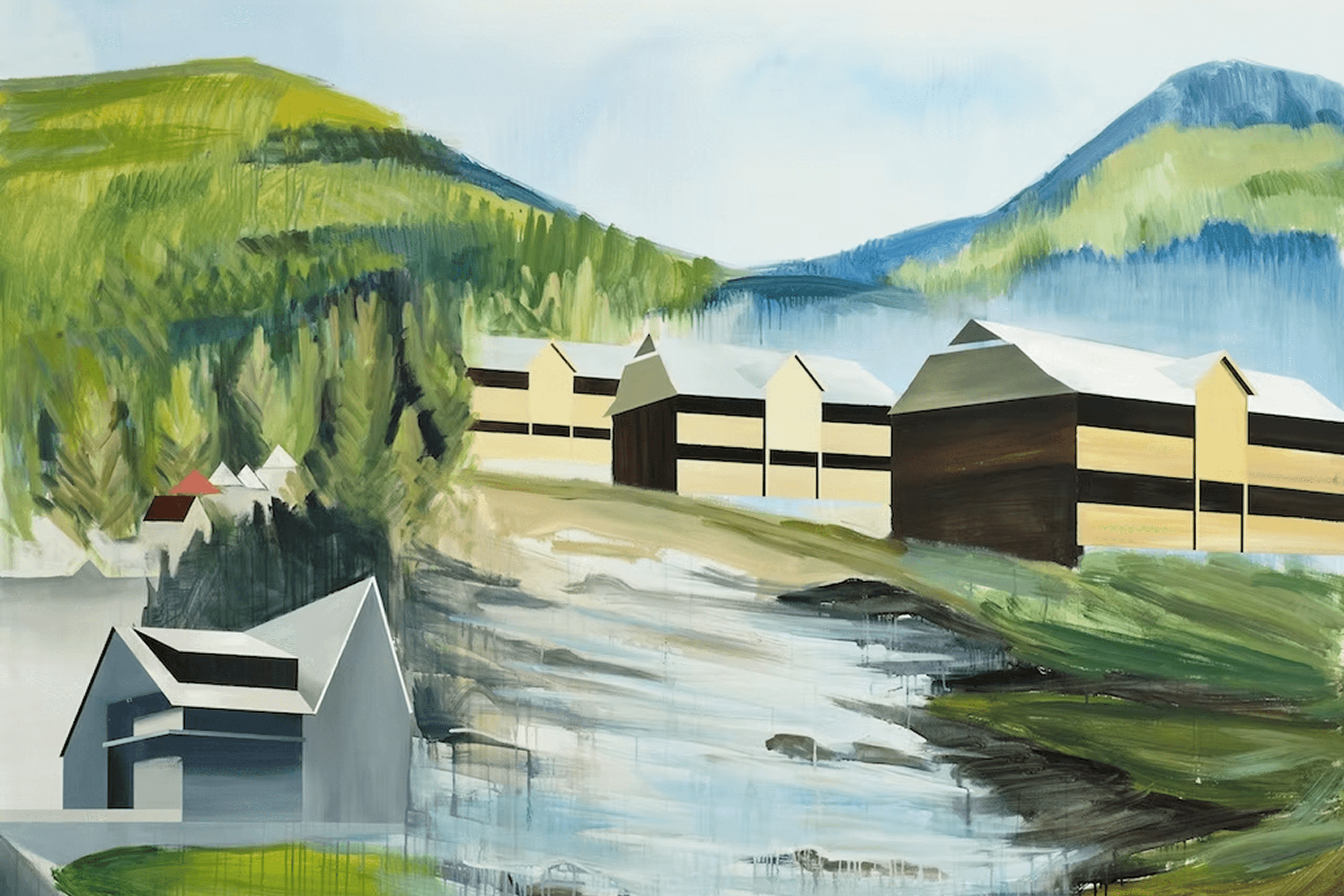
Photo: lesiakhomenko.com 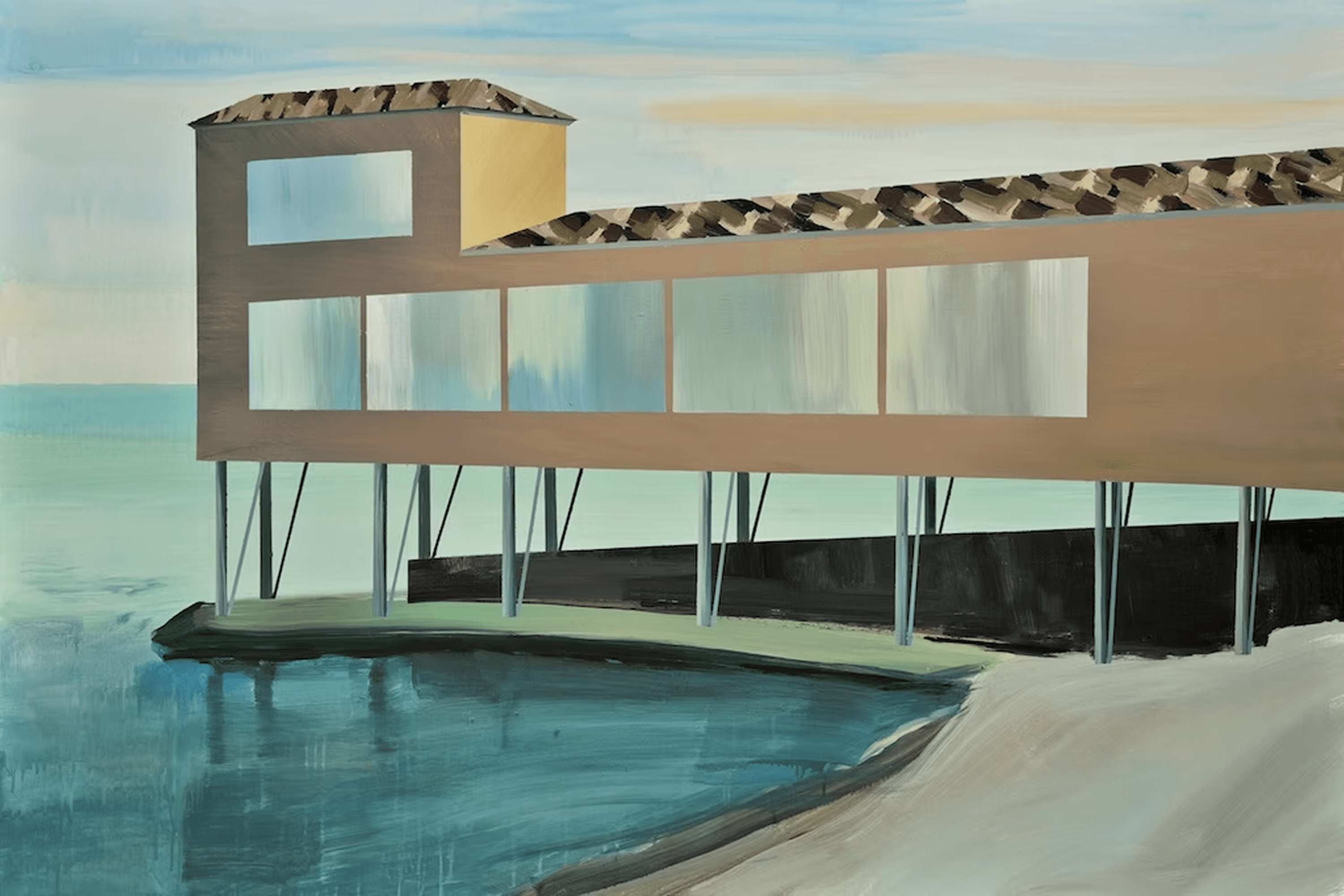
Photo: lesiakhomenko.com 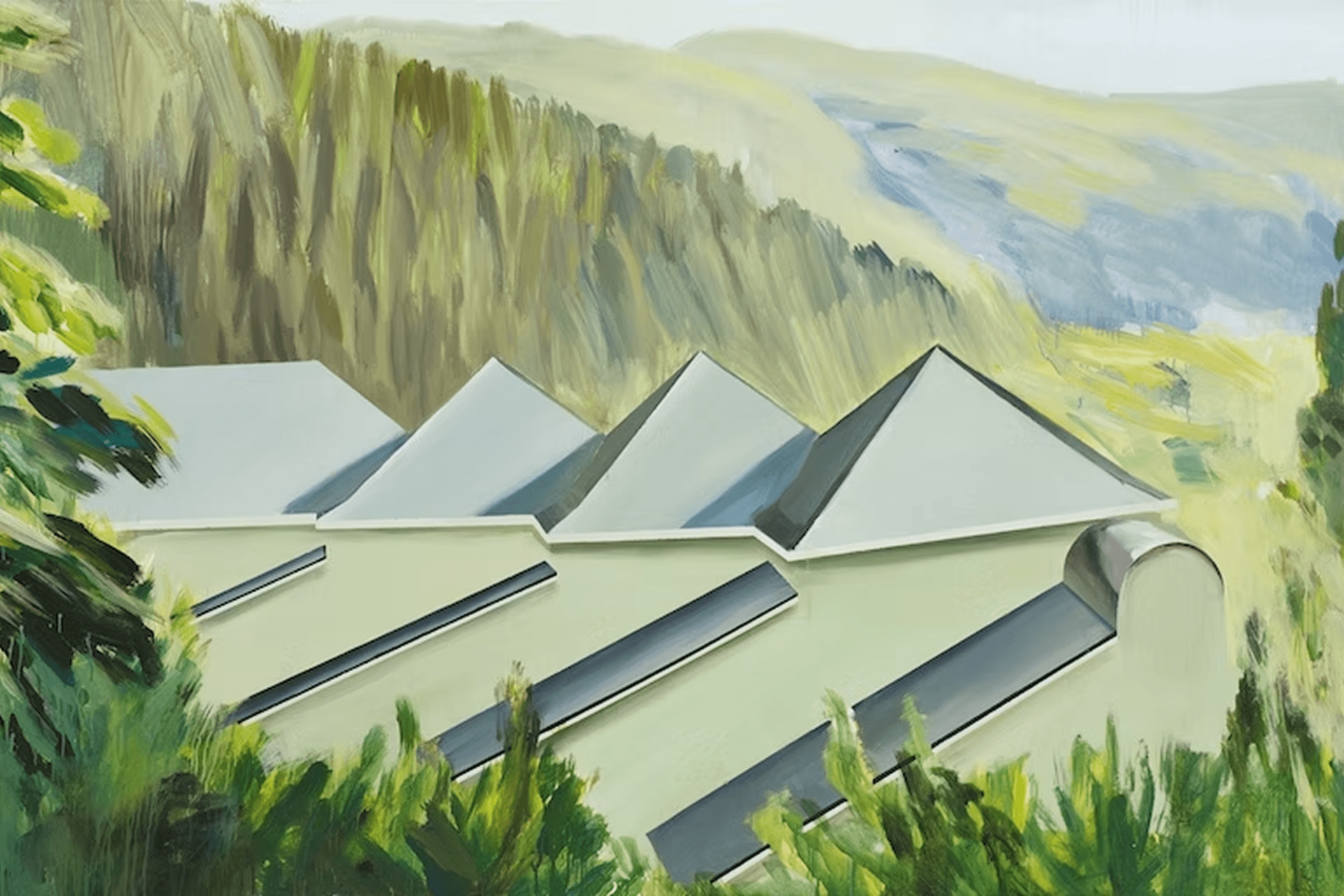
Photo: lesiakhomenko.com 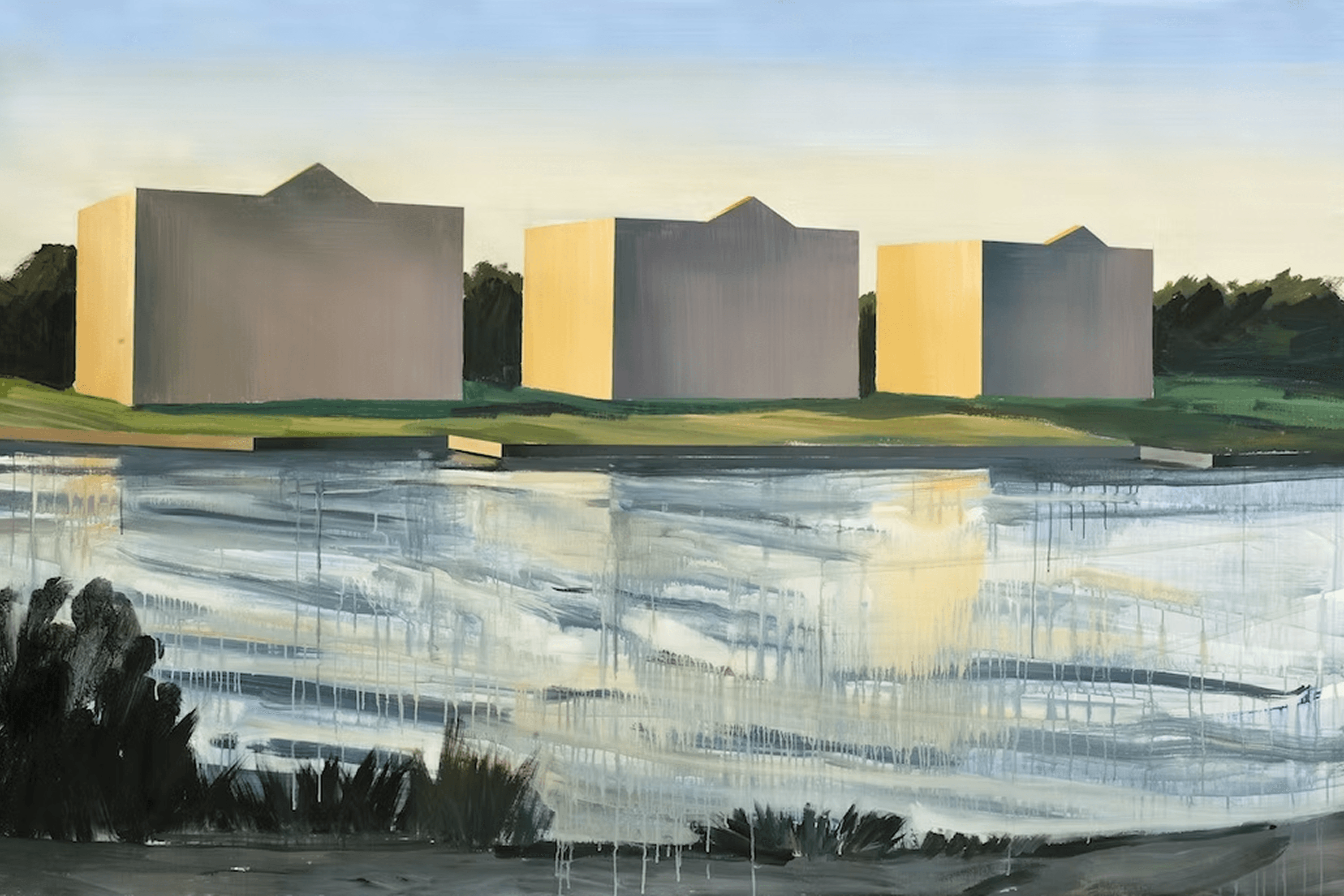
Photo: lesiakhomenko.com 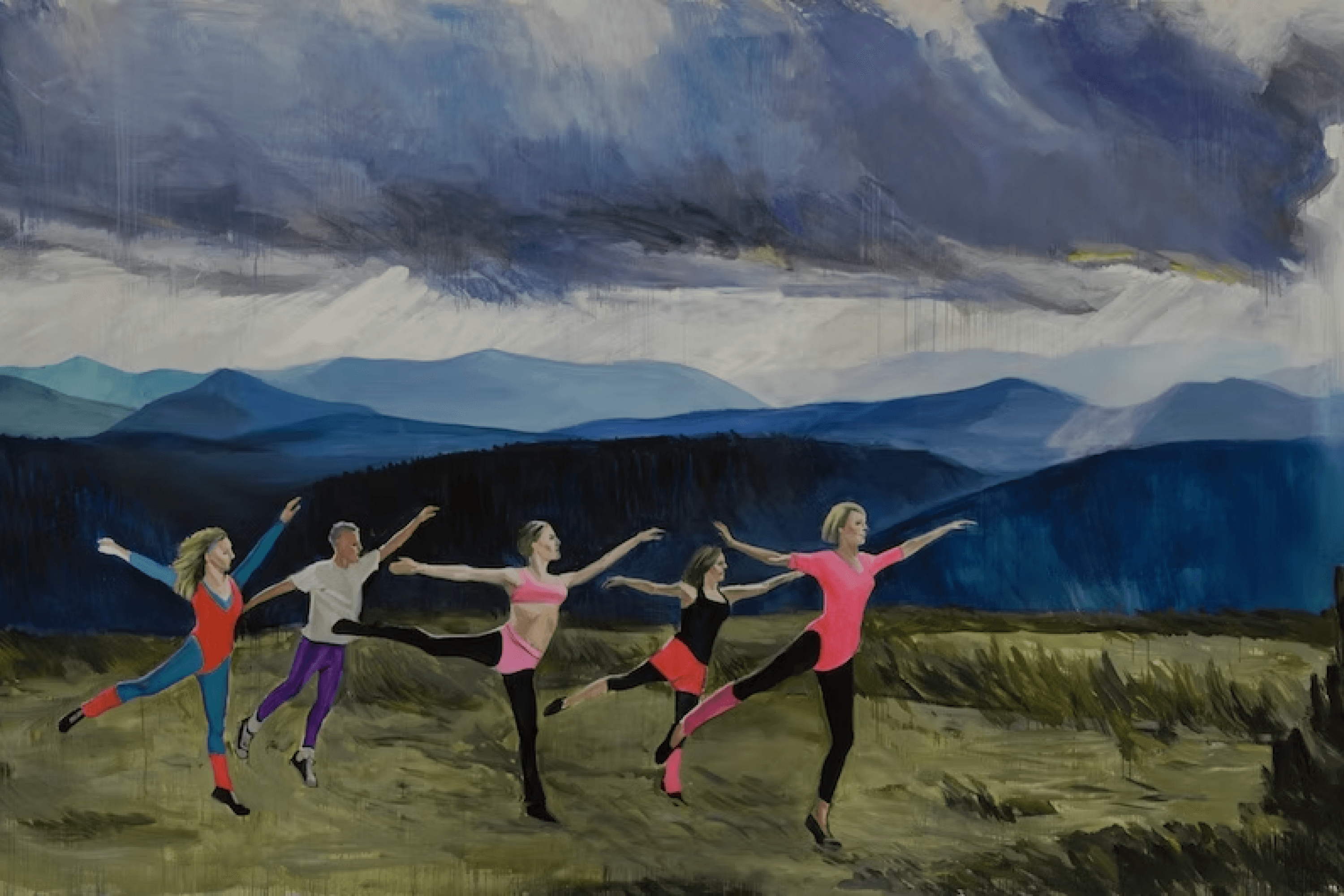
Photo: lesiakhomenko.com
While I was still studying at the academy, we had a student from Germany. I was struck by the fact that even in the early 2000s he was teased and called a “Nazi” simply because of where he came from. It was a painful subject for him. He had grown up in a culture where responsibility for the crimes of Nazism was a core part of his upbringing. Eventually, he even started introducing himself as Belgian, because his mother was from there. That was the first time I seriously began thinking about where such stereotypes in my own generation came from. The Soviet Union no longer existed, yet Soviet mythology continued to live on. I became interested in how these inherited images of war function and how they are passed on.
At the same time, there was no cult of Soviet military heroism in my family, even though my grandfather, Stepan Repin, was a war veteran. One day I read his notebook of memoirs and was astonished. It told a completely different story from the one we had heard at school. It read more like an adventure novel about young people trying to survive in wartime. My grandfather had no serious military training. As an artist, he worked with maps with maps and carried out terrain reconnaissance. As part of the First Ukrainian Front, he advanced all the way to Germany, where the war ended with its surrender.
His memoirs contain almost none of the major historical events, only personal experience: climbing church bell towers to observe, coming under shelling, running from bullets, witnessing explosions. It was this contrast between personal memory and historical mythology that became the foundation of my project Eyewitness, which I renamed in his honor after my grandfather’s death.
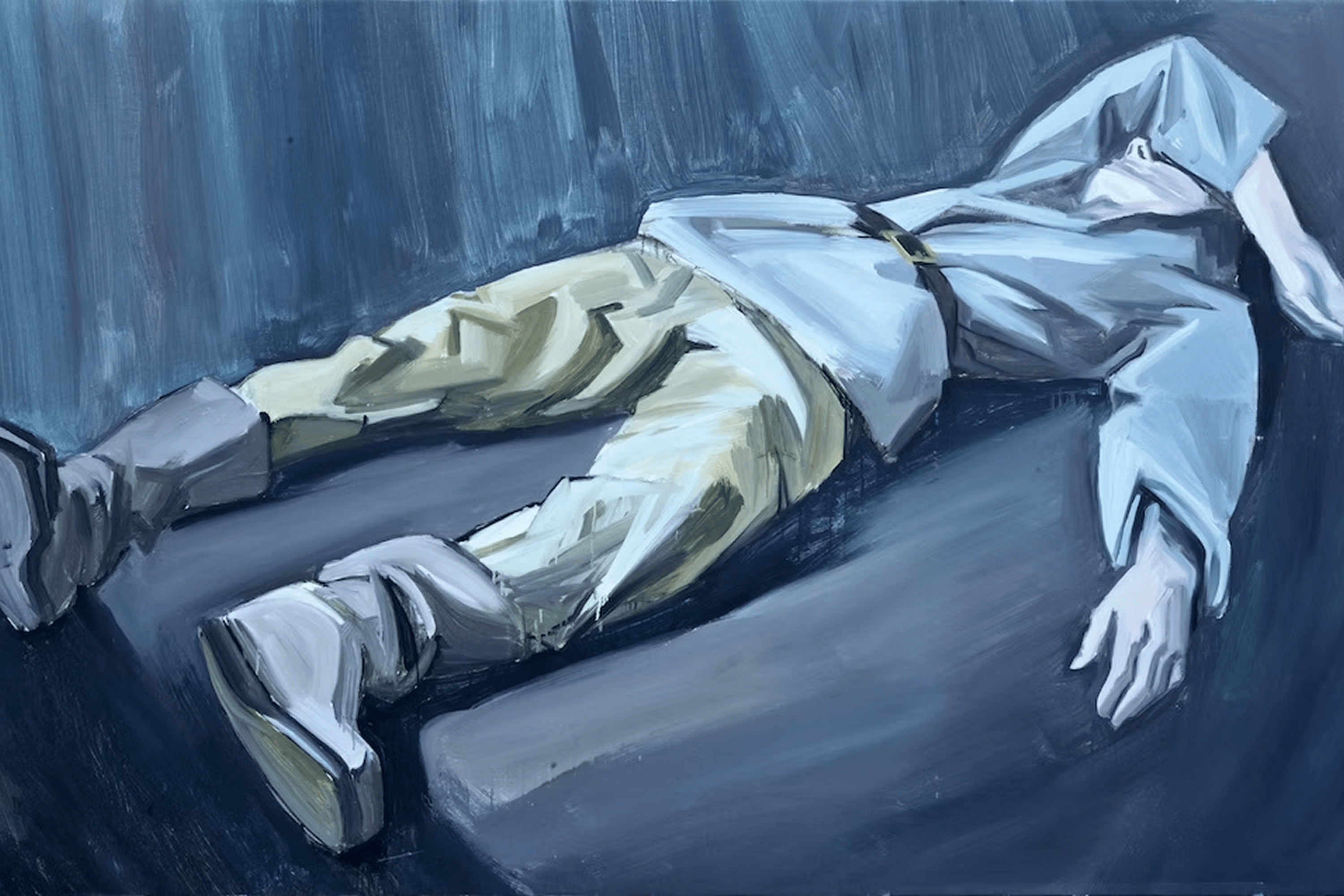
Works from Ukrainian artist Lesia Khomenko’s Stepan Repin series, based on her grandfather’s memories of World War II. 2009–2011. Photo: lesiakhomenko.com 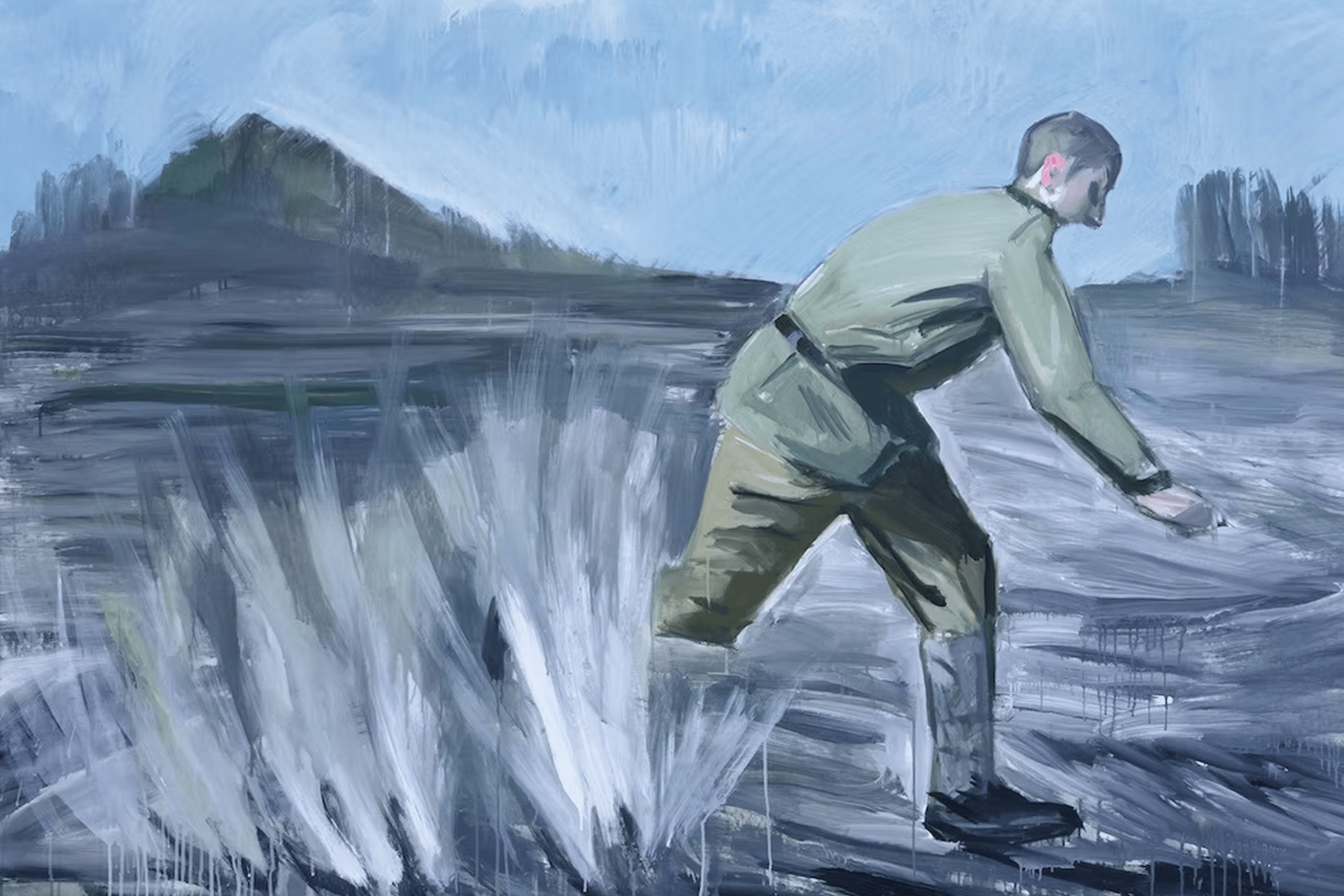
Photo: lesiakhomenko.com 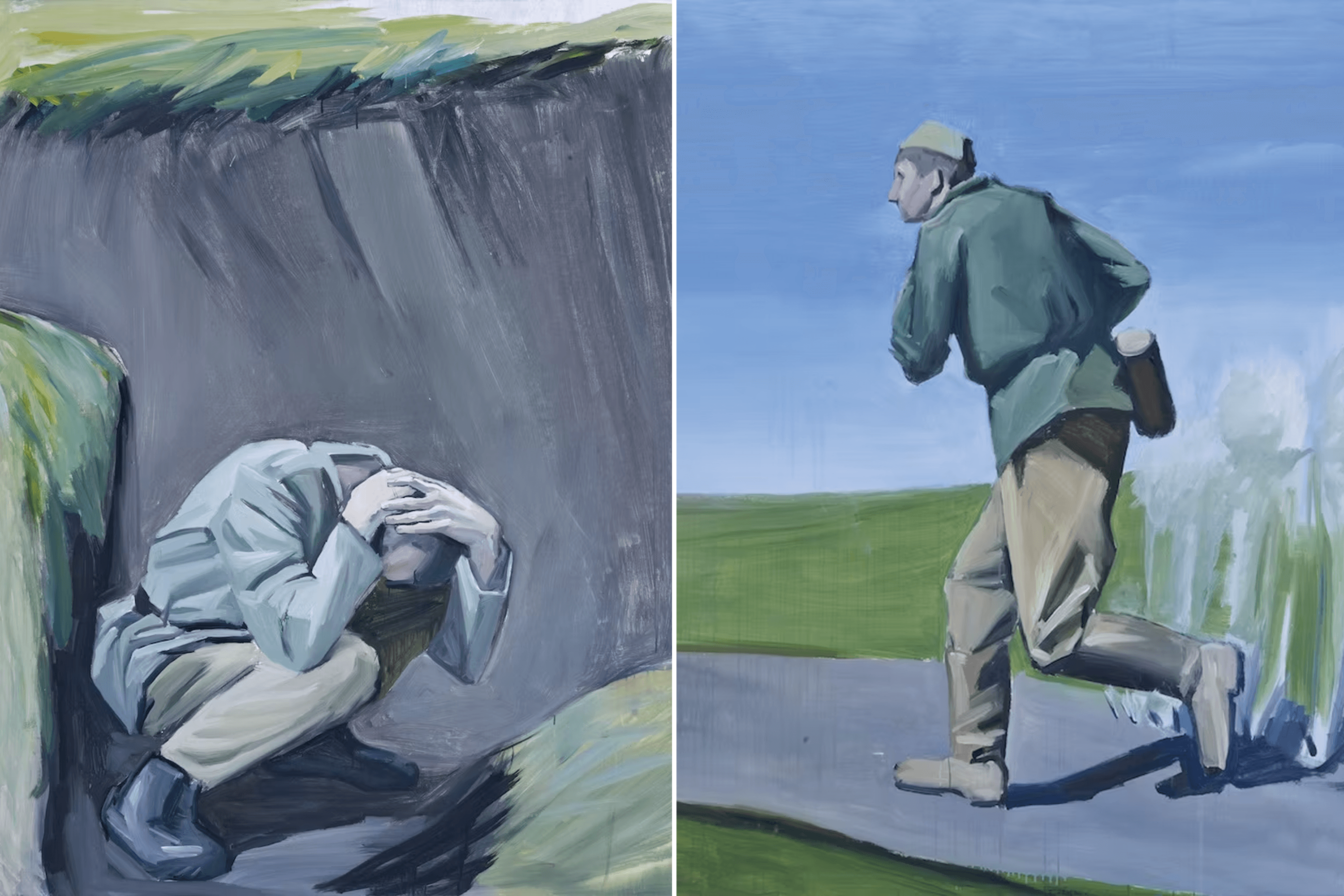
Photo: lesiakhomenko.com 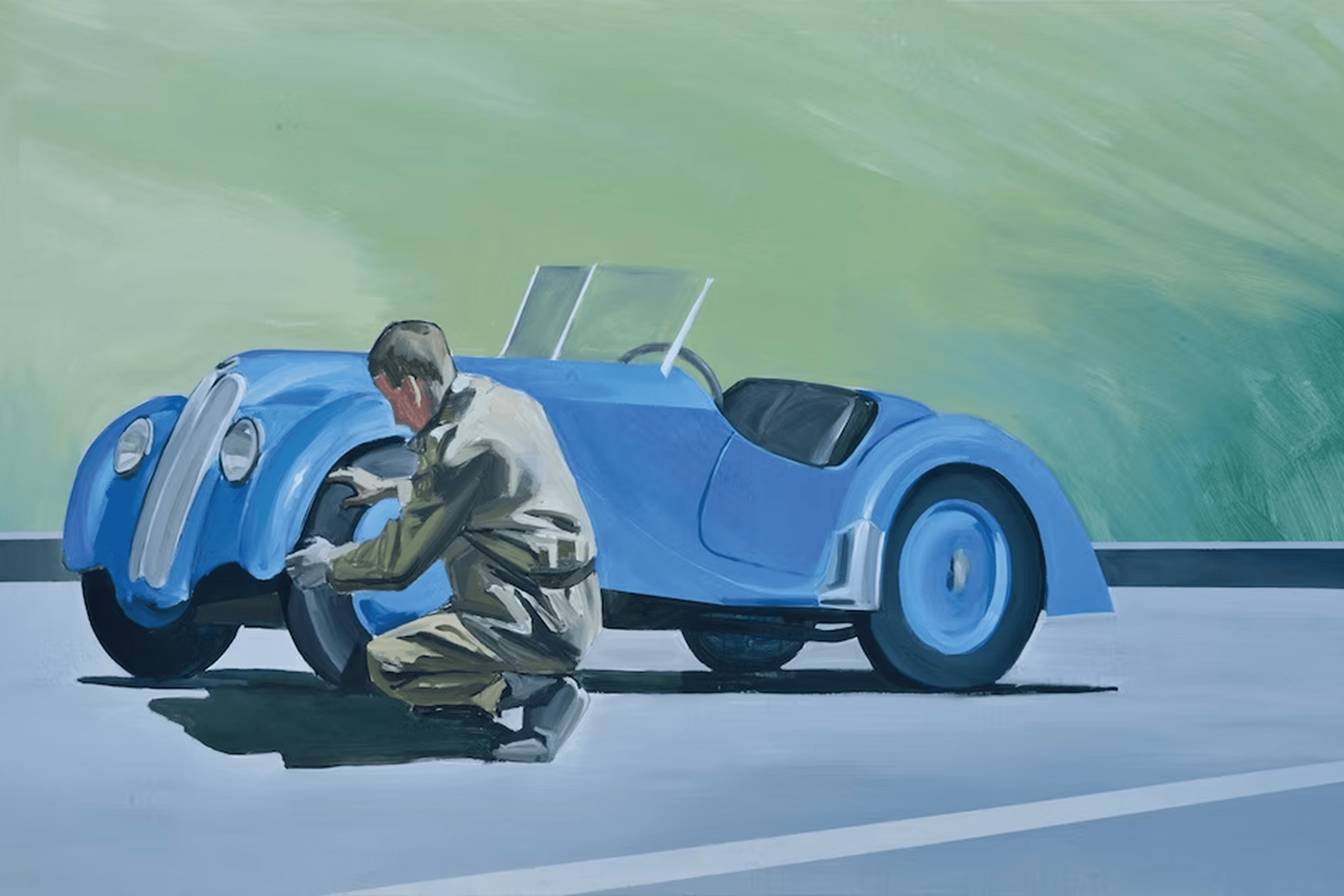
Photo: lesiakhomenko.com 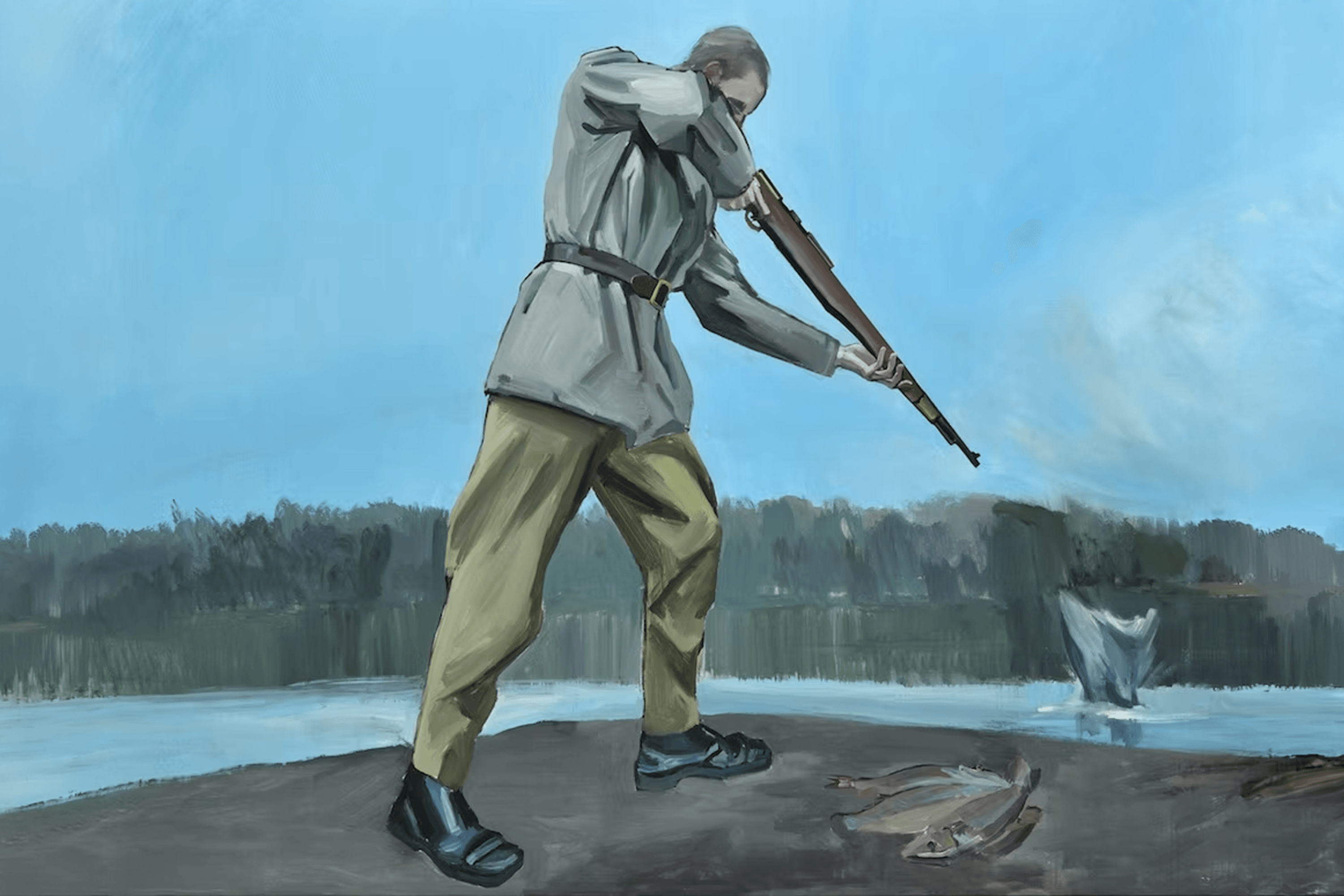
Photo: lesiakhomenko.com
I literally transferred fragments of my grandfather’s memories onto canvas. If he wrote that he was running from bullets, that single action remained in the painting. If he did not describe the surroundings, I reduced the space to its bare essentials: sky, grass, the horizon. In this way, I tried to dismantle the heroic and propagandistic perspective of Soviet war art. For me, it is not only the story of one individual, but also an attempt to show how personal testimony can counter grand historical myths.
On taking part in the Revolution of Dignity
I have never engaged in propaganda. What has always interested me is rethinking experience and finding ways to preserve it. During the Revolution of Dignity, like many others, I went to Maidan every day. I volunteered and brought whatever supplies were needed. At the same time, I was trying to understand what an artistic response to the events unfolding around me could look like. That was when I began drawing people on Maidan. I deliberately worked with copies. I gave the original drawing to the person I portrayed and kept the copy for myself. For me, that was an important gesture. I understood that the copy might one day enter an archive or a museum collection and begin a new life as a historical document.
That was the first time I truly felt the tension between participation and documentation. I remember a journalist from The New York Times asking me, “So are you for Maidan or against it?” I found the question telling. People often try to place an artist into a fixed category, whereas what interested me was the experience of the revolution itself and the ways it could be understood.
Today, these works are held in museum collections, including the Maidan Museum and the Albertina. The drawings were created at specific moments in time, each bears an exact date, and each is connected to a particular person. It is precisely this rootedness in time that gives them their historical weight.
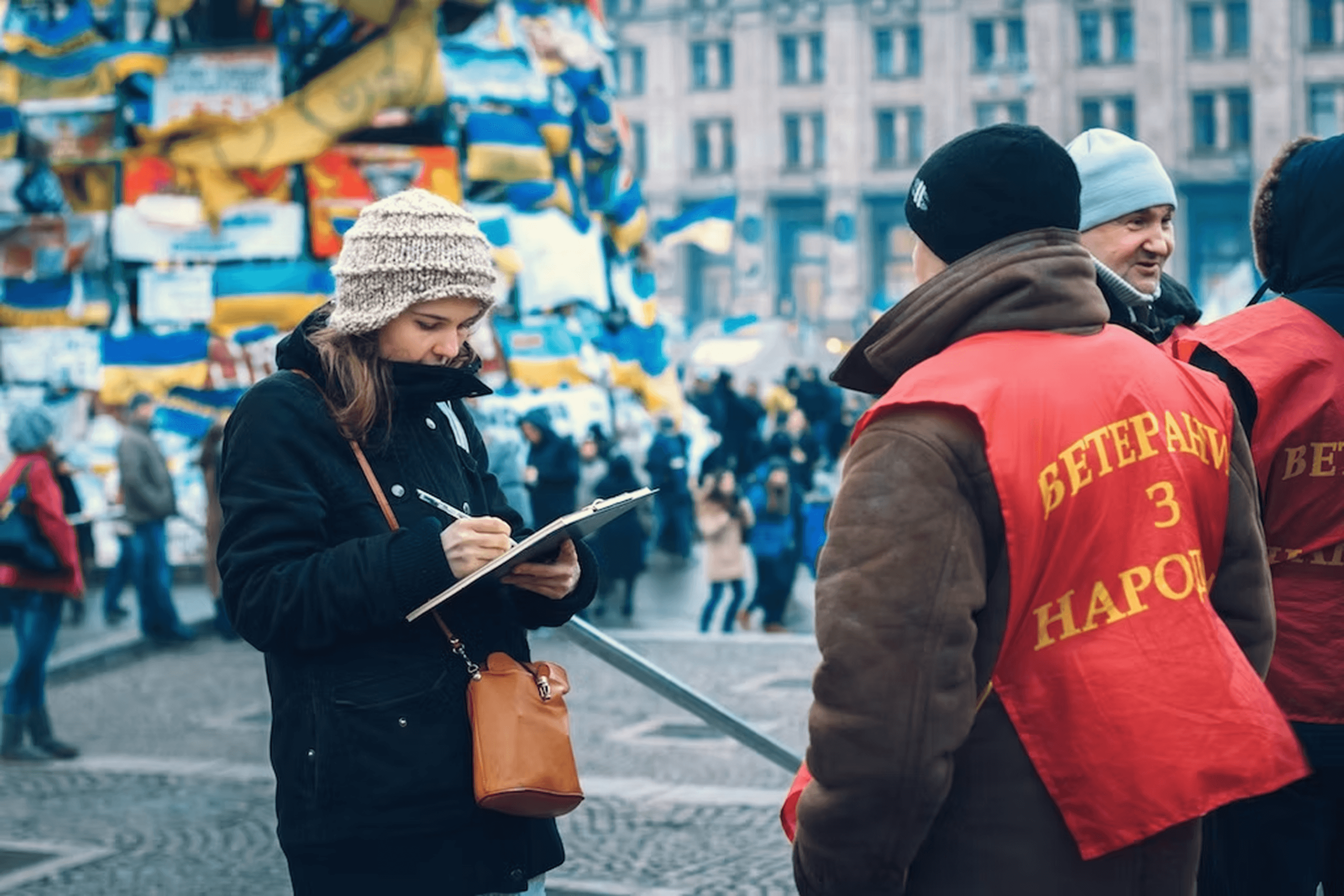
Works from Lesia Khomenko’s Drawing on the Maidan series. 2013–2014. Photo: Yevgen Nikiforov / lesiakhomenko.com 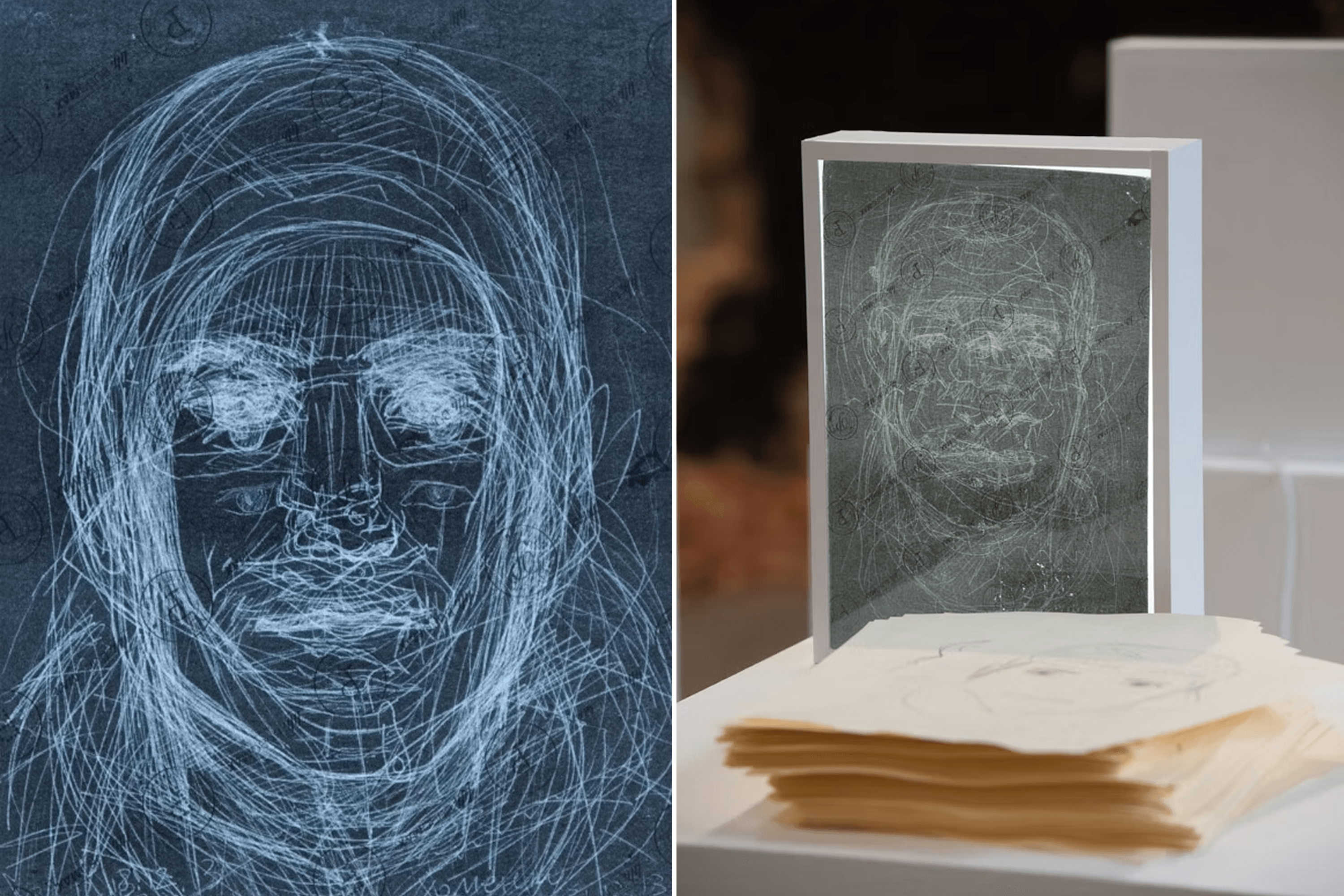
Photo: lesiakhomenko.com 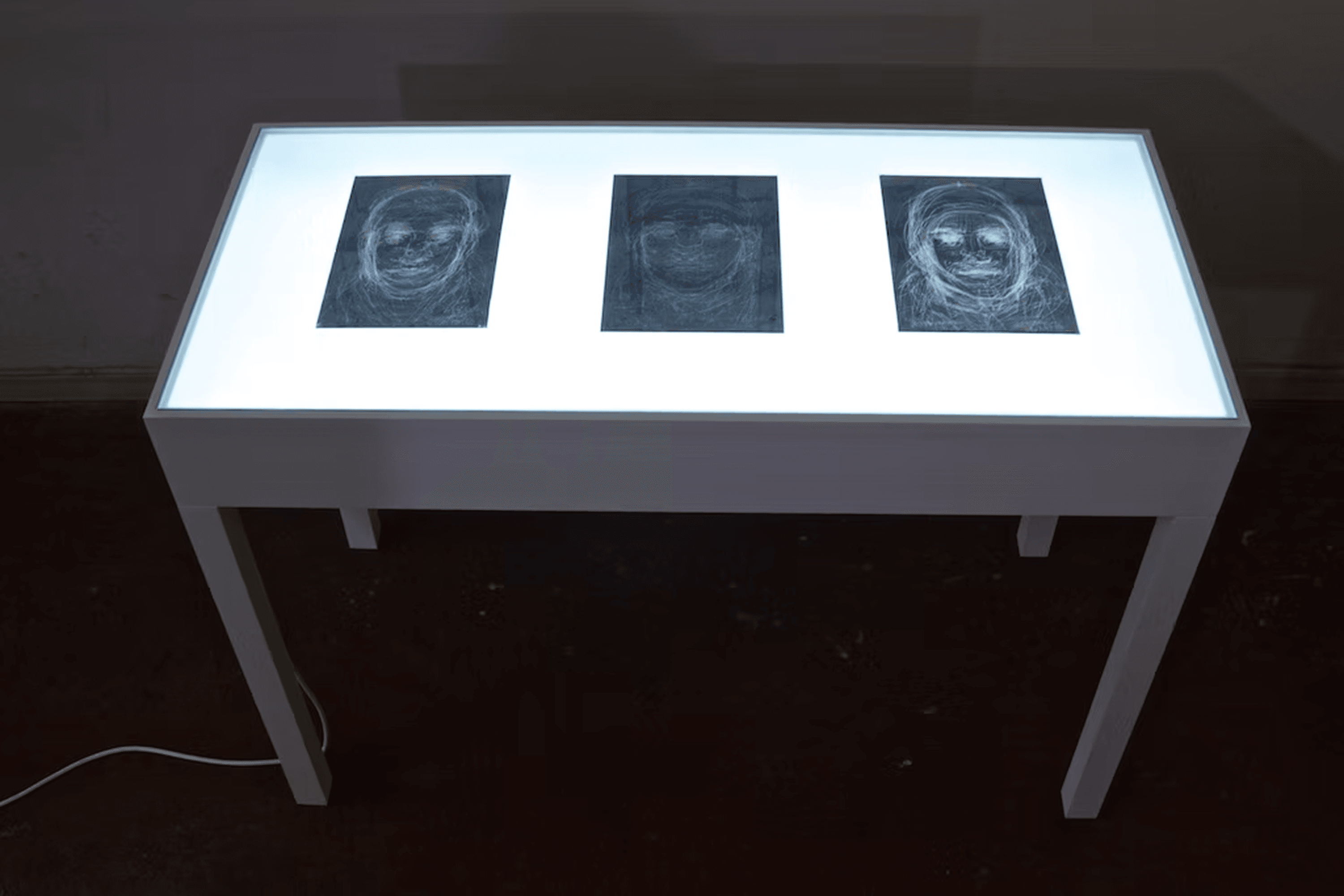
Photo: lesiakhomenko.com 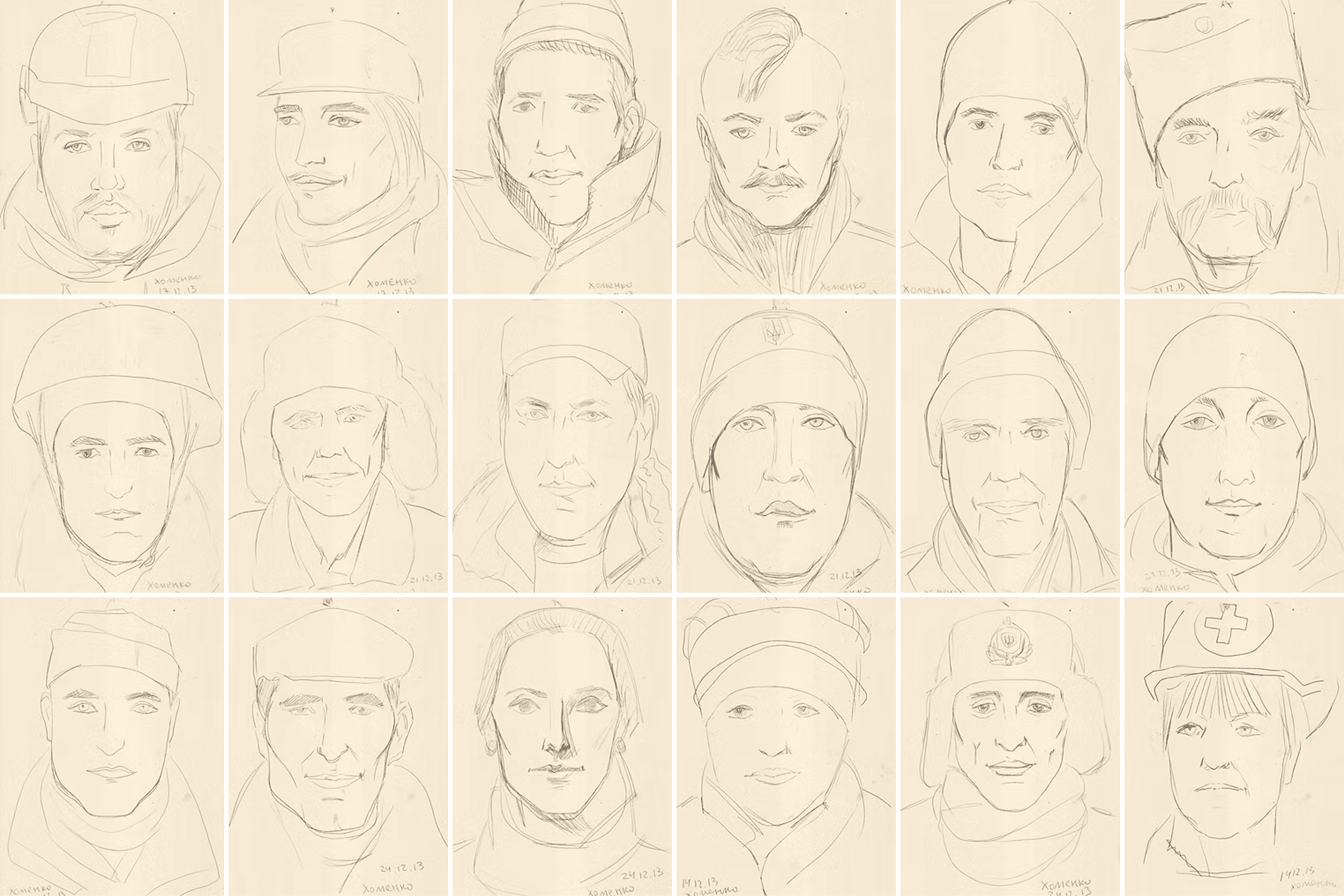
Photo: lesiakhomenko.com 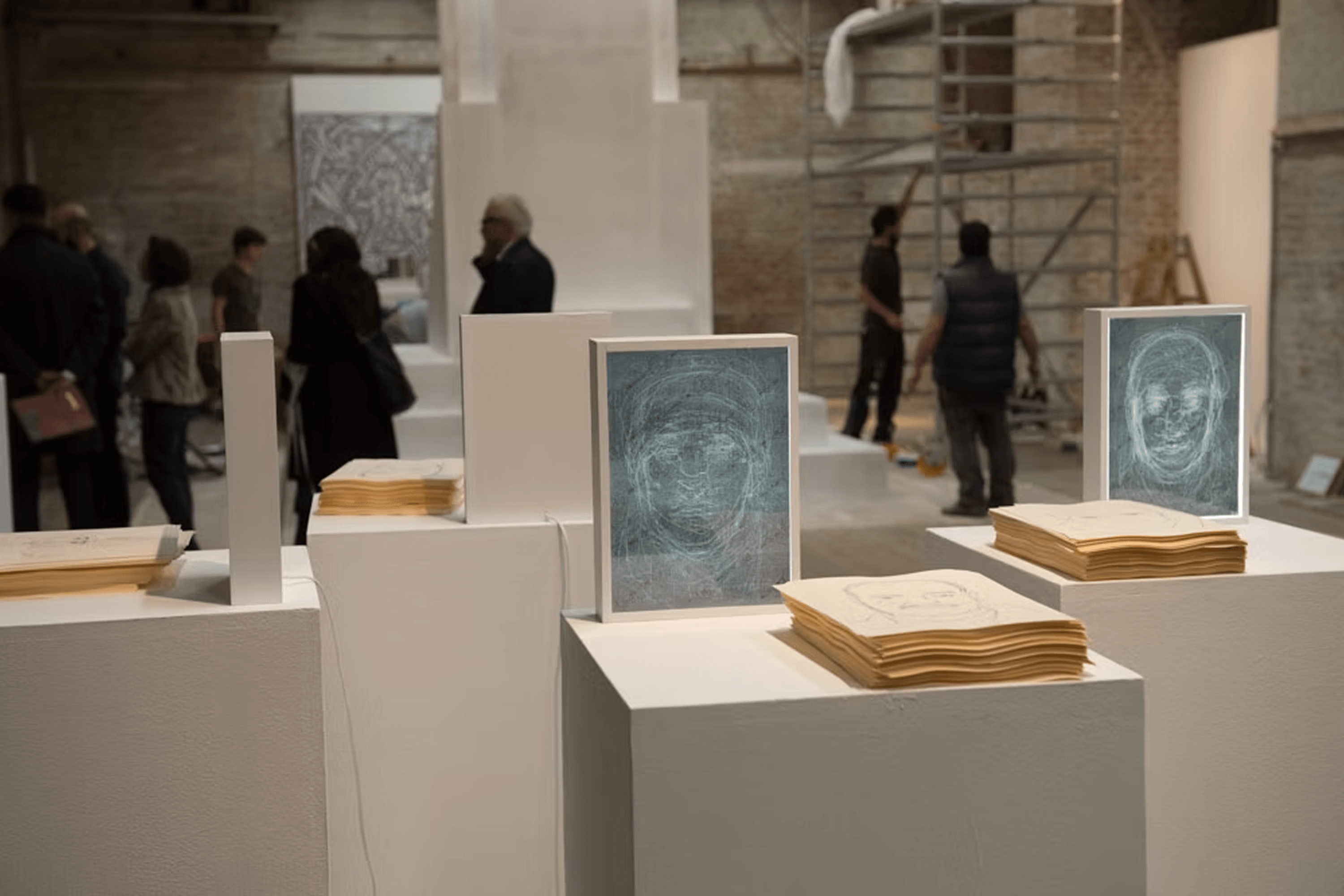
Photo: lesiakhomenko.com
On teaching and the beginning of the full-scale war
For six years before the full-scale invasion, I worked at Kyiv Academy of Media Arts (KAMA). The school focused on the creative industries: advertising, design, and communications. The art program was more of a separate, niche project. It was originally founded by art historians Olia Balashova and Liza Herman. They taught the theoretical courses, while invited artists were responsible for the practical part.
I was invited to teach one of the courses. It proved successful, and I was later appointed program director of the art program.
I was teaching, organizing, managing the program, and at the same time working on my own projects, although there was almost no time left for them. That was when I began asking myself whether an artist can build a system while still remaining an active practitioner. KAMA gradually demanded more of my time than art itself. During the last years before the war, I felt completely exhausted. The turning point came in 2021. During a residency at the Salzburg International Summer Academy of Fine Arts, I met an instructor who had gone through a very similar experience. She said to me: “At first, students give you energy. Then you give them everything you have. Eventually, only your vacations are left for your own projects. Little by little, you disappear as an artist.” Her words made a deep impression on me. By the beginning of 2022, I was already planning a conversation about leaving KAMA, but then the full-scale invasion began. My daughter and I first moved to Miami for an artist residency. A year later, we relocated to New York, a city I had always loved. I rented an apartment and a studio not far from Manhattan, and my daughter started school there.
On working with galleries
My gallery story actually began while I was still working at KAMA, in 2018. It was never something I planned. It was more a series of coincidences.
I met the American gallerist Iliya Fridman after the Venice Biennale in 2015. He saw our project Documentation of Total Audio Performance, which we created in collaboration with Max Robotov, Liera Polianskova, and Ivan Svitlychnyi, and invited us to present it at the New Ear Festival in New York. We accepted. It was there that I saw, for the first time, how the international professional community responded to my paintings. They loved them!
I showed Fridman my portfolio, and that marked the beginning of our collaboration. I regularly sent him new works, and he included them in group exhibitions. Around the same time, Maksym and Yuliia Voloshyn also invited me to work with them. Neither Fridman nor the Voloshyns ever dictated what kind of art I should make. They never asked me to repeat successful works or adapt my practice to the market. That was fundamentally important to me.
On the commercial side of art
Voloshyn Gallery remains my main representative and the primary intermediary for the sale of my work. From the very beginning, we agreed on a 50/50 partnership model. The prices of my works generally range from €15,000 to €30,000.
I never hide sales from my gallerists, because I believe transparency is the foundation of trust. Short-term gain does not compensate for the loss of relationships that have taken years to build. I understand that the gallery system is a complex infrastructure with significant expenses, especially when it comes to international art fairs in cities such as New York or Miami.
European and American collectors are often cautious about artworks that directly depict weapons and violence. Even so, interest in my work remains strong. My paintings continue to enter both private spaces and public collections, including museums, foundations, and other institutions.
On violence, war, and their representation
In 2008, I explored the romanticization of criminals in popular culture, examining how society transforms criminals into attractive and compelling figures. Beginning in 2015, I turned to comparing the perspectives of the artist and the sniper as two different forms of visual observation, where they share the same focus, yet produce radically different outcomes.
Since 2022, I have been working with materials from the front line and with the landscape of contemporary warfare, where violence is normalized under international law. I am interested in the paradoxical transition between crime and a legitimate act within the context of war, as well as in the mechanics and imagery of violence, without moralizing it.
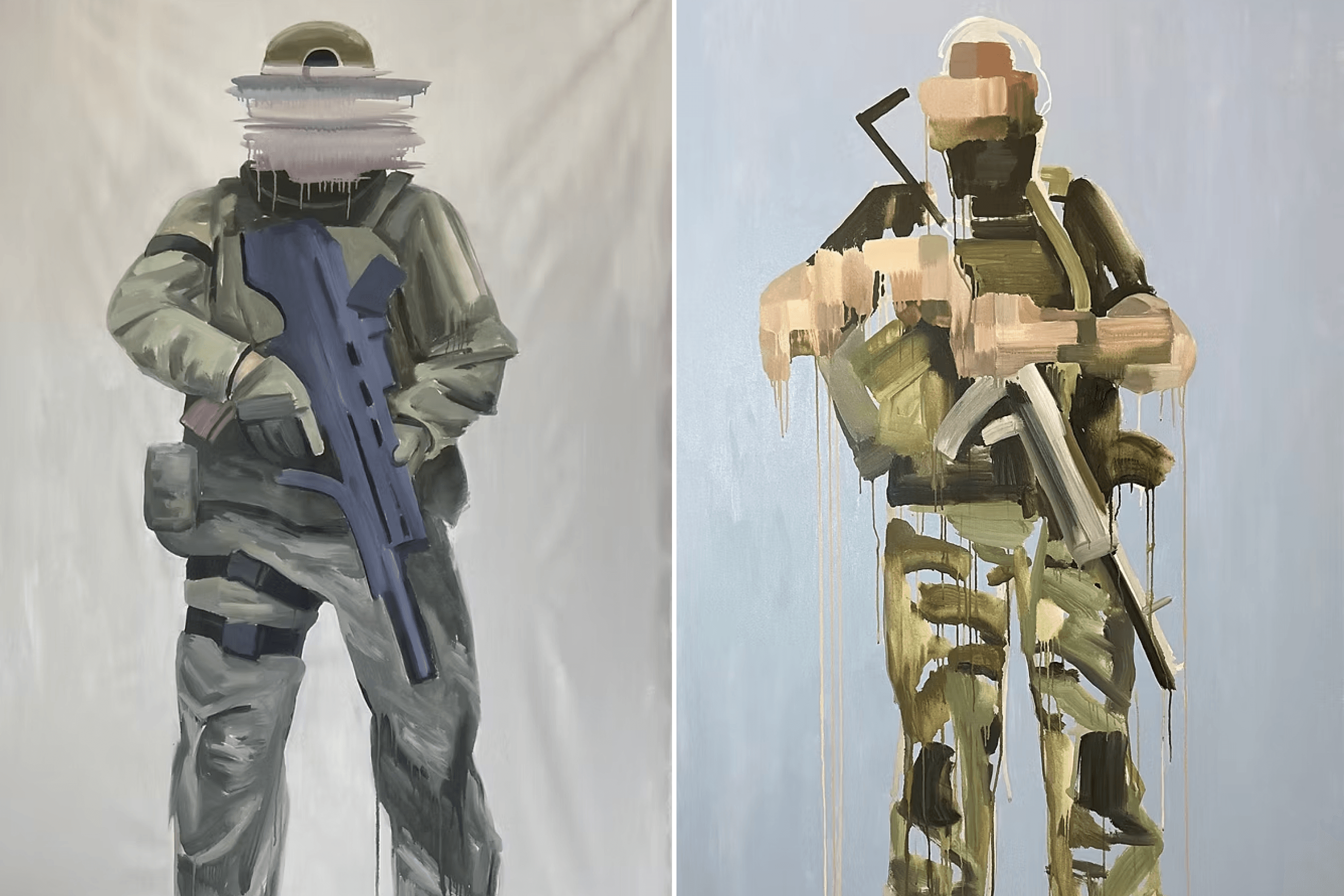
Works from Lesia Khomenko’s Unidentified Figures series. 2022–2023. Photo: lesiakhomenko.com 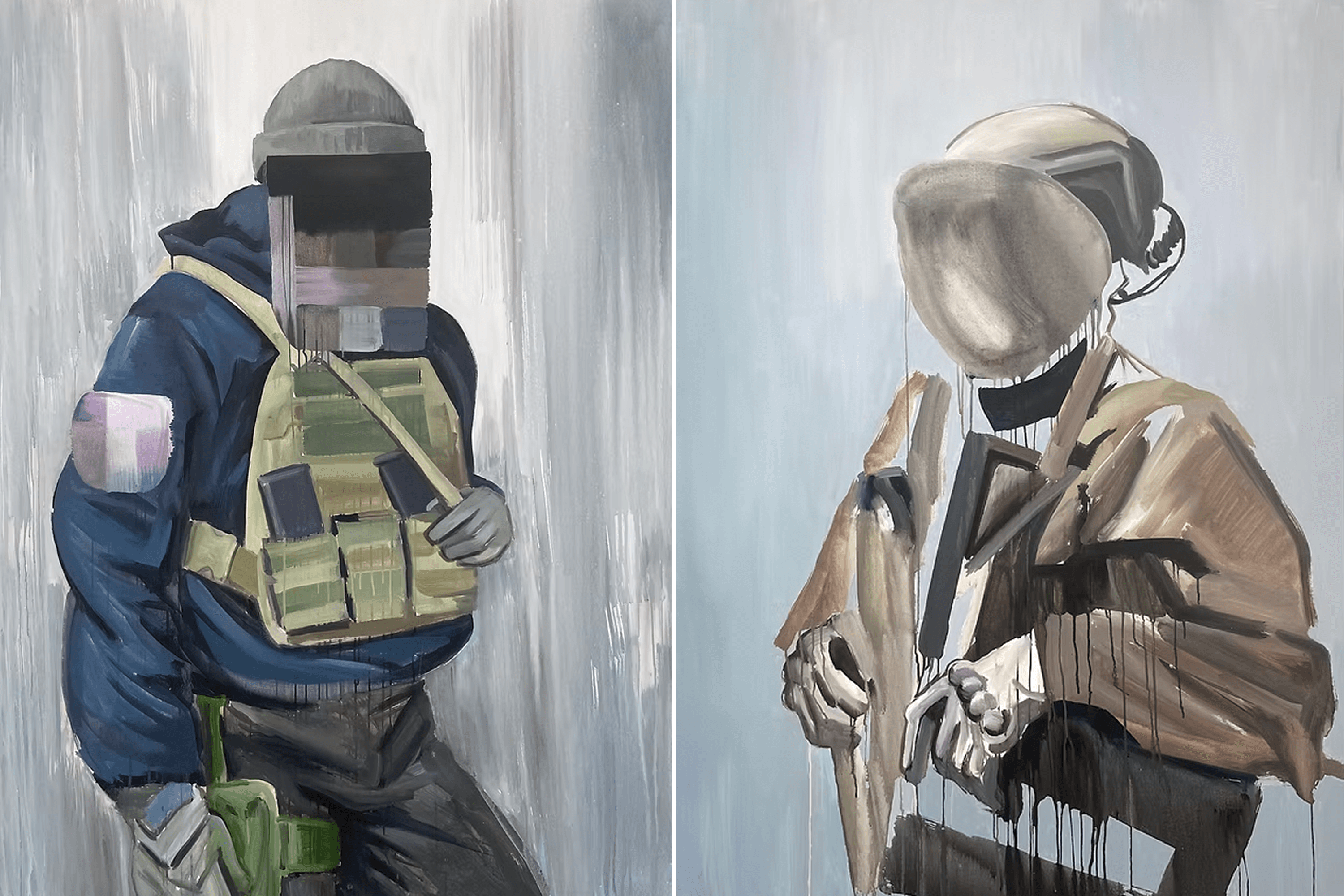
Photo: lesiakhomenko.com 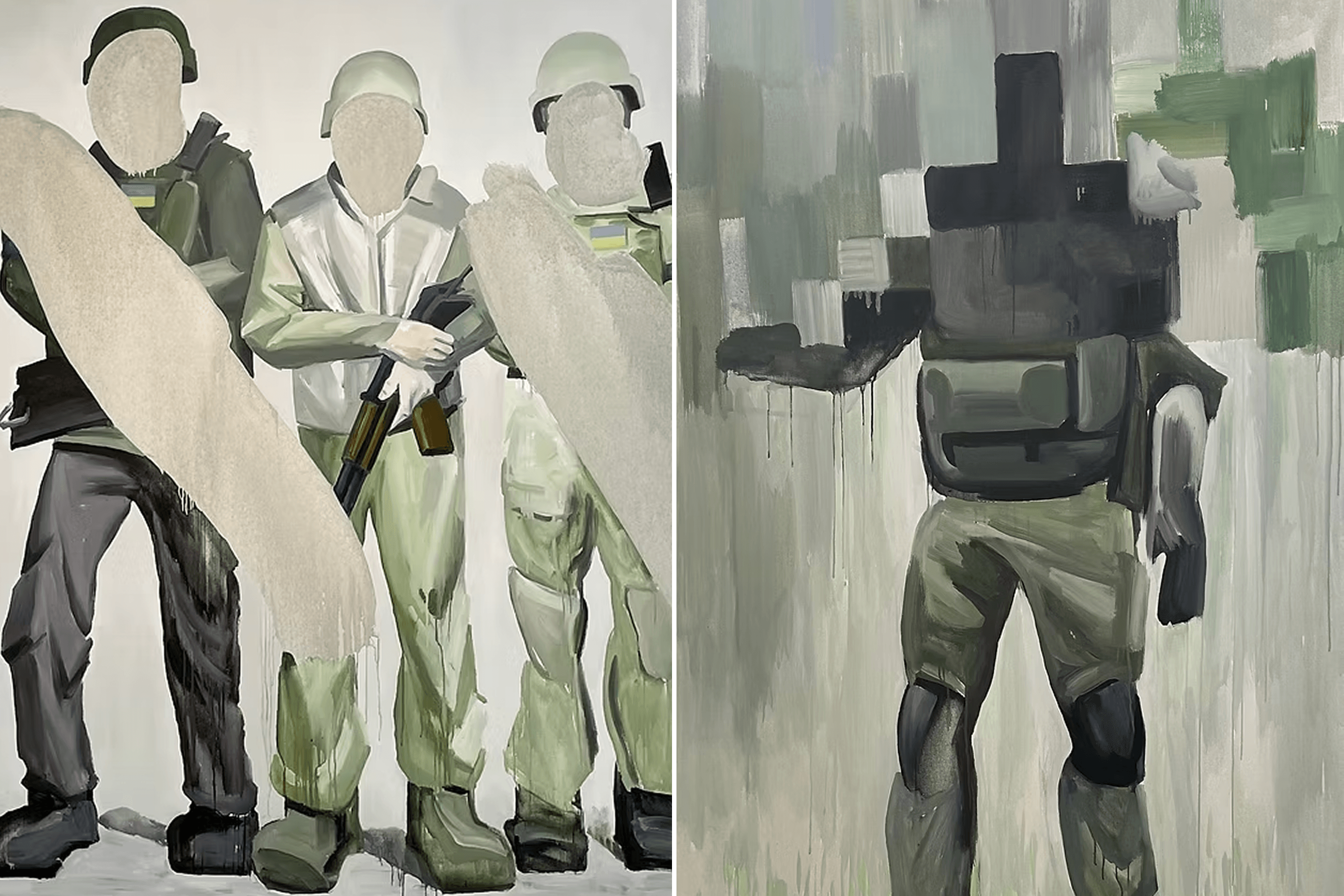
Photo: lesiakhomenko.com
I work with the Ukrainian experience of war, but I avoid simplified narratives. In my conversations with military personnel, I often hear the image of the hunter, the predator, the person who takes responsibility for violence in order to protect others. It is a complex and deeply ambivalent image, yet that is precisely what makes it so expressive.
In my work, I use drones, screens, video, and technological traces as ways of capturing war as an image. I do not aestheticize violence, nor do I offer a heroic narrative. At the same time, I am interested in war as a technological and cultural process in which we already exist, and in the boundary between lived experience and its visual representation.
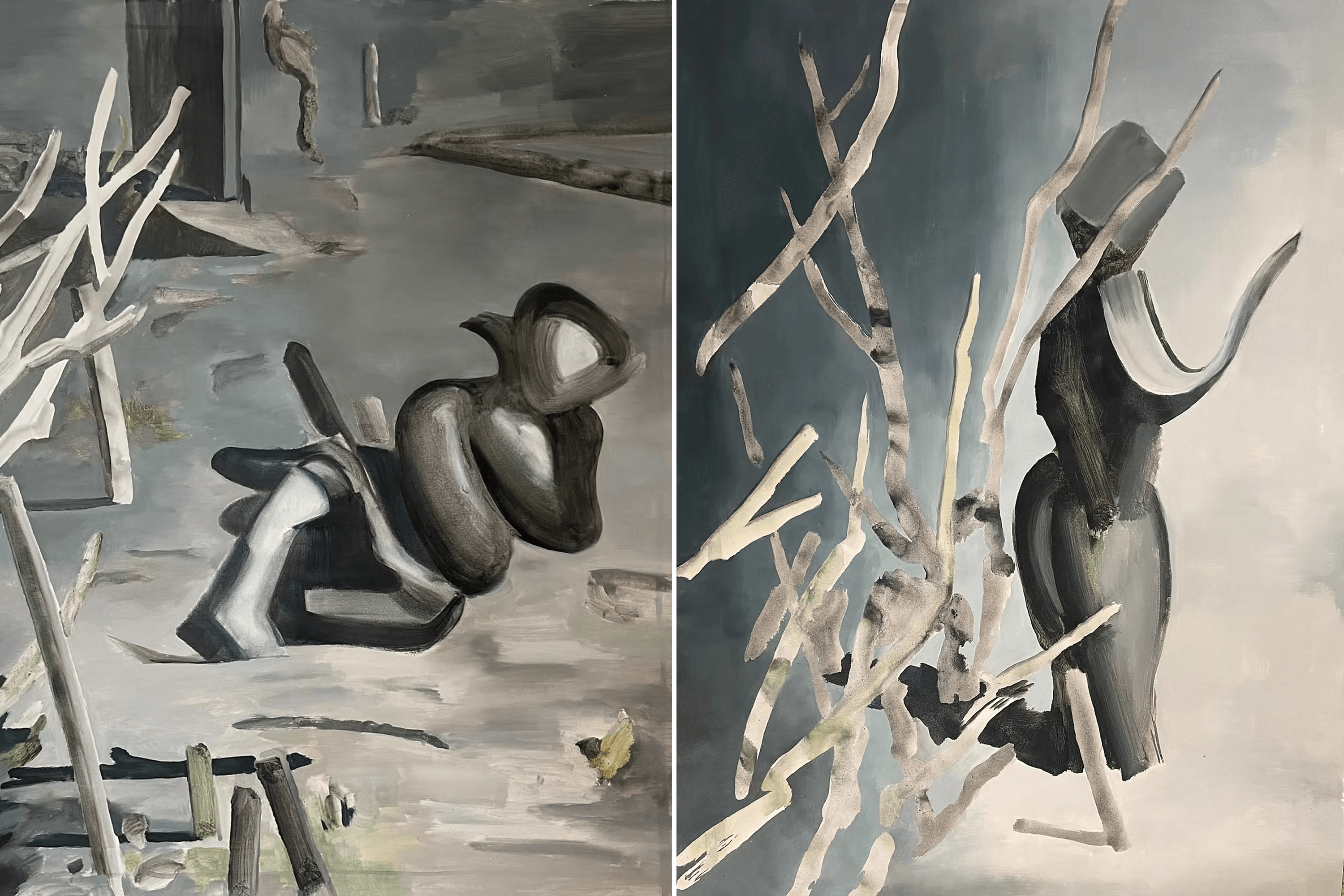
Photo: lesiakhomenko.com 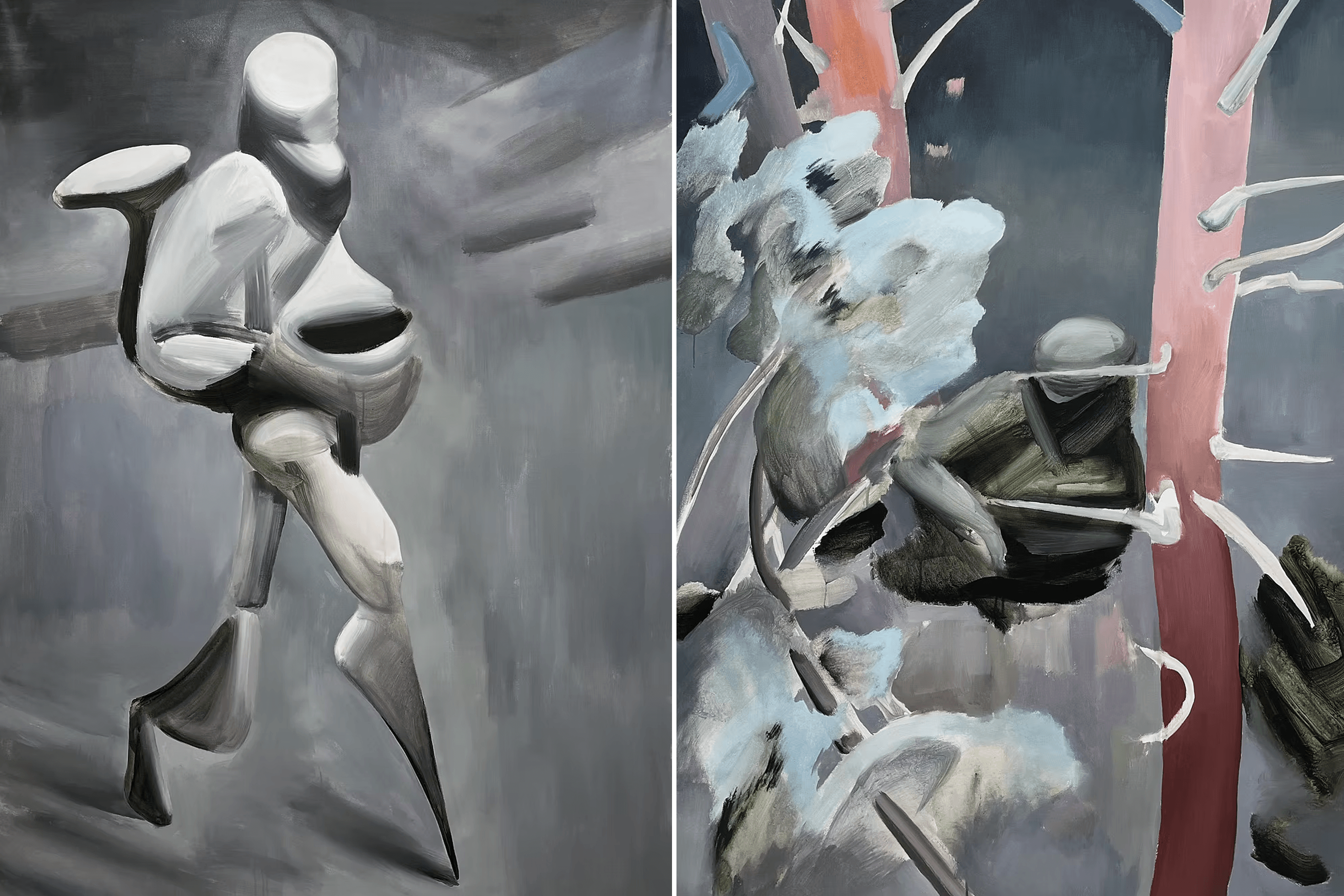
Photo: lesiakhomenko.com 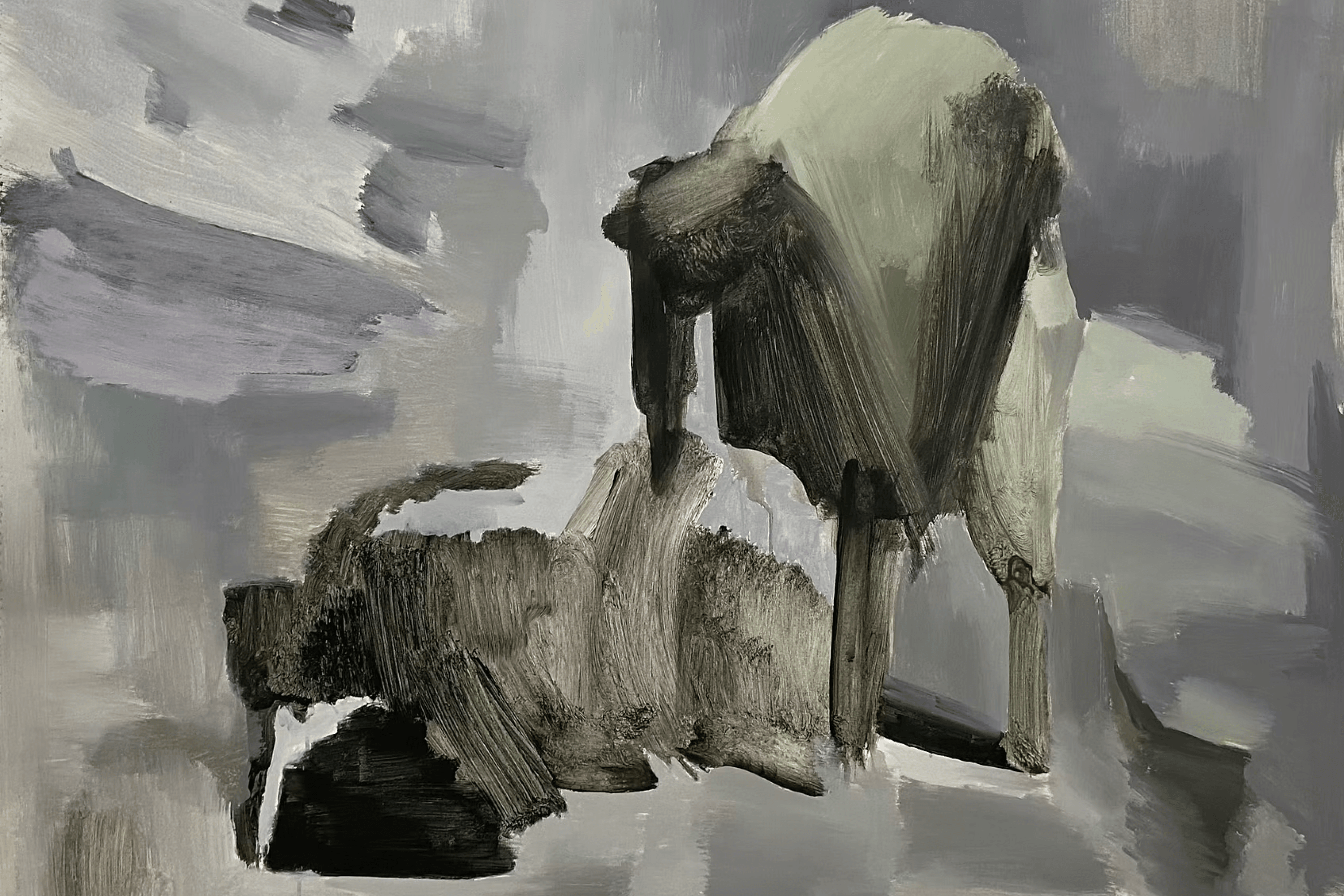
Photo: lesiakhomenko.com 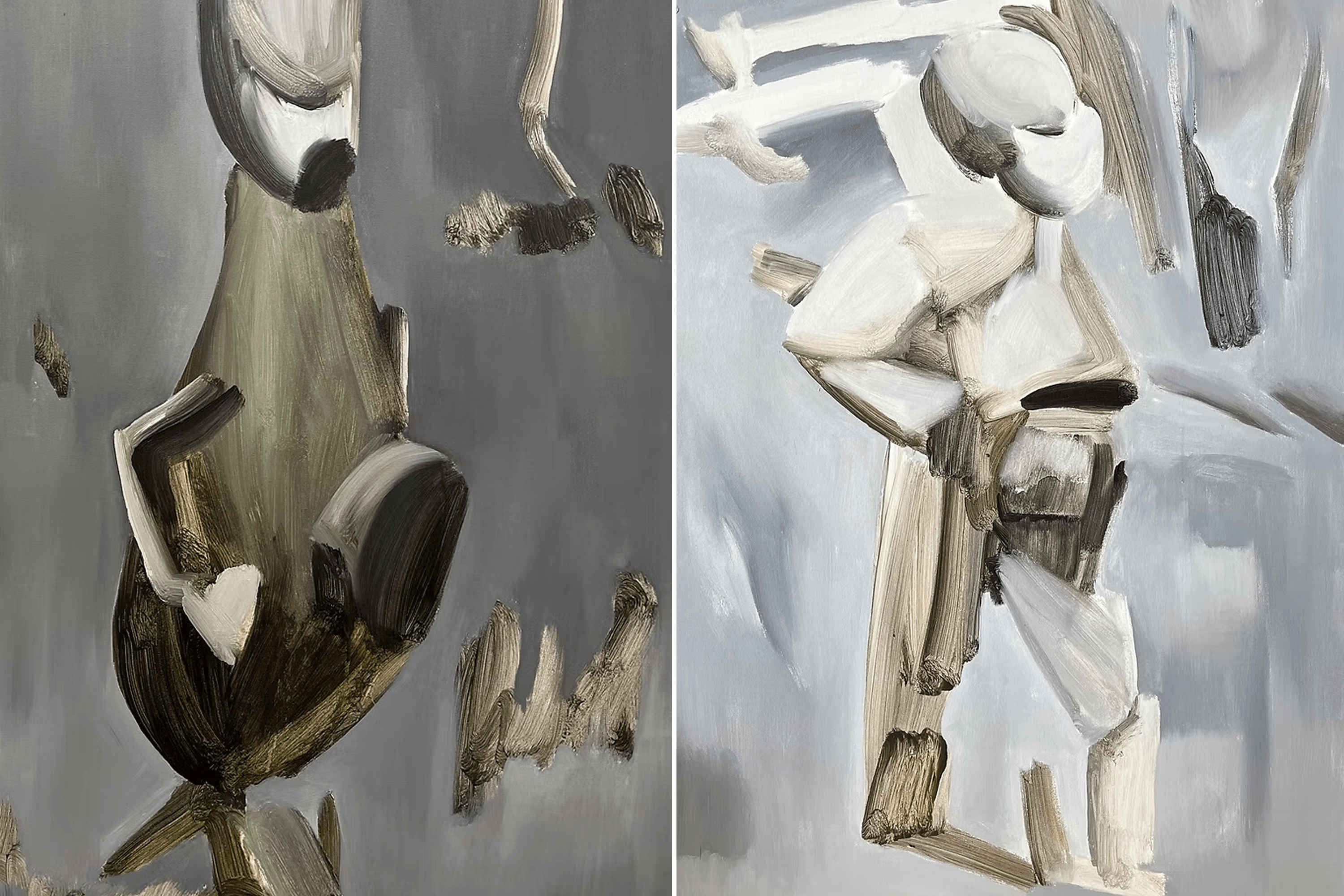
Photo: lesiakhomenko.com
At the same time, I do not idealize the possibilities of art. It always falls short of the reality of war. A person who has never experienced an explosion will never understand someone who has. War is, unfortunately, a profoundly physical experience.
People often ask me whether my work creates a safe distance from war, allowing viewers to observe it comfortably. In fact, that very distance is what I explore. I work with the digital traces of war, and military personnel can read things into these works that civilians might not notice.
On the American art system
I do not romanticize the art system. There are strong artists and weak artists. The American art market simply skims the cream off the quality that already exists. At the same time, it can just as easily absorb superficial work, especially during moments of crisis, when a wave of interest in a particular subject suddenly grows. That became especially visible after 2022. A great deal of art about the war began to appear. Some artists approached the subject in a rather opportunistic way. Others simply could not remain silent, because the war had become part of their lived experience. For them, it is not a trend but a painful act of documenting reality.
In New York, many different worlds overlap, and I like that. The city is home to both very strong and very weak art. That is not a contradiction. It is simply a function of scale. Ukraine as a subject has not become a trend in New York. There was a surge of attention in 2022, but interests here come in waves. At the moment, for example, postcolonial discourse is at its peak, along with new forms of “spirituality” that verge on esotericism.
For me, New York is a comfortable artistic environment. Back in 2018, I sensed a deep sensitivity to painting here, along with a serious theoretical foundation surrounding it. Here, painting is not explained — people know how to read it. Artists from all over the world come to New York, and they bring their painting with them. There is also a great deal of art outside the gallery system: public projects, murals, subway mosaics, and urban sculpture.
On art as cultural diplomacy
I consciously work to increase my visibility within the international context, particularly on the New York art scene, through exhibitions and institutional invitations to give lectures, including at MoMA.
At the same time, one fundamental question remains: can a Ukrainian artist in the United States remain an autonomous artistic subject without being reduced to the role of “an artist representing the war”? There is a clear demand for the Ukrainian experience, and it influences how the works are read. Even so, it is important to me that my artistic practice is not confined to a single framework.
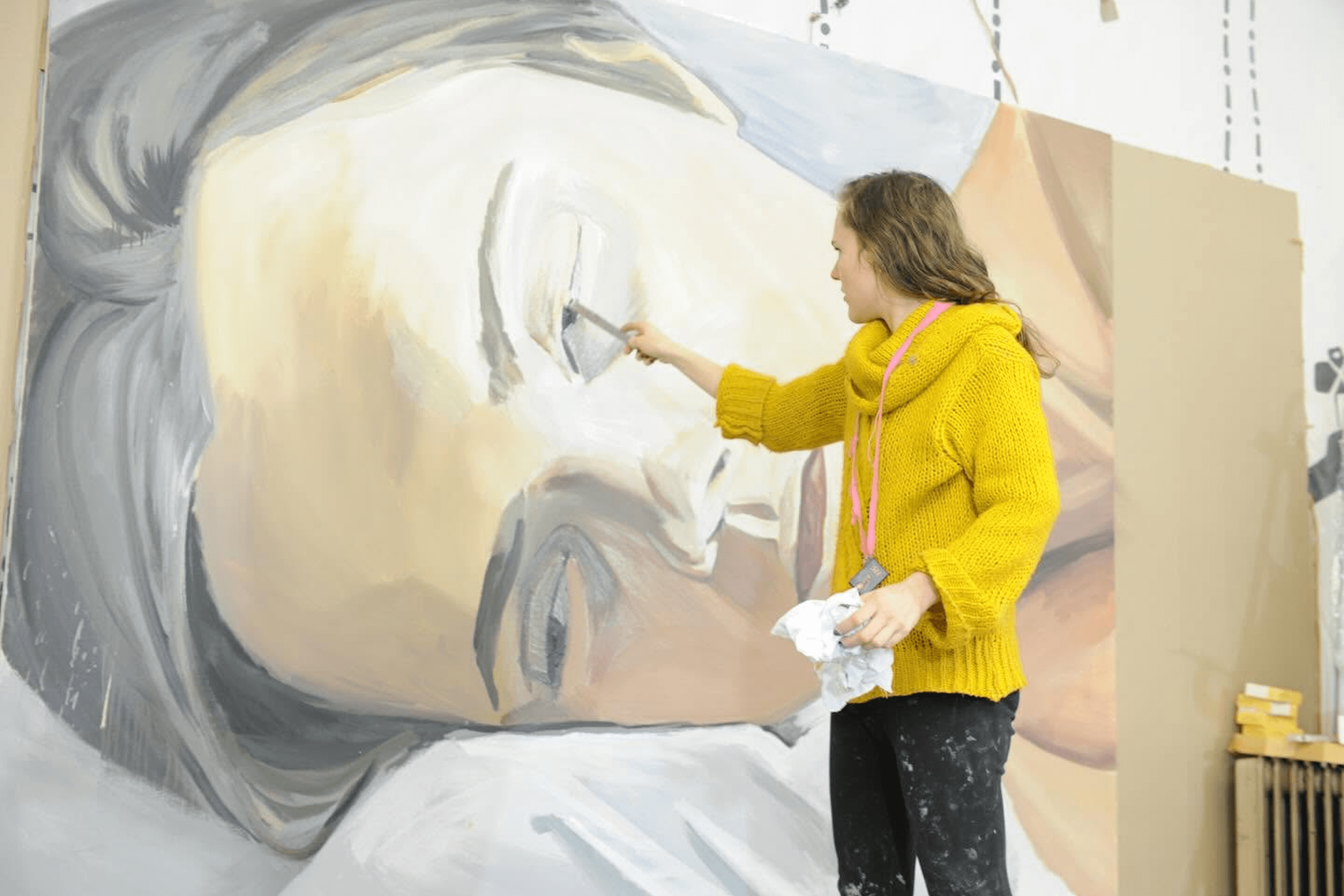
Lesia Khomenko in her studio while working on a self-portrait. 2013. Photo: Lesia Khomenko / Facebook 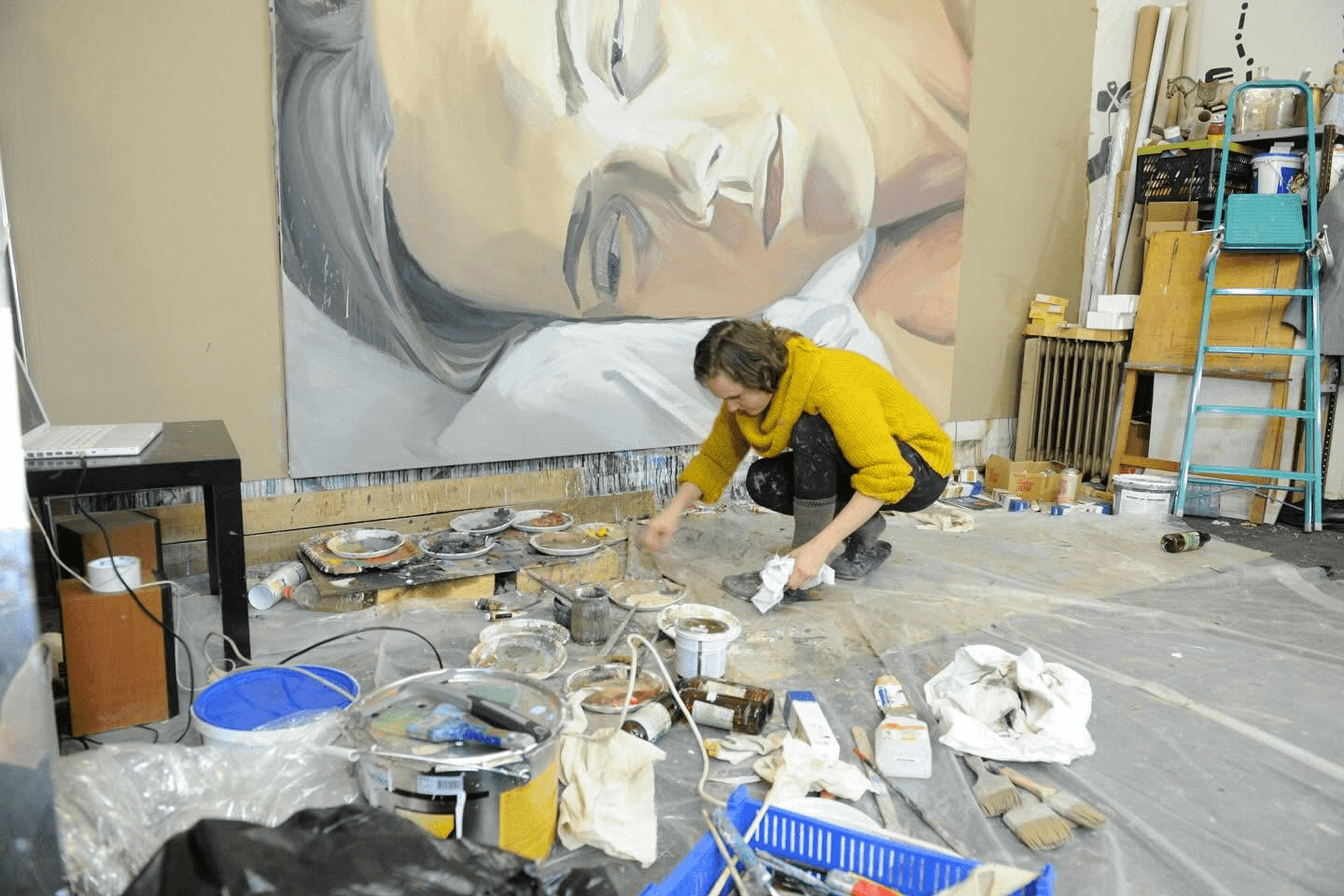
Photo: Lesia Khomenko / Facebook 
Photo: lesiakhomenko.com


