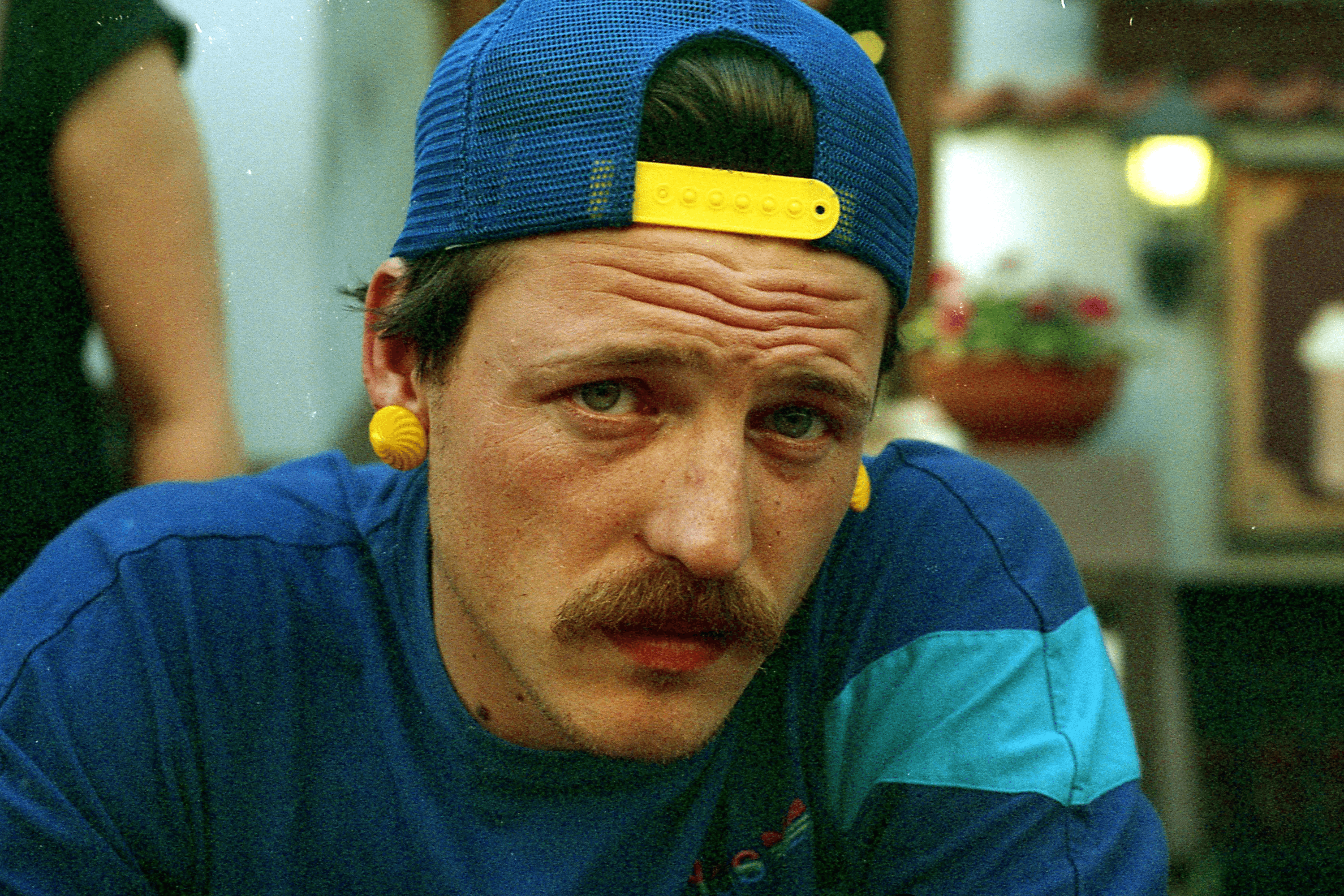
Ukrainian artist Nikita Kravtsov is a prominent figure on the global underground art scene. Nikita was born in Yalta into a family of architects, graduated from the Academy of Art in Kyiv in 2010, and, following the annexation of Crimea, emigrated to Paris, where he achieved recognition without the backing of galleries.
With the onset of the full-scale invasion, Kravtsov’s artistic practice shifted toward anti-war statements, curatorial initiatives, and engagement with the topic of Ukraine in the public sphere, particularly through murals.
Journalist Yellow Blue Roksana Rublevska has known Kravtsov for nearly a decade. She met with Nikita in Barcelona to talk about emigration, anarchy, collaboration with Balenciaga, sales to French museums, and how an artist changes when their personal story suddenly becomes part of the history of their country.
Nikita, tell me, when and under what circumstances did you emigrate to Paris?
It was after the annexation of Crimea, which is where I’m from. Around the same time, I started getting invitations to international art residencies, but those two facts are actually completely unrelated. Before that, I had already managed to live in London, in a squatting house belonging to a sculptor who collaborated with the Pink Floyd band. Concurrently, I worked at an animation studio that had joint projects with The Walt Disney Company. To pay the rent, I had to wash dishes: from eight in the morning until four in the afternoon, I bustled hard in the kitchen, and then I would watch how the cool animators worked and learn from them. The result was a music video for the Israeli singer Idan Haviv, for which I drew three thousand drawings. By the way, it got a million views, so washing those dishes wasn’t for nothing (laughs). As for Paris, I stayed at the Cité internationale des arts residency a few times in a row, which is where I met my future wife, Camille. Because of her, I eventually moved.
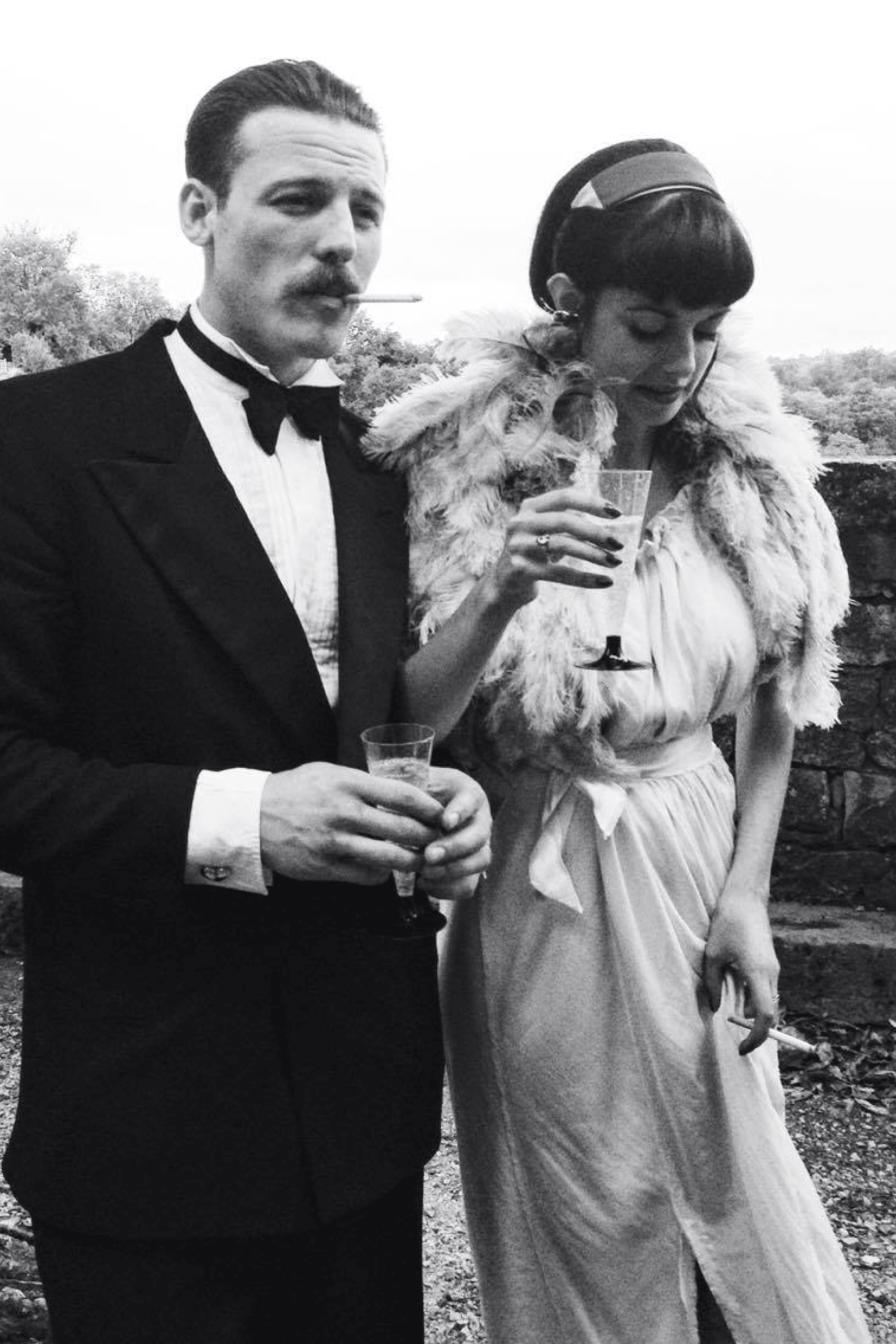
Did you move purely for love, or did you also think about career opportunities — that there would be more of them for an artist there than in Ukraine?
I’m not used to building any strategies at all. I moved because I met my girl, and I really liked the city. Somehow, I immediately felt that I could stay there.
You arrive in Paris without connections and without knowing French. You have a strong portfolio, but virtually no one knows you there. Was there a sense of confusion or despair, a feeling that as an artist you are “not needed by anyone” there?
I think I’m still not needed by anyone (laughs).
How did you even endure this start in a city that is one of the most expensive in the world?
For a long time, I lived off the sales of my works to a circle of collectors I already had. In Paris, I started from scratch. Thanks to connections at the Cité internationale des arts, opportunities to exhibit somewhere began to appear. Besides, Camille and I traveled a lot for residencies: we worked in Cyprus, Iceland, Poland, Greece, Denmark. The most interesting one for us was the Flux Factory in New York: first, we went for three months, and later for six.
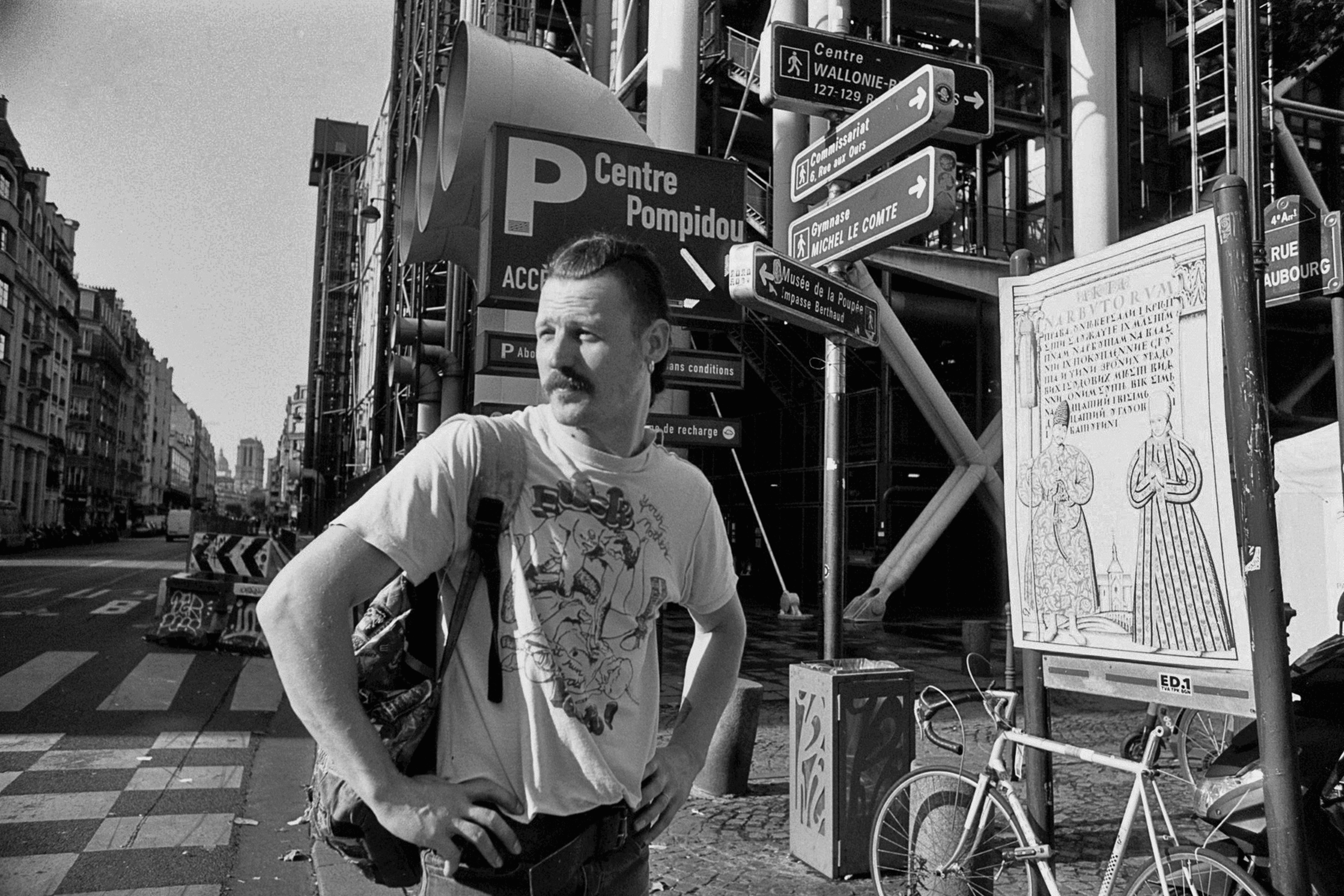
It’s an independent art community where artists not only work on their own projects but also live like a commune: they prepare food for the participants and the homeless while organizing exhibitions of their works at the same time. To survive in New York, I worked part-time in construction. I still don’t mind going out for a shift if money is needed. In parallel, I was constantly doing book illustrations.
I remember how you illustrated the “Criminal Code of Ukraine” for the Osnovy publishing house, and it was reprinted three years in a row. What is your approach to book illustration?
I pass the material through myself and create my own interpretation, rather than literally visualizing someone else’s imagination.
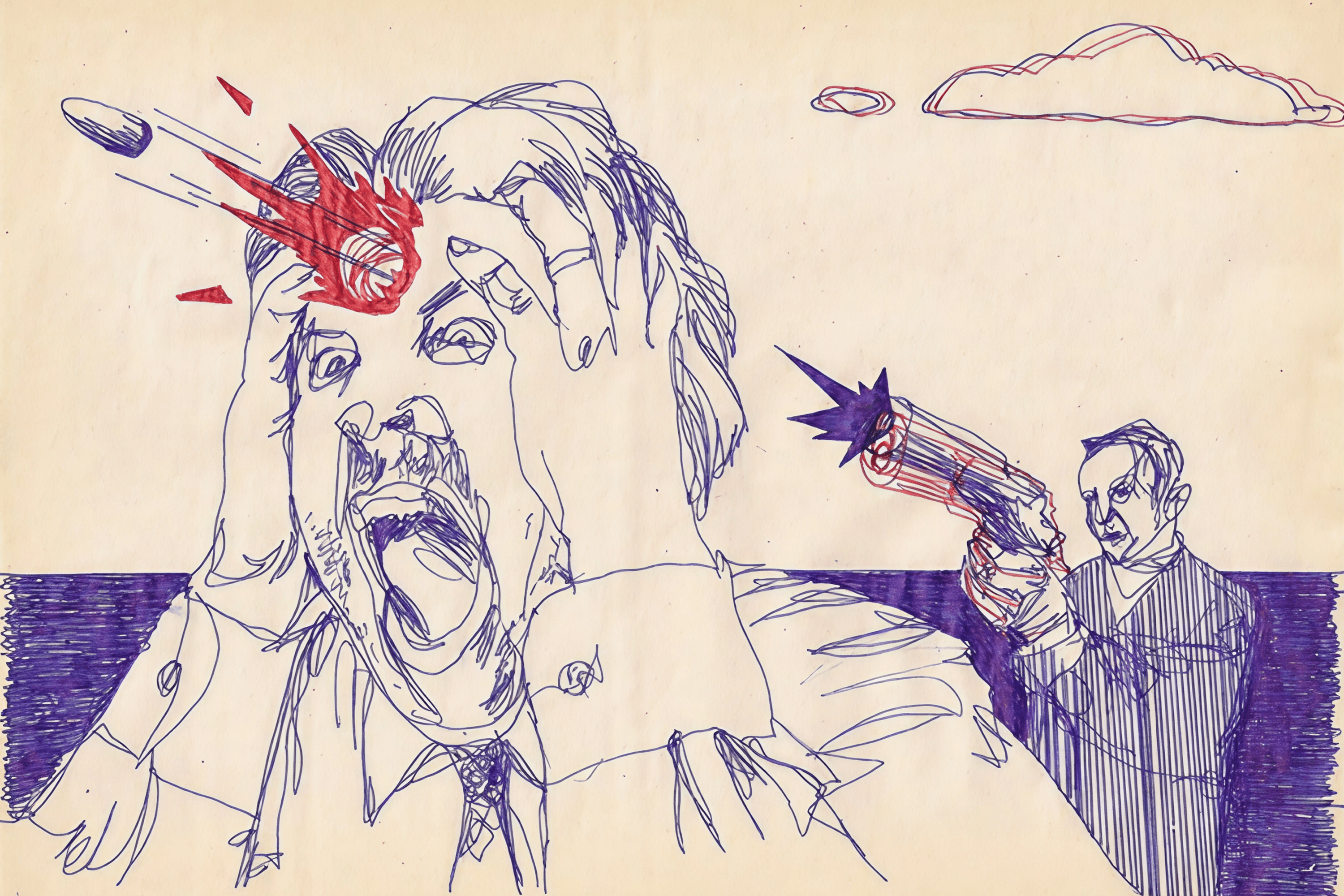
Fragments of the “Criminal Code of Ukraine” with illustrations by Nikita Kravtsov. Photo: pravda.com.ua / YB 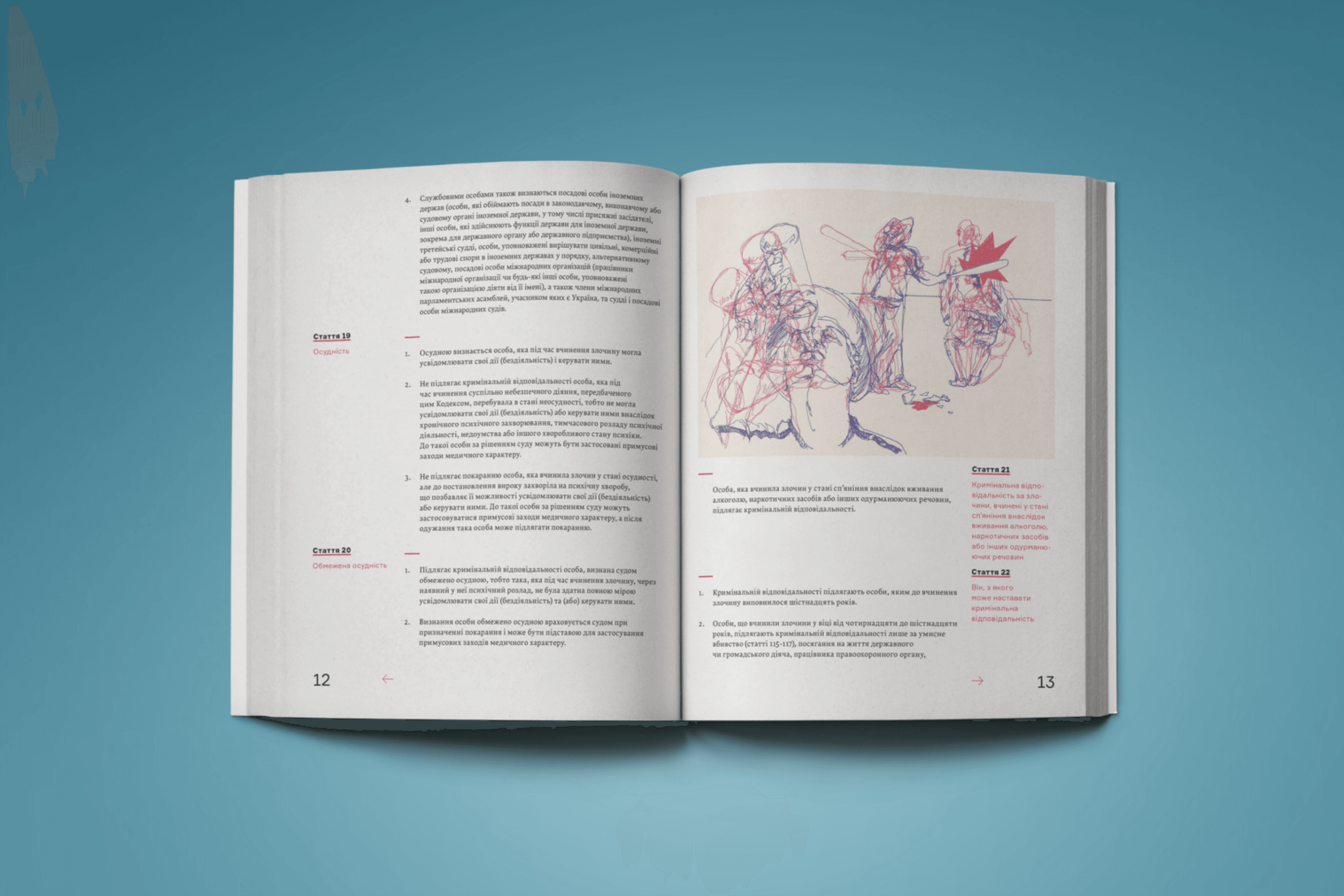
Photo: bookram.com.ua / YB 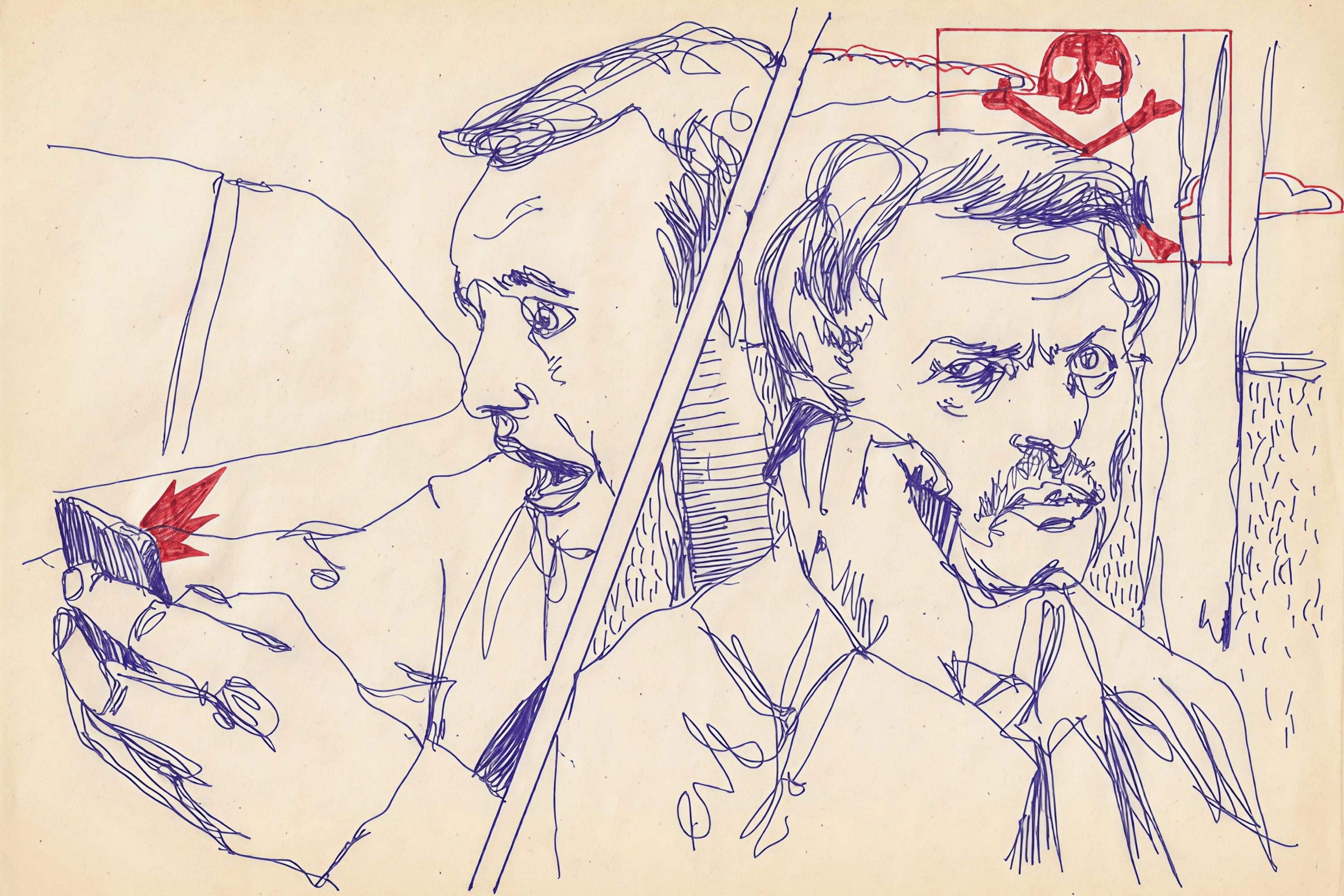
Photo: pravda.com.ua / YB 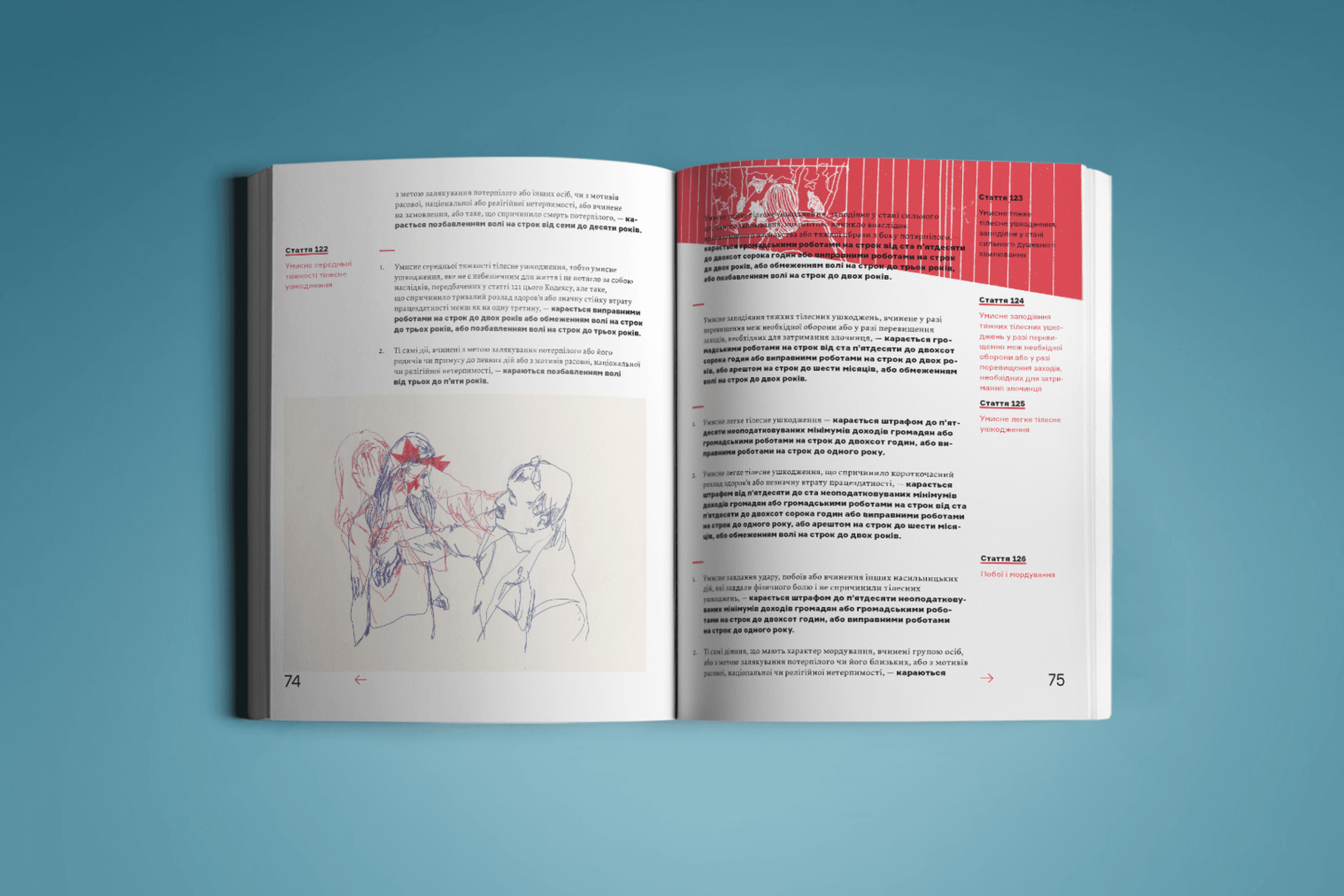
Photo: bookram.com.ua / YB 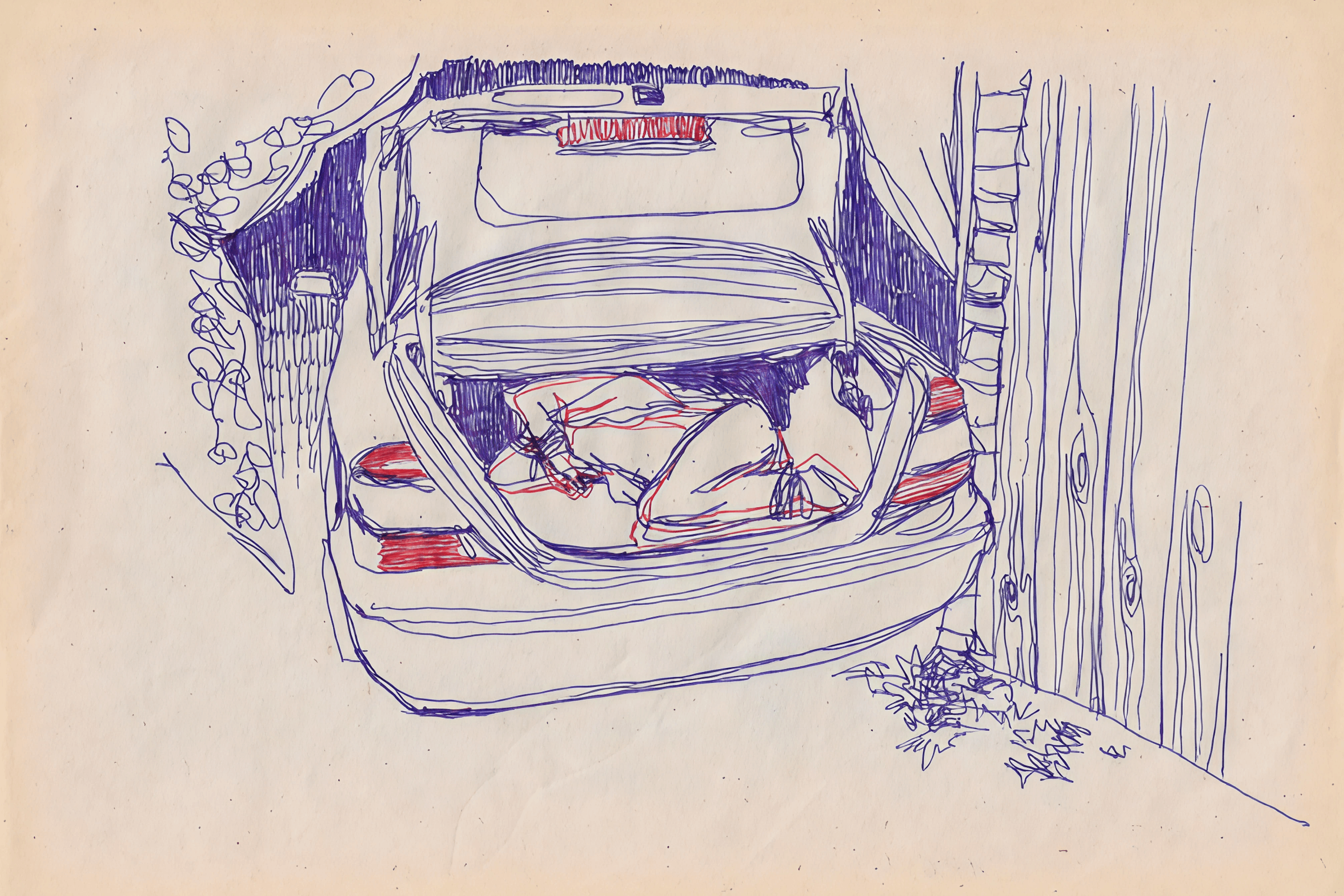
Photo: pravda.com.ua / YB 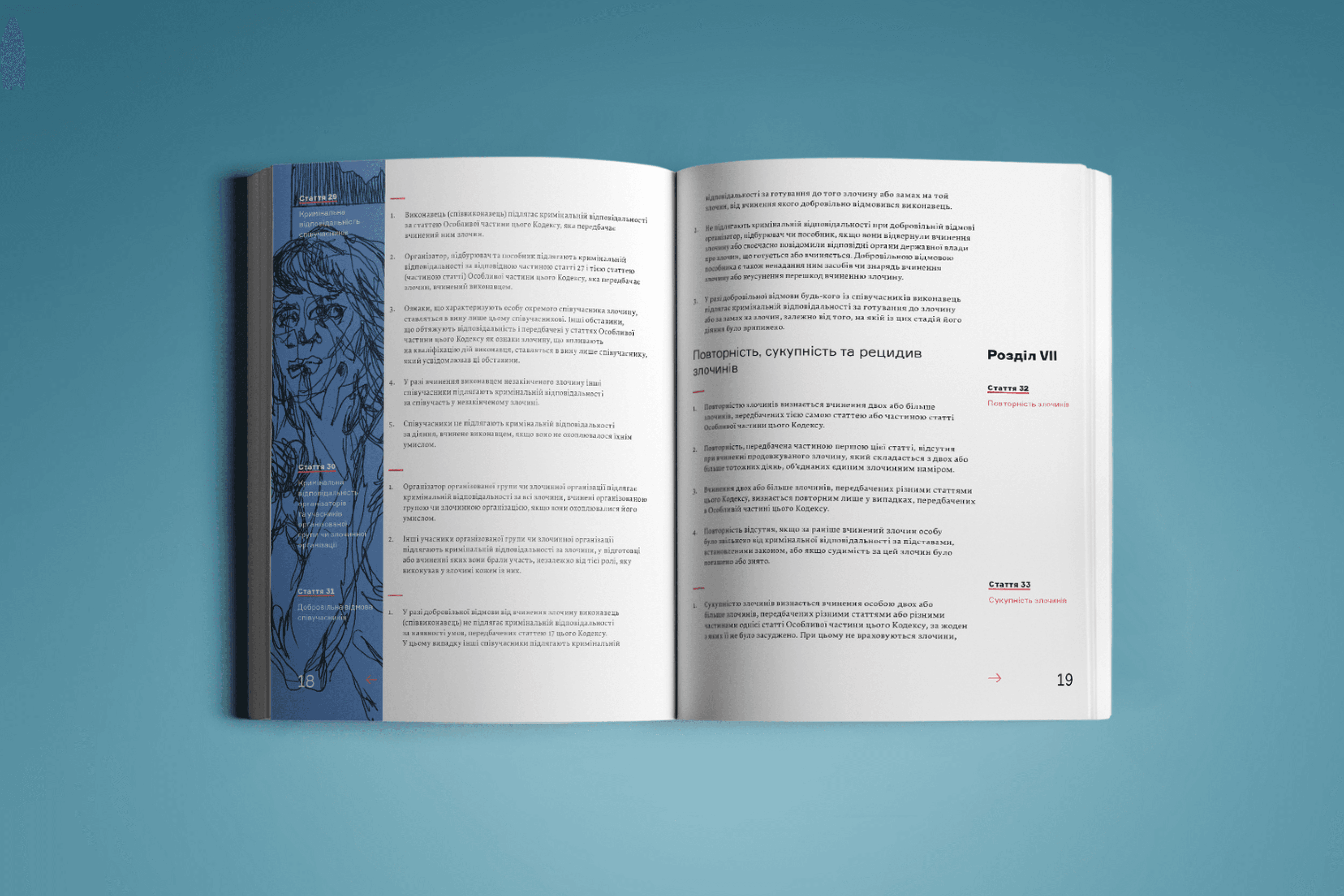
Photo: bookram.com.ua / YB
And why specifically with ballpoint pens? You invested in yourself, in the mastery of painting for years, and then suddenly such a sharp transition…
I invested in myself for myself, you see? I don’t owe anyone anything with my skills — on the contrary, they serve me. The complexity of ballpoint pen graphics is precisely that nothing can be corrected or erased. If in painting a mistake can be hidden under a layer of paint, here the images are as if in their underwear. This reflects my philosophy well.
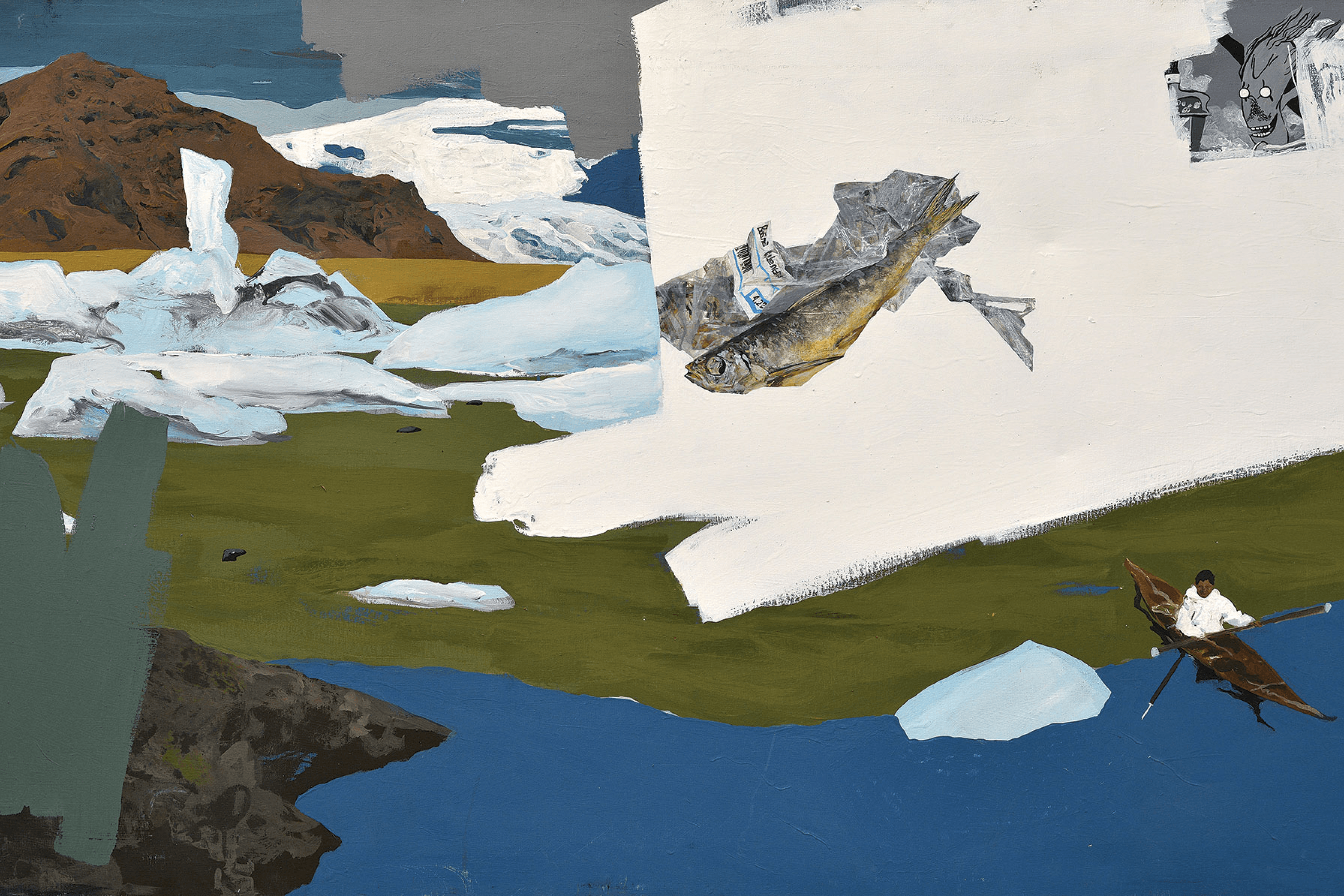
Paintings by Nikita Kravtsov. Seal Hunter, 2013. Photo: gs-art.com / YB 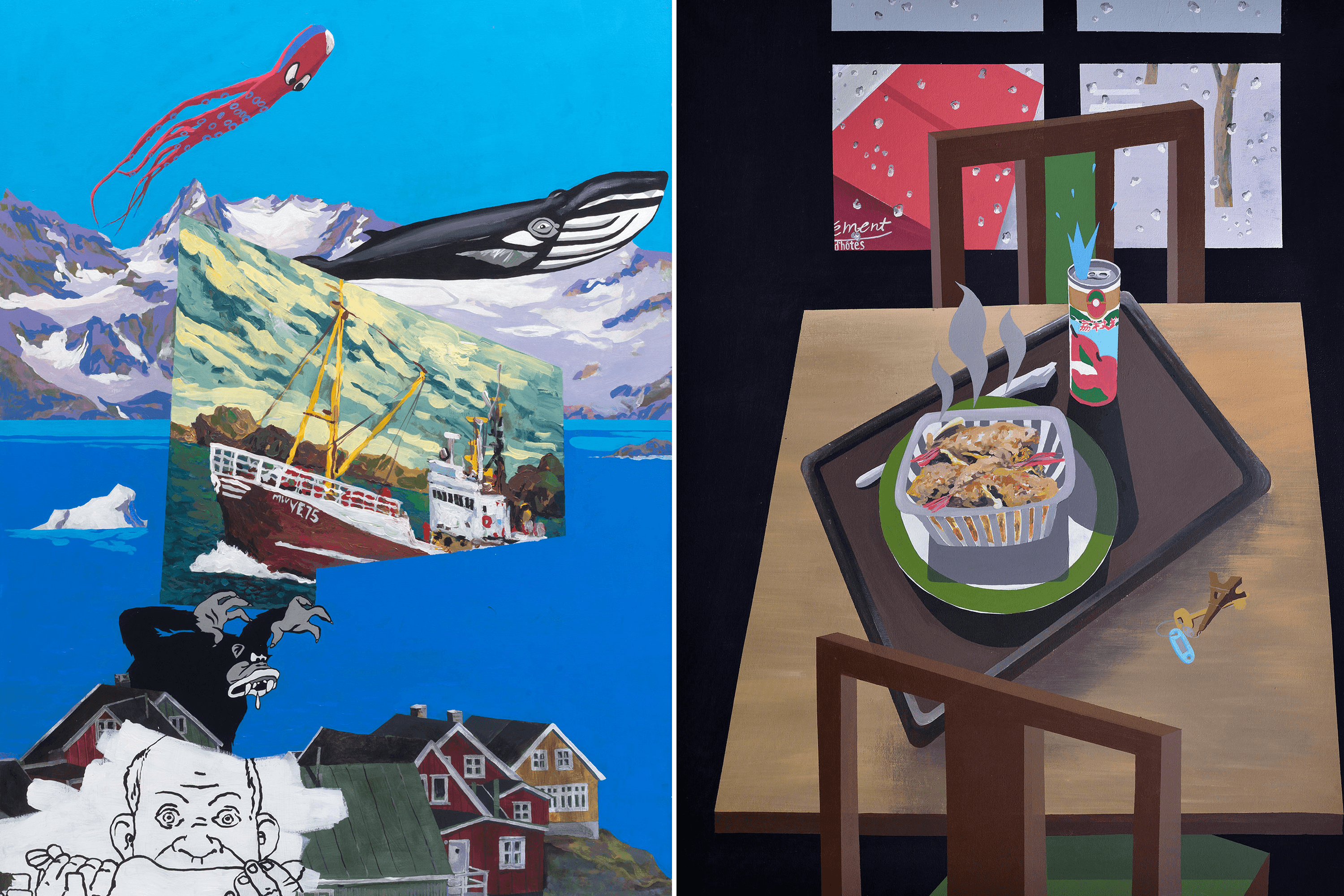
Northern Saga, from the Naked Lunch series, 2014. Untitled, 2015. Photo: gs-art.com / YB 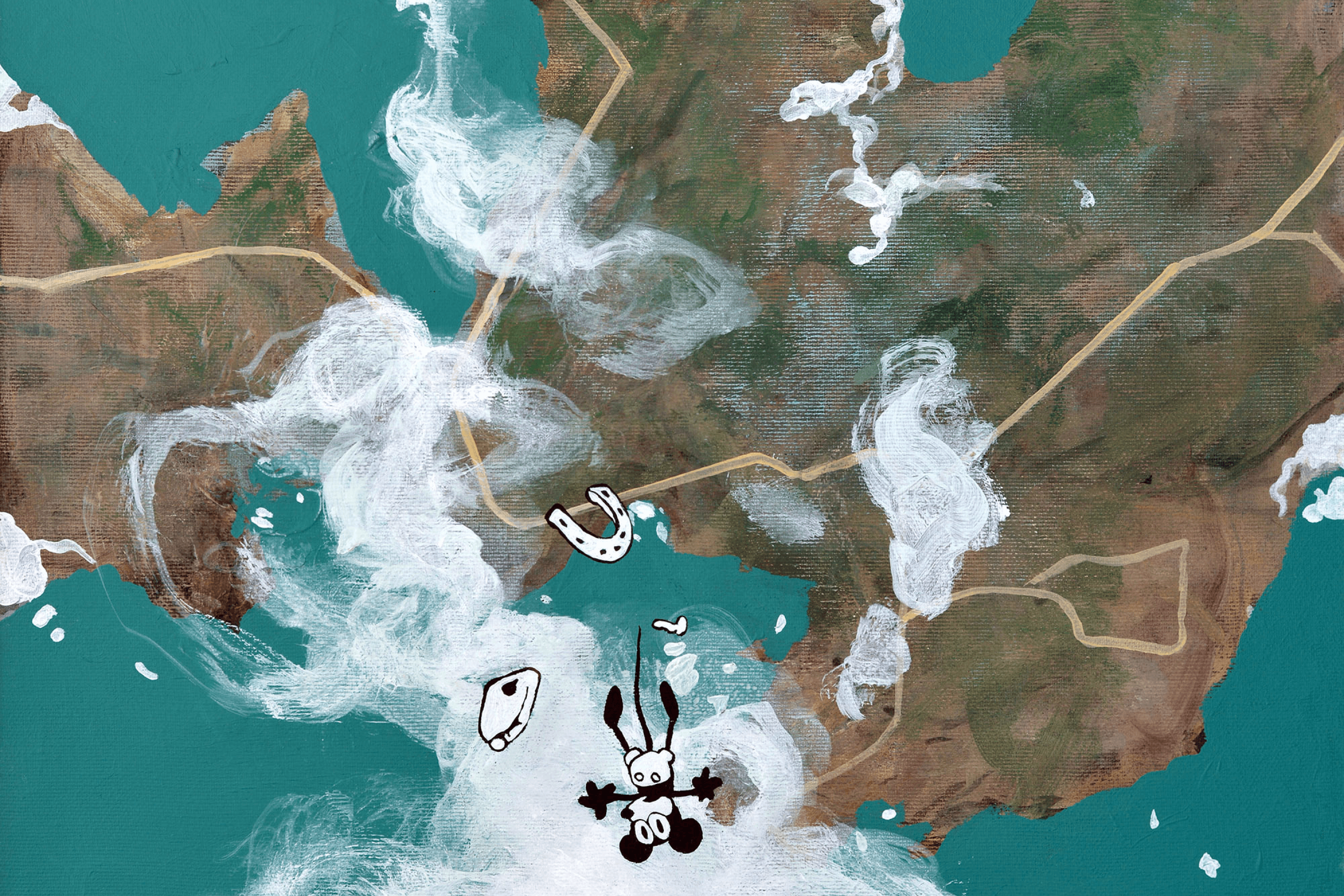
Crazy Plane. May 15, 1928, Walt Disney. The settlement of Kulusuk, East Greenland, 2014. Photo: gs-art.com / YB 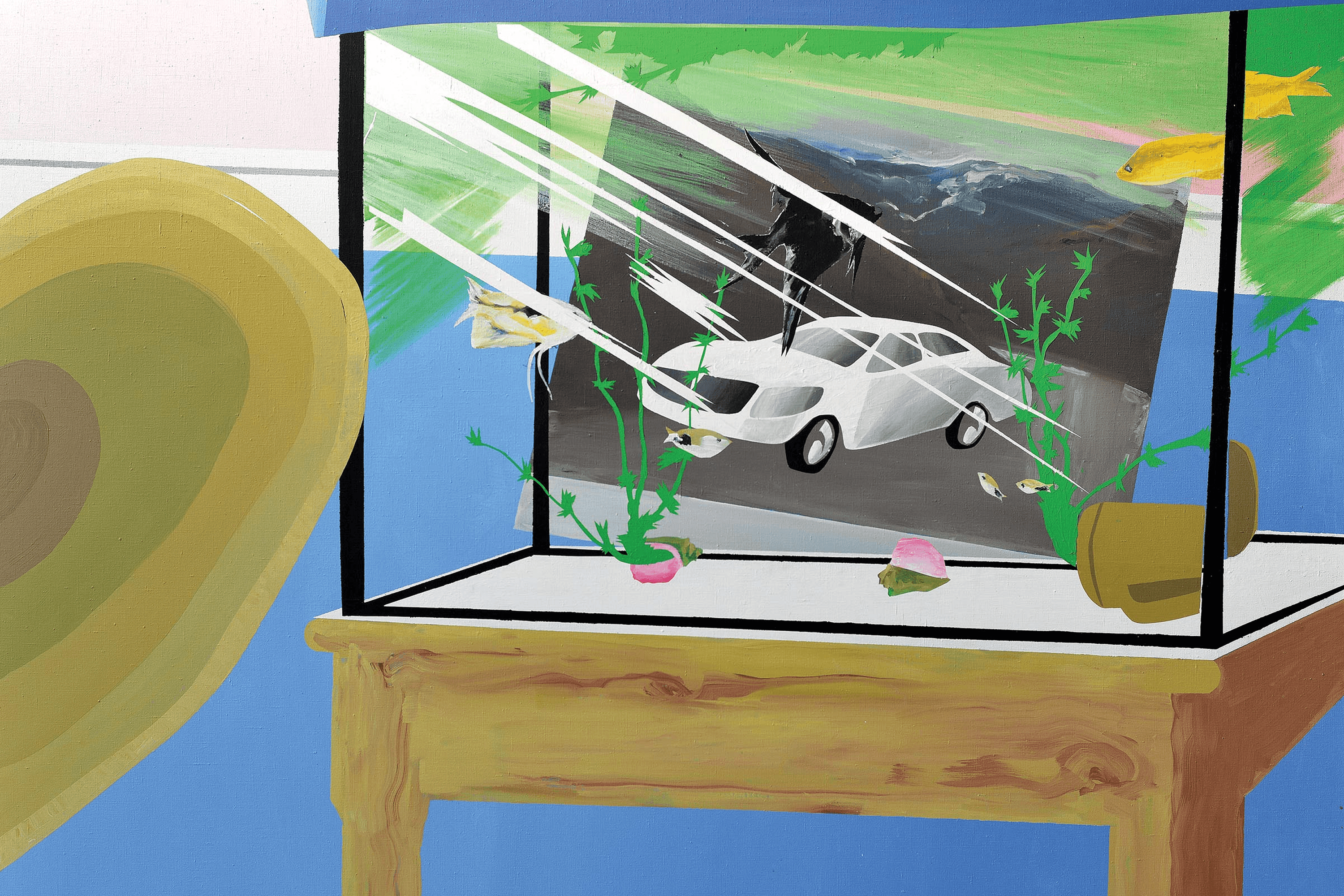
The Mine Manager’s Aquarium, 2015. Photo: gs-art.com / YB 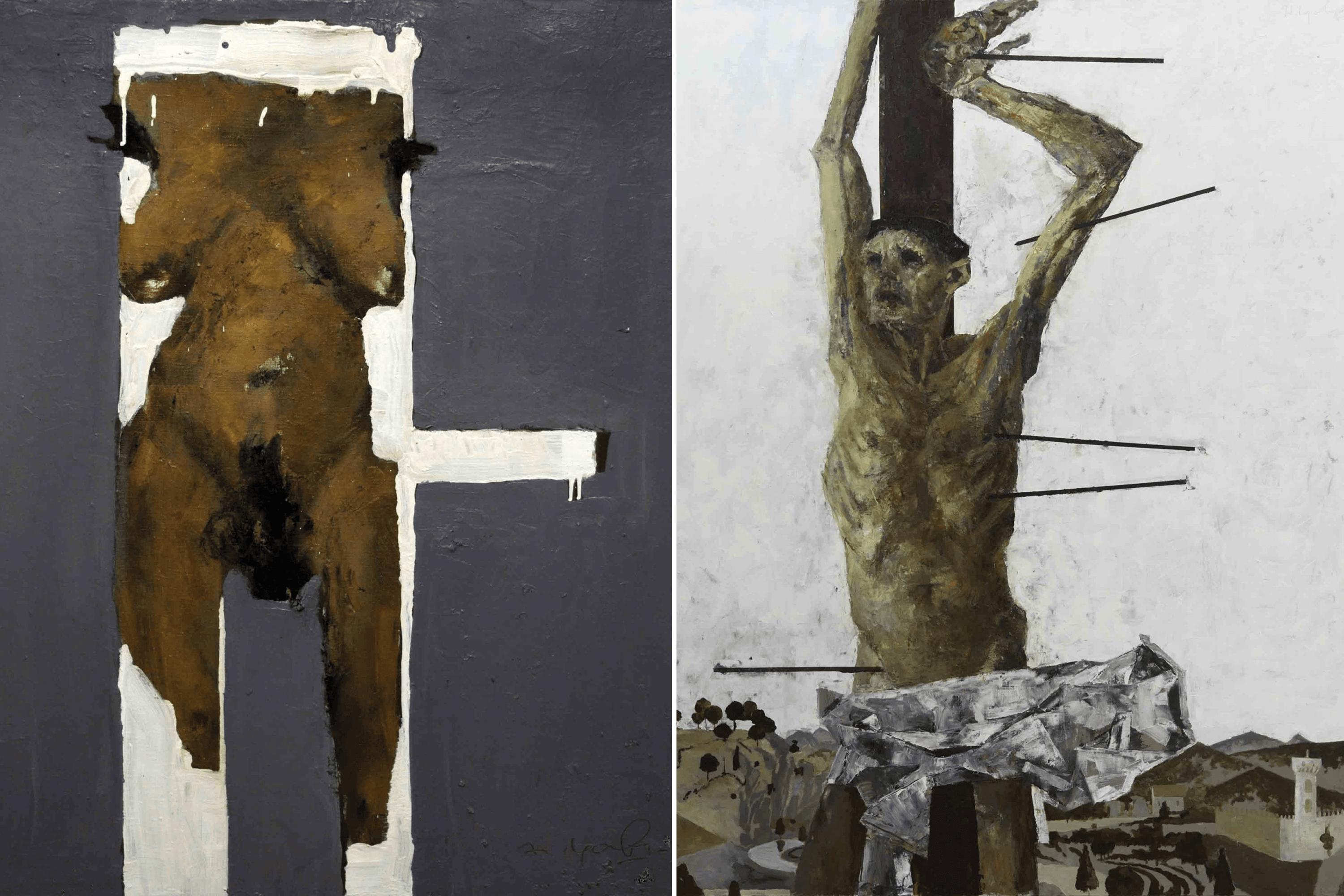
St. Sebastian, from the Body-Mechanism series, 2010. Feminist, 2011. Photo: gs-art.com / YB 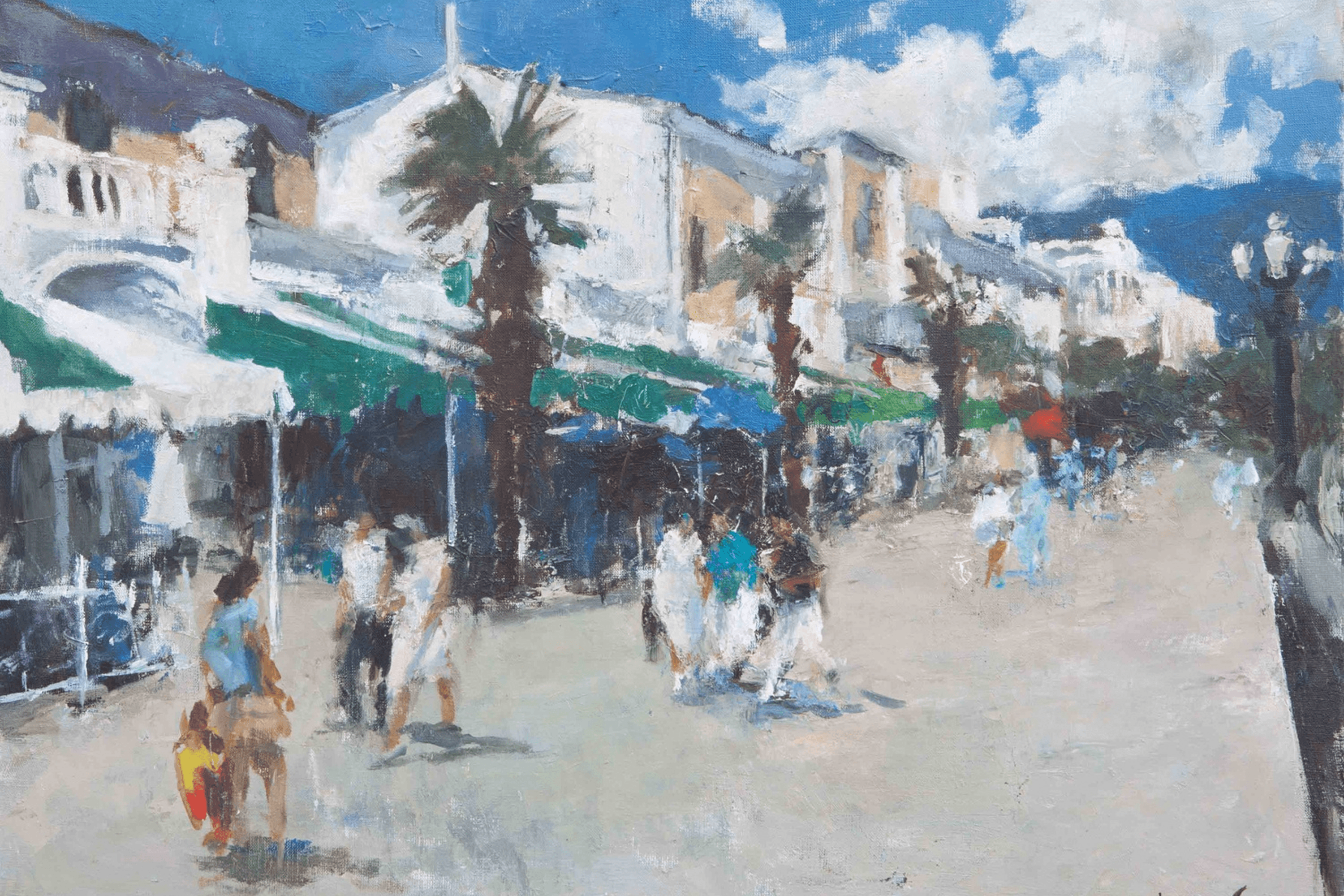
Embankment in Yalta, 2008. Photo: gs-art.com / YB
And how do you feel about artificial intelligence? Do you use it in your work?
No, and I don’t plan to. AI works with an already existing database of images and simply reassembles what has already been done before. If a machine starts doing it for you, then that’s it, you’re done, you’re no longer an artist.
The puzzle doesn’t quite come together for me: here you arrive in Paris without connections, and then gradually an underground community builds up around you, you become a curator of exhibitions for French artists, the city gives you a studio, awards, and museums buy your works. How did this happen in practice?
Look, we don’t know about the early years of Jesus either. They say that in his childhood he molded doves out of clay, and then he became God. I don’t analyze everything the way you do. I just lived: attended festivals, exhibition openings, communicated in English, gradually learned French. Someone wanted to see my works—I showed them. Then they asked if they could buy something, introduced me to other people.
Back then, after the annexation of Crimea and the beginning of the war in the Donbas region, was there any special attitude towards Ukrainian artists in Europe?
No, back then almost no one cared. However, that is precisely why I am wary of what is happening now: sometimes Ukrainian artists start to be noticed and promoted primarily due to the context of the war. For me, it is important that a work is seen not only through the prism of tragedy or my origin, but first and foremost as an independent statement by the artist. If it moves people, then no nationality will change the attitude towards it.
Are you perceived in France primarily as a Ukrainian artist or already as part of the European art scene?
Ukrainian, European… For me, Ukraine is Europe. But to be honest, people follow the personality, not the “nationality.” Those who are with me will follow me anywhere.
What has changed for you as an artist after 2022, when the full-scale war began?
After 2022, my work focused significantly more on the theme of war. I was already known in France, and I started actively curating exhibitions, uniting French and Ukrainian artists around charity projects. We managed to raise about €10–12 thousand per event and transfer it to the needs of the Armed Forces of Ukraine. Concurrently, I worked a lot for the military: I made patches for drone units, and now I’m creating merchandise for them to support the guys somehow.
Did you get the feeling that an additional responsibility had somehow fallen on the artist? That he became a mediator between society and the war, like someone who can help explain it and help live through it?
Yes, absolutely. After 2022, the artist felt like a citizen, whereas previously he conceived of himself as a citizen of the world. Of course, I knew I was Ukrainian, but in peacetime, you don’t think about it every single second. Here we are now, sitting in the center of Barcelona. Do the people walking past think about being Spanish? No, they are just living. But when someone tries to take that away from you, a very strong sense of injustice arises from all that fucking bullshit. And you have to do something in your own place to stop this evil.
When underground artists gather around you, they expect not only conversation but also opportunities: exhibitions, contacts, sales. Who do you become for them then: a curator or an art manager as well? Who provides you with spaces for exposition? And do you get any financial benefit from this?
I curate exhibitions. And as a matter of principle, I never take percentages from sales. All projects are educational or charitable for Ukraine-related causes. I’m just interested in making exhibitions. The main criterion for selecting works is their quality. On average, we do three to four projects a year. I write concepts, build the exposition, and often artists even create new works specifically for my idea. Spaces are provided to us by the municipal institutions of Paris. They have known and trusted me there for a long time because I’ve never let them down. Concurrently, I helped various galleries a lot: mounted exhibitions, assembled installations. Such work is usually well-paid, and sometimes they can also provide us with a location for free if it is vacant for some time.
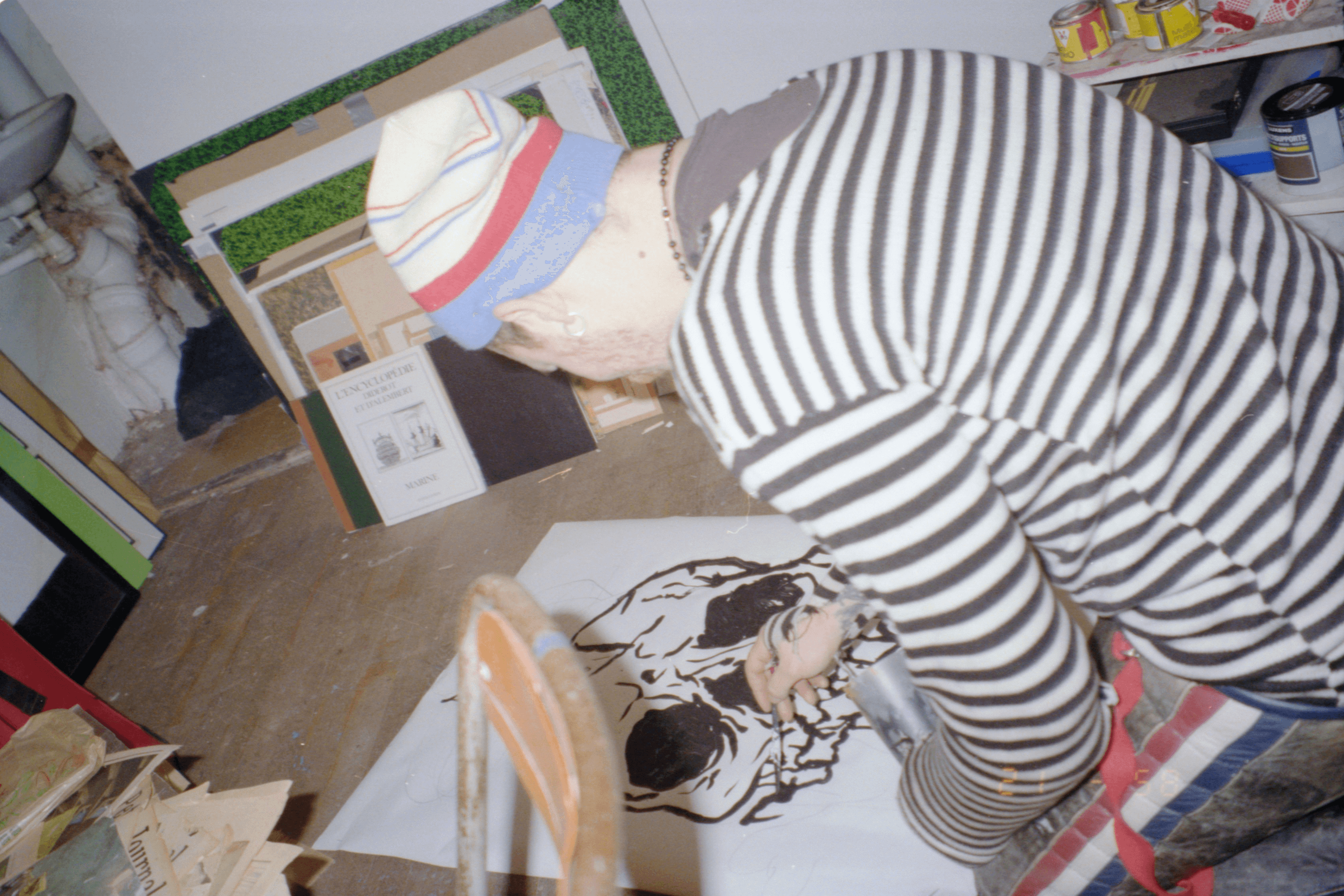
Photo: Photos provided by Nikita Kravtsov / YB 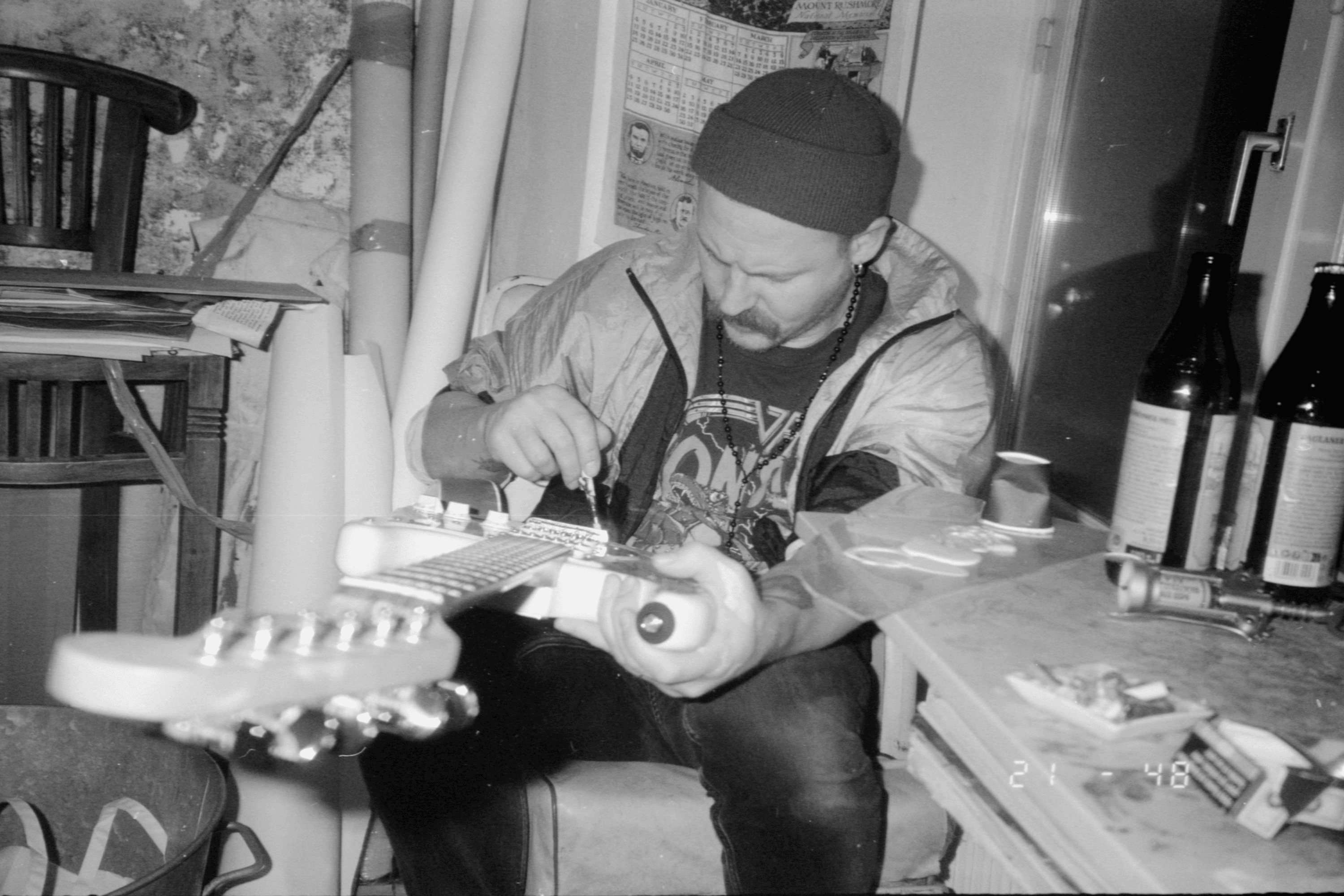
Photo: Photos provided by Nikita Kravtsov / YB 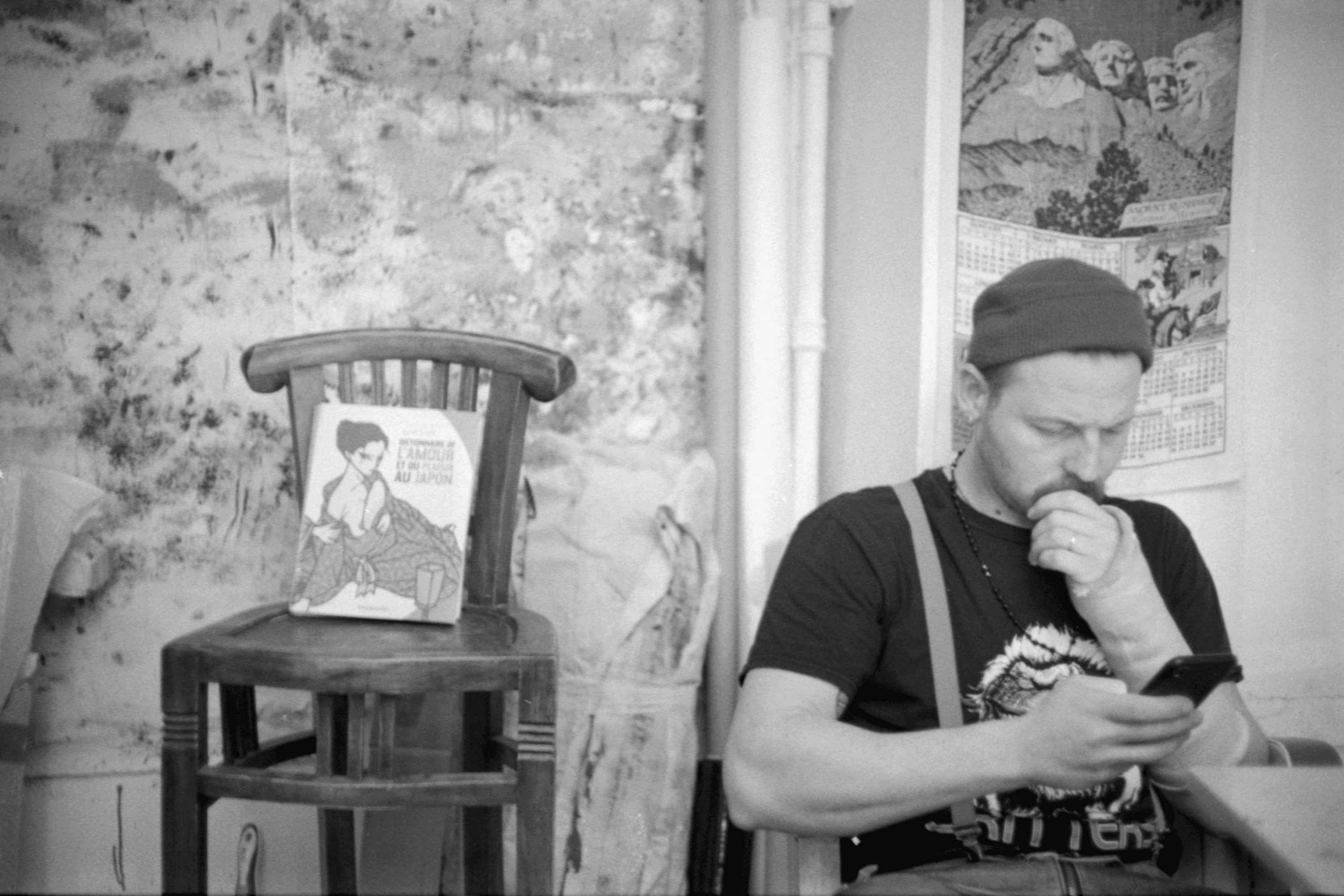
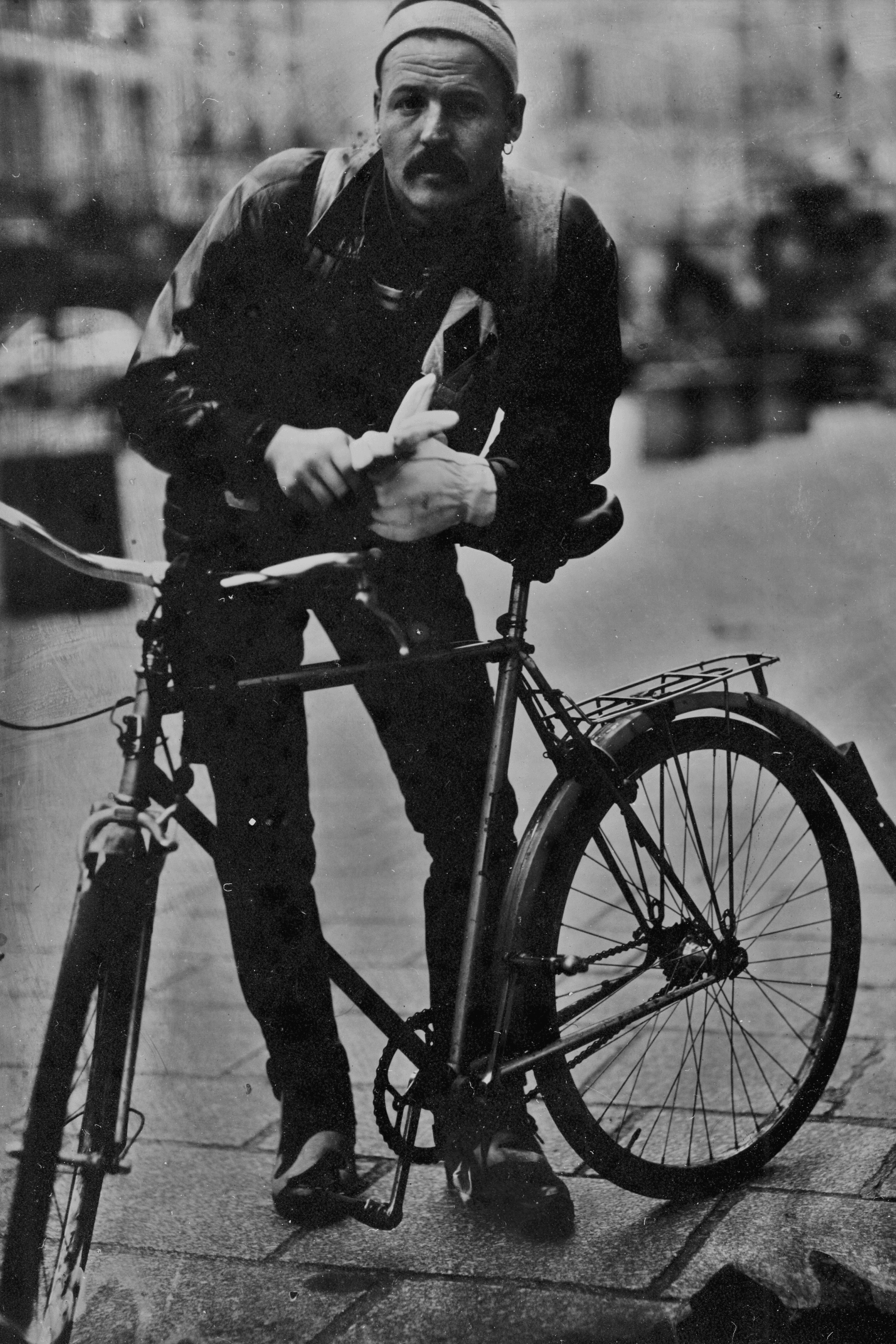
Photo: Photos provided by Nikita Kravtsov / YB
As an artist with your own name, isn’t it insulting to work on mounting other people’s exhibitions?
No. It’s a question of ego. Work is work. It’s not about status: you’re simply helping another artist realize their project. And there is something very right about that.
Interestingly, you worked with galleries in Ukraine for many years, but after emigrating you didn’t look for European galleries, even though you needed money no less than when you lived in Kyiv. You seem to distance yourself from the gallery system. Why?
I am wary of the gallery system itself. It often fixes an artist in a certain role: you have to be recognizable, produce a more or less stable product that sells and is easy to perceive so that sales can be predicted. And at some point, you imperceptibly start working to demand, like a production line. A different state is closer to me: when there is internal freedom and even a certain anarchy in the work. I don’t want to repeat myself, I don’t want to adjust my practice to market expectations. I’m against my work becoming dependent on someone’s preferences or wallets.
But in the modern world, you cannot dismiss the fact that you need money everywhere. By the way, what is your relationship with money in general?
Well, money and I are still on formal terms (laughs and pulls out a cracked, tiny wallet out of his pocket). No, seriously, I’ve got no money. That’s why you and I are not in a five-star restaurant, but like this, sitting right in the middle of the street.
You often talk about anarchy. If we strip away the romanticization, what is it to you personally?
It’s freedom and mutual respect. My freedom ends where yours begins. I’m against any kind of violence.
However, an artist who constantly resists the system eventually creates their own system. Isn’t that right?
Yes. Systemlessness is also a system. Everything is born out of chaos, and chaos becomes a pattern. You give freedom as a curator, but then you guide people a little because you see the idea, as if from a height.
Do you agree that total anarchy as a denial of statehood is simply impossible today?
It’s impossible and unnecessary. Anarchy is just one of the levers of influence on the state. I’m interested in the idea of anarchy described in the later texts of Nestor Makhno. It is the idea of free communities that organize their own lives quite well without centralized power.
If you look at Makhno’s experience, his anarchy existed in conditions of war and constant violence, which you, by the way, reject. How do you explain this to yourself and relate it to his ideas?
With Makhno, it was a response to the complete collapse of state structures. And it’s important to understand: anarchy there was not a pure ideology; it operated in conditions of war, chaos, and constant threat, where everything was decided very quickly and often through violence. In such situations, any system, even a utopian one, is forced to simplify and deform under reality. Therefore, I see it not as a stable model of society, but as a temporary form of self-organization that arises where there is no other center of power. And as soon as stability or more or less effective institutions appear, such a system either disappears or transforms into something else entirely.
I’m not trying to offend you, but doesn’t it seem to you that “anarchy in art” in conditions of war and instability might be a certain luxury only for those who are in safety? Because in fact, you don’t have to actively fight against anything in Paris.
I understand why it might sound that way, but there is a substitution of concepts here. “Anarchy in art” is not about the absence of resistance or struggle. It’s rather about you not agreeing to have everything already determined for you: what you should look like, what you should do, in what system to function. Even in safe conditions, one can be maximally dependent on the system, and in unstable ones—on the contrary, have more internal freedom but fewer external guarantees. Therefore, I wouldn’t call it a luxury. It’s rather a choice to live without a ready-made instruction manual.
You and I have been walking for an hour and a half already, and I’m observing how you constantly react to the people around: a girl felt unwell—you approached her, a car couldn’t pass—you helped, a conflict on the road—you intervened to figure out who didn’t see whom. Are you this caring every day? Or am I the one inspiring you to chivalry?
For me, this is normal: to react when something is happening nearby. This is not some special pose or ideology, but simply a way of being in an environment where you don’t ignore other people. I am close to the idea that David Chichkan advocated—that society can work on mutual aid, without hierarchy. For me, anarchy is precisely about that: about a life with a living mutual responsibility of people for one another.
I can’t avoid asking you about David Chichkan. Tell me, what was your friendship like?
I don’t want to touch upon this topic so much, it still hurts me…
No one, it seems, knew him as closely as you did…
He was like a brother to me. David and I, indeed, spent a lot of time together, even while living in different countries. I worked nights, and he did too. We made a video call every night: he was drawing his watercolors, and I sat there scratching something out. We always talked until morning, laughed a lot. David loved Japanese anime very much, constantly telling me: “Watch this one.” And I would reply: “Come on, I don’t have time for this fucking bullshit of yours.” And now I think that one needs to find time, because you never know when it will end. Out of truly close friends, I had two: him and Stas Voliazlovsky.
How did you react when David joined the ranks of the Armed Forces of Ukraine?
I told him: “If you die, I will come and beat the shit out of you.” He was a very close person to me. Very pure and bright, ideological. But we are adults, and everyone decides for themselves what to do. Let’s change the subject, because I’ll start crying.
At the beginning of our meeting, you told me there are almost no real artists left. What did you mean?
Artists have forgotten what it means to burn. The old and the young alike. They are just slowly smoldering. I know a few who really burned: me, Stas Voliazlovsky, David Chichkan, Kira Protsenko, Zhanna Kadyrova. We don’t make art—we create a legend. And it’s important for someone to step into this flame in order to keep the warmth. From there, whatever happens, happens.
And did you step into this flame?
I don’t know. That is better said by those who will be burying me.
The last question about David: where is the line for you between a civic stance, which was very pronounced in Chichkan, and self-destruction? Because he was in opposition to the state, had his dependencies, and was as if backed into a corner by this opposition to everything…
The line, as I see it, does not exist. Look, a guy is sitting in front of us eating some cholesterol bomb, and that’s also a form of self-destruction. And I am smoking my twentieth cigarette during our meeting. You see? There is no line. I cannot speak for him because we are different. For me, it is more important not to go into direct conflict with the system, but to try to change it. When you are constantly at loggerheads, you simply reproduce the war in another dimension. Changes through soft power, rather than through collision, are closer to me.
Can you give a specific example of this “soft power” of an artist that is actually capable of changing something? Because, for instance, you made a mural in Cyprus about [US President Donald] Trump, and it was painted over the next day by the Trump’s supporters. How does it work then?
You see, you perceive it a bit pessimistically. Whereas in Paris, my mural was not painted over, and that’s exactly where the “soft power” worked. Many French people came up, looked at it, and said: “We understand. We are on your side.”
In other words, it’s not about directly imposing a stance, but rather an attempt to change the optics through personal experience. That way, I can hold attention longer and engage a larger number of people in reflection.
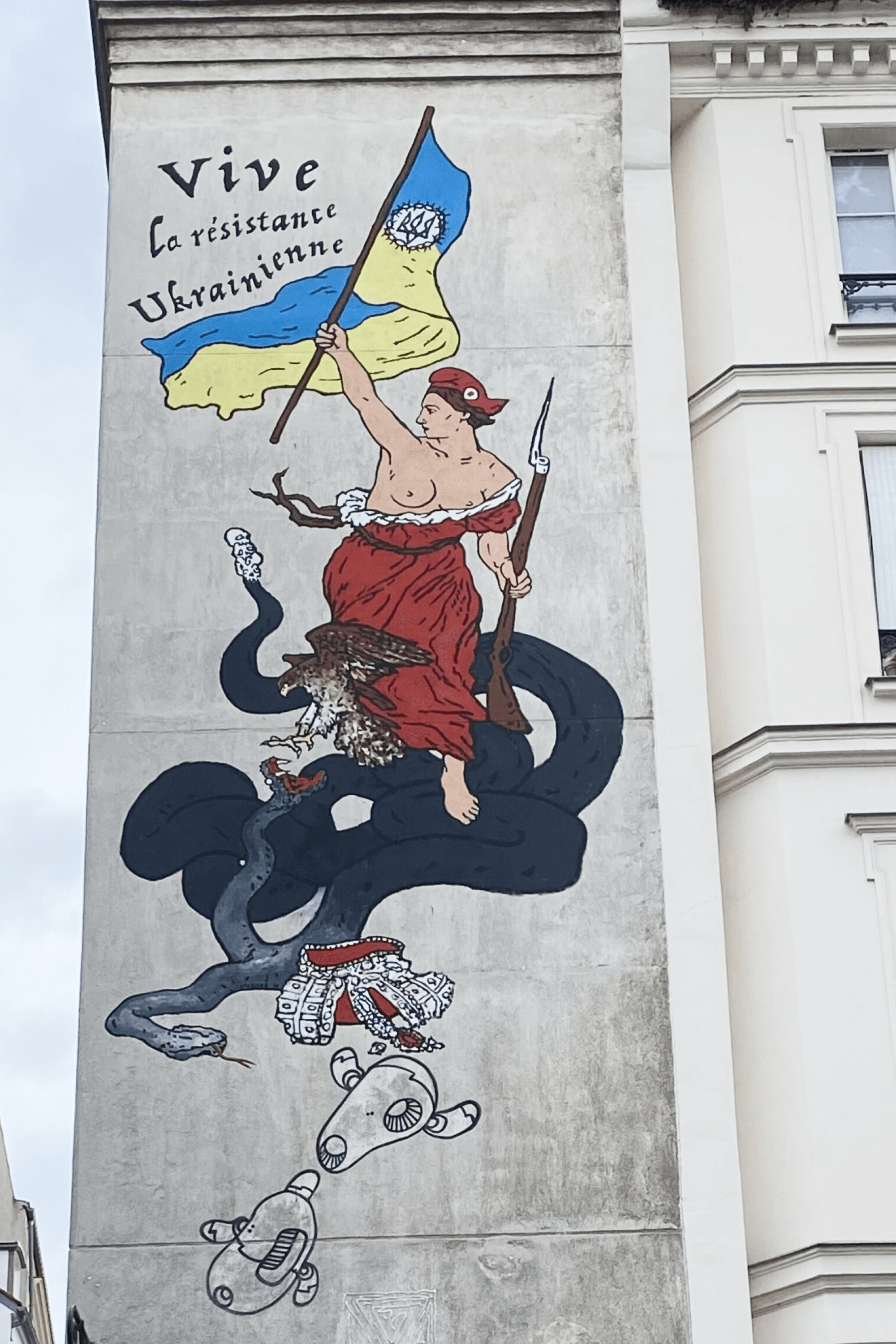
How did you manage to make a mural in support of Ukraine in Paris in front of the Centre Pompidou? That was your first mural, right?
Yes. I simply received a call from an organization that supported Ukraine in France, and they suggested I make a piece at my own discretion in support of my homeland. The project was approved by the city authorities; they were already familiar with my practice. But for me, something else is more important here: not to pressure the viewers, but to intrigue them. When you constantly chant “Ukraine, Ukraine,” it can repel people. It seems to me important to be so alive in your statement that people want to follow you. At the core of the sketch was Marianne—the symbol of the French Revolution. She was holding a Ukrainian flag and trampling a snake. It was a metaphor for the struggle against imperial violence, for freedom and equality. And already during the process, I added a second head to the snake, as an allusion to the double-headed eagle.
And how did the mural in the city of Nairobi, Kenya, come about? What is its meaning?
The project was organized by curator Katya Taylor and the Ministry of Foreign Affairs of Ukraine. I worked on it together with Kenyan artists and Ukrainian artists Alina Konyk and Andriy Kovtun.
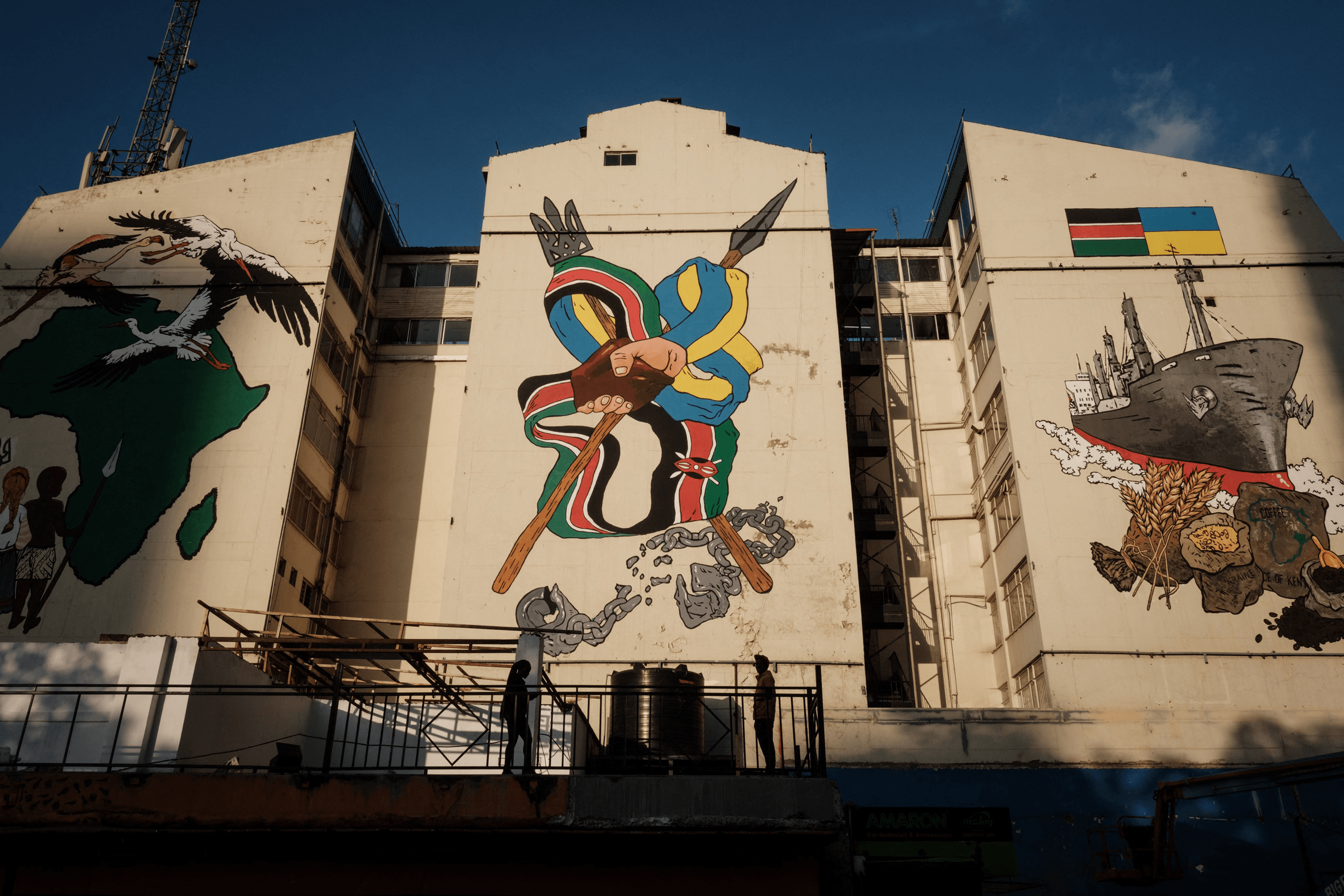
In Africa, they know very little about Ukraine, whereas Russian propaganda is extremely active there. So active, in fact, that people sometimes even voluntarily go to fight against us without understanding the context of this war. Therefore, the idea behind the mural was to explain Ukraine through images that are understandable and relatable in the African context: that it is precisely from Ukraine that birds fly to Africa, that Ukraine itself is currently trying to shake off colonial shackles and is fighting against an imperial state, and that Ukrainian grain still feeds Africa. We continue to supply it even under war conditions.
I remember that you don’t like to talk about money. However, is it true that murals cost less than painting, but for artists, it’s a certain form of self-promotion?
Yes, but for me, it has never been about promotion. I make murals in support of Ukraine. It’s rather my political statement, not a decorative story or a way to showcase my own talents.
In 2023, the Academy of Fine Arts (Beaux-Arts de Paris) awarded you the Pierre Cardin Award for your contribution to art. Were you happy?
Well, it’s pleasant, of course. But for me, what happened next was more important. After that, I was allowed to do an exhibition in the castle of the Marquis de Sade. And there was a very strange and at the same time funny story. My series was called “Eros and Thanatos. Sprouts of Evil.” I did a project of collages and a large image of Christ on the floor, which was in the form of his semi-decomposed body. The idea was that if you want to look at all the details of the works, you literally have to walk on the body of Christ. To take this responsibility upon yourself. For me, it was about the fact that all these wars are our own doing, and we are also the ones who must end them. It was about humanity and the pain that we create ourselves. However, the opening of the exhibition was ultimately disrupted: the organizer was a Catholic, and he was offended by it. But to be honest, I didn’t care; I did what I wanted.
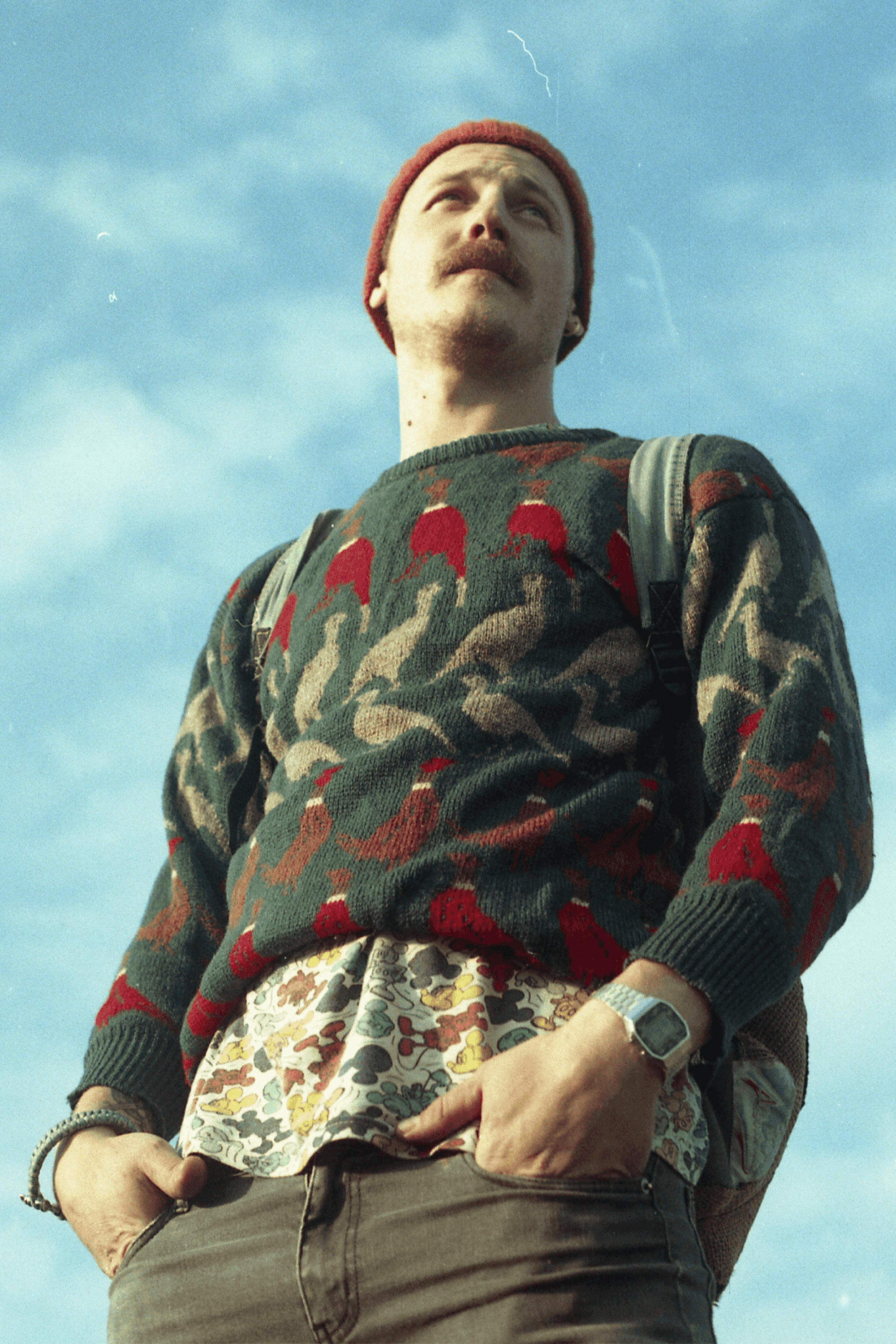
Nikita, you are a person woven of contradictions. You say you are a non-believer, but you have a cross around your neck.
My mom gave it to me.
If your mom gave you a belt made of sheep’s wool, would you wear that too?
No, I wouldn’t wear a belt (laughs).
Well, see, I told you: a total contradiction. Speaking of aesthetics, by the way, how did you start collaborating with Balenciaga in 2023?
They found me on social media and offered a very lucrative contract. I worked with Balenciaga for four months, hand-painting their haute couture jeans. The idea there was that they were as if “tailored out of painting.” These scuffs, marks, and the imperfection of the material were important to the brand, and I realized that.
Judging by your punk style, Balenciaga should be your favorite brand.
But no. I dress from second-hand shops. I don’t buy brands for myself, only for my wife.
When you work with fashion, merchandise, prints—aren’t you afraid that your artistic identity gets blurred because of it?
No. For me, artistic identity is not in the medium, but in how you think and what you do. If your work can be transferred onto fabric, that doesn’t make it less meaningful.
Tell me a little about your wife, Camille. You two often work together. How does this affect you and your art?
I met my person and became a family punk. In reality, our life is a touring tent circus (laughs). We do, indeed, often work together, but she, as a restorer, is responsible rather for the technical part of the process and does not consider herself an artist. And to be honest, I don’t really like the word “artist” either. The idea that I am a researcher is closer to me.
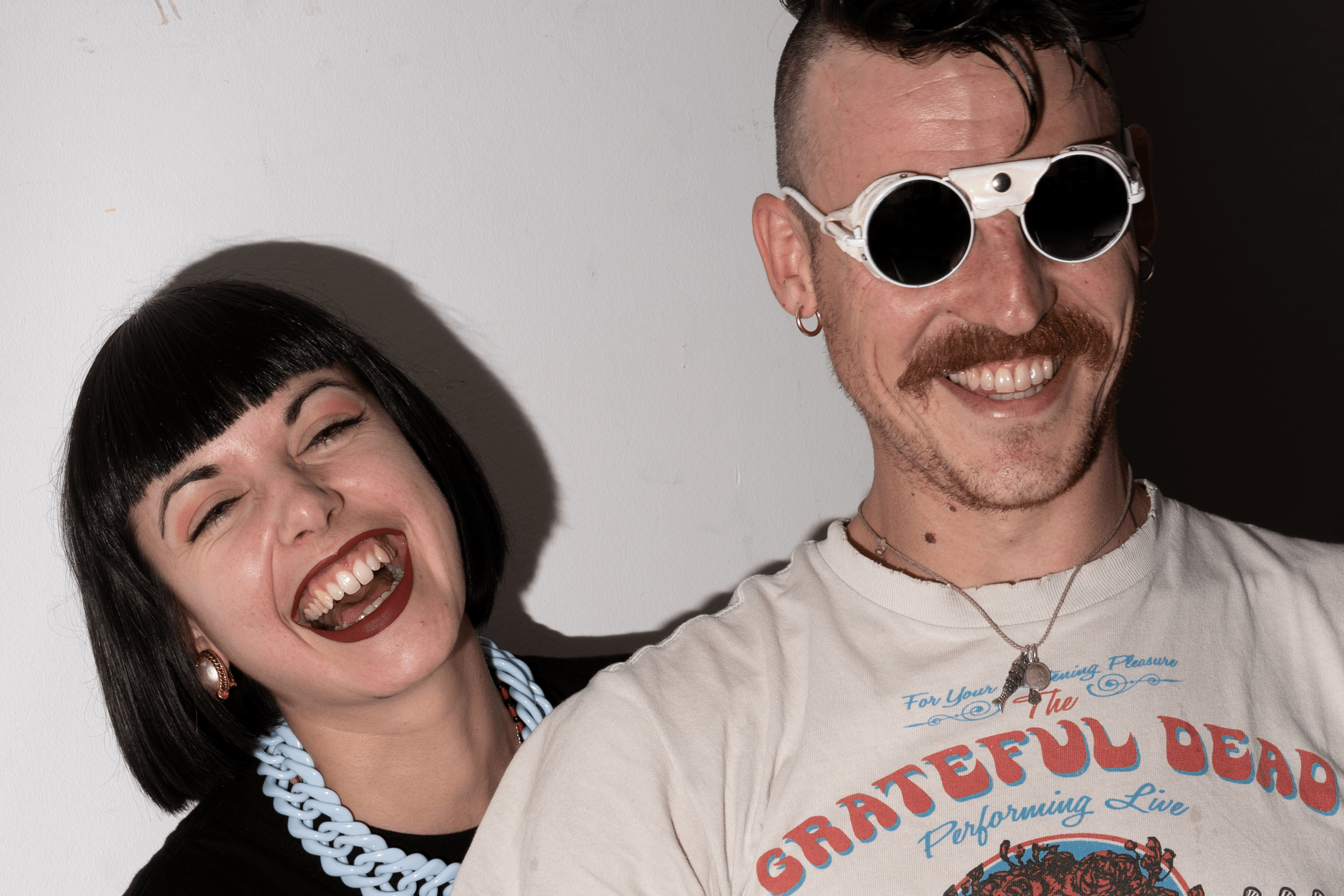
Nikita Kravtsov with his wife Camille. Photo: Photos provided by Nikita Kravtsov / YB 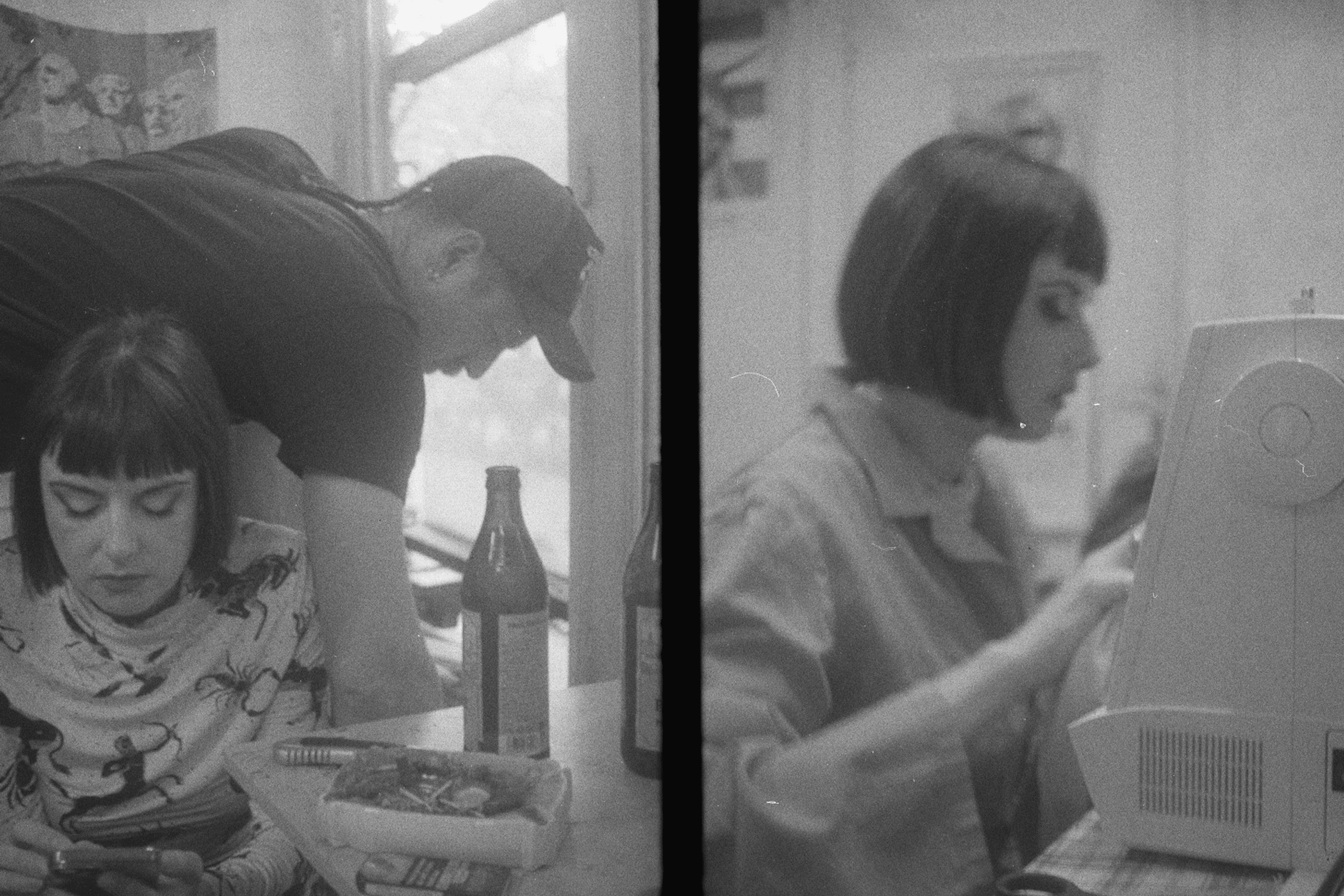
Photo: Photos provided by Nikita Kravtsov / YB 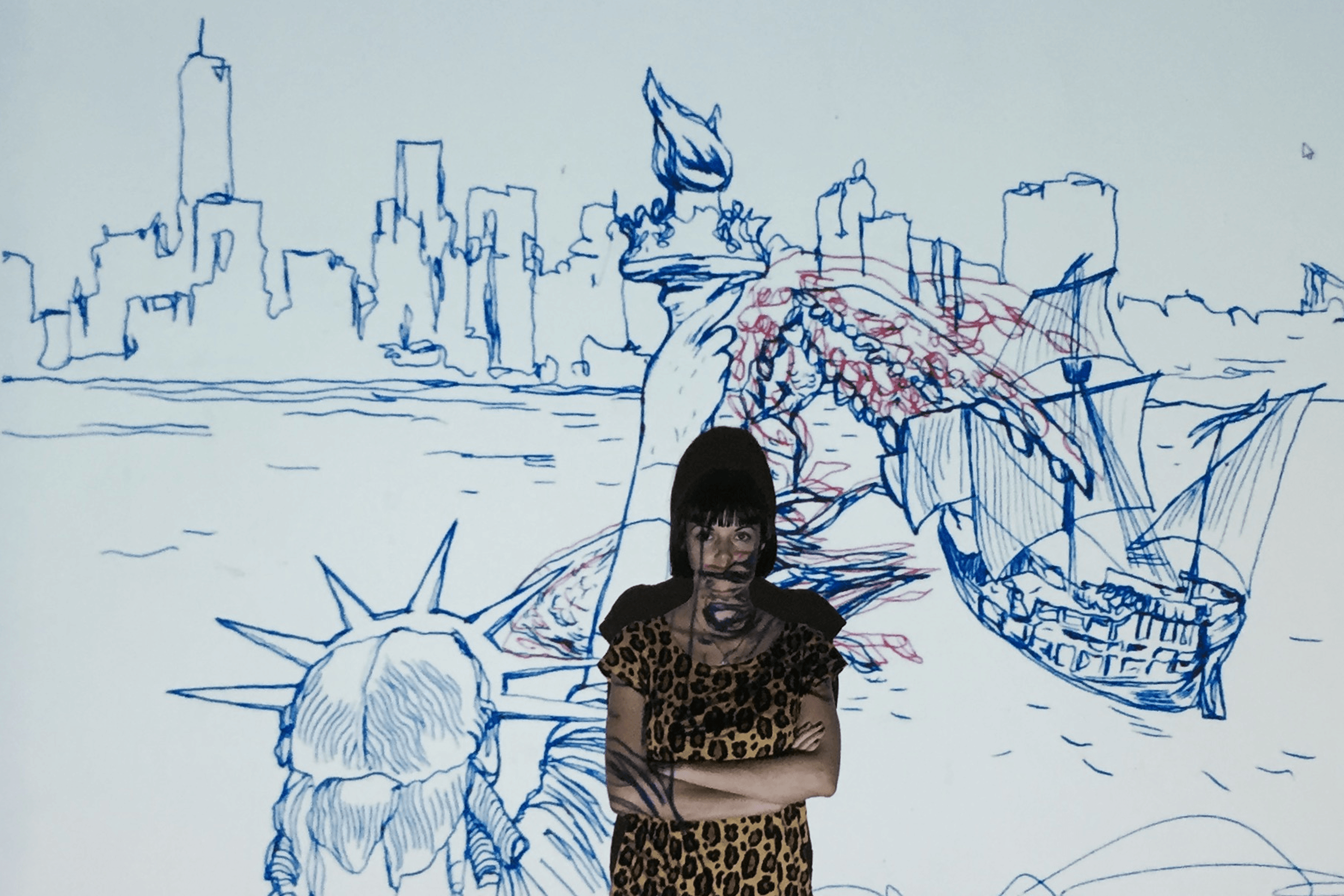
Photo: Photos provided by Nikita Kravtsov / YB 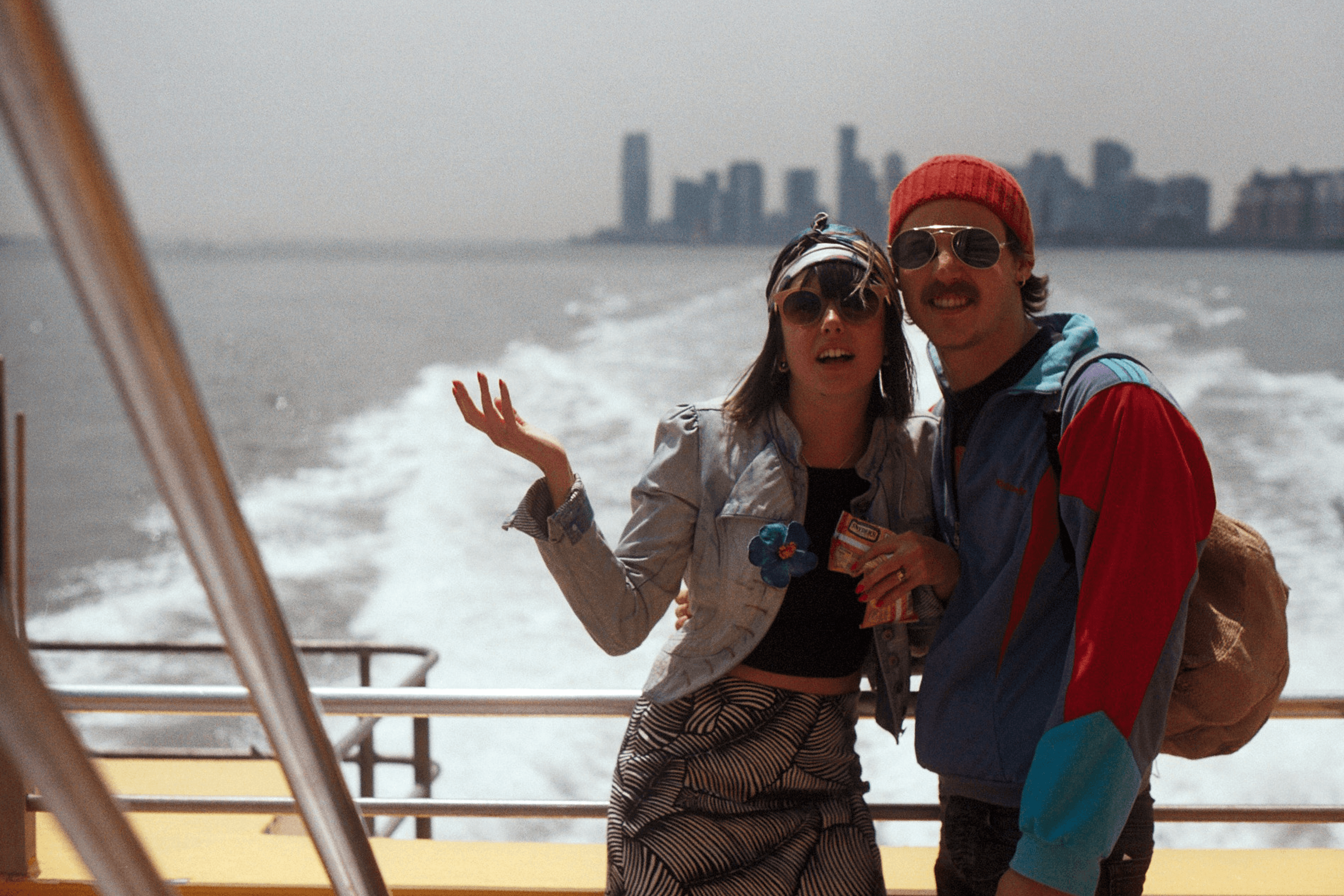
Photo: Photos provided by Nikita Kravtsov / YB 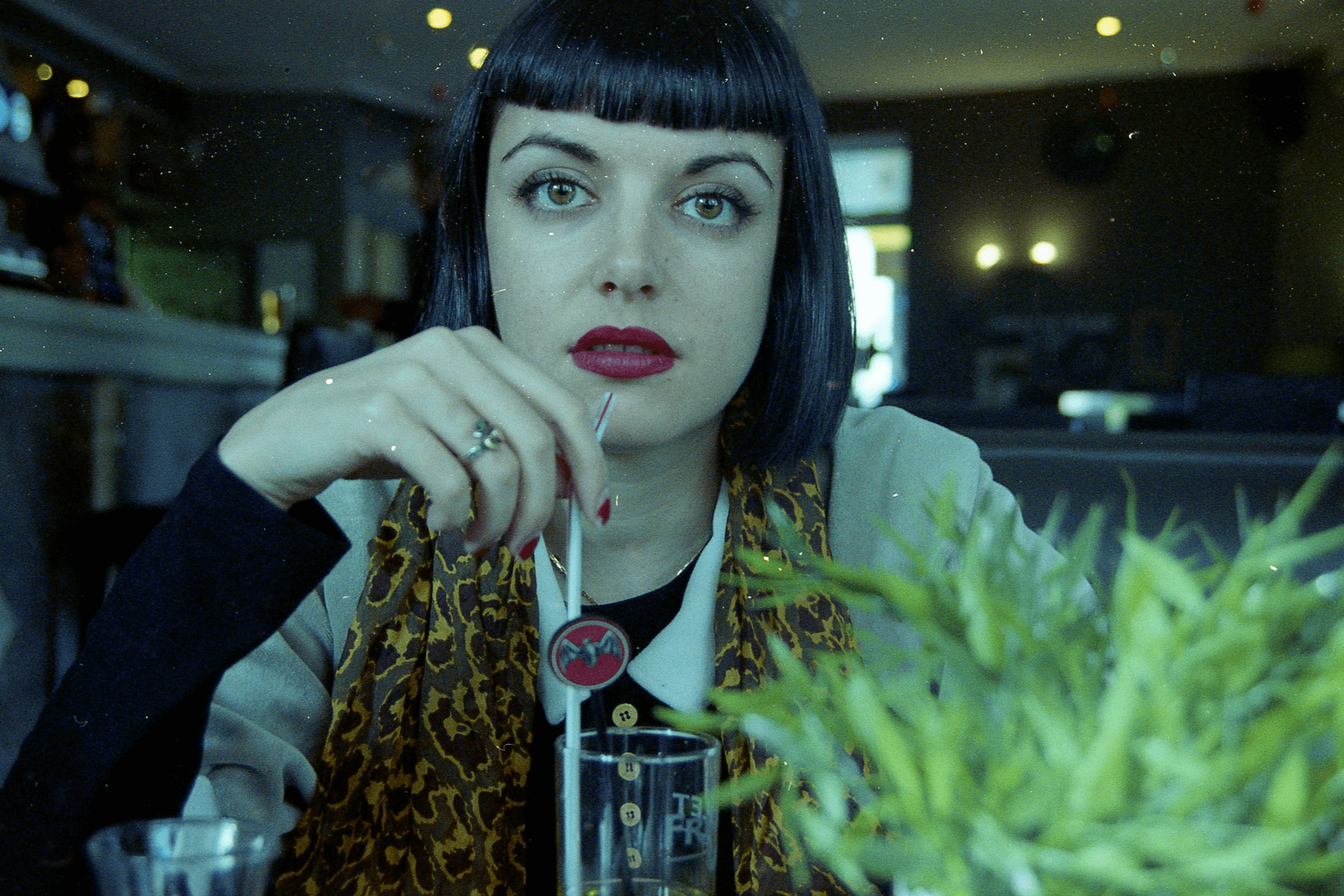
Photo: Photos provided by Nikita Kravtsov / YB 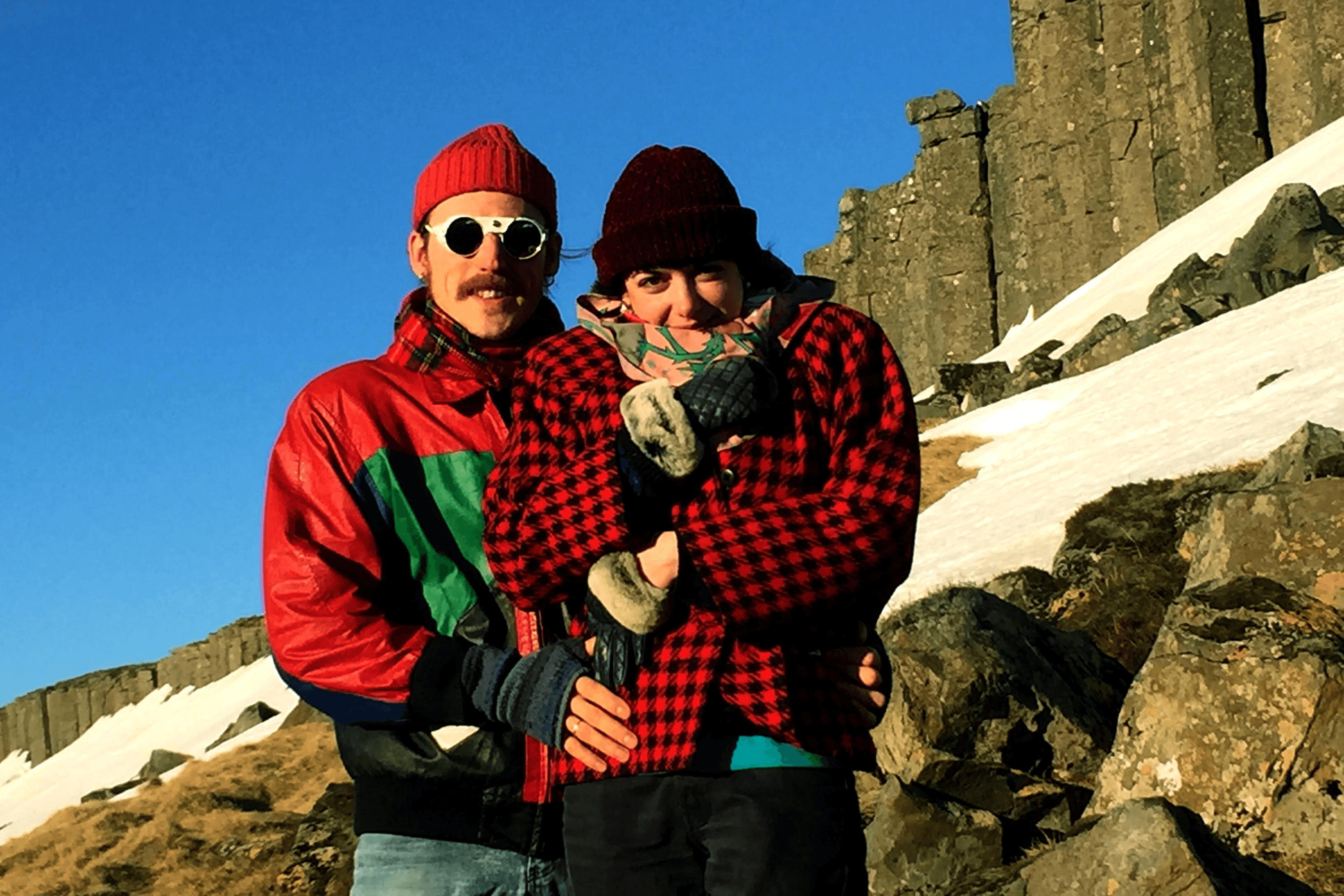
Photo: Photos provided by Nikita Kravtsov / YB
Does Camille’s profession affect how you work with materials and create pieces together?
Yes. You know, some are born to create, and some, like Camille, are born to preserve. She works as an embroiderer, a textile restorer at the Army Museum. For her, it’s very important to gather things, to stitch these puzzles of time together, not to let them disappear. Because of this, we work a lot with recycling art. In general, I’m against just throwing anything away. Therefore, our collaborative works are often textile collages: fabrics from flea markets, already lived through by someone, used, with their own history. We sort of gather them and give them a new life. Right now, for example, we already have a large piece ready for the textile biennale in Clermont-Ferrand.
How did it happen that French museums, the Fenaille Museum and the Soulages Museum, buy your works, even though you have neither a gallery nor an art manager behind you?
I didn’t plan this either, by the way, just so you know. In France, museums often work through direct contacts with artists, especially if you are already in their field of vision—through exhibitions, residencies, public projects. Then a museum can commission a work or buy an already finished one. Sometimes it’s a decision made by curators, sometimes by directors, sometimes it’s part of a collection policy. They buy my anti-war posters the most, but sometimes they commission me to create something specifically for the museum: completely at my own discretion.
You once told me that your prices are higher for collectors than for museums, but at the same time you declare that you don’t work “for the market” and that you have no ego. How does that align? It looks like a fairly direct commercial calculation, just with different rates for different clients.
No, that’s not exactly how it is. Collectors are private consumers. And museums are an educational system. Therefore, the difference in price for me is not about commerce as such, but about different institutional logics: private ownership and public access.
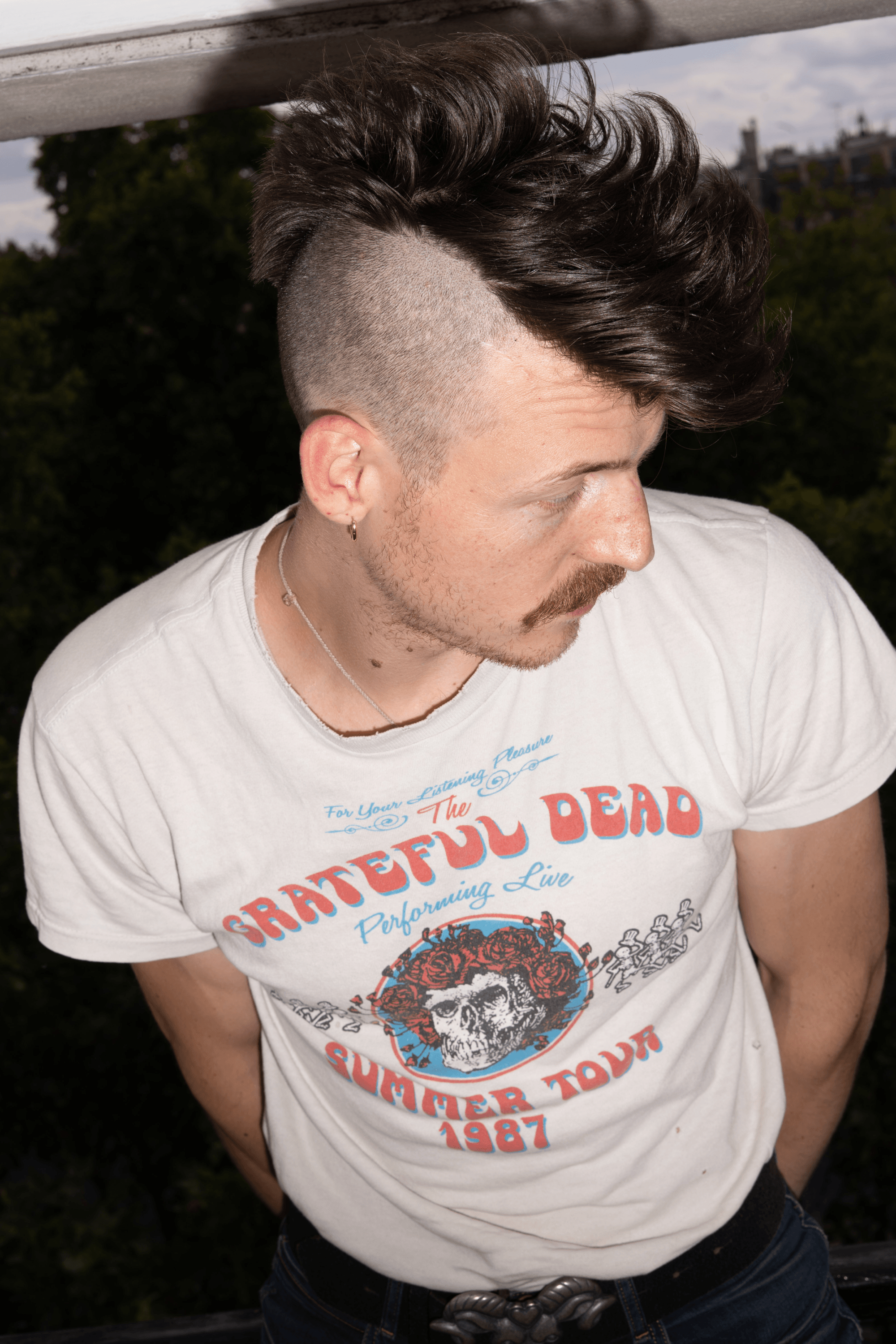
So museums for you are not an attempt to go down in history?
Come on, I couldn’t care less about history.
Then why do you care about education?
Education I do care about. You need to be human to understand how to live ecologically and properly, how to be kinder. It’s important for me to know a lot. Admittedly, with our situation, one has to constantly read the news, and it’s exhausting. But we must understand exactly which part of the global fucking clusterfuck we are in.
Does it bother you that most people don’t see your depth and take you for a buffoon?
There is no “depth” whatsoever. I’m not Lake Tahoe, after all (laughs). People see people and what is already inside themselves.
Nikita, and finally. What helps you remain aware of yourself amidst the chaos and keep taking action?
The understanding that I am a small person. However, rainwater wears away stone, and a grain of sand rubs a blister in a shoe—and it is precisely that grain that can halt the journey, force you to take off the shoe and see what is actually causing the problem. This provides an opportunity to reflect: where are you going and whether you really need to be heading where you are going. You know, there is an aphorism: “The great blind samurai tripped over a stone and laughed.” Understand? Meaning, he lost control upon hitting an obstacle, but instead of anger or fear, he laughs. In this laughter, there is acceptance, and to trip means to step out of automatism for a moment and become aware of yourself on the path.