
Olia Hercules is a Ukrainian chef. She is 42 years old and has lived in London for more than 20 years. Olia is the author of six cookbooks and writes about food for BBC and The Guardian. Her debut book, Mamushka, was published eleven years ago and became one of the first English language books about Ukrainian cuisine.
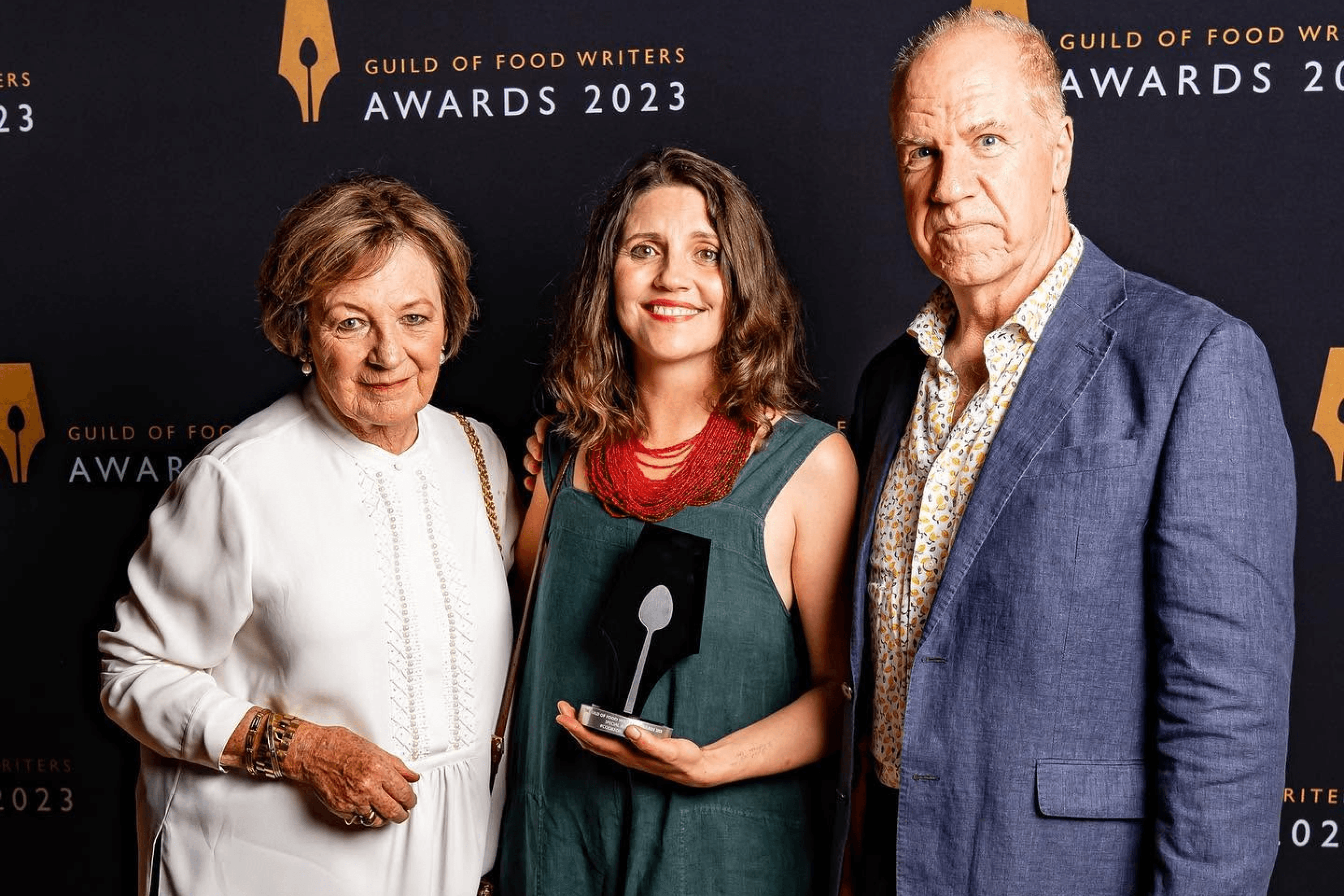
After the start of the full scale invasion, Hercules and food writer Alissa Timoshkina founded the #CookForUkraine initiative and raised more than £2 million in support of Ukraine. That same year, British Vogue included her on its list of the most influential women.
In 2025, her memoir Strong Roots was published. It is about family, war, and Ukrainian memory. Today, Hercules continues to write books, teach cooking classes for British people, and tell the story of Ukraine through food. Below is her story in her own words.
About childhood and education
I am originally from Nova Kakhovka. My parents are entrepreneurs, so I grew up surrounded by people who took action and were never afraid to start from scratch.
As a child, I had asthma. Every summer, when ragweed started to bloom, my condition became much worse. When I was 12, my parents and I went on vacation to Cyprus, and for the first time in many years I spent an entire summer without a single attack. That was when my parents decided it would be better for my health if I lived and studied there. My mother moved with me, and my father visited us often.
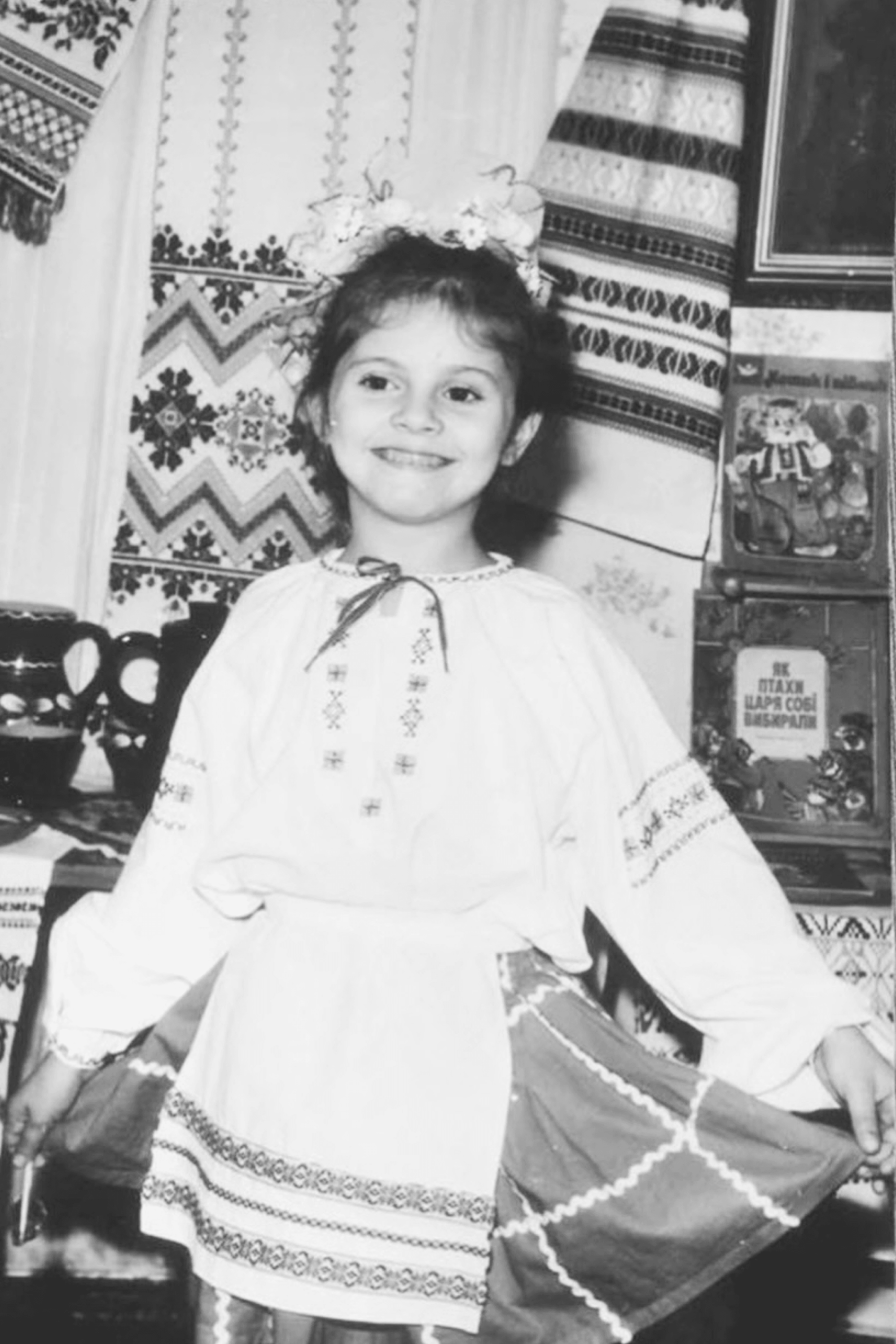
Emigration became my first major challenge. Although I had a basic knowledge of English, I did not feel that I belonged among my peers for a long time. At the same time, it became a powerful source of motivation. I worked hard on the language, and within three years I passed my English exam with the highest possible grade. I still consider it one of my greatest personal achievements.
Since my teenage years, I have been fascinated by politics, psychology, and history, everything that explains how the world works and how people interact with one another. That is why, after finishing school, with my parents' support, I enrolled at the University of Warwick, where I studied International Relations and Italian.
About cooking
In the United Kingdom, I lived on my own for the first time: a new country, demanding studies, and responsibility for myself. My parents always said that knowing how to cook was one of the most important life skills. But I did not enjoy the process and often ruined dishes because I was absent-minded.
Everything changed in 2003, when I went on a student exchange to the University of Urbino in Italy. In Italy, everyone cooked, from teenagers to people well into their nineties. Food there is not an everyday routine. It is comfort, pleasure, and time spent together. My friend from southern Italy regularly received boxes of homemade food from his family: meat, pasta, sauces. Watching this, I suddenly remembered how my mother used to send my brother parcels with homemade meals while he was studying in Odesa. It was in Italy that I realized food, for me, is a language of care, love, and memory.
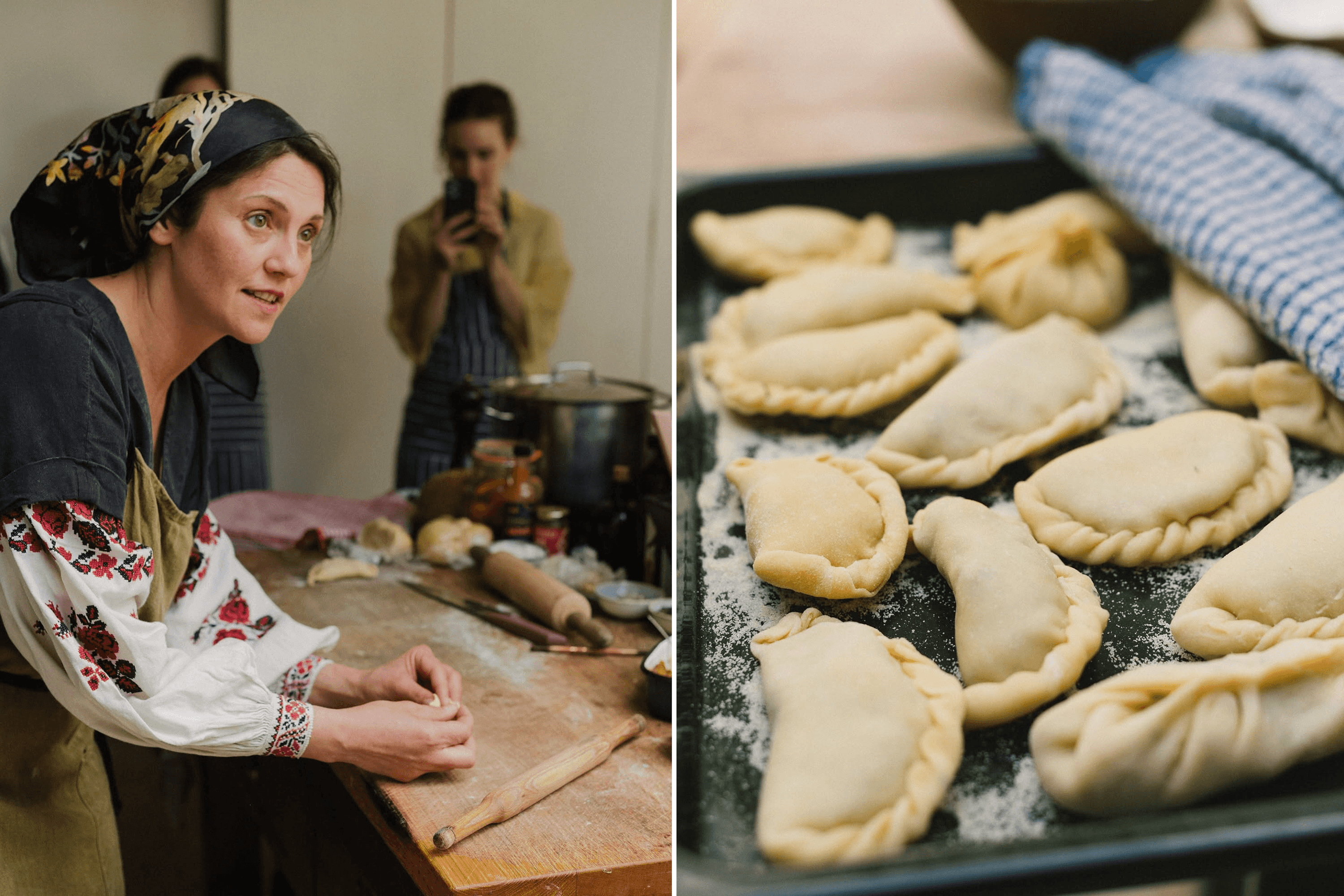
Olia Hercules leads a workshop on making varenyky. 2025. Photo: Olia Hercules / Facebook / YB 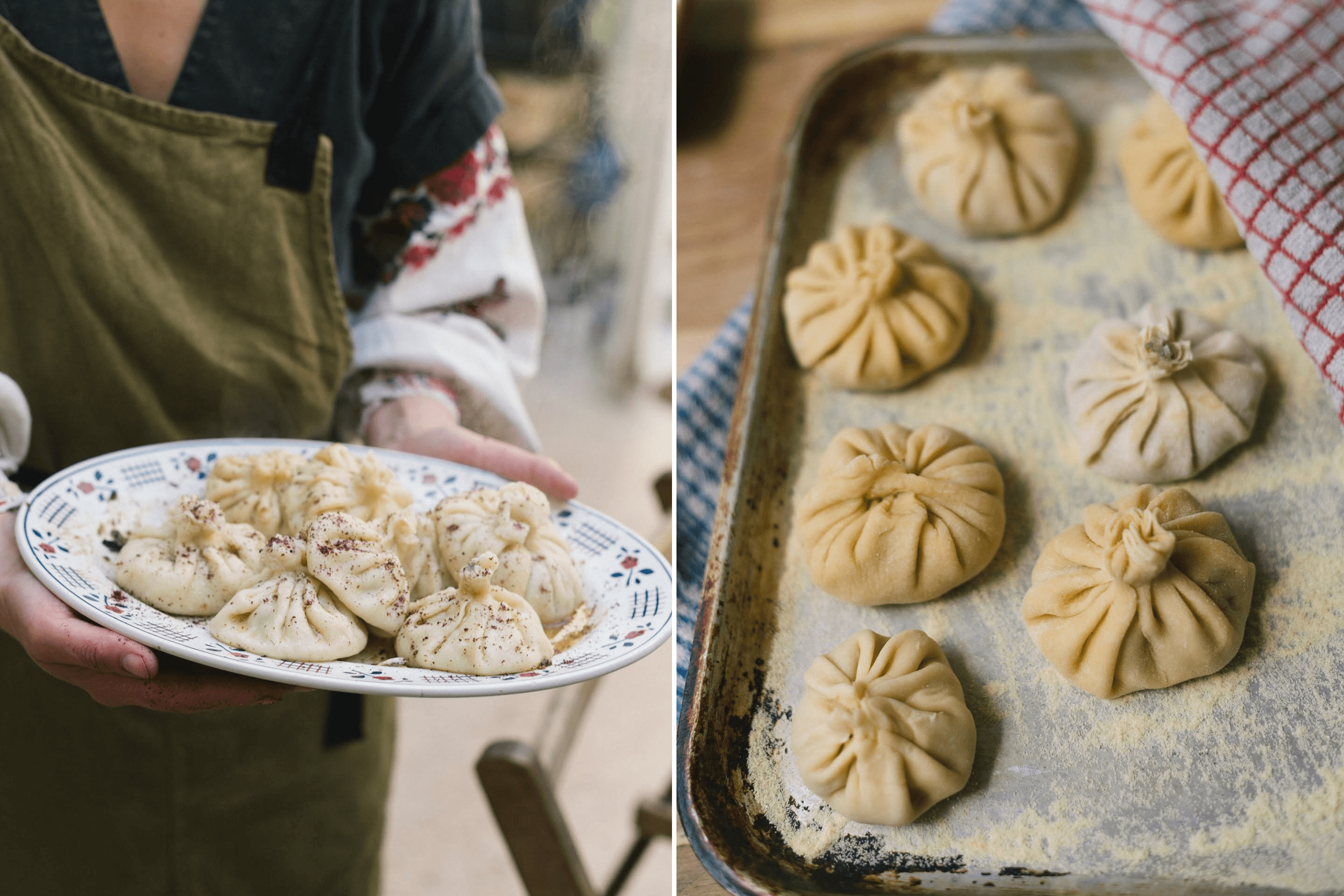
Photo: Olia Hercules / Facebook / YB 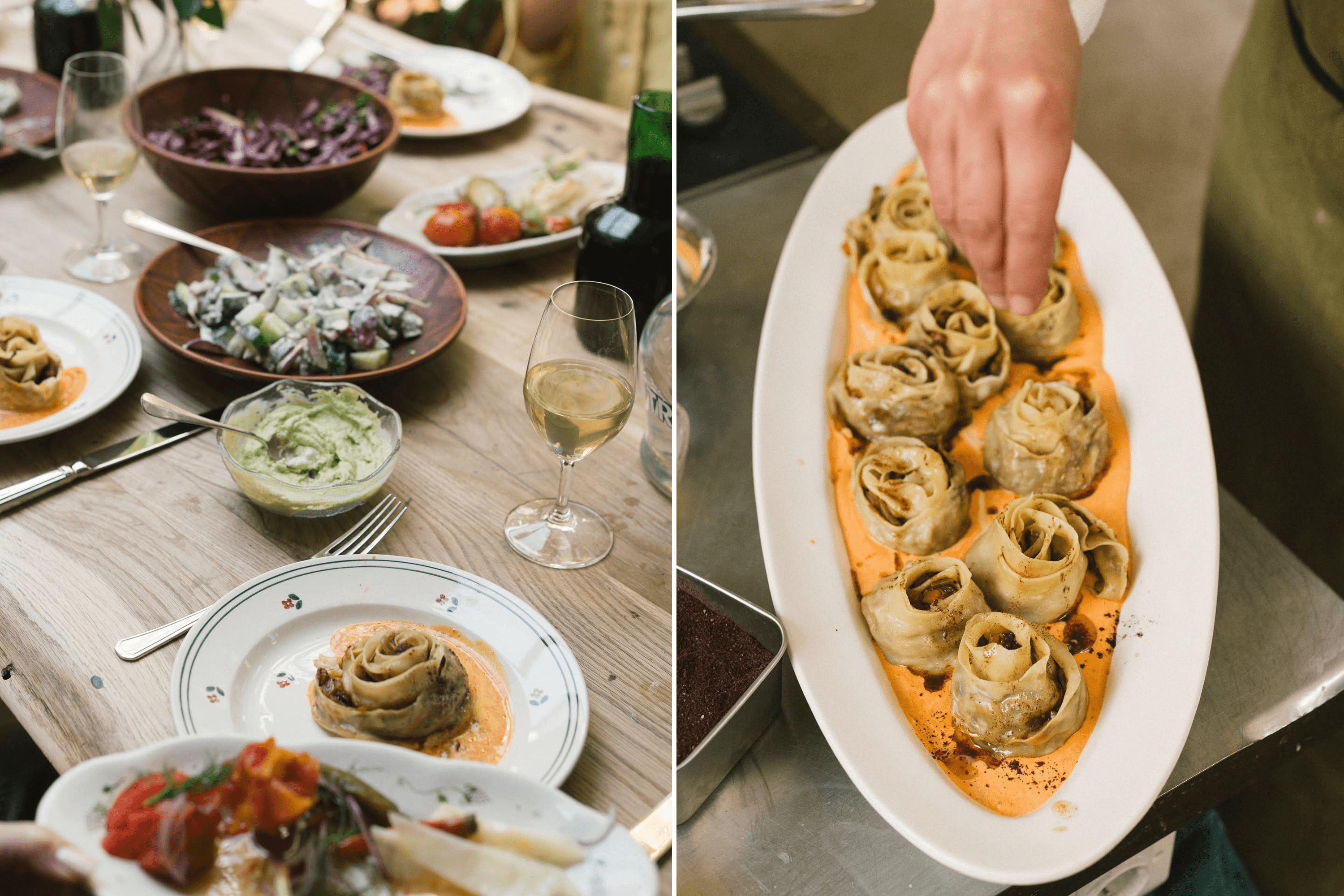
Photo: Olia Hercules / Facebook / YB
Another turning point came later during an internship in Palermo, where I worked as a waitress in a fine dining restaurant. One day, the chef cooked pasta for my lunch. The dish looked simple, almost austere. But its flavor was so deep and rich that I still remember it today. It felt as though the pasta literally tasted of the sea. It was then that I finally understood that great cooking is not about complexity. It is about respecting the ingredient and knowing how to bring out its flavor. From then on, I started cooking for myself using my family’s recipes.
Every time I moved, I had to answer the same question: who am I, what do I carry with me, and what does home mean to me? That is why my cooking has never been only about national identity. Food became a way to stay connected with myself and return to my childhood.
About returning to the United Kingdom
After studying in Italy, I returned to London. To stay afloat in one of the world’s most expensive cities, I worked hard. I got a job as a reporter for a film industry magazine because I had always been interested in cinema. But cooking never disappeared from my life. I read cookbooks, watched cooking shows, and cooked all the time.
I was 25 when I saw an advertisement for Leiths School of Food and Wine and thought for the first time, why am I not doing this already? I called my mother to tell her that I wanted to change my life completely. But she interrupted me.
“I had a very strange dream today, my daughter,” she said.
“Wait,” I said, “listen to me first.”
I told her that I wanted to quit my job, enroll in culinary school, and start over.
Then my mother told me about her dream. In it, we were traveling together on a bus when I suddenly jumped off. She was worried and did not understand what had happened. Then she saw me on another bus that was going uphill. To me, it was a sign. My parents did not just support my decision. For the second time, they paid for my education. This time it cost £10,000.
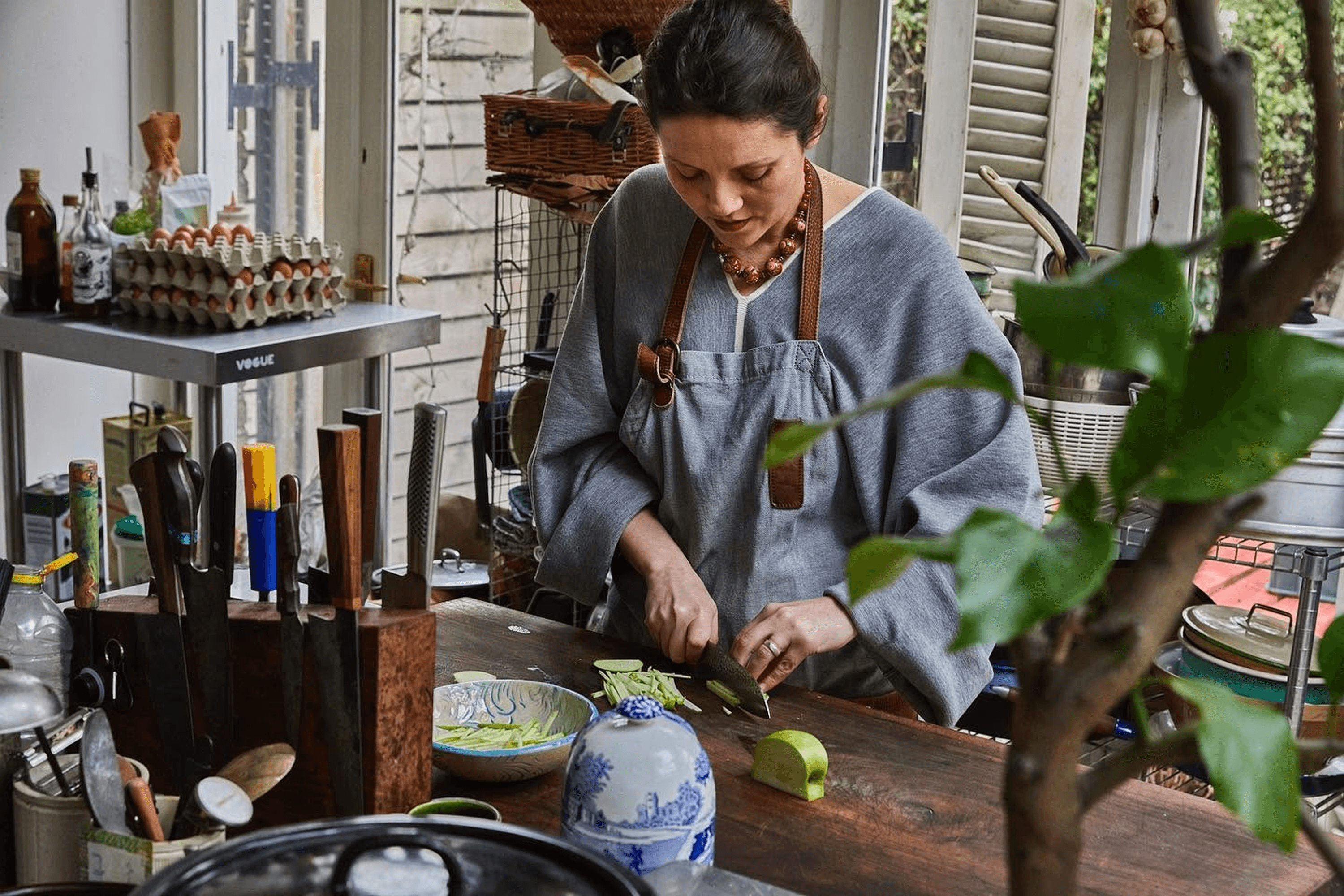
Olia Hercules prepares dishes from a menu she created for the Dishpatch meal delivery service. London, United Kingdom. February 8, 2023. Photo: timatkinsphoto / Olia Hercules / Facebook 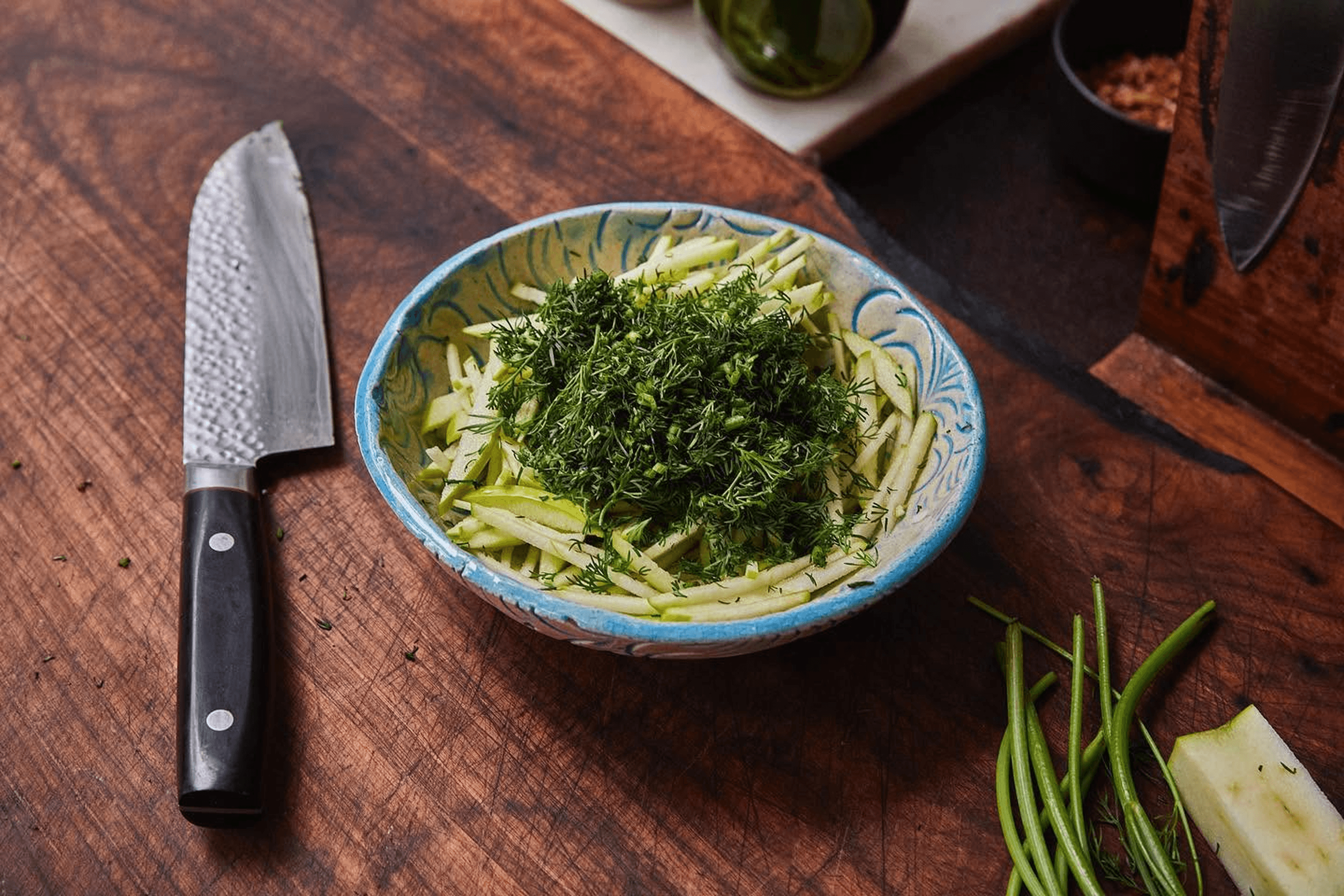
Photo: timatkinsphoto / Olia Hercules / Facebook 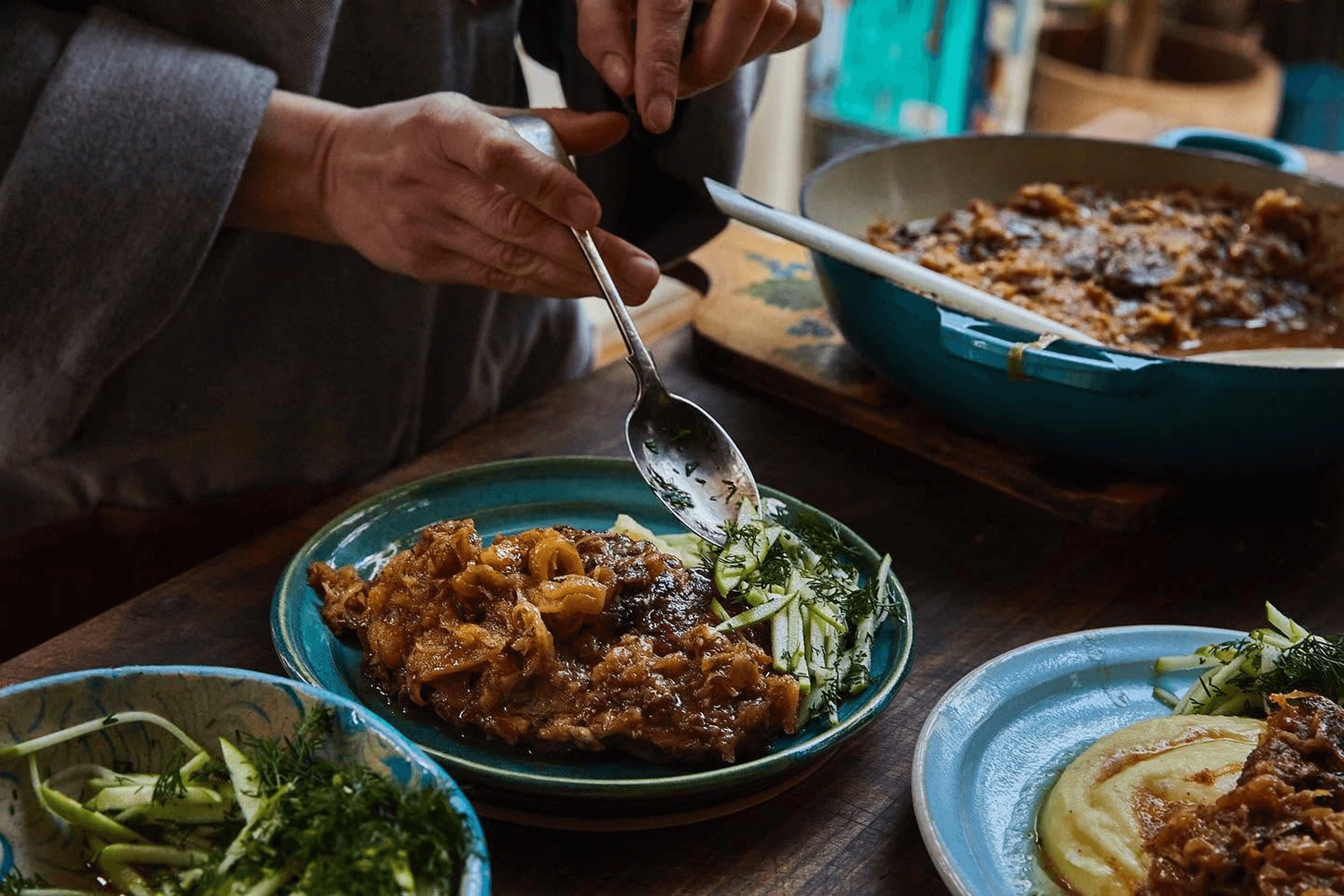
Photo: timatkinsphoto / Olia Hercules / Facebook 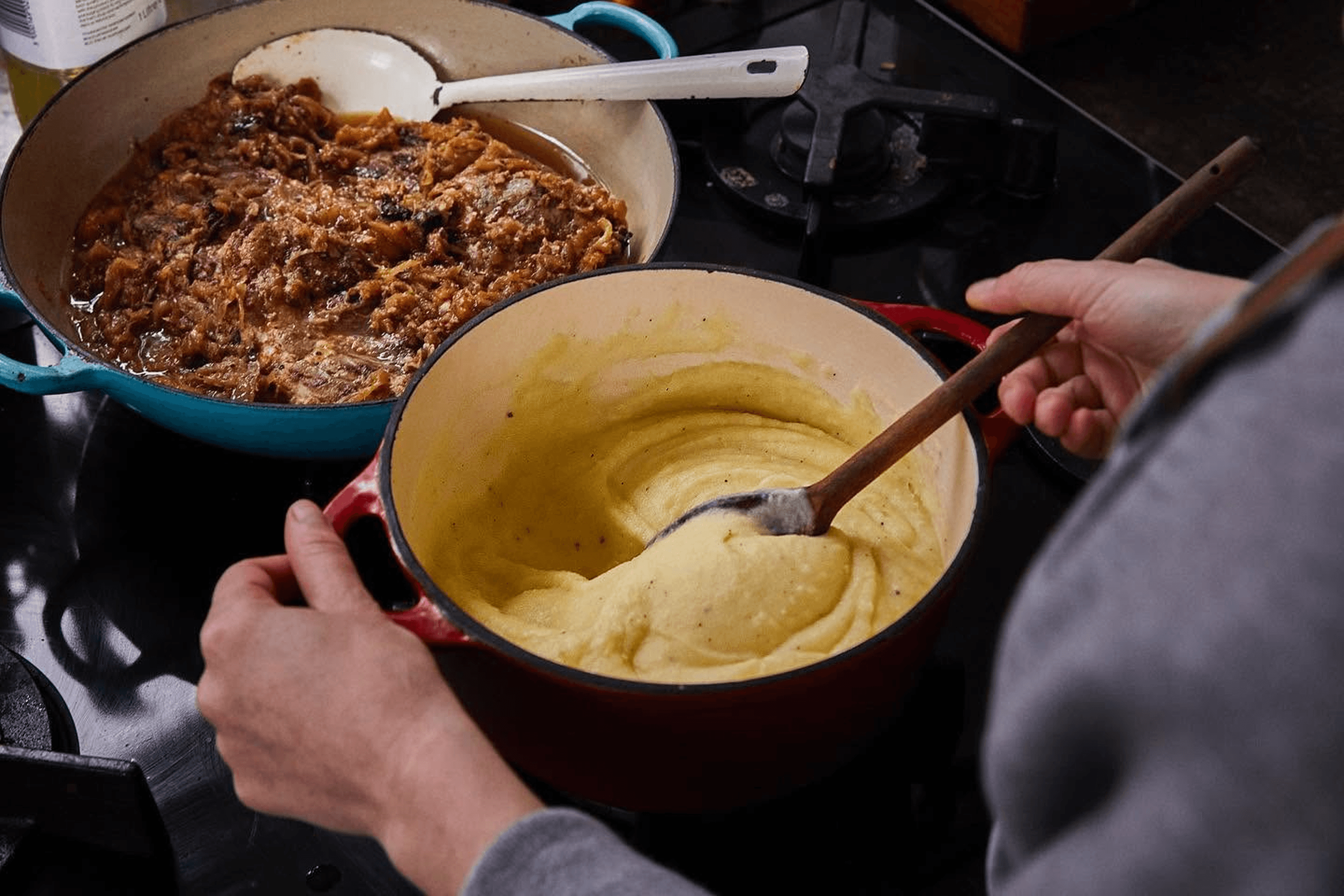
Photo: timatkinsphoto / Olia Hercules / Facebook
Around that time, the financial crisis hit our family hard. My father’s business was almost destroyed. I understood what they were sacrificing, so I took my studies as seriously as possible. I graduated with the feeling that I had finally found what was mine. I wanted to develop recipes and work in food styling, but first I needed restaurant experience. I worked in two restaurants, including Ottolenghi. However, the professional kitchen turned out to be a harsh world without sentiment: a basement with no daylight, shifts starting at five in the morning, and from eight until noon we served 120 guests every morning. It was physically demanding work at the edge of exhaustion.
At the age of 27, I became pregnant, and it became clear that I could not keep living like that. But I could not stop. Freelance shifts in pubs, temporary kitchen jobs, private events, I took every opportunity because I had to support my family. I could rely only on myself, and I could no longer just experiment. I had to make it all work out.
About the path to The Guardian
In 2012, food trends were changing rapidly, and food was increasingly becoming a way to tell stories. That was when I was invited to join a London startup by a talented entrepreneur, an Armenian from Kyiv. The company worked on a model that is common today: people received a set of ingredients with a recipe and cooked at home. I was responsible for recipe development and styling, and for the first time I was able to combine everything that interested me: cooking, aesthetics, and storytelling. That’s when I started writing.
One day I noticed that The Guardian’s food section was open not only to well known chefs, so I pitched a story about a family barbecue where my partner and I cooked Ukrainian, Georgian, and Thai dishes. The editors agreed almost immediately. They came for the photo shoot, published the story, and later began publishing my recipes regularly.
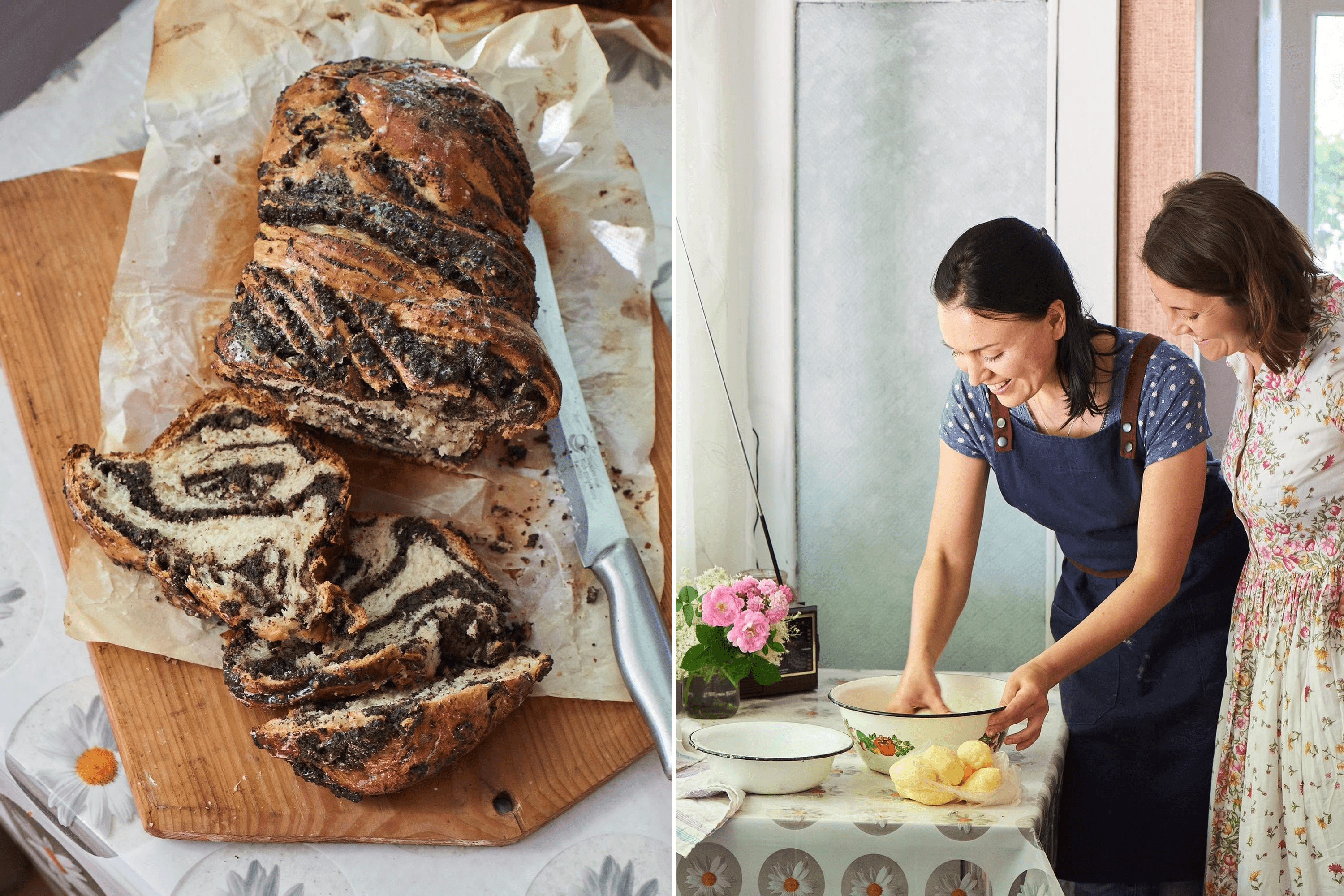
Cookbook author Olia Hercules bakes bread with baker Kateryna Kaliuzhna. March 2022. Photo: joe_woodhouse / Olia Hercules / Facebook 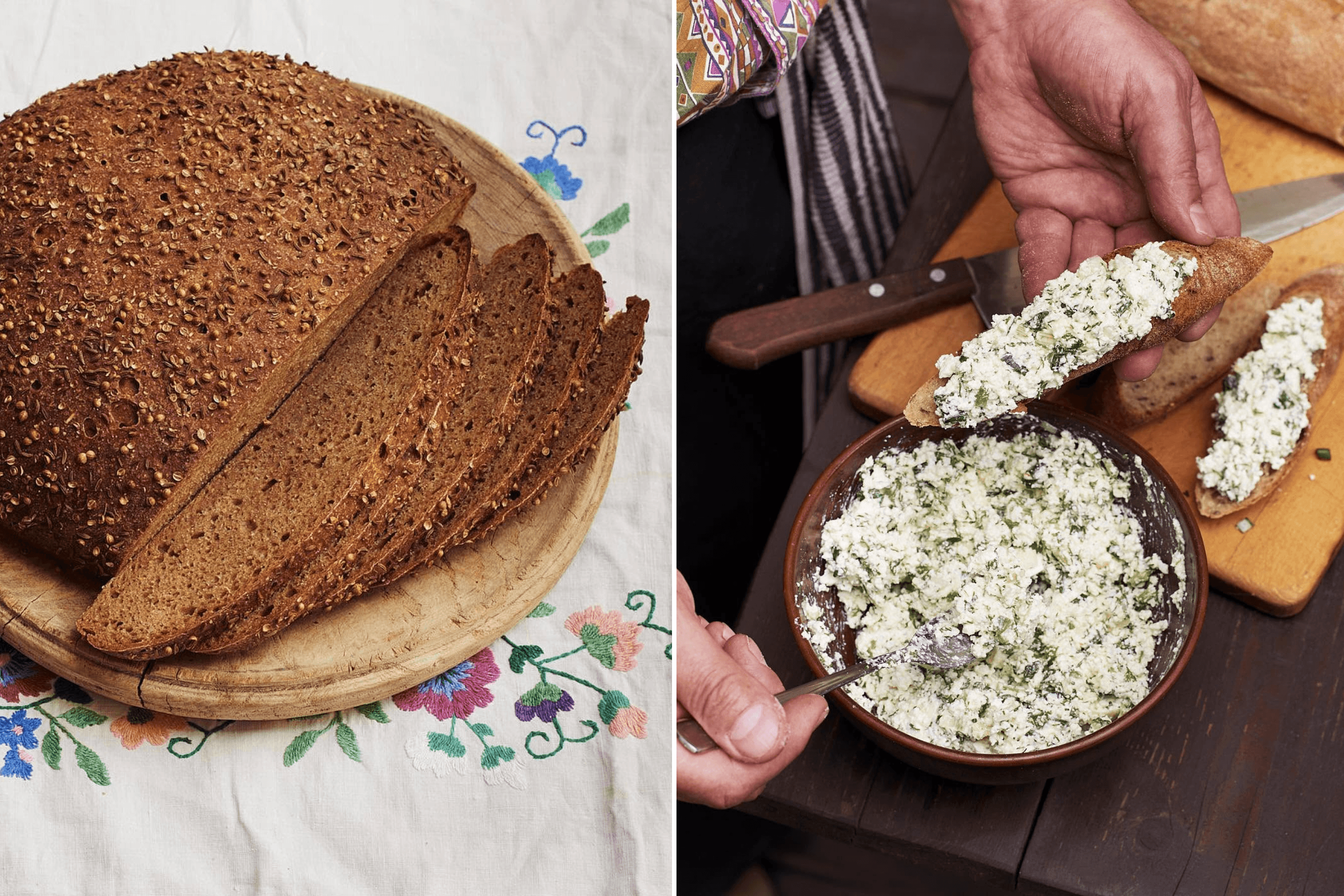
Photo: joe_woodhouse and elenaheatherwick / Olia Hercules / Facebook 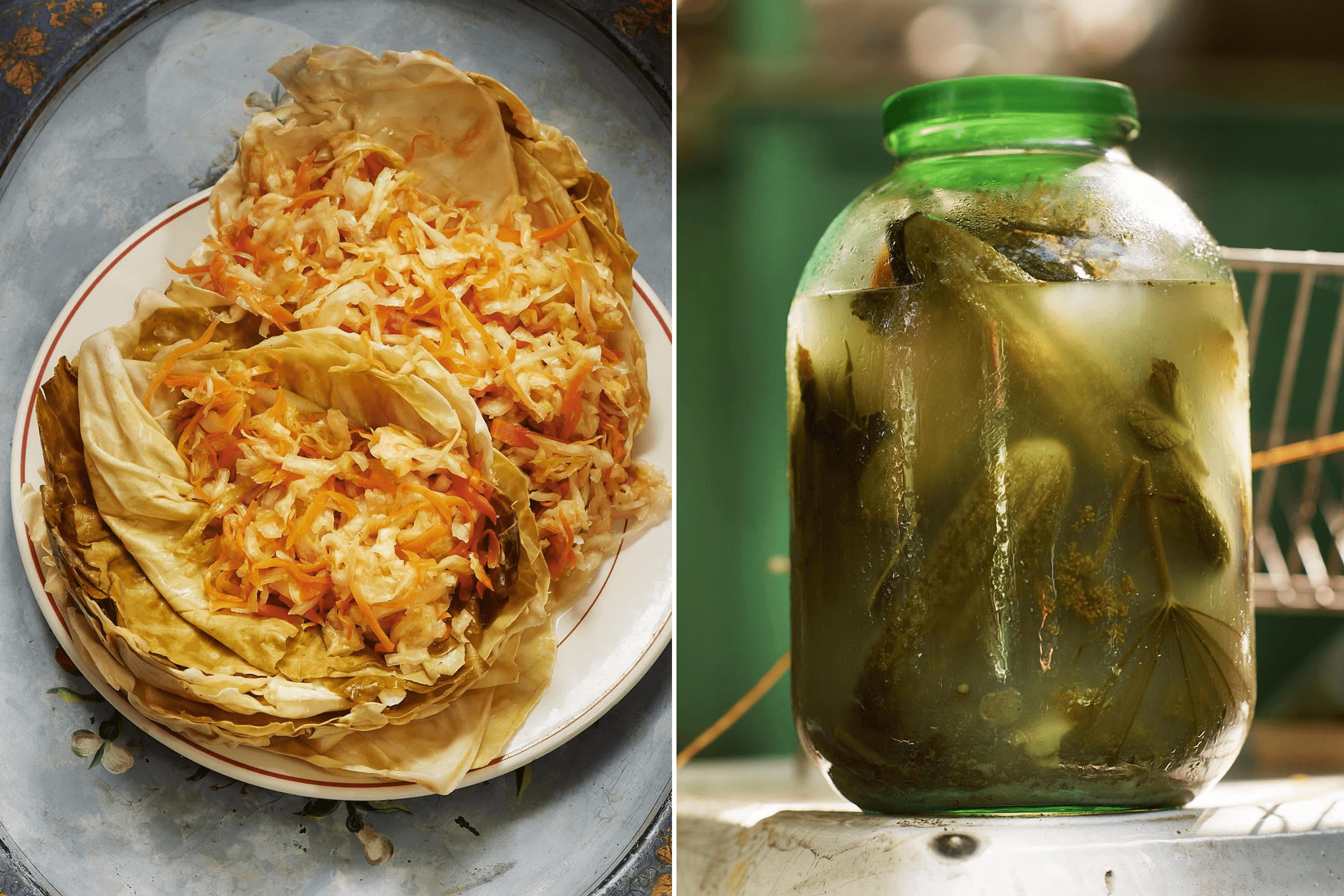
Photo: joe_woodhouse and elenaheatherwick / Olia Hercules / Facebook 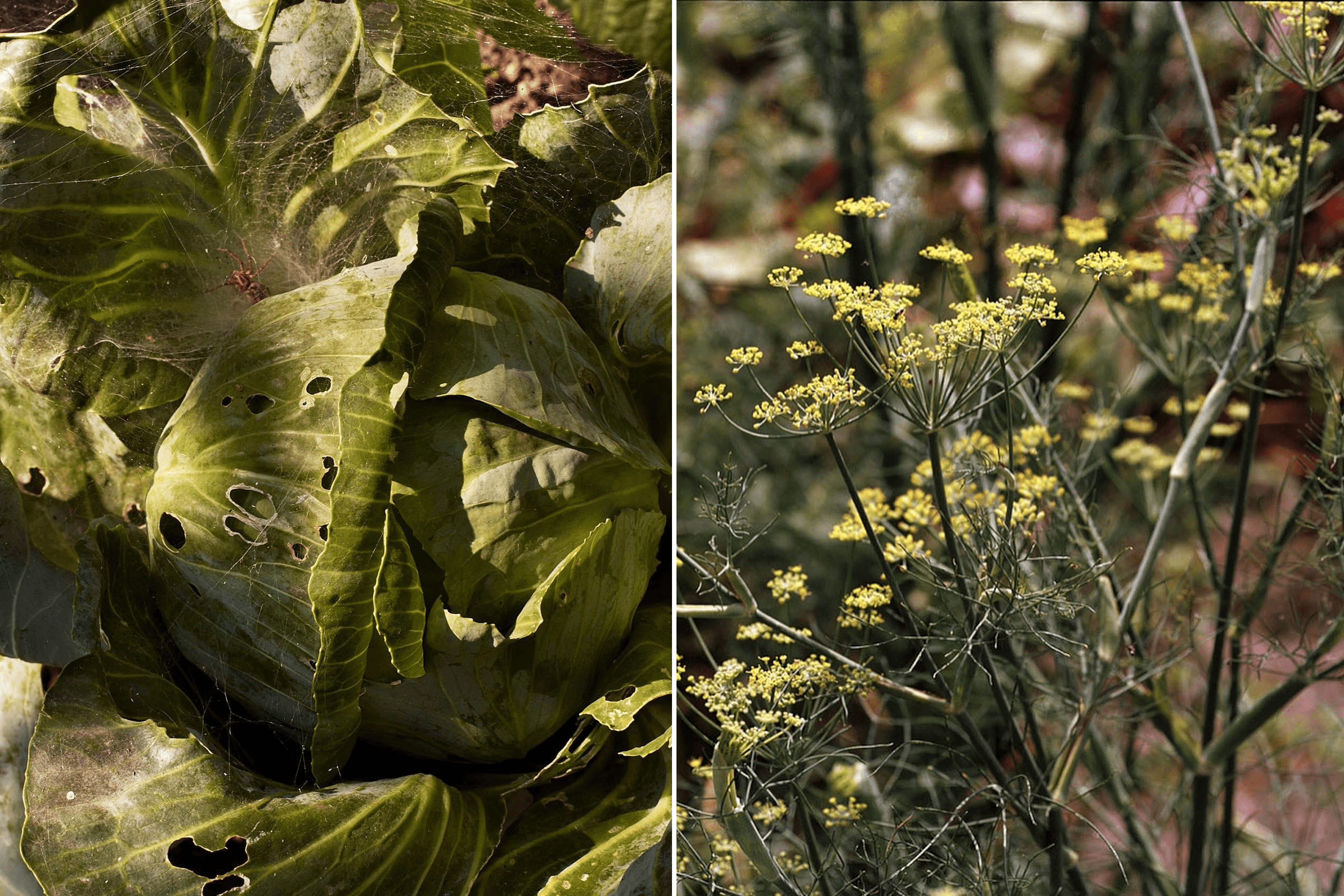
Photo: joe_woodhouse and elenaheatherwick / Olia Hercules / Facebook 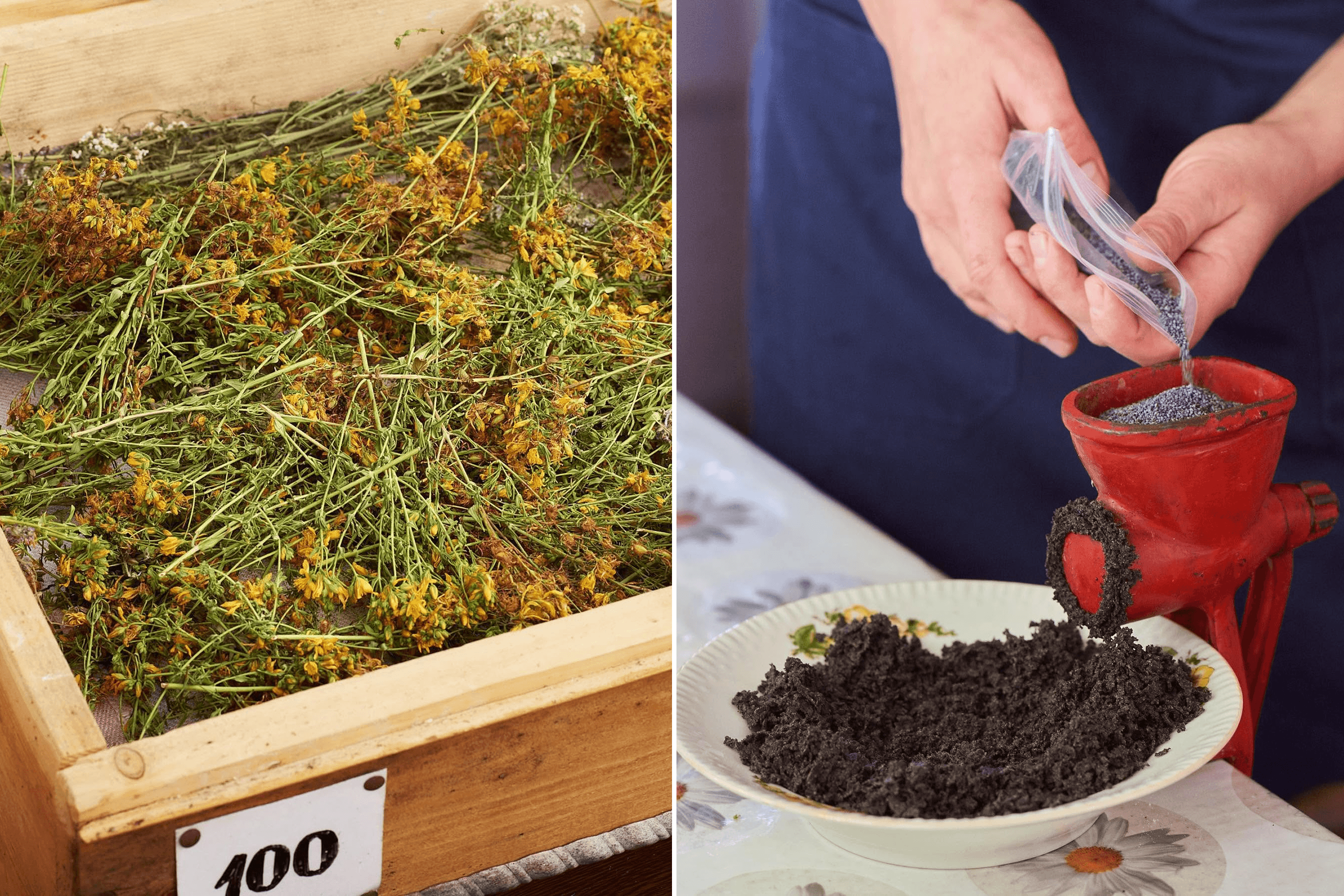
Photo: joe_woodhouse and elenaheatherwick / Olia Hercules / Facebook
It did not take long before a clear pattern emerged: the editors most often chose recipes with Ukrainian roots, from my mother’s notebooks and my grandmother’s kitchen. For the British audience, Ukraine remained a largely unknown country, usually mentioned only in the context of politics or crises. A recipe turned out to be more than a set of instructions. It became a way to tell the story of a country through human experience. A language that inspires curiosity and trust.
About my writing career
A literary agent from United Agents noticed my articles in The Guardian. She invited me to a meeting, and for almost two hours I talked about Ukraine, the Kherson region, the south, and food as cultural memory. At the end, she said, “You tick every box.” But there was one problem: I did not have enough Instagram followers. At that time, it already mattered, and I had only a few hundred. She advised me to build my platform and come back in a few years.
But everything happened much sooner. A few months later, another publisher contacted me. They had been reading my articles in The Guardian and offered me a book about Ukrainian cuisine, not simply a collection of recipes but a story about Ukraine told through food.
I agreed, although I had no idea where to begin. At that time, I was divorced, raising my son on my own, and I worked only after putting him to bed. I wrote the concept, developed almost one hundred recipes, described the design, and included personal stories. I wanted to show Ukraine as I knew it: alive, generous, and sunny. The south with homegrown tomatoes, apple filled yards, and genuine people. Everything that the Western audience hardly saw at the time.
I sent the book proposal to several publishers and eventually chose Octopus Publishing, but I had one condition: no studio photography in London. Only Ukraine, Nova Kakhovka, and my family. It was important to me that the book show not only the dishes but also the people, the courtyards, and the landscapes, the environment where this cuisine comes to life. That is how Mamushka came into being, a book about memory, identity, and an attempt to preserve a world that could be lost if no one told its story.
About my writing method
When I work on a book, I always begin with people rather than recipes. For Mamushka, I came home and followed my mother and my aunt around, asking them to show me how they cooked. But our mothers do not cook from recipes. Everything is done “by eye”: a little of this, a little of that, “look at the dough.” I had to come up with my own method. I weighed all the ingredients in advance with extra amounts. My mother cooked as she always did, and afterwards I checked what was left. That was how I reconstructed the exact proportions. In effect, I translated an oral tradition into the language of recipes.
For Kaukasis, my brother and I traveled through Georgia and Azerbaijan because we had spent a lot of time there during our childhood. I recorded local people’s stories because it is not my culture, and I did not want to speak on their behalf. For Summer Kitchens, I also collected stories from people in different regions of Ukraine. Some were even sent to me from occupied territories because we could not travel there ourselves.
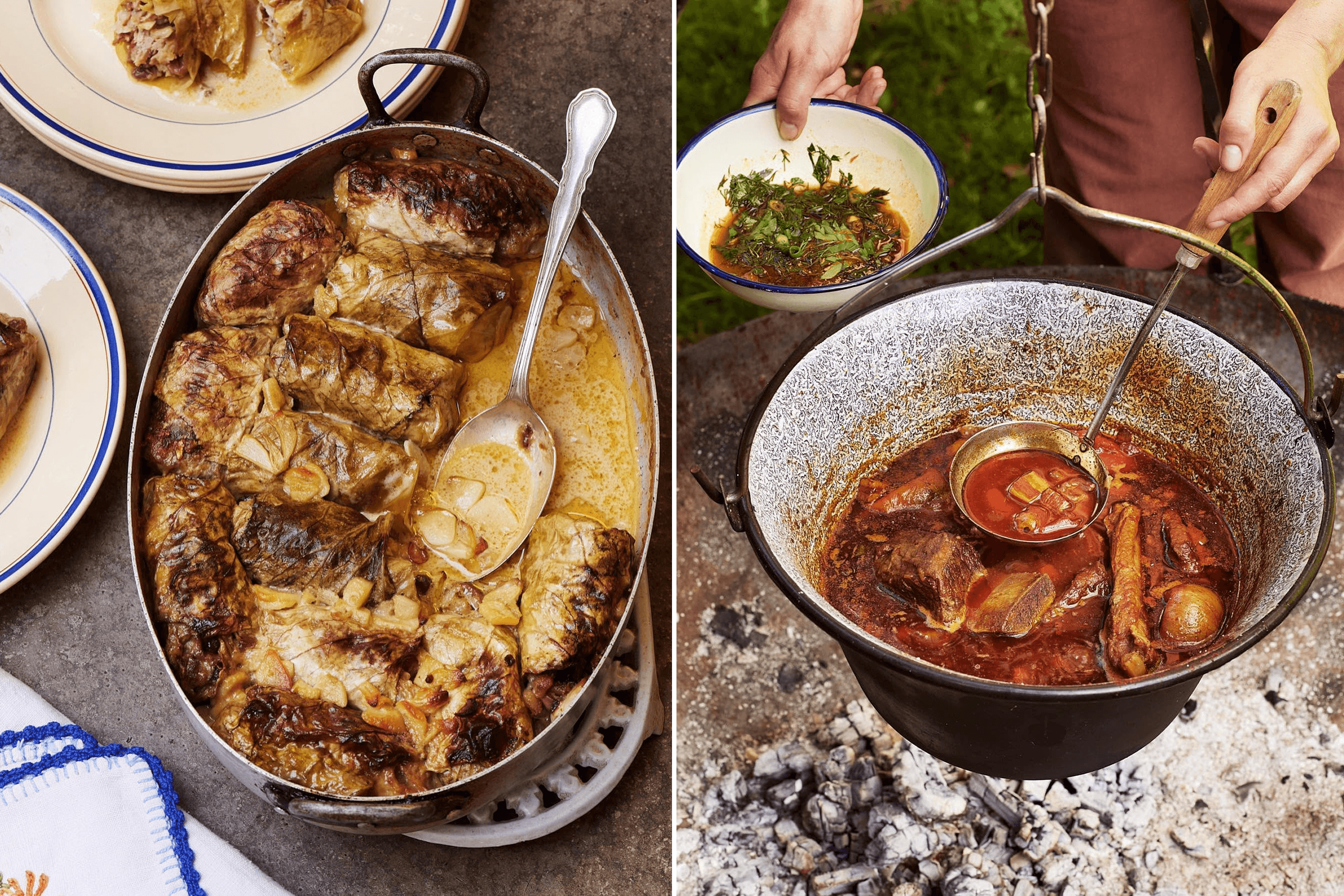
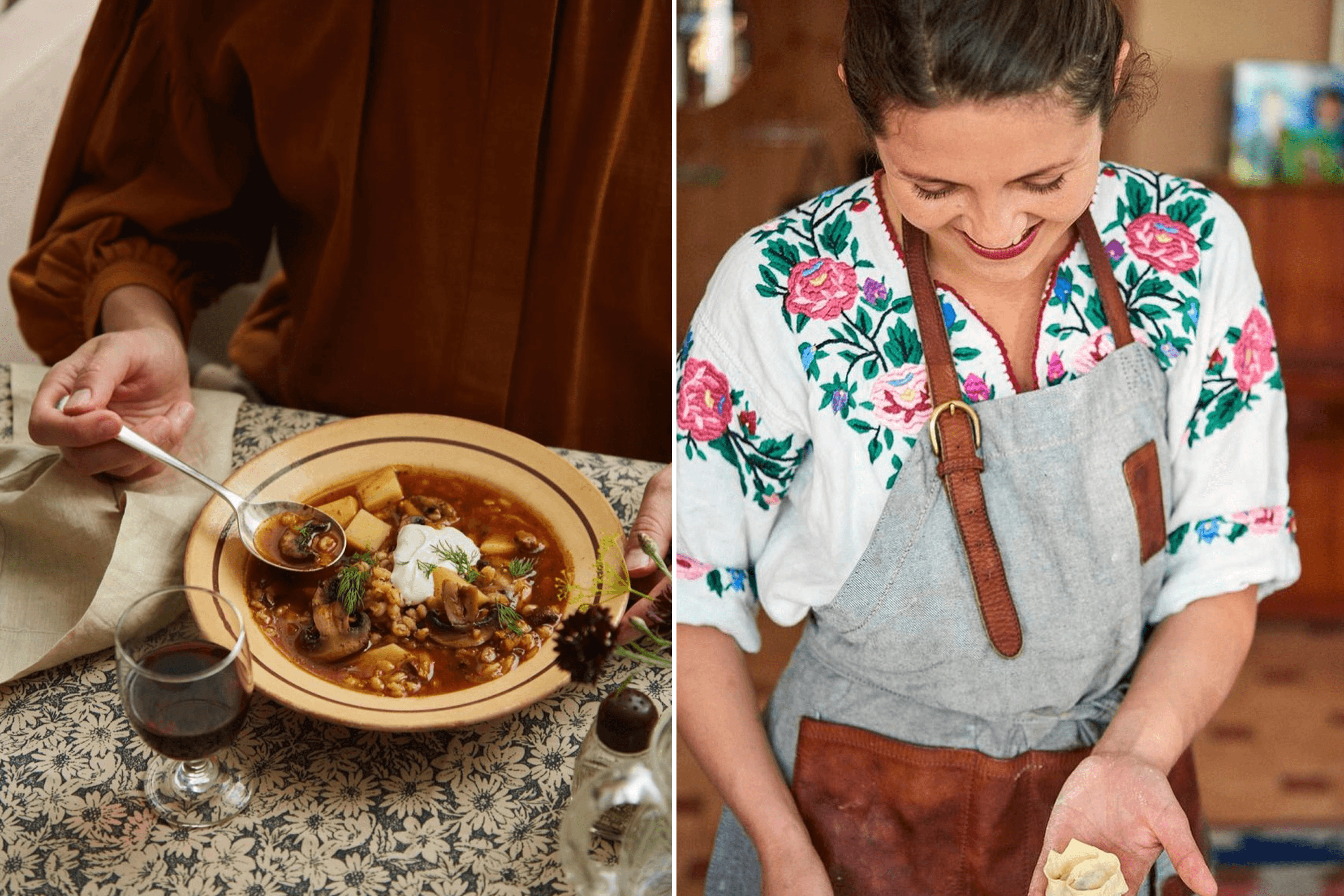
Dishes from Olia Hercules’s cookbook Summer Kitchens. Photo: joe_woodhouse / Olia Hercules / Facebook 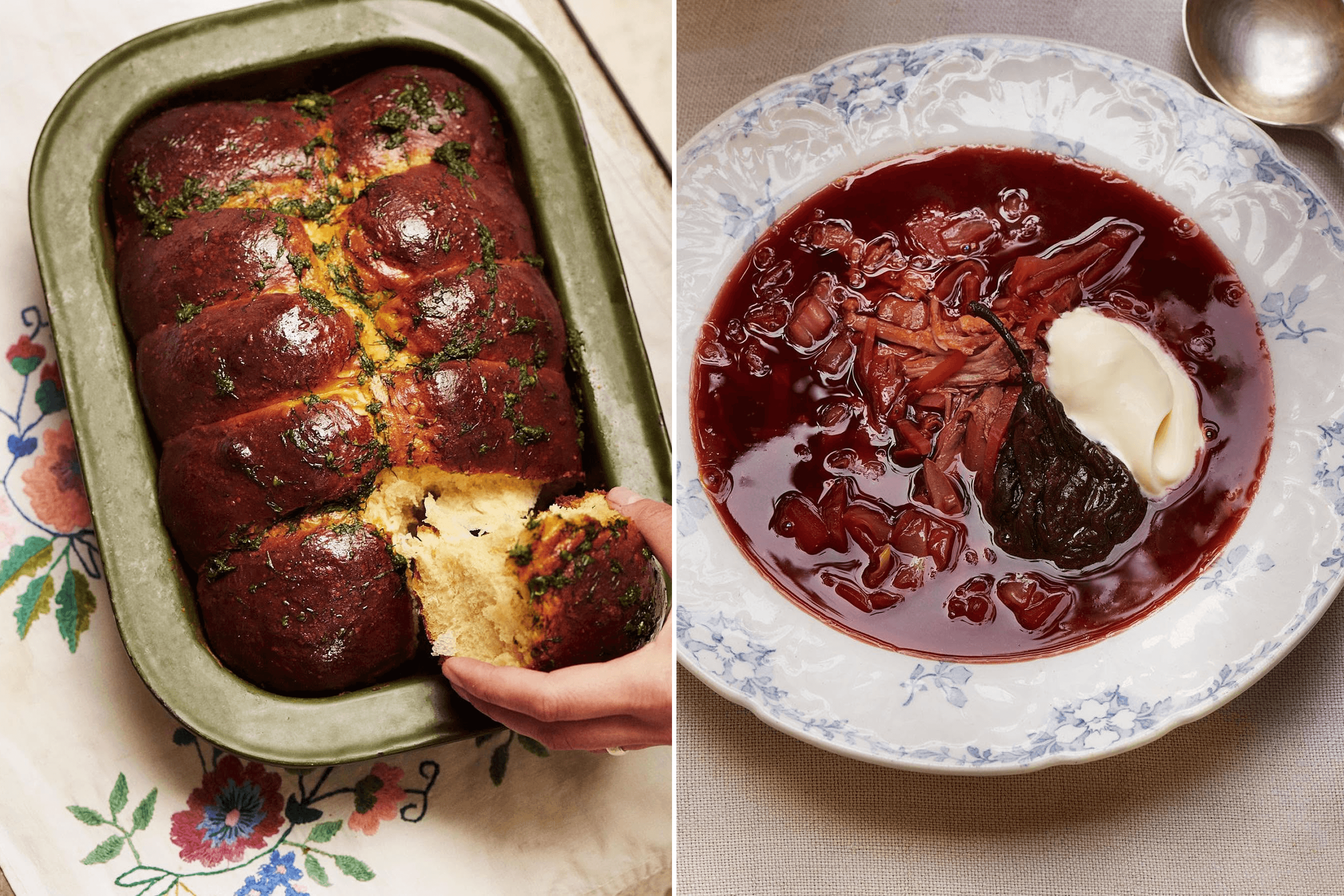
Photo: joe_woodhouse / Olia Hercules / Facebook 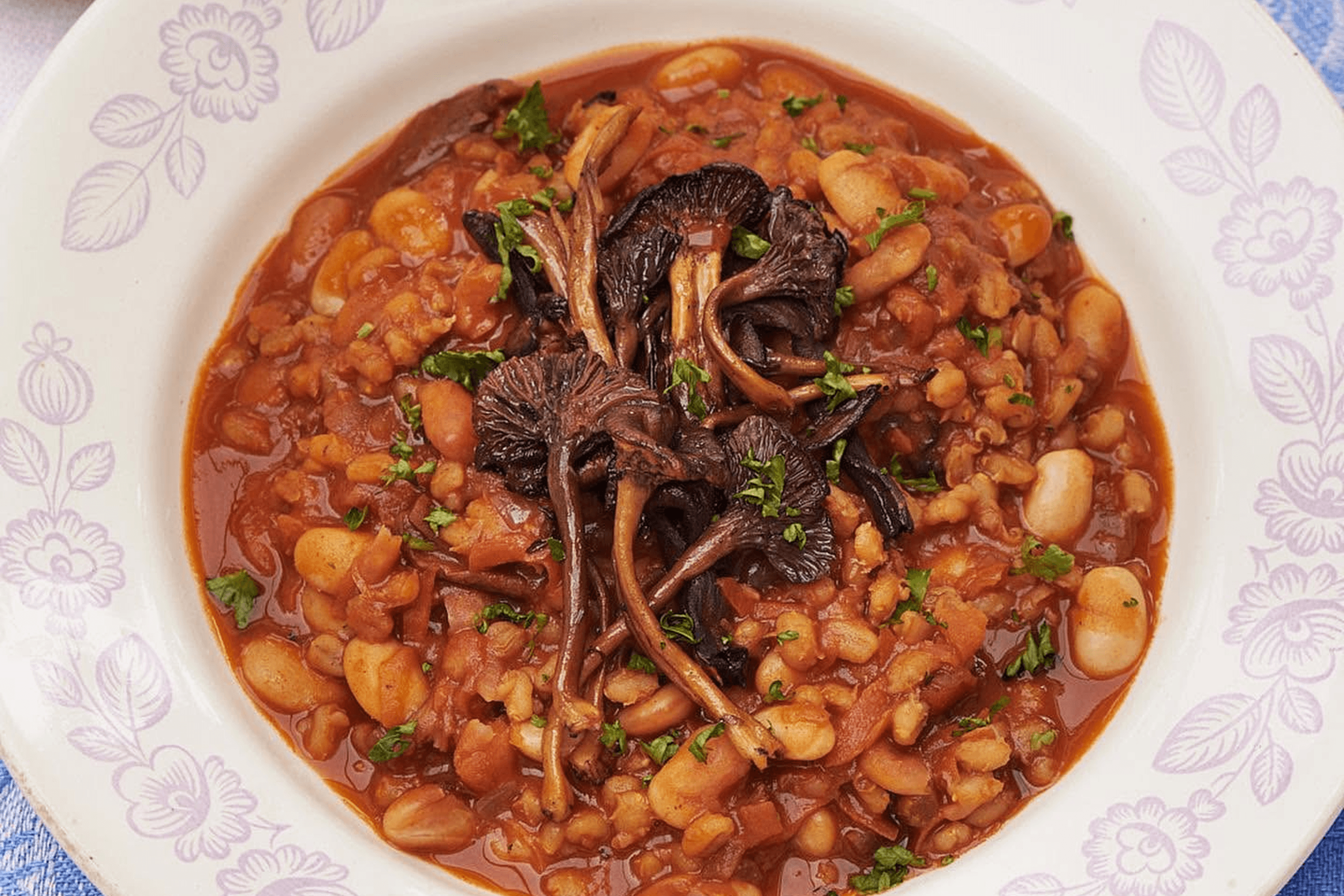
Photo: joe_woodhouse / Olia Hercules / Facebook 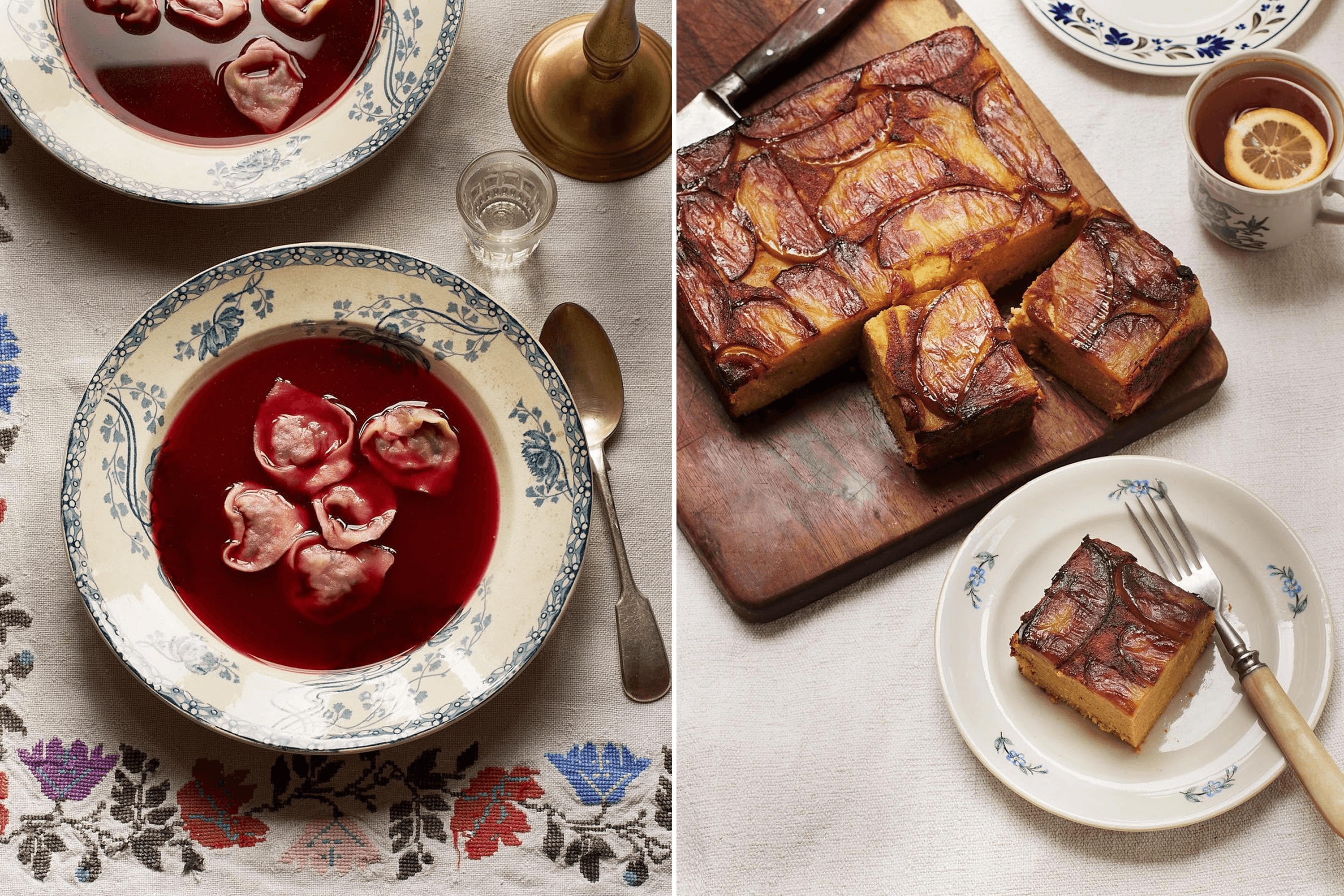
Photo: joe_woodhouse / Olia Hercules / Facebook
I thought British editors would want to make my writing more literary. Instead, they told me: “This is your voice. It doesn’t need changing.” It was an important moment of acceptance, and I am still grateful to them for it.
I cook every dish about five times before I am confident that anyone will be able to make it successfully. For me, it is essential that a person opens the book, cooks the recipe, and gets exactly the result I promised.
About the #CookForUkraine initiative and Russia’s full scale invasion
Before the full scale war in 2022, I was documenting Ukrainian culinary culture. Afterwards, it struck me that food had turned into another way to bear witness to the war, preserve memory, and speak to the world about Ukraine.
Posts by the #CookForUkraine initiative, co-founded by Olia Hercules, highlighting support for Ukraine following the start of Russia’s full-scale invasion. 2022–2025. Photo: cookforukraine / Instagram / YB 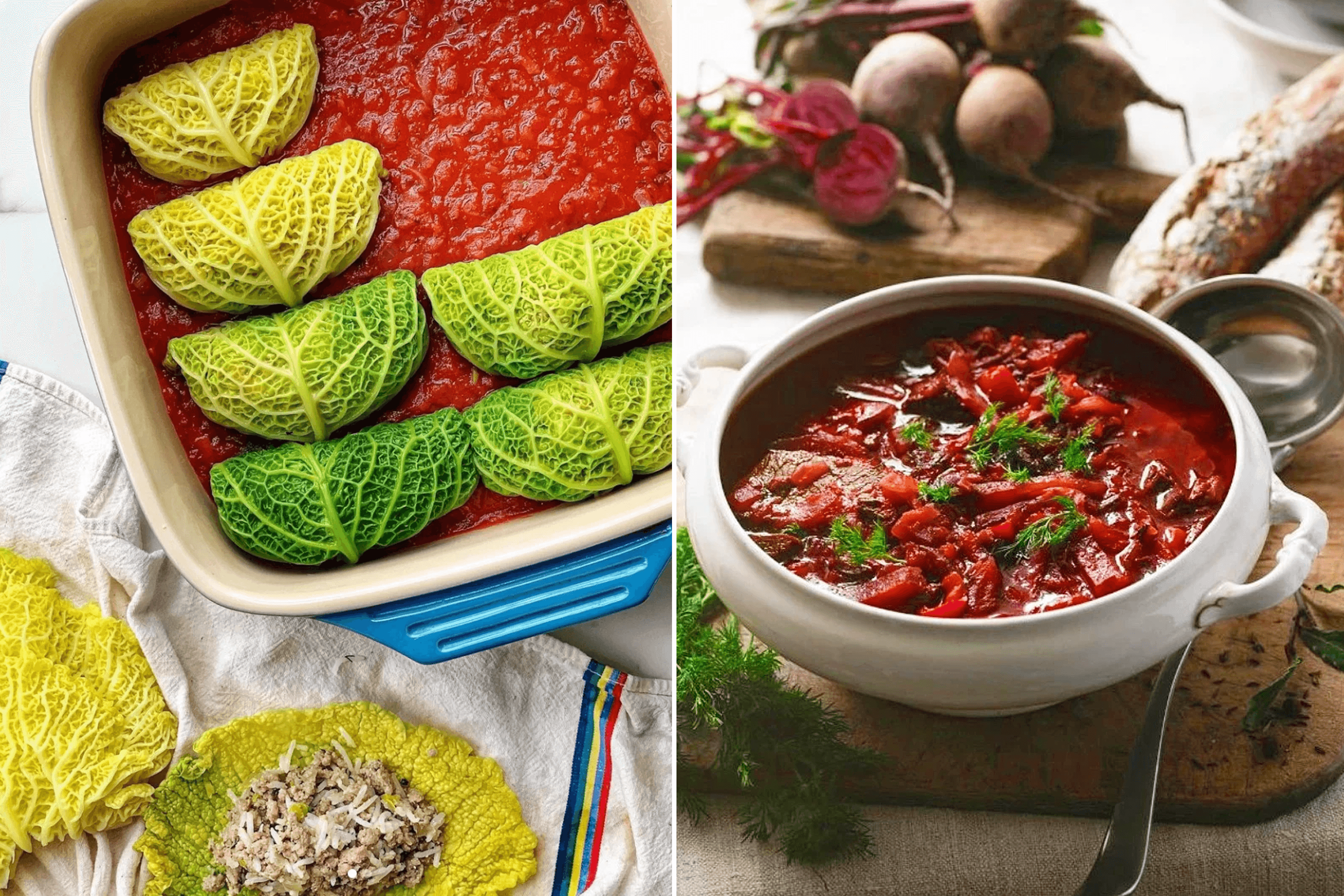
Photo: cookforukraine / Instagram / YB 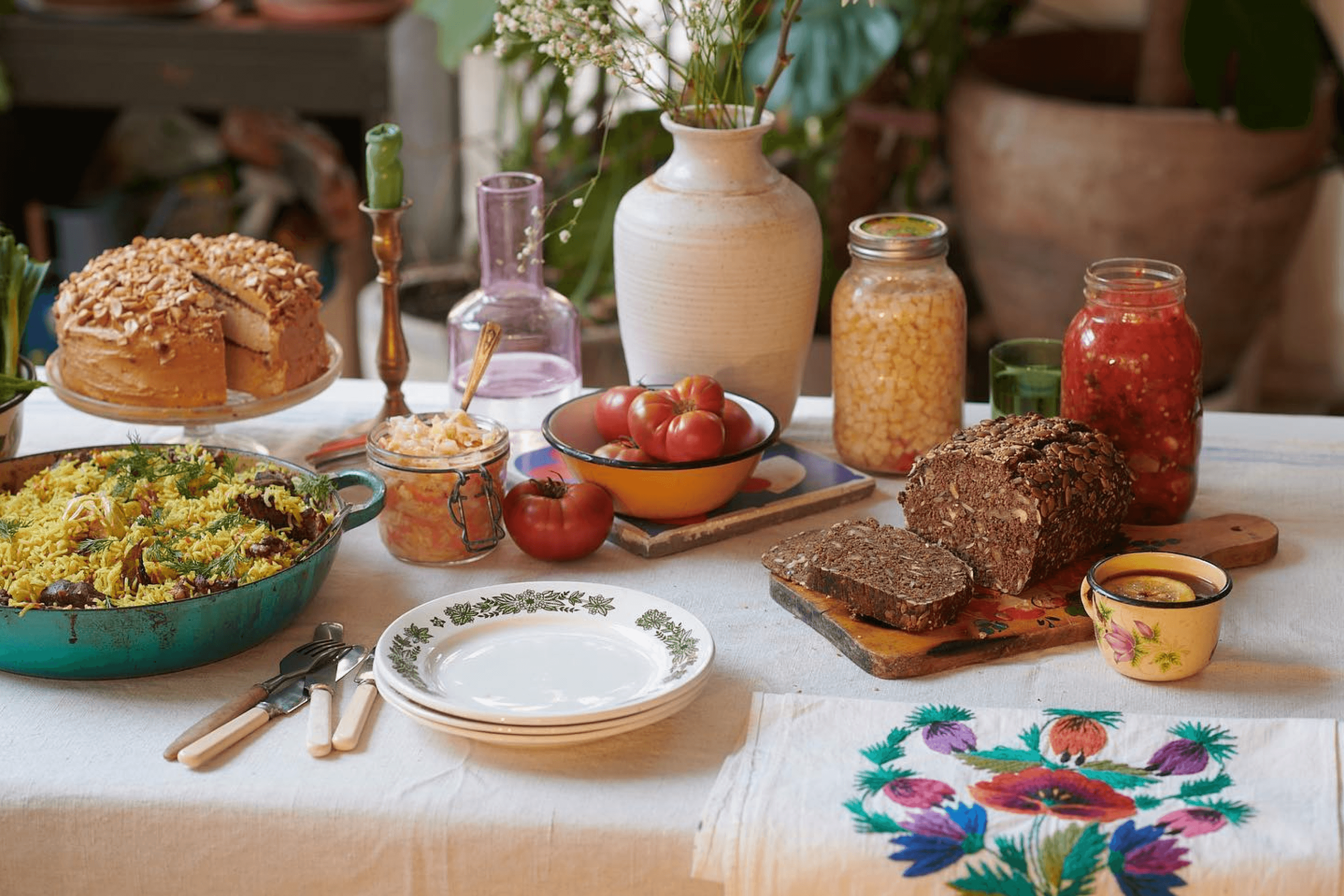
Photo: cookforukraine / Instagram / YB 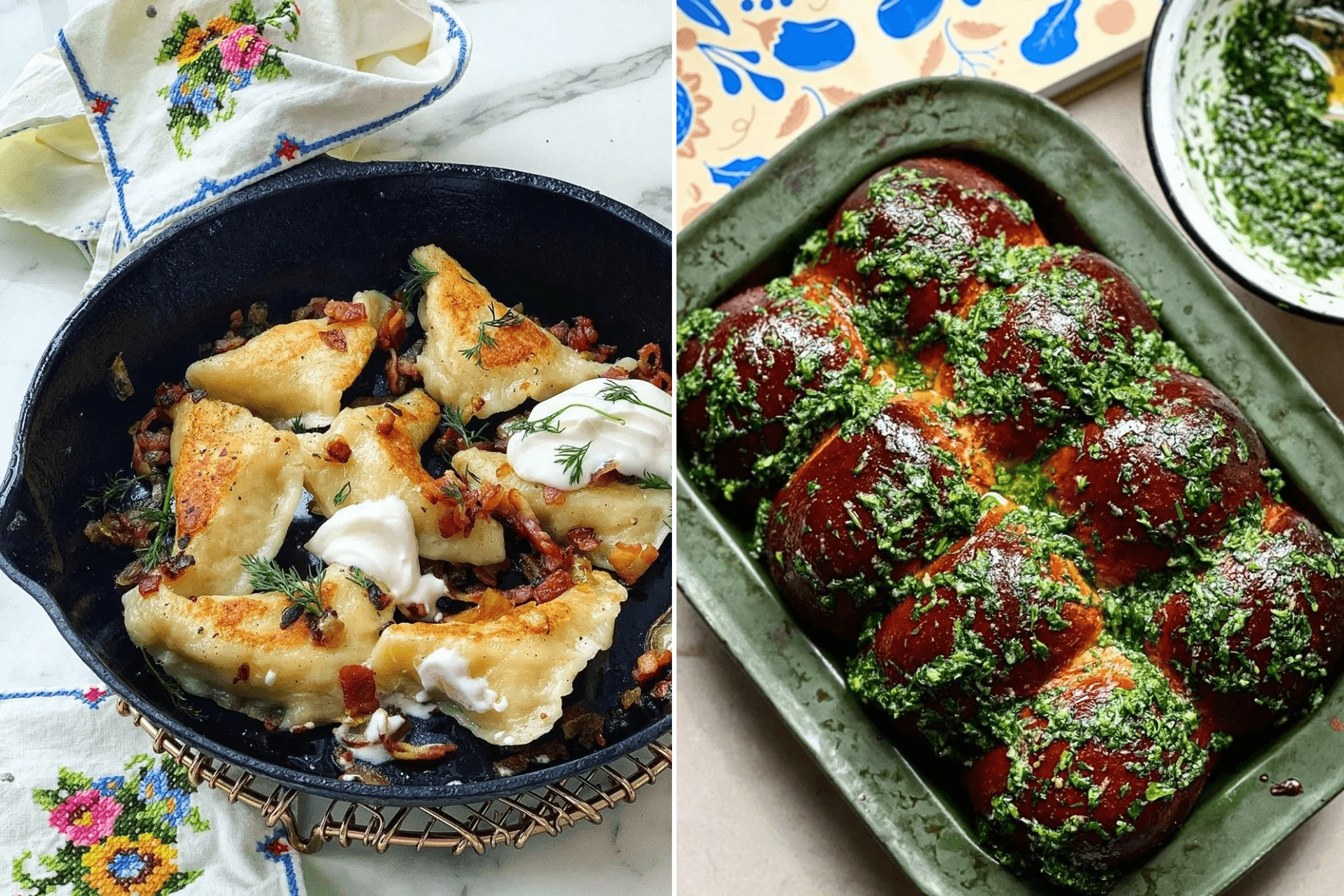
Photo: cookforukraine / Instagram / YB 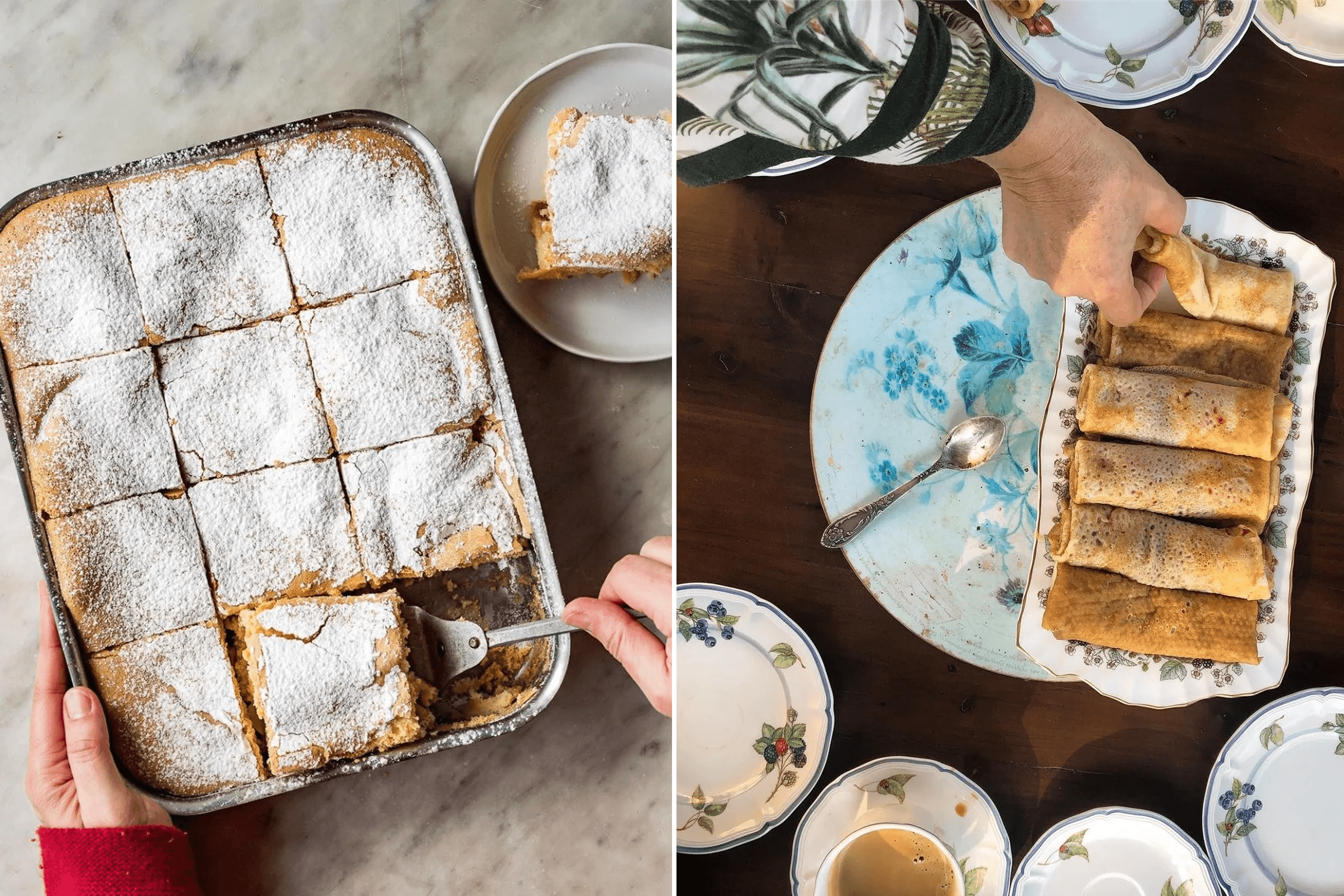
Photo: cookforukraine / Instagram / YB 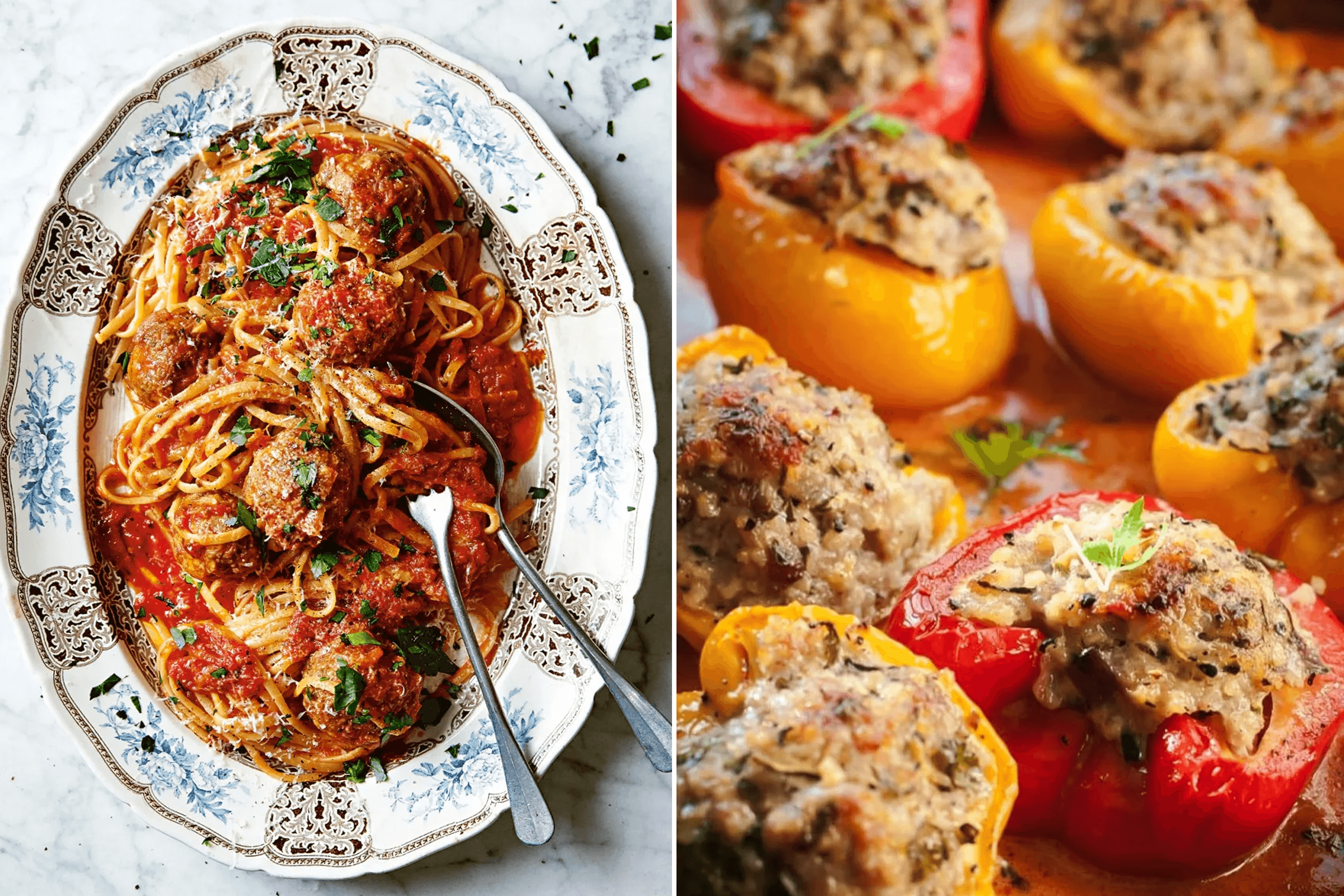
Photo: cookforukraine / Instagram / YB
That’s how the #CookForUkraine initiative started. The idea was simple: to use food as a way to help Ukraine. Restaurants donated part of their revenue or added an optional charitable contribution to customers' bills. Chefs organized charity dinners and pop up events. People around the world cooked Ukrainian dishes and shared them using the #CookForUkraine hashtag. We directed the funds raised through UNICEF UK, Choose Love, and the Legacy of War Foundation. What began as a humanitarian campaign grew into an international platform, and through it people discovered Ukrainian culture.
At the same time, I consciously set boundaries for myself. I work in cultural diplomacy, and I do not comment on Ukraine’s domestic politics because that is not my area of expertise. My focus is family, recipes, memory, and everyday life. This is how I explain the war to British people.
For me, the war is not abstract. My hometown of Nova Kakhovka is under occupation. My aunt lives in occupied Voznesensk. My father returned to Ukraine. He is an engineer and could not simply wait. He bought an old tractor and, together with a group of men, converted it into a remotely operated demining vehicle. He reinforced it with metal and fitted it with heavy chains. Now it drives into mined fields without anyone inside. I helped raise the money for it. Recently, the tractor went to work in the Kharkiv region.
I think this story perfectly reflects what happened to many Ukrainians after 2022. Everyone started doing what they do best. I tell the story of Ukraine through food and culture.
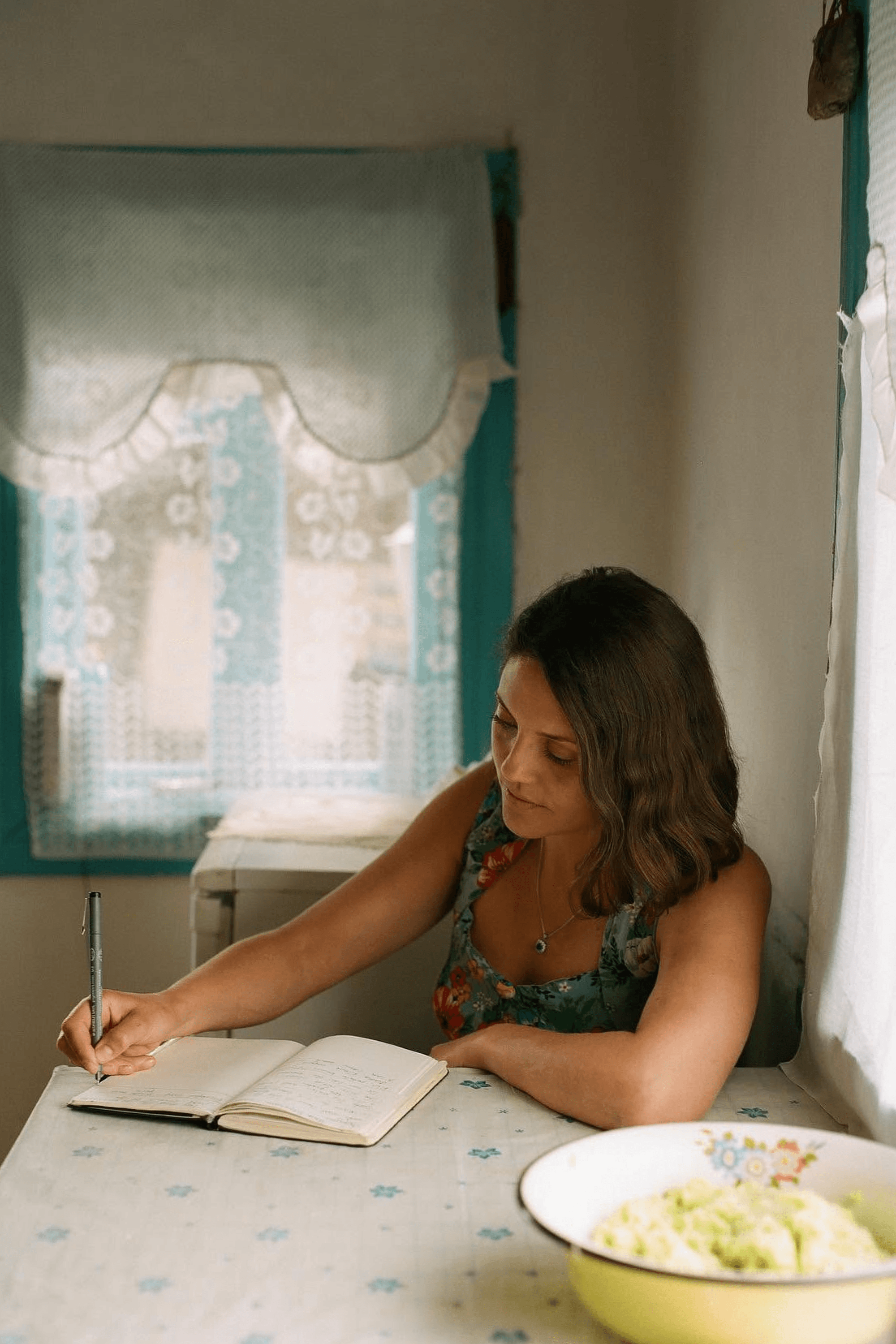
About visibility and perception
Sometimes it feels as though Ukraine is constantly forced to prove that it exists. We endlessly explain that we have our own history, culture, and voice. Even that borshch is a Ukrainian dish, not Russian soup. Those explanations are exhausting.
But this did not happen by chance. For decades, Russian propaganda built the image of Russia as the region’s only cultural center, promoting its writers, composers, and chefs, while Ukrainian culture was either destroyed or appropriated. An entire generation of intellectuals was eliminated in the 1930s, and during the Soviet period Ukraine was presented as a province. It is not surprising that for a long time the West did not know that the Ukrainian tradition existed independently of the Russian one.
My audience comes for the recipes but stays for the stories. British people are interested in food and open to new cultures. They quickly begin to see Ukraine not as an extension of someone else, but as a separate country with its own memory.
About Ukrainian cuisine in Britain
When I was just starting out, almost no one in Britain knew about Ukrainian cuisine. Today, London has excellent Ukrainian restaurants, such as Tatar Bunar, Sino, and Mriya, and the cuisine is no longer seen as something exotic or simply part of a vague “Eastern European” category. It finally has its own identity.
I like the fact that most of the guests in these restaurants are locals. They come not out of solidarity, but because they genuinely enjoy the food. At the same time, people are beginning to understand that there is no single Ukrainian cuisine. The south is completely different from the west. The ingredients are different, the history is different, and the cultural influences are different. That is exactly the diversity British people are now beginning to discover.
London helps with this a great deal. Living here, you get used to being interested in other cultures. When I talk about Ukrainian history, colonialism, or deportations, people often find parallels with their own family histories and listen more closely. As a result, they are no longer interested in how our cuisine differs from Russian cuisine. They want to understand how it was formed and what stories it preserves. That is when food becomes a way to understand a country.
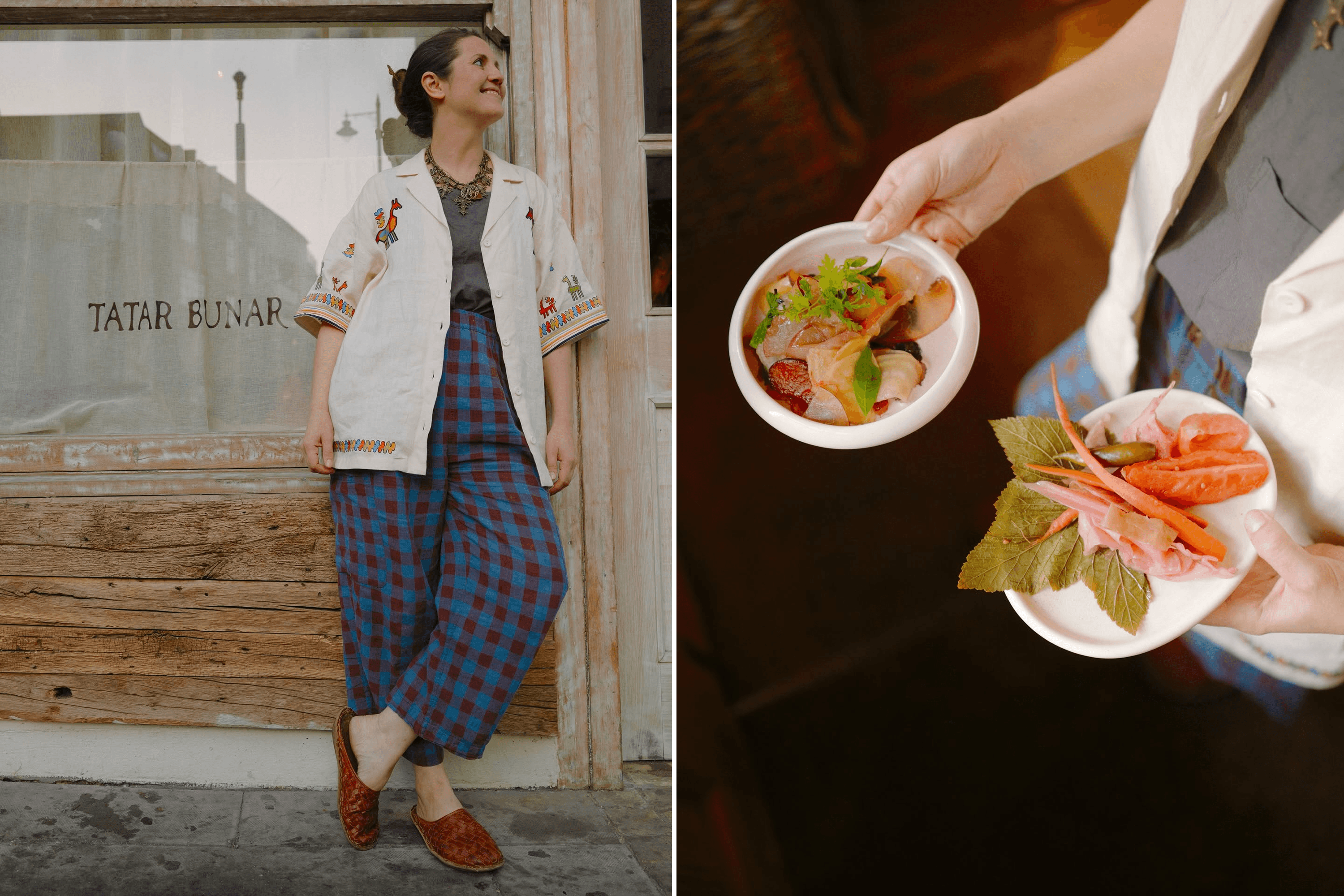
Olia Hercules prepares dinner at Tatar Bunar restaurant in London. August 2025. Photo: novikoff and felicityspector / Olia Hercules / Facebook 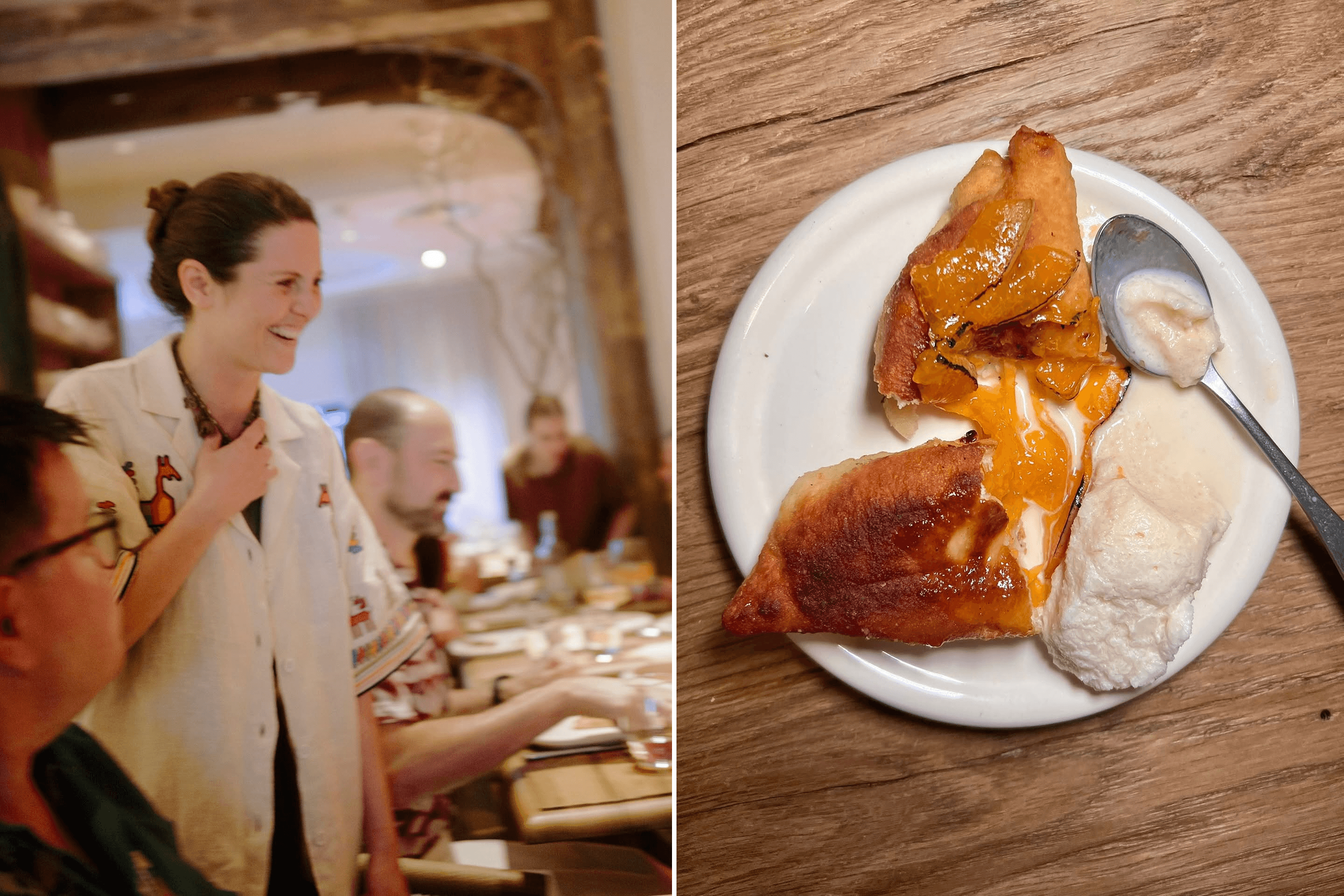
Photo: novikoff and felicityspector / Olia Hercules / Facebook 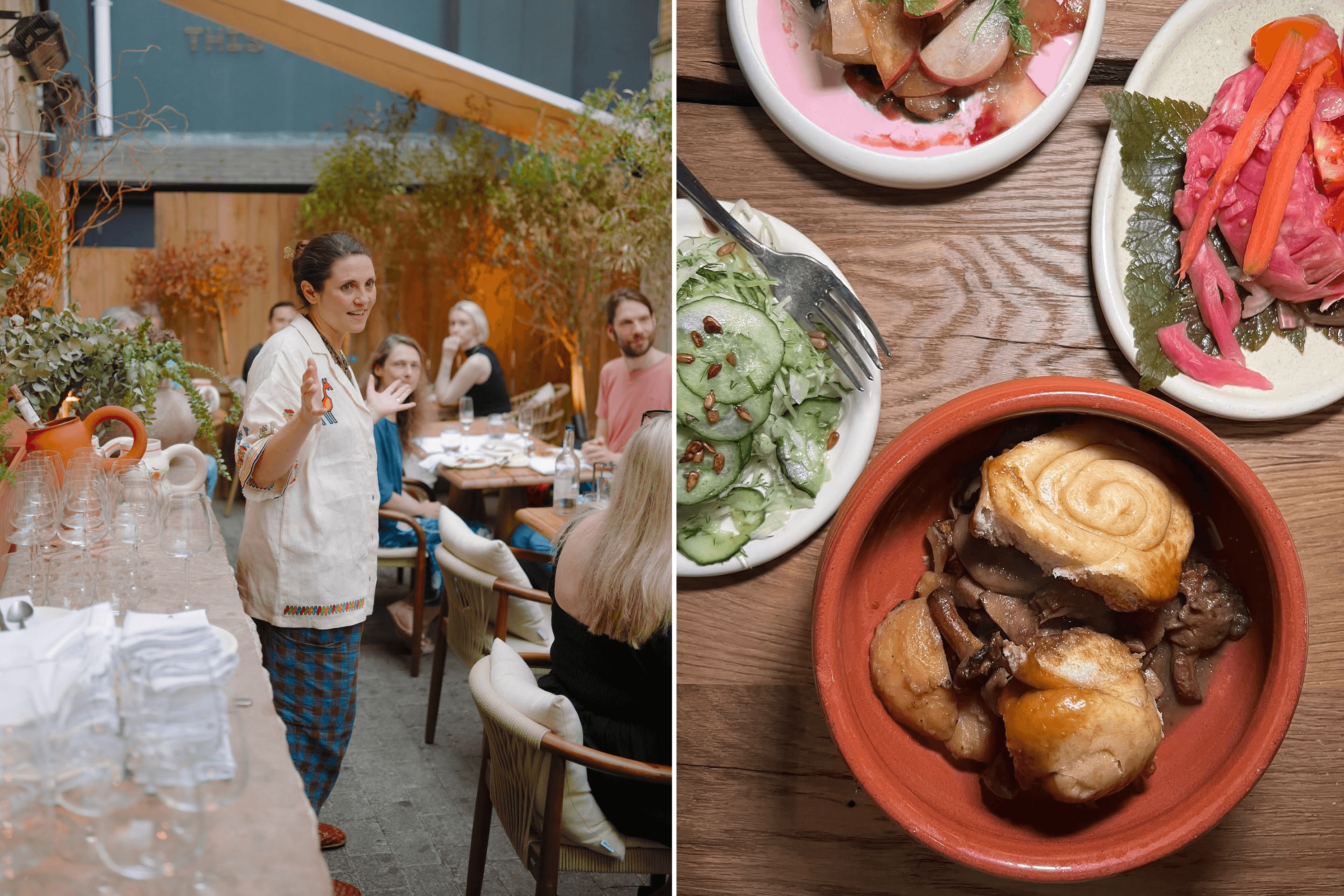
Photo: novikoff and felicityspector / Olia Hercules / Facebook 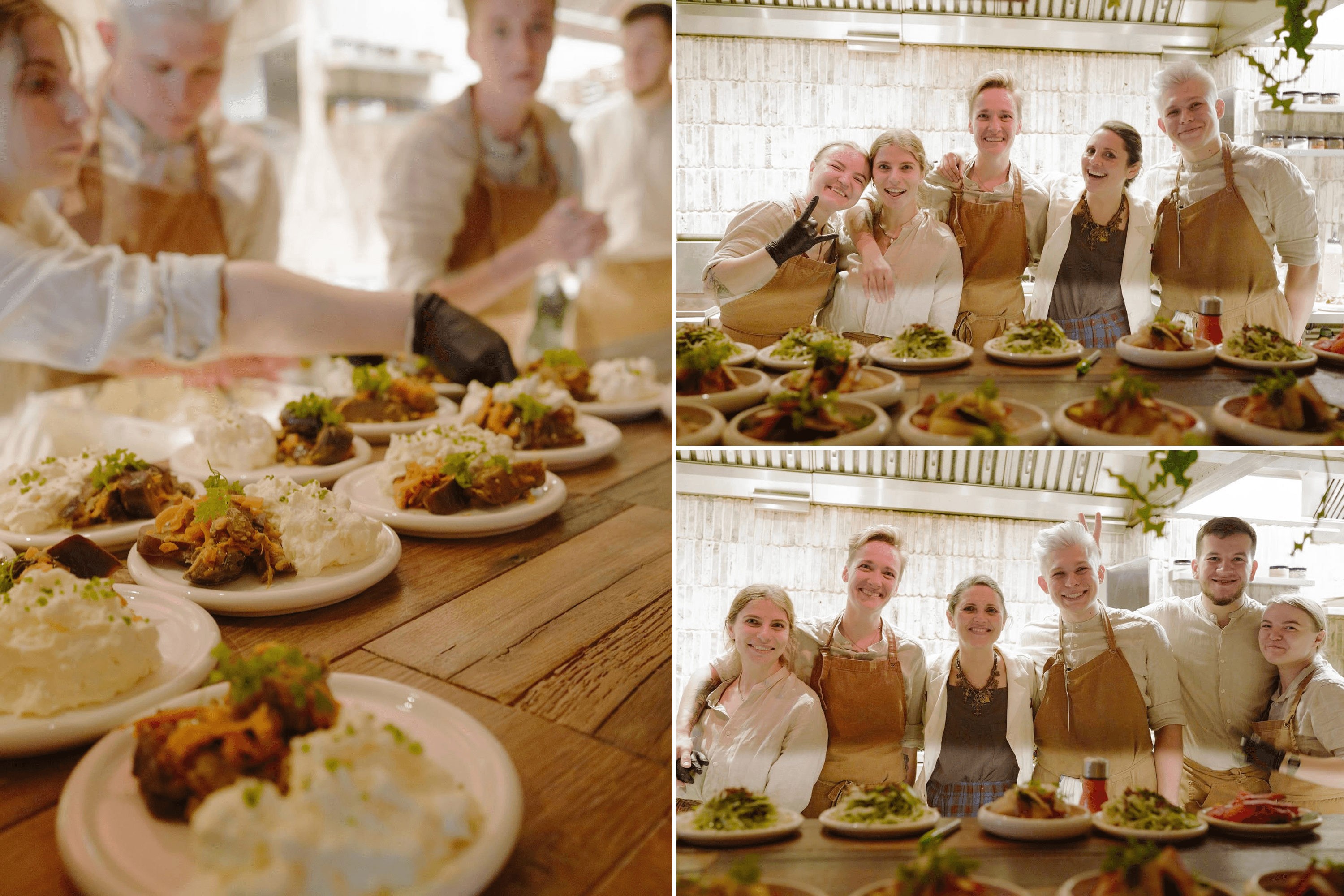
Photo: novikoff and felicityspector / Olia Hercules / Facebook


