Tetiana Khodakivska is a Ukrainian film director and a member of the European Film Academy and the Ukrainian Film Academy. One of her major works is the documentary "Enticing, Sugary, Boundless or Songs and Dances about Death", which received the Golden Dzyga, Ukraine's most prestigious film award, in 2017. Since 2015, Khodakivska has lived and worked in New York. She is currently directing the documentary-animation film "The Blue Sweater with a Yellow Hole" about Ukrainian children who survived Russian "re-education camps." The project is a co-production between four countries: Ukraine, France, the Czech Republic, and Luxembourg.
Yellow Blue journalist Roksana Rublevska spoke with Tetiana Khodakivska about working with childhood trauma in documentary filmmaking and why the world still does not fully understand the scale of Russian indoctrination.
How Russia abducts Ukrainian children:
- Russia began forcibly transferring Ukrainian children as early as 2014, during the occupation of Crimea and the war in eastern Ukraine. But in 2022, when Russia launched its full-scale invasion, the scale increased dramatically. Russia takes children from the occupied territories of Ukraine to the Russian Federation under the guise of evacuation, recreation, or “protection from hostilities.”
- Russia has created an entire system of institutions: holiday camps, sanatoriums, children’s centers, boarding schools, and orphanages. There, children are transferred to Russian educational standards and subjected to systematic ideological influence. This includes Russian propaganda, “patriotic education,” denial of Ukrainian identity, and militarization, including elements of military training.
- It is difficult to determine the exact number of deported children. Ukrainian authorities and international organizations have identified about 19,500 children who were taken to Russia and the temporarily occupied territories. However, the real number may be significantly higher.
- The deportation of children is a war crime and a grave violation of international humanitarian law. The Fourth Geneva Convention explicitly prohibits the forcible transfer of civilians from occupied territories. This is why, in March 2023, the International Criminal Court issued arrest warrants for Vladimir Putin and Maria Lvova-Belova, the Russian president’s commissioner for children’s rights.
- Russia’s position remains contradictory. Russian authorities sometimes deny that deportations took place at all, claiming that the children taken away were orphans. At other times, they cite different figures ranging from 400,000 to 770,000 children. Russian officials use these numbers to portray the deportations as “rescuing children from the combat zone.”
How did the idea for “The Blue Sweater with a Yellow Hole” come about?
After the start of the full-scale invasion, information appeared in the public sphere about approximately 20,000 children whom Russia had deported from Ukraine. The UN had already documented that children were being taken away under the guise of “humanitarian evacuation.” I understood that the real number could be higher. In the fall of 2022, Russia claimed it had “evacuated” more than 440,000 children but provided no lists of names or any information about their parents or legal guardians.
In July 2023, Russia’s presidential commissioner for children’s rights, Maria Lvova-Belova, stated that more than 700,000 Ukrainian children had arrived in Russia since the beginning of the full-scale invasion. In another interview, the number given was 744,000. It was frightening to imagine these children under the influence of the Russian propaganda machine. Online, you can see photographs of three-year-old children dressed in military uniforms, slightly older children sitting on papier-mâché tanks, and schoolchildren joining Yunarmiya.
By then, I was already thinking about making a film. Around that time, I was co-curating an exhibition of contemporary Ukrainian art at the James Gallery in New York. Thanks to works by Oleksiy Sai, Mykyta Kadan, Kseniia Malykh, Katherine Carl, and Inga Lāce, the exhibition became the largest showcase of Ukrainian art in the United States in the past twenty years. Among the participating artists was Alevtina Kakhidze, whose “Klubnika Andriivna” series was dedicated to her mother’s life under occupation. That was when I invited Alevtyna to join the project as art director.
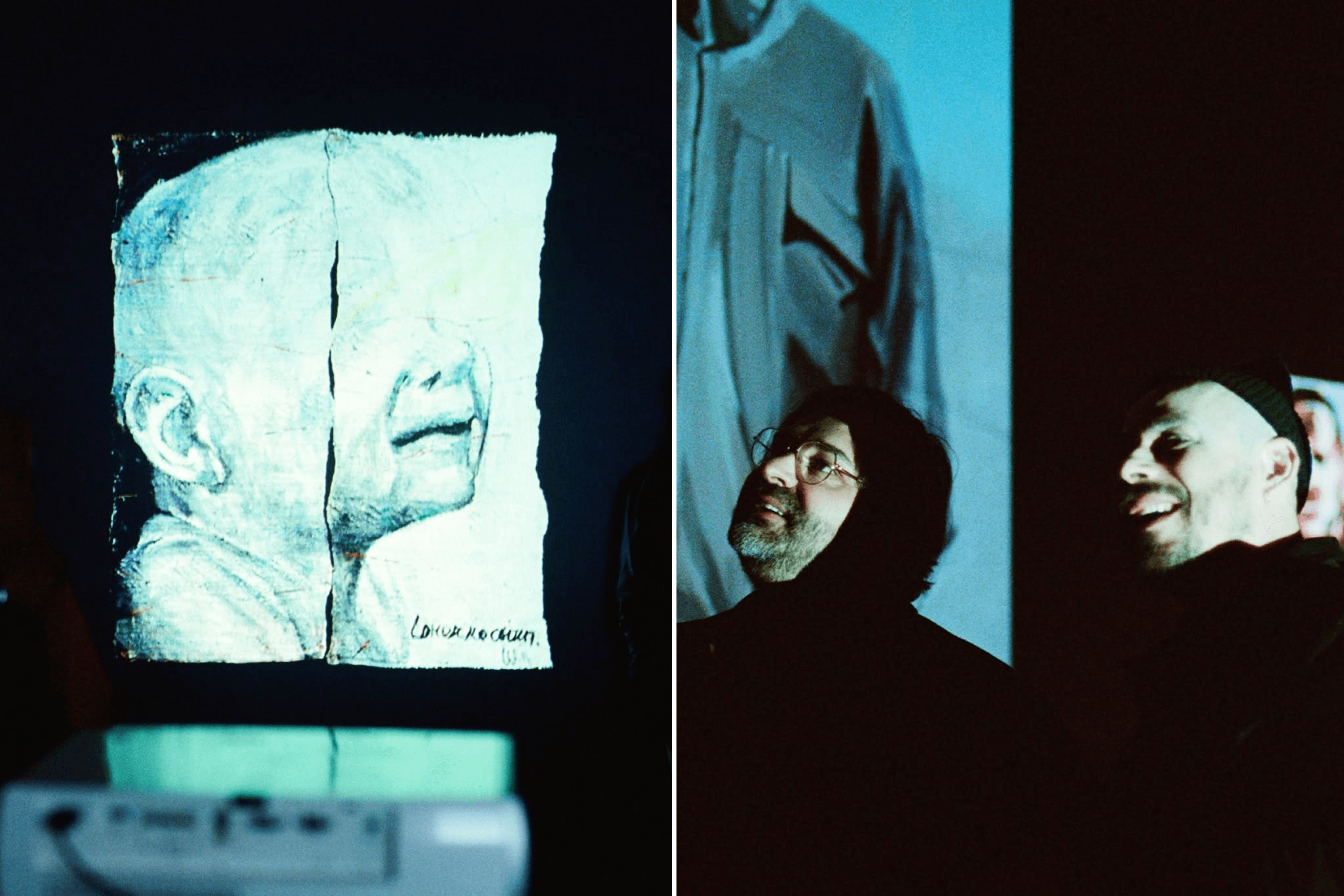
The exhibition of contemporary Ukrainian art at the James Gallery at The Graduate Center, CUNY. New York, United States. December 2022. Photo: Khodakivska Tania / Facebook / YB 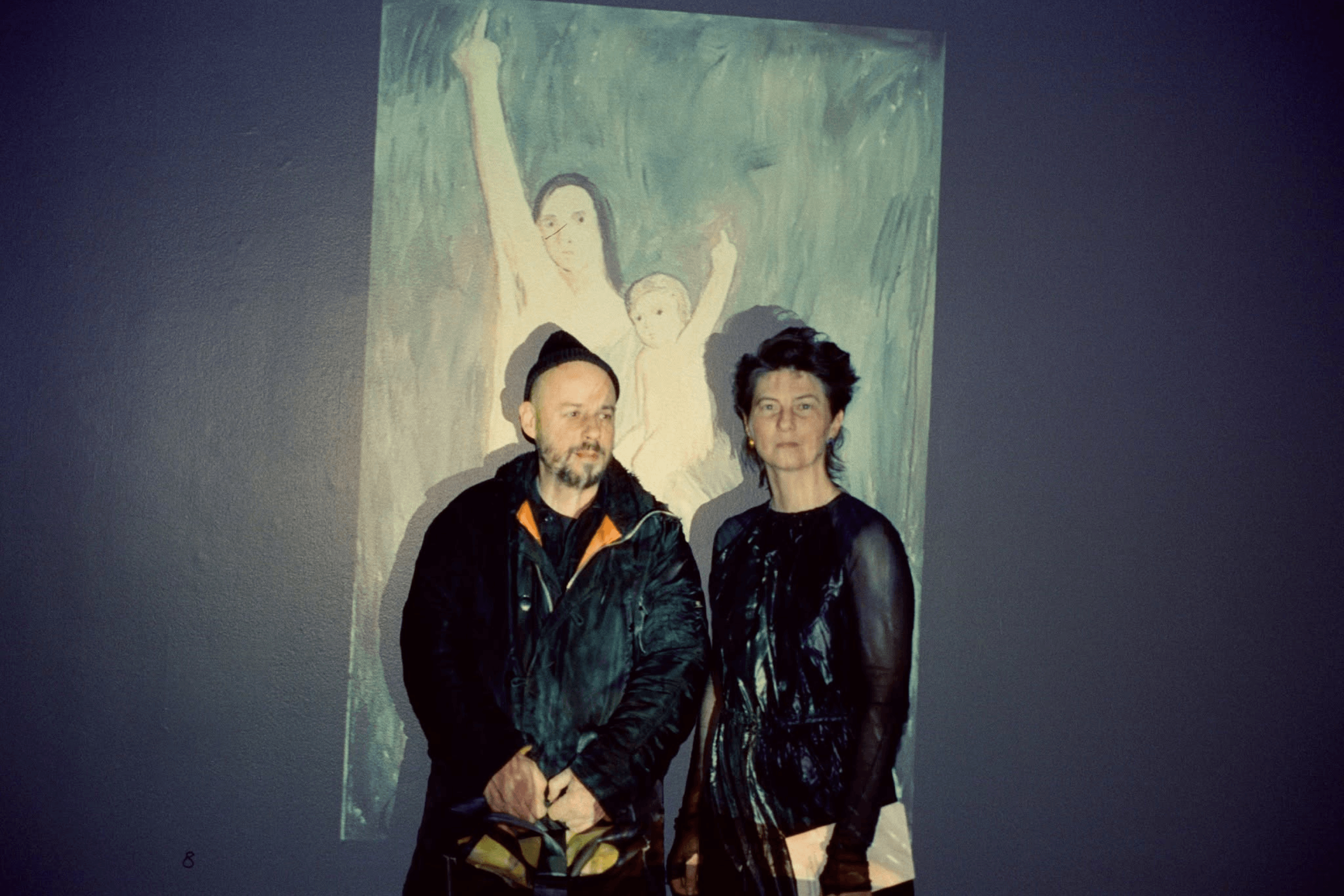
Photo: Khodakivska Tania / Facebook / YB 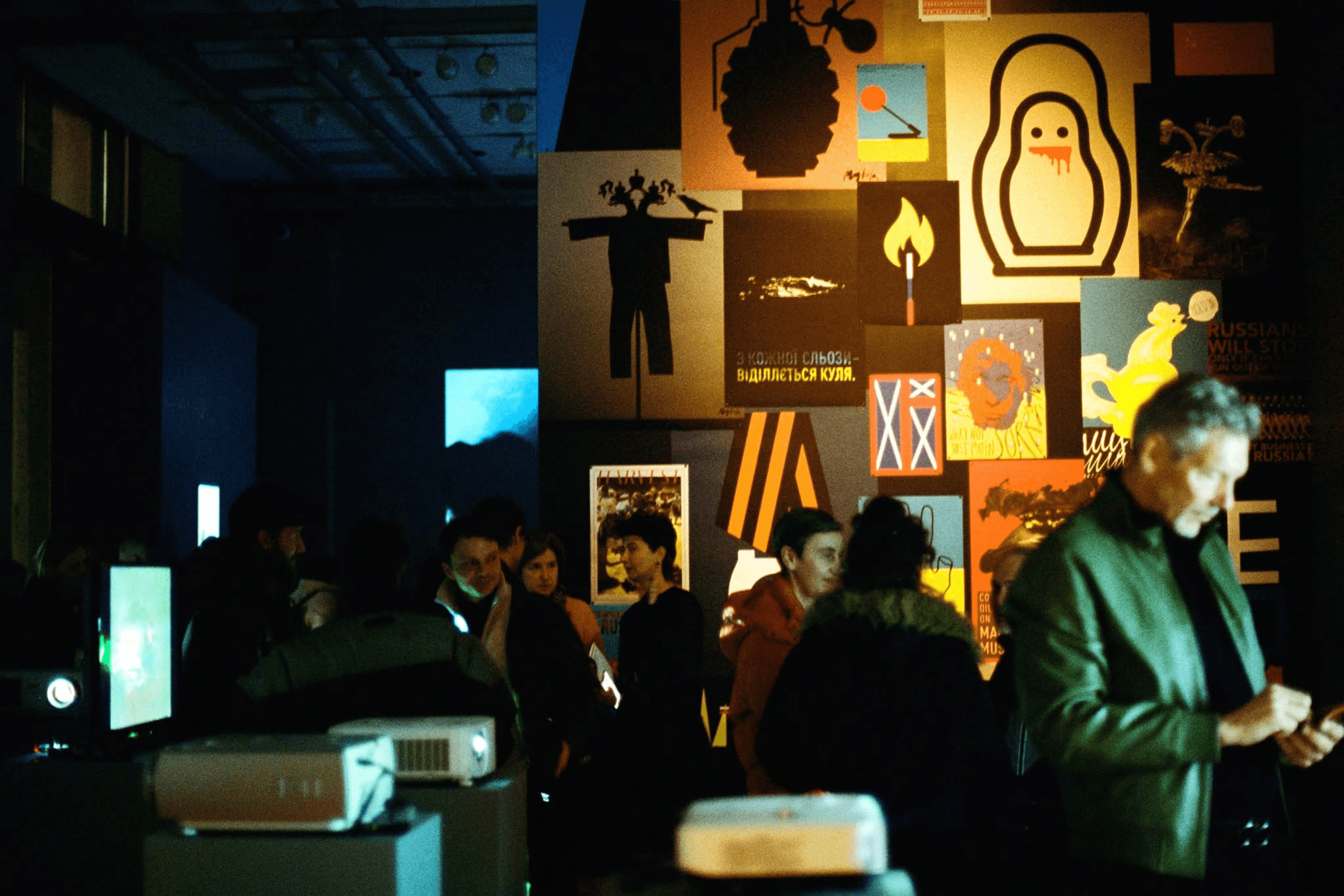
Photo: Khodakivska Tania / Facebook / YB 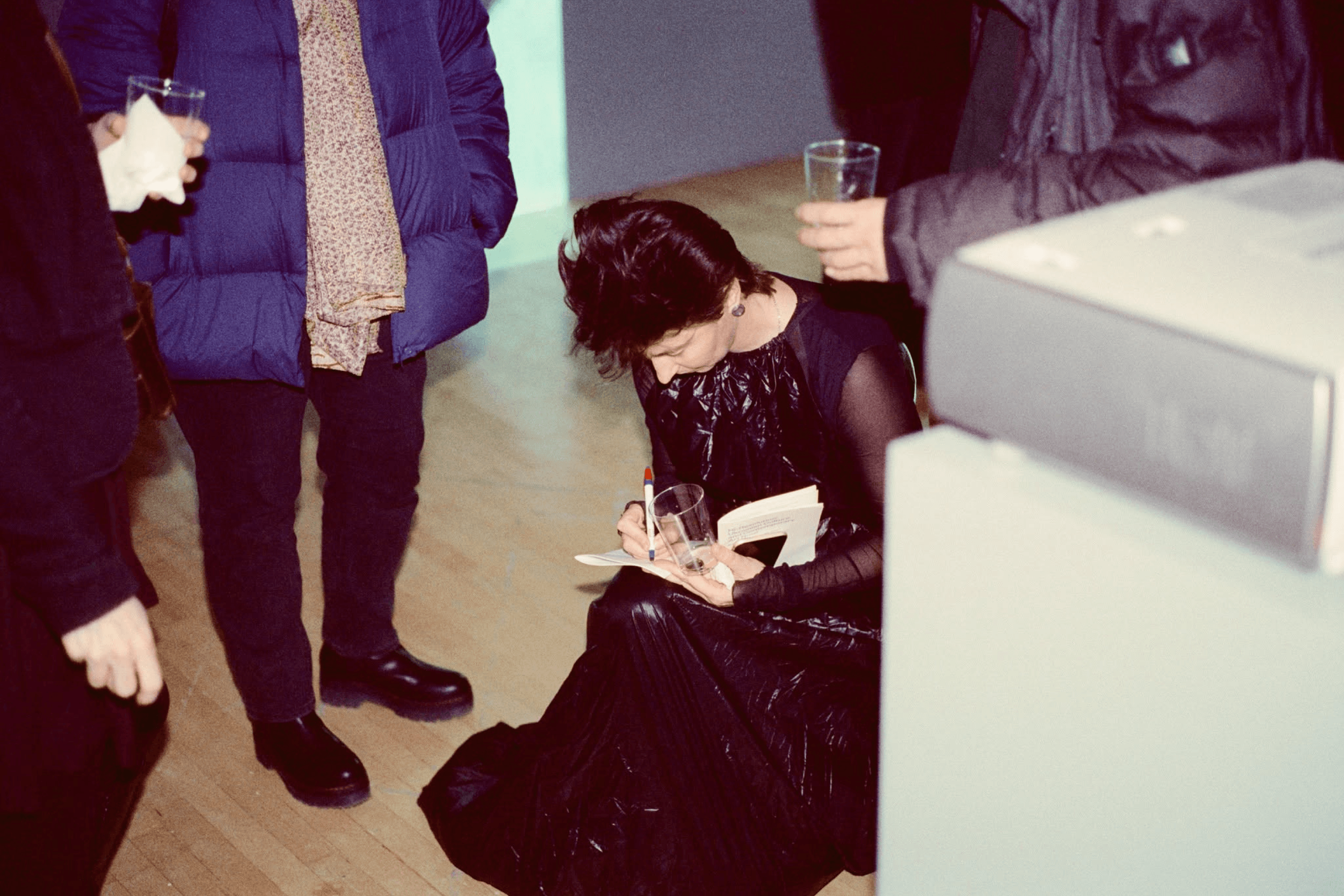
Photo: Khodakivska Tania / Facebook / YB 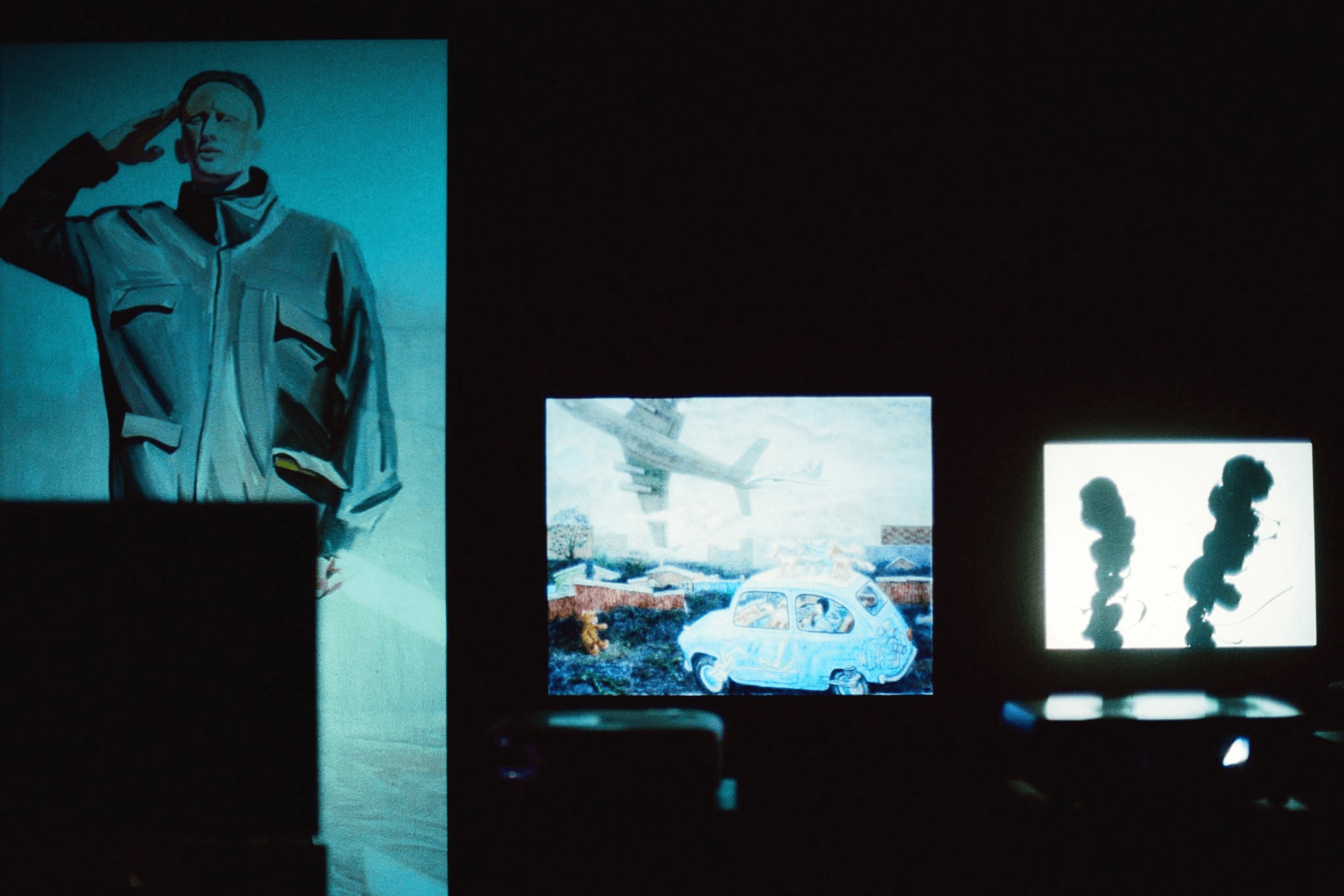
Photo: Khodakivska Tania / Facebook / YB 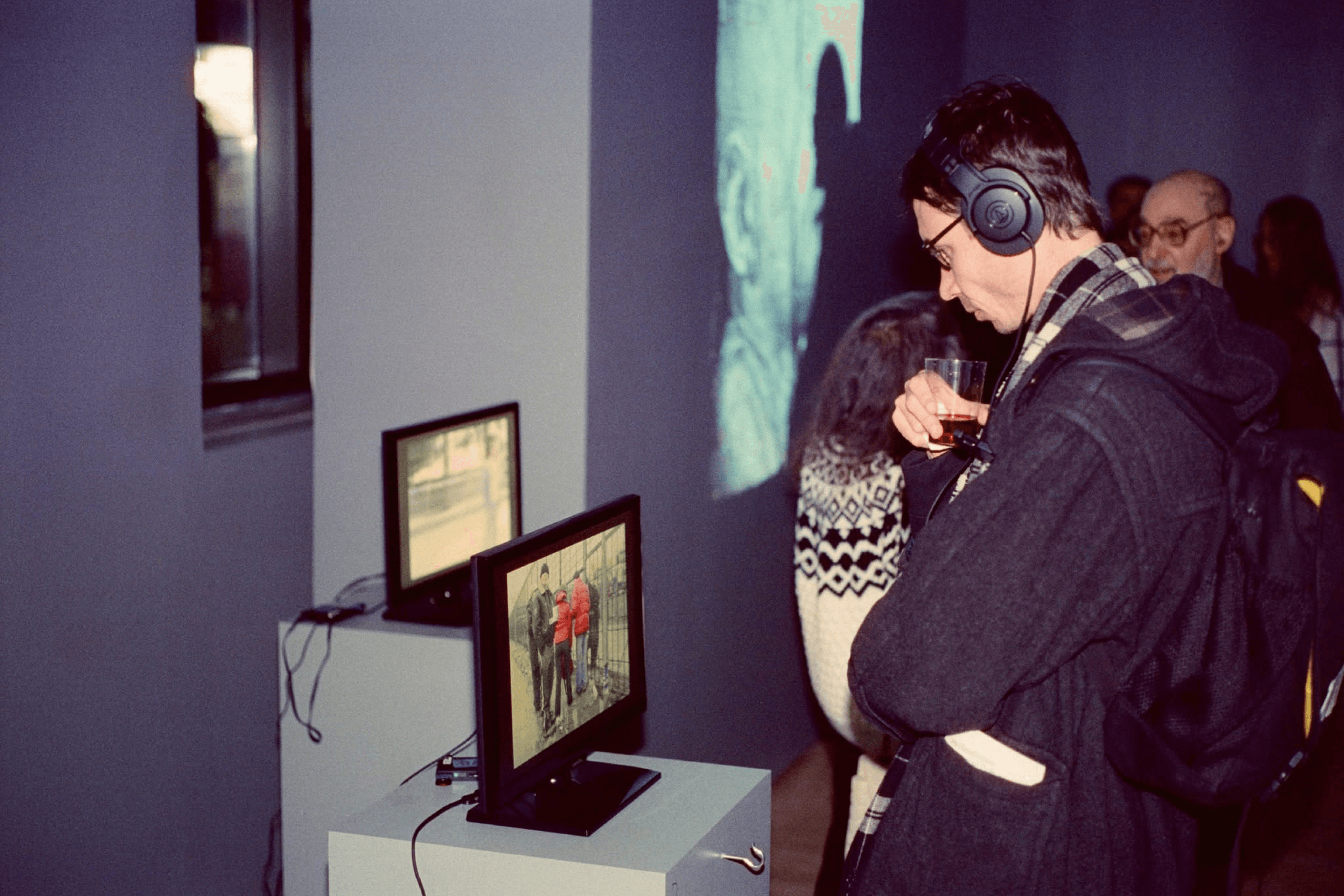
Photo: Khodakivska Tania / Facebook / YB
What was the first step toward bringing the film project to life?
Our first partners were the Harriman Institute at Columbia University and Terre des Hommes, an international children’s rights organization. We needed to rely on facts so that viewers could trust the film, and we wanted to do everything possible to protect the children and preserve their dignity. We completed training in trauma-informed practice and psychological first aid for children. Then we met with 72 children from the Kherson and Kharkiv regions who had been brought back home from Russia and the occupied territories. Together with Alevtina, we drew with them, and that became the way we collected testimonies. Gradually, the children chose for themselves what to draw, what materials to use, and where to begin telling their stories.
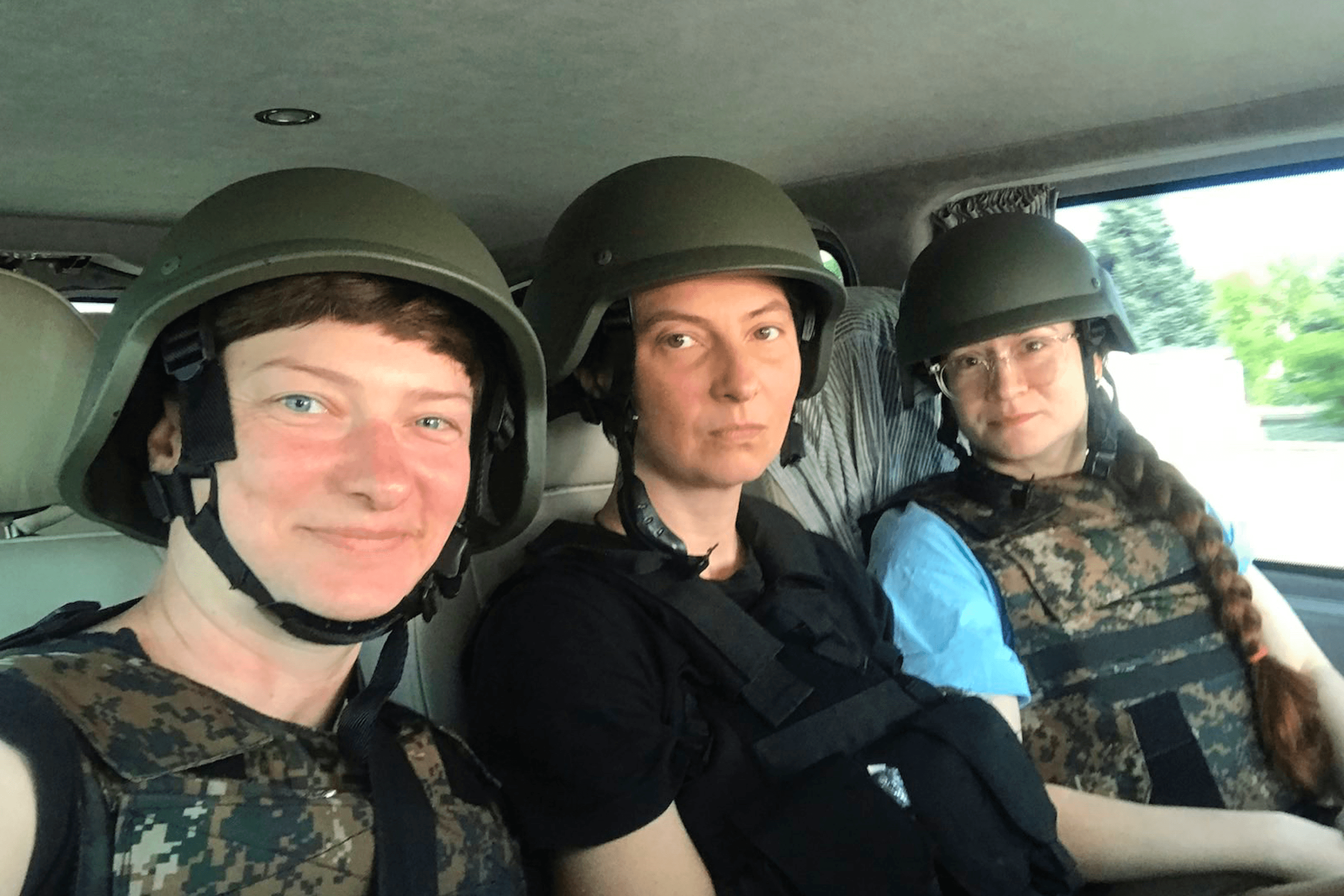
We also worked with human rights defenders to understand how to collect information in a way that would allow it to be used as evidence of war crimes. We also created our own archive of materials, which we will transfer to the Ukrainian War Archive so that other researchers can use these materials.
Later, the first Yale University report, “Russia’s Systematic Program for the Re-education and Adoption of Ukraine’s Children”, was published. It documented at least 43 camps in Russia and occupied Crimea where at least 6,000 Ukrainian children were being held. The researchers demonstrated a systematic state program that combined deportation with political “re-education.”
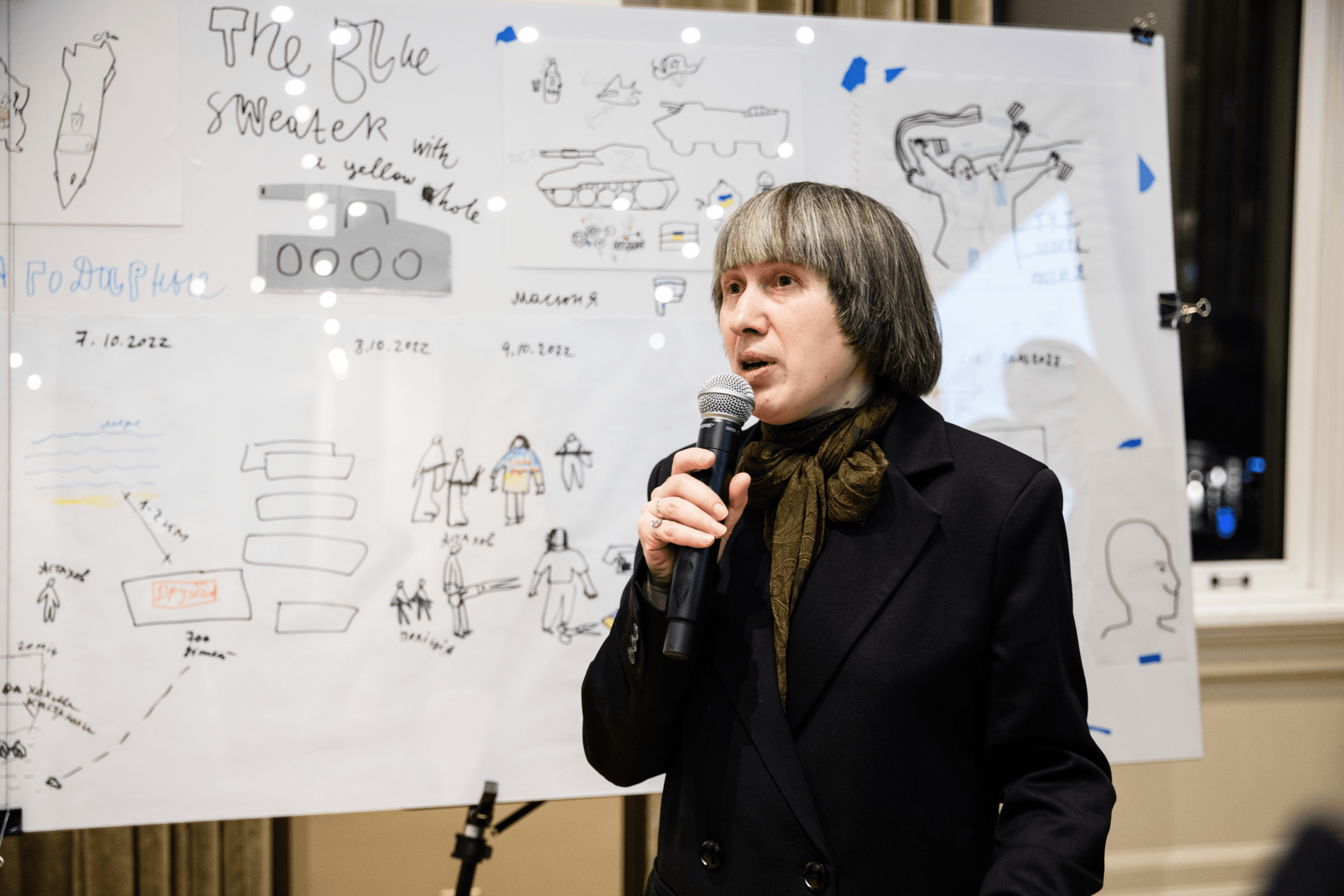
Artist Alevtina Kakhidze during the presentation of an exhibition as part of the Blue Sweater with a Yellow Hole project. Columbia University, New York, USA. February 10, 2024. Photo: Photo courtesy of Tetiana Khodakivska / YB 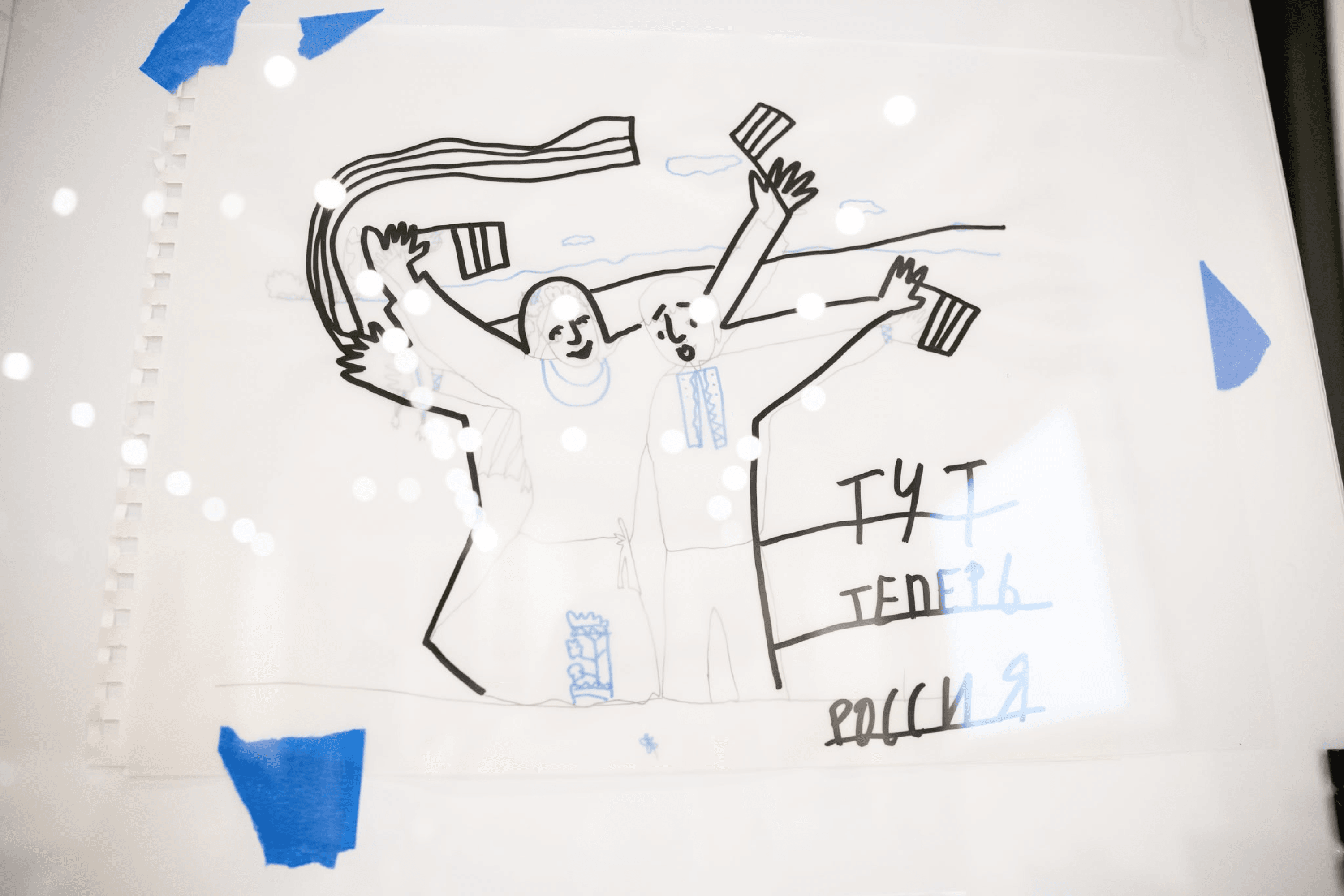
Photo: Blue Sweater with a Yellow Hole / Facebook / YB 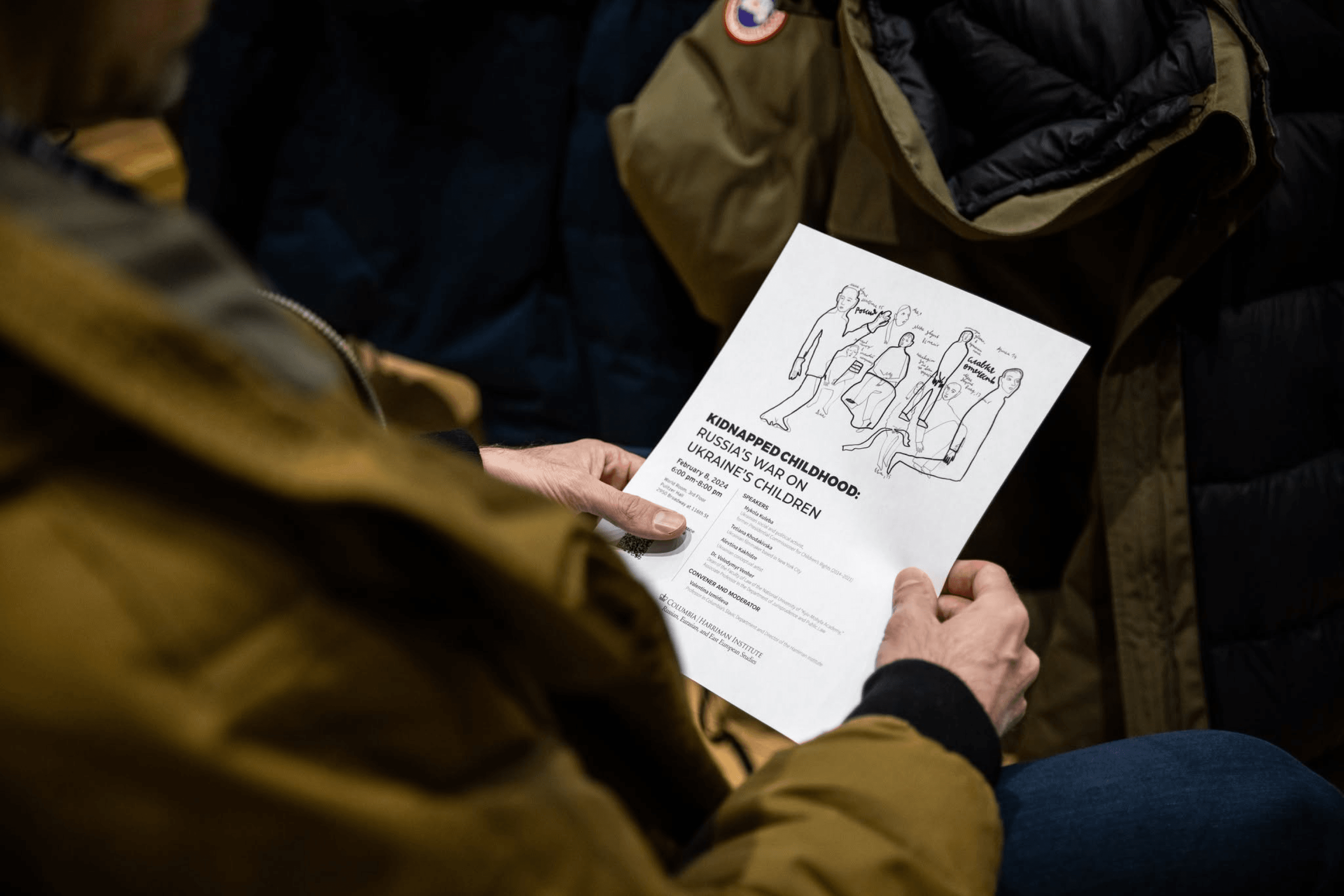
Photo: Blue Sweater with a Yellow Hole / Facebook / YB 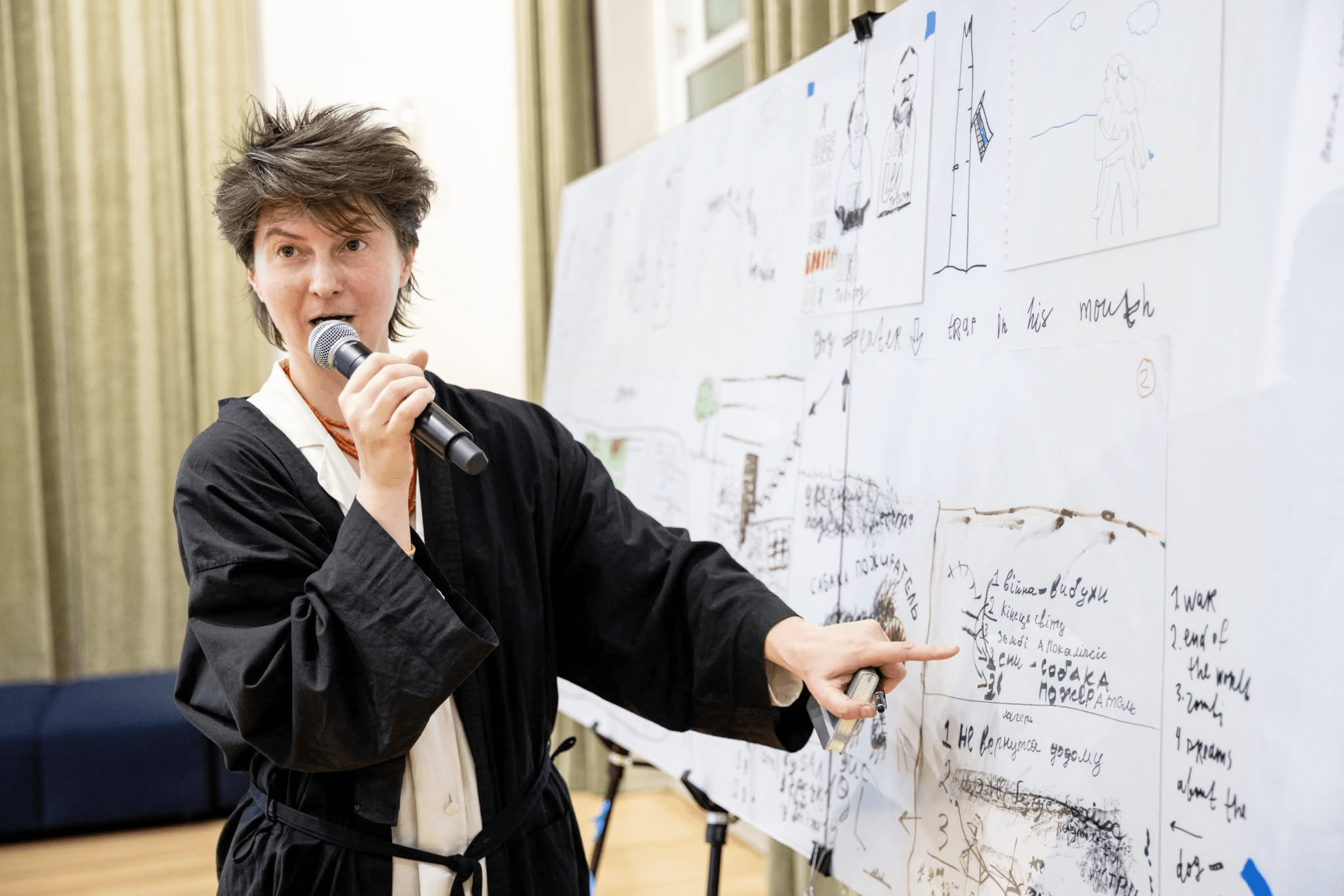
Тетяна Ходаківська. Photo: Blue Sweater with a Yellow Hole / Facebook / YB 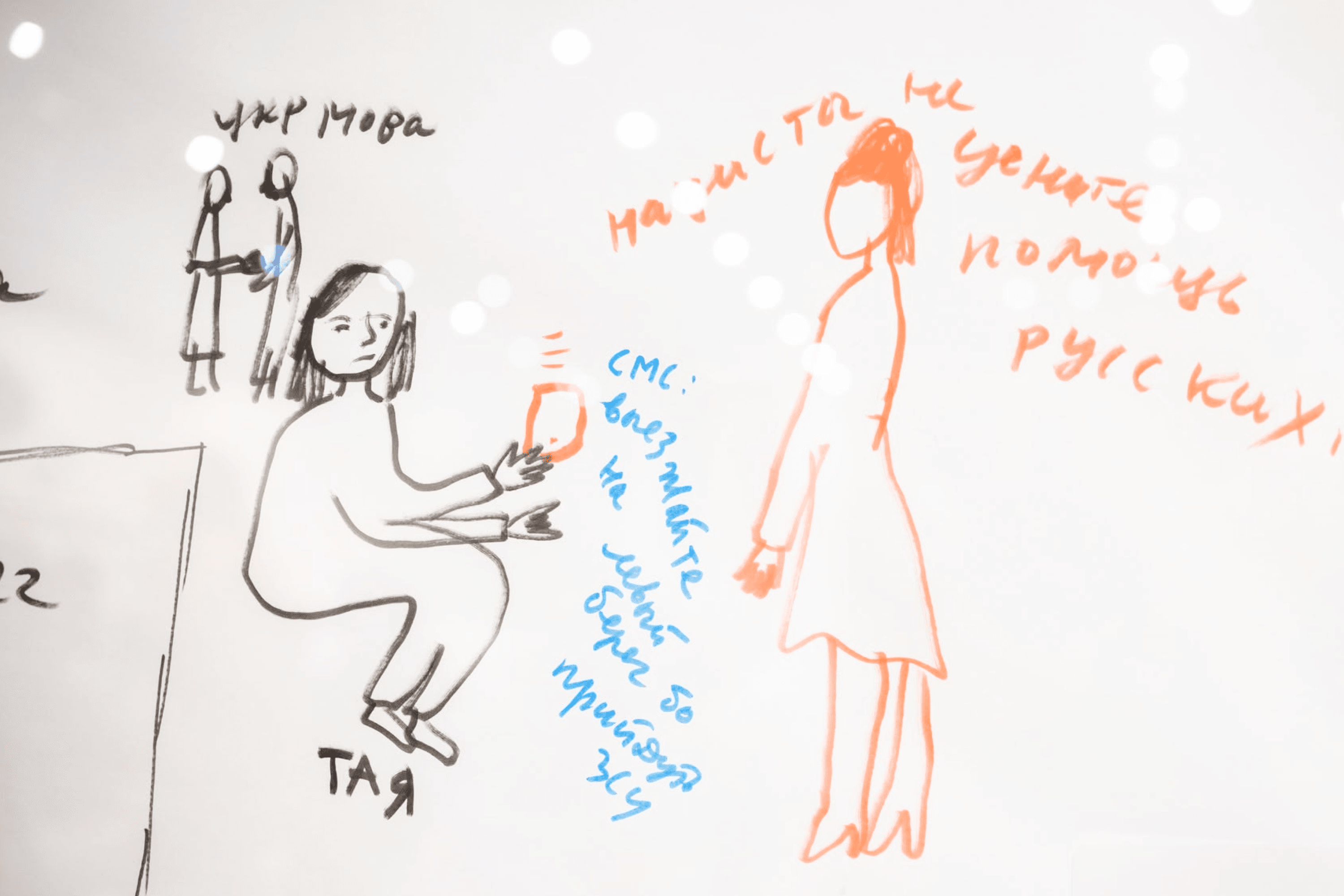
Photo: Blue Sweater with a Yellow Hole / Facebook / YB 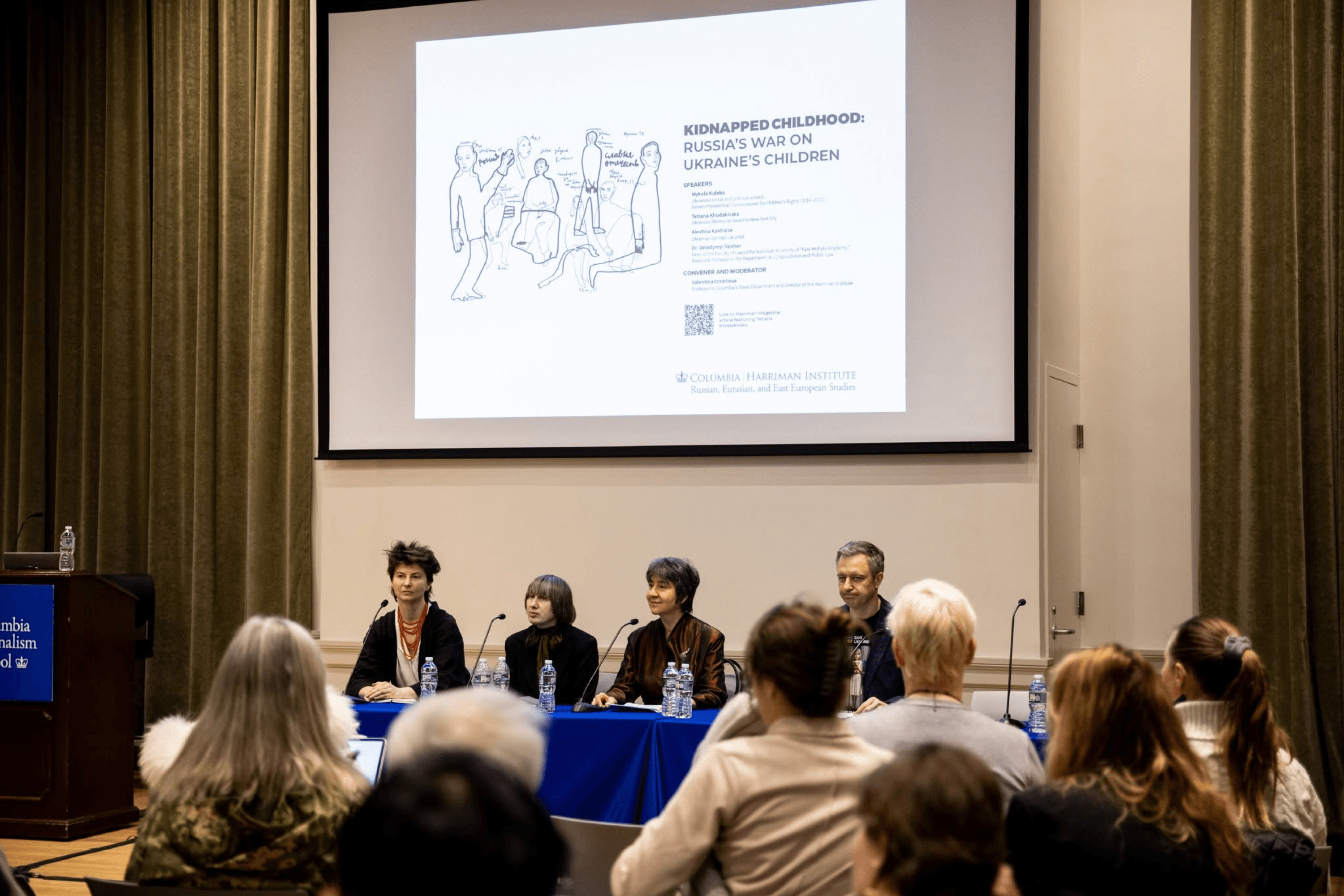
Photo: Blue Sweater with a Yellow Hole / Facebook / YB
How did these children end up in the “re-education” camps?
It is a system made up of many consecutive stages: manipulation, threats, bribery, and intimidation. As early as the second day of the occupation, Russian textbooks were delivered to schools. At first, children were politely “invited” to attend Russian schools. Some parents hid their children so they could continue studying online, while officers from the FSB visited others and threatened them: if you do not send your children to school, you will lose your parental rights. Later, children were persistently encouraged to go on “holiday.” Some parents feared that if they refused, their children would be taken away by force. Others believed that five meals a day and staying away from shelling would benefit their child. Some trusted the claims that “Russia is here forever” and that the trip was a “gift” from the new authorities. Almost no parents could have imagined that they would not see their child for six months, and in many cases, never again.
What ages were the children who were taken, and what was life like in the camps?
On the surface, these looked like ordinary summer camps that welcomed children between the ages of six and eighteen. But alongside games and entertainment, the children attended “Russian history” lessons, were made to sing the Russian national anthem, and were gradually encouraged to adopt a Russian identity.
We are trying to understand the mechanics of this influence. For younger children, it is based on dependence on adults and the search for safety. For older children, it can be a combination of pressure and reward. For example, periods of isolation and punishment alternate with “normal” treatment, such as attention or privileges. A child may be locked in an isolation room for several days or even weeks, after which it is presented as part of an “educational process.” They are praised for having “improved,” and then everyone behaves as if nothing had happened. One of the girls in our film was placed in a psychiatric clinic for a month and was held up as an “example” for other children who refused to obey.
How, under those circumstances, was it even possible to find the children and bring them back to Ukraine?
In reality, a great many people help bring Ukrainian children back, both in Ukraine and abroad: government institutions, charitable organizations, volunteers, diplomats, and lawyers all take part. However, the longer children remain there, the lower their chances of returning home.
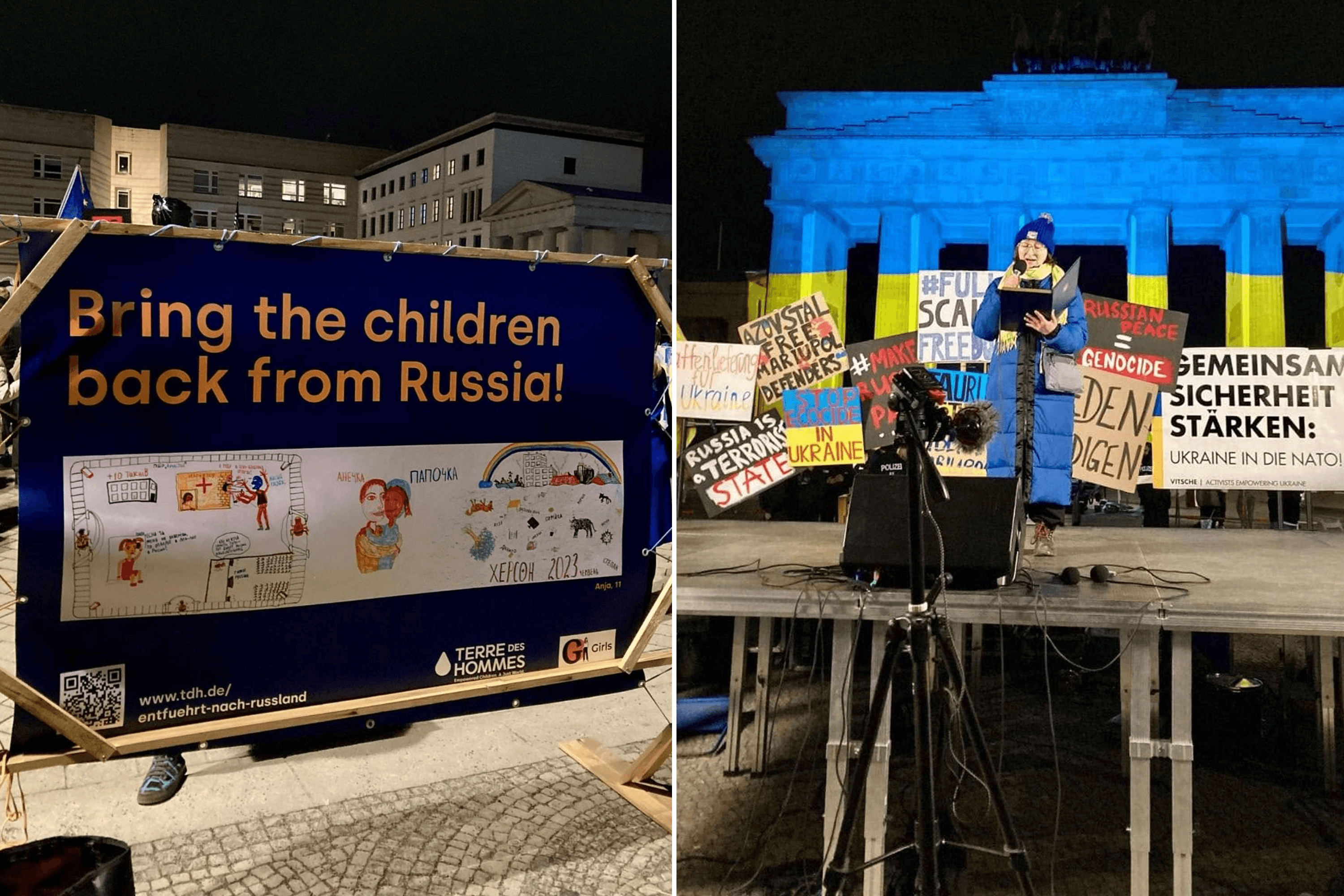
Works from the Blue Sweater with a Yellow Hole project displayed at a demonstration in Berlin calling for the return of Ukrainian children deported by Russia. February 2025. Photo: Khodakivska Tania / Facebook / YB 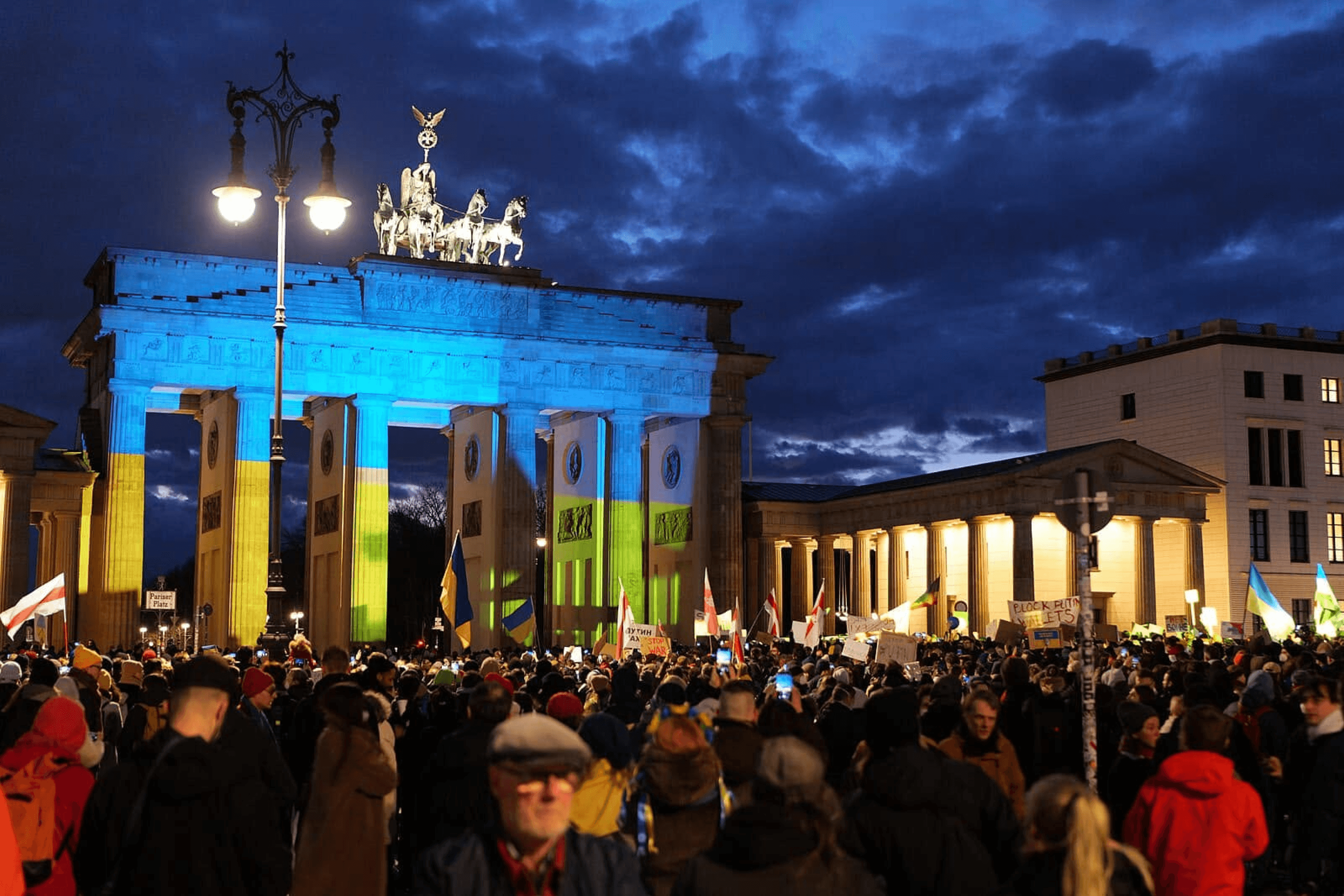
Photo: Khodakivska Tania / Facebook / YB 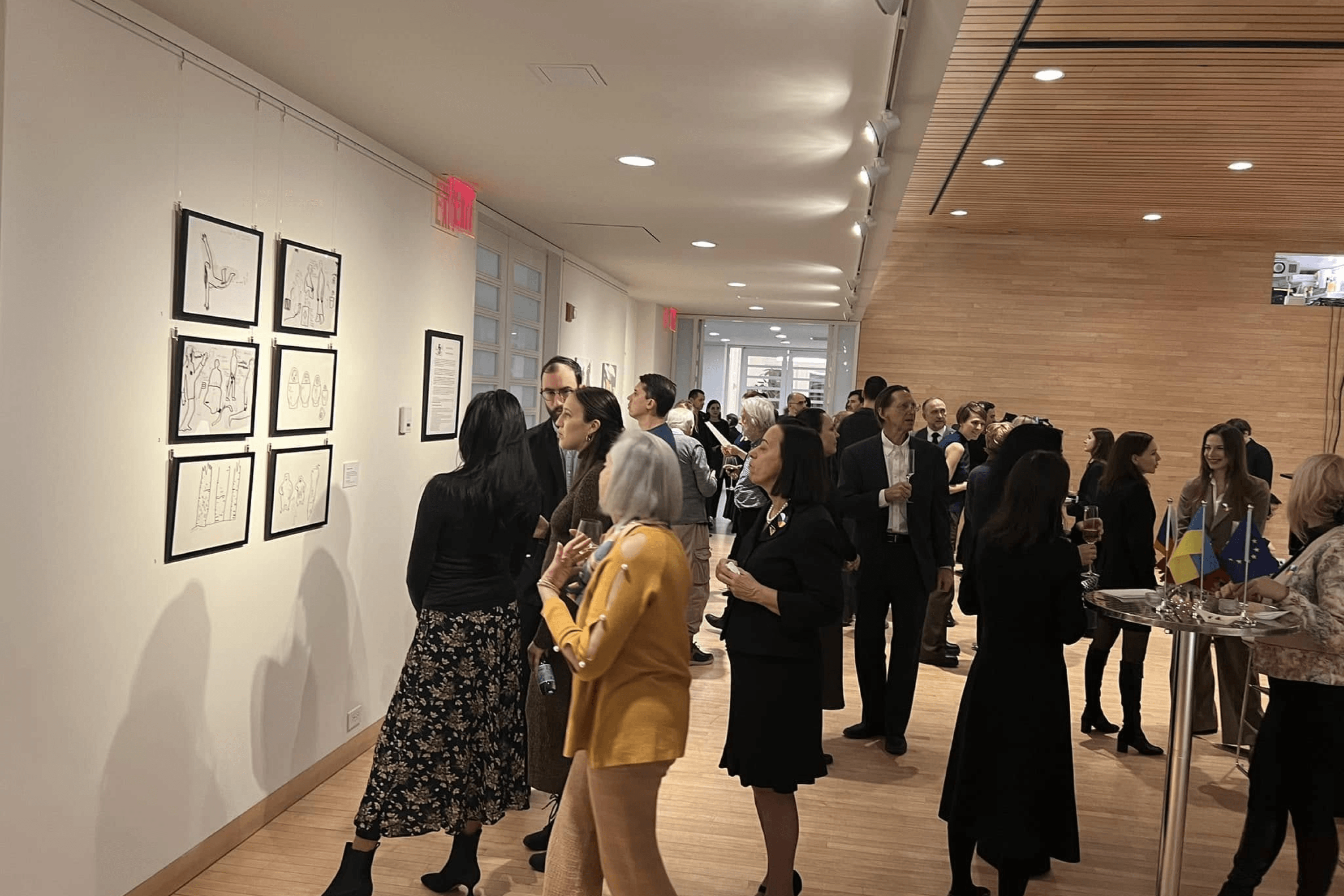
Photo: Khodakivska Tania / Facebook / YB 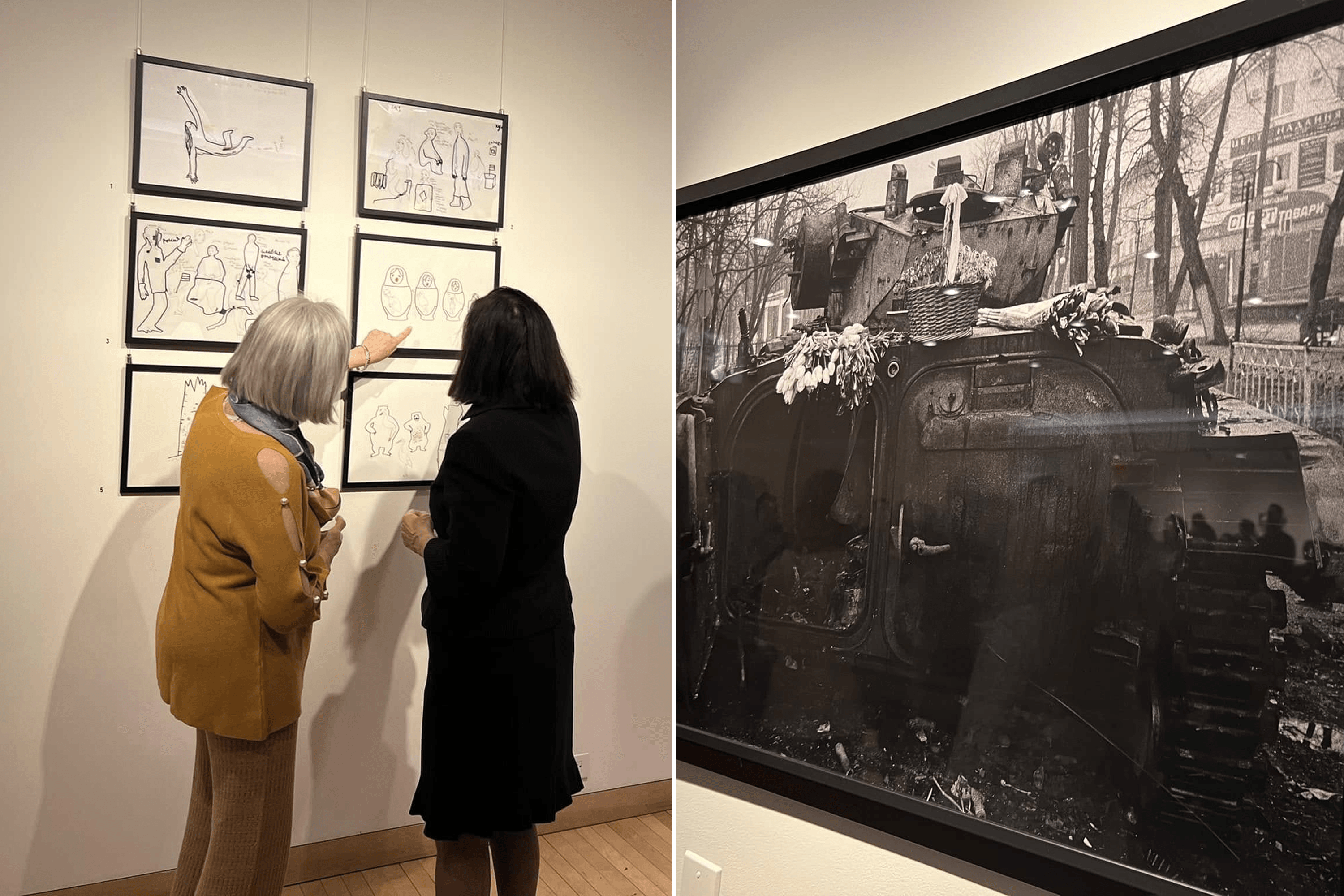
Photo: Khodakivska Tania / Facebook / YB
Save Ukraine has done, and continues to do, incredibly important work. Almost every day, its team brings 10 to 15 children and teenagers out of the occupied territories. Every successful return is the result of months, sometimes years, of preparation and daily work.
The team established contact with families, planned return routes, created cover stories to ensure safe travel, and provided parents with constant emotional support, since they were living in a state of panic. Under Russian law, if a child does not maintain contact with their parents for six months, they may be transferred to a Russian orphanage or adopted by a Russian family. Once that happens, finding the child becomes almost impossible. Children’s first names, surnames, and sometimes even their date or year of birth are changed.
But Russia fears public attention to these stories. If information reaches the international media, Russian officials offer a different explanation. They claim that the children are not being held, but that their parents could not be found or simply have not come to collect them. In reality, however, parents are often unable to act because of the risks they face or direct pressure.
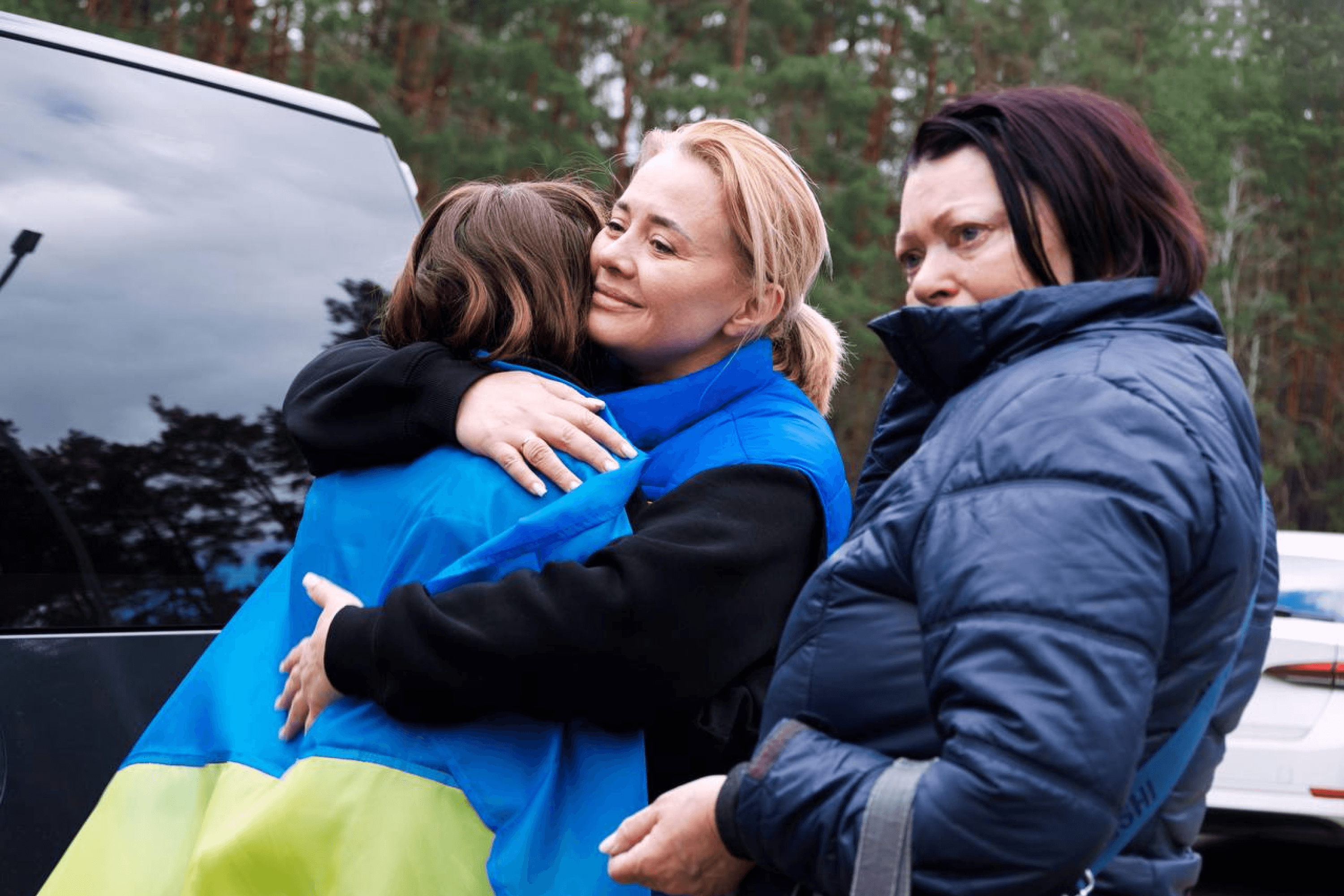
The return of Ukrainian children from territories temporarily occupied by Russia. Photo: Омбудсман Лубінець Дмитро / Telegram / YB 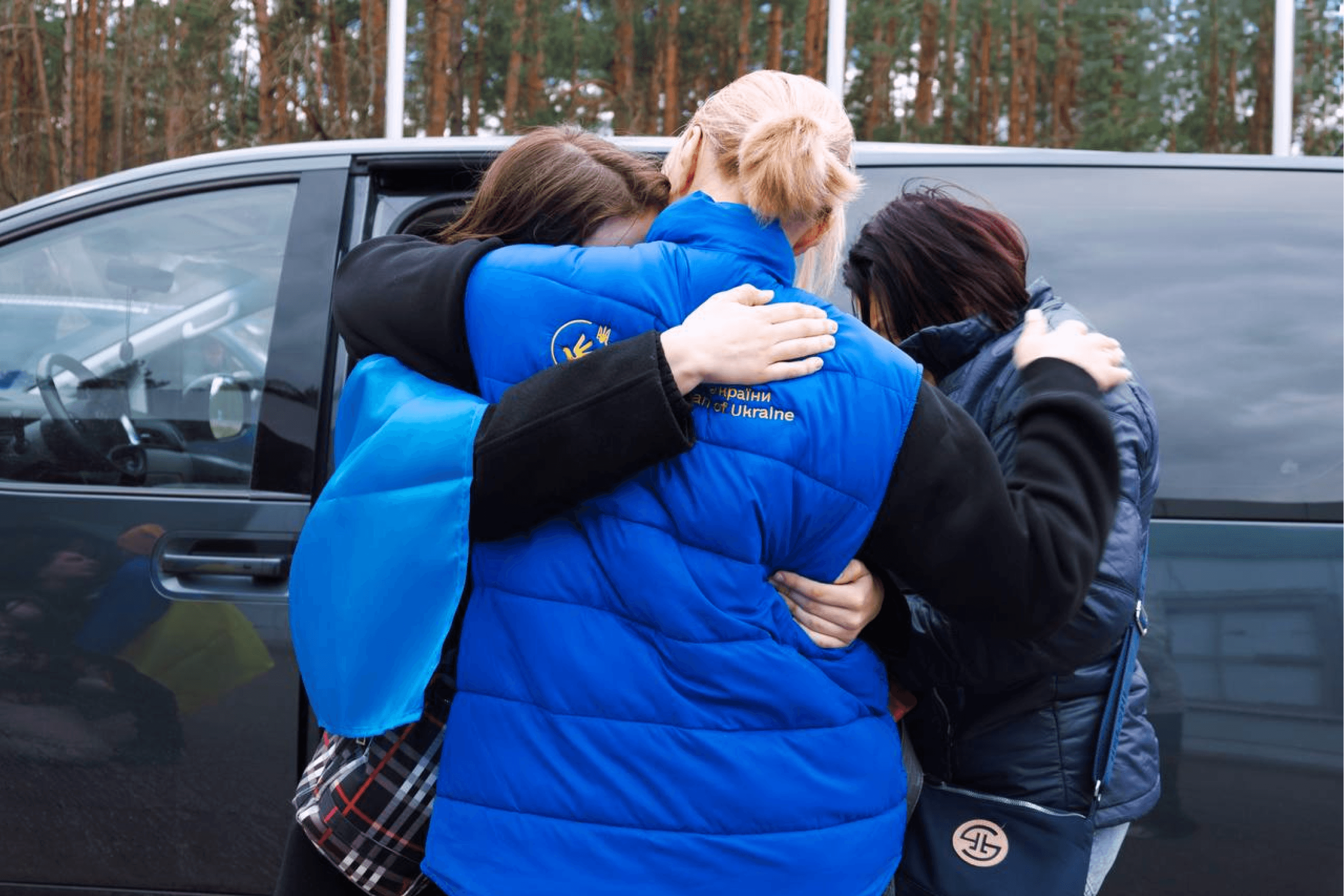
Photo: Омбудсман Лубінець Дмитро / Telegram / YB 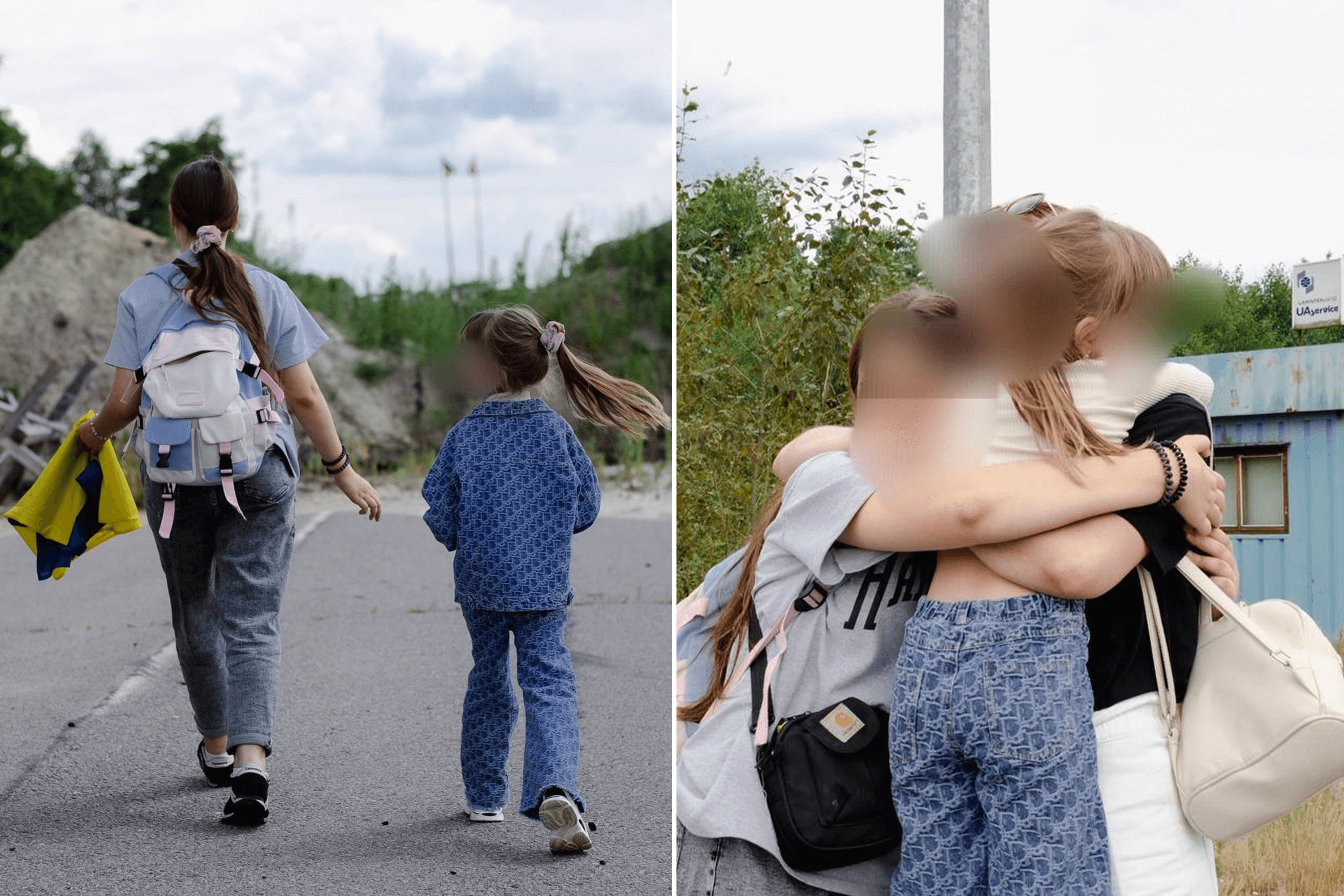
Photo: Омбудсман Лубінець Дмитро / Telegram / YB
Can films like this interfere with the process of bringing children back, since Russia could use this information to tighten its control?
We approach this issue very carefully, which is why we deliberately do not disclose details that could endanger the organizations working to return the children. Every child’s case requires a different approach, and it cannot be reduced to a single formula.
Russia usually responds to films like this with only one strategy: denial. For us, it is important to show the scale of the phenomenon and what is systematically taking place in the occupied territories. It is not only about the camps. It also involves schools, state programs, and the so-called “Important Conversations” lessons, which function as a daily tool of influence over children. The more people speak about this, the greater the chances that international pressure will help bring all of our children home.
Who are the main characters in the film?
Three children from Kherson: 15-year-old Taisa, nine-year-old Kira, and 12-year-old Kyrylo. We see life inside the camp and the gradual collapse of the illusion of a “summer holiday.” Taisa ends up there because her grandmother feared that her parents would be stripped of their parental rights. For Kira, the camp becomes a place of emotional strain. At first, Kyrylo sees the trip as an adventure, but he soon discovers that reality is nothing like what he had been promised. A wider world unfolds around them: other children who support, argue with, influence, and protect one another, while all of them are forced to interact with the people running the system. The film also features parents who tried to bring their children back.
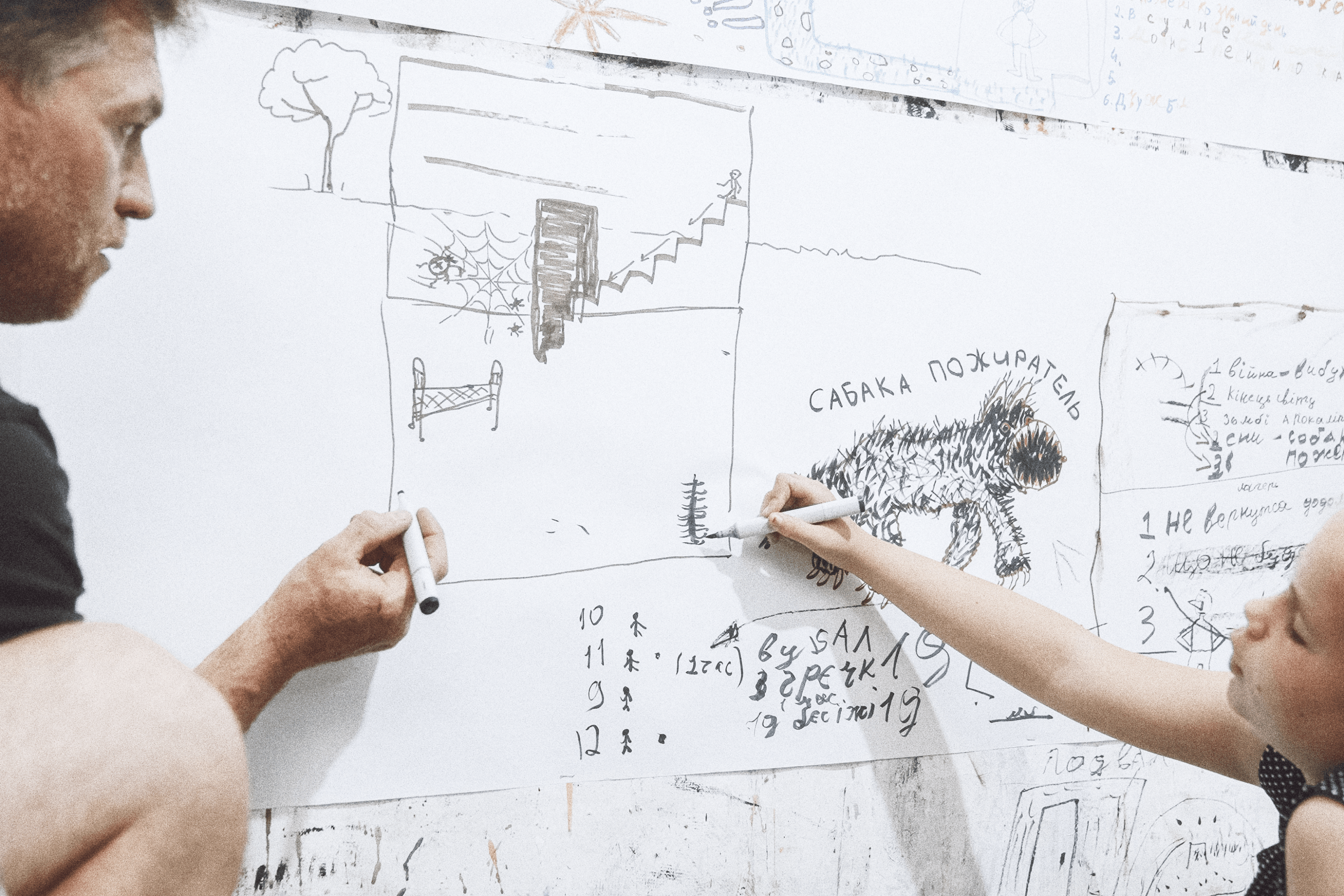
Kira and Oleksandr Zhukovskyi. Photo: Photo courtesy of Tetiana Khodakivska / YB 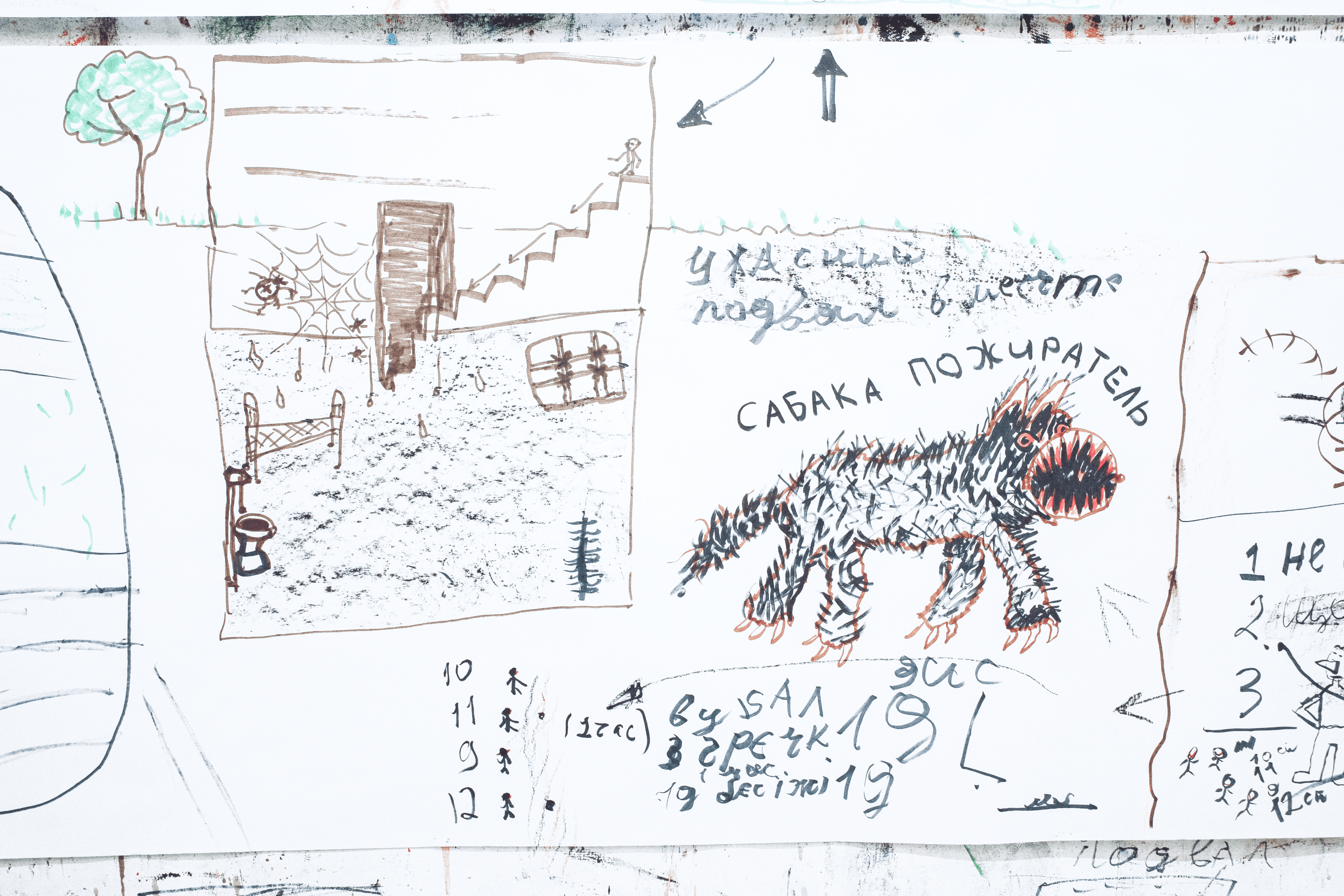
Photo: Photo courtesy of Tetiana Khodakivska / YB 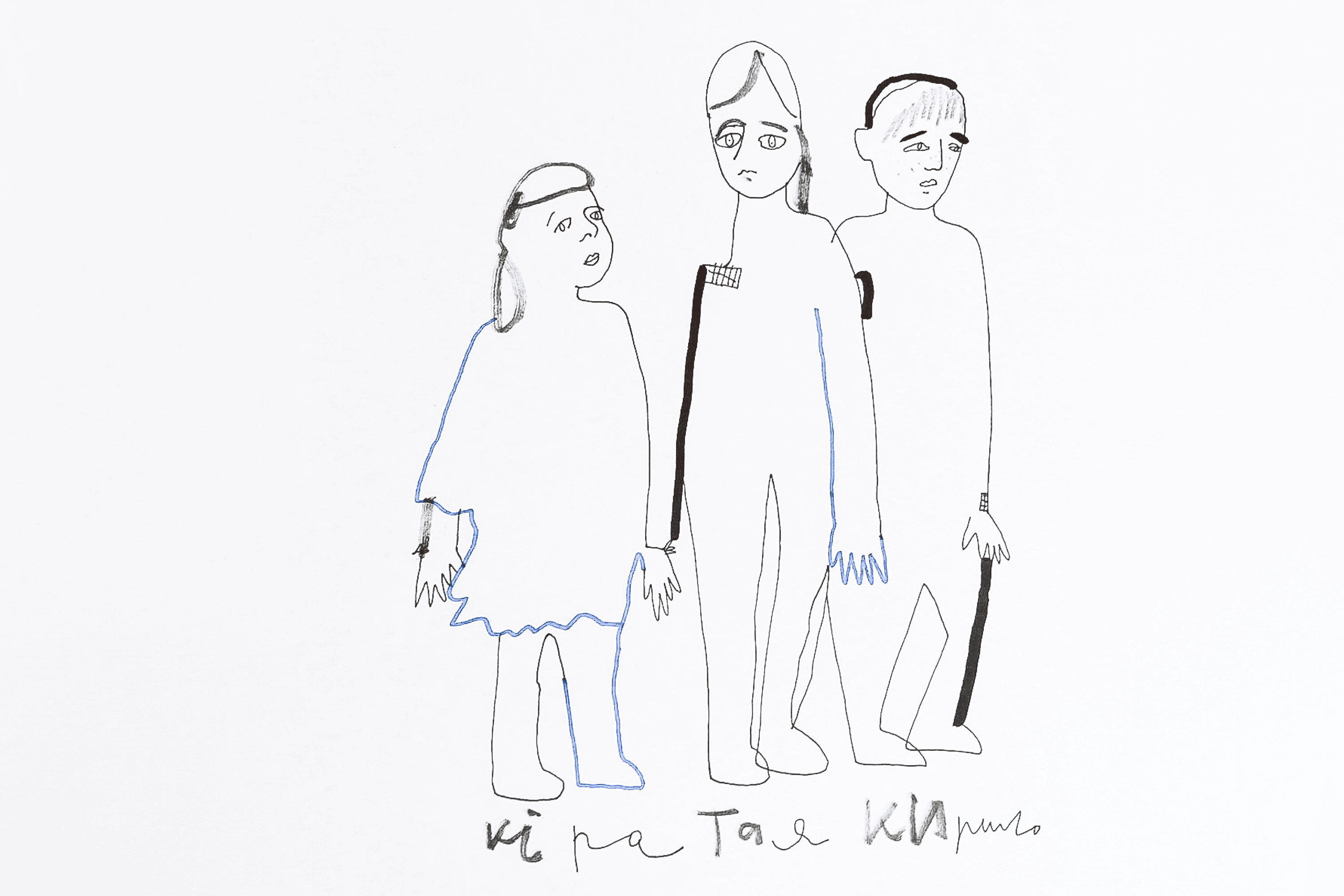
Kira, Taia, and Kyrylo. Photo: Photo courtesy of Tetiana Khodakivska / YB 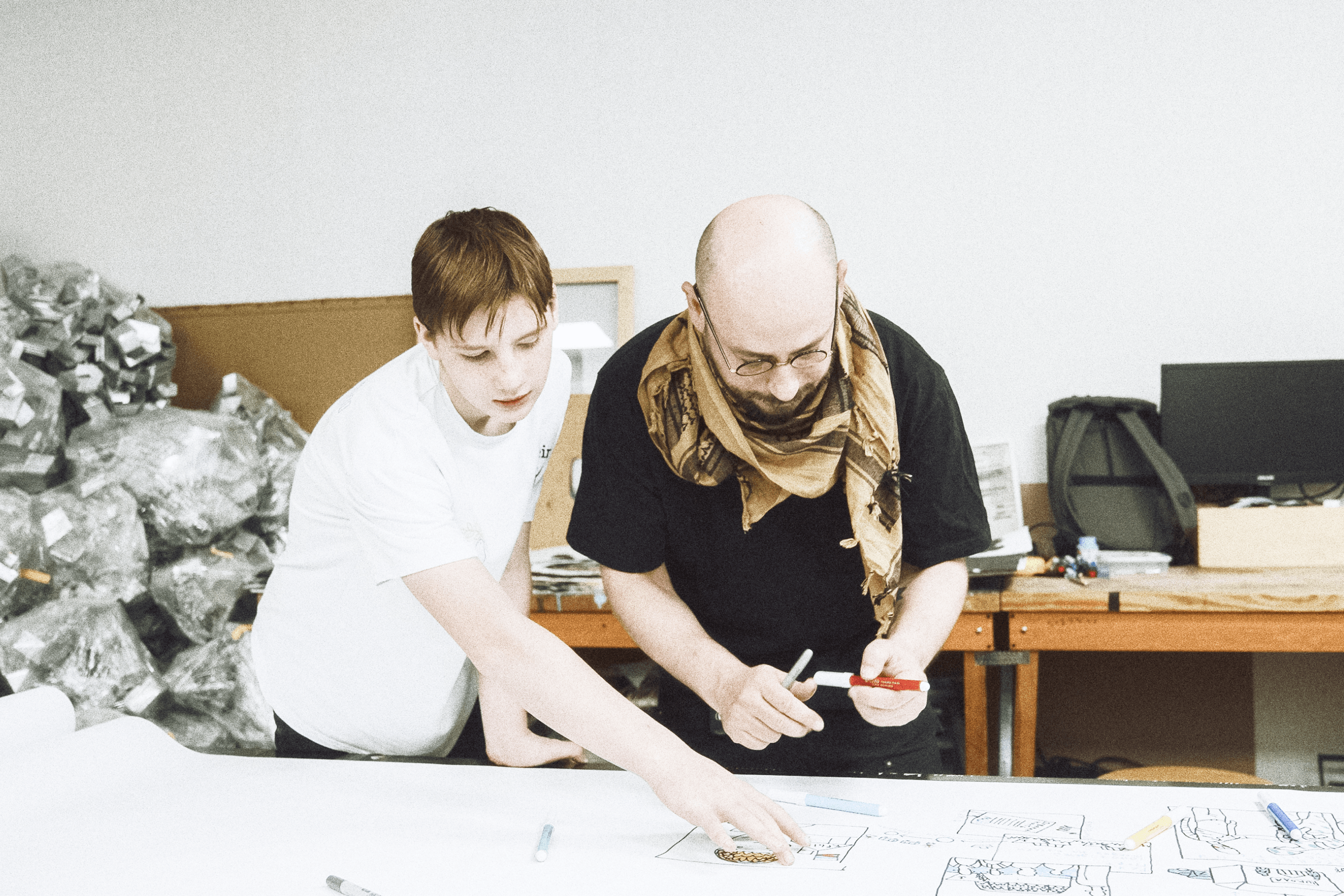
Kyrylo working with Oleksii Sai. Photo: Photo courtesy of Tetiana Khodakivska / YB 
Photo: Photo courtesy of Tetiana Khodakivska / YB 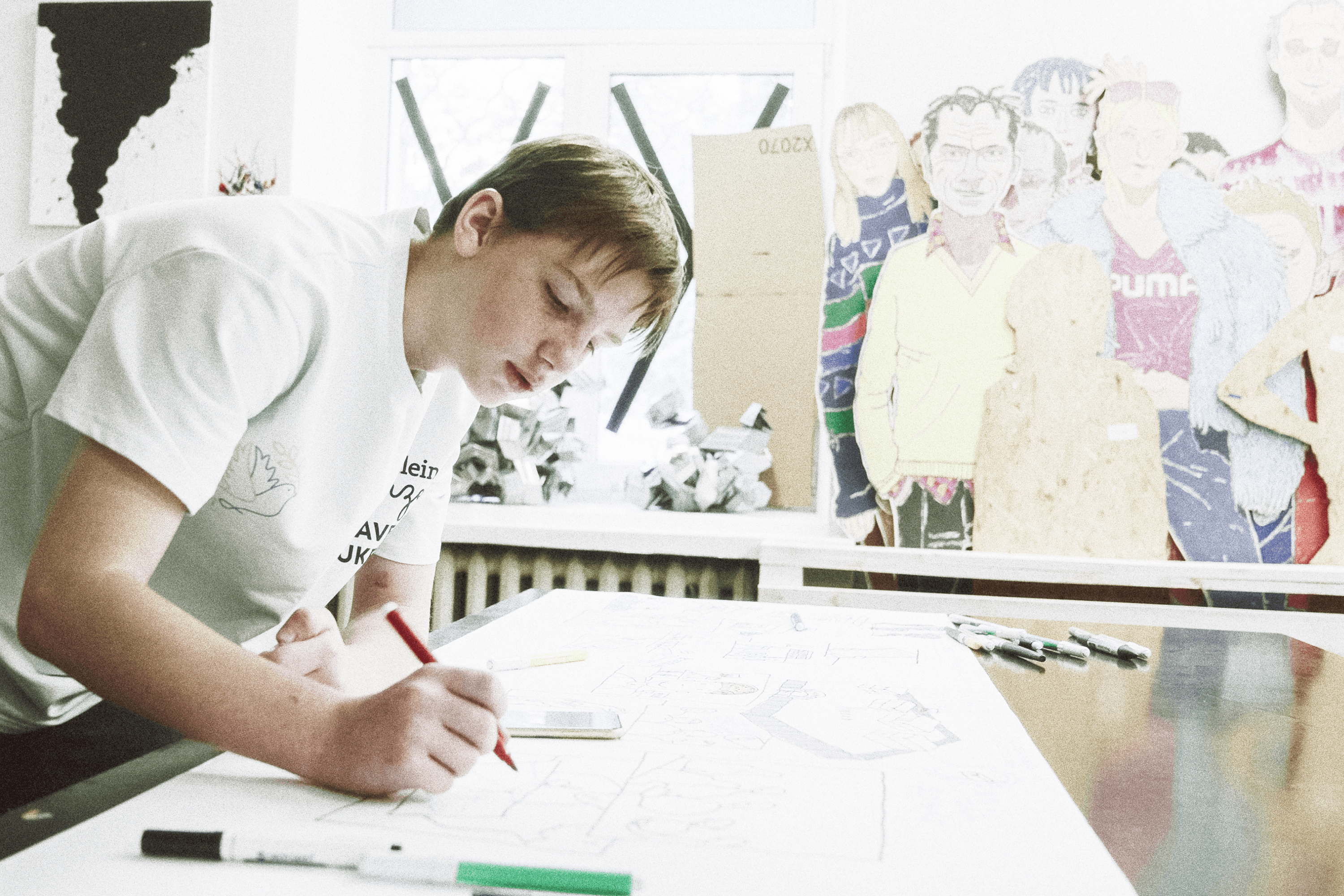
Photo: Photo courtesy of Tetiana Khodakivska / YB
You emphasize that you do not reduce the children’s stories solely to their traumatic experiences, but also capture their joyful moments in the camps. Doesn’t that diminish the perception of the trauma they went through?
Quite the opposite. It was essential for us to show the children’s experiences in all their complexity. Despite the violence, fear, and pressure, they remained children there as well. They made friends, joked, fell in love, danced, and shared secrets.
That is why we created a space where they could speak honestly, without fear or judgment. The purpose of the film is not to assess their memories but to show the full range of what they experienced: both what seemed normal or pleasant and what may have been traumatic.
The existence of positive memories does not negate the violence, but it helps us understand how indoctrination works. Such systems rarely rely on coercion alone. They are often disguised as care, friendship, responsibility, entertainment, or recreation.
As the mother of two children, I can say that children’s memories are subjective because they are based on emotions rather than facts. How do these testimonies relate to official data and journalistic investigations? And did different children ever give the same testimony?
Adults, especially journalists, often come with a ready-made framework for the story and look for evidence to support it. But when you approach children without a predetermined conclusion and give them space to speak, they stop being “carriers of the required story” and begin telling their own.
As for the testimonies, many details were repeated: lining up, singing the Russian national anthem, inspections, the same songs, and the “Important Conversations” lessons every Monday at seven in the morning. Still, the individual stories emerged only through long, trusting conversations. That was when the children spoke about violence, pressure, and difficult episodes. In parallel, we also listened to what the parents had to say, as they described searching for their children and shared their own experiences of occupation and even torture.
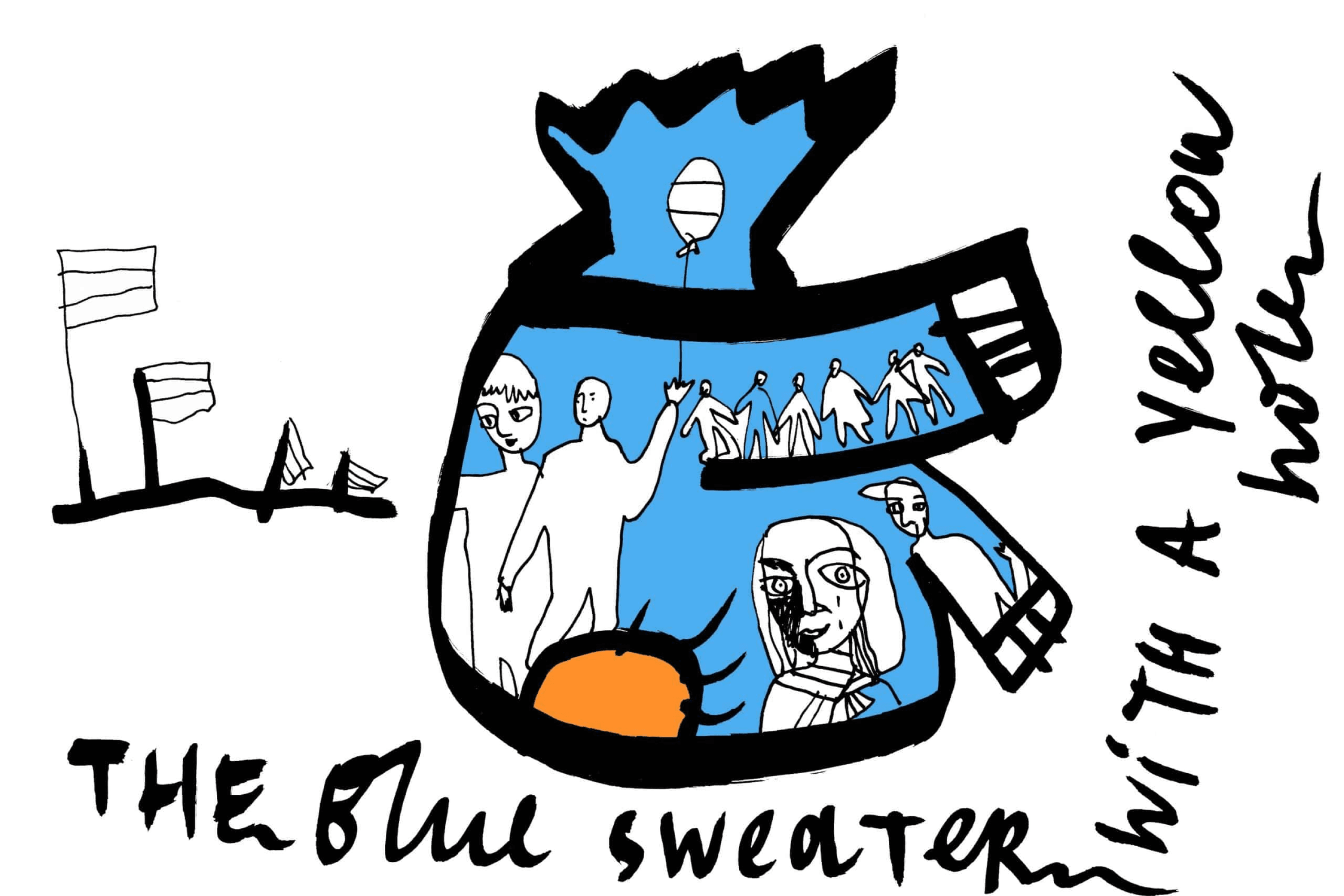
Concept art by Alevtina Kakhidze for Blue Sweater with a Yellow Hole. Photo: Blue Sweater with a Yellow Hole / Facebook / YB 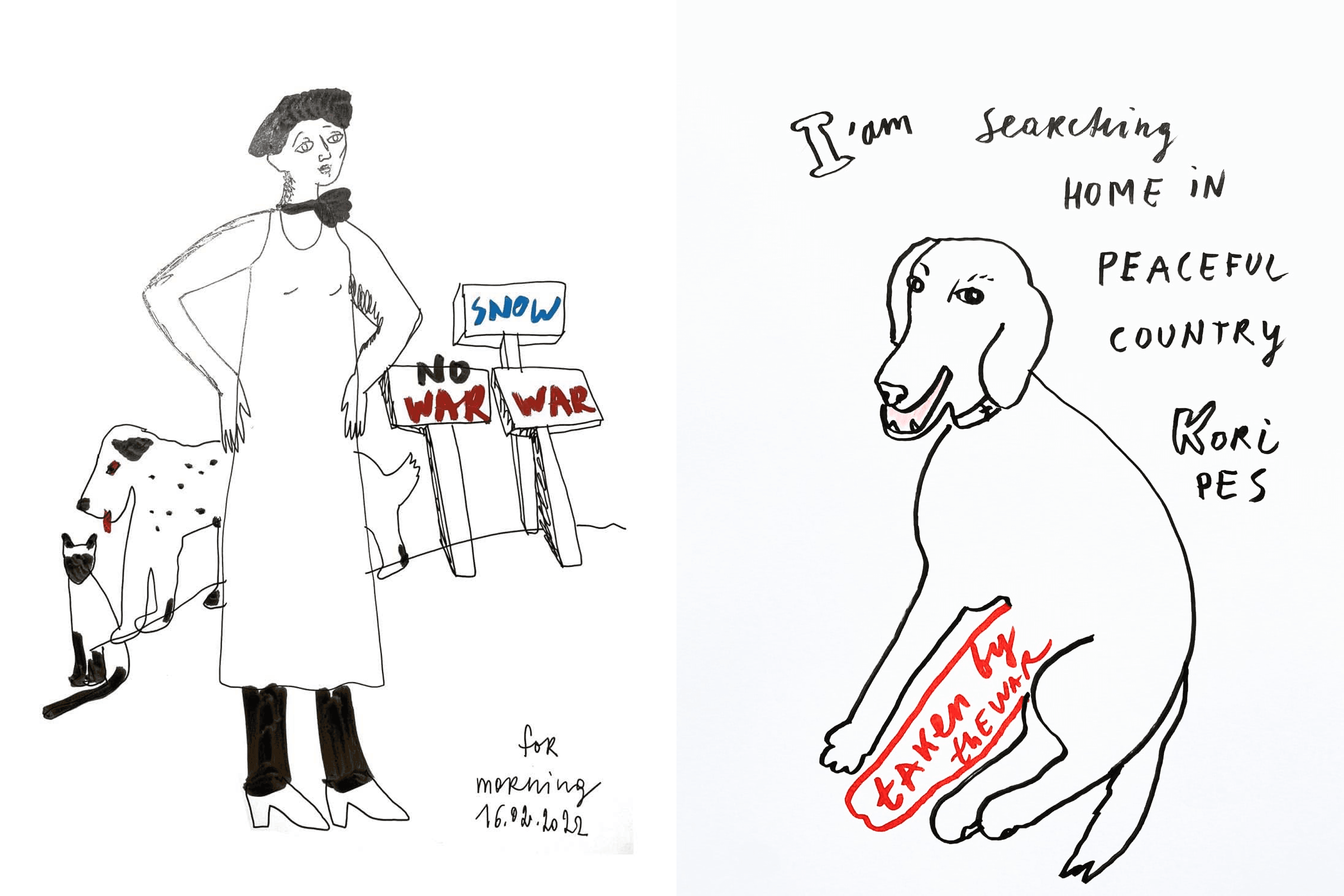
Photo: Blue Sweater with a Yellow Hole / Facebook / YB 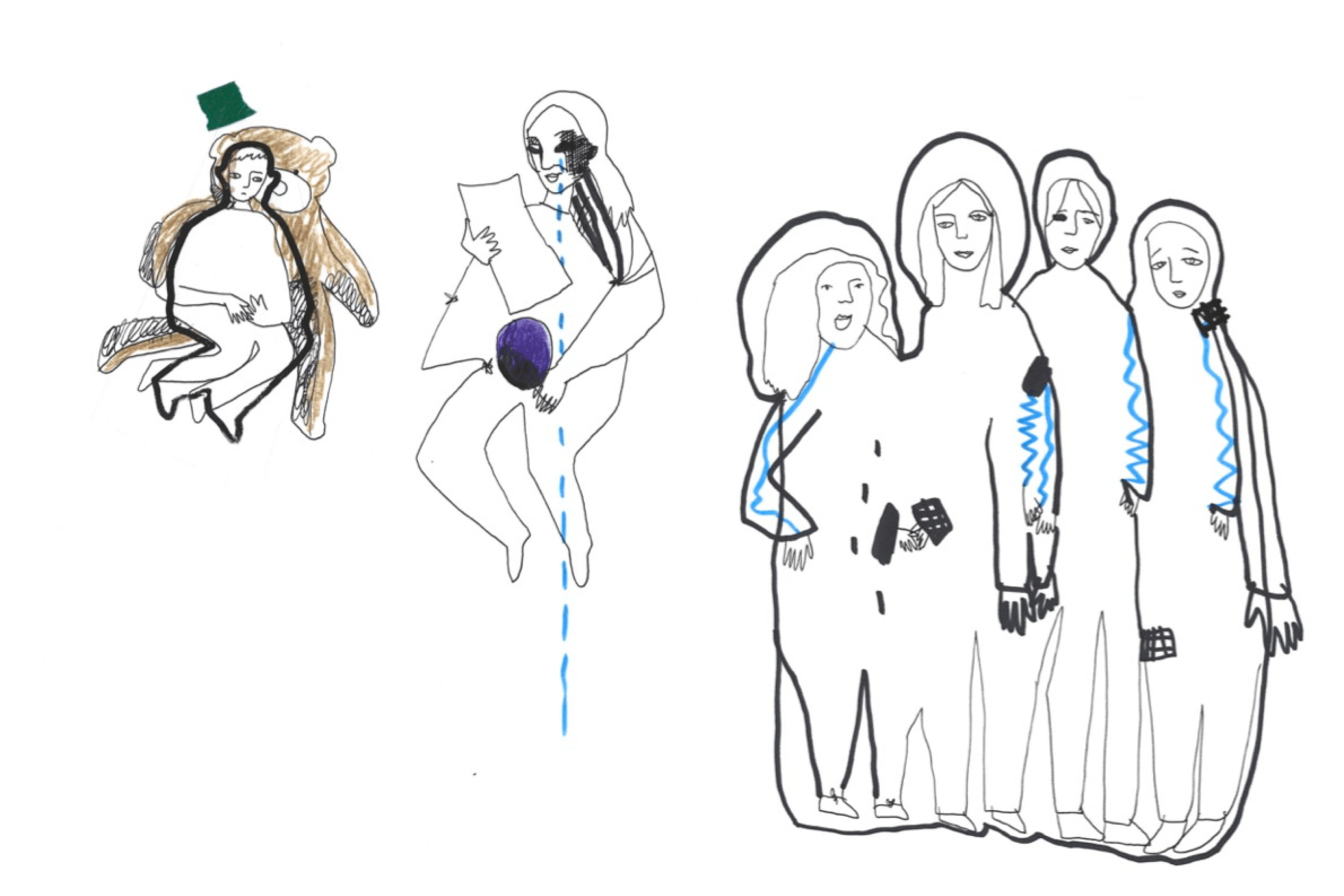
Photo: Photo courtesy of Tetiana Khodakivska / YB 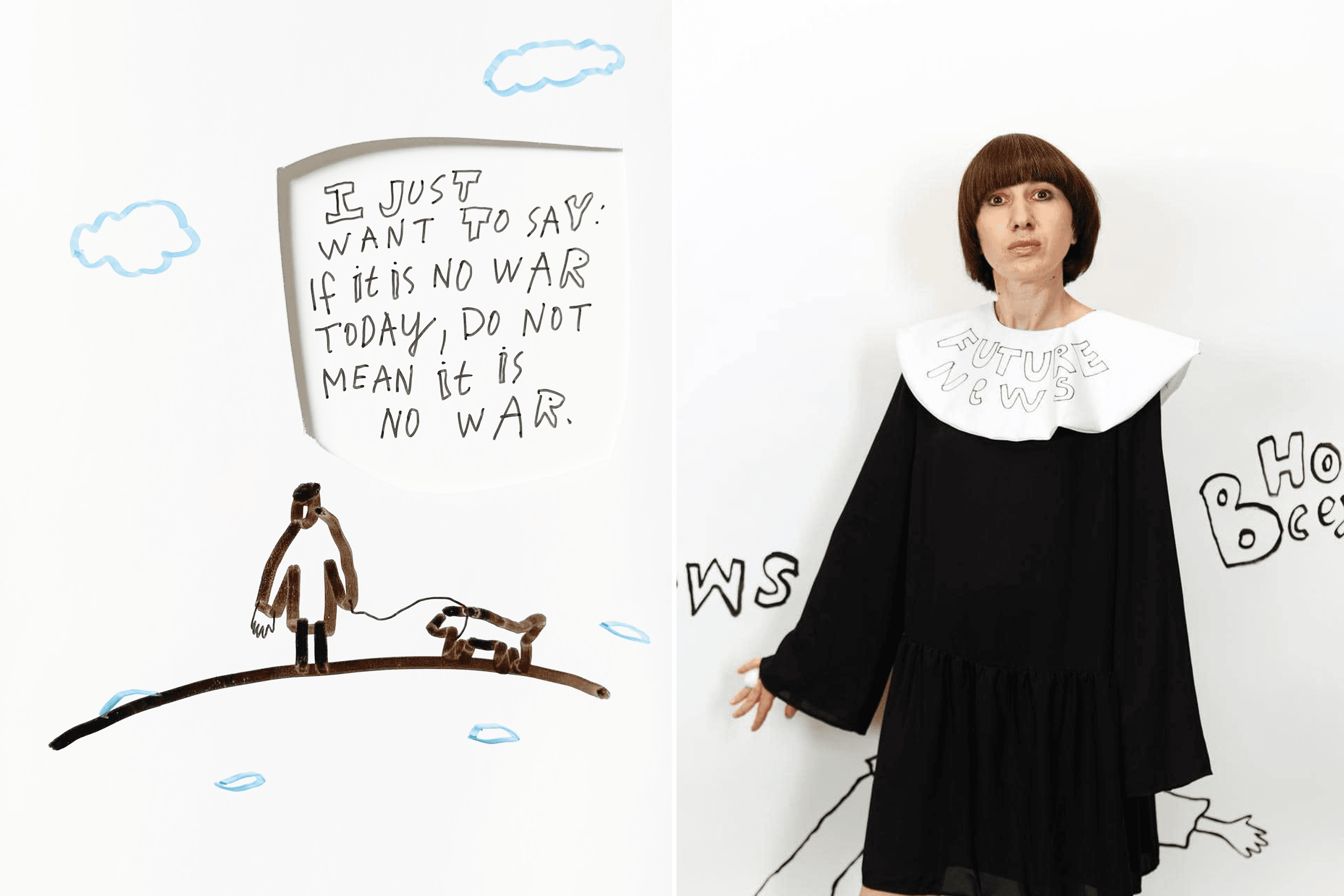
Photo: Blue Sweater with a Yellow Hole / Facebook / YB 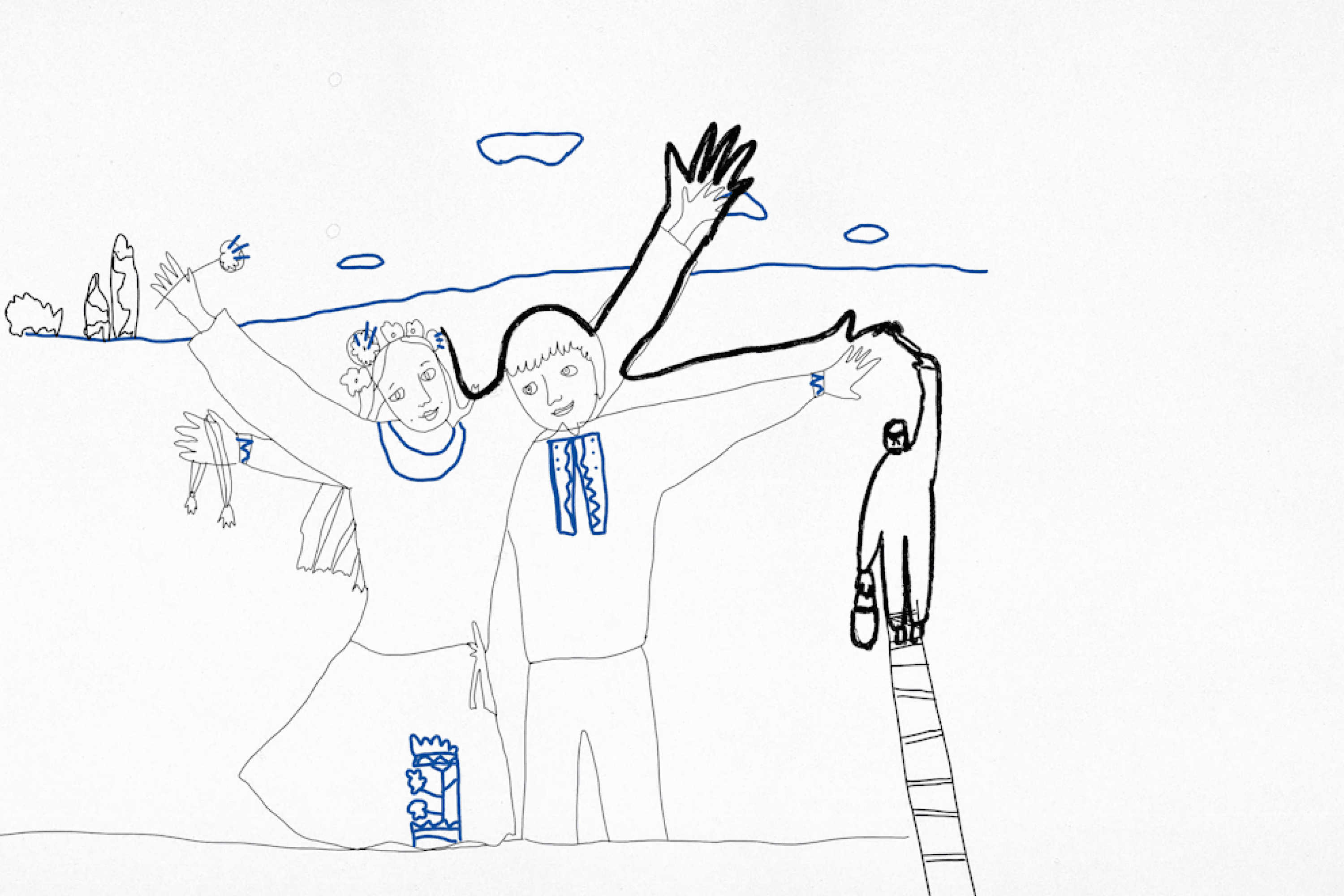
Photo: Photo courtesy of Tetiana Khodakivska / YB 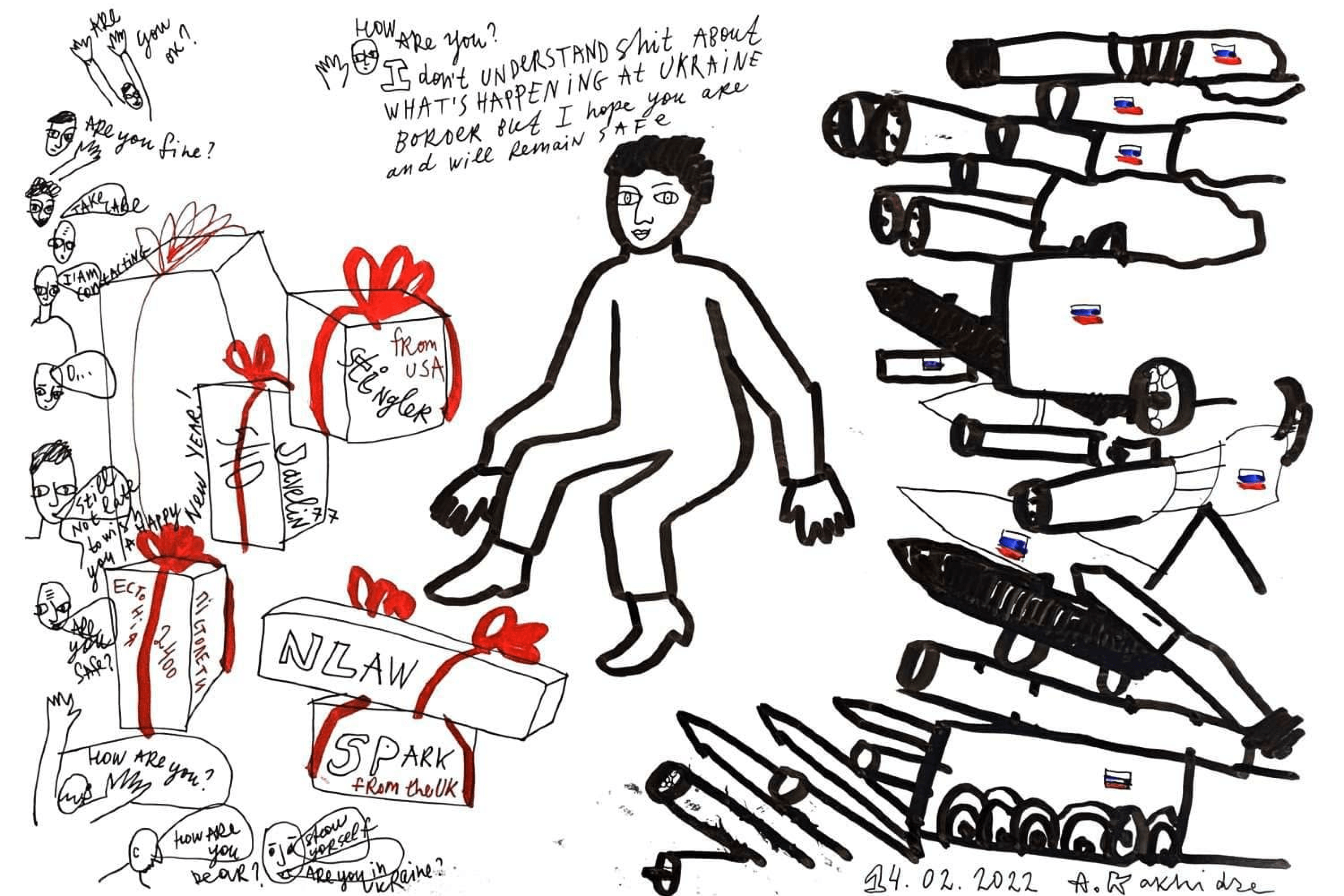
Photo: Blue Sweater with a Yellow Hole / Facebook / YB
Do the children understand that their testimonies will become public, and how does the film address privacy?
This is, above all, the responsibility of the filmmaking team. A child may trust you and open up, but they are not able to assess the consequences of publicity. That is why every decision is made with the children’s safety in mind. We discuss the conditions of participation with both the children and their parents in advance. Some do not want their faces shown, while others prefer that only their voices be heard. In sensitive stories, we use animation and other artistic techniques to ensure that the child cannot be identified. It is important to us that the film protects its protagonists rather than using their vulnerability for dramatic effect.
How do you avoid aestheticizing trauma while still preserving the emotional truth of the experience?
I think the aestheticization of trauma is a matter of inner motivation. Today, we live in a world saturated with images of violence. Shock no
er works. People either turn away or become accustomed to it. We tried to find a balance between being truthful to the children’s experiences and allowing viewers to bear those experiences and live through them alongside the protagonists. The film is centered on the children themselves. When viewers see not an abstract statistic but a specific child with their own personality, sense of humor, and fears, empathy emerges.
How did the children react to the camera during filming?
We deliberately worked in a way that minimized any pressure from the camera. Our crew is always very small: the cinematographer, the sound recordist, Alevtina, the producer, the driver, and me. It is the same team throughout the project so that the children do not feel uncomfortable around unfamiliar people. In these circumstances, trust is built through consistency and predictability. We also always travel to the children and work in an environment that is as familiar to them as possible. And, most importantly, we work at the child’s pace. They decide how much time to spend in the process, whether it is one hour, five hours, or an entire day. There is no pressure, no fixed schedule, and we never rush them.
When and where is the premiere expected?
That is a very frightening question (laughs). We are aiming for the film to premiere at the beginning of 2027. As for where, I cannot say yet. I do not want to make predictions.
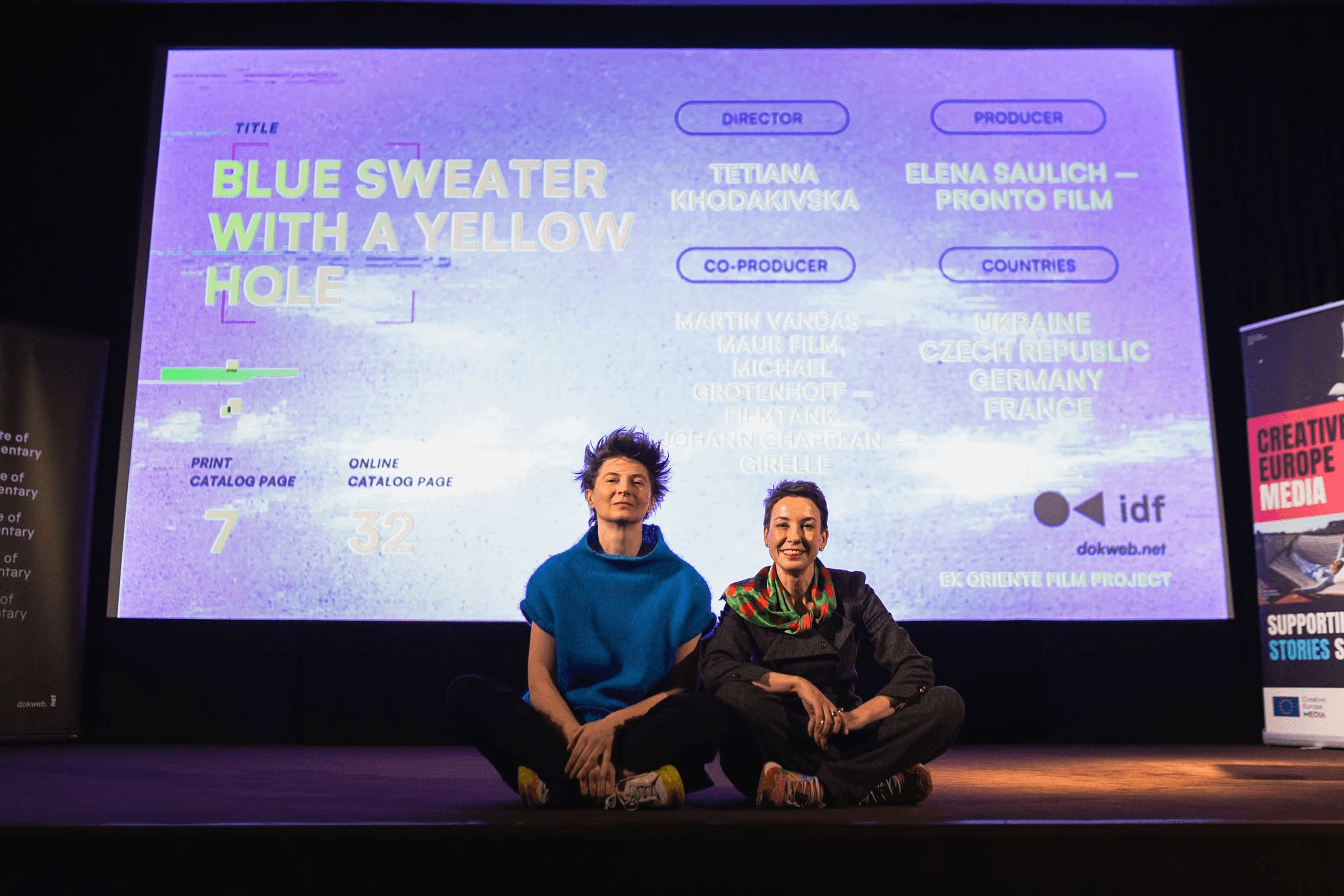
East Doc Platform in Prague, where the documentary project Blue Sweater with a Yellow Hole received two awards: the Czech Television Award and the Sunny Side of the Doc Award. March 2025. Photo: Khodakivska Tania / Facebook / YB 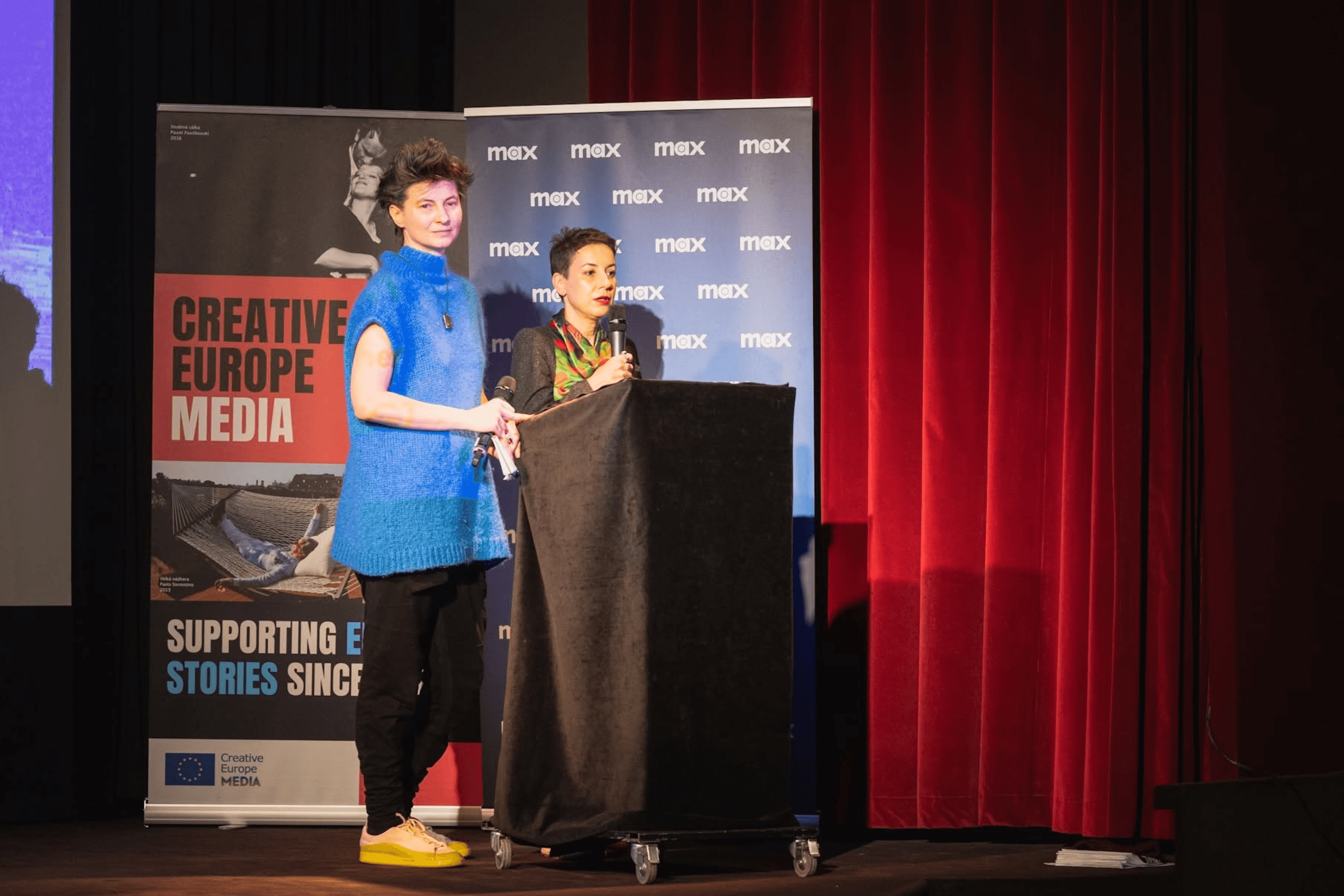
Photo: Photo courtesy of Tetiana Khodakivska / YB 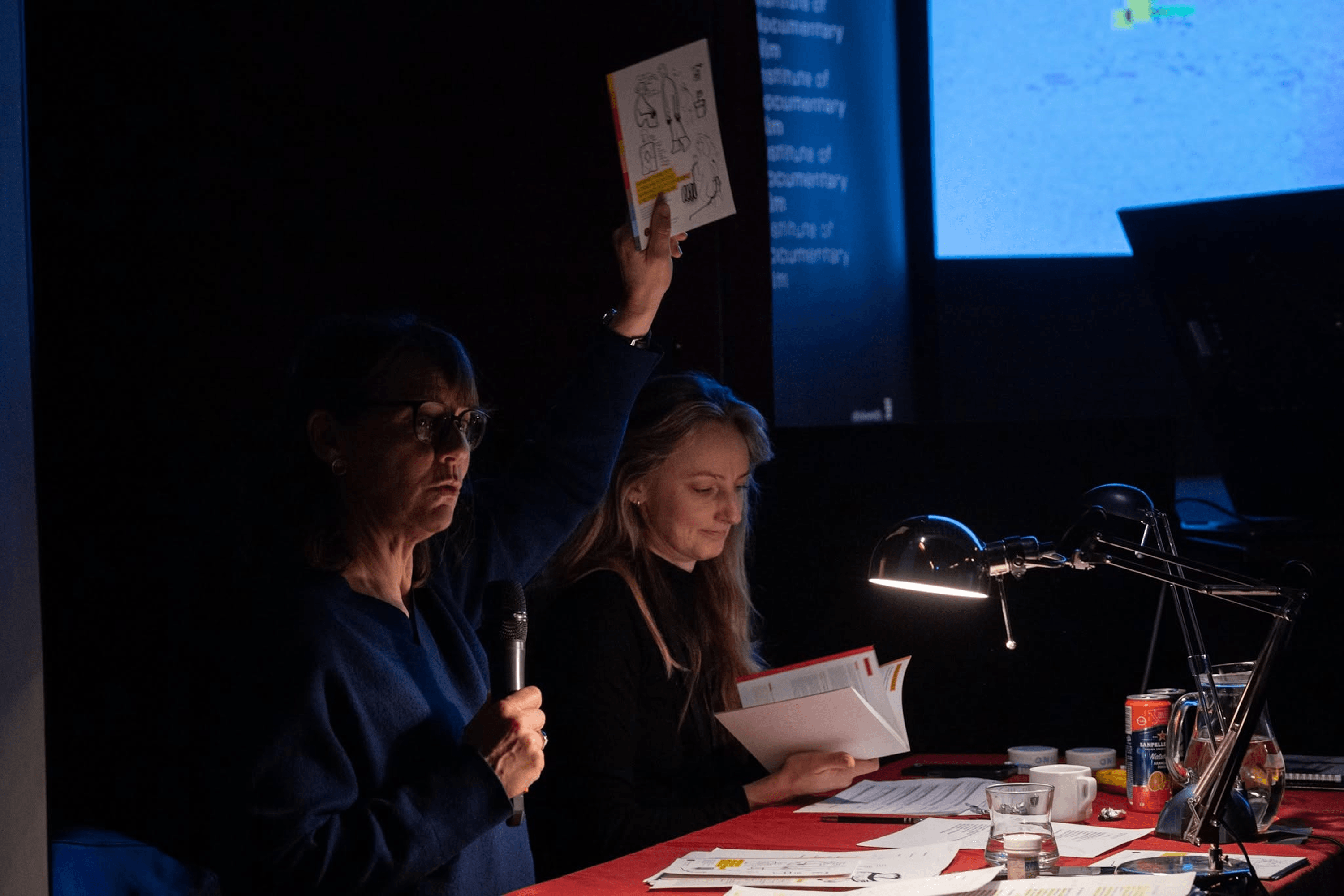
Photo: Khodakivska Tania / Facebook / YB
What do you hope this film will achieve, both for the audience and in itself?
First, we want all Ukrainian children whom Russia has illegally deported or is holding in the occupied territories to return home as soon as possible. Second, we want to show the world that Ukrainian children living under occupation are subjected every day to pressure, indoctrination, and militarization. This happens not only in the “re-education camps” but also in schools. Third, we hope our story will remind people that anyone can become a victim of propaganda and disinformation, while children are especially vulnerable to systems that deprive them of critical thinking, freedom of choice, and their own voice.
Tetiana, you have worked in film editing for more than twenty years. What is more difficult: putting a story together or making sure you do not destroy it in the editing process?
One rule I always tell my students when I teach editing is that you should never create something out of fear of “ruining it.”
With “The Blue Sweater with a Yellow Hole”, the greatest challenge is time. While we are working on the film, Russia continues to deport children, and that sense of urgency never leaves us. It is also hard, knowing that some of the children are in Kherson, under constant Russian shelling. This is not really about the edit itself, but I cannot separate it from everything else. I am not editing this film alone. I am working together with the outstanding French editor Maxime Mathis and the talented Olena Danylova.
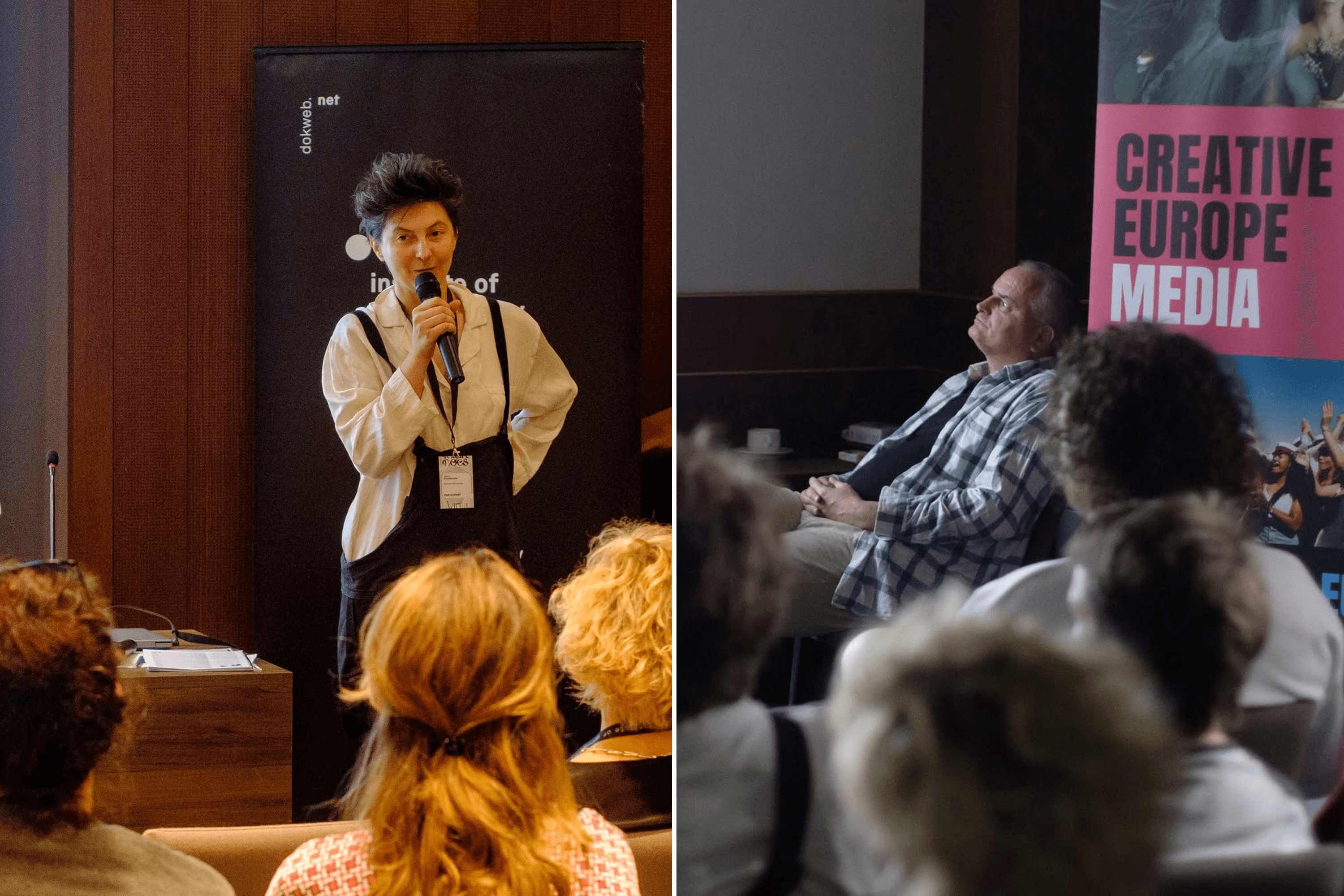
The Blue Sweater with a Yellow Hole documentary project team during a workshop of the Ex Oriente Film program organized by the Institute of Documentary Film. June 2024. Photo: Khodakivska Tania / Facebook / YB 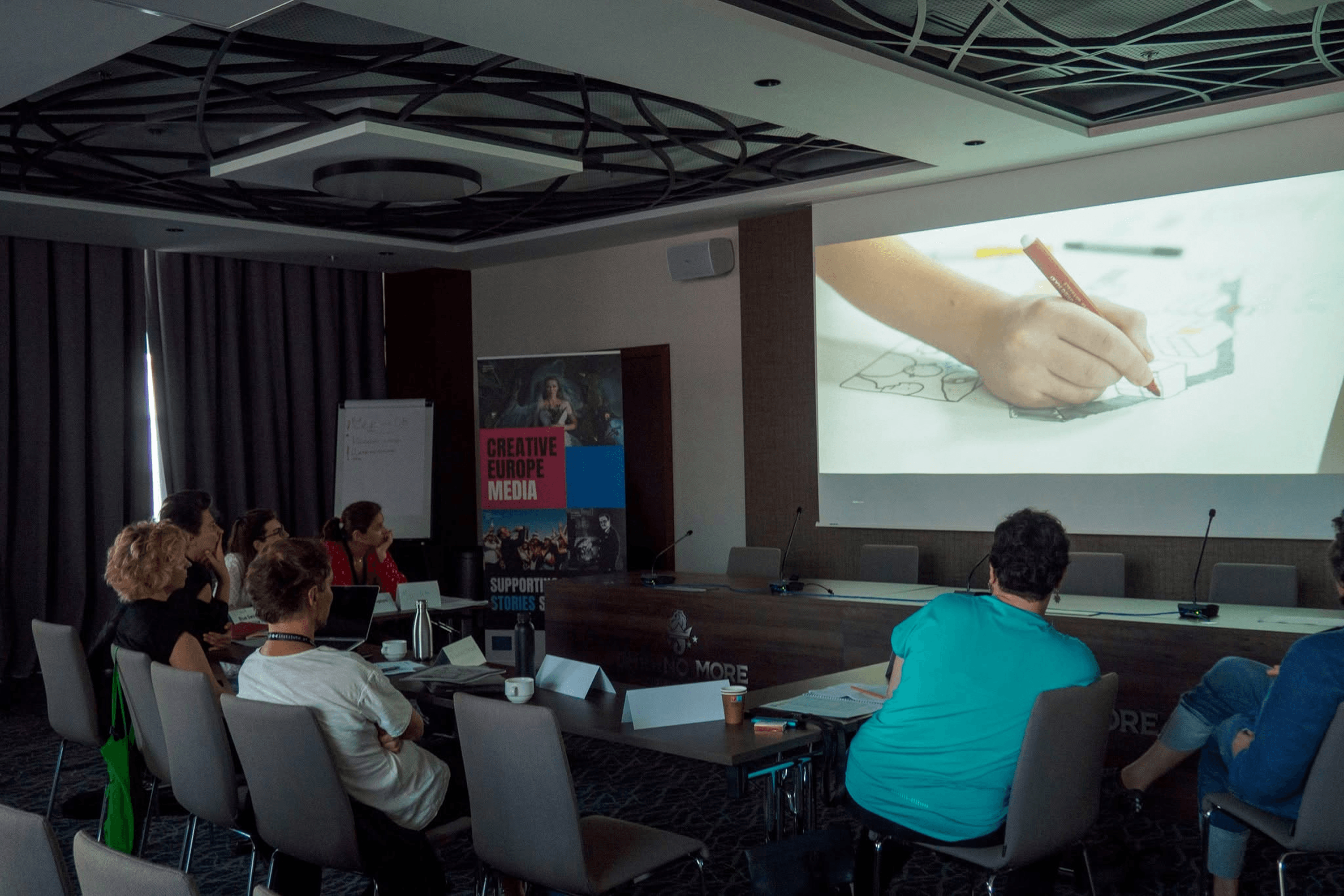
Photo: Khodakivska Tania / Facebook / YB 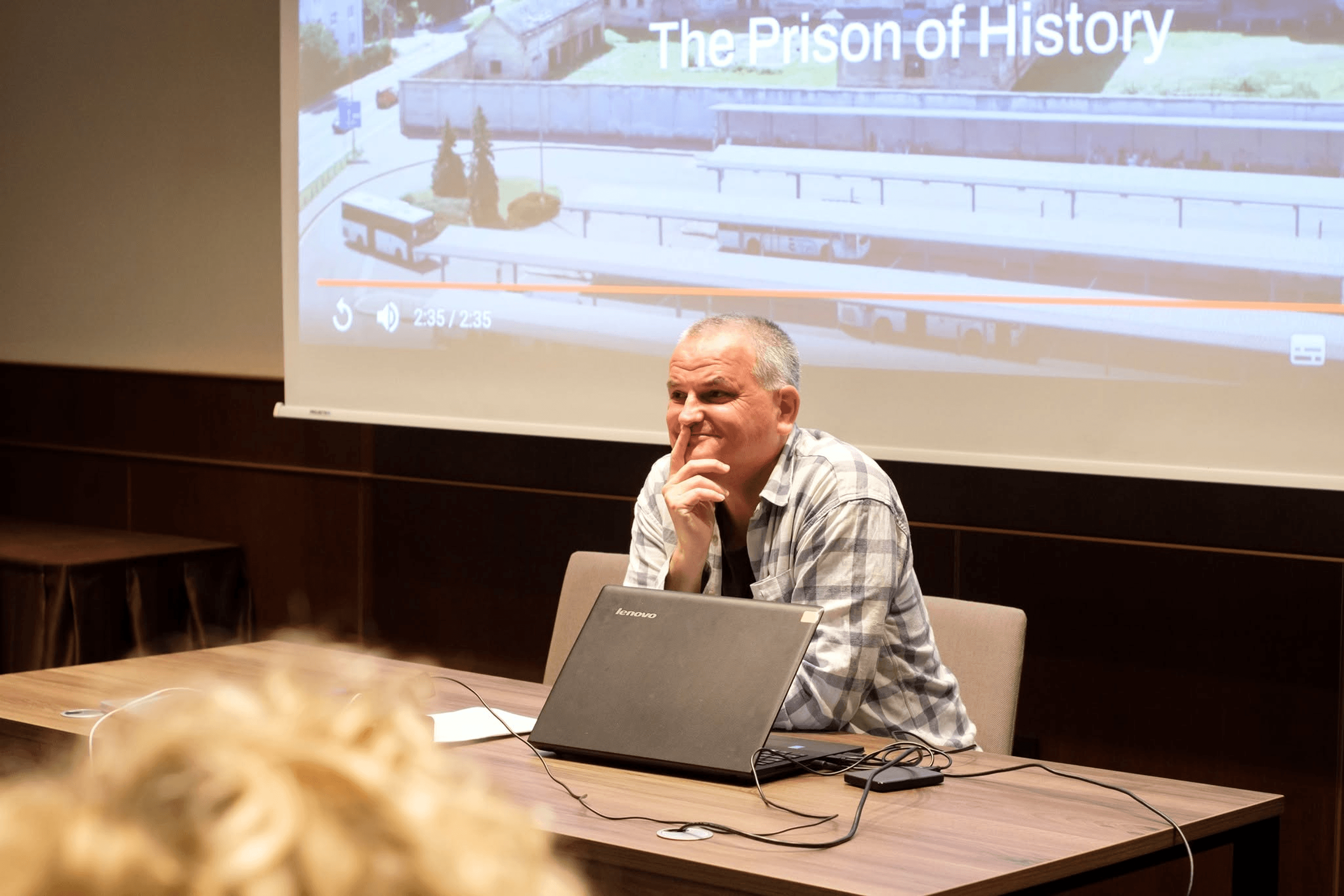
Photo: Khodakivska Tania / Facebook / YB 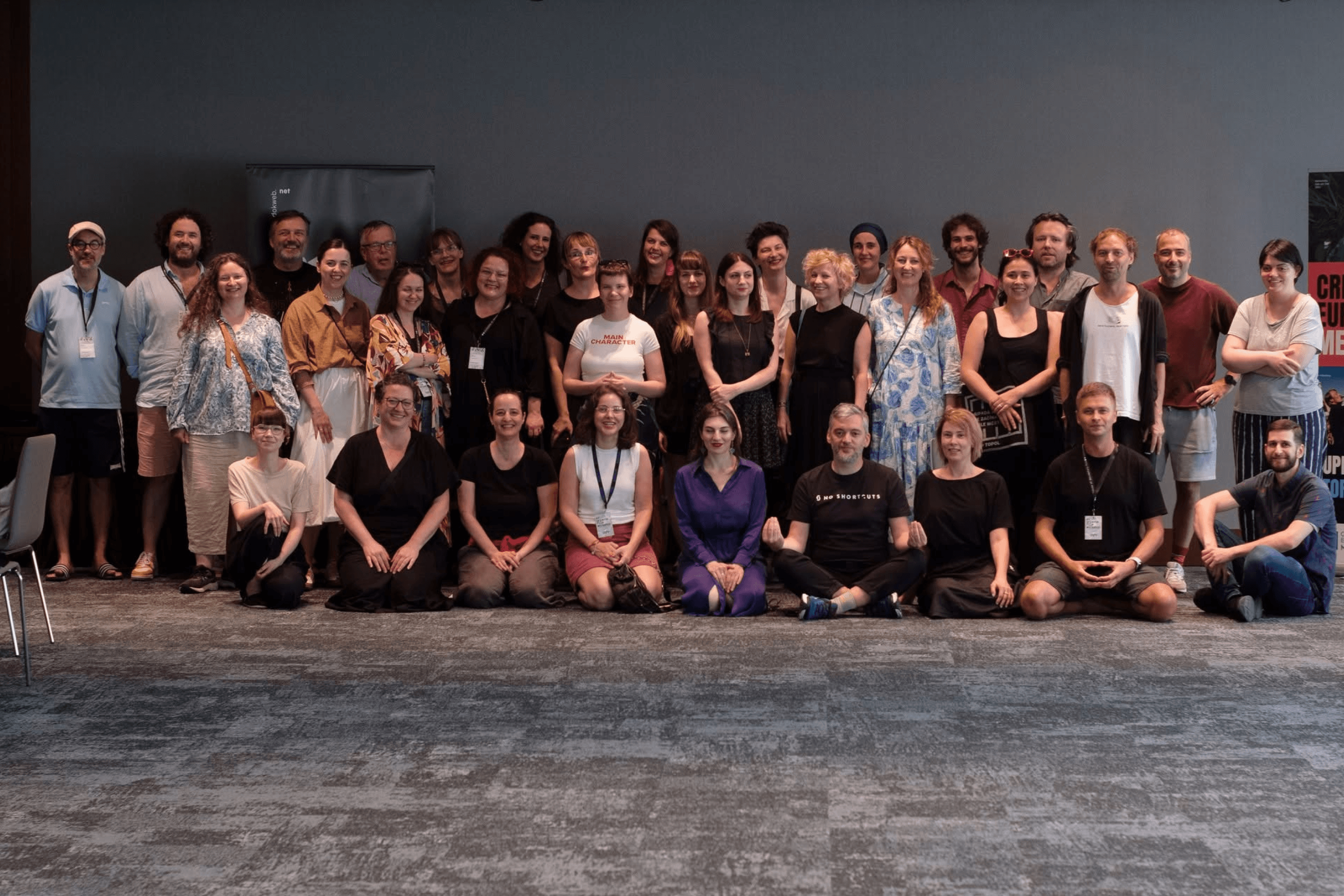
Photo: Khodakivska Tania / Facebook / YB
You work in both Ukraine and the United States. Where is it more difficult to remain an author?
I do not see much difference. In both Ukraine and abroad, an author’s vision is respected if it has a solid foundation and serves the story. Ukrainian cinema has long since overcome any sense of inferiority. On the contrary, Ukrainian documentary films and directors are highly respected around the world, and international festivals are paying increasing attention to Ukrainian stories.
Yet, because of the war, Ukrainian filmmakers no longer have the privilege of distancing themselves from reality or focusing solely on personal creative exploration. We remember our colleagues who have been killed in Russia’s war against Ukraine. So all of us simply do what we can.
And more broadly, what does the West most oversimplify about the reality of this war?
I do not agree with the idea of an “oversimplified reality.” On the contrary, I see a great desire to understand deeply what is happening in Ukraine. I see it in our partners, in American and European foundations, and in the private investors who have supported our project. We recently took part in the Sundance Catalyst program, where we presented the film to American investors and representatives of foundations. There, too, people genuinely wanted to learn. It is simply extraordinarily difficult to grasp if you have never lived through such an experience. It is impossible to fully explain what it means to live through a war. What does it mean to drink coffee in the morning, cry in the afternoon because your mother’s student has been killed, and laugh in the evening at jokes about a possible nuclear attack?
Of course, all of us tend to look for confirmation of what we already know or believe. But that is exactly why any art is so important. It allows people not only to understand someone else’s experience intellectually but also to live through it emotionally.
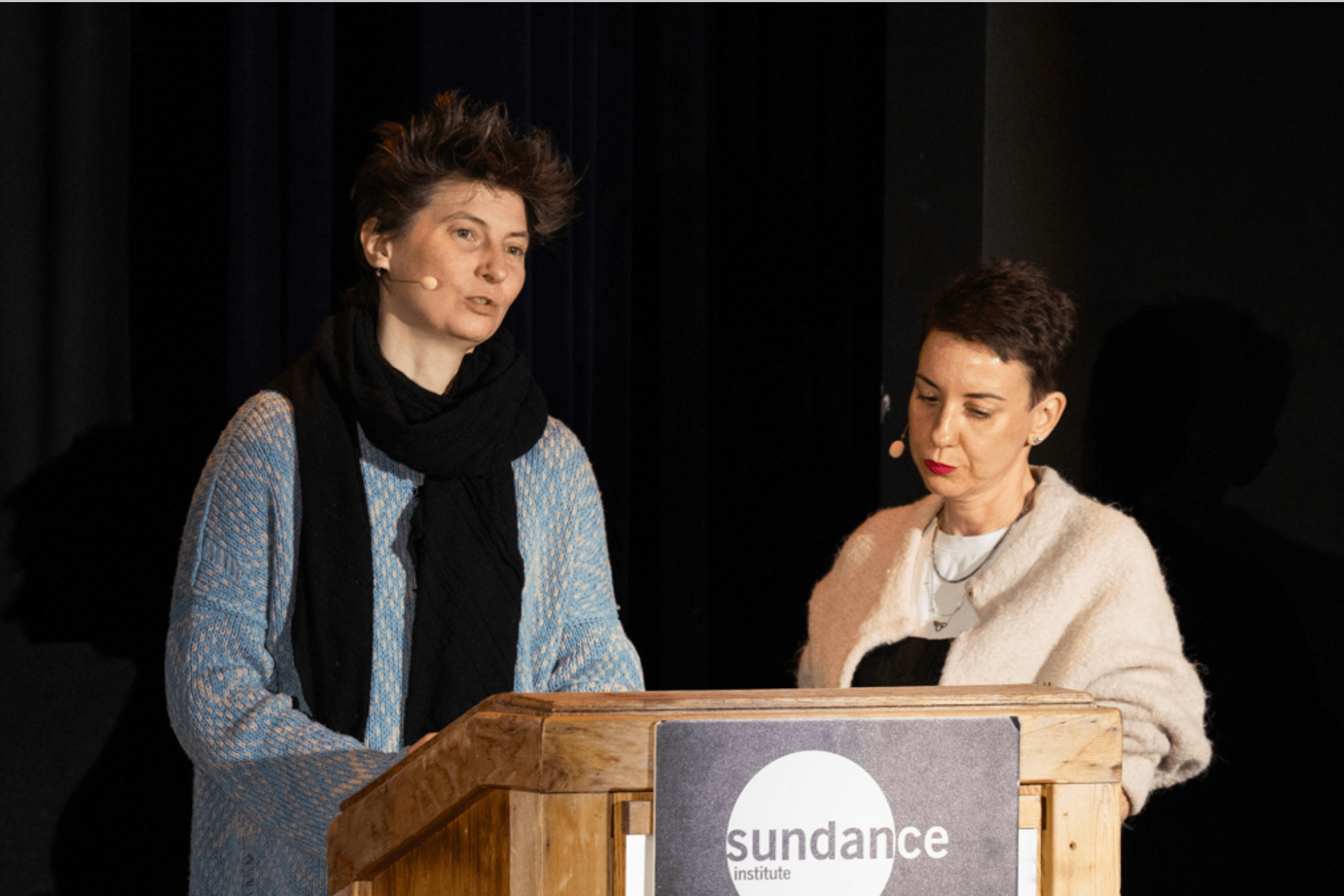
The Blue Sweater with a Yellow Hole documentary project team during the Sundance Institute Catalyst program. May 2026. Photo: Photo courtesy of Tetiana Khodakivska / YB 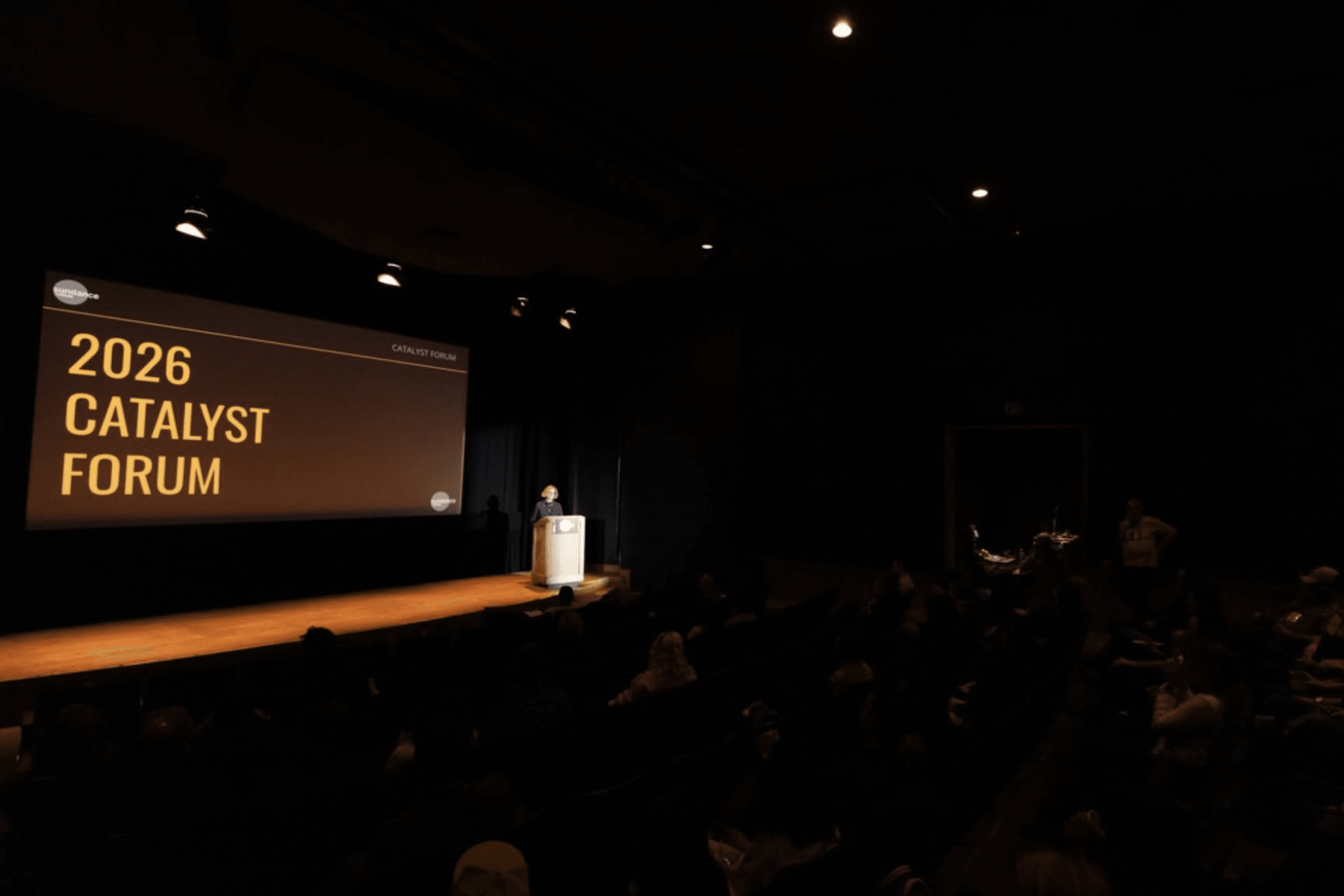
Photo: Blue Sweater with a Yellow Hole / Facebook / YB 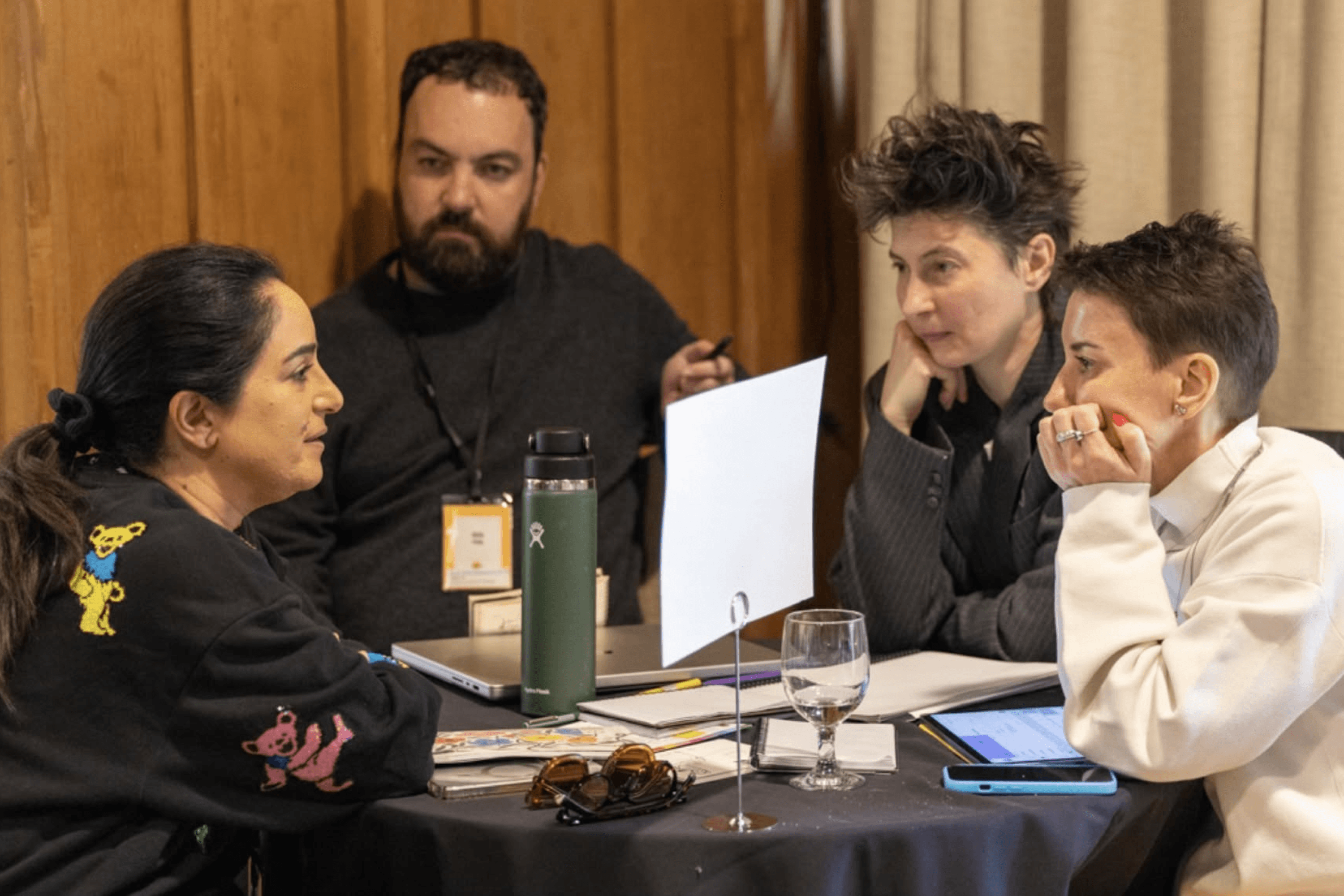
Photo: Blue Sweater with a Yellow Hole / Facebook / YB 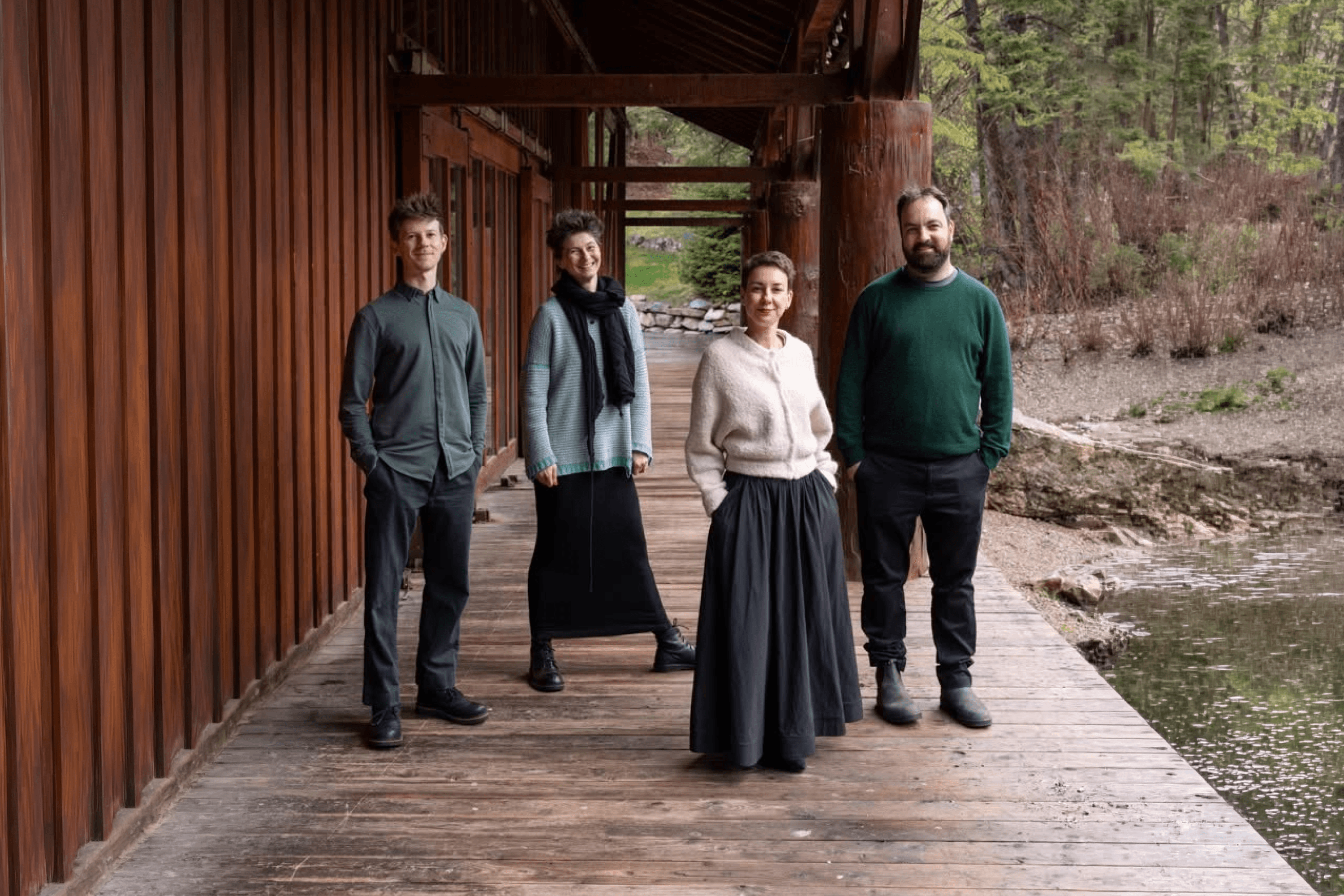
Photo: Blue Sweater with a Yellow Hole / Facebook / YB