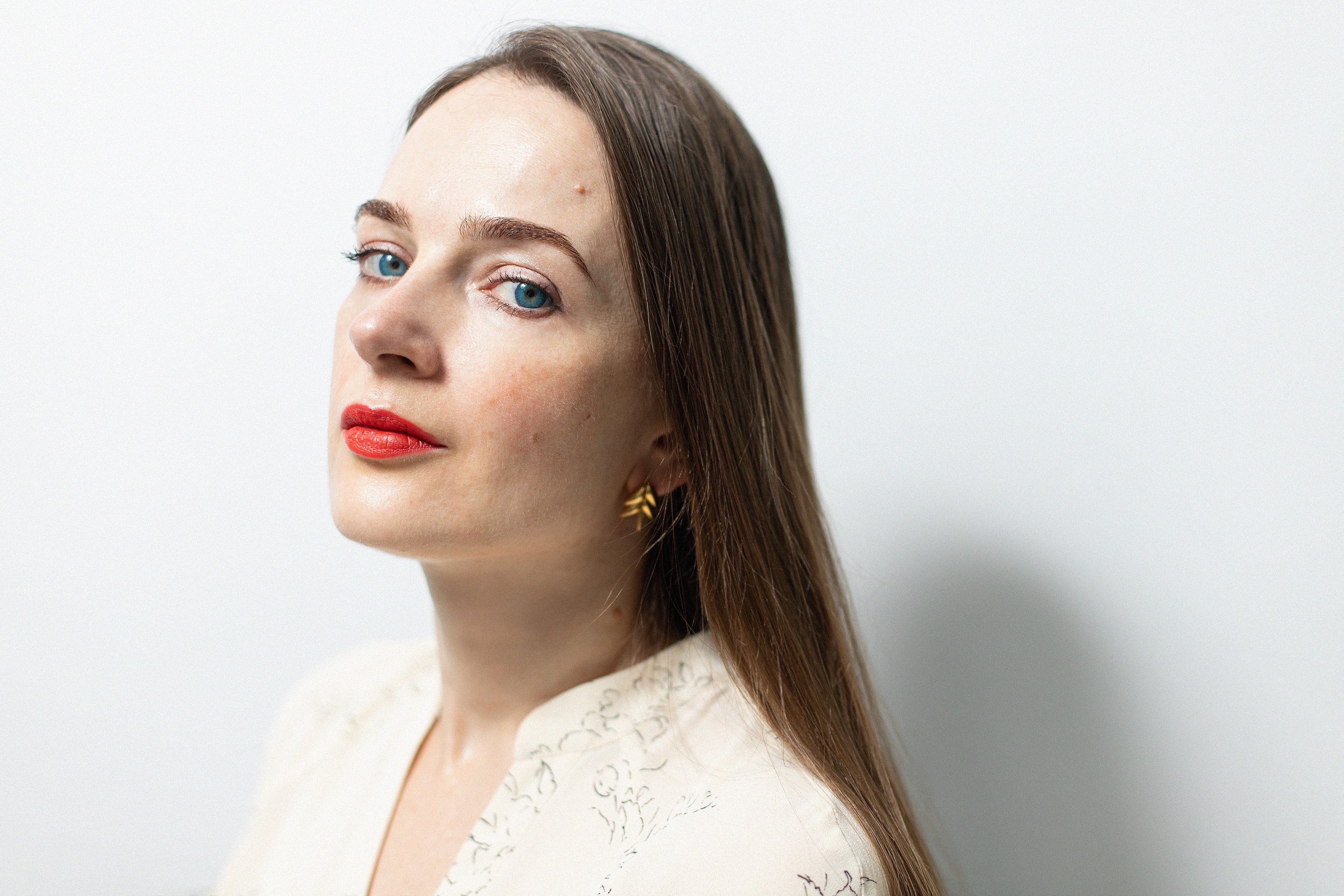
Oleksandra Matviichuk is 42 years old. She has been involved in human rights defense for twenty of those years. During the Euromaidan, the organization led by Matviichuk provided legal assistance to protesters. When Russia started the war against Ukraine in 2014, she documented Russian crimes and fought for the freedom of Ukrainian political prisoners.
Since 2022, Matviichuk has also been leading the “Tribunal for Putin” initiative. Its main goal is to hold the Russian leadership accountable for the crime of aggression against Ukraine, as the International Criminal Court lacks such jurisdiction. In 2022, the Matviichuk-headed NGO “Center for Civil Liberties” received the Nobel Peace Prize.
Yuliana Skibitska, editor-in-chief of Yellow Blue, met with Matviichuk in Kyiv. This resulted in a long conversation about human rights, the new world order, and what helps us remain human.
Could you tell us what exactly you are working on right now?
The Center for Civil Liberties operates in several key areas. The first is overcoming the consequences of the war. This is not just about working to launch international accountability mechanisms, such as a special tribunal [for Vladimir Putin], the International Register of Damage, or the confiscation of frozen Russian assets, which is supposed to complement this register. It also involves the work we’ve been doing for many years—changing legislation in this area. Ukraine has finally ratified the Rome Statute, but much has yet to change in our Criminal Code, and this needs to be fixed.
The second area is European integration, and our task is to help the state navigate this path as quickly as possible. Our focus is obviously on what we are strong at—human rights and the rule of law. Quite recently, we presented a European integration map, an online tool. It shows what Ukraine has already done, what it hasn’t, and what, in our opinion, still needs to be accomplished.
The third area is human rights education. War is always a poison for democracy. Naturally, during a war, survival comes to the forefront. But we must remind both ourselves and society what we are fighting for in this war. That’s why we have restored our educational direction—for example, this year we trained a cohort of human rights trainers in the regions.
And the final area is international solidarity. After all, we understand that Russian aggression against Ukraine is a reflection of the overall collapse of the world order that was established after World War II. Right now, this system isn’t working, and it has never been reformed. If we don’t enter this process [of creating a new world order], we might not like the future.
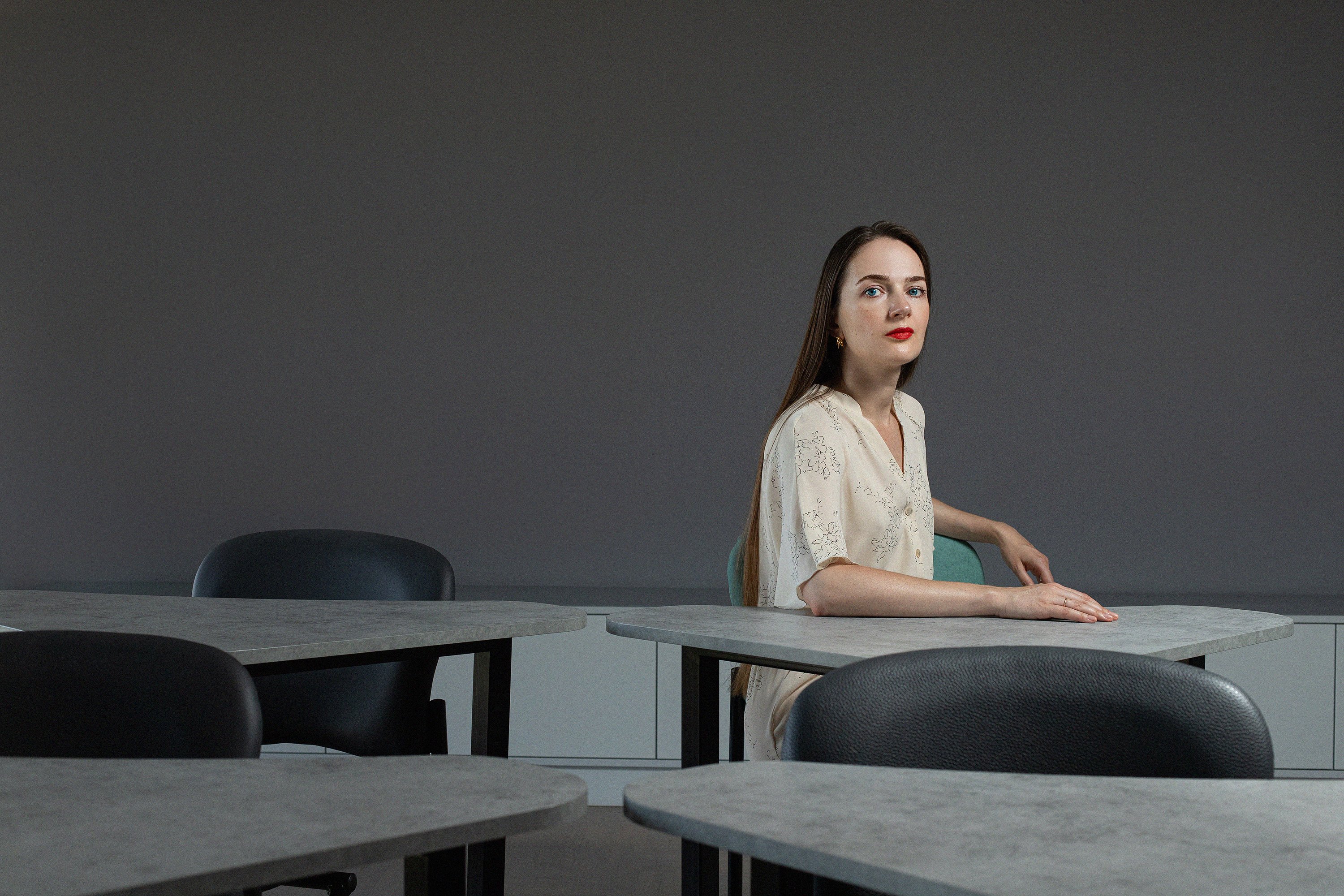
To be honest, it seemed to me that the old world order broke back in 2014, after the annexation of Crimea, which went very smoothly for Russia. And now we have seemingly arrived at a logical conclusion.
In January of this year, Canadian Prime Minister Mark Carney delivered a speech in Davos that Ukrainians really liked. He said that the international order is broken. I read this speech and couldn’t understand why Ukrainians were so inspired by it. What did he say that was new? For us, all of this should have been obvious since 2014. The occupation and annexation of Crimea was an unprecedented step. Nothing like this had happened since World War II.
But then I wrote a post saying that this joy came from the fact that we were finally heard. We had been saying for 12 years that the world order was broken, but in reality, no one believed us. I assume that advanced democracies thought the UN Charter was non-functional only regarding Ukraine. Suddenly, it turned out that this chain reaction, which had been set off, was leading to a natural result—now no one is safe.
I would like to talk about the special tribunal in a bit more detail. Lately, I’ve been seeing a lot of optimism about it. What drives it?
Three weeks ago, ministers from 36 countries plus the EU officially expressed their desire to join the special tribunal. And this is a significant achievement, despite the fact that it’s only the beginning of a long journey. I remember May 2022 and my first trip to Oslo, where I spoke about the need to establish an international court for the crime of aggression.
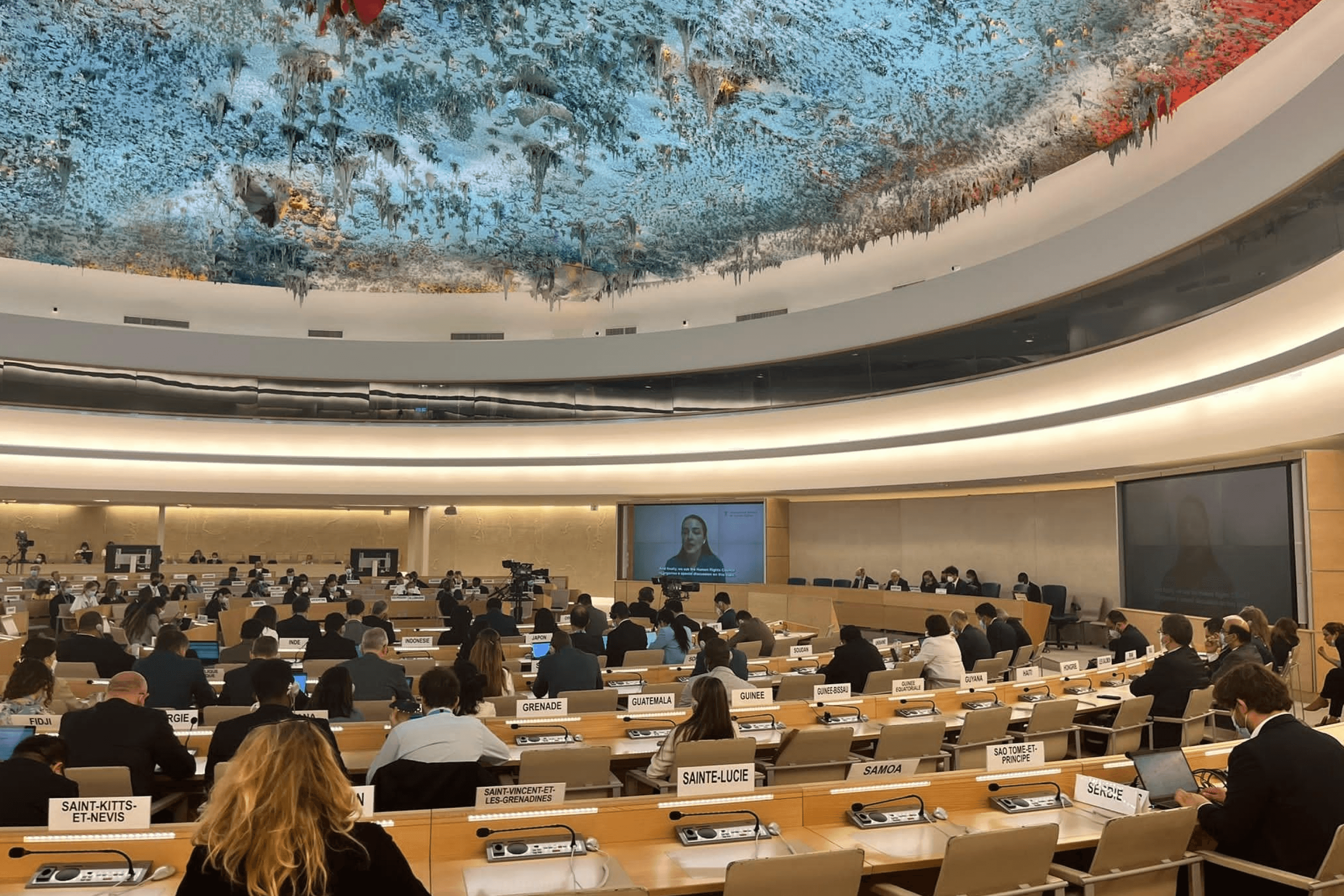
Oleksandra Matviichuk speaks at a special session of the UN Human Rights Council dedicated to the situation in Ukraine. Geneva, Switzerland. 2022. Photo: Oleksandra Matviichuk / Facebook / YB 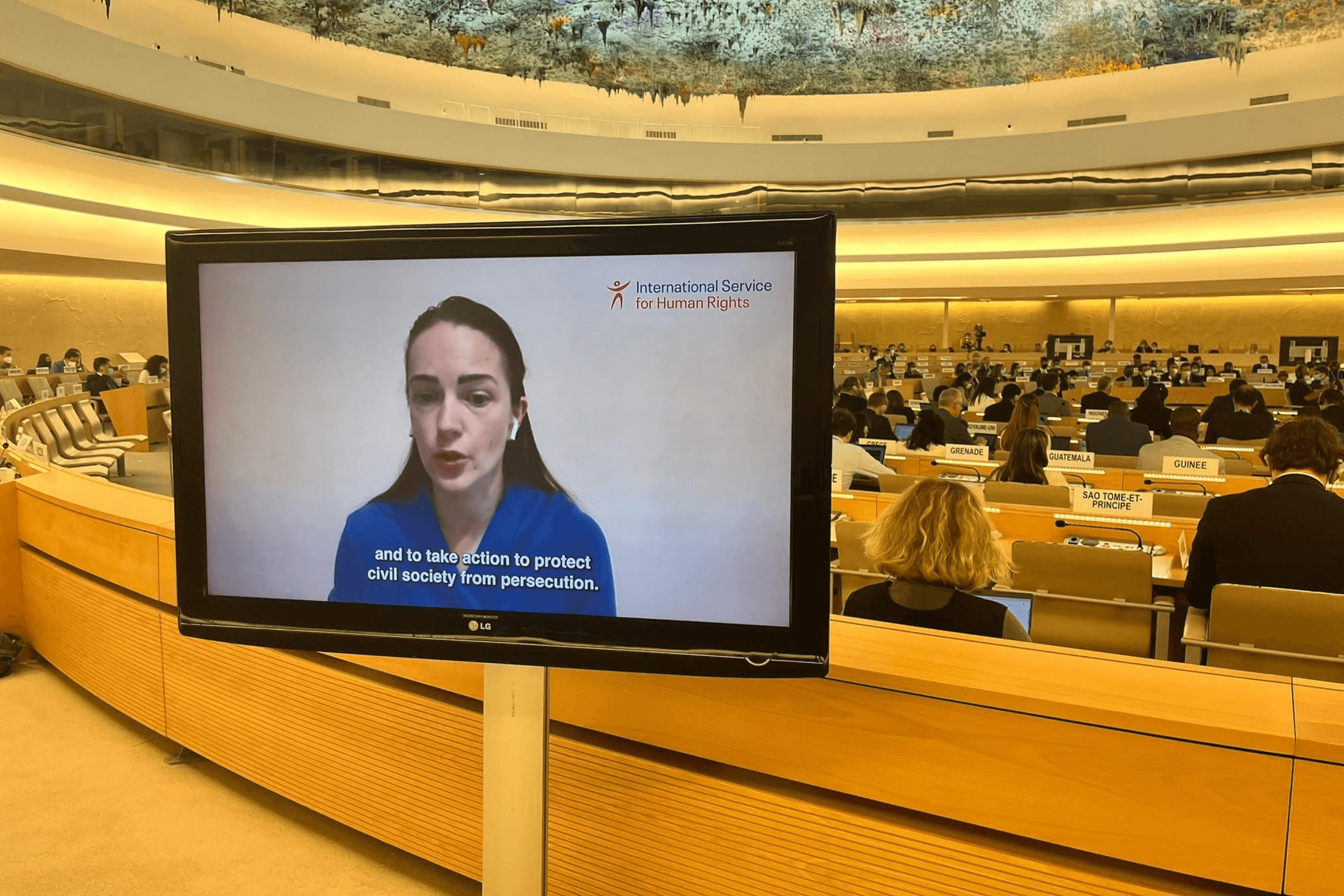
Photo: Oleksandra Matviichuk / Facebook / YB
Even our sympathizers looked at us with pity back then—as if to say, this is correct in principle, but impossible. Because in all 80 years, there had been only one example—Nuremberg. Neither the tribunal for the former Yugoslavia nor the special court for Sierra Leone were tribunals for the decision to start a war—only for the fact that people killed each other in those wars, violating the rules. But the very fact of unleashing an aggressive war went unpunished. The Nuremberg trials teach us that justice is a privilege of the victors. Meanwhile, the current tribunal shows that it’s possible and necessary to create international accountability mechanisms without waiting to see how and when the war ends.
I will play a sceptic here. Let’s imagine the tribunal is up and running and issuing verdicts. What happens next? In Nuremberg, things were different because the criminals were physically detained.
First of all, since this special tribunal is the result of a compromise, it lacks jurisdiction over Putin. This means that while the investigation into Putin will proceed, he won’t be able to stand trial before this special tribunal as long as he heads the state. But the question you’re asking is about what justice means to people. And that is a very non-linear thing. I’ve been working with victims of war crimes for 12 years, and they all view justice differently. For some, justice is indeed seeing the perpetrators behind bars; for others, it is receiving compensation; for some, it’s learning the truth about what happened to their loved ones; and for others, it is being publicly heard.
This means justice is multidimensional, and our task is much more complex than simply launching legal mechanisms so that, theoretically, people who committed war crimes end up behind bars. A legal decision, a court verdict, is not the political position of the party currently ruling the state, where tomorrow another political party will come along and decide otherwise. While yesterday the US condemned Russia’s aggressive war against Ukraine, today they avoid any sharp criticism. The political position has changed, but it doesn’t work that way with a verdict.
Can it then be broadly summarized that the special tribunal is something like a guarantee for our future?
I would probably put it differently. First and foremost, it’s a change in the global approach to crimes against peace. It will mean that countries in other parts of the world can follow our example. So we are already moving international law forward.
And what would justice toward Russia mean to you?
To put it simply, for me, justice is a balance of cause-and-effect relationships. That is, if someone has done something good, it’s just that they are thanked for it. If they have done something bad, it’s just that they are held accountable for it.
For many people in Ukraine, justice means hanging officials on lamp posts when they are exposed on Facebook for involvement in corruption. Justice is a very dangerous thing; there is a reason why all populist parties love to plaster it into their names. Because you can pack anything you want under the guise of justice. But it seems to me that justice must go hand in hand with something else.
First, this demand for “lamp posts” must be translated into the legal field. That’s why our work is so important to me, because where there is no justice, revenge takes over. This triggers an endless cycle of violence. Second, I would like us, when thinking about justice, not to forget about humanity. We have the right to all the emotions we feel. In 12 years, I have still not grown accustomed to what they do to people in [Russian colonies]. So I still feel a whole palette of emotions. But my duty is to rationalise these emotions. That’s why I am sincerely grateful to the Ukrainian state that the vast majority of crimes in our database are those committed by the Russian side. It would be much harder for me to talk about Russia’s crimes if we were the same. Because human rights defenders have a slightly different lens—we document all crimes, regardless of the side.
One of the issues you are also working on is the deportation of Ukrainian children to Russia. In your interviews, you have often said that this problem has no simple solutions. But I’m interested in another aspect. How do we bring back children who have already settled into new families?
The honest answer is—don’t know. Our organization doesn’t handle repatriations, only documentation. But this is indeed a very painful topic. When the law doesn’t work, there is no predictability. And this means there is no universal mechanism for returning children. You work with individual cases. In one instance, you get a child out this way; in another, you do it differently; and in a third, you fail to get them out. Moreover, childhood has its own “expiration date"—children grow up. I think we will have to create long-term strategies. For example, some kind of database—so that children we fail to bring back will have the opportunity to understand in the future that they were Ukrainians.
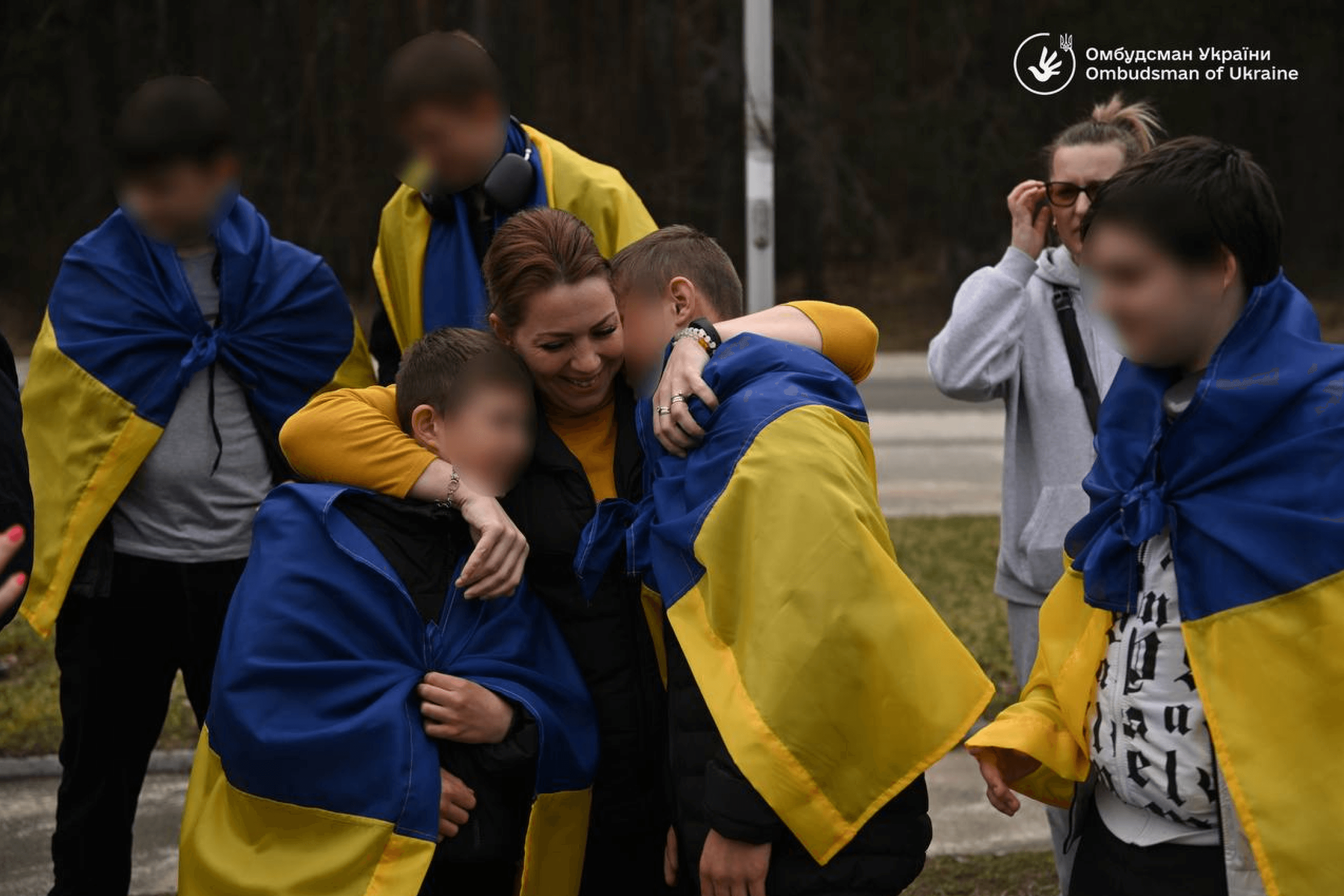
Seven Ukrainian children returned from temporarily occupied territories as part of the Bring Kids Back UA initiative. 2025. Photo: Омбудсман Лубінець Дмитро / Telegram / YB 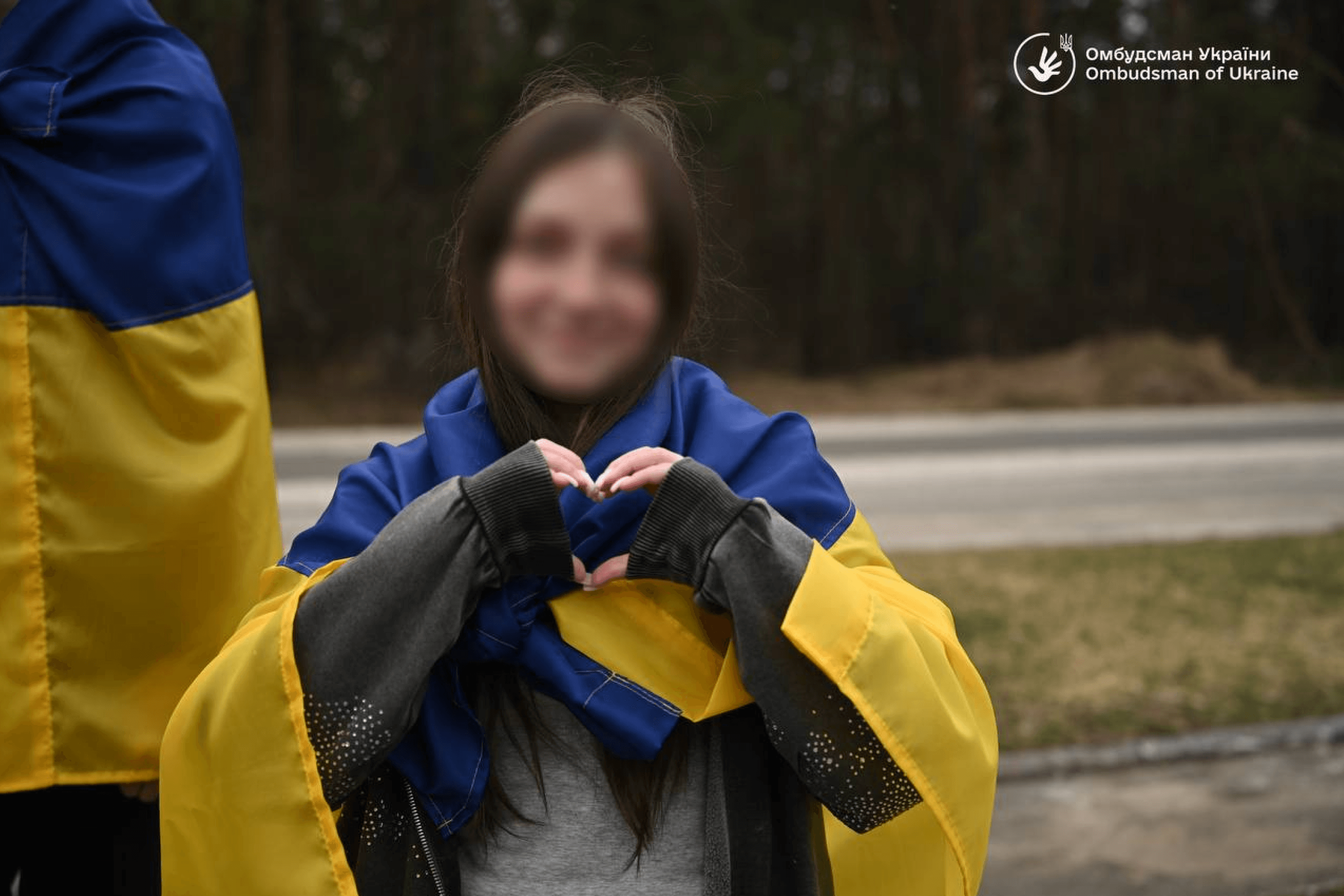
Photo: Омбудсман Лубінець Дмитро / Telegram / YB 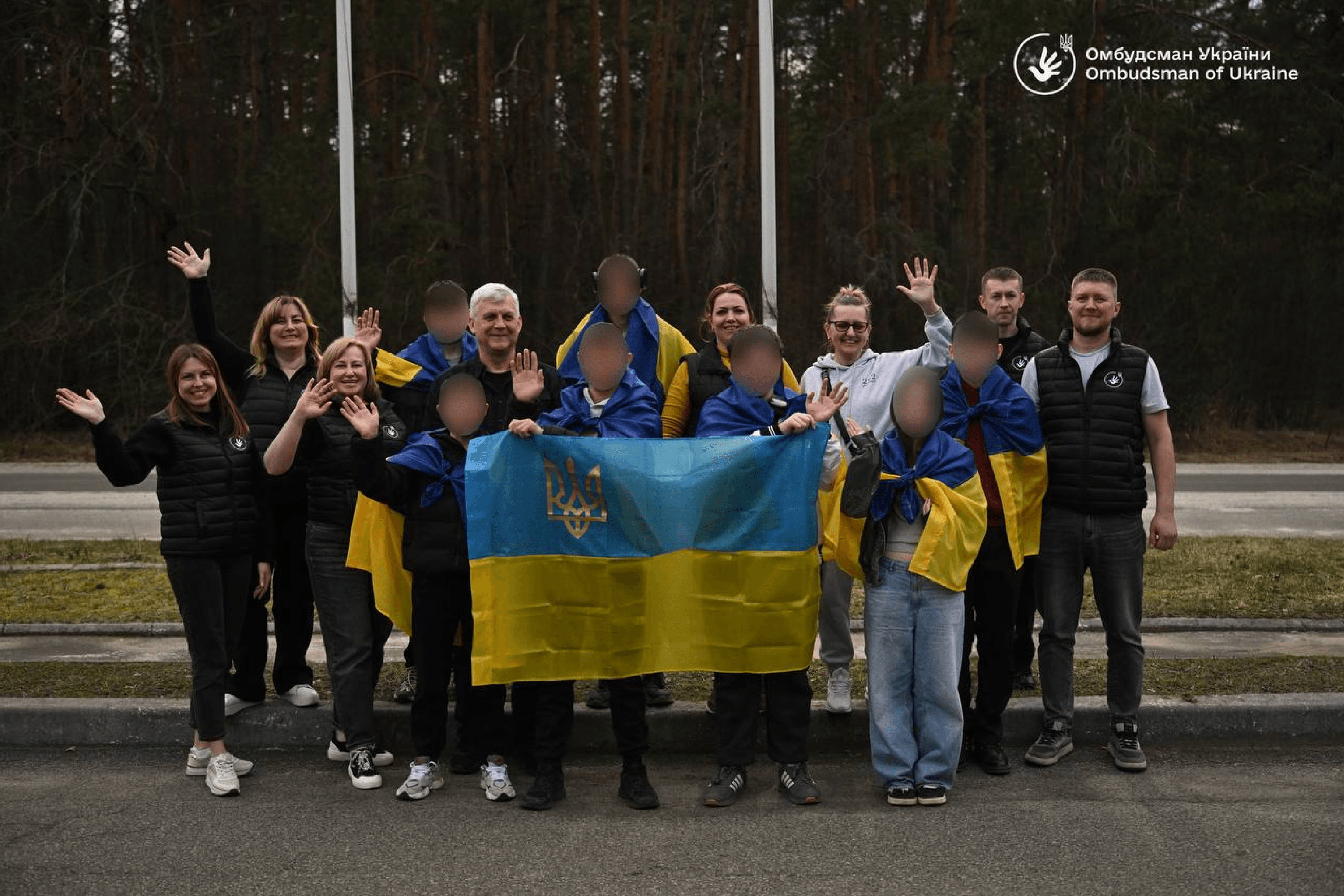
Photo: Омбудсман Лубінець Дмитро / Telegram / YB
While I was on my way to our meeting, I saw a post on Facebook by Vakhtang Kipiani, which, among other things, included a phrase stating that Ukraine has already lost the teenagers who moved abroad—specifically to Poland. Do you agree with this?
Last year, I launched a mentorship program for young people aged 18 to 25 and wrote that Ukrainians abroad could also apply. Such applications accounted for 70%. This means that this generation is holding onto its connection with Ukraine.
I believe that we have become a global nation. And we have a choice: either we build horizontal ties with our multi-million diaspora and accept that some people will not return for various reasons; or we simply say that these are no longer our people. But I think we don’t have the luxury of throwing people away like that.
Perhaps if not these children, then their children will want to return to Ukraine. I have a vivid example. My assistant is an Argentine of Ukrainian descent, born in Argentina but in the third generation. And she returned to Ukraine. She says she cannot believe it—her ancestors fought the Russians, and now she is fighting them. We must simply forbid ourselves from thinking of anyone as lost people.
As someone who spends a lot of time abroad, how do you perceive our relations with our allies today? Have they truly grown tired of us?
It seems to me that the war is becoming normalized. And this is a very human process. I’m not blaming anyone—I saw this in Ukraine. Back in 2014, there was shock, but by 2015, a huge number of people turned off the war on their TV screens. I remember how we tried to draw attention to Crimea, to the repressions, to the political prisoners, and [media] editors told me that no one was interested in that anymore. So what do we want from European countries? The people there are not malicious or indifferent. They are simply behaving the way a large portion of people behaved in 2015. They decided that war is terrible, but it’s far away. Meanwhile, they have their own lives, and they just want to live them. They don’t know how they can be useful. Because, for instance, you’ve been sending some humanitarian aid year after year, yet the war doesn’t end. And you don’t understand: are you actually making any difference at all?
I see how many people are still helping us. And often, these are ordinary people. In Paris, a fisherman from Brittany approached me. He said he was sending nets to Kherson. And you think to yourself: “My God, some fisherman. And here it all comes together. Brittany. Kherson.” And there’s a lot of that. But it’s not as visible in Ukraine.
I always repeat that there are no small actions during a major war. Every action matters. And it’s precisely from these small actions that our resilience, which people love to credit us with, is built.
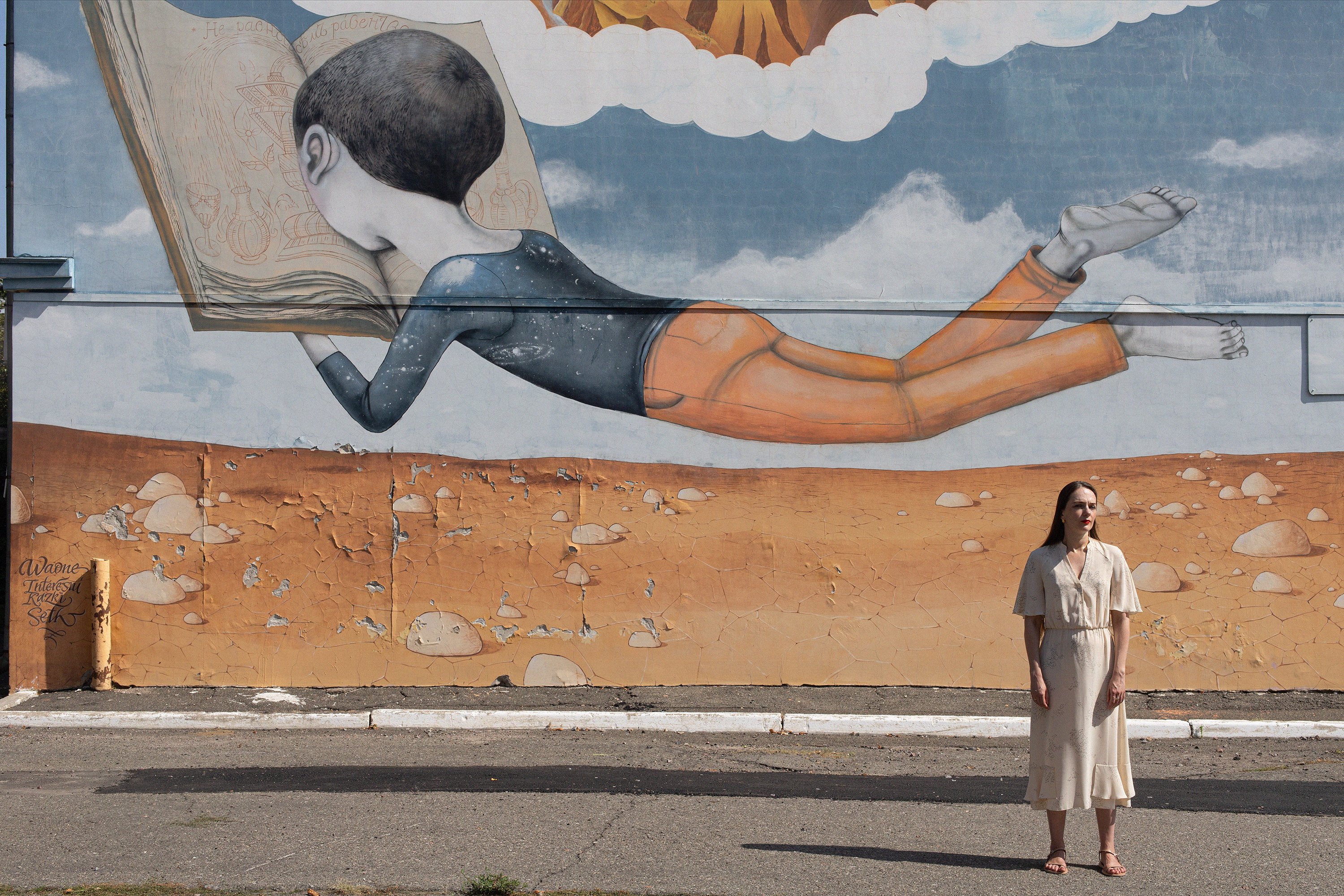
Moments like this remind me of the Euromaidan slogan: “I’m a drop in the ocean.”
I tell this story all the time. For many, the saying “I’m a drop in the ocean” means that my efforts are worth nothing. But we reinterpreted it. We said: “I’m a drop in the ocean,” and that means drop by drop makes an ocean.
To quote you: “People in Europe are beginning to understand. Bit by bit, but the realization is emerging that Putin started the war not to occupy some part of Ukrainian territories, but to go further.” Why are they only starting to understand this now, after four years of a major war, and even then, as you say, “bit by bit”?
Let’s remember how in January 2022, a huge number of people denied a full-scale invasion. It’s about human nature. When reality is threatening, we reject it. Why has the realization begun to arrive now? Because there are adults in the room who dared to accept this reality and do something about it. It is important that there are more of them in every country, so that they remain in power.
People are the same everywhere. I try to understand this and not act as a lecturer when I speak to an international audience. Nobody likes to be lectured. But the truth is, it’s better to prepare for reality, choose an adult stance, and change this reality without waiting for it to arrive.
In a 2025 interview with Ukrainska Pravda, you said that the human dimension is not a priority at all right now. Has anything changed since then?
Nothing has changed. We are losing the human element in general and everywhere. The human dimension is leaving politics, leaving the technology sector. Take artificial intelligence, for example. This is actually a massive ethical challenge. It used to be believed that only humans could think and create. Not anymore. And what makes us human then?
Some of the people leading tech companies genuinely believe that humans are very expensive. A human requires a pension, healthcare, social protection, and some form of security. They need democracy. Since we are currently at a turning point in the world order, it’s highly likely that the next order will be one where only technology has freedom—while humans will be a consumable material serving that technology.
People who think this way aren’t marginal. This is just a different kind of ethics, a different kind of thinking, and, consequently, different decisions and actions. I’m certain I said this [in the mentioned interview] in the context of negotiations [regarding the war in Ukraine], because that is where it’s very clearly visible how much we have lost the human dimension.
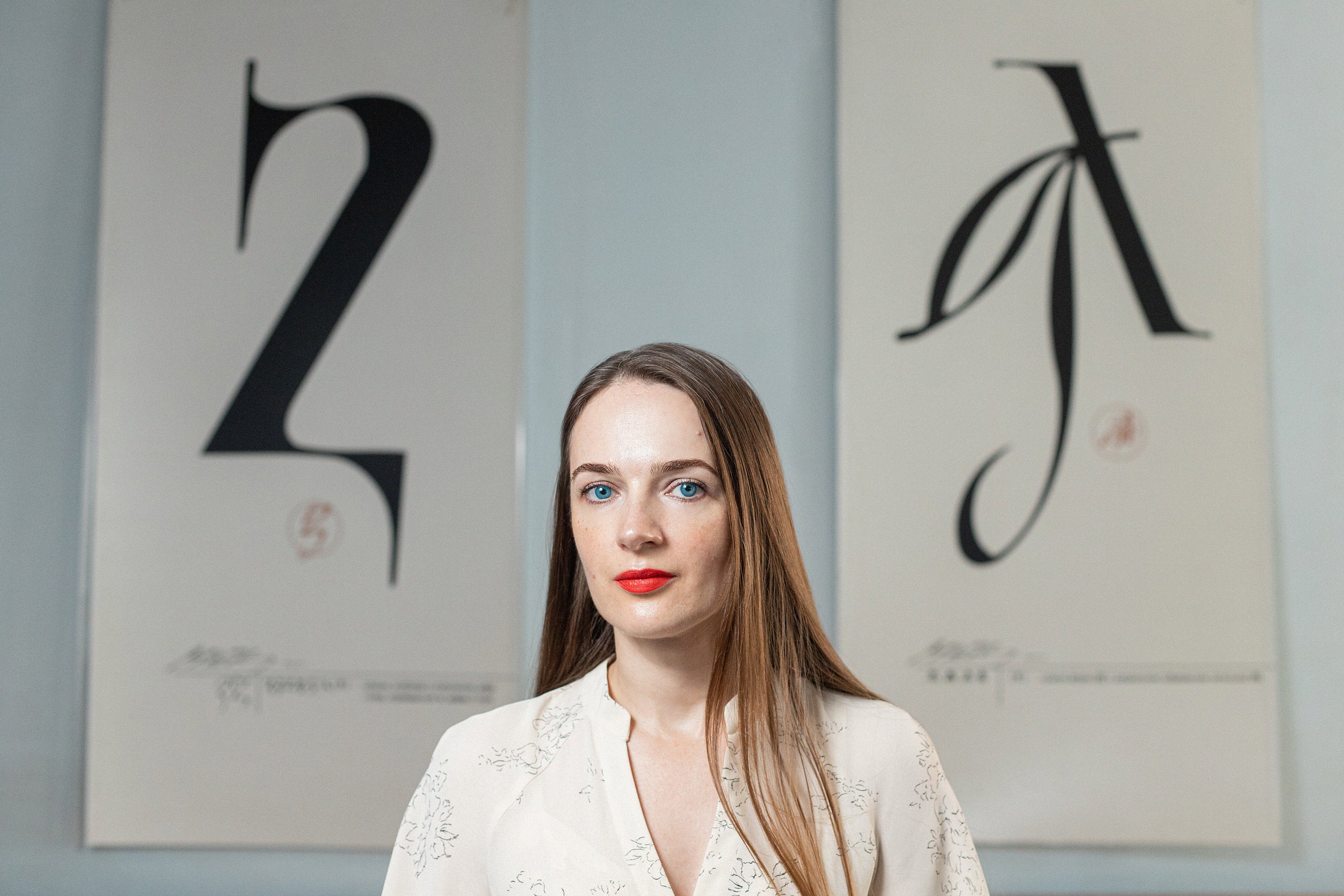
You said that everything revolves around territories, and we don’t talk about people at all.
I cannot reproach the Ukrainian side for this, in particular. We are simply forced to play by rules that weren’t determined by us. But American negotiators talk about the occupied territories as if they were empty spaces. I just want to slam my fist on the table and say, “Stop!”. These are not empty spaces. Millions of people live there. They have absolutely no way to protect themselves, their freedom, or their children. Russian occupation is not when one flag is exchanged for another, as imagined by people who have never been occupied by Russia. Russian occupation means forced abductions, rapes, torture, the denial of your identity, the banning of your language and culture, filtration camps, and mass graves. For us, occupation is the very same war, just in a different form.
Twelve years have passed since some territories were occupied; have we lost the people from there?
These are our people. Yes, they have lived for 12 years in conditions that we, thank God, didn’t have to live through. They’ve changed a lot. I remember that within just two or three years, resentment was growing among the people who stayed [in the occupied territories] that they had been abandoned. This resentment may be irrational, because we couldn’t liberate these territories, but it is there.
We love to speak in mantras like “Crimea is Ukraine,” “Donbas is Ukraine,” and so on. But when it comes down to specific things, a portion of people switch to a simplified, binary view that everyone who wanted to leave has already left. It seems to me that this is very unfair and primitive. We—those who document crimes—know that Russia uses terror. Because it’s one thing to capture territories, and another to hold them. To do that, you have to break social ties and communities, physically destroy the active minority or push them out of the region, and intimidate the passive majority. That’s why often the only way to survive is to become an executioner. Mentally. To identify oneself with the aggressor.
I assume you have seen the discussion regarding the strike on the college in occupied Starobilsk. About who actually died there—Russian military personnel or real students. This debate became especially sharp when “Realna Gazeta” reported that there were indeed students there. What do you think about this?
I cannot comment on the strike on Starobilsk itself because I haven’t studied the information surrounding it.
Now, regarding the discussions. I’m glad it is happening. Right now, we all feel that the situation at the front is changing. Ukraine has begun producing its own weapons, which allow us to reach [and destroy objects in] distances that were previously inaccessible. And we need this discussion to once again distinguish between a strike on military objectives where collateral damage is acceptable, and a disproportionate use of force or a deliberate strike on civilians. These are all distinct legal categories, and we need to understand them.
But I would like the participants in this discussion to be more patient with one another. I understand that it’s difficult. People living under constant stress can be genuinely irritated simply by the fact that someone else holds a different viewpoint. But there must be some reflective stance. We might not like each other, but there is no one else. We’re going to win this war with the lineup we have. And in general, there are few of us; we are being ground down, we are dying. We must take care of each other.
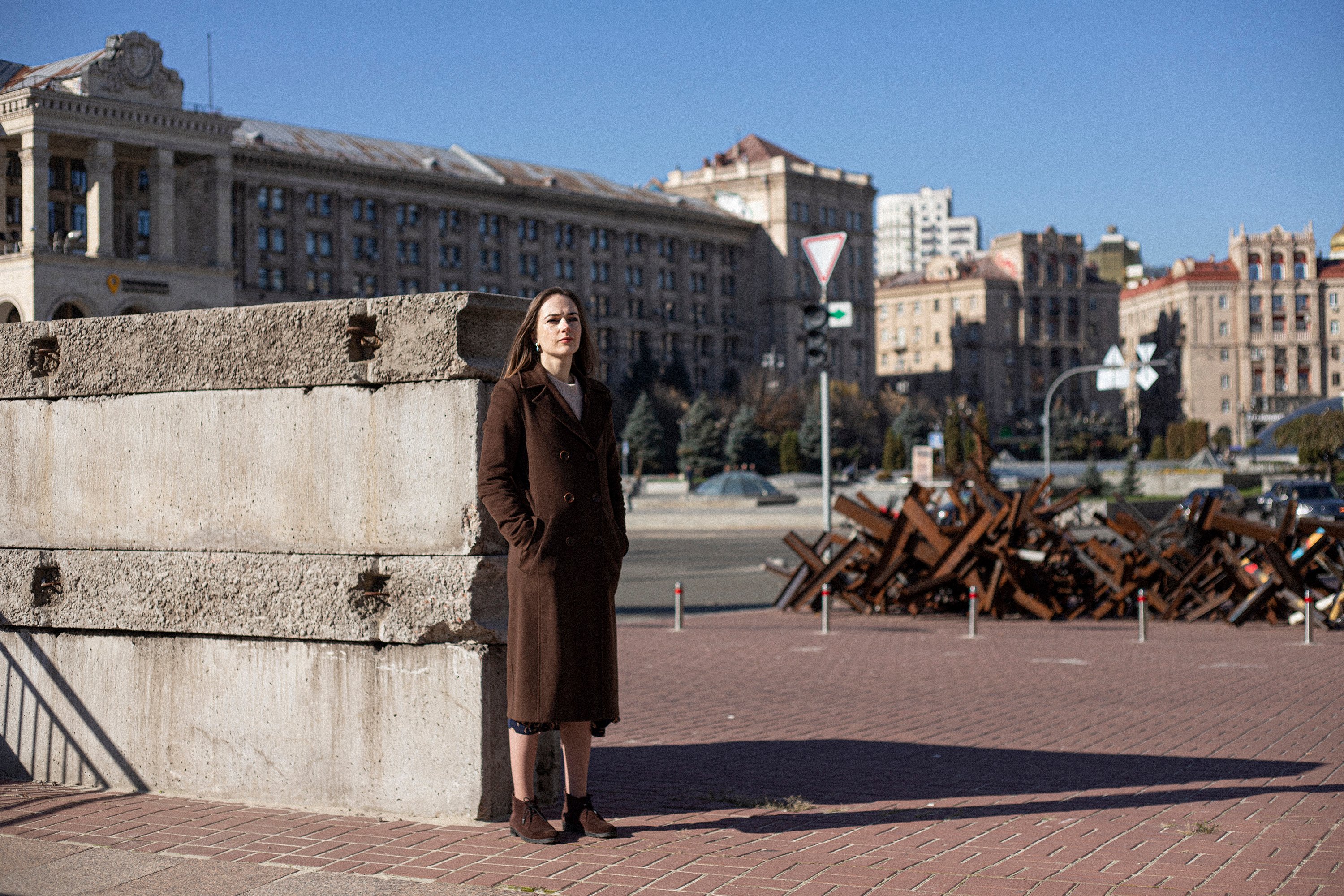
How do you, as a human rights defender, see the way our society has changed both over these 12 years and over the specific four years of the major war?
We are already tired of being called resilient. It has become such a mantra, as if Ukrainians are made of iron and can endure anything. And this is an absolute falsehood. We cannot endure everything. What doesn’t kill us doesn’t make us stronger. It breaks some of us, it changes some, and it forces others to leave.
There are positive changes. This is the awakening of civic consciousness. The volunteer movement has grown tremendously. As I already wrote in my Nobel speech, in our country, ordinary people do extraordinary things. Ordinary people change history.
However, overall, war is horrific. And it doesn’t change us for the better. War is the tearing of social fabrics. It atomizes people. Someone ends up abroad, someone is in the army, someone decides to stay and live near the front line and goes to sleep every night not knowing if they will wake up in the morning. And within these categories, there are tens of thousands more groups that have formed based on their unique experience lived through during the war. If trust circulates only within these groups, it will tear us apart. Because the experiences are different, and the visions of the situation are different too. And if there is no framework that stitches us all together, the country gets ripped apart. Therefore, one of the urgent tasks is to build bridges between these groups.
At the same time, war implies black-and-white thinking.
I think that when you are on the battlefield and a Russian soldier is coming at you, you must clearly identify who the enemy is and who is one of your own. You cannot ask yourself: “Maybe he has five children? What if he’s a good person? What if he’s just a contract soldier fooled by Russian propaganda?”. In other words, black-and-white thinking is necessary on the battlefield. But the vast majority of people aren’t there. We discuss things in a coffee shop or write on social media, yet we behave as if we are on the battlefield. Meaning, we divide everyone around us into our own and enemies just because we didn’t like a different point of view. Life, after all, is more complex. Furthermore, trust is the most undervalued resource during a war. If people trust each other, they unite quickly and solve a given problem. If they don’t, they unite slowly, while war is all about speed.
For many people, this is just a convenient way to show their stance because going to fight against the Russians is terrifying.
Yes, you cannot reach your abusers, so you take it out on those who are closer. You look for any internet fight on social media where you can come and pour out your negative emotions. Well, I will repeat once more—we have the right to all emotions, but we have an adult duty to rationalize them. You cannot strike your own side. We cannot afford this during a genocidal war aimed at our destruction.
In this context, I cannot help but recall the story with the Nobel Prize. There was a lot of hate because you received it alongside Belarusian and Russian human rights defenders.
Hate is still there. But yes, now it’s no longer such a topical issue. I hold no grudges against the people who hated on me back then in 2022, because on a human level, I understand them. War is the destruction of everything you call a normal life. And it’s completely natural to want to create a distance from a representative of the nation that attacked you.
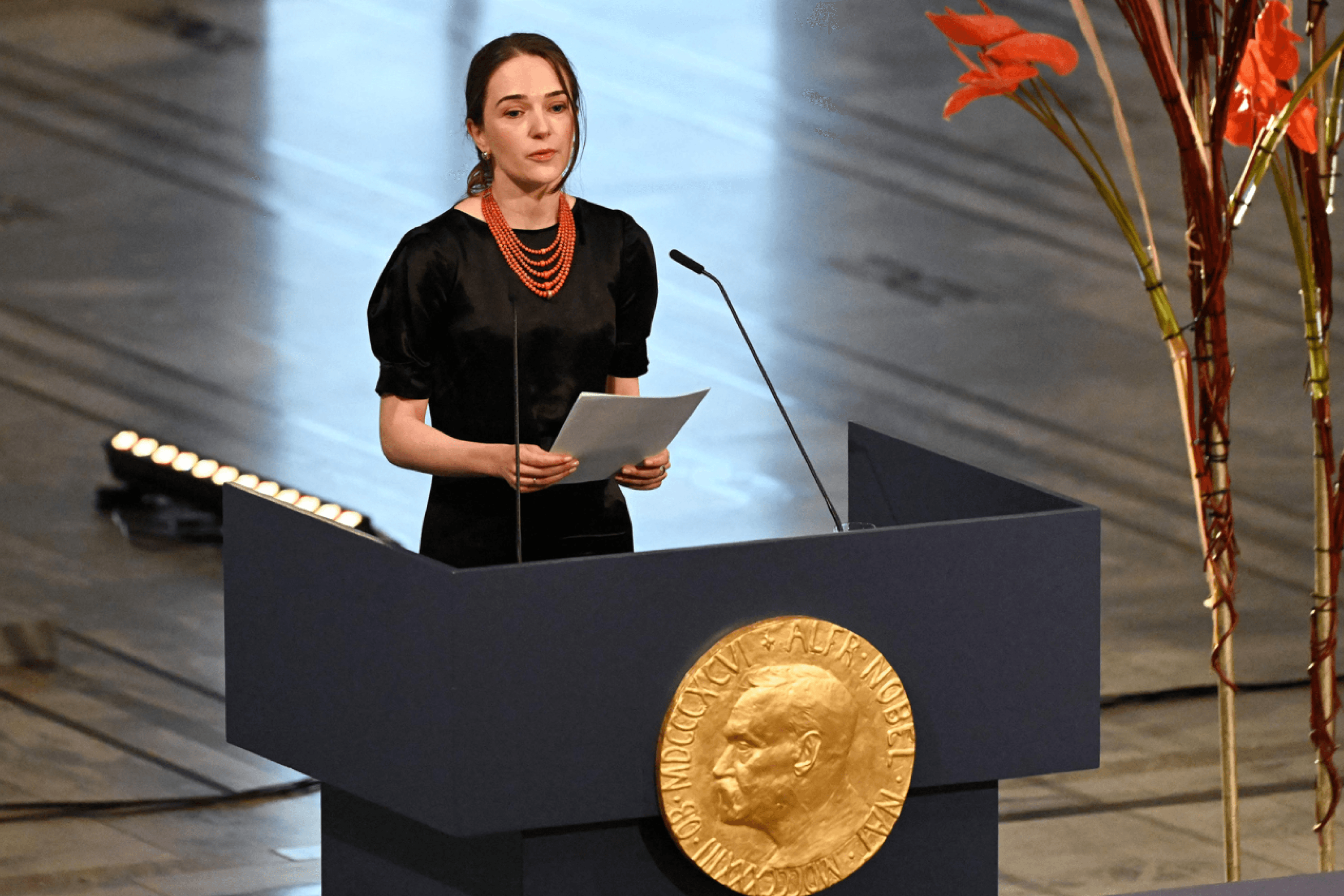
Oleksandra Matviichuk delivers an acceptance speech on behalf of the Center for Civil Liberties upon receiving the 2022 Nobel Peace Prize. Photo: SERGEI GAPON / AFP / East News 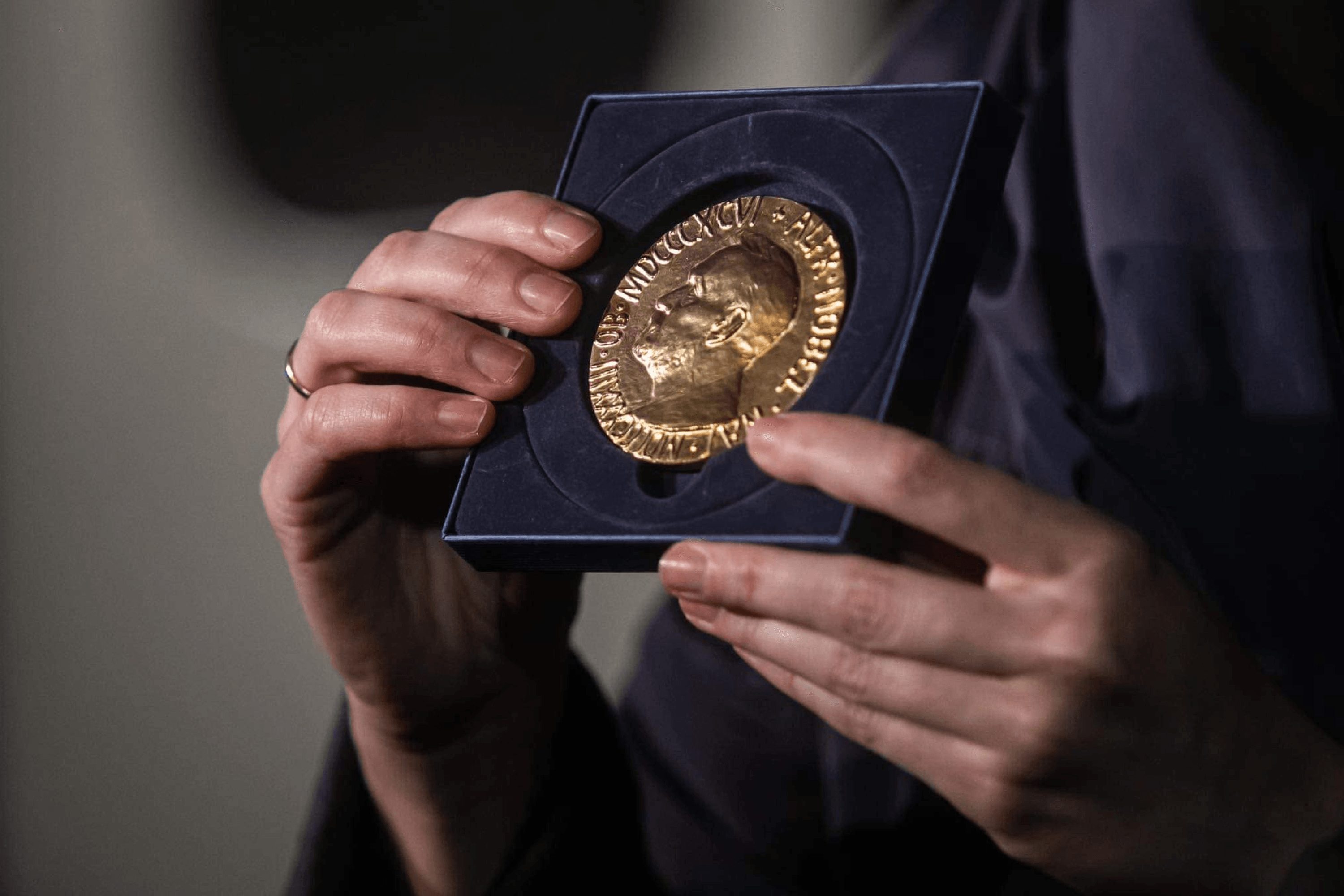
Oleksandra Matviichuk returns to Kyiv after receiving the Nobel Peace Prize on behalf of the Center for Civil Liberties. Kyiv Railway Station. 2022. Photo: Oleksandra Matviichuk / Facebook / YB 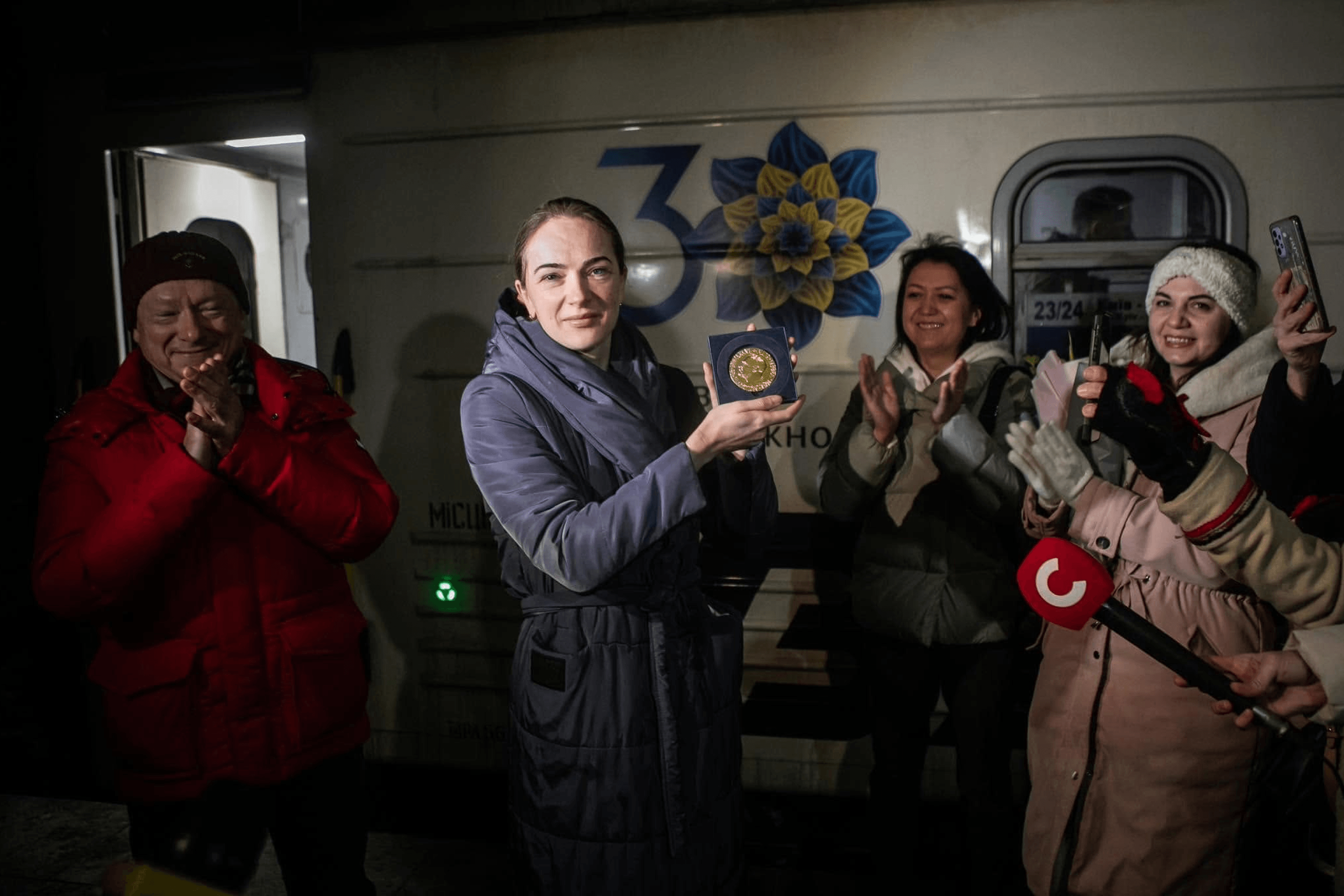
Photo: Oleksandra Matviichuk / Facebook / YB
I didn’t go to receive the Nobel Prize with some abstract Belarusian and Russian human rights defenders. I went with colleagues and friends with whom we work together in this war. In 2014, we were the first to send mobile groups to Crimea and the East. I called Russian human rights organizations and asked them to send safety protocols because they had the experience of mobile groups in Chechnya. In March 2014, representatives of “Memorial” helped us build a system for missing persons.
We have tens of thousands of imprisoned Ukrainians in the occupied territories and in Russia. How do you send an independent lawyer or visit them in a penal colony? This is done at their own peril and risk by our Russian colleagues, who tomorrow might find themselves behind bars. I understand the people for whom this was very painful to accept, because they probably think that we are simply holding dialogues and signing memorandums. No, we are working.
Do you think the strategy of ignoring and canceling Russians at public events is working in the fifth year of the major war?
I think the approach should have been more nuanced. When [Russian conductor Valery] Gergiev tried to hold a concert in Italy, I signed a letter to prevent that concert from happening. I understand that over these years, we have failed to convey our message—we are demanding the cancellation of Gergiev’s concert not because he’s a Russian composer, but because he is a Russian composer who supports Putin. For people abroad who are outside our wartime context, the cancelling of Russian culture is simply incomprehensible. In other words, we needed to explain what we meant more clearly. Furthermore, it seems to me that we shouldn’t be fighting Dostoevsky, but rather reading him correctly. Read him as a diagnosis of Russian society.
I hope that in 2026 we will finally develop a more pragmatic strategy. Once again, so that everyone understands correctly—I by no means support Russia’s return to sports, museums, or artistic venues. But this is not a question of ethnicity; it’s a question of supporting the war and Russia using these platforms as the soft power of the Russian military machine.
But you do realize that the prevailing opinion in society is precisely about ethnicity? That any Russian, “good” or “bad,” shouldn’t have support in the West.
Many things can prevail in society, but there are amplifiers. And these are usually people who should actually be reflective and pragmatic. I ask myself: “Do you want to be right, or do you want to win the war?”. I’m human too, and there are many things I want. But if you ultimately want to achieve the goal, sometimes you have to forget about your ego.
If we compare it to 2022 again—which arguments work better today when we talk about the war in Ukraine with foreigners: emotional or pragmatic ones?
Probably only in 2022 was it possible to give a universal answer. Because that emotion was shock. Otherwise, the world is very diverse. There are many parts of the world that know nothing about our region except that Russia is here. And it was only in 2022 that Ukraine suddenly began to be visualized on their mental map. Moreover, when I travel to countries in Africa, Latin America, and Asia, I realize that we start from a position of mutual ignorance. Because Ukrainians know little about other contexts, experiences, history, wars, and pain. We know little about the world.
Now, after the initial period of shock has passed, a strategic approach is required. And one of the things I practice and urge Ukrainians to do as well is that Ukraine’s voice in the world should not only be about Ukraine. We, who constantly talk about solidarity, must demonstrate it.
Do you mean solidarity with other countries that have similar experiences?
I mean that we must speak in coalitions. It doesn’t necessarily have to be countries with similar experiences. For example, a few months ago I went on a solidarity visit to Syria to understand what we could do for Syrian human rights defenders. They are currently rebuilding a transitional justice system from scratch. In particular, we can learn from them. A lot of what they have done commands immense respect and admiration.
Has the attitude toward us changed since Trump’s victory?
In America—yes. At the political level.
And what do the people think?
I look at sociodemographic surveys. Republican voters support our fight for freedom. In this context, Trump’s policy runs counter to the will of the American people. Americans would prefer that America support Ukraine.
And in Europe?
Europeans support us more. The issue is that the shift in Trump’s foreign policy has primarily changed America’s attitude toward Europe. Therefore, European countries are less concerned about Ukraine and more concerned about themselves. They are thinking about how to survive in this world where the world order is collapsing, and they are no longer guaranteed the American nuclear umbrella. For decades, Europeans didn’t invest in developing Europe’s autonomous security. Now they need to start doing it very quickly.
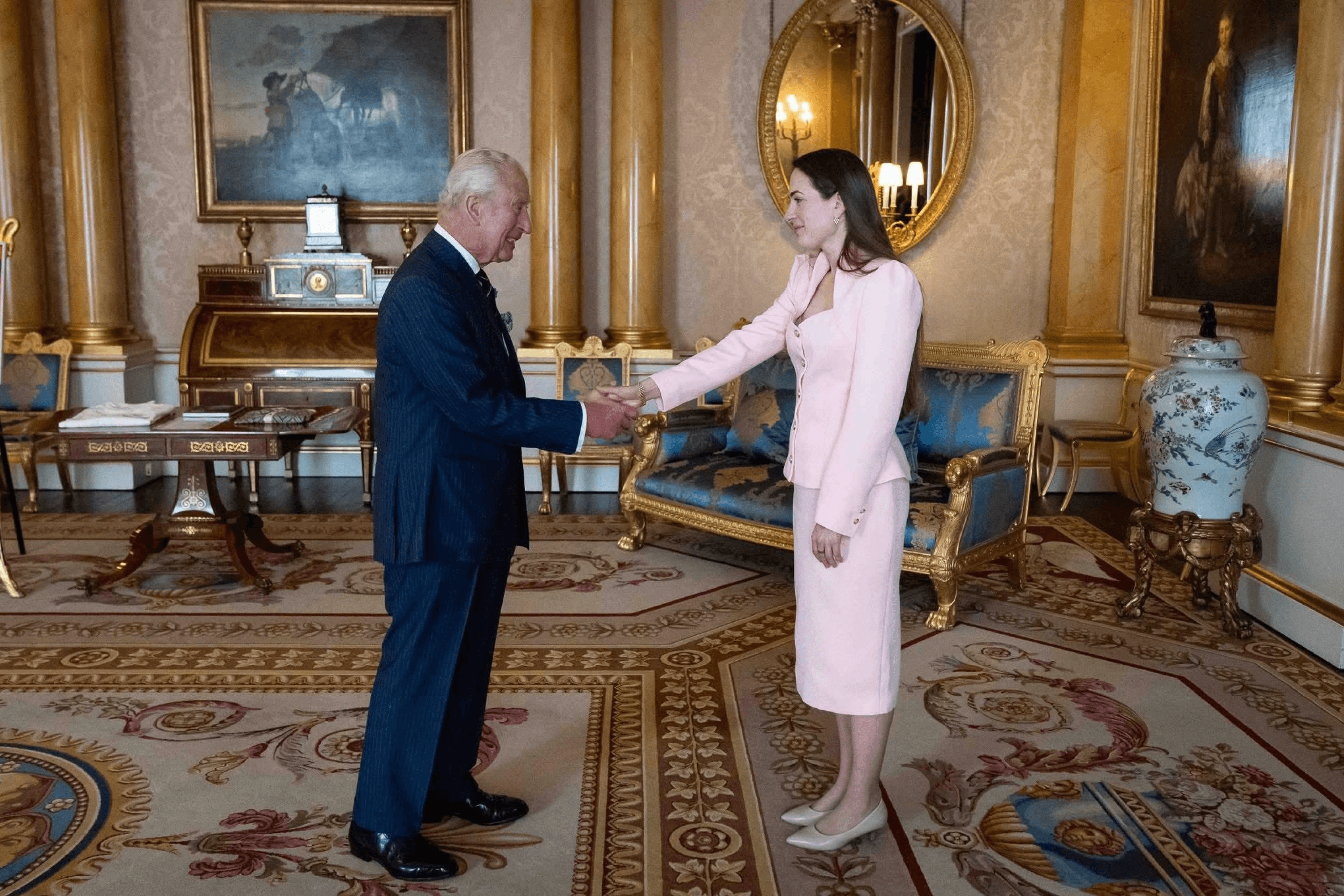
Oleksandra Matviichuk during a meeting with King Charles III at Buckingham Palace. During the audience, she spoke about the consequences of Russia’s aggression against Ukraine and presented a symbolic gift from Ukrainian children. 2025. Photo: Oleksandra Matviichuk / Facebook / YB 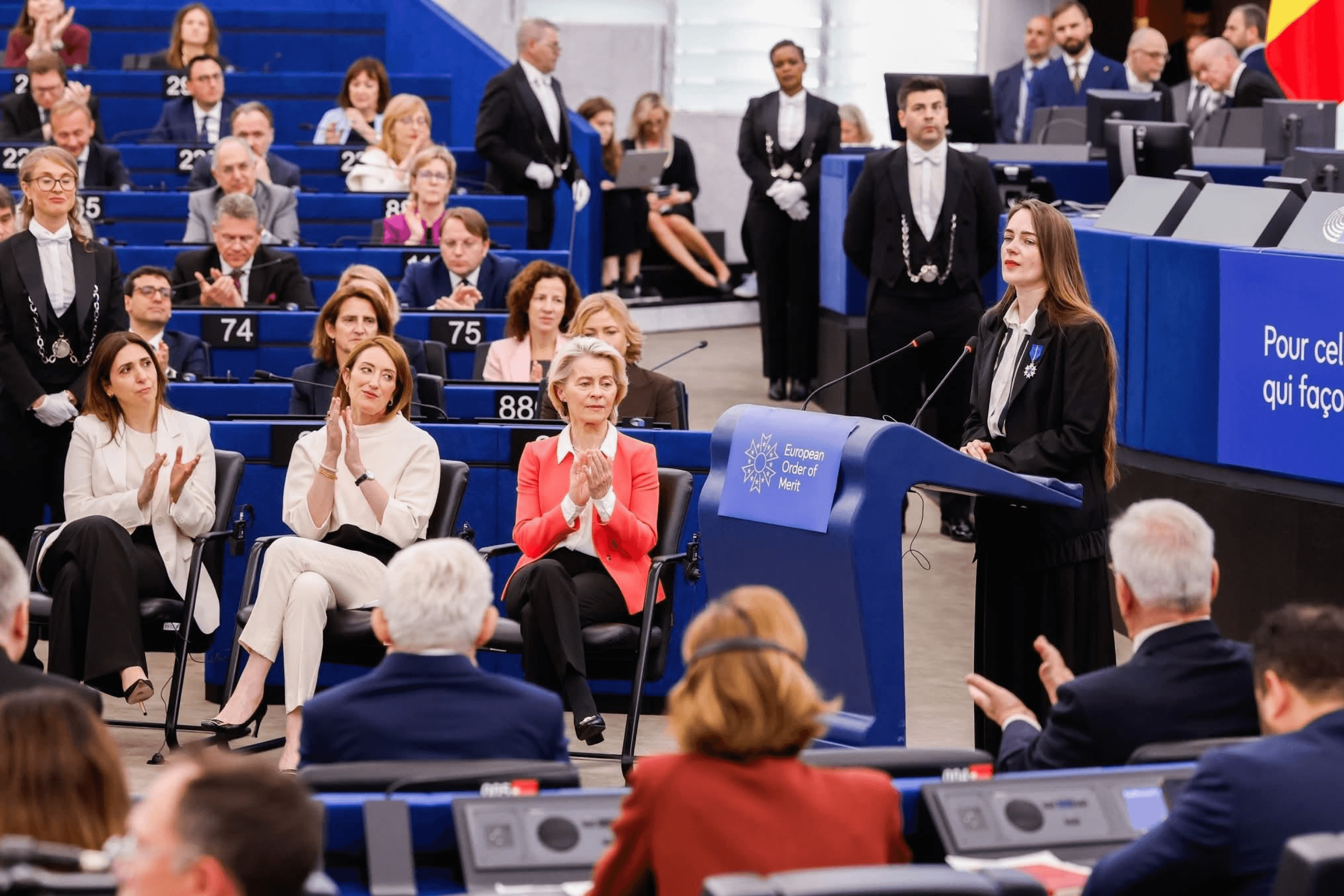
Oleksandra Matviichuk during the ceremony of the European Order of Merit at the European Parliament in Strasbourg. 2025. Photo: Oleksandra Matviichuk / Facebook / YB 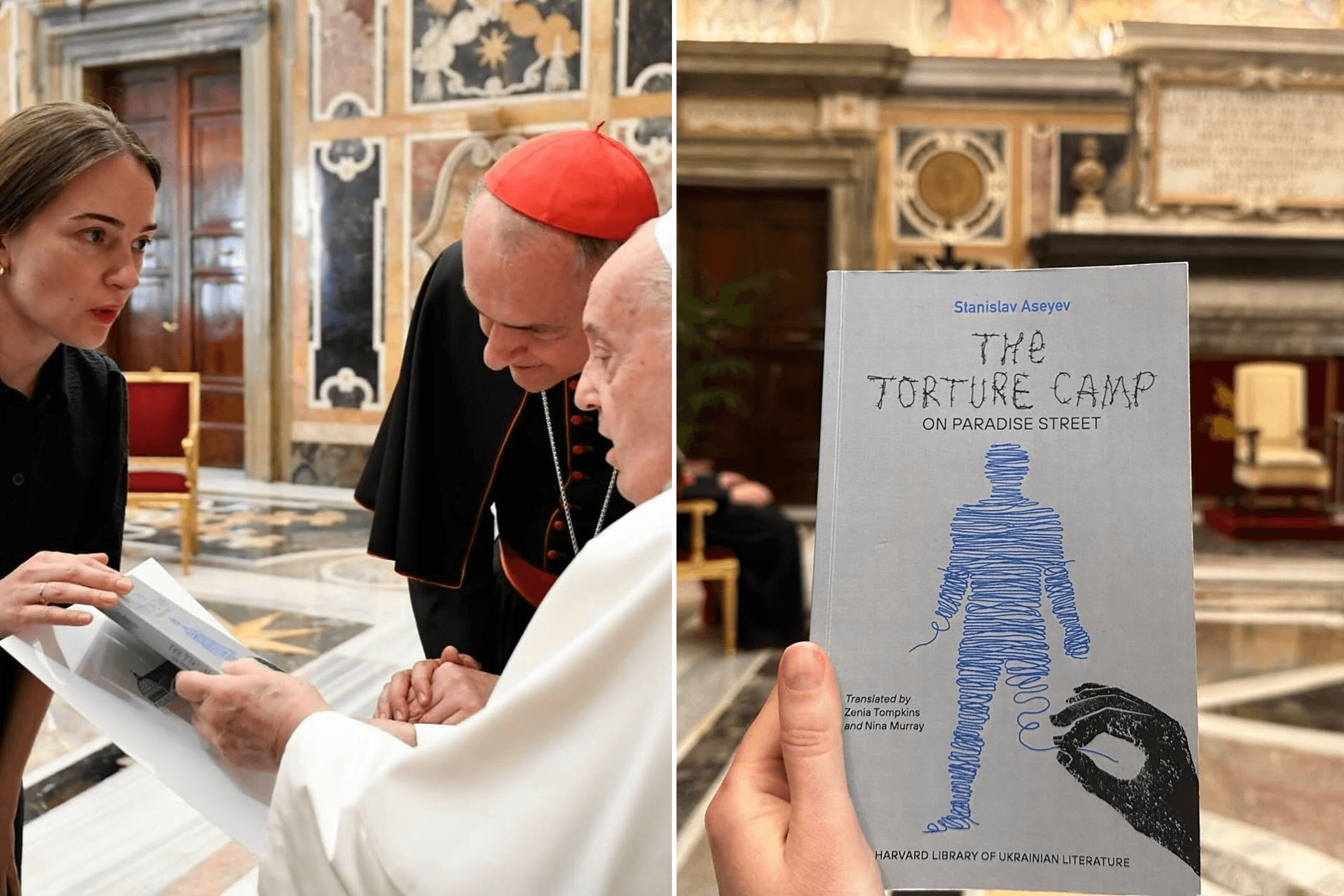
Oleksandra Matviichuk during a meeting with Pope Francis, where they discussed Russian crimes against Ukrainian civilians in the occupied territories. Vatican City. 2024. Photo: Oleksandra Matviichuk / Facebook / YB 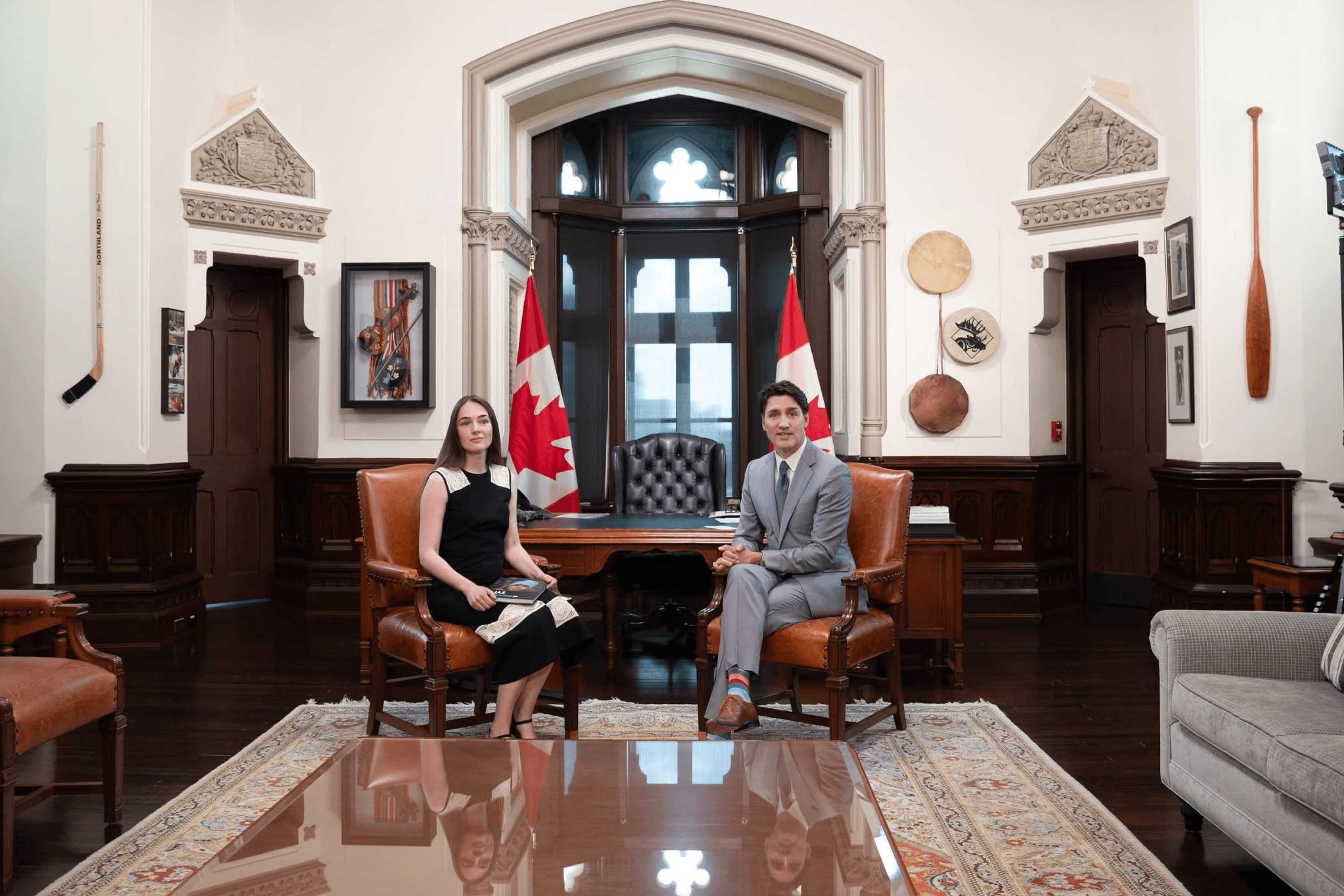
Oleksandra Matviichuk during a visit to Canada, where she raised awareness of Russia’s deportation of Ukrainian children and presented the book War Through the Voices of Children. 2024. Photo: Oleksandra Matviichuk / Facebook / YB 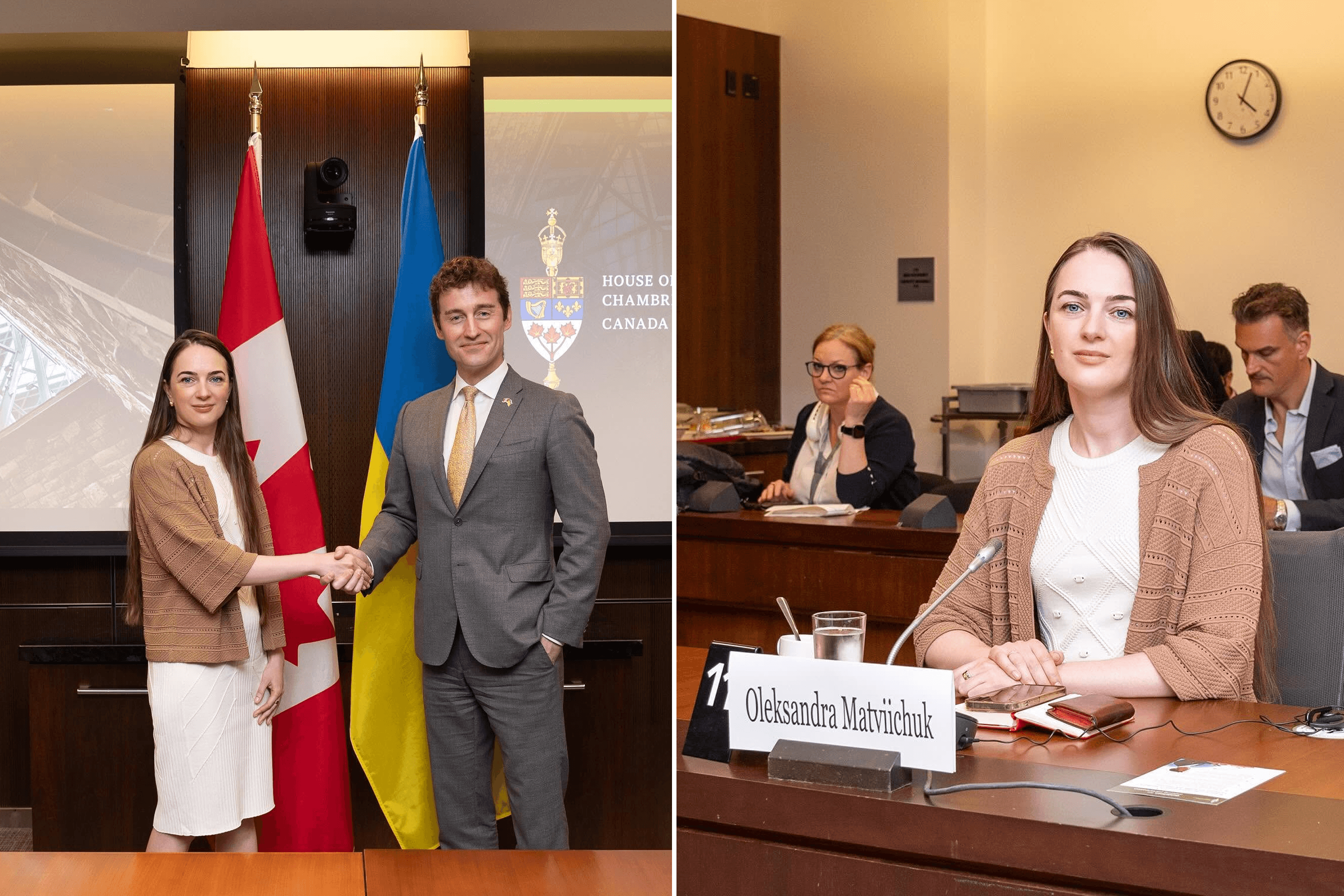
Oleksandra Matviichuk during an advocacy tour of Canada focused on raising awareness of Russia’s war crimes and the deportation of Ukrainian children. 2024. Photo: Oleksandra Matviichuk / Facebook / YB 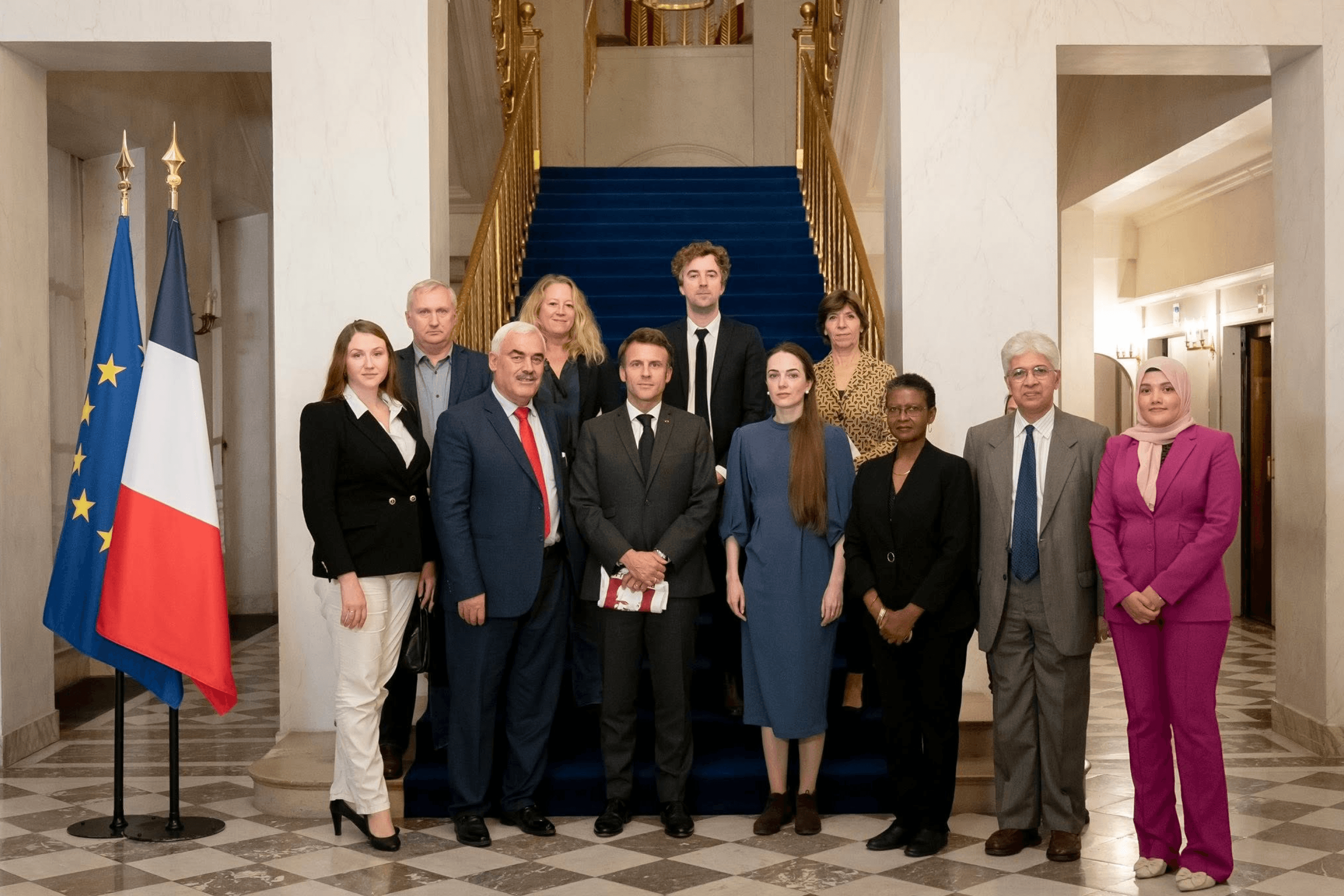
Oleksandra Matviichuk during a meeting with French President Emmanuel Macron focused on Russian war crimes and the release of Ukrainian prisoners. Paris, France. 2022. Photo: Oleksandra Matviichuk / Facebook / YB
Are there any questions that you are asked over and over again at all those international speaking engagements?
They are very simple. Why don’t you want to make peace with Russia? Why not sign a peace treaty, freeze this conflict, and accept that 20 percent of the territory will be occupied? People think that the war will stop if some formal treaty is signed. I constantly meet people who know nothing about life under occupation, or about the fact that we have tens of thousands of unlawfully imprisoned civilians in Russian captivity. They are unaware that just a few years ago we signed as many as two peace agreements. One needs to be patient and simply explain this.
I had a turning point when I told my colleagues and myself that I was tired of being in this role: I was starting to feel sick of myself because I had to explain the same things, repeat, recount, and answer the same questions. But I somehow reinterpreted it. I thought: if the Bible has been saying the same things for millennia, then I should probably have a humbler attitude toward myself. Just go and do your job.
And my last question. We talked about how Ukrainian society has changed during the war. How have you changed?
Good question. I don’t fully know the answer because I don’t allow myself to start… Answering this question requires reflection, and reflection requires a pause, time, and at least a minimal sense of safety. And on a physical level, I have the feeling that we are being killed. We have to run a marathon in a sprint mode, so there is no time to deal with our own emotions, with our own changes. People don’t need my tears or reflections, nor philosophical guidance, but concrete actions.
I have accepted that the war might last for a very long time. Previously, war for me was the collapse of everything that could be called civilization. Now I understand that I, in particular, was lucky to live in relative peace for at least a certain period of time. War, unfortunately, is a part of human activity.
I realized that one cannot put life on hold. If we stop loving, stop enjoying simple things in the intervals between funerals, and stop sharing warmth—meaning, if we stop doing what makes us human—then they win. The war wins. It will take away our entire life. And we don’t have another life, so I’m not going to give it away to the war.