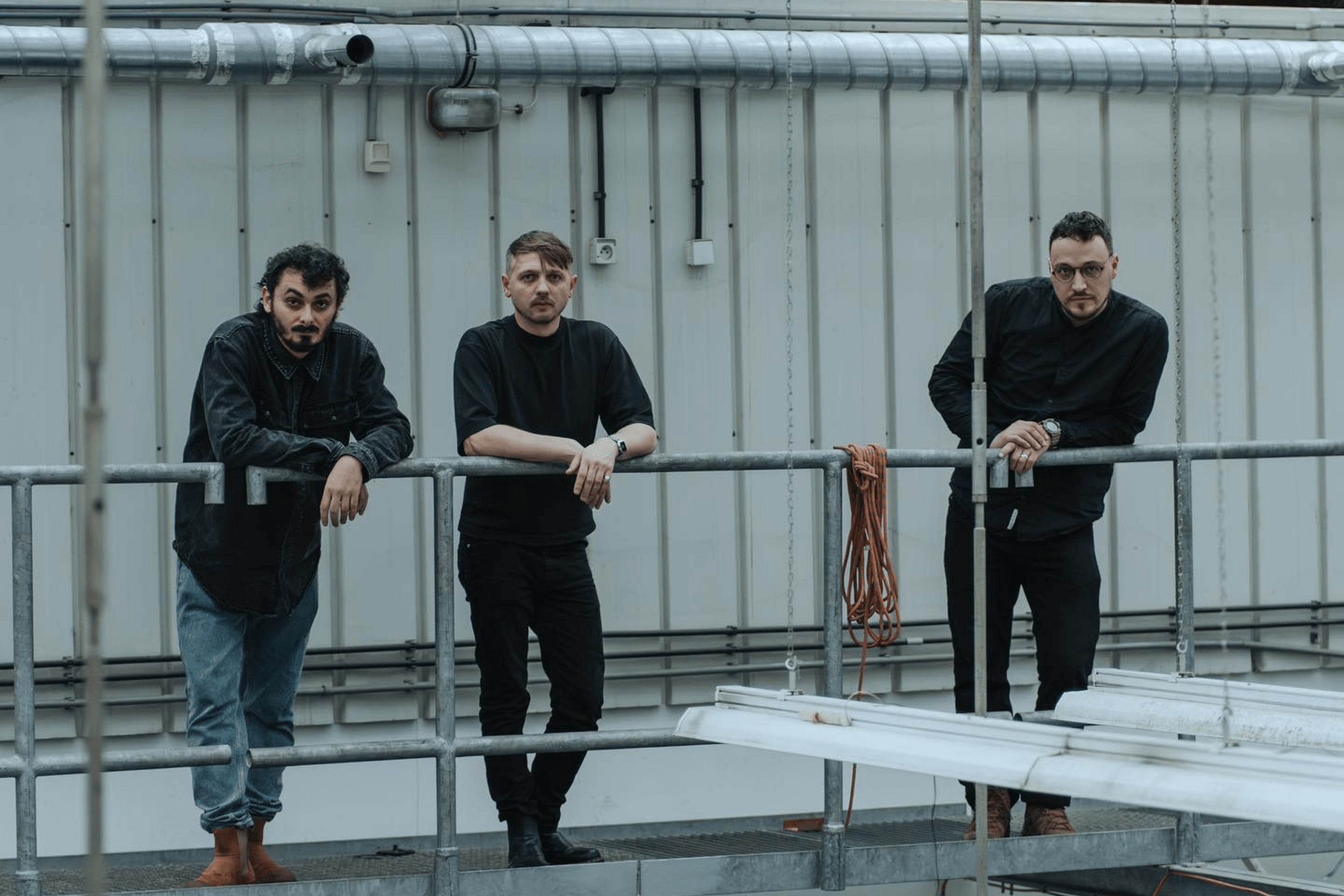
You may have seen the video: Ukrainians who survived shelling recreate the sounds of war using their own voices—the whistle of a missile, gunfire, explosions—and invite the audience to repeat after them. In 2024, this artwork, aptly titled “Repeat After Me,” was showcased in the Polish Pavilion at the Venice Biennale.
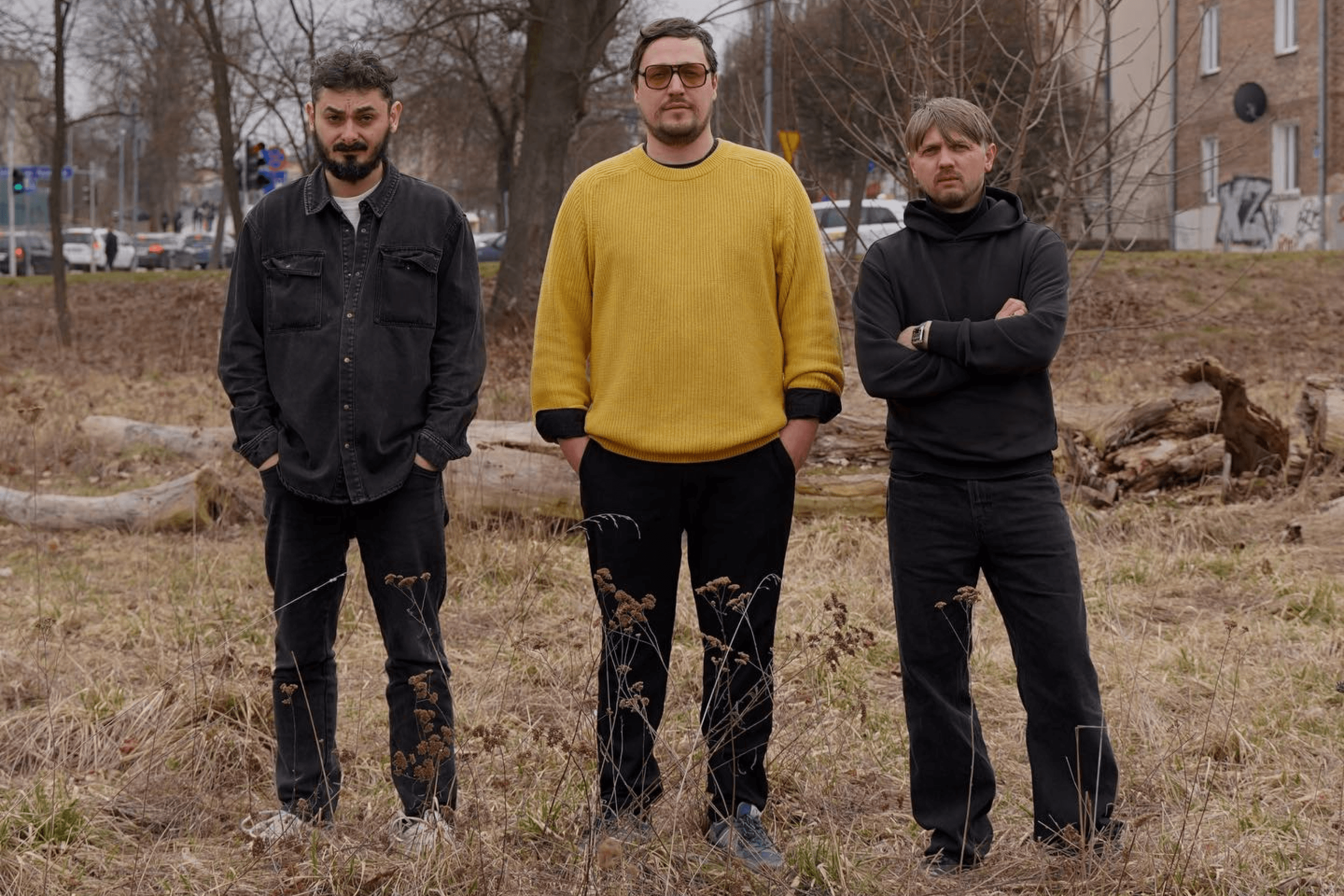
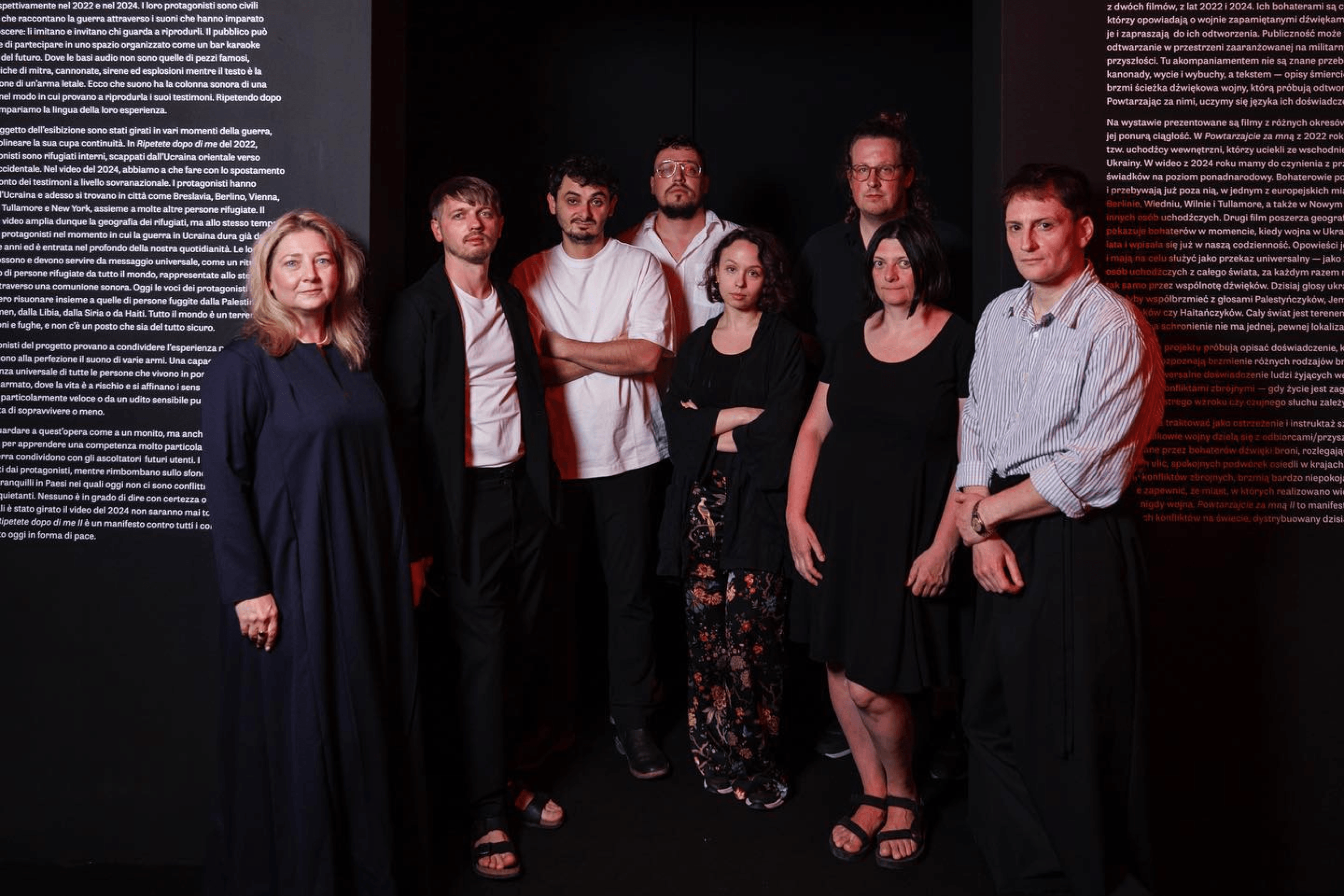
It was created by Open Group, a collective that has participated in the Biennale three times. Founded in 2012 by six Ukrainian artists, the group operates without a central author. Today, its three active members work across three different locations: Pavlo Kovach serves in the Armed Forces of Ukraine, Yuriy Biley lives in Wrocław, and Anton Varga is based in New York.
Yellow Blue journalist Roksana Rublevska traces the collective’s 14-year history.
The Uzhhorod crew
In the late 1990s, the Uzhhorod studio of local painter Serhiy Hlushchuk was burglarized. Police officer Ivan Biley helped track down the culprits, and in gratitude, Hlushchuk gifted him a painting. During their exchange, the officer half-jokingly confessed his dilemma: his young son was constantly drawing, and he had no idea what to do with him. Hlushchuk suggested enrolling the boy in art school. That’s how ten-year-old Yuriy Biley began his formal training in Uzhhorod—the birthplace of the Transcarpathian school of painting, founded in the 1920s by Adalbert Erdeli and Yosyp Bokshay.
At art school, Biley befriended Pavlo Kovach. Pavlo’s father, Pavlo Kovach Sr., was a prominent Transcarpathian avant-garde artist whose studio sat inside the local Art Foundation—a bustling hub alive with hallway exhibitions, impromptu gatherings, and fiery debates. Having practically grown up in those corridors, Kovach Jr. began bringing Biley along. From then on, the two were inseparable. They attended art college together before moving on to the Lviv Academy of Arts.
Anton Varga had been in their orbit all along. He, too, had drawn since childhood, attended the same art school, and occasionally popped into the Foundation’s studios. Though he knew the pair back home, it was in Lviv—where Varga moved after studying at the Kharkiv Academy of Design and Arts—that the three truly bonded. Upon his return to Lviv in 2011, he fell in with a close-knit group that already centered around Kovach and Biley.
The kitchen gallery
On March 5, 2011, Academy graduates Biley and Kovach—then aged 23 and 22—inaugurated three exhibitions in a single day. By day, Biley presented his graduation thesis at the Museum of Ideas while Kovach showcased his at Dzyga Gallery. By evening came the third vernissage: held inside the kitchen of a shared Lviv apartment. The flat itself was modest, yet it featured a generous 20-square-meter kitchen. Right there, they launched the independent art space Detenpyla. The name was a coined term—Biley and Kovach had overheard it in their dorm from a neighbor nicknamed “Makedonsky,” who hailed from near Chernivtsi. A phonetic equivalent in Romanian translates roughly to “piss off,” though Kovach notes they attached no literal meaning to it; they were simply captivated by its cadence.
Detenpyla was never a gallery in the traditional sense. It was a space where they lived, created, cooked, and welcomed guests. The concept drew inspiration from the unofficial art scene of the late 1980s—specifically apartment shows and squatted artistic hubs like Kyiv’s Parkomuna. As they memorably put it: “These were our breathing, crying, blooming, worn-to-the-bone walls.”
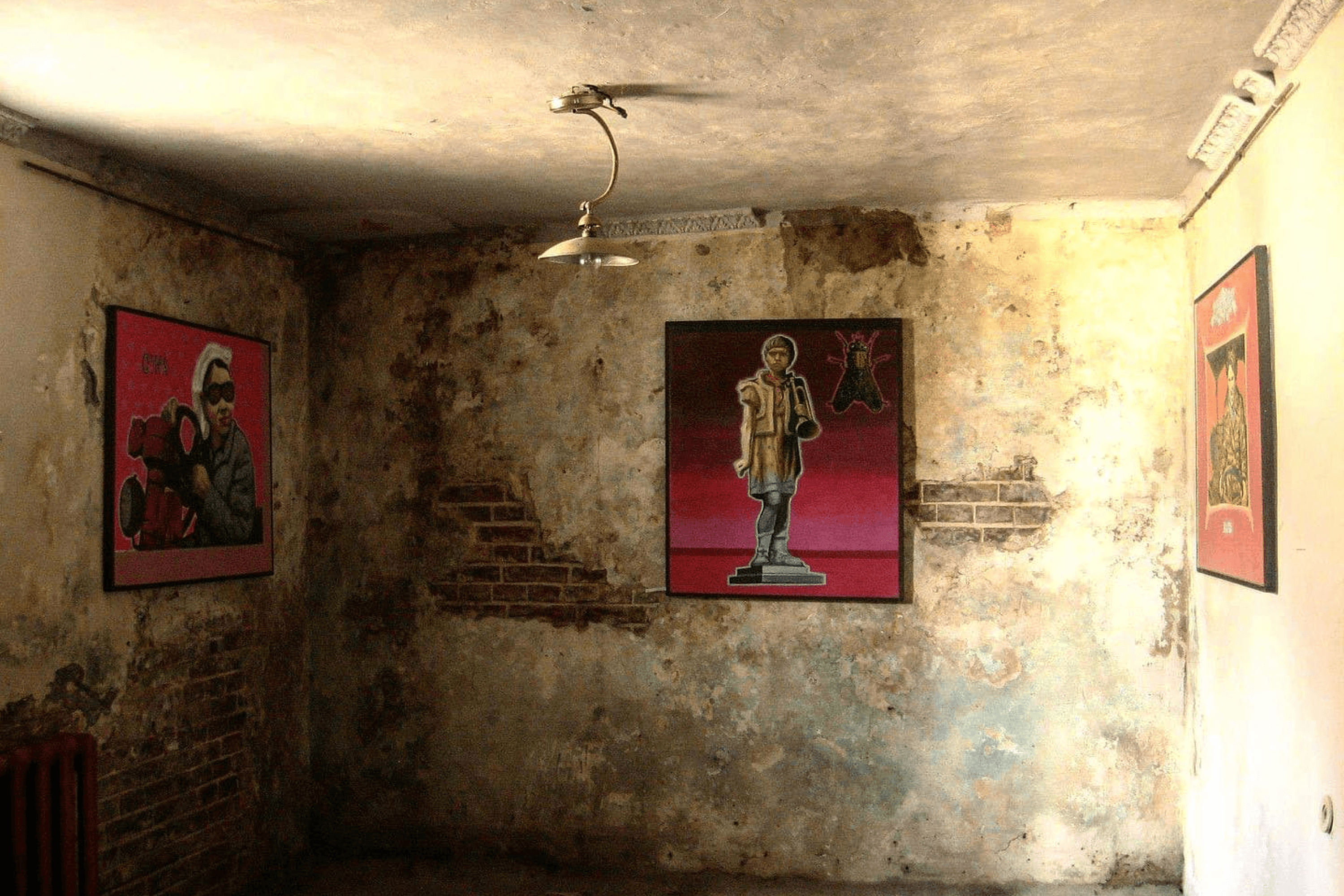
“Untitled.” Pavlo Kovach. March 16, 2011. Photo: Detenpyla gallery / Instagram 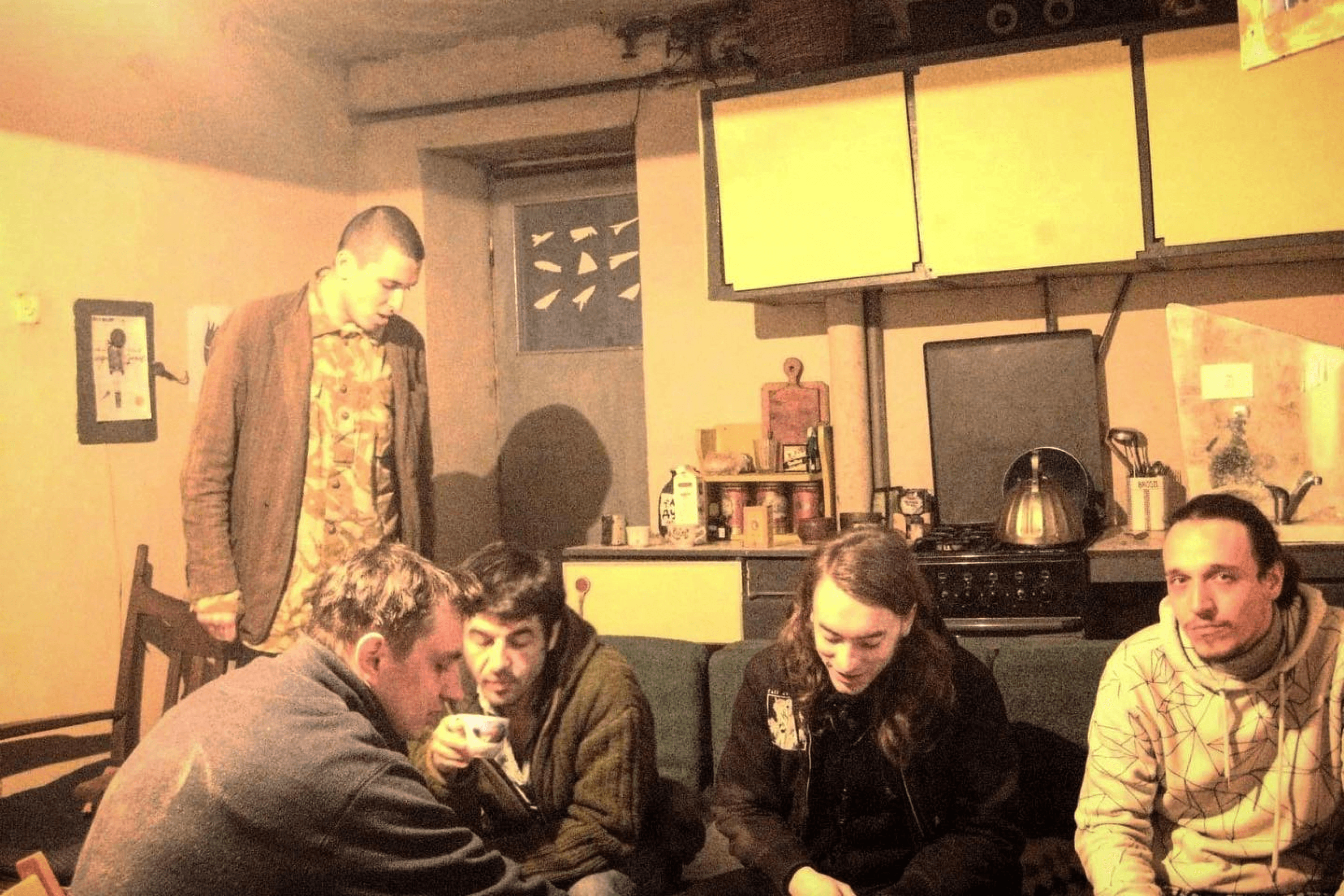
“NEODADANEO.” Liubomyr Tymkiv. April 16, 2011. Photo: Detenpyla gallery / Instagram 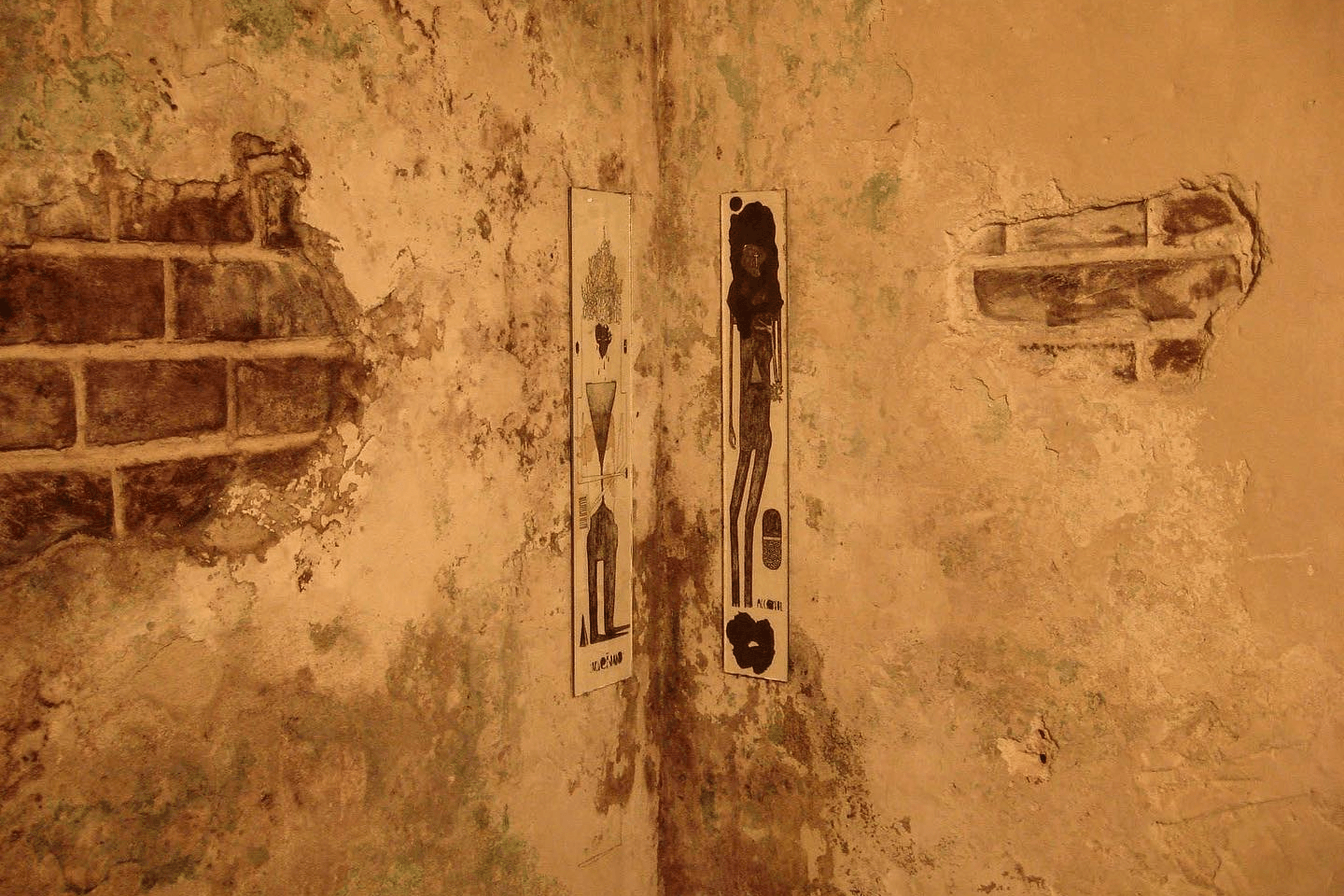
“FUNERAL.” Yaroslav Futymskyi. May 16, 2011. Photo: Detenpyla gallery / Instagram 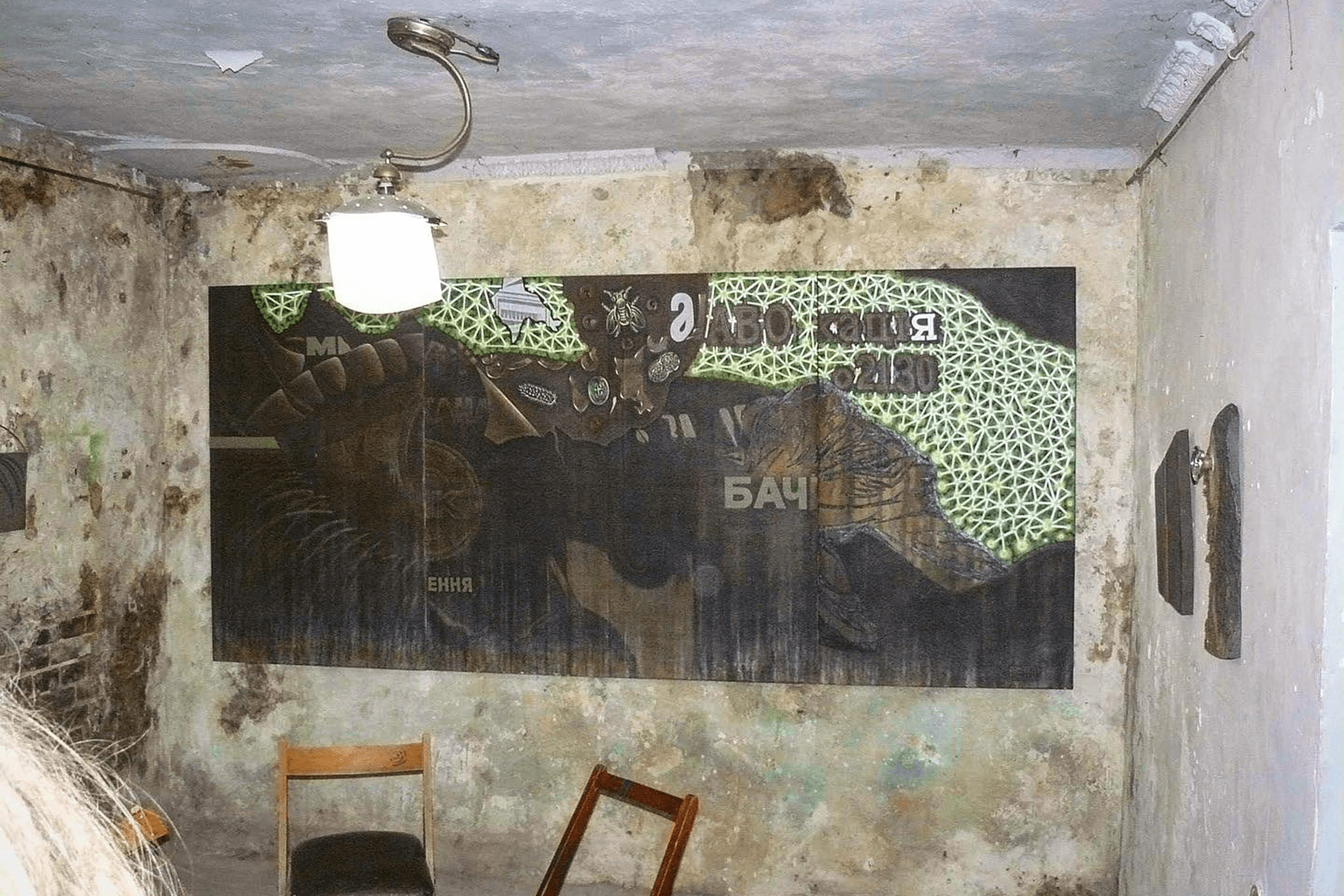
“STEREOTYPIA.” Viska. June 18, 2011. Photo: Detenpyla gallery / Instagram 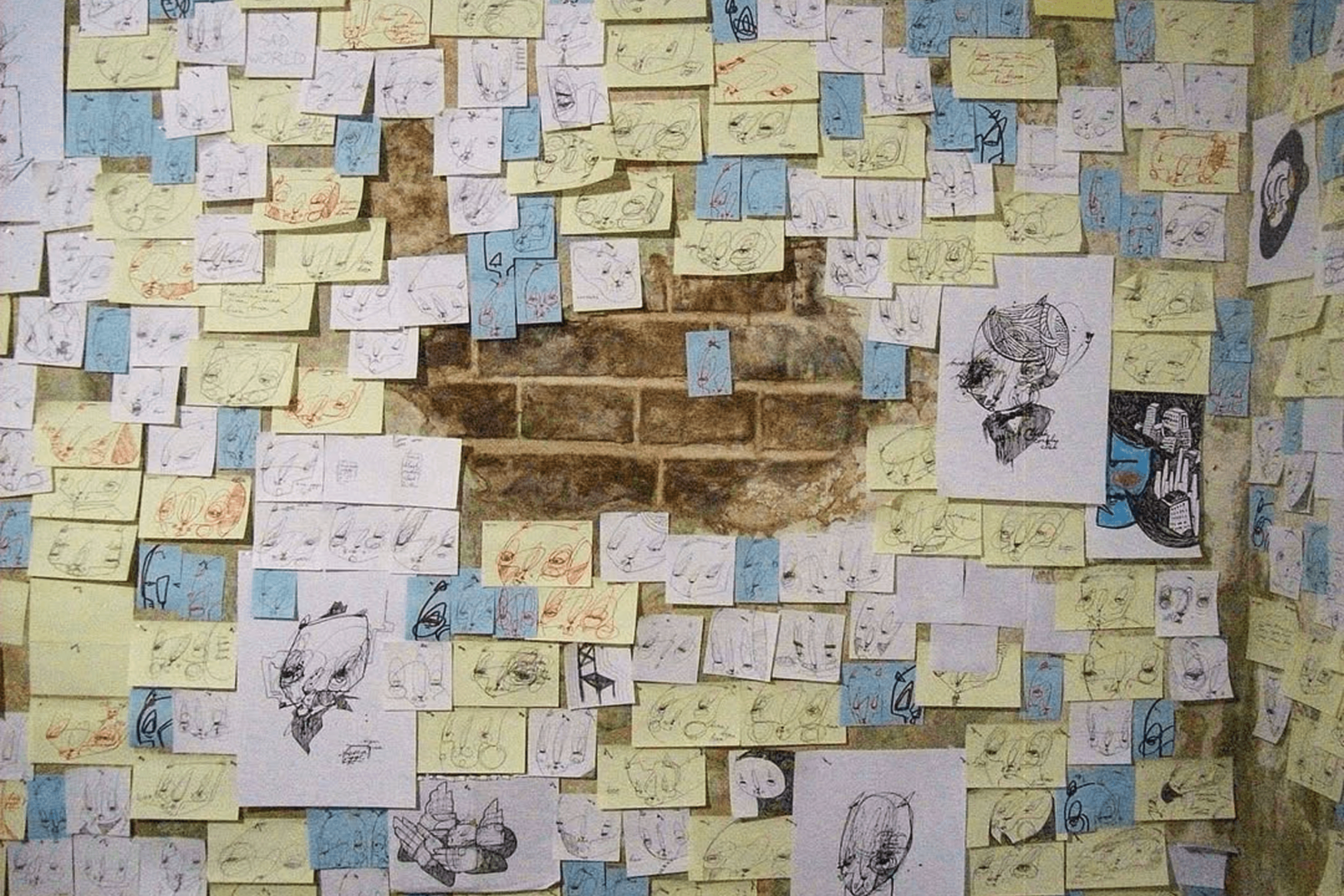
“Corrosion.” Marian Oleksiak. August 28, 2011. Photo: Detenpyla gallery / Instagram 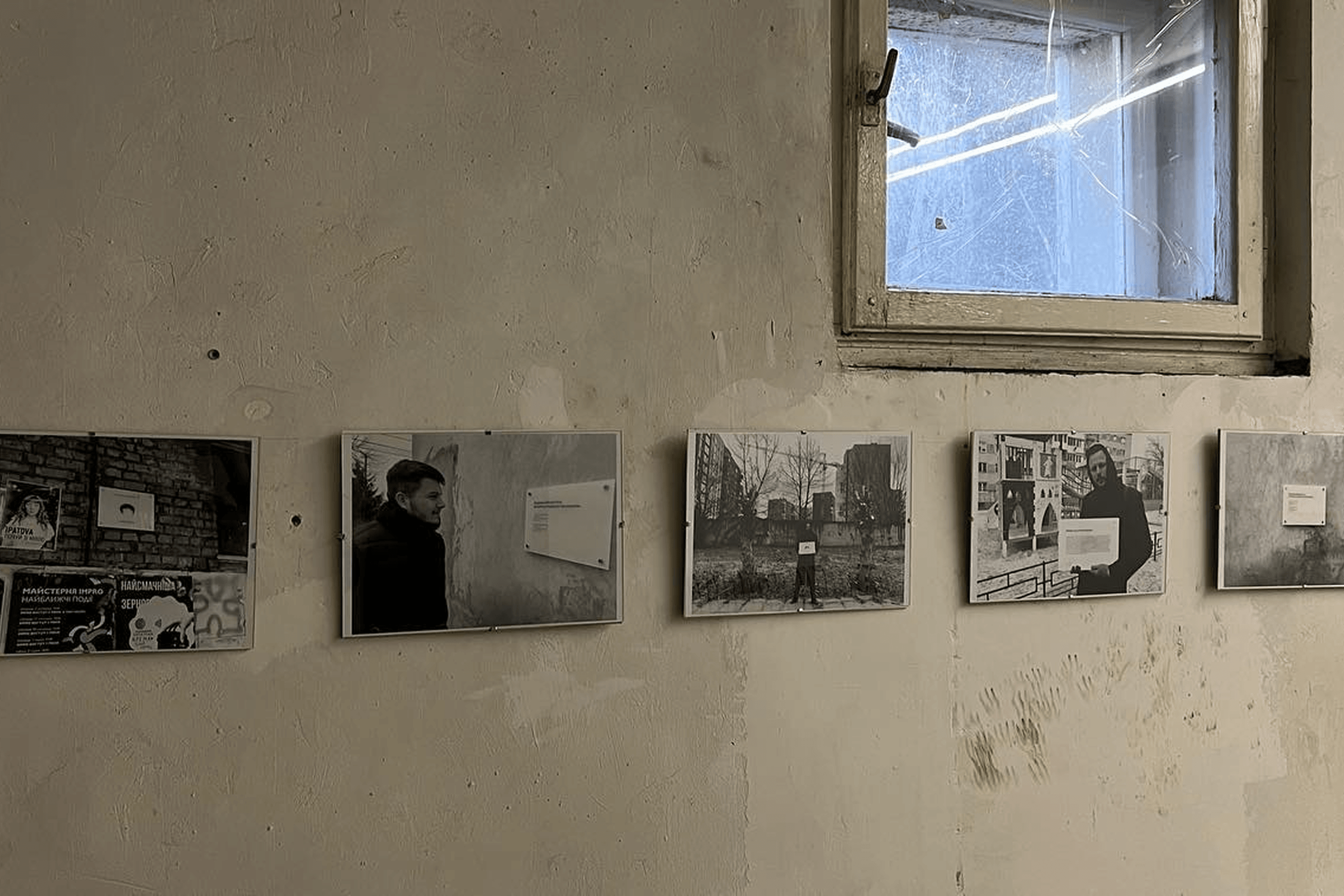
“Words Frozen on the Whiskers.” Yevhen Korshunov. March 9–May 9, 2024. Photo: Detenpyla gallery / Instagram
The kitchen-gallery debuted with the work of their friend, artist Stanislav Turina, invited just days before the opening. For the next six years, exhibitions rotated biweekly. The duo presented their own pieces, invited artists across generations, and curated group initiatives. The crowd was predominantly an insider circle—fellow artists, musicians, students, and friends of friends. Guests rarely arrived empty-handed, bringing along wine, food, and their own artworks to show off. They inspected each other’s creations, offered support, and engaged in spirited debates. “Detenpyla evolved side-by-side with our own tastes,” Varga recalls.
Generating no income, the gallery forced the artists to occasionally take on commercial gigs. “Sometimes we staged exhibitions simply because we wanted a meal or a drink,” Kovach jokes.
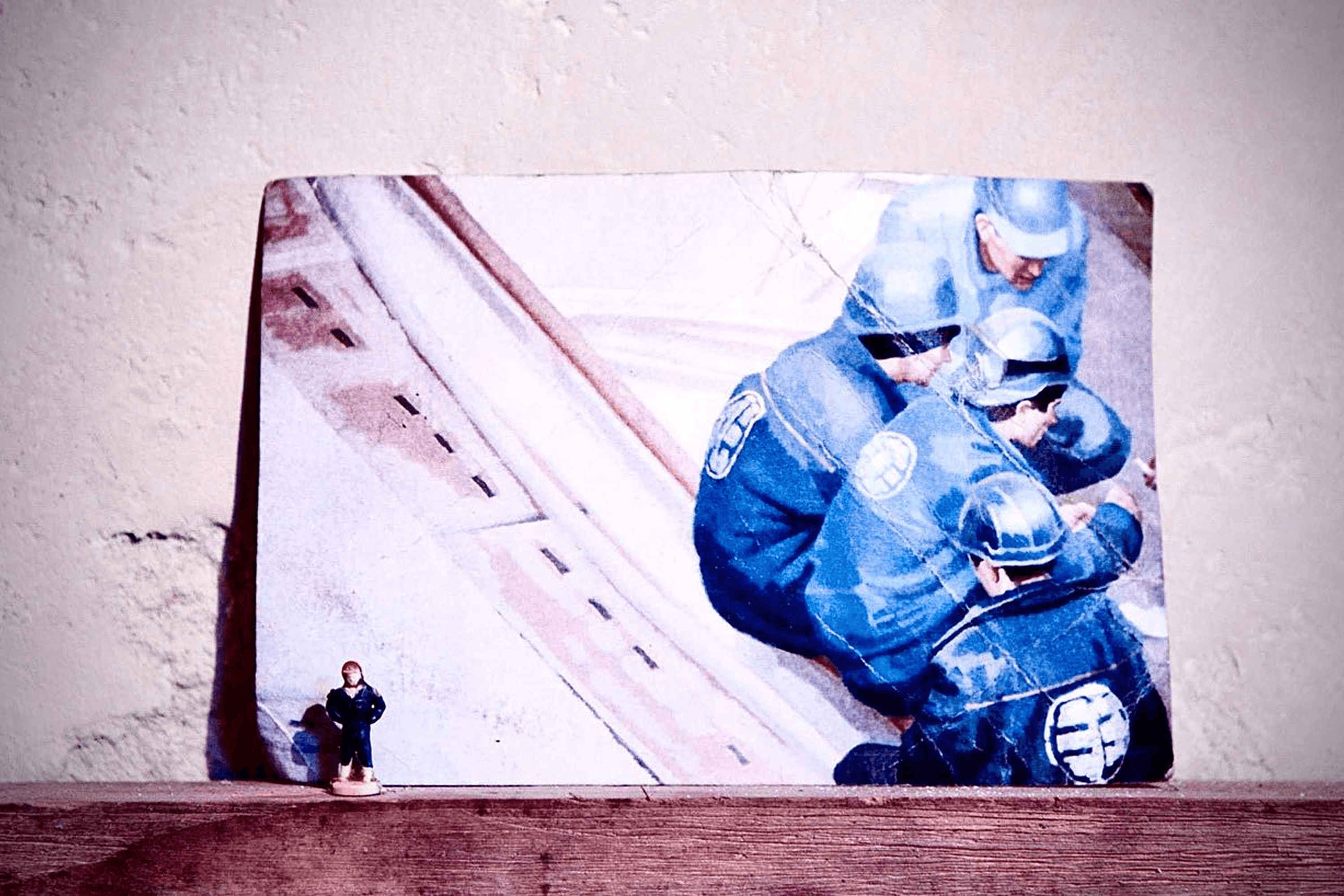
At the “Dom Stasy” exhibition, Stanislav Turina showed all the things he would take with him in case of a fire. March 5, 2011. Photo: Detenpyla gallery / Instagram 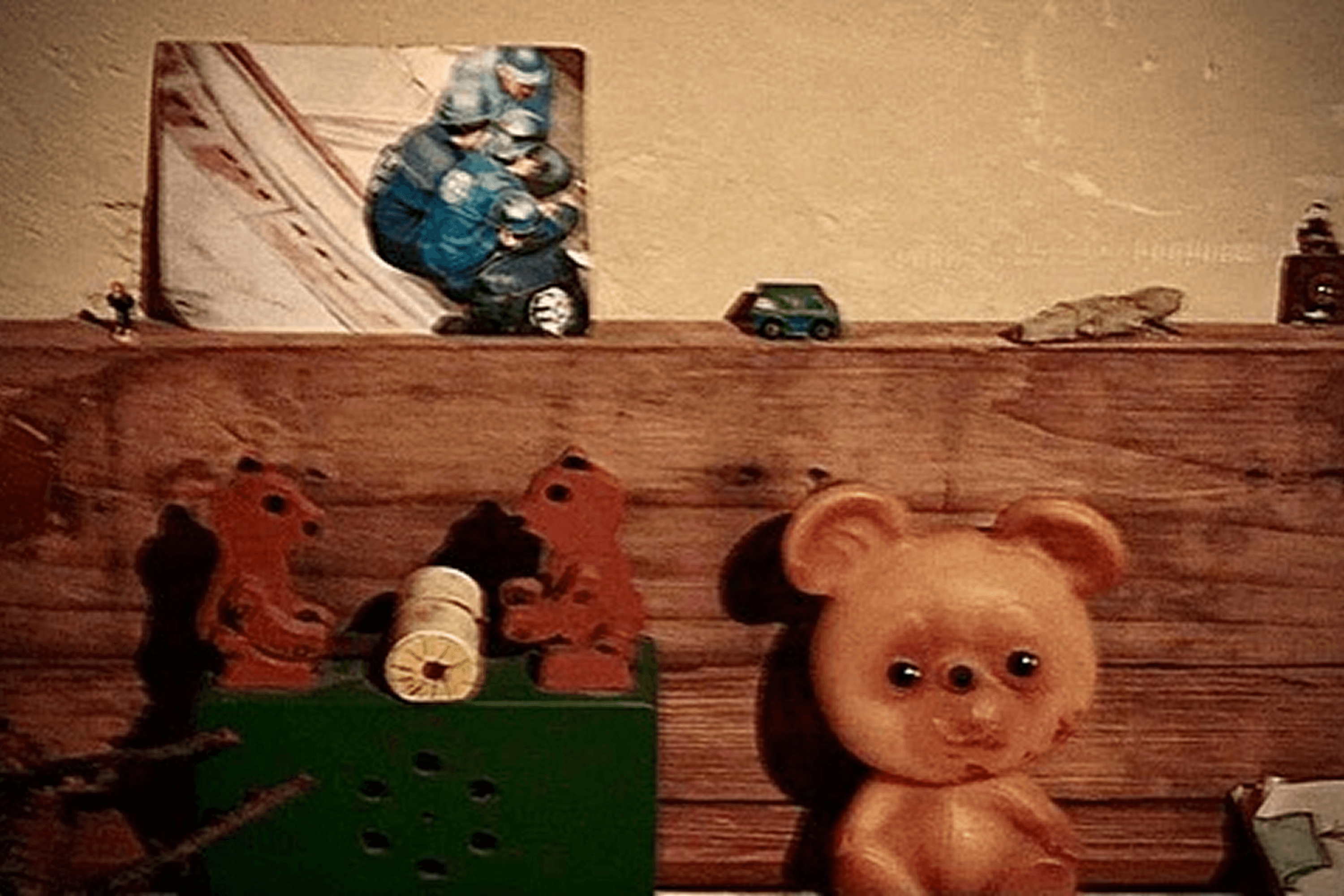
Photo: Detenpyla gallery / Instagram 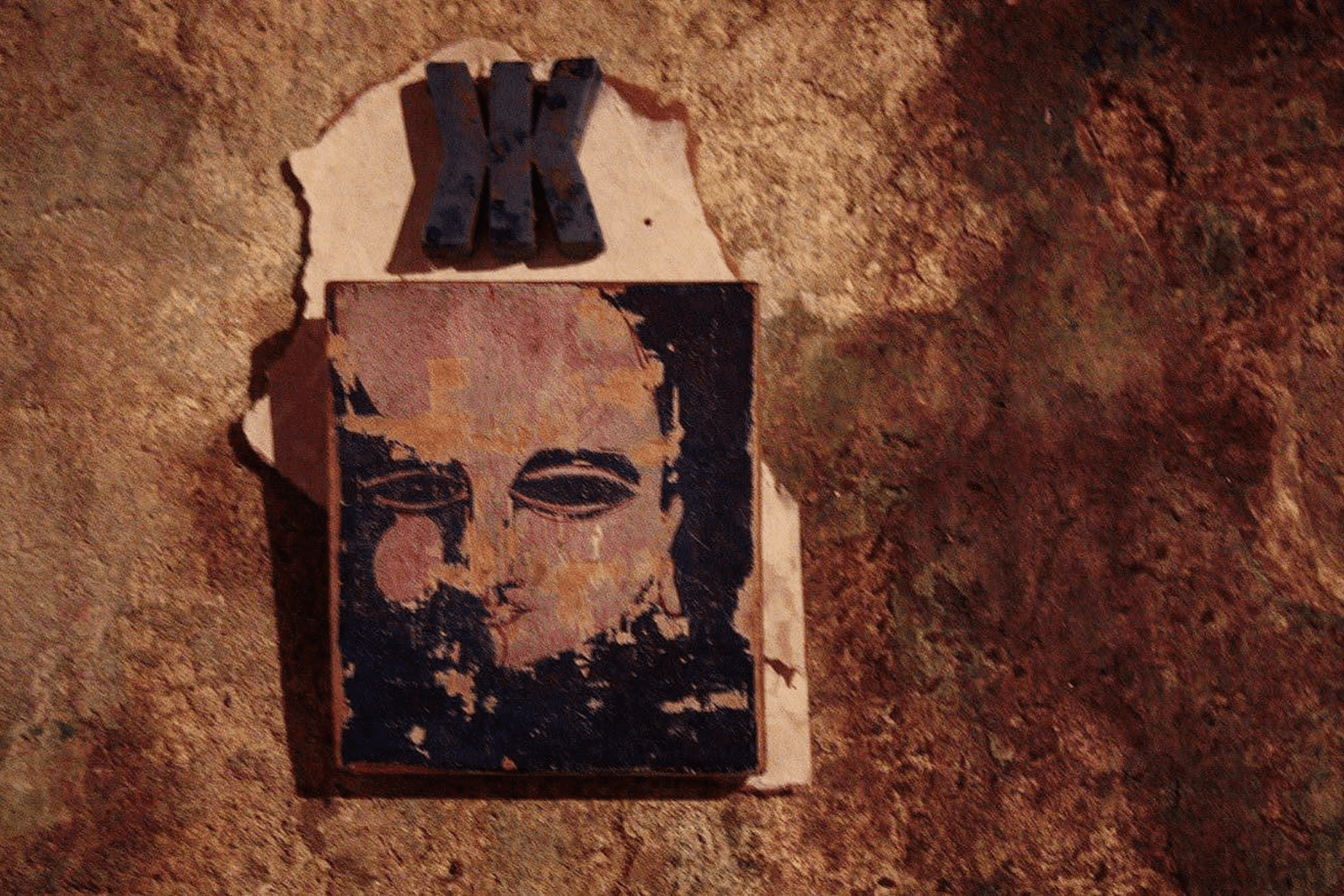
Photo: Detenpyla gallery / Instagram 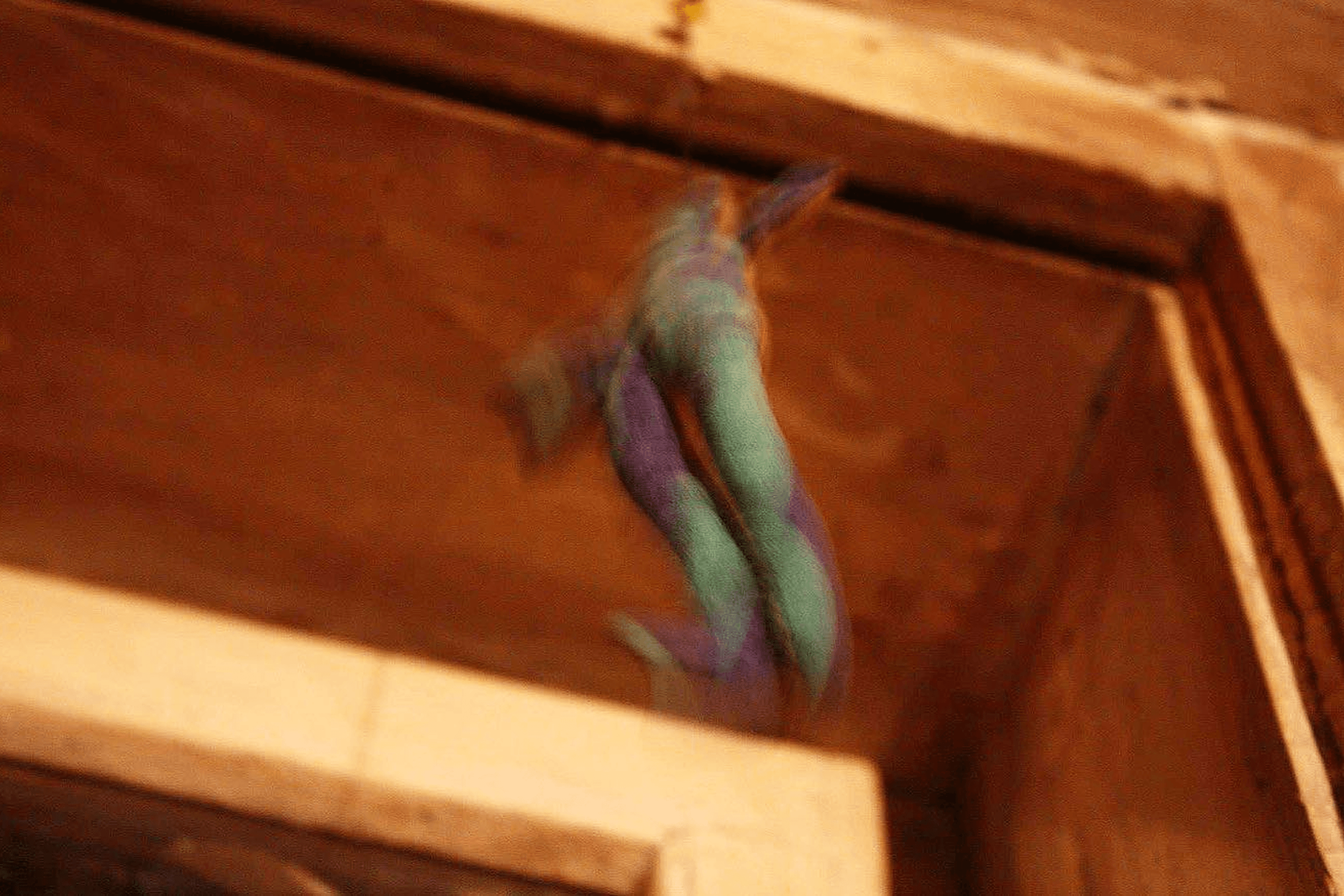
Photo: Detenpyla gallery / Instagram 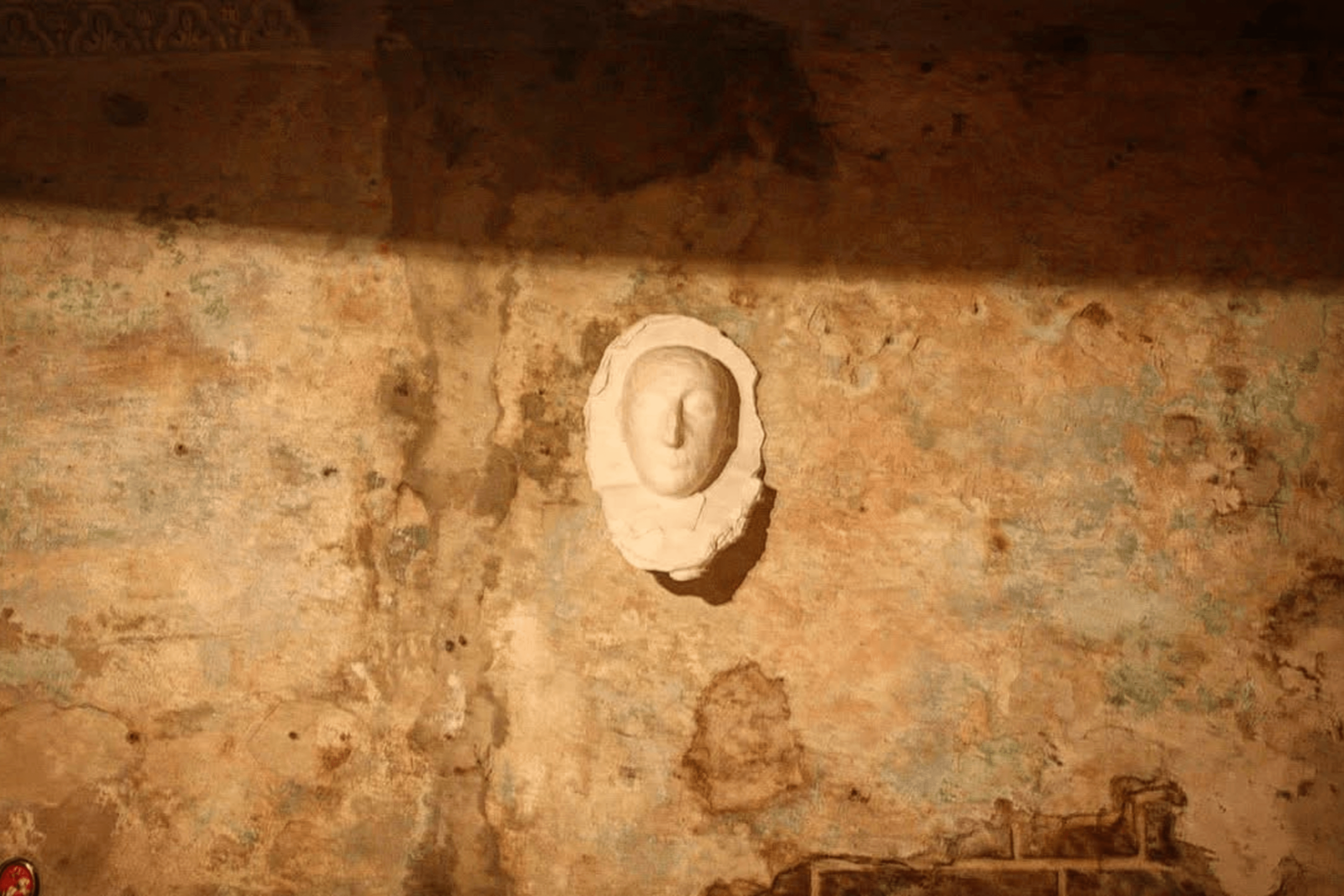
Photo: Detenpyla gallery / Instagram 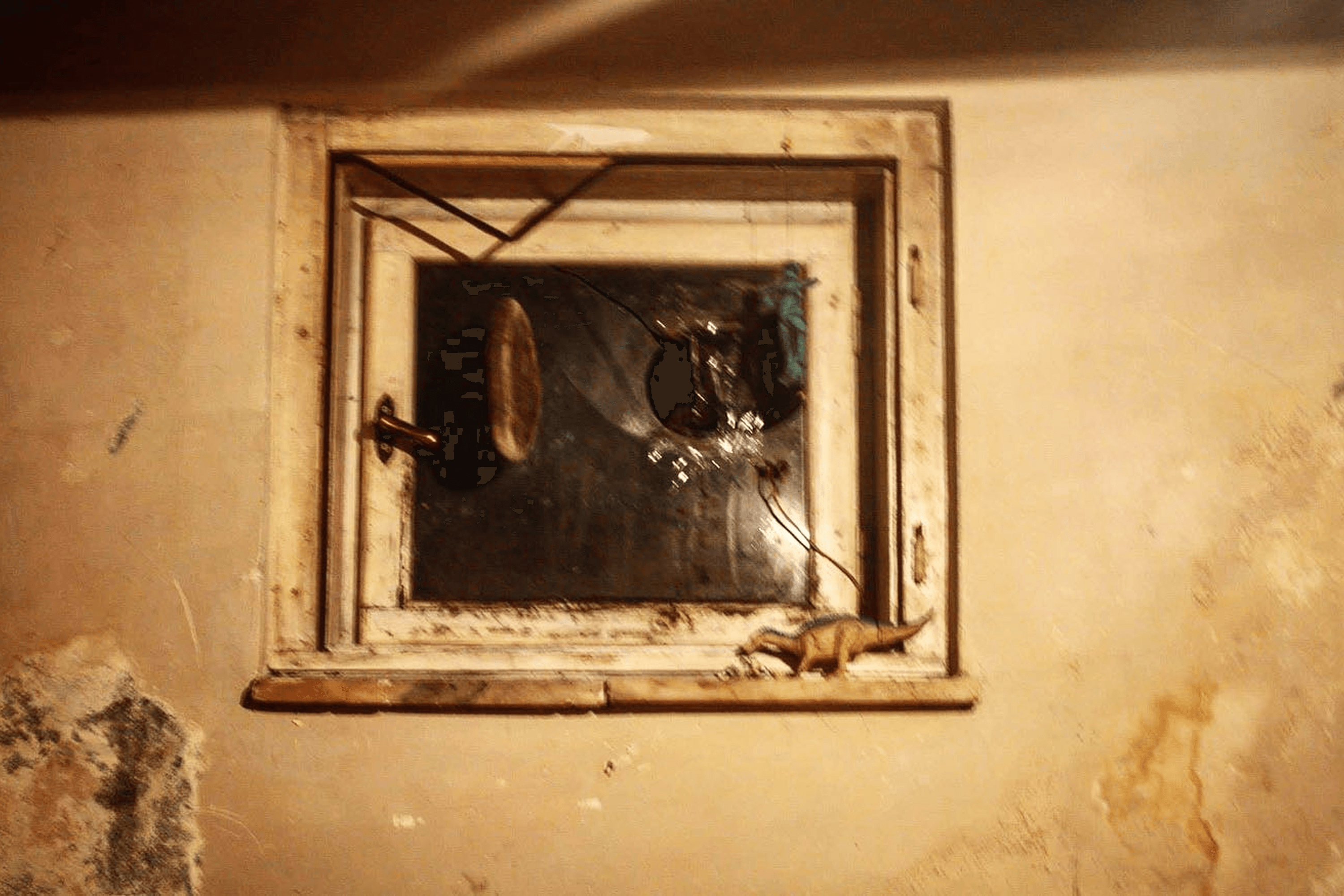
Photo: Detenpyla gallery / Instagram
Six under one name
In 2012, Biley and Kovach, alongside fellow artists Oleh Perkovskyi and Yevhen Samborskyi, were awarded Poland’s Gaude Polonia scholarship, embarking on a six-month residency in Warsaw. They left their kitchen-gallery in the care of Anton Varga and Stanislav Turina.
During their time in Warsaw, the four constantly discussed moving beyond individual practices toward a collective effort. Returning to Lviv in late July, they brought Varga and Turina into the dialogue. Out of these ongoing conversations, the collective Open Group was born, bringing together all six: Biley, Kovach, Varga, Turina, Perkovskyi, and Samborskyi. The label “Open” signaled fluid boundaries—membership could fluctuate, collaborators could be brought in from the outside, and the audience could become co-creators.
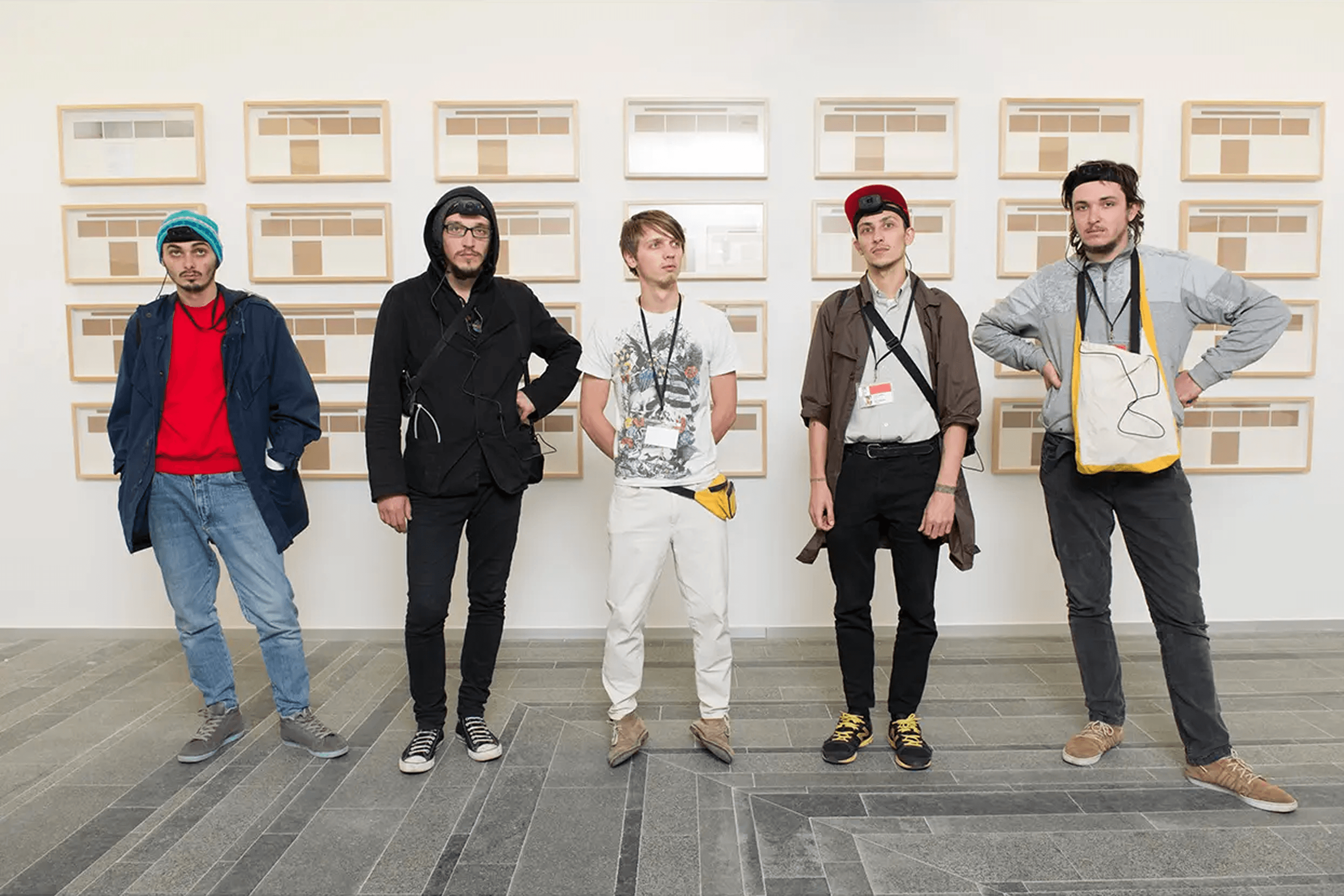
Within weeks, the collective launched the Open Gallery series, probing how any location—a forest, a field, a festival site—could temporarily serve as an exhibition space. By the end of the year, they had completed five such interventions. The gallery’s perimeters were entirely symbolic, defined only by a subtle mark or the physical presence of the artists. Once the artists walked away, the gallery remained on its own. Through this, the group questioned whether art truly requires an artist present—and whether an artist genuinely needs a brick-and-mortar gallery. It was also a pragmatic response to Ukraine’s stark shortage of contemporary art venues at the time.
In early 2013, Open Group landed its first solo show, Between Us, at Kyiv’s Bottega Gallery—achieved without managers or familial clout (Kovach Sr. offered no assistance, nor was any requested). Pavlo had placed as a finalist in the MUKhI competition hosted by Bottega’s founder, Maryna Shcherbenko, which brought the emerging collective to her attention.
Just three weeks before the opening, the group realized they lacked a unifying concept, with each artist pulling in a different direction. They decided to make the collective itself the subject of the exhibition. Turning on a video camera, they debated what the project should be and how to function together, amassing over 30 hours of footage. For the final display in Kyiv, they shipped the video logs, the tables they sat at, and an inverted, secured sandbox.
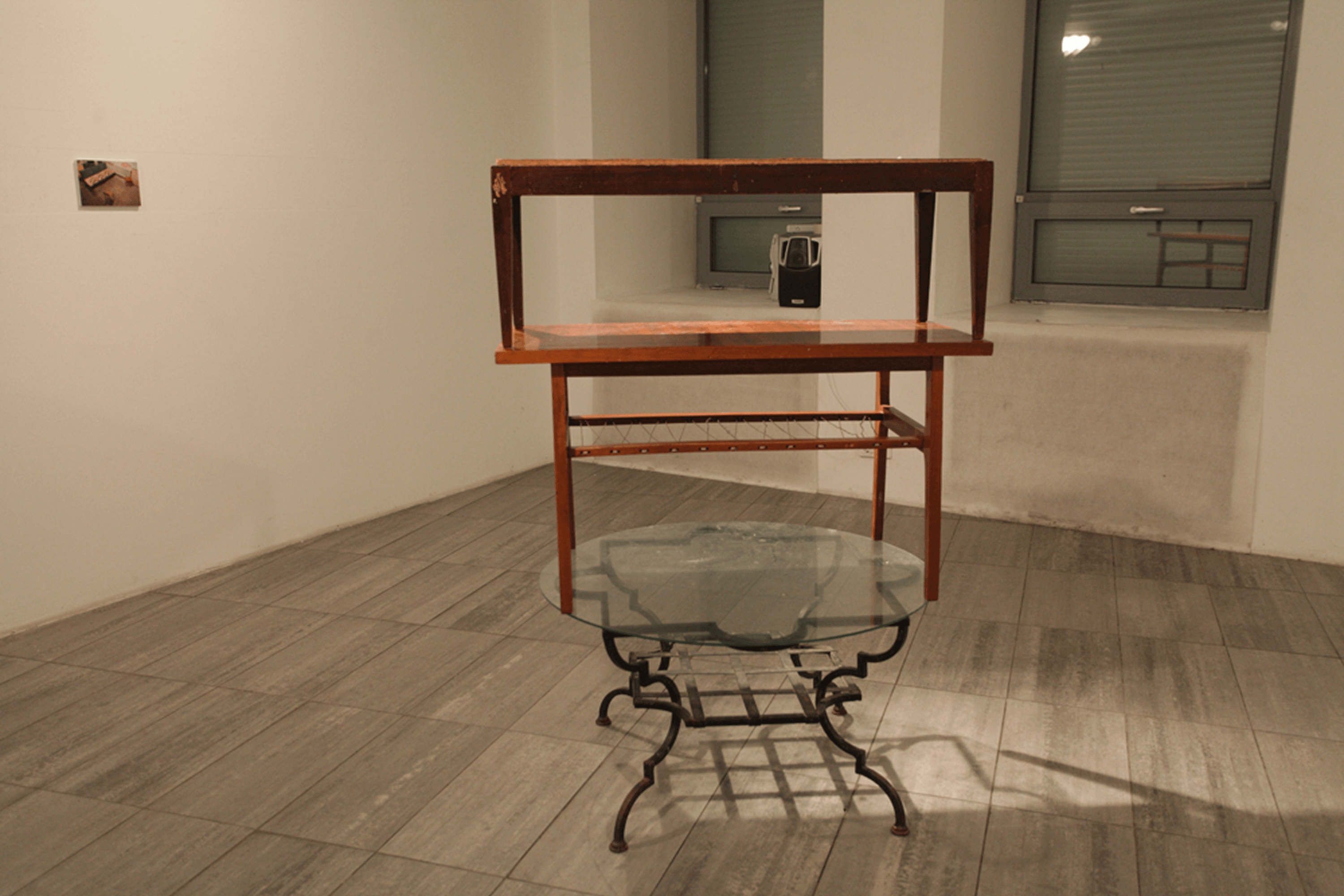
«Between Us». Open Group. 2013. Photo: open-group.org.ua 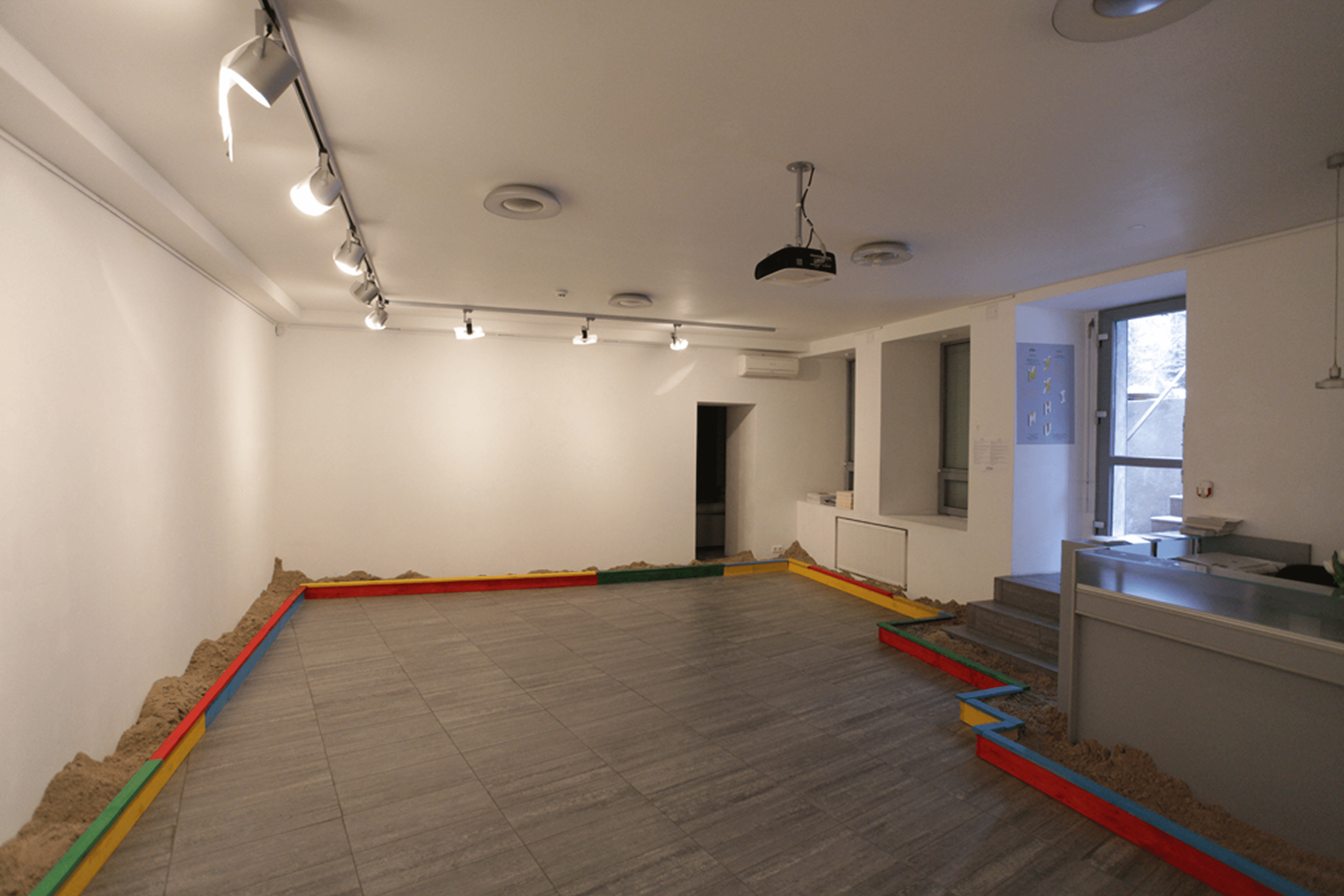
Photo: open-group.org.ua 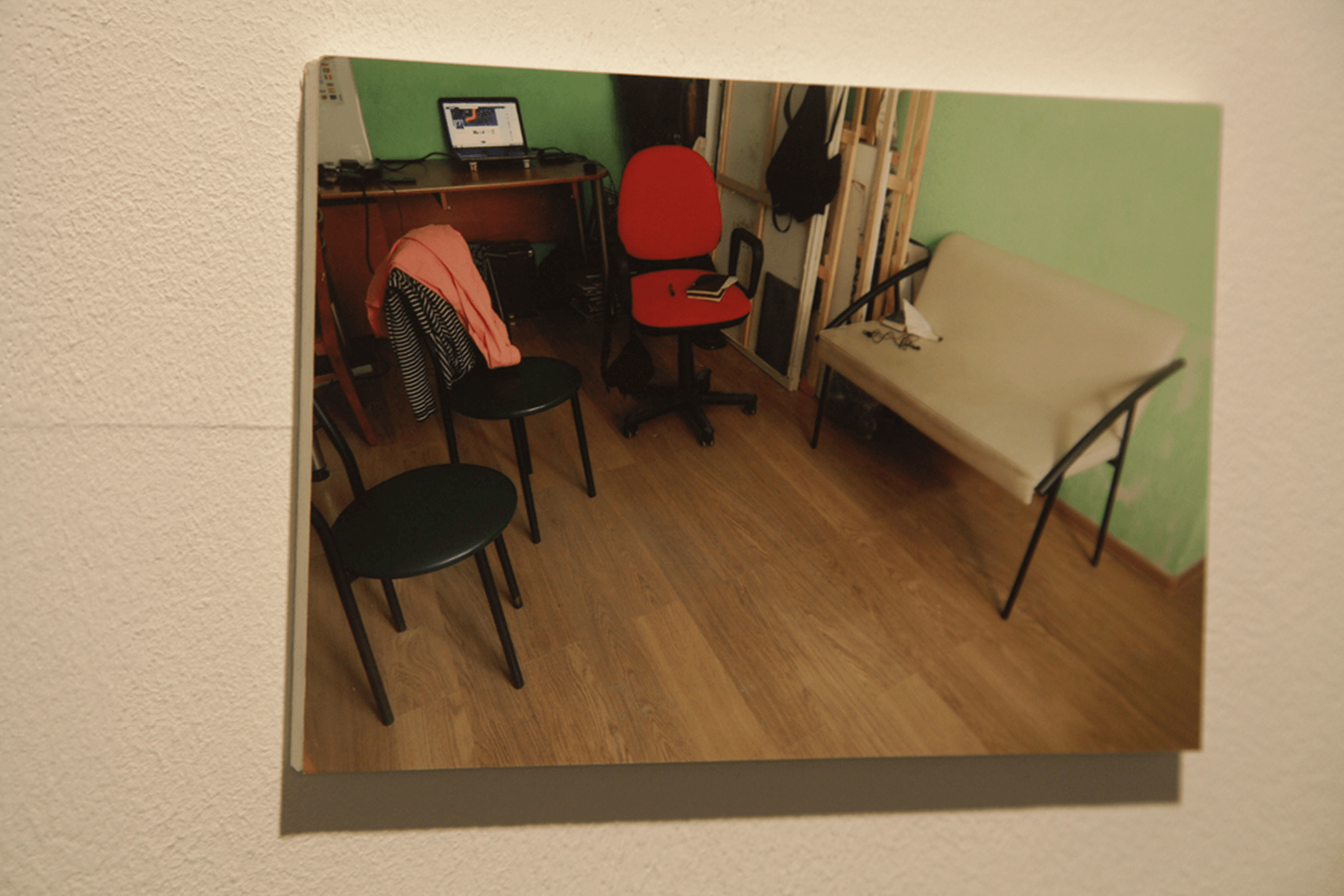
Photo: open-group.org.ua 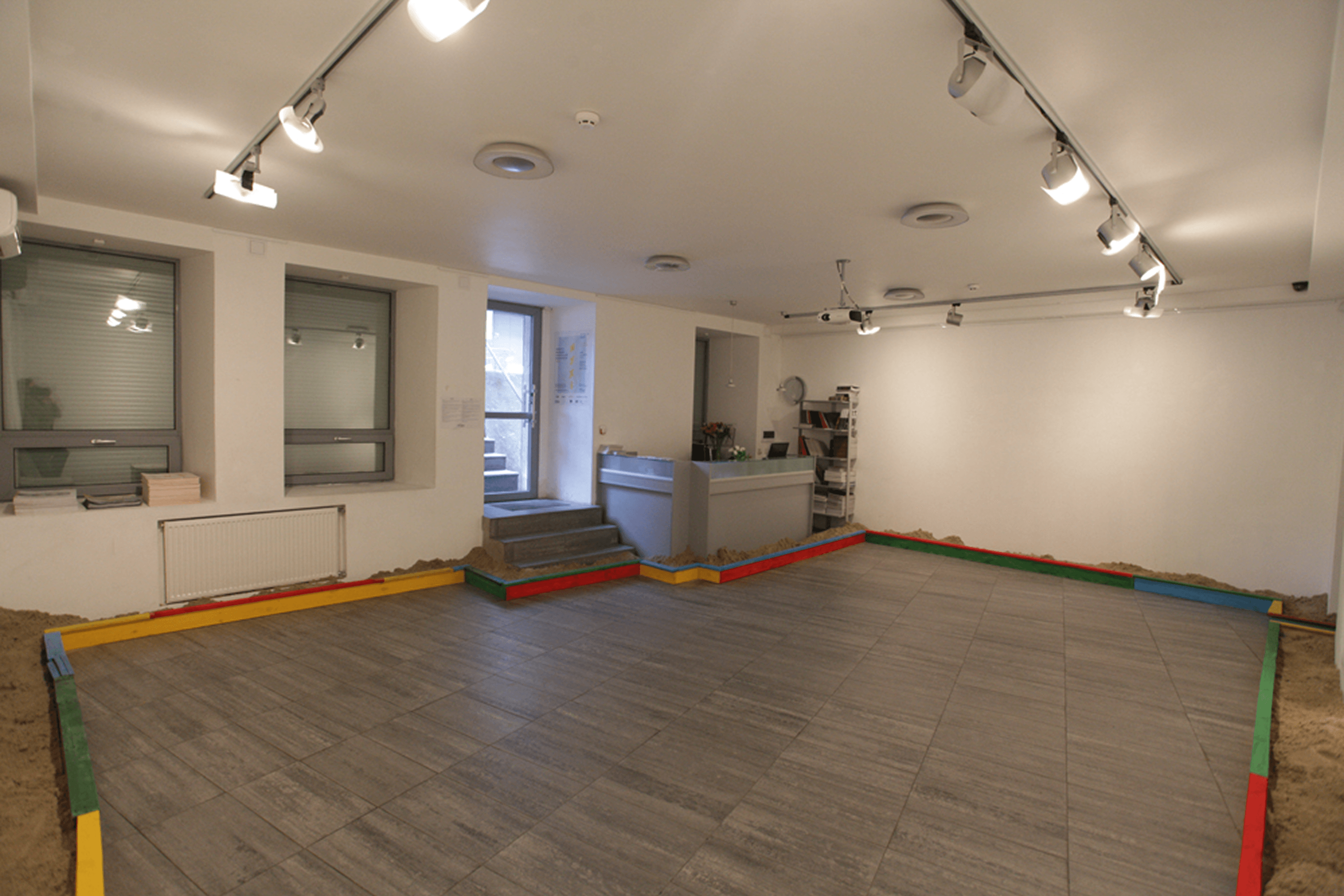
Photo: open-group.org.ua 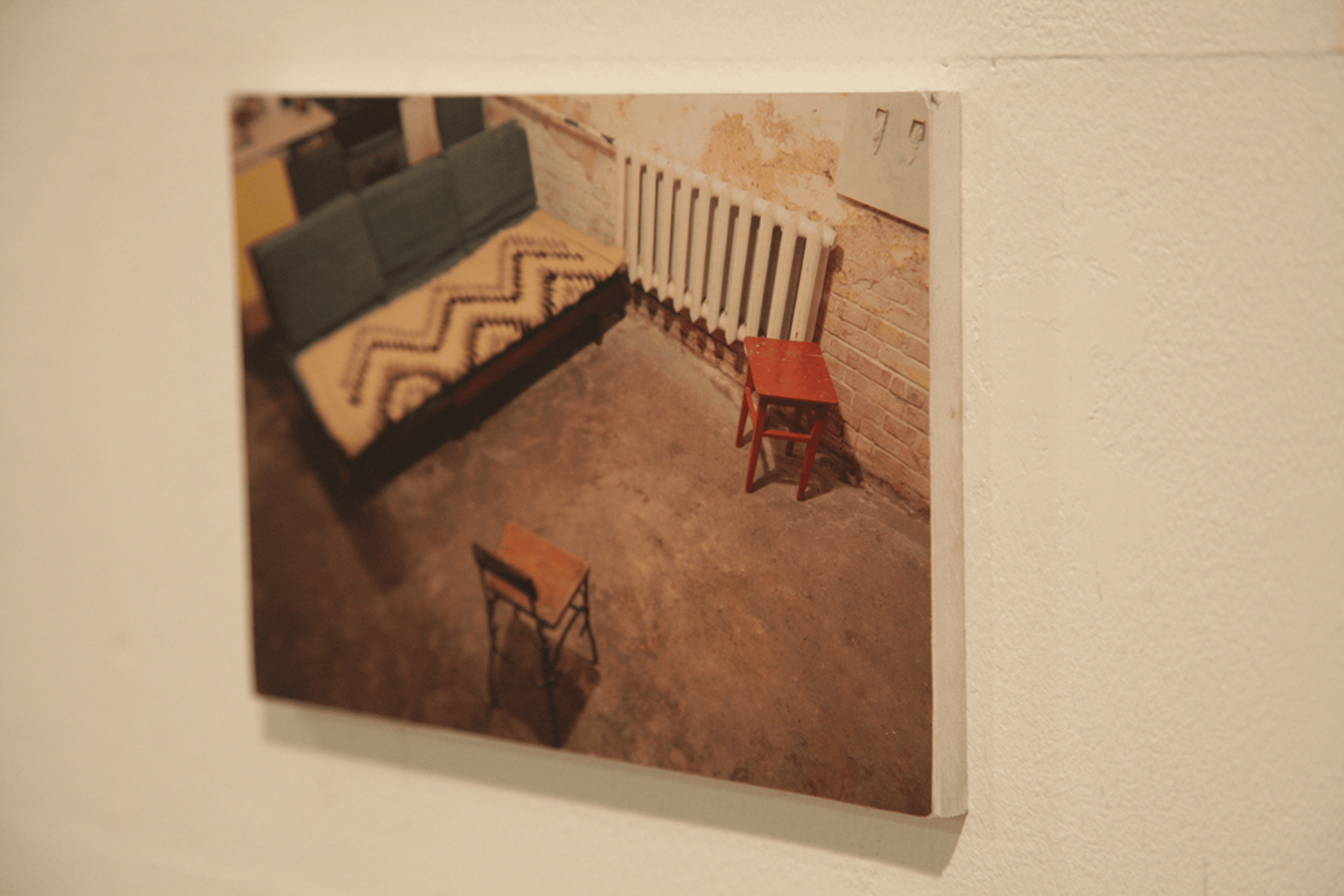
Photo: open-group.org.ua 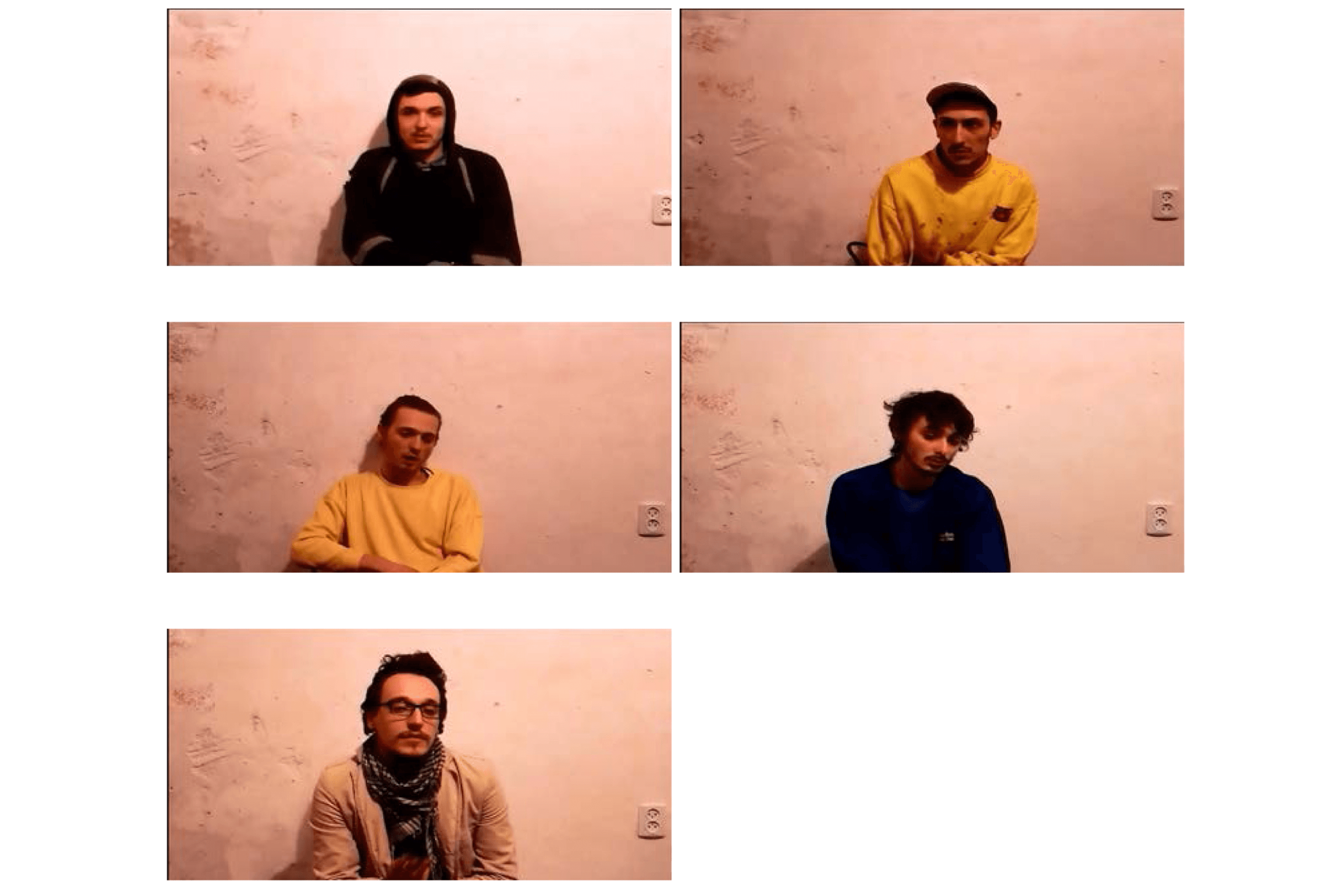
Photo: open-group.org.ua
Oleh Perkovskyi, however, interpreted “openness” through an anarchist lens, inviting outside collaborators unilaterally. While the rest of the group shared the desire to involve others, they insisted on collective consensus. For them, openness was a deliberate method, not a vacuum of rules. Unable to bridge the divide, Perkovskyi parted ways with the group before their debut exhibition even opened.
From these early friction points emerged the group’s defining ethos. While artistic collectives weren’t new to Ukraine, most were closed circles. Open Group aimed to be an ecosystem rather than a rigid team: external participants became core elements of the work, and viewers actively shaped the outcome. Yet every invitation extended remained a shared directorial consensus, never a solitary whim.
Ars longa, vita brevis
In the autumn of 2013, the PinchukArtCentre invited Open Group to participate in an exhibition in Kyiv. The project was titled Ars Longa, Vita Brevis—Latin for “Art is long, life is short”—and ran for 59 days, matching the exact duration of the show. There was no completed artwork on opening night; instead, the artists created the work iteratively each day. Every morning, the members of Open Group jointly defined a “space” and captured it simultaneously through their camera lenses. They might stand in the middle of a field gazing in four opposing directions, navigate different routes toward the same lake, or collectively “trace” a river. On one occasion, each artist returned to his family home, and at precisely 1 PM, all four aimed their cameras out the window. The designated space might exist for a single minute or several hours, but it came into being only when captured by all four members at once.
Audiences experienced this in real time. Live camera feeds streamed directly into the gallery, where four monitors displayed each artist’s perspective—their arguments, their movements, and the fabric of their daily routine. A fifth screen looped edited footage from the previous day, while 59 blank frames hung on the walls. Every night, the artists transmitted new material to the gallery, filling another frame by morning. Through this process, Open Group articulated its core working ethos: collective, simultaneous, and strictly non-hierarchical.
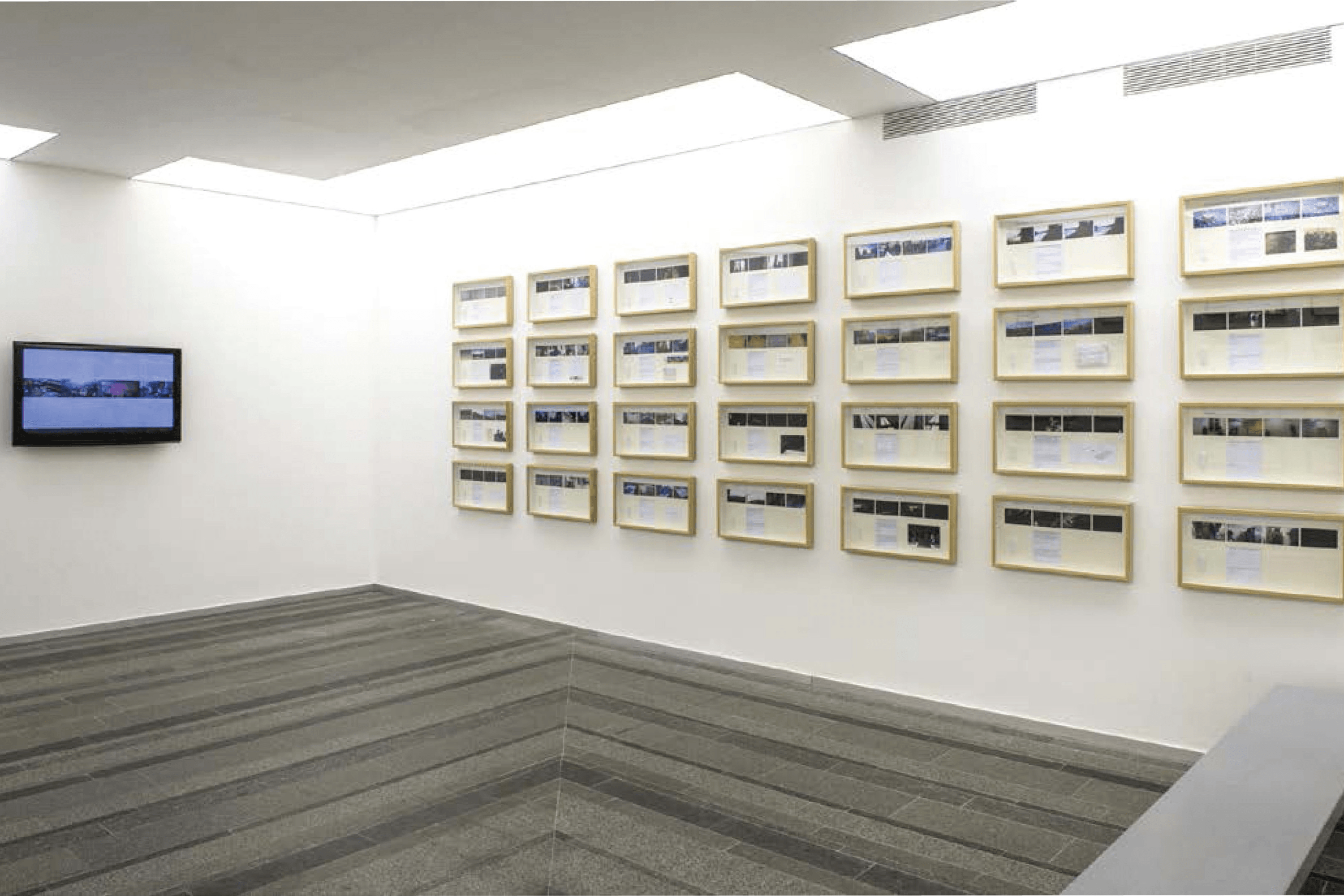
“Ars Longa Vita Brevis.” Open Group. October 30, 2013–January 6, 2014. Photo: open-group.org.ua 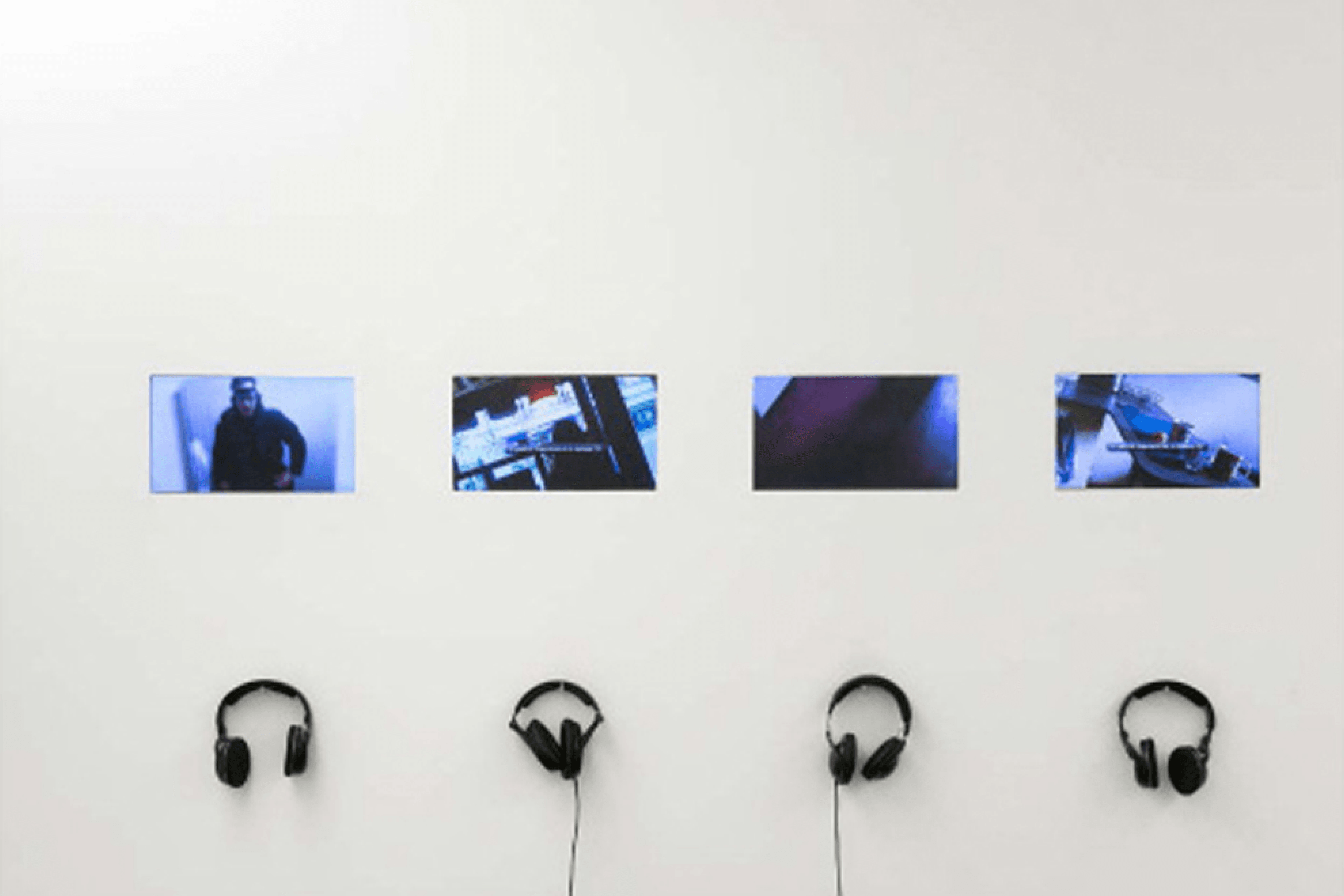
Photo: open-group.org.ua 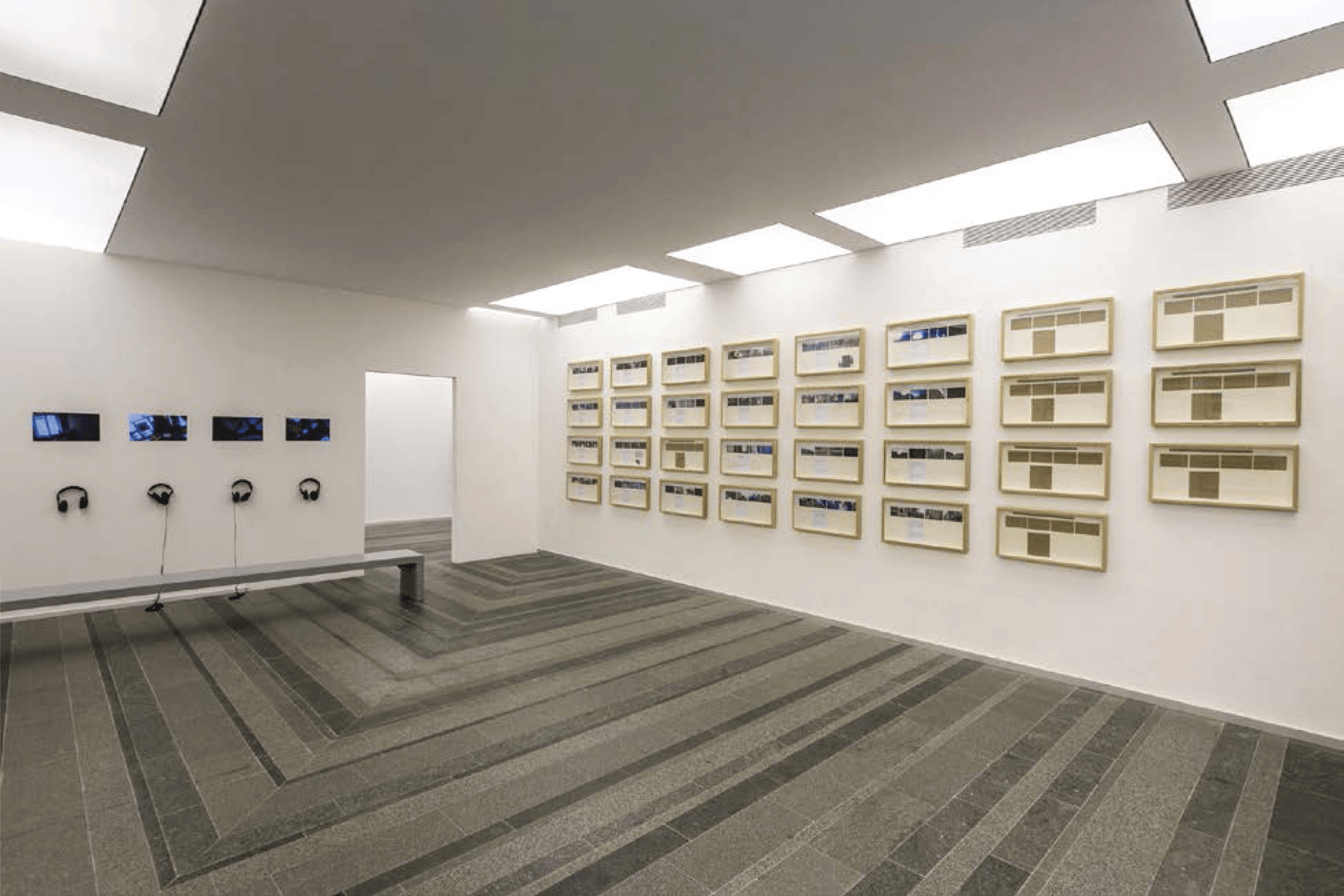
Photo: open-group.org.ua 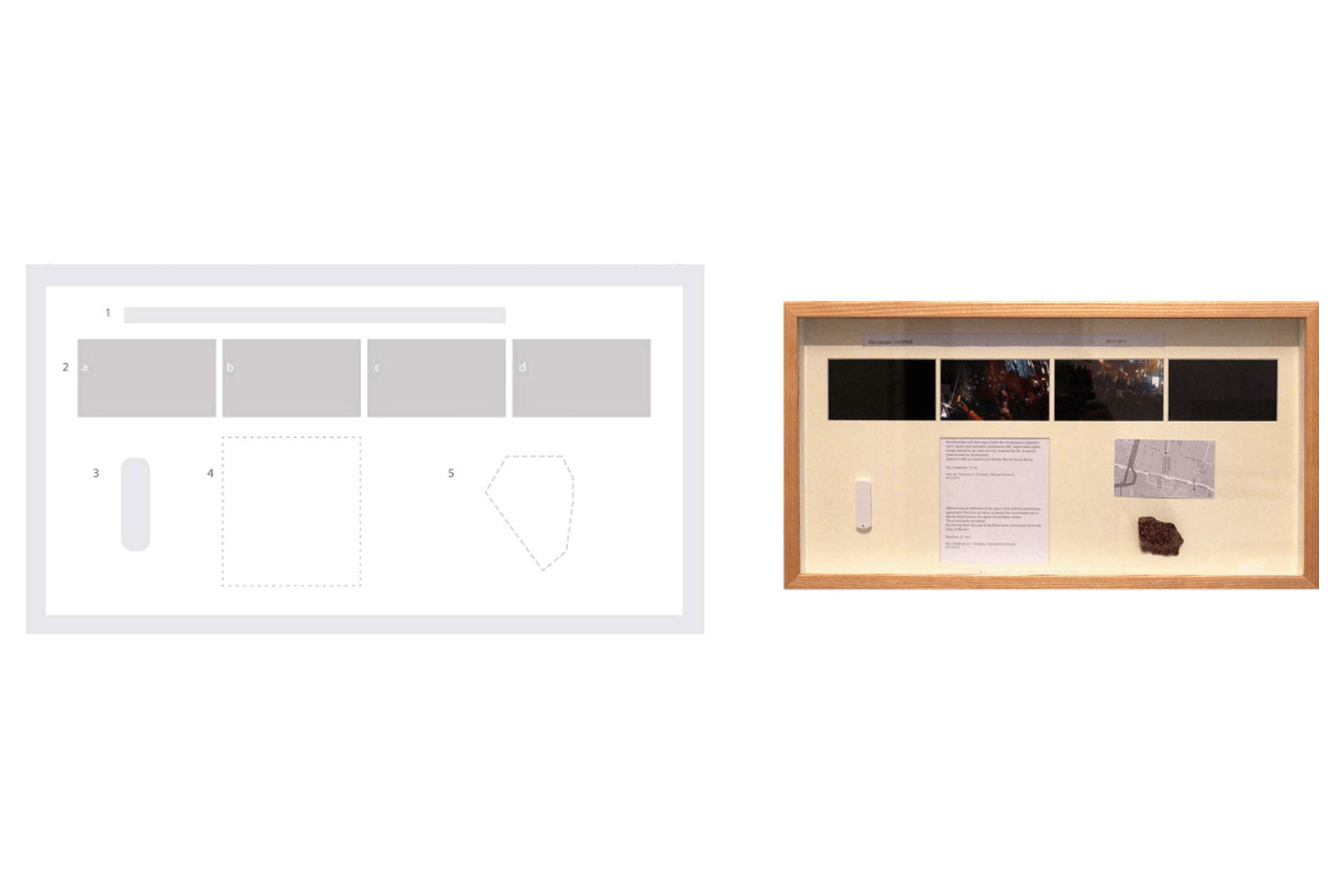
Photo: open-group.org.ua 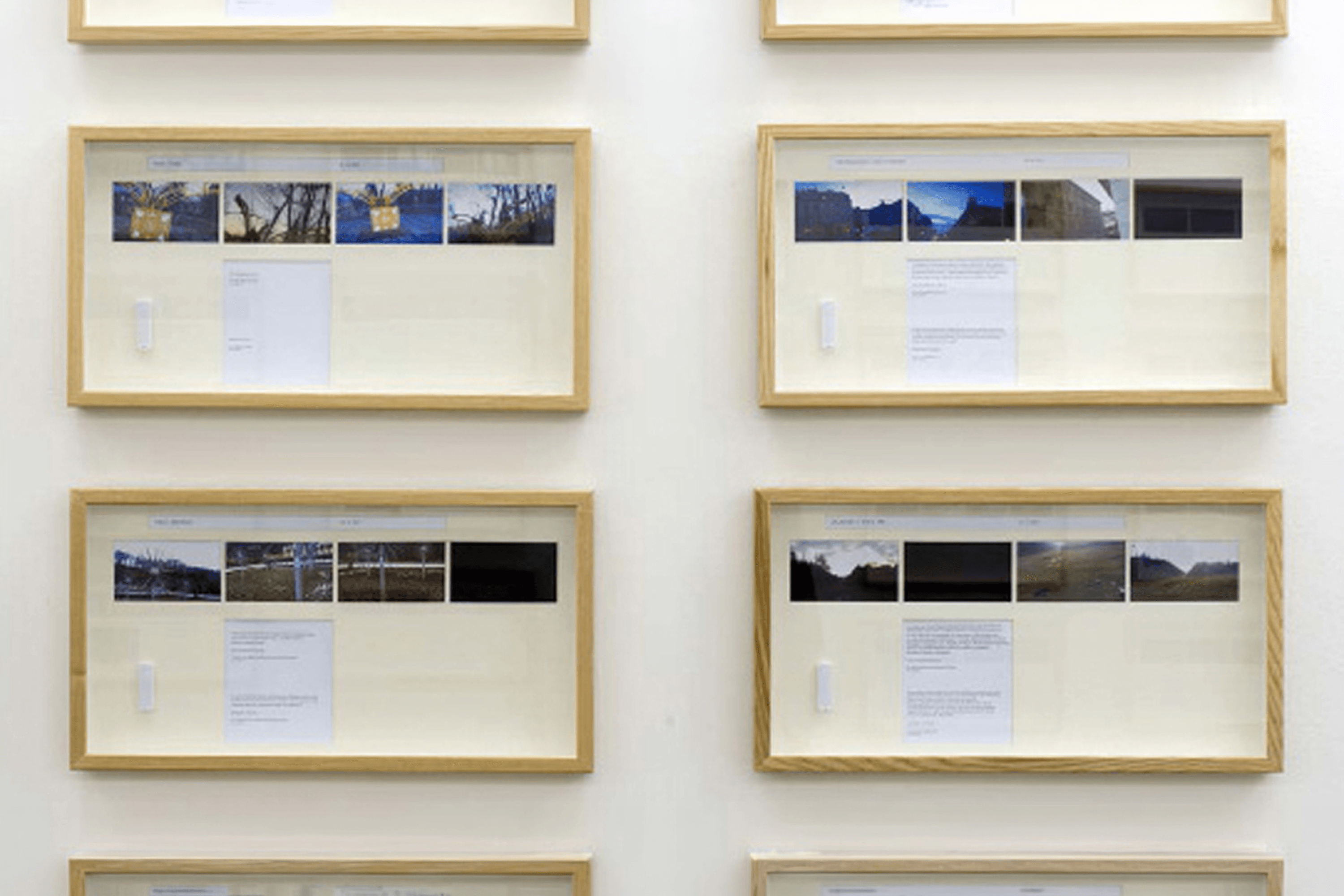
Photo: open-group.org.ua
The project was several weeks underway when the Revolution of Dignity erupted. On November 21, 2013, Viktor Yanukovych’s government abandoned the EU–Ukraine Association Agreement, prompting the first protesters to gather on Independence Square that evening. On the night of November 30, Berkut riot police brutally beat and dispersed the crowd, drawing hundreds of thousands onto the streets of Kyiv the following day.
Open Group took their cameras directly to Maidan. The “space of the day” shifted to the steps of the Kyiv City State Administration lined with protesters, fortified barricades, and flaming barrels where people gathered for warmth. Located just a kilometer from Maidan, the PinchukArtCentre became a shelter where protesters came to thaw out, only to see on the gallery monitors the very square they had just left. Yet Kovach resists labeling this “political art.” For the collective, he explains, framing ten square meters of gallery floor carries the same weight as framing the nation’s central square.
The group doesn’t view the project’s turn into a live Euromaidan broadcast as a stroke of luck. Instead, they classify such occurrences as “open situations"—or “accidental non-coincidences.” When designing a concept, they intentionally build in leeway for external events beyond their control.
In January 2014, Open Group was awarded a Special Prize at the PinchukArtCentre Prize ceremony for Ars Longa, Vita Brevis. While relocation to the capital seemed like the logical next step, the artists chose to return to Lviv. Later that summer, amid growing media coverage, Yevhen Samborskyi departed the collective, having decided he had fulfilled his role within the group and wished to pursue a solo career.
A synonym for the word “wait”
In the spring of 2014, Russia annexed Crimea, war broke out in eastern Ukraine, and men from countless families deployed to the front lines. Now operating as a quartet, Open Group tackled this reality in their next project after PinchukArtCentre invited them to Venice in 2015.
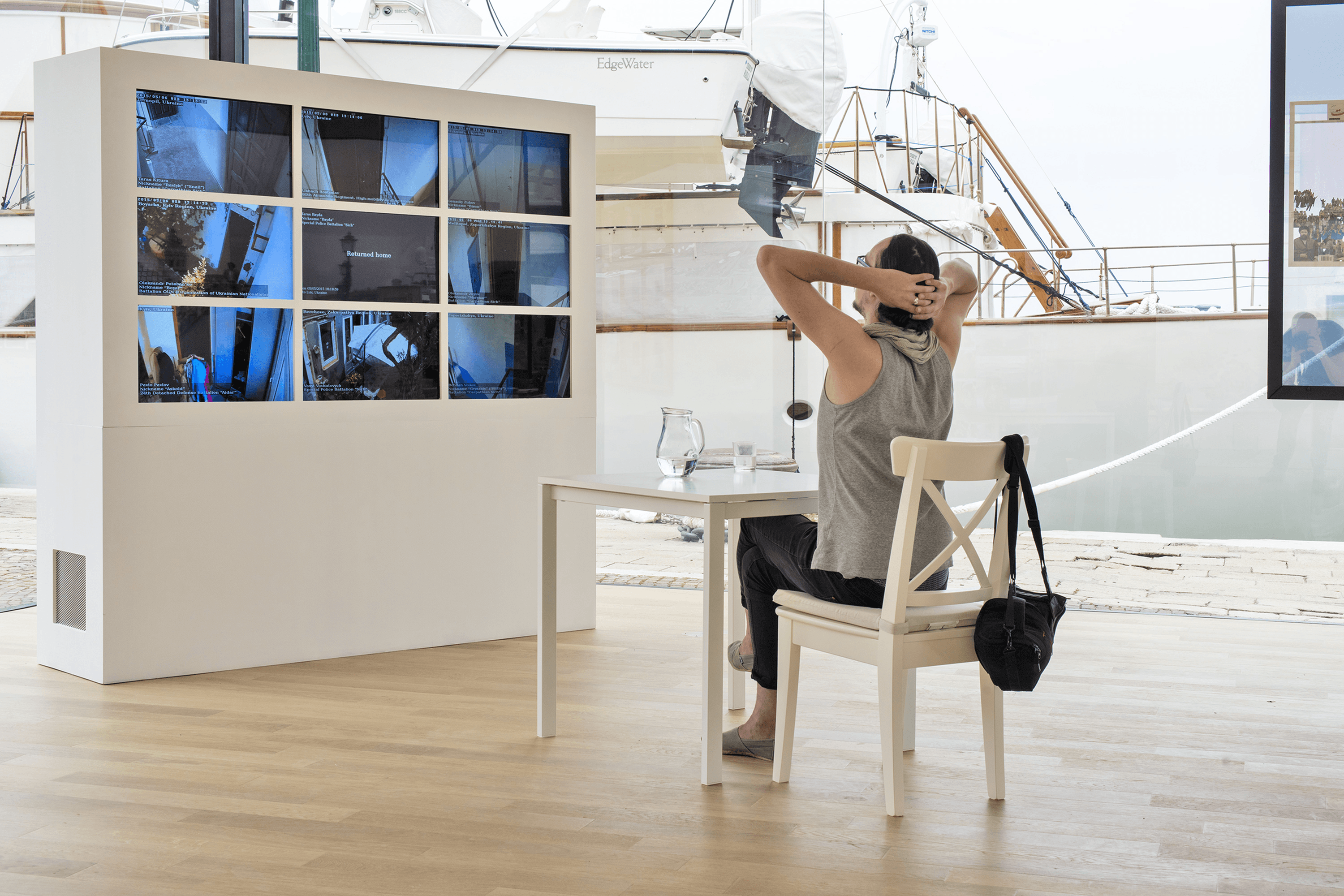
Back in Ukraine, the collective installed live cameras at the front doors of nine homes—each housing the family of a deployed soldier. In Venice, the live feeds were piped onto nine video monitors. Hung behind these screens were photographs of the families' dining tables, while a matching table was placed out front. There, the artists took turns sitting vigil, waiting for the soldiers to return home.
The piece was titled Synonym for “Wait”. The Biennale ran for three months, which Yuriy Biley, Pavlo Kovach, Anton Varga, and Stanislav Turina split into 18-day rotations. Each artist sat before the monitors eight hours a day, fasting on water alone for the entire 18 days. Every member had undergone six months of medical preparation prior to the performance, and a team member was always present on-site to step in if anyone’s health wavered.
“Synonym for ‘Wait’.” Open Group. May 6–July 31, 2015. Photo: open-group.org.ua 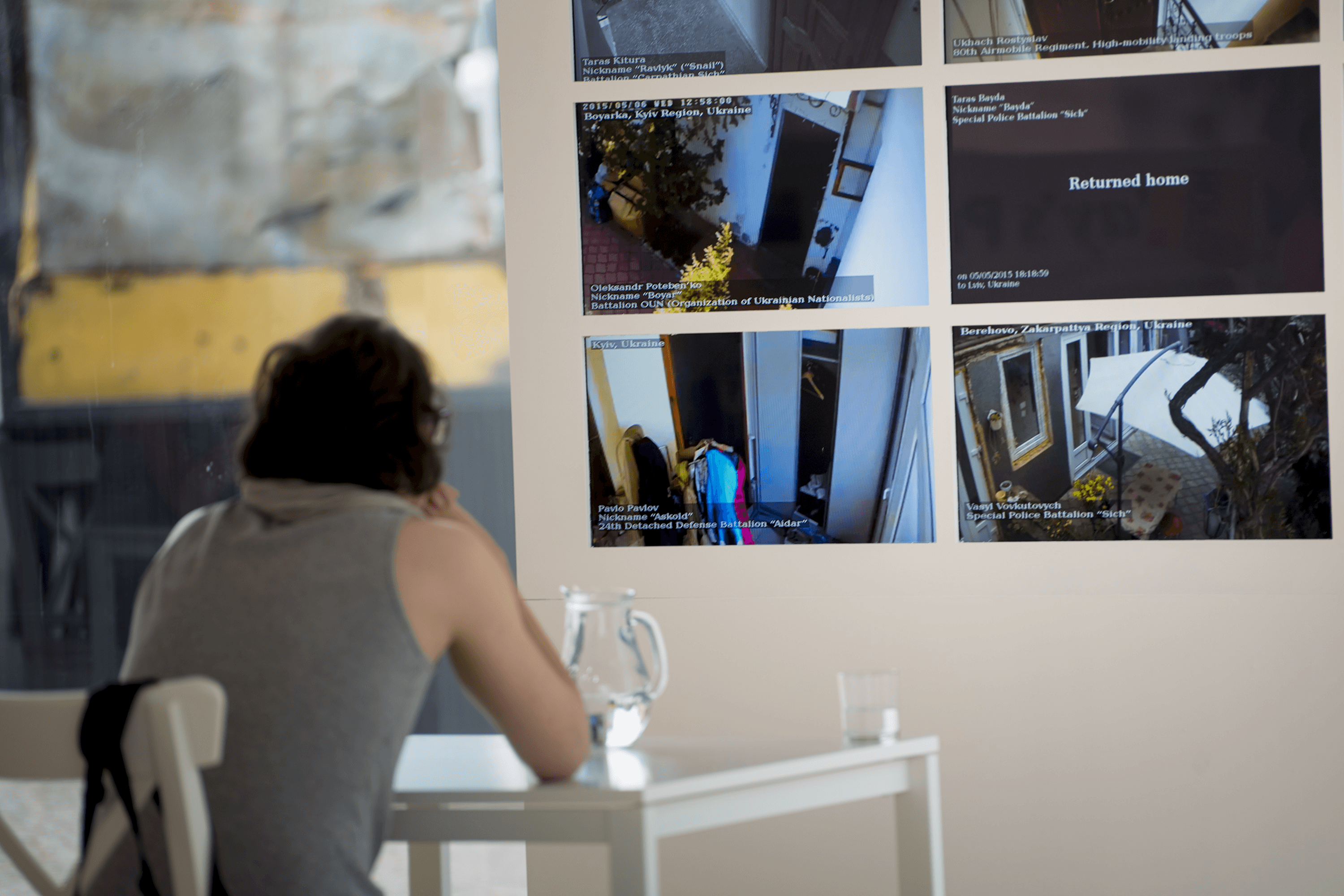
Photo: open-group.org.ua 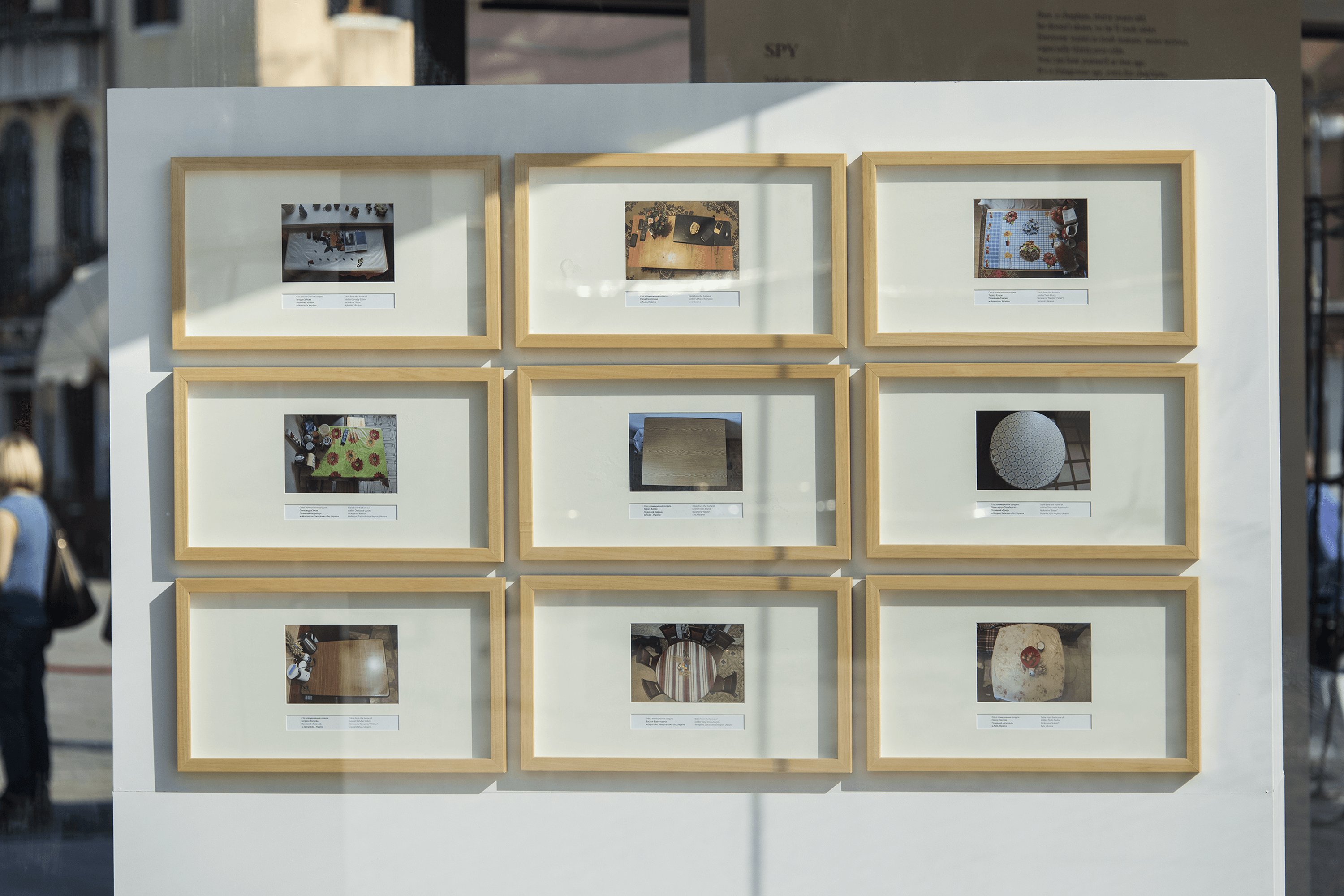
Photo: open-group.org.ua
While the fast carried a political edge, the core intention ran deeper. “Those families were waiting for their loved ones in a very real, tangible way,” Biley explains. “We wanted to experience that same literal wait—waiting for the fast to end so we could eat.” The artists did not presume to equate their experience with the agony of military families; rather, they sought an embodied understanding of endurance. Biley hesitates to distill his psychological state during those weeks: “It’s a deeply internal space. Your perception of yourself and the world around you shifts, opening up unexpected avenues of thought.”
The year 2015 marked a pivot for the group as they began working remotely. That same year, Anton Varga won a green card lottery and relocated to New York—a classic emigrant path, according to Biley, as Varga had long envisioned living in America. Varga himself didn’t see the move as a rupture with Ukraine; his green card permitted travel, and he believed most collective work could be conducted online. Like many newcomers, he initially took jobs in construction, interior finishing, and food service.
By the end of that year, Yuriy Biley also departed Ukraine for Wrocław, despite having no prior plans to leave. “I fell in love and relocated,” he says. “I call it an emigration of the heart.” His primary anxiety was severing ties with home.
“In the art world, you are only relevant abroad if you remain relevant in your home country,” Biley reflects. “They are interested in you because you matter at home. Losing connection with where I come from is the absolute worst outcome I could imagine.”
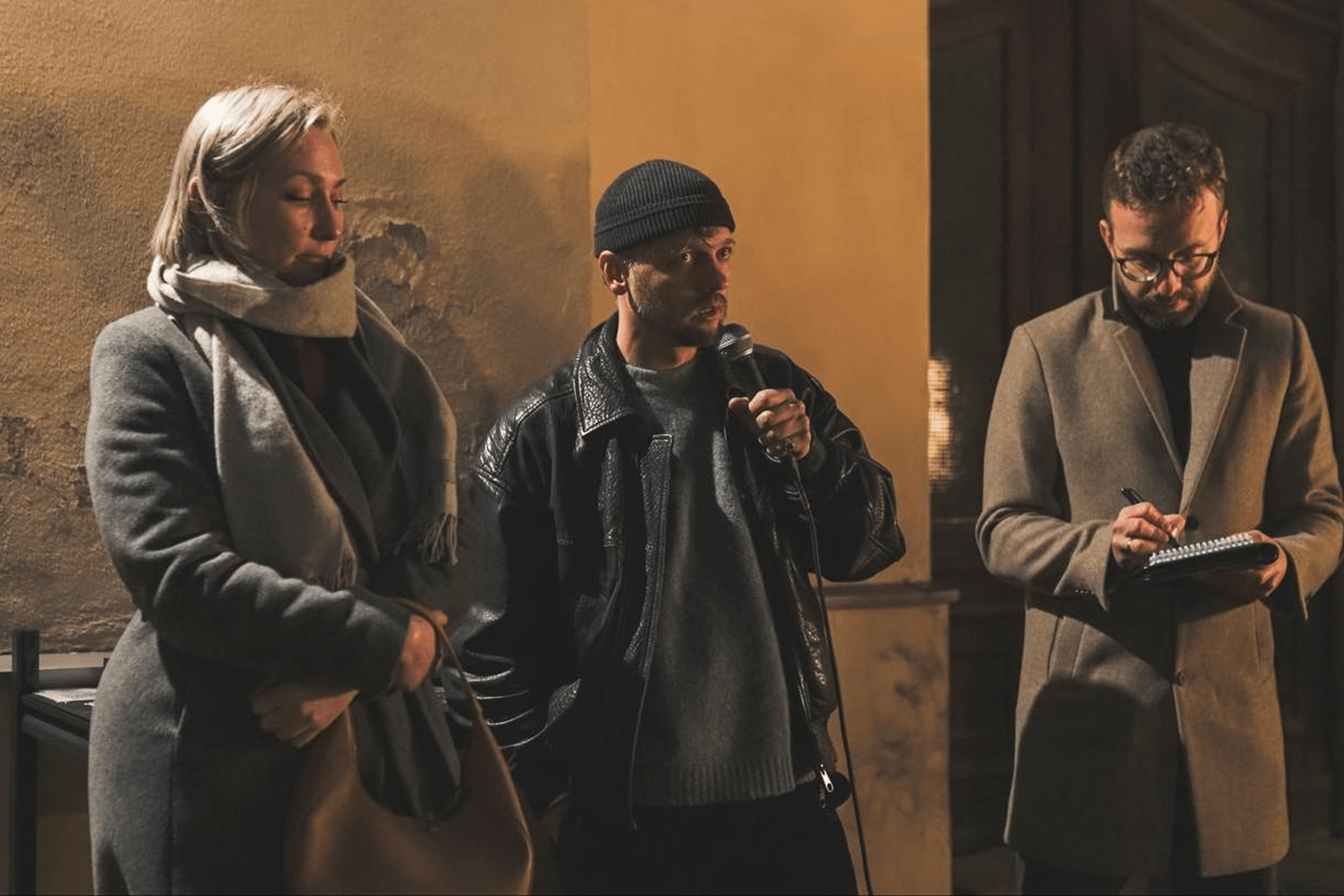
“Shelters, Covers, Slits.” Yuriy Biley. 2025. Photo: Yuriy Biley / Instagram 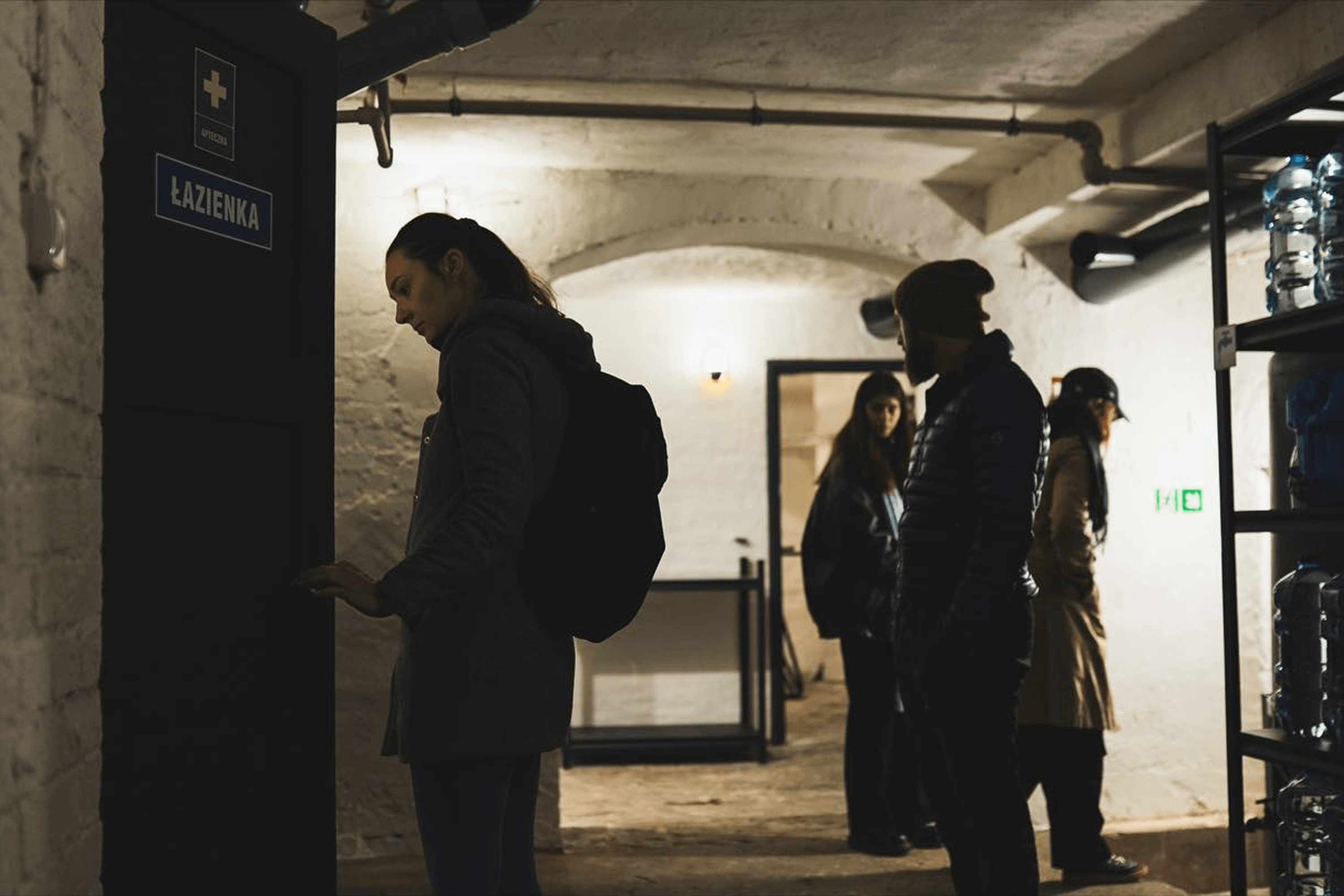
Photo: Yuriy Biley / Instagram 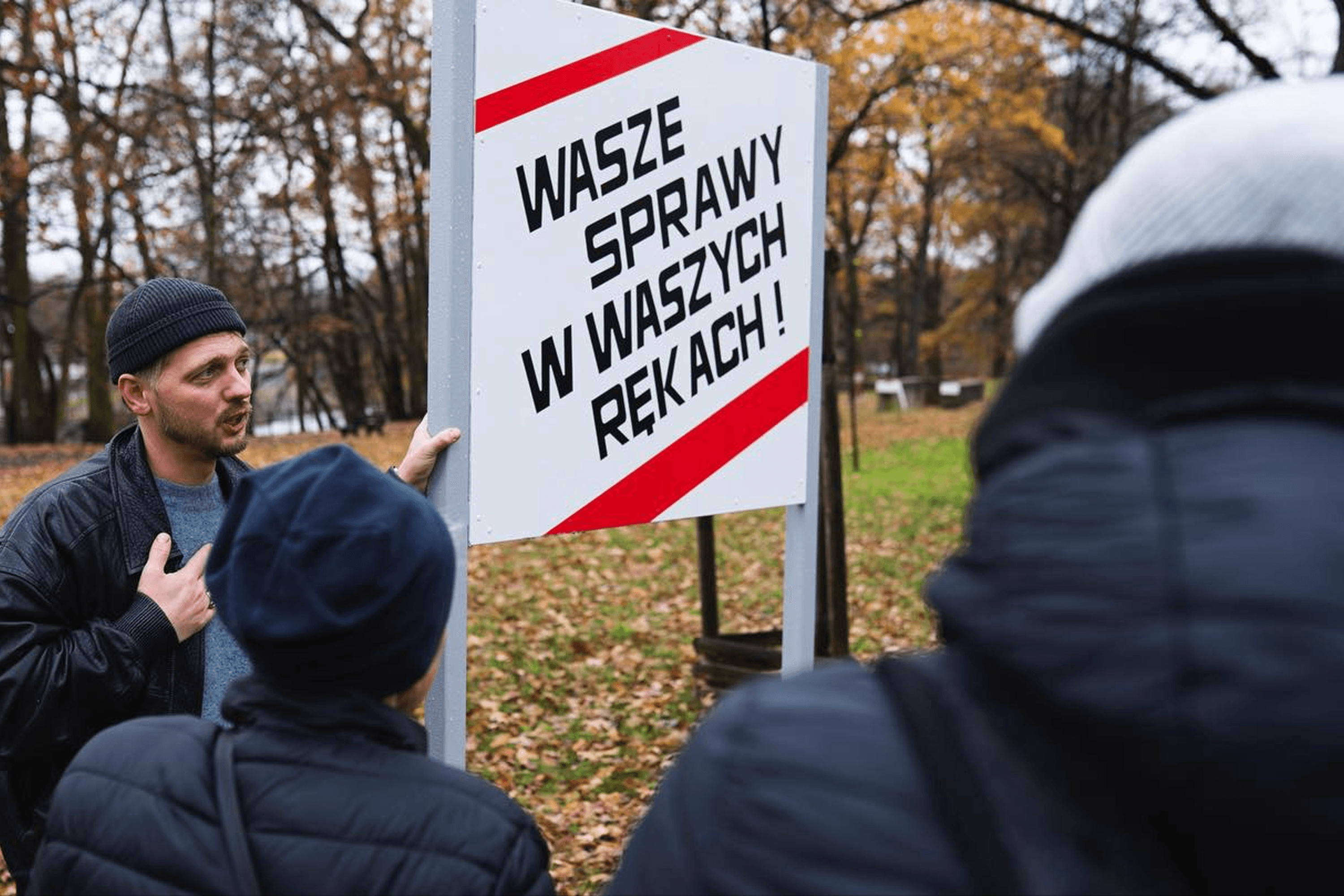
Photo: Yuriy Biley / Instagram 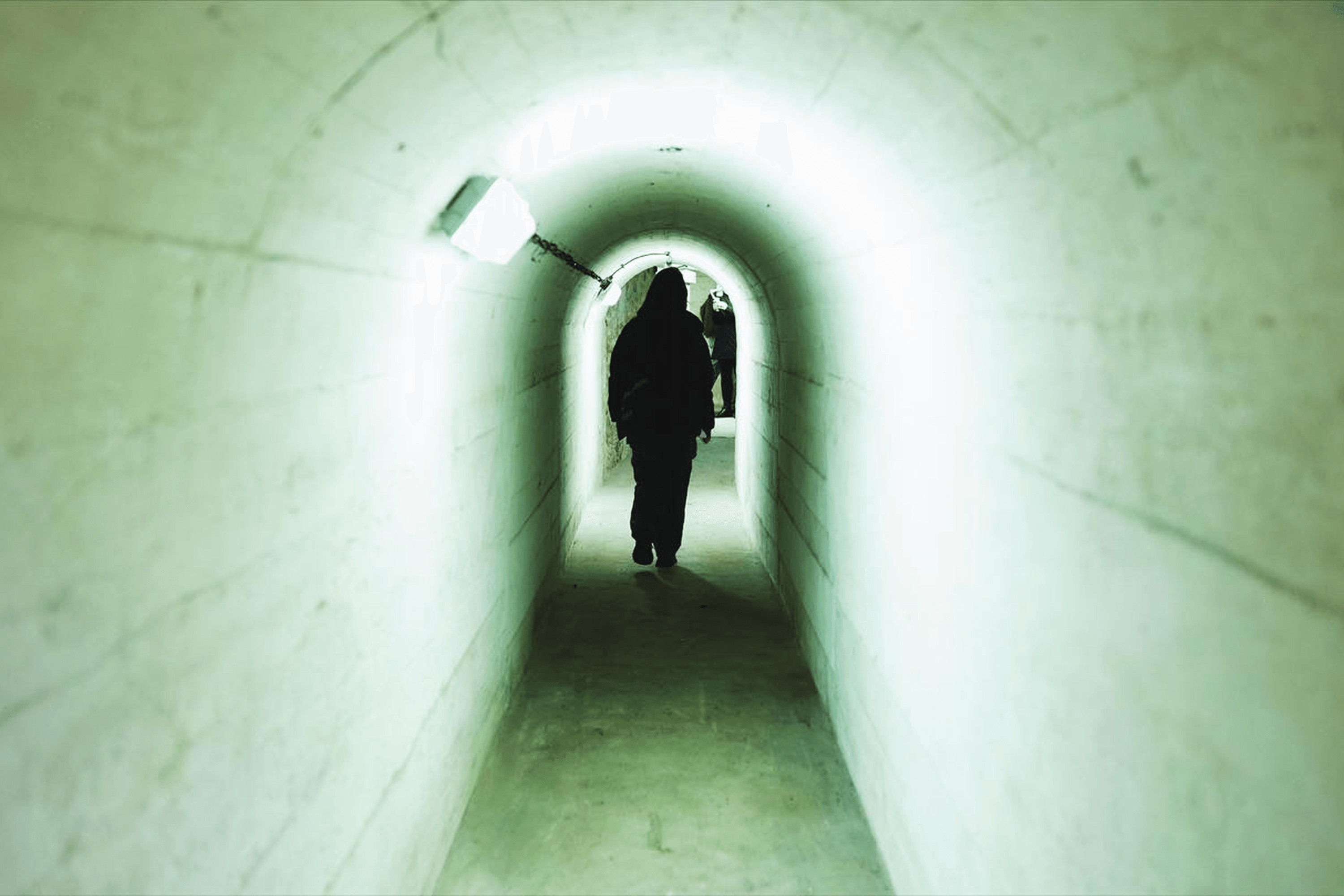
Photo: Yuriy Biley / Instagram 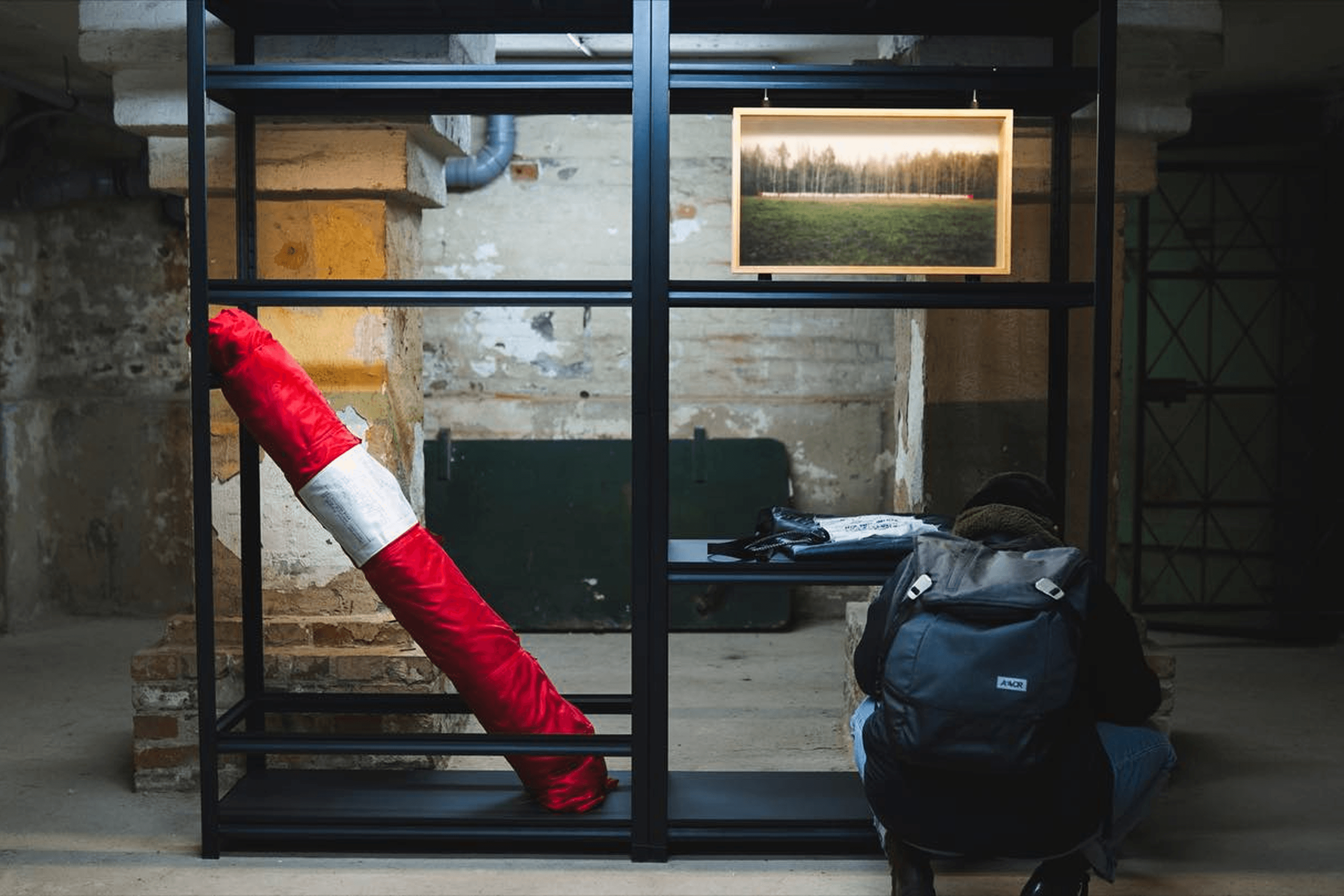
Photo: Yuriy Biley / Instagram 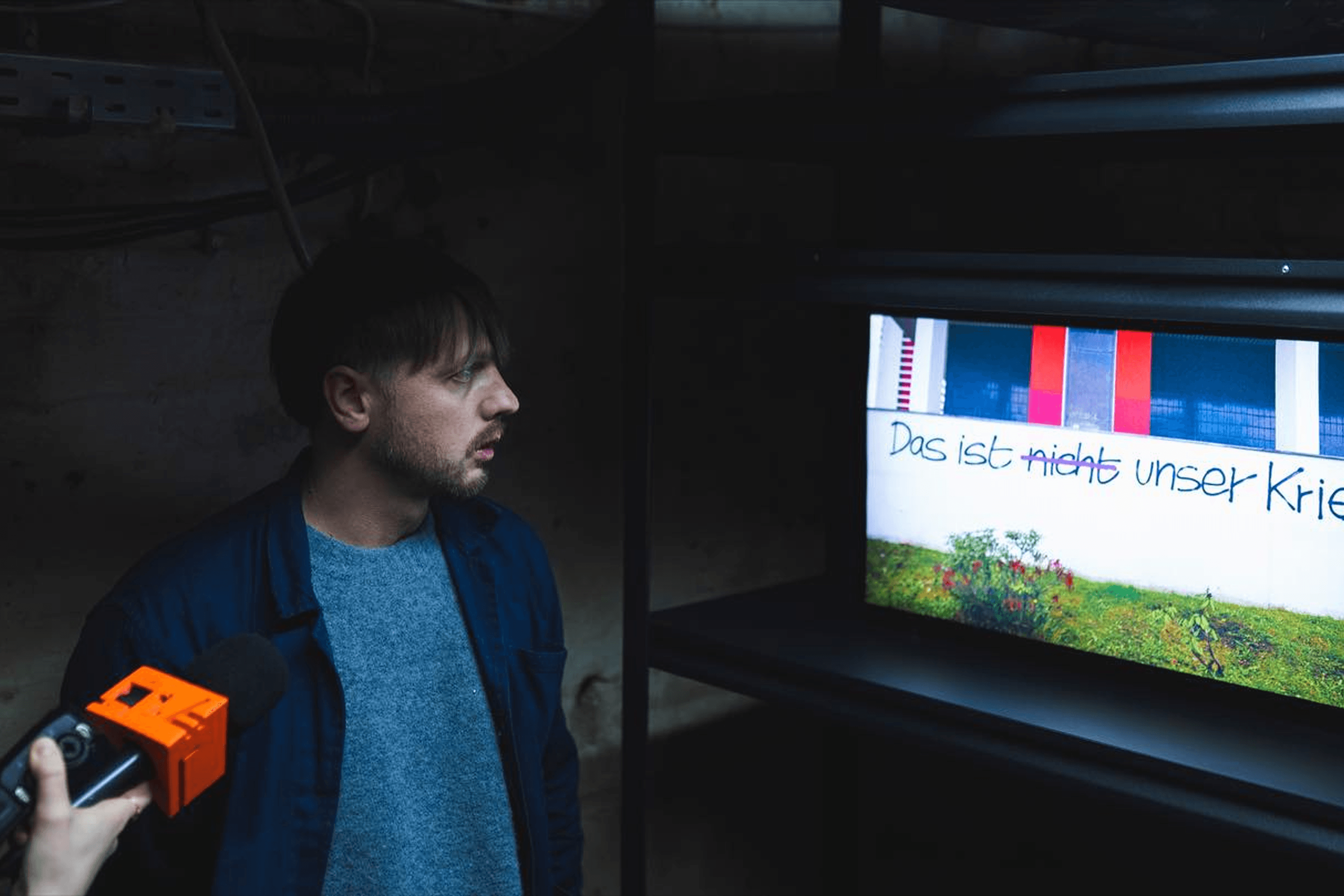
Photo: Yuriy Biley / Instagram
The “Mriya” that never took flight
At noon on May 9, 2019, the An-225 Mriya—the world’s largest cargo aircraft—was scheduled to fly over Venice’s Giardini gardens. For a fleeting few seconds, its massive shadow was meant to eclipse the national pavilions of the Venice Biennale before heading home. But the flyover never happened.
In 2018, Open Group won the Ministry of Culture’s national selection to represent Ukraine at the 58th Venice Biennale. Titled The Shadow of “Mriya” Casting upon the Giardini Gardens, the project aimed to carry an unconventional cargo aboard the plane: the digital archives of Ukrainian artists. The collective launched an open call, automatically granting entry to anyone who submitted their portfolio. With zero rejections, the roster swelled to over a thousand Ukrainian artists.
The concept behind the shadow was simple. Global art surveys and authoritative volumes on Eastern European art routinely gloss over Ukraine, focusing heavily on Russia instead. Casting Mriya’s shadow over the Giardini was meant to assert the presence of a country routinely rendered invisible in global art history—using the very aircraft that symbolized Ukraine’s supreme technological pride.
Biley describes the eight months that followed as the chaotic apex of an “open situation"—except this time, events spun entirely out of control. Friction began with the selection process itself. Shifting deadlines and altered rules fueled skepticism within the art establishment regarding the contest’s integrity. Over thirty prominent figures from the older generation signed an open letter opposing Open Group’s selection. Artist Arsen Savadov drafted an appeal to President Petro Poroshenko and organized a picket outside the Ministry of Culture. According to Biley, the protest consisted mostly of elderly onlookers and students who could barely identify Open Group or articulate what the Venice Biennale was.
Meanwhile, Ukraine was in the middle of a presidential election campaign. An art project previously known only to an insider circle suddenly dominated mainstream headlines.
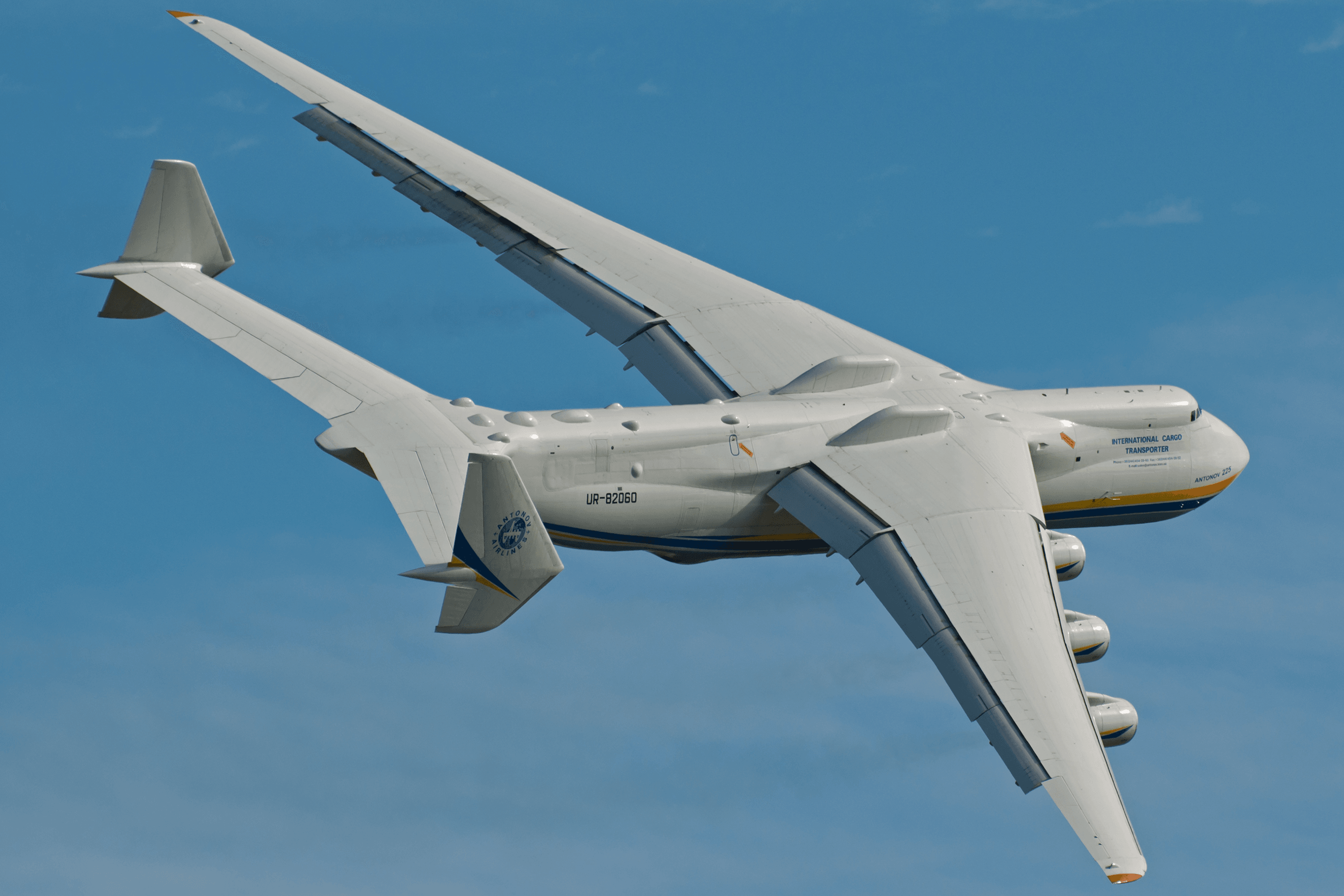
Mriya in flight 2015, photo, Vasiliy Koba, Courtesy Antonov Company. Photo: open-group.org.ua 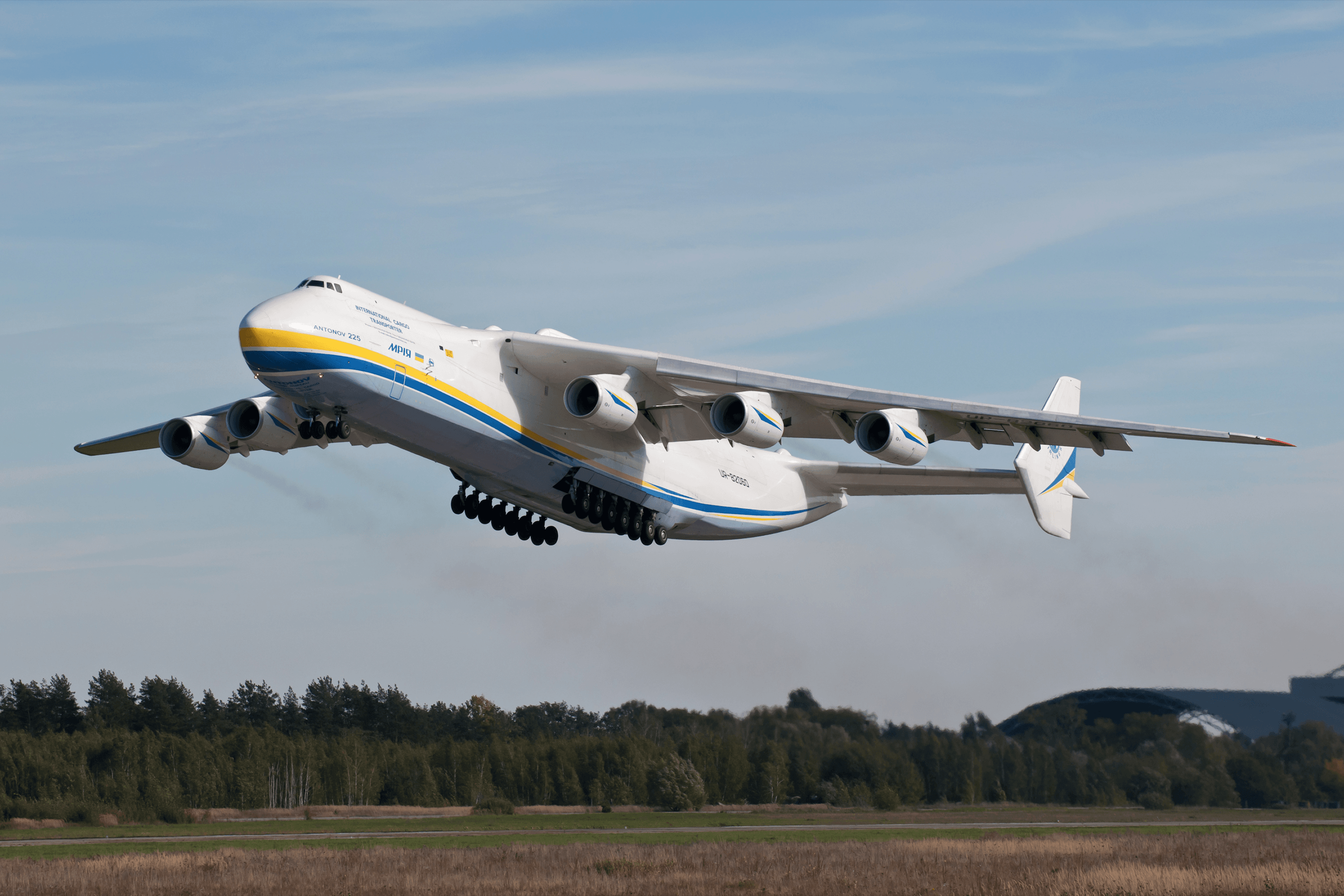
An-225 іs taking off 2015, photo, Vasiliy Koba, Courtesy Antonov Company. Photo: open-group.org.ua 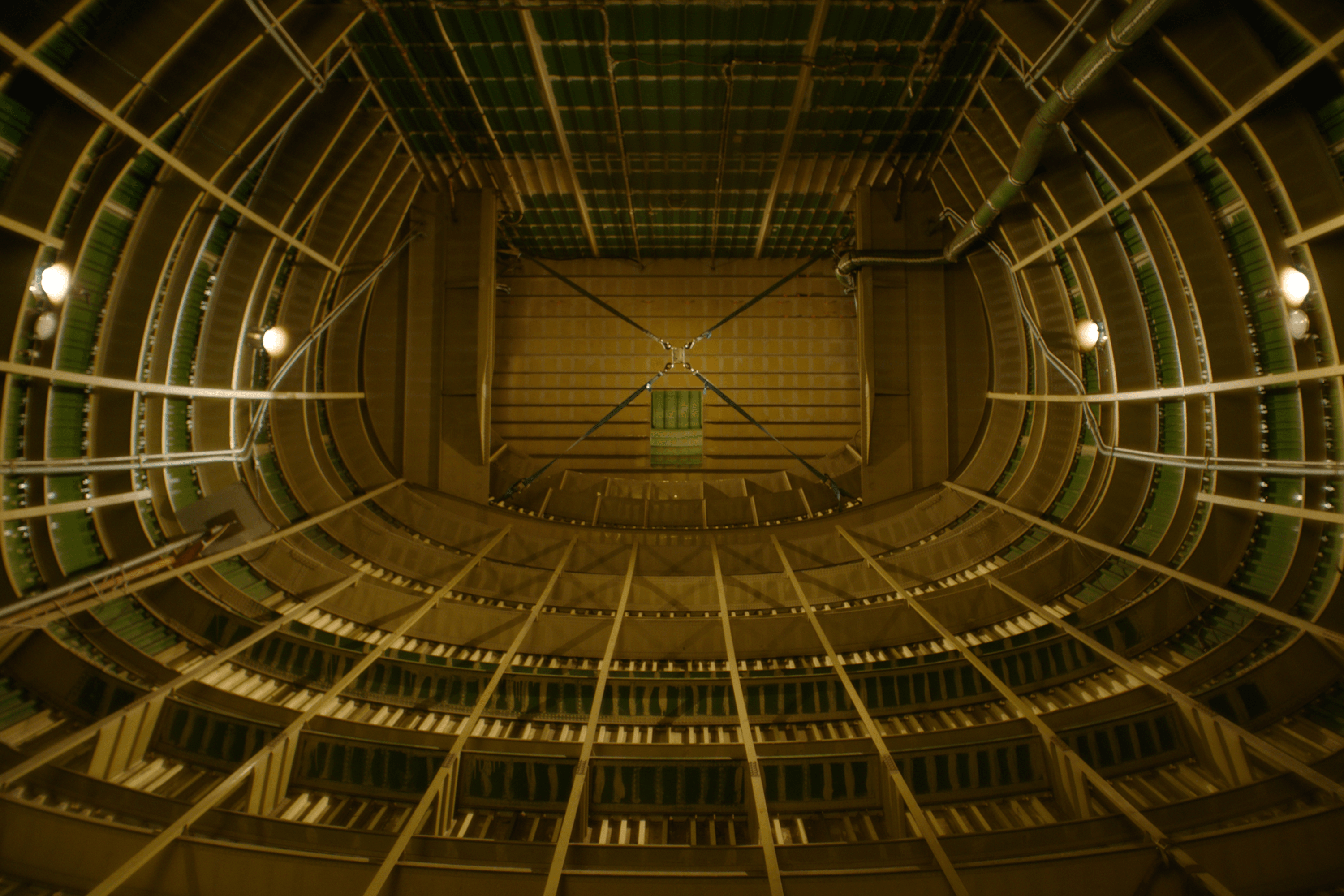
«The Shadow of Dream Cast Upon Giardini della Biennale». Open Group. 2019. Photo: open-group.org.ua 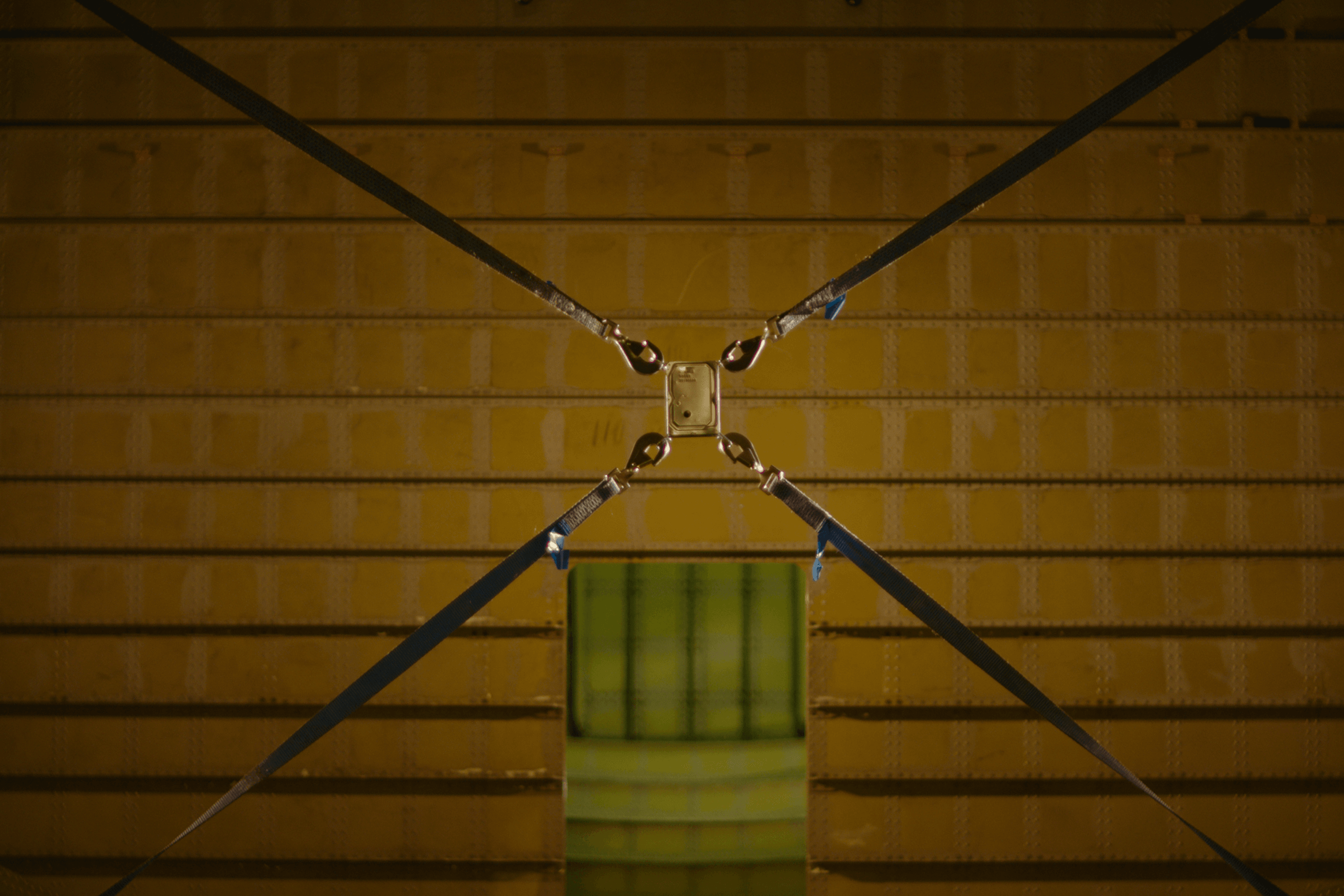
Photo: open-group.org.ua 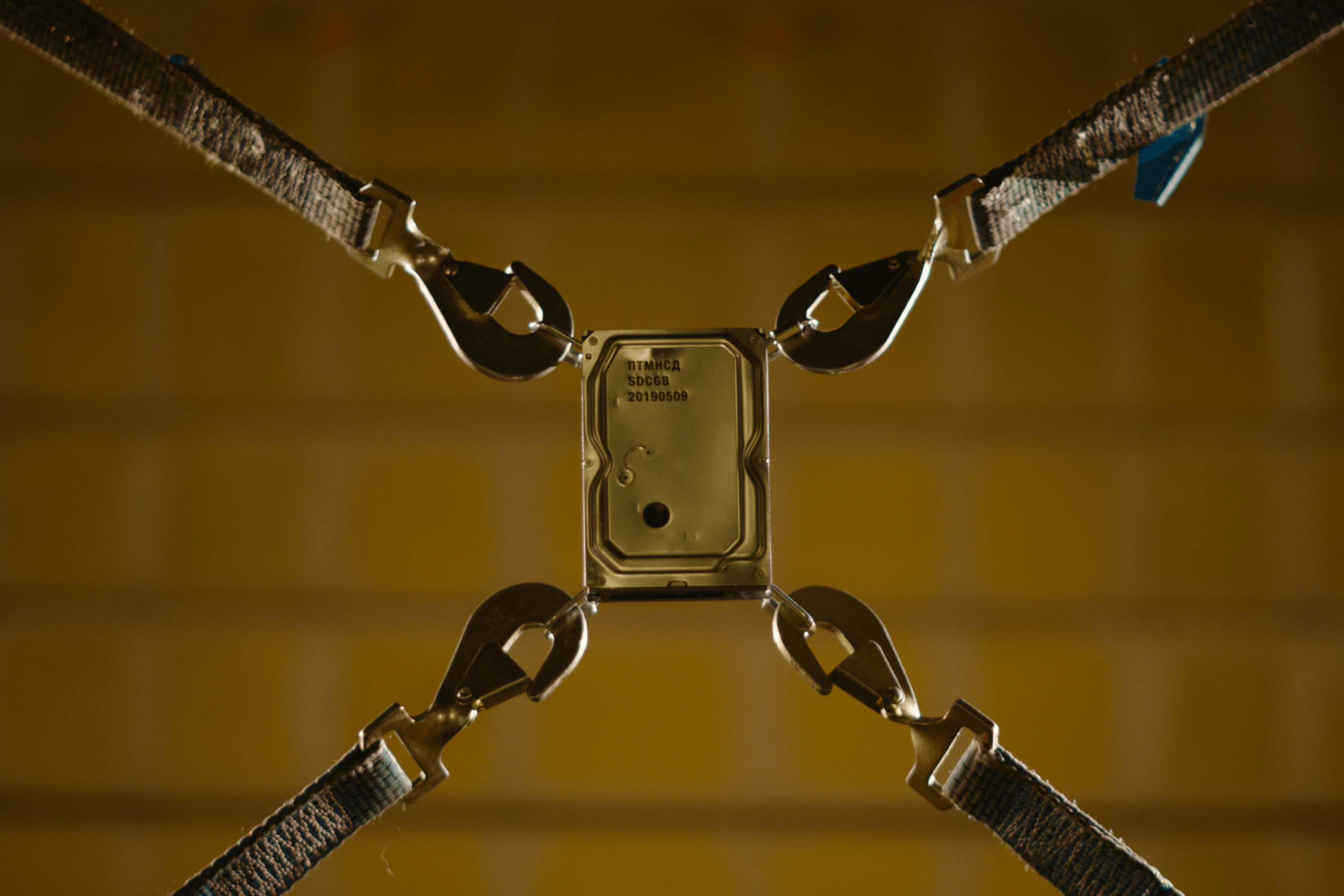
Photo: open-group.org.ua 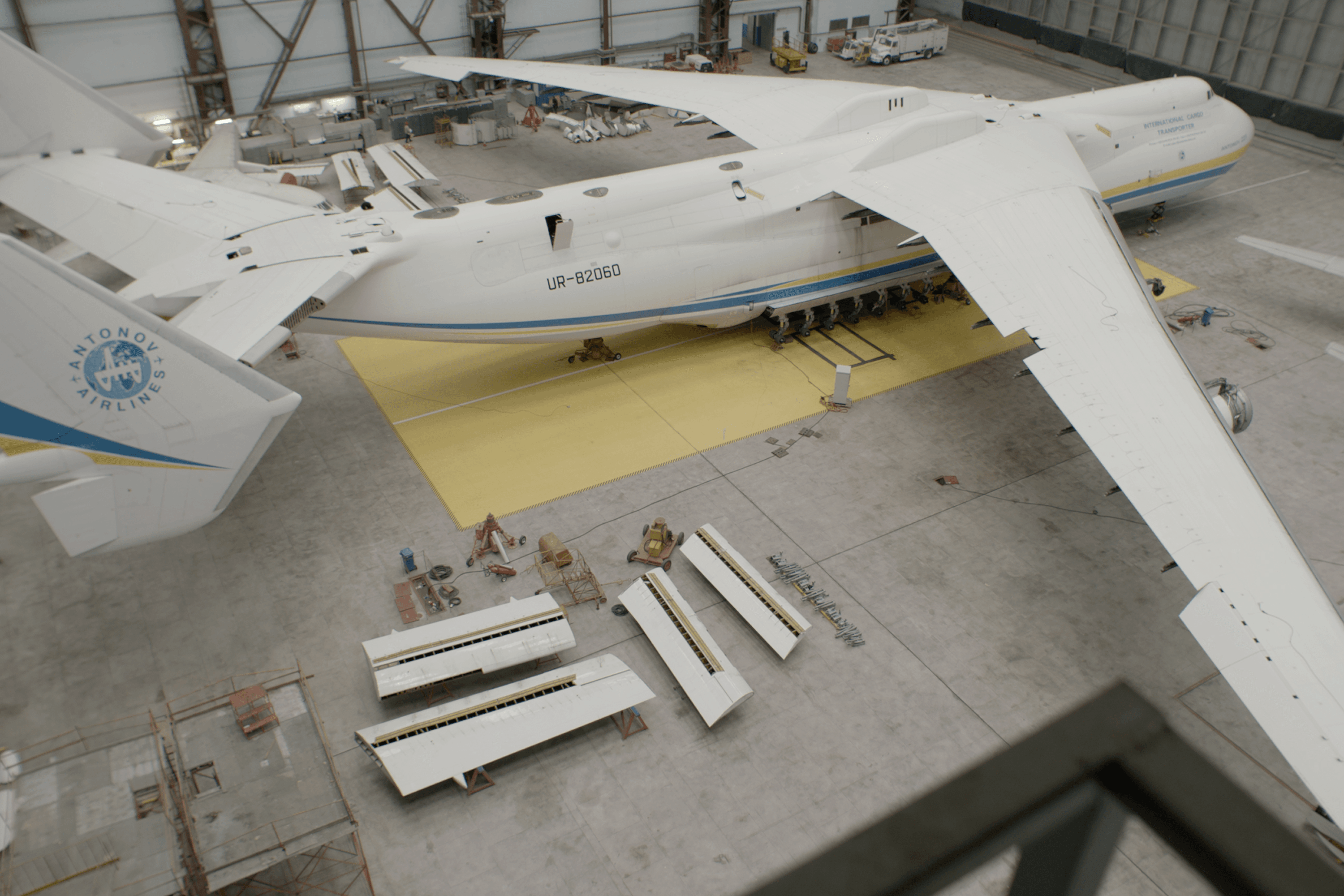
Photo: open-group.org.ua
Soon, public scrutiny shifted to finances. The pavilion’s budget stood at approximately 9 million UAH (around $340,000)—6.5 million funded by the Ministry of Culture, with the remainder covered by sponsors. That year, Ukraine secured a coveted venue inside the Arsenale, one of the Biennale’s primary hubs. Renting the space alone consumed nearly $112,000. The remaining funds covered a documentary film about Mriya, the installation, performance elements, and the opening event. The artists themselves received no honorariums—as usual in the case of Ukrainian entries for the Biennale. “The Ministry of Culture doesn’t pay curators or artists,” Biley notes. “Budgets go to contractors building tables, sets, or painting walls. We were merely given a two-week per diem for Venice.”
The sole Mriya aircraft belonged to the state-owned enterprise Antonov under the state defense conglomerate Ukroboronprom. The Ministry assumed the plane would fly for free as a state enterprise asset. However, neither the ministry nor the manufacturer had the budget to finance the flight, and no clear legal mechanism existed to authorize it.
By early April, the collective was privately informed that Mriya would not pass inspection in time and remained grounded. The aircraft’s prolonged downtime was due to a major overhaul and the replacement of key onboard systems. The artists kept this confidential as frantic negotiations continued, clinging to daily updates that held out hope the plane might still be readied in time. On May 5, just four days before the scheduled flight, the project was raised at a Cabinet of Ministers meeting, where officials debated the acute reputational risks of the nation’s flagship aircraft failing to reach Venice.
Ultimately, the plane stayed on the ground. On May 9, as crowds gathered in the Giardini expecting a miracle, nothing appeared overhead. Ironically, a year later in April 2020, Mriya captured international headlines once more, airlifting medical supplies from China to Kyiv during the COVID-19 pandemic.
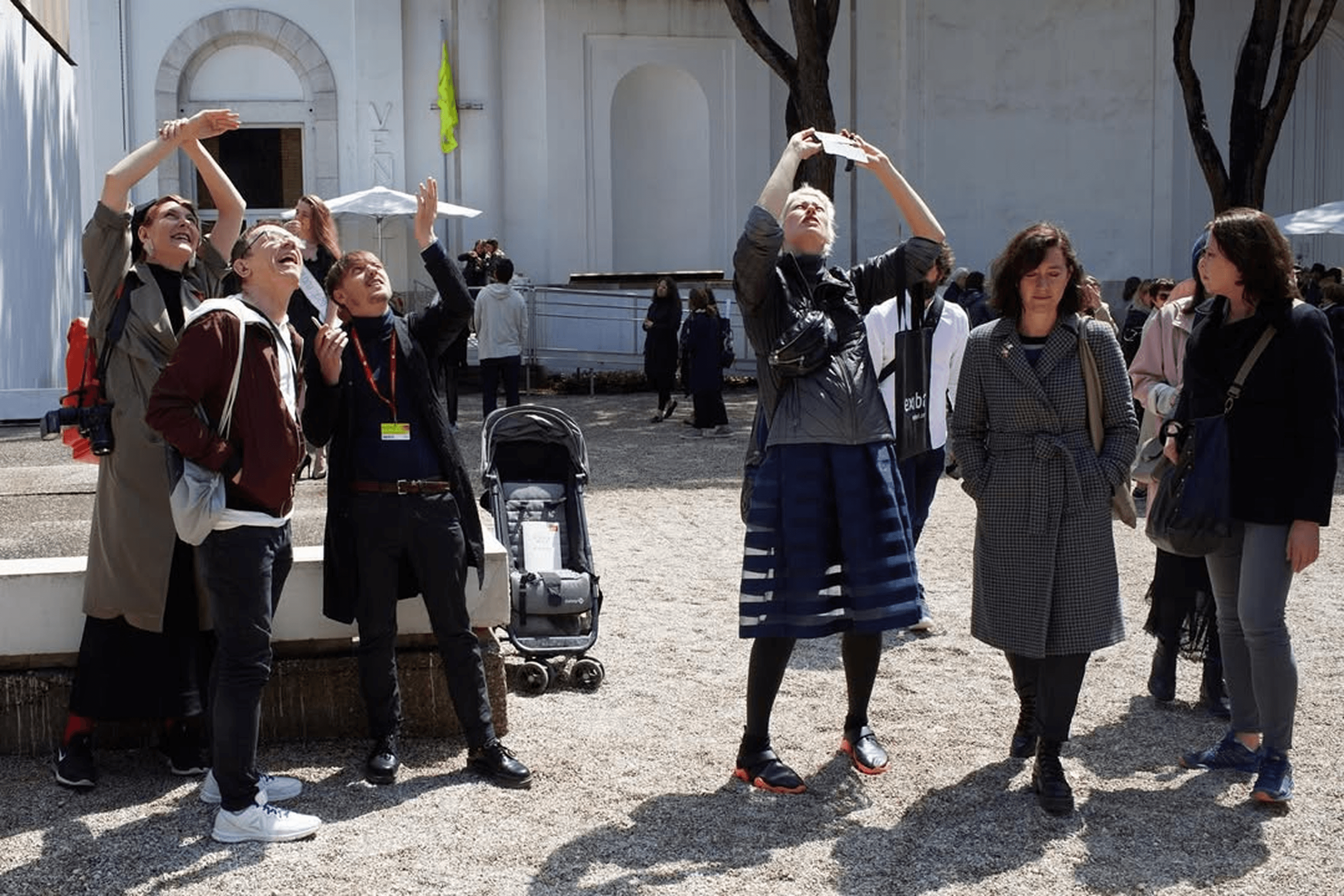
Rather than a triumphant flyover, Open Group exhibited the story of its failure: paper trails of bureaucratic negotiations, video footage of Mriya, and the master list of over a thousand artists. In the center of the pavilion, five tables were set up. At each sat a performer representing one key faction in the drama: the Ministry of Culture, Antonov/Ukroboronprom, the artists who supported the initiative, and those who opposed it. “The initiative spilled over the boundaries of art,” Biley says. “Everyone was discussing it—even those who had never cared about art.”
The ordeal took a heavy toll on the collective. “Every two hours the situation shifted; every day brought new allegations and scandals,” Biley recalls. The burden fell heaviest on Stanislav Turina. For a full month, the group knew the flight was canceled yet remained bound to secrecy. “Turina is a deeply principled, honest person. Maintaining that façade was agonizing for him,” Biley explains. Unable to endure the toxicity and pressure, Turina withdrew from Open Group following the Biennale. “It was a profound loss for all of us,” Biley reflects. Since then, Open Group has continued as a trio: Yuriy Biley, Pavlo Kovach, and Anton Varga. Mriya, they concede, brought them no glory—only a prolonged recovery and a cautious approach to whatever lies ahead.
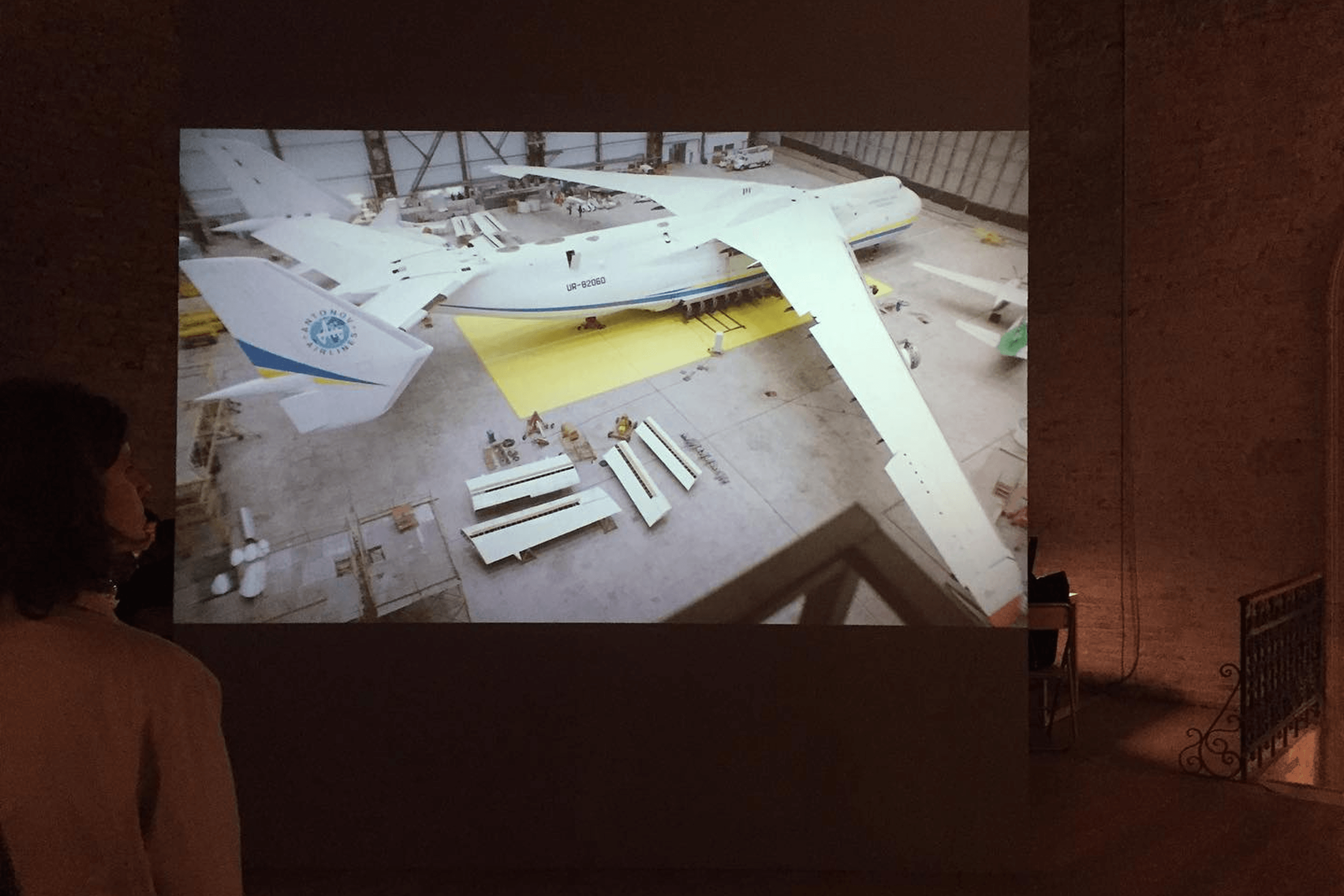
The Ukrainian Pavilion at the Arsenale on the final day of the Venice Biennale. November 24, 2019. Photo: Open Group / Instagram 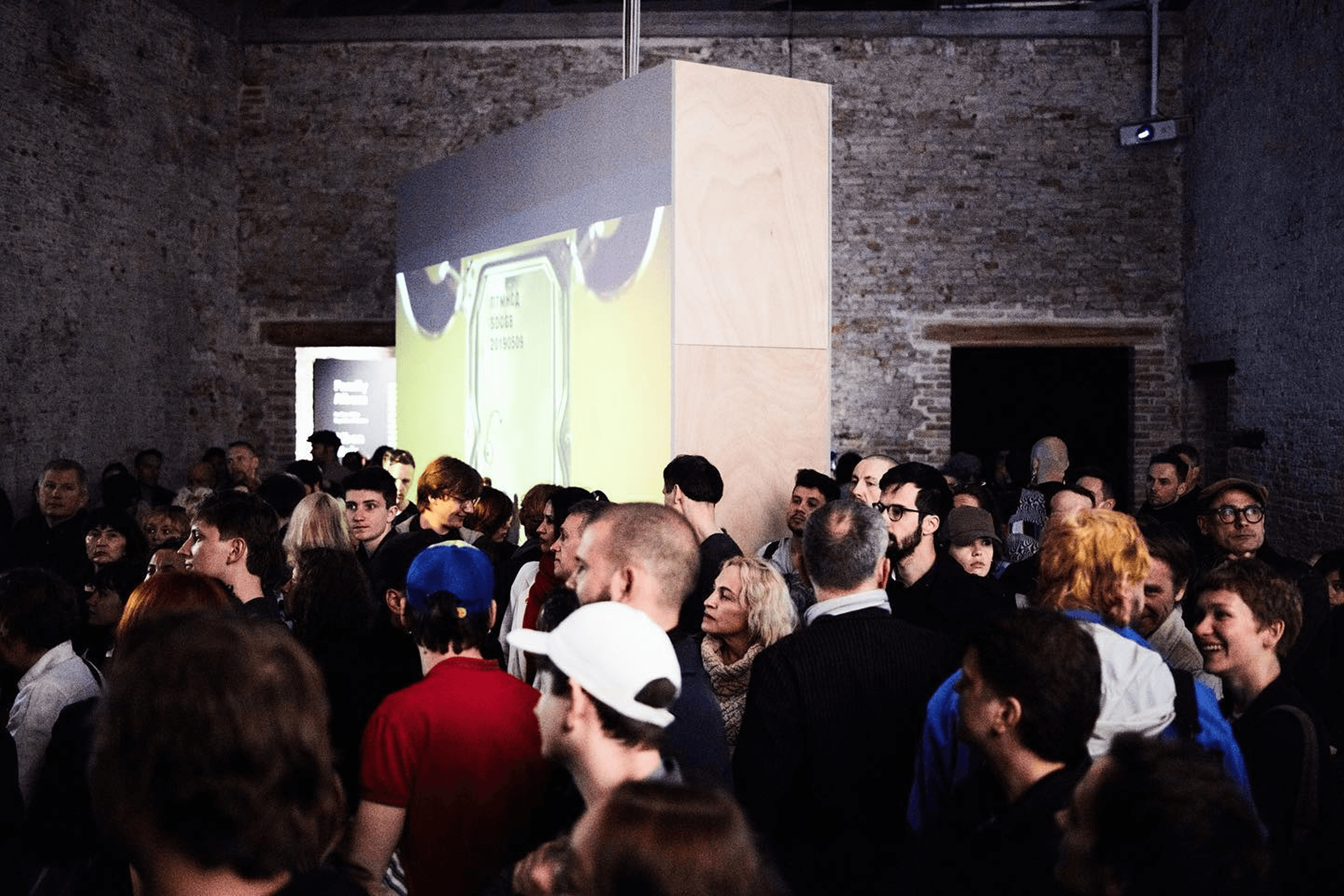
Photo: Open Group / Instagram 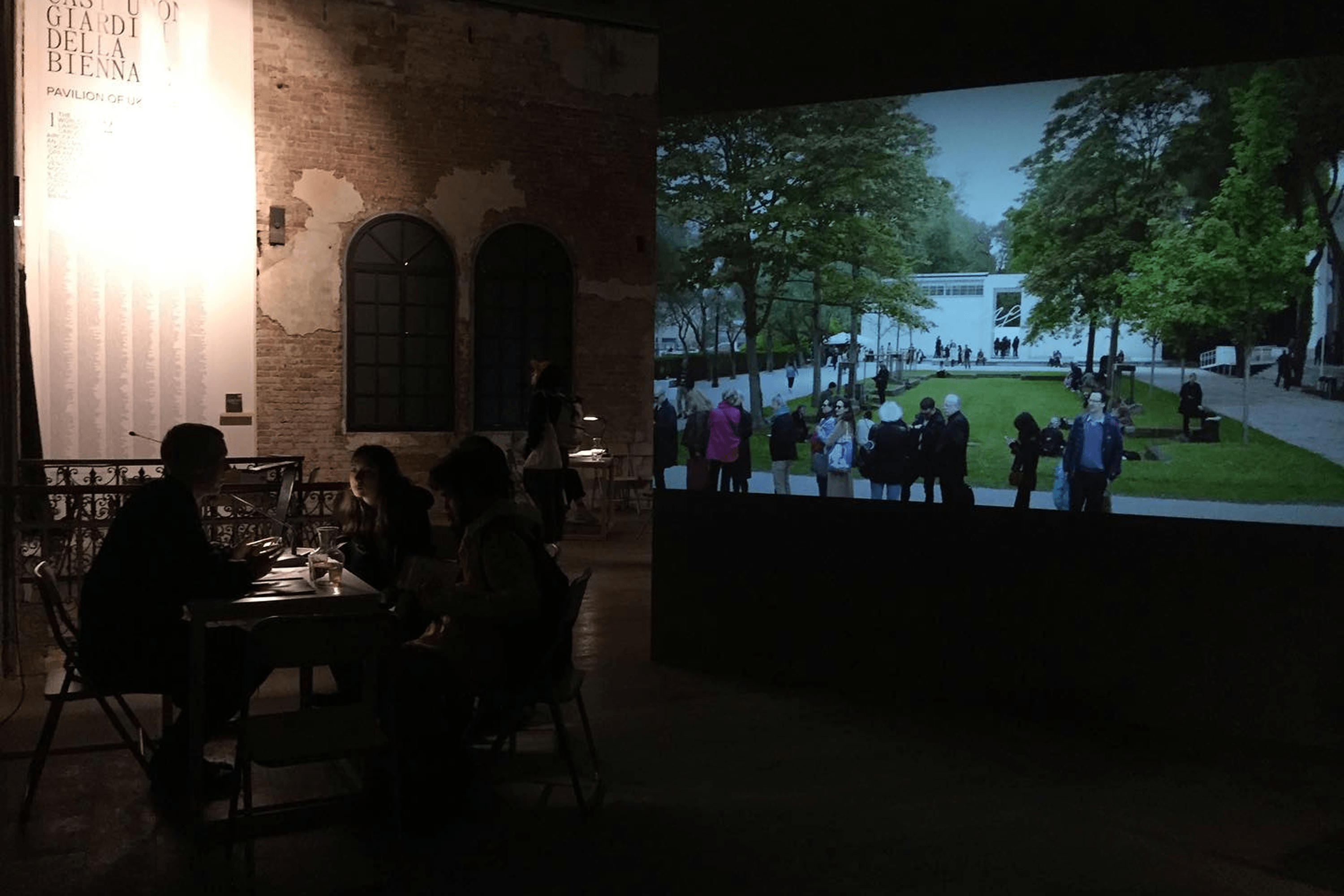
Photo: Open Group / Instagram 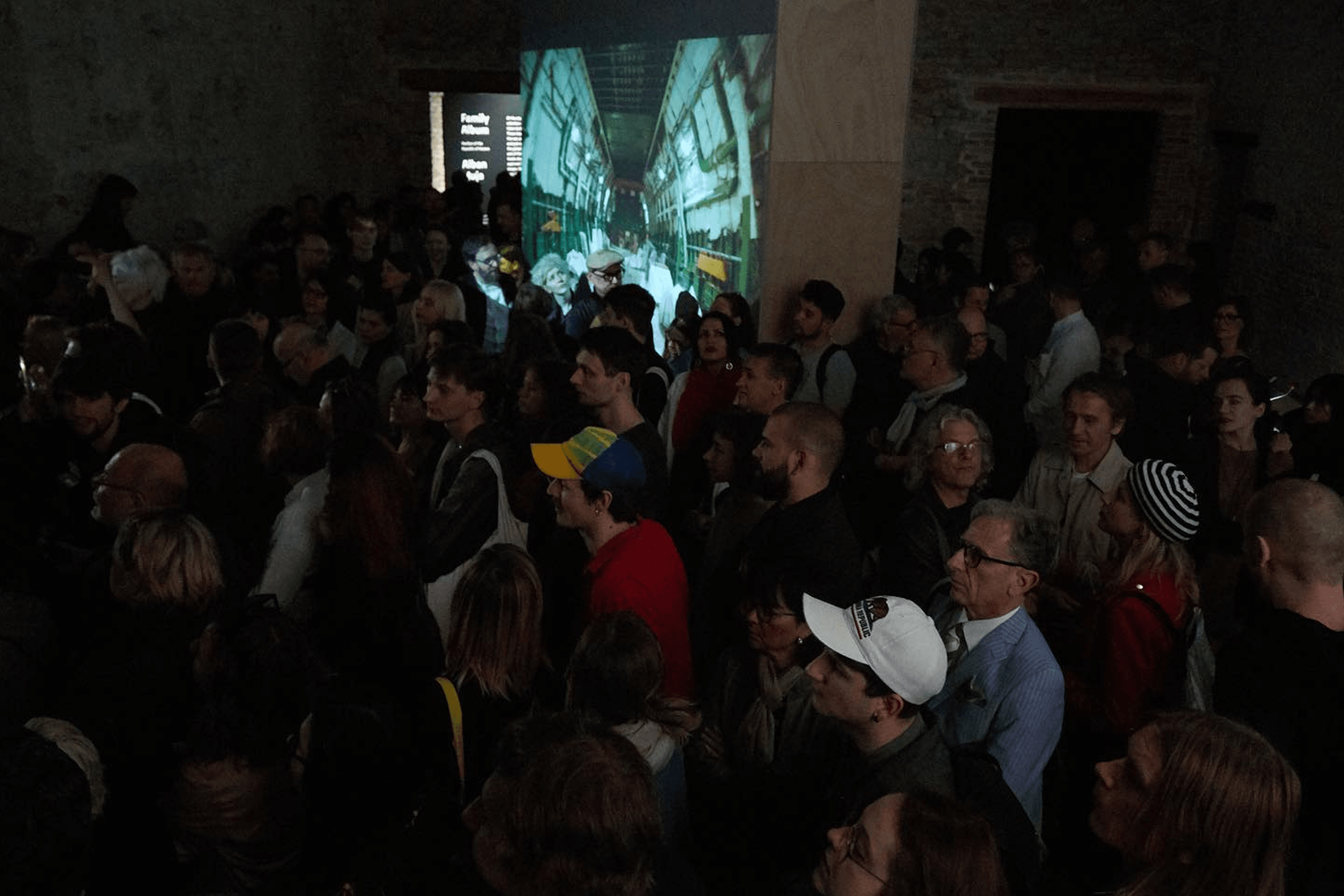
Photo: Open Group / Instagram 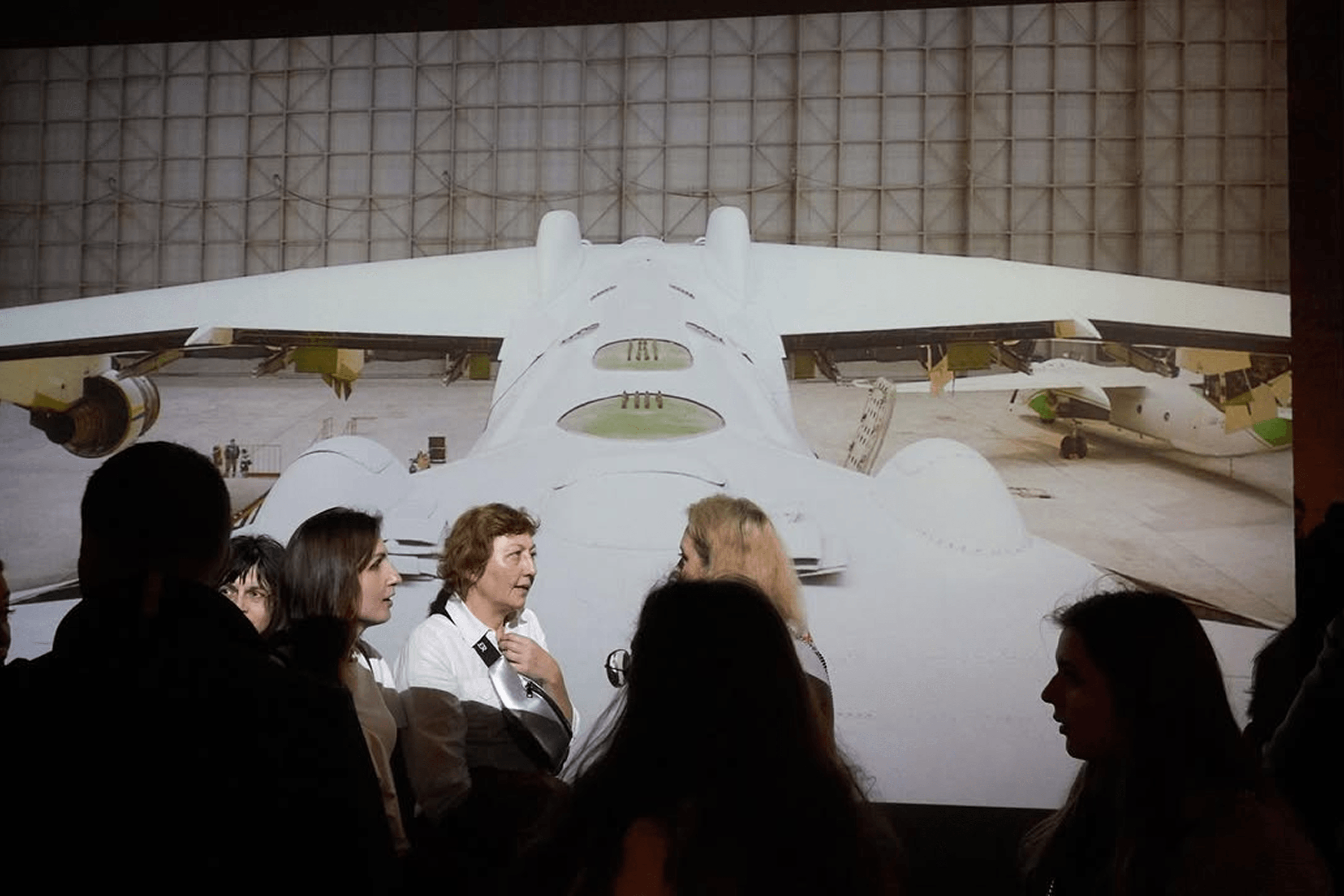
Photo: Open Group / Instagram 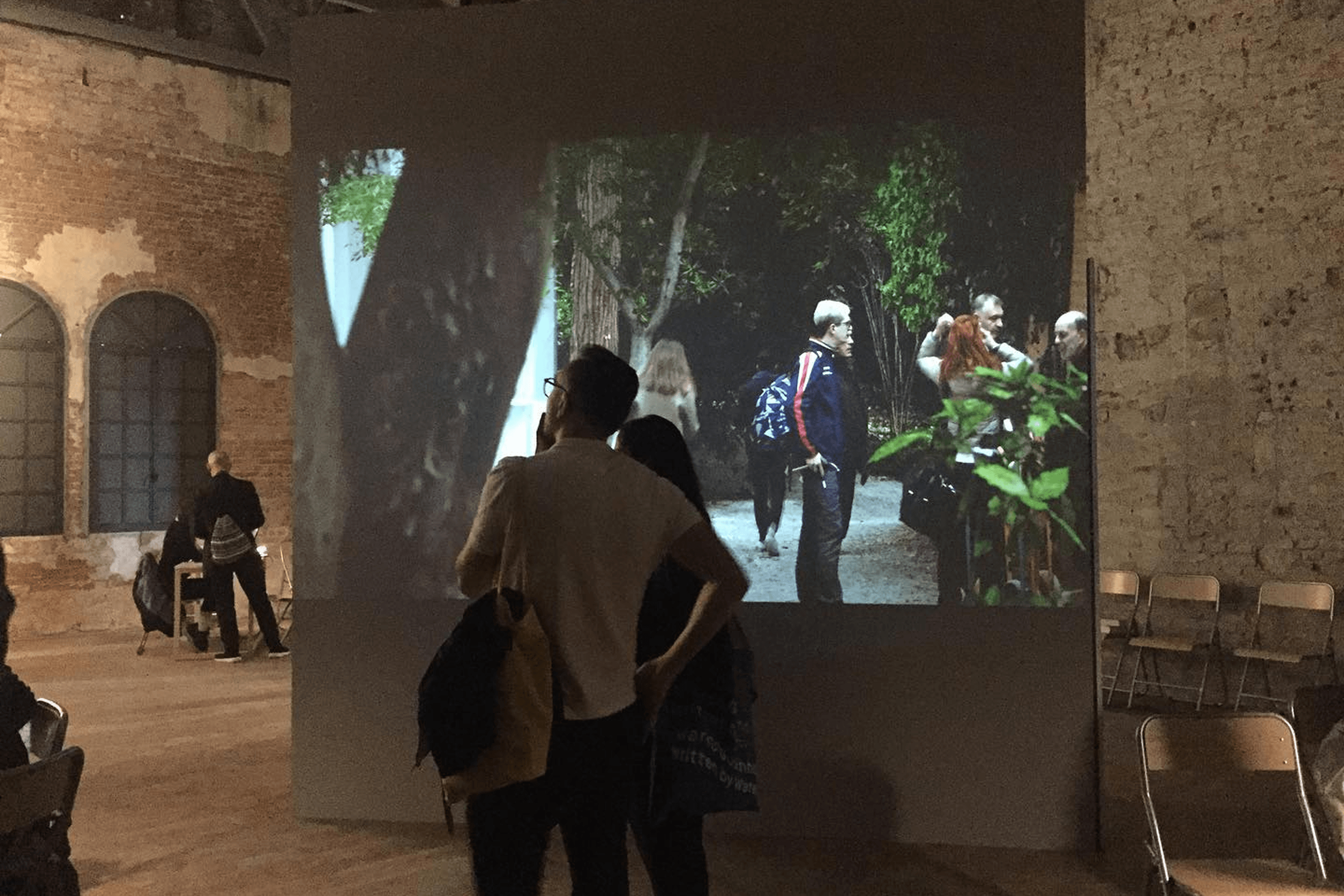
Photo: Open Group / Instagram
The sounds of war
In the summer of 2015, while members took turns sitting vigil in Venice, the collective brainstormed new concepts, jotting them down in a notebook. Among these entries was a project titled Karaoke of Weapon Sounds. At the time, the idea was shelved. With the war in eastern Ukraine still localized, relatively few civilians could recall the whistle of an incoming missile or a burst of automatic fire from memory, and the artists chose not to disturb that territory. “Some works are better conceived and left untouched, so as not to provoke reality,” Open Group reflects. While they don’t claim art possesses supernatural foresight, the uncanny parallels have mounted over time: in 2019, they orchestrated a flyover for Mriya; in February 2022, the plane was obliterated in Hostomel.
With the onset of the full-scale invasion, Lviv—where the group’s journey first began—transformed into a primary hub for displaced families. Within months, millions of civilians learned to identify weaponry strictly by ear, as recognizing a sound meant the difference between reaching cover or not.
In August 2022, the artists filmed the initial installment of Repeat After Me at a shelter for displaced persons near Lviv, with Pavlo Kovach helping recruit participants. Using only their voices, refugees mimicked gunshots, missile screeches, and artillery blasts from memory. “Karaoke is a format for instruction,” Biley notes. “This piece explores how lived experience is transmitted. While the Ukrainian military shares combat expertise with foreign allies, Ukrainian refugees pass on civilian survival knowledge.”
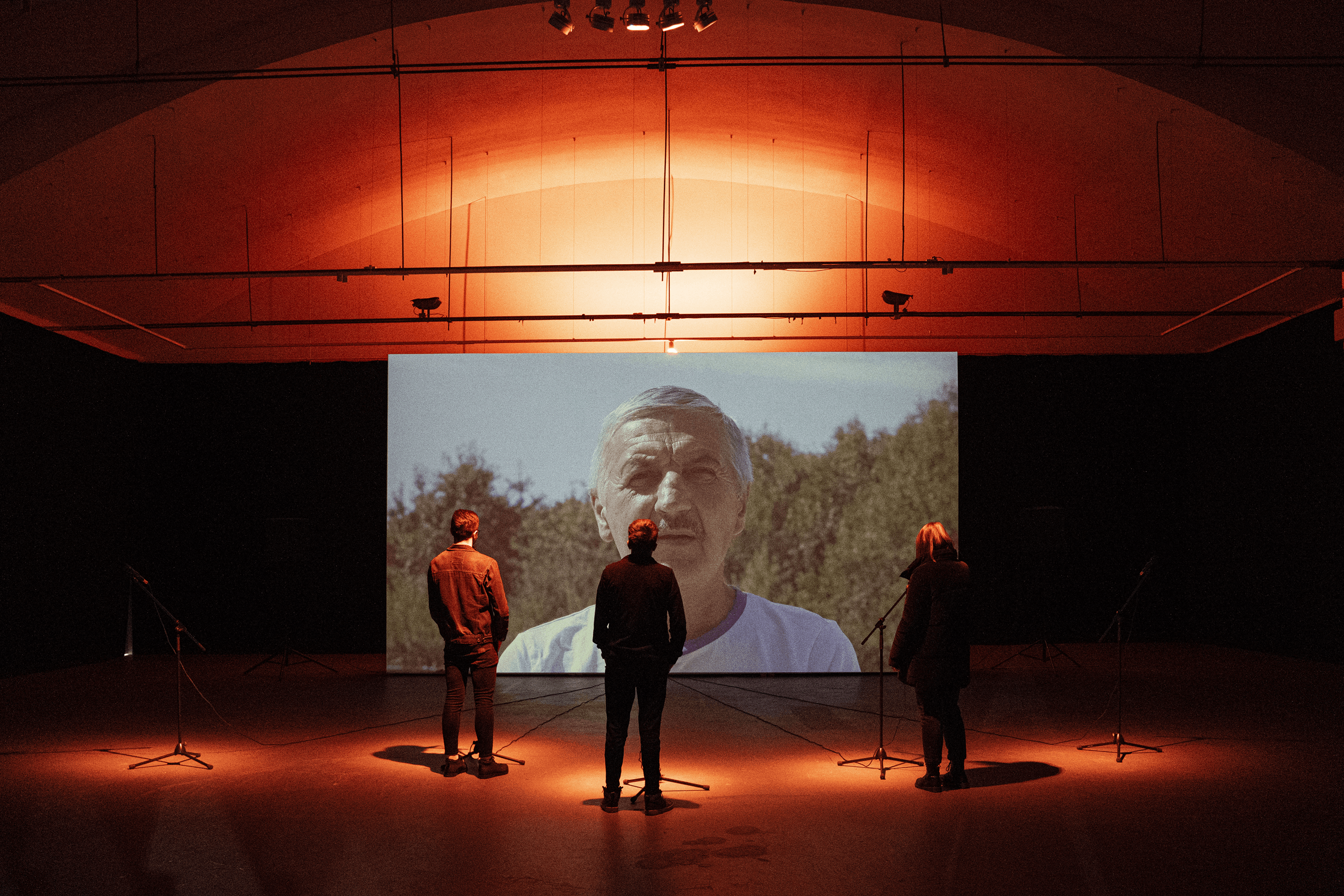
Open Group’s “Repeat After Me” exhibition at Galeria Labirynt. 2022. Photo: open-group.org.ua 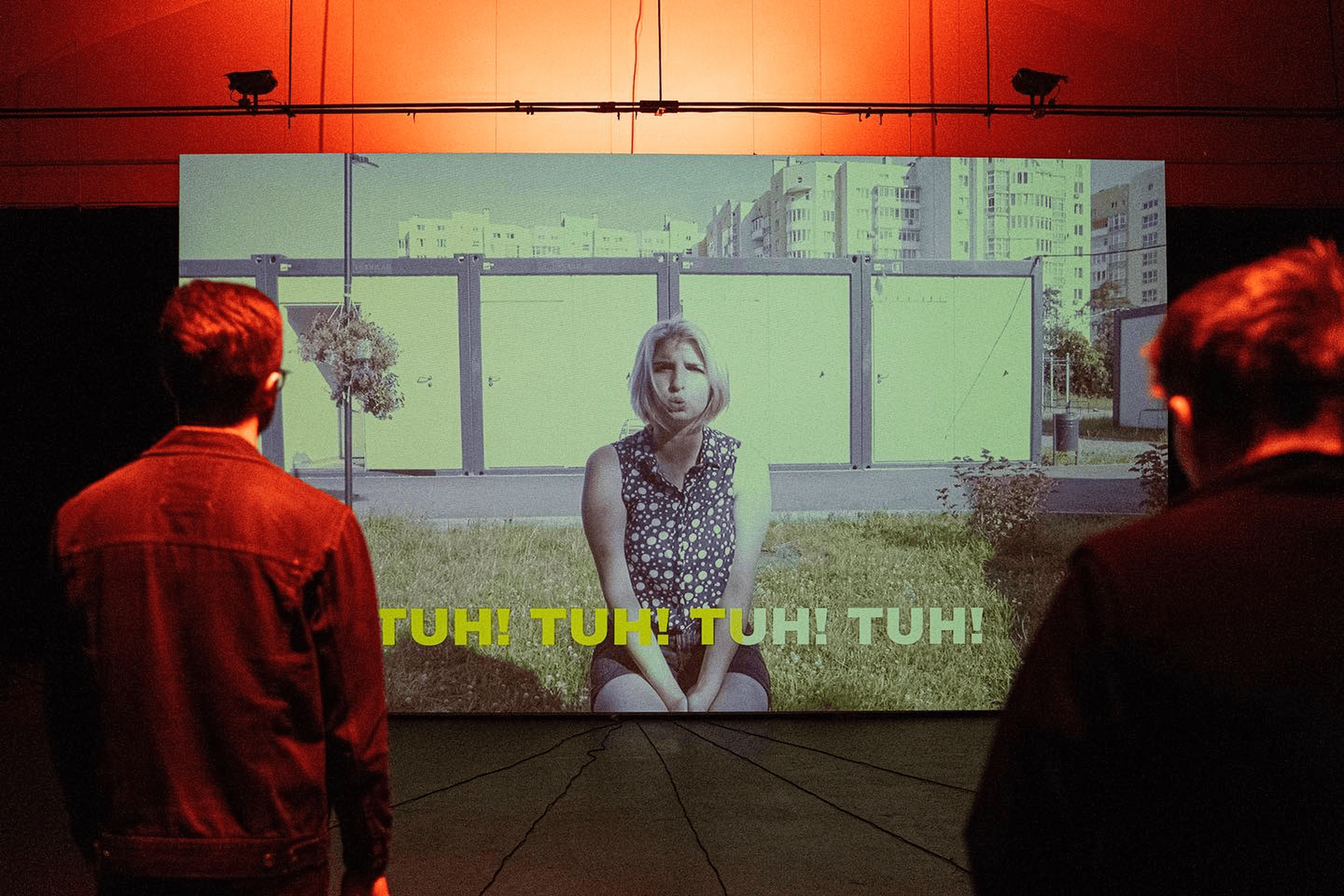
Photo: open-group.org.ua 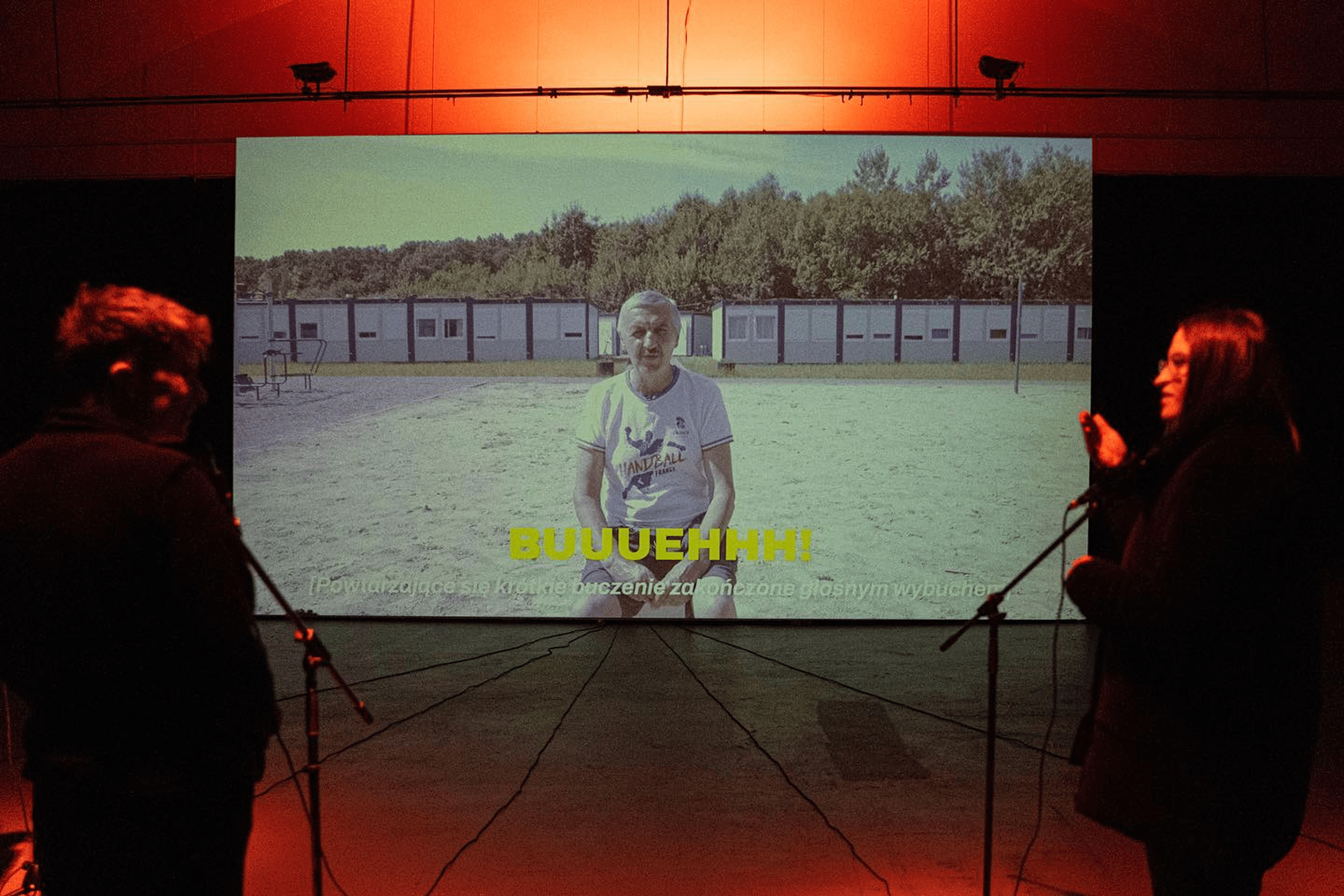
Photo: open-group.org.ua 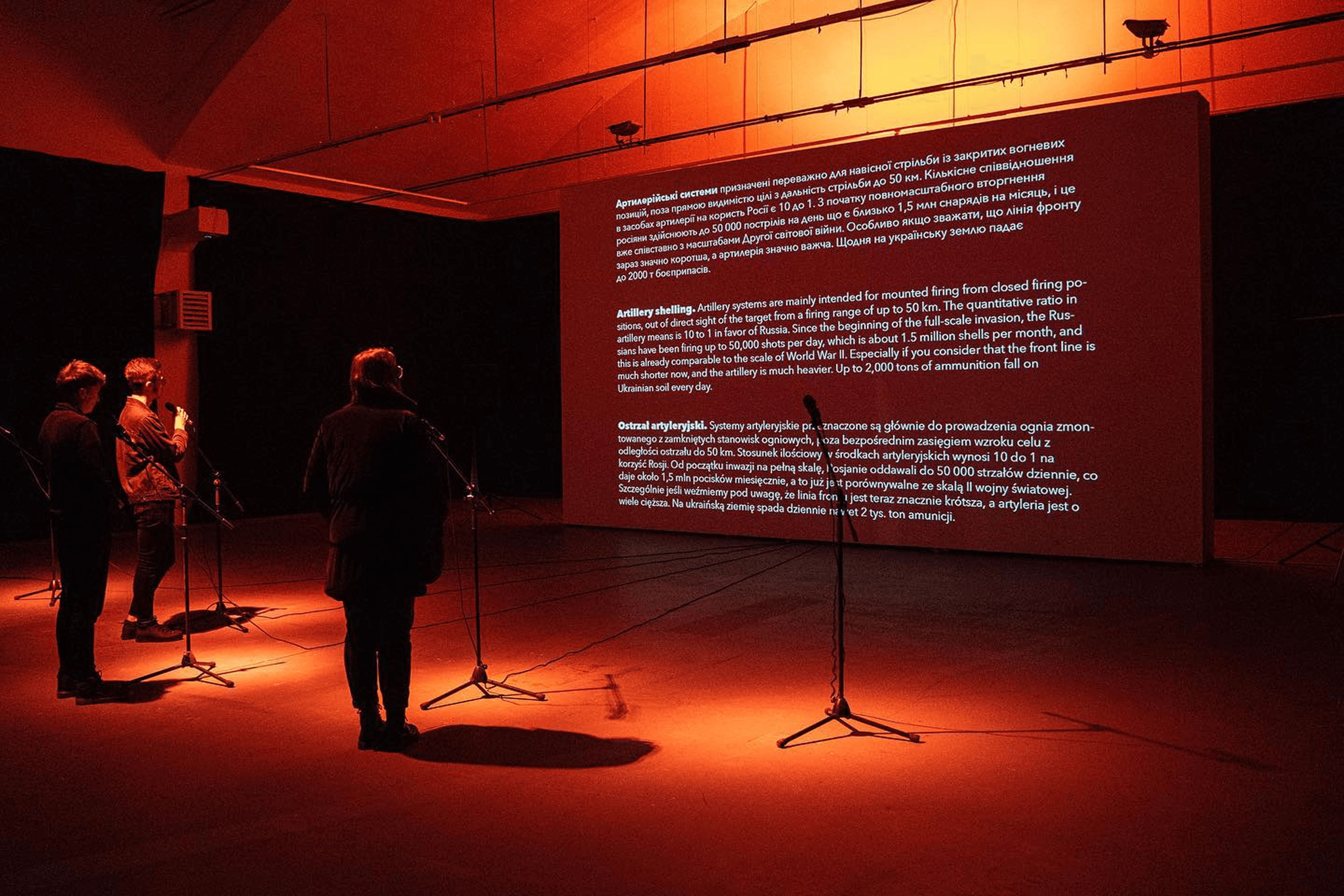
Photo: open-group.org.ua
Hesitant to re-traumatize local audiences, the artists avoided exhibiting the work inside Ukraine. Its debut came in September 2022 at Galeria Labirynt in Lublin, evoking an overwhelming visceral response. “We had never witnessed so many viewers weeping or reacting with such raw emotion,” Varga recalls.
It was in Lublin that Warsaw-based independent curator Marta Czyż encountered the installation. She encouraged Open Group to enter the open call for the Polish Pavilion at the Venice Biennale—a competition open to foreign-born artists residing in Poland. To complete their application, the group produced a second installment of the work in 2024.
Open Group’s “Repeat After Me II” exhibition at the Polish Pavilion at the Venice Biennale. April 20, 2024. Photo: Open Group / Instagram 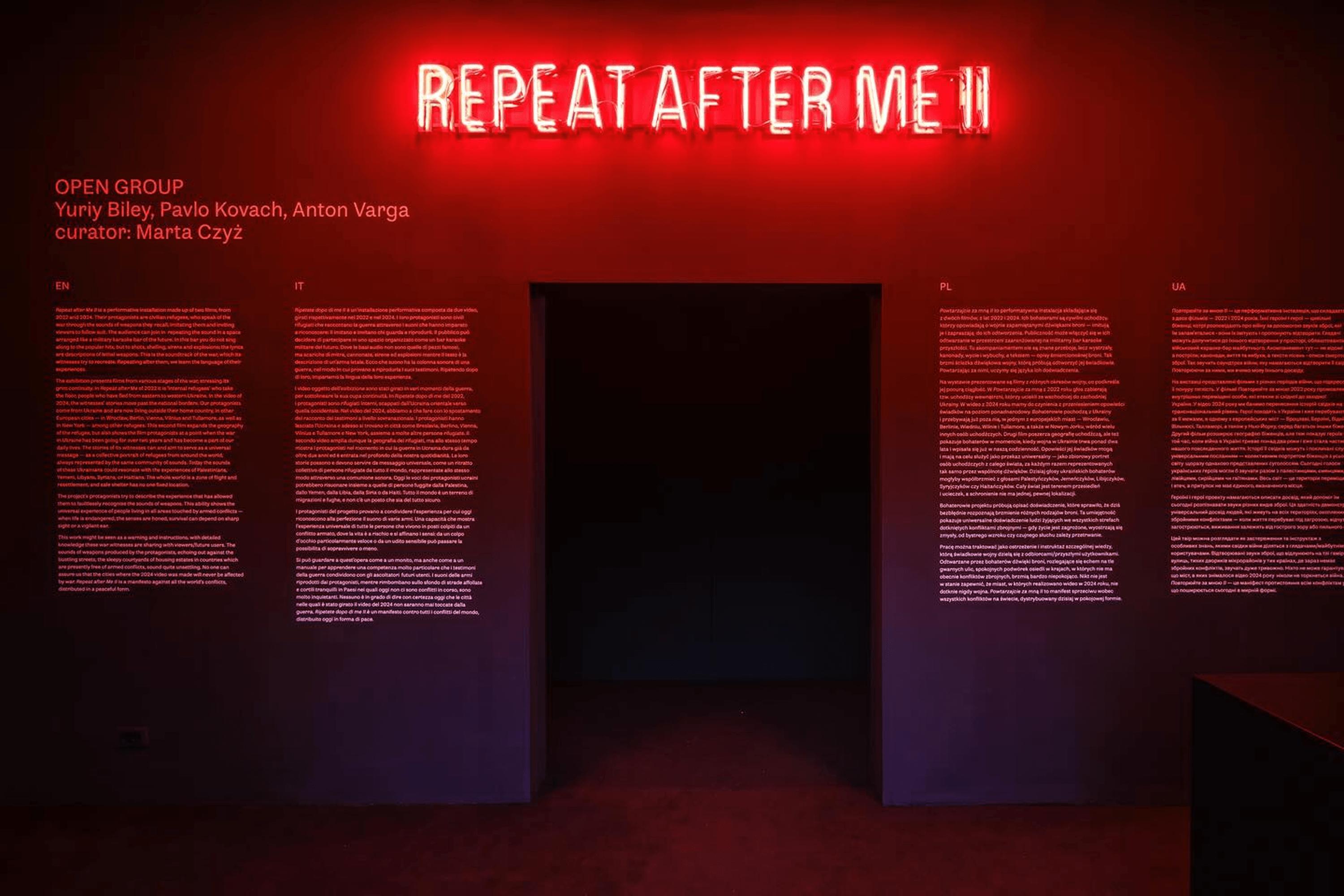
Photo: Open Group / Instagram 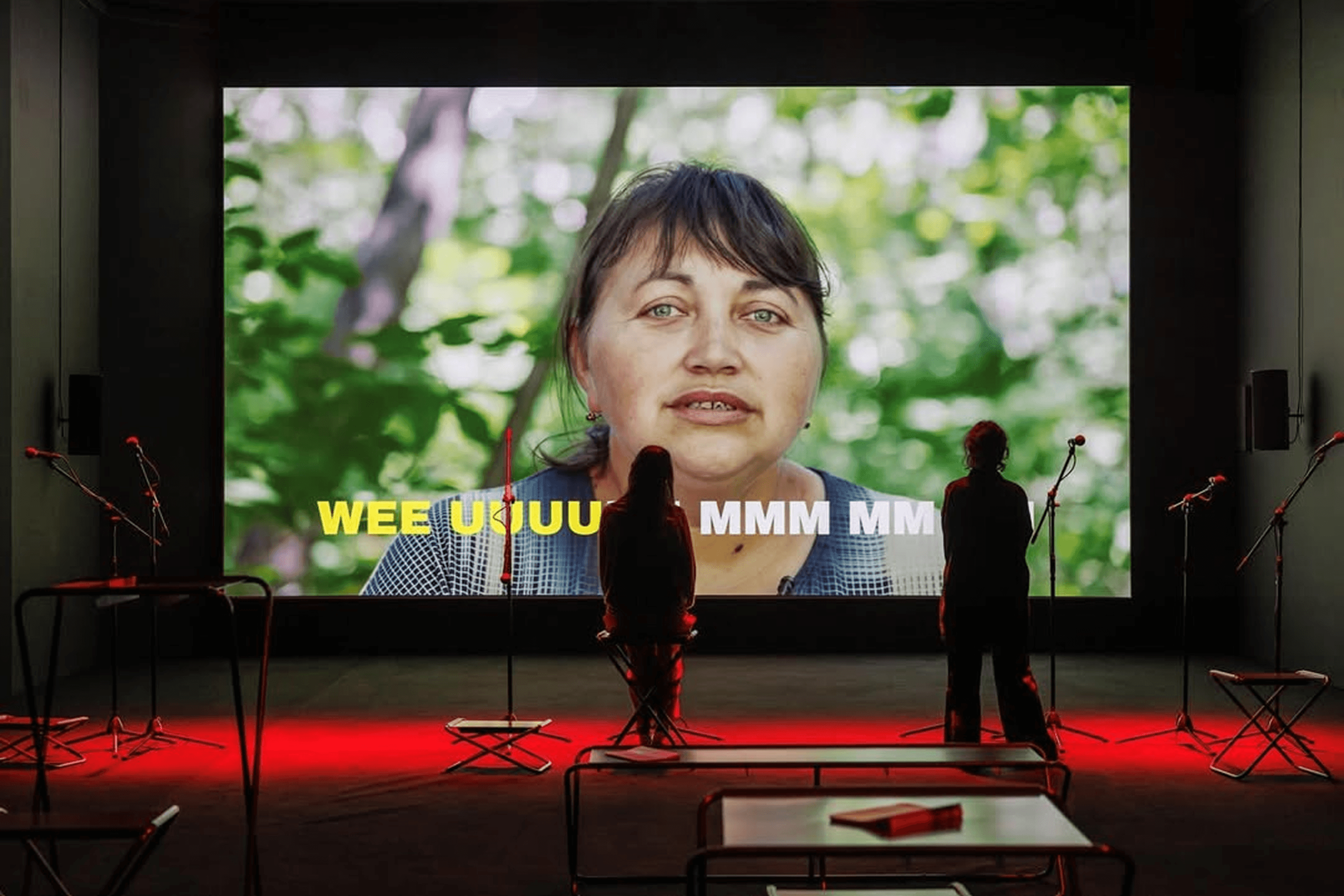
Photo: Open Group / Instagram 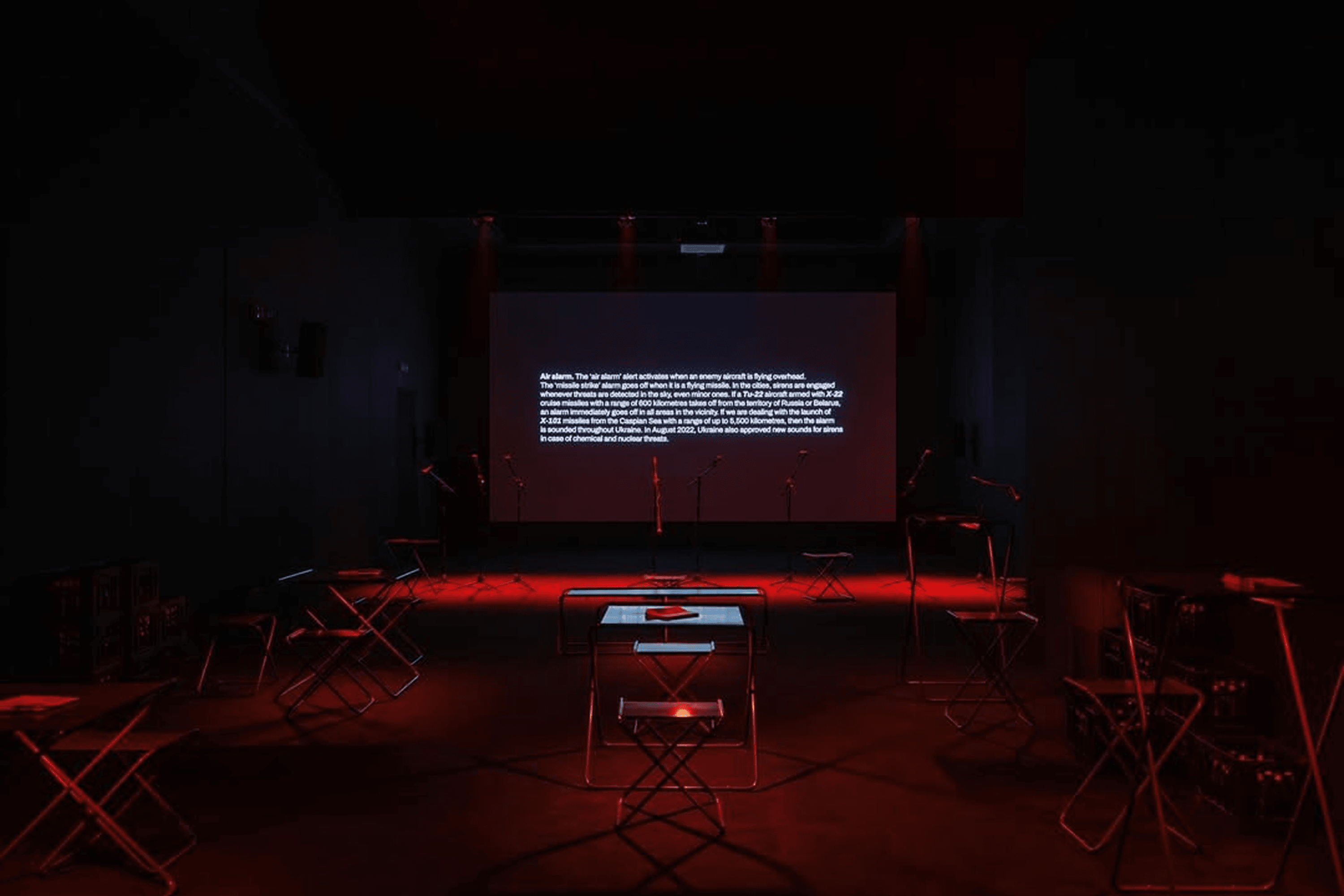
Photo: Open Group / Instagram 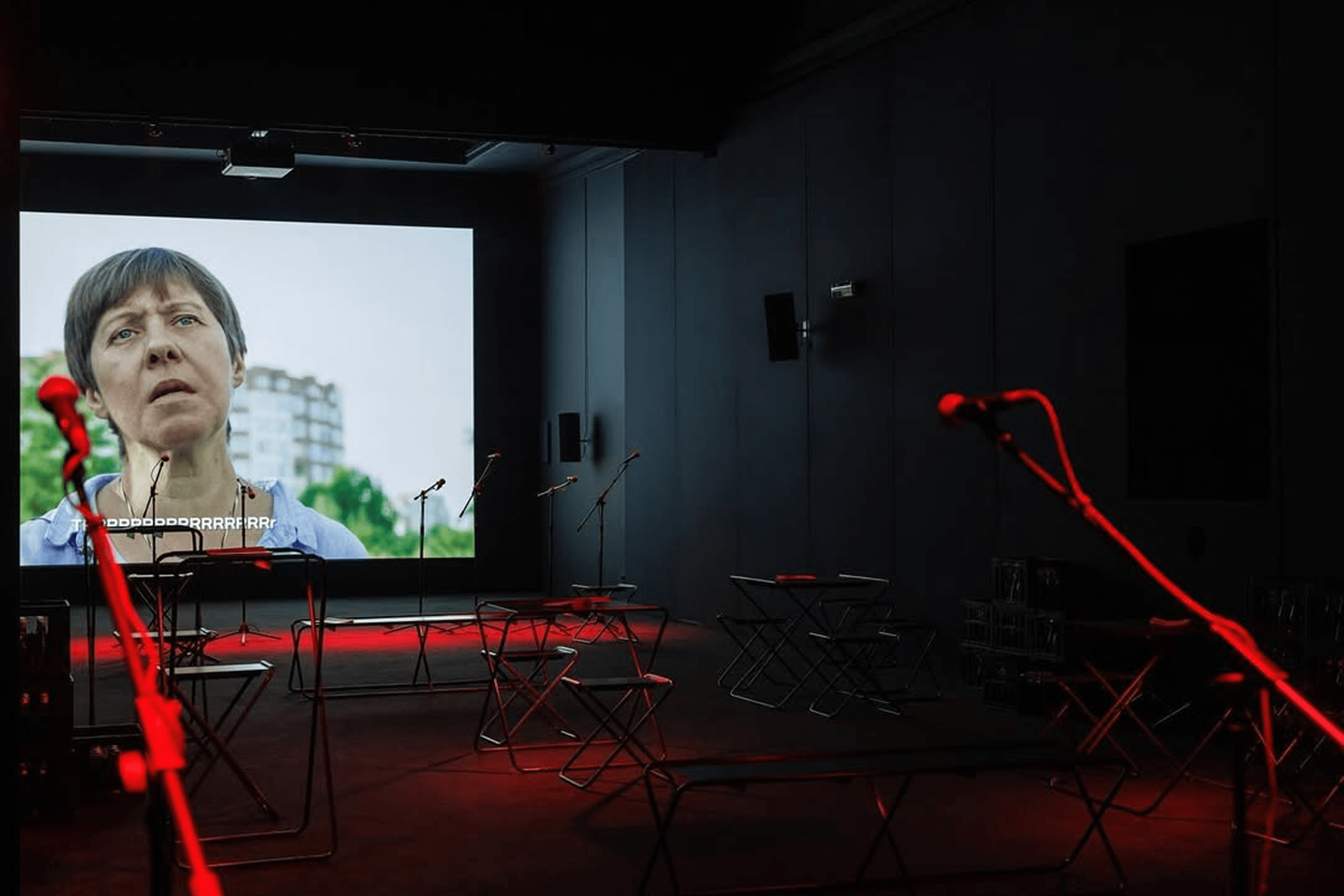
Photo: Open Group / Instagram 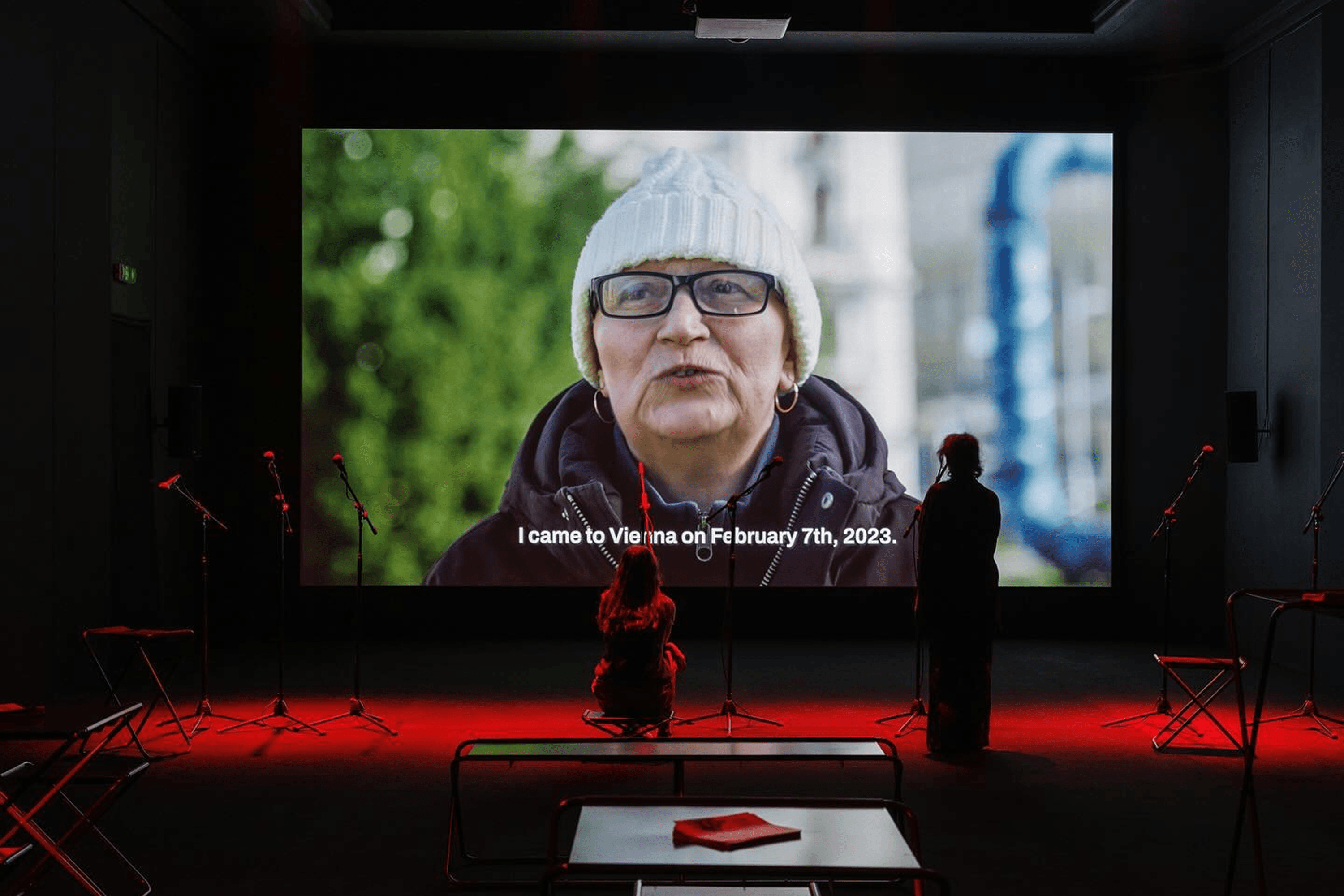
Photo: Open Group / Instagram
Winning the Polish selection might easily be attributed to international solidarity, yet Biley—a Poland resident of ten years—rejects that narrative as overly simplistic. “I’m not a Polish artist and never will be. I’m a Ukrainian artist living in Poland.” While the Polish institutional art system excels at integrating long-term resident artists into city and national galleries, Biley attributes the pavilion outcome to political momentum.
The winning proposal was initially announced on October 31, 2023—two weeks after general elections, but still under the outgoing Law and Justice (PiS) administration. The jury convened under the auspices of the Zachęta National Gallery of Art, headed by a director appointed by the ruling party. First prize was awarded to painter Ignacy Czwartos for his project Polish Practice in Tragedy: Between Germany and Russia. Three jury members dissented, publicly denouncing the project as “ideologically paranoid and disgraceful.” Open Group was named the reserve entry—a backup intended to step in should the primary project fail. That contingency arrived when Donald Tusk’s coalition assumed power in December; on December 29, newly appointed Culture Minister Bartłomiej Sienkiewicz canceled Czwartos’s pavilion. The slot defaulted to the Ukrainians. For Poland, the shift proved doubly advantageous: it defused a high-profile cultural scandal while spotlighting an urgent Ukrainian-authored work on the reality of war.
From April 20 through November 24, 2024, Repeat After Me II represented Poland at the 60th Venice Biennale. Presented together as an immersive two-channel video installation, the exhibition marked a milestone for Open Group: no longer curating or contributing as part of an ensemble, the collective took center stage with their own solo exhibition.
The collective today
While Repeat After Me II was representing Poland in Venice, co-creator Pavlo Kovach was entering his second year of military service. Initially working with the recovery of fallen soldiers in the Donetsk region, he now accompanies the families of the fallen, the missing in action, and prisoners of war, while coordinating evacuations and the repatriation of remains. Yet he hasn’t stepped away from art: during these years, he mounted a solo exhibition, Hoc Est Corpus Meum (“This Is My Body”), drawing directly on his wartime service. With leave and days off scarce for Kovach, Biley and Varga represent Open Group at international exhibitions.
The collective now functions much like a lean international organization, managing complex logistics, applications, exhibition setups, artwork transport, and institutional negotiations. A single project might be staged up to thirty times a year, a rhythm that has only accelerated post-Venice. Where the group once actively pursued opportunities, its primary constraint today is time. Biley views this as a sea change: Ukrainian artists are being integrated into prestigious global programs not as a gesture of aid, but out of professional recognition.
The legacy of Open Group in Ukrainian art extends far beyond exhibition listings or accolades. The collective fundamentally reshaped the notion of what a Ukrainian artist can be and where art itself can unfold. In a scene historically anchored to the romanticized figure of the solitary genius and the finished masterpiece, Open Group demonstrated that artwork can be a continuous process, the outcome entirely ephemeral, and authorship shared with the viewer.