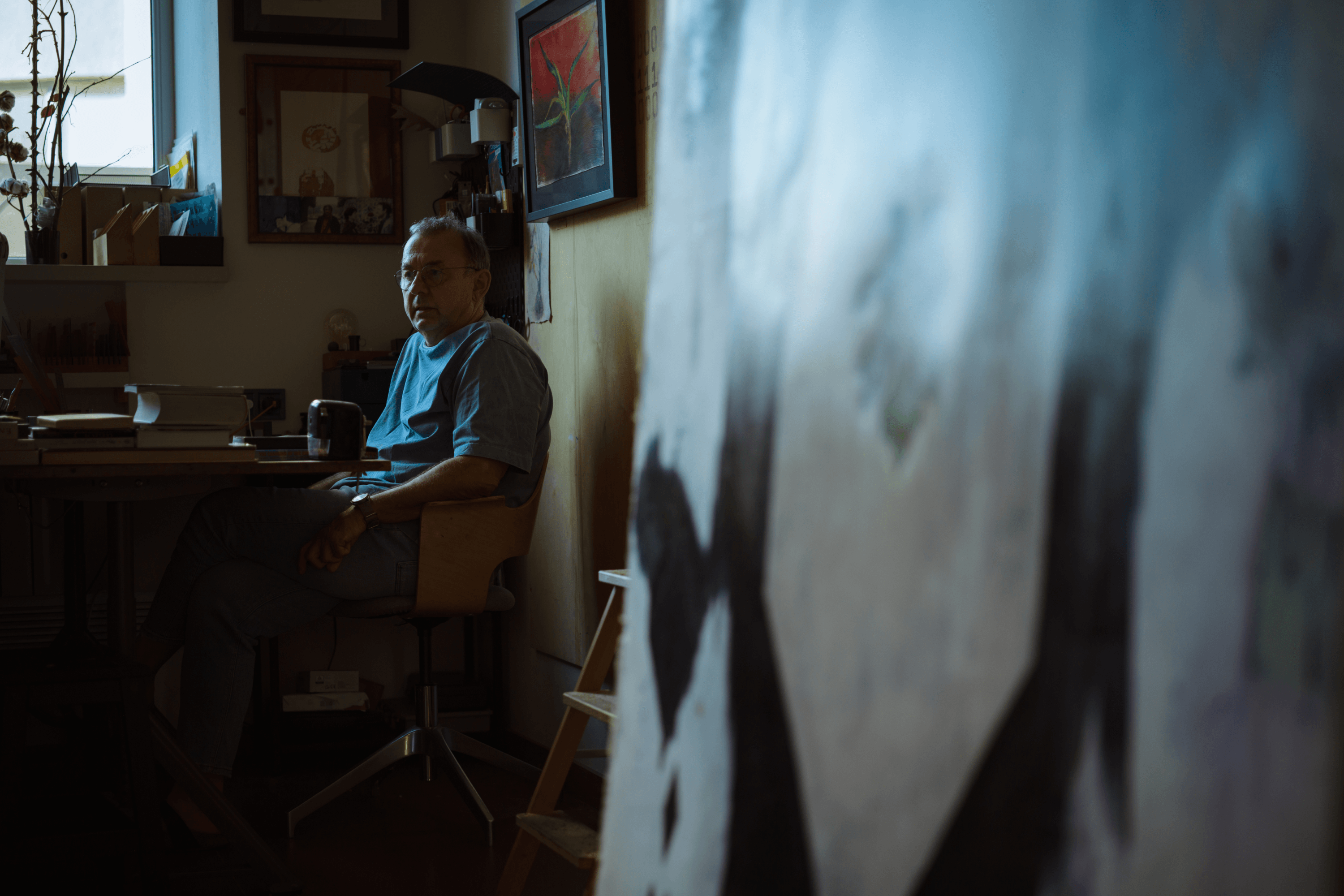
Pavlo Makov’s works are held in world-renowned museums across Europe, the US, and Japan. In 2022, his installation Fountain of Exhaustion. High Water represented Ukraine at the Venice Biennale. Back home, near Kharkiv, Pavlo had a dacha with a garden—he and his wife, Maryna, spent a decade putting it in order, and the next ten years simply living in it. For two years now, the place has been out of reach: Russian drones hover overhead, the house sits windowless, and shells have fallen in the garden.
All his life, Makov has been creating places of his own—both real and imagined—in prints and drawings. Some have vanished, while others have ended up in private collections and museums around the world. Yet Makov continues to show up at his studio every day to create new ones. Yellow Blue editor Tamara Balayeva met with Pavlo Makov in Kharkiv to talk about art, life, and that which not only doesn’t exist, but never will.
1
In the early 1990s, Pavlo Makov attended an artist residency in Glasgow. He was a young yet promising artist—already taking home grand prix awards from prestigious printmaking competitions, his works being acquired by museums. In Glasgow, Makov came across an exhibition of Giorgio Morandi and was stunned. Morandi spent his whole life painting just two subjects—still lifes in his studio and the view from his window—yet transformed them into an entire universe. Returning to Kharkiv, Makov began focusing on the themes of the city and place. Today, Makov says this was the exact turning point of his conscious artistic journey.
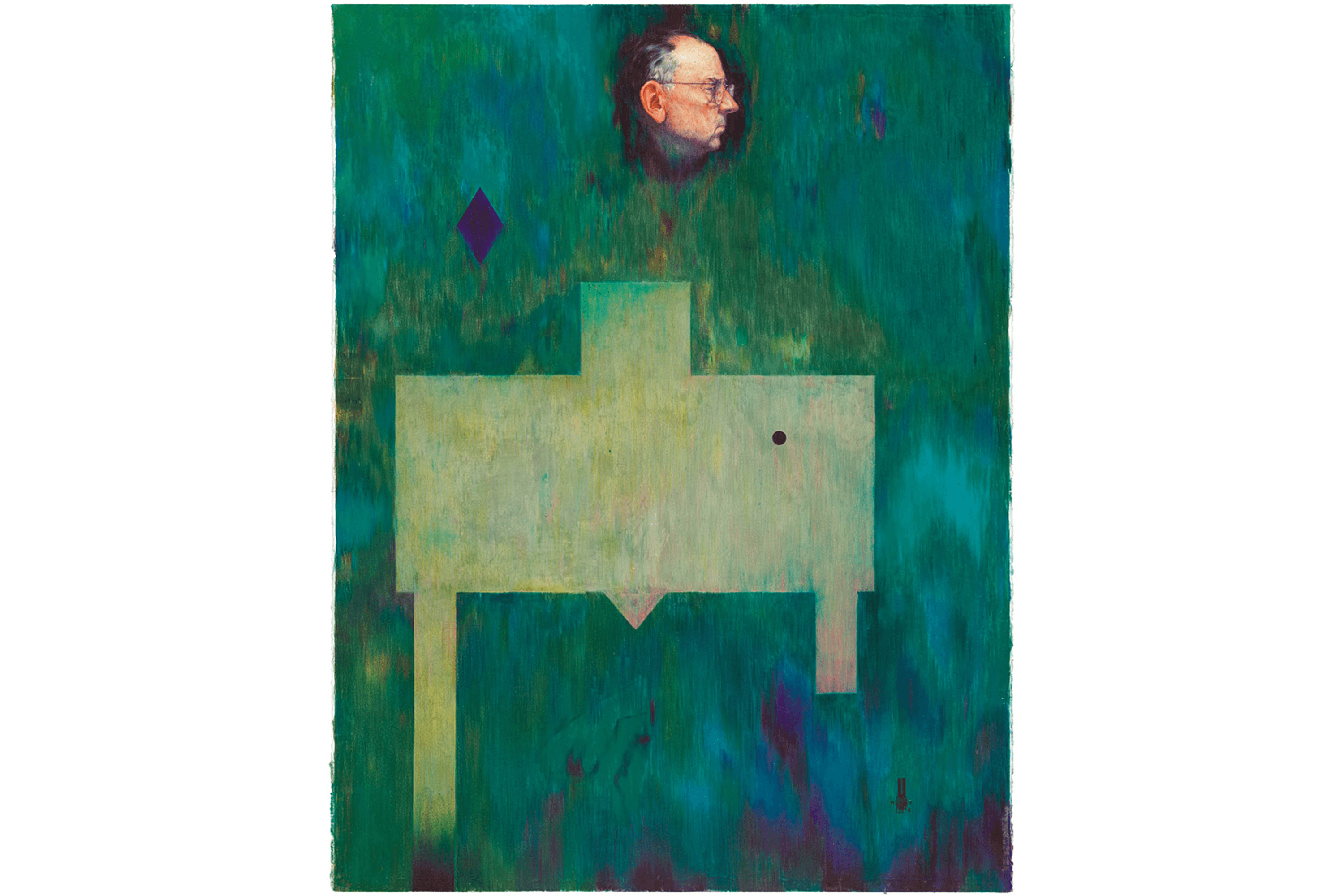
Self-portrait with a woman in a pearlescent dress, or Parsuna #3, 2026. Photo: makov.com.ua / © Makov Pavlo, 2026. All rights reserved. 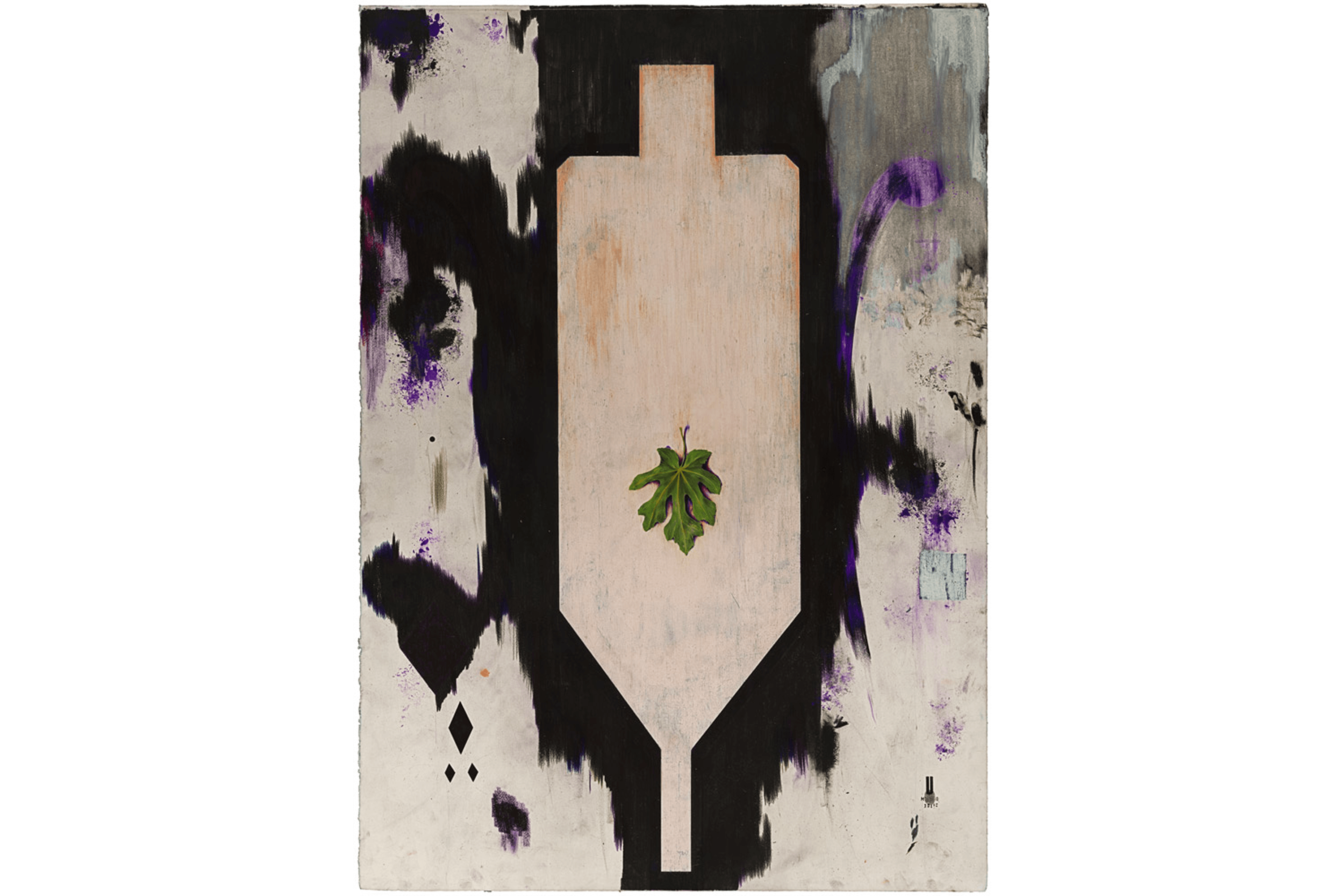
A Naked male figure at night, or Parsuna #7, 2026. Photo: makov.com.ua / © Makov Pavlo, 2026. All rights reserved. 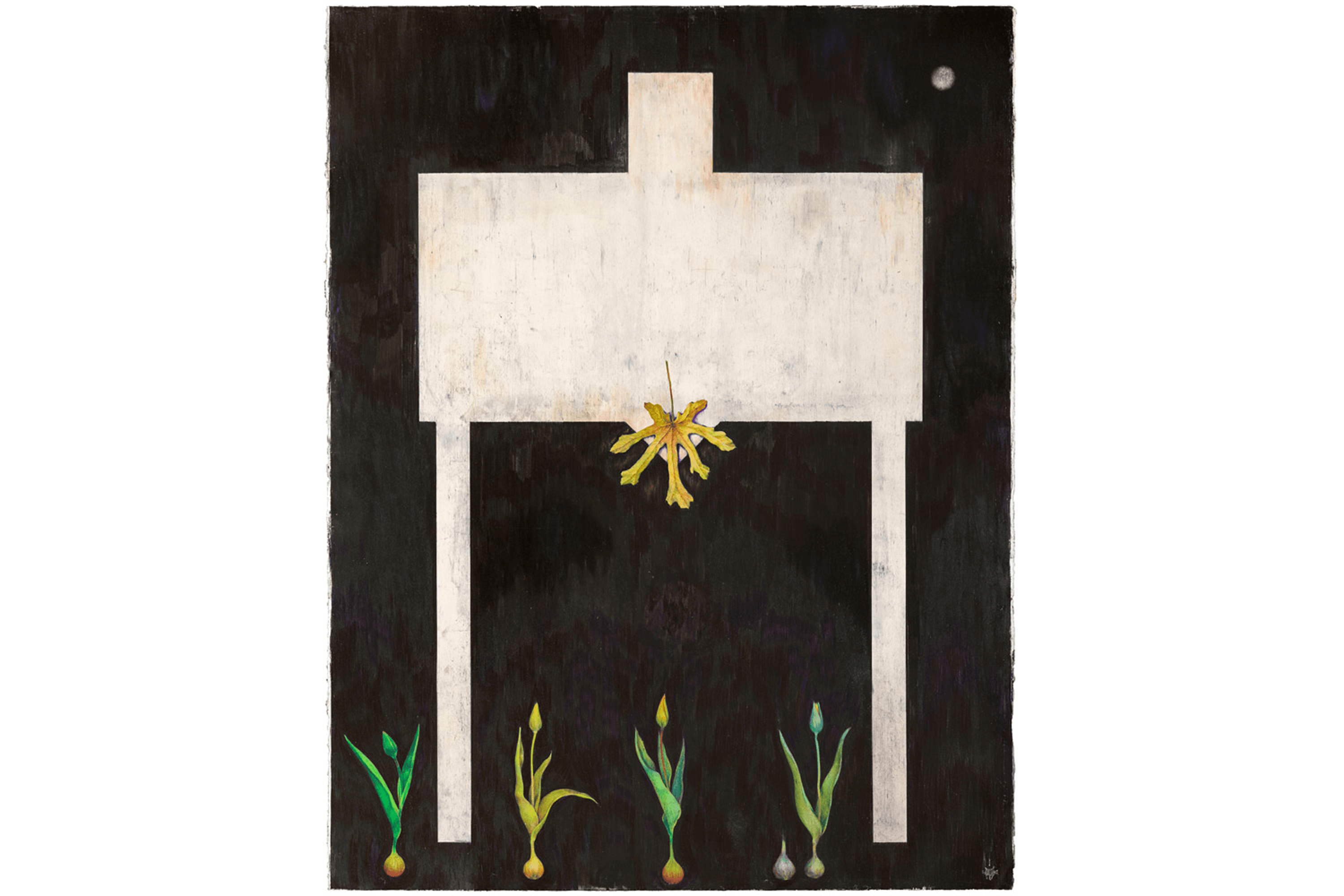
A nude female figure and five tulips at night, or Parsuna #8, 2026. Photo: makov.com.ua / © Makov Pavlo, 2026. All rights reserved.
Nearly a decade later, in a Tallinn pub, Makov found an even more precise word for what he does. He had just received the Golden Book Award and struck up a conversation with a Japanese artist at the reception. She asked where he was from. The word “Ukraine,” let alone “Kharkiv,” meant nothing to her. Makov found this both amusing and disappointing. He tried to explain, but she couldn’t grasp it. It was then that Pavlo realized he was representing a country that, for many, simply didn’t exist. In short: a utopia.
Makov had discovered his medium long before he fully articulated his themes. He chose etching in the early 1980s when he enrolled in the Graphics Department at the Kharkiv Institute of Industrial Art, having previously studied painting for five years at an art college in Simferopol.
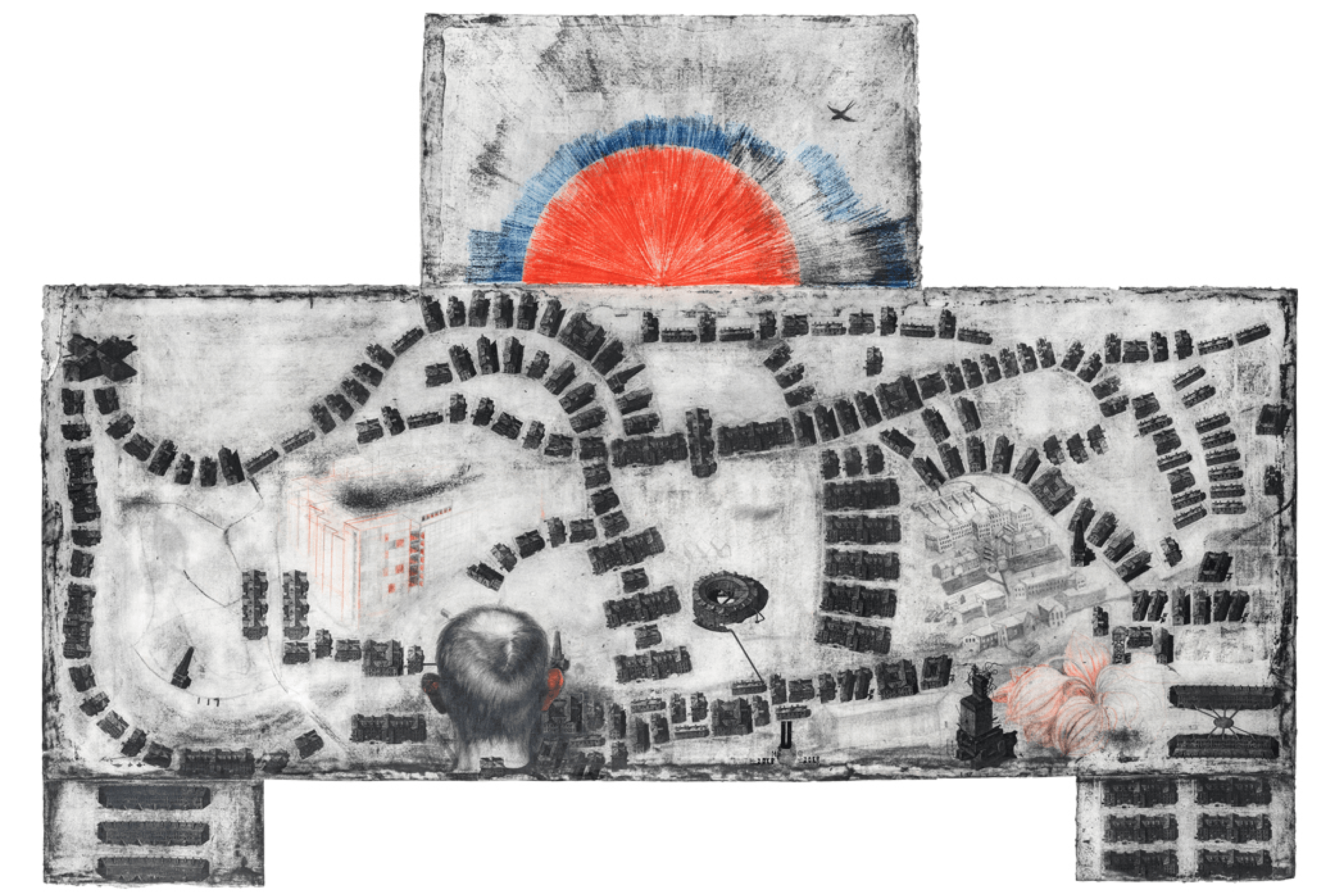
Selfportrait with a swallow, 2018—2019. Photo: makov.com.ua / © Makov Pavlo, 2026. All rights reserved. 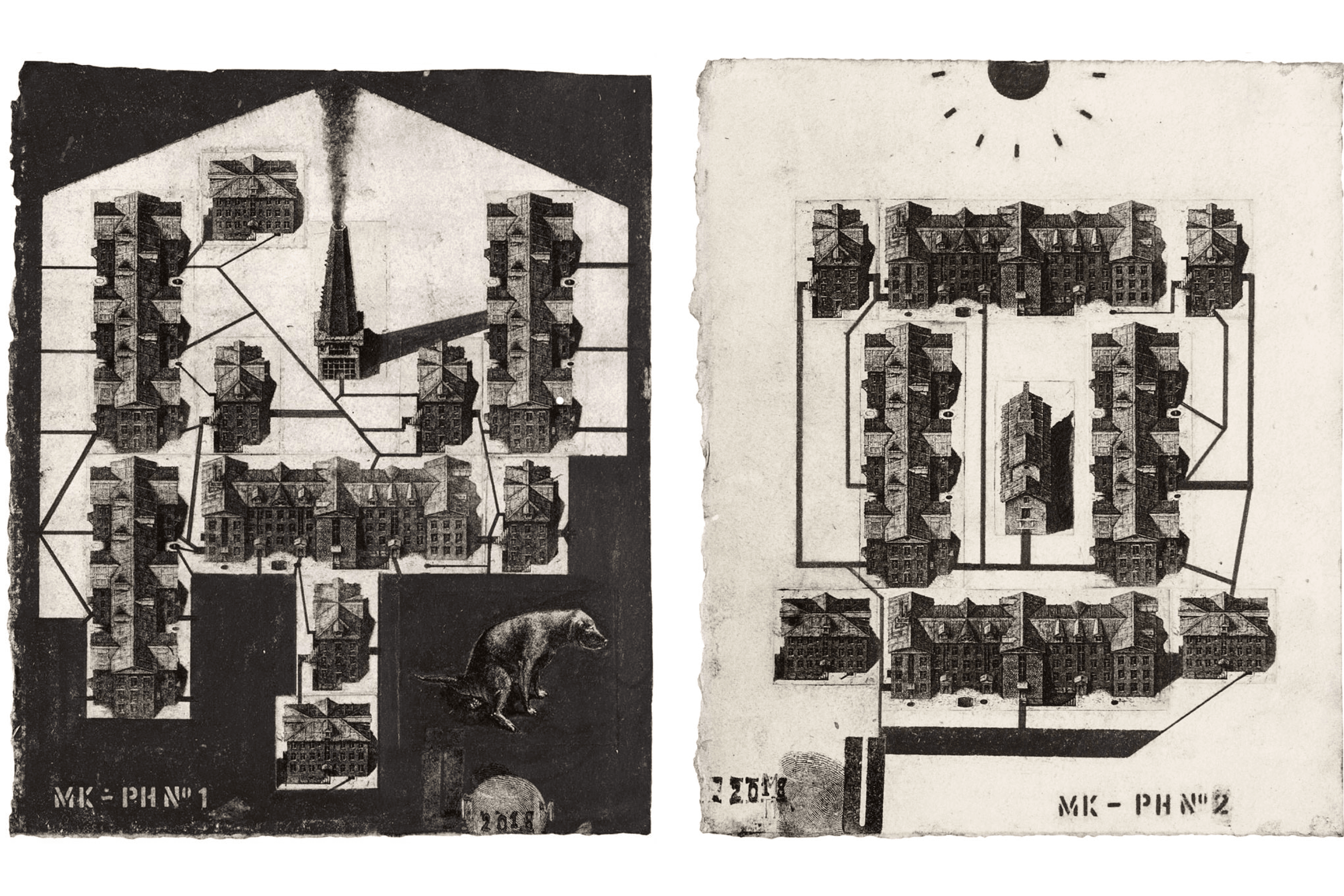
Neighbourhood #1 and #2, 2018. Photo: makov.com.ua / © Makov Pavlo, 2026. All rights reserved. 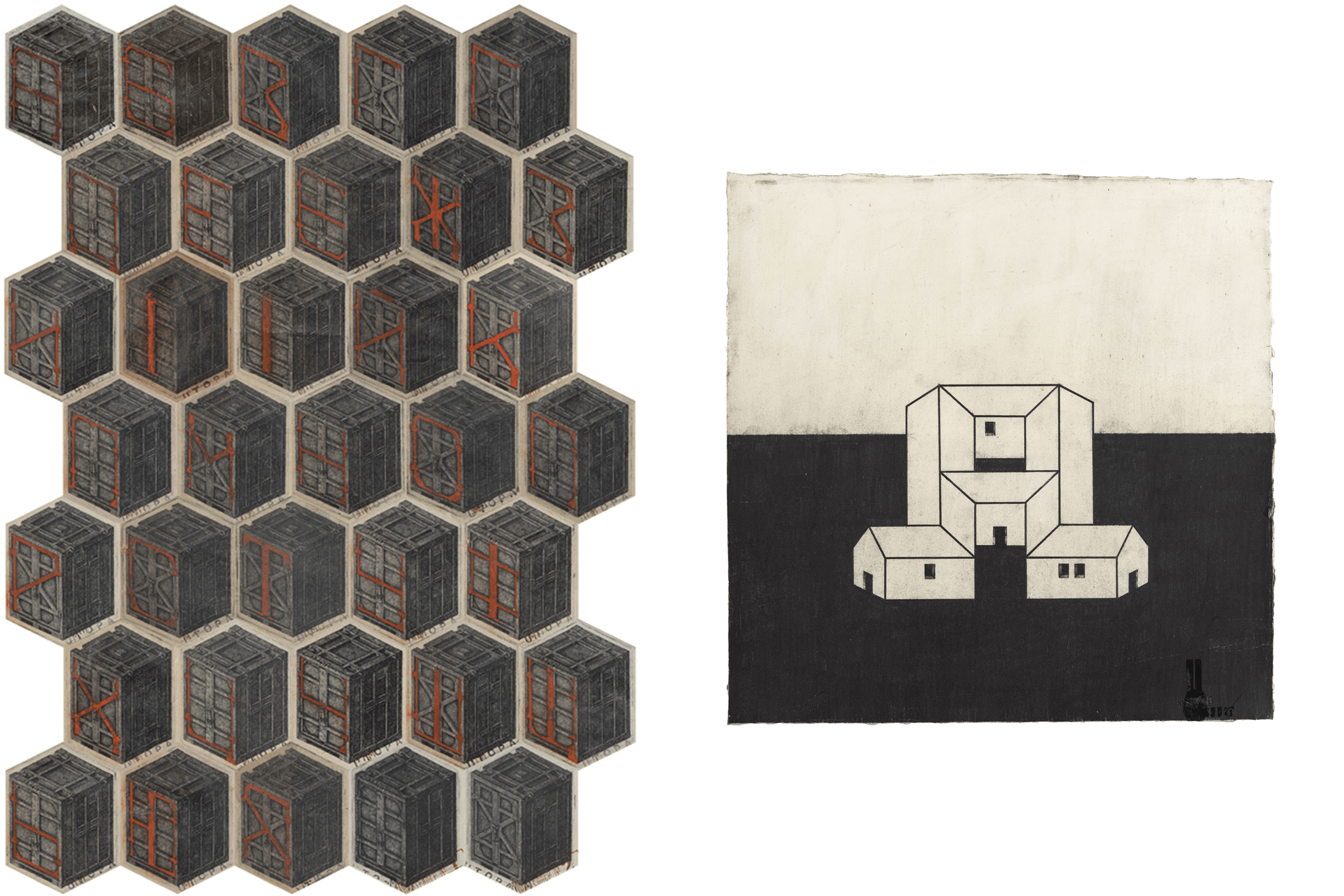
Ukrainian Alphabet, 2011; "A" variant, 2021. Photo: makov.com.ua / © Makov Pavlo, 2026. All rights reserved. 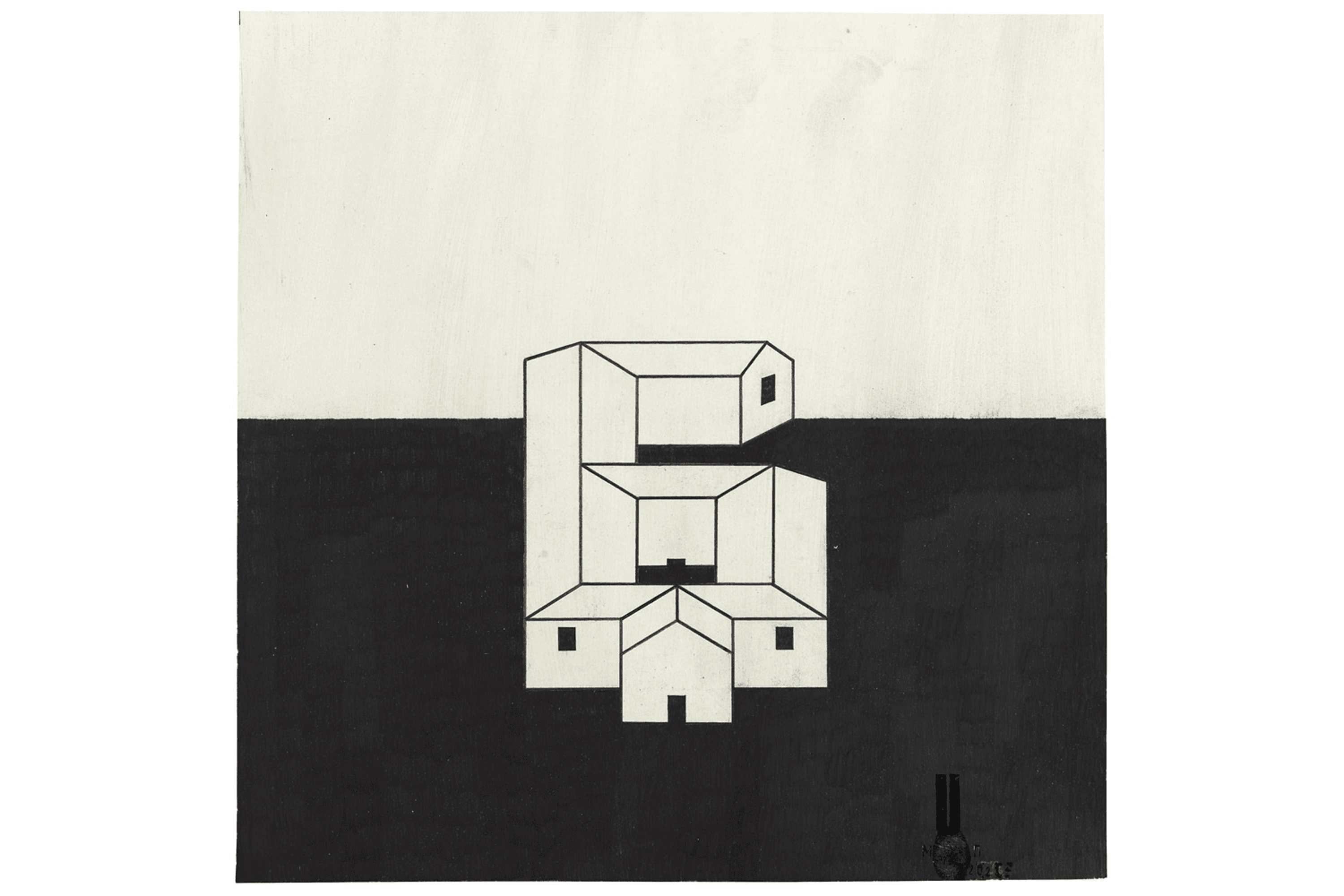
"B" variant, 2021. Photo: makov.com.ua / © Makov Pavlo, 2026. All rights reserved. 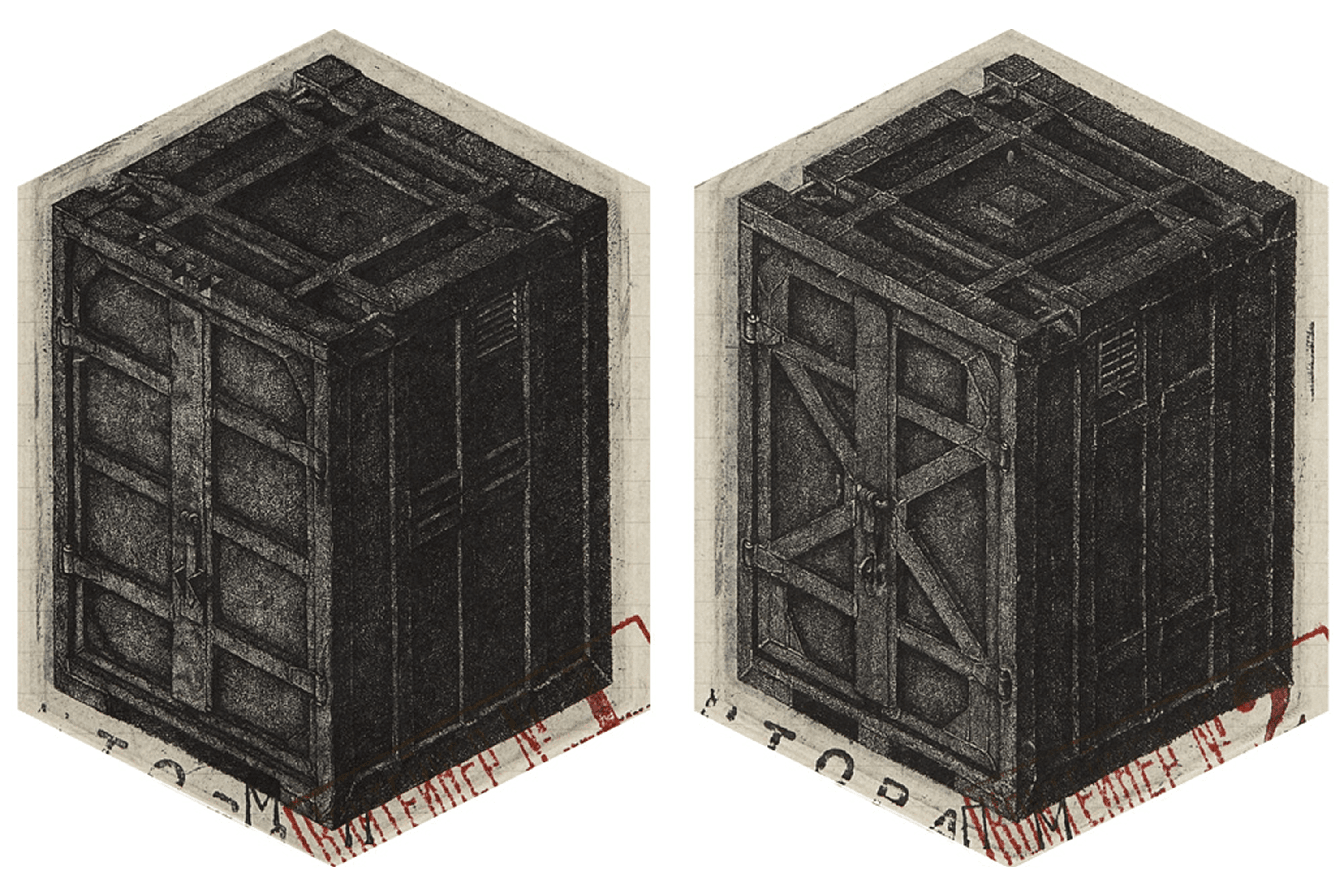
Container, 2011. Photo: makov.com.ua / © Makov Pavlo, 2026. All rights reserved. 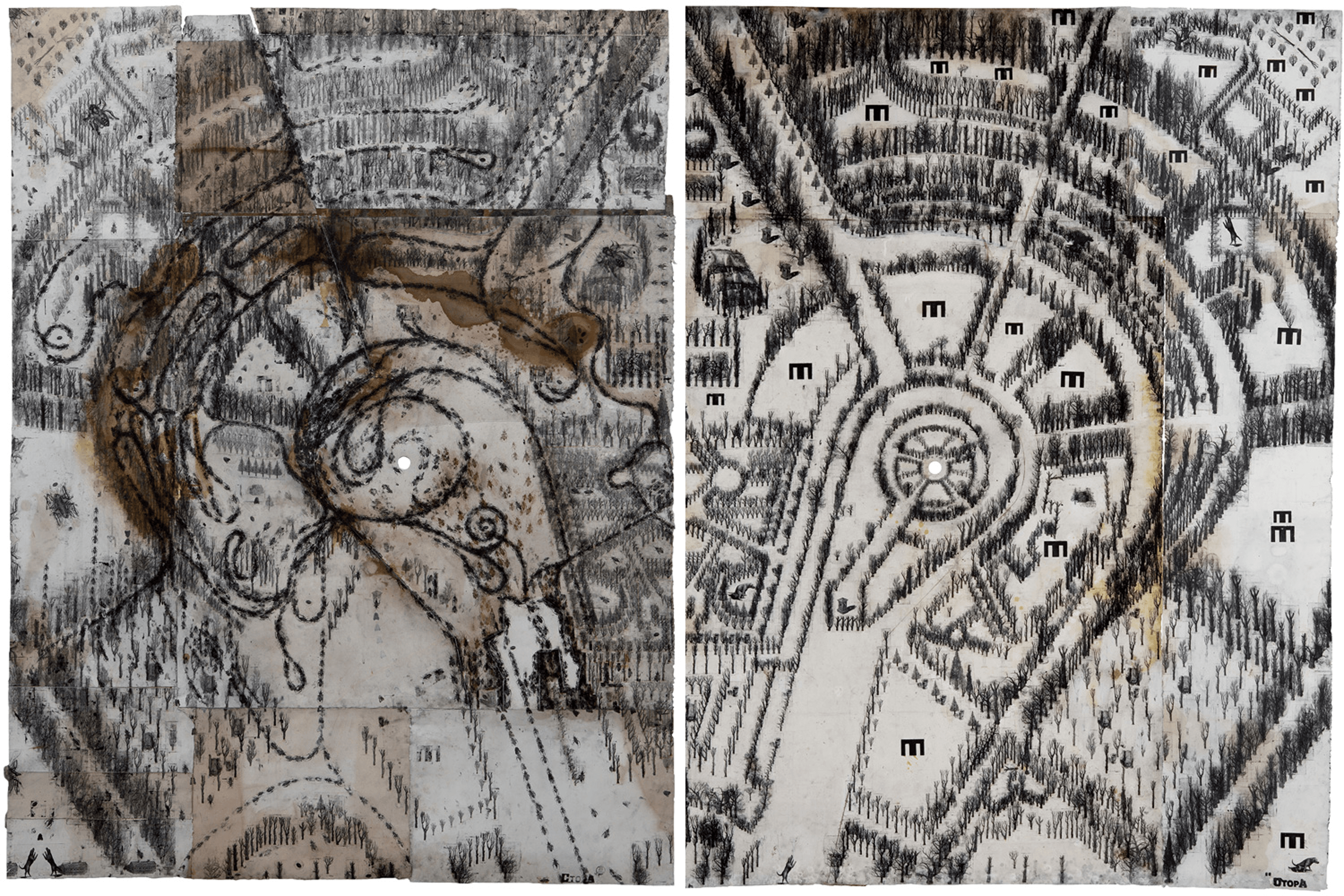
Through the Looking Glass, 2008—2009; Looking Glass, 2008—2009. Photo: makov.com.ua / © Makov Pavlo, 2026. All rights reserved.
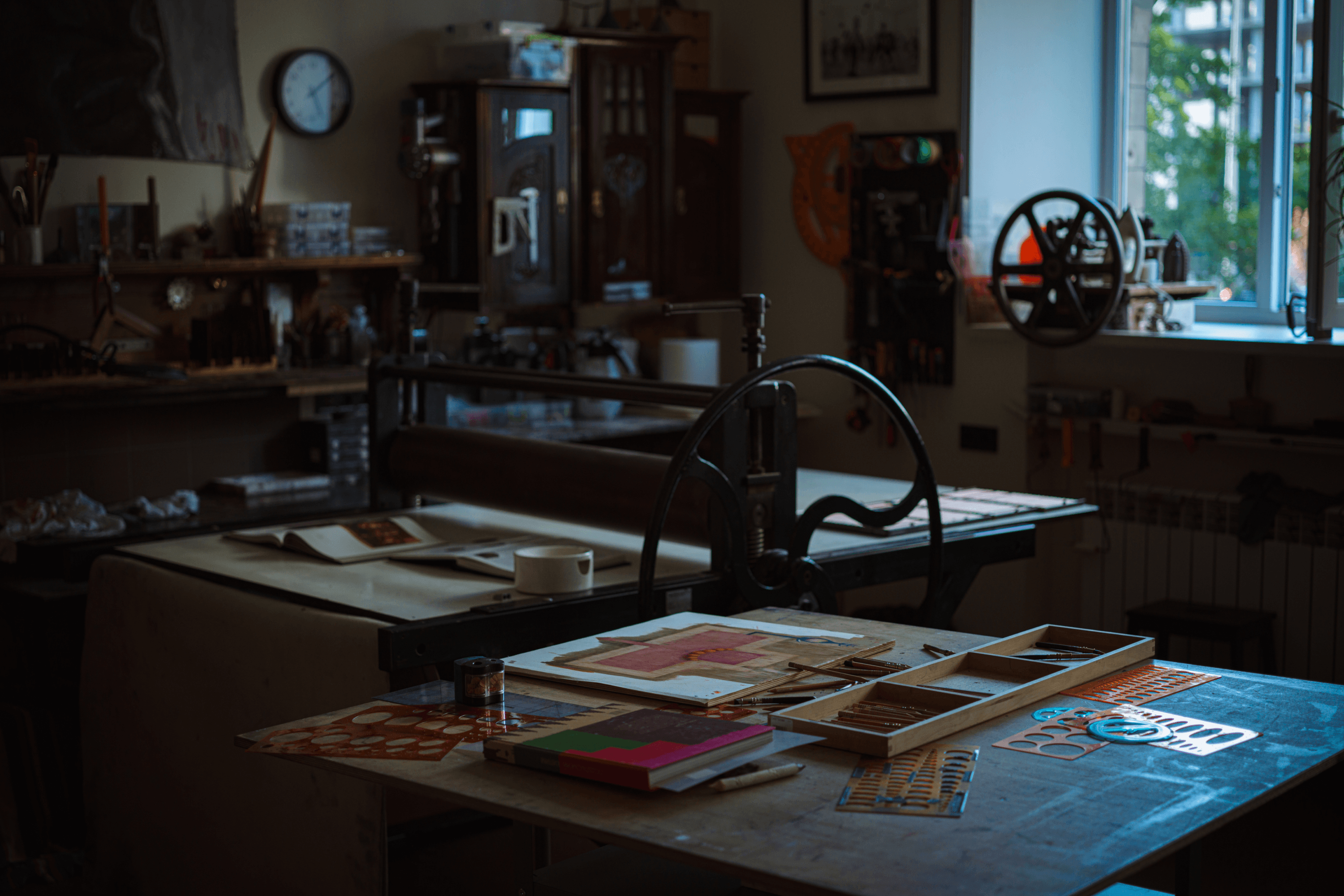
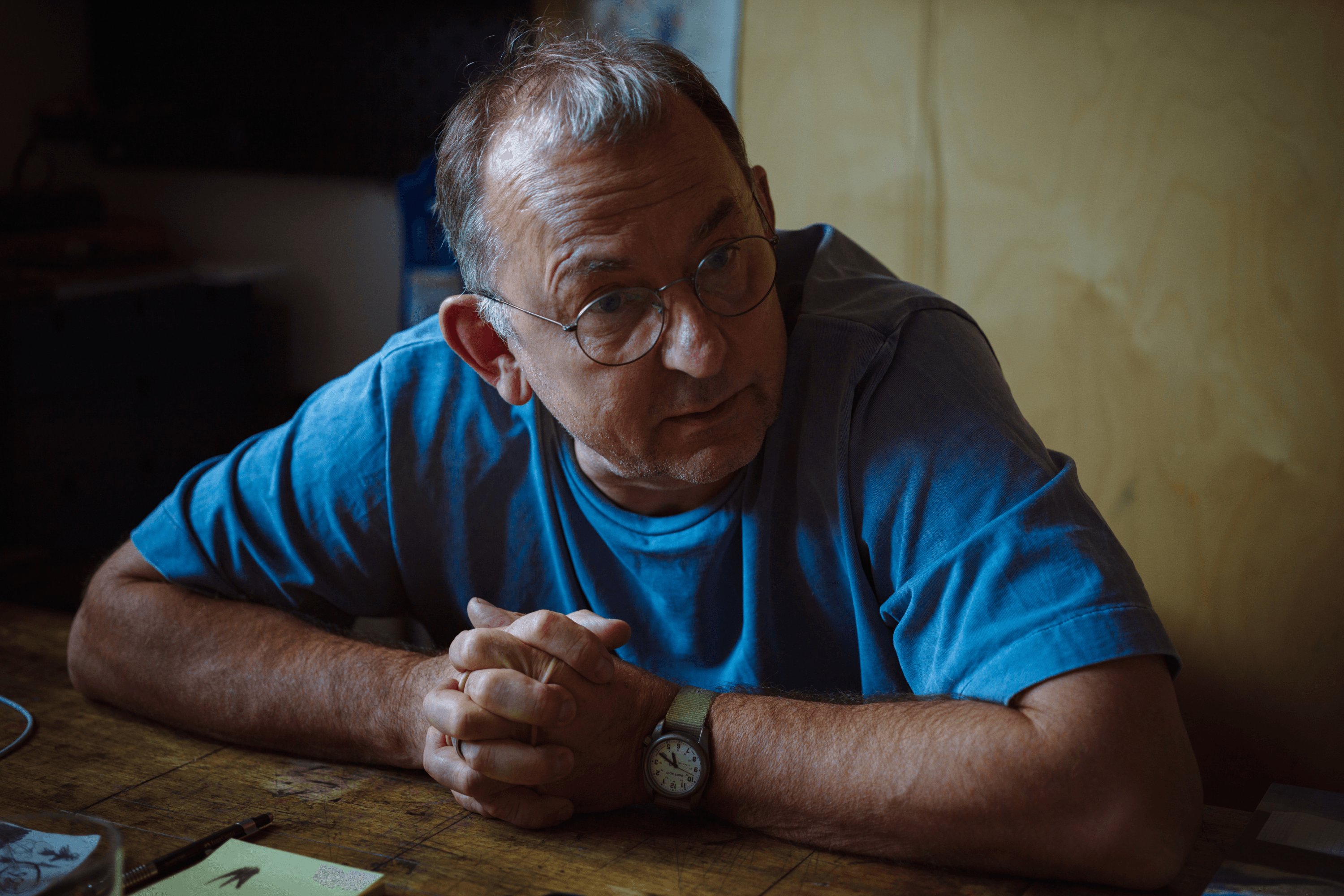
“With painting, everything was more or less clear to me; I wanted to learn a different language,” Pavlo recalls. We are sitting in his studio in central Kharkiv, and as he speaks, he sketches with a black pencil on a slip of paper. Pavlo has short, graying hair, thin metal-framed glasses, gestures frequently, and in a three-quarter view bears a slight resemblance to Jean Reno. “I tried linocut—it turned out not quite to be my thing. I liked lithography, but you couldn’t buy a printing press for it, leaving you dependent on a master printer. Etching, however, allowed me to do what I wanted and stay independent, in full control of the process.”
Creating an etching is a long and painstaking endeavor. You take a copper plate and coat it with varnish. Scrape a drawing into it with a needle. Submerge the plate in acid—it won’t eat away the varnish, but it burns into the needle marks, the exposed metal. Wash off the varnish with solvent, leaving only the drawing on the plate. Rub ink into the grooves, press paper against it, and run the whole thing through a printing press. Turn the wheel so the paper absorbs the ink—and you have a print.
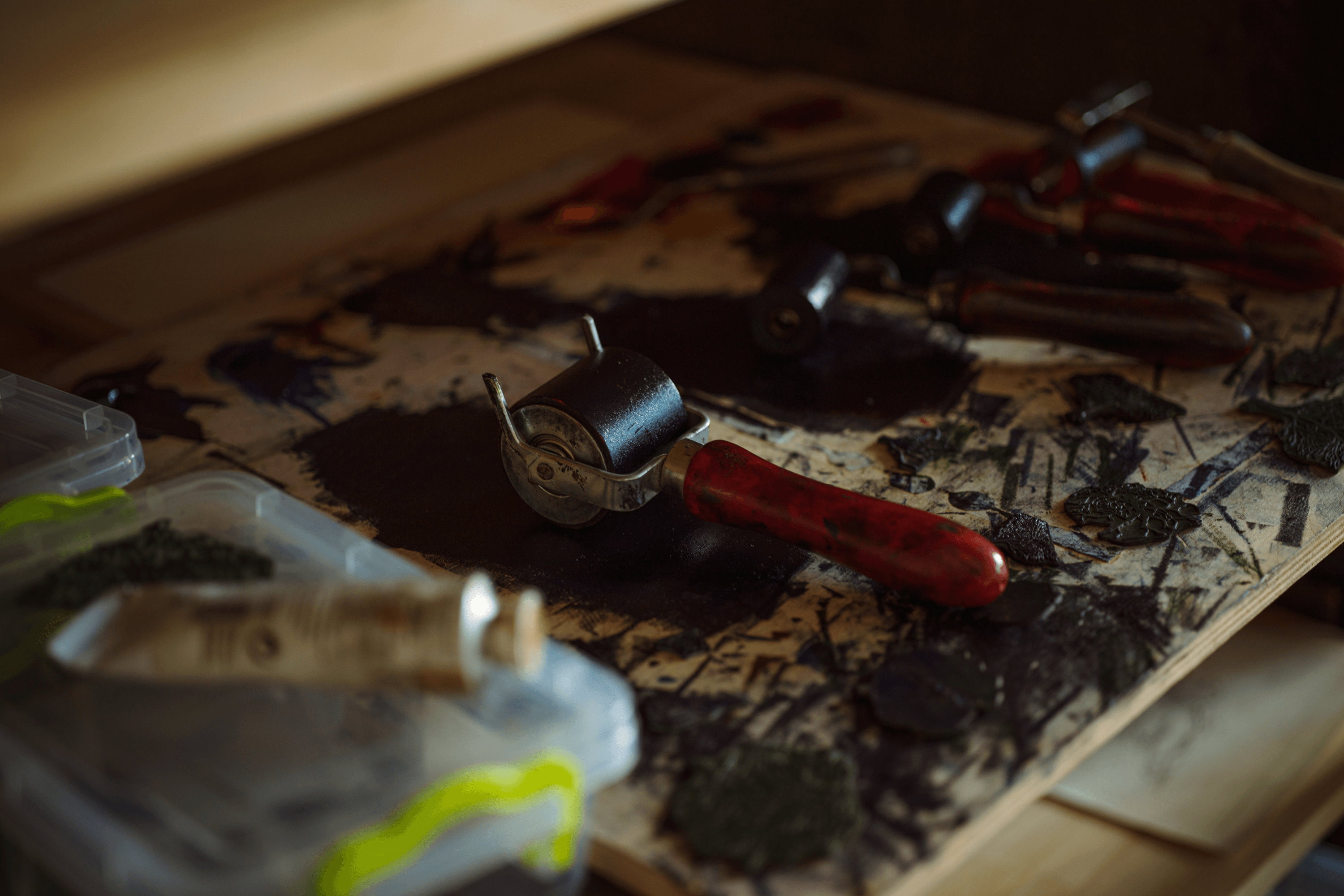
In Pavlo Makov’s studio. Photo: Oleg Palchyk / YB 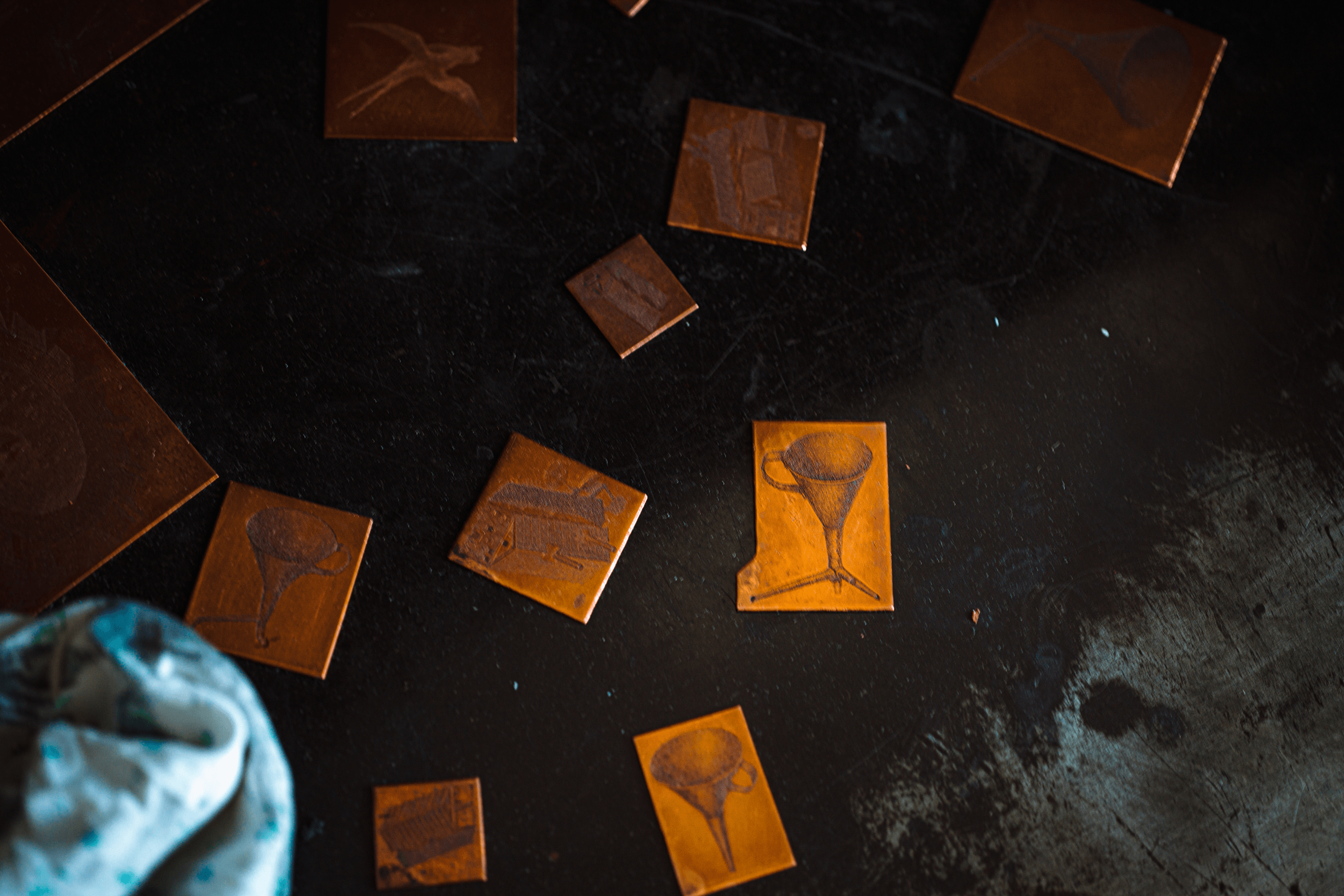
Photo: Oleg Palchyk / YB 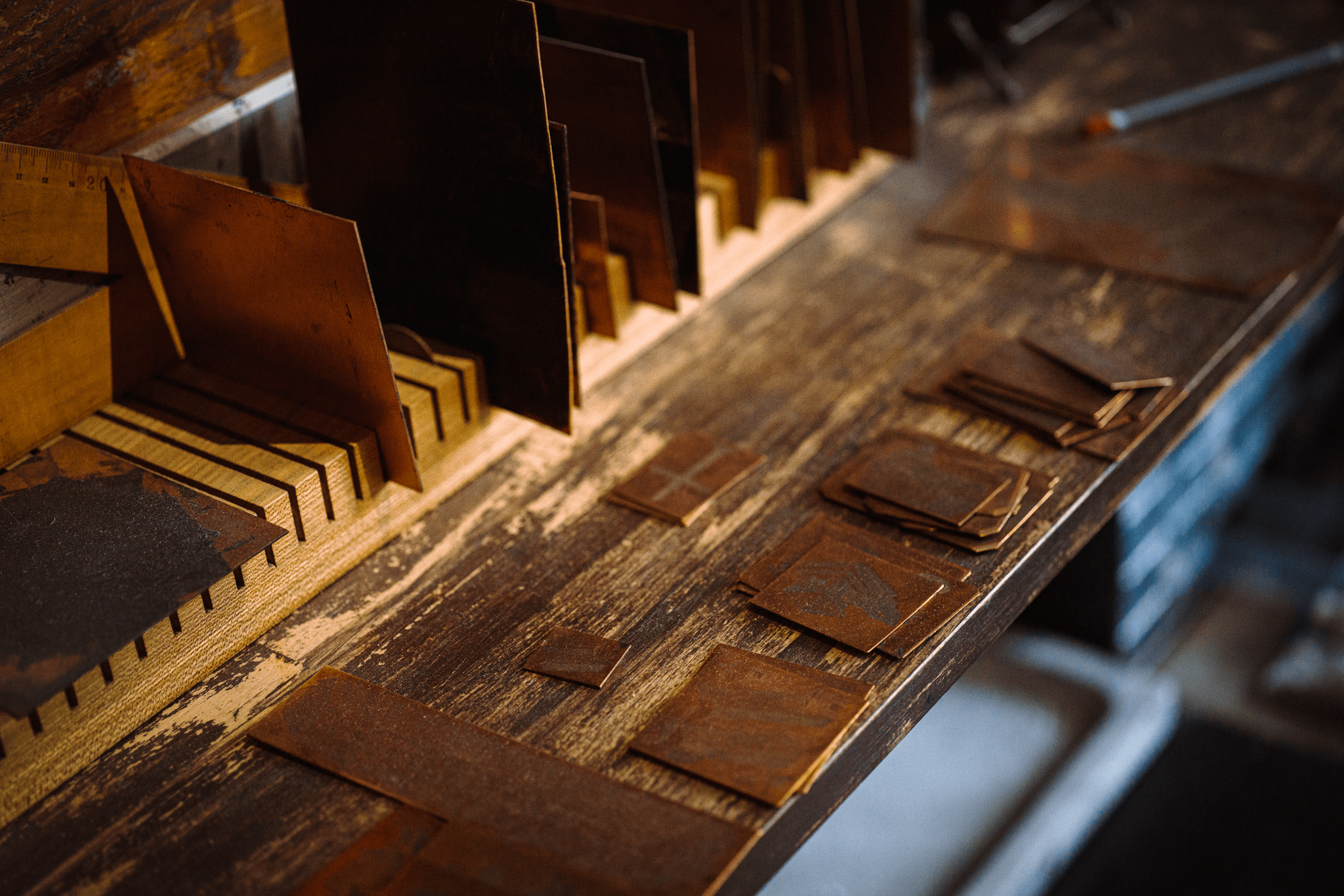
Photo: Oleg Palchyk / YB 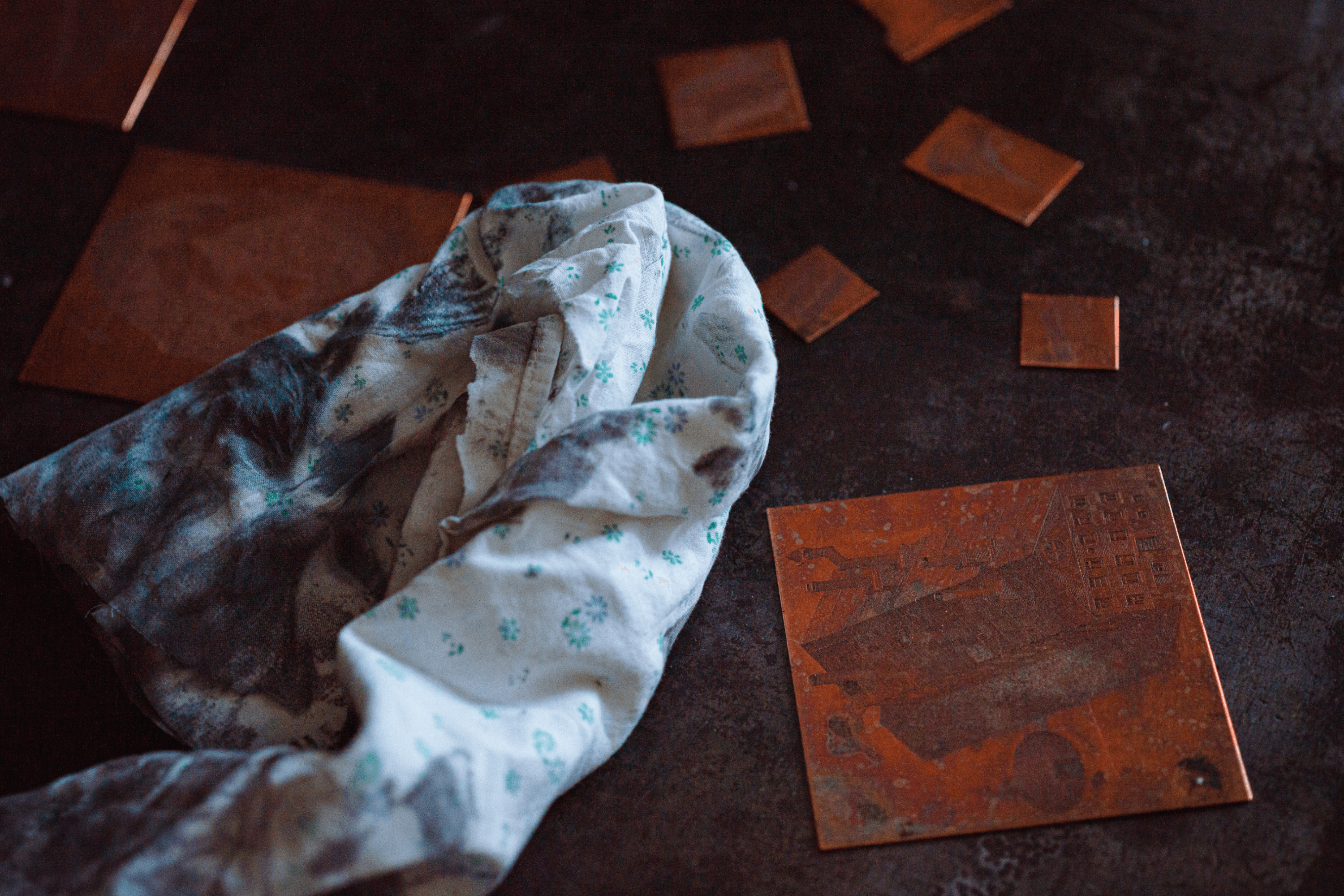
Photo: Oleg Palchyk / YB
Makov works on a single plate for weeks. He makes proof prints, re-varnishes the plate, adds new lines, repeating the cycle several times over. One of Pavlo’s smaller works consists of three or four prints; for a large piece, he creates hundreds, sometimes thousands. To create Paradiso Perduto—the series that earned Makov the Shevchenko National Prize—took two and a half years. Pavlo made over ten thousand prints from more than 120 plates.
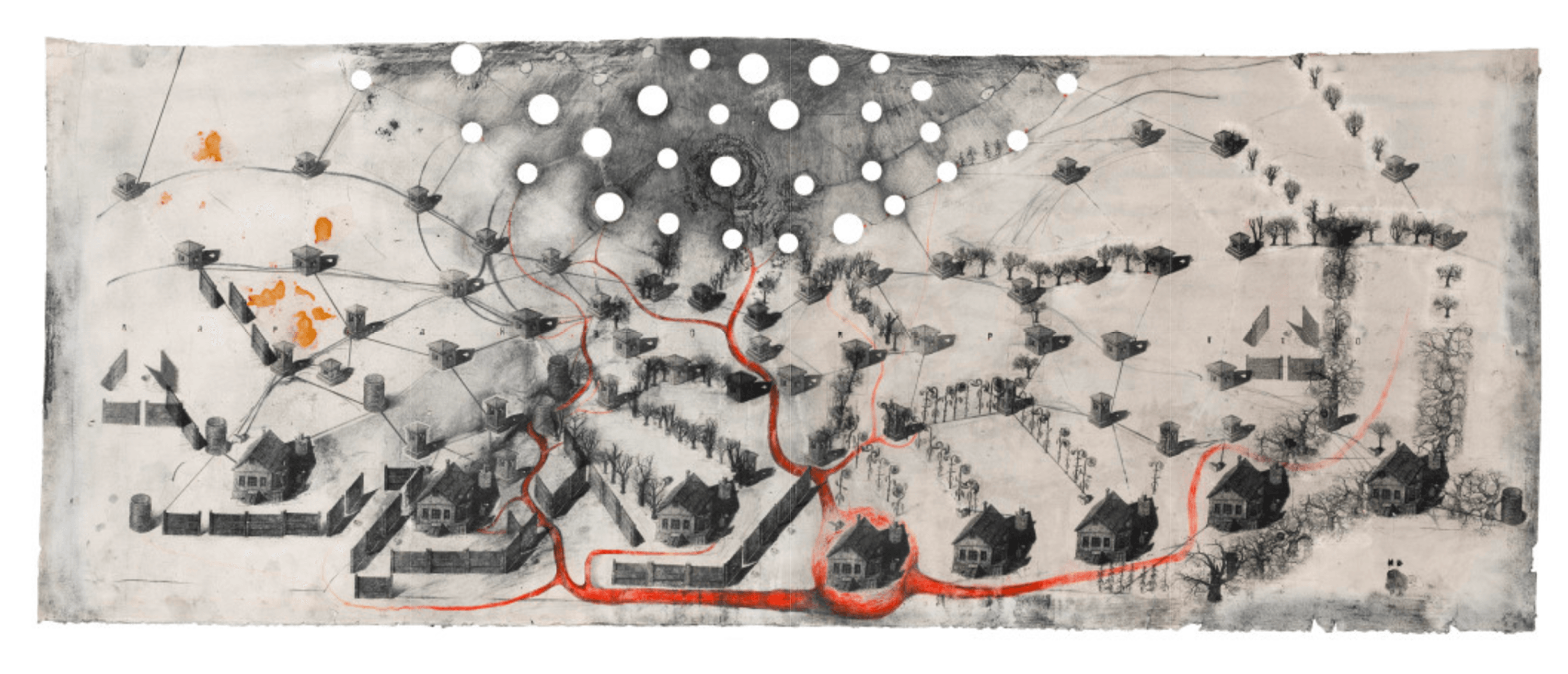
Paradiso Perduto #1, 2012—2013. Photo: makov.com.ua / © Makov Pavlo, 2026. All rights reserved. 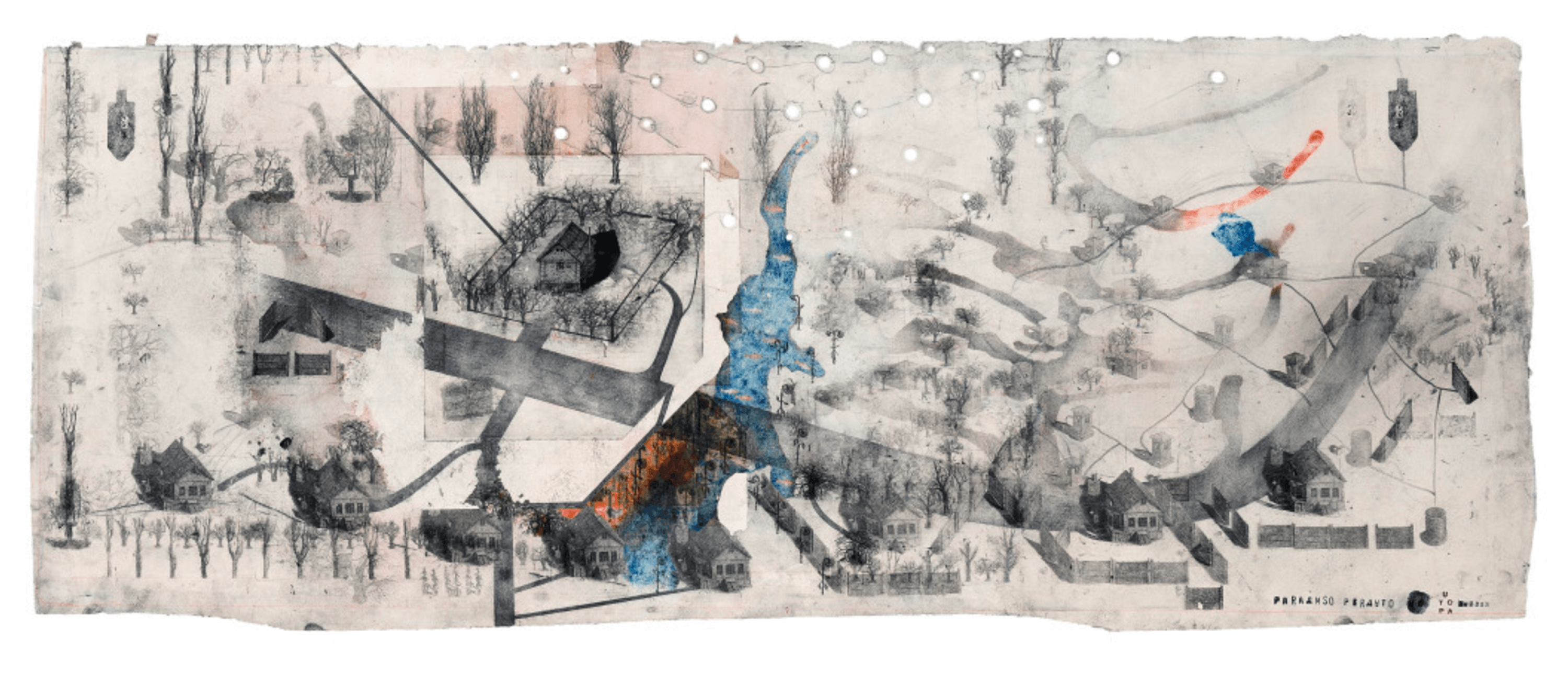
Paradiso Perduto #2, 2013. Photo: makov.com.ua / © Makov Pavlo, 2026. All rights reserved. 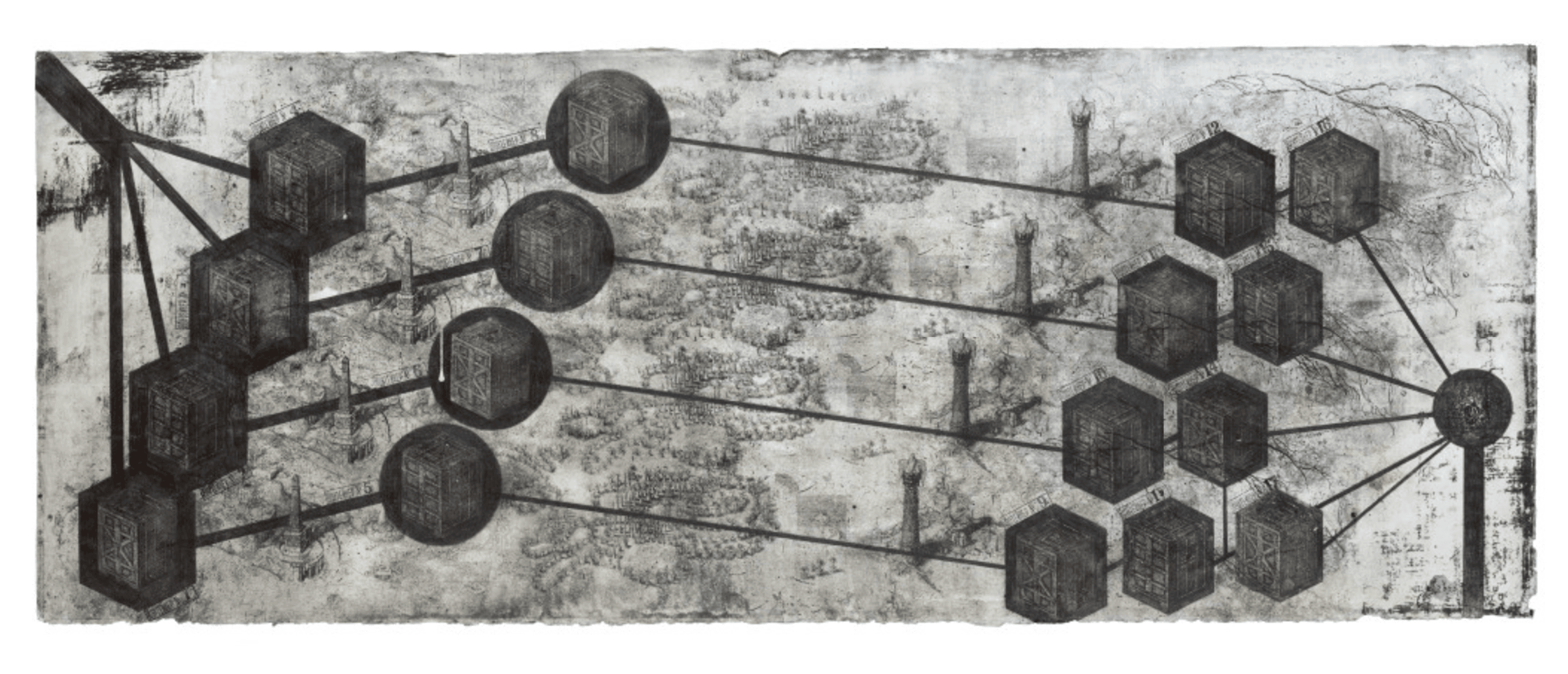
Paradiso Perduto #5, 2013. Photo: makov.com.ua / © Makov Pavlo, 2026. All rights reserved. 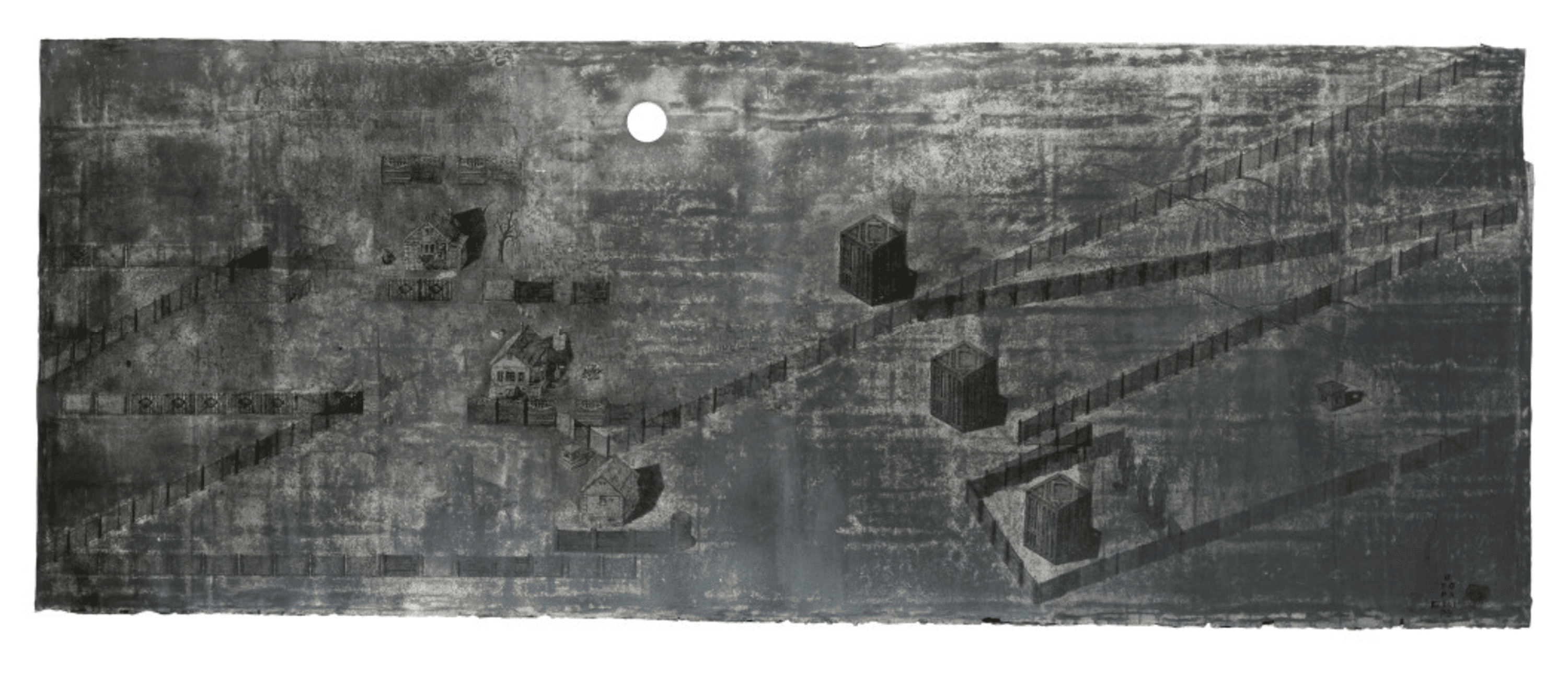
Paradiso Perduto #6, 2013. Photo: makov.com.ua / © Makov Pavlo, 2026. All rights reserved. 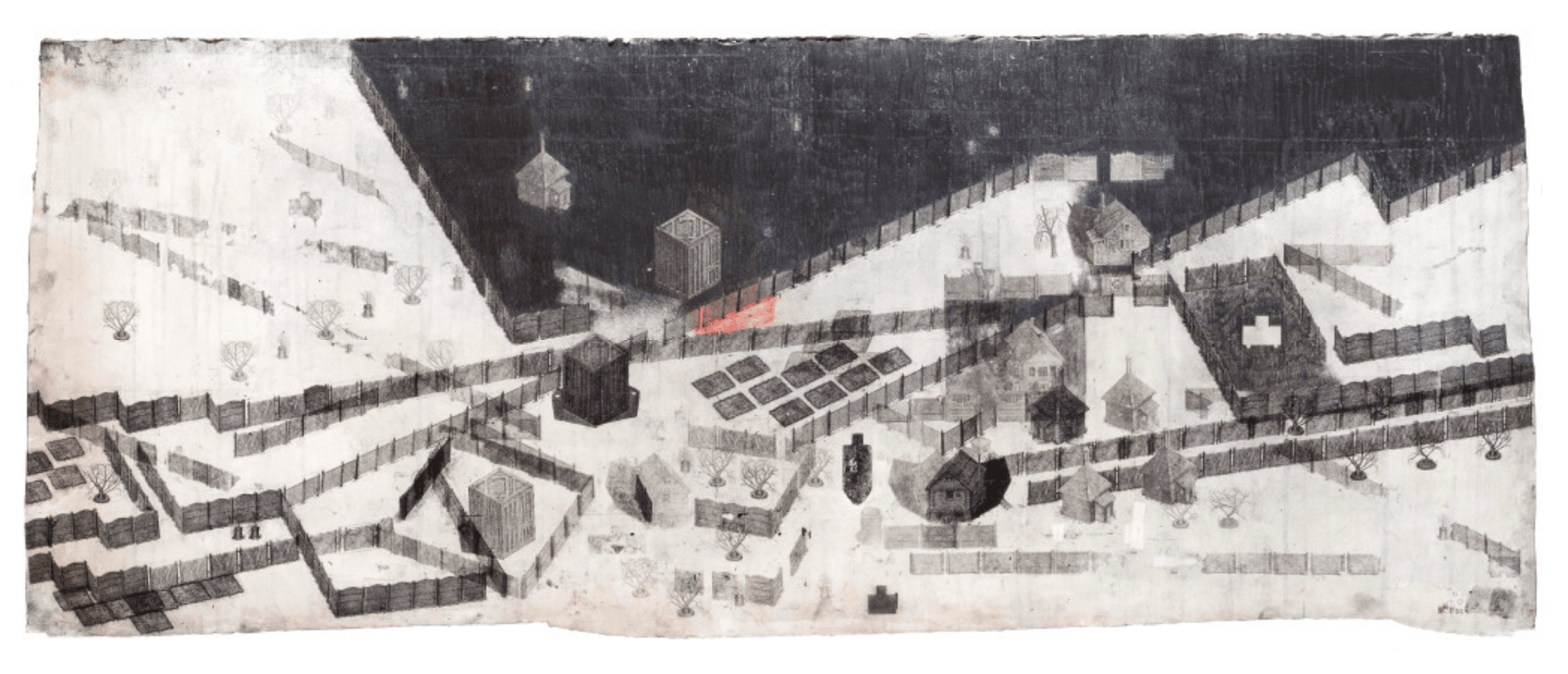
Paradiso Perduto #7, 2013—2014. Photo: makov.com.ua / © Makov Pavlo, 2026. All rights reserved. 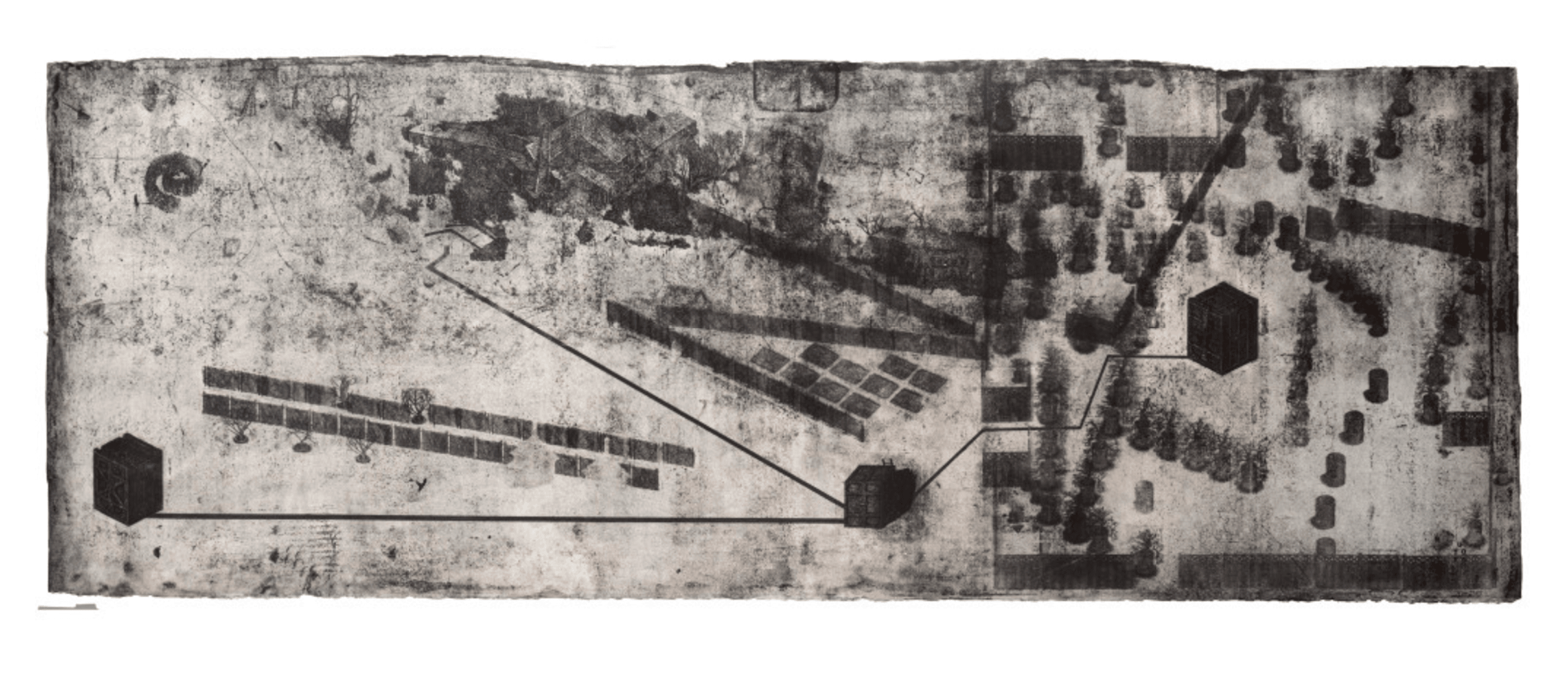
Paradiso Perduto #9, 2014. Photo: makov.com.ua / © Makov Pavlo, 2026. All rights reserved.
2
As a child, Pavlo loved looking at sailboats at the Naval Museum in Saint Petersburg, then known as Leningrad. He was born there in 1958, into the family of Mykola Makov, a successful pediatric surgeon. Because of his father’s career, the family moved frequently—first to Latvia, then living in Rivne and Kyiv, before eventually settling in Simferopol. His grandmother remained in Leningrad. When Pavlo was 14, he began building model sailboats, and later started drawing them. Art school followed; his parents were glad their teenage son was doing something productive. After the ninth grade, Pavlo decided to enroll in an art college. His mother was opposed—she wanted a medical career for her son and even asked his father to call the vice principal to ensure Pavlo wasn’t accepted. His father didn’t do it. Makov studied in the painting department; he enjoyed it, but the curriculum focused mostly on realistic, traditional art. Pavlo wanted something different, so he took an academic leave of absence and spent a year as an auditing student at the St. Petersburg Academy of Arts.
In Pavlo Makov’s studio. Photo: Oleg Palchyk / YB 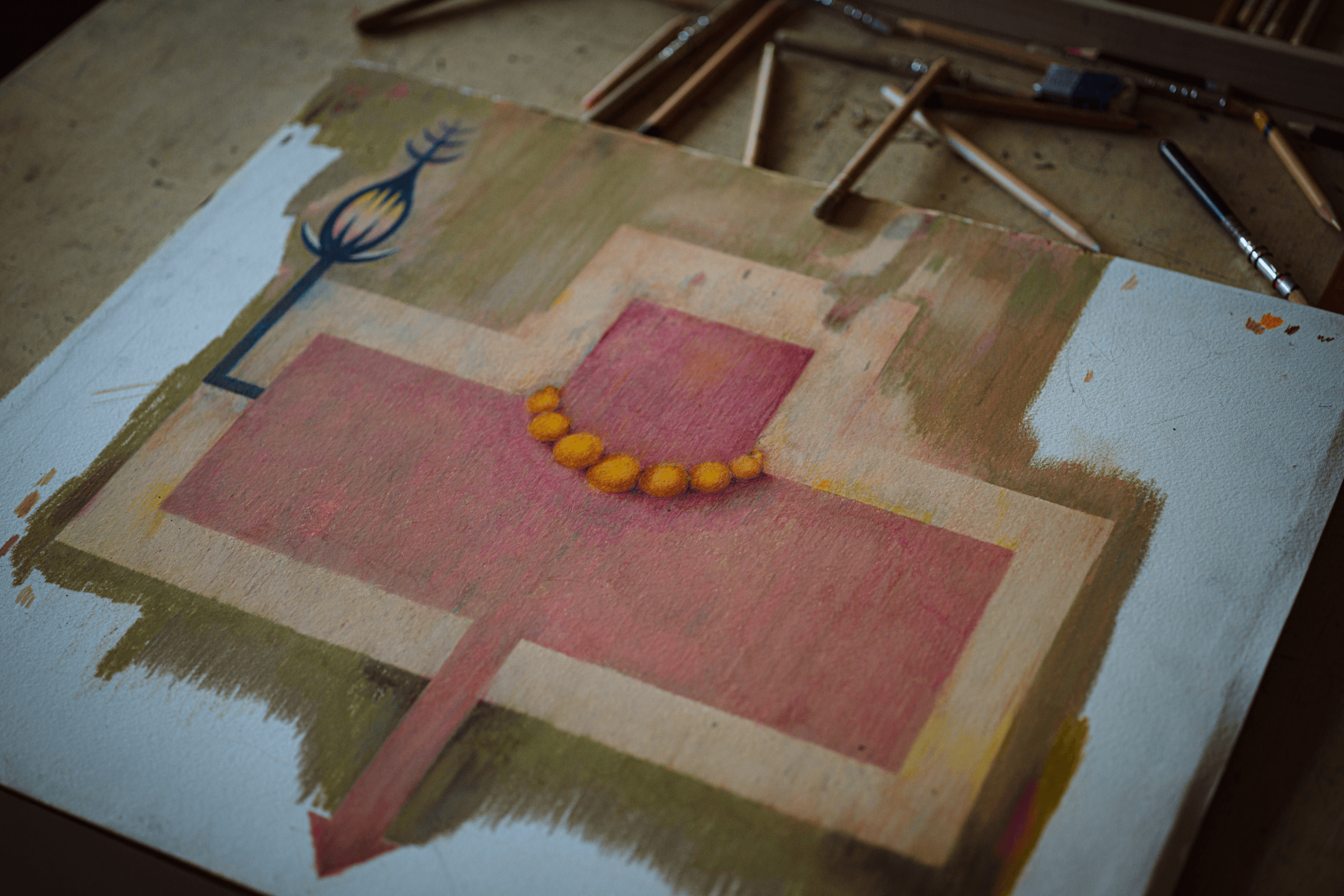
Photo: Oleg Palchyk / YB 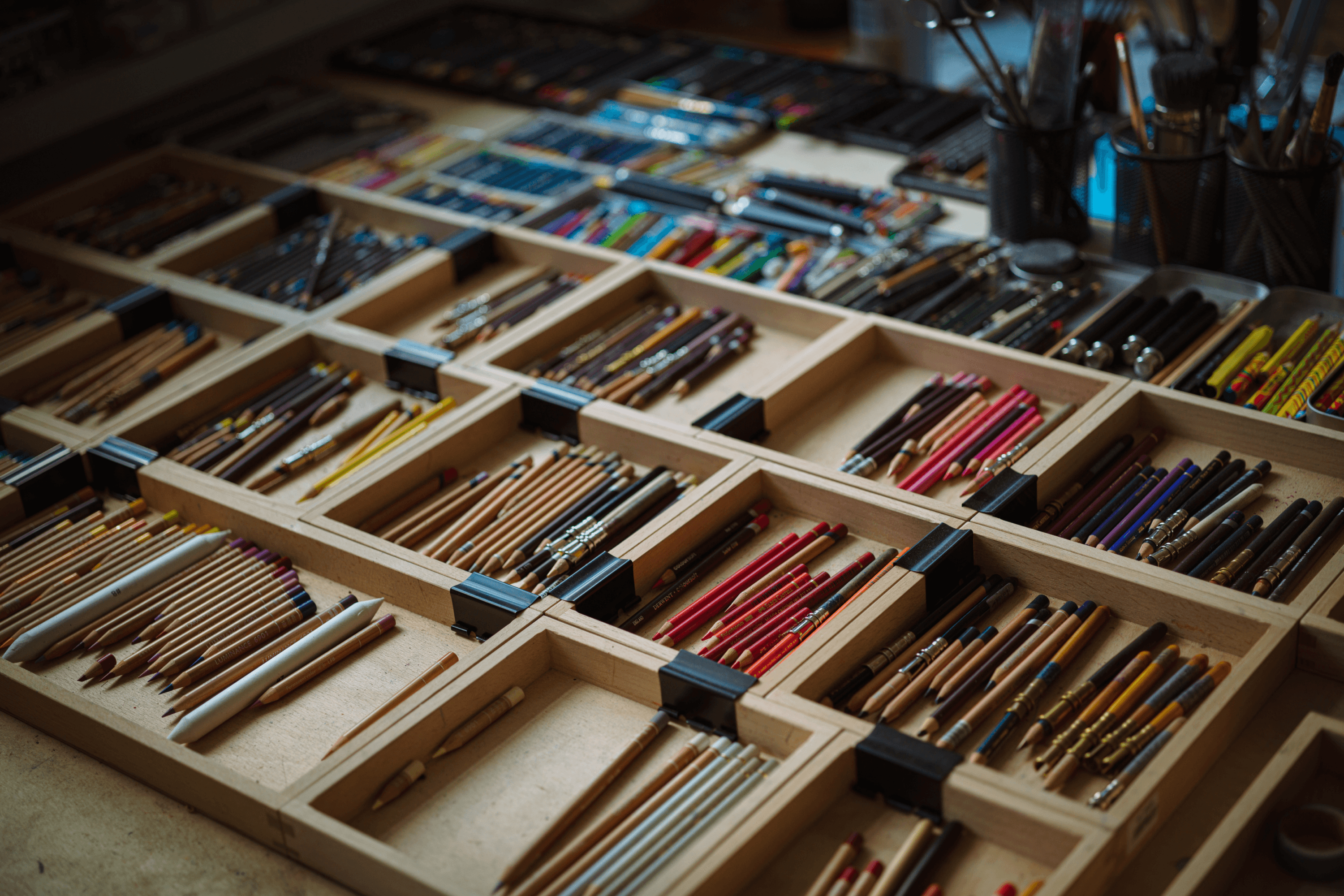
Photo: Oleg Palchyk / YB 
Photo: Oleg Palchyk / YB 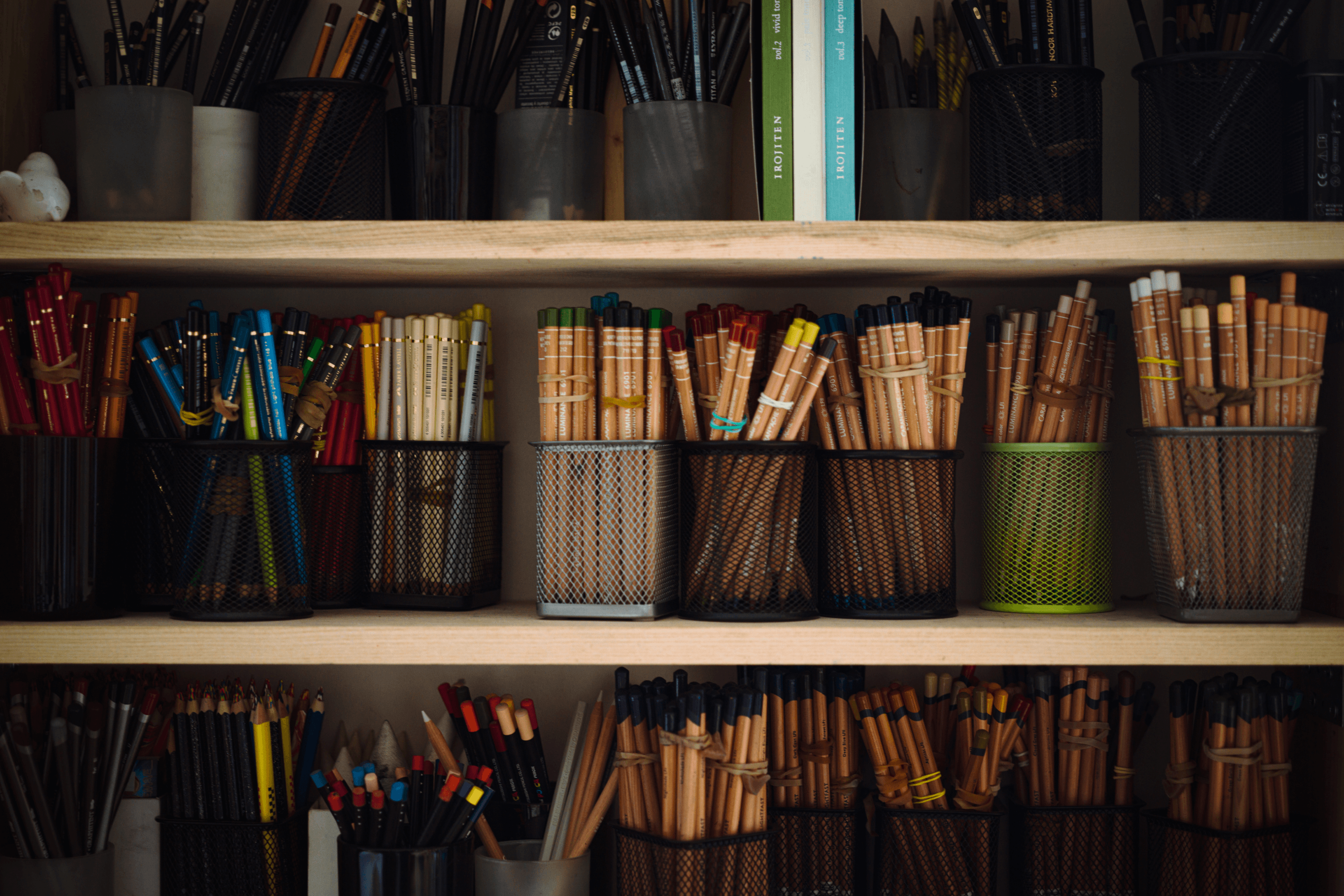
Photo: Oleg Palchyk / YB 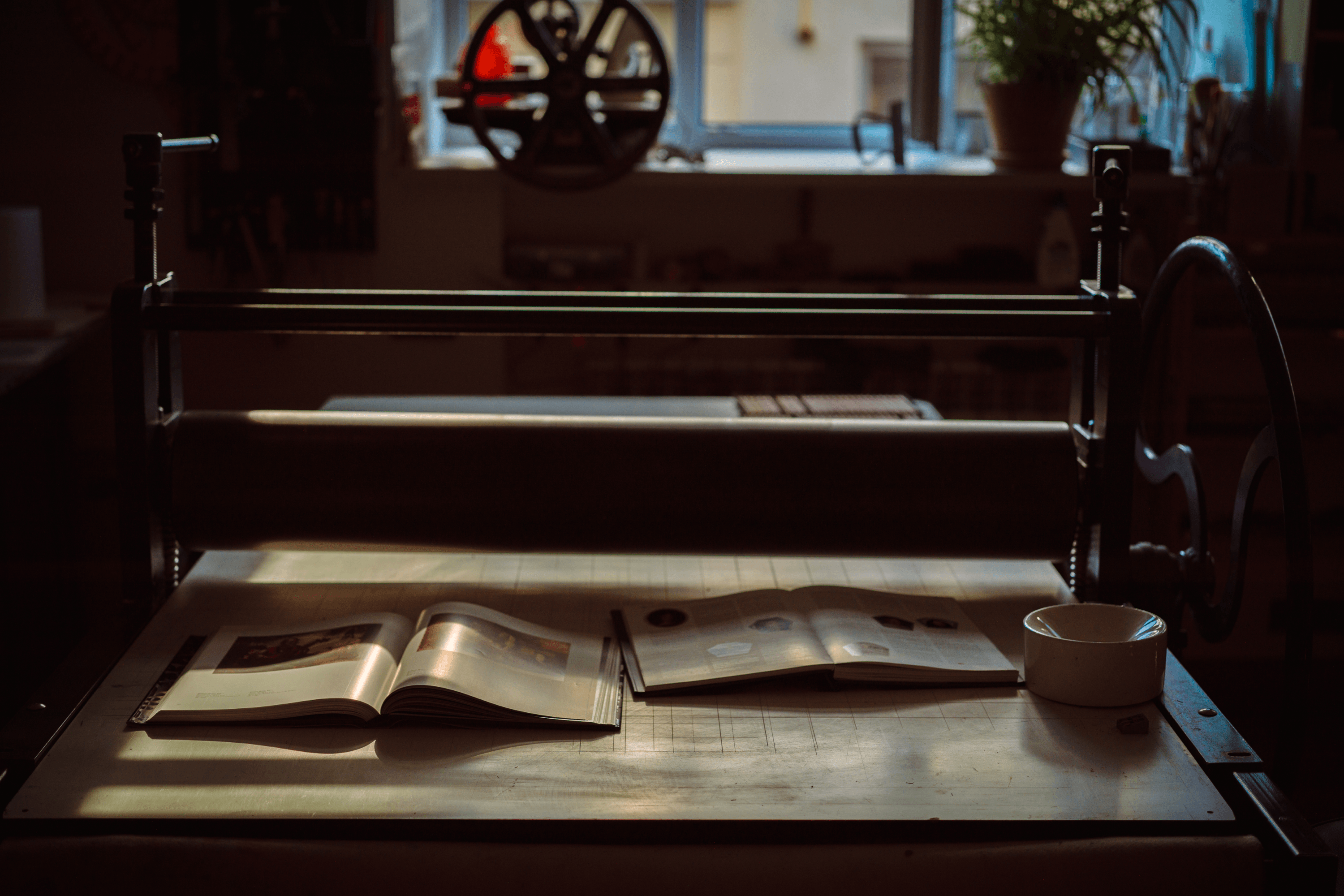
Photo: Oleg Palchyk / YB
“And there it all was—Malevich, Tatlin, Rayonism,” Makov recalls. “I realized that art could be like that. I returned for my fourth year at my college, and all those socialist realist things they taught us there no longer satisfied me.”
After college, Makov enrolled in the graphics department in Kharkiv. He didn’t consider any higher education institutions other than art schools. As he was getting ready to submit his application, his mother made one last attempt to dissuade him: “Pavlyk, you’ve already learned to draw for yourself, so just draw on weekends. Apply to medical school, and your dad will help you.” His father never brought up such topics—even though he didn’t view art as a real profession.
Socialist realism still held no appeal for Makov, so his student works, as he puts it, “didn’t align with the official view of what a young Soviet artist’s work should be.” He was searching for a different, freer perspective on art and found it in the studio of artist Vitaliy Kulikov, renowned among young artists for his unconventional views and approach to drawing. Makov learned about Kulikov from his girlfriend at the time. He grabbed a portfolio of his work and simply knocked on the studio door. Kulikov gave Pavlo his first lesson right then and there. He opened the door, listened, and said: “I’m ready to see you, but the day after tomorrow at six in the evening.” That was how Pavlo learned that you can’t just barge in on someone and demand attention—you have to respect other people’s time.
From then on, Makov visited Kulikov often. He could have joined other students for extra drawing classes, but instead he preferred to bring his work so they could critique each other’s drawings. They talked about life and art; Kulikov possessed a large collection of classical music and a rich library filled with rare foreign journals. Makov admired Matisse and Picasso—Kulikov liked them too, but would say: “Pavlik, just because Picasso is a great artist doesn’t mean Repin is any worse.” That was how Makov came to understand that just because something doesn’t resonate with you doesn’t make it bad.
An artistic career seemed elusive to Pavlo—the path to the Union of Artists of the USSR was closed to him, which meant he couldn’t make a living through art. Pavlo had a Plan B: improve the English he had been learning since childhood, earn a second degree, and make a living as a private tutor. After graduating from the institute, he was drafted into the army, returning to Simferopol in May 1986. Sitting in a park, he opened a copy of Ogoniok magazine and saw poems by Nikolai Gumilyov inside—poems that, just a few years earlier, could have landed someone in prison. Pavlo realized the world had changed.
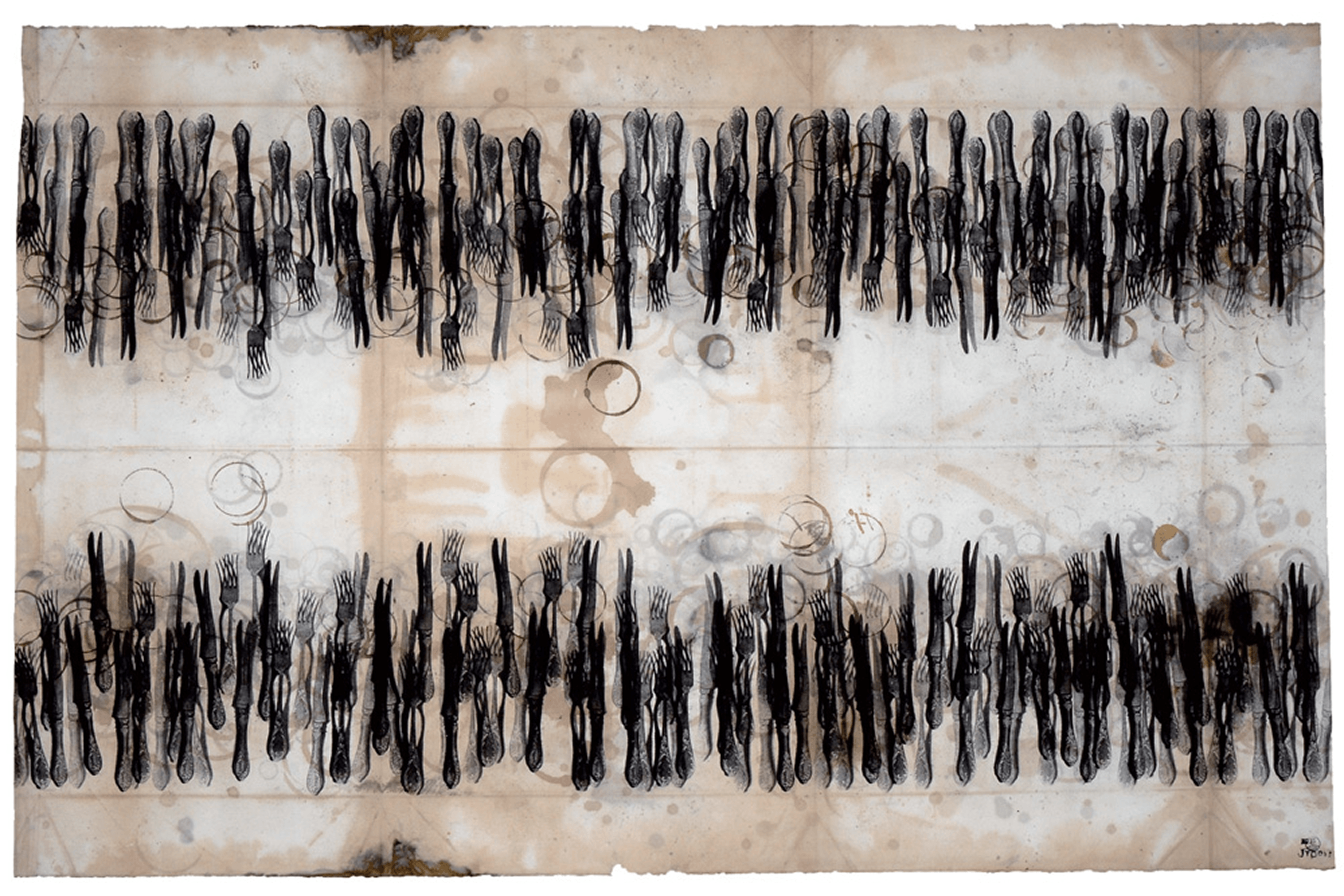
State Tablecloth I, 2008. Photo: makov.com.ua / © Makov Pavlo, 2026. All rights reserved. 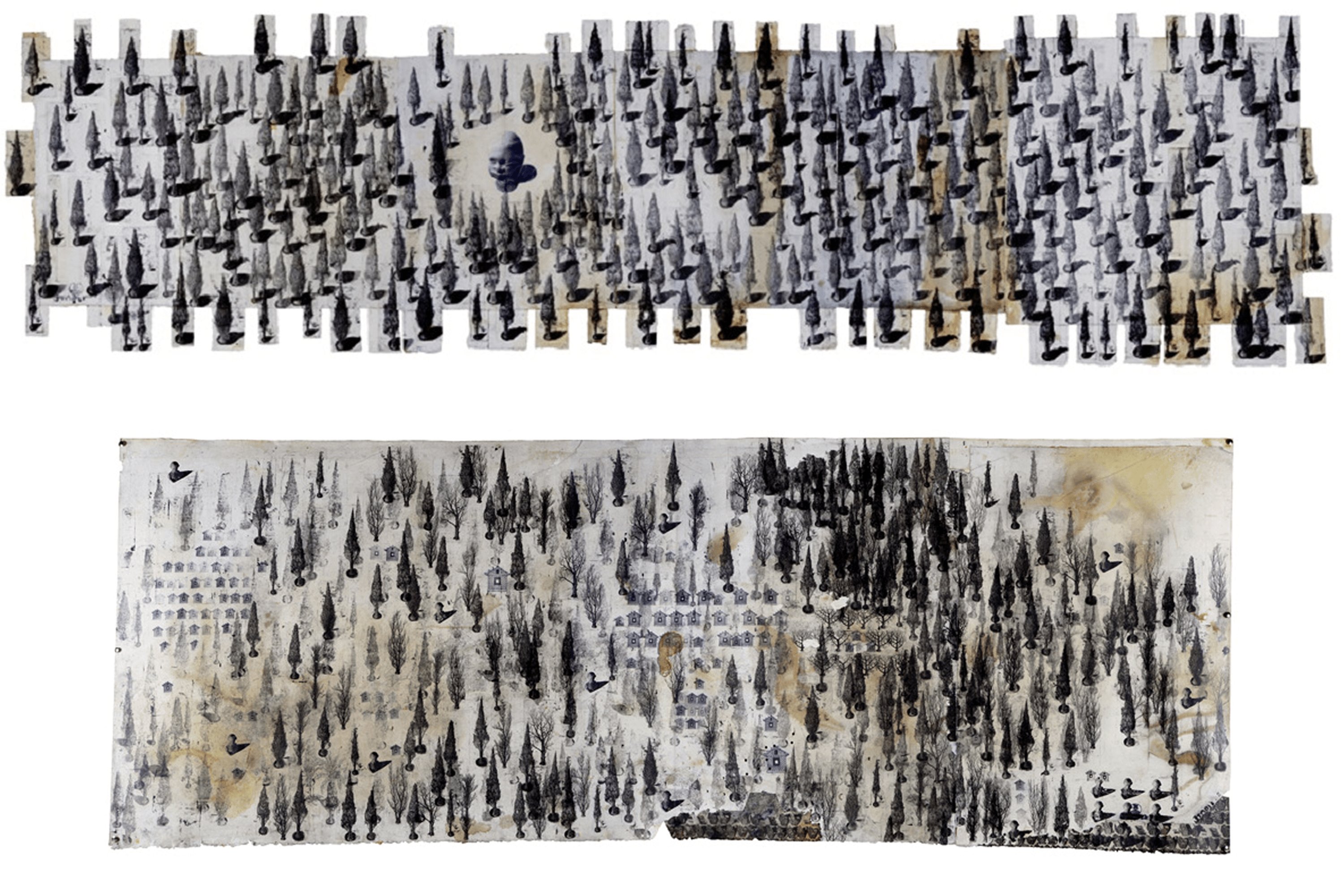
Cypresses and Head, 2008; Tartarian Midday, 2008. Photo: makov.com.ua / © Makov Pavlo, 2026. All rights reserved. 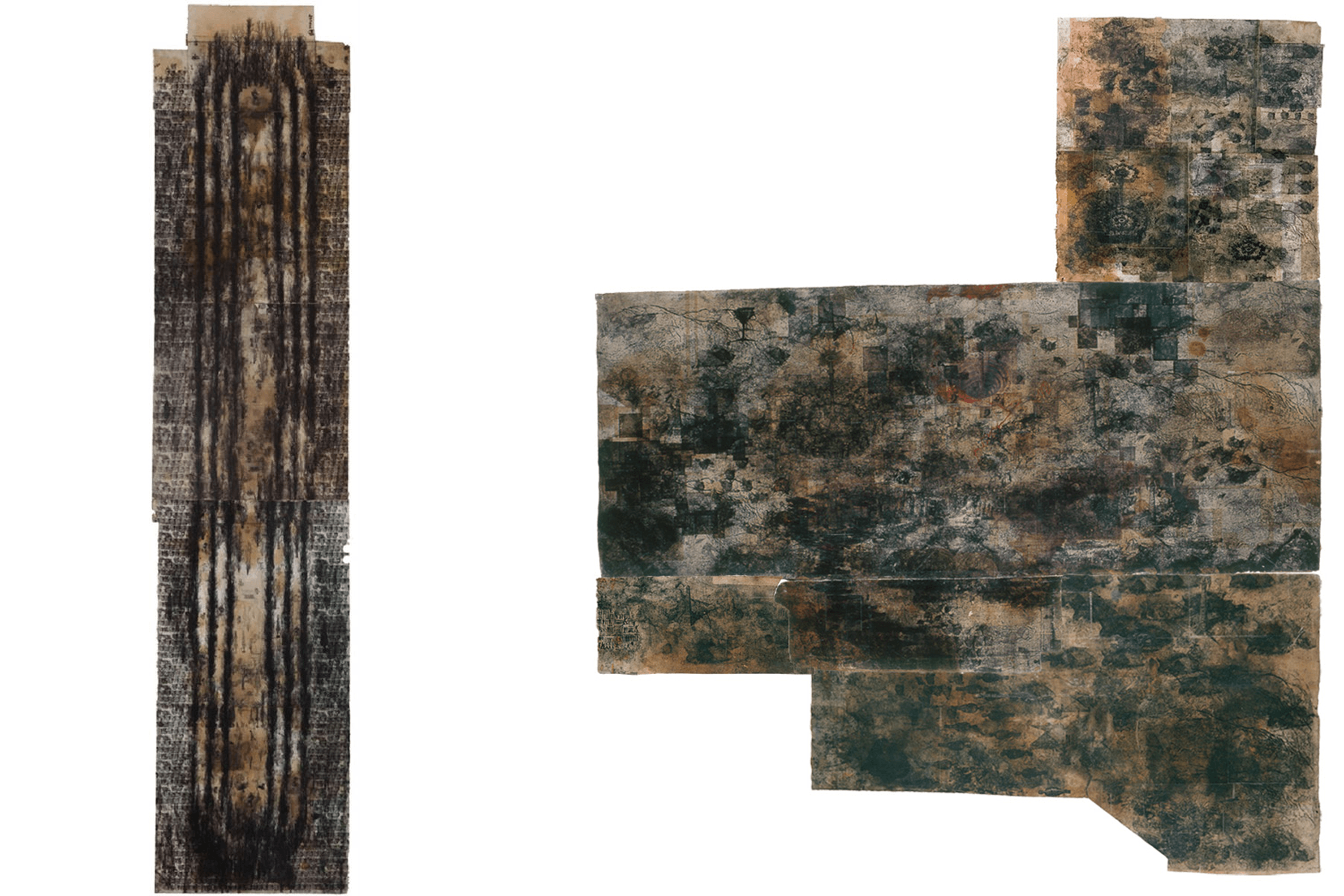
Alley of Lovers, 2008; Utopia. Big Plan, 2005. Photo: makov.com.ua / © Makov Pavlo, 2026. All rights reserved. 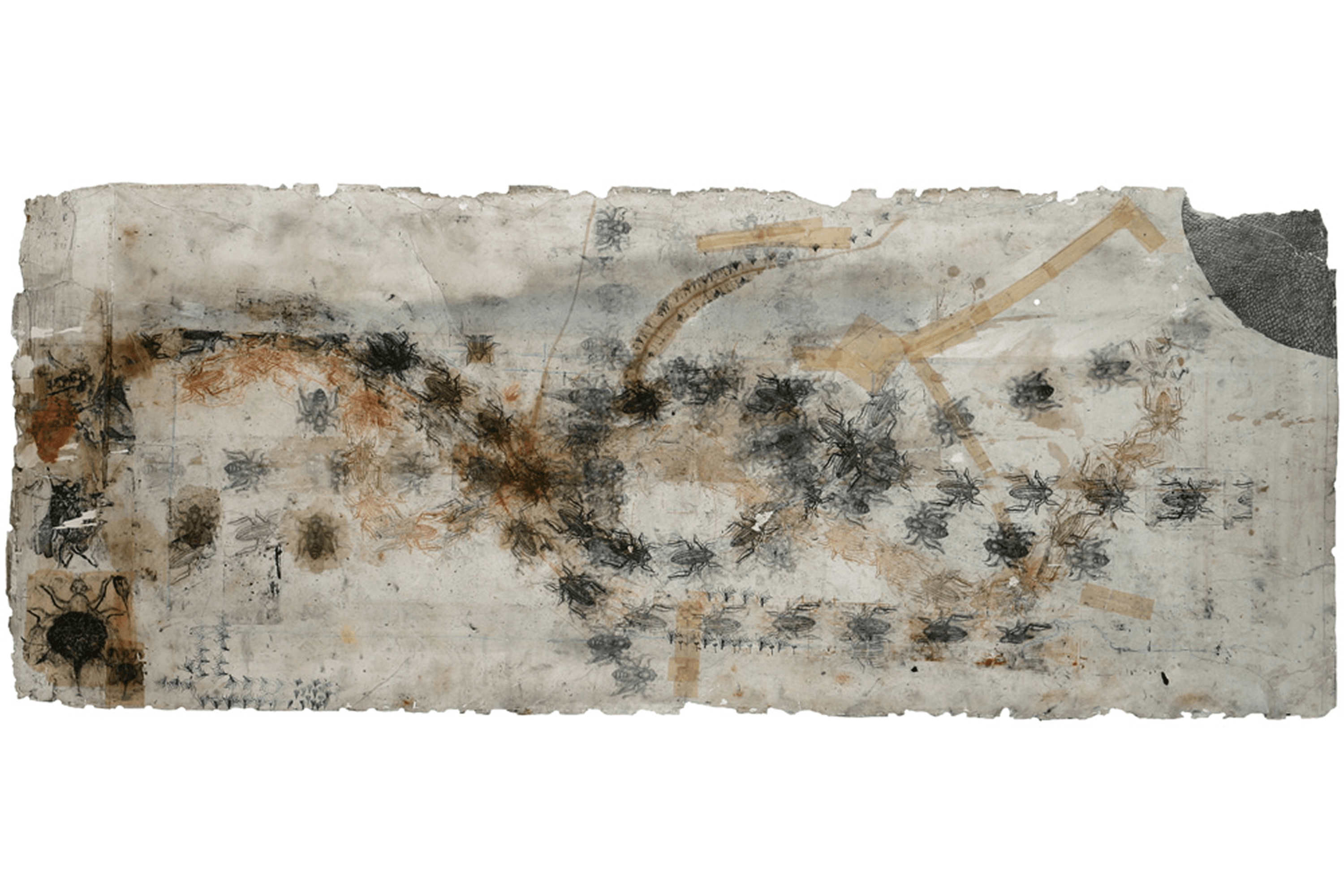
Tablecloth with Sunflower, 2007. Photo: makov.com.ua / © Makov Pavlo, 2026. All rights reserved. 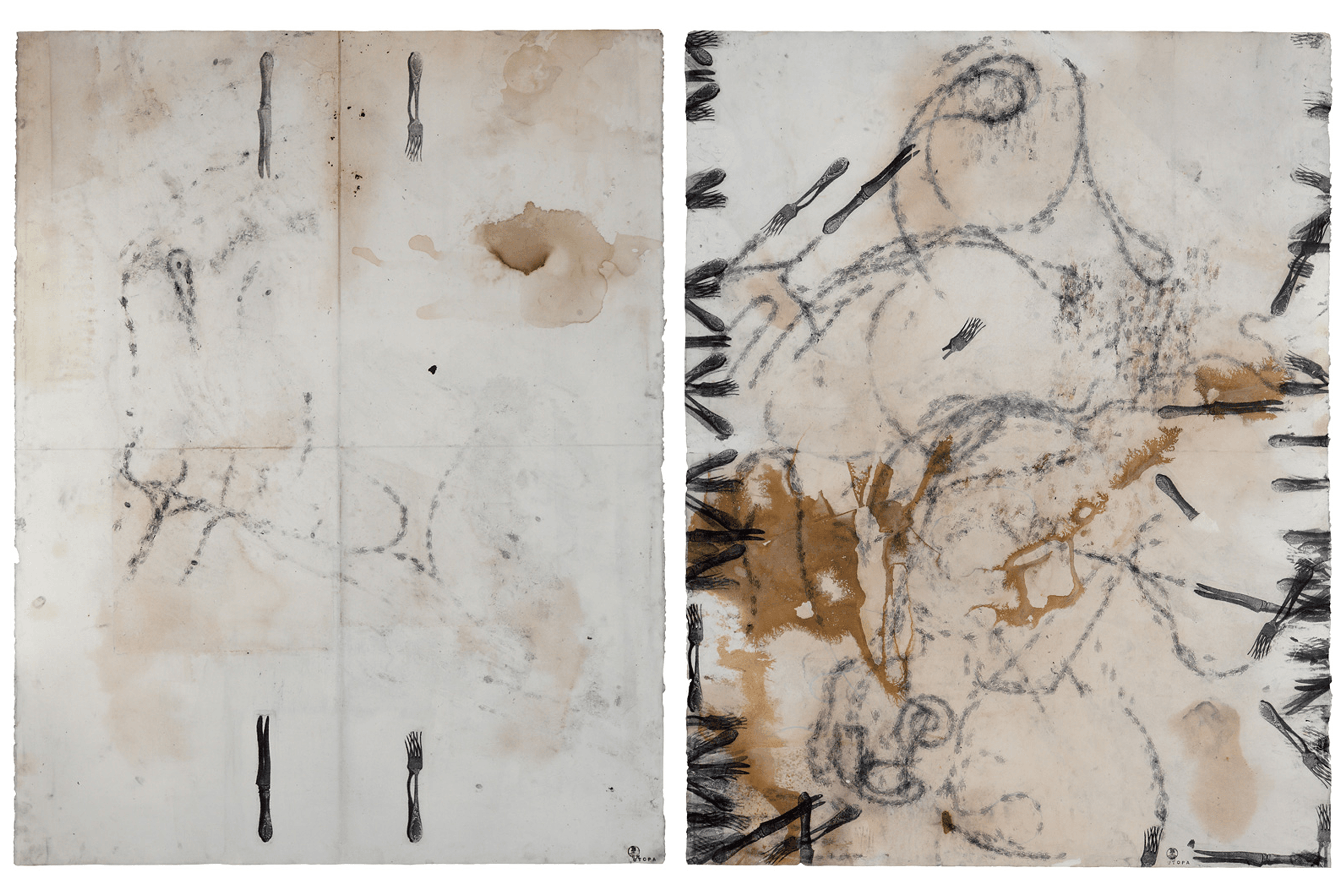
Tablecloth IV and VI, 2009. Photo: makov.com.ua / © Makov Pavlo, 2026. All rights reserved. 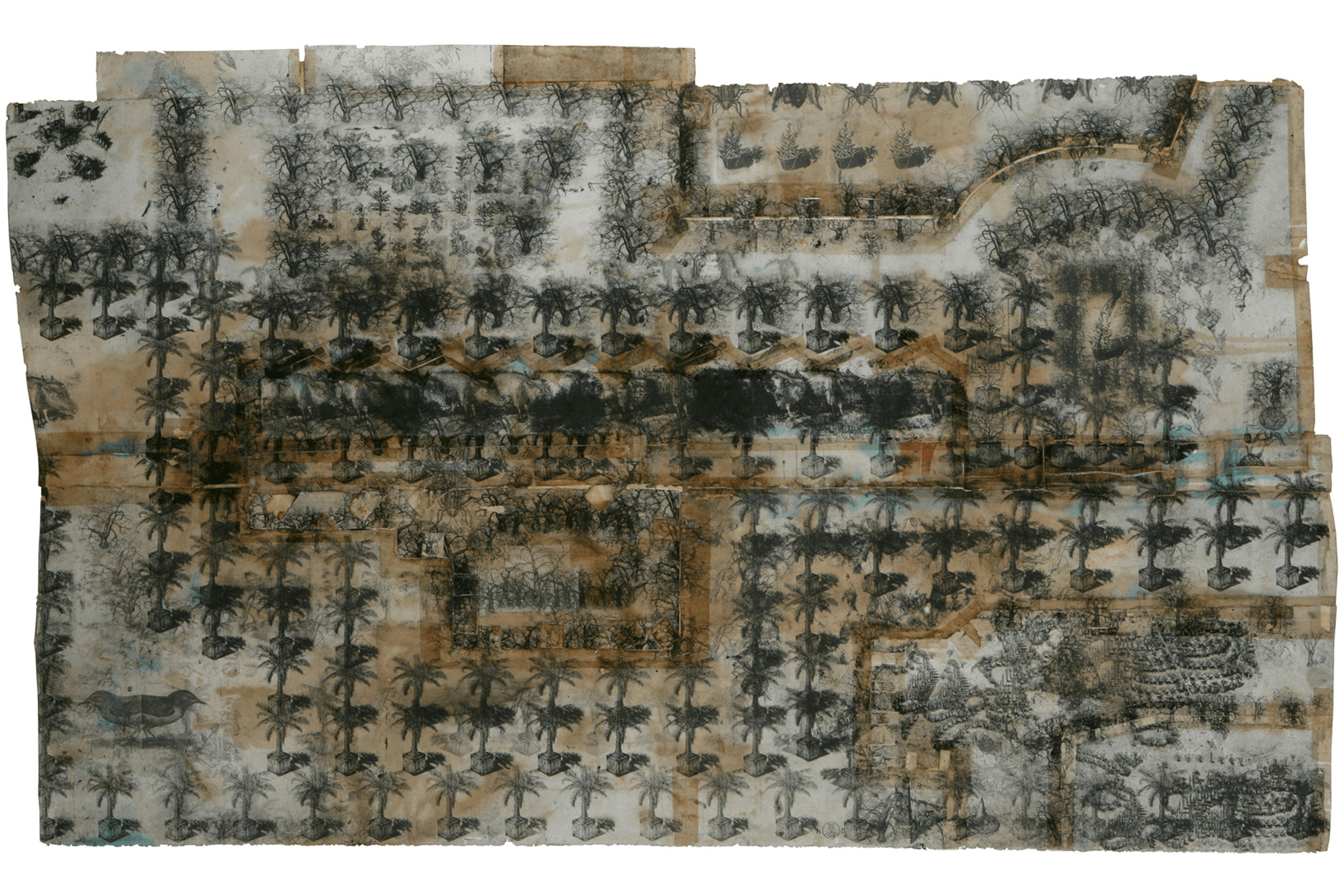
Attempt for Versailles III, 2006. Photo: makov.com.ua / © Makov Pavlo, 2026. All rights reserved.
3
To survive and build a career in the 1990s, Pavlo had to do more than just work in his studio—he had to become his own manager. “Two in one, like shampoo,” he jokes today.
Makov was accepted into the youth branch of the Union of Artists, and back in 1988, he won the grand prix at the All-USSR Biennale of Graphic Art in Kaliningrad. He took part in an exhibition in Denmark, where his work caught attention, earning him an invitation to join a printmaking studio. He submitted to international competitions—and frequently took top prizes. In 1993–1994, he received $5,000 in Japan and $3,000 in Taiwan. This money provided enough of a cushion to temporarily forget about making a living. In 1994, he was invited to conduct a week-long masterclass at a British university. The fee was £1,500—and naturally, he accepted.
“At our first meeting, I had to speak to the students about myself for an hour and a half,” Makov recalls. “Ten minutes in, I realized: if I don’t say something funny right now, I’m done for—they’ll just stand up and walk out. So I found a way. I had a toy bear with me—my wife Masha had given it to me as a mascot. Financially, things were tight back then. Before leaving, I left Masha $20 to $30—that was our last money. I was off to make a living, stepping into the abyss—god knows if I’d earn anything or not. At that lecture, I made a joke about the teddy bear, saying, 'Here’s my buddy from Ukraine.' I don’t remember exactly how I framed it, but after that, everything fell into place, and I felt relieved.”
In the 1990s, Makov developed the concept for the Fountain of Exhaustion (Acqua Alta), which represented Ukraine at the Venice Biennale in 2022.
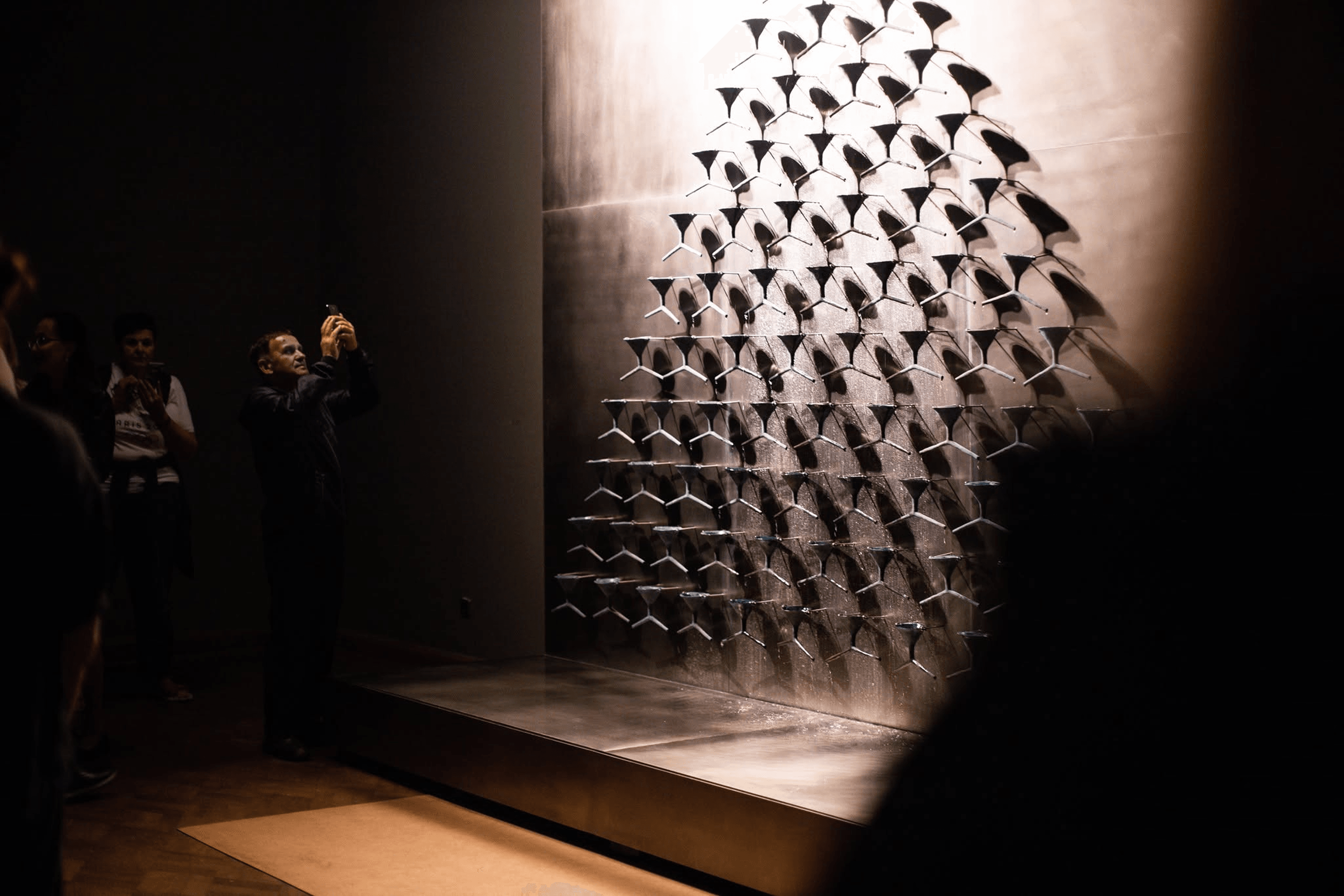
The opening of Pavlo Makov’s exhibition “Fountain of Exhaustion” at the Khanenko Museum. Kyiv, June 5, 2023. Photo: Музей Ханенків. The Khanenko Museum / Facebook 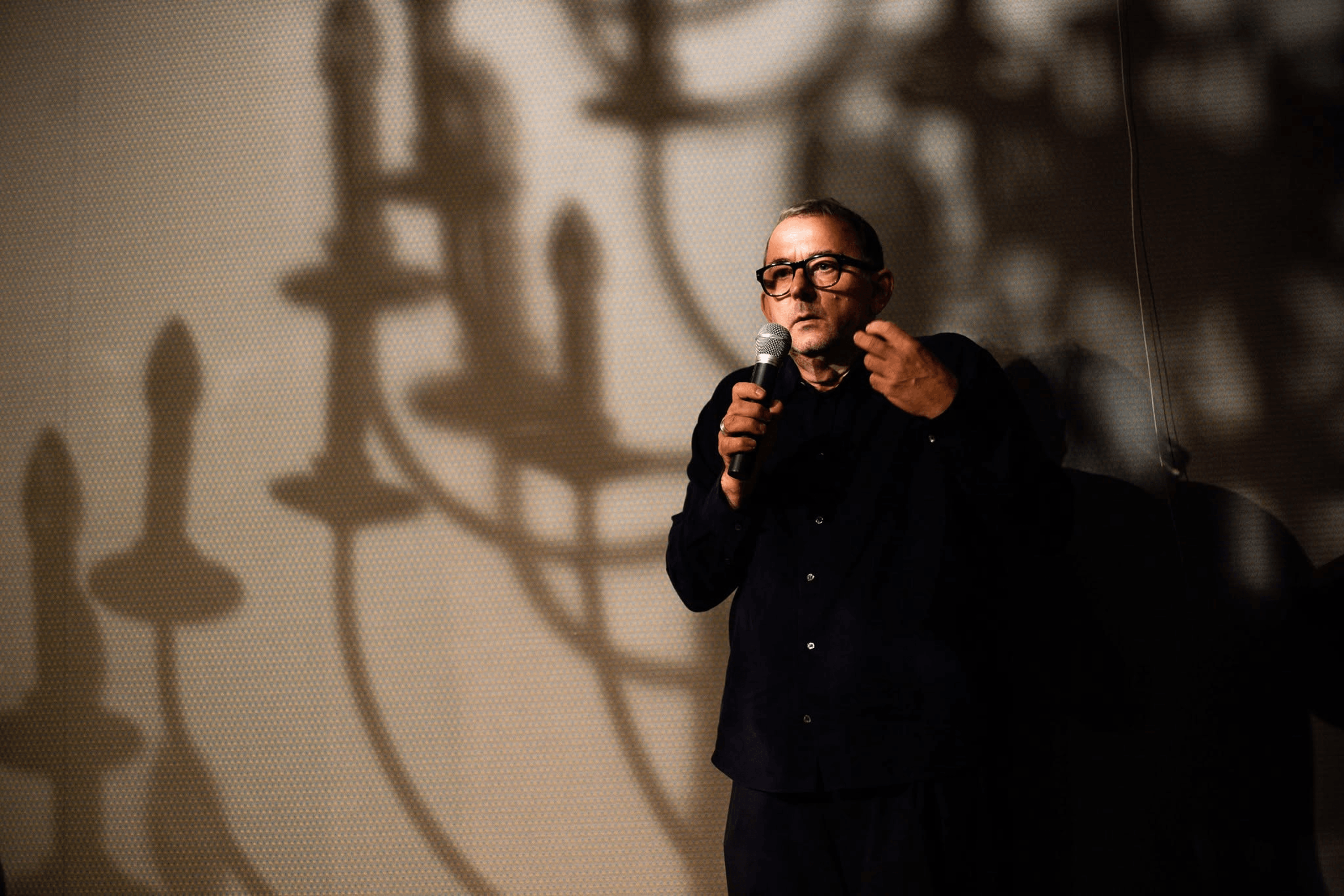
Photo: Музей Ханенків. The Khanenko Museum / Facebook 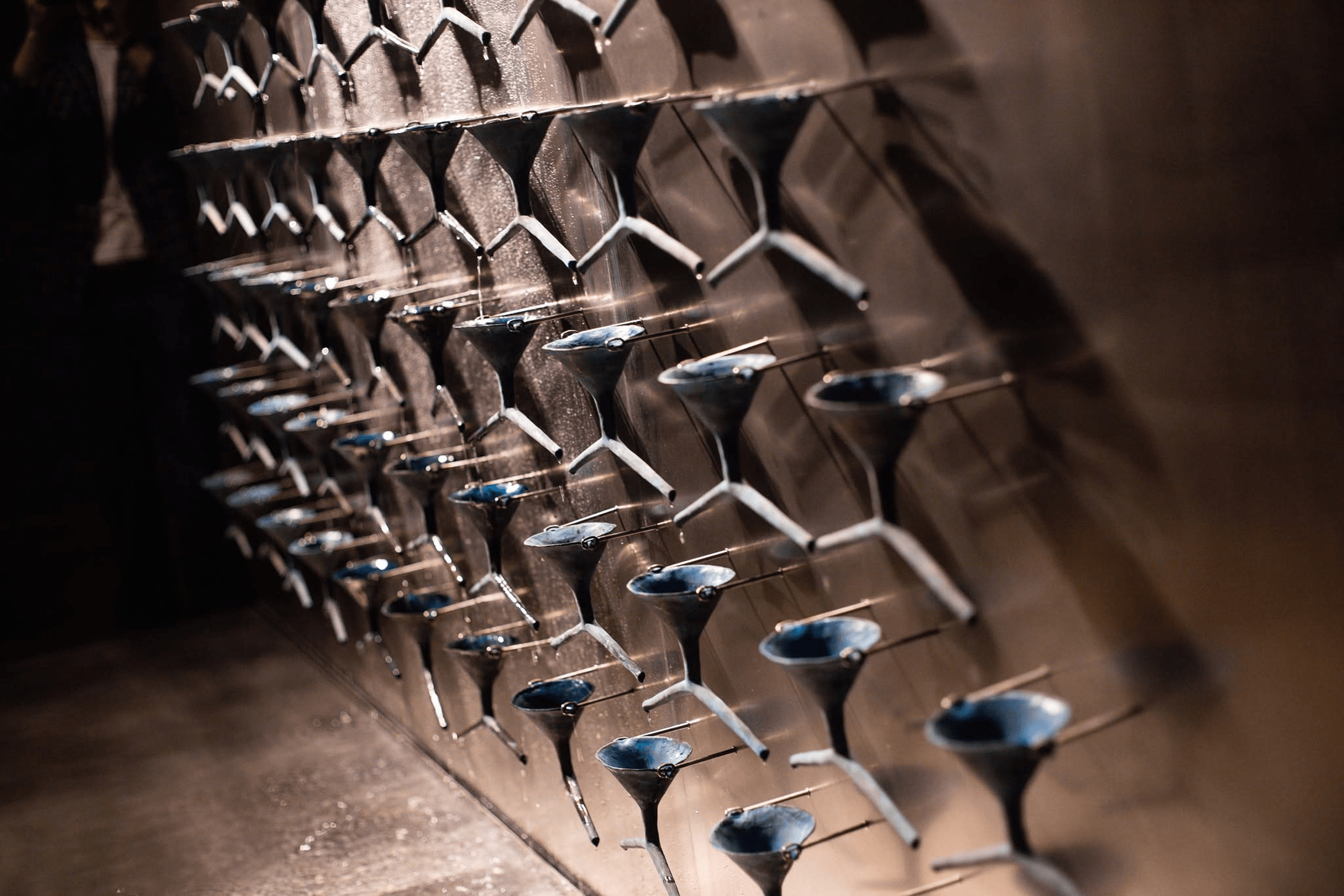
Photo: Музей Ханенків. The Khanenko Museum / Facebook 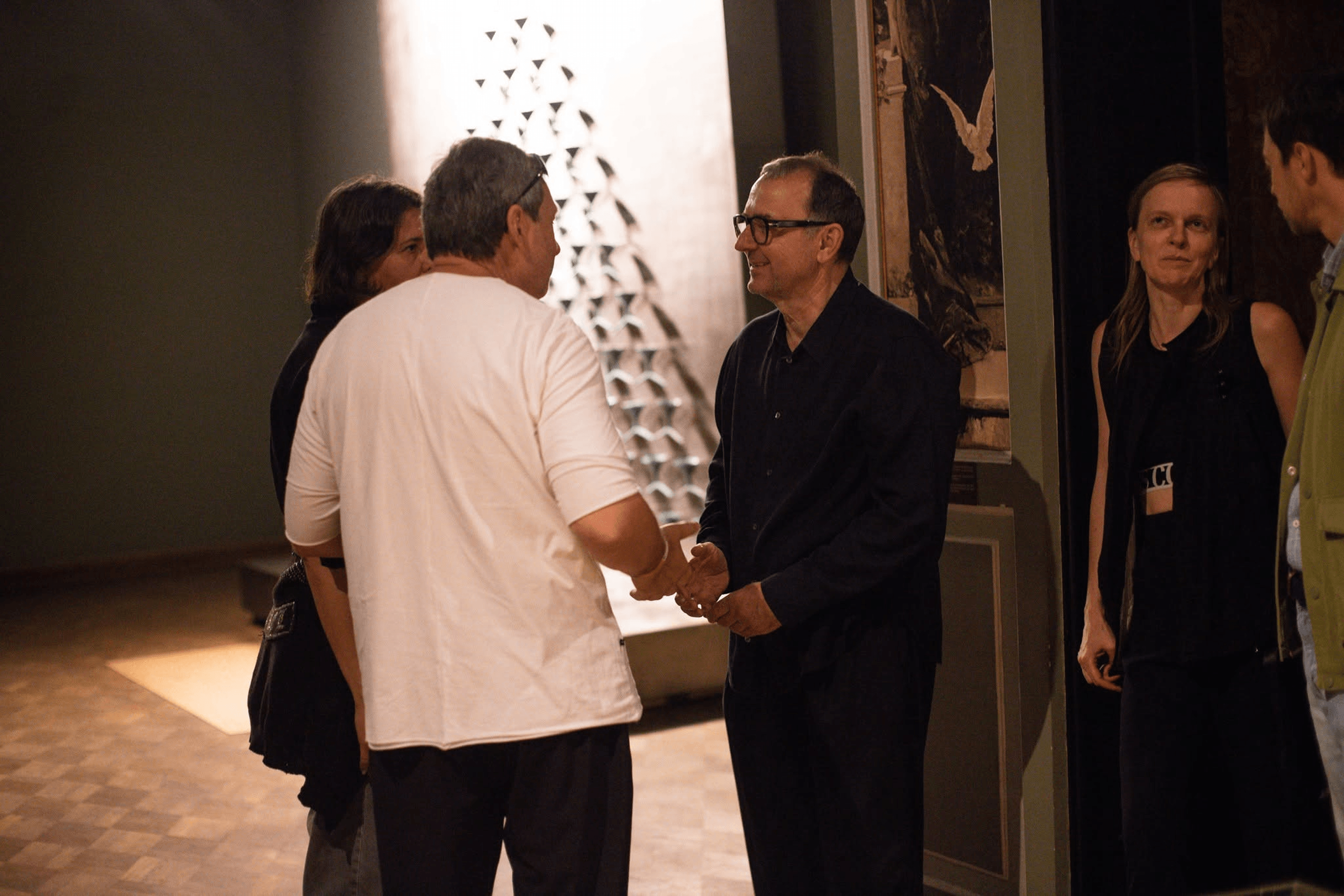
Photo: Музей Ханенків. The Khanenko Museum / Facebook 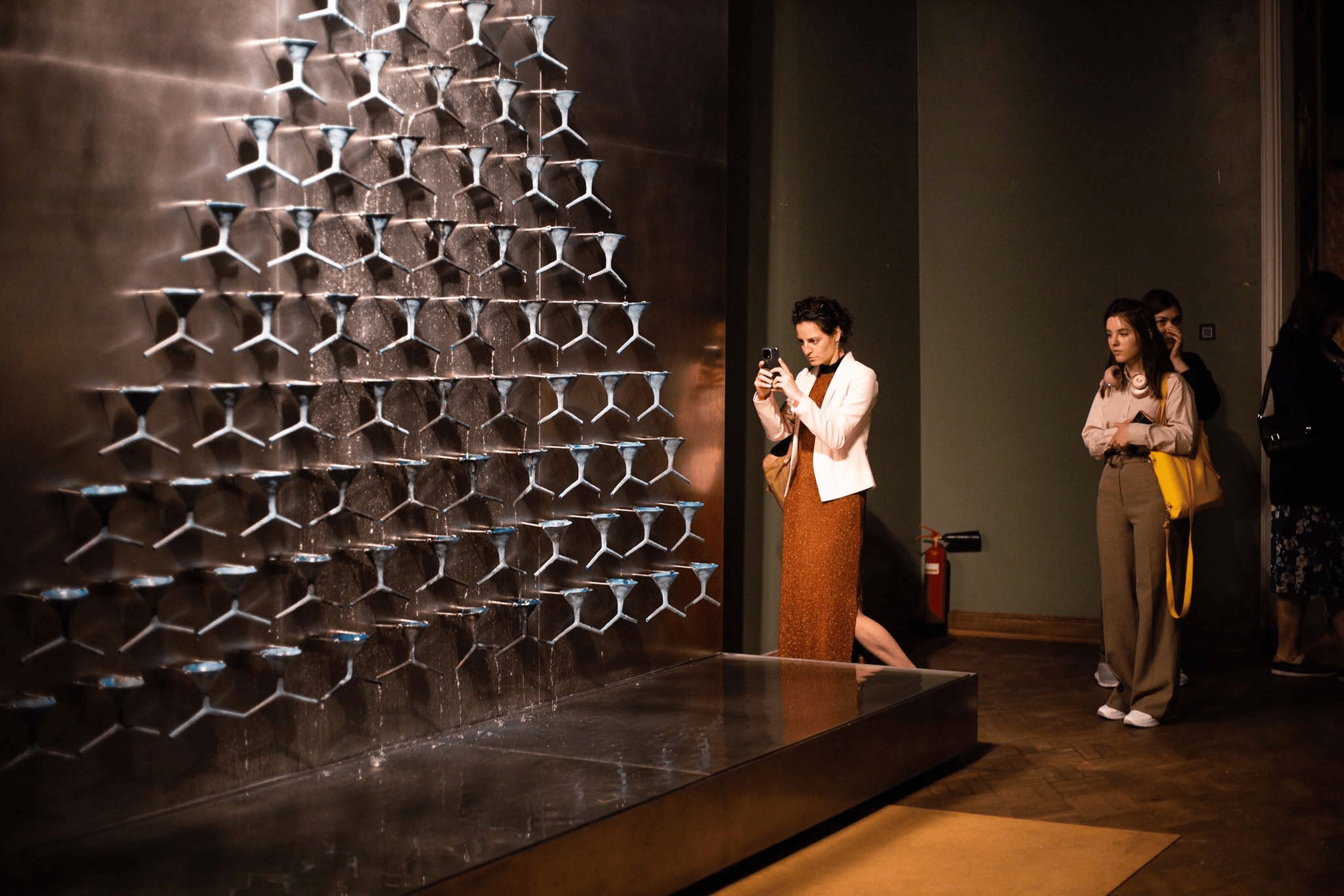
Photo: Музей Ханенків. The Khanenko Museum / Facebook 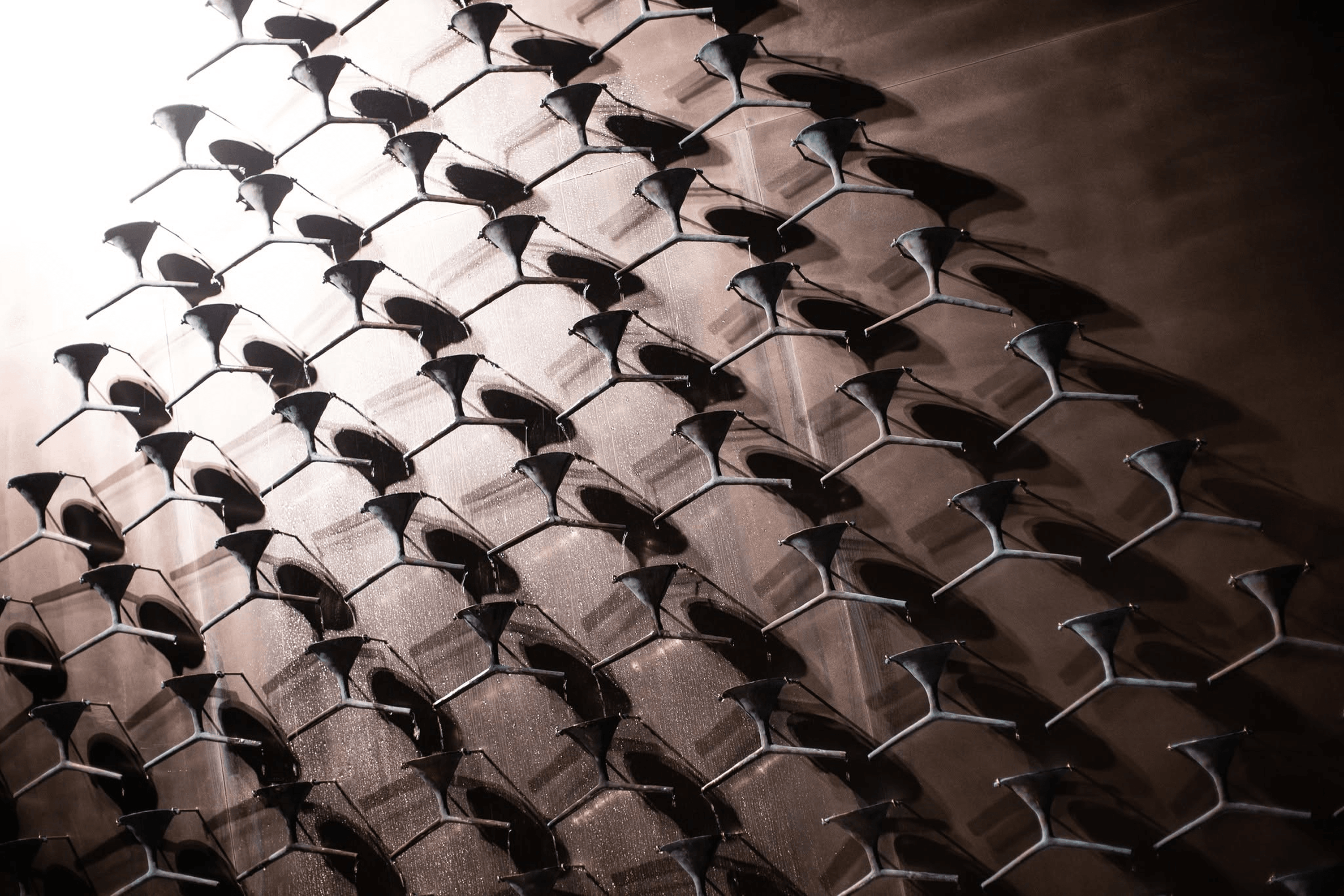
Photo: Музей Ханенків. The Khanenko Museum / Facebook
Around the same time, his works began featuring his famous targets—silhouettes of human-shaped target figures used in Soviet school shooting ranges—and tin soldiers. Initially appearing as tiny elements in his etchings, from 2001 onward Makov began photographing each soldier figurine individually, printing life-sized portraits of them and creating a mystification around their diaries written in an invented tin language. Makov’s works were already being acquired by renowned international museums—notably the Victoria and Albert Museum in London and the National Gallery of Art in Washington. By then, he was already a fellow of the Royal Society of Painter-Printmakers in the UK.
“I was never mainstream. I’m not mainstream now, and back then, even less so,” Pavlo says. “At the time, Ukraine was experiencing a postmodern boom with Parkomuna and a generation of fantastically talented people who were part of it—Oleksandr Hnylytskyi, Alexander Roitburd, Oleh Holosiy, Arsen Savadov. Honestly, I wanted to be mainstream too—to take part in large international exhibitions rather than the small, highly specialized printmaking ones where I was winning awards. But that wasn’t an option, so I realized a simple truth: if you want something done, Pavlik, you have to take care of it yourself. So I did.”
In 2003, Pavlo Makov opened a major exhibition at the National Art Museum of Ukraine titled UtopiA. It spanned a decade of his artistic output, from 1992 to 2003. To display his key pieces, Makov had to gather them from private collections abroad. After the exhibition, they returned to their owners, leaving Pavlo with a realization: virtually no trace of his work remained in Ukraine. State museums bought almost nothing—with the exception of the Sumy Regional Art Museum, which holds three of his etchings—while the majority flew off to the US, the UK, and Europe. Makov decided to document this decade of his work in a book, Utopia. Chronicles 1992–2005—otherwise, it would exist nowhere at all.
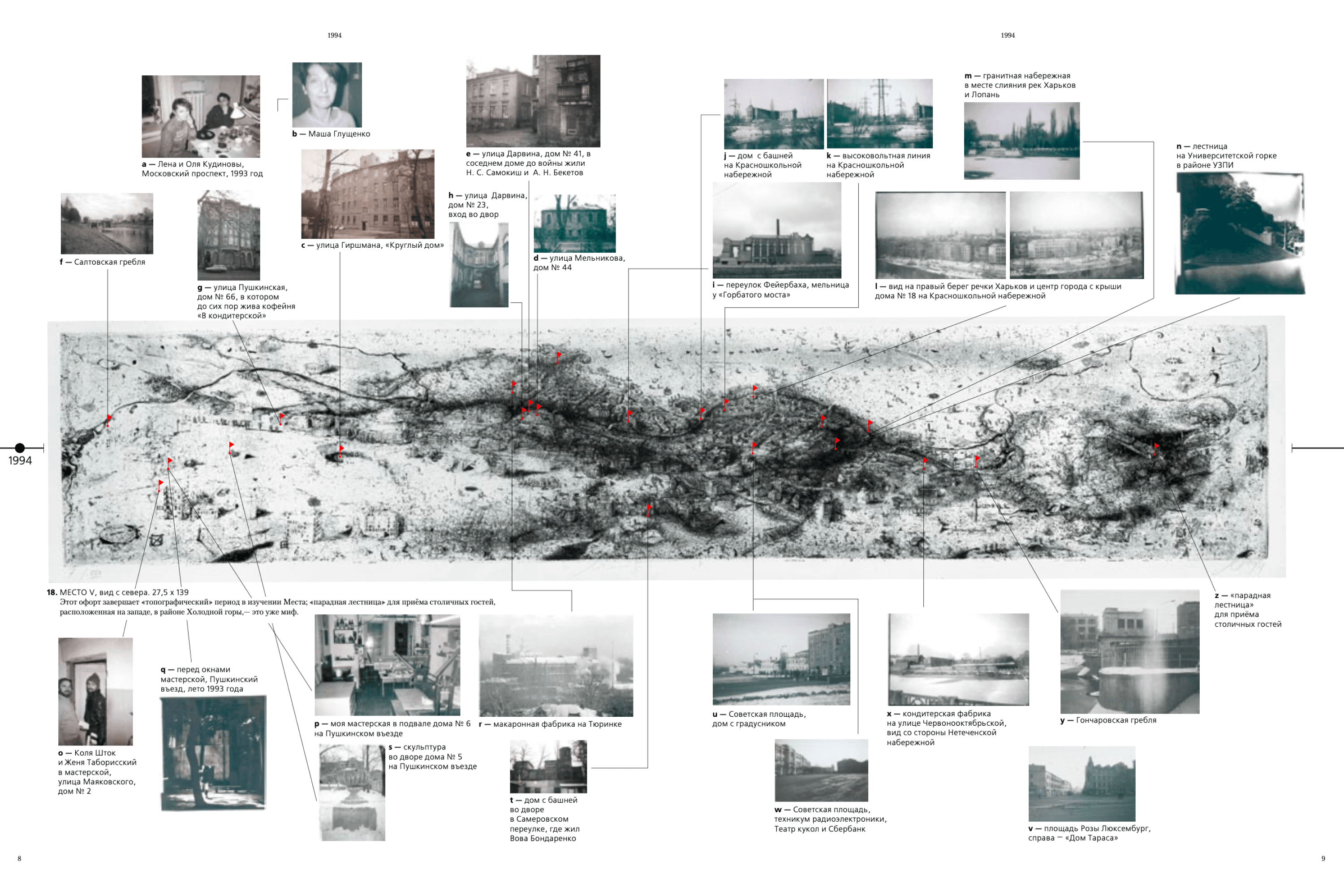
Some pages from the book “Utopia. Chronicles. 1992—2005.” Photo: makov.com.ua / © Makov Pavlo, 2026. All rights reserved. 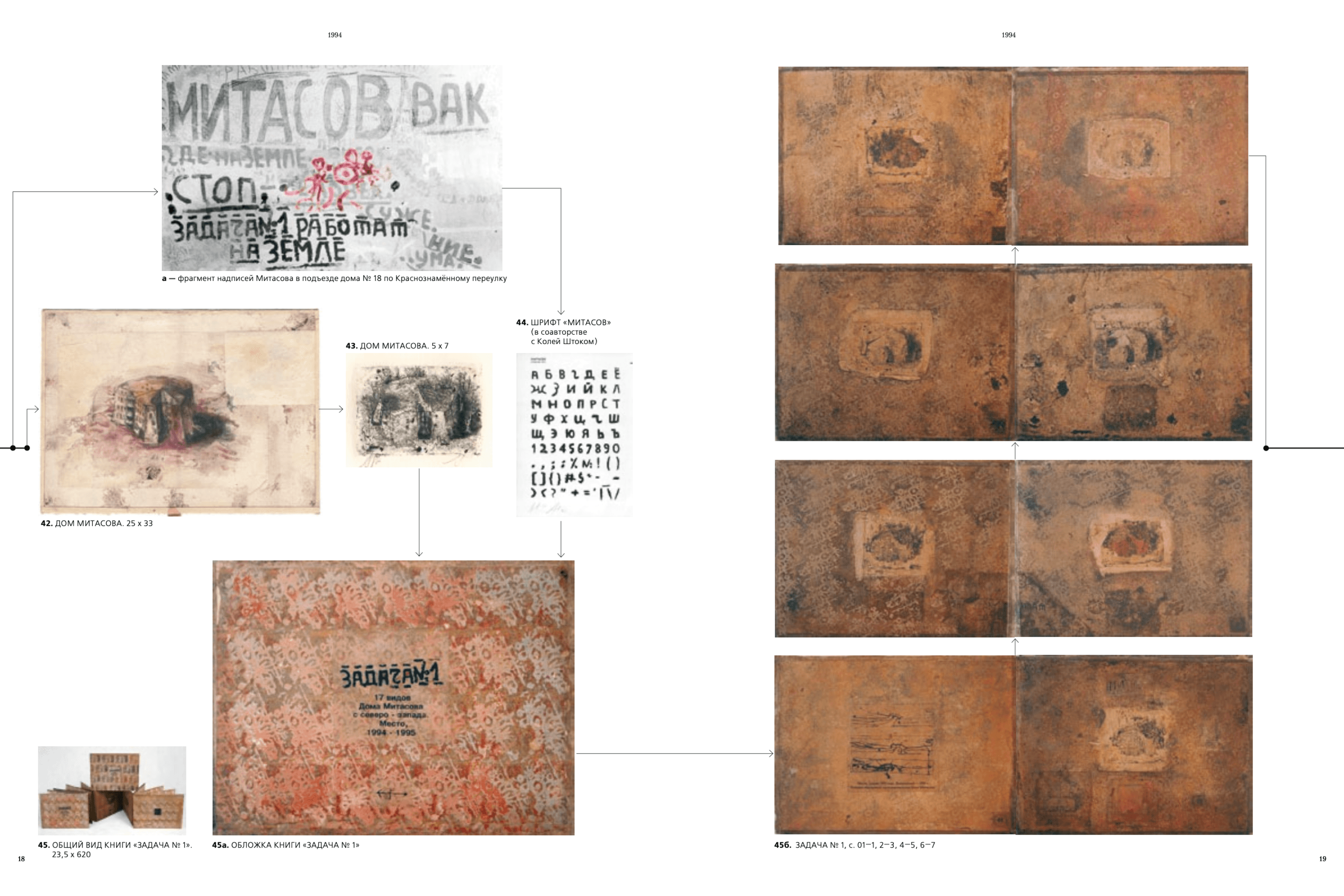
Photo: makov.com.ua / © Makov Pavlo, 2026. All rights reserved. 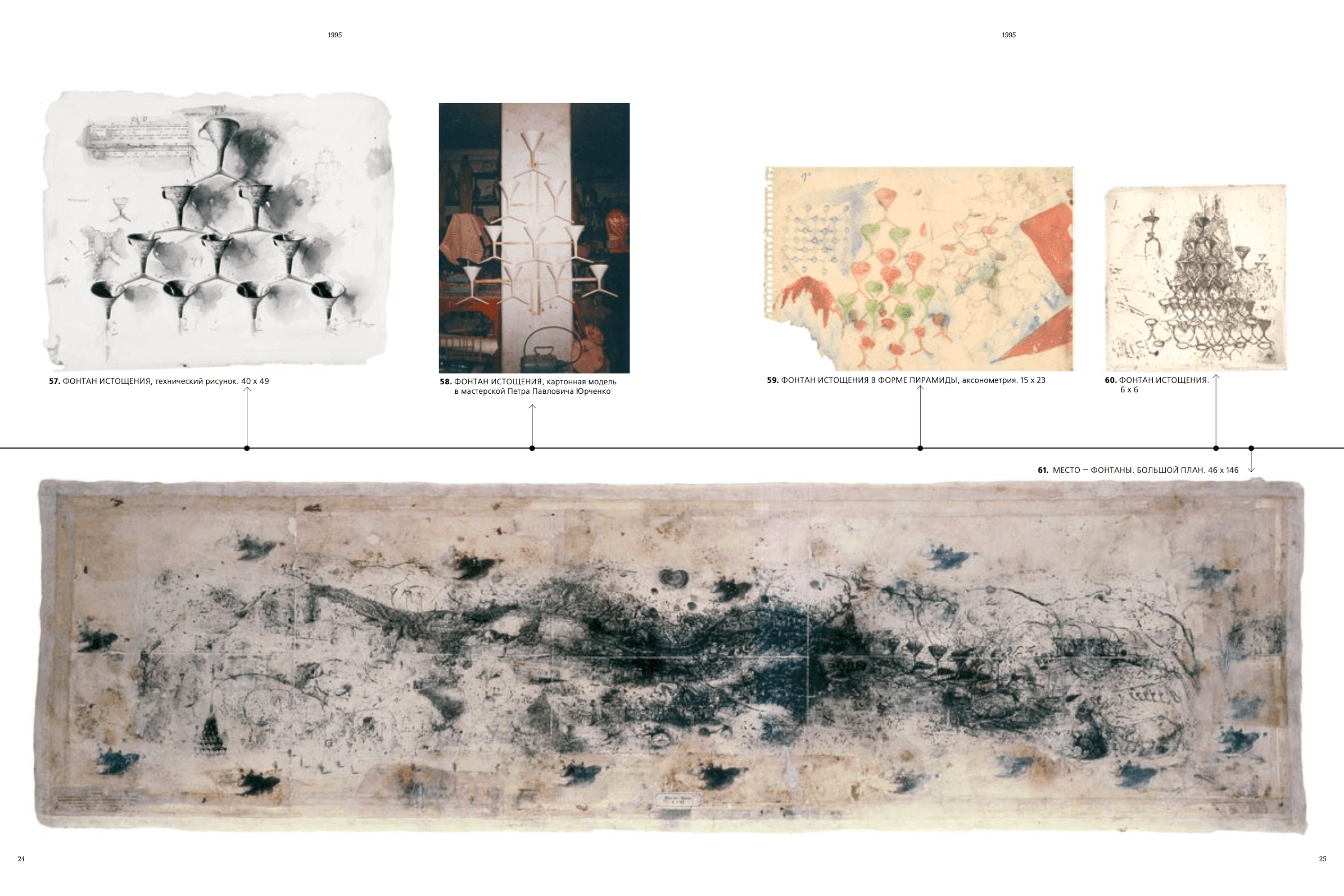
Photo: makov.com.ua / © Makov Pavlo, 2026. All rights reserved. 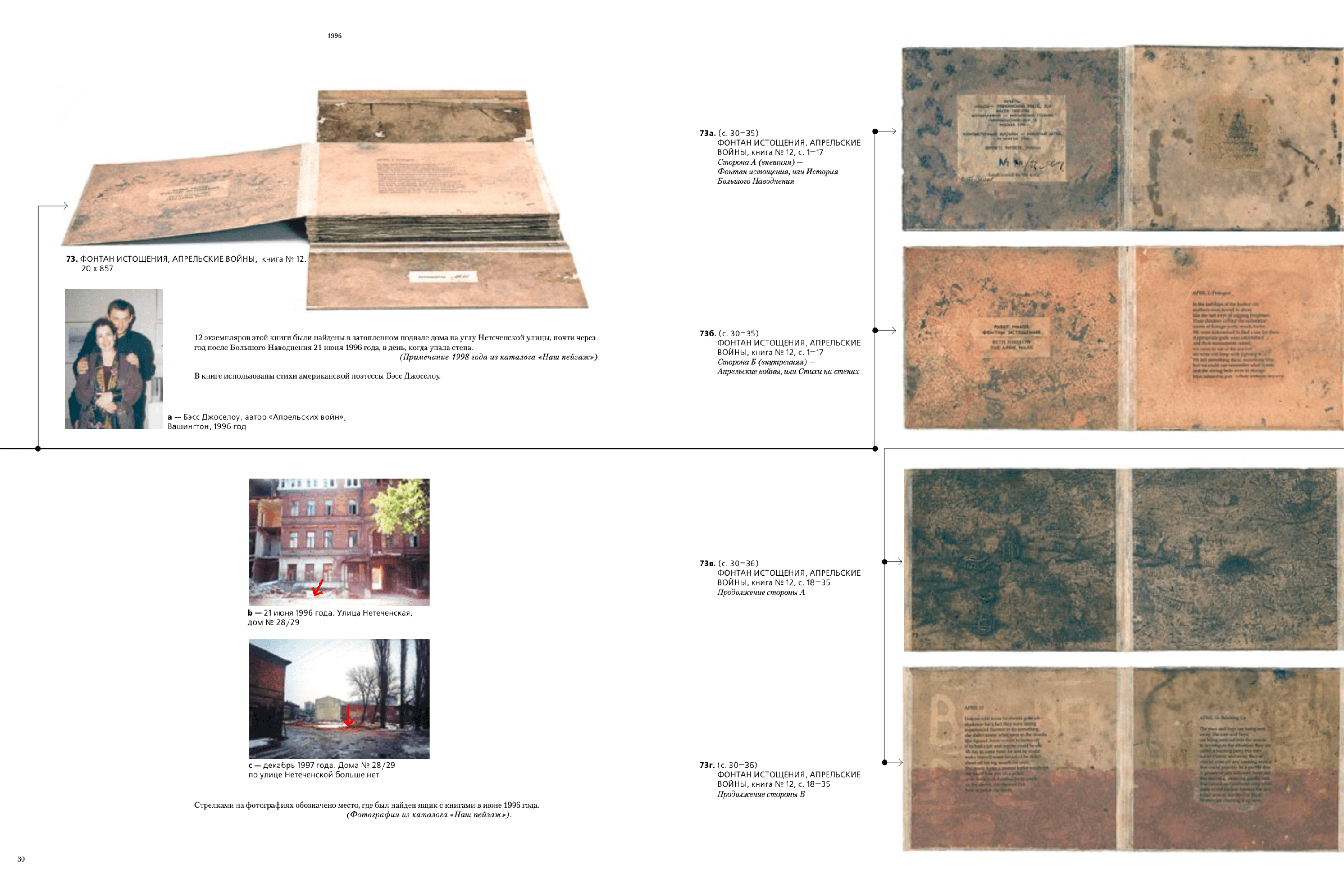
Photo: makov.com.ua / © Makov Pavlo, 2026. All rights reserved. 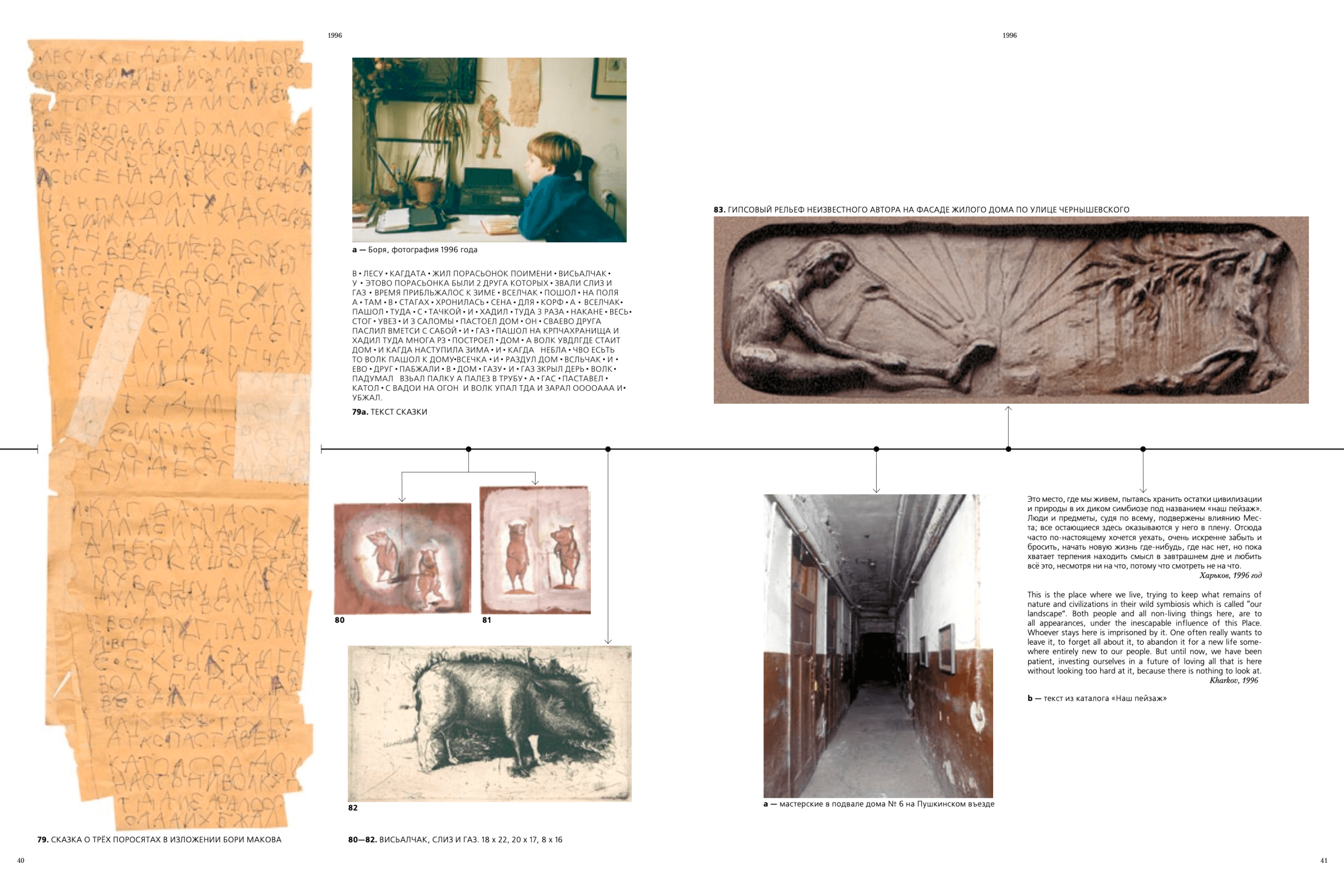
Photo: makov.com.ua / © Makov Pavlo, 2026. All rights reserved. 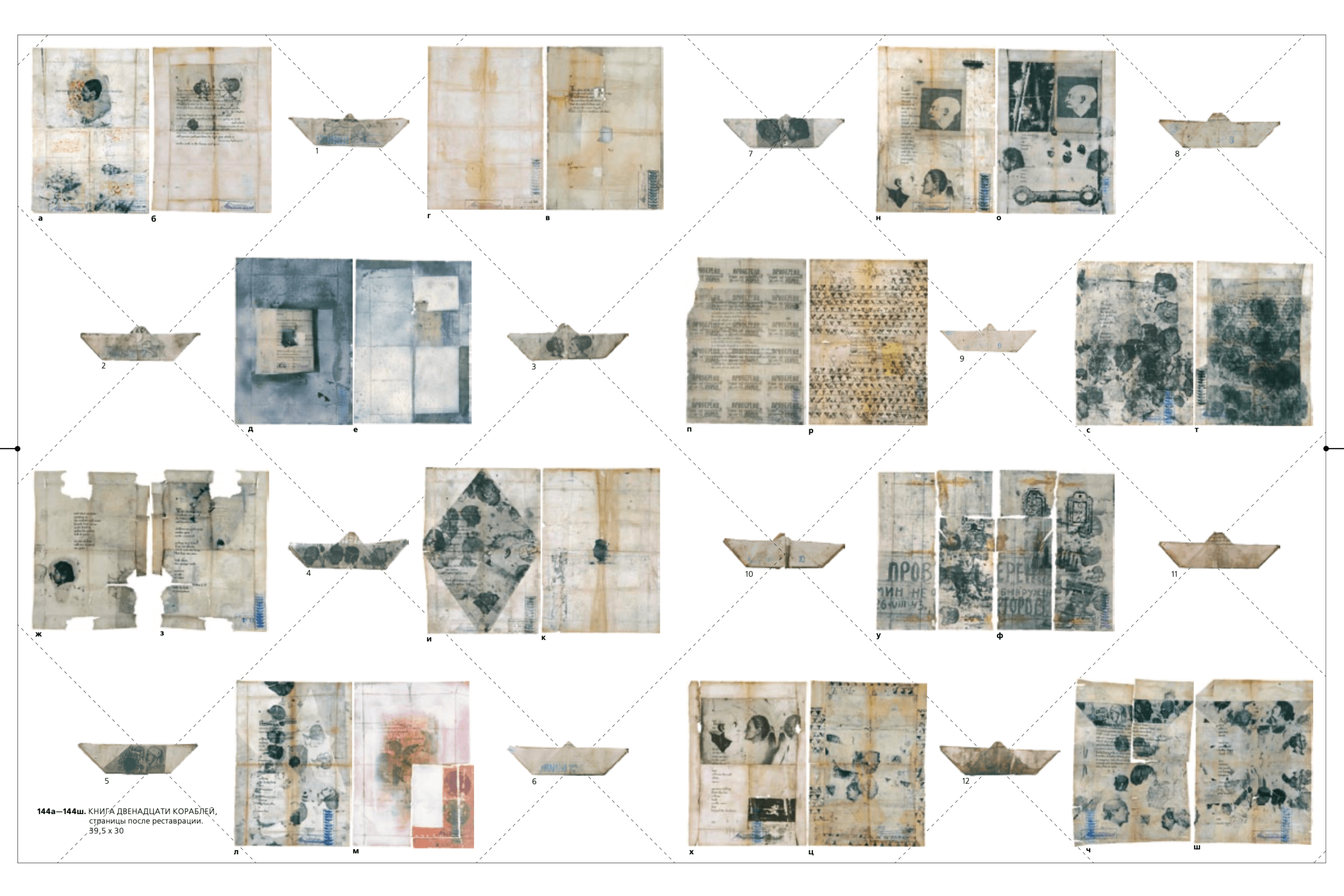
Photo: makov.com.ua / © Makov Pavlo, 2026. All rights reserved.
Twelve years ago, in a small shop in Florence, Makov bought a movable type letter “U” from an old printing press. He still marks his works with this symbol—signifying that, in a broader sense, they all belong to utopia. “I mean an unrealizable utopia—a place that not only doesn’t exist, but never will,” Pavlo says.
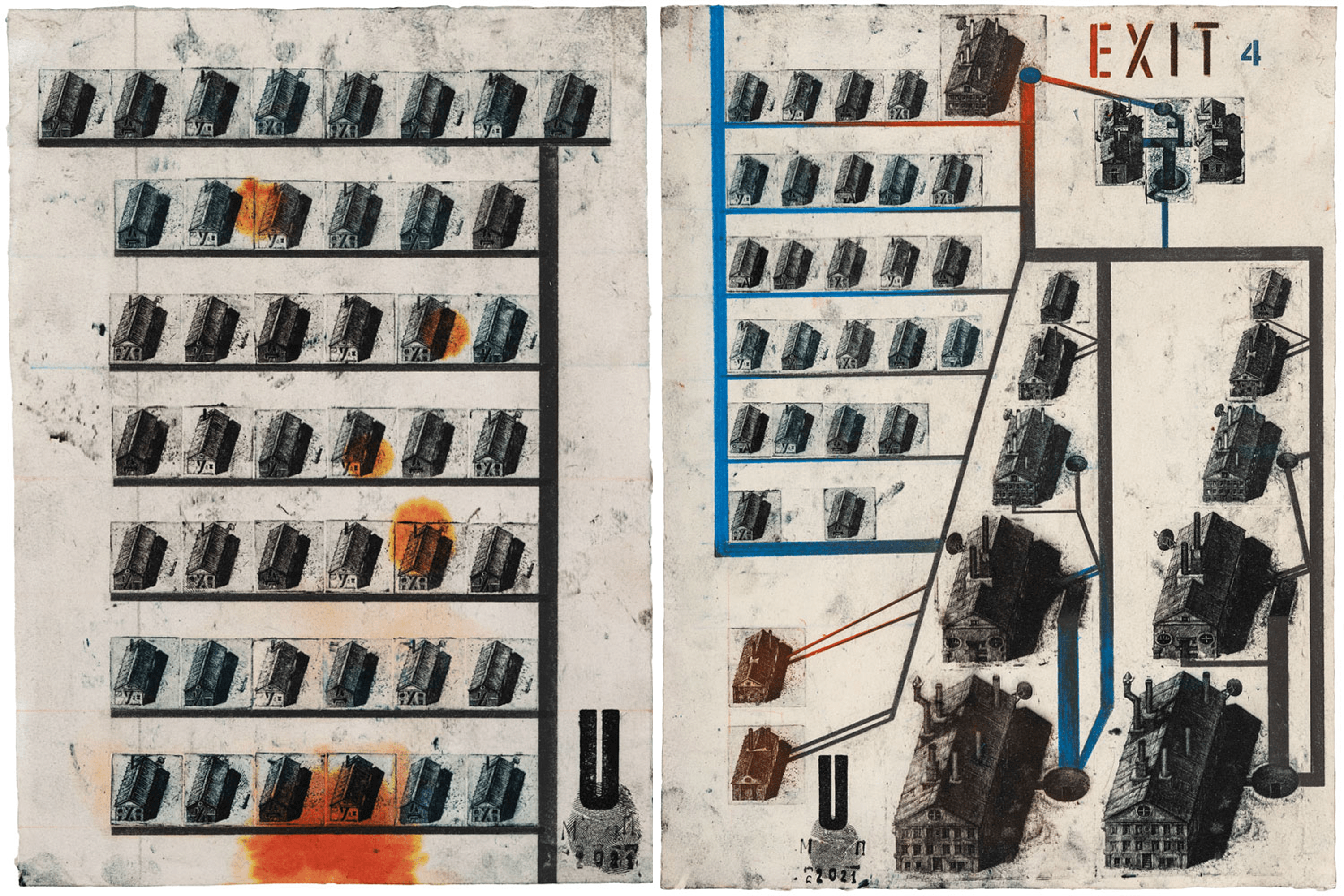
Today, Utopia. Chronicles is out of print, and Makov himself has only two copies left. One is a working copy, filled with notes and underlinings; the other is pristine. As our conversation in his studio turns to the topic of utopia, Pavlo pulls out the pristine copy and flips through it for a long time, looking for a letter he once wrote to a friend. Finally, he finds it. The last paragraph begins: “…It was succeeded by UtopiA with its Tin Heroes—no longer just as a concept, but as a frantic attempt to explain to myself and others the secret meaning of the acronym UA: 'The Place That Isn’t' (…) The place where you live despite everything (…).”
4
Pavlo and his wife Maryna have a dacha with a garden outside Kharkiv—more precisely, near the village of Lyptsi. Just a standard 600-square-meter plot, which they bought over 20 years ago and spent years putting in order; only the walls remained of the original structure. Every year, they saved up and poured all their earnings into the house. They did much of the work with their own hands—painting and restoring. Pavlo brought back affordable yet charming light fixtures from vintage shops in Prague, London, and Amsterdam. The house eventually held a library and an art collection, regularly hosting friends. Maryna planted the garden—roses, perennials, trees. It was these gardens that became the defining subject of Pavlo’s work for years to come.
“I don’t even know why a garden,” Pavlo says. “Perhaps because we got one of our own, or perhaps because human coexistence with the land is best expressed through the image of a garden. If you stop working a garden, in 20 years it reverts to wilderness. Or perhaps—as Sasha Filonenko put it so interestingly—'the phenomenon of utopia in human history exists in two incarnations: the city and the garden.'”
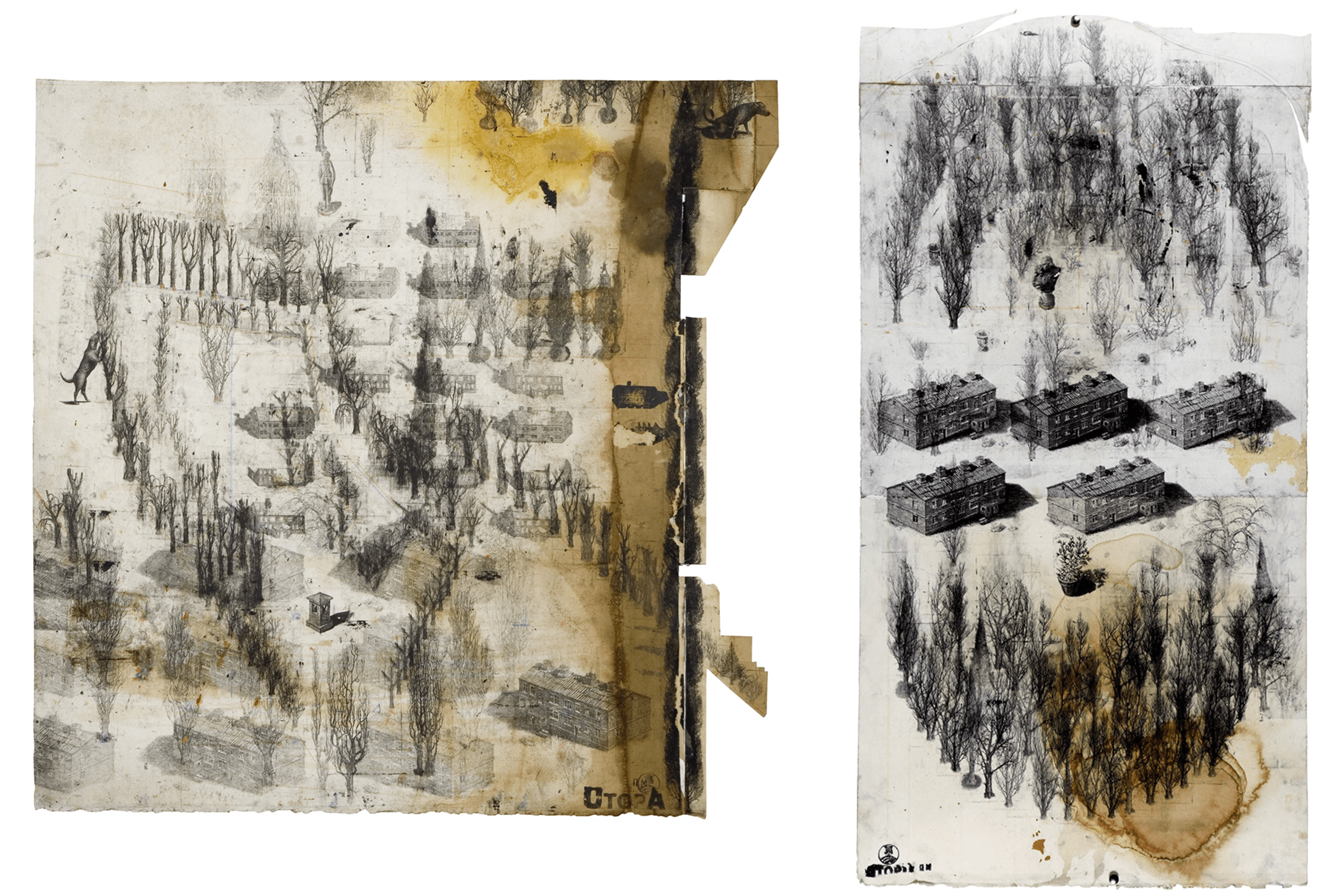
Square Alley, 2008—2009; Glade of Lovers, 2007—2009. Photo: makov.com.ua / © Makov Pavlo, 2026. All rights reserved. 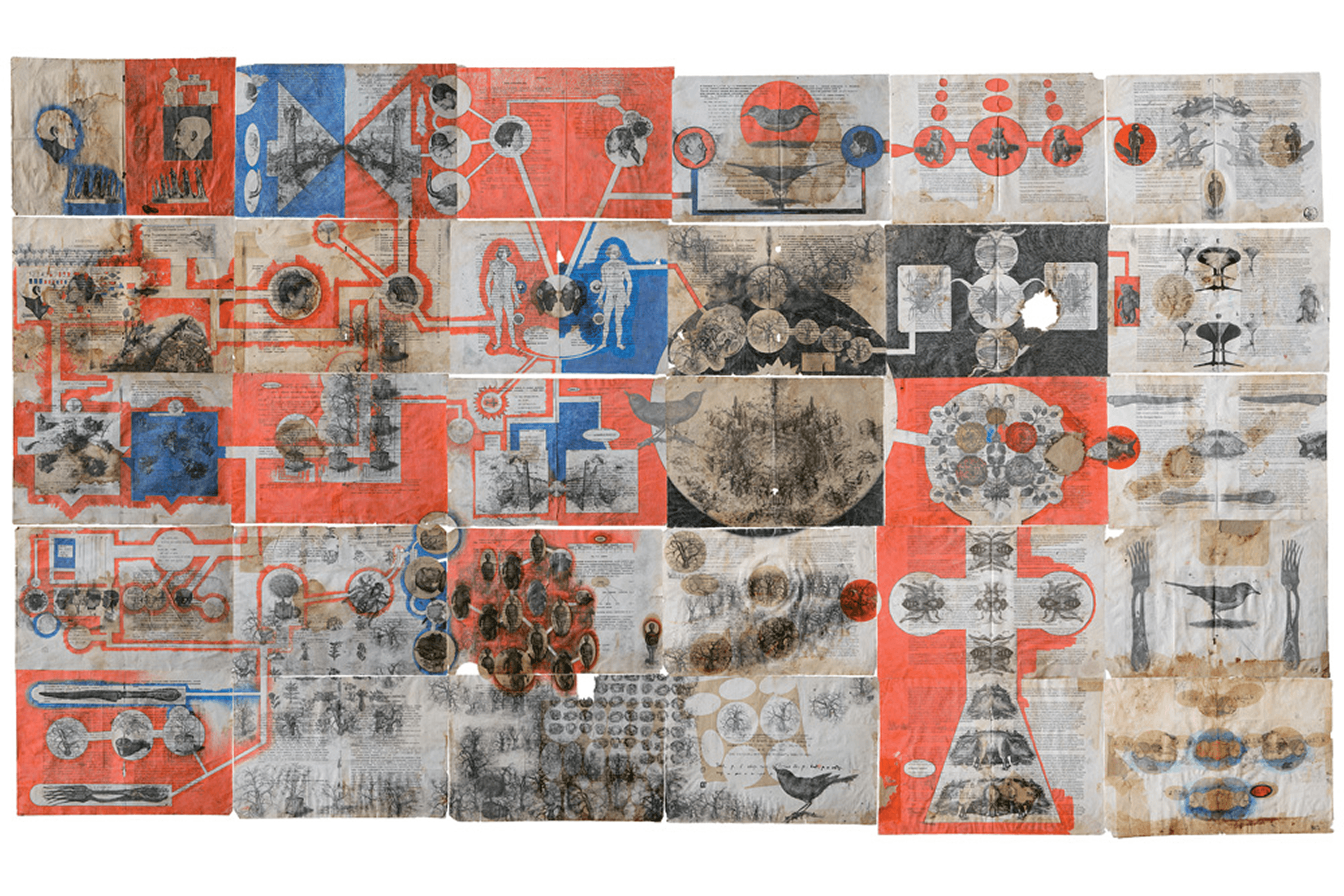
Zimin’s Garden, 2006—2007. Photo: makov.com.ua / © Makov Pavlo, 2026. All rights reserved. 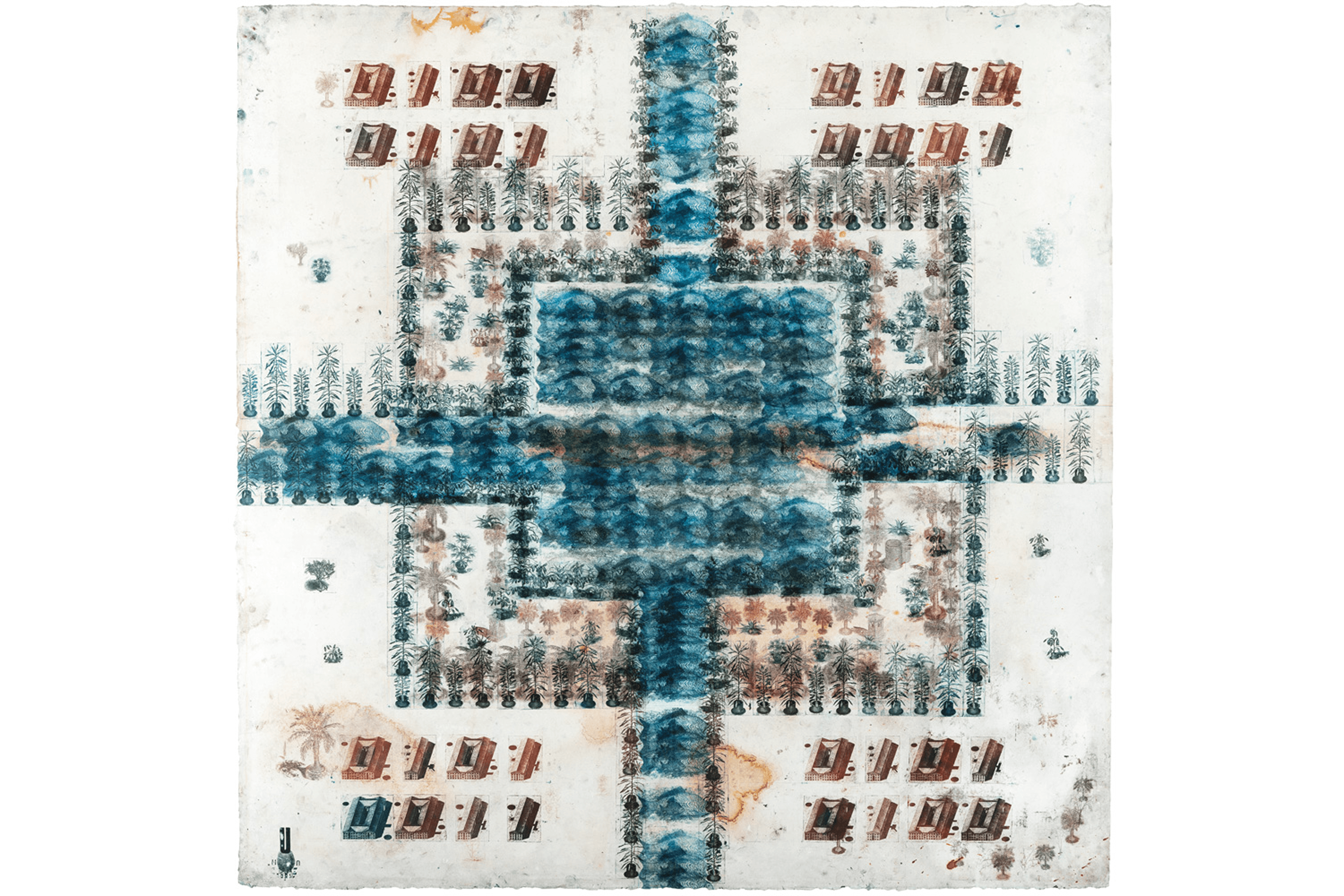
Arabic garden, 2005—2021. Photo: makov.com.ua / © Makov Pavlo, 2026. All rights reserved. 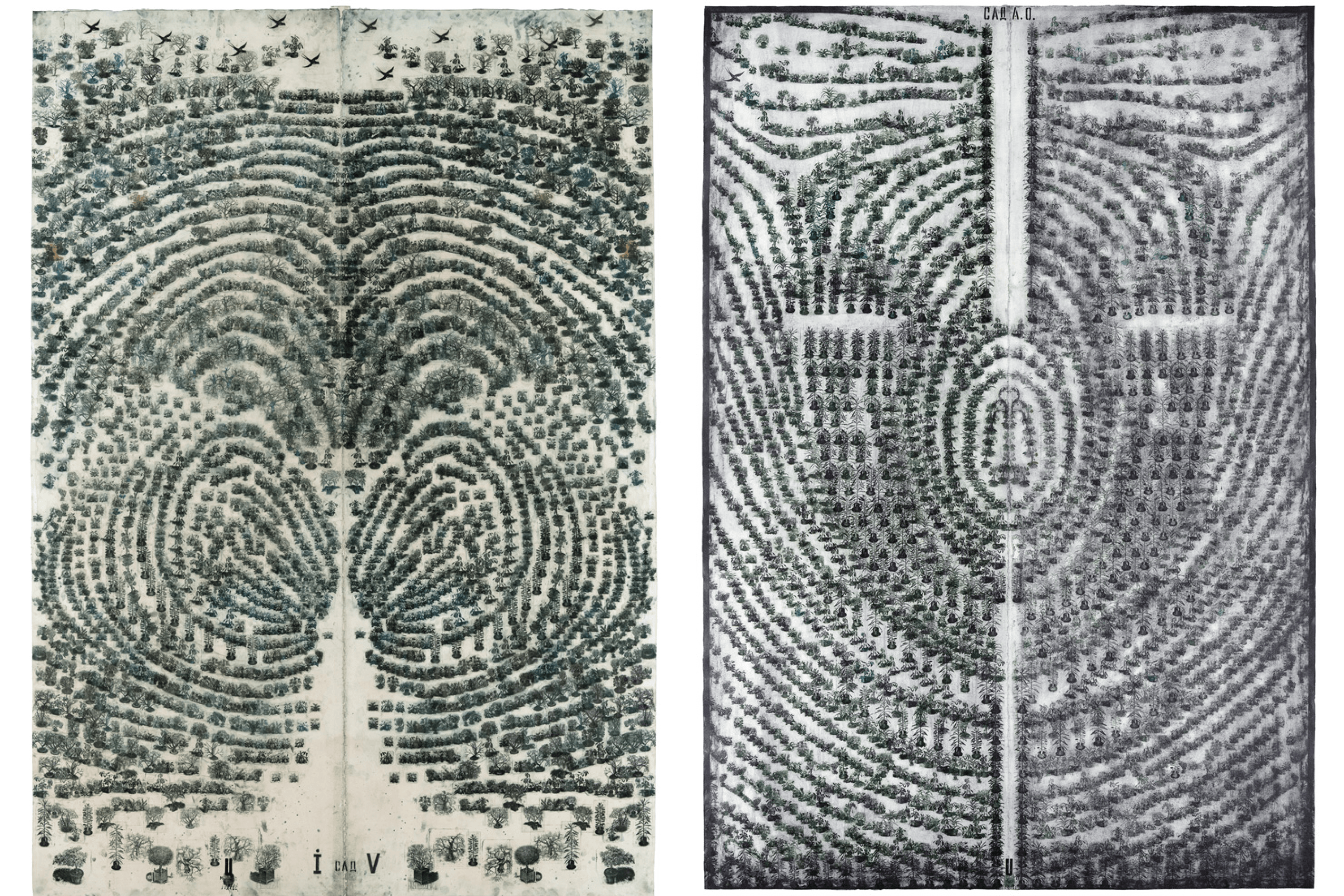
S.M. Garden, 2021—2023; A.O. Garden, 2020—2021. Photo: makov.com.ua / © Makov Pavlo, 2026. All rights reserved. 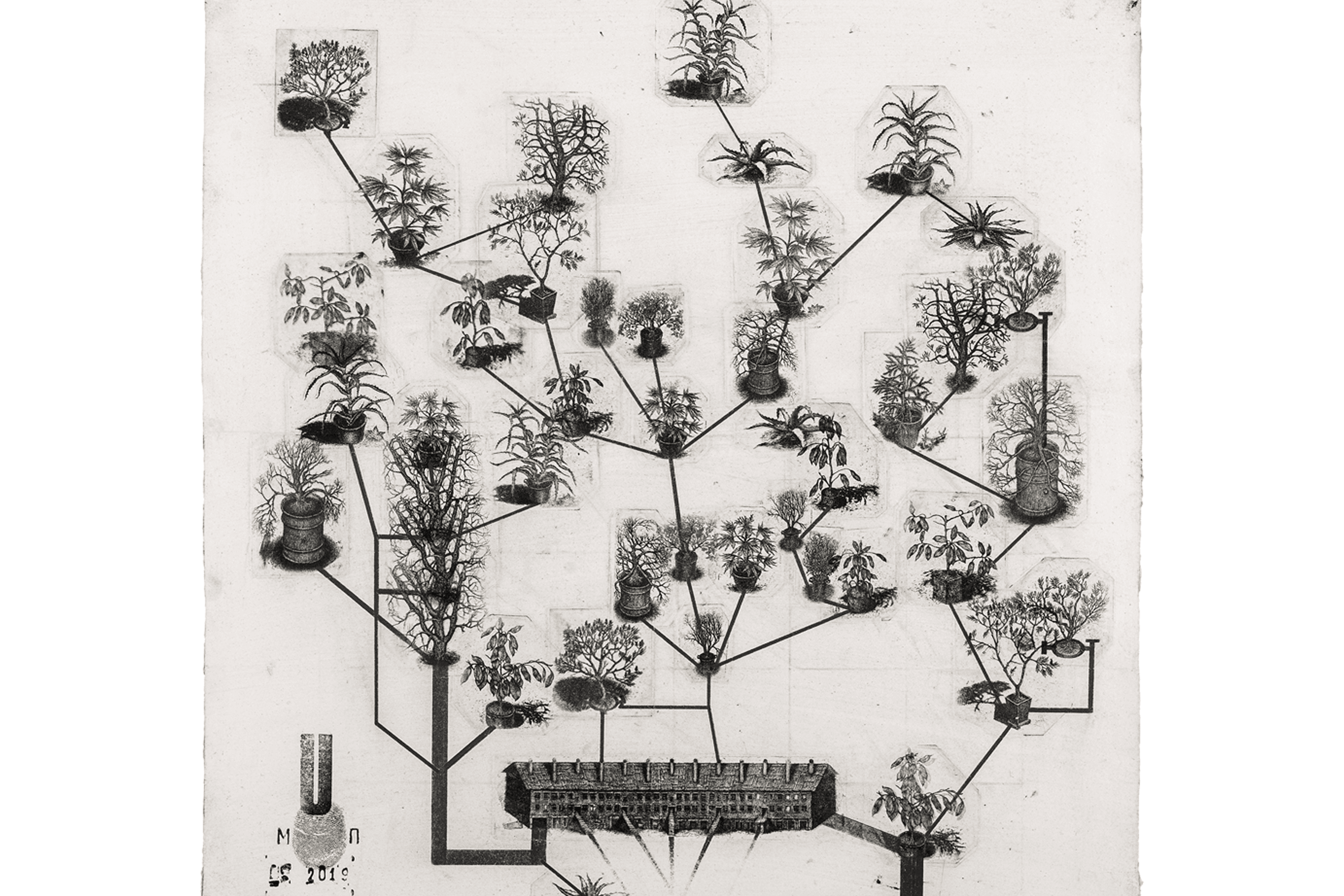
Winter garden 2, 2019. Photo: makov.com.ua / © Makov Pavlo, 2026. All rights reserved. 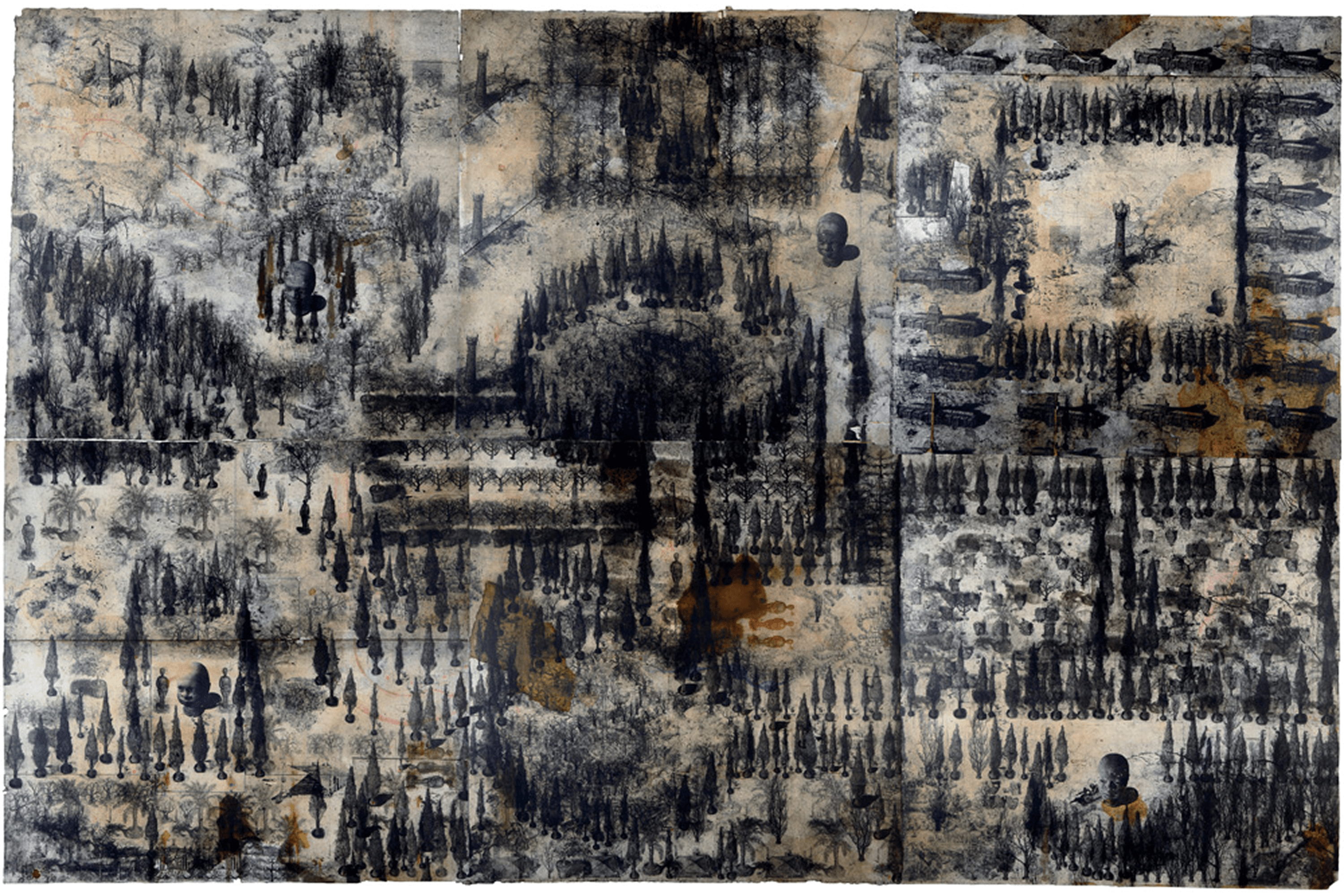
Suprunivka, 2005—2008. Photo: makov.com.ua / © Makov Pavlo, 2026. All rights reserved.
When Makov was already absorbed in the theme of gardens, he and Maryna visited Versailles. They spent the entire day in the gardens without ever stepping inside the palace. Pavlo was struck by a thought: the creators of Versailles knew they would never see the realization of their design in their lifetime. Makov views a garden as a grand natural installation, where fountains and sculptures merely supplement what nature has already created. Painting and graphics can only capture what a garden was at a single, fleeting moment.
From 2012 to 2014, Makov worked on the series Paradiso Perduto—Italian for “paradise lost.” Eleven works depict his dacha community near Lyptsi. Filled with houses, fences, plants, and trees sprouting from metal containers, everything is orderly and meticulously kept—yet there are almost no people, no lights burning anywhere. The Paradiso Perduto exhibition opened in Kyiv in the fall of 2014, just as war broke out in the east of Ukraine. For the past two years, no people remain near Lyptsi—only drones and KABs hover overhead.
“I started Paradiso Perduto without any thought of war,” Makov says. “My idea was that everyone tries to create a little paradise on their six hundred square meters. But everything beyond that paradise, beyond its fence, doesn’t concern them. Perhaps they even succeed in building this paradise, but when something starts happening beyond the fence, that paradise perishes right along with everything else.”
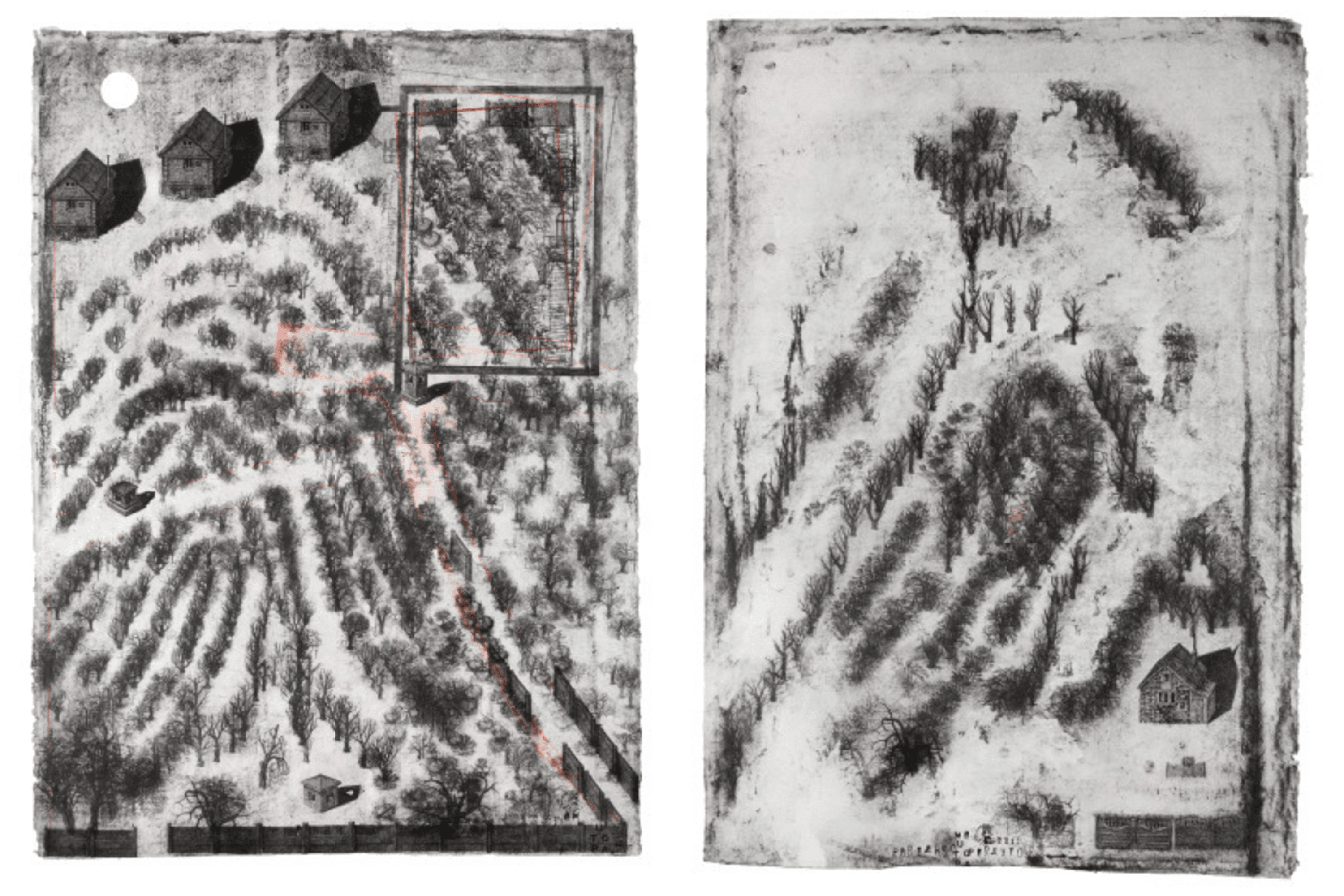
Paradiso Perduto #3 and #4, 2013. Photo: makov.com.ua / © Makov Pavlo, 2026. All rights reserved. 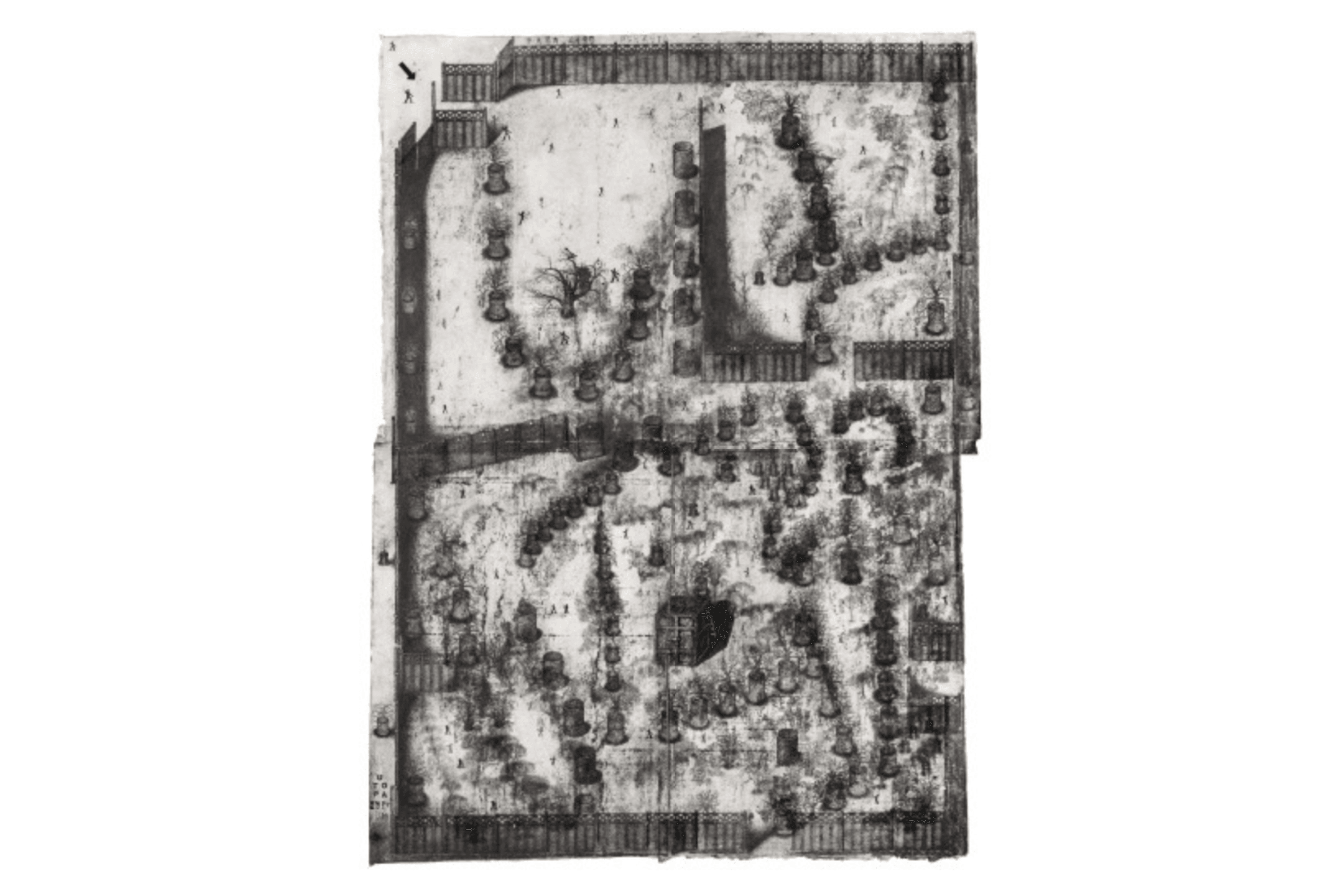
Paradiso Perduto #8, 2014. Photo: makov.com.ua / © Makov Pavlo, 2026. All rights reserved. 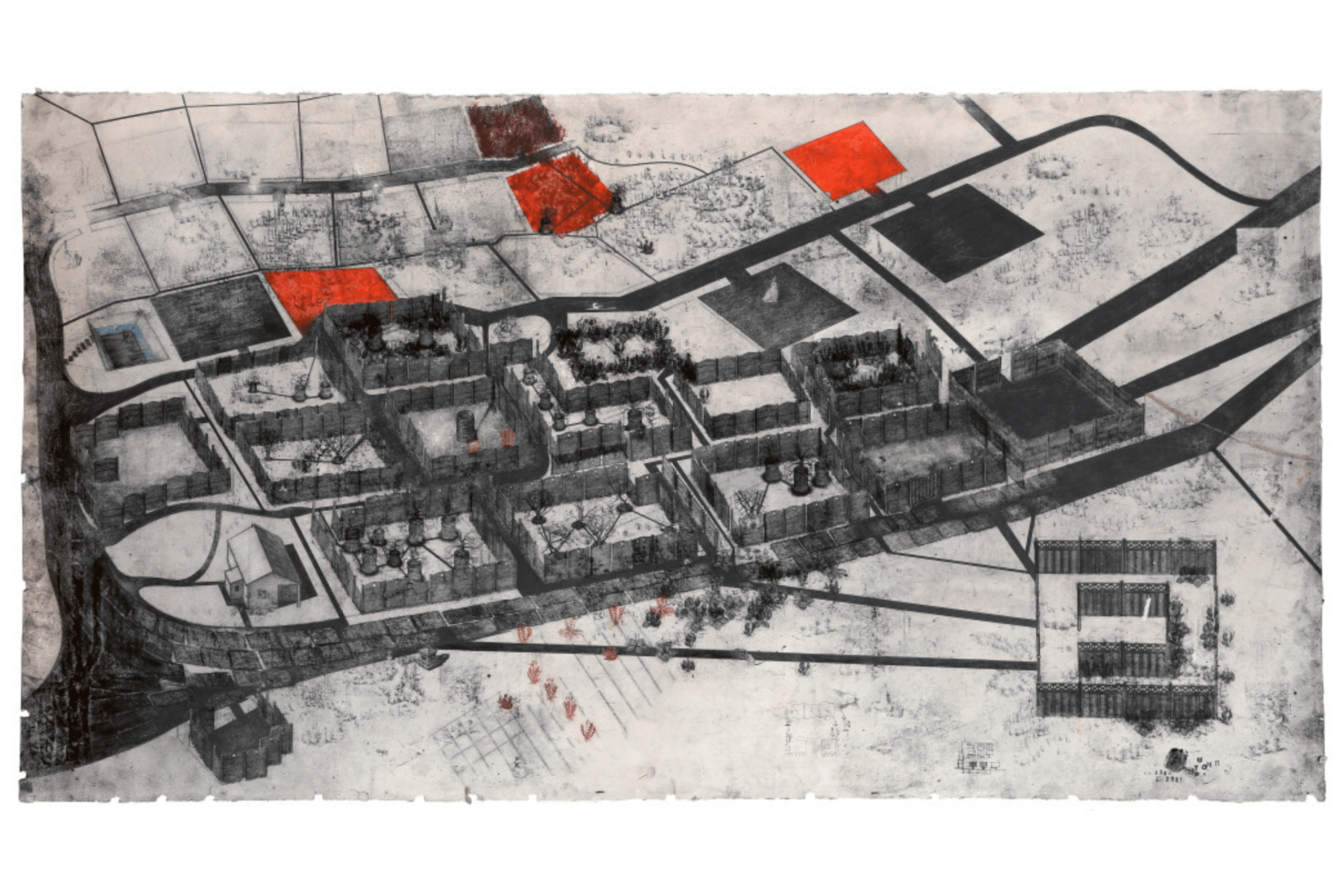
Paradiso Perduto #10, 2013—2014. Photo: makov.com.ua / © Makov Pavlo, 2026. All rights reserved. 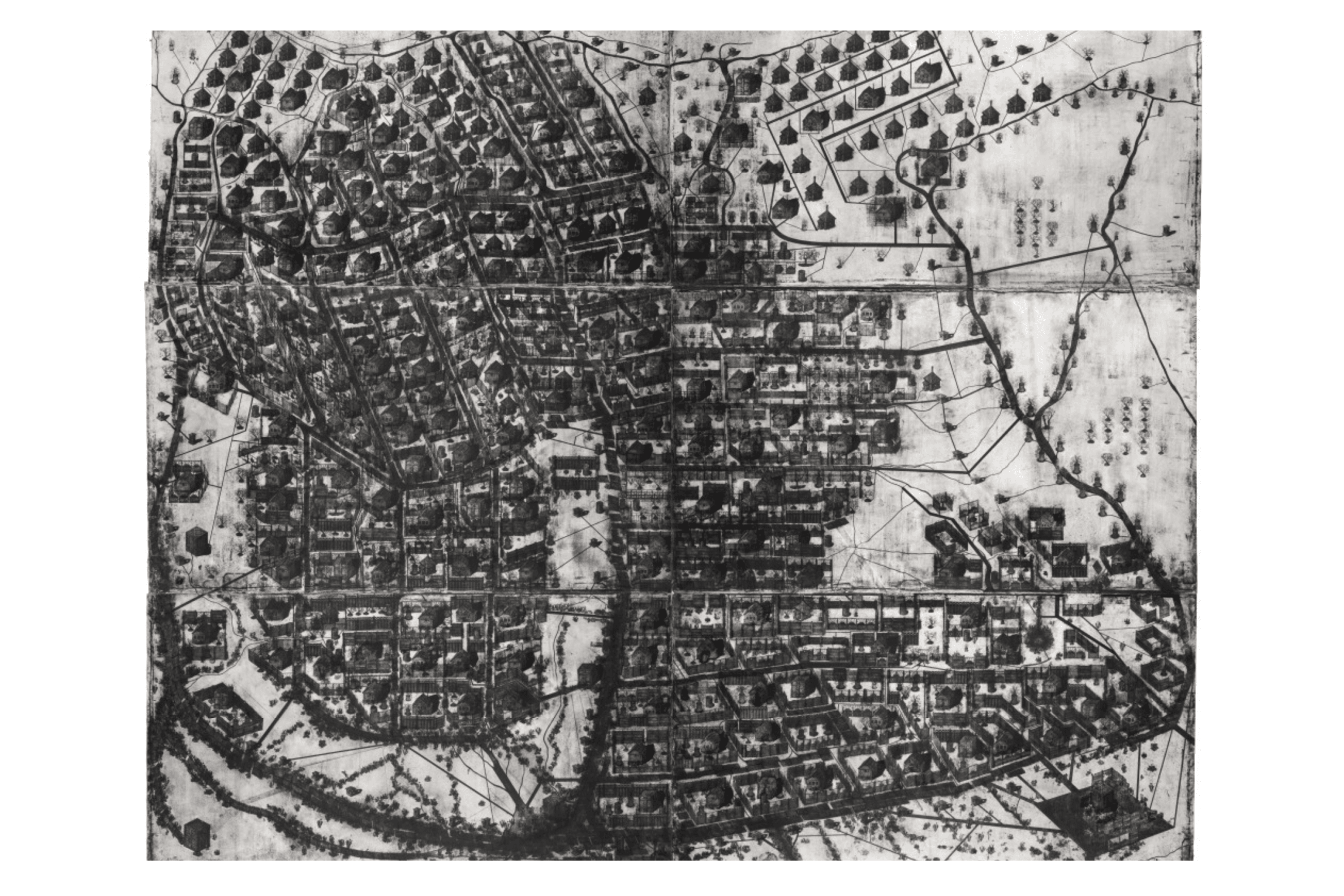
Paradiso Perduto, 2012—2014. Photo: makov.com.ua / © Makov Pavlo, 2026. All rights reserved.
Makov hates it when his works are called prophetic—a label given to Paradiso Perduto, to the tin soldiers, and to Dorotea (Te Siege of Kharkiv), on which Pavlo worked in 2014–2015, capturing the concept of a city under defense long before full-scale war.
“The tin soldiers appeared because I felt, I watched the news, I heard, I knew—humanity simply cannot come to an agreement,” Makov says, his tone bordering on irritation. “It cannot find a way to live together. Artists aren’t prophets. You simply feel something, something troubles you—so you create. If it aligns with events that happen later, well, that’s just a coincidence.”
In 2022, Makov’s dacha was under Russian occupation. Yet the house remained undamaged—the Russians were unable to break open the door. Pavlo and his wife were abroad at the time; they spent the first days of the full-scale invasion in a shelter at the YermilovCentre before heading to the Venice Biennale. For a while, they lived in Italy—in a village between Florence and Bologna. Having visited Kharkiv several times, they returned for good in early 2023. Nearly the entire year was spent at the dacha, with Pavlo commuting daily to his studio in Kharkiv. Once, Maryna said half-jokingly: “Let’s put a sign at the turn to our dacha—'Paradise Lost is located here.'” The sign was never put up.
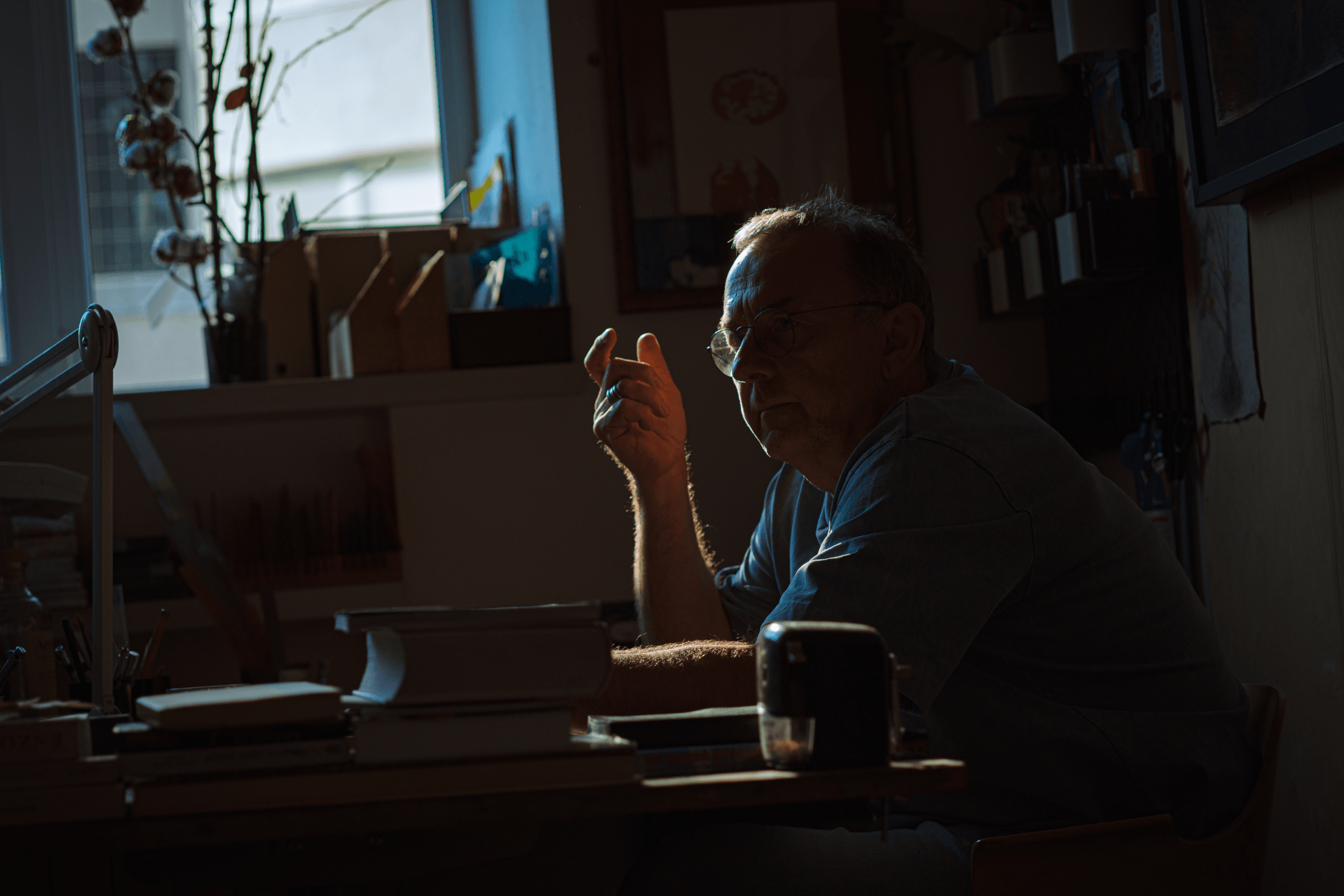
In Pavlo Makov’s studio. Photo: Oleg Palchyk / YB 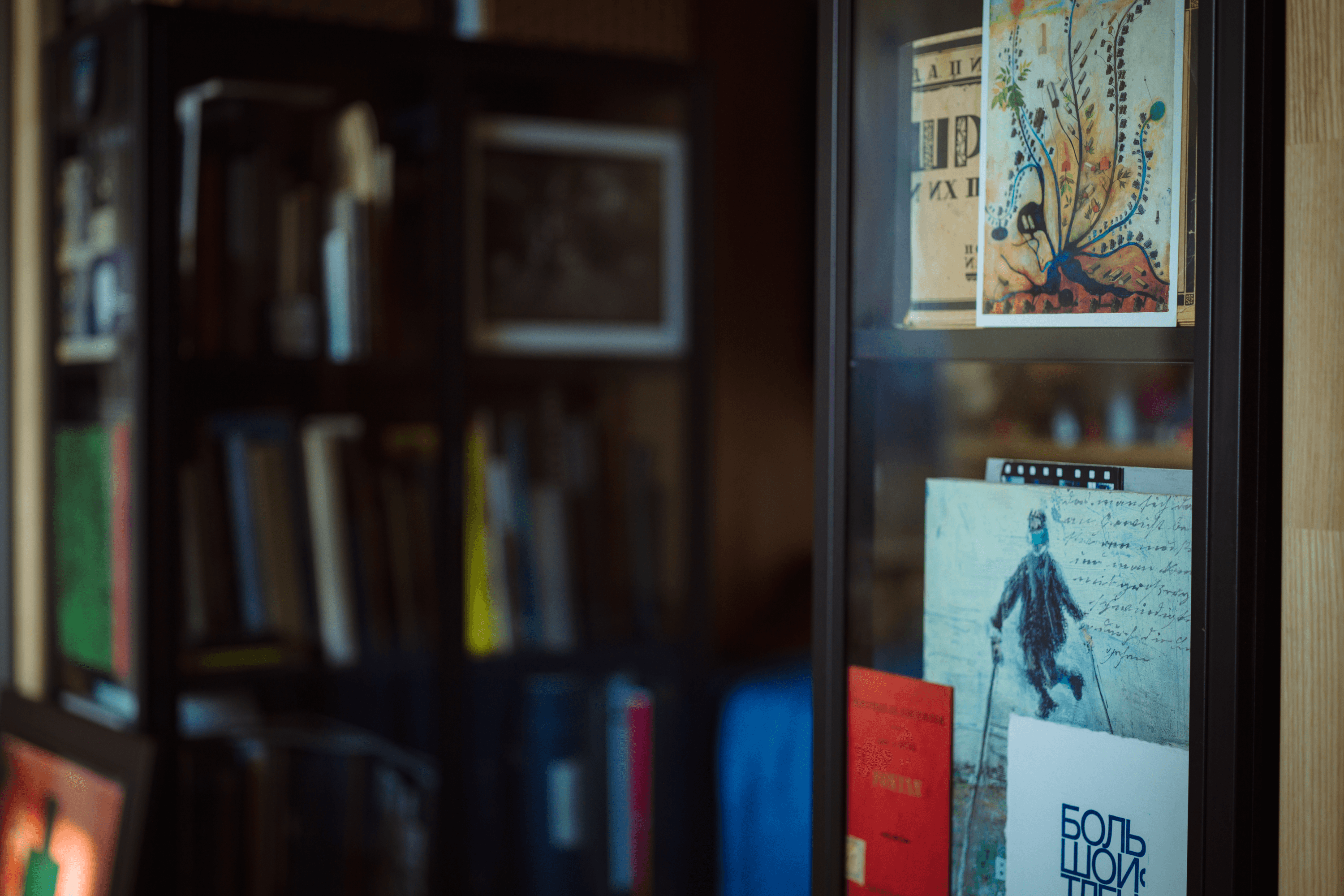
Photo: Oleg Palchyk / YB 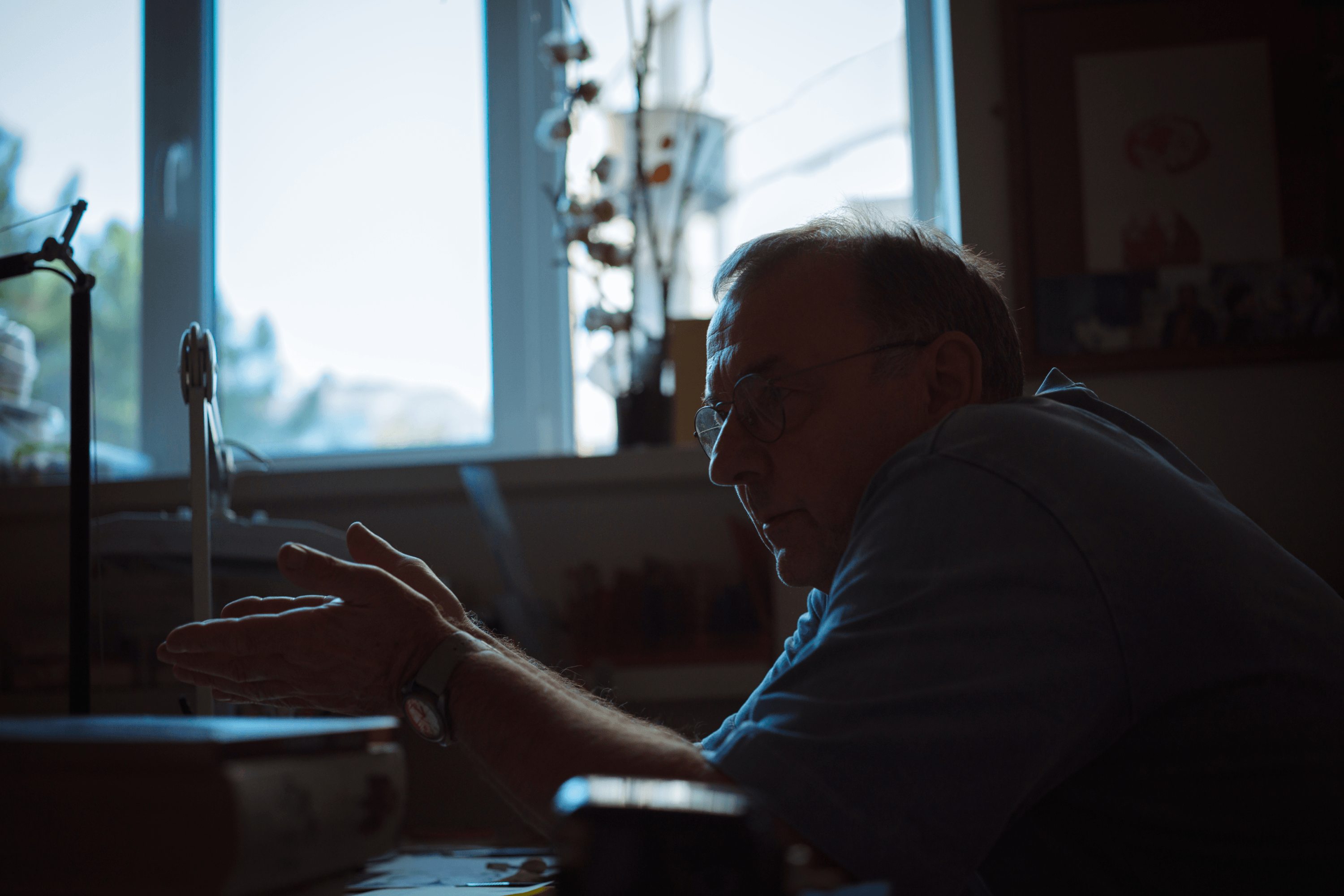
Photo: Oleg Palchyk / YB 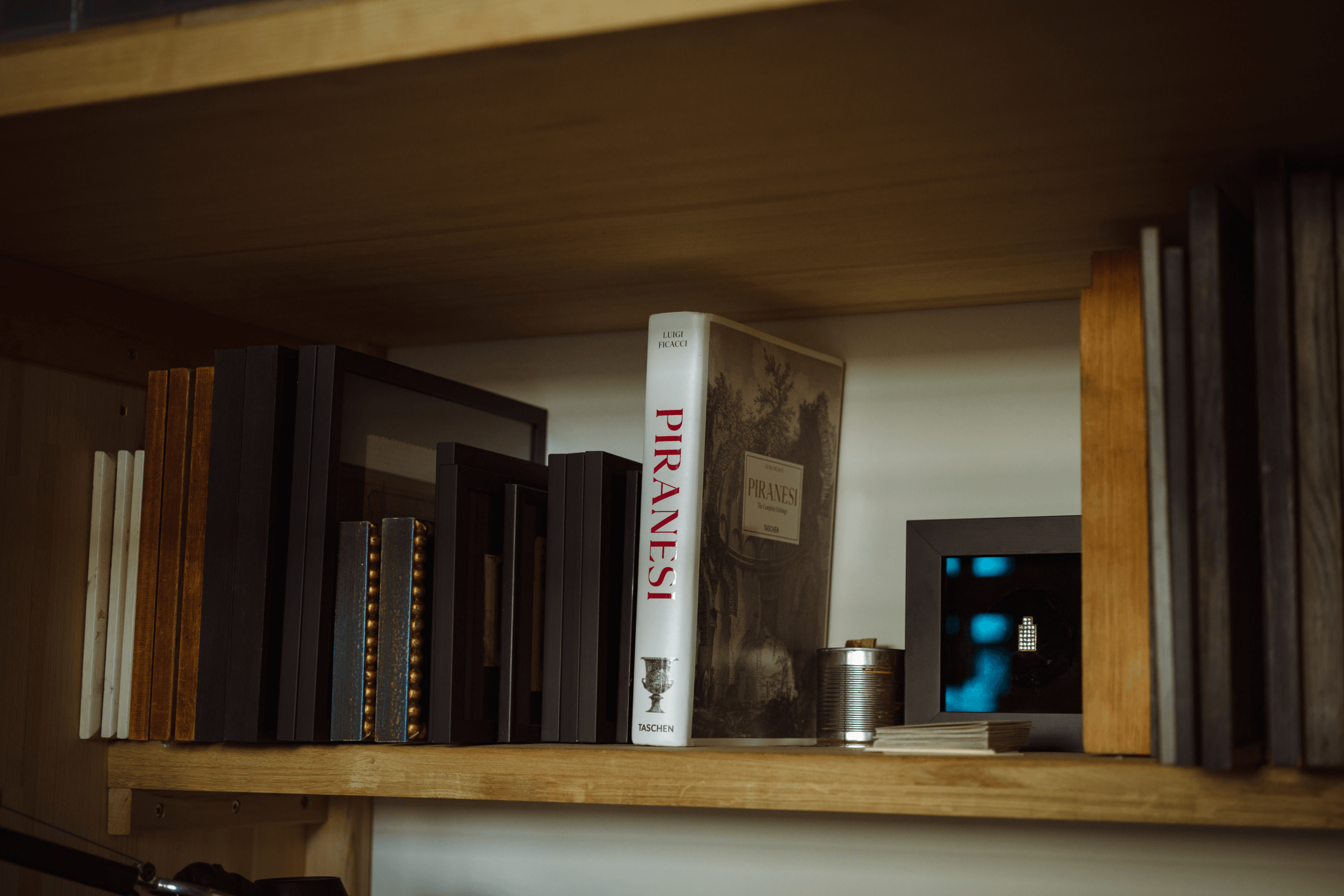
Photo: Oleg Palchyk / YB 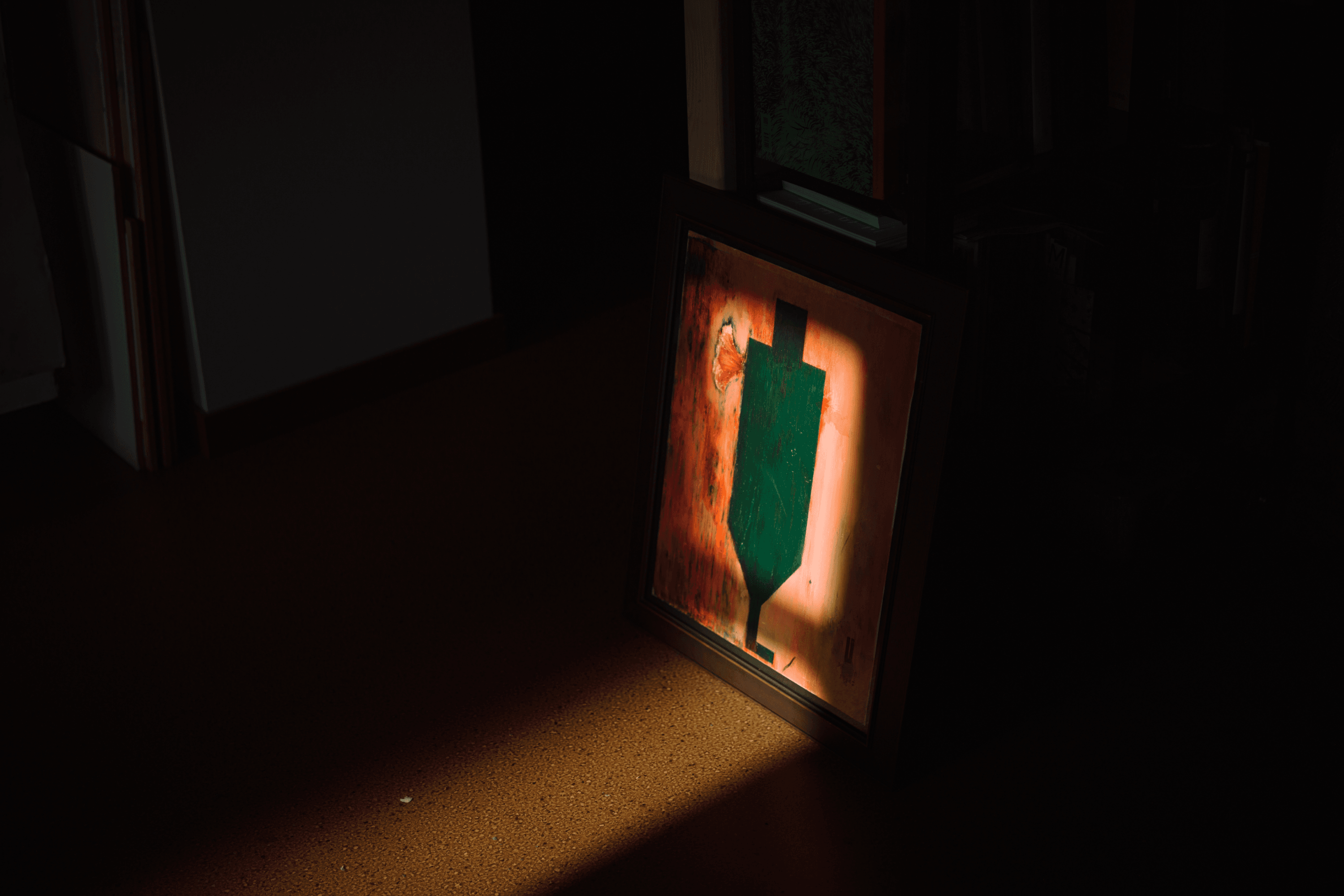
Photo: Oleg Palchyk / YB 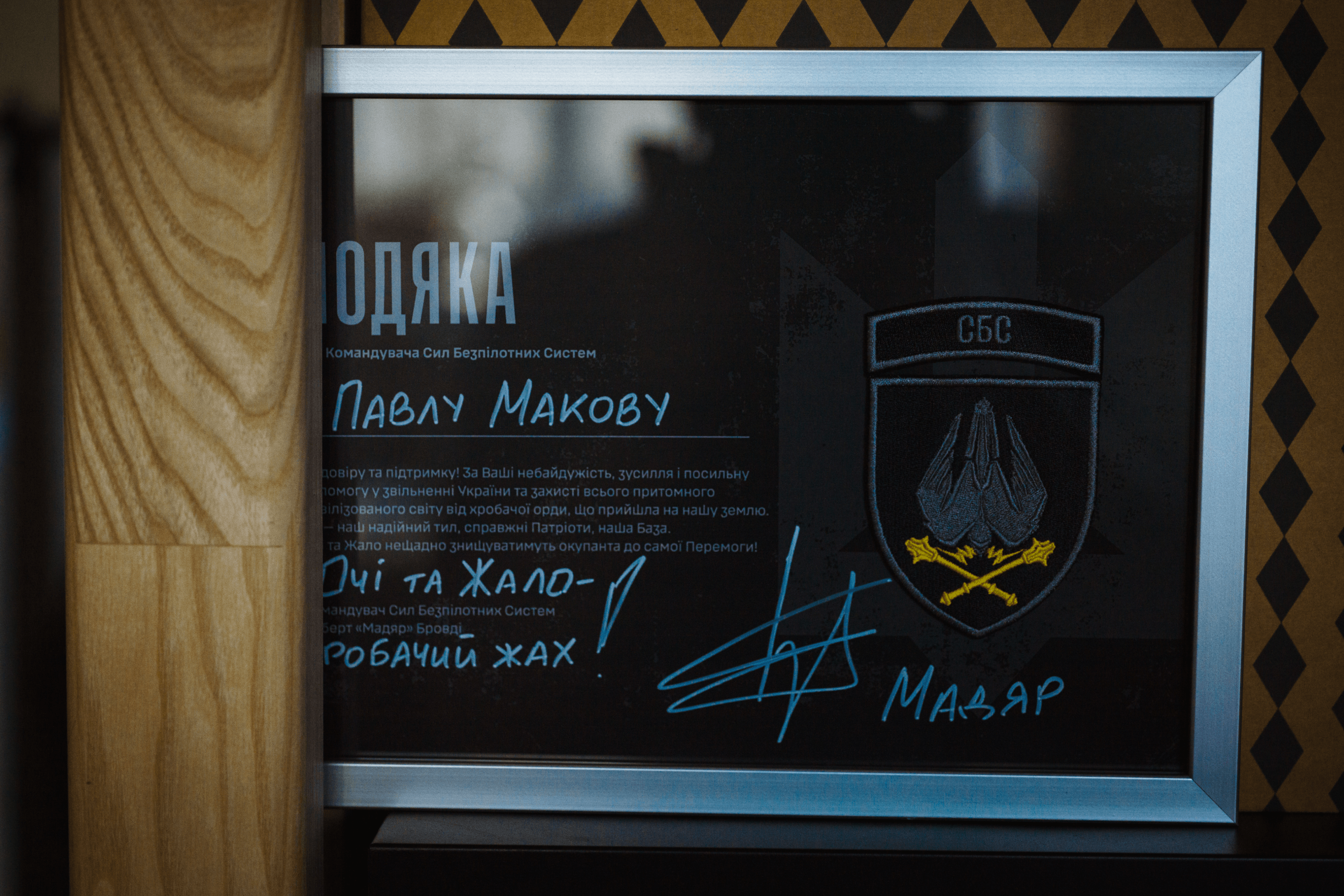
Photo: Oleg Palchyk / YB
In 2024, Russian forces launched a new offensive in the Kharkiv region. They didn’t reach the dacha community near Lyptsi, but shelled it heavily; many houses burned down.
“Ours is standing windowless, and shells fell in the garden,” Pavlo relates. “By a miracle, I managed to retrieve three books and one large piece by Pasha Kerestey—I bought it as a 50th birthday gift for Masha. Everything else stayed behind, including my own works. Well, regarding the latter—it’s fine, I’ll make more…”
Another item left behind at the dacha was an aerial photograph taken by an American reconnaissance plane. It showed Ulyanka, a district in Leningrad where Pavlo’s grandmother’s house and garden once stood. As a child, he loved visiting there. Later, the district was built over with high-rises. When Pavlo was 18, he went there to find where the garden used to be. He couldn’t find it. Around 2016, his son gave him a birthday gift—a pre-development photo of that very spot. Neither houses nor gardens were visible on it, but they had been there.
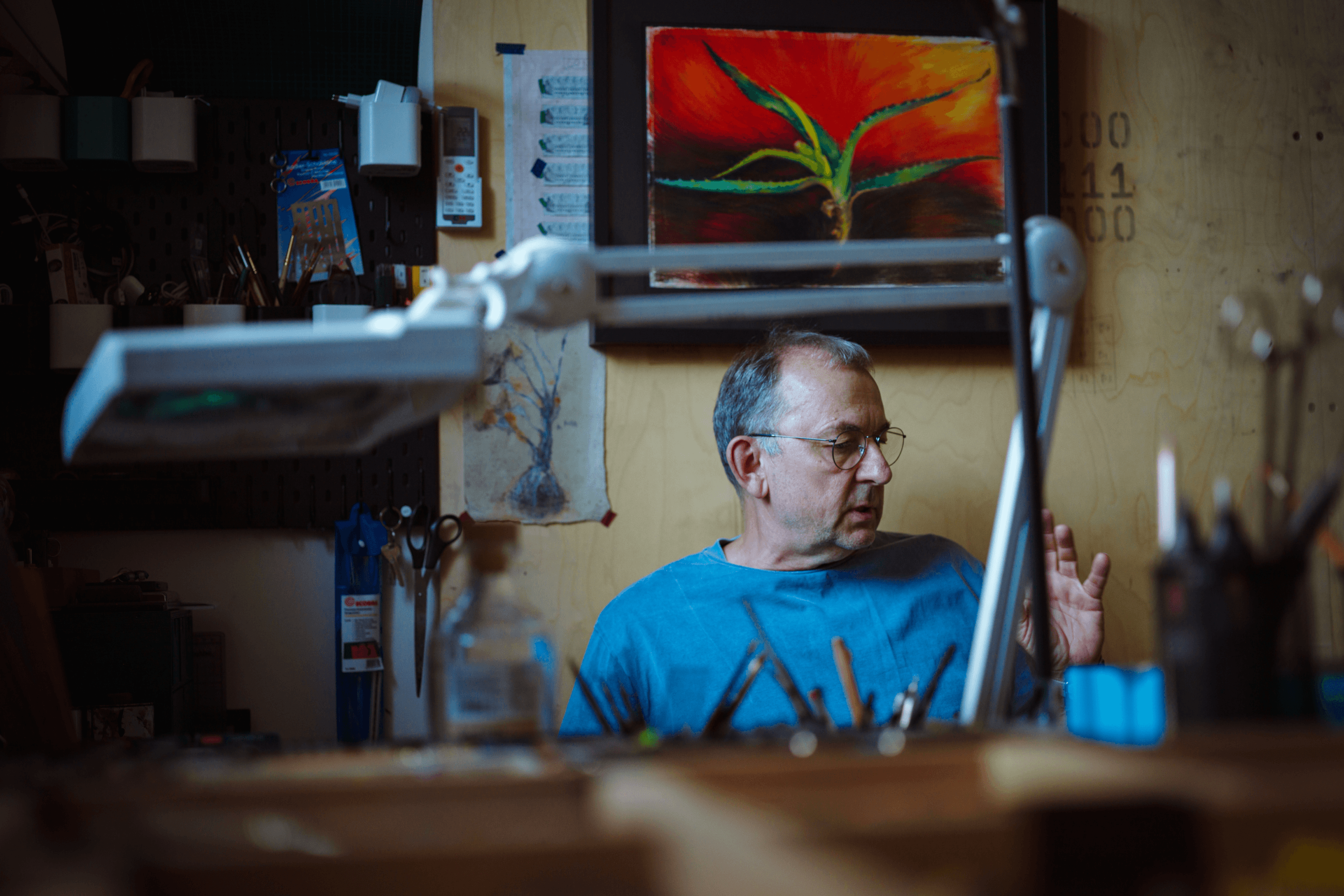
On the windowsill in Pavlo’s studio sit two potted aloes. These same plants periodically appear in his works from recent years.
“I love them as a symbol of our life,” Makov says. “Aloe is a plant you can forget to water, and it doesn’t care. They are fantastically resilient. In 2022, I evacuated my mother from Kharkiv, and when I entered her apartment two years later, the aloes were still alive, though barely. And I have no idea how. This is one of them.”
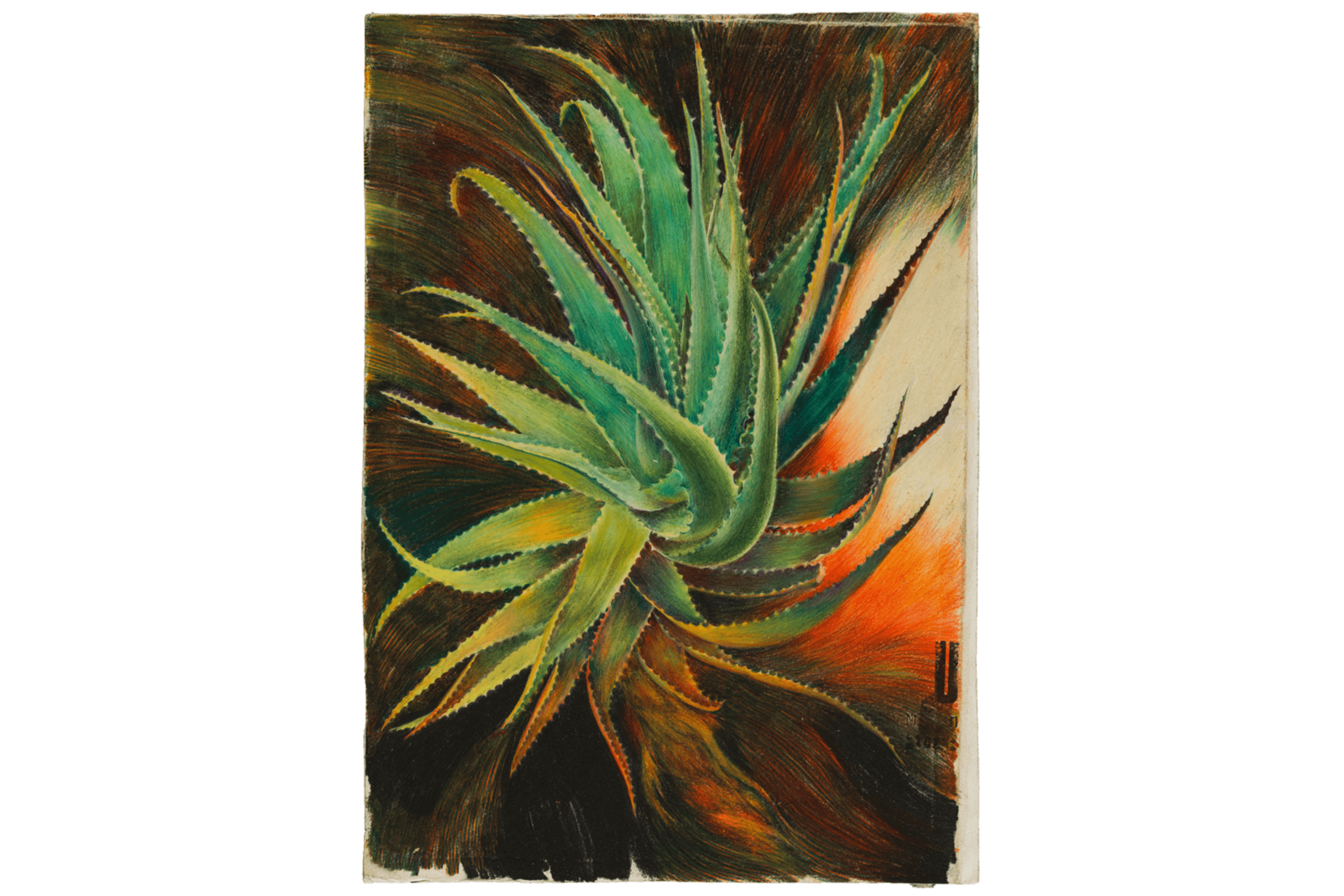
Aloe, 2025. Photo: makov.com.ua / © Makov Pavlo, 2026. All rights reserved. 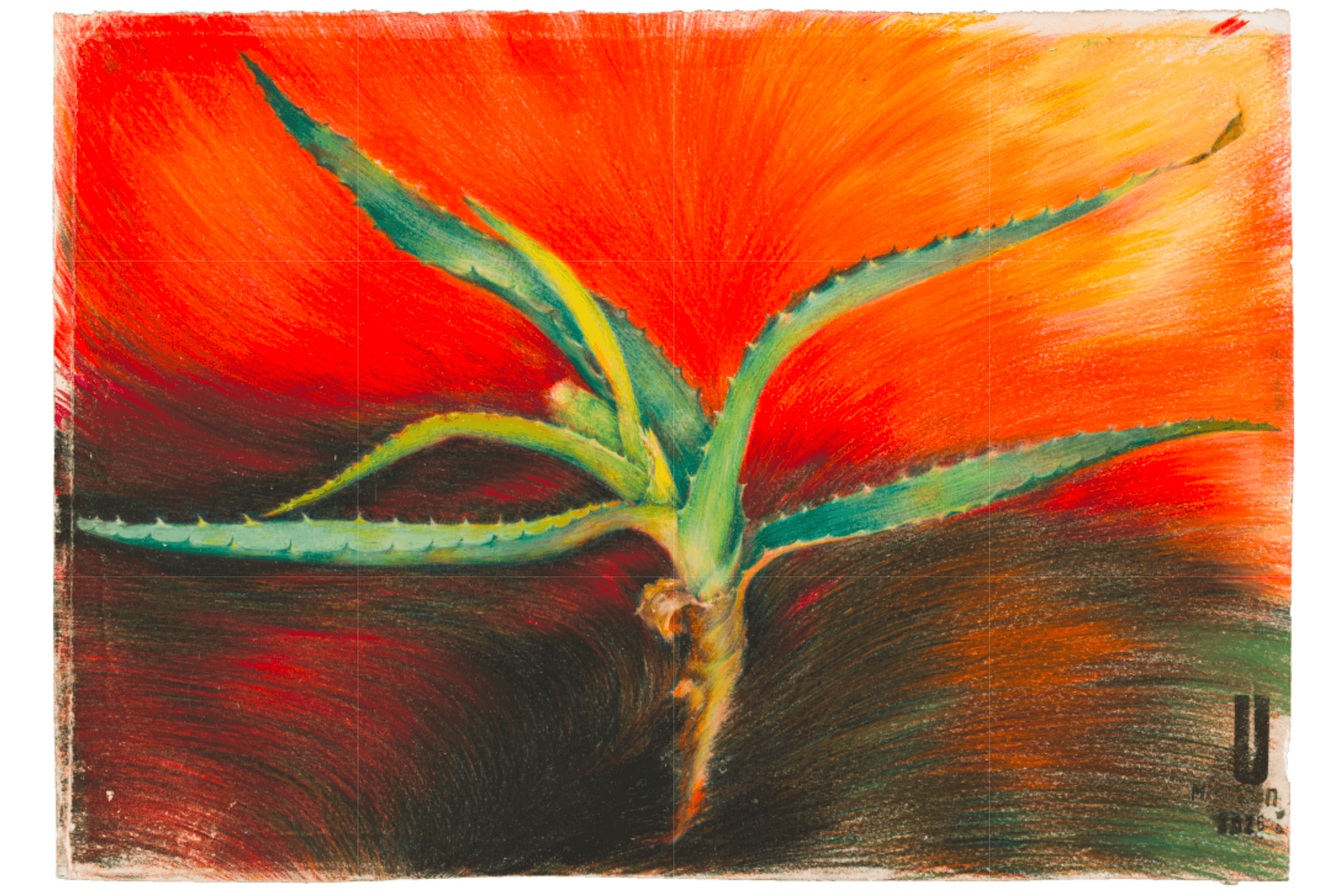
Winter Tango, 2026 Photo: makov.com.ua / © Makov Pavlo, 2026. All rights reserved. 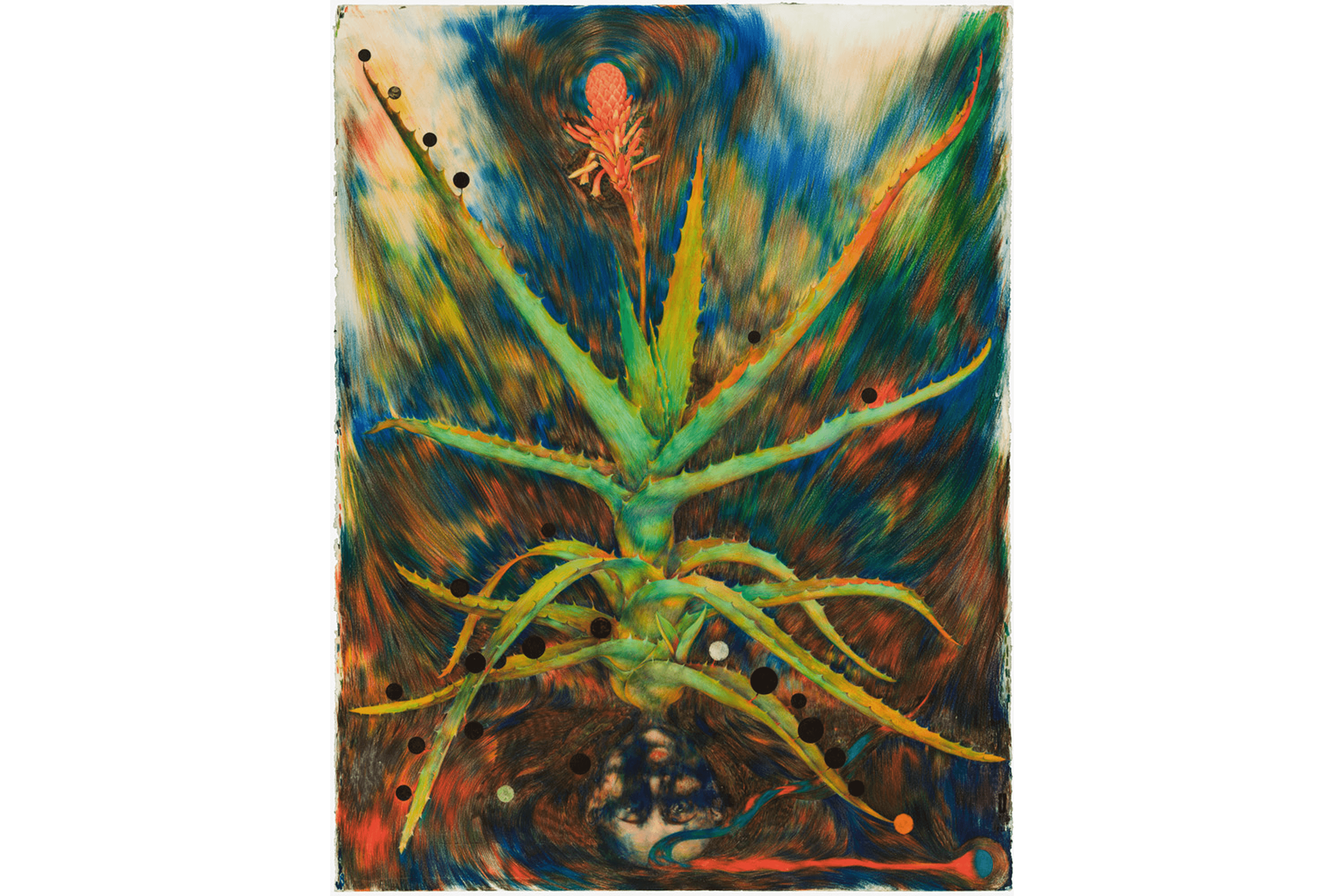
Family Tree, or Buried Names, 2024. Photo: makov.com.ua / © Makov Pavlo, 2026. All rights reserved. 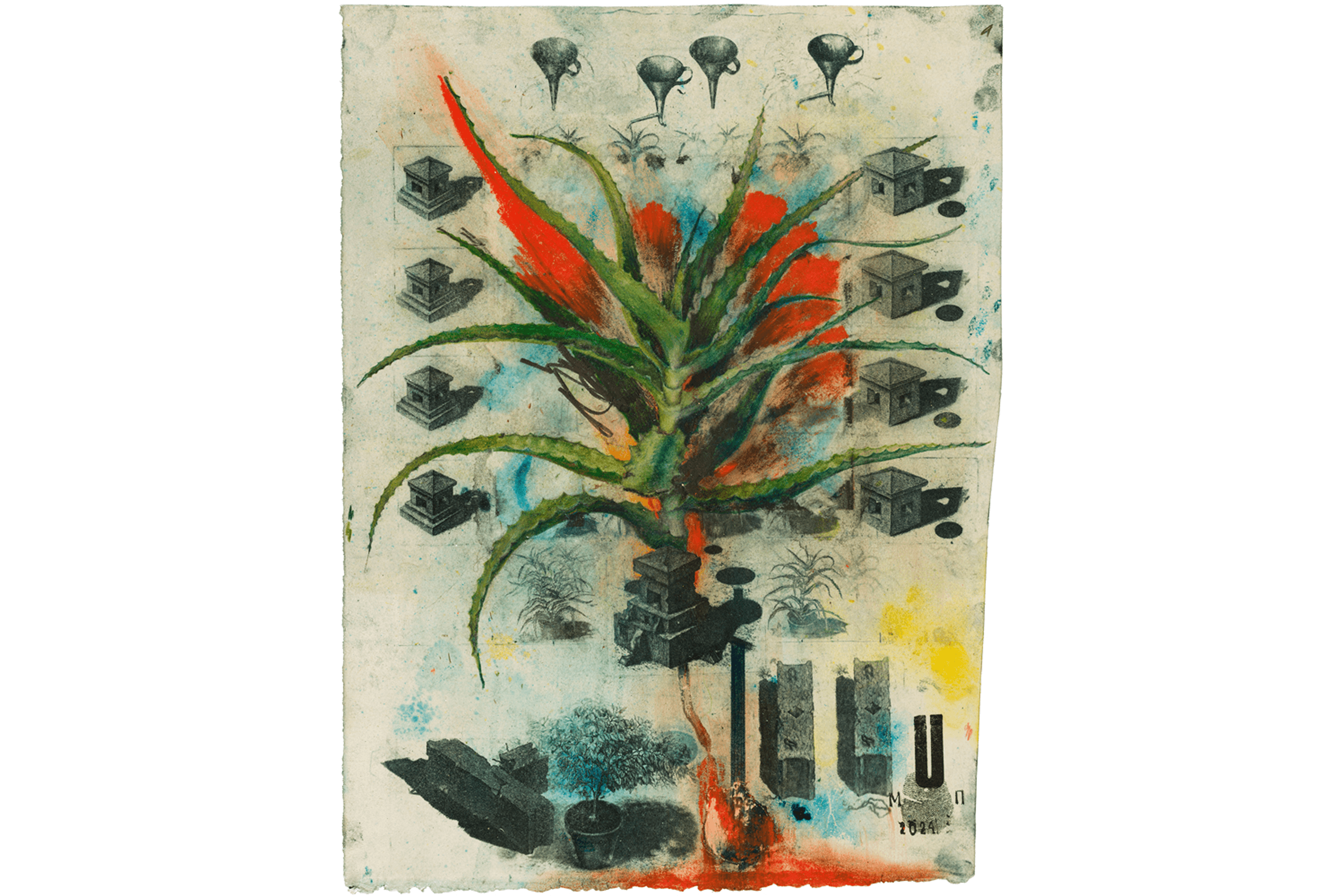
Torn Page 15, 2024. Photo: makov.com.ua / © Makov Pavlo, 2026. All rights reserved. 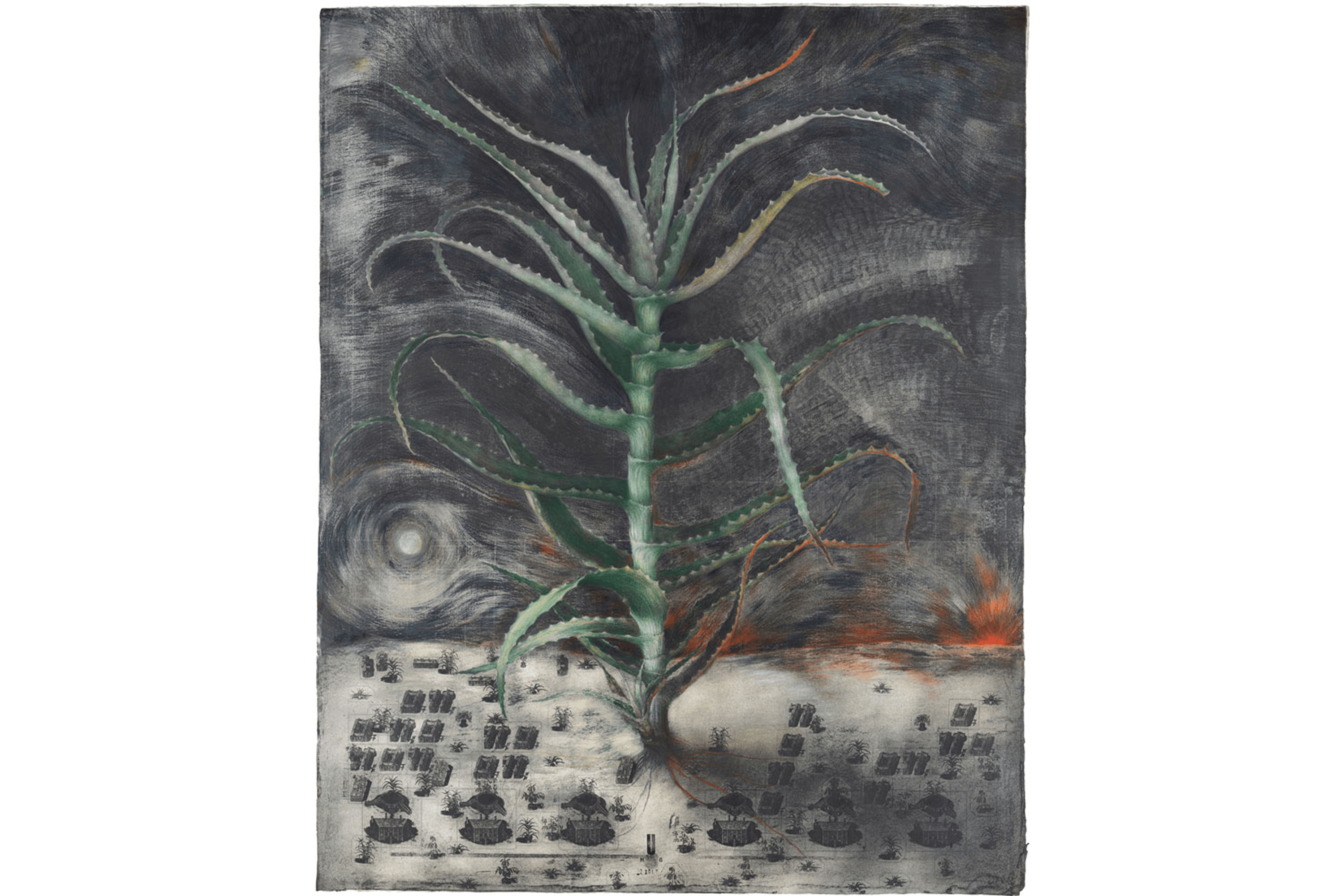
Night (colour insert from Abracadabra), 2019—2020. Photo: makov.com.ua / © Makov Pavlo, 2026. All rights reserved. 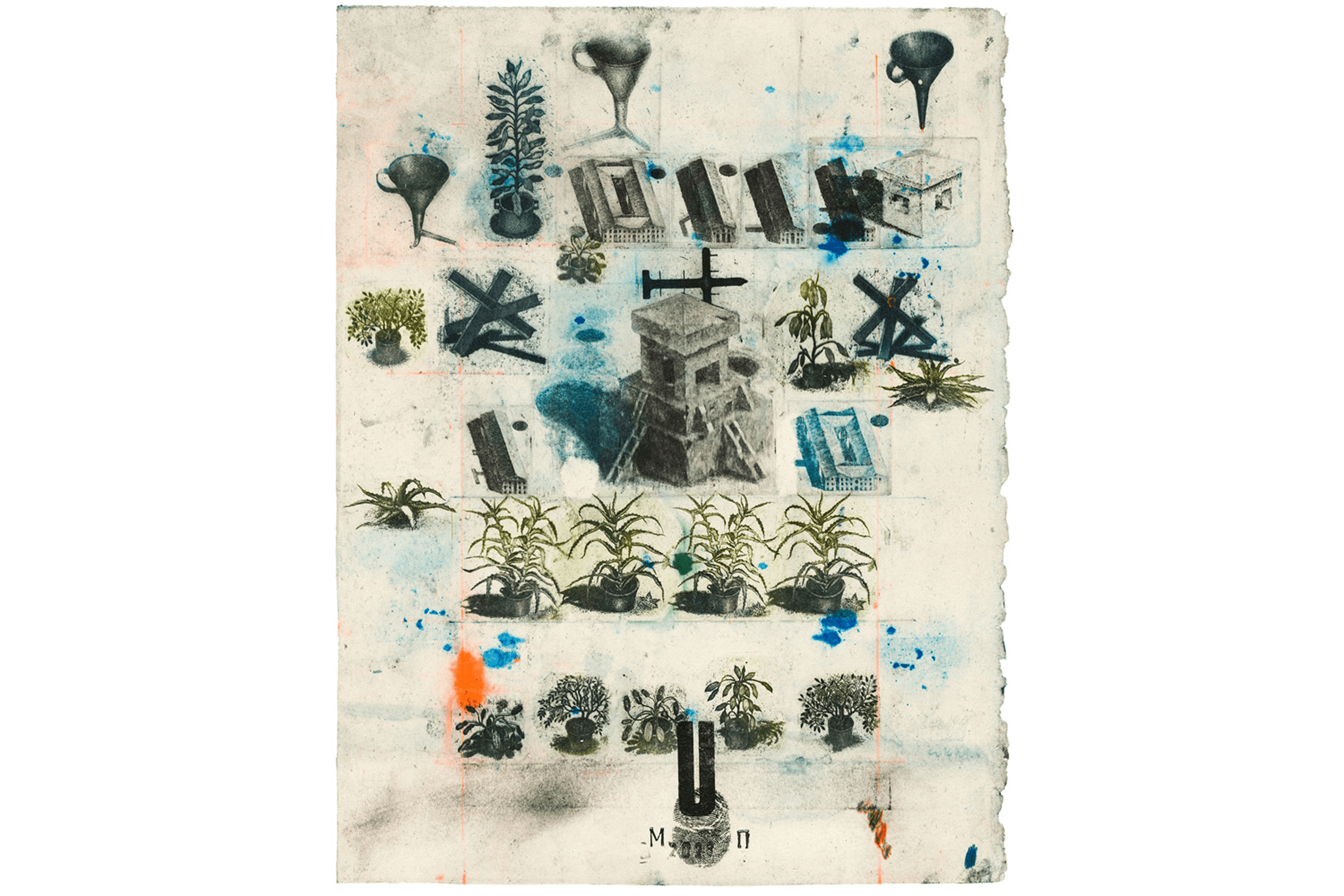
Torn Page 10, Blue Plane, 2023. Photo: makov.com.ua / © Makov Pavlo, 2026. All rights reserved.
5
“There’s nothing after death, and that gives me comfort,” Makov says. To the right of his desk in the studio stands a large, recently finished piece—The Life of a Dandelion. Lately, Pavlo has been working more with colored pencils than with etchings, and colors—almost entirely absent since the early 1990s—have returned to his canvases. The Life of a Dandelion is also drawn in pencil, bursting with color.
“A dandelion blooms twice, much like a human life. Here is youth,” Makov says, pointing to unopened dandelion sprouts. “Then the yellow flower—when you are 35 or 40. After that, everything seems to close up. But then it opens again in white—you give away everything you have before finally dying. At a certain age, a person begins to view death differently—more calmly. Sometimes death might stop by for a visit, only to say, 'Let’s live a little longer.' Well, alright, let’s live a little longer.”
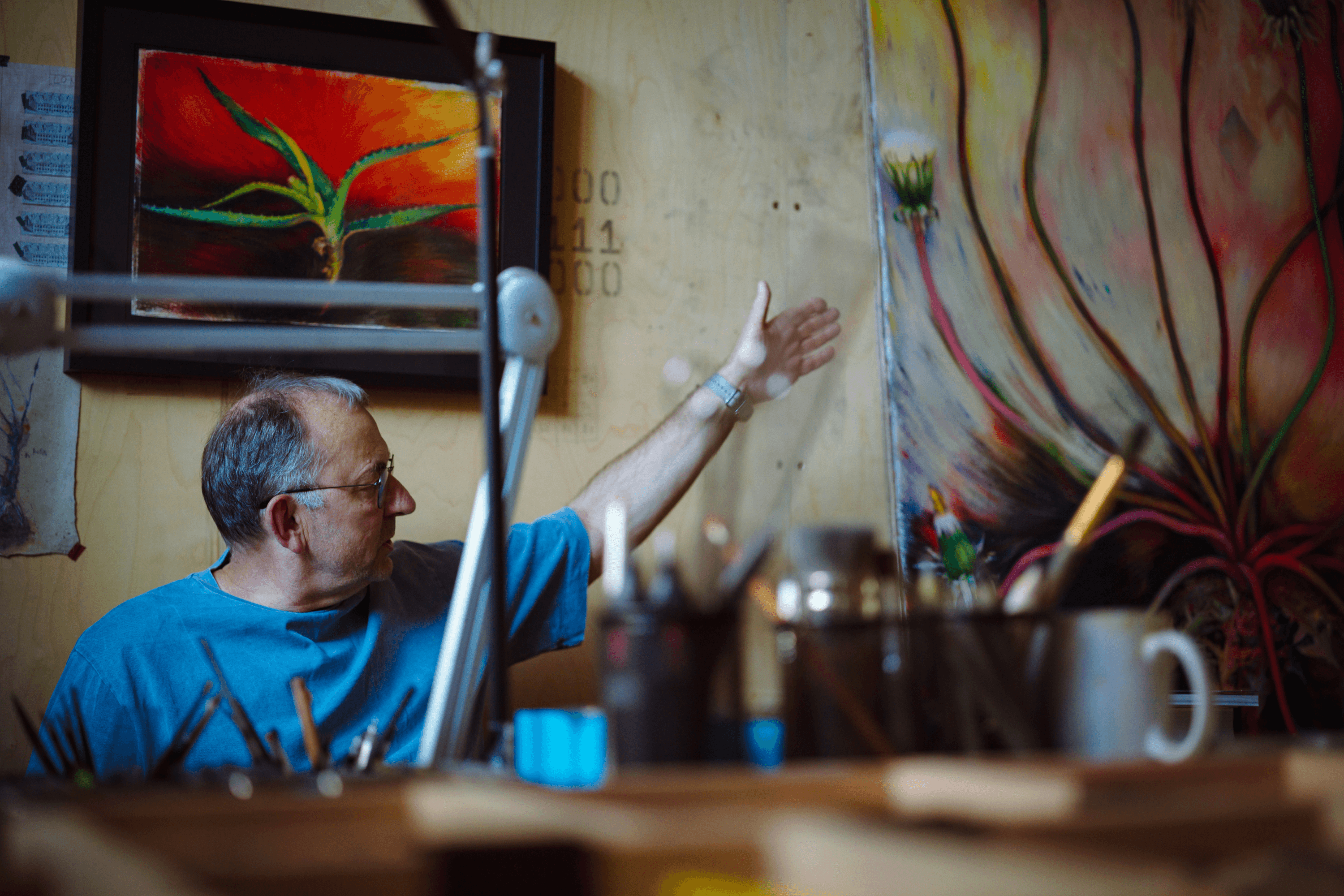
In Pavlo Makov’s studio. Photo: Oleg Palchyk / YB 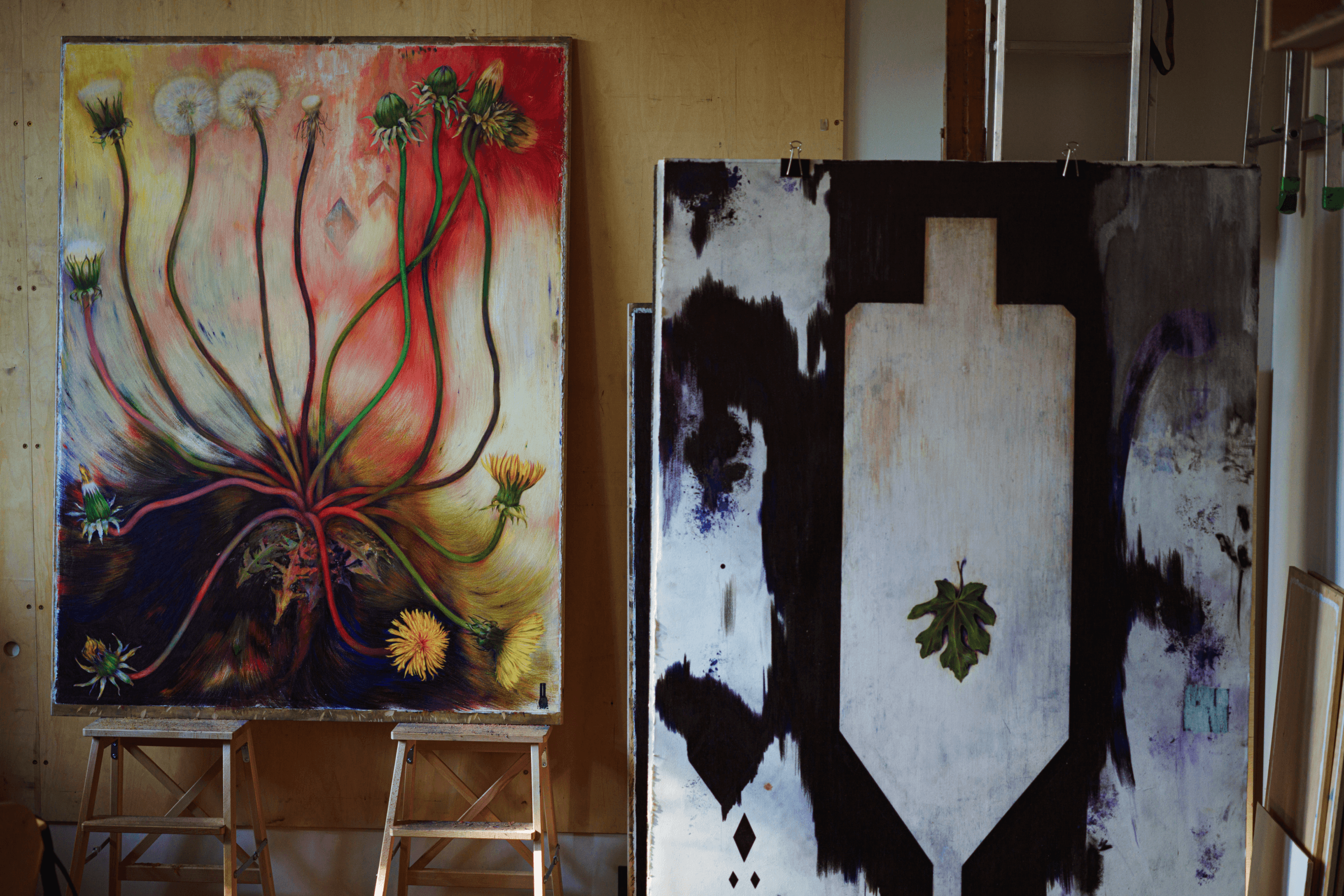
Photo: Oleg Palchyk / YB 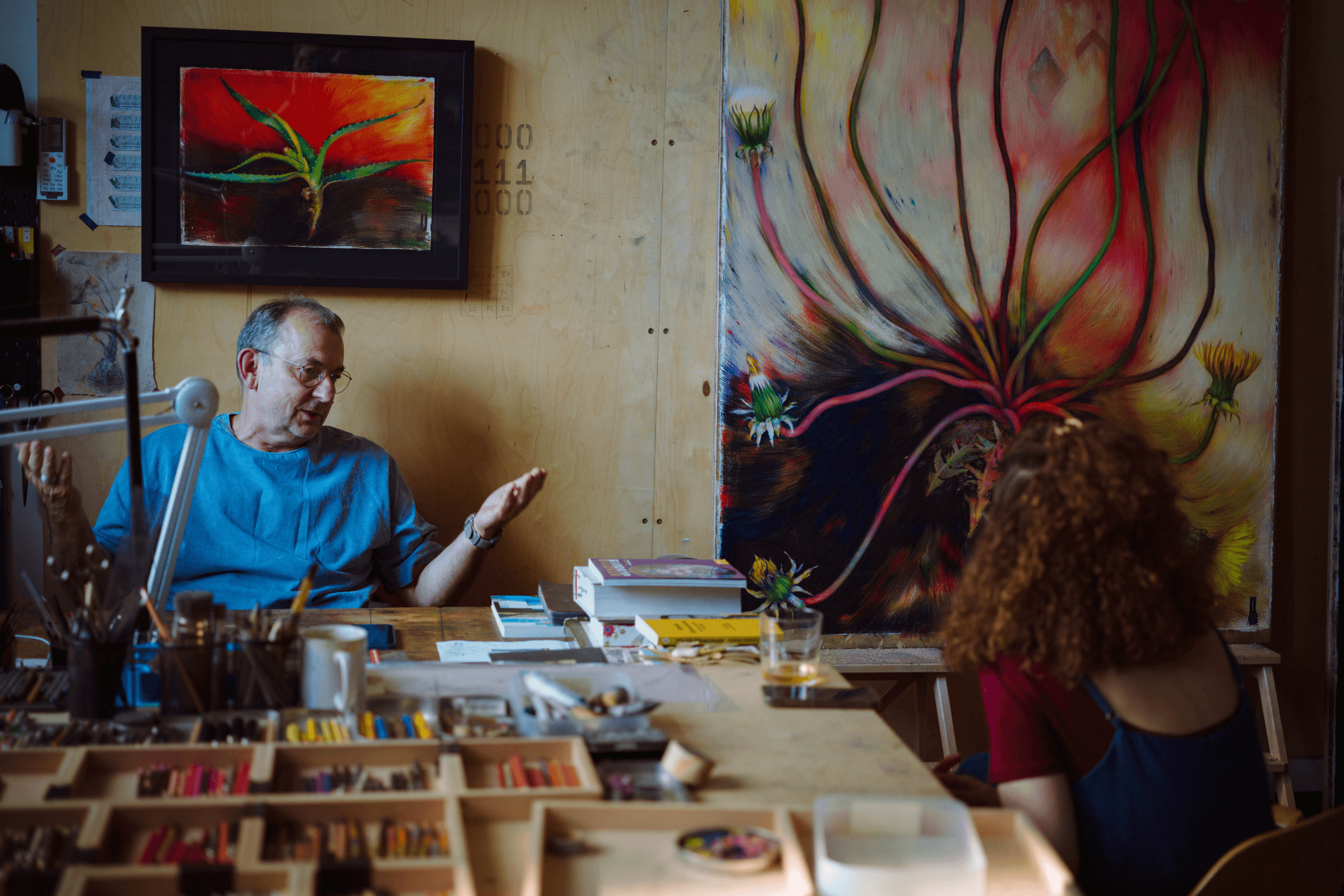
Photo: Oleg Palchyk / YB 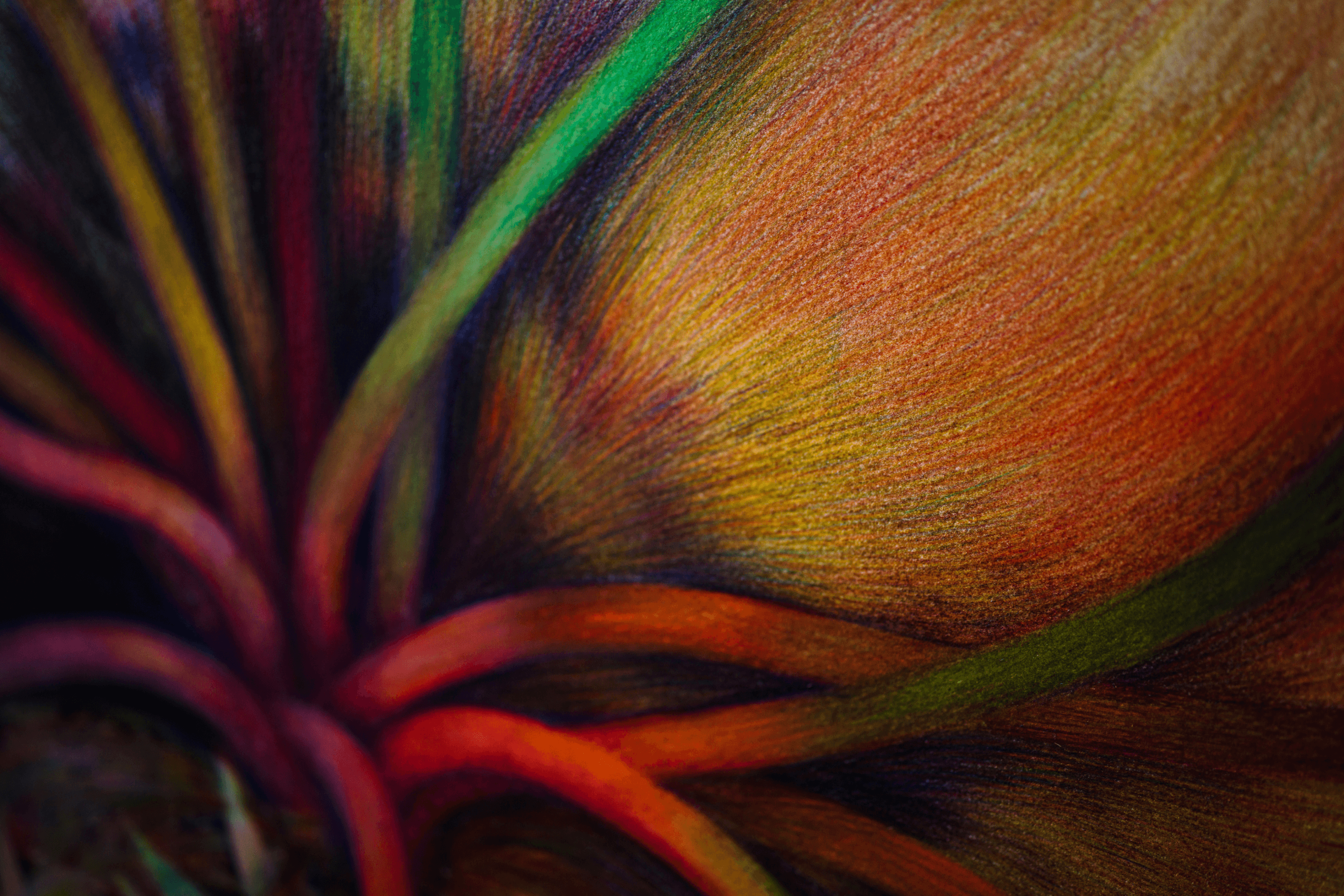
Photo: Oleg Palchyk / YB 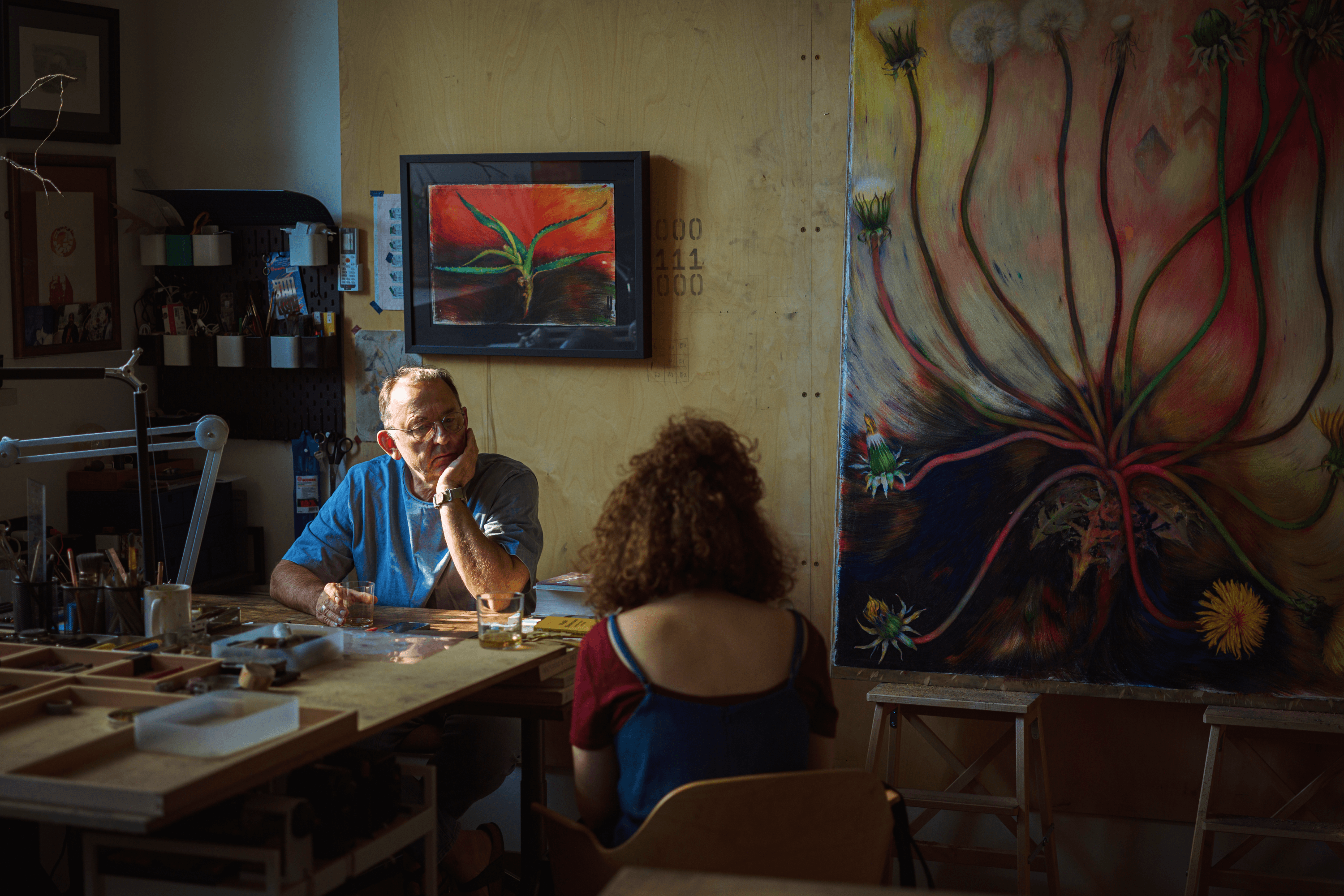
Photo: Oleg Palchyk / YB
In late 2025, Makov published his art book Abracadabra, the fruit of his work over the past 11 years. For the exhibition of the same name at the Andrey Sheptytsky National Museum in Lviv, Pavlo created a dedicated installation: he encoded a quotation from Italo Calvino’s novel Invisible Cities in binary code onto the wall. The quote speaks of hell on earth and two ways of dealing with it: “The first is easy for many: accept the hell and become such a part of it that you can no longer see it. The second is risky and demands constant vigilance and learning: seek and learn to recognize who and what, in the midst of hell, aren’t hell, then make them endure, and give them space.”
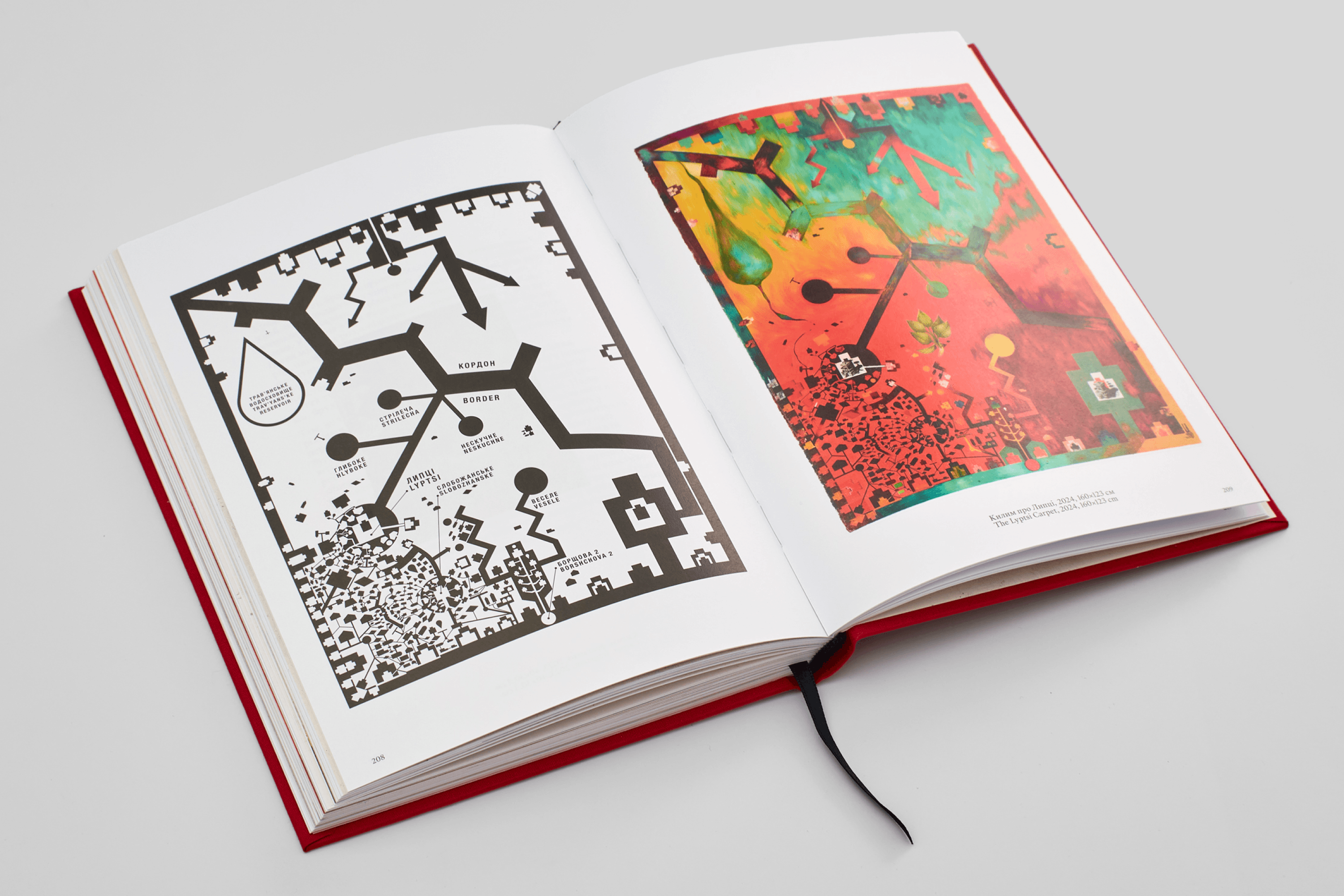
Some pages from Pavlo Makov’s book “Abracadabra.” Photo: istpublishing.org 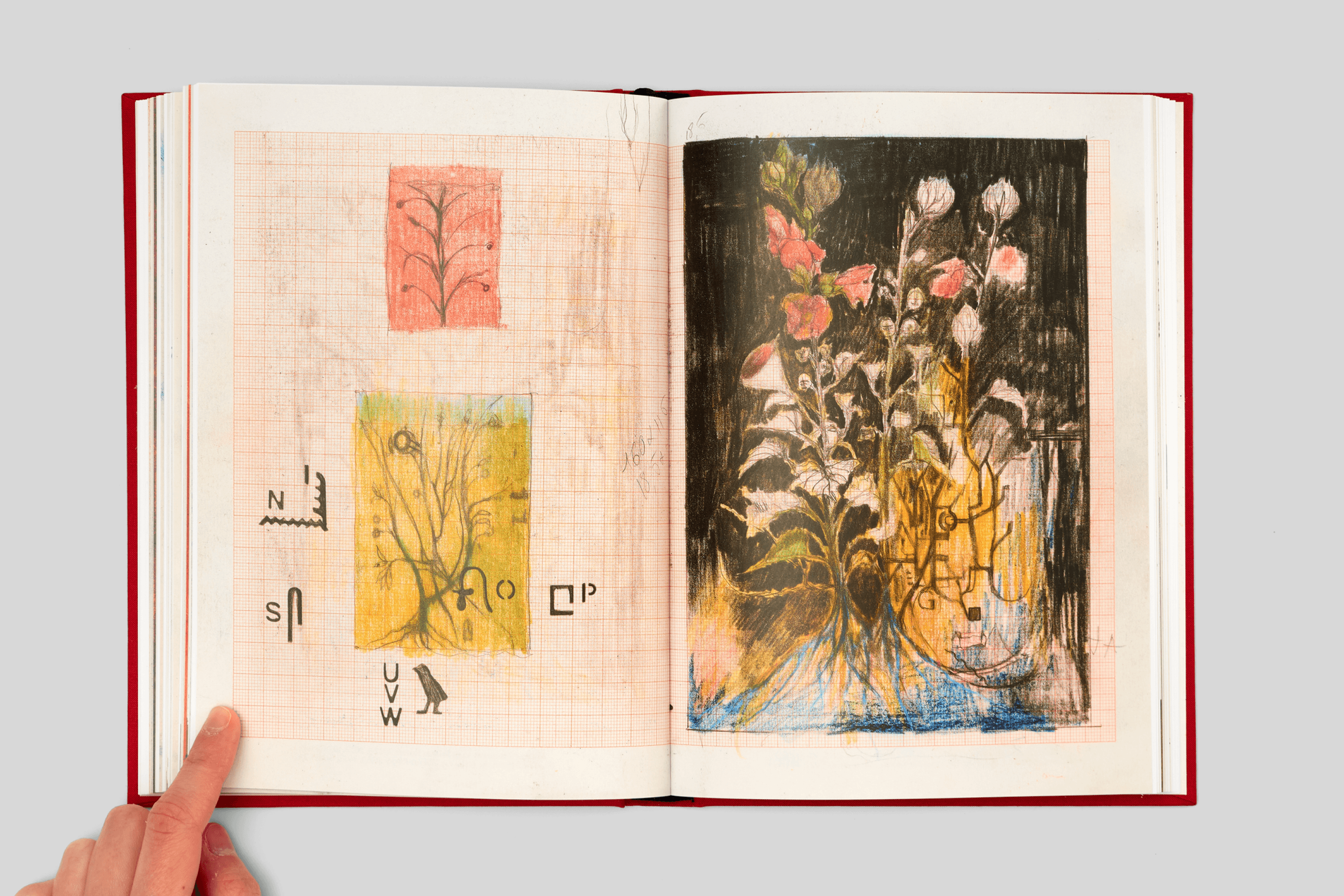
Photo: istpublishing.org 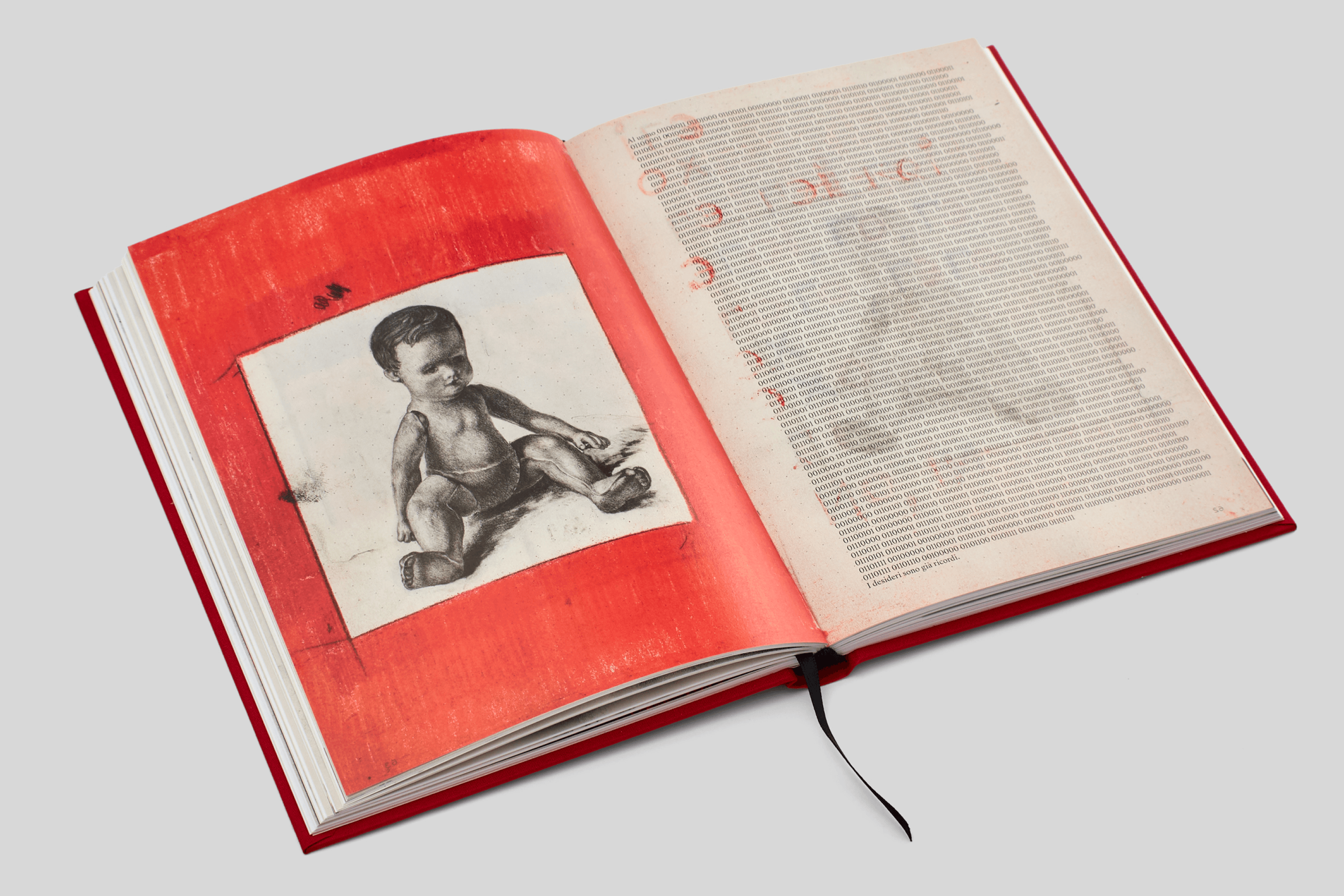
Photo: istpublishing.org 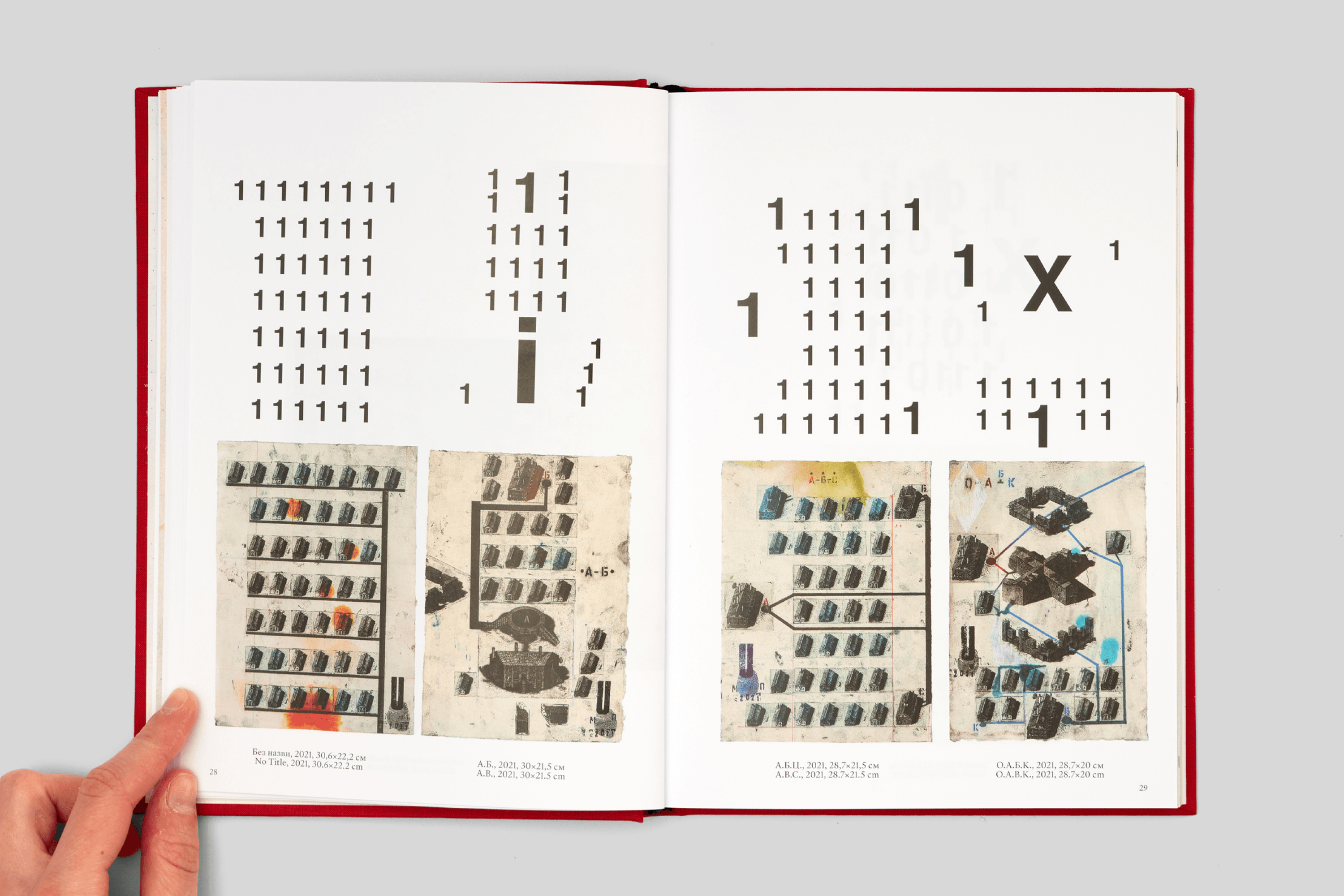
Photo: istpublishing.org 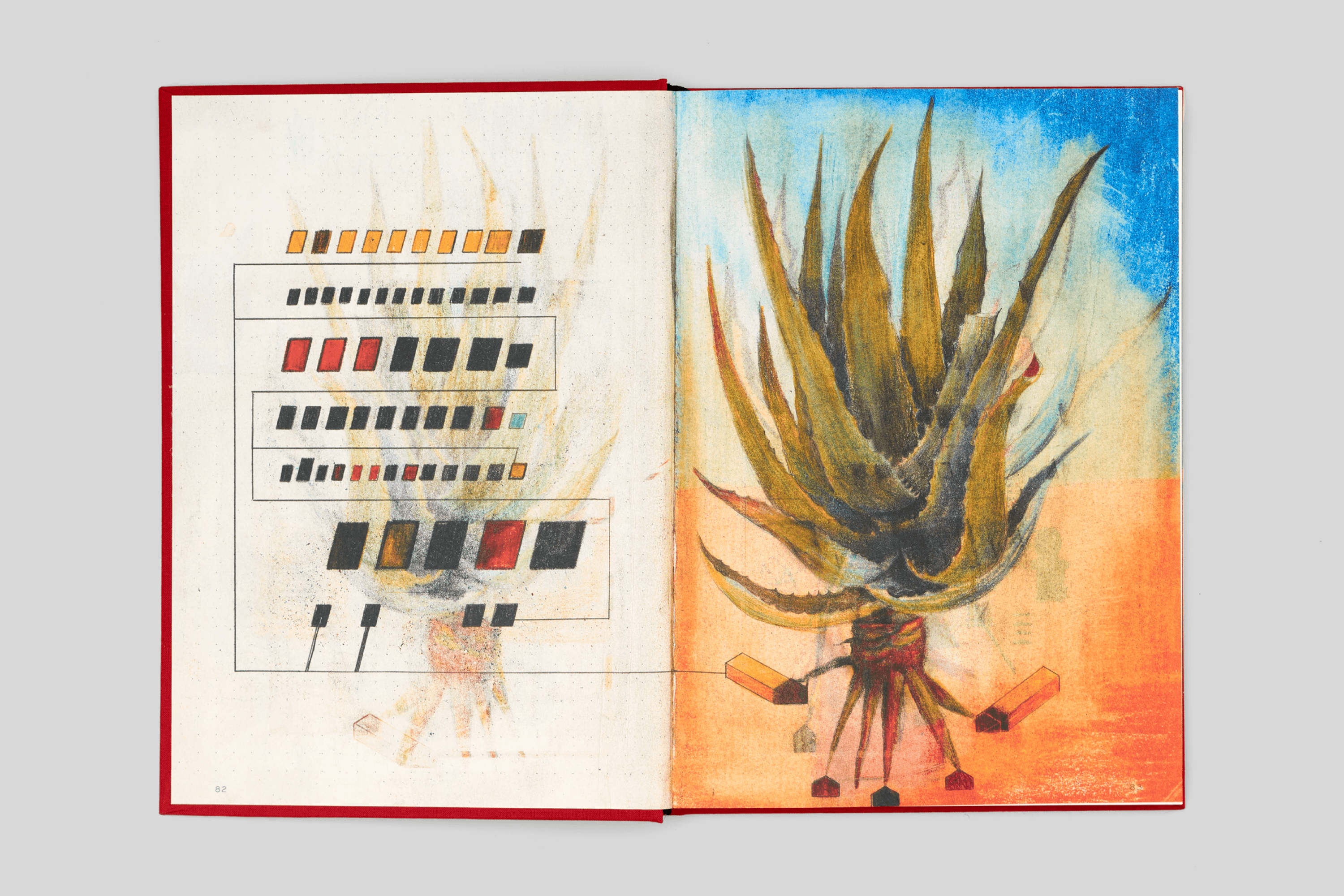
Photo: istpublishing.org 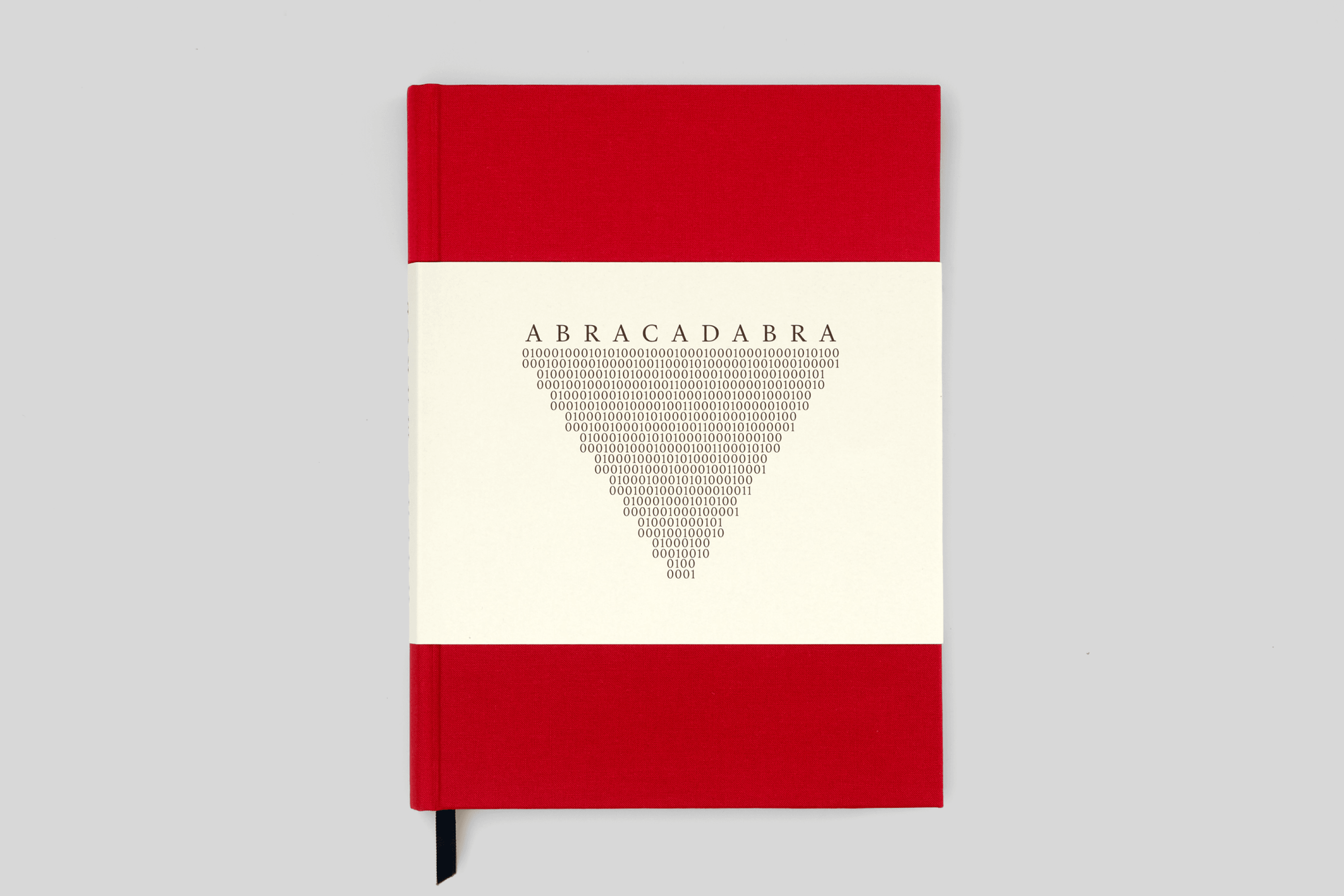
Photo: istpublishing.org
These days, Pavlo’s typical day unfolds like this: he wakes up around six, sometimes mentally reciting Italian poetry while still in bed—he and Maryna love Italy and spent four years, from age 54 to 59, studying the language with a tutor, reaching the B2 level. He does some light exercise and goes for an hour-long walk. Upon returning, he cooks himself an omelet—he and his wife eat breakfast separately. He takes care of daily errands—dropping something off, picking something up, making purchases. Then he heads to his studio. Until around age 55, Makov tried to stick to a rigid schedule, arriving at the studio strictly by nine in the morning. Today that rule is gone, replaced by another: come every single day—even if there is no time to work, just to look at what was done the day before.
“It’s still a step forward,” Pavlo says. “You look at it—and ideas might be born. If you don’t look, they won’t be.”
In the evening, he returns home, and he and Maryna have dinner. Afterward, each attends to their own affairs—Maryna watches something, while Pavlo reads or, more often, scrolls through his feed. If the news annoys him, he finds himself unable to stop.
Makov makes a living selling his art to collectors in Ukraine and abroad. He already has an idea for his next project—and perhaps in three years or so, he’ll publish a new book. As the interview took place, In late September, he planned to work on an etching at the Istituto Centrale per la Grafica in Rome (and he did). Later, he plans to visit Vienna to attend a conference. But right now, he glances at the clock—it’s nearly eight. He moves the piece he finished today to a new spot, packs up his things, and leaves for home to have dinner. On the way, he still needs to pick up some wine.