On August 15, 2026, artist Daria Alyoshkina died in Ukraine. She was remembered around the world as one of the most prominent masters of vytynanka. It is a traditional form of Ukrainian folk decorative art that involves creating openwork or silhouette decorations by cutting patterns from white or colored paper with scissors or a knife. The name comes from the Ukrainian word “vytynaty”, meaning “to cut out.” Daria’s vytynankas have been exhibited in 22 countries, from France and Switzerland to South Korea, Canada, and the United States. Alyoshkina collaborated with Cartier and created works about Ukrainian history and the Holodomor.
We recorded this interview in the spring of last year, ahead of the launch of Yellow Blue. Daria spoke about her path in vytynanka, her collaboration with Cartier, Ukrainians' return to traditions after the full-scale invasion, and how creativity helped her cope with losing her brother in the war.
After Daria’s sudden death, we believe it is important to publish this conversation, preserving her voice, her thoughts, and the plans she shared with us at the time.
Imagine I am a foreigner. Could you explain to me what Ukrainian vytynanka is?
It is a Ukrainian form of folk art. They were used to decorate homes for major holidays, but they were not simply ornaments. They also served as a kind of protective talisman.
My parents passed their knowledge on to me. When they moved to Podillia, my parents met people who were still living bearers of this tradition and learned everything from them. So what I tell people is based on my memories and knowledge from childhood. We used to say: “When there is a vytynanka in the house, goodness stands on the porch.” That is one of the popular sayings. There was also the idea that a vytynanka hanging on a window, and I am sure you made paper snowflakes for windows too, was a kind of sieve that let only good into the house while evil remained outside.
What kinds of vytynanka were there?
I am not that much of an expert, but I can tell you about what I do. There is the simplest kind, which we cut from a single piece of paper after folding it, and there are multilayered ones as well. There are already many different techniques and ways of presenting vytynanka. Traditionally, it was used to decorate the stove, windows, and walls of a home.
Why was it convenient in village houses? Anyone who has lived in a village knows that you whitewash the house once a year, usually before Easter. Vytynanka was a convenient way to decorate the home for Christmas. You glued a vytynanka onto the stove, then took it down and burned it, because they were usually burned. Paper does not last very long, so perhaps that is why there was a tradition of making a new one every year.
At my workshops, I explain that traditional vytynanka was different from mine. I create original works, and the only thing from the traditional technique that remains at the core of my art is folding and unfolding. I also use many of our traditional motifs: the tree of life, images of birds and plants, and geometric motifs, the same ones found on pysanky, carpets, and embroidered towels.
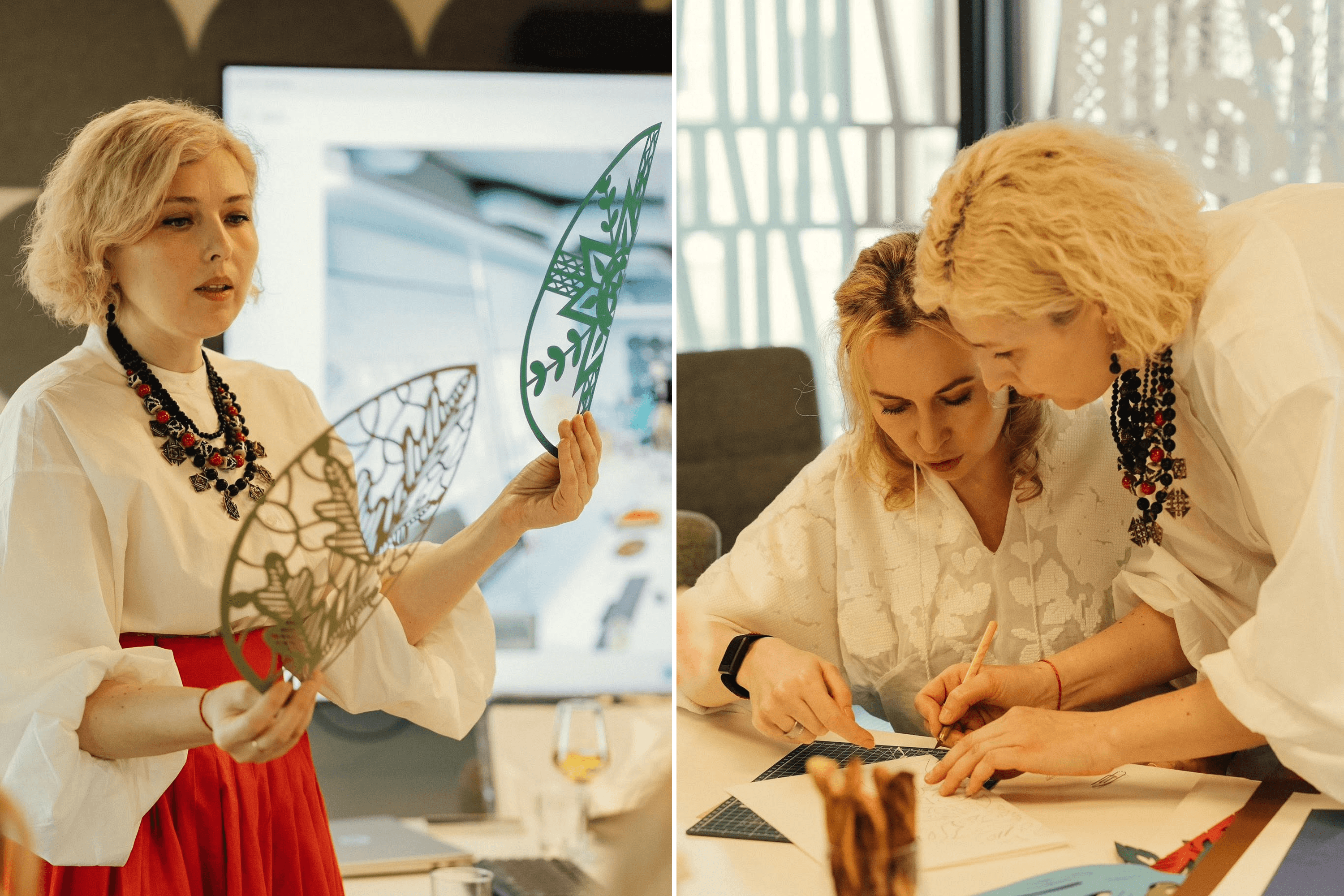
Daria Alyoshkina leads a talk on the art of vytynanka in Lviv. April 2026. Photo: Daria Alyoshkina / Facebook 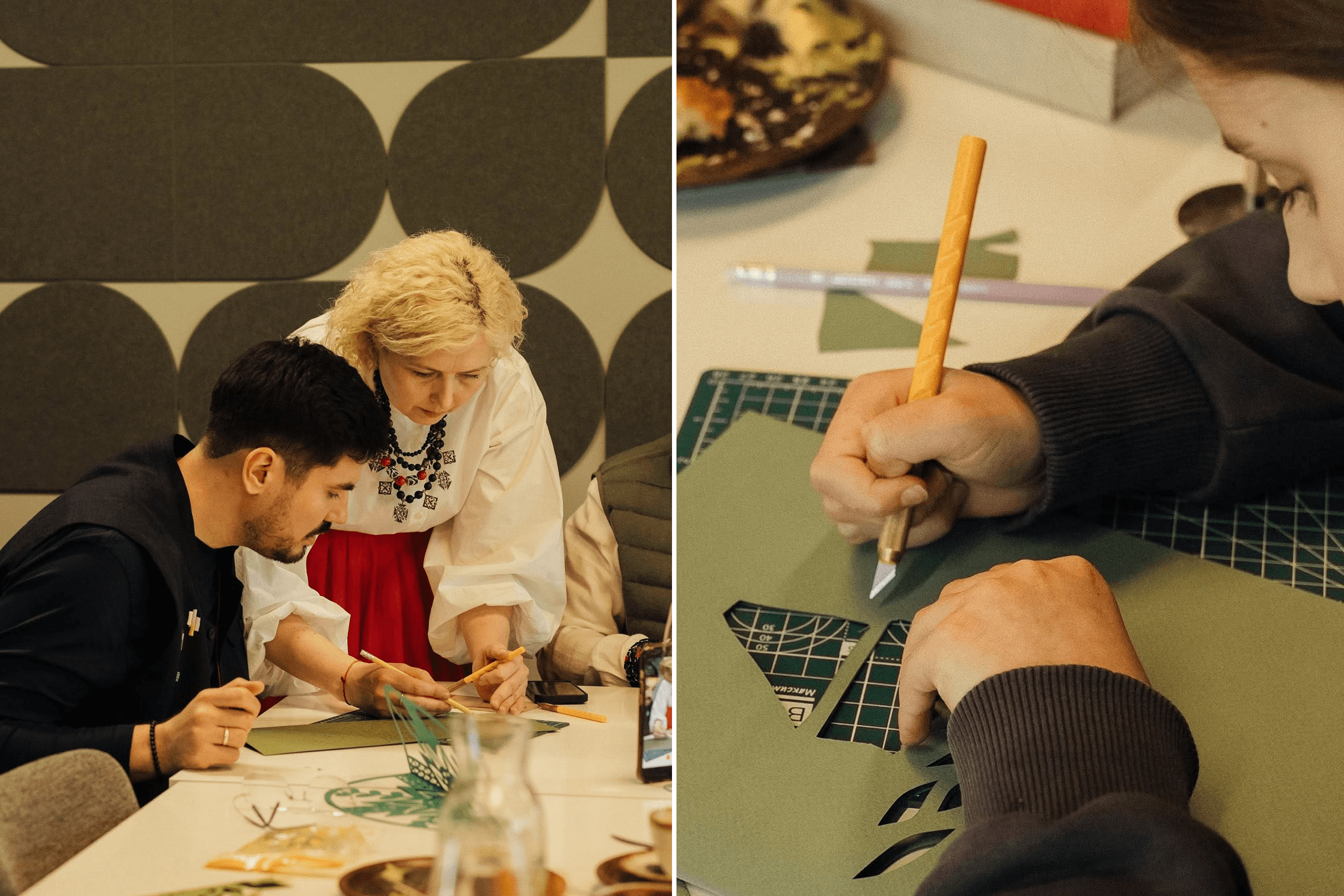
Photo: Daria Alyoshkina / Facebook 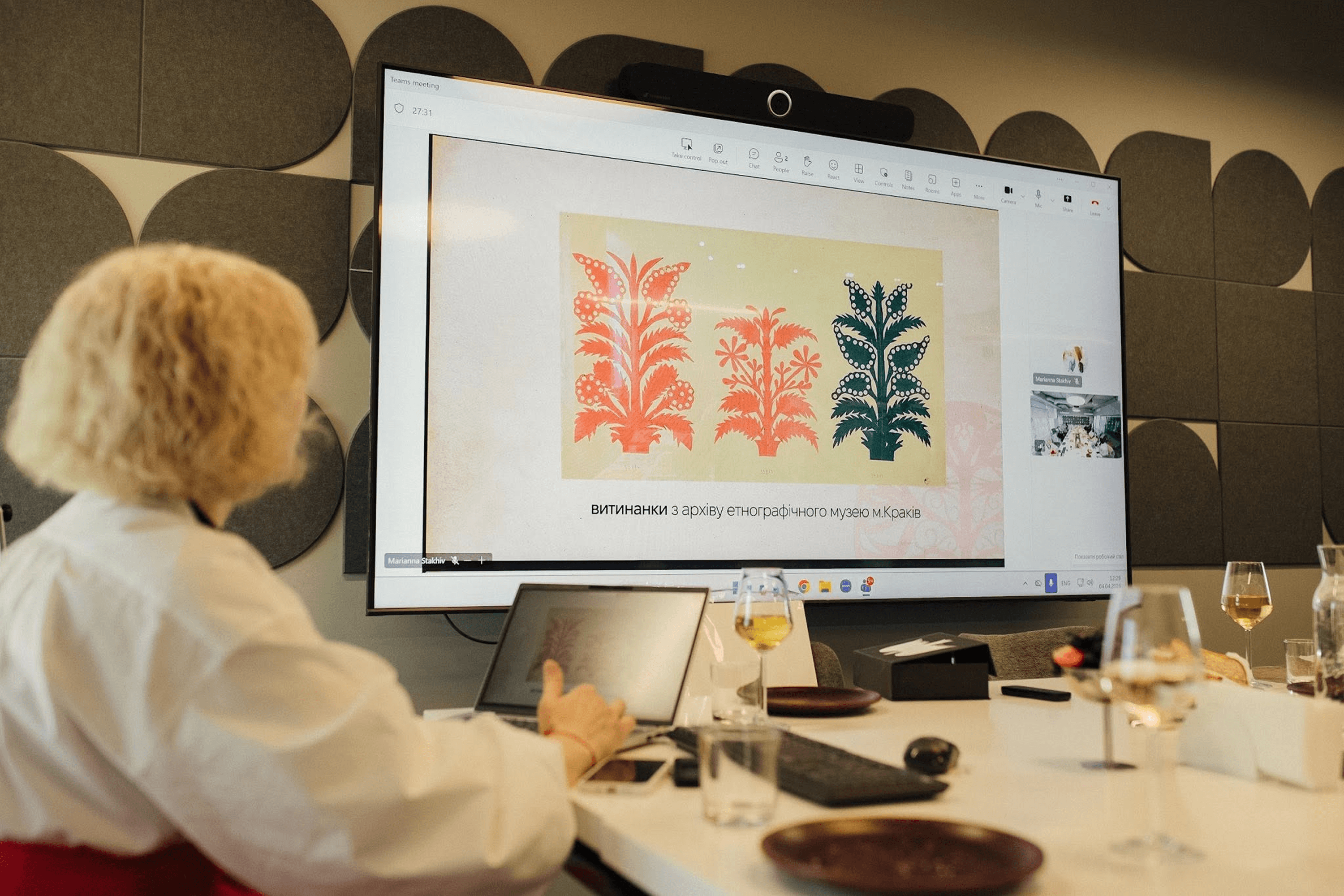
Photo: Daria Alyoshkina / Facebook 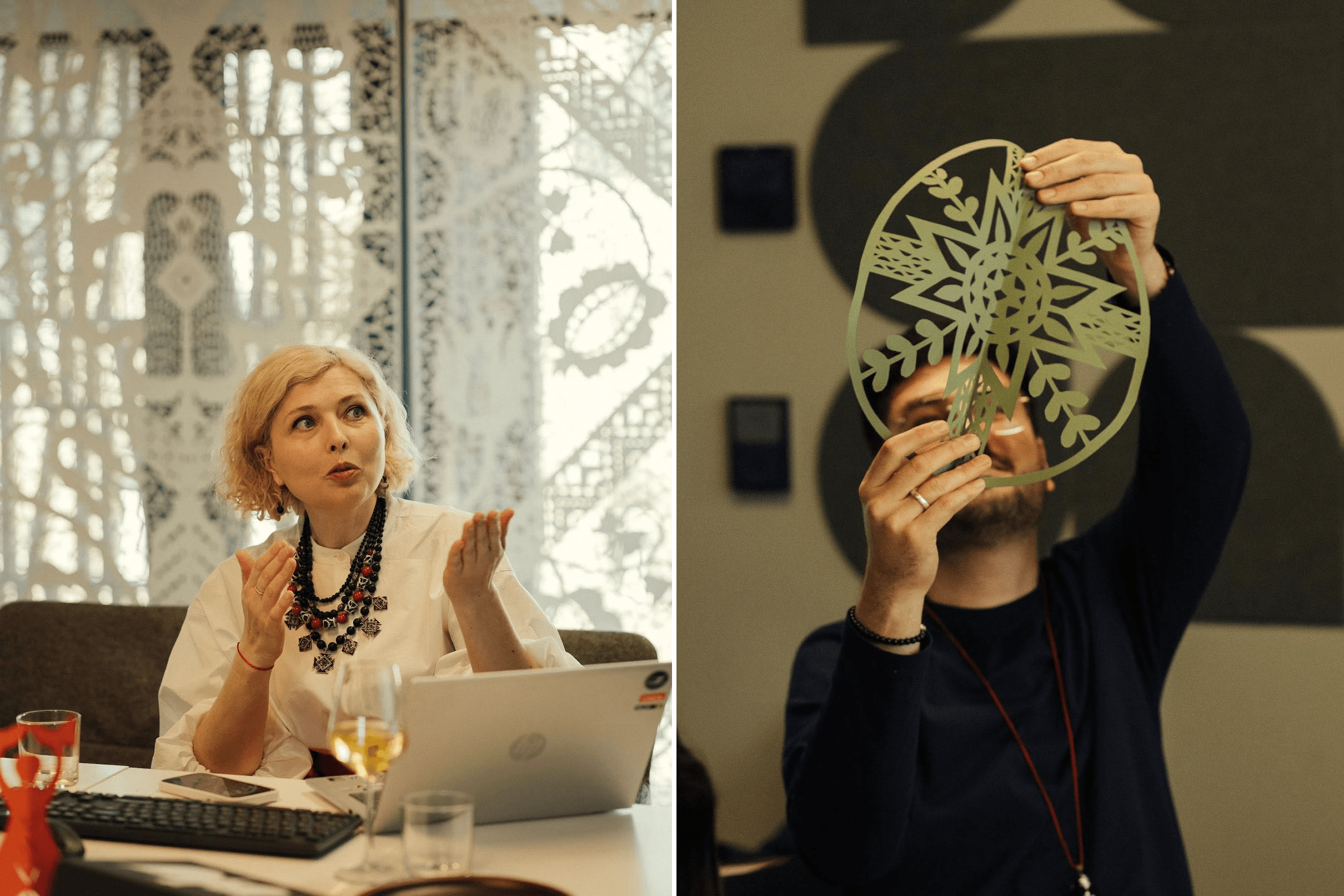
Photo: Daria Alyoshkina / Facebook 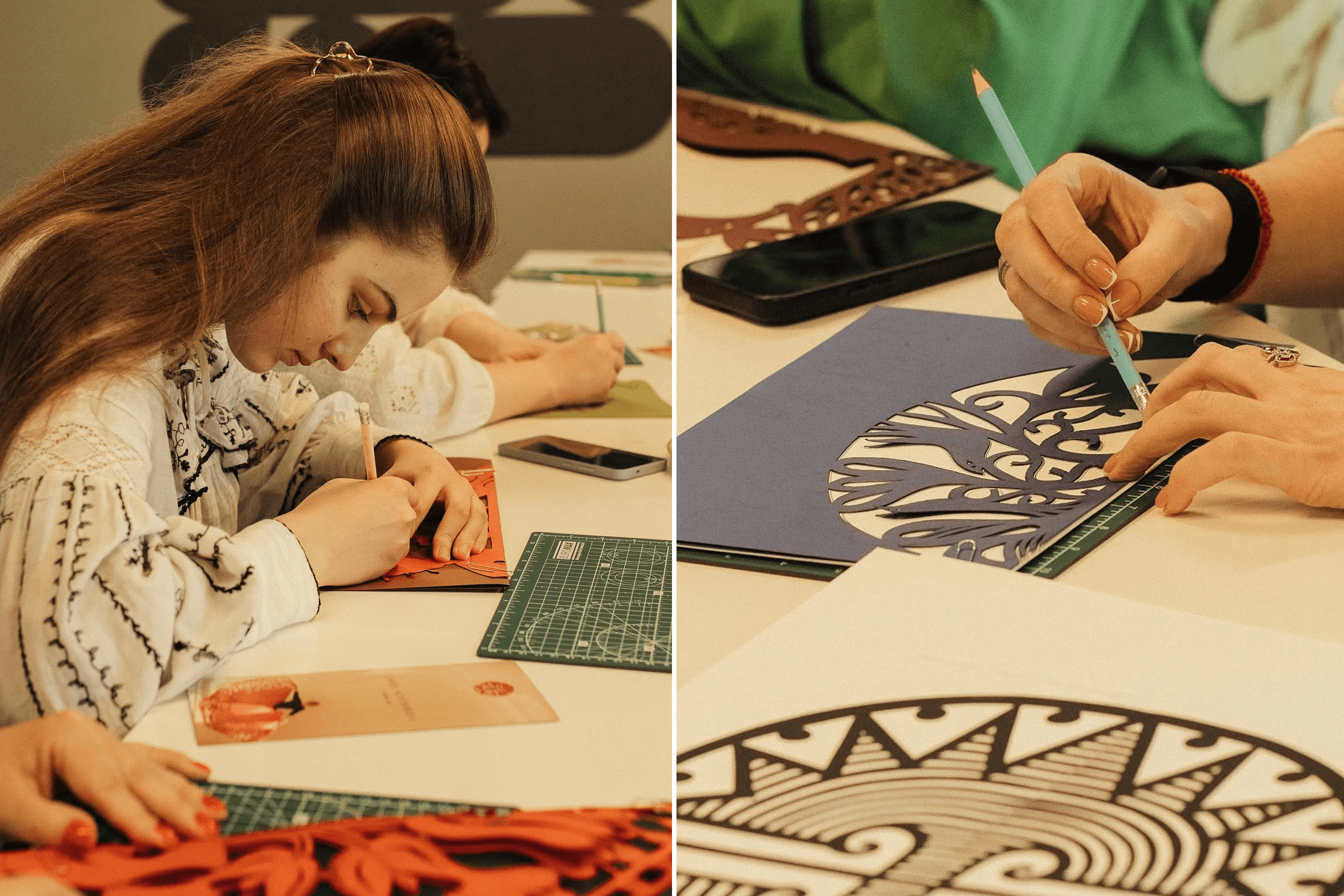
Photo: Daria Alyoshkina / Facebook 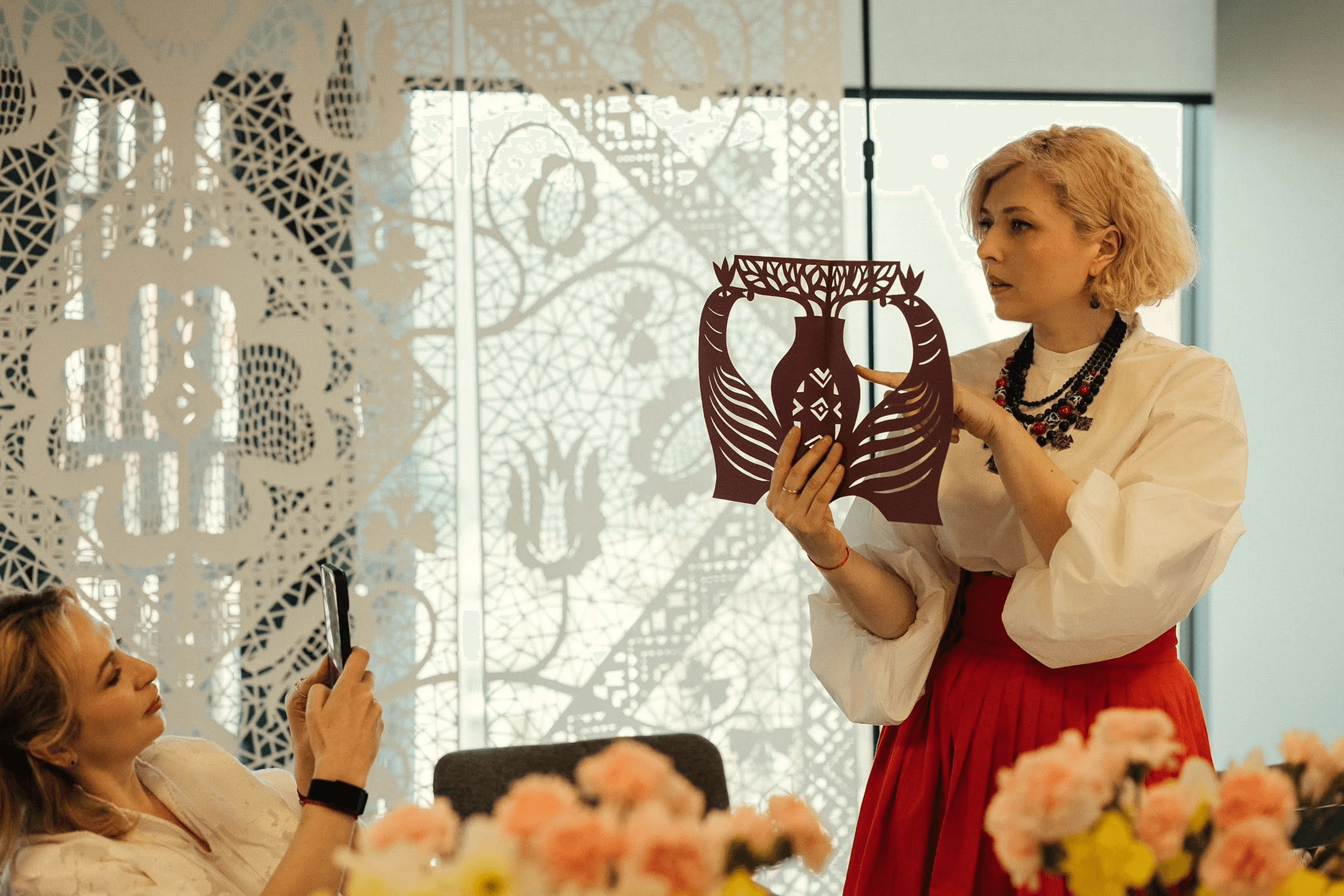
Photo: Daria Alyoshkina / Facebook
What makes Ukrainian vytynanka unique?
Even within Ukraine, vytynankas differ. For example, there is Podillian vytynanka and Western Ukrainian vytynanka. They differ both in their colors and their compositions. I think our vytynanka is closer to nature.
Your parents, Oleksii and Liudmyla Alyoshkin, are sculptors. Did they instill a love of vytynanka in you?
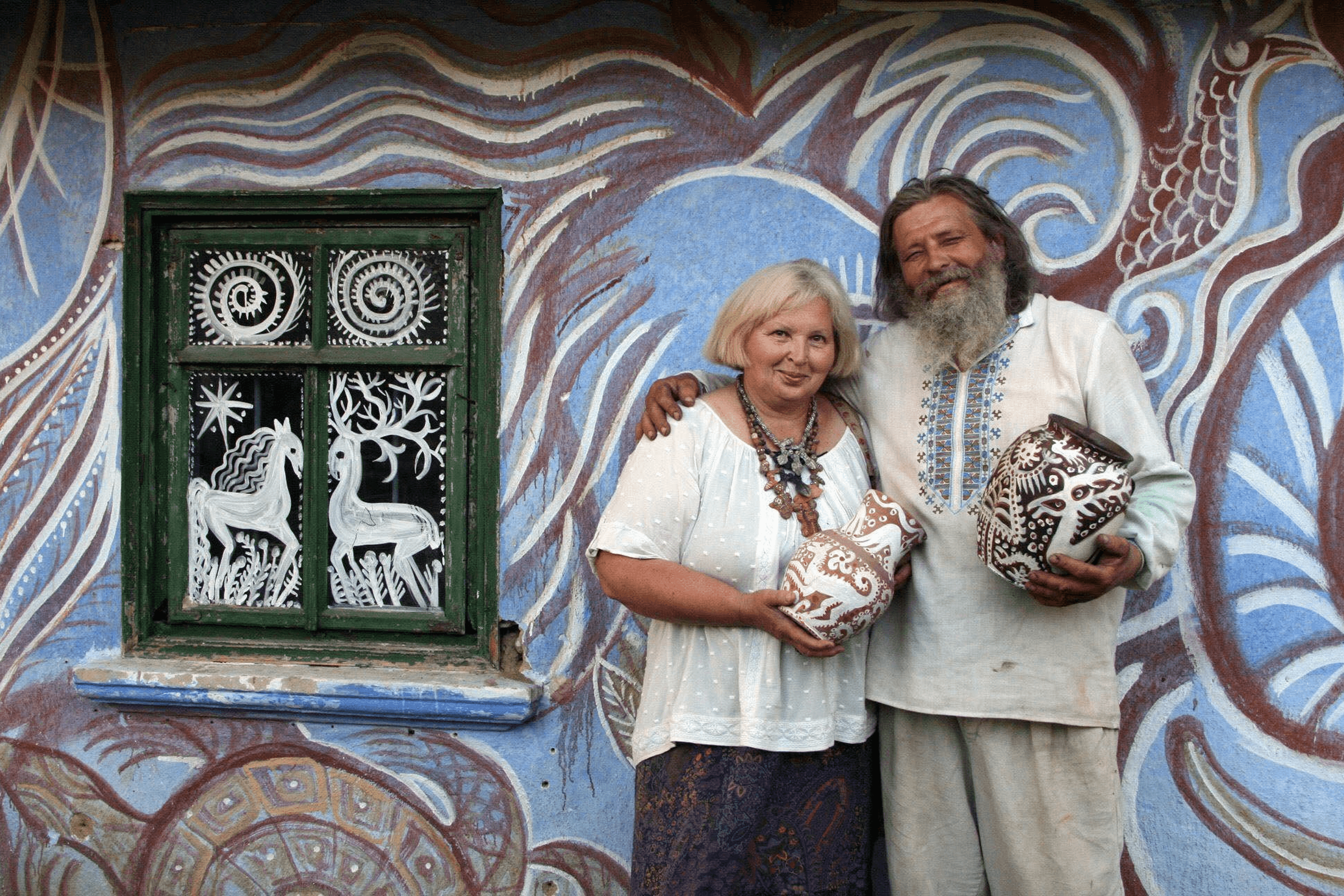
My parents are artists who moved to live in a village. In the 1990s, the only way to earn a living was to teach at a school. My mother taught crafts and art, while my father taught history and physical education and also ran various extracurricular clubs. My mother and I decorated our home by cutting snowflakes out of paper. But my mother would say, “Do not limit yourself. Snowflakes are fine, but expand your imagination.” So I would make various female figures.
My parents taught different kinds of art, including ceramics and stone carving. So I created my first vytynanka as a child, but it was something like a hobby.
You trained as a sculptor but decided to make vytynankas. Why?
It is a quick process. You can make a vytynanka in an hour. I combined work with motherhood. I had three children, and I had far fewer opportunities to leave the house. I had no support or help, and I was effectively on maternity leave for ten years.
So I bought a small board and began expressing myself creatively that way. Paper was cheap, and the board was cheap. It was a very convenient combination with motherhood. I just needed to find some way to stand out. So I chose a large format, and it took off. Perhaps I happened to find my niche at that moment.
Traditionally, vytynankas were small decorations for the home, but you began creating enormous openwork panels and effectively scaled vytynanka up into contemporary art. How did you arrive at this format, and were you not afraid to take on such large works?
It was exactly because I trained as a sculptor that working on a large scale felt very comfortable to me. I worked with monumental three-meter boulders. Vytynanka art requires a physically strong hand to cut through paper or synthetic material of that thickness.
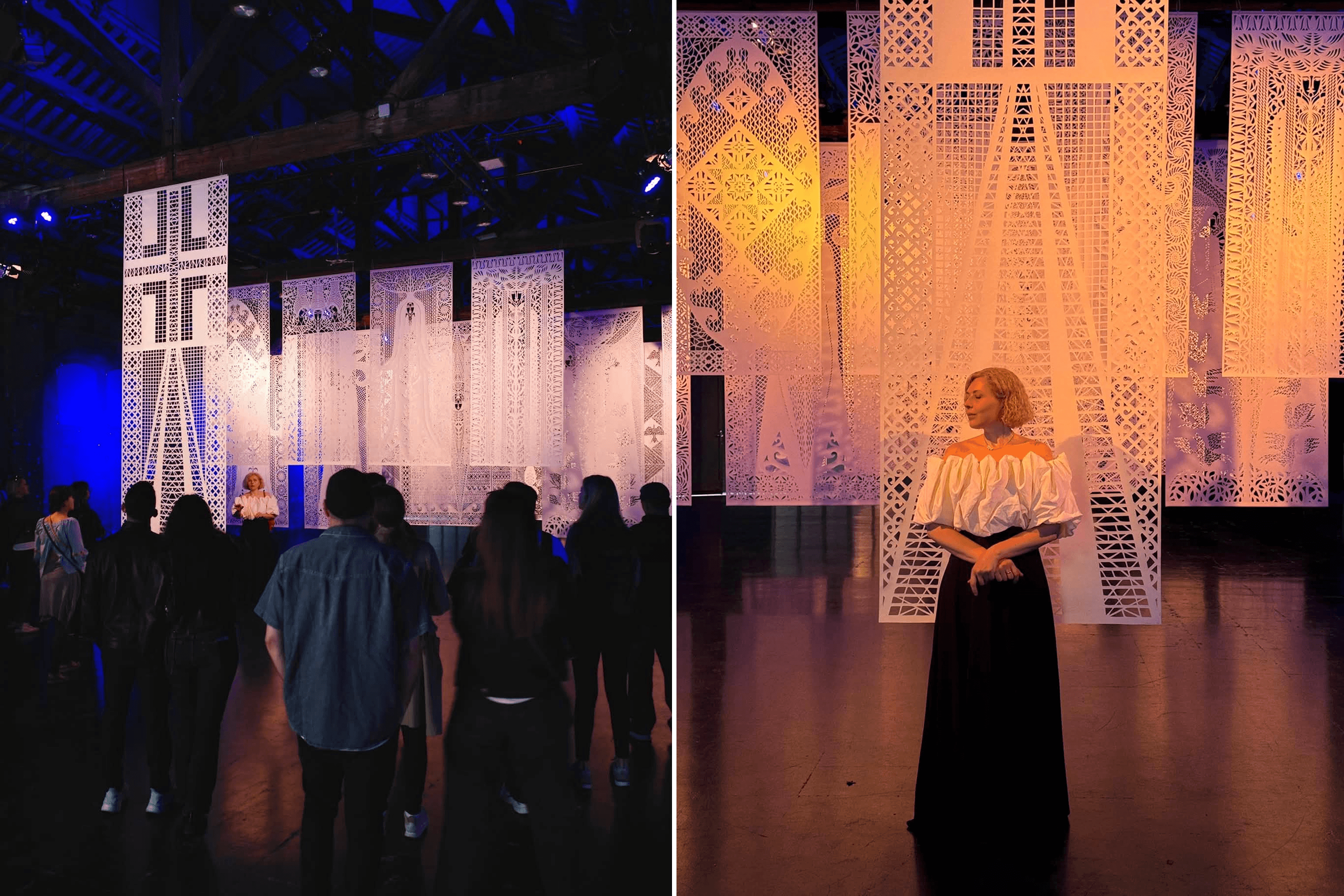
The exhibition Roads by Ukrainian artist Daria Alyoshkina at the Ukrainian Cultural Center. Barcelona, Spain, 2026. Photo: Daria Alyoshkina / Facebook 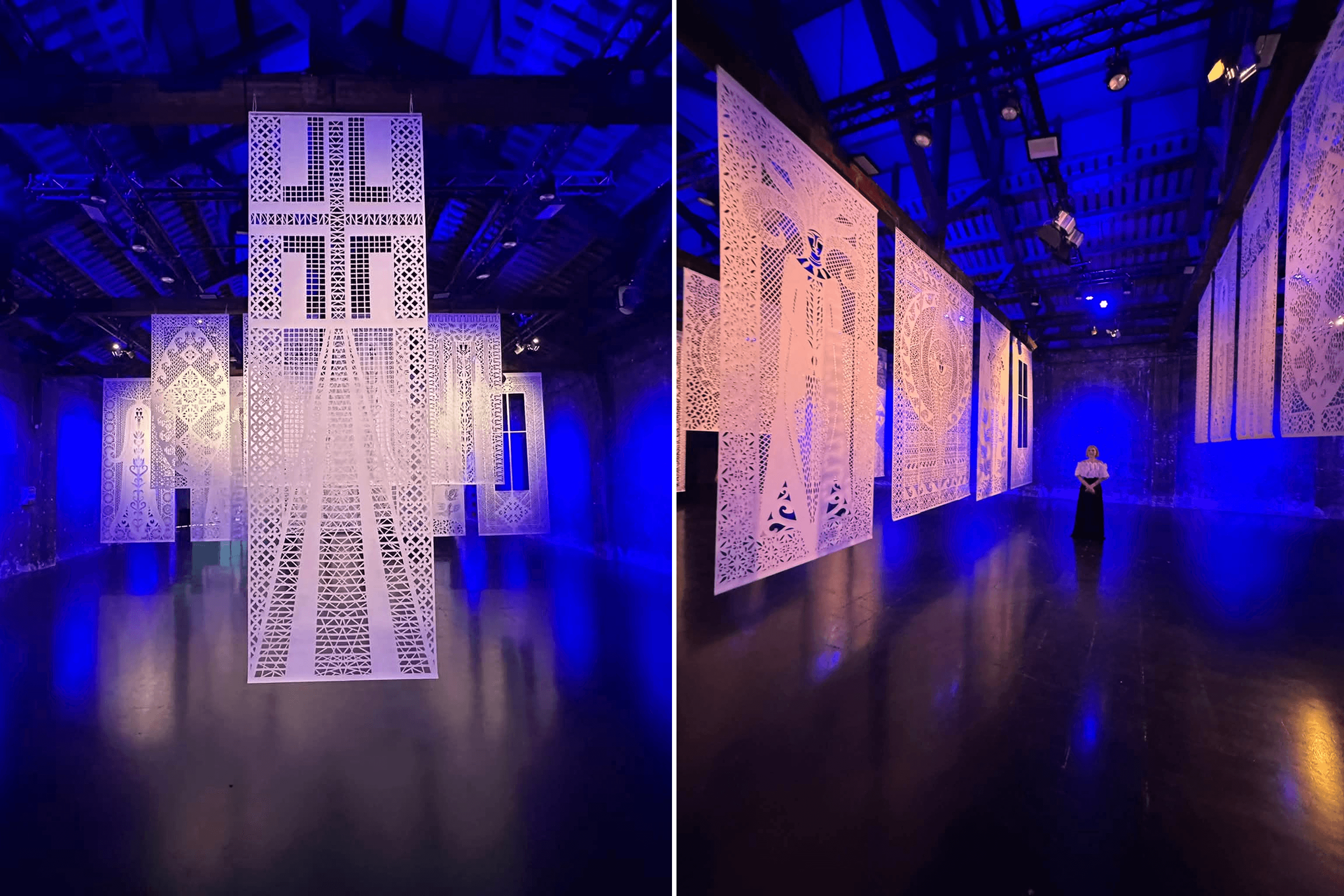
Photo: Daria Alyoshkina / Facebook
It was not enough to explain to people what vytynanka was. You also had to find a way to sell it. What were your first steps?
I have been making vytynankas since 2009. Selling a sheet of paper is simply impossible.
I had a plan. I made one vytynanka almost every day and constantly posted them on Facebook. It was a powerful creative platform for me. What did I have to lose? I was sitting at home, changing diapers, dealing with runny noses and coughs, and there was this great platform where people in different parts of the world could see me. And this consistency of filling Facebook with my work every day brought results. That is how my first vytynanka clients appeared.
In the beginning, the price was 200 hryvnias. There were a lot of charity projects and workshops. For the first seven years or so, I worked to build my name, almost every day, taking on all kinds of events.
When did the turning point come, the moment you began finding yourself as an artist?
One of the first major exhibitions was in Paris. We were invited there for a show, and I came back already well known. To be recognized at home, you have to go somewhere else first.
There was a whole team of us women artists, six or seven in total. Gallerist and art manager Sana Moreau organized an exhibition at the Ukrainian Cultural Center in Paris called “The Chrysalis Effect.” We hung enormous paper panels across three of its windows.
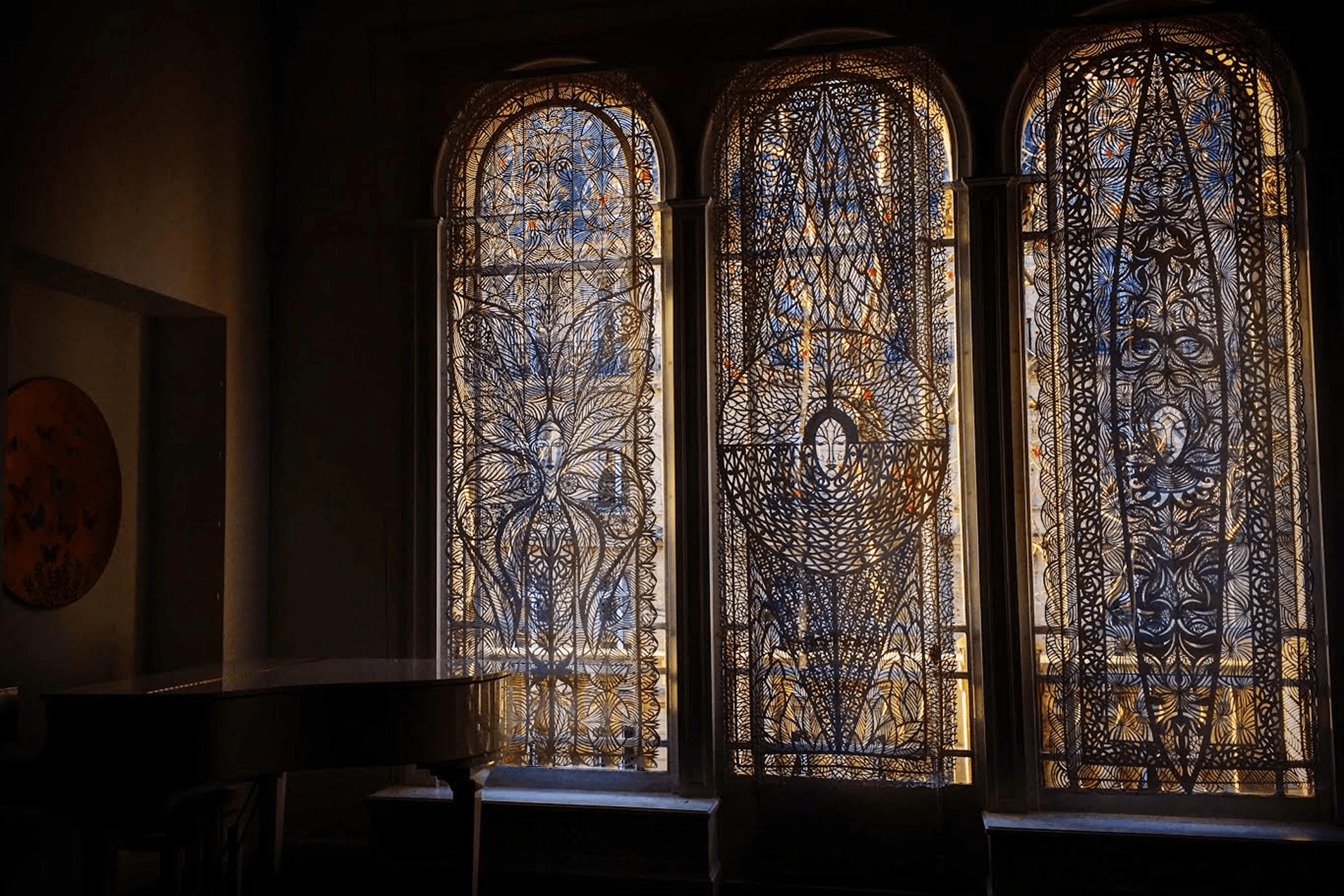
A curtain from Ukrainian artist Daria Alyoshkina’s Chrysalis Effect project, exhibited in Paris. 2017. Photo: Daria Alyoshkina / Facebook 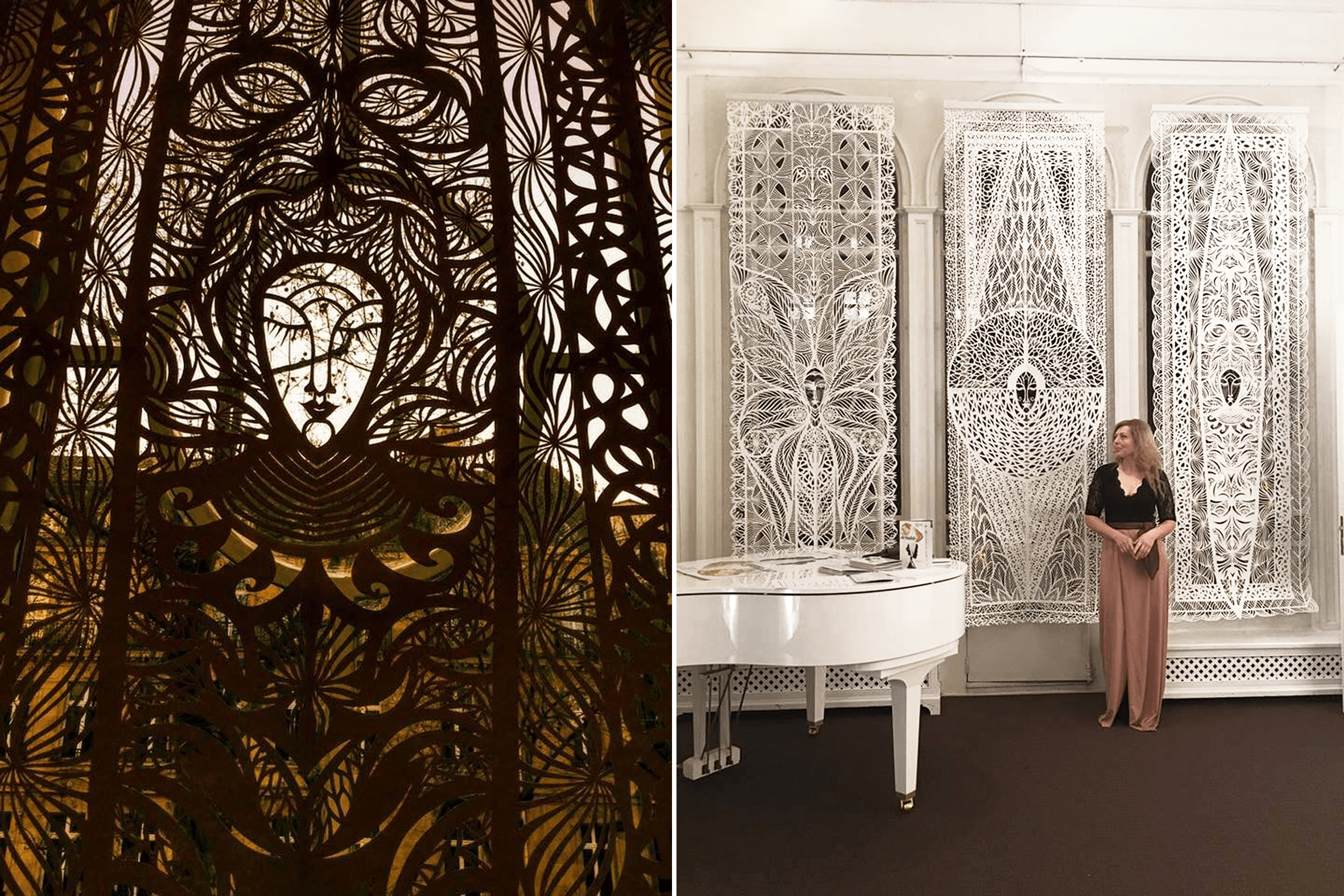
Photo: Daria Alyoshkina / Facebook 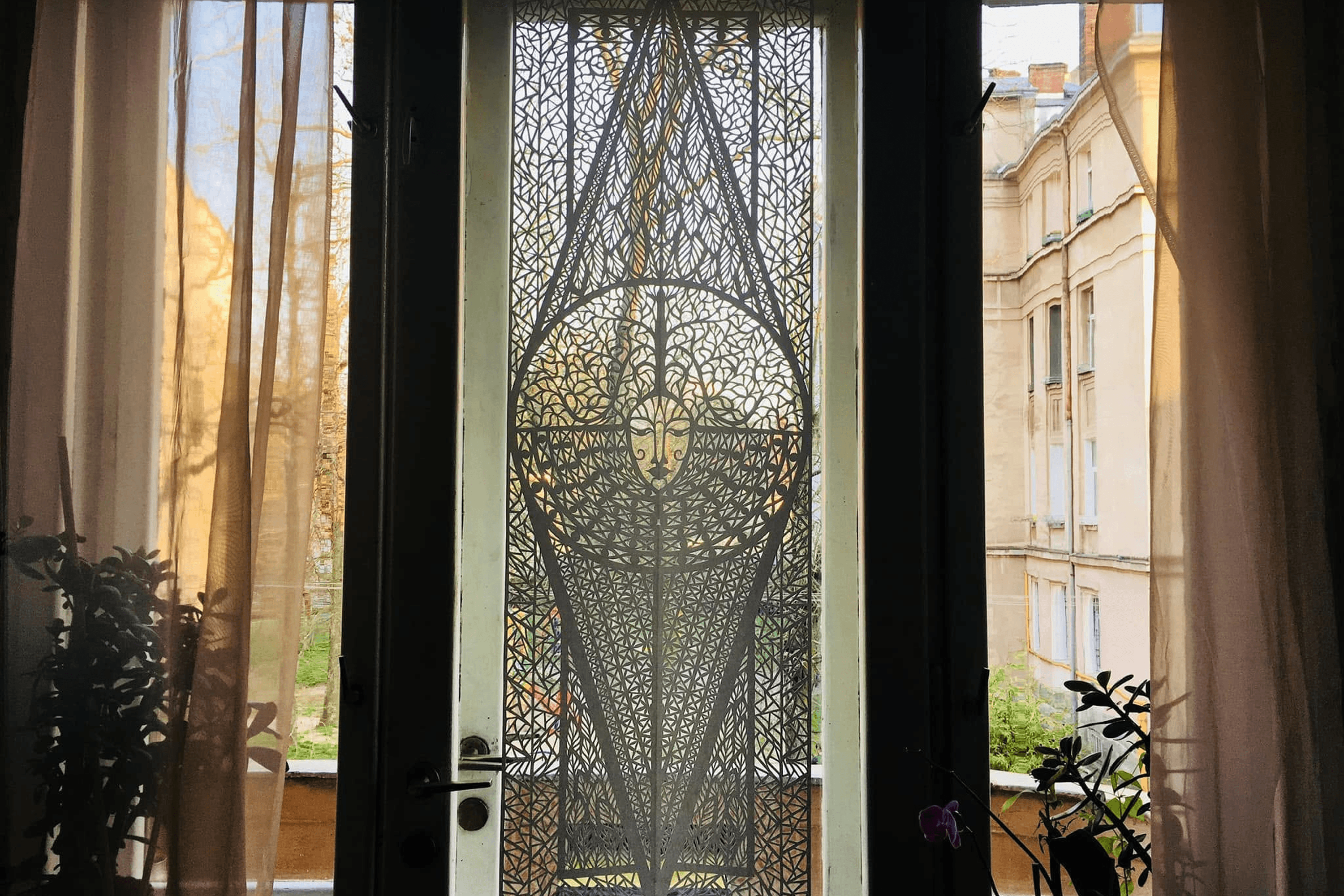
Photo: Daria Alyoshkina / Facebook
Then there was a trip to Seoul. I brought paper vytynankas there, and half the exhibition sold. It was a shock to me because large works were very rarely bought in Ukraine. But now I can say that my name sells my work. The key is working every day, and when you stop, everything stops. A key that is used every day never rusts. That saying fits perfectly.
You collaborated with Cartier in 2018, and they decorated a boutique with your works. How did they find you?
They wrote to me on Instagram. I posted my work every day, so people find me. When Cartier wrote to me on Instagram, I initially thought it was spam. It was so funny. I did not reply for two or three days. I showed it to Hordii, my husband: “Look, I got some spam,” and he said, “Are you serious? That is Cartier.” How would I know it was Cartier?
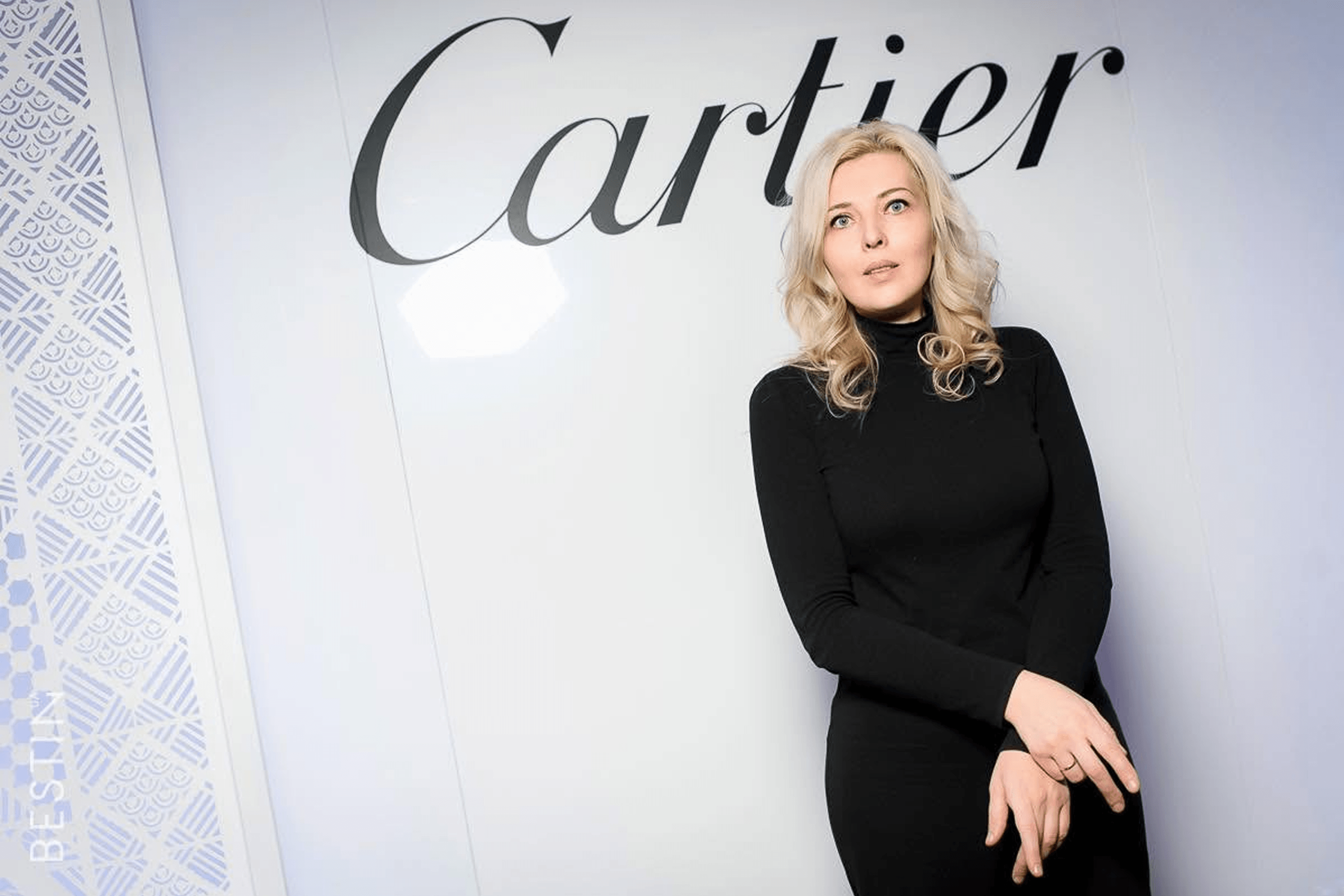
The Cartier vytynanka by Ukrainian artist Daria Alyoshkina, created for the Cartier brand. 2019. Photo: Daria Alyoshkina / Facebook 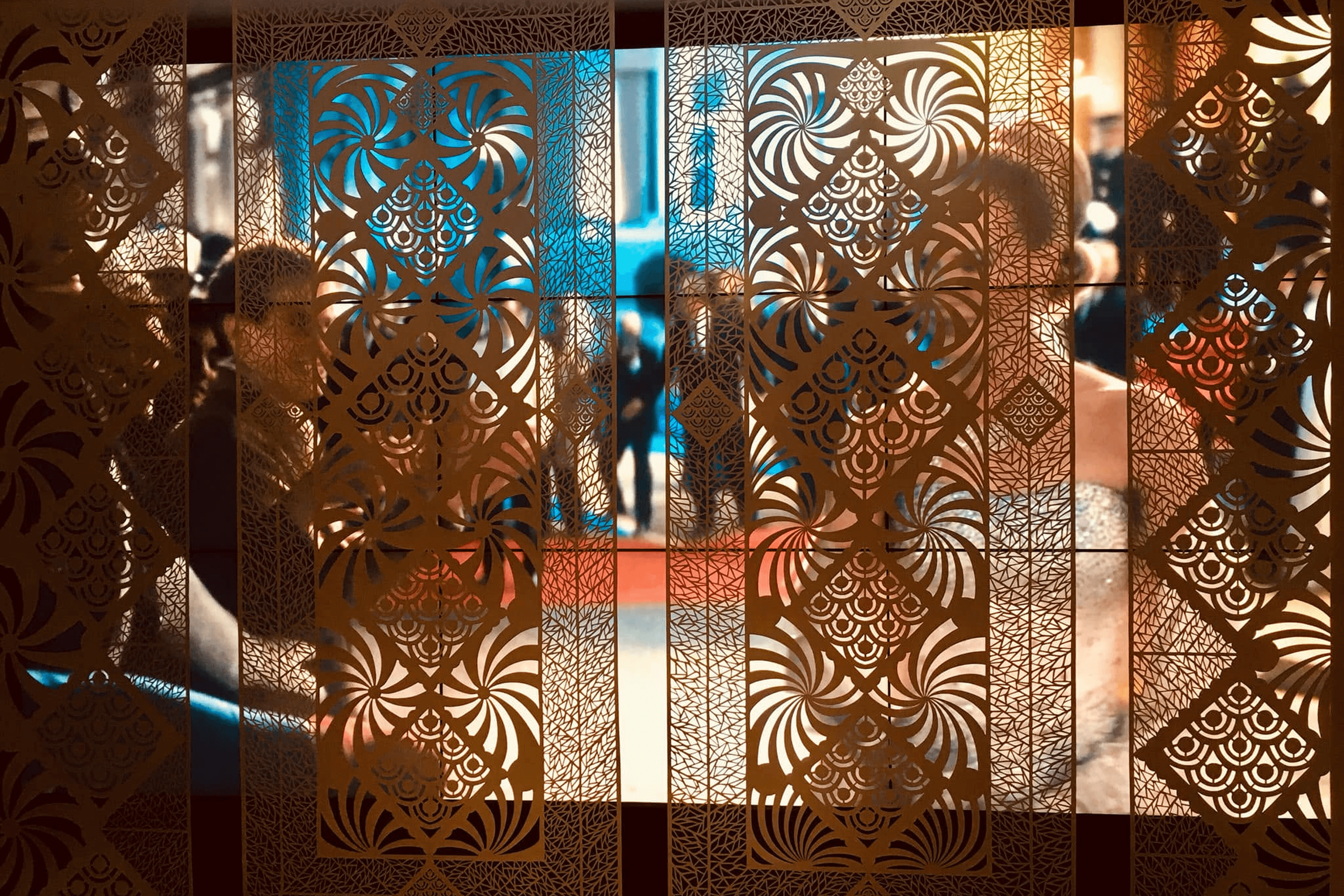
Photo: Daria Alyoshkina / Facebook 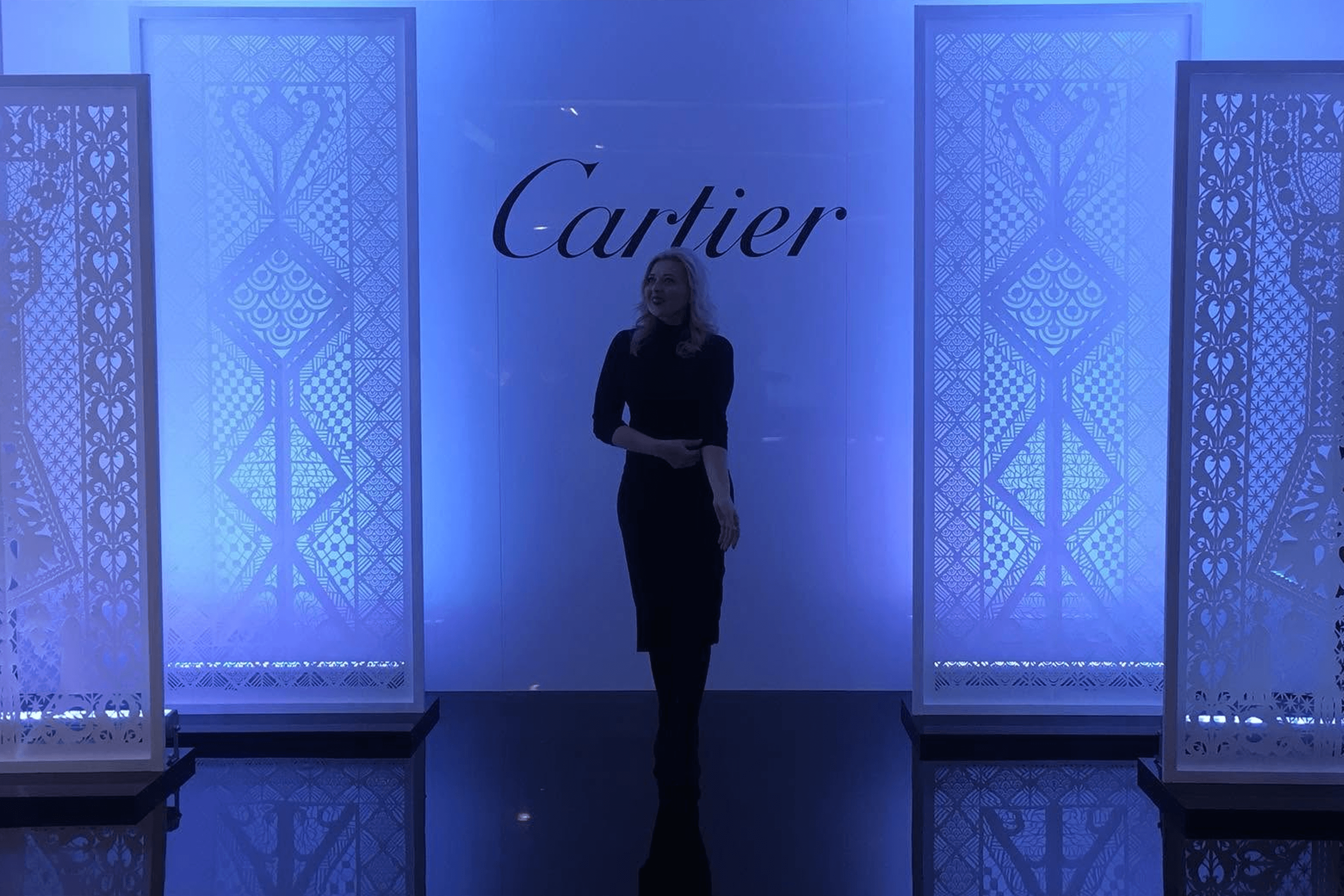
Photo: Daria Alyoshkina / Facebook 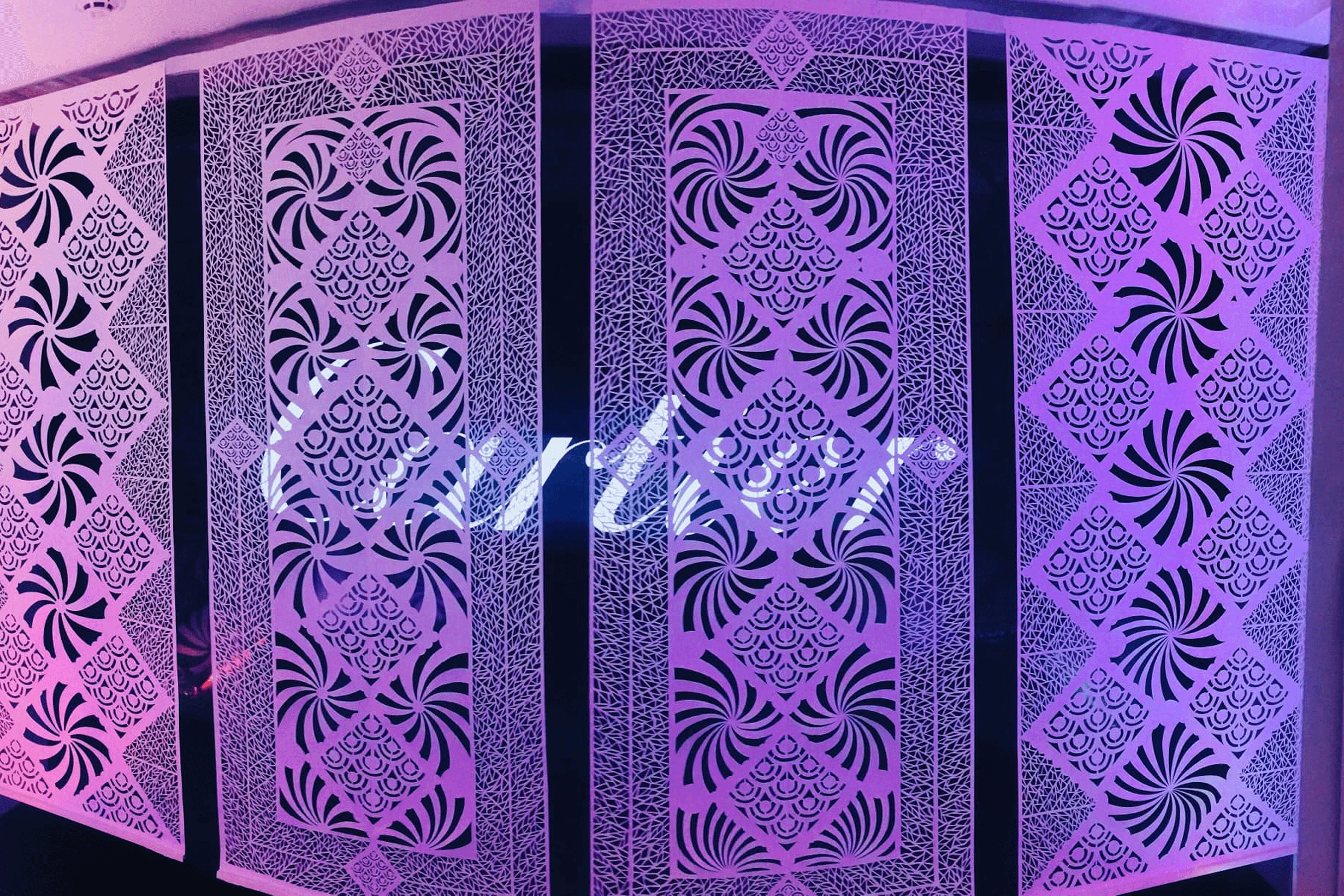
Photo: Daria Alyoshkina / Facebook 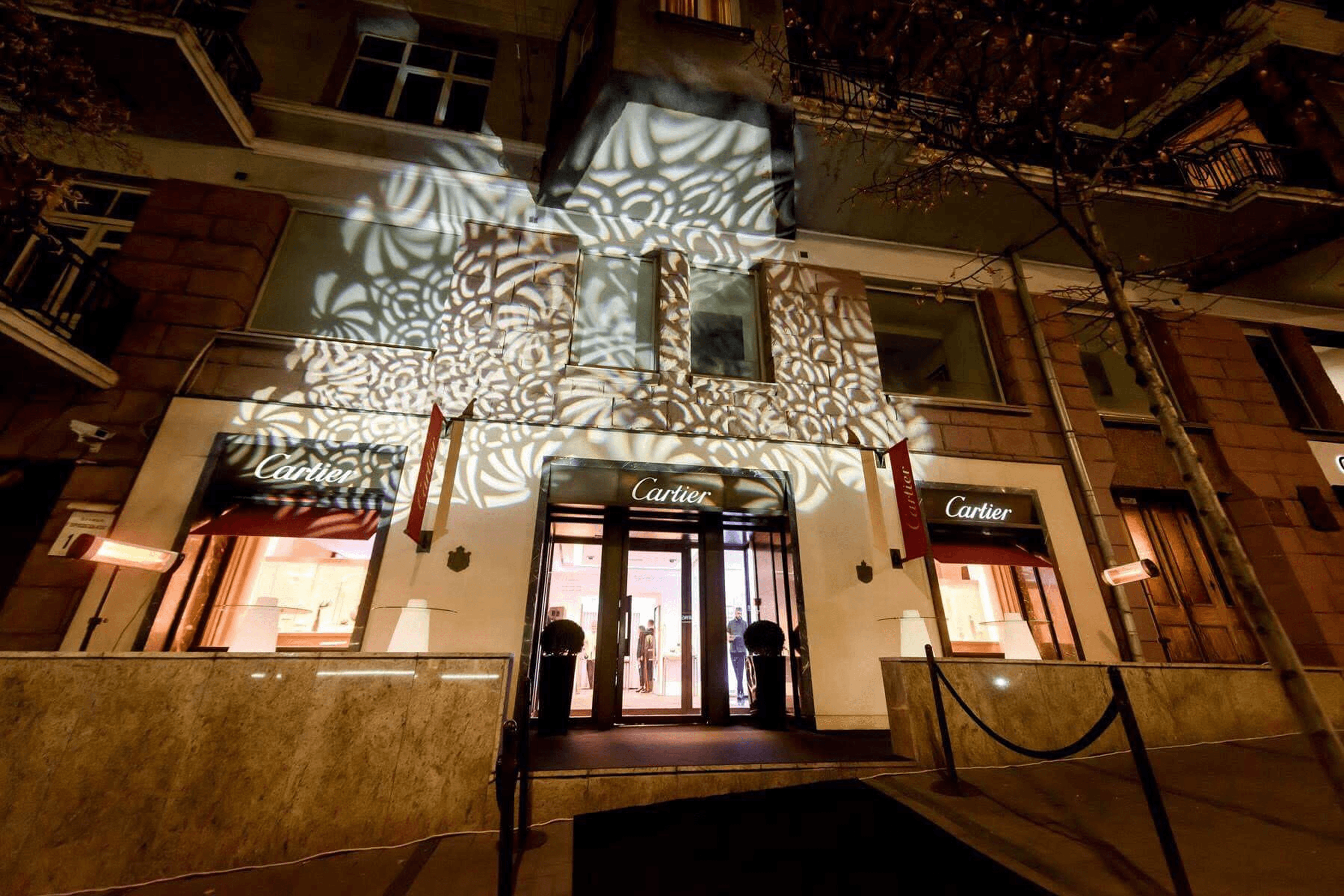
Photo: Daria Alyoshkina / Facebook 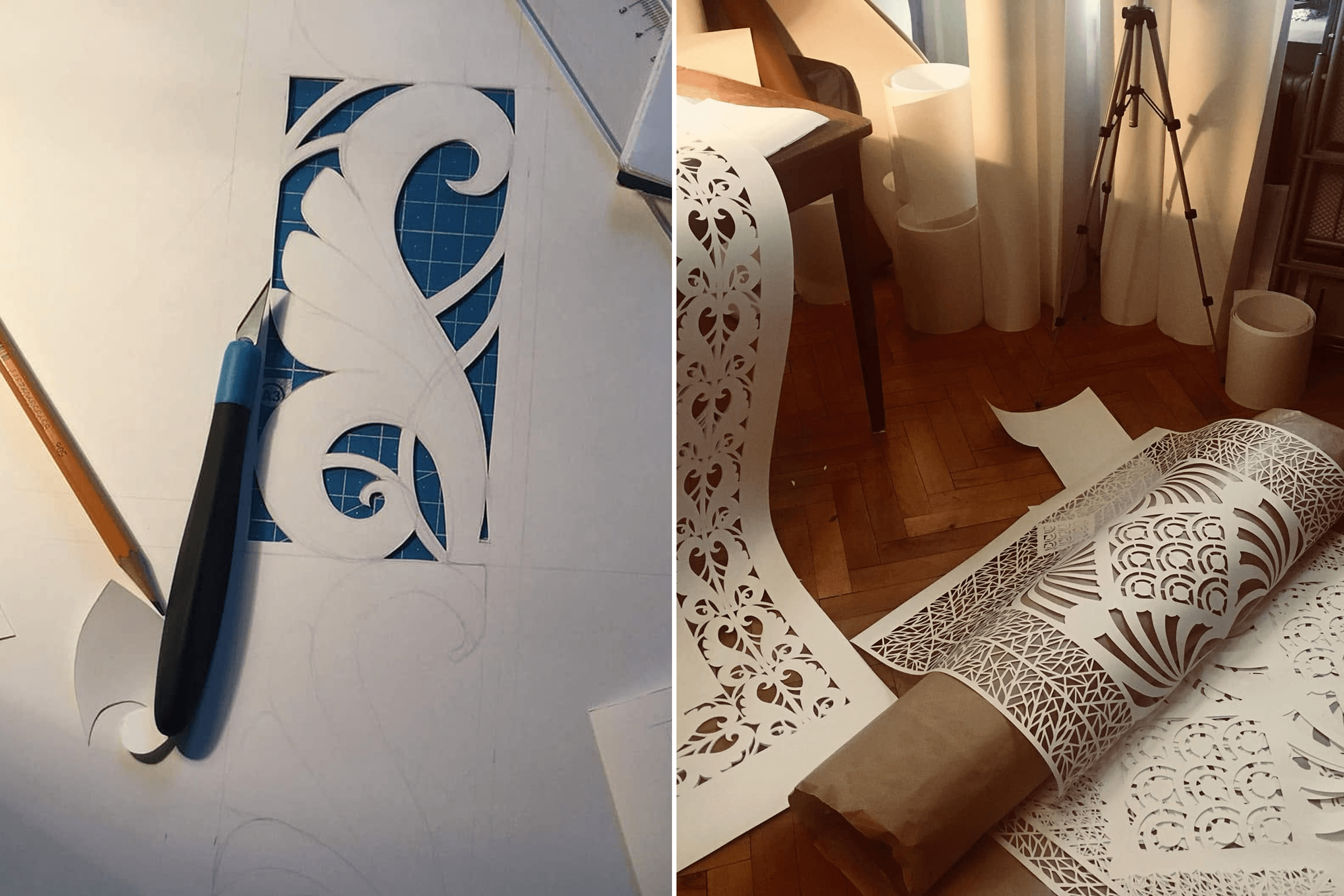
Photo: Daria Alyoshkina / Facebook
Later, we also collaborated with Ukrainian Vogue. They selected 30 covers, and a vytynanka appeared on one of them. That kind of made it, well, trendy, you know? I got vytynankas to be fashionable and draw attention to this art.
You once mentioned the words of a researcher who said that vytynanka was almost dead. How did traditional vytynanka become your own original art?
I bring my own subjects and compositions into it. People often think the vytynankas I make are traditional. But they are not.
At my workshops, I always raise the issue of copyright very forcefully, explaining why my vytynankas are my own art rather than folk art. It is a very difficult subject that needs to be discussed.
Is plagiarism a painful subject for you?
Very much so. It took off to such an extent that now dozens of people make the same kind of large white panels that I started with. And at this point, you cannot prove to anyone that I was the first to do it.
For me, my art is like a fourth child.I have always guarded it jealously, but I see that I have to learn somehow to live with this because this is how the niche I found myself in grows.
And if vytynanka was a dying art form in 2008, we can no longer say that today because it is developing after all.
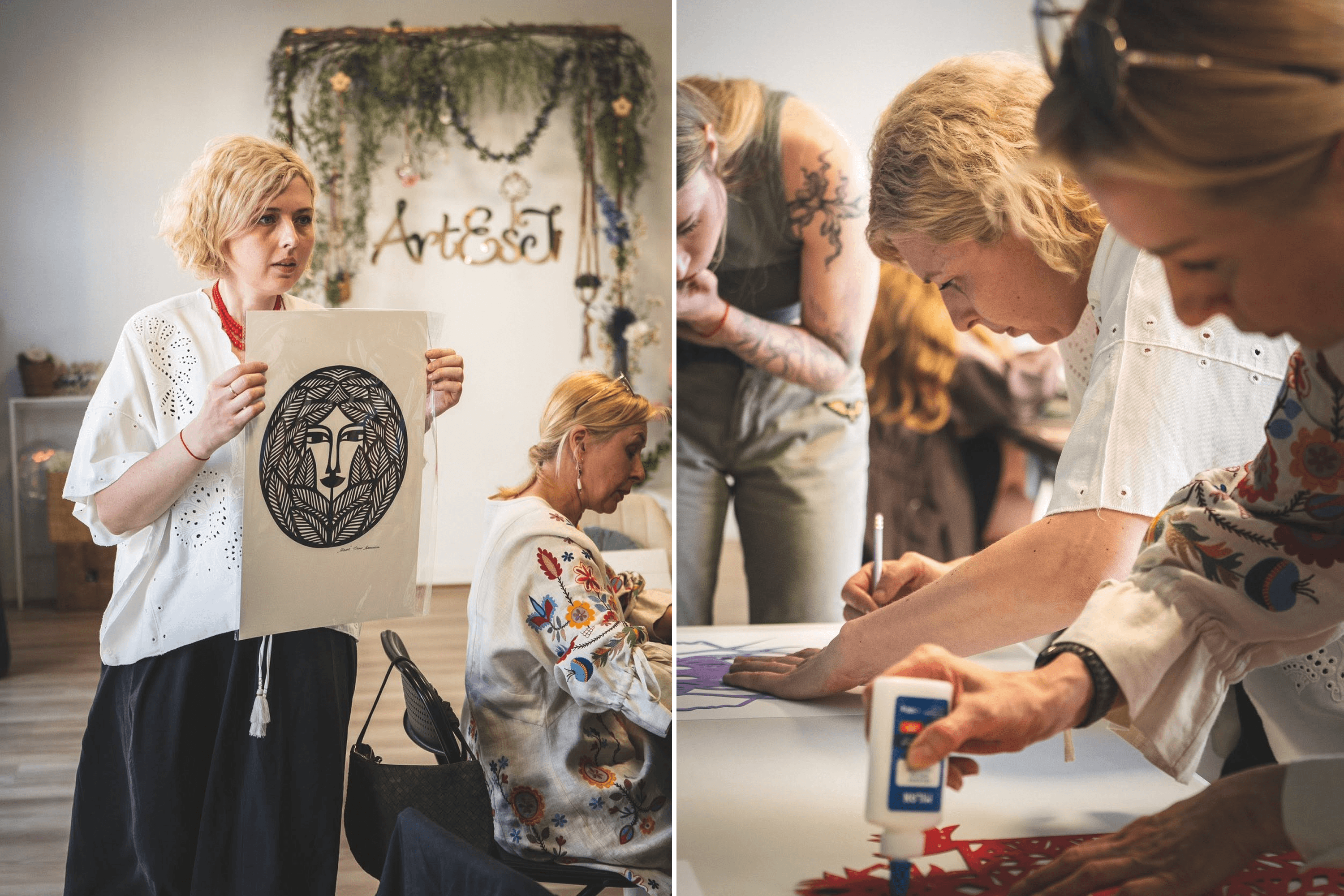
Ukrainian artist Daria Alyoshkina leads a vytynanka workshop in Valencia, Spain. May 2025. Photo: Daria Alyoshkina / Facebook 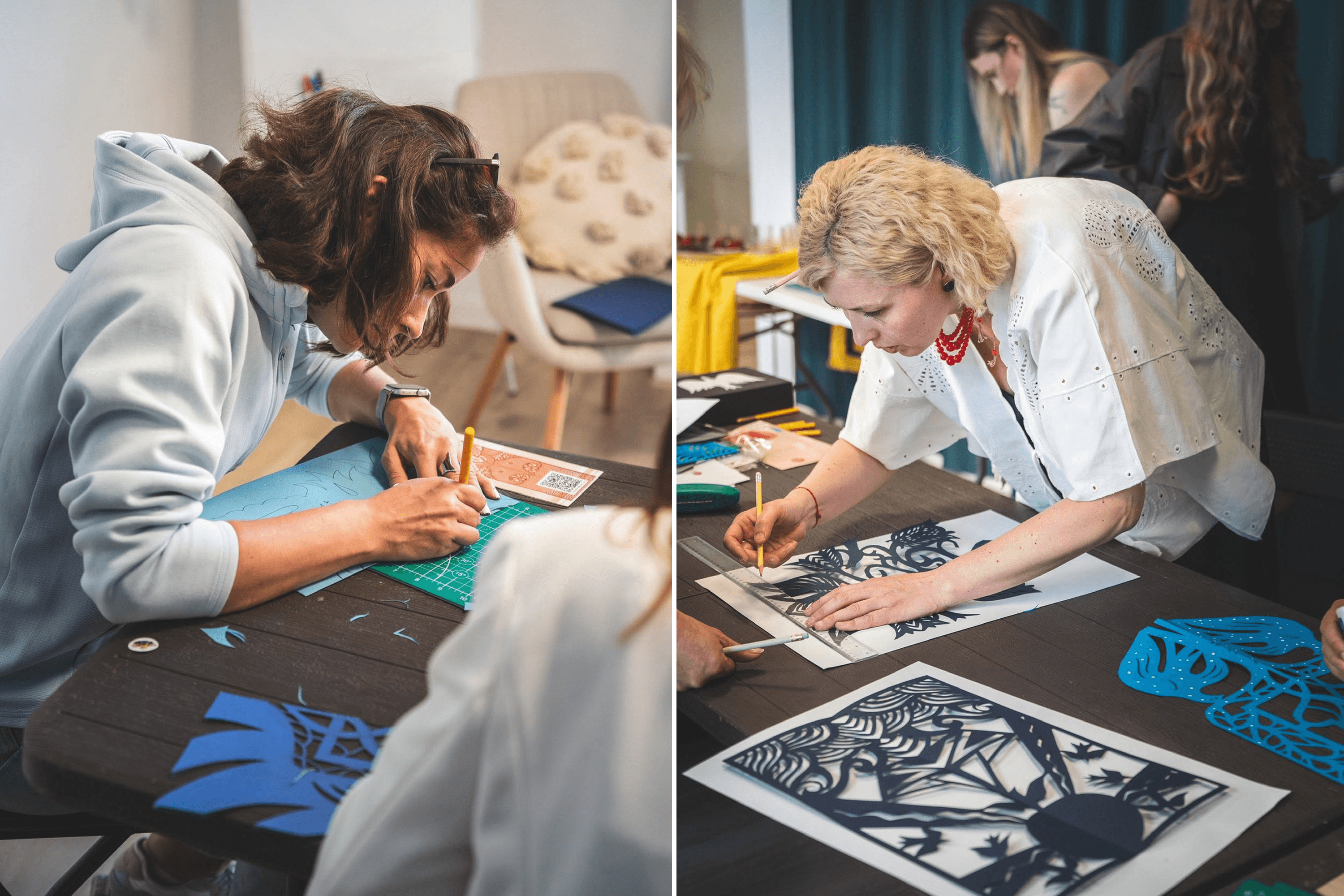
Photo: Daria Alyoshkina / Facebook 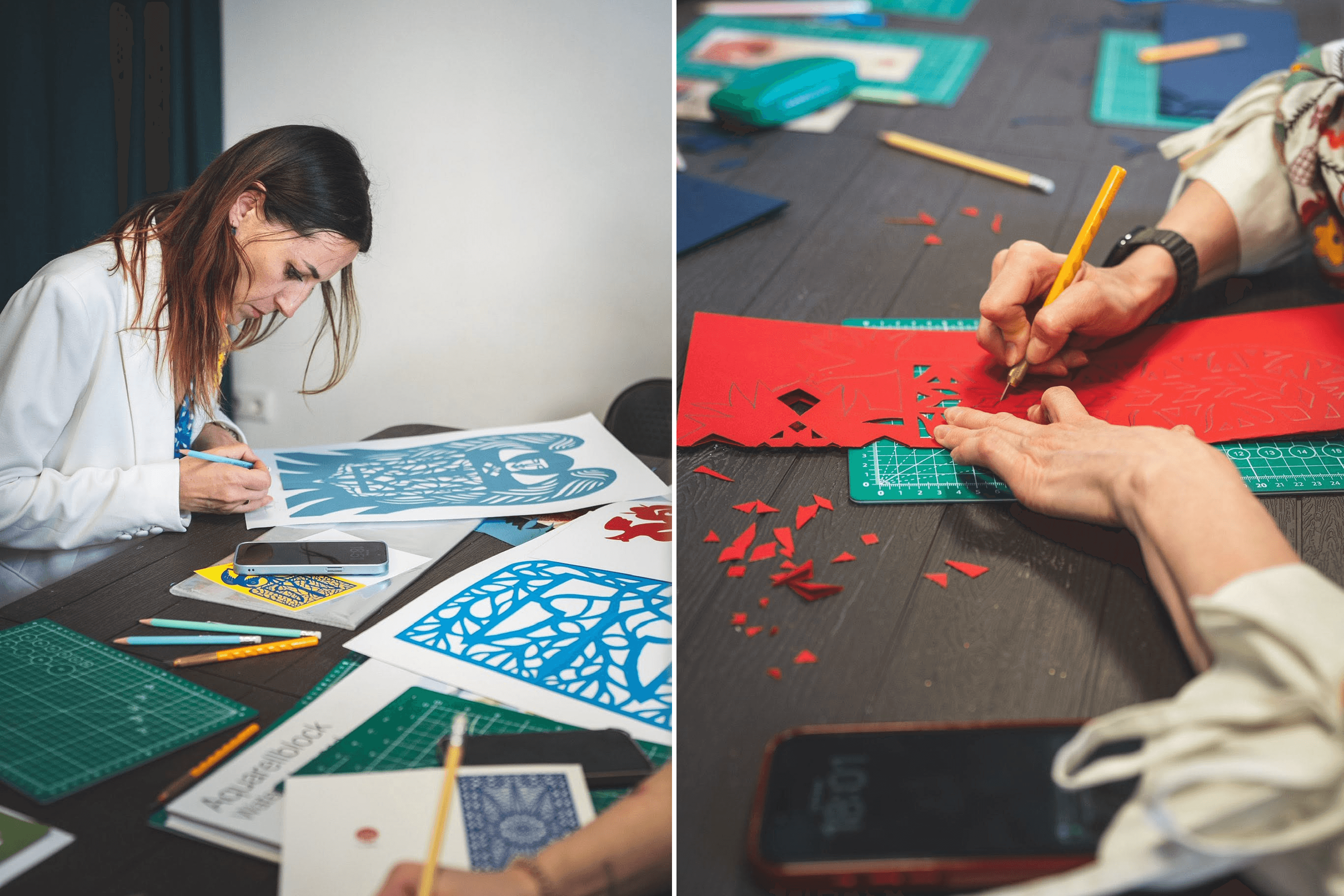
Photo: Daria Alyoshkina / Facebook
What do you think is behind the interest in vytynanka?
I think it all just piled up together. Of course, the full-scale invasion sparked a new love of everything Ukrainian. I can see that. Traditional elements of major holidays are also making a strong comeback. We can see how much of a craze there was for weaving spiders or painting pysanky. Vytynanka is also becoming part of Christmas traditions.
Do more Ukrainians or foreigners come to your workshops abroad?
With all the attention we are now seeing toward traditions, of course more Ukrainians come. And I can tell you that they really need it there. I came to the Netherlands, and they said, “Give us more workshops like this.” I mean, they are thirsty for it, they miss it, and they come together there and create their own groups. I know they weave spiders and try to live in the rhythm of our country.
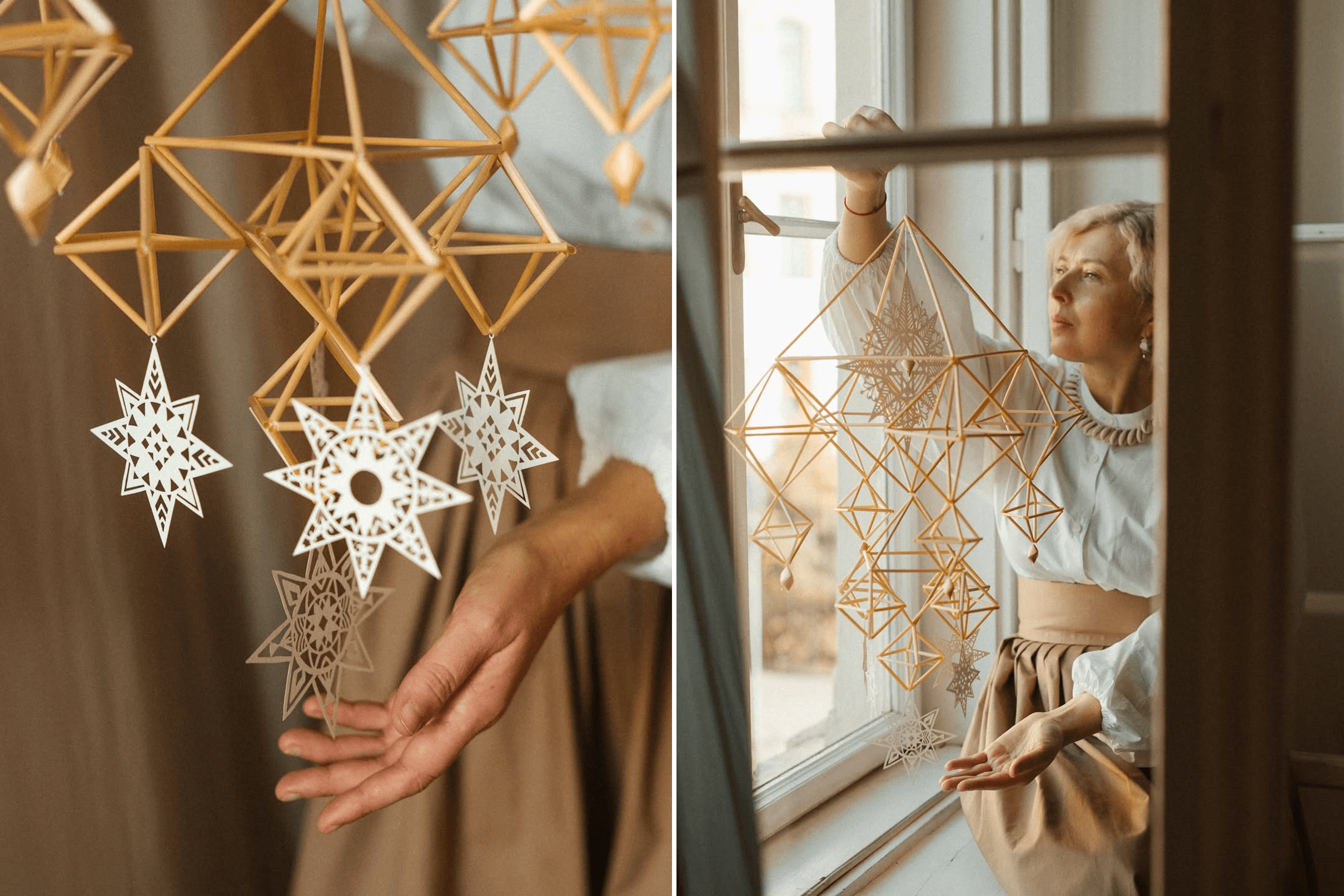
Daria Alyoshkina with a traditional Ukrainian Christmas spider, created in collaboration with the Snip Solomy workshop and complemented by her vytynanka. Lviv, 2025. Photo: Daria Alyoshkina / Facebook 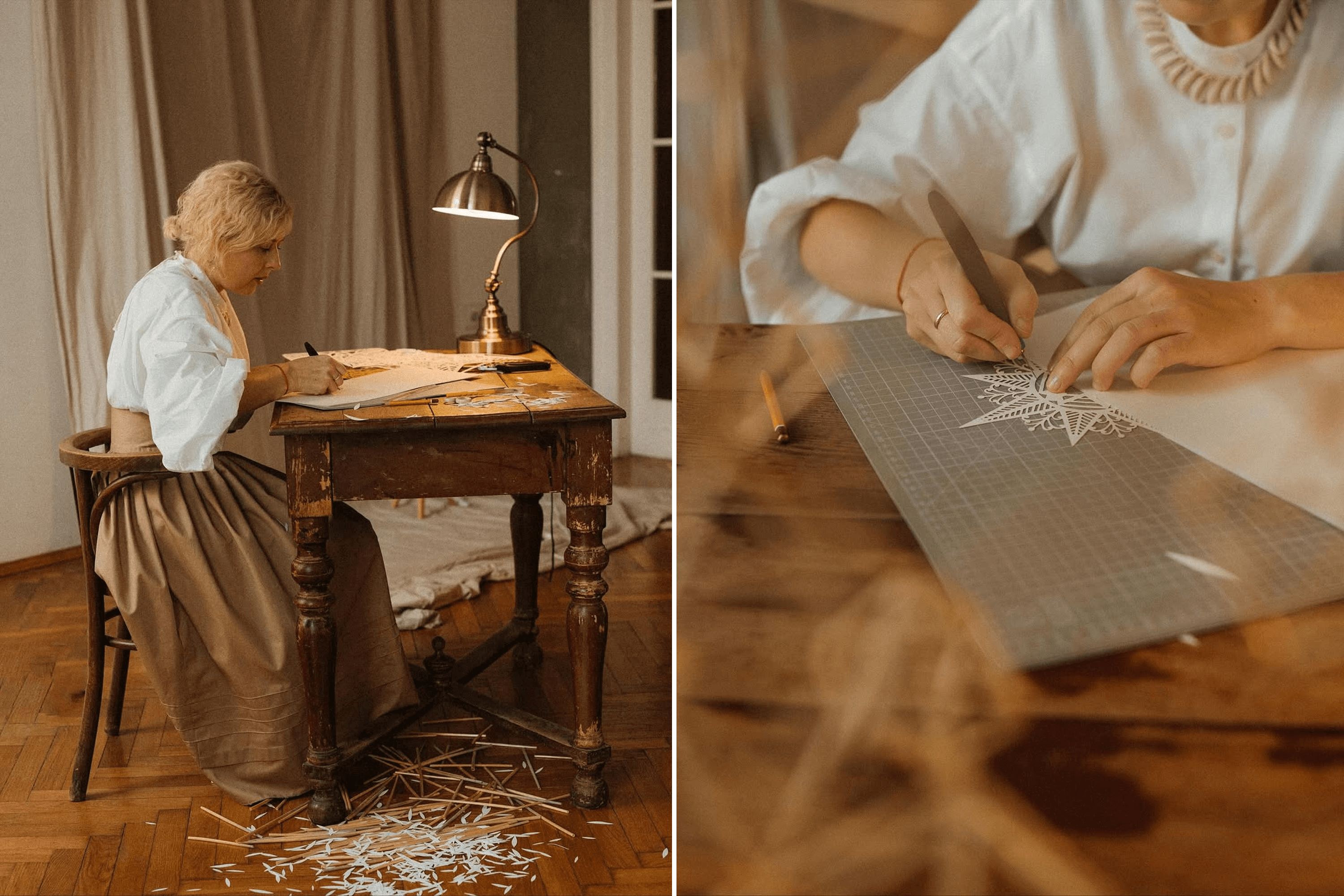
Photo: Daria Alyoshkina / Facebook 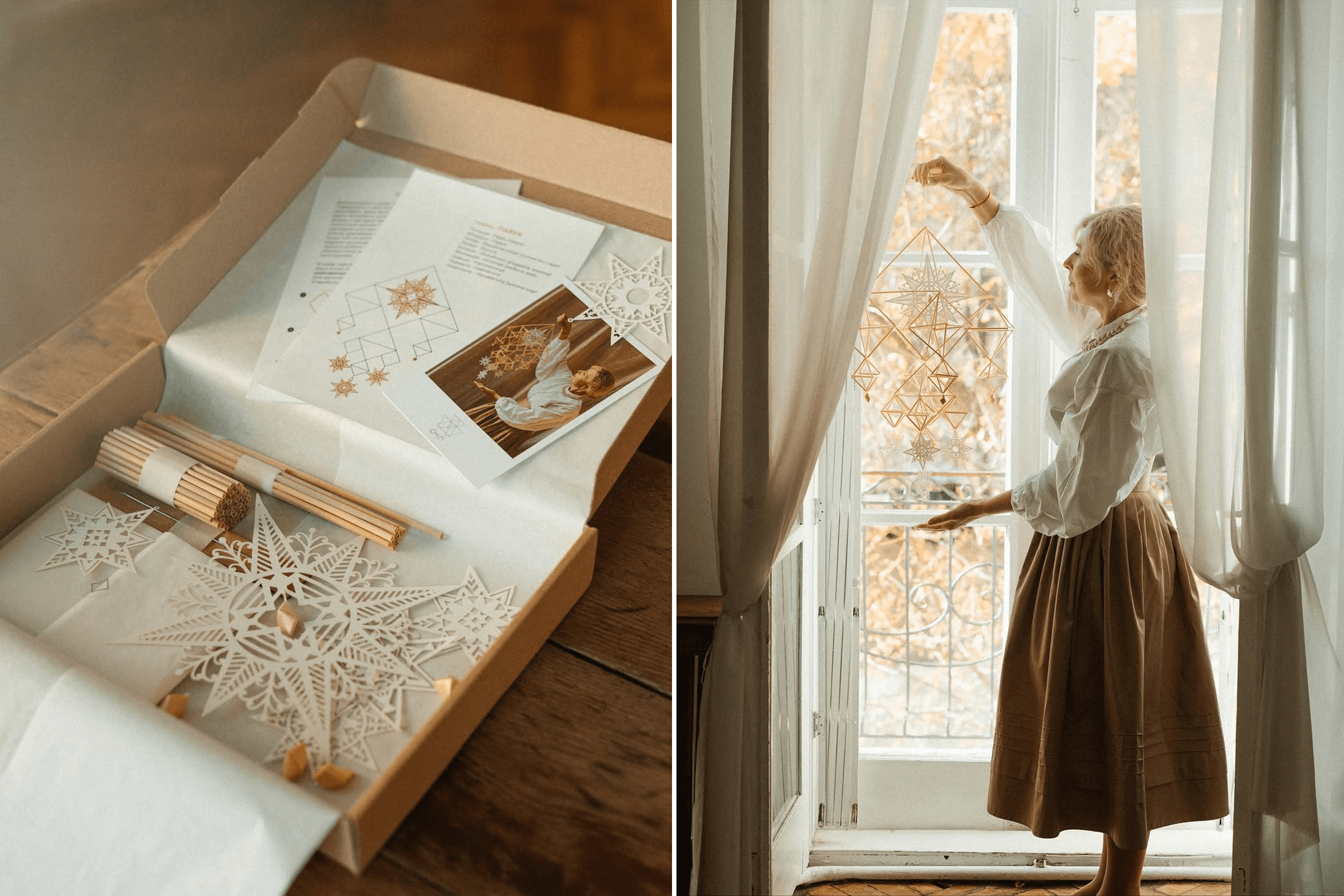
Photo: Daria Alyoshkina / Facebook
What do foreigners usually say when they see your works for the first time?
They say, “Wow,” and touch them. They just cannot help it. They usually say that you can really feel their Ukrainianness. Since I weave some of our ornaments and symbols into every work, perhaps that creates this effect, this sense of a Ukrainian soul in them. They are surprised that we have this kind of art. And they wonder whether they have anything like it themselves.
Can vytynanka be used to speak about such difficult things as war, pain, and historical memory?
It is a little difficult because you have to convey an emotion graphically in just a few lines. And vytynanka is about weaving lace, so you have to weave that lace in such a way that it contains pain, sadness, and a certain resilience.
One of my most difficult projects was dedicated to the Holodomor. It was almost unbearable to read all those stories. And because I come from a village that survived the Holodomor, where people spoke about the Holodomor in whispers, it was a subject I heard many stories about as a child. And it was only by filtering it through my childhood memories, through the stories my older neighbors used to tell, that I was able to create this project.
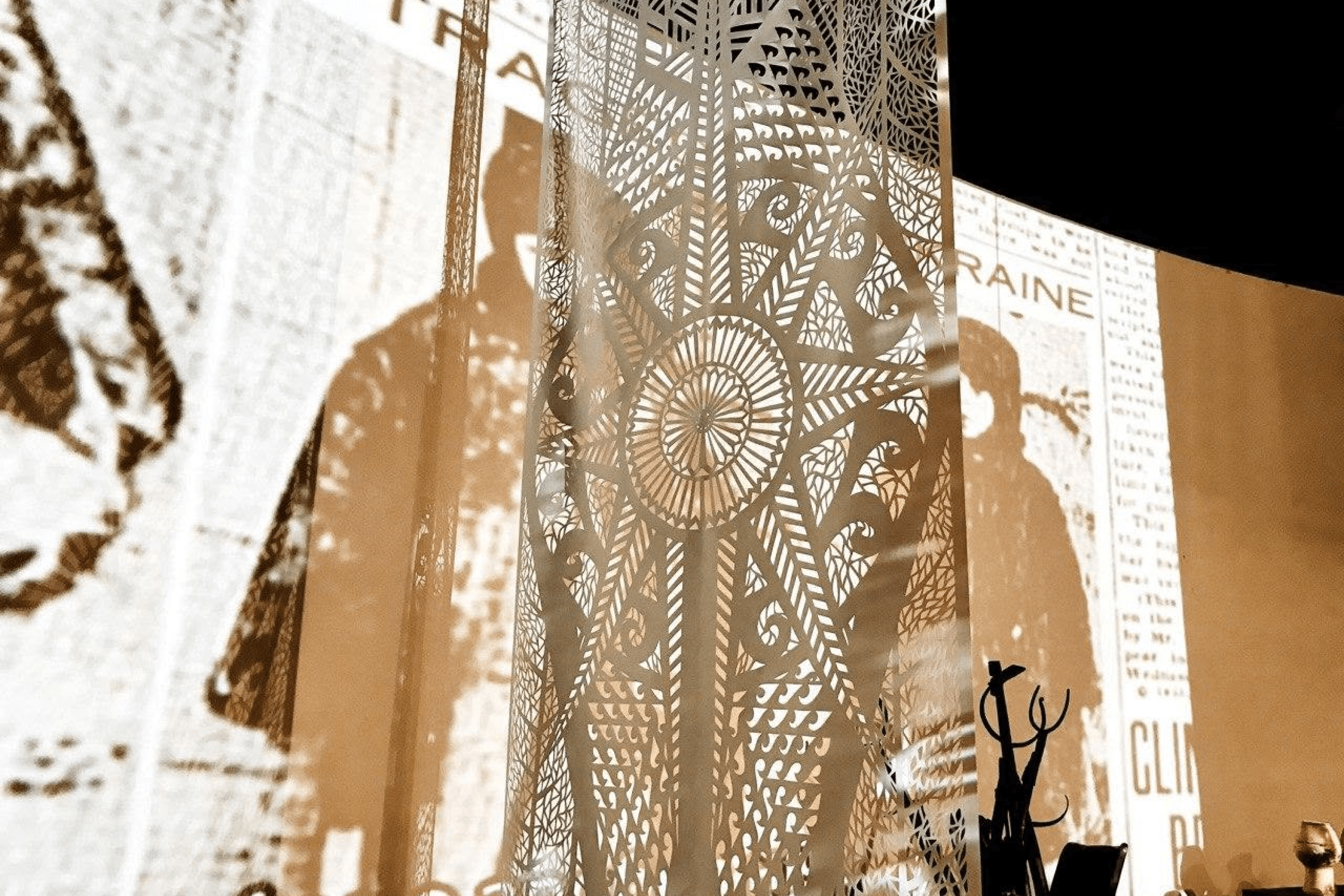
The vytynanky of Ukrainian artist Daria Alyoshkina at the Lace of Memory exhibition at the National Museum of the Holodomor. Kyiv, 2019. Photo: Музей Голодомору I Holodomor Museum / Facebook 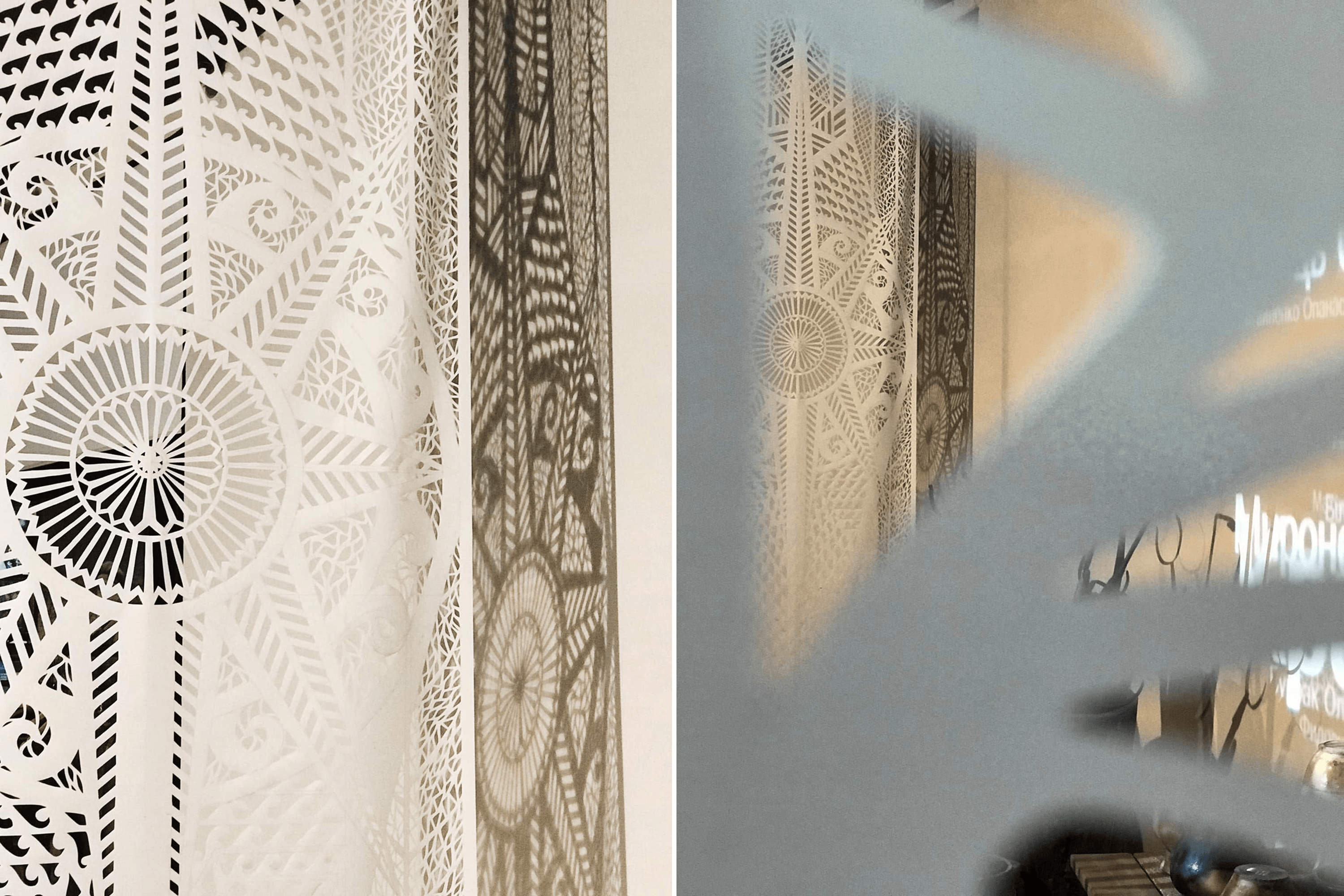
Photo: Музей Голодомору I Holodomor Museum / Facebook 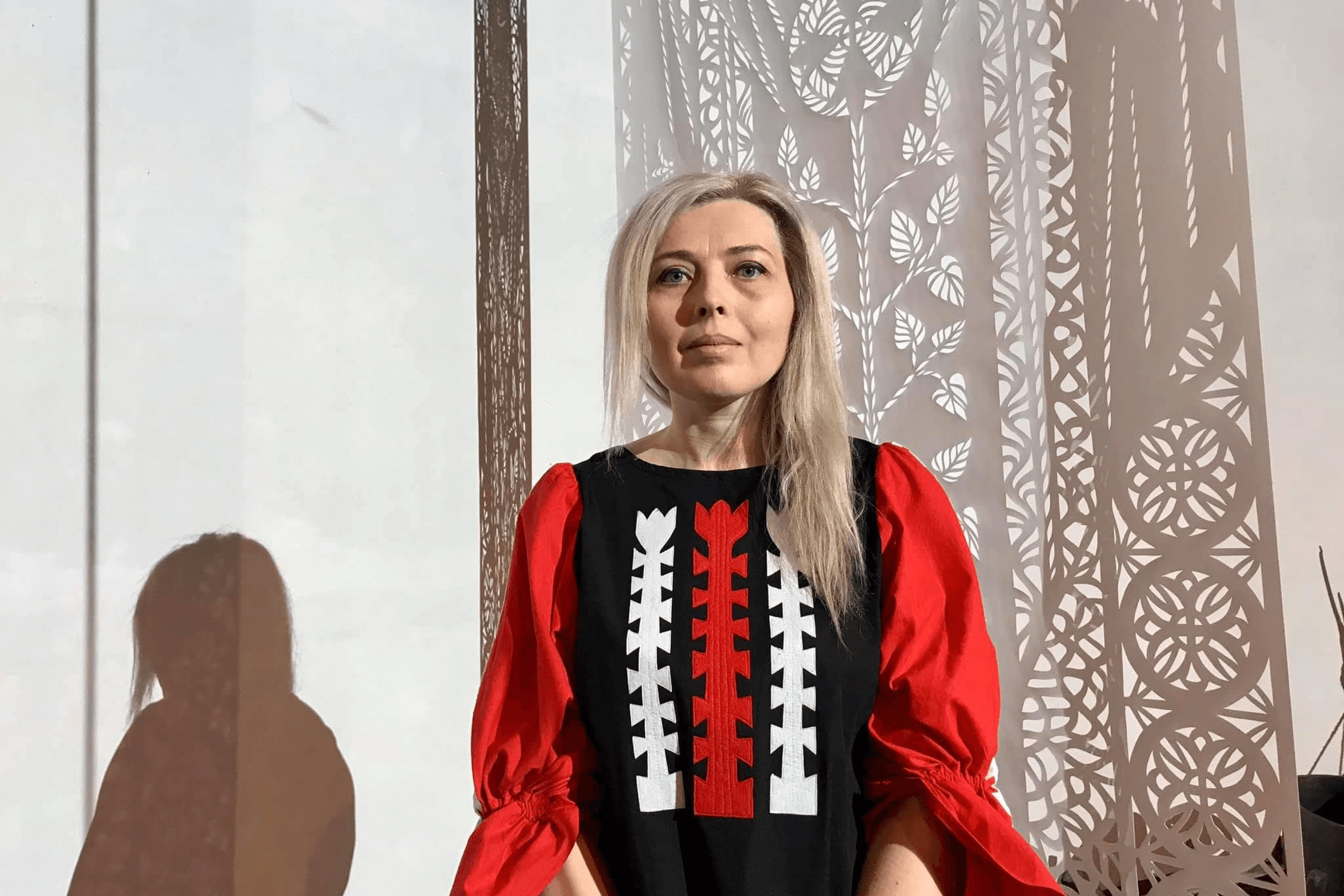
Photo: Музей Голодомору I Holodomor Museum / Facebook 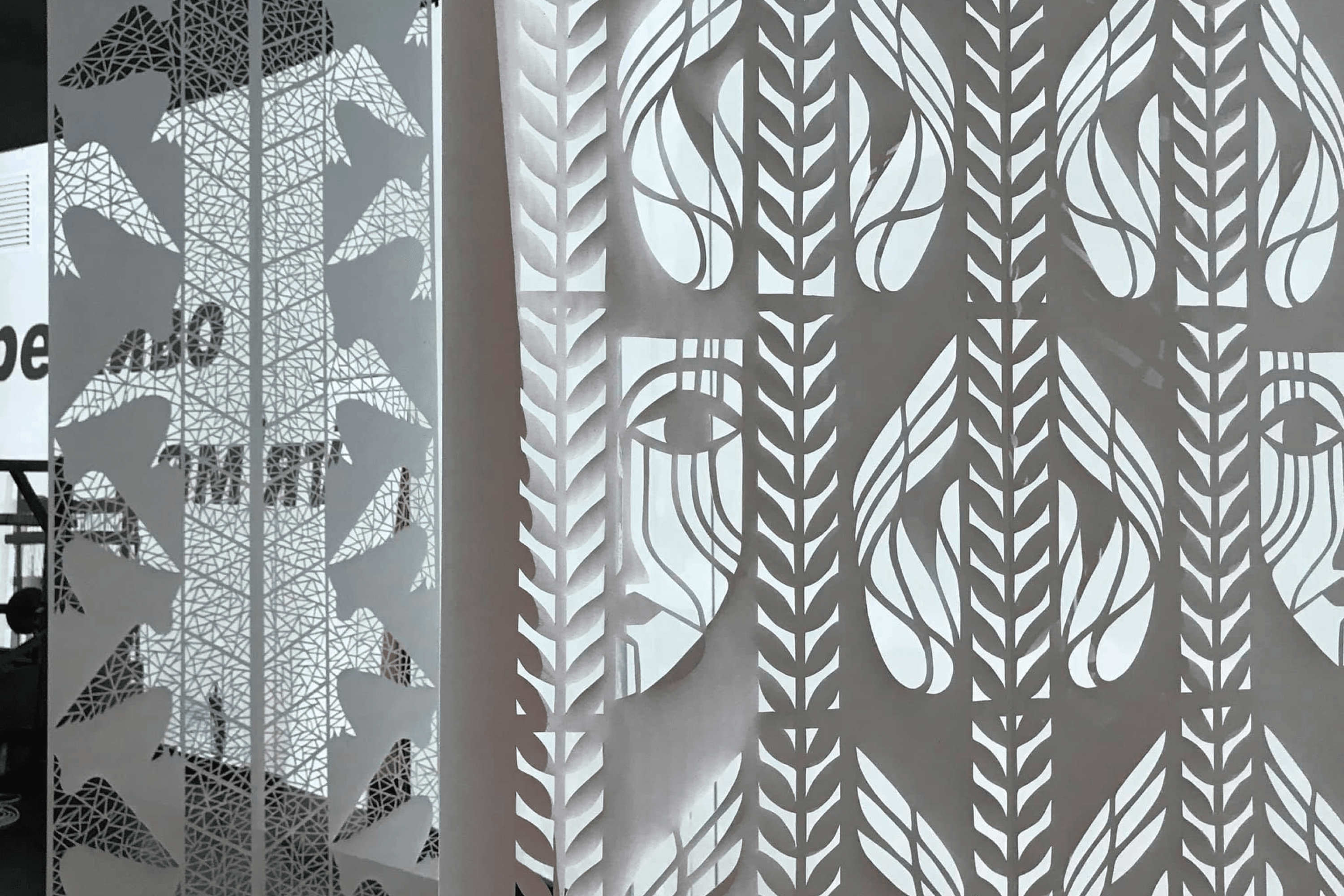
Photo: Музей Голодомору I Holodomor Museum / Facebook 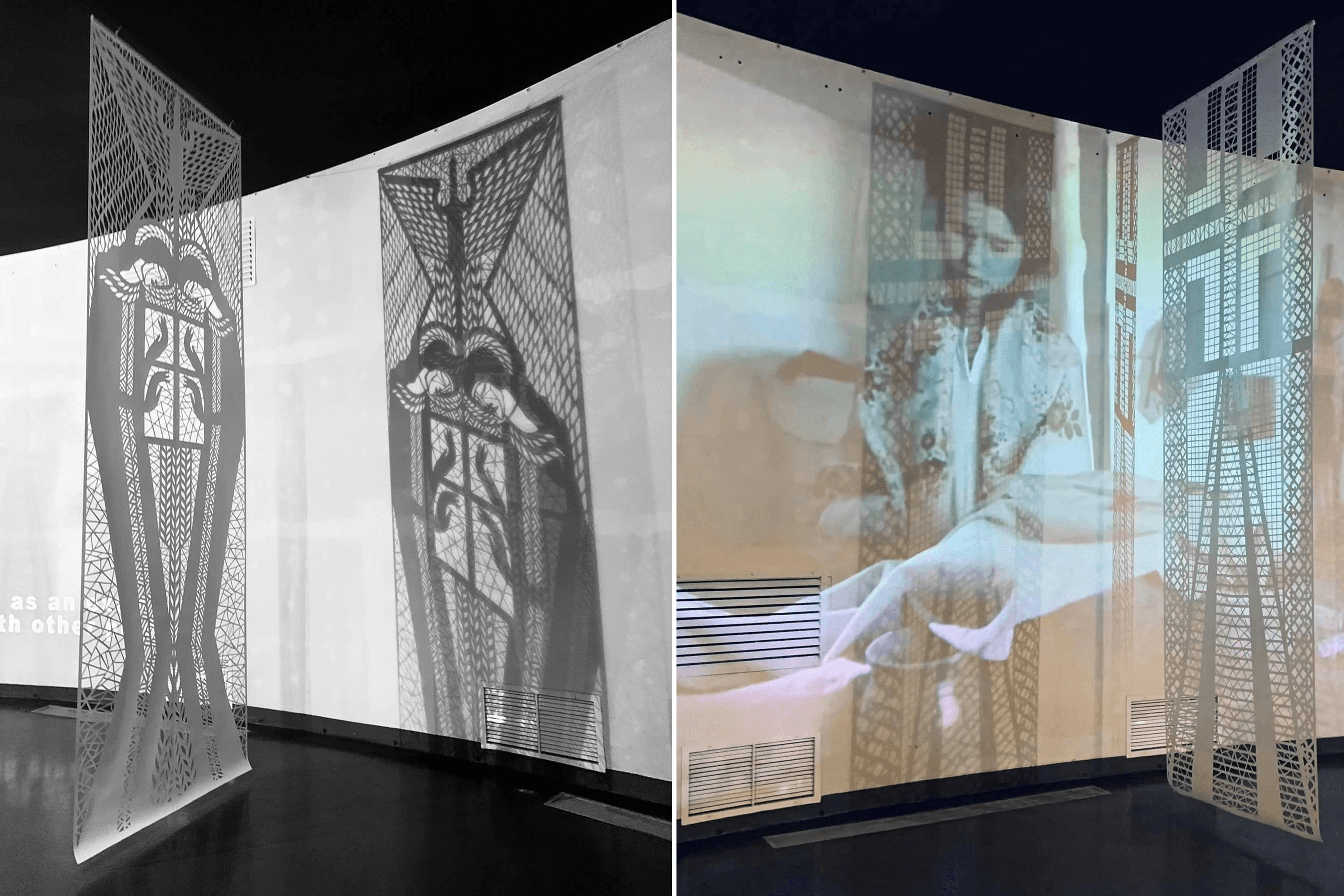
Photo: Музей Голодомору I Holodomor Museum / Facebook 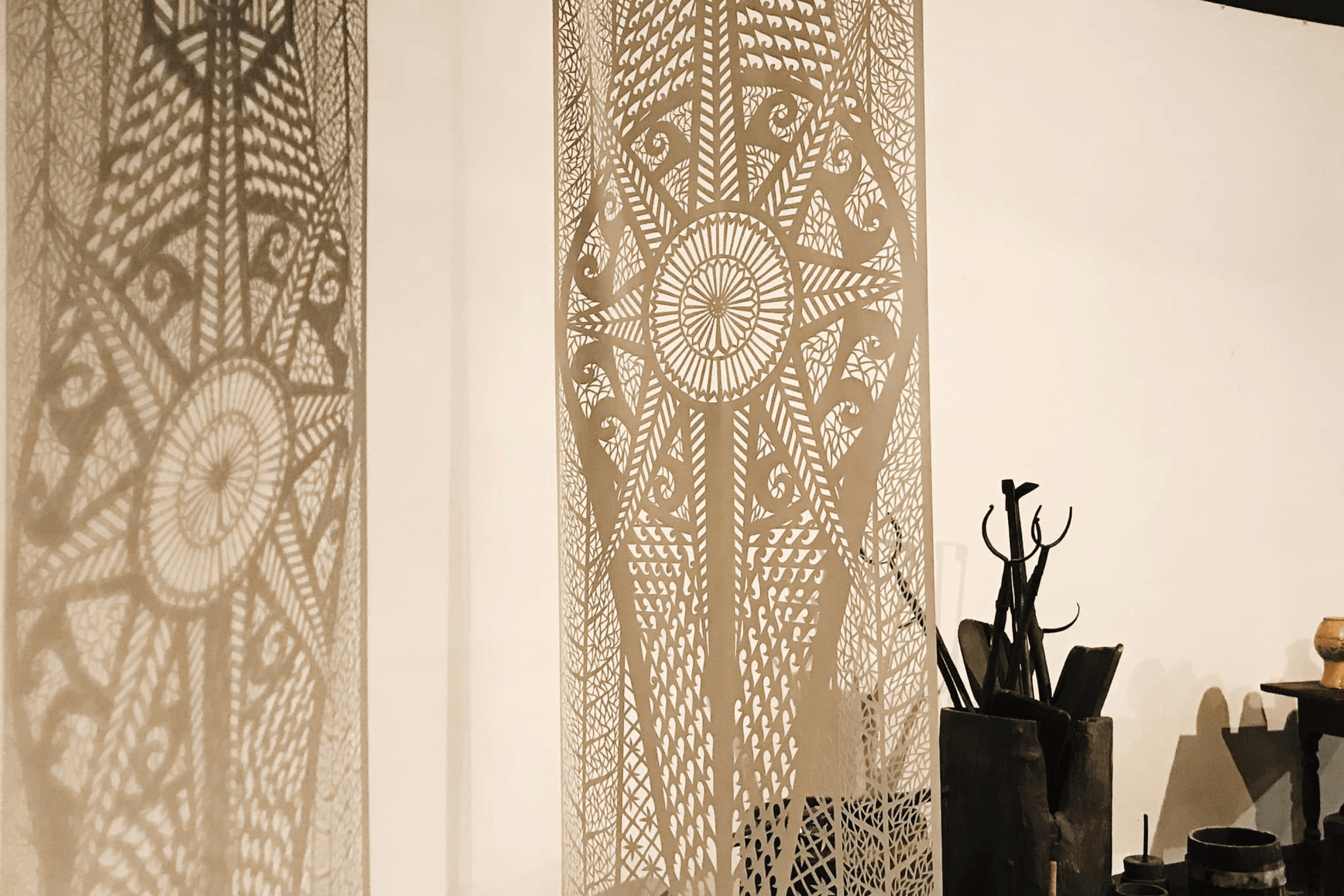
Photo: Музей Голодомору I Holodomor Museum / Facebook
You say that vytynanka has not only aesthetic but also therapeutic value. What do you mean?
For me, working with my hands is medicine. It is a release, a form of meditation. People also come to workshops and say they feel better afterward. There is also this idea in vytynanka that when you cut, all those scraps that fall away are like all the evil in your life that you cut out and throw out. Vytynanka is also great for this, because you tense your hand and cut. Even at workshops, when people feel they cannot go on, I say, “What, did you not eat today? Come on, cut. Cut the moskals' eyes out.”
Working with my hands saved me during the hardest times, including when, unfortunately, my brother was killed. And it was only because I had a large project at the time, one I did not stop, that I kept working. Work always saves you.
You have had exhibitions in many countries. Where would you personally like to exhibit?
Canada and the United States are still in my dreams. I really hope that one day I will make it to those places. I would like to show my work there and also go there myself and see that big world.
But you did have exhibitions in Canada, did you not?
So far, only my works have gotten to Canada. I personally have not been there yet. Unfortunately, we were not given visas. Somehow it happened that the documents were not filled out properly.
I sent my works there two or three times to take part in projects and exhibitions. It is a big dream of mine to make it to Canada.
You have been making vytynankas since 2009, and you still have not gotten bored with it. How would you like to develop as an artist?
The most important thing is that working with vytynanka never gets boring. That is because of this very principle of folding the paper in half and unfolding it. It is interesting because you never know what will come out.
Right now, there is a creative wave carrying me along. There is demand, there are commissions. And perhaps I would like to change the material I work with a little. Maybe the era of white vytynankas will come to an end and there will be something new.
I am for experiments. Sometimes they fail, sometimes they succeed. I would also like to expand into some other products, perhaps work with metal or create a series of earrings.
This year [the conversation took place in 2025], I have already fulfilled one big dream: I published my little book. This is a very important event for me because for 16 years I could not invest any money in my art, and now this feels like an achievement.
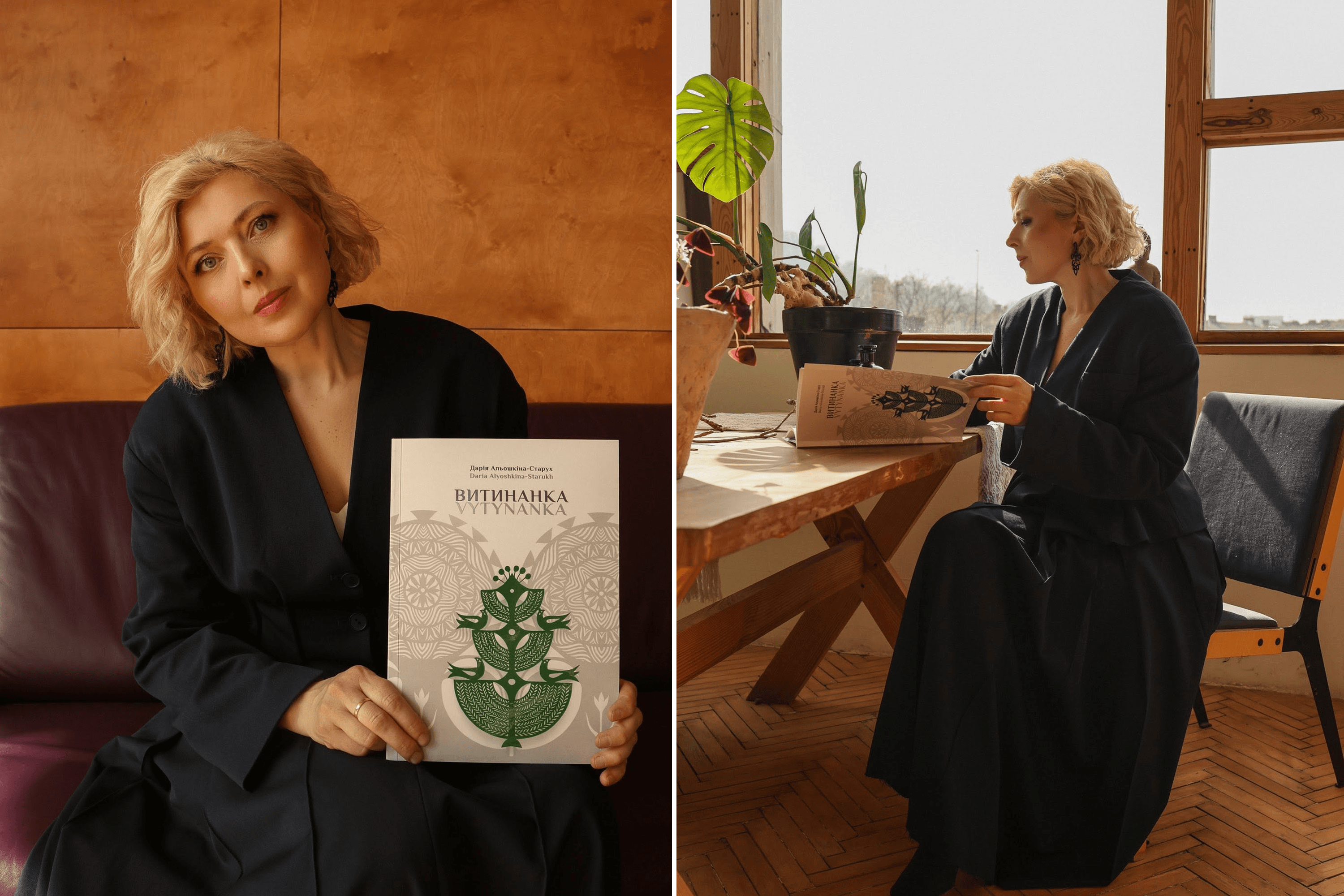
Daria Alyoshkina presents her book Vytynanka. 2025. Photo: Daria Alyoshkina / Facebook 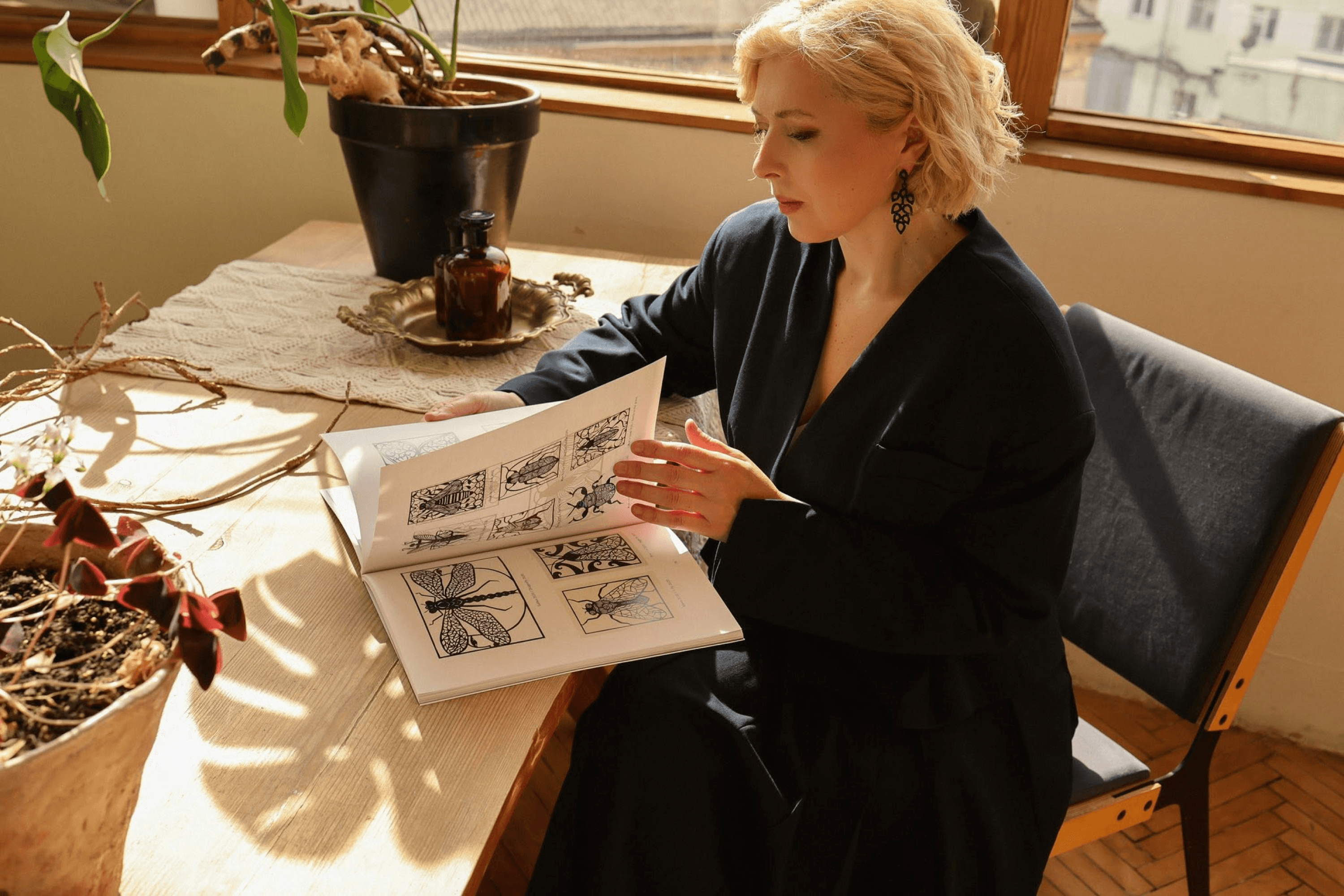
Photo: Daria Alyoshkina / Facebook
I am also planning to make a series of online workshops because I can see that people need them, and I cannot travel everywhere. Although I really love working offline. But I will probably make some kind of YouTube series now as well. It is very difficult for me, though, because I am a little afraid of the camera.
As they say, growth comes when you go where you are afraid to go. I have courage; I could just use a little more confidence.
What inspires you, not only in terms of aspirations or techniques? Perhaps interesting people or the history of vytynanka?
I travel a lot now, and every country opens up something new to me. In the Netherlands, I discovered Escher. His graphic art, the way he could twist everything around, is very interesting. Whenever I come to any country, the first thing I do is visit archaeological museums. All kinds of ancient images inspire me greatly. For us, these are the Trypillian and Scythian cultures. They form an enormous foundation for my art. And I think this always fills me with energy.
And Ukrainian nature also inspires me greatly. As you can see, I am not talking about people but about what sustains me. Because until I was 15, I lived in a very picturesque village of 200 people. We lived by a river and a forest, always following the laws of nature. There was always the sound of water, birdsong, and the scent of every herb imaginable. And now that I have moved to the city, all of that has disappeared. And perhaps in my works I bring back that feeling of childhood, some ornaments, some sounds. That is probably what sustains and inspires me all the time.