During the COVID-19 pandemic, Oleksandr Bondariev was looking for a psychologist for an online consultation and realized there simply wasn’t a convenient service. That was how the idea for Pleso Therapy emerged: an online platform with a database of certified therapists.
Bondariev brought his classmates, Oleksii Yakubenko and Vitalii Marchenko, into the project to handle the technical side, as well as psychotherapist Anna Lissova, who is responsible for the platform’s professional expertise. Over four years, the team has provided therapy sessions to 40,000 clients from Ukraine, Poland, Romania, and the United Kingdom, and has raised more than $2.4 million in investment. According to Forbes' forecast, Pleso Therapy’s revenue will reach $10 million in 2026.
Yellow Blue journalist Sofia Korotunenko spoke with Anna Lissova about the psychological side of the project, working during the full-scale war, and the platform’s development in Ukraine and abroad.
At Pleso Therapy, you are responsible for the psychological side of the platform. You lead the team and establish the rules it works by. What is your background?
I have been working as a psychotherapist for almost ten years, since 2017. I studied clinical psychology at the O. O. Bogomolets National Medical University in Kyiv, then worked in a psychiatric hospital and a maternity hospital. I practice transactional analysis and schema therapy.
When did you join Pleso Therapy? What interested you about the startup?
I was invited to join Pleso at the very beginning, in 2021. At that time, psychotherapists and their clients were just adapting to remote sessions because of COVID. I wanted to make that process easier and communicate that psychotherapy is a fully fledged profession with its own requirements and standards. You can’t simply complete a two- or three-month course and start telling people how to live their lives.
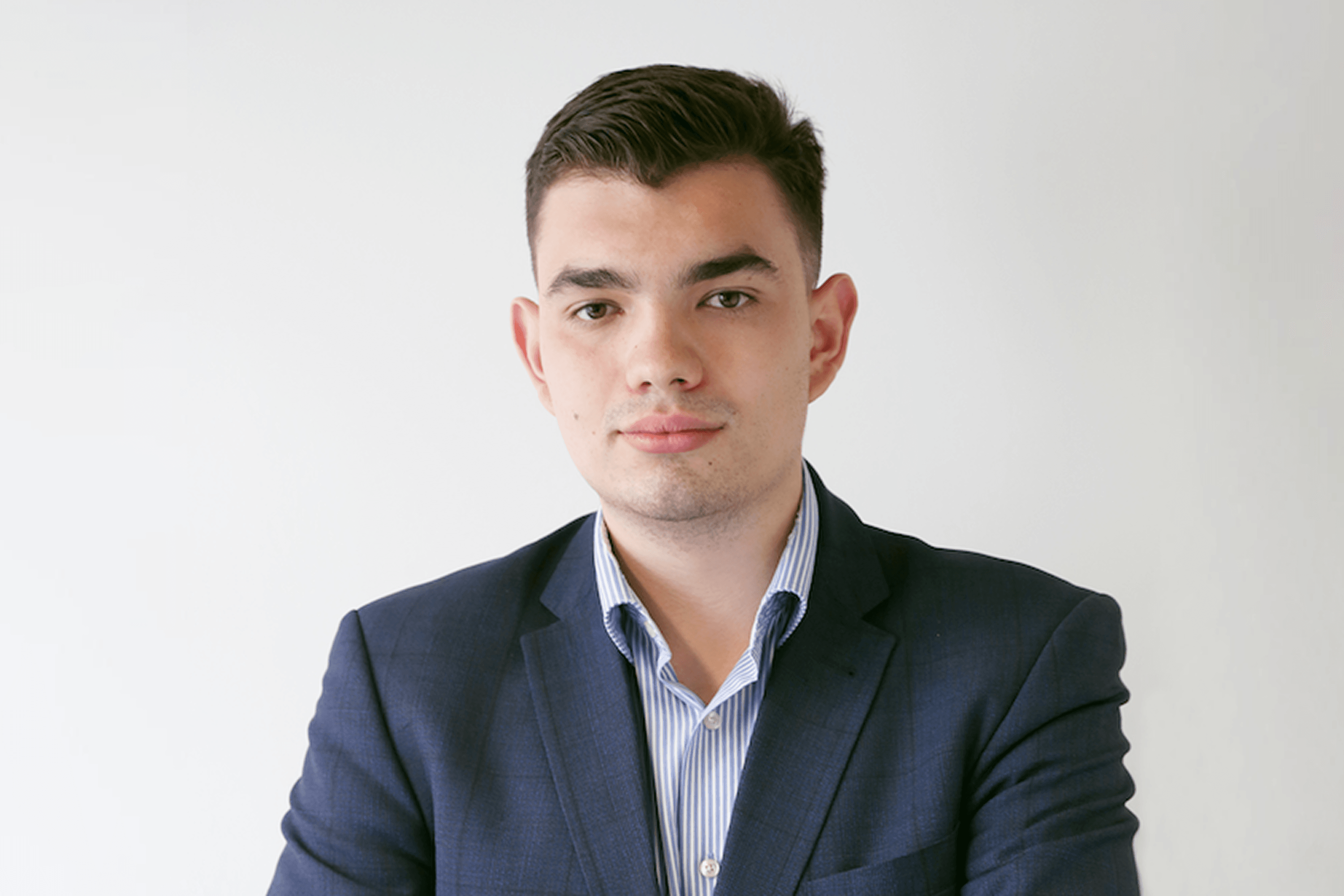
As is often the case with startups, it all began with the idea of “let’s build something,” while the actual shape of the project was refined later. At Pleso, I brought in the psychotherapy component, the values, and the client-centered approach that made this technical startup more human. For example, our customer support is always handled by people rather than bots, both for clients and therapists. That makes it harder to scale quickly, but preserving a human approach is important to us. I also developed the requirements for therapists, the standards for their work, and the template they use to describe themselves and their methods in their profile on the website. Pleso has been a completely new experience for me, one that differs significantly from working as a practicing psychotherapist.
The platform asks new users to complete a questionnaire that helps clarify what they are looking for from therapy and matches them with several specialists. How did you develop it, and how often do you improve it?
We started with simple questions about the concerns a person might have, such as anxiety, the desire to build a career, or to develop healthy relationships. Later, we added several informative slides, including ones explaining the difference between a psychologist and a psychotherapist. We experiment a lot. From time to time, we add clarifying questions or, on the contrary, remove some of them so as not to overwhelm people.
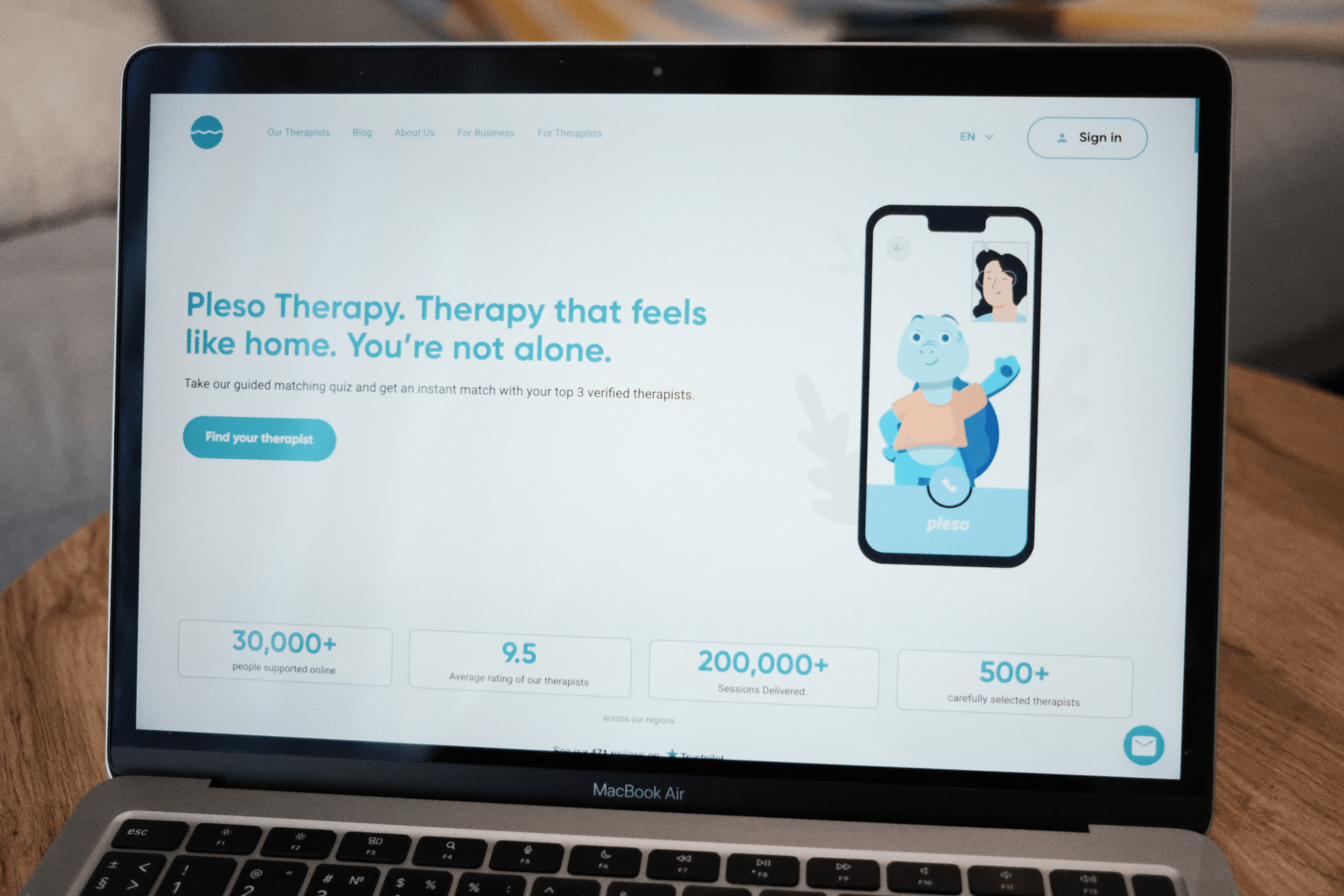
The Pleso Therapy platform interface. Photo: Anhelina Kotkova / YB 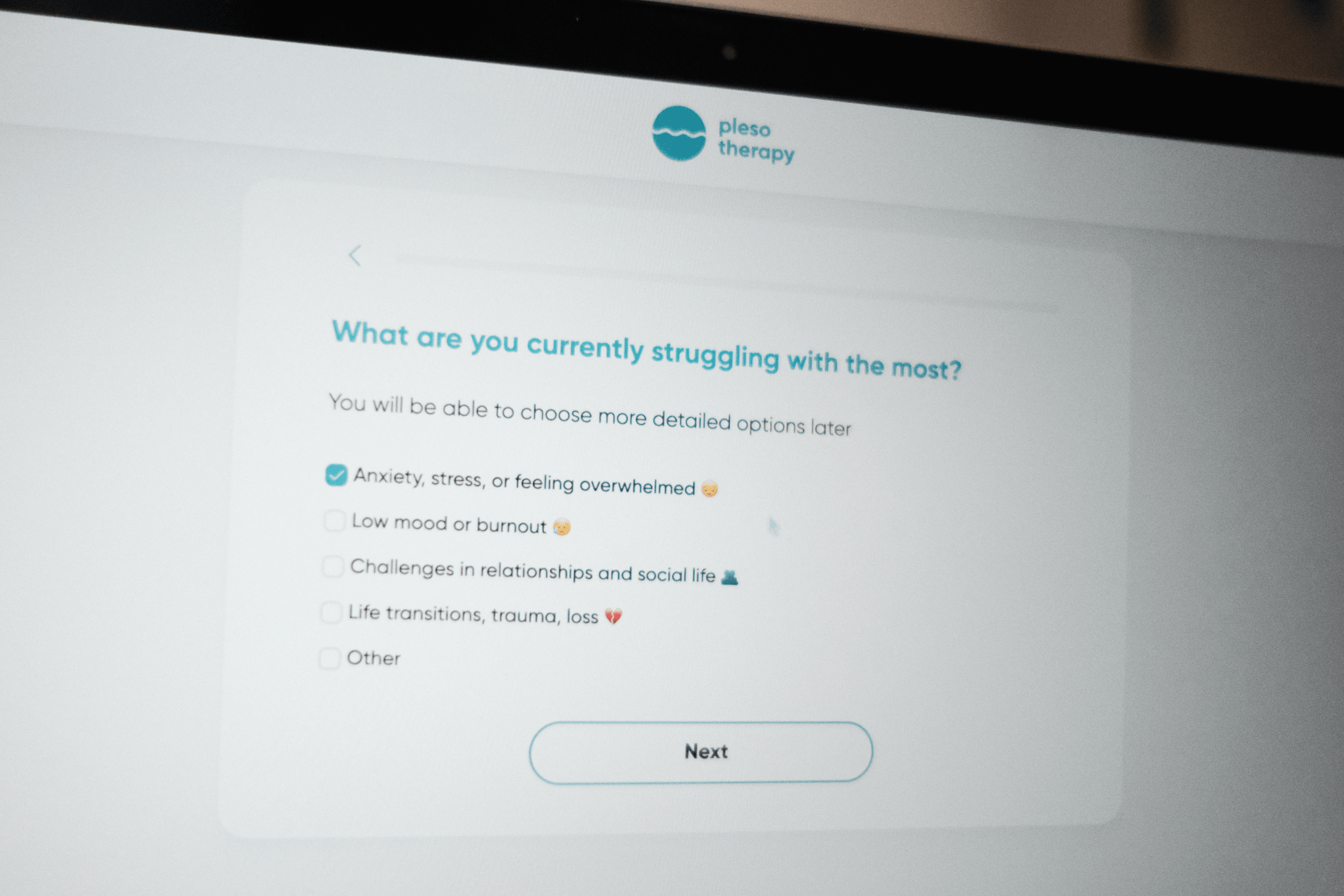
Photo: Anhelina Kotkova / YB 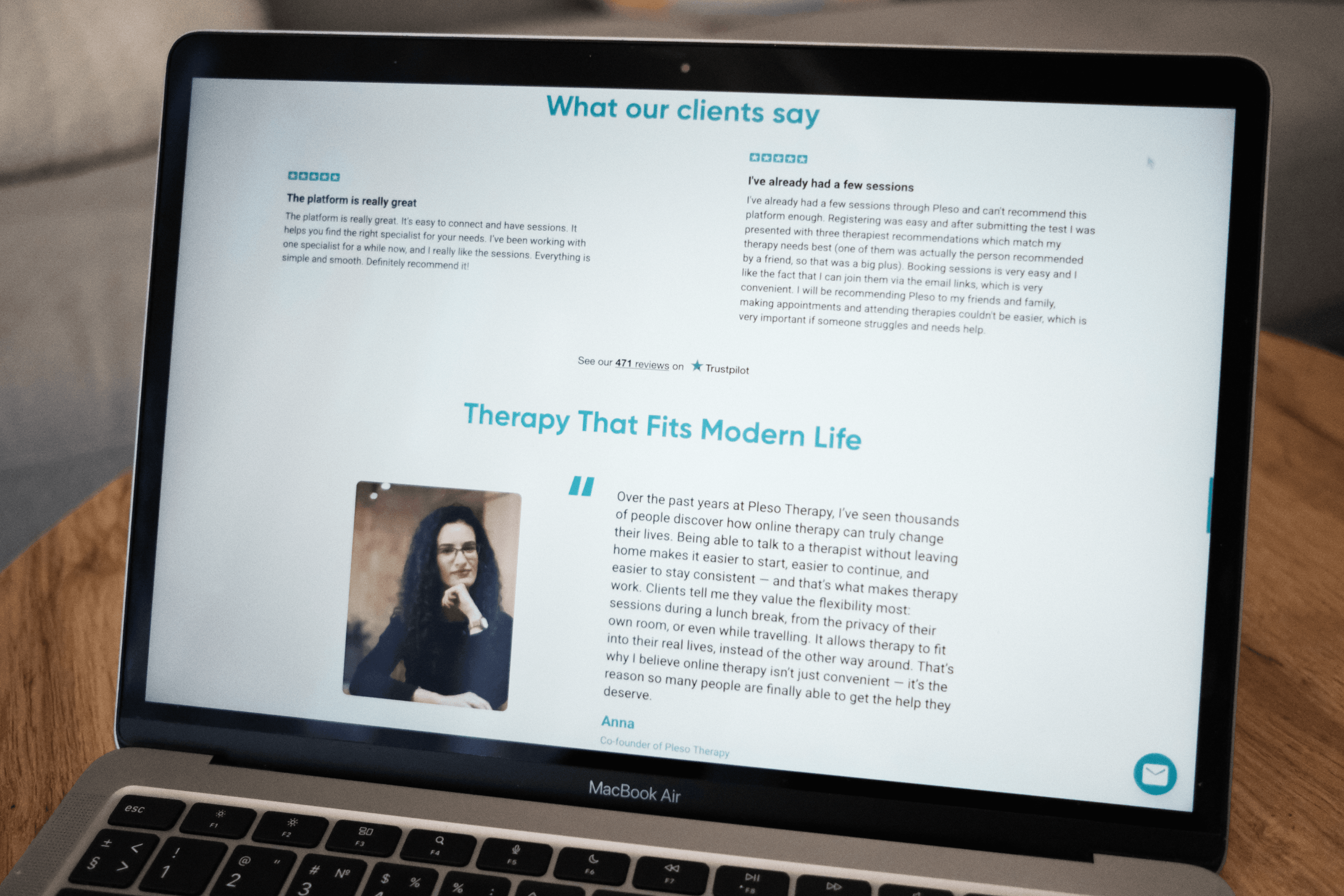
Photo: Anhelina Kotkova / YB
I doubt our algorithm will ever become perfect. It will continue to change, at the very least because what people are looking for keeps changing. Even emigration is different for everyone, and so are the needs that come with it. The requests related to psychiatry are changing as well. Previously, the focus was on anxiety and depressive disorders. Now, it is increasingly on signs of ADHD or autism spectrum conditions.
The website states that only 15% of psychotherapists who apply for your vacancies make it to the interview stage. How do you select specialists, and who is screened out immediately?
Specialists go through several stages of selection before joining the platform. First, we check whether they meet the basic requirements: a degree in psychology, additional training in an officially recognized psychotherapy approach rather than an author’s proprietary method, for example Gestalt therapy or psychoanalysis, and at least three years of professional experience.
If a therapist meets those criteria, we invite them to an interview and assess whether they share our values, namely a scientific approach and humanity, and whether they can solve a case involving psychological ethics. For example, whether they refrain from giving advice on how someone should live their life instead of providing psychotherapy. If a therapist shares our values, is pleasant to communicate with, and is someone we would feel comfortable recommending to a client, we begin working together.
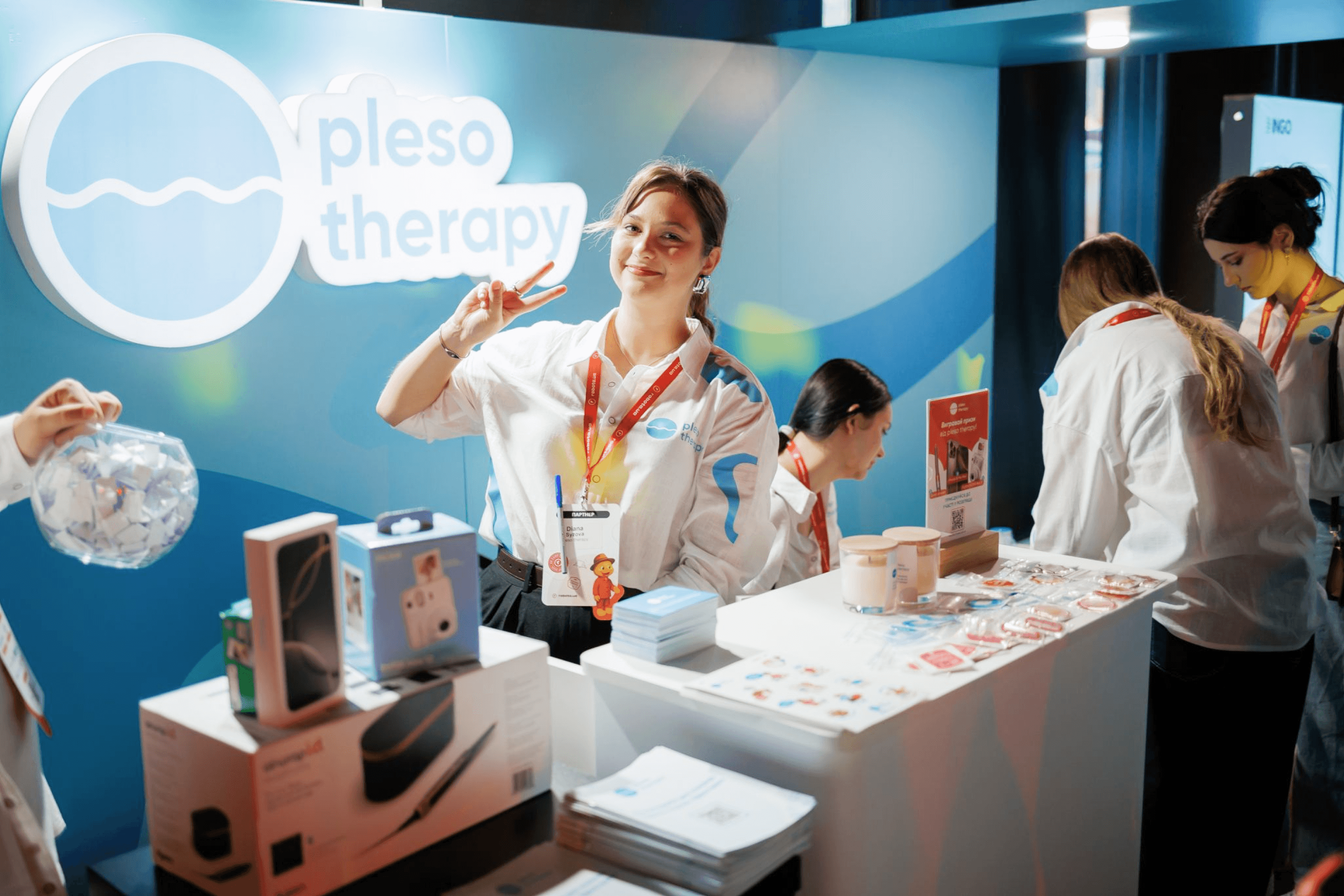
The Pleso Therapy team at HR Camp 2025. Photo: Pleso Therapy / LinkedIn 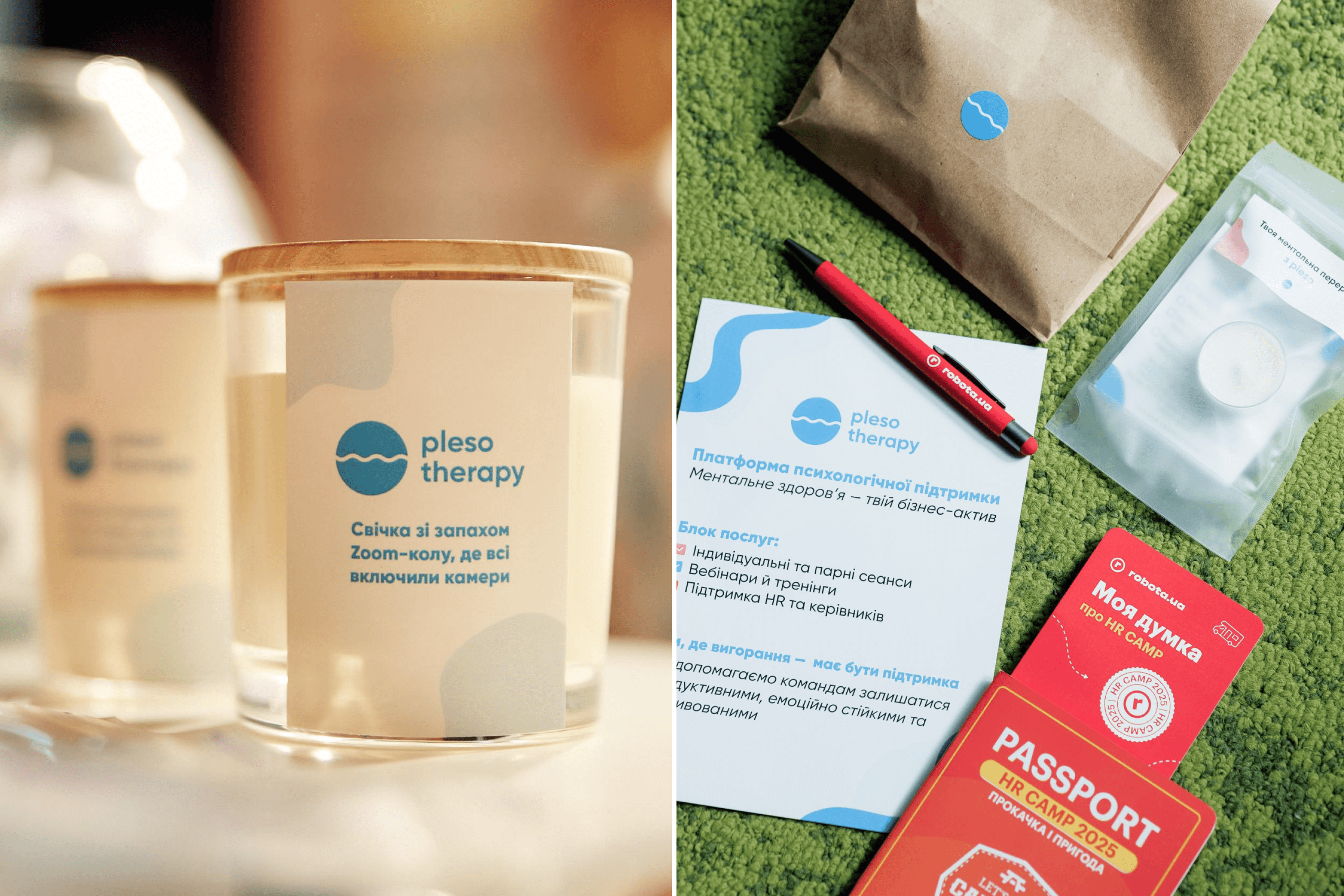
Photo: Pleso Therapy / LinkedIn 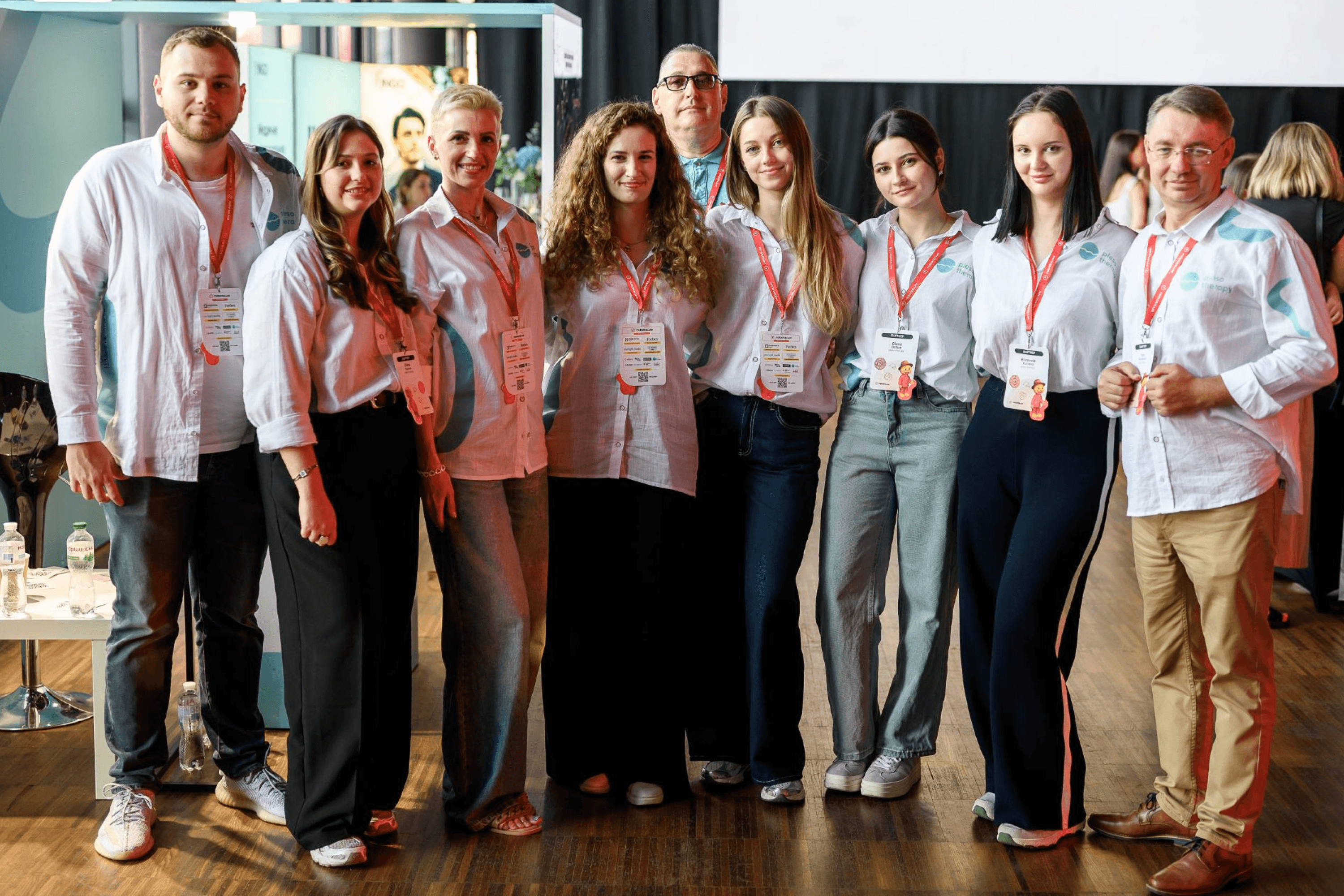
Photo: Pleso Therapy / LinkedIn
The platform has a single price of UAH 1,340 per session with any therapist, and it takes a 20% commission. Does that make it difficult to recruit experienced specialists or those working in highly specialized fields?
We considered that, but ultimately decided to build our business model around a single price for all therapists. The price is approved collectively by our marketing, product, operations, and psychotherapy teams.
The price changes from time to time. We first increased it two years after launch, from UAH 1,090 to UAH 1,280. In April 2024, we raised it to UAH 1,340. Many factors influence our pricing, but the main ones are the state of the market and the qualification level of our therapists.
Of course, the pricing limits our ability to work with highly specialized professionals, those with a PhD, or therapists who charge higher fees in private practice. It is impossible to cover everything, so we focus on the middle segment of the market and on meeting the most common client needs.
How many people are on your Ukrainian psychotherapy team? What is your management philosophy?
Around 300 people. My personal philosophy is to find a balance between consistent values and flexibility. I keep track of changes in the market and adapt to them where appropriate. The most significant recent change in Ukraine has been a positive one: a new law came into force that strengthened oversight of psychologists' work.
The new law also introduced better regulation of advertising for psychological services. What is Pleso Therapy’s marketing based on?
The most important principle is that our advertising must not harm clients or disclose confidential information from private therapy sessions. We publish educational content, run advertising campaigns using humor, and collaborate with popular bloggers. You always have to strike a balance so that the content is both engaging and professional.
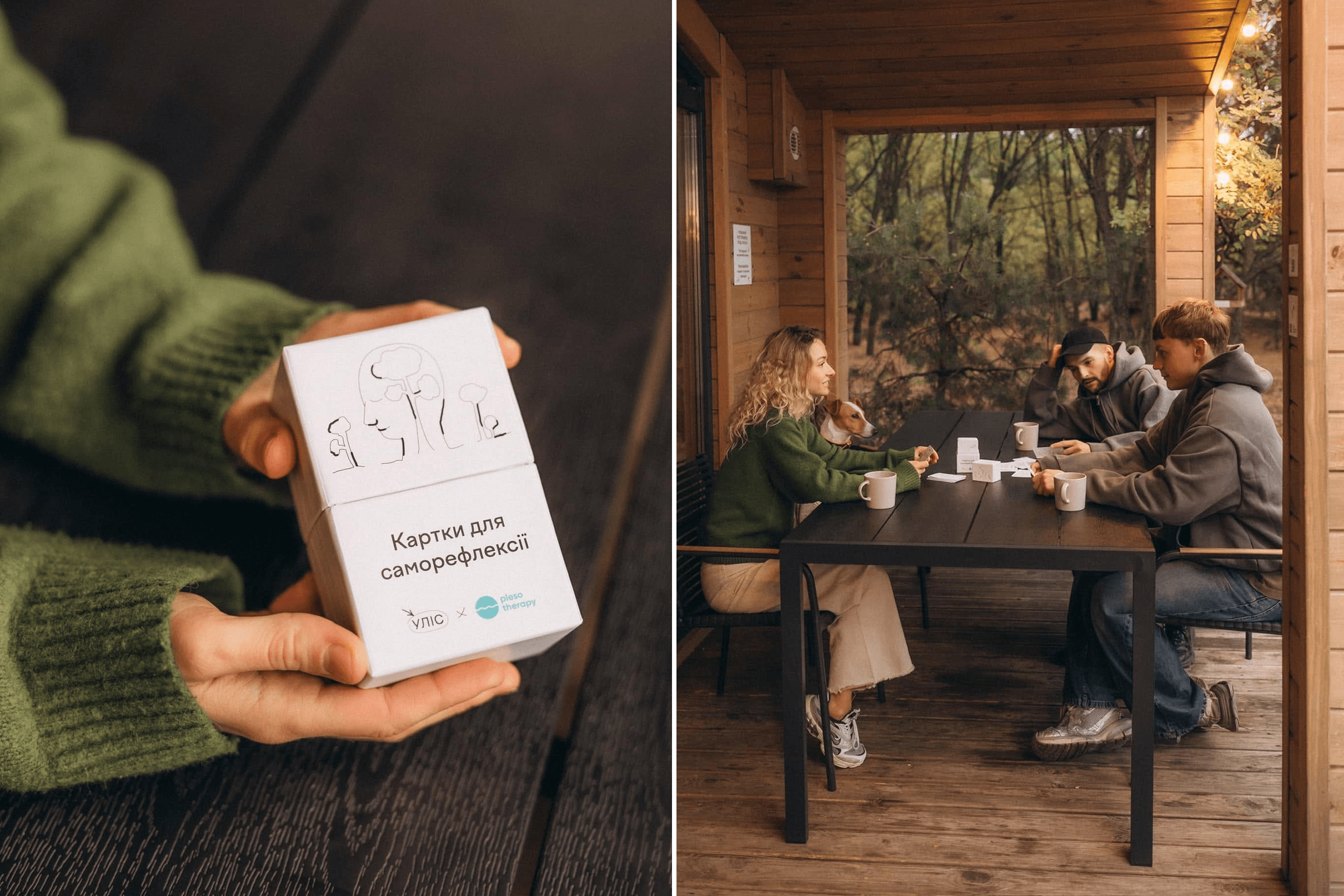
Self-reflection cards created by Pleso Therapy in collaboration with ULIS. Photo: УЛІС / Платформа pleso / Facebook 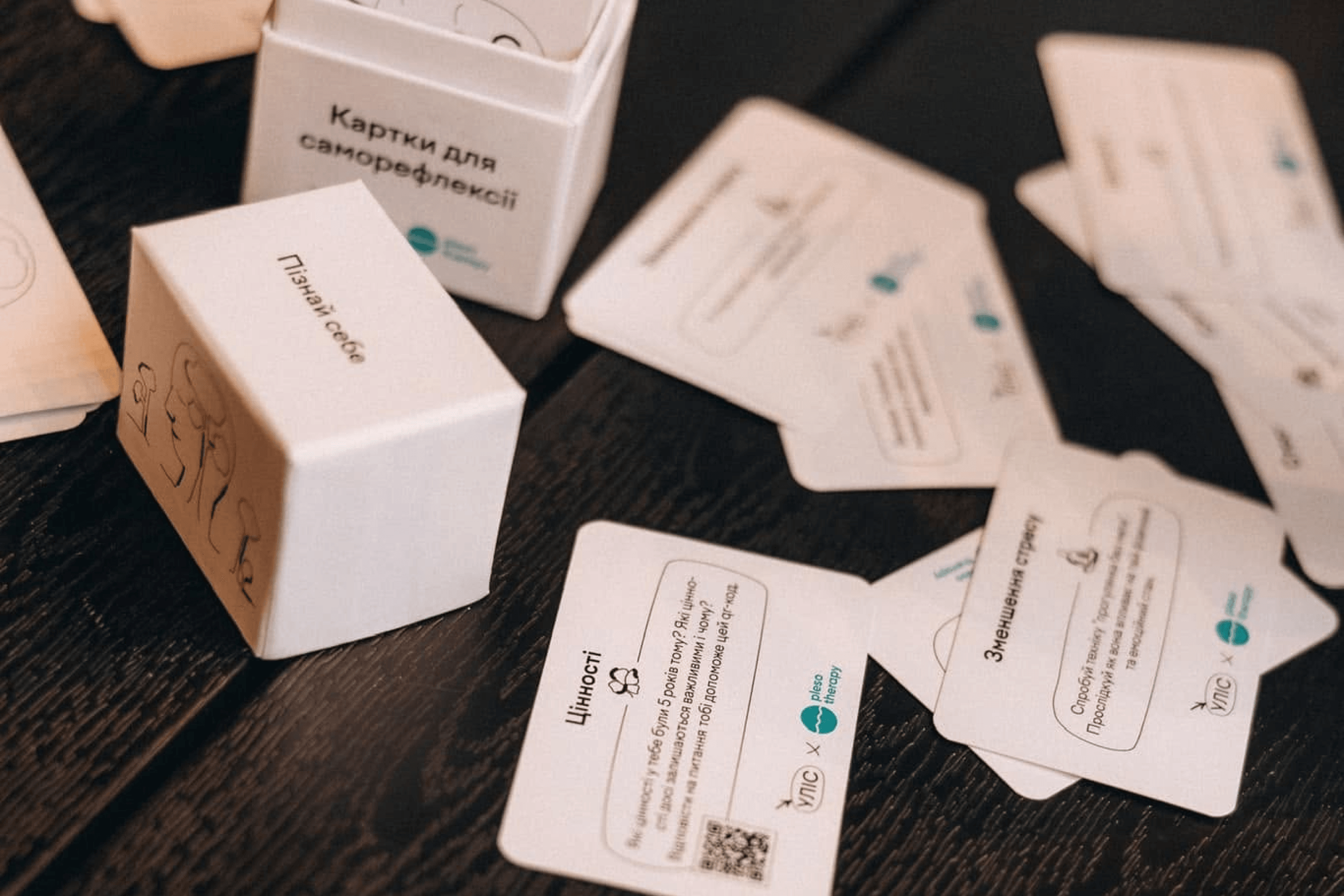
Photo: УЛІС / Платформа pleso / Facebook 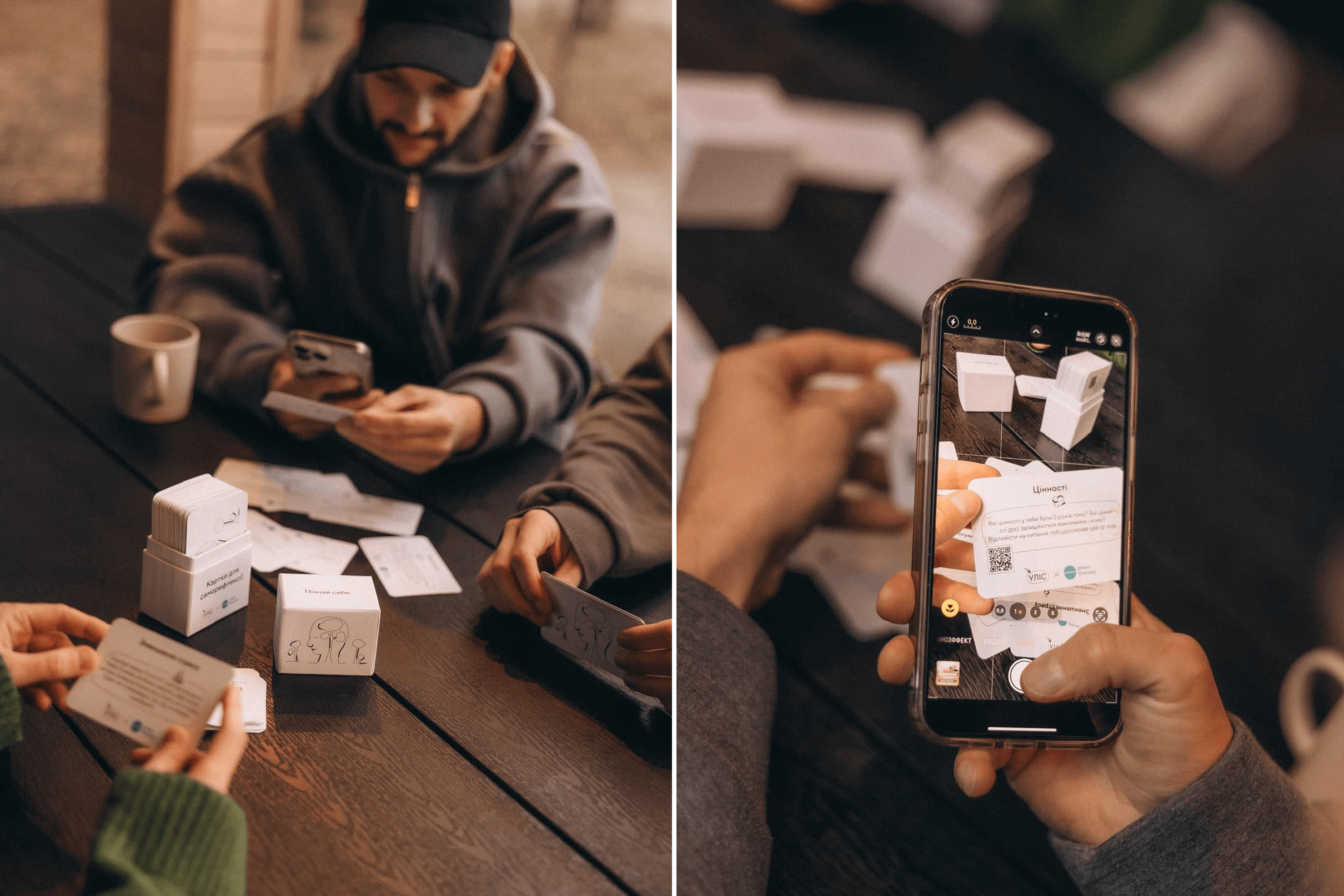
Photo: УЛІС / Платформа pleso / Facebook
At the start of the full-scale invasion, you were a young company. How did you get through the first months of the war?
Our business goals and plans became secondary. We stopped providing paid services and launched several free psychological support initiatives. Our therapists saw clients free of charge and created support groups.
Everything happened rather chaotically, but it helped not only our clients, but also our therapists. They felt they were doing something useful during a difficult time. Before that, I had never imagined that work itself could provide so much support during a crisis.
The full-scale war brought new challenges for many people: forced displacement, losing their homes, grieving loved ones, fear caused by shelling, and the uncertainty of having relatives who are missing or held in captivity. How did your therapists adapt to these new concerns?
Our therapists really did have to learn quickly how to work with entirely new forms of therapy and new ways of providing support. During the first year of the full-scale war, they learned independently by finding training programs and completing them. We stayed in touch with them, but our support was more human than professional.
In 2023, we introduced “therapy leads.” These are psychotherapists who mentor other therapists. They provide consultations, help improve their work, assist with ethical dilemmas, hold one-on-one calls and group meetings with psychotherapists, and find experts to lead seminars. For example, they invite psychiatrists who teach therapists how to work with trauma, ADHD, and various clinical areas.
Since the start of the full-scale war, people in Ukraine have started talking about psychotherapy as a basic need. At the same time, the number of companies and foundations offering both paid and free psychological support has grown. Has it become more difficult to attract clients?
Competition is a sign of strong demand. People really need psychotherapeutic support, and today it matters more than ever. But I do not believe therapy is a basic need. The basics are eating and sleeping, so that you can survive.
Psychotherapy is more about quality of life and the ability to cope with challenges. You can live without it. The question is how. To me, seeking therapy is a sign of personal growth, when people begin thinking about their emotional and psychological well-being.

Our main competitive advantage is the quality of our services. We have high standards for therapists, a convenient matching process, quality communication with clients, and guaranteed safety and confidentiality. That builds trust in the platform, and clients stay with us for the long term.
In the summer of 2022, you entered your first international market, Poland, and in 2024 expanded to Romania and the United Kingdom. Why did you decide to work abroad, and where does your work begin in each new country?
Almost from the very beginning, we planned for the platform to operate not only in Ukraine but also across Europe, where competition among online platforms is not as intense as it is in the United States. The first thing we do is study the country’s legislation to understand whether we can enter that market. It is also important to find the psychotherapist who will help us launch in that market. No one else can explain the specifics of the local therapy landscape and the most common client concerns as well as they can. Abroad, our clients are local residents, so we recruit therapists from the same country. They speak the language and have the best understanding of the cultural specifics.
How different are the psychological services markets in Europe and Ukraine? How do you manage to compete abroad?
It is difficult to identify a single trend. In some countries, the market is already saturated with independent specialists. In others, the culture of seeking therapy is still developing, while elsewhere there are specific requirements for psychotherapists. For example, in the United Kingdom and Romania, therapists must belong to a professional psychological association that regulates their work. Under Ukraine’s new law, the same requirement will be introduced by around 2031.
The markets are different, so we do not copy our Ukrainian model. Instead, we consult local “therapy leads” who understand the cultural, ethical, and legal specifics of their region. As in Ukraine, our main competitive advantage abroad is quality: the way we select therapists, the convenience of the platform, and the attention we give to every client.
Our platform is effective even in conservative markets because it solves many problems. First, it makes therapy more accessible. You may live in a small town where there is no psychotherapist, or only one, and one of your relatives or close friends is already seeing them. In that case, online therapy becomes especially helpful.
Second, Europe is home to many migrants who feel more comfortable working with a therapist who understands their cultural context. In other words, a Pole needs a Polish therapist, and a Ukrainian needs a Ukrainian one. They can work together regardless of where either of them lives.

Anna Lissova at the Brunch with a Therapist: Leading with Resilience event in Kyiv. Photo: Anna Lissova / LinkedIn 
Photo: Anna Lissova / LinkedIn 
Photo: Anna Lissova / LinkedIn 
Photo: Anna Lissova / LinkedIn
How many therapists are on your international teams?
We have around 200 therapists in Poland, about 180 to 190 in Romania, and nearly 100 in the United Kingdom. They go through the same multi-stage selection process as our Ukrainian team and work with “therapy leads” who support and advise them. A therapy session costs PLN 249 in Poland, RON 229 in Romania, and £79 in the United Kingdom. These are average rates for those markets.
Do the typical concerns clients bring to therapy differ from country to country?
The concerns are similar across all four markets, although, of course, the full-scale war has a major impact in Ukraine. Europeans are not living through shelling and military action, but they also often do not know what tomorrow will bring or whether it will come at all, particularly because of global changes. Most concerns relate to anxiety, existential questions and how they affect relationships, and how to plan for the future.
But there are cultural differences too. For example, people in the United Kingdom and Ukraine tend to see psychotherapy more as a space for support and conversation than as a way to solve problems. In other words, “I’ll deal with my problems myself, but I need someone I can talk to like a human being.” In Poland and Romania, by contrast, the focus is more on finding ways to solve problems.
What were the main challenges your team encountered in foreign markets?
The first was setting up operations. You have to build the system almost from scratch by finding therapists and organizing their work. The second was understanding local clients and what matters to them. That is a challenge for the marketing team because analyzing a new market takes time and effort.
Do you mean that you promote the platform using different narratives in different countries?
Yes. In Ukraine, it is normal to find a therapist on Instagram, follow them, and like their posts. In other European countries, that approach is unfamiliar. They tend to be more conservative. We run advertising campaigns on social media and Google, and we organize offline events so we can interact with clients in person. For example, in Poland, we partnered with yoga instructors and added psychotherapy and psychoeducational practices to their classes.

The Lonesome Girls Club event, held in partnership with Pleso Therapy in Warsaw. Photo: pleso.terapia / Instagram 
Photo: pleso.terapia / Instagram 
Photo: pleso.terapia / Instagram
When Pleso Therapy launched, one of your goals was to show people that psychotherapy should be based on evidence-based practices rather than parapsychology. Your team creates educational content on social media and in the blog on your website. Do you think it has had an impact? Has people’s attitude toward psychotherapy changed in recent years?
Ten or twenty years ago, psychotherapy was often associated with esotericism, but that view is much less common today. The goal of our blog is to strengthen trust in it, inform people about evidence-based practices that actually help, and explain that therapy is a long-term process rather than something that produces instant results. We also explain the basics, such as what to expect at the first session and how to formulate a clear reason for seeking therapy. However, stigma around therapy still exists, and it will take years before people fully trust psychotherapists.
How do you see Pleso Therapy developing over the next few years?
We want to scale while preserving both quality and humanity. We plan to expand our team, attract new clients, and enter new markets. It is also important for us to stay in touch with our therapists and create comfortable working conditions for them. That is why we are expanding our team of “therapy leads” and regularly collecting their feedback.
We are also actively developing B2B partnerships with Ukrainian and Polish companies who understand that their team’s mental health affects both productivity and resilience. Many of the specialists on our platform have additional expertise in corporate psychology. They provide individual sessions, corporate training, seminars, and psychoeducational workshops.
What lessons have you learned over the five years since the platform was launched?
You can make all the plans you want, but life rarely unfolds the way you expect. You have to be prepared for that and remember that difficulties are just a stage that will pass. The time will come when you can look back and say, “Yes, it was hard, but we’ve kept moving forward.”