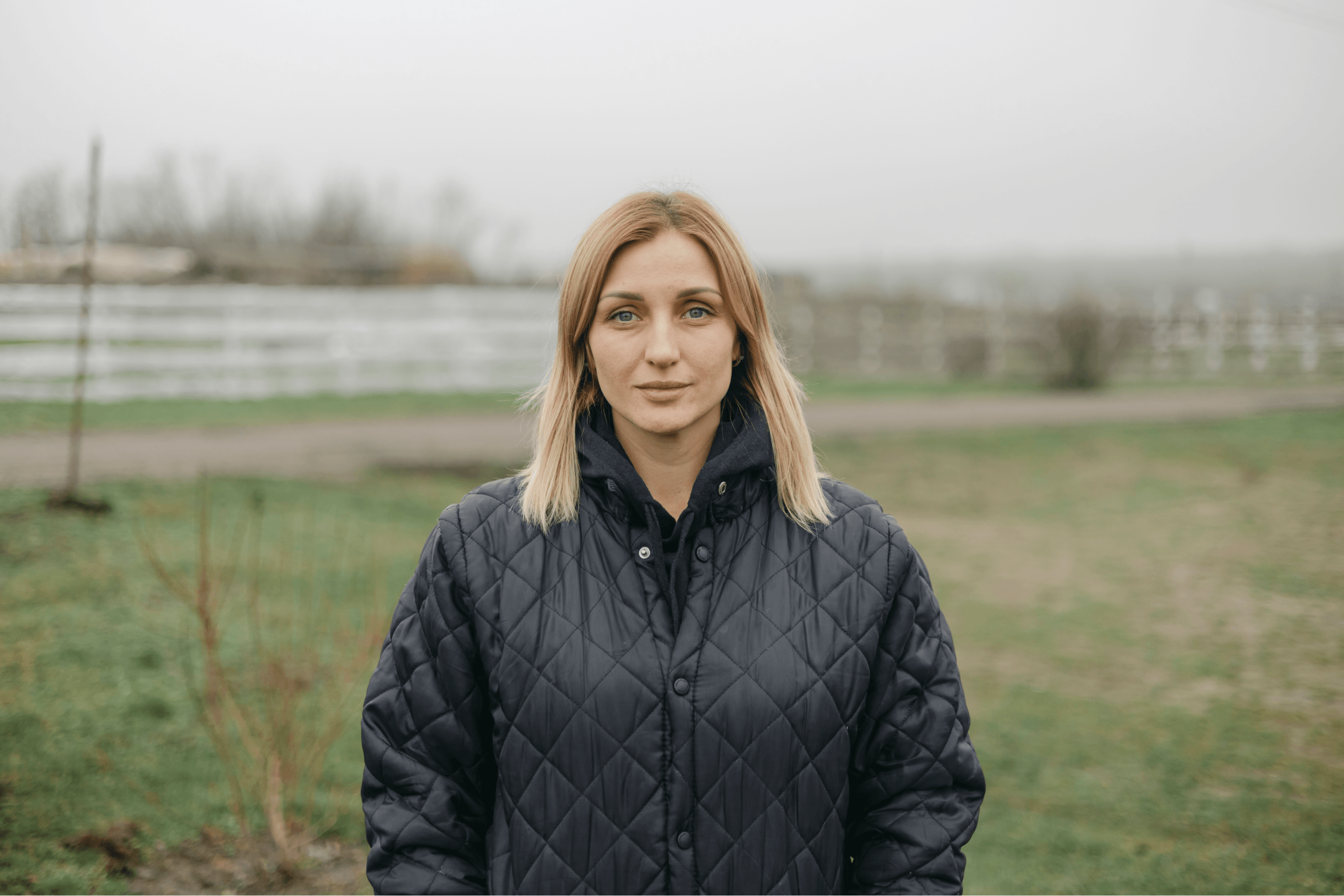
Located in the Dnipropetrovsk region, the Green Grove (Zelenyi Hai) farm has been welcoming visitors since 2021. Its founders, Evgenia Molchanova and Anatoliy Pilipenko, originally focused on agritourism, hosting workshops and tastings from their artisanal dairy. However, following Russia’s full-scale invasion, the farm pivoted to a vital new mission: psychological rehabilitation through animal-assisted therapy. Today, veterans from across Ukraine travel here to heal, while international specialists study the farm’s growing expertise.
Yellow Blue journalist Artem Moskalenko visited Green Grove to speak with Evgenia and Anatoliy about the farm’s operations and the recovery of the veterans who find sanctuary there.
Maidan, war, and escape to the village
It is 10:00 AM. A minibus pulls up to Green Grove, a farm in a small village in the Dnipropetrovsk region. Mykola, a veteran of the Russo-Ukrainian war, is the first to step out. After being wounded and subsequently discharged, he found a new calling: helping fellow soldiers navigate their own recovery.
Mykola works at the Superhumans rehabilitation center in Dnipro. Today, he has brought a group of ten veterans to Green Grove to trade the sterile walls of a clinic for a day of fresh air, animal therapy, and artisanal cheese from the local dairy.
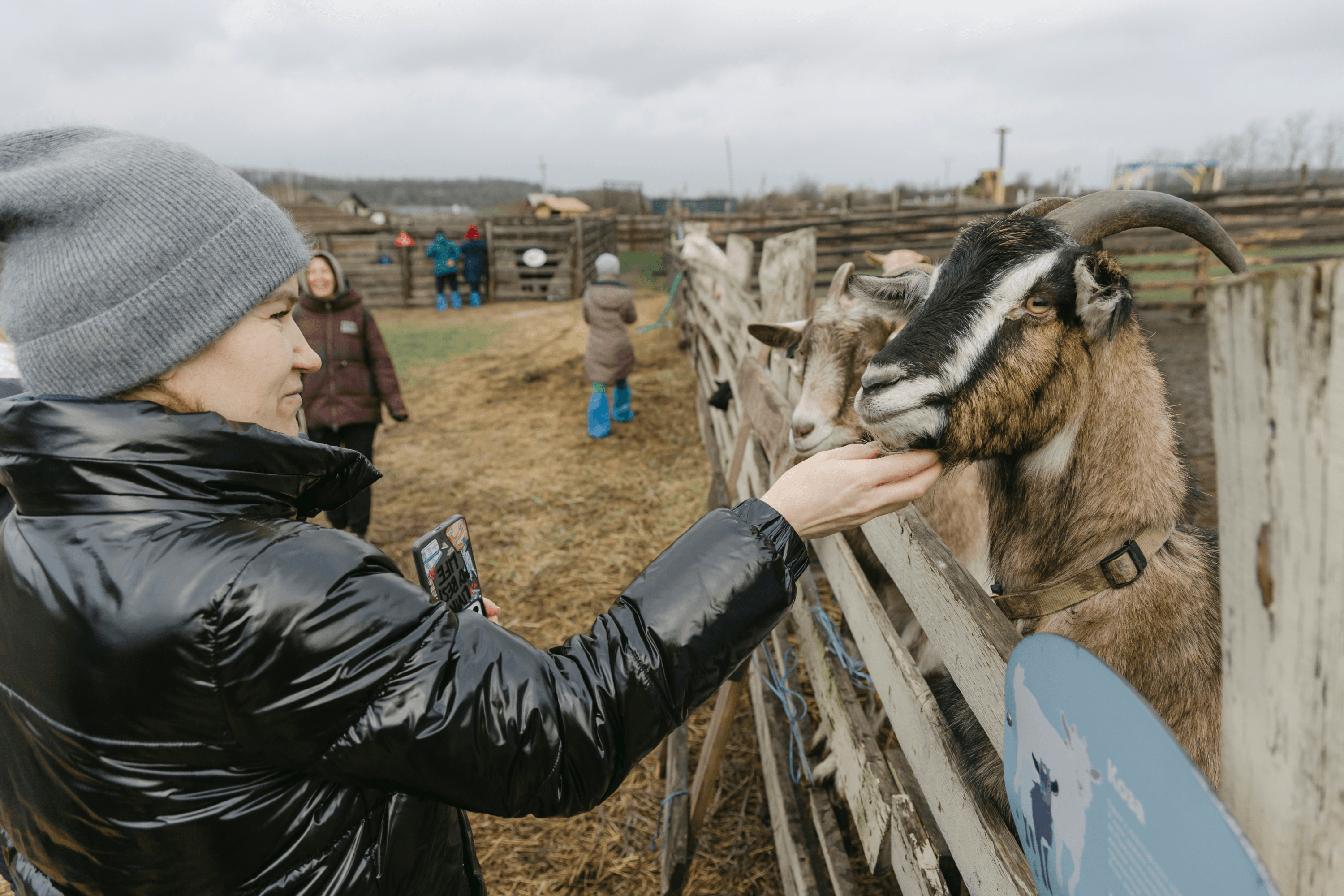
Photo: Mykhailo Melnychenko / YB 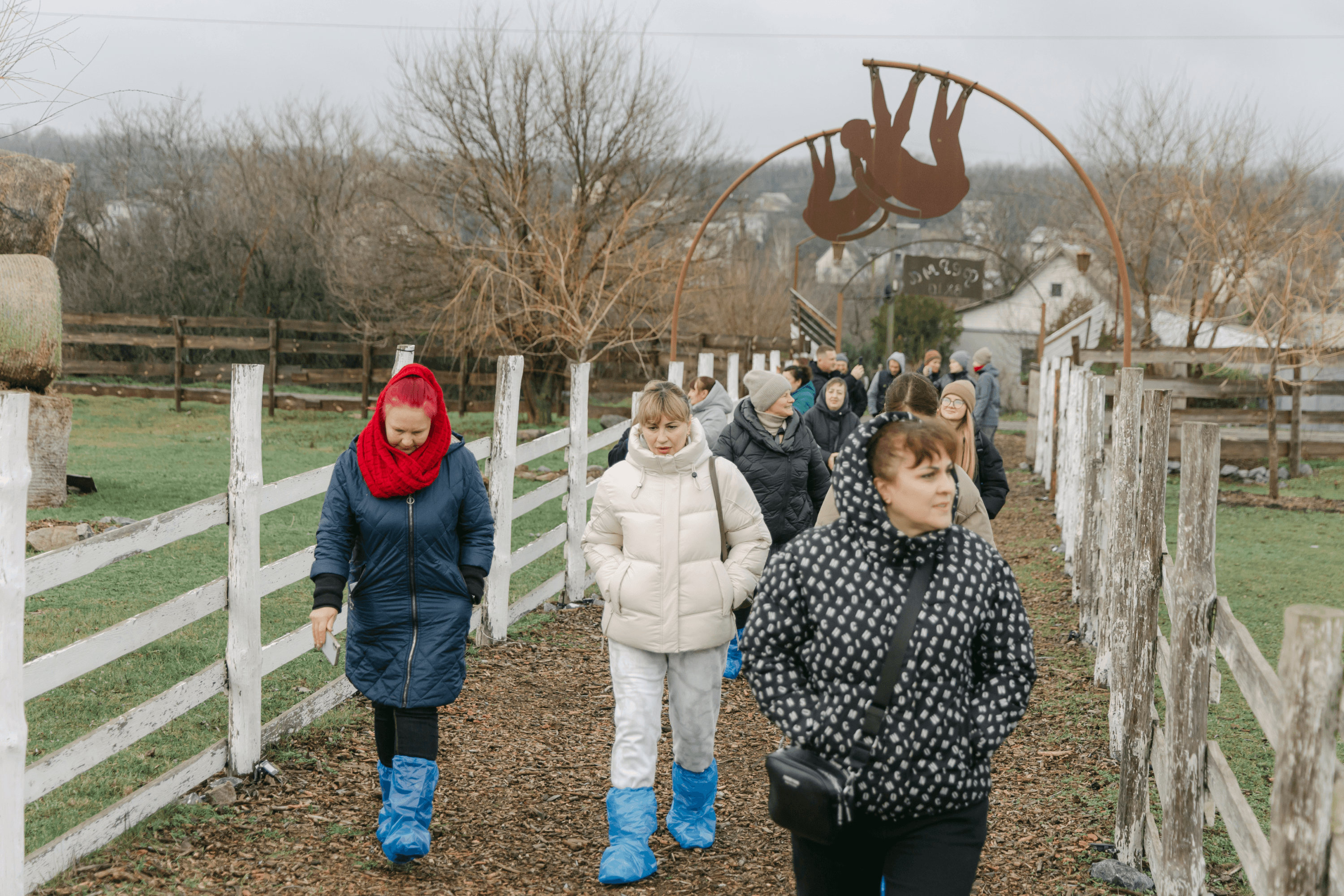
Photo: Mykhailo Melnychenko / YB 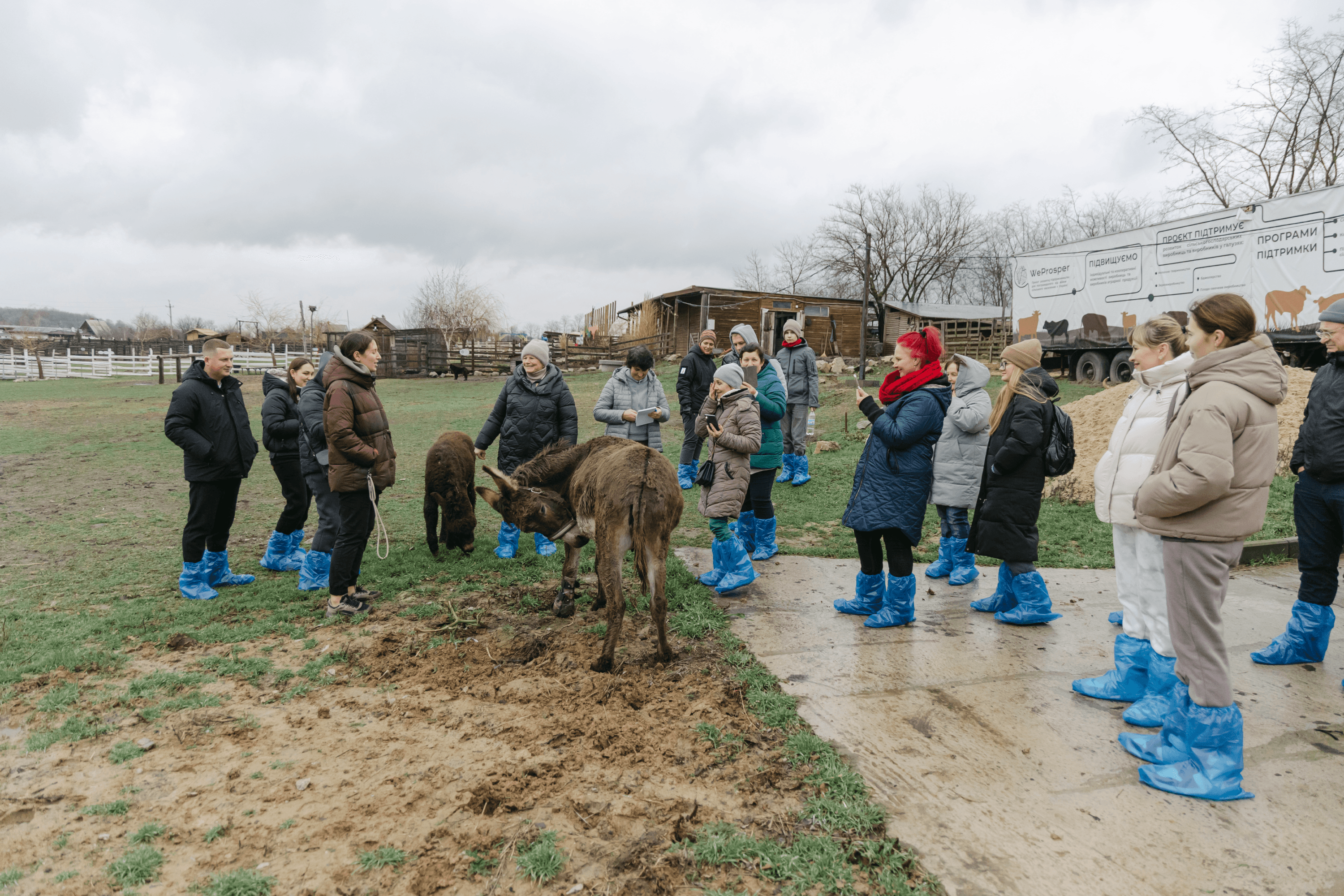
Photo: Mykhailo Melnychenko / YB 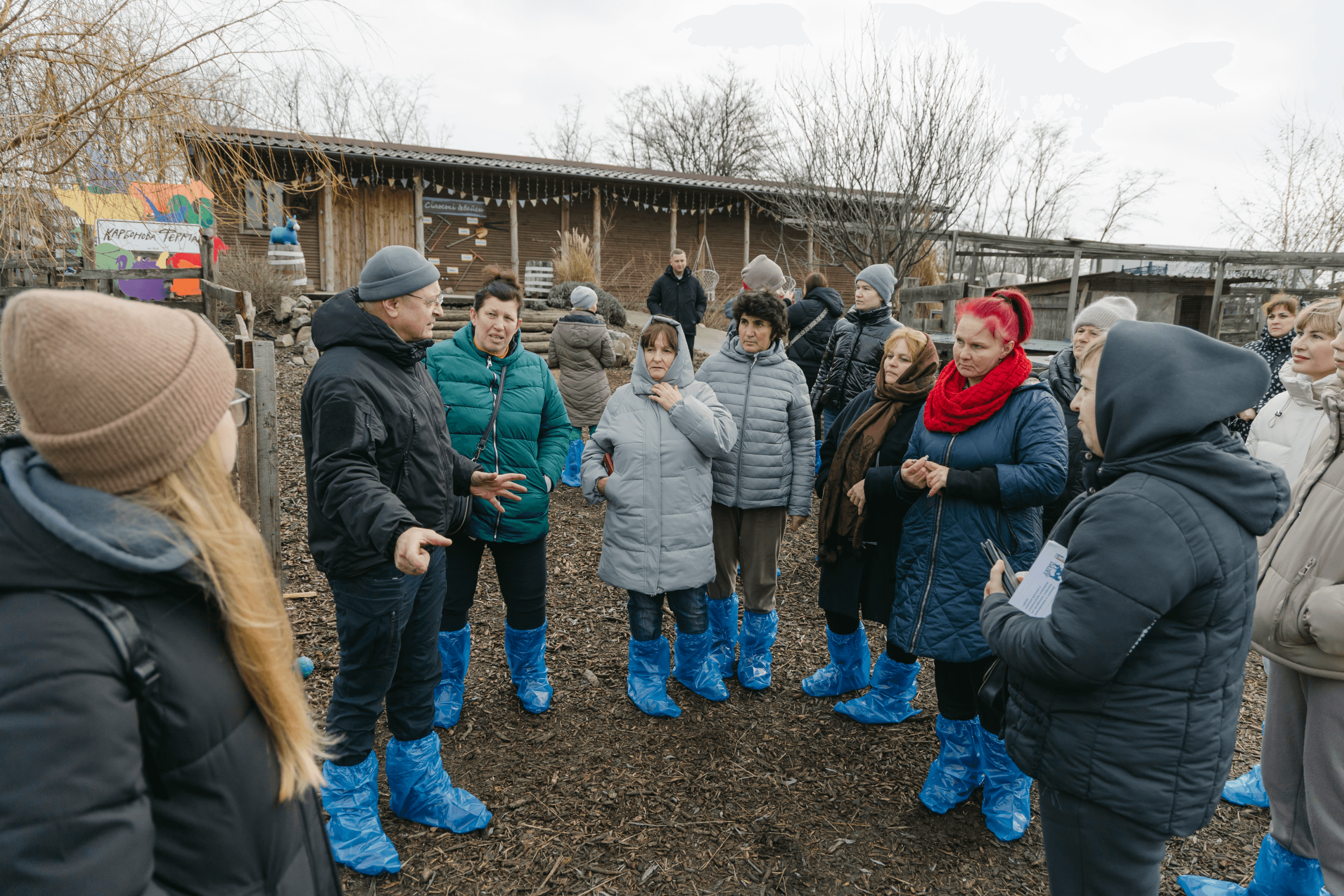
Photo: Mykhailo Melnychenko / YB 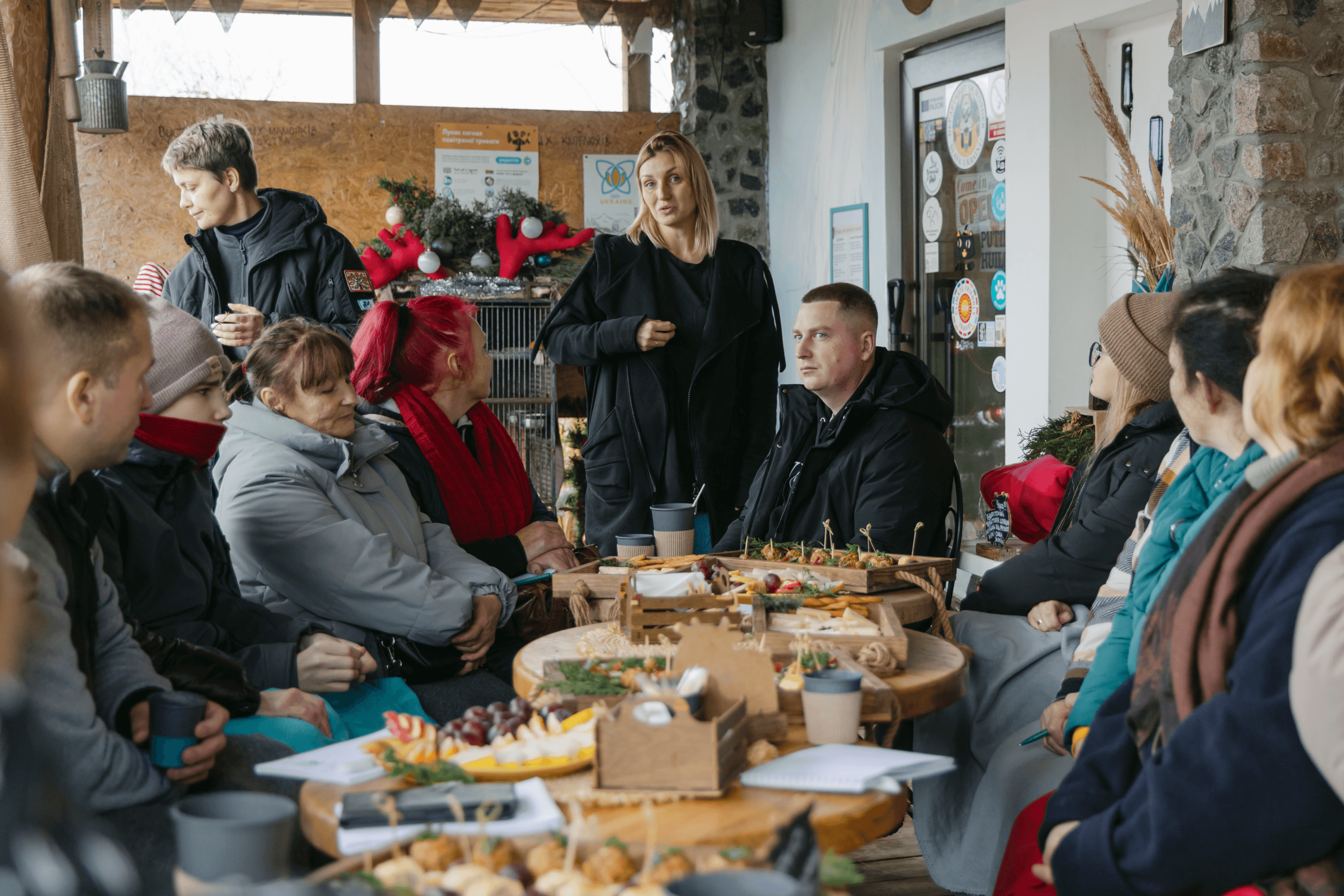
Photo: Mykhailo Melnychenko / YB
The farm’s owners, Evgenia Molchanova and Anatoliy Pilipenko, step onto the porch to greet their guests. Their own lives are deeply rooted in the conflict: Anatoliy is a former soldier, and Evgenia is a volunteer who has been delivering aid to the Donbas since 2014. The couple first met in a military hospital in a small town in the Donetsk region.
In the fall of 2015, the couple married and began expecting their first child, Ivanka. Seeking stability, Anatoliy chose not to renew his military contract. They settled in Dnipro, a city they both knew well from before the Revolution of Dignity. They had hoped the war would have sparked a sense of civic duty and change among the residents, but reality fell short of their expectations. Russian music still blared in the streets, and to many, it seemed as if the war simply didn’t exist.
Evgenia and Anatoliy decided to lead by example, showing their community how a conscious life could look. The results were disheartening.
They planted flowers on the lawn of their apartment building, only for neighbors to park their cars directly over them. They installed waste-sorting bins, which were promptly set on fire. They raised their daughter to speak Ukrainian, while the world around them remained stubbornly Russian-speaking. “It felt like we were surrounded by enemies,” Evgenia recalls.
The frustration was so great they considered moving abroad. It would have been an easy transition—Anatoliy had run a business in Czechia for 25 years, exporting confectionery and bakery ingredients. Yet, in the end, “irrational arguments” won: their deep-seated bond to Ukraine, forged through revolution and war, made it impossible to leave. Instead, they sold the Czech business and looked for a new path at home.
The answer came by chance. While driving to visit relatives, they spotted a “For Sale” sign in the village of Zelenyi Hai. With only one street and a population of just 32 people, the isolation felt like an asset rather than a drawback. Within two weeks, Evgenia and Anatoliy had bought the house, trading the city’s indifference for the quiet potential of the countryside.
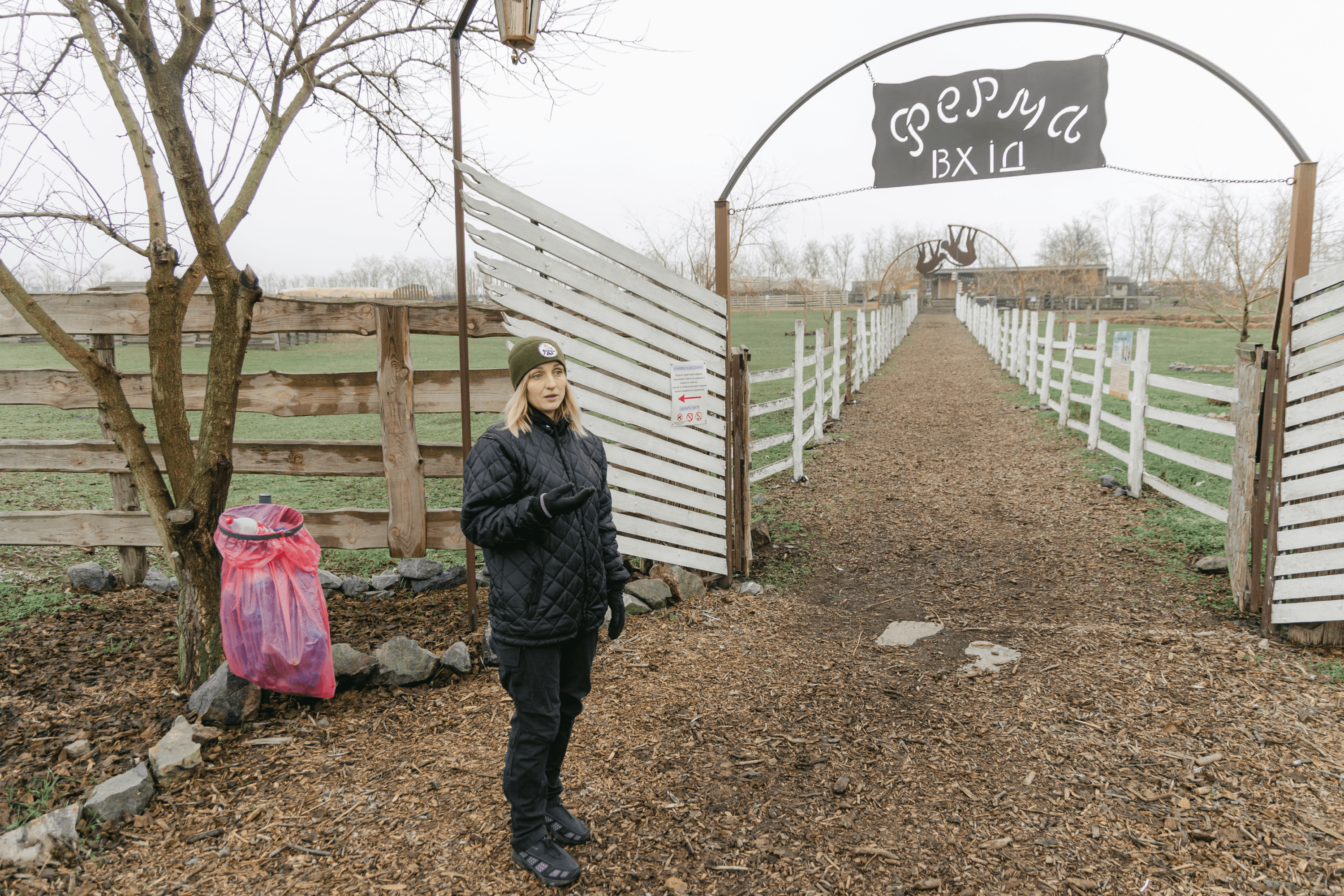
Photo: Mykhailo Melnychenko / YB 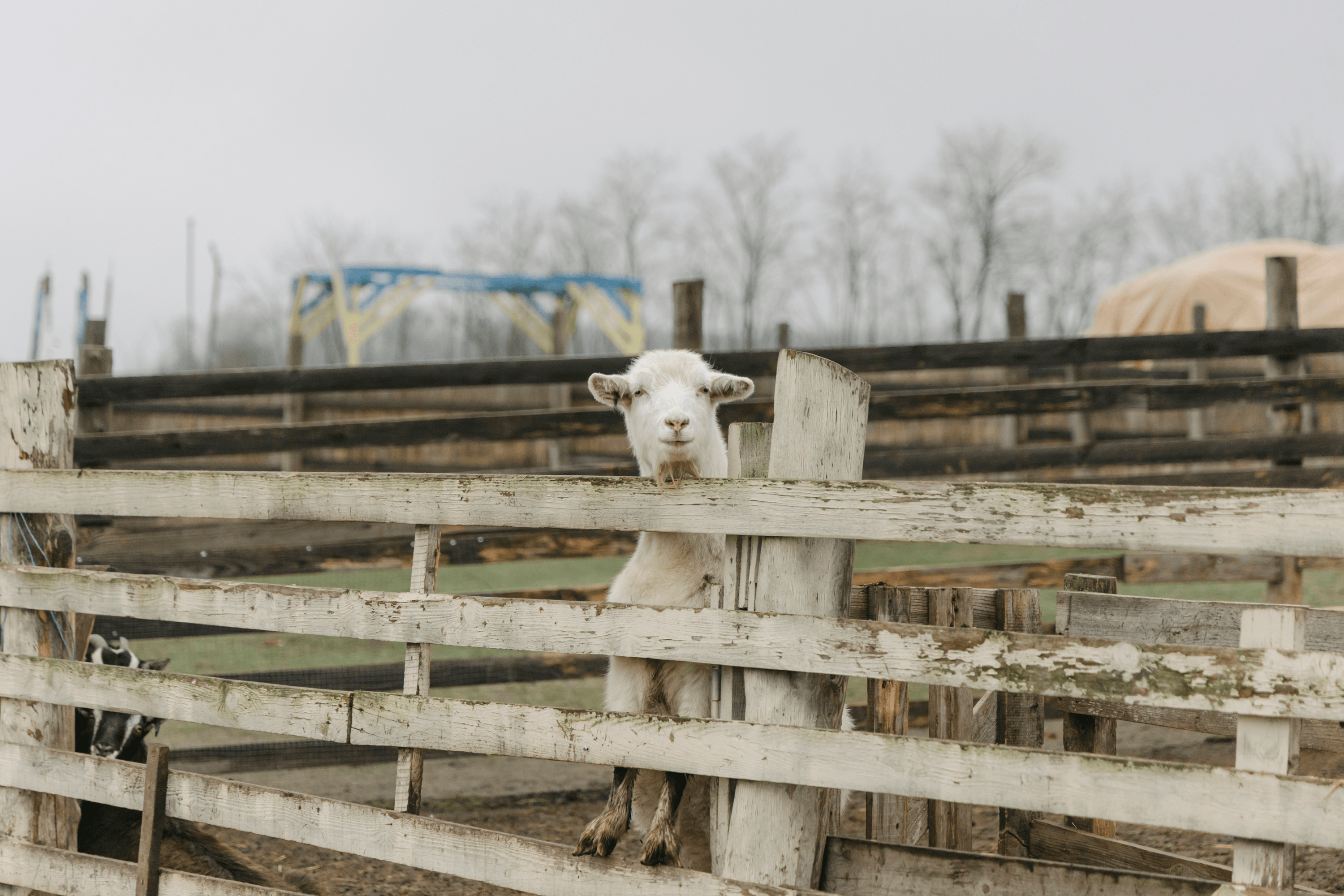
Photo: Mykhailo Melnychenko / YB 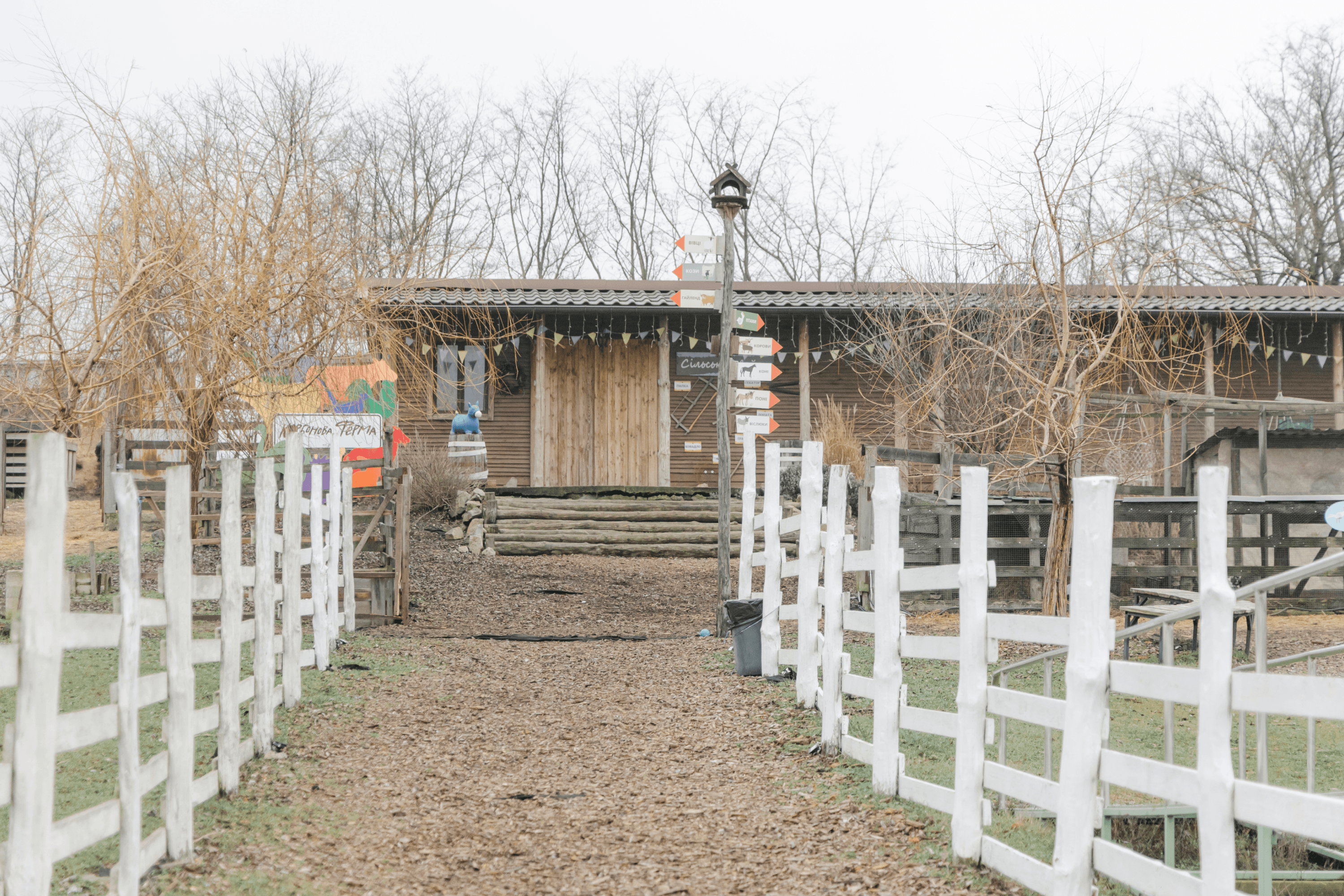
Photo: Mykhailo Melnychenko / YB 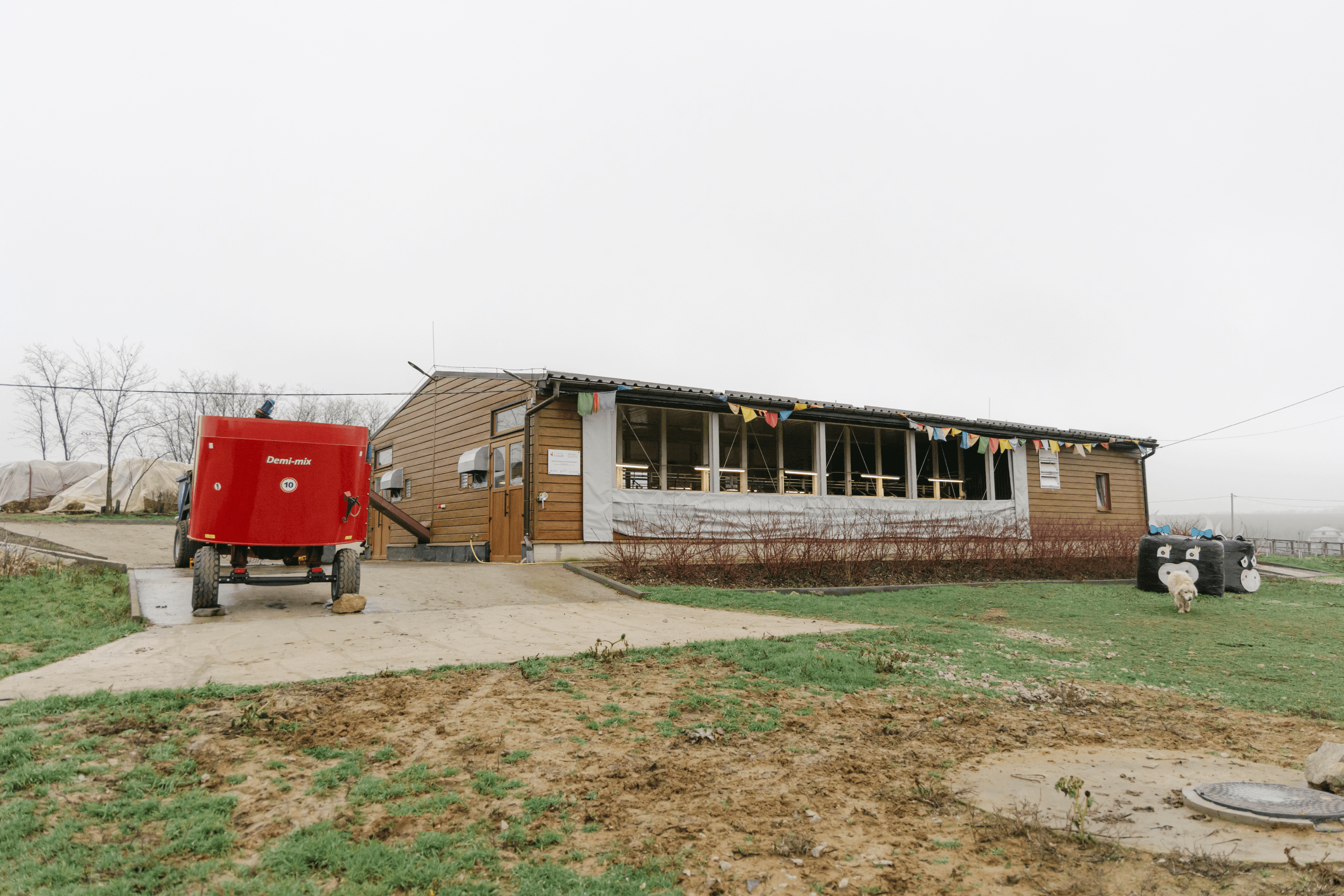
Photo: Mykhailo Melnychenko / YB 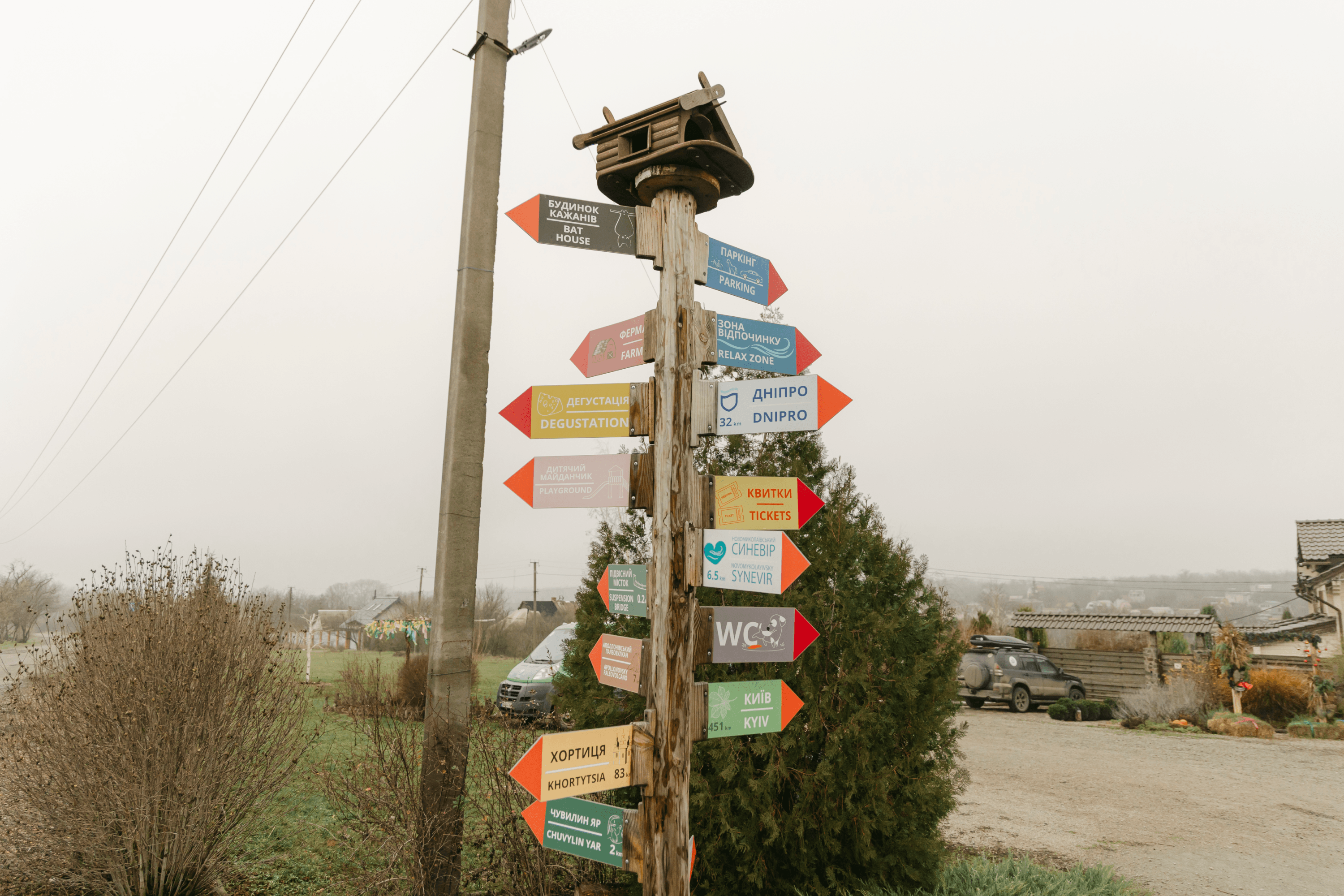
Photo: Mykhailo Melnychenko / YB
Not just a dacha
Initially, the property in Zelenyi Hai was intended to be nothing more than a weekend dacha. However, the serenity of the countryside and the escape from the city’s clamor proved so enjoyable that by the end of 2015, the family relocated to the village permanently.
There were no initial plans for livestock, let alone a full-scale farm. But as the war continued, military friends began asking Evgenia and Anatoliy to provide a haven for cats and dogs evacuated from the frontlines. Eventually, they yielded and decided to build proper enclosures. To do so, they purchased a plot of land across from their house.
“Calling it a ‘plot of land’ is an overstatement. In reality, it was a dump where locals had been tossing household and construction waste for years,” Evgenia recalls. “We thought we would never see the bottom of those piles. But as we began to clear it, we realized it was more than just trash.”
During their first few days of reclaiming the land, Evgenia unearthed a peculiar white brick. It was clearly ancient, bearing a worn inscription that the couple couldn’t immediately decipher. After posting a photo on social media, they learned from commenters that it was a Mennonite brick, dating back over 300 years.
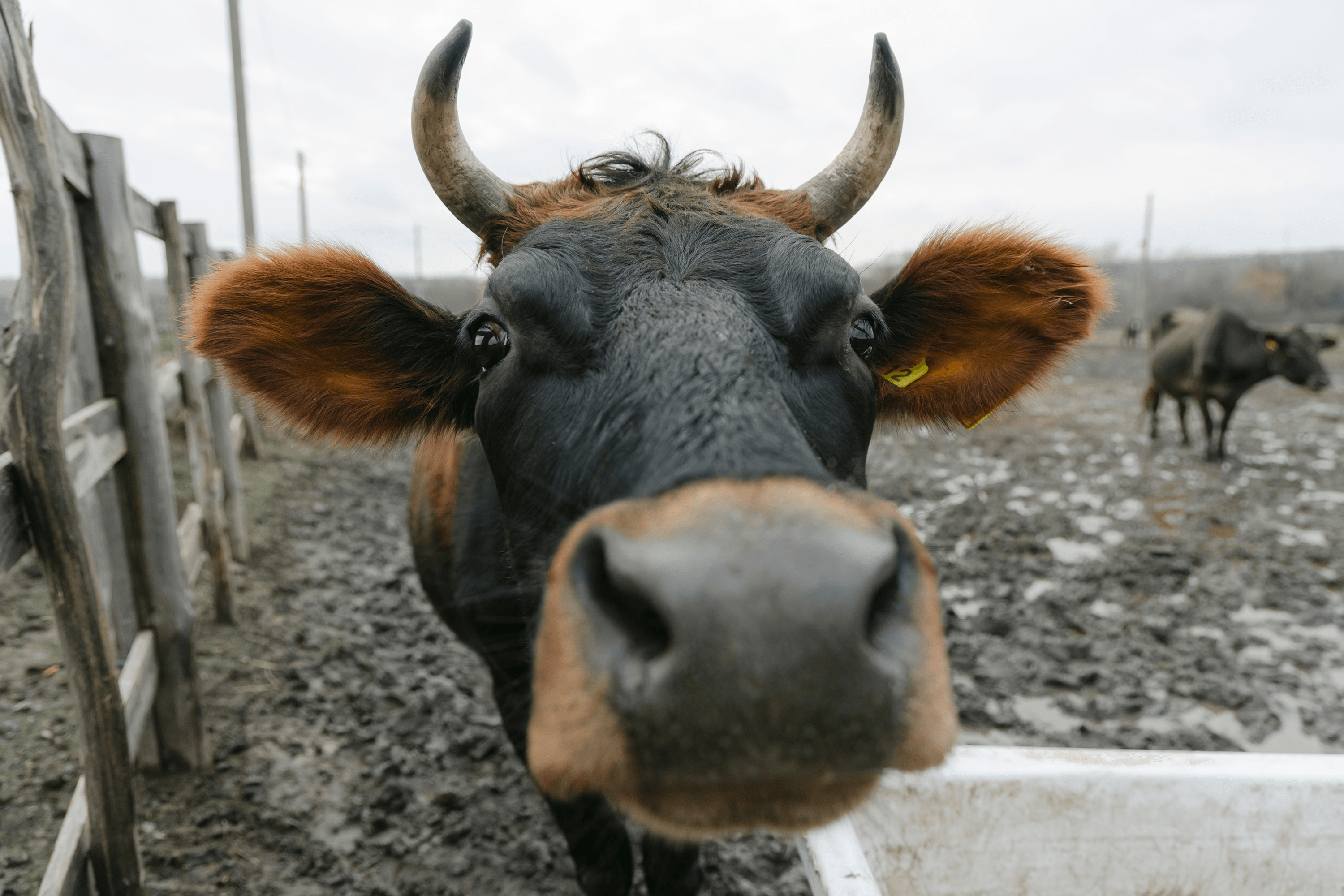
Photo: Mykhailo Melnychenko / YB 
Photo: Mykhailo Melnychenko / YB 
Photo: Mykhailo Melnychenko / YB 
Photo: Mykhailo Melnychenko / YB 
Photo: Mykhailo Melnychenko / YB
That post caught the attention of local historians who joined the effort to clear the site. Their work soon revealed the remains of seven Cossack settlements just a few kilometers from the house; old maps confirmed that Cossacks had indeed once inhabited the area.
The land held even older secrets. Evgenia and Anatoliy occasionally found odd black stones filled with tiny holes, resembling bubble chocolate. When they showed these to scientists, they discovered the stones were actually lava over 3.2 billion years old. Such remains are preserved in only a handful of places on Earth, most notably in Yellowstone National Park in the United States.
Alongside these ancient artifacts, the dump yielded more recent relics: vintage bottles, kerosene lamps, and horseshoes. Rather than discarding them, the couple cleaned and repurposed them. Today, those horseshoes and wine bottles are embedded into the farm’s walls as decoration, and the old kerosene lamps serve as candle holders.
Clearing the dump took a full year. Once finished, Evgenia and Anatoliy decided to expand their vision beyond animal rescues and build a cowshed. Evgenia was determined to make cheese, drawing on experience from her student years when she worked as an assistant cook in Alaska under the Work&Travel program.
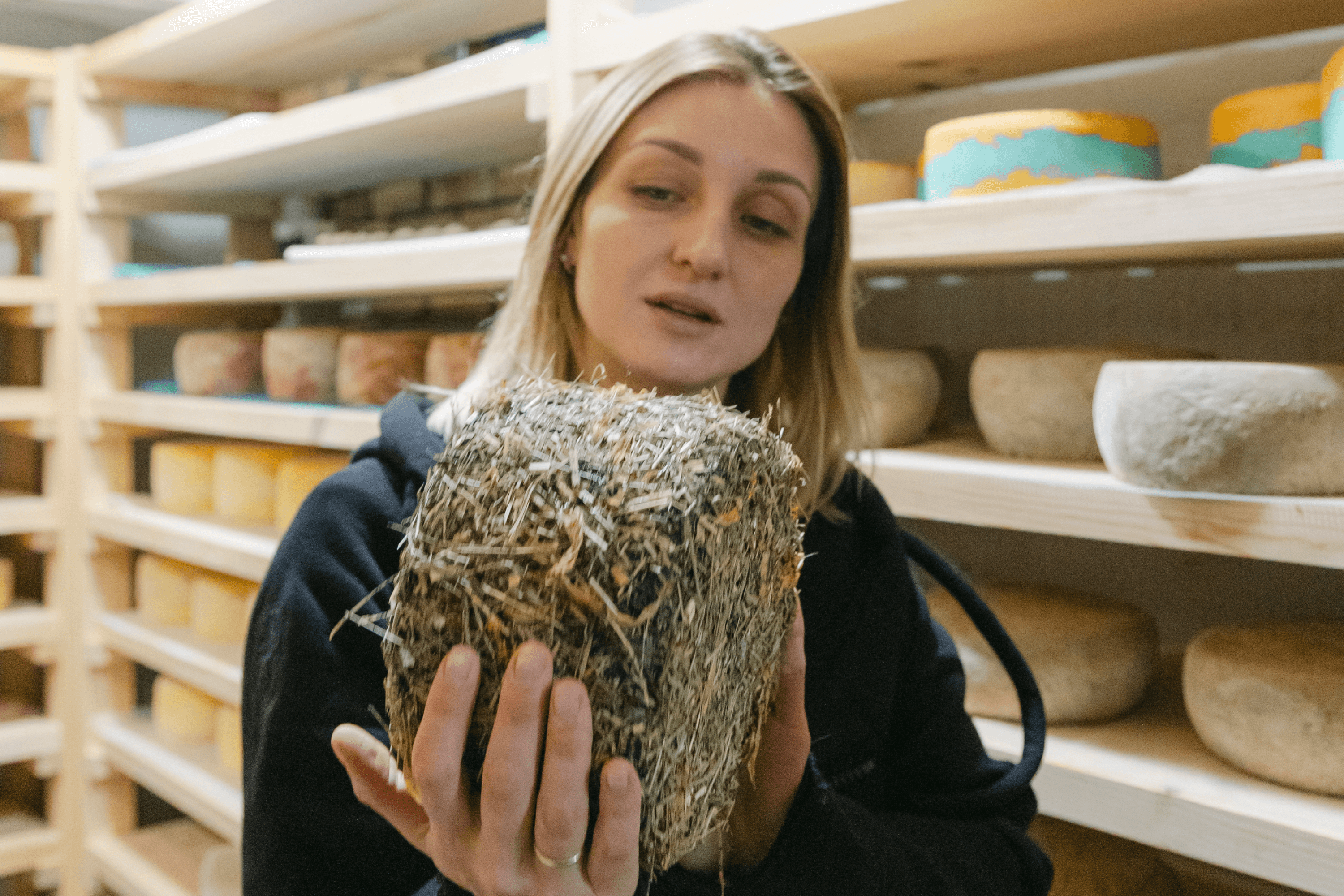
Photo: Mykhailo Melnychenko / YB 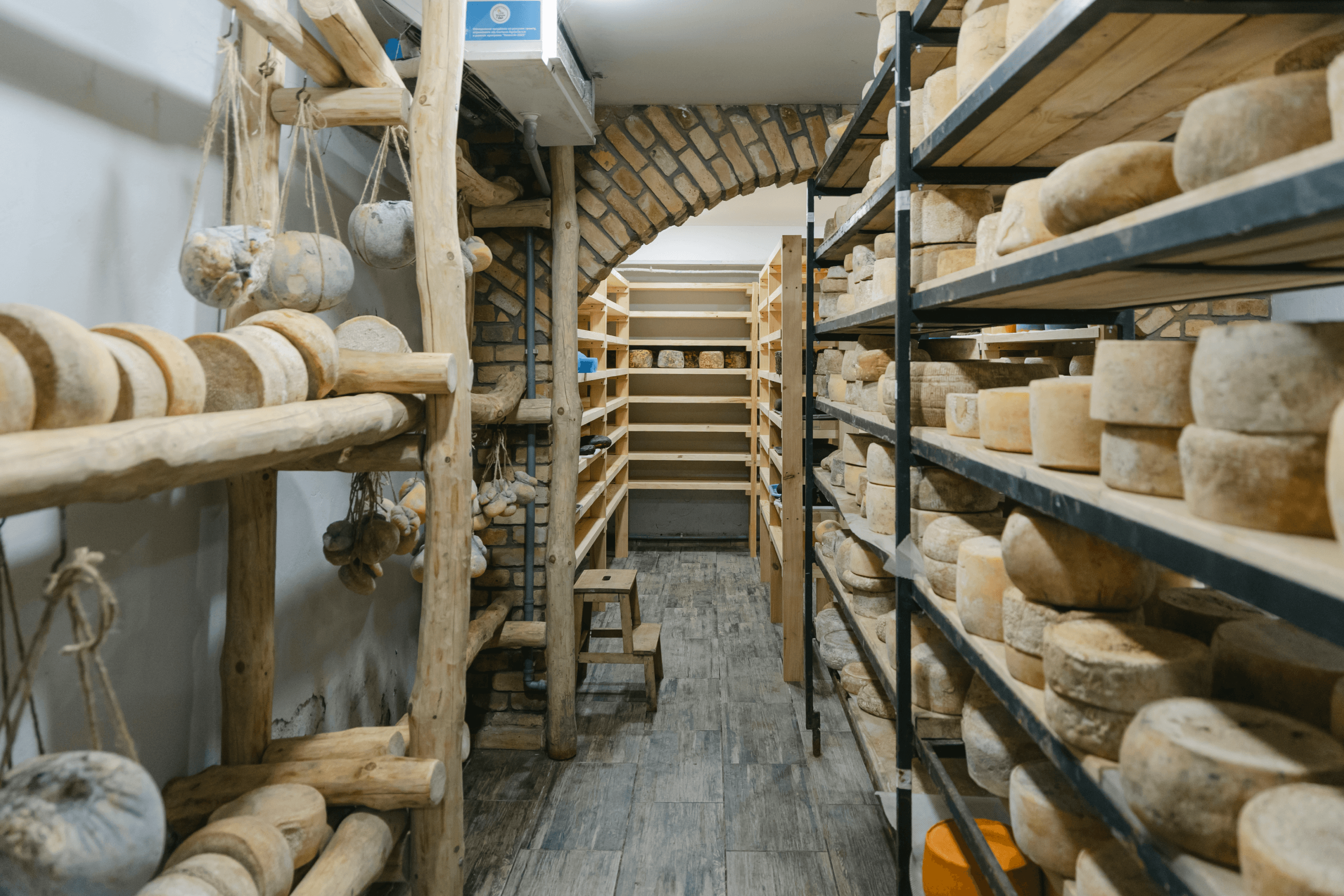
Photo: Mykhailo Melnychenko / YB 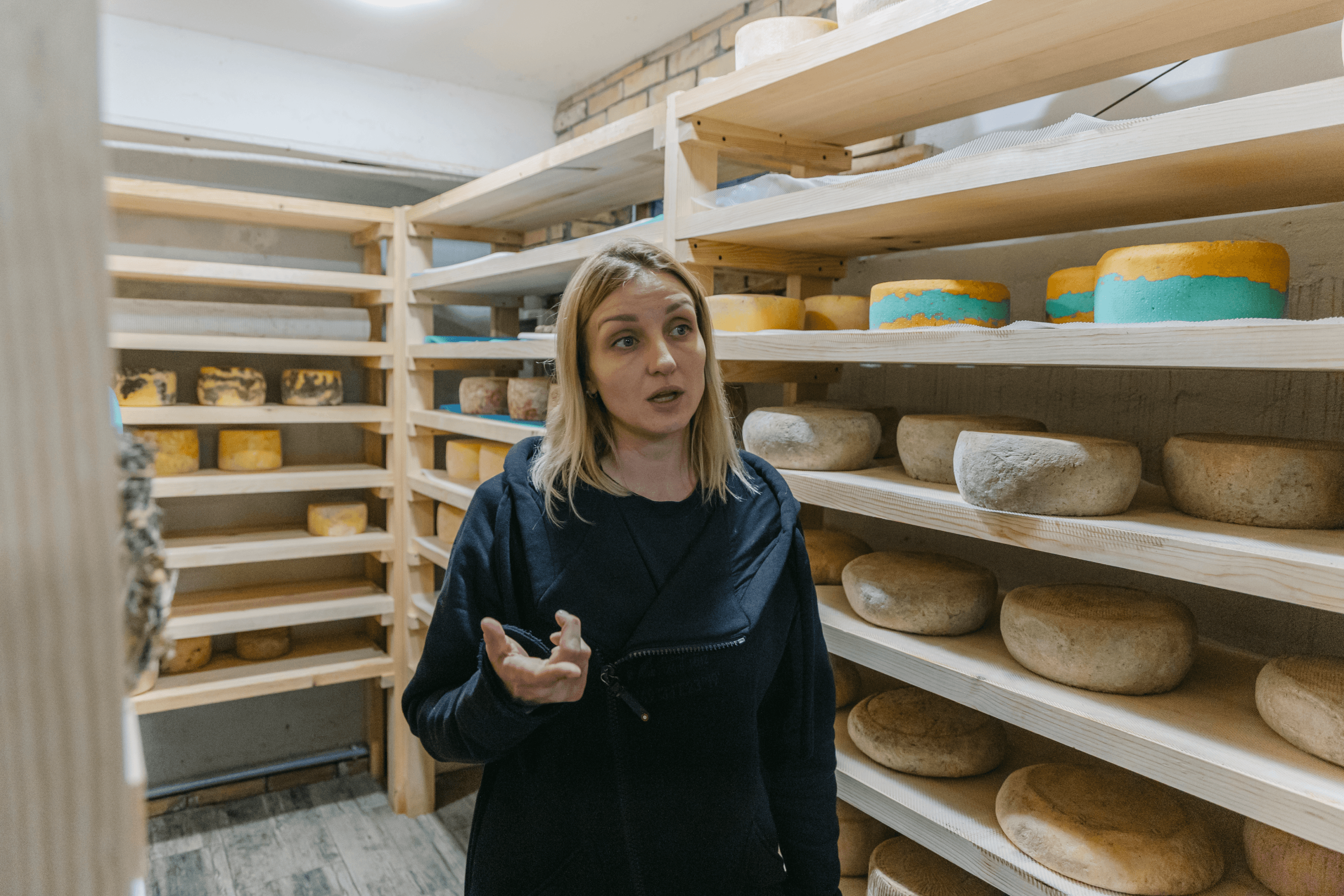
Photo: Mykhailo Melnychenko / YB 
Photo: Mykhailo Melnychenko / YB
“To be honest, we got 99% of it wrong: the stalls, the lighting, the waterers—everything. It was our first farm, and we made every mistake possible,” Evgenia admits. “The only thing we got right was the location. As we were laying the foundations for the barn, we actually dug up the remains of a cowshed from the World War I era. It ended up making our construction much easier.”
The family embraced their secluded life, only venturing into the city to take their daughter to kindergarten. Their days were consumed by the farm: tending to cows, caring for rescues, cheese-making, and building new enclosures.
In 2021, their daughter’s kindergarten graduation approached. Evgenia and Anatoliy decided to host the ceremony at the farm so the children could enjoy the fresh air, meet the cows, sheep, and chickens, and taste homemade cheese. The event was a triumph. Among the parents was a blogger with a million followers who shared the day on her social media. By the next morning, Evgenia was flooded with dozens of messages from people asking if they could visit.
“My husband and I talked it over and decided to give it a shot,” Evgenia recalls. “We spent a week preparing for our first official guests. We laid down wood-chip paths, set up a gazebo and tables for cheese tastings, and decorated the small house at the entrance to serve as a ticket office. On our opening day, 700 people arrived. We never expected such a massive response, but we were thrilled.”
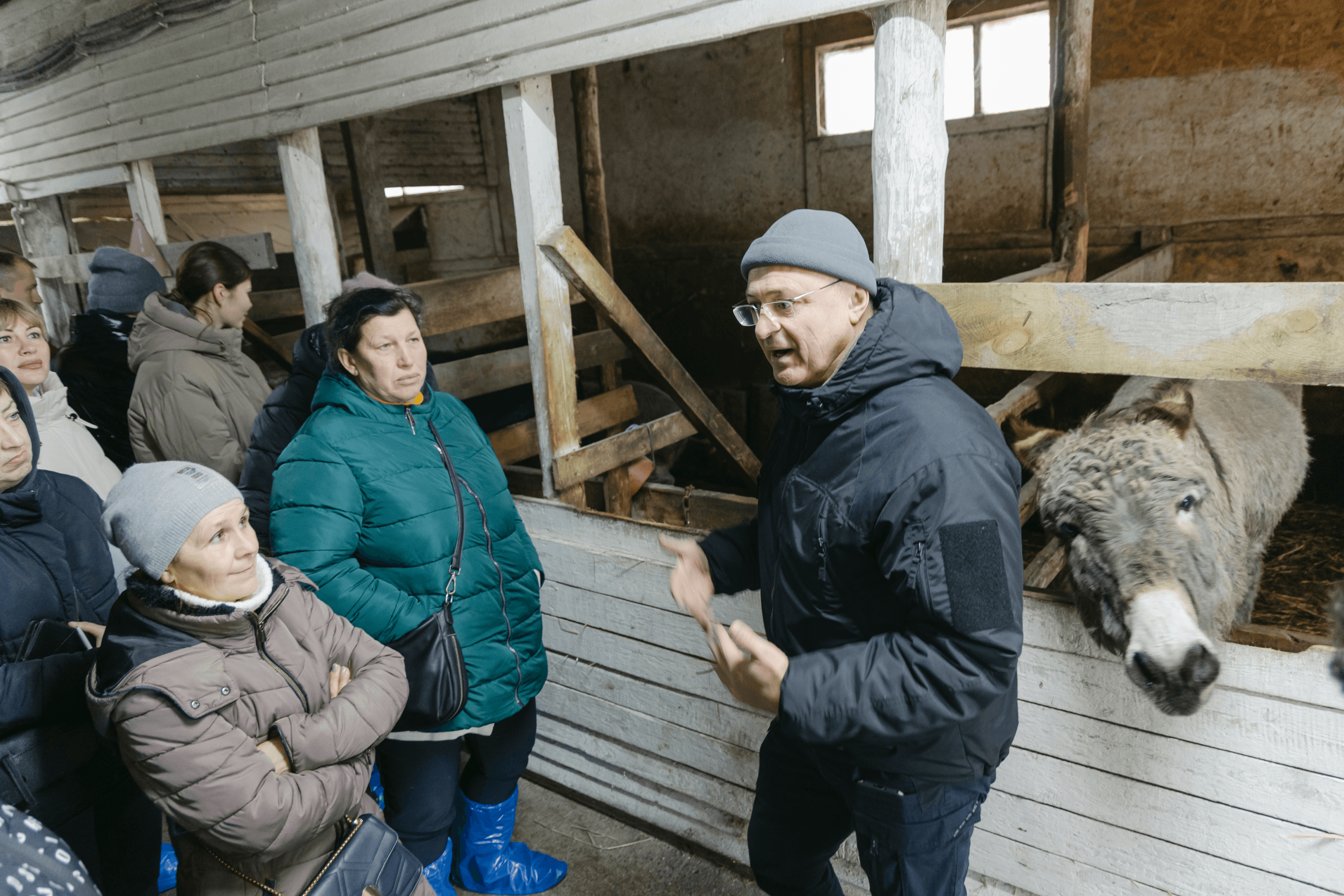
Photo: Mykhailo Melnychenko / YB 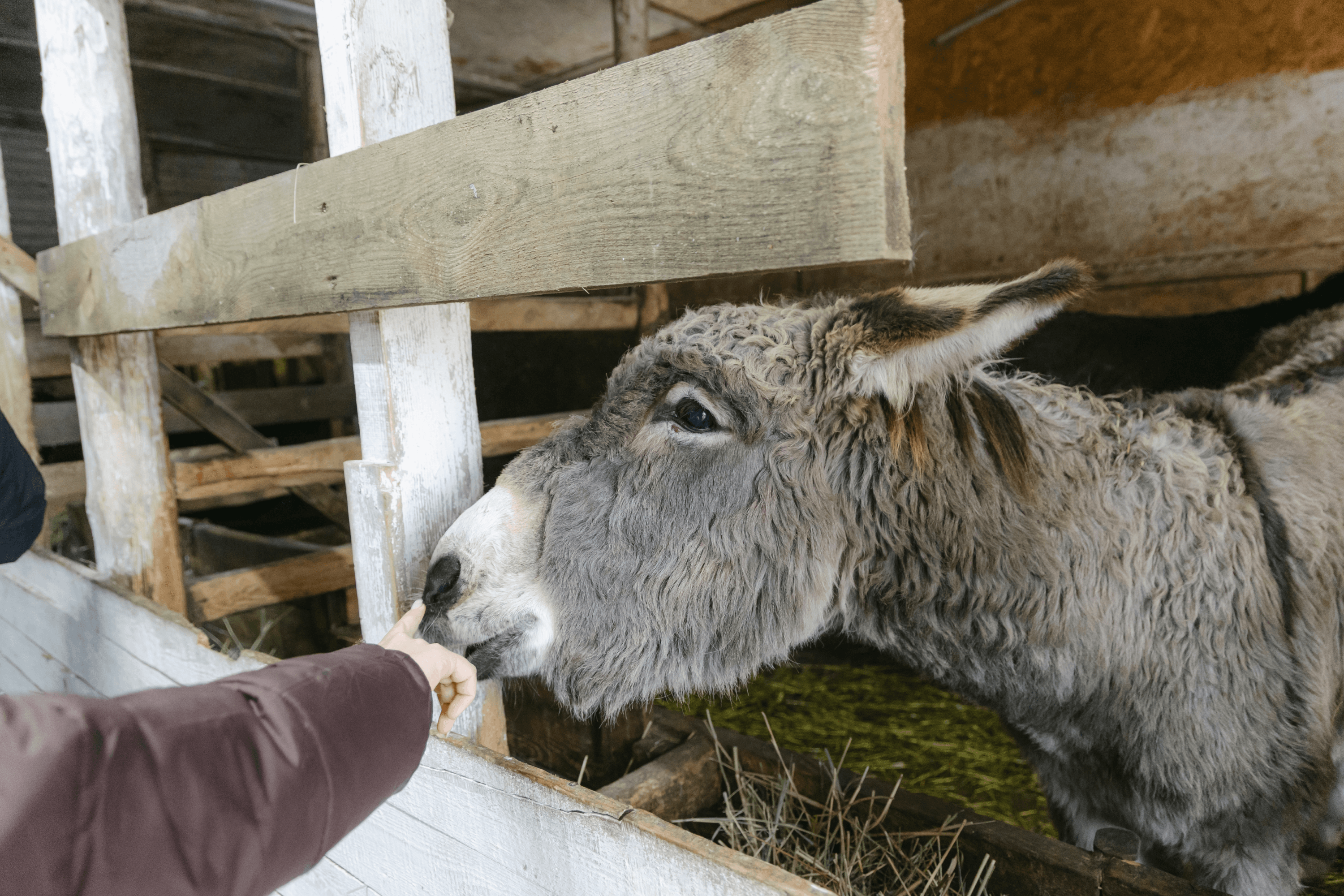
Photo: Mykhailo Melnychenko / YB 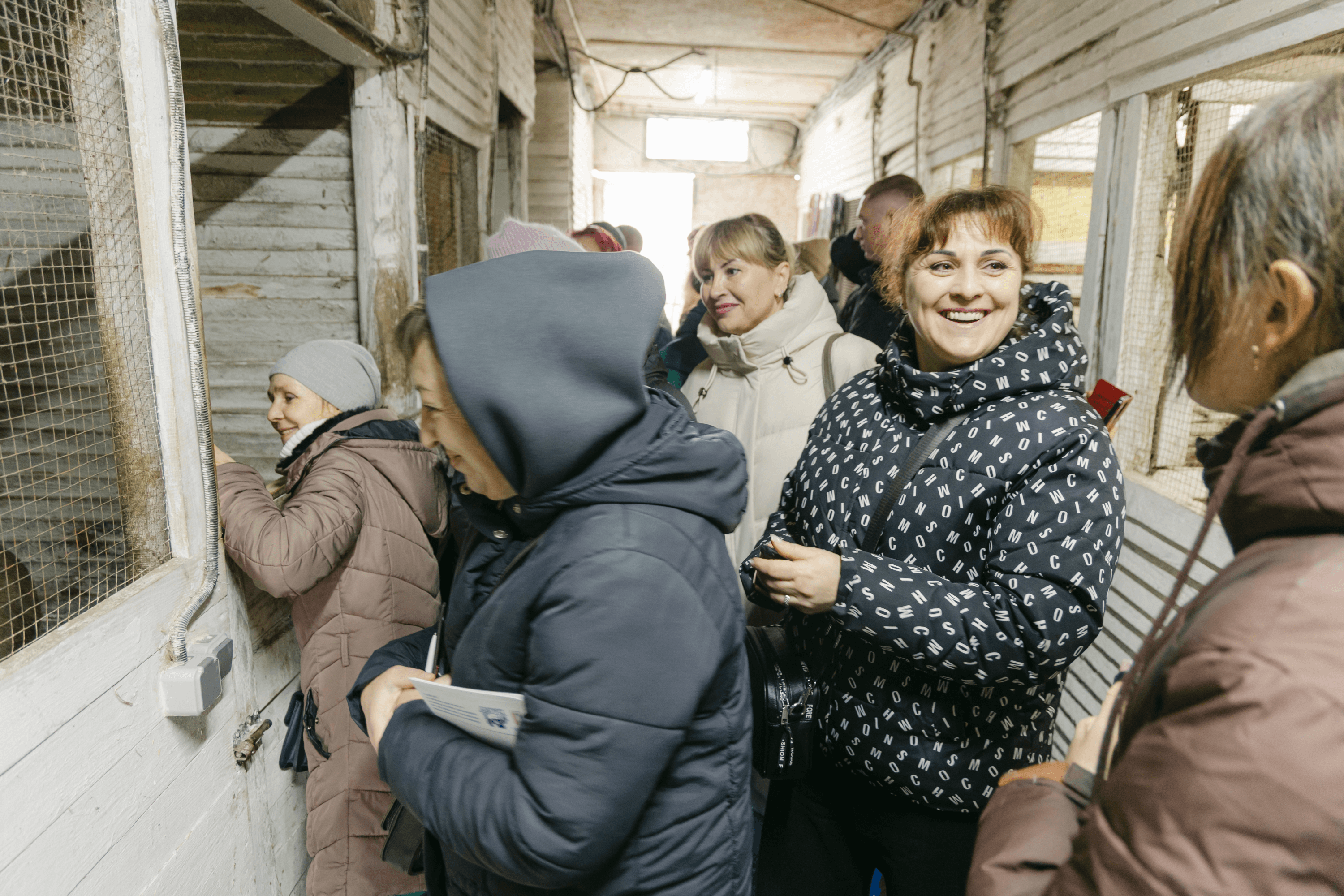
Photo: Mykhailo Melnychenko / YB 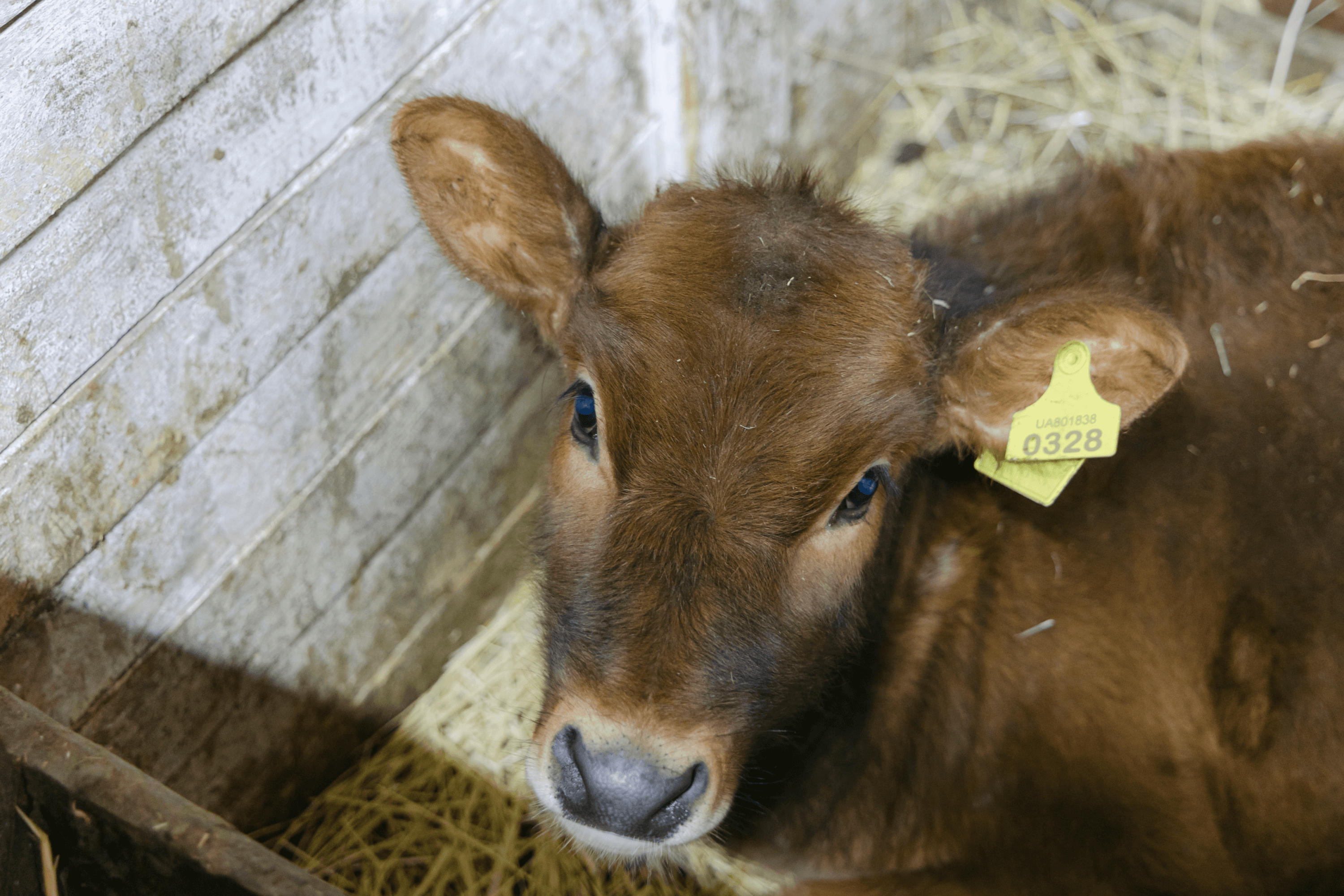
Photo: Mykhailo Melnychenko / YB 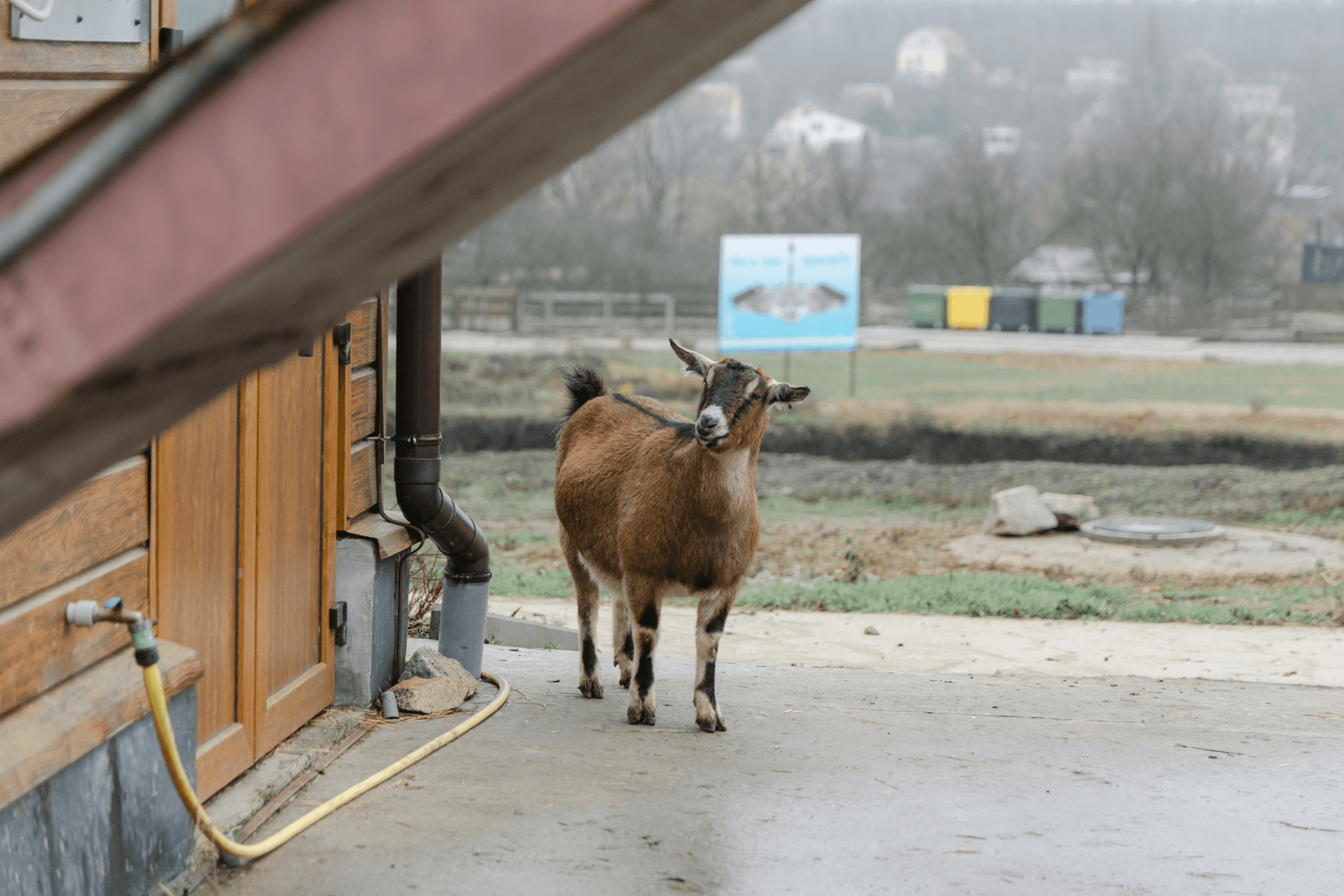
Photo: Mykhailo Melnychenko / YB
Developing despite everything
When Russia’s full-scale invasion began in February 2022, the Dnipropetrovsk region quickly became a safe haven for those fleeing the East and South of Ukraine. Evgenia and Anatoliy took to social media, announcing that their farm was open to displaced people—especially those who refused to leave their animals behind. Within days, the farm was a bustling refuge for families from Kherson, Mariupol, Kharkiv, and Dnipro. Some of the new arrivals had visited the farm as tourists just a month earlier.
The animal population swelled tenfold, reaching nearly 1,000. These were the pets of refugees and animals rescued by the military from the front lines. Most arrived traumatized, requiring specialized care and patience.
The crisis forced a difficult personal choice. “Anatoliy was on the verge of enlisting and was already looking for a unit to join. But the prospect of managing the farm alone under such conditions terrified me,” Evgenia admits. “We had to decide: either we shut everything down, or he stays. He stayed to help the people and the animals. But even now, he finds it hard to reconcile with that decision.”
By the fall of 2022, as the initial wave of displacement subsided, the couple planned to build a new cowshed for their 22 cows, leaving the old one entirely for rescued animals. They secured partners for the equipment, and construction was set to begin on September 3.
The night before work was to start, a Russian Iskander missile struck the farm.
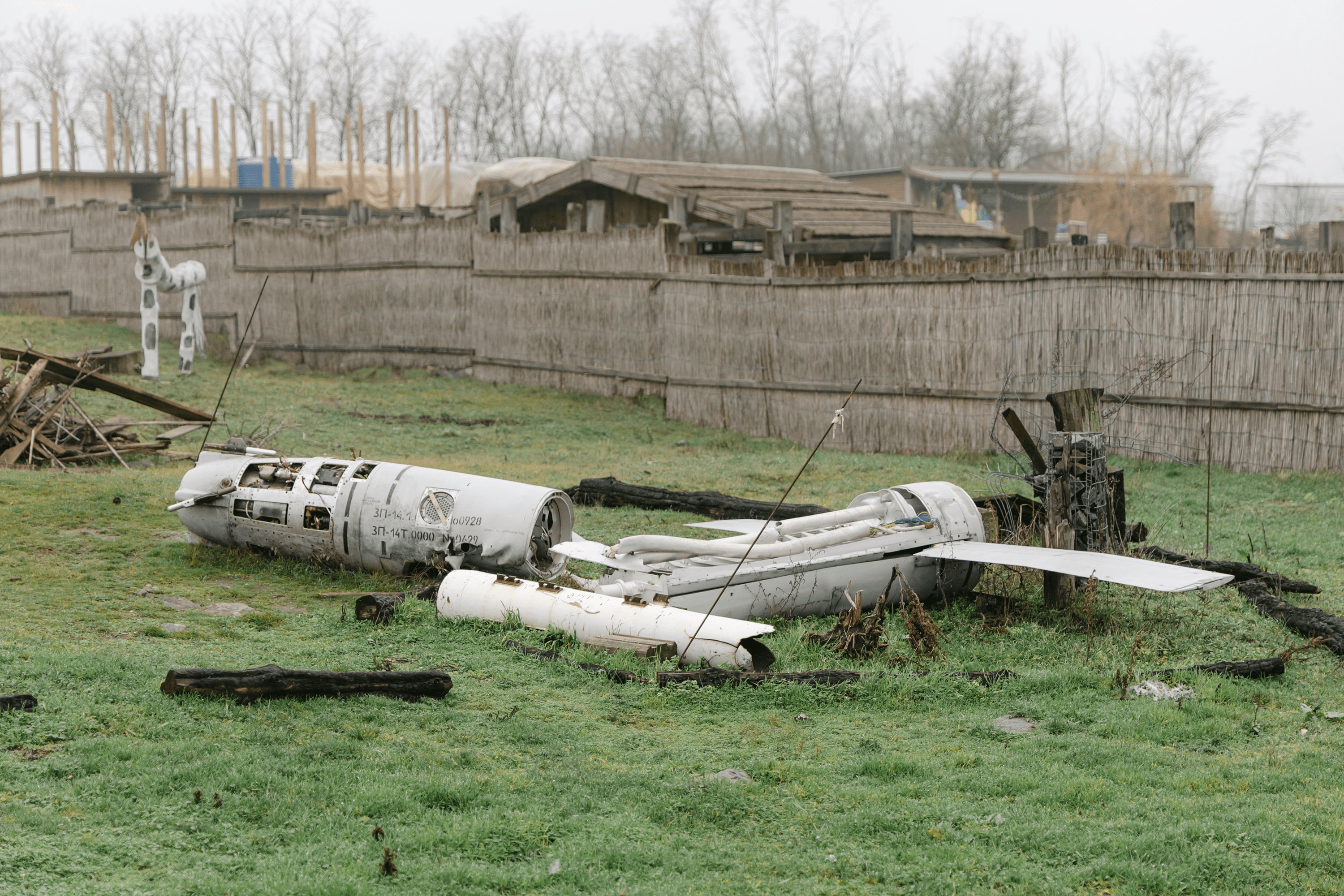
“We were at home when we saw a sudden, blinding white flash, followed by the heavy, hollow thud of the missile hitting the earth,” Evgenia recalls. “When we ran outside, we found almost every enclosure destroyed. Most of the animals had escaped in terror, and several had been killed. We later learned the missile hadn’t even detonated. All that destruction was caused by the sheer force of that massive piece of metal falling and sliding across our land.”
The impact sparked a fire that raged for over 24 hours. The construction materials for the new cowshed were reduced to ashes. The missile severed power lines that, even now, remain unrepaired. Initial estimates placed the damage at over ₴1,000,000.
By morning, messages of support began pouring in. Veterans, concerned citizens, former tourists, and those who had found shelter at the farm in the early days of the war all arrived to help. They spent days repairing enclosures, searching for lost animals, and clearing debris. A fundraiser was launched to cover the losses; incredibly, the full ₴1,000,000 was raised in just two days. Refusing to let the tragedy break them, Evgenia and Anatoliy bought new materials and began construction on the cowshed just days later.
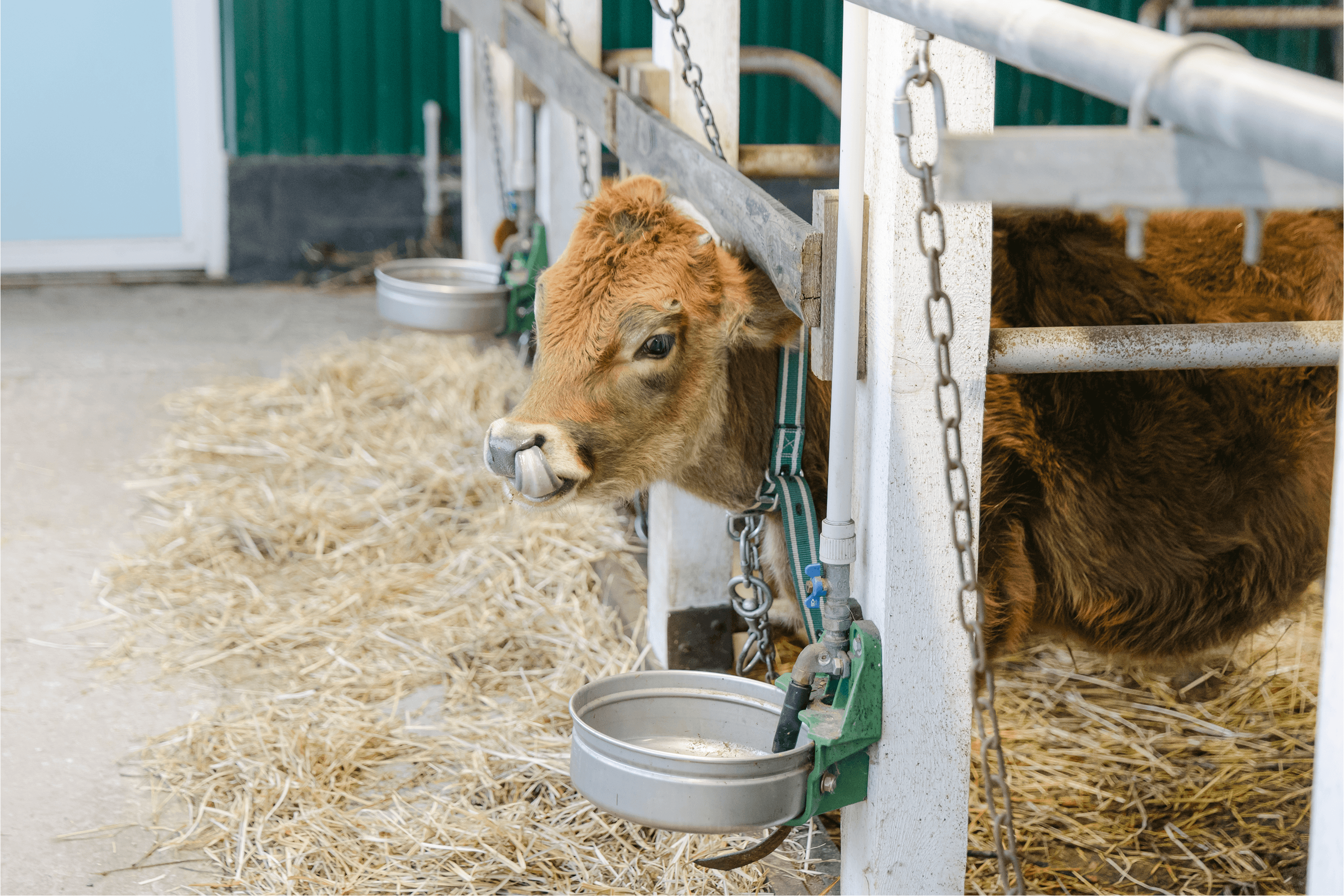
Photo: Mykhailo Melnychenko / YB 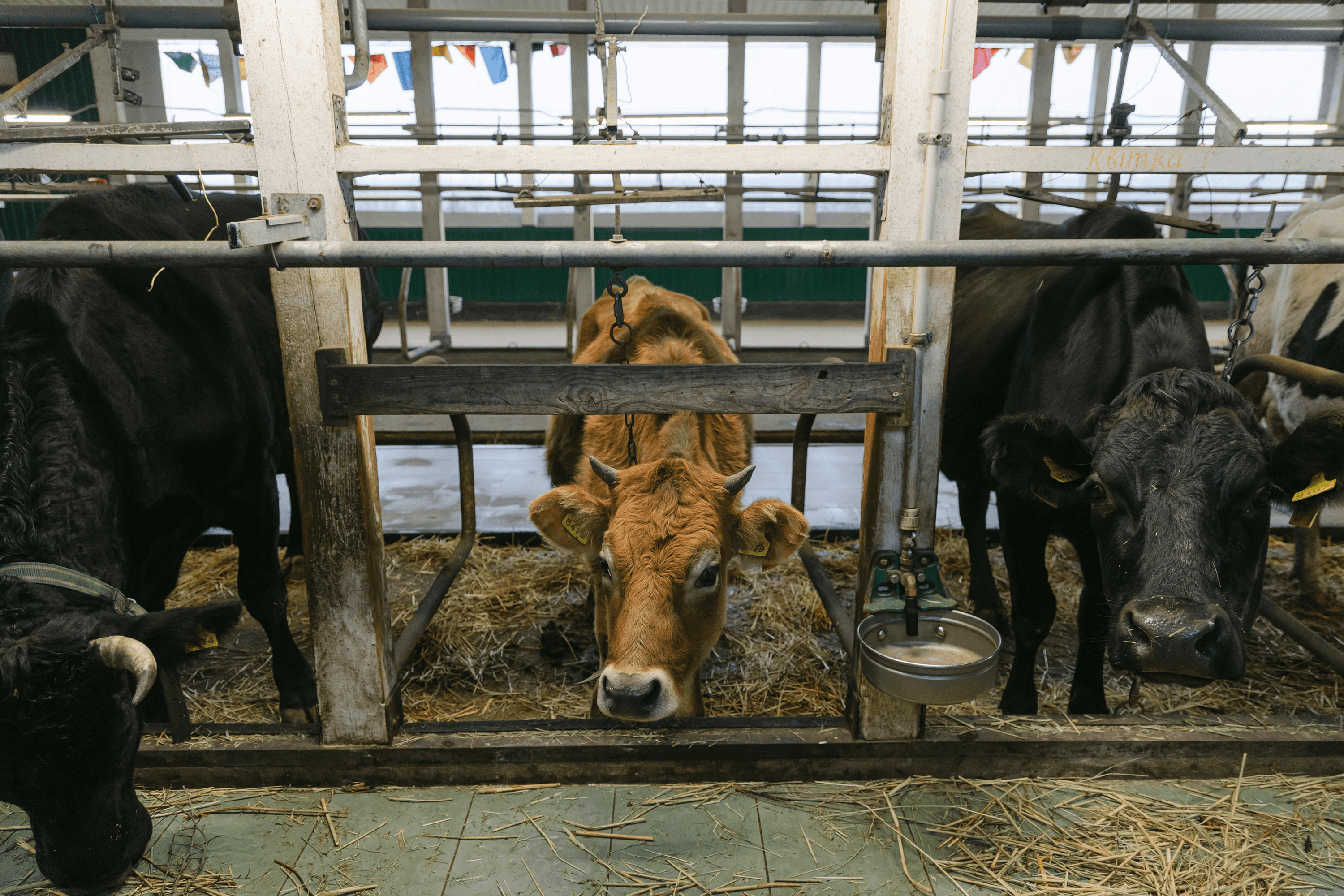
Photo: Mykhailo Melnychenko / YB 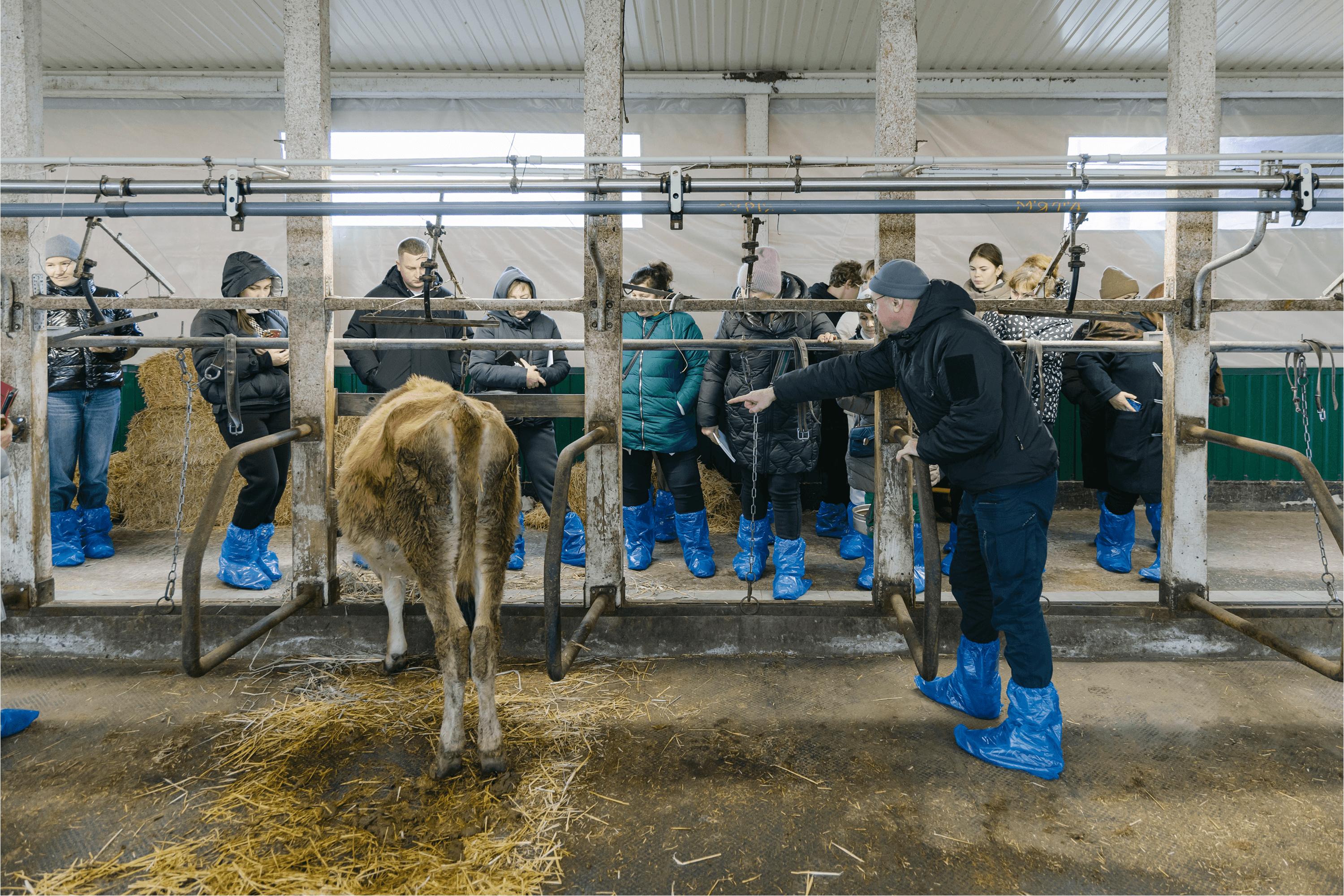
Photo: Mykhailo Melnychenko / YB 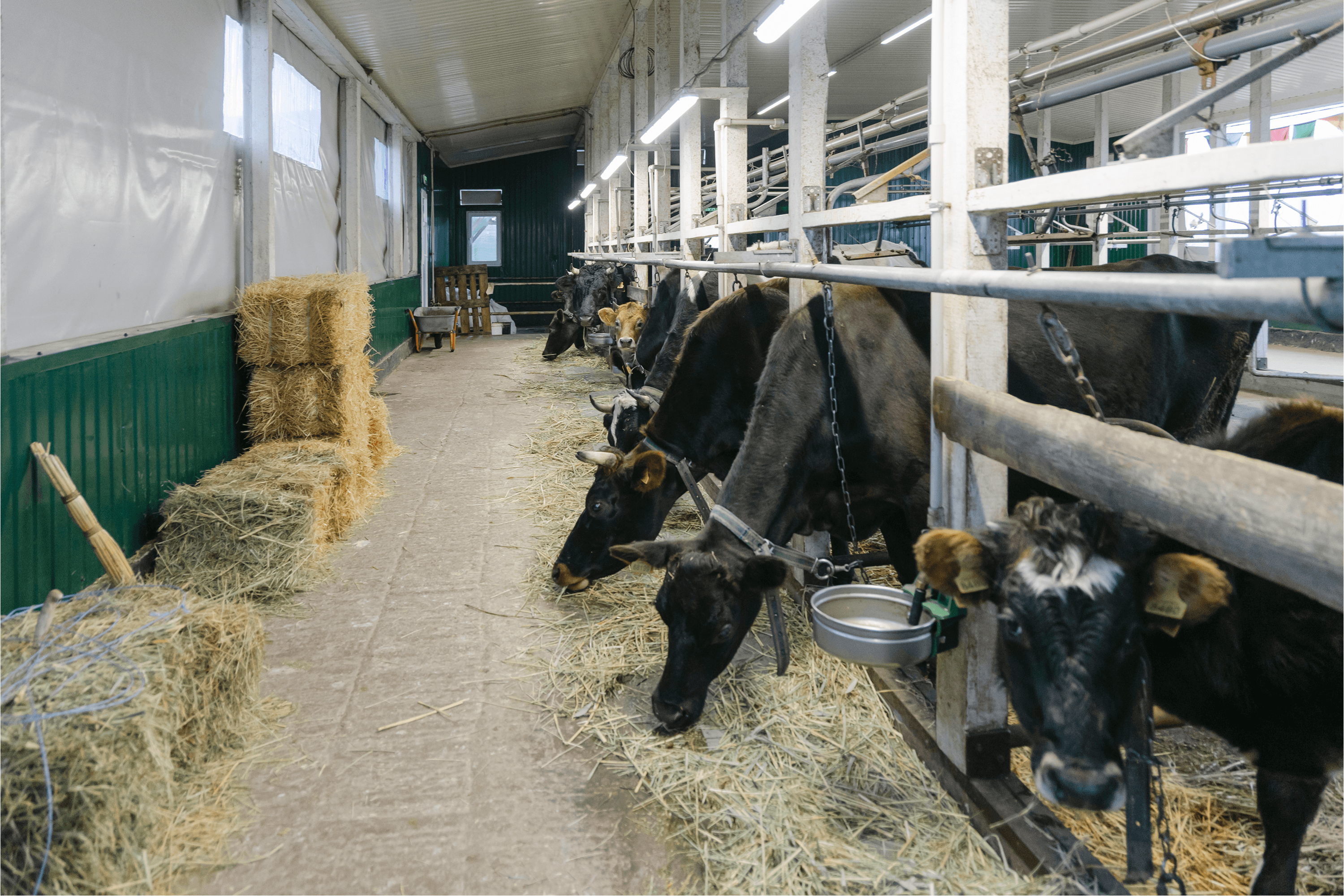
Photo: Mykhailo Melnychenko / YB 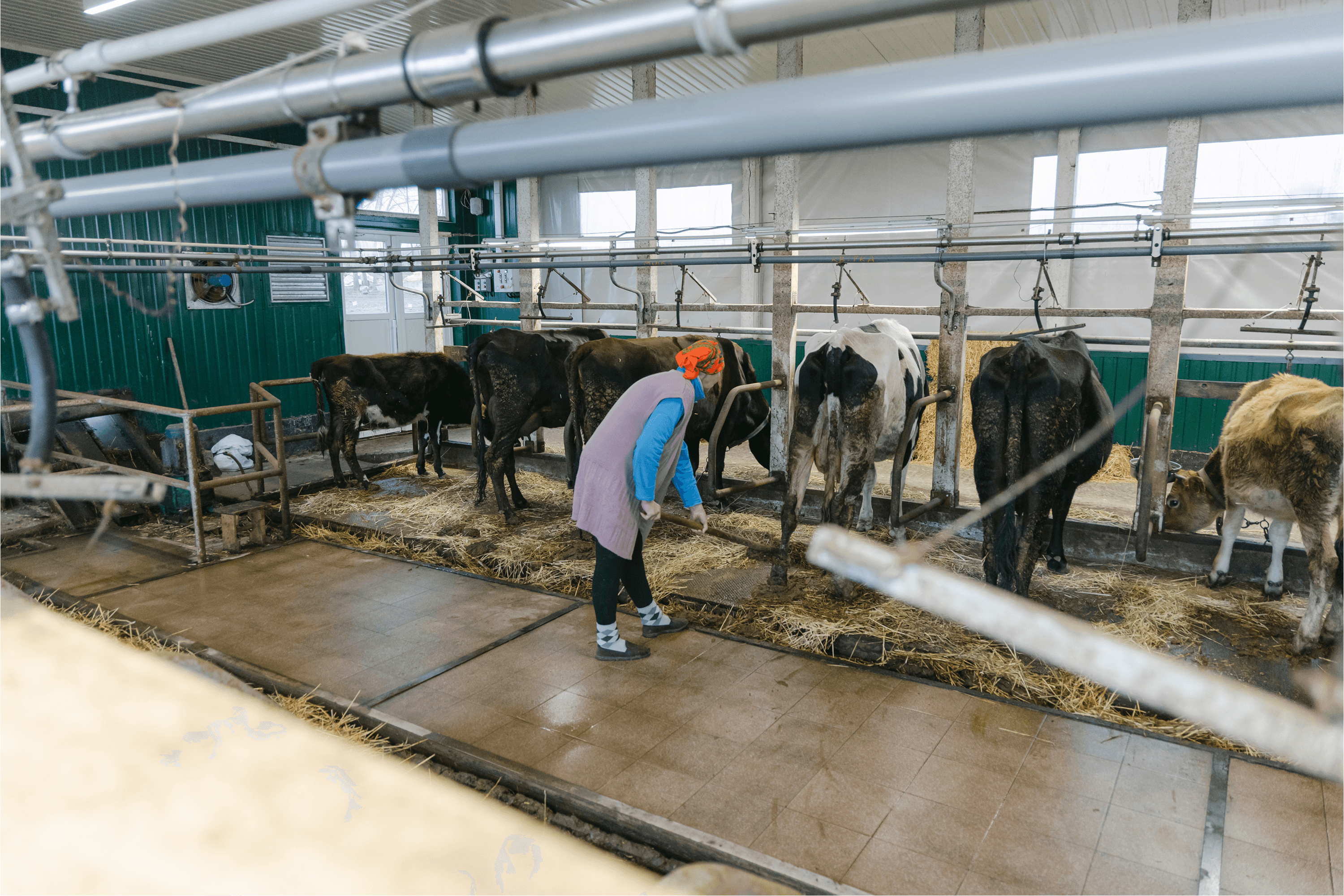
Photo: Mykhailo Melnychenko / YB
“Part of our team never truly recovered from the trauma of that night and, sadly, left the farm. But my husband and I realized we couldn’t let this stop us,” Evgenia says.
More than just a farm
During the early months of the invasion, Evgenia and Anatoliy began to envision their farm as a center for healing. The spark came when a group of children from Mariupol stayed with them while awaiting further evacuation. Some had recently lost their parents, yet amidst the sheep and dogs of the farm, they found a brief reprieve from their grief. For the first time since their world collapsed, they began to laugh again.
Evgenia soon realized that the animals’ therapeutic reach extended far beyond children. Everyone who sought refuge at the farm seemed more exhausted than those who worked there. By the fall of 2022, the couple officially opened their doors to those in need of physical and psychological recovery. What began with civilians soon grew to include veterans and their families. Before long, charitable foundations reached out, seeking to partner with the farm for organized recovery sessions.
Rehabilitation at Green Grove begins with a greeting from two Golden Retrievers, Ikigai and Sunny. The couple had Ikigai since their days in Dnipro, but Sunny was a “war rescue"—abandoned on the street by his previous owners when the invasion began.
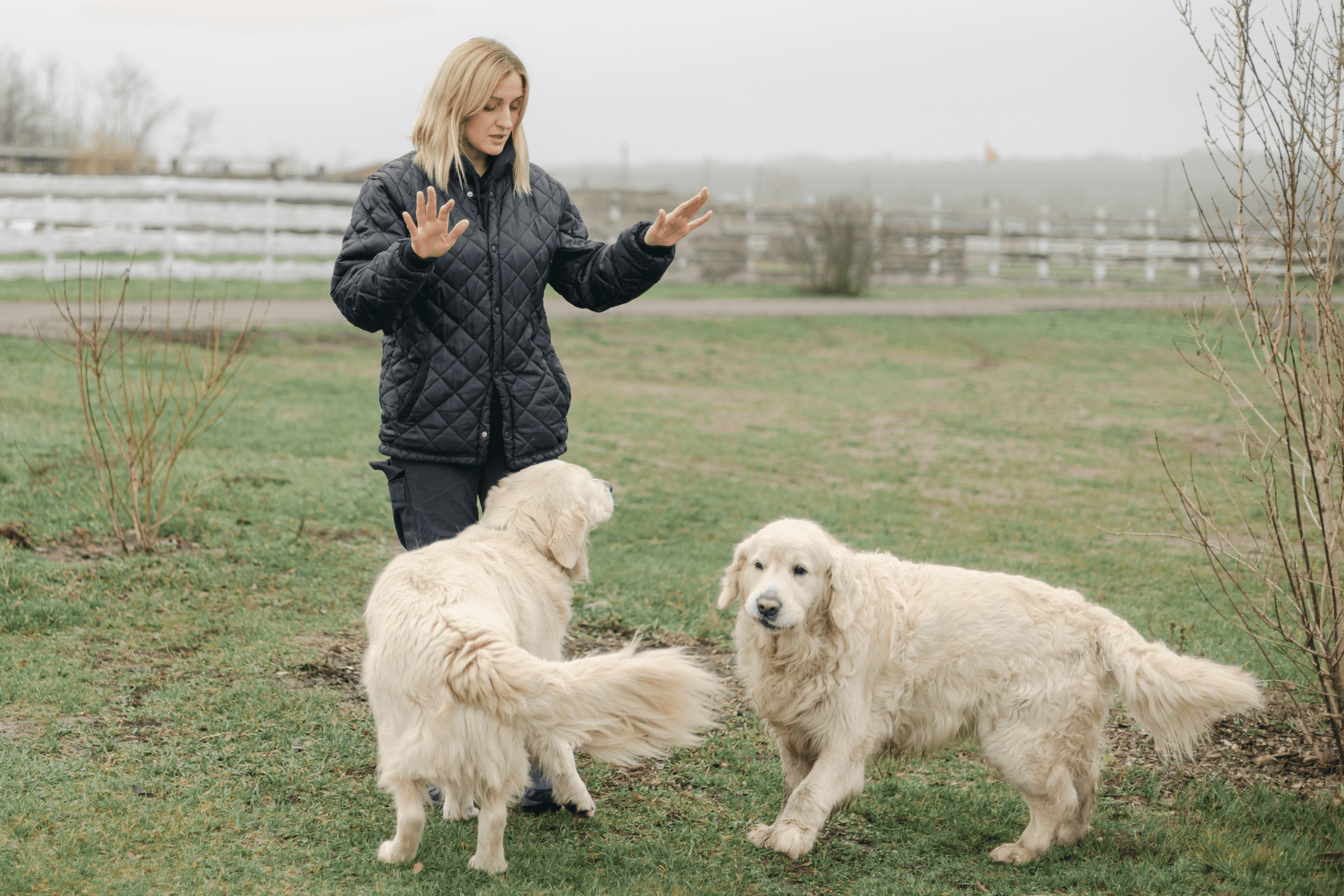
Both are certified canine therapists. Trained to support people with psychological trauma, the dogs possess an intuitive ability to sense who needs them most. They quietly choose a person to sit with, staying until they feel the visitor is ready to open up. Sometimes this connection happens in minutes; sometimes it takes a full day. The dogs simply know when their work is done.
The program follows a “peer-to-peer” model: Anatoliy, drawing on his own military background, leads the tours for veterans, while Evgenia works with civilians and military families.
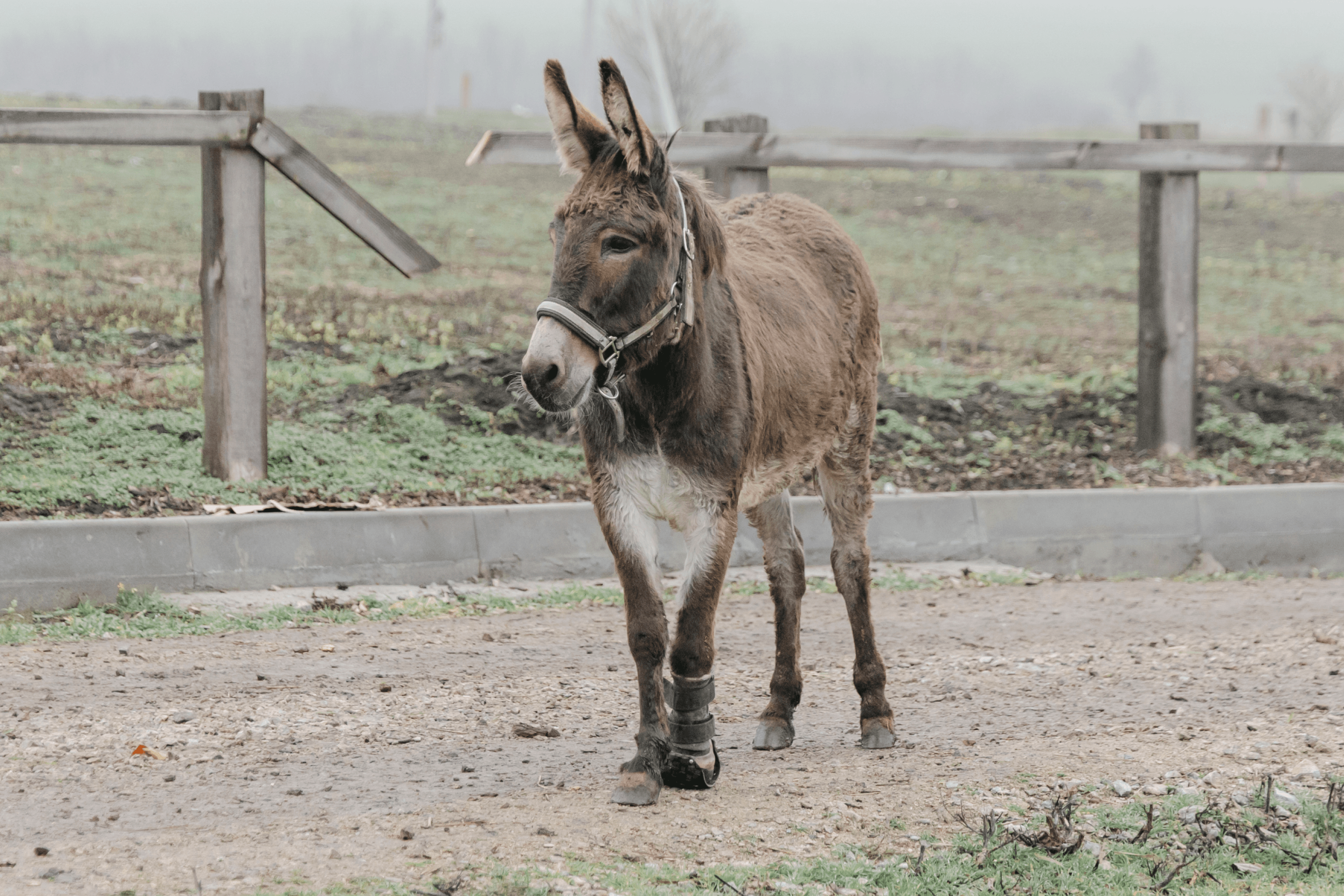
During these walks, there are no forced exercises or rigid scripts. Interaction is organic: guests approach, pet, and feed the animals at their own pace. Mykola, who brings groups from Superhumans, notes that veterans feel a profound kinship with the animals evacuated from combat zones. They are particularly drawn to Mamulia, a donkey who lost part of her front leg to a landmine and now walks with the help of a prosthetic.
“But my personal favorite is Borka the boar,” Mykola says. “When I first arrived, he followed me all day. He’s incredibly tame, more like a dog than a boar. The way Borka gravitates toward people helps them drop their guard. He helps those who have closed themselves off after being wounded to open up again.”
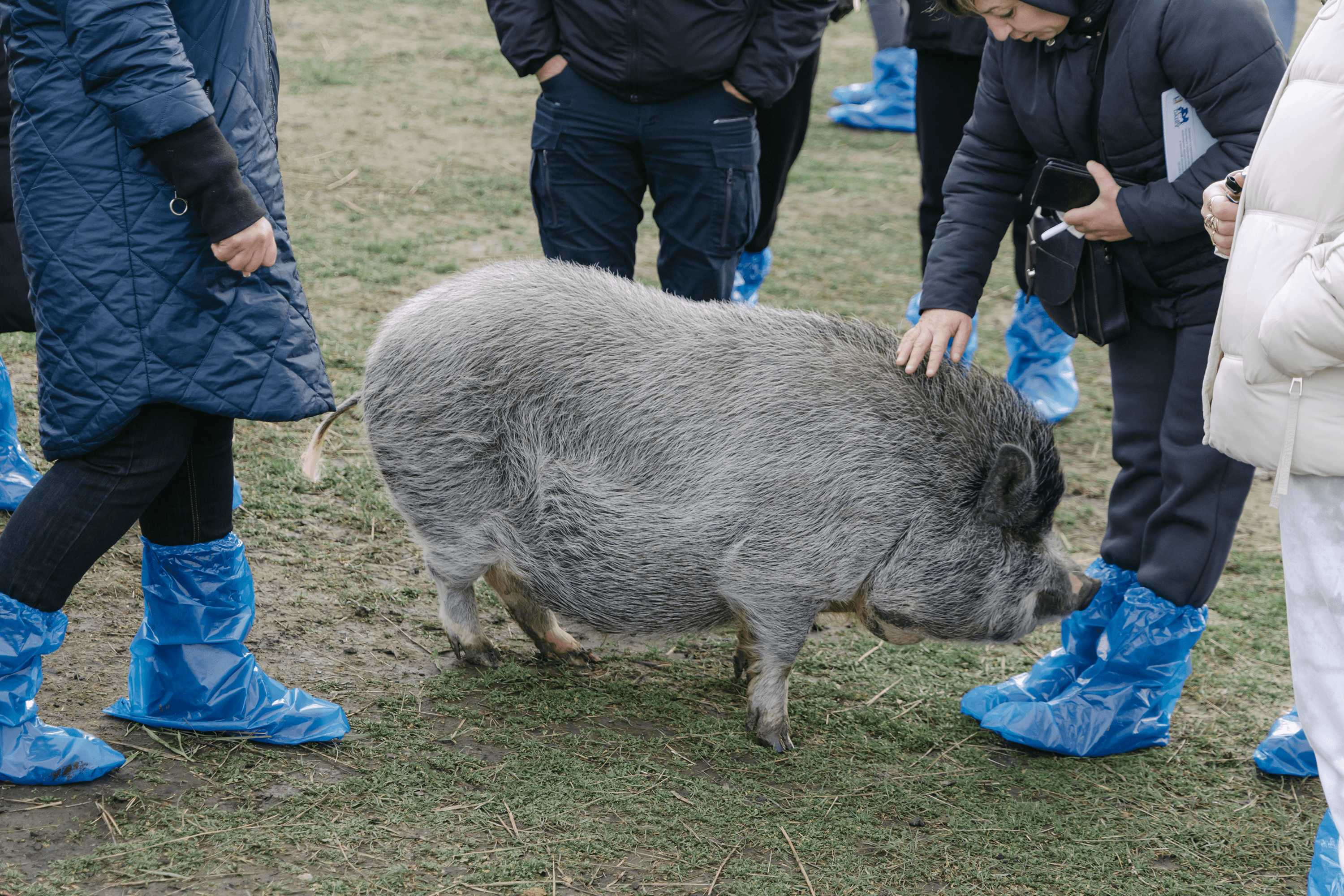
Photo: Mykhailo Melnychenko / YB 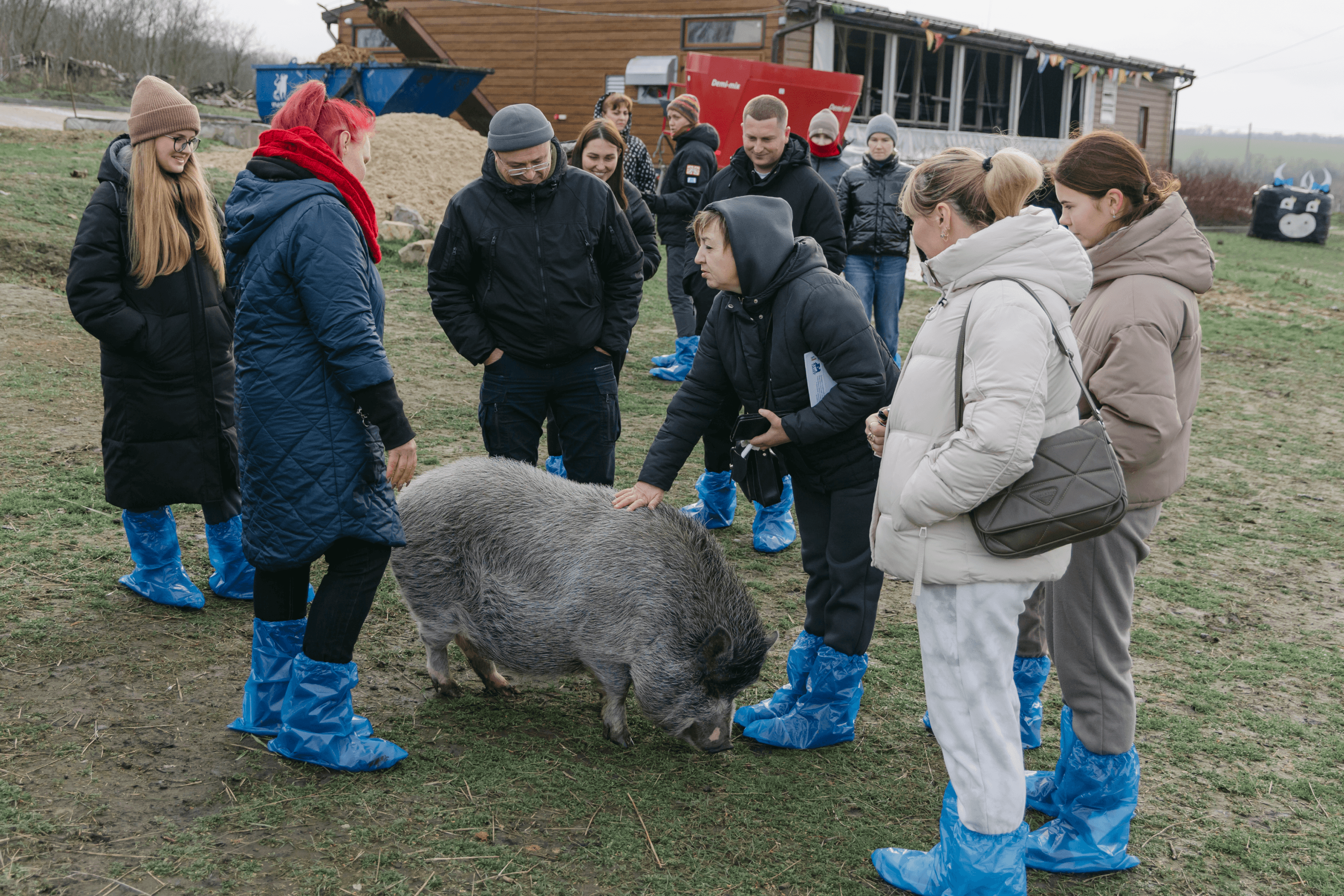
Photo: Mykhailo Melnychenko / YB 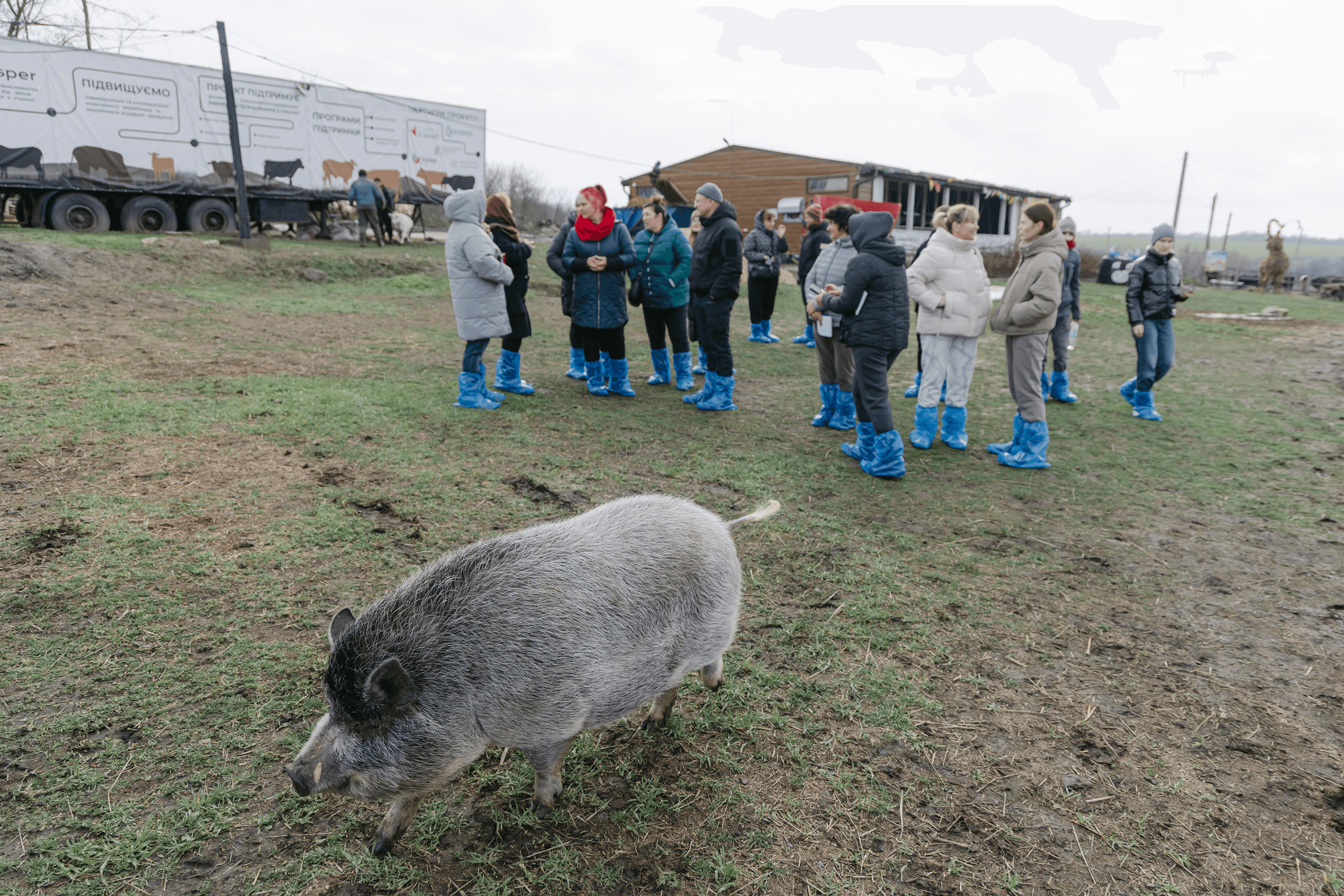
Photo: Mykhailo Melnychenko / YB 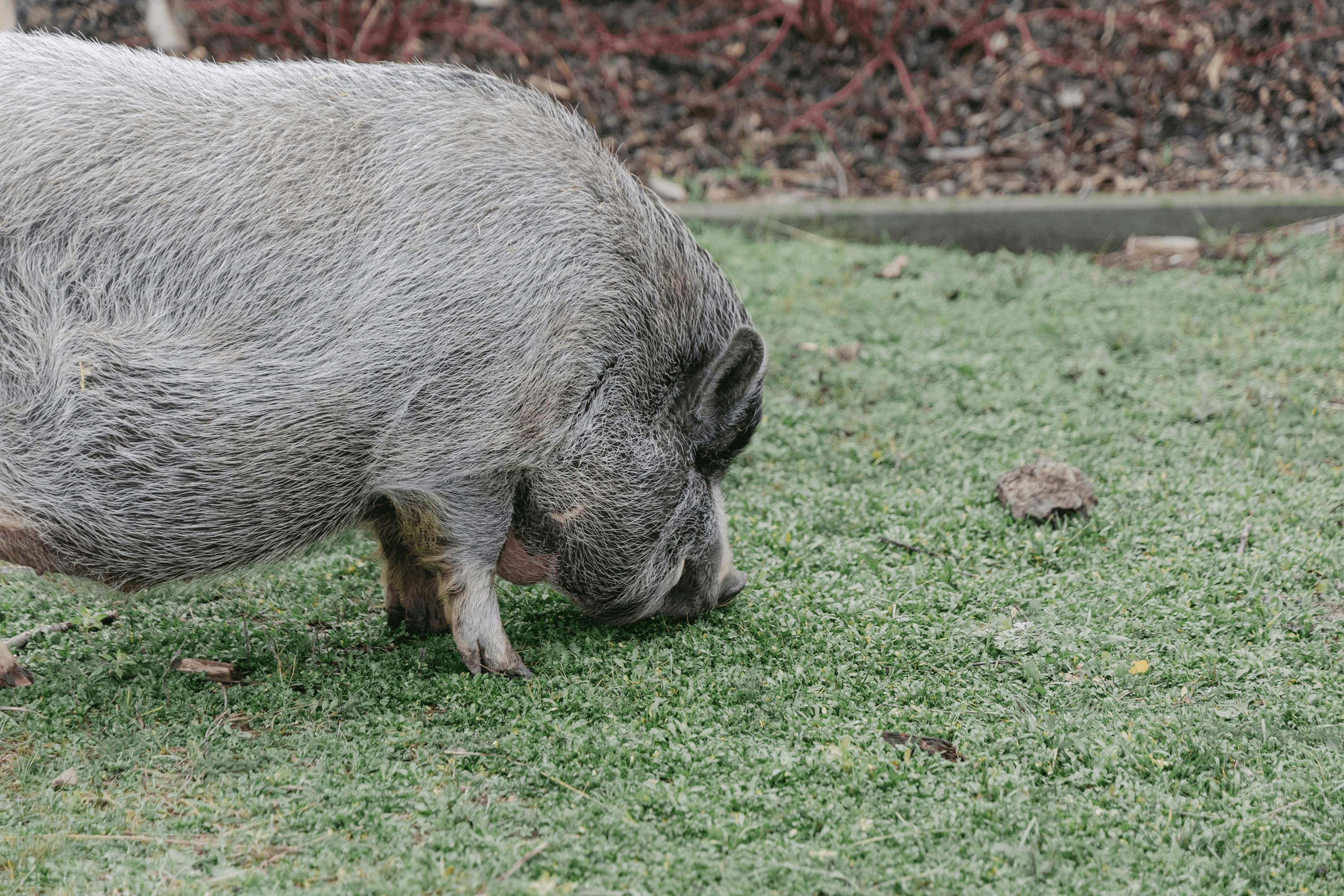
Photo: Mykhailo Melnychenko / YB 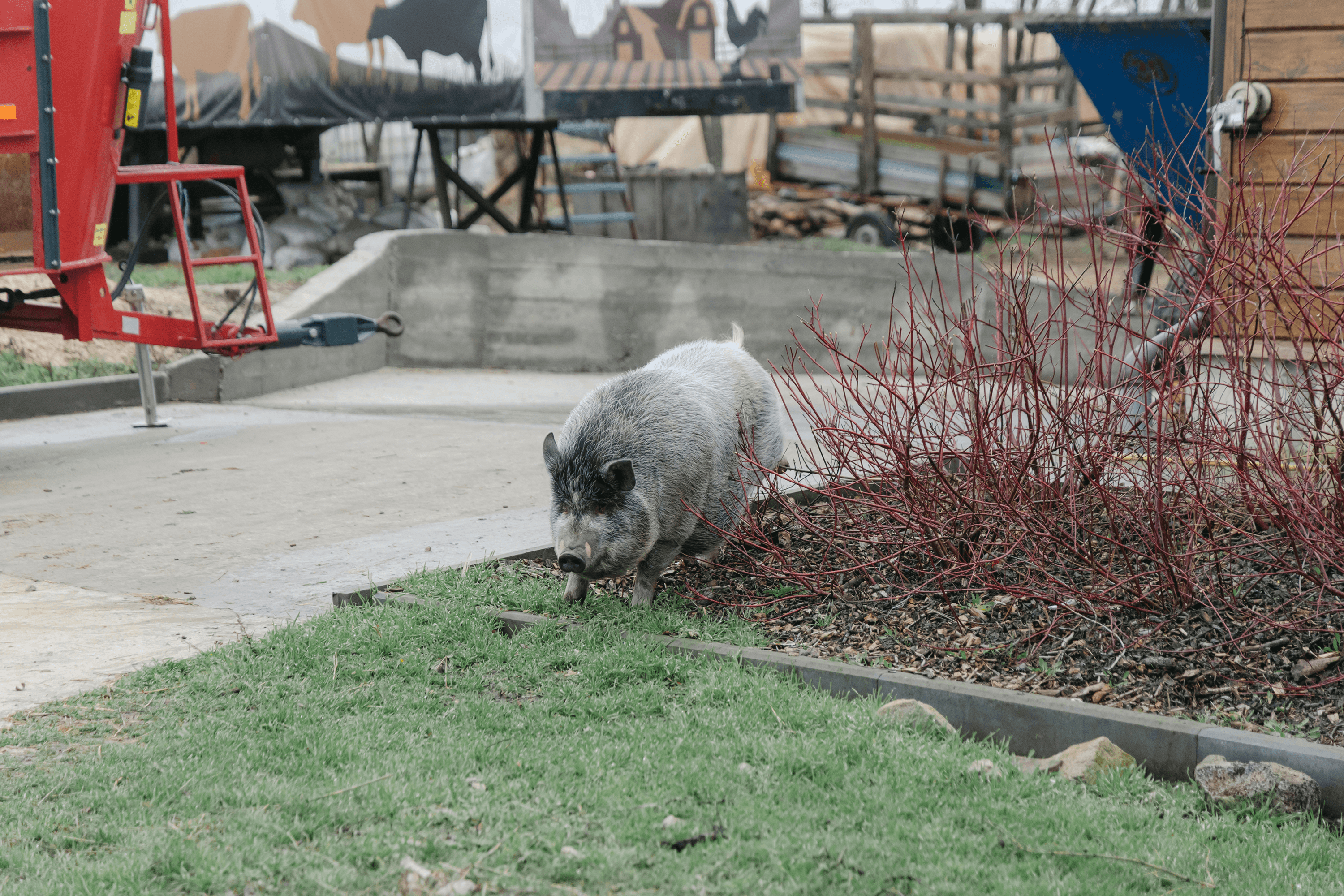
Photo: Mykhailo Melnychenko / YB
Many veterans participate in hippotherapy—rehabilitation through horseback riding. Even those with upper or lower-limb amputations take to the saddle. To make this accessible, Operational Command East built a specialized inclusive platform at the stable as a gesture of gratitude for the farm’s work with their soldiers.
Mykola, who underwent hippotherapy during his own recovery, explains that the benefits are as much psychological as they are physical. For a person with an amputation, the act of controlling a horse restores a sense of confidence in their own body. “When you’re on a horse, you feel things that are hard to put into words,” Mykola reflects. “Balance, trust, control—and, at the same time, an immense sense of relief.”
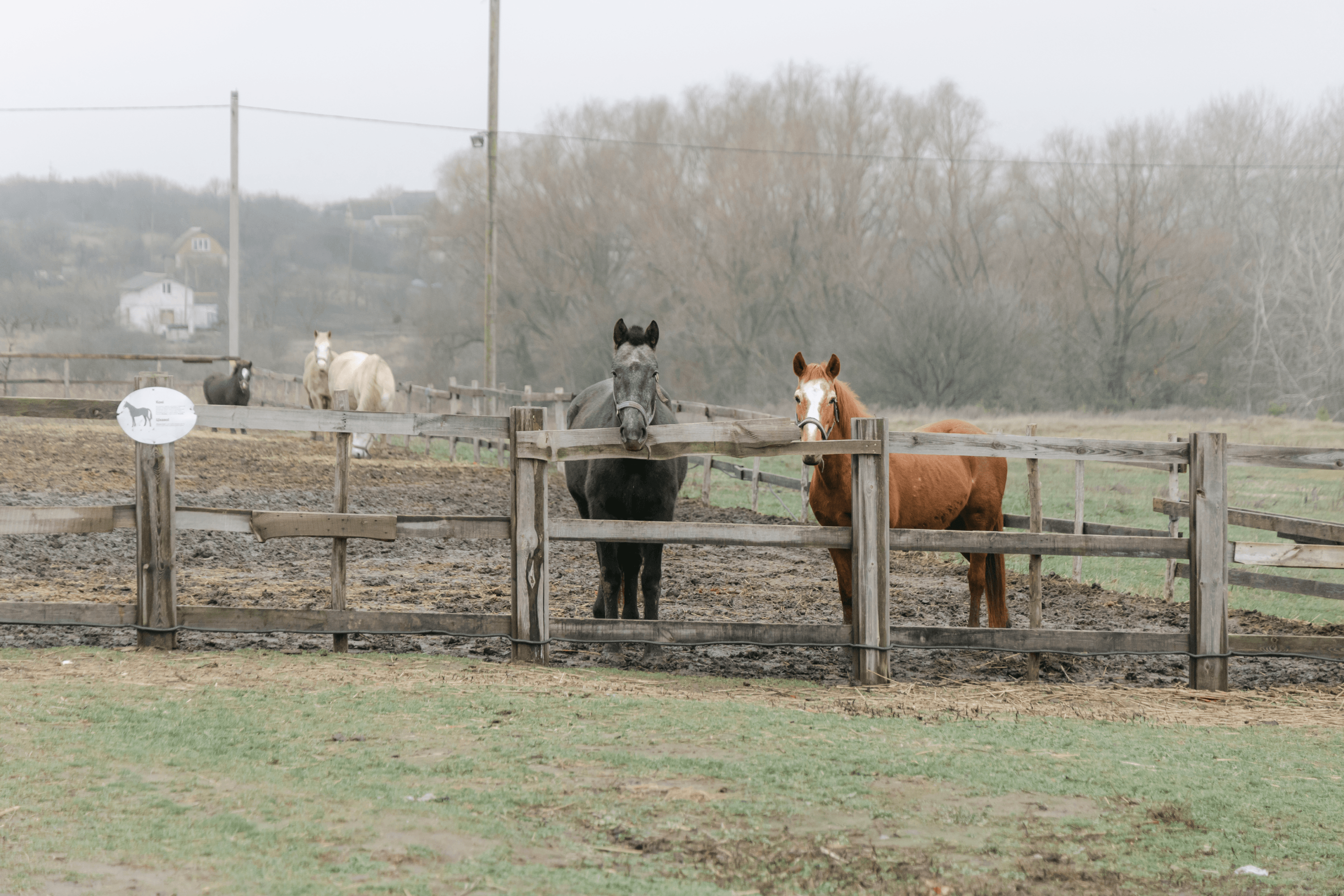
Photo: Mykhailo Melnychenko / YB 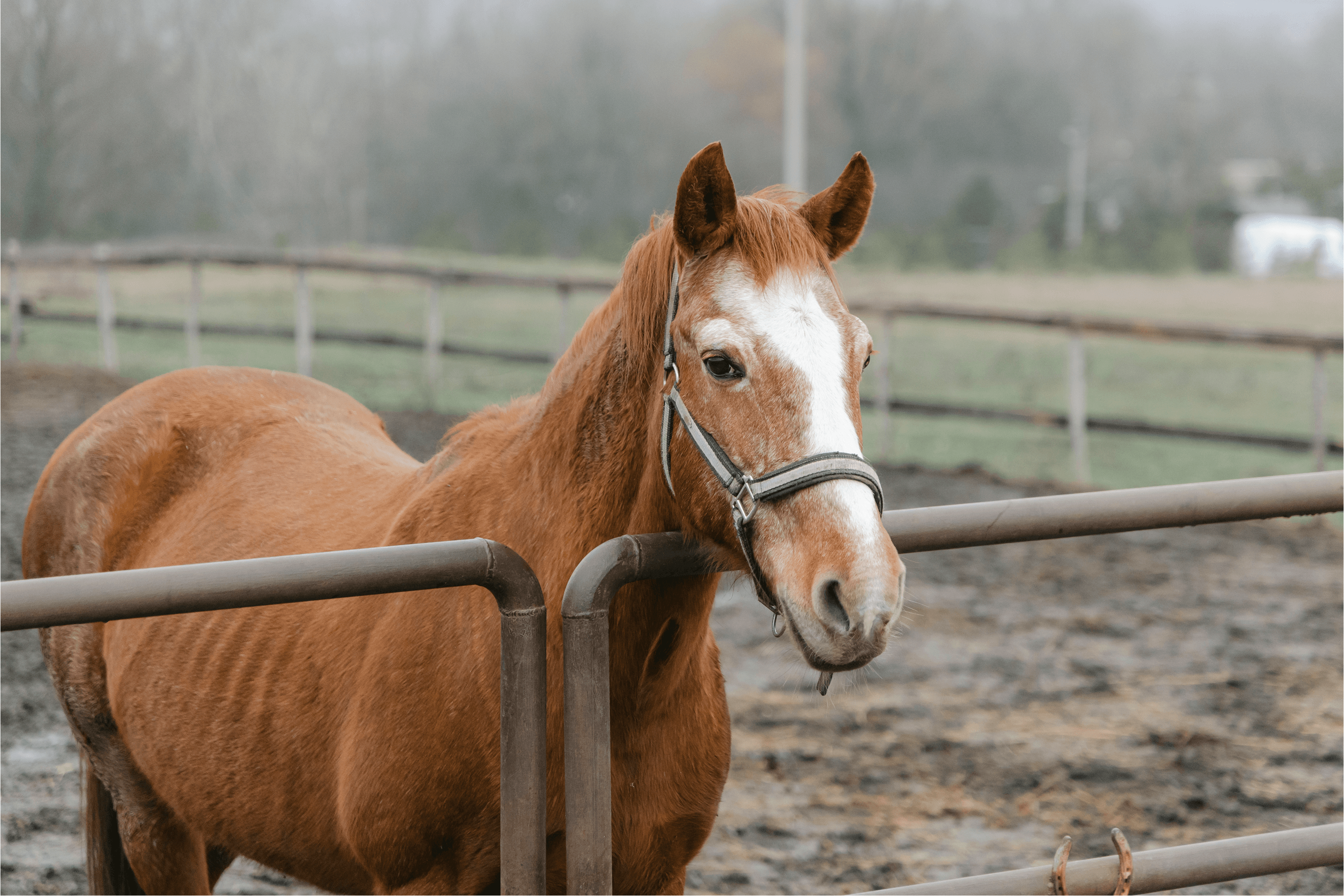
Photo: Mykhailo Melnychenko / YB 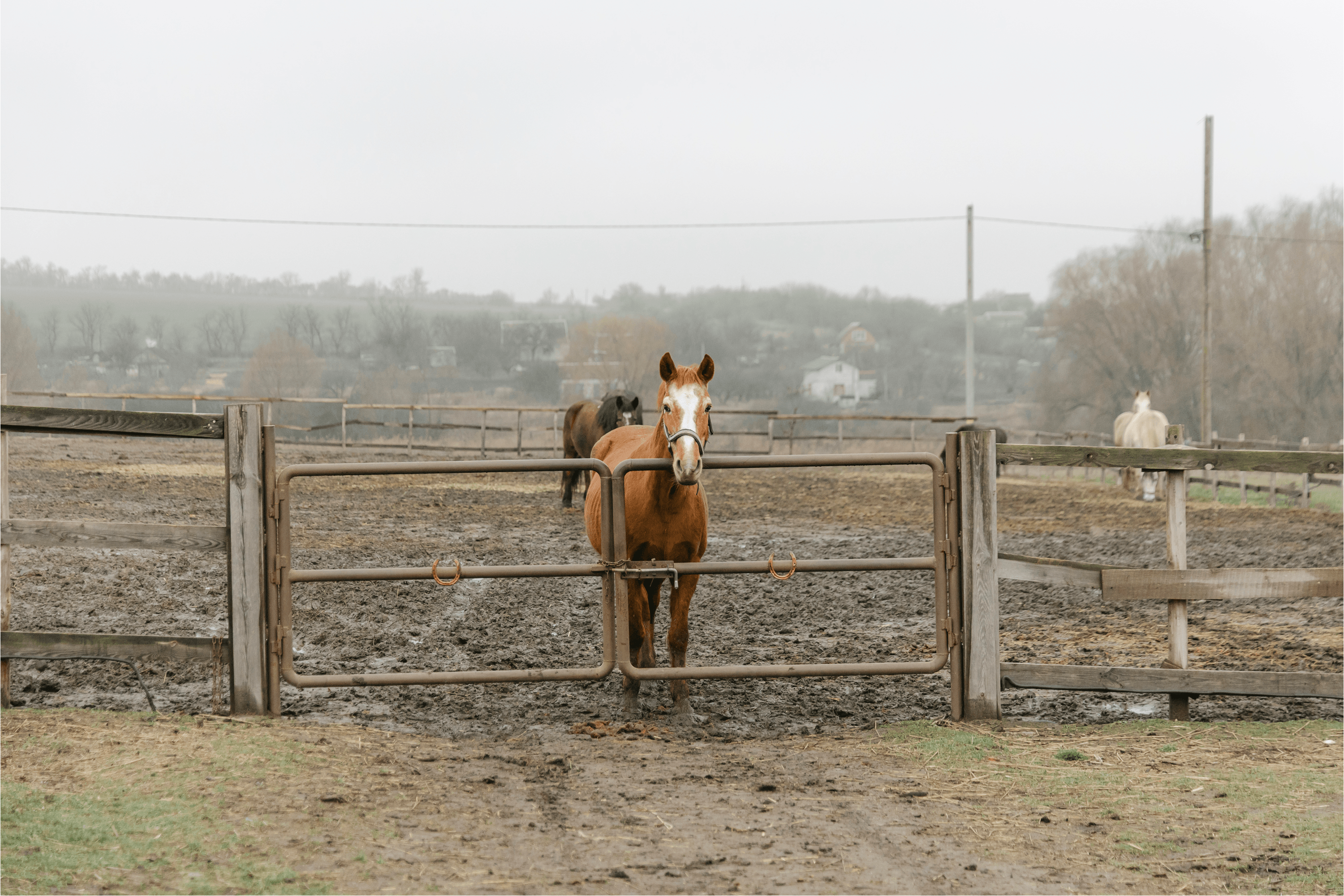
Photo: Mykhailo Melnychenko / YB 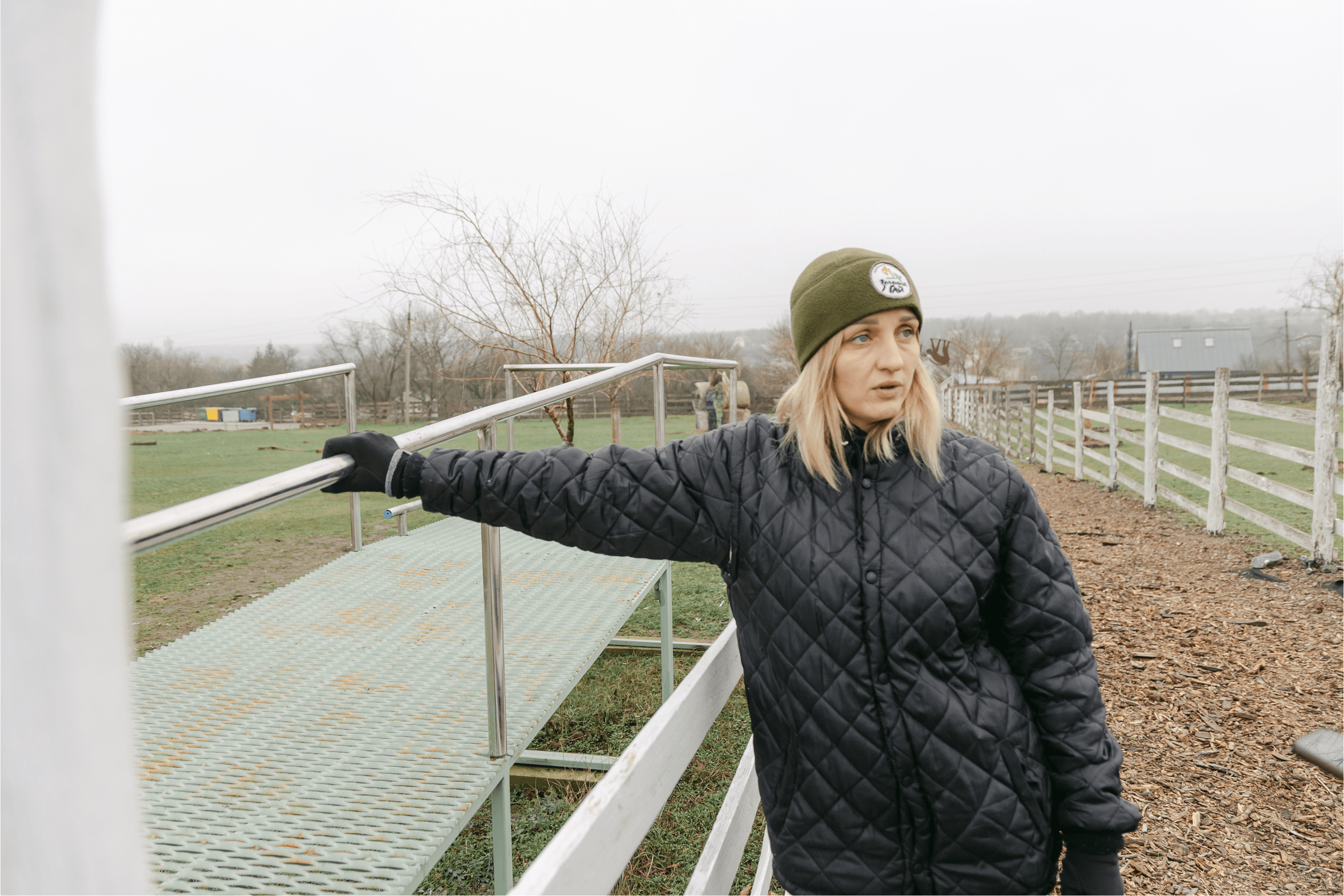
Photo: Mykhailo Melnychenko / YB
A single day of rehabilitation costs the farm approximately ₴3,500 per person, but for veterans, the service is entirely free. To cover these costs, Evgenia and Anatoliy tirelessly apply for grants and collaborate with charities. When funding falls short, they bridge the gap using profits from their dairy and tourism.
Today, the couple’s expertise in animal-assisted therapy is sought after globally. Military representatives from the USA and Germany have visited Green Grove, and specialists from Czechia have reached out for consultations. Perhaps most impressively, experts from an Israeli zoo with two decades of experience in the field were stunned after watching footage of the farm’s sessions. They remarked that the methodologies it took Israel decades to refine were implemented at Green Grove in just a few months.
“We originally wanted to escape the world and create a small, cozy corner for ourselves,” Evgenia says with a smile. “Instead, we have a 10-hectare farm with 500 animals and 17,000 visitors a year. Something went not according to plan—but we are so glad we can help people. In the end, it helps us, too.”