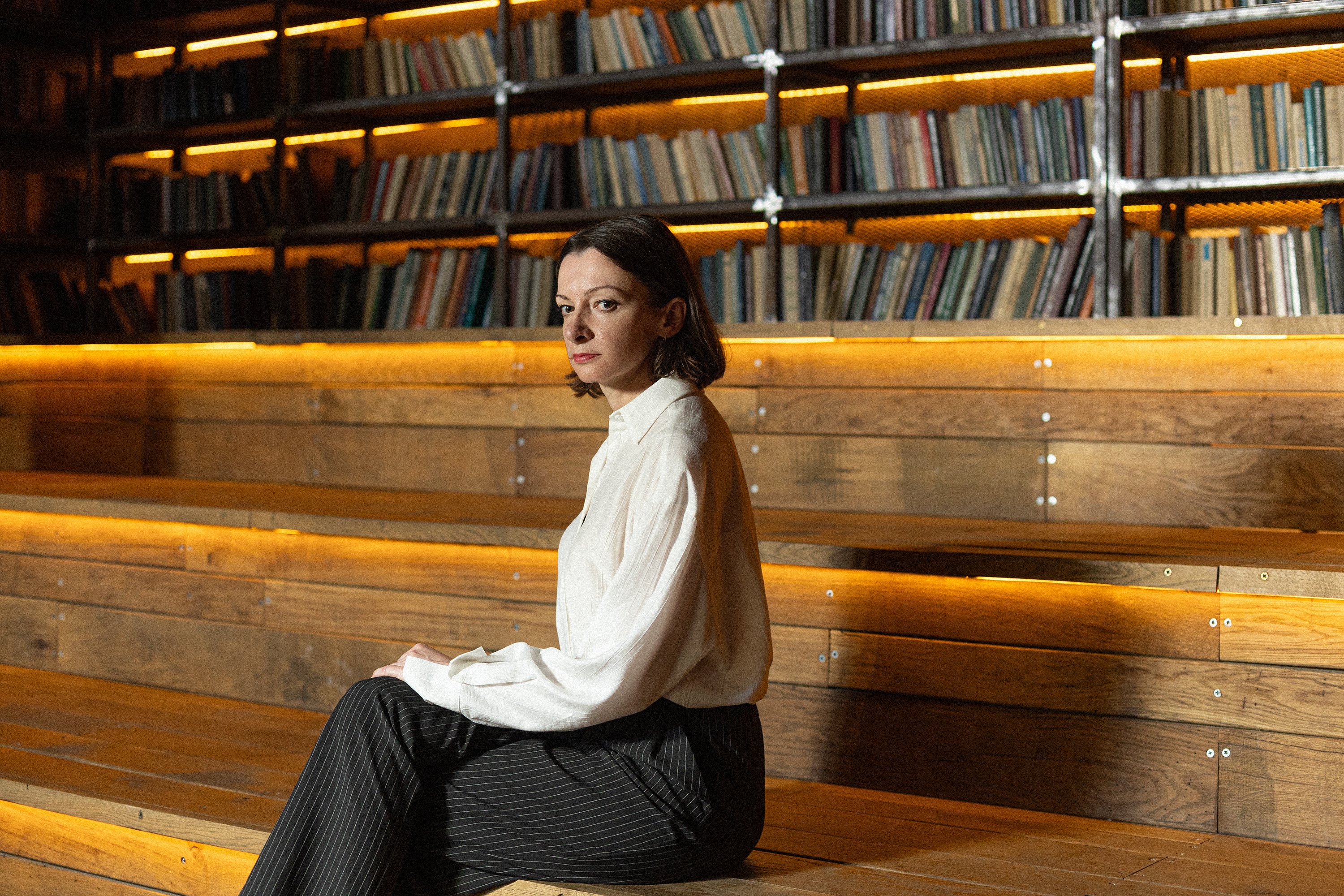
Kristina Berdynskykh is 43 years old. She was born in Kherson, but she built her journalistic career in Kyiv. She worked at Korrespondent magazine before joining Novoye Vremya—an outlet launched by her former Korrespondent colleagues. Since the start of the full-scale war, Berdynskykh has reported for international media, earning a spot on the BBC’s prestigious “100 Women” list in 2022.
Yuliana Skibitska, editor-in-chief of Yellow Blue, spoke with Berdynskykh about journalism and life.
What topics are currently your priority?
I always take my cue from the news. For example, when there was a massive night missile attack, I immediately realized that in the morning I had to go to the sites of the greatest destruction. I’ve been working with two editorial offices for a long time—the French Libération and the Italian Il Foglio. And I know: if a major shelling occurs, they will definitely be waiting for a piece.
Despite the fact that such attacks have already become routine?
Russia constantly creates news hooks itself. Unfortunately, readers have already grown accustomed to the shelling as such. But there are things that still attract attention. For example, when a drone hit the Kyiv-Pechersk Lavra, it was clear that everyone would write about it—because it’s a UNESCO World Heritage site.
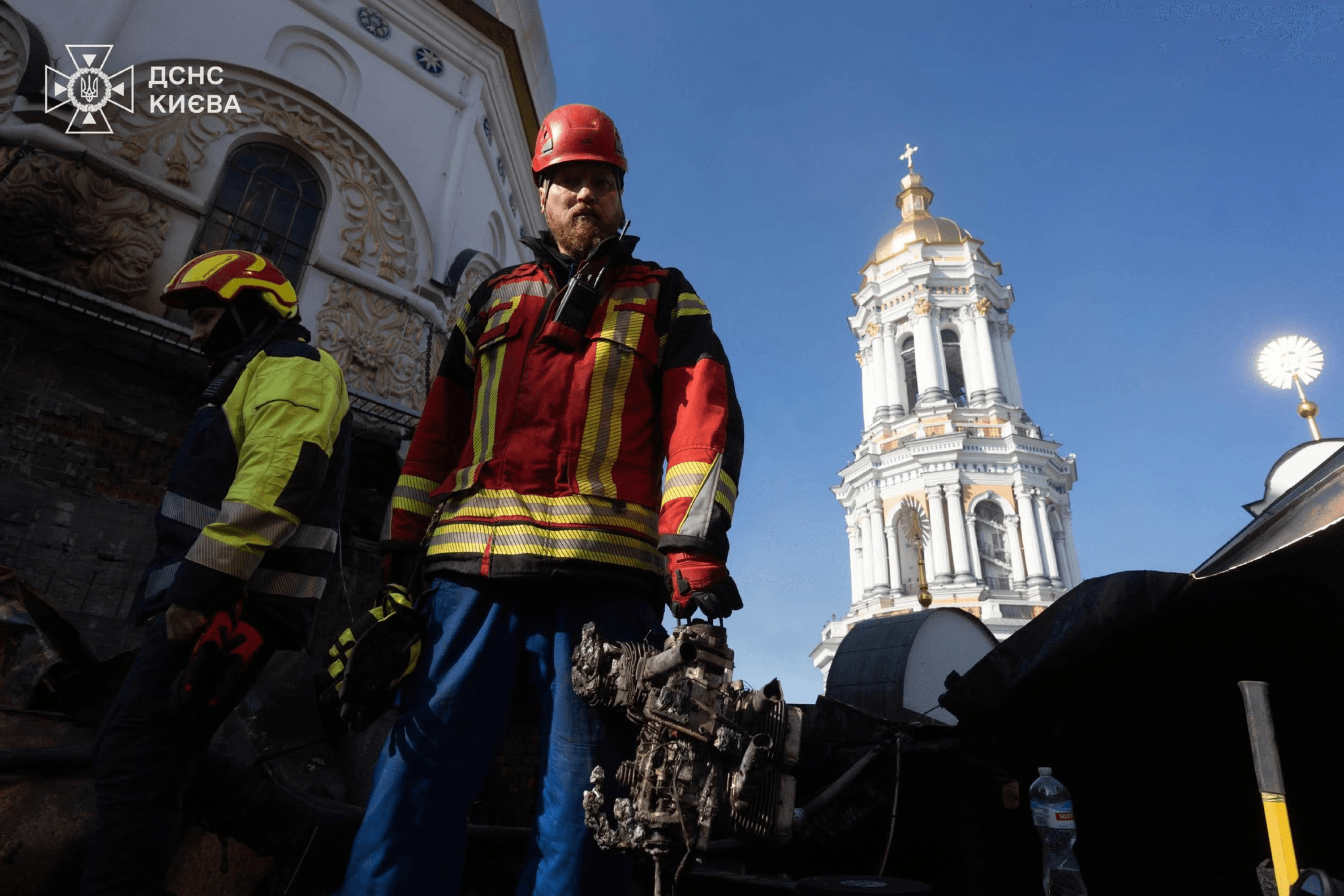
Emergency restoration work at the Kyiv Pechersk Lavra following the Russian attack on the night of June 15, 2026. Photo: dsns.gov.ua 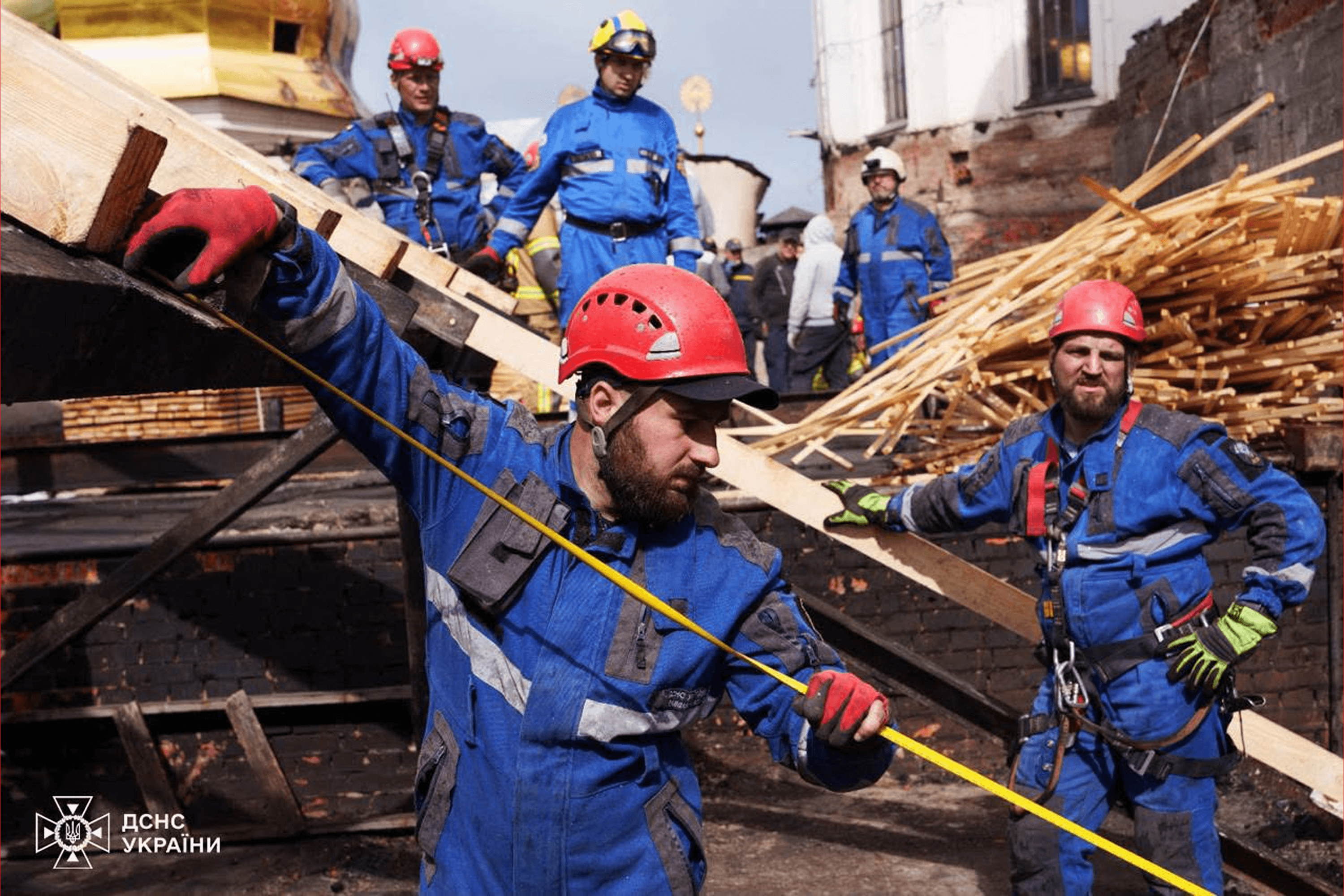
Photo: dsns.gov.ua 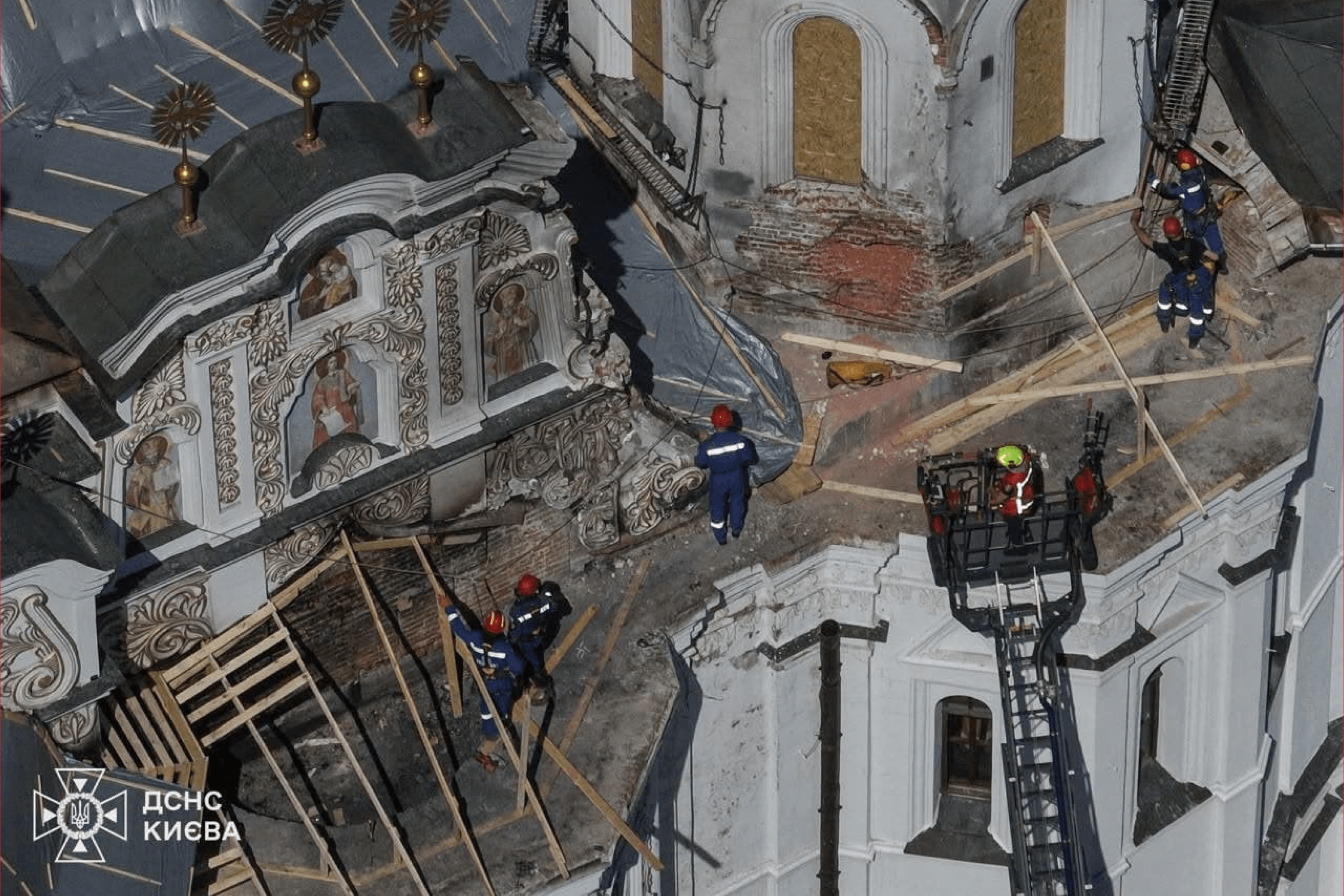
Photo: dsns.gov.ua 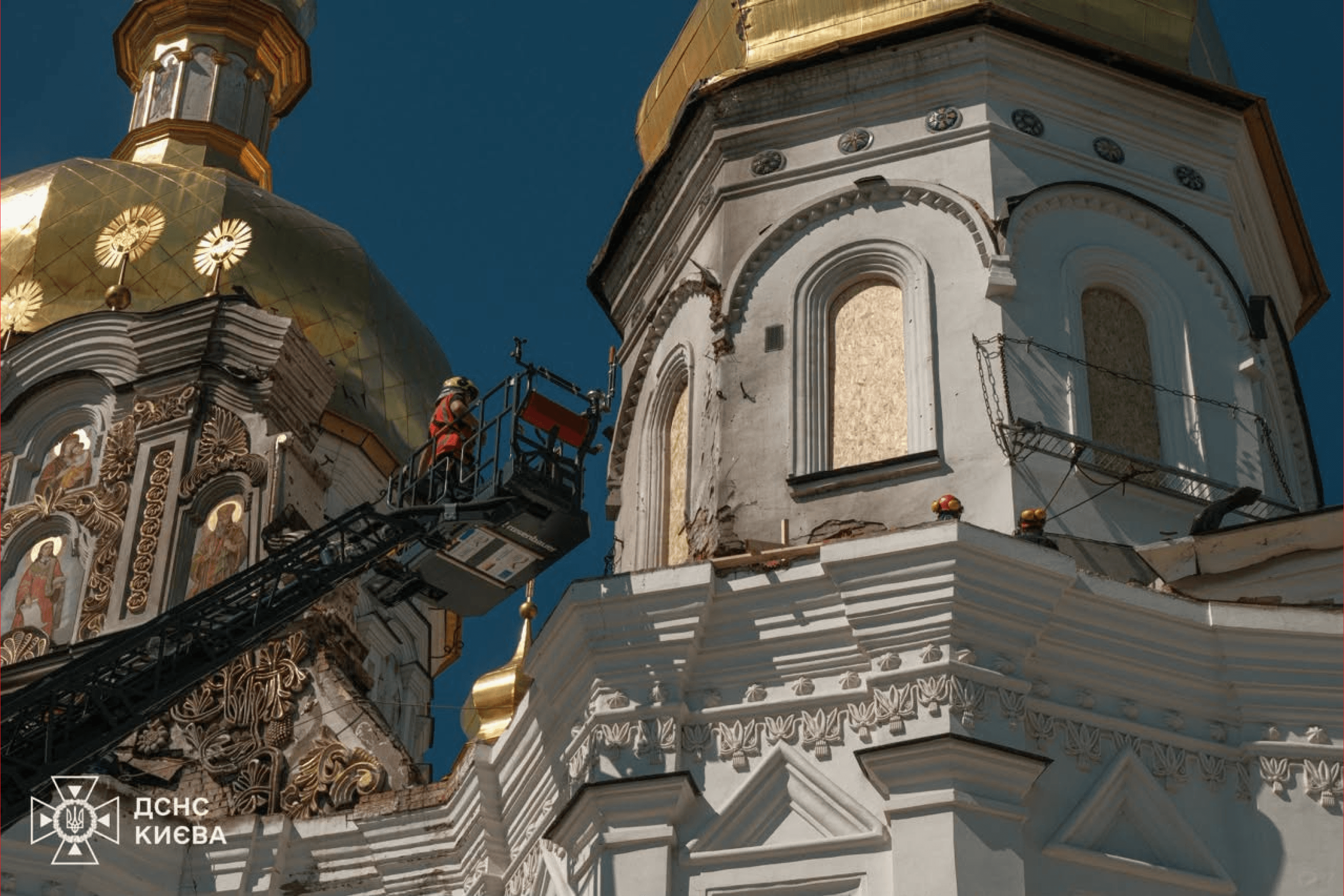
Photo: dsns.gov.ua 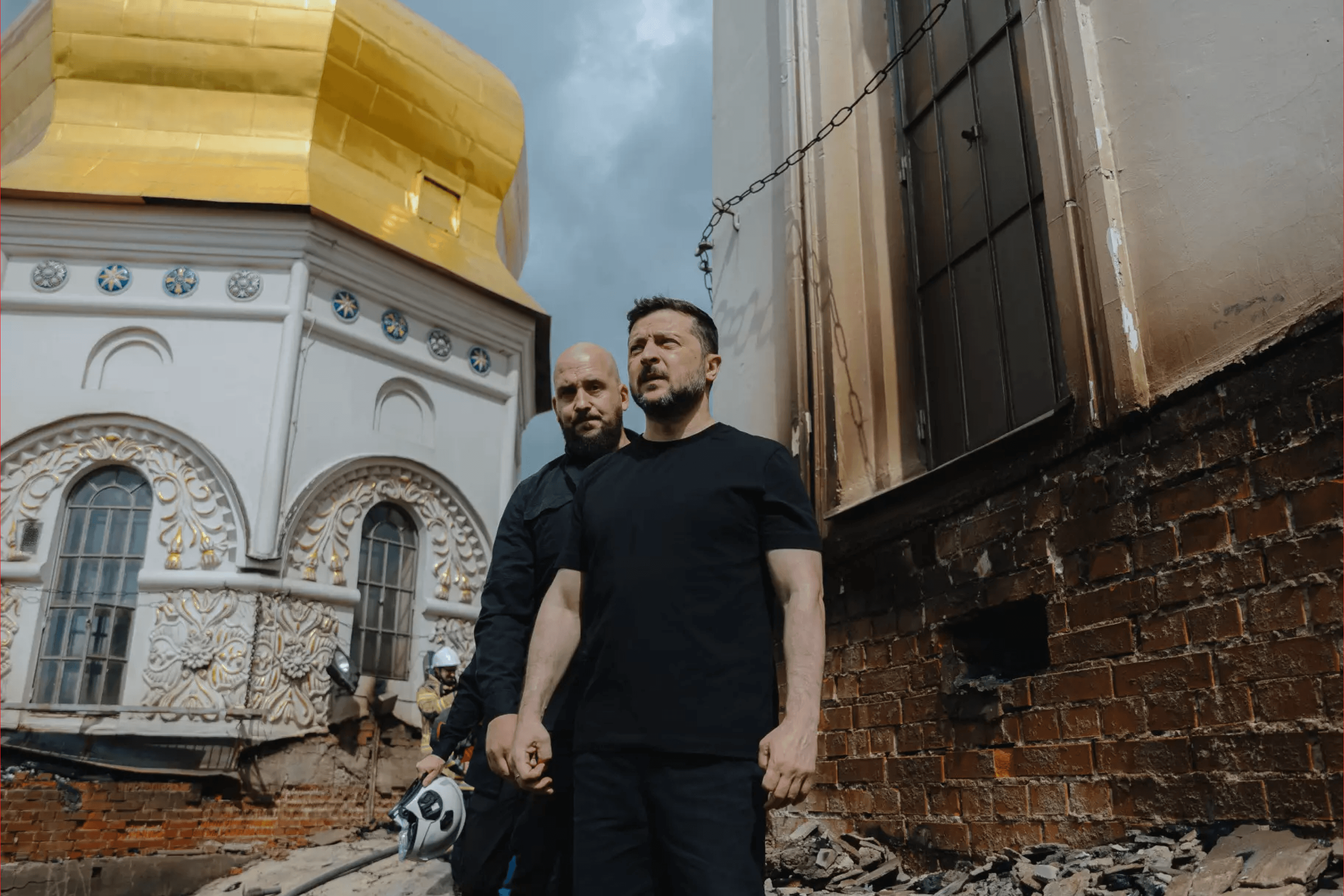
Photo: president.gov.ua
Or when Russia deploys a record number of ballistic missiles. If we are talking about the shelling of other regions, they make it into international media much less frequently than at the beginning of the full-scale war. But I wouldn’t contrast Ukrainian and foreign media. For all of us, this has already become part of daily reality. In 2022, a residential building with an entire section blown away was shocking. Today, everyone already knows what it looks like. And this is exactly what Russia is aiming for—to repeat its crimes so frequently that the world stops reacting to them.
How have the topics that interest foreign editorial offices changed over these years?
In 2022, there was the rapid occupation of many Ukrainian regions by Russia, then the liberation, and it was possible to talk to witnesses immediately. Now the situation is different. First, there is no longer an element of surprise. Second, Russia is now simply destroying everything in its path. Effectively, when they manage to occupy something, it`s already in ruins. And there are no witnesses.
It seems to me that international editorial offices are increasingly interested in how war coexists with ordinary life. I was very moved by a piece in The New York Times about Ukrainian schoolchildren preparing their graduation waltz. The girl who initiated the choreography was killed in a Russian attack. In her memory, her classmates decided not to cancel the dance. The boy who was supposed to dance with her refused to look for another partner. He danced alone, while a screen next to him showed a video of them dancing together. Such stories very accurately show how life and death exist side by side in Ukraine. For a foreign audience, this is almost impossible to imagine.
If the world knows what Russian occupation is, why do proposals to “give up territories for the sake of peace” keep appearing again and again?
The horrors of 2022 have already been forgotten by many. Today, we only know about life under occupation from the testimonies of people who managed to leave while journalists cannot work fully in these territories. Because of this, many people think: “Well, people are somehow living there, so everything must be fine.” Recently, I recorded a long interview with a doctor who performed a C-section on Irina Kalinina in Mariupol. In all these years, he had barely spoken to journalists. He confessed that for the first six months after his evacuation, he saw Mariupol in his dreams every night. I never force people to talk; it has to be their decision. But I always explain that the world forgets very quickly. This became especially noticeable after the arrival of Donald Trump, when statements began to emerge claiming that we should feel equally sorry for both Ukrainians and Russians, as if everyone is going through the same experience. This isn’t true. That is precisely why we must constantly remind people of what Russian occupation is.
It often seems to Ukrainians that the world is already tired of our war. Is that really the case?
It seems to us that the entire world revolves around us. But new wars break out, and then the attention of foreign media shifts. Plus, Ukraine always competes with the domestic agenda of each country. I often hear these grievances from Ukrainians that foreign media write little about us now. I reply: let’s swap places. For example, recently there was a massive earthquake in Venezuela—a huge tragedy with a lot of casualties. Was there much about it in the Ukrainian media? No. And that’s understandable, because our own people are dying every day. Right now, France is experiencing an abnormal heatwave. This is a major topic in French newsrooms because it affects almost every citizen of that country. Therefore, we shouldn’t hold a grudge against foreign media. We should be grateful that after four years, they are still here, and there are many of them.
Have you encountered unrealistic expectations from foreign editorial offices? For instance, requests to go to the occupied territory or to a very dangerous place?
No, that has never happened. Over these years, the attitude of editorial offices toward the safety of journalists has changed significantly. If at the beginning of the full-scale war you could say that you were going to work on the front line and they would only reply, “Be careful,” now everything is different. Editorial offices treat risks much more responsibly, because many journalists have died during this time. I remember a case when a foreign colleague and I were preparing an analytical piece about Ukrzaliznytsia. This wasn’t even a report from a dangerous location—we only needed to record a few interviews in Kyiv. But that was exactly when Russia attacked the capital with a Zircon missile for the first time. After that, the editorial office simply canceled the piece. They decided that even for the sake of a regular interview, they didn’t want to risk our lives.
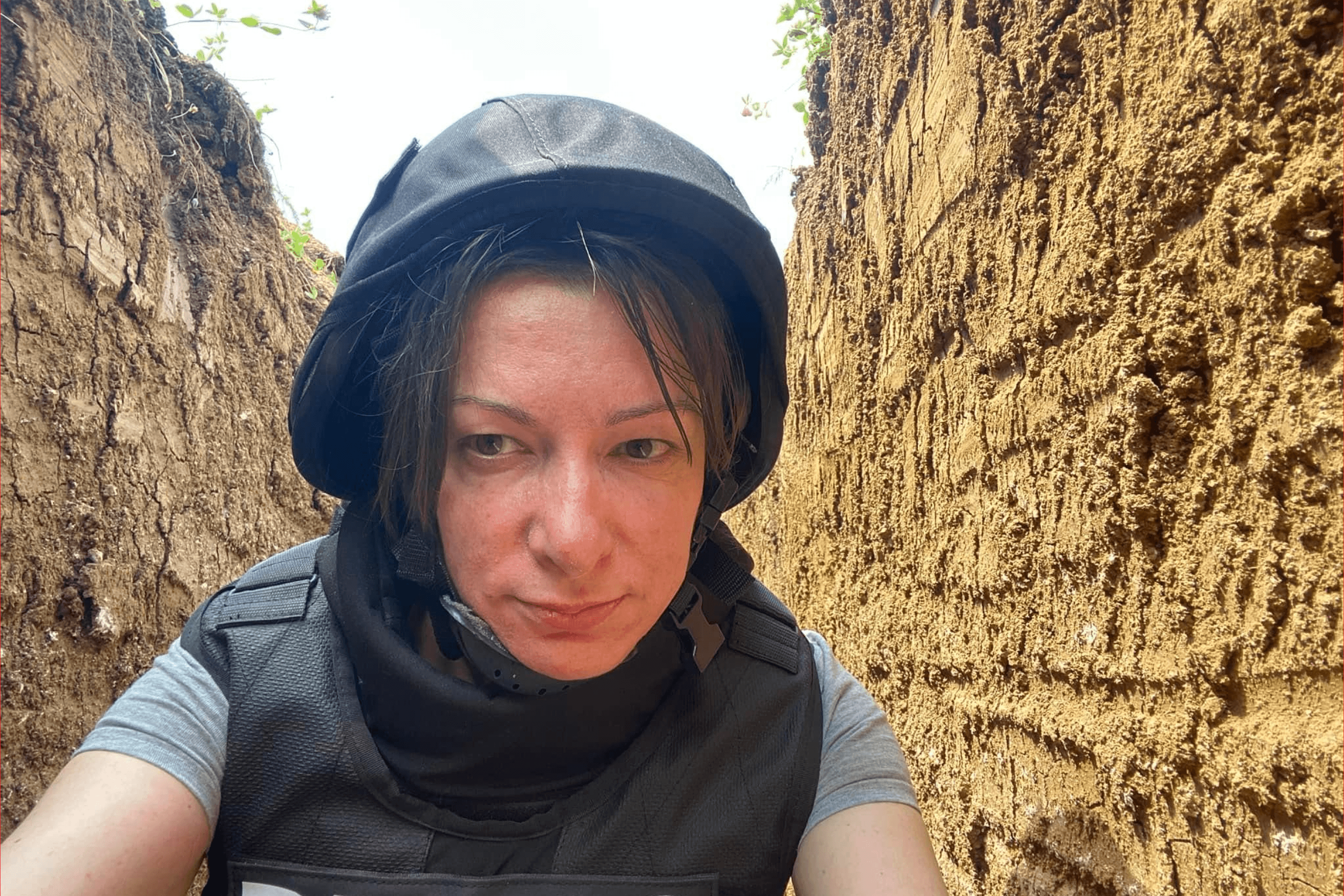
Kristina Berdynskykh in a trench while reporting from the front. June 2022. Photo: Kristina Berdynskykh / Facebook / YB 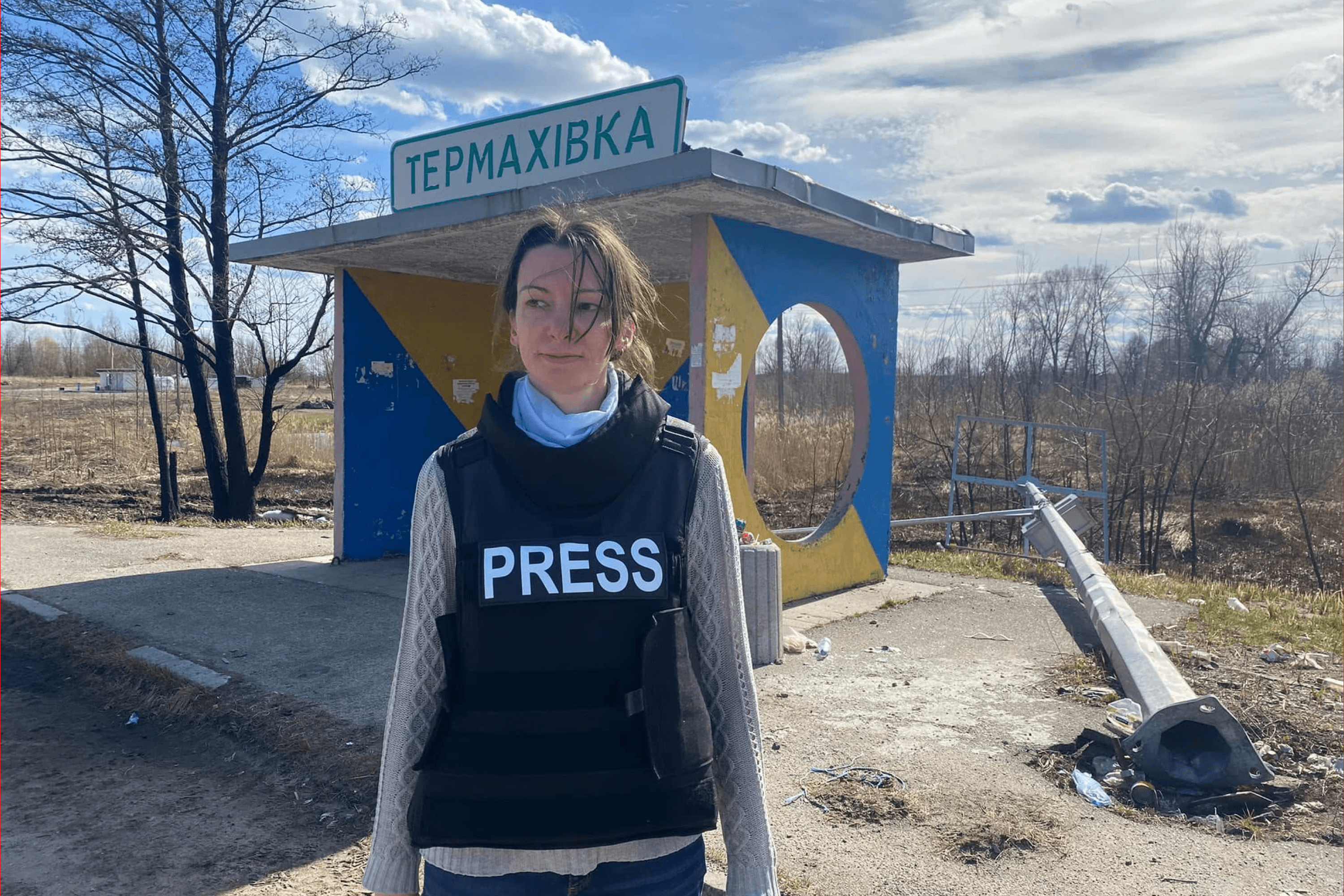
Kristina Berdynskykh in the village of Termahivka, Kyiv Oblast. April 2022. Photo: Kristina Berdynskykh / Facebook / YB 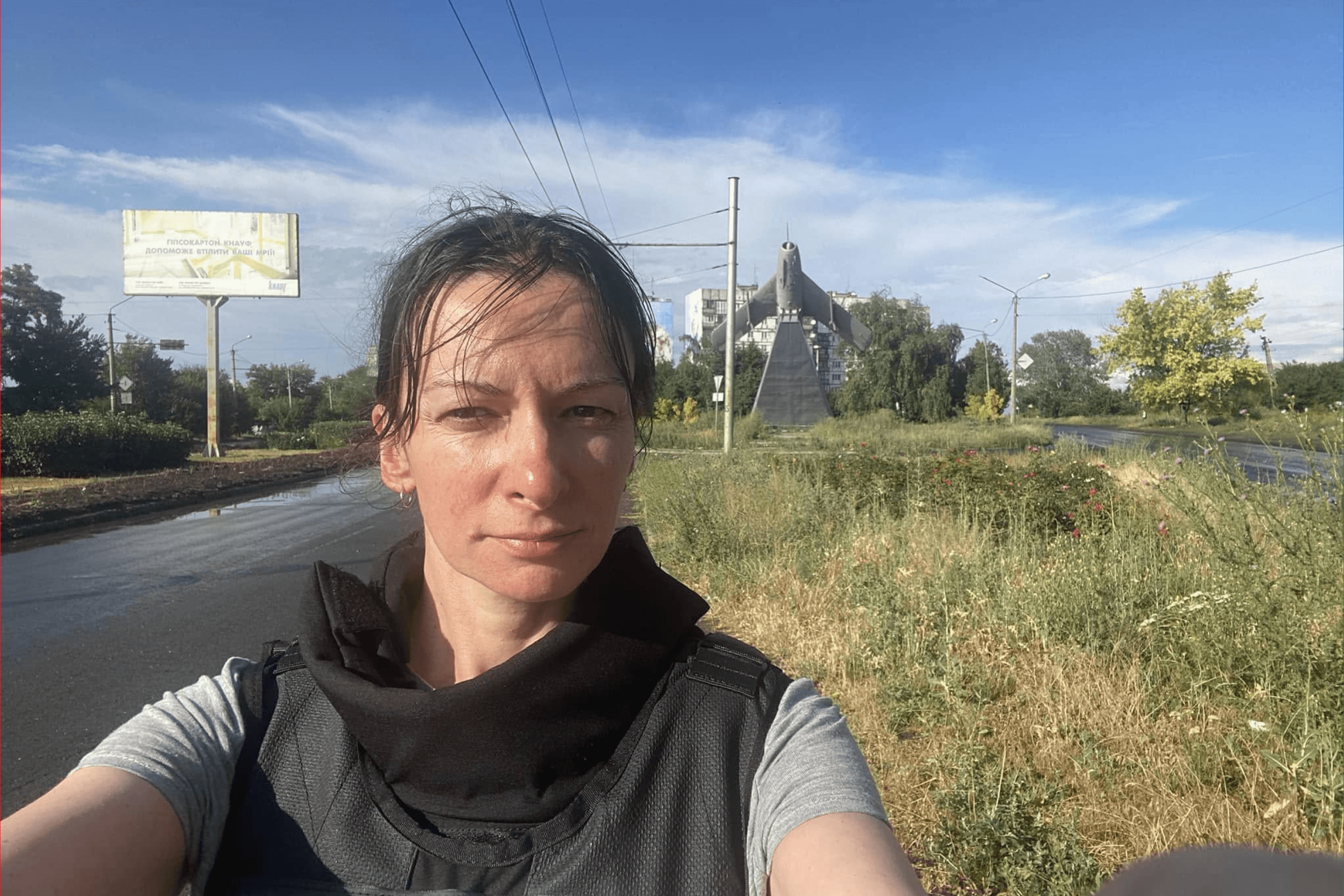
Kristina Berdynskykh in Bakhmut, Donetsk Oblast, while reporting from the front. July 2022. Photo: Kristina Berdynskykh / Facebook / YB 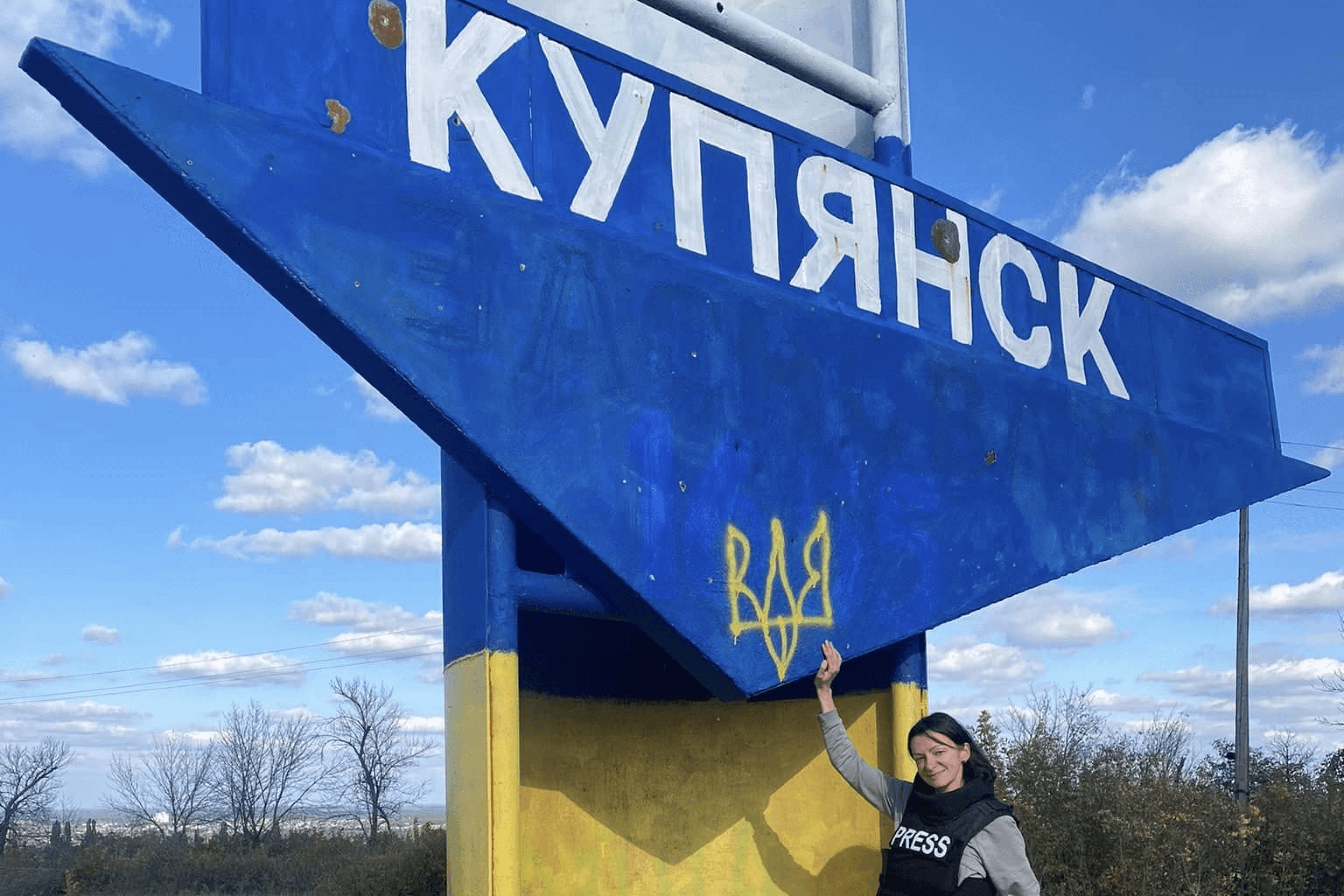
Journalist Kristina Berdynskykh by the entrance sign to Kupiansk, Kharkiv Oblast, after the city’s liberation. October 2022. Photo: Kristina Berdynskykh / Facebook / YB 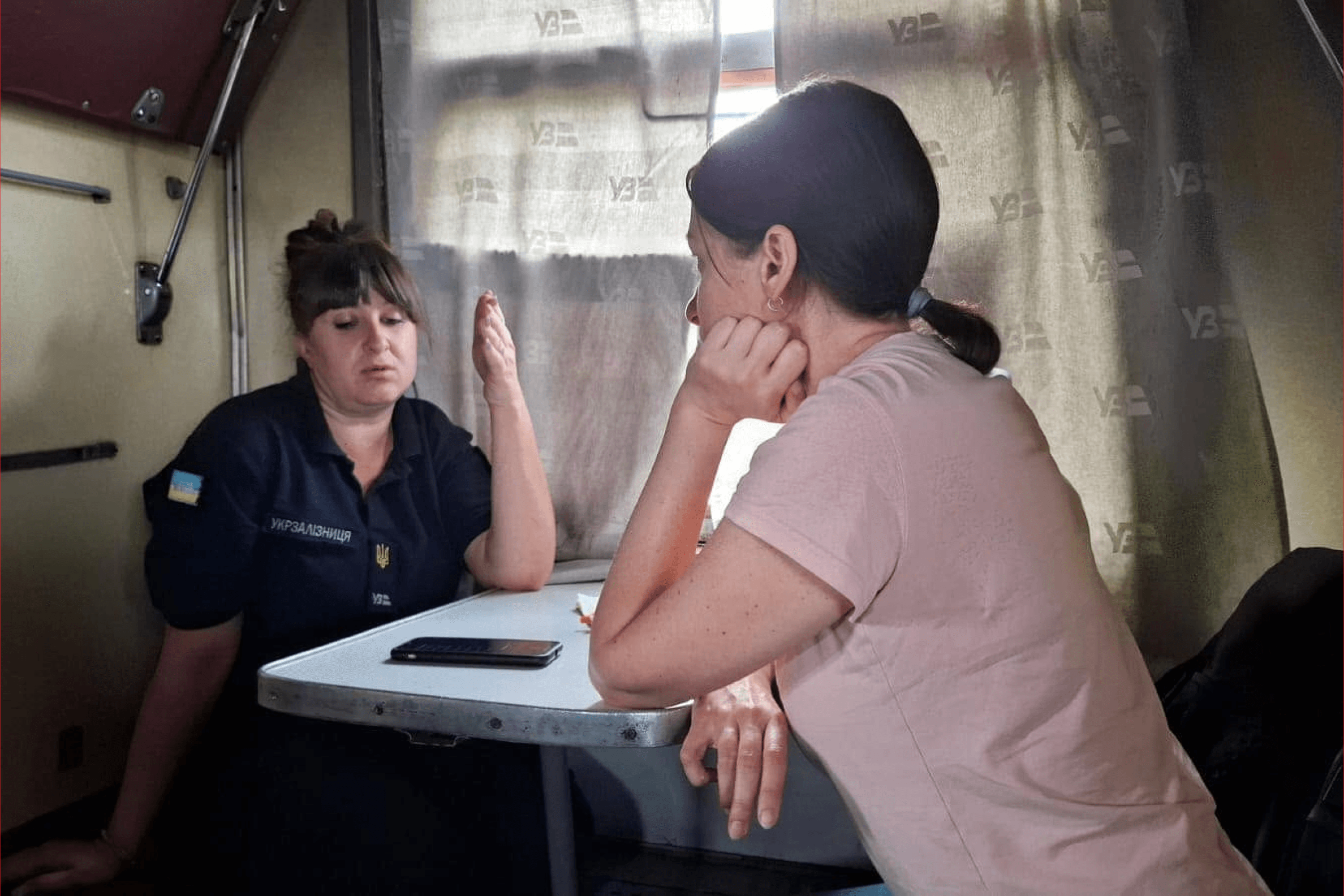
An evacuation train from Pokrovsk: journalist Kristina Berdynskykh speaks with a train conductor while reporting. Pokrovsk, Donetsk Oblast. September 2024. Photo: Kristina Berdynskykh / Facebook / YB
Does it happen that you propose a topic that seems very important to you, but the editorial office turns it down?
Constantly. First, Ukraine competes for attention with all other global events. Second, it must be remembered that most of the publications I work with are print newspapers. This is hard to imagine in Ukraine because we have almost no daily socio-political newspapers left. And space in a print issue is very limited. Therefore, sometimes the editors agree that the topic is important, but they simply don’t have the space for it.
For example, right now everyone is interested in Crimea because a new phase of the warhas emerged. Before this, the last time I wrote about Crimea was only in 2024, for the anniversary of the occupation. Yet, hasn’t this topic always been important? Russia still continues to detain people in Crimea. But interest only appeared now, when Crimea could be logistically cut off [from the mainland]. But this does not offend me.
What is the biggest difference between working with foreign and Ukrainian media?
I worked for a long time at only one Ukrainian publication, so it’s difficult for me to compare editorial offices in general. But you can see the difference between the journalistic schools of different countries very clearly. For example, the French, even in a daily newspaper, write in a very literary style. For them, the beauty of the language is important, and they tolerate almost no repetitions. In Ukrainian journalism, repetition, on the contrary, sometimes works as a stylistic device. So when I start collaborating with a new publication, I first read carefully how they write. And only then do I adapt my own style to the editorial office.
What is needed to start working with foreign media?
Everyone has their own path. Many entered international journalism through fixing. It was different for me. I know that without 14–15 years of work in Ukrainian journalism, this wouldn’t have happened. My collaboration with Libération began with a column for the first anniversary of the full-scale war. One of my colleagues recommended me to the editors. They liked the column, and then I simply asked if I could pitch my own topics.
When I transitioned to freelancing, I realized that you need to constantly look for new partners. Interest in Ukraine depends on two things: what is happening in the country, and the budgets of the editorial offices.
Lately, there has been much discussion about the ethical boundaries of documenting war. Where do you think the line between documenting a crime and exploiting human tragedy lies?
To be honest, I don’t like evaluating the work of my colleagues at all. It seems to me that a very strong community of documentary photographers has formed in Ukraine. Each of them works under different conditions and takes on different risks. Photographers often find themselves at the site of a shelling much earlier than journalists and can get caught in a repeated strike. I like that this discussion exists. But I don’t think it’s right to tell others exactly how they should work.
How do you think the role of a journalist in Ukraine has changed over these years?
It seems to me that journalists' specializations have blurred significantly. Today, there is one big topic—the war. And almost everything we write about is connected to it in one way or another: corruption, culture, economy, international politics. Because of this, journalists have become more versatile. At the same time, I always ask foreign colleagues not to call me a front-line reporter. I’m a journalist covering the war. That’s not quite the same thing. There are people who work directly on the front lines, and that is their specialization. I respect their work deeply. But most of us today are forced to combine very different topics.
At international events, Ukrainian journalists are often asked about self-censorship. What is your response?
I’m asked this question almost every single time. And every time, I defend Ukrainian journalists. All of the loudest anti-corruption investigations during the full-scale war have been conducted precisely by Ukrainian media. I cannot recall a single major investigation by foreign journalists into Ukrainian corruption. And this is understandable: to work with such topics, you need to know the country, the context, and the sources very well. In the first year of the full-scale invasion, there were indeed fewer such pieces. But later, anti-corruption journalism returned completely.
Perhaps some self-censorship exists regarding the military—we all want the Ukrainian army to win. But even despite this, Ukrainian media write a lot about problems in the army, Ministry of Defense reforms, and systemic shortcomings. And this is also an important part of our work.
There is an opinion that there are too many anti-corruption investigations in Ukraine during the war. What do you think about this?
I’m aware of this discourse, but I don’t share it. For example, when there were stories surrounding “Mindichgate” or the attacks on the NABU [National Anti-Corruption Bureau of Ukraine], I was the one who proposed these topics to foreign editorial offices. I wrote a lot about protests, political processes, and the situation surrounding [former Head of the Office of the President Andriy] Yermak. For me, this is relevant because it’s important for Ukrainian society. It also shows what kind of country Ukraine wants to be after the war. Of course, one can debate standards, the quality of materials, or coverage approaches. But if there are egregious facts, society must know about them.
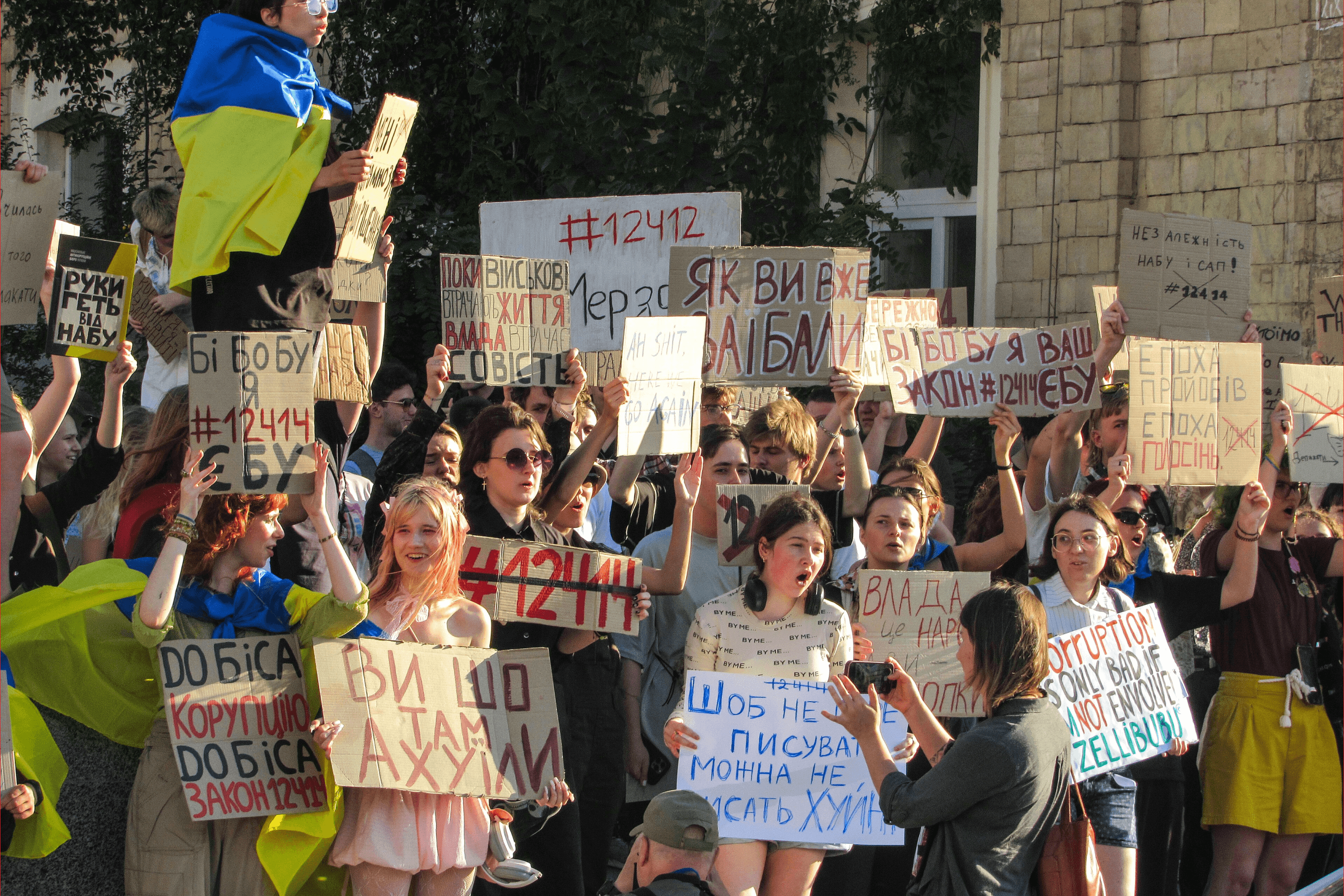
An anti-corruption protest in Kharkiv. July 24, 2025. Photo: Wikimedia / YB 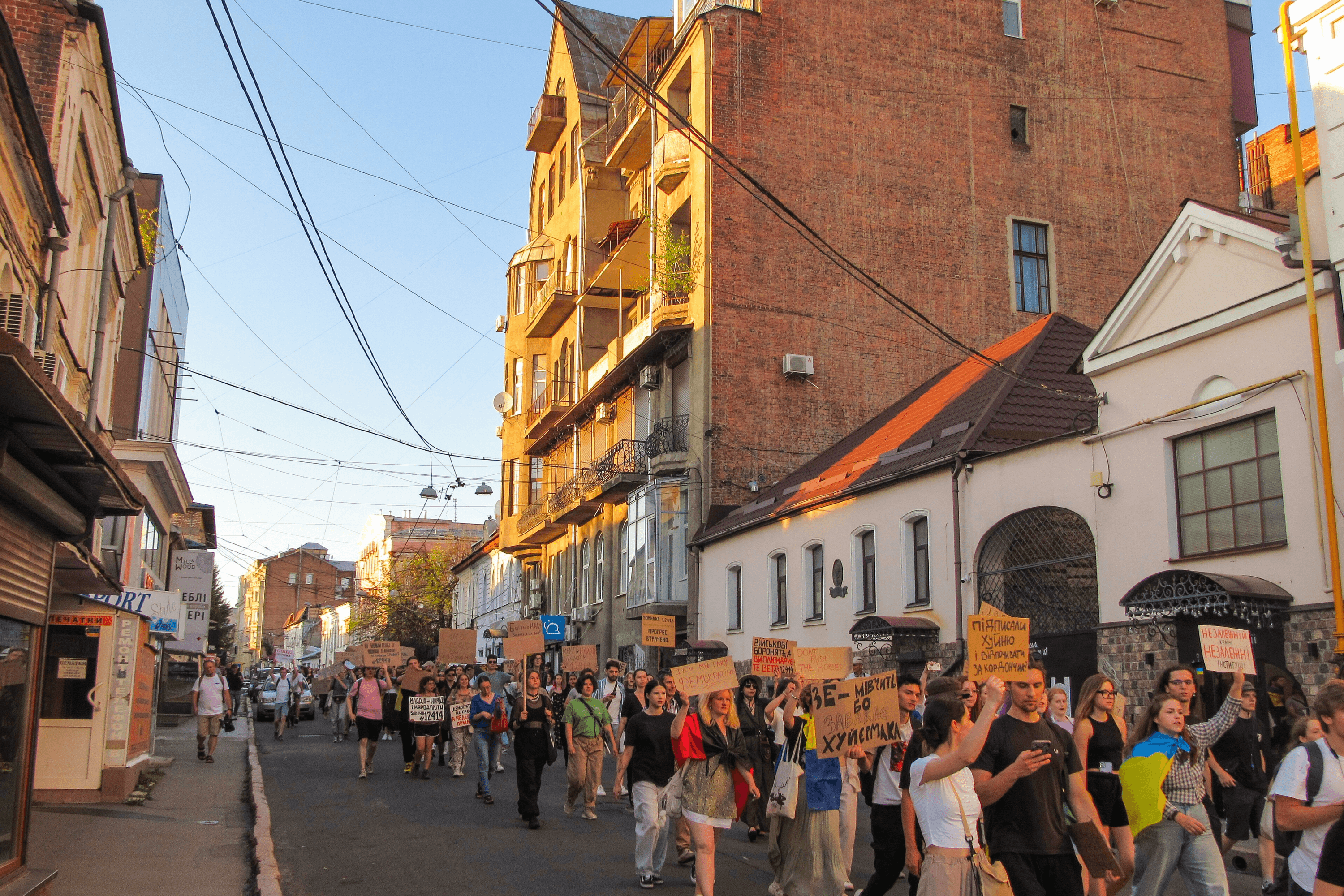
Photo: Wikimedia / YB 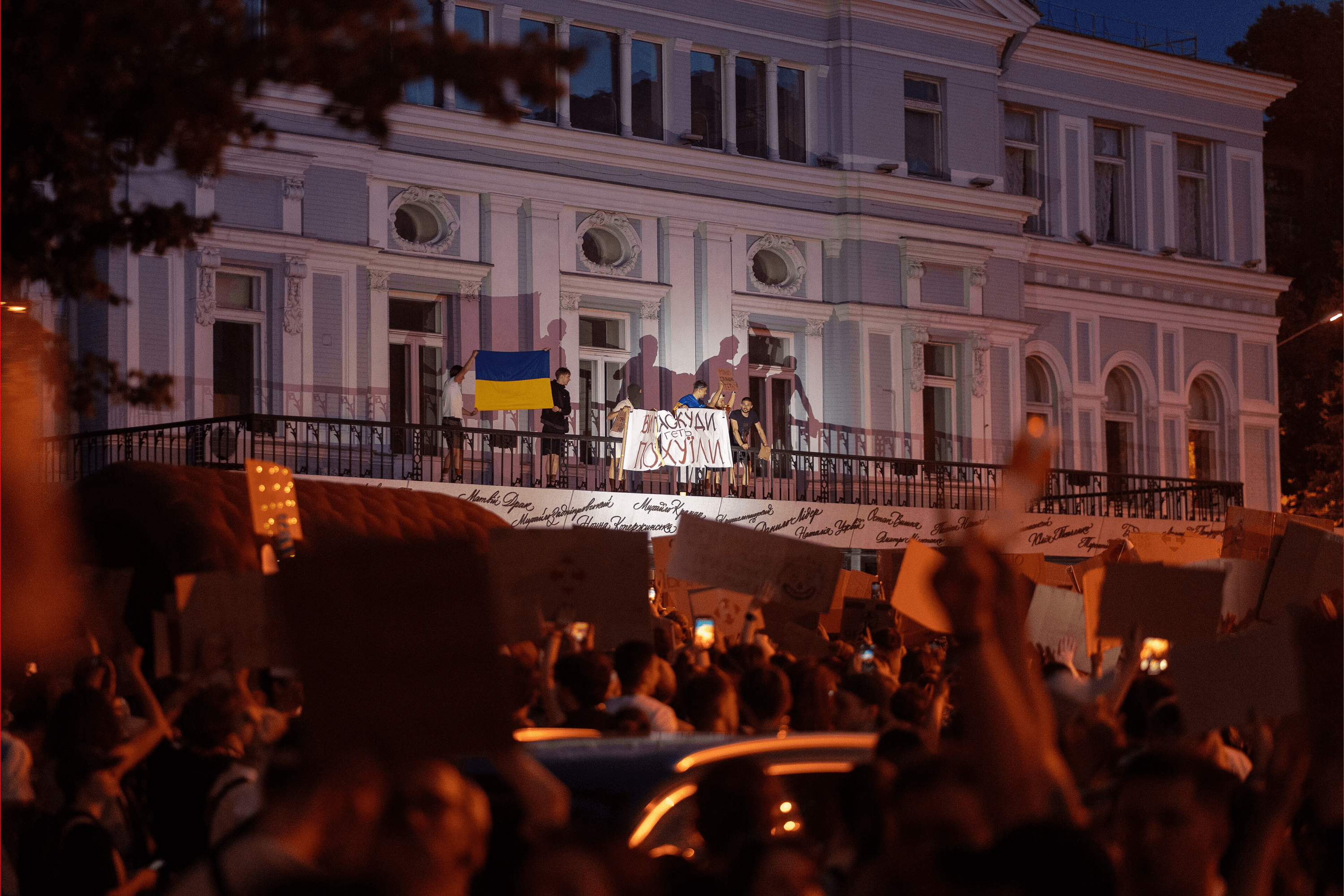
A protest against Law No. 12414 in Kyiv. July 23, 2025. Photo: Wikimedia / YB 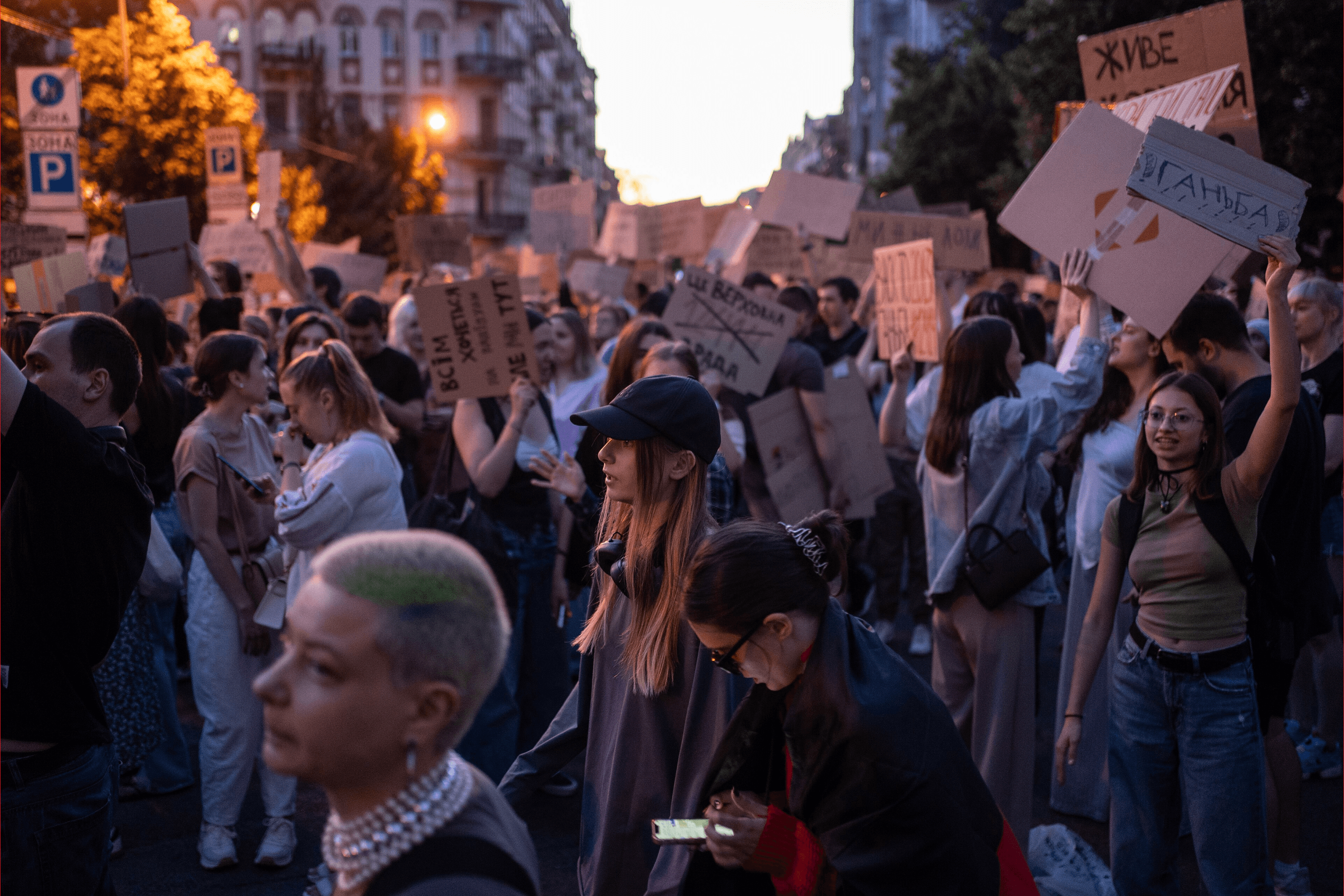
Photo: Wikimedia / YB 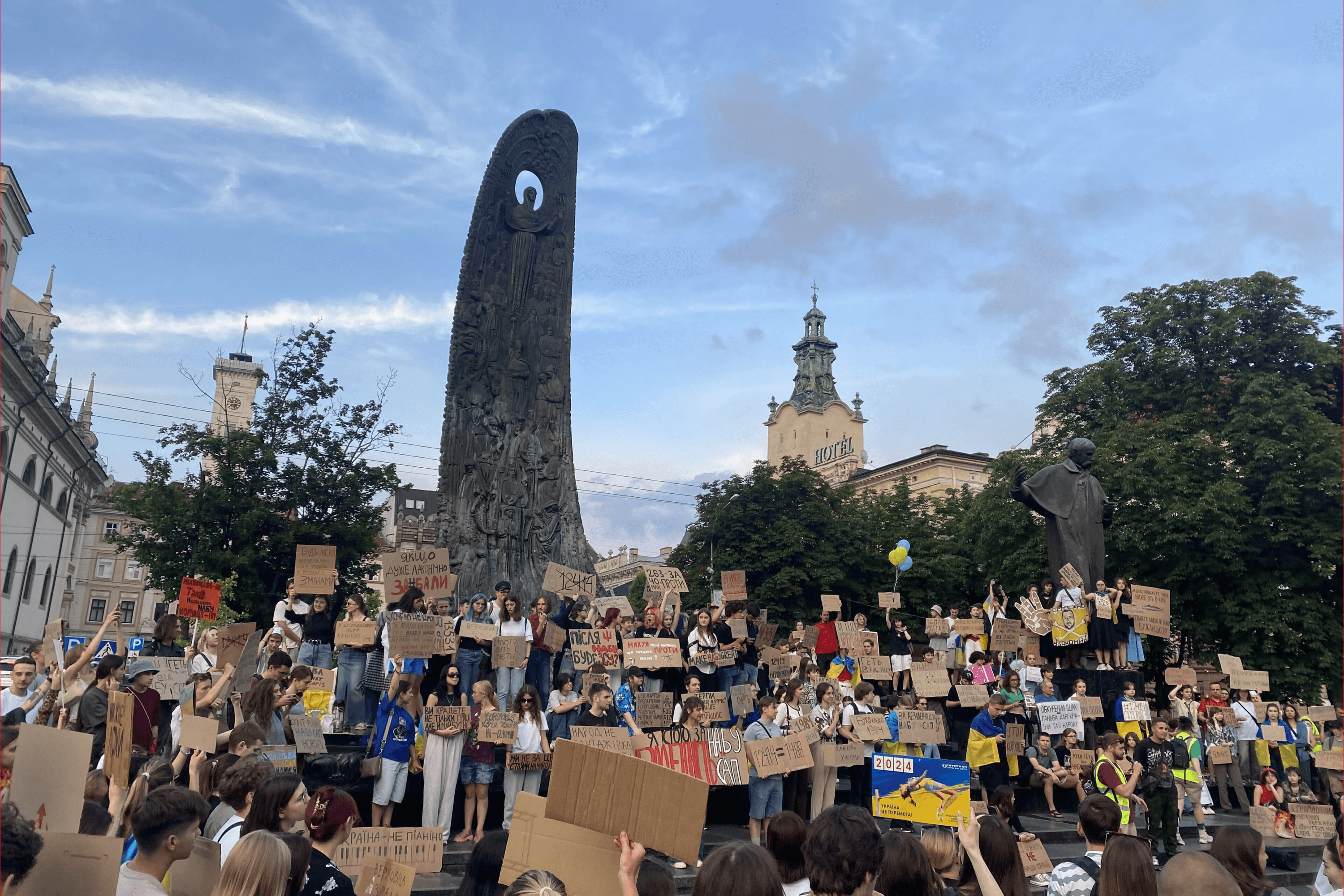
A protest against Law No. 12414 in Lviv. July 25, 2025. Photo: Wikimedia / YB
But doesn’t this create an image of Ukraine abroad as a “totally corrupt” state?
After the stories surrounding NABU, I saw quite a few columns in Western media where they tried once again to portray Ukraine as a country supposedly doomed to corruption. That was precisely when the editors of The Atlantic suggested that I write a column about how I see it myself. Its main idea was very simple: corruption is a problem, but the fight against corruption is a sign of a healthy society.
I worked as a journalist back during the times of [former President Viktor] Yanukovych, and I remember that back then, investigative journalism had almost no consequences. Law enforcement agencies simply didn’t react. Today, the situation is different. If a major scandal erupts, an investigation is launched. The NABU targets high-ranking officials, and this is a fundamentally different level of state accountability. That is precisely why we cannot keep silent about such things. We don’t know how much longer the war will last. But this doesn’t mean that the fight against corruption should be put on pause for this duration.
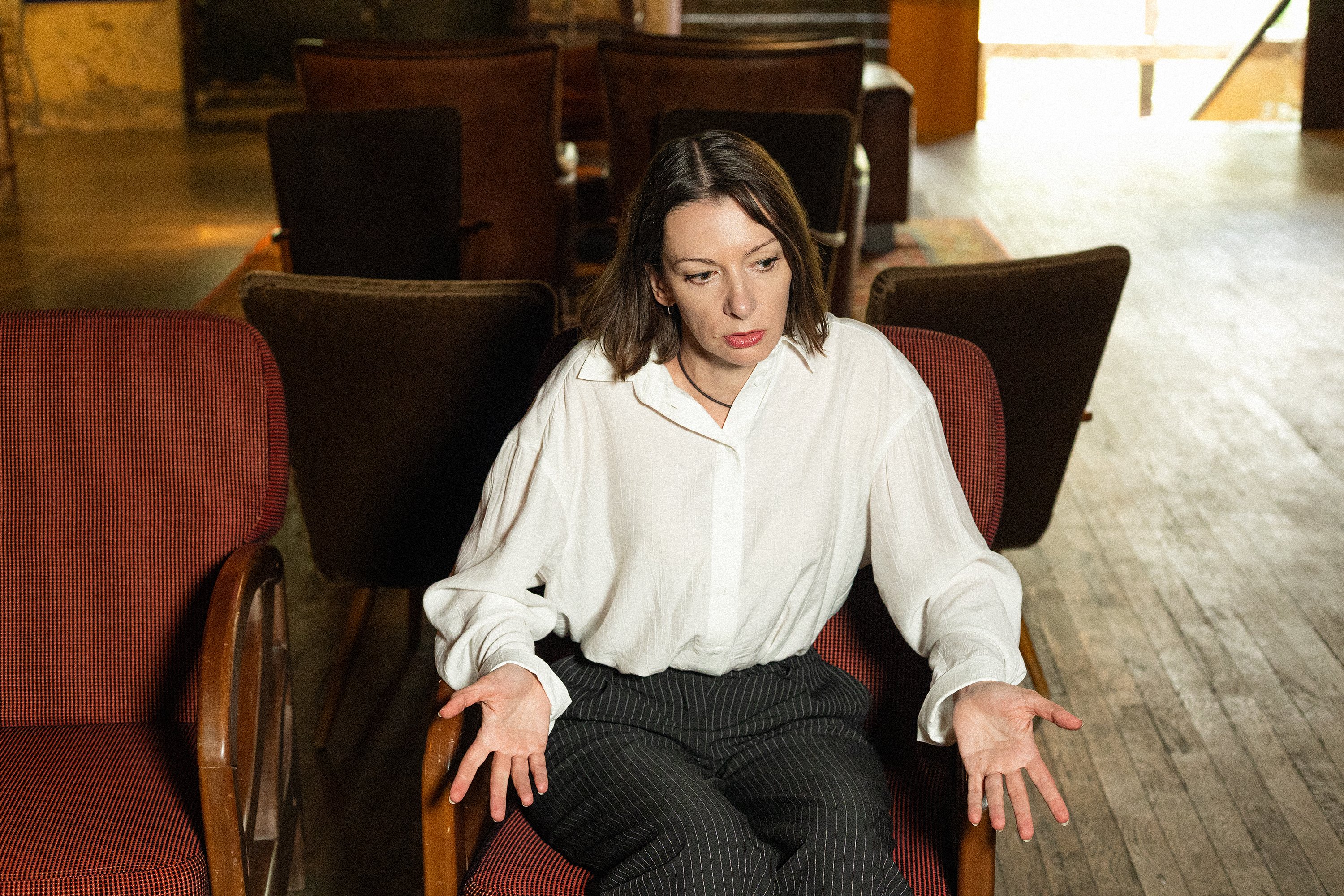
At the beginning of the full-scale war, many journalists experienced a professional crisis. At that time, I had a thought: why did I even dedicate my life to this if it doesn’t affect anything? Did you have such moments?
I did. But for me, work became the very thing that literally helped me hold on. If I had stopped working, I think it would’ve been much harder for me psychologically. I don’t know how many people read my pieces and whether they can change anything. But it’s important for me to keep doing it.
And the longer the war goes on, the more often I remember one story. For Libération, I recorded an interview with priest Vasyl Vyrozub. At the beginning of the full-scale invasion, he set out for Zmiinyi [Snake] Island to retrieve the bodies of border guards who were thought to be dead at the time. In reality, they were alive but in Russian captivity. Vasyl himself was also taken captive. It was one of the hardest interviews of my life. What he endured is difficult to even imagine. And every time a person recalls such events, they relive the trauma again. I said to him: “You do understand that justice may not come for a very long time. It could take decades.” And he calmly replied: “I will wait.” I was deeply moved by those words.
That was when I realized that we never know what role our articles will play. Perhaps they will help someone achieve justice, or perhaps they will remain historical testimony for future generations. But in any case, they are necessary.
How do you cope with such stories? Listening to human pain constantly is very difficult. How do you avoid losing empathy while also avoiding burnout?
Freelancing helps me a lot with this. For example, after pieces like the one about Vasyl Virazub, I physically cannot immediately take on another story about war crimes or torture. Therefore, after a difficult human story, I consciously switch to something else: analysis, news, or political pieces. In the winter, I wrote a lot about the consequences of Russian attacks on the energy grid and power outages. But the piece that got the biggest response was an entirely different one—about OSBB group chats. I gathered examples of how people in these chats argue, help each other, raise money for generators, and solve everyday problems. For us, this is a routine reality, but for foreigners, it’s a completely new experience. This piece was very actively shared by Western journalists.
When Donald Trump came to power in the US, media attention shifted significantly to his statements, negotiations, and contacts with Russia and Ukraine. Every conversation with Putin, every hint at negotiations, any plans regarding ending the war—all of this generated immense interest. That’s why during that period, foreign media wrote more about the political and negotiation processes than about human stories. But there was one topic that irritated me greatly. It was the constant talk about supposedly rapid elections in Ukraine. Editors would call me regularly asking: “So, are you having elections soon?”. And every time I answered: “No. We are not.” Eventually, I had a ready set of arguments and simply explained why it was impossible. After a few such conversations, the editors understood my position and began to ask this question much more cautiously.
And finally. What are your plans for the future?
When I went freelance, I set a very simple goal for myself—to hold out for one year. I wanted to change the rhythm of my life a bit, work less, and reduce the workload. As it turned out, none of this happened. This autumn, it will be four years since I started working as a freelancer. To be honest, I only have one plan—to remain a journalist for as long as possible. I simply cannot picture myself in another profession. Could I return to working for a Ukrainian media outlet one day? Absolutely. I don’t have a goal of building an international career for its own sake. For me, the main thing is to write about Ukraine. And where exactly to do it—in a Ukrainian or a foreign media outlet—isn’t that important.