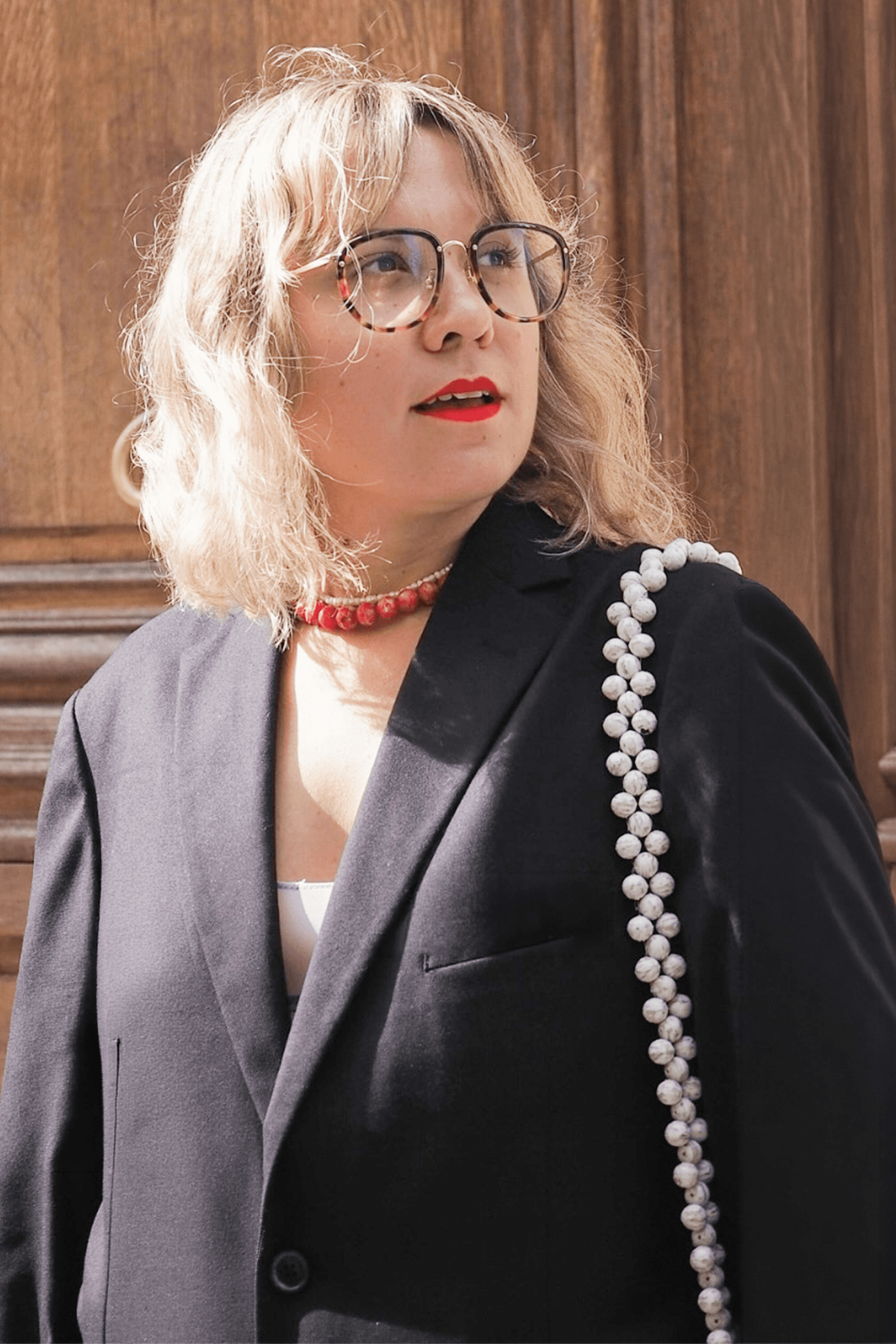
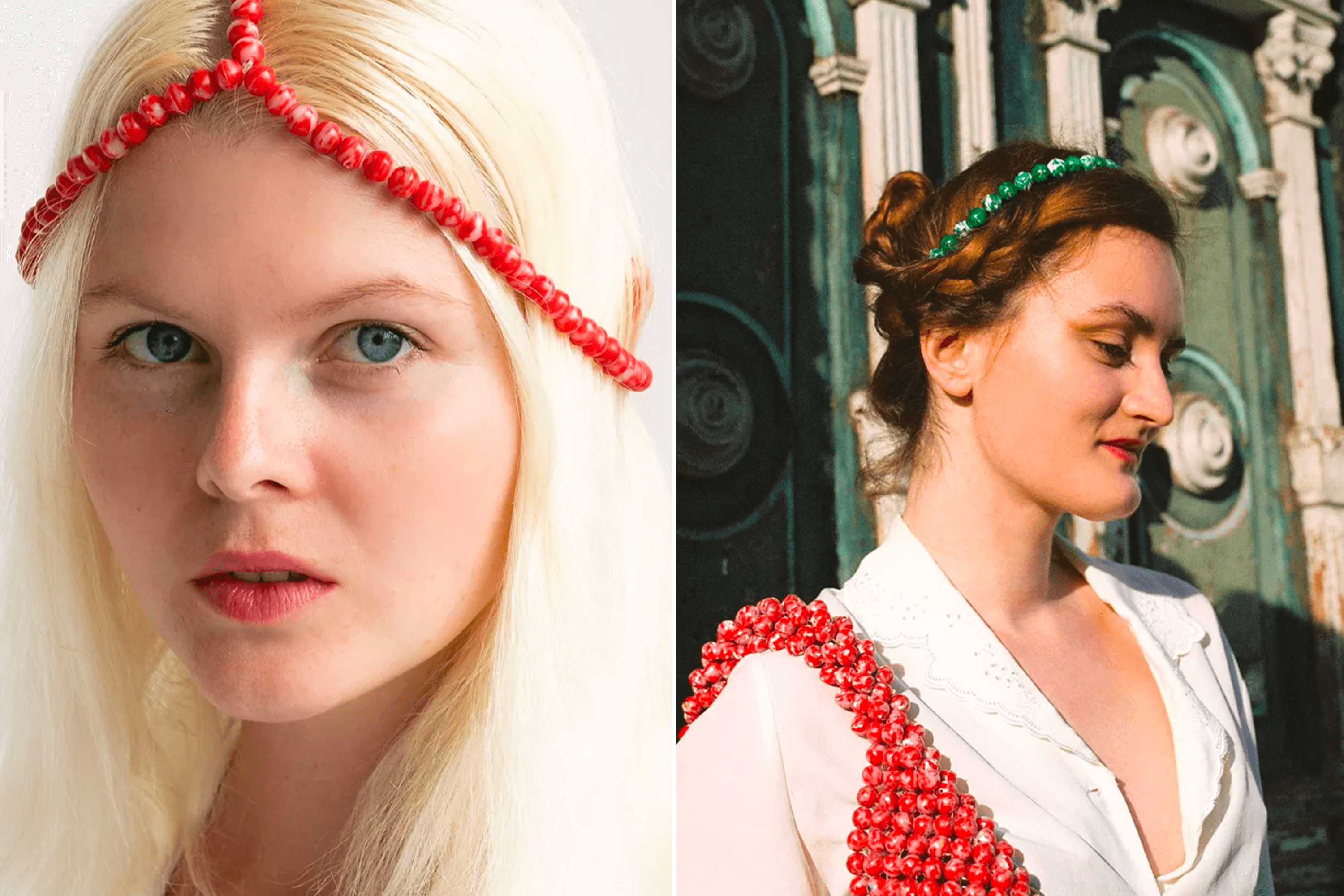
A beaded handbag "Carpathian Forest," a woven bag "Dnipro Sunrise," and a hair clip inspired by the paintings of Ivan Aivazovsky — these are recycled-plastic products created in Dnipro by the Ukrainian sustainable fashion brand Spogad. Its founder, 29-year-old Anastasiia Kondratieva, captures in each accessory her own memories of Ukrainian nature and cities, including those being destroyed by the Russian military.
Anastasiia has lived in France for 11 years and, in addition to working on Spogad, trains future leaders at French business schools and consults Ukrainian and French entrepreneurs on how to make their businesses innovative, sustainable, and environmentally friendly. Yellow Blue journalist Sofiia Korotunenko spoke with Kondratieva about how she is developing a business in Dnipro and promoting recycled-plastic products in the French market.
1
You created Spogad in 2022 in Dnipro, although you have long lived in the French city of Le Mans. How did that happen, and why did you decide to open production not in France, but in the Ukrainian city of Dnipro, which Russia is destroying with drones and missiles?
I am originally from Dnipro and moved to France in 2015 , after finishing my second year at the Prydniprovska State Academy of Civil Engineering and Architecture. I enrolled in a French art school and studied at both institutions simultaneously. As an architect, I have always been interested in sustainable cities that are comfortable for people. During my master’s studies, I completed a thesis on participatory urbanism and created the educational and practical platform Terrain Vague, which shows Dnipro residents that they should not wait for someone else to make the city more comfortable and environmentally friendly. People need to come together and act.
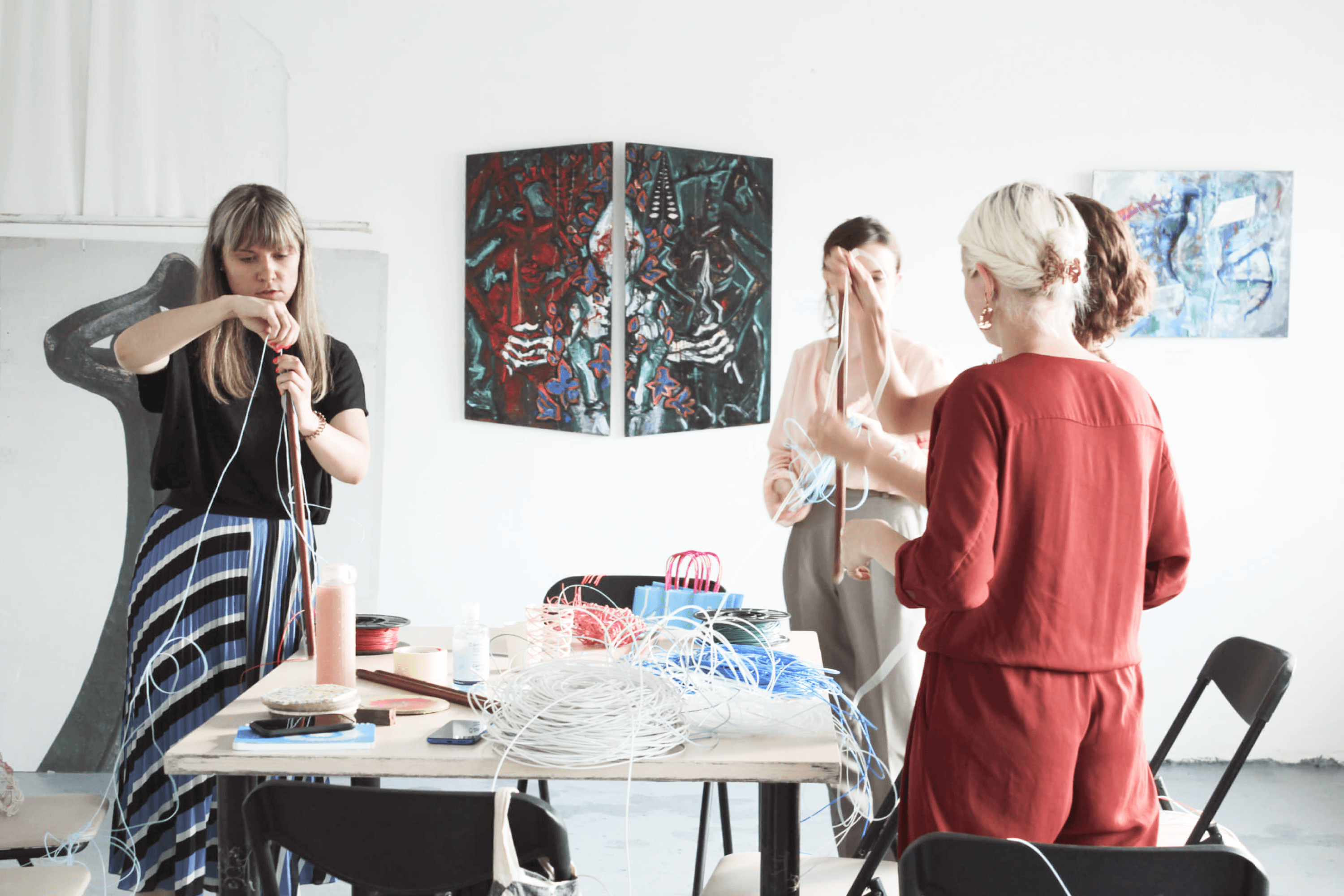
Various activities by Terrain Vague. Photo: Terrain vague Platform / Facebook / YB 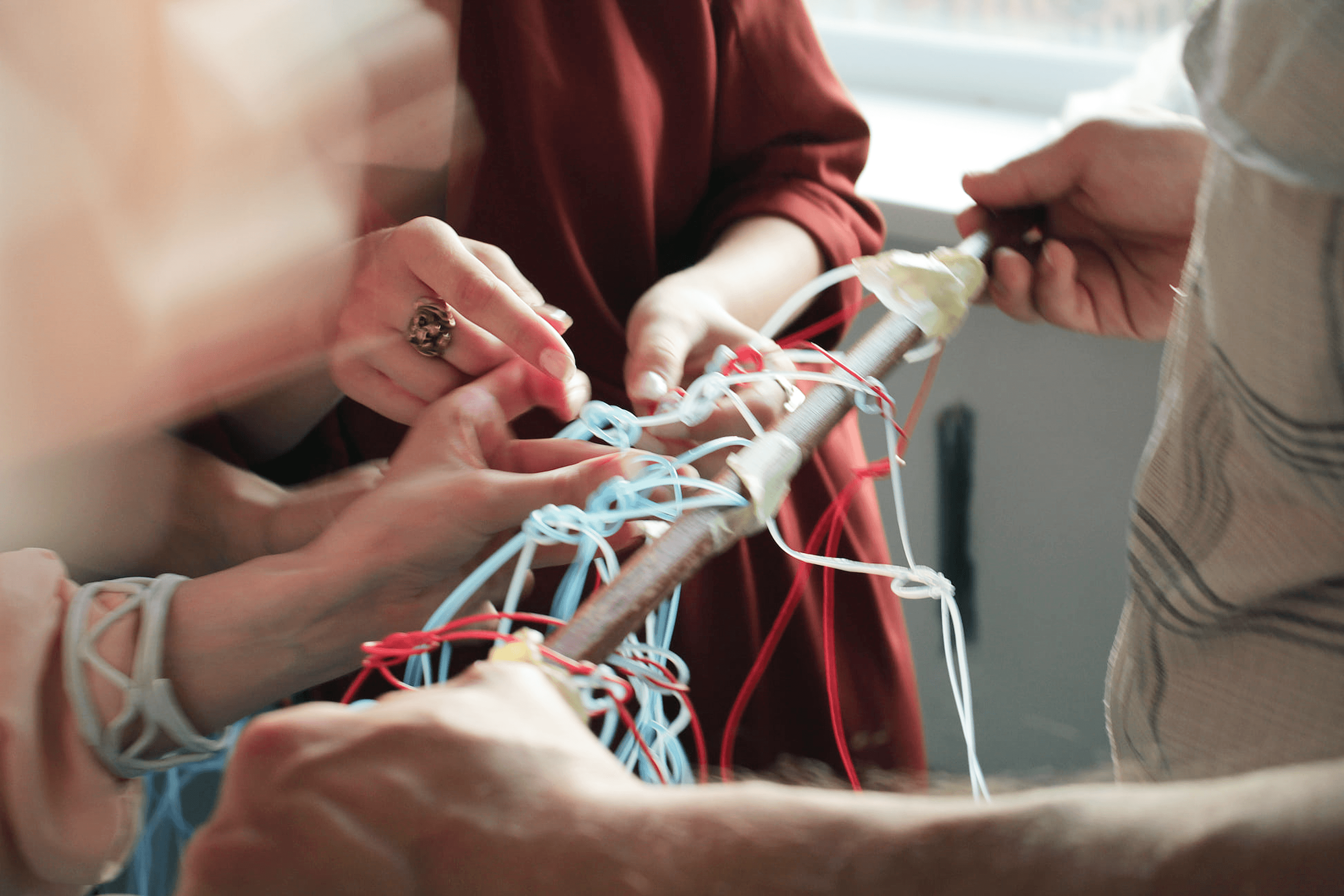
Photo: Terrain vague Platform / Facebook / YB 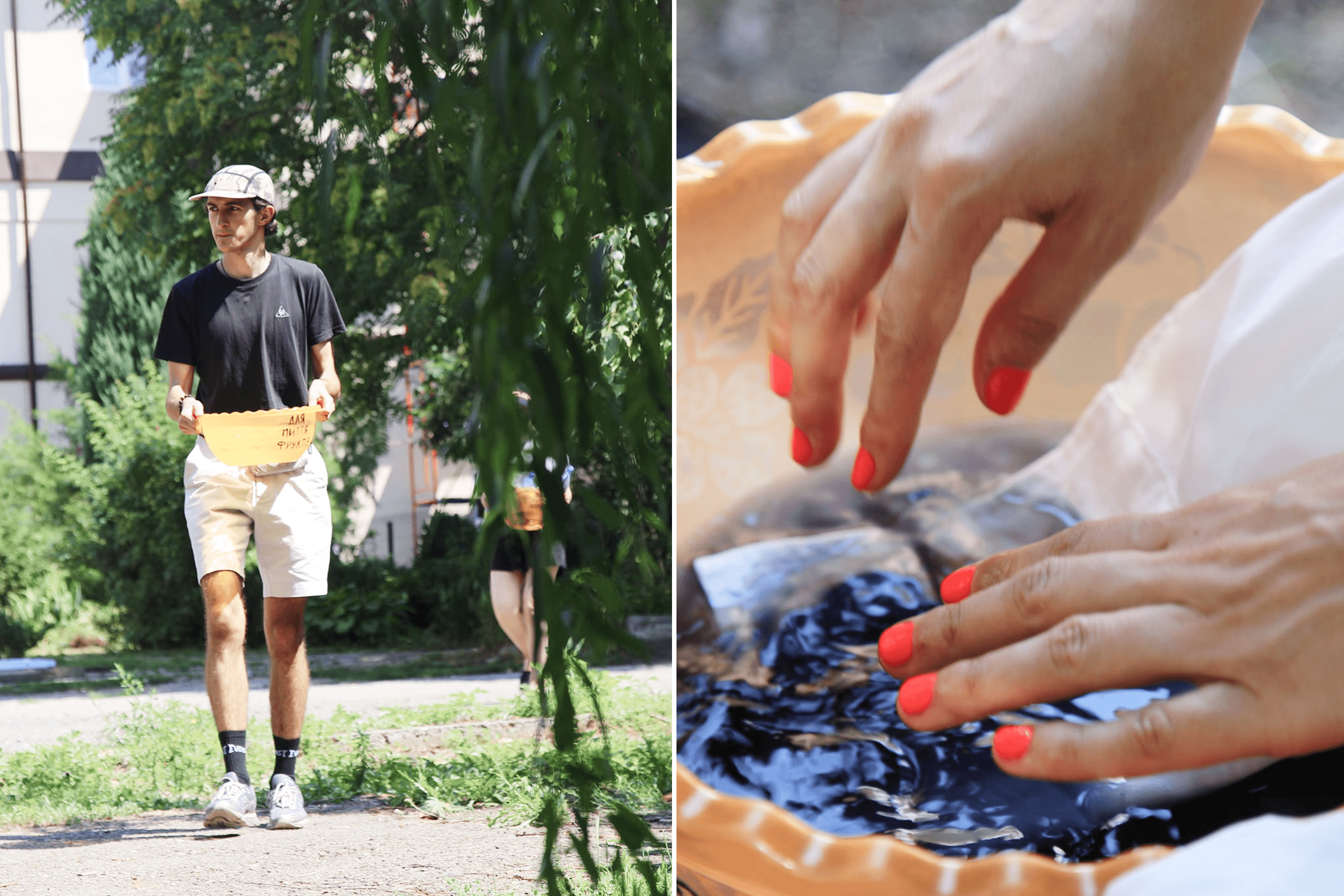
Photo: Terrain vague Platform / Facebook / YB 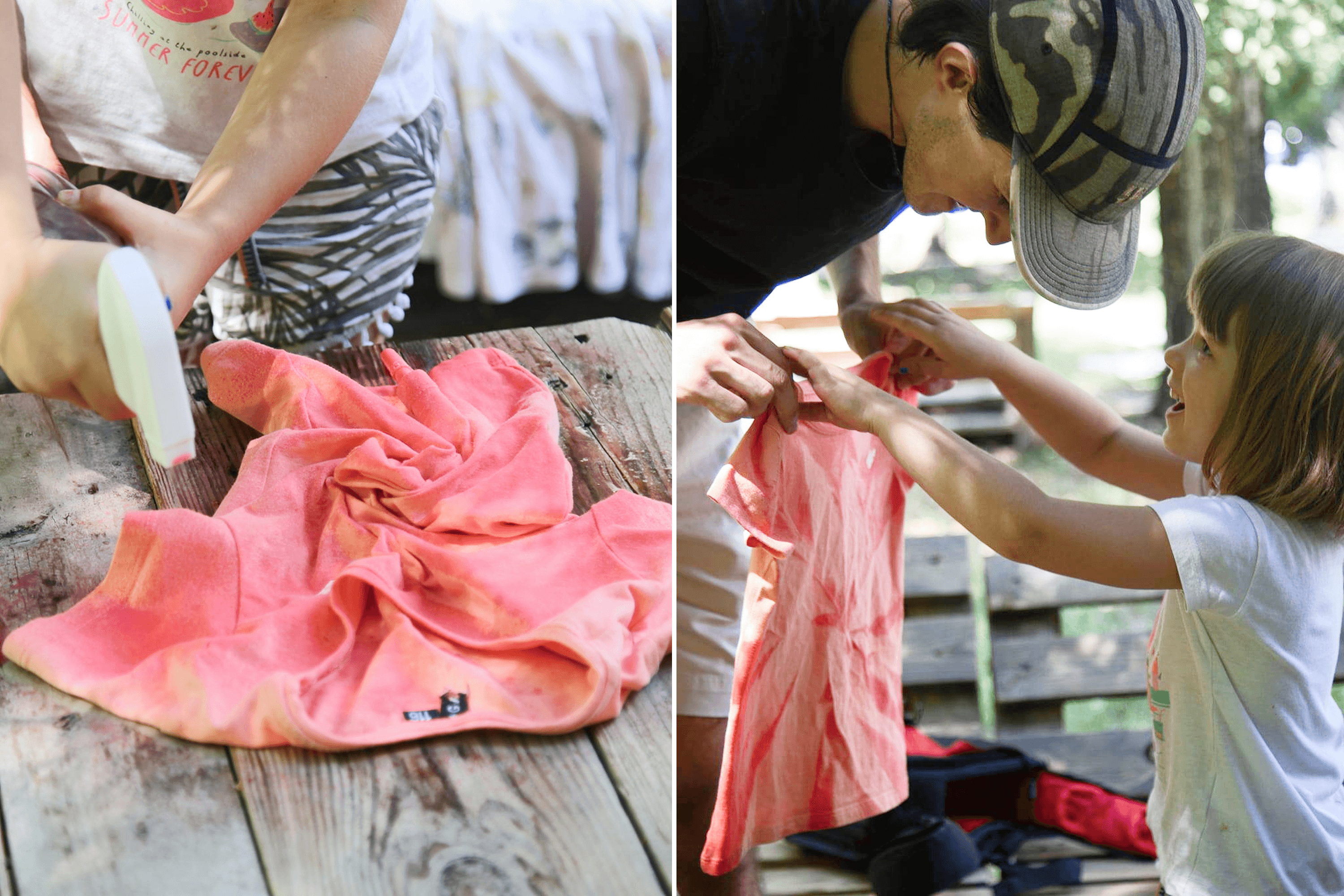
Photo: Terrain vague Platform / Facebook / YB 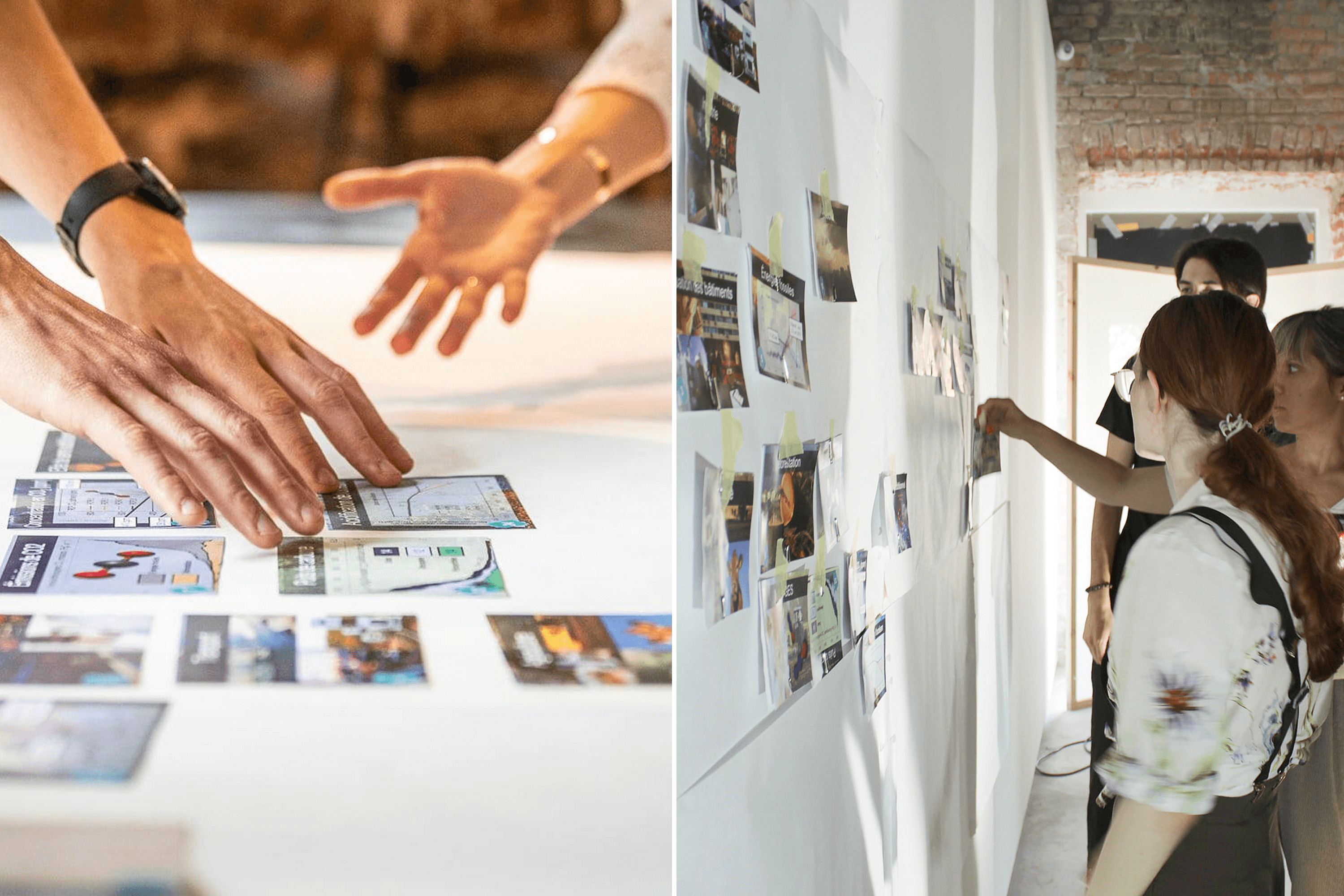
Photo: Terrain vague Platform / Facebook / YB 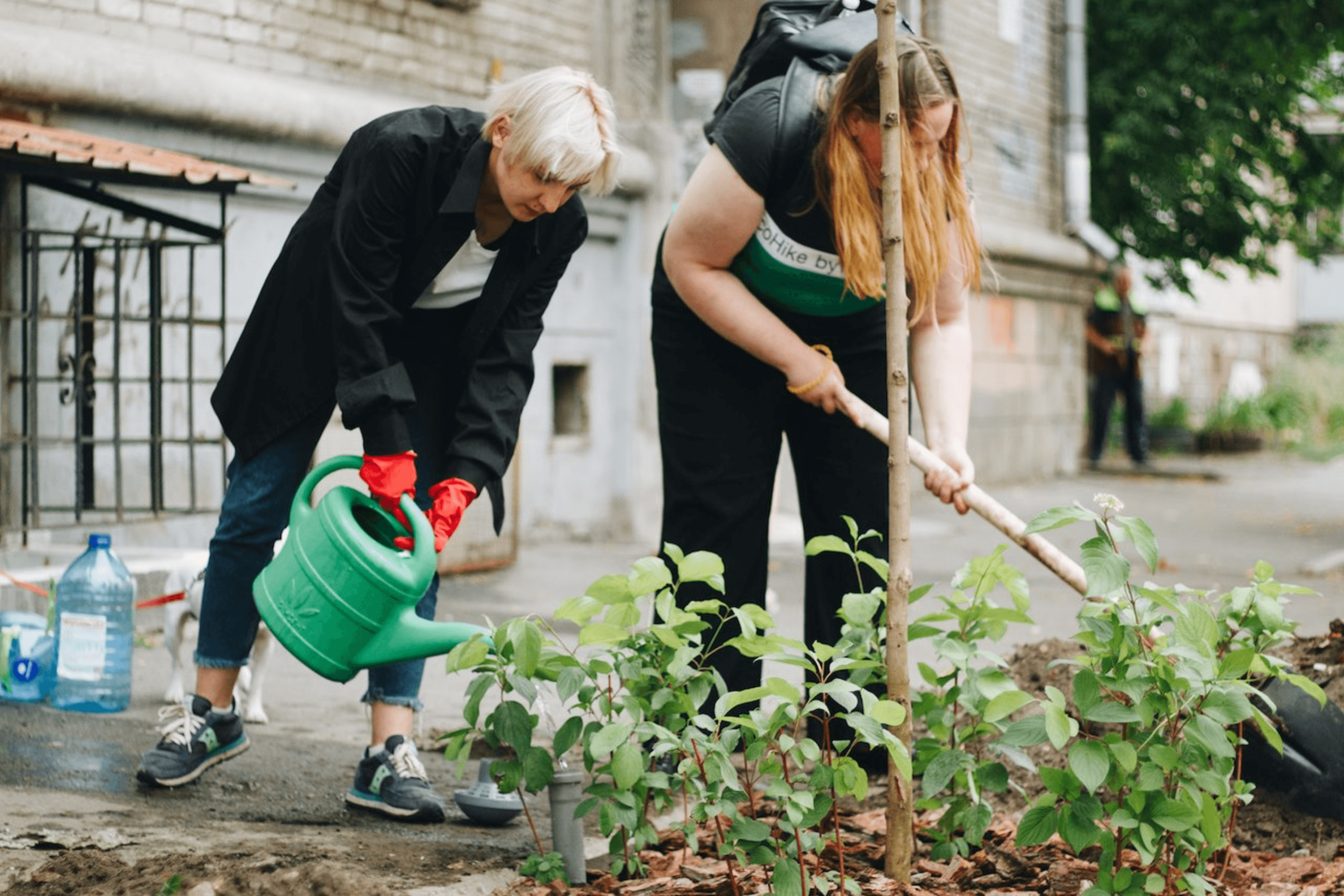
Photo: Terrain vague Platform / Facebook / YB
In Dnipro, I was friends with activists from the global movement Precious Plastic, which helps people establish businesses producing goods from recycled plastic. On February 24, 2022, they planned to open a full-scale sorting and recycling station. For obvious reasons, the opening was postponed, but that initiative became a catalyst for me, and in September 2022 I founded the innovative sustainable business Spogad at their station.
At first, I worked on the brand in my free time and did not even tell my French acquaintances about it. Gradually, I invested money into it. I did not keep track of the exact amount, but overall I put in no less than €15,000 of my own savings. Only from the end of 2025 did I officially begin positioning Spogad as a business with ambitions to become not only a brand, but also an influential startup collaborating with European and global companies.
How is the business structured, and how many people work there?
I founded Spogad, and later Taisiia Dubyna and Lidiia Semeniuk joined the project. I lead the brand, promote it in France, work on collaborations, and participate in exhibitions for sustainable brands. Lidiia is the operations director. Taisiia is the Product Director, overseeing production development, creating product prototypes, and weaving them by hand. We do not have any hired employees. We come up with the ideas and designs for new products ourselves. Taisiia hand-weave them from beads and threads that we produce at the Dnipro recycling station together with its head, Oleksandr Hrechka.
Your collections are dedicated to memories of Ukrainian cities, nature, and artists. Tell us more about the philosophy of the brand and how it was formed.
Part of my family comes from Donbas; they are descendants of Greeks from the Azov region. This region was occupied by the Russian military. They destroyed my physical heritage, and I have nothing left that can be passed on to the next generation. But when I was a child, my mother and I traveled a lot around Ukraine, especially to Donbas and Crimea, and I still carry many memories of those places.
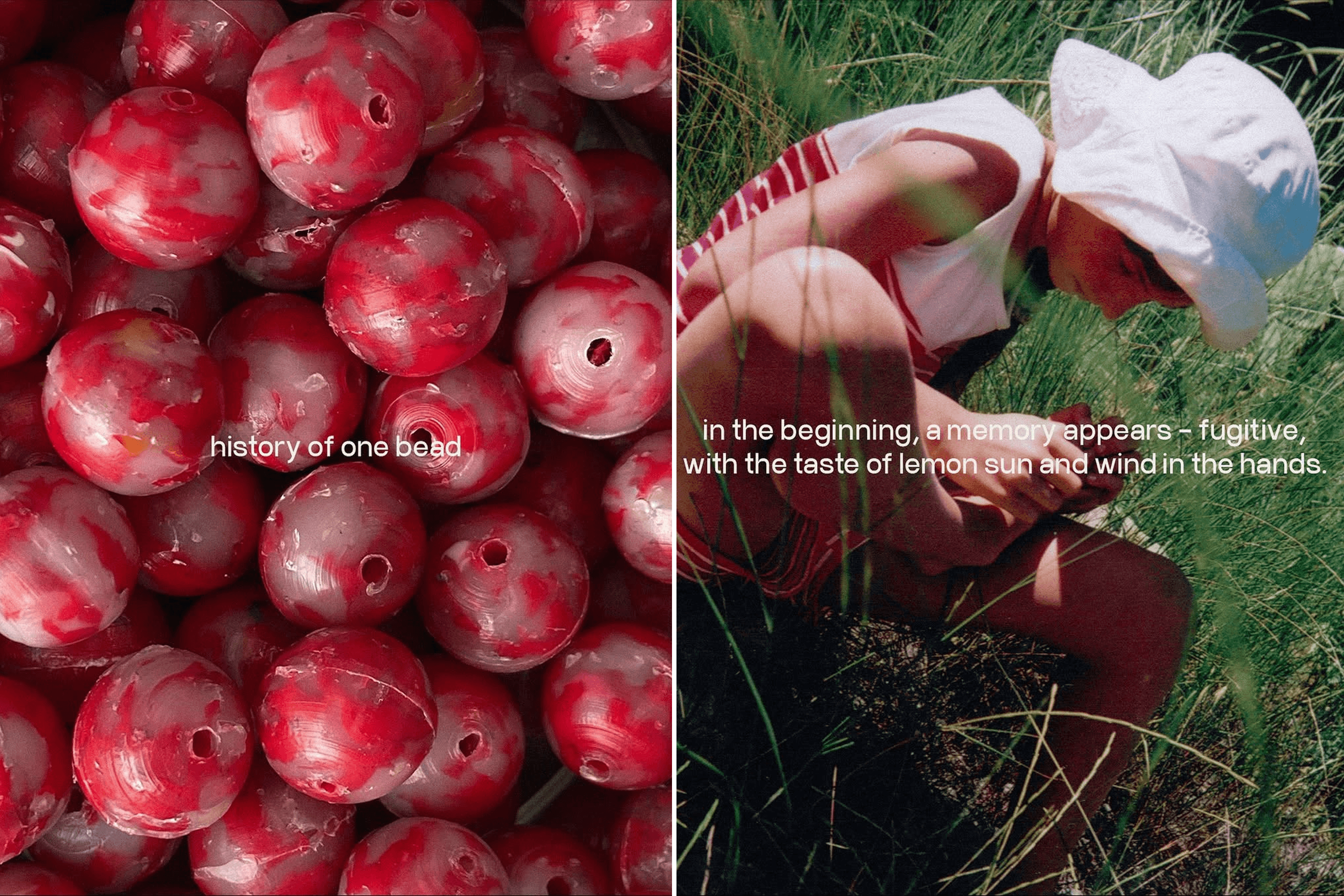
Photo: spogad.brand / Instagram / YB 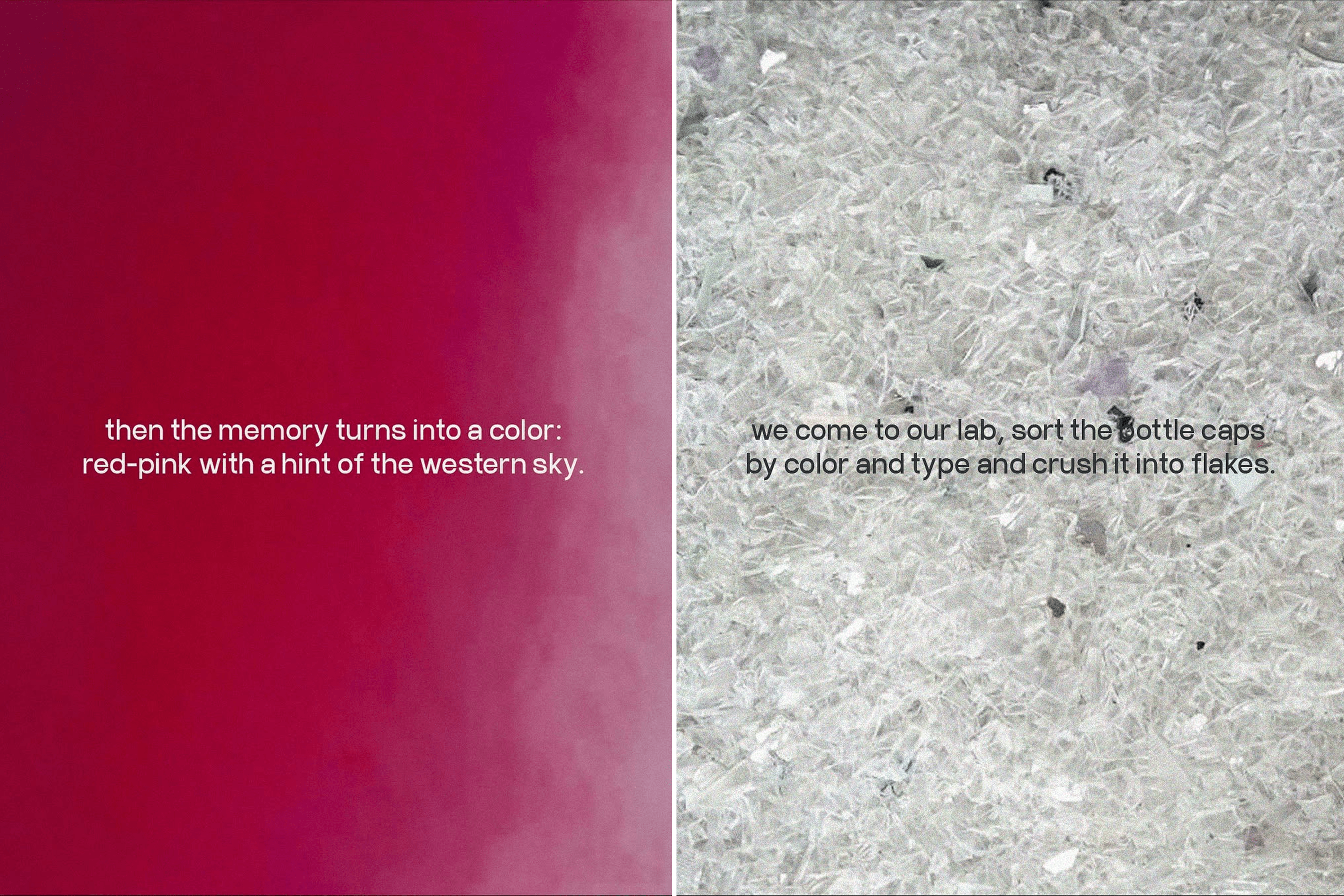
Photo: spogad.brand / Instagram / YB 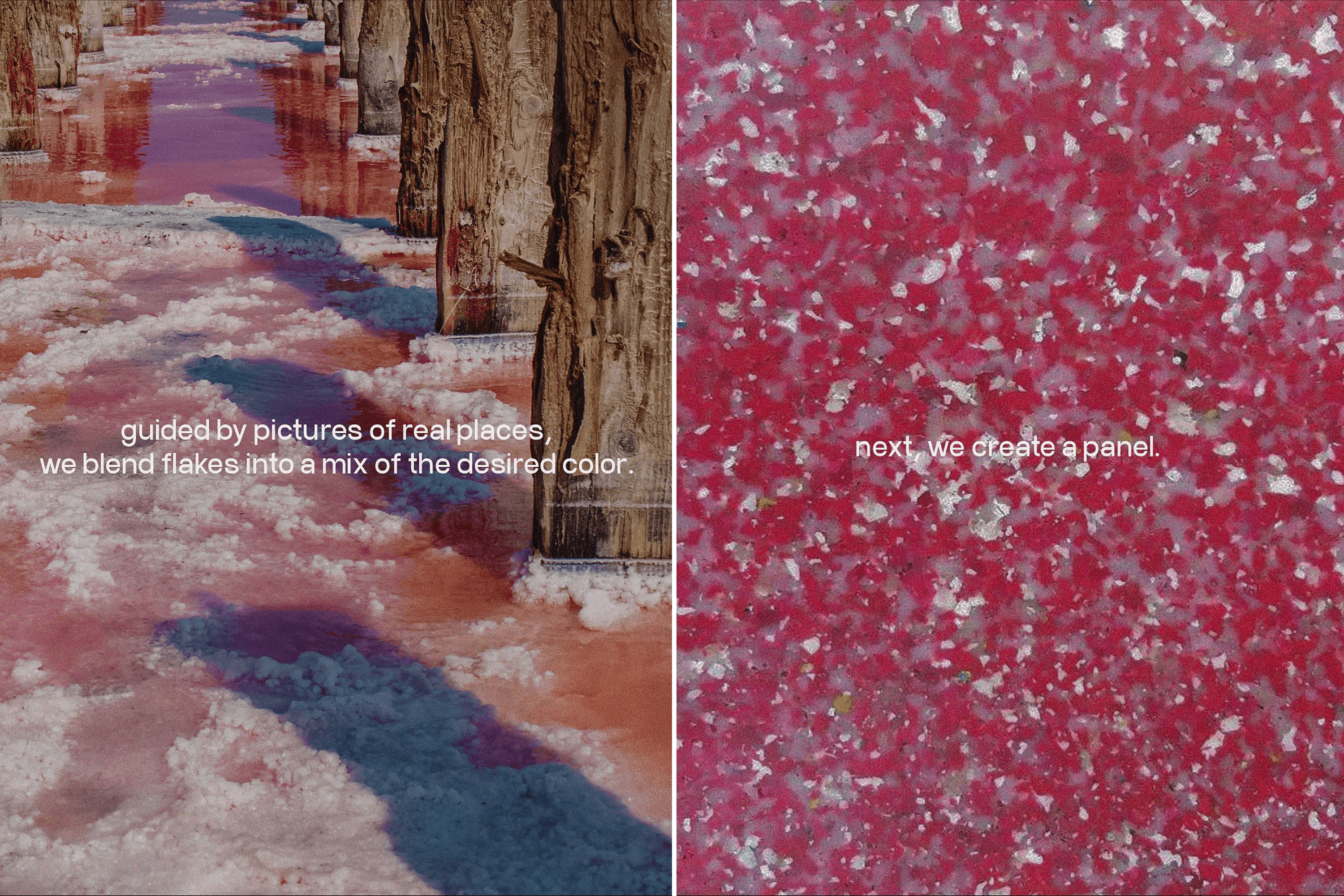
Photo: spogad.brand / Instagram / YB 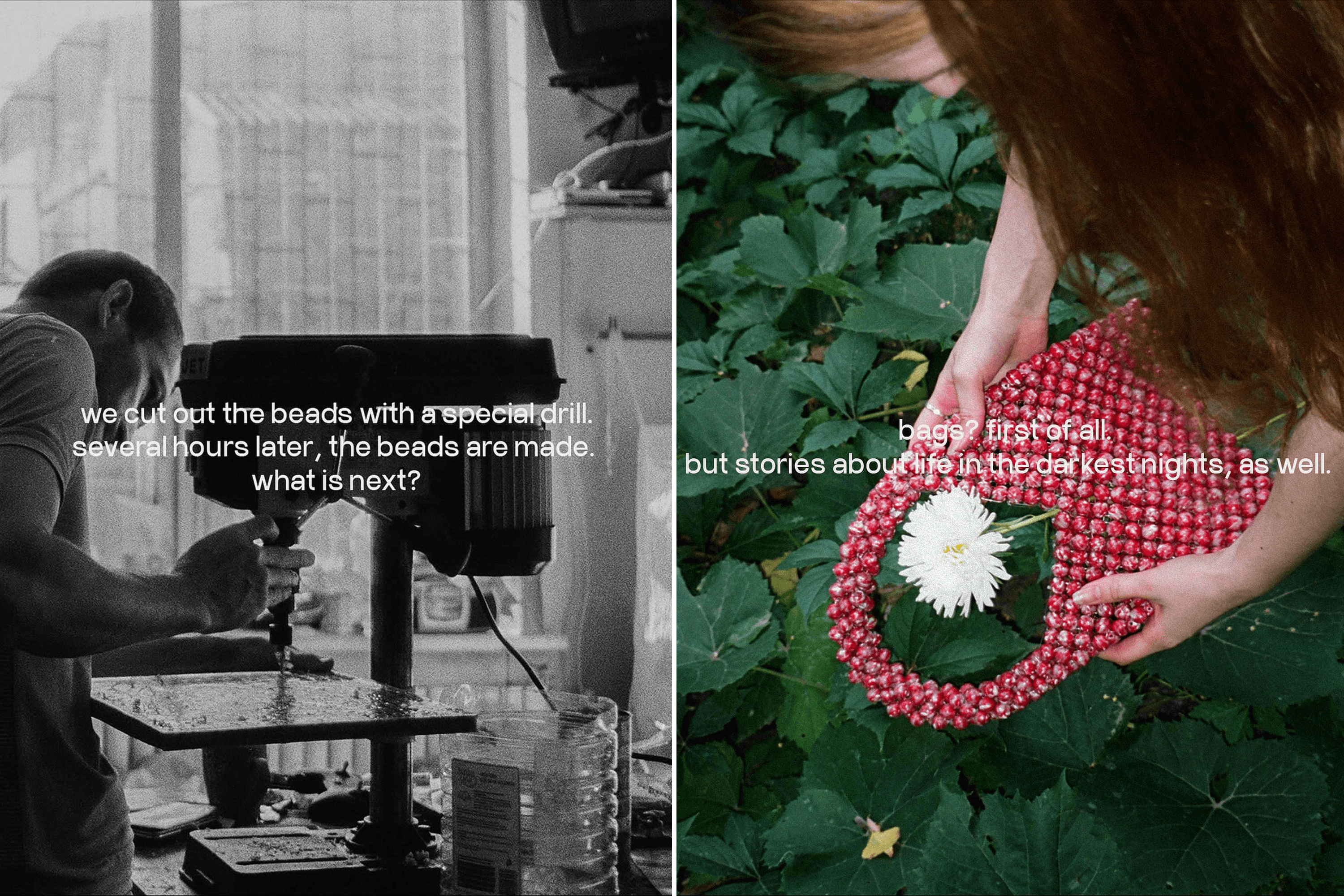
Photo: spogad.brand / Instagram / YB
When the full-scale war began, I was afraid the enemy would destroy everything I knew and loved. This is our collective Ukrainian trauma. I wanted to preserve these memories, but I did not know how.
At the same time, French journalists were asking me for comments about the destruction in Ukraine and showing horrific videos of Russian war crimes. I understand that we must speak about the war, but I do not want foreigners to associate my home only with it. I want to show that Ukraine is a country of innovation with extraordinary cities we are proud of. It is not a third-world country where people do not know what gadgets and television are.
One morning, I woke up, and the puzzle pieces in my head came together. At Spogad, we create jewelry that captures memories of Ukraine, and in this way we promote our country in Europe. For example, the handbag “Lake Lemuria” was inspired by the pink-red lake of the same name in the Kherson region. When foreigners ask about it, I tell them the story of this place. They admire the beauty of the lake, and when they learn how the Russians are destroying it under occupation, their eyes fill with tears.
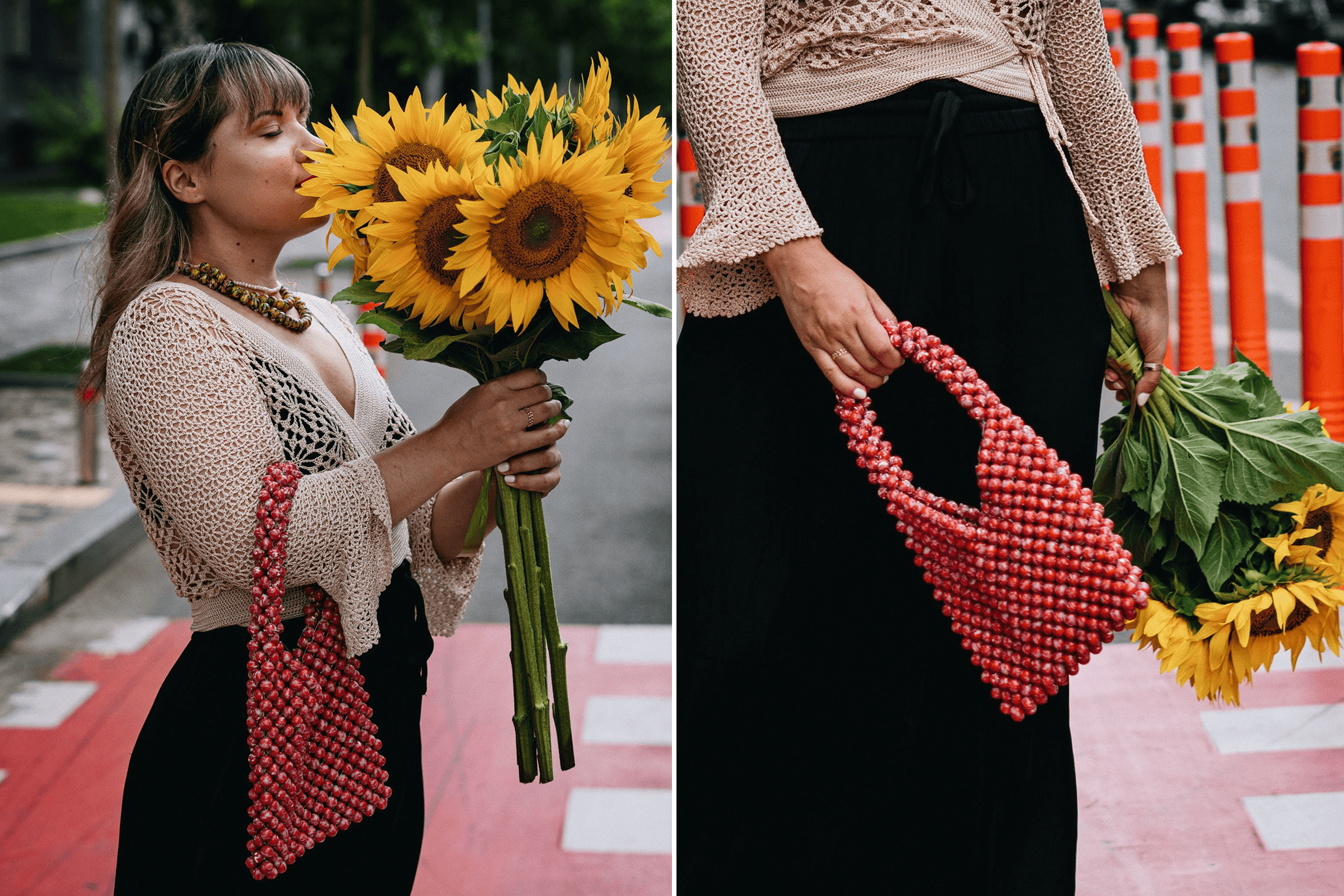
Handbag “Lake Lemuria”. Photo: spogad.store / YB 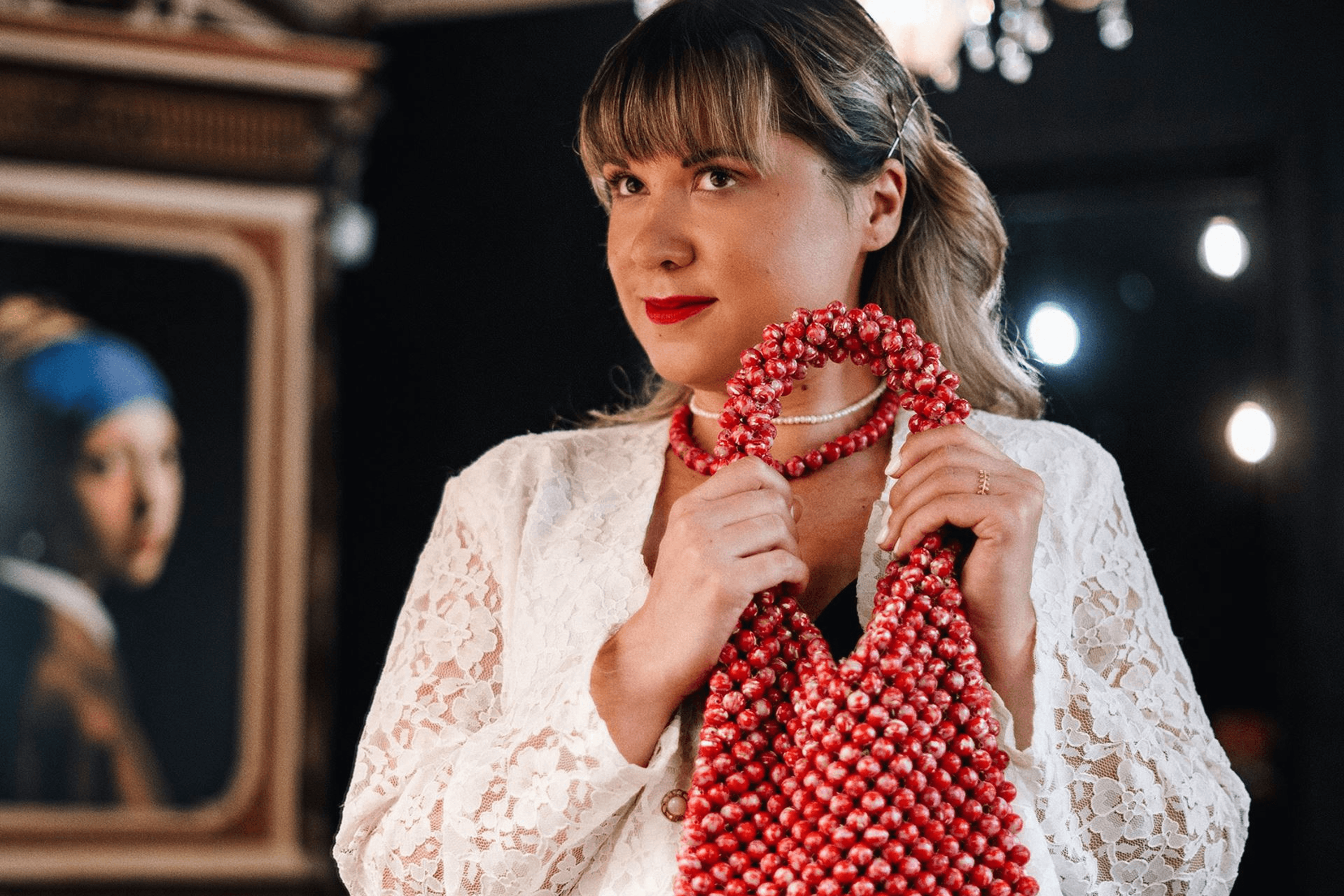
Photo: spogad.store / YB 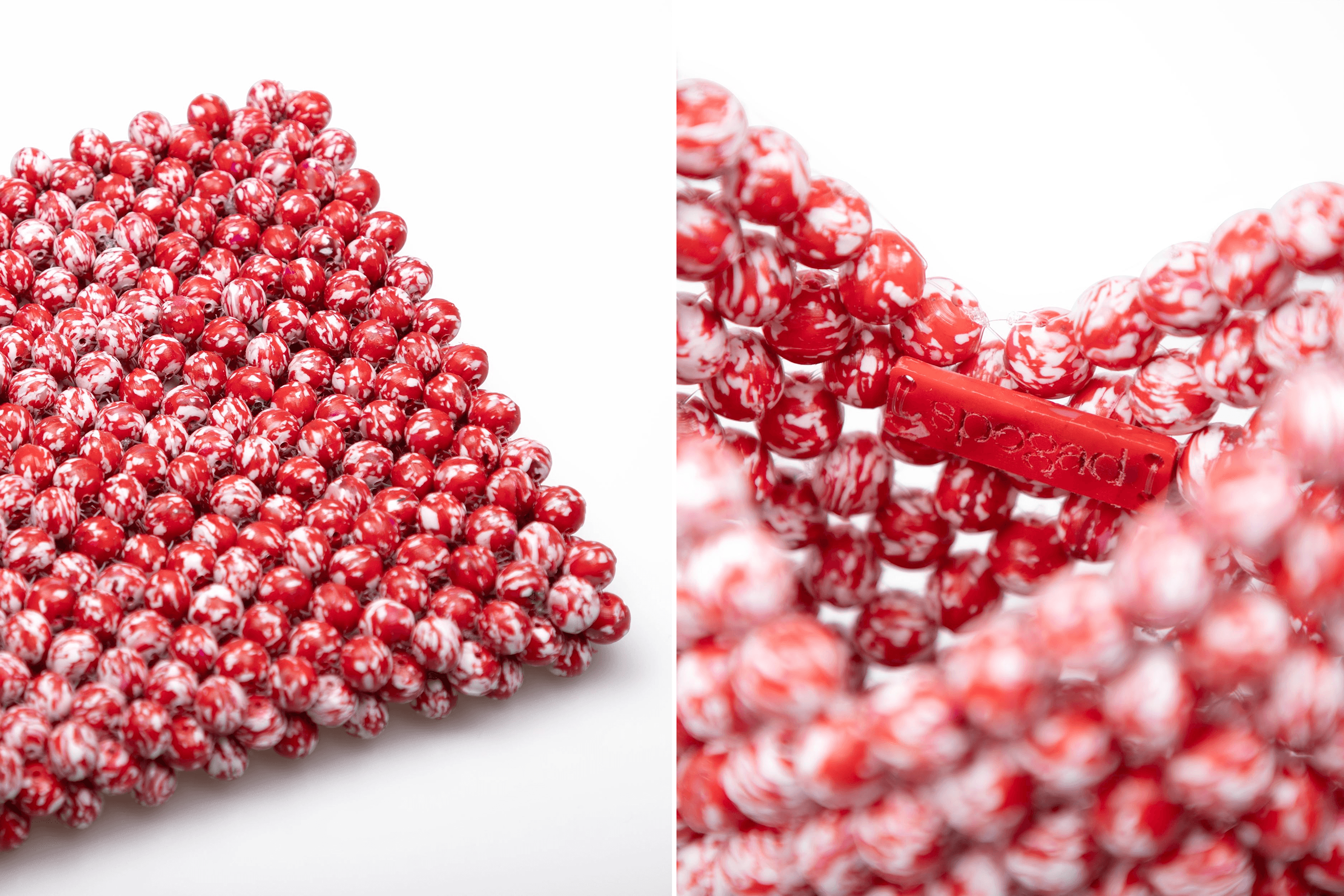
Photo: spogad.store / YB 
Лемурійське озеро в Херсонській області. Photo: spogad.store / YB
How do you develop the jewelry designs?
First, together with the team, we choose a specific memory, and then we think about how to translate it into plastic. For example, our latest collection, Salacia, was inspired by my vacations in Crimea, the waves of the Black Sea, and the paintings of Ivan Aivazovsky. It is the sea during a storm: blue-black water and white foam. These are exactly the colors we used in the collection’s jewelry.
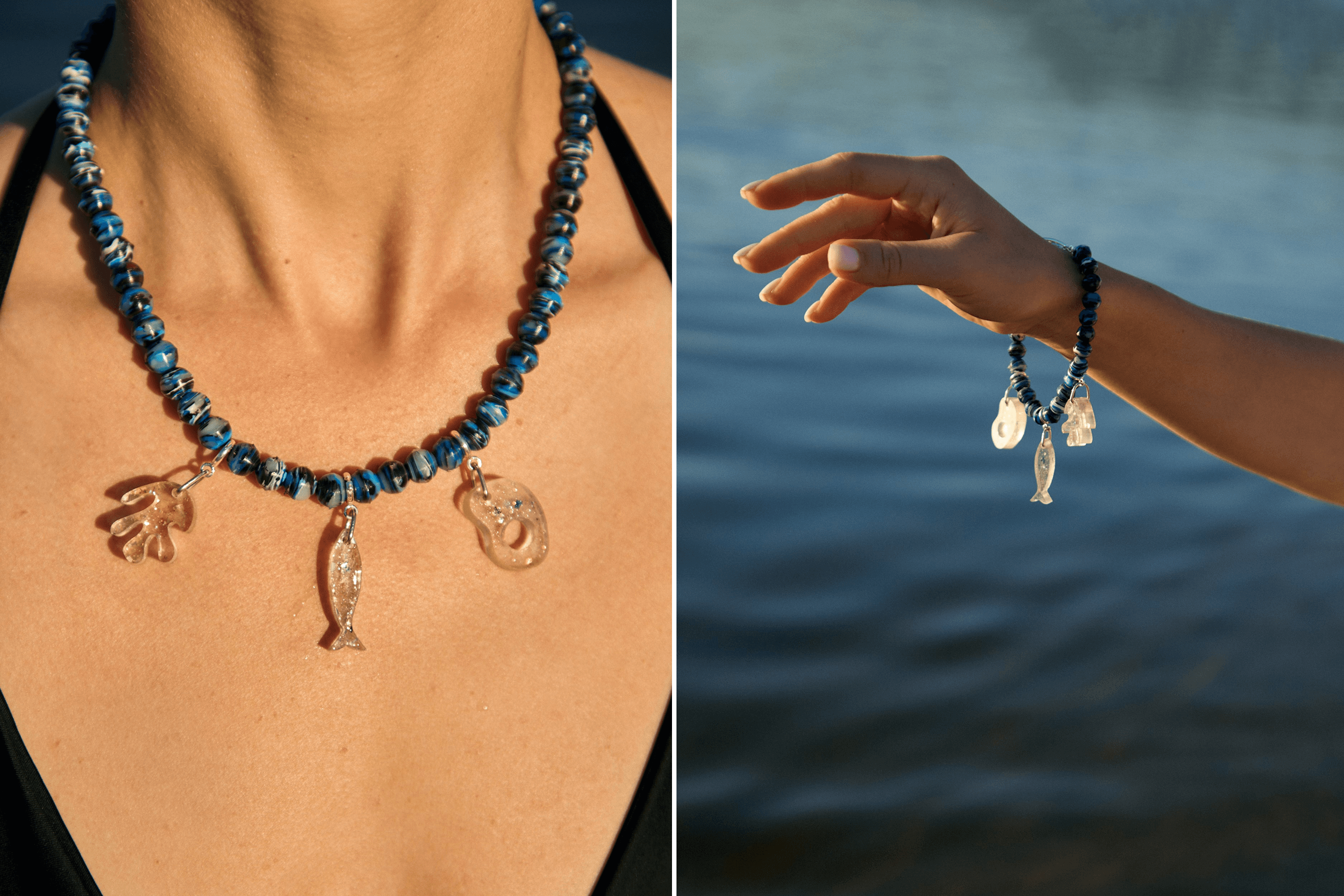
Some pieces from the Salacia collection by the Spogad brand. Photo: spogad.store / YB 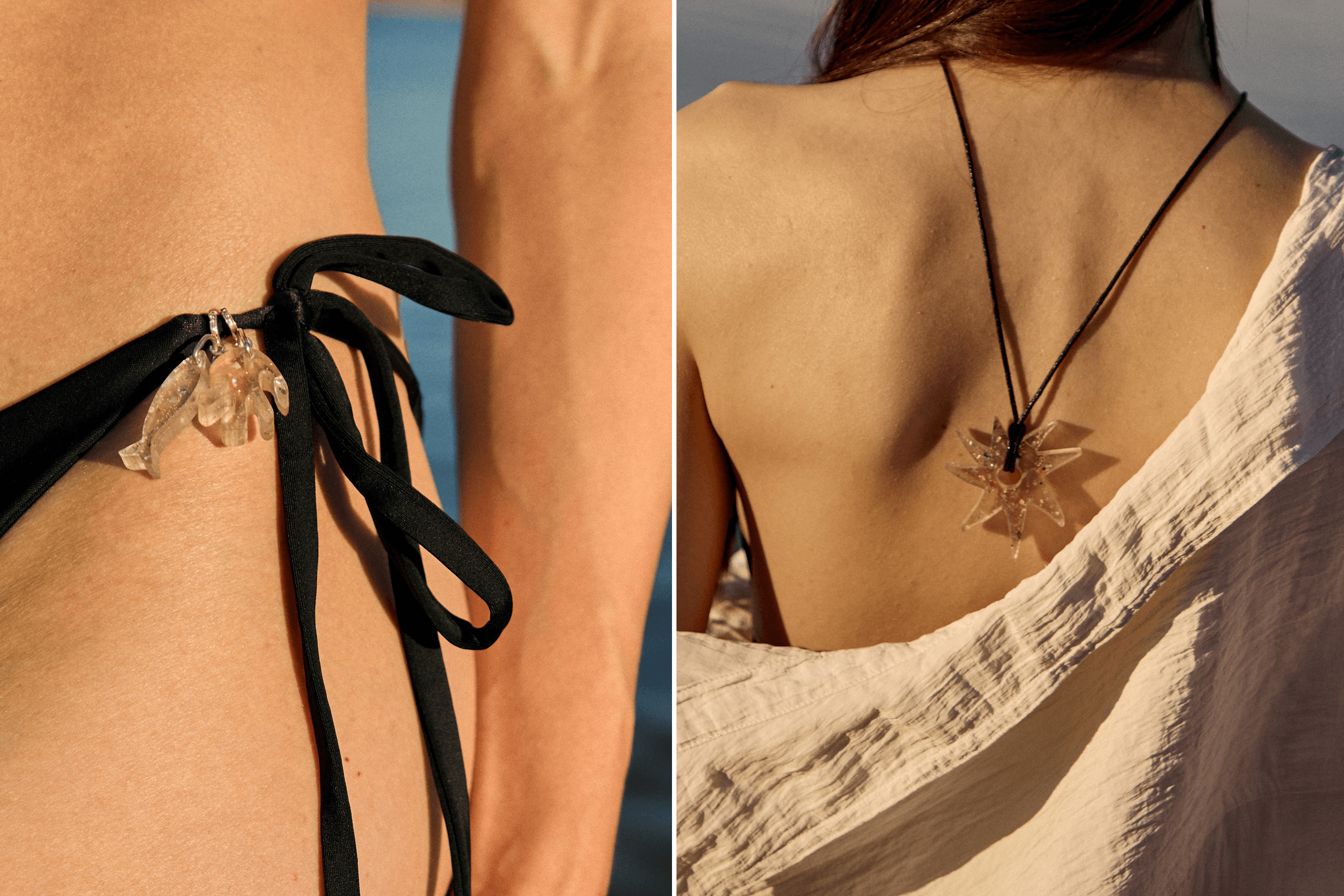
Photo: spogad.store / YB 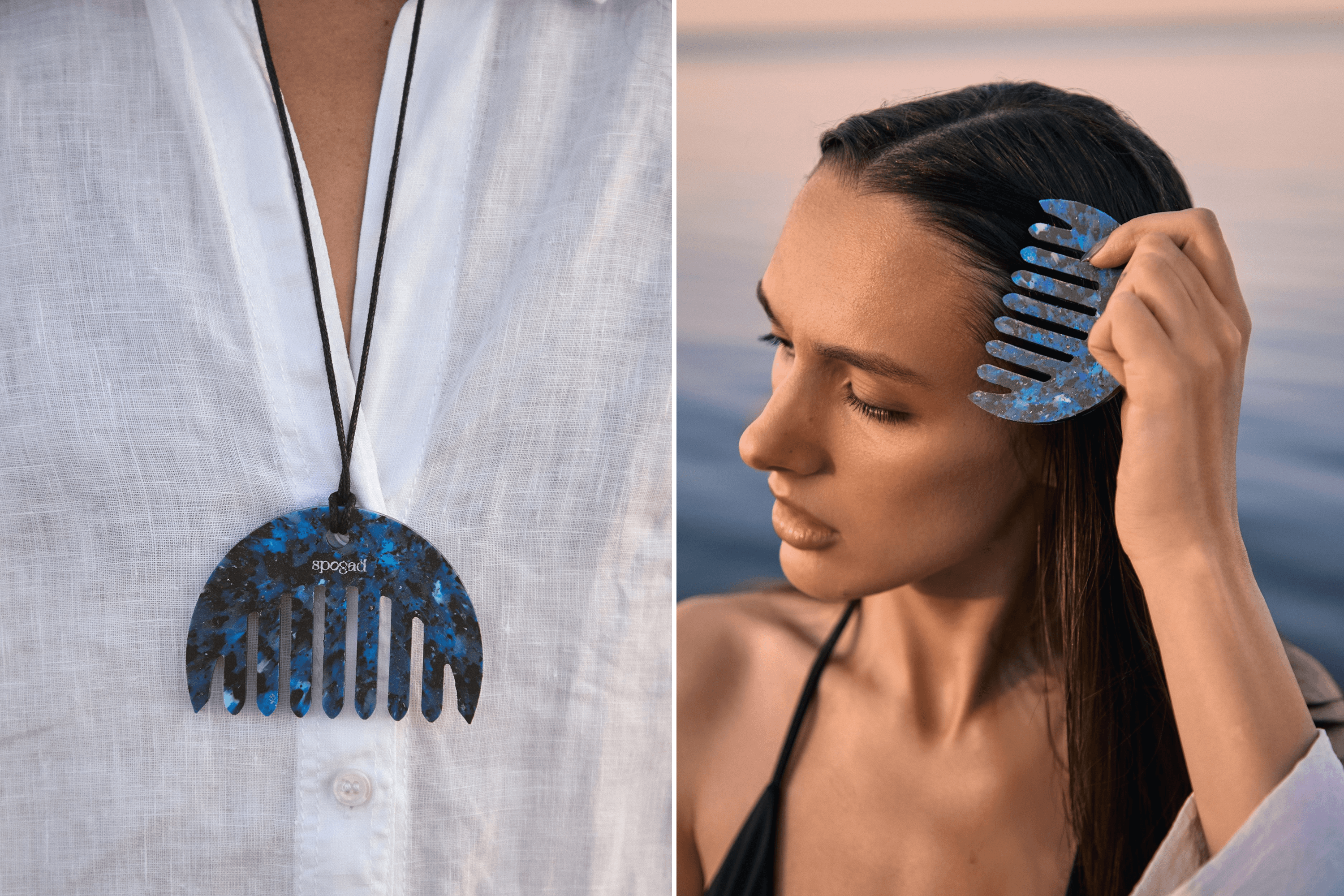
Photo: spogad.store / YB 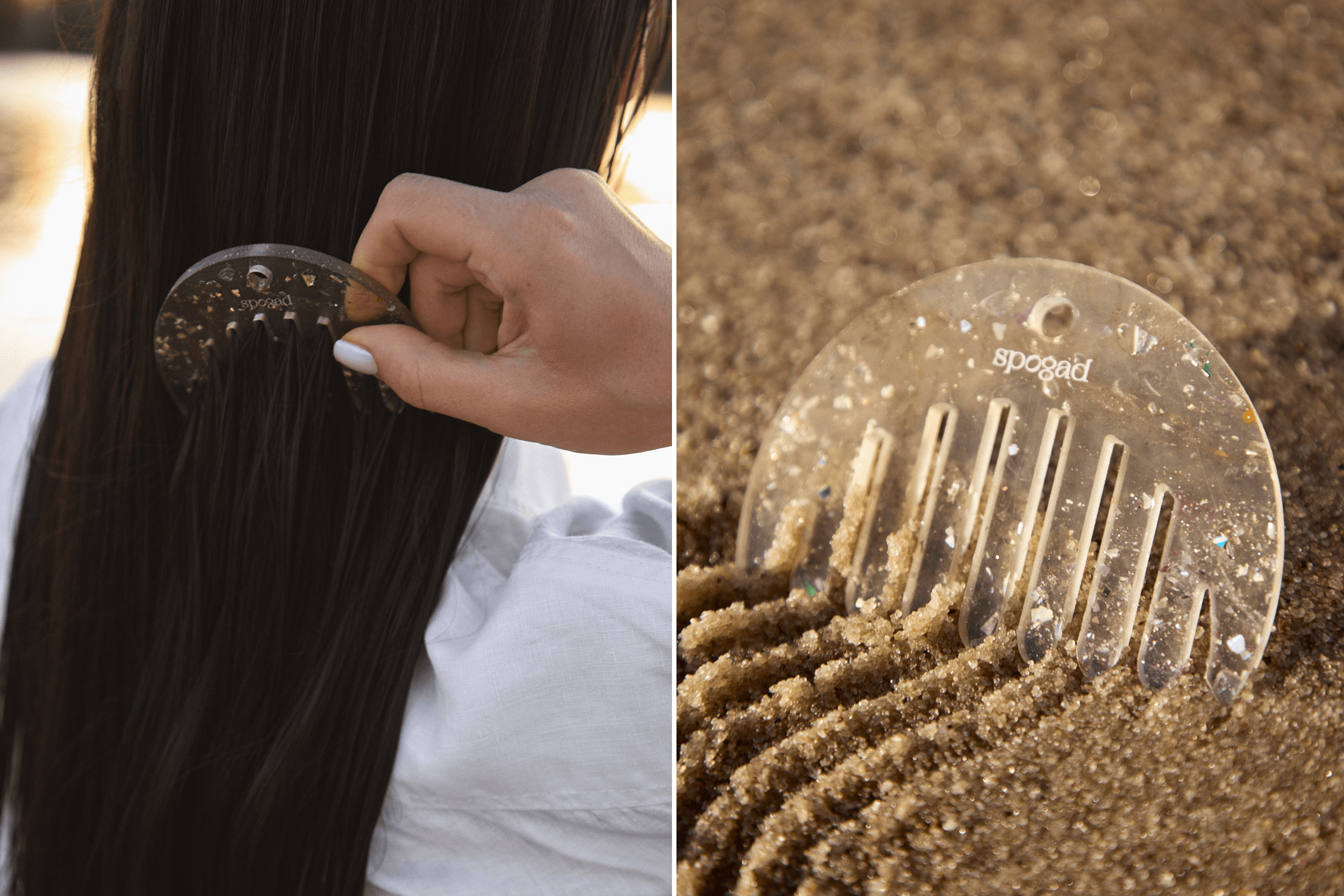
Photo: spogad.store / YB 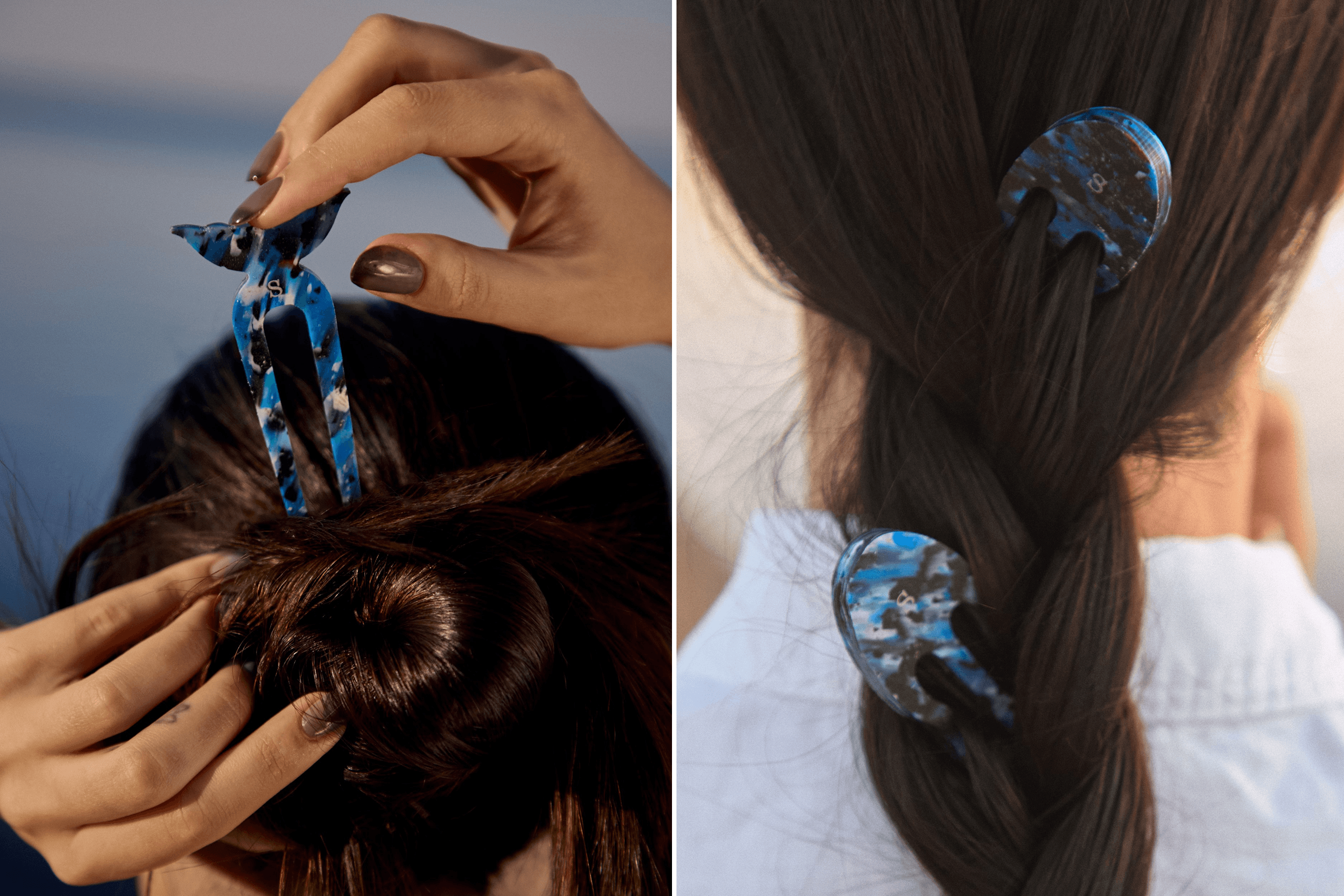
Photo: spogad.store / YB 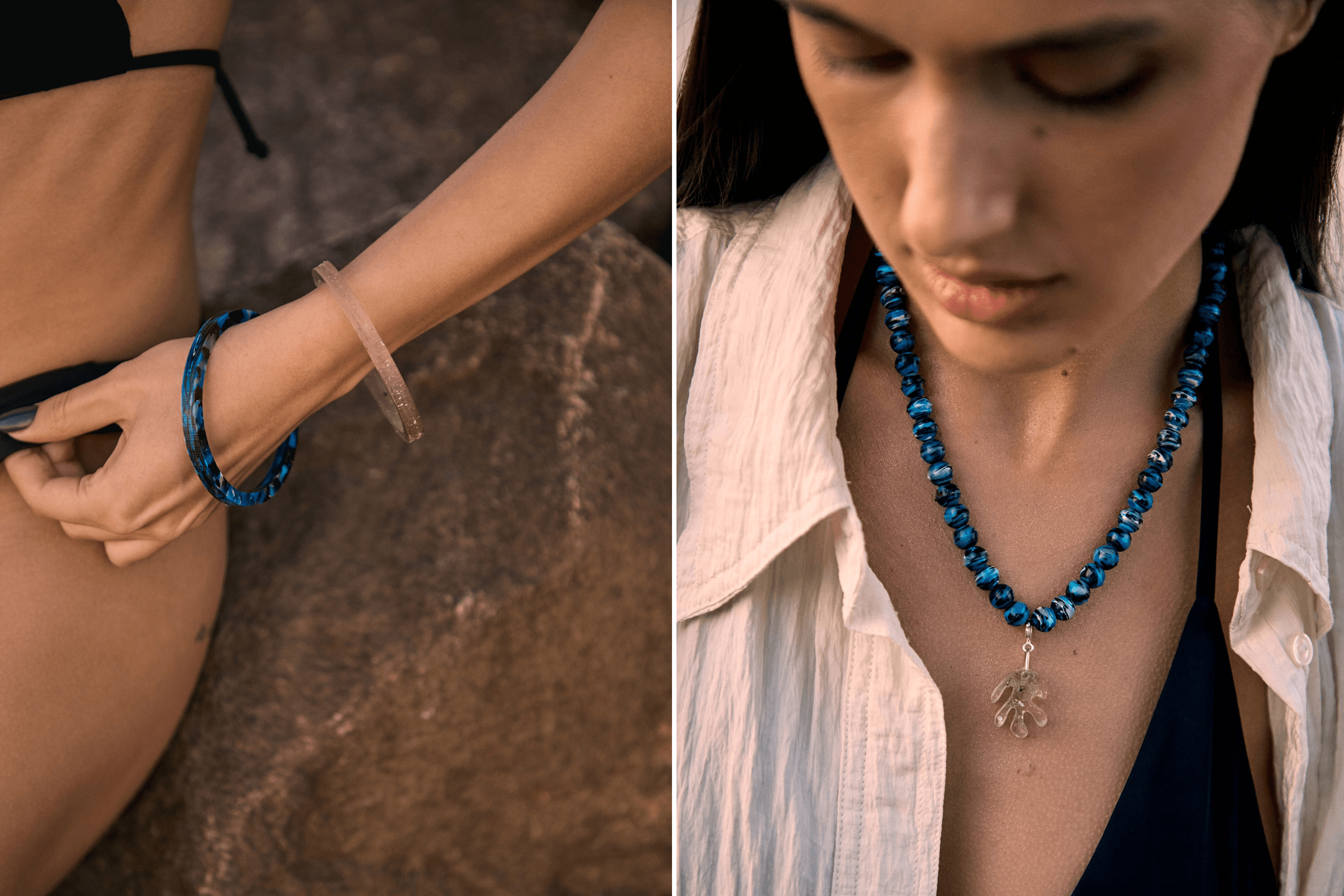
Photo: spogad.store / YB
Spogad’s first products were handwoven bags made from threads and beads. How did you develop the weaving technology?
Taisiia knows how to weave beautiful mesh bags from ordinary jute. I became interested in creating a bag from threads made of recycled plastic. At first, the station’s chief engineer Oleksandr was skeptical because no one had done this before. But Taya supported the idea, and we convinced him to try.
We spent a long time experimenting and testing. The first prototypes were a mess, but eventually we invented our own weaving technique. That is how “Vytynanka” appeared — a lightweight, lace-like, yet durable bag. Its design was inspired by the paper cuttings we used to make as children. Around the same time, we learned how to weave bags from beads and created “Sunflower Field.” It is about Dnipro, the sunflowers growing outside the city, and the smell of oil produced at our factories.
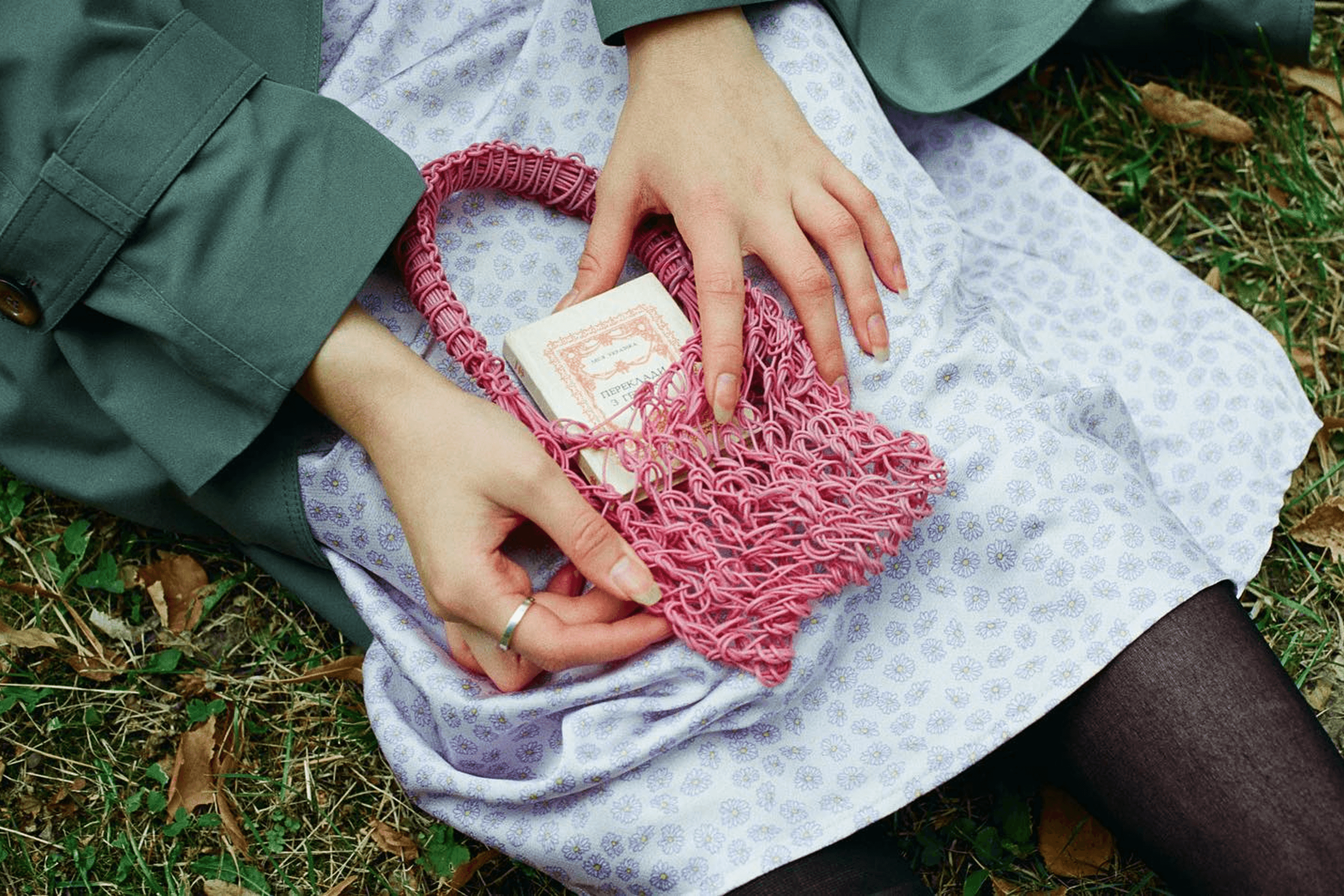
The “Vytynanka” bag by the Spogad brand. Photo: spogad.store / YB 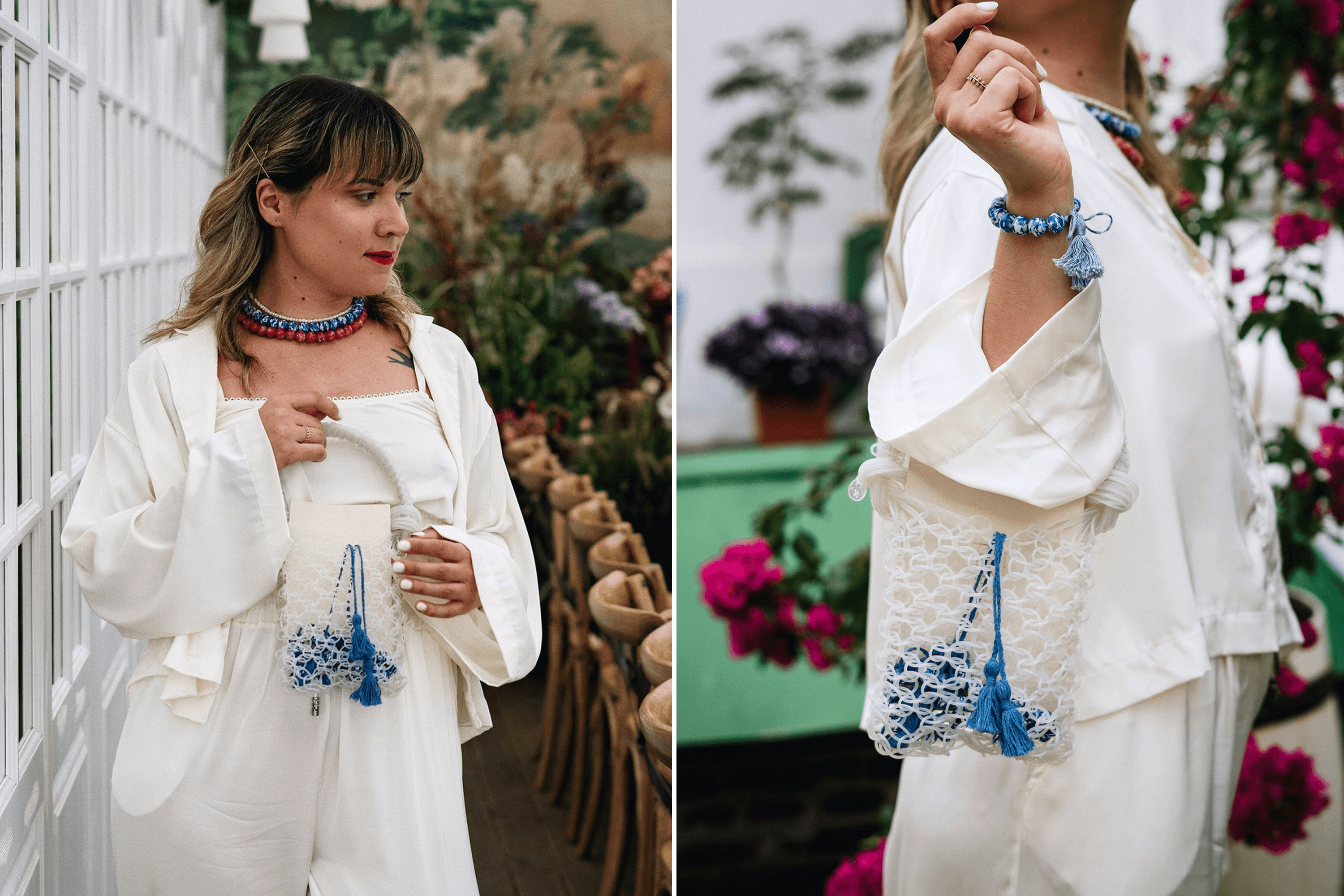
Photo: spogad.store / YB 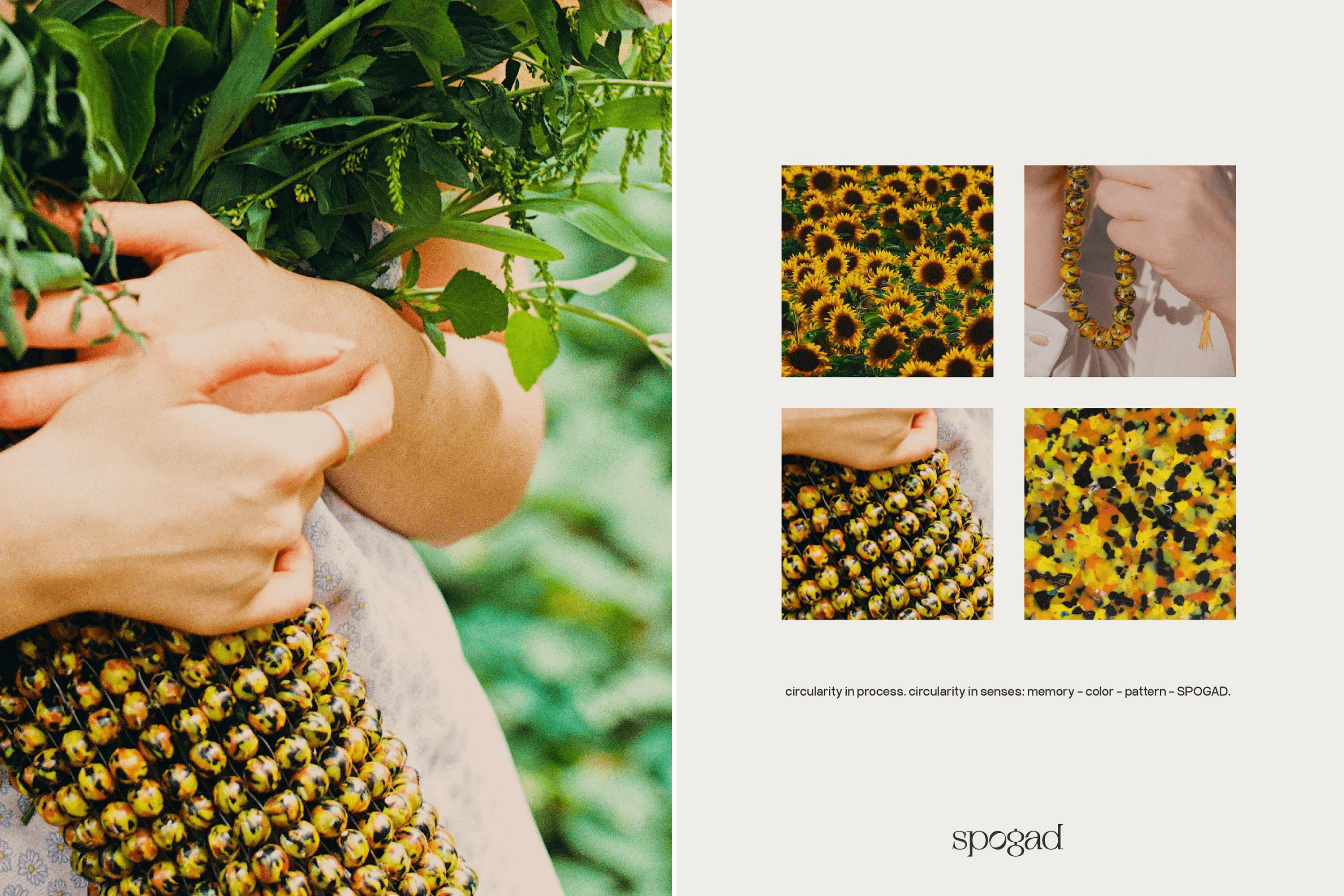
The “Sunflower Field” bag by the Spogad brand. Photo: spogad.store / YB 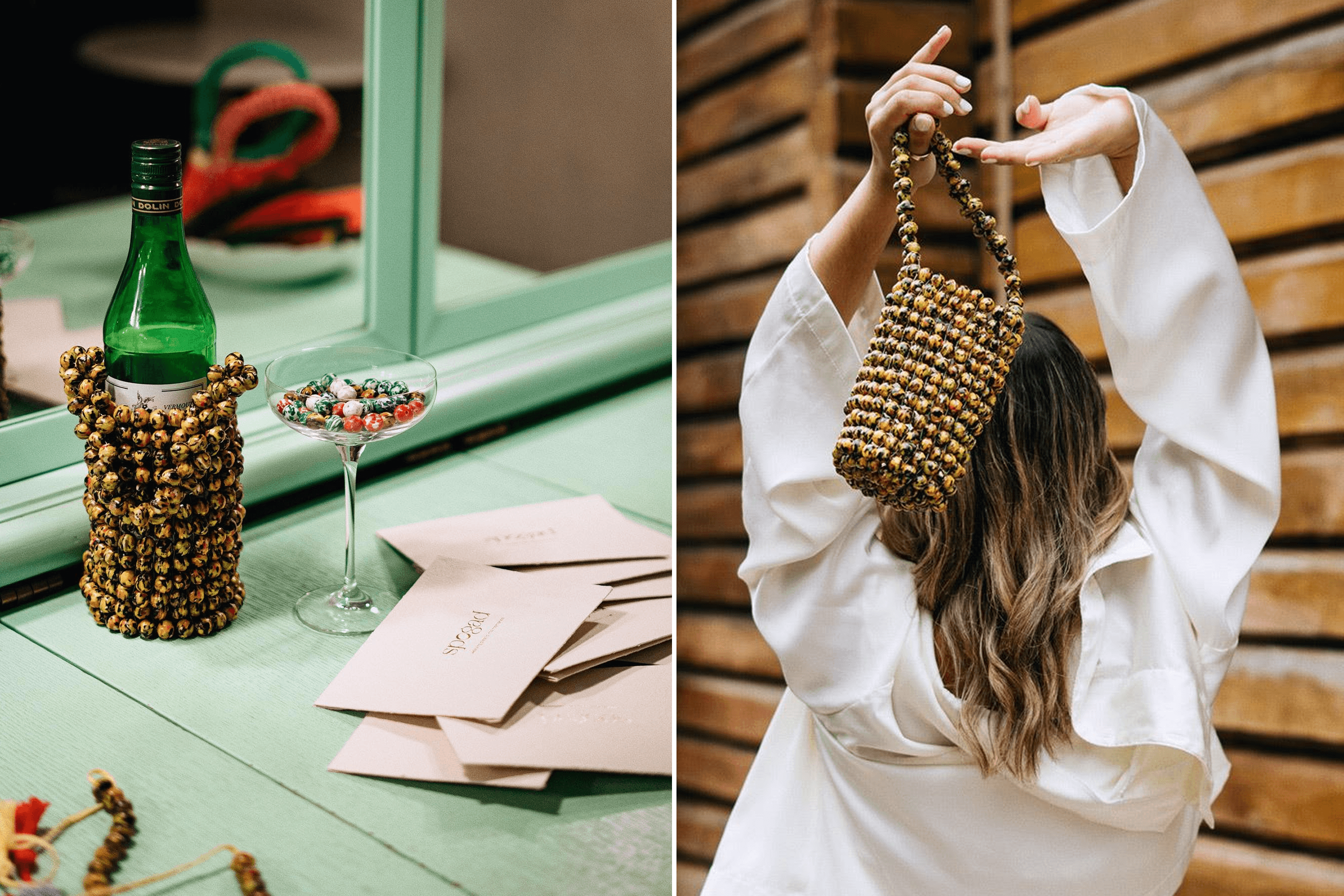
Photo: spogad.store / YB
These two weaving techniques are the DNA of our brand. It is important to me that people recognize us because of them. During the last two Ukrainian Fashion Weeks, people recognized our jewelry on the models, and that makes me happy.
How does your production work? How exactly do you turn plastic into jewelry?
First, we collect raw materials. This is plastic waste that city residents bring to the recycling station. We sort it by type and color. Different types of plastic are recycled differently — some are more flexible, more durable, or do not melt at all, and we do not use those. All the plastic we work with is non-toxic and safe for people.
You use different types of plastic for different products, right?
Yes. We make small bags from plastic that stretches well, so they can fit a lot inside: a phone, keys, lip gloss, tissues, and even a small notebook. We make larger bags from stronger plastic. Many women in Paris do not have time to go home during the day, so they immediately take their laptop, gym clothes, and even an evening outfit with them.
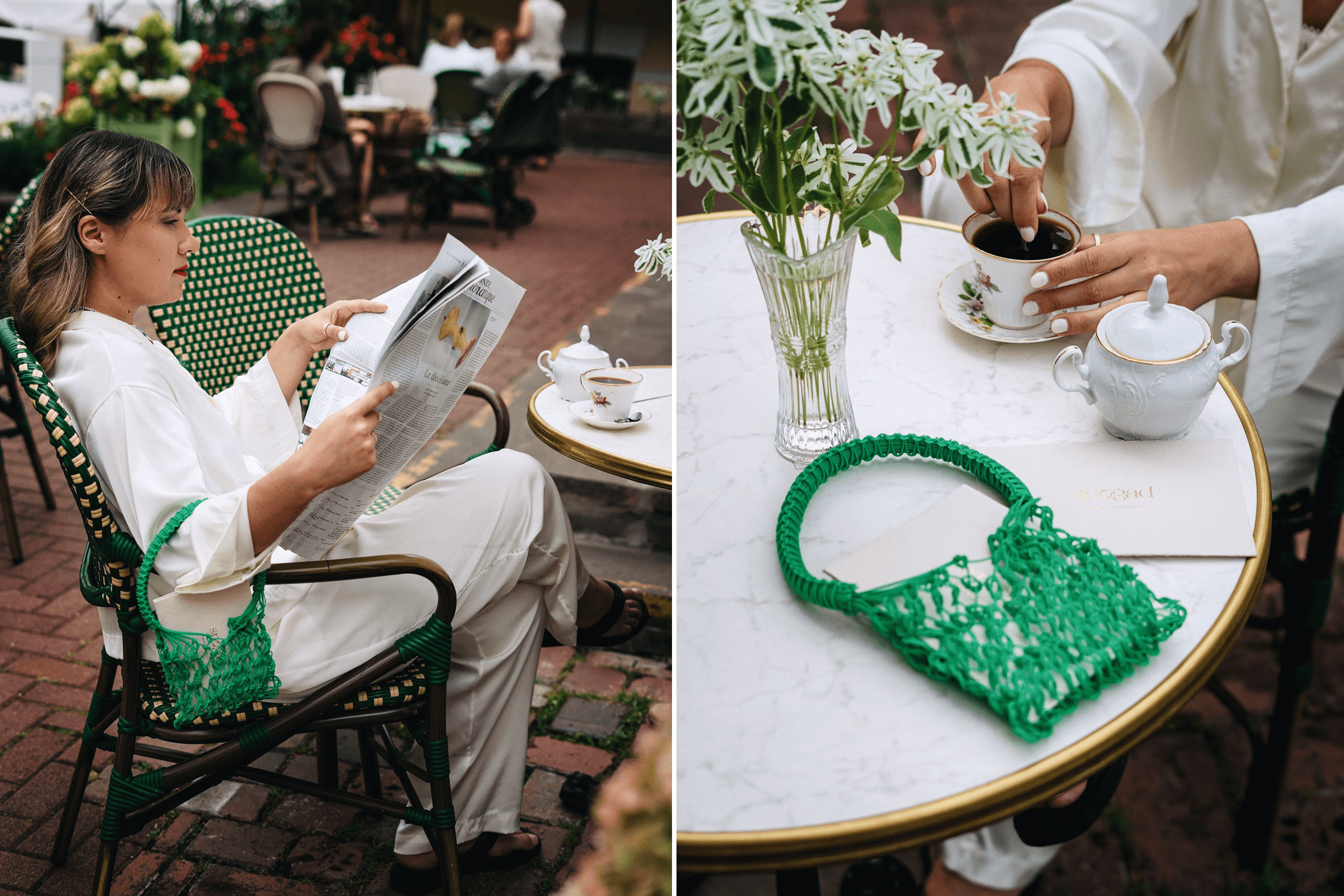
Various bags by the Spogad brand. Photo: spogad.store / YB 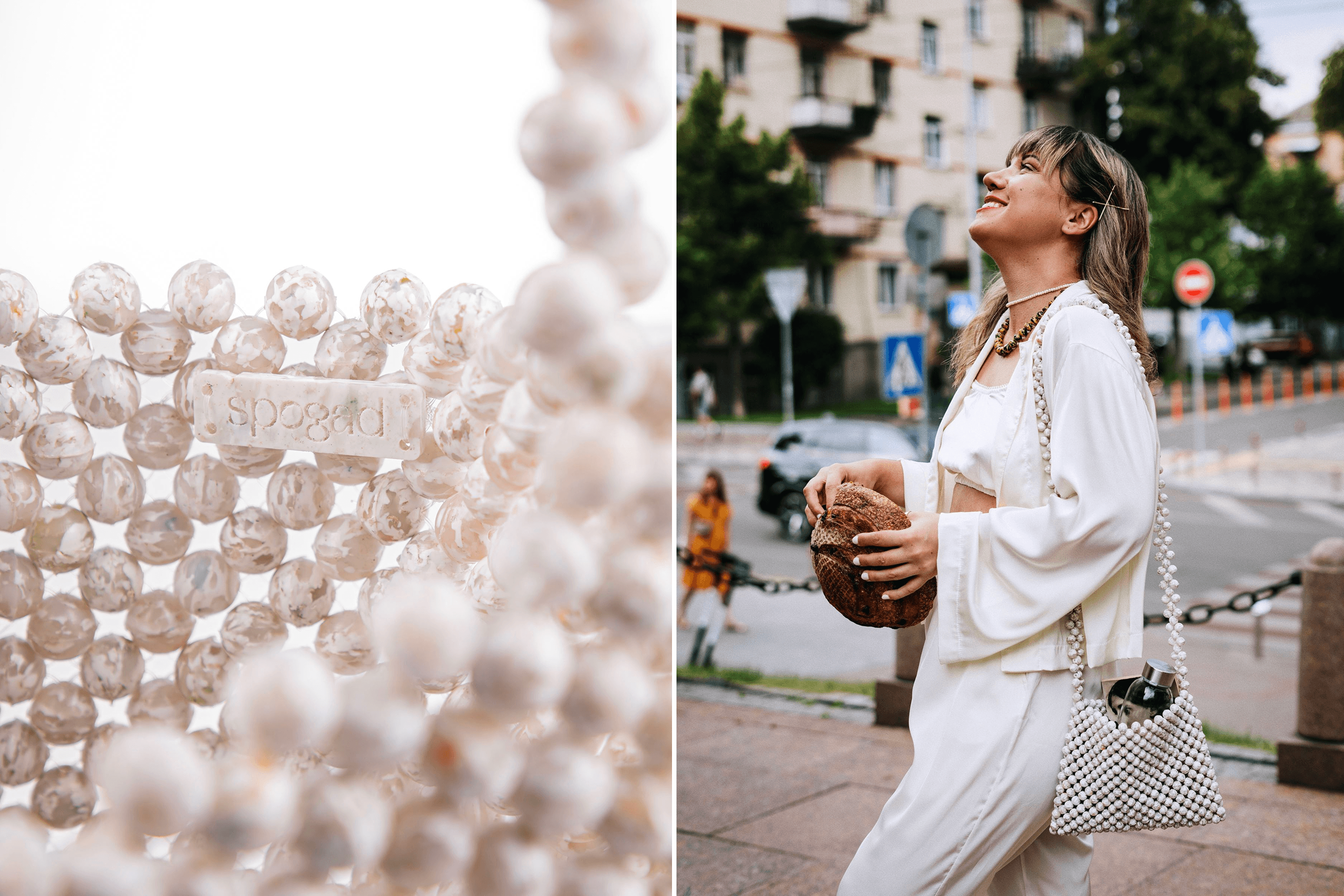
Photo: spogad.store / YB 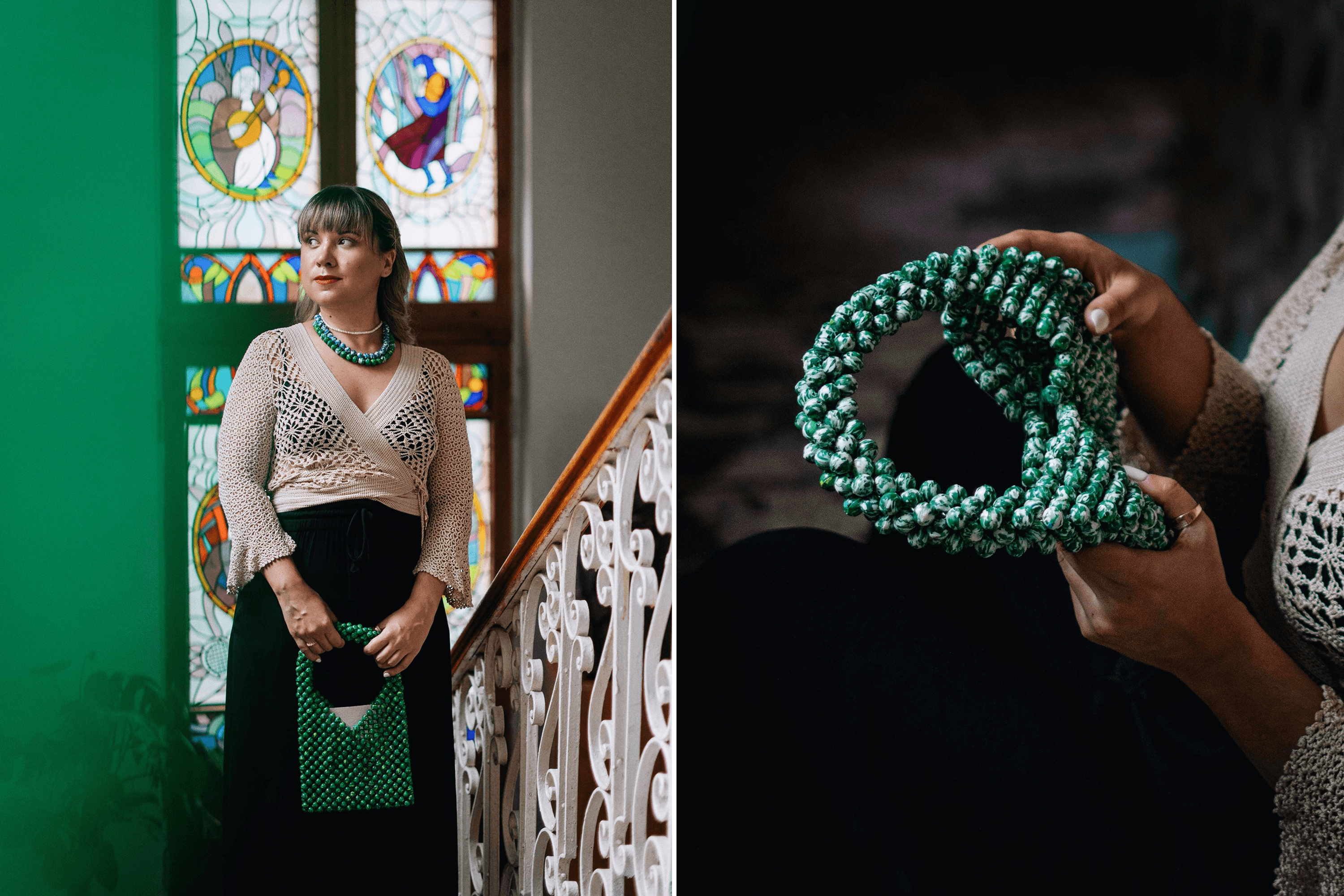
Photo: spogad.store / YB 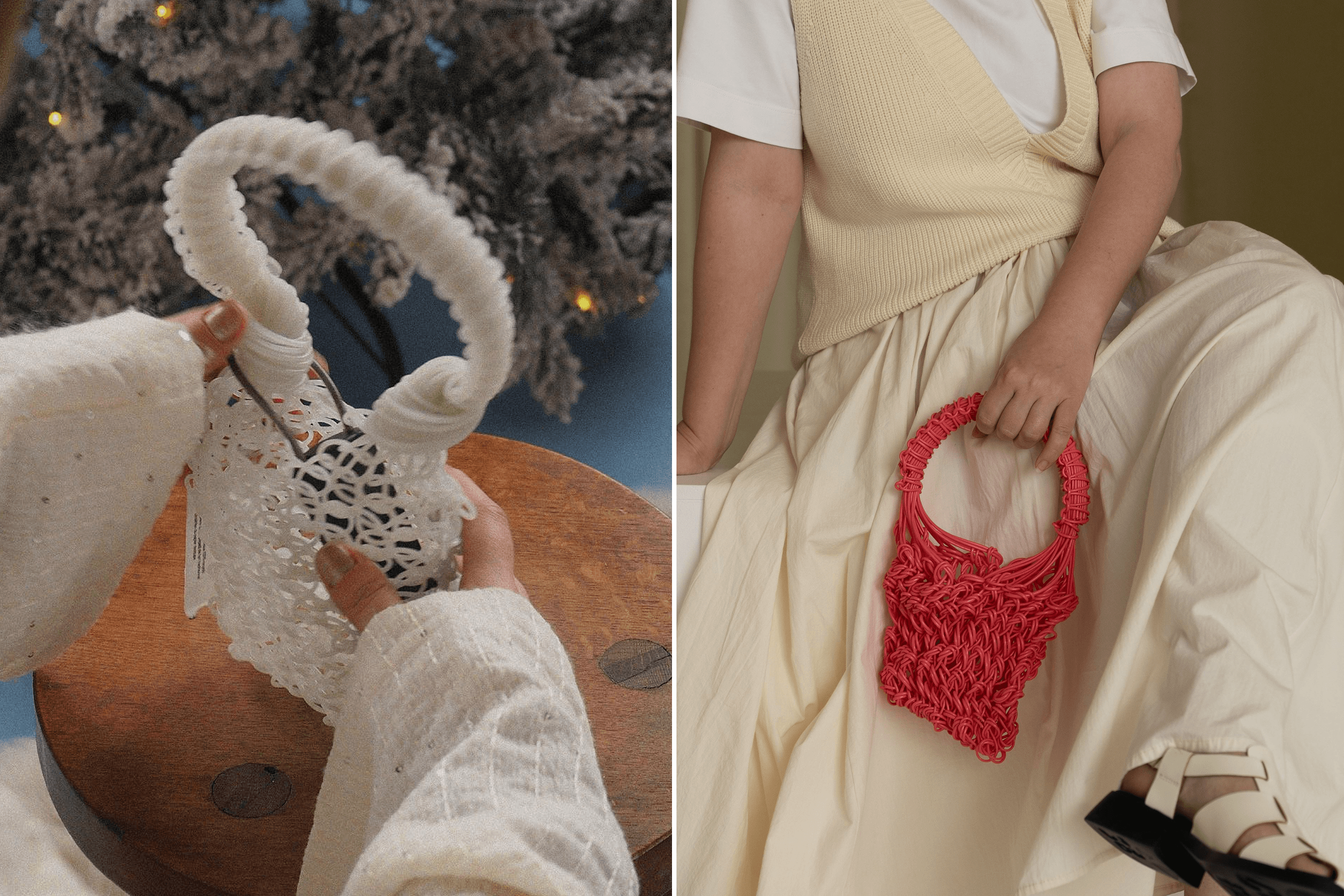
Photo: spogad.store / YB
For the beads, we use HDPE 2 plastic, such as bottle caps. We grind them, and to create the required color, we mix the flakes in different proportions according to a technological chart I developed myself. Then we spread the mixture on a special board and place it under a press that heats and compresses the plastic into a sheet, from which we cut the beads. We polish them by hand so they are smooth and attractive.
Flat elements, such as horse-shaped pendants, are made from LDPE plastic. These are also bottle caps, but softer ones. As with the beads, we create sheets and cut the figures from them using a machine. Threads are more complicated. They require HDPE plastic, such as shampoo or cream bottles. We pour the plastic flakes into an extrusion line, from which the thread is extruded. We can control its thickness and texture. The thread is wound onto a spool, and later we weave the products by hand.
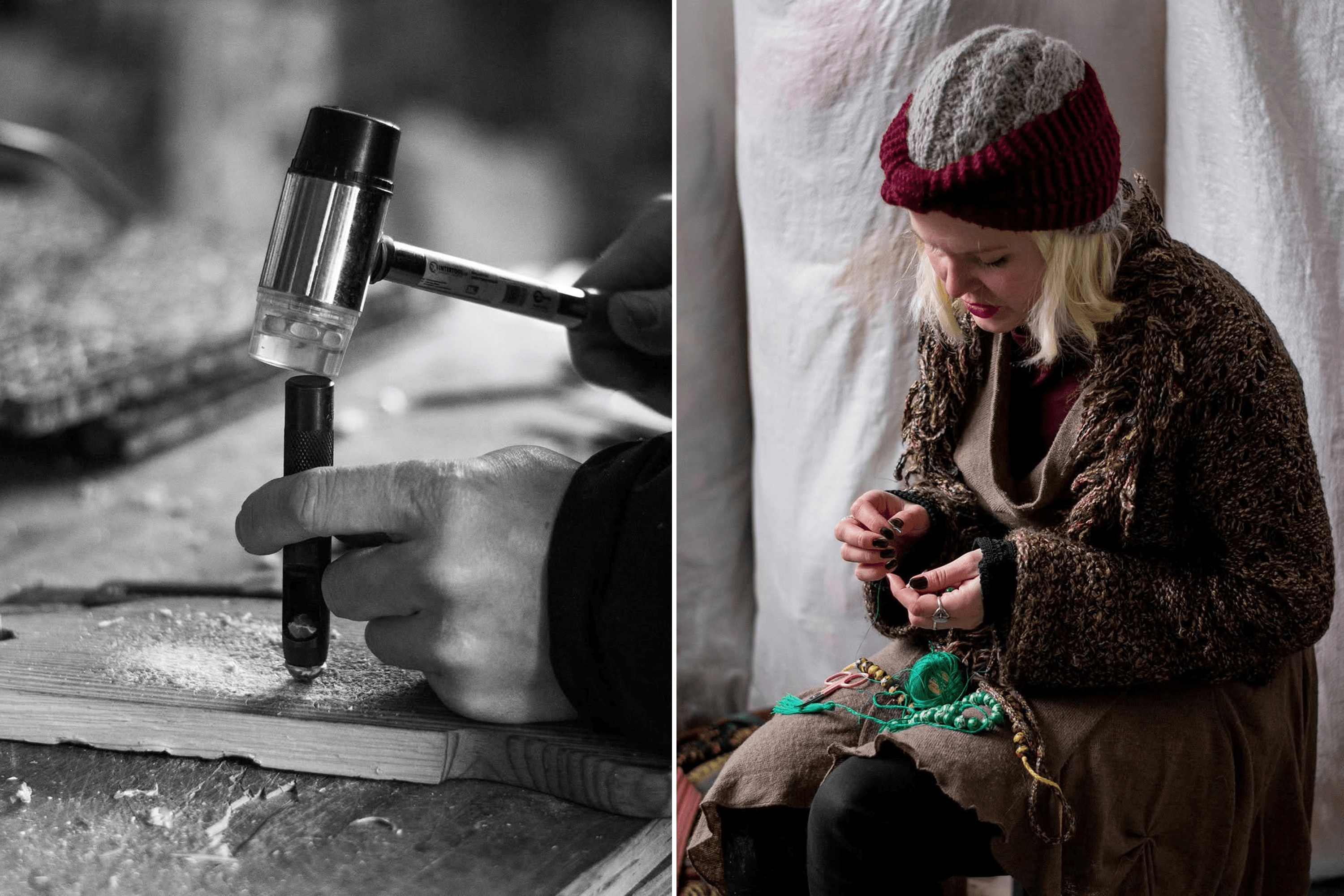
Right now, we are looking for a larger space to relocate the production and purchase new equipment that will expand our capabilities. We are also considering alternative ways of obtaining plastic, for example by recycling waste from businesses. This will be a paid service and a separate line of business. Ukrainian brands are required to dispose of waste, and collaborating with us is good both for financial reporting and public image.
In January 2026, you had your first collaboration — a jewelry collection with the Ukrainian office of the French cosmetics brand Yves Rocher. You recycled their cream packaging into pendants. How successful was this collaboration?
It was an attempt to test the B2B model. The company gave the accessories to employees as New Year gifts. The result exceeded expectations: not only employees but also Yves Rocher’s followers were delighted. They flooded the brand’s direct messages asking how they could buy the accessories. We plan to continue collaborating with Yves Rocher, and perhaps one day our products will become part of their product line.
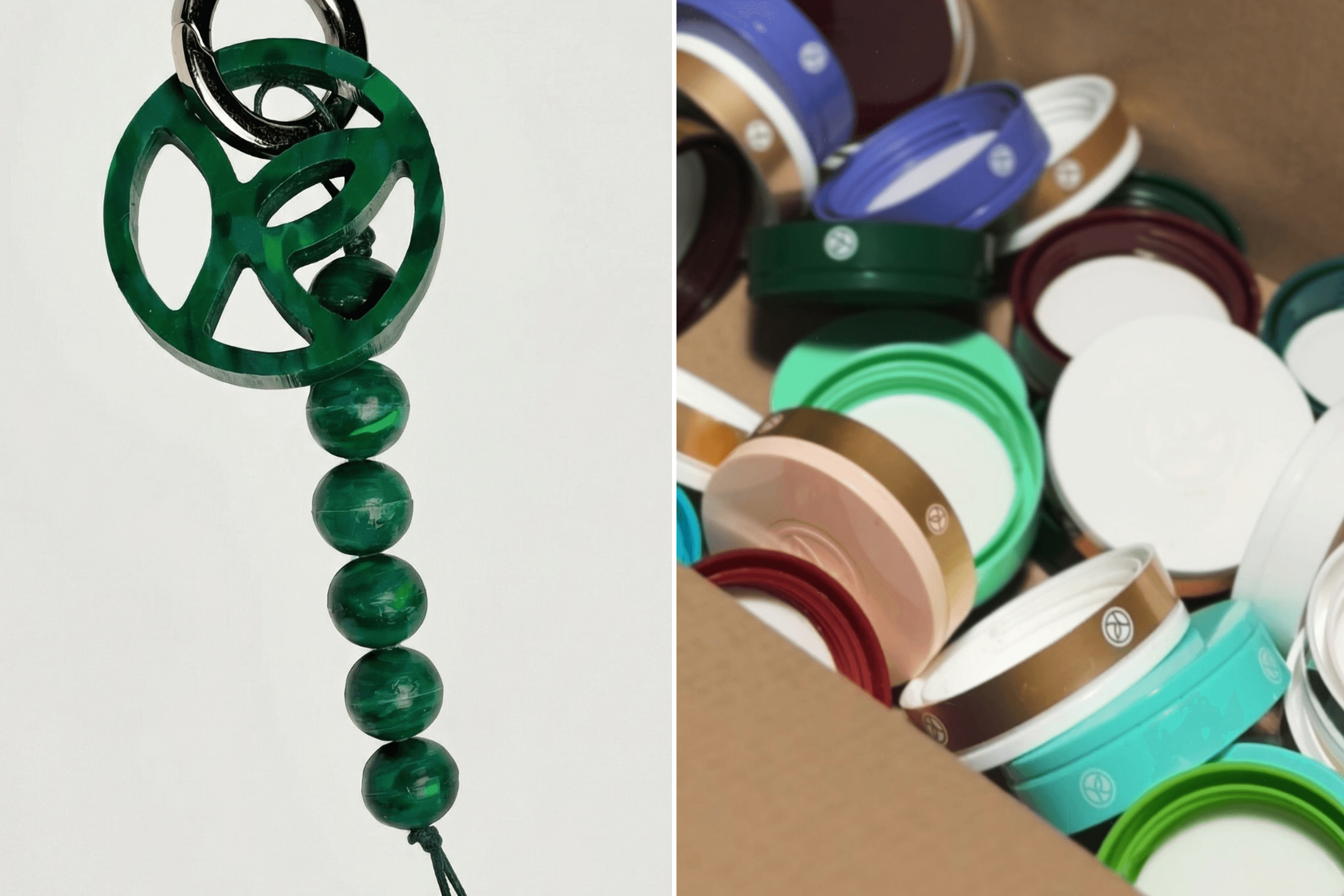
Accessories by the Spogad brand for Yves Rocher. Photo: spogad.brand / Instagram / YB 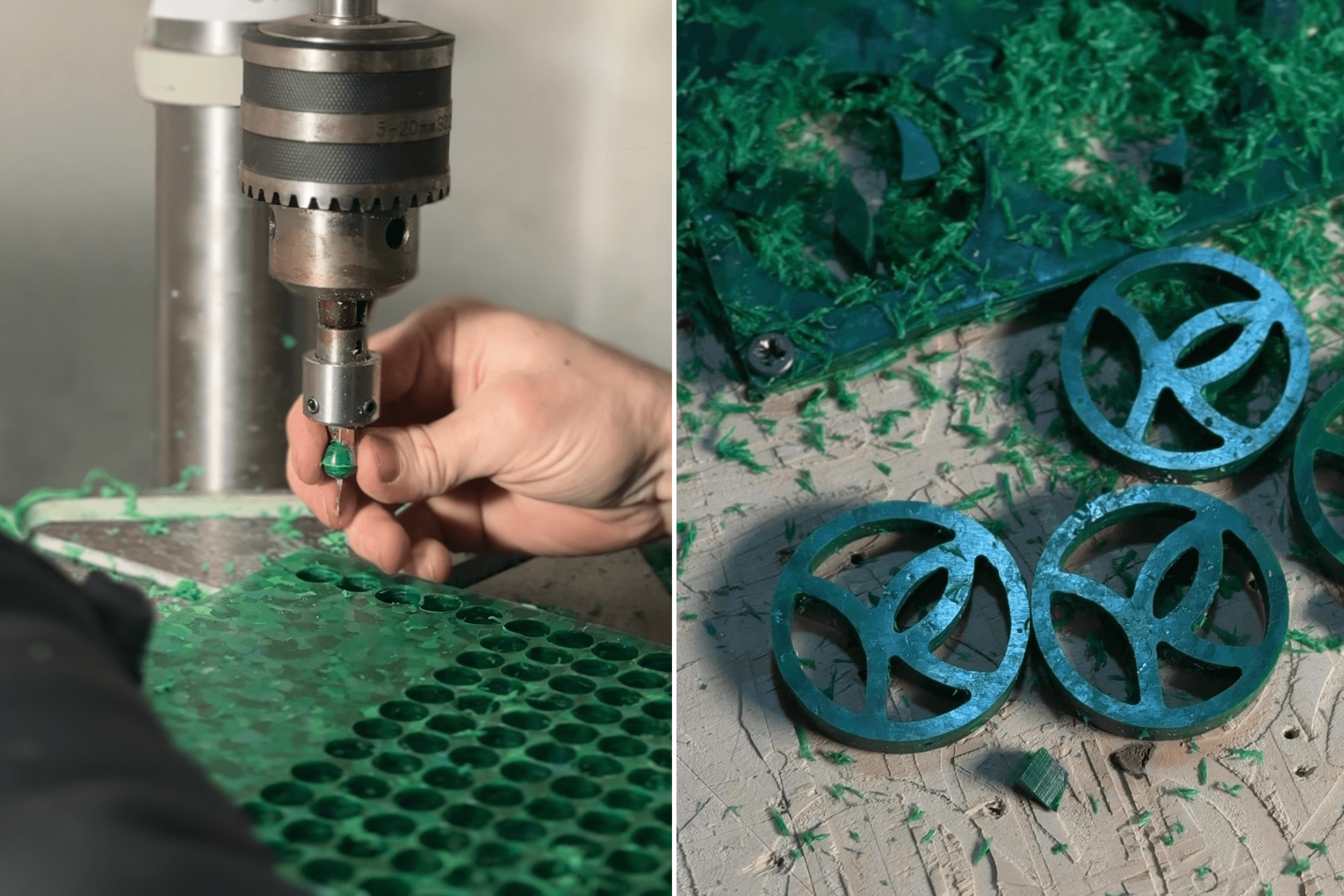
Photo: spogad.brand / Instagram / YB 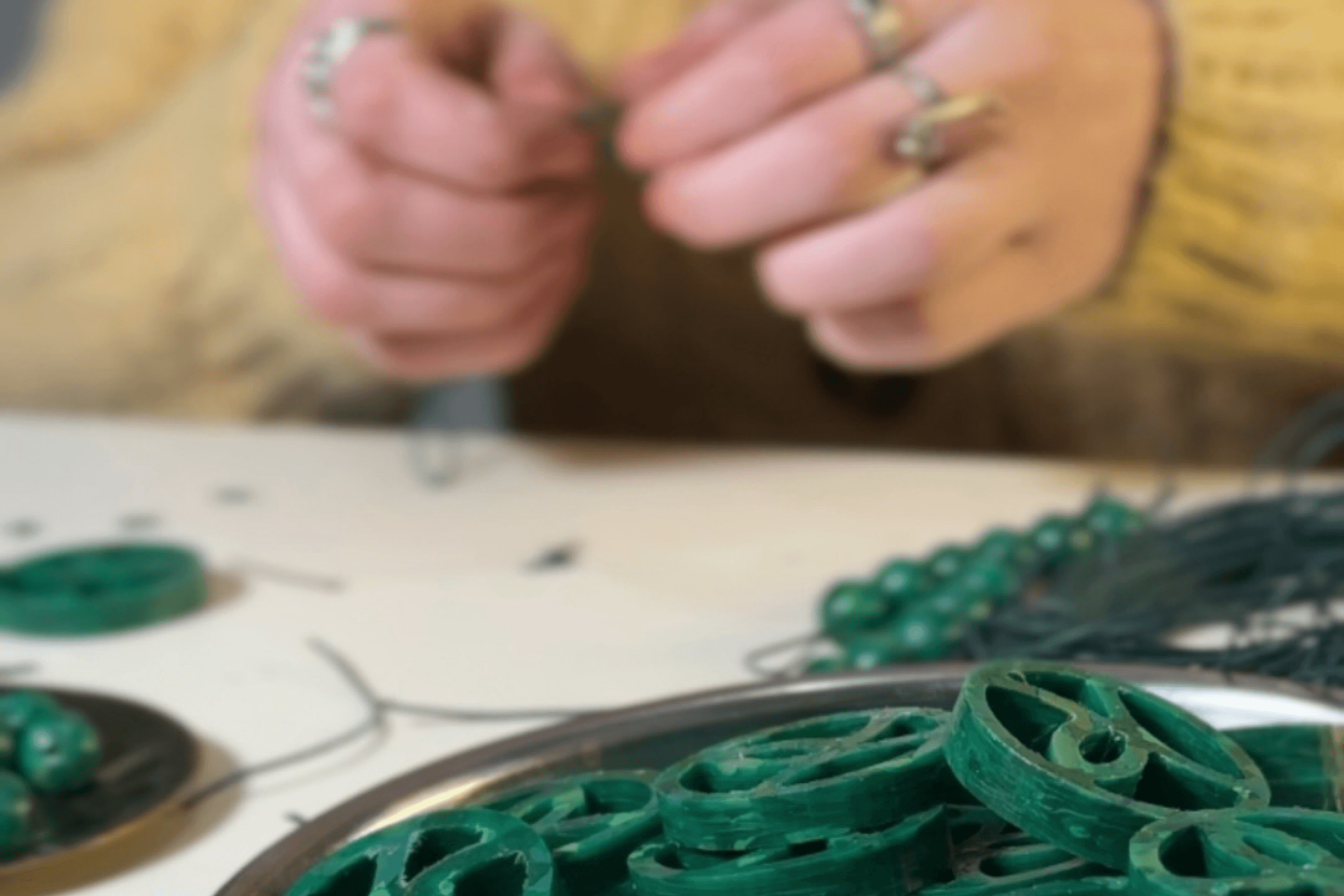
Photo: spogad.brand / Instagram / YB
Right now, we are negotiating collaborations with five European and Ukrainian brands, one of them a charitable project. We have already developed the first sketches for the products, and they are more complex than what we usually make. Soon, we expect to receive a grant for equipment needed to implement these projects.
2
The winter of 2026 became one of the most difficult periods in four years of the full-scale war. On social media, you wrote that there was no electricity or heating at the production site in Dnipro, and that the situation was so critical you were planning to close the business. How did you survive that period?
It was the most difficult period in all the years of our work. Spogad’s equipment is so powerful that no generator can handle it. That is why we worked only when there was electricity: on average two hours a day, at night. Oleksandr often stayed overnight at the station to switch the equipment on.
Taya wove products by candlelight and with battery-powered fairy lights that I sent from France because they quickly sold out in Dnipro. I felt privileged because I live abroad and the last time I was in Ukraine was in November 2025. But I lived in Kyiv during the first blackouts in the winter of 2022–2023, and I know what it is like. We have a product called Zvizda, inspired by a battery-powered star that lit my room at that time. I wear this accessory as a talisman. It reminds me of those times and that we must always keep moving forward.
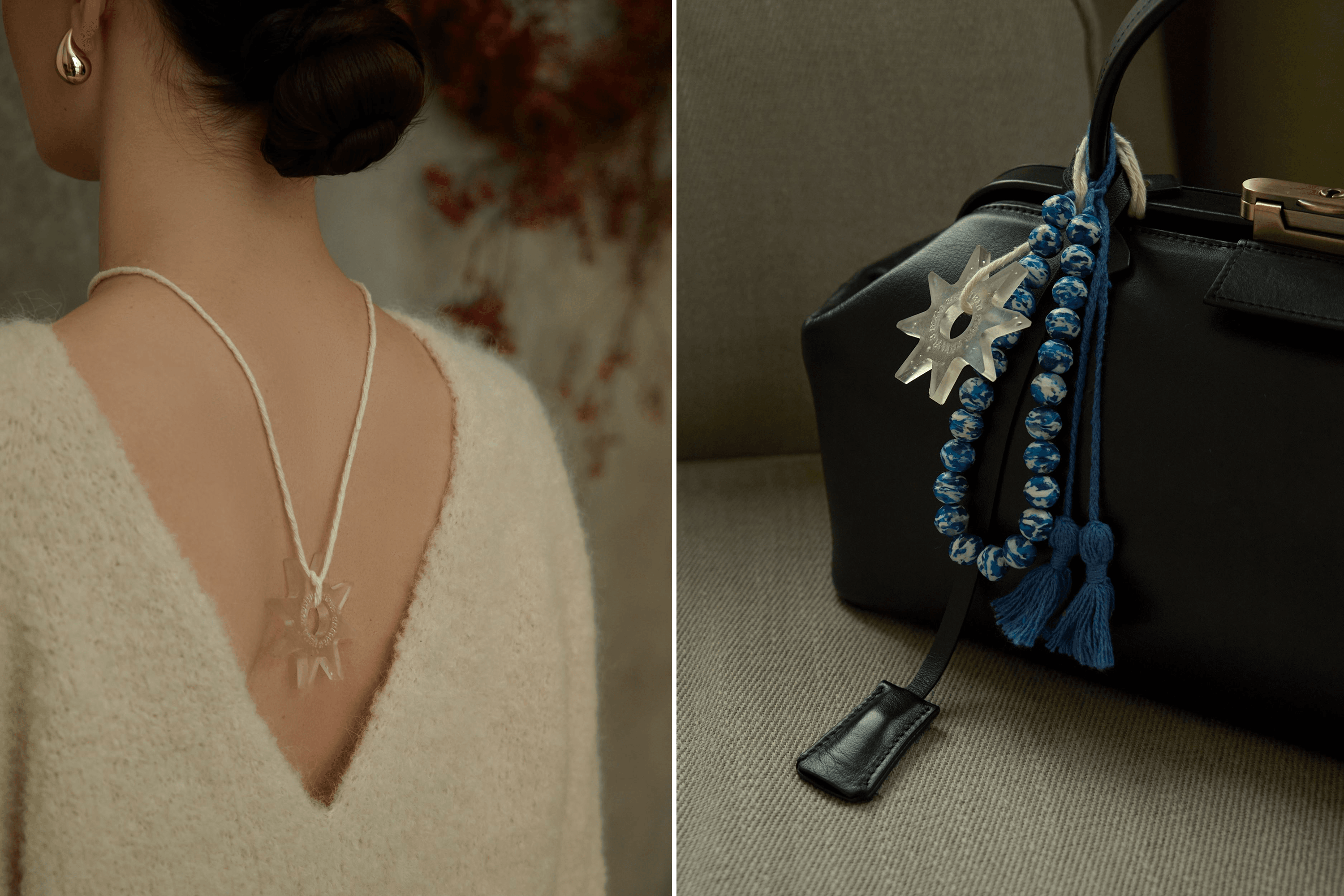
The Zvizda piece by the Spogad brand. Photo: spogad.store / YB 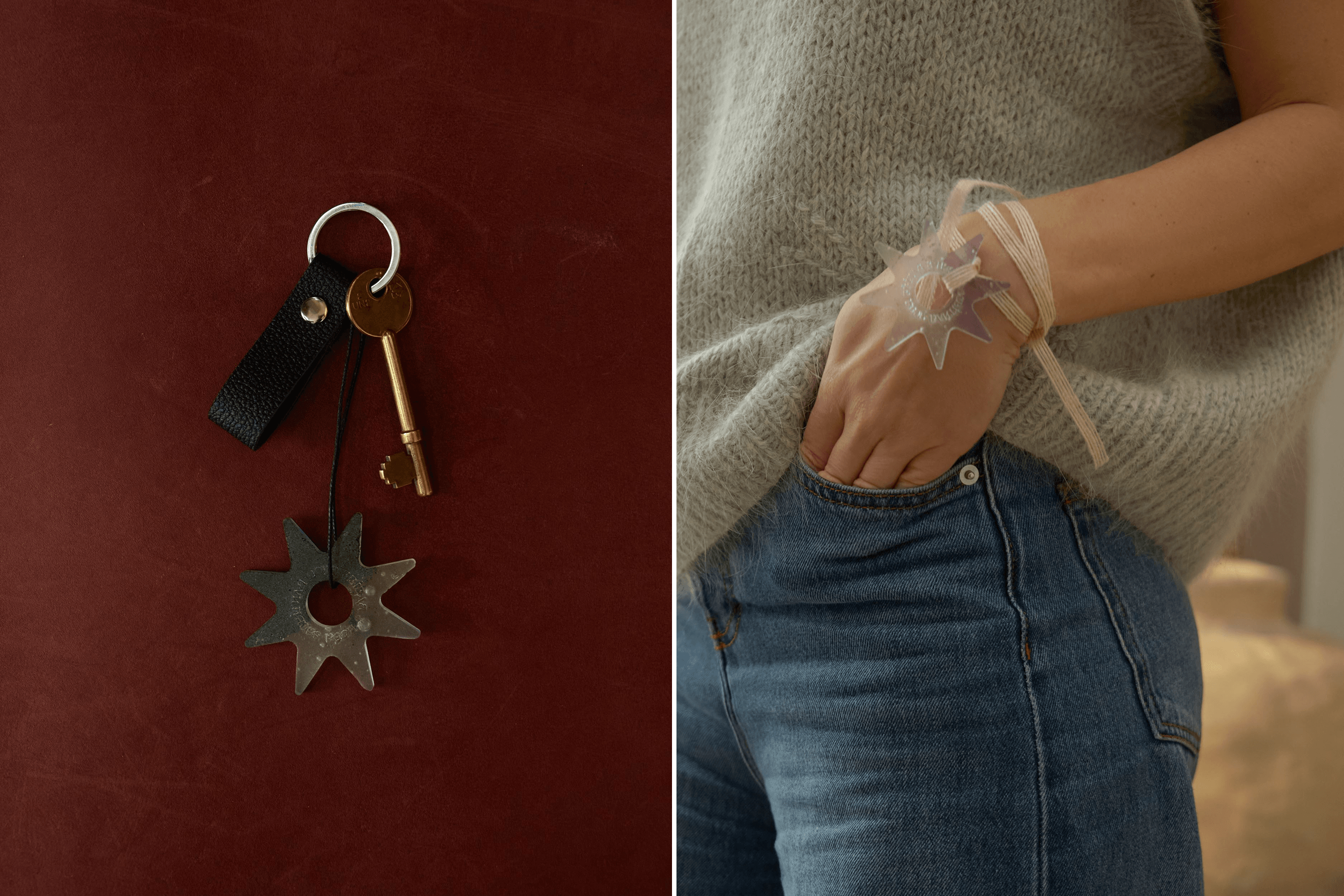
Photo: spogad.store / YB 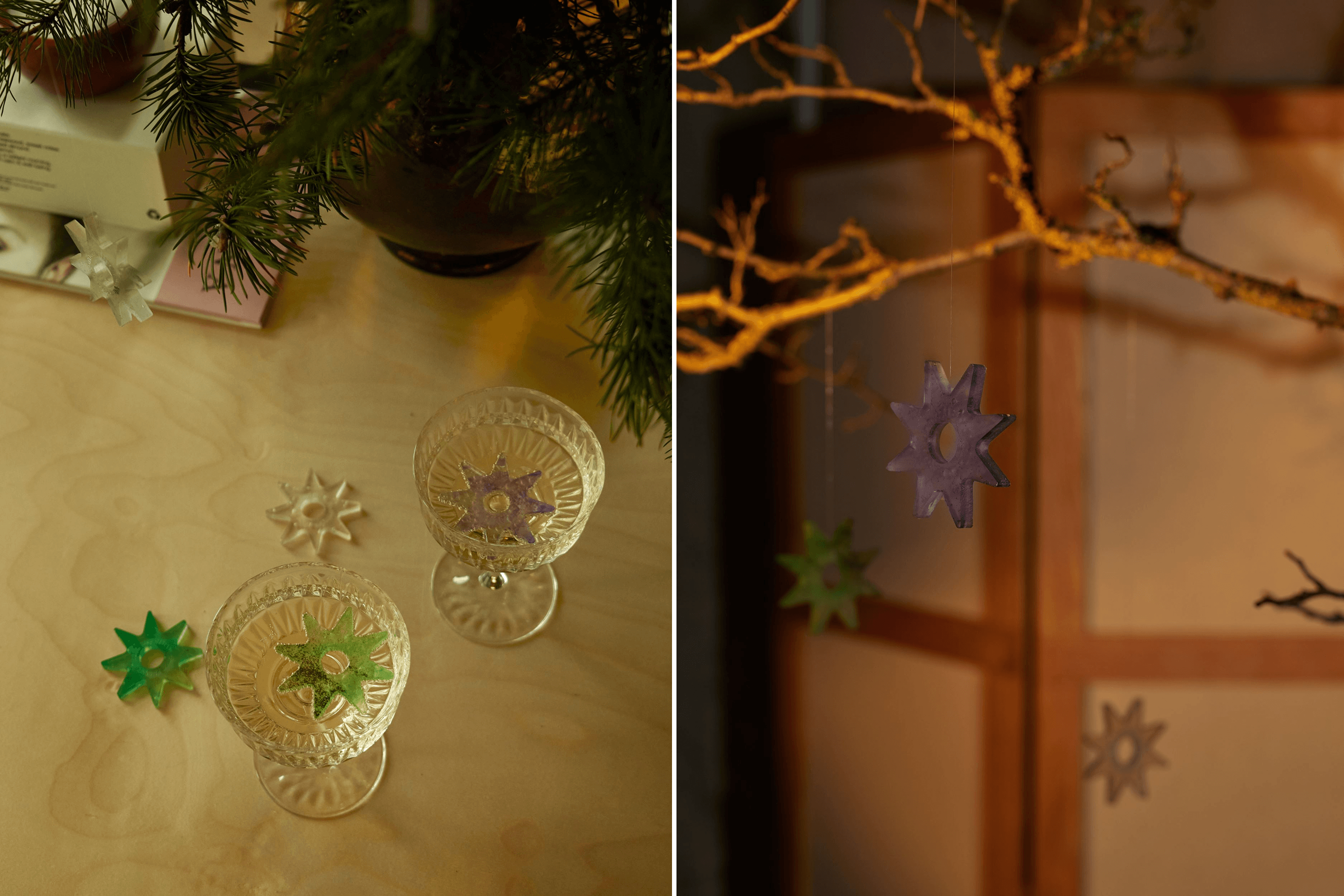
Photo: spogad.store / YB 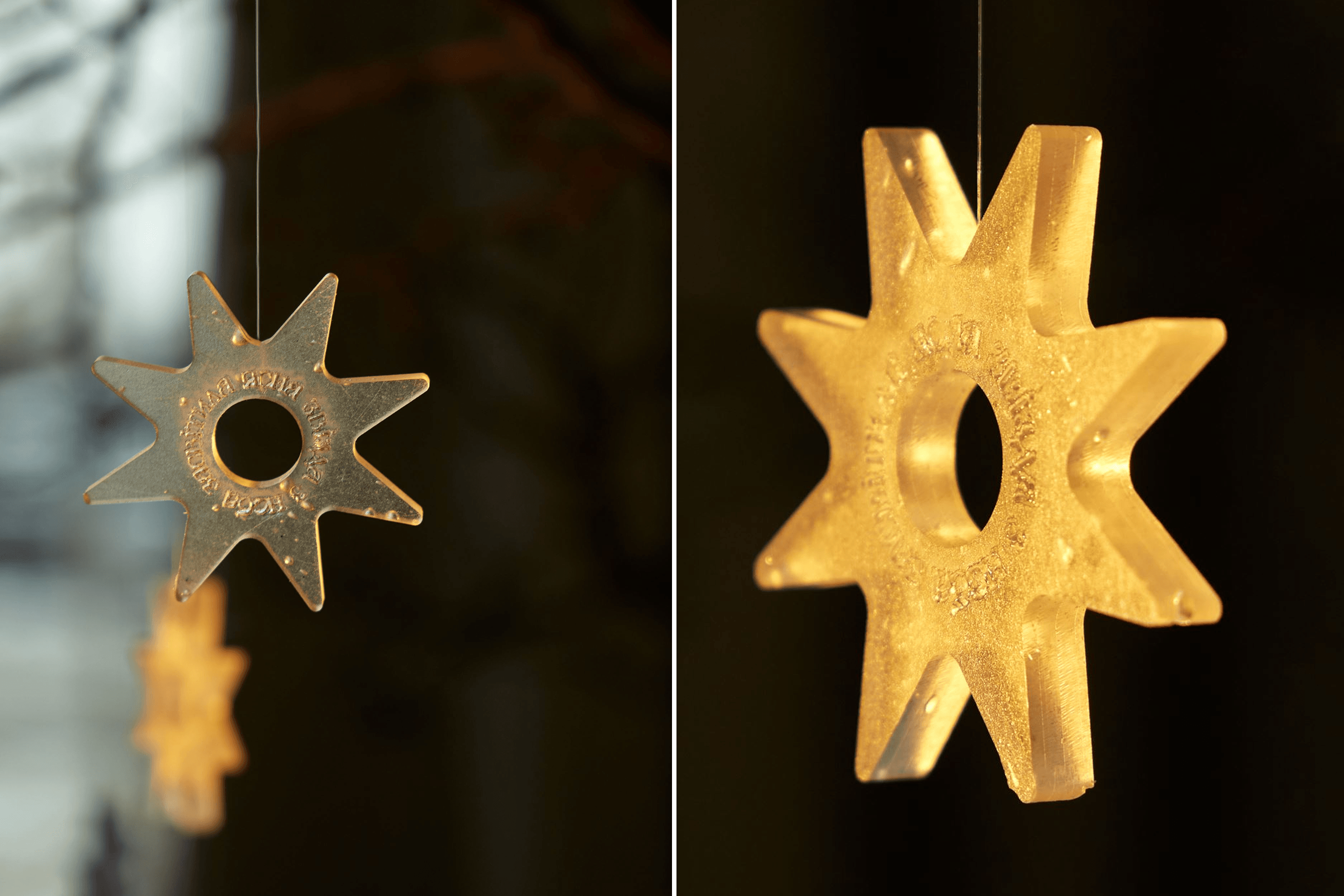
Photo: spogad.store / YB
On one of the hardest days in January 2026, after another massive attack on Dnipro, I wrote a post saying that we might shut down. That same day, we had a call with the team. I was in terrible condition and said: “I have no idea how we’re going to pull through this. Let’s just pack it in.” And suddenly, the people sitting in the middle of a humanitarian catastrophe replied that they had no intention of shutting down and that we would handle everything.
Oleksandr impressed me the most. Usually he is reserved and not very talkative. But then he said that many people running a marathon give up just a few kilometers before the finish line. And that we only had a short way to go, and that we would definitely succeed as a startup if we did not stop now. His words helped me pull myself together.
What reaction did you receive to that post?
Unexpectedly, a lot of support. Ukrainian entrepreneurs wrote that they felt the same way but were afraid to say it out loud because people are expected to talk only about success.
Then I remembered the missile strike near our production site in the summer of 2025. Our windows were blown out. Fortunately, Oleksandr, who was at the station at the time, was not injured. We did not speak about it publicly then, but now I understand that such stories are important to tell.
Sincere stories bring a brand and its audience closer together. When in February 2026 we did not go to Fashion Week in Copenhagen because of the difficult winter, we wrote about it on social media, and many readers responded with words of support.
3
How do you position yourself in the French market, and in what segment are you sold?
Spogad is an intellectual fashion label, positioned between middle-up and premium. I want people to buy our products not because they are trendy, but because they mean something special to them.
In Ukraine, people often ask us: “Why are you so expensive? You’re not Chanel.” Yes, we are not Chanel. We have a different story. This is handmade work; our product is innovative and low-margin. Plastic recycling is an expensive process. Moreover, there is a philosophy behind our jewelry, and each product has its own story.
In France, such questions usually do not arise. Our customers there are politicians, entrepreneurs, and people from fashion, literature, and other cultural fields. They do not need an explanation of the value of our jewelry. Besides, they are deeply committed to sustainable production. France is the first country in the world implementing circular fashion at the level of state policy.
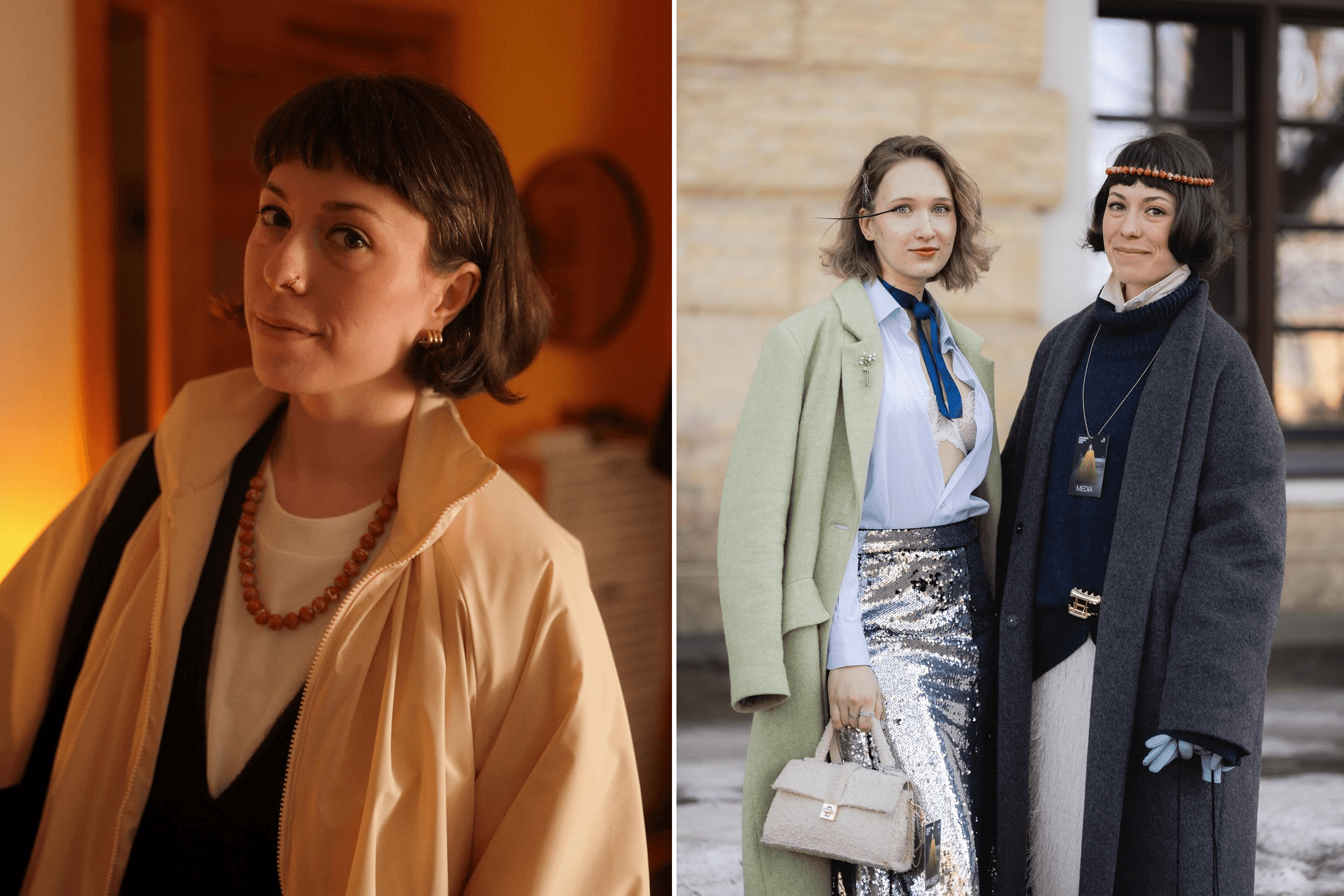
People tag the Spogad brand on Instagram. Photo: spogad.brand / Instagram / YB 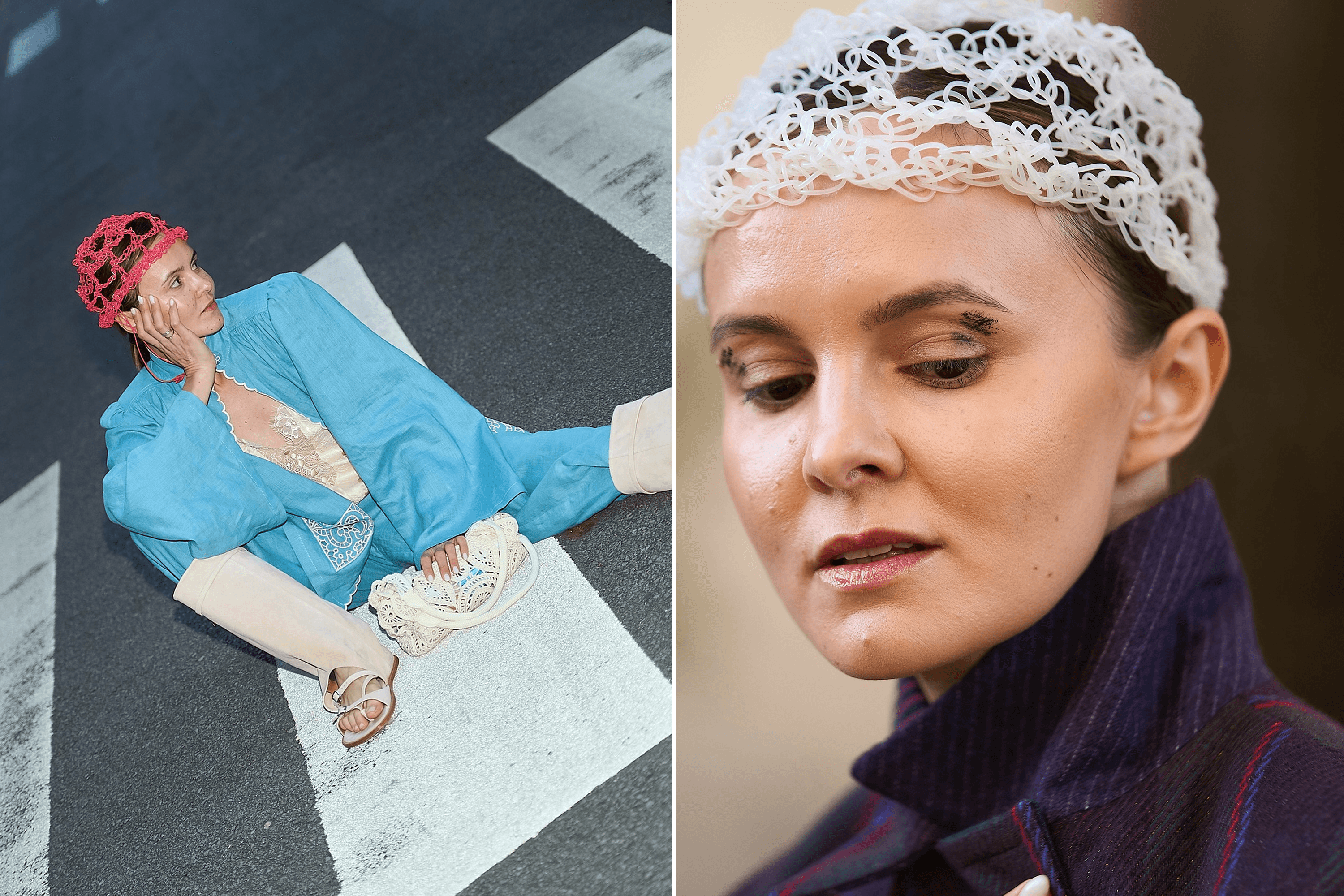
Photo: spogad.brand / Instagram / YB 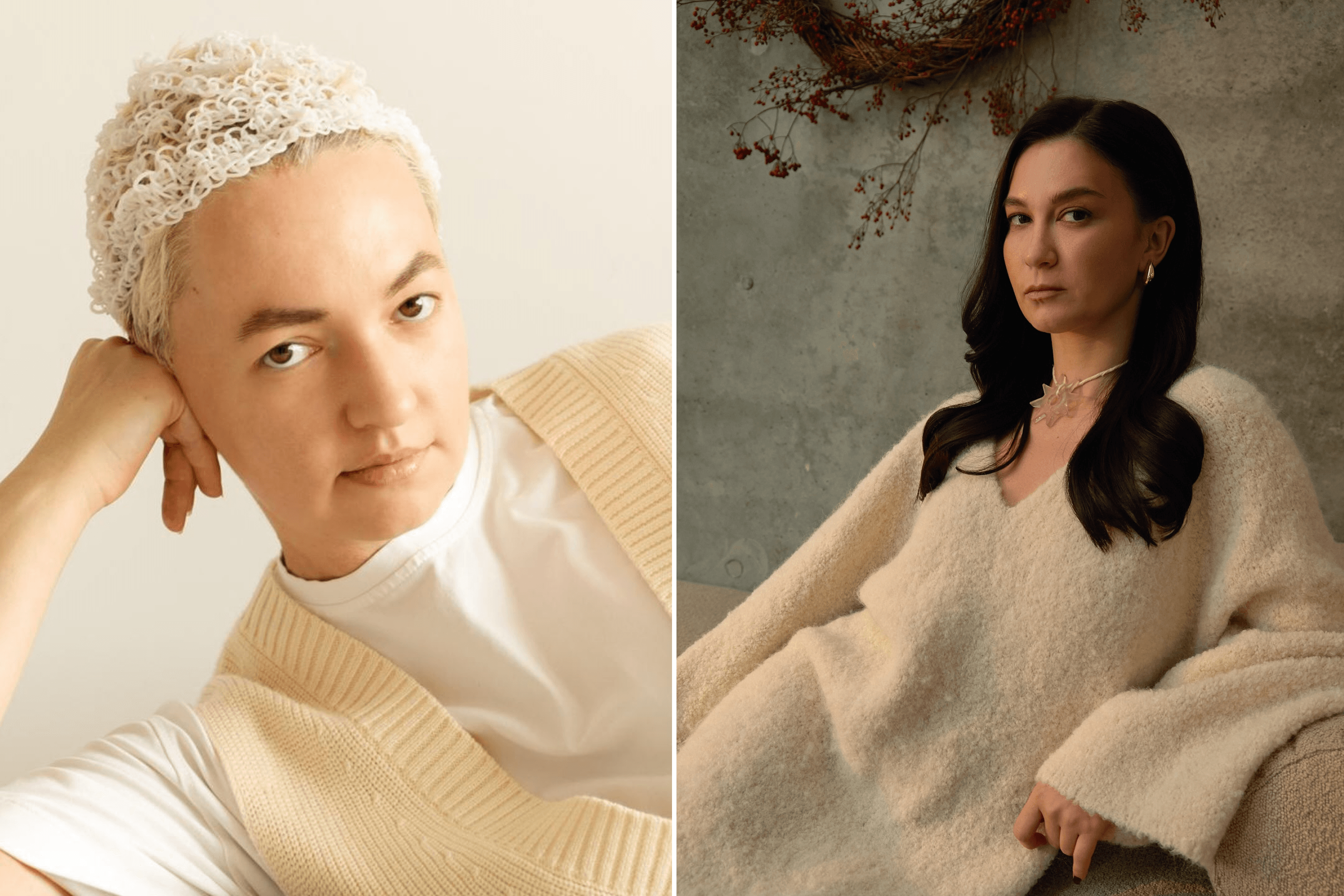
Photo: spogad.brand / Instagram / YB 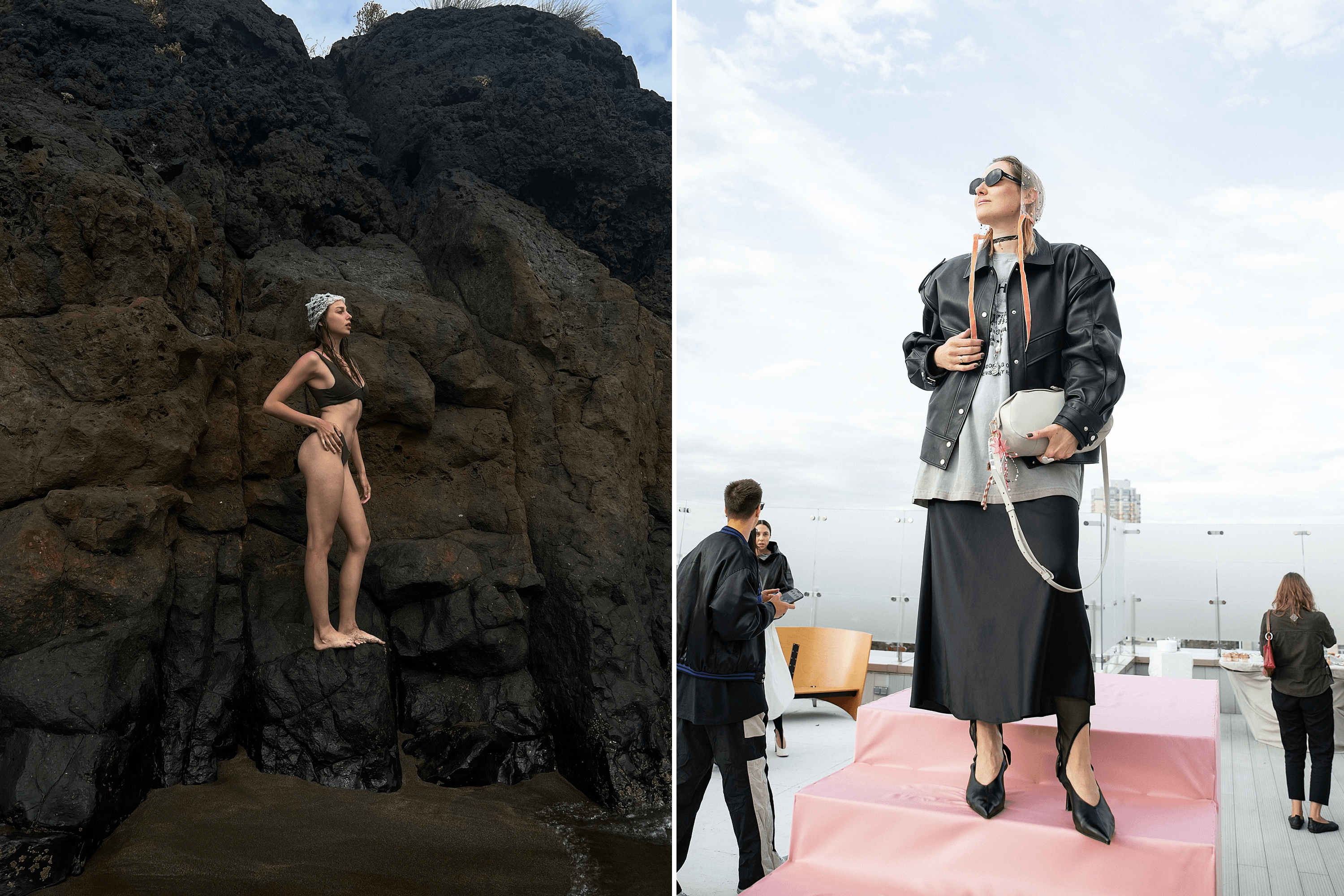
Photo: spogad.brand / Instagram / YB 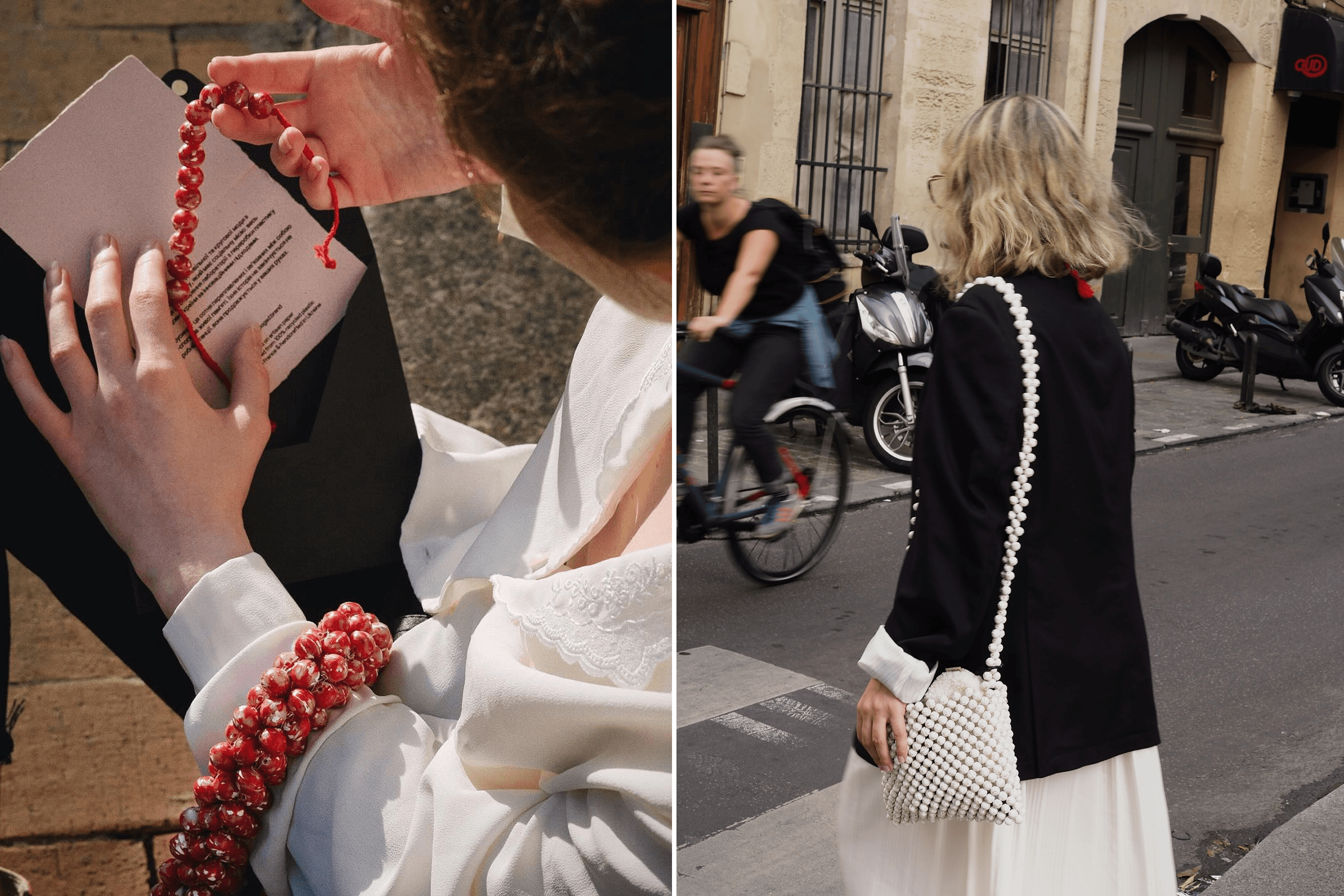
Photo: spogad.brand / Instagram / YB 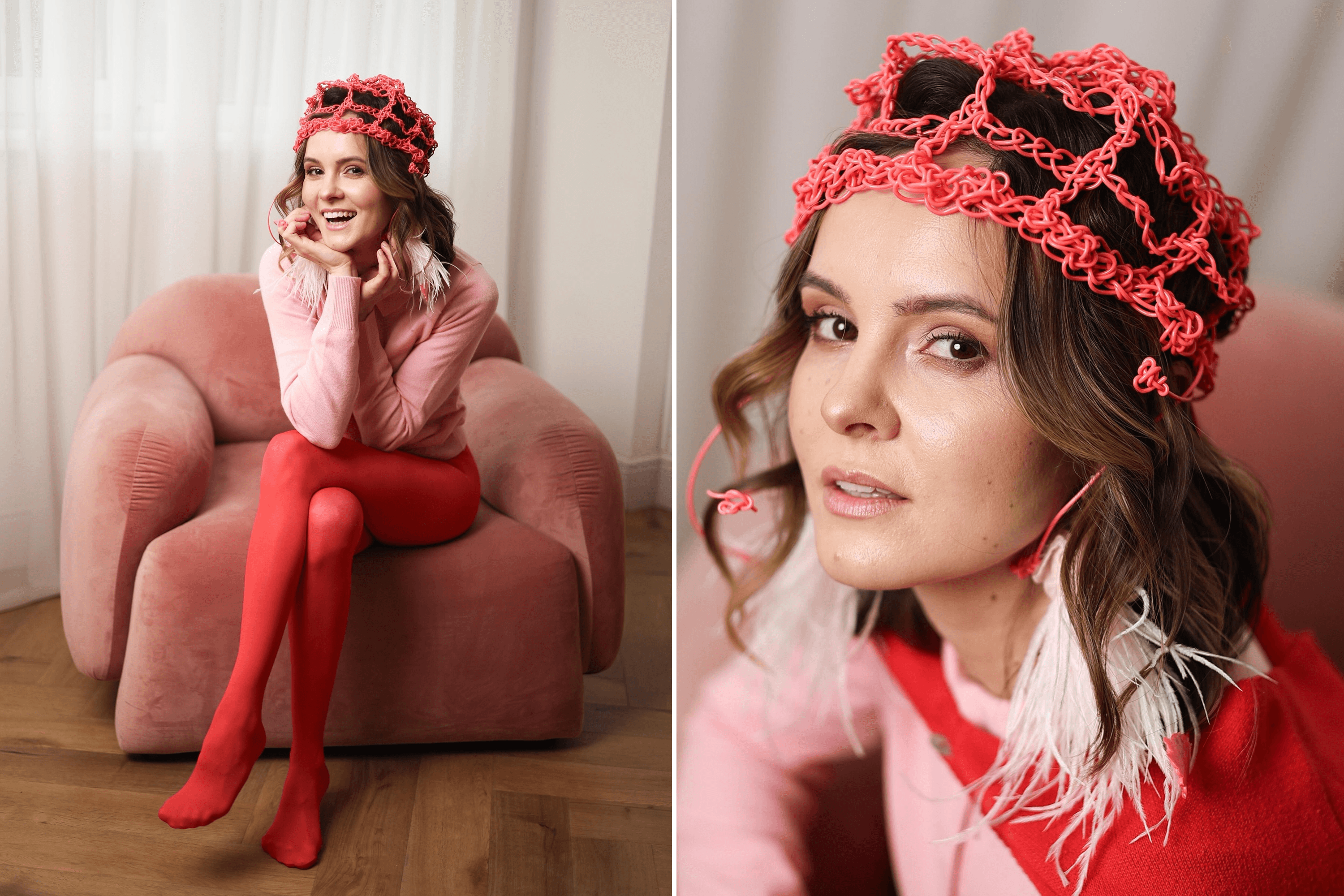
Photo: spogad.brand / Instagram / YB
How do you sell your products in France? Do you work with local retailers?
At the moment, we sell products only through our website. In France, physical stores work best, so my goal by September this year is to find quality retailers with favorable terms for us. France has showrooms dedicated to sustainable brands. We want to cooperate with them in Paris, other French cities, and Scandinavian countries, as we share similar aesthetics and values.
At the beginning of April, we participated in ChangeNOW, a major international event in France for startups with environmental innovations. For us, this is a sign of trust from the French side and an opportunity to find partners in the markets that interest us. For two consecutive years, we have also been invited to pop-ups for sustainable brands at the famous gallery Printemps Haussmann Paris. This is a major achievement for us as a small business.
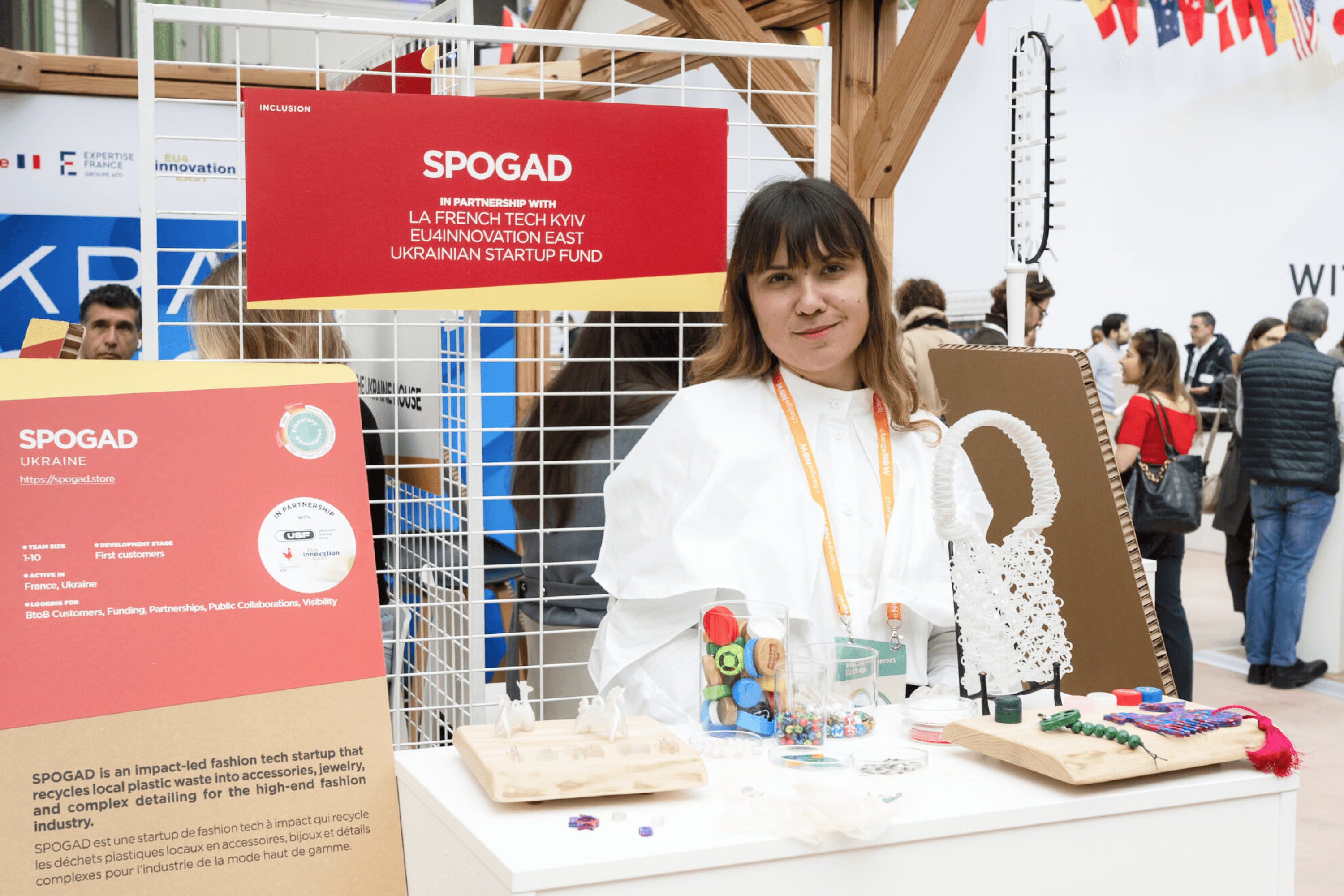
Representatives of the Ukrainian brand Spogad at the ChangeNOW conference in France. Photo: SPOGAD / LinkedIn / YB 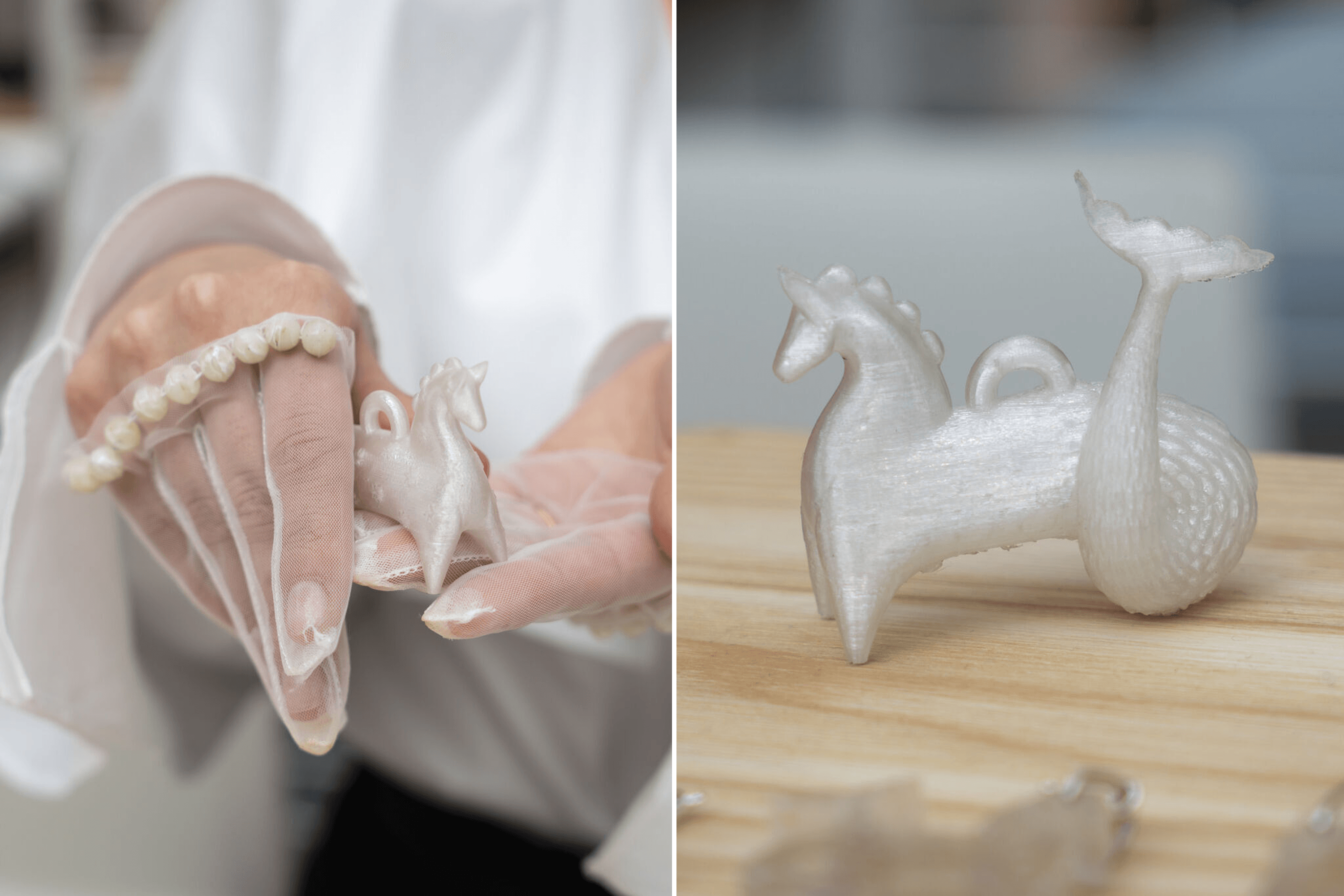
Photo: SPOGAD / LinkedIn / YB 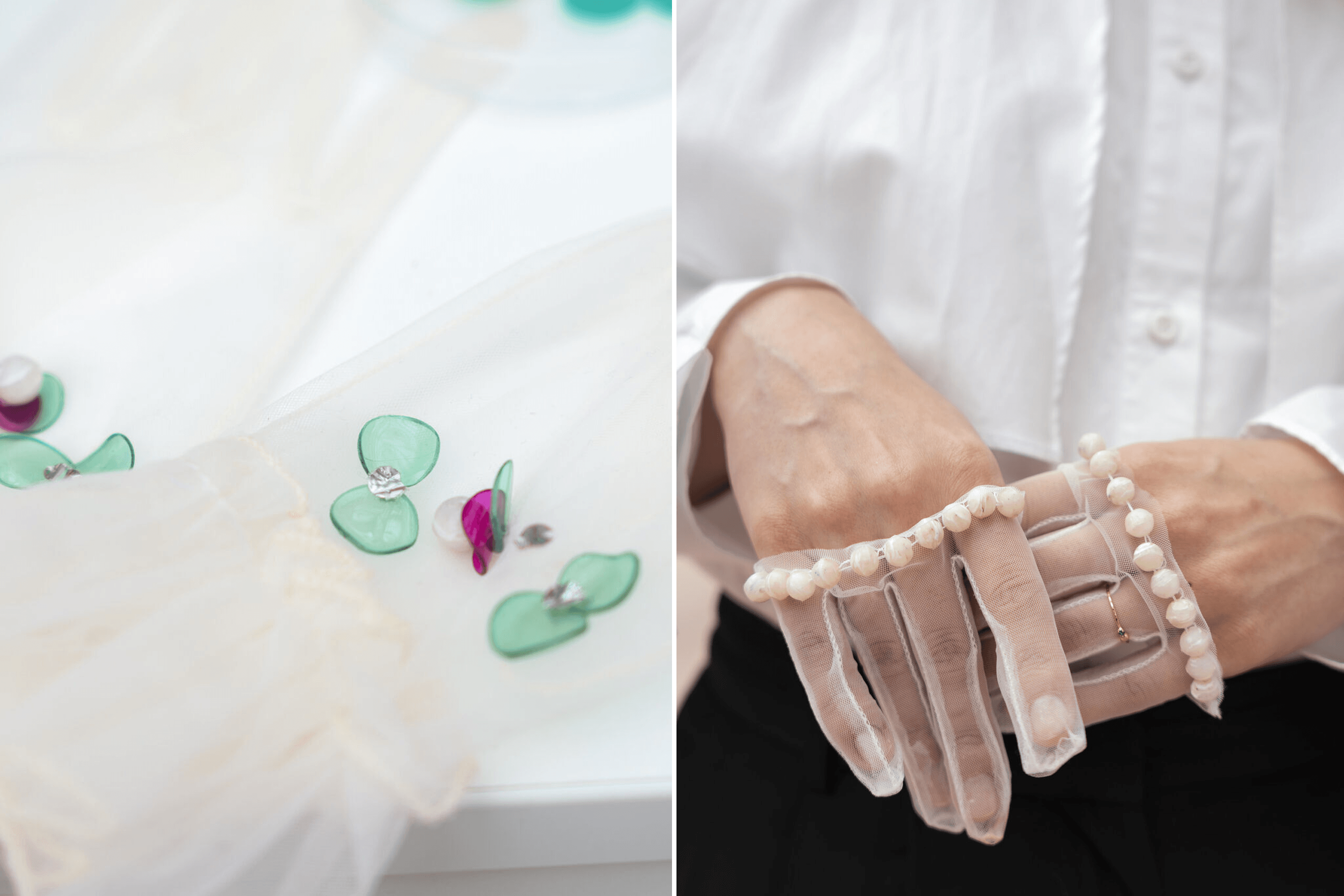
Photo: SPOGAD / LinkedIn / YB 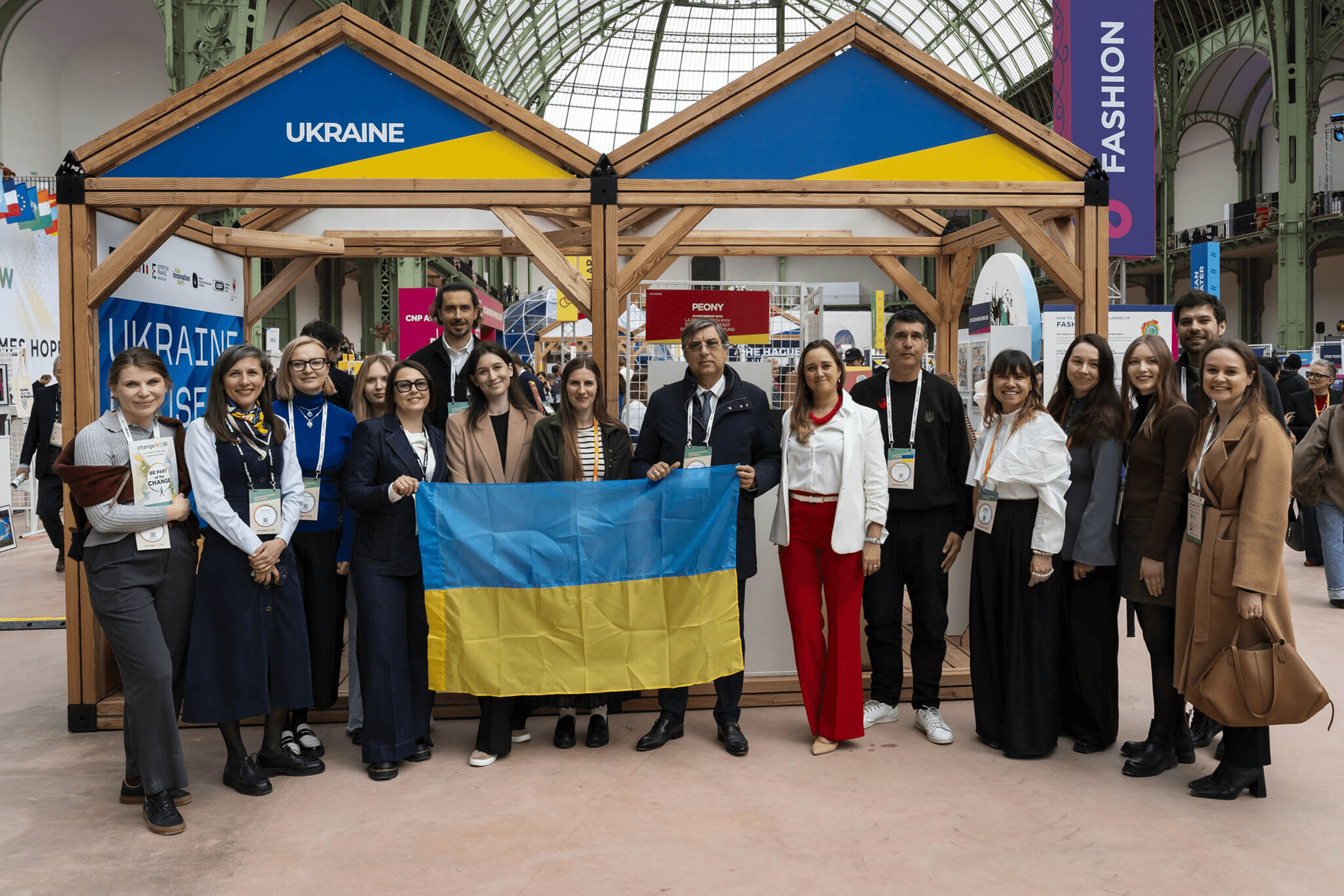
Photo: SPOGAD / LinkedIn / YB
Does the Ukrainian origin of the brand help your sales?
It worked during the first two years of the full-scale war. Now it is not a factor that convinces the French to choose us. Moreover, the French love their local brands the most and are ready to pay €300 more just to support the country’s economy.
But I also do not want people to buy from us only because we are from Ukraine. I speak French fluently, and when I talk to customers about the product, I focus on values important to them: eco-consciousness, sustainability, innovation, and unique design. I mention our origin only in passing, and the French do not pity us but admire the fact that Ukrainians create products that do not exist in France.
Locals even ask when we will open a second production line in France. But I believe we first need to establish production in Ukraine and only then think about expanding abroad.
What is your marketing strategy in the French market? Besides pop-ups, how do you promote the brand?
The second most effective strategy after having a physical retail presence is building a personal brand, which I underestimated for a long time. Clients see my blog, interviews, or podcasts and think: “We like this person. The things she says resonate with us. We want to work with her.” When you have personal beliefs and values, you attract the right people.
The more I speak publicly about the brand, the more opportunities arise.
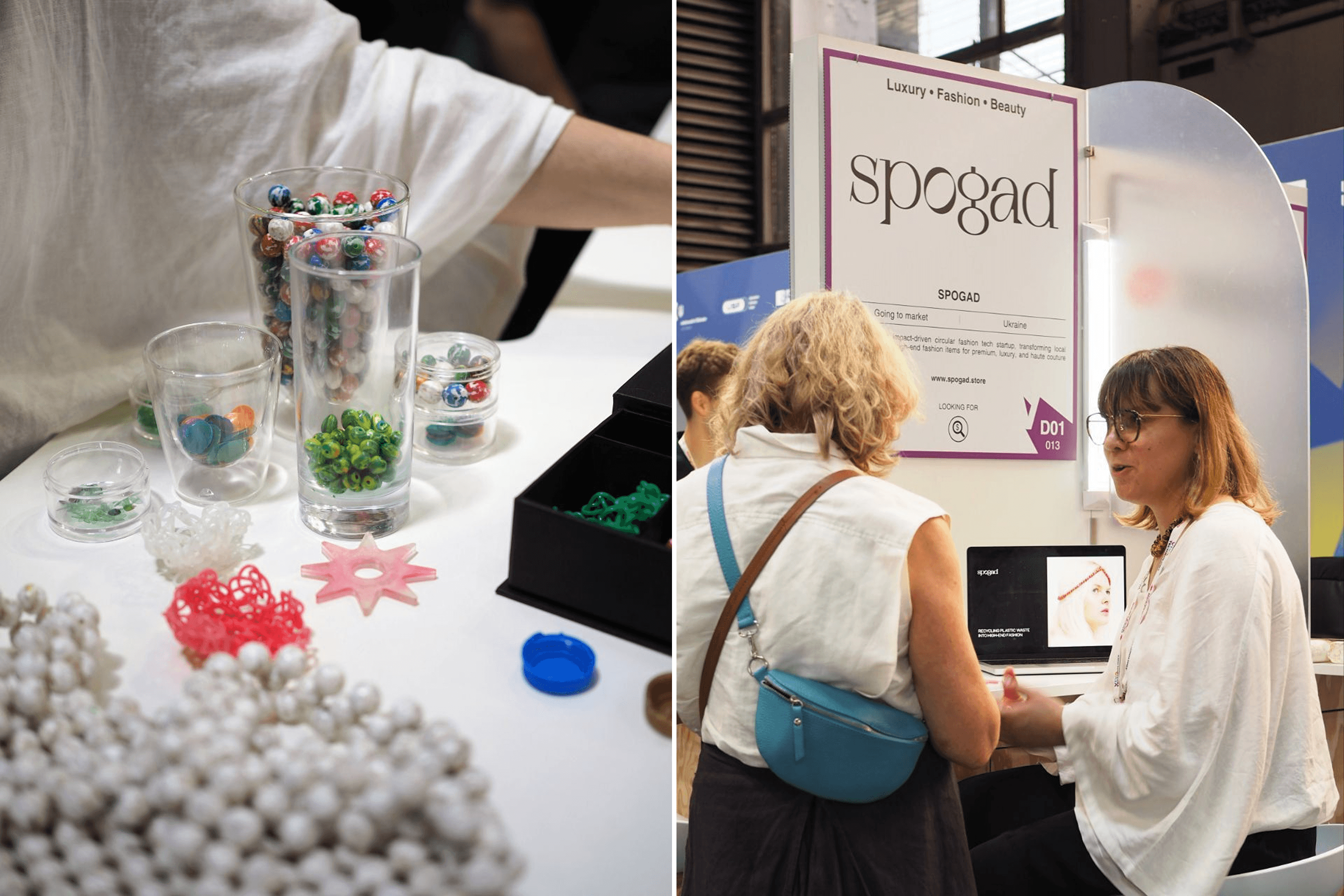
The booth of the Ukrainian brand SPOGAD at the VivaTech technology exhibition in Paris. Photo: SPOGAD / LinkedIn / YB 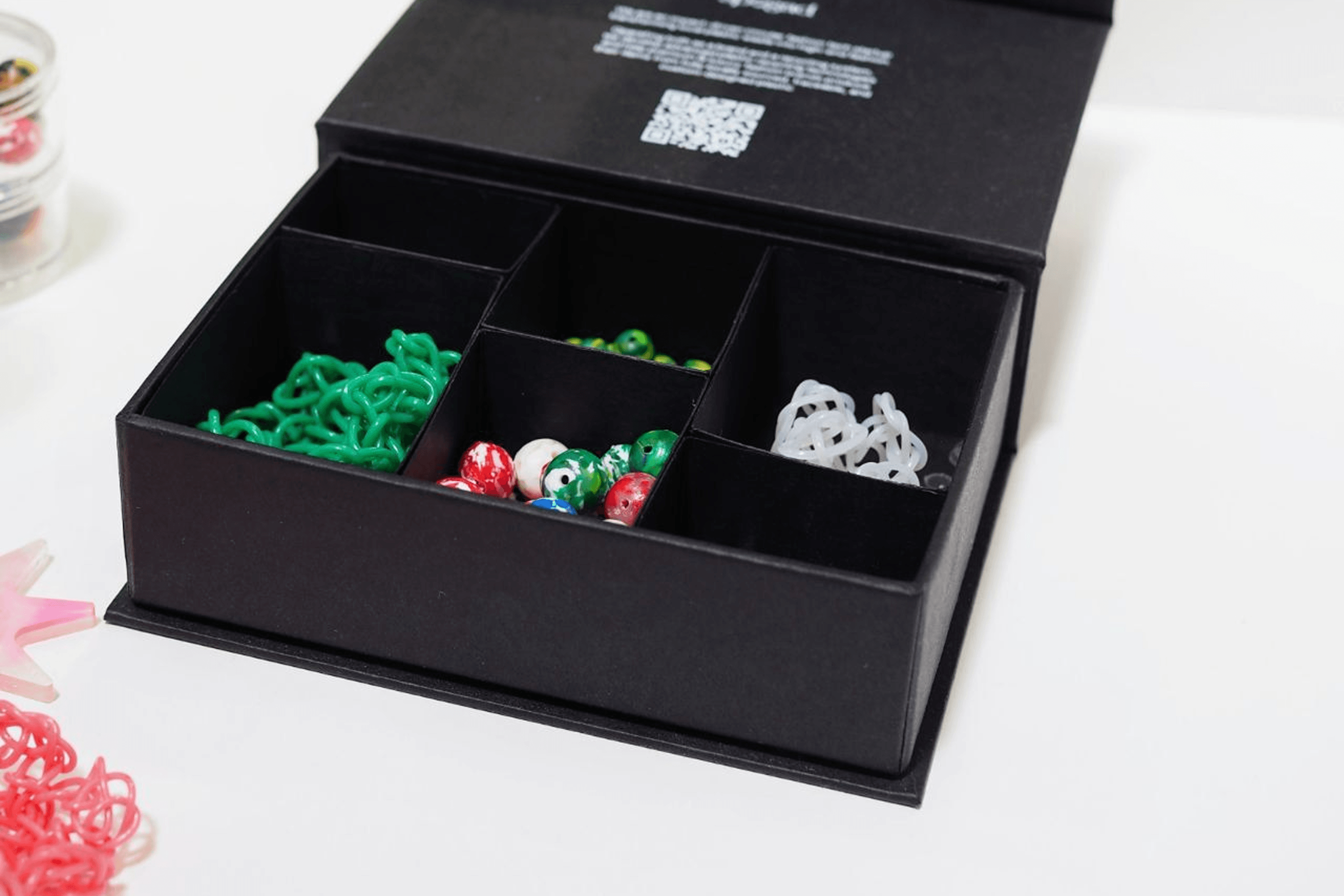
Photo: SPOGAD / LinkedIn / YB 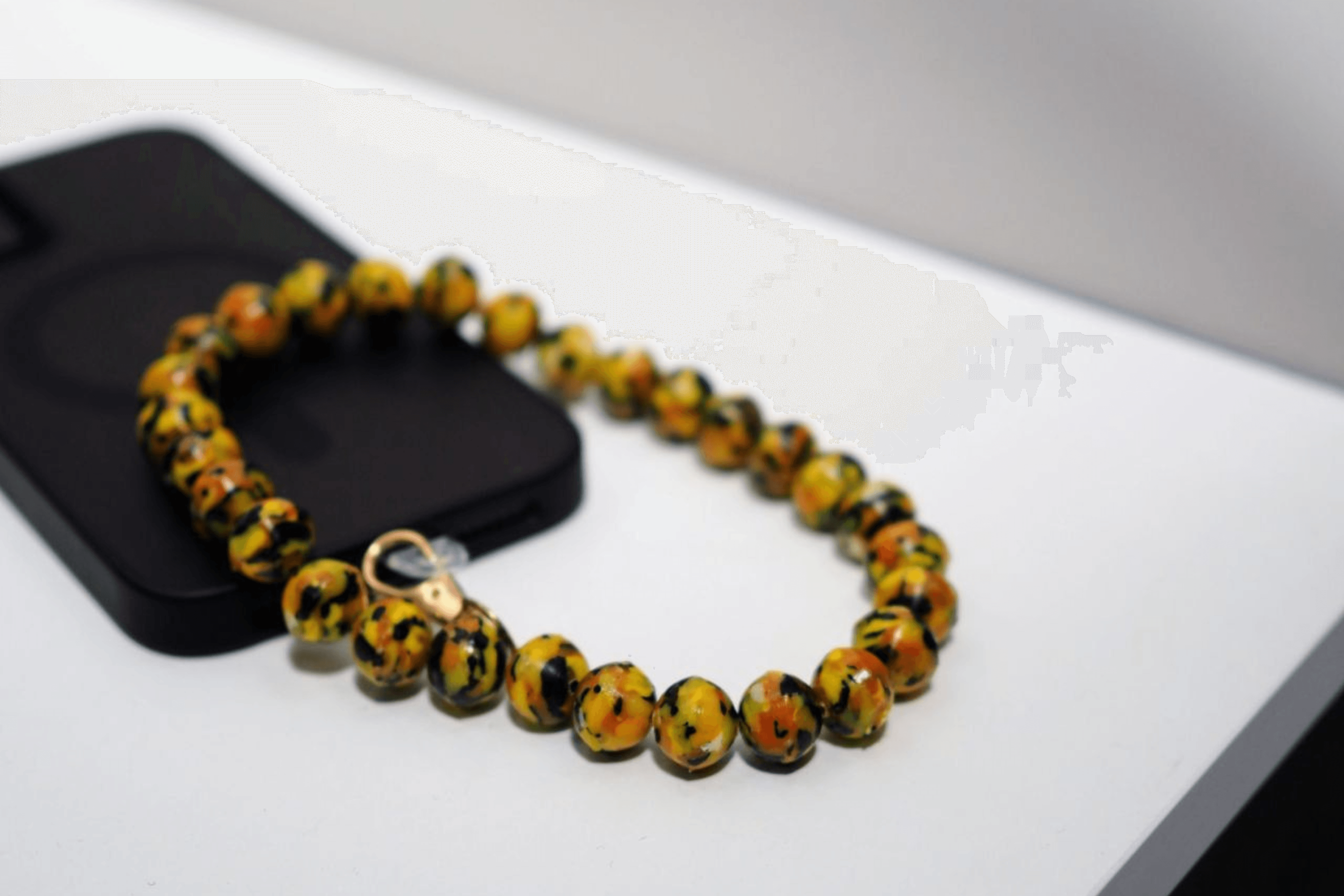
Photo: SPOGAD / LinkedIn / YB 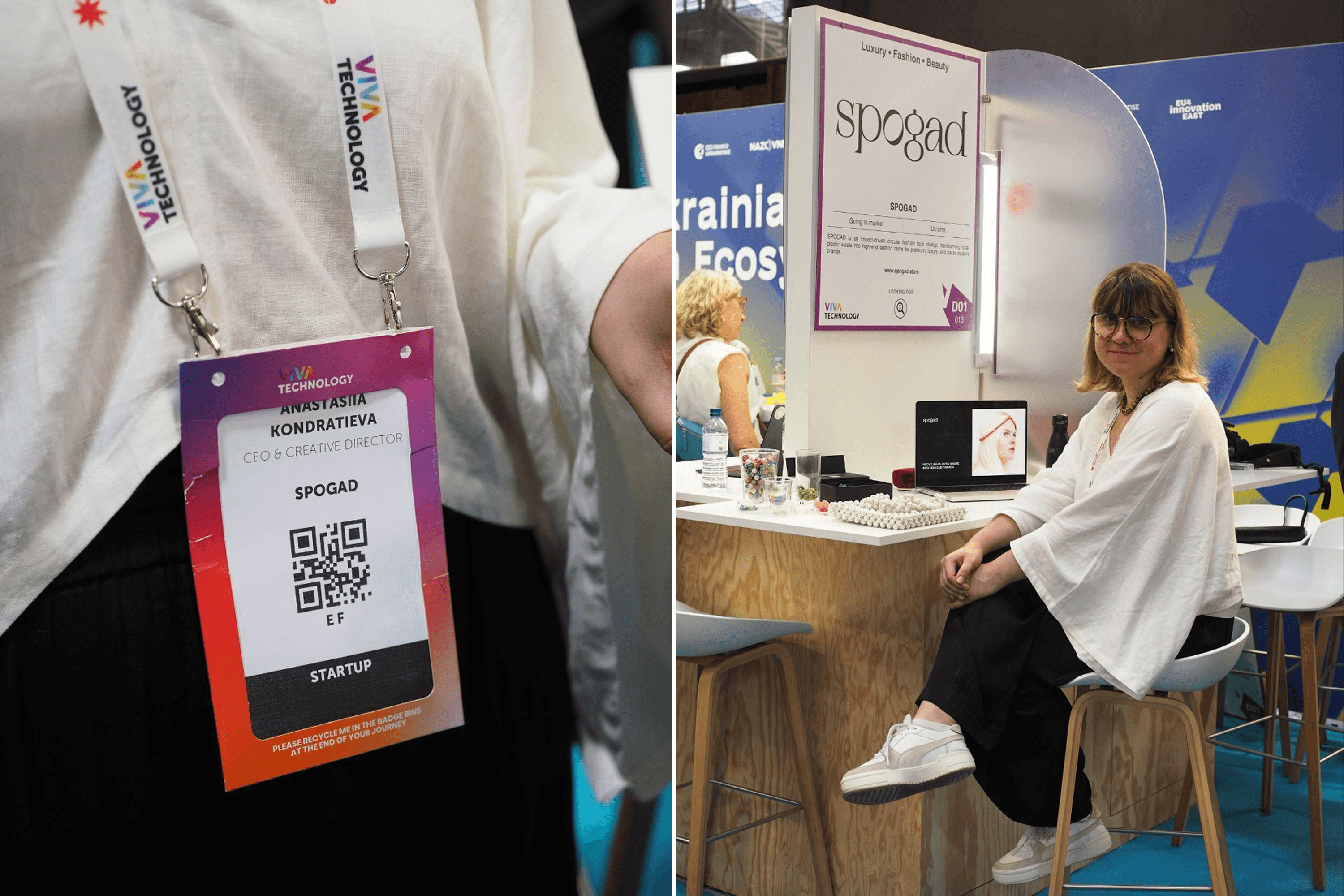
Photo: SPOGAD / LinkedIn / YB
Recently, the founder of the Sustainable Fashion Association in France left me a comment inviting us to sell in her showroom. The Federation of Circular Fashion, which works at the level of the European Parliament, contacted us in direct messages. They invited Spogad to join the organization and promote sustainable production in the country.
A personal brand really generates sales, collaborations, and opportunities, and we need to place more emphasis on it. It also helps fight impostor syndrome and teaches you not to be afraid of speaking in front of large audiences.
What does Spogad earn the most from — B2C jewelry sales or B2B collaborations?
The most profitable area is B2B partnerships. The collaborations we are planning in the near future will be the most profitable in all our years of work because the companies placed large orders. We also plan to supply brands with beads, sequins, and threads made from recycled plastic that they can use in their own products instead of decorations made from virgin plastic. Together with lawyers, we developed a model for this cooperation: the intellectual property rights for the beads will belong to us, the brand will pay royalties for their use, and it will state that part of the product was created by Spogad.
Among B2C sales, the highest profits come from smaller products: bracelets, ear cuffs, and Christmas tree ornaments. The logic is simple. We buy a handbag once and keep it for a long time, while we replace accessories more frequently.
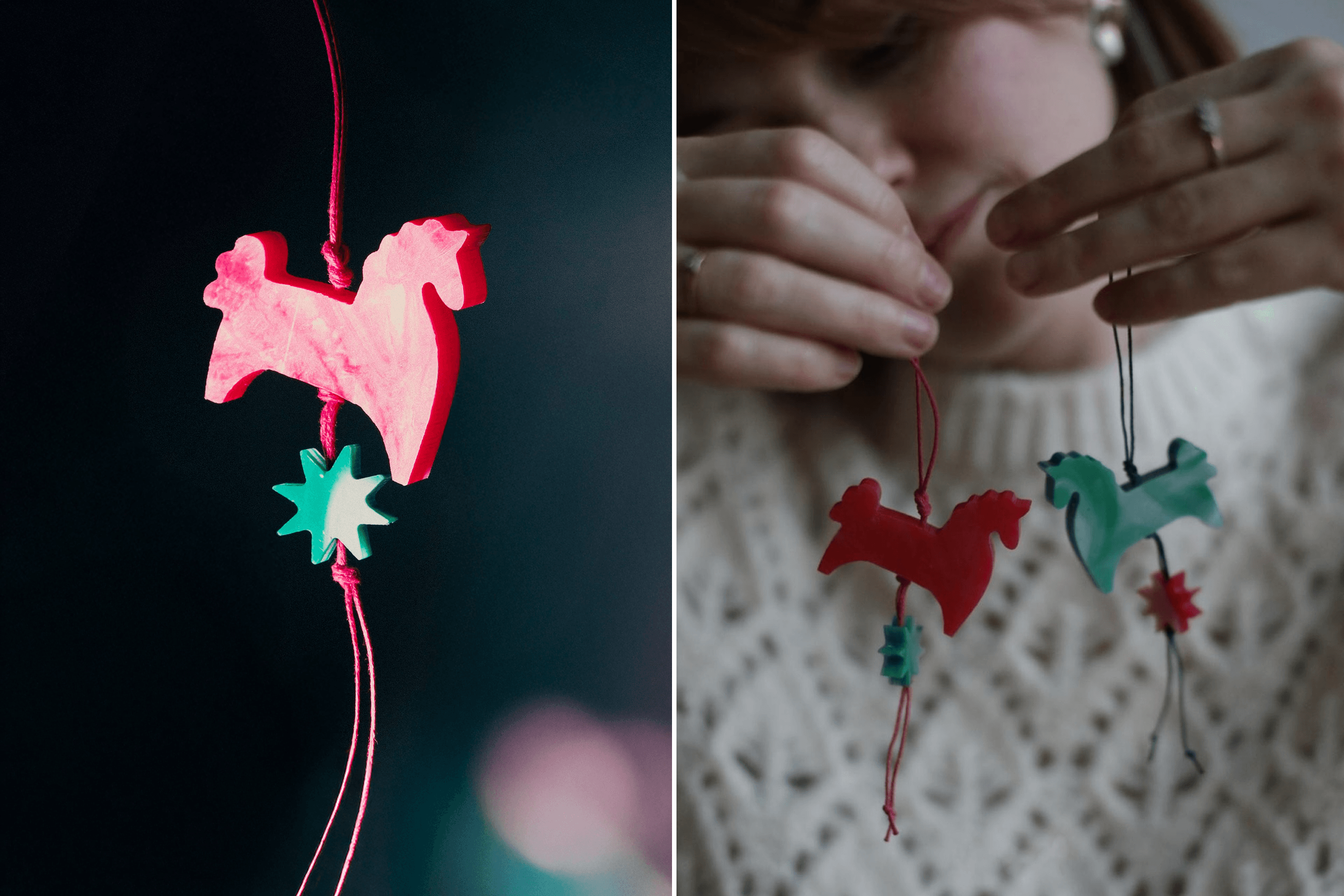
Some accessories by the Spogad brand. Photo: spogad.store / YB 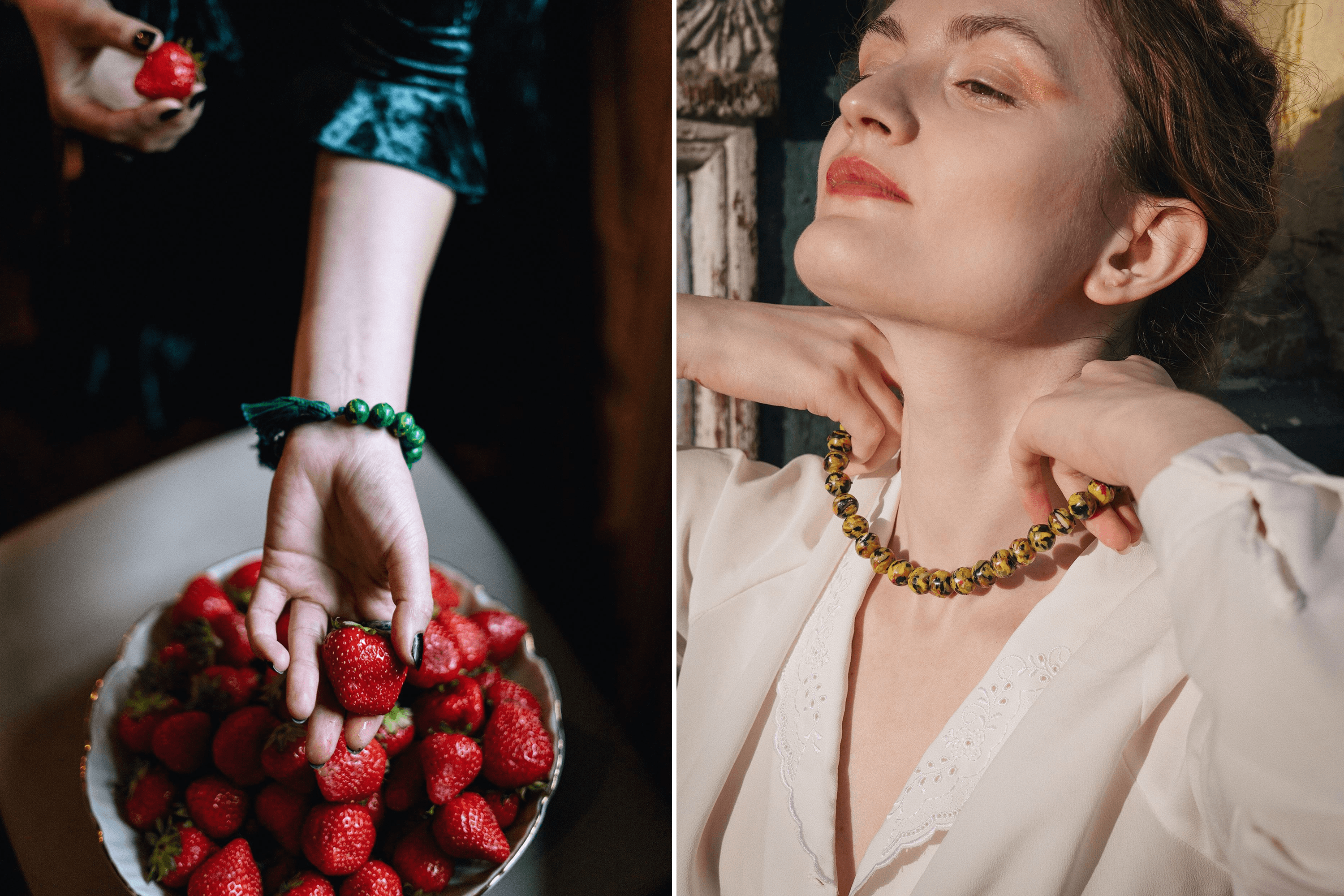
Photo: spogad.store / YB 
Photo: spogad.store / YB 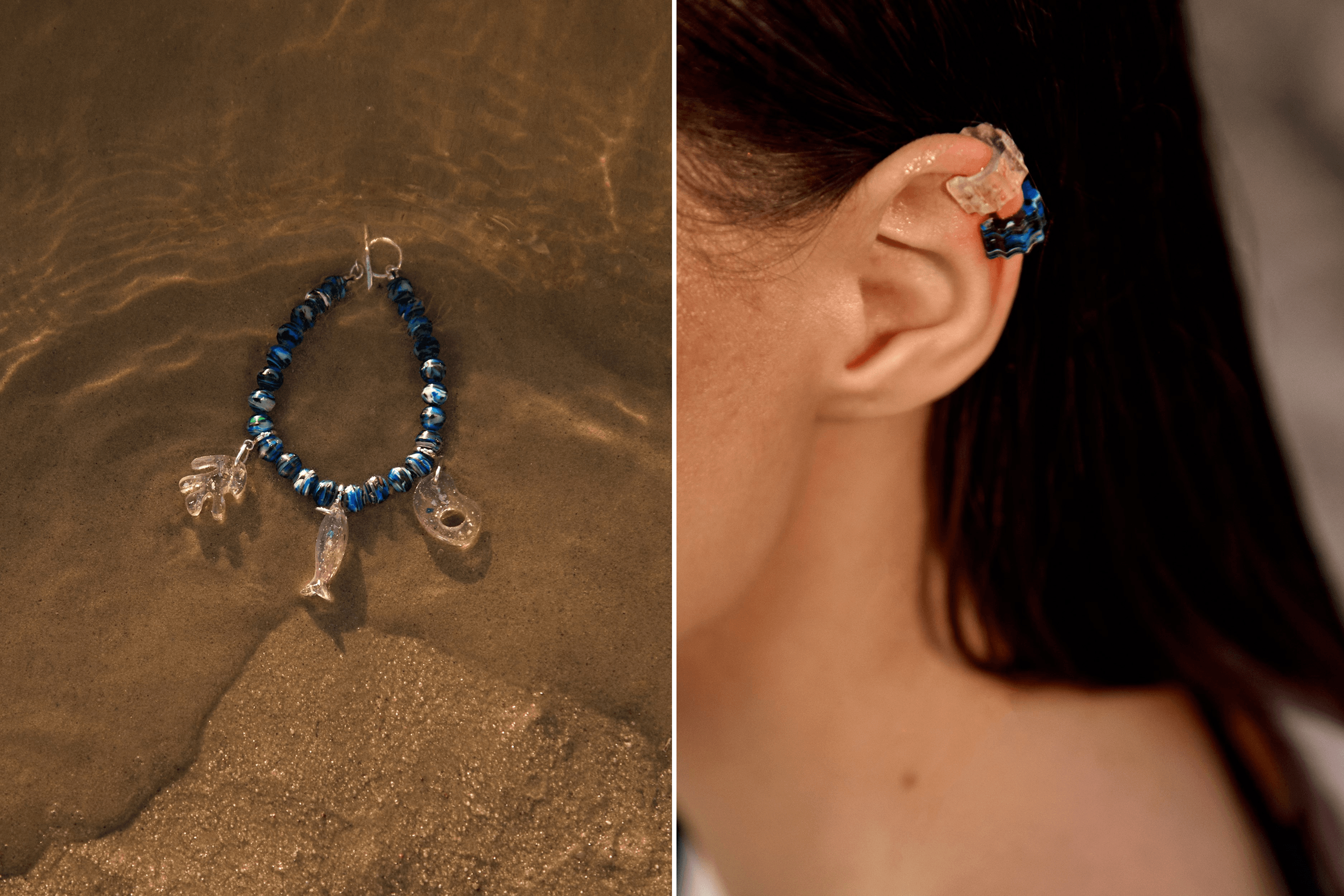
Photo: spogad.store / YB
At the end of 2025, we announced that we would sell our weaving technology using plastic threads and beads. We also see strong potential in this.
You are Spogad’s main investor. Do you plan to attract other investors?
Yes, we are looking for investments. But in my opinion, investors are harder on female startups. They often ask whether I have a wealthy husband or parents. They are shocked that a woman funds a startup on her own.
I am postponing negotiations with potential investors until we complete our B2B collaborations and can show concrete successful projects. At accelerator programs, experts valued Spogad at €3 million. We plan to open an investment round in September. It is a process that takes about six months. At the start, we hope to raise €250,000–300,000. Our priority will be to find angel investors willing to invest large sums into our project. I believe things will fall into place.
We also recently completed a training program with mentoring support from the United Nations Industrial Development Organization and will soon receive a $20,000 grant. This will allow us to buy the necessary equipment and invest in PR.
You mentioned that women in business face prejudice. What does that look like in practice?
The percentage of female startups receiving investments from venture funds is no more than 20–30%. Investors love men. They listen to them and give them money even when they fail their pitch. Women always face more questions, even when their pitches are flawless.
At the same time, there is progress. In many French companies, gender balance is improving, especially compared to the United States, where Donald Trump is rolling back equality programs. Of course, there are companies that hire one woman into the leadership team and already position themselves as a business with gender balance, but overall the trend is positive, and I believe in change.
Another painful issue is age discrimination. I started working at a young age and often encountered prejudice in France. In Ukraine, at 24 you can already make the Forbes list as a brand founder, but in France you are still considered a child who is only studying and not thinking about work.
At some point, I started hiding my age and often pretended to be over 30. But I remember how at 25 I conducted a public speaking workshop for employees of the French prime minister’s office and revealed my age at the end. Surprisingly, they still listened to me because they had come to learn. We still cooperate, and recently I conducted another workshop for them. Things are gradually changing, and more and more people are genuinely impressed by how much you have achieved at a young age.
What does it personally mean for you to lead a female startup and consult female entrepreneurs?
One of my life missions is to support women whenever there is an opportunity. All the Ukrainian businesses I consult are female-led, and they often lack financial support the most. Recently, investment funds that support only female startups have started appearing in France, but Ukraine still does not have them. I hope that over time I will become wealthy enough to invest in women-led businesses and help them succeed.
There should be more women in all industries. For me, it is an incredible privilege to personally know and consult the women whose products I buy and to share values with them. When I wear these things, I feel like an all-powerful woman capable of turning the world upside down.
Based on your experience, what advice would you give Ukrainian entrepreneurs who want to enter foreign markets?
It may sound banal, but you need to thoroughly study the market, local competitors, and customer behavior.
Local rules matter in every country. For example, in France everything works through personal recommendations, so you cannot break into this market aggressively. At the same time, many local entrepreneurs are easy to meet at business conferences.
If you do not speak French, you need to hire a local expert who knows the language and market nuances. This is critically important because not all French people will communicate in English.
There are also many national holidays here, and messaging someone about work on those days is considered bad manners. French people do not read emails on Friday afternoons, and by Monday your message will most likely get lost among others. Besides, the law prohibits contacting people outside working hours. You need to be aware of these market nuances.