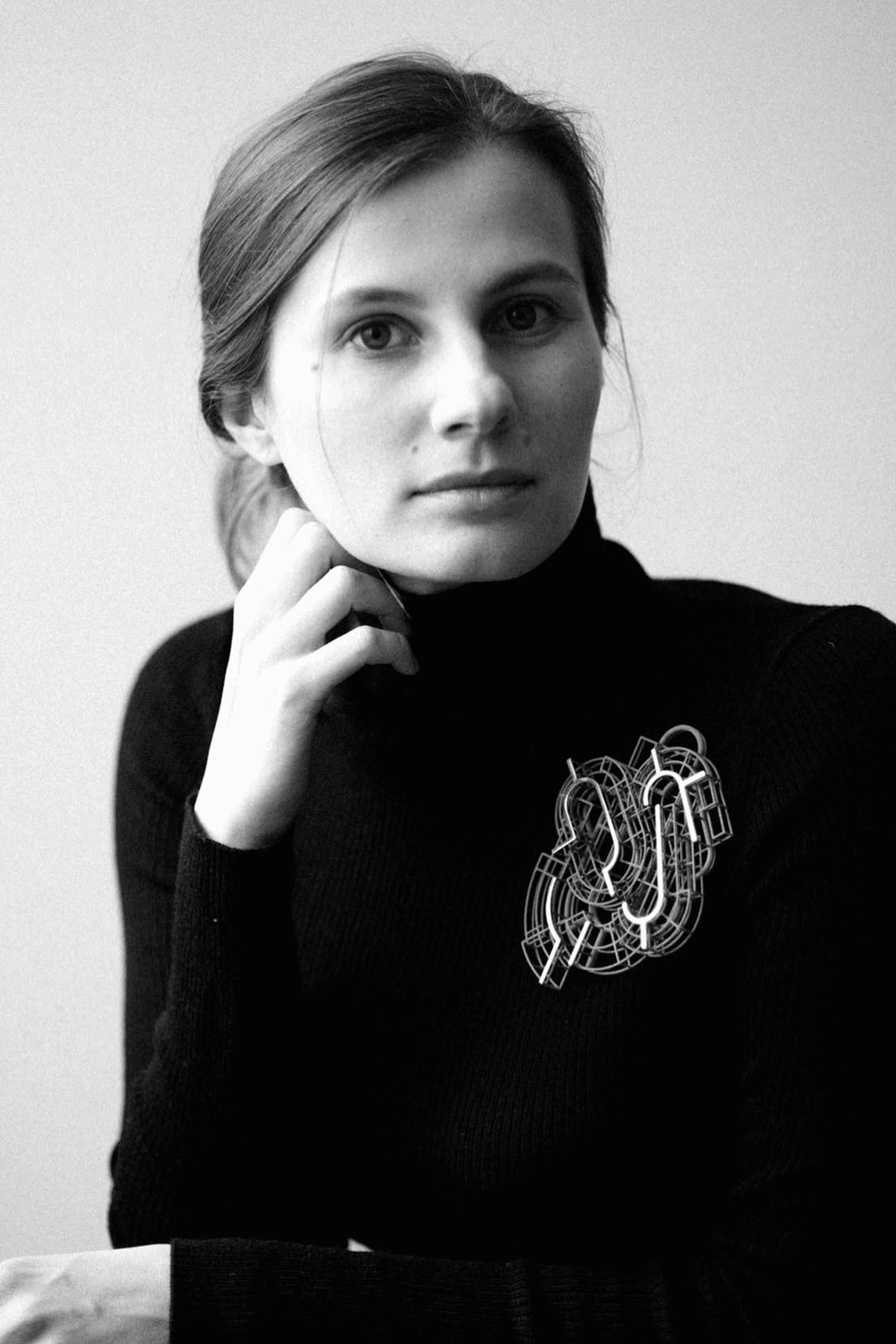
Jewelry designer Inesa Kovalova is originally from Kramatorsk and is 38 years old. Trained as an architect, she started out as a sales assistant and designer at a jewelry store in her hometown. Today she teaches jewelry design at her own online school, at the Victoria and Albert Museum, and at Central Saint Martins. She also works as program director of the Strong&Precious art foundation. For the past six years, Kovalova has been based in The Hague, where she creates kinetic diamond jewelry. Yellow Blue journalist Roksana Rublevska spoke with Inesa about her creative journey and life.
On the beginning of her career
Jewelry always fascinated me. My knowledge was elementary, of course: sapphire is blue, ruby is red. I was drawn to art, fashion, and design. I drew fairly well and graduated from art school. In 2007, I enrolled at the Donbas National Academy of Civil Engineering and Architecture. At the time, the profession of architect seemed interesting and promising to me.
In the summer of 2010, I took a job as a sales assistant at a jewelry store in my hometown of Kramatorsk. The store had its own production facility, with about a hundred people working there. It also had a wonderful library. I literally devoured every book on gemstones. The one about Mauboussin impressed me the most. From it, I learned what kinds of diamonds there are and how they are evaluated. Management noticed that I could draw and offered me a position as a designer. I agreed without hesitation. There was no fixed salary, but I earned up to 2,000 hryvnias a month for the sketches that went into production. It was my first experience in jewelry design, and it shaped my path going forward.
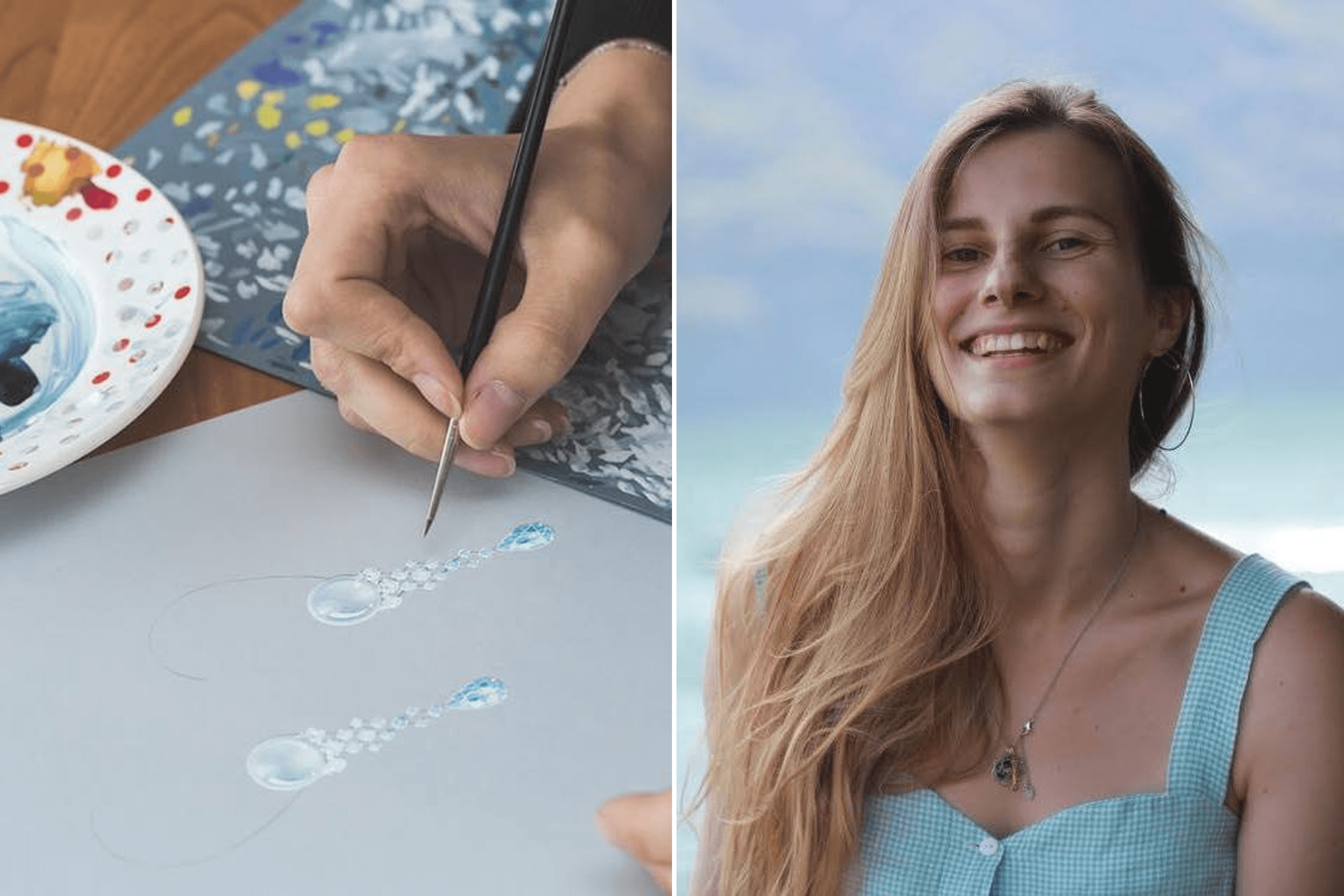
After finishing my master’s degree, I stayed in Donetsk. I worked as an architect in the urban planning department, during a period of active city development ahead of Euro 2012. But I kept feeling that I wanted more. In 2012, I moved to Moscow and got into the Strelka Institute for Media, Architecture and Design through a competitive selection process. It was a free one-year English-language program led by the legendary architect Rem Koolhaas.
One of the teachers helped me understand myself better. He asked a simple but important question: “What can you do for hours without getting tired?” I immediately thought of jewelry design. Even after leaving the jewelry company, I kept entering my work every year in the competition at the Jeweller Expo in Kyiv. It never felt like work. It was something personal, sincere, and real.
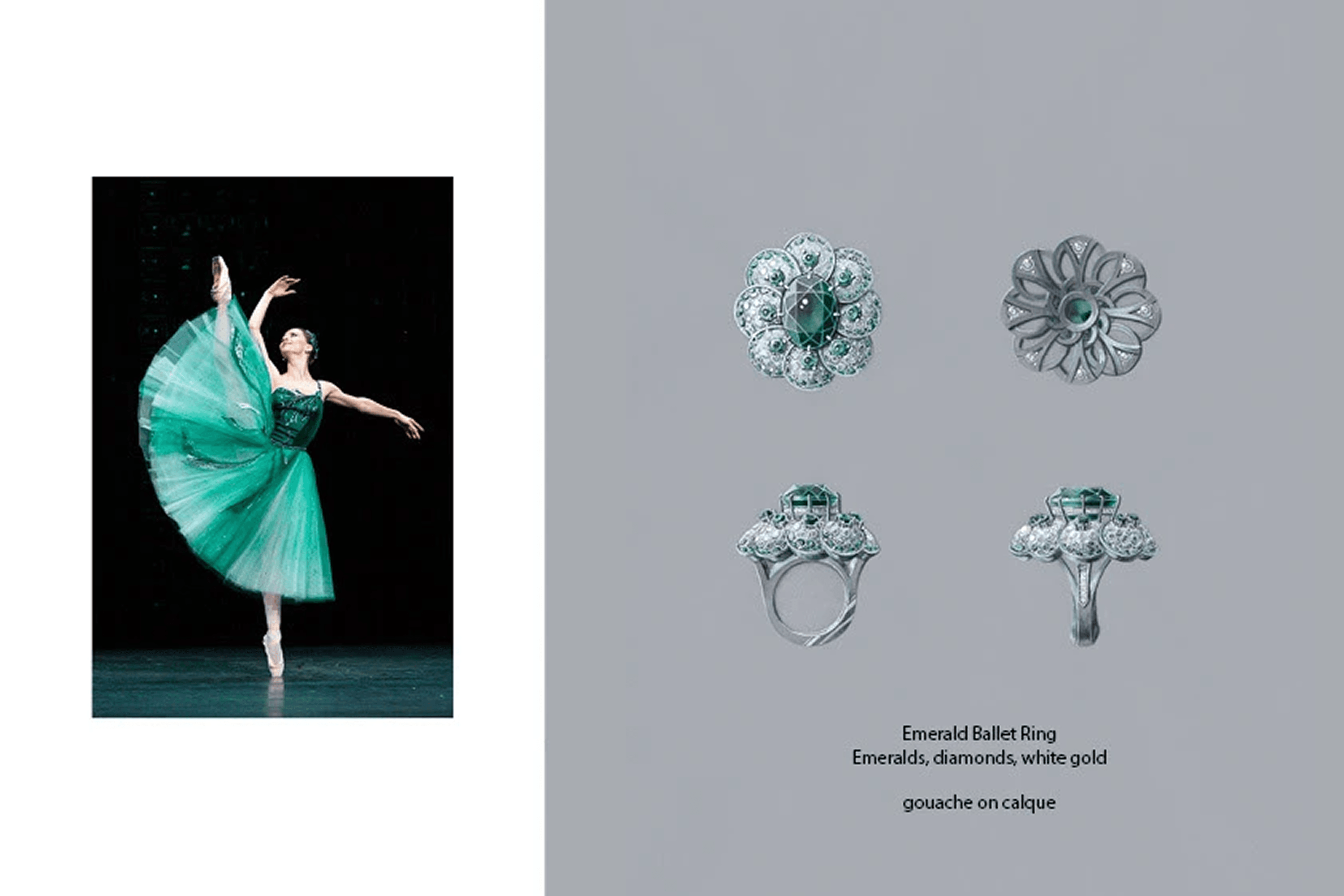
A diamond and emerald ring inspired by the fluidity of ballet. 2015. Photo: Inesa Kovalova / Behance / YB 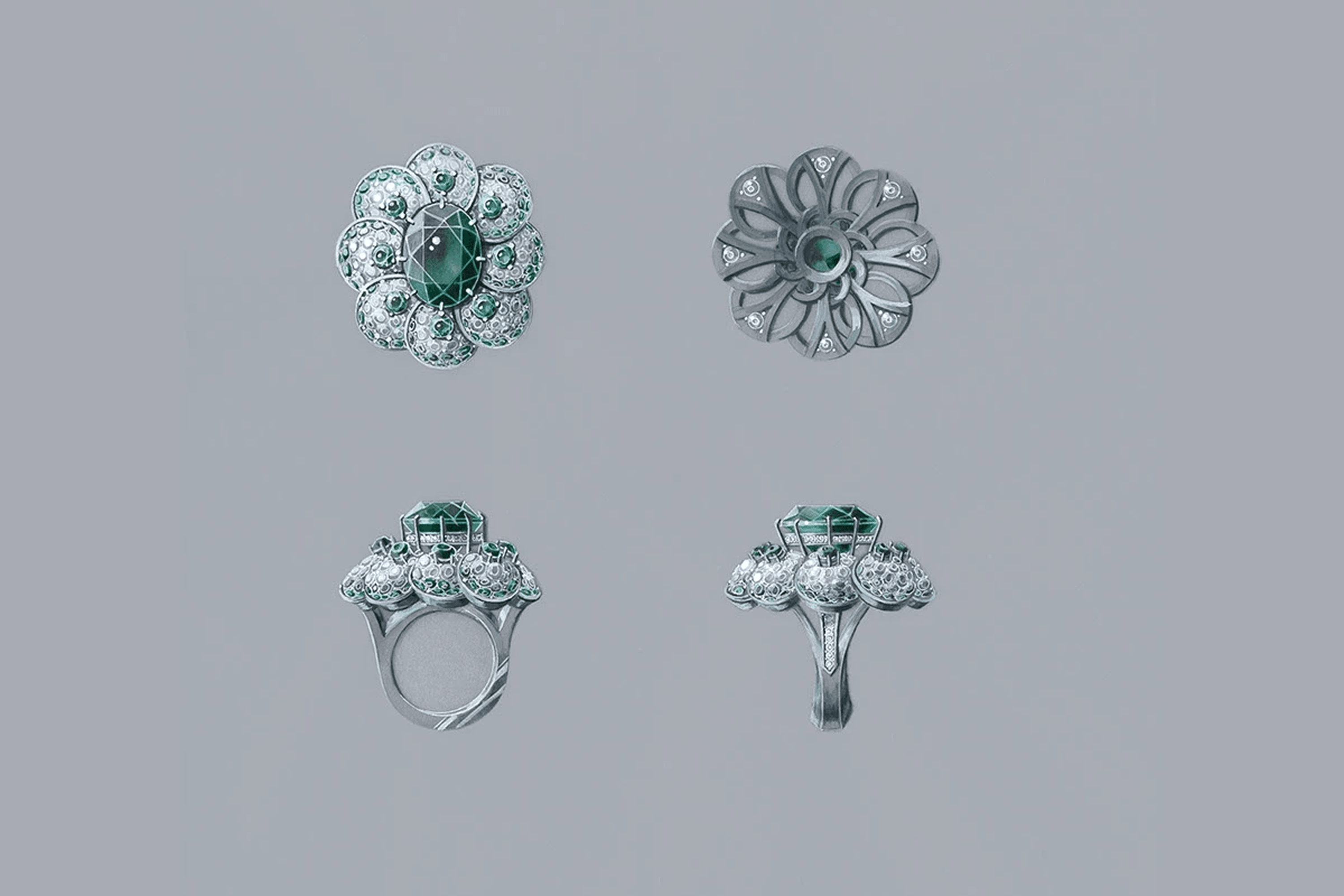
Photo: Inesa Kovalova / Behance / YB
On entering Creative Academy
A friend told me about admissions to Creative Academy in Milan. The deadline was two weeks away. I quickly put together a portfolio, printed it, and sent it via DHL. Out of thousands of applicants, I made it into the top twenty. I couldn’t believe it. In December 2013, I moved from Moscow to Milan. Tuition was free for students. I paid only for housing in Milan out of my savings.
The course lasted seven months. We traveled a great deal, visiting glass and silk production facilities in Venice and Florence and attending the biggest watch fairs in Switzerland. It was all part of the curriculum, designed to give us a real feel for the luxury world from the inside. Creative Academy graduates typically go on to work at brands like Boucheron, Chaumet, and LVMH. Things turned out differently for me.
At the time, the Revolution of Dignity had begun in Ukraine, and I did not understand at all what was happening. It seemed that the war in Donbas was something temporary, and that this horror would soon end. It all seemed absurd to me, and I refused to believe it. There was neither fear nor a sense of great catastrophe. I did not want to go back to Ukraine, not because of the war, but because of the lack of professional opportunities in the jewelry industry.
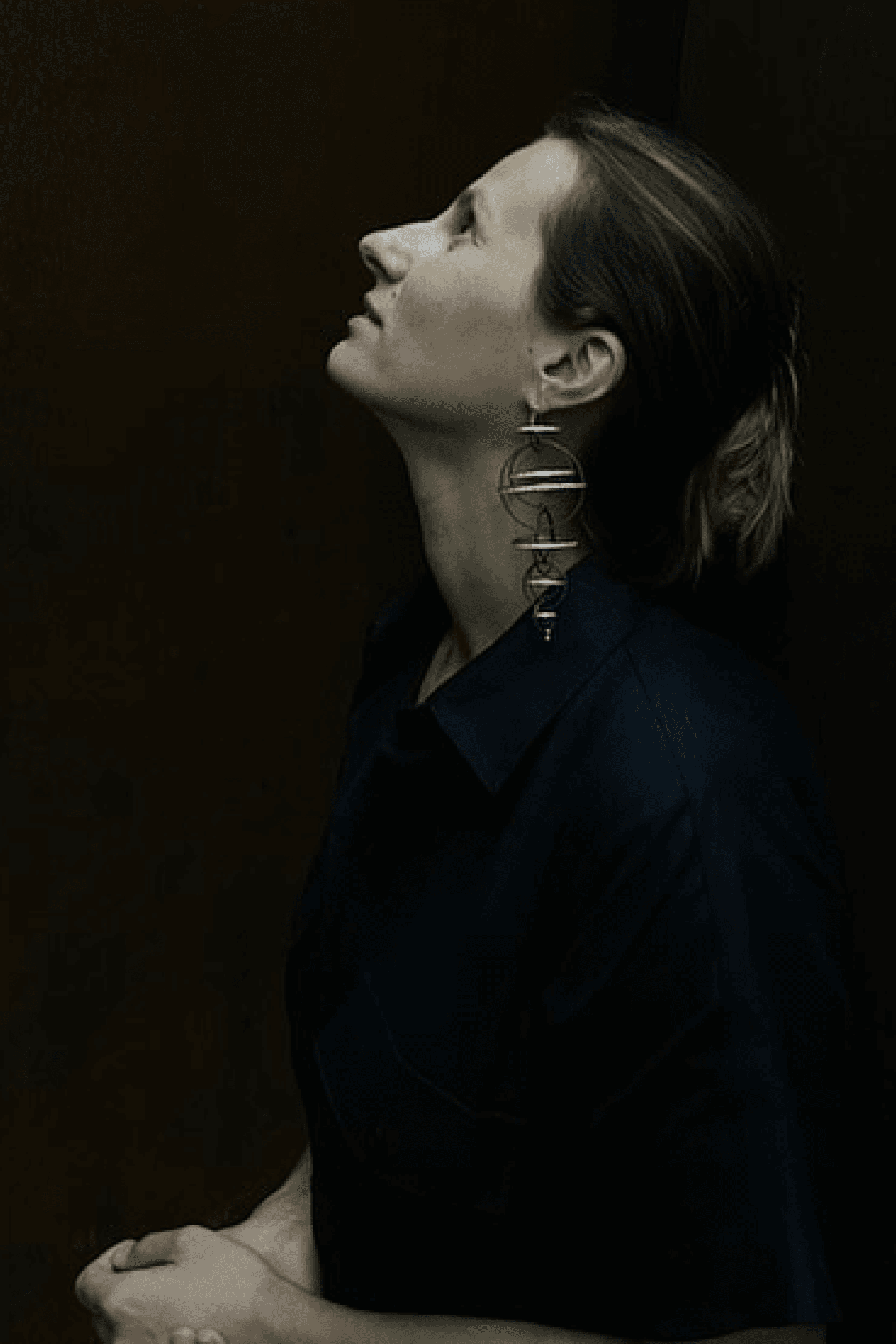
After graduation, Creative Academy students did internships at Richemont brands. I joined the design department of Van Cleef & Arpels in Paris. Later, I tried to find work in France, but without a European passport and knowledge of French, there was almost no chance. I returned to Moscow, where I had a good job offer. I saw it as temporary and kept sending my résumé to European companies. I worked with gemstones, drew sketches by hand, and developed complex compositions. A designer who is paid for the full cycle of work is a luxury that only the high jewellery segment can afford.
I worked there for two and a half years. At that point, I still had not fully grasped the consequences of the war in Donbas. I was living in the Moscow I remembered from my time at the Strelka Institute: liberal, open, with a strong international scene. I was surrounded by foreigners and people who openly opposed the regime. It felt like a bubble where nothing was really changing. But gradually that illusion crumbled. Around me, a world of people loyal to the system took shape. In the autumn of 2017, I made a final decision to leave Russia and moved to London.
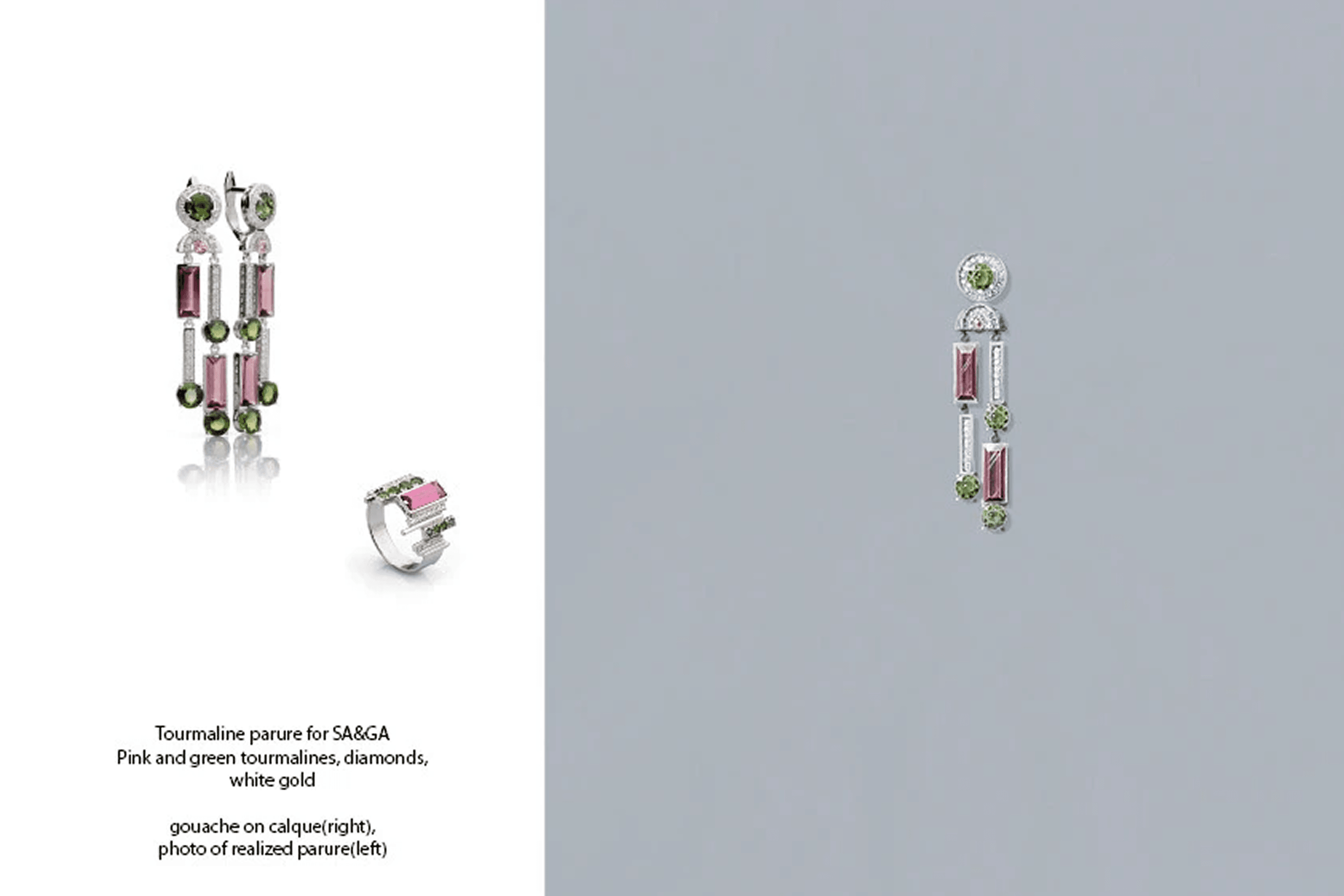
A jewelry set with pink and green tourmalines, diamonds, and white gold for SA&GA. 2015. Photo: Inesa Kovalova / Behance / YB 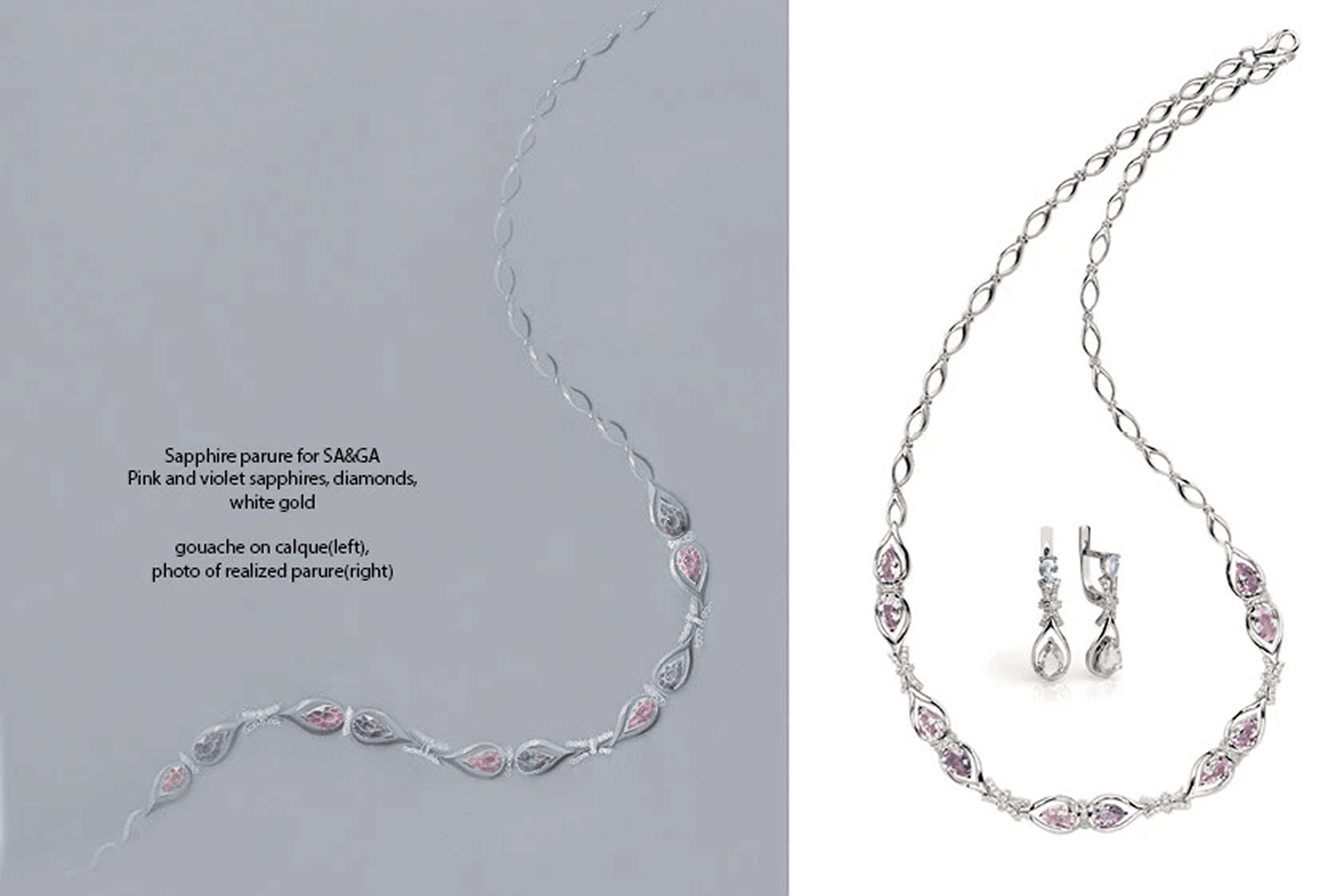
Photo: Inesa Kovalova / Behance / YB
On studying at Central Saint Martins and life in London
I had always wondered how people become creative directors at jewelry brands. How does jewelry make it to auctions? Why do some pieces become collectible while others don’t? When I started looking into who held top positions at those brands, I kept finding Central Saint Martins graduates. They always created something conceptual. That’s what I was missing. I already knew how to make objects, could create a collection and go through all stages of production, but I lacked the ability to create value.
In 2017, I enrolled in the jewelry design program at Central Saint Martins. To get in, I had to write a research proposal. I focused on the future of the high jewellery category, its definition and development, and what collectors would consider valuable in the coming decade. The market, especially in recent years, has been moving away from purely material value. The closer you are to the art market, the less the diamond count matters. The artistic component of a piece is becoming more significant.
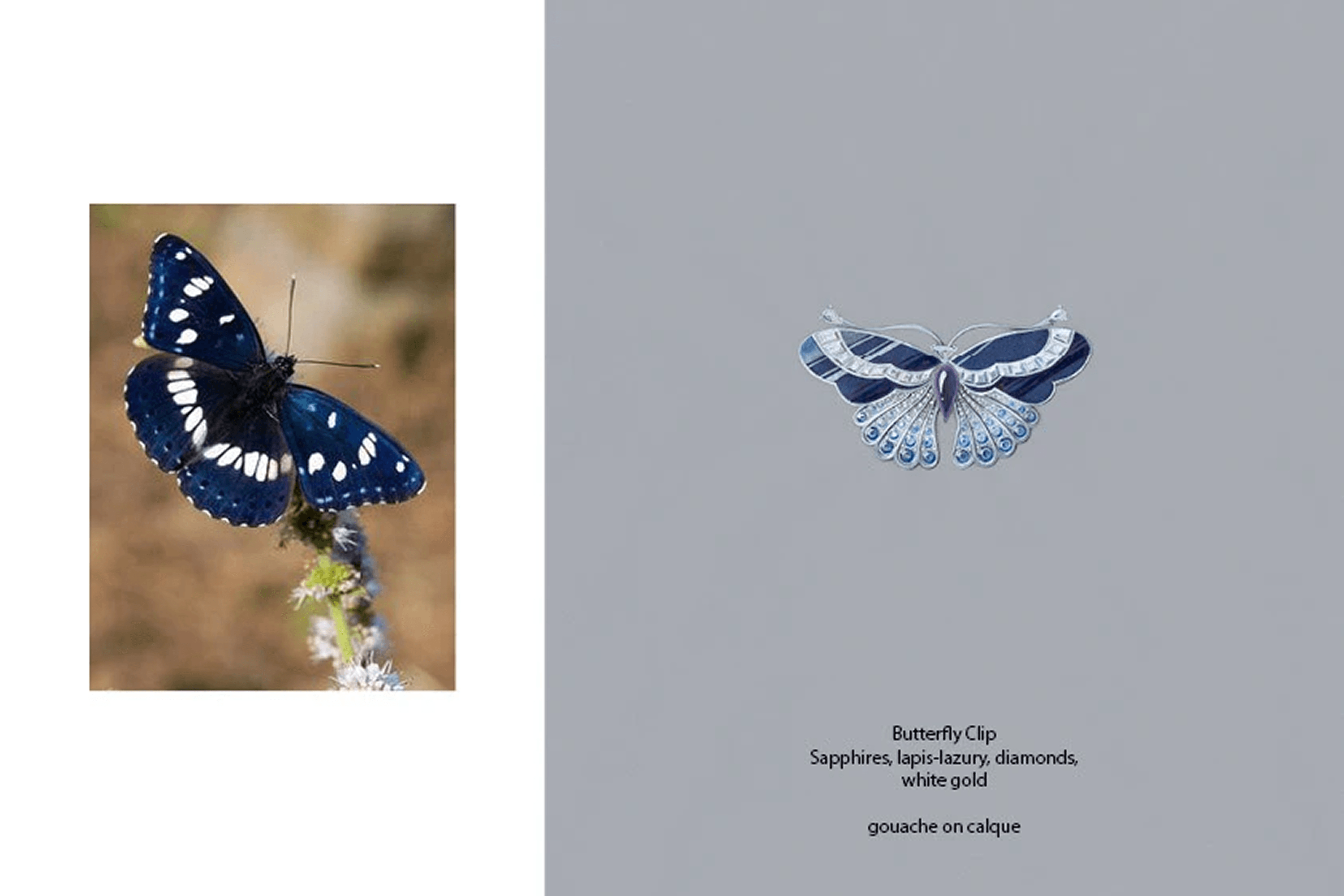
A butterfly brooch with sapphires, lapis lazuli, diamonds, and white gold, inspired by the form of a butterfly. 2015. Photo: Inesa Kovalova / Behance / YB 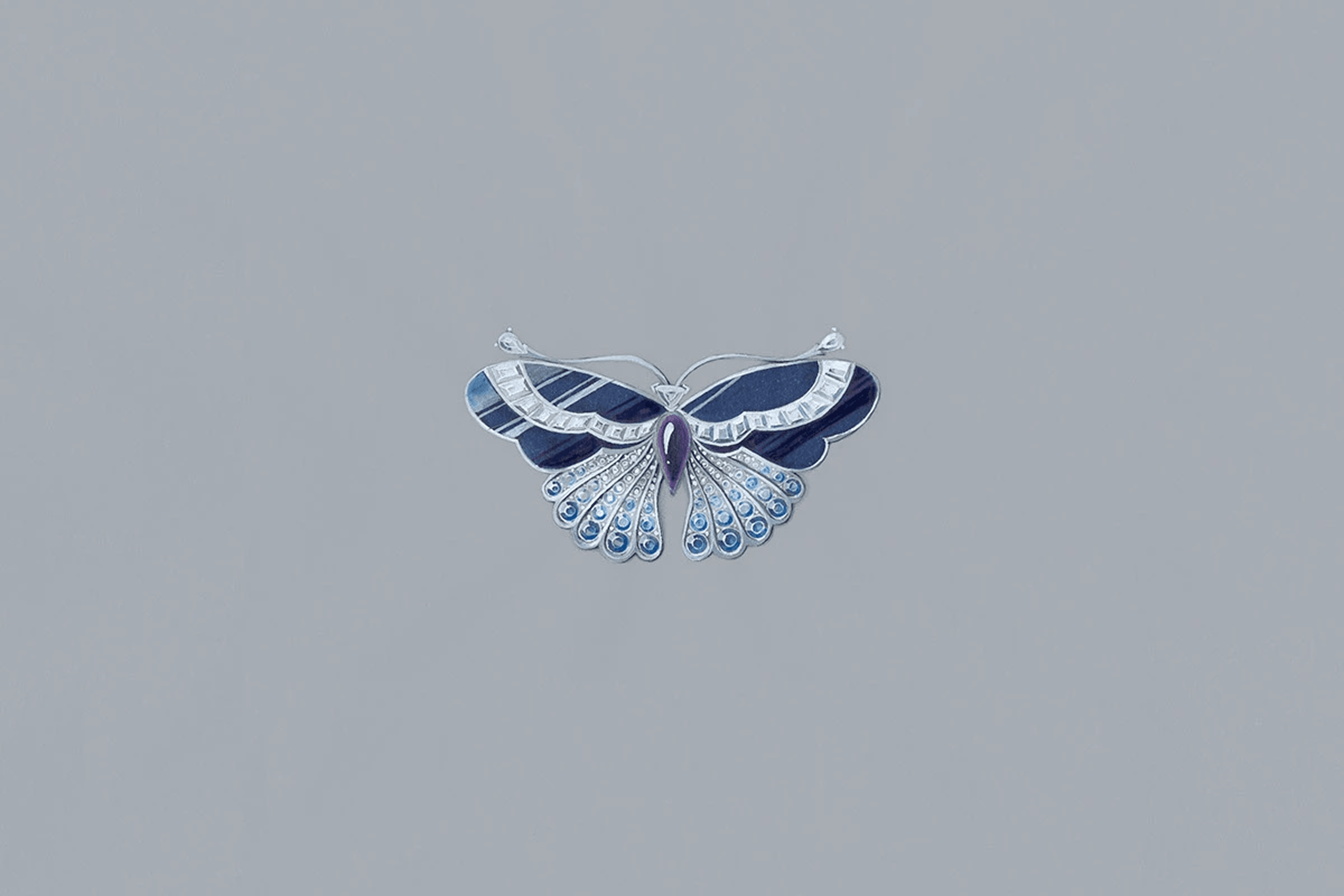
Photo: Inesa Kovalova / Behance / YB
Studying in London cost £12,500 a year. The program ran for two years. I paid for the first year from my savings and started looking for work straight away. In January 2018, my first major commission came in, and it saved me. A friend connected me with a company that needed designs for three collections. Thanks to that, I could stay in London. I rented a room and worked on collections in the time I had outside my studies. They paid from £4,000 per ten-piece collection. Not a huge amount, but enough to stay in the profession. I took every commission I could find.
Honestly, I did not always believe in myself. And I still don’t. Like all artists, my self-esteem goes up and down like a roller coaster.
On her internship at Van Cleef & Arpels
I did two internships at Van Cleef & Arpels in Paris, and that experience gave me a great deal. About fifteen designers work there, and each is responsible for one specific piece. There is room to propose ideas, but always within the brand’s aesthetic. During my first internship in 2014, I drew detailed visualizations of pieces already in production. The company works far in advance: from the first sketch to the release of a piece can take up to three years.
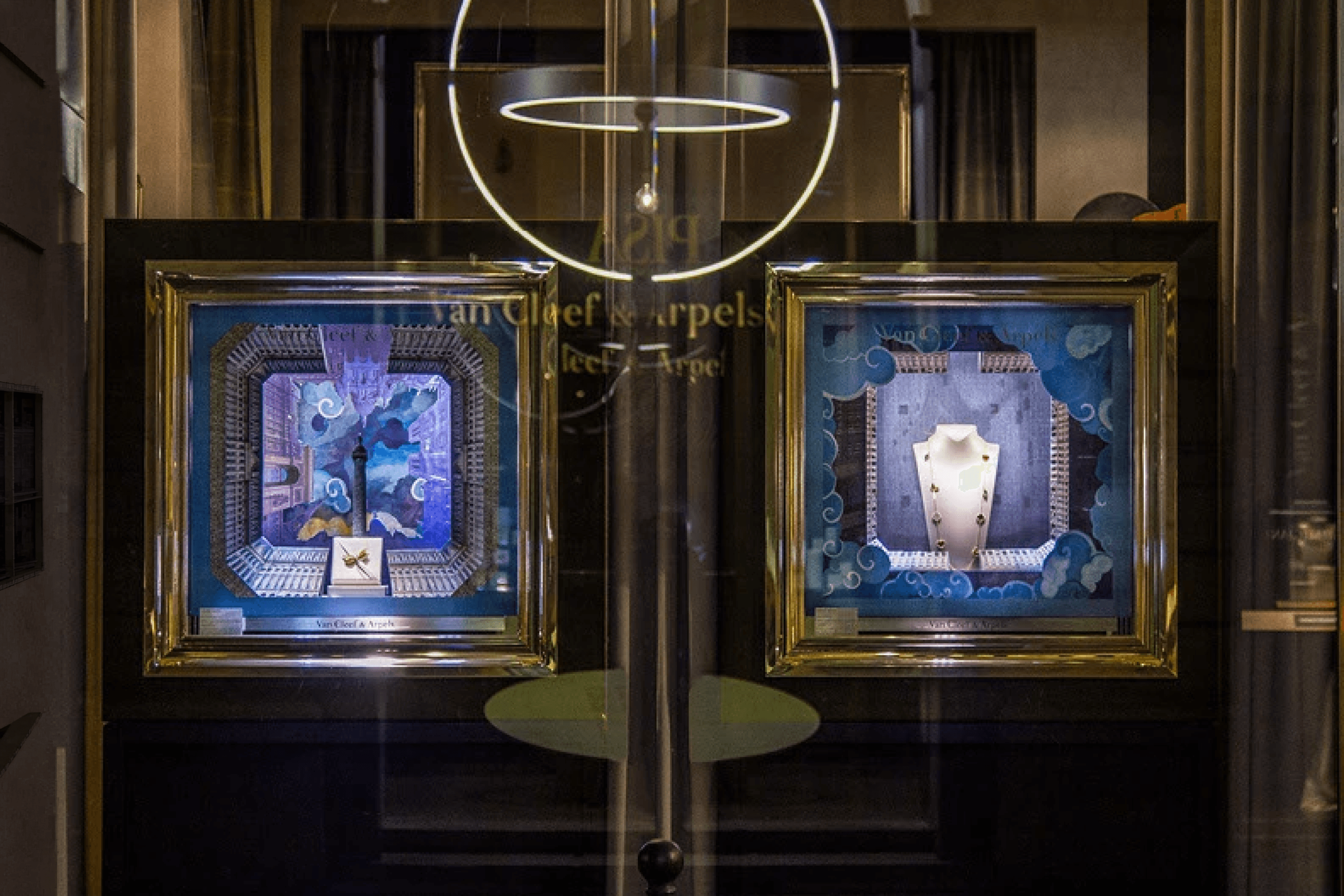
Designs for Van Cleef & Arpels. Photo: Inesa Kovalova / Behance / YB 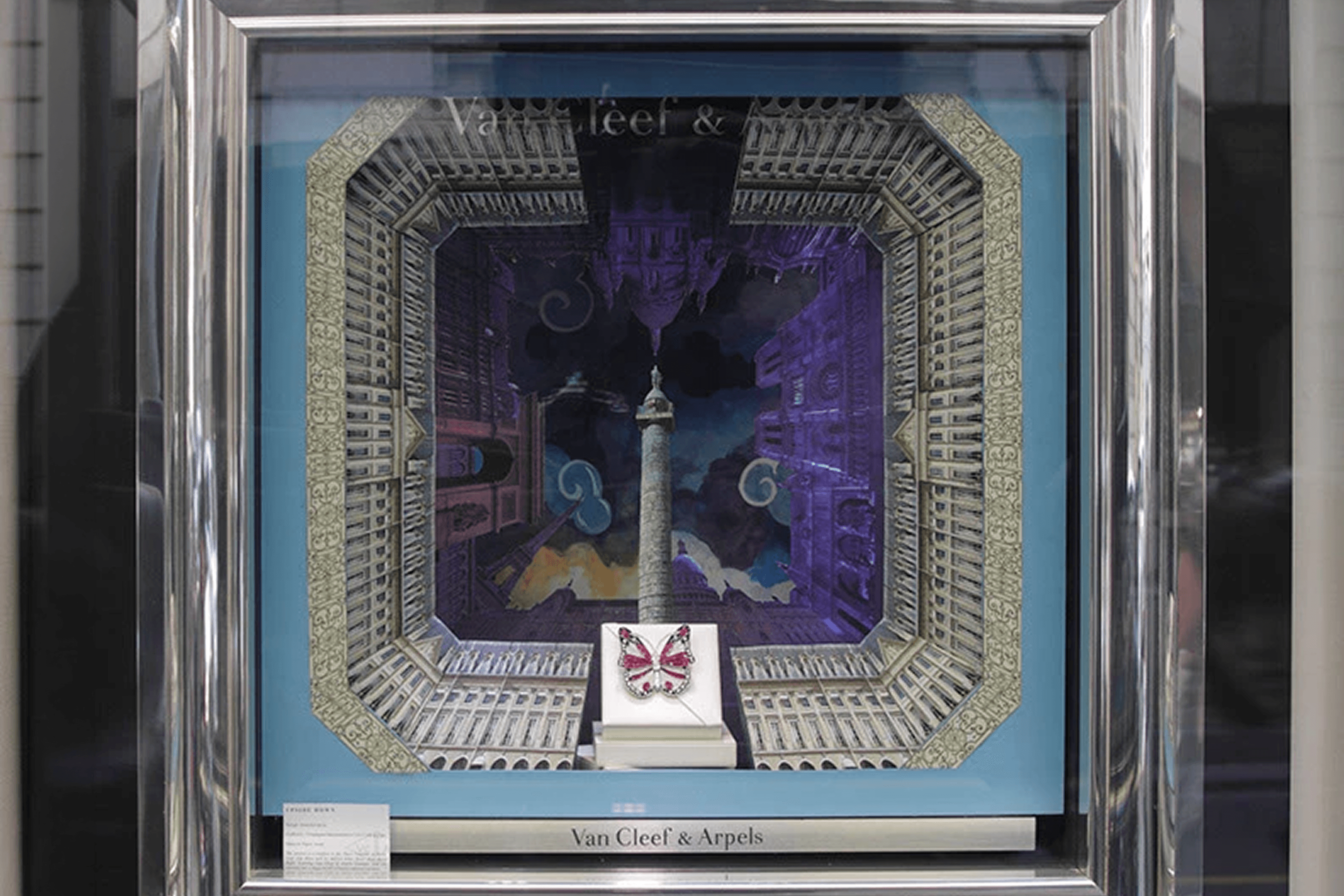
Photo: Inesa Kovalova / Behance / YB 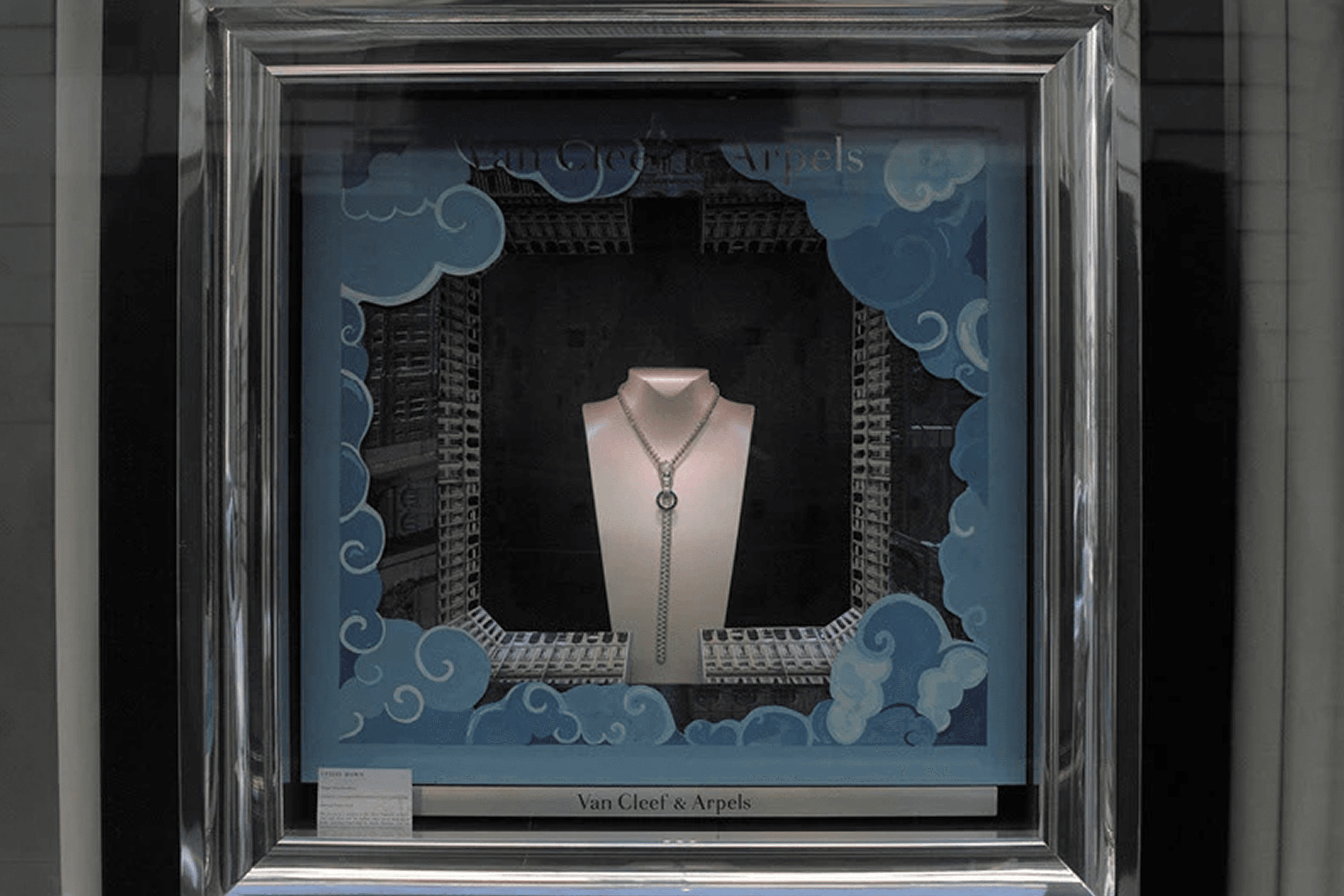
Photo: Inesa Kovalova / Behance / YB
When they brought me back in 2018, for the summer between my two academic years, I could not believe it. It was an intern contract, but I was performing tasks like a junior designer. I even created earrings and a ring that later entered the house’s collection. I cannot disclose the names, images, or details, since all rights belong to Van Cleef & Arpels.
I was happy. I pictured myself moving to Paris after graduation, learning French, and staying at Van Cleef & Arpels. In my final year of study, I was supposed to create my own graduation collection. But that did not happen, and I never did learn French.
That was also when something shifted inside me. For the first time, I stopped seeing only one possible path: a major jewelry house. I began paying attention to independent designers and artists who create statements. They worked with wood, textiles, and recycled materials. Their pieces did not always cost thousands, but they were tactile, bold, and alive. And through them I understood that innovation is born in that space. Corporations are too inert, and change in the industry comes from those who are not afraid to experiment.
In London, the Victoria and Albert Museum discovered my work on Instagram. They invited me to lead workshops as part of their educational program, and we collaborated several times.
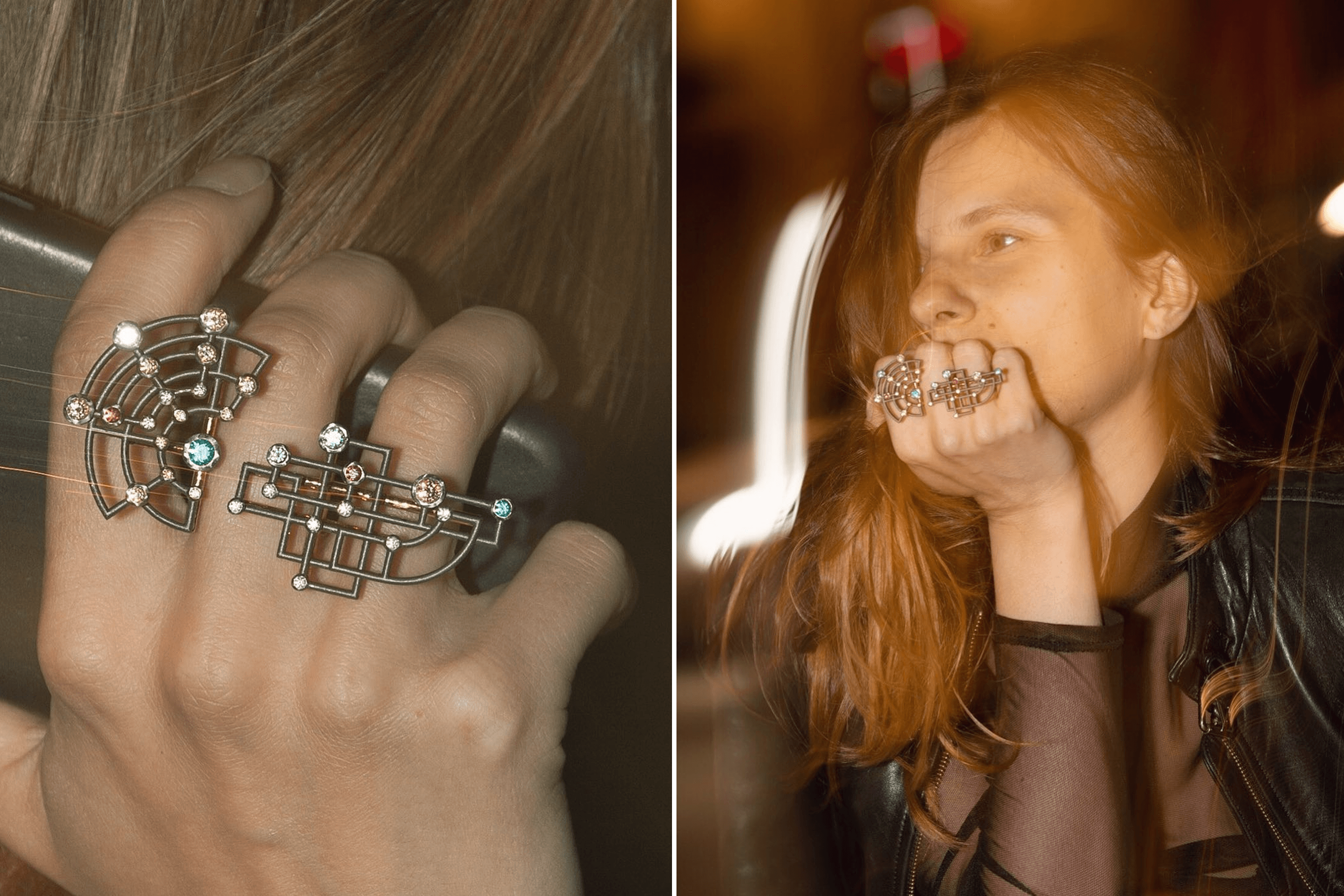
Earlier works by Inesa Kovalova. 2019–2021. Photo: inesa_kovalova / Instagram / YB 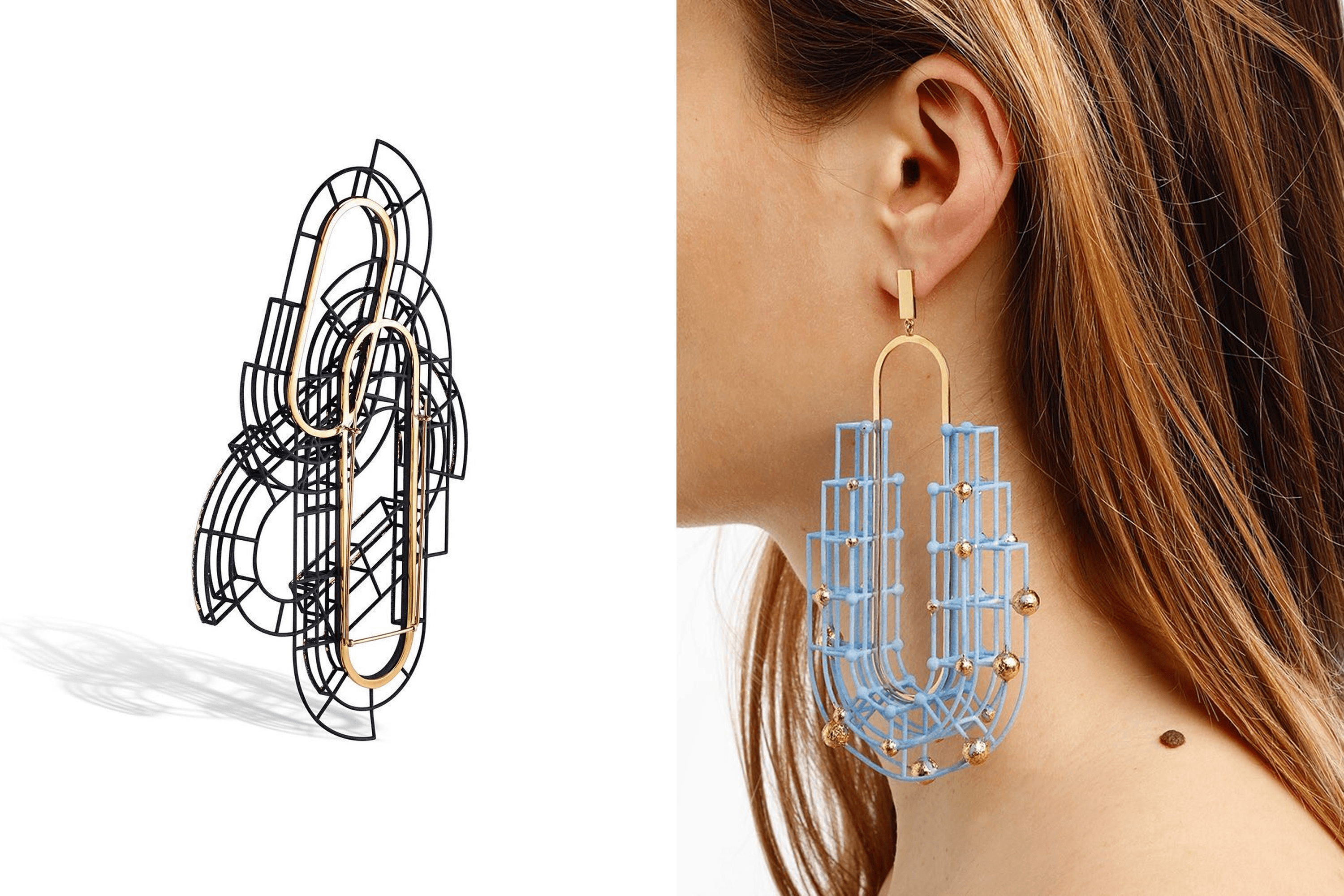
Photo: inesa_kovalova / Instagram / YB 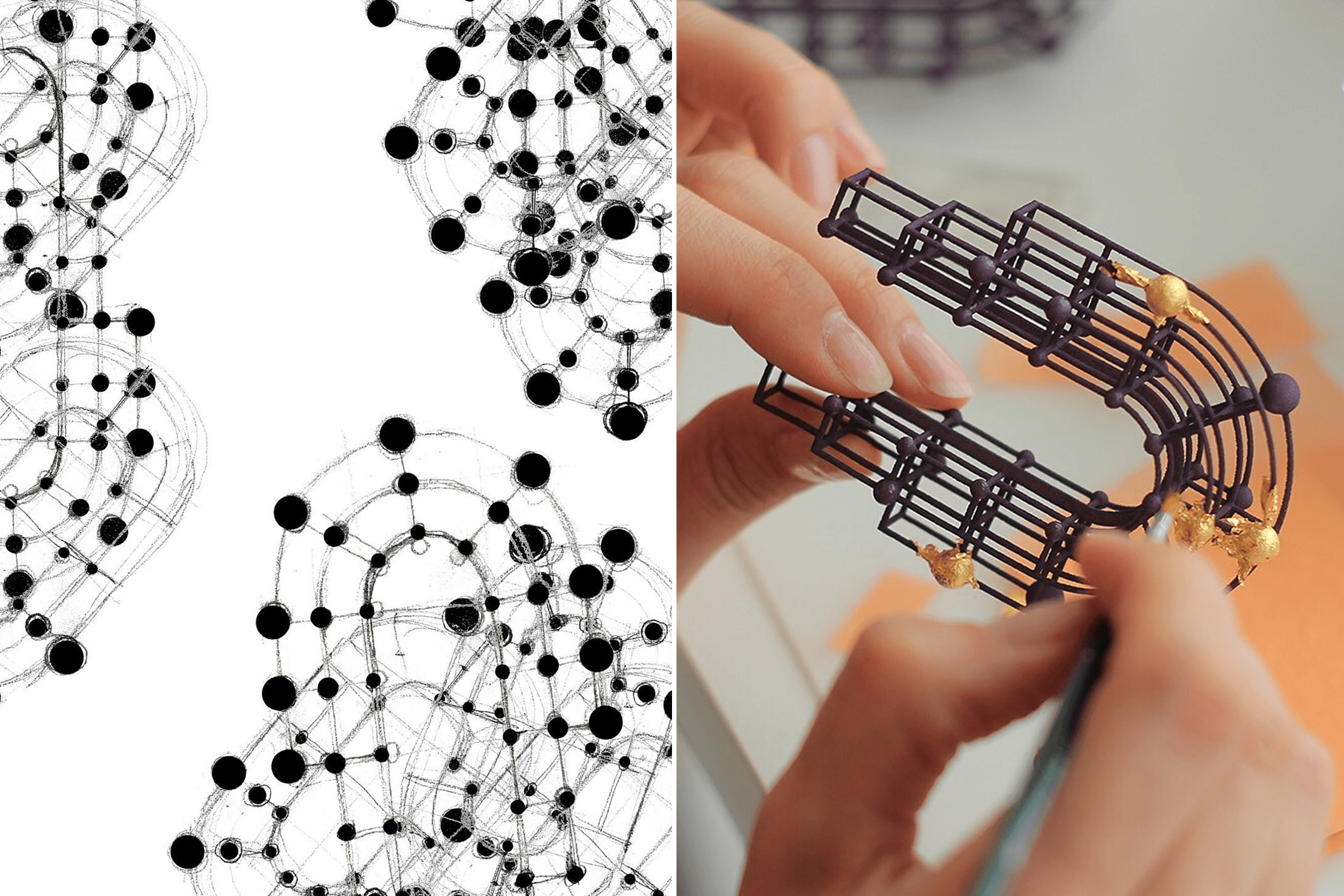
Photo: inesa_kovalova / Instagram / YB 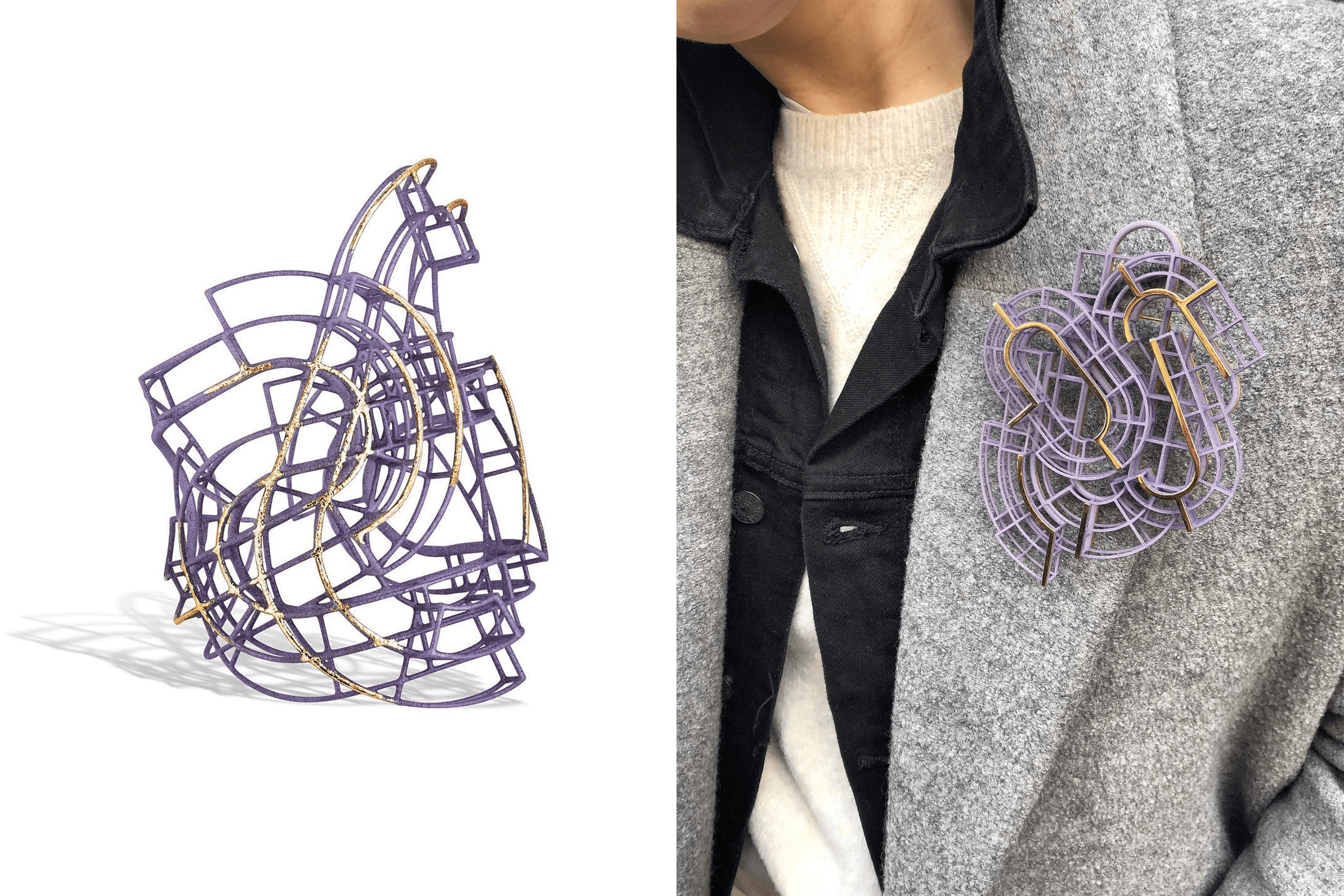
Photo: inesa_kovalova / Instagram / YB 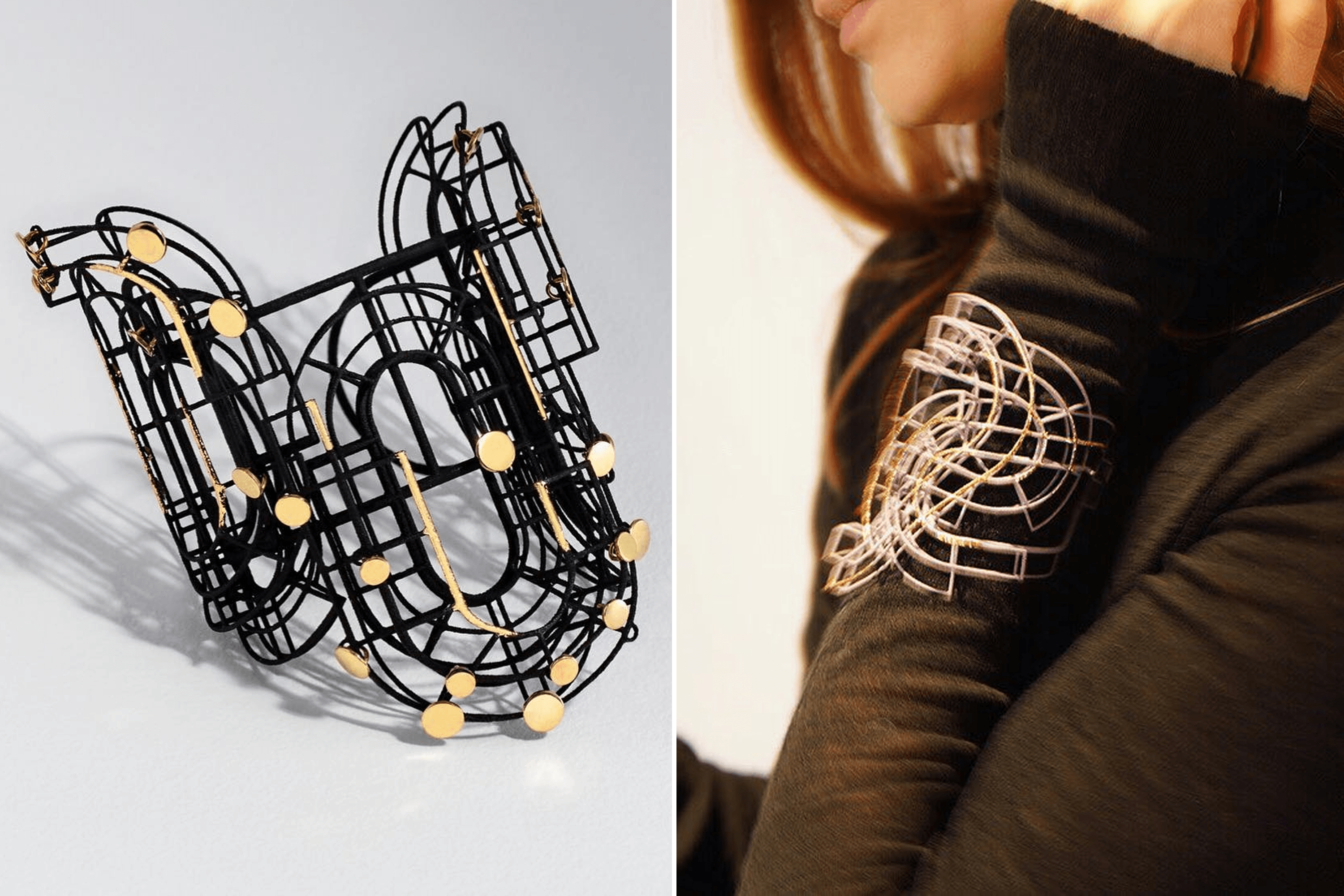
Photo: inesa_kovalova / Instagram / YB 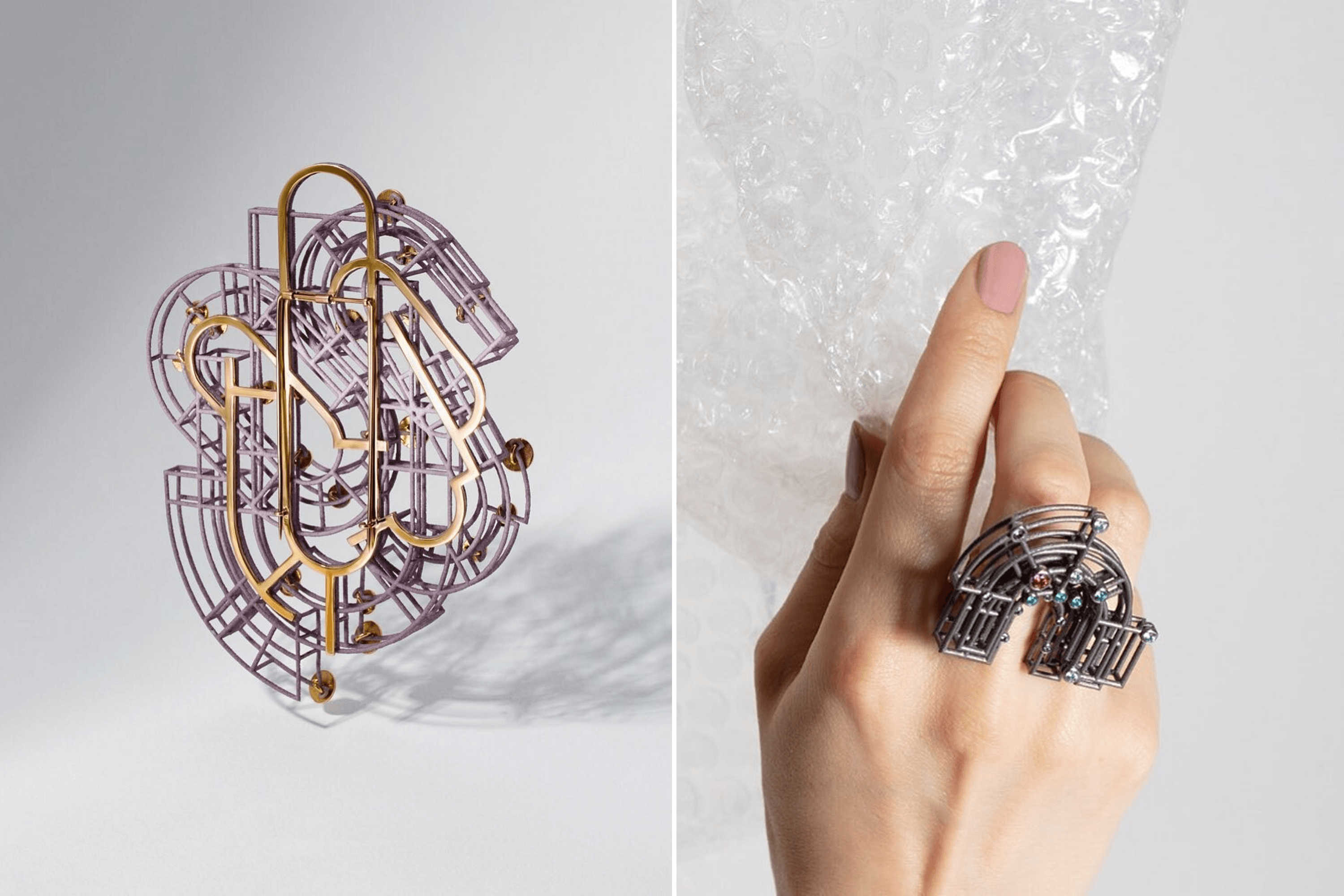
Photo: inesa_kovalova / Instagram / YB
On the specifics of the profession
It is very rare for someone to be both a strong designer and a strong jeweler at the same time. These are separate specializations. In design, it is important to understand and feel historical contexts, artistic references, and decorative art. A jeweler’s work is purely technical: you simply have to know the production process. A designer in high jewellery must understand not only composition and materials, but also gemology and, of course, the market. You need to know for whom, why, and how to sell a piece.
Every piece has two kinds of value: material and immaterial. The first is determined by the amount of gold or the number of diamonds. But the true value lies in artistic expressiveness, in original design, in the idea you embody. Design turns an object into an object of desire. It is like an iPhone: people buy it not only for the technical characteristics, but also for the aesthetics, convenience, and image. In collectible jewelry, it is the same. It is not just precious metal and stones, but a piece of decorative and applied art that you wear on your body.
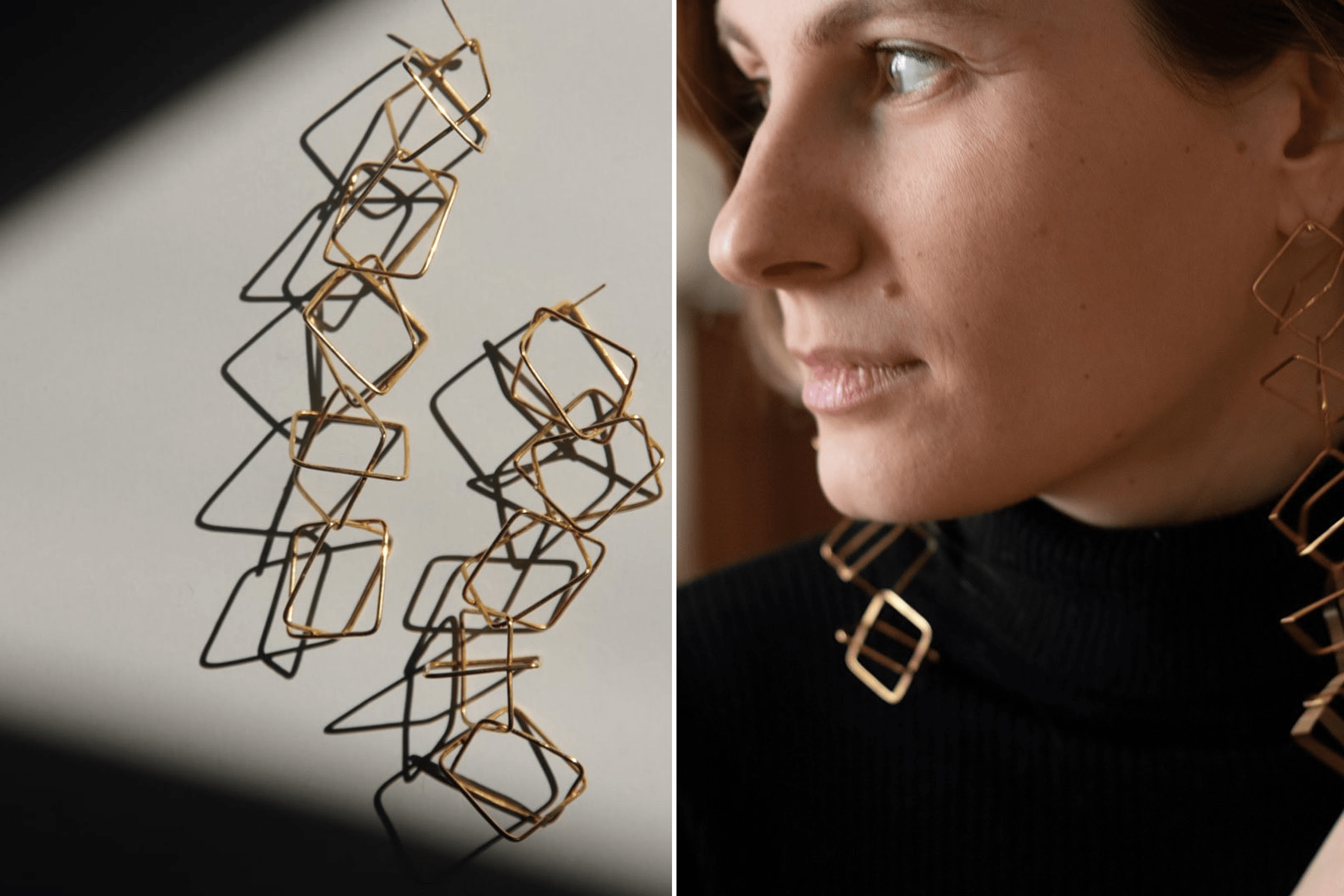
Some works by Inesa Kovalova. 2021–2022. Photo: inesa_kovalova / Instagram / YB 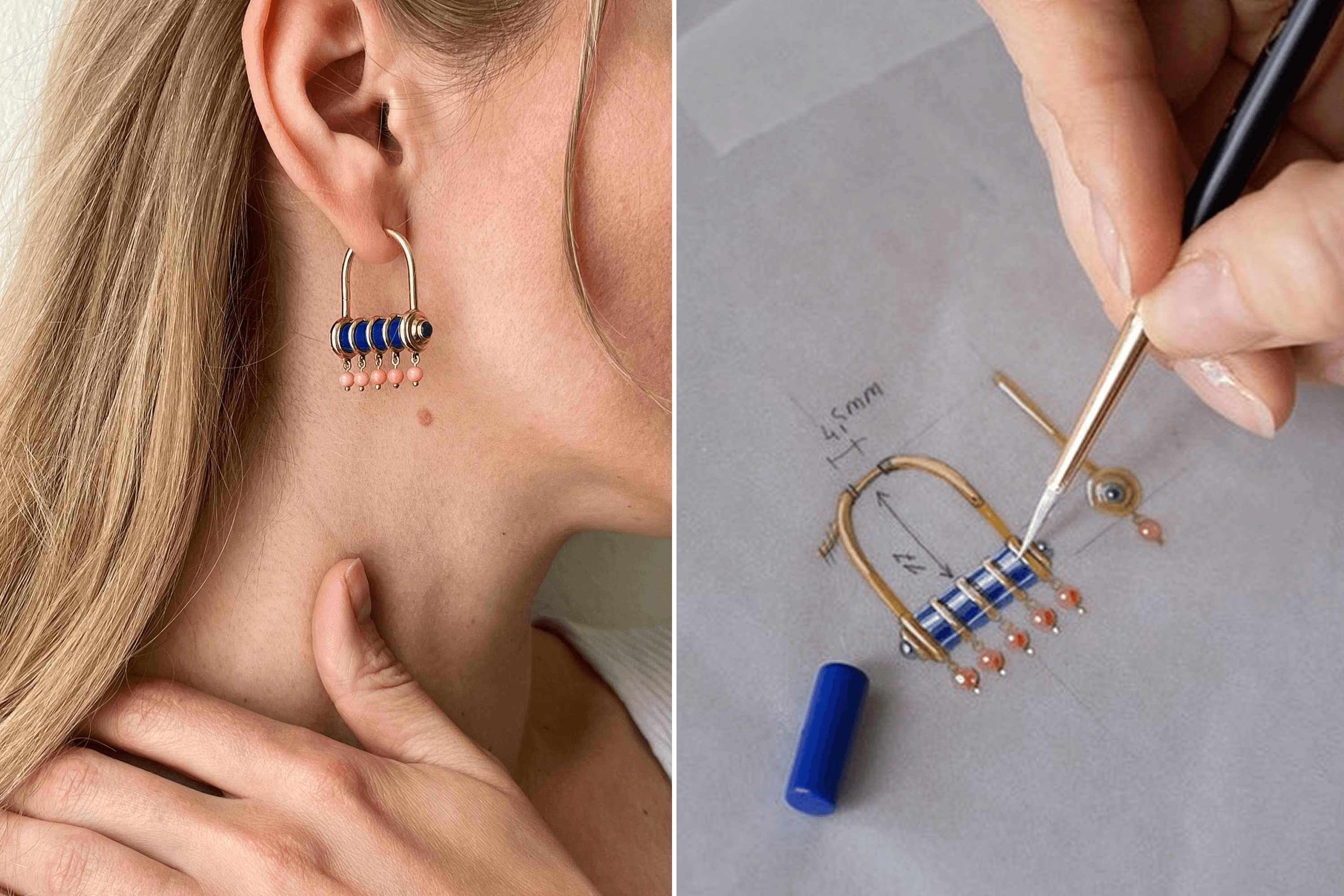
Photo: inesa_kovalova / Instagram / YB 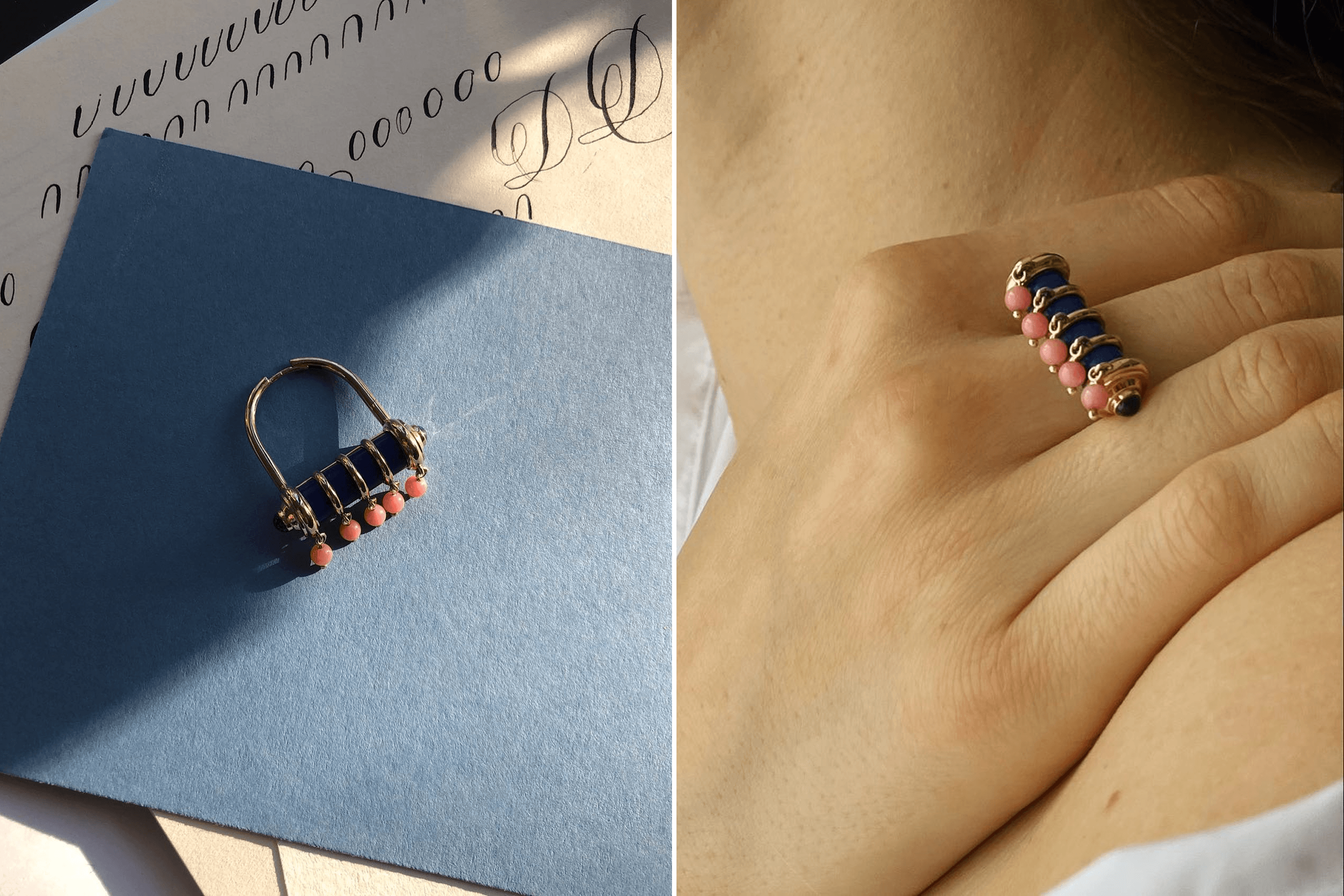
Photo: inesa_kovalova / Instagram / YB 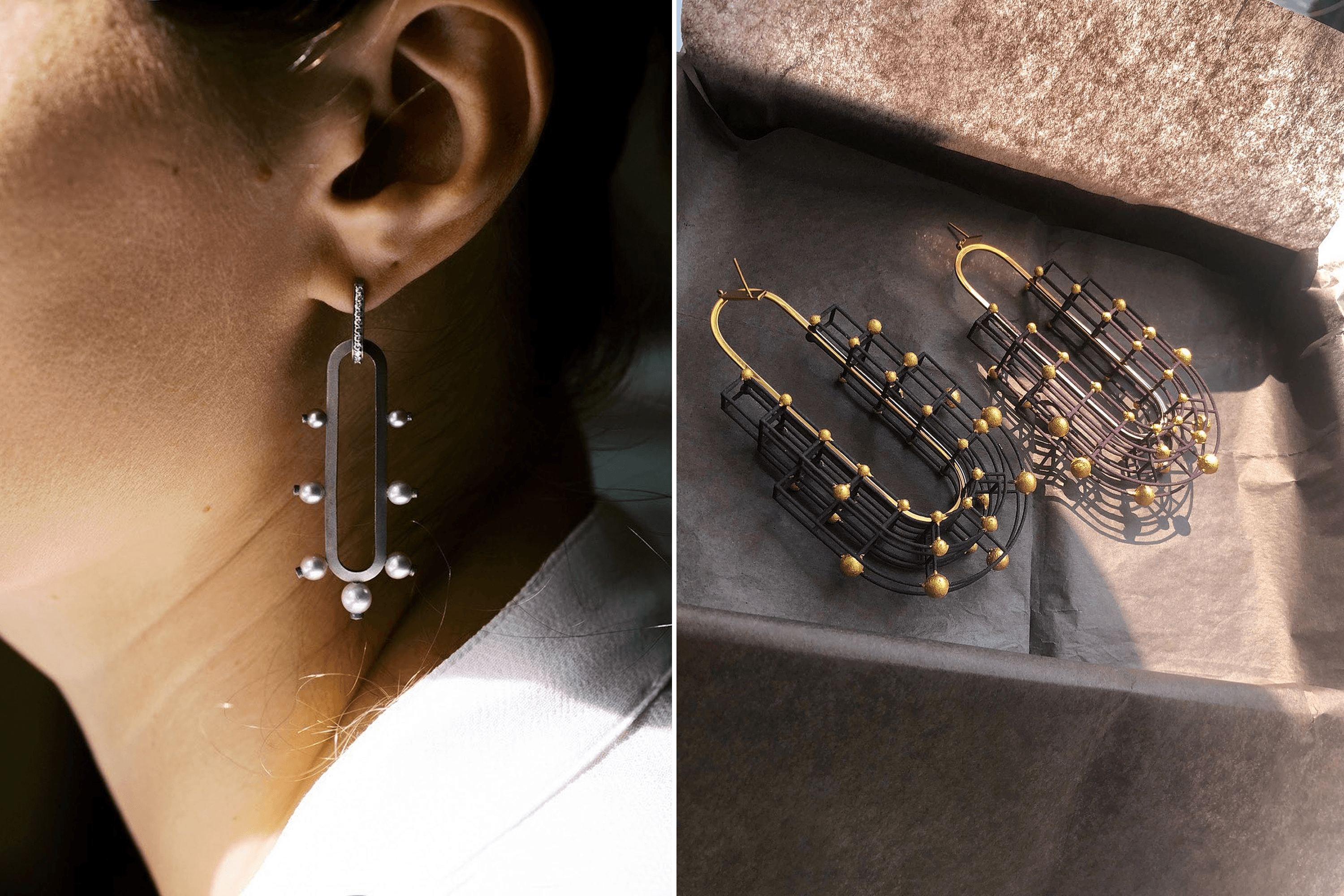
Photo: inesa_kovalova / Instagram / YB 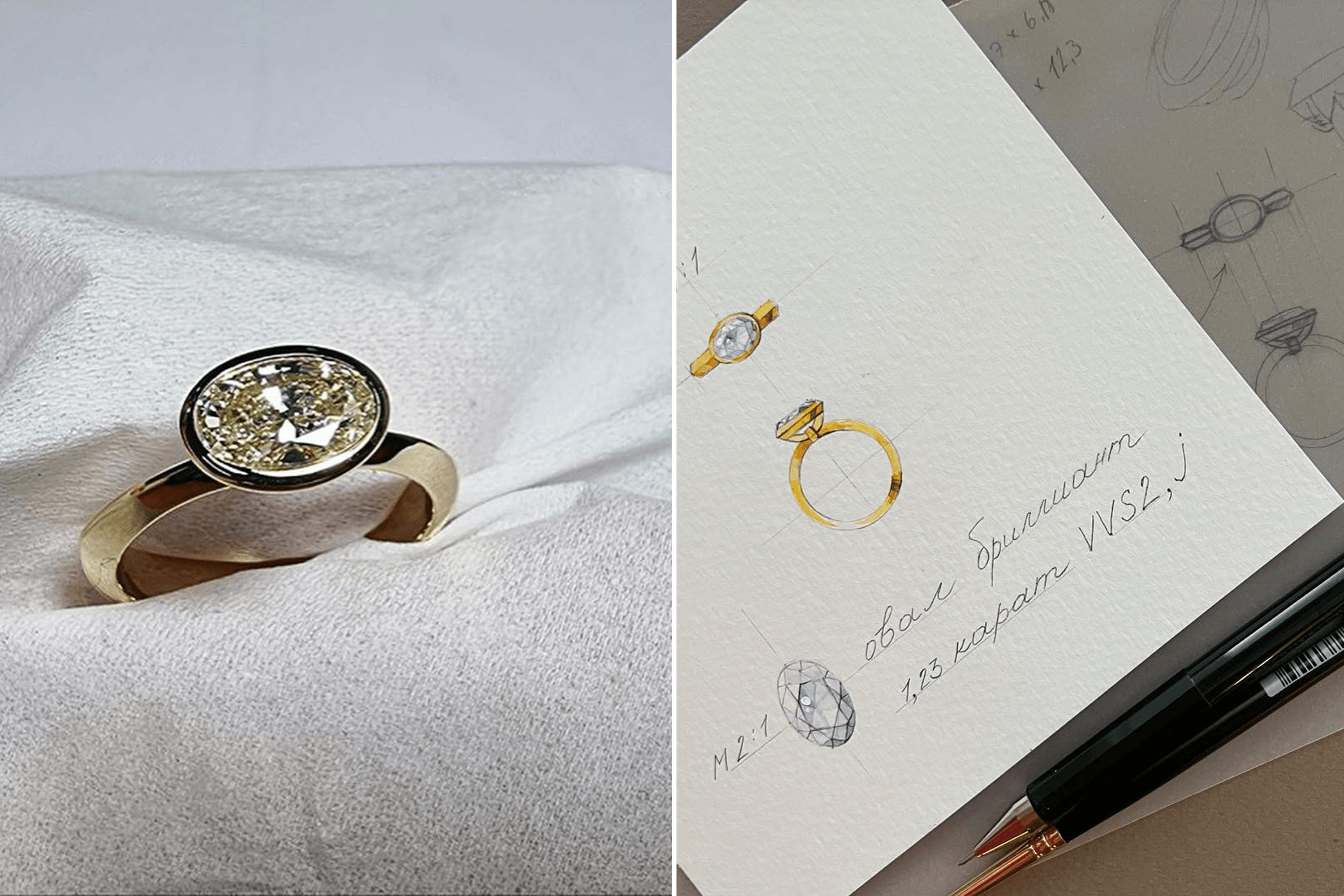
Photo: inesa_kovalova / Instagram / YB 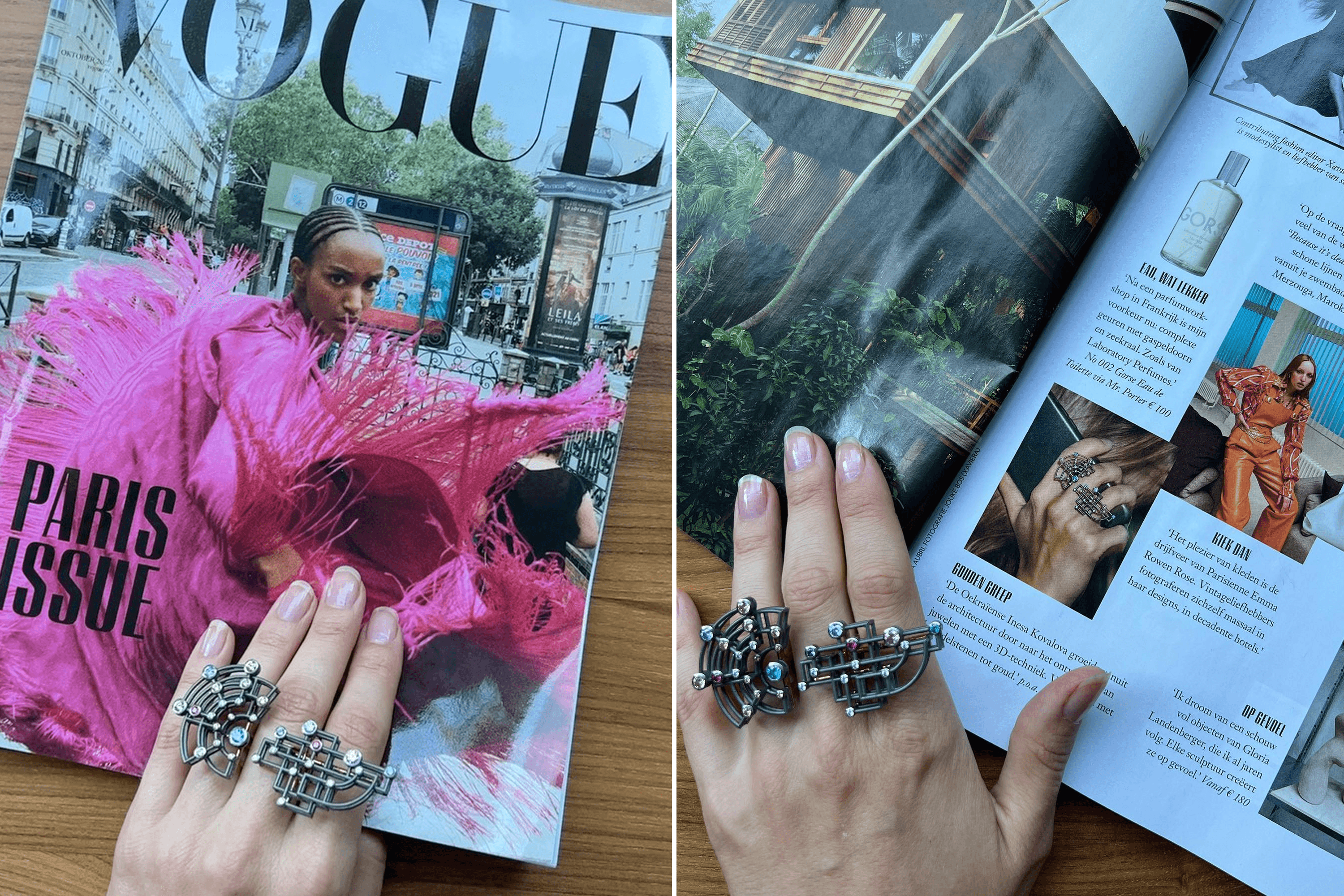
Photo: inesa_kovalova / Instagram / YB
On changes in her career after the full-scale invasion and the Sotheby’s auction
Since the start of the full-scale war, I have focused on my own creative work. That was, in fact, my goal when I entered Central Saint Martins. I wanted to find myself as a designer, understand what distinguishes me from others, and create something real.
Sotheby’s first presented my work at the Important Jewels auction in Geneva in November 2022, as part of the Strong & Precious art foundation initiative. The project brought together Ukrainian jewelers who donated funds to support the Superhumans Center, which helps people affected by the war in Ukraine.
Strong & Precious is an initiative of Olga Oleksenko, who for many years was director of the Van Cleef & Arpels boutique in Kyiv. She decided that her contribution to victory would be supporting Ukrainian designers. We organized the first exhibition in Geneva thanks to her contacts. Through acquaintances in the industry, she found me, and I agreed to take part on a volunteer basis.
For me, it became a light in the darkness: when you are literally losing your sense of meaning, and then suddenly someone says, “Let’s show Ukrainian jewelry designers to the world!” It gave me back my desire to live.
Now I work as program director of the Strong & Precious art foundation. We organize participation in professional exhibitions, work with Ukrainian designers, and give lectures. All the money from the educational activities goes into the foundation, from which we provide grants to small design studios once every six months. This matters to me not only as a designer, but as a person. I have always wanted to do something useful.
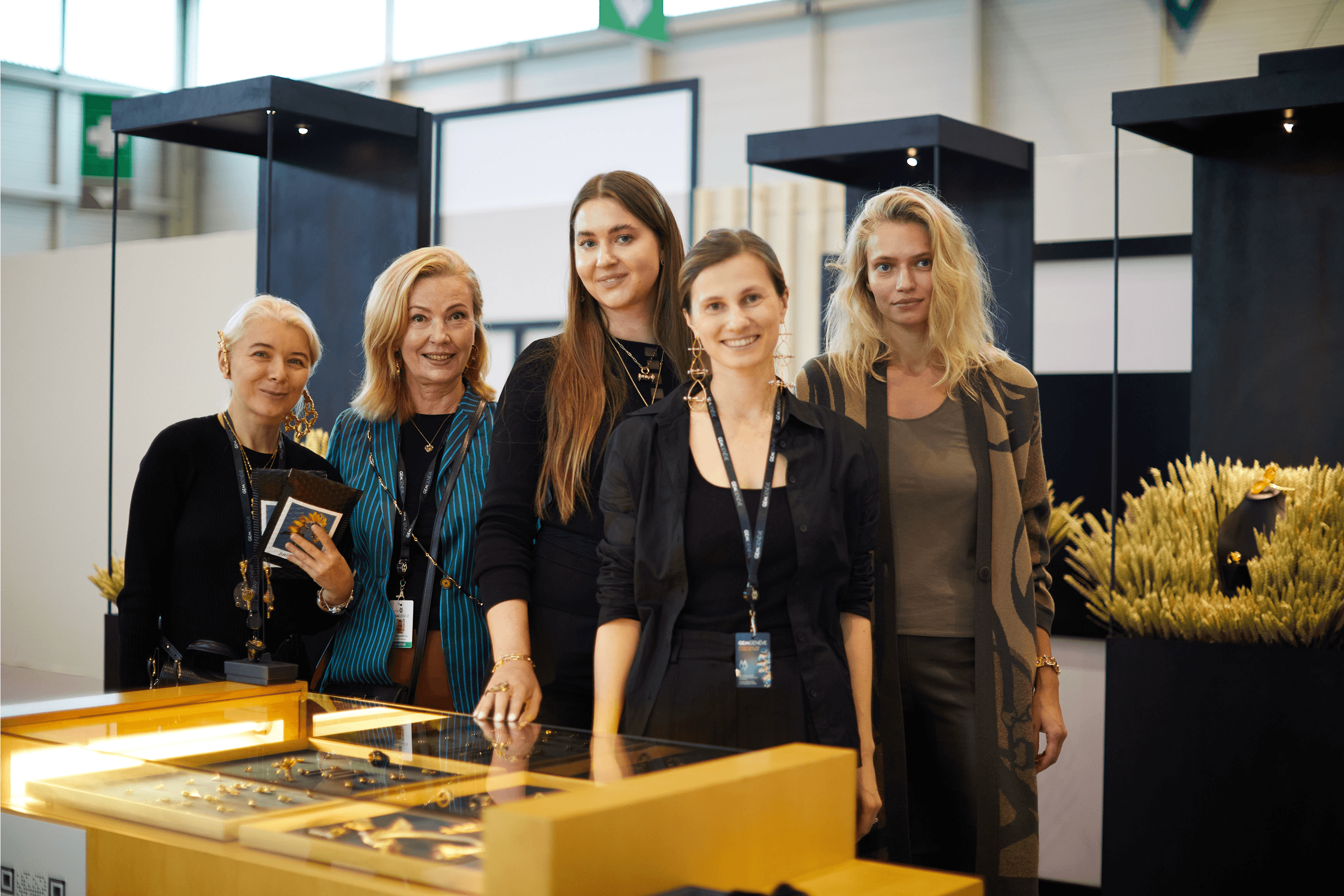
The Strong & Precious team at international jewelry exhibitions in Geneva. Photo: strongandprecious.com / YB 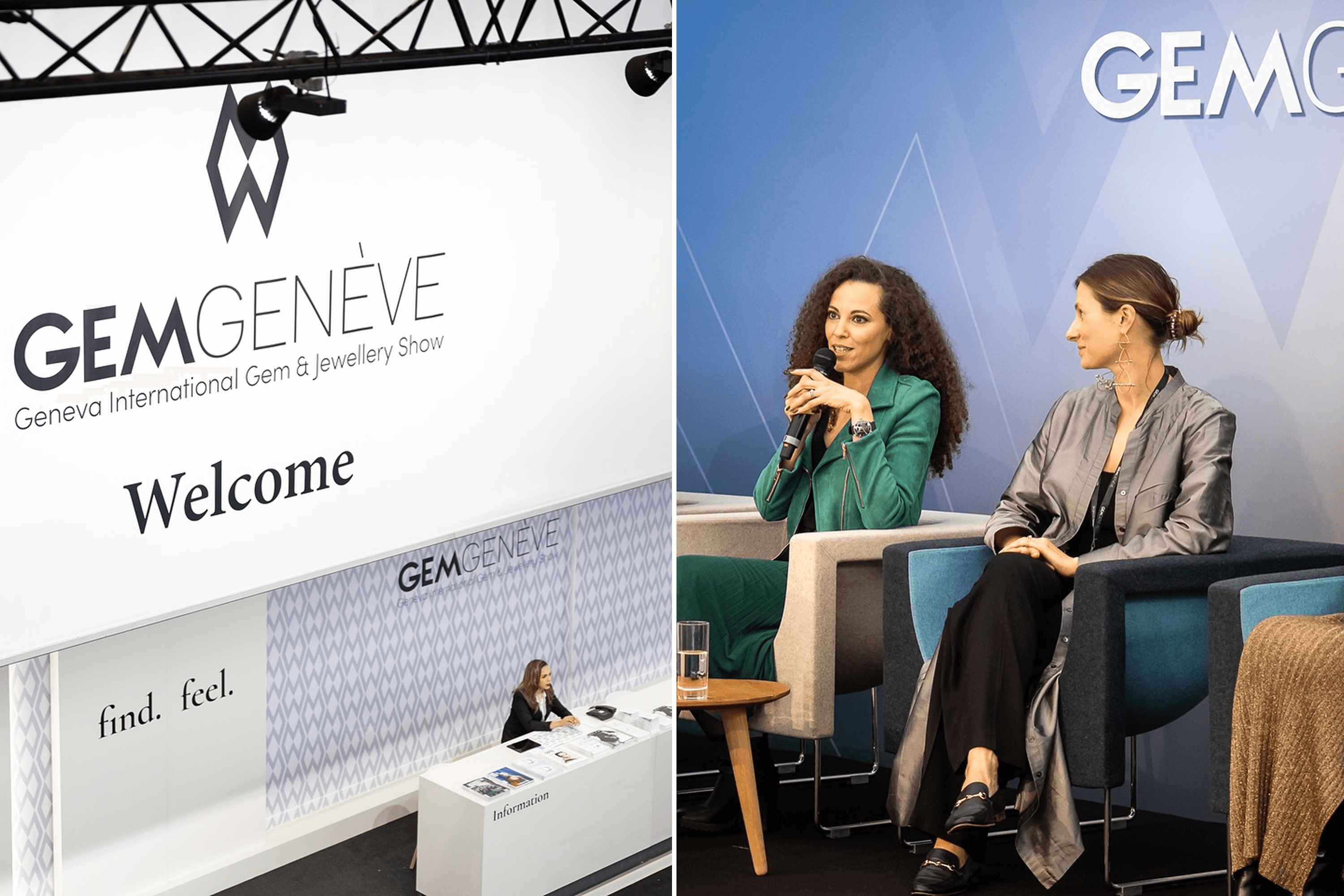
Photo: strongandprecious / Instagram / YB 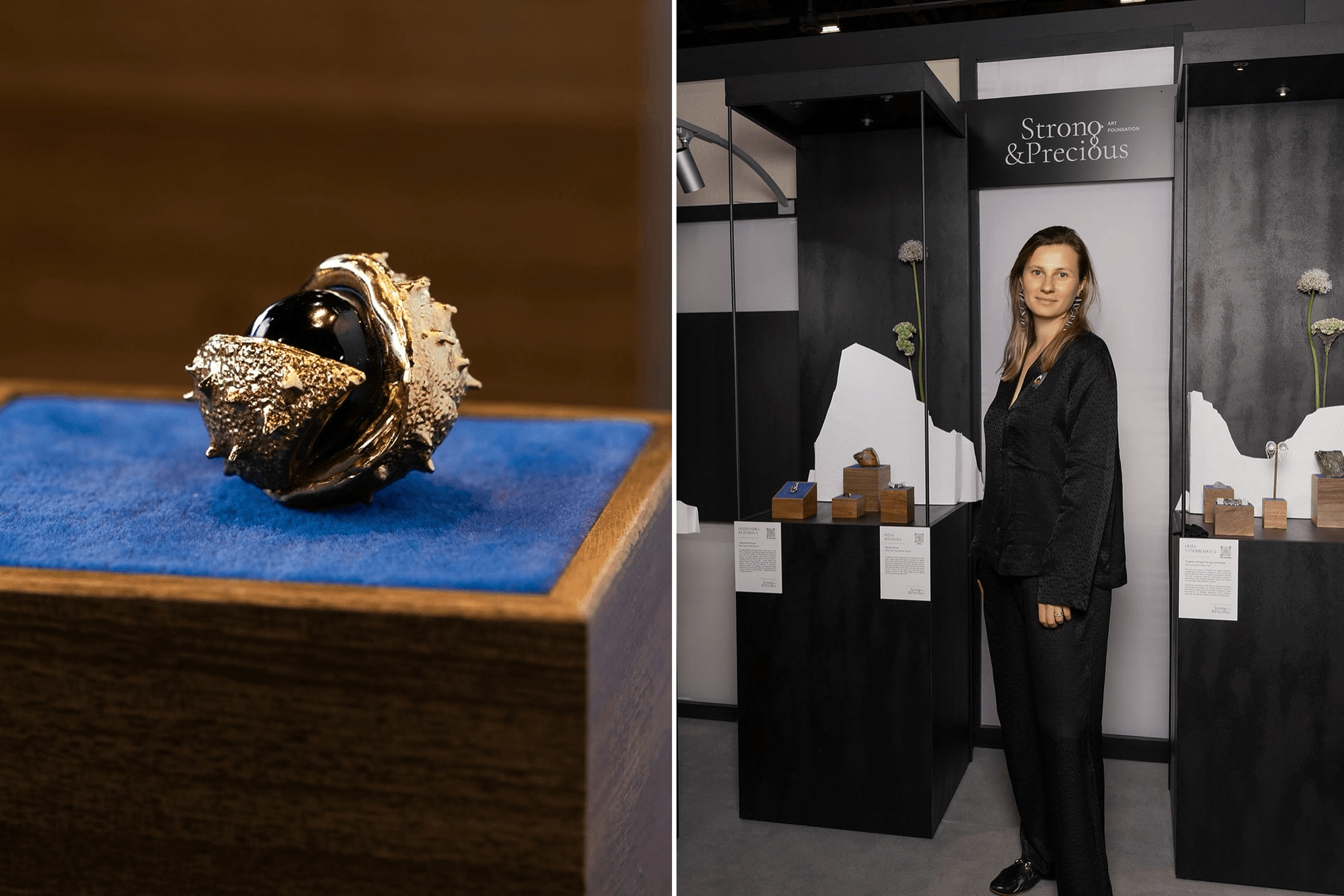
Photo: strongandprecious / Instagram / YB
On her work today
Before, when I worked for brands, I was simply a designer within a corporate aesthetic. Now I create my own work. I work from my home studio in The Hague, where I have my worktable, 3D printer, and prototypes.
In 2022, I began working with precious materials. Before that, my jewelry was made of silver and gold, more accessible and aimed at a broader market. But over time I felt the need to make things that were more complex, more expensive, and more technically interesting, and at the same time visually restrained.
Now I work with diamonds and emeralds, and I use titanium. All stones are natural, and that matters to me. There is a precious stone market, with certified dealers such as Nomad’s and laboratories that confirm authenticity.
Of course, I do not buy raw materials for a hundred pieces at once. Stones are ordered for a specific idea. An edition can be up to ten pieces. A production facility in Bangkok supports this process; we have worked together for many years. They extend me credit, and when a piece is sold, I pay the cost of their work. Without partners like them, I could not afford to create complex, risky things.
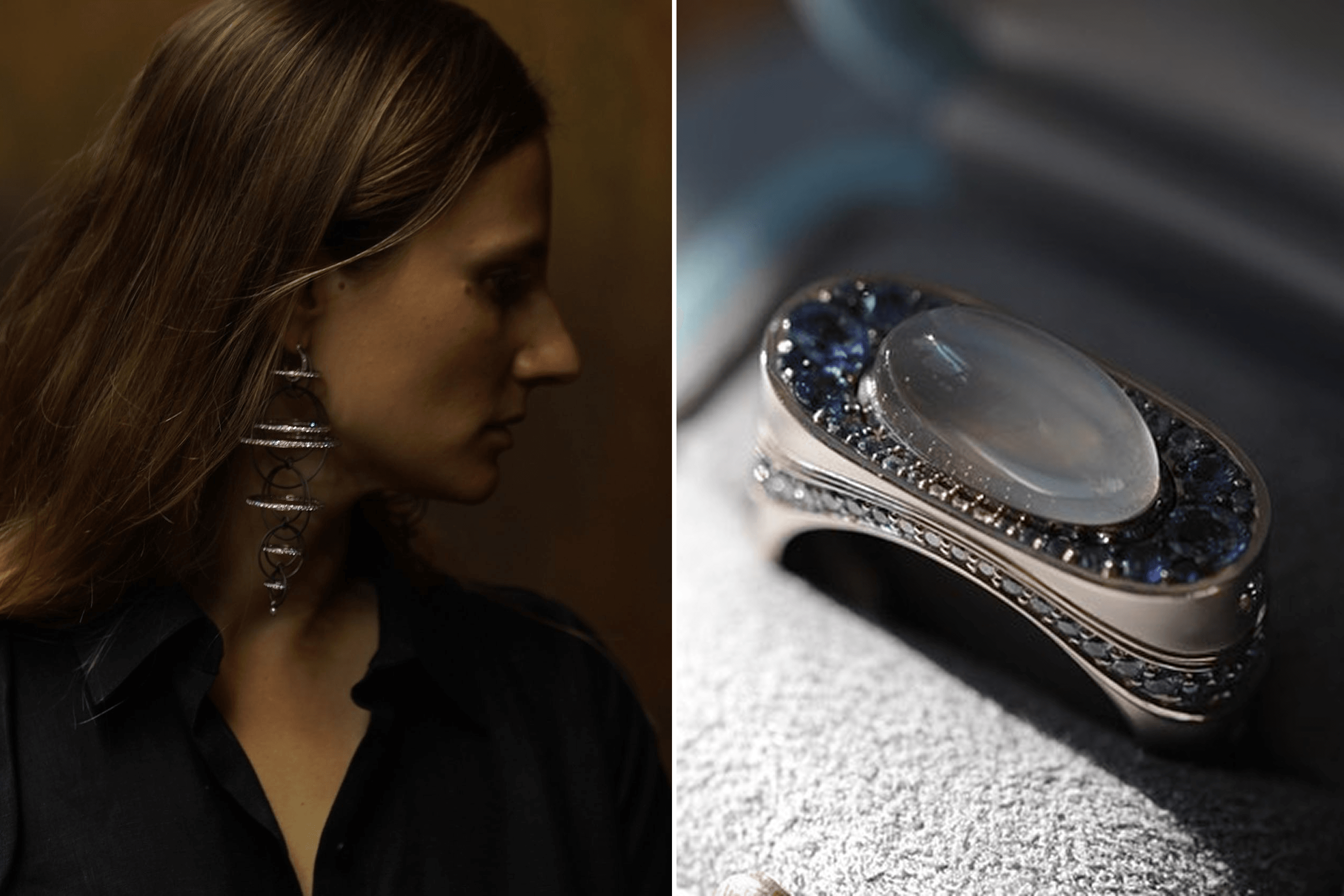
Some jewelry pieces by Inesa Kovalova. 2024–2025. Photo: inesa_kovalova / Instagram / YB 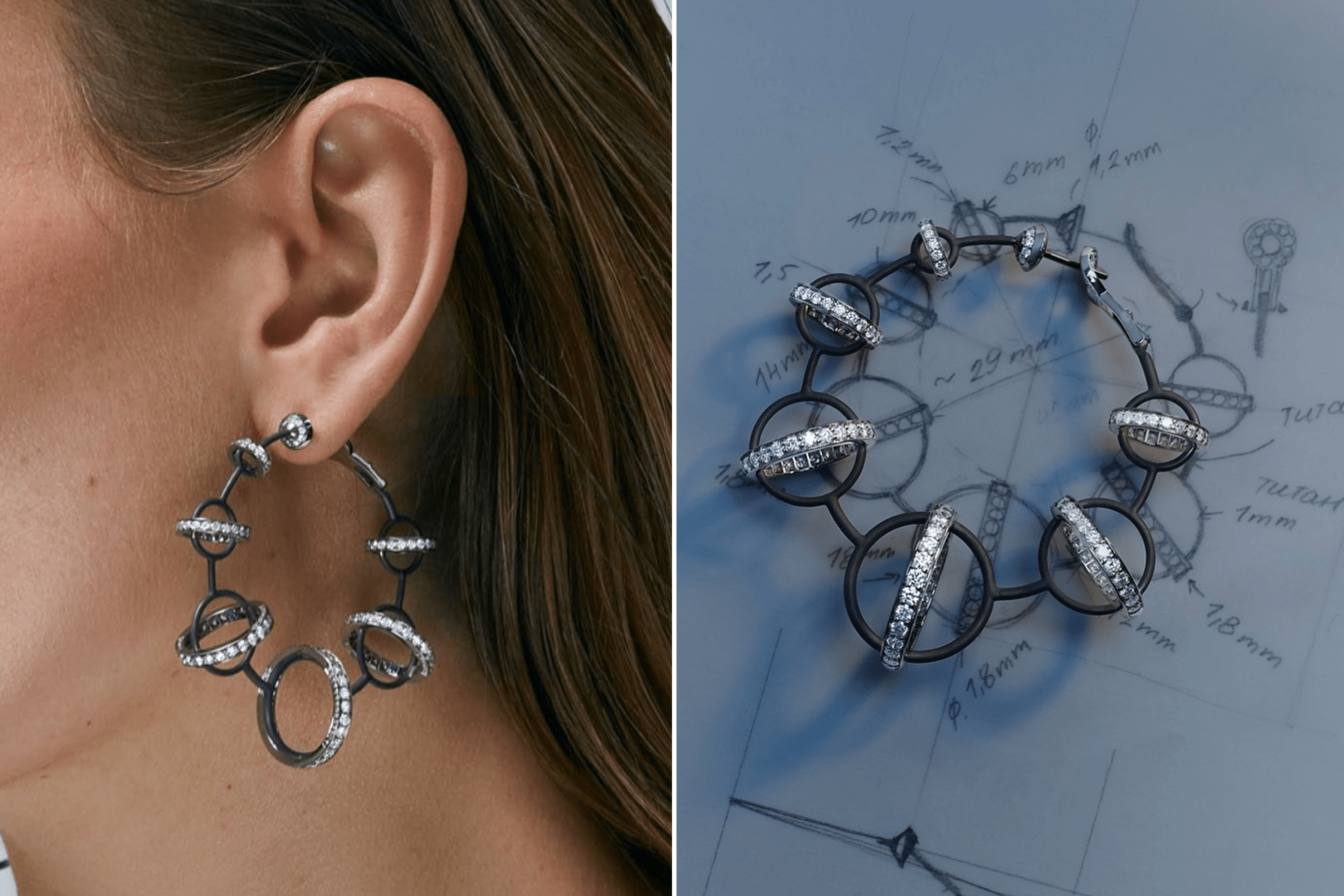
Photo: inesa_kovalova / Instagram / YB 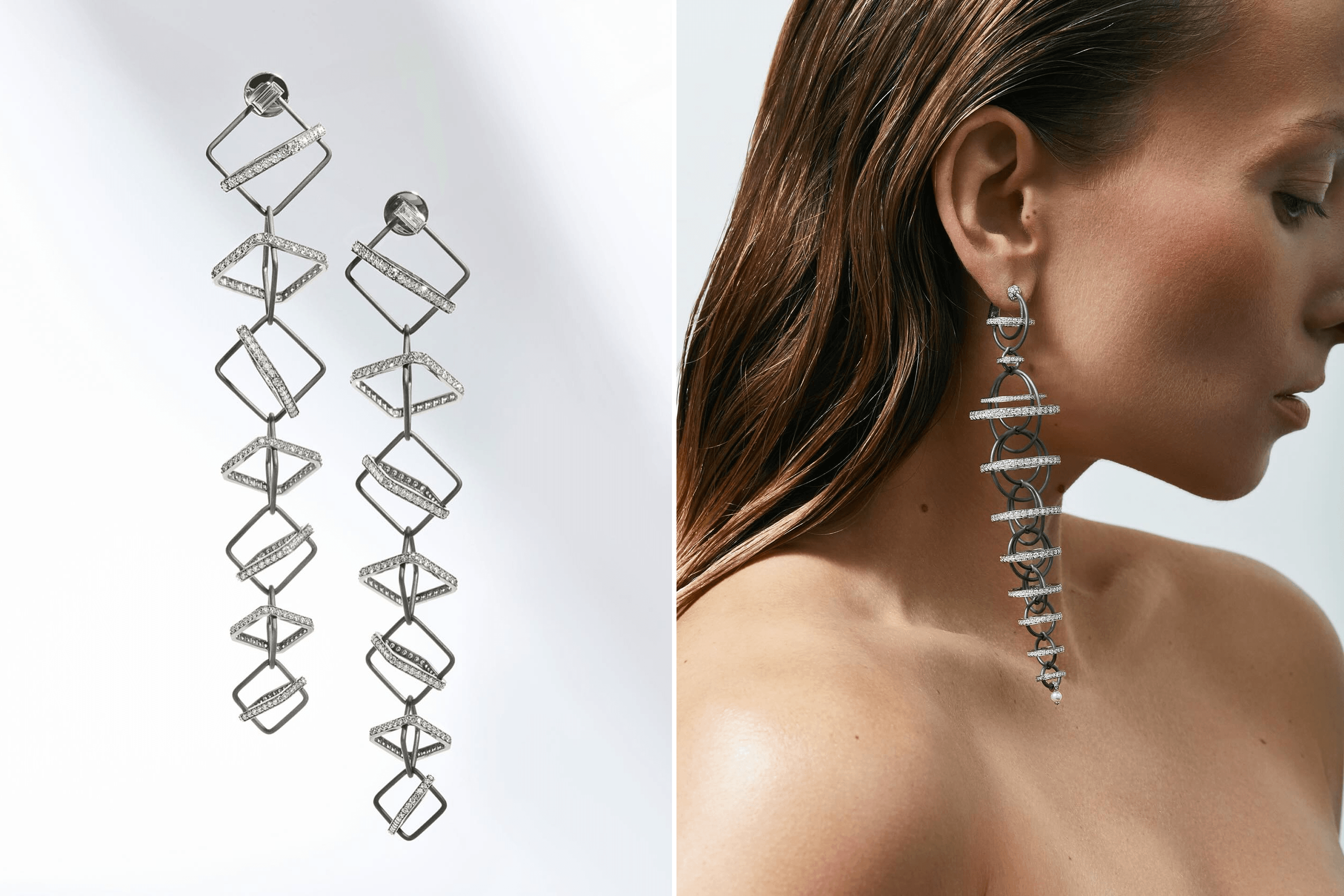
Photo: inesa_kovalova / Instagram / YB 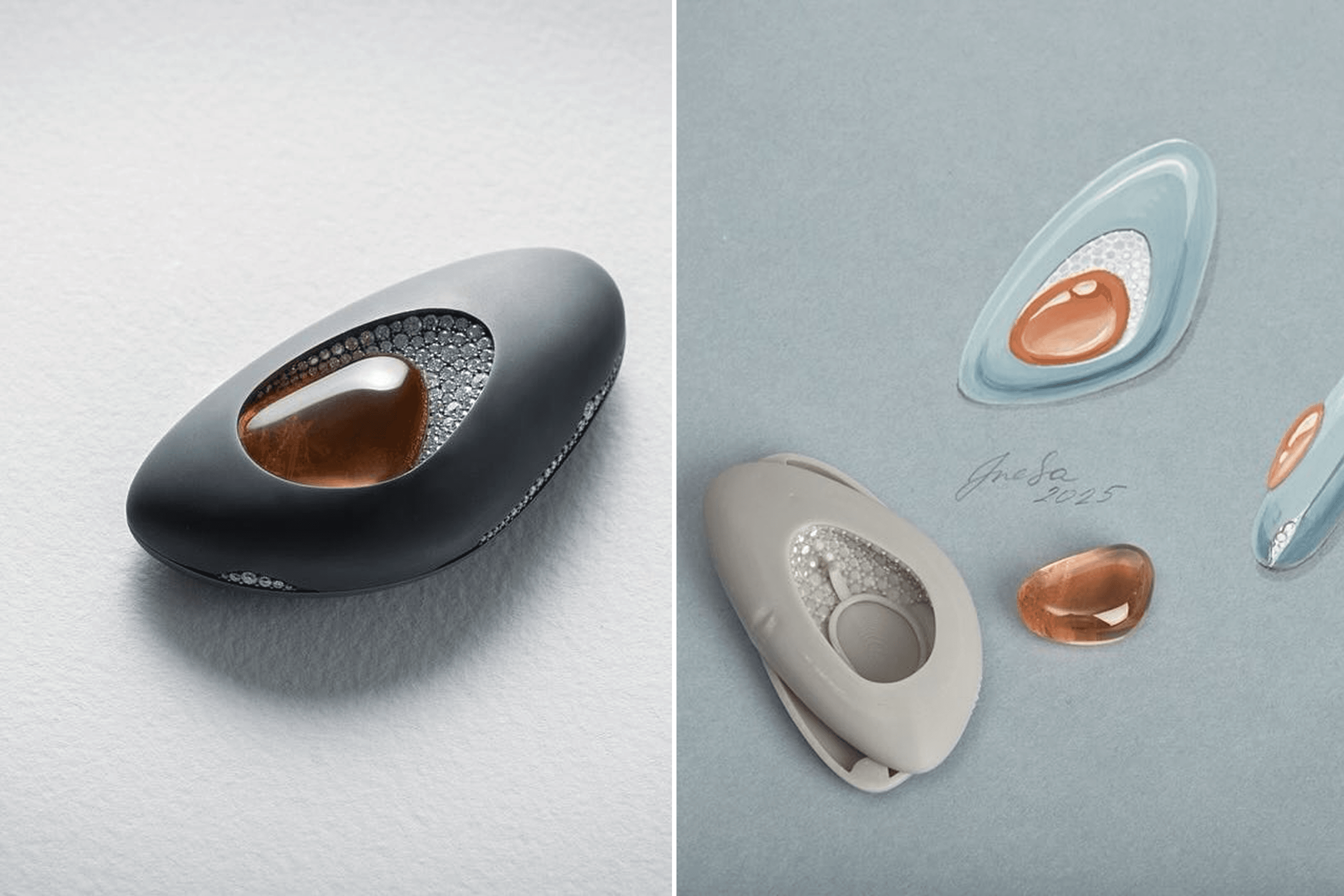
Photo: inesa_kovalova / Instagram / YB 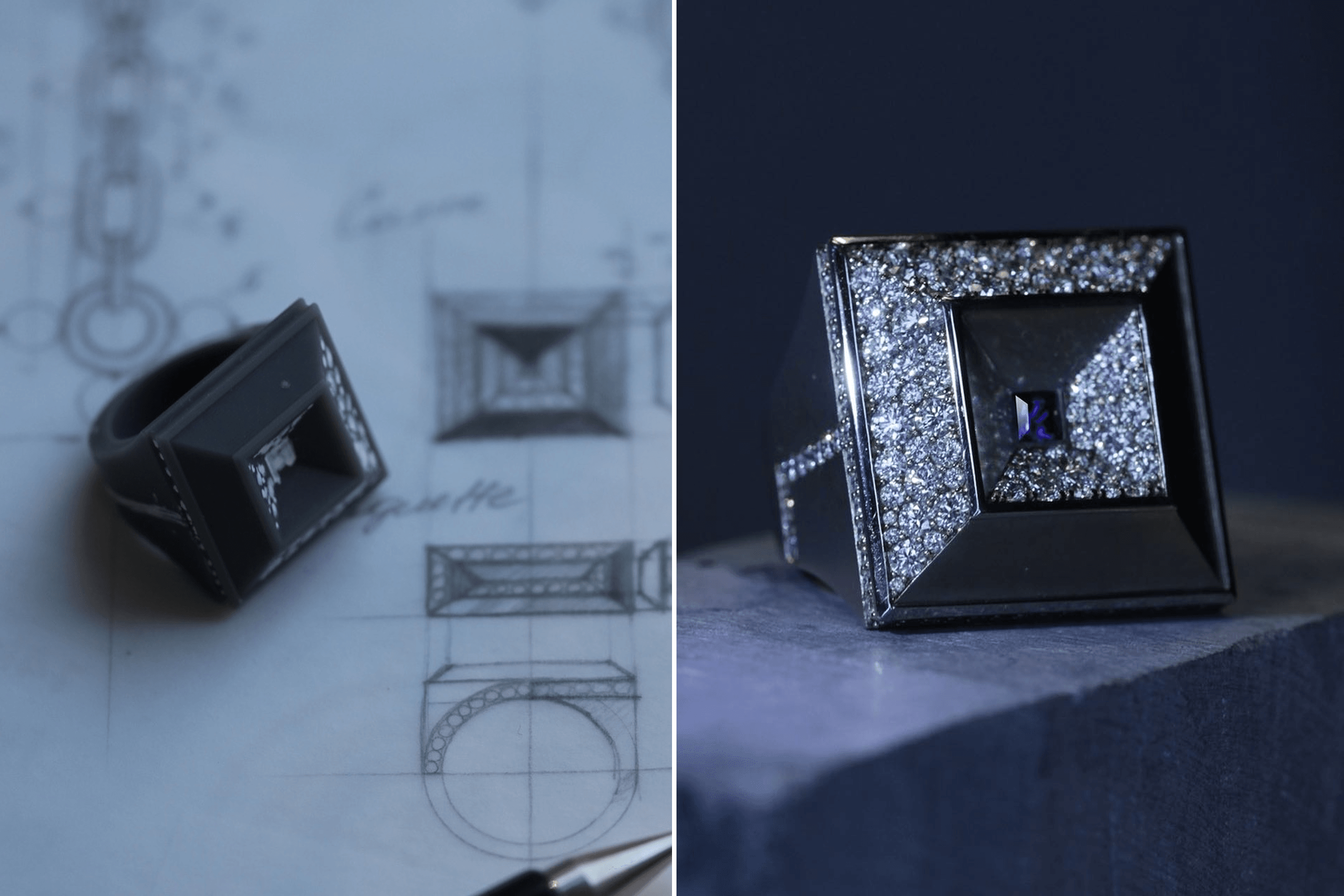
Photo: inesa_kovalova / Instagram / YB 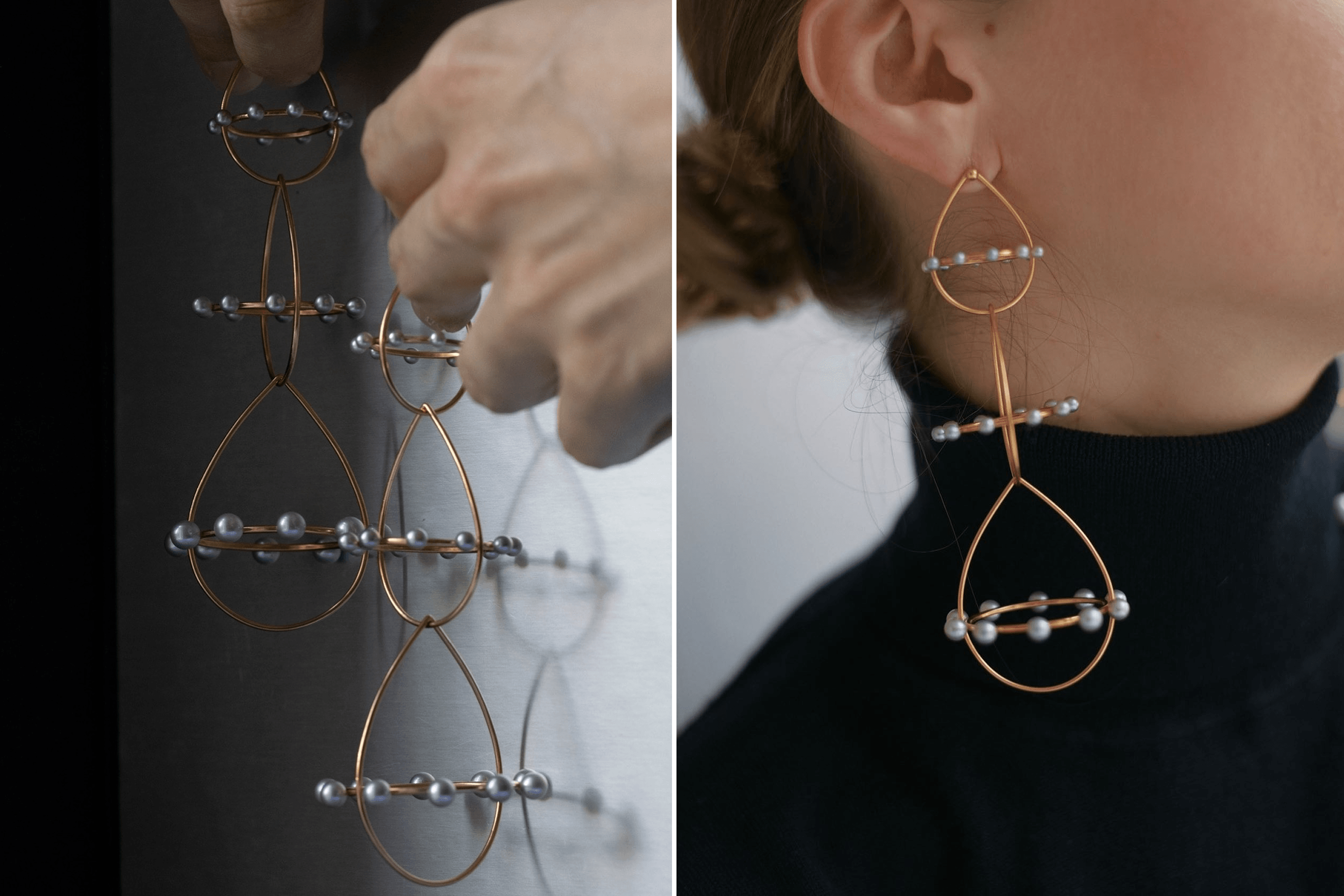
Photo: inesa_kovalova / Instagram / YB
On creating jewelry
My best pieces are the ones that require the most time for reflection. I draw inspiration from contemporary art, architecture, and sculpture. When thinking about a new piece, I mentally “try on” a work of art against an imagined sketch, because I perceive jewelry as full-fledged three-dimensional objects. For me, it is important how a piece interacts with the body. How the shape of earrings emphasizes the lines of the face, how the volume of a ring works with the gestures of the hand. I seek harmony between form, material, and body.
The process always begins with a sketch. Then I quickly make a prototype from wire or wax to better feel the volume and spatial dynamics. Next come detailed 3D drawings. In my new collections, I use selective laser sintering, a 3D-printing technique, to create complex titanium structures that cannot be reproduced by hand.
If a piece uses large stones, I personally select them at trade fairs or from the stock of trusted suppliers. I send the 3D models to the atelier, where they develop technical documentation for casting. Then the jewelry magic begins: mold-making, casting, polishing, and stone setting.
What makes my work distinctive is a fresh interpretation of diamond jewelry. While classic jewelry pieces often gravitate toward traditional forms like flowers, butterflies, and curls, I propose a different aesthetic: architectural, bold. Industrial motifs inspire me. I recall the structure of industrial landscapes: machine-building plants, the chaos of pipes and geometric volumes, lights in the night fog. I transform that into jewelry.
On copyright for jewelry by independent designers
In theory, design can be patented. It is a long and costly process, especially for an independent author. Fortunately, the market is fairly close-knit, and plagiarism quickly becomes noticeable. Within the designers' community, it cannot be hidden. So far, no one has copied me, but in theory large brands could. My clients would not go there for jewelry. They are looking for something else: authenticity, idea, depth. I believe that in the long run, a copy always loses to the original, because it does not contain the author’s energy.