Since 2018, Ukrainian journalist Iryna Romaliiska has served as an anchor and reporter for Current Time, an RFE/RL project aimed at Russian-speaking audiences. In August 2026, Romaliiska announced her dismissal and spoke out about the editorial team’s shifting coverage of Russia’s war against Ukraine. Today, she contributes to Ukrainian media while splitting her time between Ukraine and Czechia.
Yellow Blue’s Editor-in-Chief, Yuliana Skibitska, has known Iryna for eight years. Their resulting conversation is a deeply personal, wide-ranging interview covering Russian society, journalistic integrity, fear, and Romaliiska's painful journey with IVF.
On her dismissal from Current Time
What are you currently focusing on?
I manage social media channels for Censor.NET: Telegram, Facebook, X (formerly Twitter), Instagram, Threads, and TikTok. We also produce Butusov Plus on YouTube. I host the streams. We aim for at least once a week, but more frequently if news breaks on the spot. On top of that, I write articles for Censor.NET.
Did Yuriy [Butusov] reach out to you directly?
Yes. When I posted about being fired, I was flooded with job offers. It was a huge relief: I honestly thought people in Ukraine had forgotten about me after eight years. Yuriy suggested doing the live shows, and having worked with Censor before, I jumped at the opportunity. For the first time in a while, I’m in an environment where I don’t have to constantly explain why the war matters.
In 2025, [U.S. President Donald] Trump decided to cut funding for Radio Free Europe/Radio Liberty—and by extension, Current Time. How did the news go down with the team?
People were really anxious. I know stringers and freelancers were let go first, but the major wave of layoffs didn’t hit until this year.
What was the official explanation?
Budget cuts. But I’m no expert on that. I had enough on my plate and didn’t care to dig into the financials.
Back in 2025, did you consider the possibility of being fired yourself?
I always knew I could end up on the chopping block. Honestly, the idea had been floating around ever since my three-week suspension. Back then, they didn’t dare fire me because of the potential fallout: it would’ve looked like Romaliiska was pushed out for taking a stand against a Russian propagandist. Now, they could finally pull the trigger under the guise of budget cuts rather than ideological clashes.
What happened back then? |
|
|
|
|
I went far beyond my job description. On paper, I was just an anchor, but I was also filming interviews, producing long-form projects, and leading investigations. Our stories were widely cited, so watching all of this unfold was jarring. I might be misinterpreting things, of course, but it wasn’t just me: people across our large team were discussing it amongst themselves.
When you spoke out against [Ilya] Klishin’s appointment, weren’t you terrified of losing your job?
Tensions were so high by then that I didn’t even care. If they fired me, they fired me. I simply couldn’t work alongside someone who wrote op-eds on “How to keep Crimea part of Russia after Putin.”
Sure, there was fear: Radio Free Europe/Radio Liberty provides stability, and I was living abroad. On top of that, I never fully assimilated; my entire professional life and personal focus remained tied to Ukraine, so breaking into the local media market wasn’t an option. I could always wait tables—I’m actually a great waitress, I’ve got plenty of experience—but professionally, that door was shut. That’s a reality many expats face.
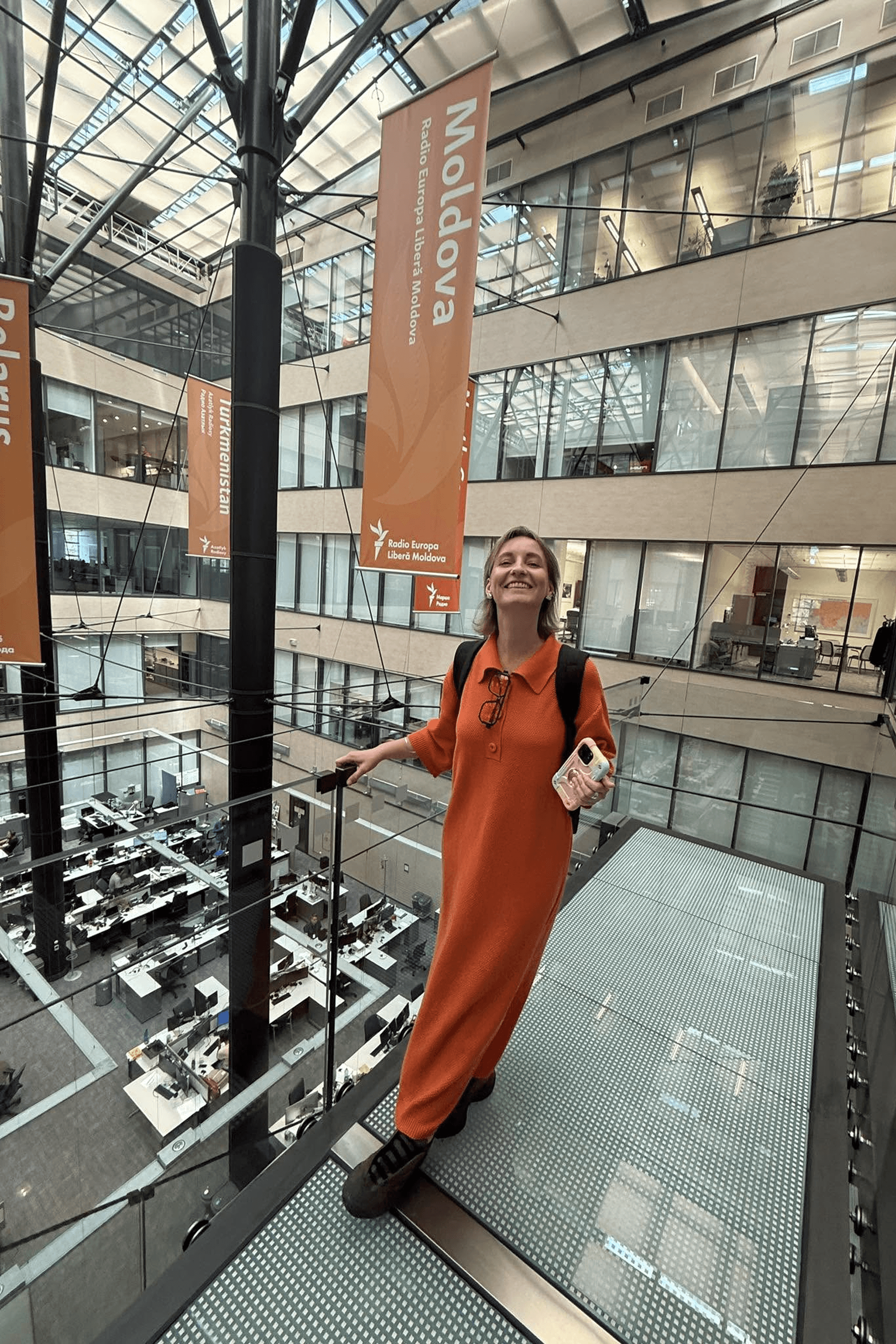
Which is precisely why I brought it up. For anyone living abroad, losing a job is a massive dread.
For me, taking a stand [against Klishin] was a matter of principle. I couldn’t fathom how we could just carry on working together after that. And it wasn’t just Ukrainians who opposed his hiring. Moldovans, Belarusians, and plenty of Russians were against it, too. I sent a company-wide email clarifying that I had no personal gripe with Klishin himself; my issue was with management for making the call, and with HR security for failing to proper background-check candidates before hiring. That triggered a flood of emails from others. It felt like a full-blown Maidan inside our internal email threads. Eventually, the correspondence leaked to the press. Klishin never took the job, and I was suspended for three weeks. I’m not privy to the details of his contract—whether it was signed or not. But after internal reviews and lengthy discussions, they brought me back.
Looking back, do you think it was just an oversight by top management, or a calculated move that blew up in their faces because the newsroom revolted?
I think it was just a blunder. I don’t buy into conspiracy theories here. Management probably just glanced at his resume, thought, “Looks like a solid guy, worked at TV Rain,” and didn’t bother to look any deeper.
On patriotism and journalism
You were asked to tone it down so you wouldn’t be perceived as a “hub of Ukrainian patriotism.” Can a Ukrainian journalist after February 24, 2022, truly separate professional detachment from what is happening to their own country?
I think I answered this back during the first year of the full-scale invasion. An international reporter asked me: “How do you compartmentalize your citizenship, your personal pain, and journalistic standards?” I honestly don’t see a contradiction here. If Ukraine had been the aggressor, keeping those separate would be tough. But we are talking about a victim nation. Sure, I don’t spell “Putin” or “Russia” with a lowercase letter in my reporting [like some Ukrainian media do]. I simply call things what they are. I’m against coining decorative euphemisms like “ruscists,” too. Evil should just be called evil. Russia is Russia, and Russians are Russians.
So back in 2022, the management at Current Time didn’t see a conflict either. It’s unlikely that anything changed about your reporting style—what changed was their attitude toward it.
Exactly. It’s the Russians who struggle with this internal conflict. To me, it looks like a deep psychological denial—when you physically cannot bring yourself to admit that your country, your people, your whole society have collectively lost their fucking minds. They constantly try to whitewash Russia, clinging to the narrative that most Russians oppose the war, love Ukrainians, and respect international law.
Whenever I hear colleagues claim that “Russia is also occupied by Putin,” it makes my blood boil. Go to Bucha and see what an actual occupation looks like.
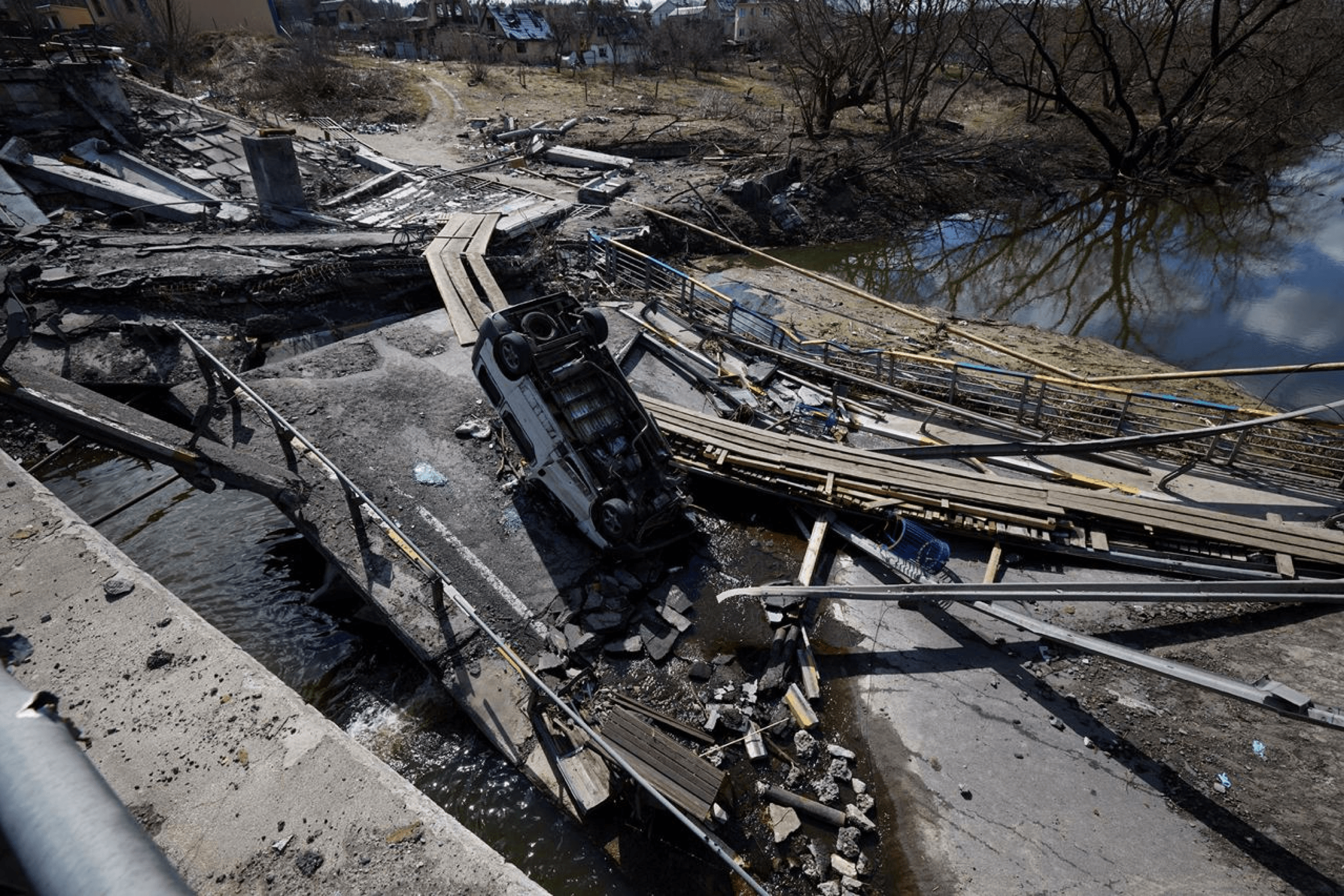
Bucha after its liberation from Russian occupation. Kyiv Oblast, April 2022. Photo: Офіс Президента / Telegram 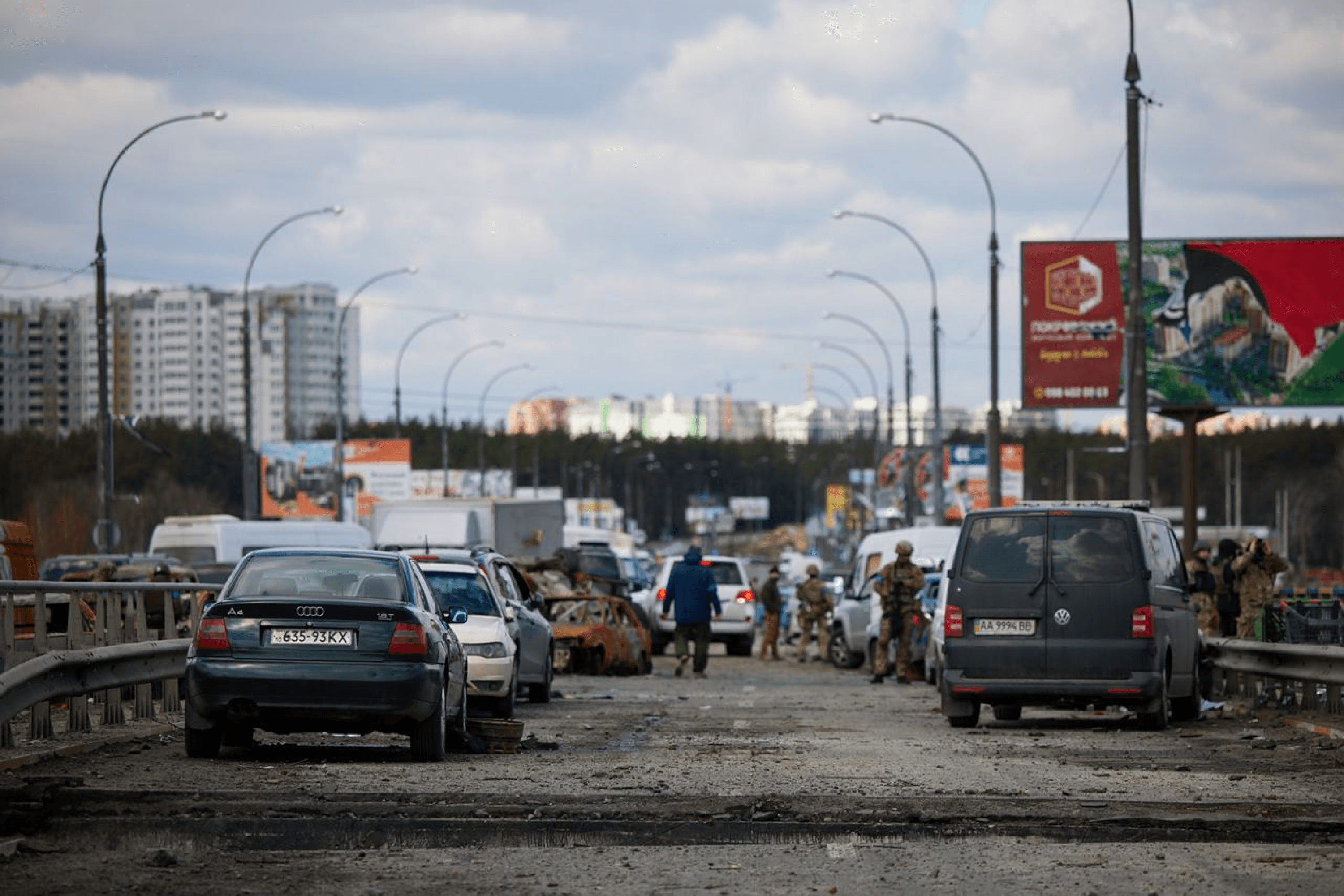
Photo: Офіс Президента / Telegram 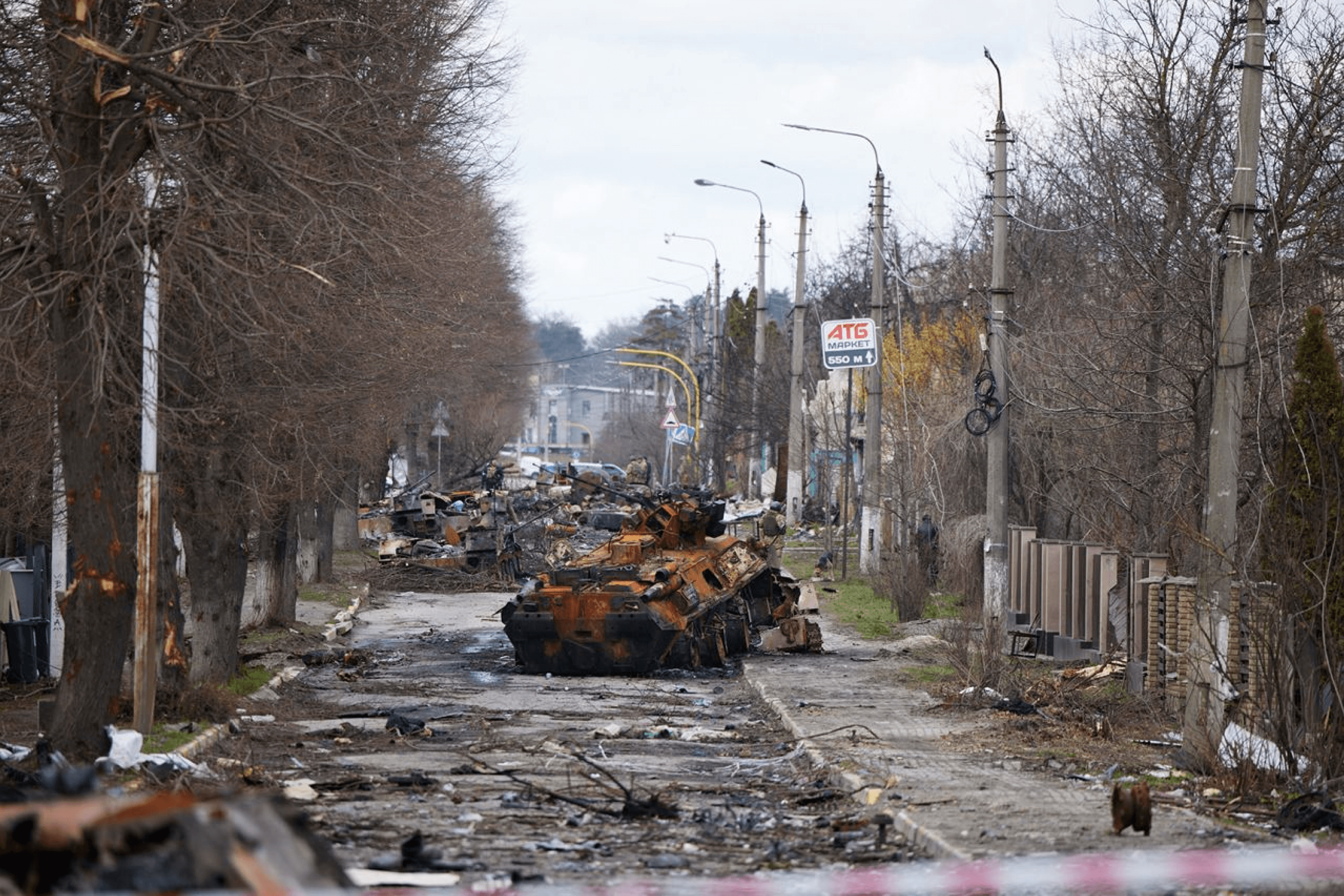
Photo: Офіс Президента / Telegram
I’ve shared this story from the opening days of the full-scale invasion. We brought former Prime Minister Volodymyr Groysman on air to ask how long Ukraine’s economy could hold out. He was sitting in a basement under active bombardment, completely overwhelmed, shouting: “Putin is a murderer!” Meanwhile, the editor was screaming in my ear: “Interrupt him! Say that hasn’t been proven in court!” I retold this story later, and my former Russian editor texted me, asking: “If someone called Zelenskyy corrupt on air, would you interrupt him and say it wasn’t proven in court?” I replied: “Andrei, I’m just so relieved I no longer have to explain to you why those two things are nowhere near comparable. What court ruling are you waiting for? Proof that Putin gave the order to his military? That an army doesn’t invade a neighbor without its commander-in-chief’s command? That people are dying in a war?” And for the record: on my shows, people are allowed to call Zelenskyy corrupt.
Did you run into clashes with Russian colleagues before the full-scale invasion?
Off and on. I remember Timur Olevsky—who is inexplicably popular in Ukraine—walking around the office pulling this passive-aggressive trick. You know, when someone loudly blurts out something provocative meant to trigger you, without actually addressing you directly. He was walking around saying: “Look at how smoothly the Chernihiv region is integrating into Russia.” I stayed silent, knowing it was bait. Eventually he couldn’t help himself, walked right up to me, and said: “Ira, look at how smoothly Chernihiv is joining Russia.” I just looked at him: “Timur, do you think this is funny? Because I sure as hell don’t.”
During newsroom pitch meetings, you’d occasionally hear things like “Moldova isn’t a real country” or other casual imperialist remarks. People didn’t even realize how toxic it was. It’s just baked into them from childhood.
Current Time is designed for a Russian-speaking audience beyond Russia’s borders. Since the full-scale invasion, that model has drawn sharp criticism for lumping Ukraine, Russia, Belarus, and Moldova back into a single shared media sphere. Where do you stand on that?
It’s complicated. On one hand, I understand the criticism and agree with parts of it. On the other hand, I’ve seen the real-world impact. I used to travel to Moldova frequently and saw how the Russian-speaking audience’s mindset shifted once Russian state TV was banned. People were used to consuming content in Russian, so they switched to Current Time. Back then, I believed we had to reach people through any available channel. That priority trumped everything else for me.
But today, in 2026, I could never do that job again. I no longer have the bandwidth to deal with “good Russians.” To do that work, you need the energy for constant pushback—and you will be fighting every single day.
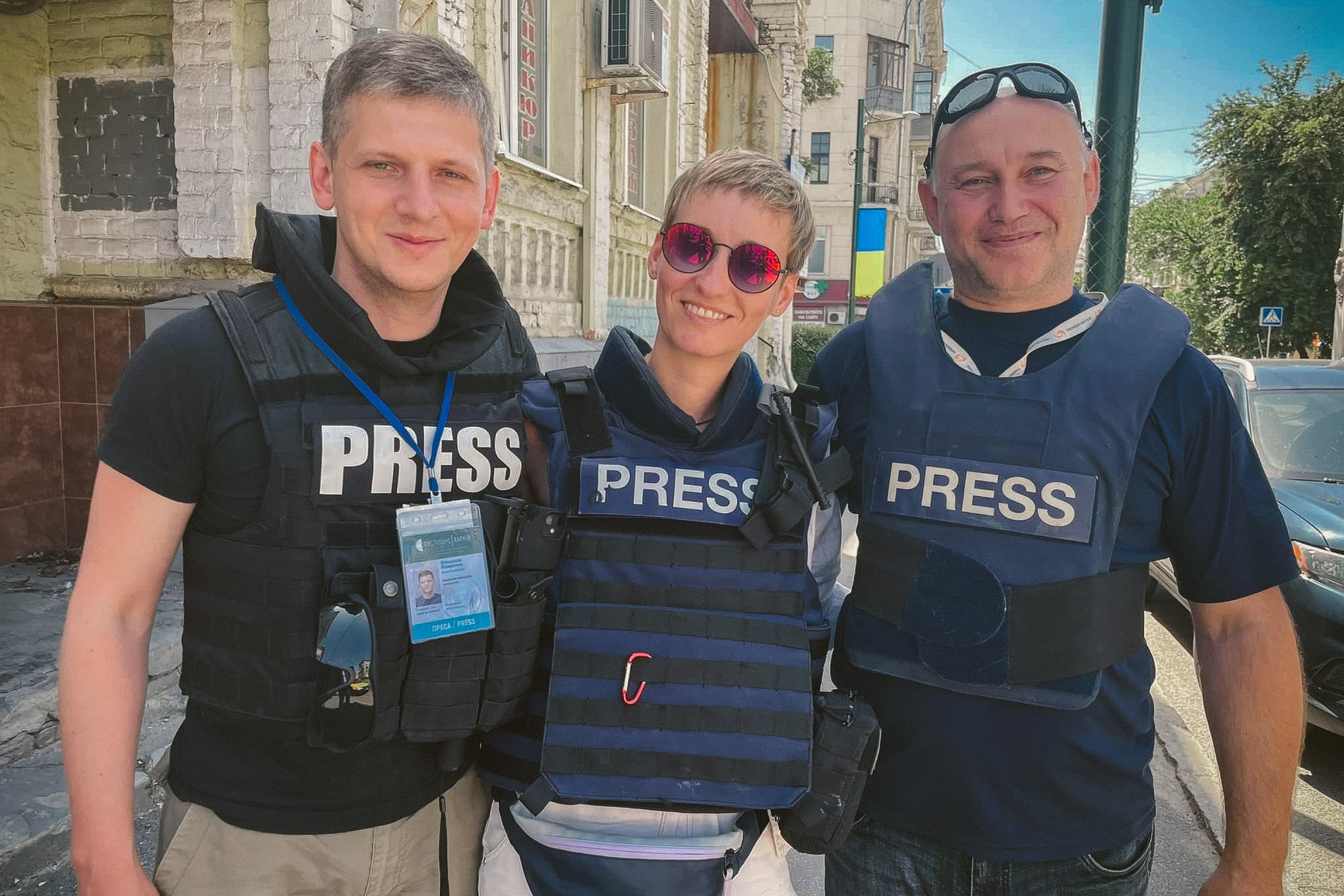
On living between two countries
How often do you travel back to Ukraine these days?
Typically, I spend three weeks in Prague and two in Ukraine.
What keeps you tied to Prague?
My mother is here. I got her out of Prymorsk on day one of the full-scale invasion because I knew the town would likely fall under occupation. For me, that meant she couldn’t stay: in Russia, I’m labeled a “foreign agent” and an “enemy of the state.” My brother lives in Prague with his family, too. He moved for work about six months before the war, and his wife and child escaped the occupation later. Then there’s my husband, Max. We moved here together back in 2018.
Did you expect to stay in Czechia for this long?
Not at all. We saw the contract as a fun one-year experiment: why not experience living abroad? But one year stretched into eight. Over time, we built a life, formed a close social circle, and had family and close friends nearby. Plus, Max’s career really took off. He works in construction and now manages major projects. Back in Ukraine, advancing in that industry was tough because construction was so tangled up with kickbacks, bribes, and backroom deals. Here, he was able to grow on merit.
After being let go, did you think about moving back to Ukraine permanently?
Of course, it’s a constant question. Max tells me that if I decide to go back, he’ll find a way to contribute in Ukraine, too. The military needs engineers, especially ones with his skillset. But I’m scared. I’m human, and I’m terrified.
Are you afraid of the physical danger, or is the emotional toll of returning just as hard?
If I return, I feel like the only honest thing to do is join the military. But I don’t, because I’m fucking terrified. That leaves me with this suffocating sense of guilt and self-loathing. It’s an unbearable weight. Russia has also planted this toxic, widespread shame among all of us: Ukrainians abroad feel guilty toward those back home; people in Ukraine feel guilty toward those near the front lines; and the soldiers at the front feel guilty toward the fallen. It’s a vicious cycle of collective trauma we’ll be processing for decades—if we survive.
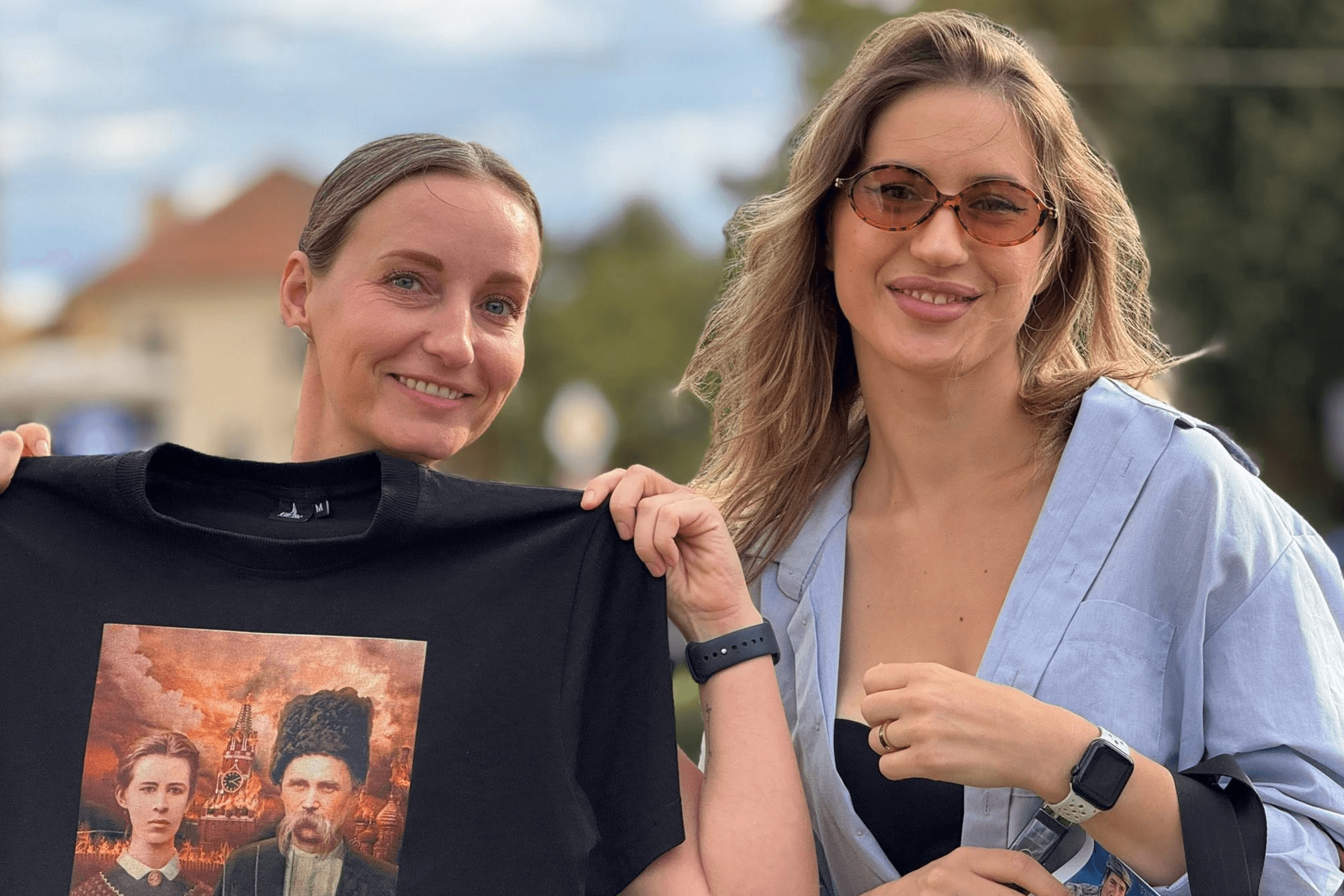
Ukrainians celebrate Ukraine’s Independence Day in Prague. August 24, 2025. Photo: Iryna Romaliyska / Facebook 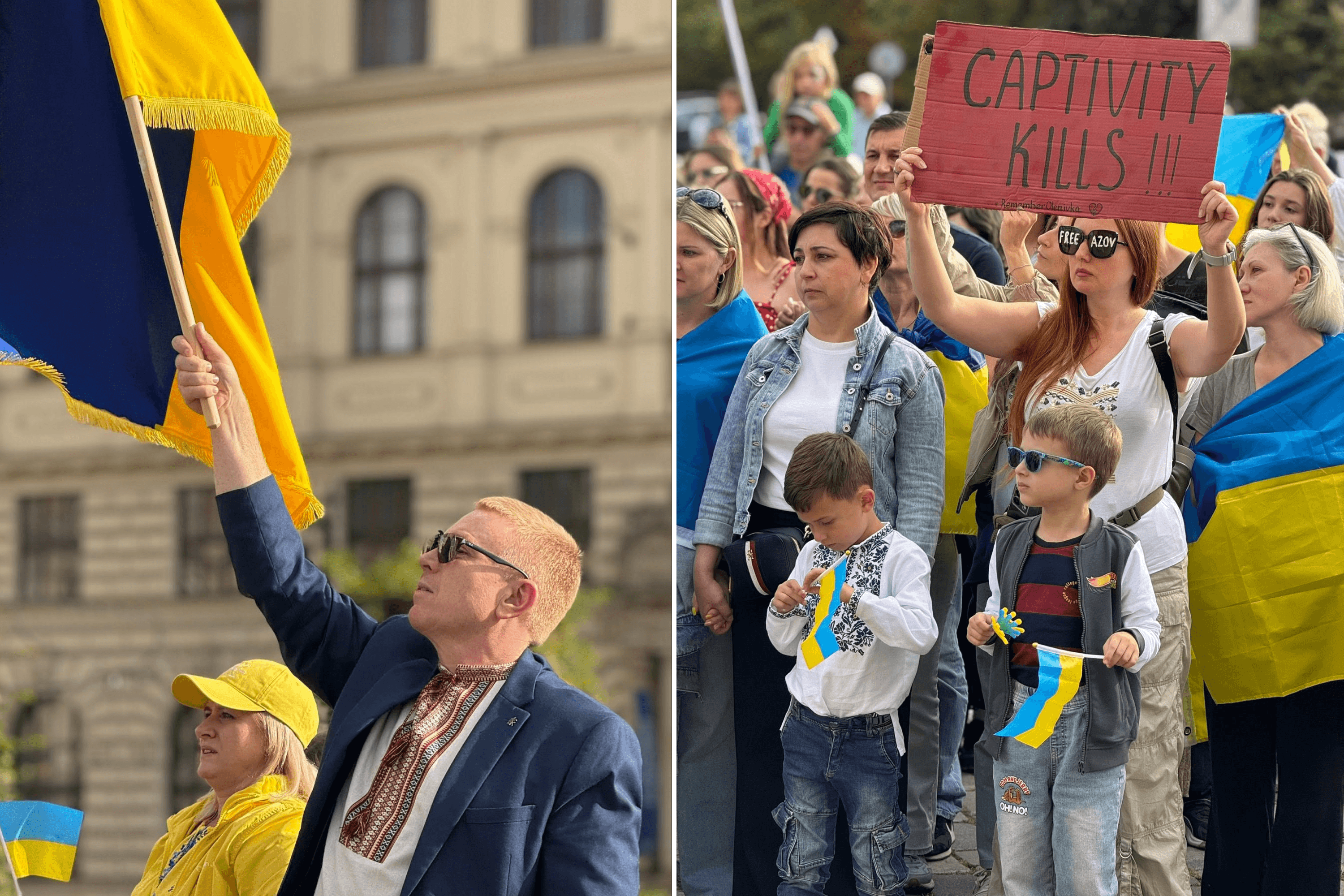
Photo: Iryna Romaliyska / Facebook 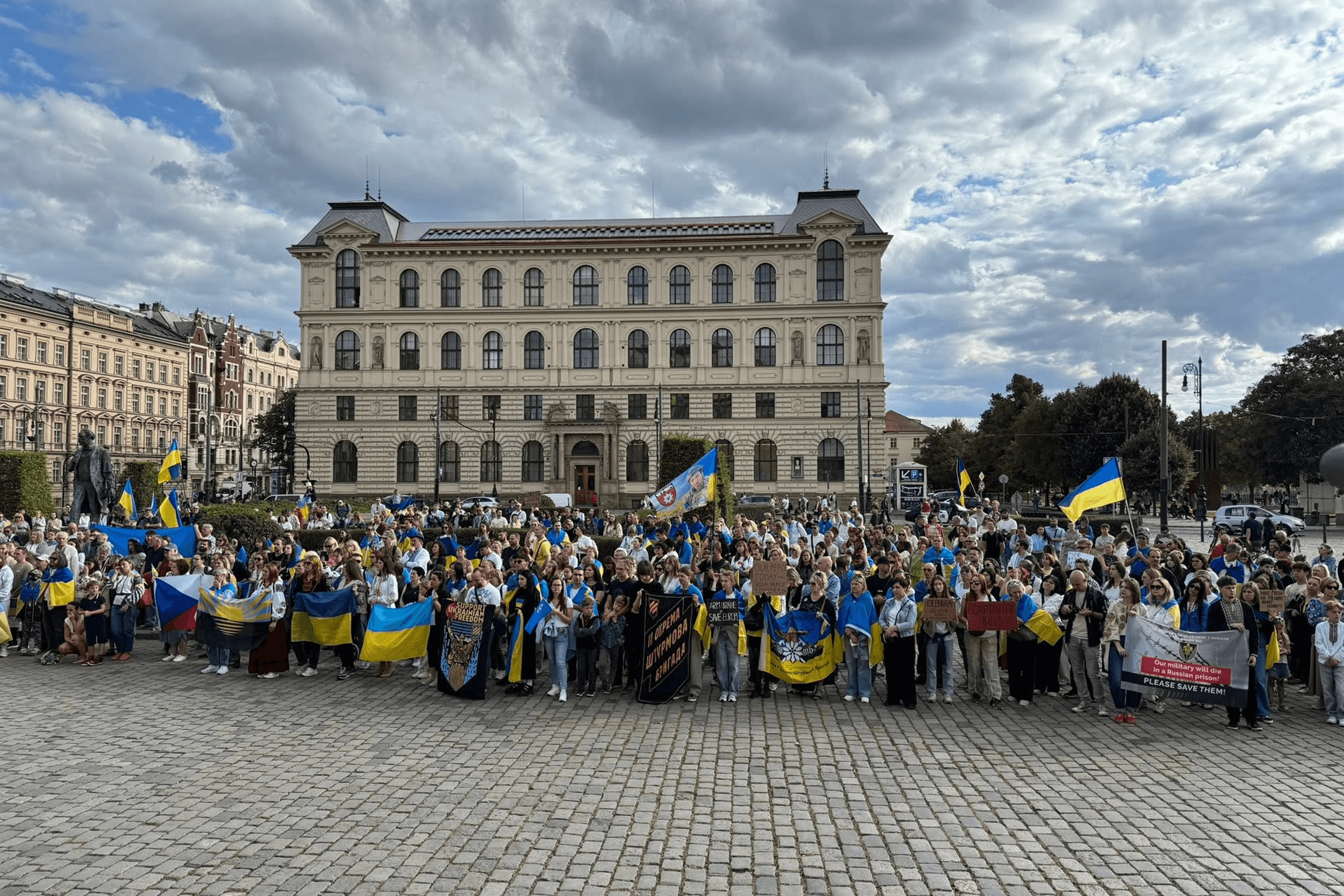
Photo: Iryna Romaliyska / Facebook 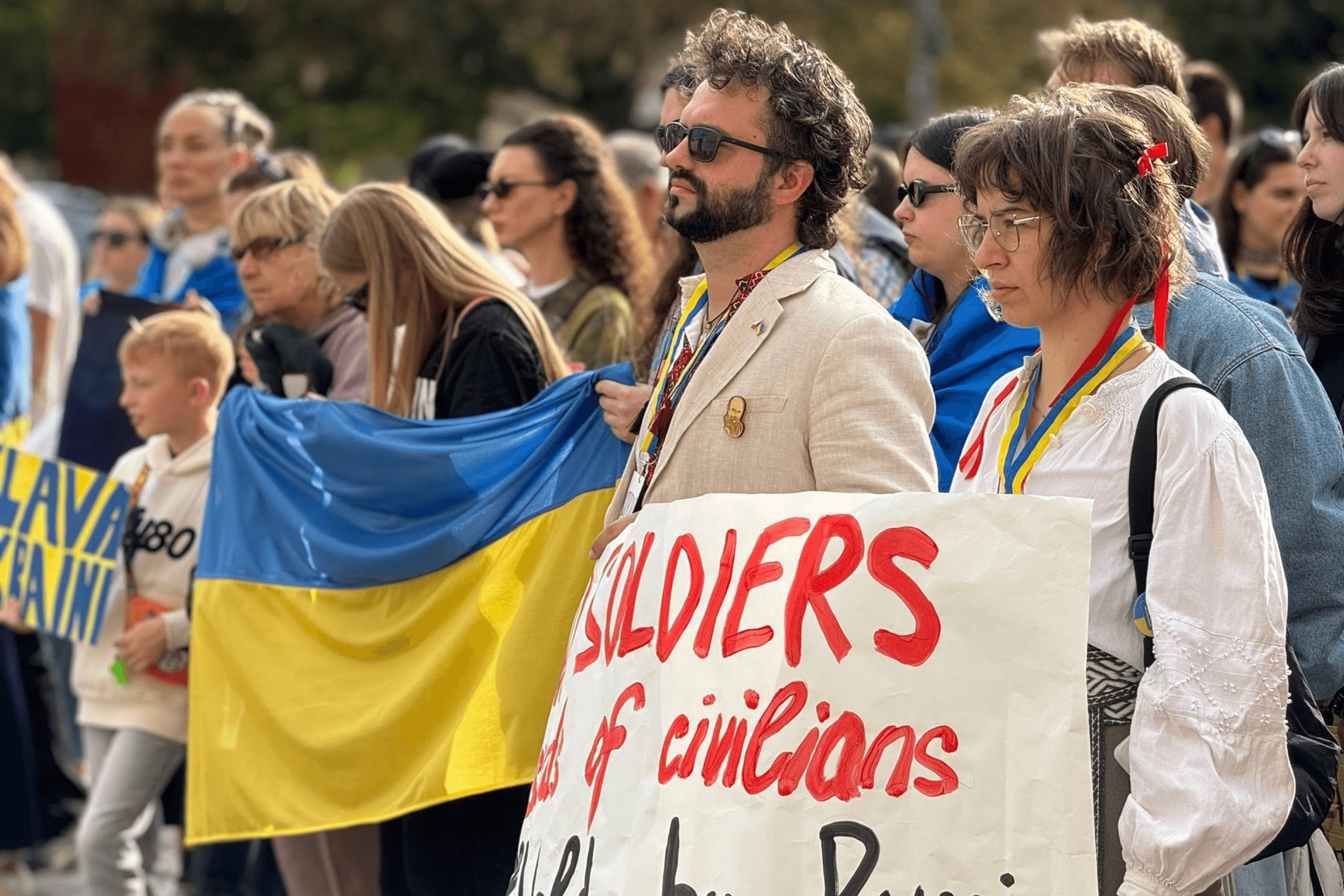
Photo: Iryna Romaliyska / Facebook
I really resonate with the idea that we can’t afford to write off fellow Ukrainians. Whether home or abroad, we need to protect each other.
It breaks my heart to watch people in Ukraine shift from criticism to hostility toward those who left. In my circle, Ukrainians abroad are constantly fundraising, volunteering, organizing protests, exhibitions, and cultural events—doing everything in their power to help Ukraine. Take my hairdresser Katya, who is from Zaporizhzhia. I found her through a Ukrainian refugee group in Prague after I refused to step foot in a Russian salon post-invasion. Katya knew Prymorsk, where I grew up, and used to vacation there with her kids. We clicked right away, even though under normal circumstances we probably wouldn’t have moved in the same circles: our tastes and styles are totally different. She’s always telling me to change my hair, cover my grays, or get lip fillers and Botox.
Back in Zaporizhzhia, Katya ran two salons of her own and was raising two kids. She fled into the unknown. For the first six months, a Czech family took her and her daughters in. It was brutal for her. She was physically terrified of loud noises, and the kids were traumatized. Katya landed a job at a high-end salon and worked round the clock, got her kids enrolled in school and gymnastics, doing whatever it took to keep her family afloat. She still works non-stop, and she’ll pick a fight with anyone who dares say a bad word about Ukraine.
At the same time, I get the anger [toward Ukrainians abroad]. I understand how someone sitting under bombardment might think: “Why should I endure air raids to keep this country running while you live in safety?”
Why choose to commute back to Ukraine regularly instead of working remotely?
How could I not? I need to see and feel reality on the ground. On one of my trips, I had everything at once: ballistic missile strikes in Kyiv, a train evacuation, drone attacks on rail lines, and then Kharkiv, where explosions are a constant background noise. At first, I was petrified, especially during the strikes in Kyiv. But over time, you notice the fear wearing off and explosions just become background noise. I think it’s also because I don’t have kids. When you have children or dependents, that fear must be exponentially worse.
Do you feel like people are slowly growing numb to the war?
Yes. I was in Kharkiv for City Day, and I was floored by how life just goes on. Kharkiv is easily one of the cleanest cities I’ve ever seen, even with shells and missiles flying overhead. I’m not idealizing the mayor or ignoring municipal issues, but the sheer cleanliness took my breath away. I walked by the Academy of Culture where I studied and saw the renovated waterfront. A city worker was standing there wiping down a decorative stone sphere on a railing while explosions were going off nearby. I thought: “Gosh, this looks like a movie scene. This can’t be real.” But it is. We really are adapting to war.
Do you regret moving to Prague in the first place?
Not for a second. It was a transformative experience that expanded my perspective. When I worked solely in Ukraine, I was completely immersed in the local media bubble. Living abroad allowed me to see how systems function elsewhere and gain a broader worldview. I’ve moved throughout my life: at 16 from Prymorsk to Kharkiv, ten years later to Kyiv, and eventually to Prague. I was comfortable in Kyiv, but that contract changed my trajectory. I don’t regret taking the leap.
On her personal experience with IVF
You chose to speak publicly about your journey with IVF. Why was it so important for you to share it?
I realized that for me, one way of processing pain is communicating it. Not just in a therapist’s office (though without my therapist, I probably wouldn’t have survived) but out in the open. Beyond that, it’s a subject people rarely touch upon, and awareness is desperately needed. After I published that post, my inbox was flooded with private messages from women, both strangers and friends, including prominent Ukrainian figures. They wrote to say they had endured the exact same nightmare, but no one had ever dared to speak about it out loud.
I was stunned by how many people resonated with it, but equally shocked by how many judged me. Even people close to me, friends of my mother, people who genuinely love me, insisted that these things shouldn’t be aired in public. I couldn’t wrap my head around it: I’m in my early forties, a fully grown, independent woman. Why shouldn’t I talk about my own life experience? It genuinely baffled me that people view this topic as a taboo.
Why do you think it remains such a taboo subject?
Partly it’s the ingrained mindset that you shouldn’t air your struggles or failures. Religion plays a role, too, as does society’s general discomfort with discussing health issues — especially women’s reproductive health. It’s treated like something shameful. But staying silent only feeds speculation and fear.
A woman’s ovarian reserve is finite, and it can deplete much sooner than she thinks. I knew nothing about this, no one ever explained it to me. Your eggs can run out at 45, or they can run out at 25. If you’re envisioning having children down the road, you need to know where you stand. If you have the means and the desire, you can freeze your eggs while you and your eggs are still healthy. Because a day might come when you’re ready for a child, but the biological door has closed. In my case, that became a stark reality.
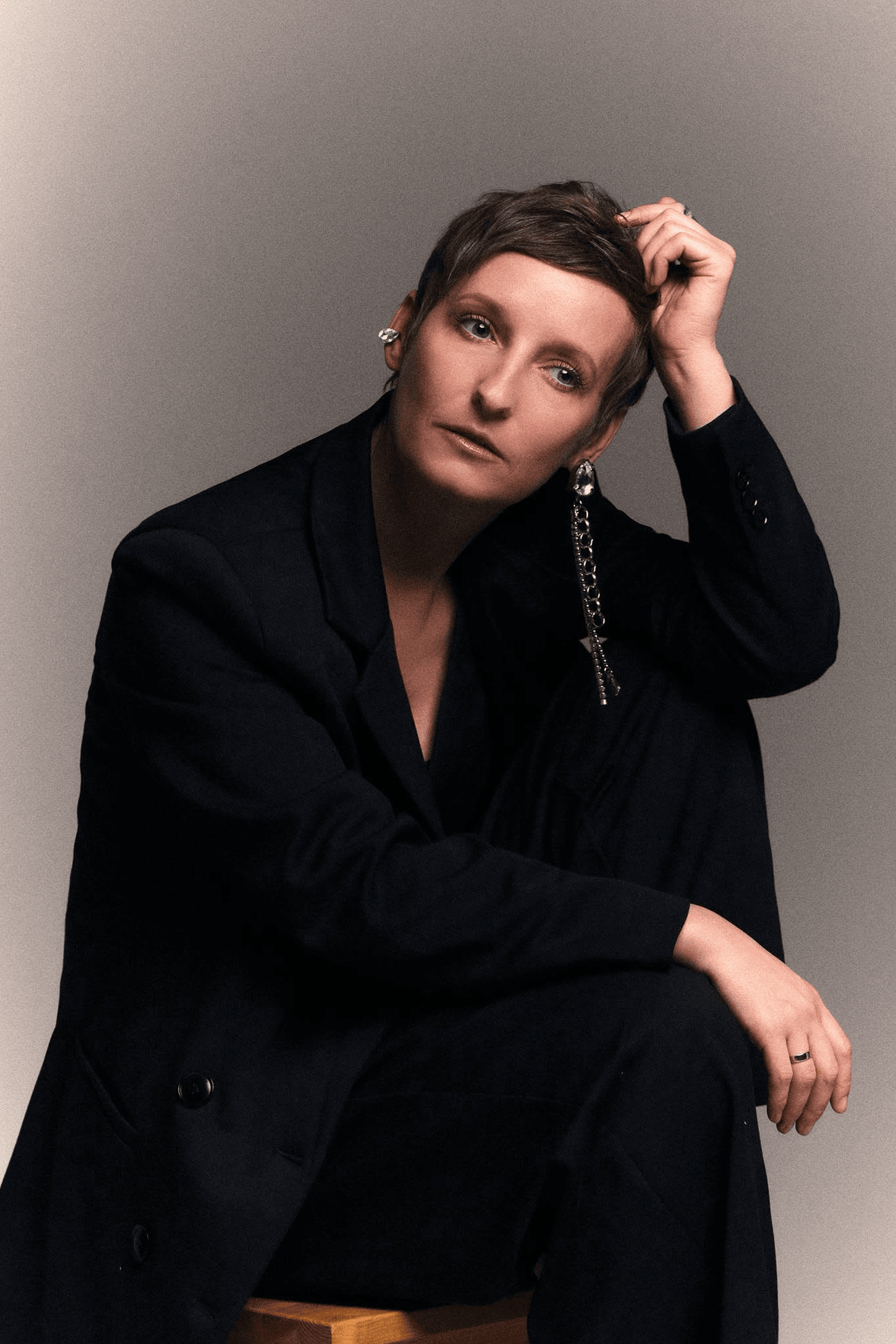
You went through four IVF cycles. Could you walk us through what that process actually entails?
It starts when you sit down with a doctor after trying to conceive naturally for years without success. After undergoing an exhaustive battery of tests, ovarian stimulation begins. For about two weeks, you follow a strict regimen of morning and evening medications, including daily hormone injections directly into your abdomen. It sounds terrifying, but the needles aren’t as bad as you imagine. The doctor monitors the development of the follicles as the eggs mature. Under light anesthesia, they retrieve the eggs from the follicles—and if they find viable eggs, that’s already a small victory. The eggs are then fertilized with your partner’s sperm. For the next few days, you’re constantly calling the clinic, waiting on edge to hear how the embryos are developing. Once ready, the embryo is transferred into the uterus. Then comes the agonizing two-week wait before a blood test reveals whether you’re pregnant.
During my first cycle, the embryo failed to implant. But our second attempt was successful. It felt like pure magic. Max and I were receiving treatment in Czechia. My Czech is limited, whereas Max uses it for work, so he usually handled the calls to the clinic. That morning, we actually got into a fight right before calling: he urgently needed to get to a construction site, and I was frantic because everything was delayed. I sat in the car while Max paced around the site taking work calls. I was practically losing my mind over the delay. Finally, he walked over and said, “Alright, let’s call.” The woman on the line told us we were pregnant. Max started showering her with blessings—wishing her happiness, wealth, a great husband, and kids. He was overwhelmed with emotion. We held each other and cried. It was pure, unadulterated bliss.
And after that?
At nine weeks, I went into work and noticed spotting. I panicked, called Max, and we rushed to the hospital. During the ultrasound, the doctor told me the pregnancy had stalled. The heartbeat was gone. Just weeks before, he had shown me that tiny flickering heartbeat, so hearing that was devastating. It happened right before the May Day holiday weekend, so they told us to go home and come back in a few days. I walked around for days with the crushing weight of knowing I was carrying a non-viable fetus, completely lost as to how to cope. The doctors wanted to let my body pass it naturally. After about a week, I suffered a massive hemorrhage. Max found me on the bathroom floor: I was lying in a pool of blood, vomiting. We rushed to the emergency OB-GYN unit. I was in such critical shape that they didn’t even have time to haul me to an operating theater; they rushed me into the nearest room and intervened right there on the spot.
You mentioned that losing the pregnancy triggered a severe psychological decline. What did that feel like?
A friend who had suffered two miscarriages warned me beforehand that right before my first period post-loss, I would experience a brutal hormonal crash. She told me: “You’re going to hit rock bottom, but just remember: it isn’t you, it’s the hormones.” At first, I thought I had weathered the storm. I cried, went on a two-week bender, and felt like I was piecing myself back together. But then the dark hole opened up. For several days, everything turned completely pitch black. I’d wake up and refuse to get out of bed. I had zero desire to do anything — I just cried, unable to see any purpose in existing.
How did you pull yourself out of that dark place?
Max did everything he could to break through the dark fog. One day he walked through the door completely bald and clean-shaven—no beard, no hair—convinced it would make me smile. I looked at him and gasped, “Gosh, darling, what did you do?” I can laugh about it today, but at the time, nothing was funny. At my lowest point, suicidal thoughts crossed my mind. What saved me was my friend’s forewarning about the hormonal crash. I was able to step back and tell myself, “This isn’t who I am. This is a temporary chemical state, and I need help.”
I reached out to my therapist back in Ukraine, and his support was a lifeline. He took me through a specialized therapeutic protocol, the kind used to treat PTSD in combat veterans. Slowly, the darkness began to lift. That’s why I’m so vocal about this. No one had warned me about that post-loss mental abyss; I’d never read about it anywhere. If I hadn’t known what was happening to my body, the terror would have consumed me.
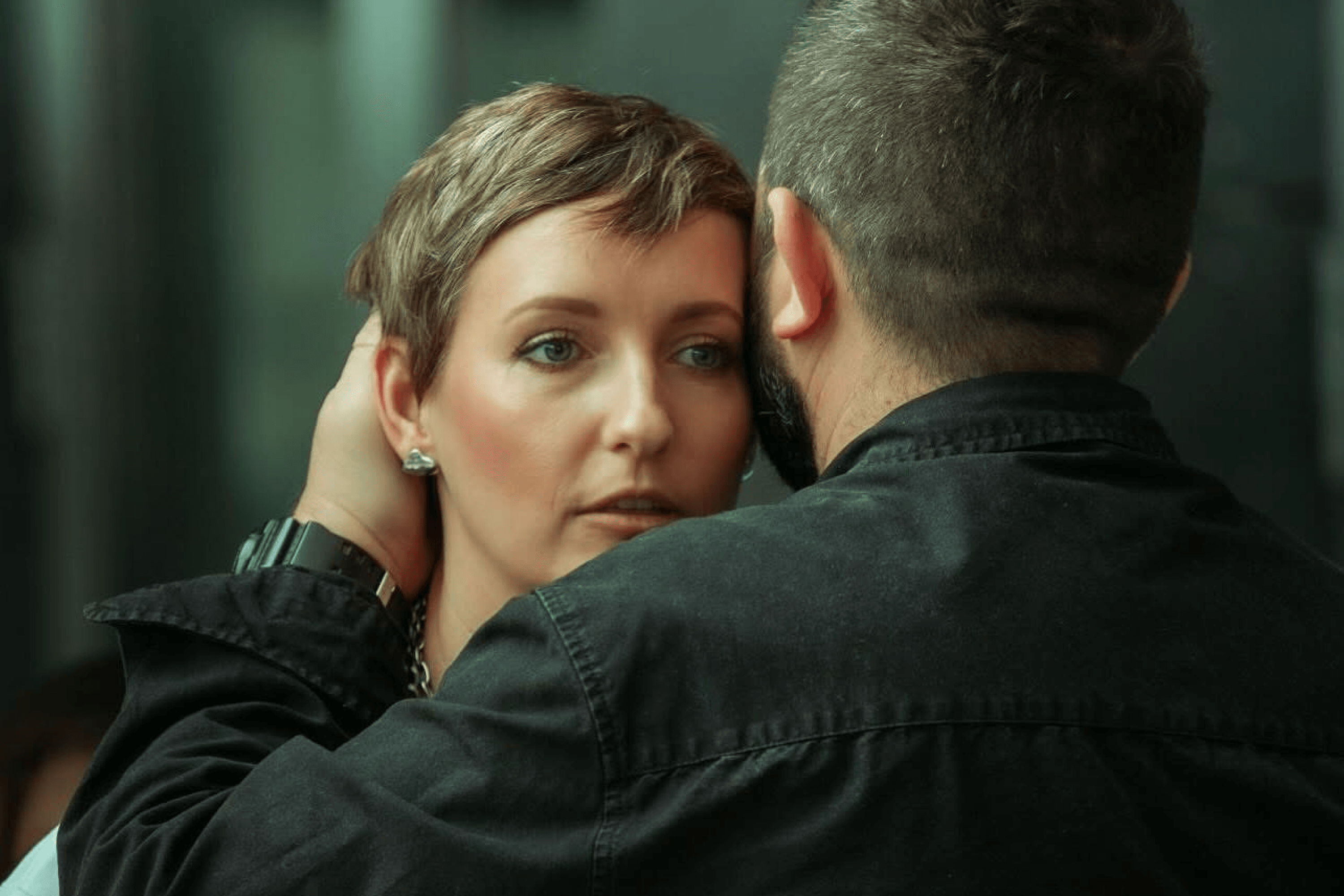
You went on to try two more cycles, but neither succeeded. What went wrong?
My third and fourth cycles simply failed to result in a pregnancy. Enduring four IVF cycles in roughly eighteen months takes a brutal toll on your body. Ideally, you’re supposed to give your body time to recover between rounds, but we rushed through them. As a result, my physical health completely broke down: I gained around 25 pounds, my eyesight deteriorated, and the pain from my uterine fibroids flared up severely. It ravages both your physical and mental health. A single cycle is a massive trauma to the system; four back-to-back is sheer punishment.
Success comes down to multiple variables: age, my fibroids, stress, individual biology. But age remains the primary factor. That’s precisely why I want women to be educated about fertility and egg freezing early on. It doesn’t mean every woman should do it, but every woman deserves to know it’s an option.
Are you considering trying once more?
Yes, we might give it one final try. But that will be the end of the line. My fibroids are growing and causing excruciating pain, sometimes I’m in pain for half the month. I’m constantly relying on high-dose painkillers. I’m exhausted from living in pain, so we’ll likely attempt one last IVF cycle and reevaluate. At some point, you have to accept when enough is enough.
Have you and Max discussed adoption?
We have. After our last failed cycle, the clinic brought up donor egg programs. In Czechia, donor programs match physical traits, but the recipient never learns the donor’s identity. The donor egg is fertilized with Max’s sperm and transferred to me. We still want to give it one last shot with my own eggs first, since I did get pregnant once, which means there’s still a glimmer of hope. But we’re open to the donor route, too.
Would you ever consider creating a dedicated platform or podcast focused on IVF?
I never envisioned it as a standalone project. My creative process is usually spontaneous: if something moves or inspires me, I act on it. But I’m more than willing to speak out, because the conversation is so vital. Just recently, a friend confessed she was terrified of IVF: she assumed it was unbearable, feared the needles, the hormonal shifts, the weight gain. I reassured her that the injections are manageable and far less dramatic than they seem. Yes, my body changed, but that wasn’t just the drugs. During the brief pregnancy, all I did was eat and sleep. There’s so much fear surrounding IVF, coupled with this bizarre moral judgment: people treating it as “unnatural” or against God’s will. That is precisely why we need to keep talking about it.
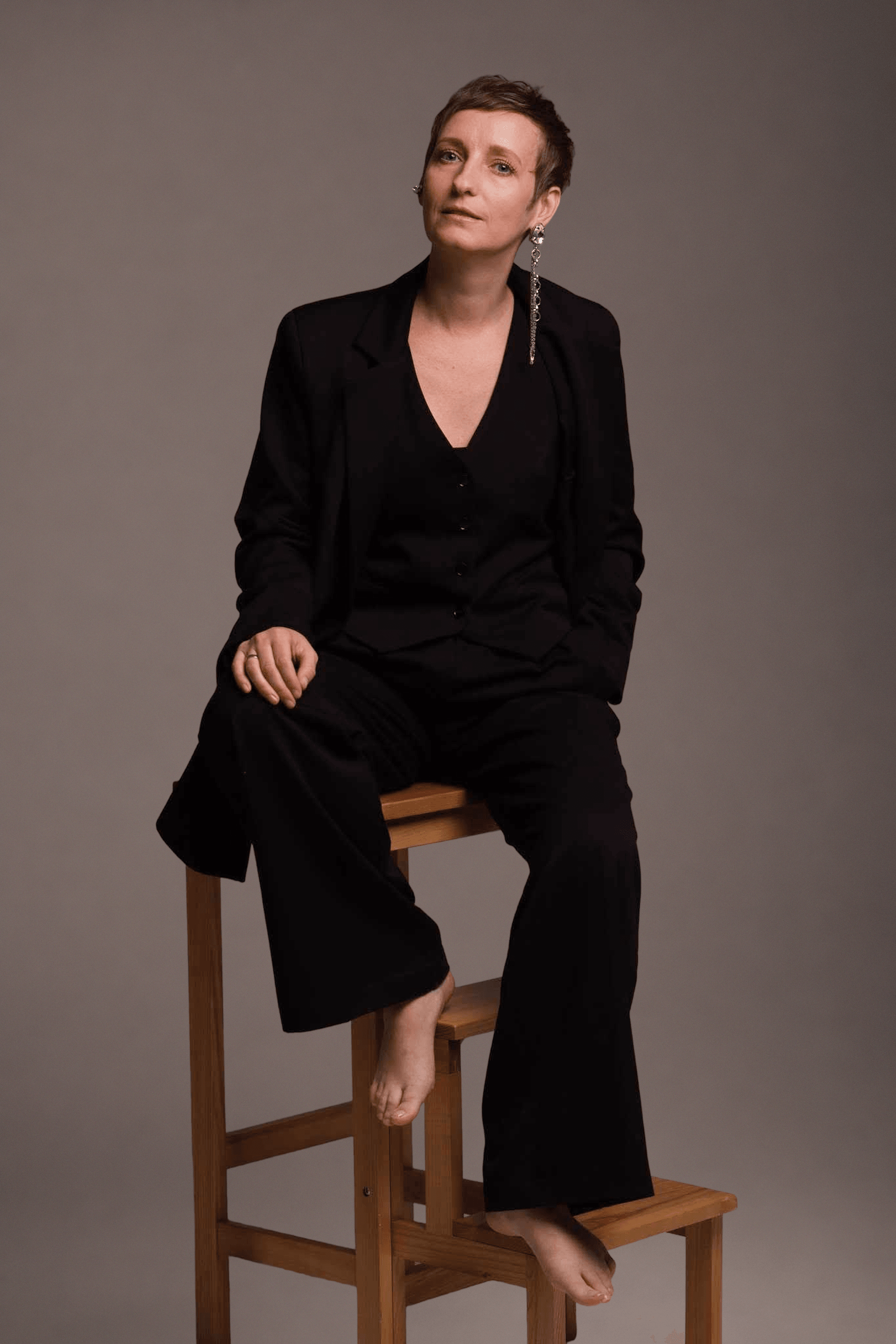
On communicating with Russians today
You mentioned earlier that you’ve barely assimilated in Czechia. Was that a deliberate choice?
Absolutely. My entire focus remains anchored in the Ukrainian context, and my social circle here consists of fellow Ukrainians. I don’t go clubbing, I don’t use Tinder, and frankly, I have no idea where adults are even supposed to make new friends. My interaction with locals is pretty minimal: a Czech tutor I see on weekends and a few casual acquaintances. So I can’t claim to deeply understand Czech society or judge how reproductive health topics are viewed here.
Do you stay in touch with your former colleagues from Current Time?
Yes, with many of them. I even have two close friends who are originally from Russia, though they’ve lived in Czechia for years and hold Czech citizenship. I have a litmus test for Russians of two questions: Do you donate to the Ukrainian Armed Forces? And do you support the right of captive nations to self-determination—meaning, are you prepared for Russia’s eventual collapse? If the answer to both is “yes,” that’s a green flag. At the start of the full-scale invasion, one of these friends volunteered, helped refugees, and hosted a Ukrainian family in her home for two years. Whenever she went on Tinder dates, she’d ask guys point-blank if they donated to the Ukrainian military. Recently, she started seeing a man from Russia who has lived in Czechia for fifteen years. She brought up the donation question, and when he confirmed he does, she decided he was worth pursuing.
What exasperates you most about the posture of certain Russian opposition figures?
I’m not painting everyone with the same brush, but rather pointing to those who never managed to shed their imperial mindset. They might be anti-Putin, anti-war, and persecuted by the Kremlin, yet deep down they still harbor a sense of national superiority. They physically cannot accept that their country turned out to be such garbage, so they scramble to find flaws in Ukraine to offset it. Case in point: they’ll start arguing that Ukraine is actually more corrupt than Russia. Hearing that just makes me think, “Oh, guys, you’re crooked”. It’s a pathetic attempt to deflect, an excuse to avoid confronting their own country and their own collective responsibility.