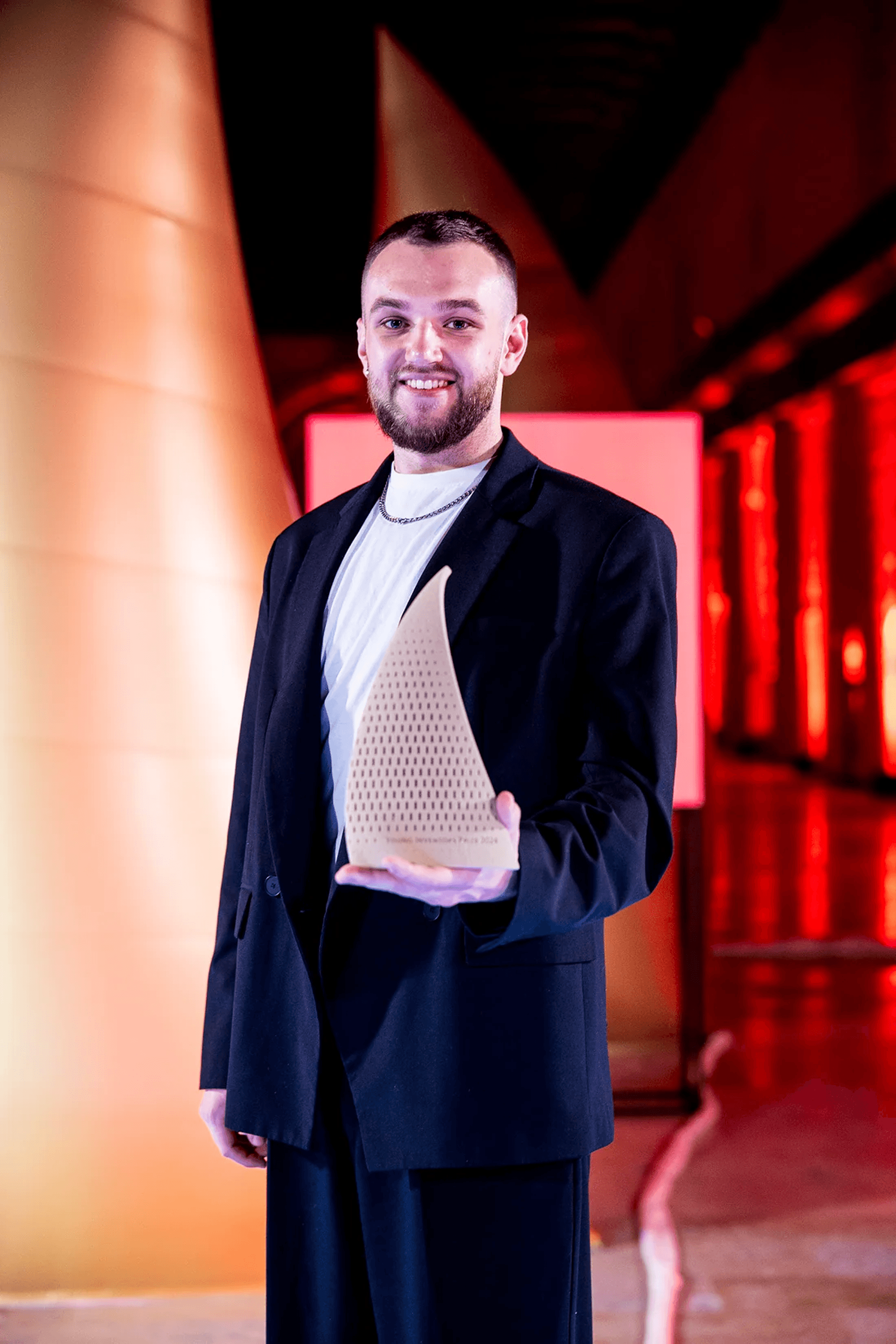
In 2018, 17-year-old school student Valentyn Frechka from Zakarpattia made paper from fallen leaves and won the Genius Olympiad in the United States. Two years later, he improved the technology, founded the Releaf Paper startup, and began working with the Ukrainian offices of L'Oréal and Samsung and the Le Silpo supermarket chain.
Since 2022, Frechka has been developing Releaf Paper in France, where the company has built its own production line and supplies thousands of tons of paper and packaging to Uber Eats, LVMH, Kering, L'Oréal Group, and other global companies.
In an interview with Yellow Blue journalist Sofiia Korotunenko, the entrepreneur told how he turned a school experiment into an international business, why he chose leaves as an alternative to wood, how he works with luxury brands, and what ambitions he has for the global market.
|
|
|
|
|
In high school, you were a member of the Junior Academy of Sciences of Ukraine (JASU) and a winner of Ukrainian and international biology and ecology olympiads. Why did science interest you?
At school, I realized that we live on a stone sphere flying who knows where, and science explains at least some basic things amid all this uncertainty. I like overcoming it, giving my ideas physical form, and becoming myself that way. I enjoy both the process and the result when it benefits humanity and the planet.
At 17, you first turned fallen leaves into paper in your parents' kitchen. How did the idea come about?
Throughout school and my time in the JASU, I wanted to break into the ranks of the top young innovators, at least in Ukraine. To do that, I needed to defend a strong research project.
At the time, green energy and sustainability were beginning to develop as fields in Ukraine. My academic supervisors at the JASU and I considered many options, such as making bioplastic or processing agricultural waste. But many researchers were already working on these things, so all that was left for us were minor modifications, while we wanted something new.
In one of our experiments with agricultural waste, we studied the components of leaves to understand whether they had any potential. We found cellulose fibers, lignin that binds them together, and other components, and realized this could be turned into paper.
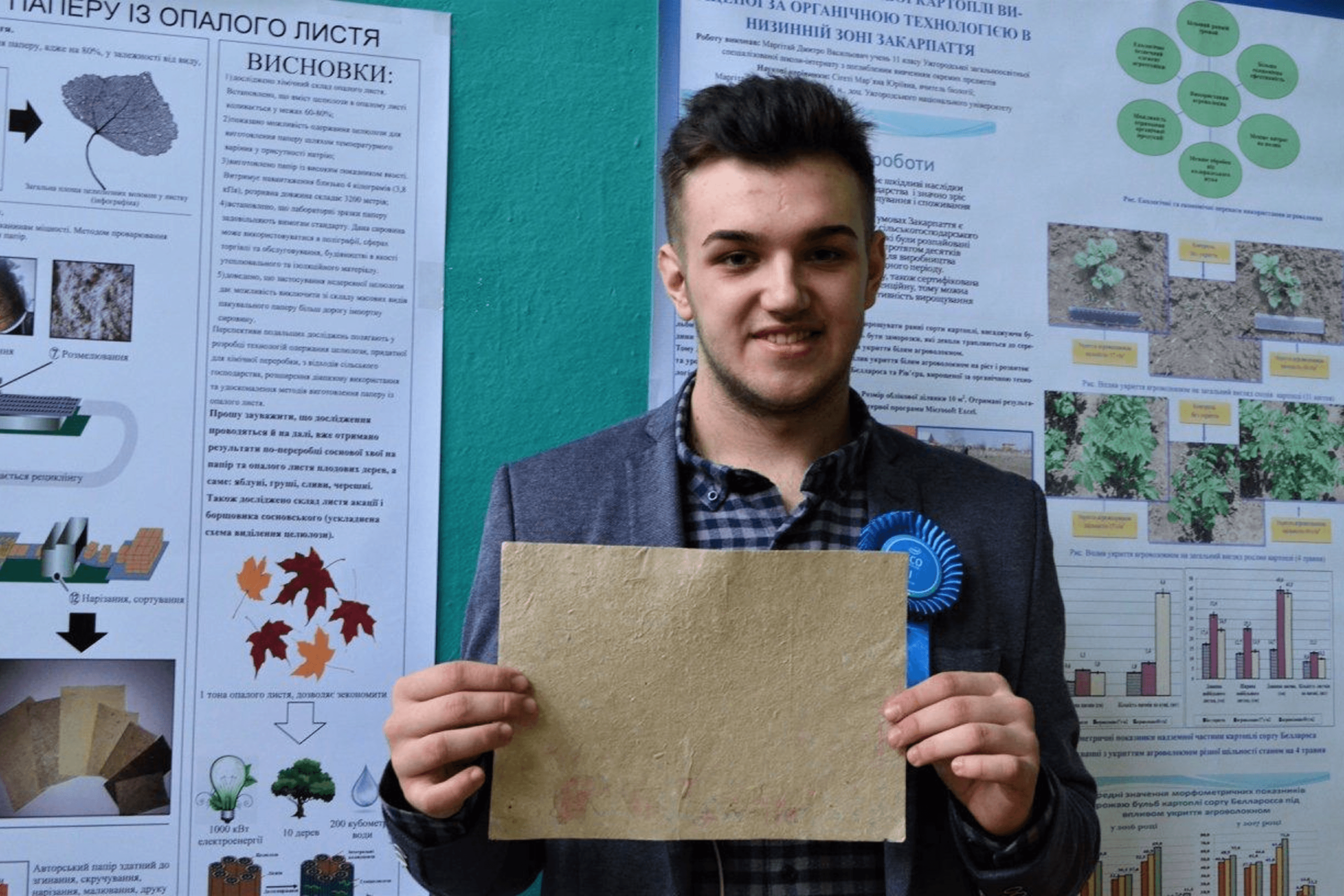
Valentyn Frechka presents the results of his research on turning fallen leaves into cellulose and paper at the Junior Academy of Sciences of Ukraine competition. 2017. Photo: Valentyn FRECHKA / LinkedIn 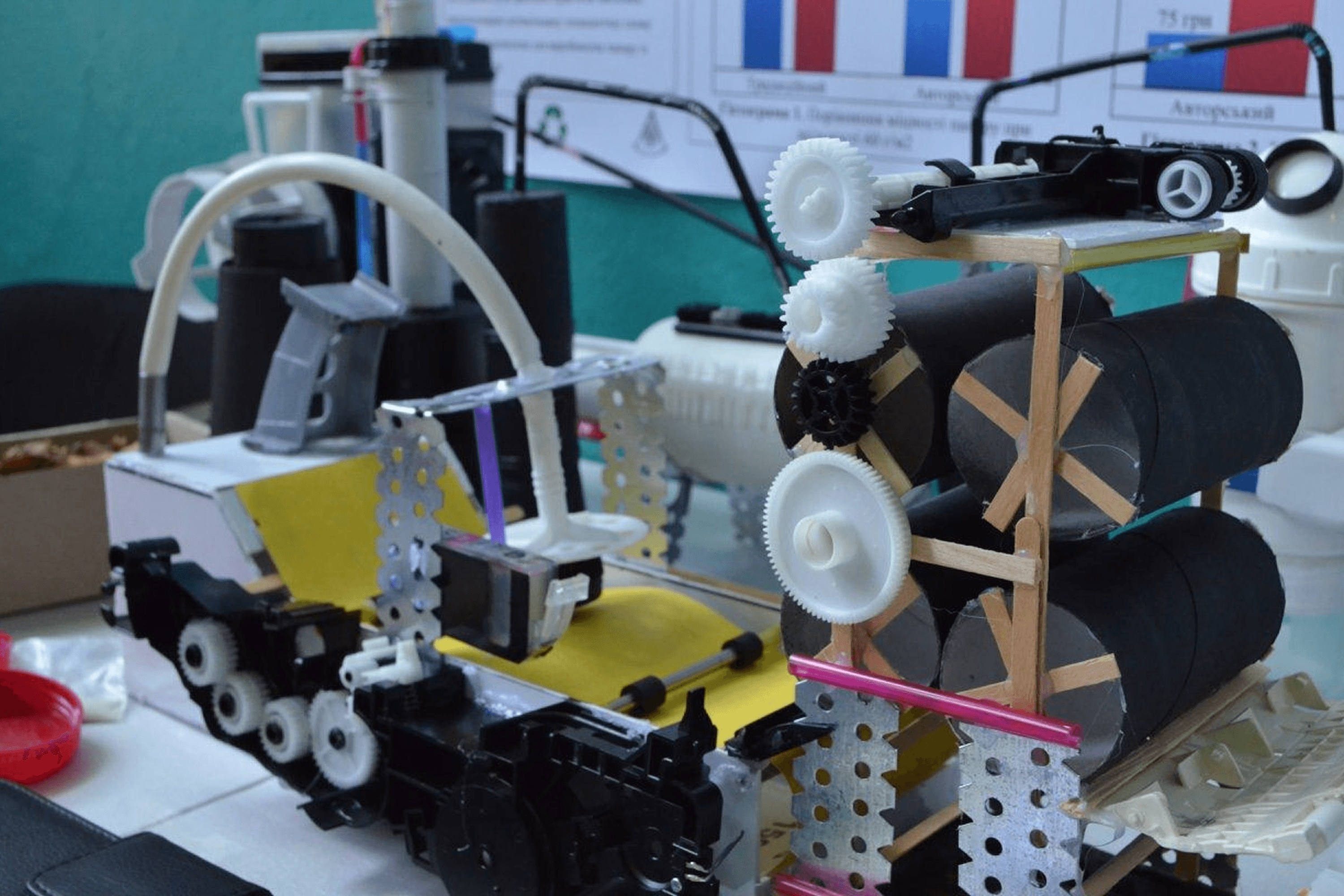
Photo: Valentyn FRECHKA / LinkedIn
Why did you decide to produce paper specifically?
It is a profitable field with no competition. People use a lot of paper, and forests are cut down to produce it. The environmental problem is also made worse by businesses switching from plastic packaging to paper. Growing trees artificially takes decades, while a box or bag made from those trees lasts no more than a few hours. Of course, paper is recycled and reused, but manufacturers also constantly need fresh cellulose fibers.
The philosophy of Releaf Paper is to meet part of this demand and reduce deforestation. Leaves are ideal for this. Flax and hemp, for example, have long fibers, which makes them expensive to process. A roll of hemp paper can cost €3,000. Sugarcane or bamboo takes a long time and costs a lot to transport, while straw is used in many industries, so competition for it is high.
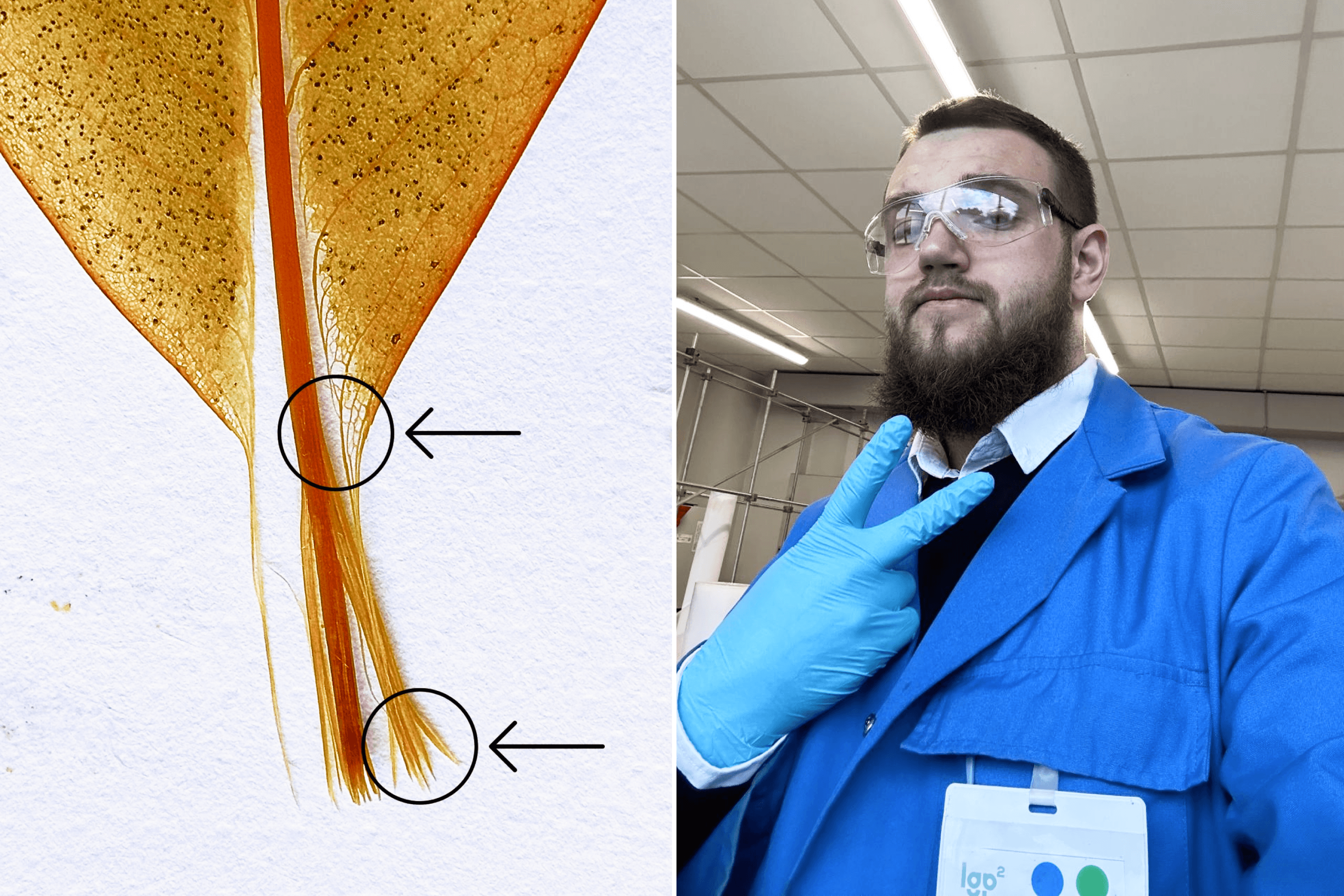
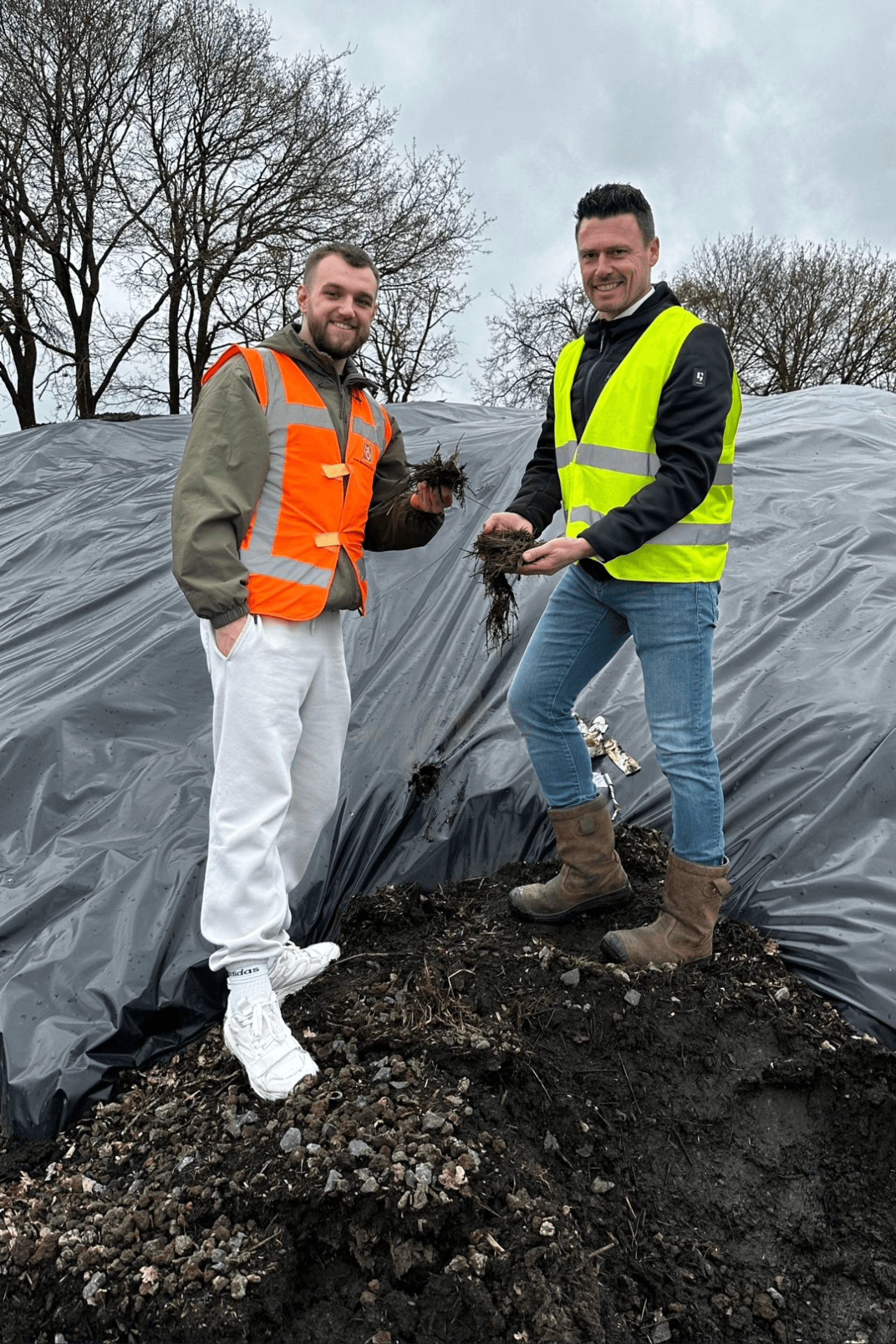
Leaves, on the other hand, fall every year, and they are simply burned or composted at taxpayers' expense. We offer cities the option of sending it to us, and we do not charge for disposal. Everyone benefits.
When did the idea turn into a profitable startup?
In 2019, I enrolled at Taras Shevchenko National University of Kyiv to study biotechnology and genetic engineering. Later, I combined work with my studies. Sergii Rudkovskyi, deputy director of the Zhytomyr Cardboard Factory, invited me to work part time as an external consultant. This factory is one of Ukraine’s leading producers of paper and molded packaging, and at the time it had just launched research into new technologies and products. I shared my expertise, and in return I was able to test my ideas on their equipment.
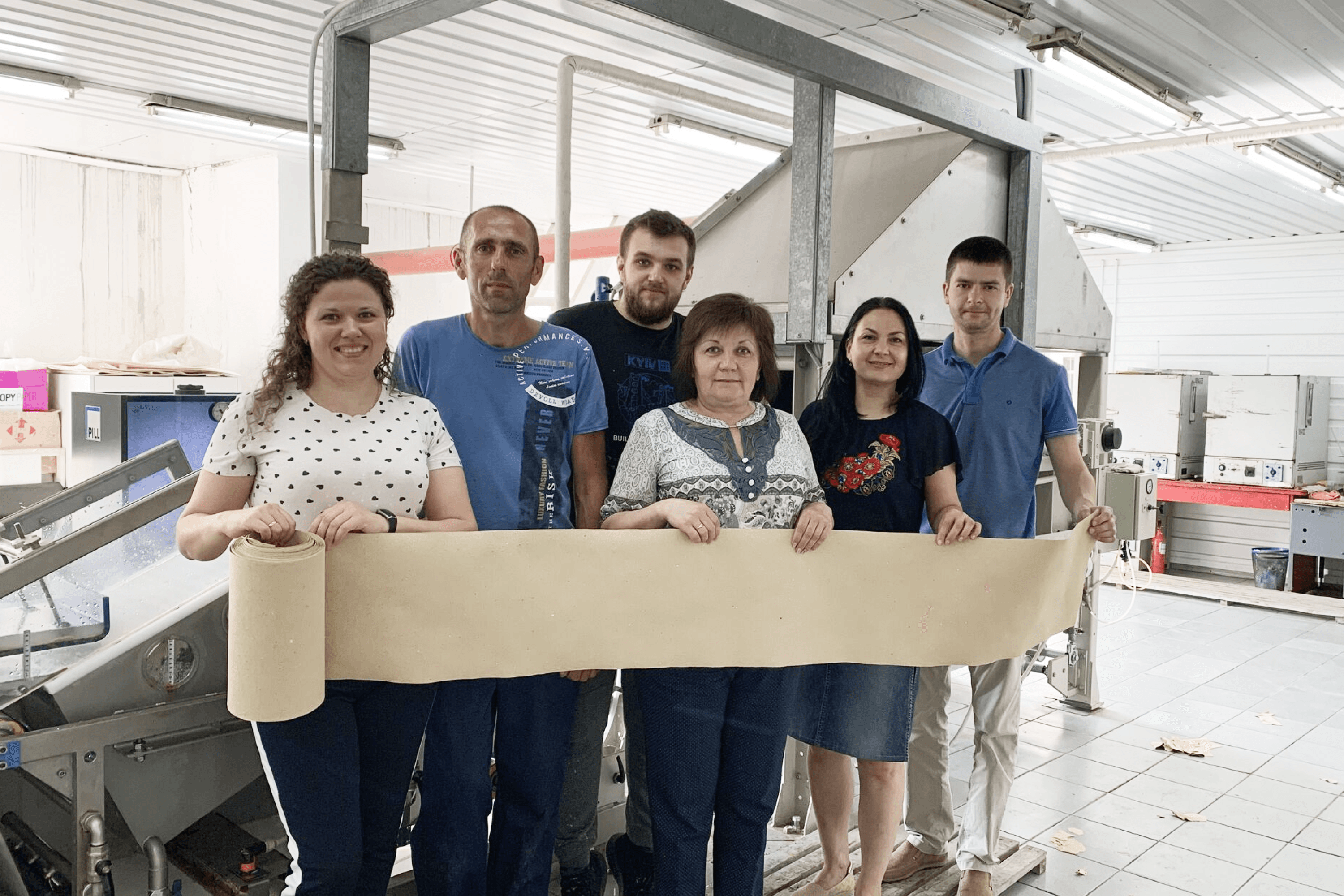
The Releaf Paper team at a laboratory in Kherson, where they created the first machine-made paper samples from fallen leaves. 2019. Photo: Valentyn FRECHKA / LinkedIn 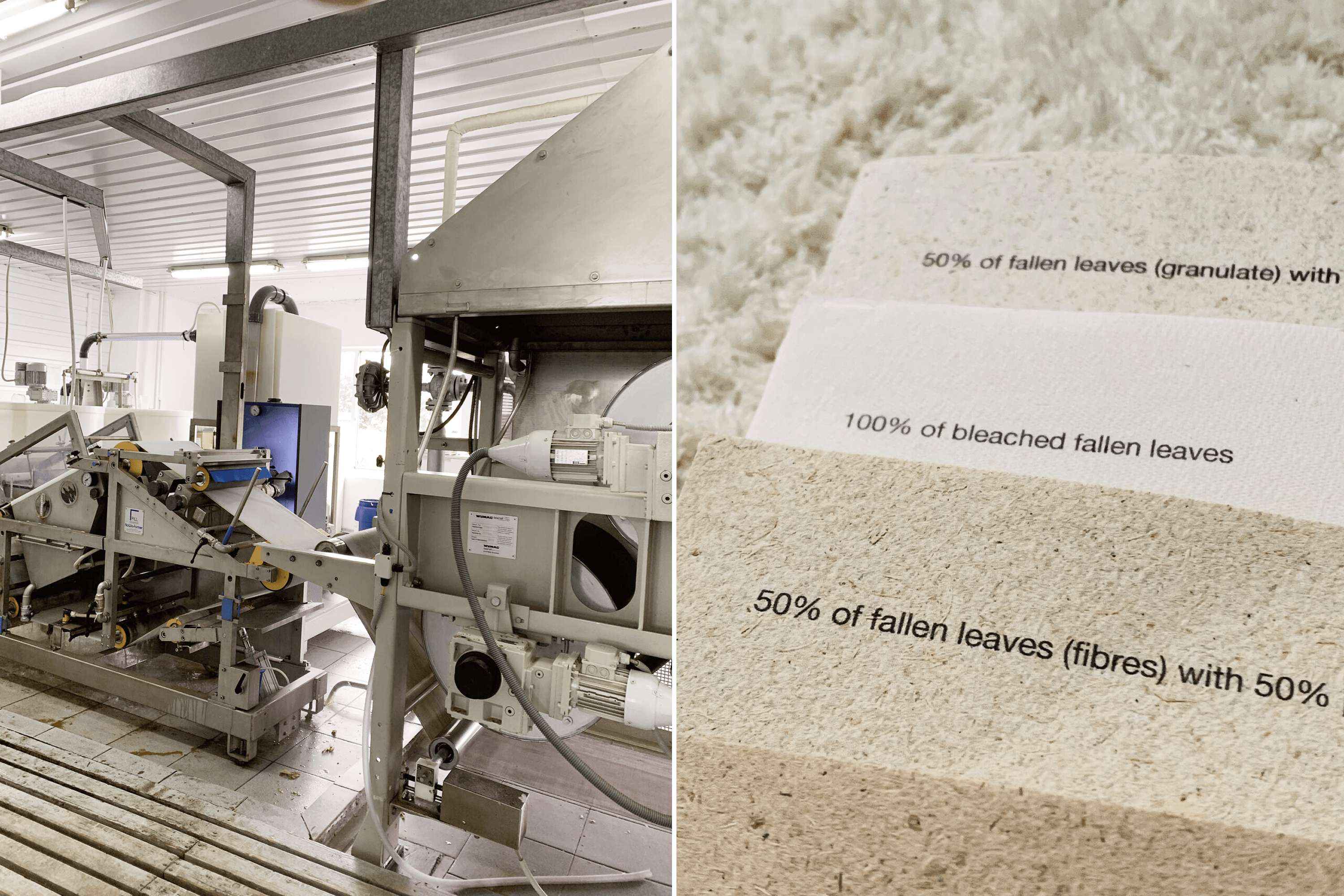
Photo: Valentyn FRECHKA / LinkedIn
Later, I found a factory in Oleshky that produced cellulose from reeds. It had been one of the most powerful facilities in the Soviet Union, but it was shut down in the 2010s. The equipment and research facilities remained there. I contacted the factory’s owners, assembled a team, and began testing the technology for producing paper and packaging.
We developed chemical and thermomechanical processes that we patented in Ukraine and abroad. The technology works like this: we heat the mass of leaves, and under pressure and temperature it becomes viscous and easy to machine. We separate the fibers from the rest of the material and add fillers, which we also get from leaves. They affect the appearance, making the paper less porous and smoother, for example. We turn the viscous mass into rolls of solid raw material. These are fed into paper machines that produce paper in different formats, as well as packaging.
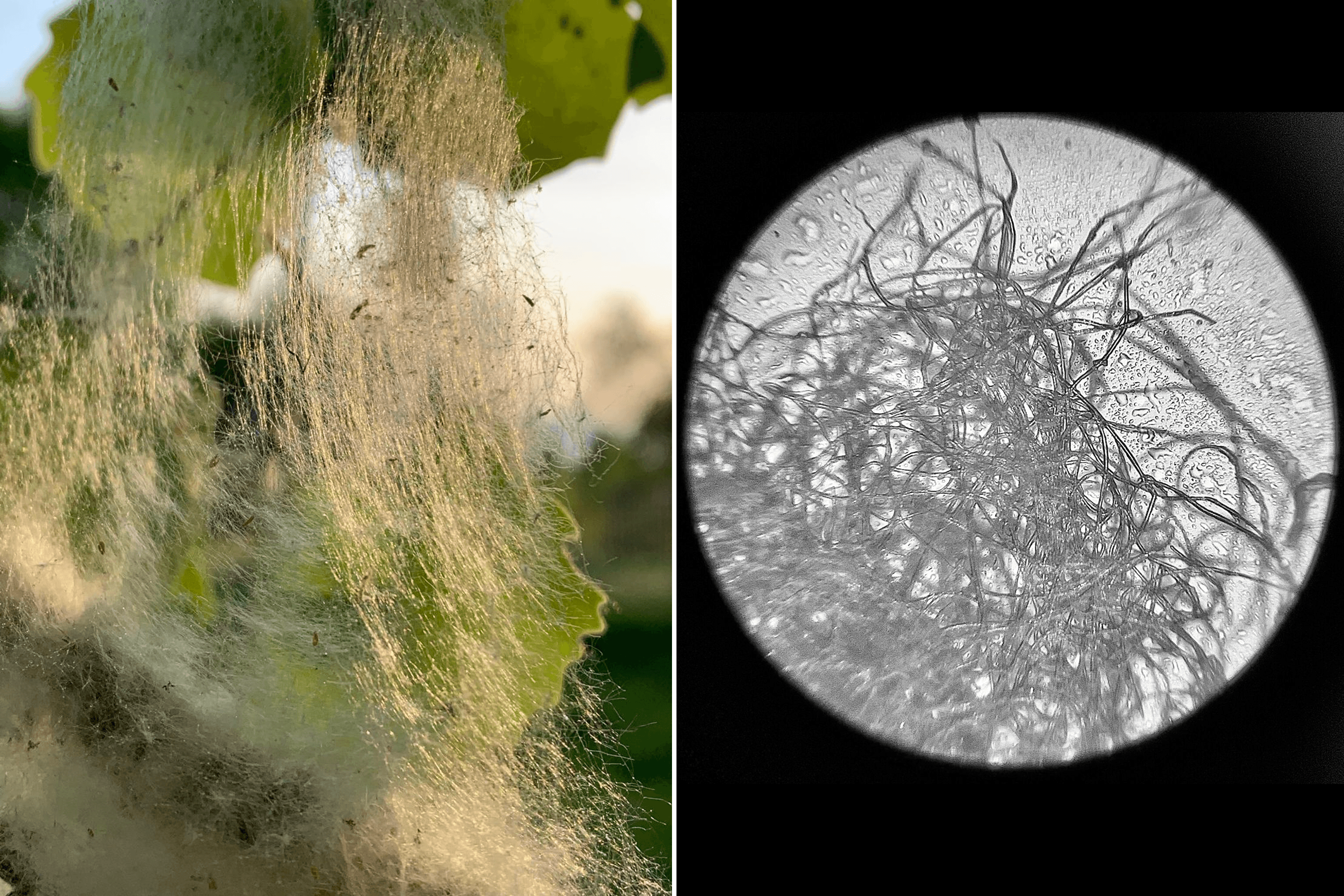
Cellulose fibers from leaves after extraction and fibrillation under a light microscope. Photo: Valentyn FRECHKA / LinkedIn 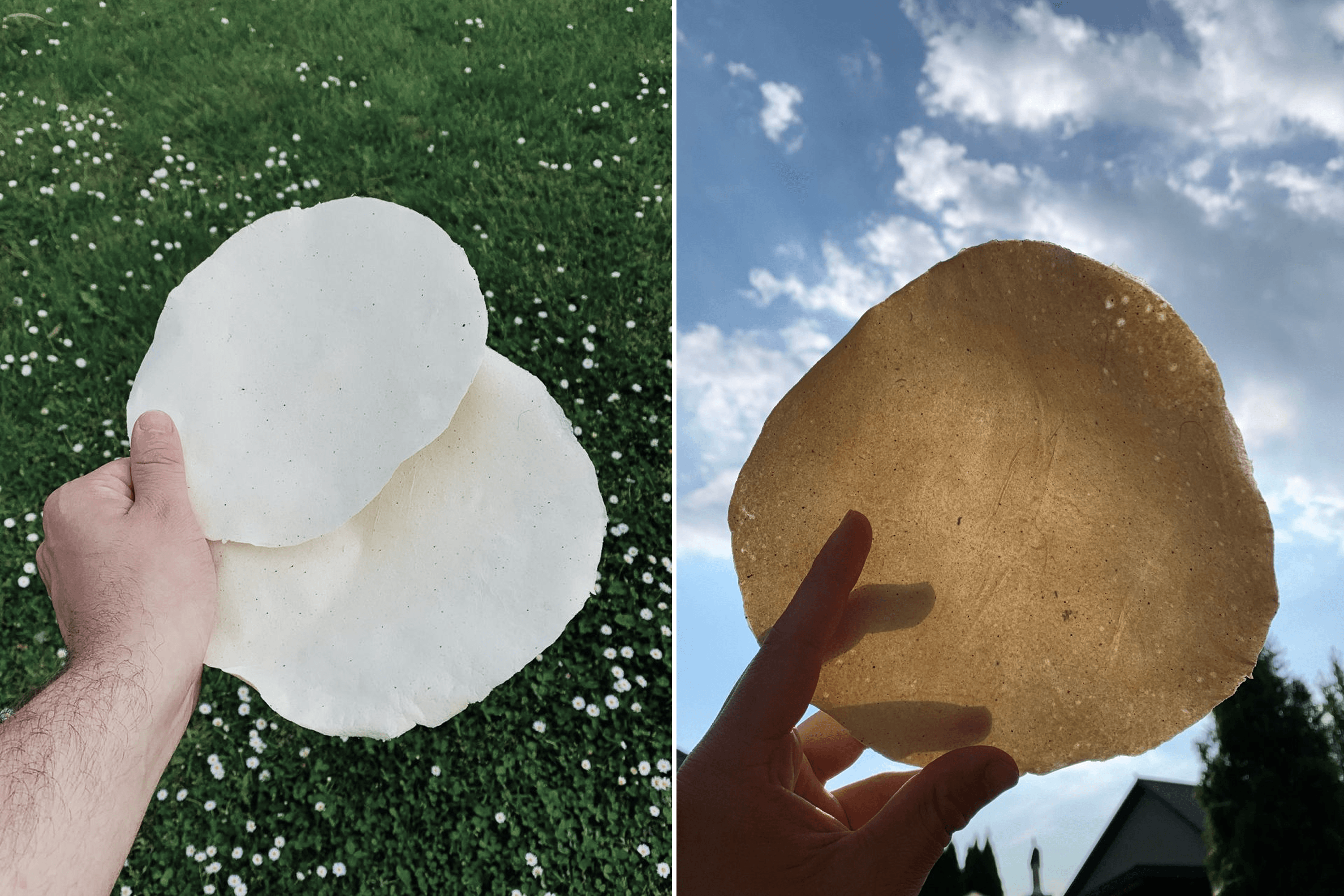
Samples of bacterial cellulose produced by Valentyn Frechka using Acetobacter xylinum bacteria. Photo: Valentyn FRECHKA / LinkedIn 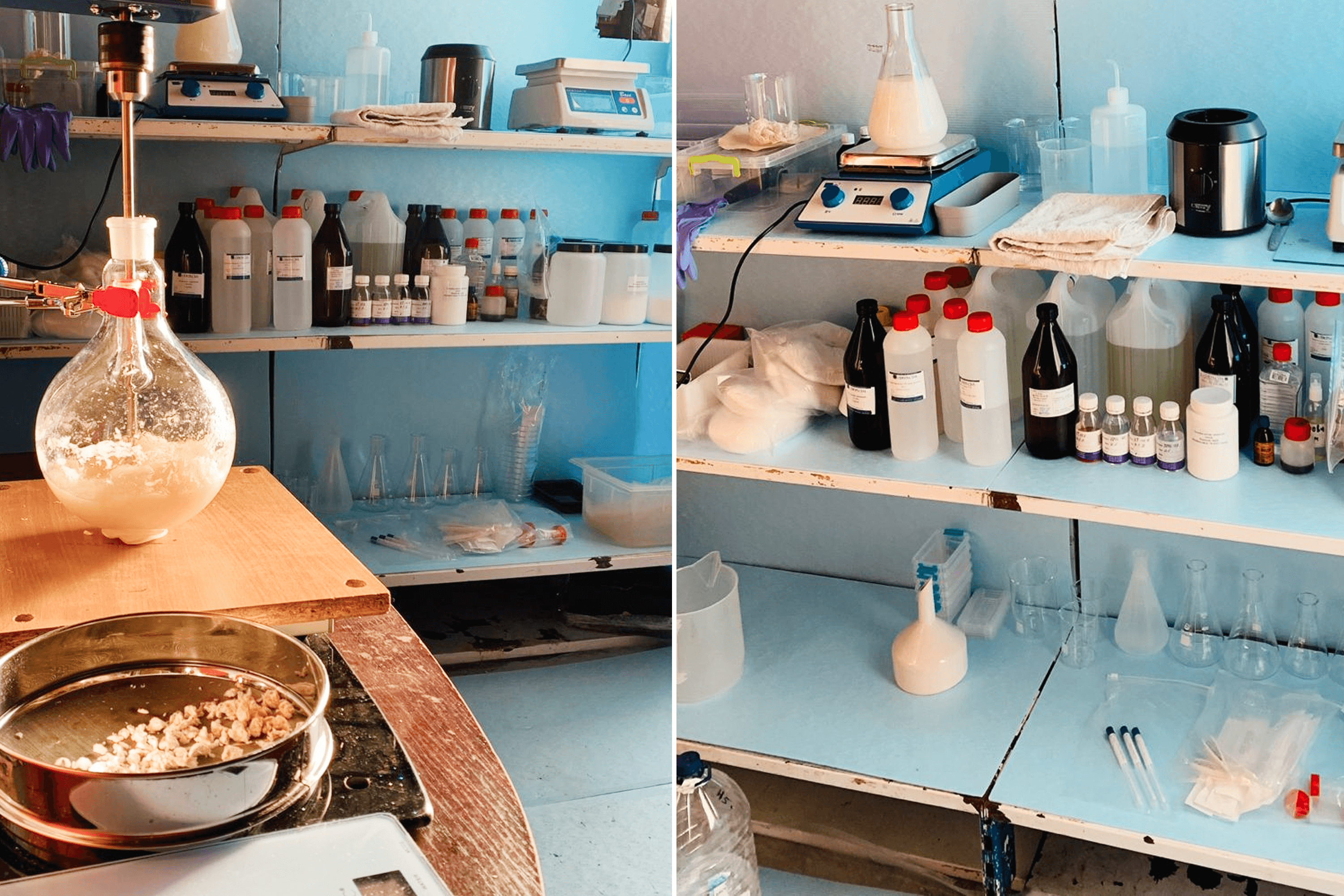
Valentyn Frechka’s home laboratory, where he studied the properties of cellulose from fallen leaves. Photo: Valentyn FRECHKA / LinkedIn 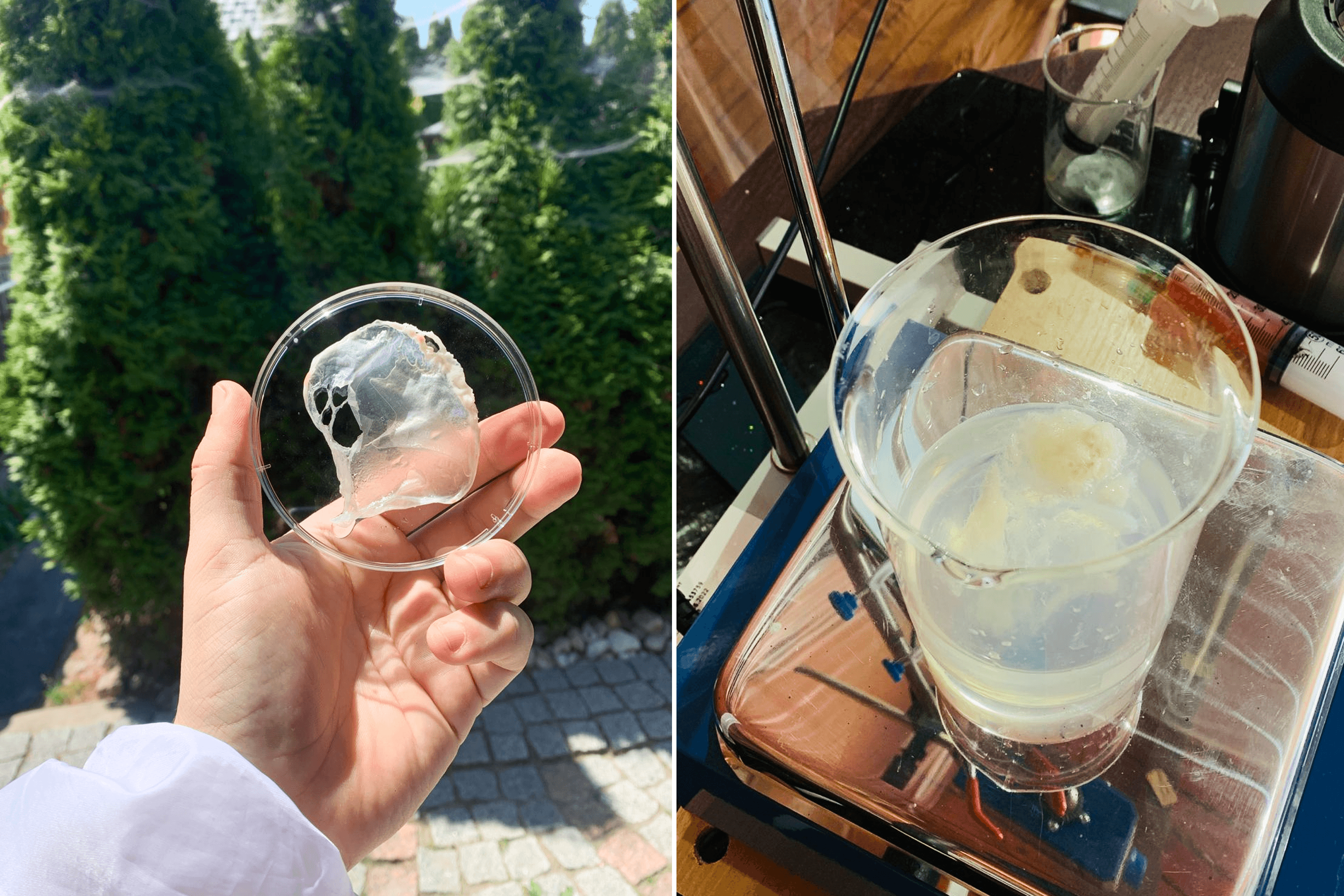
The first samples of viscose fiber and cellophane produced by Releaf Technology from cellulose extracted from fallen leaves collected in Kyiv. Photo: Valentyn FRECHKA / LinkedIn
At the factory in Oleshky, we experimented for a long time to make sure future customers could use our raw material on their paper machines without problems, so that it would not tear or clog the machinery. Once we were confident in the quality, we opened an online store, created social media pages, and began selling.
In what form do you sell the paper?
As raw material in rolls and as finished products, including sheets of paper, bags, corrugated paper, envelopes, boxes, and three-dimensional packaging, such as a berry tray or an insert for a box of perfume or cosmetics. In general, we can make anything out of paper, but our main commercial model now is rolls of raw material and packaging.
Who were your first clients in Ukraine?
Our first customers appeared in 2020. They were coffee shops, souvenir stores, and nonprofit organizations. For example, we made notebooks for Zhenia Aratovska’s “Ukraine Without Waste” project. In 2021, we signed contracts with well-known brands. The Ukrainian branches of L’Oréal, Samsung, and Weleda ordered packaging from us, while the Eldorado electronics retail chain and logistics company FM Logistic bought paper for corporate needs.
We still work with several Ukrainian companies. We make bags for Le Silpo supermarkets and packaging for the Resense cosmetics brand.
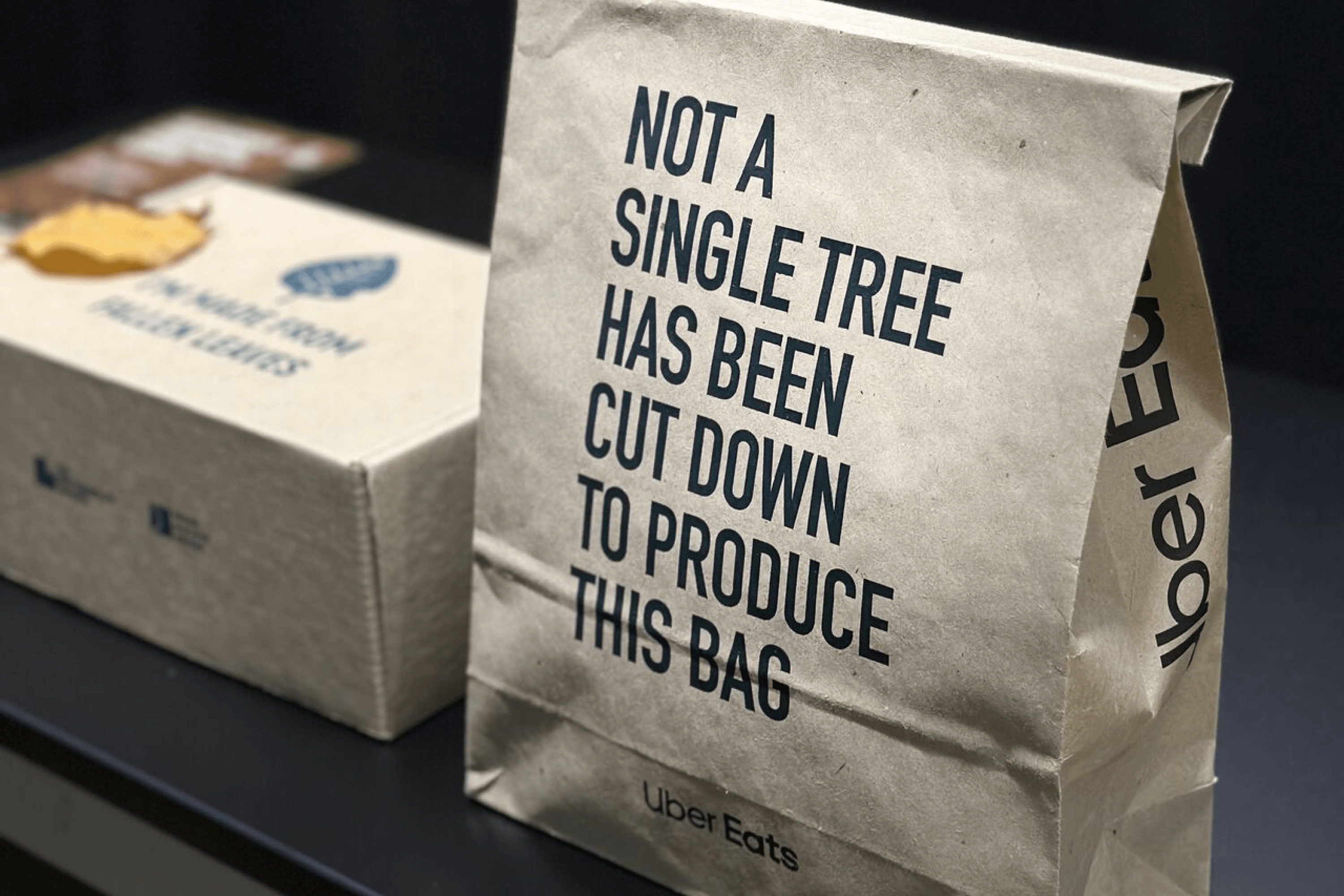
Some of Releaf Paper’s products. Photo: releafpaper / Instagram 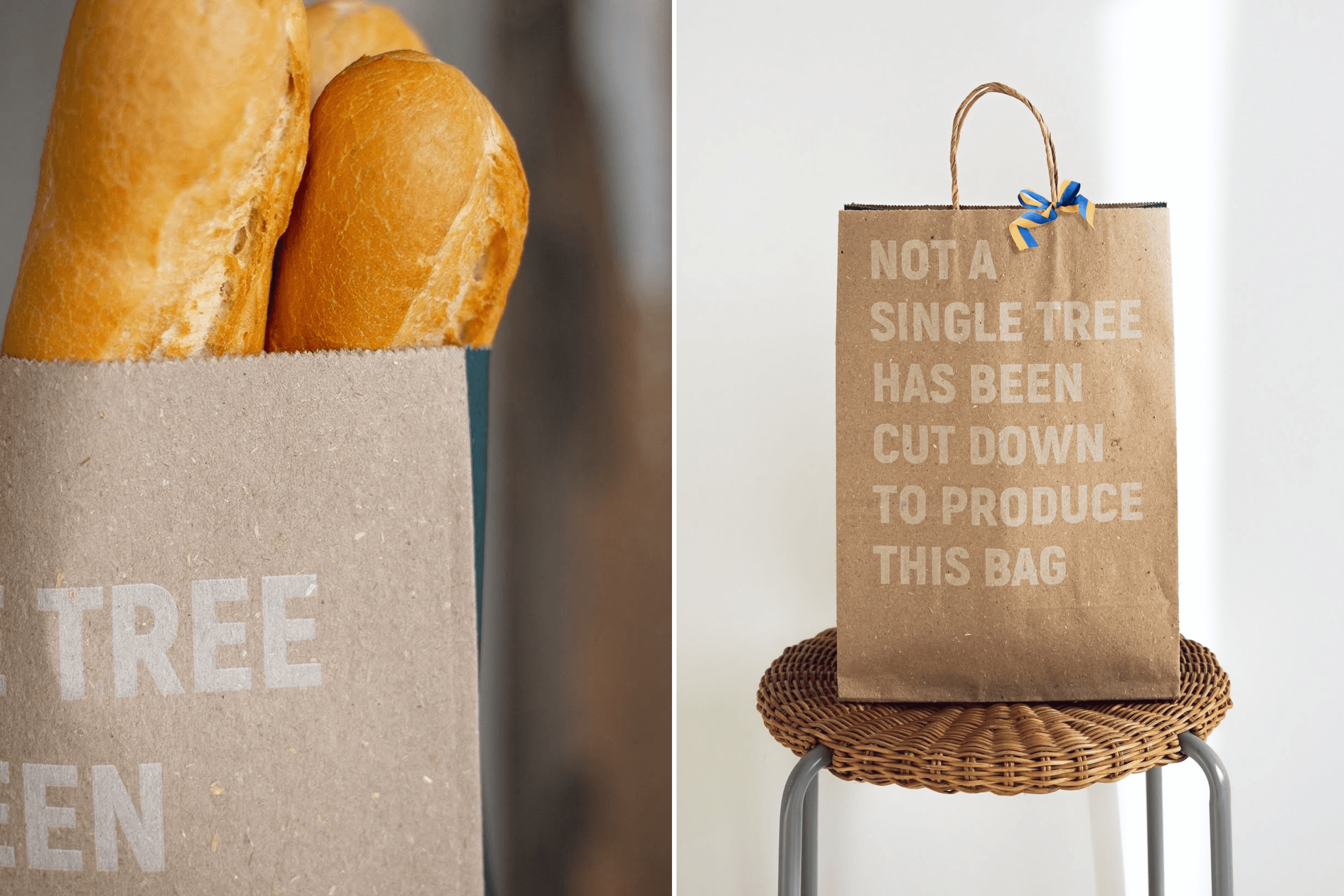
Photo: Releaf PAPER / Facebook 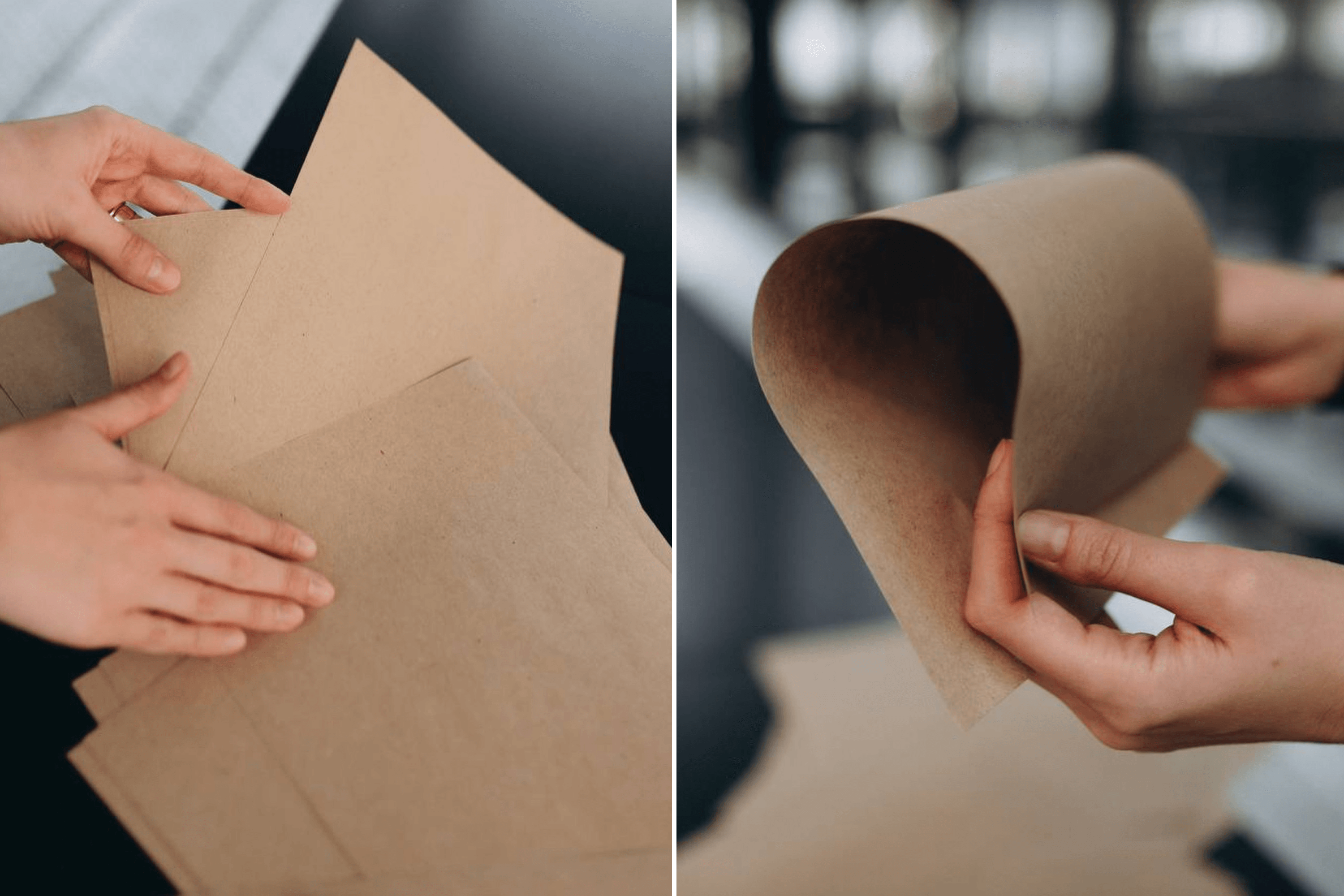
Photo: releafpaper / Instagram 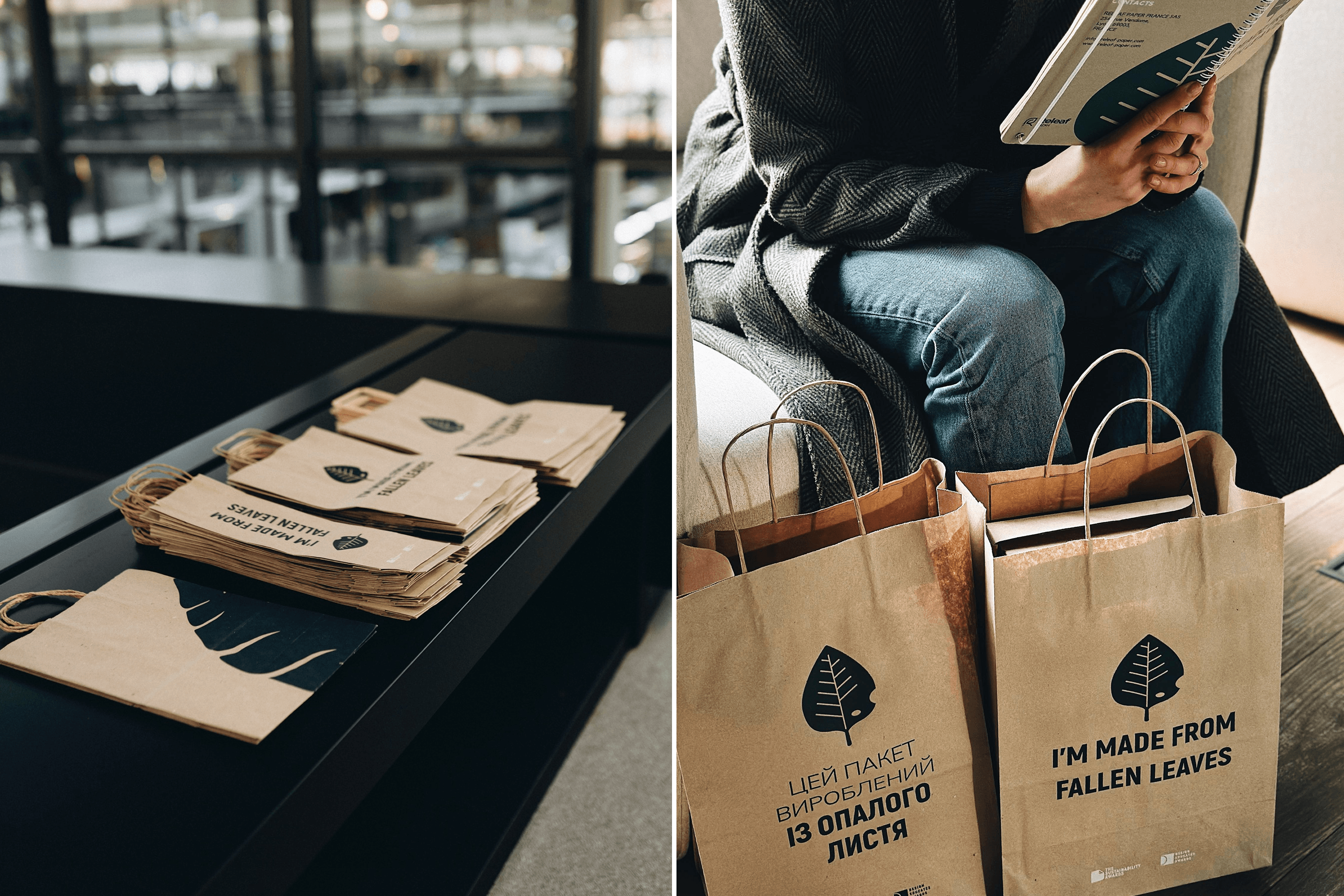
Photo: Releaf PAPER / Facebook 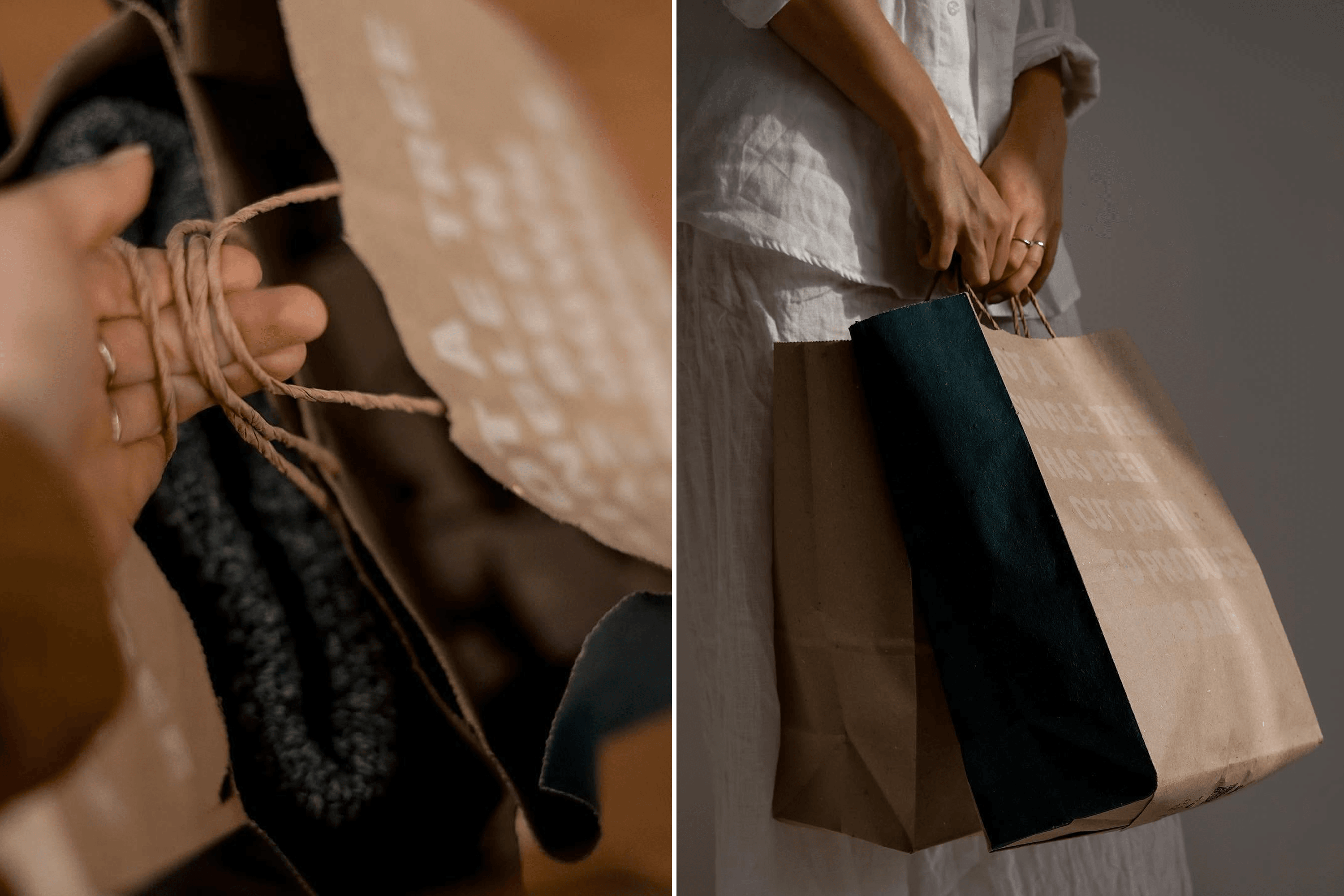
Photo: Releaf PAPER / Facebook 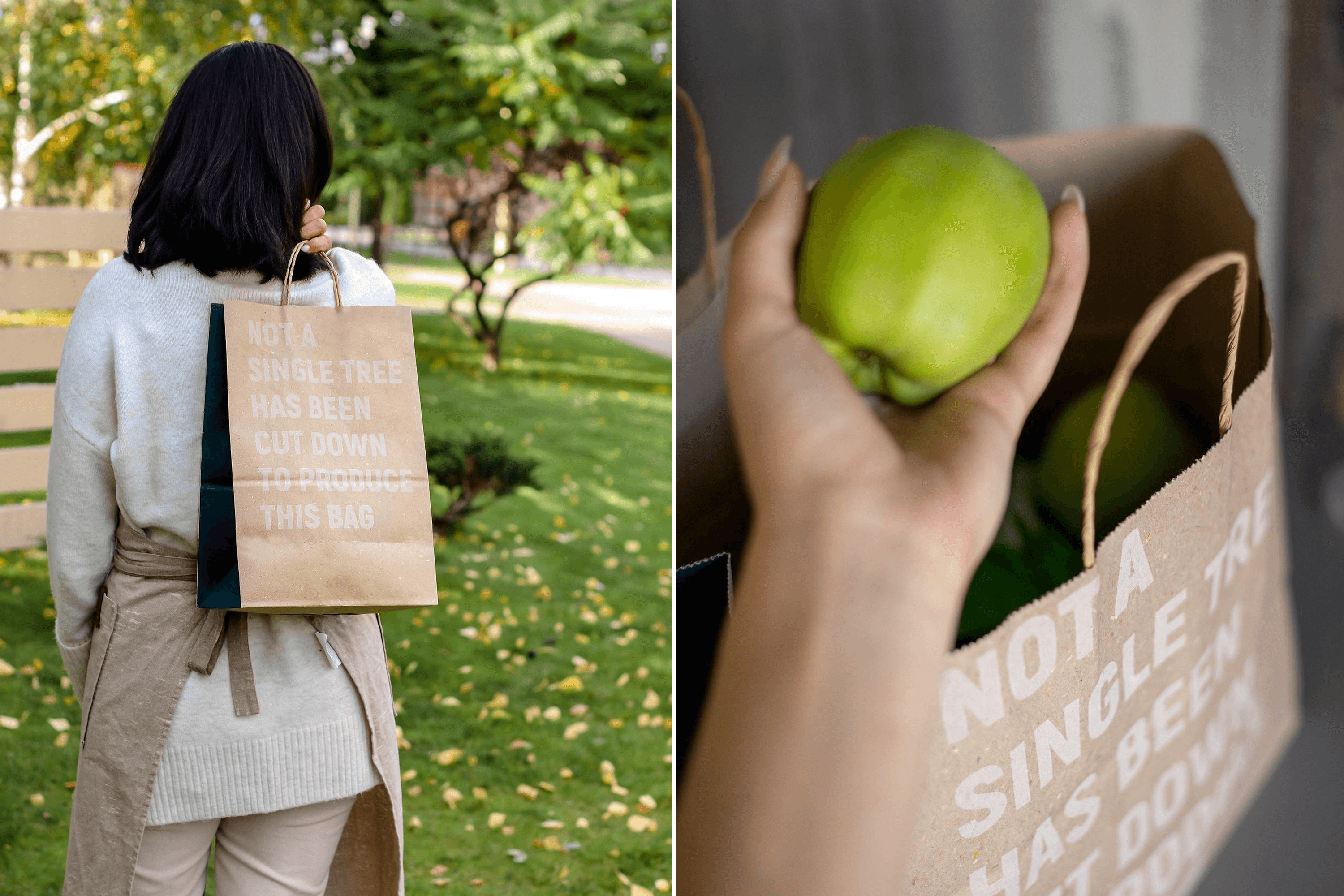
Photo: releafpaper / Instagram
At the beginning of the full-scale invasion, you relocated the company to France. Why did you choose this country?
There is no direct correlation between the move and the full-scale war. From the beginning, we planned to open production in Europe because Ukraine’s paper market is based on imported raw materials and recycling, and the equipment at most factories is not suitable for our processes. We found only one manufacturer that we still work with today, the Zmiiv Paper Mill.
In Europe, we were looking for a country with developed infrastructure and a research base in the pulp and paper industry. France is a very good fit. Key European research centers are located here, and there is infrastructure for production and sales. We are also interested in clients from Western Europe. So in May 2022, I transferred from Kyiv University to Grenoble Institute of Technology in France, moved there, and relocated Releaf Paper there.
Whose production facilities do you use in France?
We received a €2.5 million grant from the European Union and used the money to build our own pilot line at a partner factory in the Île-de-France region. Here we receive leaves, process them, and produce several types of paper.
We continue to maintain ties with our partners in Ukraine, including processing hubs and the Zmiiv Paper Mill, with which we established a partnership in 2021. We would like to fully resume our operations in Ukraine, but for now this is difficult.
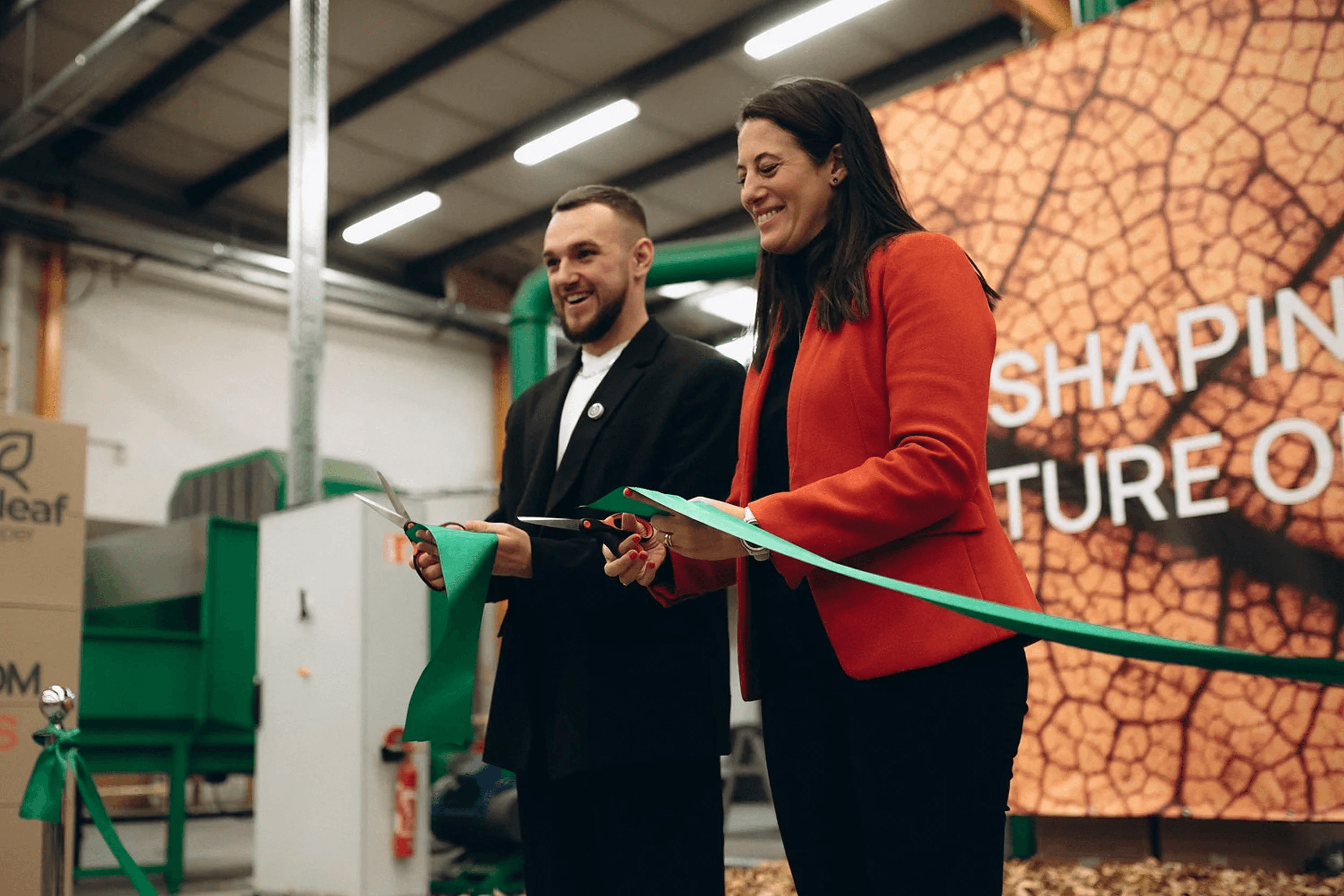
The Releaf Paper plant in France, where fallen leaves are processed into cellulose for paper and packaging. Photo: releafbag.com 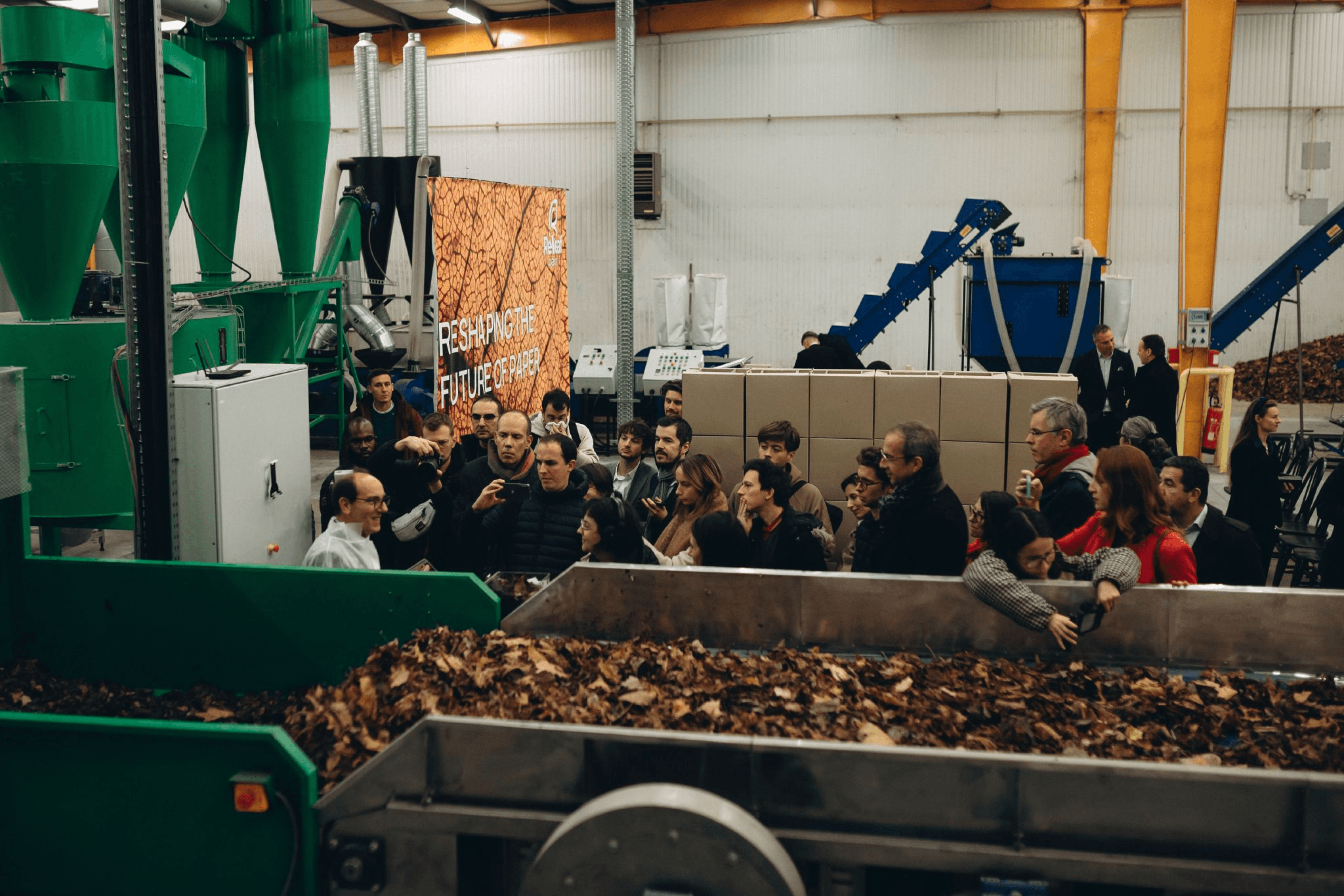
Photo: Valentyn FRECHKA / LinkedIn
Fallen leaves are a seasonal material. How do you keep production running throughout the year?
We developed a special processing method. We clean the leaves, condition them, pack them compactly, and process them so that they do not begin to rot and decompose. This way, the raw material we collected in the fall remains usable throughout the year.
How does operating your business in Ukraine and France differ from a legal standpoint?
It differs fundamentally, but it is difficult for me to compare the two countries. The only thing I can say is that France has better regulation of the environmental impact of production and working conditions. But we feel comfortable in both countries because we do not violate the standards. On the contrary, we set them.
How do you finance Releaf Paper?
From several sources. We have an investor with a stake in the company, as well as grants. Thanks to this, Releaf Paper is one of the fastest-growing companies in France and Europe.
We are preparing to bring in new investors. We are looking for partners who can provide not only money but also expertise in management, business development, or sales. Our priorities are venture capital funds and family offices. We are also open to loans. We are not considering government investment yet. That is the next stage for us.
We will use the investment to improve operations and bring in professionals who know how to sell, communicate, and develop the product. Our goal is to produce and sell tens of thousands of tons of raw material a year, reduce costs, and scale up in the market.
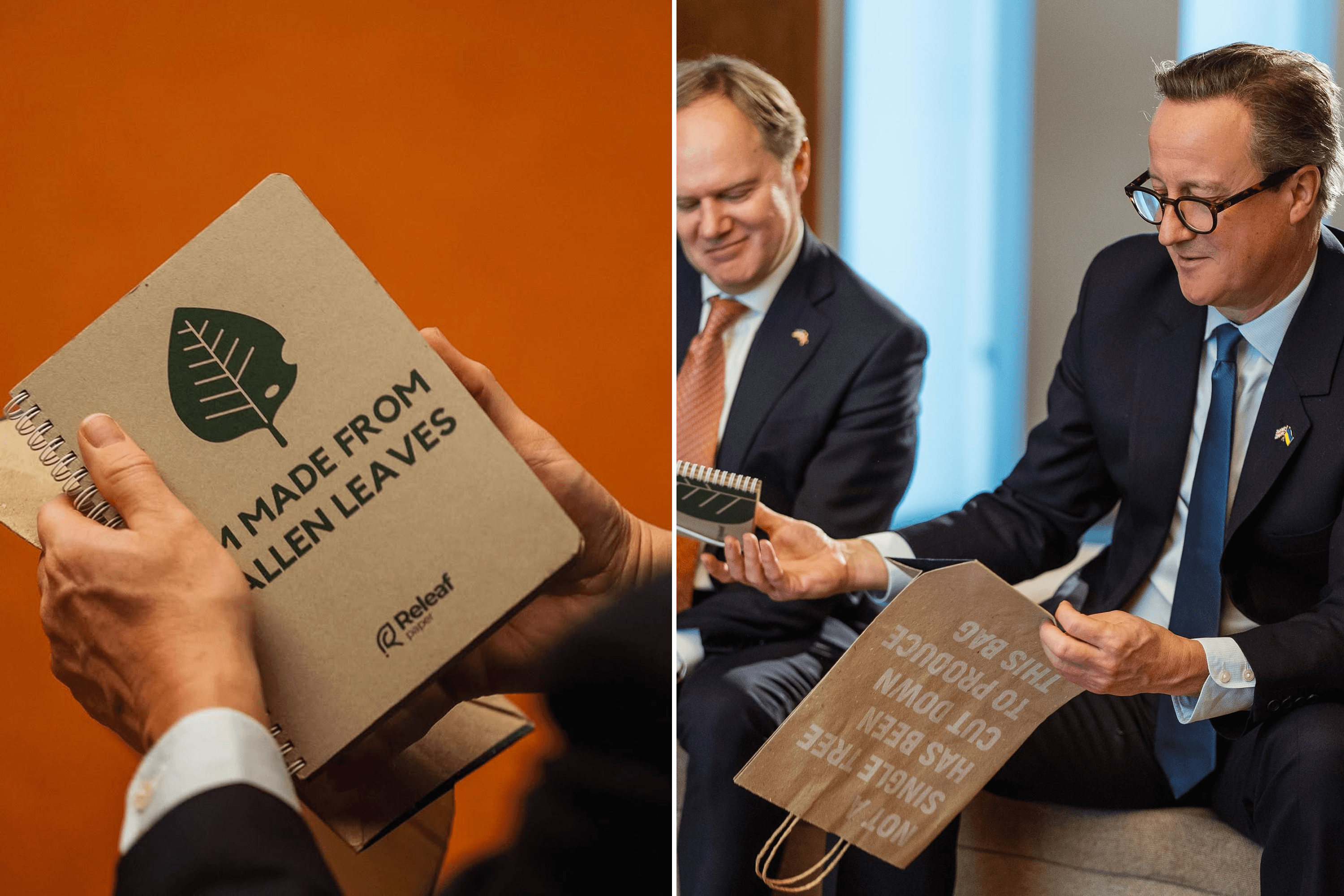
Releaf Paper presented its products to UK Foreign Secretary David Cameron at UNIT.City in Kyiv. November 20, 2023. Photo: releafpaper / Instagram 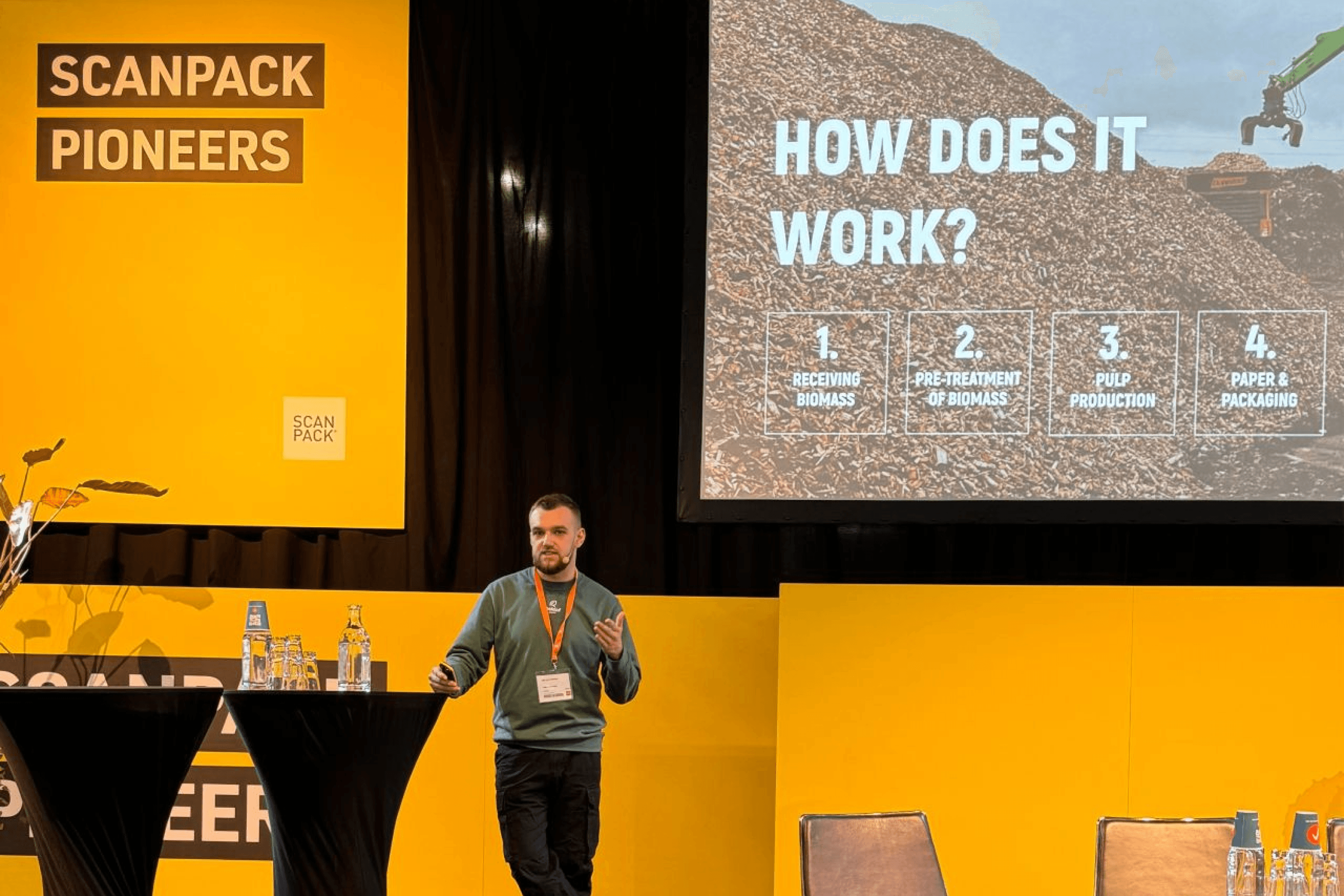
Valentyn Frechka presents Releaf Paper’s technology at the Scanpack exhibition. Photo: Valentyn FRECHKA / LinkedIn 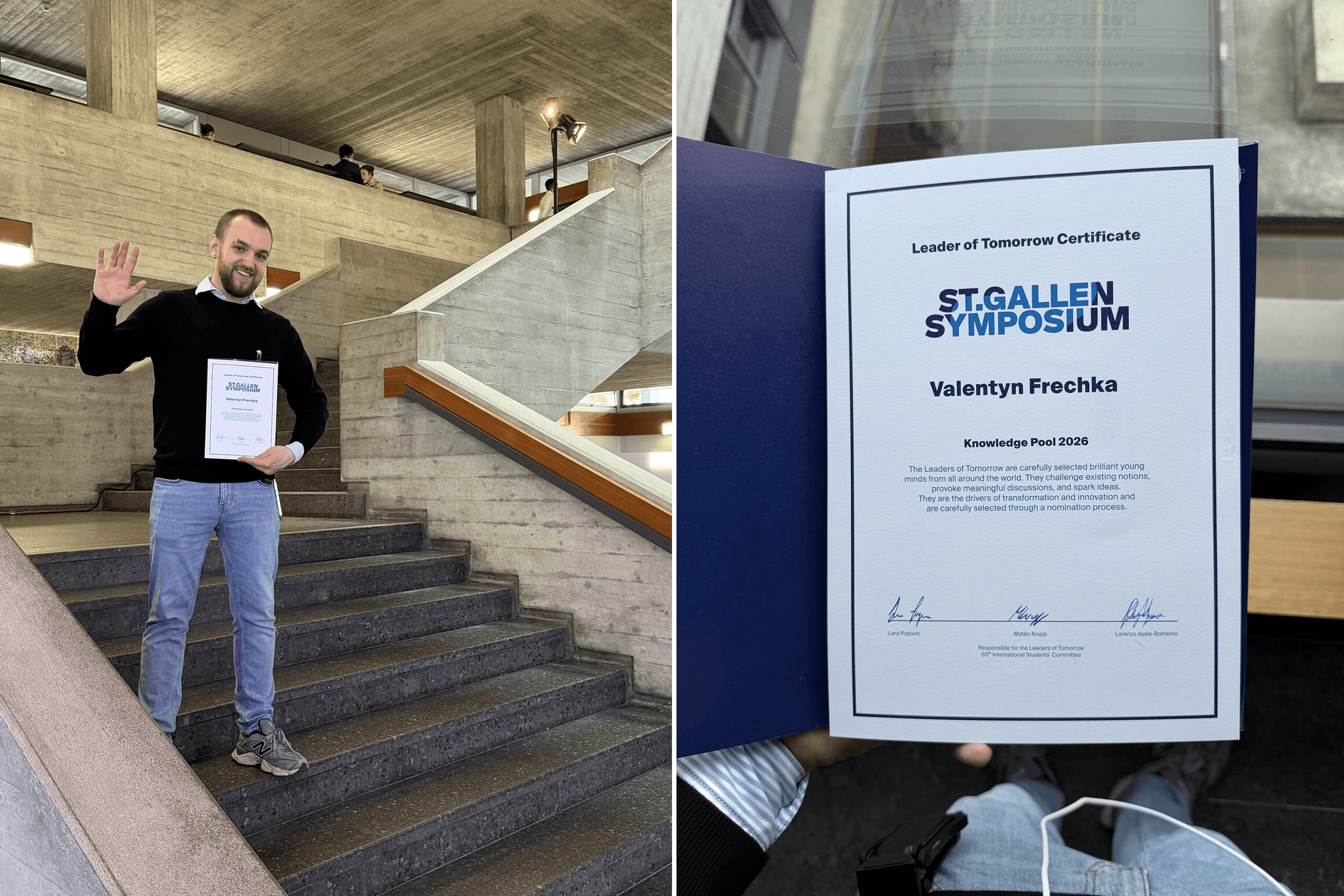
Valentyn Frechka at the St. Gallen Symposium in Switzerland, where he participated in the Leaders of Tomorrow program. May 6–7, 2026. Photo: Valentyn FRECHKA / LinkedIn 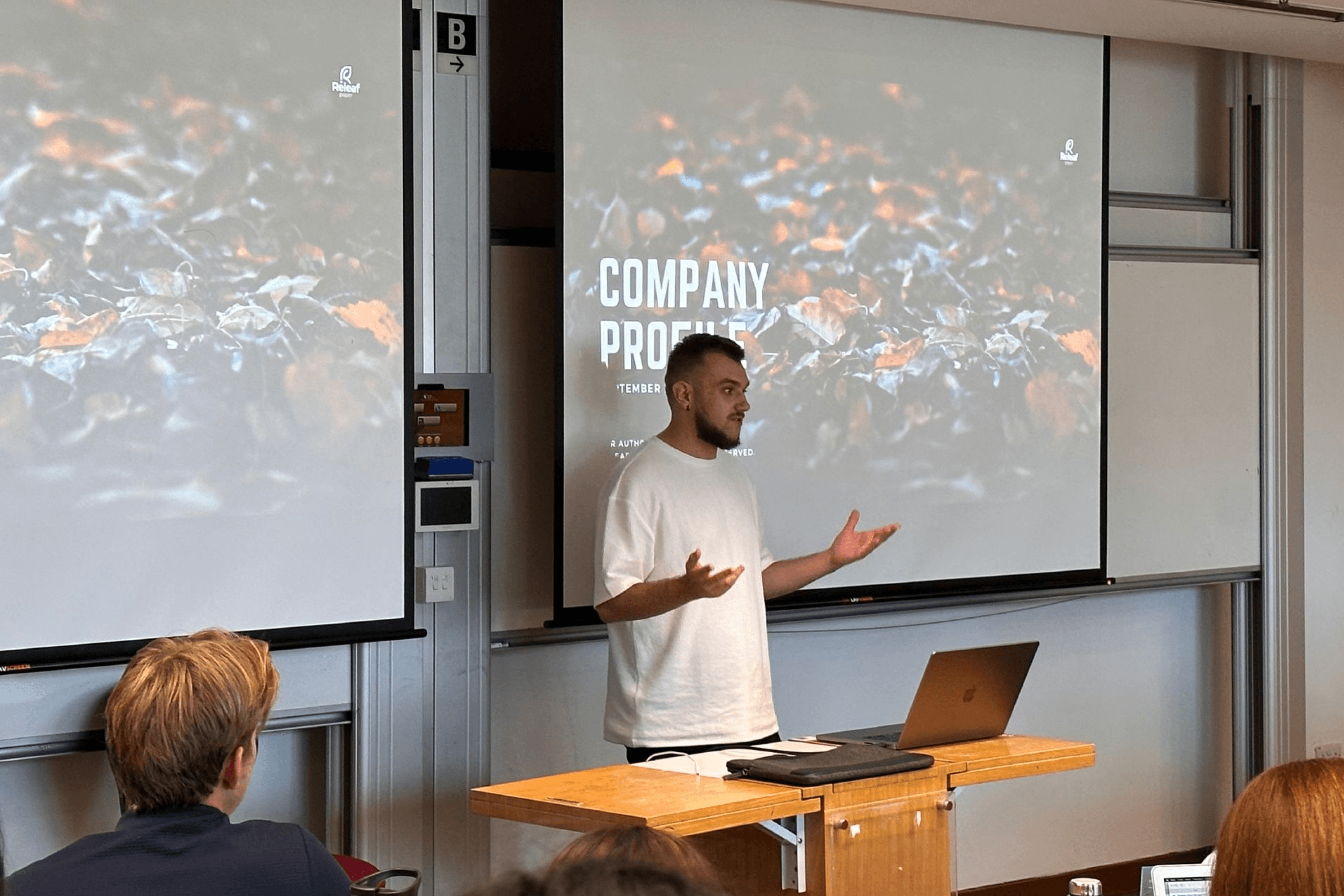
Valentyn Frechka presents the Releaf Paper project to students at Singapore Management University. Photo: Valentyn FRECHKA / LinkedIn
What do grant providers pay attention to?
French and European grant providers are geared less toward impressive, attractive stories and more toward truly capital-intensive startups. So they assess not only the idea itself, but also how much of the company’s own and private investment it has already attracted and how balanced its financing is. This creates certain difficulties. So does the fact that applications take quite a long time to review.
We apply regularly and recently received a small grant from the Île-de-France regional council. We are now preparing for a new round to receive funding from another French donor.
Have you received offers to sell the company?
Yes, there have been many such offers. They do not interest us because we are building a materials and engineering platform that will operate in many countries around the world, and we do not plan to give it up. But these offers show that we are moving in the right direction and that people see potential in us.
Who are your clients today?
The best-known are Uber Eats, LVMH, Kering, and L’Oréal. We have only recently started working with the latter two and have completed pilot projects. We also have three major customers, French producers of premium alcoholic beverages and cosmetics, that I can’t name due to a nondisclosure agreement.
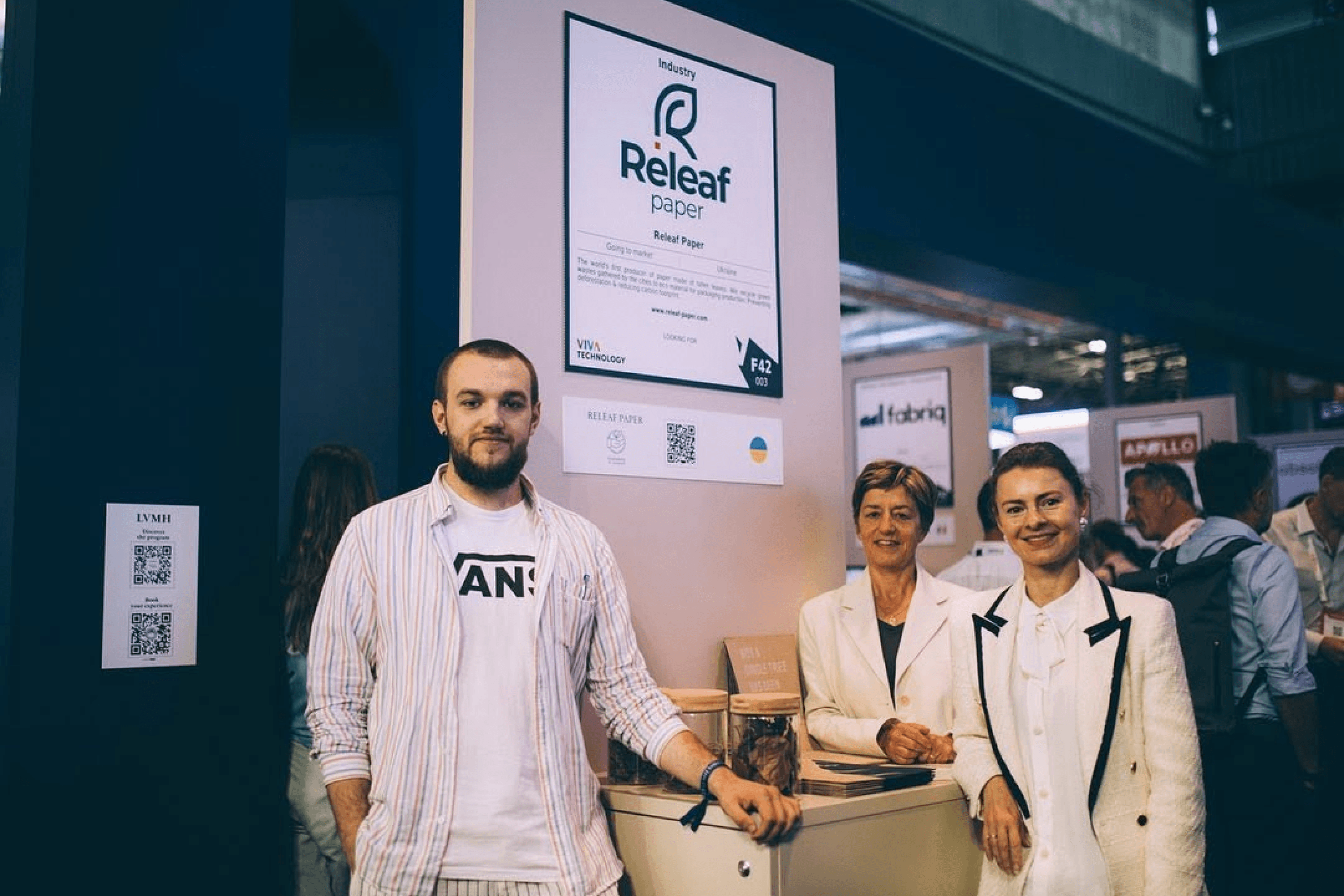
The Releaf Paper team at the VivaTech exhibition in Paris, where the startup was a finalist for the LVMH Innovation Award 2023. June 22, 2023. Photo: Releaf PAPER / Facebook 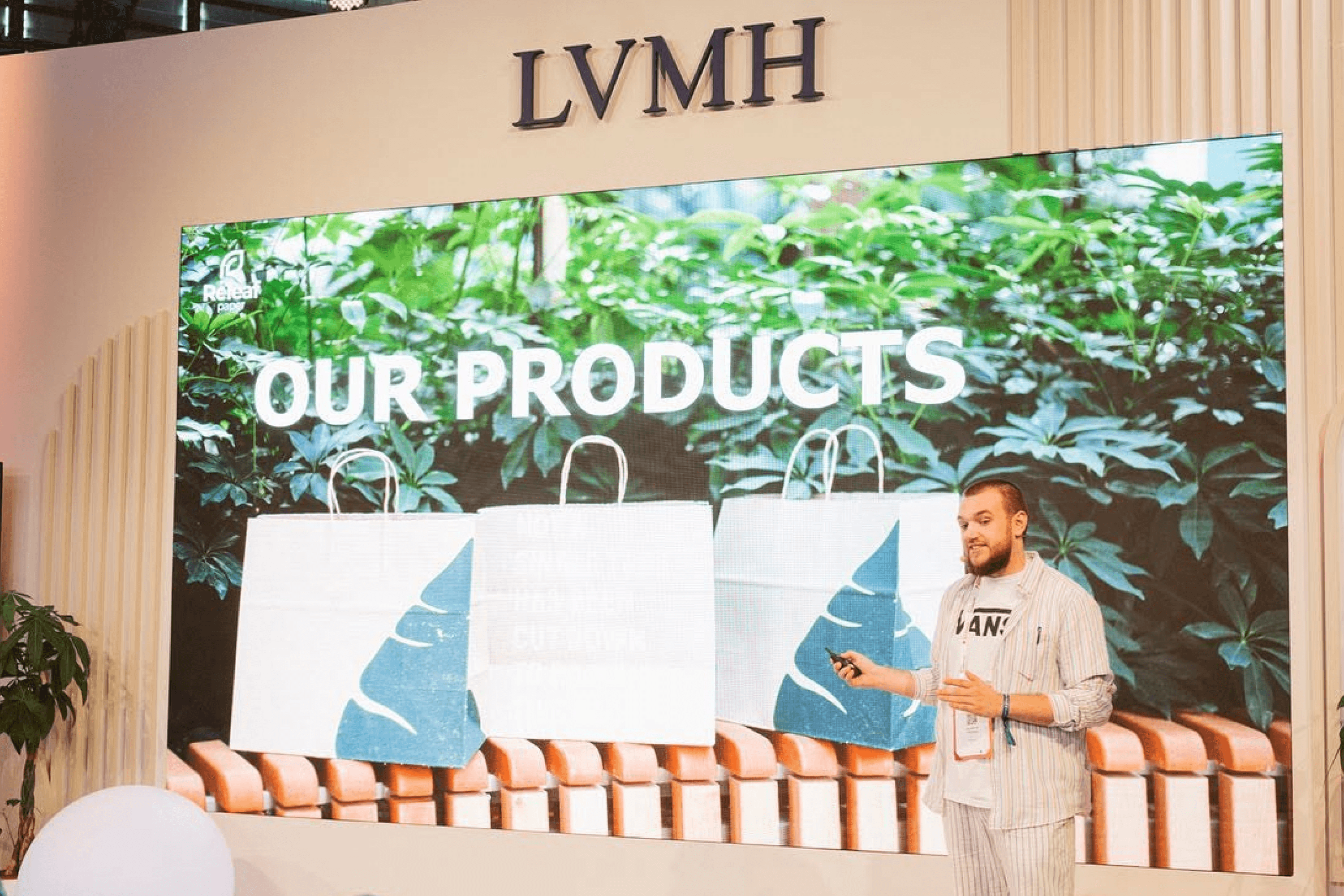
Photo: Releaf PAPER / Facebook 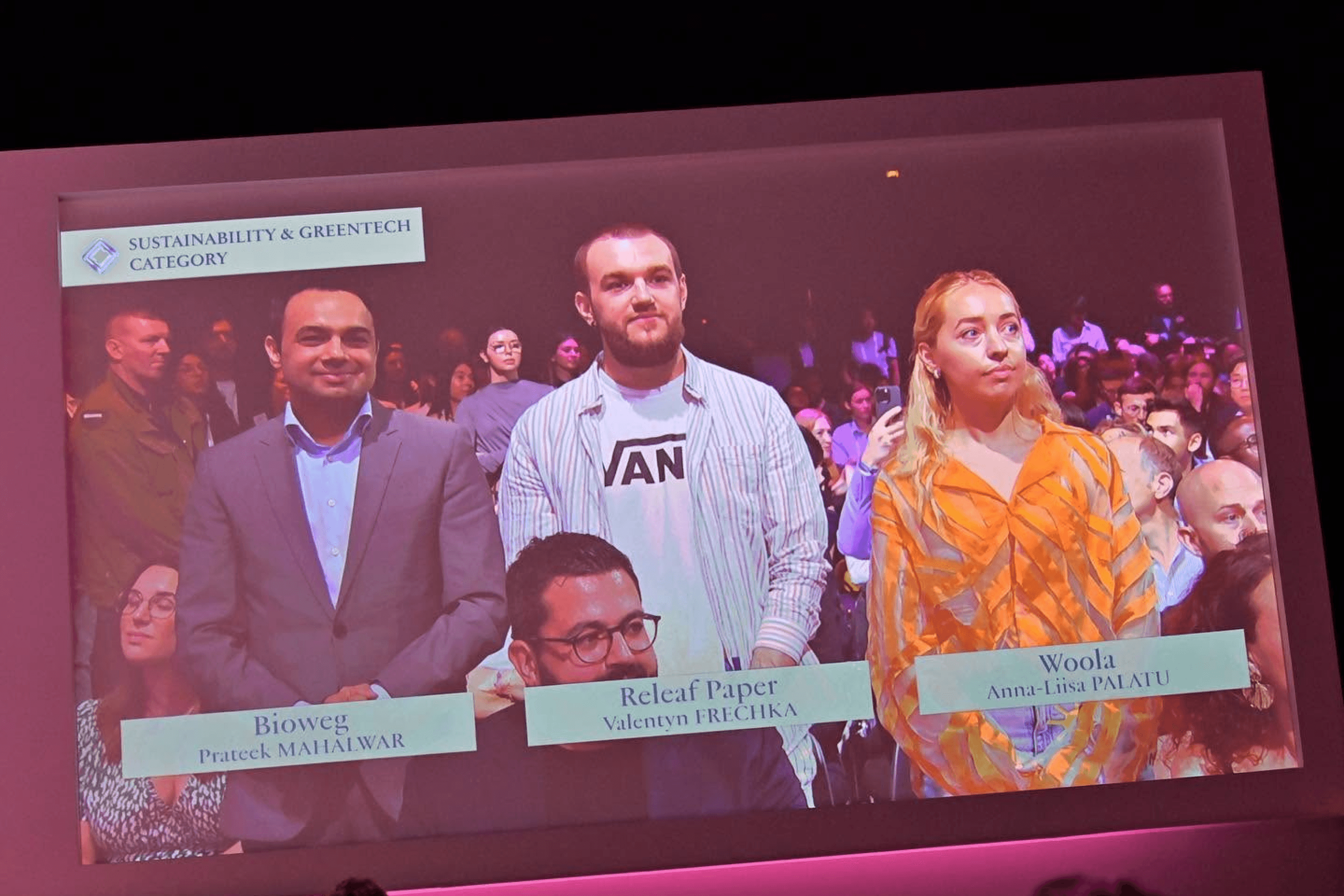
Photo: Releaf PAPER / Facebook 
Photo: Releaf PAPER / Facebook 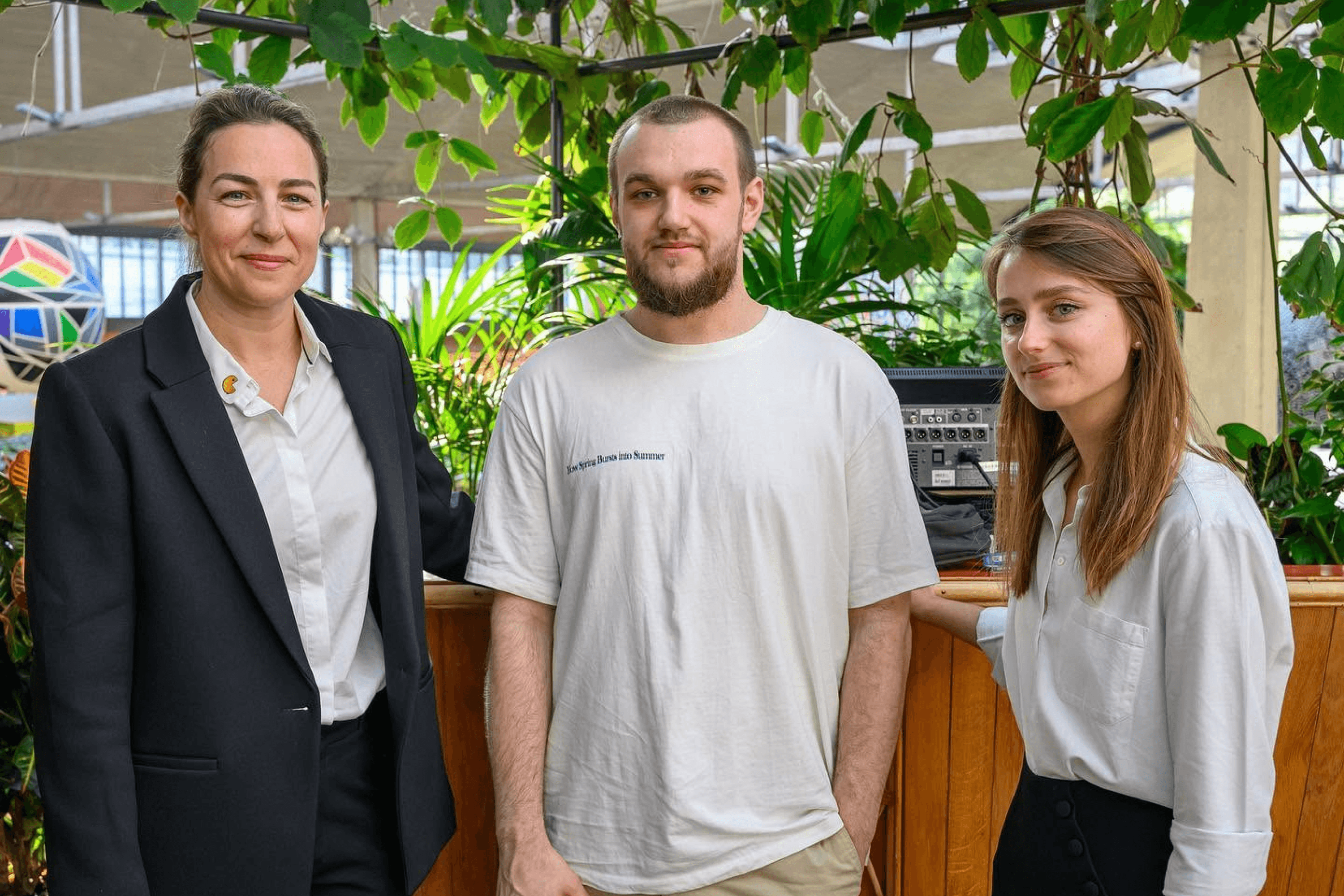
Photo: Releaf PAPER / Facebook 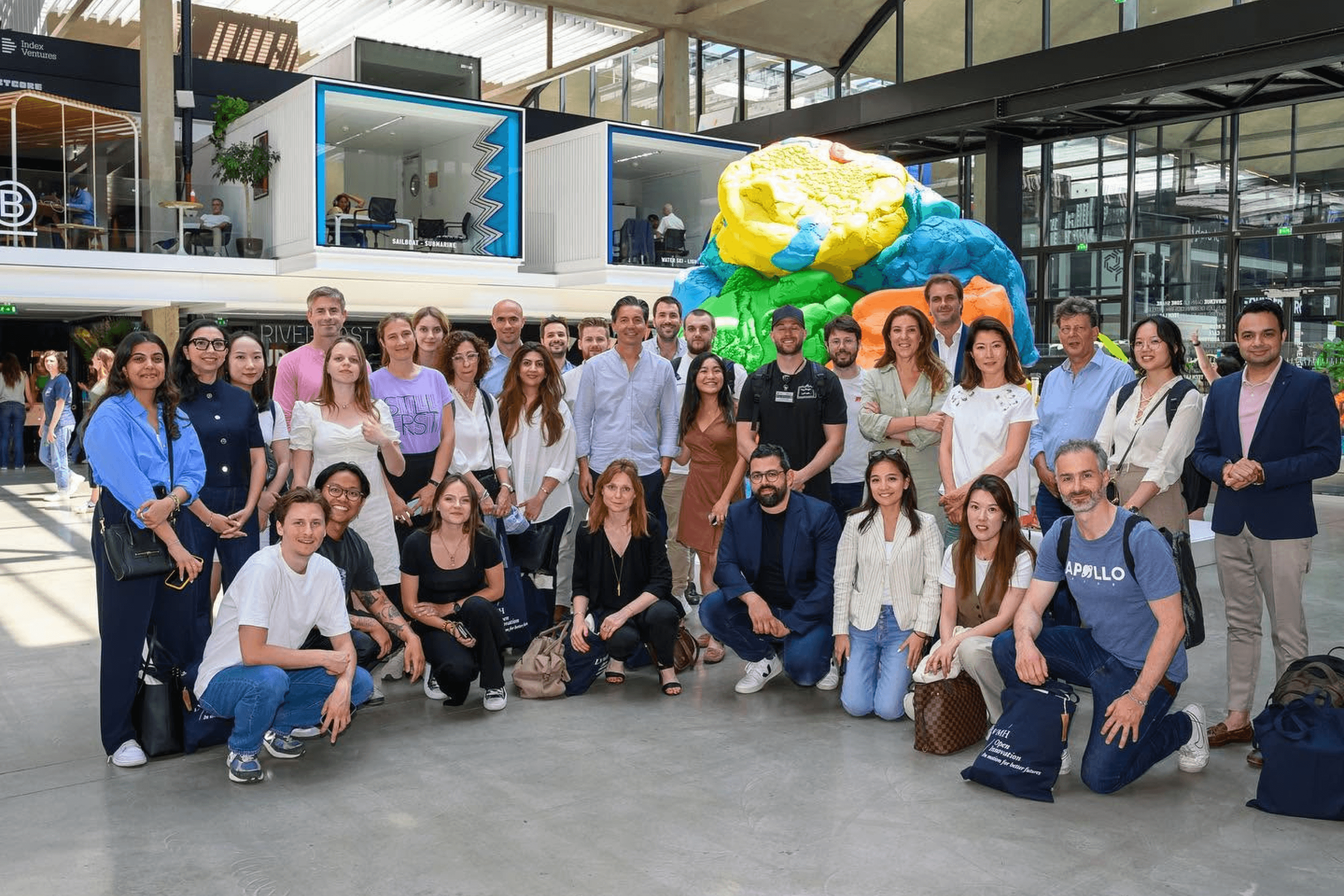
Photo: Releaf PAPER / Facebook
We make packaging for luxury brands such as Pernod Ricard and other producers of jewelry, clothing, footwear, perfumes, and eyewear. It is important to them that the packaging conveys the brand’s key values, has a story, and is something people want to keep as a souvenir.
We also have other clients: converters that produce different types of paper or packaging. For example, the Romanian company Emblema Paper Bags uses our raw material to make bags for well-known brands such as Nike, Puma, Durex, Douglas, and Lidl. We are also developing distribution. A trader buys our paper and sells it in Asian and U.S. markets. There is less competition there because companies working with alternative raw materials are concentrated in Europe.
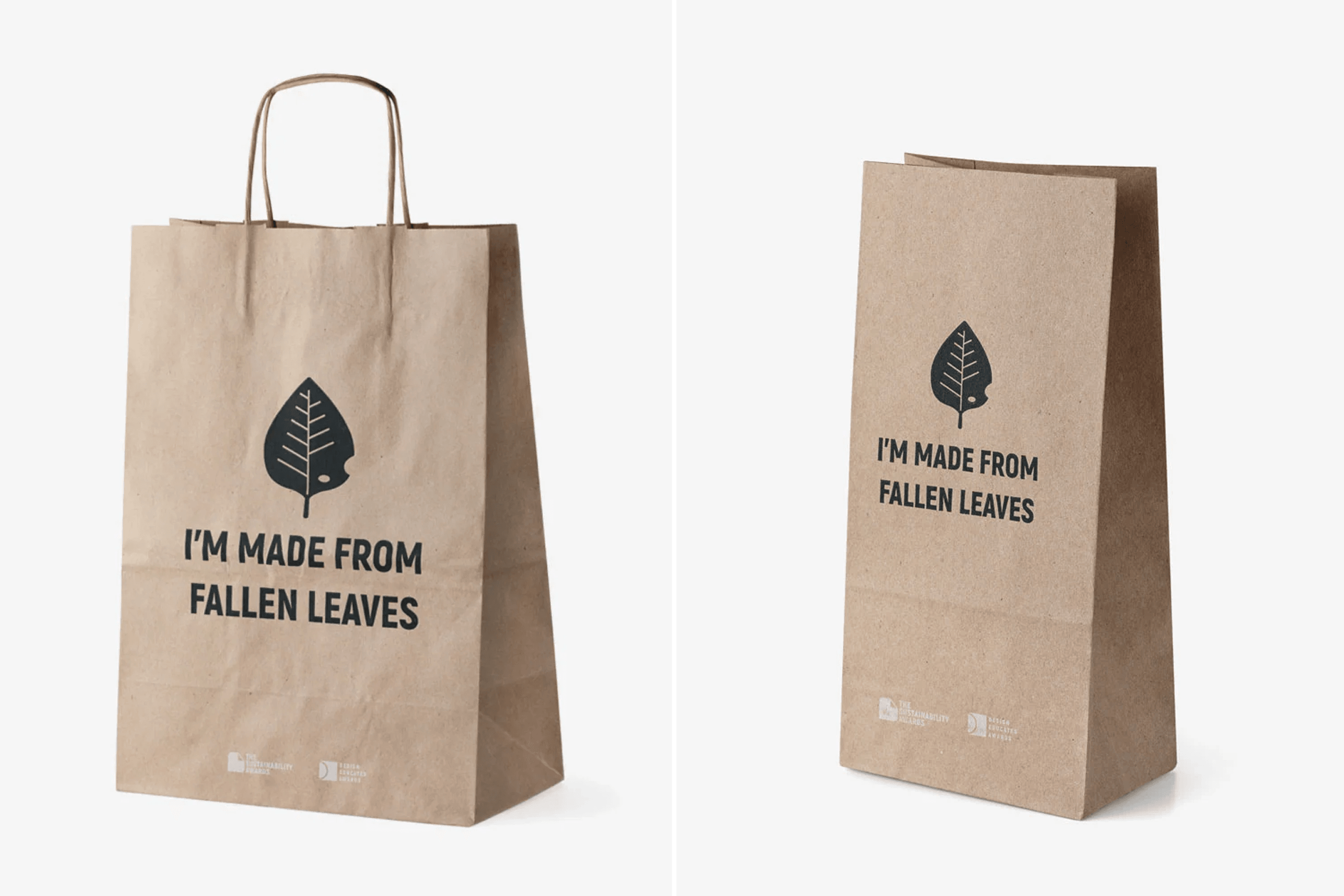
Some of Releaf Paper’s products. Photo: releafbag.com 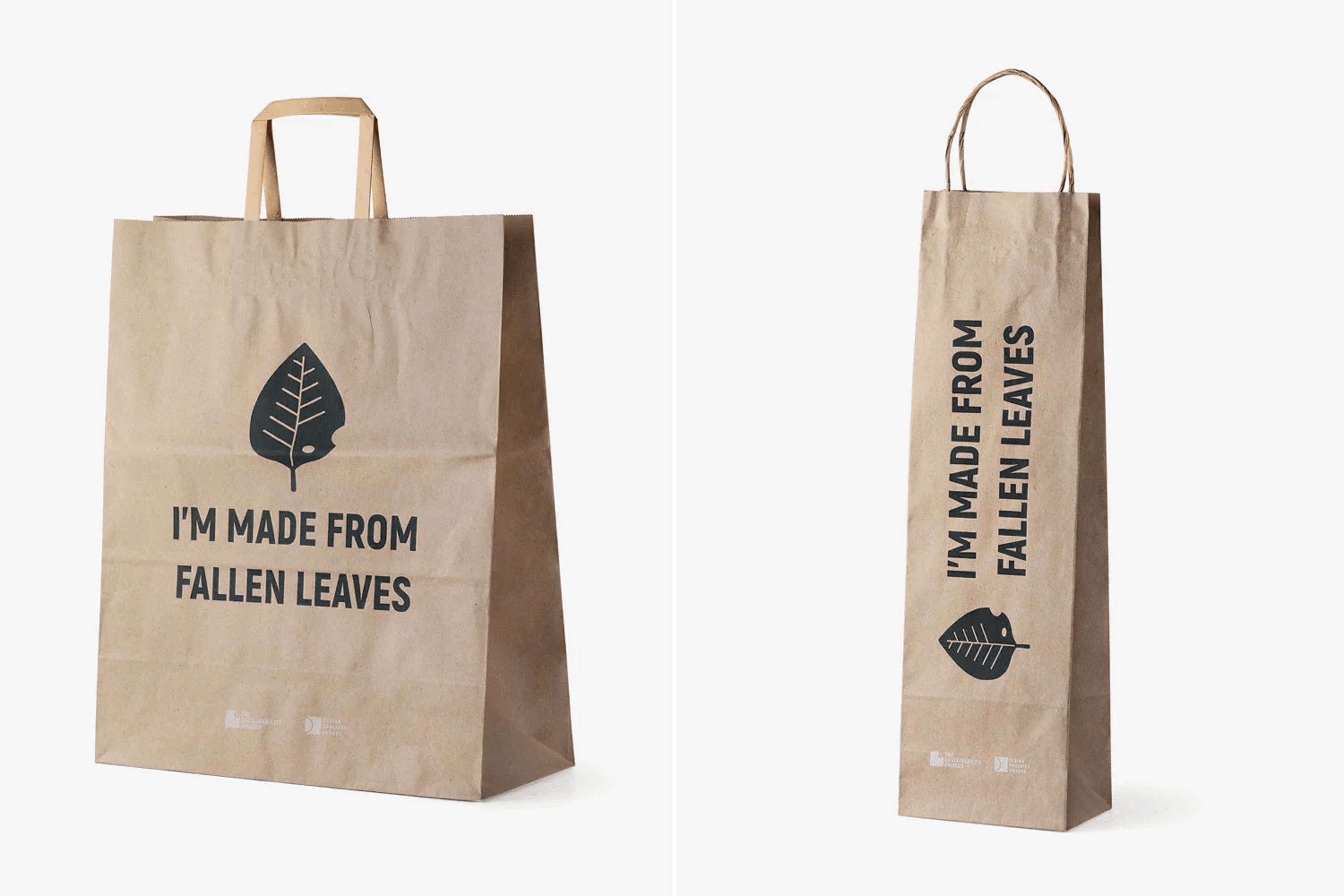
Photo: releafbag.com 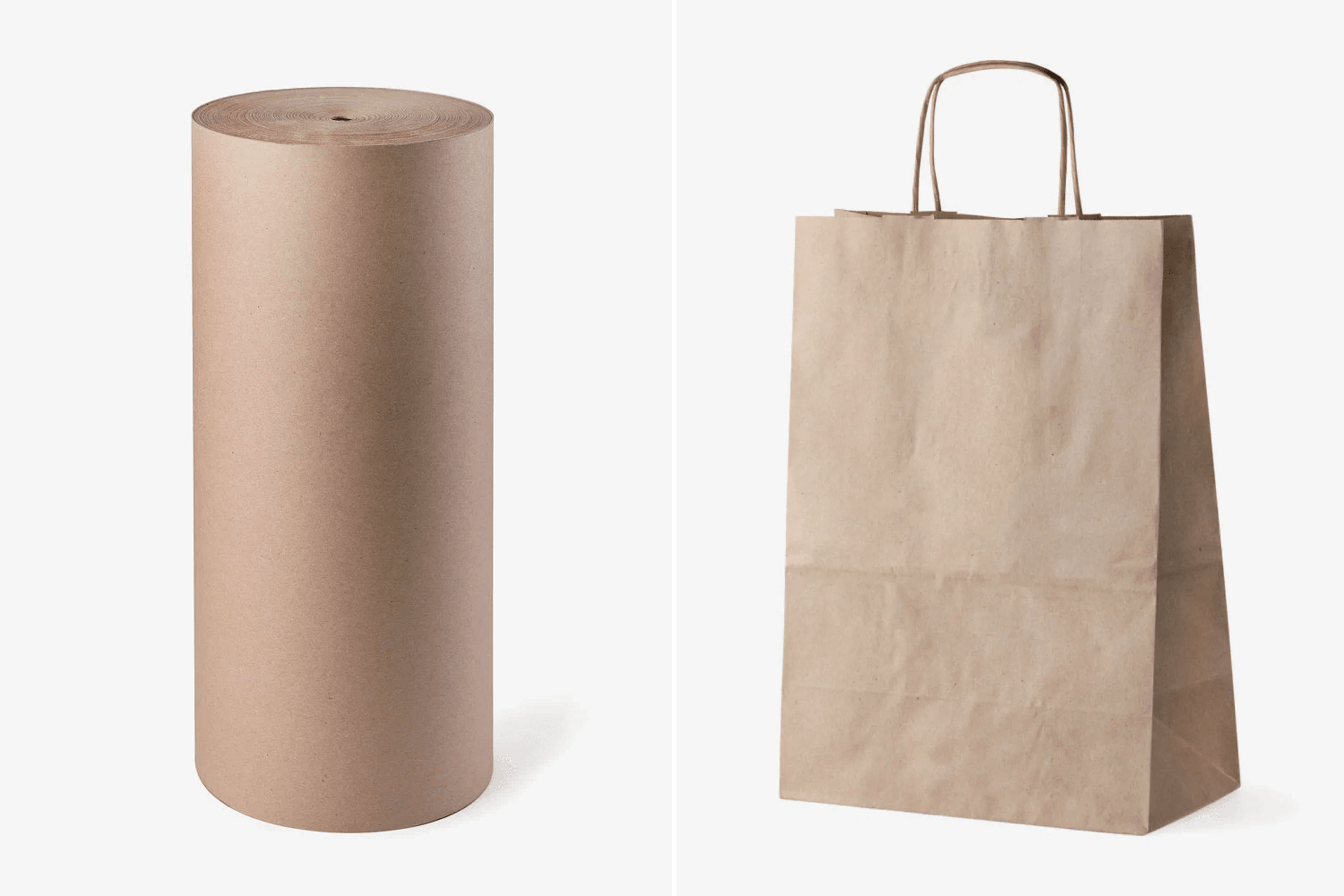
Photo: releafbag.com 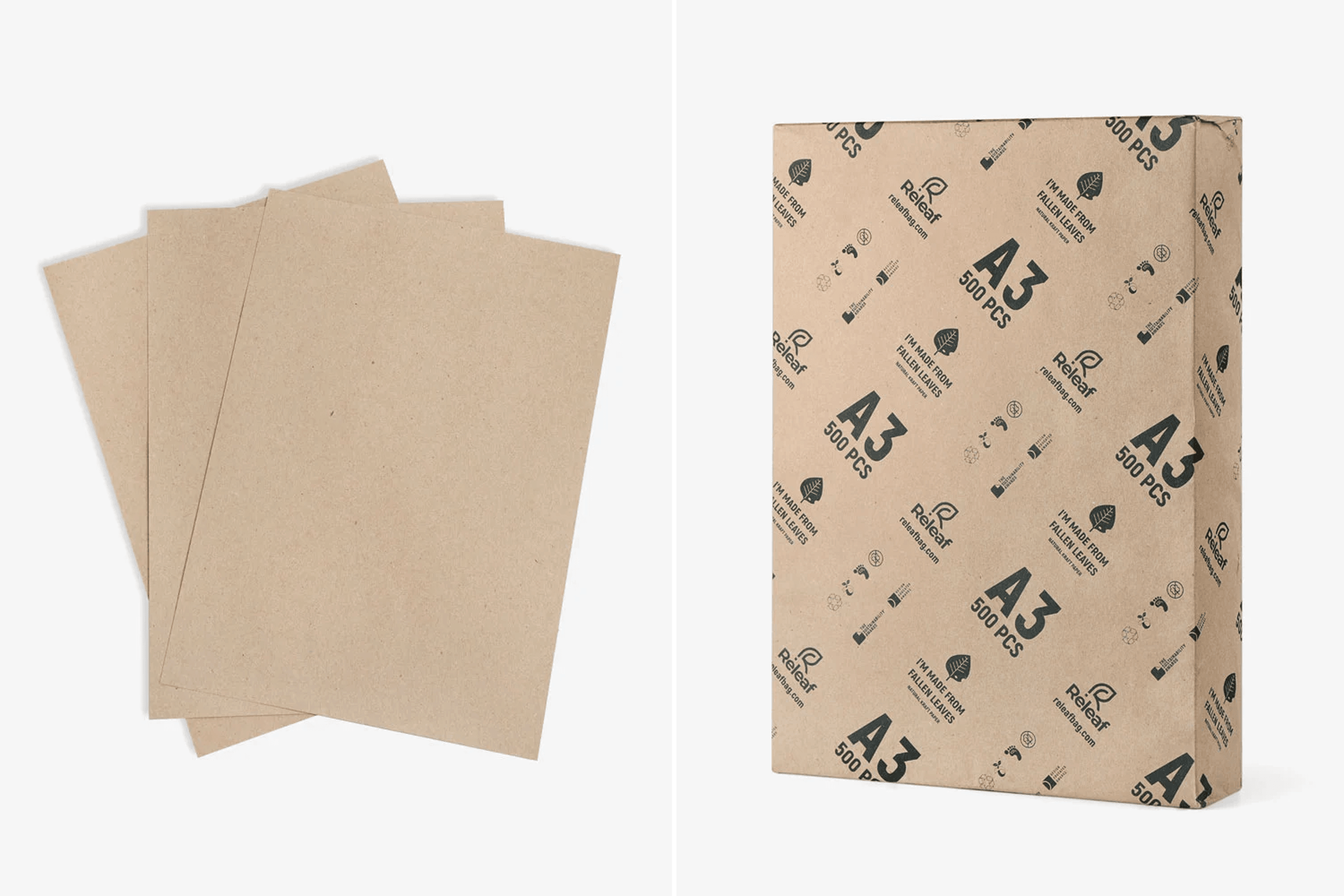
Photo: releafbag.com 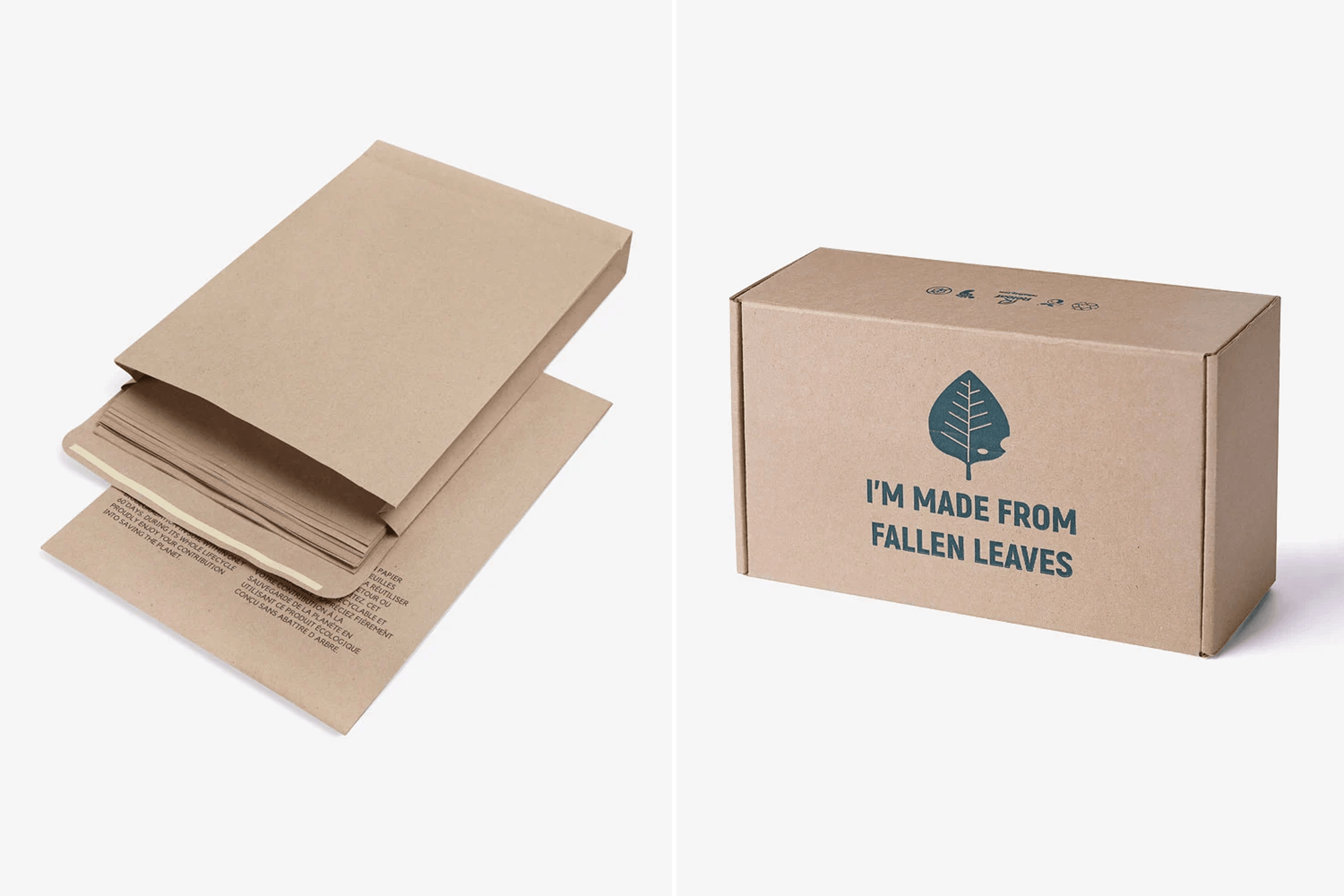
Photo: releafbag.com 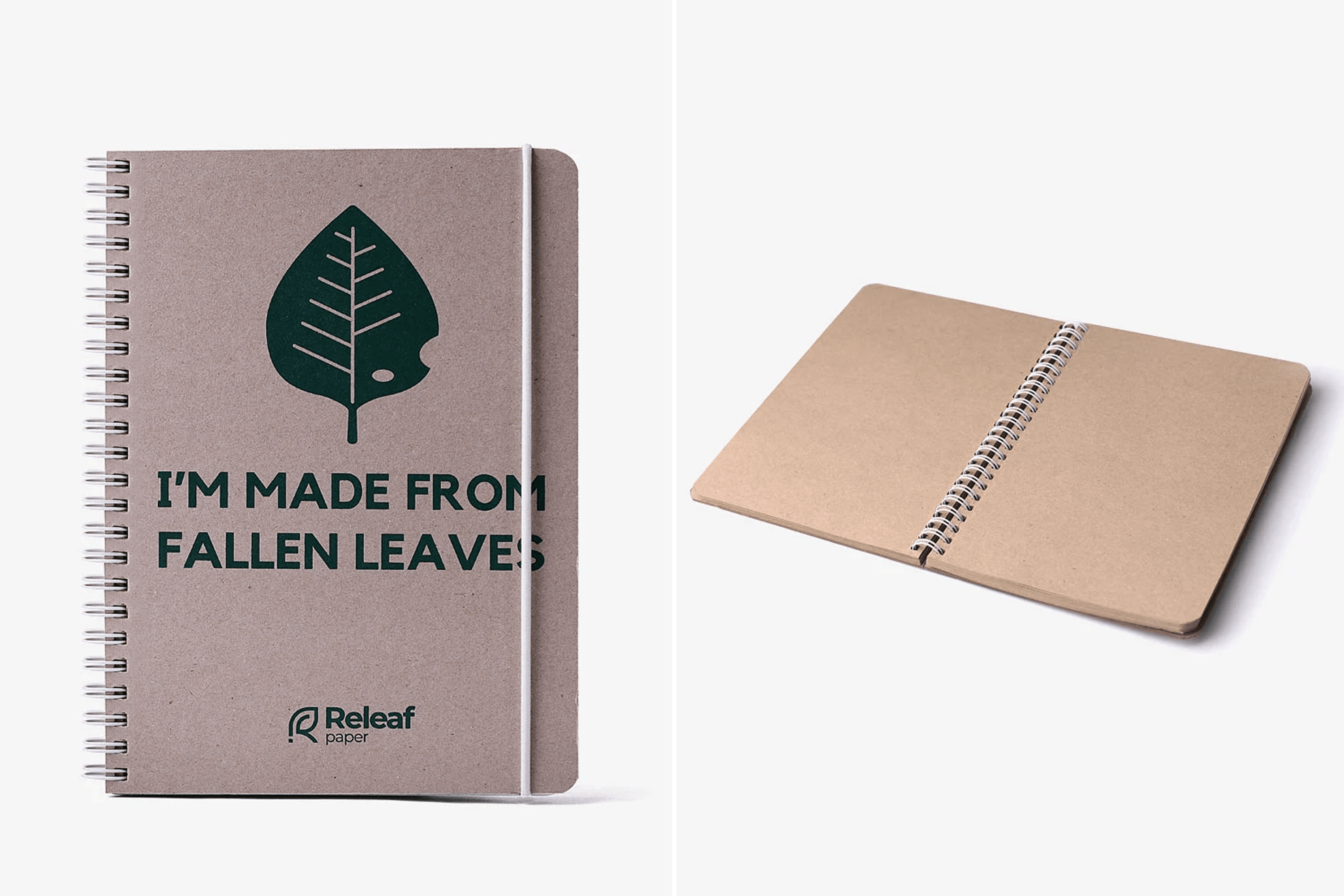
Photo: releafbag.com
How much does the price of your products differ from paper products made from wood?
I don’t think sustainable brands necessarily have to be more expensive. Of course, at the beginning, when production is small, the cost per ton of product is high. You should not be afraid of that, but you should not get used to it either unless you plan to position yourself as a luxury brand.
Today, Releaf Paper sells paper at an affordable price thanks to large production volumes. Sustainability is a basic characteristic of our product and does not make it more expensive. At the same time, we are entering the luxury market because we can customize the appearance of the product, which costs more. This approach makes us more flexible and allows us to diversify sales. This is especially important now, when the global economy is unstable and the market is volatile.
Is it difficult to convince large corporate clients to switch to a new material?
Our target audience is receptive to alternatives. We are proactive and growing quickly, so they do not have concerns about quality or fear of something new and unfamiliar.
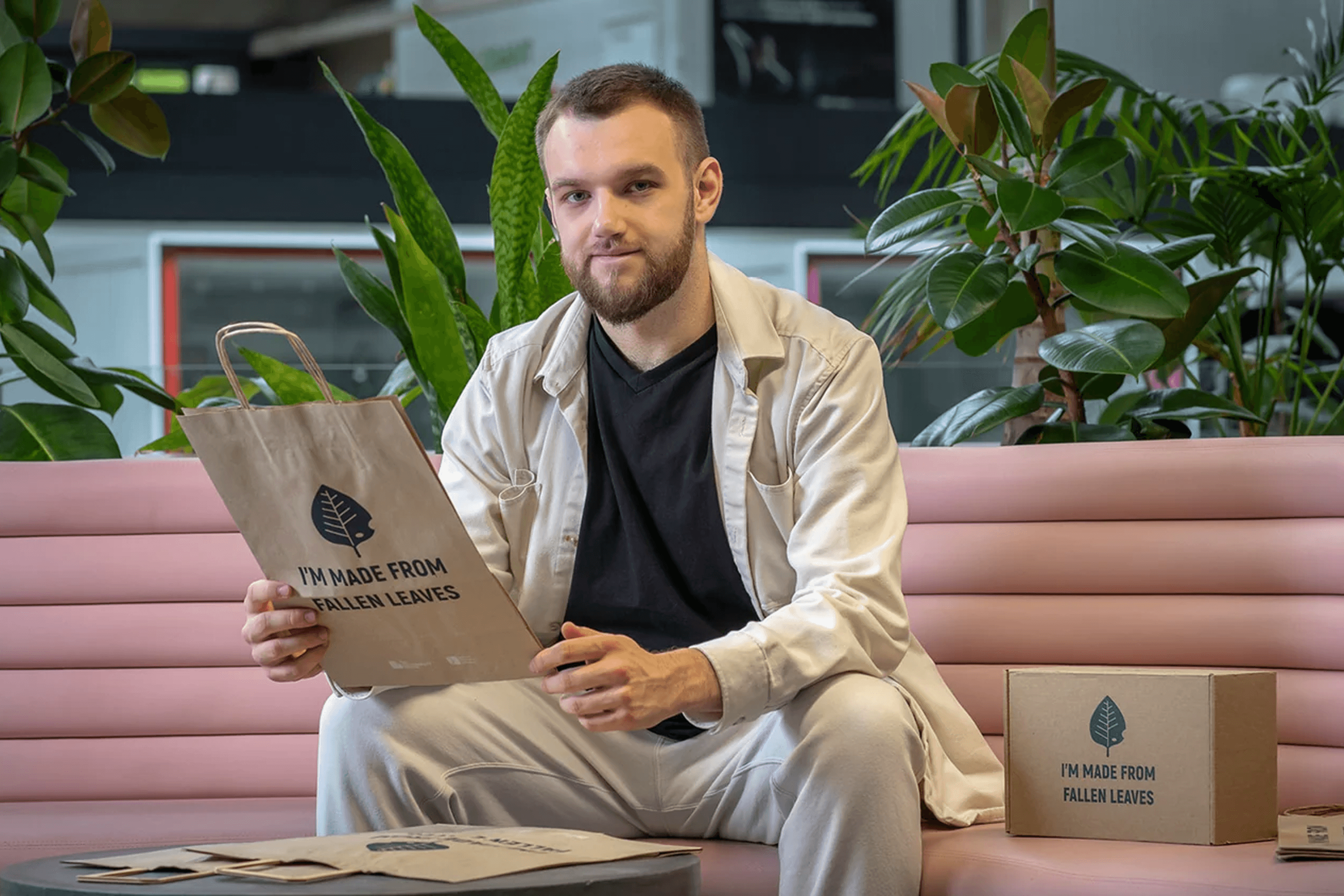
In addition, people around the world are exhausted by uncertainty, and our product gives them security and comfort. For example, a friend of mine who works in the business district of Paris uses notebooks made from our paper. When he takes notes, he remembers his childhood, the yard outside his home, and a small forest nearby. It warms my heart that our product evokes emotions like these.
How much time usually passes between the first meeting with a customer and signing a contract?
If it is a standard product, such as bags, no more than a month. If the customer wants to develop packaging from scratch and customize its shape and other details, it can take up to six months. If the client knows exactly what they want and is a top manager who makes the decision themselves, the period can be reduced to two or three months. That is fairly quick compared with the experience of colleagues at other companies.
You regularly take part in trade shows for innovative businesses and technology companies. How effective are they for finding new clients and partners?
Most of our clients came through specialized trade shows for paper companies, including Luxe Pack, FachPack, and Interpack. At these events, we communicate with people directly, which helps establish connections and trust because the paper industry is already well established. Most clients have worked with the same companies for years and are cautious about newcomers.
We also participate in startup and deep tech events such as VivaTech, ChangeNOW, and the Consumer Electronics Show (CES). They give us exposure. Afterward, people write and talk about you. This helps build overall awareness.
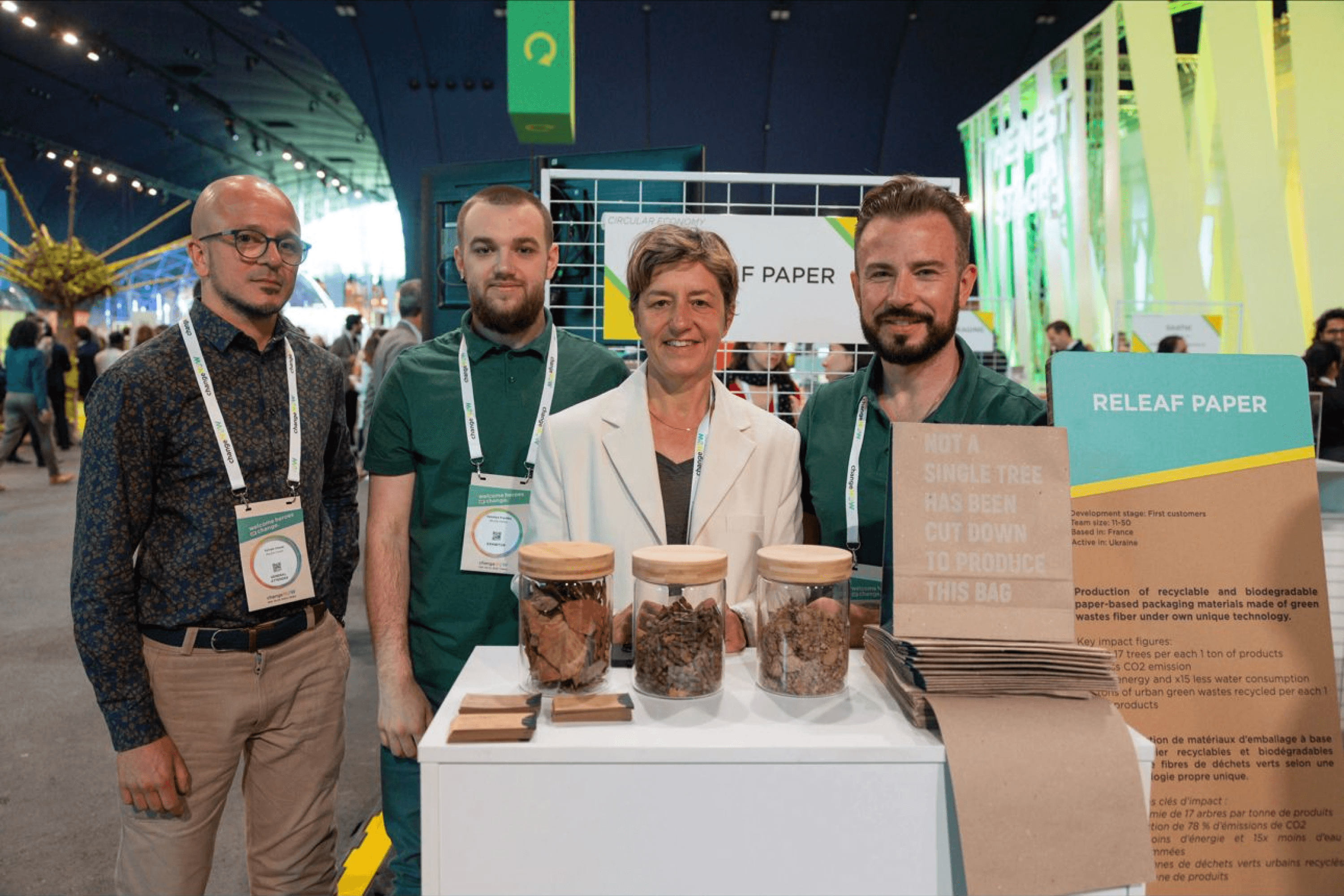
Valentyn Frechka and the Releaf Paper team at ChangeNOW 2023 in France. Photo: Valentyn FRECHKA / LinkedIn 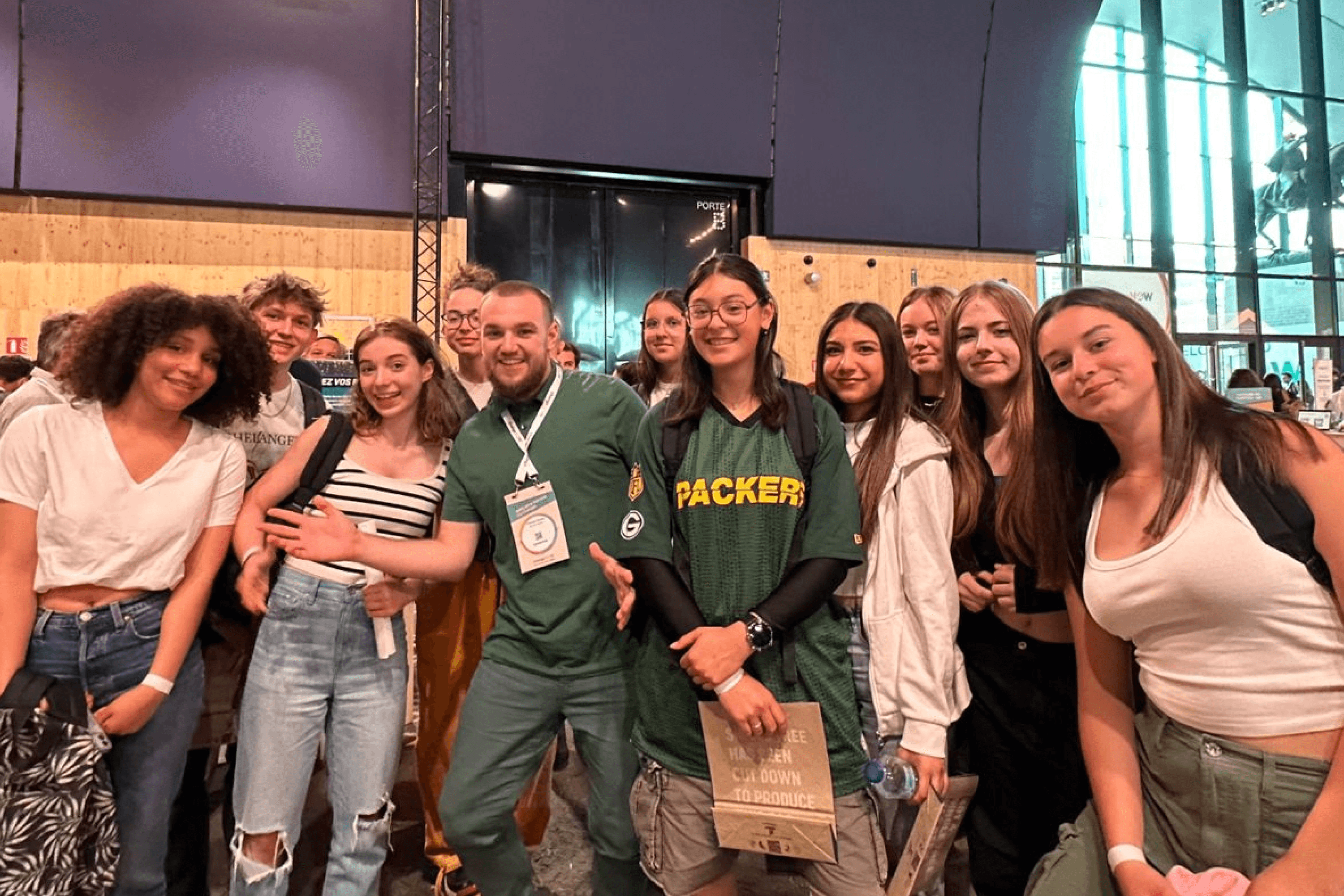
Photo: Valentyn FRECHKA / LinkedIn 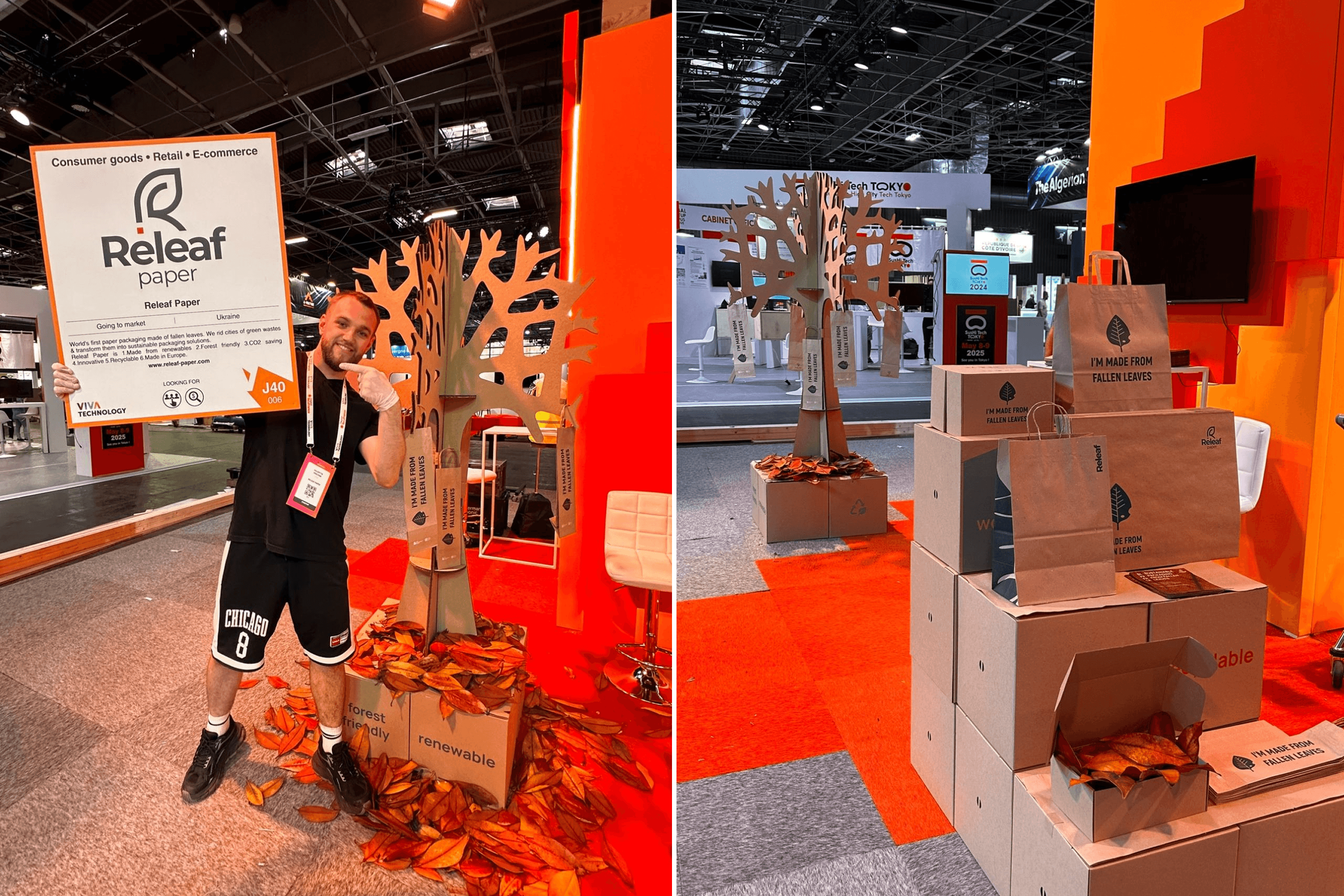
Releaf Paper products made from fallen leaves at VivaTech in Paris. May 22–25, 2024. Photo: Valentyn FRECHKA / LinkedIn 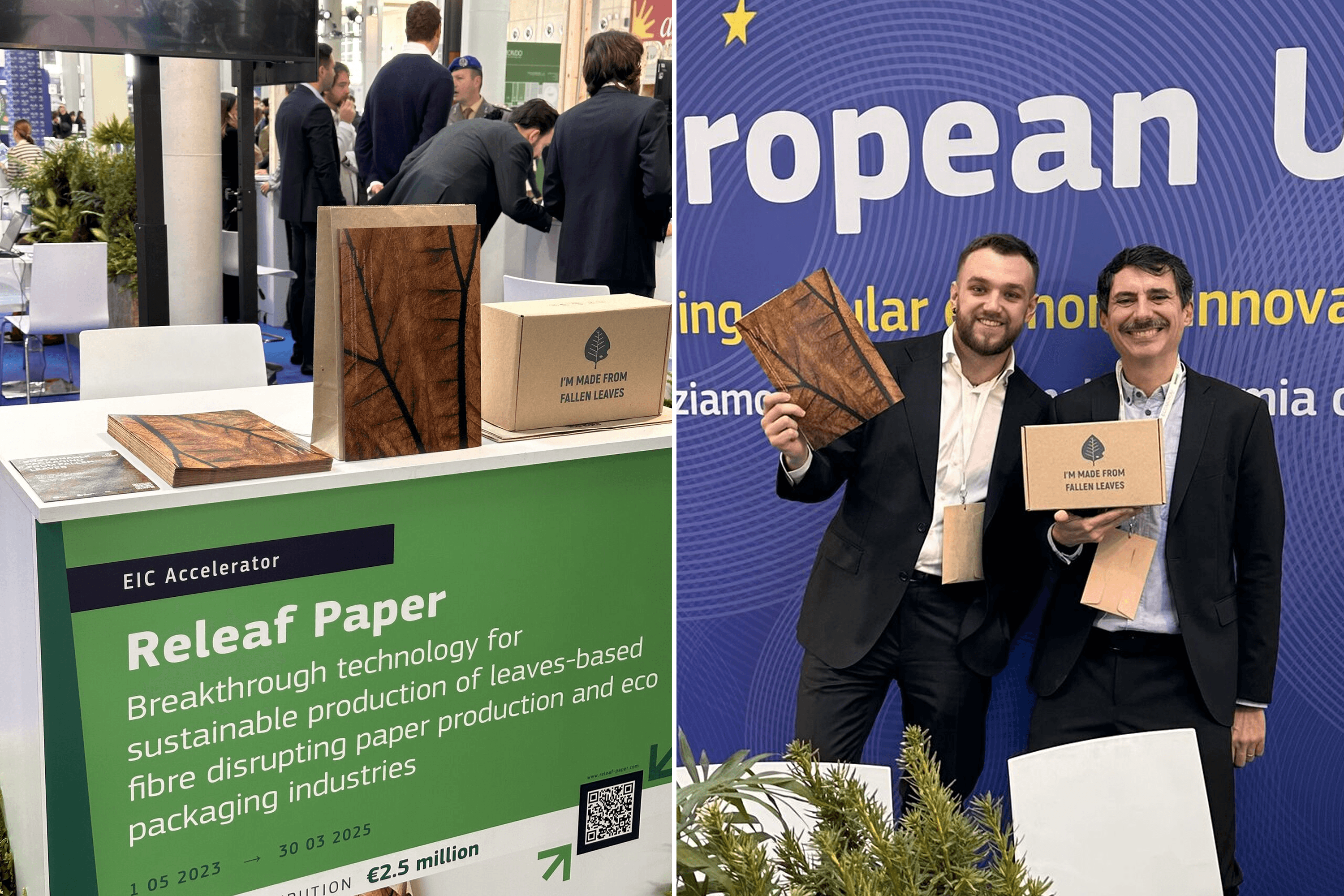
Releaf Paper products made from fallen leaves at Ecomondo. 2025. Photo: Valentyn FRECHKA / LinkedIn 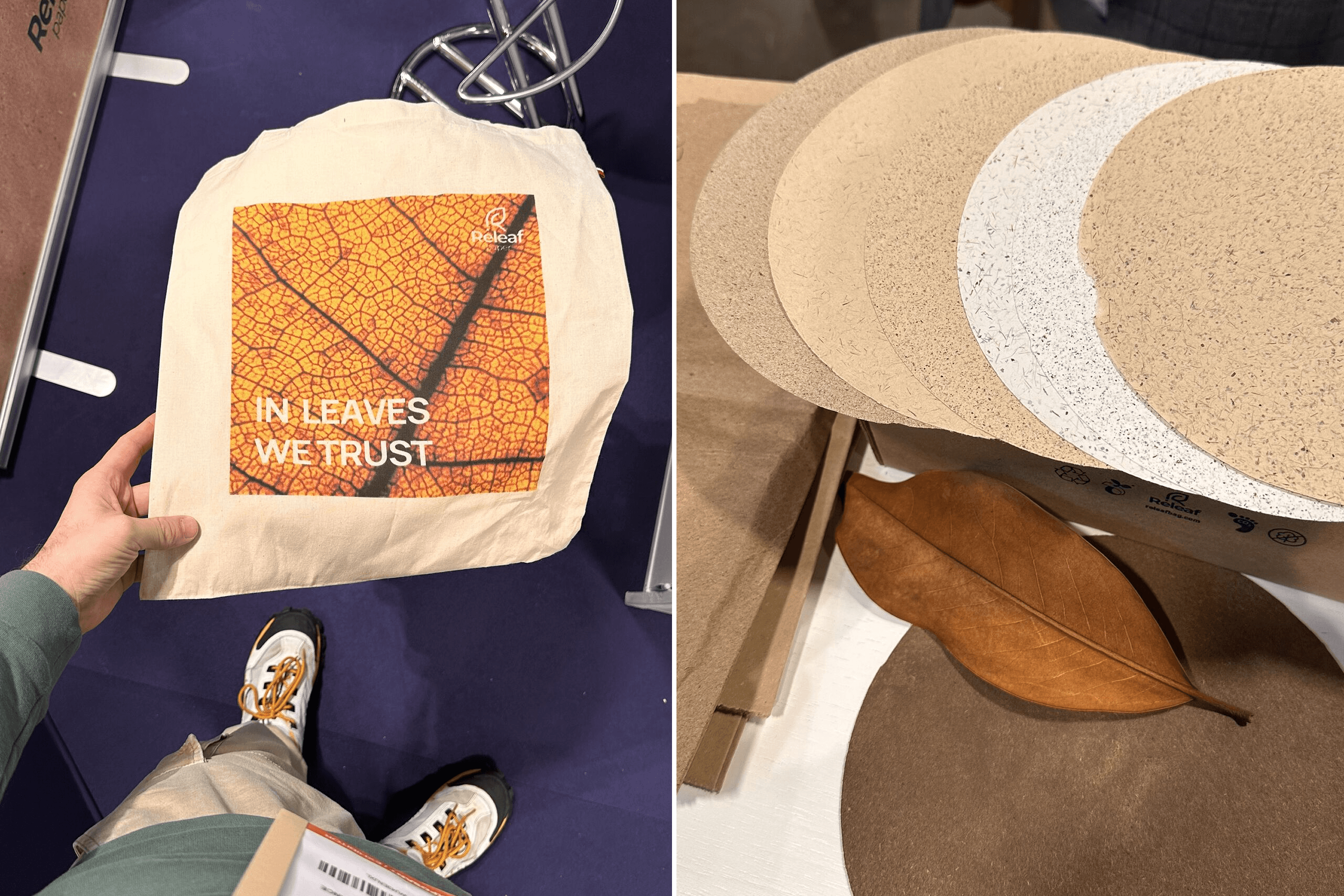
Samples of Releaf Paper materials made from fallen leaves at ALLFORPACK Emballage Paris. 2024. Photo: Valentyn FRECHKA / LinkedIn 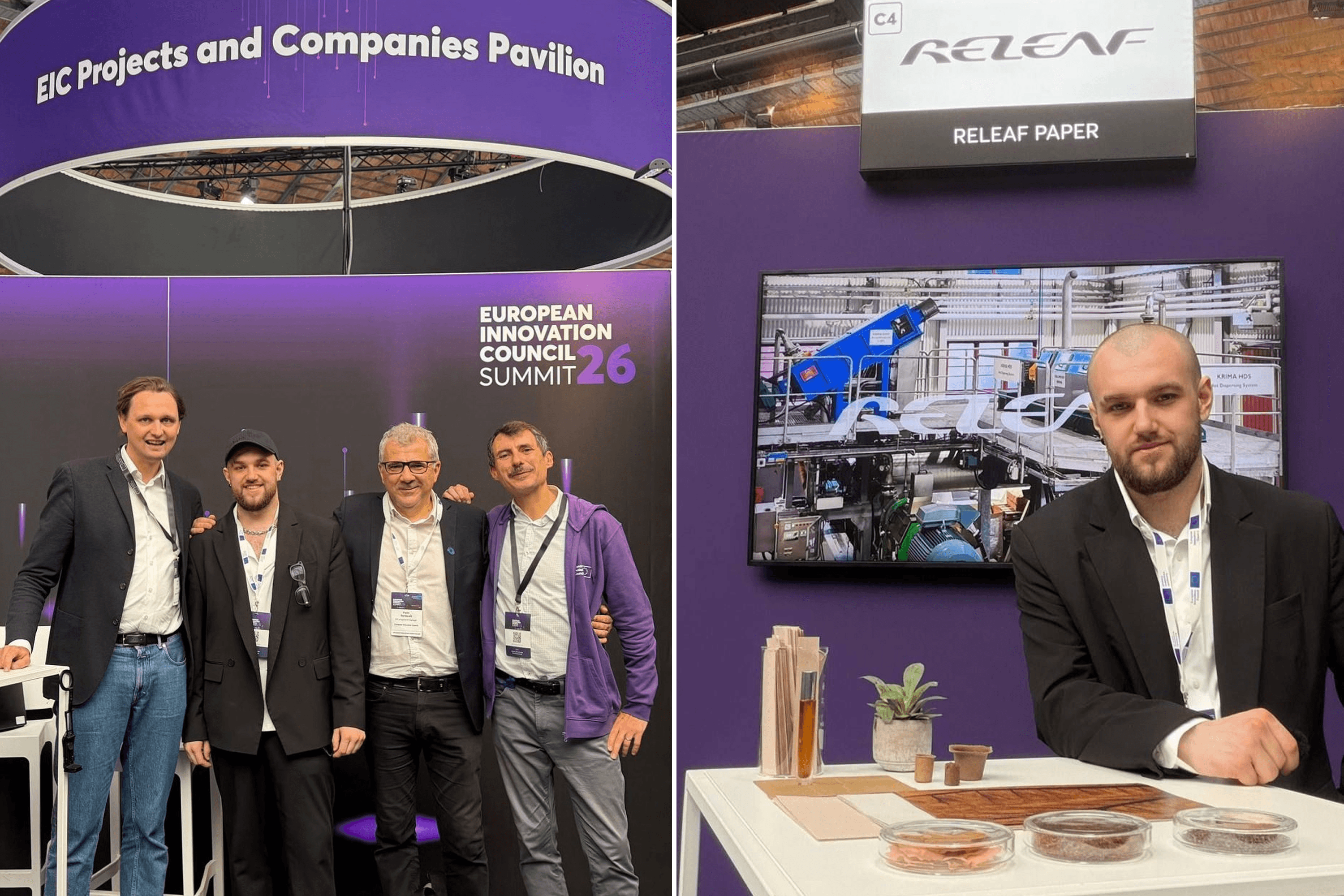
Valentyn Frechka at the EIC Summit 2026 in Brussels, where Releaf Paper showcased its products at the European Innovation Council pavilion. 2026. Photo: Valentyn FRECHKA / LinkedIn
Are your competitors in the market paper companies that work with wood, or other producers using alternative materials? What allows you to compete?
We don’t compete with traditional producers; the competition would be too lopsided. Instead, we work more as satellites for them, since paper companies understand that it is important to diversify their sources of fresh fiber and are constantly looking for new solutions. Those are exactly what we offer.
Other alternatives, such as sugarcane, bamboo, algae, or grass, have fairly significant disadvantages and therefore cannot enter the broader market the way Releaf Paper has. For example, their products cannot be recycled, while our paper can be recycled together with standard paper. We are not geographically limited and do not compete for raw materials, so our production costs are low. Our paper is affordable and has a positive impact on the environment. This creates the image of a company people want to work with.
How do you see Releaf Paper developing over the next few years?
The traditional paper industry has existed for centuries, and companies have learned to use wood not only to produce paper but also plastics, barrier coatings that protect paper from moisture, and other products. It is a large-scale infrastructure. We are building the same thing in our segment.
We have a well-developed research department because without innovation you lose the ability to compete. We have studied all the components found in leaves and can offer companies raw materials for paper and packaging as well as for other products, including coatings, biocomposites, bioplastics, and more.
In the future, we see ourselves as a platform that solves the problem of leaf disposal in cities while providing local businesses in different industries with valuable components for production. This will give us different areas of business and keep us from depending on a single highly competitive market.
Is your main market today European countries? Are you interested in entering markets in North and South America or Asia?
Europe has legislation favorable to our technology, so it is currently our main market. We are also considering North American markets, particularly the United States and Canada. Innovation is well received there, and people are used to putting money into it. The United States, like Europe, also has changing seasons and hundreds of thousands of tons of leaves concentrated in relatively compact urban areas.
We have already begun initial negotiations and signed letters of intent with local partners on the East and West Coasts of the United States. Our technologies, patents, and trademarks are already protected there. We are now working to protect other intellectual property so that we are ready for launch.
What key challenges have you faced while developing Releaf Paper?
As a startup, we had to go from an idea to implementing it in the market and finding our product-market fit. For Releaf Paper, this was the most difficult and longest phase because we produce very different products, including paper, packaging, biocomposites, and much more. We had to decide which product would form the foundation. We chose raw material in rolls and packaging, and then added new areas to this model.
First, I had to adopt this concept myself, and then we integrated it into the team’s work and the company’s development strategy. This is very important because many startups cannot choose a focus and fail, burn through all their cash, and never realize their potential.
Other important lessons I learned are that you need to choose the right team, rely on its expertise, and not be afraid. We lost a lot of time at the beginning because we were afraid to bring the product to market and thought we were not ready. In reality, the market is ready to accept us as we are if we listen to it and change. We understand that now and move faster because we are not paralyzed by fear.
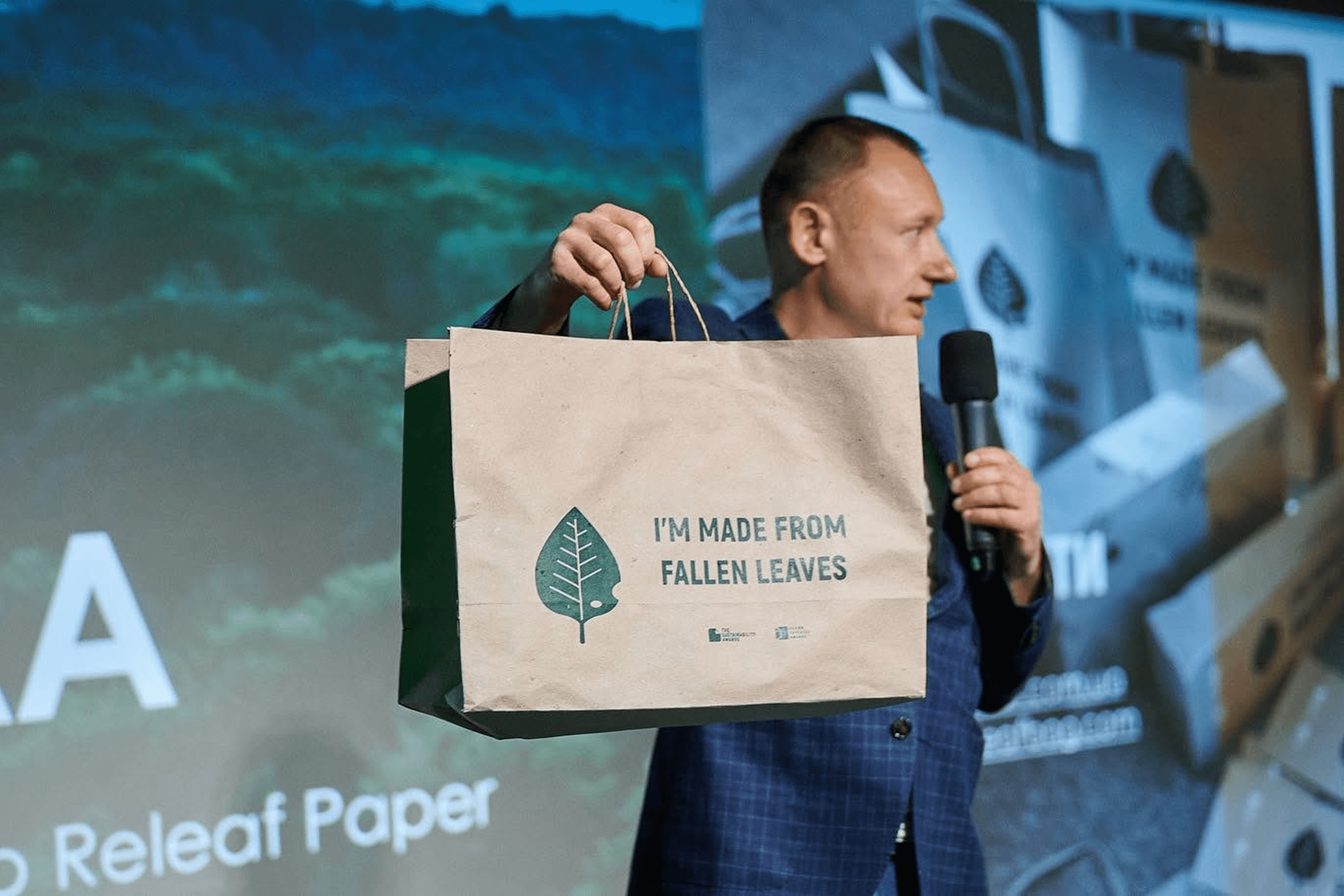
Releaf Paper’s Commercial Director in Ukraine, Vitalii Hodzula, presents the company’s products at the Garnier Green Beauty event. April 2024. Photo: Releaf PAPER / Facebook 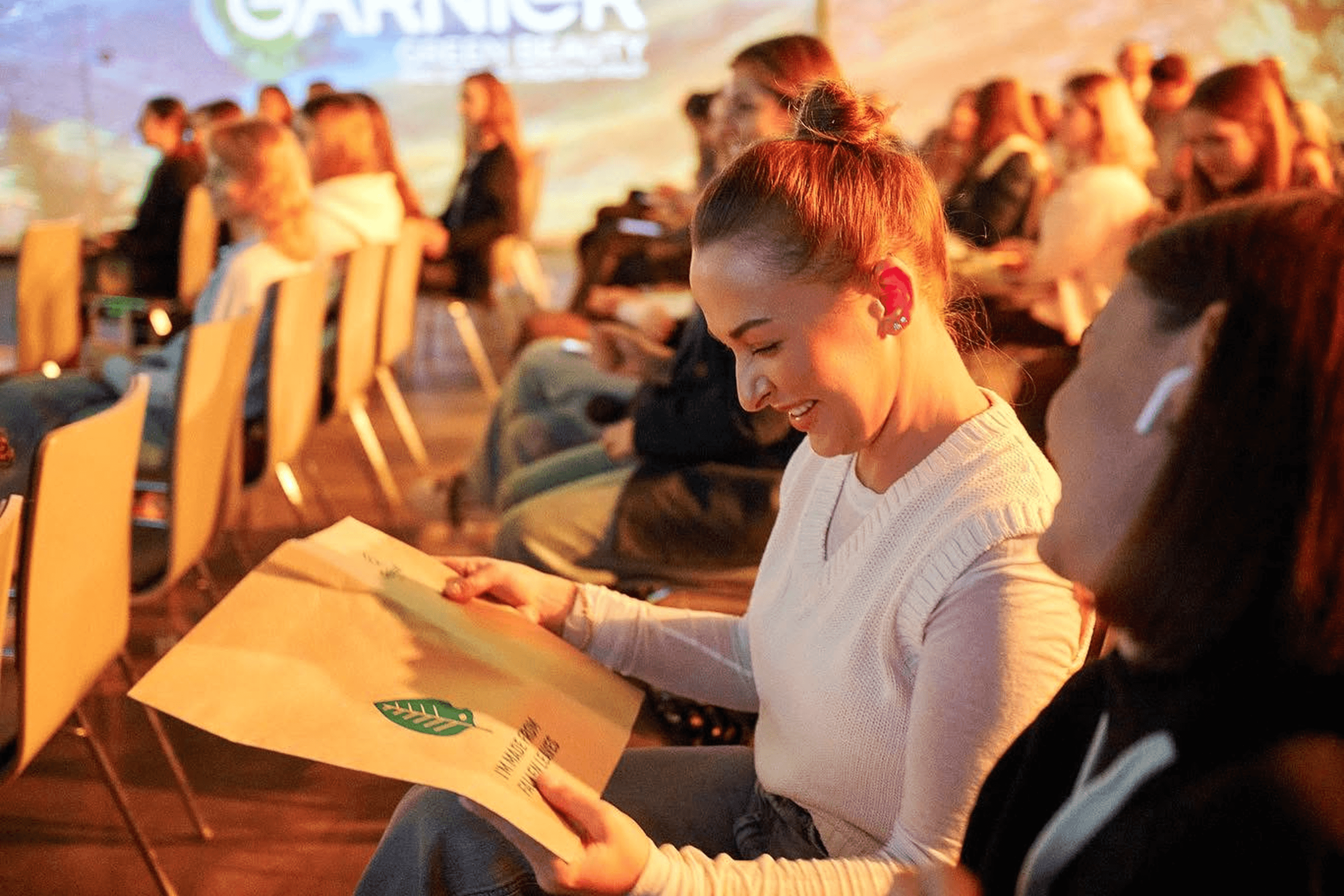
Photo: Releaf PAPER / Facebook 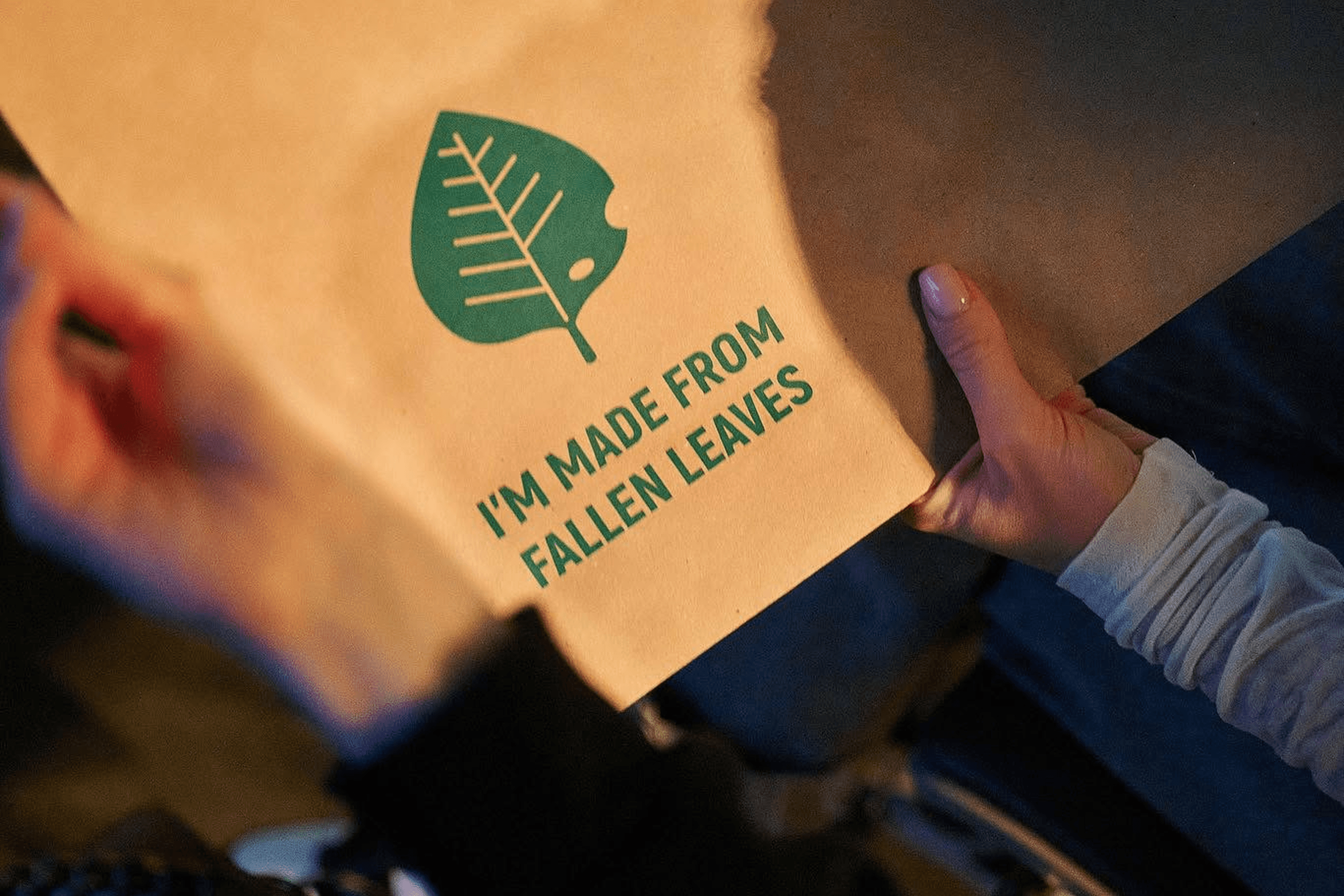
Photo: Releaf PAPER / Facebook 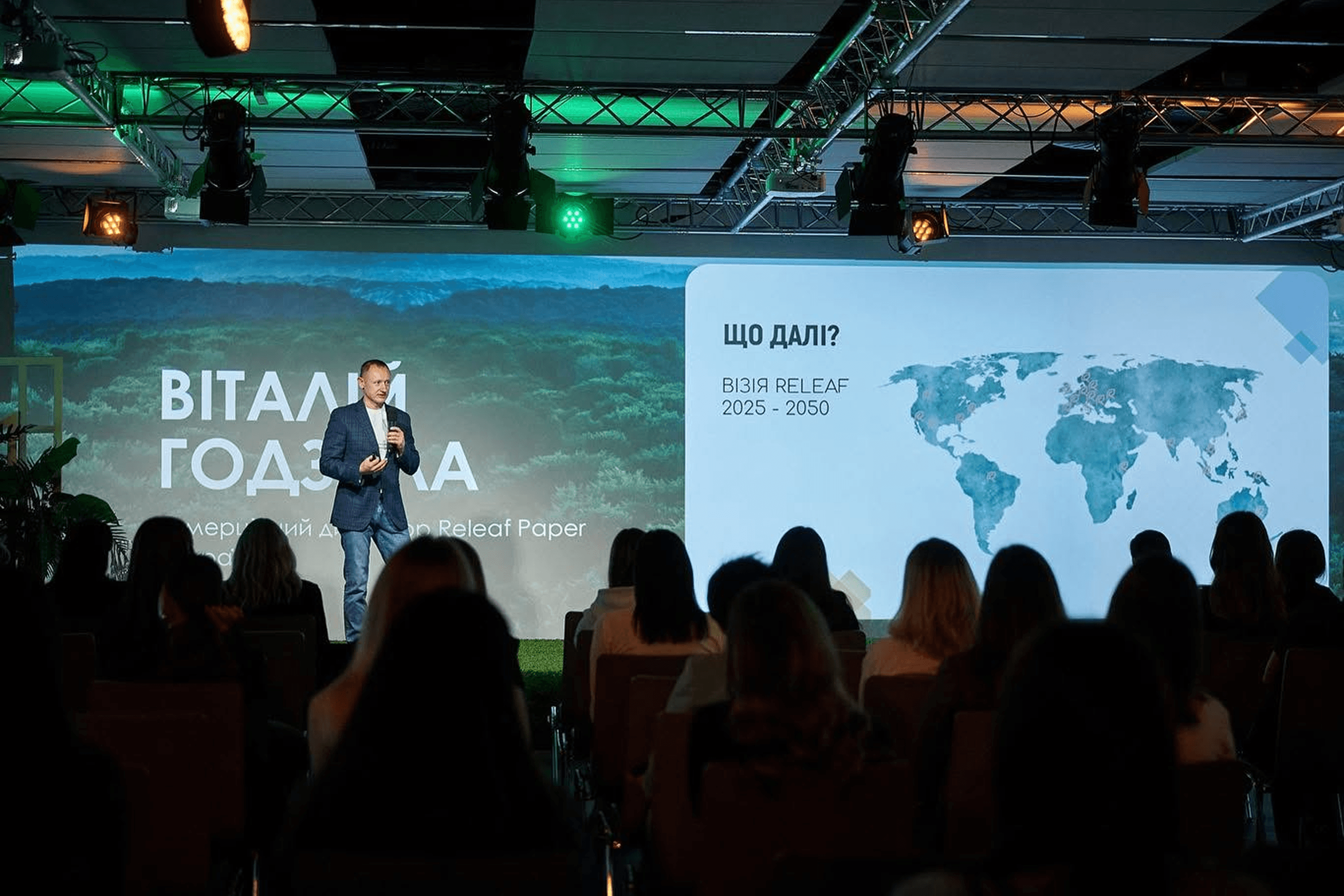
Photo: Releaf PAPER / Facebook
What have you taken away from your time at Releaf Paper?
The first is personal. People will always try to explain to you “the right way” to do things, but when you are building innovations, there is no right way. There is only the way you see it. And if the market responds to your vision, then it is the right one.
The second is that the psychological state of the founder and the team is very important. I see how passionate people are about the project, but they have personal lives that need to be respected and problems that should be discussed. Otherwise, they will affect work processes. We have informal meetings every Friday because we are all simply people who need energy to grow.
The third is that you need to experiment. I take the processes at Releaf Paper seriously, but I always leave myself and the team some room to imagine, play, and explore. That is how something new and exciting is born.
The fourth is that in the age of AI, when there is so much artificiality and so many fakes around us, clients want real and sincere contact. They need to understand who stands behind the project and the well-written official statements. We are growing precisely because of human contact with every client.
Overall, building a business means putting yourself and your product out there, challenging the whole world, and withstanding its reaction. It means being confident in what you are doing and believing in your idea despite everything.