In July and August 2026, Russia has been bombarding Ukrainian cities with massive drone and missile attacks almost every night. Russian forces are deliberately destroying Ukrainian businesses: their warehouses, production facilities, logistics centers, vehicles, and equipment.
Yellow Blue tells of more than 55 companies affected by the attacks. Eight of them can be supported by purchasing their products abroad; the rest by donating to air defense.
Businesses affected in July
Overnight into July 1, Russia leveled the warehouses and office premises of two meat-processing companies, MHP and Yuvileinyi, in Zaporizhzhia, with Shahed drones. The attack also wrecked the main production and logistics hub of hygiene products brand Snizhna Panda in the Odesa region, where household goods and toilet paper were manufactured. Several employees were injured.

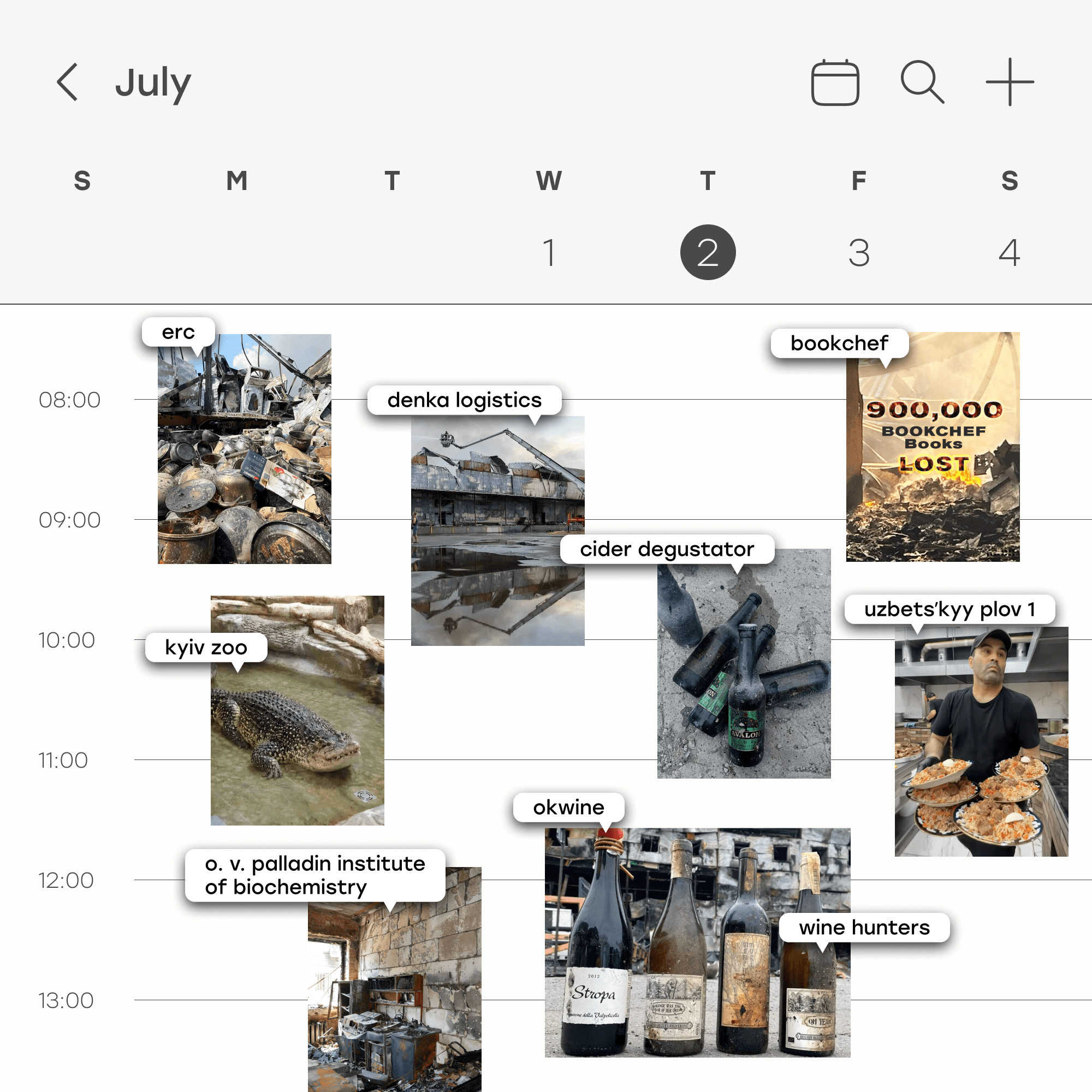
Already on July 2, ballistic missiles struck the Kyiv warehouse of ERC, one of Ukraine’s largest distributors of computer equipment and home appliances. The building caught fire and completely collapsed. The only things left intact were the thuja trees growing in pots outside the warehouse. Within several days of the attack, ERC rented a new warehouse and began rebuilding its lost product range.
That same night, a missile hit a Denka Logistics warehouse outside Kyiv. Around 800,000 books published by BookChef burned, along with goods from cider importer Cider Degustator and wine distributors OKWINE and Wine Hunters. Cider Degustator lost its entire stock for the second time: in April 2025, the company’s warehouse had already burned down after a Shahed drone attack.
The same attack destroyed a restaurant of the Uzbek Plov No. 1 chain in Kyiv and damaged buildings at the Kyiv Zoo, as well as exotic plants in its winter garden. Shattered glass and pieces of window frames fell onto turtles and crocodiles, so the animals needed veterinary care.
Jet-powered drones struck the O.V. Palladin Institute of Biochemistry, one of Ukraine’s oldest research institutions. The attack damaged a building and laboratories where scientists were developing new methods to stop bleeding and prevent thrombosis. The drones destroyed scientific equipment and biological samples needed for research. The institute estimates its losses at $1.3 million to $1.7 million.
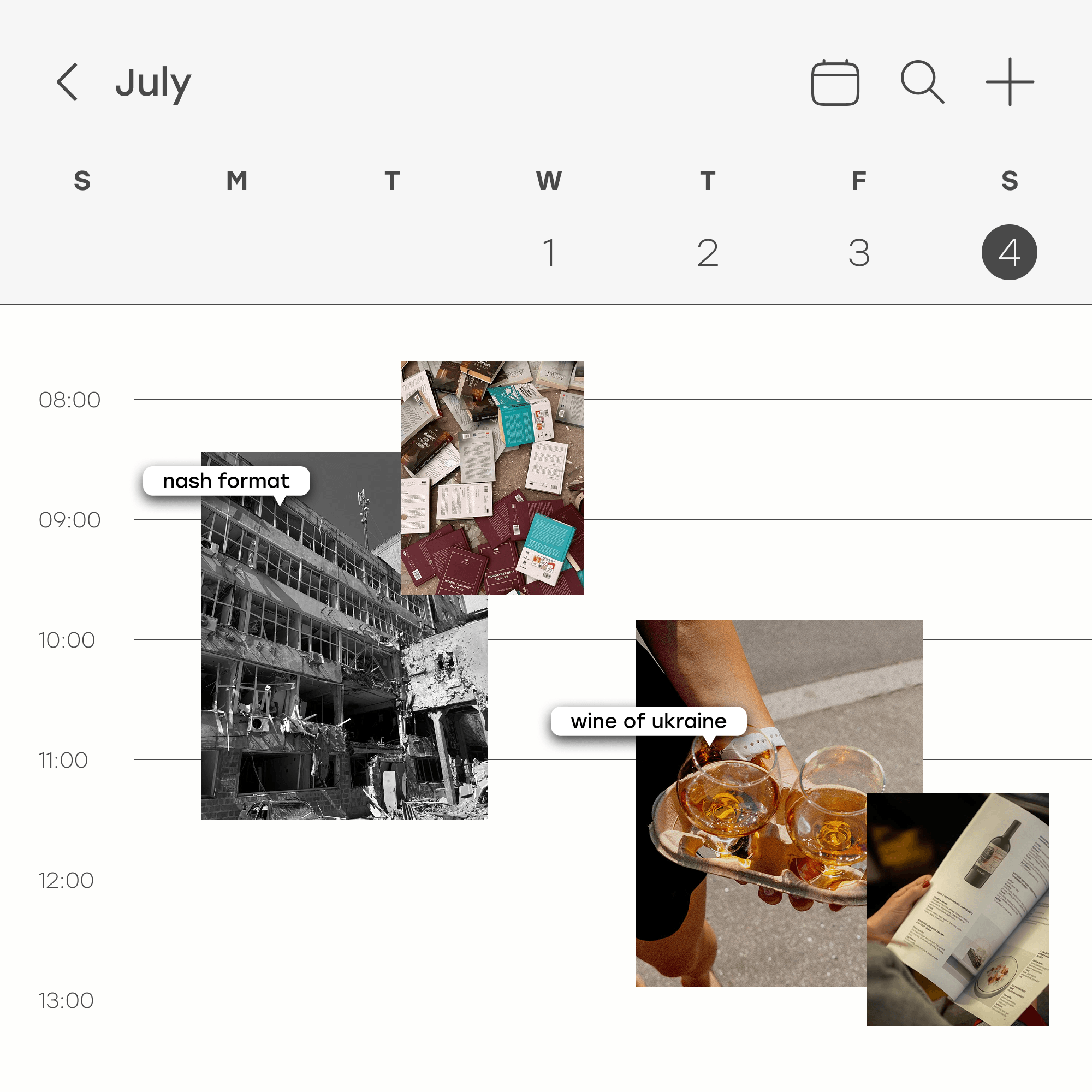
On July 6, shelling hit the Wine of Ukraine store in Kyiv: part of the ceiling collapsed, the windows were blown out, and all the products were covered in construction dust. The store quickly reopened and is now operating as usual.
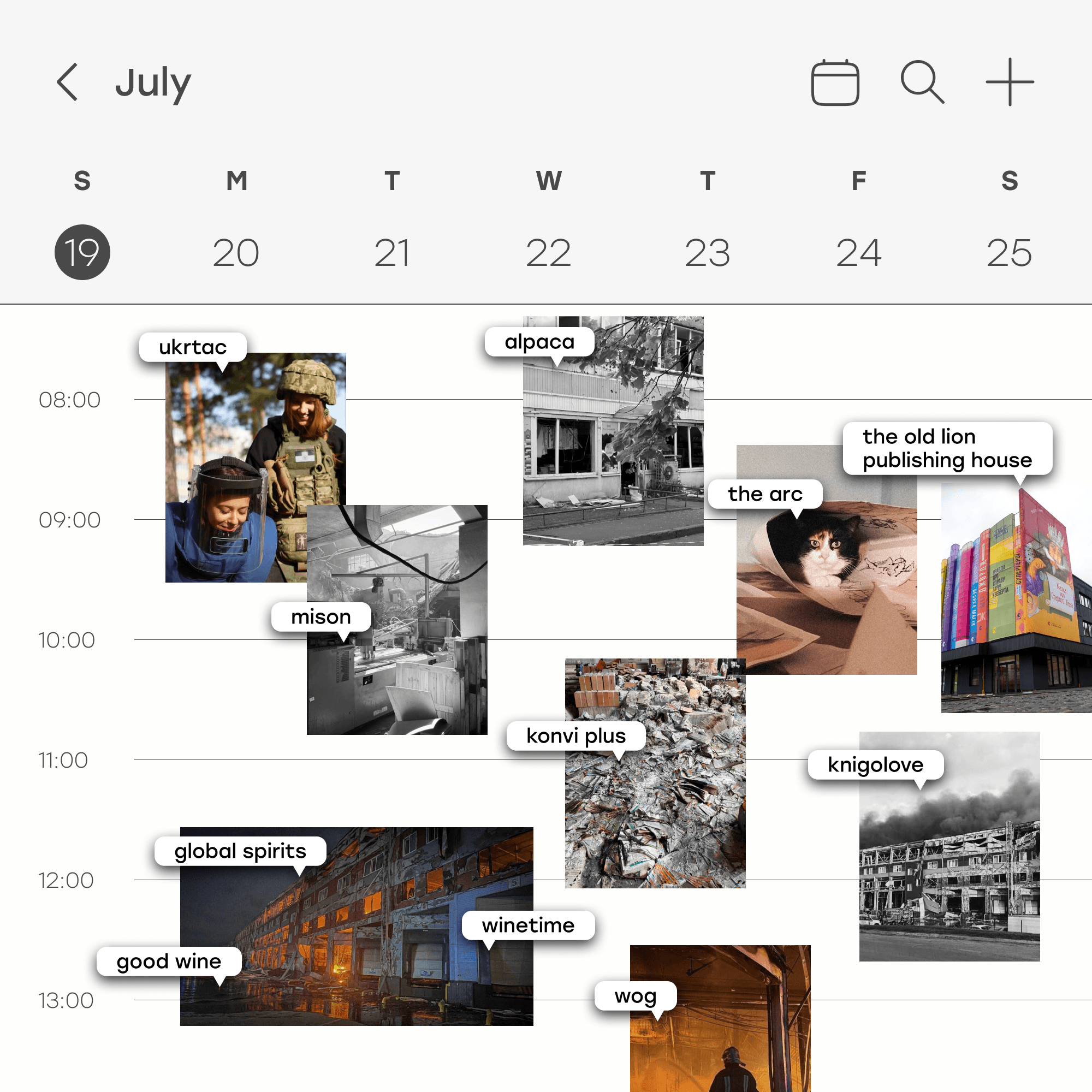
On the night of July 19, Russia attacked Kyiv and the surrounding region. A ballistic missile destroyed the factory and warehouses of UKRTAC, a manufacturer of equipment and personal protective gear for the military. The company is looking for new premises to start operations from scratch.
Book businesses were also affected. Ballistic missiles destroyed all the offices of Mison, a publishing house that opened in Kyiv in March 2026. Only the print run of its first book, the novel “Museum of Family Stories” by Ukrainian author Olena Skulovatova, survived the fire. The same attack damaged, for the second time, a bookstore of the Kyiv-based Alpaca chain, as well as the office of The Arc publishing house: the blast wave blew out the windows, and debris covered the furniture. The bookstore temporarily suspended operations, while The Arc continues to work as usual.
A missile also hit the Konvi Plus printing house. The fire destroyed 250,000 school textbooks and print runs from Ukrainian publishers, including new titles from Old Lion Publishing House. The printing house estimates its losses at $7.7 million. A fire also gutted the Knyholav publishing house’s warehouse, where about 250,000 books had been stored. The publisher estimates its losses at $670,000. In total, according to the Ukrainian Association of Publishers, Russia destroyed around 1.5 million copies of Ukrainian books in July.
During the July 19 attack, a Russian missile struck a warehouse in the Kyiv region storing products of alcohol producers and distributors Global Spirits, Good Wine, and WineTime, as well as the WOG gas station chain. The warehouse held more than 106,000 units of humanitarian aid from UNICEF for children and families affected by the war, including generators, packaged drinking water, and hygiene kits, all of which were destroyed in the fire.
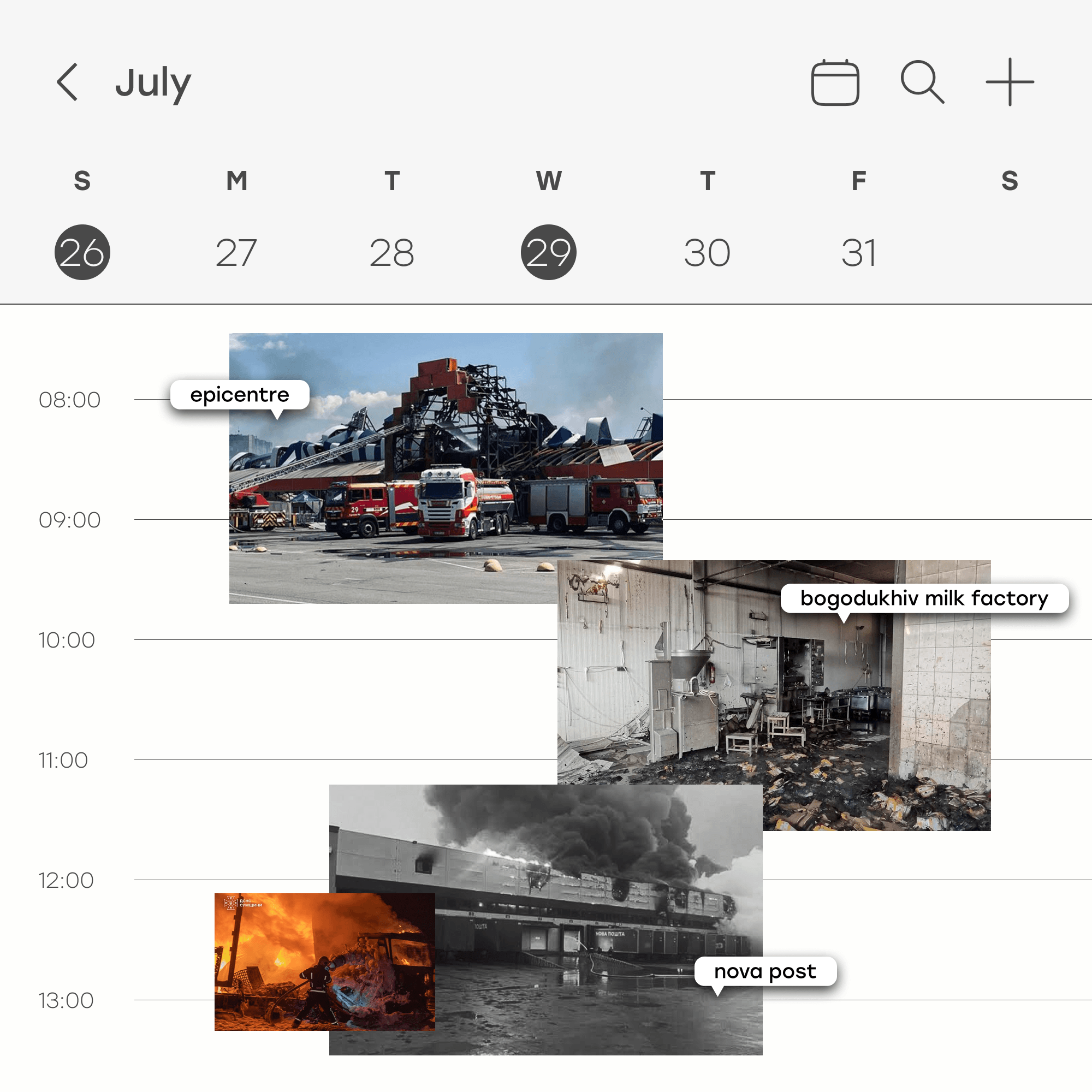
Russian shelling on July 26 destroyed a shopping center of the Epicentr chain in Kryvyi Rih. No employees were injured.
On July 29, Russia launched its third drone attack on one of the largest dairy producers in the Kharkiv region, the Bohodukhiv Dairy Plant. This attack proved to be the last: the plant ceased operations and cannot be restored.
Throughout the month, Russian forces attacked the infrastructure of Nova Poshta, Ukraine’s largest express delivery operator. Sorting terminals in Sumy and Poltava and a branch in the Vinnytsia region were damaged. In total, eight employees were injured, and three drivers working for partner companies were killed.
Businesses affected in the first half of August
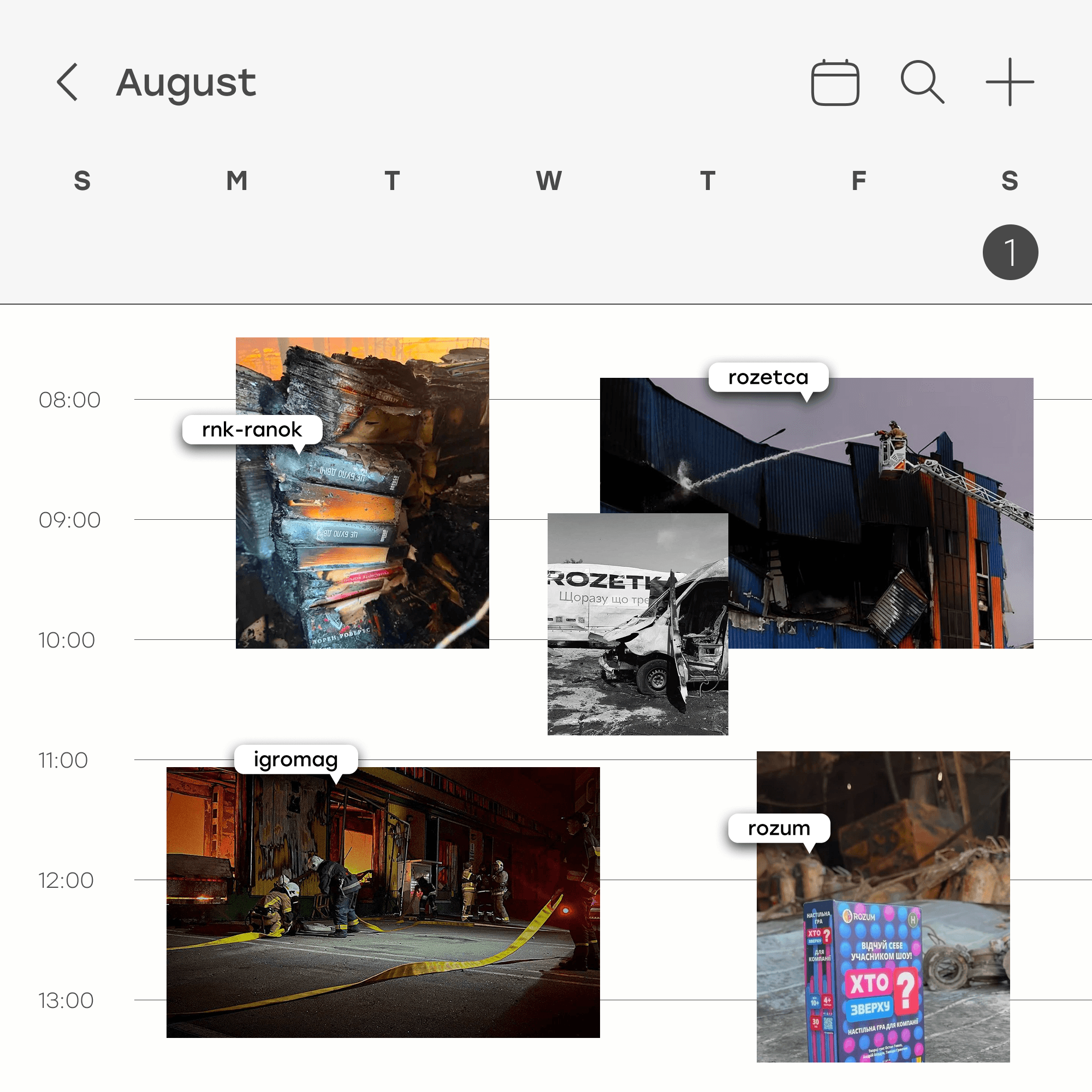
On August 1, Russian drones struck the logistics center of the RNK-Ranok publishing corporation in Kharkiv. The fire burned for three days, destroying more than eight million books, nearly a third of the annual print run of all Ukrainian publishers. Around one million of the books lost were textbooks for Ukrainian schoolchildren. RNK-Ranok estimates its losses at $27.4 million, and reprinting the lost books will take two to three years.
RNK-Ranok is now looking for alternative sources of funding and gradually resuming operations. Employees sold some of the fire-damaged books at the BestsellerFest festival in Lviv in exchange for donations to support air defense or help rebuild the publishing house.
That same night, Shahed drones hit the largest distribution and warehouse complex of the online marketplace Rozetka, in Brovary. One employee was killed and seven others were hospitalized. Several days later, three ballistic missiles completely destroyed the complex. More than 100,000 orders were processed there daily, and hundreds of Ukrainian entrepreneurs stored their products there. Rozetka continued operating after the attack, warning customers of possible delivery delays and product availability issues.
During the same attack, a warehouse of Rozum, Ukraine’s largest board game publisher, was wrecked in the Kyiv region. Its entire stock, around 200,000 board games, was destroyed by fire. The company estimates its losses at $560,000 to $670,000. Another board game manufacturer and importer, Ihromah, lost 18,000 copies of its games in a Russian attack. This was the second attack on the company: in July last year, Russia destroyed a third of its stock.
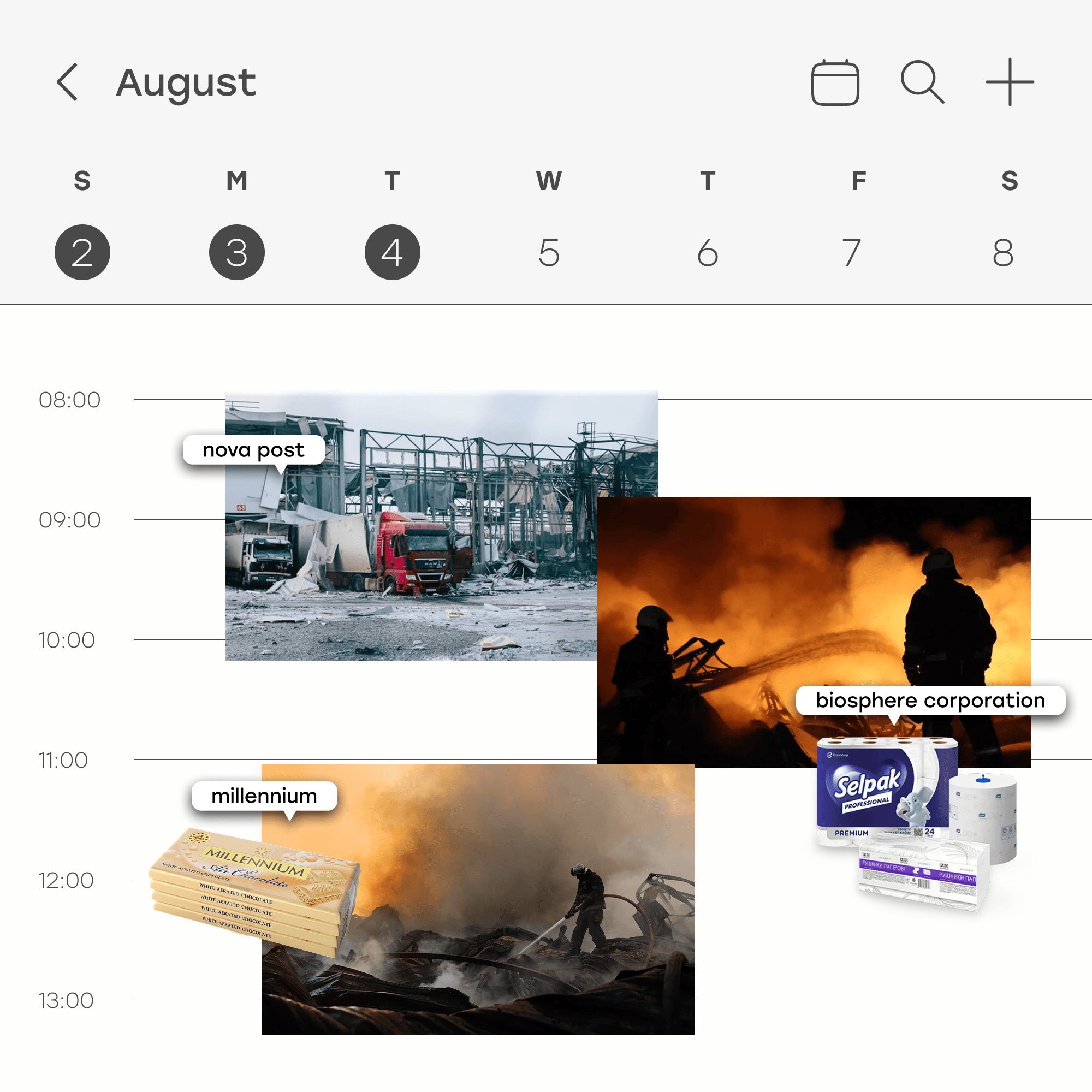
Overnight into August 2, Russia attacked a Nova Poshta terminal in the Kharkiv region. One employee was killed. Trucks, containers, and equipment burned down. The following night, Russian forces destroyed a Nova Poshta freight branch in Pryluky, Chernihiv region, and several days later, a sorting center in the Kyiv region. Three people were killed and another eight were injured. Hundreds of thousands of parcels burned, most of them containing goods from Ukrainian entrepreneurs. The company is still assessing the damage.
On the evening of August 3, Russian forces destroyed a 6,000-square-meter warehouse of Biosphere Corporation in Dnipro. The company lost machinery, equipment, and part of its finished goods inventory. No employees were injured.
On August 4, the central warehouse of chocolate manufacturer Millennium in the suburbs of Dnipro burned down following a drone attack. The company is recovering but warns of possible disruptions to chocolate deliveries to stores.
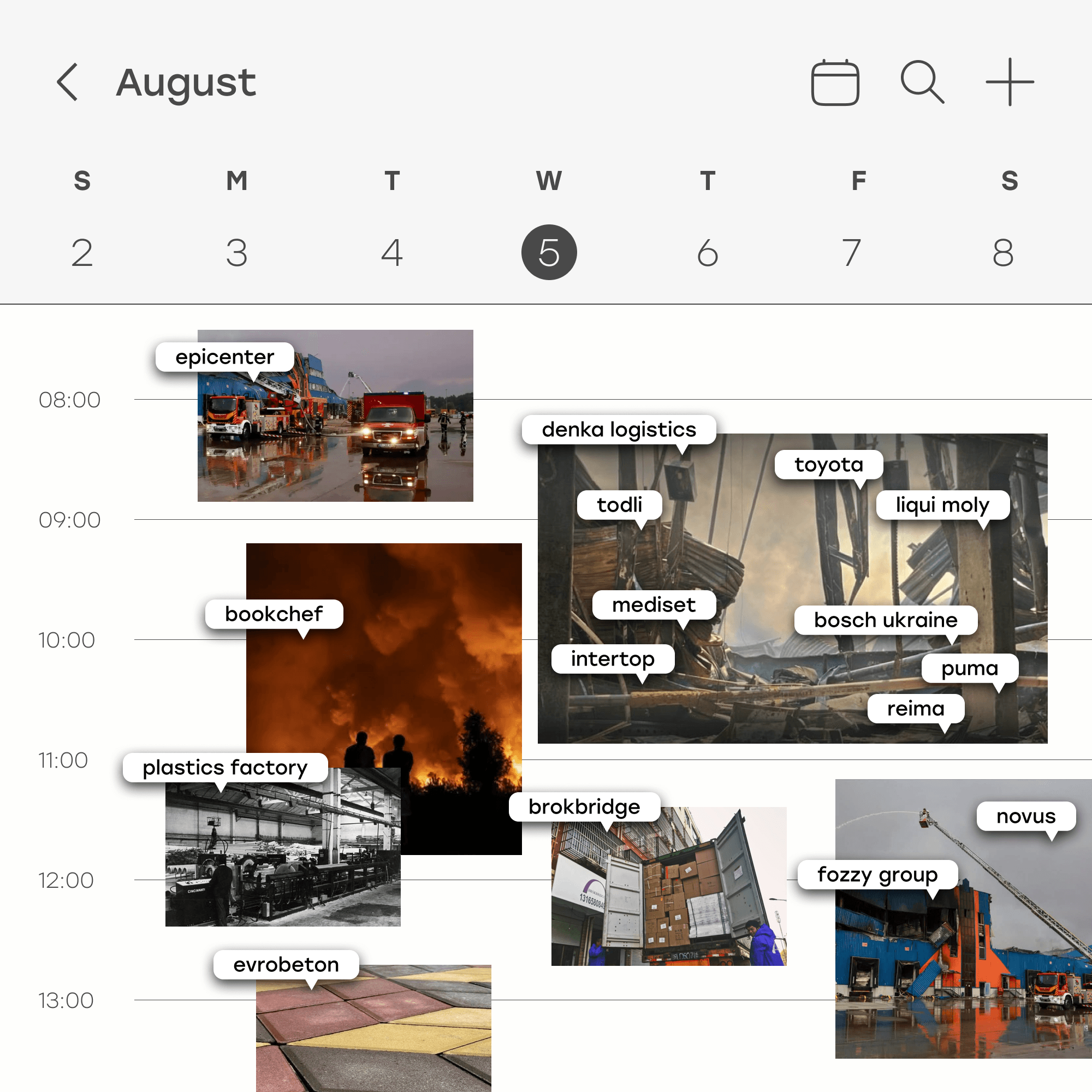
Overnight into August 5, Russian forces destroyed Epicentr facilities in Kyiv and the surrounding region, including two logistics centers and Epicenter Ceramic Corporation, one of Ukraine’s largest ceramic tile producers. One person was killed and three others were injured. Equipment and 20 employees' cars burned. The company is calculating its losses and shifting production to its facilities abroad; rebuilding the plant will take at least one and a half to two years.
That same night, Russian forces attacked the large Denka Logistics complex in Kyiv for the second time. BookChef lost another 100,000 books stored at the warehouse and is asking customers to place preorders so it can keep operating.
Dozens of businesses lost goods at Denka Logistics, including pet supplies importer Todli, care and rehabilitation products supplier Mediset, and clothing, footwear, and accessories retailer Intertop. Products from international brands were destroyed too: Toyota spare parts, Liqui Moly motor oils and automotive chemicals, Bosch Ukraine home appliances, and Puma and Reima clothing.
In the Kyiv region, facilities of the Plastmas plant, construction materials manufacturer Eurobeton, and logistics company Brockbridge were damaged; one Brockbridge employee was killed. Russia also struck warehouses and distribution centers of the Fozzy Group and Novus supermarket chains. Some products temporarily disappeared from store shelves. A total of seven employees were killed in the attack.
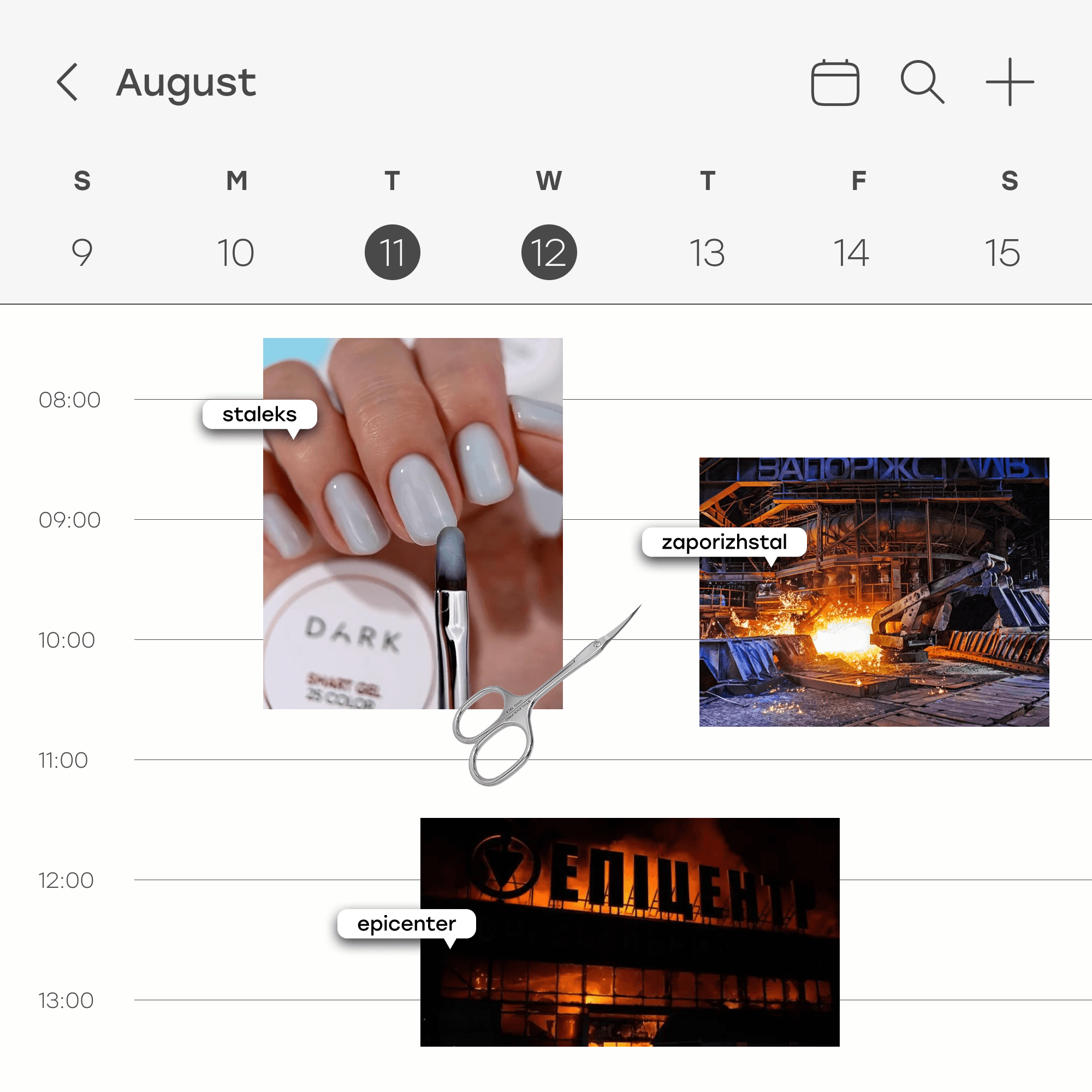
On the night of August 6 to 7, Russia destroyed one of the production facilities of Staleks, Ukraine’s largest manufacturer of beauty tools. All the equipment burned down. Production now continues at the company’s other facilities, and the company keeps operating.
Overnight into August 11, the Zaporizhstal steel plant in Zaporizhzhia ceased operations after a direct strike by Russian ballistic missiles. Seven employees were killed while running to a shelter after an air raid alert was issued. Another 21 people were injured.
On the night of August 12, Russia struck an Epicentr shopping center in a residential district of Zaporizhzhia. The building burned down completely. None of the employees were injured. It is the eleventh store in the chain to have been destroyed.
Businesses whose products can be purchased abroad
Ice cream and coffee
In early August, Russia destroyed the main warehouse of Lasunka, one of Ukraine’s largest ice cream makers, which has been in business since 1997. The company produces ice cream in cups and cones, a rich custard-style ice cream, and ice cream cakes. Besides Ukraine, Lasunka sells its ice cream in more than 10 countries across Europe, Asia, and Africa. After the attack, Lasunka products temporarily disappeared from Ukrainian store shelves.
During a Russian attack on Ukrainian logistics centers in August, coffee brand Minelly lost part of its stock. Minelly is a full-cycle producer that has operated in Hostomel since 2015, making whole-bean, ground, and drip coffee, as well as flavored blends and single-origin Arabica.
This was not the first time Minelly had suffered from Russian attacks. At the start of the full-scale invasion, Russian troops occupied Hostomel and stole around $12,000 worth of the company’s products; Minelly’s warehouse and production facility were almost completely destroyed by fire. After the town was liberated, the team found that some equipment and finished products had survived. Ukrainians bought up all the smoke-scented coffee within days.
On August 11, Russia attacked Kyiv and Zaporizhzhia. In the capital, Fabrika Coffee, a brand operating since 2018, was damaged: the blast wave blew out the windows and doors, damaging the interior and production equipment. No one was injured, and the products were undamaged. The business took a short break and is asking customers to order coffee as a show of support.
In Zaporizhzhia, the factory of premium coffee brand Isla, running since 2015, was damaged: the blast wave blew out the windows, damaging furniture and equipment. The team is clearing debris and assessing the losses. The company warns of minor shipping delays and plans to resume operations as soon as possible.
How to buy the products
- Lasunka ice cream can be found in local supermarkets and stores specializing in Ukrainian products abroad.
- Minelly products can be purchased on the website or through social media. The brand donates part of its profits each month to support the military.
- Fabrika Coffee can be ordered on the website or through social media.
- Isla products can be purchased on the website or through social media.

Craft wine
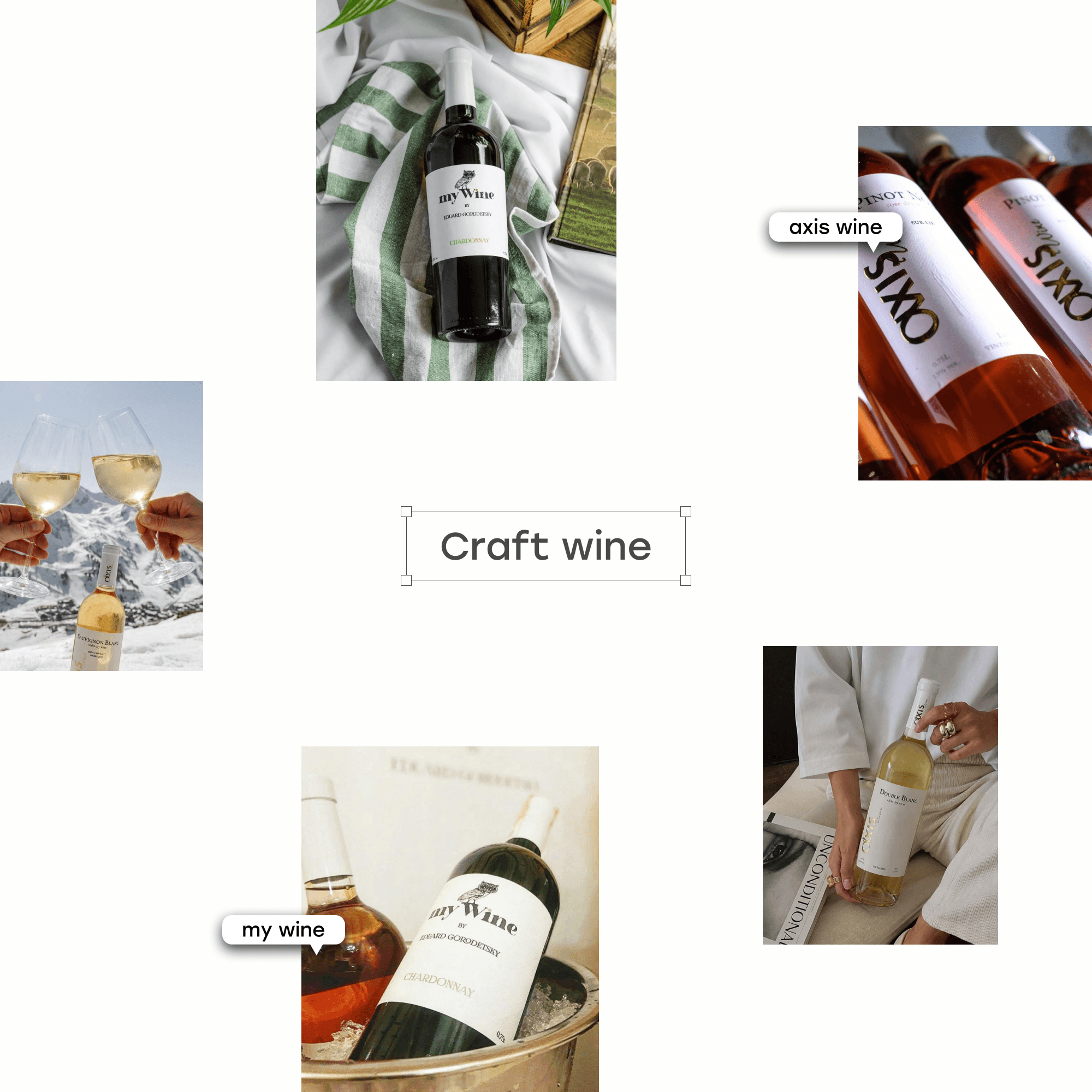
In late July, a Russian attack completely destroyed the production facility of Axis Wine, a craft winery in Lviv, which has been up and running since 2017, specializing in still and sparkling white, rosé, amber, and red wines. The company is currently gauging the damage and selling what remains of its stock.
In August, part of the stock of craft winery my Wine burned after a Russian attack on a warehouse in Kyiv. The winery has operated in the southern Odesa region since 2021, producing around 100,000 bottles of still, aged, and sparkling wine each year. Its wines are sold in major Ukrainian supermarket chains, as well as in the United Kingdom and Japan.
How to buy the products
- Axis Wine can be ordered on the website.
- my Wine wines can also be ordered on the website.
Skincare products
In late July, Russia destroyed the Kyiv office and store of Ukrainian skincare manufacturer Elfa-Pharm. The company has operated since 2001 and makes products under more than 20 brands, including Zelena Apteka, Dr. Sante, O’Herbal, and Elfa Pharm: hair, body, facial, and oral care products. The company now has six factories in Ukraine, Poland, and Slovakia, as well as research centers in Kyiv and Łódź. Elfa-Pharm exports its products to more than 60 countries.
Attacks on warehouses in Kyiv also destroyed more than 9,000 products and 300,000 units of packaging from trichology brand Sorry For My Hair. The brand has been in business since 2014 and makes products for treating, caring for, and restoring hair and scalp. The company is moving to a new warehouse and promises to resume operations soon.
How to buy the products
- Elfa-Pharm products can be purchased on the website or at local pharmacies and skincare stores.
- Sorry For My Hair products can be purchased on the website or through social media.

Clothing
In early August, a shipment of embroidered tops from Kharkiv-based brand Twelve Monkeys burned in a Russian attack on Nova Poshta logistics centers. The brand has operated since 2018, offering plaid shirts, T-shirts, cargo pants, trench coats, suits, and hoodies made of natural fabrics, along with knitted accessories.
This was not the first time Twelve Monkeys had suffered from Russian attacks. At the start of the full-scale invasion, a Russian missile struck near the company’s warehouse in Kharkiv, and the blast wave blew out the windows. Neither the employees nor the products were harmed.
How to buy the products
- Twelve Monkeys products can be ordered on the website or through social media. The brand donates part of its profits to charity.