The Japanese manga Battle Scar about the war in Ukraine is based on the stories of a Ukrainian soldier fighting in the Kharkiv region, a girl trying to leave occupation, and a child from Mariupol. The comic by Kazuya Kuramoto shows Japanese readers and the rest of the world how war changes the lives of ordinary people and what choices it forces them to face. Battle Scar has already been translated into four languages, and in Japan the book was nominated for one of the most prestigious awards, the Tezuka Osamu Cultural Award.
Yellow Blue journalist Artem Moskalenko spoke with Kazuya Kuramoto about working on the
- Manga are Japanese comics (graphic stories) that are read from right to left. Their themes and genres vary, from adventure and fantasy to drama.
- A mangaka is the author of manga. Usually, they work independently, writing the story and drawing the illustrations.
- In Japan, there is a culture of privacy among mangaka. They rarely give interviews, almost never appear at public events, and keep their personal lives hidden.
- Kazuya Kuramoto is also a private figure who does not disclose their appearance, age, or gender. That is why in this text we sometimes use plural forms when referring to the mangaka and do not use photographs.
When did you write your first manga?
The idea of becoming a mangaka came to me in my teenage years, more than ten years ago. Since then, I have drawn many manga, and many of them took part in competitions and exhibitions. But Battle Scar is the first manga published by a publishing house.
Why did you decide to dedicate your first published manga specifically to the war in Ukraine?
Even before the full-scale war began, I was close to someone from Ukraine. We watched the news and talked about it a lot, but we were sure everything would be fine. It seems that just a few minutes before the first explosions in Ukraine, I even managed to send another message along the lines of “this definitely won’t happen.”
When it did happen, I started thinking about what I could do for people who were suffering from Russian aggression. I decided to draw a manga. I did not know right away that it would be published, but I wanted to do at least something.
Did you learn about Russian aggression in 2022?
I knew that the war in Donbas had been going on since 2014. I think other Japanese people knew about it too. But in 2022 the war directly affected my friends. It became much closer.
Your manga tells the stories of three Ukrainians. What are these stories?
The first is about a Ukrainian soldier, “Shinobi,” and the battles in the Kharkiv region in which he took part at the beginning of the invasion. It also shows Russian crimes against civilians. For example, there is a story about a shell that hit a post office. That struck me deeply. I cannot wrap my head around why anyone would attack a post office.
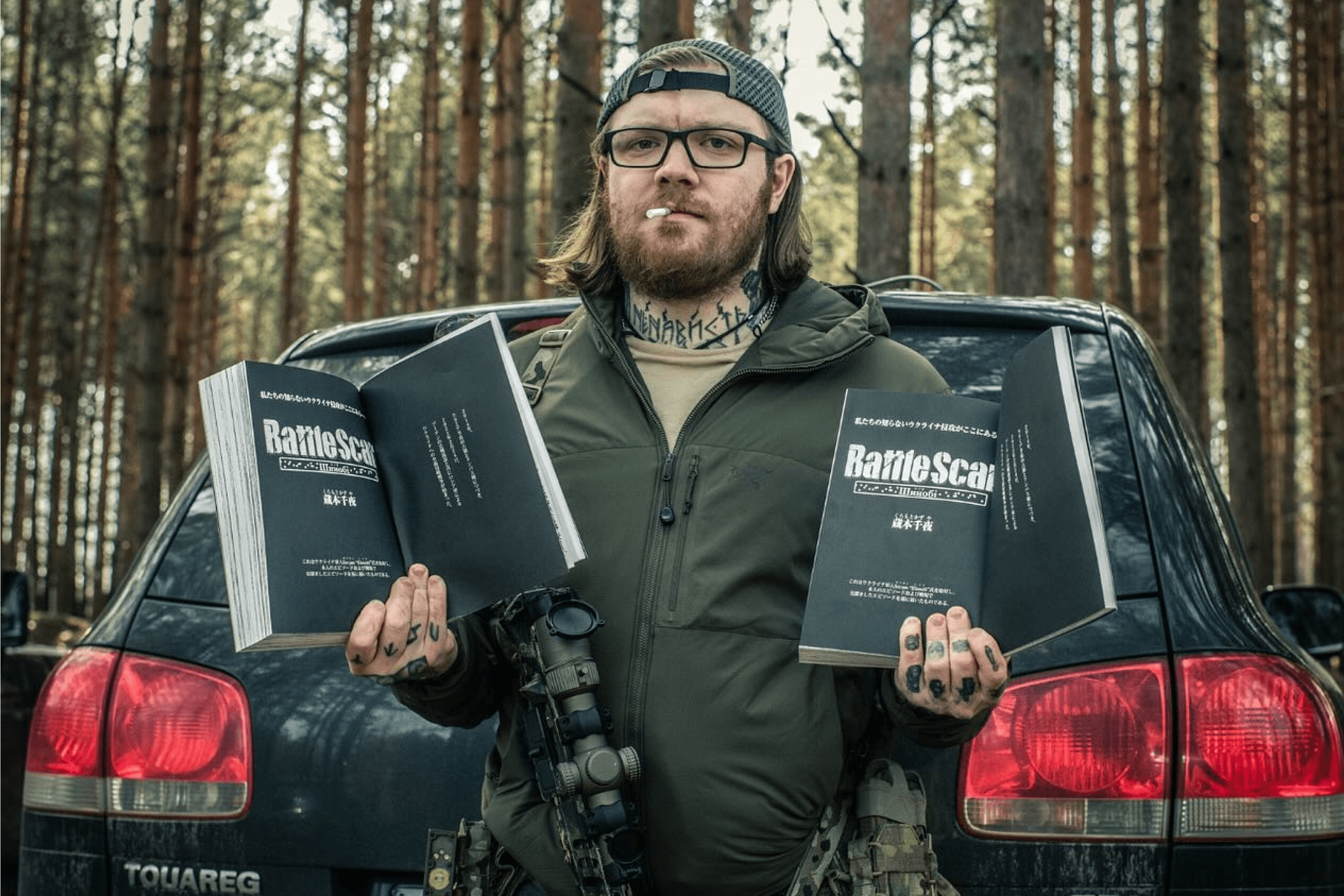
The second story follows a girl, Aliona, who survived Russian occupation and became a victim of sexual violence, and her attempt to leave the city. I describe how at the beginning of the wider war people had to look for alternative routes because many bridges were destroyed and roads were blocked.
The last story is about a child from Mariupol. It differs from the previous two because it is not based on interviews with real people. How did you work on it?
What sparked this story was a photo of a plush toy horse lying on the floor of the Kramatorsk railway station after the Russian strike on April 8, 2022. This image shocked and frightened me. I thought, “What kind of child could have owned this toy?” And I decided to build a story around that image.
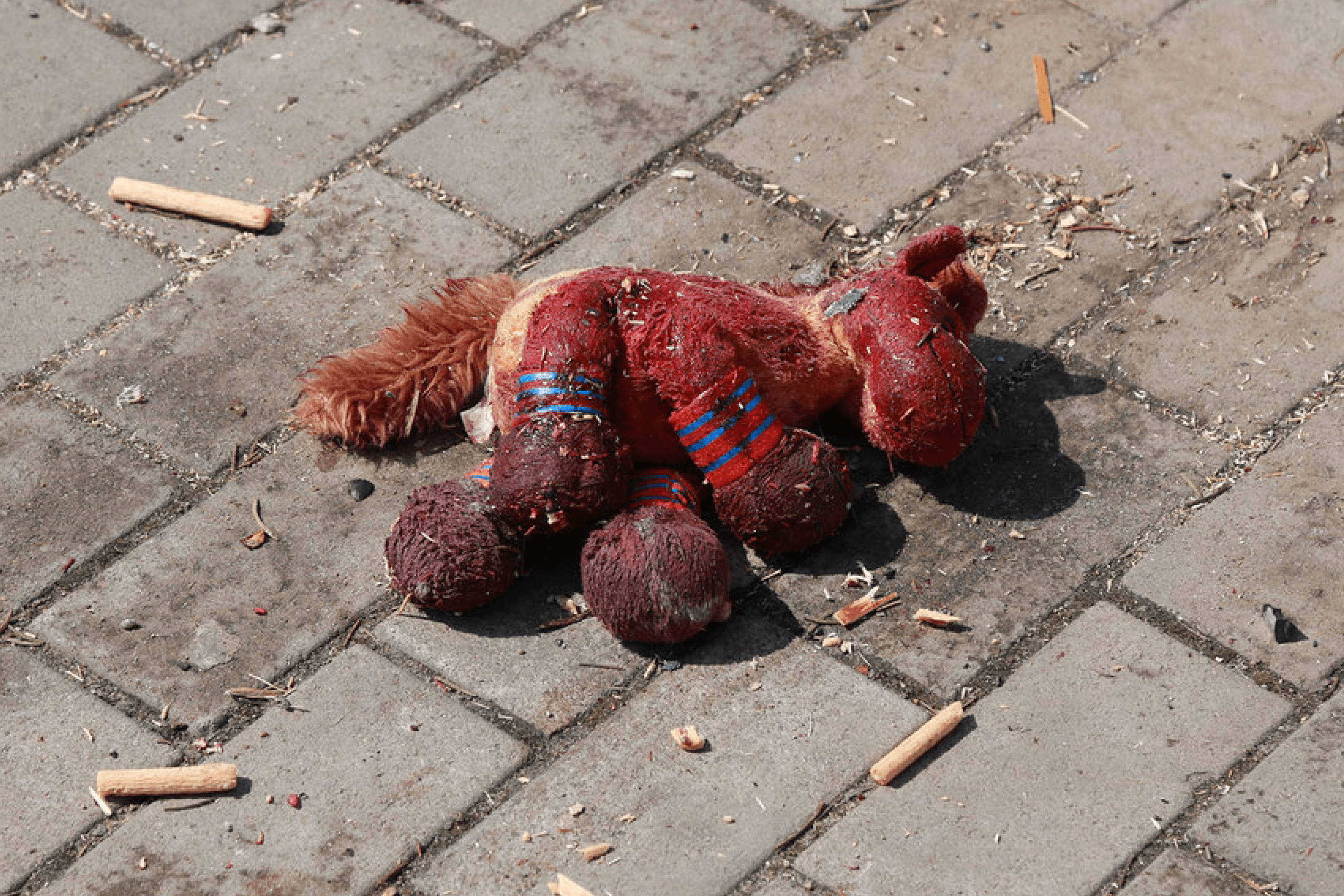
I chose Mariupol as the setting because of the crimes committed there and the brutal siege of the city. When people, especially abroad, read the news, they see only numbers and often do not feel an emotional connection. I wanted to create that connection through a story.
How did you find the characters for your manga?
I reached out to a friend from Ukraine and asked if he knew anyone who would agree to an interview. That is how I met the soldier “Shinobi,” the hero of the first story. In addition to the interview itself, “Shinobi” helped me understand the context. He spoke about the war in Ukraine in general, about military equipment and weapons.
My friend, a veteran of the war in Yugoslavia, helped me with the second story. She runs a civic organization that supports war victims and orphans. It also helped people affected by the Russian invasion. She suggested telling a story about sexual violence, of course with the survivor’s consent and without revealing her real name.
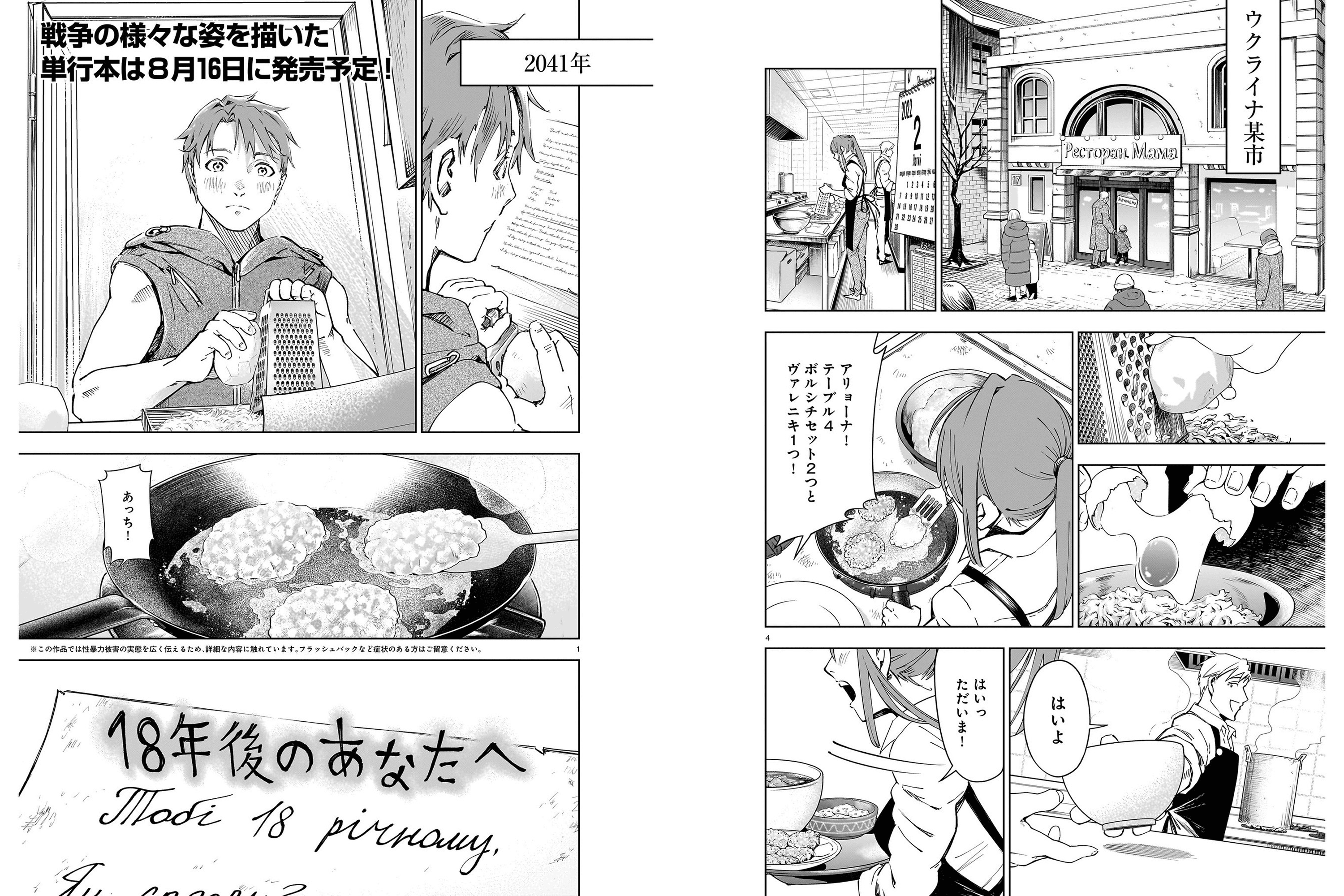
Excerpts from the second Battle Scar manga — Alyona. Photo: 蔵本千夜 Kazuya Kuramoto / Instagram / YB 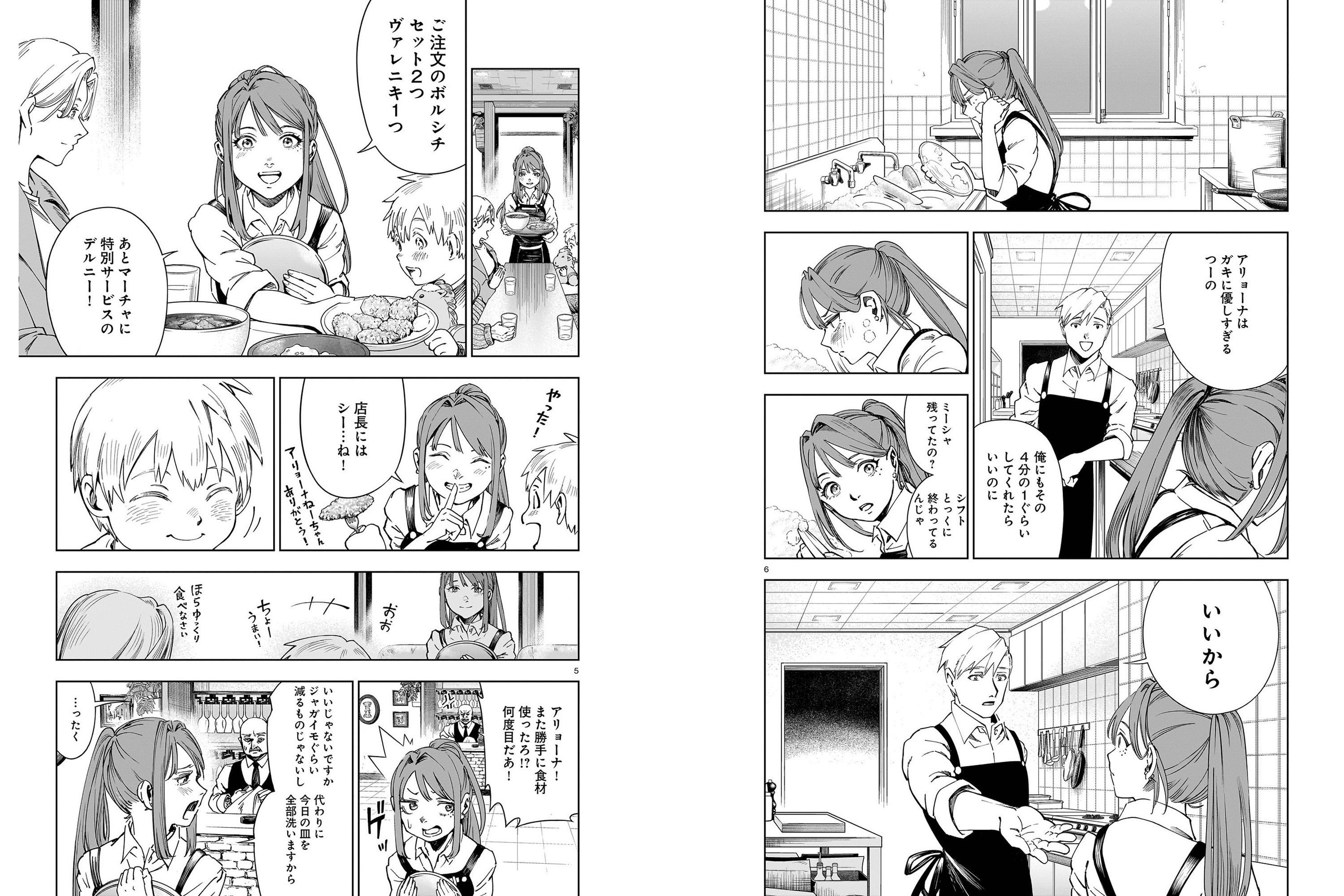
Photo: 蔵本千夜 Kazuya Kuramoto / Instagram / YB 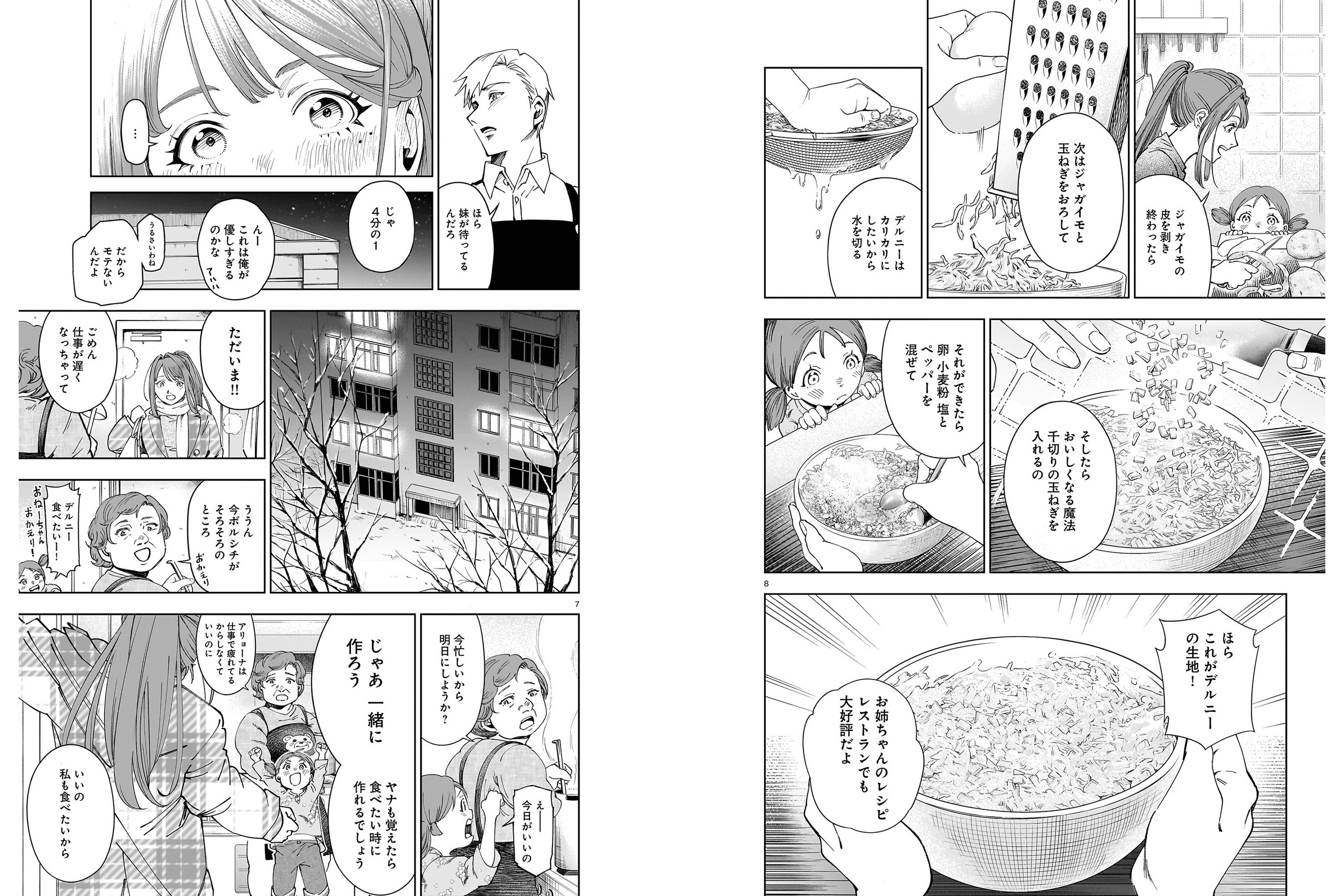
Photo: 蔵本千夜 Kazuya Kuramoto / Instagram / YB 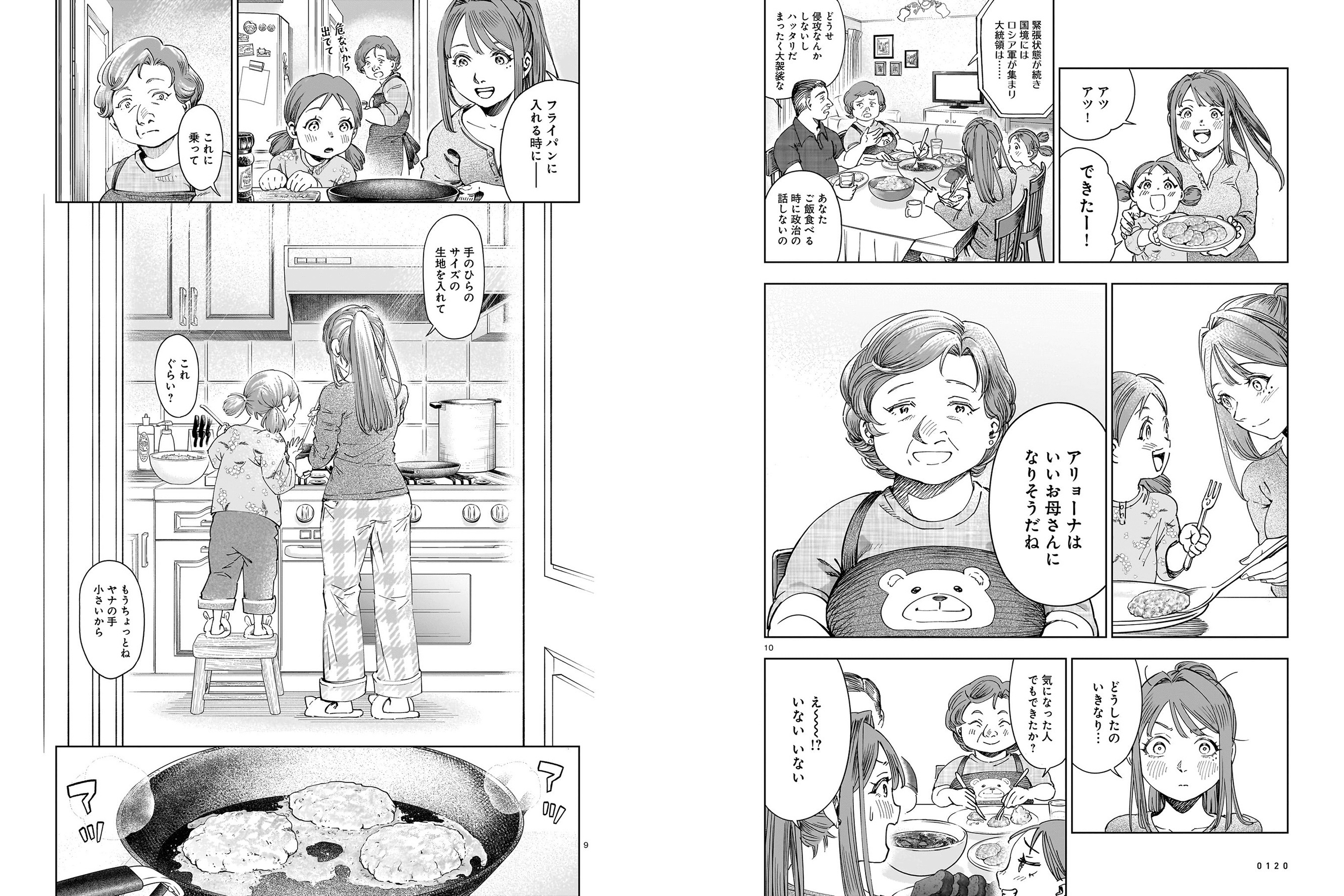
Photo: 蔵本千夜 Kazuya Kuramoto / Instagram / YB
Was it difficult for you to work with the topic of a war happening far from Japan?
No, although I have never been to Ukraine. Every autumn I travel to Europe to meet friends who left Ukraine. I also keep in touch with those who remain there, including people on the front line. This helps me better understand Ukrainians, their personalities, and how life works during the war.
Whenever I need a specific detail for the manga, like what a typical Ukrainian kitchen looks like or what sweets are popular, I ask them to send photos.
How do you balance documentary accuracy and the artistic form of manga?
Finding this balance is an important part of the work. From the beginning, I understood that artistic elements were needed so that people could engage more easily. At the same time, it was important for me to preserve authenticity and show events as they are in real life.
During interviews, I asked people in detail about what had happened to them. When possible, I reached out to other witnesses. That helped recreate the stories more accurately.
What was your main aim: to tell about the war, to call for help, or something else?
The main purpose of the manga Battle Scar is to document personal testimonies of war victims.
Usually, history preserves only headlines, the names of presidents, generals, or other well-known figures. But ordinary people, civilians and lower-ranking soldiers, suffer the most. Their stories often disappear along with the memory of their families and loved ones. That is unfair.
Did the publisher immediately agree to put out a manga about the war?
It was not easy. I approached several publishers. Some editors liked the idea, but management refused. No one knew how a manga about war would sell.
At some point, I remembered an editor from Kadokawa whom I had met by chance in a bar several years earlier, and we had been friends since. I asked him for advice about publishing and gave him the story about “Shinobi” to read. After reading it, he immediately said, “What if I publish it myself?” He had previously produced a manga based on the book The Unwomanly Face of War. So it was probably easier for him to take on another project about war.
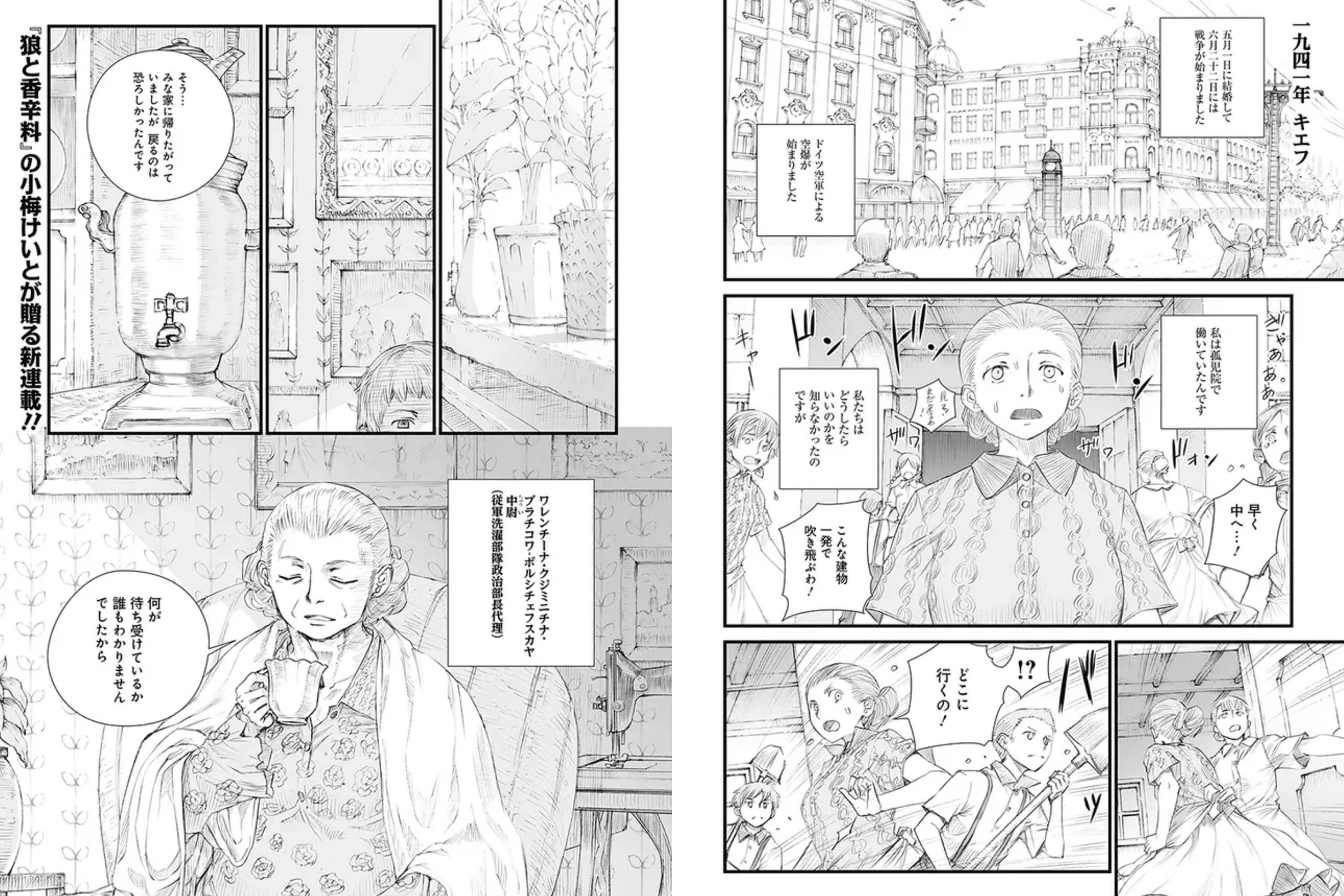
Excerpts from the manga based on The Unwomanly Face of War. Photo: comic-walker.com / YB 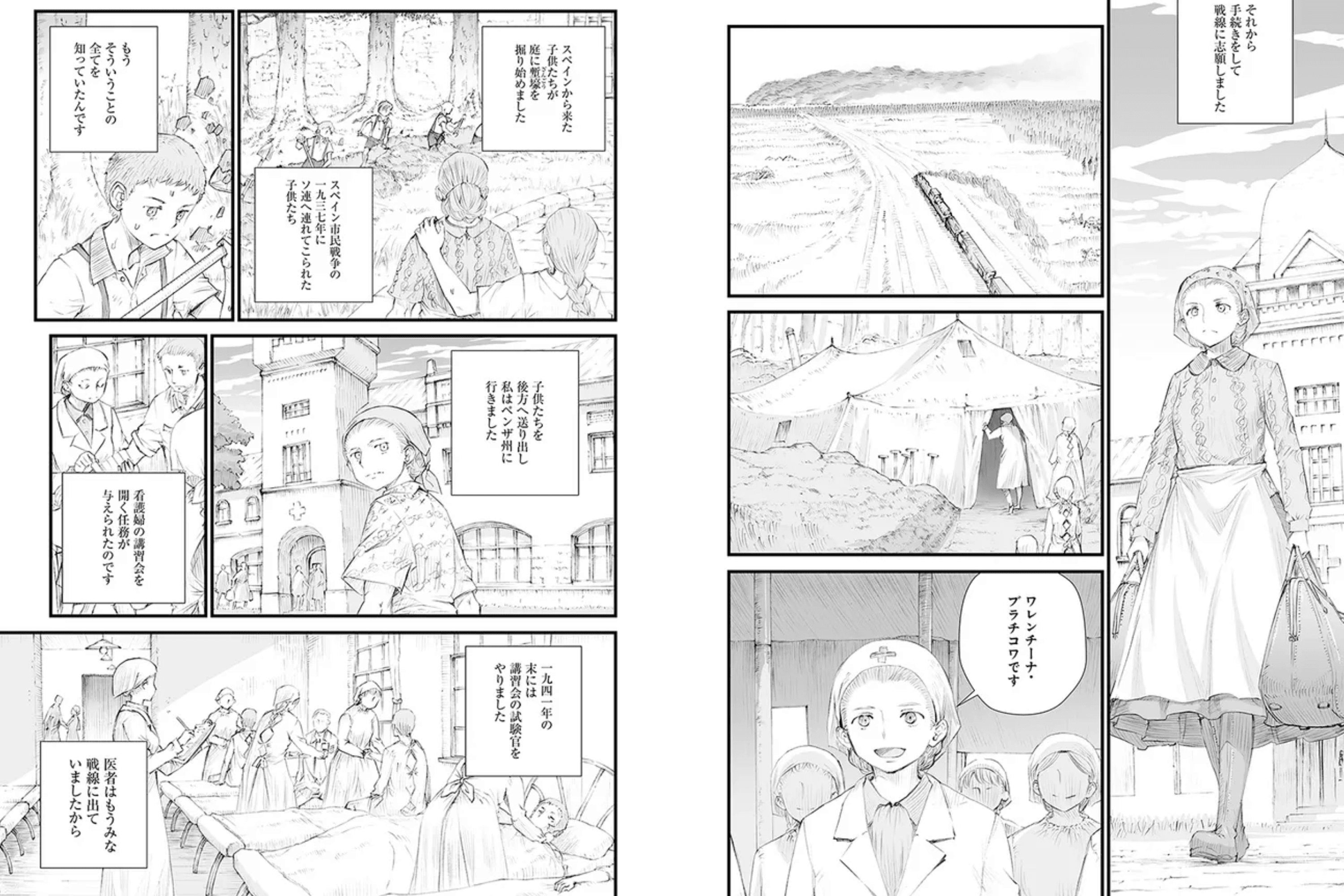
Photo: comic-walker.com / YB 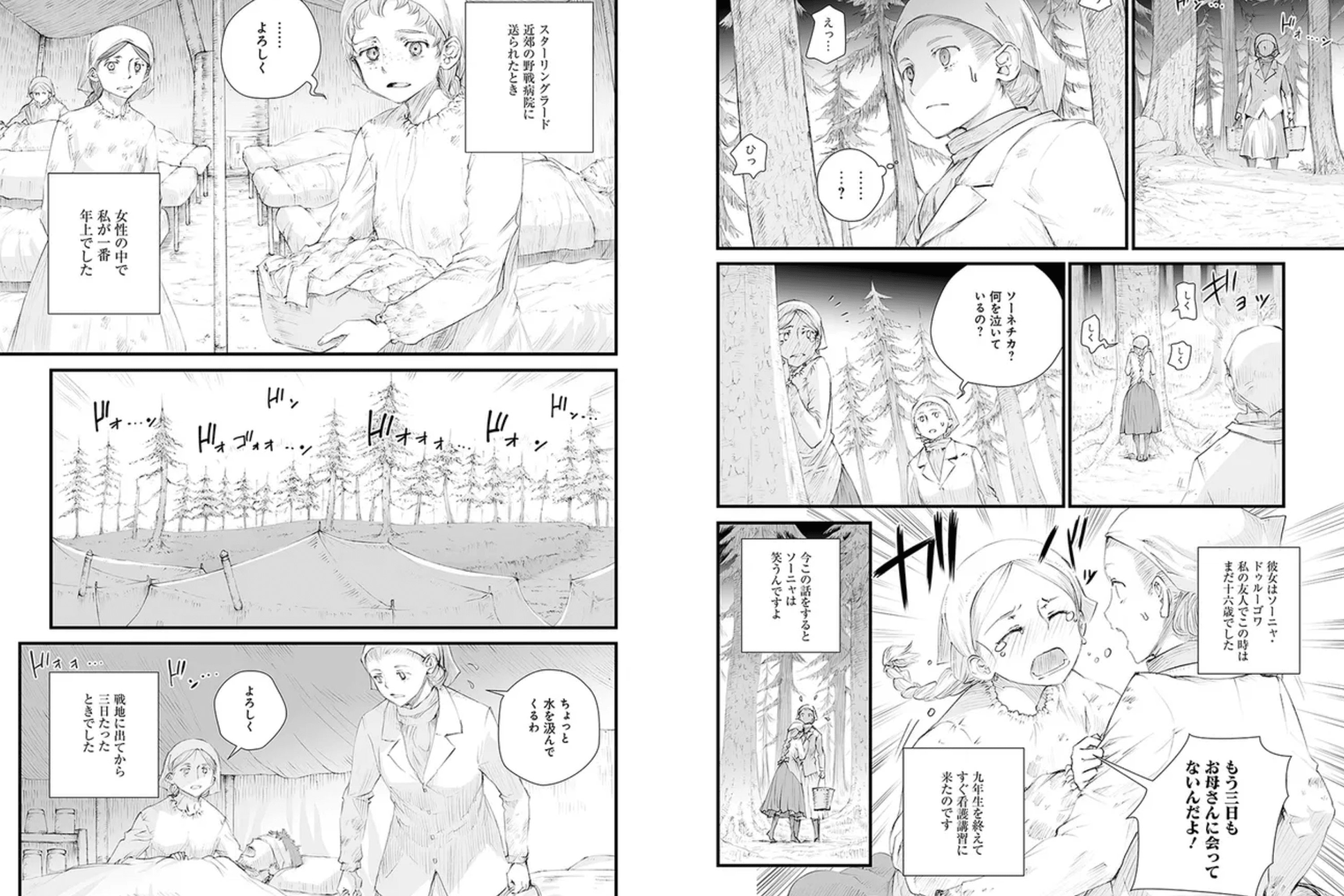
Photo: comic-walker.com / YB 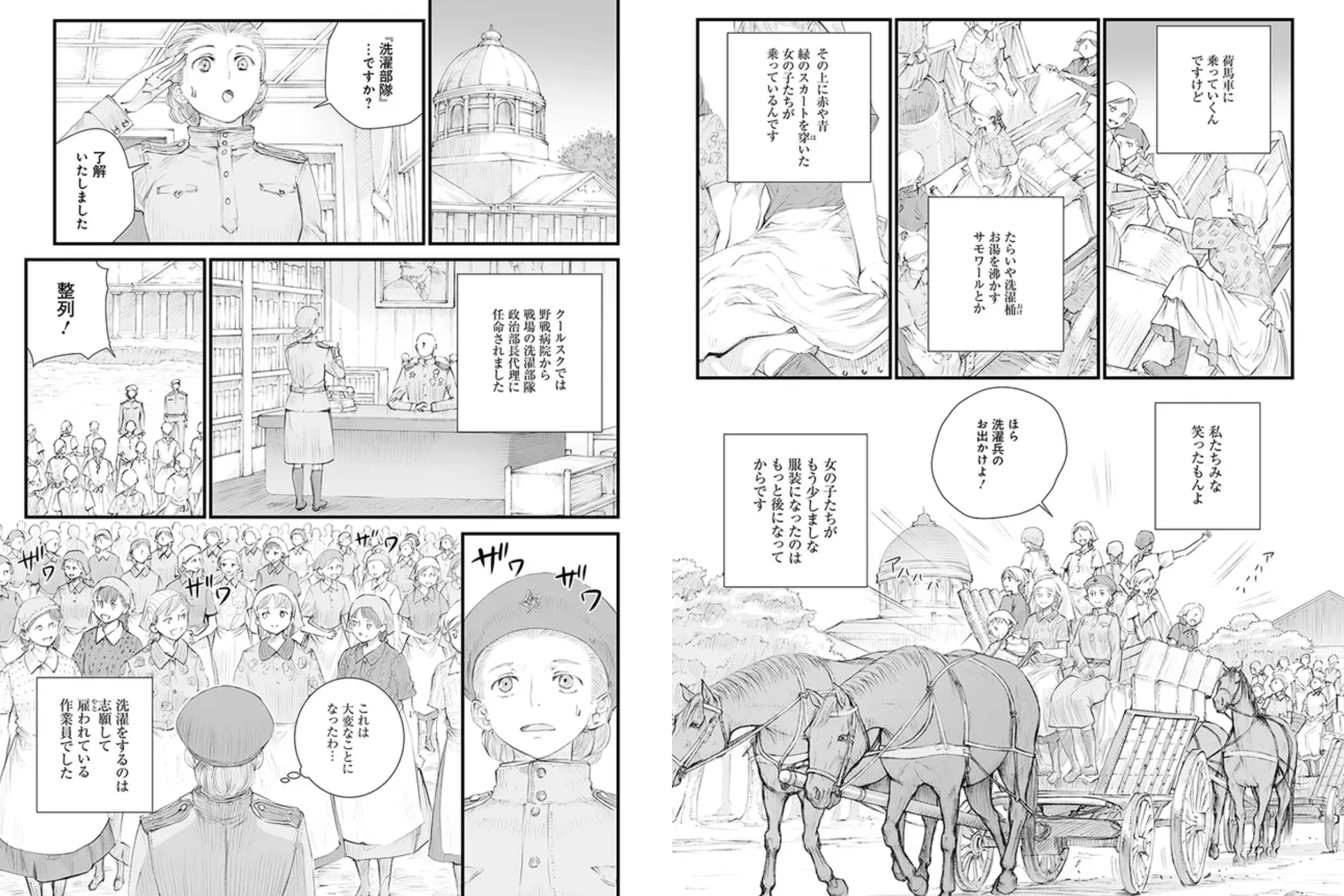
Photo: comic-walker.com / YB
Do many Japanese people follow the war in Ukraine? Are they interested in this topic?
In 2022 and 2023, the topic was much more visible than it is now. The war was developing rapidly. There were daily news reports about offensives and counteroffensives. People discussed it on social media. In 2024 and 2025, attention decreased. Now, with many news reports about peace negotiations between Ukraine and Russia, interest is growing again, but not nearly as much as at the beginning.
The level of interest depends on the individual. For example, I was contacted by friends of Japanese people who went to Ukraine to fight as volunteers and were killed. They wanted me to tell these stories in the manga. I hope to do that someday.
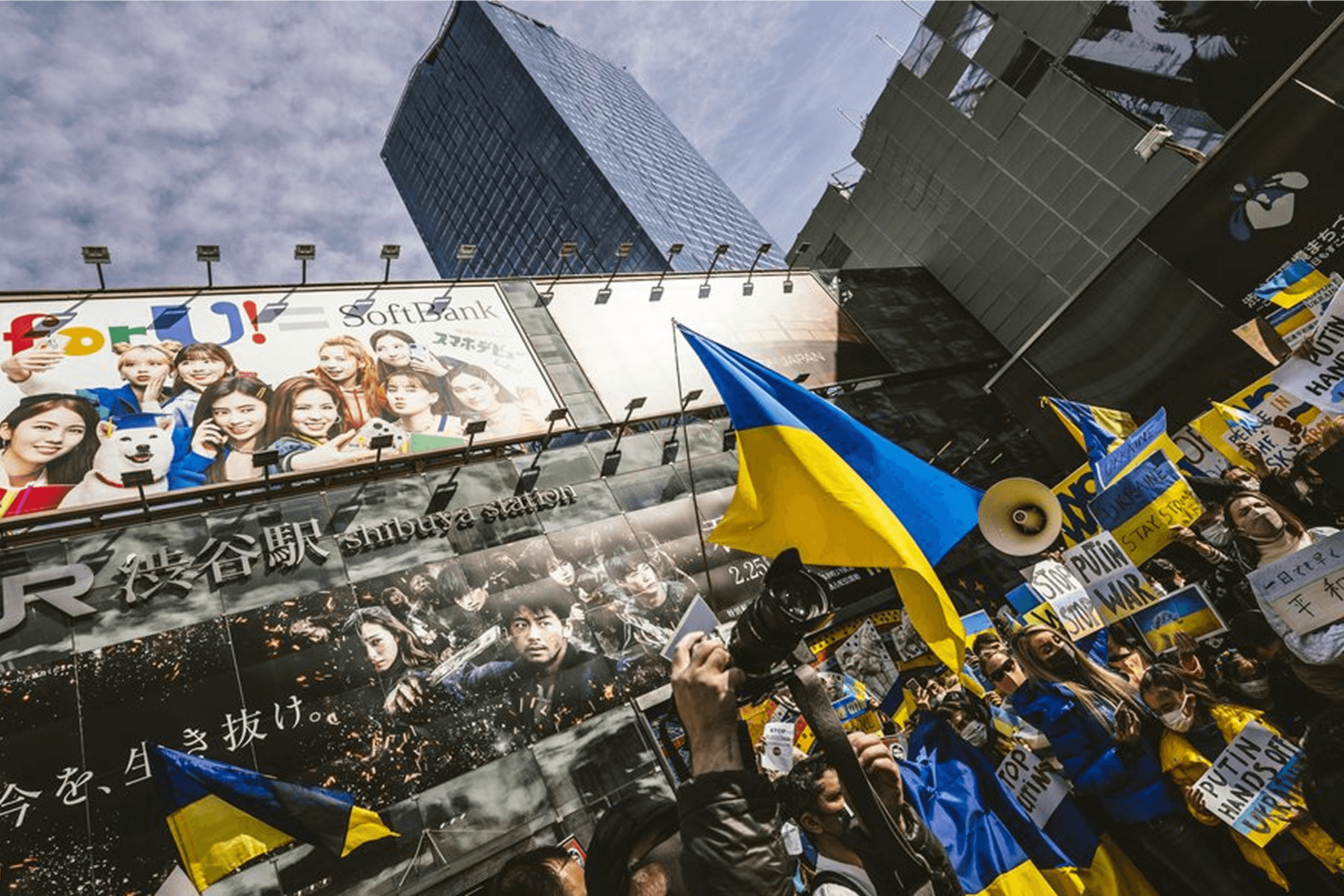
A protest against Russia’s war in Ukraine. Tokyo, Japan. February 26, 2022. Photo: Maciej Komarowski / Суспільне новини / YB 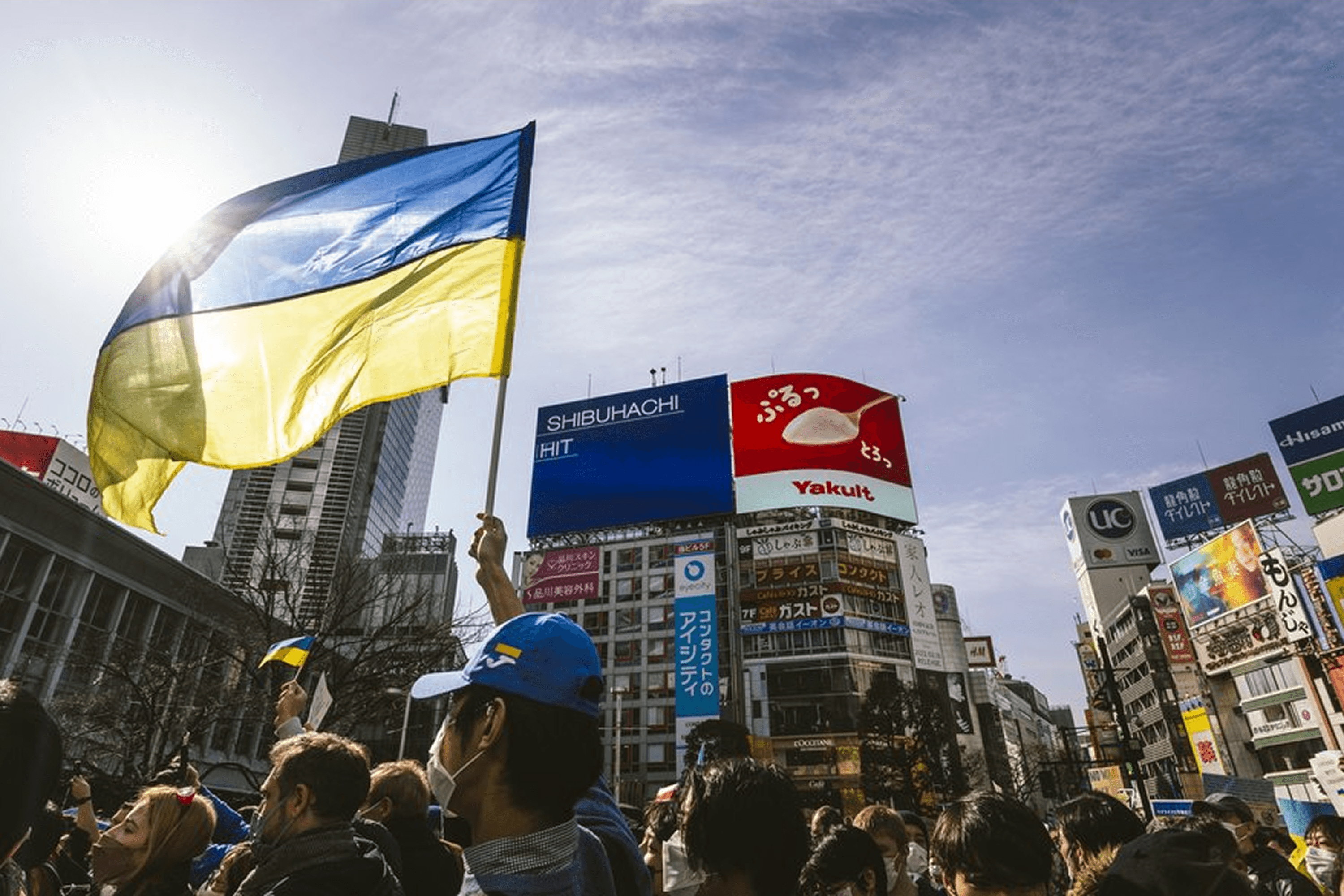
Photo: Maciej Komarowski / Суспільне новини / YB 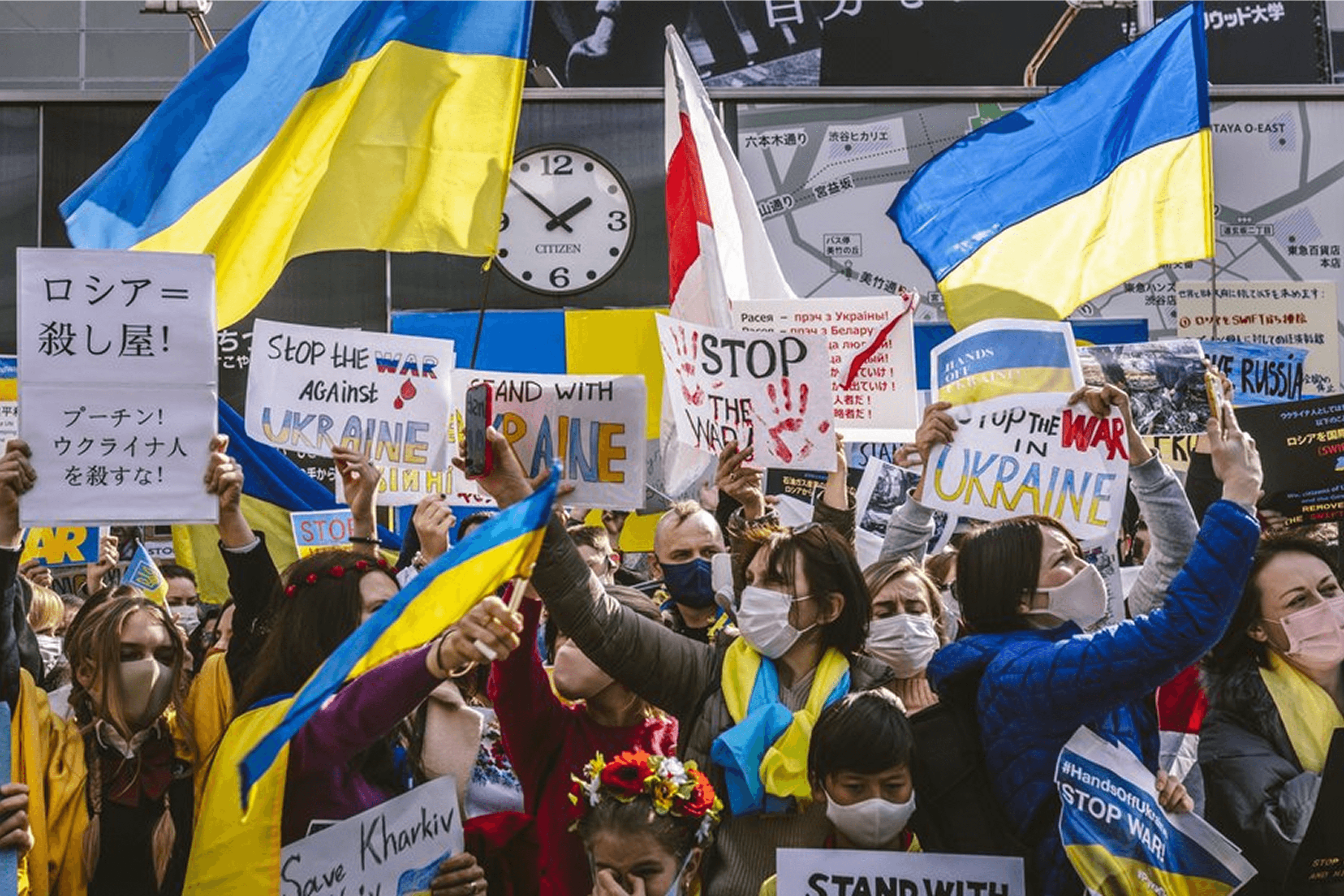
Photo: Maciej Komarowski / Суспільне новини / YB 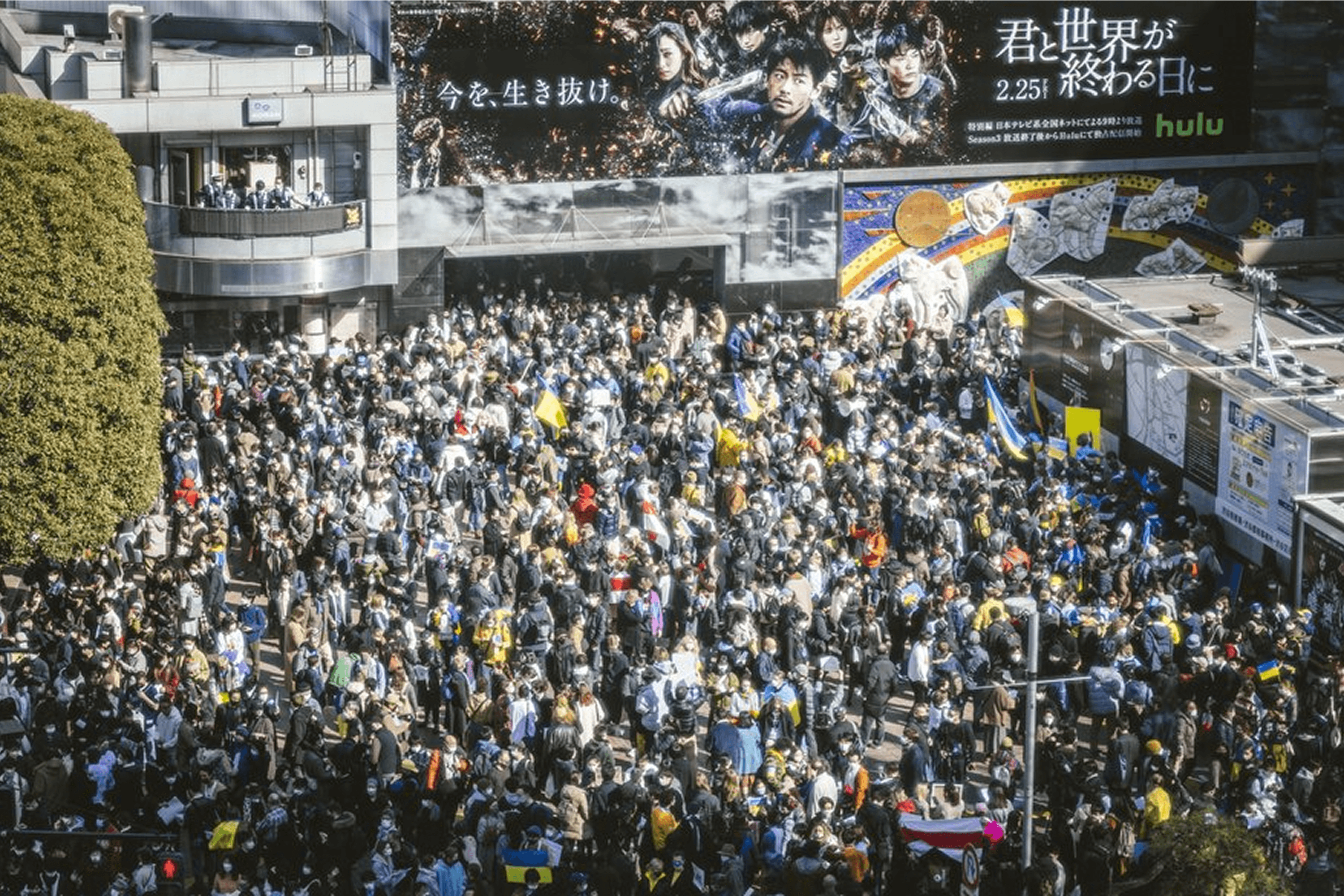
Photo: Maciej Komarowski / Суспільне новини / YB
What was the reaction of Japanese readers to Battle Scar?
The book has been successful. As of now, 15,000 to 20,000 copies have been sold. Readers left many comments and reviews on different platforms. On Amazon, the English-language version has a rating of about 4.9 out of 5. Some readers wrote that they cried.
Last year, I was also nominated for the Tezuka Osamu Cultural Award. It is one of the most prestigious awards in the Japanese manga industry, something like an Oscar in this field. I did not win, but the nomination itself is a great honor. It drew attention to the project. The manga started getting media coverage. Even people who had not previously read anything about the war became interested. I didn’t expect any of this.
What does this recognition mean to you?
Of course, it is a great honor. But more importantly, thanks to the nomination, more people learned about the stories of Ukrainians and what war victims are going through. The award’s prestige lends credibility to the project. People perceive the manga not as a fictional story, but as a reflection of reality.
Battle Scar has been published in different languages. Which ones? And where can it be bought outside Japan?
The first foreign language was French. There is also a Chinese translation, published in Taiwan, but it can also be purchased in Hong Kong. Next will be the Ukrainian version. It is already available for pre-order. Together with the Ukrainian publisher, we are planning a release at the end of April.
There is also an English translation, but only of the first chapter about “Shinobi.” It is available in digital format on Amazon. I published it myself through Kindle Direct Publishing with the approval of the editorial board. That’s when I realized how many readers were waiting for an official English version of the manga, and I am now working on it.
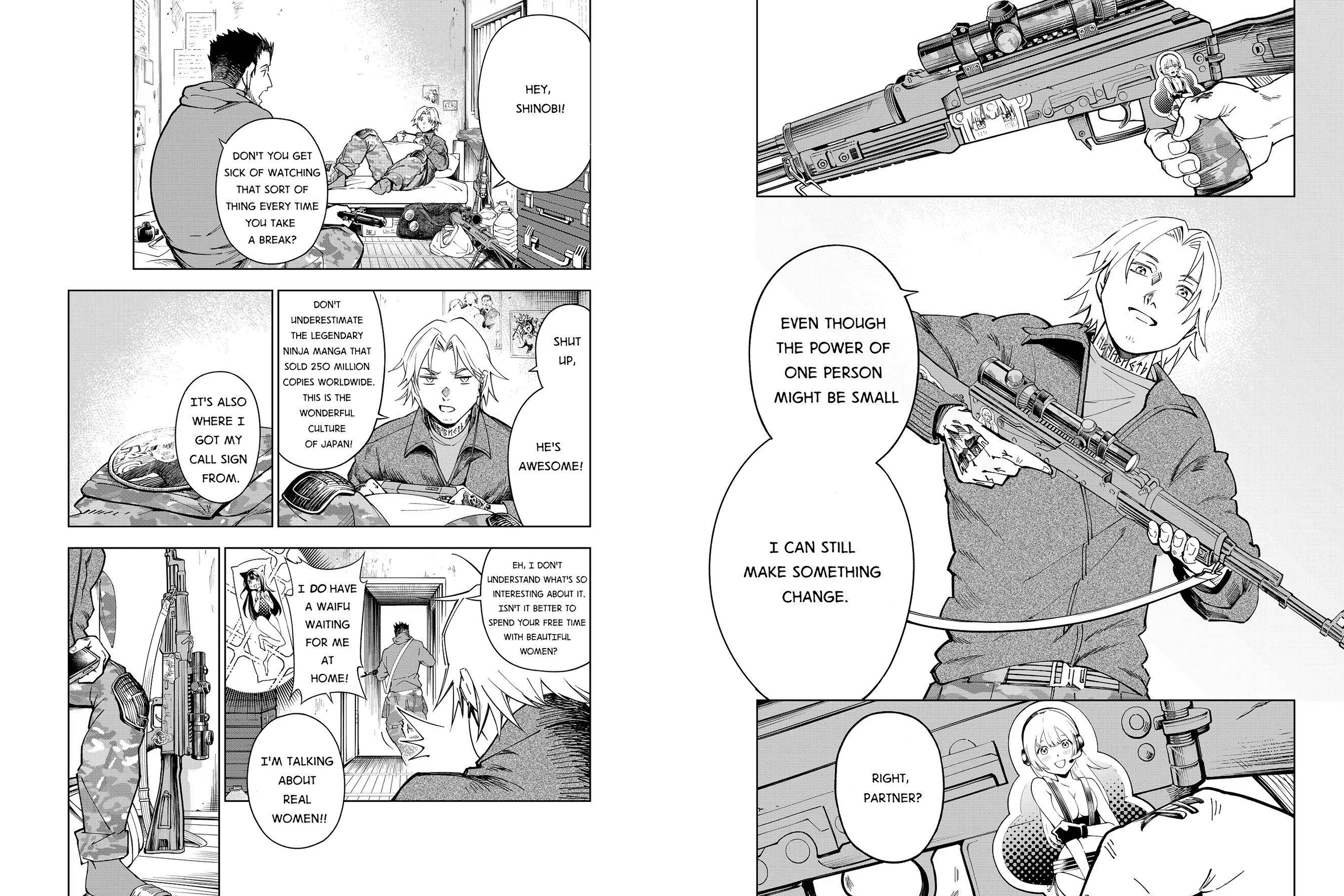
Excerpts in English from the first Battle Scar manga — Shinobi. Photo: 蔵本千夜 Kazuya Kuramoto / Instagram / YB 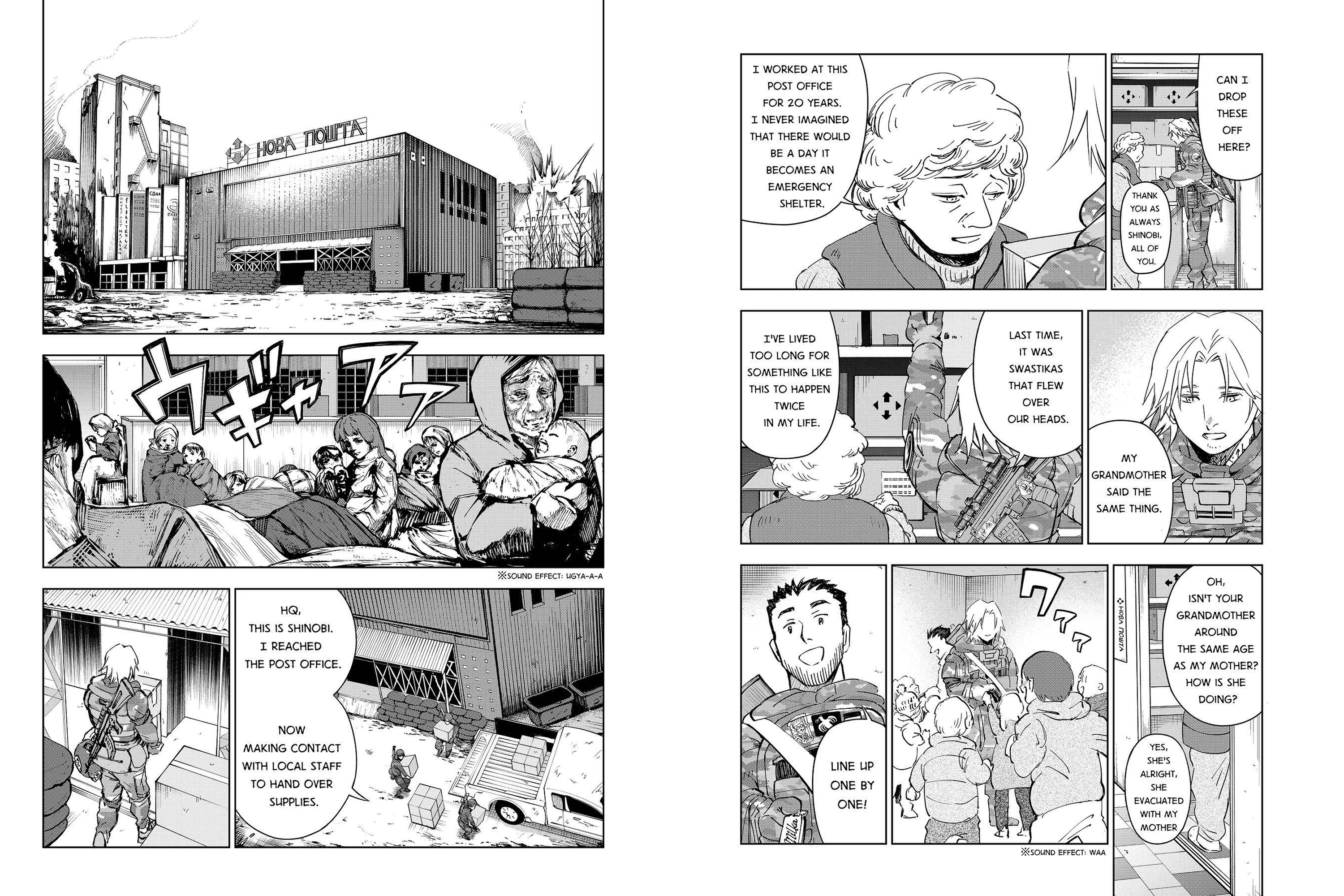
Photo: 蔵本千夜 Kazuya Kuramoto / Instagram / YB 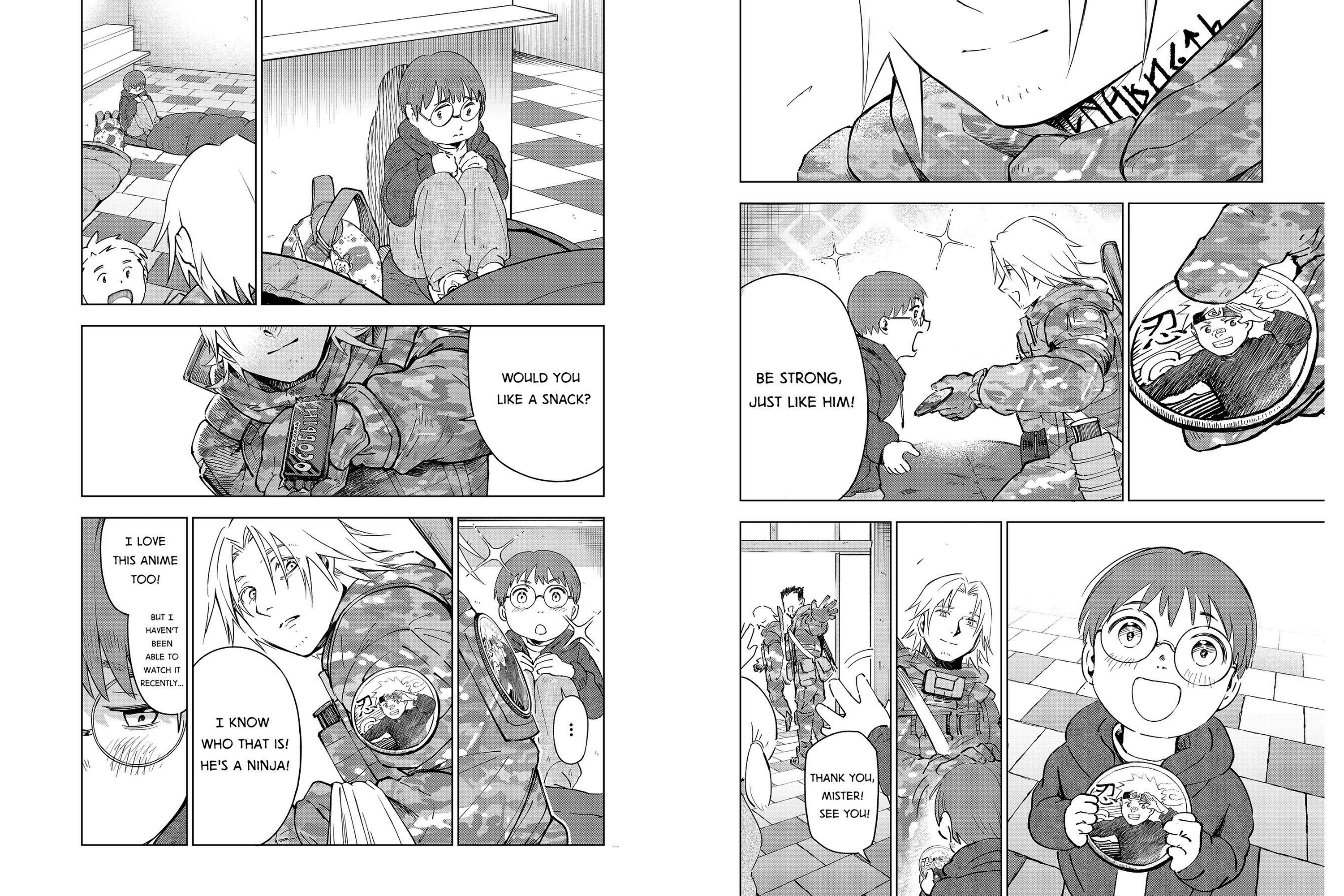
Photo: 蔵本千夜 Kazuya Kuramoto / Instagram / YB 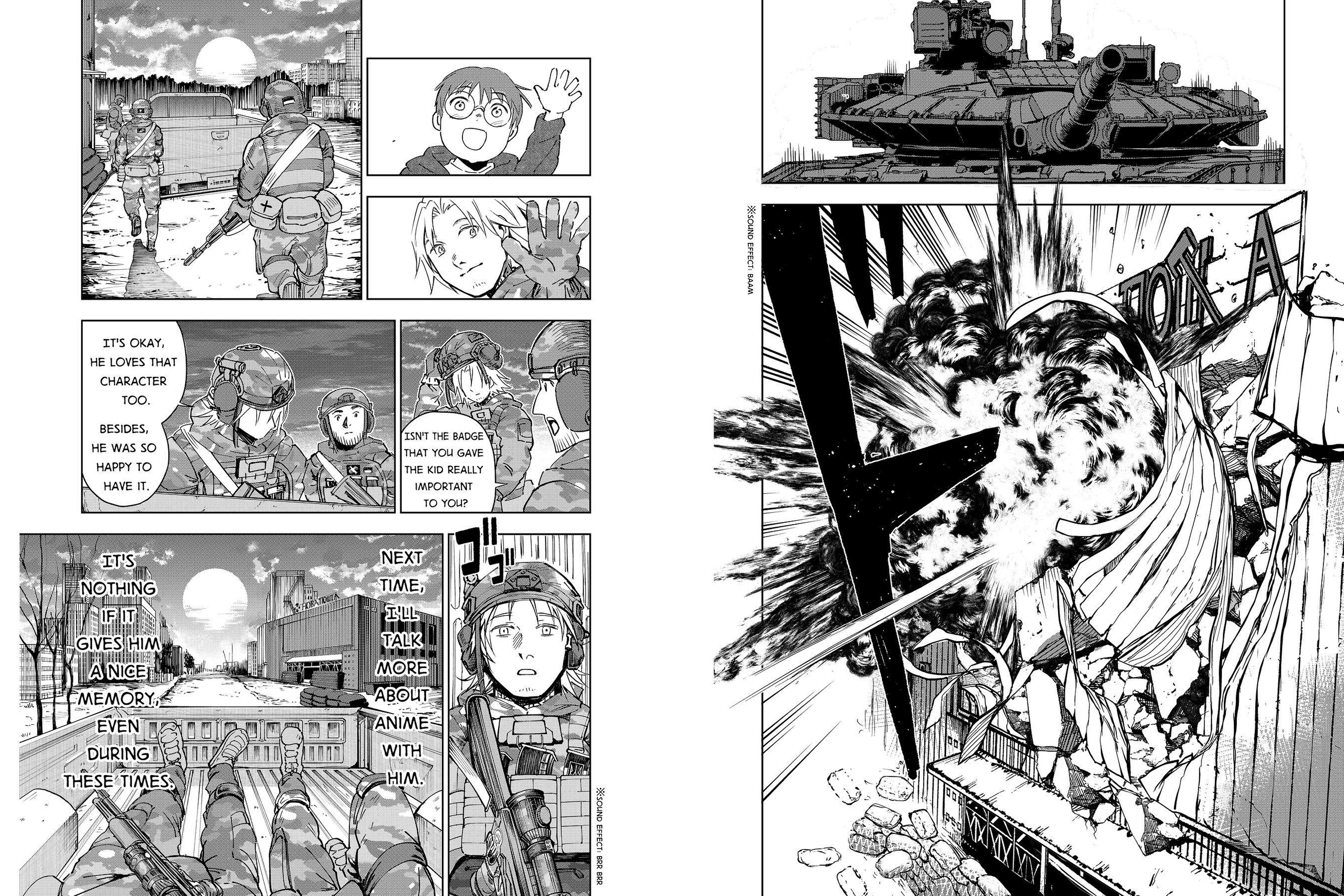
Photo: 蔵本千夜 Kazuya Kuramoto / Instagram / YB
Are there plans to publish the manga in other languages?
There are no concrete plans yet, but I am always open to working with publishers from different countries.
And although this may sound controversial, I very much want to publish a Russian version of the manga. Not because I hold pro-Russian views. Not at all. But Russians are the people who most need to read Battle Scar. They have to see what they have done. Maybe this is naive, but I think there is a chance of things changing only once they truly understand this.
Do you have any special feelings about the manga’s release in Ukraine?
I hope that Ukrainians will be pleased to see a manga about events in their country. As far as I know, there are not many published works like this. I have heard about the self-published Ghost of Kyiv, but I have not seen official editions.
At the same time, I am ready for criticism. If someone notices that everyday life or details are portrayed inaccurately, I will be grateful for feedback and will take it into account in future works.
Thirty percent of the profit from sales of Ukrainian copies will be donated to the Come Back Alive Foundation. Was this your initiative or the publisher’s decision?
This was the publisher’s decision. Personally, I also give ten percent of my royalties to “Shinobi,” the hero of the first story. I am glad that part of the funds from the manga goes to help Ukraine.
Do you plan to continue the manga and look for new stories?
Yes, Battle Scar will have a continuation. The manga will be released in series in Japan, and I am currently working on the final story of the second book. It will be released around August this year, and later a Ukrainian version will also appear.
There are many stories of war victims and soldiers from the front line. People reach out to me directly and share their experiences. So I do not think this project will end soon.
What is the second one about?
The second volume of Battle Scar will tell the story of a military medic from the period of the war in Donbas to the beginning of the full-scale invasion in February 2022. It is a story about how a young and naive civilian becomes a hardened soldier. I will talk about his service in the 36th Marine Brigade in 2020–2022, about the beginning of the invasion, and what he went through at Azovstal together with the marines.
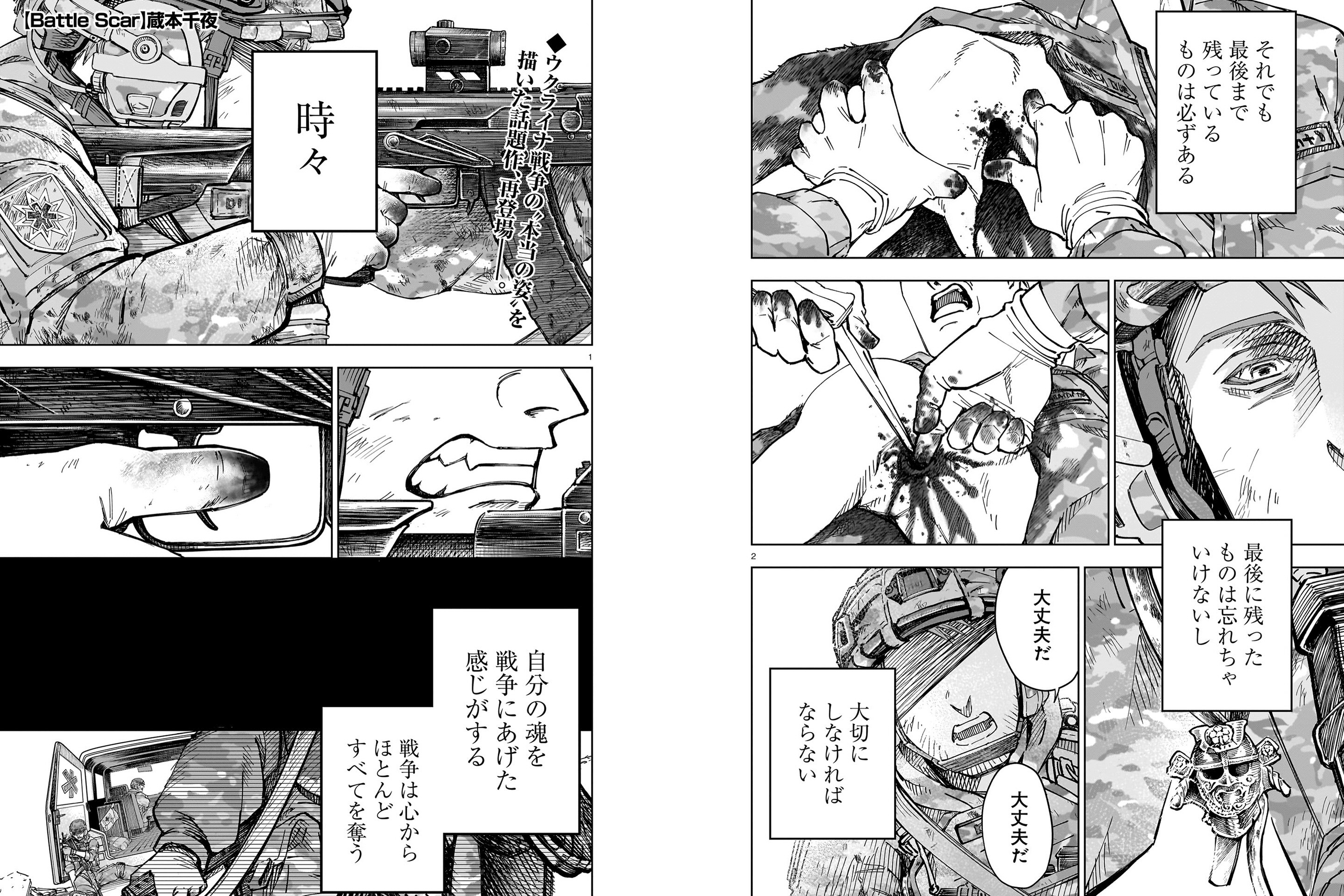
The second chapter of the Battle Scar series tells the story of a medic known as “Hiroshima,” who, after moving from Tokyo, heads to the front line in Ukraine. Photo: 蔵本千夜 Kazuya Kuramoto / Instagram / YB 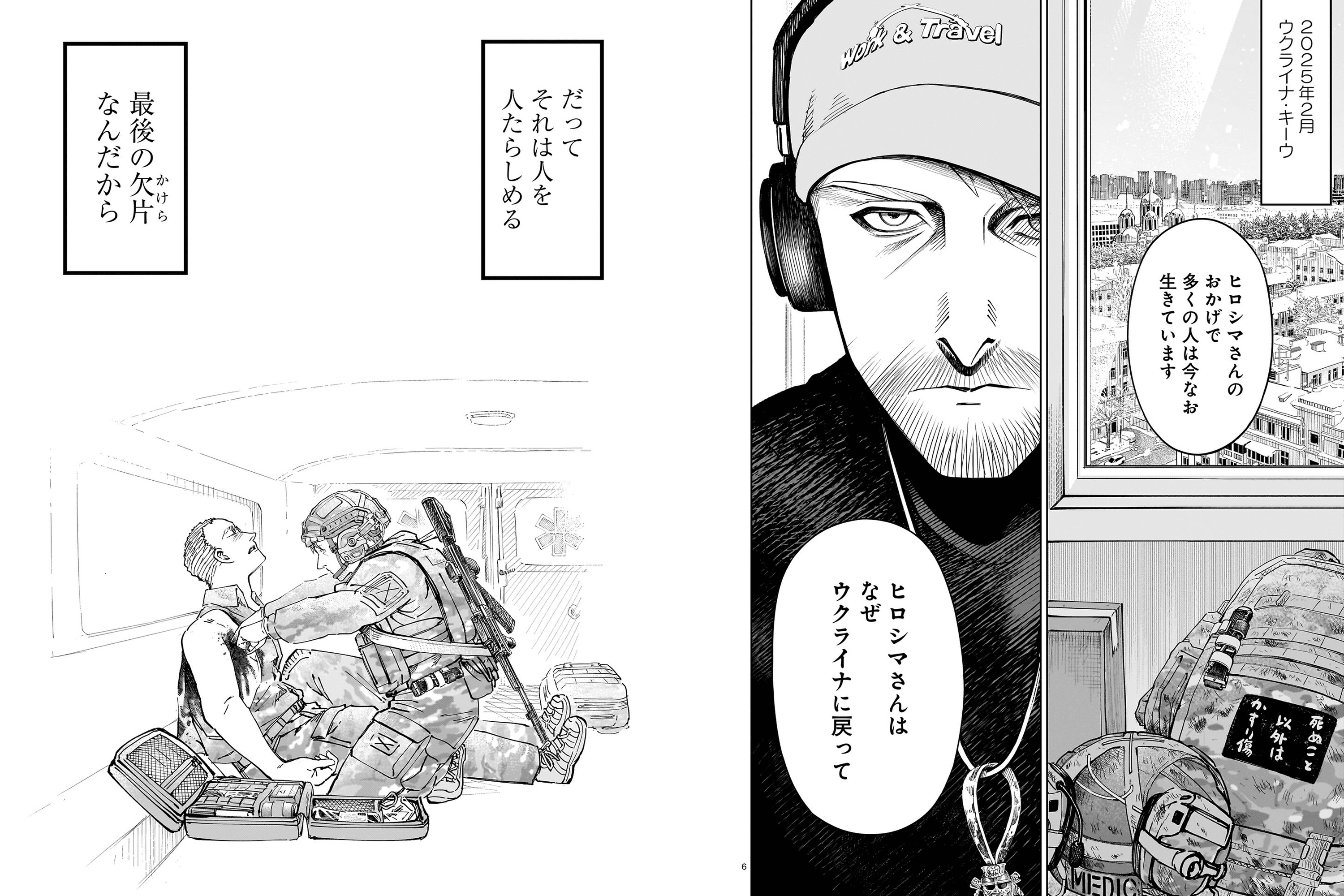
Photo: 蔵本千夜 Kazuya Kuramoto / Instagram / YB 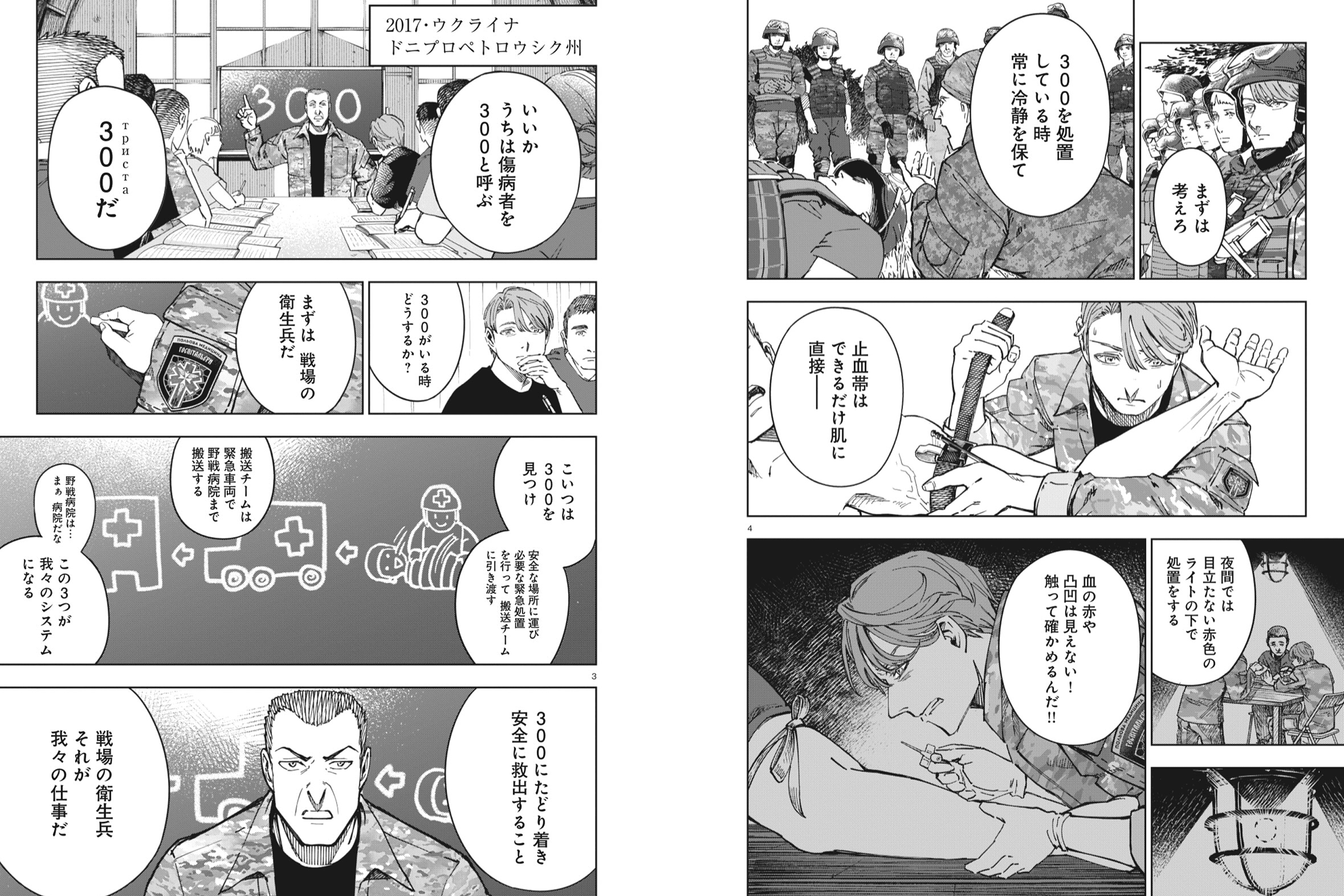
Photo: 蔵本千夜 Kazuya Kuramoto / Instagram / YB 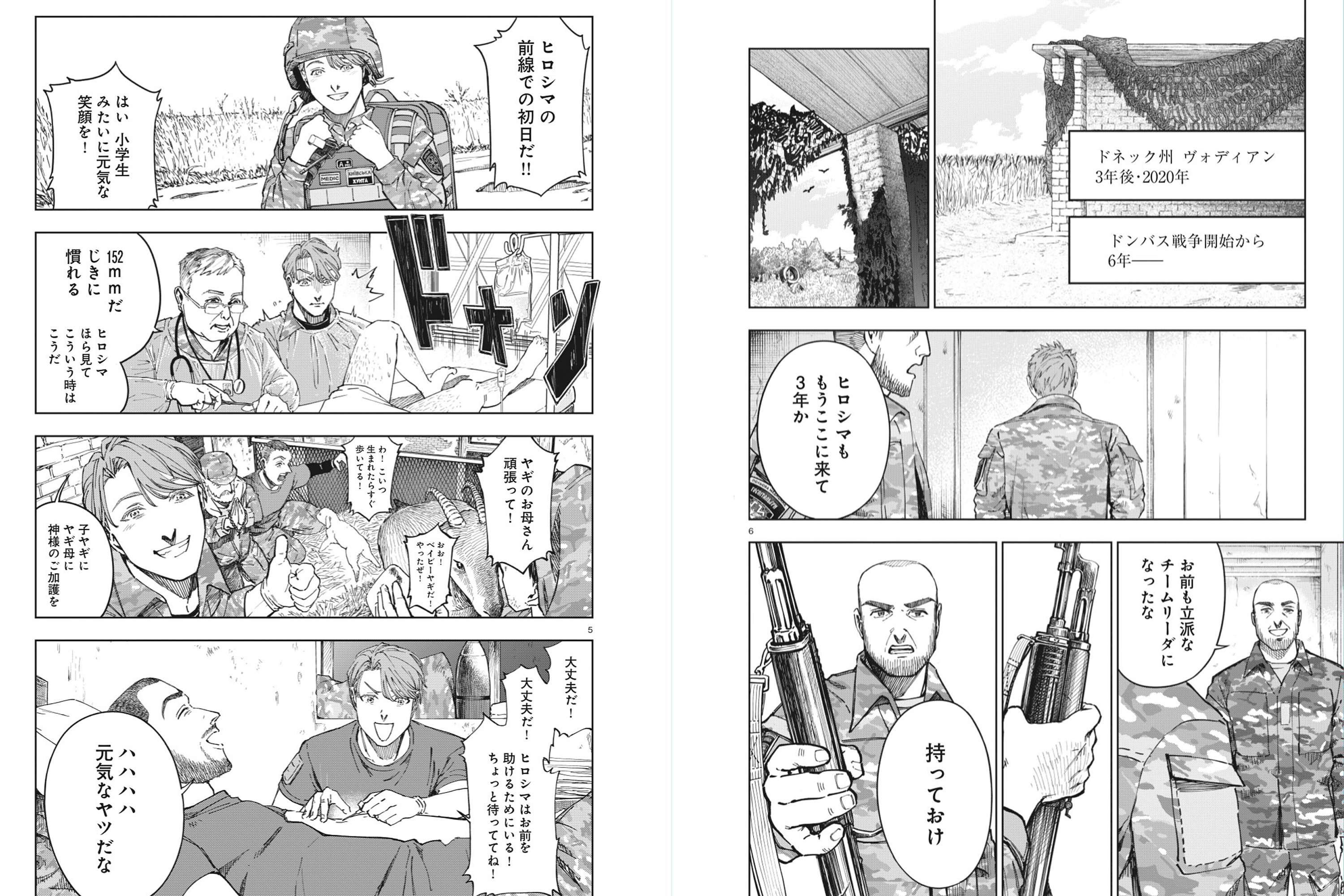
Photo: 蔵本千夜 Kazuya Kuramoto / Instagram / YB
Would you like to continue working with the topic of Ukraine in other projects?
For now, I am fully focused on Battle Scar and not thinking about what to do next. But if an opportunity appears and the topic is interesting, I will definitely consider it.
How has your perception of Ukraine changed after working on the project?
I learned a lot about Ukrainian culture and got a deep sense of how daily life in Ukraine works. I even cooked borshch because I needed to show the process in the manga.
But most of all, I was struck by the strength of people and the choices they are forced to make because of the war. In the second story of Battle Scar, I follow a woman who hesitates whether to have an abortion after surviving sexual violence. In the end, she decides to keep the child and raise them as best she can. I do not know what the right decision is in such a situation, but her choice deserves respect.
What struck me most is that Ukrainians endure so much, but continue to live, make plans, and care for their loved ones. It is truly inspiring. I am not sure I could be as strong in similar circumstances.