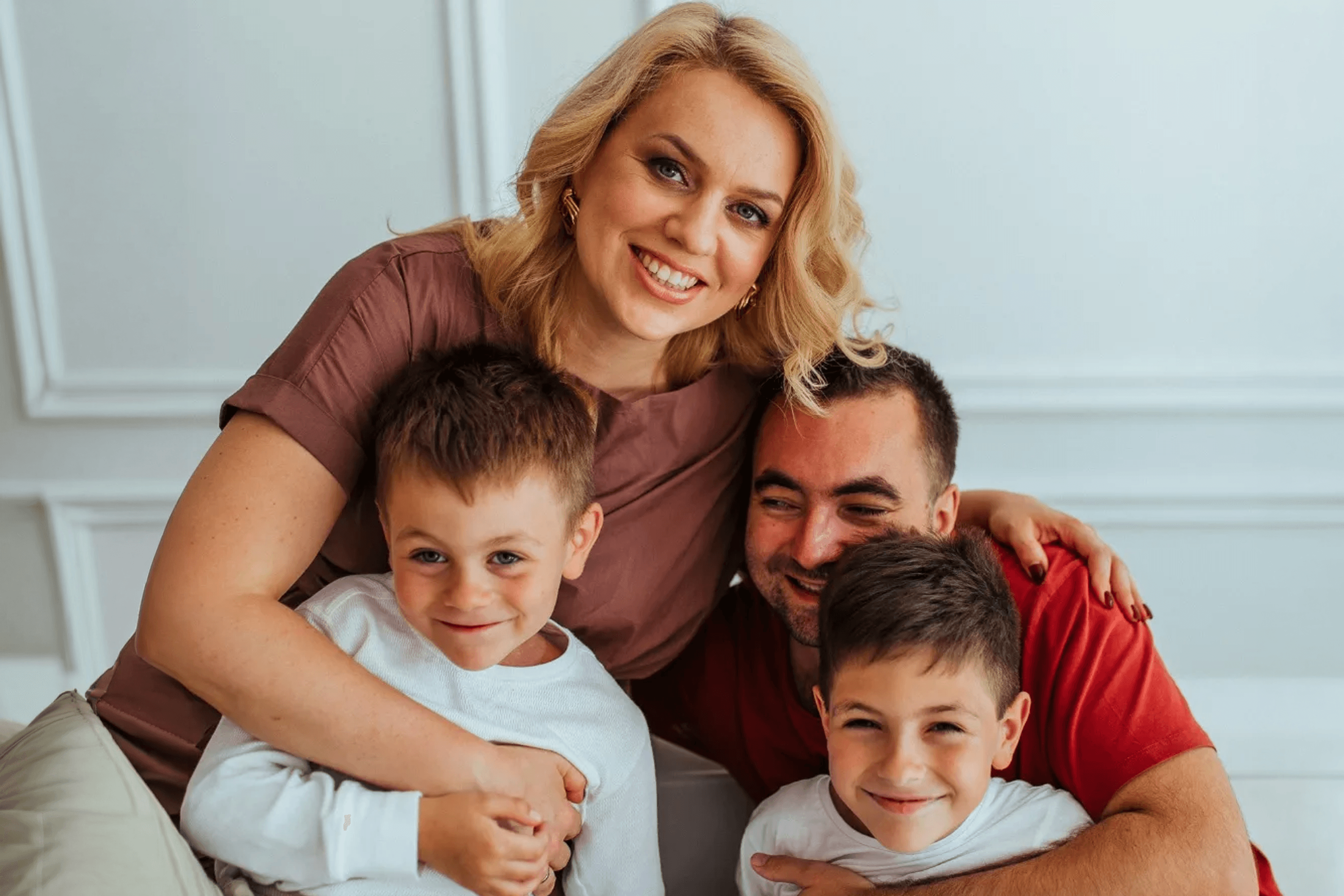
In the fall of 2022, psychotherapist Olha Tovpeko was working with children affected by the war and looking for books for them. There were hardly any in Ukrainian, so Olha decided to start her own publishing house Fish on the Roof . Today, its catalog includes 11 books by Ukrainian and international authors for children, parents, and psychotherapists.
Yellow Blue journalist Sofiia Korotunenko spoke with Olha Tovpeko about how much it costs to publish a children’s book, what kinds of stories Ukrainians want to read, and how to grow a publishing house during a full-scale war.
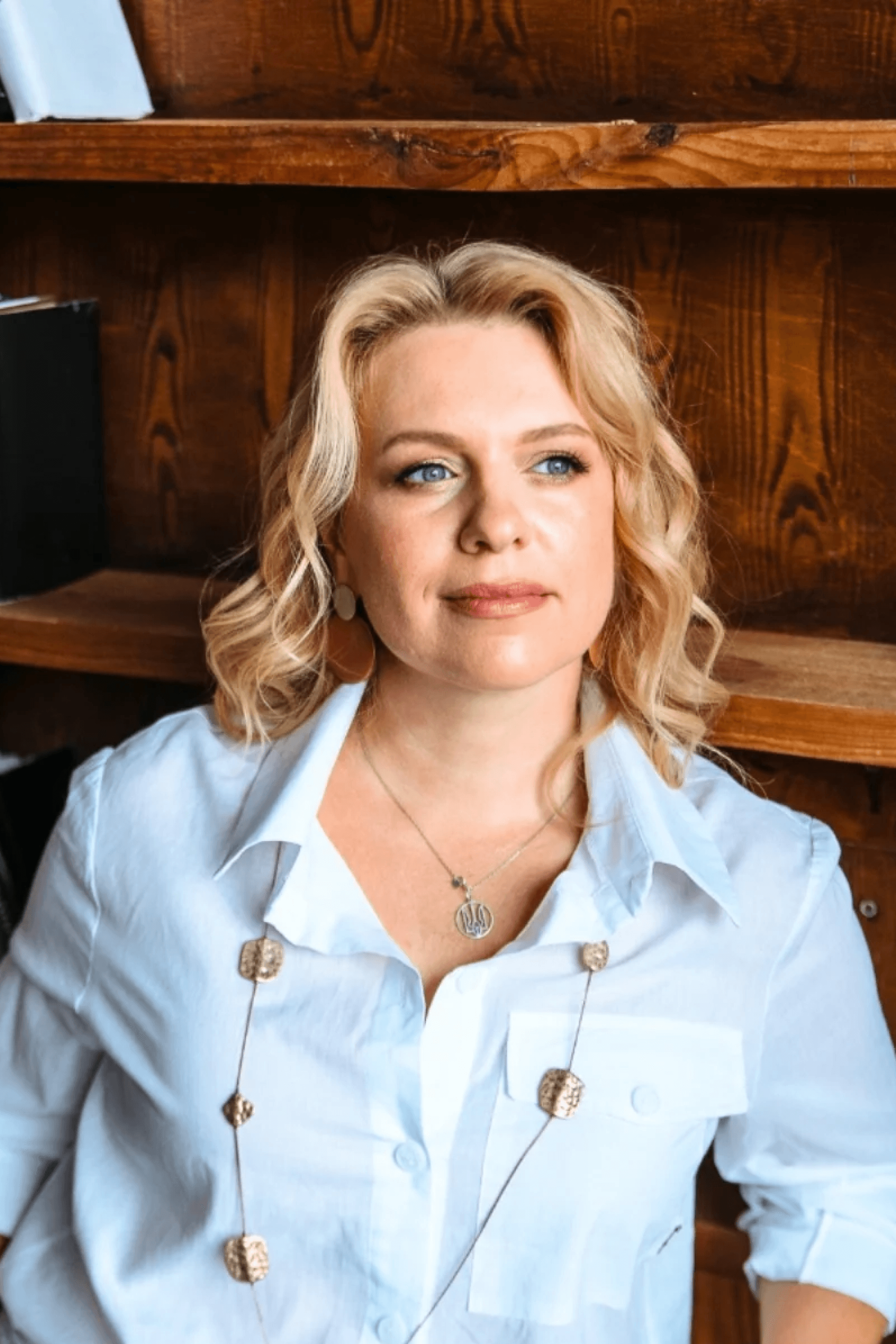
About Olha Tovpeko |
|
|
|
In 2020, you published The story of Lev, a boy who was afraid to be without his mom. Your older son inspired the main character. How did you come up with the idea to write and publish the book, and how many copies did you sell?
I once had to go on a business trip, and my older son Andrii, who was six at the time, was so afraid of being separated from me that no amount of coaxing worked. So I decided to write him a story that would help him deal with his fear. Within three days, The story of Lev was ready. That’s when I had this crazy idea to publish it. Everyone around me said it was expensive, complicated, and unprofitable, but I was sure I could do it.
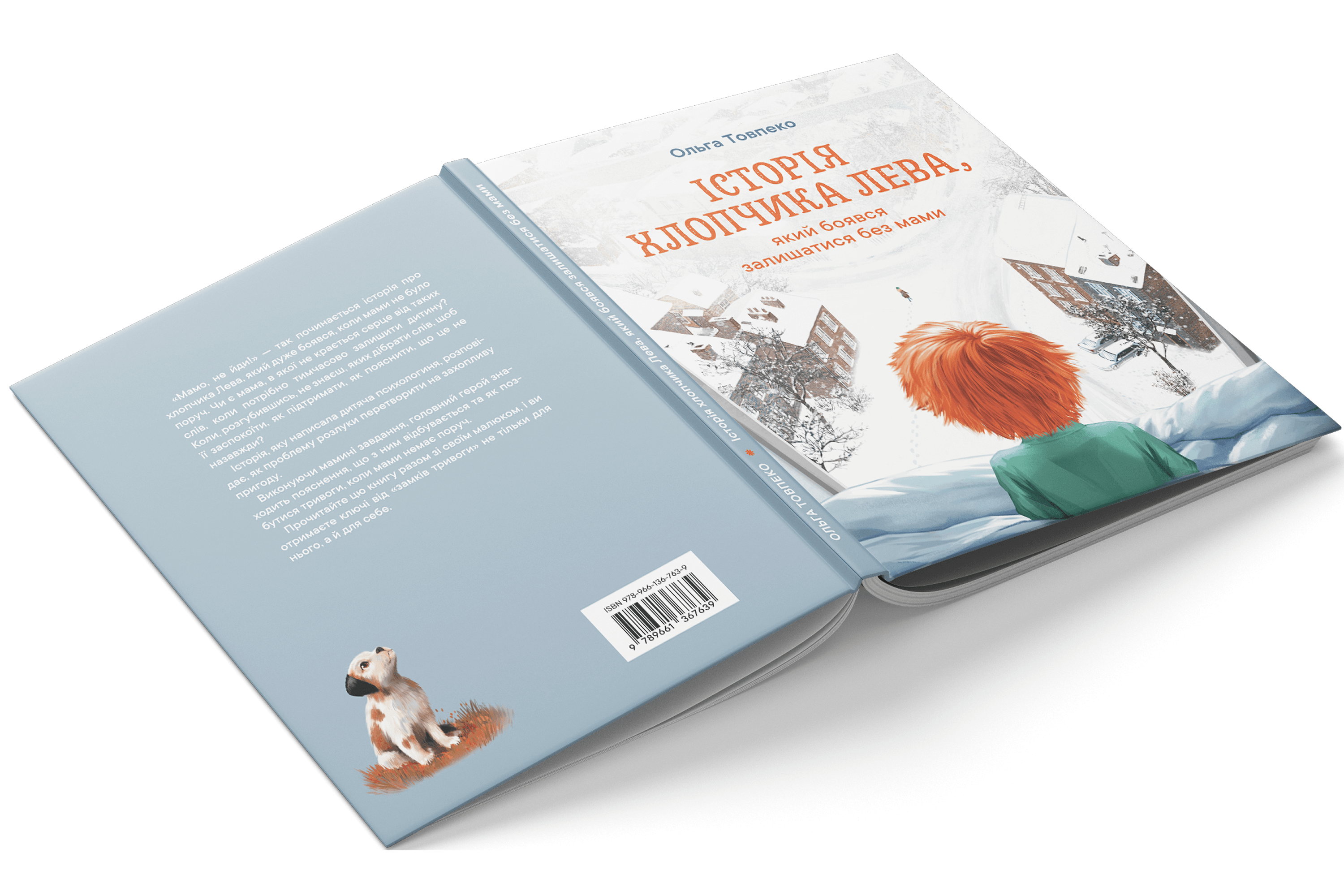
Some pages from the book “The Story of Lev, a Boy Who Was Afraid to Be Without His Mom.” Photo: fishontheroof.com 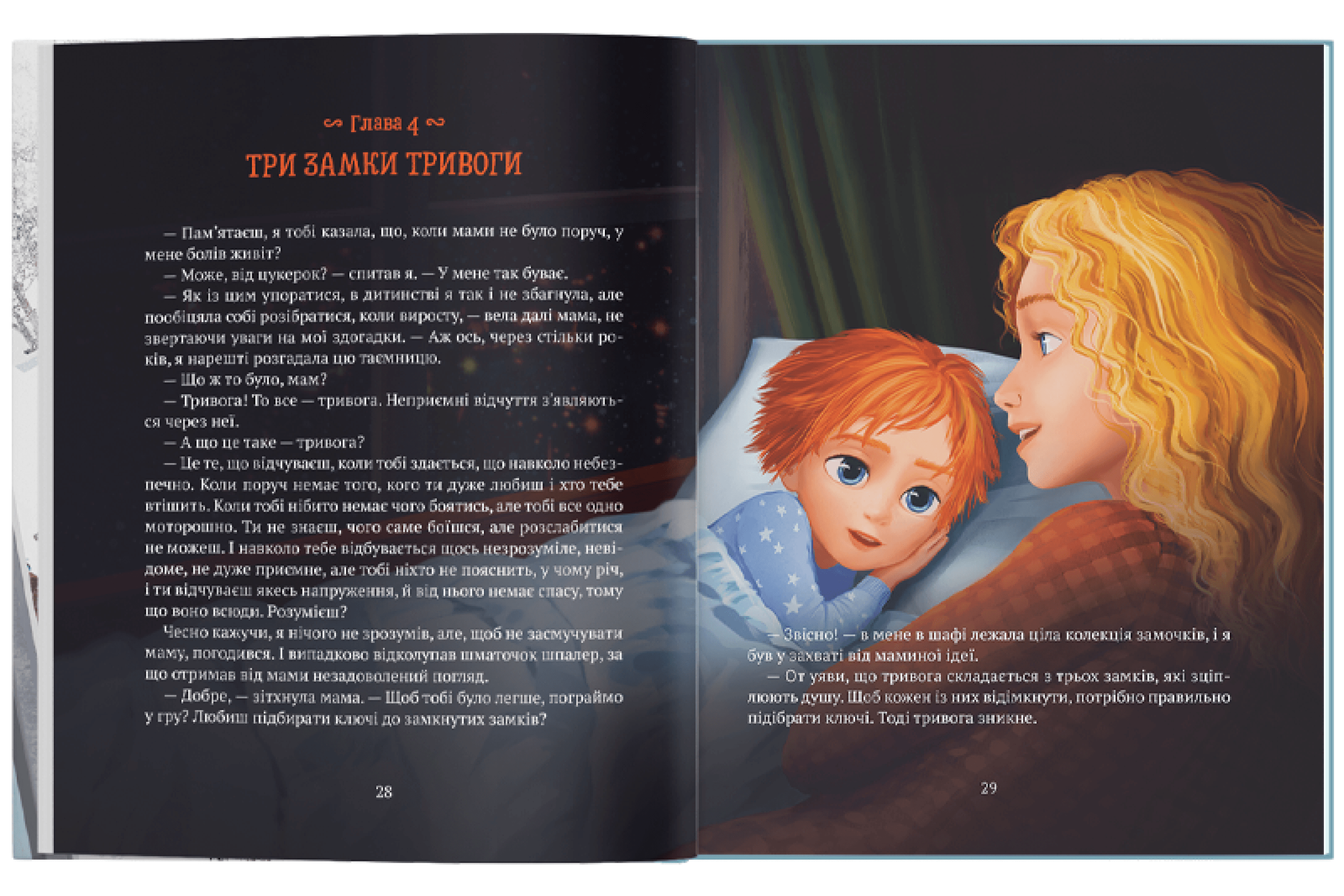
Photo: fishontheroof.com 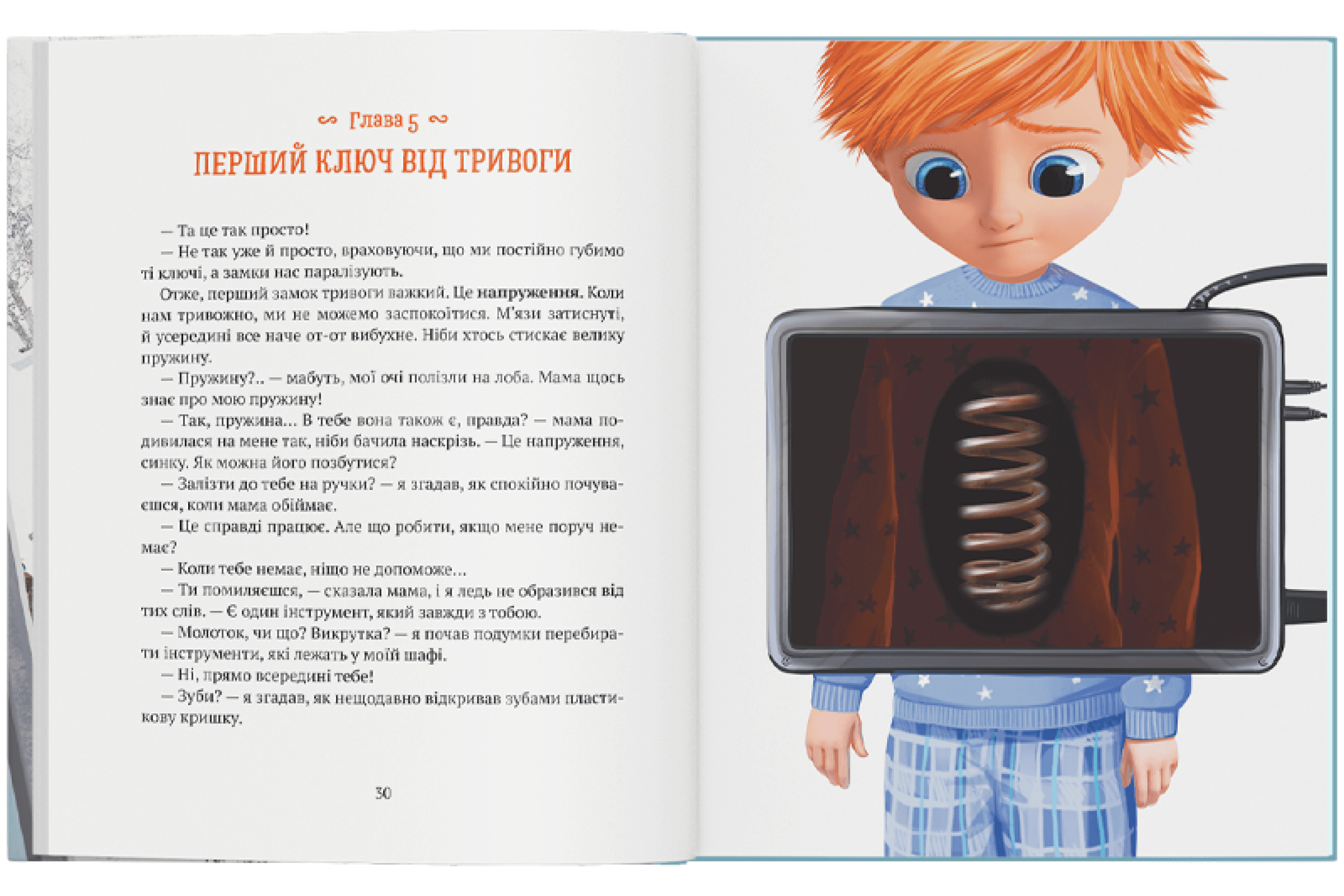
Photo: fishontheroof.com 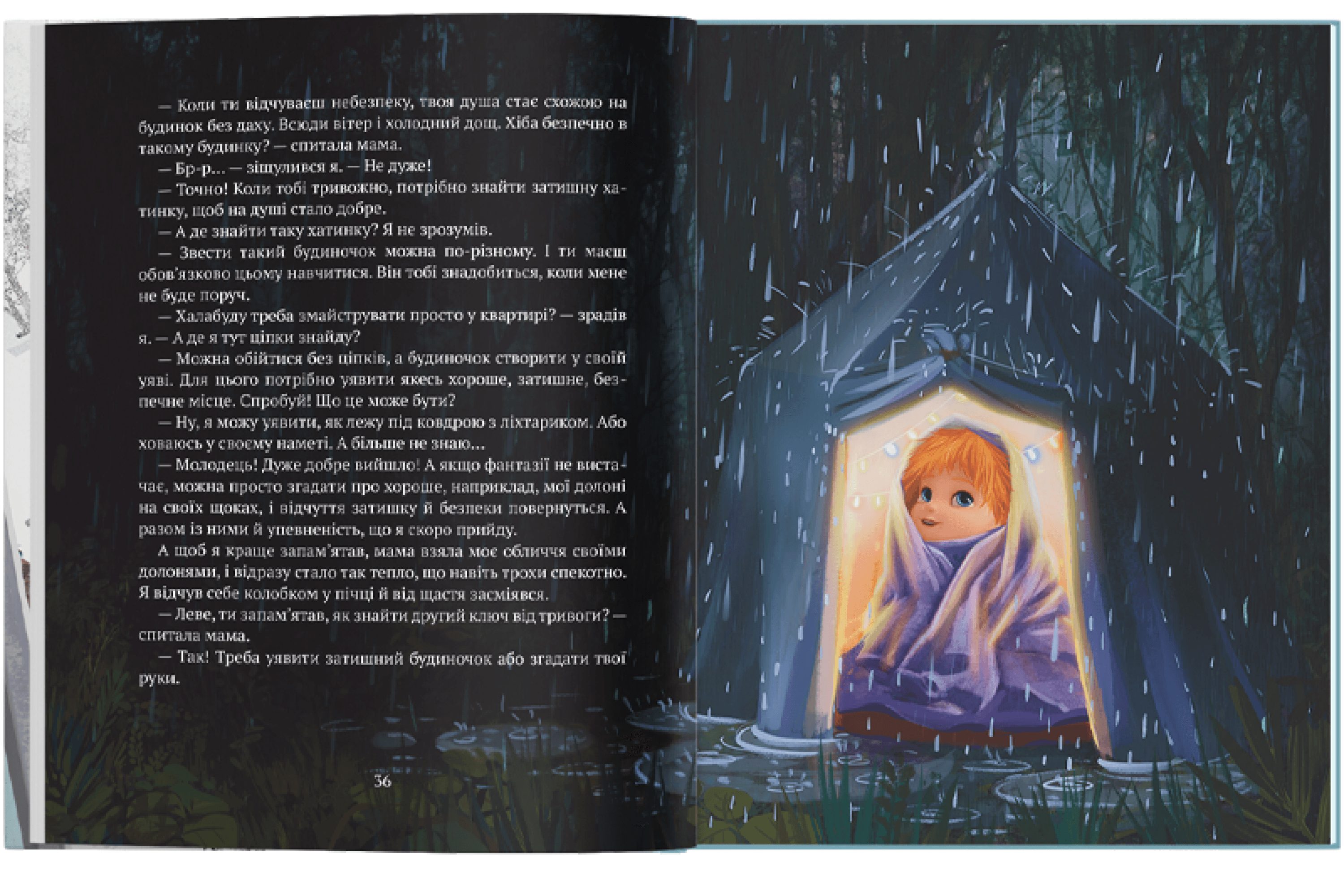
Photo: fishontheroof.com 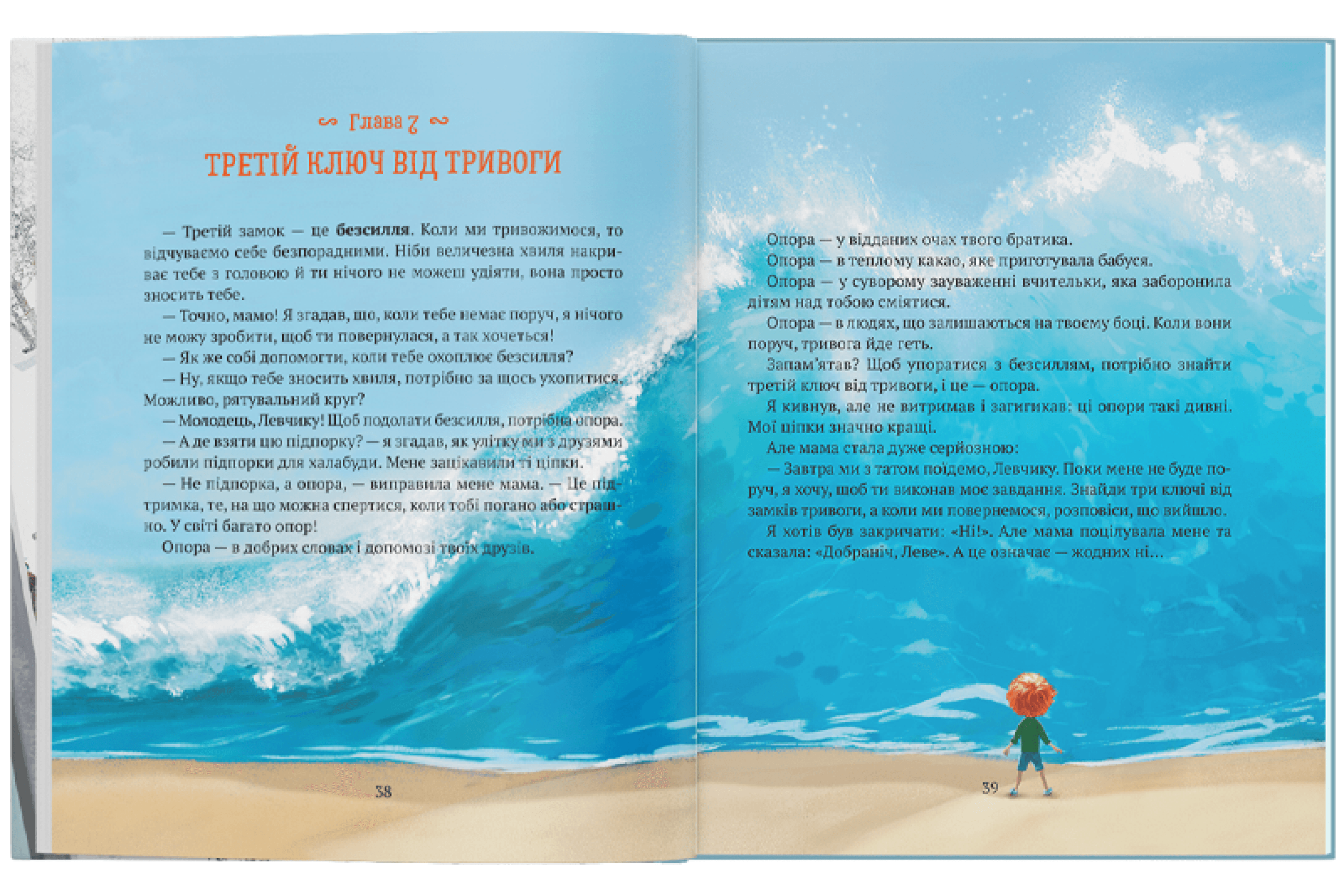
Photo: fishontheroof.com 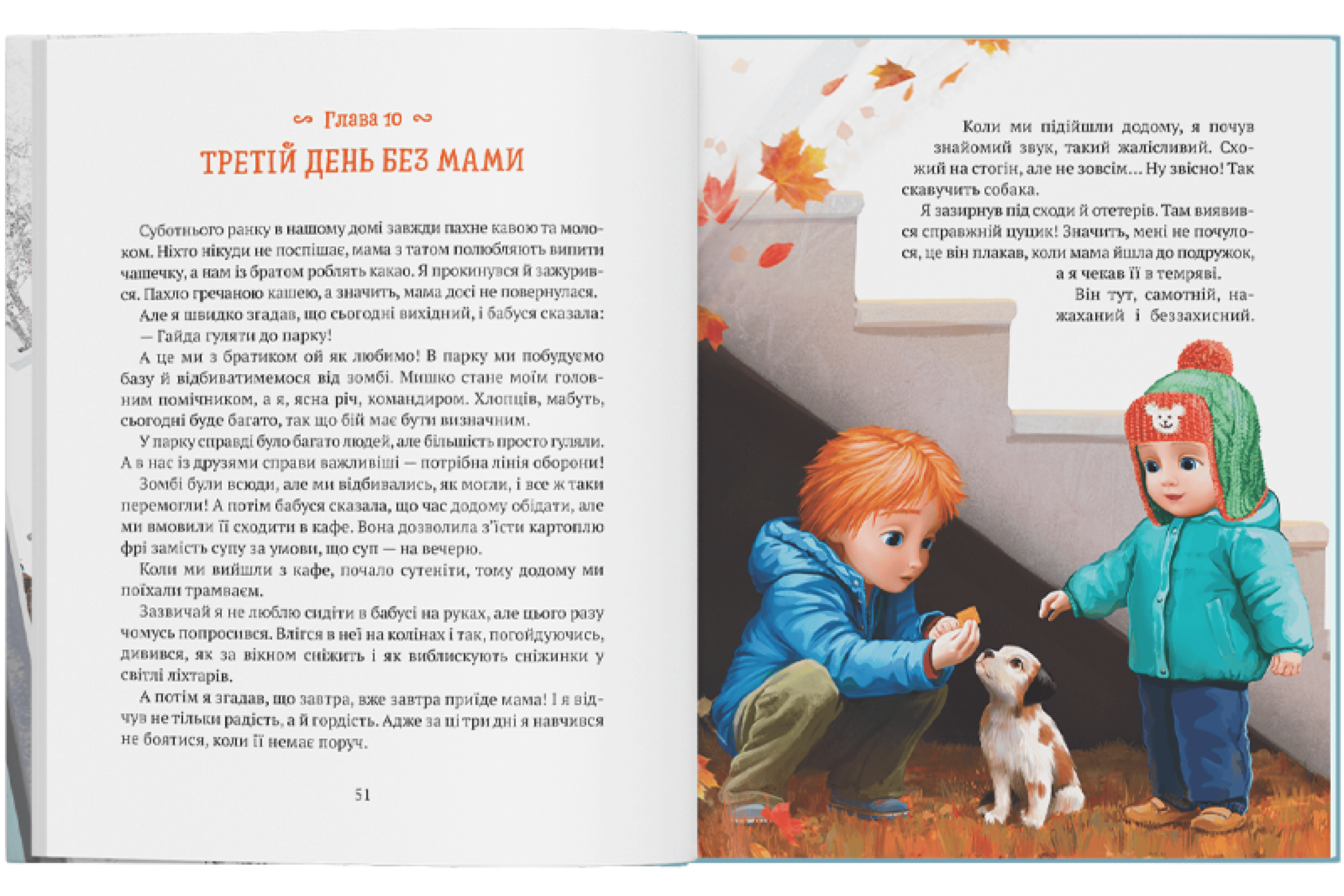
Photo: fishontheroof.com
The book quickly became popular among my blog followers. Over two years, I sold two print runs each in Ukrainian and Russian, about 4,000 copies in total. In January 2022, I printed another 1,000 copies in each language. But then the full-scale invasion began, and the Russian-language print run just sat there untouched. I still have no idea what to do with it.
By then, I’d already finished my second book, The story of Myshko, a boy who didn’t want to go to kindergarten. I dedicated it to my younger son Myroslav, who was five at the time. You can’t write a book for just one of your two children (laughs). Because of the war, the illustrator I’d been working with withdrew from the project, and the book didn’t come out until late 2023.
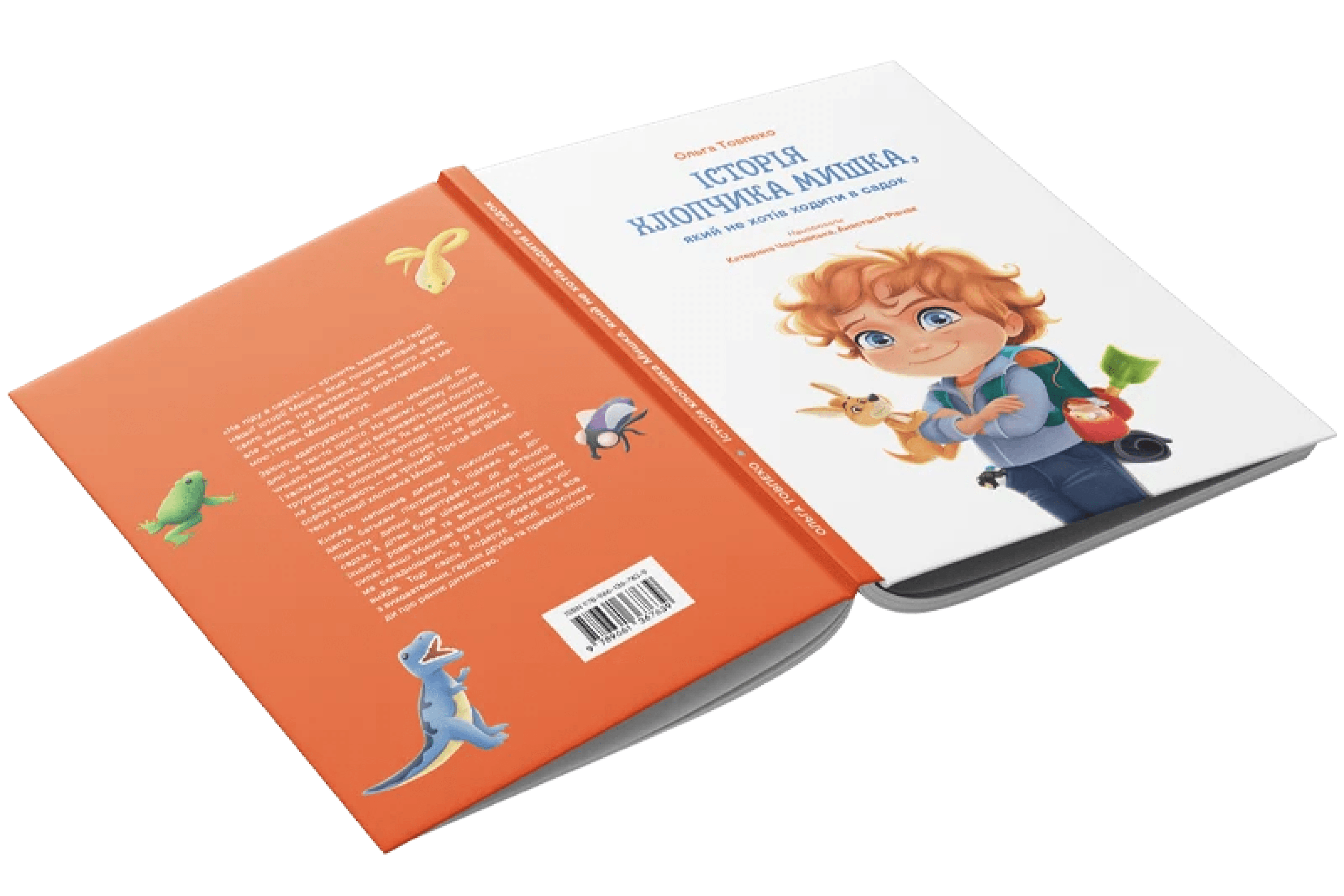
Some pages from the book “The Story of Myshko, a Boy Who Didn’t Want to Go to Kindergarten.” Photo: fishontheroof.com 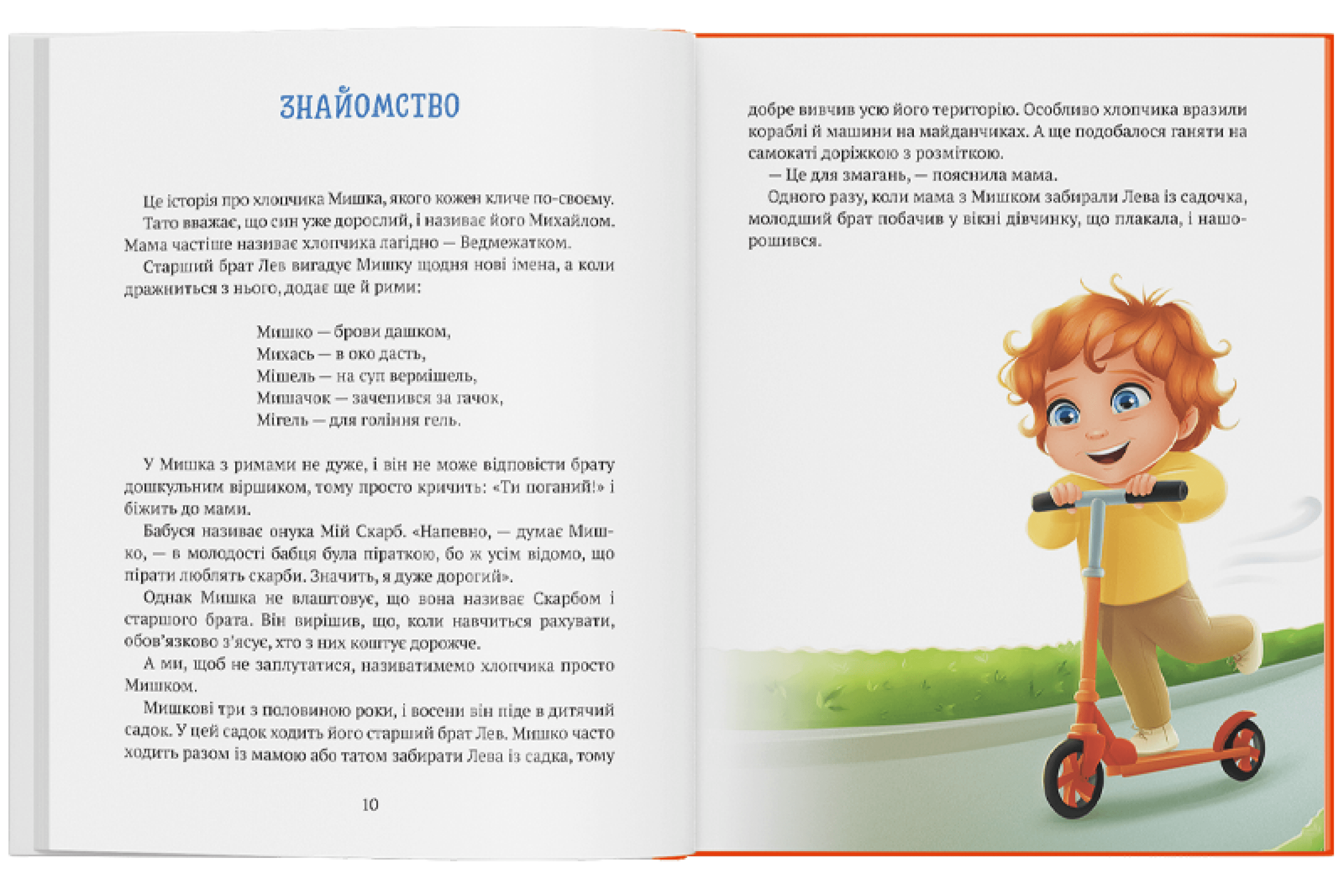
Photo: fishontheroof.com 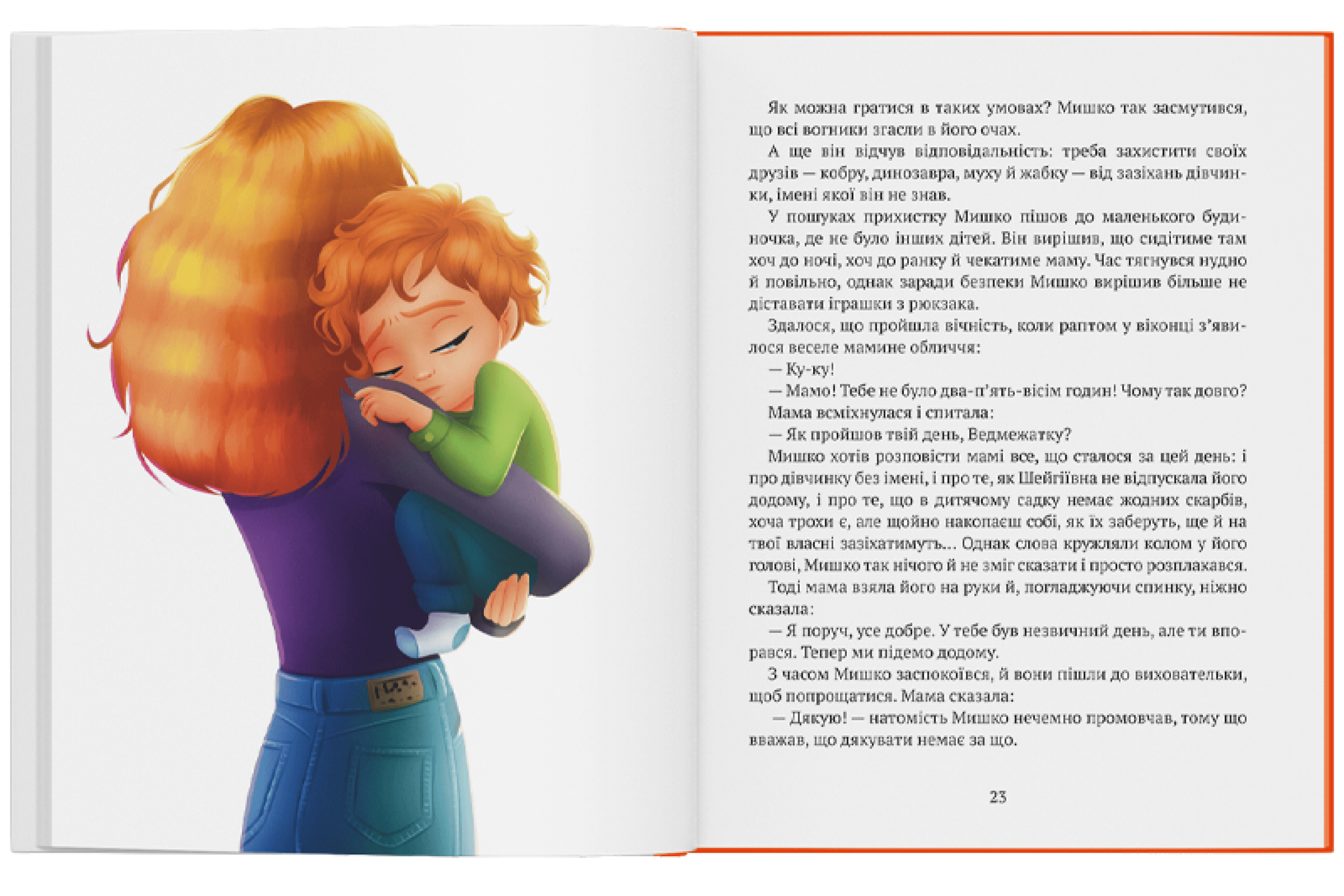
Photo: fishontheroof.com 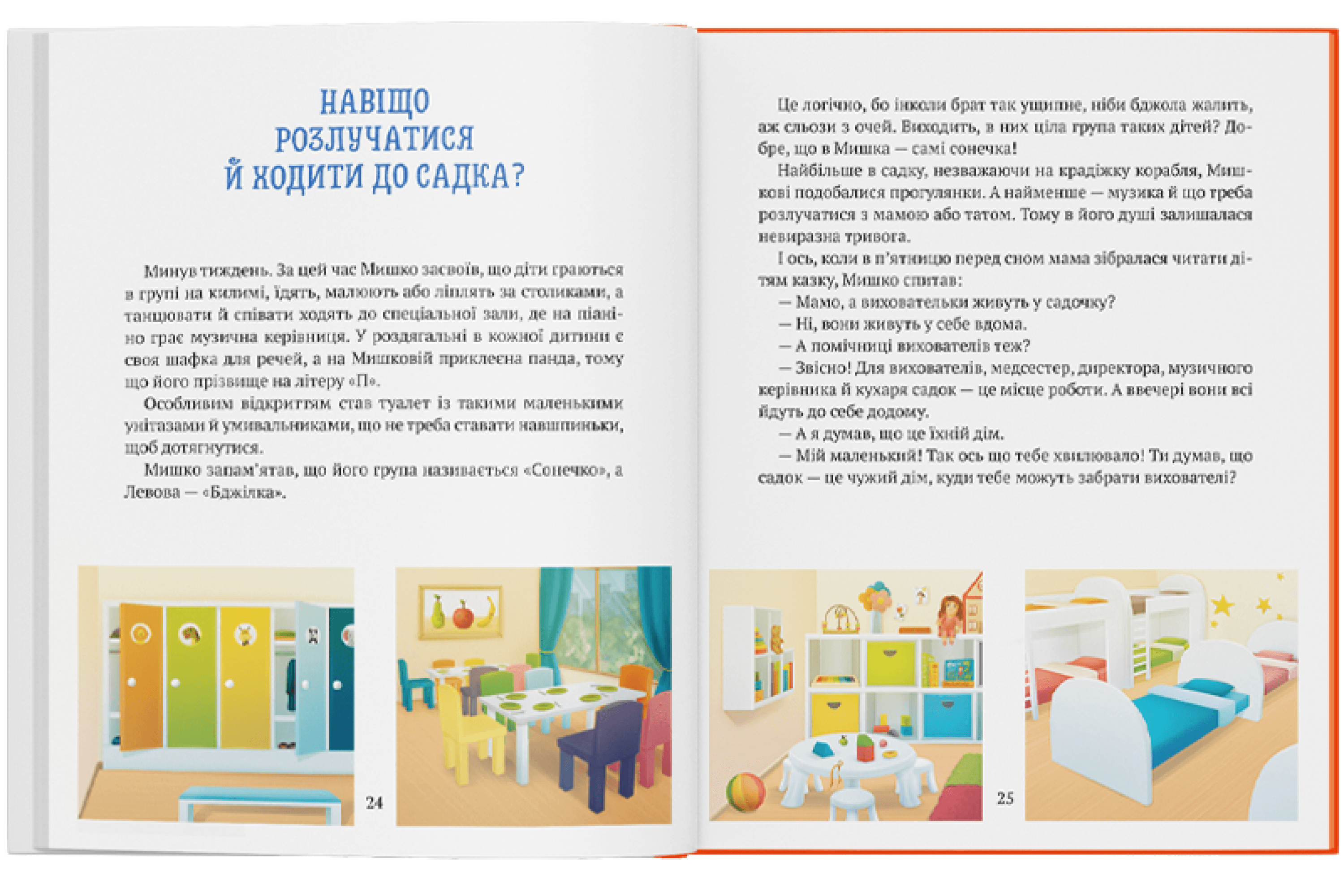
Photo: fishontheroof.com 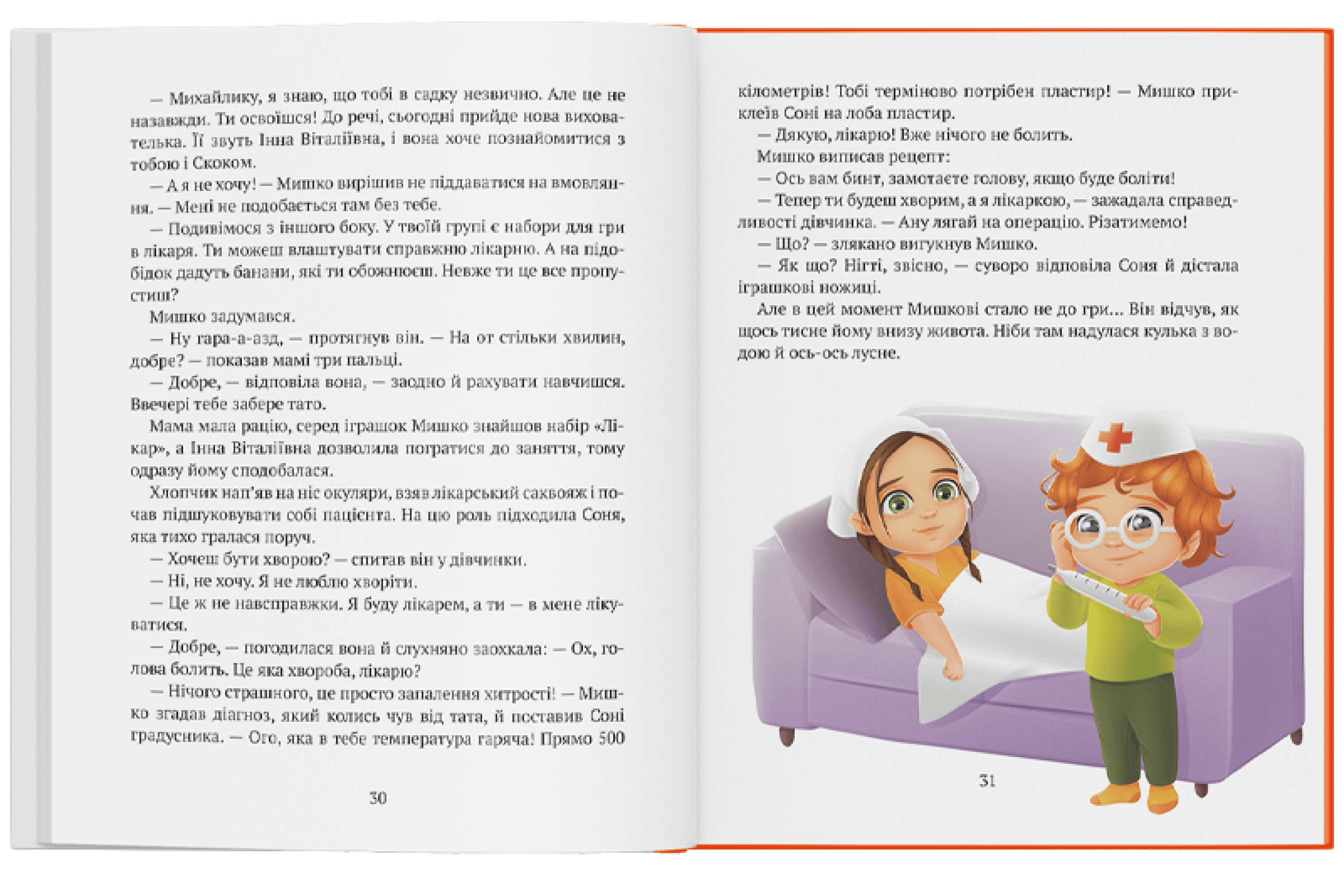
Photo: fishontheroof.com 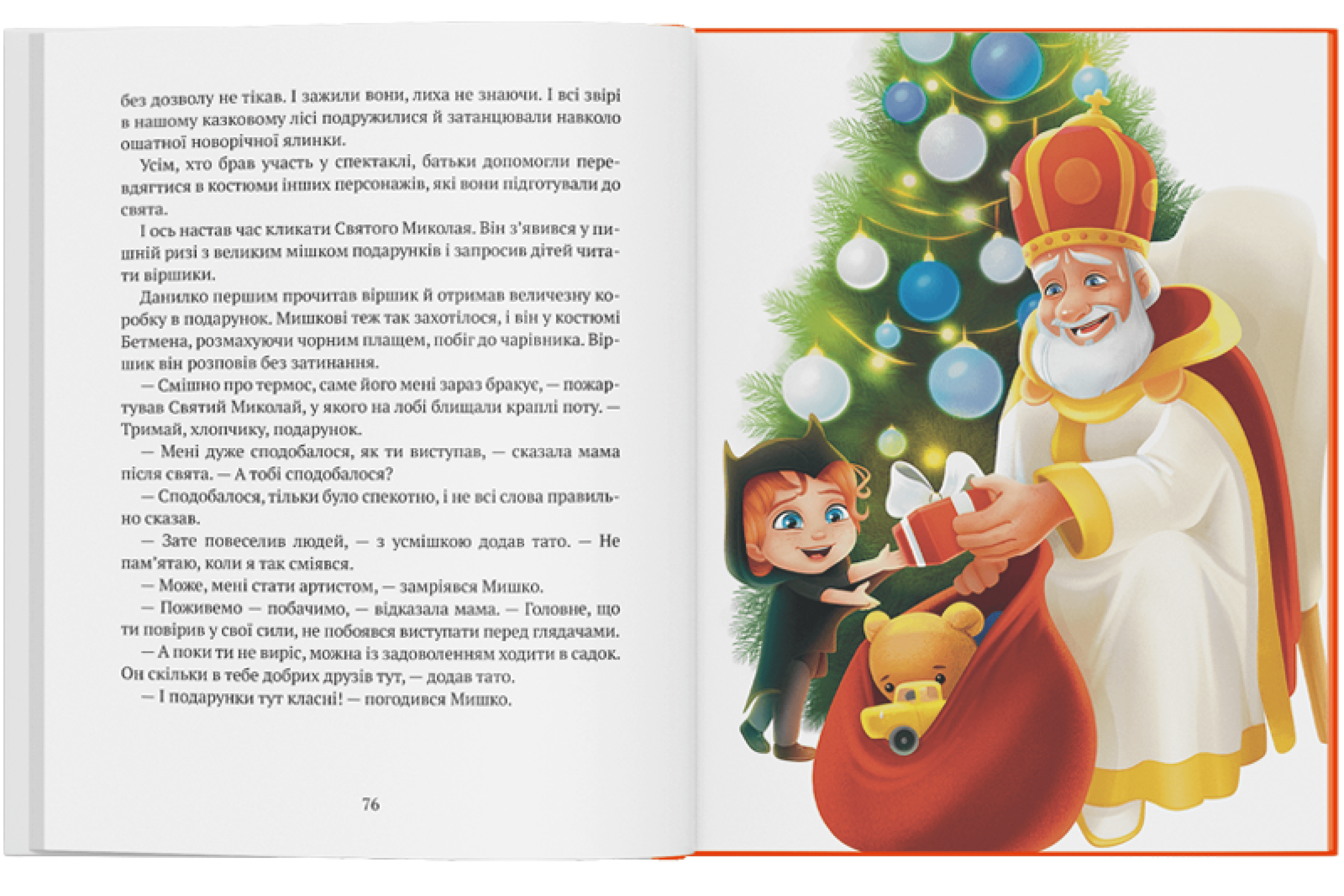
Photo: fishontheroof.com
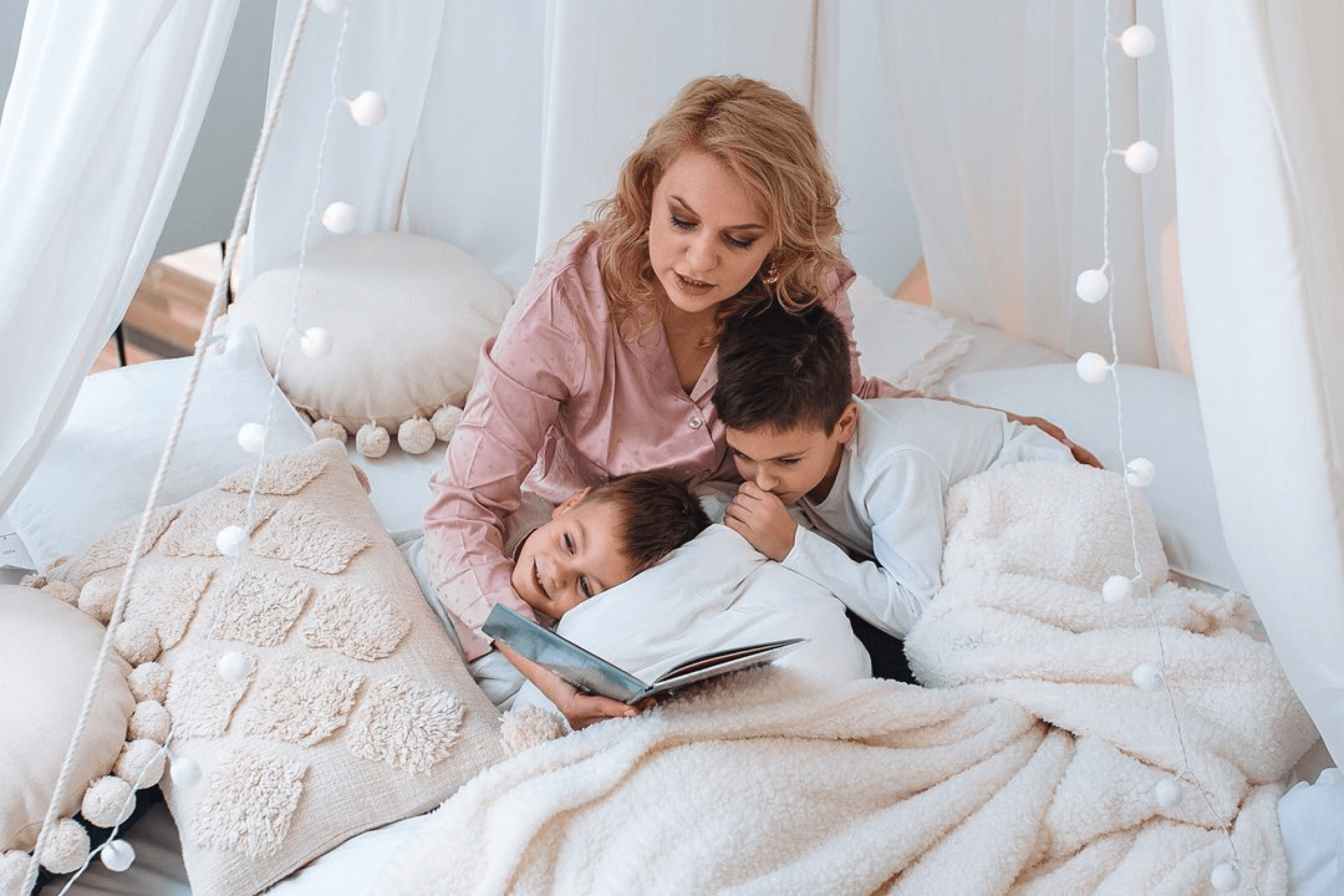
After self-publishing your books, you founded your own publishing house, Fish on the Roof. Why did you decide to do that?
The idea of starting a publishing house came to me back in the fall of 2022. The office where I was seeing clients was so cold that I had to work in a hat and jacket. I wanted to escape into some bright world, and ever since childhood, books had been that world for me. I looked at the big bookshelf in my office and suddenly realized that, unfortunately, most of the books on it were in Russian.
Around the same time, I was running a group for children affected by the war and realized they needed books that could help them make sense of what they were going through. There were hardly any such books available, and those that did exist had mostly been translated only into Russian. That pushed me to start a publishing house specializing in psychological literature for children and parents, as well as professional books for psychologists.
It was a gamble. I invested about a million hryvnias I’d saved before the full-scale war. I obtained a publishing registration certificate, built a website, launched social media accounts, and started putting together a team. The first two books we released were my own.
I was going by a prewar financial model. I expected publishing a book to cost roughly what The story of Lev had cost me, about $3,500, and hoped I could gradually turn the publishing house into a profitable business. That didn’t happen, but despite all the challenges, we officially launched in May 2024 and we’re still here. For now, we’re breaking even.
Why did you choose the name Fish on the Roof?
I have Jewish roots, and on one of my trips to Warsaw, I visited the Museum of the History of Polish Jews. There I saw a reconstruction of one of the earliest synagogues that once stood in western Ukraine. There were fish painted on its vaulted ceiling. They seemed to be peeking out from under the roof, looking straight at me. It was mesmerizing. I remembered that image during one of the blackouts in Kyiv, and that’s how the name came about.
Which foreign book did you decide to publish first, and was it difficult to acquire the publishing rights?
It was Life and Loss by American child psychotherapist Linda Goldman, a book for parents and other adults who want to support a child going through a loss. In late 2022, I attended Linda’s seminar on childhood loss, learned about her book, and immediately knew we needed it. I had no literary agents or contacts at American publishing houses, so I found Linda’s contact information and wrote to her directly. We got along well from the start, and she helped me acquire the rights to the book for $500.
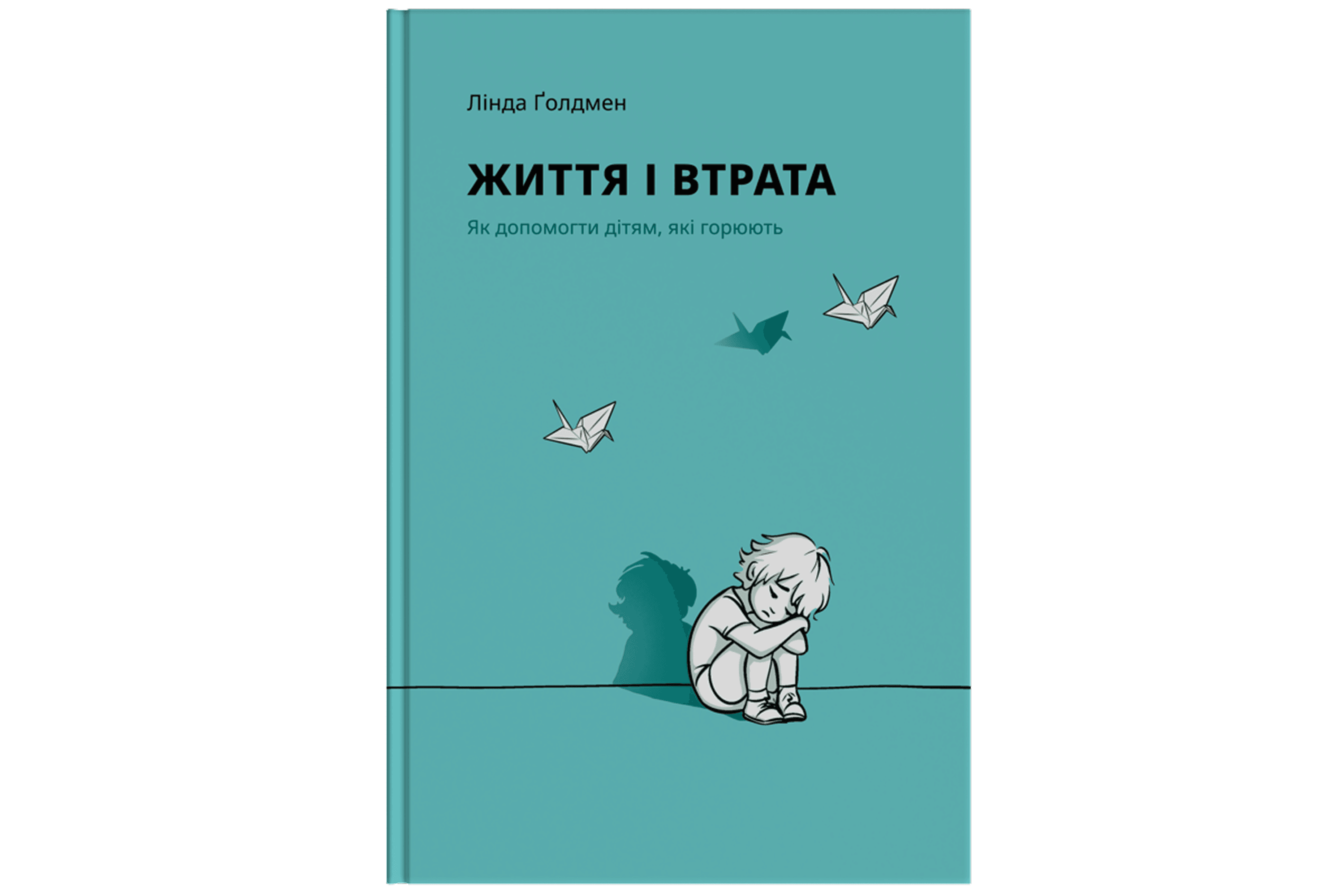
Some pages from the book “Life and Loss” by Linda Goldman. Photo: fishontheroof.com 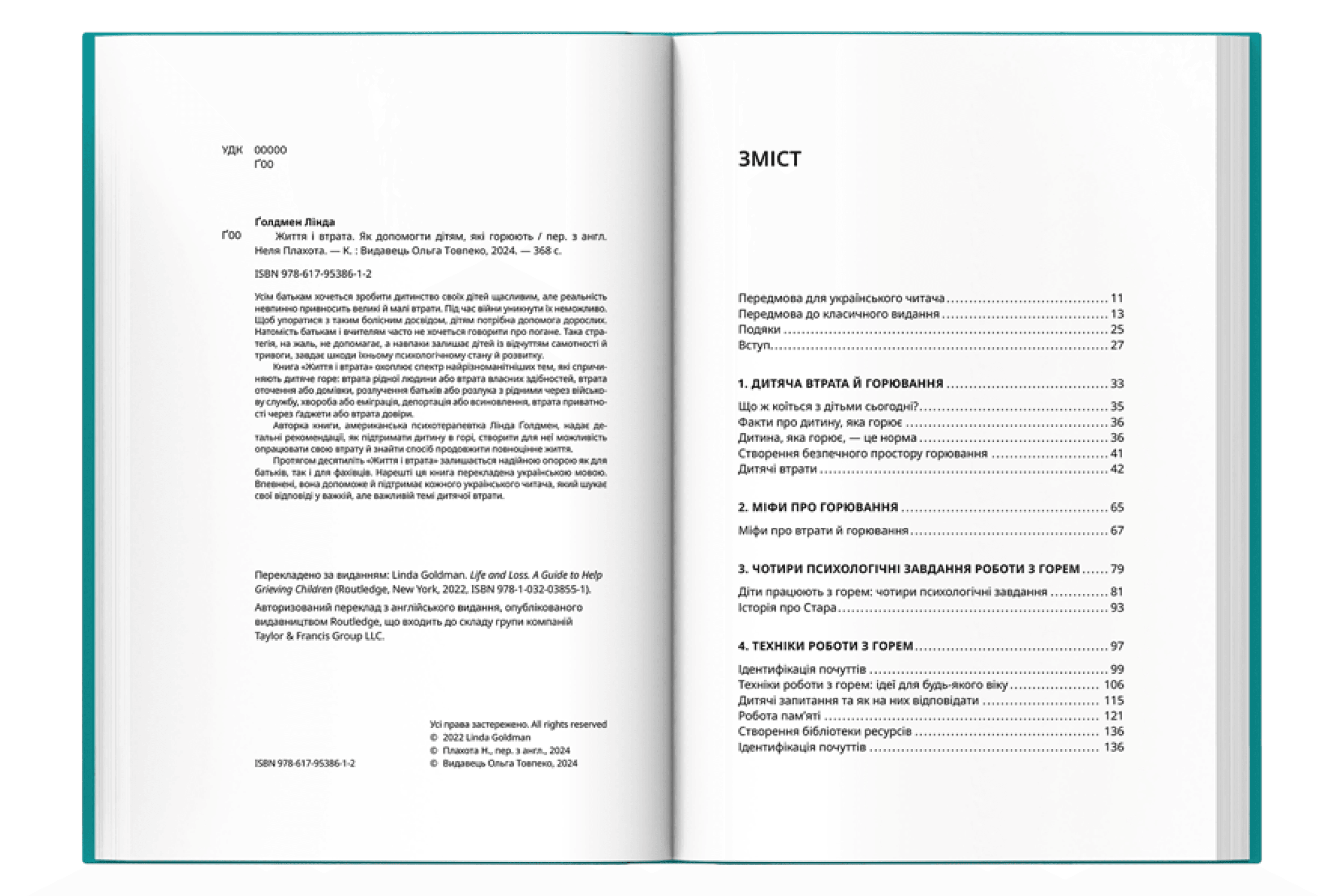
Photo: fishontheroof.com 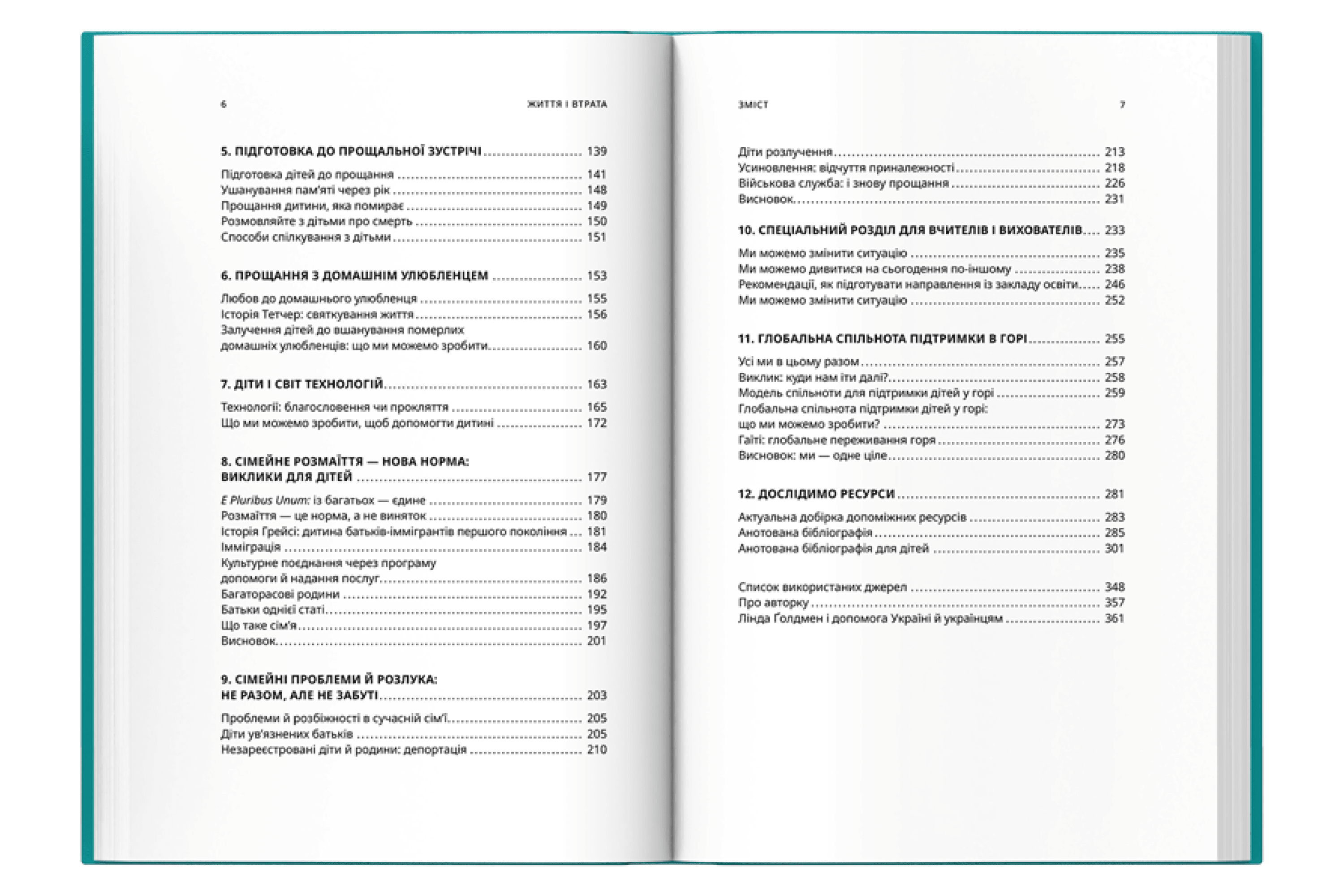
Photo: fishontheroof.com 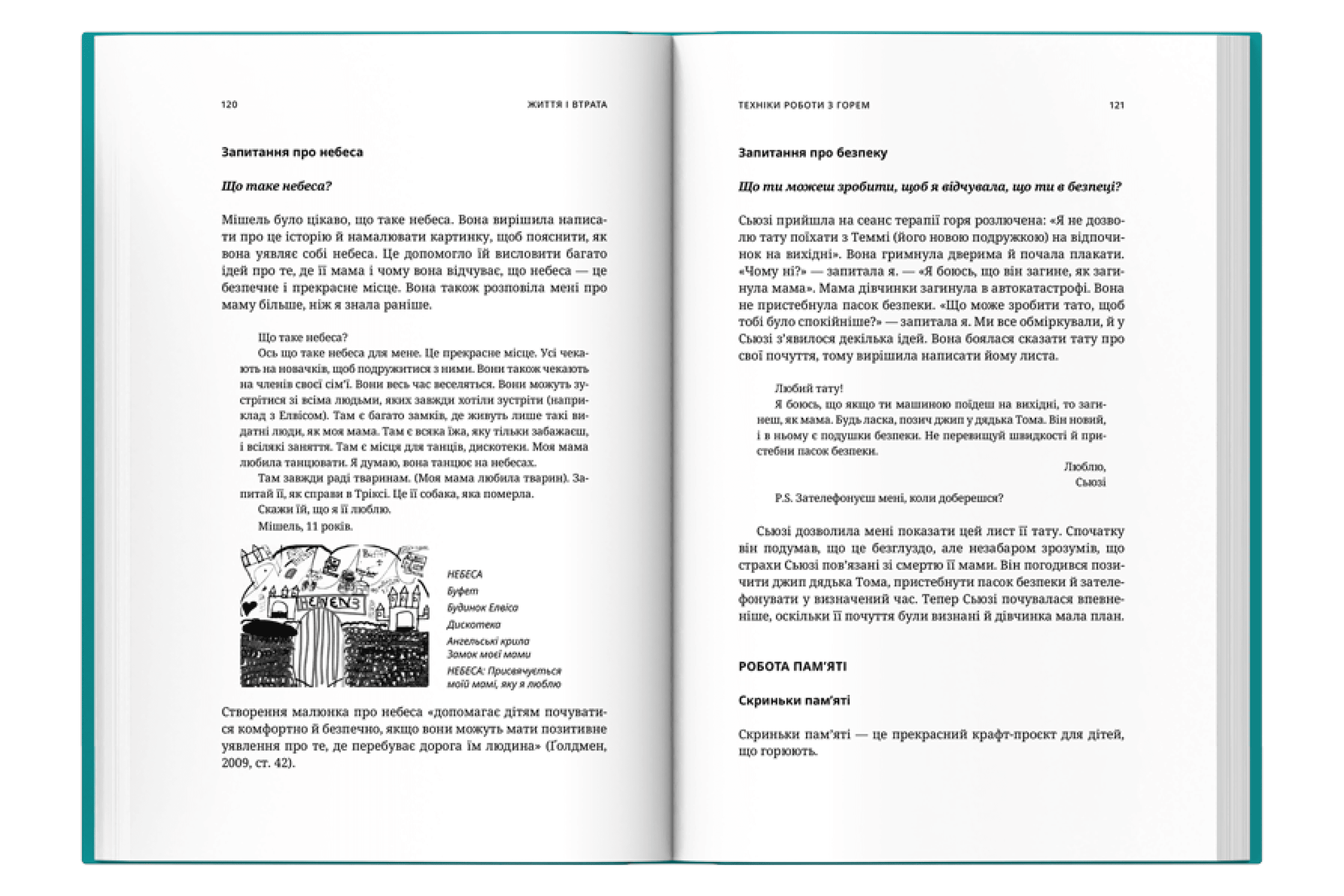
Photo: fishontheroof.com
I was also looking for children’s books because their shorter length makes them much faster to prepare for publication. An adult book can take a year or two, while a children’s book can realistically be published in three or four months. I consulted mothers who were my clients and blog followers and chose The Kissing Hand by American author Audrey Penn. It’s a story about a mother teaching her little raccoon not to be afraid of separation when he goes to school. The book had already been published in Ukraine, but only in Russian. Once again, I contacted the author directly. She put me in touch with her agent, and we quickly secured the publishing rights. The book came out in 2024.
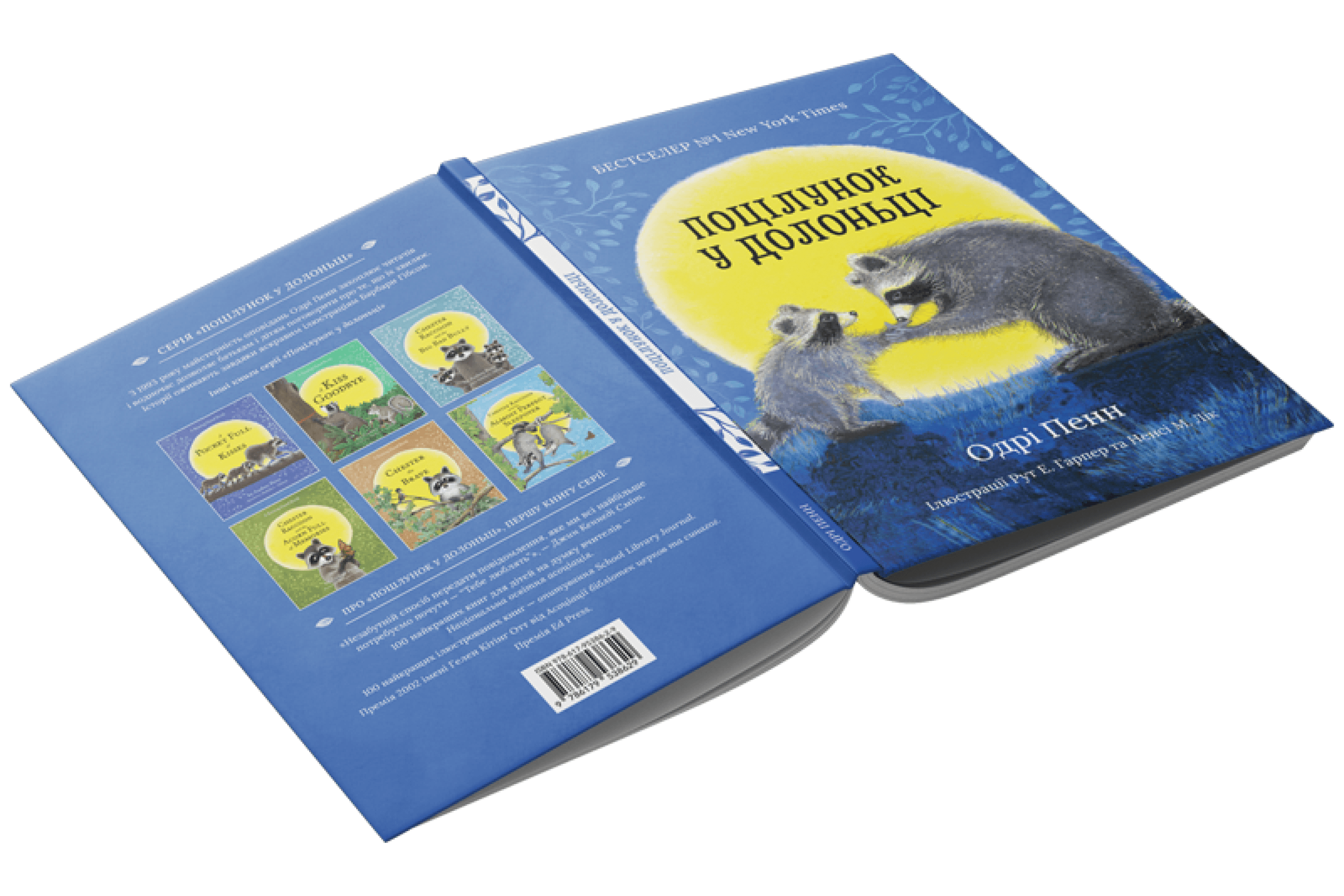
Some pages from the book “The Kissing Hand” by Audrey Penn. Photo: fishontheroof.com 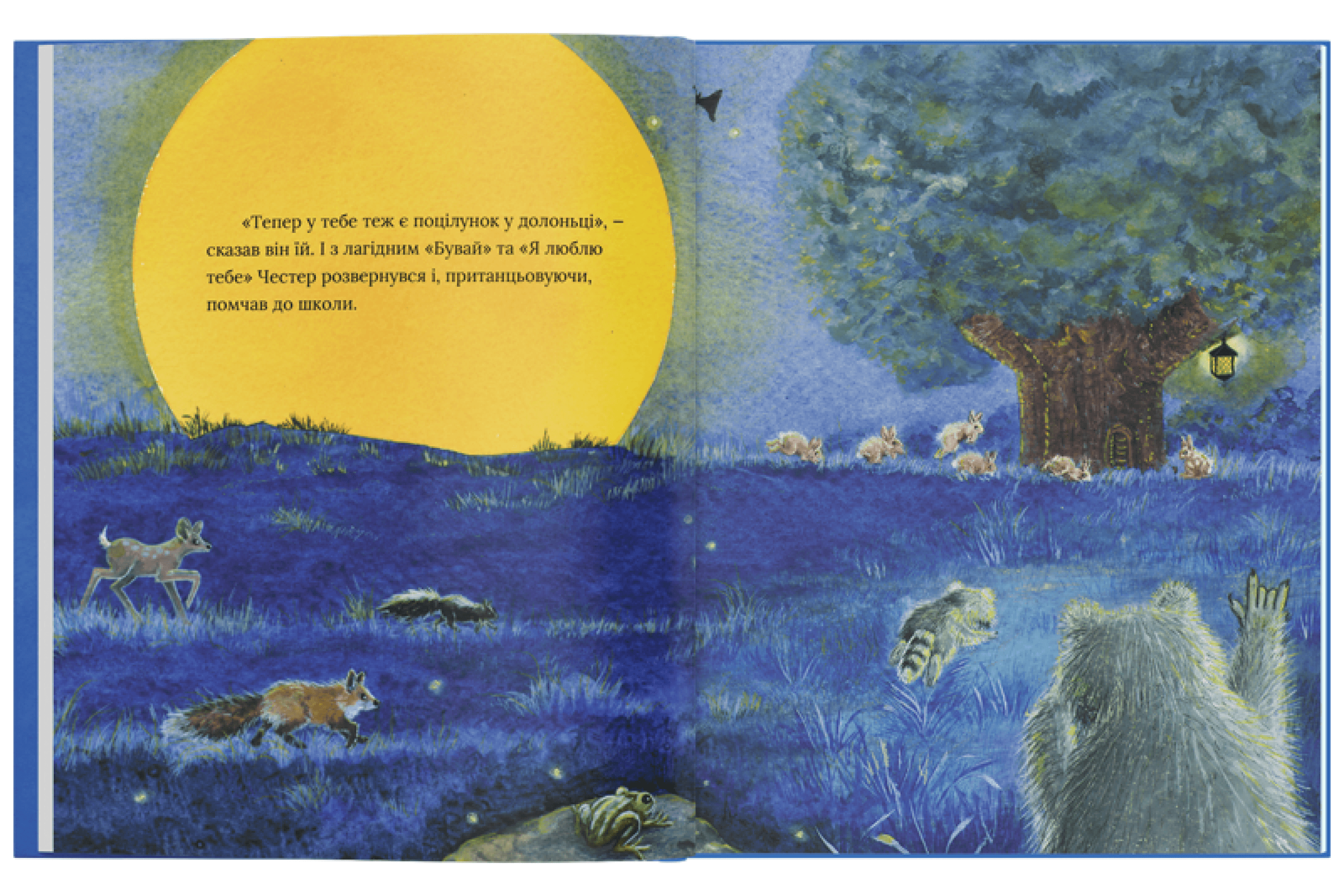
Photo: fishontheroof.com 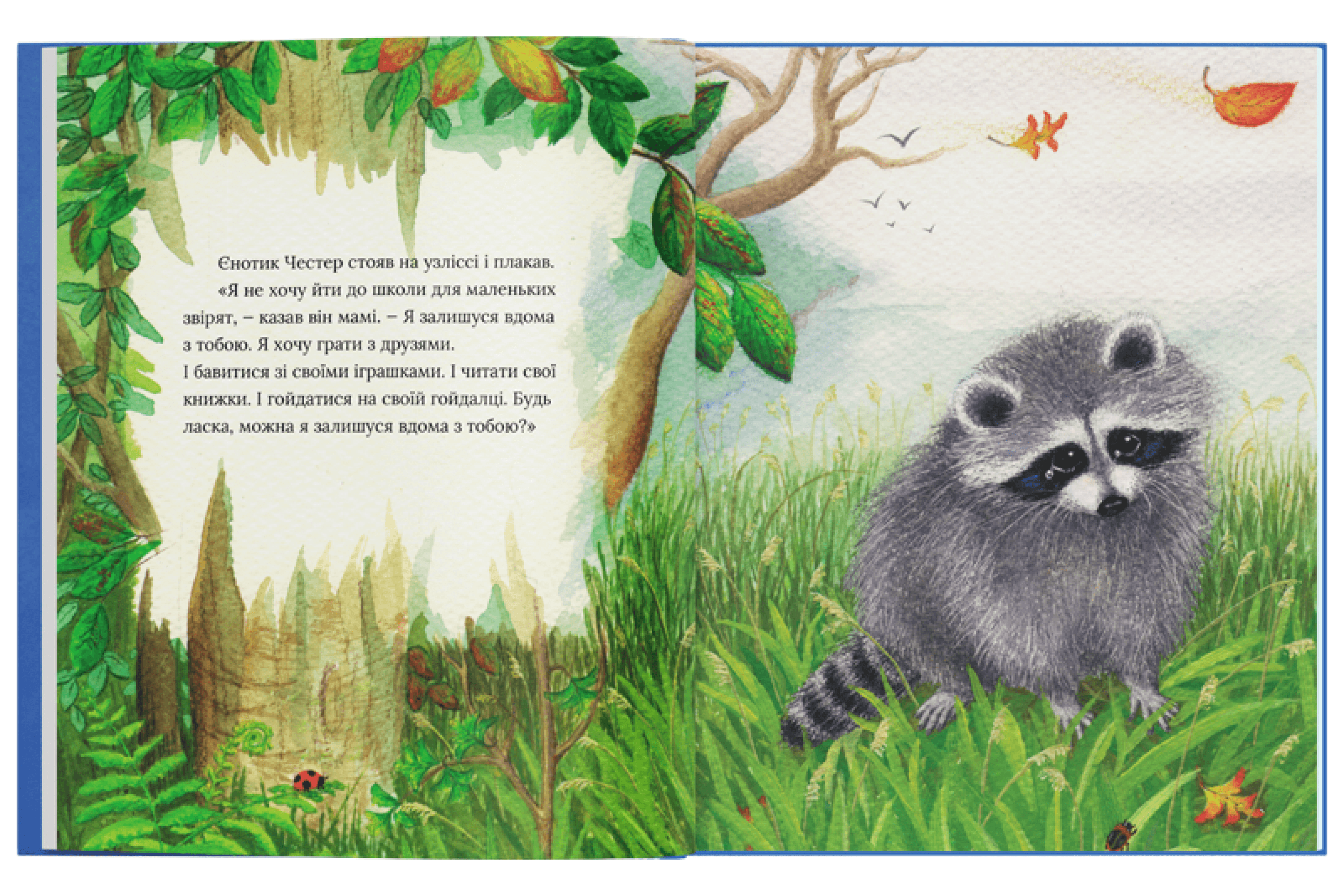
Photo: fishontheroof.com 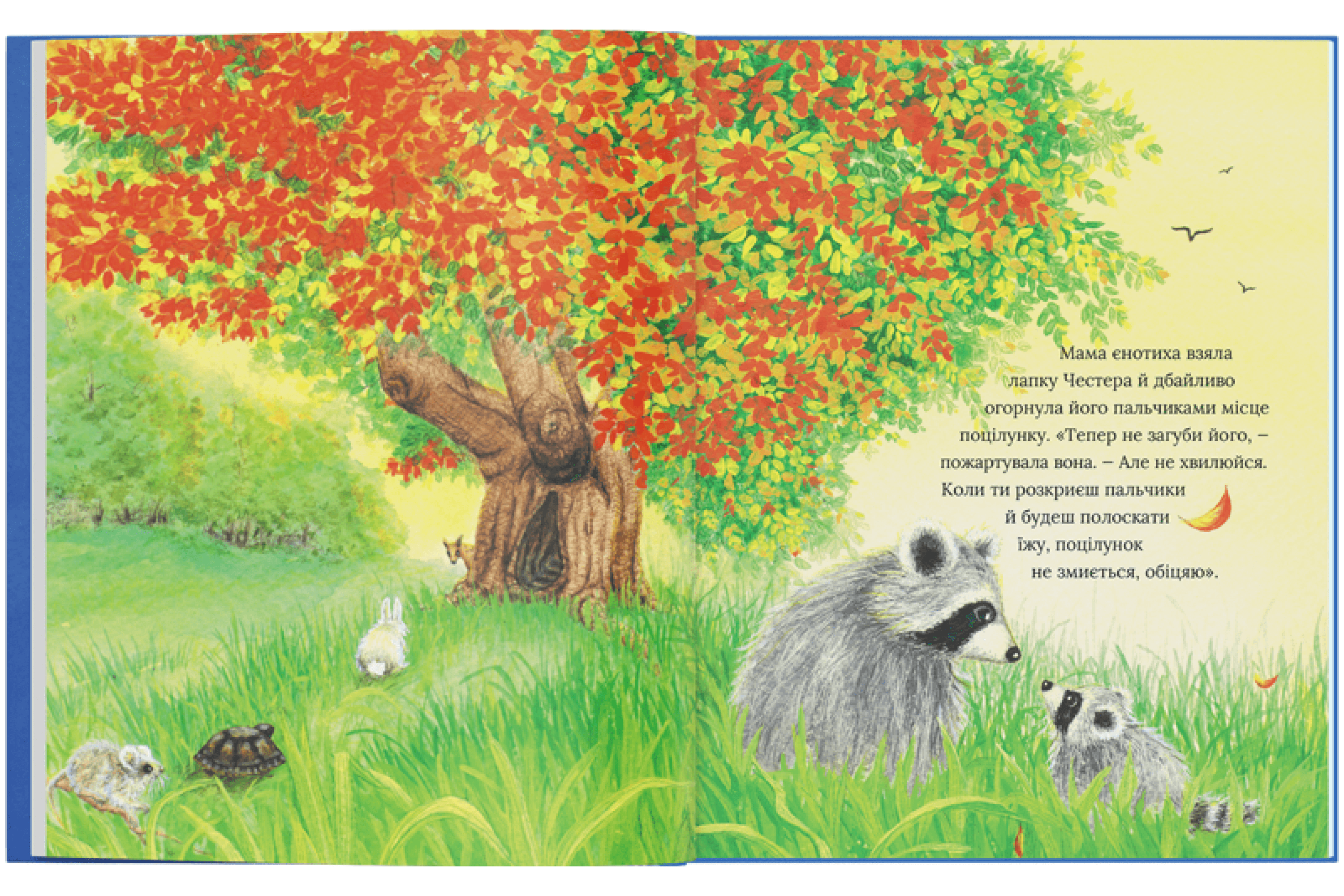
Photo: fishontheroof.com
How much does it cost to publish a book on average? What is the difference in costs between adult and children’s books?
In our experience, an adult book costs about twice as much as a children’s book because it’s longer. A print run of a 300-page adult book costs around $5,600, compared with $3,400 for a children’s book. The price depends on the book’s format, length, number of spreads, licensing fees, and printing costs. Production costs also keep rising. All paper in Ukraine is imported, and it gets more expensive every season. Printing prices have more than doubled since 2022.
To pay everyone involved in making a book fairly and still earn something ourselves, we’d have to sell books for $20 to $40, as they do abroad. But customers can’t afford those prices, and financially, it’s a disaster.
Which is more profitable for a publishing house: working with Ukrainian authors or publishing translated books?
They’re two different financial models, each with its own advantages and disadvantages. To publish a foreign book, you first need to buy a license, which costs between $500 and $1,000 on average. Then you pay the author royalties, about 7% to 10% of the price of each copy. But there’s an advantage: along with the text, you get finished illustrations, saving time and money on creating them. It’s also much easier to forecast demand for translated books by analyzing sales and ratings on international marketplaces. One downside is that when a lot of people are involved in approving the deal, rights negotiations can take up to nine months. When things drag on too long, I often find myself thinking, “God, do I really want this book?”
The publishing house pays Ukrainian authors a fixed fee and royalties. It’s a little cheaper because, unfortunately, our writers charge less for their work. But you have to invest separately in illustrations, and preparing the book for printing ultimately takes longer. Creating a book from scratch is also risky because you never know how it will turn out or whether people will want to buy it. At the same time, it’s important to me to support the creation of Ukrainian books and the work of talented authors and illustrators. Ukrainians need stories about our own experiences, written by Ukrainians. No one can tell those stories better than we can.
When building our list, we combine both models. One book might come out faster and generate a profit, and we use that money to publish another that takes longer to translate or is being created by Ukrainian authors.
How many people work at the publishing house? Do you have a permanent team, or do you work with freelancers?
We have a small permanent team, mostly family members. My dad handles book storage and deliveries, and my sister Kseniia is our managing editor. She oversees translation, editing, proofreading, text preparation, and layout, and also organizes our participation in festivals and book events.
Kseniia is my biggest source of support and inspiration in this work. She graduated from the Institute of Journalism at Taras Shevchenko National University of Kyiv with a degree in Publishing. She’s worked at various publications and has lots of contacts among editors, proofreaders, and layout designers. A huge book lover, she also does a lot of charity work and has sent more than 1,500 books to libraries in small and frontline towns across Ukraine.
We also have a communications specialist and an administrative manager. We hire some professionals on a freelance basis. For example, we pay our layout designer separately for each publication. The children of everyone on the team also take part in the publishing process. I call them our beta readers. I always ask what they think about the books we’re planning to publish.
Fish on the Roof specializes mainly in books for parents and children. What topics interest them most right now?
We have a very specific niche. I call it “therapeutic stories.” Essentially, we publish books about problems. And that’s a problem in itself because parents often ask whether we have anything positive. We’re actually moving in that direction now. Writer Halyna Budilova is working on a book for us about how to nurture joy during wartime and how that joy helps resist depression and despair. We’ve already published other books by Halyna, a series about helping children recognize and manage “negative” emotions like anger and fear, which are actually perfectly normal.
Our most popular book is The Kissing Hand. We’ve sold more than 3,000 copies, and a print run usually sells out in three to six months. It’s a simple, brilliant book about how a mother’s love stays with a child even when she’s not there. Every child needs to know that.
Your books explain difficult subjects like war, loss, and fear to children in simple language. Can they also help parents figure out how to start these conversations with their children?
I see a book as a little bridge between difficult things and a child’s heart. When psychologists tell parents, “You need to mirror your child’s feelings and contain them,” it’s all Greek to many. Parents may simply lack the skills and experience to do that.
That’s where a book can help. Unlike psychological counseling, books are accessible to many people. A mother doesn’t have to figure out how to contain emotions. She can simply read her child the story of Boiusko, a little monster who’s afraid and then learns to deal with his fear. In the introduction for parents, we always provide simple, clear instructions on how to read the book and what games to play with their child afterward to reinforce what the story was about.
The idea of talking about difficult subjects runs through all our books. I want parents in every family to talk to their children and really listen to them. That way, children learn to understand their own feelings, talk about their experiences, and communicate with others in general.
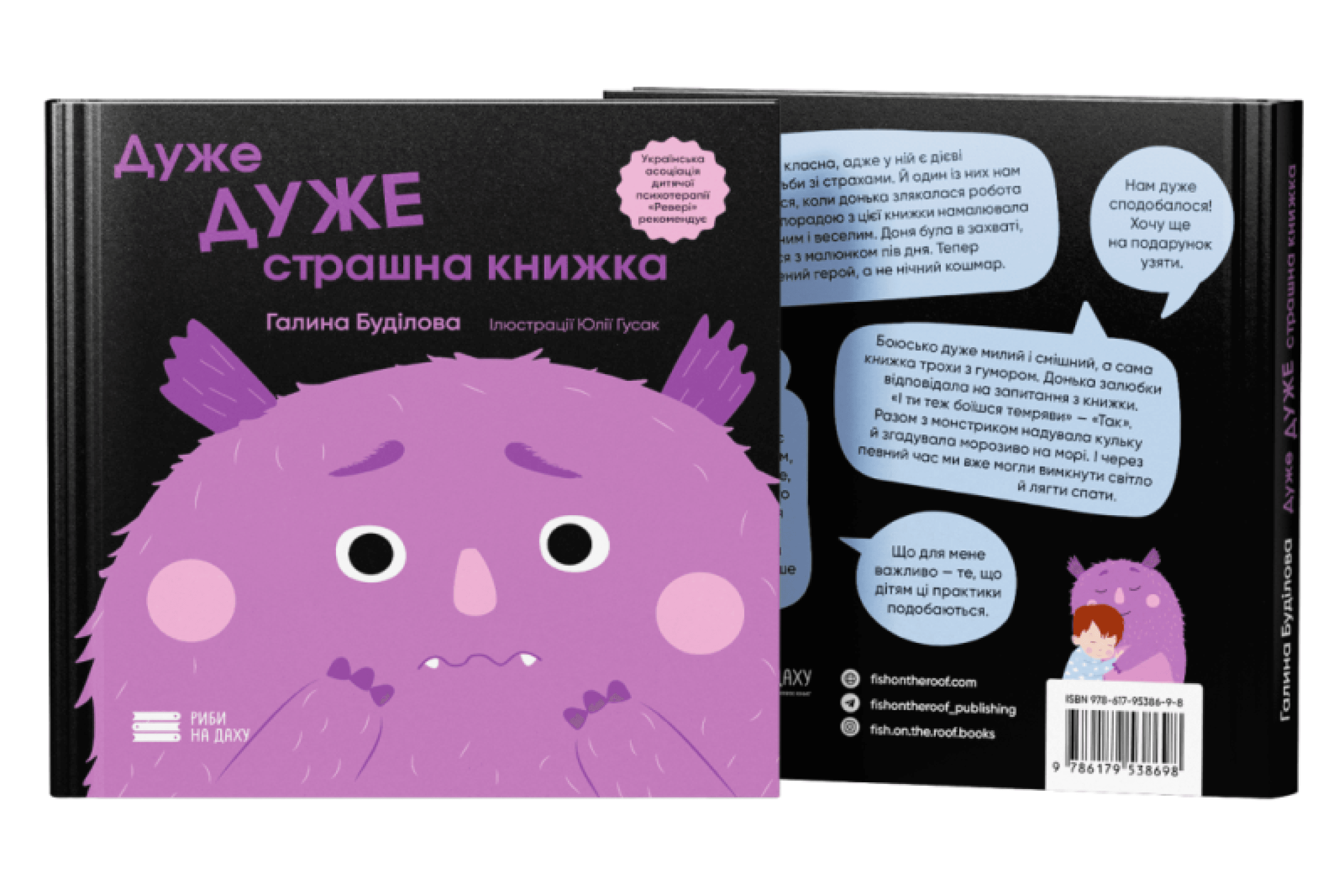
Some pages from the book “A Very, Very Scary Book” by Halyna Budilova. Photo: fishontheroof.com 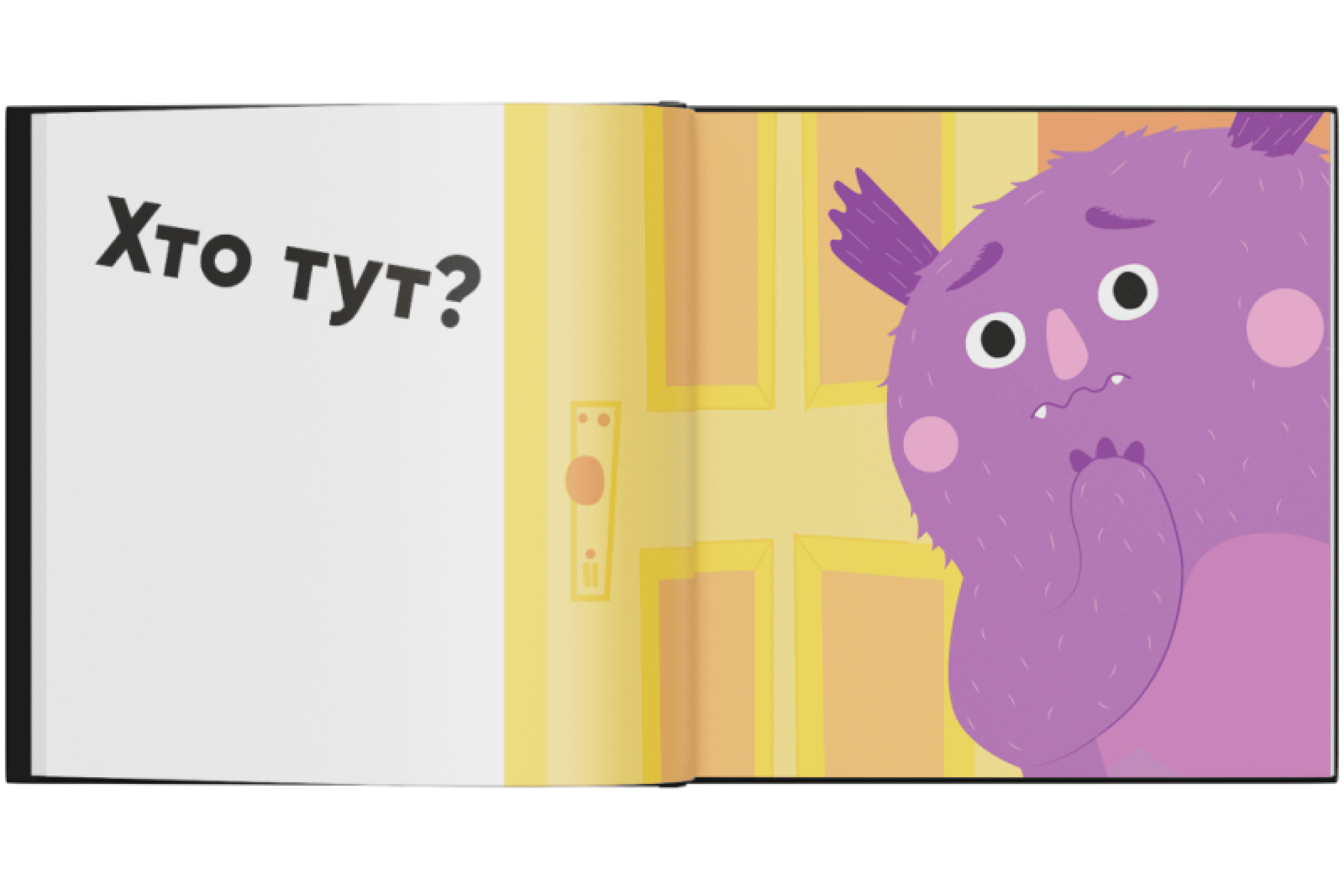
Photo: fishontheroof.com 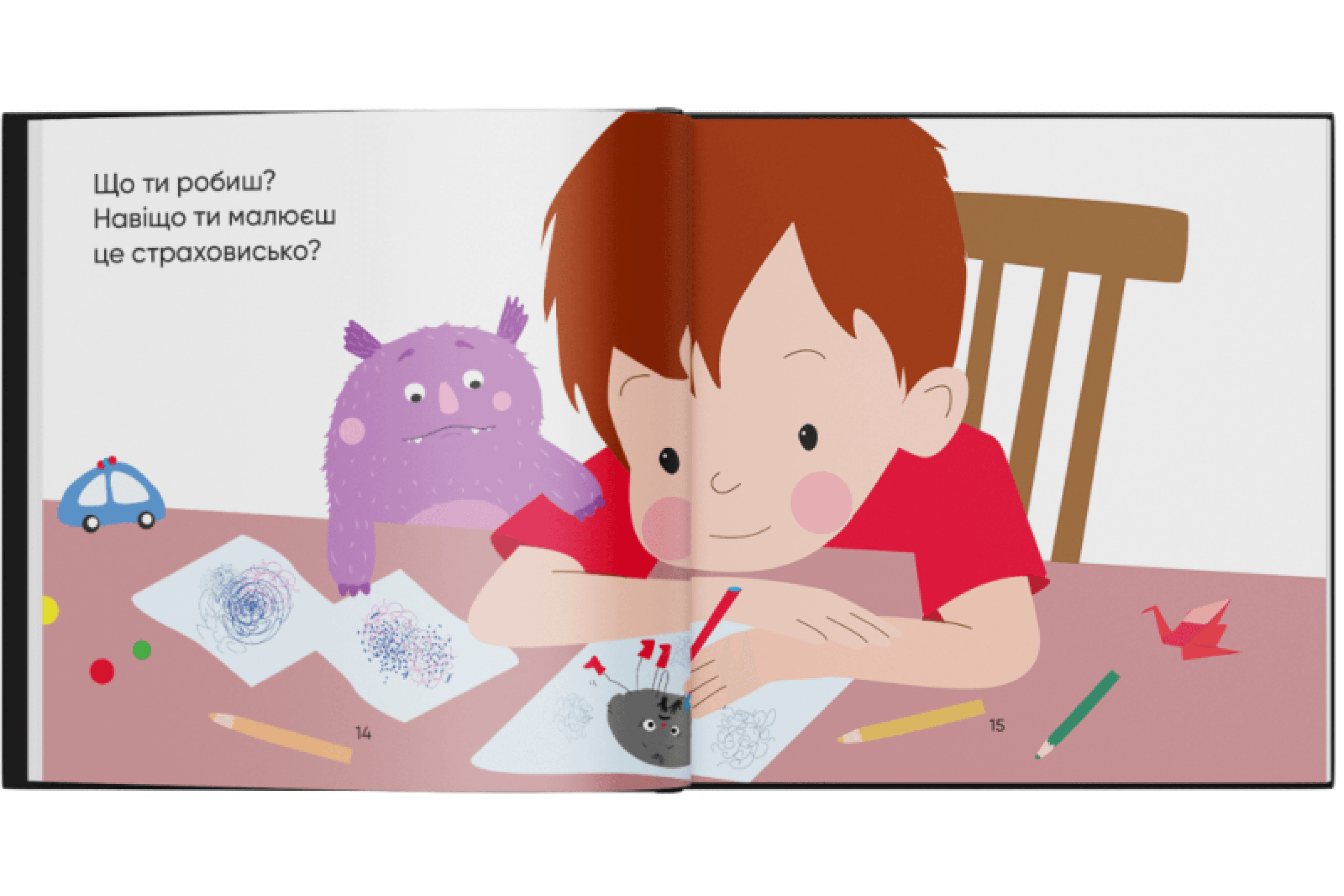
Photo: fishontheroof.com 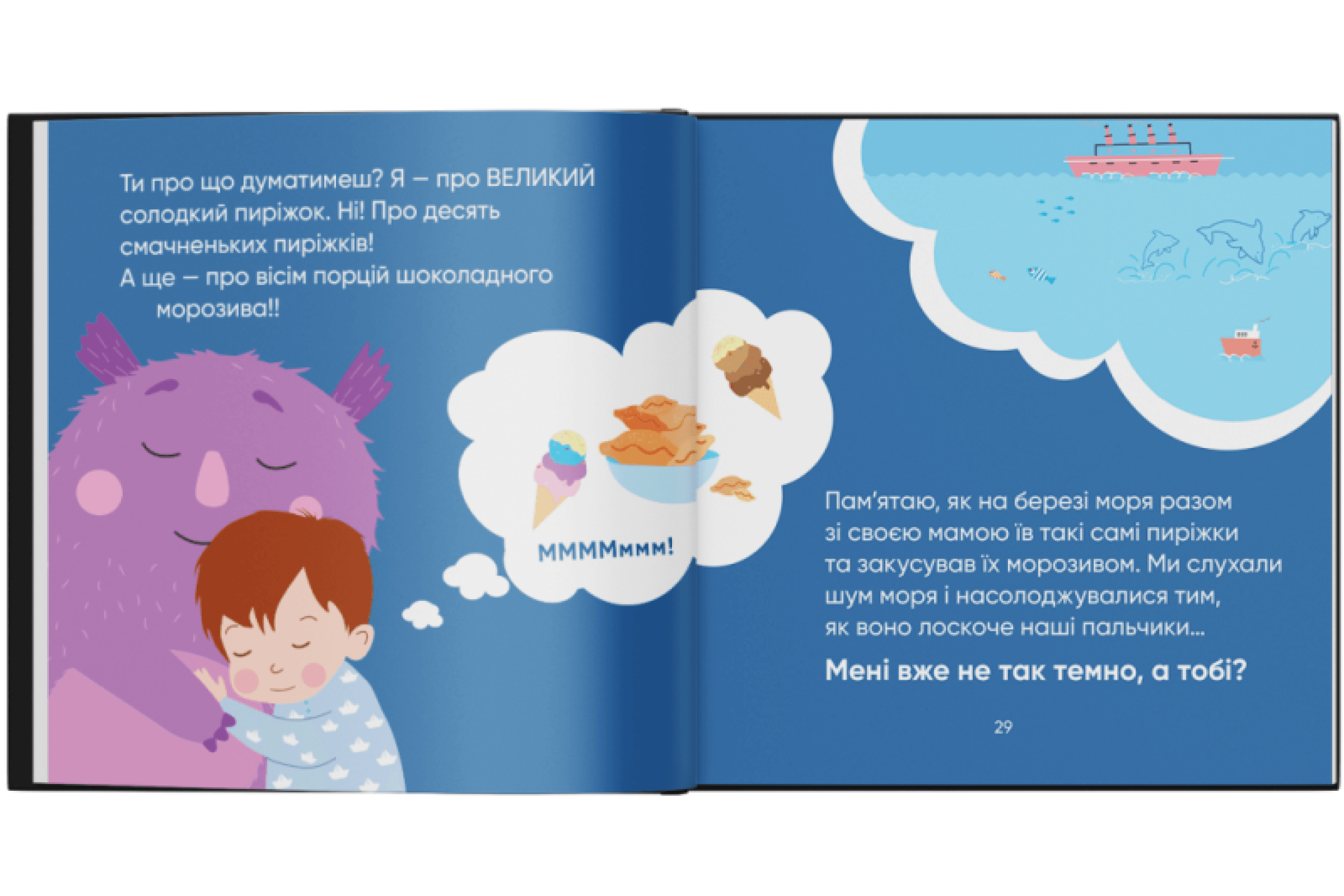
Photo: fishontheroof.com 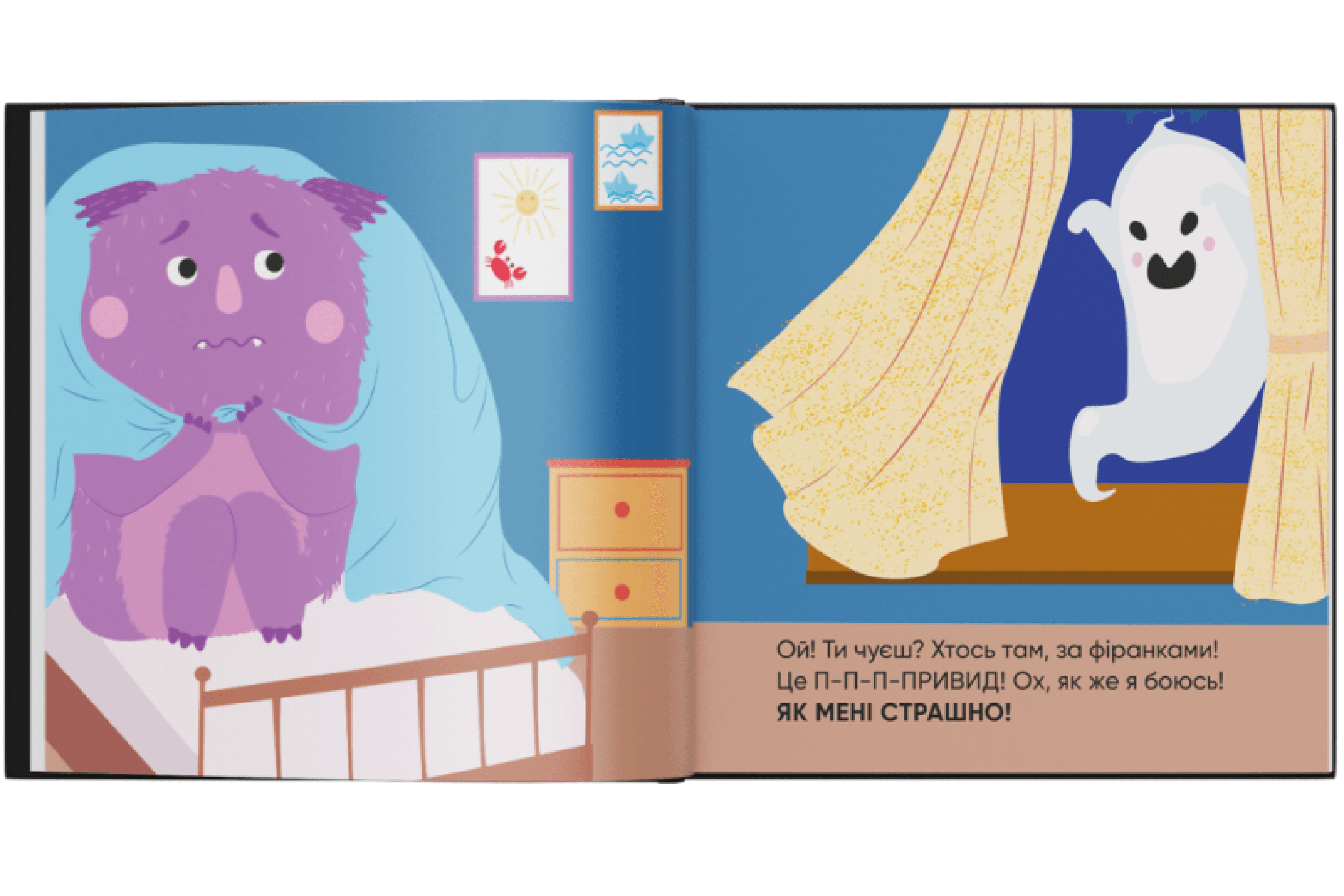
Photo: fishontheroof.com 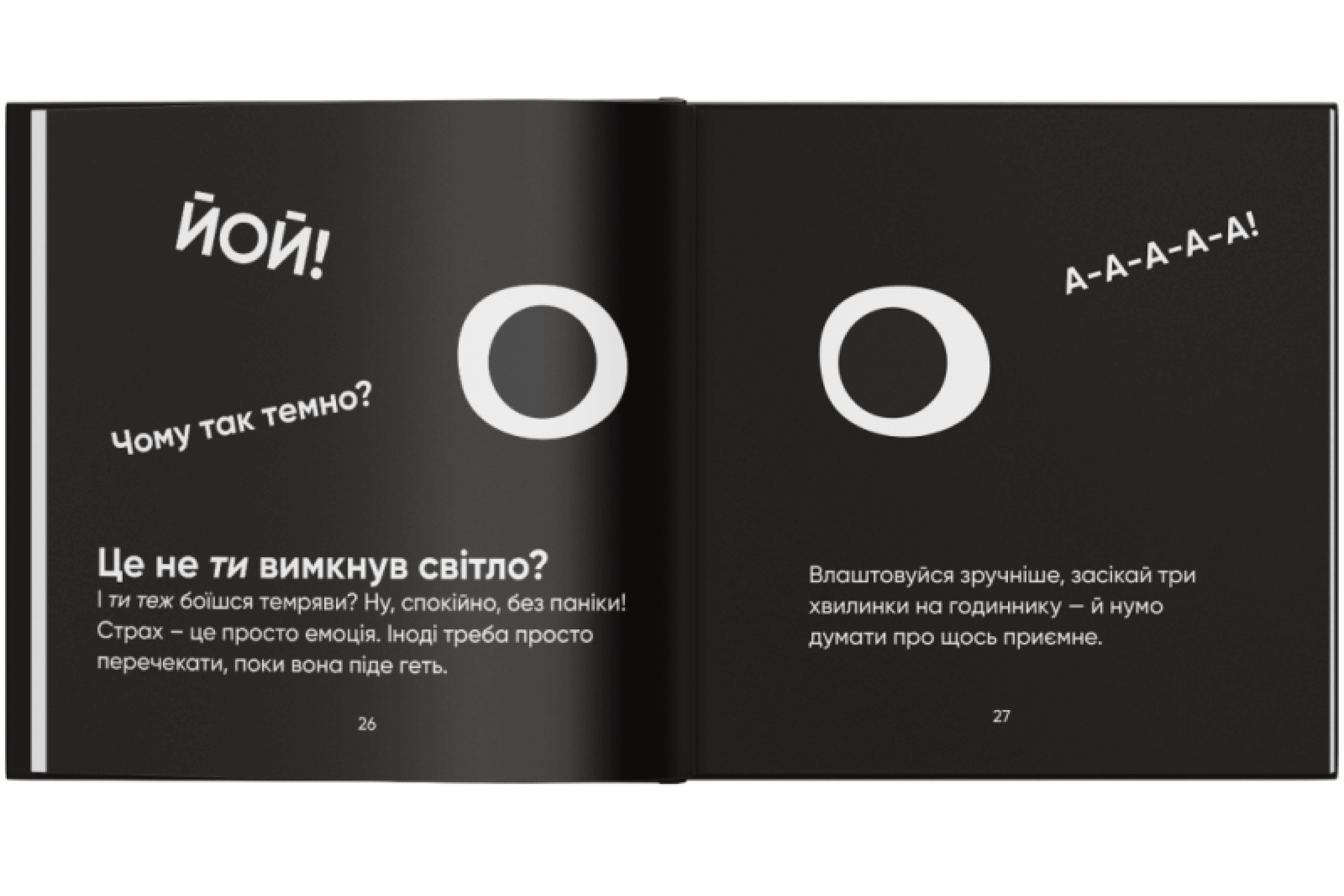
Photo: fishontheroof.com
You recently announced on social media that you are preparing Sasha Voitsekhovska’s book In the world of the missing, for children whose loved ones have gone missing during the war. This is a very difficult subject. How are you approaching it?
At our nonprofit organization Vazhlyvi, one of the things we do is provide psychological support to children whose loved ones are missing. In 2024, we launched a support program for these children together with Linda Goldman. We came up with a story about a puppy named Pliamka who went missing and his friend who set out to find him. We told the story to children and watched their reactions and what they experienced as the search went on. We realized that stories are a good way to talk to children about ambiguous loss.
I started looking for children’s and adult books on the subject that we could translate and publish. But there are practically none. One of the few specialists researching this topic is American psychotherapist Pauline Boss. I wrote to her about acquiring the rights to her books, but unfortunately, I never heard back.
Soon after that, I met Ukrainian writer Sasha Voitsekhovska in Lviv. She had already published a wonderful book about how children experience loss, The wings we need. I suggested she write a story for children whose loved ones are missing. Sasha has experience talking with these families, so she agreed.
The book will be for children ages seven and up. It tells the story of a girl whose mother, a combat medic, has gone missing, and how the girl lives through that experience. It was important to us to take readers through the whole hell of uncertainty alongside the main character, so that in the end they could resurface and go through a transformation. Sasha has already submitted the first draft, and we can see that she’s succeeded.
What stage is the book at now?
I asked Sasha to add a few important details to the story. For example, how a child imagines where their loved one might be and where the world of missing people is located: underground, somewhere above, or in another country. Meanwhile, we’re already working on the illustrations. We’ve finished the sketches and are adding color. My dream is to publish the book by Christmas, but because of the shelling, printing houses are taking longer to fulfill orders. So it will most likely come out in the spring.
It’s important to me to publish books for children of military personnel, although they’re not easy to sell because they deal with difficult and sad subjects. Besides the story about missing loved ones, we already have a manuscript called Paper dad. It’s about a service member’s child who experiences separation from their father and grows up without him. I’d really love to publish this story too, and I hope we can find the money.
Are you planning to publish books about the experience of forced emigration?
We’ve had an idea for a book like that for a long time, but we don’t have enough money to make it happen yet. The Kissing Hand touches on this subject to some extent. In the book, a little raccoon and his family are forced to leave their home forest. It’s a shock for him, and his mother looks for ways to help him cope with what he’s going through.
Which Ukrainian bookstore chains carry your books? And how difficult is it for a small publisher to get its books onto bookstore shelves?
Our books are sold at Book.ua, Knyharnia Ye, Bukva, Akvarel, and Readeat, as well as online bookstores Nash Format, Yakaboo, and Megogo. We’re also negotiating with two other major physical bookstore chains.
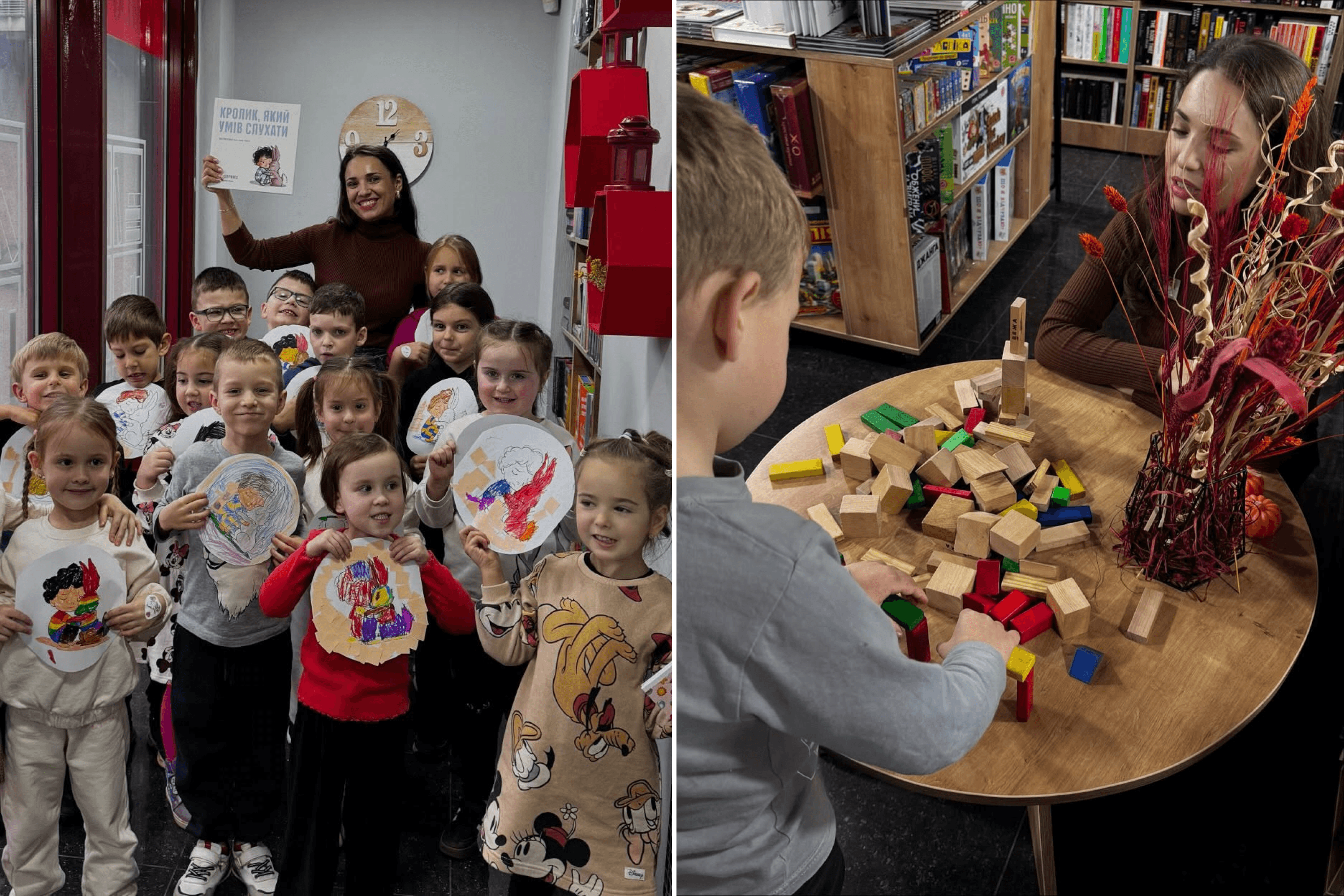
Children during a reading of “The Rabbit Listened,” published by Fish on the Roof, at Ye Bookstore in Uzhhorod. November 2025. Photo: fish.on.the.roof.books / Instagram 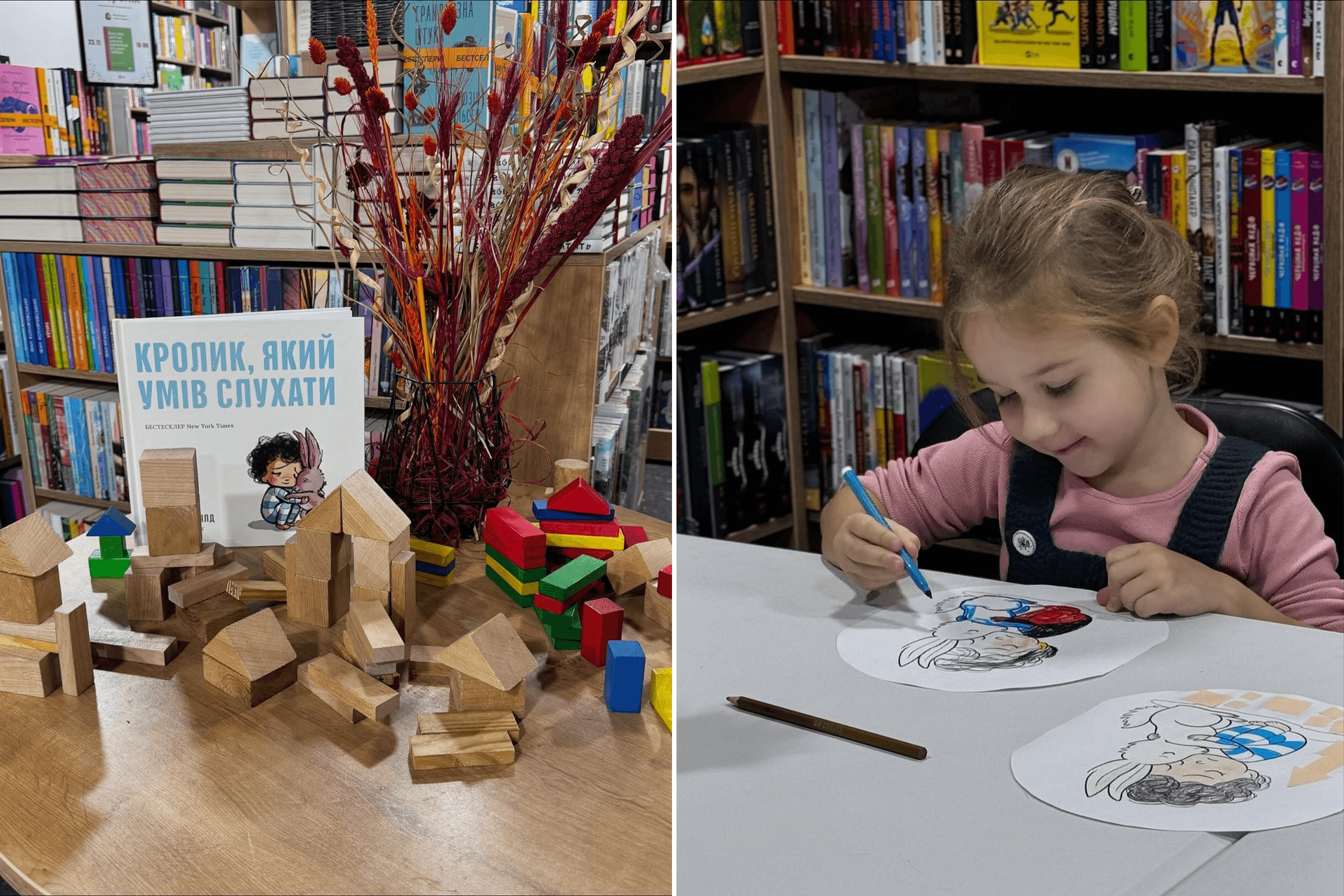
Photo: fish.on.the.roof.books / Instagram 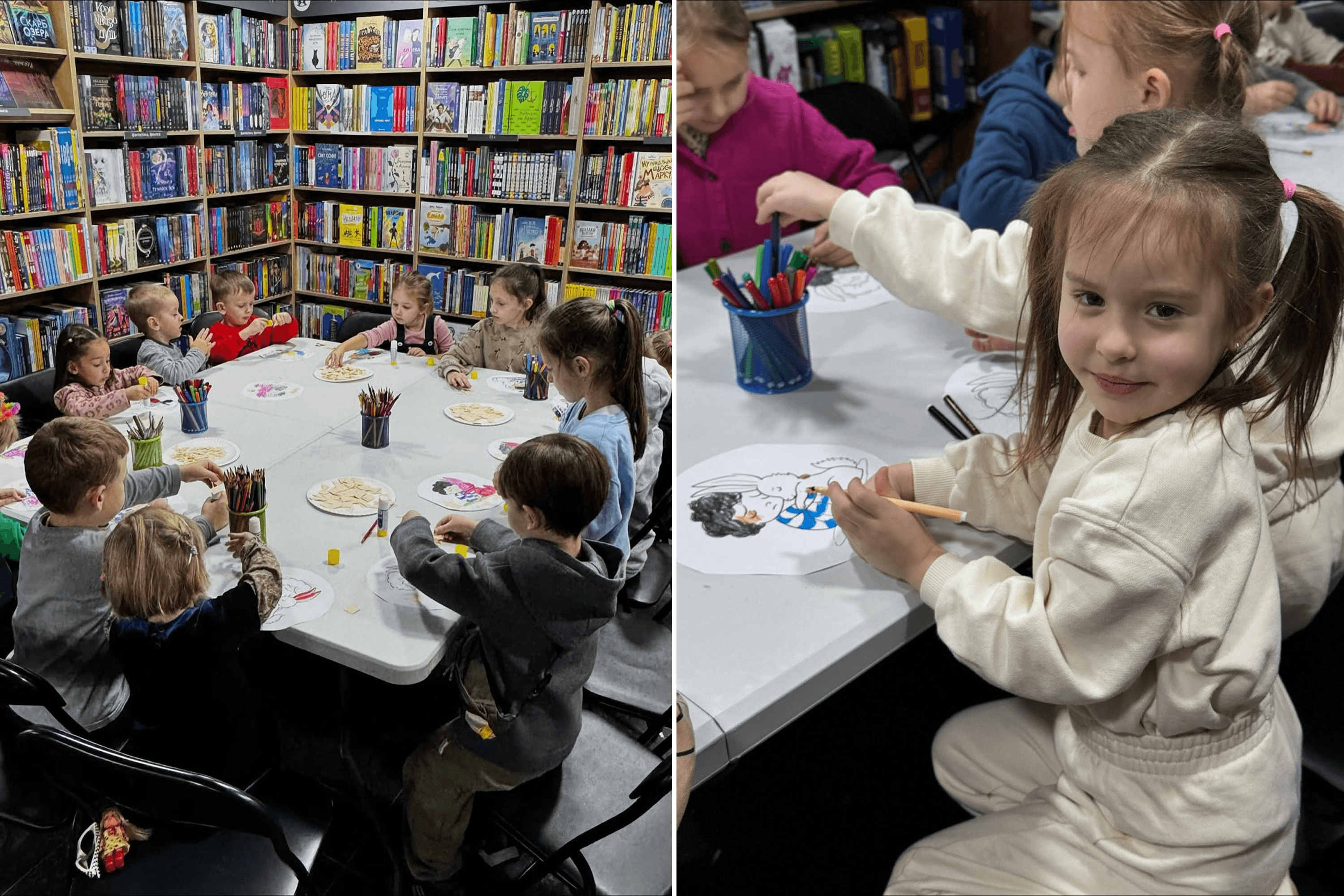
Photo: fish.on.the.roof.books / Instagram 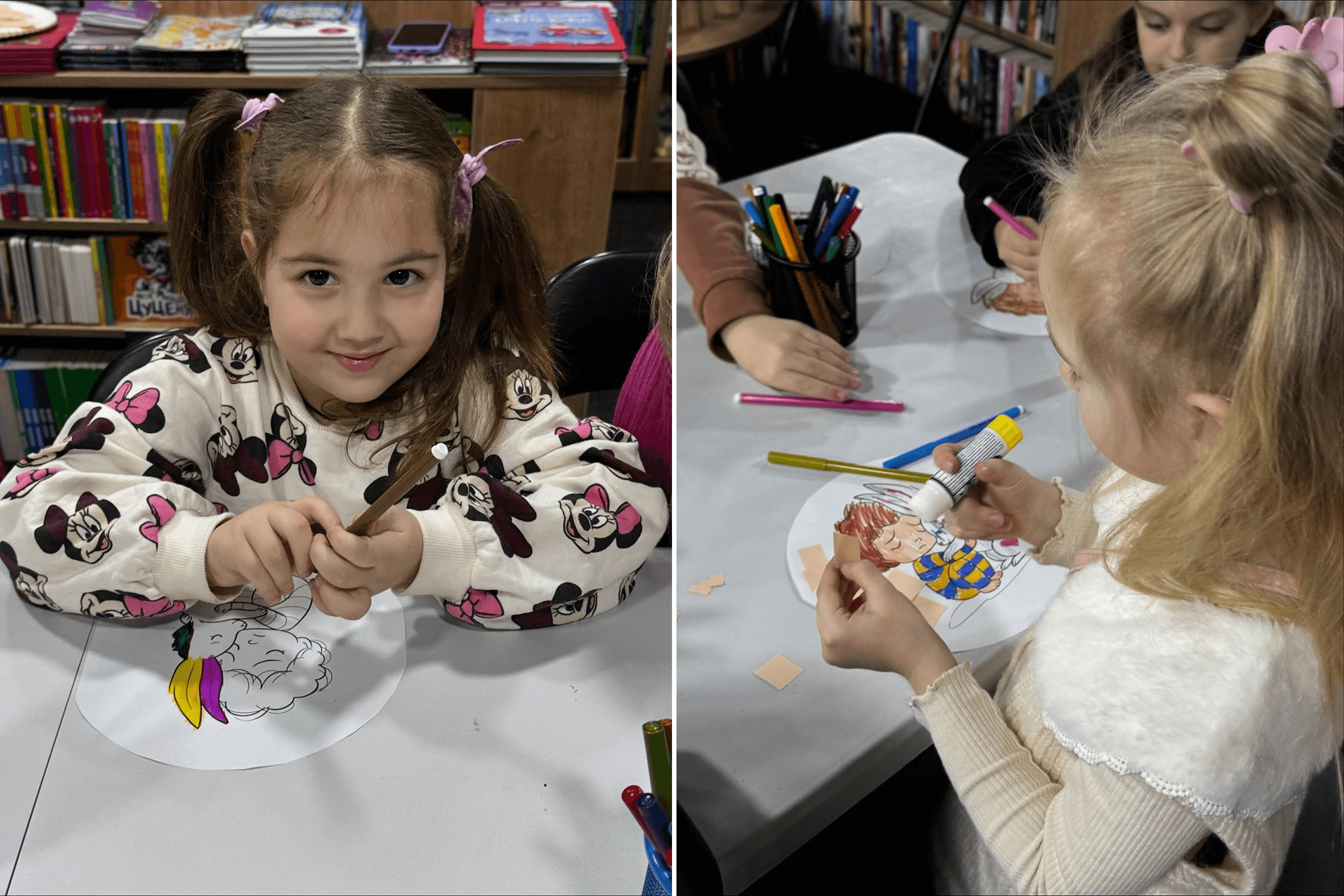
Photo: fish.on.the.roof.books / Instagram
It all depends on the market. When we started in 2024, bookstores were happy to stock books from new publishers, even those with only two or three titles. Later, the market became oversaturated, and in 2025, it was almost impossible for a small publisher to get into a chain without personal connections with its managers.
This year, many books have burned in Russian shelling, and bookstores have had to restock their shelves. Because of this tragic situation, we got back into bookstore chains.
Are you planning to reach Ukrainian readers abroad? Do you see ebooks as one way to do that?
Getting books onto bookstore shelves in other countries isn’t easy financially, logistically, or legally. We’re planning to establish partnerships with Ukrainian bookstores and libraries abroad, but it’s a long process.
I resisted ebooks for years because of piracy, but Russian attacks on printing houses and warehouses forced me to reconsider. Now I’m negotiating with the rights holders of books by our foreign authors to obtain ebook licenses. I’m also in talks with Readeat about making our books available in their reading app. We want to start with adult books.
I’ve also signed an agreement with the Tepa: Picture Books & Reading app. It allows children and parents to read the same book simultaneously on different devices, with the pages turning in sync. That’s convenient, for example, when a father is at the front and the mother and child are abroad. I’ll upload my own books to the app first, then obtain permission from other children’s authors.
You promote your books through targeted advertising, your personal blog, the publishing house’s social media accounts, book fairs, and bookstore events. What works best?
You’ve touched a nerve. We still don’t have an established marketing model. We try everything we have the energy for. One day targeted advertising might work, the next it might be sales at a book fair. That’s how we manage to plug holes in the budget, but there’s no guarantee those methods will work again next month.
We try to create as many points of contact with readers as possible, including through bookstores across Ukraine. Someone who buys The Kissing Hand in Chernivtsi might never visit my blog or see our ads. But we’ve still managed to reach that person through a bookstore.
Overnight into August 28, Russian shelling destroyed a Nova Poshta warehouse where Fish on the Roof stored its books. How many copies did you lose, and what was the financial damage?
Fortunately, not all our books were stored at that warehouse. But literally the day before the shelling, I’d brought over the remaining copies of The Rabbit Listened, The Kissing Hand, and Life and Loss. We lost about 400 copies in total. The damage came to roughly $4,400, comparable to the cost of two book print runs. That’s a significant loss for us, although some of our colleagues were hit even harder. They lost their entire stock.
How did your readers respond to the shelling?
I was amazed by how many people supported us. My blog followers, clients, colleagues, and acquaintances bought lots of the books we still had. We immediately invested that money in a reprint of The Kissing Hand, and we’re now waiting for the new copies to arrive from the printer. We still have losses we haven’t recovered, and it’ll probably take us about a year to make up for them.
Do you have to invest your own money in publishing books?
My husband calls the publishing house a self-sustaining hobby. Every year, we break even, but during cash flow gaps, I regularly put in my own money and pay myself back later. For example, when we need to pay the printer but the publishing house doesn’t have the funds yet. So for now, it’s more of a passion project than a full-fledged business. But I hope that will change over time.
Have you considered bringing in an investor or applying for grant funding?
We’re constantly applying for grants. We recently submitted In the world of the missing to a Ukrainian Book Institute competition, but unfortunately, we weren’t selected. As for investment, I consulted an expert. We can’t guarantee investors the 40% return they expect. The book market has low profit margins and requires a lot of intellectual work. And readers’ purchasing power keeps declining during the war. So it doesn’t pay for investors to put money into this industry.
I have one crazy idea for raising money, and I’ll be sharing it on social media in the next few weeks. We’ll see if it works.
What books are you planning to publish in the near future? And how would you like to develop the publishing house?
Our immediate plans include publishing In the world of the missing. After that, we want to release a book for older children about how to communicate constructively and resolve family conflicts. And, of course, we really want to publish Paper dad, a story about children of service members who are growing up while their parents defend Ukraine. We have other ideas too, but they’re still too raw to talk about.
My long-term goal is to expand our range of psychotherapy books for adults so that Ukrainian therapists have a wider selection of professional analytical literature in their native language. I’m especially happy that we’ll soon be publishing Kathrin Asper’s The Abandoned Child Within, a unique therapeutic work that offers a compassionate perspective on people with narcissistic disorders. The book is already available for preorder.
You run both a publishing house and the nonprofit Vazhlyvi, provide psychological counseling, maintain a blog, and raise two children. How do you manage it all?
I’m a person with three jobs, and [as a psychotherapist] that’s obviously not a very healthy situation. But seriously, things are hard for everyone right now, especially in Kyiv after the last three months, when it felt as though some portal to hell had opened.
Lately, I’ve often been thinking about Ursula Wirtz’s metaphor of “soul murder.” It’s when everything good inside you dies, when hope disappears and you lose faith that there’s any point in moving forward. That’s what life feels like now, as if something inside you is being killed. You have to make a conscious effort to recover, protect yourself, and hold on to hope. There’s no magic formula, but routine helps me: sleep, food, walks, conversations, art, and, without fail, my own psychotherapy.
Once a month, sometimes more often, I feel like I have nothing left and should just close the publishing house. In the grand scheme of things, nothing terrible would happen. The book industry wouldn’t die. Some other publisher would pick up where we left off. But then I think, let’s just finish this one little book and see what happens. Then we’ll publish another, and another after that. And before we know it, spring will be here.