
Anna Voloshyna is 36. She is a chef, cookbook author, and advocate for Ukrainian cuisine in America. The New York Times and The Washington Post have written about her, and her first book, Budmo!, won an IACP Media Award and a Foreword Indies award.
Since the start of the full-scale invasion, Voloshyna has traveled across Ukraine three times, from the Carpathians to regions near the front line, trying to answer the question of what Ukrainian cuisine is today. The result is Ukraïne, a 368-page book published by Chronicle Books. Voloshyna will hold book events in San Francisco, London, Seattle, New York, and Chicago.
Yellow Blue journalist Roksana Rublevska read Ukraïne and spoke with Anna about why 19 American publishers demanded “more Russia” in her book, how Drohobych salt became a tool of cultural diplomacy, and why she is not afraid of Ukraine fatigue in the United States.
|
|
|
|
|
|
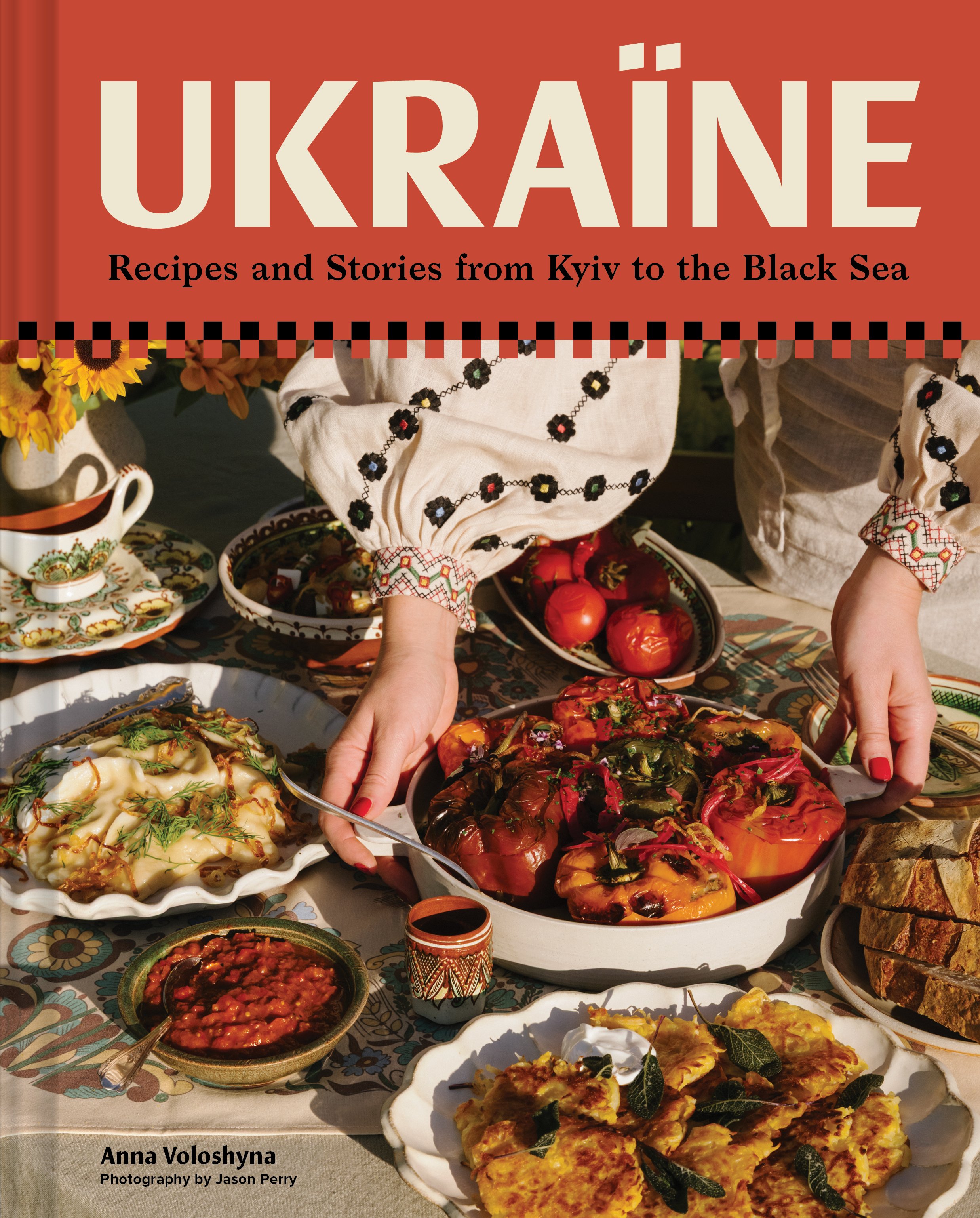
Anna, the first thing that catches the eye is the book’s title, Ukraïne, spelled with the letter “ї.” Why that spelling, when American readers do not even know how to pronounce the letter?
It’s probably the most political decision in the whole book. The letter “ї” exists only in the Ukrainian alphabet. In Mariupol, people painted it in parks and squares to remind the occupiers: you’re not at home here. Ivan Malkovych has a poem in which “ї” is a little candle that children must protect. To me, that’s a very accurate image.
I wanted Americans to see this letter before they even got to the first recipe and ask, “What are those two dots?” And then I could explain that it’s one of the things that make us different. We’re not a version of Russia. Even our alphabet is different.
That’s why the book also has a short essay about “the Ukraine.” When I hear that in America, it’s like someone scraping a nail across glass. It sounds as though Ukraine is a territory, not an independent country. So I always ask people to drop the “the.” And Americans usually apologize.
You came up with the idea for a book about Ukrainian cuisine back in 2019, after a course at Stanford. But American publishers were not interested at the time?
Not at all. My agent Leslie Jonath and I sent proposals to 20 publishers, and 19 turned us down. They all gave the same reason. Nobody would buy a book about Ukrainian cuisine, so it would be better to write about “Eastern European” cuisine. They really wanted a lot of Russia in the book because Russia was already a brand they understood.
These rejections came after the annexation of Crimea and the outbreak of war in the Donetsk region. How did you feel when American publishers told you Ukrainian cuisine could only be sold in Russian packaging?
I knew it was wrong, but I thought maybe they knew the market better. I even put together a different proposal, for a book about varenyky and pyrizhky. And then Rizzoli agreed to publish a book that was specifically Ukrainian. That’s how Budmo! came about.
Ukrainians say “Budmo!” as a toast before a shot. Did that stereotype worry you?
You’re the first person to draw that parallel. All anyone told me was that nobody would know how to pronounce it and that Budmo sounded like Budweiser. I explained that “budmo” means “let’s be,” as in let’s be together. It’s a book about feasting together. I know Americans who cook something from it every Thanksgiving and send me photos.
Now I see Budmo! a little differently. It holds the flavors of my childhood, including dishes from our shared post-Soviet past. After that book, I felt I’d already told my story. But then the full-scale war began, and I realized how little I knew about my own country.
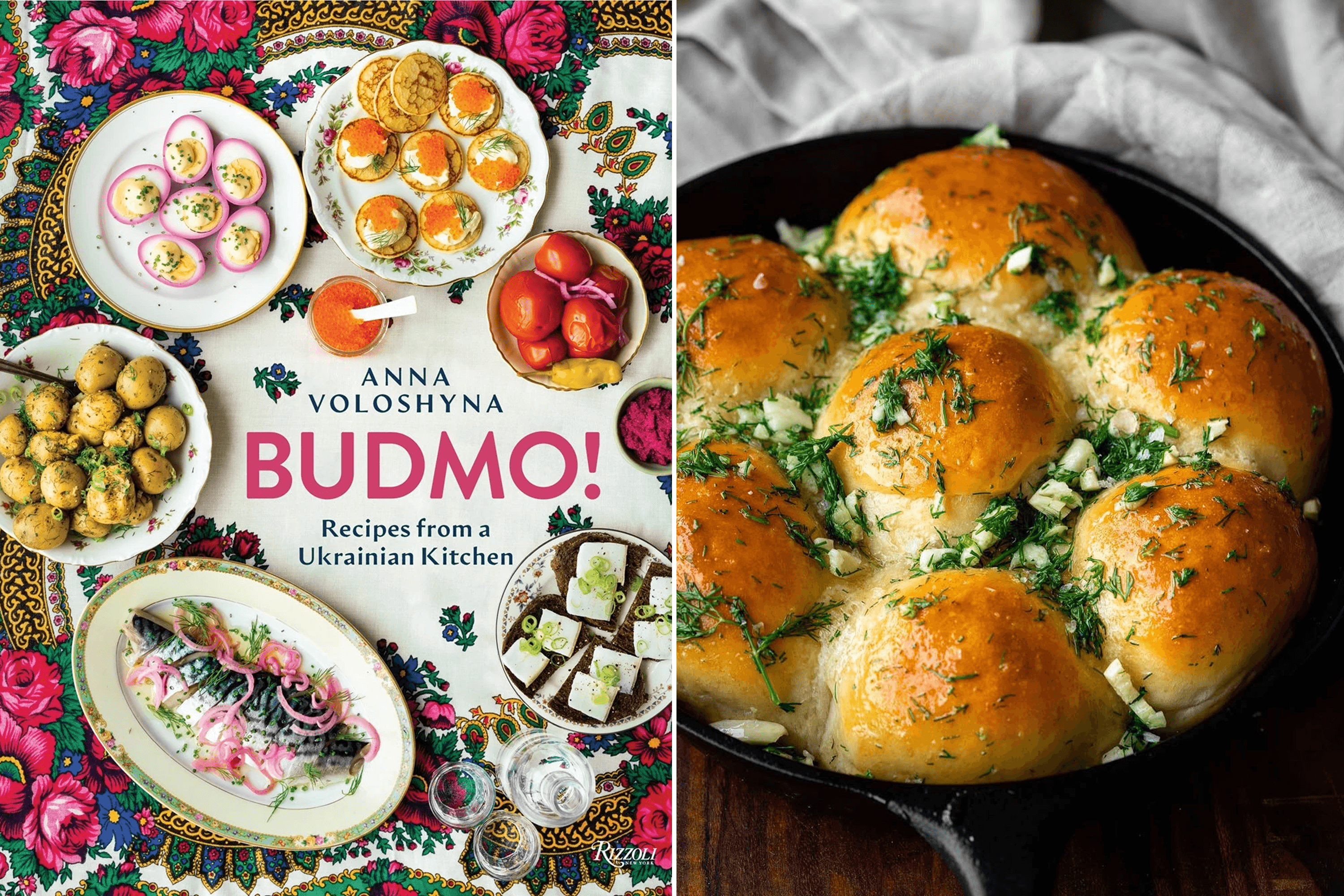
Photos from Anna Voloshyna’s cookbook BUDMO! Recipes from a Ukrainian Kitchen and its cover. Photo: annavoloshynacooks / Instagram 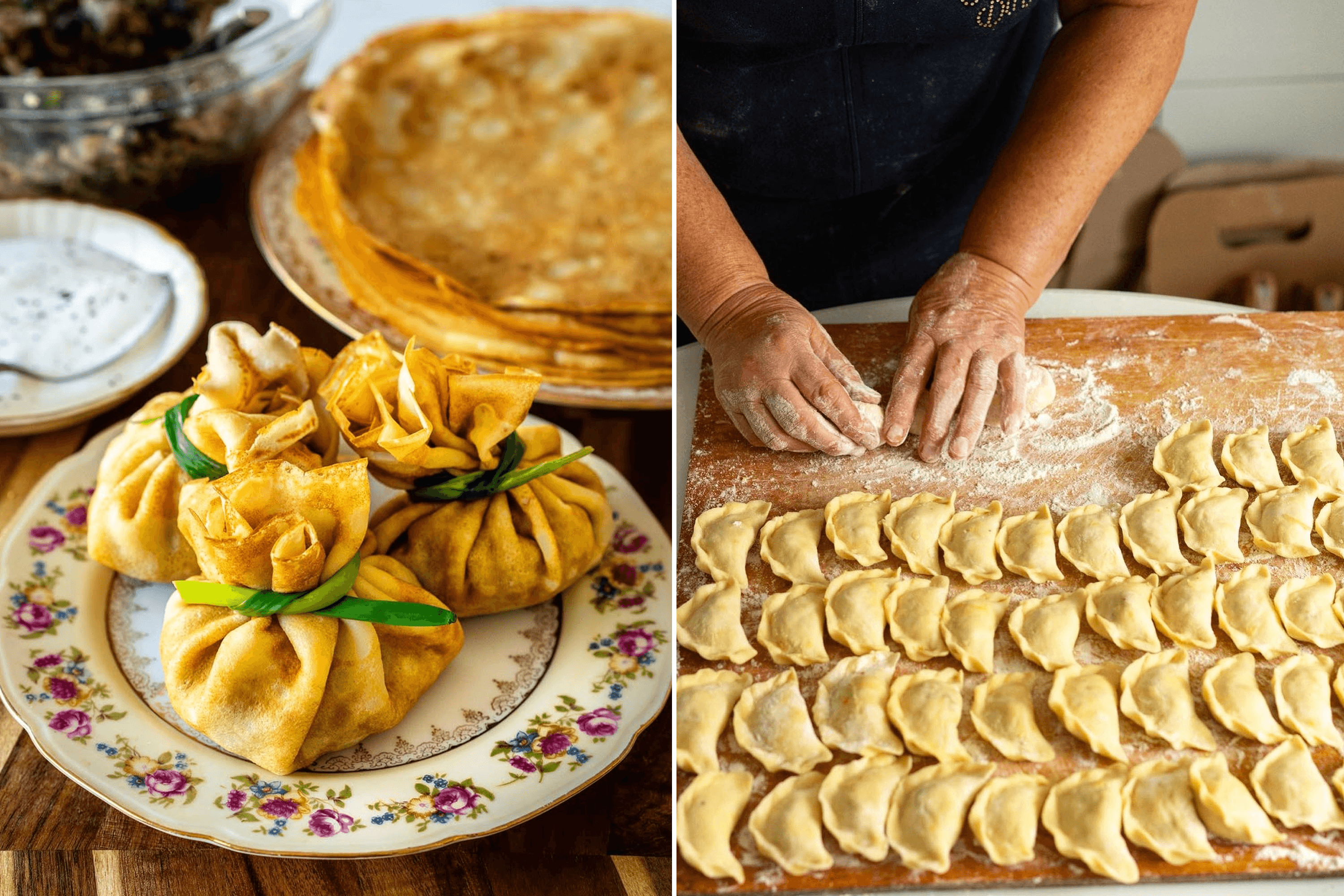
Photo: annavoloshynacooks / Instagram 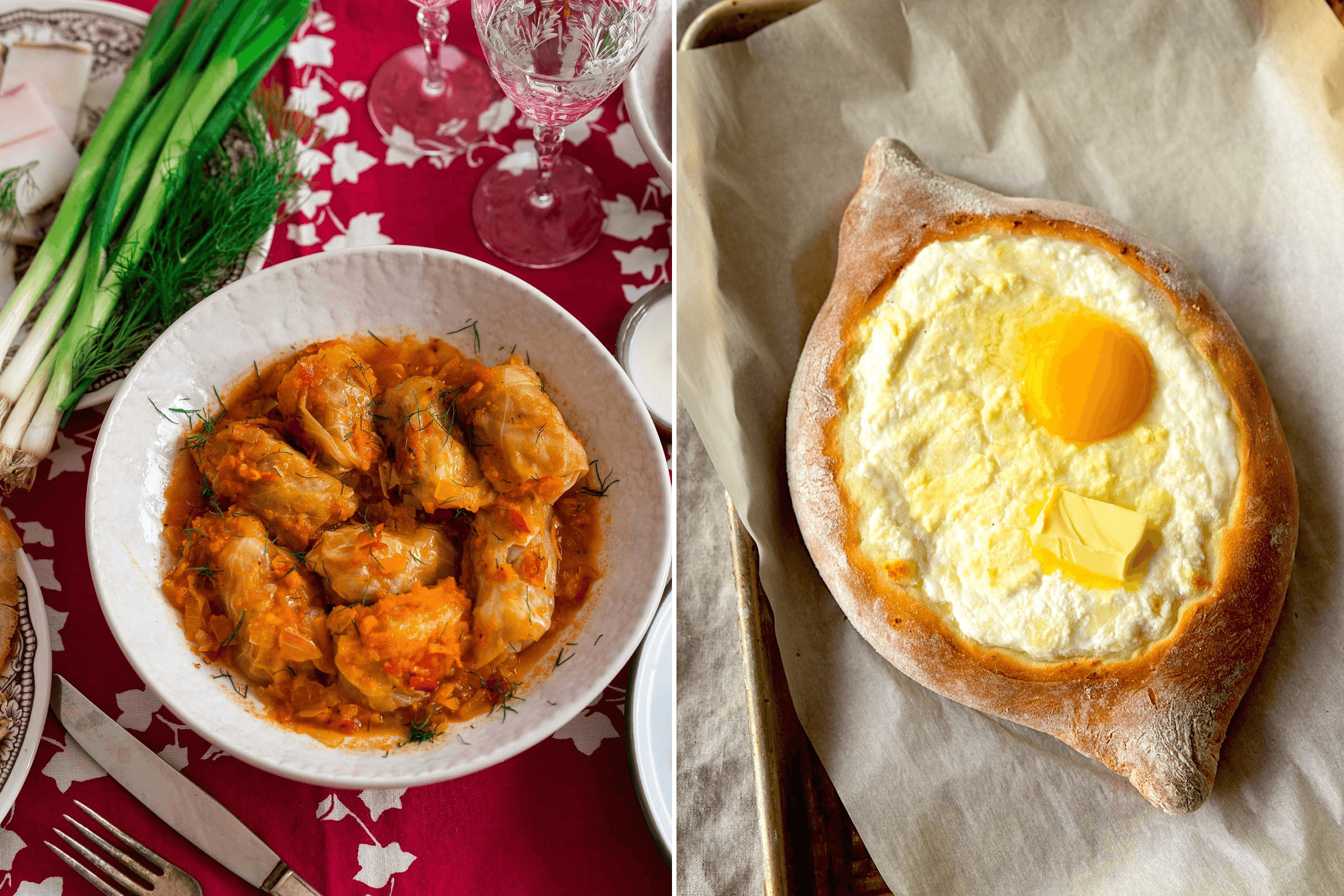
Photo: annavoloshynacooks / Instagram 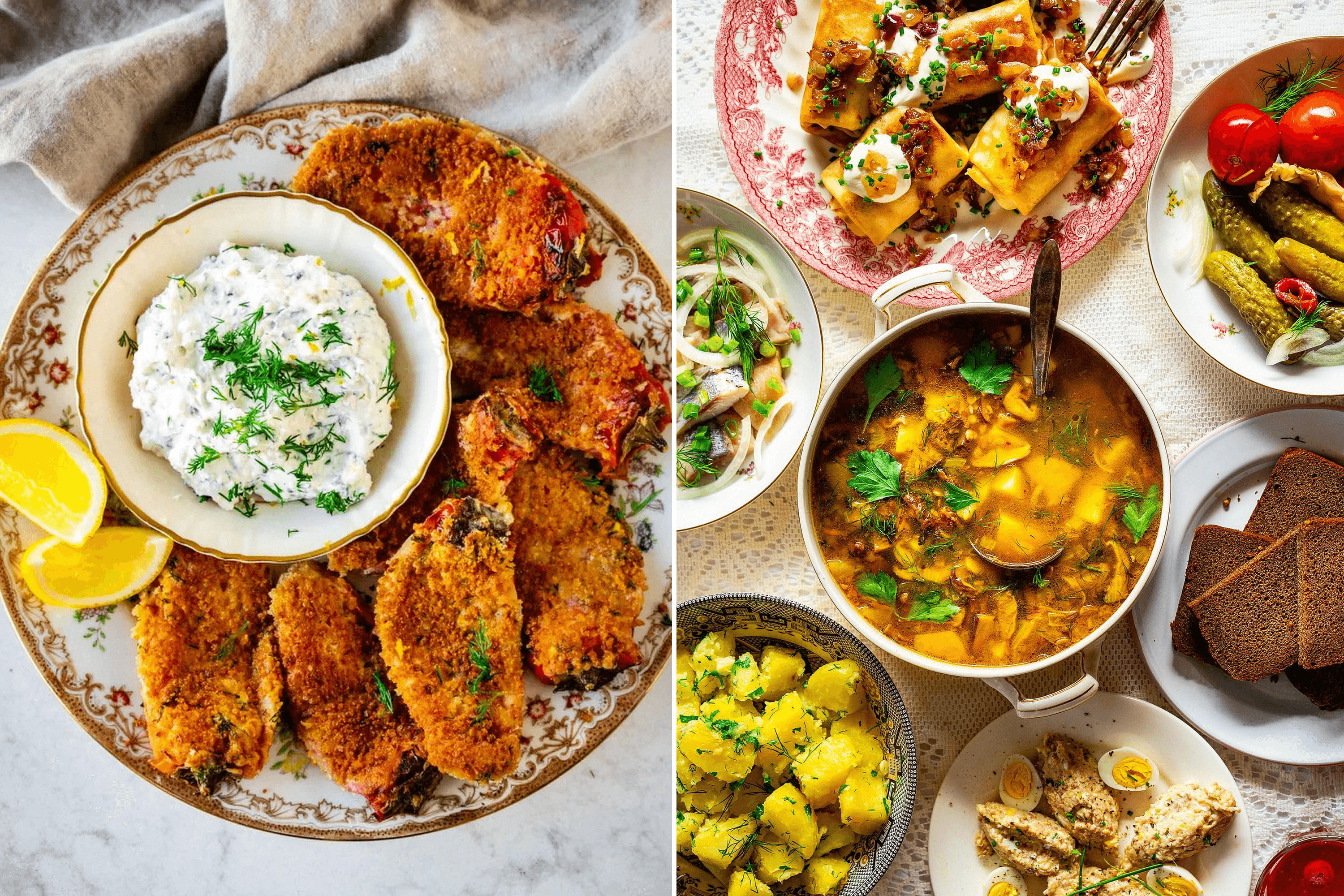
Photo: annavoloshynacooks / Instagram
You were in San Francisco when the invasion started, thousands of kilometers from your hometown of Snihurivka, where your family was hiding from Russian shelling in a cellar. How did you get through those first weeks, with your loved ones there and you so far away?
At first, I just sat in my apartment, read the news, and kept calling my family. I couldn’t eat or sleep. Then I saw people in Ukraine feeding one another in basements and shelters. On March 8, 2022, I held my first charity pop-up in San Francisco. We raised money for World Central Kitchen and for organizations sending tourniquets to Ukraine.
Later, I met American photographer Jason Perry, who was already volunteering to help Ukraine and driving ambulances to the front. I told him I wanted to use food to show the world what Ukraine is like. He said, “Let’s do it.” And we went.
By then, Ukrainian chef and columnist Olia Hercules, who lives in London, had already written several similar cookbooks. How was yours supposed to be different?
I think Olia’s books are more about documenting nostalgia. After the invasion, I realized that along with territory, we were losing part of our culture. So mine turned out to be a book about survival.
I went to Ukraine three times, in 2023, 2024, and 2025. I looked for chefs, bakers, and winemakers who take our culinary heritage and make something new out of it. For me, this book is my life’s work. If I never do anything else, this will be enough.
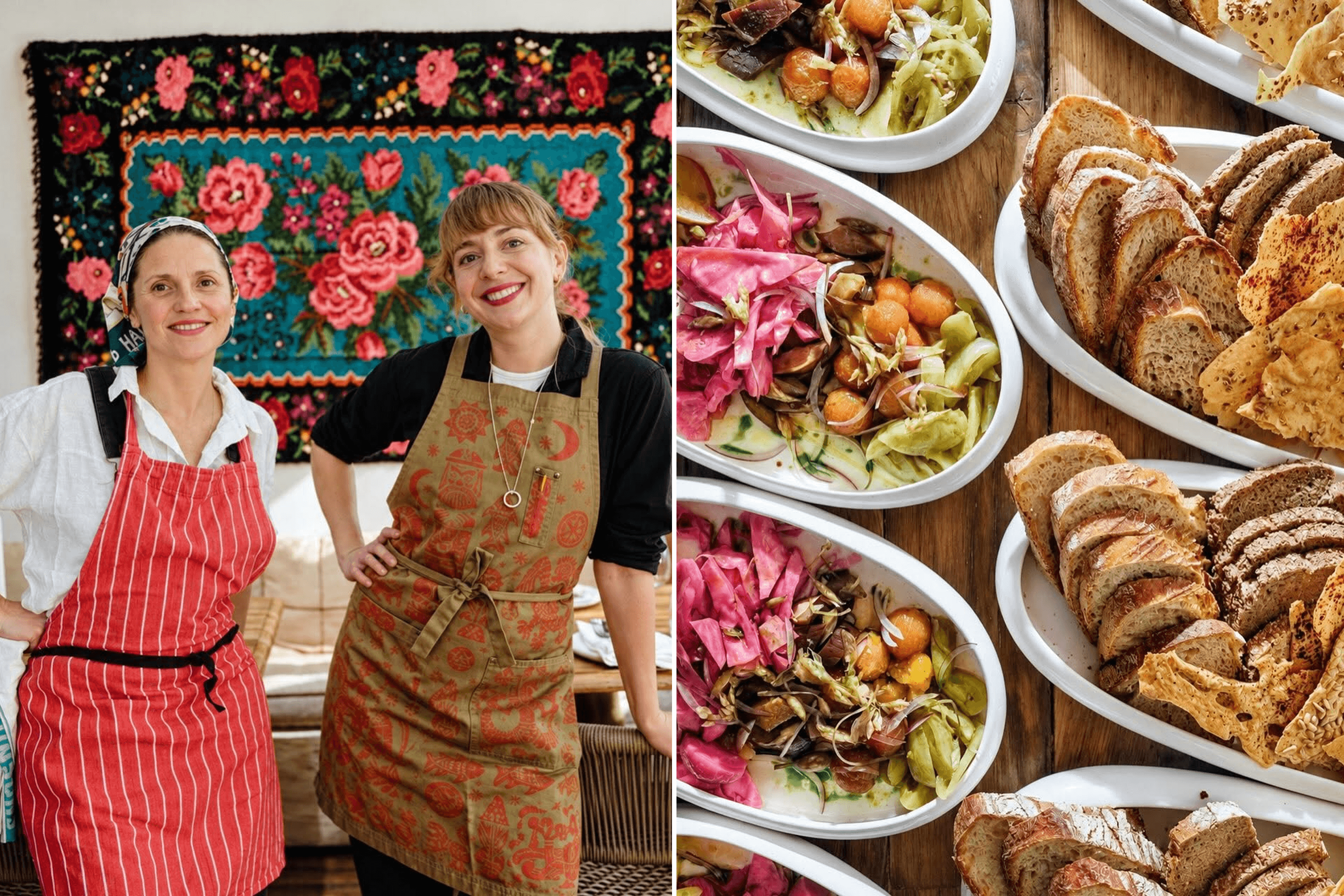
Presentation of Anna Voloshyna’s book UKRAINE at Tatar Bunar restaurant in London. Anna Voloshyna and chef Olia Hercules during the event. October 28, 2026. Photo: Anna Voloshyna / Facebook 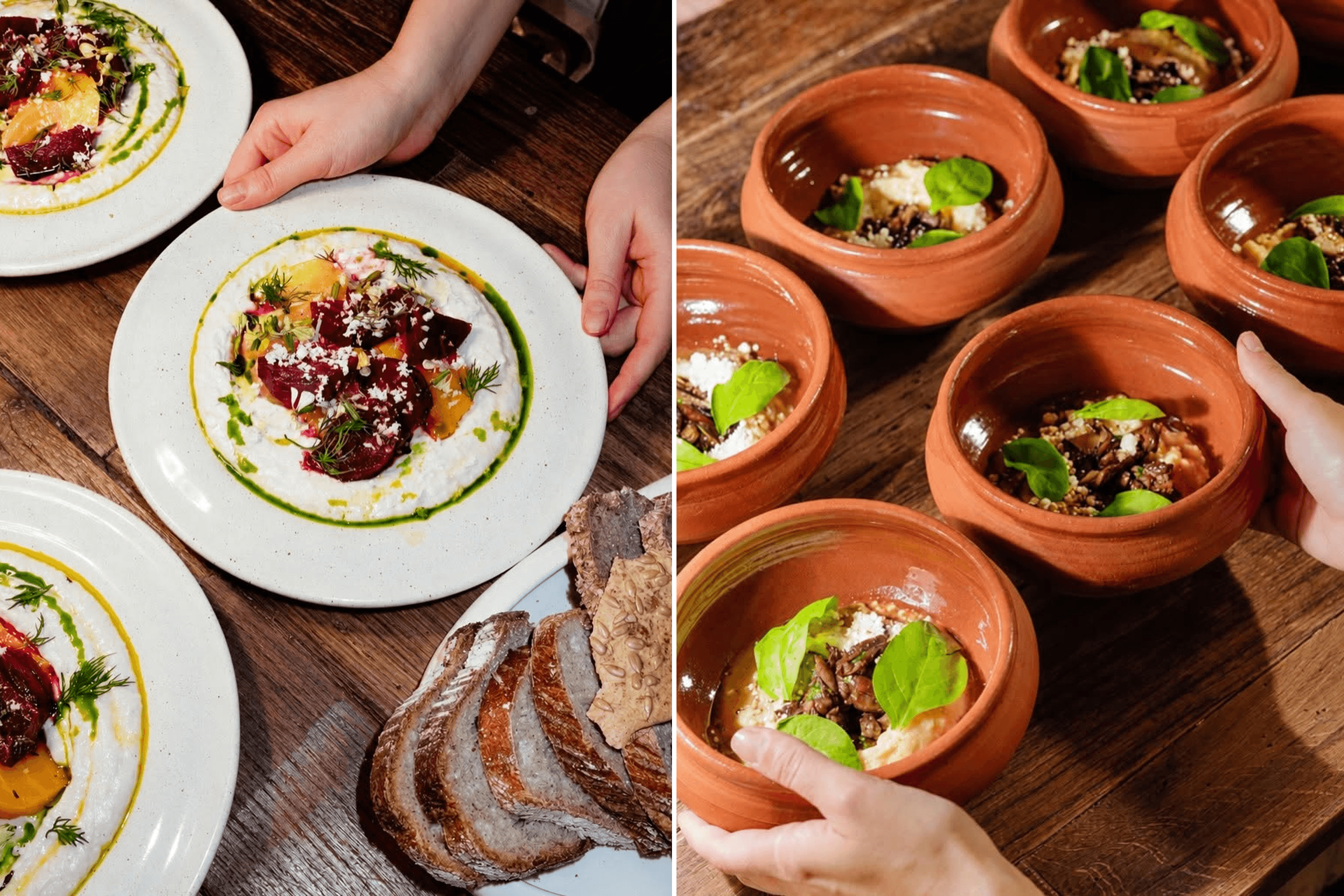
Photo: Anna Voloshyna / Facebook 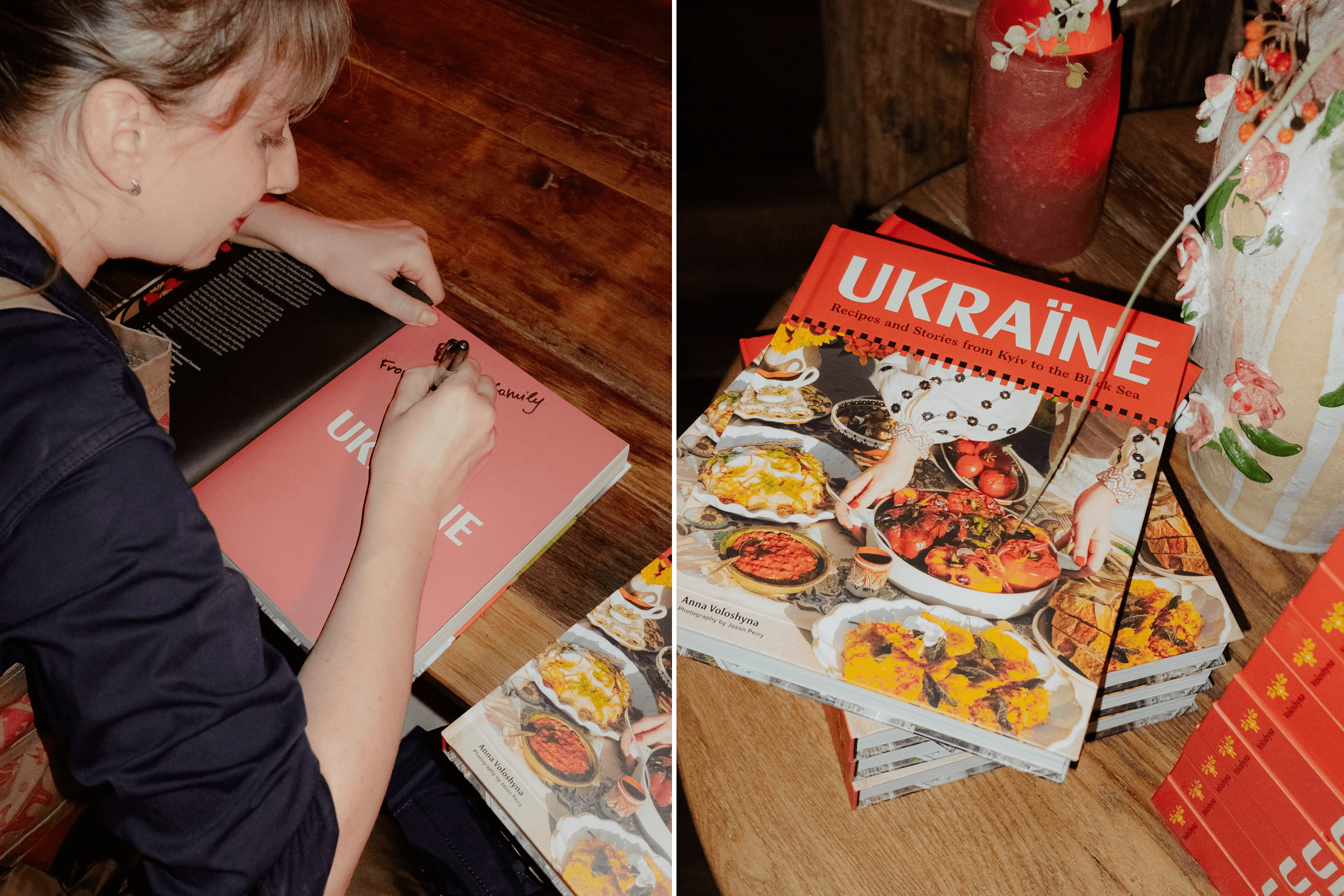
Photo: Anna Voloshyna / Facebook
In 2023, you came to Ukraine for the first time in ten years. How did you find the people for your book?
At first, I hardly knew anyone, so I looked for people on Instagram. My first stop was the Ivano-Frankivsk region, where I happened to meet Misha Katsurin and Anton Ptushkin. They then pointed me to others. I still don’t understand why I met them there of all places. Maybe when you’re on the right path, the people you need just appear.
The structure of Ukraïne is unusual: “Mountains,” “Kyiv,” “Steppe,” “Black Sea,” “Salt of the Earth,” and “Cellar.” Why not organize it by region?
Because we’ve been divided all our lives: west, east, “these people speak one way, those people speak another.” I didn’t want to draw those lines again. I wanted to take the reader through places, each with its own history and cuisine. The Mountains are the Carpathians. Kyiv is the gastronomic capital with the best bakers. The Steppe is my home, wine, Bessarabia. The Black Sea is Odesa and Crimea.
The east was the hardest. I wanted to write about it, but I needed something to latch onto, and I latched onto salt. We lost Soledar, but we have Drohobych. And the last chapter is “Cellar.” It’s the place where Ukrainian cuisine waits out the winter, and also the place where my family hid from shelling.
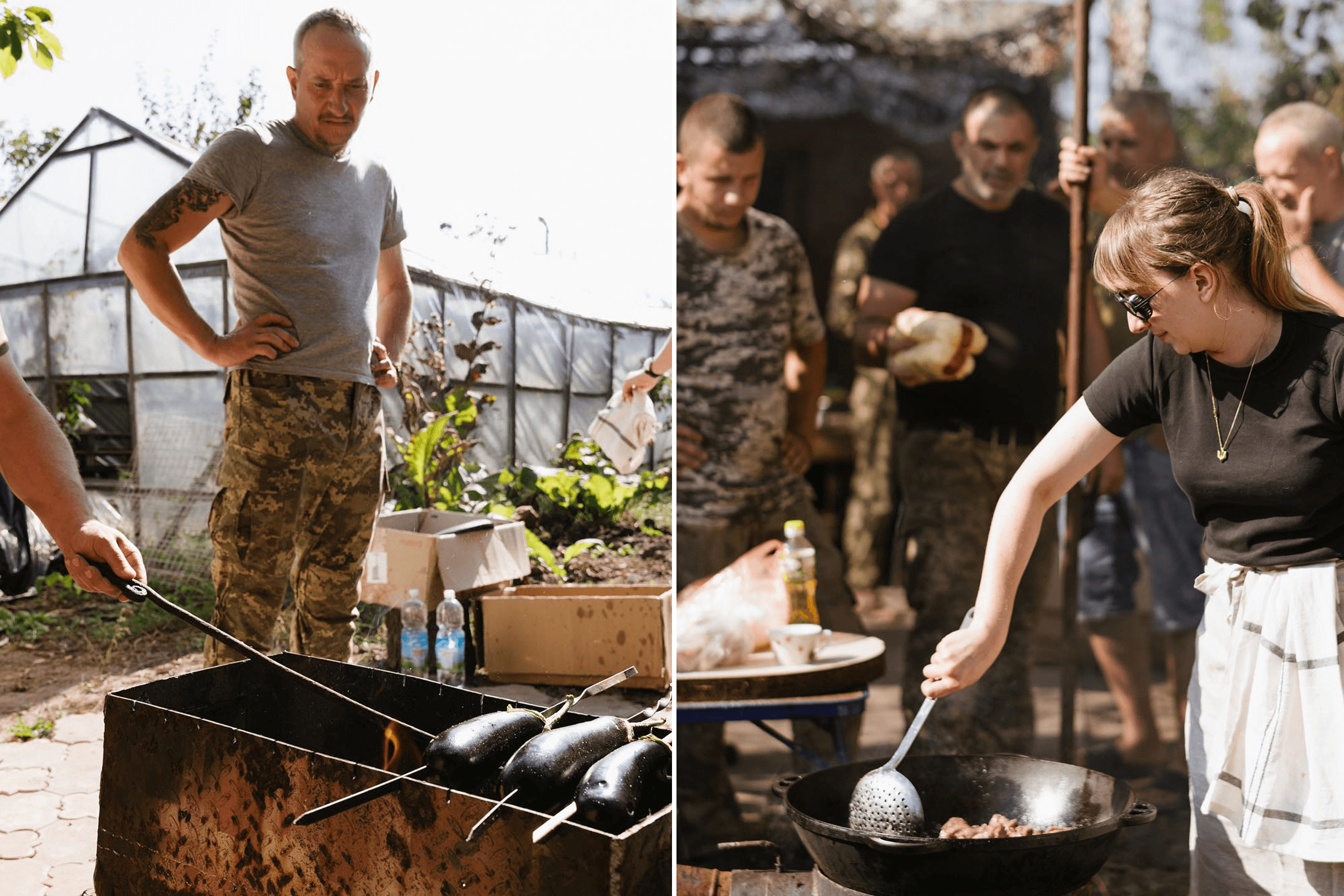
Anna Voloshyna cooking Ukrainian dishes for the military during a trip to Ukraine. October 1, 2023. Photo: annavoloshynacooks / Instagram 
Photo: annavoloshynacooks / Instagram 
Photo: annavoloshynacooks / Instagram 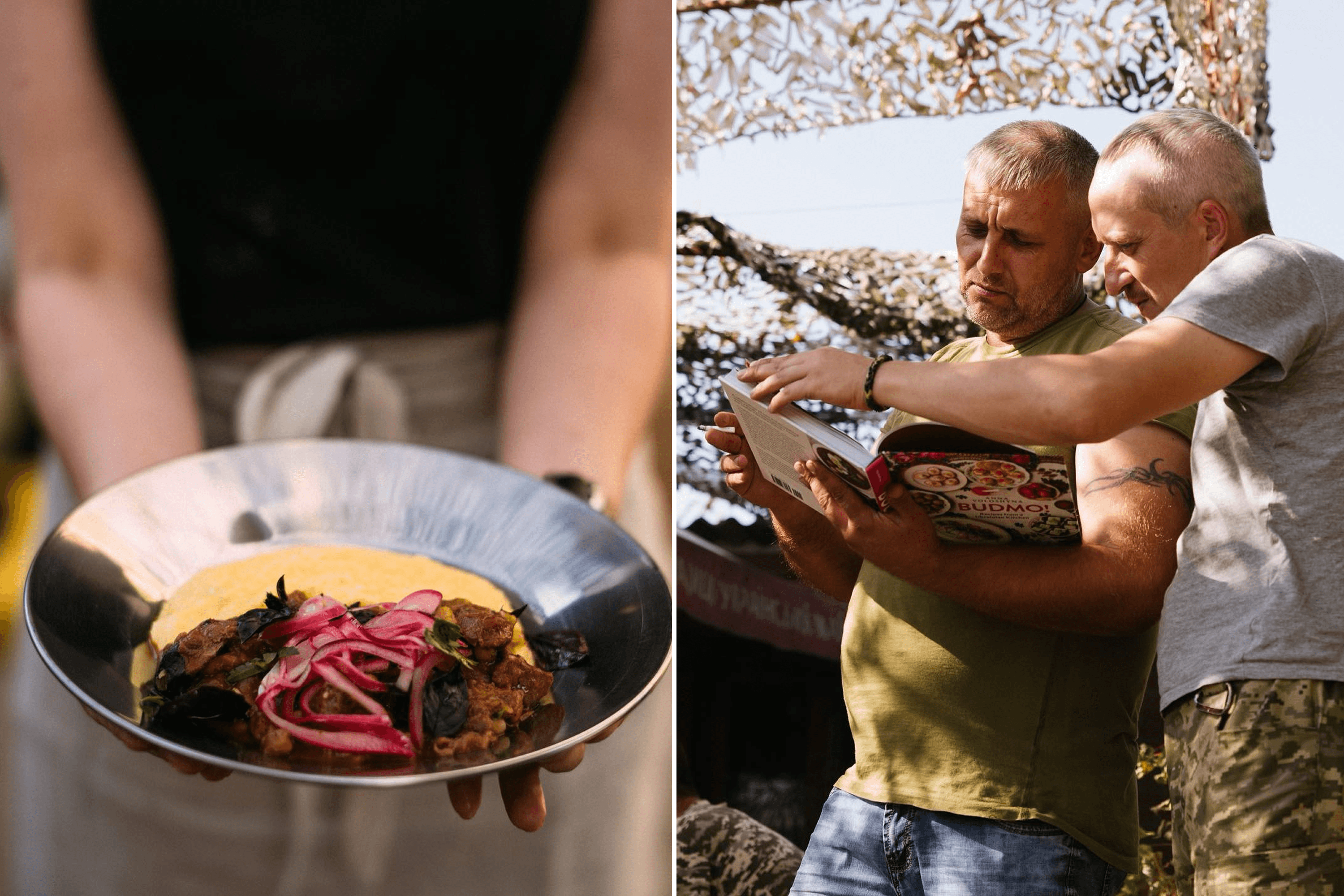
Photo: annavoloshynacooks / Instagram
Bessarabia also means Romanian mamalyha and Bulgarian dishes, Odesa means Jewish cuisine, and Crimea means Crimean Tatar food. You fit all of this into a book called Ukraïne. How is that different from what the empire did when it filed everything that was not its own under “Soviet”?
The difference is that I always say where a dish comes from. Mamalyha is Romanian, not Ukrainian, but it lives on in Ukrainian Bessarabia. Chiberek is a Crimean Tatar dish that’s part of Ukrainian cuisine, but it isn’t a “Ukrainian cheburek.” I explain the origin of the name, who cooked the dish, and what happened to those people. The empire erased origins. I bring them back.
Crimean Tatars are citizens of Ukraine with their own culture and traditions, and that needs to be said out loud. On the map in the book, Crimea is Ukrainian. I couldn’t go there, so the Crimea section is built on memories and recipes: lamb pilaf with apples, kurabie, chiberek. It was a matter of principle for me to have it in the book.
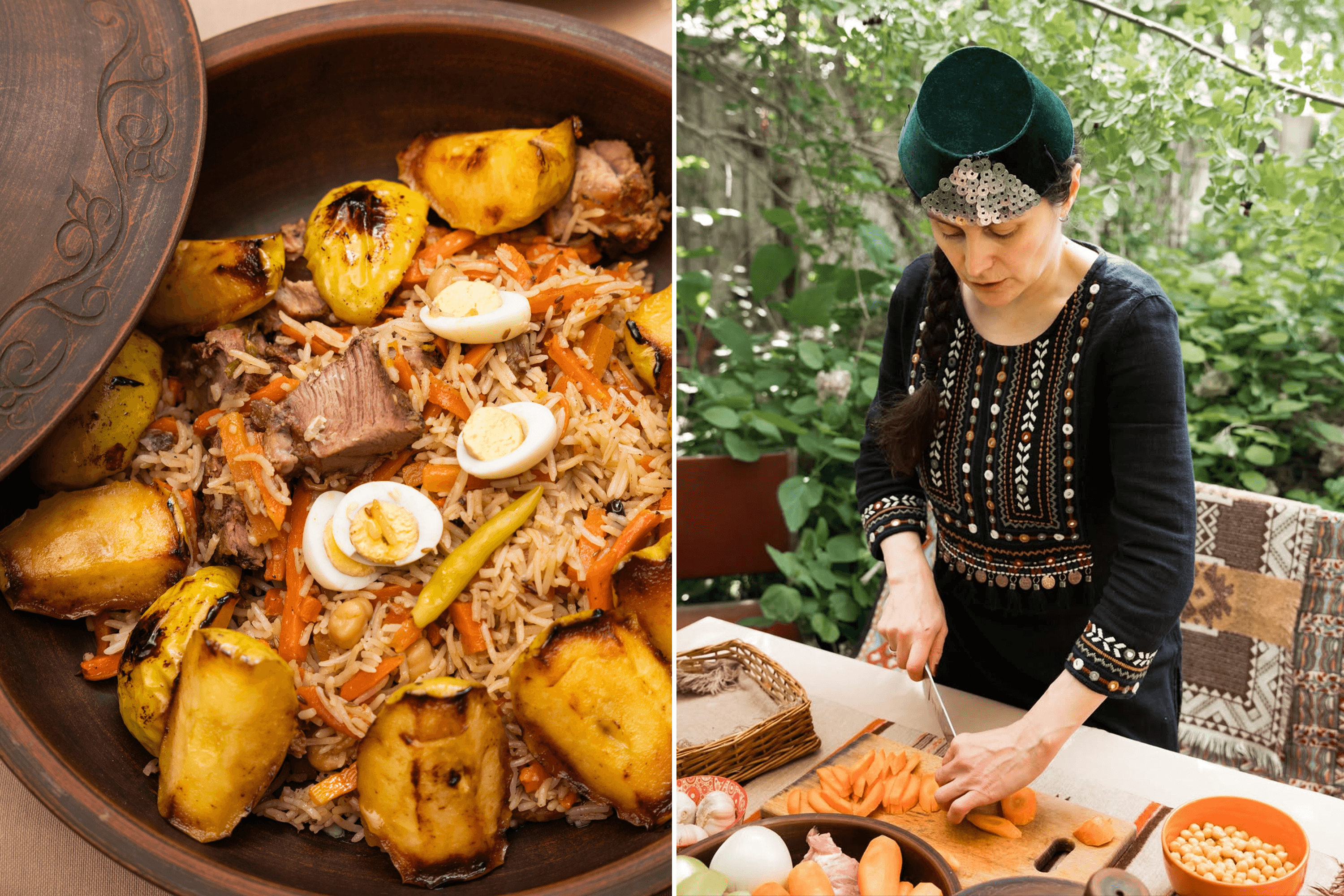
Crimean Tatar plov, a recipe Anna Voloshyna documented in Lviv while working on her book UKRAЇNE. Photo: annavoloshynacooks / Instagram 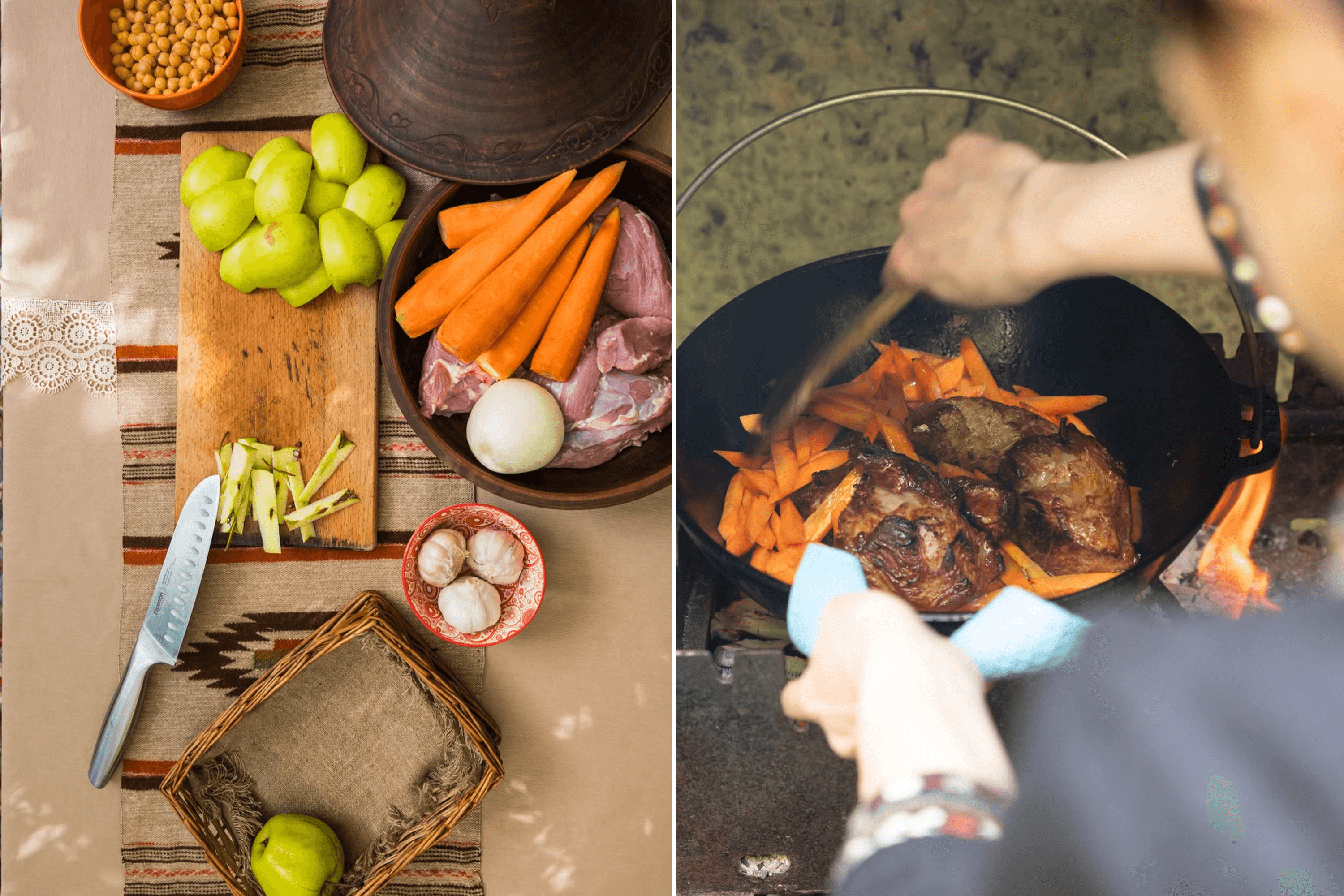
Photo: annavoloshynacooks / Instagram 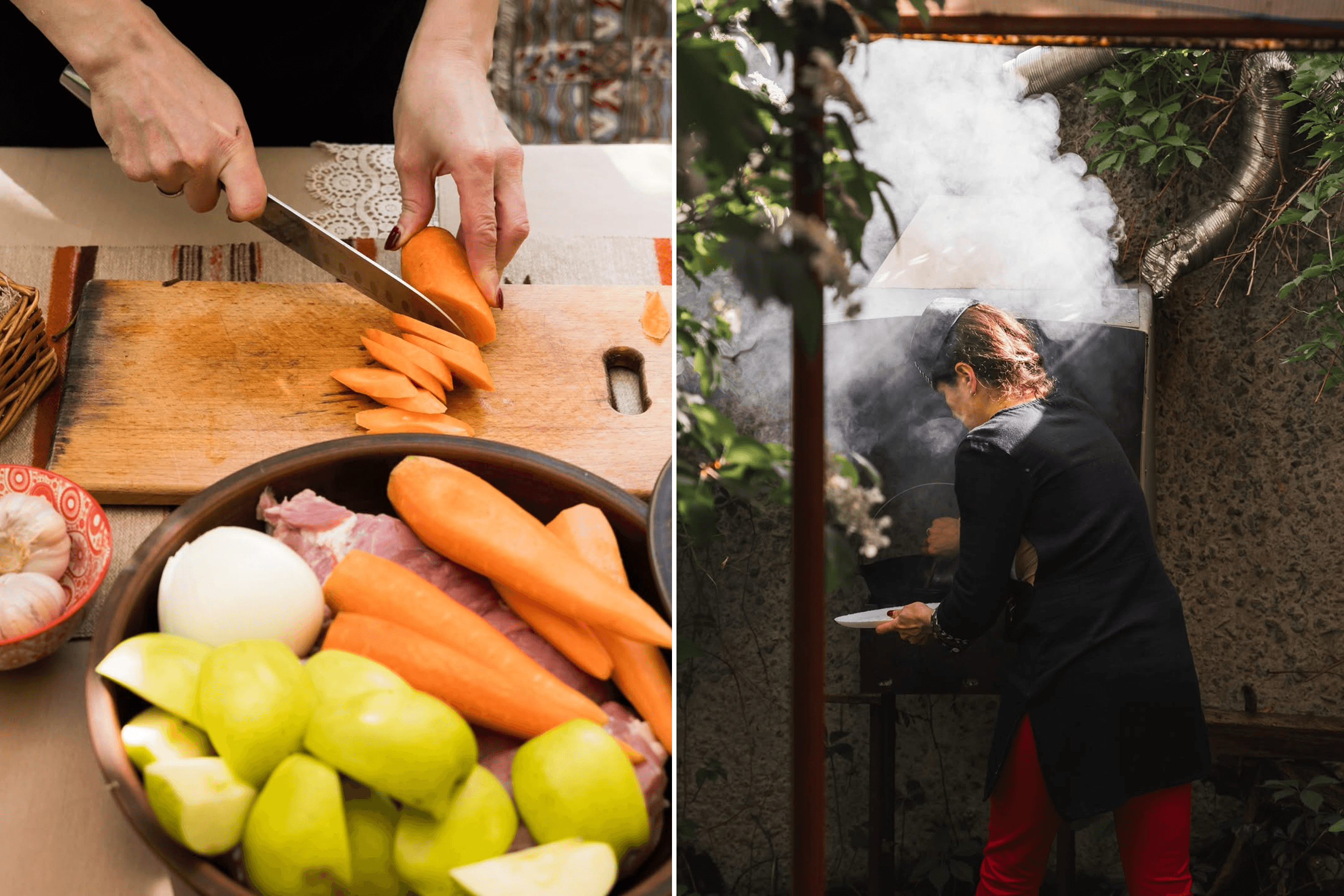
Photo: annavoloshynacooks / Instagram 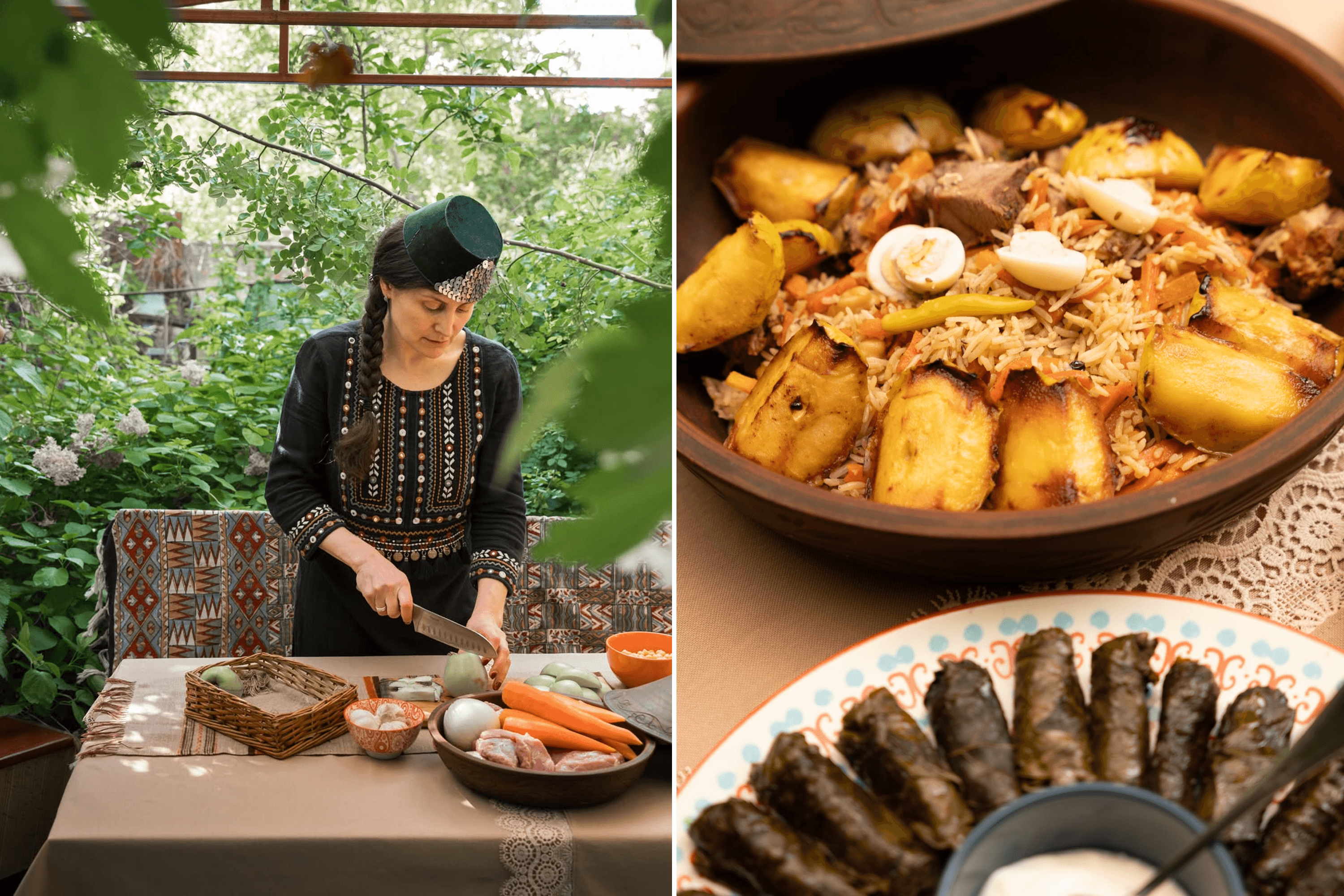
Photo: annavoloshynacooks / Instagram
You said that when writing about the east, you “latched onto salt.” Why salt?
Because we hold salt in our hands every day and barely notice it. Soledar was home to Artemsil, one of the largest salt production complexes in Europe. It supplied about 90 percent of Ukraine’s salt market.
In April 2022, production stopped because of the fighting, and the price of salt shot up. Ukrainians suddenly felt how much something so ordinary was really worth.
In January 2023, after months of heavy fighting, Ukrainian troops withdrew from Soledar. And that was exactly where I’d planned to go that winter.
And since you could not go there, you went to Drohobych?
Yes. They’ve been making salt there in almost the same way for seven centuries, pumping brine from wells and evaporating it in cast-iron vats over wood fires. Inside, it’s over 35 degrees Celsius.
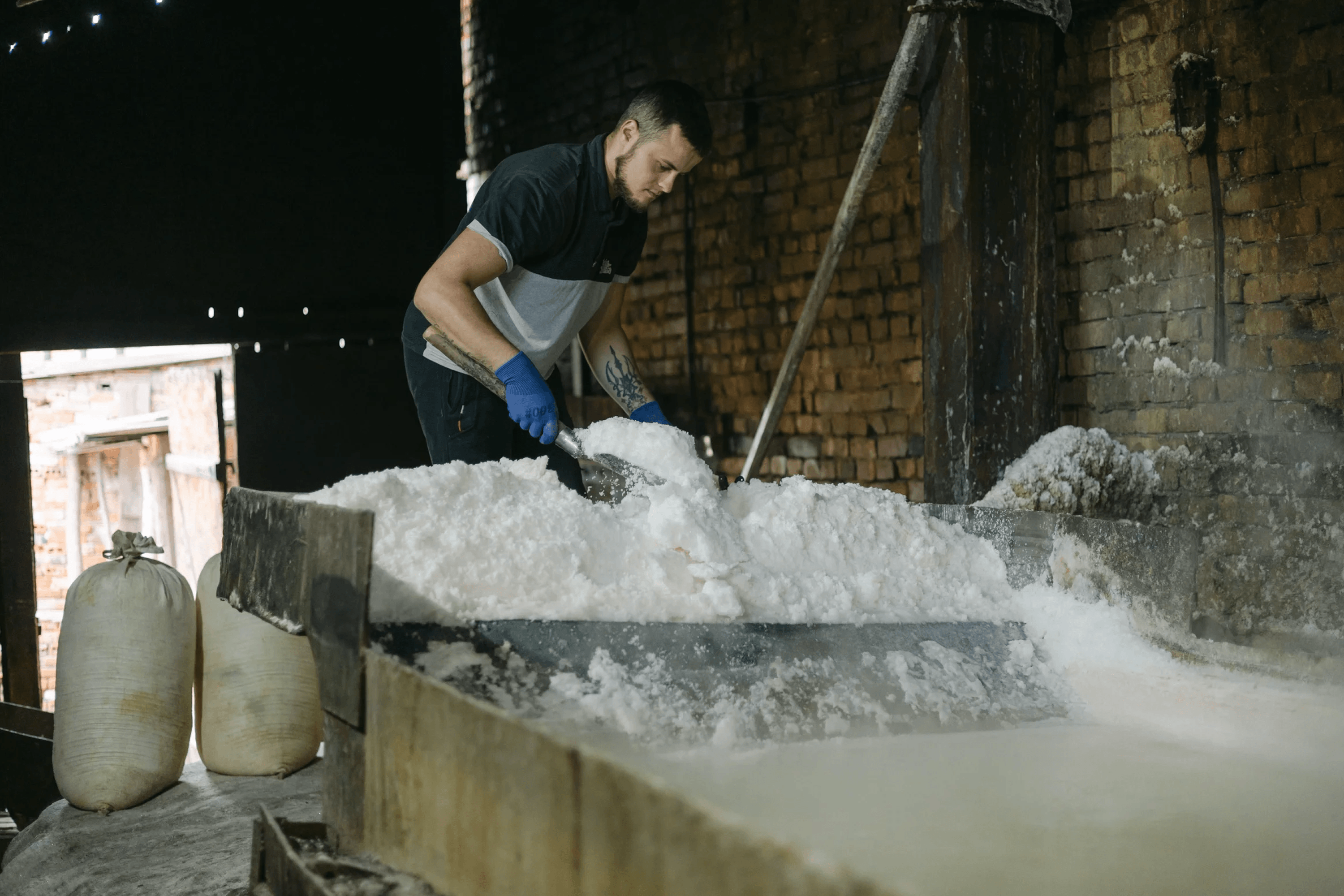
Drohobych Saltworks. Photo: Mykhailo Melnychenko / YB 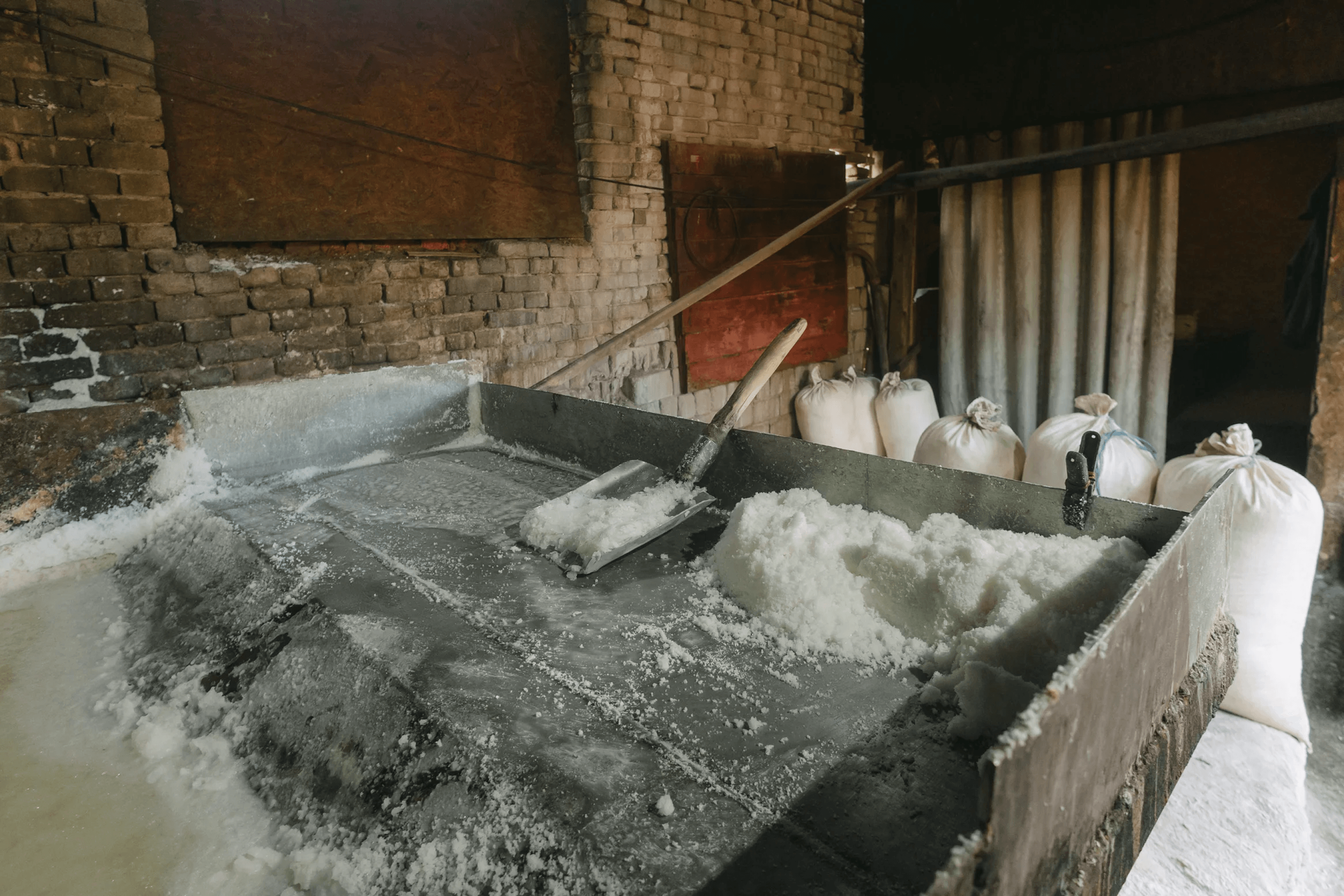
Photo: Mykhailo Melnychenko / YB 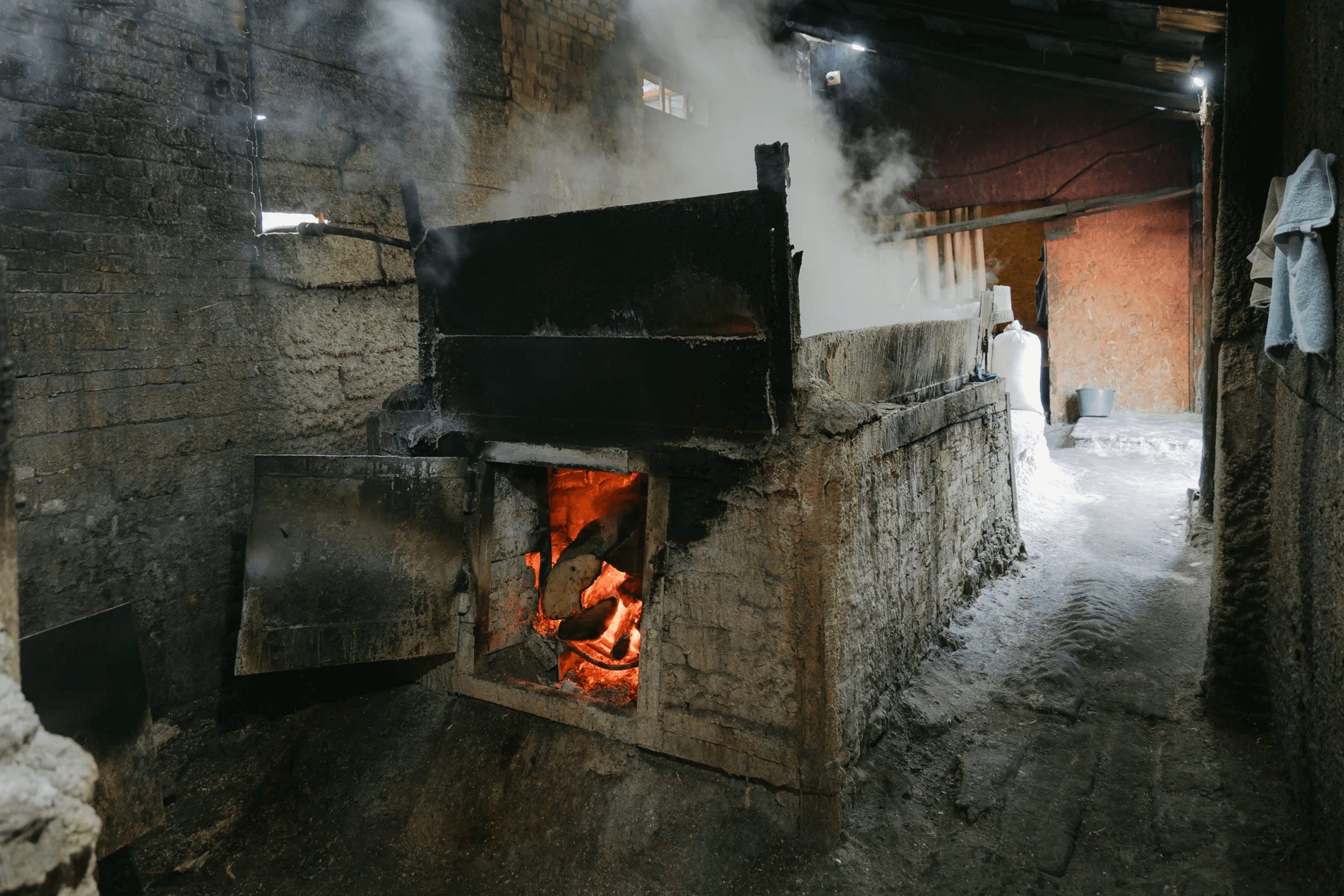
Photo: Mykhailo Melnychenko / YB 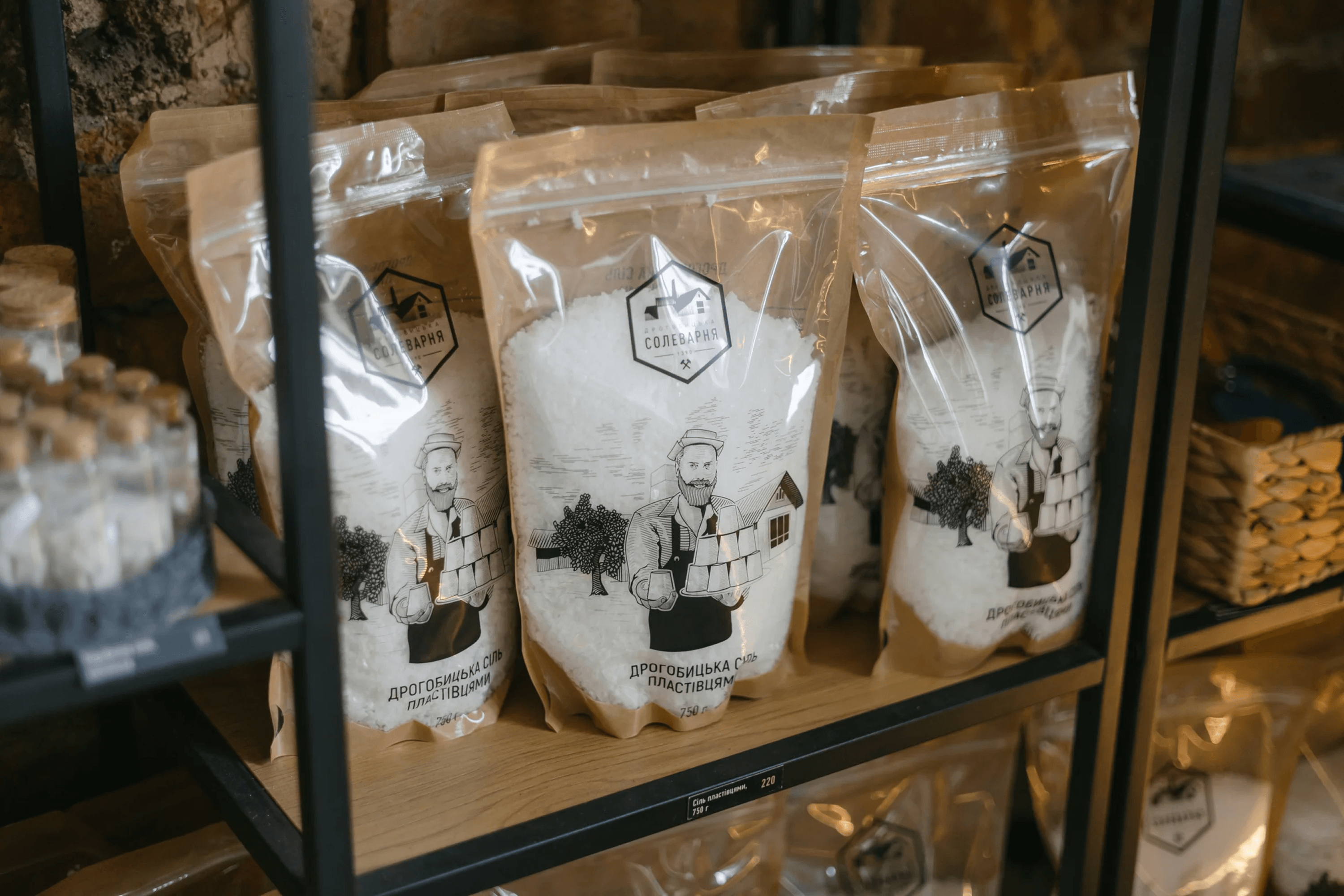
Photo: Mykhailo Melnychenko / YB
Our guide, Nataliia, told us that in 2022 the plant doubled production, to 500 tons, because the country needed salt. She also said, “Chefs really like our salt.” I knew that already. My chef friends use it as a finishing salt instead of Maldon.
The chapter “Salt of the Earth” ends with lunch for 50 soldiers of the 93rd Brigade in Druzhkivka, ten kilometers from the front line. Where did the idea of going there to cook come from?
I read a New York Times report about soldiers in Bakhmut. A bunker in a basement, firewood, fermented tomatoes and tea on the table, and the commander watching drone footage of Russians running into a building. I couldn’t get that picture out of my head. I wanted to go and cook for them. Getting into Bakhmut was impossible, so we went to Druzhkivka. Dmytro Kostenko, an acquaintance of mine who knew the commander of the 93rd Brigade, helped us.
You write that you brought them more than just food. You brought a little piece of every corner of the country: Hutsul brynza, rye bread from the Kyiv region, Drohobych salt, tomatoes from Snihurivka. Was it to make them feel that all of Ukraine was behind them?
I thought they must miss home terribly. They risk their lives every day, and I wanted to bring them all of Ukraine on one table, even if only for two hours. We had to leave the Bessarabian wine at the hotel because alcohol is prohibited in the military. I made a Crimean beef and chickpea stew.
Nobody could guarantee the unit would still be there, but the lunch went ahead. I had three hours to feed 50 people. Everyone pitched in. Someone built the fire, someone scrubbed the cauldron, someone chopped. And I was shouting at the guy by the banosh, “Stir it more often or it’ll burn!”
The tomatoes you took to the soldiers were from Snihurivka, and that is your most personal chapter, “Steppe.” You grew up there, your mother and grandmother still live there, and, as you put it, the best tomatoes in the world grow there. You write that when you drive to your mother’s, you bring “the steppe” in your trunk. What does that mean?
When I go home, I always stop by the people selling produce along the highway. You take a tomato, still warm from the sun, sprinkle it with salt, and eat it like a piece of fruit, no bread, no knife. And sunflower oil from small local presses, a little cloudy. I never buy just one bottle. By the time I get to my mother’s, the trunk is full of tomatoes, peppers, dill, parsley, melons, and oil.
And what did that steppe look like in 2023, after Snihurivka was liberated?
It was mined. Today, because of mines, a large share of Ukraine’s farmland can’t be worked. Before the full-scale war, Ukraine accounted for almost 10 percent of global wheat exports and was one of the world’s leading sunflower producers. Every summer, millions of hectares of sunflowers bloom in the south.
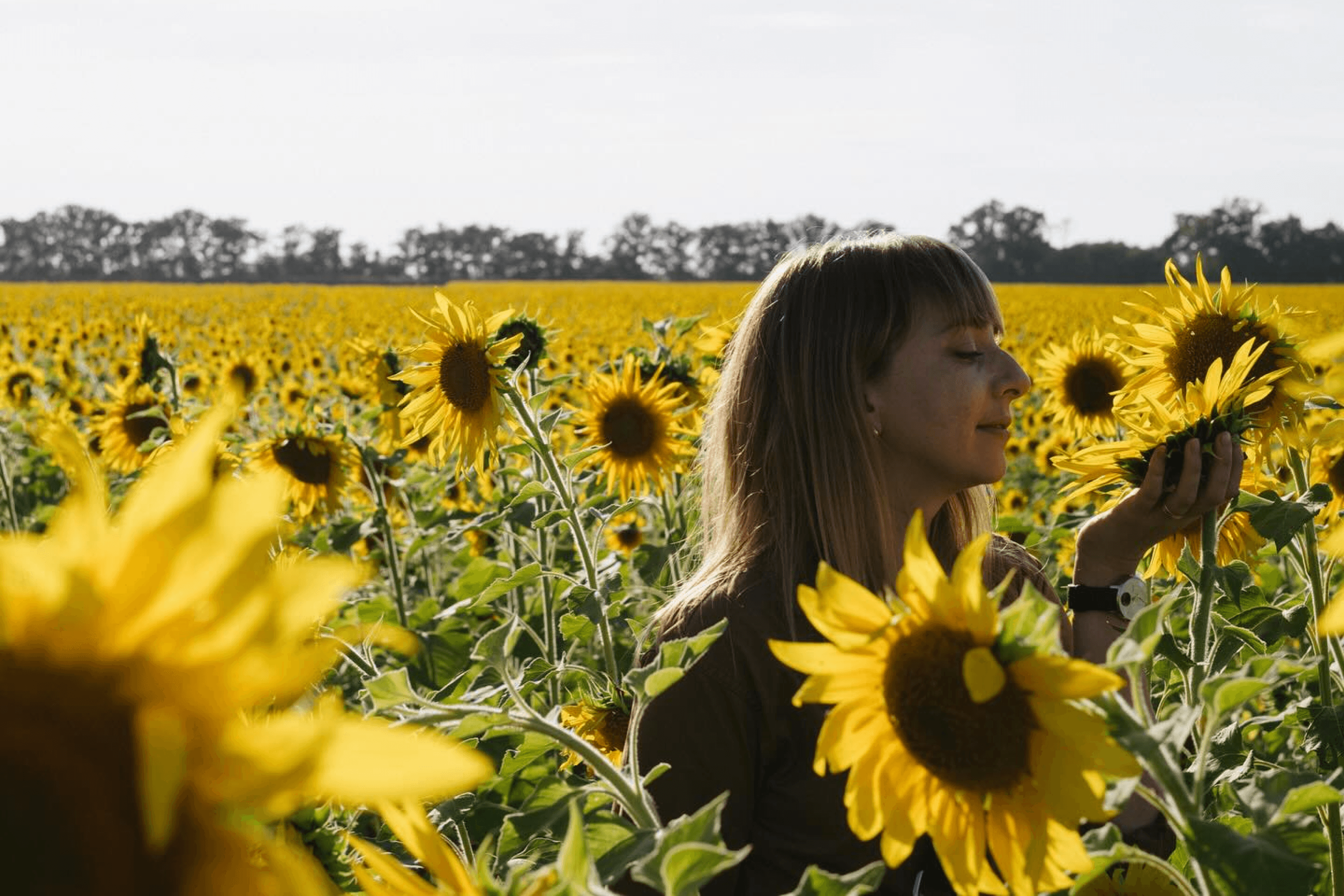
Putin, like Stalin before him, turned food into a weapon. Russians bomb grain elevators, burn crops, and mine fields. I write about this next to a tomato salad recipe because I want American readers to understand that the tomatoes and the mines are on the same ground.
The “Cellar” chapter moved me the most. Back in July 2022, during the occupation of Snihurivka, you wrote a column for The Washington Post about your grandmother’s cellar, where your family hid from shelling. What happened to the cellar after that?
When my grandmother evacuated, she left the keys with neighbors who had decided to stay and told them, “Take whatever you need from the cellar.” Snihurivka was occupied for eight months. The occupiers handed out food on ration cards, and the neighbors survived on my grandmother’s jars of pickles and preserves. When the town was liberated in November 2022, my grandmother was the first to come back. The house was still standing. I called and asked about the cellar. “Empty,” she said. For the first time in my life, there was nothing in my grandmother’s cellar. To me, that’s what a cellar is really about. Fermenting tomatoes in August means believing that January will come and you’ll eat them. Even if you’re not the one who eats them.
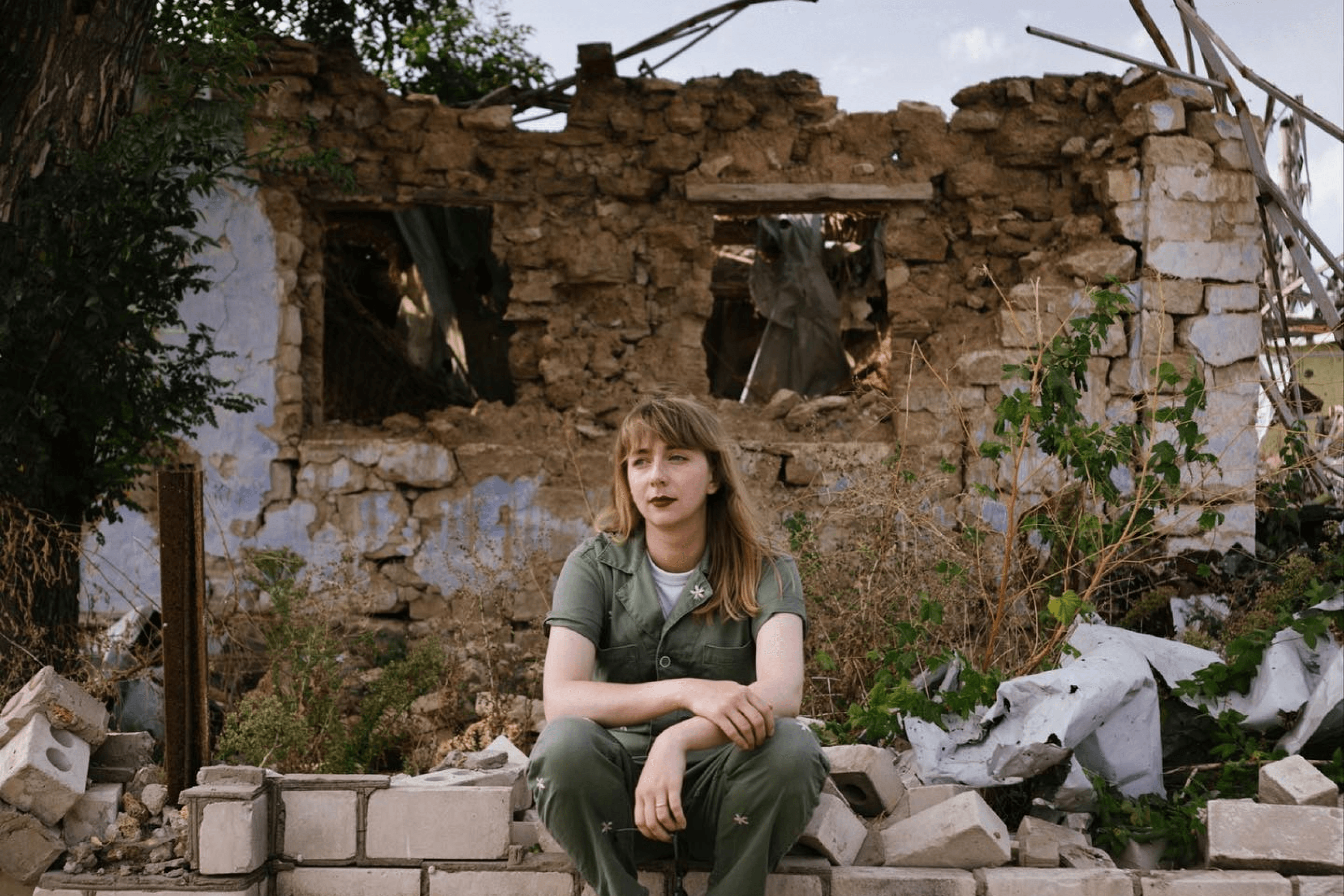
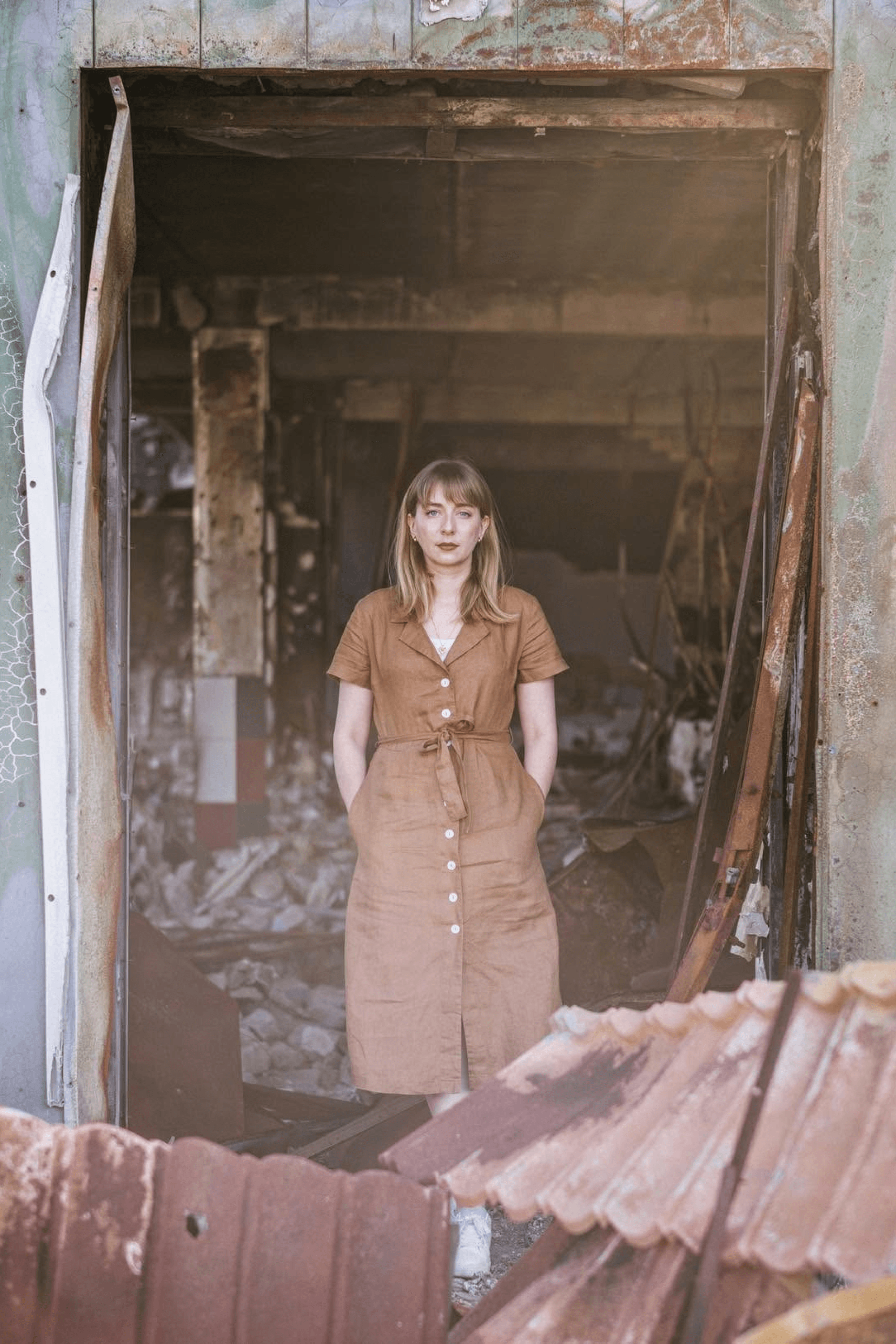
Anna Voloshyna in front of a destroyed building in Snihurivka. 2023. Photo: annavoloshynacooks / Instagram 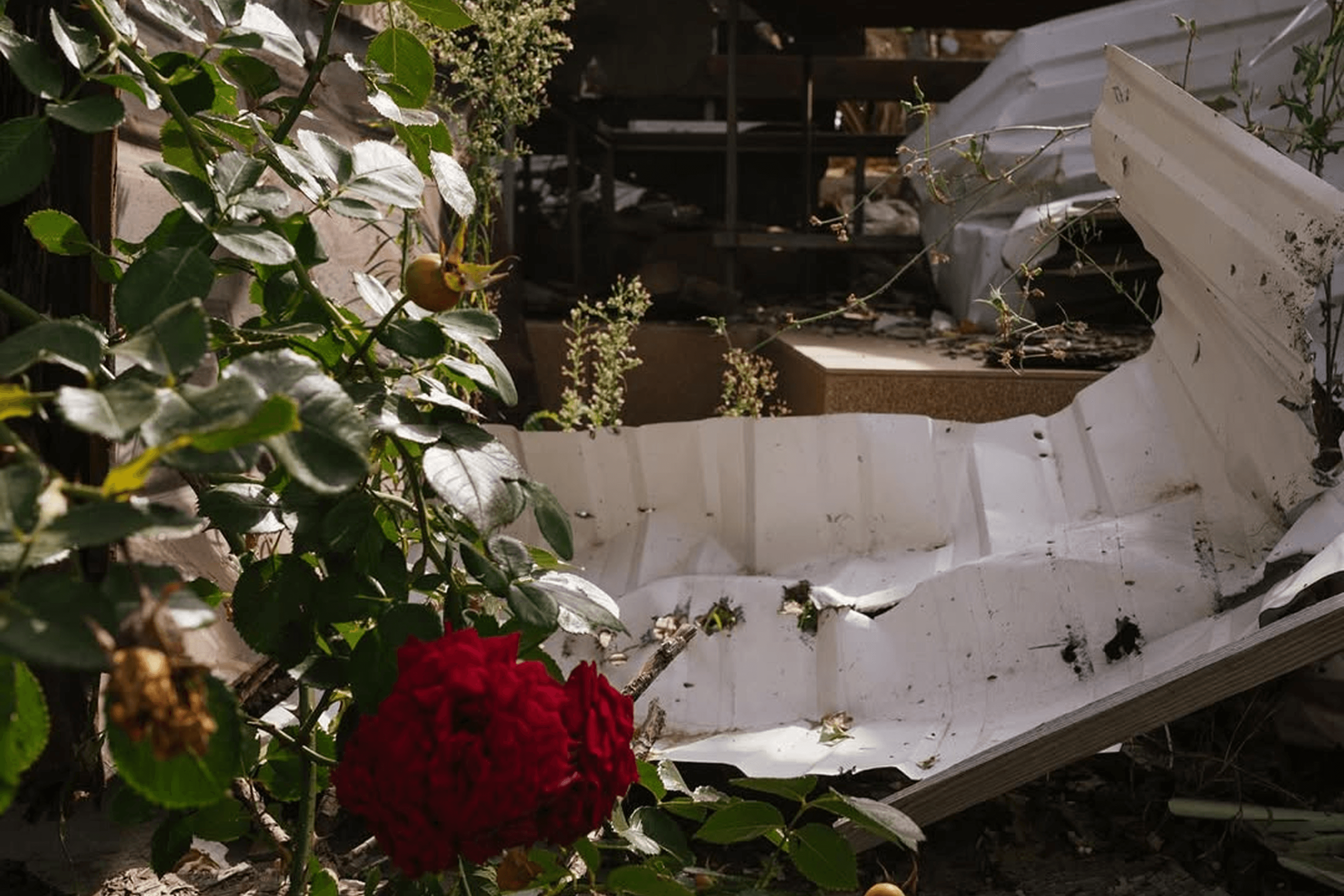
Photo: annavoloshynacooks / Instagram
When you came to Snihurivka, did you go down into the cellar?
Yes, though not right away. The whole family gathered at the table in my grandmother’s yard. There was my mother’s roast chicken with potatoes, nalysnyky with mushrooms, stuffed peppers, sausage, potato varenyky, herring, and my grandmother’s duck. And then my grandmother said, “Oh, I forgot the tomatoes. Ania, bring some up from the cellar.”
I didn’t know if I was ready to see the cellar where my family had hidden from the bombs, but I went down. The shelves were full again: fermented tomatoes, cucumbers, cabbage, red and yellow peppers, eggplant spread, jam, kompot. I stood there and cried. And I thought, if our cellar survived the war, we will too.
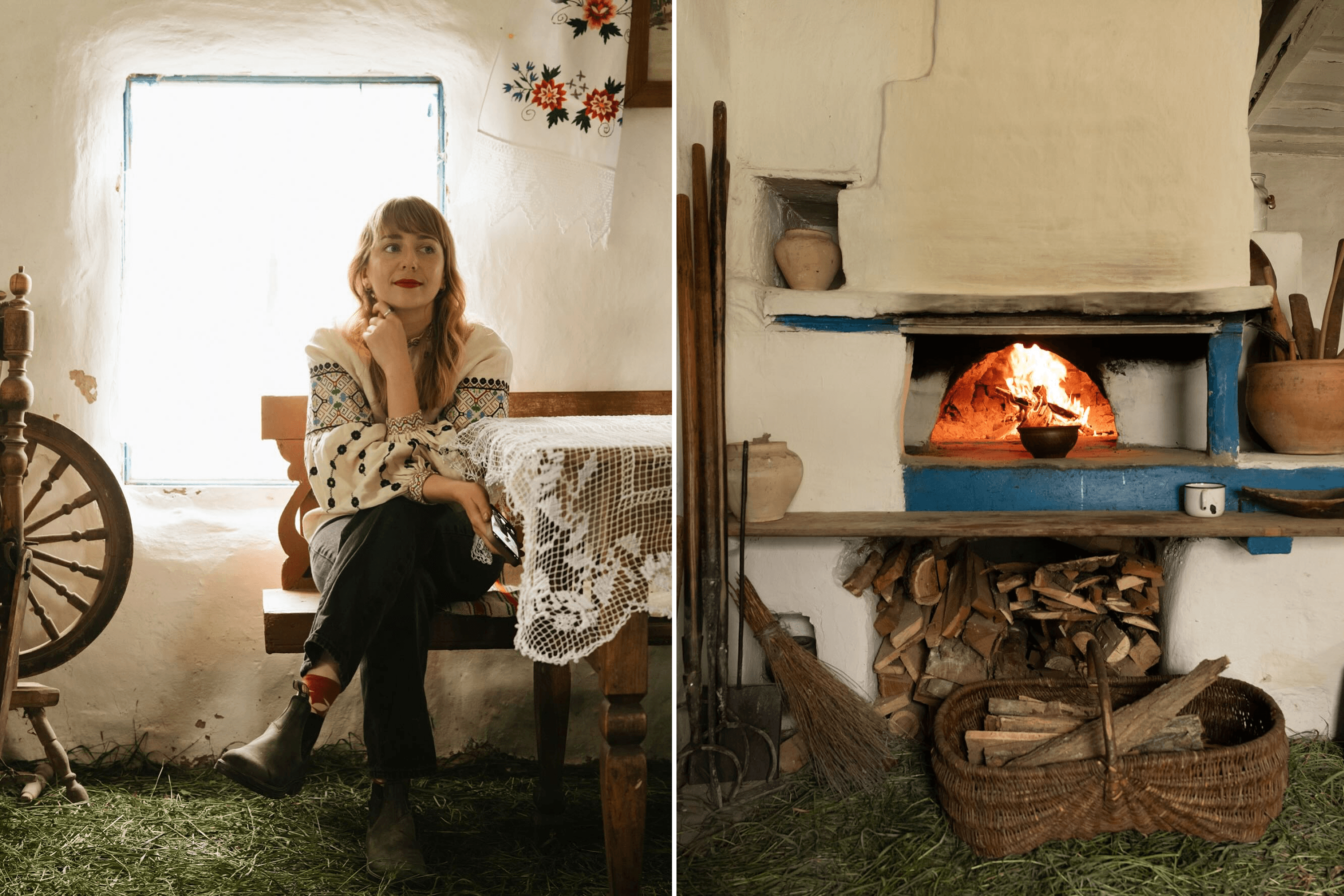
Anna Voloshyna during a trip to Ukraine, where she worked on material for her book UKRAINE. August 24, 2025. Photo: annavoloshynacooks / Instagram 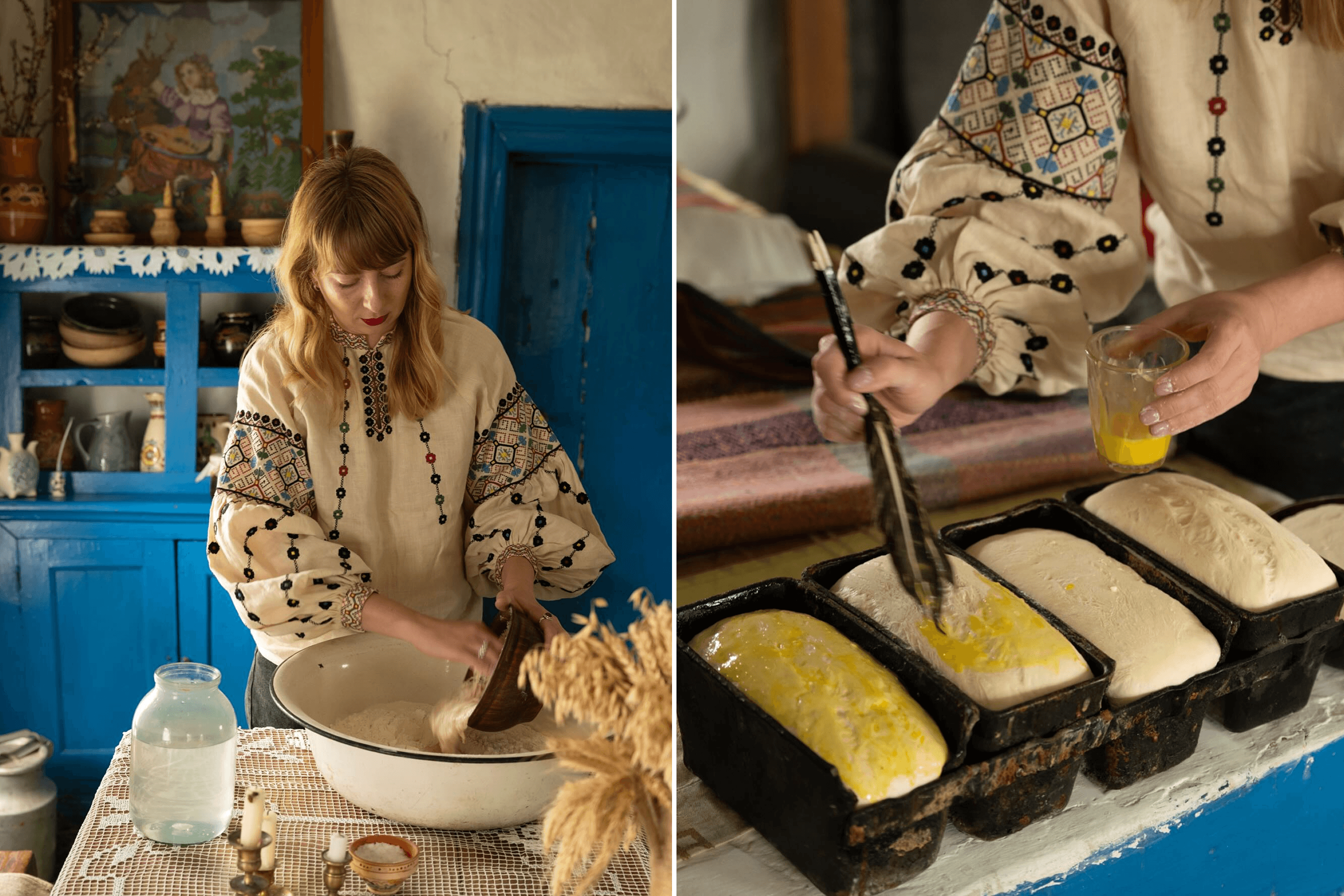
Photo: annavoloshynacooks / Instagram 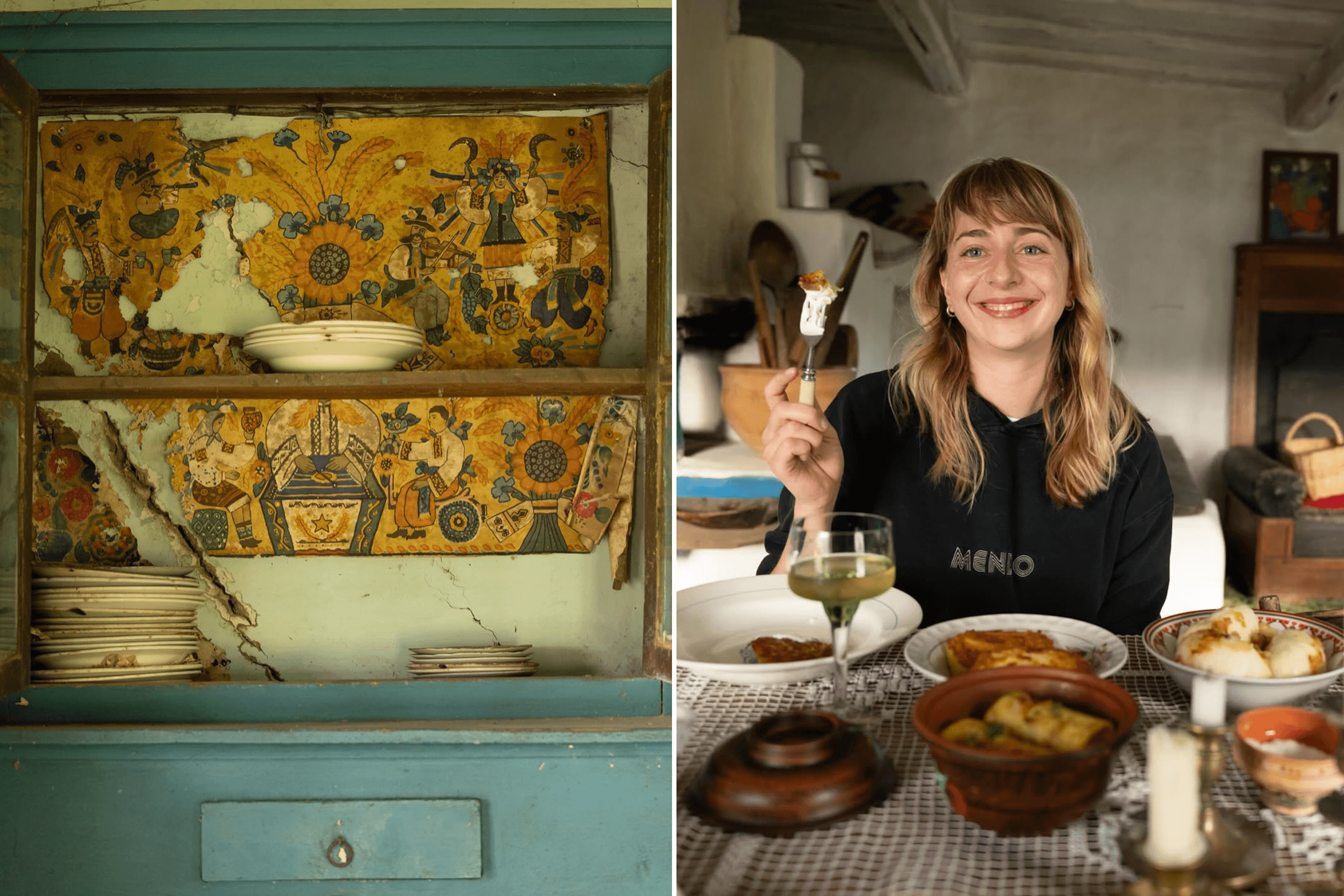
Photo: annavoloshynacooks / Instagram
A priest in Kryvorivnia told you, an agnostic, that you were standing at the center of the world. Why put that story in a cookbook?
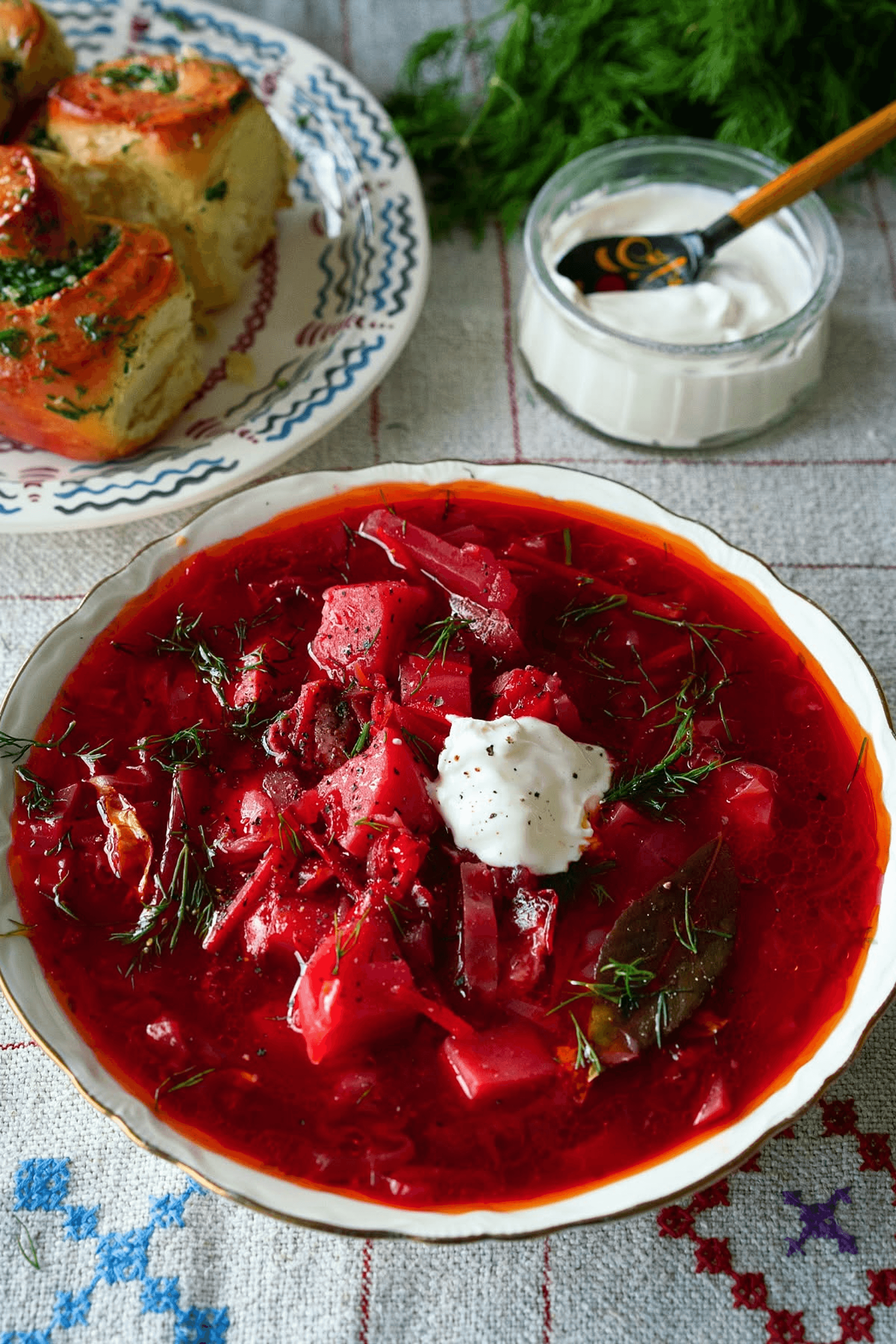
Because I ate the best white borshch of my life at his house (laughs). If I had to explain Ukrainian cuisine to a foreigner with a single dish, I’d choose white borshch without a second thought.
Father Illia Bohachuk is a very interesting man. The church where he serves was built in the 17th century, and Ivan Franko, Lesia Ukrainka, and Mykhailo Hrushevsky all visited it. After the tour, he asked me, “Do you know where you’re standing?” I looked down at the floor. “On a Hutsul rug?” And he said, “No. Europe is the center of the world, and its geographical center is here, in Kryvorivnia. The heart of every community is its church. And you’re standing in the center of this church. So you’re standing at the center of the world.” I wanted Americans to understand that for a Hutsul, Kryvorivnia really is the center of the world.
Then we went to make white borshch with fermented beets, smoked meat, and rich Hutsul sour cream. Illia also gave me a small icon of the Virgin Mary for our old van, which friends from a Kharkiv charity had lent us. The icon rode thousands of kilometers on the dashboard, and the van never broke down once.
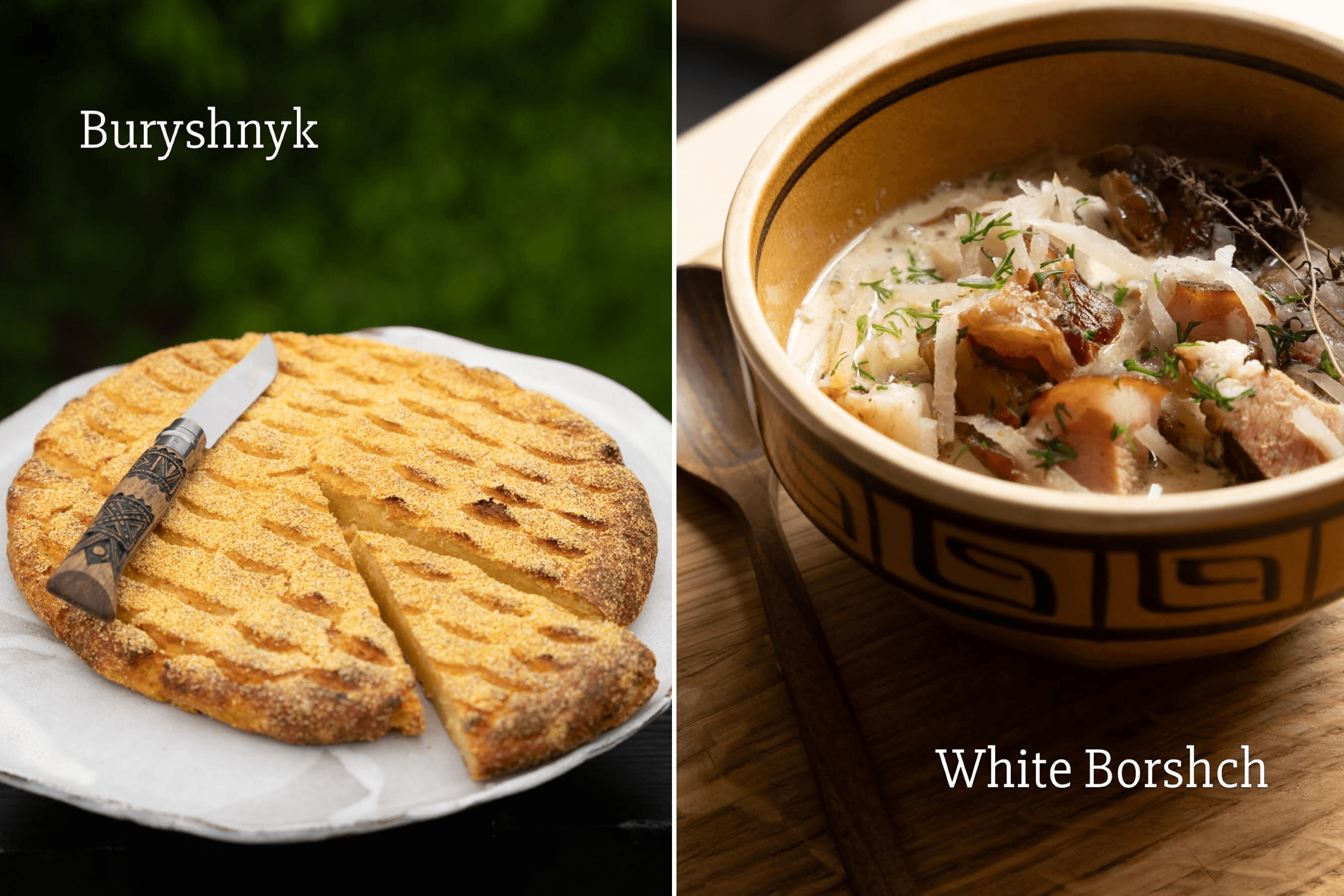
Photo: Anna Voloshyna / Facebook 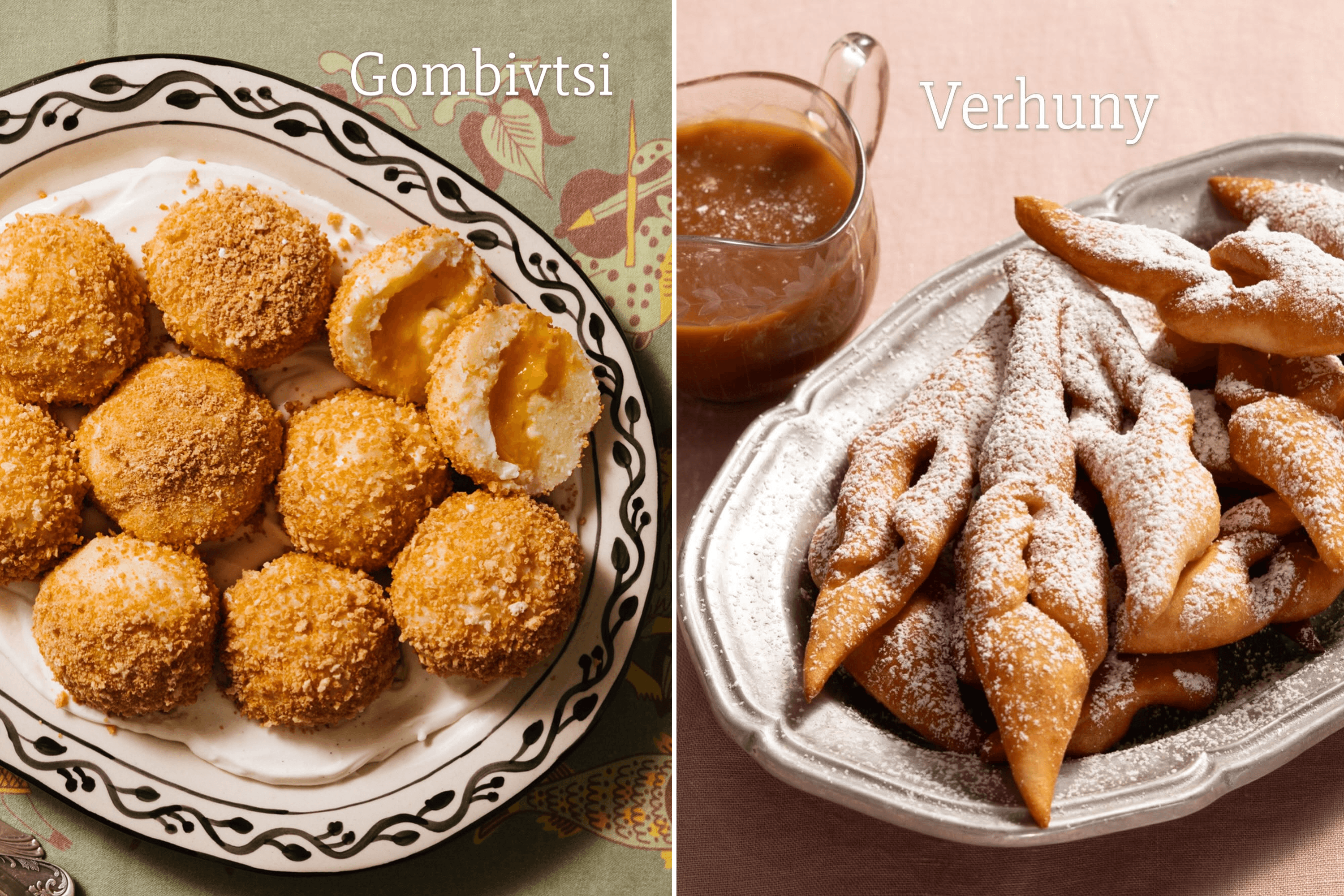
Photo: Anna Voloshyna / Facebook 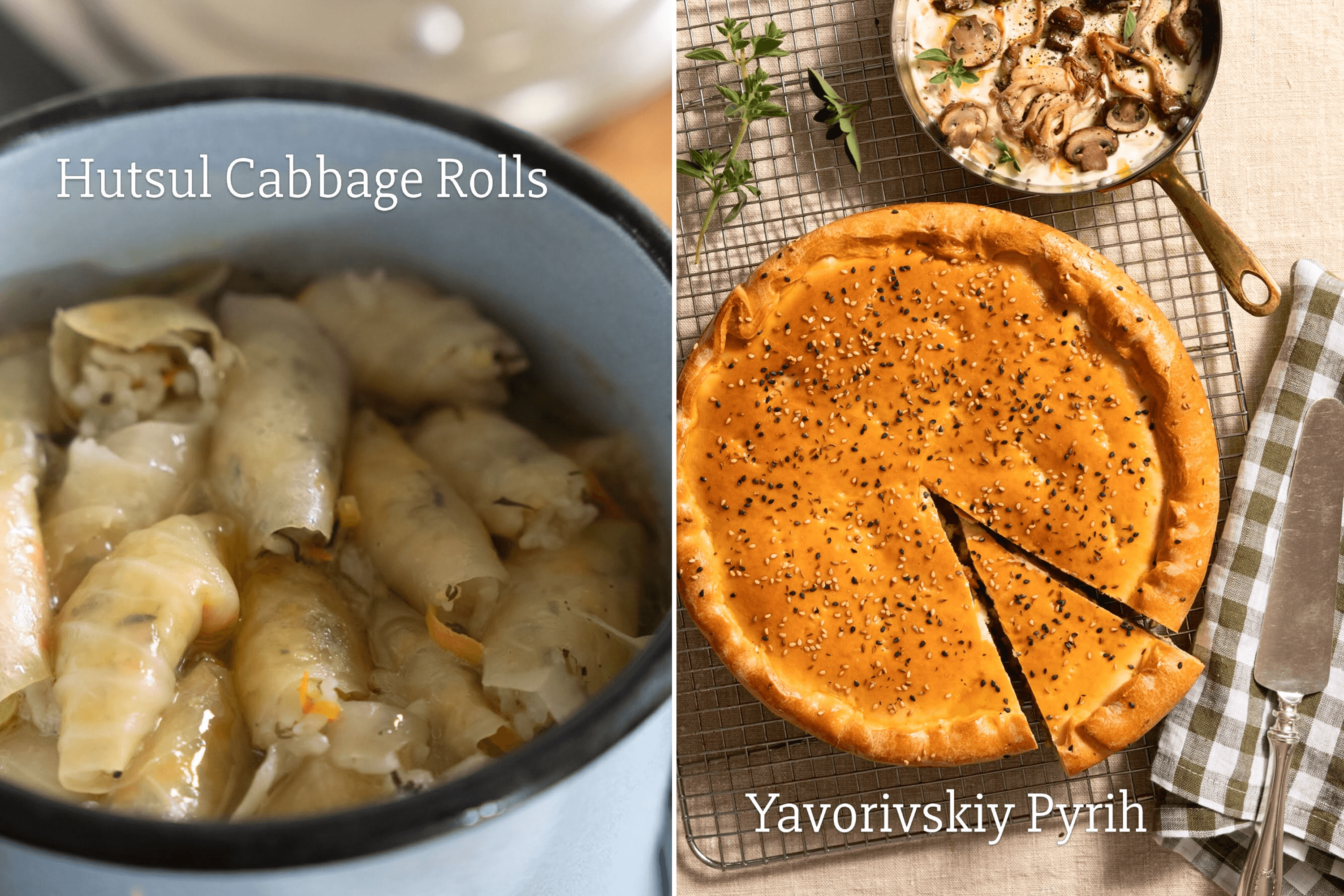
Photo: Anna Voloshyna / Facebook
White borshch is just one of three kinds of borshch in the book. You also devoted a separate essay to how to spell the word. Why so much attention to spelling?
The essay starts with a joke. I was sitting in Leslie’s kitchen, complaining that people were already dragging me into spelling fights on social media, even though the book wasn’t out yet. Her partner Todd, a writer, was walking by and said, “The hardest part of making borshch is figuring out how to spell it.” That became the subtitle.
But there’s a serious story behind the joke. The spelling borscht, with a “t” at the end, comes from Yiddish. In the United States, the word spread with Jewish immigrants from the Russian Empire, which then included much of Ukraine. That’s why American delis still write borscht, and the dish itself is often associated with Russia. Soviet cookbooks further cemented the idea of borshch as an “international” dish.
Borscht is the right word when you mean the Jewish version of the dish. But the Ukrainian word is most accurately rendered as borshch.
How do you explain to Americans that borshch is Ukrainian?
I tell them there are hundreds of kinds of borshch, and that’s the whole point. White Carpathian borshch is made with fermented beets and sour cream. The meatless Christmas Eve version comes with vushka. My Kyiv borshch is made with oxtails. Borshch isn’t a recipe but a map of the country. Every region and every family makes its own. That’s the best proof that it’s ours. An empire would have left just one. Then I ask Americans how many chili recipes they have. Exactly.
Spanish people ask me whether Ukrainian cuisine is all very fatty food in big pots. Do you fight that stereotype?
No, because it’s partly true. Big pots, yes. Varenyky, yes. Salo and fatty food, too. But the question goes deeper. Why does the world see our cuisine this way? Because history shaped it. The memory of the Holodomor still lives in our kitchens. We don’t throw away bread, we save food, we cook in big pots. The Soviet Book of Tasty and Healthy Food showed tables laden with caviar and stuffed pike while people stood in bread lines. Sviatvechir with its twelve dishes gave way to New Year’s with Olivier salad, Soviet champagne, and tangerines. And Crimean Tatar chiberek became a kiosk “cheburek.”
I’m ashamed that I barely thought about this in Budmo! Now, for me, talking about Soviet cuisine also means talking about empire and why this war became possible. Sovok nearly erased our cuisine and destroyed winemaking. And Russia still can’t let it go and considers us part of it. Our job is to show that we’re not.
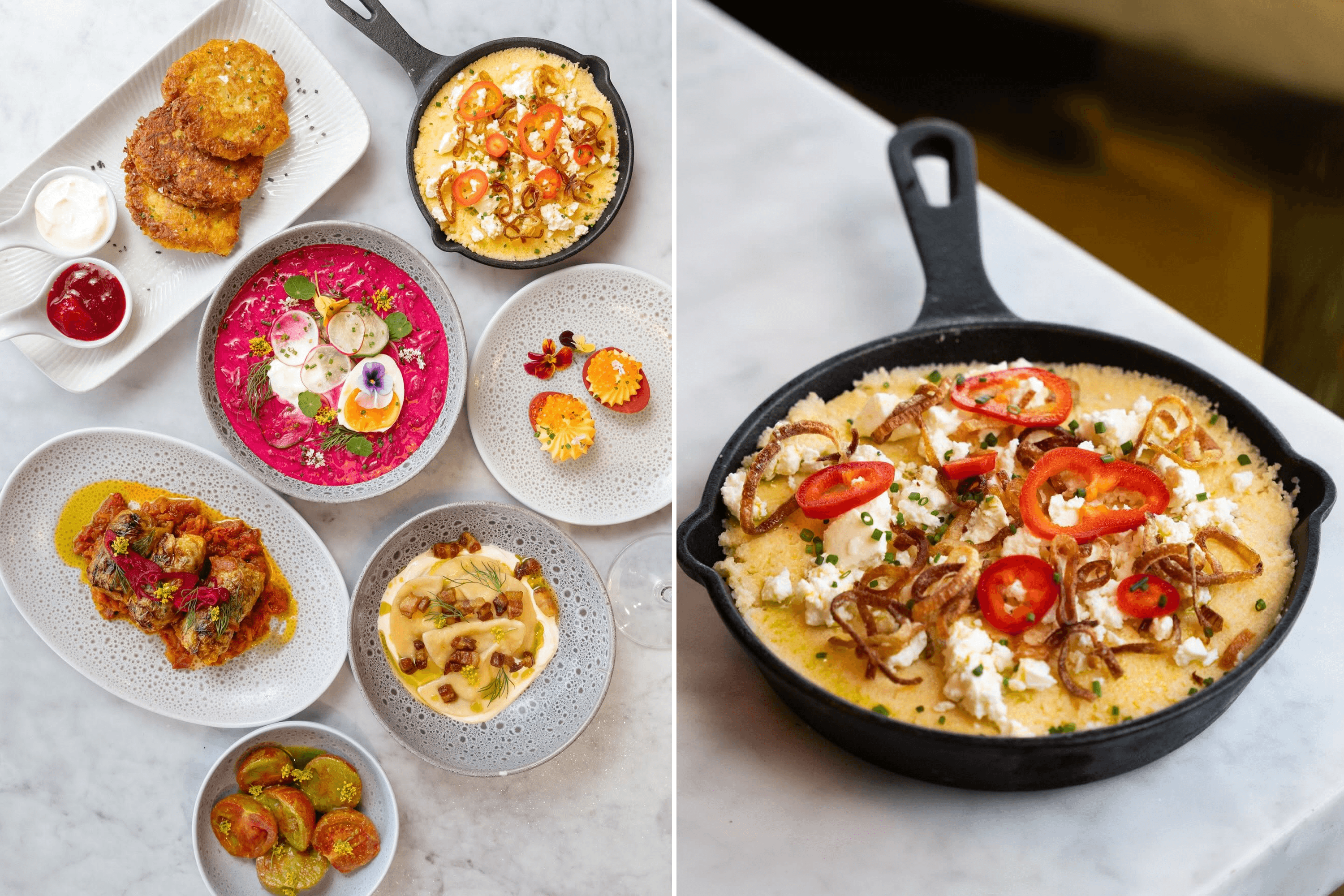
Ukrainian dishes by Anna Voloshyna during her culinary residency at Oxbow Public Market in Napa, California. July 18, 2026. Photo: Anna Voloshyna / Facebook 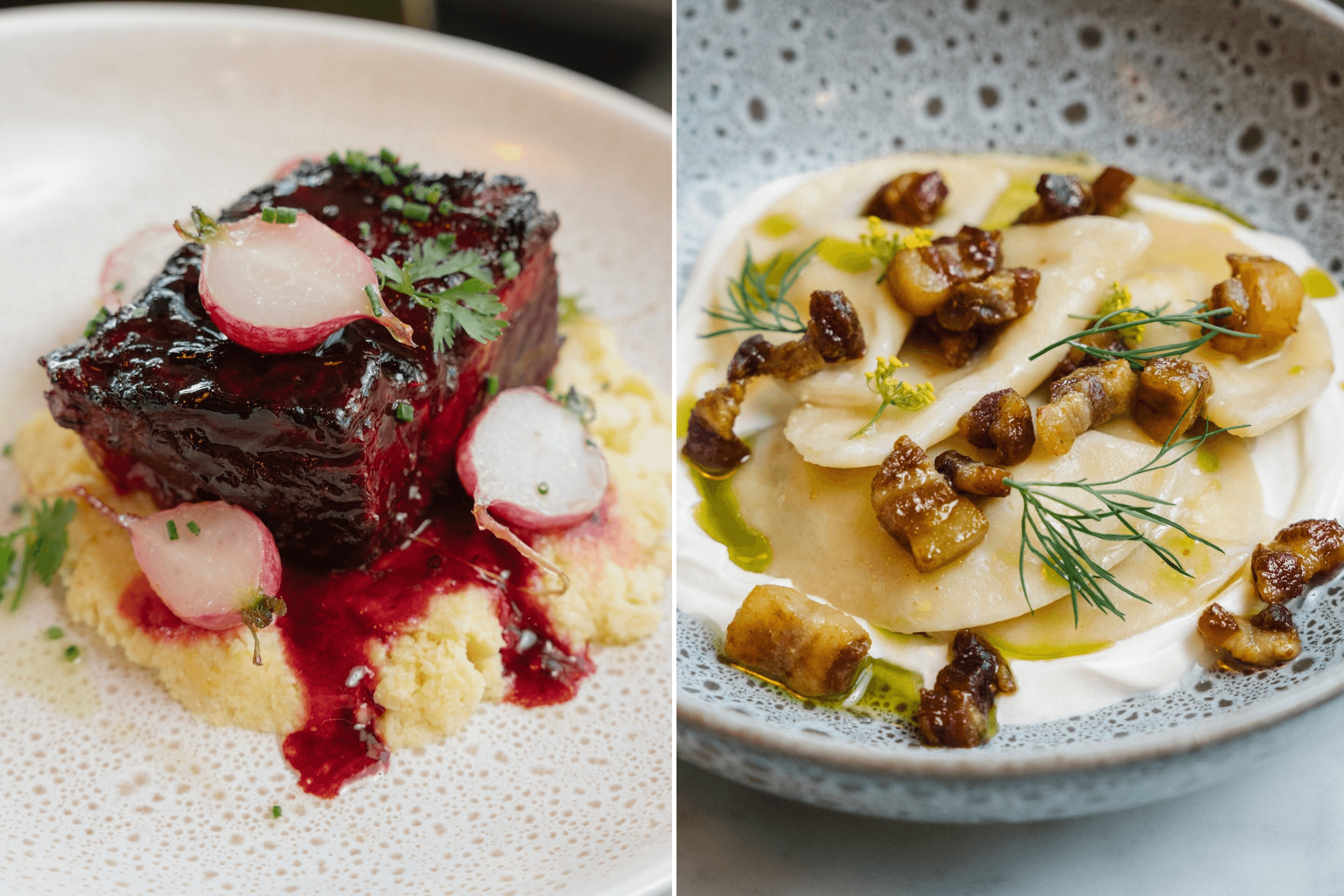
Photo: Anna Voloshyna / Facebook 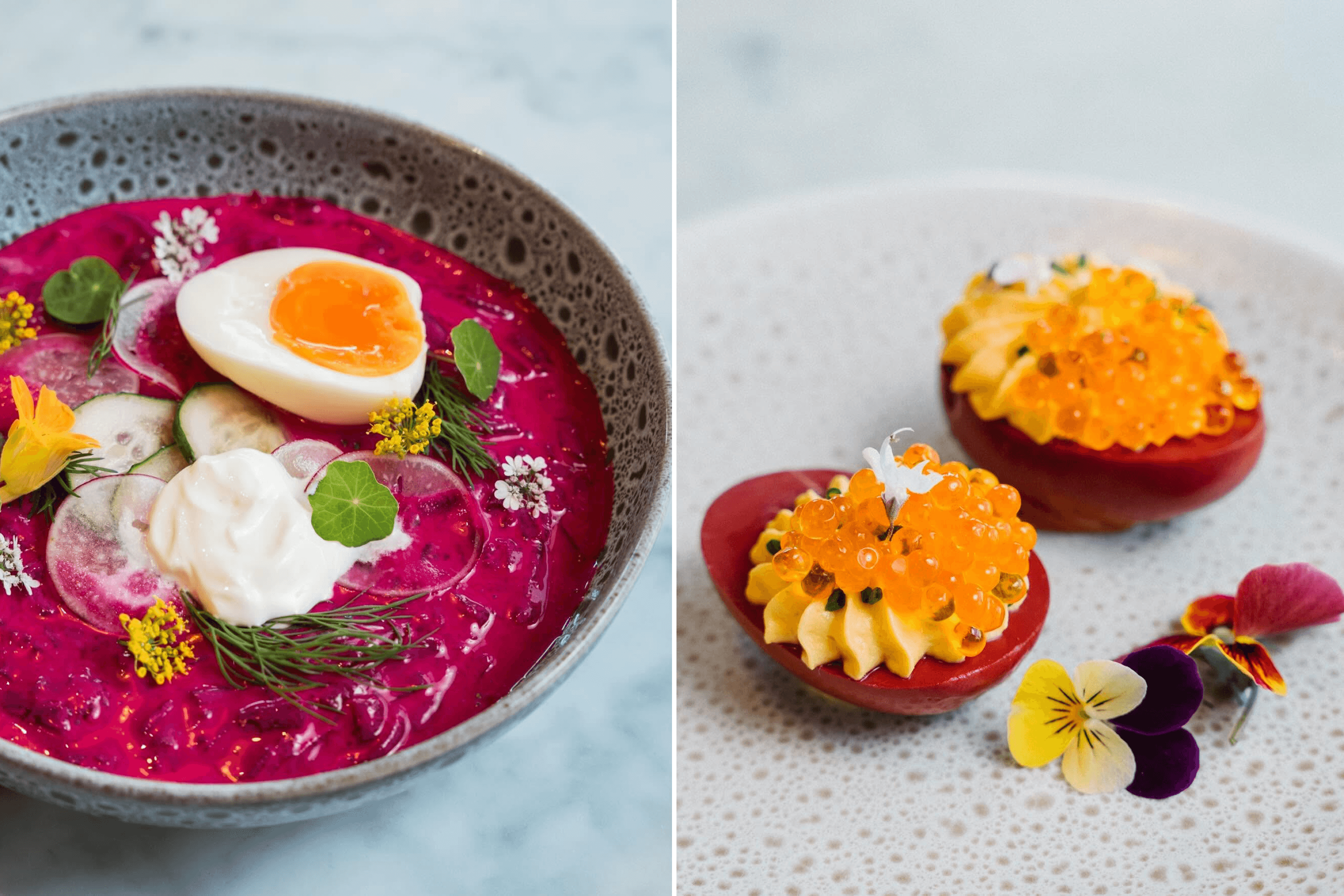
Photo: Anna Voloshyna / Facebook 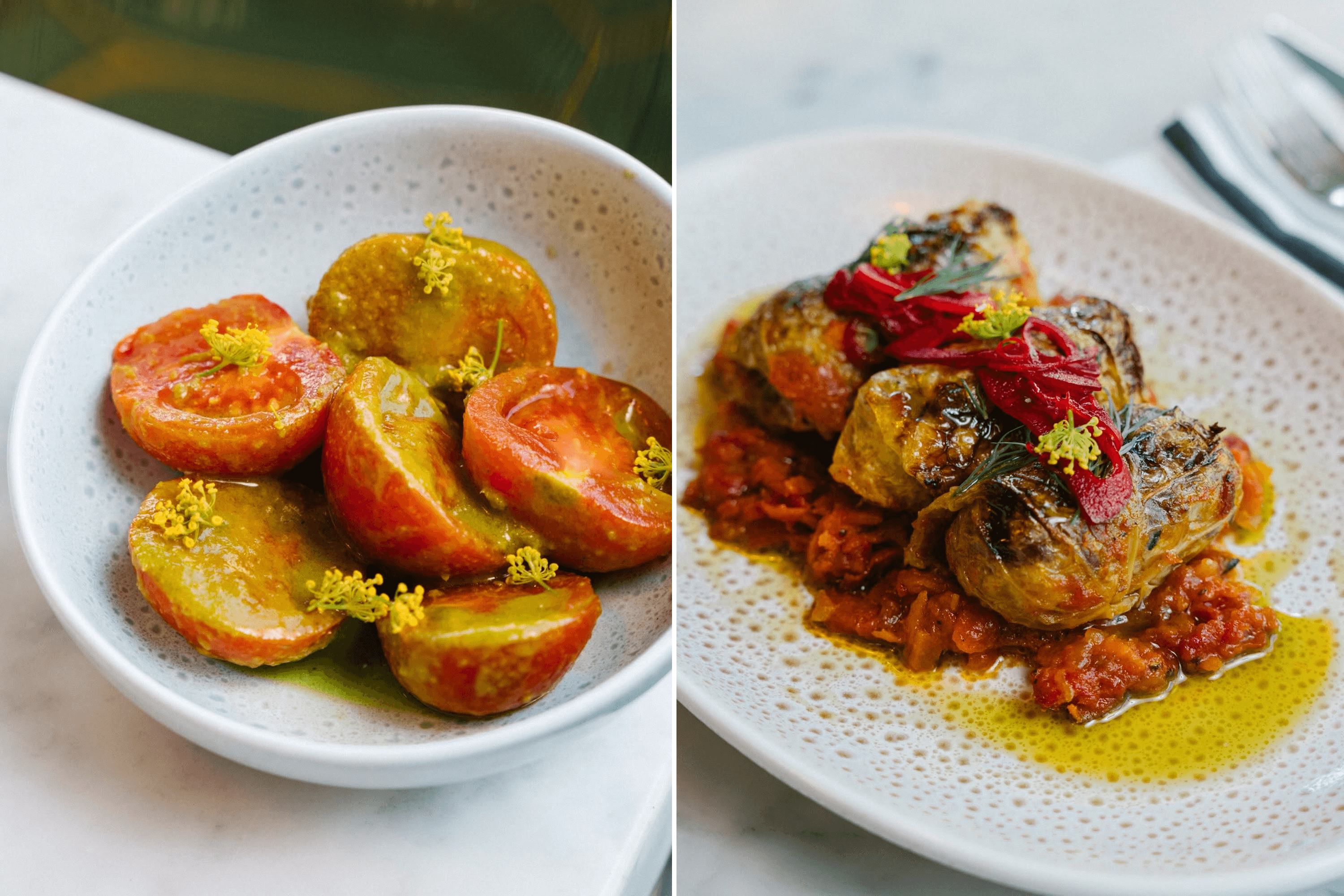
Photo: Anna Voloshyna / Facebook
In your view, what has changed in contemporary Ukrainian gastronomy since 2022?
Every year, Ukrainian chefs work more and more with local ingredients. Suddenly everyone started cooking catfish, and smoked pear went from a regional product to something popular across the country. Riazhanka and baked milk are showing up in desserts. Chefs are experimenting with beet kvass and syrnyky, combining varenyky with bao, and adding Ukrainian wines to pairings. It’s a move toward the local and the Ukrainian, and it’s only getting stronger.
Now all of this has to be shown to America, where attention to Ukraine rises and falls like a sine wave: pressure from the Donald Trump administration, war fatigue. Do you worry that people will come to your book events and say, “Just give us a recipe”?
If they say they’re tired, that’s their business. We still have to keep talking. Someone comes to a dinner for the varenyky and leaves knowing what Soledar is and why salt got so expensive in Ukraine. Through food, you can tell people things they might never read in the news.
In California, where I live, people still care about what’s happening in Ukraine. They’re open-minded and take part in protests, including against the current administration’s policies.
These dinners are also a way to raise money. In other interviews, you have said that the American foundations you work with make you sign a pledge that the money will not go to weapons, drones, or anything military. Yet people featured in your book, like the bakers from Vytachiv, proudly buy drones with money from their bread. How do you reconcile the two?
In the States, charity is an obligation for wealthy people, partly because of taxes. We raise money not so much from dinner tickets as through American foundations. You have to find someone whose foundation is willing to support Ukraine, but there’s almost always one condition. Nothing military. So the $100,000 from our last dinner went toward equipment for a children’s operating room in Kyiv, an ambulance, and tourniquets. We bought the ambulance through Project Ukraine, for example, and delivered it to Kostiantynivka ourselves.
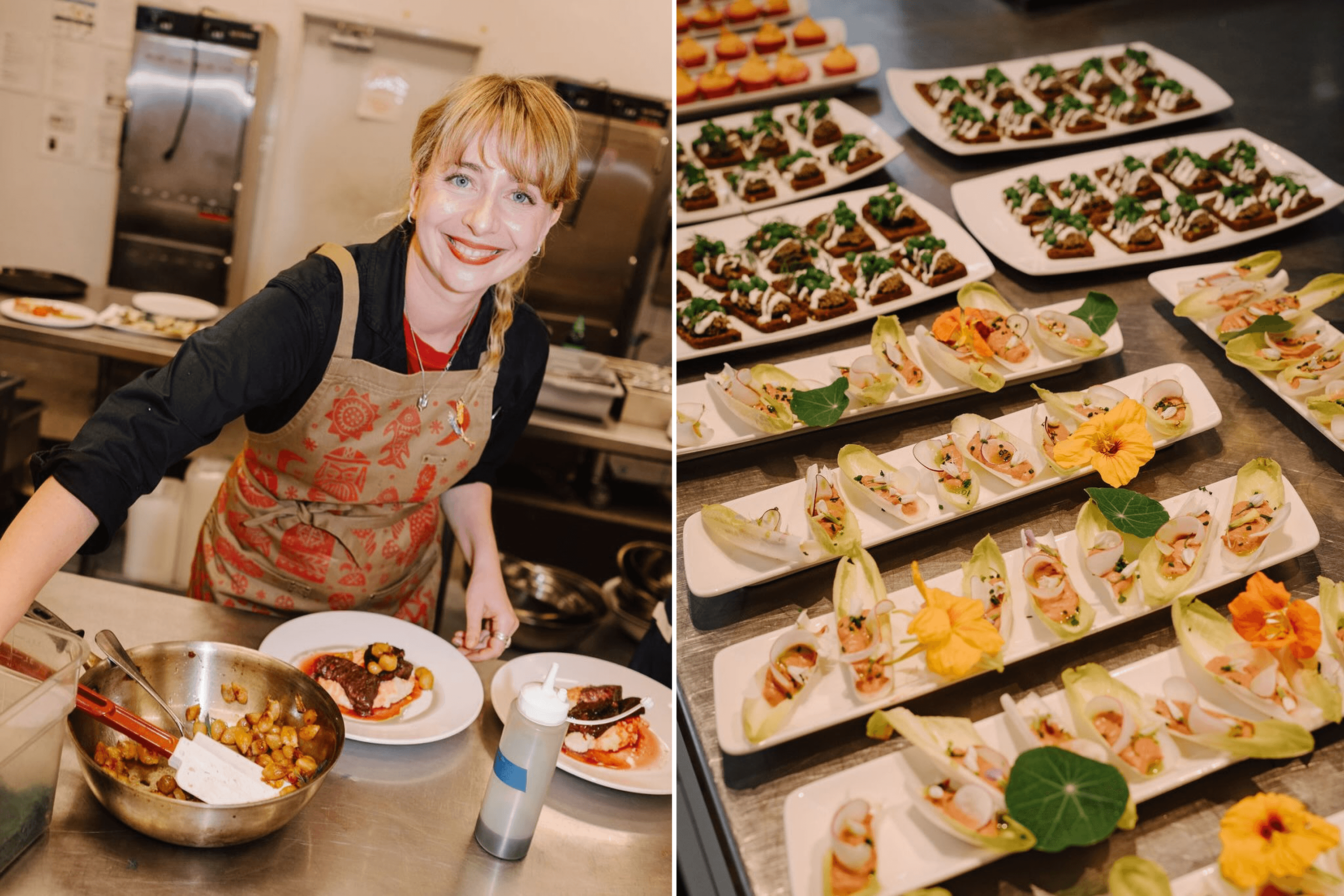
Anna Voloshyna at a charity dinner in San Francisco, organized with Project Ukraine to raise funds for medical equipment for a children’s hospital in Kyiv. April 2026. Photo: annavoloshynacooks / Instagram 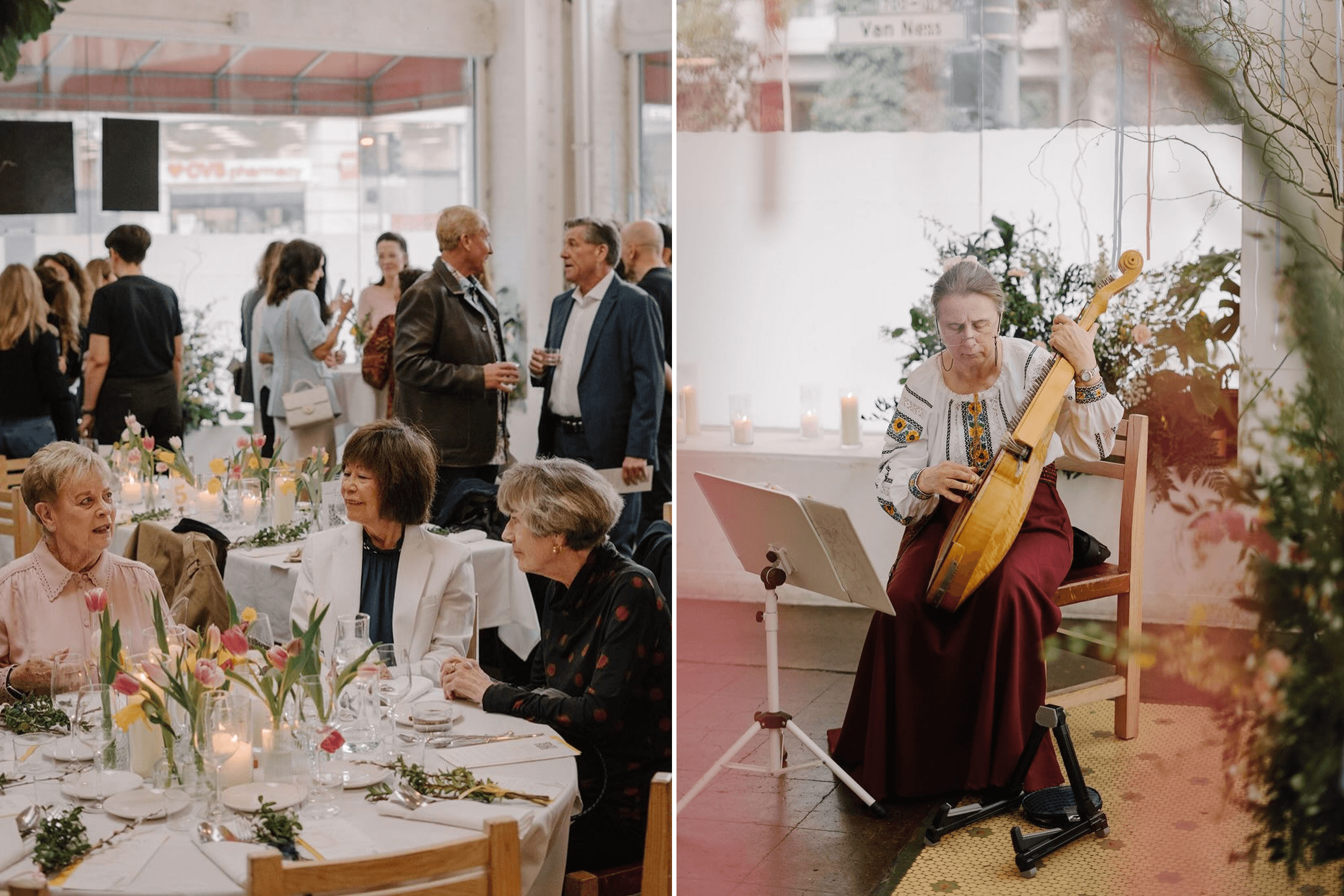
Photo: annavoloshynacooks / Instagram 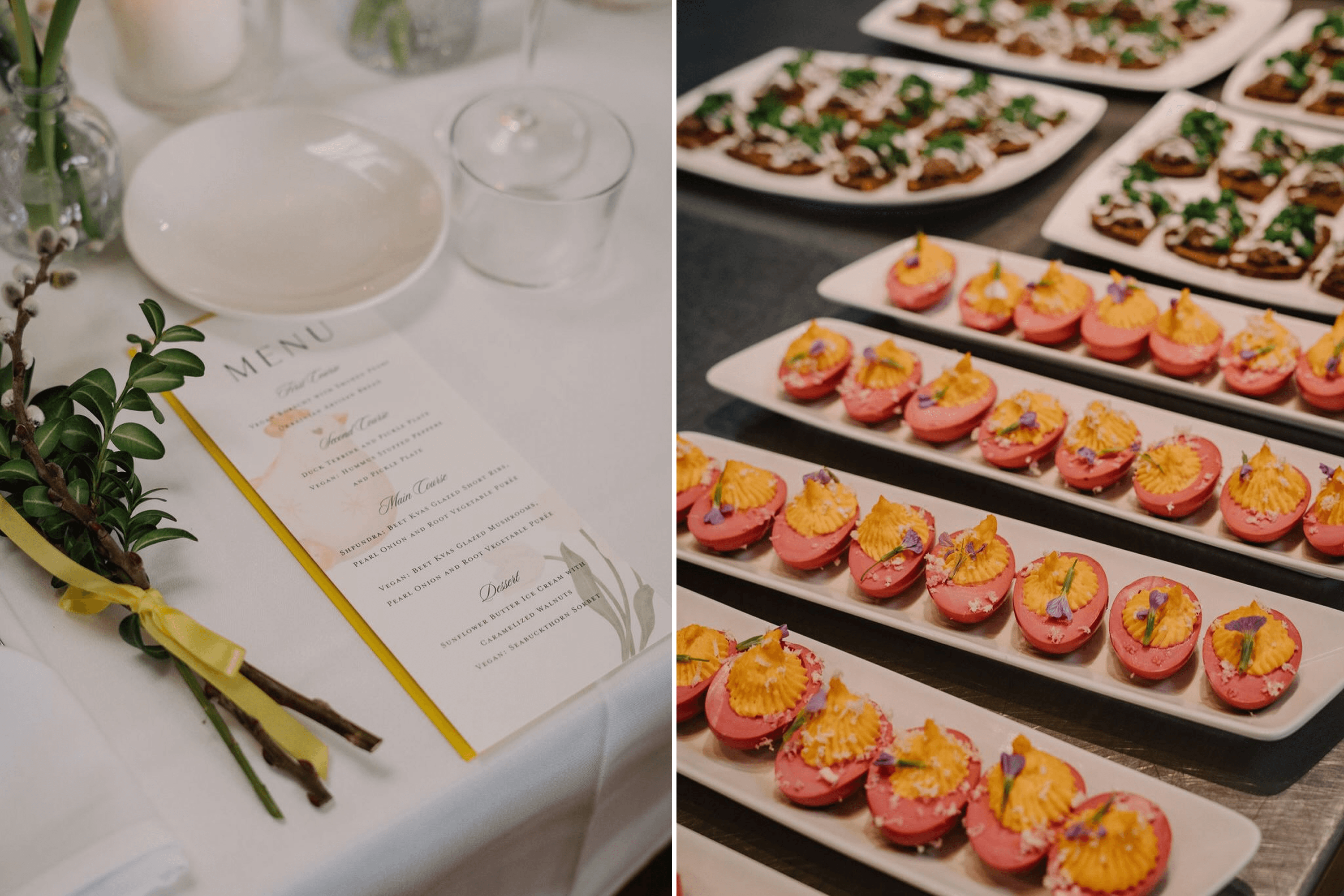
Photo: annavoloshynacooks / Instagram 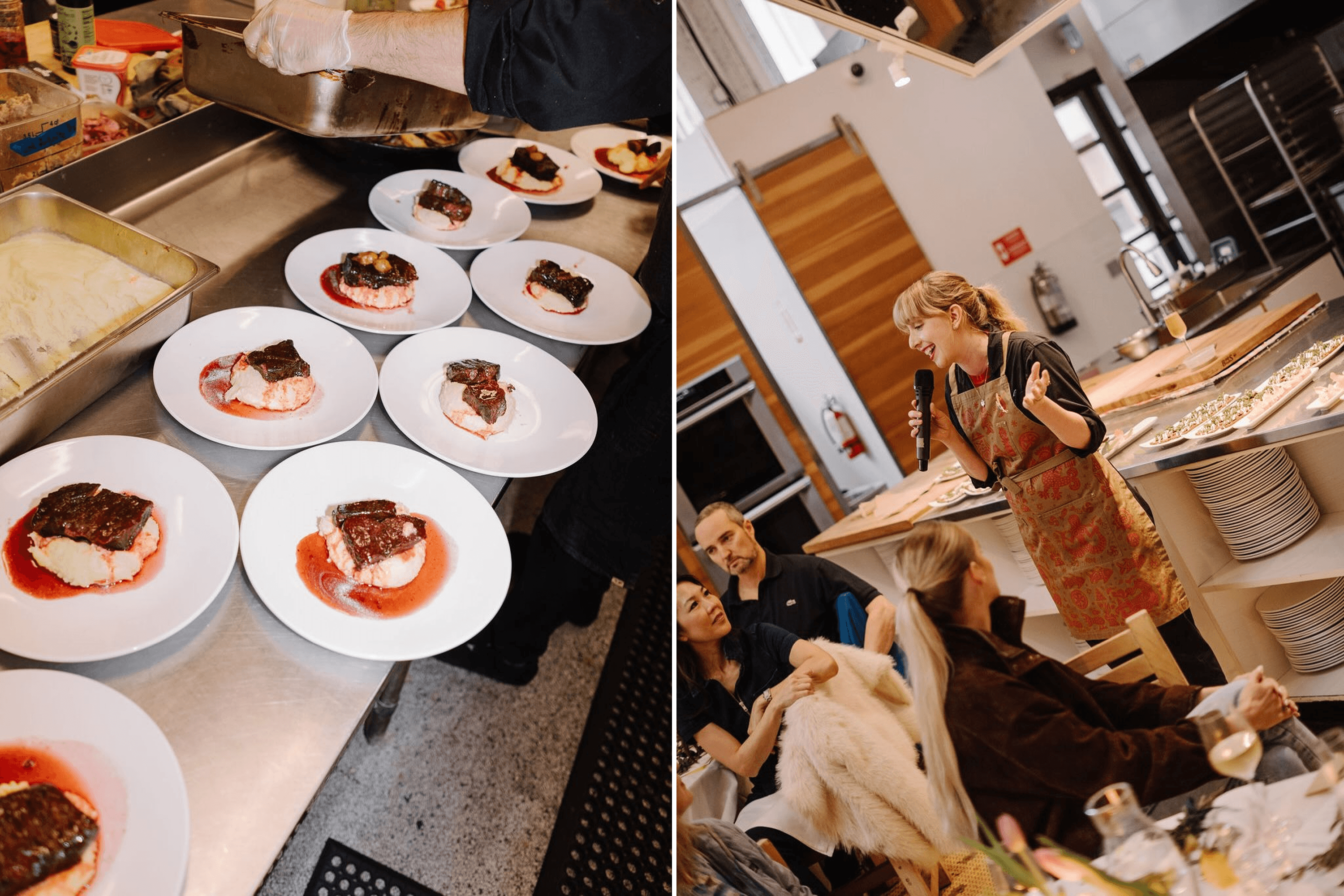
Photo: annavoloshynacooks / Instagram
How would you like people to read Ukraïne ten years from now?
I wrote it believing that in ten years the war would be over. I want the book to stay relevant and tell the story of Ukraine, with the war as just one moment in that story. A terrible moment, a turning point, but still only a moment.
In the introduction, I write that I asked everyone in the book what Ukrainian cuisine is, and nobody could give me one answer. This book is my answer.
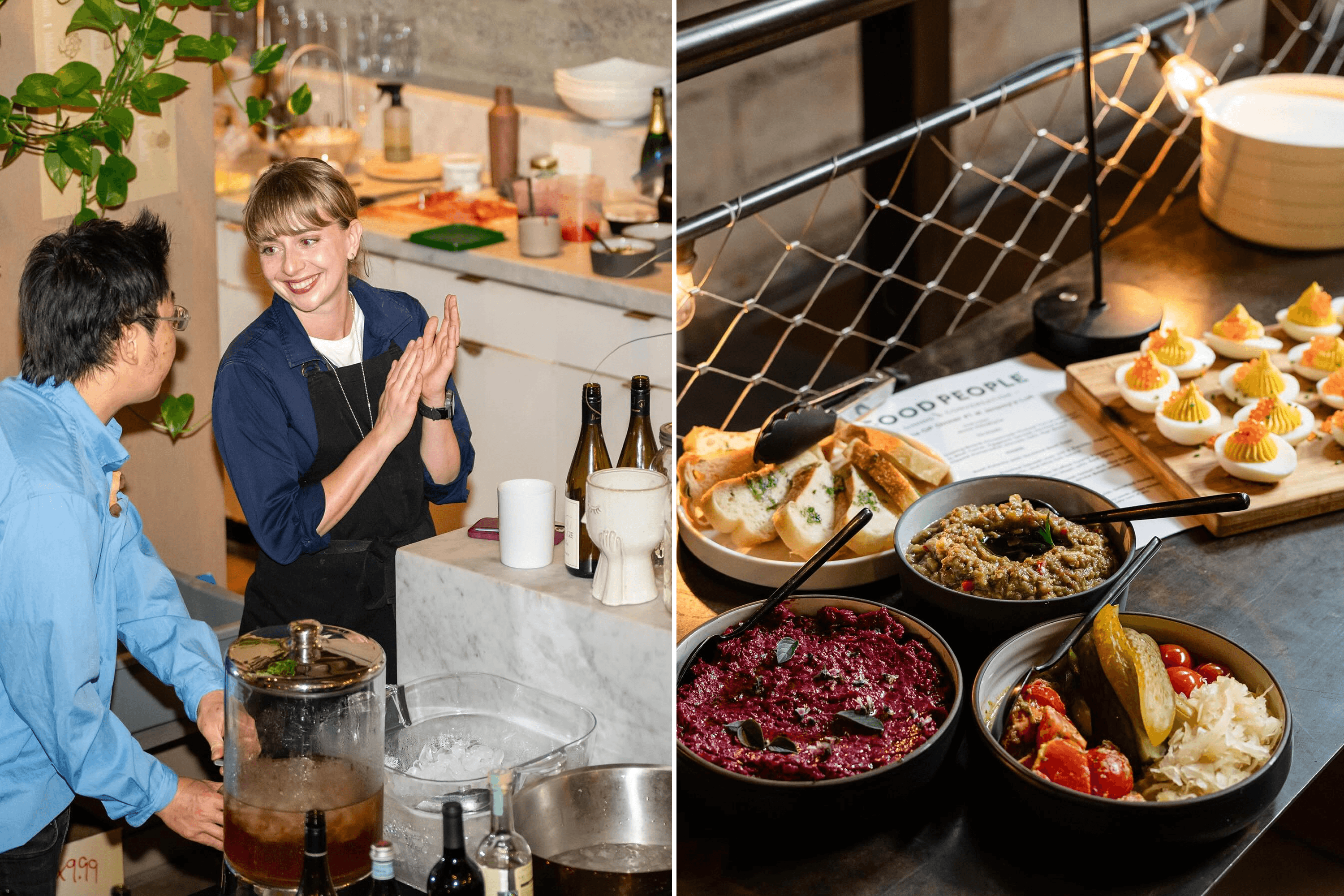
Ukrainian dishes prepared by Anna Voloshyna in San Francisco. October 2, 2025. Photo: annavoloshynacooks / Instagram 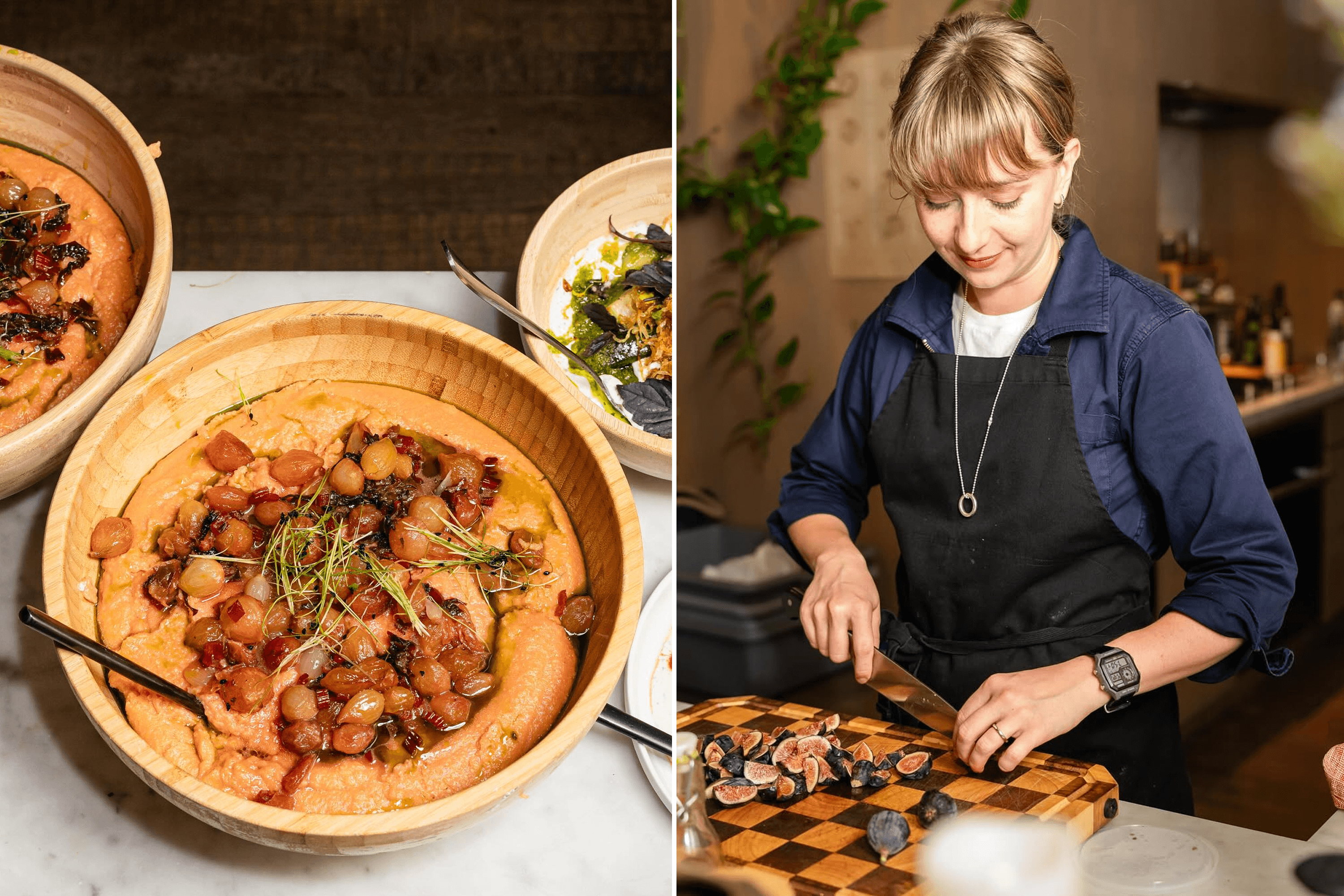
Photo: annavoloshynacooks / Instagram 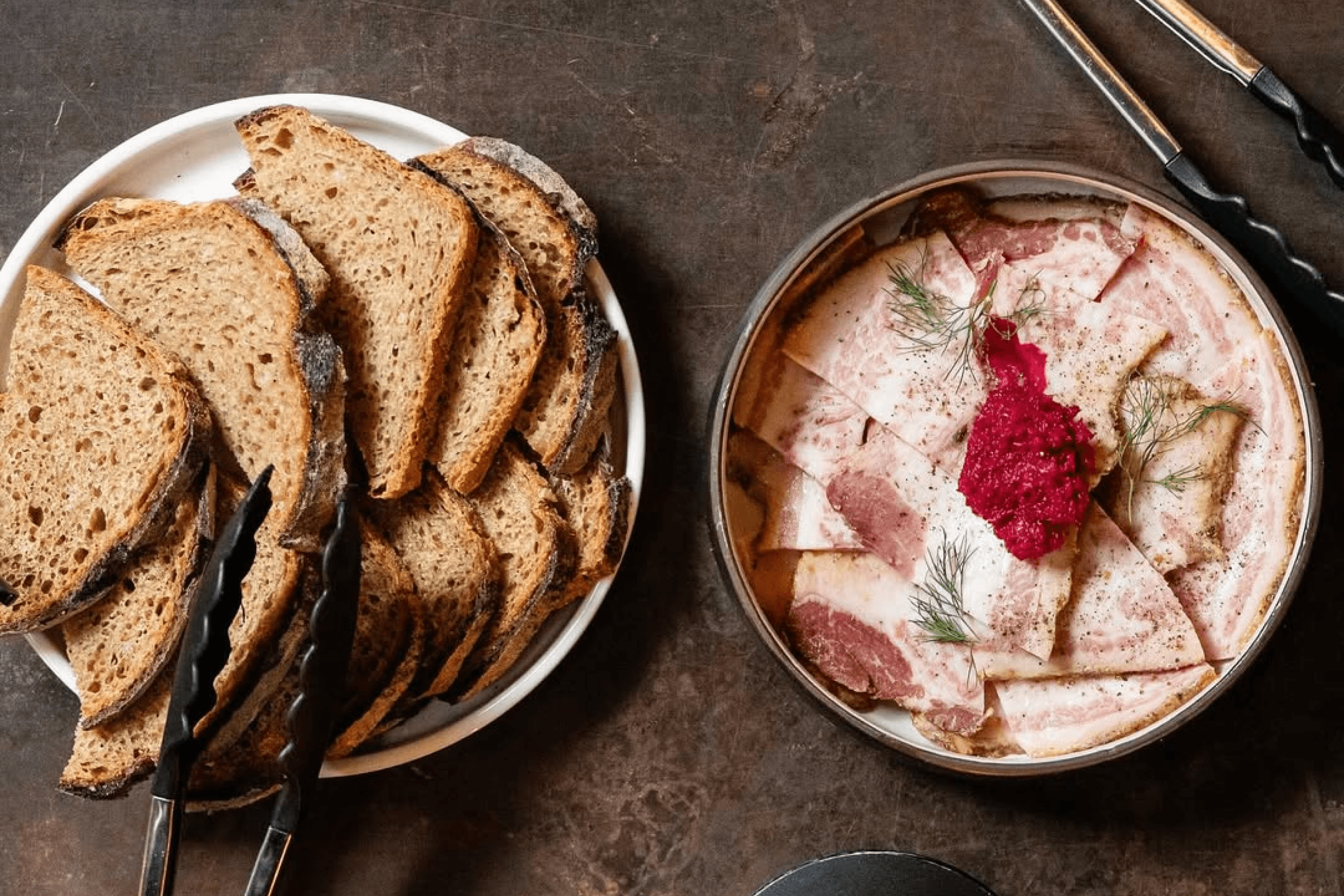
Photo: annavoloshynacooks / Instagram 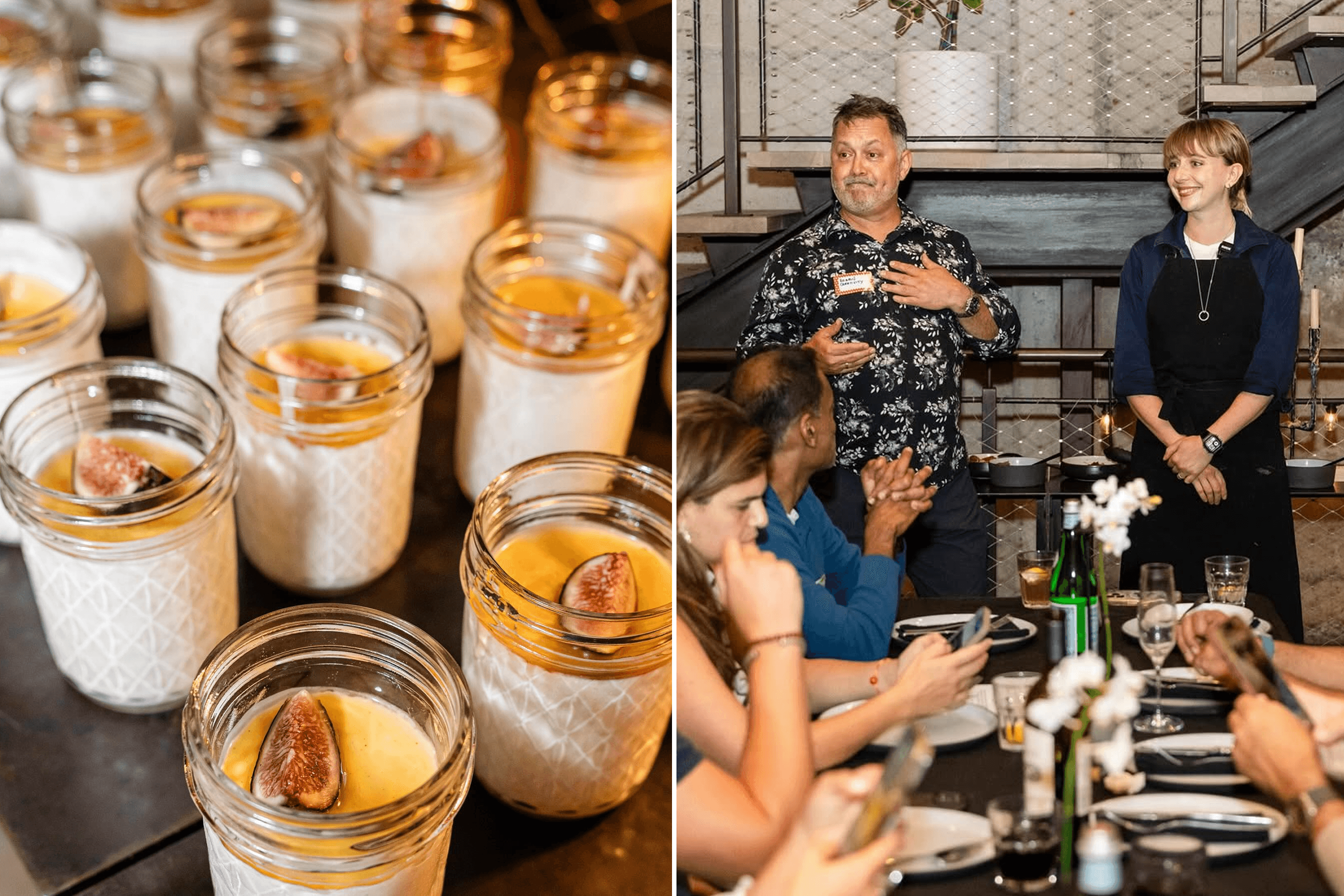
Photo: annavoloshynacooks / Instagram
This interview is based on a conversation with Anna Voloshyna and an advance reading of Ukraïne. Some answers about the book’s content have been supplemented with excerpts from the book.


