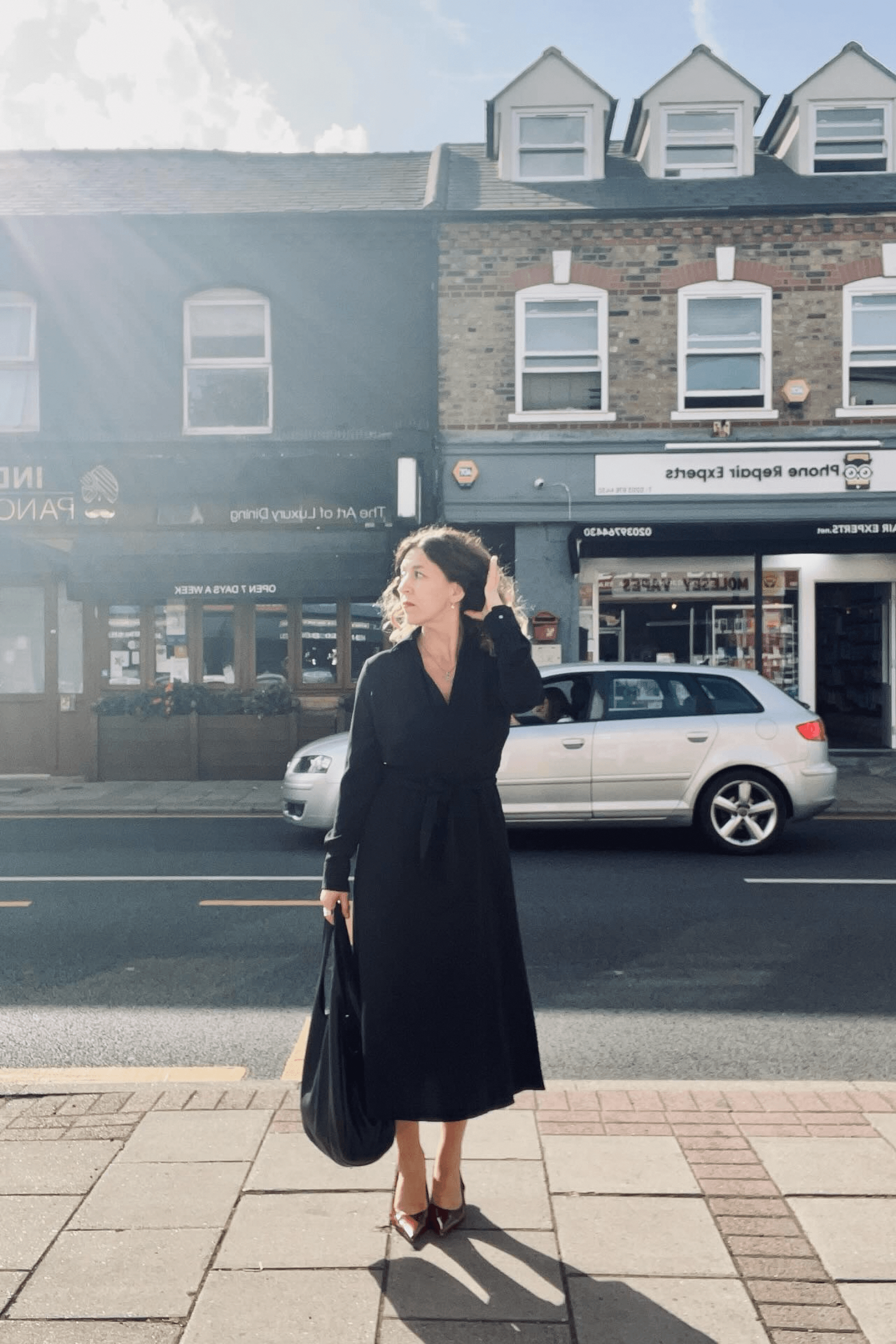
Polina Polozhentseva is a Ukrainian playwright who has lived in the UK since the start of the full-scale war, writing plays while also working in a café. Productions of her plays are staged at independent theaters in London and featured in European and American festival programs.
In her column for Yellow Blue, Polina reflects on how to talk to foreign audiences about the Ukrainian experience of war and why it is important to show people in all their complexity.
Act one. “Are Ukrainians obsessed with war?”
After a performance of my play A Fan of War at Barons Court Theatre in London in August 2025, a British man came up to me and asked, “Why is your main character so obsessed with war? The Ukrainians I know have long since started building their own lives and don’t worry about it.” I did not know what to say because, despite the play’s title, my main character is not obsessed with war at all. She lives abroad and talks every day to her mother, who is still in a frontline village and does not want to leave.
A few minutes after that conversation, it turned out that the British man was the sponsor of a Ukrainian woman I knew. She had recently lost her husband at the front and was raising her teenage son alone.
“So you’re building your own life and not worrying?” I whisper in her ear, incredulous.
“I just never discuss personal things with him,” she shrugs.
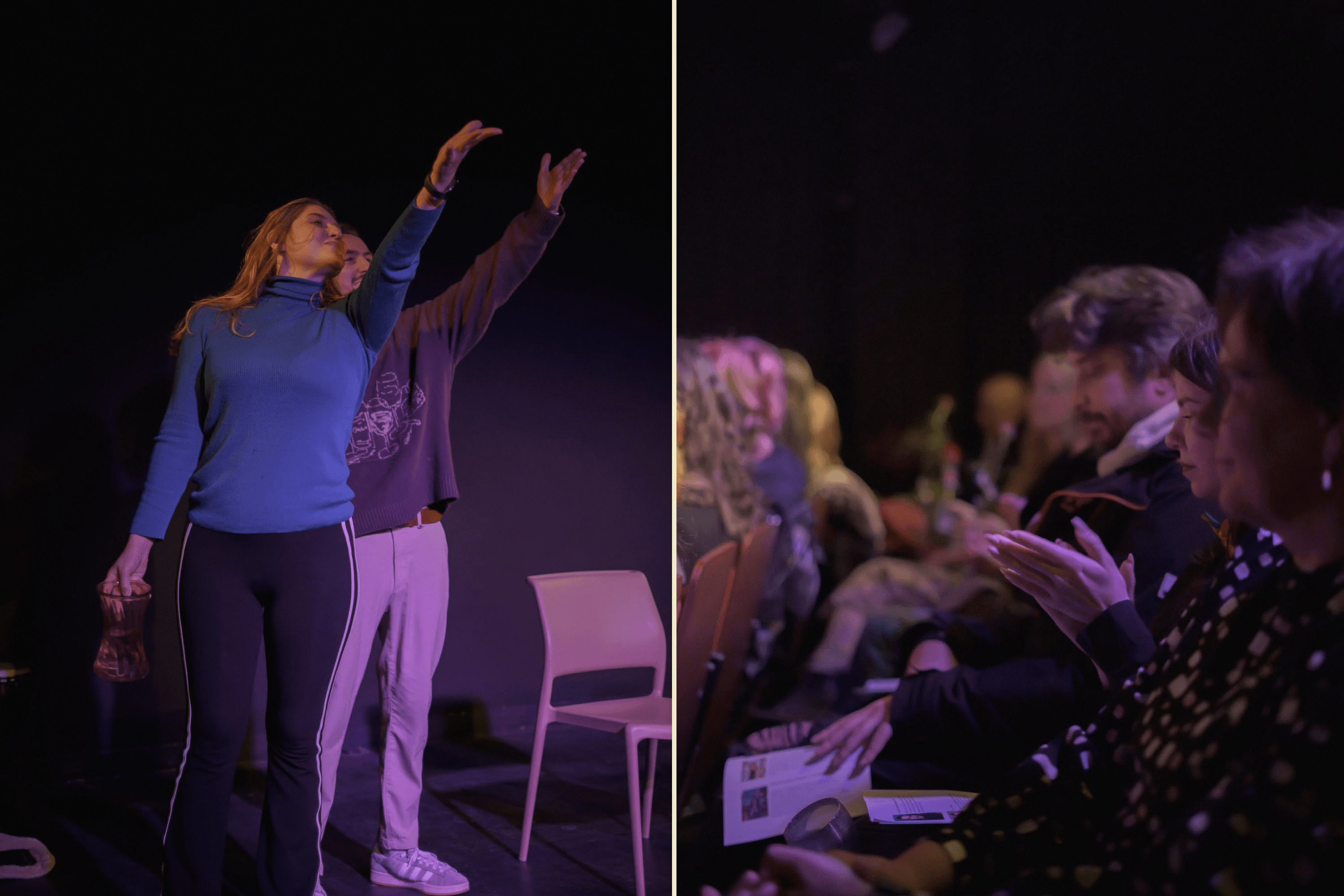
Scenes from the play “A Fan of War.” Photo: Polina Polozhentseva / Facebook 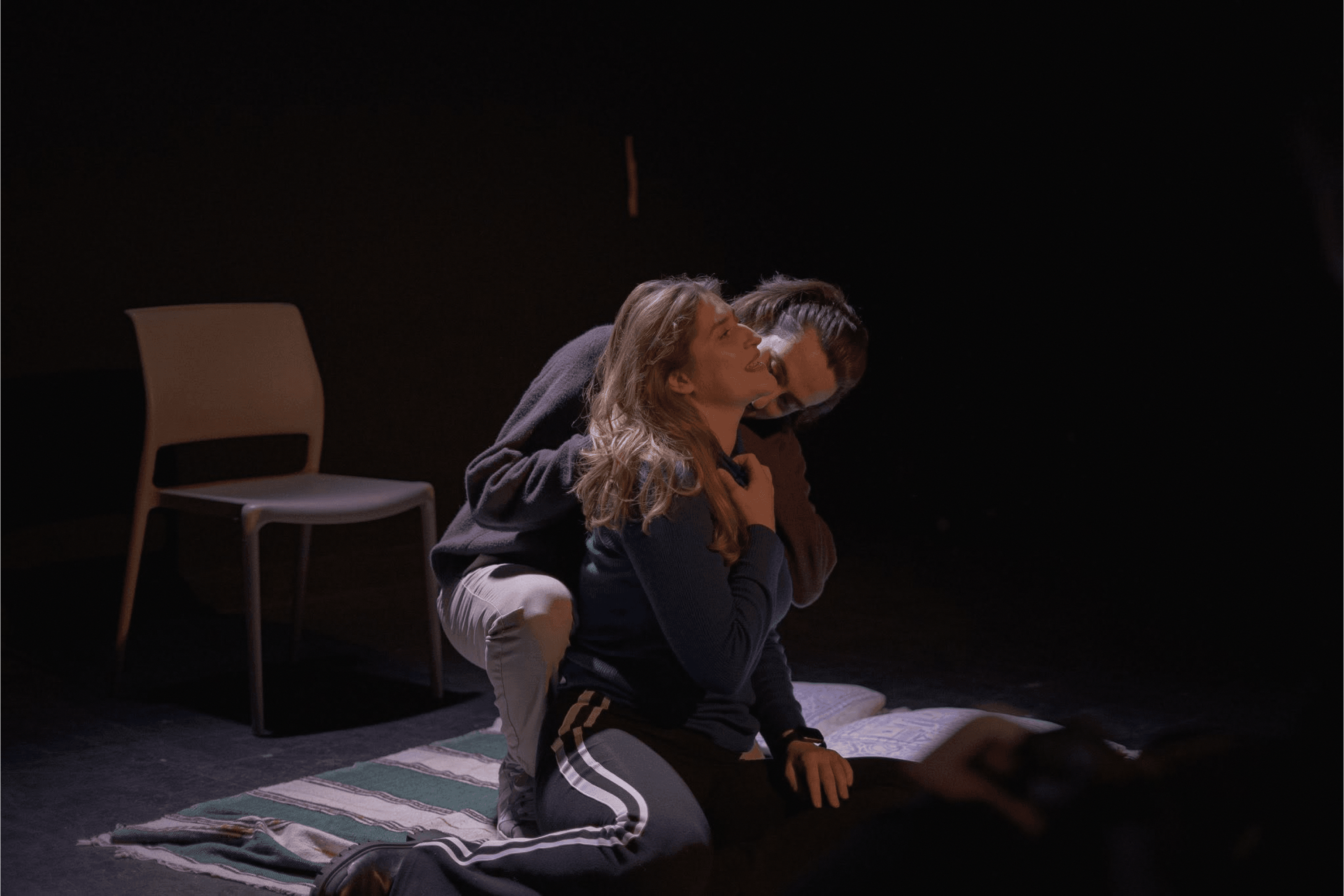
Photo: Polina Polozhentseva / Facebook 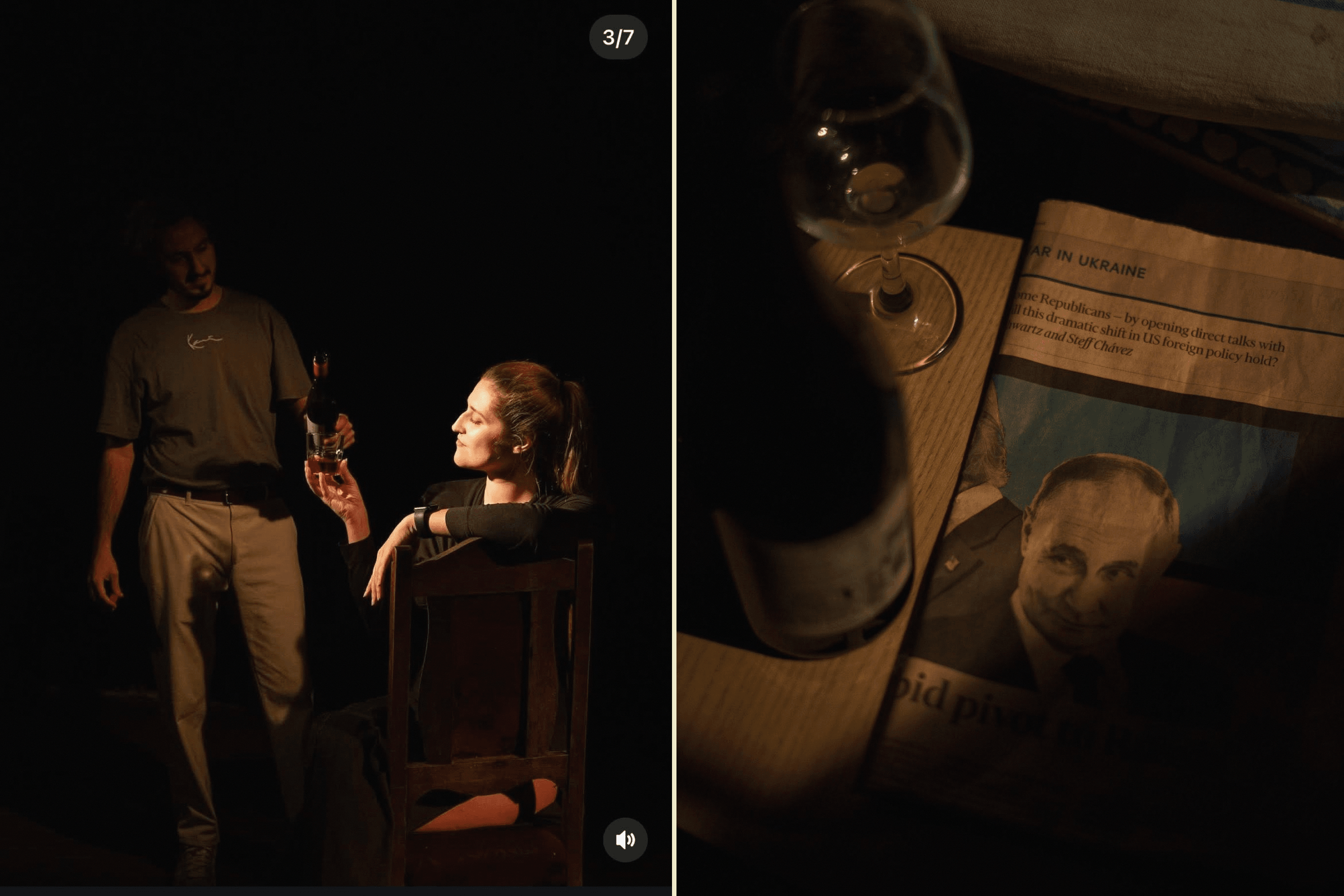
Photo: Polina Polozhentseva / Facebook 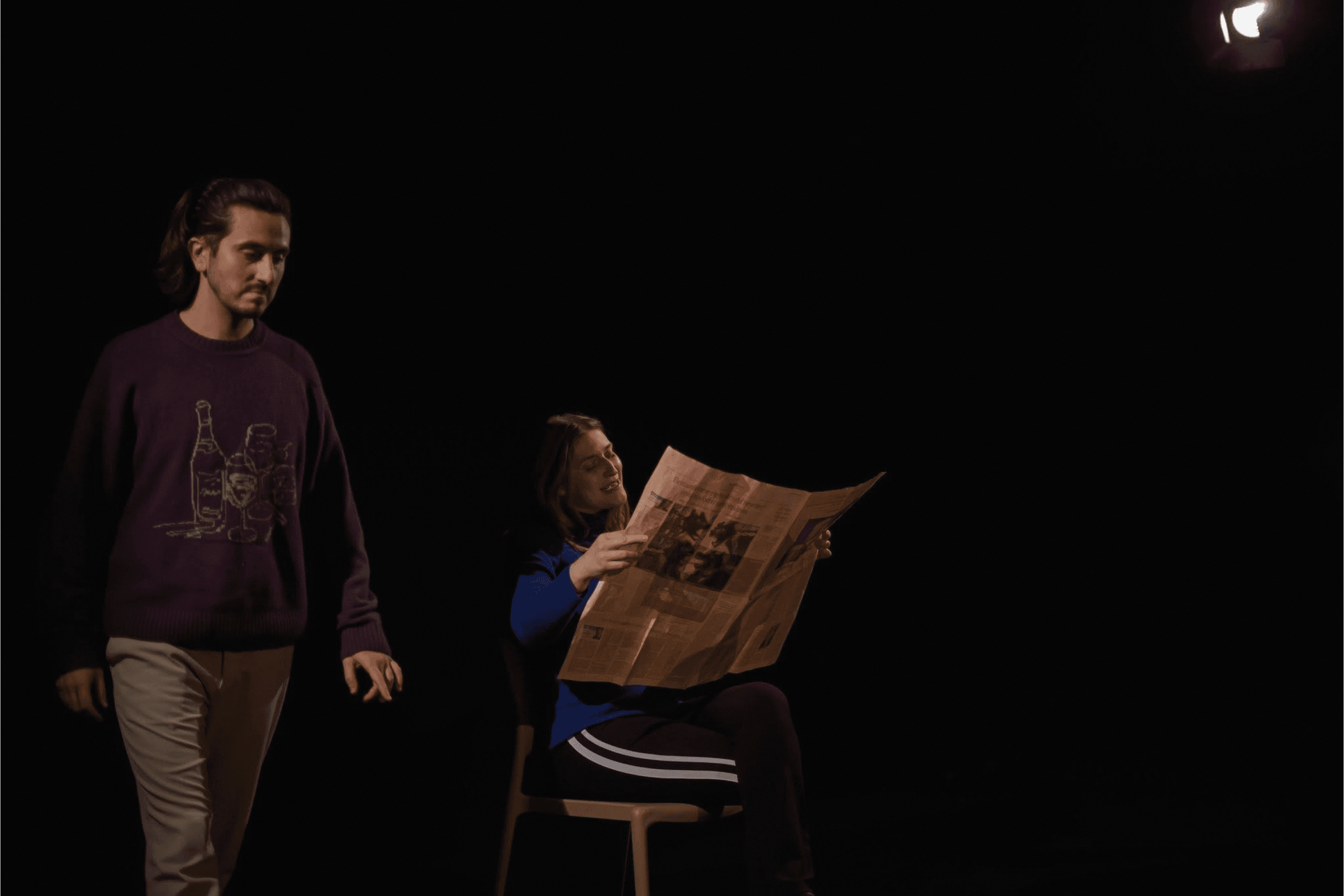
Photo: Polina Polozhentseva / Facebook 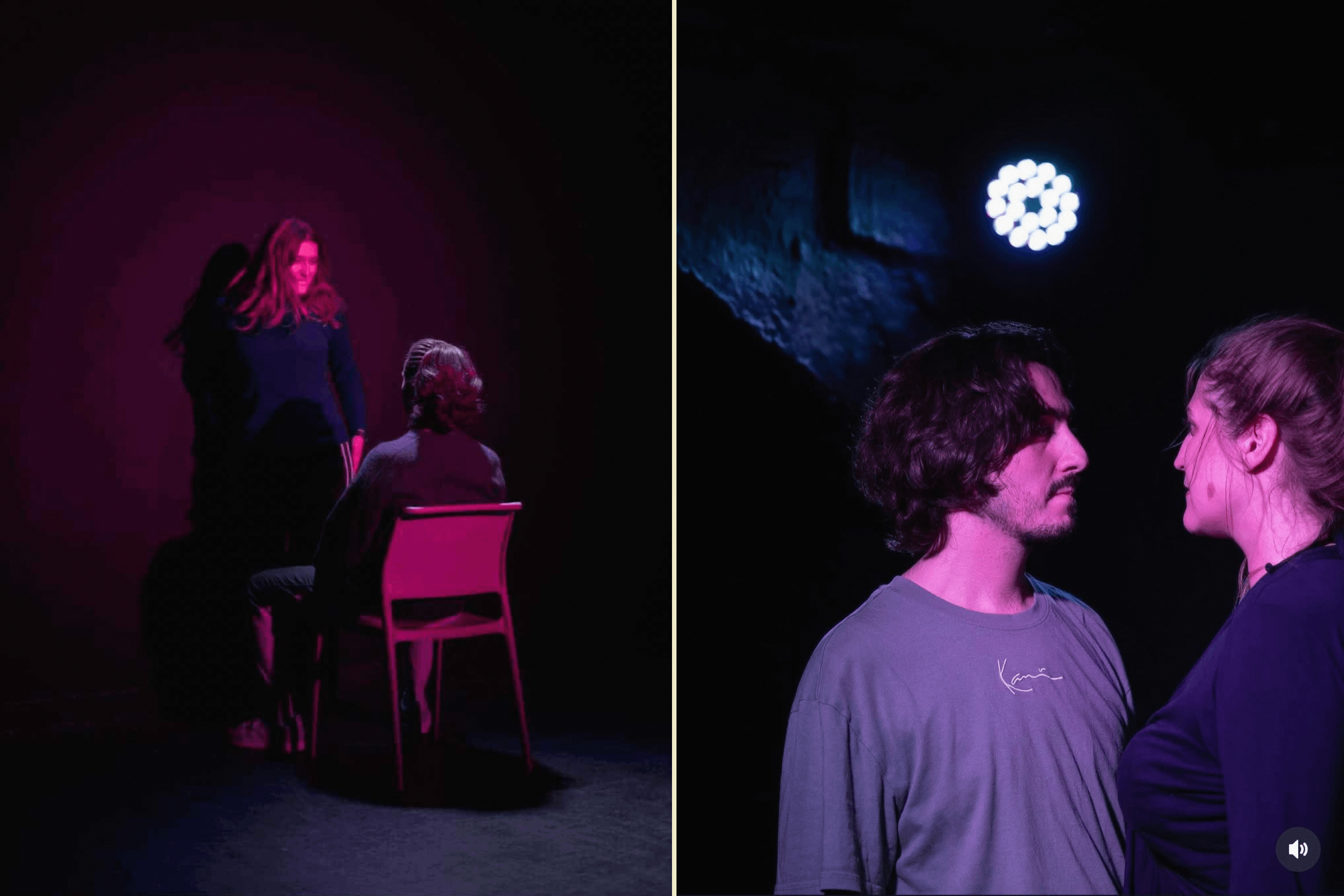
Photo: Polina Polozhentseva / Facebook
After the same performance, I spoke to a man who had been sitting in the front row and had gone through an entire pack of tissues. He told me that in the 1970s, his mother lived in Belfast, where there was street fighting and constant gunfire. A single bombing at a local pub in December 1971 killed 15 people. The man had tried to persuade his mother to move away, but she refused.
Since then, I have deliberately been looking for what hurts in both cultures, Ukrainian and British. One of my “discoveries” is that the British are afraid of explosions too. In 2005, terrorists detonated three homemade bombs on London Underground trains and another on a bus. Fifty-two people were killed. More than 20 years have passed, but Brits are still terrified of unattended suitcases and bags in public places. I work as a barista in a café (a playwright’s fees do not exactly let you splash out), and once a customer called the police because someone had left a bag on a chair. Being Ukrainian, I had not even noticed it.
At the beginning of this year, my play The Village Where No One Suffers premiered at Jack Studio Theatre. It is a story about a small settlement in the Kharkiv region that was put under a spell by a local witch and disappeared from Ukrainian maps. When the full-scale invasion began in 2022, nothing changed in the village. Some time later, the witch died, the village reappeared on the map, and war reached it too. The villagers faced a choice: keep hiding or accept the new reality.
I saw this desire to hide from reality among British people at a public discussion at Birkbeck, University of London.
One of those present floated a “fresh” idea: to end the war, both presidents should be replaced. Another talked about pacifism and the impact of military action on the climate (I envy people with problems like that on their radar). A stranger in the corridor asked, in all sincerity, “Why hasn’t Russia used a nuclear bomb yet? I don’t get it.” It suddenly struck me that I was looking at myself in 2015. Back then, I lived in my hometown of Zaporizhzhia and was very “concerned” about the plight of displaced people. I took warm clothes and food to a modular housing camp. I put “concerned” in quotation marks because I realize how naive I was. It never occurred to me that the fate of those people had anything at all to do with my own. The British today are where I was back then.
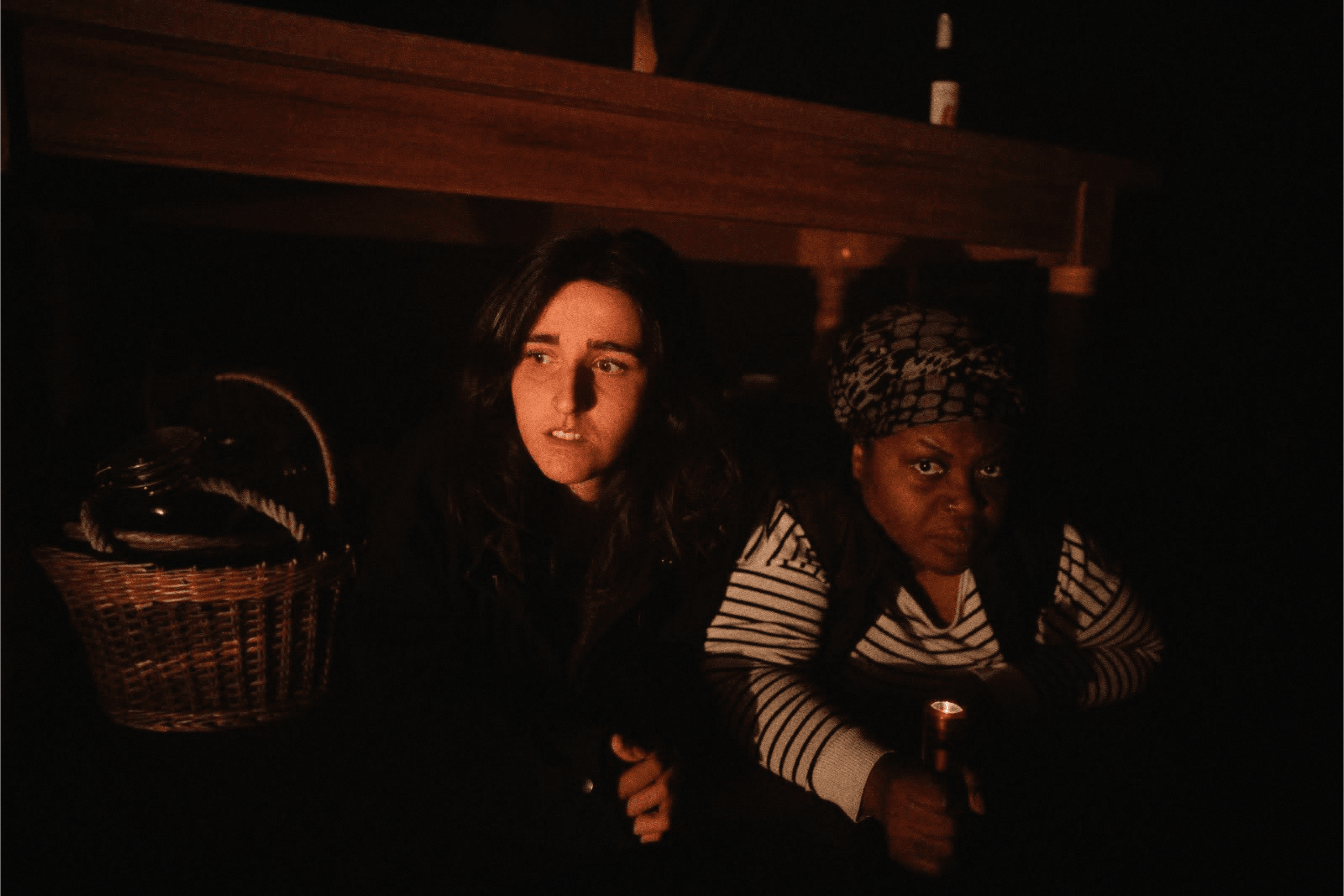
Scenes from the play “The Village Where No One Suffers.” Photo: Polina Polozhentseva / Facebook 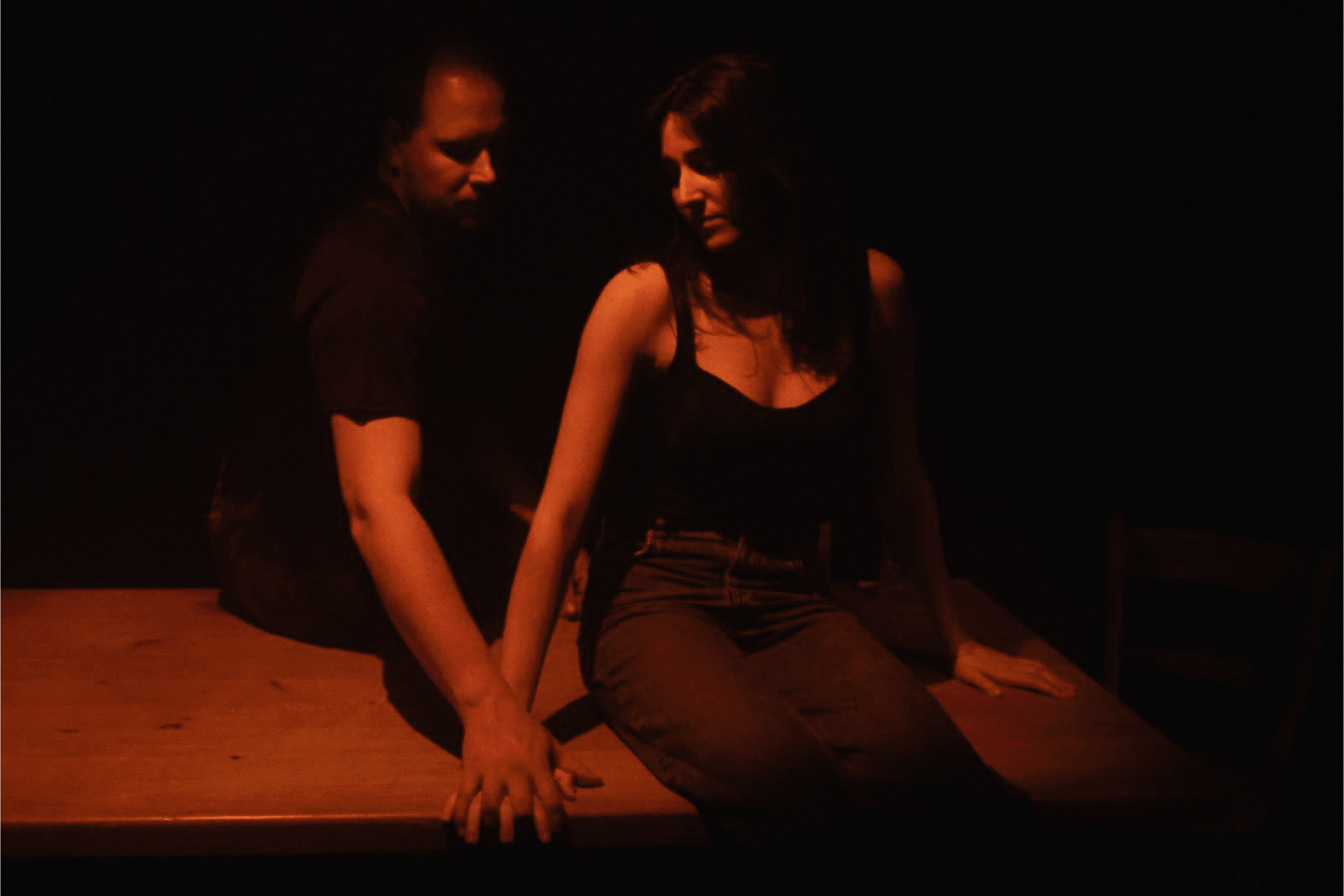
Photo: Polina Polozhentseva / Facebook 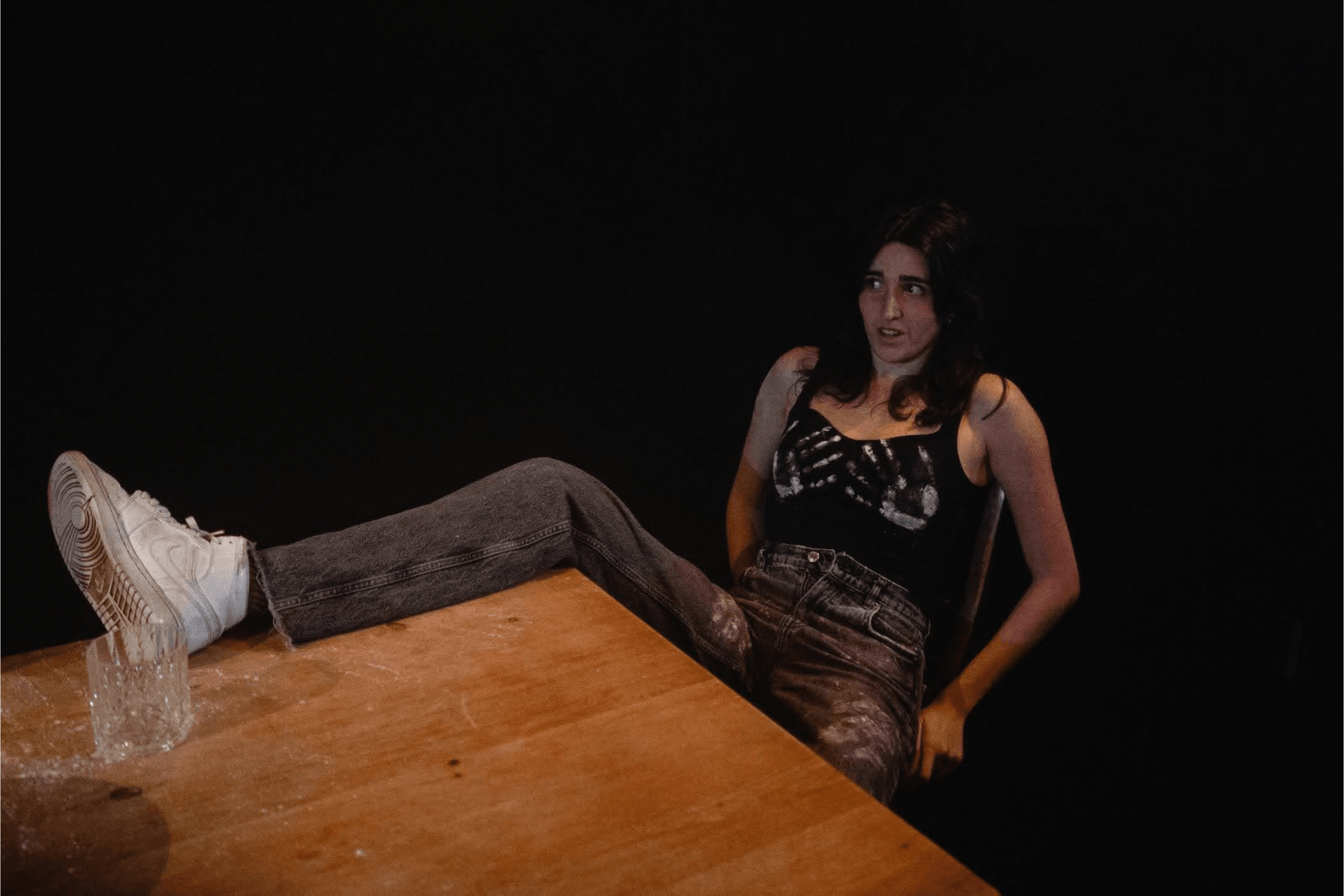
Photo: Polina Polozhentseva / Facebook 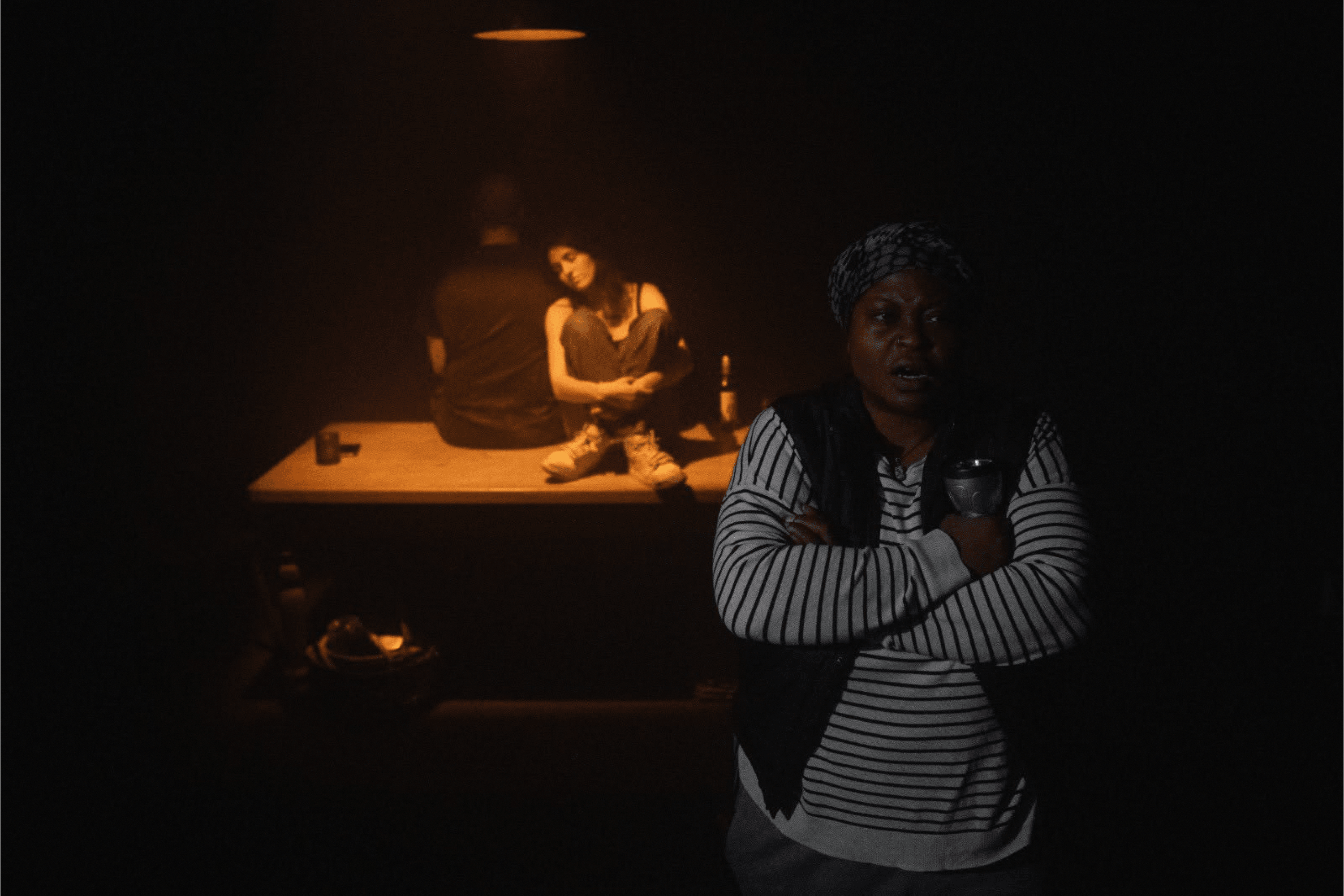
Photo: Polina Polozhentseva / Facebook 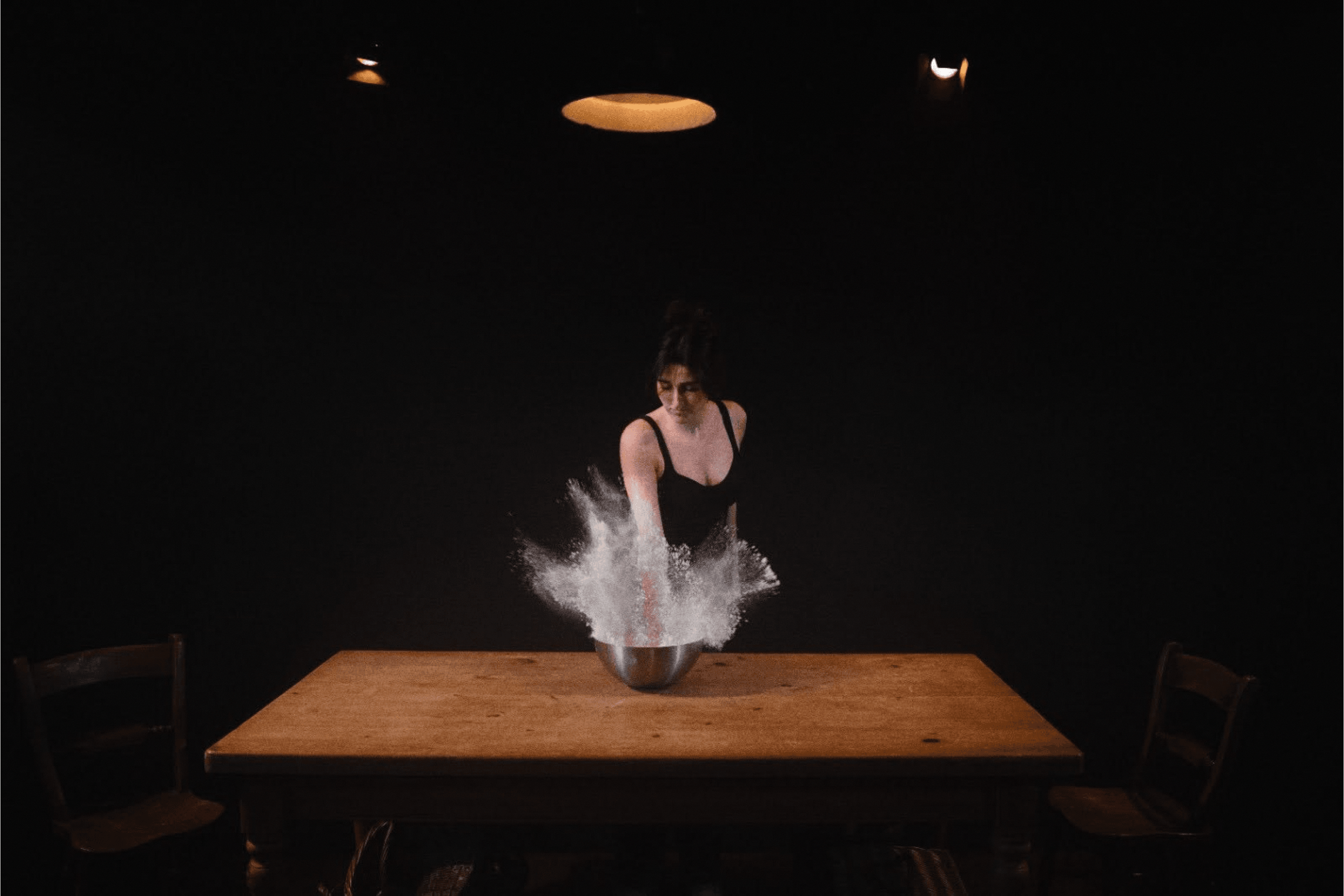
Photo: Polina Polozhentseva / Facebook
A friend of mine from the south of France can spend hours musing about what he will do if war breaks out in his country. He says he will take his mother somewhere safe.
“What if she doesn’t want to go?”
“I’ll make her.”
“What if all men are banned from leaving the country?”
“Uh… I’ll think of something.”
In Ukraine, The Village Where No One Suffers was not well received, to put it mildly. I submitted the play to two competitions, and although the readers praised it, it did not make it into the main programs. I think I understand why. When society needs, on the one hand, to mobilize and, on the other, to remember those killed in an unjust war, a story about people who decided to hide strikes a nerve.
British audiences saw the play differently. “What if it goes this way? And what if it goes that way?” This is familiar territory for them: moral thought experiments where choices cost nothing. They read my Village as a trolley problem: a train is hurtling along, and at the junction you have to choose whether to run over someone close to you or ten strangers. For us, this stopped being an abstract moral dilemma long ago.
Intermission
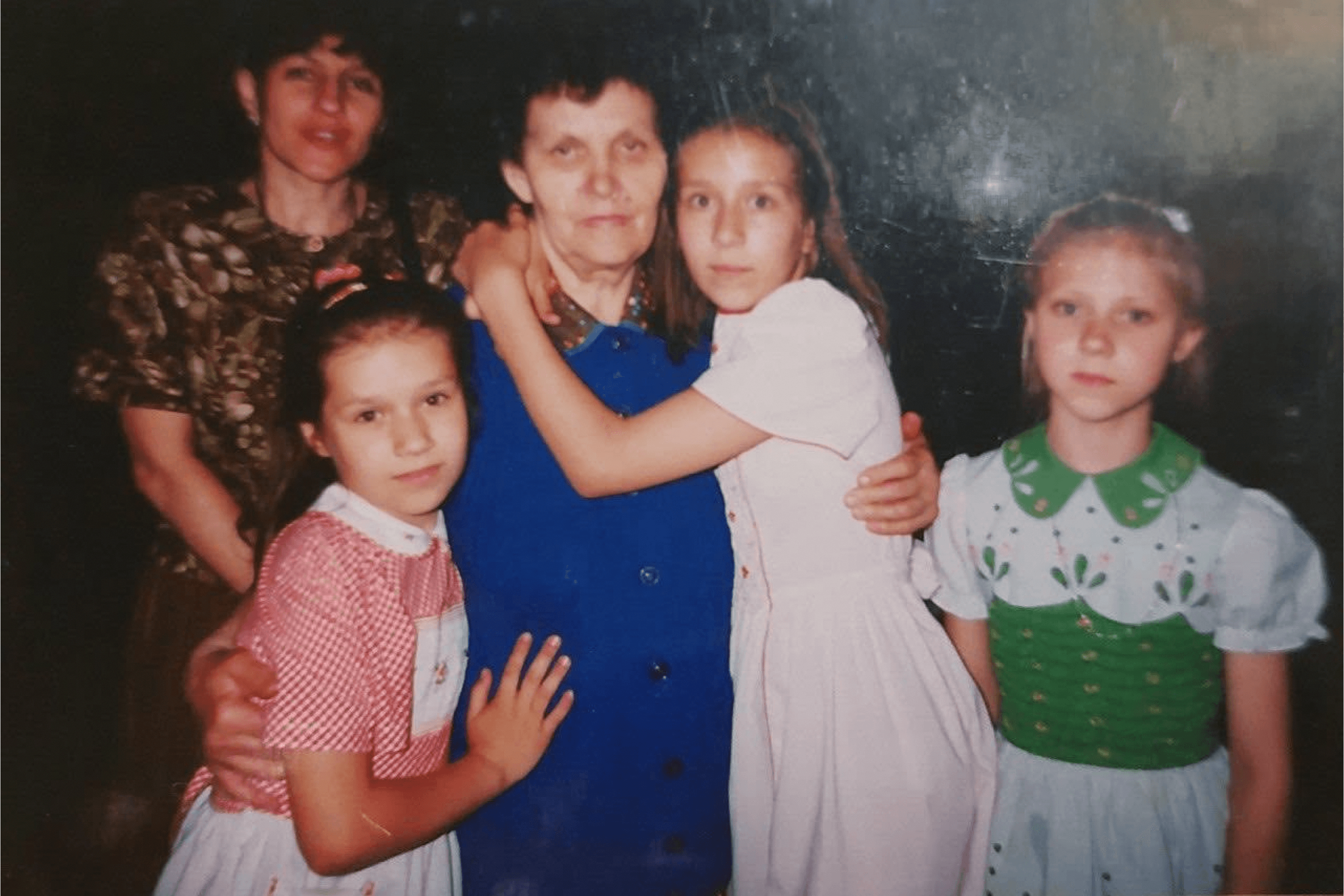
I dedicated The Village Where No One Suffers to my grandmother Anna, who died three years ago. Her life began during a war and ended during one too. One of the women in the audience, an older lady in a beautiful hat that matched her suit, was deeply moved by the dedication. She asked if she could hug me (a rare thing here) and admitted that she knew nothing about her own grandmother.
“By the way, my name is Vera,” she said, without letting go.
“Is that a Russian name?”
“Soviet. I was born in 1945, and my mother named me Vera because she believed in a bright future. I’m very proud of it. Is Vera a popular name in Ukraine now?”
“Not really. Perhaps we’ve lost our faith…”
Act two. “When will there be a play that isn’t about war?”
Over almost five years, British audiences have gone all the way from excessive curiosity about the war in Ukraine to a complete loss of interest. In 2022, in Save the Light, I had the luxury of describing an evacuation train over two scenes. Now I consider it a success if I manage to squeeze in two paragraphs about the fighting.
Two regular customers at the café where I work occasionally ask, “Invite us when you have a play that isn’t about war.” I laugh. I have been writing plays since 2015, and I do not have a single one that does not mention war. It does not even occur to British theaters that I might write about anything else. There is an unwritten rule among writers here: Romanians write about Romanian problems, Spaniards about Spanish problems, and Ukrainians about… well, you know what.
Still, there is one play in which I dared to write about people from other cultures at war: Niche Woman. The main characters are a Ukrainian woman, an Iranian woman, and an Indian man, each experiencing war in their home country in their own way. I started writing the play to understand where our perceptions of reality diverge and where they overlap. While I was writing it, something happened that I could not have foreseen: my Iranian colleague’s mother flatly refused to leave Tehran. I immediately asked if I could write about it.
The same colleague showed me and a young woman from Nepal a video of the bombing of Tehran, and the Nepali woman sobbed for about 20 minutes (I am not exaggerating). My Iranian colleague and I, on the other hand, simply discussed why a building there had collapsed so quickly, while a similar one in Zaporizhzhia was left with just a hole in it.
I try not to forget that the world is more complicated than we would like to think. When you live in the middle of a war, you have no emotional bandwidth left for shades of gray. The world divides into black and white because that is all you need to survive, and it seems as though everyone lives that way. Then you leave, say, for Sweden and are surprised that people can go for months without mentioning the war. Somewhere in Thailand, the locals are not even sure who is fighting whom in Europe. Each of these realities calls for different artistic tools.
In an interview, international photojournalist Osman Orsal said that you do not necessarily have to show viewers a mutilated corpse. Sometimes a white sheet with a bloodstain seeping through is enough, and people will guess for themselves what is underneath. When we see a corpse, we turn away. When we see a sheet, we may stay. My task as an artist is to figure out what needs to be covered with a sheet and what to leave in plain view. What I usually leave “bare” is what we share as human beings: we all want to be happy, avoid suffering, and love children and dogs (in Britain, horses are also high on the list).
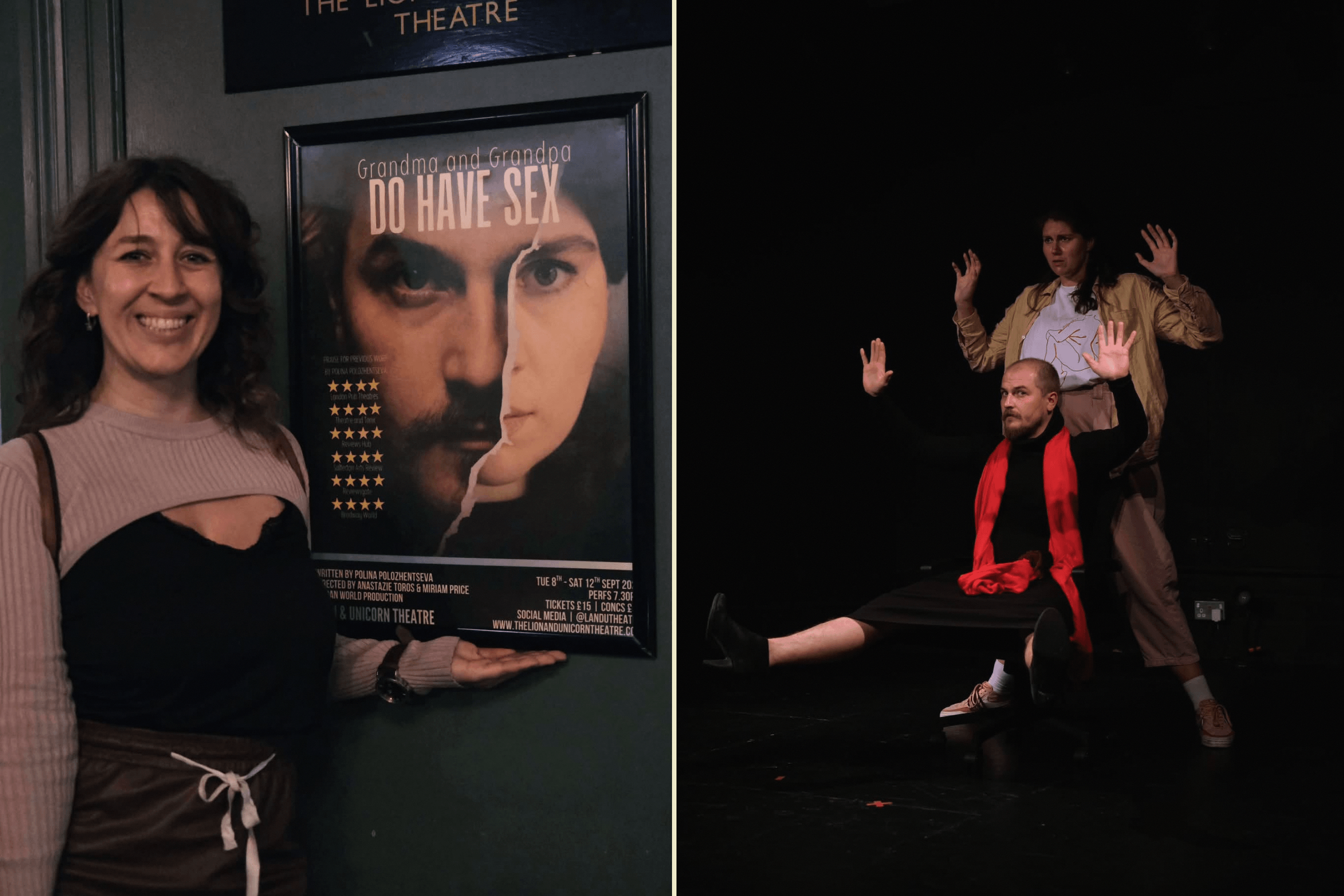
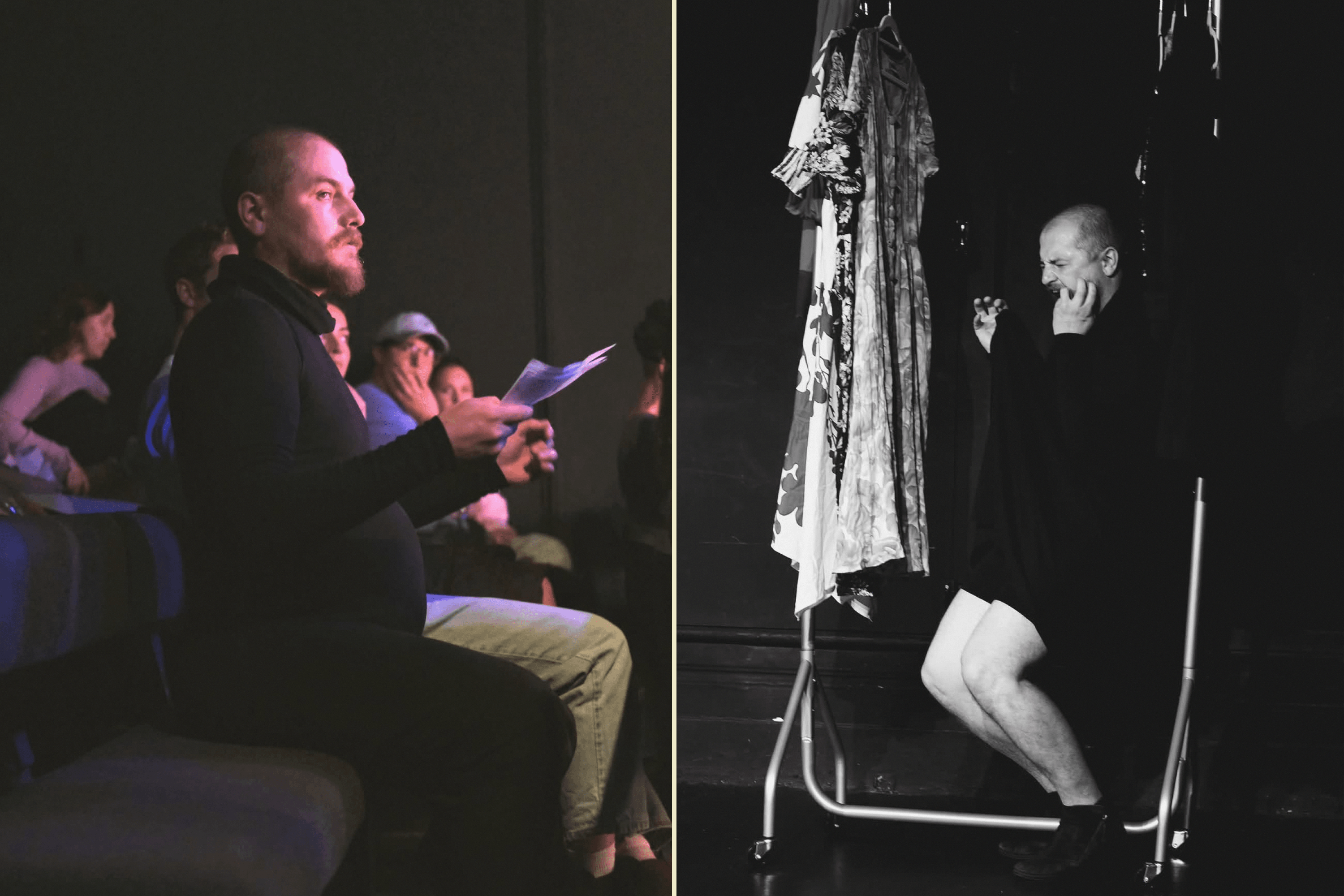
Scenes from the play “Grandma and Grandpa Have Sex.” 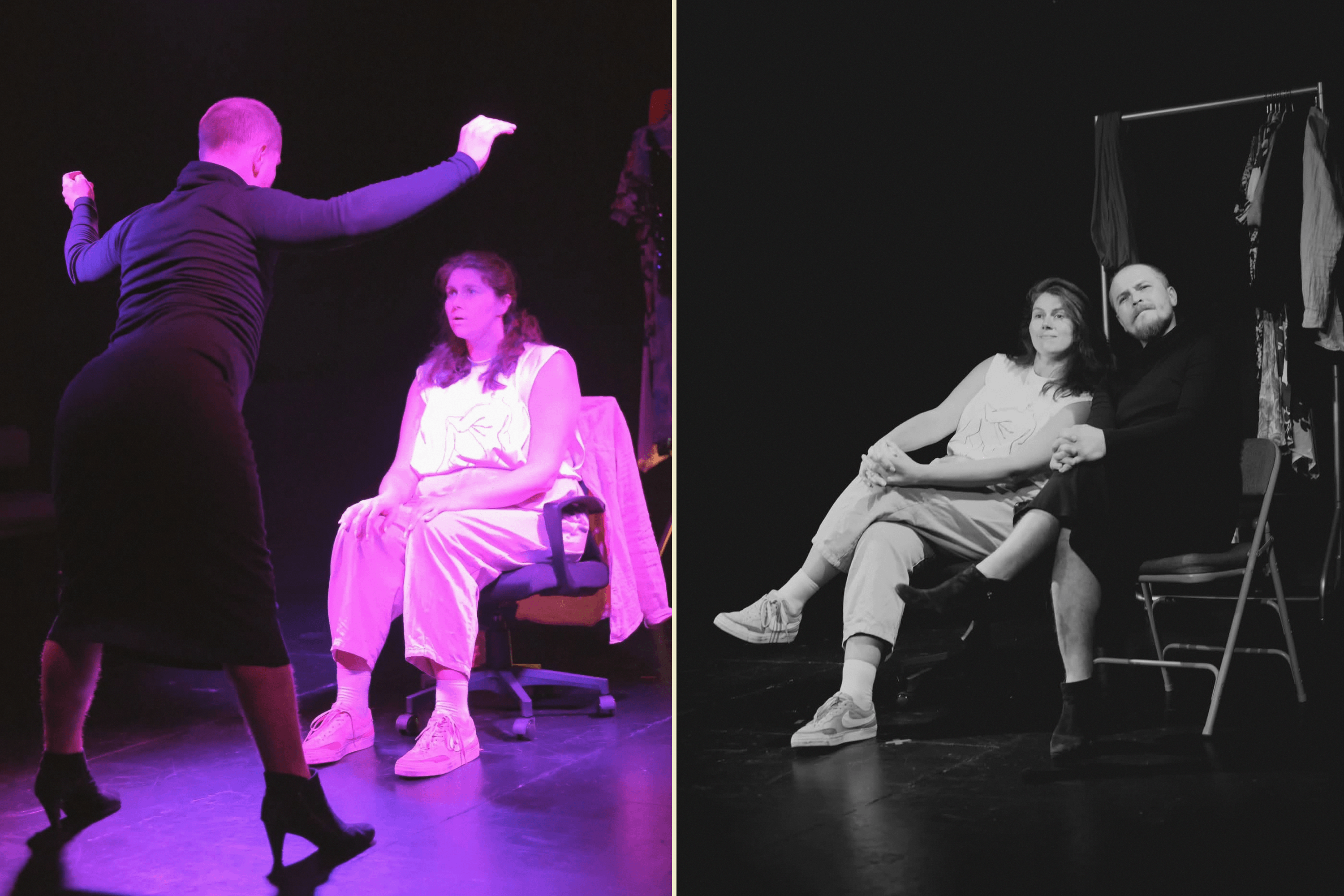
There is a sheet we pulled over ourselves back in 2022: the word “unbreakable.” For a long time, the British did not understand why we call ourselves that, and only now are we beginning to realize that the image that initially saved us leaves no room for exhaustion or fear. My main character’s mother calls every day from her frontline village and talks about how frightening it is there. But she does not consider herself unbreakable, and neither does anyone who is tired, afraid, or wants to leave. When we keep showing audiences only the unbreakable, they see our strength but not the price we pay for it.
That is why, for me, vulnerability in art is not marketing or a way to appeal to foreigners. It restores a person’s complexity, and it is much easier to identify with a complex human being than with a symbol.
The title of my play A Fan of War came from a real conversation. After yet another round of shelling in Ukraine, when I had spent half the night trying to reach my family and friends, my British ex-boyfriend asked:
“Could we not talk about this? I don’t like violence.”
“And I’m just a [expletive] fan of war,” I replied without even thinking.