Which is more difficult: integrating abroad or reintegrating at home, and how can one avoid being “stuck” between two worlds? How do teenagers navigate these processes, and why can returning to their home school become such a challenge?
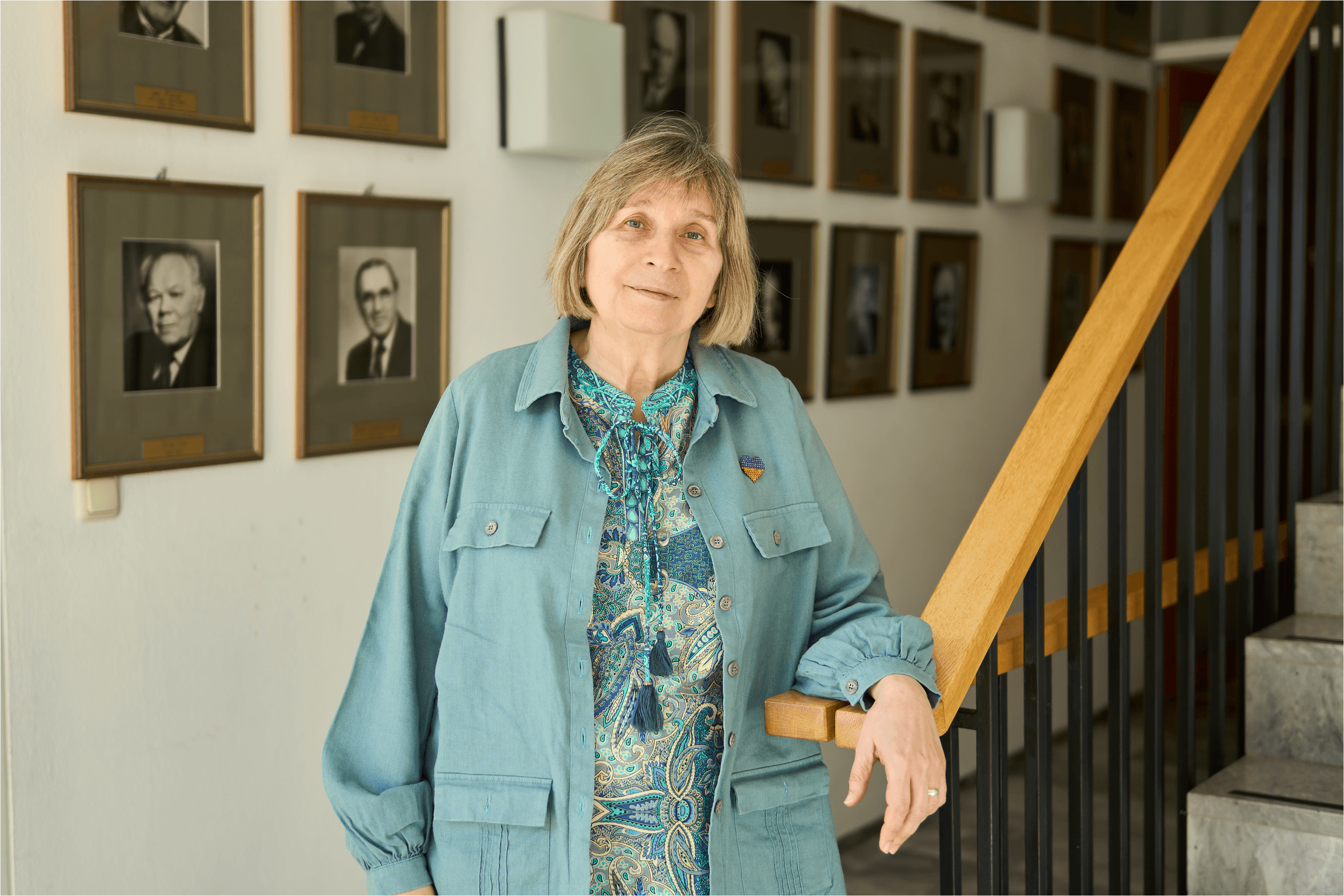
Yellow Blue journalist Mila Shevchuk explores these questions in a two-part special of the “HERE&THERE” podcast with psychologist Larysa Didkovska—President of the Ukrainian Association for Gestalt Therapists, Rector of the Ukrainian Free University in Munich, and author of books on the socio-cultural adaptation of migrants.
This episode is released in two parts. Below is a brief summary of both parts of the episode.
The difficulty of reintegration depends on how long you have lived abroad; for some, returning home can be even more challenging than life in a foreign country. Sometimes, people feel they have lost their home even if the physical building remains. In any case, you won’t be returning to the same place you once left. Initially, you may feel like an outsider, even within your own family that has lived without you. This can lead to feelings of being redundant and frustrated. Give yourself time to adapt.
The human psyche often gets stuck between two countries: a person is no longer there, but not quite here. This happens to those who moved abroad and those returning home alike. Those for whom their native land is the only “place of power” often struggle to build a happy life in another country. This is typical of war-time emigration—and most waves of Ukrainian emigration have been driven by war. To avoid an inferiority complex in a foreign land, it’s crucial to preserve your identity.
What is often called “social death in emigration” is the loss of social status. The fear of becoming a “nobody” can be more powerful than the fear of physical danger. People who built successful careers at home are often not ready to become refugees working unskilled jobs. When one of my clients was looking for professional work abroad, a social center employee told her bluntly: “You came here to save your life, didn’t you? Not to build a career.”
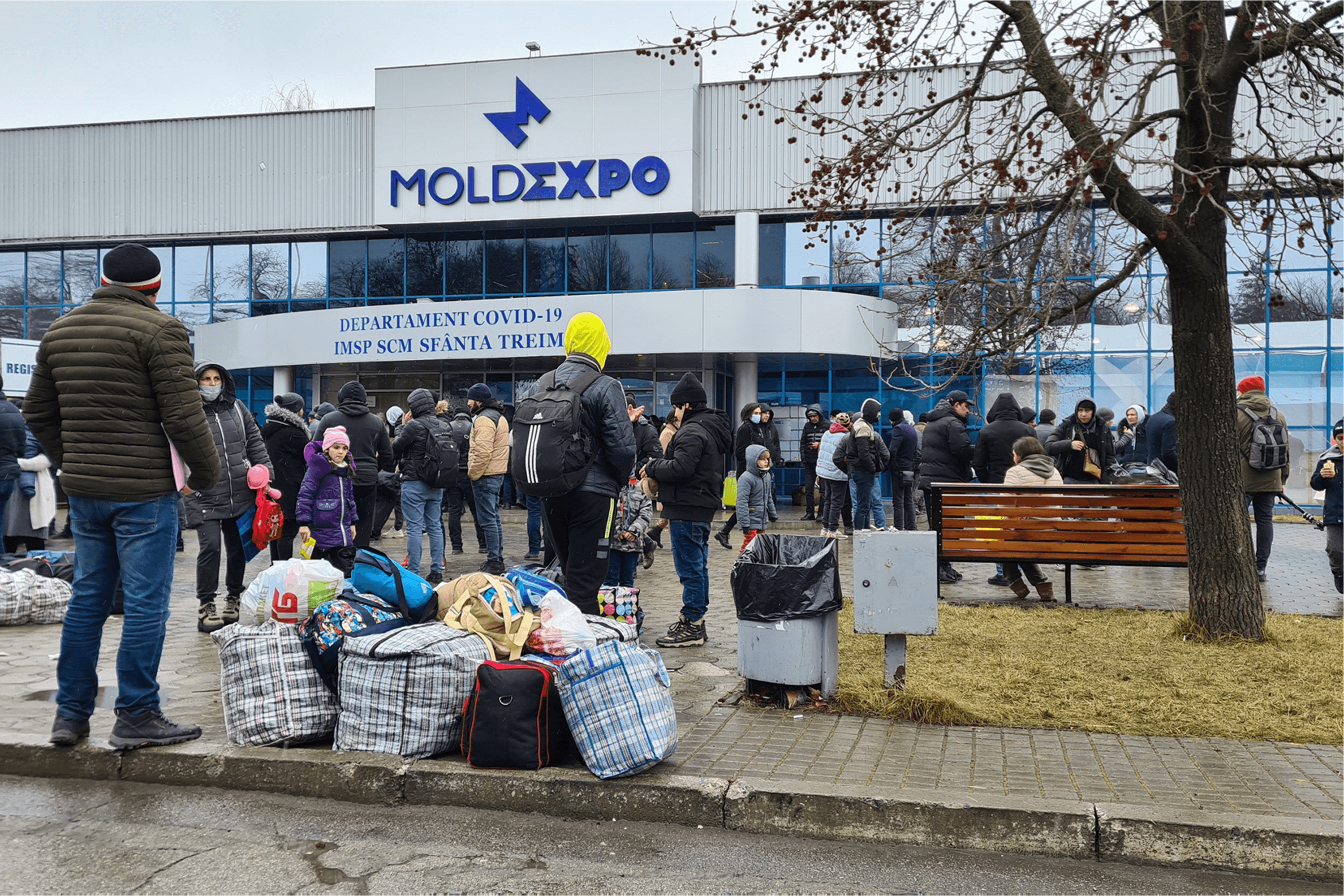
Ukrainian refugees wait outside a reception center set up in an exhibition center in Chișinău, Moldova. Photo: IOM / Joe Lowry / YB 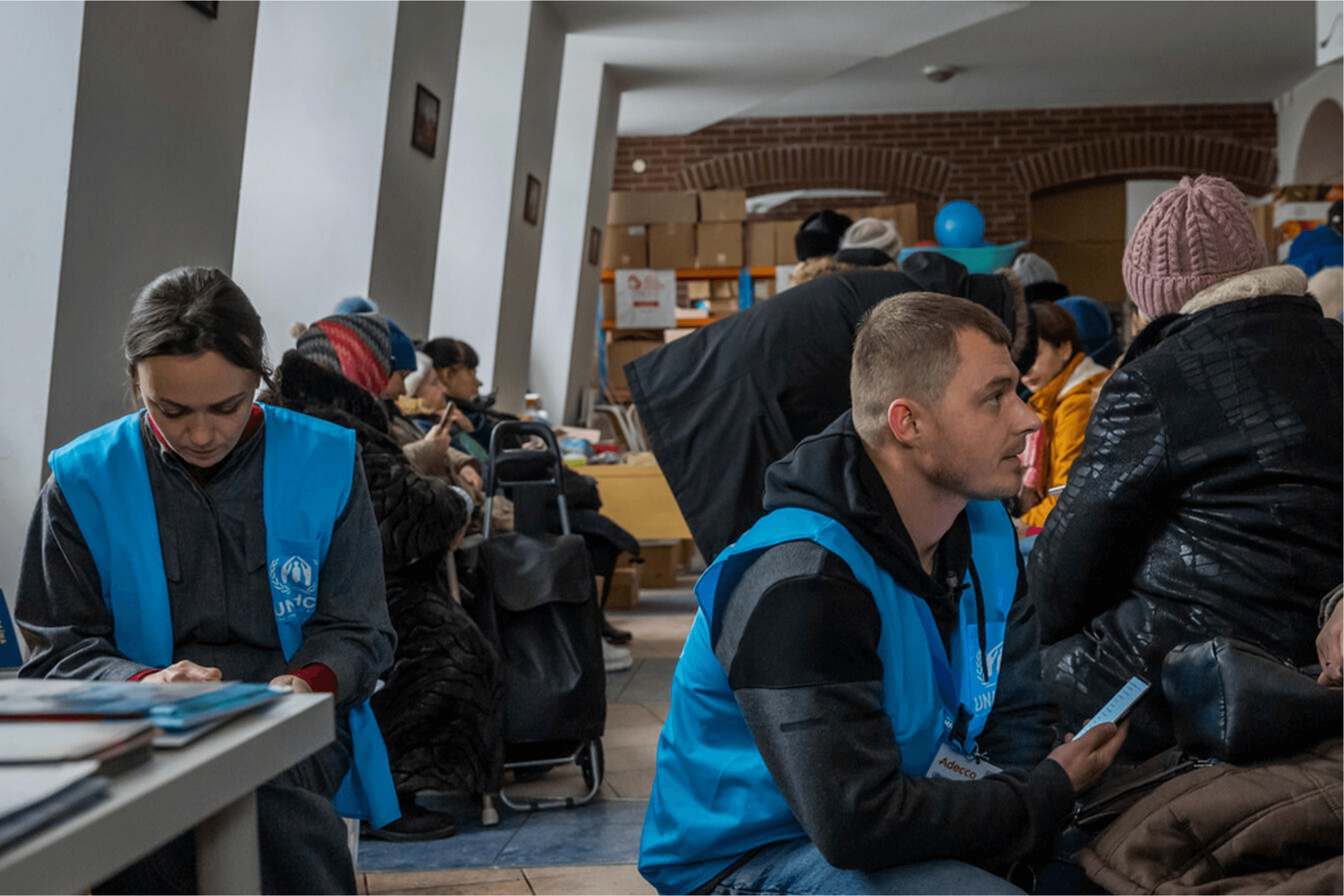
UNHCR staff speak with Ukrainian refugees at an assistance center in Kraków, Poland. Photo: UNHCR / Anna Liminowicz / YB 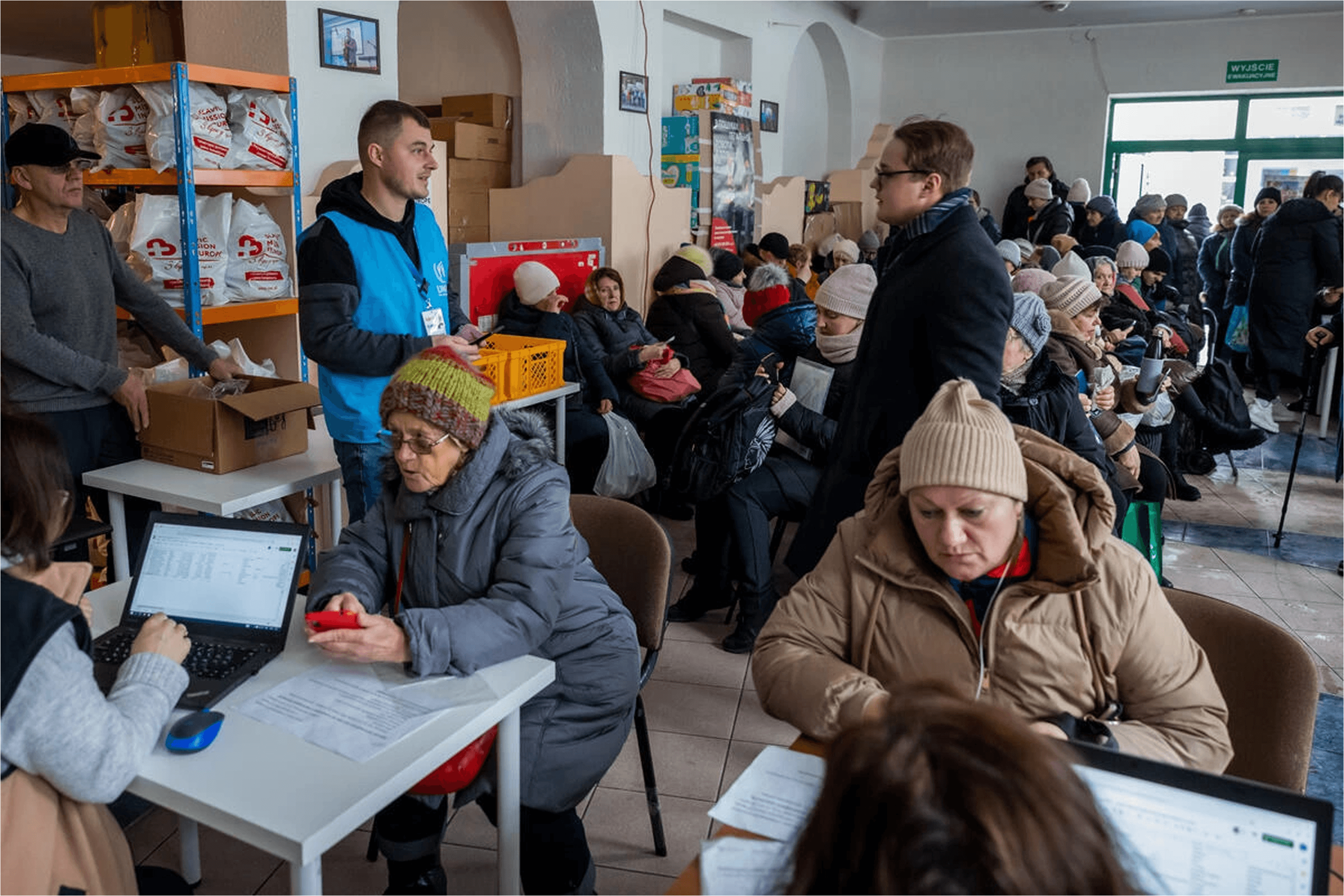
At the Slavic Mission aid distribution center in Kraków, Poland. Photo: UNHCR / Anna Liminowicz / YB 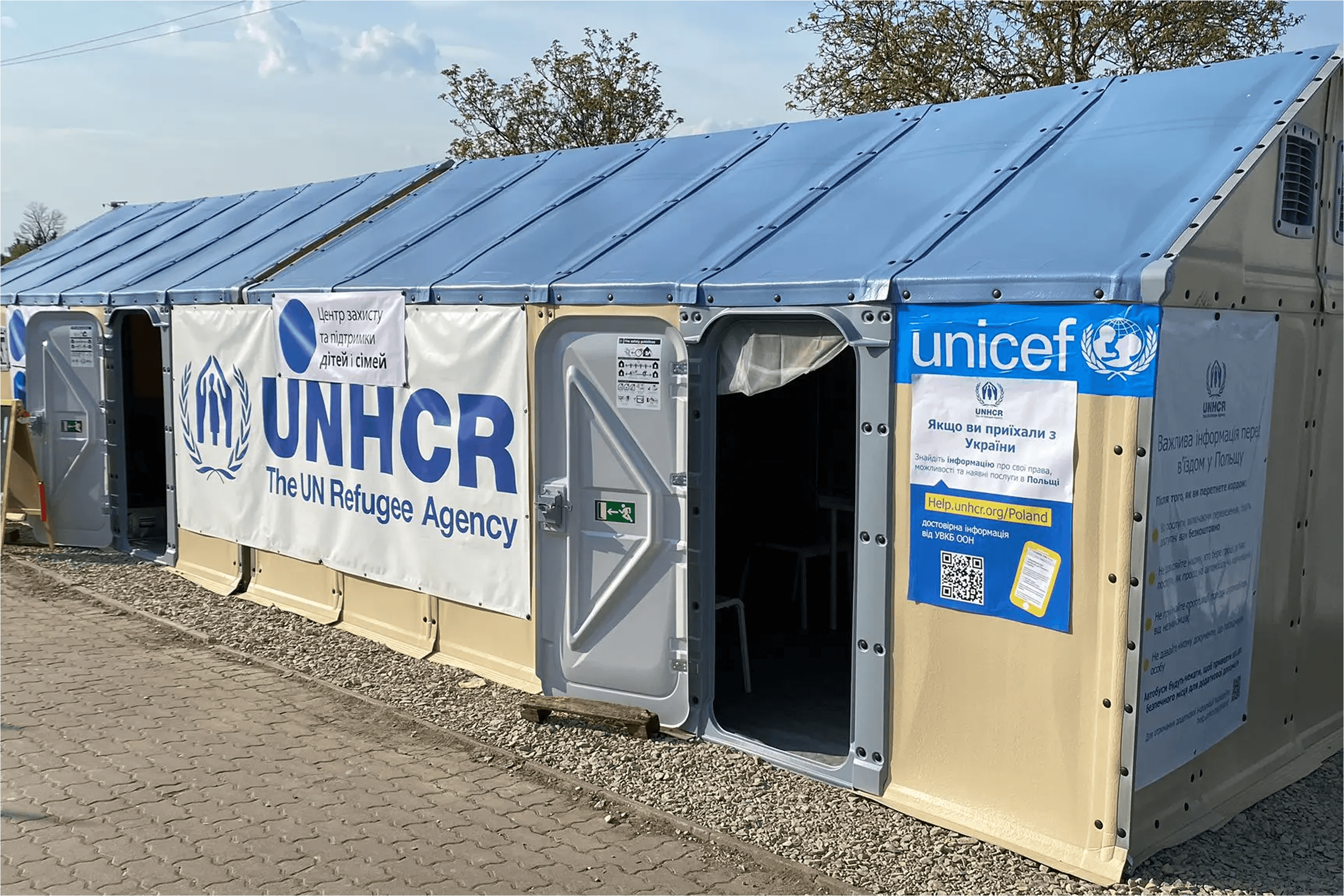
A mobile assistance center of UNHCR for Ukrainian refugees at the Polish border. Photo: UNHCR / Anna Liminowicz / YB
Deferred Life Syndrome is the deceptive happiness of a neurotic. It occurs when an anxious personality believes they are unhappy now, but happiness will come later when something changes. This is how a psyche functions when it cannot be happy in the moment; like a donkey with a carrot on a stick, it is forced to constantly run forward. But we cannot put life on pause only to live it later. This is not the first or last war in human history.
You can spend your days waiting or remembering, but the ability to live in the “here and now” is the only chance to truly experience your “today.” Currently, Ukrainians tend to value life more than in peacetime because of the constant risk of losing it.
Most Ukrainian children abroad are already attending local kindergartens and schools. Between the ages of two and five, a child easily absorbs any language they hear. According to Jean Piaget, national identity is formed by age 12. Therefore, these children may already become representatives of another world, and their mothers might make the sacrifice of staying in a foreign country for their sake.
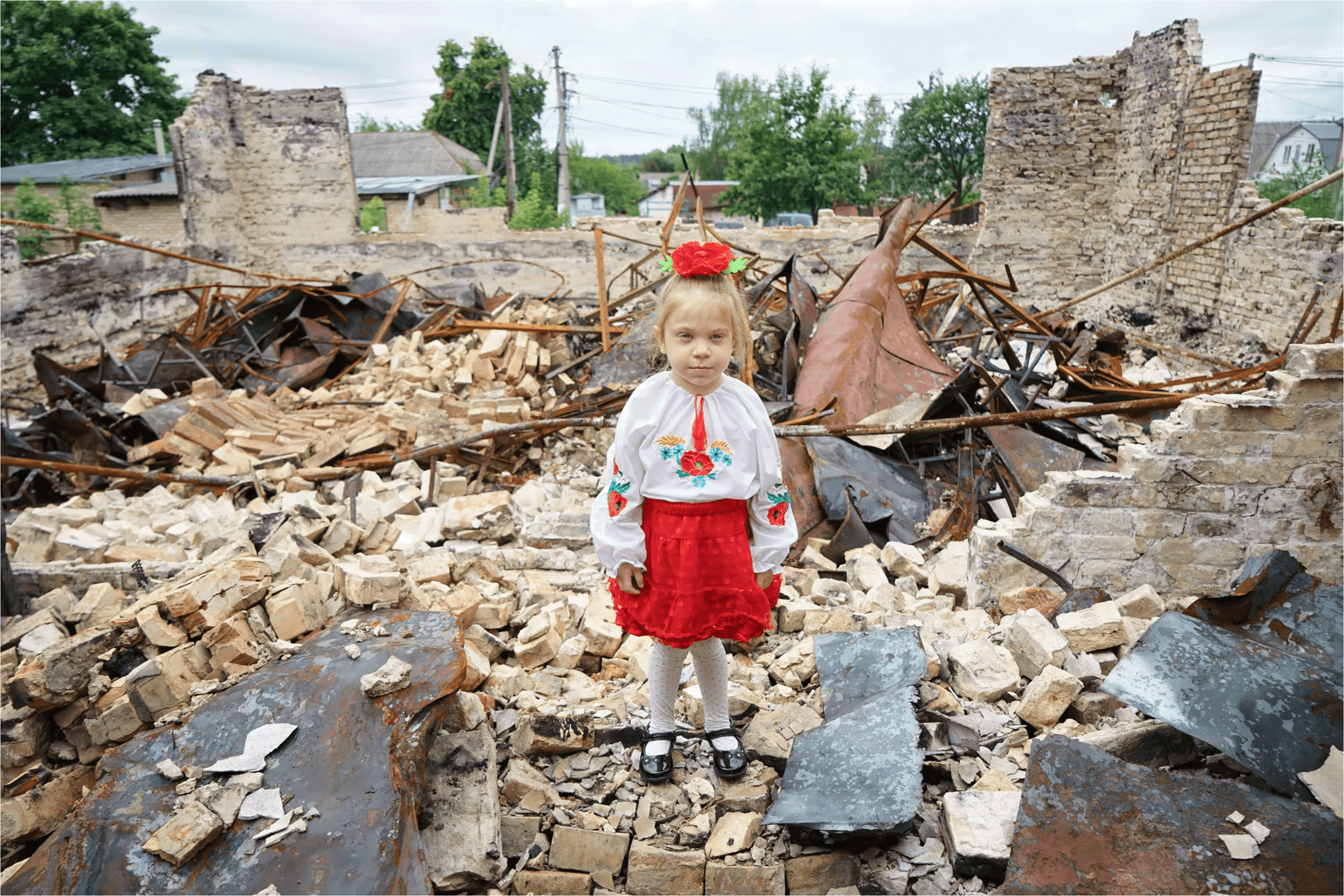
A child stands among the ruins of a destroyed school in Horenka, Kyiv Oblast, Ukraine. The building was damaged as a result of shelling. Photo: UNICEF / YB 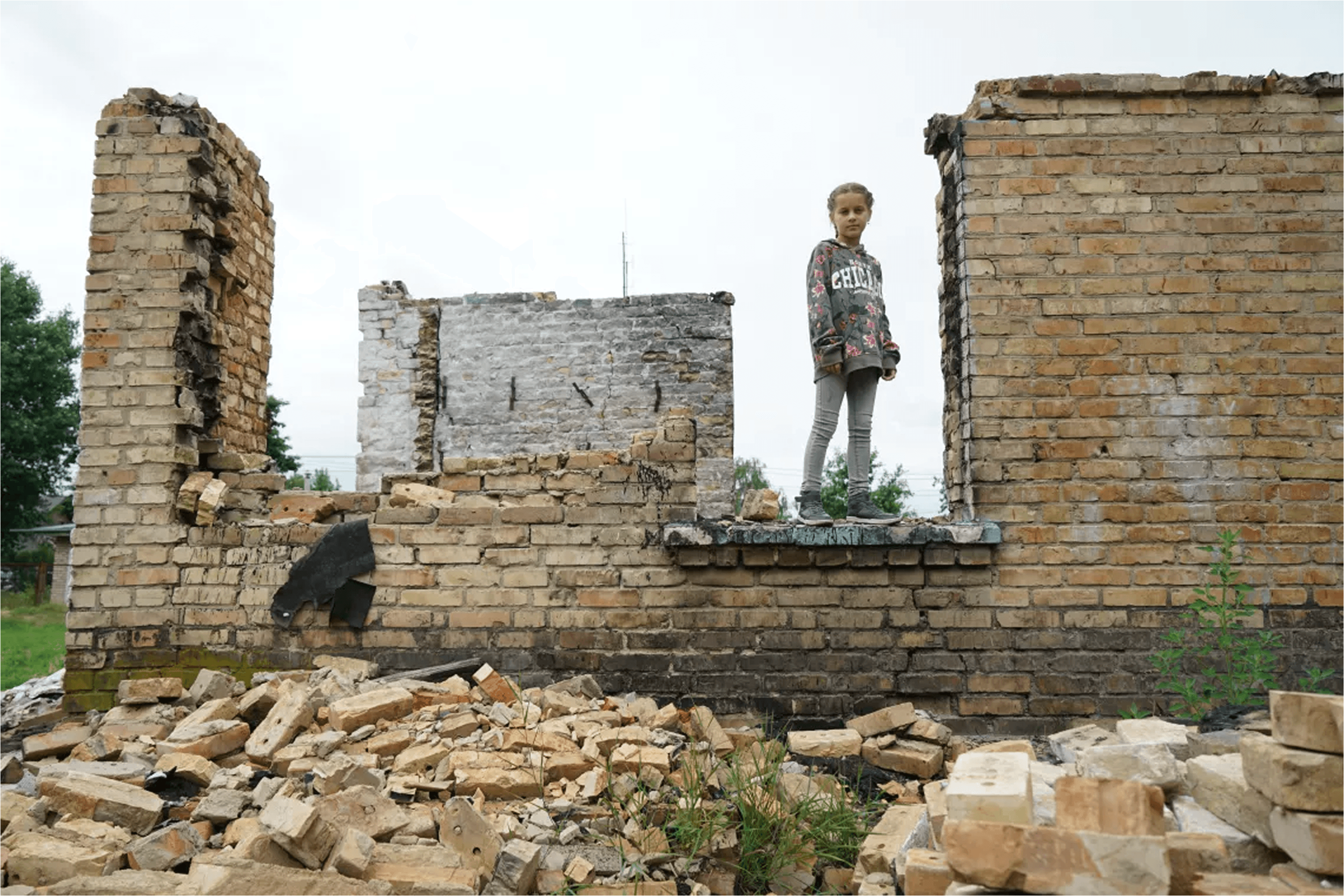
10-year-old Anna stands on the ruins of her school in Horenka, Kyiv Oblast, Ukraine. Photo: UNICEF / YB 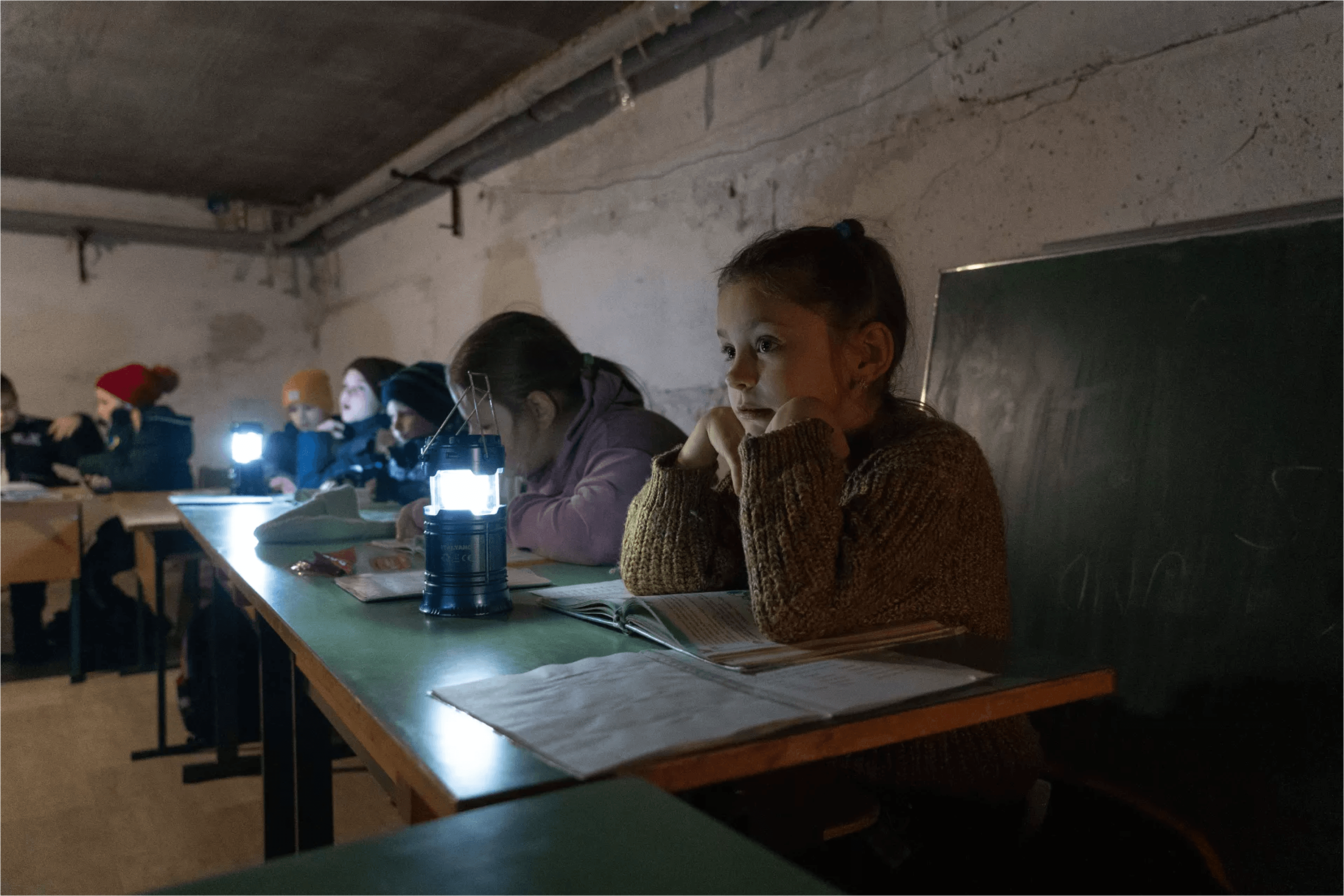
Children study in a kindergarten shelter where UNICEF has installed generators. Ukraine. Photo: UNICEF / YB 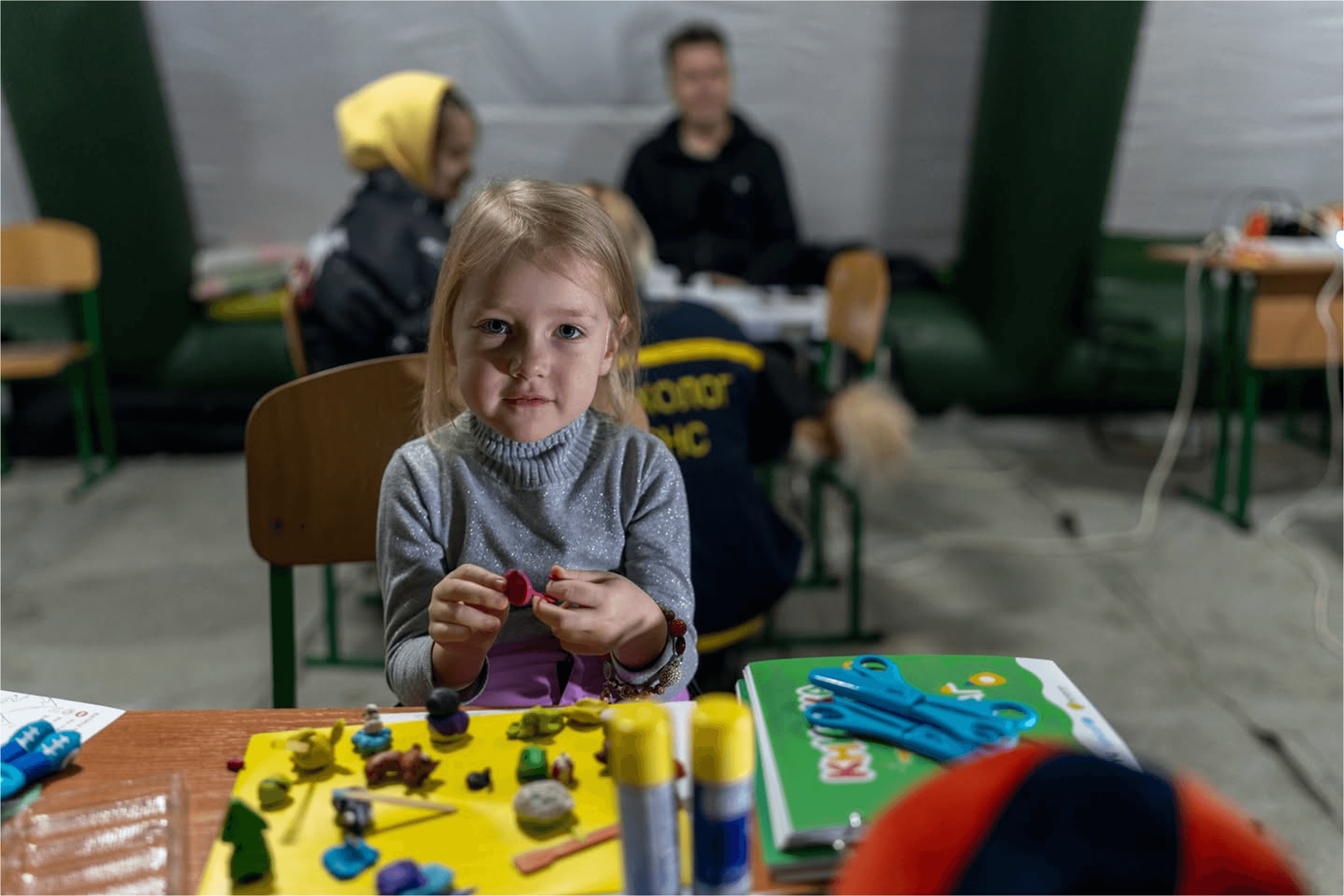
A child during lessons in a temporary shelter in Ukraine. Photo: UNICEF / YB
The integration and reintegration of teenagers is the most sensitive issue. The adolescent crisis is a key stage in personality formation: hormonal changes increase vulnerability and impulsivity, self-perception shifts, and social role expectations grow. It’s harder for teenagers to move than for younger children because they already have an established self-image and identity. Protest and negativism at this age are normal—they are a means of defense. There are many cases where teenagers devalued their parents' decisions and gave ultimatums to return to Ukraine, as it was their parents who had taken them abroad.
Returning teenagers deserve respect. However, they also experience loss in their hometown and need support. They now have different experiences than their peers, making reconnecting a particularly difficult task. Adults must put more effort into their adaptation—for example, by organizing activities where children can bond with their class and share what they liked or disliked about living in another country.
In any micro-society, there are only four statuses: Alphas (leaders), Betas (experts), Gammas (the “entourage”), and Omegas (outsiders rejected by the system and often targets of aggression). Ensuring support, safety, and a humane attitude toward all children, including outsiders, is the responsibility of adults — from daycare teachers to university professors. If a teenager is bullied, they will either fight for their convictions or flee into isolation, or even fall into emotional numbness to stop feeling the pain.
Ukrainians, both at home and abroad, are living in chronic stress. Many have already adapted to constant uncertainty, which teaches one how to prioritize. We no longer live by ephemeral plans and instead invest more in what truly matters, as energy is limited. Exhaustion is the third phase of stress, but it’s precisely this phase that helps us cut out the noise and focus on what is essential.
War, divorce, and emigration are among the five most traumatic life events. Right now, many Ukrainians are experiencing all three simultaneously. The surgeon Nikolay Pirogov once said that war is an “epidemic of [physical] trauma.” But it’s also an epidemic of psychological trauma. This is why my colleagues and I raise this issue at international conferences: Ukrainians, both at home and abroad, need professional help. Since the first weeks of the full-scale invasion, domestic and foreign therapists have been conducting support groups. These groups still exist, though there are fewer of them now. Psychology is currently the most popular major for university applicants in Ukraine. We must train specialists who can help people cope with the long-term consequences of psychotrauma.