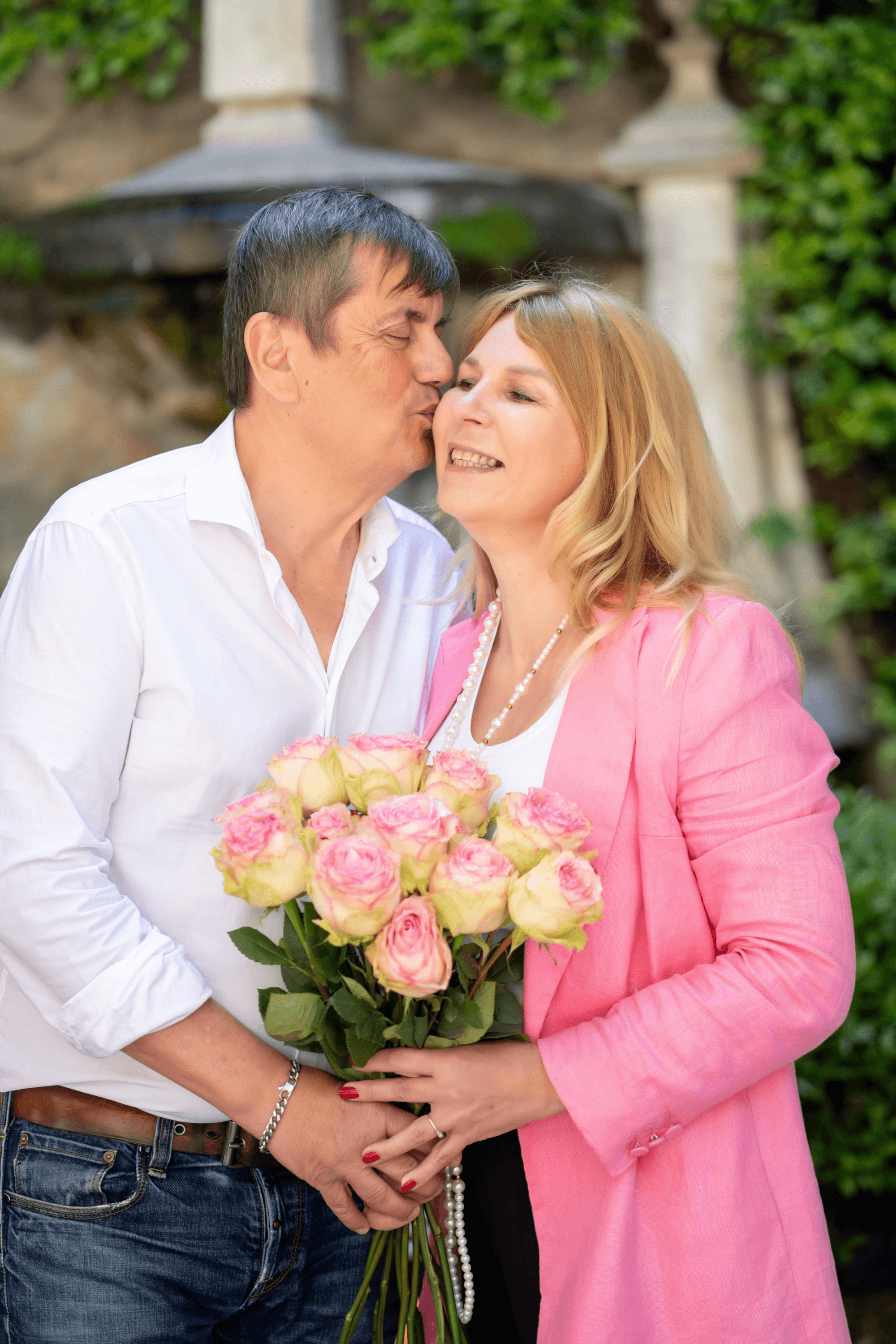
Elena Belova, 54, was the first to launch a perfumery school in Ukraine, following the success of her niche brand, Parfum Facteur. Her life has been defined by dramatic shifts: born in Siberia to a family of Ukrainian roots, she moved to Kyiv after the Soviet collapse, only to flee again in February 2022 when Russia launched its full-scale invasion.
Now based in France, Elena has relaunched her online school and co-founded a new niche brand, Maison Bernard Hokmayan. Her fragrances are already sold in boutiques in Paris, Cannes, Courchevel, Monaco, Saint-Tropez, and Nice.
As the brand eyes expansion into Spain, Italy and Central Asia, journalist Roksana Rublevska explores Elena’s journey of displacement and rebirth.
1
Elena Belova’s roots are deeply Ukrainian: during the dictator Stalin era, her ancestors were repressed and exiled to Siberia. Her grandparents survived the wilderness with five children, and after Stalin’s death, the family settled nearby, clinging to their hunting traditions. Elena was born in 1972 in Krasnoyarsk, but the Siberian taiga was her true home. Her teenage years were a split between the city and the forest: riding with her father on a motorcycle through forest tracks and spending weekends in a remote hunting village. Yet, she was also a theater devotee, never missing a performance in Krasnoyarsk. Despite decades of forced assimilation, the family’s Ukrainian identity remained intact. Her grandmother still spoke Russian with distinct Ukrainian inflections, wore vyshyvankas (traditional embroidered shirts), and passed down folk traditions to her granddaughter.
After graduating in 1989, Elena found herself at a crossroads. She excelled in both the sciences and the humanities, but no career path felt right. Sifting through an official directory of professions, she stumbled upon a specialty that sparked an immediate interest: cosmetics production technology.
At 17, she enrolled in the Kemerovo Technological Institute of the Food Industry, majoring in the “Technology of Fatty Essential Oils and Cosmetic Products.” When she brought the news home, her family was skeptical. “You’ll be making margarine and mayonnaise,” her mother joked. “Do you really think they’ll let you near a cosmetics factory?”
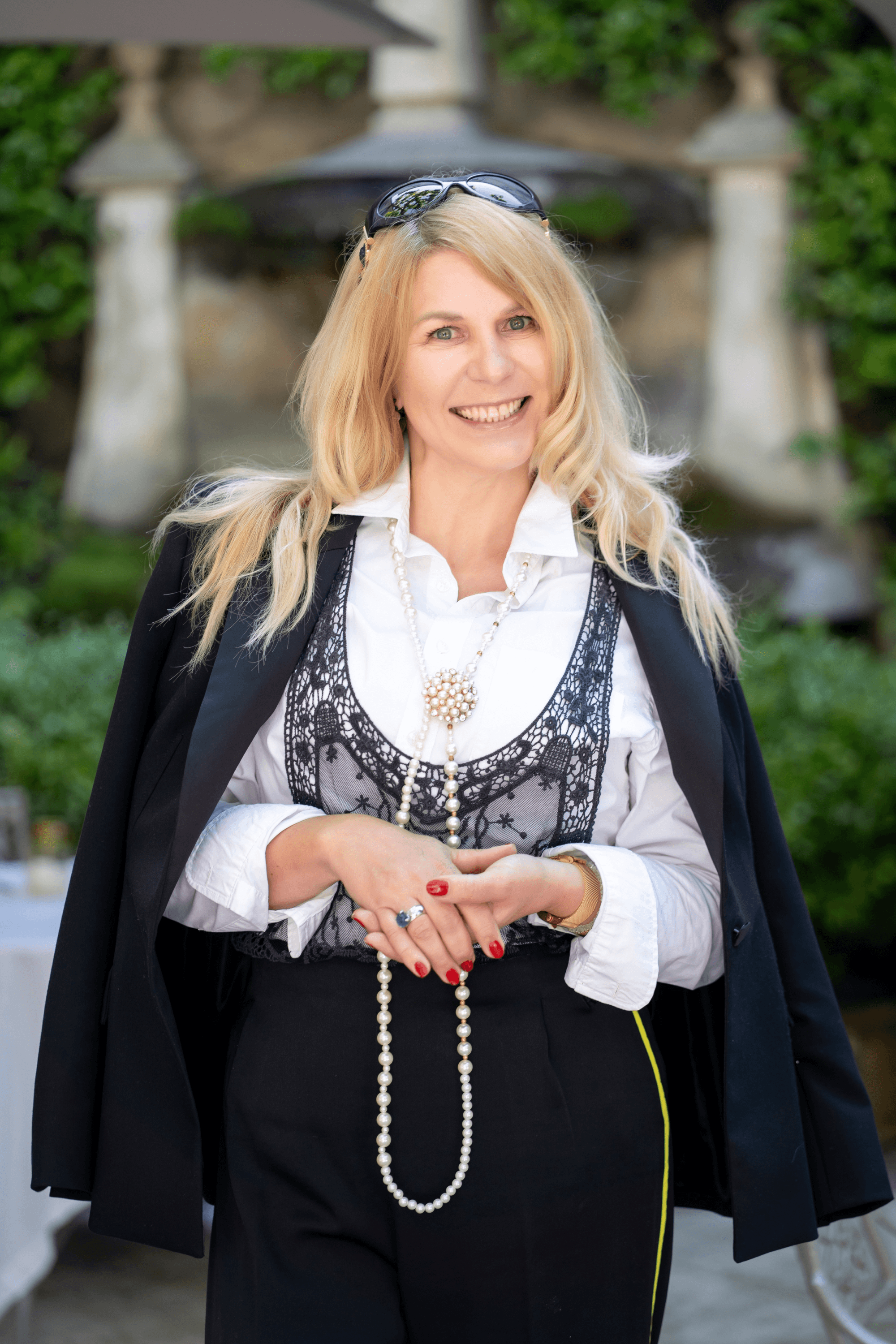
In the USSR, the cosmetics industry was a fortress—closed, centralized, and restricted to a few hubs like Moscow and Riga. Latvia’s “Dzintars” was the only household name for skincare, while Moscow’s “Novaya Zarya” held a virtual monopoly on perfume. It was an elite, unreachable world. For a girl from Krasnoyarsk, choosing this path felt like trying to step into an unreachable world.
In 1990, while in Kemerovo, Elena met Anatoliy, a Kyiv-born officer recently returned from Czechoslovakia. It was the twilight of the Soviet Union; troops were being withdrawn from the Warsaw Pact nations. A graduate of the Kyiv Higher Military Command School of Communications, Anatoliy had served two years abroad before being stationed in the Siberian Military District. Their romance moved fast. She was 19, he was 25. “The perfect age for marriage,” she says. They wed in Kemerovo in 1991—the same year the Soviet Union collapsed.
The collapse triggered a brutal economic crisis. Higher education suddenly seemed worthless in a shattered labor market. Hardship followed. Elena remembers the barren shelves of Kemerovo in 1991: nothing but rapeseed oil, canned goods, and pasta. They survived only because of Anatoliy’s officer’s rations. In 1992, Anatoliy resigned his commission, and the couple headed for Kyiv to join his parents. Elena left Siberia with three years of university behind her and a solid grounding in the chemistry of beauty.
2
Kyiv felt like home the moment Elena arrived. In her mother-in-law’s apartment, she spotted a print of a white Maltese dog on the wall—an exact replica of the one that had hung above her bed in Krasnoyarsk. She considered it a good sign.
The couple hit the ground running. Leveraging his background in military satellite communications, Anatoliy landed a job as a video engineer at the state channel UT-1, where he mastered high-end Japanese editing tech. He soon moved to Oleksandr Tkachenko’s production company, “Nova Mova”. Elena took a job as a dishwasher for a company catering to American construction crews.
Spotting an announcement for free courses at the Ihor Sikorsky Kyiv Polytechnic Institute (KPI), Elena—who had always had a flair for design—enrolled in the Faculty of Publishing and Printing. She juggled work and study until 1994, when she joined “Nova Mova” as her husband’s assistant. By then, Anatoliy was chief video engineer. Together, they produced news and music videos for Ukraine’s biggest stars: Iryna Bilyk, Skryabin, TNMK, and Sofia Rotaru. Despite the country’s staggering hyperinflation, they thrived. Anatoliy earned $350 a month—a fortune at a time when the average salary barely hit $20.
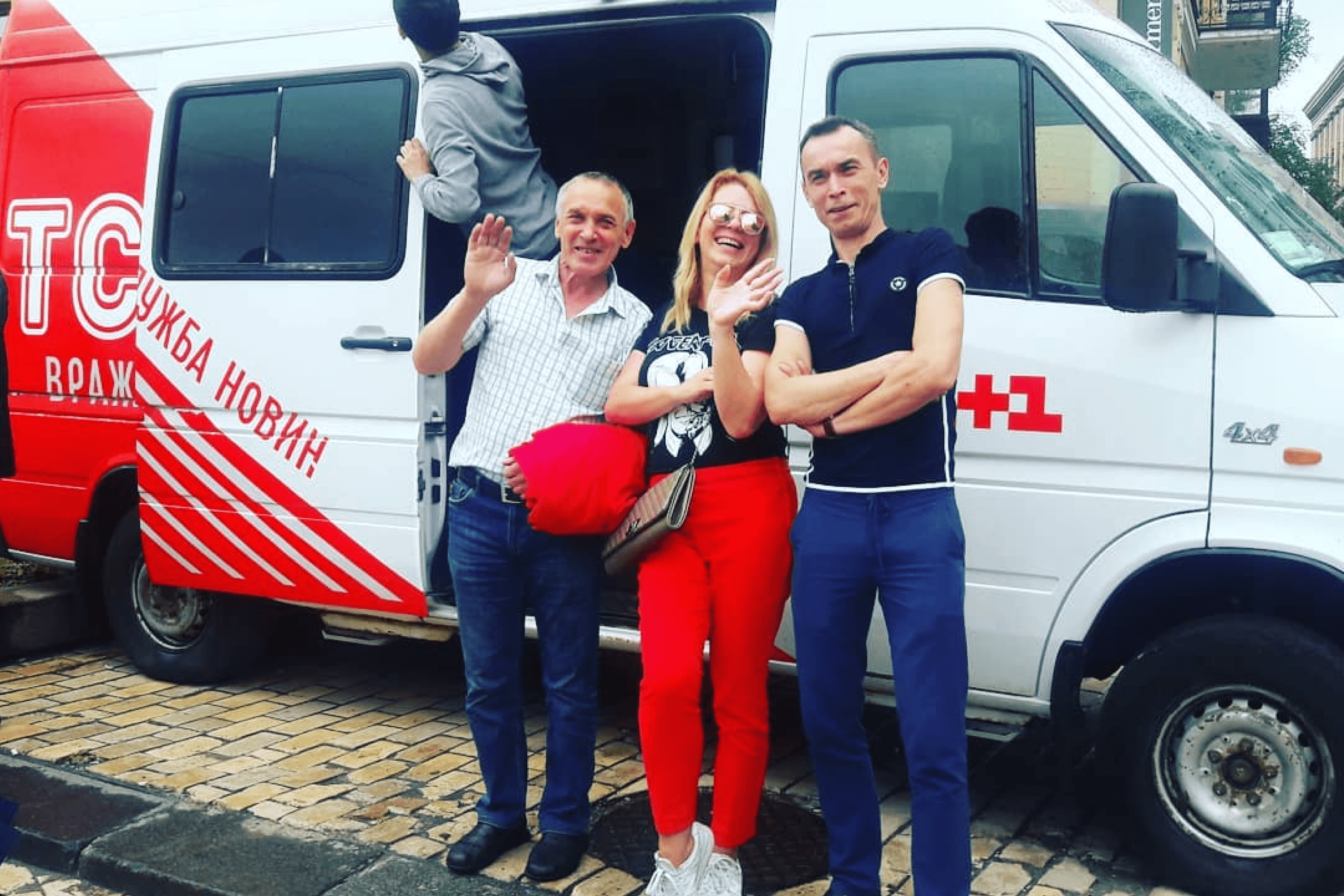
By 1997, “Nova Mova” had evolved into “1+1”, Ukraine’s first major independent national channel. Anatoliy became chief engineer and procurement officer, while Elena, after the birth of their first daughter Alisa, pivoted to advertising as a designer.
It was a time of spiritual searching for her; she explored Agni Yoga and holistic health. In 2000, Elena defended her diploma and worked for two years as a designer in printed Ukrainian publications: “Stolychni Novyny,” “Ves Transport,” and magazines under the auspices of the Ministry of Health.
In the 2000s, a wave of creating eco-settlements began in Ukraine, inspired by the ideas of returning to nature and self-sufficiency against the backdrop of the popularity of Vladimir Megre’s “Anastasia” book series. Eco-settlements are communities of people who practice a careful attitude toward nature. Usually, such places use only renewable energy sources and grow vegetables. So in 2003, after the birth of their second daughter Nastya, Elena and Anatoliy decided to radically change their lives: their friends shared the idea of creating a new eco-settlement, and the Belovs eagerly supported it.
Using their right to 1.1 hectares of land, Elena and her husband received a plot in the village of Motyzhyn from the state for free. For $3,000, they brought electricity there and paved part of the road near the plot. Elena created the project for the future house herself, without architects or contractors. They purchased materials at their own expense, but the hired builders never showed up—they simply disappeared. Eventually, the couple, together with neighbors, built a 230-square-meter house with their own hands. It took two years.
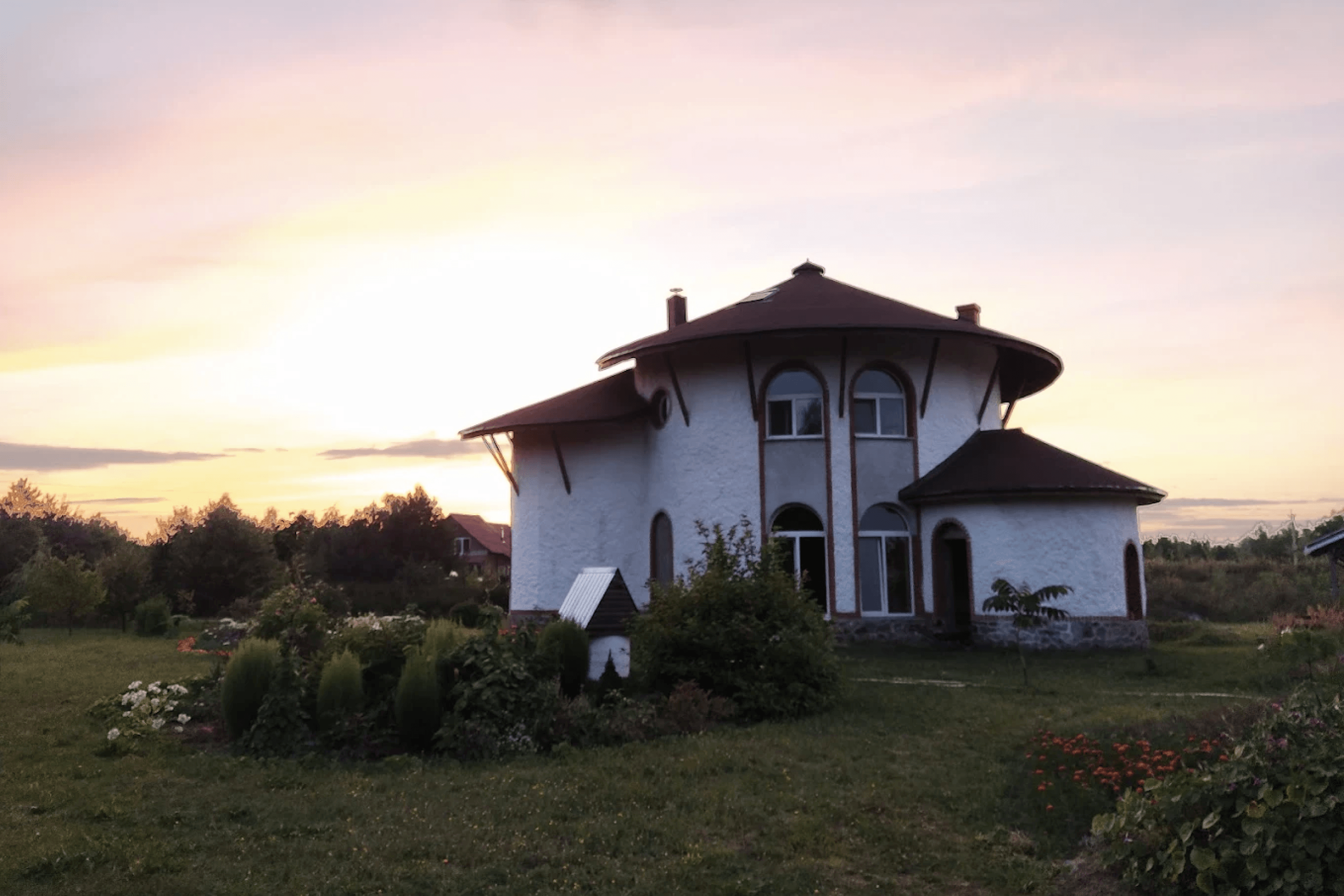
“Dolyna Dzherel” in the village of Motyzhyn. Photo: Google Maps / YB 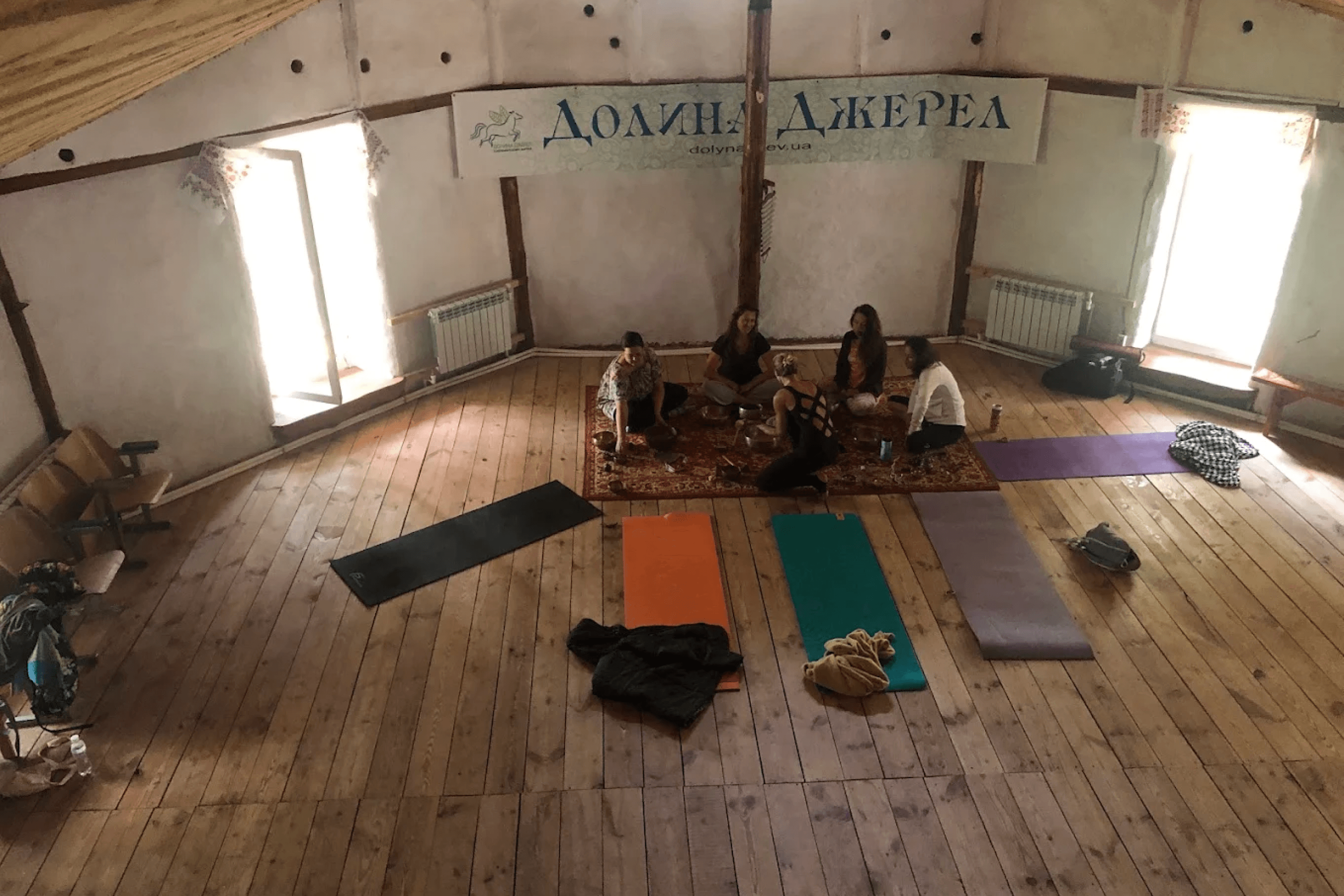
Photo: Google Maps / YB 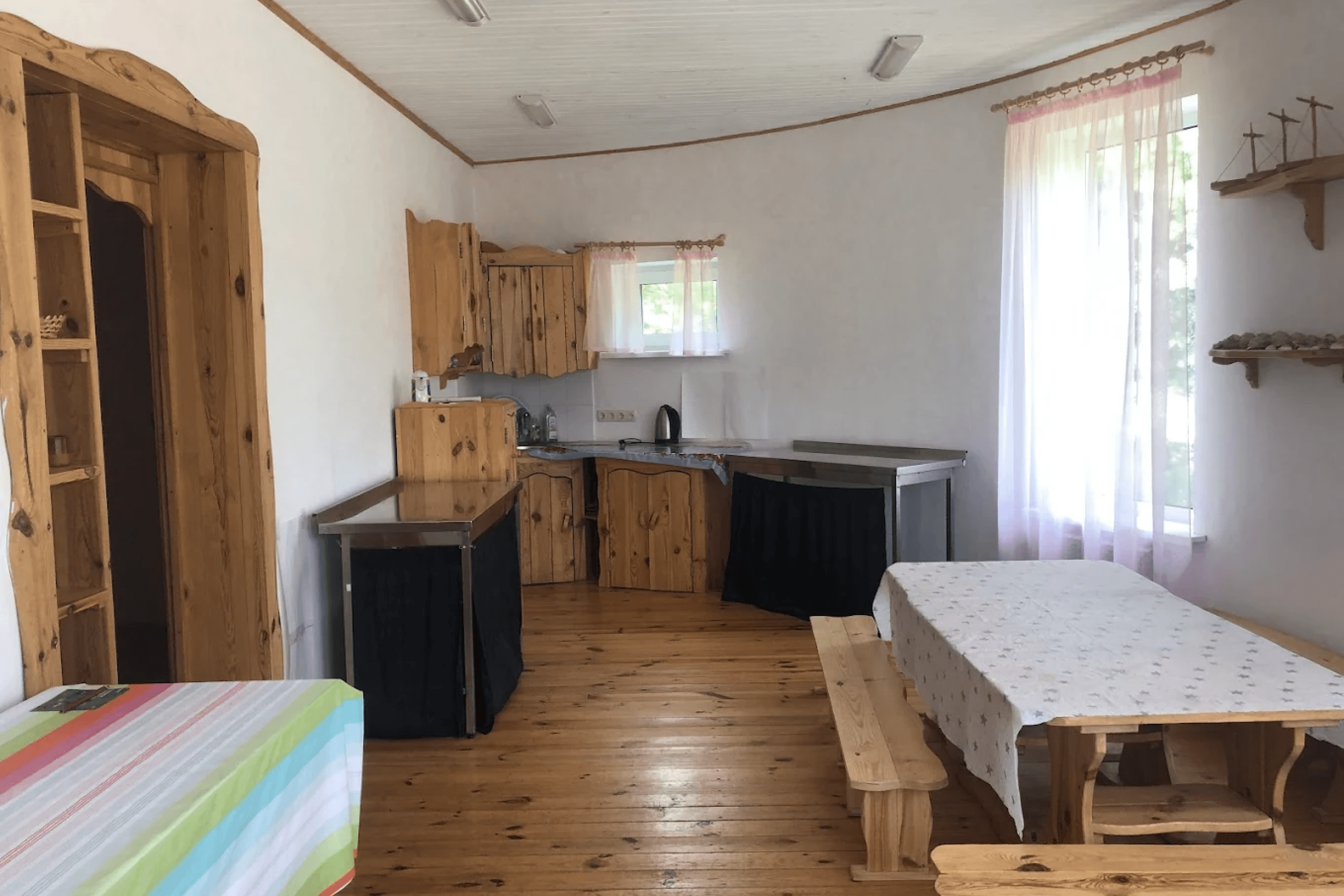
Photo: Google Maps / YB 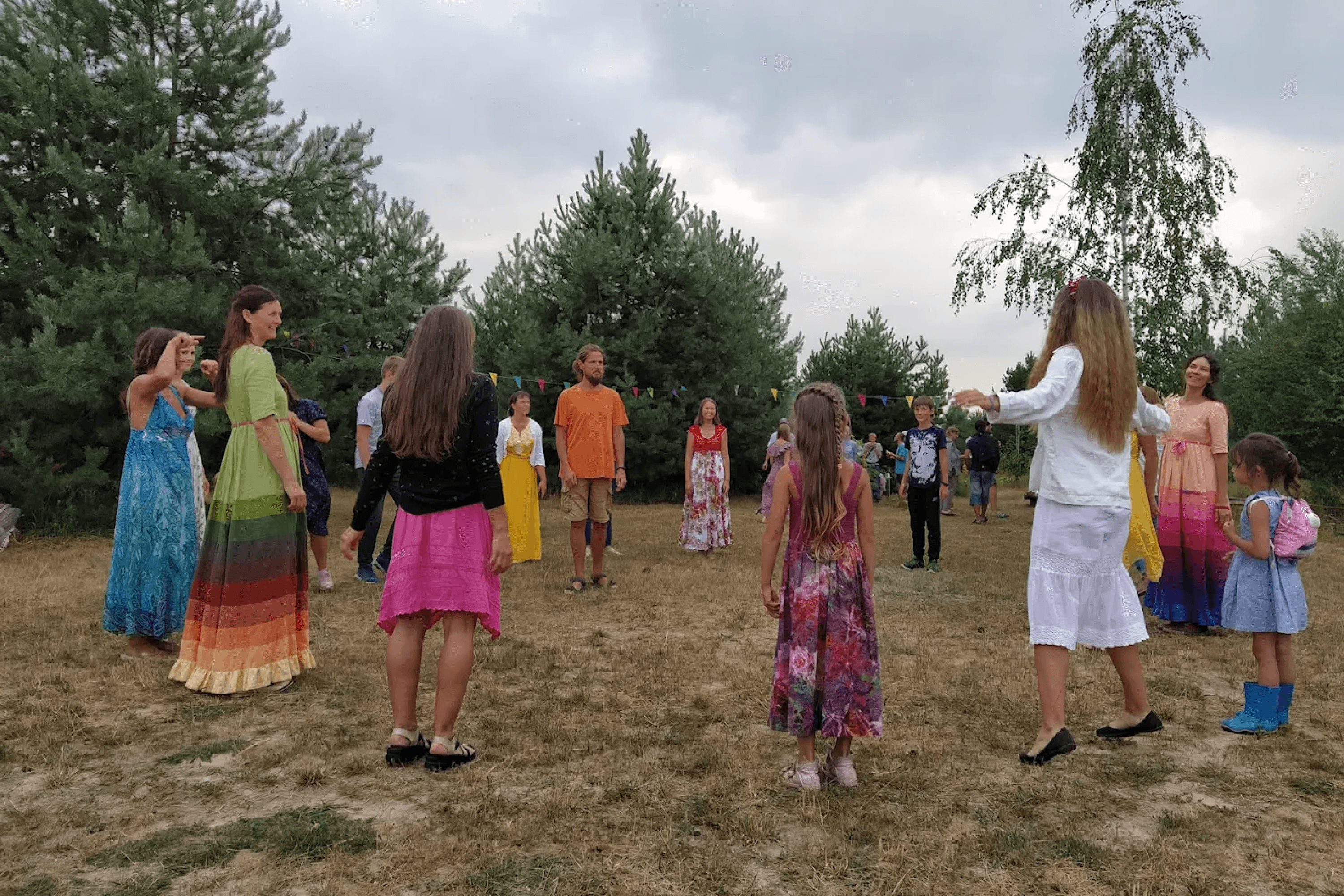
Photo: Google Maps / YB 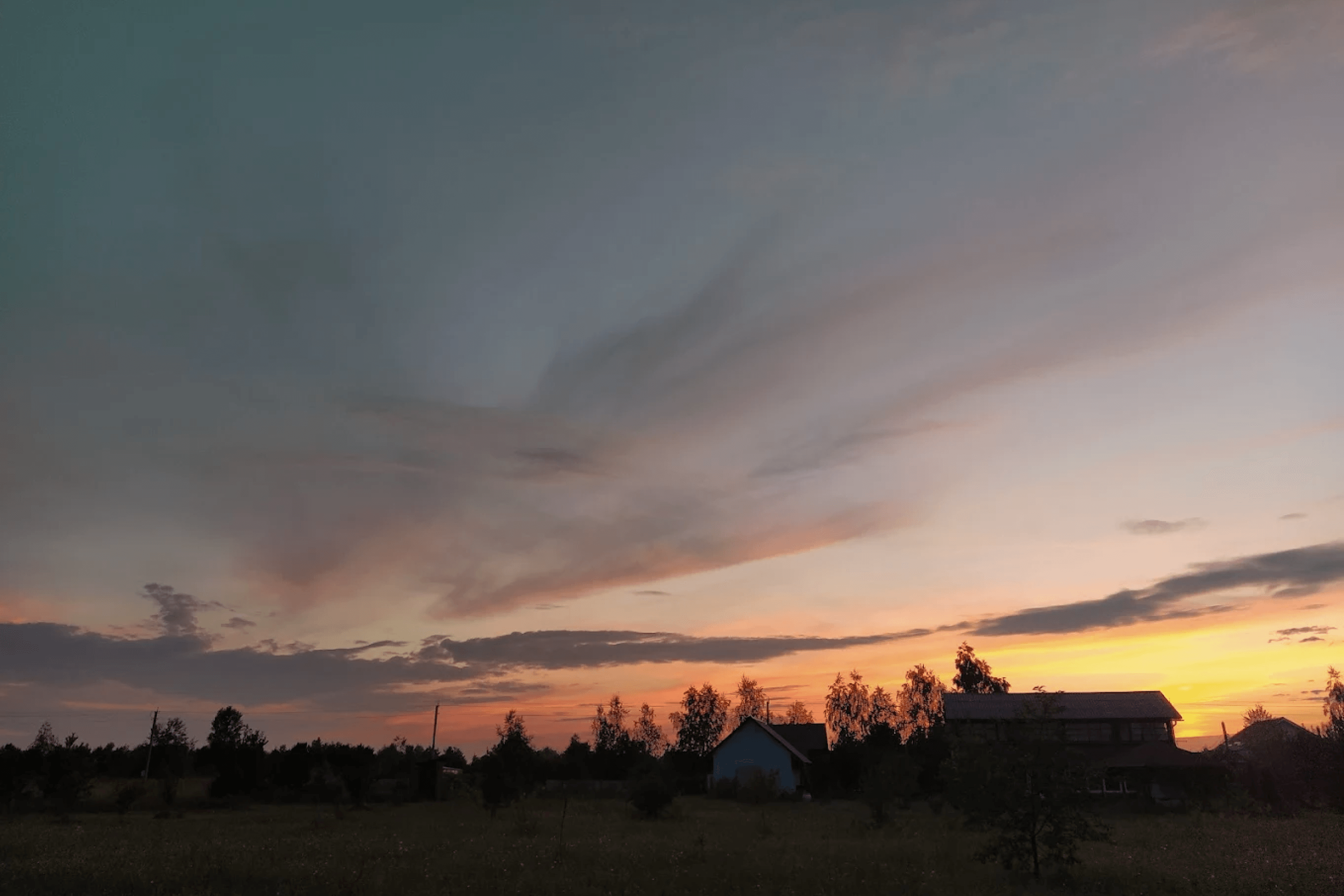
Photo: Google Maps / YB
The plots on which the “Dolyna Dzherel” (Valley of Springs) eco-settlement eventually stood were designed for 43 families. This was one of the largest such projects in Ukraine. Some residents lived there permanently, others came on weekends. In 2008, the Belovs finally moved to Motyzhyn.
While her husband worked in television, Elena looked after the children and planted half a thousand trees on the plot. At the same time, she became interested in aromatherapy: she collected essential oils and created her own compositions from them. Anatoliy continued to work at “1+1”. In 2010, this channel was bought by oligarch Ihor Kolomoyskyi, and a crisis began there. In particular, the income of television workers fell sharply—Anatoliy’s salary was reduced fourfold. The family had to figure out where to get money.
Once, a group of Swedish tourists came to their settlement and asked for souvenirs to remember them by. In three days, Elena made natural soap from local herbs, and it was quickly sold out. Such success convinced her to produce cosmetics again. The idea quickly grew into a business: she developed about 30 recipes for natural soap, began selling it at exhibitions and fairs, in particular on Kyiv’s Andriyivskyy Descent, and within six months she was already earning about $2,000 a month. Later, she registered the “Bilyy Metelyk” (White Butterfly) company and began certified production.
By 2012, her business already had its own cosmetic line ECO NATUREL and an ingredient store with what was then the largest assortment of essential oils in Ukraine for home cosmetics production. However, Elena sought to master true perfumery. A chance meeting with the famous perfumer Bruno Cossi at a professional event in Crimea opened up new opportunities for her. Upon his recommendation, Elena took a several-month private course from teachers of the Grasse Institute of Perfumery for free.
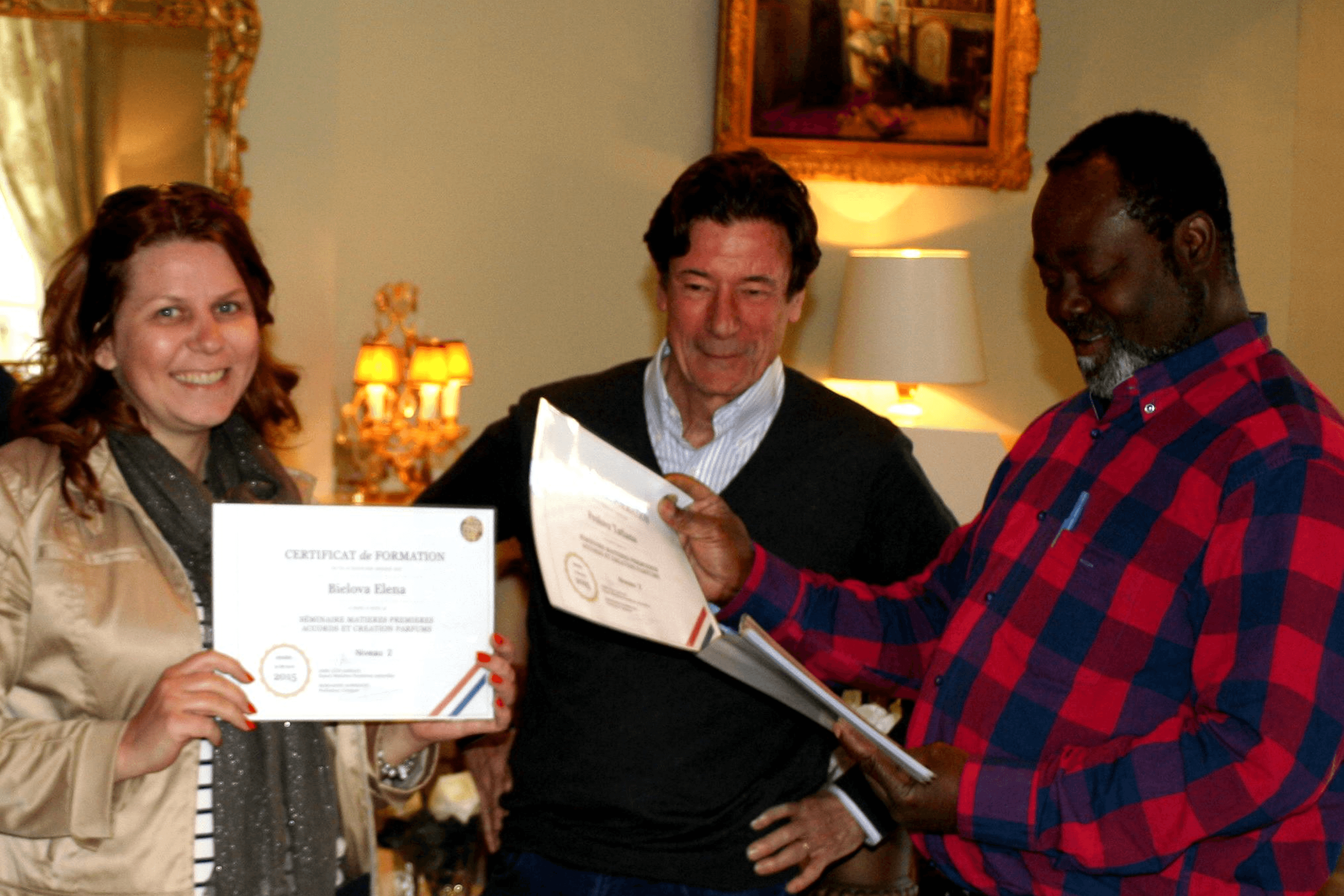
Elena Belova completed a private course with instructors from Grasse Institute of Perfumery. Photo: Elena Belova / Facebook / YB 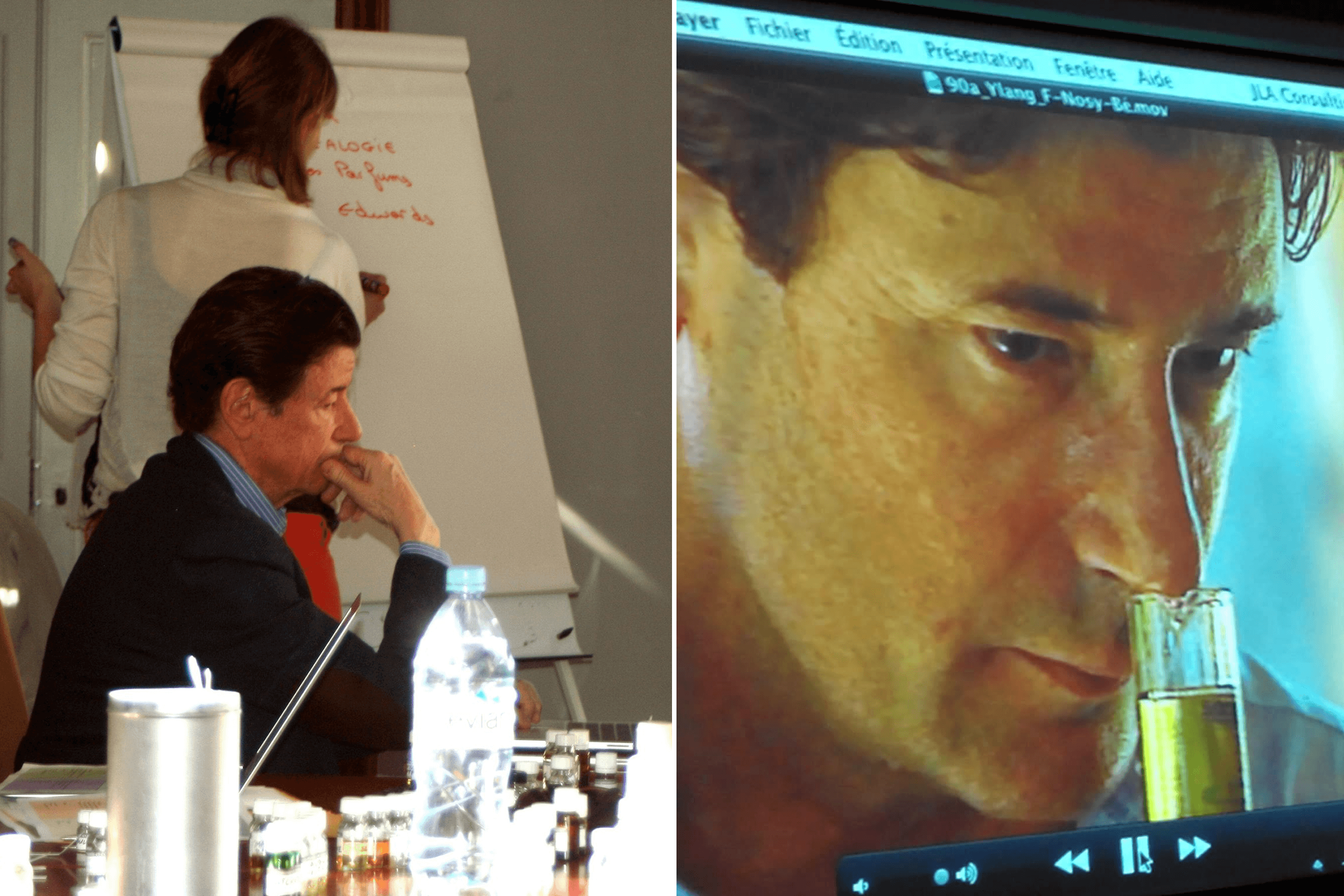
Perfumer José Adrian, one of the veterans of the global perfume industry, a consultant for MANE and Givaudan, and a lecturer at Grasse Institute of Perfumery. Photo: Elena Belova / Facebook / YB 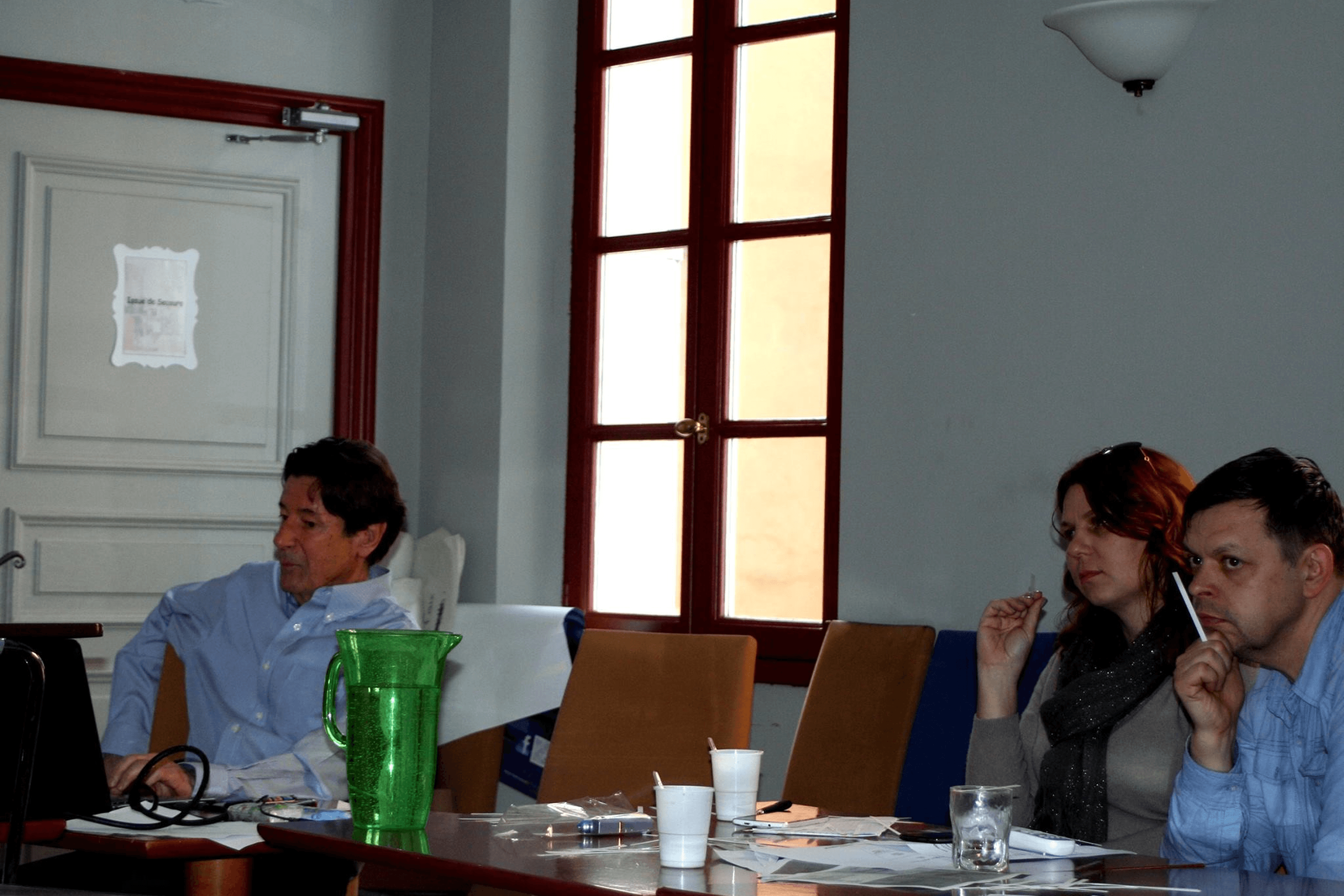
The learning process during the course. Photo: Elena Belova / Facebook / YB 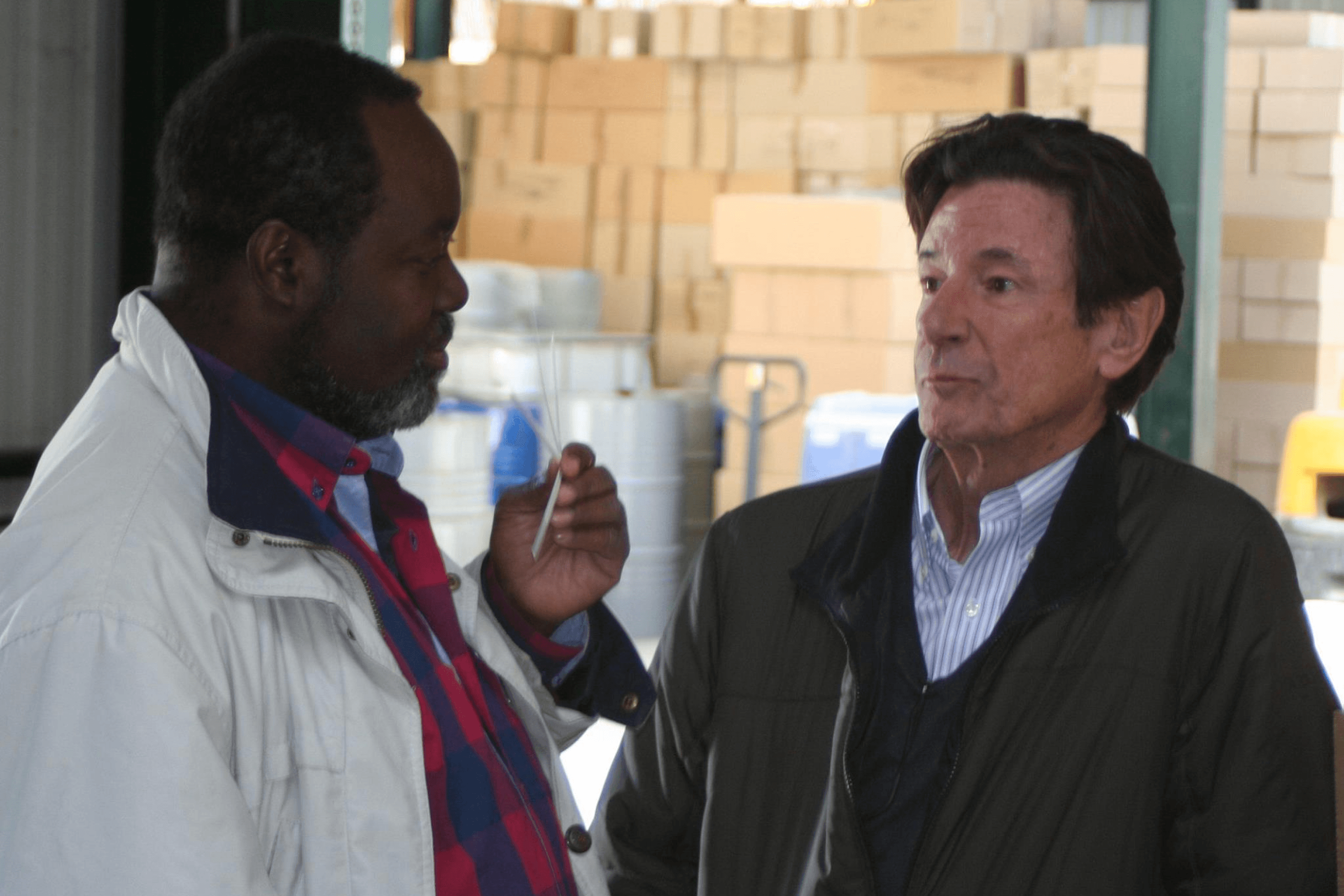
Bruno Cossi and José Adrian. Photo: Elena Belova / Facebook / YB 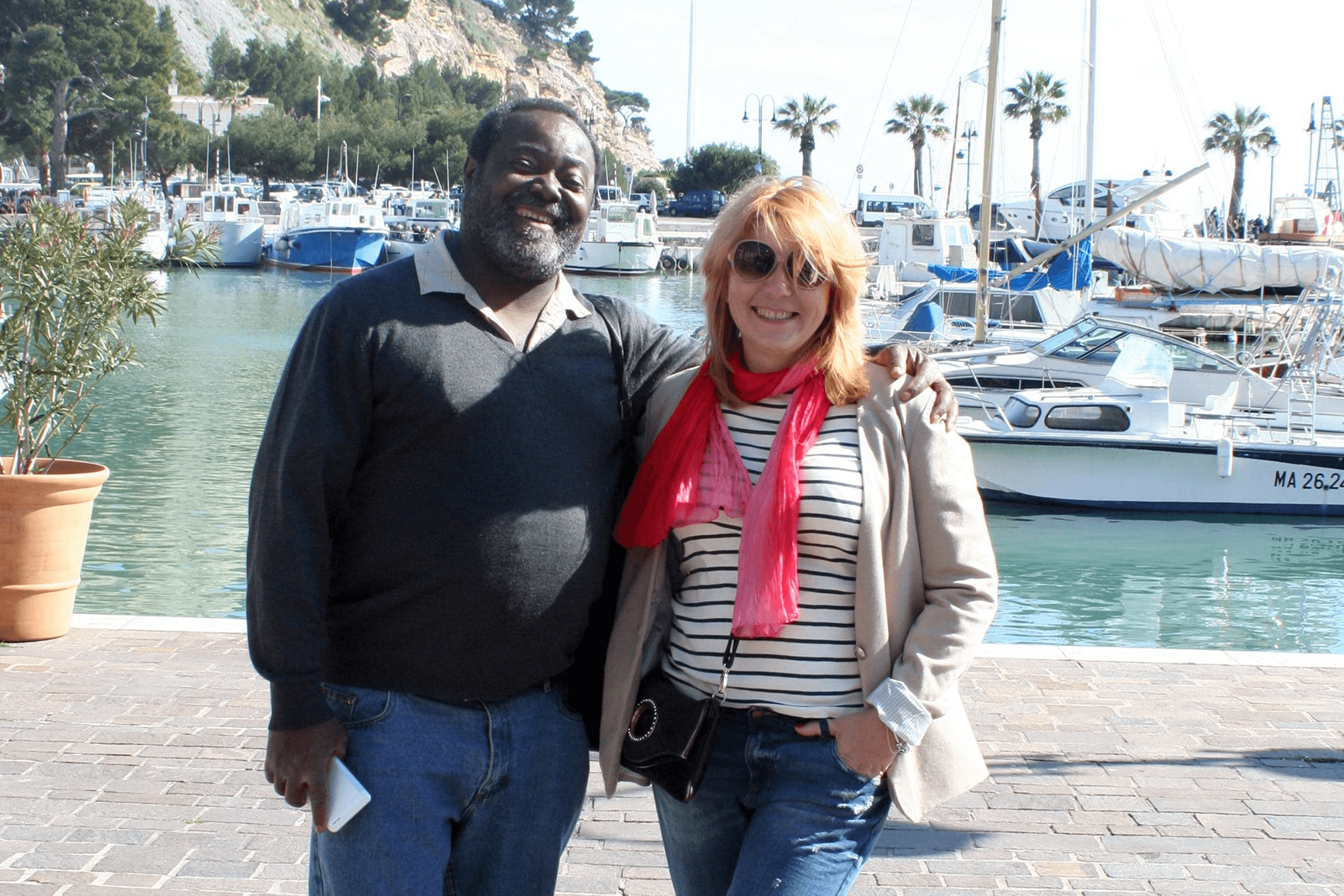
Bruno Cossi, a French expert in the perfume industry and mentor who played an important role in the development of perfumery in Eastern Europe. Photo: Elena Belova / Facebook / YB
After this, Belova’s business expanded rapidly: in their house, the couple equipped a perfumery laboratory, in which they invested about $100,000 of their own savings. The warehouse stored more than 80 essential oils and 400 synthetic ingredients, which were eagerly bought by indie perfumers from Ukraine, Europe, Moldova, and Israel. Her husband took over purchasing and supplies, and their elder daughter Alisa worked as an administrator.
In 2016, the business’s revenue reached $20,000 per month. That same year, Elena opened her own perfumery school: she recruited 12 students and began teaching. The courses lasted from two to six months. Her projects worked to mutually reinforce each other: niche perfume lines, the school, and the ingredient store. All of this then existed under the PARFUM FACTEUR brand, which Belova created in 2016.
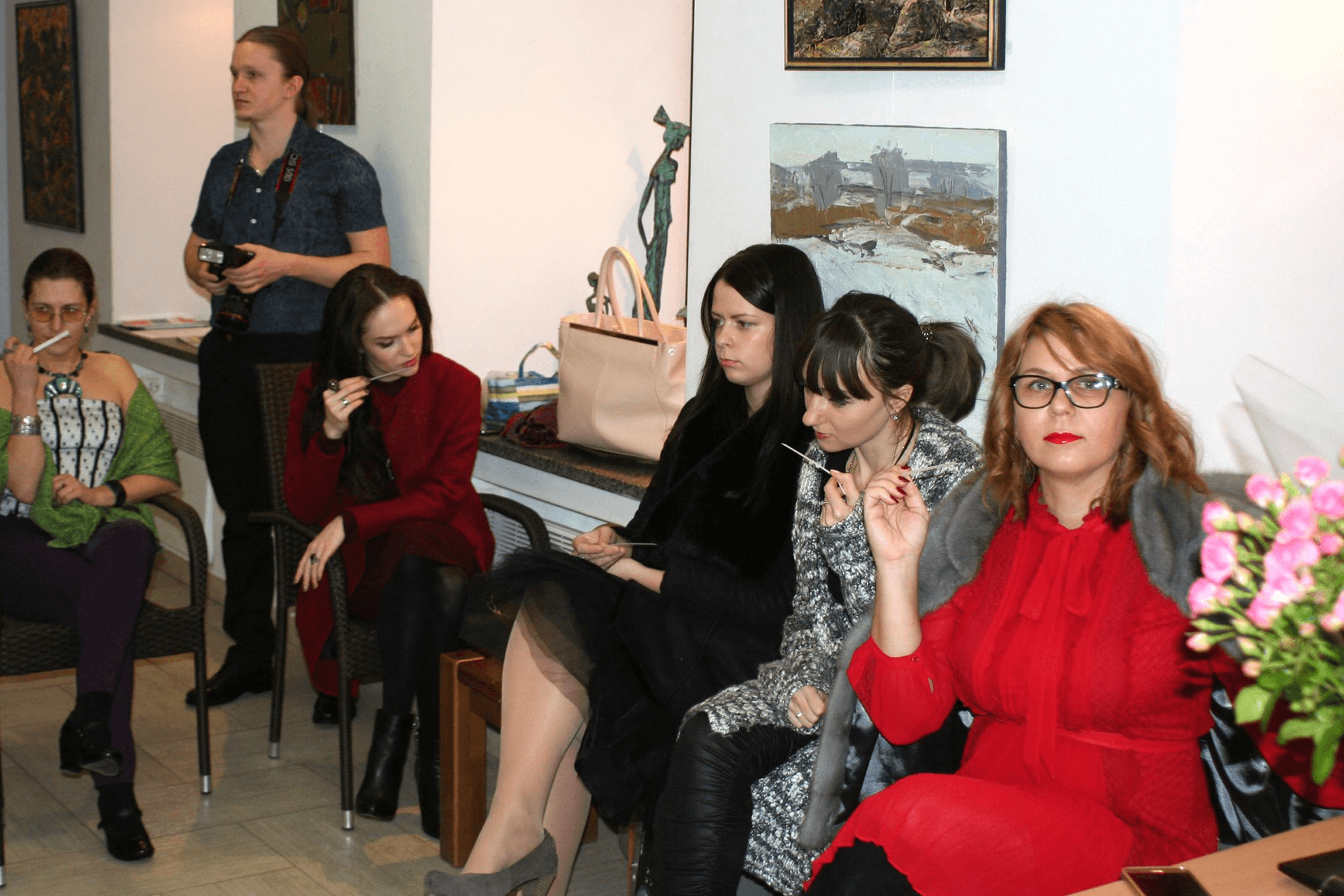
A perfumery course by Parfum Facteur. 2017. Photo: Elena Belova / Facebook / YB 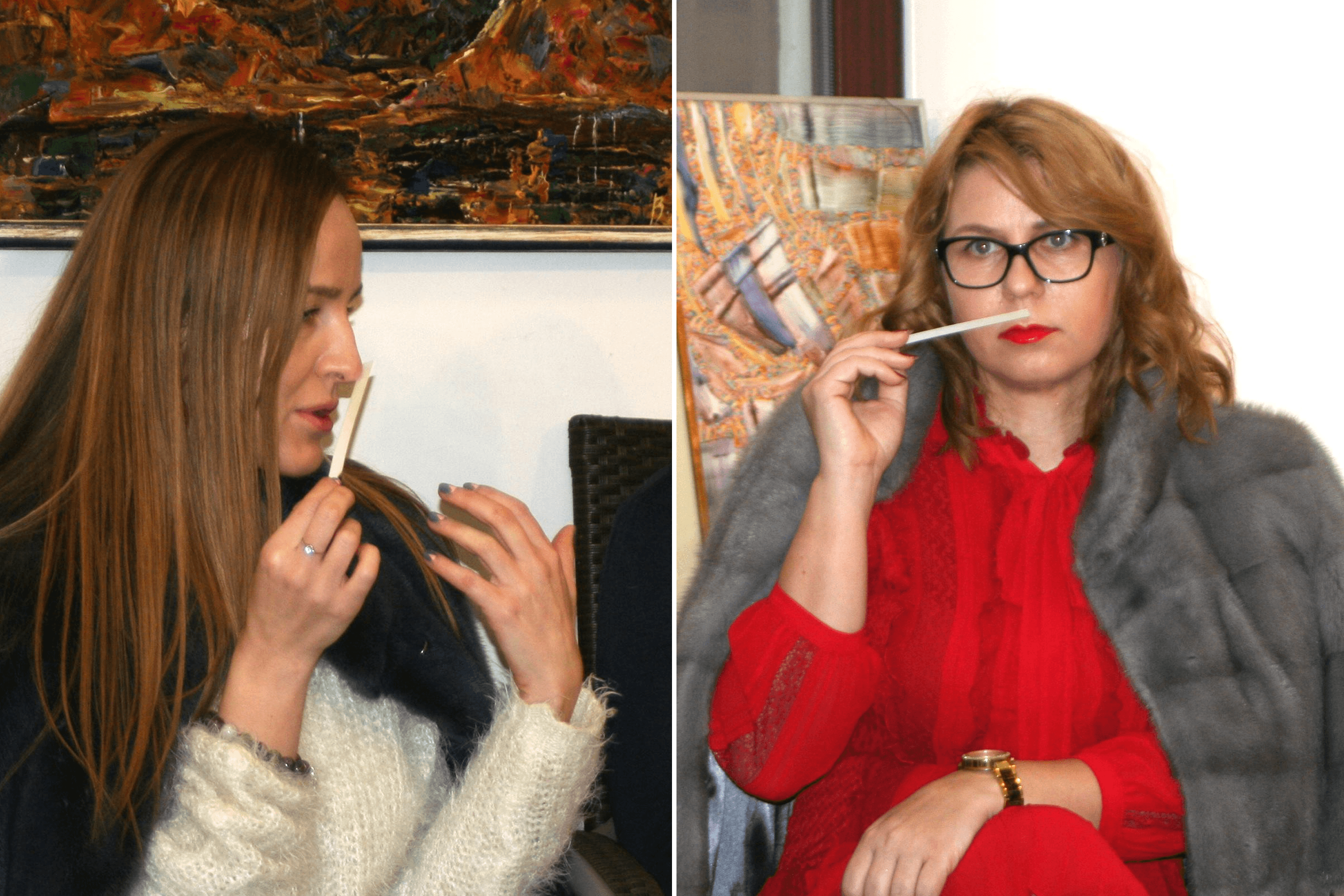
Photo: Elena Belova / Facebook / YB 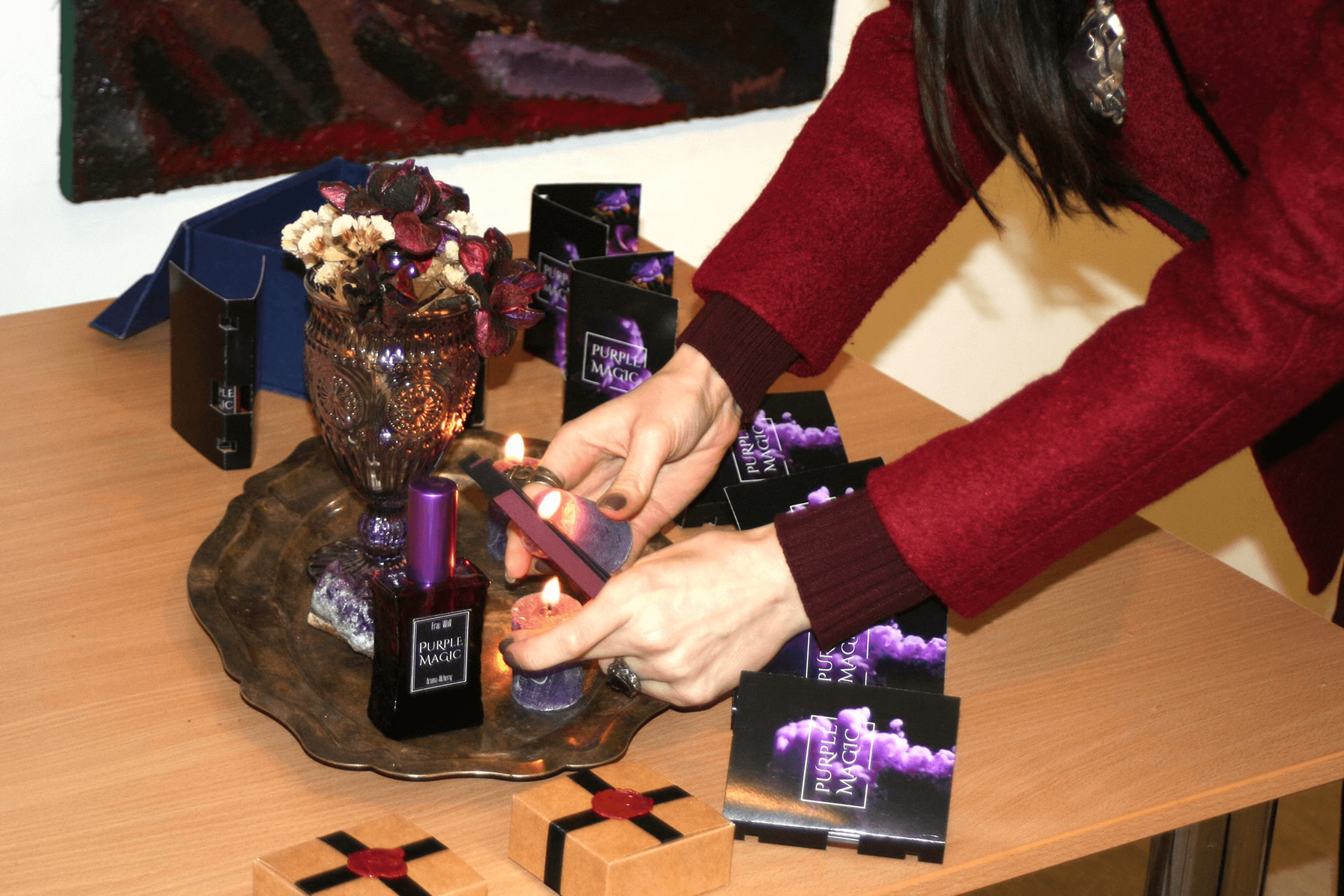
Photo: Elena Belova / Facebook / YB 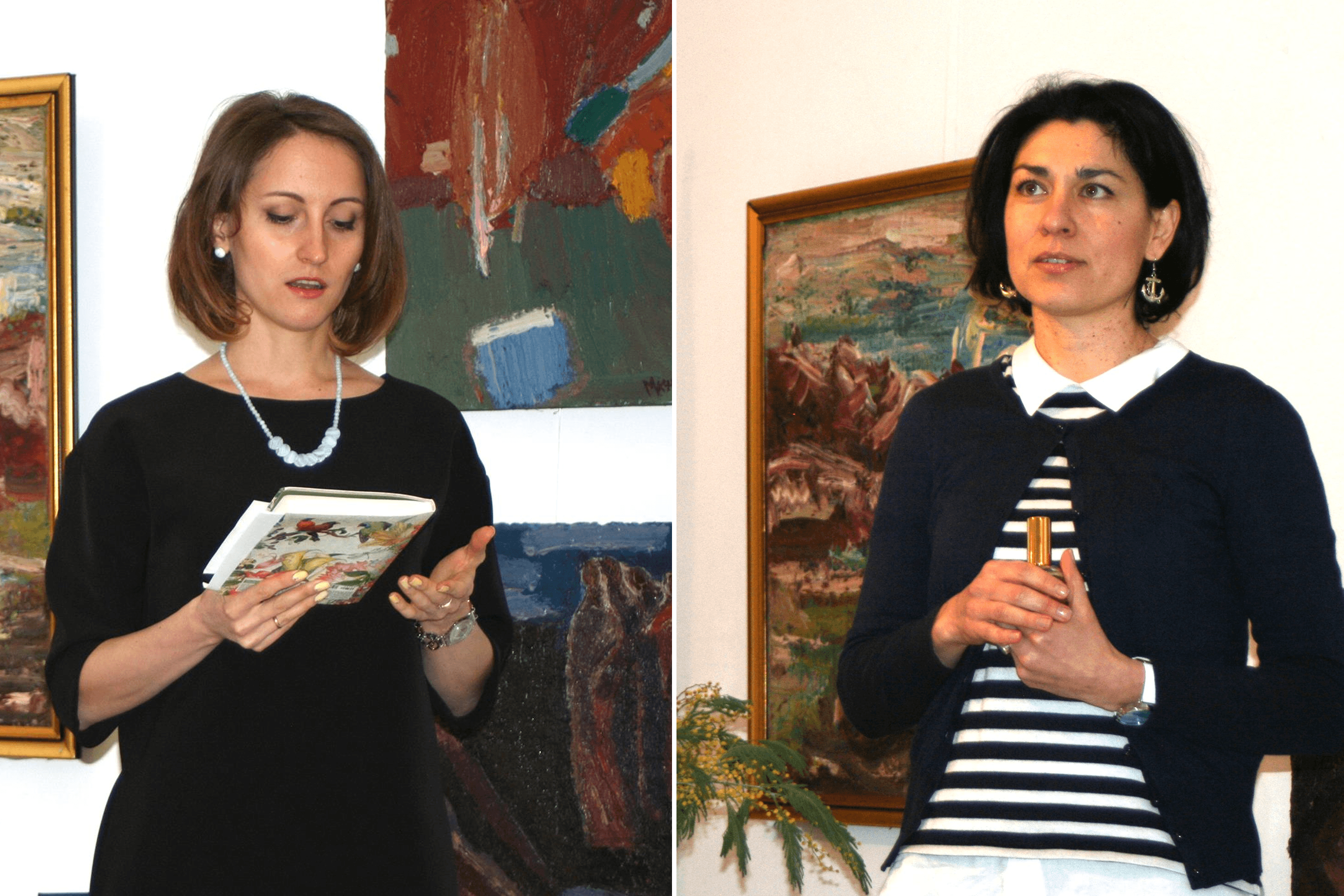
Photo: Elena Belova / Facebook / YB 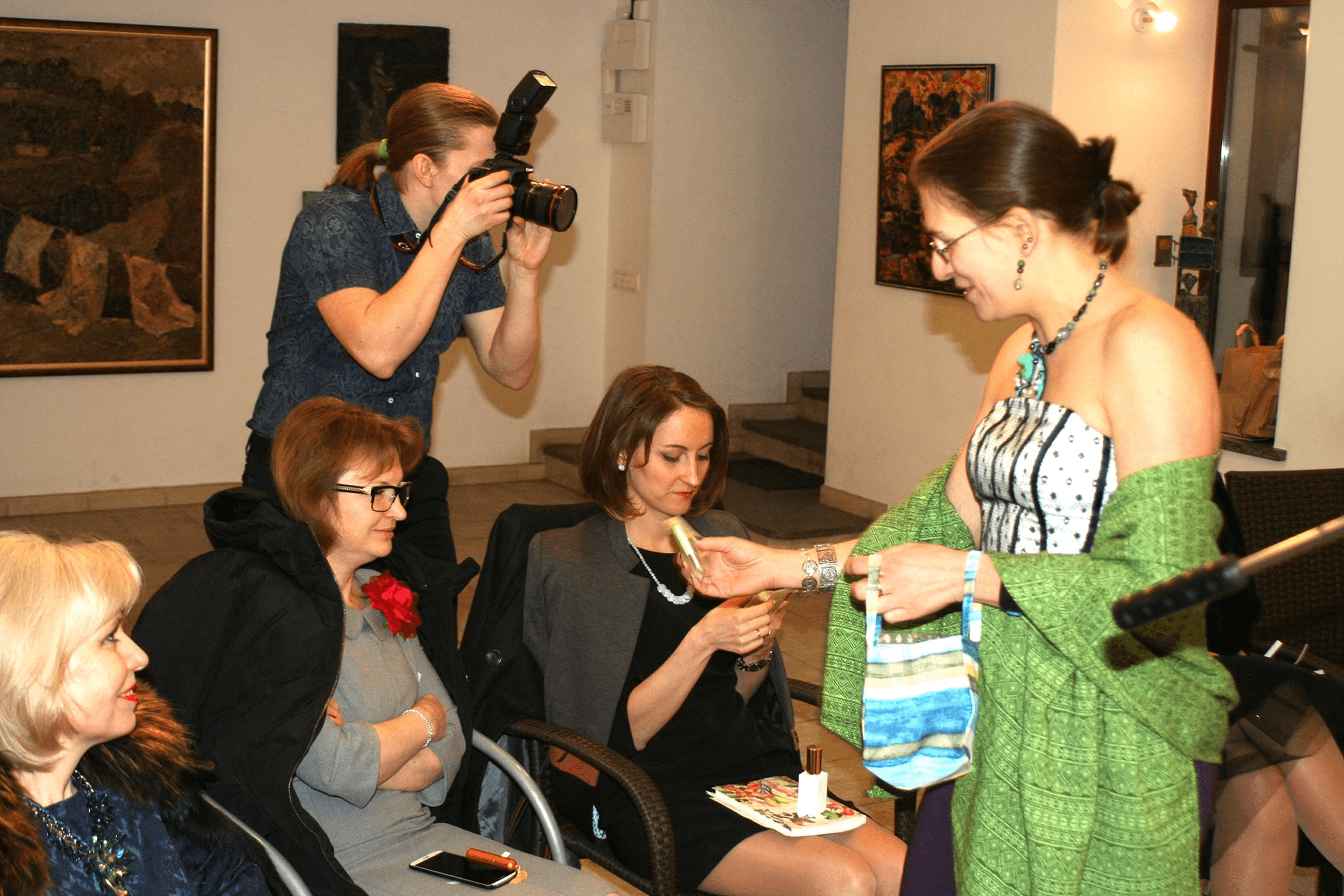
Photo: Elena Belova / Facebook / YB
In 2018, the couple divorced. Their marriage had exhausted itself, but they managed to maintain working and human relations. Anatoliy remained living in the country house and continued to develop the family business. Elena rented an apartment in the center of Kyiv and moved there with her younger daughter. Their elder daughter got married and moved in with her husband. Elena notes that her relationship with her ex-husband remains warm: “Anatoliy and I are best friends; he is even friends with my current husband”.
3
Just days before the full-scale invasion, Elena received a modest deposit for a new two-month course at her perfumery school, set to begin on March 5, 2022. However, as the all-out war broke out, she waived all fees, opening the course for free to support her compatriots through the trauma.
On the morning of February 24, Elena called her ex-husband, admitting she was terrified of being alone. Anatoliy drove to Kyiv to be with her—a move that likely saved his life. Within days, the Zhytomyr motorway leading back to their home in Motyzhyn was blocked. The family had planned to return for cash stored in the house, but Elena’s daughters persuaded them to stay put. It was a life-saving hesitation: at that very moment, Russian troops were entering Motyzhyn, where they would go on to execute neighbors and torture dozens of people they knew. In March, the occupiers murdered the family of the village head, with whom the Belovs had been close.
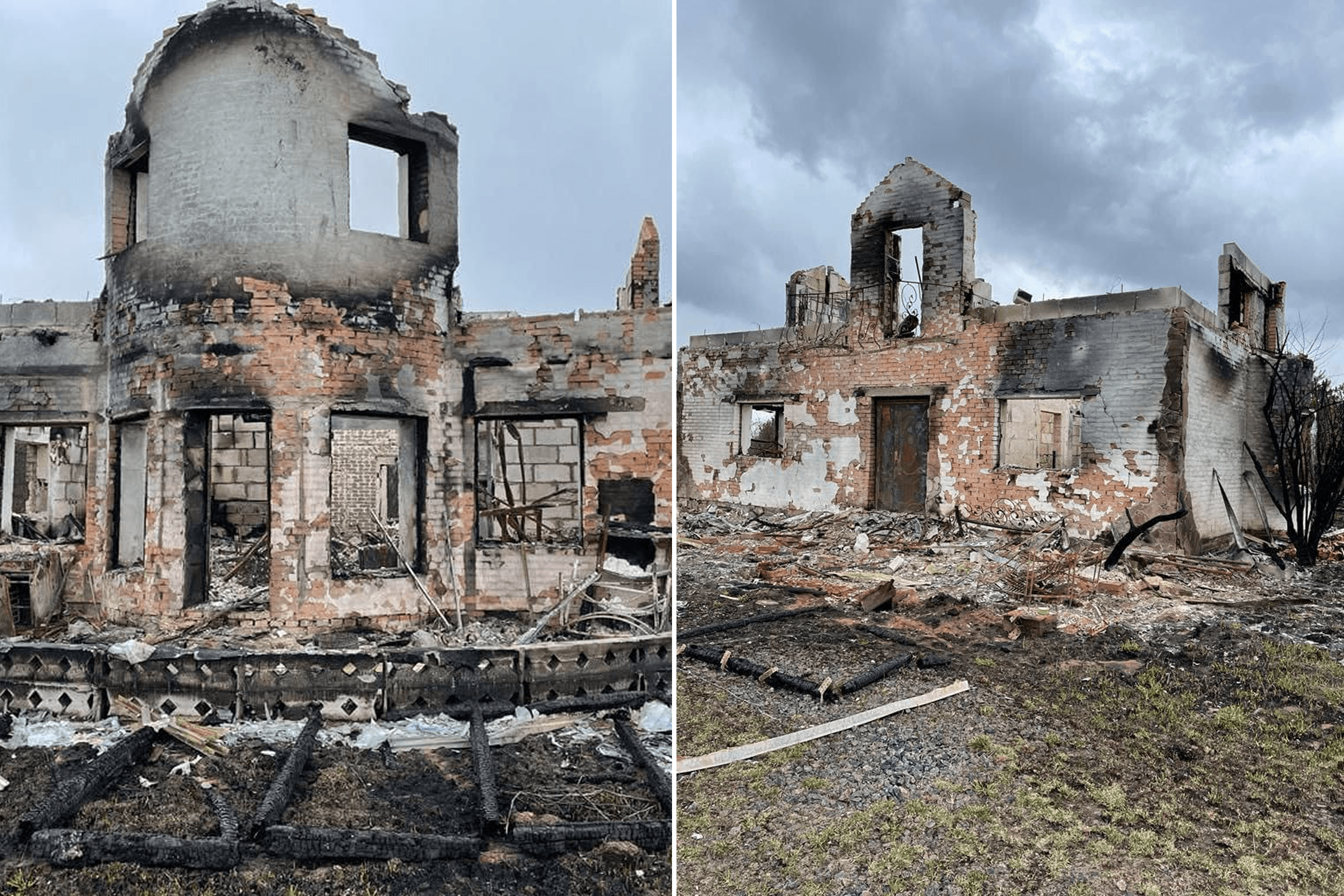
“Dolyna Dzherel” after Russian troops entered Motyzhyn. 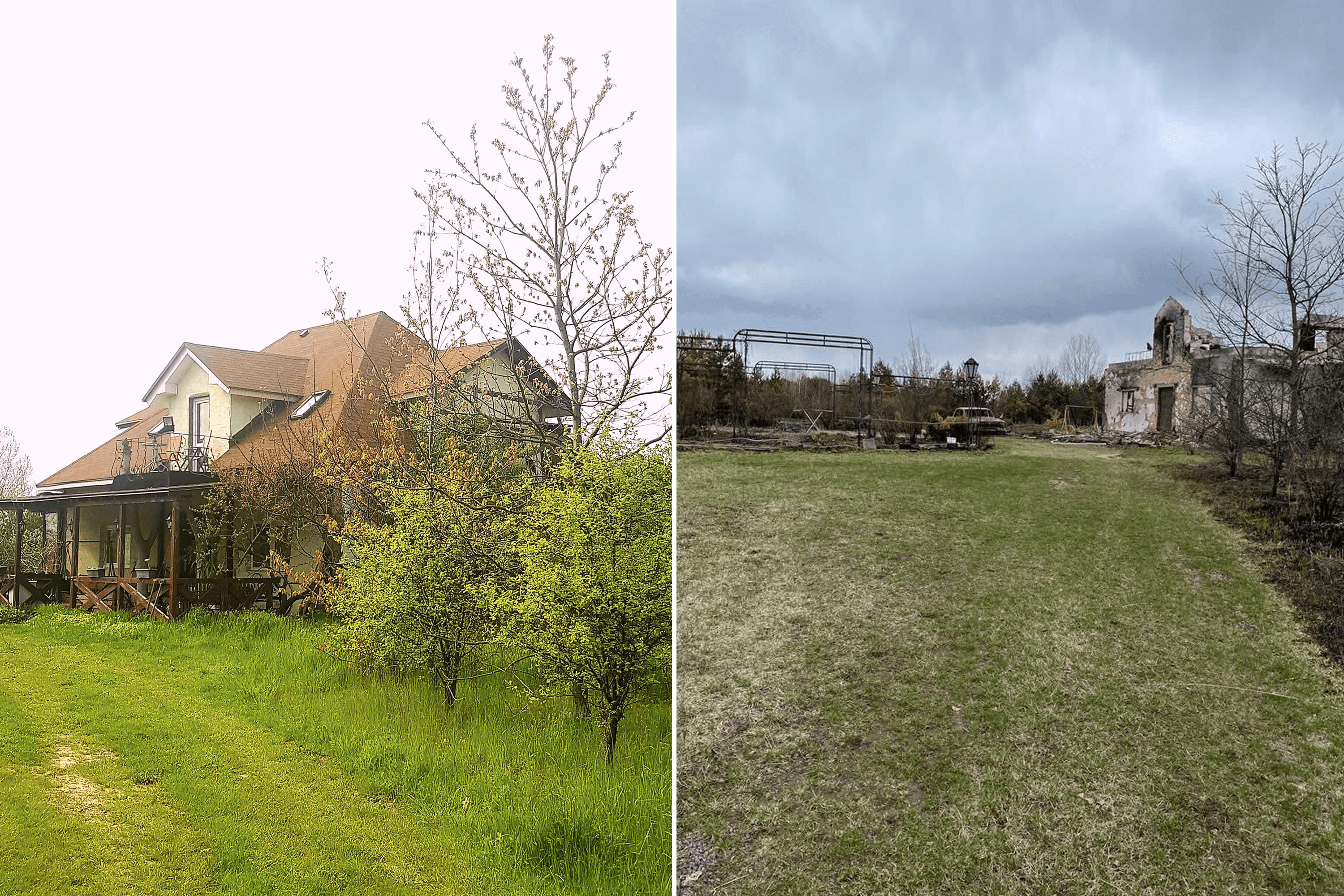
Photos of “Dolyna Dzherel” before and after the Russian invasion.
“On April 1st, I woke up and asked Anatoliy to take me to the station. I knew I could no longer live under the constant wail of sirens,” Elena recalls. With just $1,000 in her pocket, she headed for Poland. Acquaintances from the beauty industry in Switzerland, Denmark, and Germany reached out with offers of help, but she chose France—the spiritual home of perfumery and the place where she had first mastered her craft.
As Elena fled toward Europe, Russian troops retreating from the Kyiv region torched the Belov home in Motyzhyn. Everything was incinerated. “There were a hundred liters of alcohol and essential oils in the yard. The fire took everything—cash, documents, furniture, even our photographs,” Elena says. A month after de-occupation, her elder daughter returned to sift through the ashes. All she found was a half-melted metal weather vane in the shape of a white lion—the family’s symbol.
Elena has made peace with the loss: “You have to move on. Not because it doesn’t hurt, but because life doesn’t stop. You either grow, or you remain trapped in the past.”
In France, Elena stayed with friends and began learning the language. By the summer of 2022, in Nice, she met Bernard Hokmayan. Their relationship moved swiftly, and within months, she moved to his home in Avignon. Bernard worked in the mayor’s office as a specialist in international cultural relations, but his pedigree was in fashion. After studying in Aix-en-Provence, he had built a career collaborating with giants like Versace, Gianfranco Ferré, Guess, and Roberto Cavalli, developing and promoting brands for the French market. Eventually, his passion had shifted to perfumery.
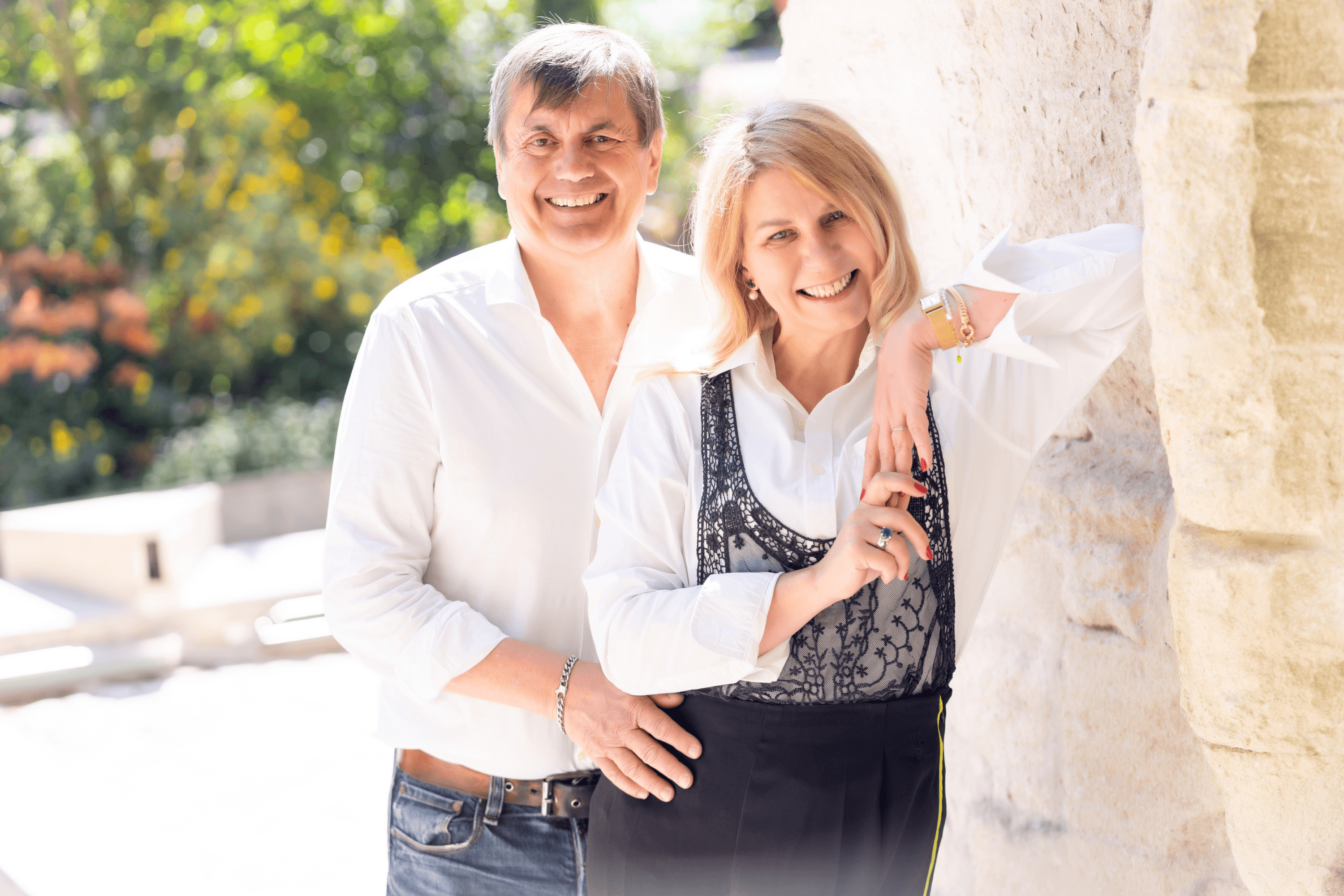
Their joint brand, Maison Bernard Hokmayan, was born in October 2023—a business built on a love story. Elena describes her first three compositions as a “manifesto of feelings”: from the spark of first attraction (“I Want Your Love”), through the mirror of sensuality (“Florentine Mirror”), to the steadfast confidence of the heart’s choice (“Heart of Honor”).
Elena is convinced of a shift in the luxury market: in a world where designer bags have lost their novelty and watches are no longer the ultimate status symbol, fragrance has become the new marker of identity. According to Fortune Business Insights, the niche fragrance market is projected to reach $5.5 billion by 2028, growing at 10% annually. Belova notes that modern consumers are weary of the mass market; they crave individuality and are willing to pay for a story, a concept, and true craftsmanship.
The couple invested equally in the brand, putting up a total of €30,000. It took Elena 15 months to save her share. Her younger daughter, Anastasia, became the face of the brand. “We invested our own funds, time, and intellectual capital. We still don’t hire anyone but an accountant,” Elena explains.
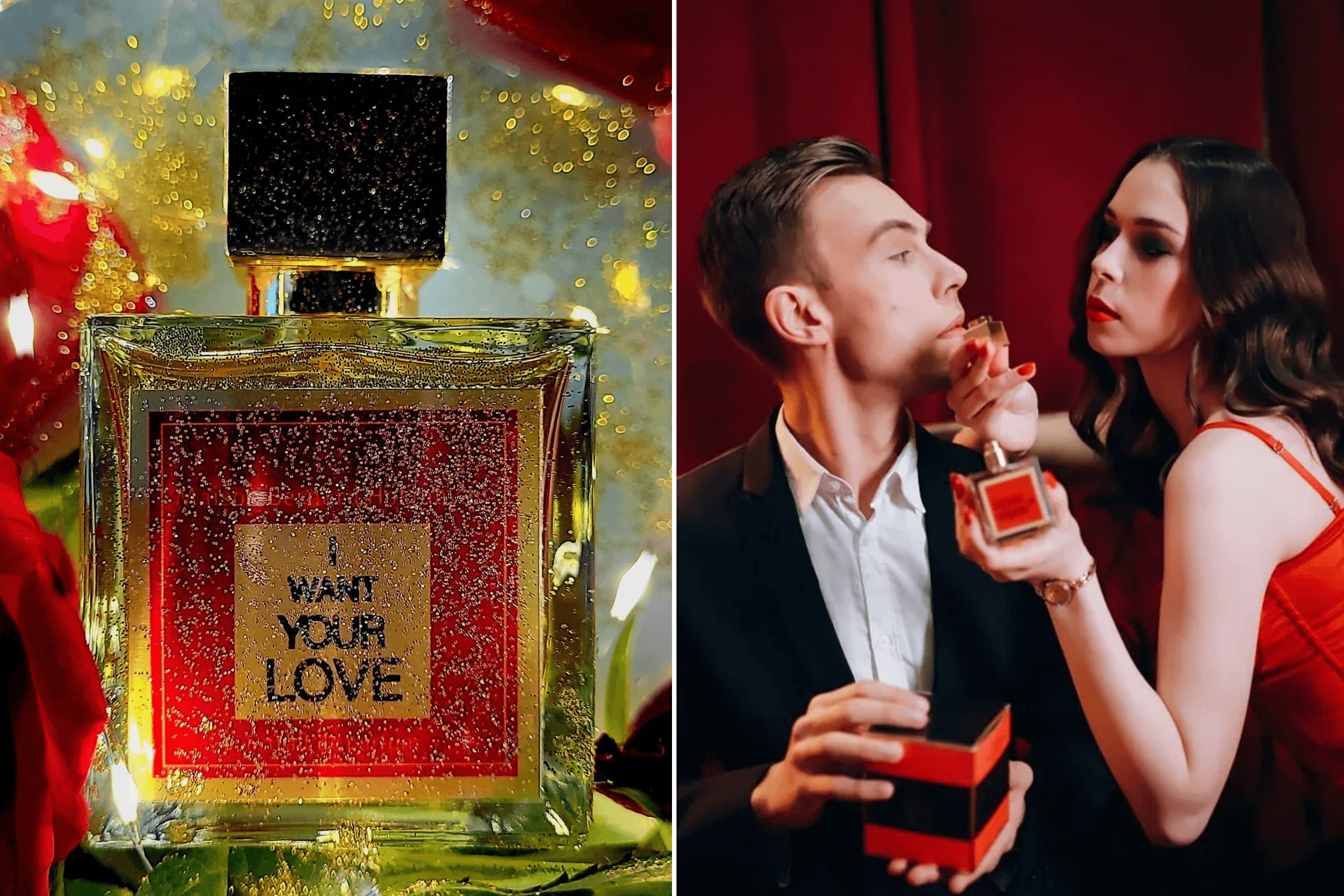
Perfumes by the brand The Maison Bernard Hokmayan. Photo: The Maison Bernard Hokmayan / YB 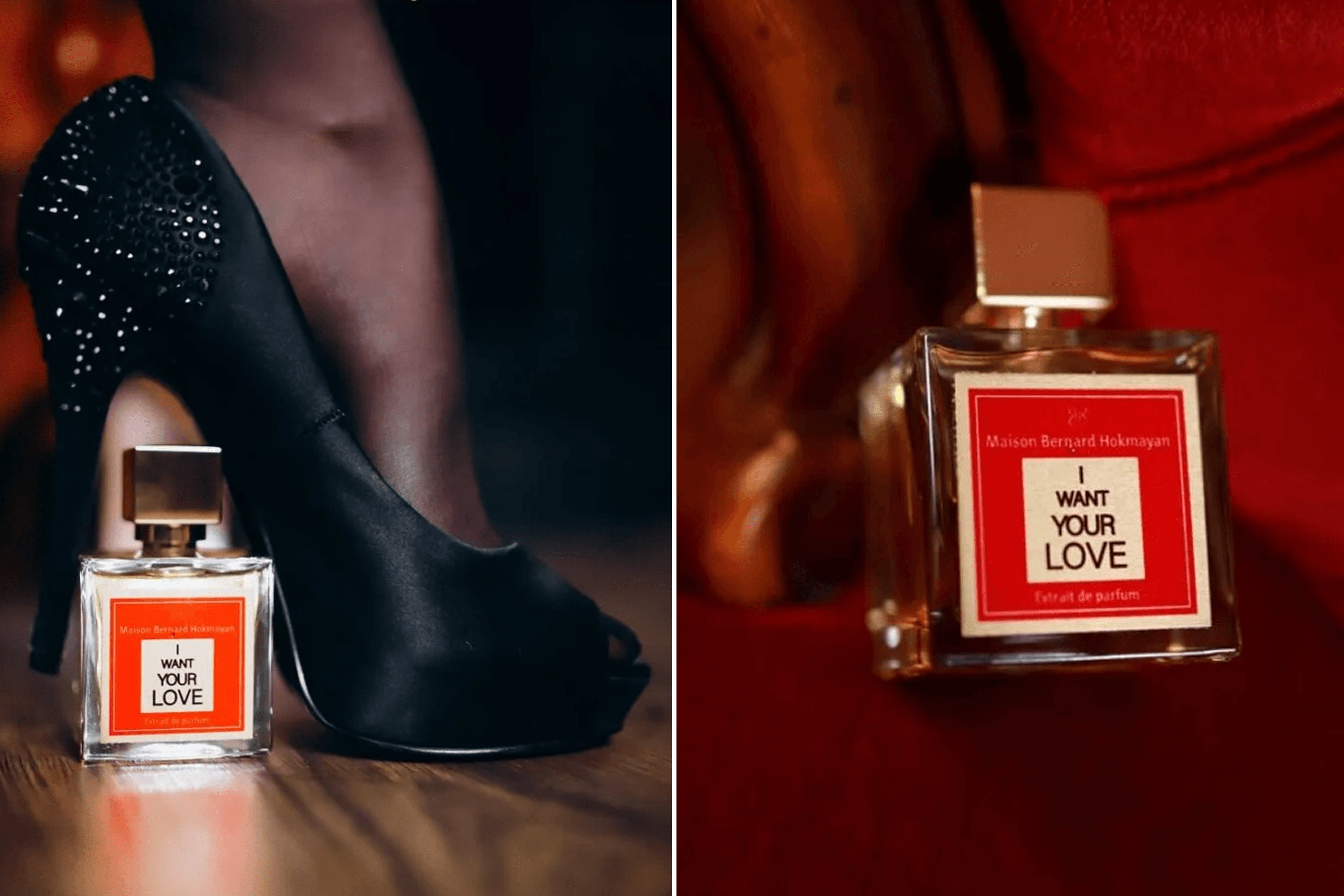
Photo: The Maison Bernard Hokmayan / YB 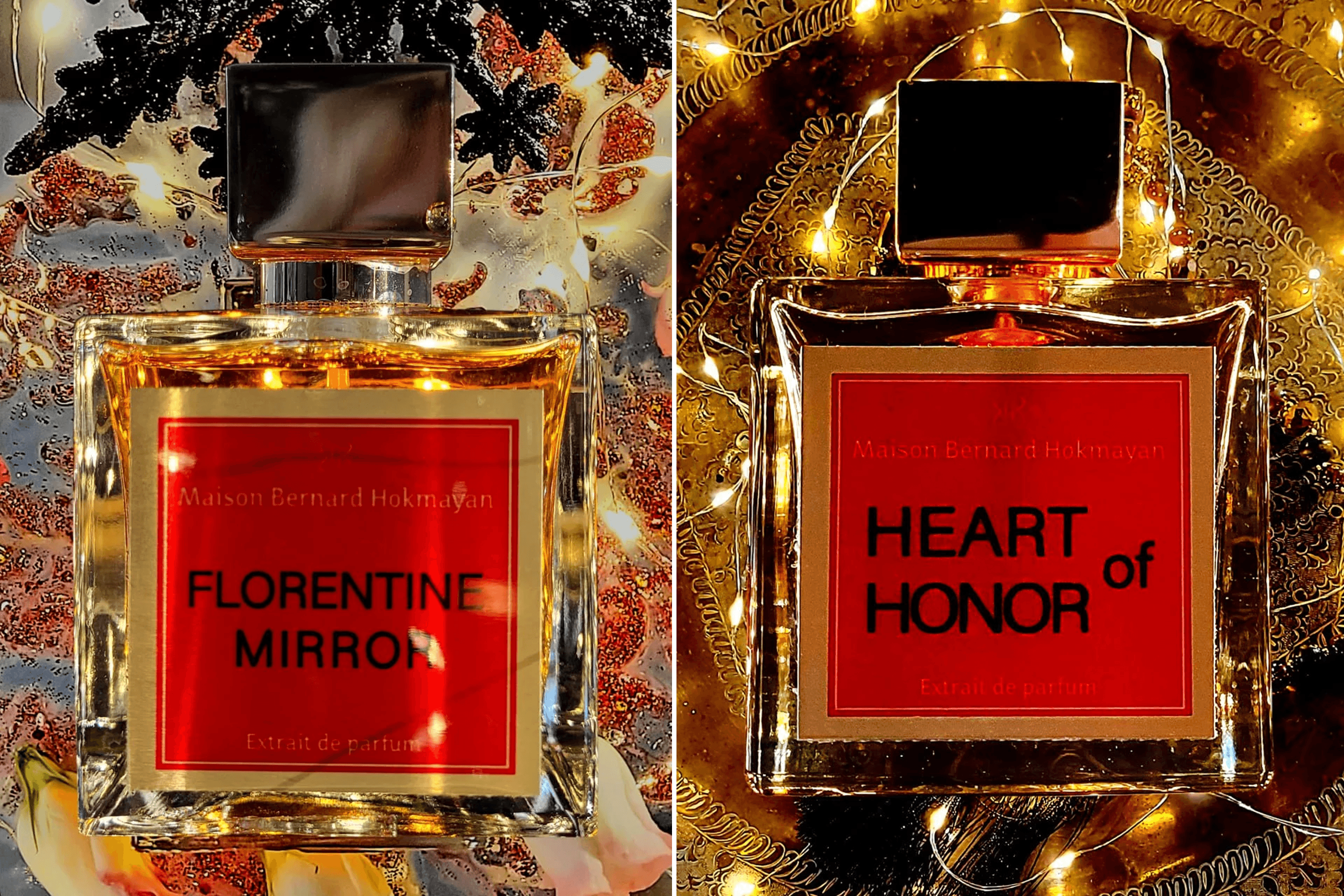
Photo: The Maison Bernard Hokmayan / YB
They opted for a contract manufacturing model to avoid heavy investment in their own facilities.
In the lab, Elena creates the formulas herself. An automated system then precisely measures the ingredients to create the “juice"—the perfume’s concentrated base. The process is meticulous: adding alcohol, aging, freezing for stabilization, and filtering until crystal clear. Only then is the fragrance bottled, packed, and labeled. Each Maison Bernard Hokmayan batch consists of 2,000 bottles.
Leveraging Bernard’s fashion industry connections, the brand is already featured in boutiques across Paris, Monaco, Cannes, Courchevel, Saint-Tropez, and Nice. Expansion plans include Spain (Tenerife, Malaga), Italy, Kazakhstan, Uzbekistan, and China.
Elena acts as both perfumer and brand ambassador, presenting the collections in English to international clients. Bernard handles the complex negotiations with boutiques. The French market remains conservative; most stores prefer established names, and shelf space can cost up to 50% of the product’s price.
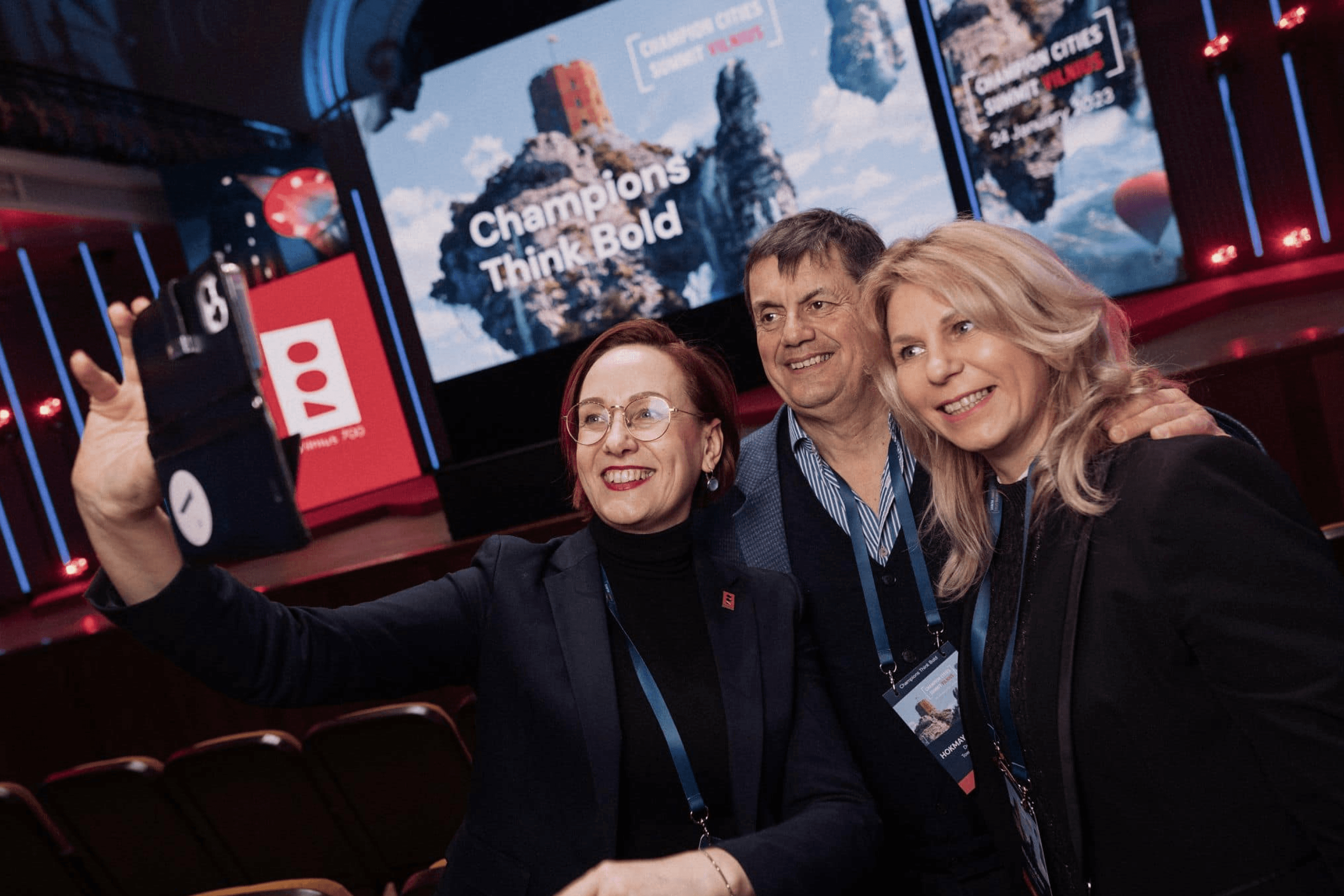
Elena Belova and Bernard Hokmayan at various events. Photo: Elena Belova / Facebook / YB 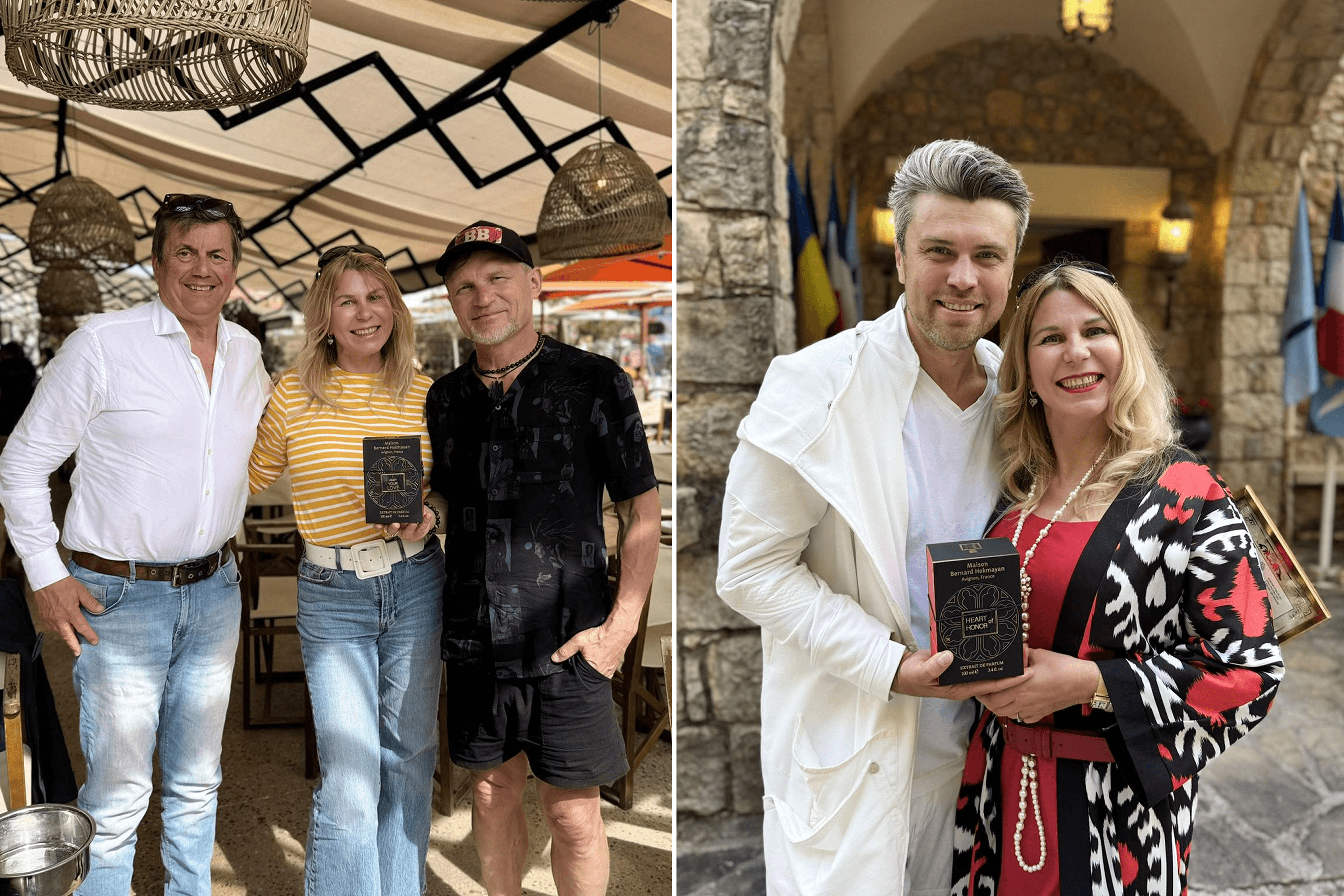
Photo: Elena Belova / Facebook / YB 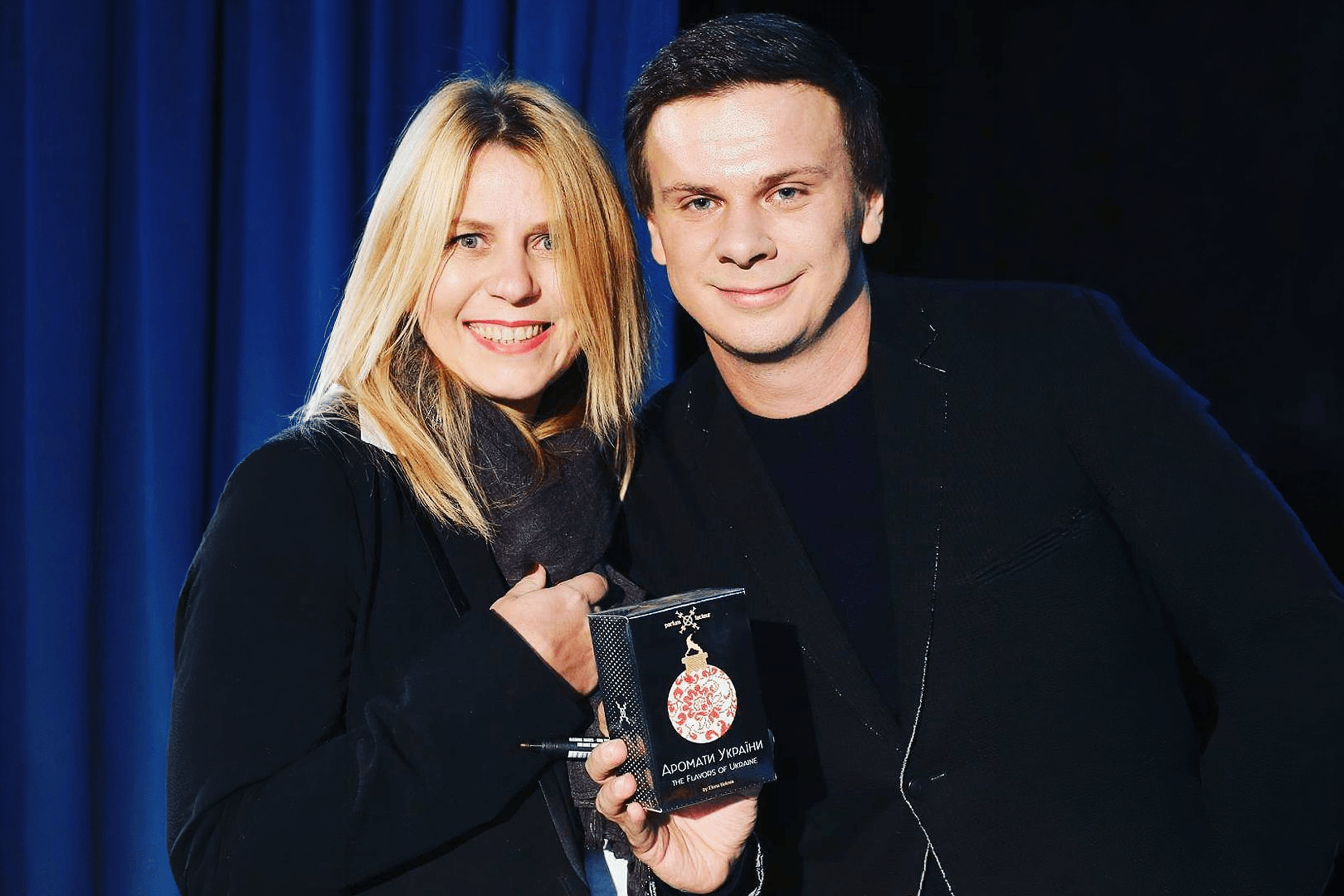
Photo: Elena Belova / Facebook / YB 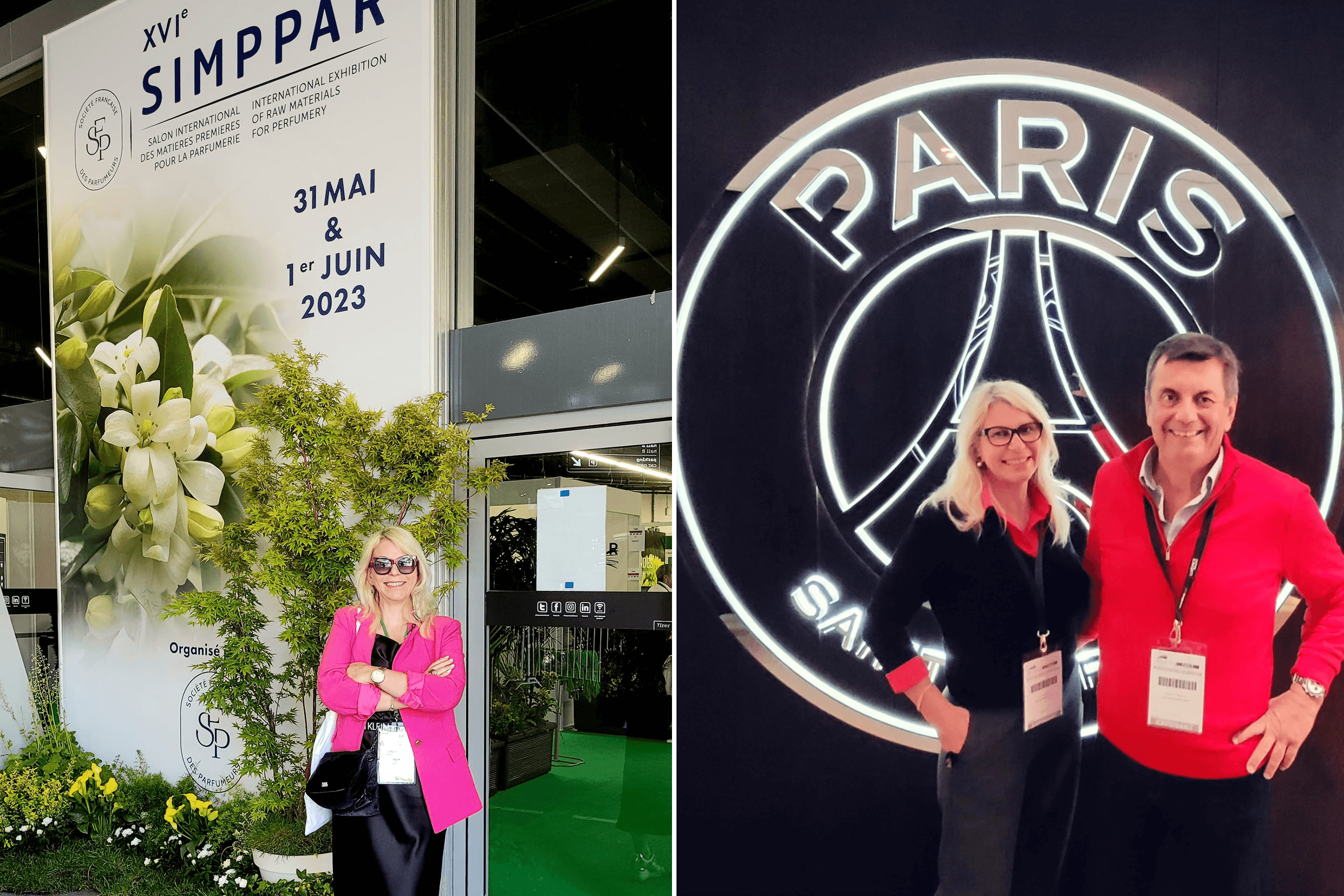
Photo: Elena Belova / Facebook / YB 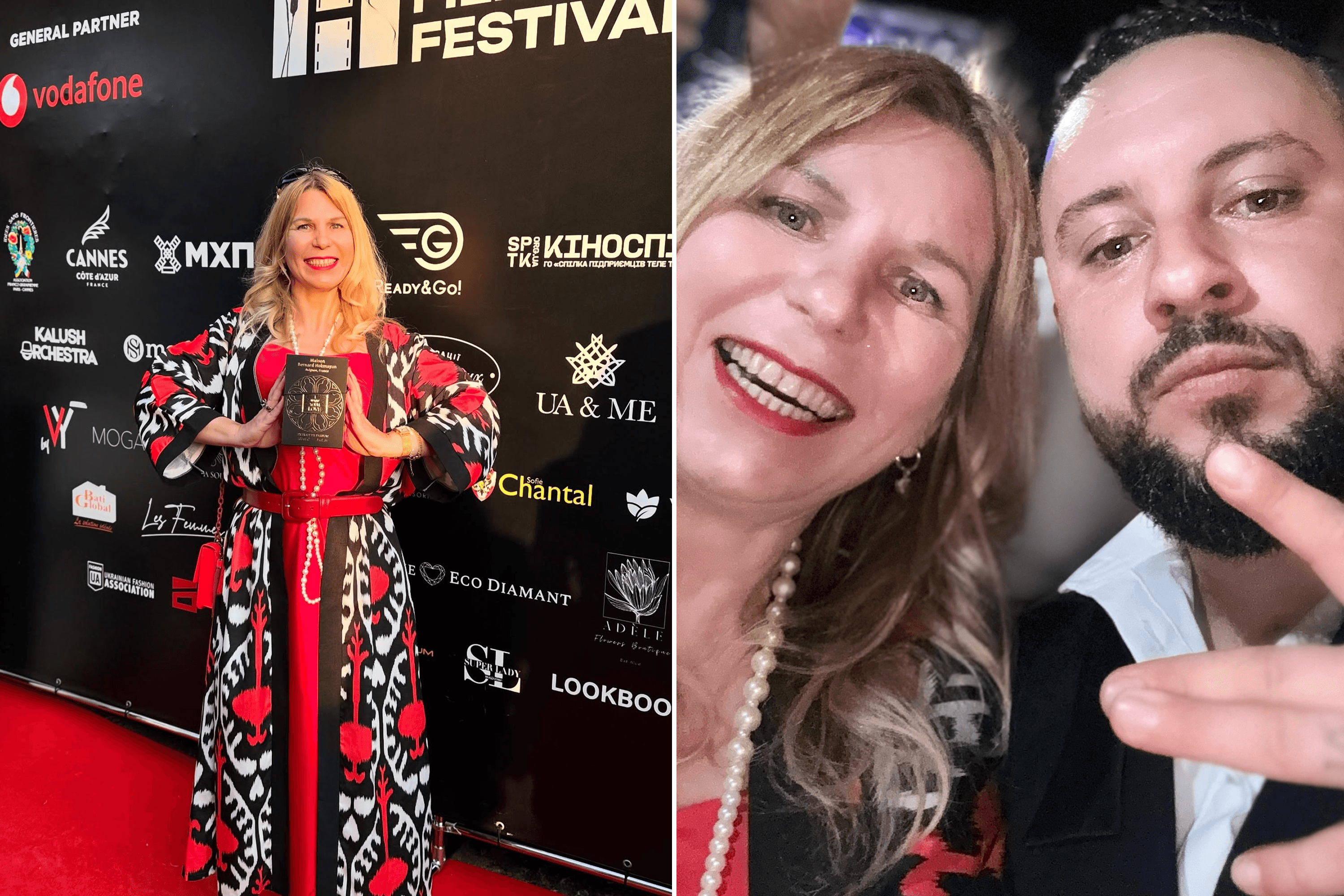
Photo: Elena Belova / Facebook / YB
Elena notes that the biggest challenge is the raw spontaneity of the choice: “A buyer either falls in love with a scent or they don’t. That’s what dictates sales. Even in exclusive boutiques, clients are cautious, often limiting themselves to two bottles as they search for their 'perfect' scent.”
The couple is currently weighing a distribution model, though it would mean receiving only about a fifth of the €160–180 retail price. Nevertheless, they want to scale the brand’s presence, believing that loyalty is built through visibility. Now, Elena and Bernard are seeking investors with checks starting at €10,000 to boost marketing, scale production, and cement their fragrances on the international stage.
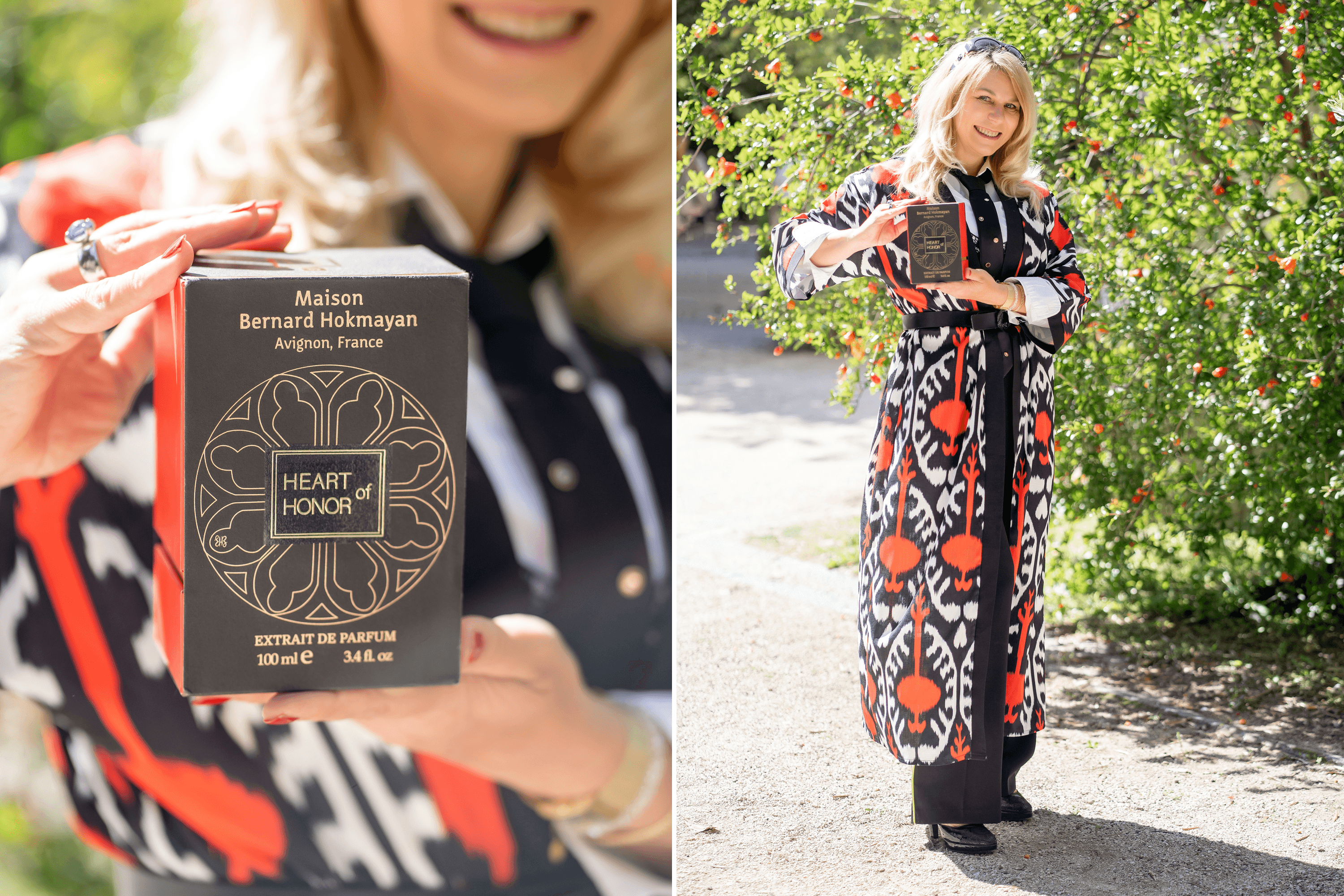
Photo: Anna Lykhatska / YB 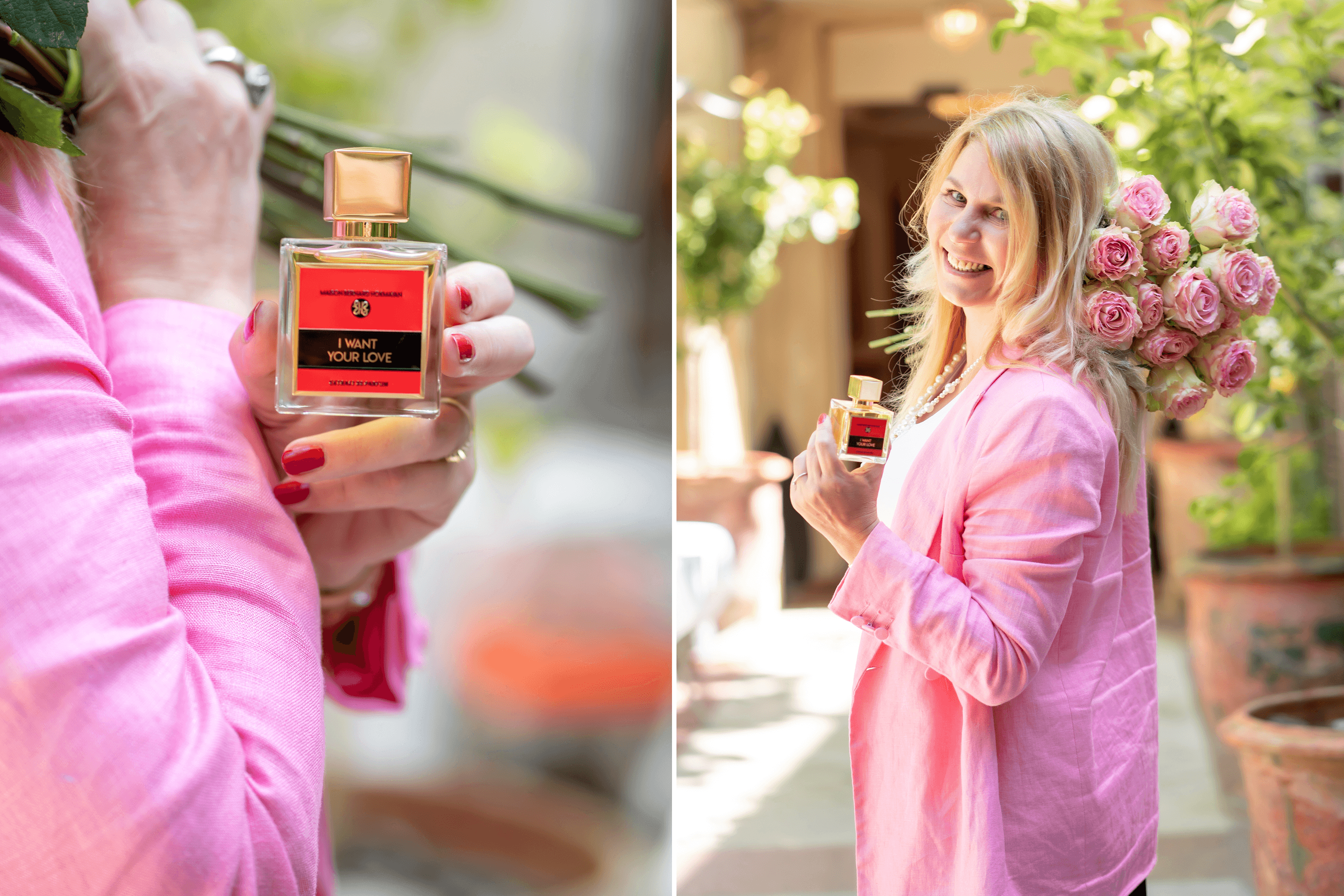
Photo: Anna Lykhatska / YB 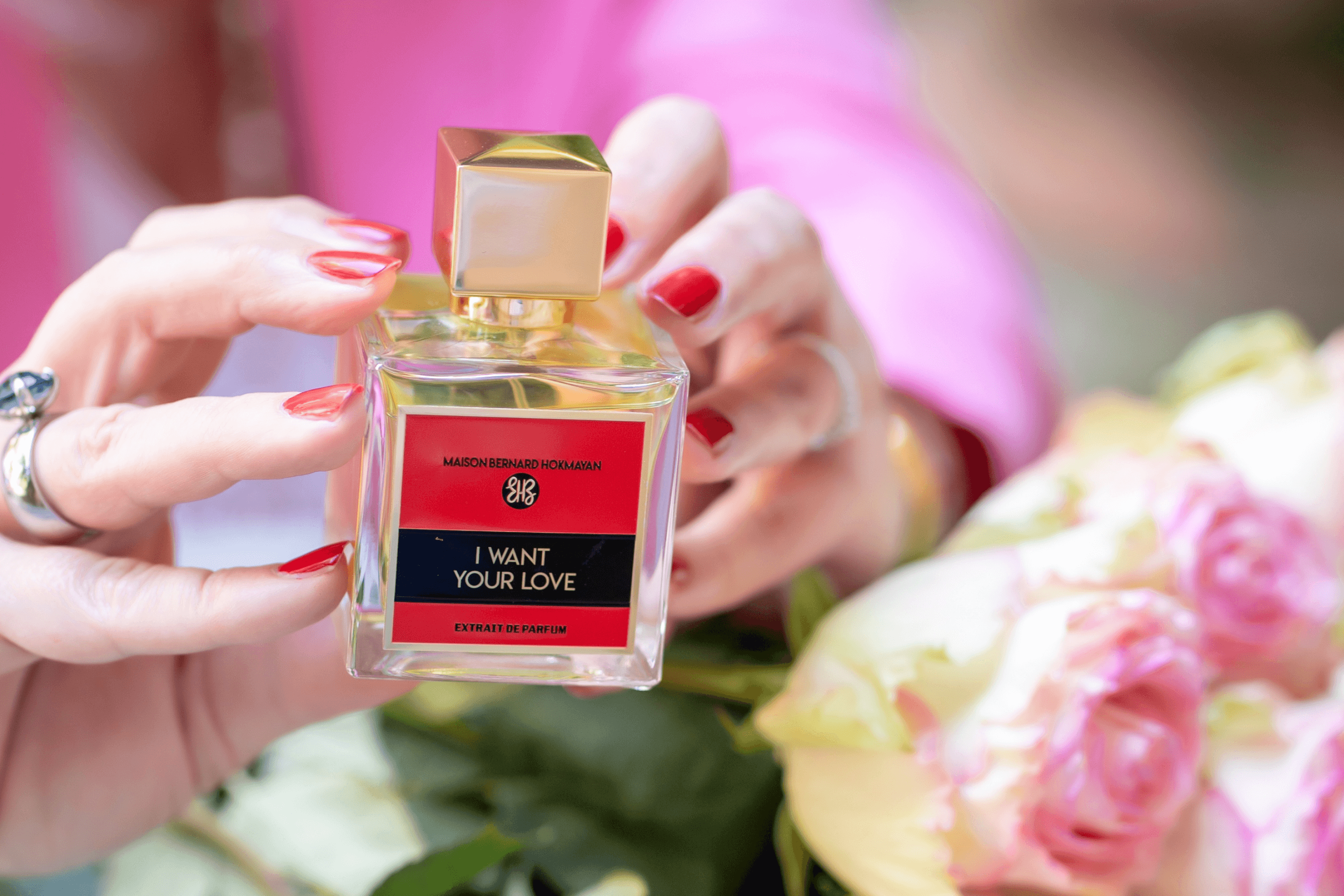
Photo: Anna Lykhatska / YB
4
Shortly before the fourth anniversary of the full-scale invasion, Elena Belova returned to Kyiv for the first time since 2022. It was Bernard’s first visit to Ukraine, and he was struck by the resilience he encountered: despite the war and their collective trauma, he found a people who remained open, sincere, and steadfast in their support for one another.
“I feel like a rootless tree, clinging to the walls just to survive and keep growing,” Elena admits.
Even with her new life in France and the safety she has found with Bernard, a sense of restlessness lingers. “My children are in Kyiv, and I know exactly what is happening there. It is a constant ache. I don’t know what the future holds for them or for the country, but my daughters refuse to consider emigration.”
Elena never made it back to the site of her home in Motyzhyn, torched by Russian troops in March 2022. Her daughters convinced her that seeing the ruins was unnecessary. “I realized it would be unbearable to look at the foundation of the house we built with our own hands—the place where we were happy, where we were whole, and where my business once flourished,” she says.
Her struggle continues on another front: the state denied compensation for her destroyed home. Due to bureaucratic delays, the building within the “Dolyna Dzherel” eco-settlement had not been entered into the official property register. Refusing to accept the loss, Elena has taken the matter to court.
Today, she lives in Avignon, mastering French and traveling the world with Bernard to find international distributors and new opportunities for Maison Bernard Hokmayan.
Yet, even in her hard-won safety, Elena remains tethered to her home. “It is as if I jumped out of boiling water,” she says, “but my heart stays with those who are still in it.”