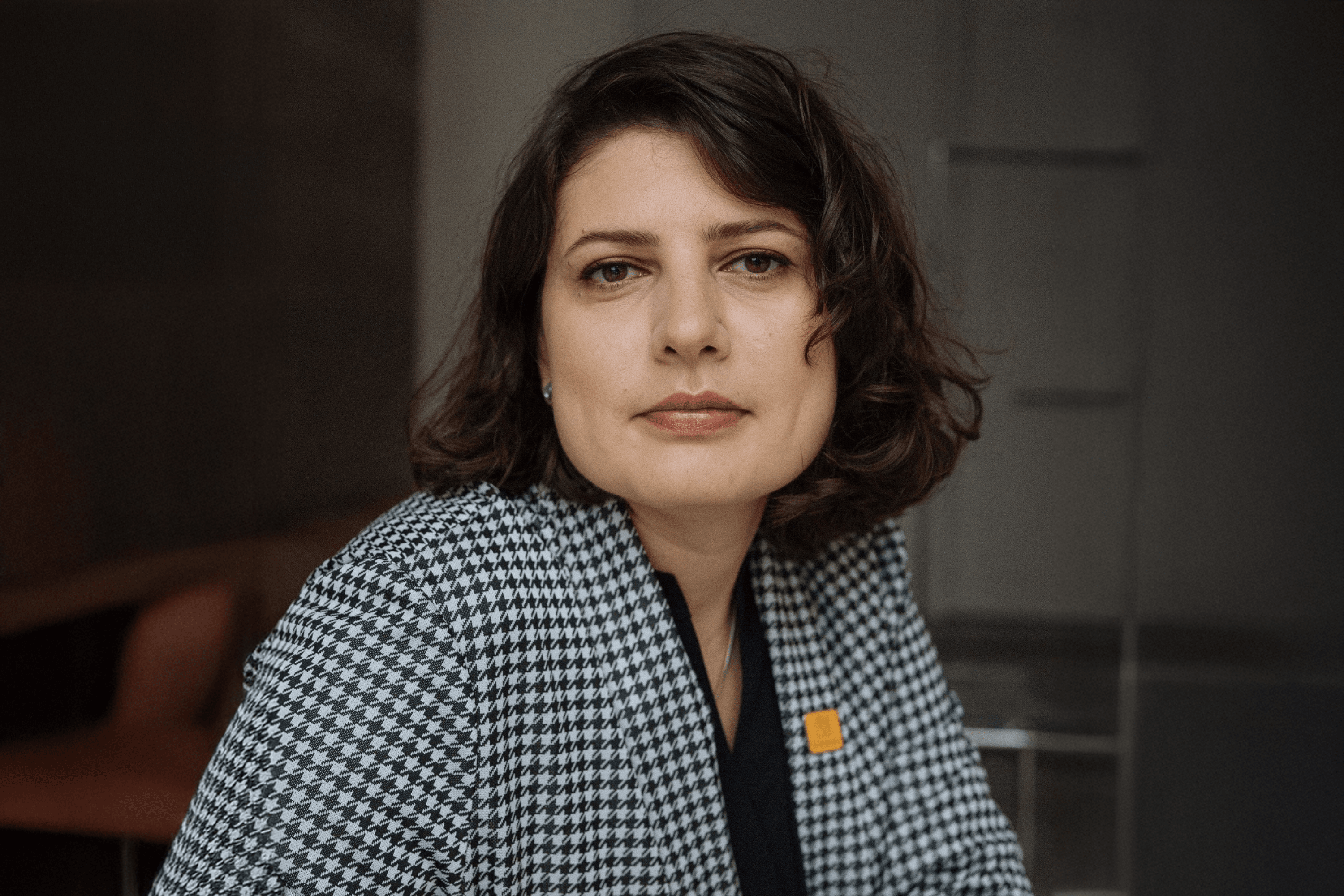
With a background in international business and UN programs, Varvara Tertychna co-founded the Charitable Foundation Starenki in 2017. The organization supports isolated seniors living on low pensions while working to reshape societal attitudes toward aging in Ukraine. Today, Varvara leads the foundation and mentors emerging non-profits. We spoke with her about building international partnerships, combating ageism during wartime, and the Hollywood stars who support Ukrainian seniors. For step-by-step instructions on how young charitable foundations can establish international partnerships, listen to the full podcast episode (in Ukrainian), and below are the key takeaways from our conversation.
INCLUSION: Key Facts
- In 8 years, the Charitable Foundation Starenki has provided ₴86 million in aid.
- Since 2022, the foundation has delivered over 70,000 sets of food, hygiene products, household chemicals, and essential items for blackouts to the elderly.
- In 2023, Starenki joined HelpAge International—a global organization advocating for the rights of elderly people worldwide.
- In 2024, the foundation became a partner of the French federation Association Petits Frères des Pauvres, which has been helping seniors for over 70 years.
- In 2025, 600 volunteers supported the elderly alongside Starenki, and the foundation sent aid to 137 settlements across 10 regions of Ukraine.
I hold a degree in international economics and international business management. Initially, I worked in finance for FMCG companies but felt a calling to do something more meaningful. This led me to the UN, as its agencies implement vital projects that, despite any criticism, remain highly beneficial. However, these organizations are often very formal and bureaucratic. Seeking a place where I could better apply my professional skills, I turned to the non-profit sector. The Starenki Foundation needed exactly what I could offer: experience with legal documentation and a meticulous approach to financial procedures.
We have all seen elderly men and women in grocery stores counting coins to pay for basic items, or at pharmacies realizing they don’t have enough for medicine. It was a heartbreaking sight, and I wanted to create lasting change, not just pay for a single purchase. Starenki began as a volunteer project of like-minded people. In 2015, during a period of significant economic crisis, I saw a former classmate delivering food packages to seniors in our neighborhood of Rusanivka. I reached out to find out who was behind it and met the project’s founder, Iryna Ruban (Baranenko). Two years later, in 2017, Iryna, myself, and three other women officially founded the charitable foundation. We built a systematic mechanism that allows people to donate and participate as volunteers in the delivery of aid.
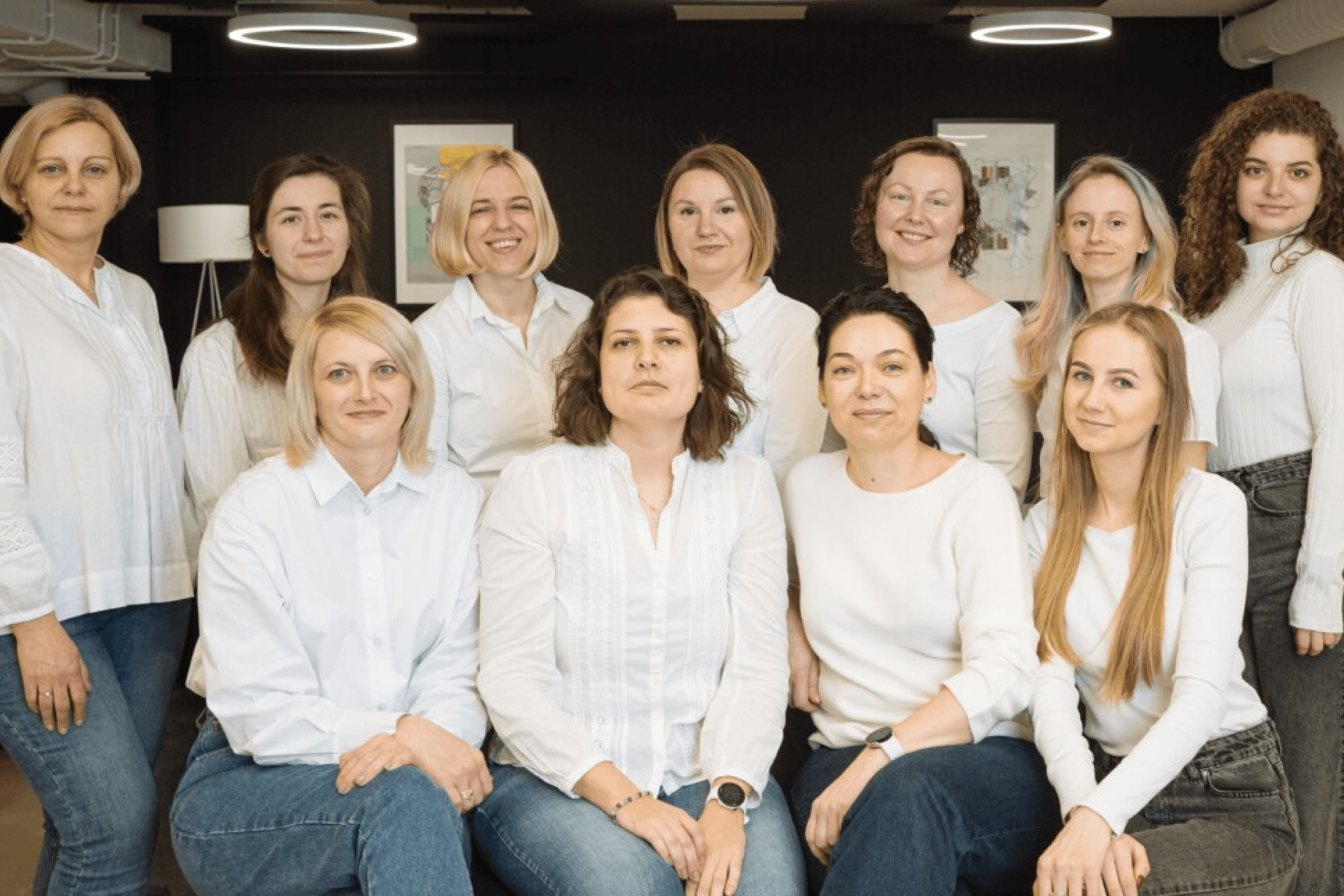
The Charitable Foundation Starenkiteam. Photo: Starenki / YB 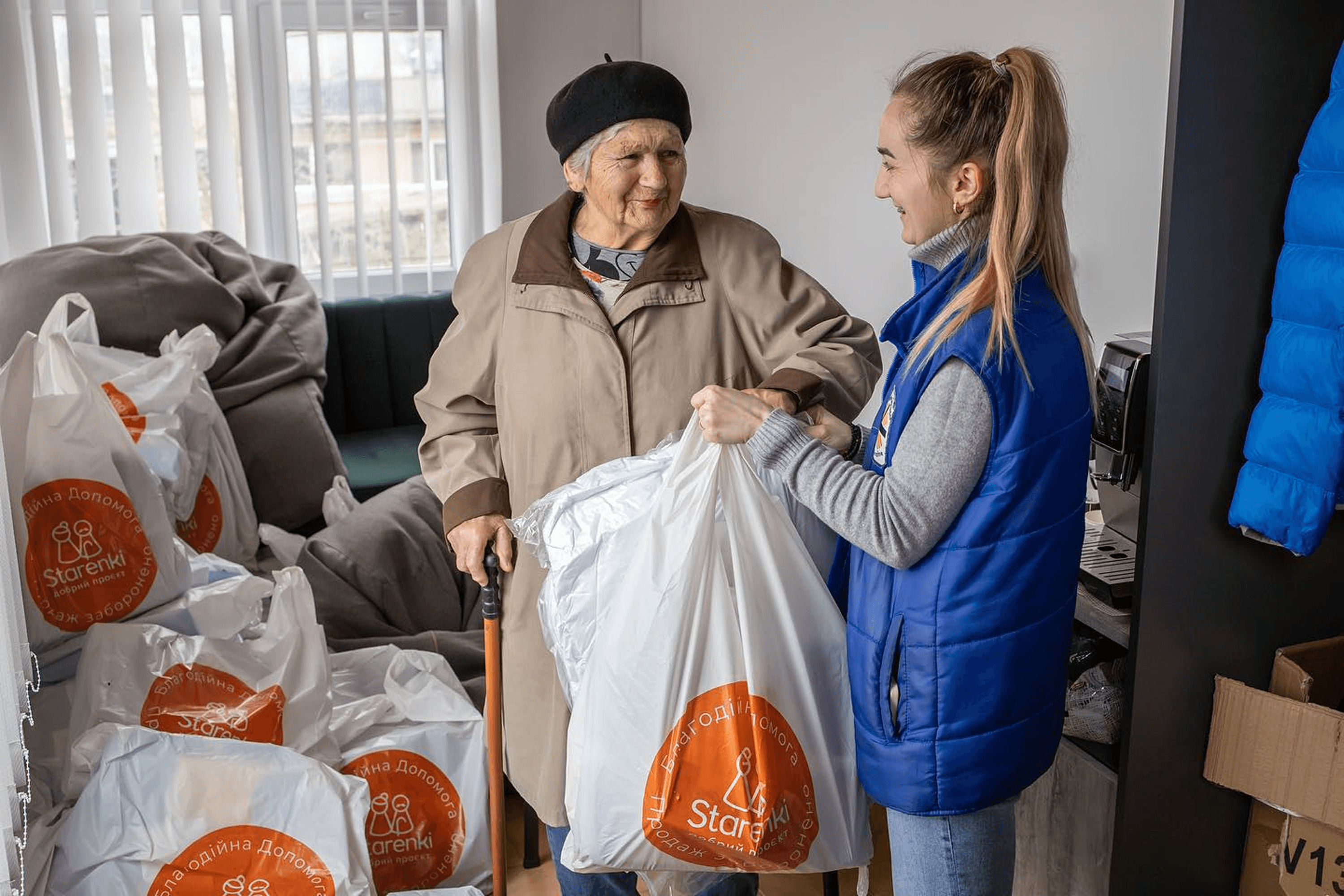
Photo: Starenki / YB 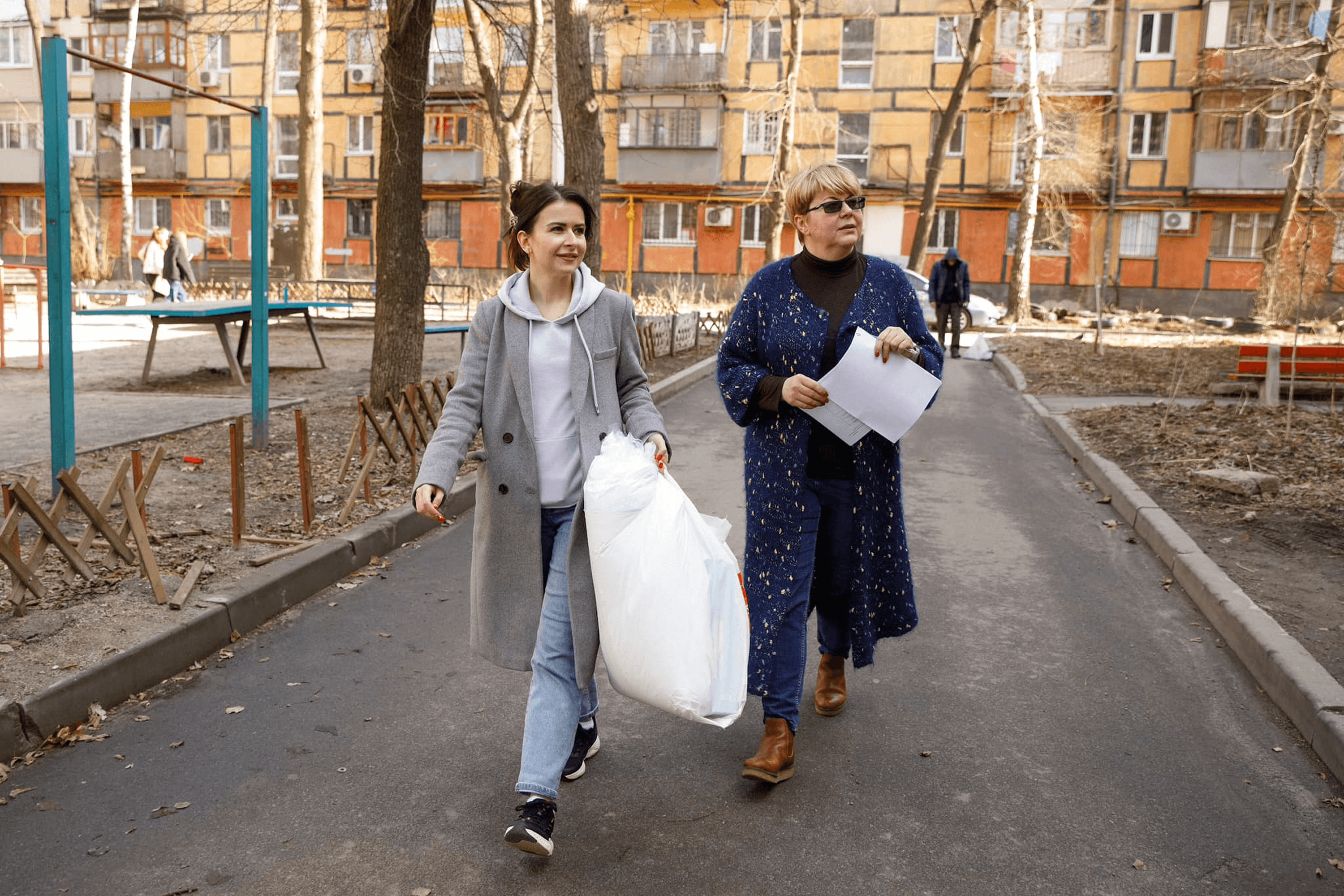
Photo: Starenki / YB 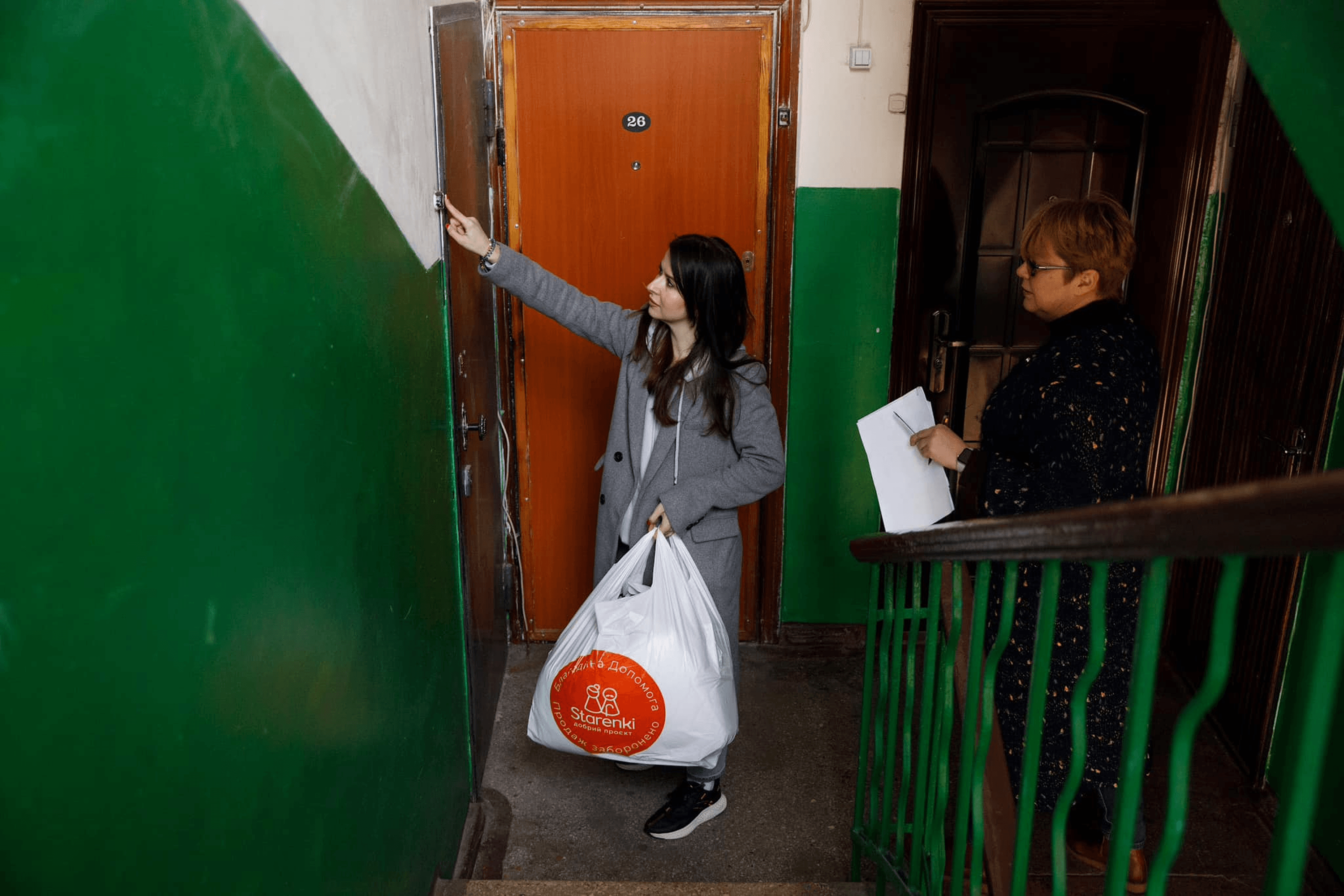
Photo: Starenki / YB 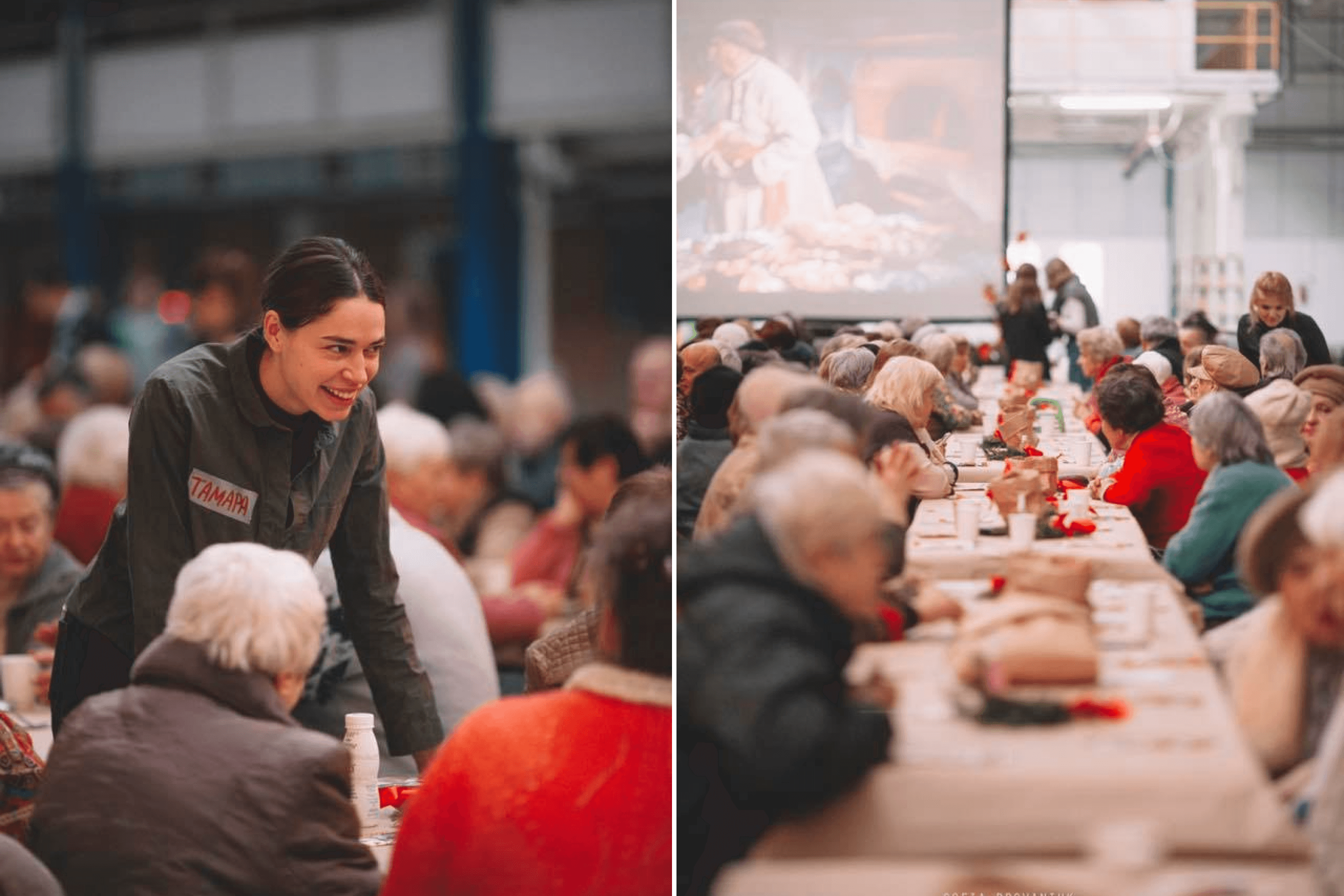
Photo: Starenki / YB 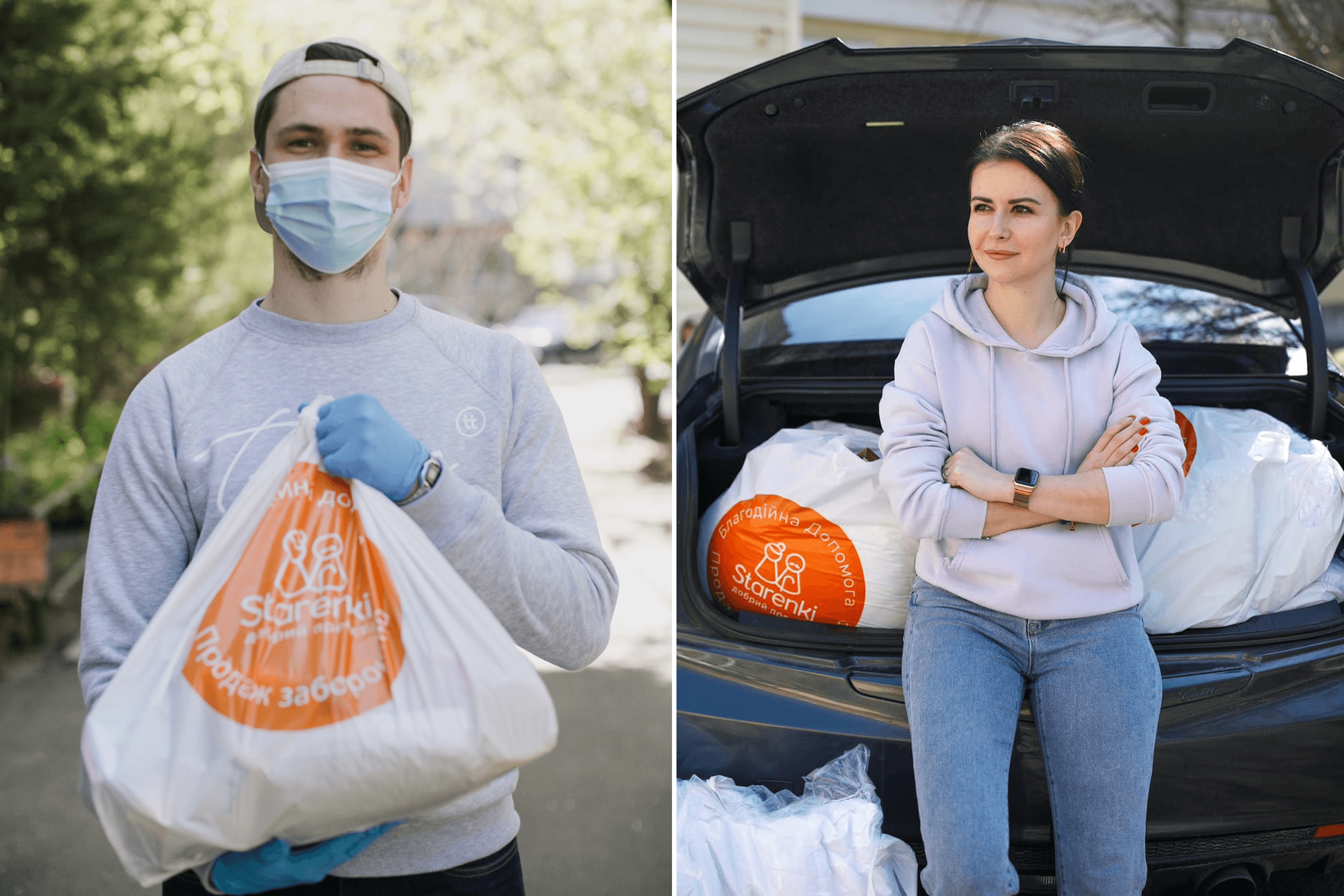
Photo: Starenki / YB
For a long time, almost our entire team worked on a volunteer basis. Our first professional hire was a certified accountant from the non-profit sector, who is still with us today. The team grew during the pandemic thanks to our first major grant from the EU Delegation to Ukraine. For the past three years, we have employed between 10 and 13 people. A permanent staff was established during the full-scale invasion, supported by significant funding from a private international foundation.
We operate without a physical office, and we intend to keep it that way. This is a matter of principle: it allows us to save on administrative costs. Instead, partner organizations—such as state Territorial Centers for Social Services and regional branches of Caritas Ukraine—provide us with warehouse space. Suppliers deliver goods directly to them, where our volunteers pack the kits and, alongside social workers, deliver them to seniors.
Our aid reaches 10 regions of Ukraine. We focus on people over 65 who are isolated and living on very low pensions. Our primary support is a 10kg package of high-quality, non-perishable food. We also provide household cleaning supplies and personal hygiene products, including underpads and adult diapers for those with health needs. Since the attacks on Ukraine’s energy infrastructure began, we have also provided “warmth kits” containing blankets, bed linen, pillows, thermoses, and flashlights. For many of our seniors, the concept of a thermos was completely new.
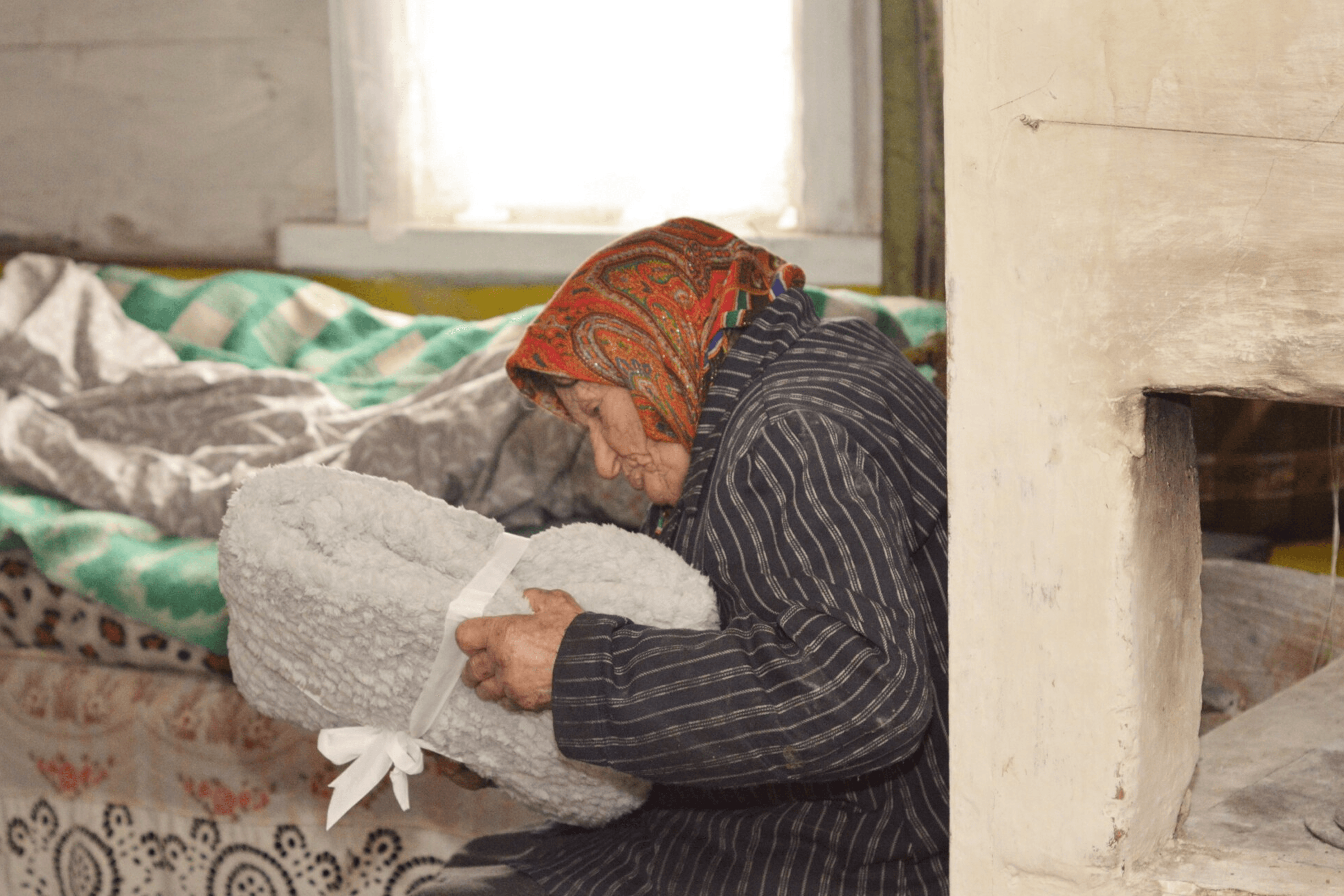
Photo: Starenki / YB 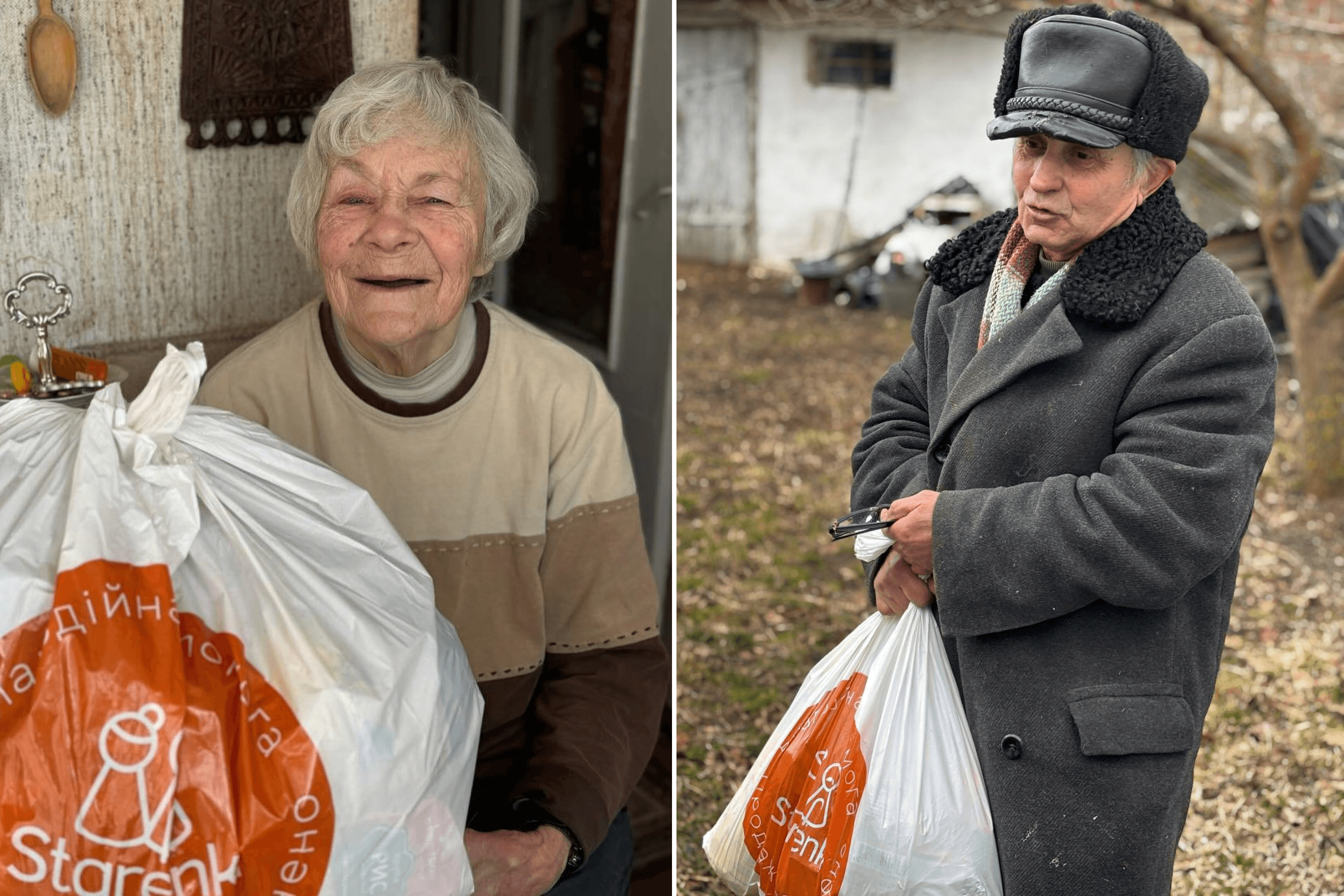
Photo: Starenki / YB 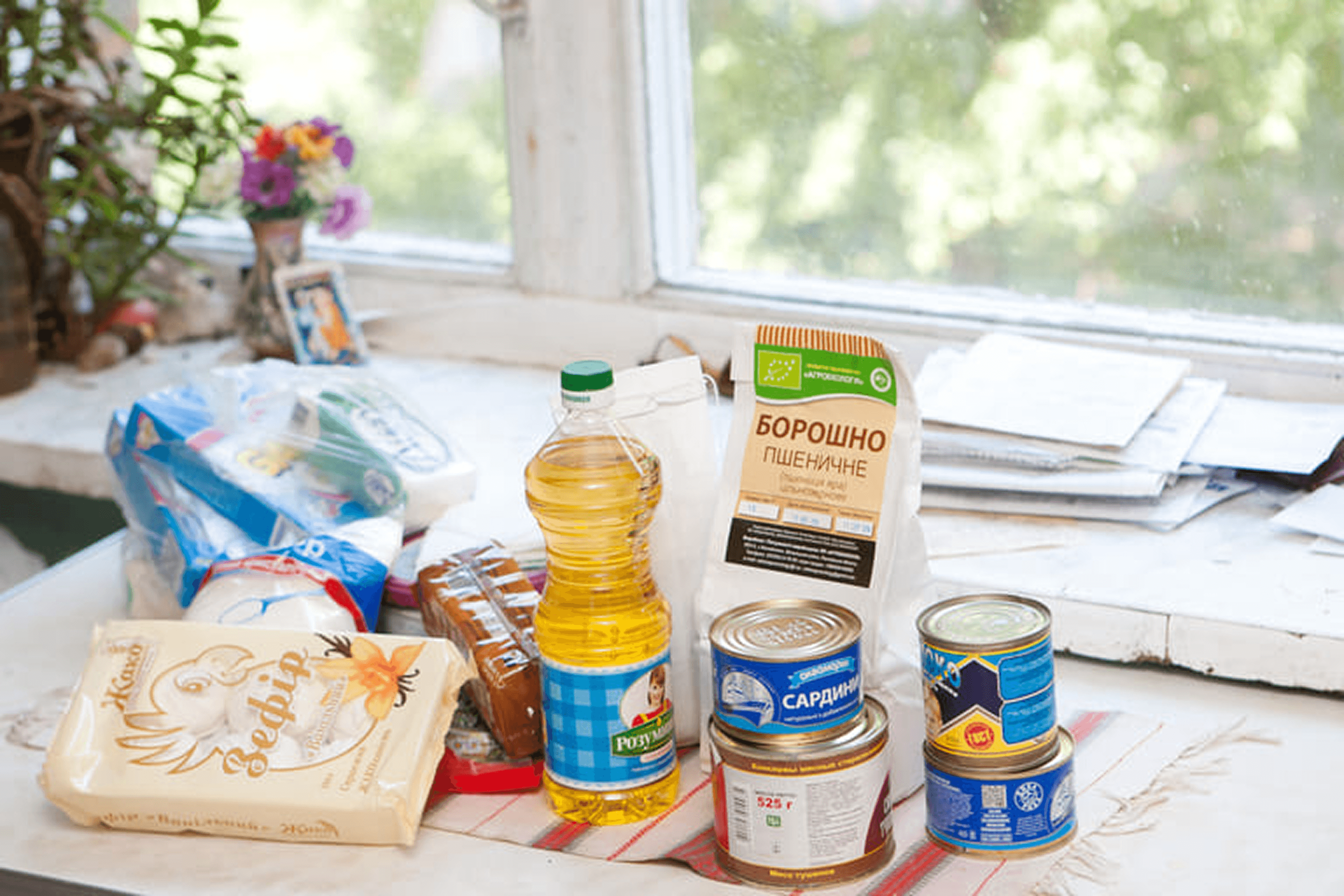
Photo: Starenki / YB 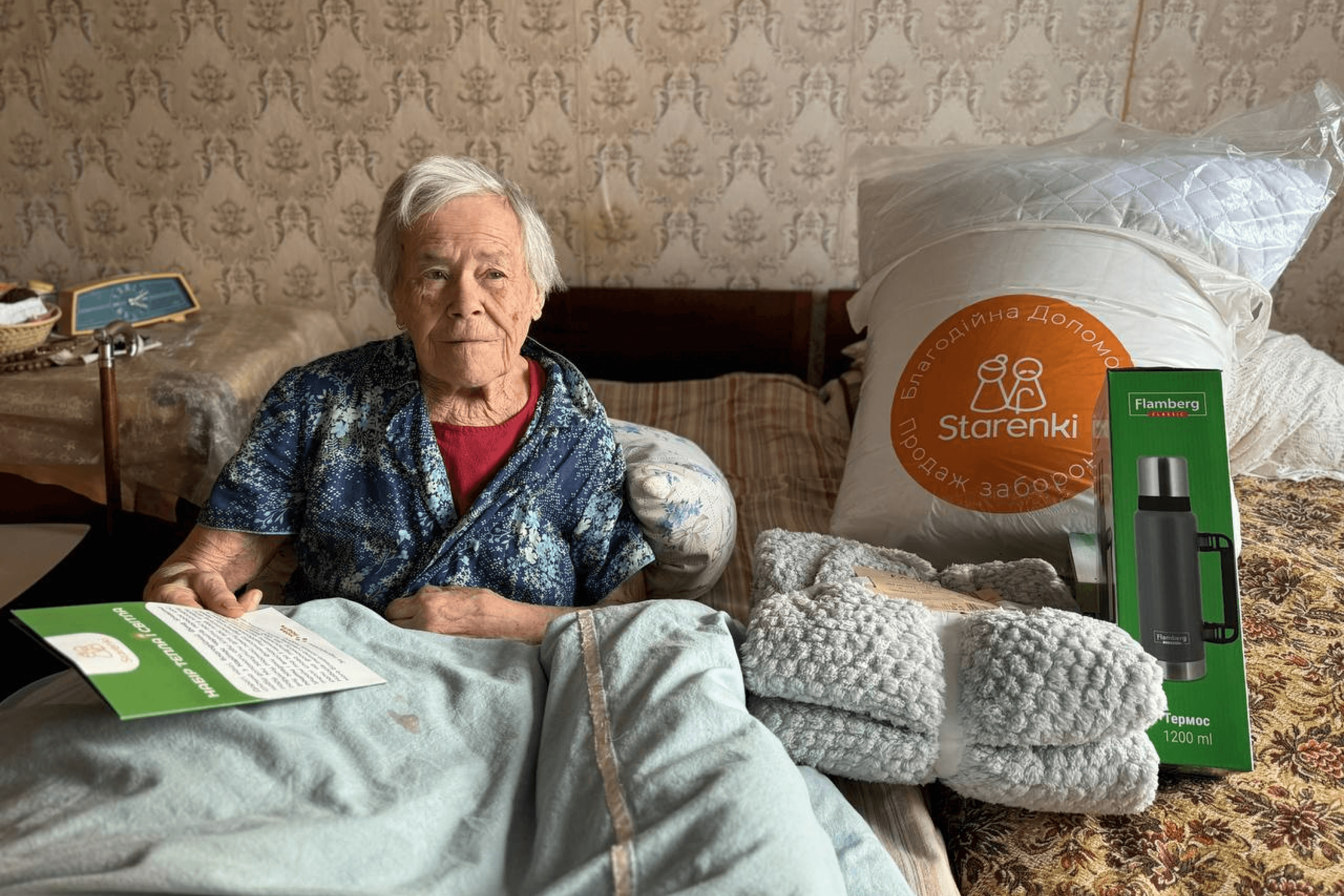
Photo: Starenki / YB 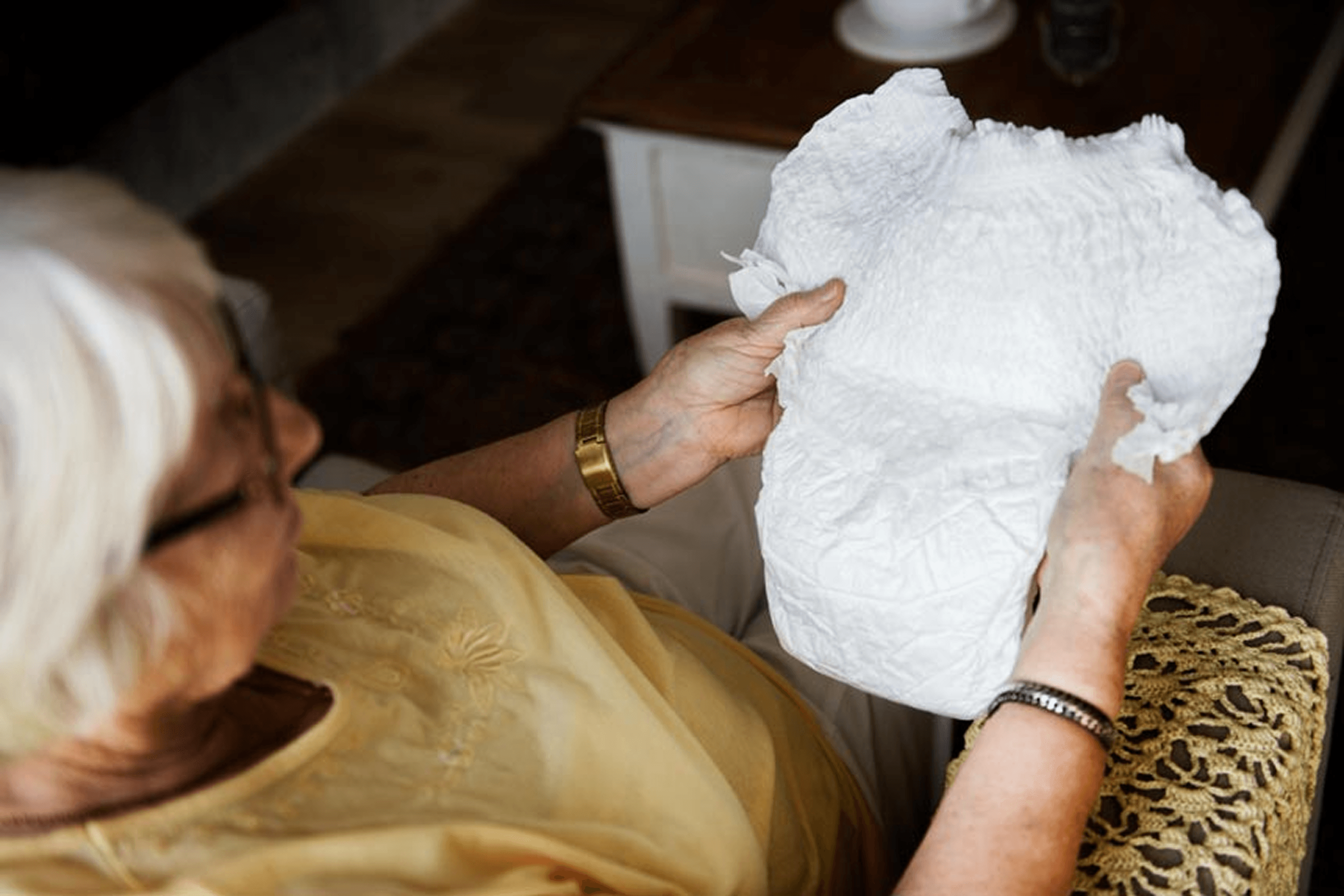
Photo: Starenki / YB 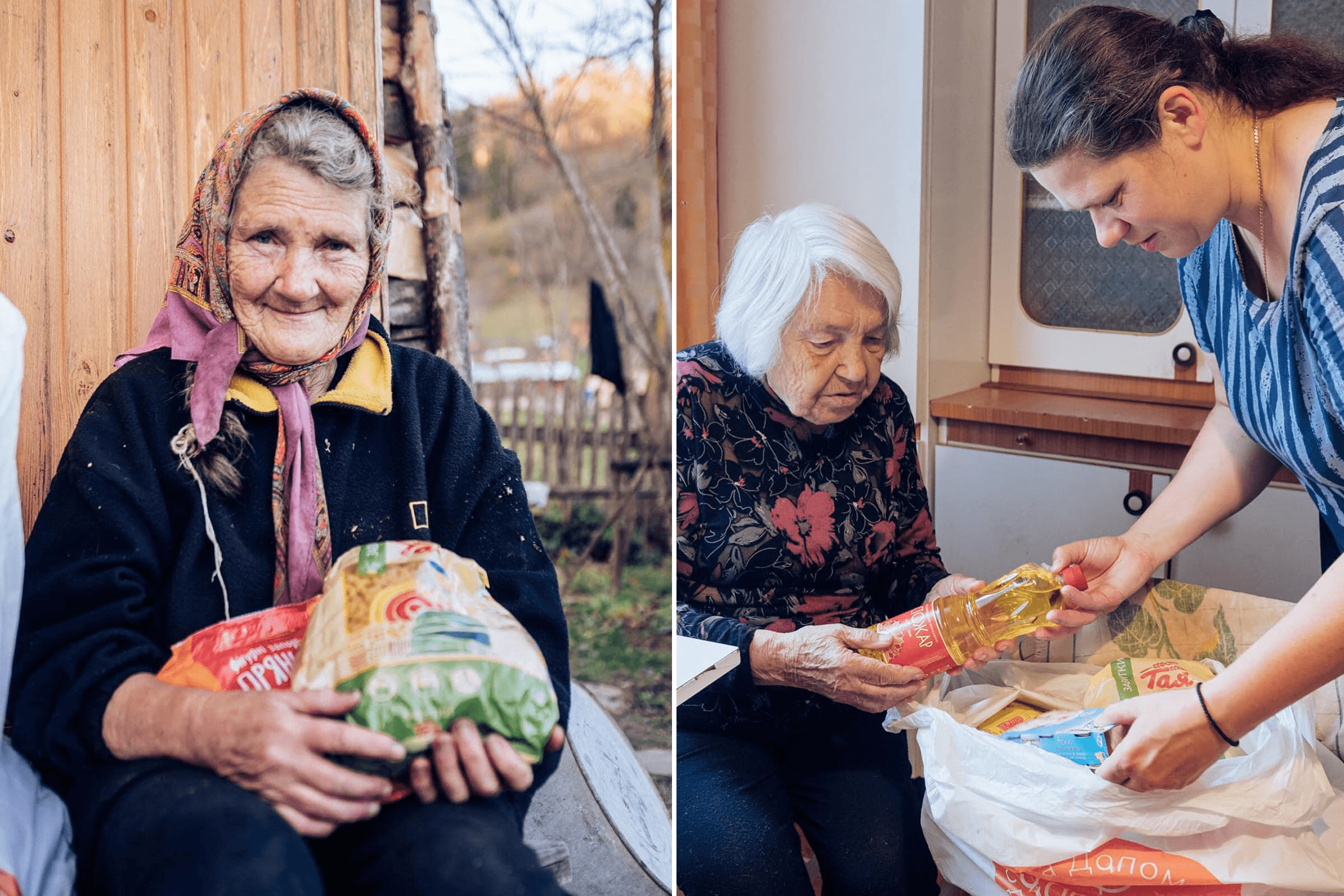
Photo: Starenki / YB
A standard food package costs approximately ₴700. Sometimes, wholesale suppliers struggle to keep up with the volume of our orders. A hygiene kit ranges from ₴350 to ₴700, while the full “warmth kit” is the most expensive at ₴2500–3000. Currently, we are assembling smaller warmth kits to provide as many thermoses, blankets, and rechargeable flashlights as possible to help people endure the loss of electricity and heating.
When we first started, we aimed to raise enough for 100 aid sets and set what then felt like an ambitious goal of ₴1 million. In recent years, our annual fundraising has fluctuated between ₴17 million and ₴20 million. However, we anticipate a decline in 2026, largely due to political shifts in the U.S. One of our long-term major donors is based there, and fundraising for Ukrainian needs has become increasingly challenging following Donald Trump’s victory in the Presidential Elections.
We also host “tea parties” for seniors. The World Health Organization has identified loneliness as one of the most significant health risks, and older adults are particularly vulnerable. We invite 15 to 30 seniors who are mobile and eager to socialize, alongside as many volunteers as possible. These events are lively and engaging, featuring music, workshops, meaningful conversation, and guest speakers.
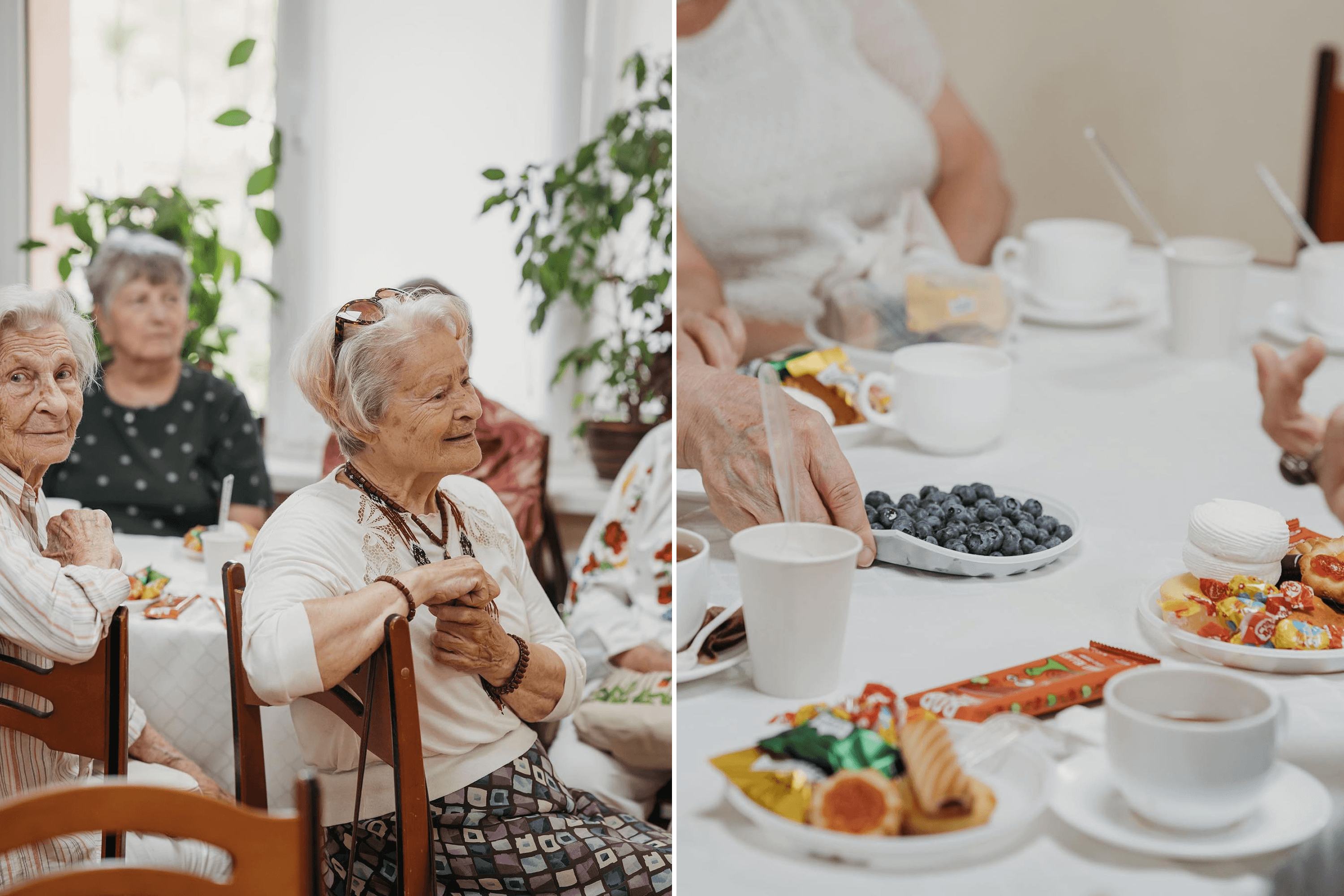
Photo: Starenki / YB 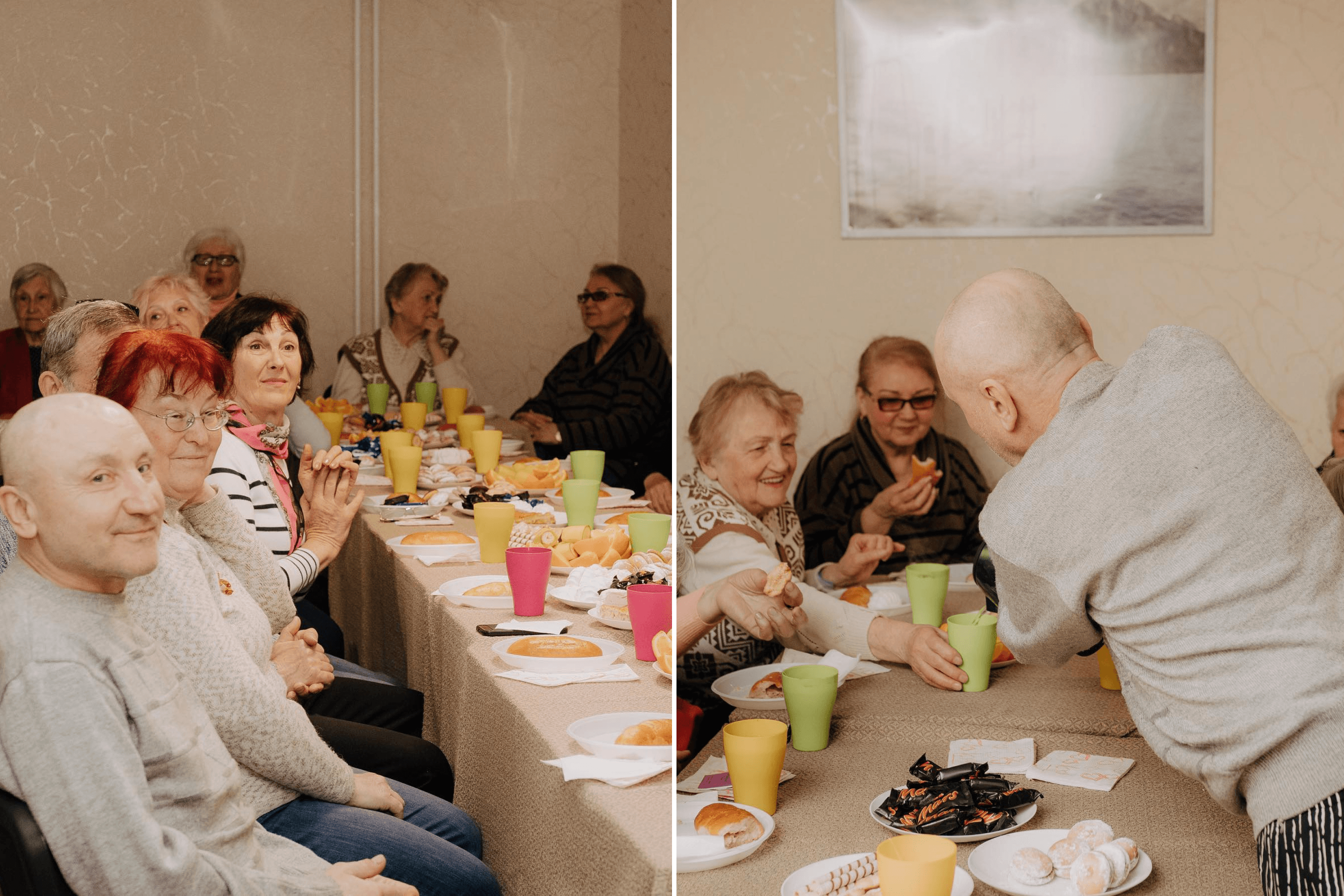
Photo: Starenki / YB 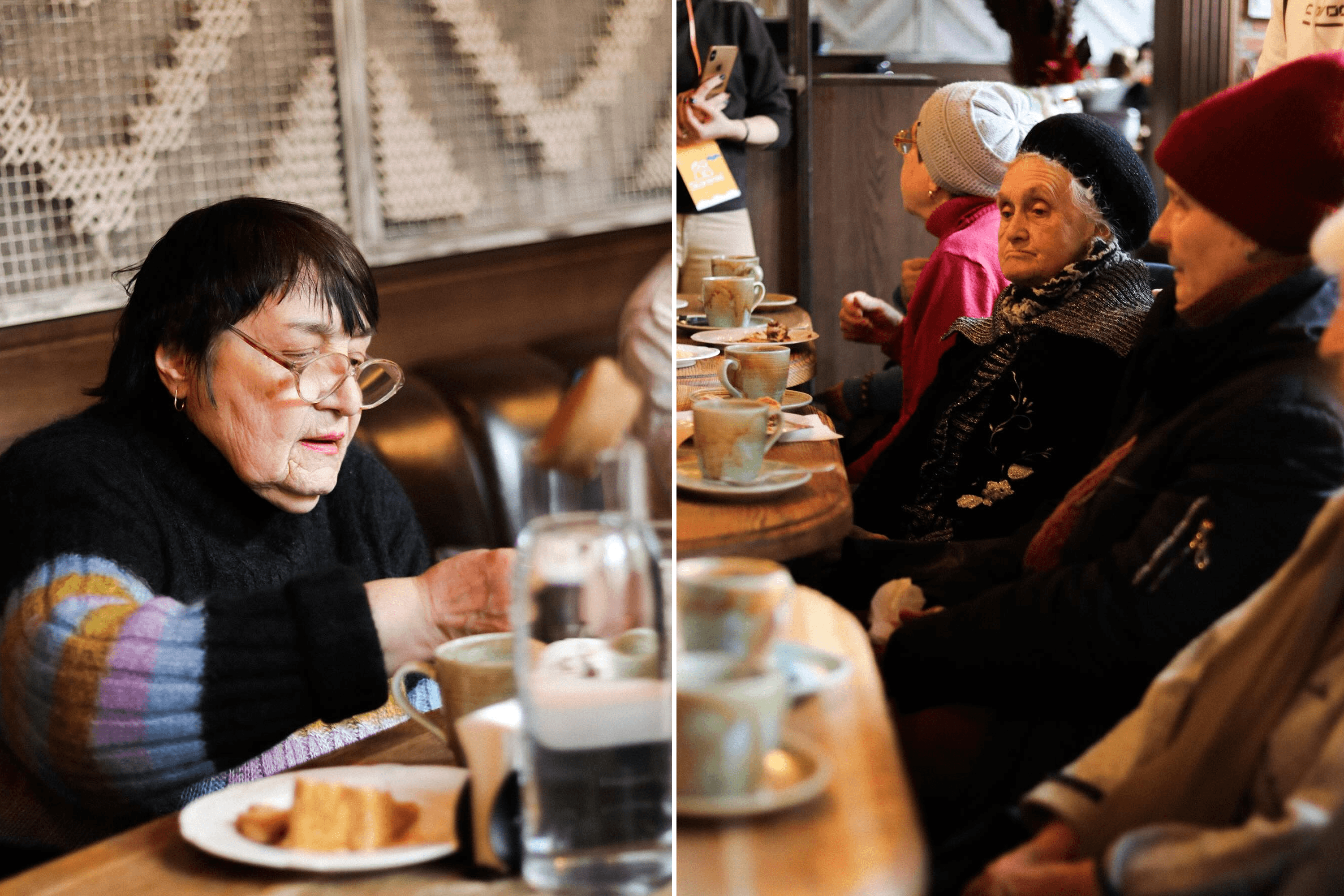
Photo: Starenki / YB 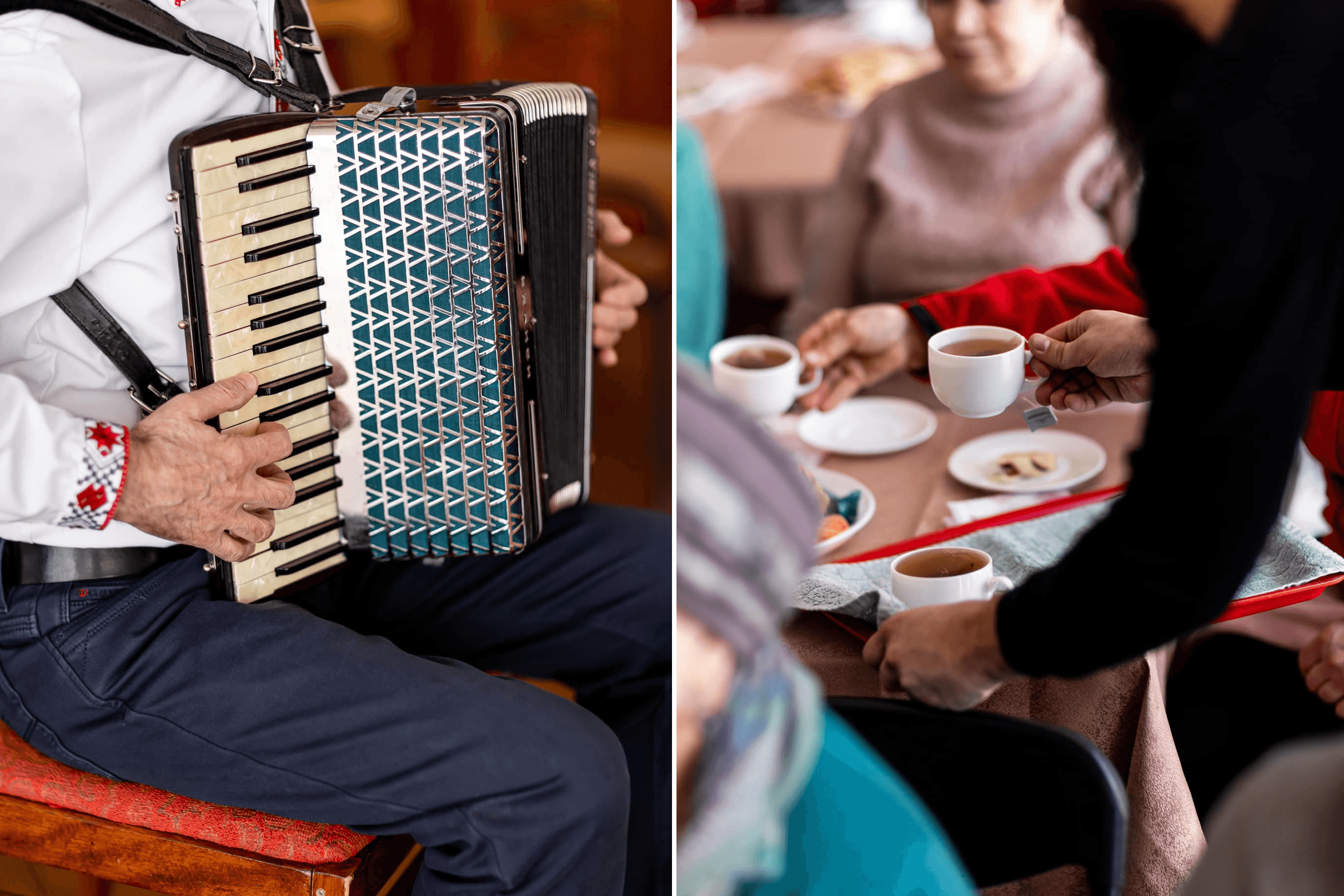
Photo: Starenki / YB 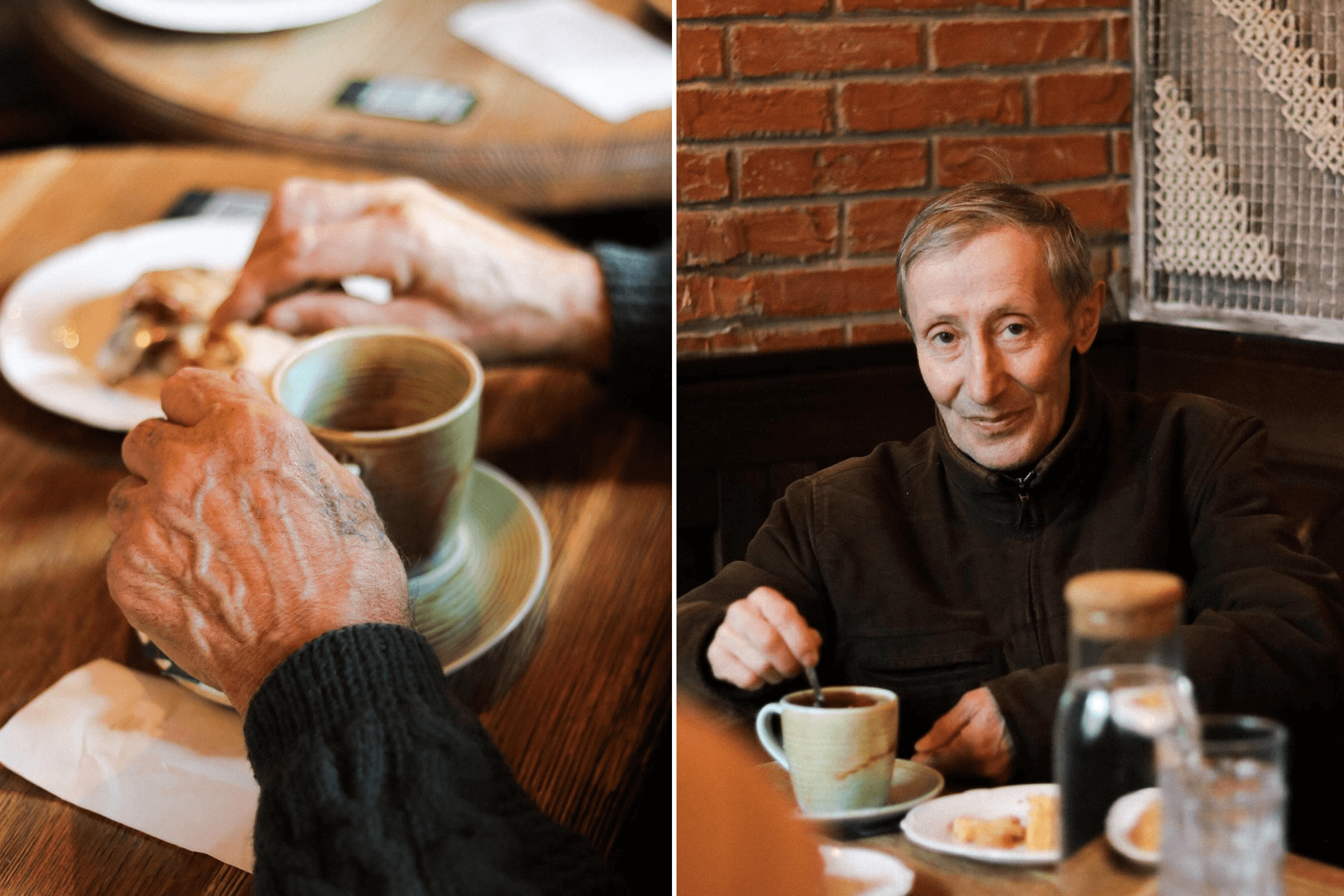
Photo: Starenki / YB 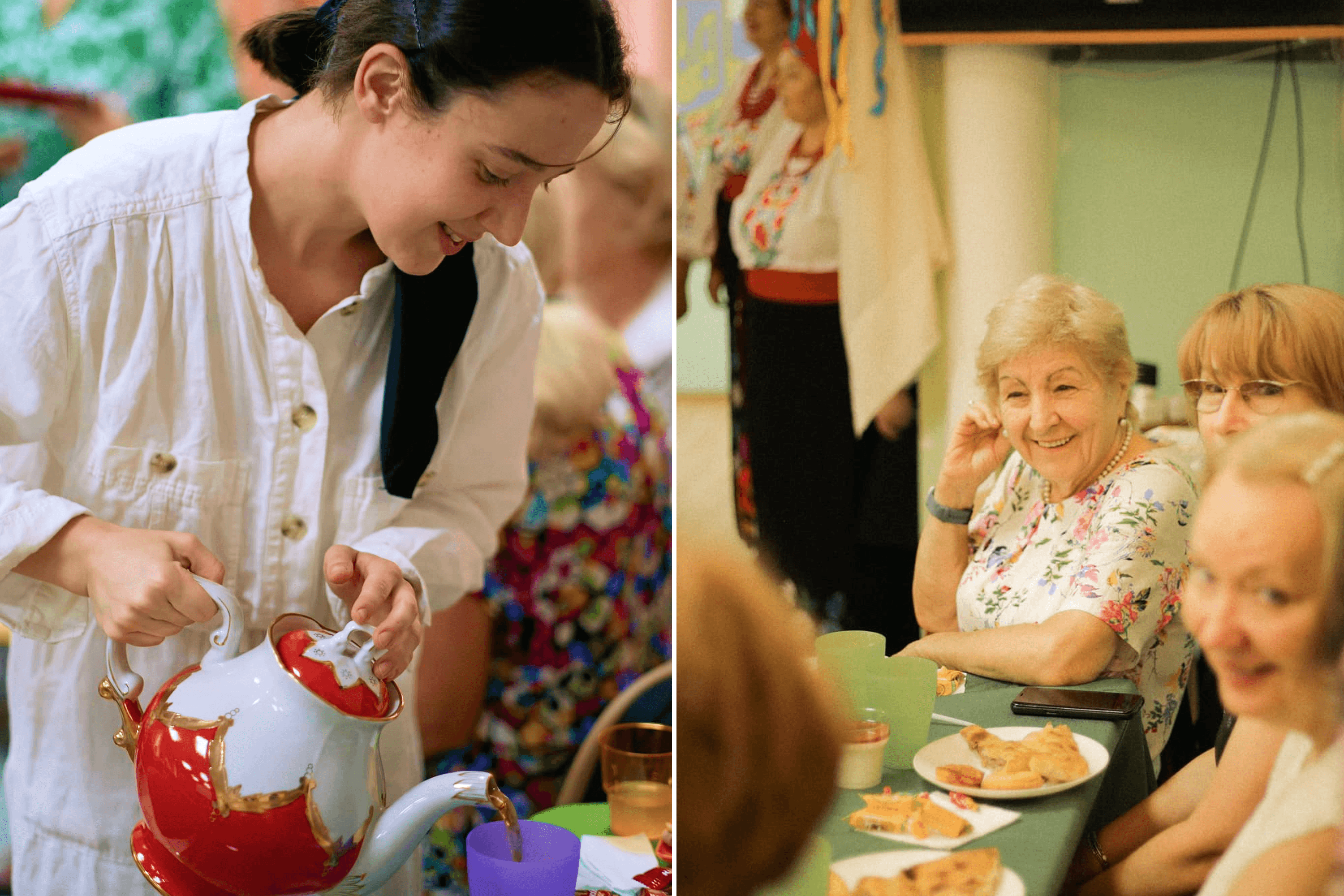
Photo: Starenki / YB
The elderly are often “invisible” to international NGOs. Very few organizations operating in Ukraine include seniors as a target demographic in their official mandates or charters. Consequently, their funding is directed toward other causes, leaving our foundation with limited access to such resources. We work tirelessly to make the elderly visible and to ensure their rights and needs are recognized in the public sphere.
Our growth was significantly boosted by our partnership with Blue Check Ukraine, an American organization founded in 2022 specifically to support local initiatives. We also receive vital support from private foreign donors—not only from Ukrainians who fled the war but also from local residents abroad who learned about our work through the diaspora.
We never rely on pity or use distressing imagery. Poverty can make the homes of the elderly look bleak, but we choose not to publish such photos. In our advocacy and fundraising, we use positive, value-based motivation. However, when communicating with international partners, we must explain the harsh reality: for many abroad, the fact that a senior in Ukraine must survive on just $100 a month is almost incomprehensible.
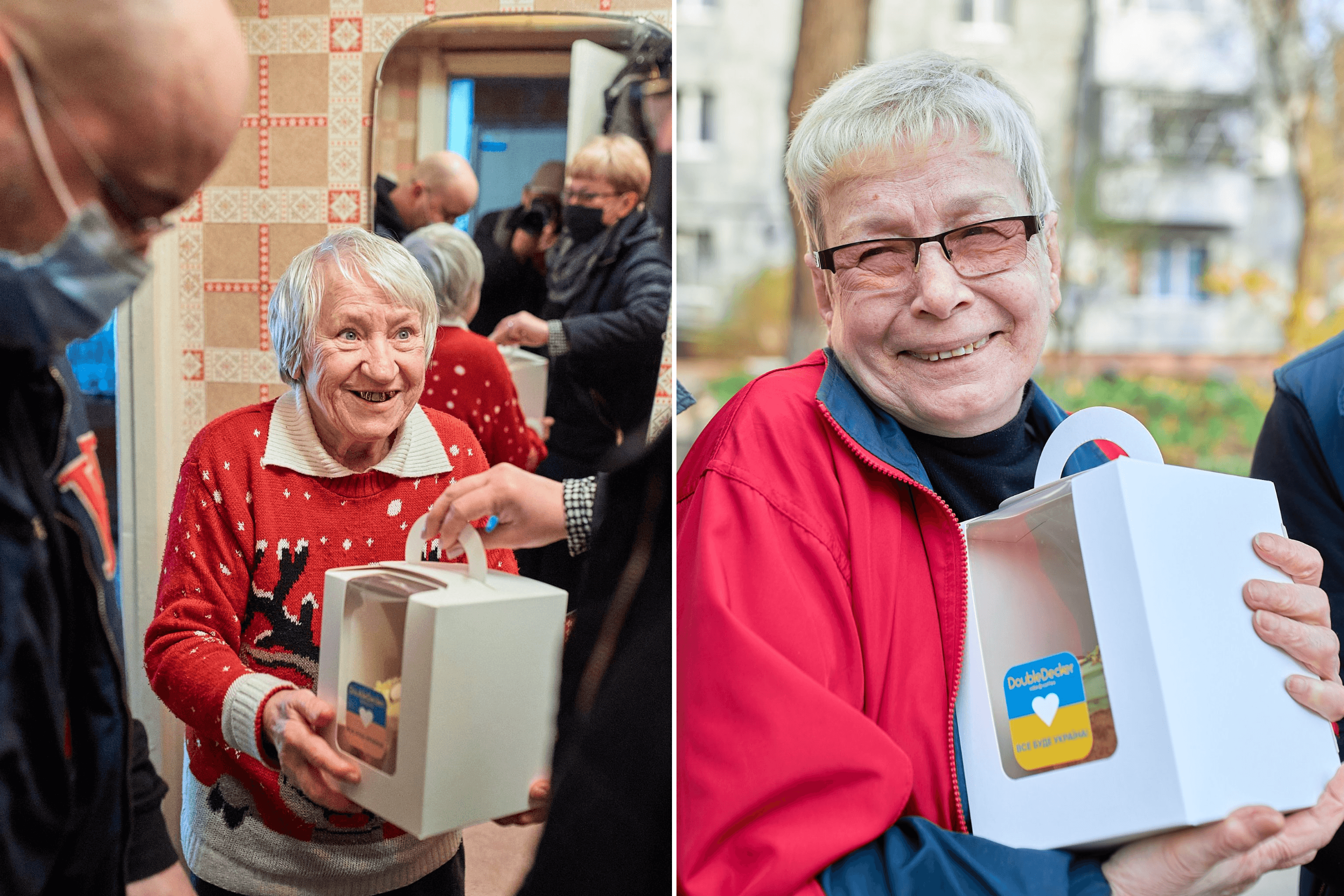
Photo: Starenki / YB 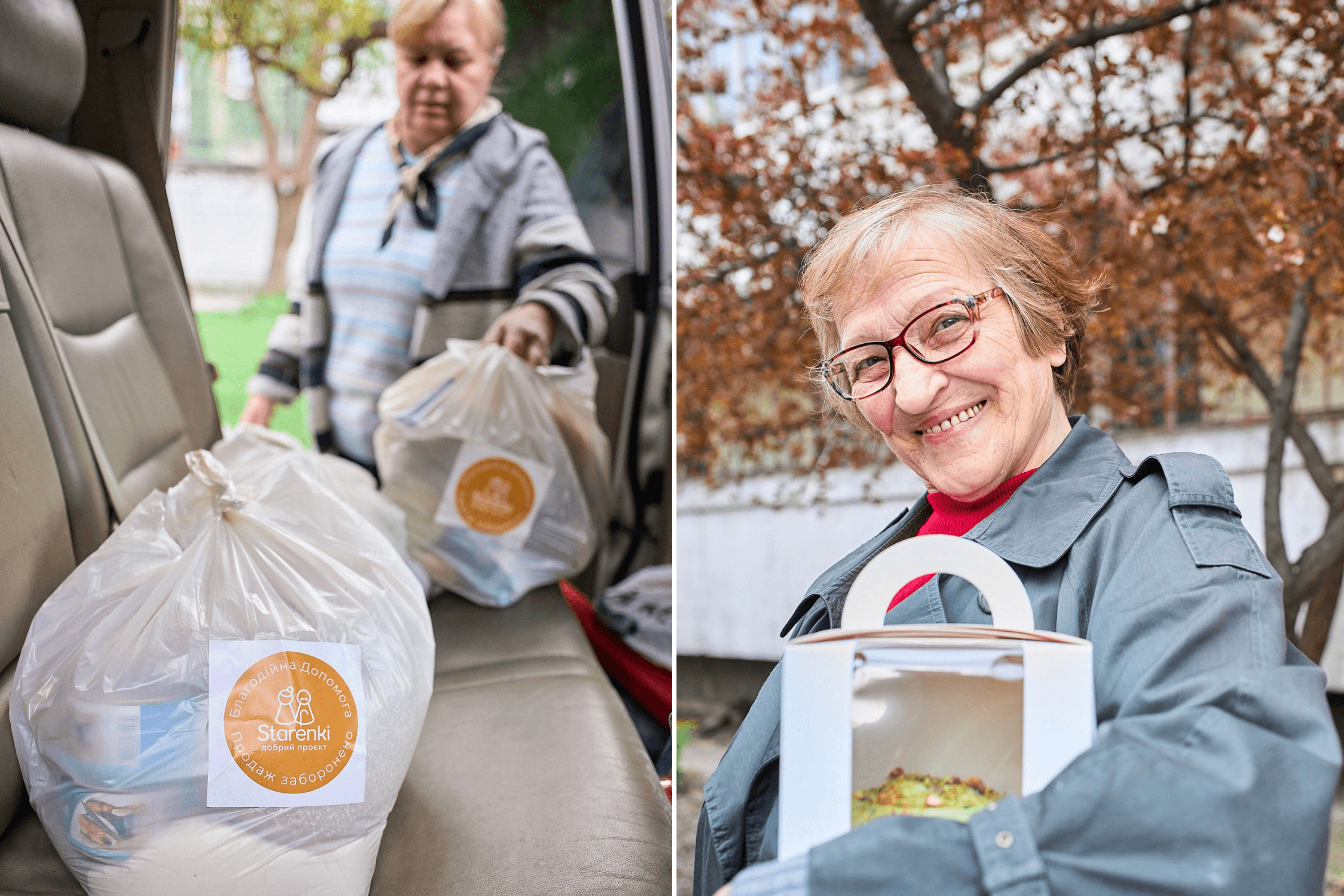
Photo: Starenki / YB 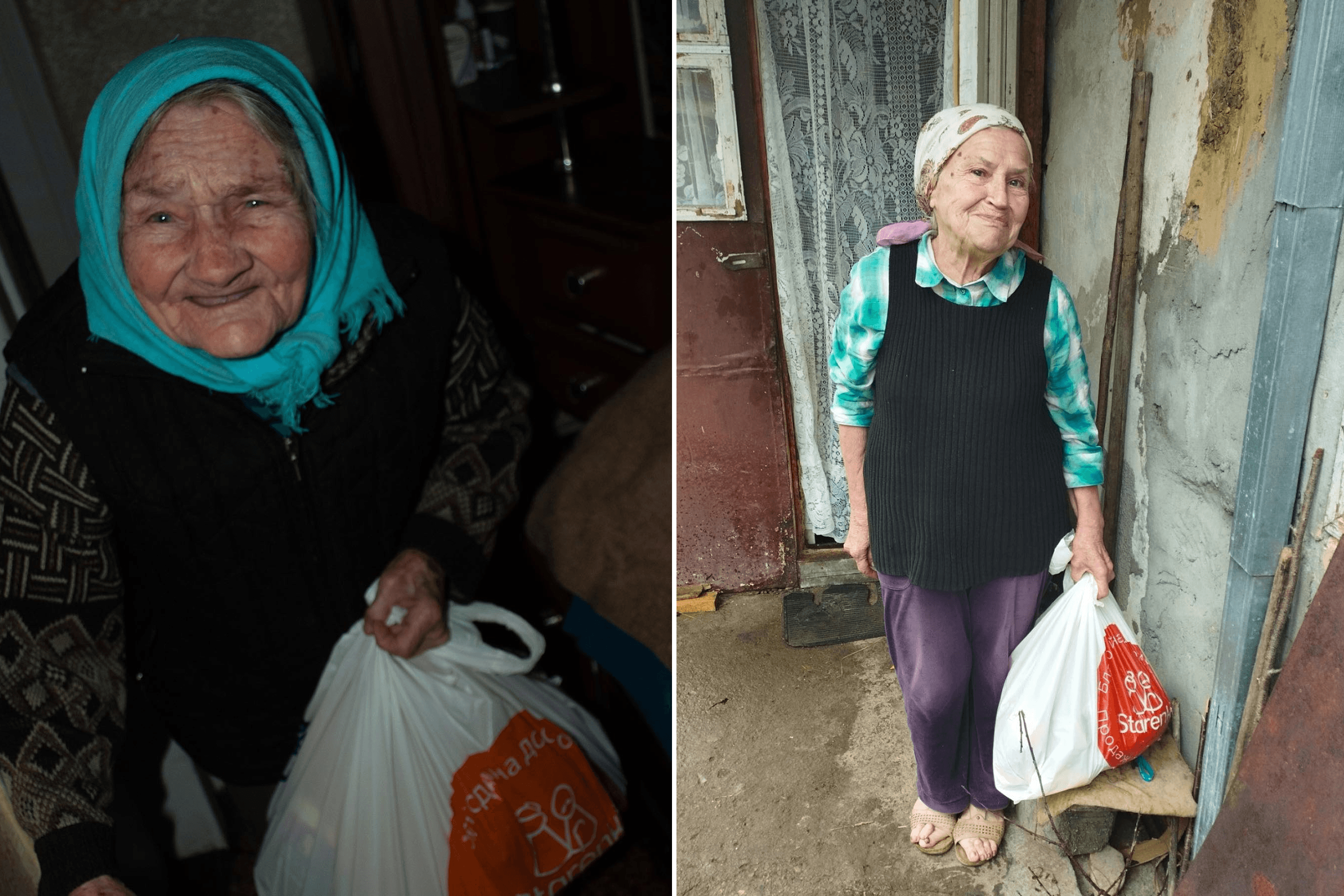
Photo: Starenki / YB 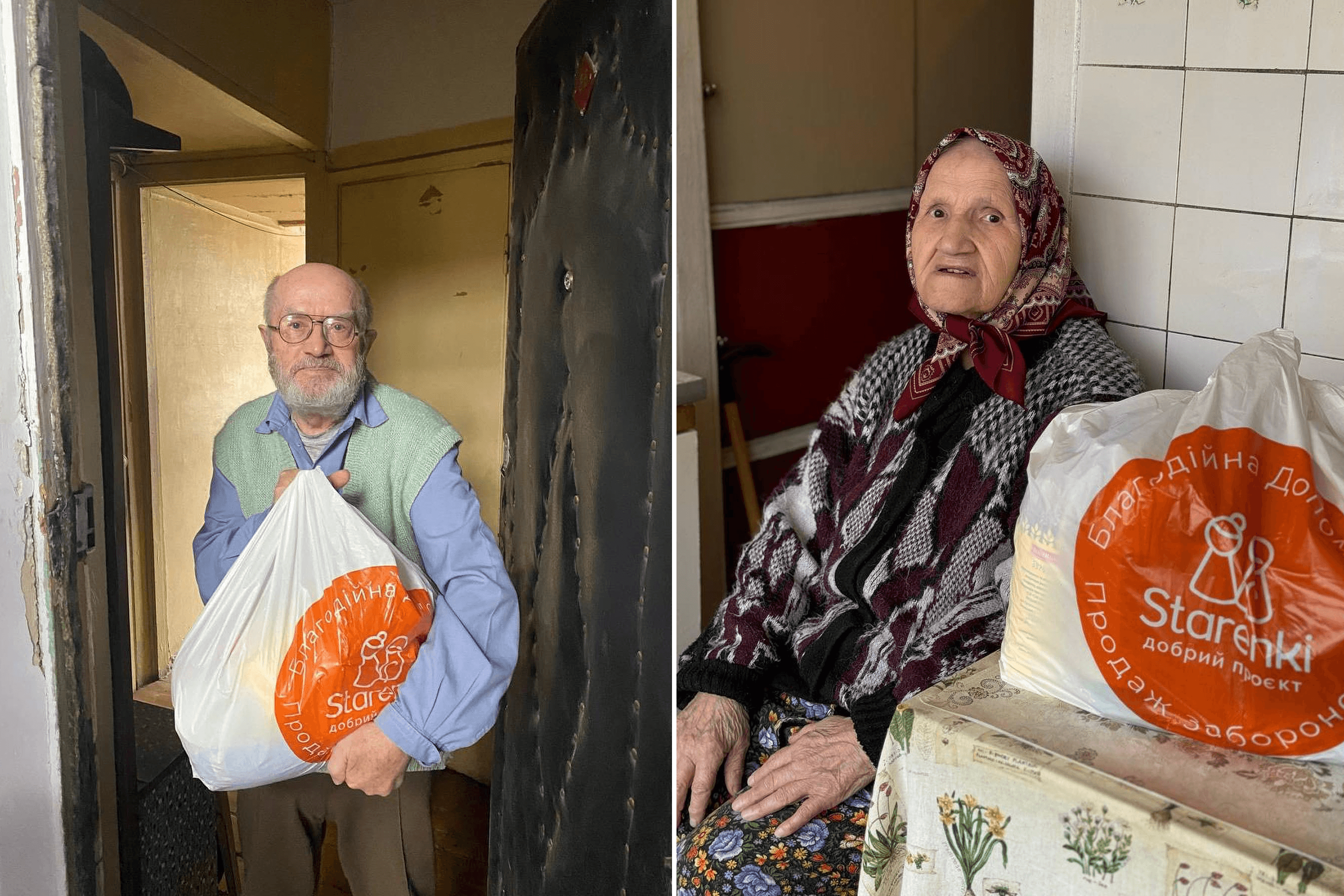
Photo: Starenki / YB 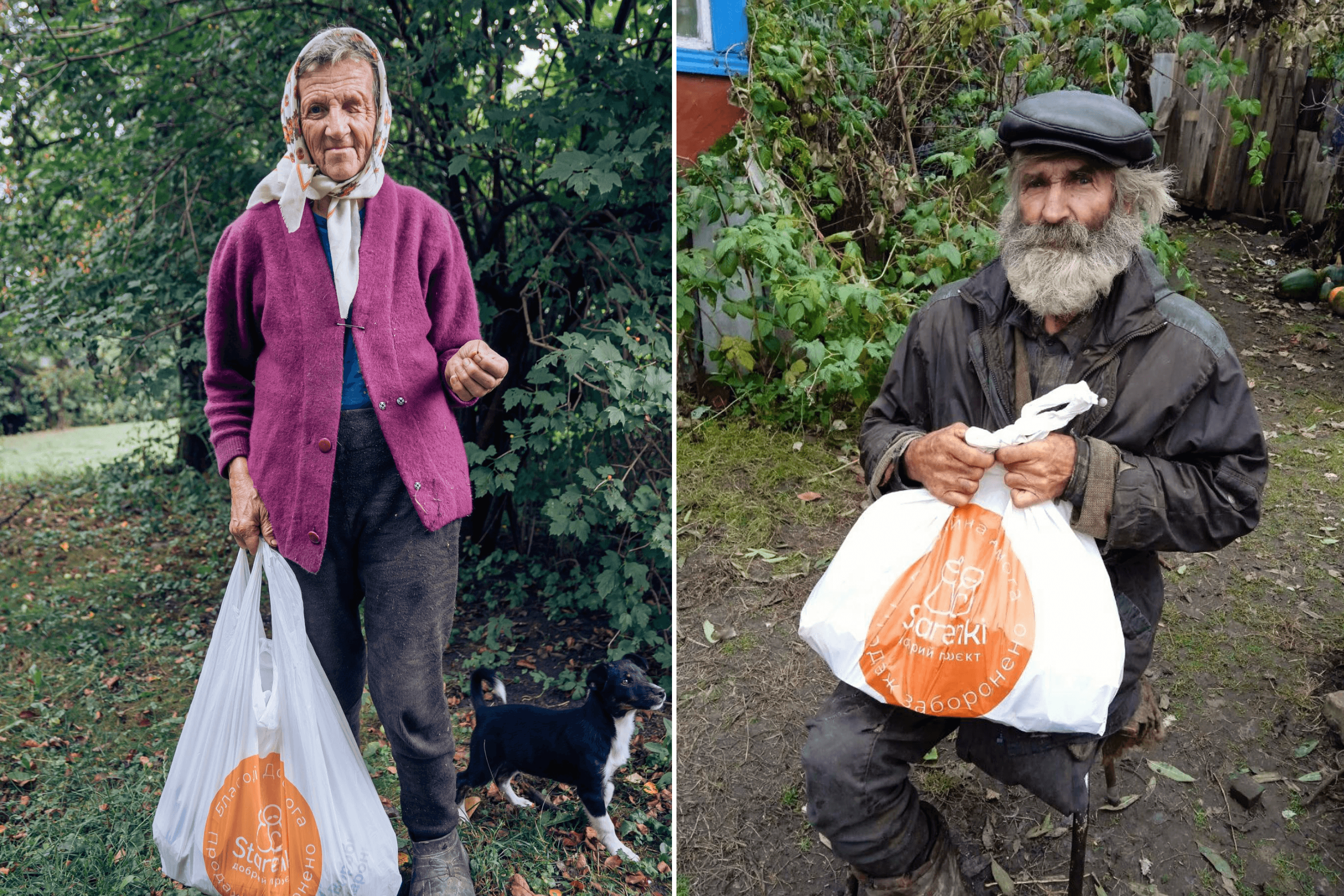
Photo: Starenki / YB 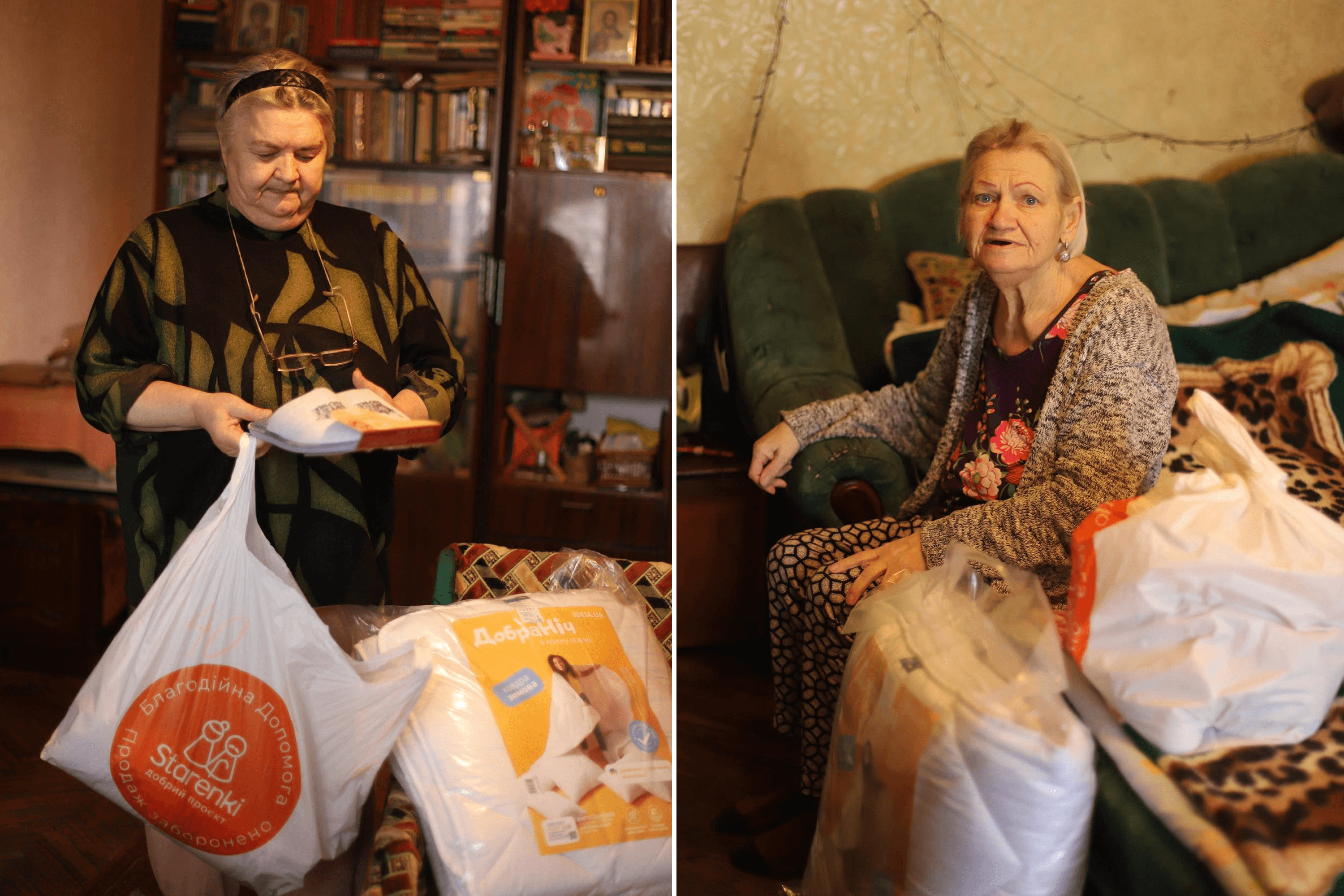
Photo: Starenki / YB
In Ukraine, old age remains a taboo subject. This stems from the extreme poverty many seniors faced after their life savings vanished during the collapse of the Soviet Union. For many, the idea of aging is something the mind tries to suppress because it is associated with being unwanted, poor, and ill. This is likely why supporting the elderly is often an “unpopular” cause, though we have seen this perception begin to shift in recent years.
Currently, working with the Ukrainian diaspora is one of our greatest untapped opportunities. We urge anyone interested in supporting us to reach out. While we collaborated actively with the diaspora at the start of the full-scale invasion—receiving grants from major diaspora organizations in the US like Nova Ukraine.
Our international journey began by chance. In 2022, a Polish organization noticed that very few elderly people were among the refugees crossing the border—most had stayed in the country. They couldn’t provide aid directly, so they connected us with the Association Petits Frères des Pauvres, an international federation that has supported seniors since 1949. For the first time, I found myself surrounded by like-minded people from 20 countries. I realized that beyond poverty, the challenges seniors face are universal: social isolation, mobility issues, and a lack of digital literacy regarding cybersecurity.
Hollywood actor Liev Schreiber has been a dedicated supporter of older Ukrainians. As a co-founder of Blue Check Ukraine, his organization conducted rigorous due diligence and quickly provided us with vital funding. In 2022, Liev traveled to Ukraine to meet the grassroots organizations they were supporting. He joined one of our tea parties, and before I knew it, our coordinator was sending photos of a Hollywood star sitting and chatting with our seniors! Notably, he prioritized this time with them before heading to his meeting with President Volodymyr Zelenskyy. Later, in 2024, we hosted a regional manager from the World Bank at another tea party.
Since the full-scale invasion, we have consulted for international organizations on evacuations and how seniors endure blackouts. However, changing the rigid procedures of these large entities remains difficult. For instance, after the destruction of the Kakhovka Dam, some major agencies were still distributing aid in paper bags and cardboard boxes. In flooded areas, these supplies were ruined before they could even be used.
At international forums, it is essential to present hard data alongside human stories. Curiously, I find it easier to explain our mission to a global audience than to people at home. In Ukraine, the topic of aging remains taboo and is often met with a certain level of rejection. In a country where young people are dying every day, promoting the idea of a “better old age"—one that many might not even live to see—is a tough sell. We often hear that now is “not the right time” for such concerns.
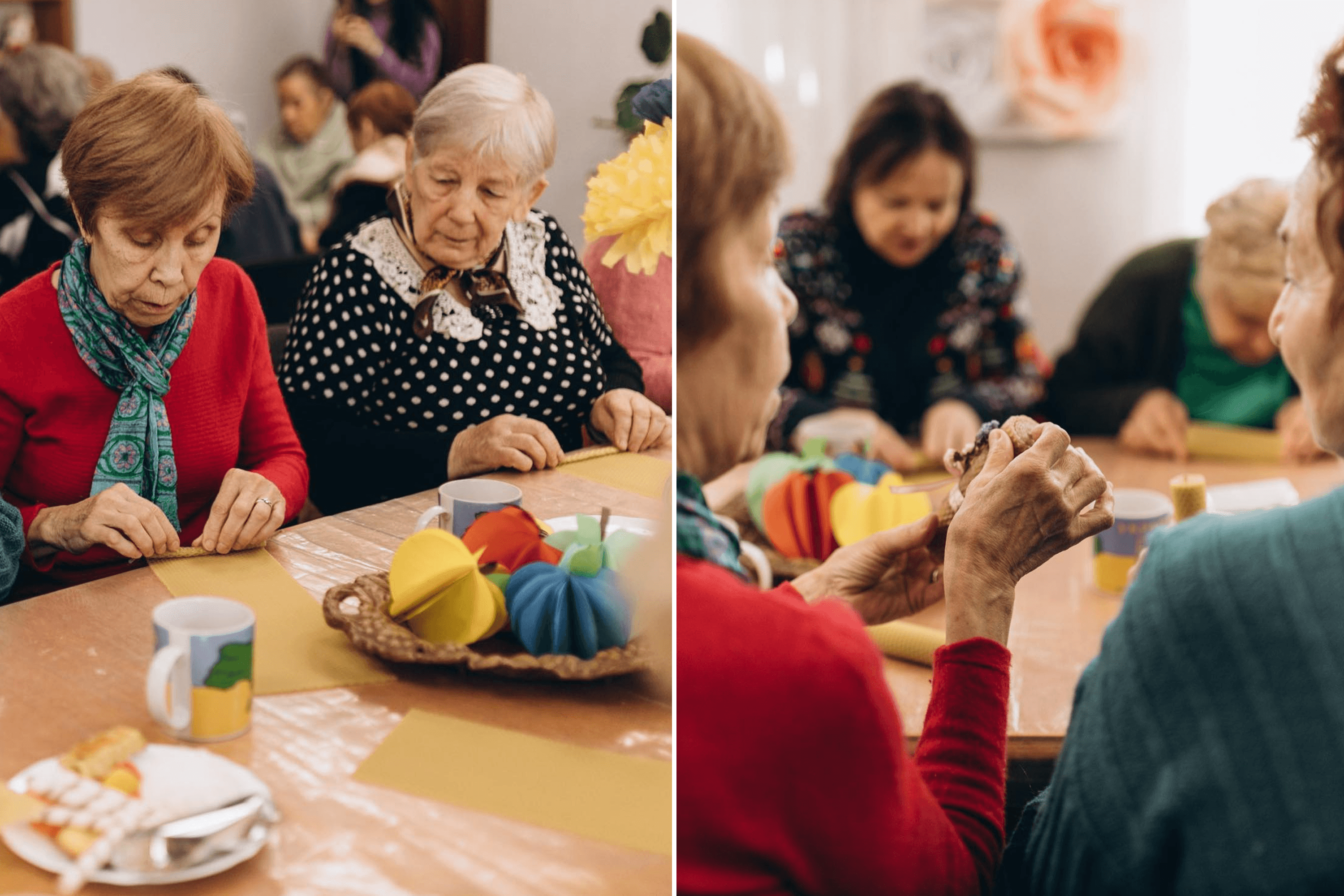
Photo: Starenki / YB 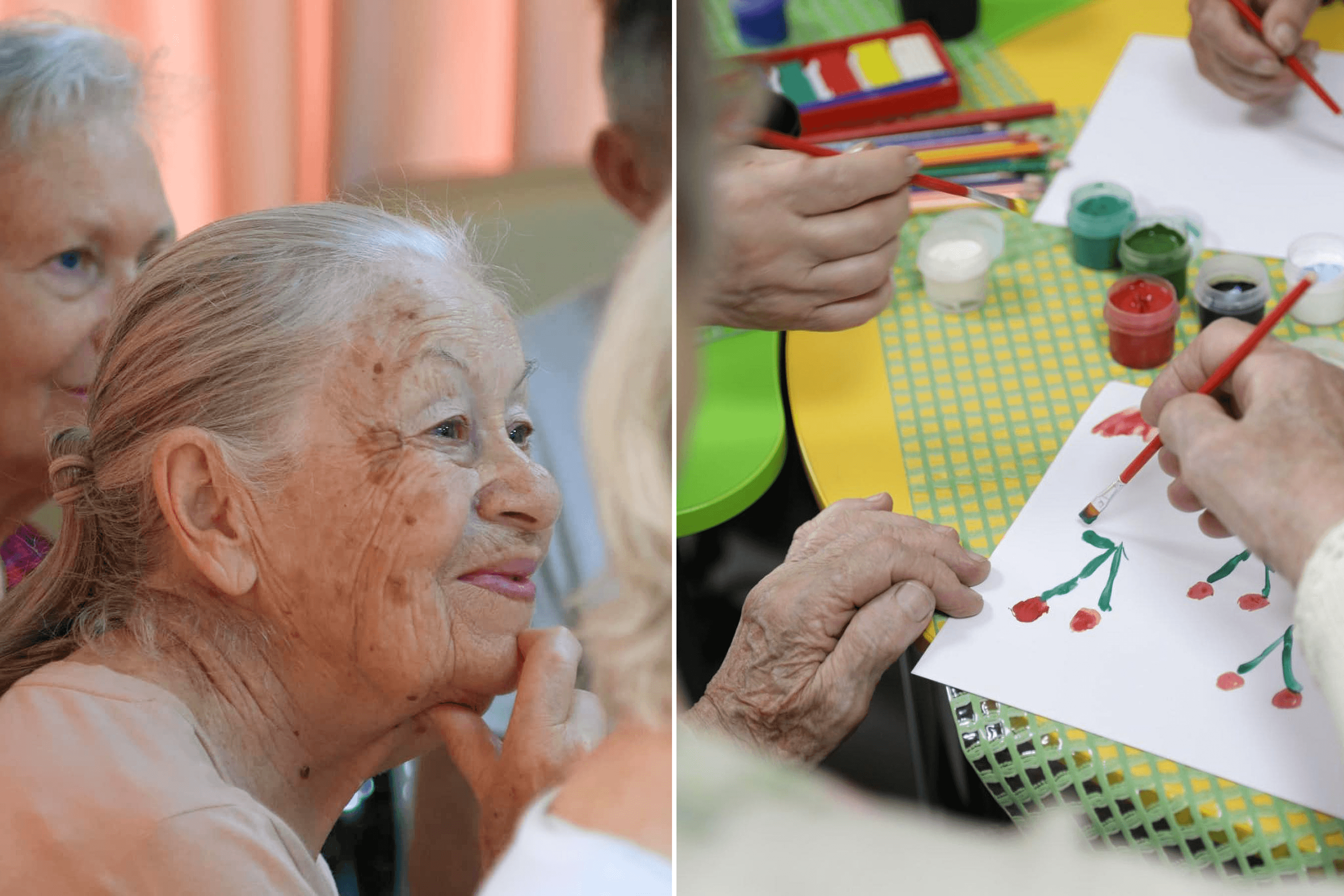
Photo: Starenki / YB 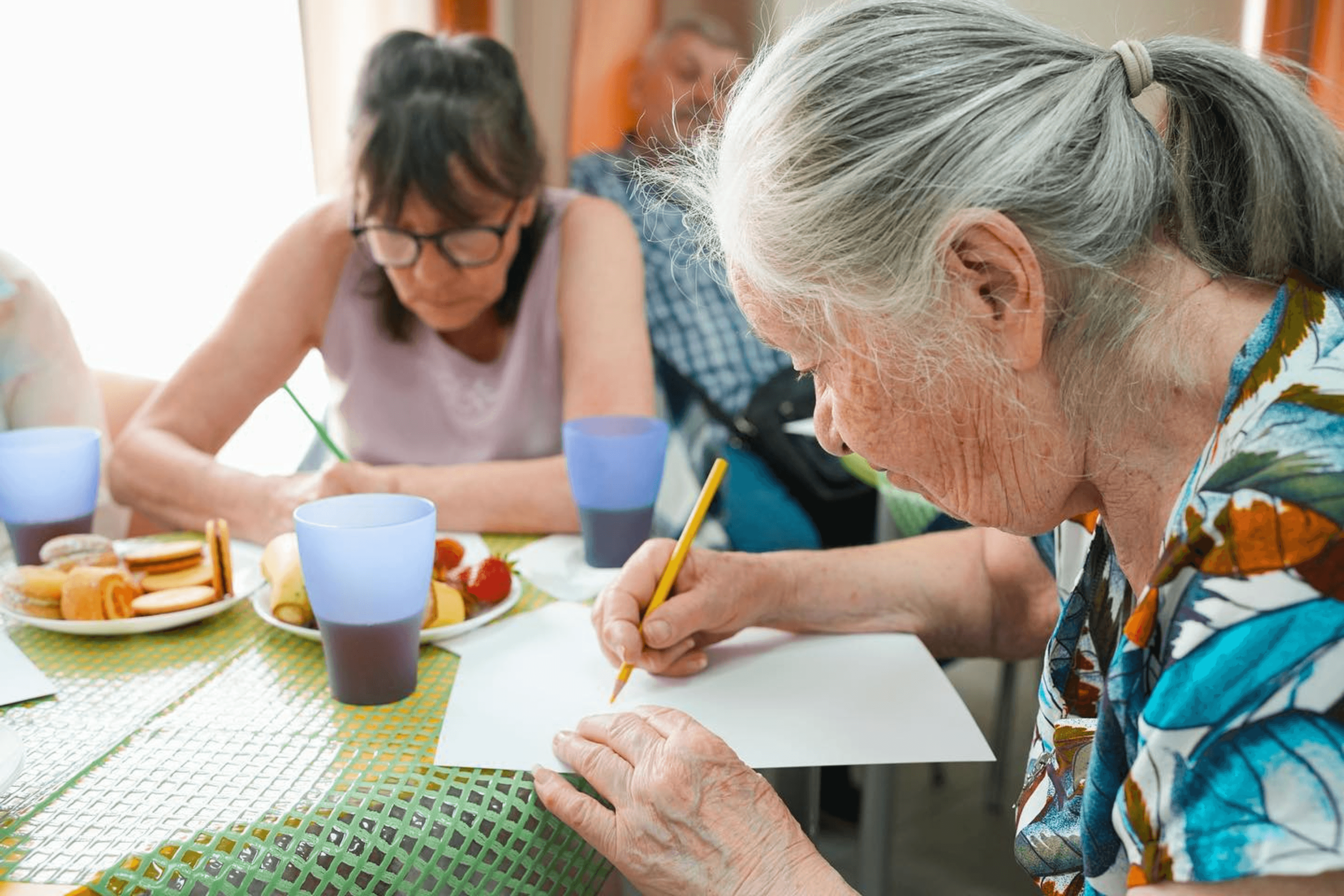
Photo: Starenki / YB 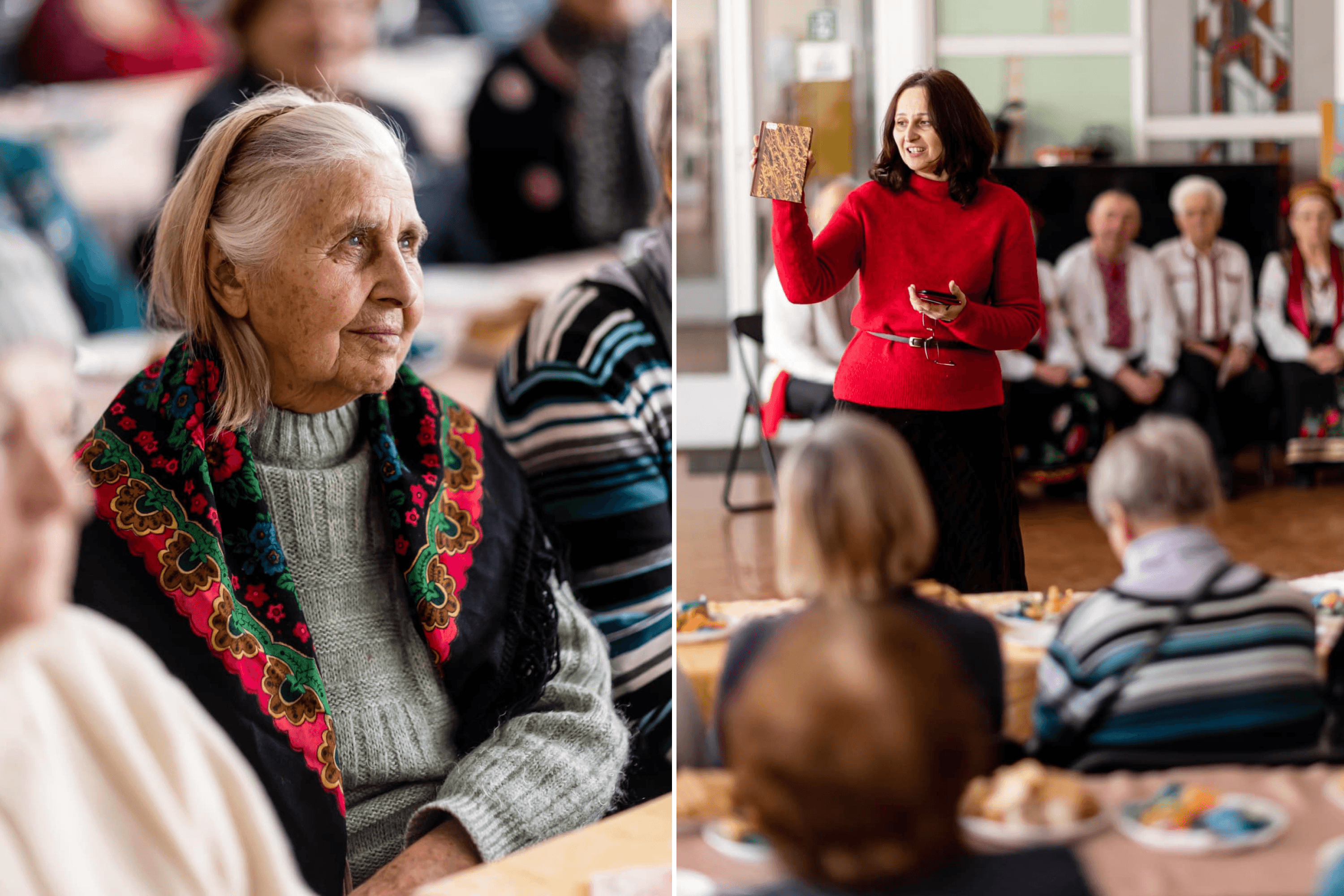
Photo: Starenki / YB 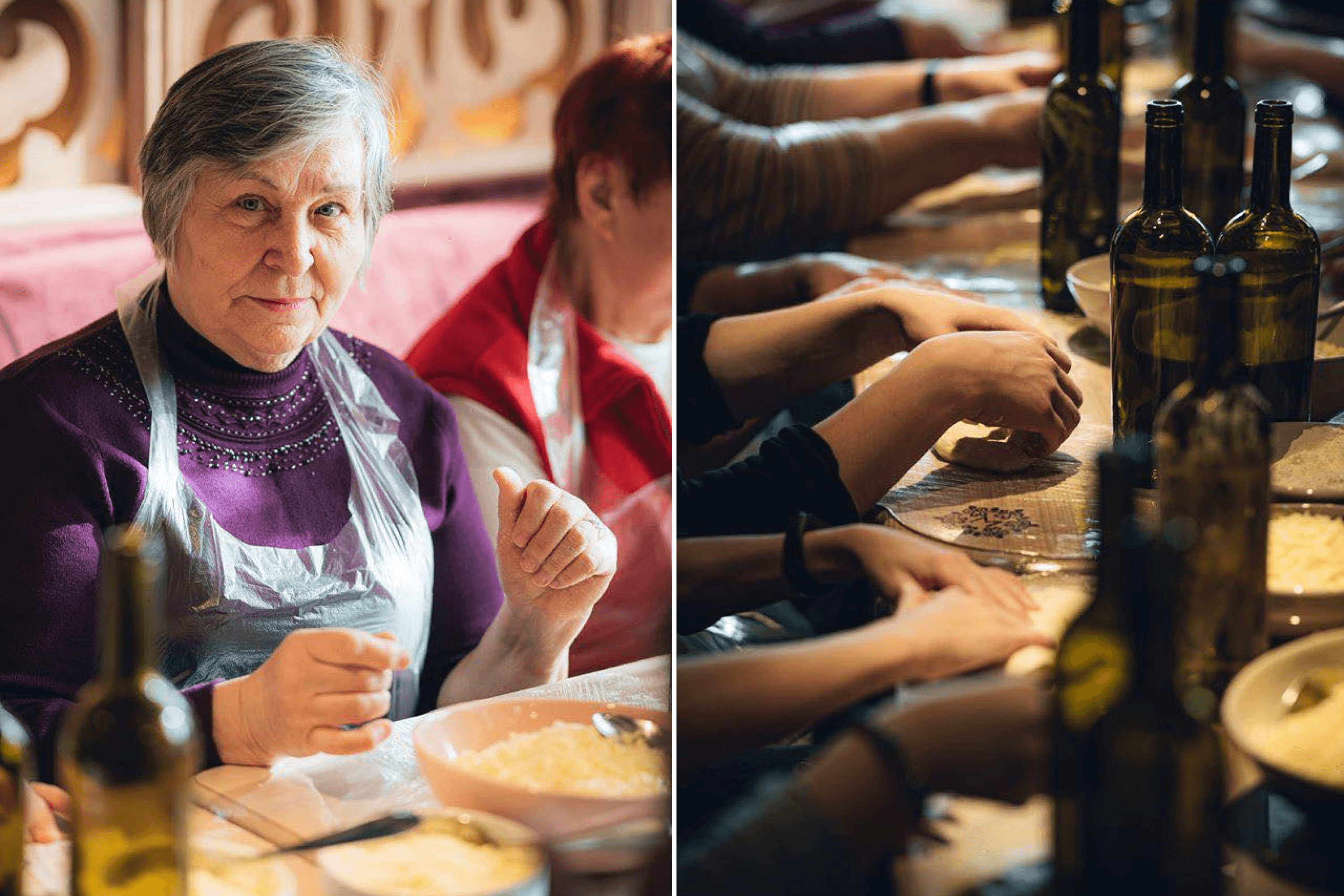
Photo: Starenki / YB 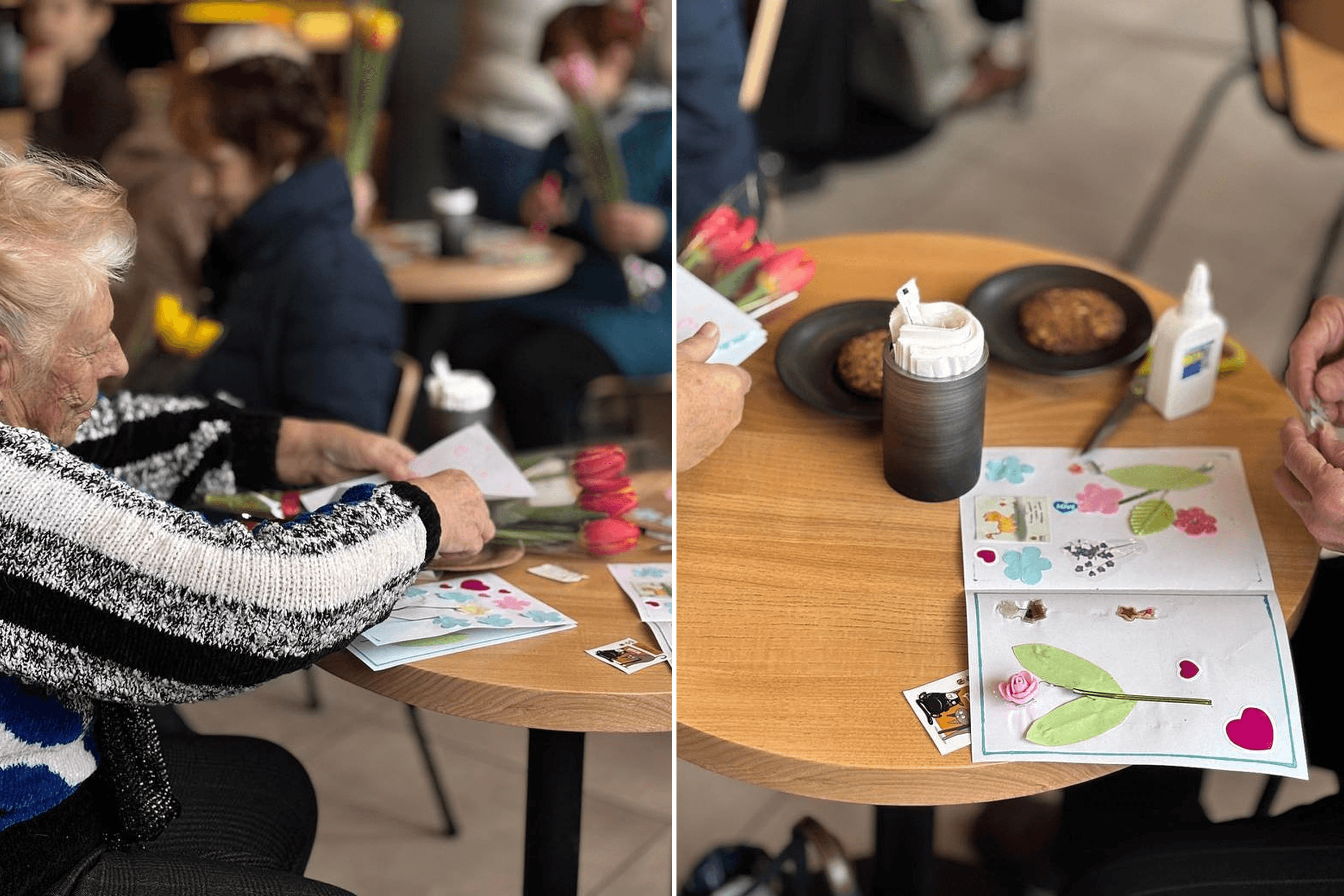
Photo: Starenki / YB
Empathy for the aging process needs to be ingrained in our culture, but we aren’t there yet. Ageism in Ukraine is rampant: from the difficulty people over 50 face when looking for work to the visible impatience toward a senior walking slowly on the sidewalk. Even our advertising is skewed; “anti-aging” creams for 40-year-olds often feature 70-year-old models, while the reality of the “babusia” in a headscarf on a park bench remains a pervasive stereotype.
The war is accelerating a demographic crisis. With the loss of our youth, people over 60 will soon make up 30% of the Ukrainian population. Labor shortages are already forcing employers to reconsider their biases simply because they have no other choice. Expanding opportunities for those near or at retirement age is no longer just a social goal—it’s an economic necessity. We are addressing this head-on by lecturing to students, such as those in the Students' League of the Ukrainian Bar Association, to shift the narrative early.
As a mentor, I help emerging charitable organizations avoid common pitfalls. Starenki’s goal is to see regional volunteer initiatives for seniors flourish across the country. When these groups lose heart because their cause is “unpopular” or the work feels thankless, I am there to lend my support. This mentorship is more than just a foundation’s strategy; it is a core part of my personal mission.