In late 2025, Yellow Blue first shared the stories of businesses damaged by Russian shelling. The winter of 2026 has proven to be one of the most grueling periods of the full-scale war for entrepreneurs. While Russia has targeted energy infrastructure before, this year’s severe frosts made the situation especially critical. Despite the odds, these brands persevere. This new selection features 15 more Ukrainian companies and entrepreneurs impacted by Russian aggression. You can support some by placing international orders, and others by donating to Ukraine’s air defense.
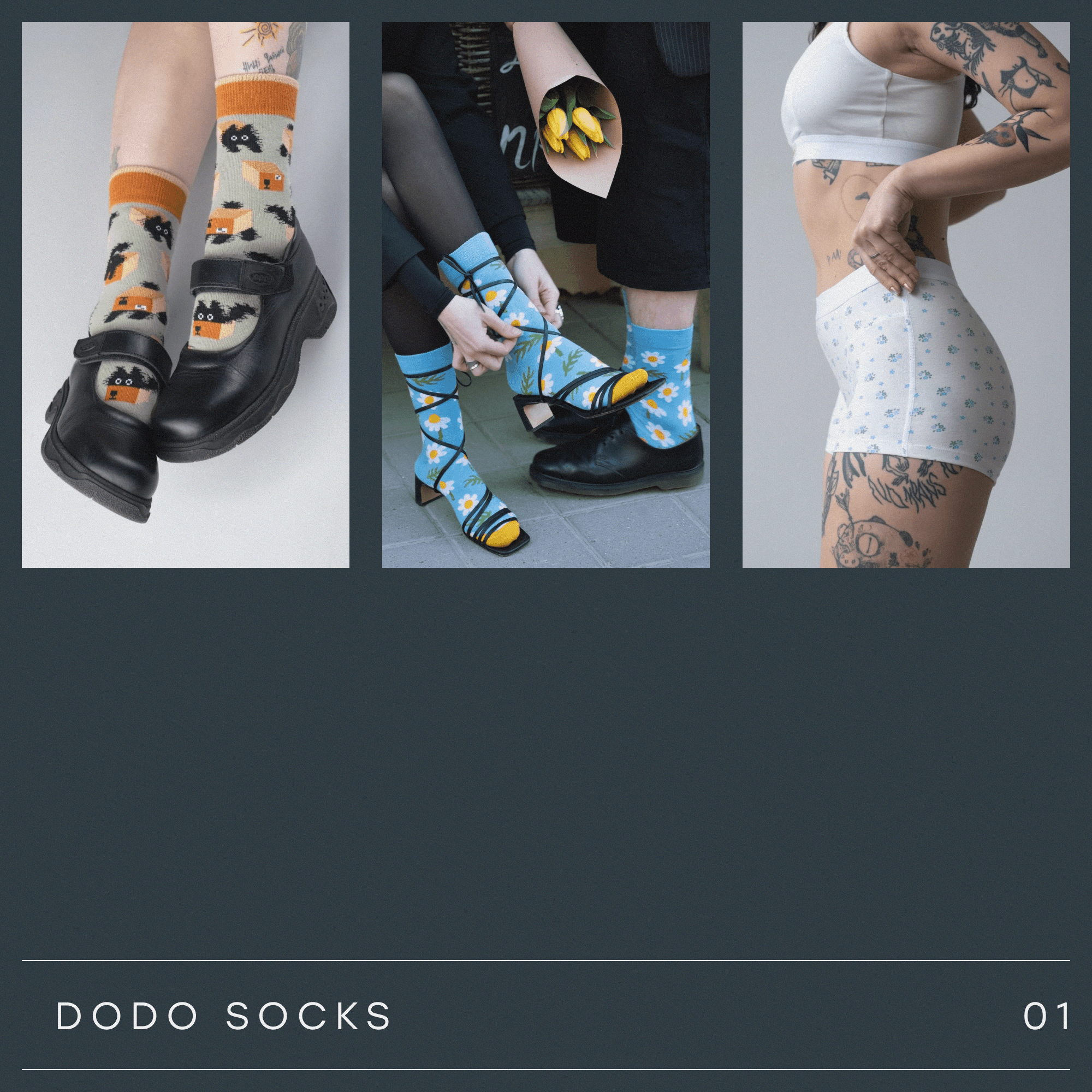
Dodo Socks
About the business: Dodo Socks is a vibrant socks and underwear brand founded by IT colleagues Marta Turetska and Andrii Pliasun. Their journey began in 2015 with a simple yet powerful idea: to replace the drab grey and black socks typically sent to soldiers at the front with warm, colorful alternatives. Soon after, Dodo Socks was born, making bold, original designs its signature trademark.
The brand is a dedicated supporter of the Ukrainian military, having donated over $450,000 during the four years of the full-scale war. Beyond direct donations, Dodo Socks features an extensive charity collection created in collaboration with various Ukrainian NGOs. All profits from these sales are channeled directly into their respective humanitarian and defense projects.
How it suffered: Before the full-scale invasion, Dodo Socks’ primary manufacturing partner was located in Rubizhne, Luhansk region. In the spring of 2022, the city fell under Russian occupation. Russian forces looted the warehouses and burned the production facilities and equipment. The factory owners managed to evacuate to Lviv, where they established a new production site. Today, they continue to manufacture for Dodo Socks and other partners.
JUL
About the business: It’s a mass-market women’s and men’s apparel brand founded by Julia Logvin. The brand is a proponent of slow and sustainable fashion, creating pieces with minimalist designs and a versatile color palette that easily mix and match. Sustainability is at the core of their mission: through the JUL for Earth initiative, the brand implements responsible manufacturing processes and promotes the reuse of materials.
How it suffered: A massive Russian missile strike on March 14, 2026, destroyed JUL’s production facility in Brovary. Fortunately, no employees were injured, but the workspace, specialized machinery, and a significant portion of their warehouse were lost to the fire. While the brand has been forced to temporarily suspend production, they continue to ship the remaining stock that survived the strike.

TG Botanical
About the business: Founded by designer Tetyana Chumak, this women’s apparel brand blends the trendy Y2K aesthetic with a deep commitment to nature. The brand uses natural fabrics treated with organic dyes derived from onion husks, turmeric, and beetroots. Their debut collection featured dresses and pajamas crafted from hemp and nettle. The TG Botanical team even includes a specialist dedicated to reviving ancient recipes for plant-based textiles—including fibers made from spruce branches. The brand is a regular participant in prestigious international events, including Copenhagen Fashion Week.
How it suffered: In March 2026, a Russian strike destroyed the building in Brovary that housed the brand’s production facility. This hub was the heart of Tetyana Chumak’s operations, producing garments for TG Botanical, her second brand Tago, and several other Ukrainian labels. Among them was Anisimov Menswear, the brand responsible for the Ukrainian Paralympic team’s uniforms and bespoke suits for President Volodymyr Zelenskyy. Currently, Tetyana is searching for new production premises while selling the surviving inventory to keep the business afloat.
- Order apparel by TG Botanical, Tago and Anisimov Menswear

Moya Knyzhkova Polytsia (My Bookshelf)
About the business: Founded in 2014 by Nataliia Mospan, this network of three bookstore-cafes in Kyiv and Chernihiv was a trailblazer in the industry. Moya Knyzhkova Polytsia became the first bookstore in Ukraine to completely exclude Russian-language books from its shelves, long before it became a national trend. Beyond the domestic market, Mospan actively promotes Ukrainian authors abroad. In 2023, she founded the children’s publishing house Le Petit Canard (The Little Duckling) in France, aimed at publishing children’s literature with a distinct “Ukrainian flair” in the French language.
How it suffered: In the winter of 2026, relentless Russian strikes on heating infrastructure left one of the Kyiv bookstores without warmth, causing the pipes to freeze. Following repairs, the sudden restoration of running hot water caused the pipes to burst. The resulting flood of water and scalding steam destroyed nearly 10,000 books, with damages exceeding $39,000. You can support the bookstore by ordering Ukrainian books that were safely stored in their warehouse or other locations within the network.

Practik
About the business: Practik is a manufacturer of nutritious food and healthy treats for dogs and cats. By utilizing advanced production technologies, the brand constantly develops new formulations and gourmet snacks for pets. Their mission is to transform the way Ukrainians approach pet nutrition, encouraging a more conscious and healthy lifestyle for our four-legged companions.
How it suffered: In the autumn of 2025, a Russian drone strike hit the PRACTIK production facility in the Kyiv region. The building, specialized equipment, and a significant portion of their stock were completely destroyed by fire. The brand secured a new location within just a few days and resumed shipping orders—initially using remaining stock which was soon followed by fresh batches from their newly established production lines.

Slovyansk ceramics
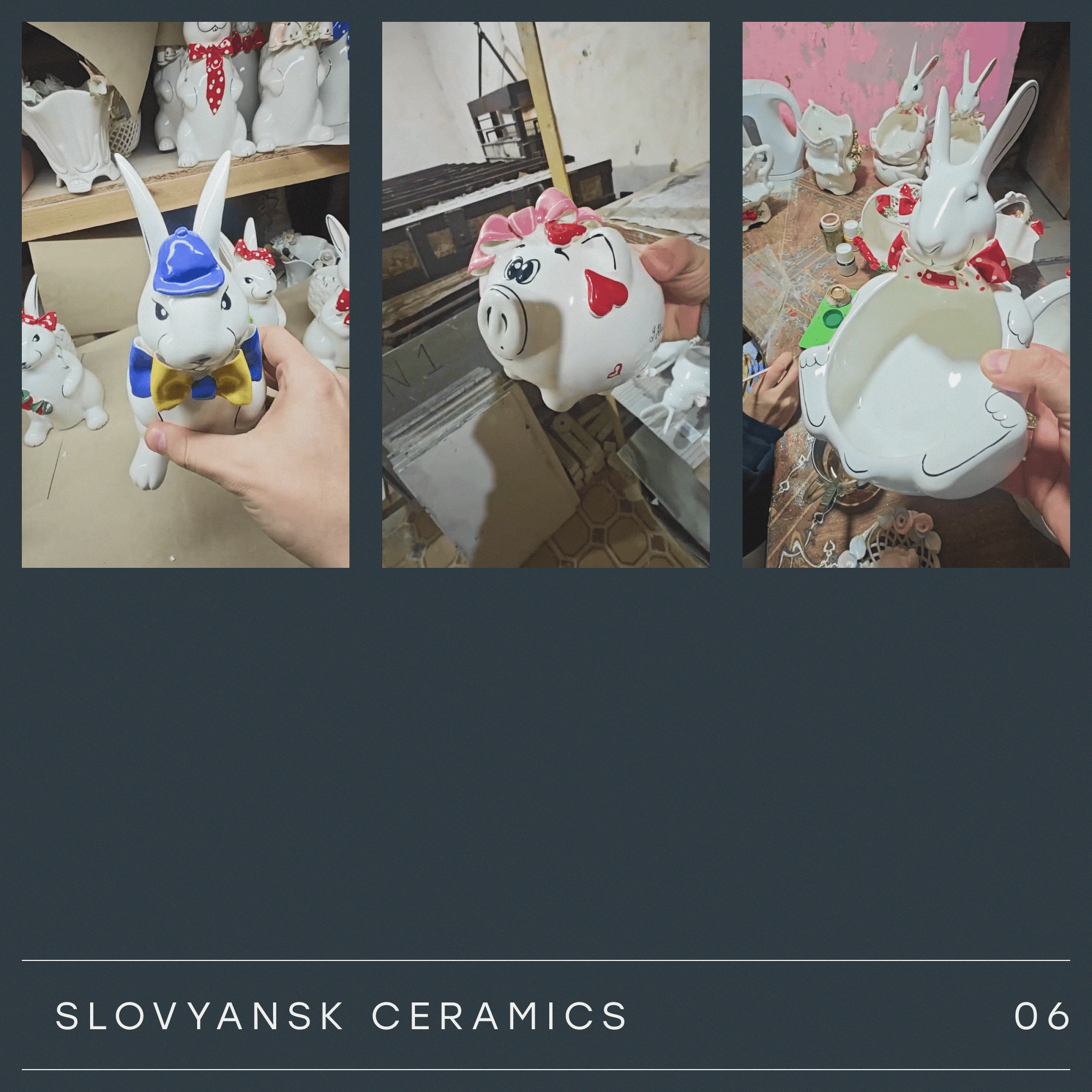
About the business: Located in Slovyansk, Donetsk region—just 15 kilometers from the front line—this studio specializes in handcrafted ceramic souvenirs. Founded by ceramicist Taras Snizhkovskyi, the brand produces unique candy dishes, vases, and festive decor. Many of his pieces feature bold, unconventional designs, characterized by vibrant colors and intricate 3D elements. While the studio accepts custom orders, the majority of its products are exported to international customers across the United States and Europe.
How it suffered: The business operates under extreme duress, as it sources raw materials from towns directly in the path of the Russian advance. With every shipment potentially being the last, Snizhkovskyi has made the difficult decision to evacuate the production facility and his team to the Cherkasy region in 2026. Despite the constant threat, he continues to create art that travels from the edge of the war zone to homes around the world.
- The souvenirs can be ordered via Telegram messenger
Dodo Toys
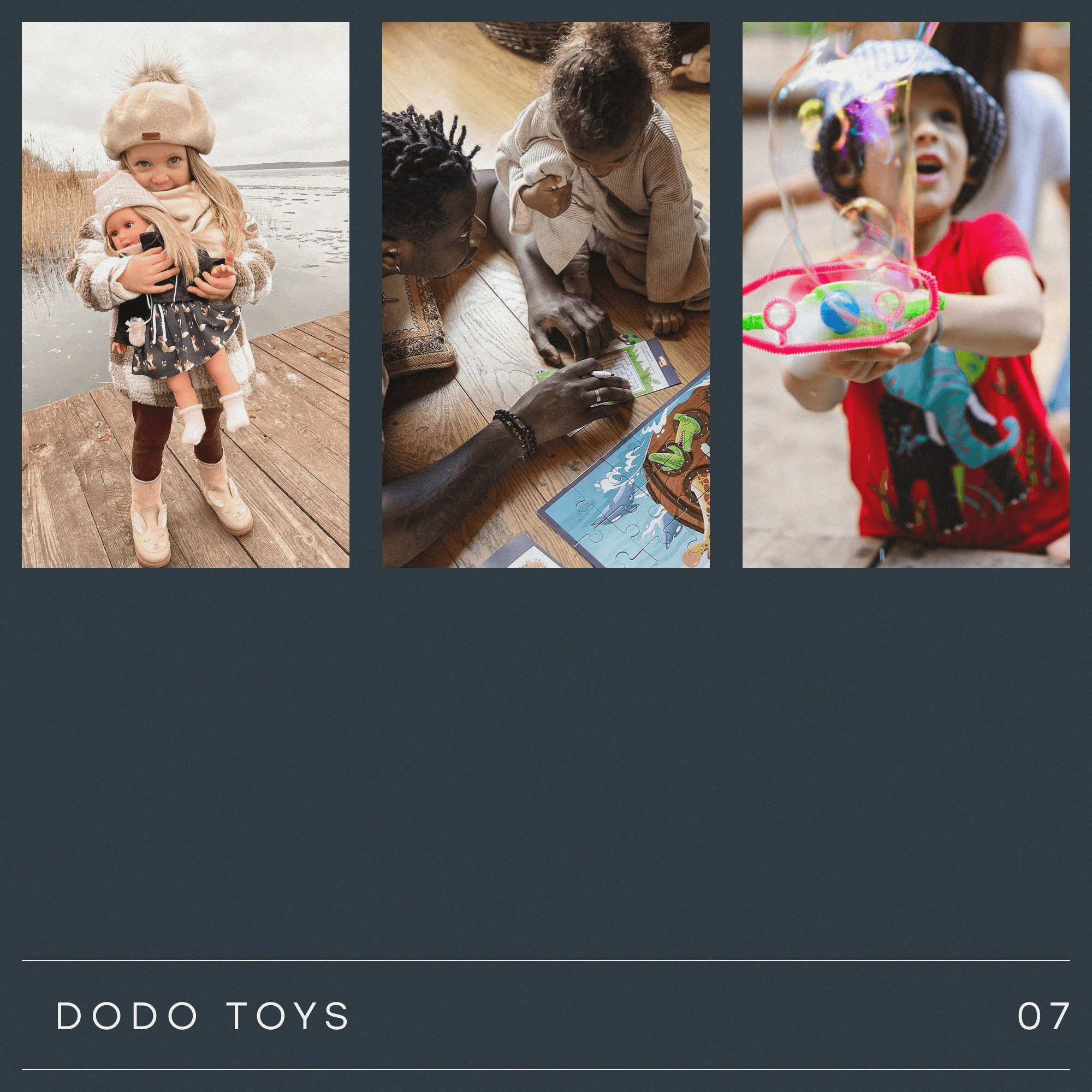
About the business: Founded in Kharkiv by husband-and-wife team Olena and Dmytro Terpai, Dodo Toys specializes in puzzles and developmental toys for children. Their extensive catalog features approximately 350 products, including board games, magnets, brain teasers, and coloring books. To legally feature world-renowned characters, the brand partners with global giants such as Paramount, Hasbro, and Warner Bros. Simultaneously, Dodo Toys champions local talent, commissioning bespoke illustrations for their puzzles and coloring books from Ukrainian artists.
How it suffered: In the spring of 2024, a Russian missile strike landed near the production facility of Dodo Toys' Kharkiv-based manufacturing partner. This partner was responsible for producing the brand’s creative kits, puzzles, and children’s books. While the contractor’s employees miraculously remained unharmed, the strike caused fatalities at neighboring enterprises.
- Order Dodo Toys on Amazon or on the brand’s website
Roshen
About the business: Roshen is a global confectionery giant, ranked among the top 30 largest candy manufacturers in the world. Annually, the company produces approximately 300,000 tons of products, including chocolates, candies, caramels, biscuits, wafers, jellies, and cakes. Exporting to 55 countries, Roshen products are staples in supermarkets, gas stations, and their own signature brand stores. Their most iconic product remains the legendary “Kyivskiy” cake.
How it suffered: In January 2026, a Russian strike severely damaged the Roshen factory in Kyiv. The attack destroyed the upper floor of the facility, which housed production workshops and office spaces. The strike claimed the life of one employee, while two others sustained injuries.

Honey
About the business: Honey is a celebrated network of patisseries and cafes founded by husband-and-wife duo Anna and Stas Zavertailo. The brand is renowned for its avant-garde desserts, featuring unconventional shapes and sophisticated flavor pairings. Their creativity shines in signature cakes designed to look like a traditional plate of varenyky (dumplings) or the iconic chestnuts of Kyiv.
Their extensive range includes pastries, cakes, eclairs, croissants, macarons, chocolates, and artisanal candies. For those looking for treats with a long shelf life of six months or more, Honey offers freeze-dried ice cream, salted caramel, chocolate spreads, jams, craft lemonades, kombucha, and drip coffee. They also curate elegant gift sets featuring a variety of their best-selling sweets.
How it suffered: In the summer of 2025, Russian missiles struck near one of Honey’s cafes. The resulting blast wave shattered windows and caused significant damage to the facade, furniture, and professional equipment. The strike also devastated nearby residential buildings and offices. To support Honey’s recovery, customers can place international orders for their long-shelf-life products, bringing a taste of Ukrainian resilience to their doorstep.

Companies that have temporarily stopped working or aren’t yet shipping abroad
Persha Pekarnya (The First Bakery)
About the business: Founded in 2018 by Oleksandr Vlasov, Persha Pekarnya is a bakery chain based in Kherson. Before the full-scale invasion, Vlasov managed six thriving locations. Today, he has lost control over two bakeries situated on the Russian-occupied left bank of the Kherson region, while a third location in Kherson was destroyed by a Russian drone strike.
Despite the immense danger, Persha Pekarnya remained a lifeline for the people of Kherson even during the occupation. With food in short supply, locals formed long queues for fresh bread, which Vlasov baked using ingredients sourced exclusively from Ukrainian farmers. Following the city’s liberation, the chain continues to operate under grueling conditions. In this frontline city, high-quality products are a rarity, and the population faces daily shelling from Russian artillery and Multiple Launch Rocket Systems (MLRS). To combat the constant threat of drones targeting civilians and vehicles, anti-drone netting has been installed throughout the city.
How it suffered: In January 2026, a Russian strike completely leveled the building housing the chain’s flagship and oldest bakery. The resulting fire consumed not only the premises but also the expensive, specialized equipment necessary for large-scale production.

Ankers
About the business: Ankers is a women’s activewear and casual wear brand with a singular mission: to create pieces so comfortable you’ll never want to take them off. The team invests significant time in rigorous design testing to ensure their clothing never restricts movement, pinches the body, or bunches up during intense workouts. Their high-performance fabrics are engineered to be odor-resistant, durable against stretching or deformation, and completely opaque.
How it suffered: In March 2026, a Russian strike destroyed Ankers’ warehouse in the Kyiv region, leaving the entire inventory consumed by fire. Currently, the brand is assessing the full extent of the damages and has pledged to resume operations as early as April.

H&H (Roow)
About the business: Roow is a women’s activewear and casual apparel brand featuring a versatile range of fitness sets, leggings, tops, shorts, and lingerie. The brand’s signature style focuses on seamless construction combined with lightweight, high-stretch fabrics. Their garments are designed to be completely opaque, provide unrestricted movement, and are engineered to be sweat-resistant, ensuring no visible marks during workouts.
How it suffered: During the strikes on Brovary in March 2026, a ballistic missile completely leveled the brand’s warehouse, destroying their entire inventory. Currently, the Roow team is documenting the destruction and assessing the damages as they prepare for a gradual recovery process.

Medikom
About the Business: Founded in 1992 by two physicians—neurologist Ihor Skurikhin and anesthesiologist Oleksandr Skurikhin—this was the first private medical institution in Ukraine. Today, the network operates three clinics in Kyiv, providing emergency and outpatient care, as well as specialized inpatient treatment. Their comprehensive facilities include a surgical department, dental offices, and a pediatric wing.
How it suffered: In January 2026, a Russian drone struck the clinic’s inpatient building. Tragically, the attack claimed the life of one patient and left several others injured. While the surgical inpatient unit is currently forced to suspend operations, all salvaged medical equipment and patient services have been relocated to other departments within the network.

BACKSTAGE
About the business: Founded in 2010 by Karina Dubinina, BACKSTAGE is a leading beauty salon network in Kyiv. The brand offers a comprehensive suite of services, from hair styling and makeup to professional skincare, massages, and nail care. In 2024, the brand successfully went international, opening two salons in London. BACKSTAGE is also known for its social responsibility, regularly donating to the Ukrainian military and animal welfare organizations.
How it suffered: BACKSTAGE has been hit by Russian aggression twice. The first instance occurred in October 2025, when a drone strike near a business center housing one of their salons shattered the windows and damaged specialized equipment. The team acted quickly, relocating all salvaged tools and materials to a new space to continue their work.
The network faced a second crisis in January 2026. Following Russian strikes on the city’s heating grid, the salon’s pipes froze. When the heating was eventually restored, the pipes burst, flooding the interior with hot water. Despite the chaos, the staff managed to drain the water and save the majority of their equipment. Today, the salon is fully operational once again.

MIDA
About the business: MIDA is a prominent footwear factory based in Zaporizhzhia, which has been in operation since 2004. The brand is well-known for its extensive range of affordable shoes for women, men, and children, combining quality with accessibility. Today, the company maintains a robust retail presence with 28 brand stores operating across Ukraine.
How it suffered: In July 2025, the factory was targeted by three Iranian-made Shahed kamikaze drones. The strikes devastated the roof and caused significant damage to specialized manufacturing equipment, while the resulting blast wave shattered windows throughout the facility. Despite the destruction, the factory refuses to halt production; the team continues to work within the sections of the building that survived the attack.