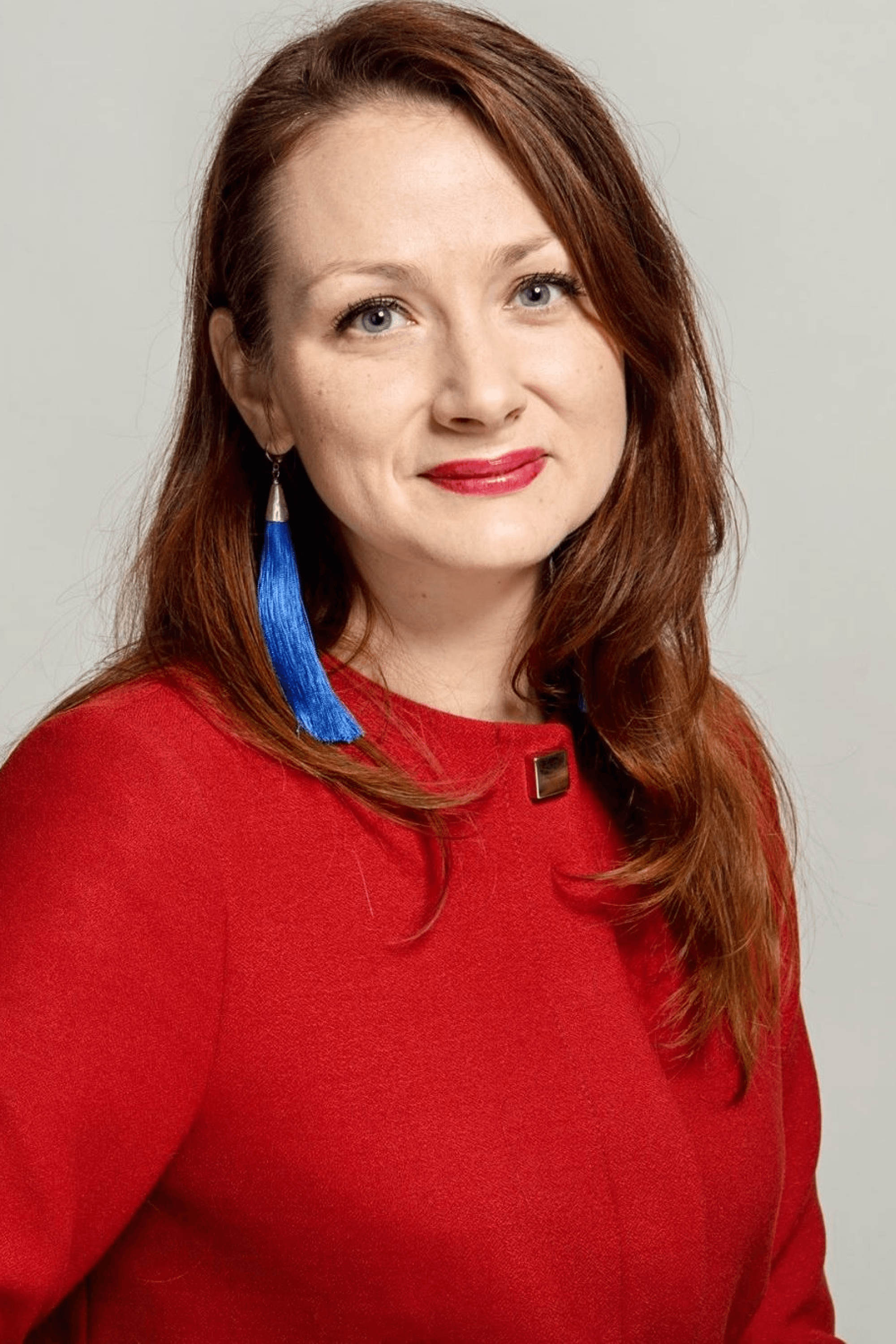
A native of Brovary, 44-year-old Iryna Solomko is a journalist, documentarian, communications specialist, and mother of two. In 1998, she entered the Institute of Journalism at Taras Shevchenko National University of Kyiv, and just two years later, she began working in the media. During her 16 years in the profession, Iryna wrote for leading Ukrainian publications—Korrespondent magazine and Segodnya newspaper—and created special projects and documentaries for the ICTV channel.
In 2016, Iryna recorded an interview on Hromadske Radio with American journalist Adrian Bonenberger, who later became her husband. The couple planned to stay in Ukraine, but Adrian received a job offer in the U.S., and they moved there. In the States, Iryna worked for Voice of America and later became the chief communications officer for the Leleka Foundation.
In November 2025, Iryna Solomko won a local election and became a member of the Branford Representative Town Meeting in Connecticut. YBBP journalist Roksana Rublevska spoke with Iryna about her career, emigration, the election campaign, and her plans regarding participation in U.S. national politics.
When did you realize you wanted to work in international journalism?
I was sure of this for as long as I can remember. Since childhood, I watched international news, and from my teenage years, I became interested in international politics. To report on it in detail, I enrolled in the Institute of Journalism at Taras Shevchenko National University of Kyiv. My father, who worked for the SBU (Security Service of Ukraine), compared a journalist’s job to that of a beat cop and didn’t support my choice. He believed such a rhythm of life would be too exhausting for a woman, but those arguments didn’t convince me. I wanted to tell people the truth.
What were your first steps in the profession?
In the early 2000s, media in independent Ukraine were just developing, and there were many opportunities. Between my second and third years, I interned in the international department of the Inter TV channel. I prepared materials for morning broadcasts starting at 4:00 AM and then went to university for classes. The schedule was exhausting, but working with information daily is exactly how you become a journalist.
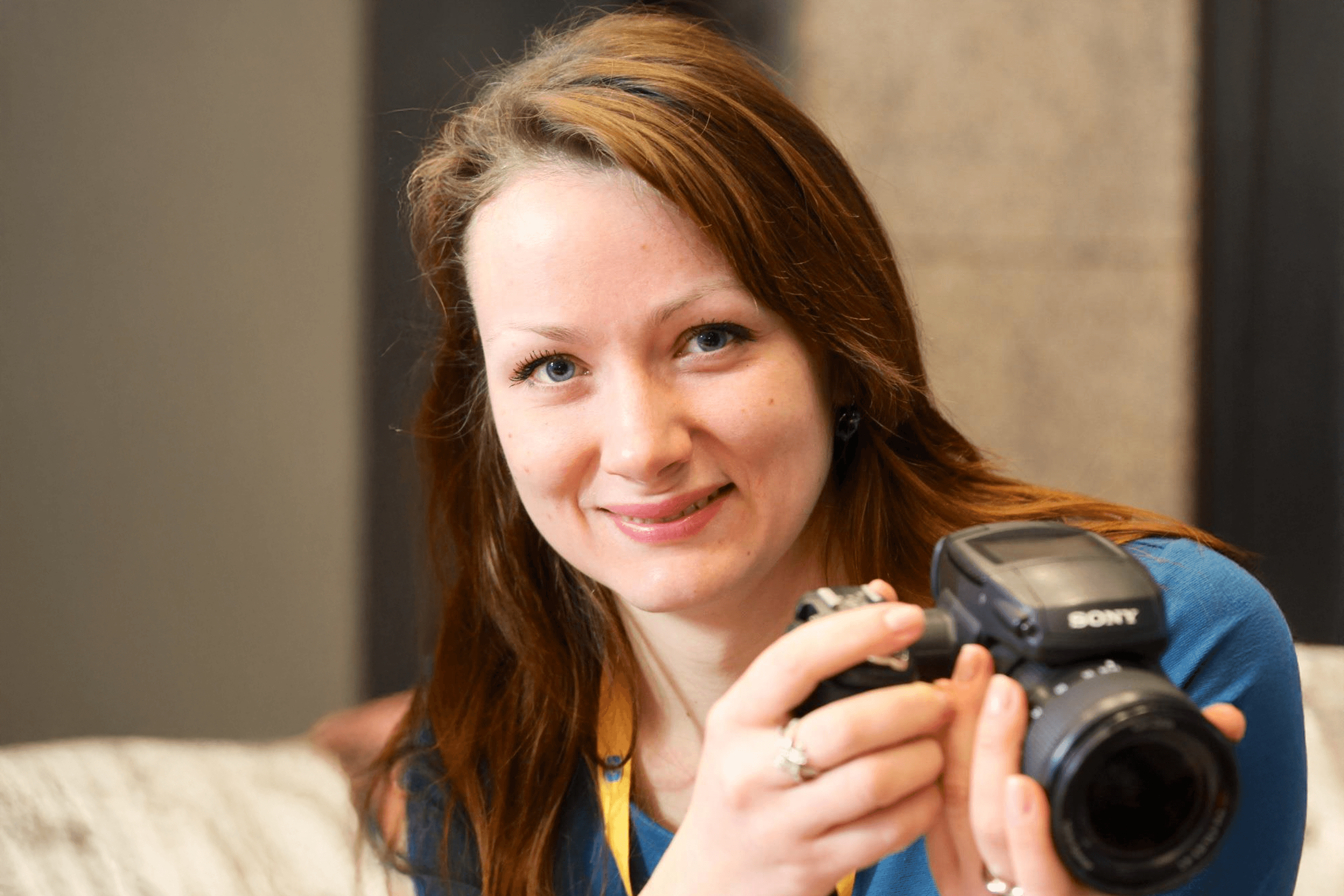
Korrespondent magazine was one of the leading Ukrainian media outlets of the 2000s and was long considered the standard for journalistic analysis. How did you get there?
After my internship at Inter, I saw an advertisement that a new media outlet was looking for journalists. During the interview, it turned out to be Jed Sunden’s project, the new publication Korrespondent. I was hired for the international department; my first piece concerned the beginning of the U.S. military campaign in Afghanistan. Later, this moment became symbolic for me: as it turned out, my future husband was there at the time.
I worked at Korrespondent twice: from 2002 to 2007 and from 2010 to 2013. First in the international department, then in the “Life” section. At some point, I realized that Ukrainian “international news” amounted to adapting news from international agencies, and I wanted to work more with people. So, I switched to topics that were hardly covered in Ukraine back then: reproductive health and surrogacy.
In 2007, I became a political observer and news editor for Segodnya newspaper. But after three years, it became obvious that the editorial office was working under pressure and censorship. I resigned and returned to Korrespondent as an observer—a position created specifically for me. I conducted major interviews with international speakers. I resigned in 2013 after Korrespondent was sold to Serhiy Kurchenko. For me, this was a matter of principle.
That same year, the Revolution of Dignity began in Ukraine. Did you become interested in documentary filmmaking against that backdrop?
Yes. I became the editor-in-chief of special projects for ICTV. After the Revolution of Dignity ended, we understood that there was no time to lose and that we needed to film a documentary about these events. We recorded testimonies soon after they happened, and the film turned out to be very poignant. Later, I spent almost a year on the front line, filming stories about the “Russian Spring”, volunteers, and our military: the first defenders of Ukraine, medics, special forces, and volunteers. I am very proud of this stage of my career.
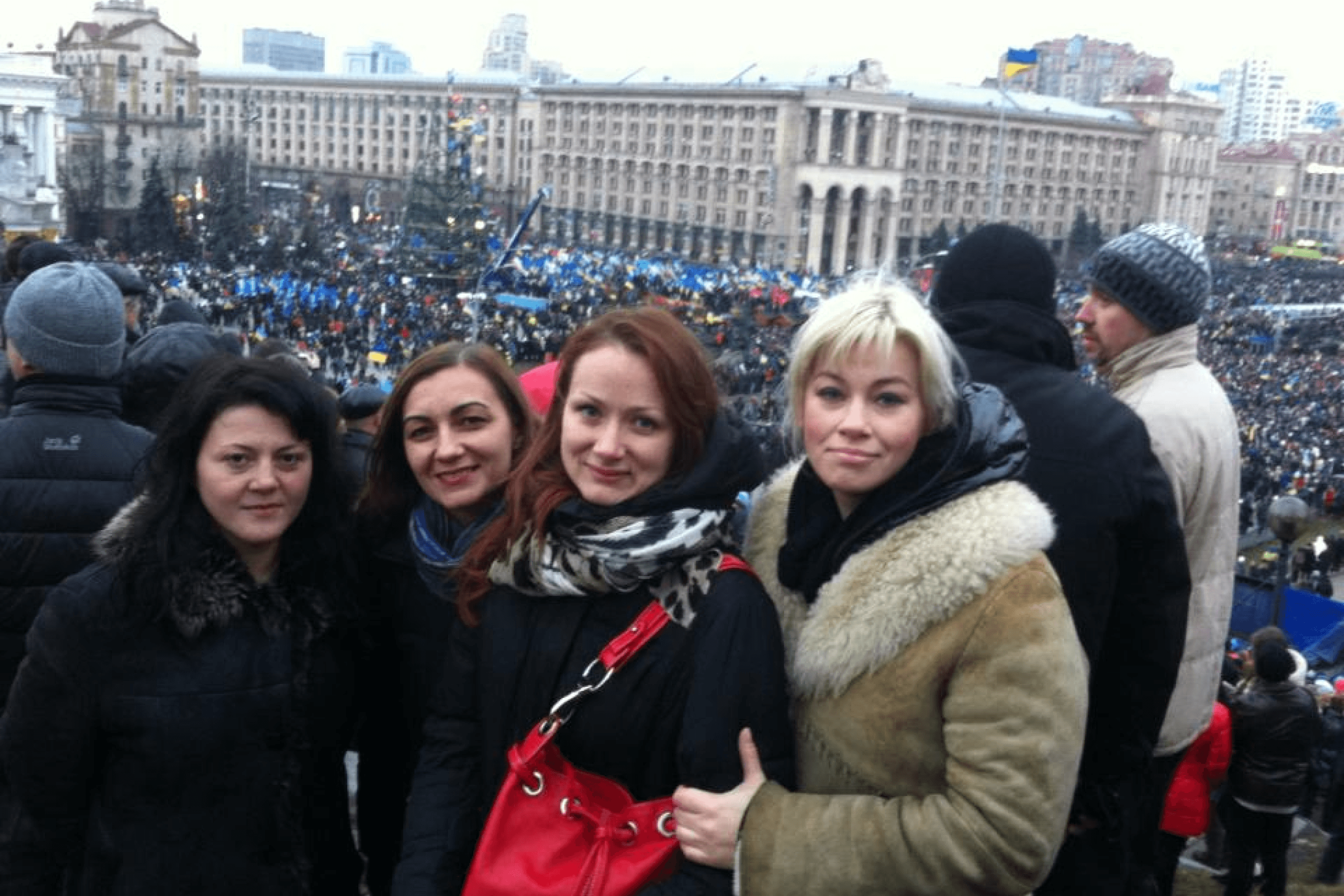
Iryna Solomko at a peaceful protest on Maidan Nezalezhnosti in Kyiv. December 2, 2013. 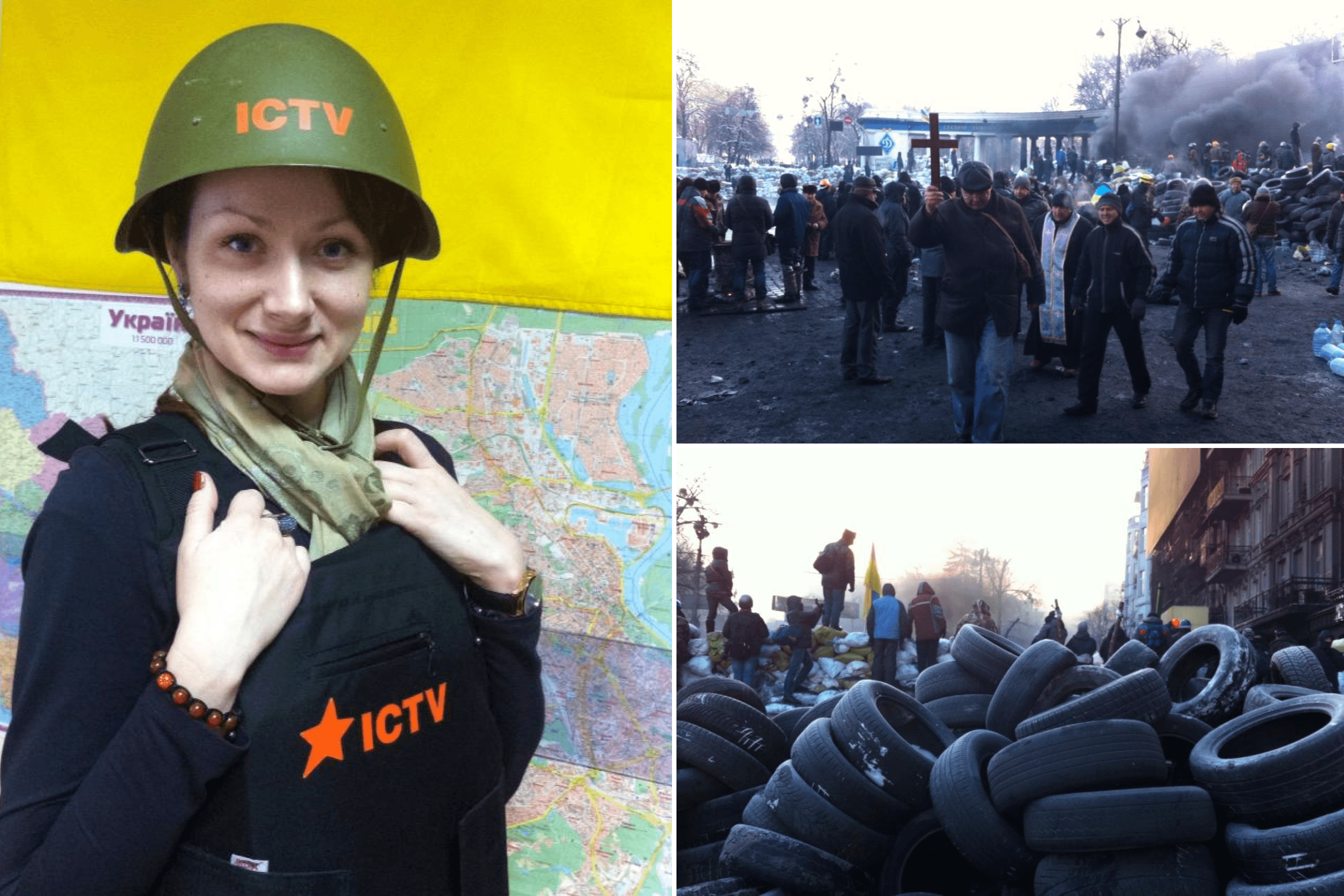
Iryna Solomko preparing for departure. February 5, 2014. 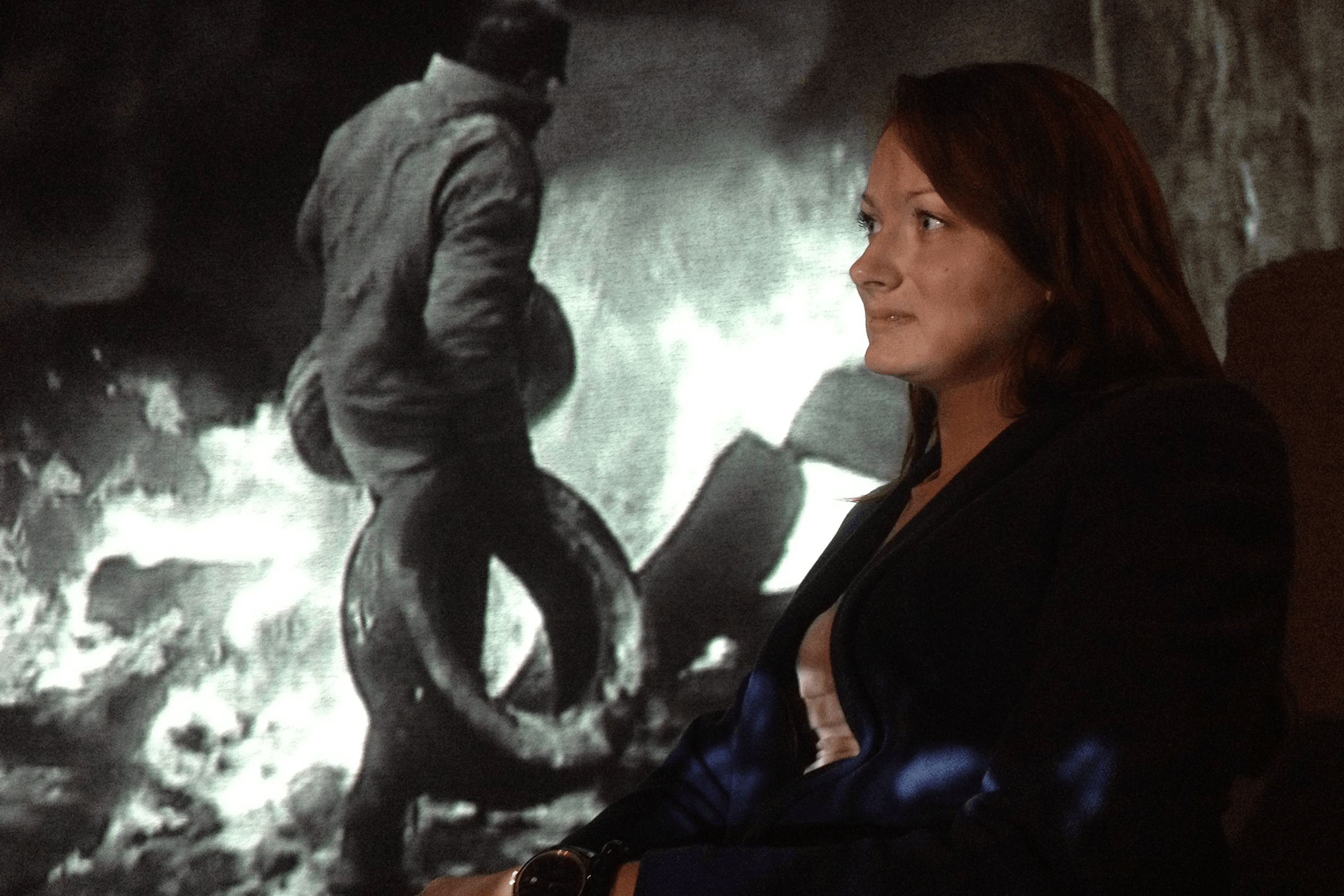
Iryna Solomko while working on the special project “Revolution of Dignity” for the ICTV television channel.
Why did you decide to emigrate to the U.S.?
After my divorce, I couldn’t find my person for a long time. In January 2016, I was asked to record an interview with American journalist Adrian Bonenberger for Hromadske Radio. I was very tired and didn’t want to go, but I did the interview anyway. That’s how I met my future husband.
Did you plan to live in Ukraine or move to the U.S.?
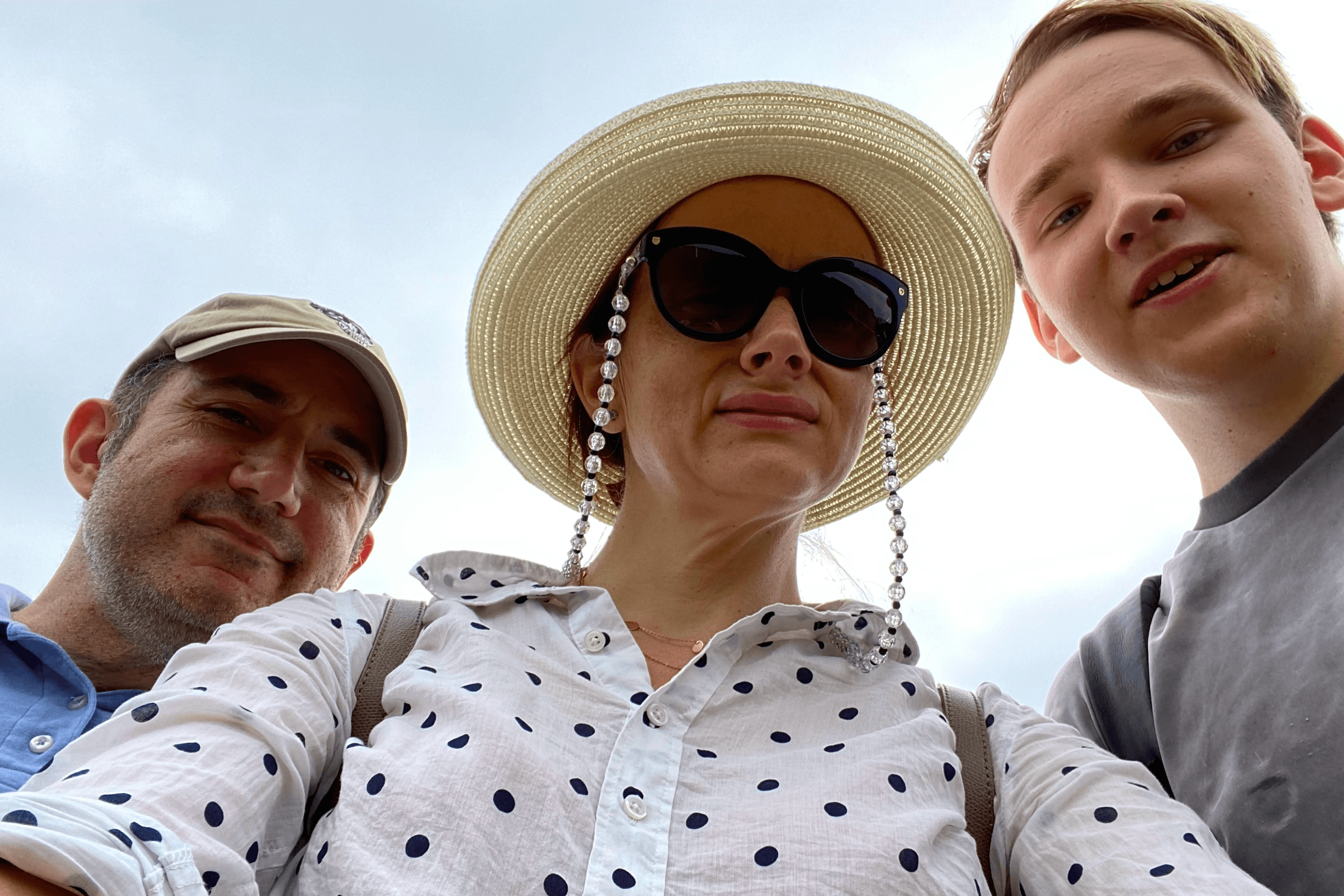
I never wanted to live in the U.S. When my relationship with Adrian became serious, I asked directly: “Maybe we shouldn’t continue? I don’t want to go to the U.S. because I feel I should be in Ukraine helping it change for the better”. He replied that if it was that important to me, we would live in Ukraine. We got married in Kyiv and lived there for a year and a half. My husband looked for work in Ukraine and had several potential projects related to national security, but after Donald Trump’s victory in 2017, those opportunities vanished. Then he started looking for work in the U.S. and was offered a position on the communications team at the Yale School of Medicine. I decided I had to support him, so I agreed to the move. Due to paperwork, we lived apart for a year. In August 2018, I moved to Branford, Connecticut, and immediately received a Green Card as the spouse of an American citizen.
Did you plan to continue working as a journalist, but in the U.S.?
I realized I wouldn’t be able to work as a TV journalist: my English wasn’t sufficient for American professional standards, even though I was told my language level was good. So, I started thinking about what I could do. I considered documentary filmmaking because, in the U.S., most documentaries don’t use voice-over text; everything is built on quotes from the subjects. In 2021, I tried to apply for a program at the Jackson School of Global Affairs at Yale University. For this, I had to take the TOEFL and score 104. I took it four times and kept getting 100. Eventually, I got the desired 104 and applied, but I wasn’t accepted.
How did you end up working for the Ukrainian service of Voice of America?
In 2019, Myroslava Gongadze wrote to me that there was a job opportunity at Voice of America: the editorial office was opening a position in New York. Due to lengthy security checks, the hiring process was delayed, and I received the actual offer only in early 2020. I worked as a multimedia journalist: I filmed, edited, and prepared segments entirely on my own. The experience gained at ICTV helped a lot.
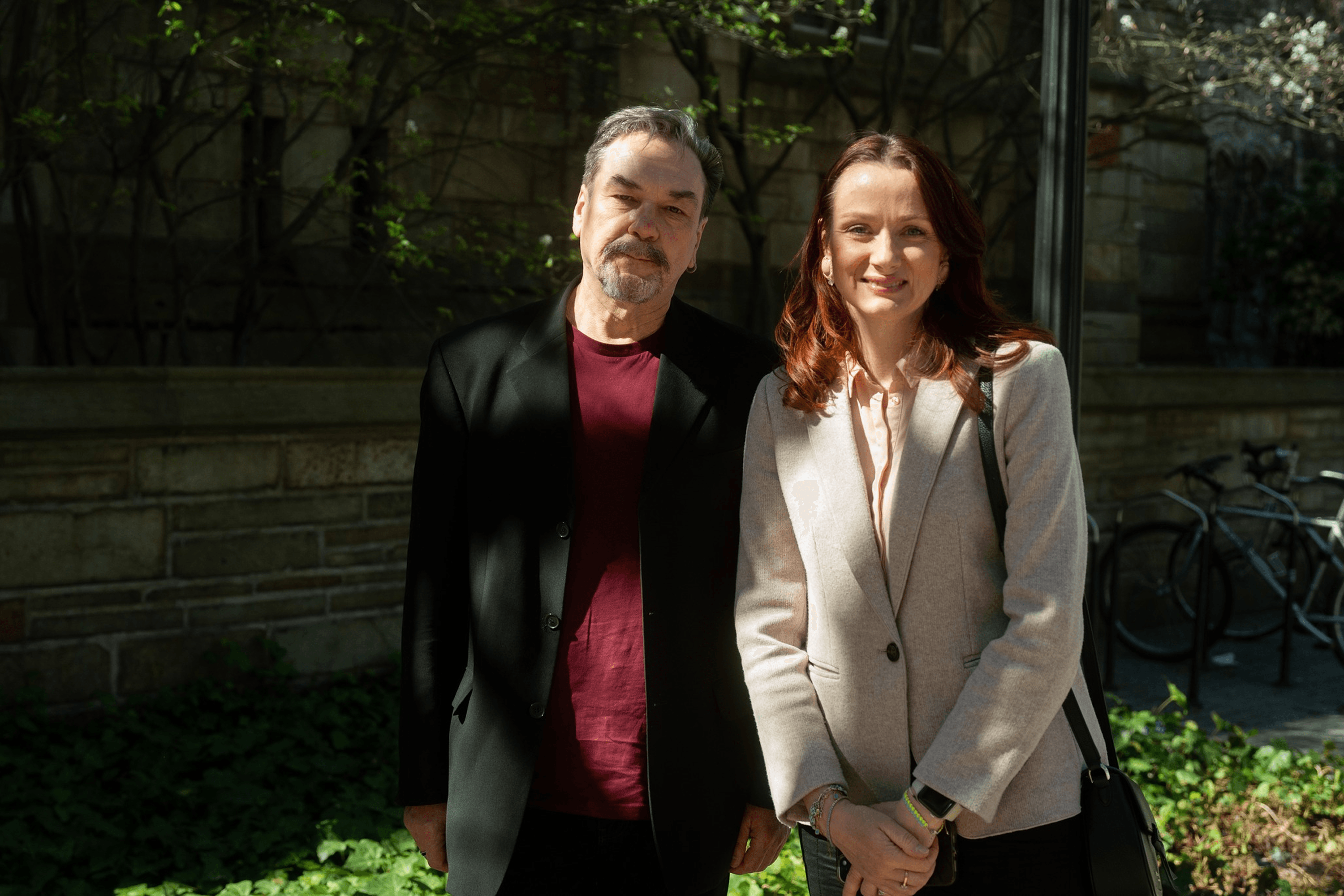
Iryna Solomko interviews Ukrainian writer Yurii Andrukhovych for Voice of America. Photo: Ira Solomko Bonenberger / Facebook / YBBP 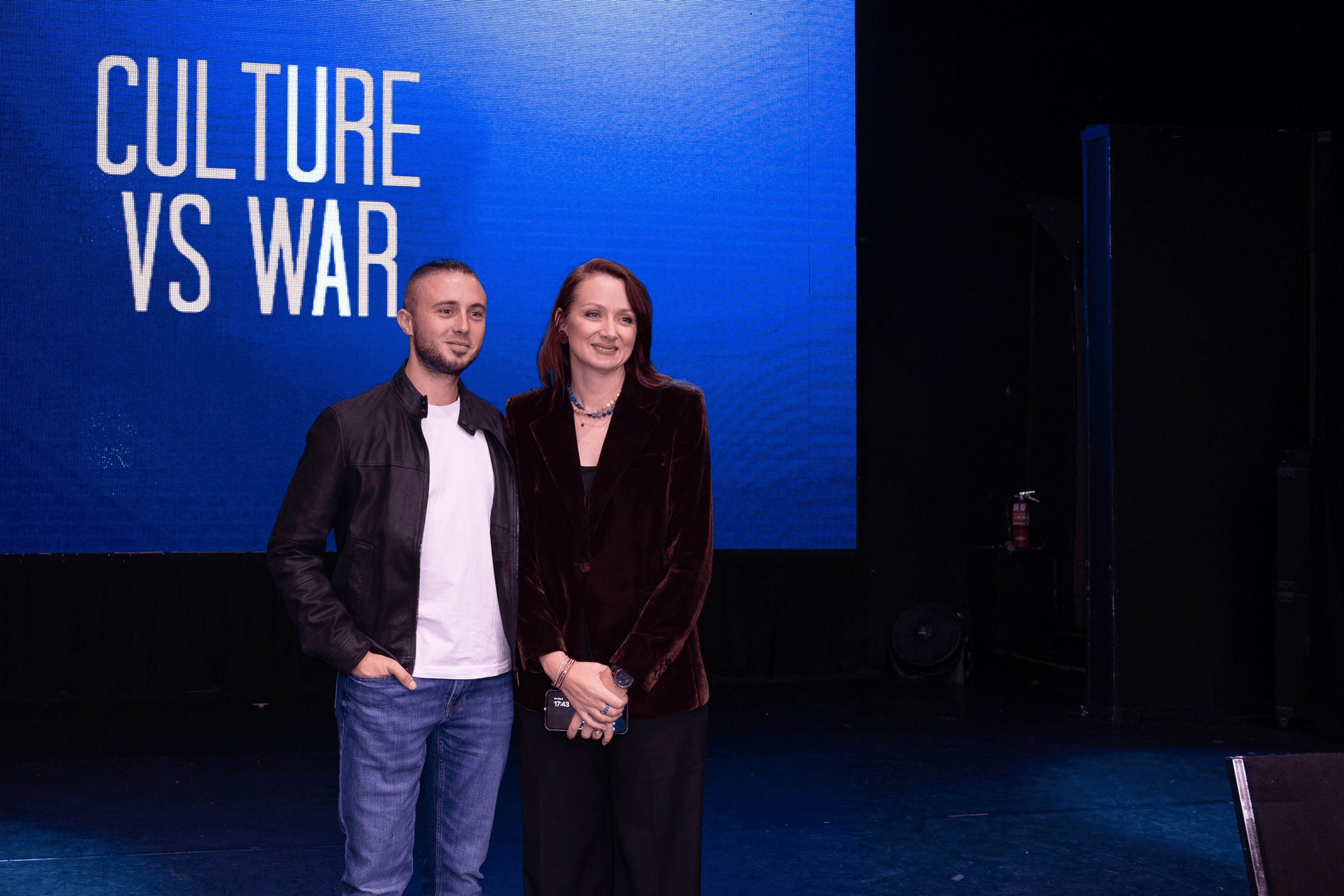
Iryna Solomko interviews Ukrainian singer Taras Topolia for Voice of America. Photo: Ira Solomko Bonenberger / Facebook / YBBP 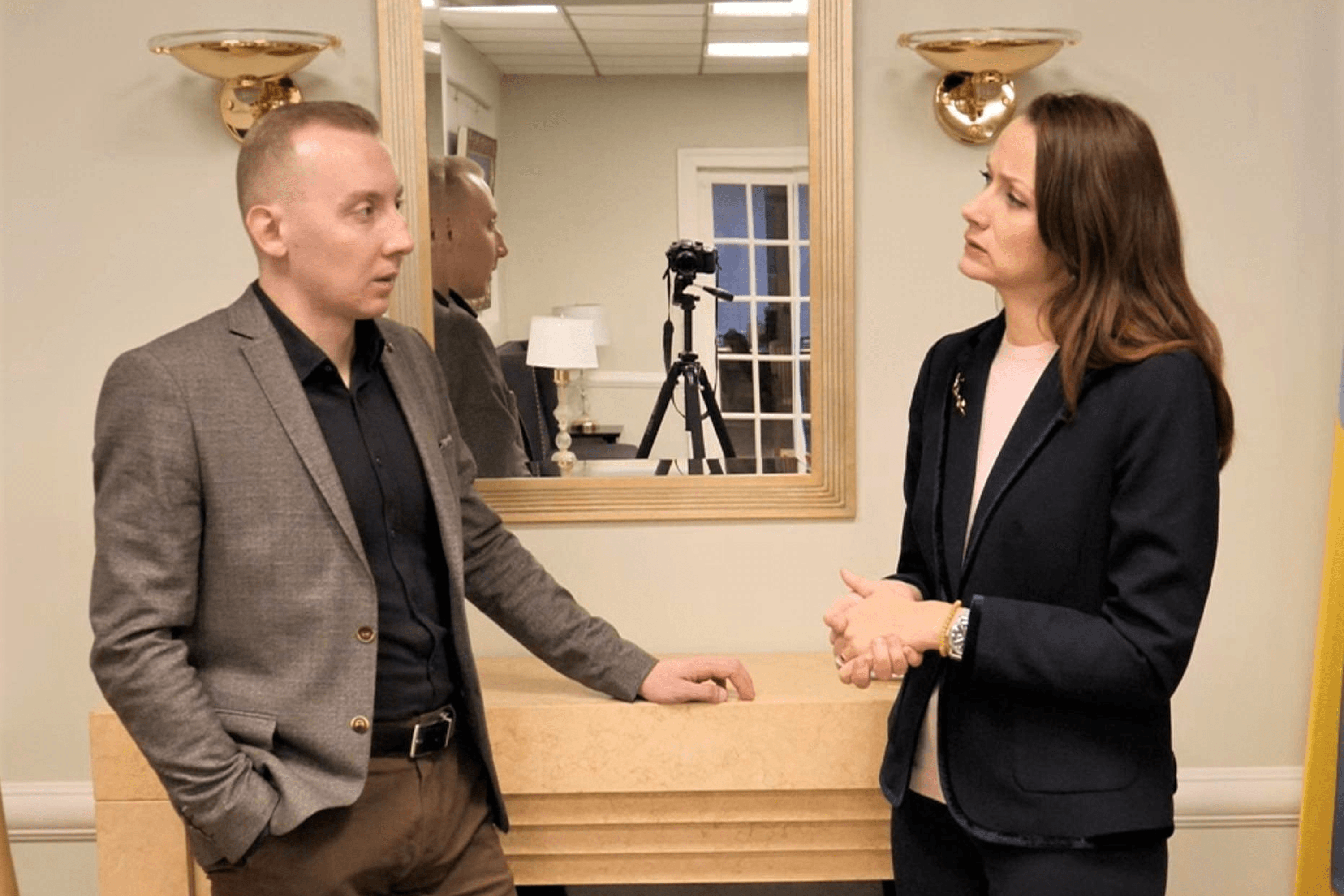
Iryna Solomko interviews Ukrainian journalist and writer Stanislav Aseyev for Voice of America. Photo: Ira Solomko Bonenberger / Facebook / YBBP 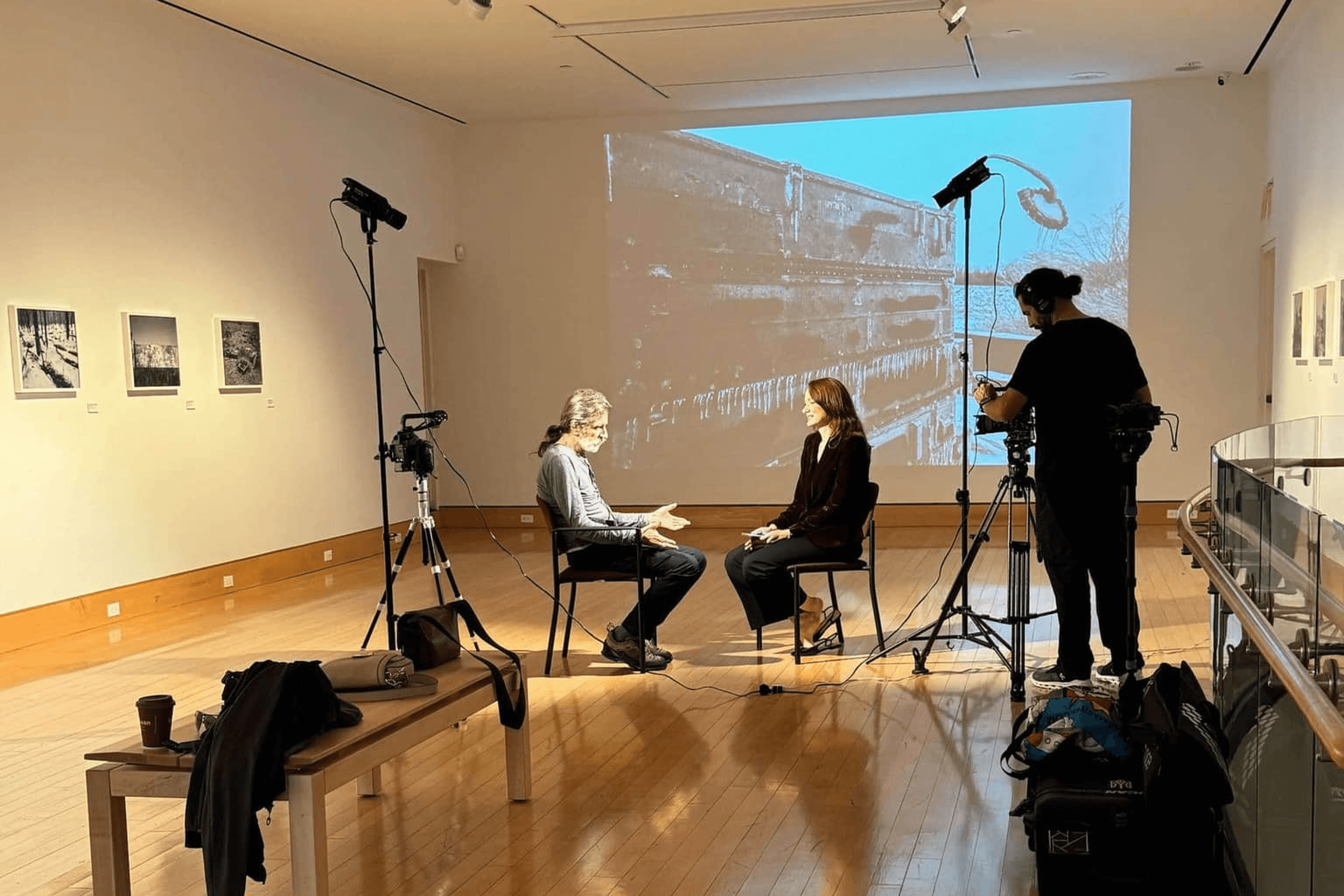
Iryna Solomko interviews Ukrainian photographer Oleksandr Hlyadelov for Voice of America. Photo: Ira Solomko Bonenberger / Facebook / YBBP 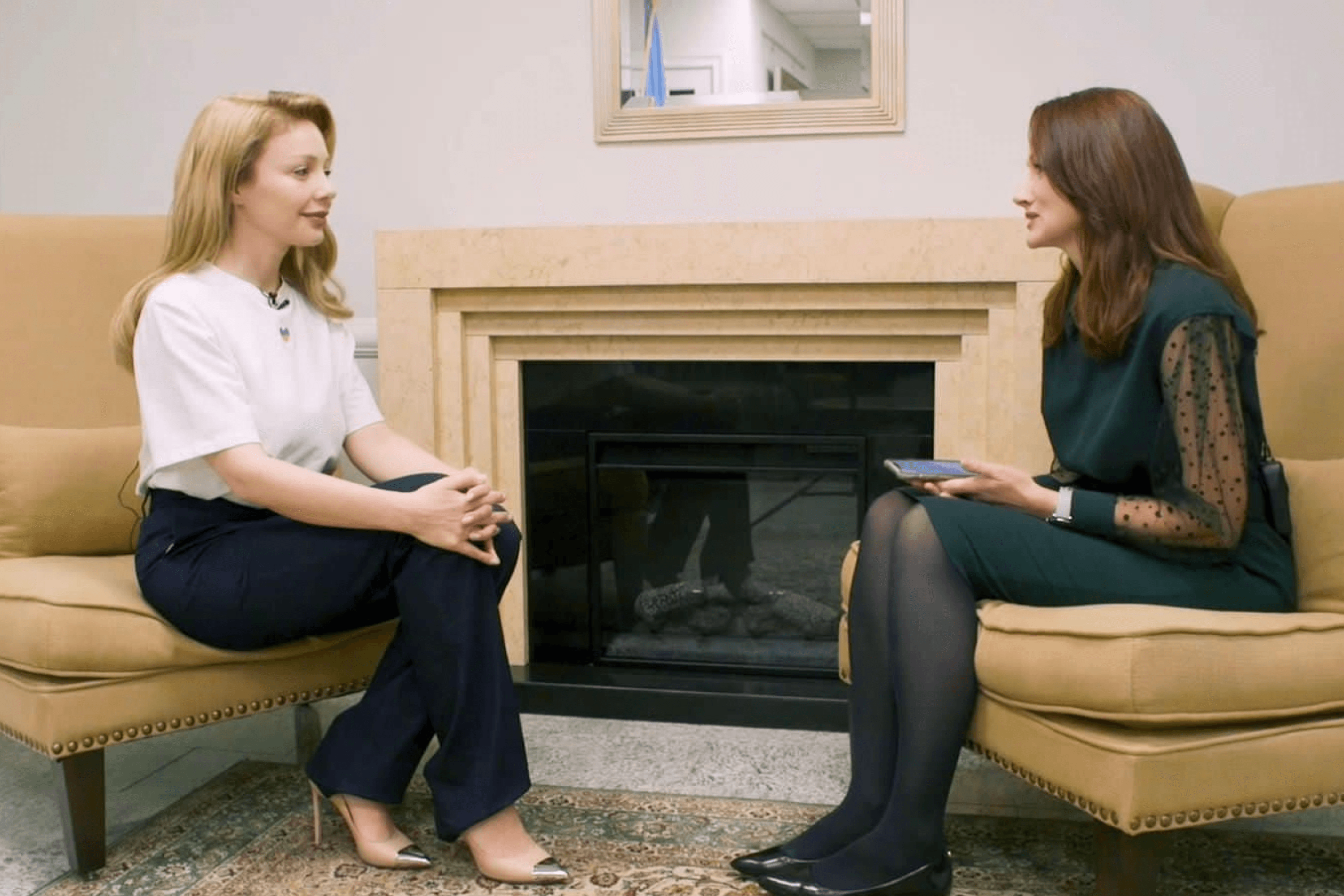
Iryna Solomko interviews Ukrainian singer Tina Karol for Voice of America. Photo: Ira Solomko Bonenberger / Facebook / YBBP 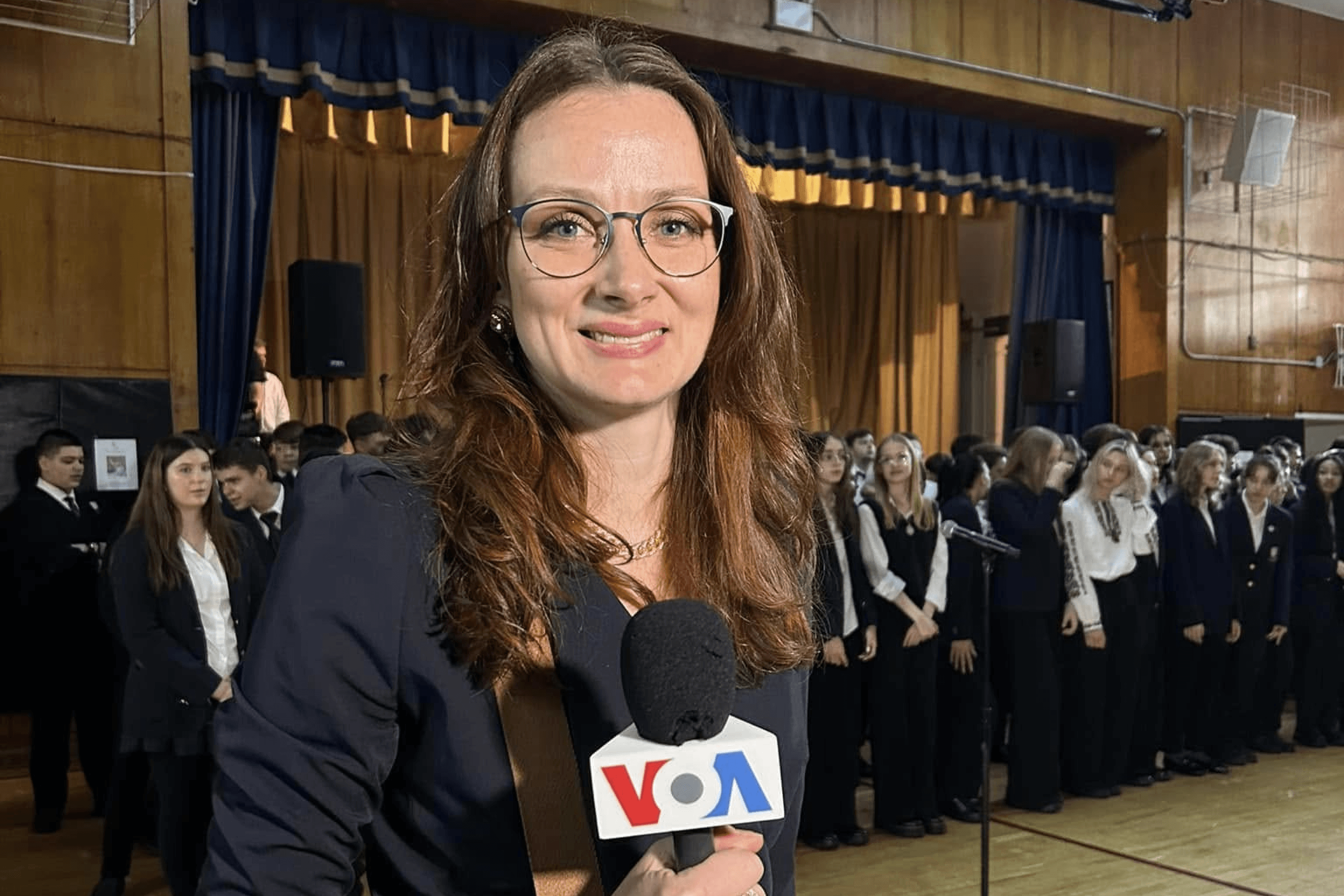
Iryna Solomko works as a journalist for Voice of America. Photo: Ira Solomko Bonenberger / Facebook / YBBP 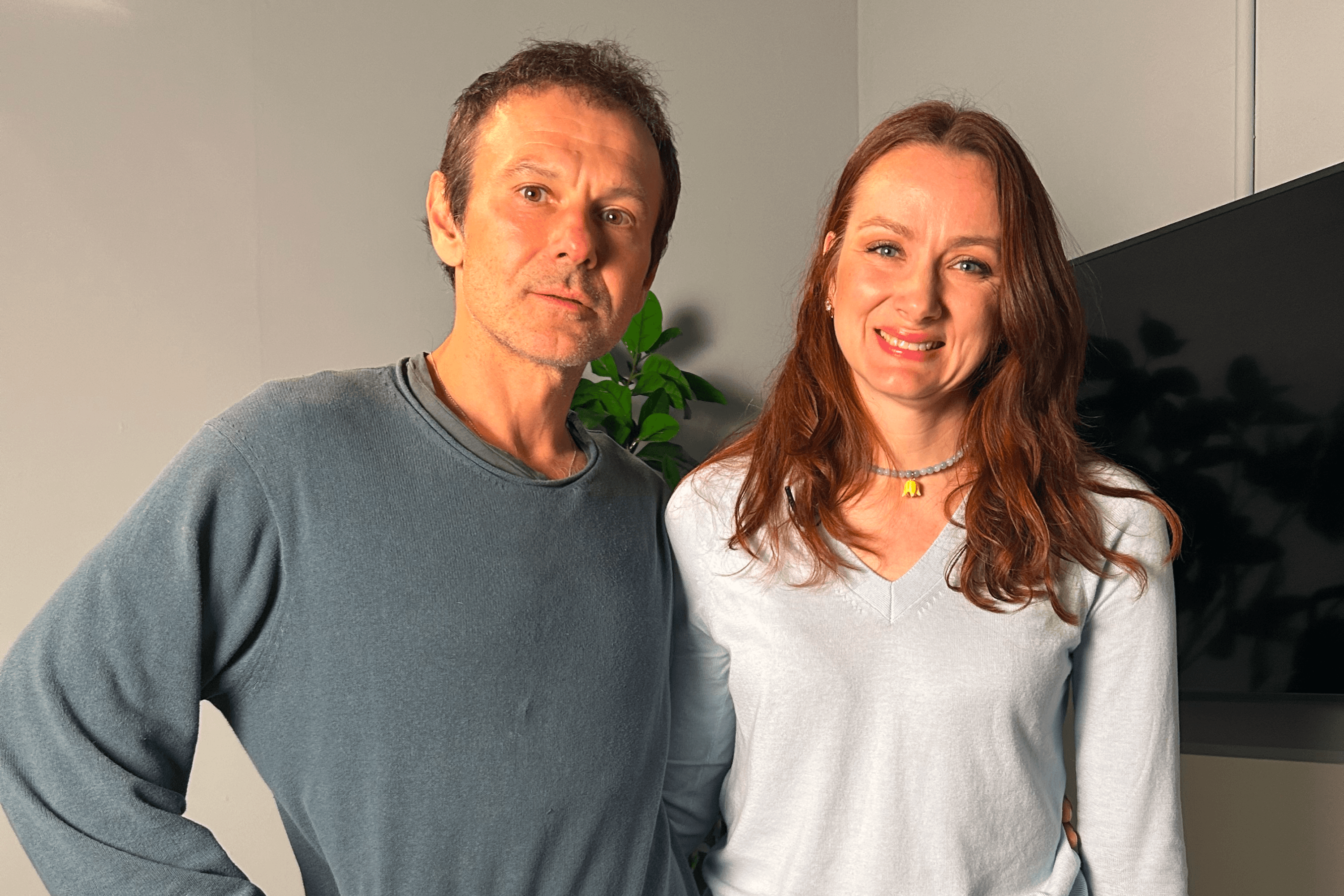
Iryna Solomko interviews Ukrainian singer Sviatoslav Vakarchuk for Voice of America. Photo: Photos provided by Iryna Solomko / YBBP 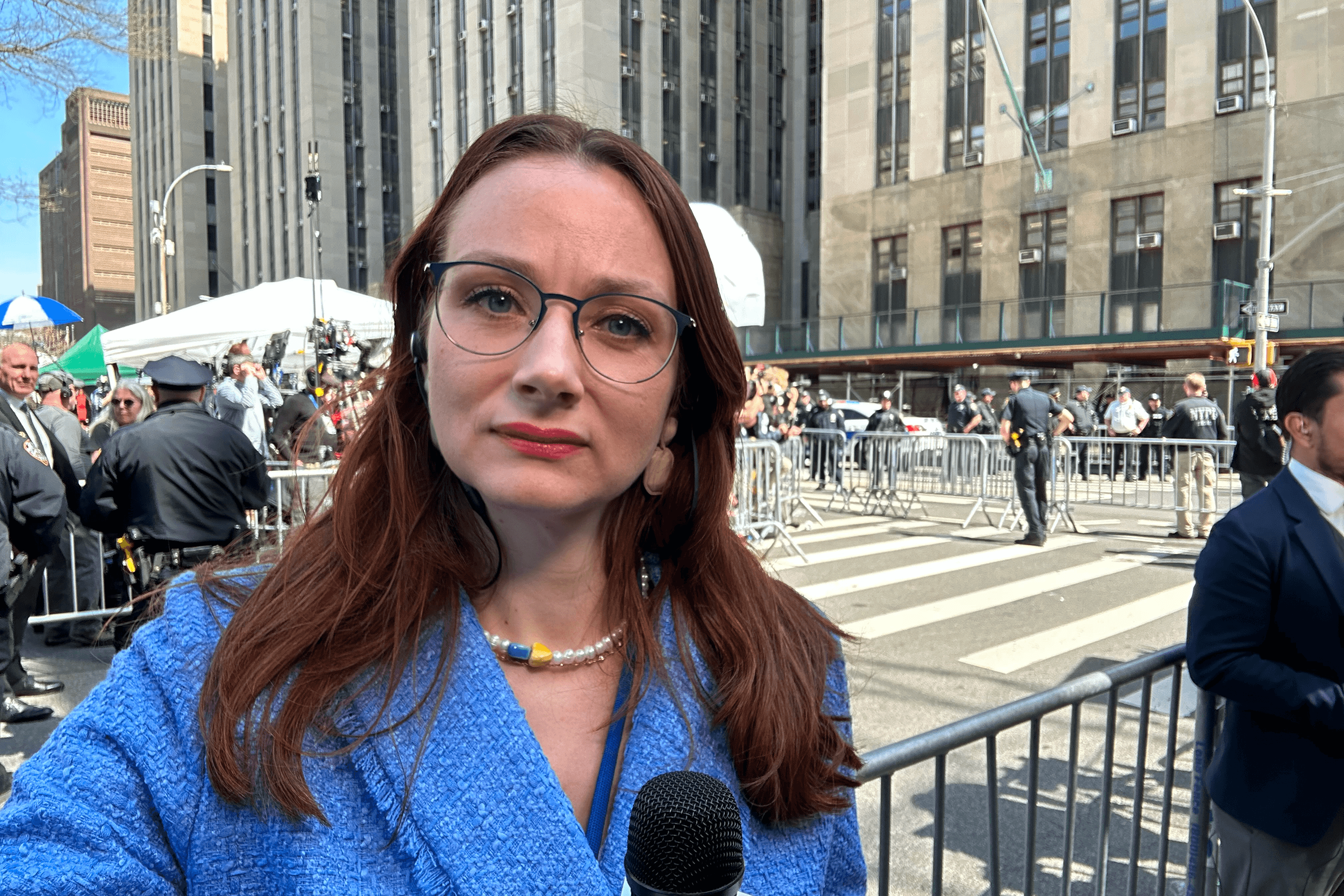
Iryna Solomko works as a journalist for Voice of America. Photo: Photos provided by Iryna Solomko / YBBP
You worked as a journalist. When and why did you turn your attention to American local politics?
The topic of decentralization is close to me: in Ukraine, I reported on the local government reform and understood how many changes begin at the community level. The American system is built the same way: states and cities work like autonomous entities.
My husband and I basically entered politics together: we started attending Democratic Party events and getting to know the community; he joined the Branford Conservation and Environment Commission. Later, he ran for the Representative Town Meeting (RTM), won, and served two terms. When he decided not to seek re-election, I tried my hand: I submitted my candidacy to the Democratic Party, went through an interview, and received the nomination.
While living in Ukraine, did you ever consider entering politics?
I was advised to do so many times, but back then, I felt I wasn’t ready: I lacked experience, confidence, and a clear understanding of what I could offer. I’m convinced that you should enter politics only when you have a formed position and life expertise.
In the U.S., I had a different experience. I saw problems that locals sometimes don’t notice simply because they are used to them. It was obvious to me that there were issues that needed to be tackled. That was my key motivation. Also, the realization of where I could be useful and what I could offer.
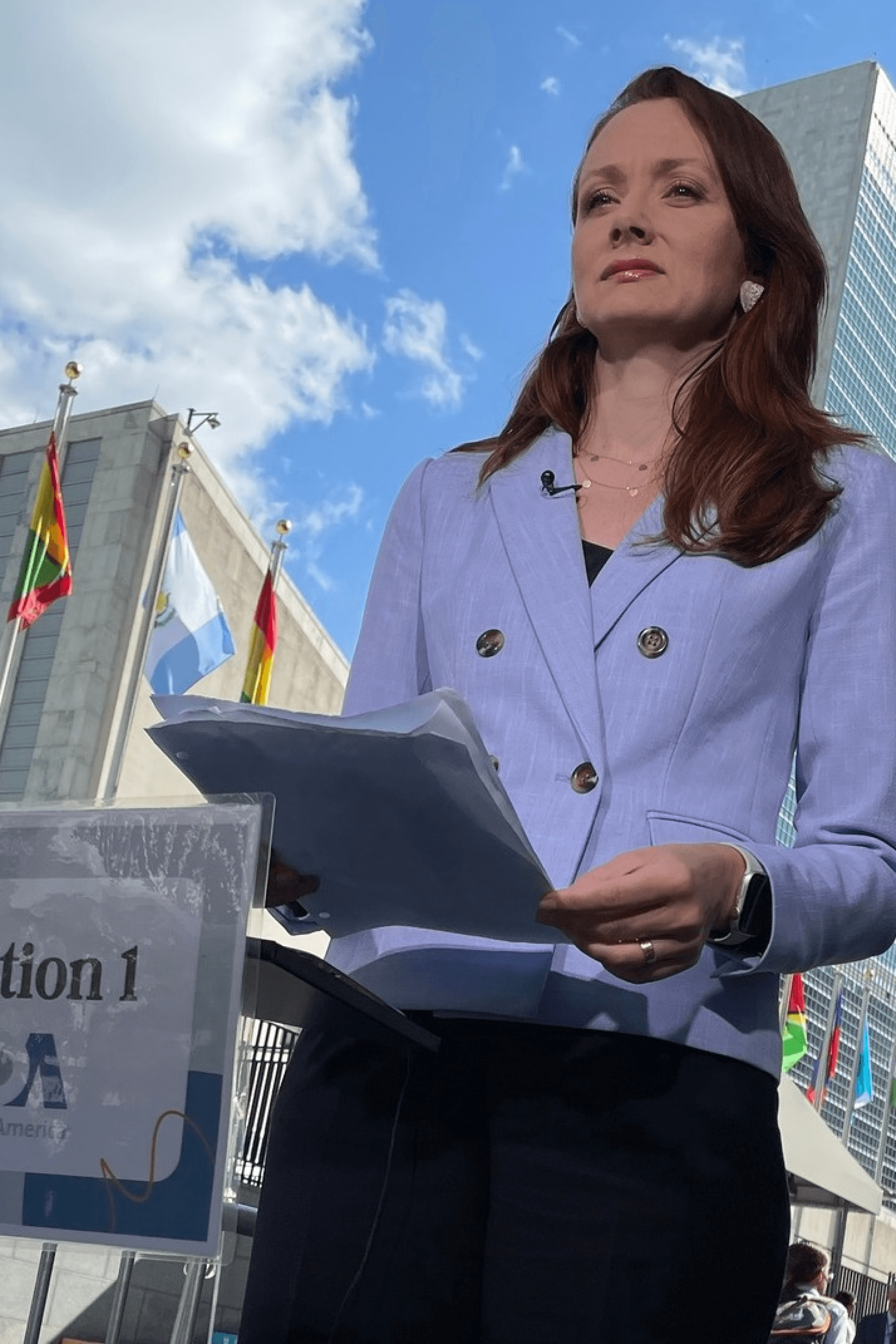
Could you tell us more about the process of your nomination from the Democratic Party?
During a special committee meeting of the party, I presented myself, talking about my background and my motivation for running. The committee evaluated my suitability as a candidate. After that, I spoke at a meeting of the Democratic Town Committee (DTC), where about 100 people were present, and the majority voted for me.
You have lived in the States for seven years and have already entered local politics. This is difficult for those not born in the country. How did you manage it?
This is a country of immigrants, and the Democratic Party, in particular, welcomes newcomers. In our Representative Town Meeting, there are members from different communities, for example, from Nepal. For me, it was key to offer new ideas and an unconventional perspective that differs from “narrow-minded” proposals. Local politics is closest to the voter; it really affects their daily life.
Currently, you are a member of the town council. What are your responsibilities? Is this a volunteer activity or a paid position?
It is volunteer work. Representative Town Meeting sessions take place once a month in the evening so that members can combine this activity with their main job. We vote on the town budget, consider initiatives from residents and the first selectman, and oversee the work of town departments.
Why do you prefer Democratic politics?
Because of their approach to foreign policy and the principles of their discourse. When I worked at Voice of America, I covered elections and the sympathies of Ukrainians toward different parties. The party’s position on Ukraine is important to me: Democrats are more stable and pro-Ukrainian in this regard. Additionally, Democrats conduct political discussions ethically, without trying to smear opponents. They concentrate on their own plans, achievements, and substance. This is important to me.
Also, Democrats offer more opportunities for people who want to get involved in local politics and bring new ideas. Their programs are more oriented toward improving people’s lives in local communities, including education and social issues. As a mother of two, this is important to me.
What issues concern you the most in the U.S.?
Healthcare and early childhood education here are built like business projects rather than support systems. People often receive million-dollar bills for treatment, and insurance is very expensive. I was particularly surprised by the situation with children under 5: the state does not participate in their lives. In the U.S., there are no state kindergartens in the Ukrainian sense of the word. There are private ones, but not all families can afford them.
How did you convince people who didn’t know you before to support you?
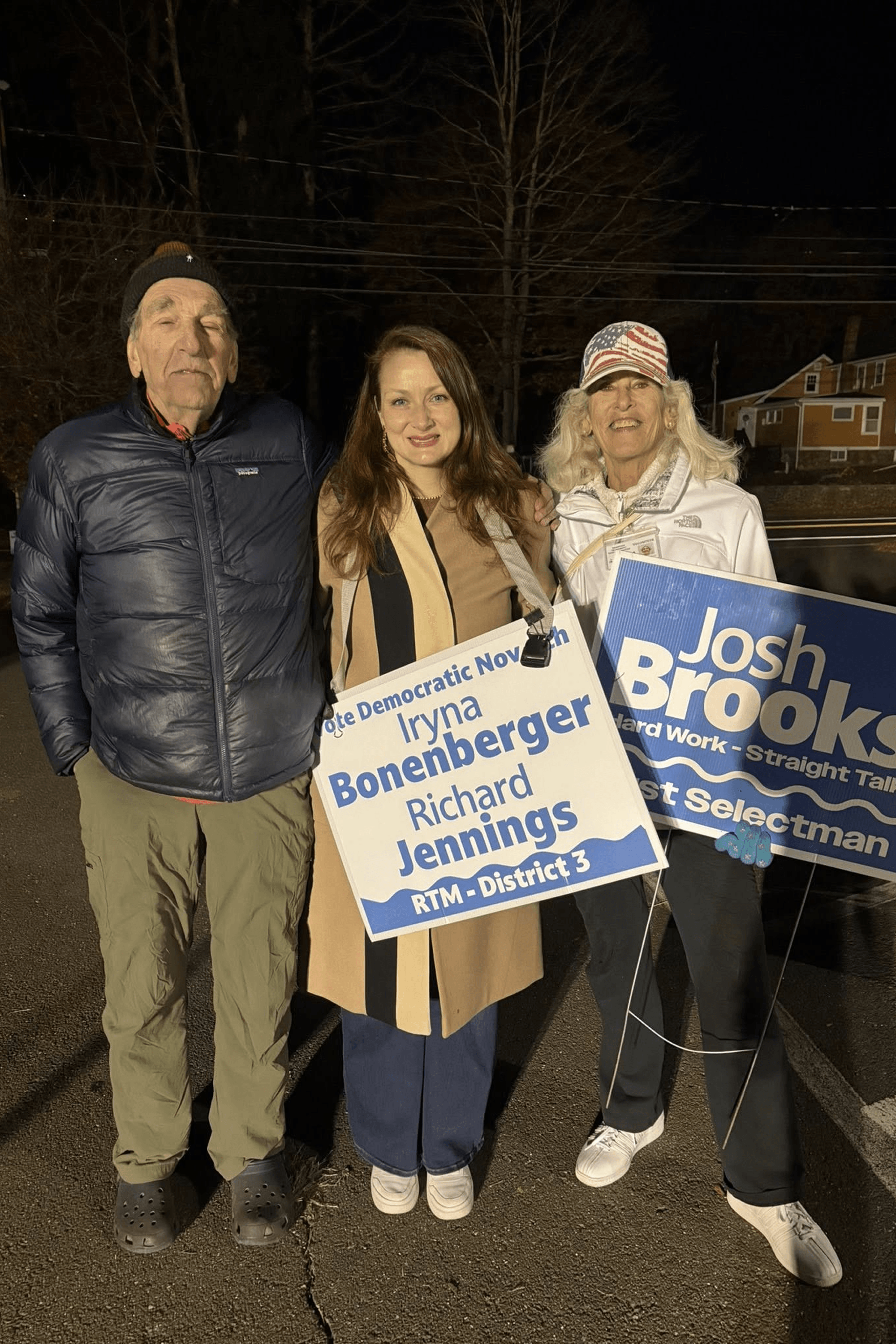
I went door-to-door, talked about myself and my platform, and listened to what concerned people. We had a special app with a voter database and lists of residents we were supposed to visit, urging them to come to the polls, and vote for us.
When I campaigned for myself, I tried to involve those who were well-known in a particular neighborhood. This helped establish contact faster: I was introduced, after which I explained the program and tried to engage the person in conversation to hear their thoughts. I covered half of our district, and the other half was covered by my running mate—also a Democratic candidate. In the end, I received slightly more votes than he did.
Tell us a bit about your platform and how you plan to implement it at the local level.
I propose focusing on making street traffic safer, resolving issues with illegal parking, and promoting beach cleanups.
In the area of transportation, I plan to work closely with the police to increase patrolling and introduce traffic enforcement cameras. Parking issues can be regulated through a system of fines.
I want to pay special attention to education. In cooperation with the Board of Education, I plan to initiate school courses aimed at developing environmental awareness. Children often become true agents of change by influencing their parents.
Also, infrastructure development in the district is important to me, particularly the construction of sidewalks so that residents can move around safely on foot. That is why I chose to work on the Public Services Committee, as I want to implement these changes.
Through which structures or mechanisms is it possible to achieve this?
Through cooperation with various branches of government and local committees. For example, regarding water quality and beach cleanup, collaboration with the Mayor’s office and the Department of Health—which funds water quality monitoring—is crucial. We also conduct information campaigns for residents to explain how their behavior, such as picking up after their dogs, affects the cleanliness of the beaches.
What challenges were the most difficult for you as an immigrant candidate in the local elections?
For me, the hardest part wasn’t being an immigrant, but rather the task of mobilizing people. I viewed the campaign not as my own personal struggle, but as part of a larger effort. Local elections are characterized by low turnout, so my main goal was to ensure people came to the polls and supported our mayoral candidate, Josh Brooks. When I worked with voters, I didn’t just represent myself; I urged them to support our team. It worked—the turnout was quite high.
In 2024, after finishing your work at Voice of America, you moved into the non-profit sector and headed the strategic communications department at Leleka Foundation. How useful has this experience been for your current political activity? And how did voters perceive the fact that you are from Ukraine?
My connection to Ukraine or my work at Leleka Foundation didn’t provide a direct “bonus,” although, of course, it demonstrates a certain level of engagement and readiness to serve the community. Usually, it’s older people who get involved in local politics here, so I’m not a typical candidate. Perhaps that became my advantage, as I received the most votes in our district.
Are you considering the possibility of joining U.S. national politics in the future?
We’ll see. I understand that breaking through to the national level is very difficult—there is immense competition, and it’s a completely different level of responsibility. It’s easier to get into local politics because few people choose it: it is volunteer work, without recognition or pay.
I find it interesting, but first, I want to understand how the system works here in Branford, what the levers of influence are, how decisions are made, and how committees operate. I can’t say that I have an ambition to get into Congress, but if opportunities arise and I feel that I can truly make a difference, then I’ll consider that path.
Life in the U.S. is very different from what many people in Ukraine or around the world imagine. People here work 12 hours a day without weekends; many live paycheck to paycheck without access to healthcare or higher education.
This understanding of reality shapes my approach. I believe that politics should truly help people, rather than being an imitation of the process of helping.