Olha Tovpeko is a psychotherapist with 21 years of experience. Her work focuses on parent-child relationships, helping children cope with stress and parents better understand their children. In 2022, Olha founded the publishing house Fish on the Roof, which publishes therapeutic books about loss, separation, and understanding your own emotions.
In her column for Yellow Blue, Tovpeko looks at five examples of how children’s behavior changes during wartime, explains what lies behind them and how parents can support a child.
The stories in this column are composites drawn from various cases in Olha Tovpeko’s practice.
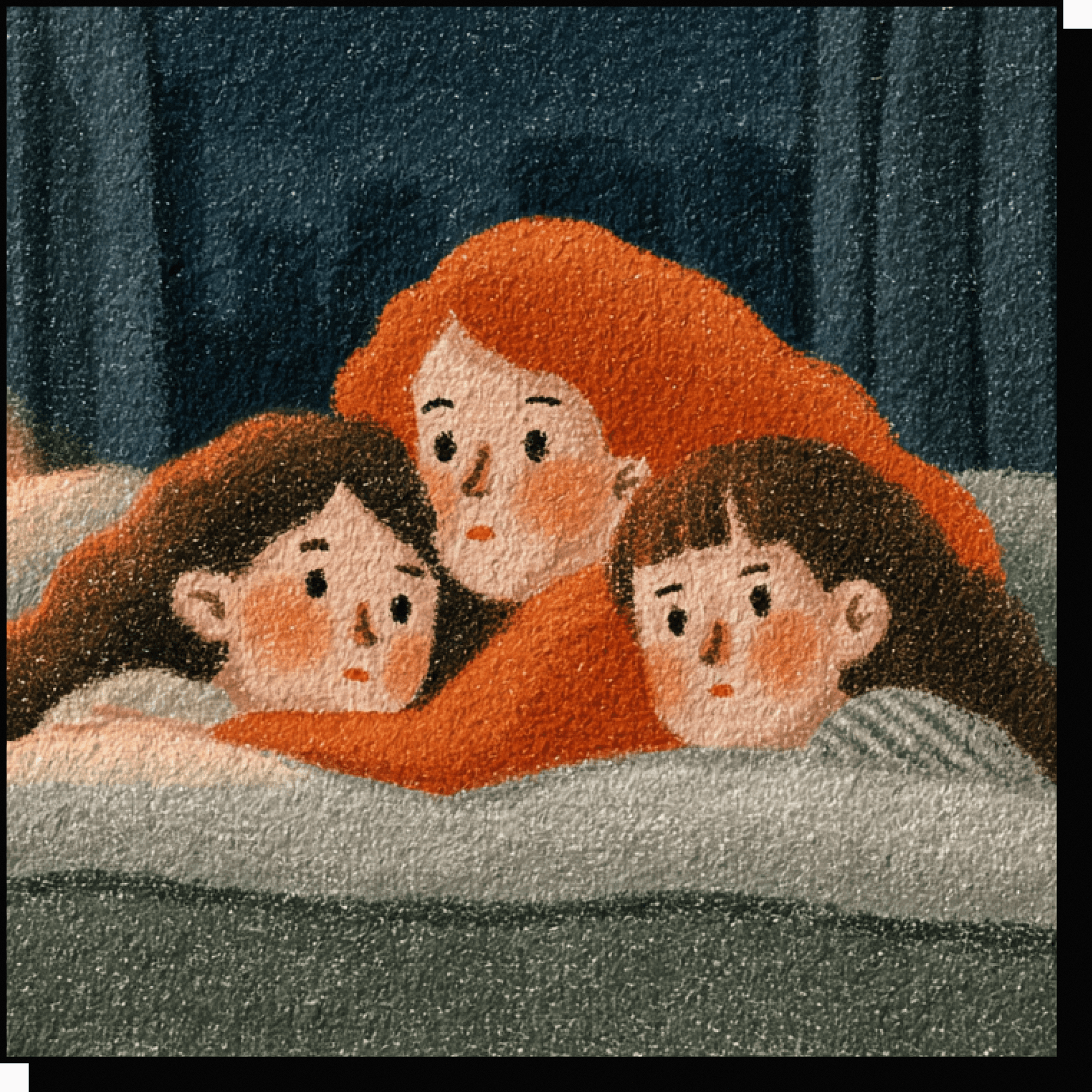
“Mom, can I sleep in your bed?”
A mother from Kharkiv has two teenage daughters. One is preparing to go to college, and the other is in middle school. Both handle their studies on their own, go to extracurricular activities, have friends, and generally manage just fine. But during nighttime shelling, they come to sleep in their mother’s bed. Sometimes they do not even ask permission. They just lie down beside her.
This happens in many families with children of different ages, even teenagers. Some ask to sleep in their parents’ bed only during shelling, while for others it goes on for months. I see this behavior as regression, when, under stress, a child seems to slip back to earlier stages of development. For example, five-year-olds who have already been toilet trained start soiling their pants again or sucking on their T-shirts, and seven-year-olds ask to be picked up and use baby talk as if they were two.
This is how children seek safety and support, trying to return to a state in which they felt good and at ease. Something similar happens to adults.When I feel vulnerable, I rewatch the TV show Helen and the Boys, and for half an hour I feel as if I am 14 again, when my biggest problem was passing math and getting to sit next to the boy I liked.
If you notice signs of regression in your child, do not scold them or demand that they stop behaving this way. Try to understand what is behind it and give them a chance to be little for a while, but keep your own boundaries. For example, if your teenager asks to sleep in your bed, you can offer them the couch in your room or read their favorite book together before bed. There are many ways to help a child. The important thing is to find one that works for both of you.
“Please don’t go anywhere”
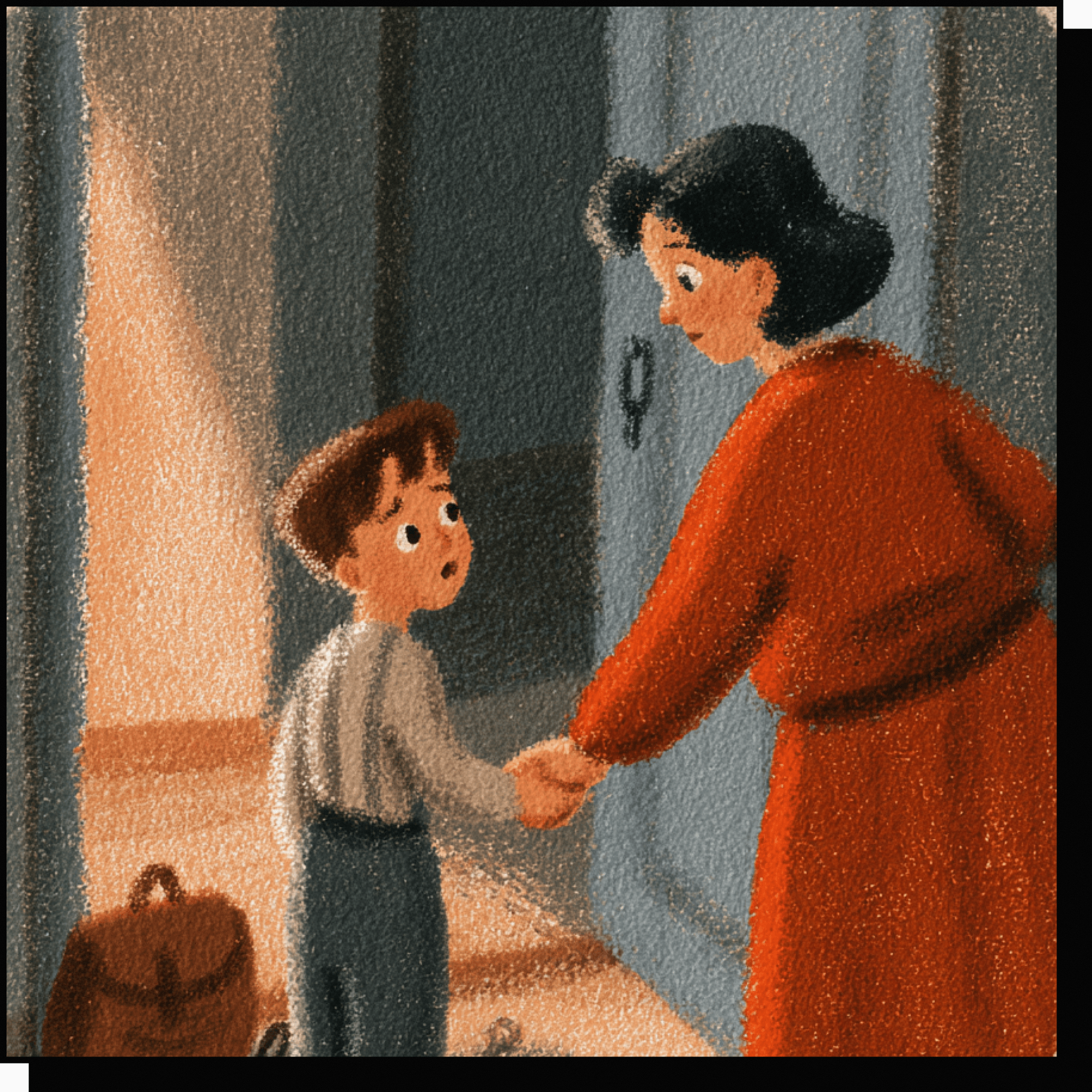
A nine-year-old boy who used to be comfortable staying home alone is now afraid again. He asks his mother not to go anywhere, and if she does go out, he keeps calling to ask whether she is definitely coming back and when. Anxiety can show up in other ways, too. For example, a child may start reacting strongly when things go wrong. If they cannot find their keys or headphones before leaving the house, they start crying or even panicking. They go to bed, then jump up ten minutes later to check whether they put their notebook in their backpack.
Adults can help children learn to recognize anxiety. Try to figure out together what it feels like: “Maybe when I leave the house, you start feeling uneasy, your heart races, you can’t sit still, and thoughts keep running through your head: ‘What if Mom doesn’t come back? ’ ‘What if something happens? ’ It sounds like anxiety, and there are ways to deal with it. Let’s think about what we can do.”
Agree on what time you will be home or when your child can call you. If waiting is hard for them, think together about what might help take their mind off it, such as a game or a task.
Make a plan B in case you are delayed or cannot answer the phone. For example, agree that your child can call their grandmother, hug their favorite toy, or draw their anxiety and then tear up the drawing. Body-based exercises can help, too. You can teach your child progressive muscle relaxation or find a children’s video with exercises to relieve tension. Do them together at first, and later your son or daughter will be able to put on the video themselves.
When dealing with anxiety, it is important to restore a sense of control over objects, circumstances, and one’s own actions. For example, a child who gets nervous during air raid alerts may feel calmer if they know what to do and have a responsibility they can handle: hear the siren, grab their backpack, call the dog, and go into the hallway together.
But if the anxiety is so severe that your child cannot cope with it, do not leave them alone or simply tell them to calm down. Find someone who can stay with them while you are away, and seek help from a psychotherapist and, if necessary, a psychiatrist.
“I’m four, but I’ll take care of you”
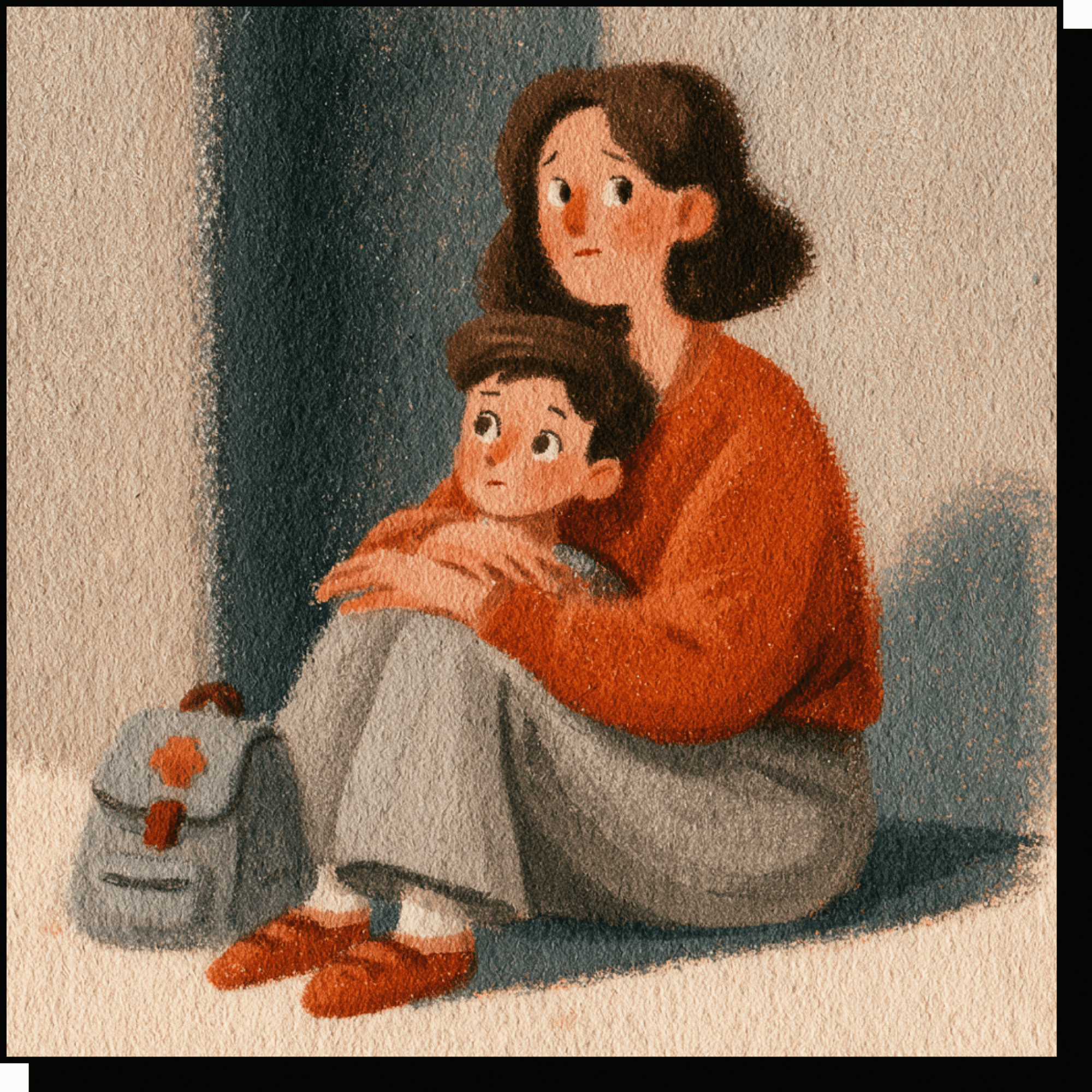
During air raid alerts, a four-year-old girl goes into the hallway with her mother. The mother is nervous, checking Telegram channels to see what is flying where, while her daughter reassures her: “Don’t be scared. I’m here. Everything will be okay.” In another family, the children are riding in the car with their mother. When someone cuts her off, she gets flustered and tears well up in her eyes. Just a minute earlier, the kids were arguing because they wanted to stop at McDonald’s. Now they fall silent and agree to go straight on with the errands. Or take a thirteen-year-old boy whose father was recently mobilized. Suddenly, he spends less time hanging out with friends, asks his mother whether she has eaten, and cleans his room without being reminded.
All of these can be signs of growing up too soon, when children seem to take on some adult roles. Parents may find this behavior convenient and pleasant. Their son or daughter becomes obedient, helps out, and tries not to cause problems. And often, it really does show a child’s ability to empathize and care for others. But it should give you pause if a child takes on too much responsibility for adults and their emotional state. When children feel safe, they can be themselves, insist on what they want, act up, and disagree with their parents. If you notice that your son or daughter is trying too hard to be easy to deal with, remind them that this is not their responsibility. For example: “I’m exhausted today, so I might get irritated over little things. But that has nothing to do with you. You don’t have to agree with everything or be perfect just to keep me from getting upset.”
If your child tries to comfort you during shelling, thank them for their support and gently offer yours, reminding them that you are the adult and you will take care of both of you. Even if you are scared yourself, you can say: “Yes, shelling can be scary. But we know what to do. I’m here, and if I need you to do anything, I’ll tell you.” It is important to show that you can feel worried, too, but you are still the adult and responsible for your child’s safety.
“I don’t want to hang out with my friends”
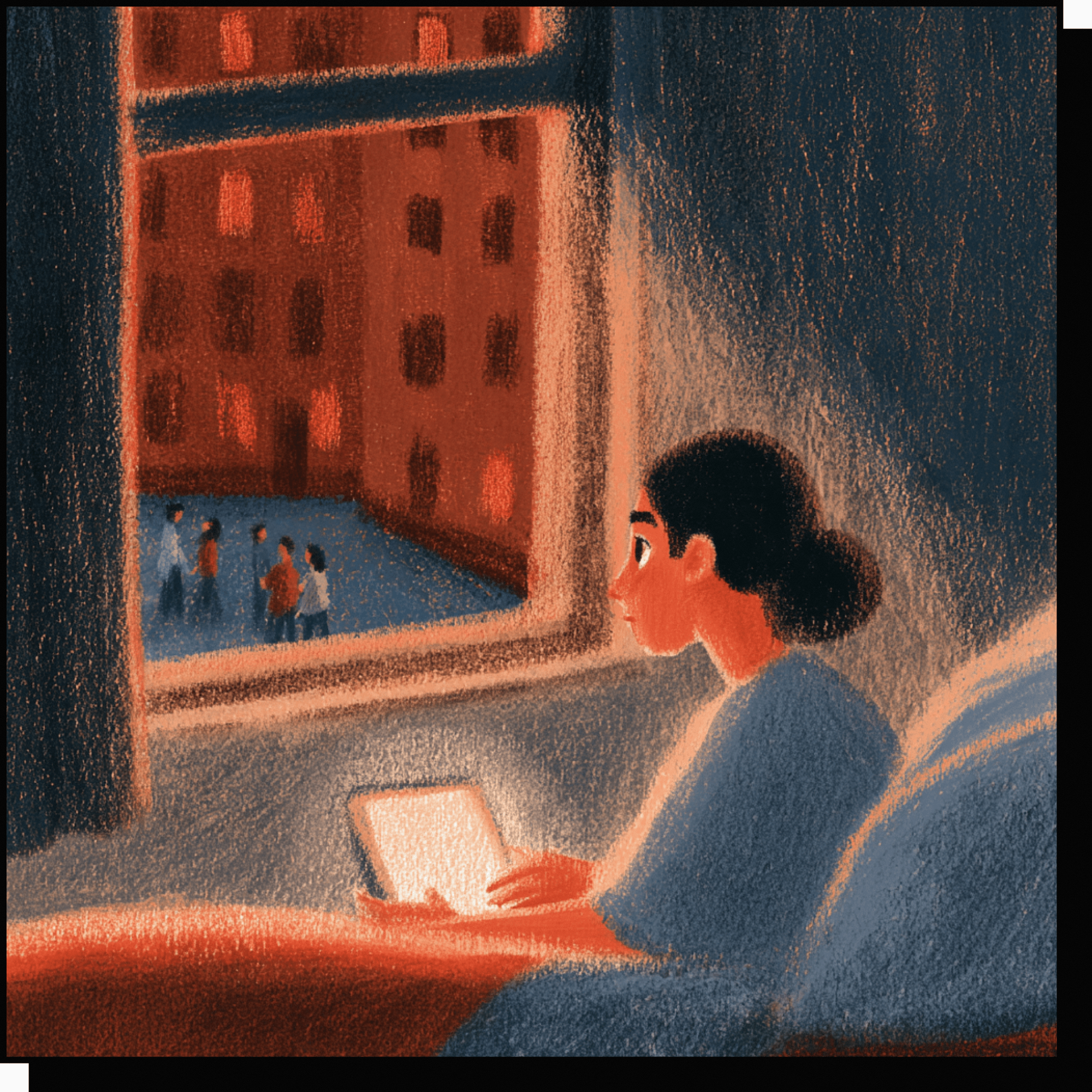
A sixteen-year-old boy spends almost all his time in his room. He only goes outside in the evening, when he is less likely to run into people he knows. His parents say, “Why are you sitting there like a hermit? Go hang out with your friends.” But he only withdraws further.
Because of COVID and the war, children have fewer opportunities to see each other regularly. They attend school remotely or on a hybrid schedule, relocate, and cannot move freely around the city or even play in the yard because it is unsafe. There is less and less room for close friendships, although children may have plenty of casual acquaintances. I see this in my own children. When my youngest comes back from the playground, I ask who he played with, and he says, “I don’t know. I didn’t ask their names. Why would I? There’ll probably be different kids there tomorrow.”
The need to communicate does not go away, but children meet that need differently than we did at their age. They move some of their interactions online: they meet people on social media and in online games, and some discuss what is bothering them with ChatGPT.
I would not recommend banning children from communicating online, because that is communication, too. At the same time, it is important to give them chances to meet in person. Look for activities that might interest your teenager, such as drone piloting courses, Mafia games, sex education lectures, or drawing workshops. They can meet peers with similar interests there and gradually build connections.
If meeting in person is not possible, you can look for online options. For example, our nonprofit organization runs online support groups for children of military personnel. We ask participants to turn on their cameras so they can see and interact with one another. This can help make up, at least a little, for the lack of in-person contact.
“I want to smash everything”
A nine-year-old boy who recently lost his father does not want to stay home alone because he is afraid he will smash everything around him. Five seventh-graders ambush another kid their age after school, take his glasses, beat him, and humiliate him. Ninth-graders go to a commuter rail station, jump onto the roof of a train, and ride it to the next stop.
I see the war making children more aggressive overall. Constant danger and uncertainty exhaust the nervous system, and it is not always possible to release tension through sports or games with friends. So some children get into fights, others seek thrills, and still others curse. All of these can be expressions of aggression.
It is important to explain to children that feeling angry is normal, but not every way of expressing anger is acceptable. At the same time, we need to offer alternatives: active games and hobbies, walks, and sports. They can tear up paper, jump around, or play-fight with toy swords. Children of different ages come to see me for consultations. Often, the first thing they do is suggest a pillow fight or a game of darts. Only after they have worked off their tension through play do we move on to other activities.
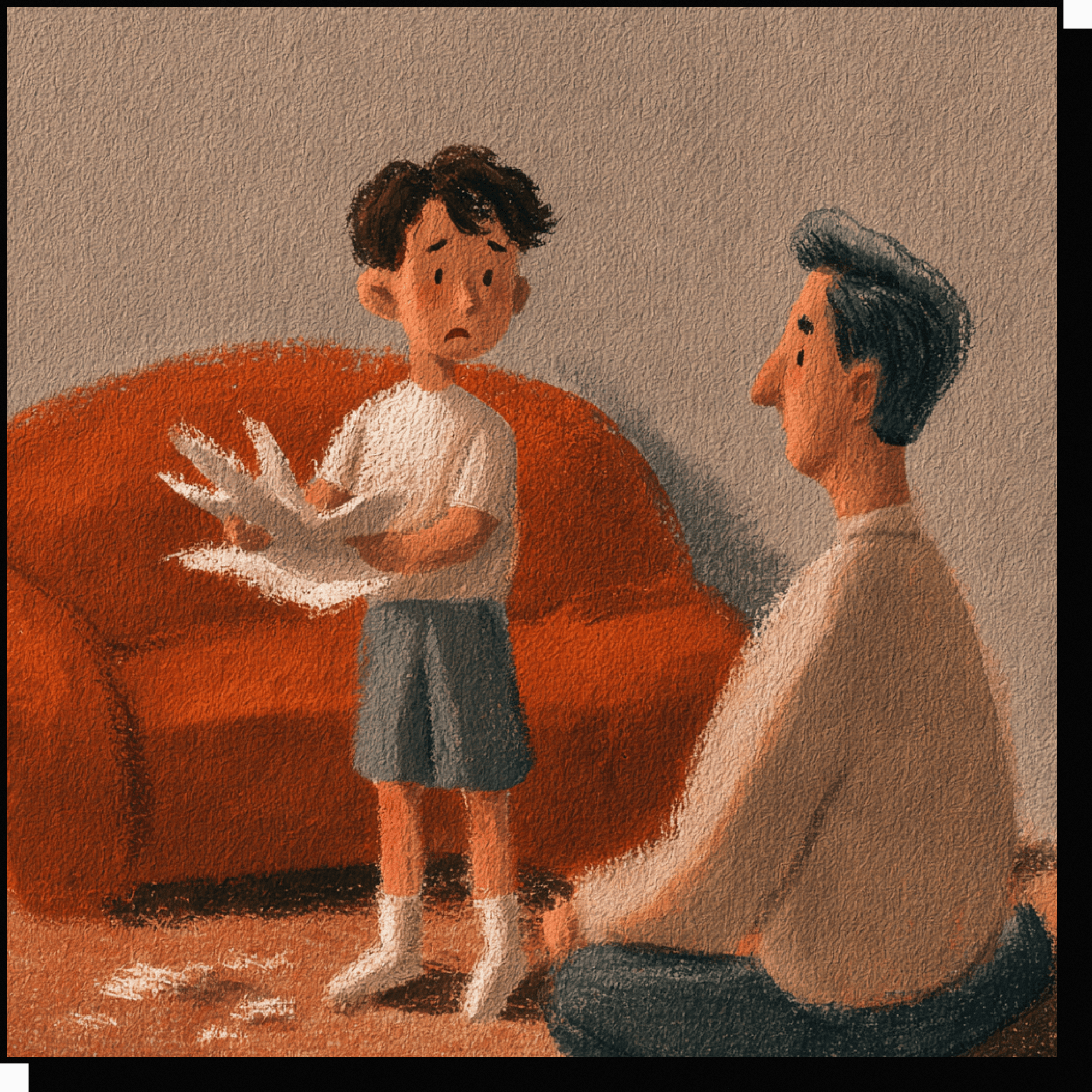
What kind of adults will the children of war become?
Sometimes I worry about how the war is changing children and what kind of adults they will become. But I try to look at it more broadly. Every generation learns to cope with the challenges of its time. That was true of children during World War II and of the generations that followed, and it will be true of this one.
Recently, my children and I debated whether my childhood was better than theirs. I recalled spending a lot of time playing in the yard and discovering the world firsthand rather than through a screen. They replied, “But Mom, your parents paid much less attention to you. We have things you couldn’t even dream of. We can talk to interesting people from all over the world, take up anything we like, and we have more freedom.”
I thought about it and realized that we often judge their childhood by the standards of our own. It seems to us that they are missing something important because we had it and it seemed normal. For example, I used to think every child should have a best friend. If my friend did not come to school, I felt lost and did not even know who to go to the cafeteria with. My children can find common ground with different people and make friends in all kinds of circumstances. I want to believe that this is also an important skill that will help them in the future.
We cannot change the times our children are growing up in or completely protect them from the effects of war. But we can give them the experience of closeness and acceptance, and the chance to talk about their feelings and get help. As adults, they will be able to draw on that experience and seek out what they may be missing, because they will already know it is possible.