
Svitlana Odynets considers Ukrainian migration to be one of the most successful examples of Ukrainians fending for themselves independently in free Ukraine. According to her, it was precisely thanks to migration that millions of people managed to weather the most difficult economic times (in particular, the 1990s) and develop skills that are now proving helpful during the full-scale invasion. However, the state still maintains a condescending attitude toward migrants. Women suffer from this especially, having lived for years between two countries, working in foreign families, raising children from afar, while remaining an integral part of Ukrainian society.
Yuliana Skibitska, editor-in-chief of Yellow Blue, spoke with Svitlana Odynets about how Ukrainian migration has evolved, why society treated migrant women much more harshly for so long, why returning home cannot be reduced to a simple call of "come back," and how the war has reshaped the bonds between Ukraine and its diaspora.
You have been researching labor migration since 2012. Why was it predominantly female back then as well?
If we look at the period starting from 1991, it was, of course, not exclusively female migration. After the borders opened, both men and women began migrating intensively. Initially, men even predominated statistically, but over time we reached a roughly 50-50 ratio.
However, it’s more important to talk about patterns here. Ukrainian labor migration started even before independence. In the 1980s, women travelled to former Yugoslavia—these were isolated migrations and mostly short-term. Starting in the mid-1990s, long-term labor migrations began, particularly to Poland and Italy. Until 2013, migration to Russia was the largest. After 2014, those flows dropped sharply, and Poland became the most intensive destination.
At first, Poland was predominantly a destination for shorter trips: up to three months and back. Italy was a completely different story. Women arrived there as tourists, and after ten days on a tourist visa, they found themselves without residence and work permits. In other words, they lost their legal status and couldn’t return to Ukraine for years to visit their families. The main impulse was that Southern European countries had the greatest demand for female workers.
Why Italy specifically?
Because Italy was interested in domestic workers: those who cared for children and the elderly, and cleaned houses. Italian family policy assumed that a significant share of responsibility for children and the elderly lay with the family. That’s why they needed female workers. They came from the Philippines, African countries, and after Ukrainian borders opened—from Ukraine, and also from Poland, Romania, and countries of the former Yugoslavia. In Italy during the mid-2000s, women made up about 90 percent of Ukrainian migrants.
For many families, this was a way out of poverty. Women migrated and shared this migration experience with their sisters and mothers: when one woman went, her friends and sisters followed. That’s how a migration chain formed.
Women often left in truly desperate situations. In my interviews, there were many stories of people who literally had no money to pay rent, whose electricity was cut off due to debt, or who had nothing to feed their children. After all, those were times of severe economic crisis, when people, especially those employed in the public sector, went months without receiving wages.
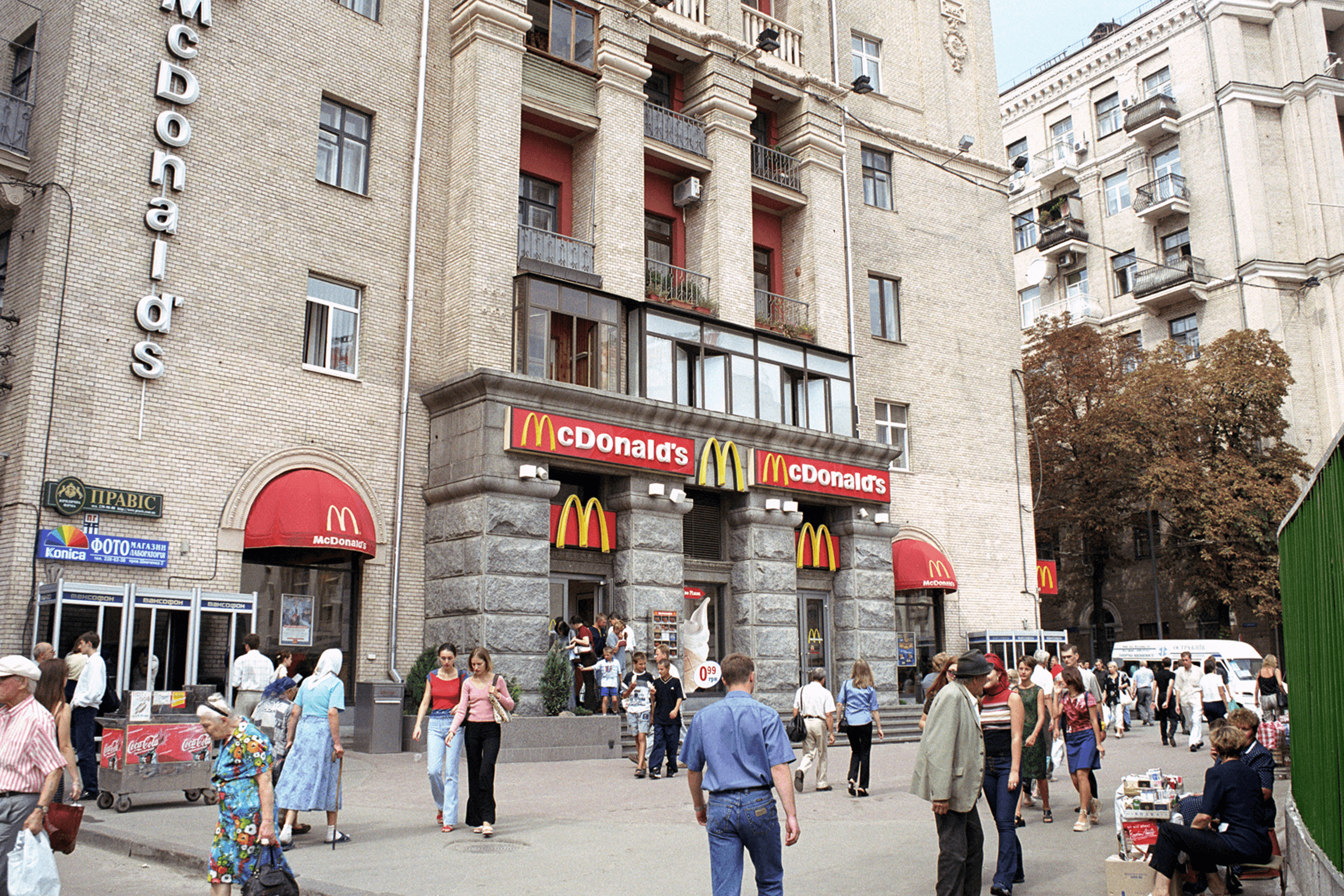
McDonald’s on Independence Square in Kyiv. Summer 2000. Photo: Wikimedia / YB 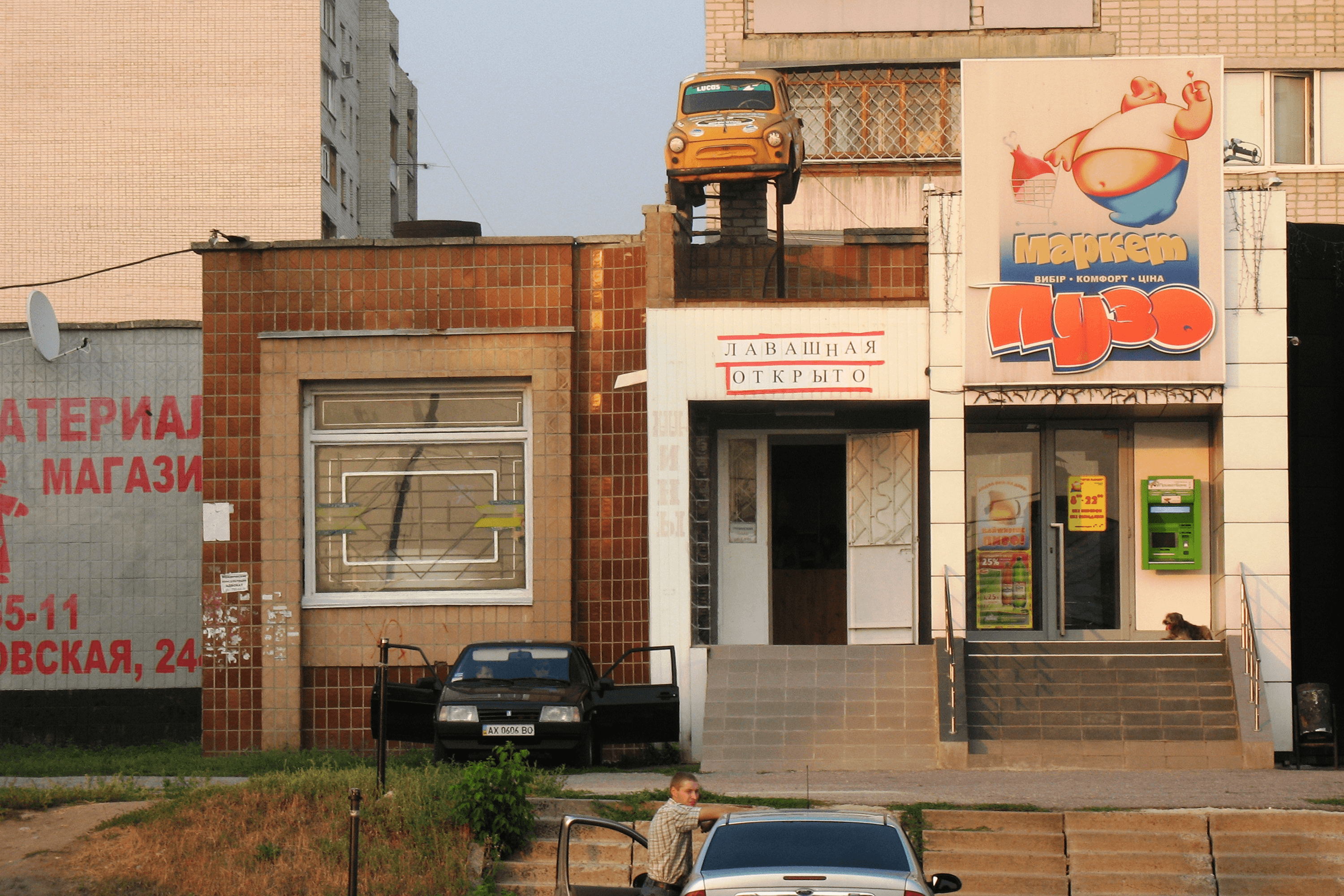
Klochkivska Street in Kharkiv. 2004. Photo: Wikimedia / YB 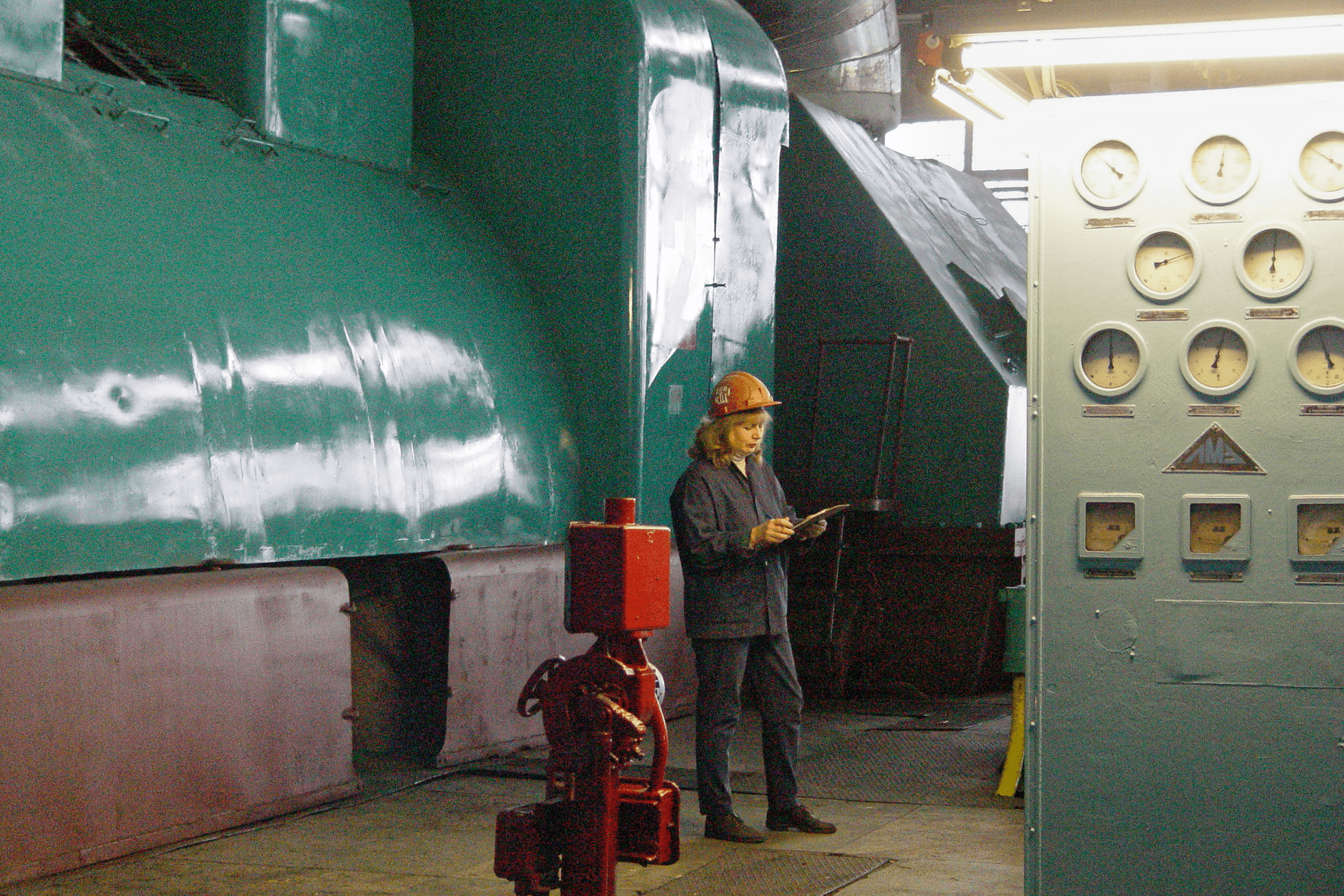
An employee of the Zmiiv Thermal Power Plant at work. December 22, 2003. Photo: Wikimedia / YB 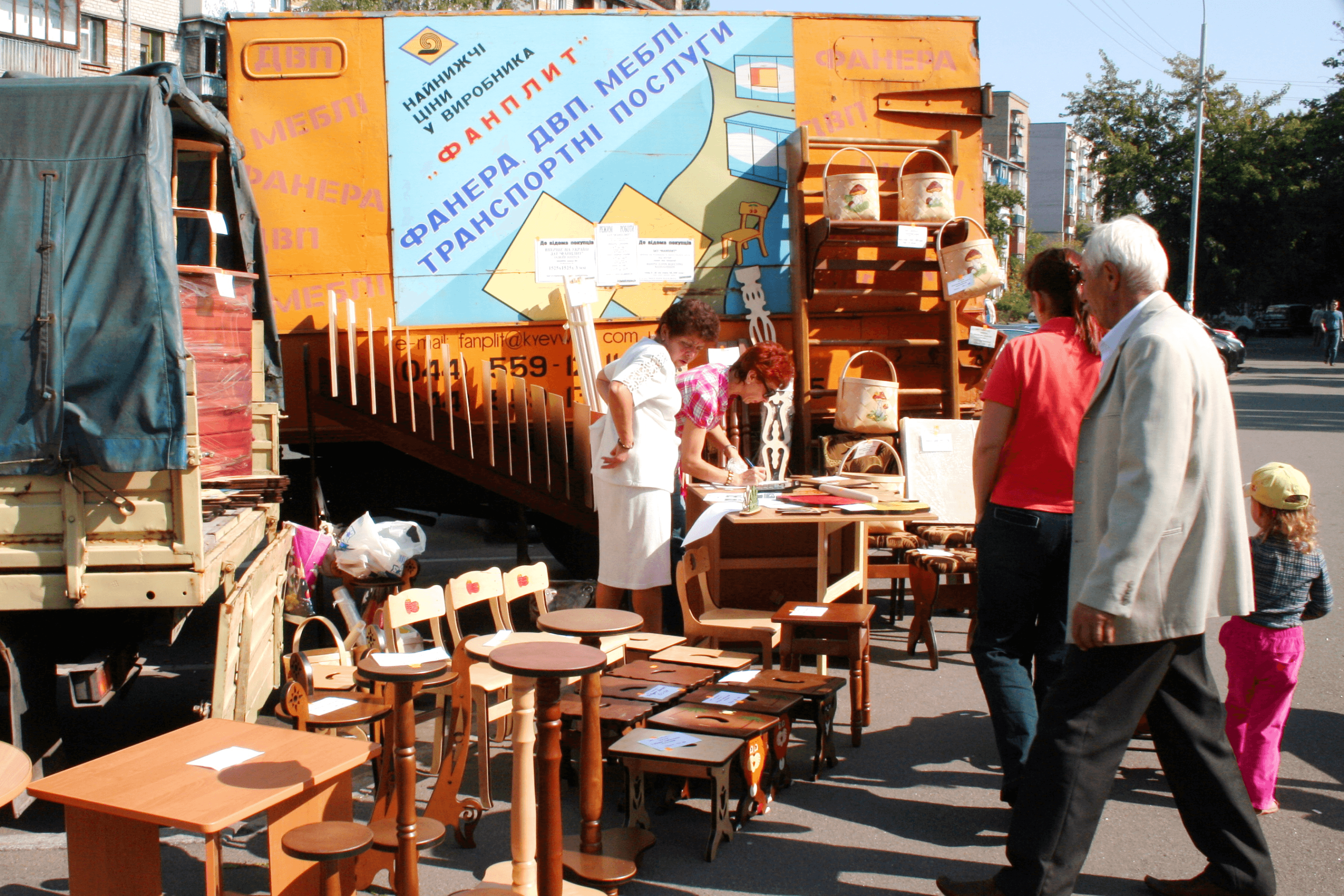
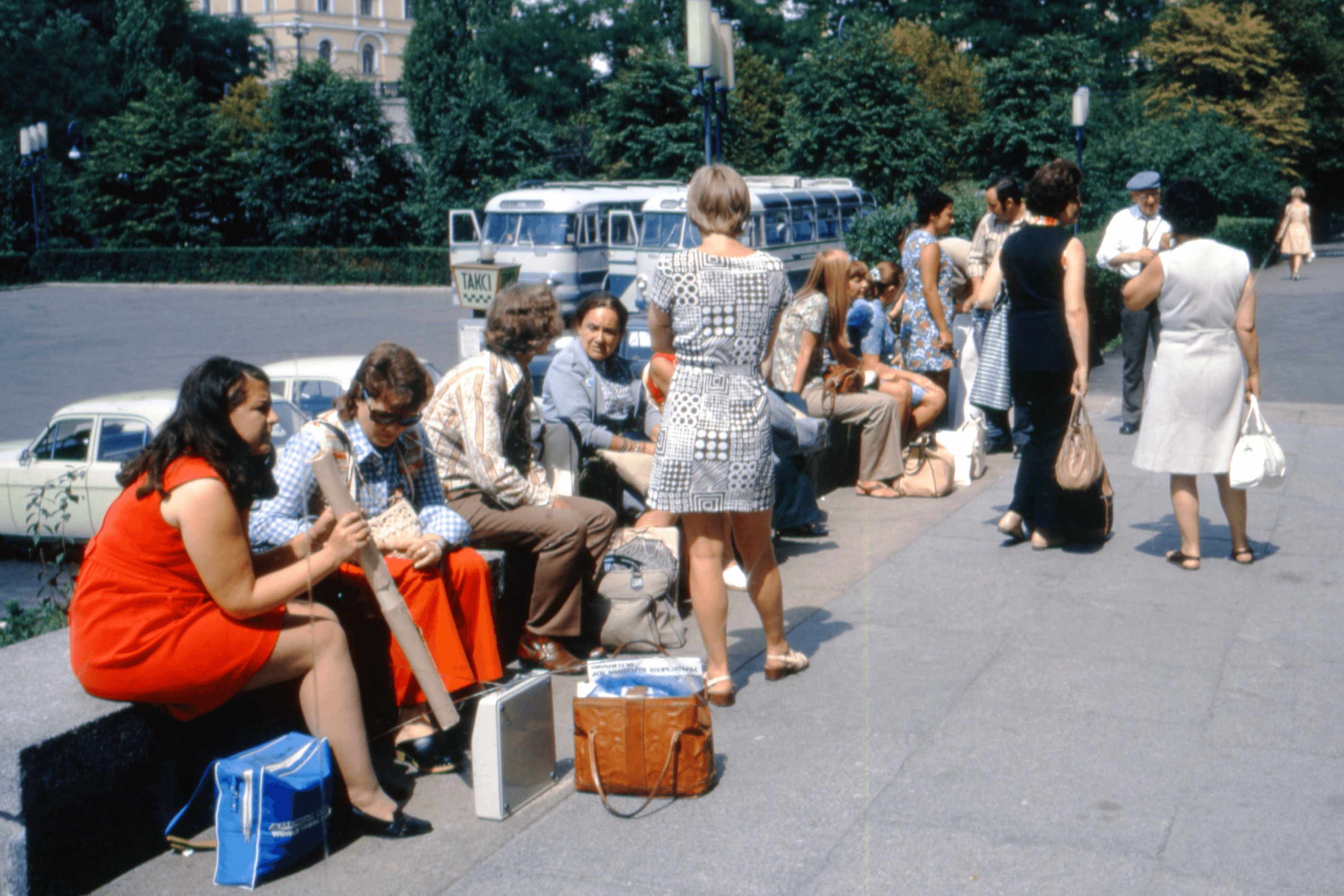
A trade fair featuring products from local businesses near the Dnipro District State Administration in Kyiv. September 10, 2009. Photo: Wikimedia / YB 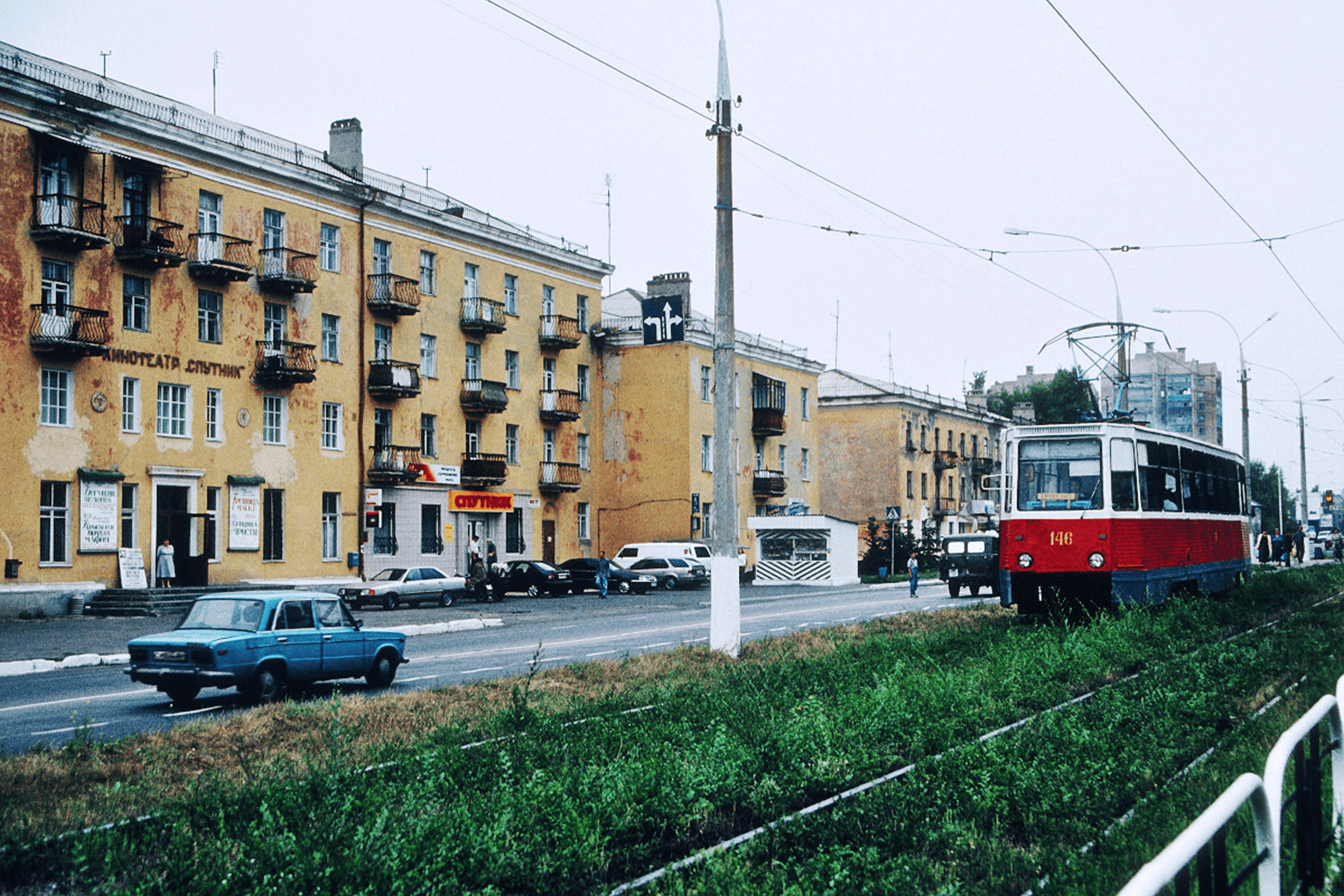
Tram No. 146 on a street in Kostiantynivka, Donetsk Oblast. August 30, 2001. Photo: Wikimedia / YB 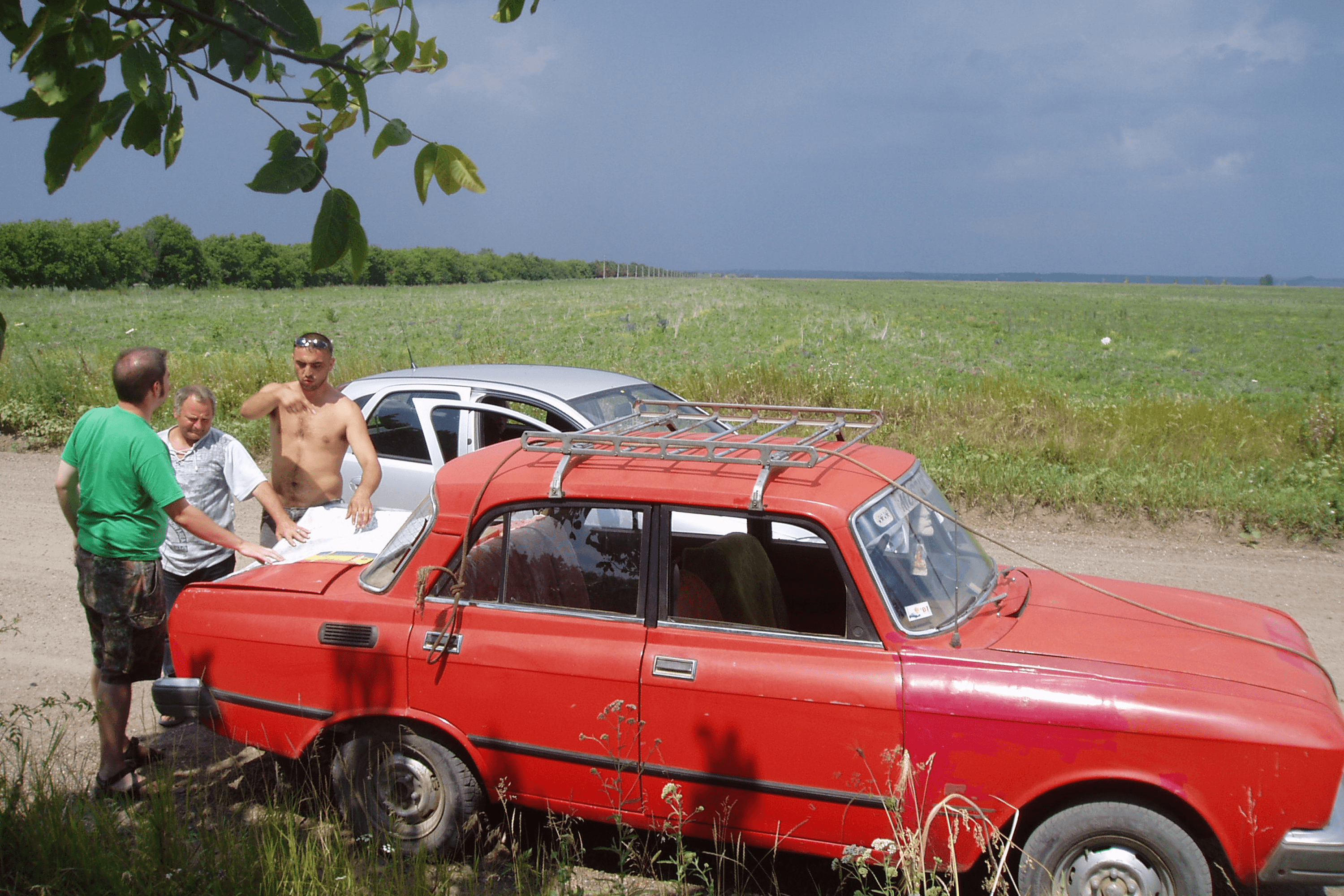
Motorists near the Ukrainian border in Transnistria, Moldova. July 11, 2006. Photo: Wikimedia / YB
In one of your columns, you wrote that women formed so-called small alliances and took turns caring for the family and earning money abroad. First, one woman would leave for three to six months while the other took care of both her own family and the migrant’s family, and then they would swap places. This way, they covered two needs—caring for children and parents at home and earning money. But as you note in the same column, society back then didn’t understand this and called the mothers “cuckoos” [abandoners of children] and traitresses. Why did this happen?
There are several dimensions here. First of all, post-Soviet Ukraine inherited a lot of discourses from the Soviet Union. In Soviet society, migrants were considered traitors. This narrative was unreflectively passed down: anyone who leaves is supposedly abandoning their country. And it didn’t matter whether this migrant was leaving specifically for the well-being of others or for other reasons.
The second dimension is the moral panic around the so-called traditional family. When a man goes abroad to earn money, it is perceived as a legitimate practice: the man is supposed to earn money. Meanwhile, the woman is supposed to stay with the children.
But what happens when a man cannot provide for the family? In the 1990s, everyone was struggling. Some men were able to earn money, others were not. Some left, others stayed. In this situation, women began leaving en masse. Society reacted with the thesis: women are abandoning their children, leaving for parts unknown, and doing who knows what over there. Meanwhile, almost nobody looked at what these women were actually going through. A woman effectively became the manager and the main breadwinner of the family. And she was also held responsible for the children who remained at home. At the same time, Ukrainian media had no particular questions for men: one would logically expect a so-called shift in gender roles, at least for the period of the woman’s absence from home. But no.
Because there is a stereotype that taking care of children and the elderly is not a man’s job…
Exactly. If we’re talking about the gender contract where the man provides for the family and the woman spends more time with the children, then it would be logical to expect that when the woman starts providing for the family, the man becomes more responsible for the children and the elderly. In some families, that is indeed what happened. But in the vast majority—it didn’t. Therefore, women working in Italy or other countries would call morning and evening, trying to remotely care for their family members: making sure the children didn’t skip school and that the husband was taken care of—often by the hands of the eldest daughter.
How strong was this stigmatization?
Very strong. The moral panic largely boiled down to the premise: good women stay at home. Good women don’t abandon their families and don’t leave for parts unknown. Ukrainian politicians joined in as well. For instance, Leonid Kuchma at one point referred to female migrants as “women of easy virtue.” Later, the Lviv newspaper Ekspres heavily supported and amplified this through a series of provocative investigative reports.
For many women, this was extremely painful. When I conducted research in Italy in 2012–2013, this resentment was very palpable, and understandably so. They received no particular help from the Ukrainian state. Nobody asked them how they managed to feed their children. And when they found a way to do it on their own, they were simply insulted.
It seems that it was right after Kuchma’s statement that migrant women began to speak out more about their rights, and the situation actually started changing for the better.
Yes, a portion of active women began speaking openly about their experiences. But on the whole, it seems to me that at the general level, the Ukrainian state and society remain fairly indifferent to those hundreds of thousands of female labor migrants who went through very difficult ordeals.
Over my lifetime, I’ve recorded several hundred interviews with migrant women. And every single one of them is a potential book or film. What they went through—the lack of documents, the lack of connections and social capital, the absence of people to rely on, the difficulties of finding a job, the lack of social protection, and the constant attempts to manage a family from a distance—is a massive existential burden. For many, their health deteriorated significantly, while others simply sacrificed their own ambitions and careers for the sake of a better life for their children.
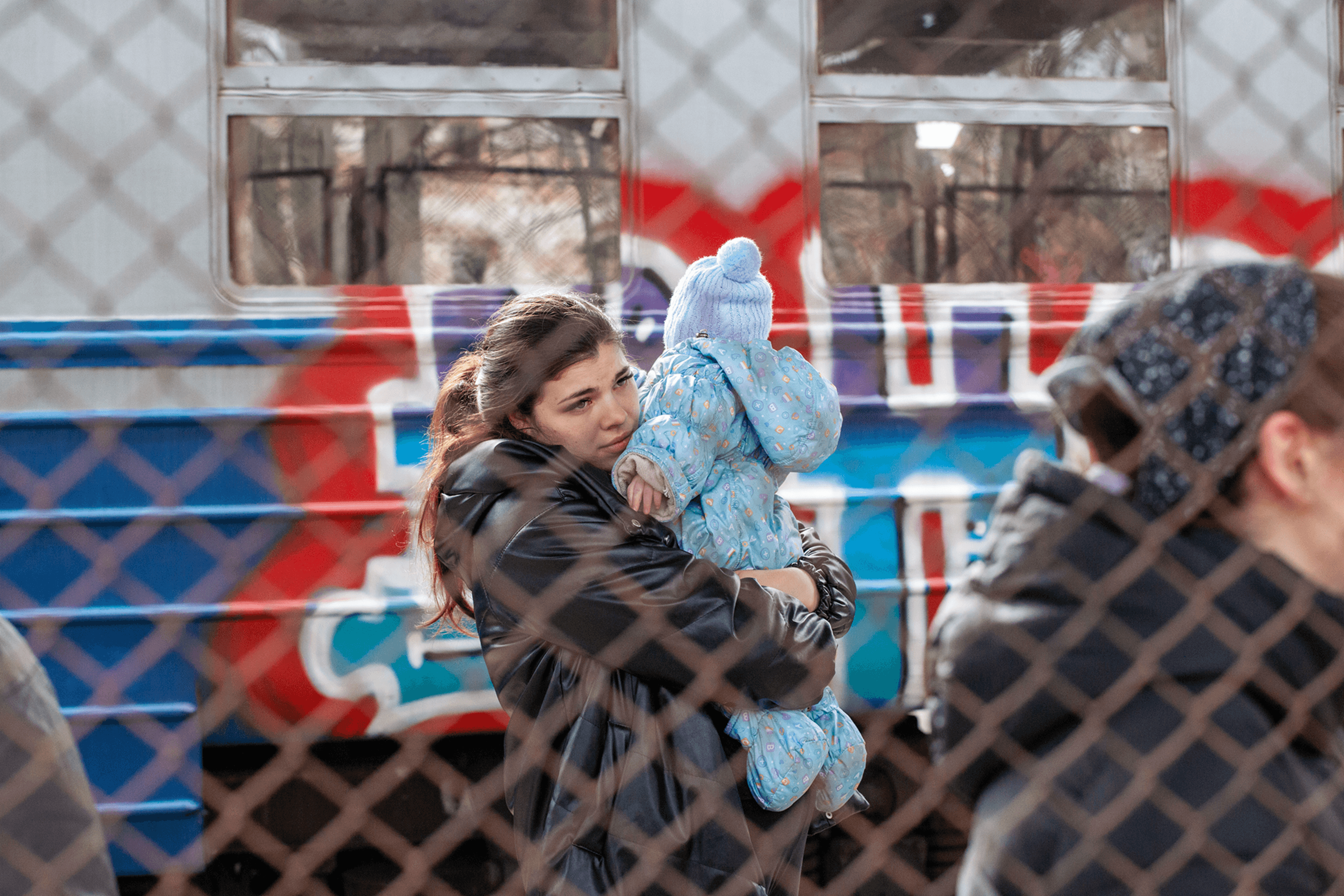
A Ukrainian refugee with her child in Przemyśl, Poland. February 27, 2022. Photo: Wikimedia / YB 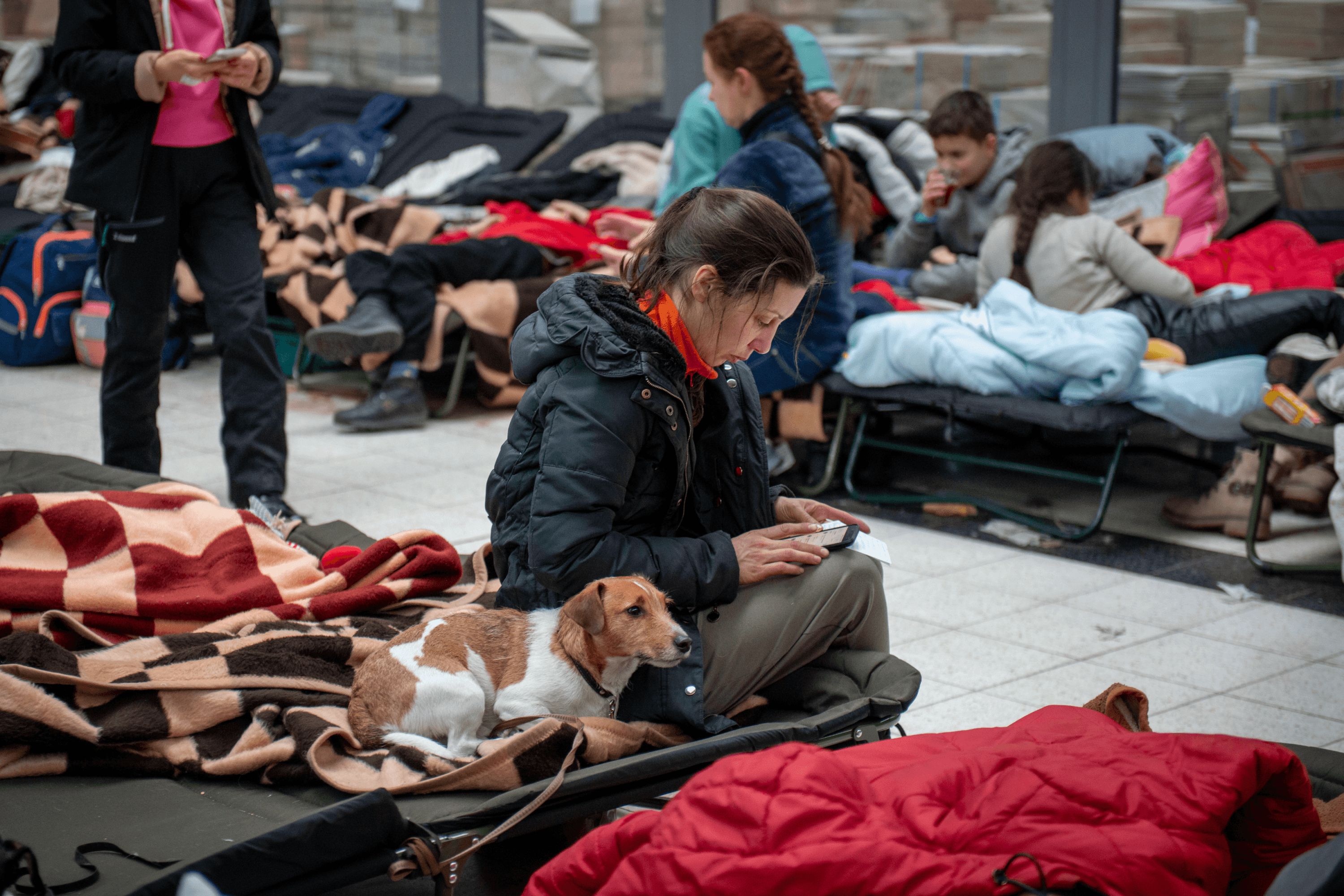
Ukrainian refugees at a reception center near the Polish-Ukrainian border in Korczowa, Poland. March 7, 2022. Photo: Wikimedia / YB 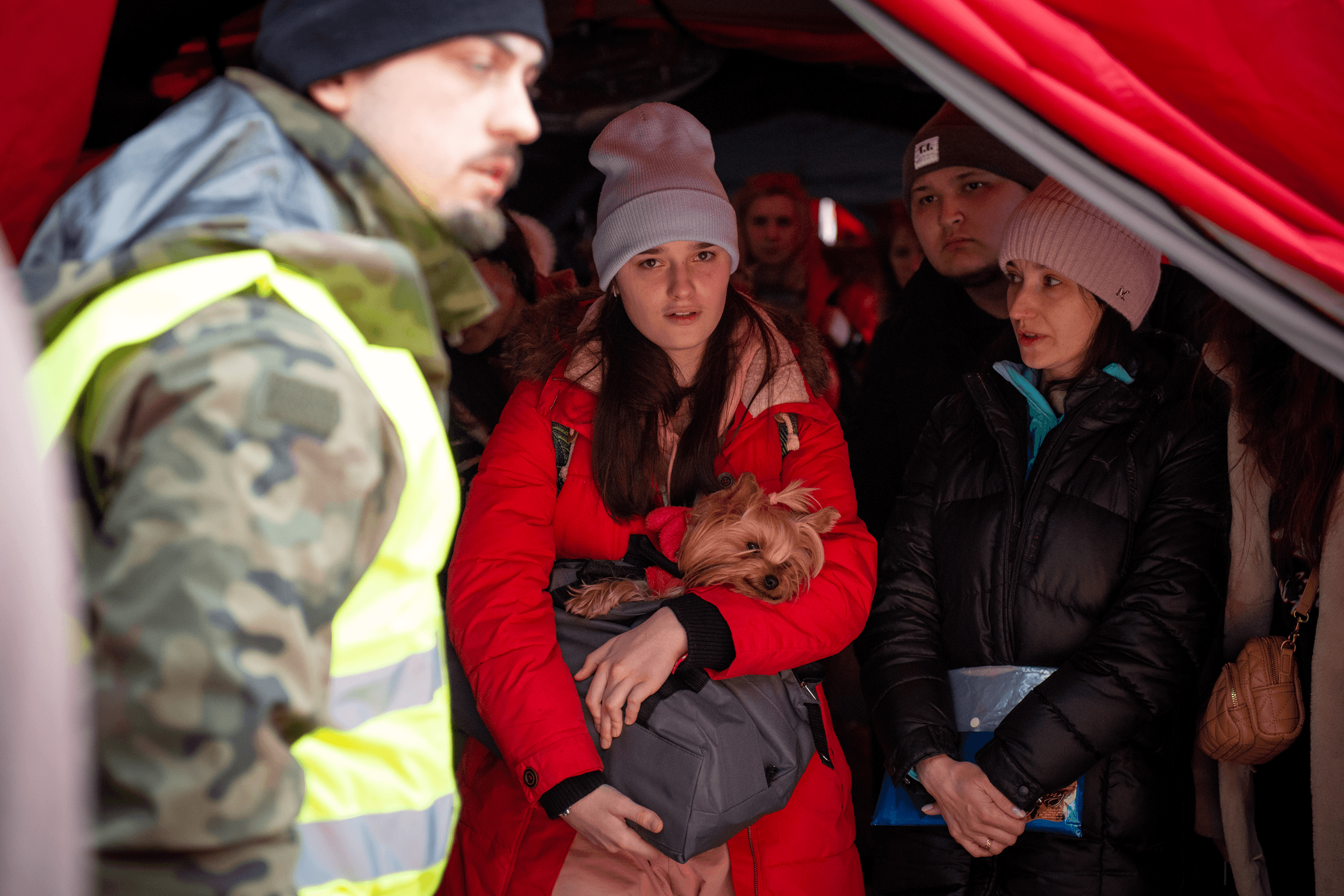
A Ukrainian refugee with her dog at a refugee reception center in Korczowa, Poland. March 12, 2022. Photo: Wikimedia / YB
In Ukraine, we still don’t talk very much about these experiences. We talk about successful or less successful migrants, but we hardly ever look at the details of what people actually went through. That’s understandable. We simply haven’t had the time to process our own social experiences: if it wasn’t a revolution, it was the Maidan; if not the Maidan, then war. But I think exploring these Ukrainian experiences is a very promising subject for research, books, texts, and films. We are already talking about migration in a more nuanced way. We are gradually moving past the dichotomy of “social orphans and cuckoo mothers.” However, there is still very little real, detailed experience in these narratives. And that experience is never black and white.
The state received a massive economic resource from labor migrants for decades. Why, at the same time, did it treat them in such a utilitarian way?
I think we need to start with a broader question: how does the state treat Ukrainians in general? Is there mutual respect and trust?
The situation with Ukrainian migrants is simple: they are a part of Ukrainian society. They are Ukrainians who live outside Ukraine, but remain Ukrainians. These people left in order to provide for their families and help where the state couldn’t support them. And when they managed to take care of their children and more or less get on their feet, all they mostly heard from the state was talk about double taxation, about how to bring someone back, or how to get even more money out of them. That’s a consumerist attitude.
After 2022, the rhetoric changed: now Ukrainians abroad are referred to as “global agents of change.” These are beautiful slogans, but just as the authorities were unfamiliar with the real needs of their people, they mostly continue to show little interest in them. This is evident through the lack of modern Ukrainian schools abroad, beyond just Saturday schools. Or through the operation of consulates and those frantic queues people have to stand in for months to get a passport or another document. The last time I needed to renew my passport, living in Sweden, I couldn’t do it anywhere in Europe except Cologne—and even that was by a miracle, registering in an online queue, regarding the transparency of which I have a lot of questions.
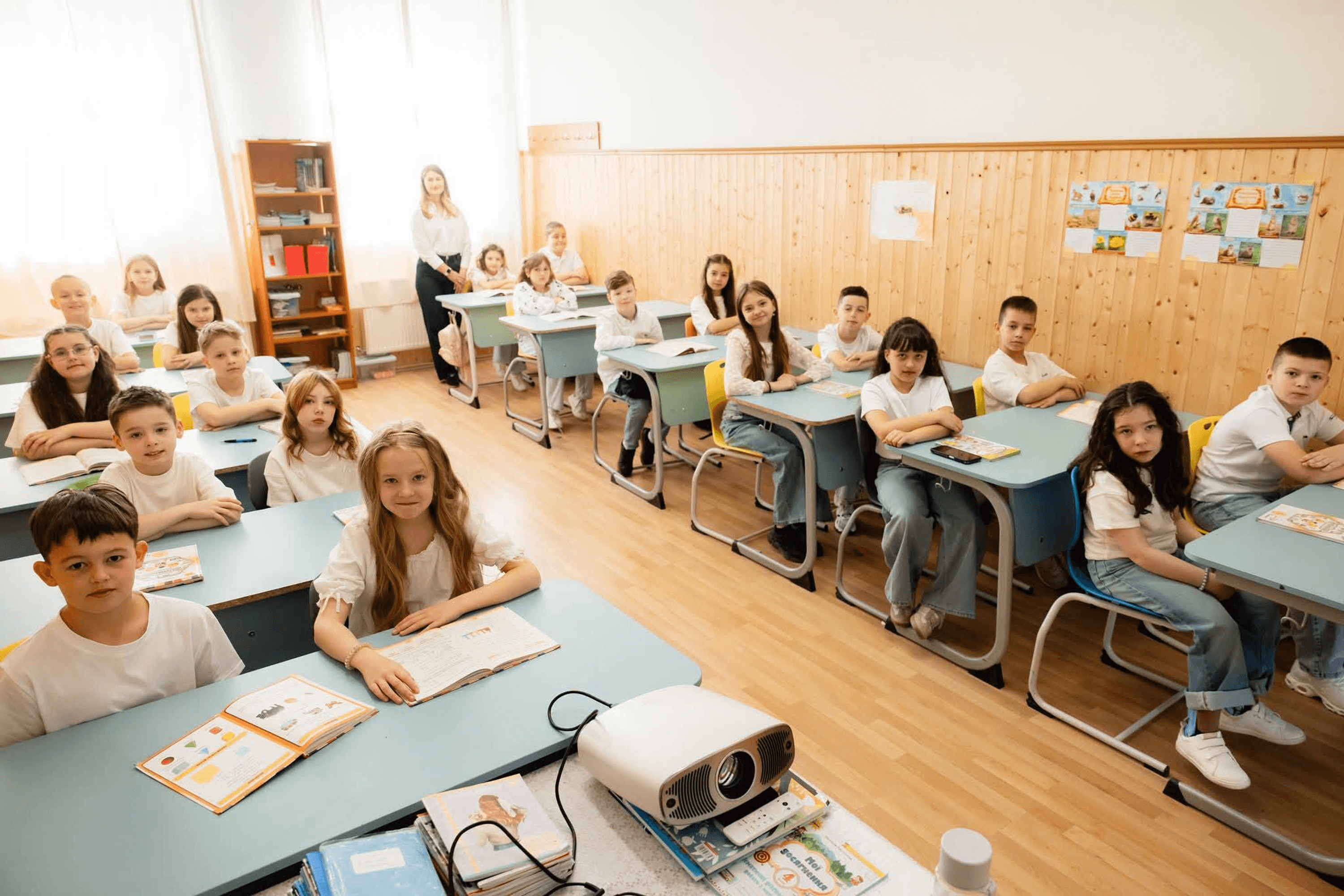
The Hungarian-Ukrainian Bilingual School in Budapest, attended by 330 students from grades 1 to 12. 2026. Photo: Українці Угорщини – Державне Самоврядування Українців Угорщини / Facebook 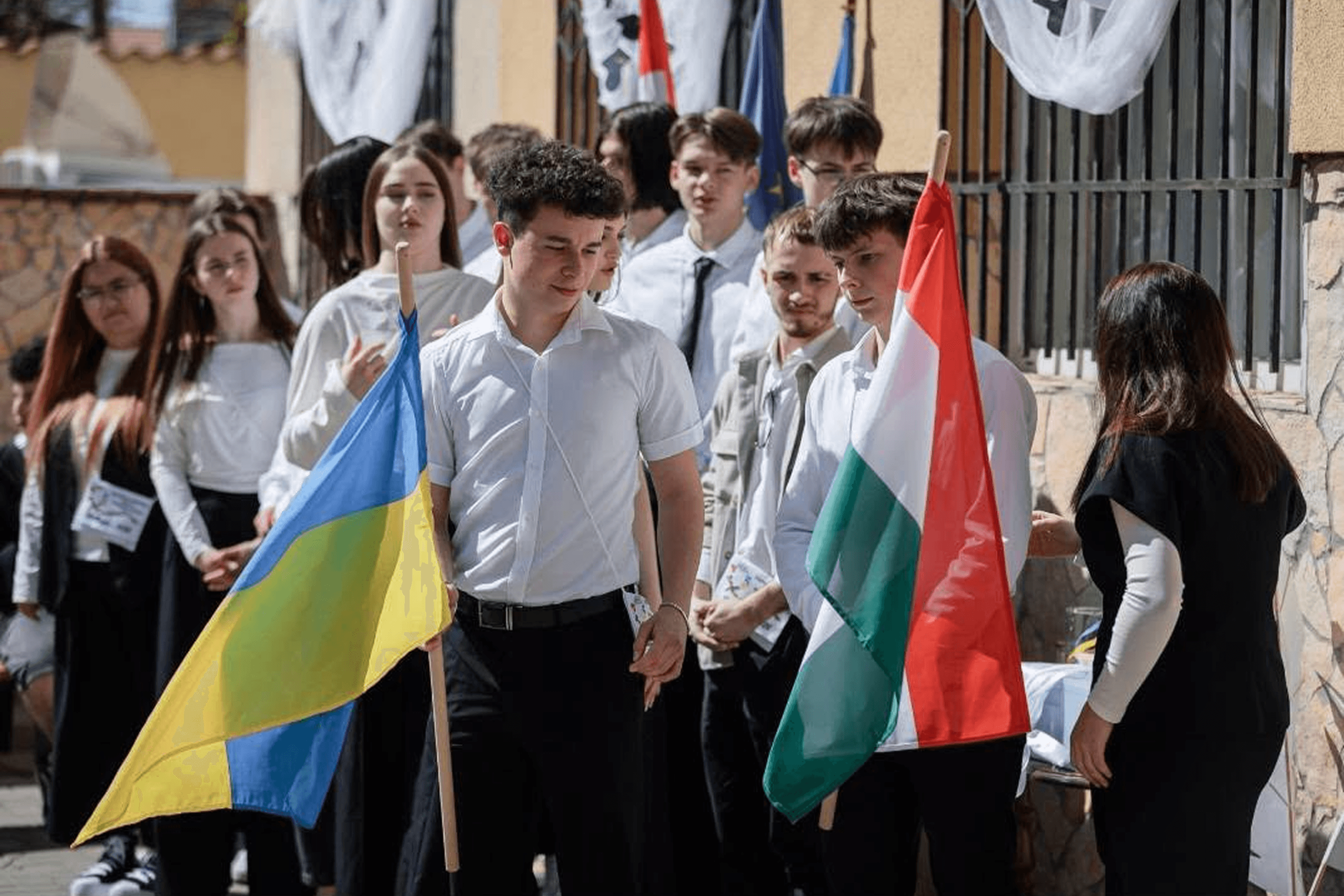
Photo: Українці Угорщини – Державне Самоврядування Українців Угорщини / Facebook 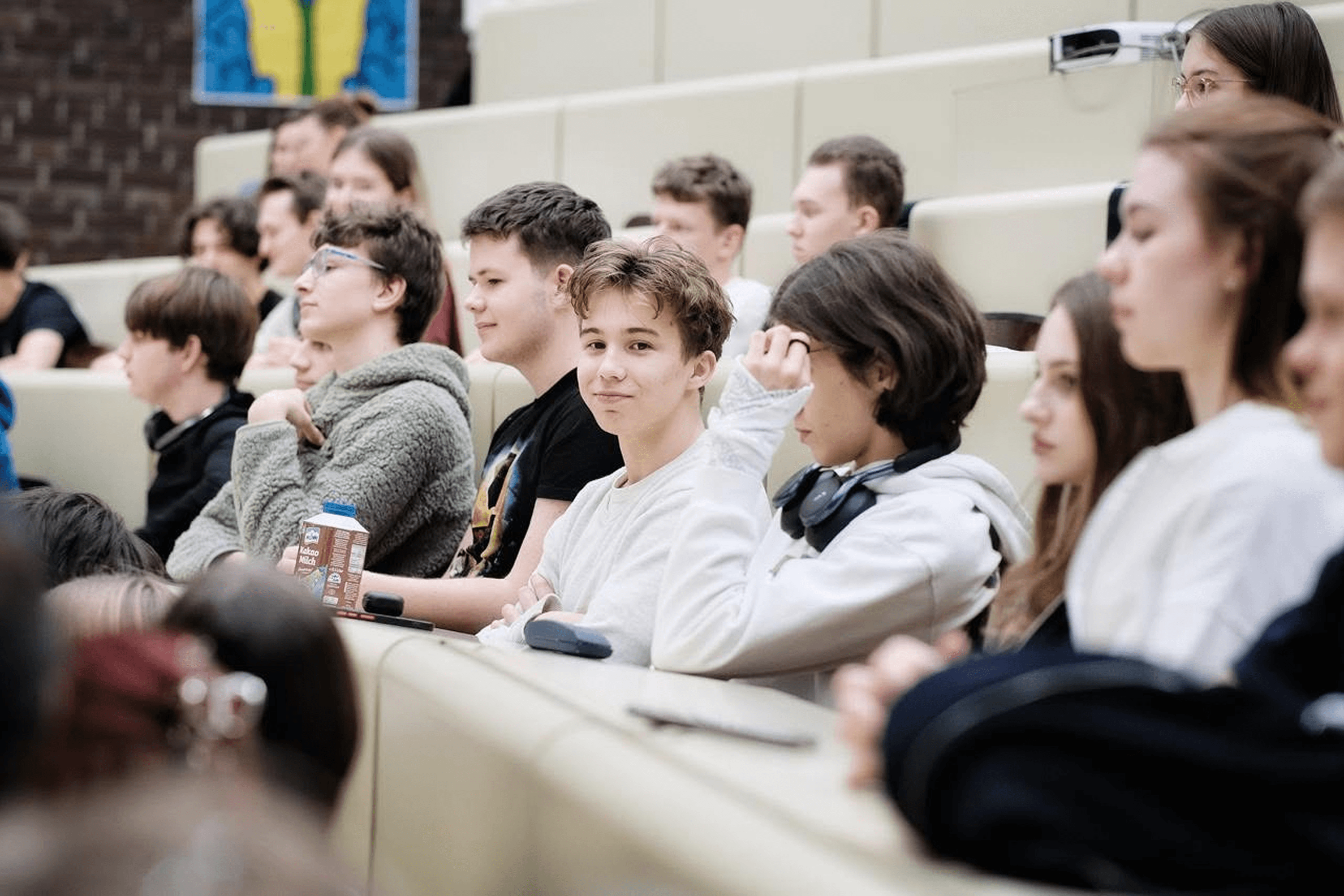
The Ukrainian School in Vienna during a visit by then-Deputy Prime Minister of Ukraine Oleksii Chernyshov. January 30, 2025. Photo: Олексій Чернишов / Facebook 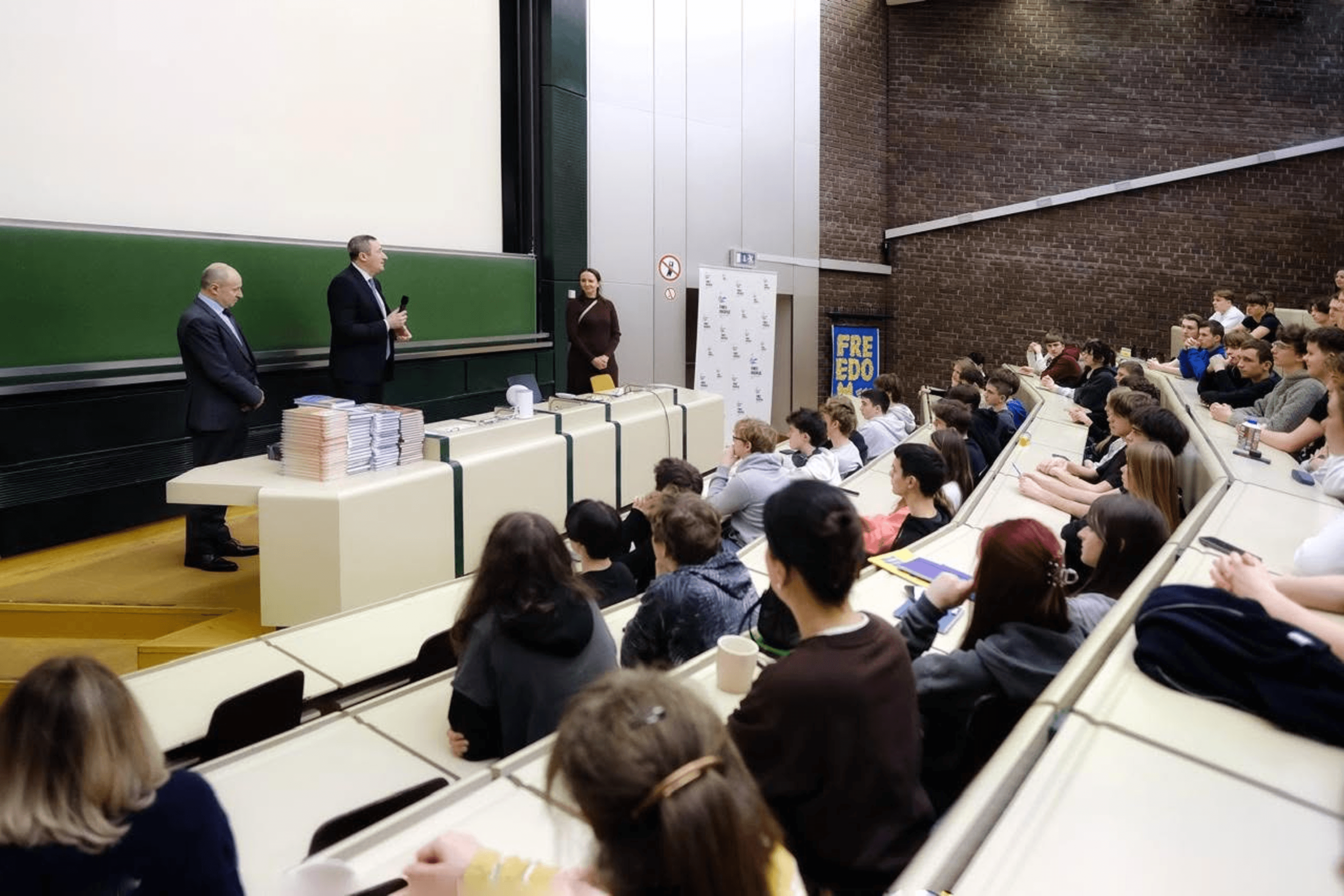
Photo: Олексій Чернишов / Facebook
Among those who remained in Ukraine, there is a popular opinion that those who left have no right to criticize.
Many people who left after the start of the full-scale war are constantly present in Ukraine in one way or another. Some physically come to visit their parents, husbands, or children. If not physically, then a great number of people simply live in the Ukrainian world non-stop: watching Ukrainian news, attending demonstrations, raising money, and donating.
Of course, a portion of people have distanced themselves and tried to live outside the Ukrainian context. We are talking about millions of different life stories, among which you can find all kinds of cases. However, according to my observations, very many Ukrainians are constantly involved in the Ukrainian space, and this shouldn’t be devalued.
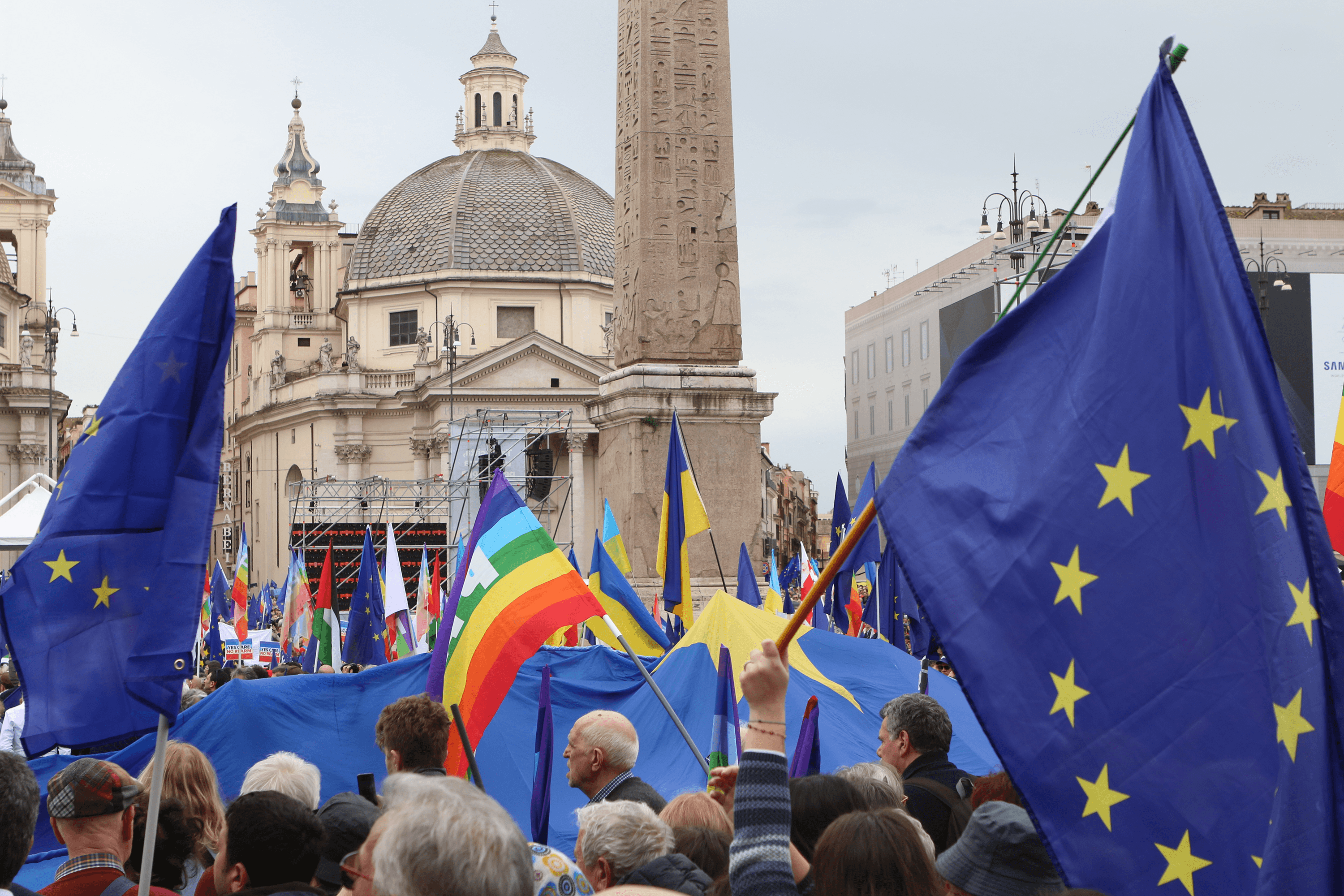
The “A Square for Europe” rally with European Union and Ukrainian flags at Piazza del Popolo in Rome, Italy. March 15, 2025. Photo: Wikimedia / YB 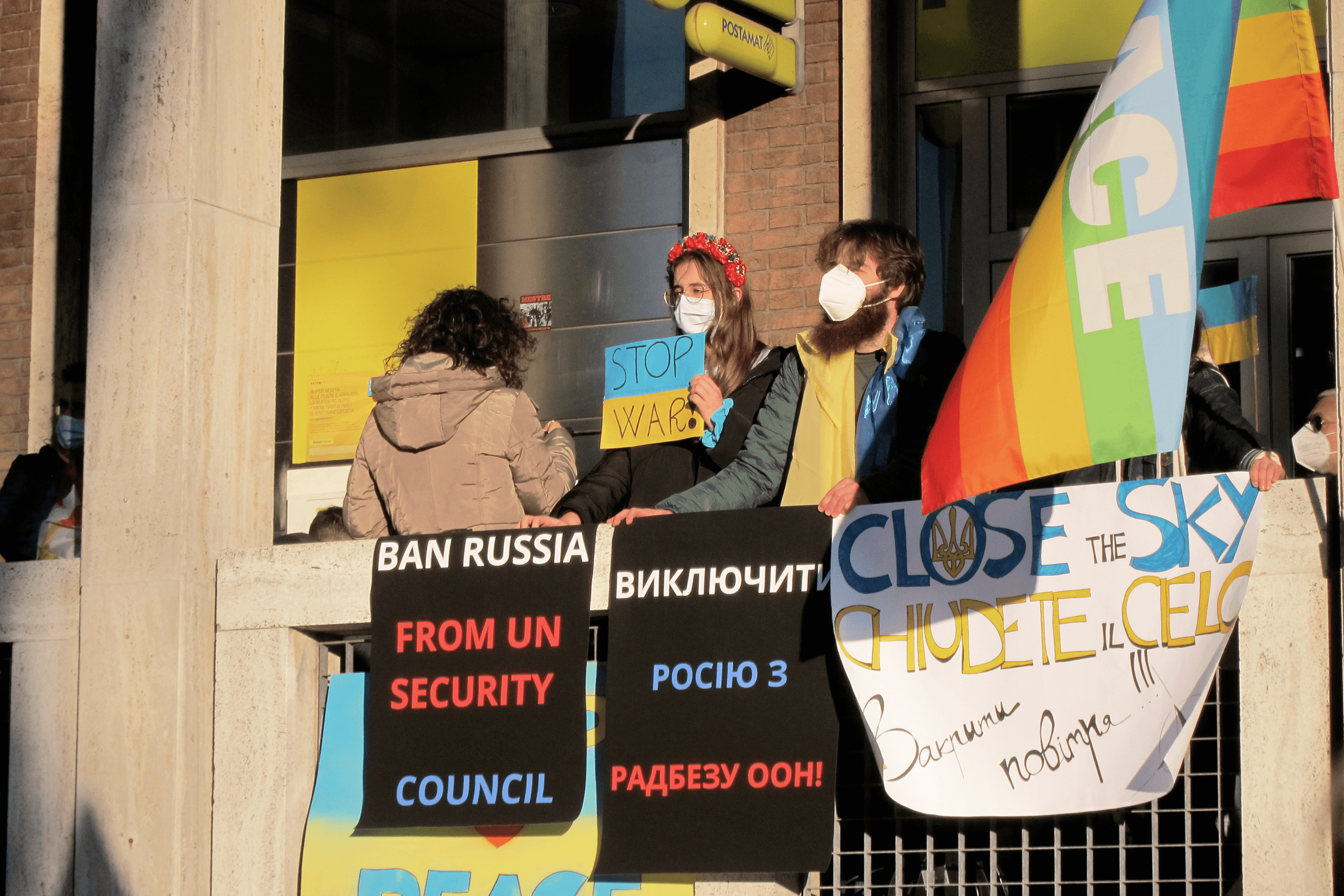
A rally in support of Ukraine in Mestre, Italy, calling for Russia’s removal from the UN Security Council and for the airspace over Ukraine to be closed. February 26, 2022. Photo: Wikimedia / YB 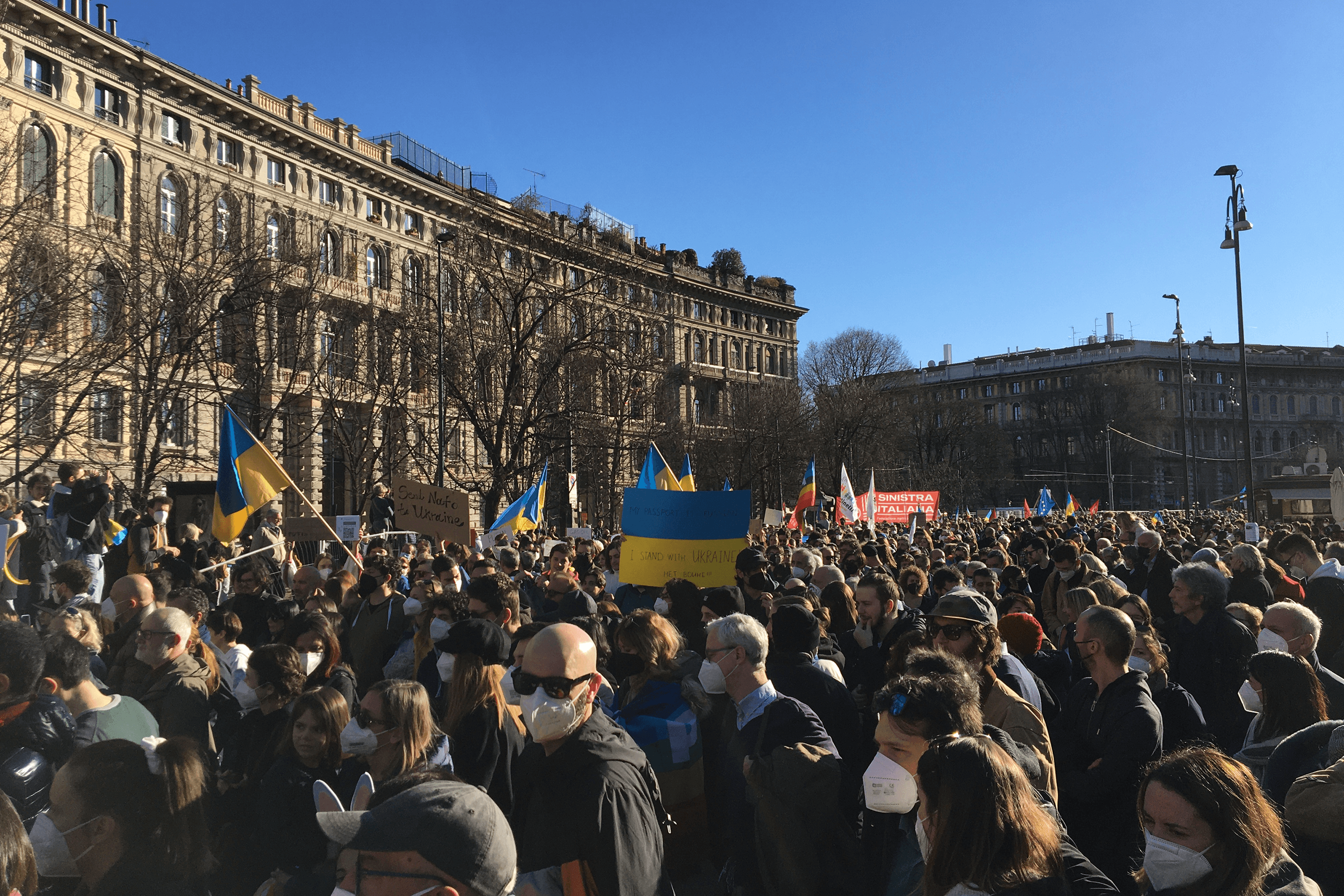
A rally in support of Ukraine at Piazza Castello in Milan, Italy. February 26, 2022. Photo: Wikimedia / YB
You mentioned that many migrants continue to live across two countries. What does that say? Will this become their new norm of life? Or, on the contrary, are they more likely to return?
Above all, it demonstrates that they don’t want to sever their ties with Ukraine. The motivations can vary. Many people are waiting for the war to end. Many still have husbands and the fathers of their children in Ukraine. They dream of finally returning and living together. Some cannot imagine that their entire life will now take place outside Ukraine, because living in migration in adulthood is quite a challenge.
It is one thing to know that you are abroad temporarily, to wait out a few weeks, a few months, or even a few years, knowing that you will return. It’s a completely different thing to decide one day that you will definitely not return. That requires a huge amount of inner resilience. And I think many people simply don’t have that resilience.
People can live between two countries even for decades. As long as these people want to remain within the Ukrainian domain, they need to be supported. We need to understand that we are all part of the same community.
Люди можуть жити між двома країнами навіть десятки років. Допоки ці люди хочуть бути в українському полі, їх треба підтримувати. Розуміти, що ми всі ― частина однієї спільноти.
Can we say at all that after 2022 people left without a choice?
When it comes to choice in migration, everything is very complicated.
There is a lot of research showing that even in what we call forced migration, when you are compelled to leave, a person retains significant agency for their own choice. Before 2022, there were people whose goal abroad was to earn money for their own apartment. But there were also people who left to try a different life, to escape a toxic marriage, or to solve some of their other problems. Migration is far less straightforward than it might seem to us.
After 2022, many people were fleeing bombs. But at the same time, many people went abroad to give their children an education or for other reasons. One doesn’t contradict the other. Our reality is very complex. People could find themselves in completely different situations and still remain subjects of their own lives, making the decision to leave or to return. We had several million people return to Ukraine after the initial shock of March–May 2022, but for some reason, that is rarely talked about.
What problems do female migrants face most often now, besides the obvious adaptation issues?
A person living abroad during wartime faces their own specific stresses. You don’t know the language, or you know it imperfectly. You constantly have to explain why Ukraine is worth supporting. You encounter pro-Russian individuals, people who don’t understand you, and integration difficulties. The picture of “everyone who left is doing fine right now” simply doesn’t correspond to reality. People struggle in different ways.
Abroad, there is hidden discrimination and even hidden racism. This especially applies to qualified and educated people. There is a so-called integration paradox: the more qualified a person is, the harder it is sometimes for them to integrate into society. There are stereotypes surrounding femininity and marital status—for example, the notion that Ukrainian women only want to marry a foreigner. There is also a stereotype regarding qualifications. Someone might tell you, “Oh, I didn’t think you were so educated” or “I didn’t think you were so professional.” And yet, they might have genuinely intended it as a compliment.
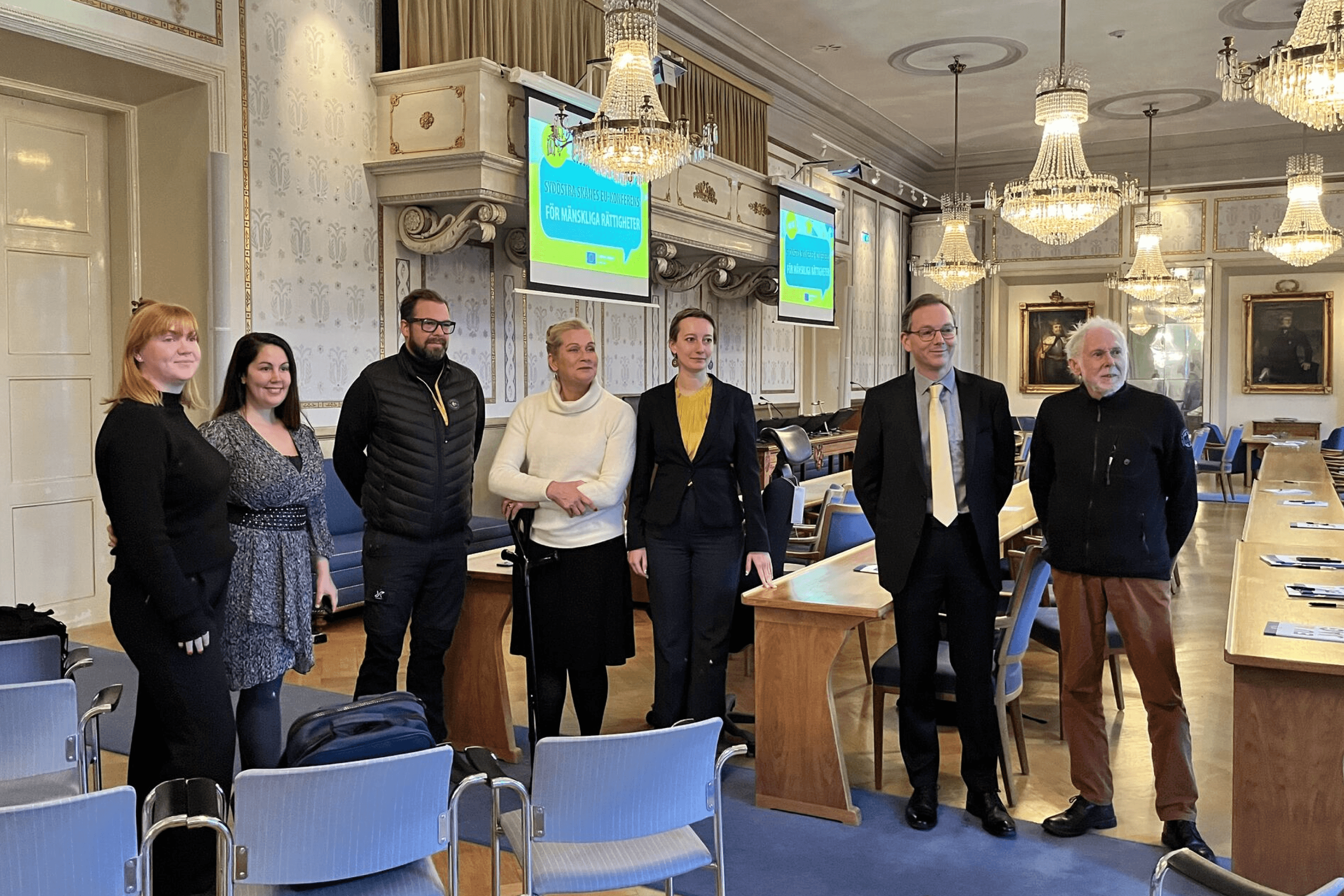
Svitlana Odynets speaks at a human rights conference in Sweden dedicated to supporting Ukraine. December 14, 2022. Photo: Svitlana Odynets, Dr. / LinkedIn 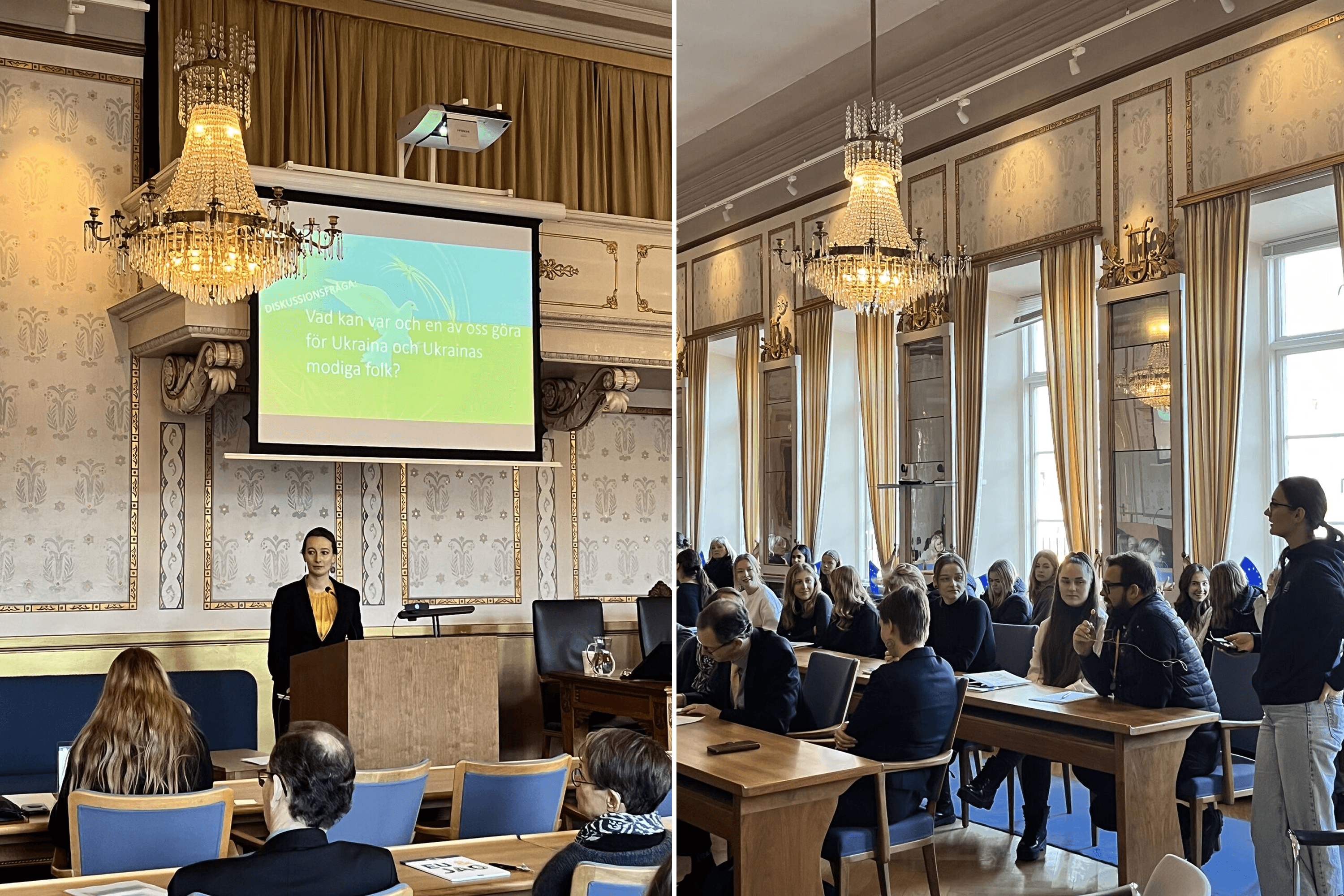
Photo: Svitlana Odynets, Dr. / LinkedIn
Many women have actually experienced downshifting when they migrated—for example, they might have owned a business in Ukraine or worked as a lecturer, but abroad they’re forced to work as cleaners or cashiers. How widespread is this problem?
Yes, it’s indeed a widespread problem.
When we look at Ukrainians in various European countries, we see a huge number of people with higher education degrees working in the unskilled sector. And this is even more true for Western Europe and Scandinavia. The reason is simple: nostrification and validation of degrees, learning the language, and understanding the culture of the society take time. It takes years.
This is especially difficult because many Ukrainians are abroad temporarily. If you know that you are staying in a country for, say, another year or two, you won’t necessarily have much motivation to invest a lot of your time into learning a new language or obtaining a new degree. Especially if you are a mother of two children, and back in Ukraine you have a husband at the front and ailing parents. That requires superhuman resources. Some people do it, honor and praise to them. But not everyone can.
A great number of women say, “We are staying until my child turns 18. They will enroll in a local university, and after that I’ll return home.” A portion of women simply endure this period: wait it out, pull through, suffer through, and return.
Five years in migration is actually a very short period. Even children of migrants born in Germany, France, or Spain are often in an ambivalent state regarding their identity, let alone those who have been in migration for only a few years.
Does a conflict exist between the so-called old diaspora and those who arrived after 2022? For example, in Canada the Ukrainian diaspora is very large and often consists of people who were already born there. How do they treat the newcomers?
The “old diaspora” in different countries represents entirely different phenomena. In Canada it is one story, in Sweden another, and in Poland yet another.
In Italy, for instance, there was no large Ukrainian community before 1991. The main group of Ukrainians there consists of people who arrived from independent Ukraine as labor migrants, and people who came just now, after 2022. In Canada, on the other hand, there is an old political diaspora of those who arrived after World War II and their descendants, as well as newcomers post-1991 and those who arrived after 2022. Therefore, within the diaspora as well as non-diaspora communities, there are many divisions.
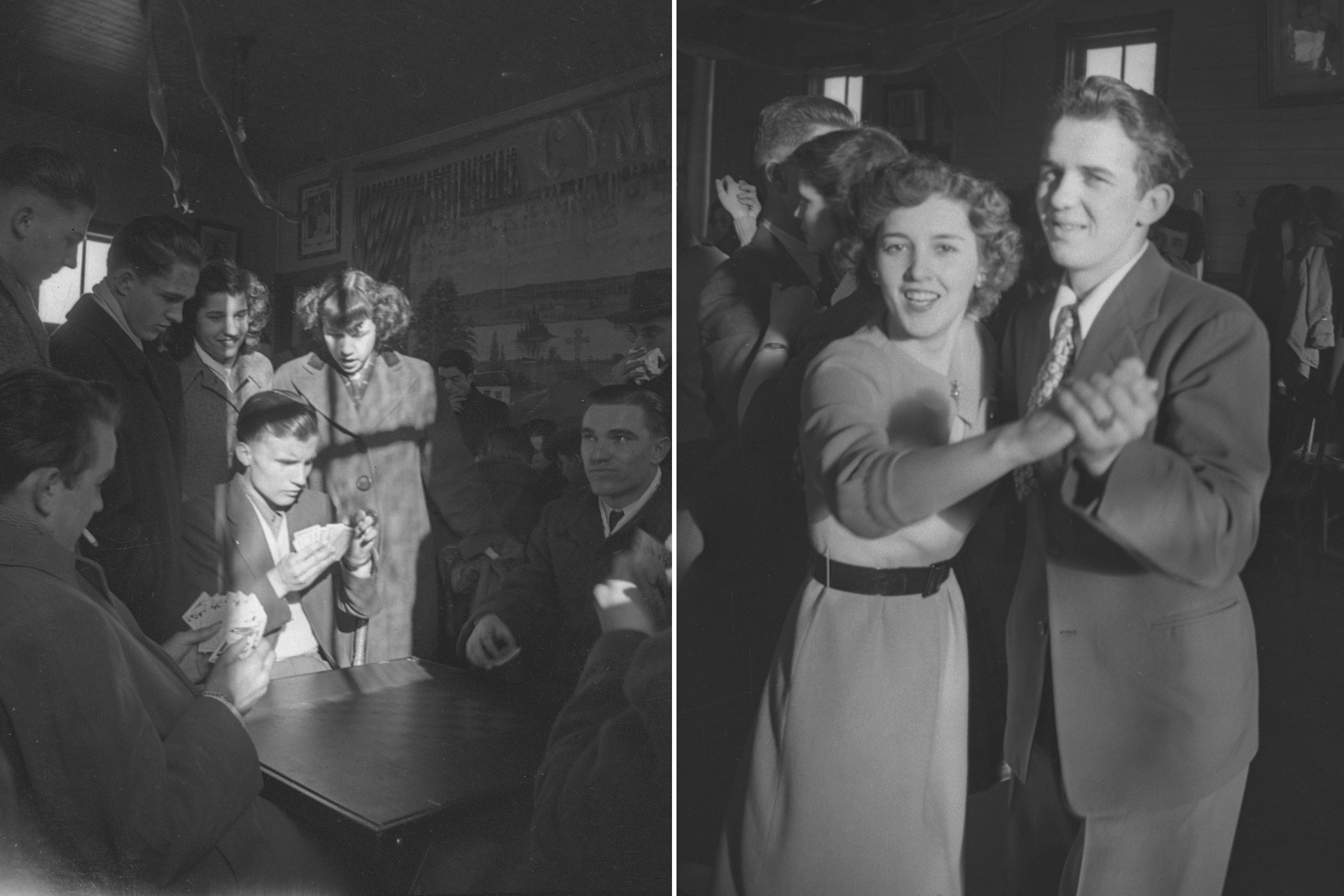
Young people play cards during a dance organized by the Ukrainian Orthodox Youth Association of Canada in Vegreville, Alberta. January 1947. Photo: Wikimedia / YB 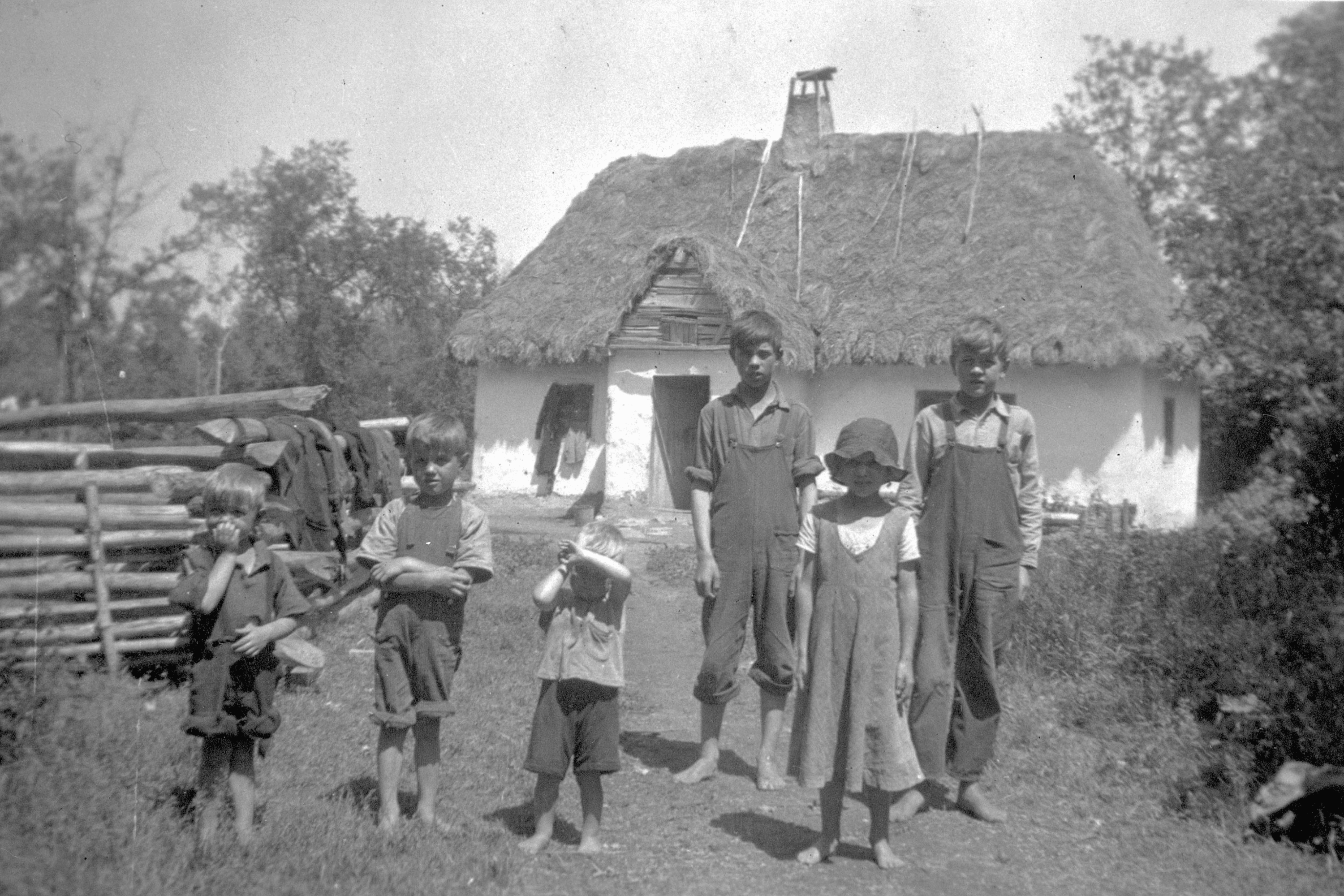
A Ukrainian family outside a Ukrainian-style house in Athabasca, Alberta, Canada. 1920. Photo: Wikimedia / YB 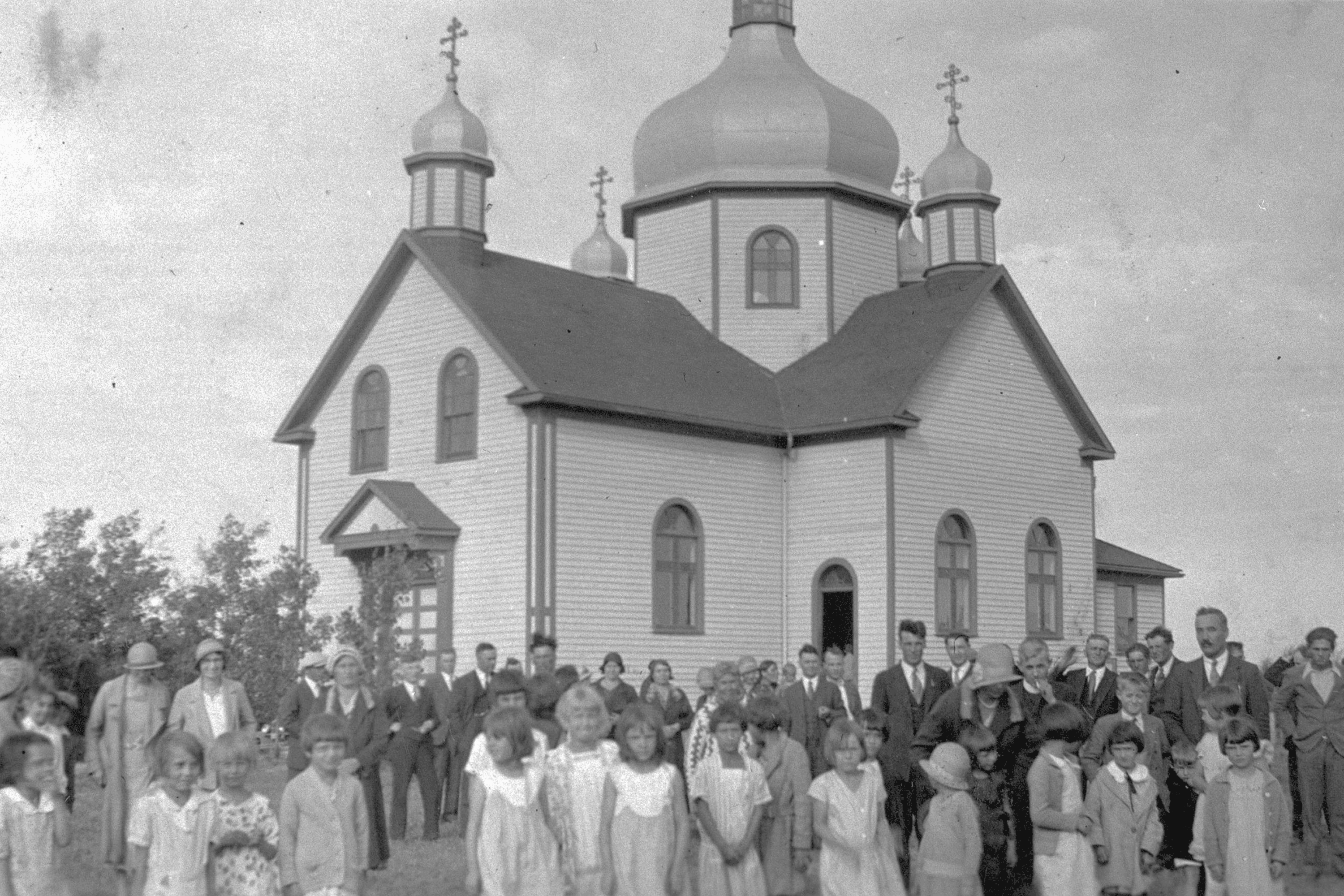
A Ukrainian church and community in the Sich district near Vegreville, Alberta, Canada. 1926. Photo: Wikimedia / YB 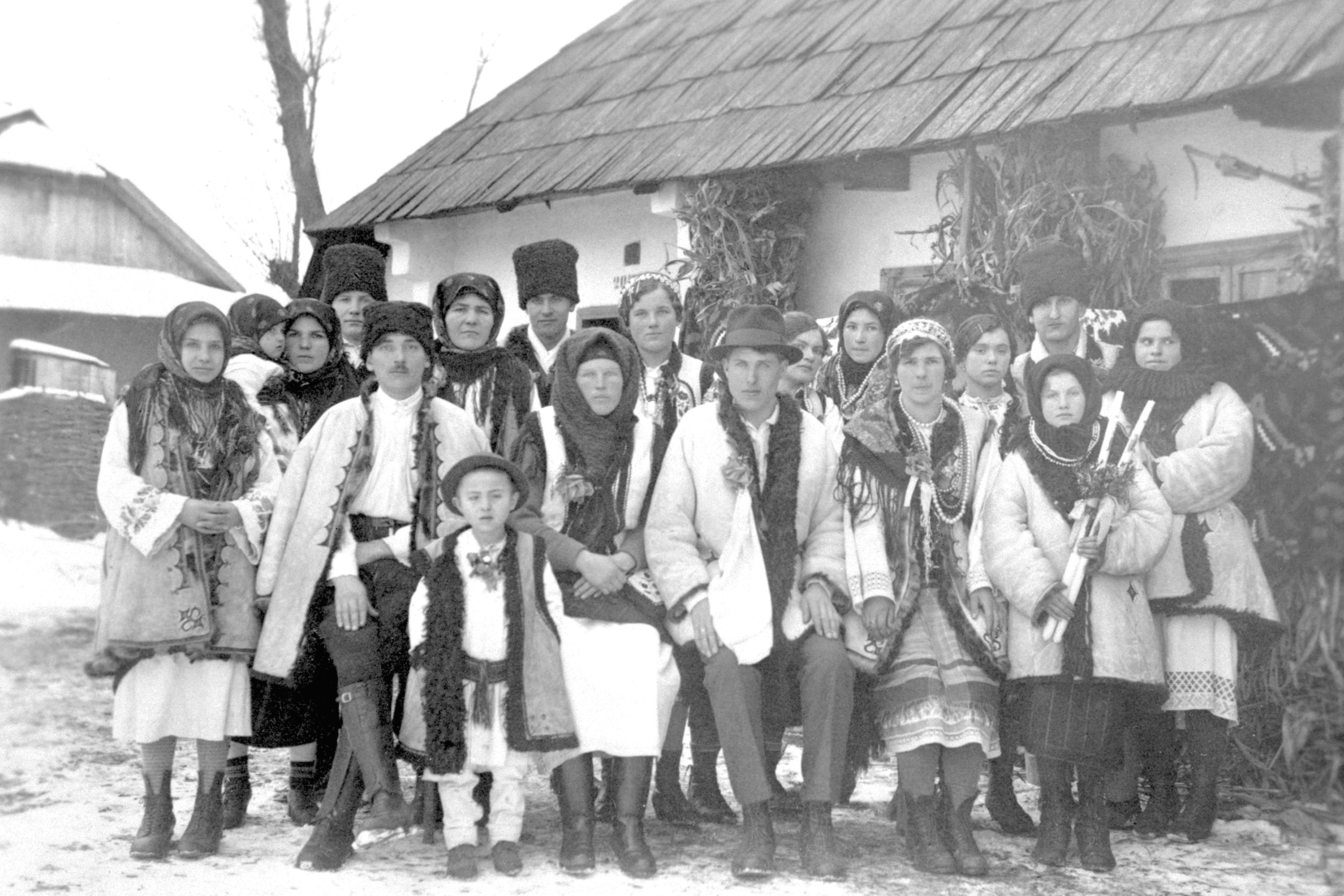
A Ukrainian wedding in the Redwater district, Alberta, Canada. 1930. Photo: Wikimedia / YB
When the war started, everyone who had any connection to Ukraine—through ancestors or family—rushed to help. This was very noticeable in Poland, for instance. Initially, the war brought together even those who didn’t know about each other’s existence. But time passes, and all these cohesion dynamics develop differently.
Those who arrived earlier often have better financial capabilities and are more involved in economic assistance to Ukraine. Meanwhile, the 2022 cohort is more occupied with figuring out how the new society works: learning the language, navigating its institutions, and understanding how to live here. Local situational alliances may arise, but it isn’t a case of new Ukrainians arriving, meeting old Ukrainians, and all merging into a single Ukrainian sea.
How strongly are migrants affected by the deteriorating relations between Ukraine and host countries? Poland comes to mind first, but relations are also strained with Hungary and Slovakia.
Political discourse certainly has an impact. Female migrants develop various strategies for interacting with it. Some try to advocate for Ukraine, while others simply distance themselves or withdraw into their shells. But political discourse isn’t the primary factor.
For instance, a portion of people are leaving Poland not only because of political rhetoric, but also due to legislative changes and social conditions. So I wouldn’t say that when a country becomes more pro-Russian or anti-Ukrainian, it automatically leads to a mass exodus of Ukrainians. People are embedded in very complex transnational processes. The primary factor of influence is the situation in Ukraine. Next is the extent to which they can reunite with their families. If a family has reunited abroad, those individuals are less likely to return.
In other words, there are family, economic, security, and legal factors that often play a larger role than direct political discourse. For someone who has built up some stability in a new country over these few years, it’s very difficult to simply relocate to a new place, especially for people with children.
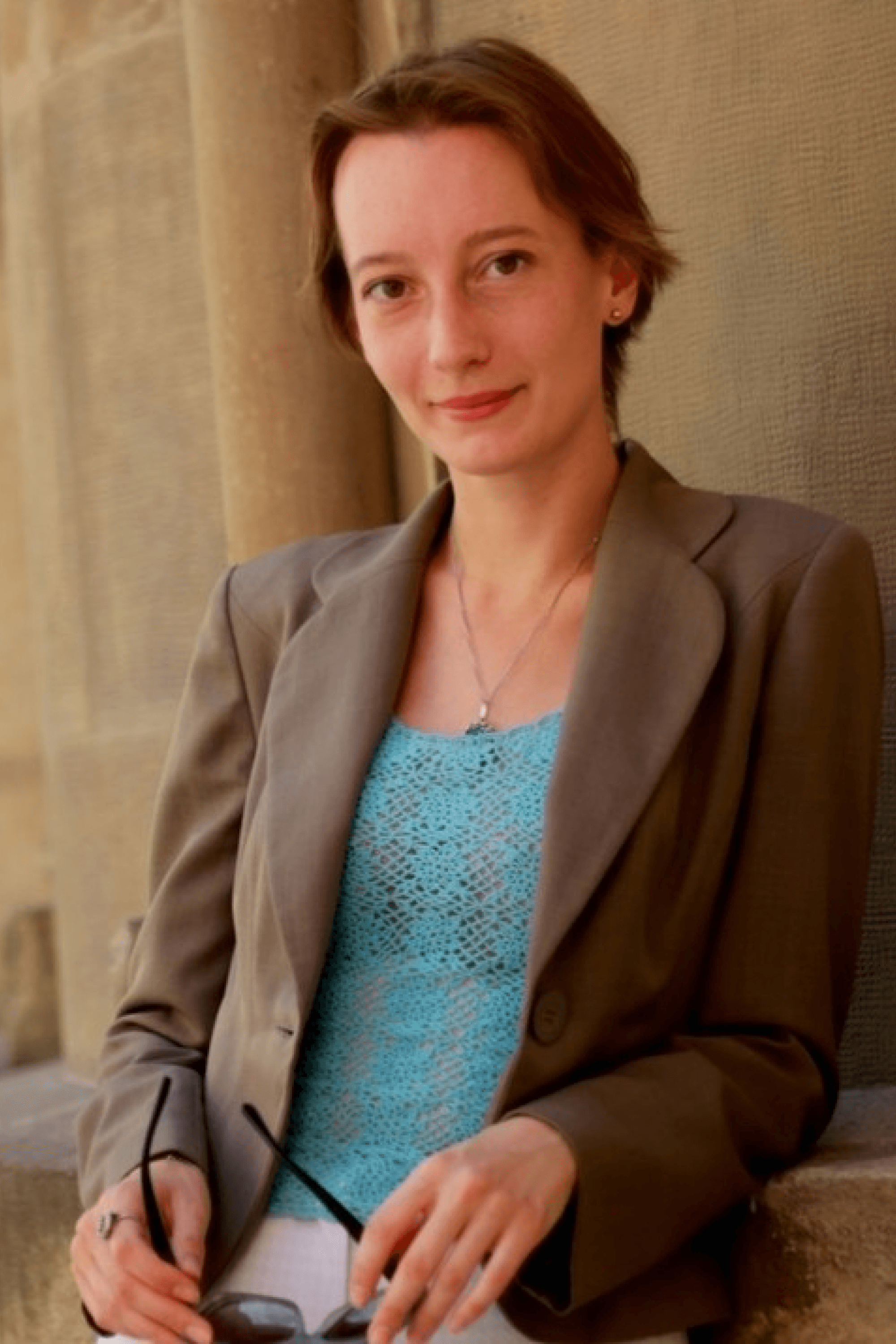
The state constantly talks about the return of Ukrainians. Do you see a real strategy here?
There are slogans and statements claiming that we need to bring Ukrainians back. But even if we follow that logic, at least ten questions arise. Where are people supposed to return to? Who guarantees them even a minimum level of safety, for example, in the form of a sufficient number of shelters? Who provides places in kindergartens, access to hospitals, infrastructure? No region of Ukraine today can guarantee complete safety. And the regions that can offer relative safety are already overpopulated.
We simply don’t know what will happen if millions of Ukrainians suddenly return all at once. Meanwhile, the authorities speak of potential disruptions in electricity, gas, food, and water supply. And running parallel to that is a discourse on mass return. All these slogans, in my opinion, seem irresponsible, even keeping in mind that our demographic situation is extremely grave.
What, then, should be the state’s priority?
In my view, the most correct path today is to prioritize the preservation of Ukraine’s statehood and sovereignty. This is question number one, where every resource should be directed, because we are in a critical situation.
I would direct resources toward helping those outside Ukraine, supporting them with a kind word and, if possible, financially. Helping everyone inside Ukraine by providing them with alternative means of survival. And focusing the main energy on securing weapons, strengthening the Ukrainian army, and ensuring fair mobilization.
So instead of pressuring those abroad, a different approach is needed?
Yes. If people want to remain within the Ukrainian sphere, those relationships must be supported. Not pressuring them or creating situations where they constantly have to prove their Ukrainian identity.
Because millions of people are living between worlds. We cannot say that they all want to stay abroad. A portion wants to stay, a portion is waiting for the situation to resolve, and a portion plans to return. Therefore, instead of a campaign for return, every day I would say to Ukrainians abroad: “We love you, we remember you, and we know we’ll meet soon.”
I think that would be a much wiser strategy. Because the people who could and should have returned have already returned. If we win this war—and I firmly believe we will—we will witness major returns: the feeling of home and one’s own land is often stronger than any stability. Naturally, not everyone will return, but many will.
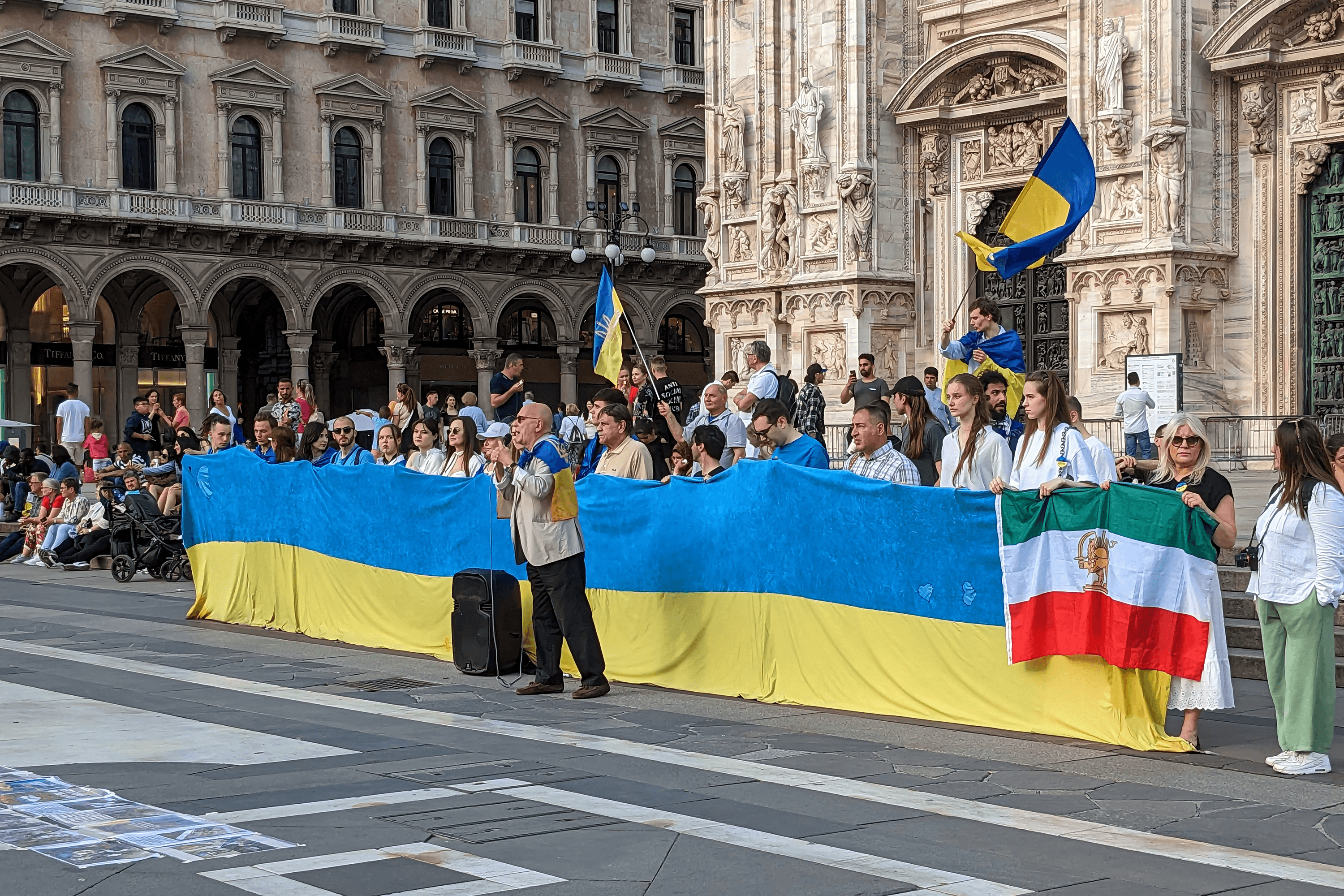
A rally in support of Ukraine near Milan Cathedral in Milan, Italy. June 3, 2023. Photo: Wikimedia / YB 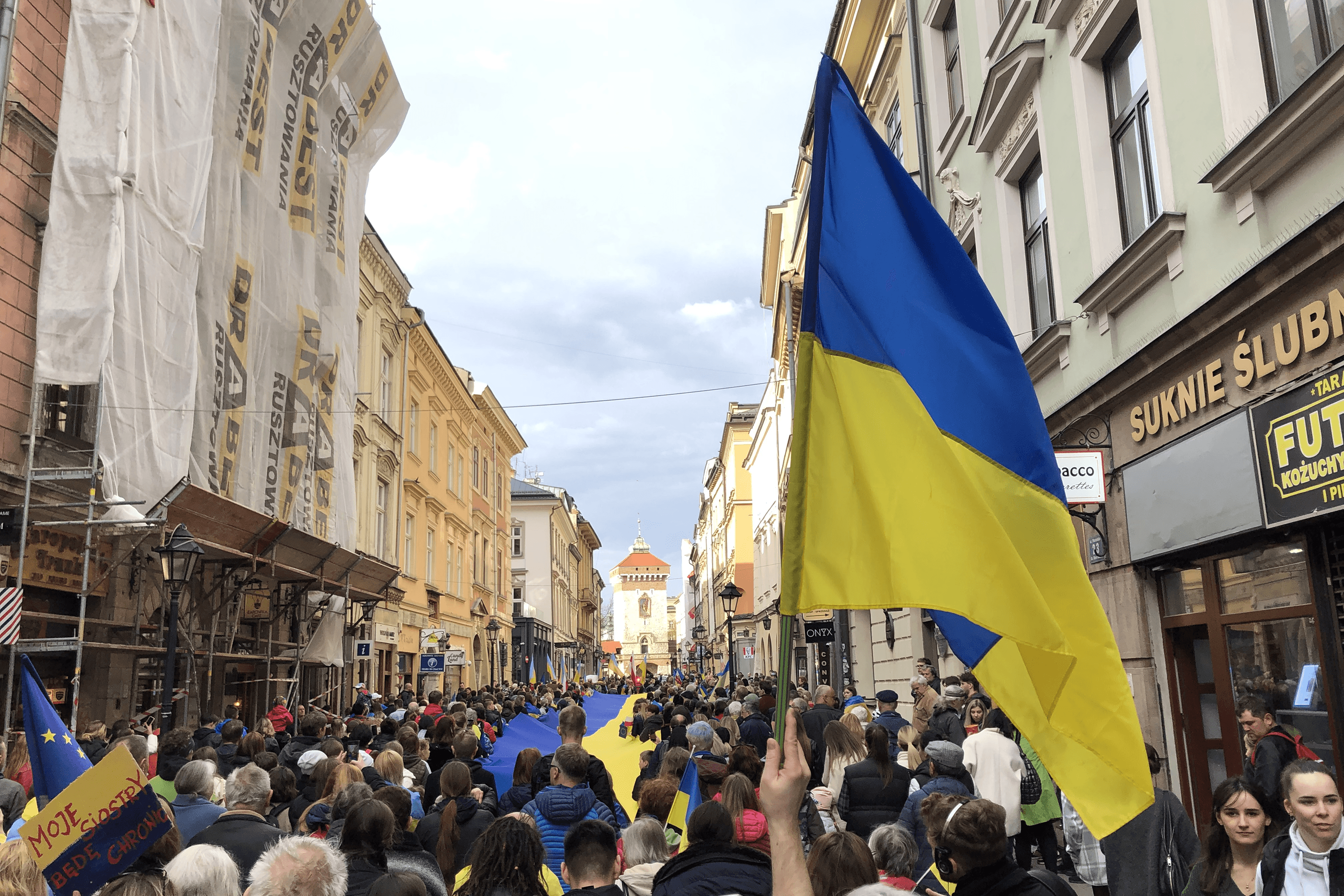
A rally in solidarity with Ukraine in Kraków, Poland. April 24, 2022. Photo: Wikimedia / YB 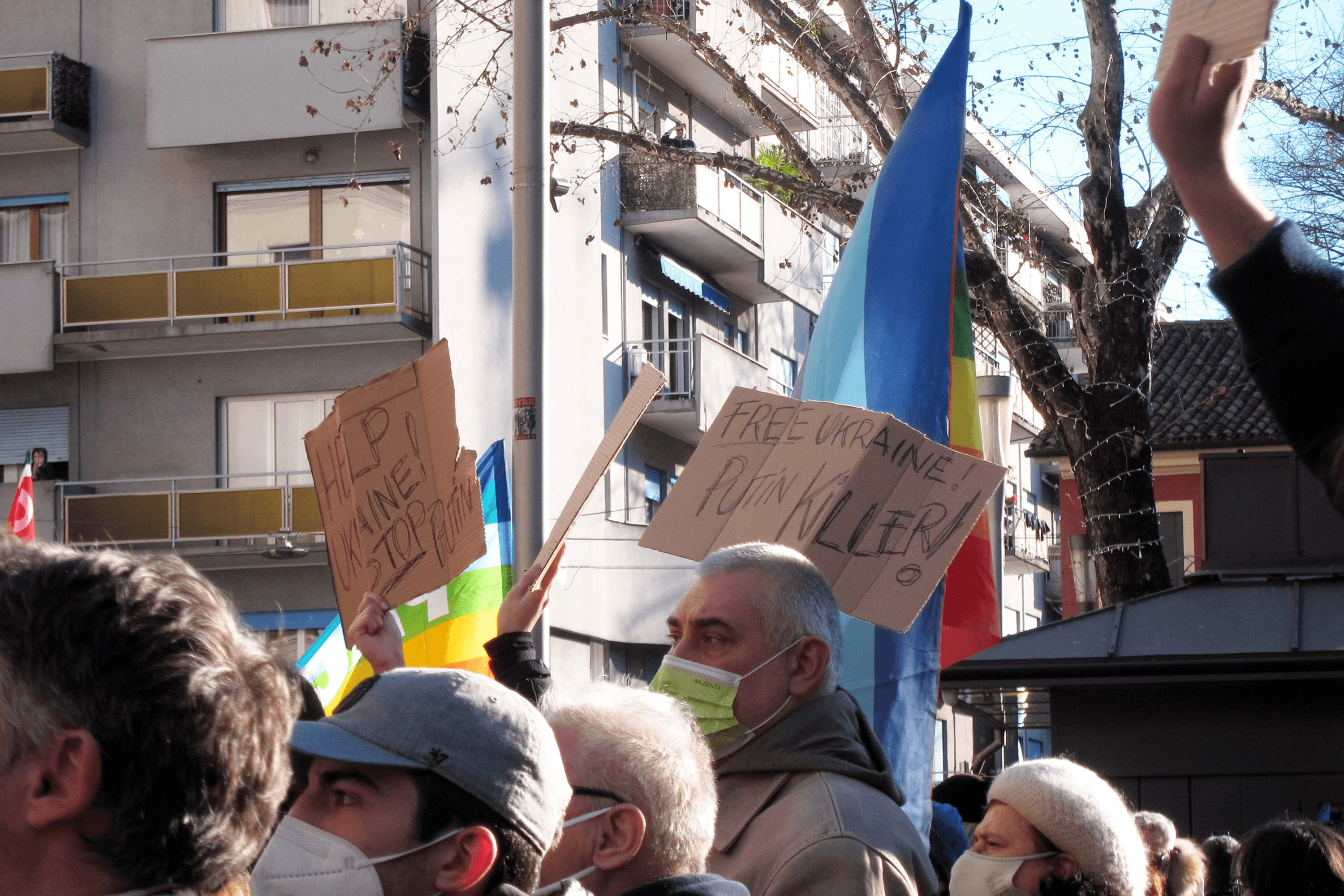
A rally in support of Ukraine in Mestre, Italy, following the start of Russia’s full-scale invasion. February 26, 2022. Photo: Wikimedia / YB


