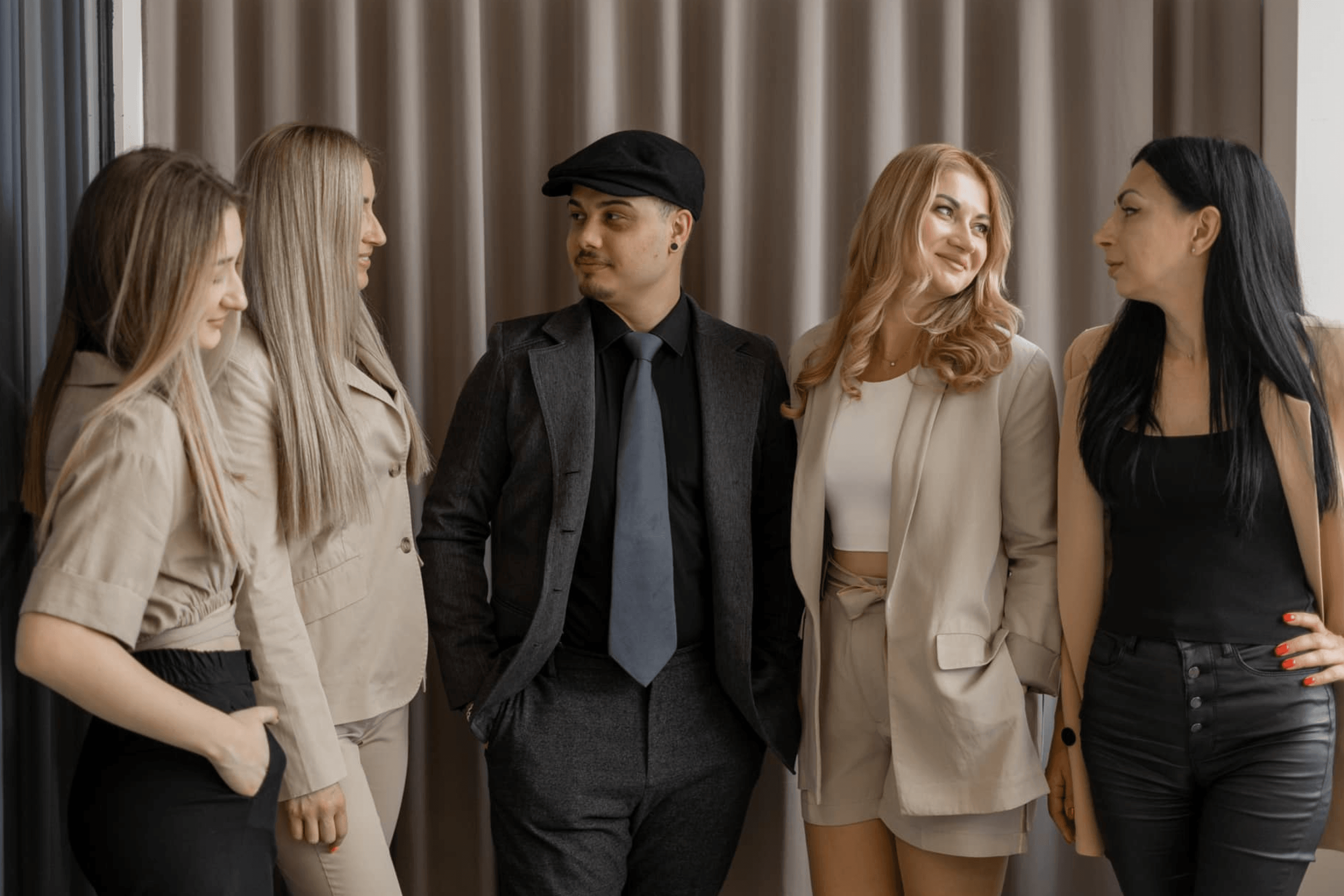
Chernivtsi natives Iryna Kotapska and Liudmyla Lipinska are designers, sisters, and business partners. In 2003, 22-year-old Iryna founded the bridal dress brand Kotapska, and a year later her sister Liudmyla joined her.
The business started as a home atelier with one seamstress. Today, their Chernivtsi facility employs 100 seamstresses and more than 50 other specialists. The brand operates exclusively in a B2B export format, serving more than 500 bridal salons across 12 countries in Europe and the US. The uniqueness of Kotapska dresses lies in their customizability. Each model can be modified at the client’s request to create a version that is entirely their own.
Yellow Blue journalist Roksana Rublevska spoke with Iryna and Liudmyla about building the brand, entering international markets, and their approach to scaling.
How did your passion for wedding dresses begin, and how did it grow into a joint business?
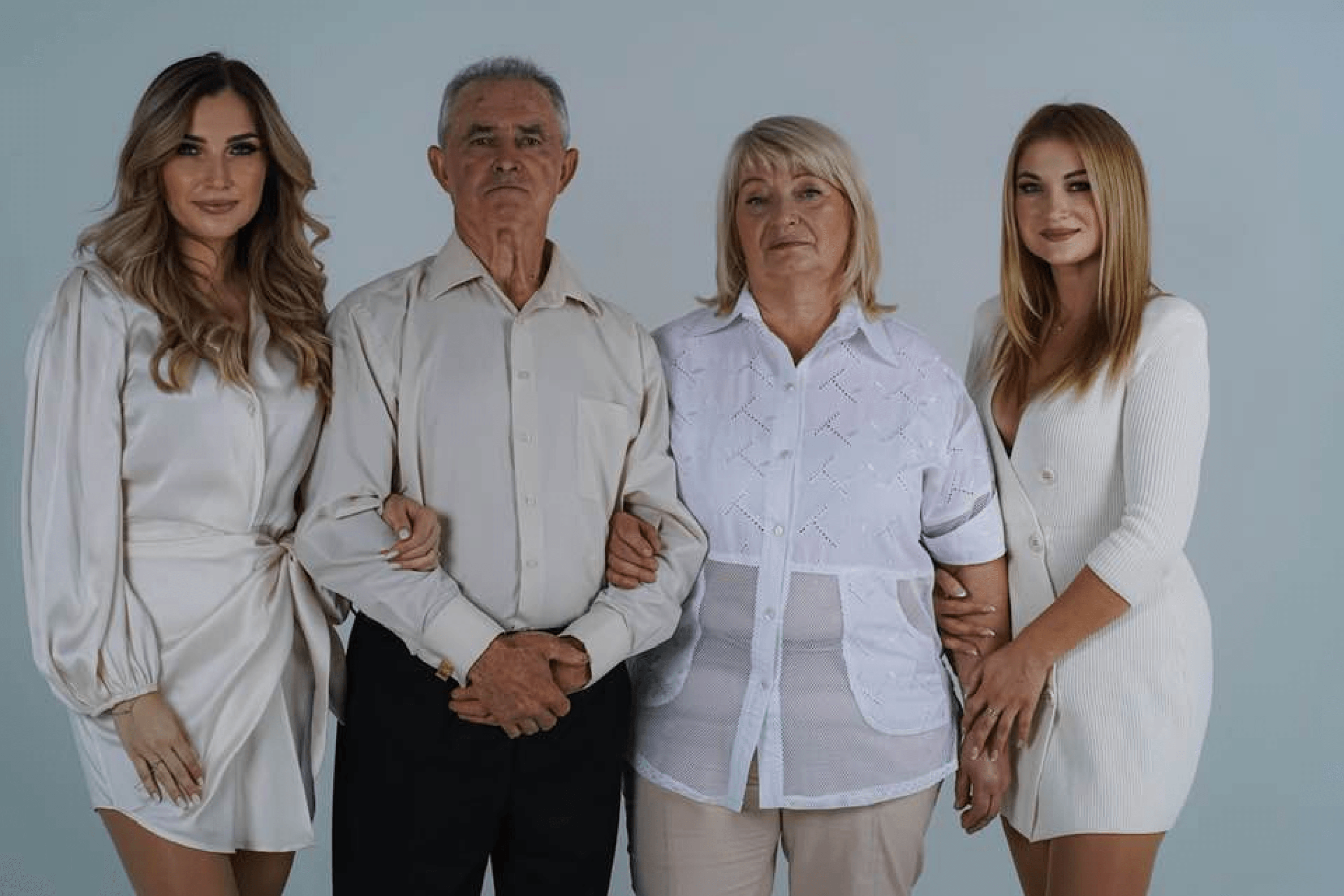
Iryna: It started in childhood. My sister and I used to sew dresses for our dolls. In Chernivtsi, there were more than fifty ateliers where bridal fashion was not just a craft but part of the economy. Local tailors passed their skills down from generation to generation. The bridal dress market grew by 5% every year, driven by accessible production and high-quality handmade work. The active export of Chernivtsi dresses to CIS countries gave it an extra push.
That is why my sister and I consciously chose design. And I always felt I could build my own business. So in 2003, I put a few thousand dollars of savings into materials and a sewing machine, and hired one seamstress. At first my sister and I worked from home, just the two of us. We sewed dresses, decorated them by hand with embroidery, and sold them at the market.
Liudmyla: We both have design degrees and also earned master’s degrees in economics from Kyiv National University of Trade and Economics. It was important for us not only to create, but also to understand business processes. Going into business together was a natural extension of our family bond. We are a very close-knit family, and my sister and I have always had a warm and trusting relationship.
What were your first steps once you joined forces?
Iryna: We worked on a simple principle: sew a dress, sell it at the market, use the profit to make the next ones. We made our own product from the first day: no purchasing other makers' goods. Later we rented a small space at the market in Chernivtsi and opened a store, and a few years after that, two more. We were working mostly in B2B from the beginning, selling to salon owners, though brides would come in too.
You said there were already a lot of ateliers in Chernivtsi making wedding dresses. What made you different from the competitors?
Liudmyla: Right away, we decided to focus on quality. A variety of designs and handmade craftsmanship were our main competitive advantages. Simple models took one day; complex pieces with hand embroidery and decor could take two to five. Demand grew quickly. We expanded the team and optimized processes to keep up with orders.
How did you set up the management of the business, and how do you divide responsibilities today?
Liudmyla: In the beginning, Iryna and I did everything at once: mornings in the store, afternoons on design and cutting, and on top of that we were out looking for salons and negotiating with them. Now Iryna manages sales, communications, and marketing, and I handle production, hiring, and finance.

What is the hardest part about working with your sister?
Iryna: We never let emotions drive decisions. We assess the impact of each choice on the business. Working together comes naturally to us. We know each other’s strengths and trust them completely.
When did you realize the Ukrainian market was too small for you? How and when did you first go international?
Iryna: After about seven years working with Ukrainian bridal salons, we started seeing steady demand from abroad. Buyers from Romania, Latvia, Lithuania, and Estonia came to Chernivtsi regularly and were thrilled by our dresses. Our product was competitive thanks to the design, craftsmanship, and price. It became clear that the international market had real scaling potential.
In 2012, we made a strategic decision to focus entirely on exports. We closed three retail stores in Chernivtsi, built our own sales department for international markets, and scaled production from 12 to 60 seamstresses. We switched exclusively to the B2B model and began building systematic partnerships with European salons, from local boutiques to larger chains.

Dress fitting by the Kotapska brand. Photo: Kotapska / Facebook / YB 
Photo: Kotapska / Facebook / YB 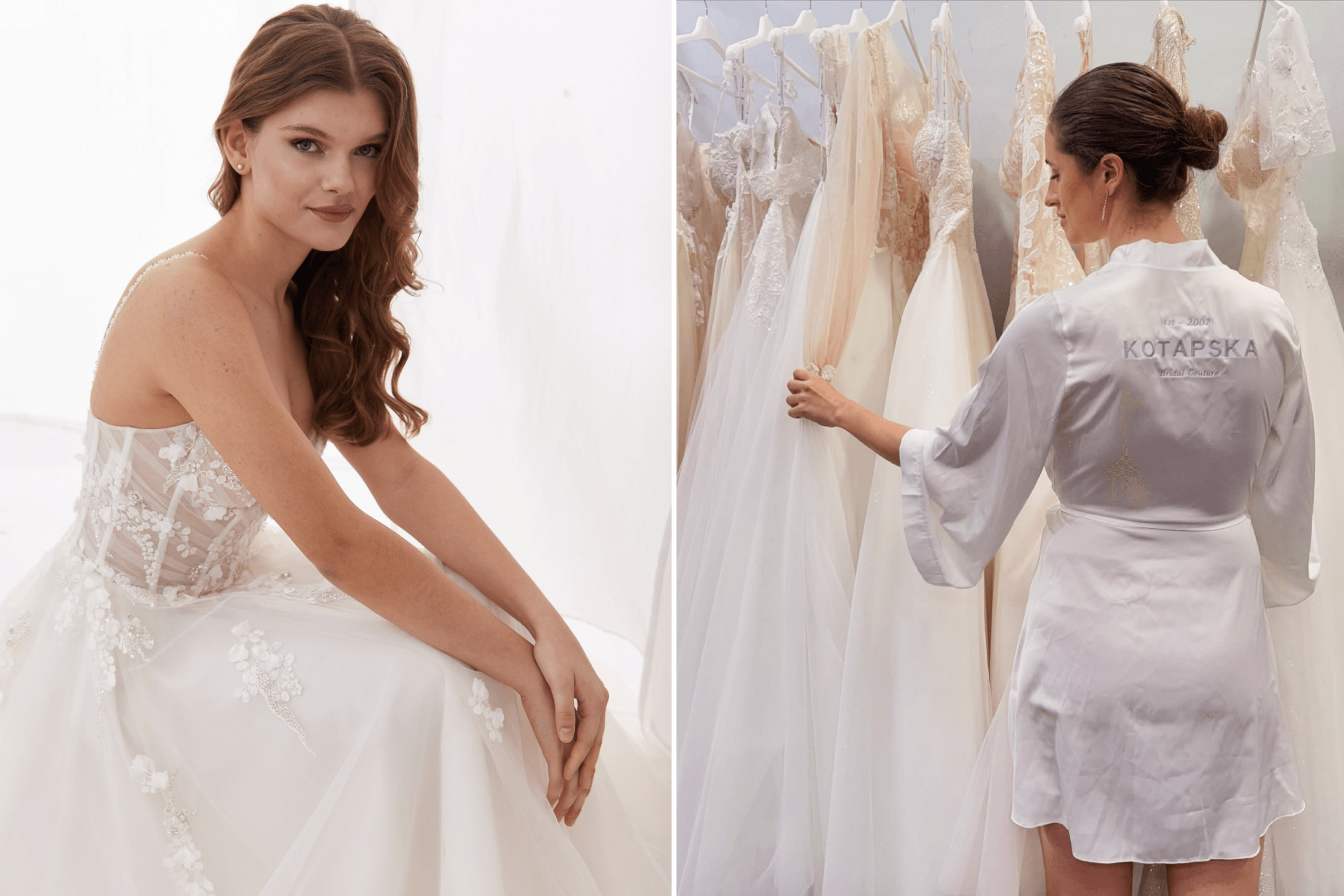
Photo: Kotapska / Facebook / YB 
Photo: Kotapska / Facebook / YB
That sounds like a significant step. Was there fear that the strategy might not work?
Liudmyla: Of course, we were aware of the risks. We were giving up stable local income in favor of a new model. It required investment to expand production, build a team, start participating in international trade shows, and restructure our operations. We were also prepared for deferred payments and more complex logistics.
But there was no fear, because we already had stable international buyers and confirmed demand from the nearest European markets: Romania and Latvia. We were not starting from scratch. We were scaling what already worked. We grew both financially and reputationally. Time showed it was the right decision.
What exactly did you change in your business processes to become an export company?
Iryna: It was a step-by-step transformation. First, we introduced a clear division of roles: the accountant is responsible for finance, the manager for sales, the storekeeper for the warehouse, the analyst for metrics. Everyone focused on their own area of responsibility, with no blurred functions or all-purpose roles.
We moved away from owner-level control of everything and started to delegate. We introduced a CRM system and 1C for accounting and formed a full B2B sales department. We standardized key processes: order intake and processing, production planning, quality control at every stage, logistics, and financial reporting.

Brides wearing gowns by the Kotapska brand. Photo: Kotapska / Facebook / YB 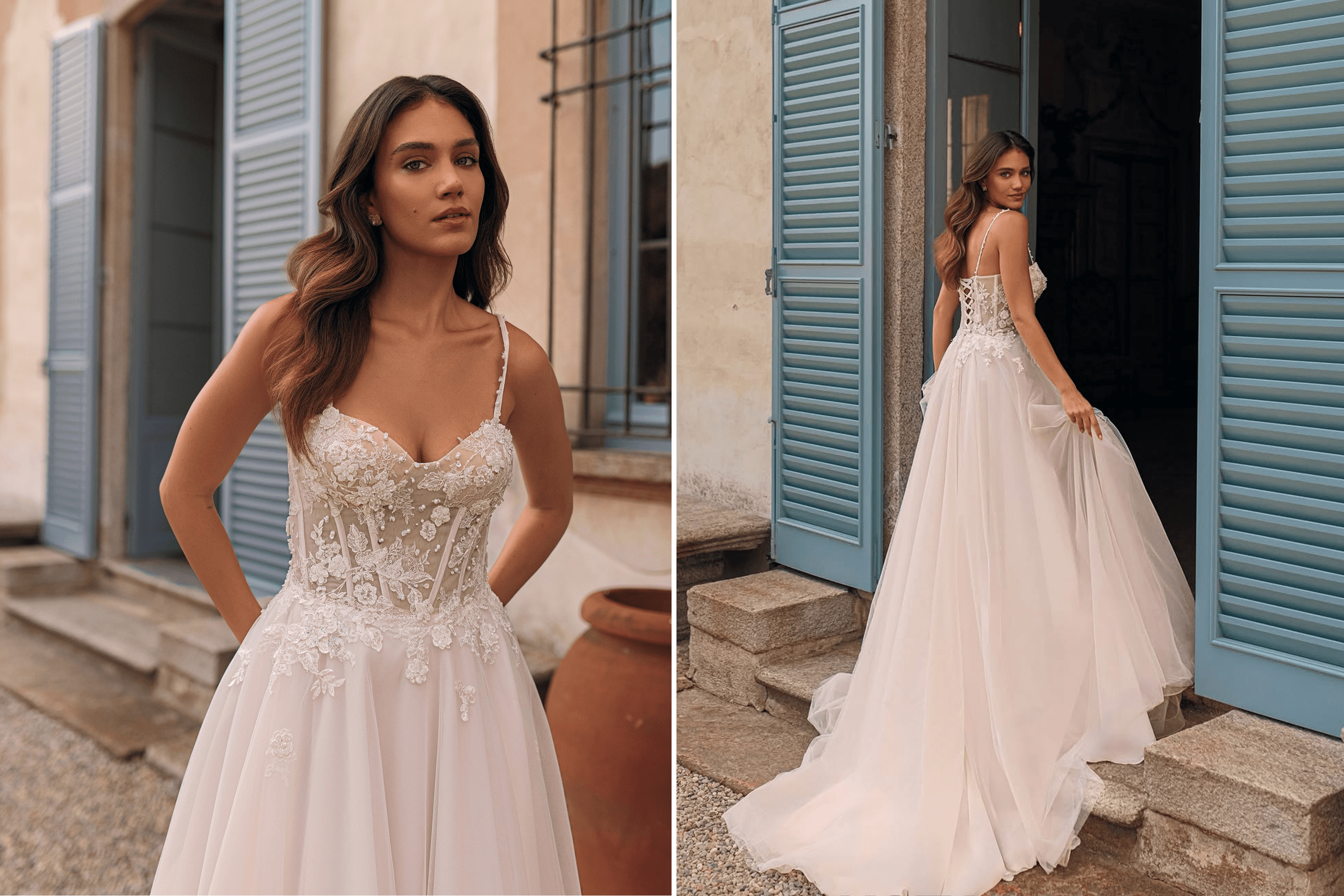
Photo: Kotapska / Facebook / YB 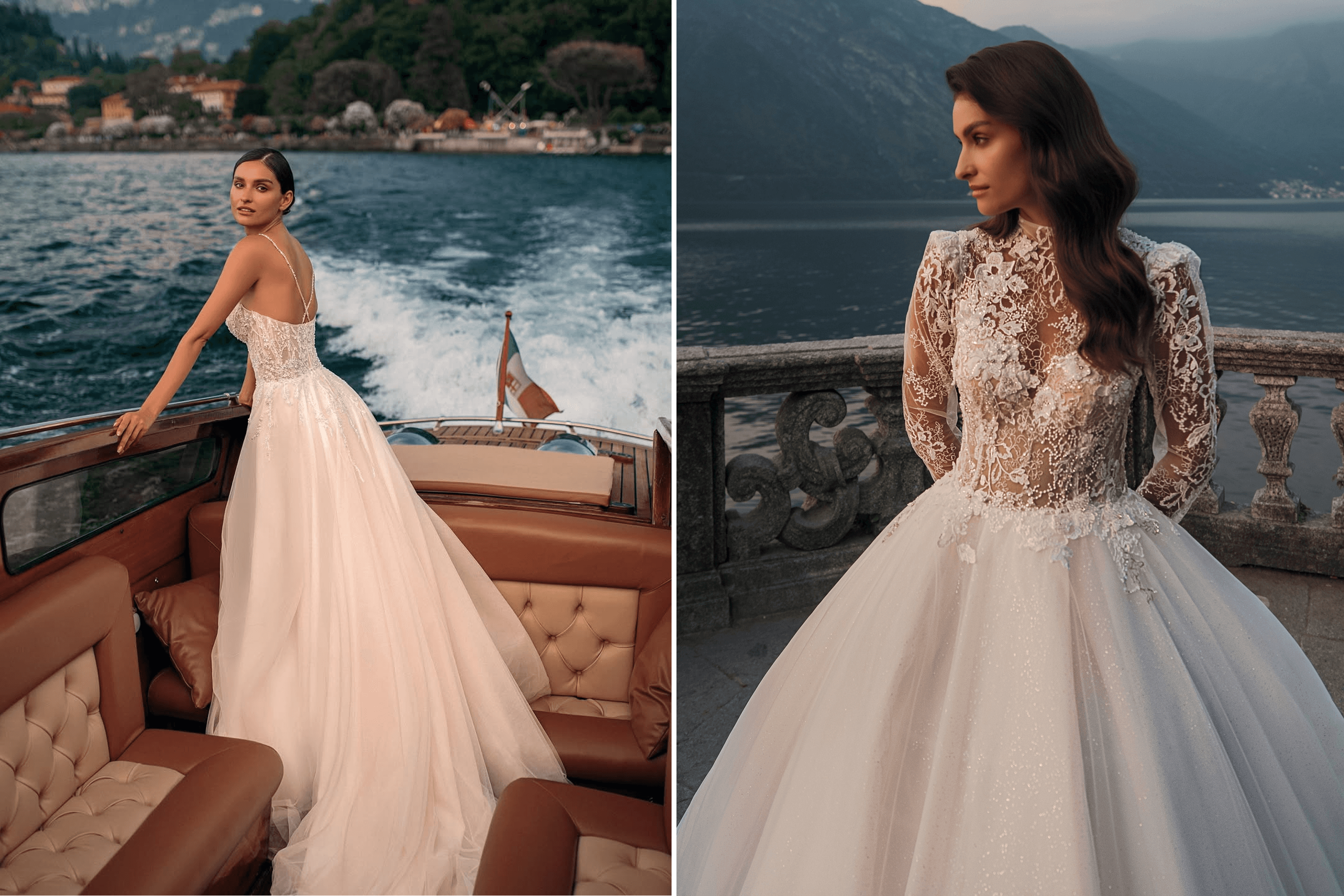
Photo: Kotapska / Facebook / YB 
Photo: Kotapska / Facebook / YB 
Photo: Kotapska / Facebook / YB 
Photo: Kotapska / Facebook / YB
Was that when you started participating in international trade shows?
Liudmyla: We spent a few years preparing first, studying which trade shows existed and which ones were worth attending. We went to our first B2B trade show for bridal salon owners, Bridal Fashion Warsaw, in 2015. We came away with many orders and a clear understanding of the European market’s requirements.
Trade shows became a key development tool. In just a few days you can hold dozens of negotiations, present the collection in person, and walk away with orders or preliminary contracts. Beyond direct sales, trade shows give you immediate feedback on design, pricing, and market demands, which allows you to adjust the product before committing to mass production. From there we started attending systematically: ABC-Salon, European Bridal Week, Barcelona Bridal Fashion Week, New York Bridal Fashion Week, National Bridal Market Chicago.

The Kotapska brand at Barcelona Bridal Fashion Week. Photo: Kotapska / Facebook / YB 
Photo: Kotapska / Facebook / YB 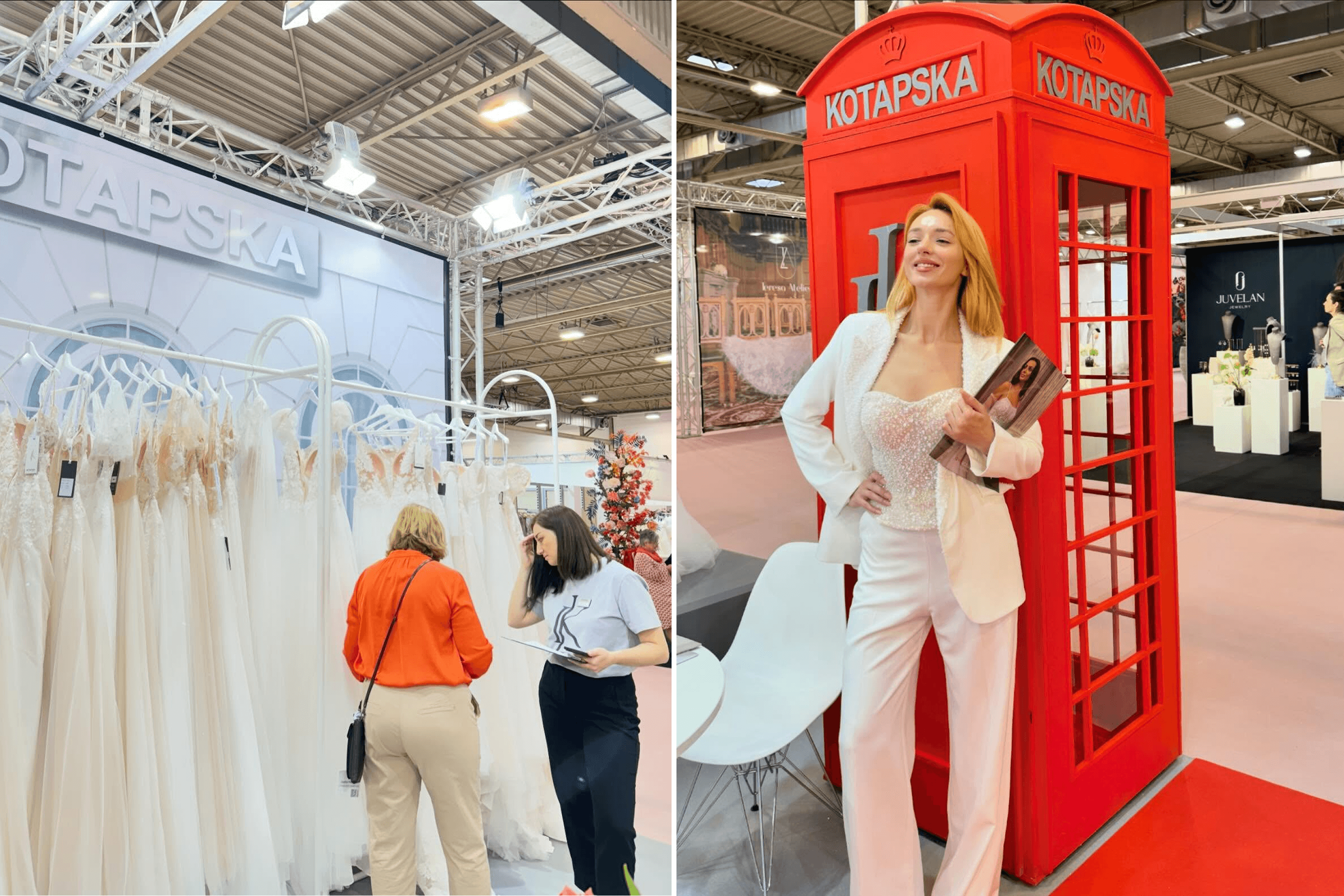
Photo: Kotapska / Facebook / YB 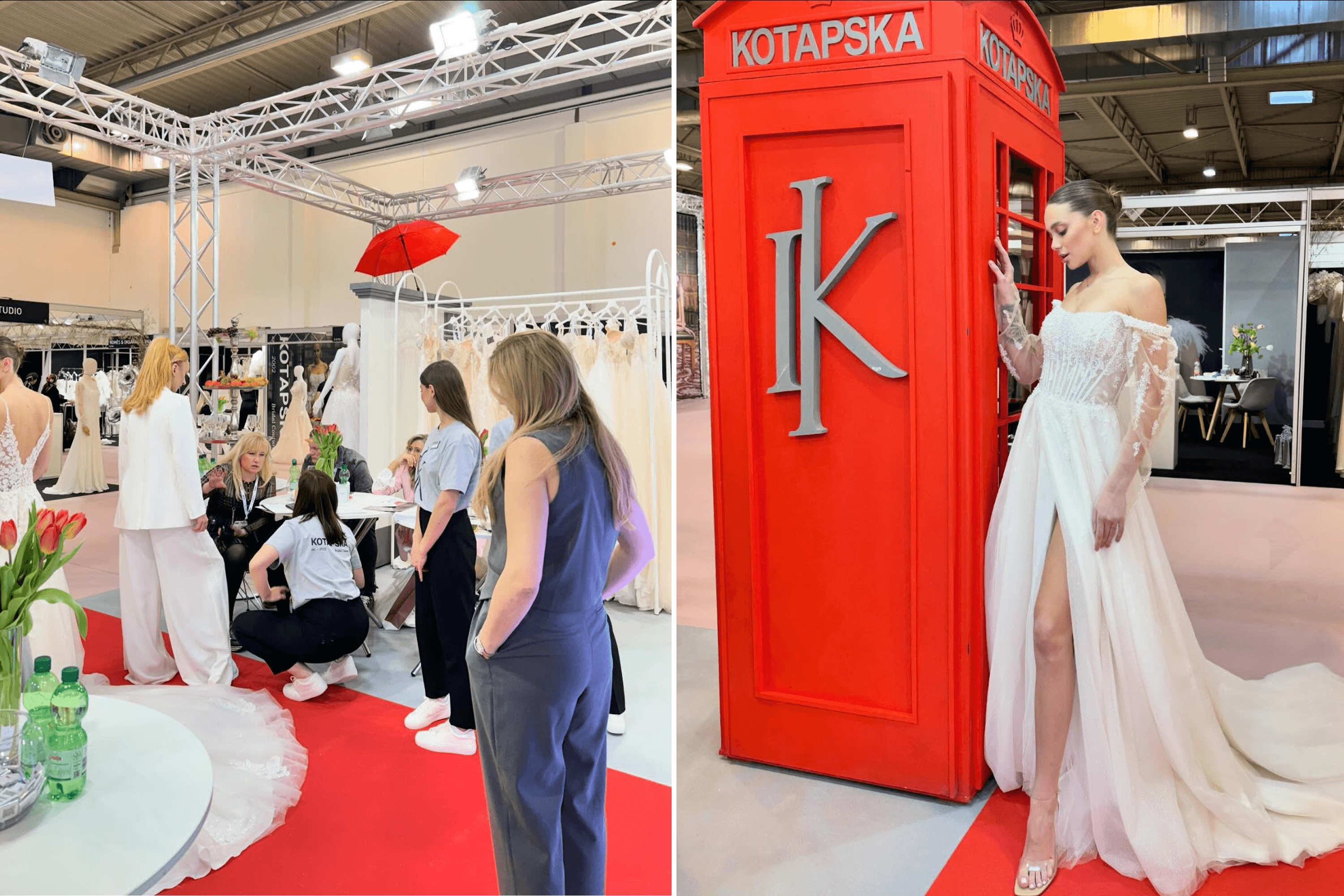
Photo: Kotapska / Facebook / YB
How did participating in New York Bridal Fashion Week in 2017 affect your development?
Iryna: It was an important stage not so much for immediate sales as for positioning. We were showing at one of the most significant events in bridal fashion. We got to meet the most influential American buyers in person and communicate with them directly. In B2B, that is critical, because trust is built through face-to-face contact.
After New York, the number of new inquiries and clients from the US and other countries increased. We did not track the exact percentage, but we felt a clear expansion of our geography and a rise in brand recognition.
Liudmyla: We entered those international trade shows on equal terms with leading brands, with no special treatment. That pushed us to formalize our processes: every dress, every order, and the work of the whole team had to meet high global standards of quality, design, and service.
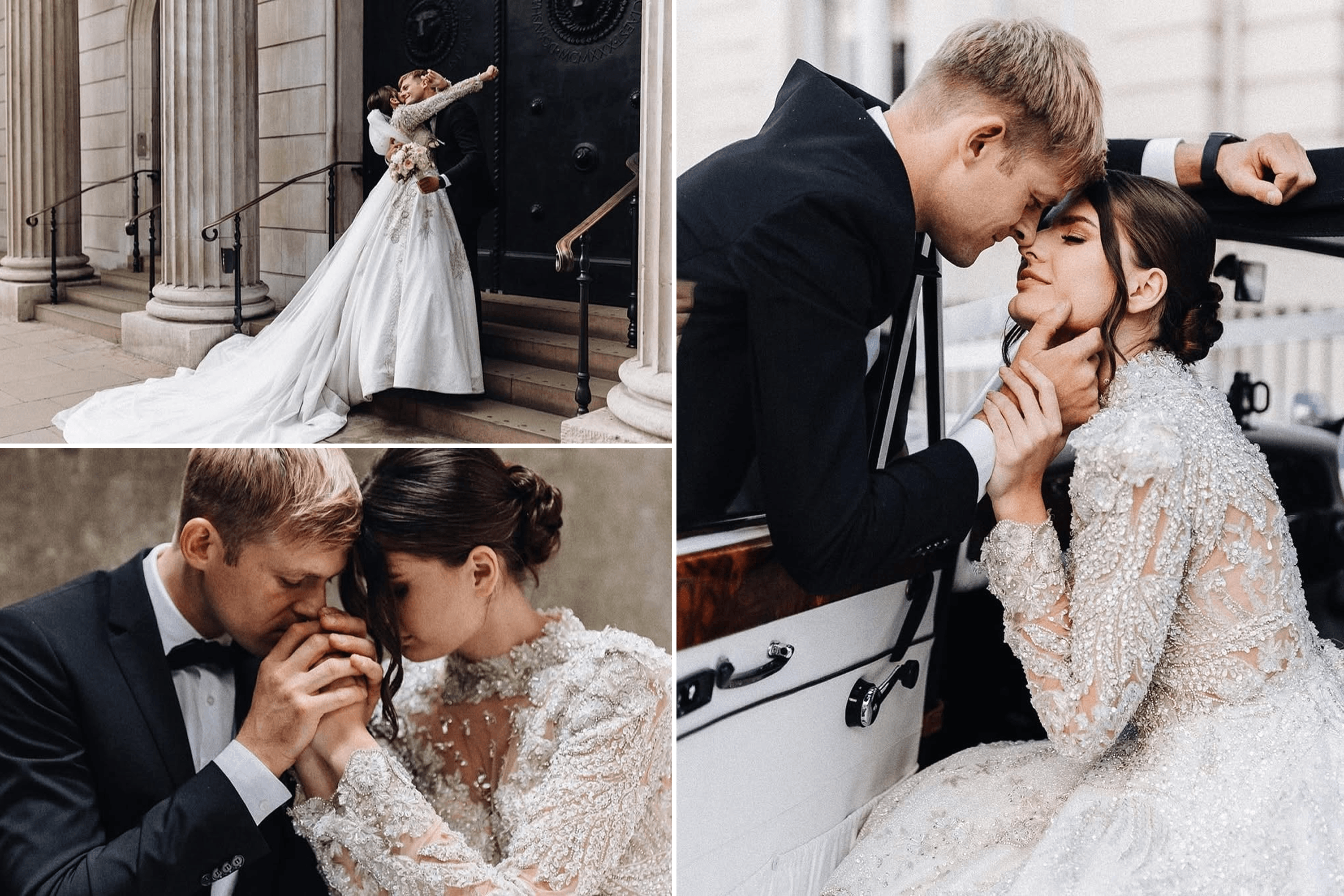
Brides wearing gowns by the Kotapska brand. Photo: Kotapska / Instagram / YB 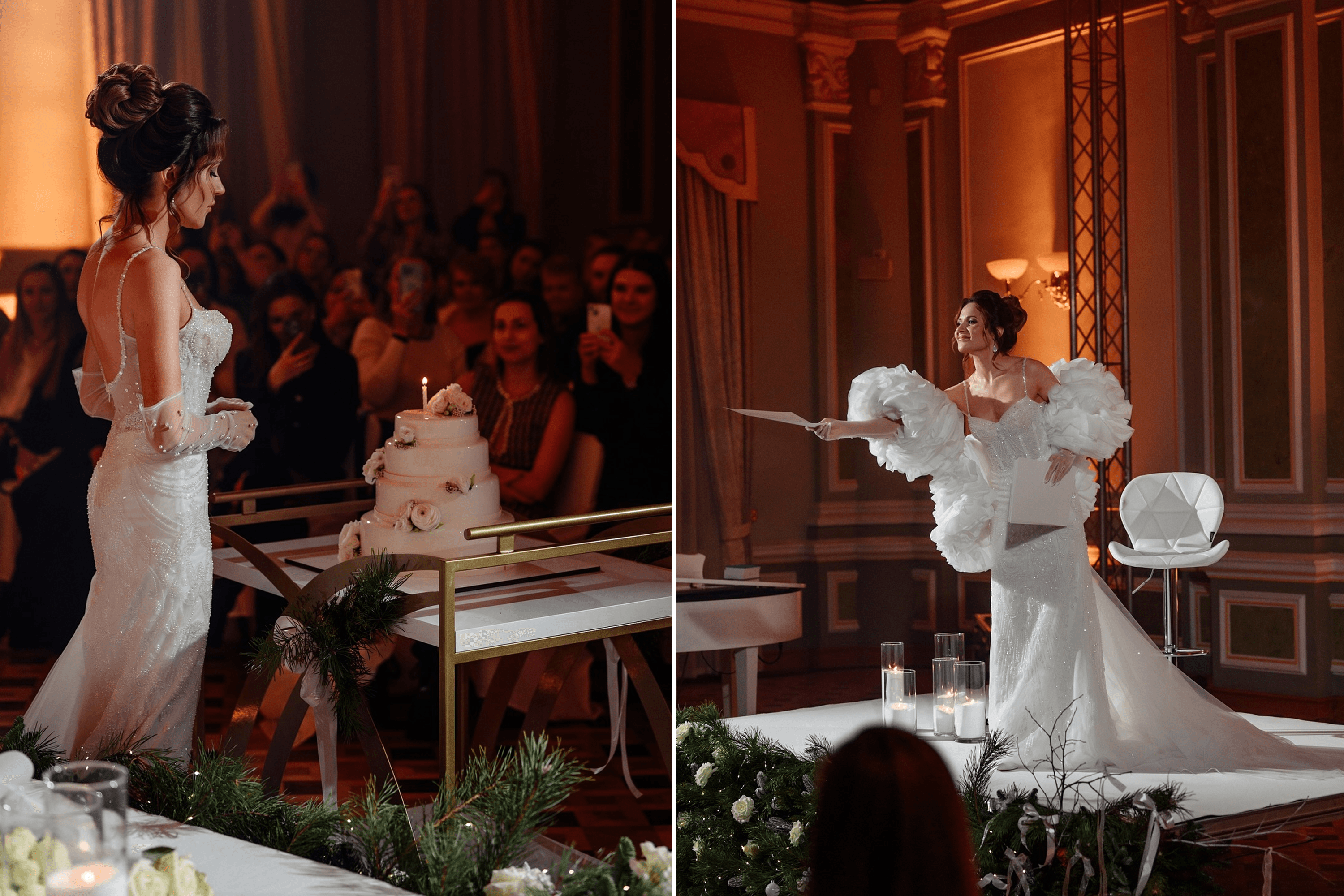
Photo: Kotapska / Instagram / YB 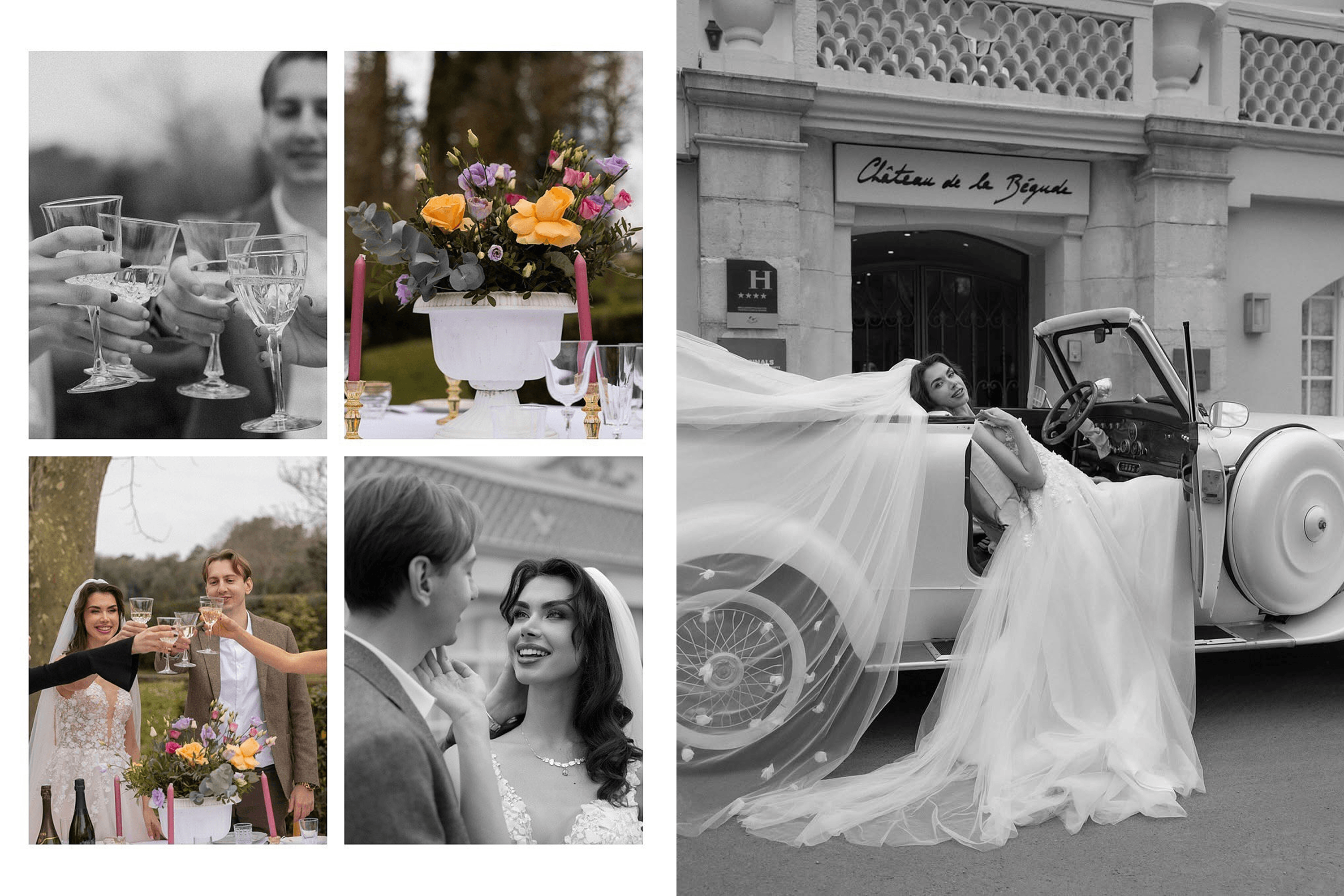
Photo: Kotapska / Instagram / YB 
Photo: Kotapska / Instagram / YB 
Photo: Kotapska / Instagram / YB 
Photo: Kotapska / Instagram / YB
How did you manage to keep the business growing through difficult periods, including the pandemic?
Liudmyla: We closed the COVID year with 5% growth through consistent work with our partners. We held regular online meetings with salons, presented new collections, discussed orders, and advised them on new arrivals. In parallel, we ran internal training for the sales department covering online sales, client communications, and managing wholesale contracts.
But during the pandemic, there were almost no weddings due to quarantine restrictions. Why didn’t you expand the line and move into evening or cocktail dresses?
Iryna: We did test evening and children’s dresses at one point, but stepped back from that direction early on. Even during lockdown, wedding orders continued: many couples postponed their weddings by a year or two, but they were choosing dresses in advance. The wedding niche is broader than it seems. Brides often choose two or three dresses for different stages of the celebration. The volume of orders from salons allowed us to keep working without losing focus.
How did the war affect your business, and why did you decide to keep production in Ukraine rather than move it abroad?
Iryna: We understand our responsibility to the team. Many employees have been with us for 15 years or more, and we also hire internally displaced persons. We are deliberately keeping production in Chernivtsi: we employ 100 artisans and more than 50 specialists in sales, marketing, and PR.

The Kotapska team. Photo: Iryna Kotapska / Instagram / YB 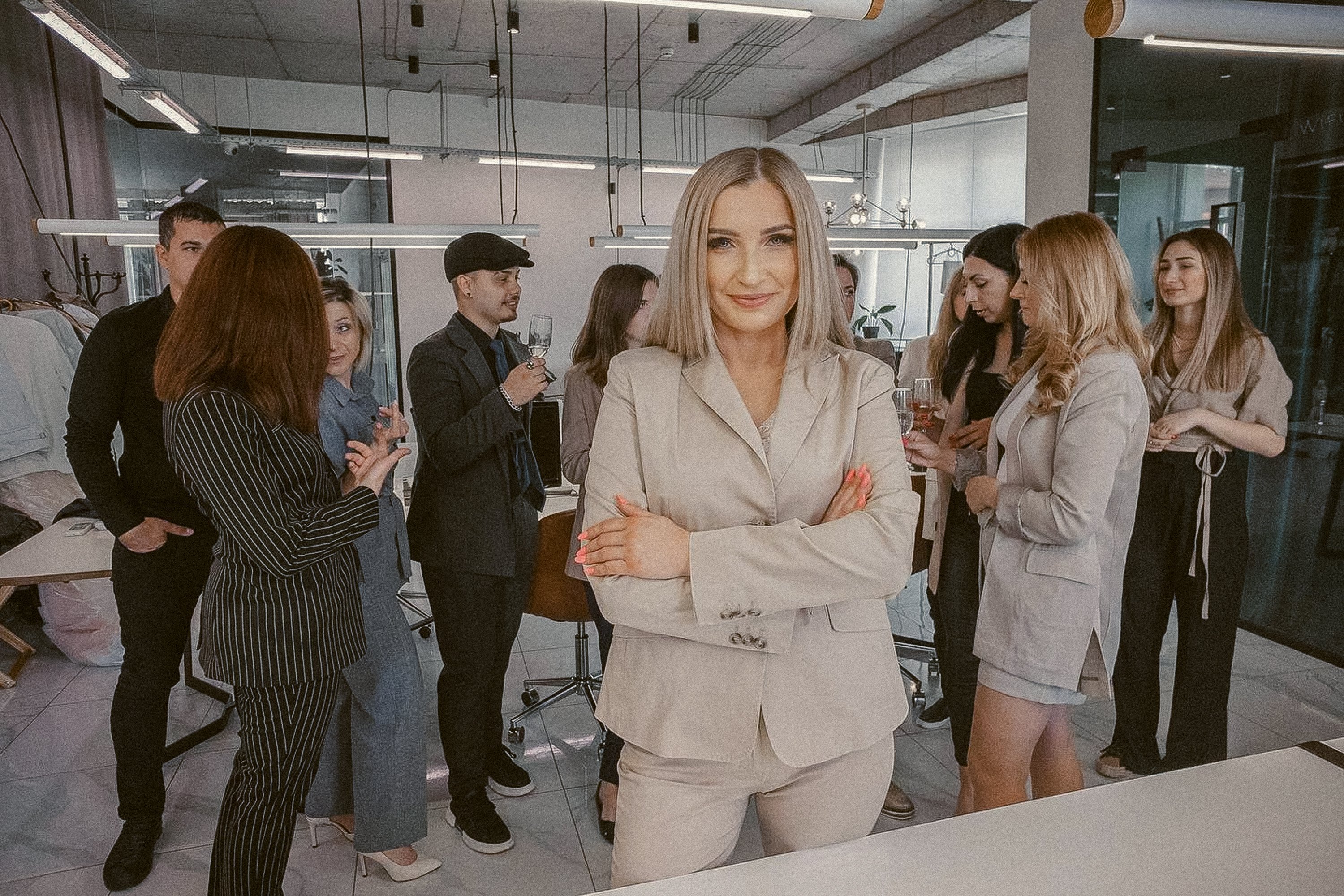
Photo: Iryna Kotapska / Instagram / YB 
Photo: Iryna Kotapska / Instagram / YB 
Photo: Iryna Kotapska / Instagram / YB
Liudmyla: To work through power outages, we purchased generators and EcoFlow systems and automated key processes. Order volumes from western partners did not decrease, and both logistics and fabric supply remained stable.
Let’s talk about production itself. How many collections do you release per year, and how do you keep the range varied?
Liudmyla: We release two collections a year: one might have 40 dresses, another 20. Iryna and I have different tastes and visions, which naturally broadens the range.
Do you create the designs yourselves, or do you bring in outside designers?
Liudmyla: Only Iryna and I work on design: we draw sketches, work with the form directly on the garment, and refine details based on feedback from salons and brides.

Photo: Kotapska / Instagram / YB 
Photo: Kotapska / Instagram / YB 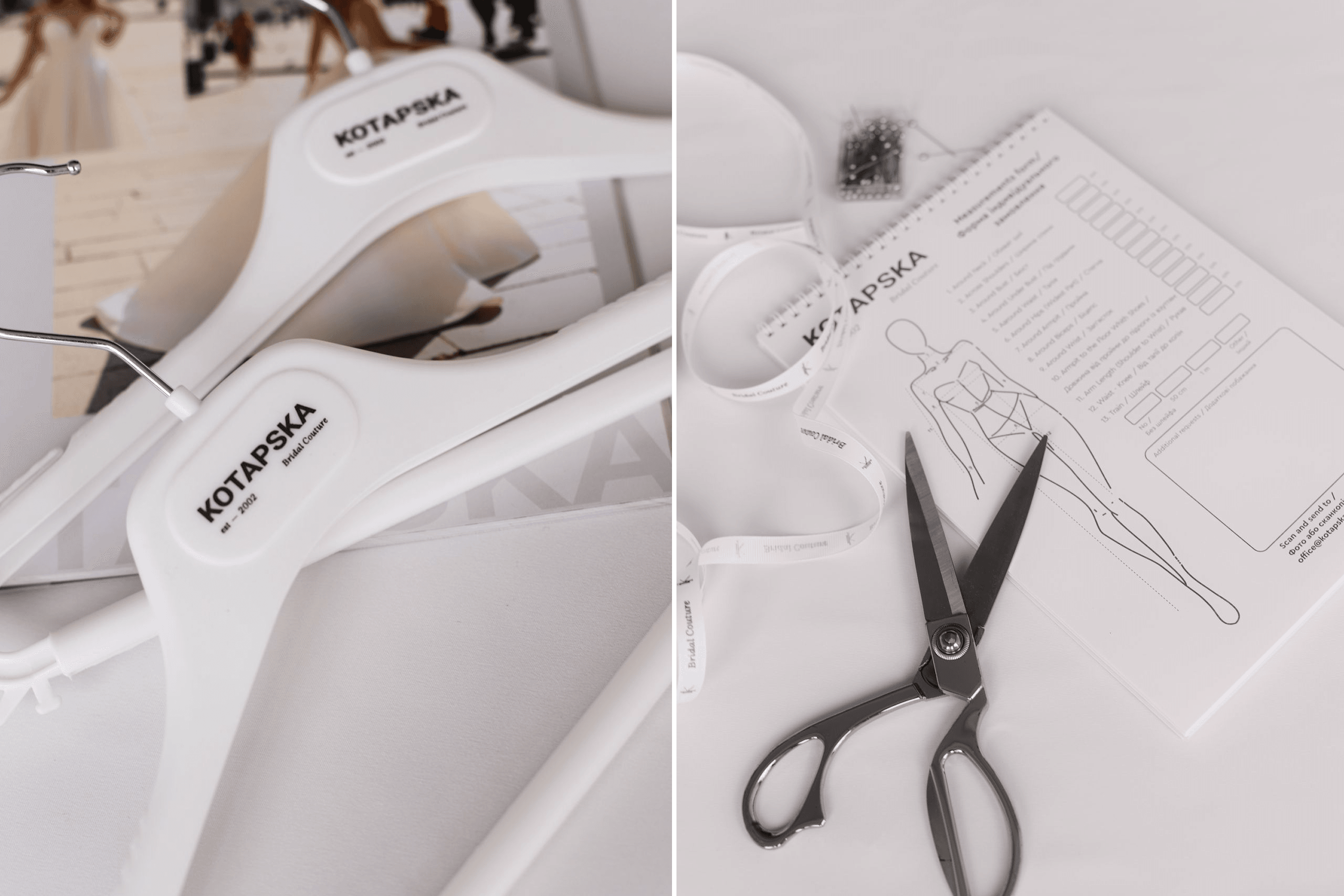
Photo: Kotapska / Instagram / YB 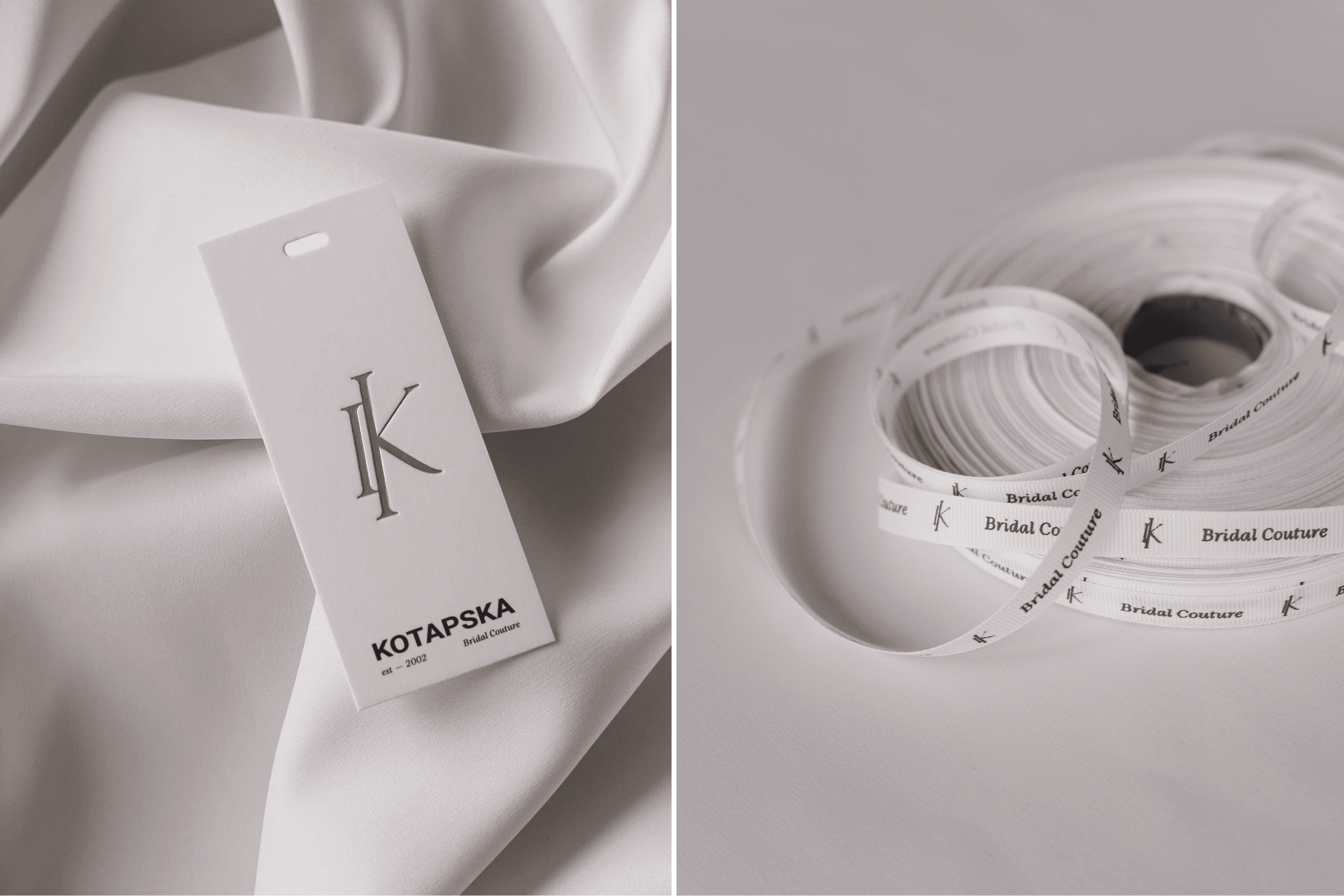
Photo: Kotapska / Instagram / YB
How do you combine handmade work and technology?
Liudmyla: A patternmaker creates digital patterns with AI integration, a plotter cuts the patterns, and then the handwork begins: cutters and seamstresses shape the garment, working with lace, corsets, and embellishments. About 70% of operations are done by hand.
Aren’t you worried that technology will replace it?
Iryna: No. Technology calculates and cuts, but it cannot feel the proportion, the balance, or the character of a dress. A wedding dress is not mass market. The fit on a specific woman matters, the way the fabric moves, how the corset feels. AI reduces the risk of errors in patterns and saves time, but the final decision always comes down to a human.
How do you manage fittings when all your clients are abroad and the salon acts as an intermediary?
Iryna: We fit the dress on a model using the measurements the salon sent, so we can see how it looks in motion and identify anything that might be uncomfortable.
Liudmyla: For photo shoots we use standard sizes, but we make any size by client request. That kind of individual order comes in several times a month.
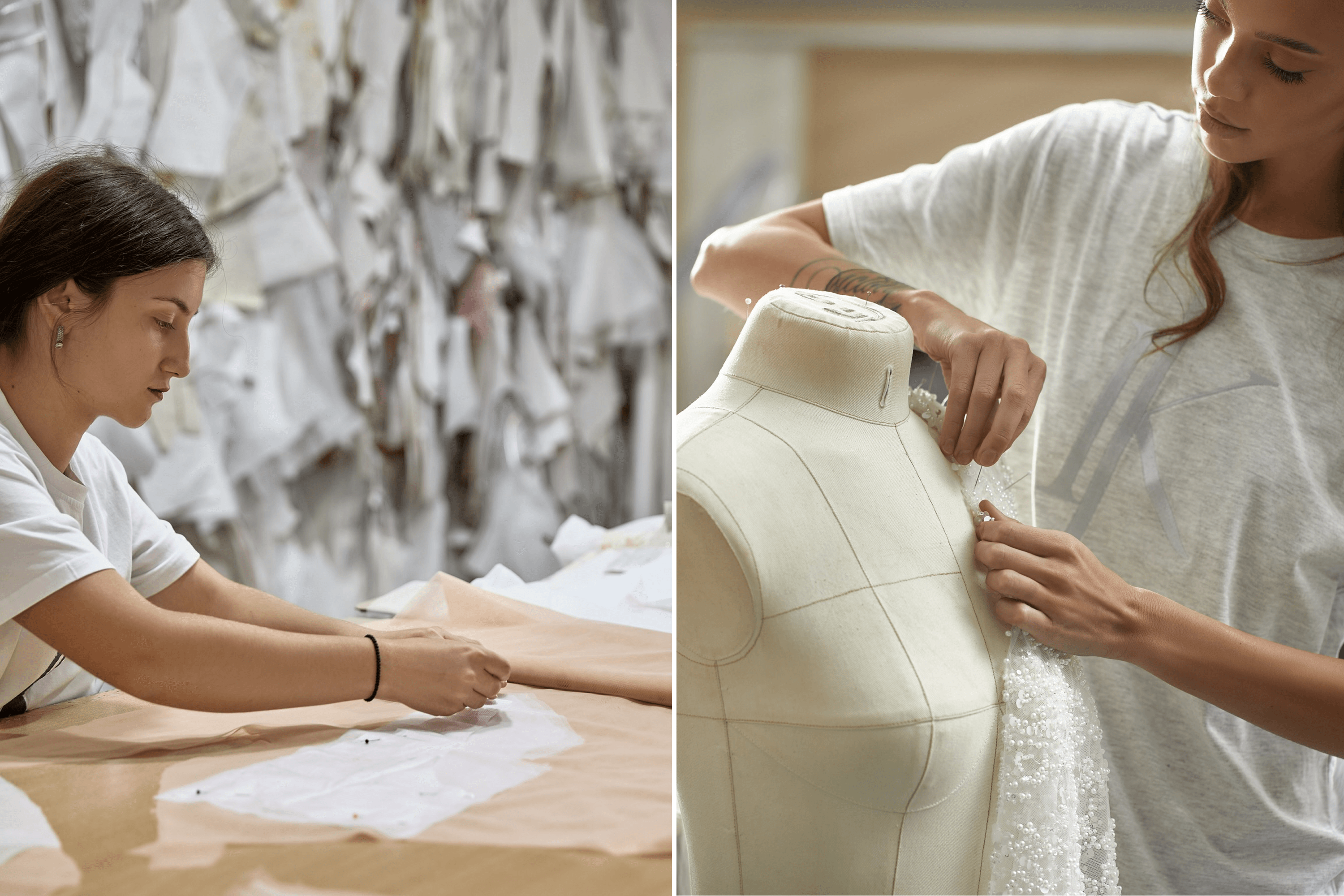
Photo: Kotapska / Facebook / YB 
Photo: Kotapska / Facebook / YB 
Photo: Kotapska / Facebook / YB 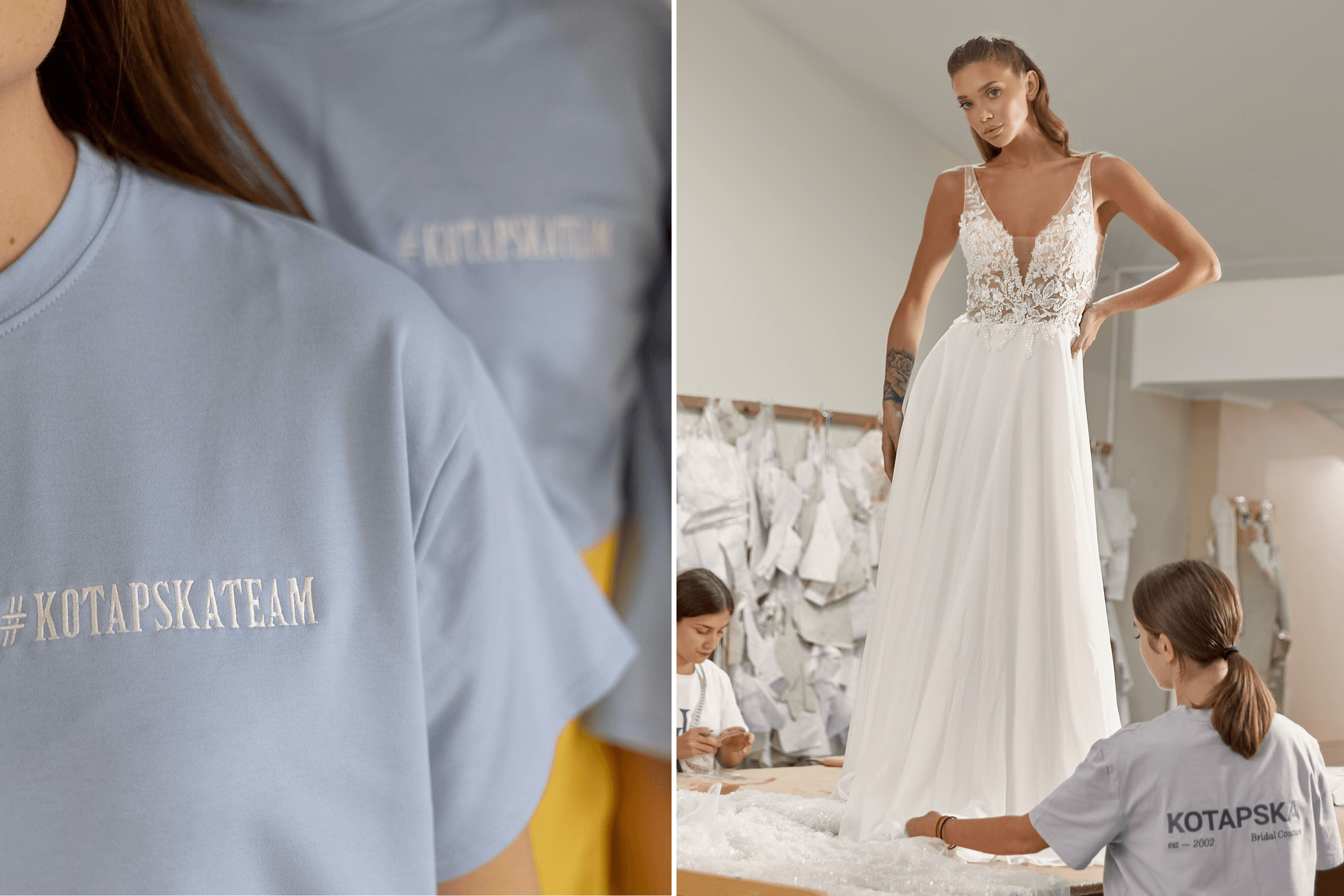
Photo: Kotapska / Facebook / YB
How do you monitor quality and measure production efficiency?
Liudmyla: We check materials as soon as they arrive, then monitor the cut during sewing. A technologist evaluates the finished piece, and before packing, a warehouse specialist checks the dress again for any defects. We measure departmental performance using KPIs: at the start of each year we review results and set a growth target of at least 15%. Our operations manager keeps those numbers on track.
What fabrics do you use, and where do you source them?
Liudmyla: We work with more than 100 types of fabric: silk chiffons, nylon nets, pleated materials, lace, shimmery and matte fabrics. The bride chooses fabrics in the salon, and we adapt the dress to her preferences. We source most of our fabrics from European manufacturers and attend Texworld Apparel Sourcing Paris and Première Vision Paris every year. We order by the roll, with additional orders as needed.
You work in the premium segment. How is the price for handmade work determined? What is the lowest and highest price for your dresses?
Liudmyla: Prices start at €300 and increase depending on the complexity of the model and the volume of handwork involved. Some dresses are hand embroidered for seven days.
Iryna: The final price is ultimately set by the salon owner, so what a bride pays varies depending on the country and the salon.

Dresses and suits by the Kotapska brand. Photo: Kotapska / Instagram / YB 
Photo: Kotapska / Instagram / YB 
Photo: Kotapska / Instagram / YB 
Photo: Kotapska / Instagram / YB 
Photo: Kotapska / Instagram / YB 
Photo: Kotapska / Instagram / YB
Which markets are most important to you?
Iryna: We have the largest number of partner salons and distributors in France and Germany. We are also present in Italy, Greece, Denmark, Switzerland, Slovakia, Slovenia, and the Netherlands.
We invested significant effort and resources in European markets, and that is where the results have been strongest. Production is now fully booked several months ahead, but we plan to expand gradually and enter new markets. Starting with the UK.
Do you adapt collections for different countries?
Liudmyla: No. We rely on customization instead. A bride can choose her corset and skirt separately, or change the skirt shape during the process, opting for a ballgown or a mermaid silhouette, for example. This approach lets us respond to different preferences without changing the brand’s DNA.
What is your current presence in the US?
Iryna: We work through two distributors and are only beginning to enter the American market. Our first priority is building brand awareness among end consumers in the US.
How does an American buyer differ from a European one? Is it harder to work with US salons? And what do American customers choose most often?
Iryna: In the US, the classic mermaid silhouette is traditionally favored.
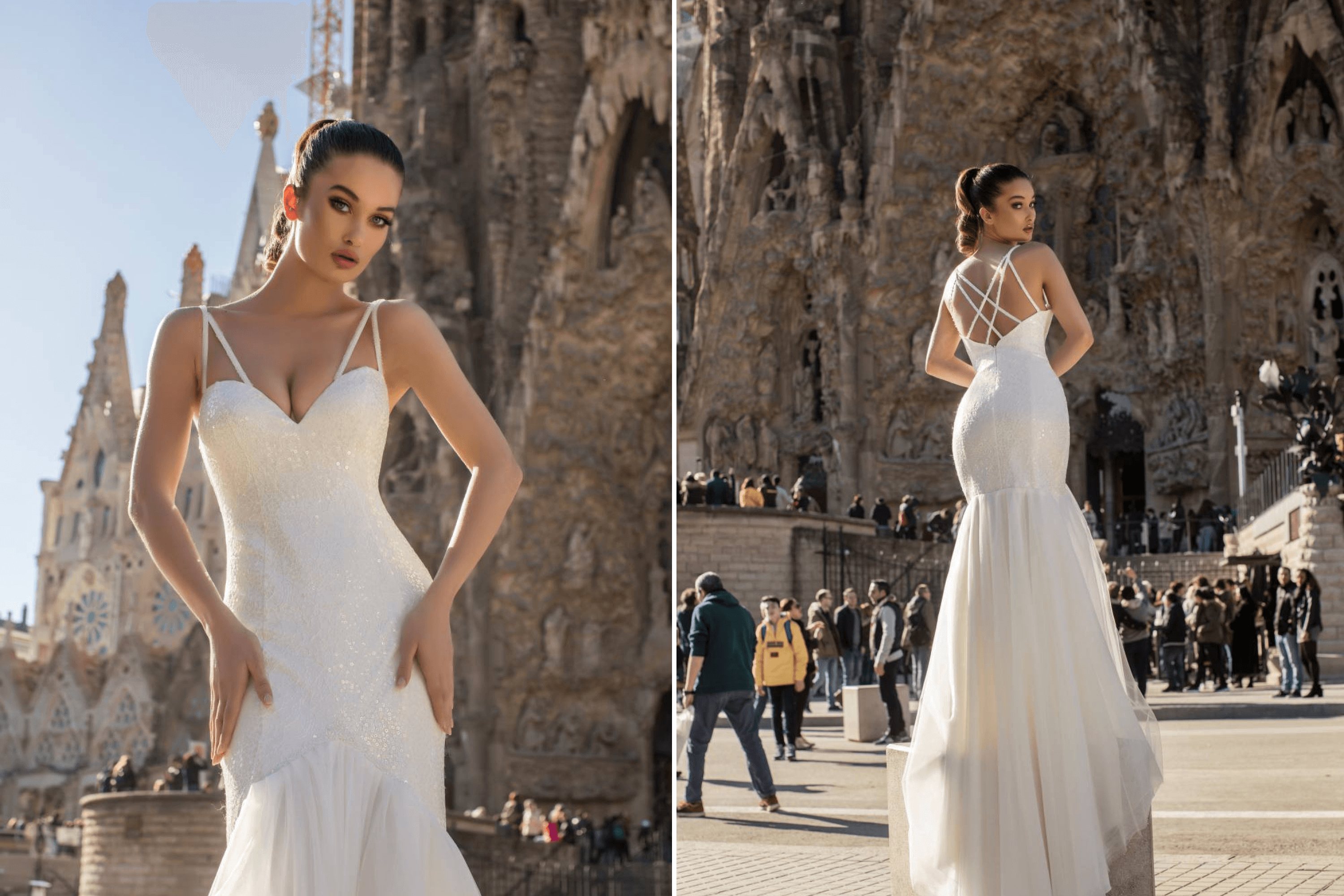
Some mermaid silhouette gowns by the Kotapska brand. Photo: Kotapska / YB 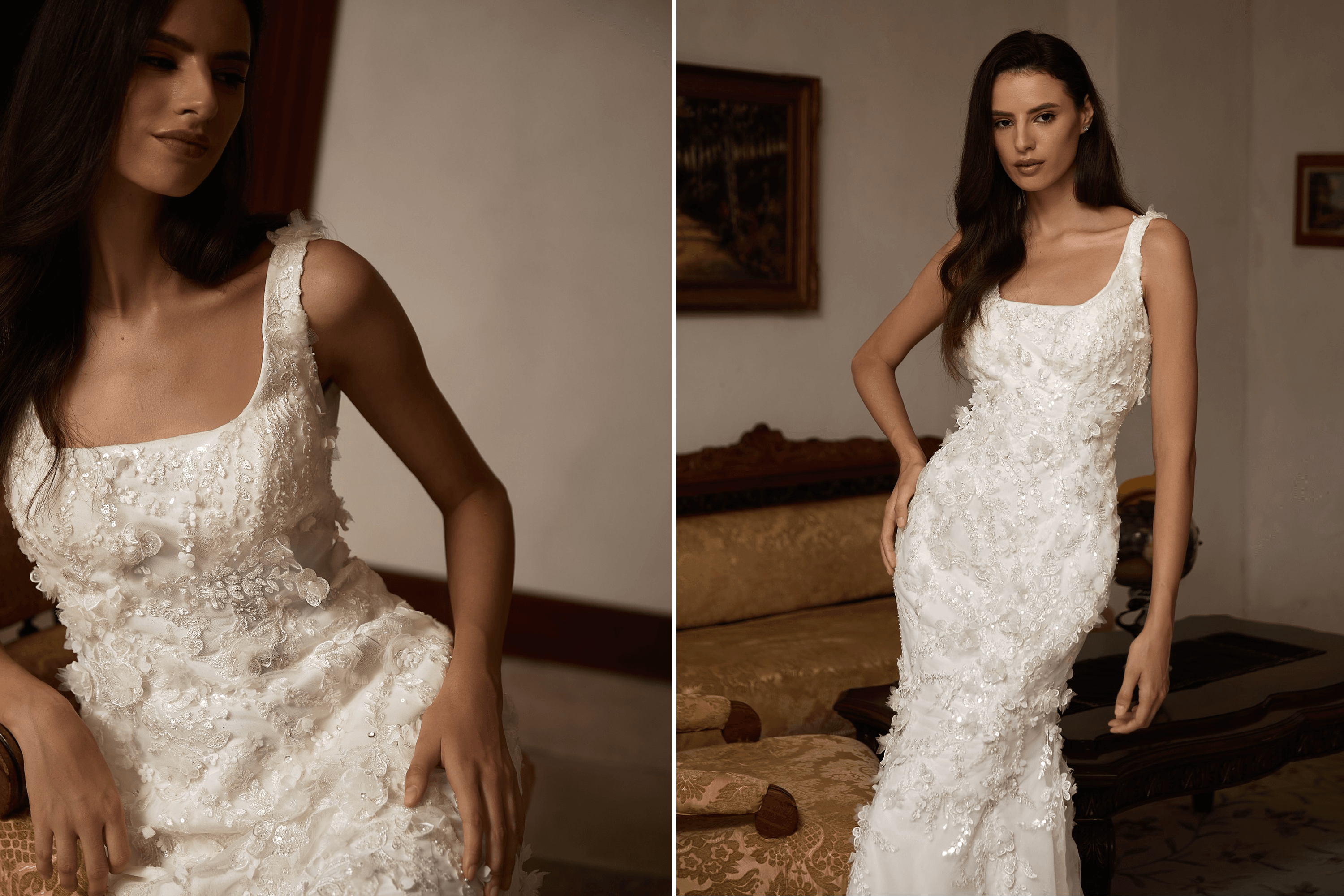
Photo: Kotapska / YB 
Photo: Kotapska / YB 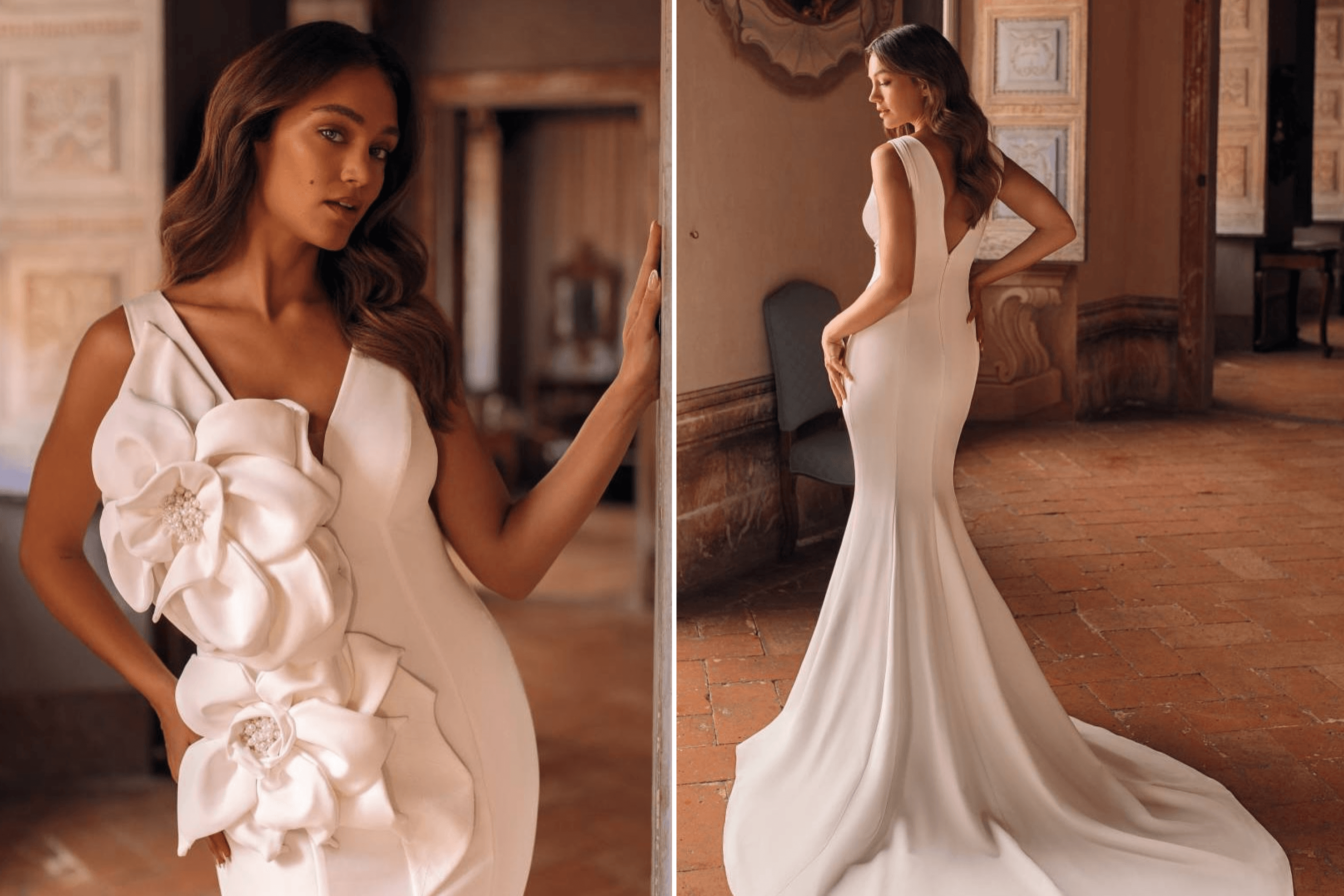
Photo: Kotapska / YB 
Photo: Kotapska / YB 
Photo: Kotapska / YB
American buyers focus primarily on the brand and its recognition among brides, while in Europe individuality and comfort matter more. That makes working with American salons more demanding: you need to meet high brand standards and compete in a highly competitive market.
Why have you not entered Asian markets, given their scale and potential?
Iryna: The Asian bridal market differs significantly from the European and American one, both in aesthetics and in fabrics. Fit standards, proportions, material density, and approach to decoration are all different. To work in that segment seriously, you would need to build an entirely separate production facility.
And finally. How do you see the brand in five years?
Liudmyla: It is important for us not just to grow, but to remain desired. To create something people choose with their heart. In five years, Kotapska should be an internationally recognized home of wedding fashion with a globally recognized brand DNA. We are focused on growing our presence in the US and the EU and opening our own showrooms.