
Meest stands as one of the most prominent logistics companies of Ukrainian origin in North America. Founded in Toronto in 1989 by Rostyslav and Anna Kisil, the company has spent more than three decades helping Ukrainians stay connected with their relatives, sending everything from small parcels to commercial cargo and money transfers. Now operating in over 62 countries, Meest is actively expanding its footprint across Canada and the United States, transforming beyond a service just for the Ukrainian diaspora to a network that serves the Indian, Filipino, and different European communities as well.
YBBP journalist Maria Zhartovska sat down with Ivan Marchenko, Chief Operating Officer of Meest Canada, to discuss the company's growth in the Canadian market, its work with the Ukrainian and other multicultural communities, the launch of its domestic shipping service, Meest Domestic, and how it plans to navigate competition with other logistics operators.
Imagine you have one minute to pitch Meest to someone who knows nothing about it—what would you say?
This is a company created by the Ukrainian community in Canada for the needs of that community. It is a company that, first and foremost, delivers what people need to send to their family or friends in any country.
The company was initially created for Ukrainians in Canada to send money to Ukraine?
Parcels. Money transfers were added later.
Meest was built for the Ukrainian community. Has the company transformed alongside the community’s evolution?
Meest was initially established to send parcels. Later, we added new services—money orders, car shipments, and cargo freight. We are now actively digitizing, integrating with Canada Post, UPS, Purolator, and Canpar, as well as other major players. This digitalization and our technological products allow us to provide better service than 30 years ago, and we continue to prioritize that.
Explain what this means in practice?
It means the services are easier to use. We are constantly expanding our network of offices; we already have 120 of them in Canada. A client can register an account, prepare a parcel at home, and choose a convenient shipping method—either bring it to one of our branches or call a courier for home pick-up.
What technologies are you using to improve service and logistics?
API integrations for online stores, automated tracking, mobile applications for customers and agents, and an internal AI-based route planning system. This isn't just "trendy"—it’s economically viable scaling.
Are you planning investments in automation or IT solutions?
Yes. Meest is investing in the creation of a digital platform that will ensure transparent, real-time logistics. In addition, we are launching automated parcel drop-off points in cities, testing smart-routing, and building a CRM system to enhance service.
Regarding the community: after Russia's full-scale invasion of Ukraine in February 2022, a large wave of Ukrainians arrived in Canada. How are you working with them?
We offer special discounts and ongoing reductions for newly arrived Ukrainians. We openly share information, host webinars on adapting to life in Canada, and provide maximum support. Meest is part of the Ukrainian community in Canada, so helping it is our main mission.
In expanding our services, we recently launched an internal delivery service within Canada, which is, on average, 30–40% cheaper than the regular market price.
How do you manage to maintain such competitive rates?
We collaborate with market partners, and thanks to our high volumes, we secure more favorable terms. This allows us to offer competitive rates to our customers.
The local market is quite conservative. If Canadians use Canada Post, they often stick with it for years. Considering this, is Meest Canada still a company primarily for Ukrainians, or is it for everyone, given the country's multicultural nature?
After nearly 35 years in the market, we have become one of the key players, covering all accessible territories, opened offices nationwide, and built a service that has allowed us to strengthen our position. Today, Meest is transforming: from a Ukrainian logistics business into a multicultural company that serves various communities and diasporas. Last year, we successfully launched a service line for the Indian community, handling parcels both to and from India to Canada.

On October 8, 2025, Meest Canada officially opened a new office in Calgary, Alberta. Photo: MEEST Canada / Facebook / YBBP 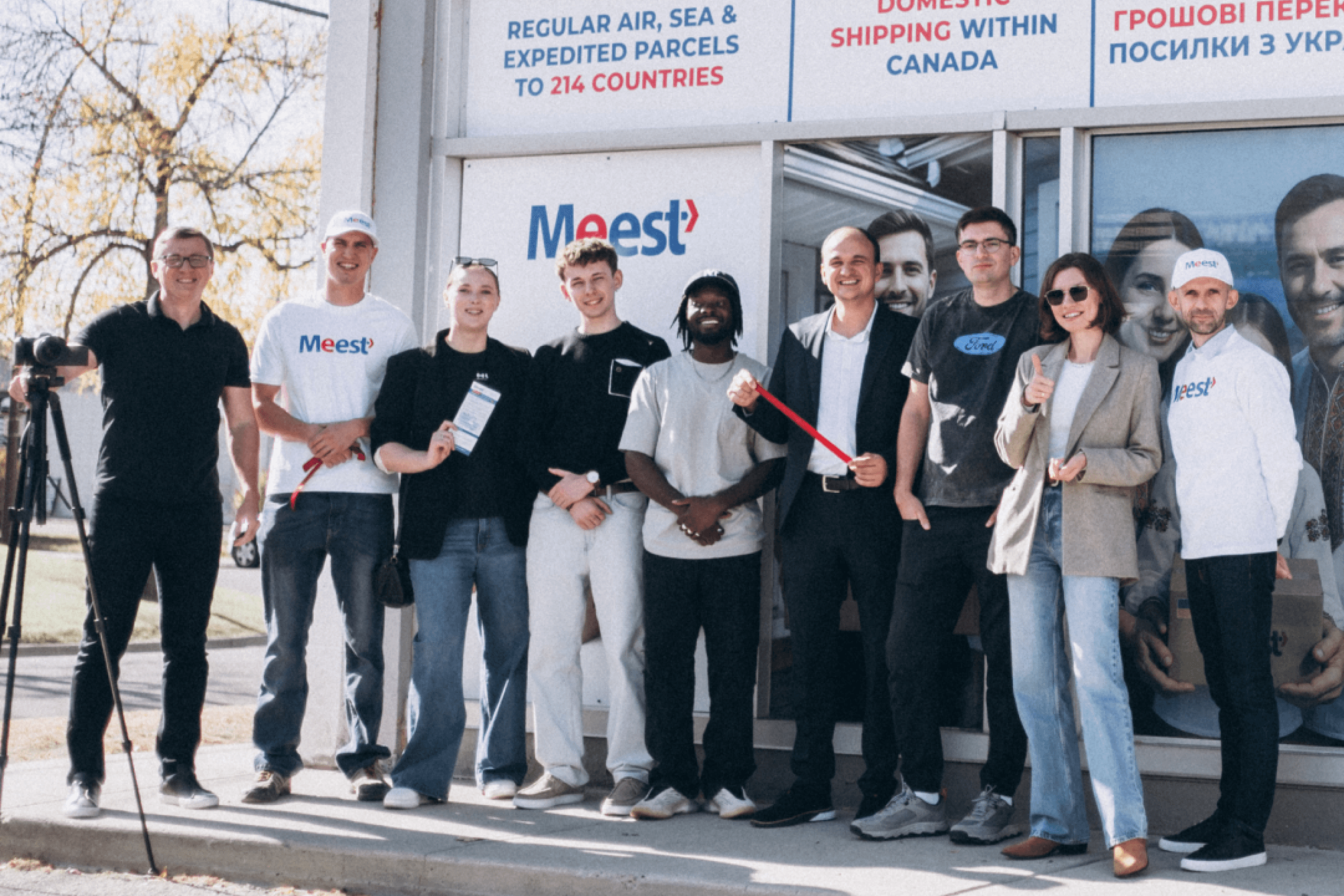
Photo: MEEST Canada / Facebook / YBBP
When we speak with Ukrainian businesses operating abroad, we often hear: start with the Ukrainian community, but for stable development, you must engage other communities. Business cannot rely solely on the Ukrainian diaspora due to limited purchasing power and market size. Speaking of Meest, how many Ukrainians do you serve per year?
Looking at North America as a whole, statistics show over 300,000 Ukrainians have arrived in Canada alone in recent years. The U.S. also has a significant number of newcomers. The community is large and highly active. In Toronto alone, there are five daytime Ukrainian schools and dozens of clubs and organizations.
Unfortunately, I cannot disclose specific client numbers as that is confidential information. But I can say this: it is a truly large audience, and consistent work with them is important for both the community and the business.
If we look at your client structure—who holds the first, second, and third places? Is the largest group Ukrainians, followed by the Indian community?
Yes, the Ukrainian community remains our core. It's our historical foundation. Most of our employees are Ukrainian. When I arrived in Canada 15 years ago, the first thing I was advised to use was Meest. I was a client long before I started working here. For over 30 years, Meest has been associated with parcel delivery within the community. While the newly arrived Ukrainians had no prior interaction history, we have successfully introduced them to our services over the last three years. Looking at the overall client structure, the South Asian and European markets stand approximately equal after the Ukrainians.
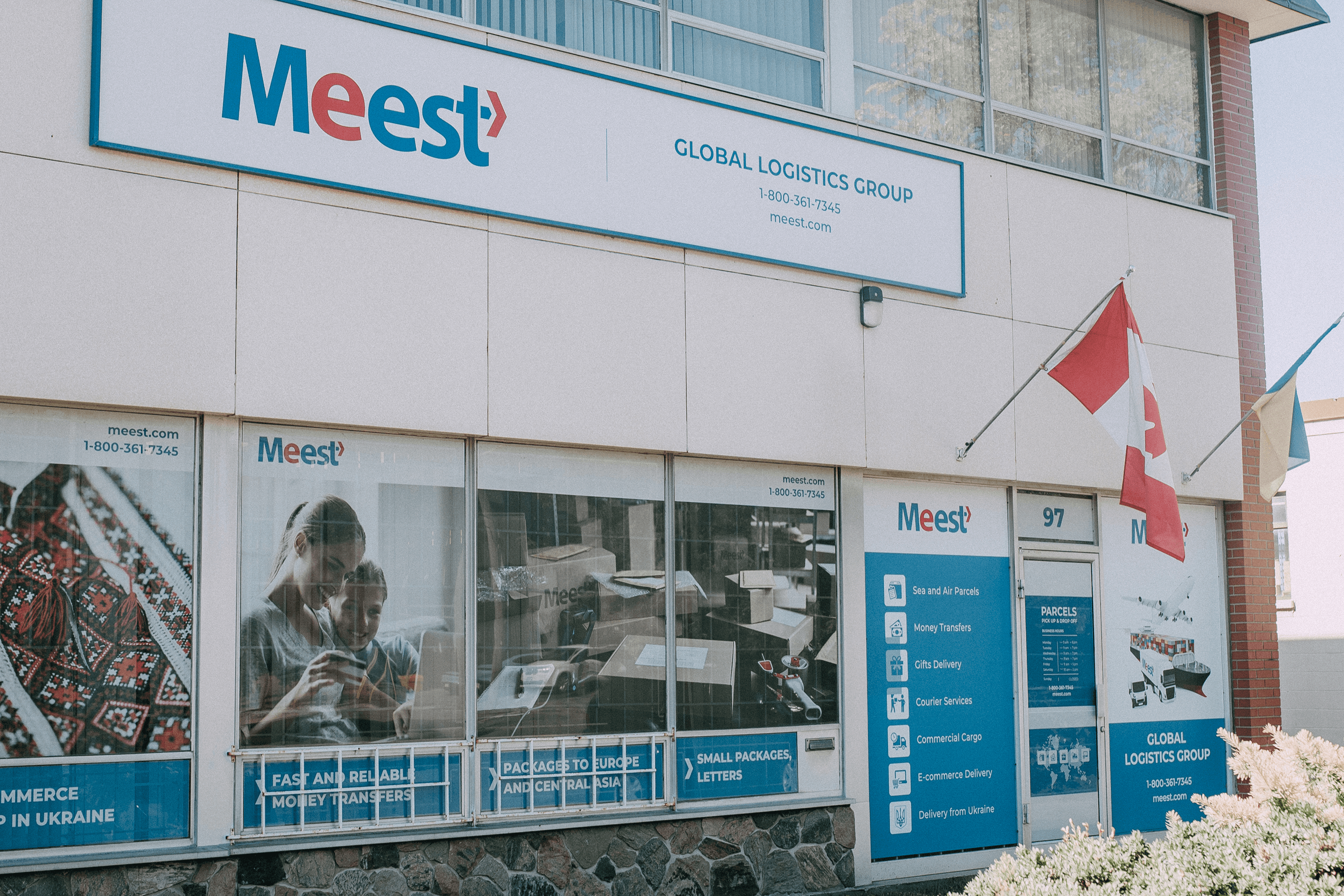
Meest office in Toronto, Canada. Photo: DARE Production / YBBP 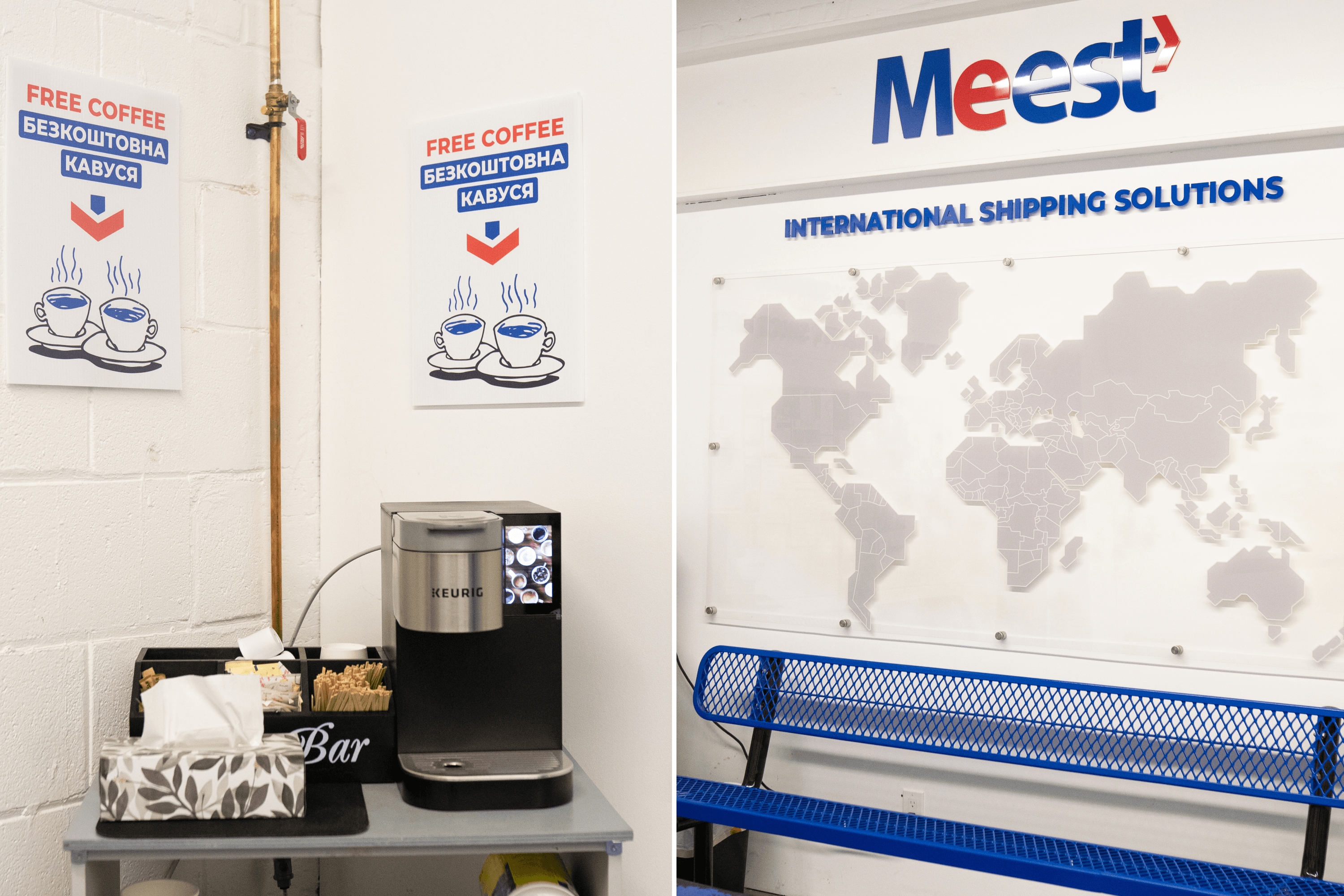
Photo: DARE Production / YBBP 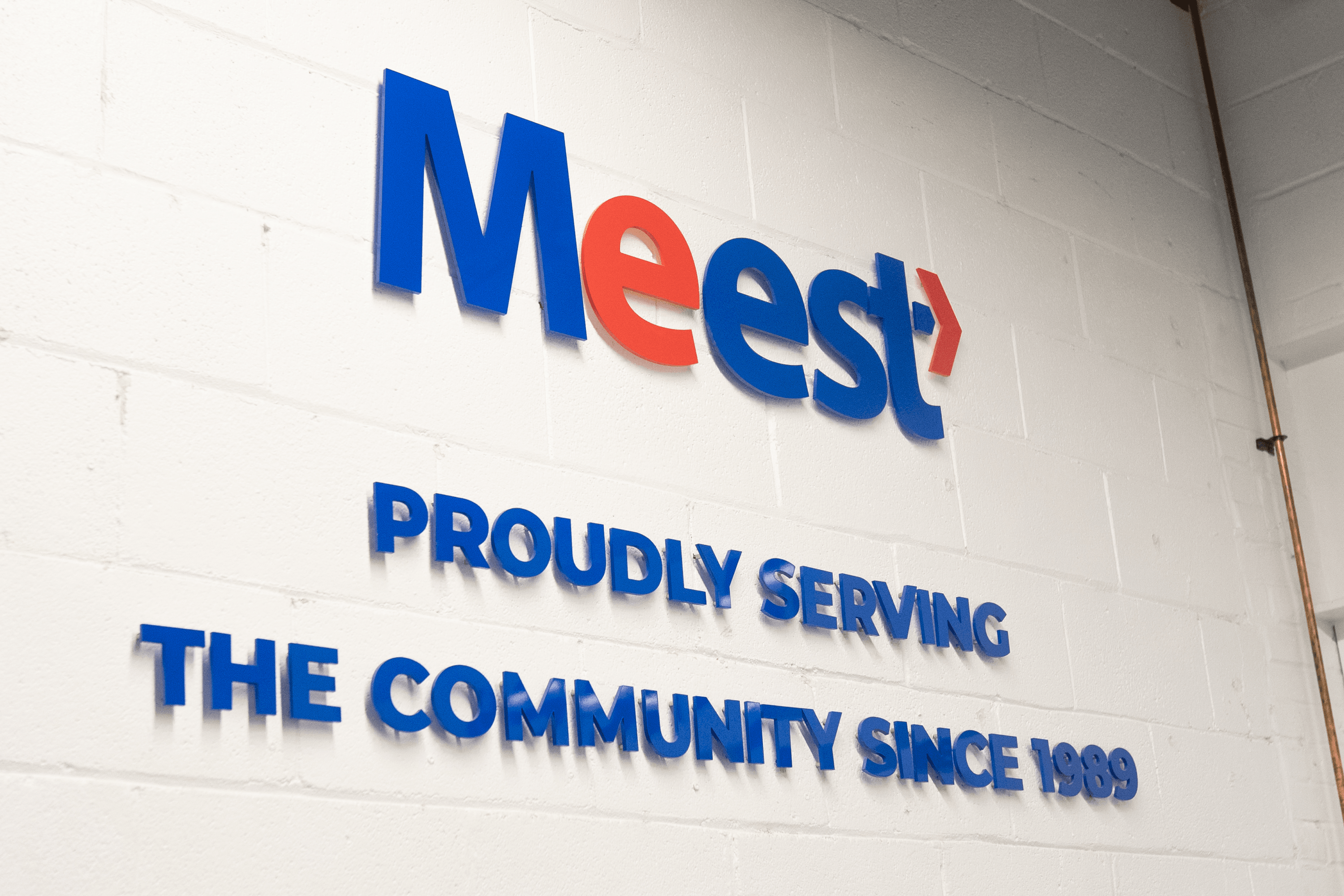
Photo: DARE Production / YBBP
Am I correct in understanding that launching the India direction, and seeing positive results, became a key part of working with Canada’s multicultural community?
Yes. Clients from South Asia actively use our services and network. For many Meest employees, who were accustomed to working primarily with Ukrainians, this was initially a bit of a surprise; we had to adapt to a different culture and communication style.
But I can say that the Indian community has been very positive about our service: they appreciate our attitude, the speed of delivery—5–10 days—and the overall quality of service. We now have loyal, regular customers from that community.
Do you develop separate marketing strategies for these communities? Do you position yourselves as a Canadian company or a Ukrainian-Canadian company?
We communicate as a Canadian company that is adapted to different communities. All our marketing materials are presented in several languages: English, Hindi, and Punjabi. Furthermore, we offer multilingual customer support: we respond in Ukrainian, English, Hindi, and Punjabi. This is one of our key competitive advantages compared to local logistics companies in Canada.
You launched internal delivery across Canada this summer and are already seeing initial results. How do you plan to develop this direction further?
After the launch, our main task is to inform the customers who already use Meest’s international delivery that we now operate within Canada as well.
Our key advantages with Meest Domestic are, firstly, a competitive price, significantly lower than the major Canadian carriers. Secondly, we accept parcels up to 60 kg, whereas Canada Post, for example, only handles up to 30 kg. The third important advantage is home parcel pick-up.

Those are the competitive advantages of domestic delivery. And what are Meest’s overall advantages compared to other Canadian players?
Meest distinguishes itself through flexibility and a multicultural approach. If you call Canada Post, UPS, or Purolator, you will only be served in English. For newly arrived Ukrainians or South Asian clients, this can be a barrier.
The second major advantage is cost: we offer significantly cheaper delivery than global carriers. For example, a shipment to France might cost $150 with us, but around $300 with UPS for the same cargo. We achieve this by optimizing the entire logistics chain—first, middle, and last mile. Sometimes we may be slightly slower, but the savings for the client are substantial.
Another important advantage is customs clearance. Thanks to our hub in Poland, parcels heading to Europe are already customs-cleared, and the recipient avoids additional charges. By contrast, if you send a package to Spain via Canada Post, your recipient will pay duties upon arrival. Similarly, in the reverse direction: when other operators deliver to Canada, clients often receive additional invoices from UPS or FedEx for the last mile. Meest's rates are transparent, and the client either stays within the customs limit or knows in advance if any additional payment is required.
I wanted to touch on commercial cargo: you ship cars from Canada to Ukraine. How often is this service requested?
The service covers many destinations: we ship cars to Asia, Europe, including Amsterdam, the Baltic states, and other ports. Ukraine is just one market. Our client can send a package today, a car tomorrow, and commercial cargo for their business the day after.
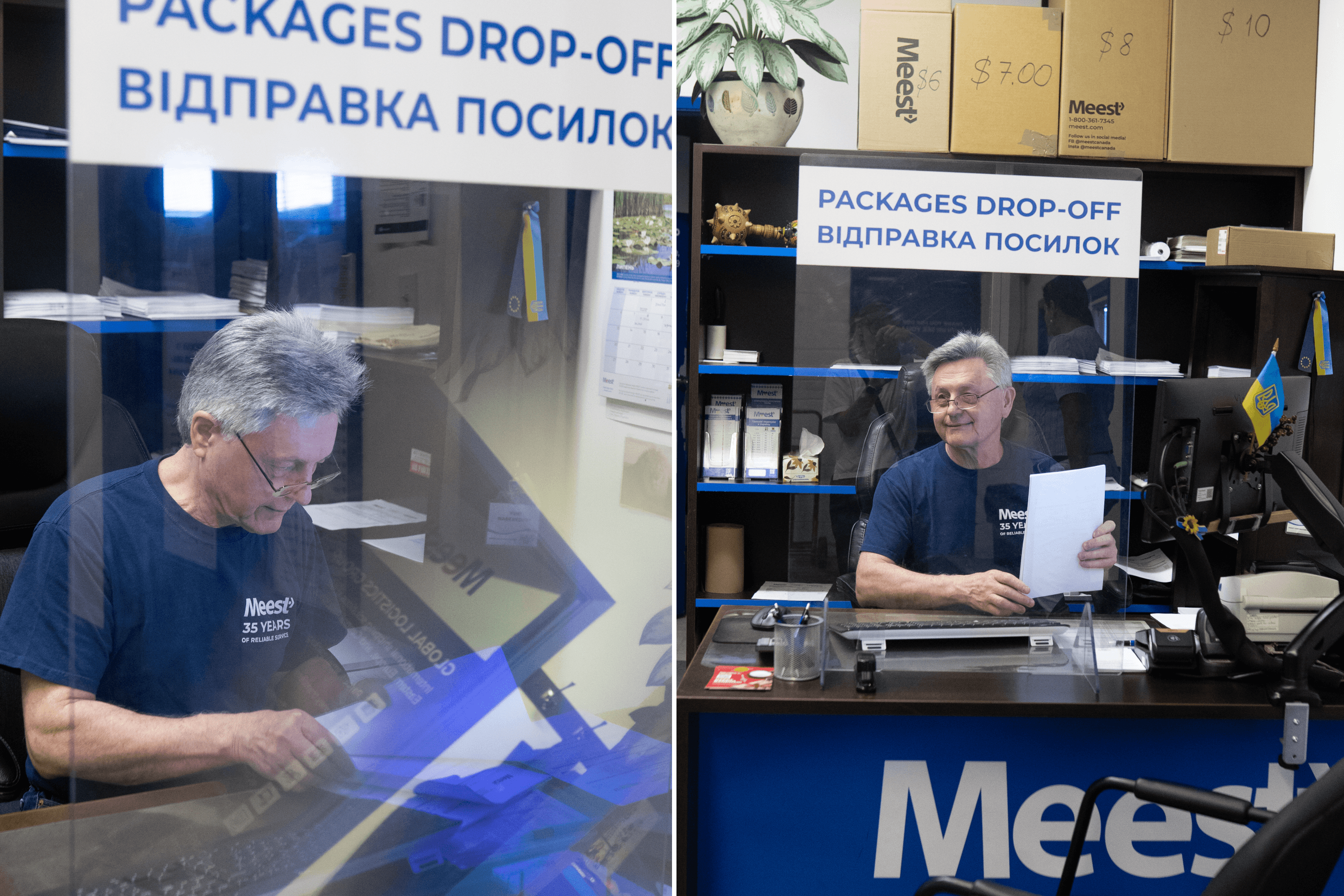
Meest office in Toronto, Canada. Photo: DARE Production / YBBP 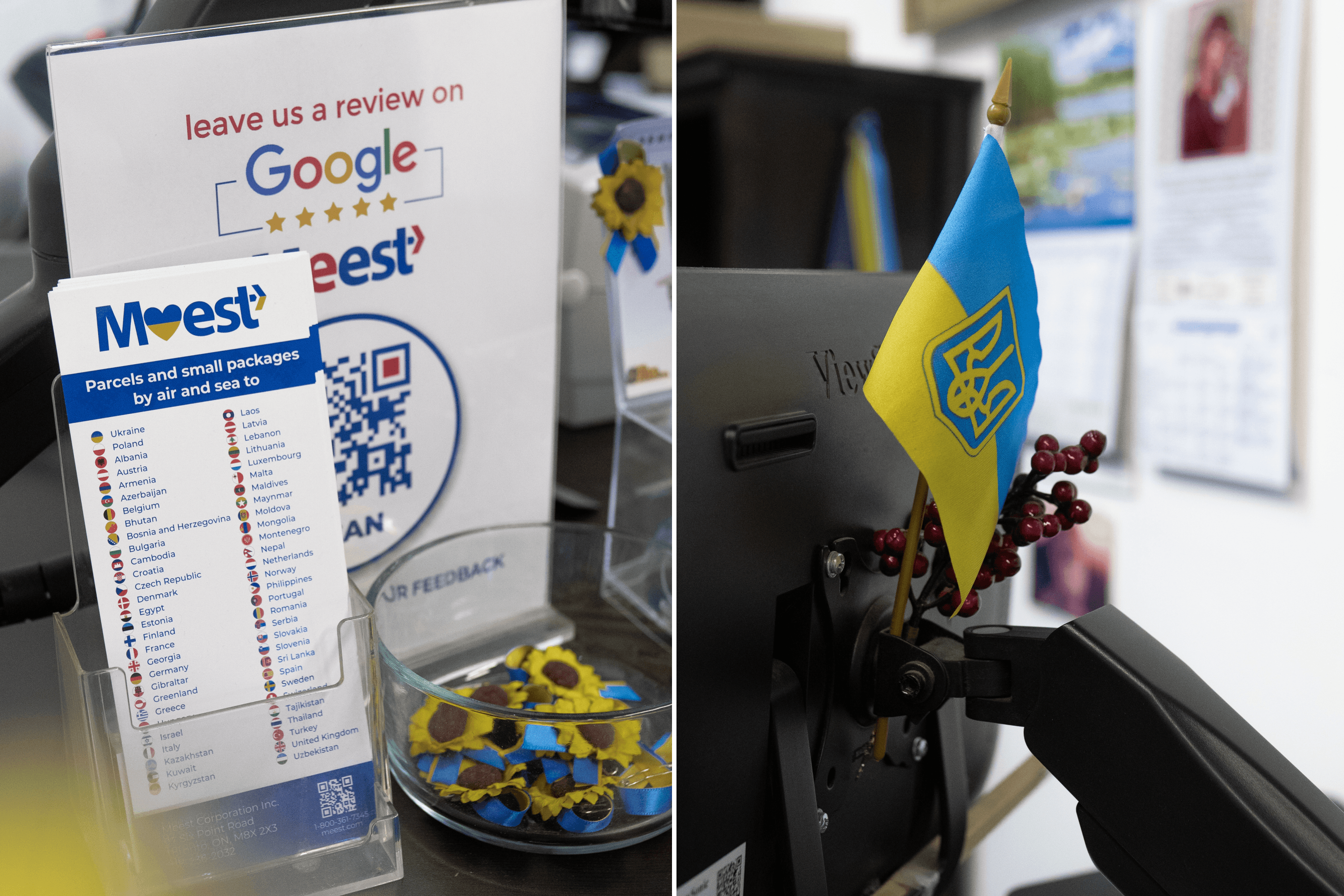
Photo: DARE Production / YBBP
You are testing partnership formats in the U.S. market. Which ones, specifically? There are many newly arrived Ukrainians there as well, so it seems the U.S. market is one of your current priorities?
Both the Canadian and American markets have powerful development potential, and not only within the Ukrainian community. In the U.S., we partner with large companies: UPS, FedEx, USPS. The operating model is very similar to our Canadian one: the client can create a shipment online or bring it to a location. Today, we already have over 250 locations in the U.S. and several key hubs—in New Jersey, Chicago, and Los Angeles. We fully cover the territory and are actively developing.
You also have logistics for small and medium-sized businesses and commercial cargo. What specifically do you offer clients in these areas?
We work with many businesses that have relocated from Ukraine and want to deliver their goods to Canada. In this case, we offer a full cycle: in partnership with Meest Cargo in Ukraine, we pick up the cargo, deliver it to Canada, organize customs clearance, and handle the last mile. Each case is individualized—we select a logistics solution for a specific product and advise on shipping conditions and customs processing.
I'd like to touch on the topic of competition. You've lived in Canada for 15 years, and when you arrived, you were immediately advised to use Meest. My experience is different, as in Ukraine, we are used to Ukrposhta and Nova Poshta. Now, Nova Poshta plans to enter the Canadian market. Are you preparing for this, and how do you react to the fact that newcomers often gravitate toward Ukrainian brands?
Companies with strong reputations exist in Ukraine; we’ve known them for a long time. But international logistics differs significantly from local logistics. What works in Ukraine doesn't always work in Canada. One needs a deep understanding of the local market, mentality, rules, and customer expectations. People who have lived in Canada for a long time have completely different habits and standards. Therefore, simply transplanting the Ukrainian model to the Canadian market is impossible—it requires international logistics experience and adaptation to local conditions. One must understand what is important to the Canadian and American customer: how they think and evaluate service. This is not just about money—it's about trust, reputation, and community contribution.
This is precisely why Meest has been able to build a strong position over 35 years. We were never just a company that 'delivers parcels.' As our founder Rostyslav Kisil says, this company was created by the Ukrainian community, and during difficult times, that community helped us endure. Other companies have repeatedly entered the Canadian market, but without a deep connection to the communities and an understanding of local specifics, building a business is difficult. We have the reputation, modern services, and trust.
The question is rather the opposite: what can new players offer customers that we don’t currently have? Their brand may be strong in Ukraine, but in Canada or the U.S., they lack the recognition Meest has. And we are known not only as a business but as the company that is first to help when humanitarian aid, support, or any initiative for Ukrainians is needed.
I assume they may compete on the level of brand loyalty, as the 300,000 Ukrainians who arrived in Canada are well acquainted with Ukrainian postal services. But at the same time, those 300,000 people have been living in Canada for 2.5–3 years, and during this time, they have formed loyalty to Meest: they know the company, use its services, and have their own experience. Even if they preferred other operators in Ukraine, they choose Meest in Canada.
We are ready for competition, regardless of who enters the market: Ukrainian, Indian, or Filipino companies. Our focus is not on rivalry but on how we can constantly improve ourselves: service, customer care, and delivery speed.
You mentioned the Canadian mentality. Tell us more about your education and life in Canada. Why did you decide to work for a company with Ukrainian roots?
In Ukraine, I graduated from the Kyiv Polytechnic Institute—the Faculty of Management and Marketing—and worked in various companies for a while. Then, my wife and I got married and decided to move to Canada with just two suitcases; we had neither relatives nor acquaintances here.
The first step was learning English. We attended ILAC—a wonderful and effective school. After that, we enrolled at Humber College for a two-year Post-Graduate Program in Global Business Management. We both studied simultaneously, graduating with honors.
After my studies, I worked at several Canadian companies, focusing on business development. I have been familiar with Meest as a client for a long time and always had a positive experience. When I came across an open position, I applied because I saw great potential in the company.
How has the company changed since you joined the team?
The company has become more structured, data-driven, and focused on scale. We have introduced analytics, entered new markets, and expanded services for other communities.

Photo: MEEST Canada / Facebook / YBBP 
Photo: MEEST Canada / Facebook / YBBP 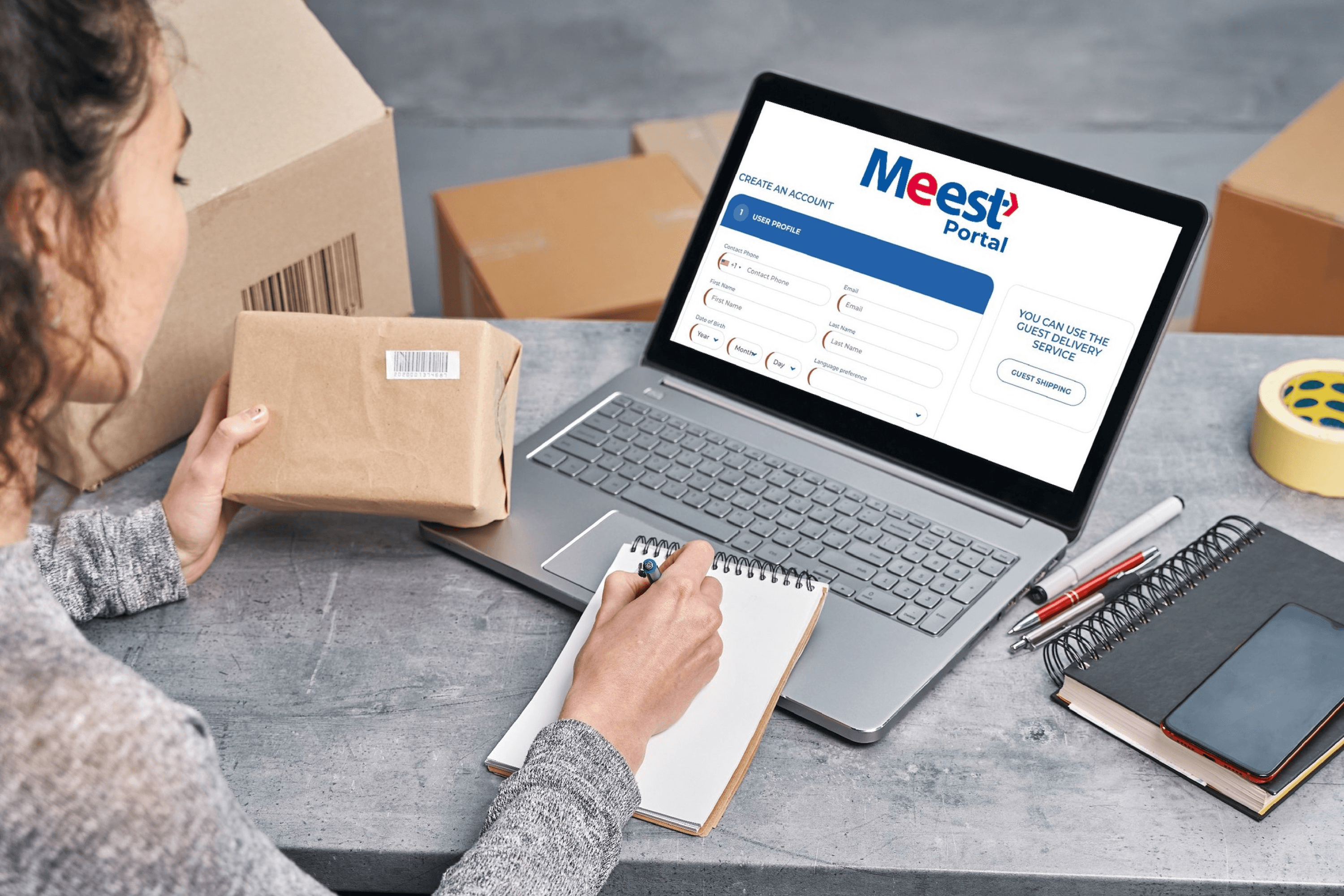
Photo: MEEST Canada / Facebook / YBBP
How does a Canadian education help in business development?
Canadian education is very different from Ukrainian. Here, you are constantly learning, accumulating points for every assignment, and you must stay on your toes throughout the semester. The instructors are business practitioners who offer applied tools, not just theory, that are truly needed in the workplace.
The multicultural experience helped immensely. I studied as an international student, and most of my group was from Asia and South Asia. This helped me communicate with people from different cultures, understand their communication styles, and build connections. In Canada, this is critically important, as business here relies not only on professional skills but also on the ability to find common ground with various communities.
What are your main challenges regarding Meest's development?
We have challenges every day. A container might be delayed at a port, or strikes or other circumstances may occur that are beyond our direct control. We immediately inform customers about the situation, apologize, and offer discounts or other compensation solutions.
The second major challenge is growth and diversification. We are preserving the Ukrainian core of the brand while actively entering other ethnic markets and adapting services to the needs of various communities. This requires constant flexibility, quick decisions, and a precise understanding of how Canada’s multicultural market works.
What are Meest Canada's strategic goals for the next 3–5 years?
To become the main logistics bridge not just for the Ukrainian, but for all diasporas in Canada. The company aims to expand its domestic network, launch logistics from other countries to Canada, scale the B2B sector, and digitize all customer interaction points while maintaining the human element of a company that people can trust as 'their own.'


