
In Ukraine, Olga Tokariuk is known as foreign affairs journalist, recognized particularly as the author of a documentary about National Guard soldier Vitaliy Markiv, who narrowly escaped a 24-year prison sentence in Italy. Currently, Tokariuk is researching the situation of Ukrainians living abroad. Her latest study was published in February 2025 by Chatham House—the think tank of the Royal Institute of International Affairs in the United Kingdom. The research explores the sentiments of Ukrainian migrants and their future prospects.
In the fourth episode of the “HERE&THERE” podcast, Mila Shevchuk sat down with Olga to discuss the study and its findings. Here are the key takeaways from their conversation.
I began studying data on Ukrainians abroad at the University of Bologna while writing my Master’s thesis on migrants in Italy. Later, as a journalist, I reported on our labor migrants in Poland and other countries. In 2022, I moved to the United Kingdom, a country that previously didn’t have a large Ukrainian community. I find inspiration in the way Ireland builds bridges between its people; they have fostered a massive global community that actively contributes to the nation’s development. This is an experience Ukraine could certainly adopt.
The Royal Institute of International Affairs has a dedicated Ukraine department, which is quite rare. There is another think tank in London, but it only discusses Ukraine through the lens of security. While there is interest in the topic, resources are limited. This determined the format of my work—I had just one year and worked alone. I conducted field research in Ukraine, interviewing government officials, economists, sociologists, and Members of Parliament. My focus group consisted of 12 people in the UK. While not strictly representative in a statistical sense, I applied criteria that reflect the Ukrainian community’s gender balance and regional diversity, including representatives from occupied territories. The study resonated significantly in the UK, particularly within government circles.
Ukrainians abroad are not a monolithic group. The situation varies greatly from country to country, often shaped by the stance of local political parties. Migration is a sensitive issue in Germany, the UK, and Poland, and Ukrainians are often at the center of these debates. If we look at the figures, approximately 900,000 Ukrainians currently hold temporary protection status in Poland. The Polish economy receives more in tax revenue from Ukrainians than the state spends on them. Furthermore, Polish businesses rely on Ukrainian workers to fill roles that locals are often reluctant to take.
Since 2022, the number of Ukrainians planning to return home has dropped by half. This data comes from the Kyiv-based Centre for Economic Strategy, which conducts annual surveys of Ukrainians abroad, tracking how they have settled, their employment status, financial stability, and future plans. The data suggests that the longer a person remains abroad, the lower the probability of their return.
Research consistently shows that Ukrainians primarily consider returning only to their original home regions, and rarely to other parts of the country. In 2023, the main reason for returning was the desire to be with loved ones, while 20% cited difficulties with integration and 10% mentioned the inability to find work. Currently, security is the top priority: for some, this means the end of the war, while for others, the strengthening of air defenses over their specific region is enough. Economic factors now rank second.
Despite the “gloomy” narratives often found on social media, I see no evidence in research that those who return to Ukraine face social stigma. Surveys by the Civil Network “OPORA” indicate that Ukrainians within the country are generally positive toward compatriots who plan to return.
More than half of Ukrainians abroad follow news from Ukraine daily, and nearly all do so at least several times a week. This is a mix of habit, anxiety, and a desire to maintain a connection. This tie is especially strong for those whose families remain in Ukraine. The situation differs for those who have moved with their relatives or whose husbands have joined them abroad; while the connection remains, these families become more deeply immersed in the context of their host country.
Remittances also serve as a constant link to Ukraine. Before 2022, migrant transfers accounted for approximately 10% of Ukraine’s foreign currency inflows. Most of those who left after 2022 are employed and also send money home. This is one way to “live between two countries” while planning a future in Ukraine. However, this lifestyle requires a stable legal status. Many host countries restrict travel if one wishes to maintain their protection status; Norway, for example, has prohibited trips to Ukraine entirely. Therefore, the steps toward legalizing dual citizenship are vital: having two passports would make living between two countries much simpler. Many Ukrainians abroad continue to work for Ukrainian employers or maintain their Ukrainian sole proprietorships (FOPs), paying taxes in Ukraine, even as host countries encourage them to shift their tax residency locally.
The European Union has announced that Temporary Protection will end in March 2027. Currently, there are over four million Ukrainian refugees in the EU. Once this period expires, the status of Ukrainians will be determined by national governments, each with its own approach. Some countries are already offering alternative visa types, but the criteria vary significantly: in Poland or Czechia, they are more accessible, whereas in the UK, one must earn an above-average salary and work in a shortage occupation. Transitioning to a work visa often means losing social benefits, which is a major hurdle for many Ukrainians—particularly single mothers—who rely on assistance to cover housing costs.
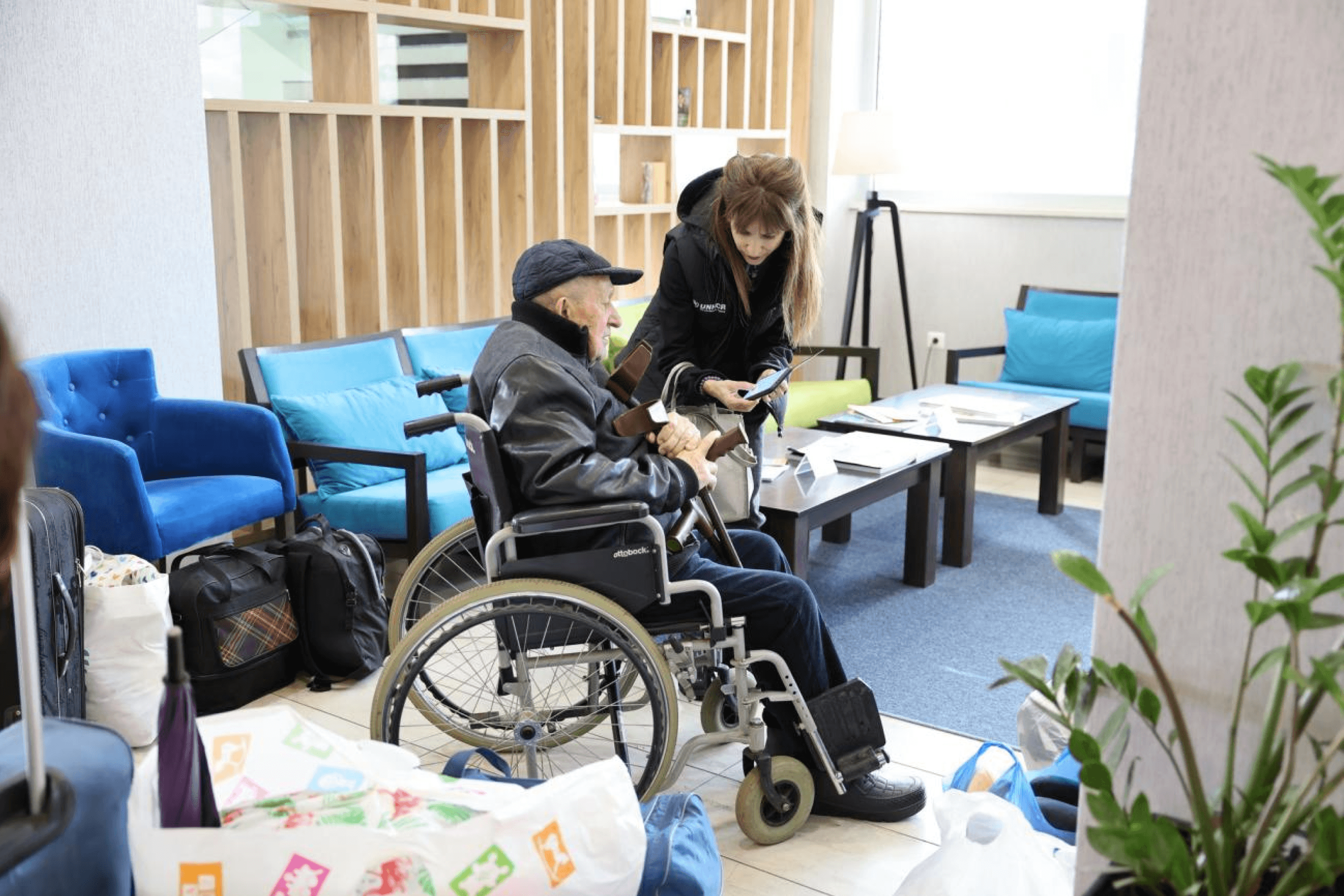
Ukrainian refugees at a collective accommodation center in Sutomore, Montenegro. 2024. Photo: UNHCR / T. Ladjic / YB 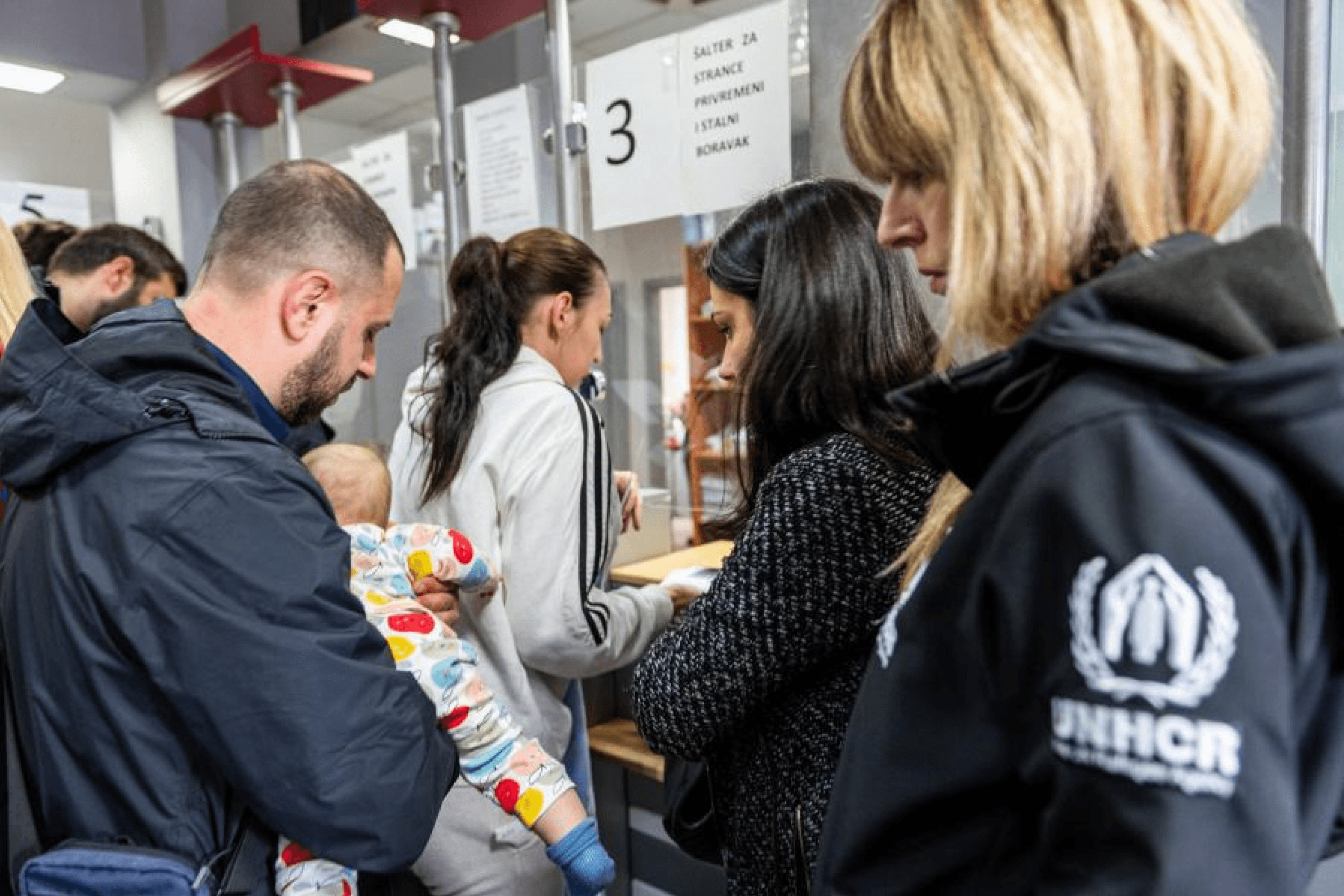
Ukrainian refugees renew their temporary protection status at a local office in Bar, Montenegro. 2024. Photo: UNHCR / Miloš Vujović / YB 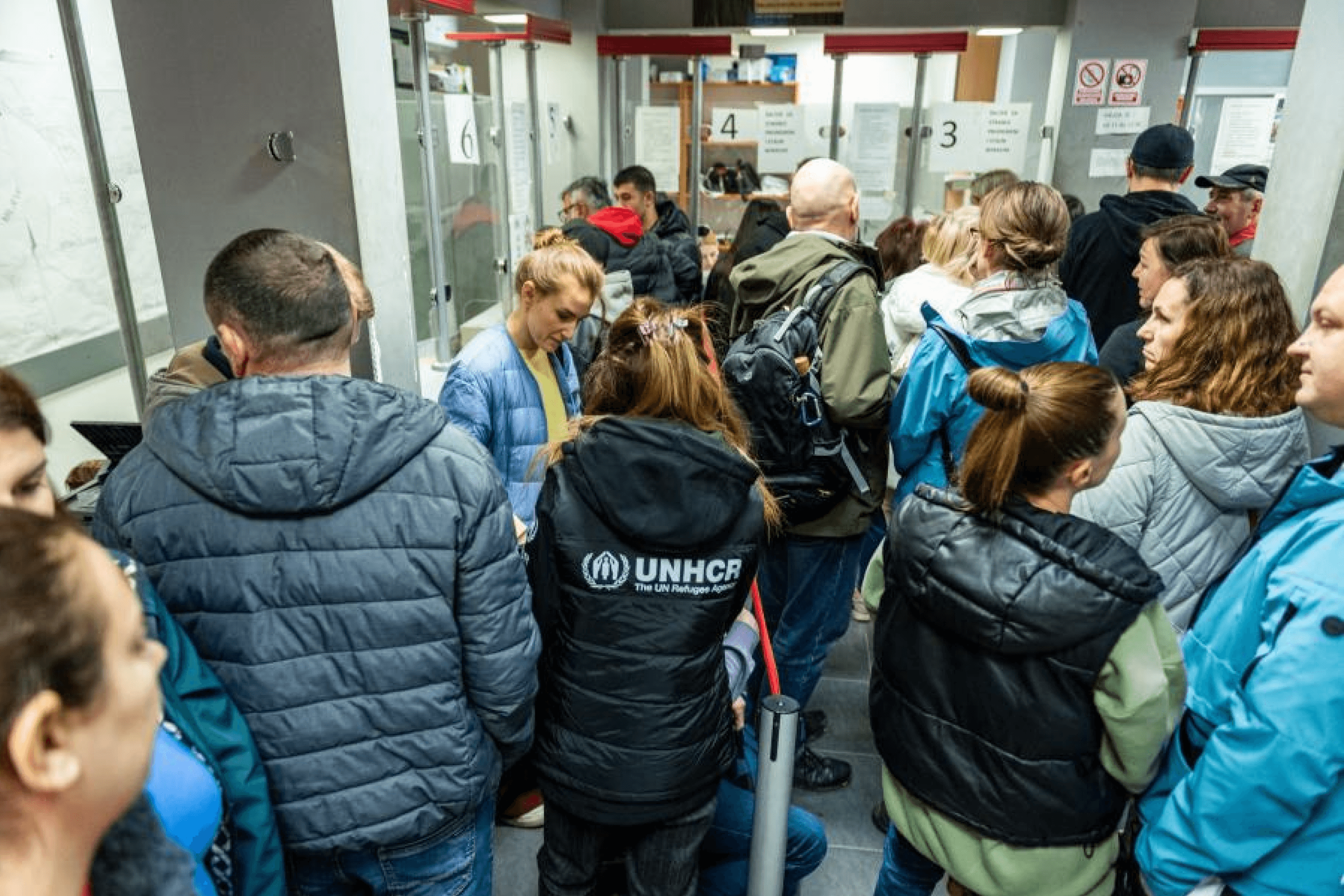
Ukrainian refugees queue at a local office in Bar, Montenegro, to renew their temporary protection status. 2024. Photo: UNHCR / Miloš Vujović / YB
There is also the possibility that countries may simply choose not to extend legal residency. We saw this with Bosnians after the Yugoslav wars in the 1990s, and similar discussions are currently held in Germany regarding Syrians following the fall of the Bashar al-Assad regime. As Syria is increasingly deemed a “safe country,” those without permanent residency may be forced to return. A similar scenario could unfold for Ukrainians. Generally, migration policies in the UK, Denmark, and Scandinavia are tightening; for many migrants, their status remains “temporary” even after 5–10 years. So far, however, no country except the United States has explicitly stated that Ukrainians must return.
A trend of introducing restrictions is emerging across Europe, primarily targeting newcomers. Norway and Switzerland, for instance, no longer accept Ukrainians from regions they consider “safe"—Norway views the Kyiv region as safe, but not the city of Kyiv itself. Furthermore, many countries are reluctant to grant asylum to Ukrainian men of conscription age, whose numbers in the EU have risen. As of February 2026, men aged 18 to 64 accounted for 25% of all new applicants for temporary protection. Many traveled through Poland to Germany, often joining wives who were already there. In Denmark, there has been voiced dissatisfaction regarding the arrival of young Ukrainian men. Recently, German Chancellor Friedrich Merz, during a meeting with President Zelenskyy, emphasized Germany’s desire for Ukrainian men to return to Ukraine.
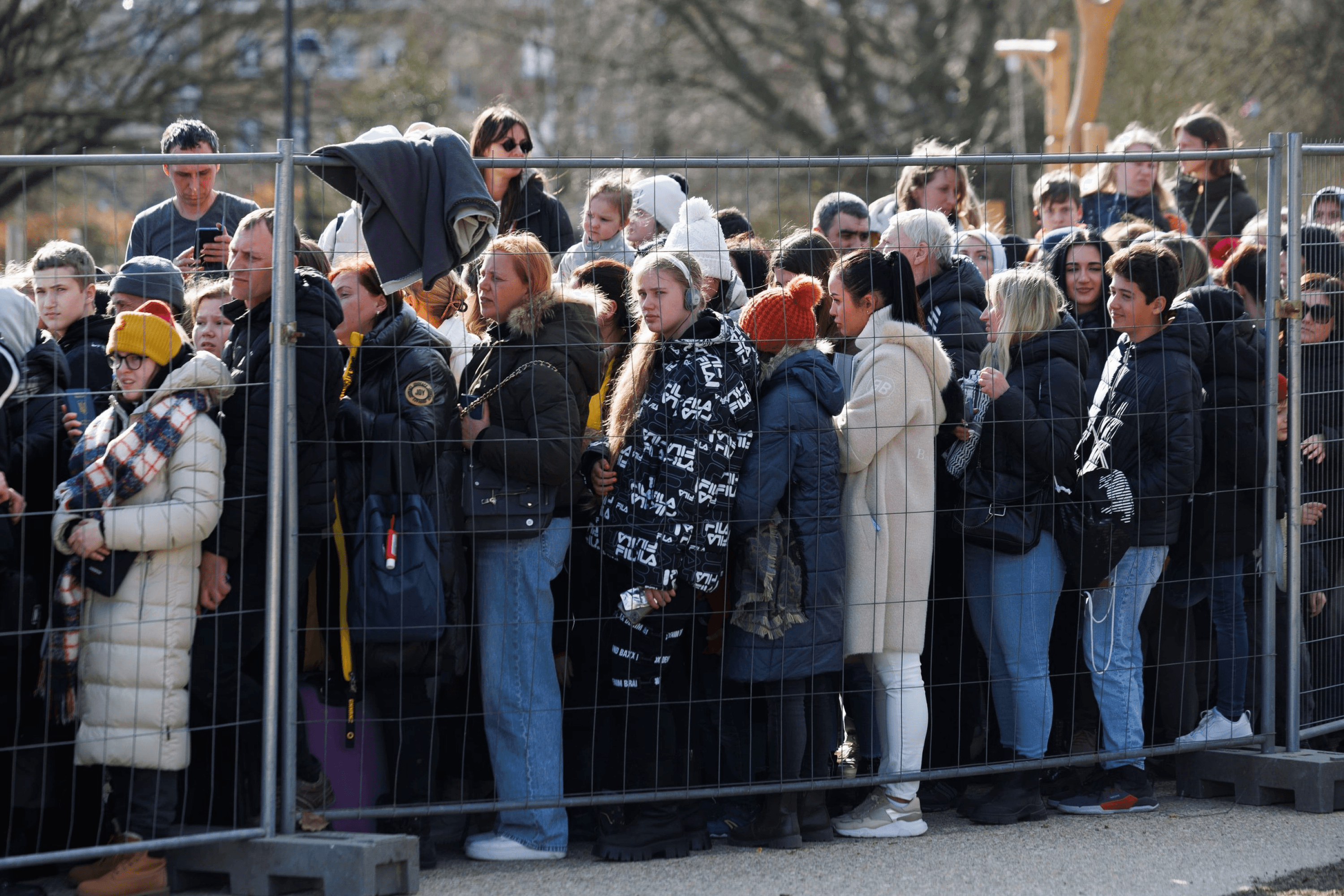
Ukrainian refugees queue at a registration center in Brussels, Belgium. 2022. Photo: European Union / YB 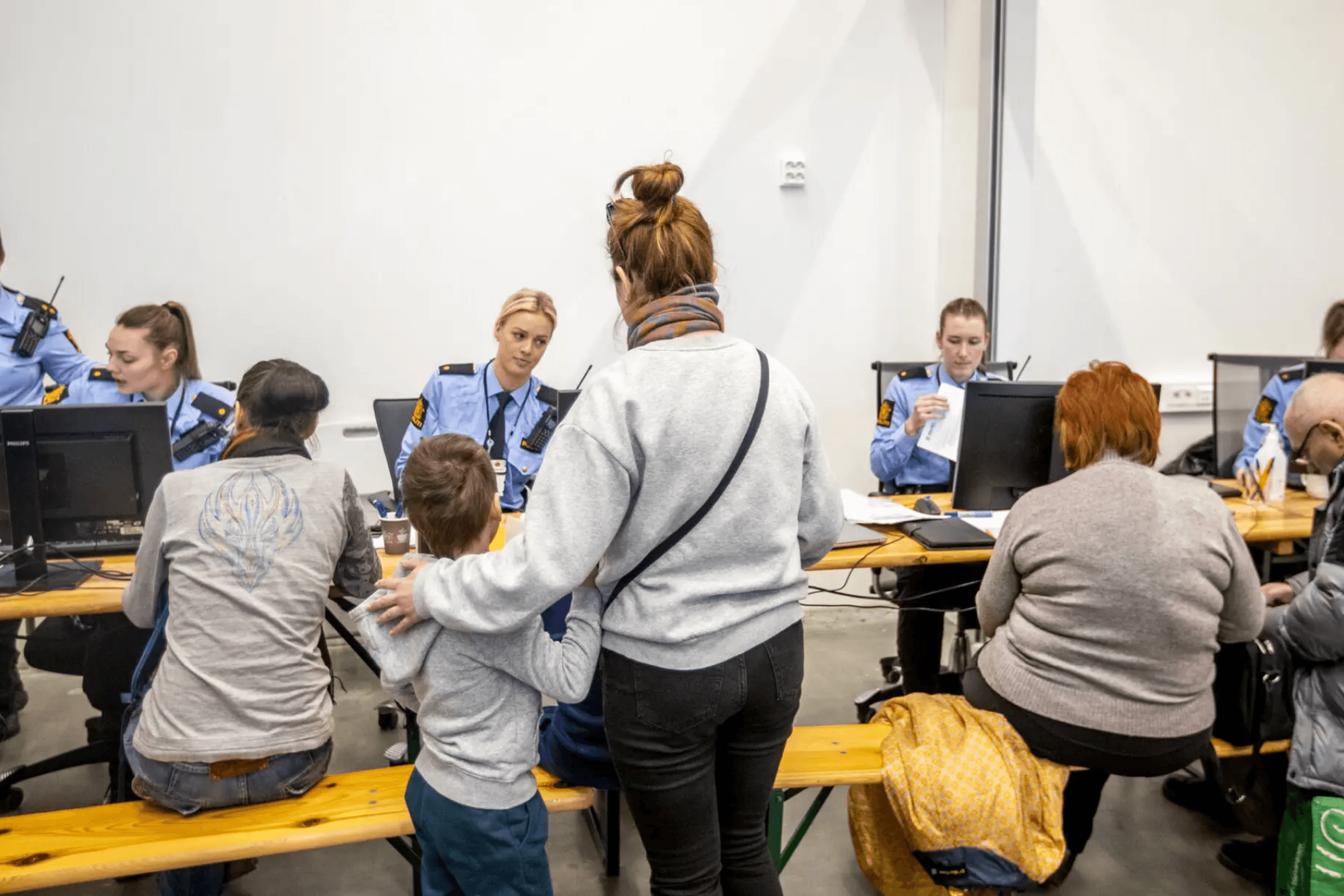
Ukrainian refugees undergo registration at the National Arrival Center in Råde, Norway. Photo: NTB / Javad Parsa / YB 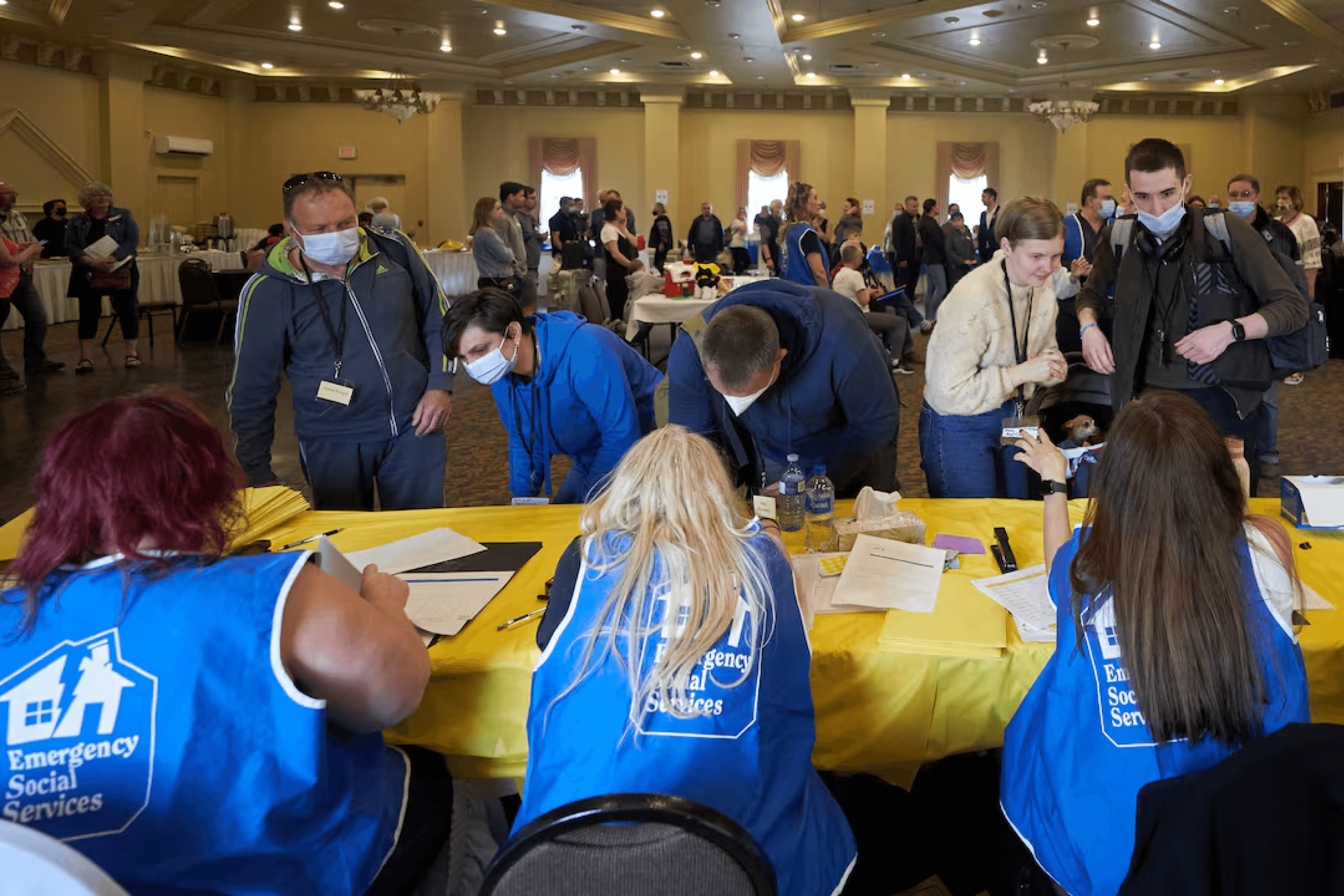
Ukrainian refugees during registration at a reception center in Winnipeg, Canada. Photo: The Canadian Press / David Lipnowski / YB
While the general attitude toward Ukrainian refugees remains positive, it has become a subject of domestic political debate in countries like Poland. We are now anticipating a global crisis triggered by the war in Iran, which will likely force many nations to revise their budgets and cut social spending. This will inevitably lead to rising resentment toward migrants. Ukrainians will face the consequences of this shift, even if they aren’t the primary targets of the negativity. Consequently, some Ukrainians may return home not out of choice, but out of exhaustion and despair.
It is impossible to predict exactly what percentage of Ukrainians will not return, as it largely depends on the host countries' policies. Those who have already secured permanent residency or those from occupied territories are the least likely to return. When Temporary Protection ends, we will likely see a wave of returnees from vulnerable categories and the elderly if they lose access to pensions, social payments, or housing aid. However, some may not go home but instead move to other countries that still offer support, though that “window of opportunity” is gradually closing everywhere.
There is a chance that the children of current emigrants will return, but this requires strengthening the ties between the diaspora and Ukraine. Much depends on the families. My daughter attends a Ukrainian Saturday school in London, and we visit Ukraine often. It takes significant effort from parents. My child wants to get her education in England and then return to work in Ukraine—a goal I fully support. It is vital for Ukrainians abroad to organize, build cultural hubs, and advocate for Ukrainian interests at the local level.
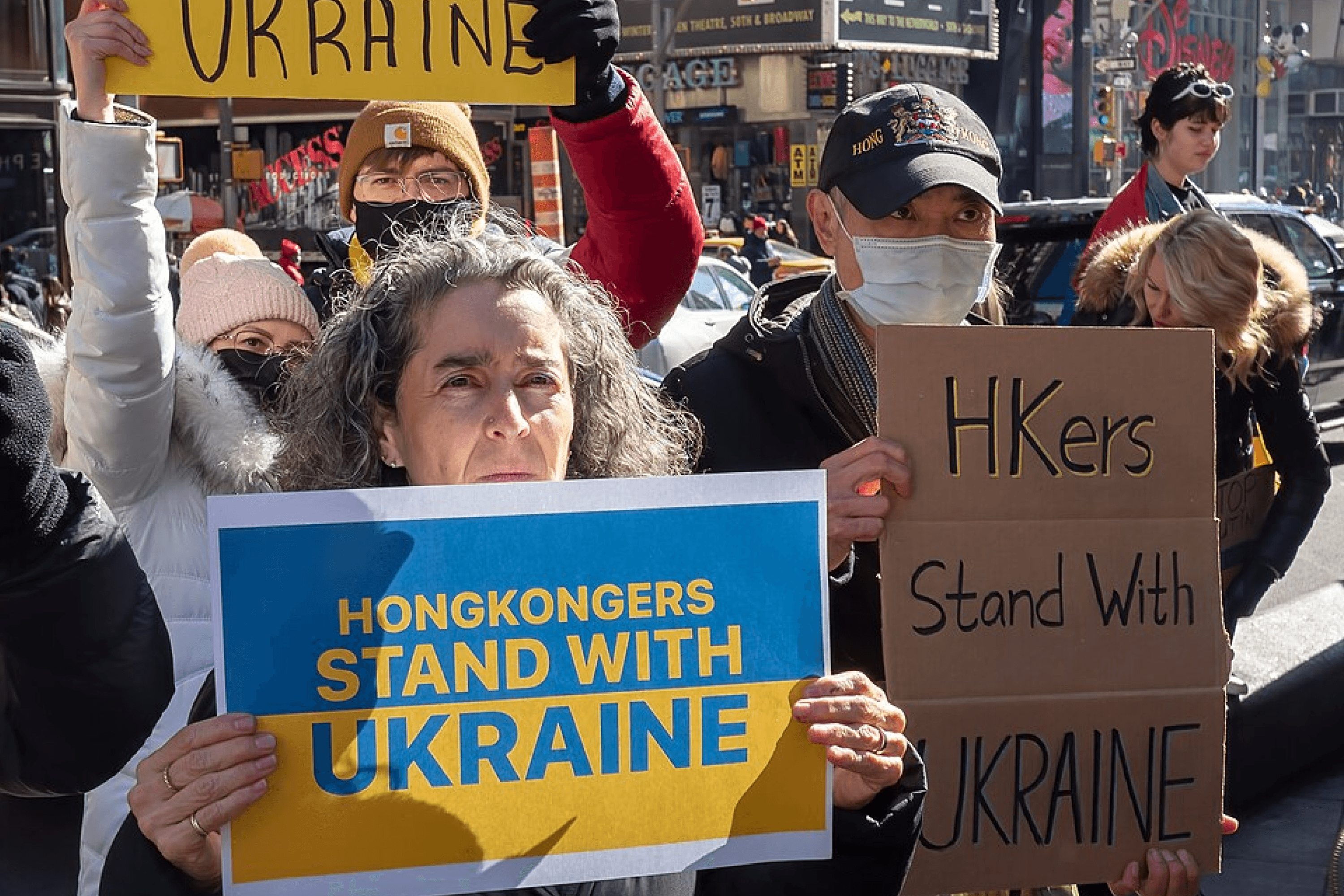
Participants of a pro-Ukraine rally protest against the Russian invasion at Times Square in New York, USA. February 26, 2022. 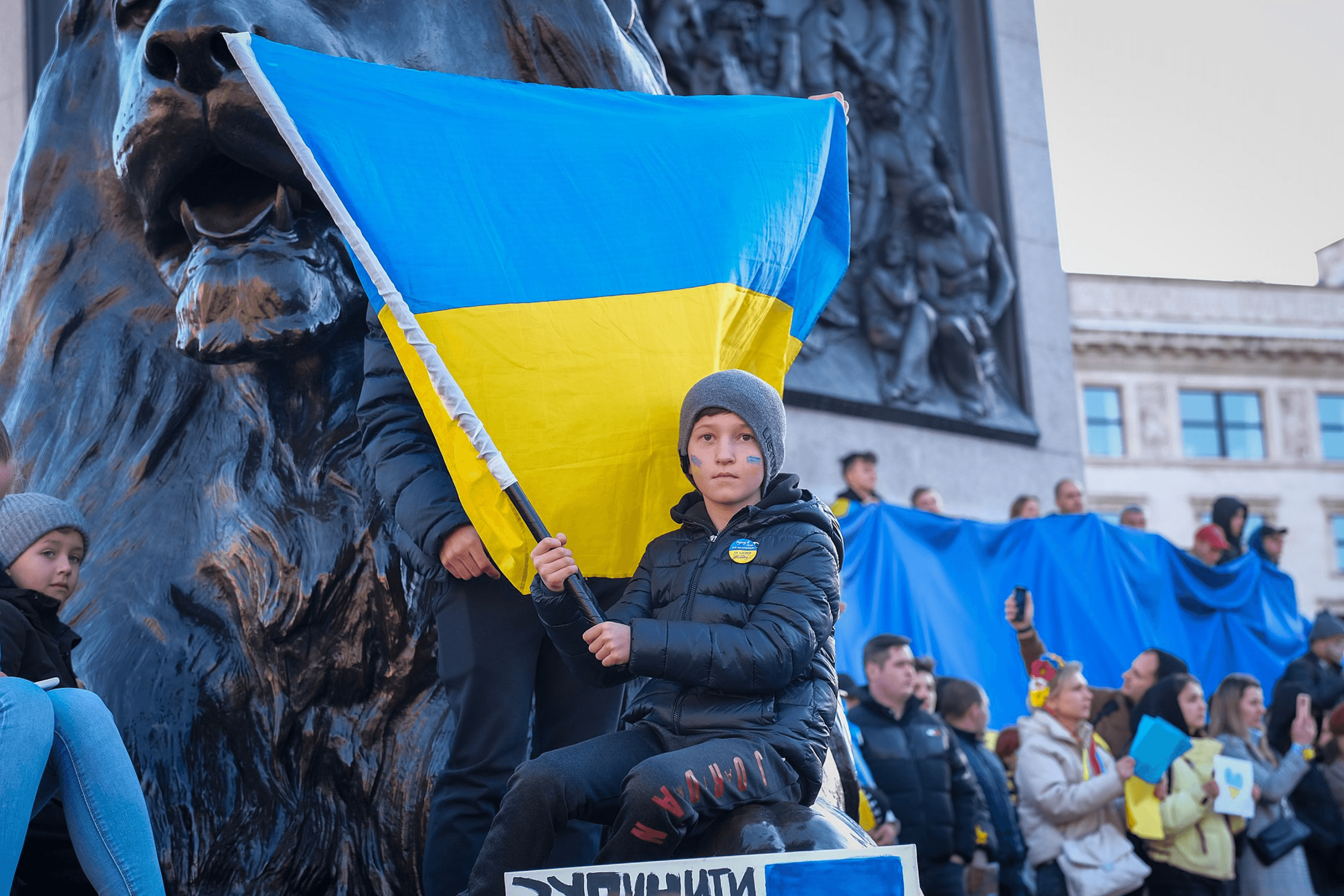
A child holding a Ukrainian flag during a pro-Ukraine rally at Trafalgar Square in London, United Kingdom. 2022. 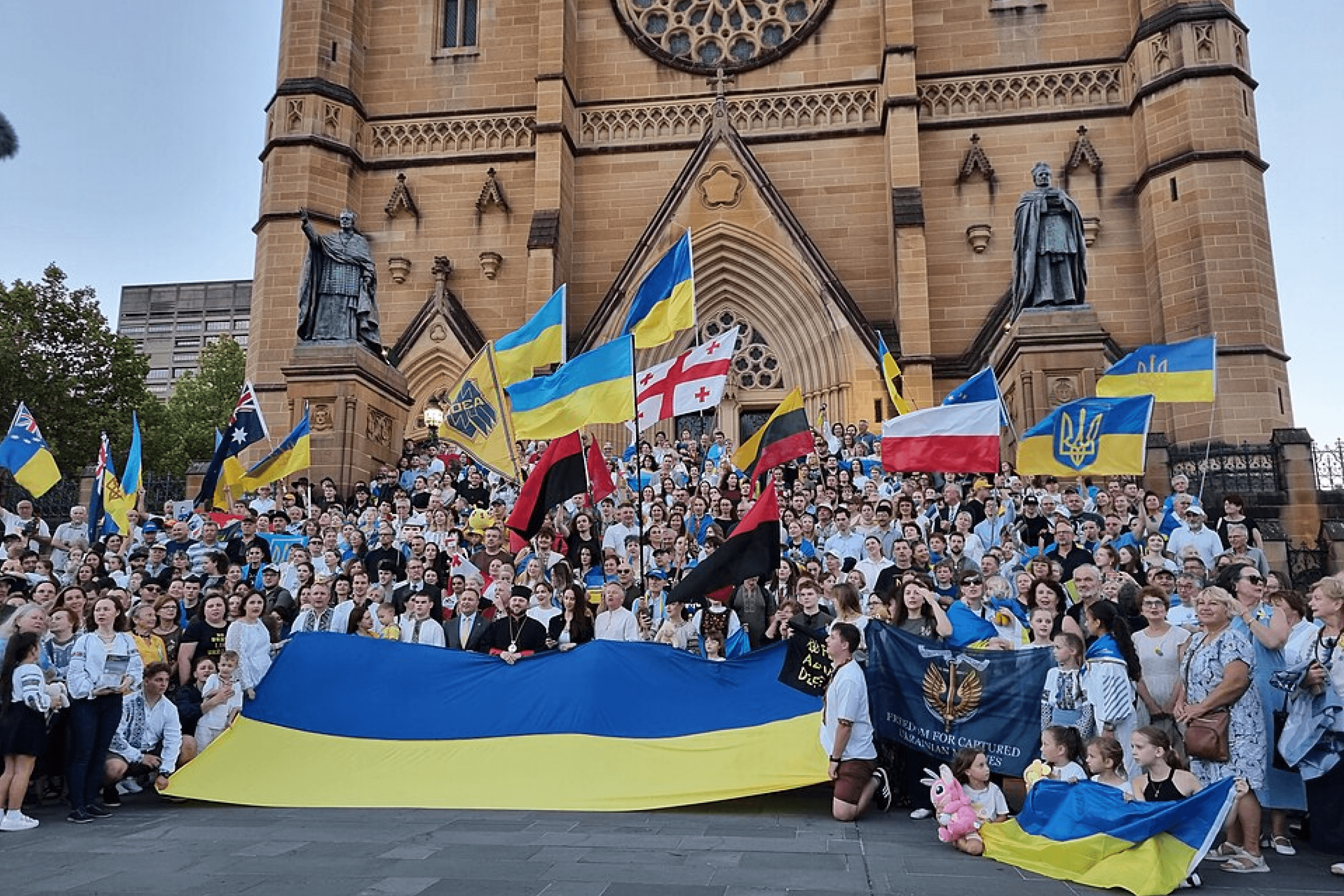
Participants at a rally marking the anniversary of Russia’s full-scale invasion of Ukraine in Sydney, Australia. February 24, 2026.
Finally, the Ukrainian authorities should view those abroad as part of a global community, rather than just an economic resource. It is important for the Ukrainian President to acknowledge the contribution of Ukrainians abroad without the “refugees vs. those who stayed” rhetoric seen in one of his past speeches. While I have yet to see a systemic effort from the government, some discussions have begun at the Ministry of Foreign Affairs, including the appointment of an Ambassador-at-Large for Global Ukrainians. For now, however, the government’s primary concern remains the impact of migration on tax revenue.


